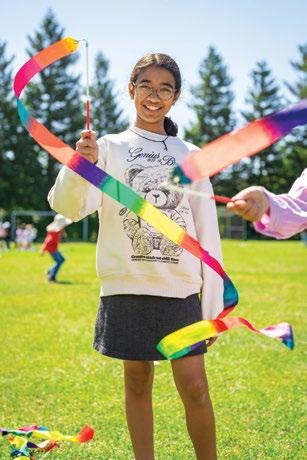
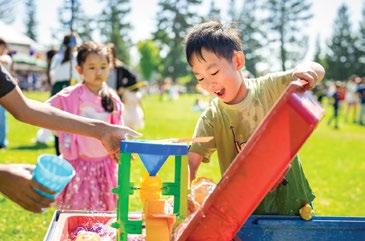
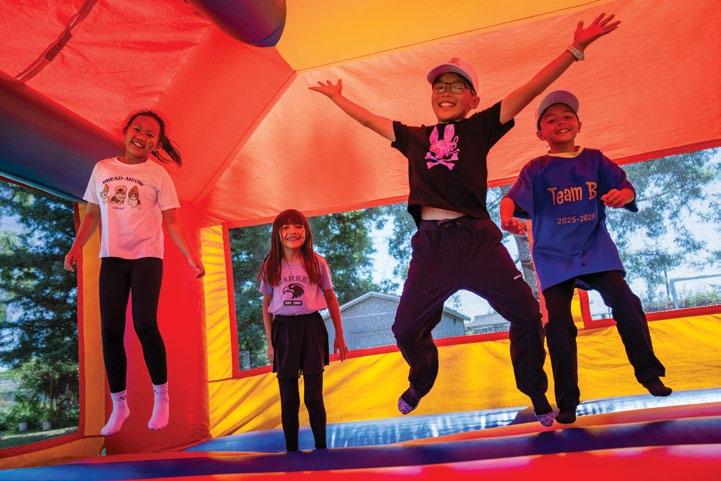
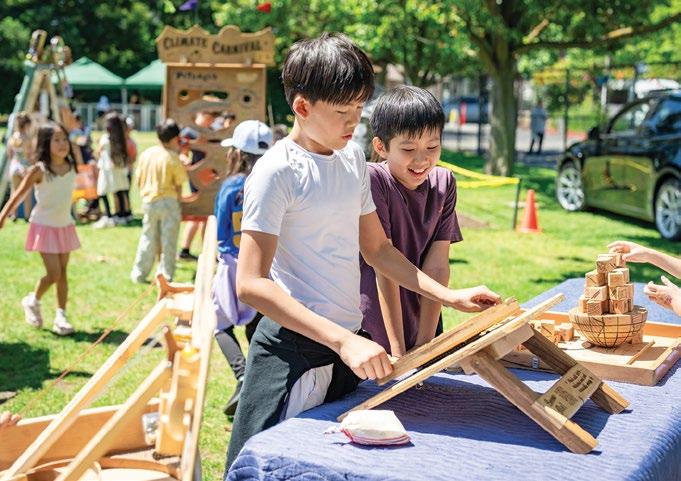
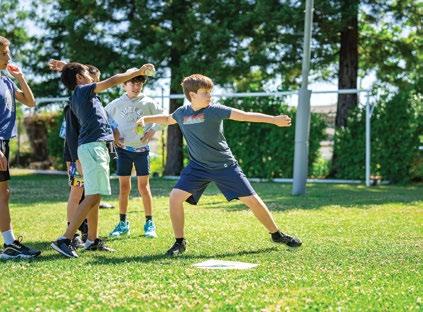
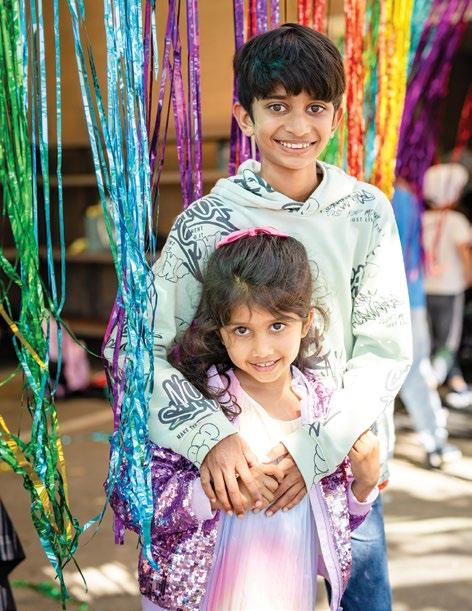
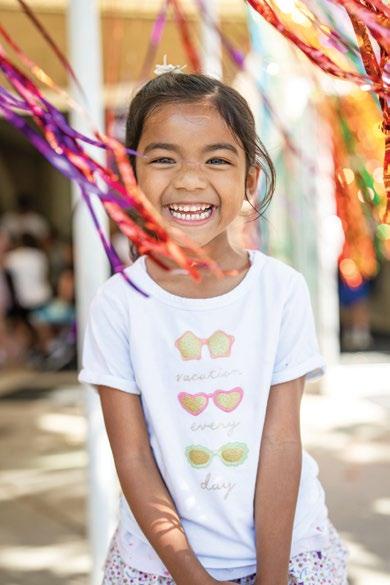
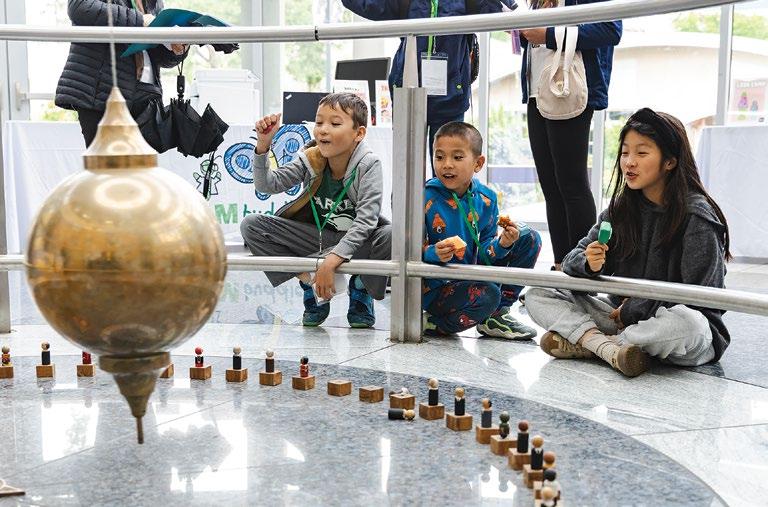
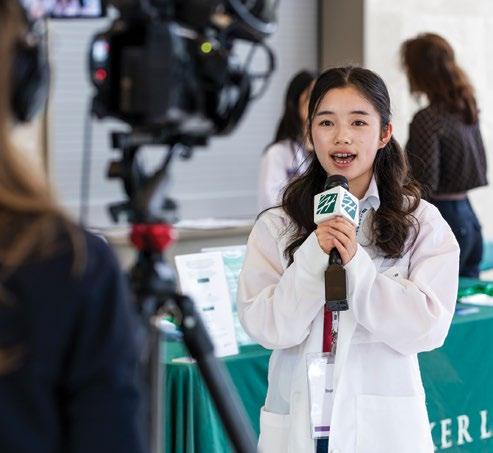
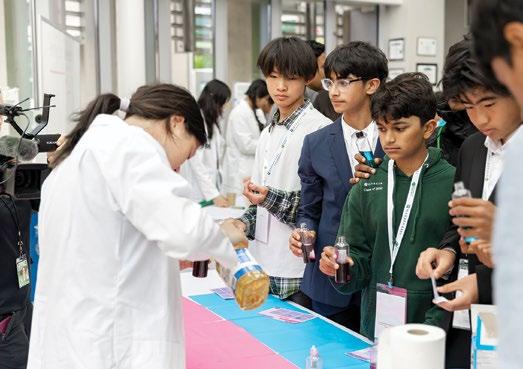
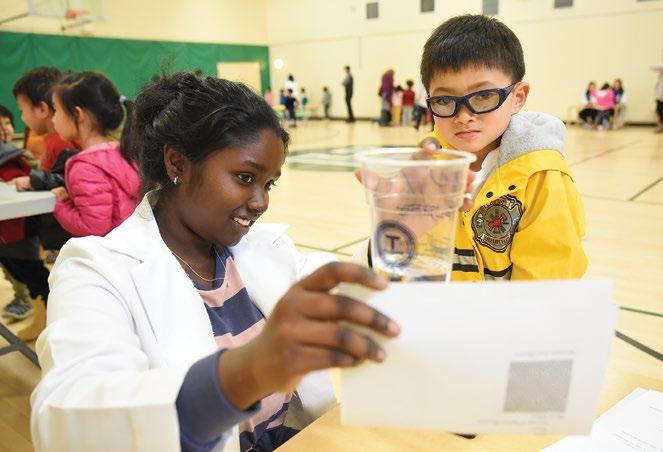
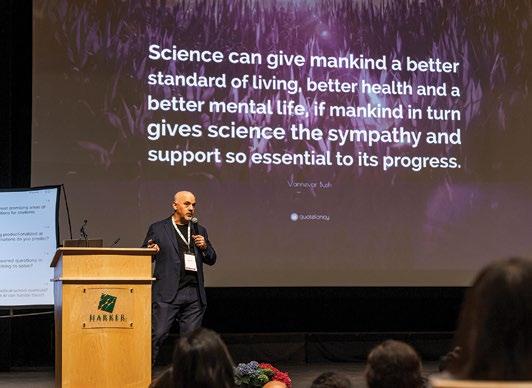
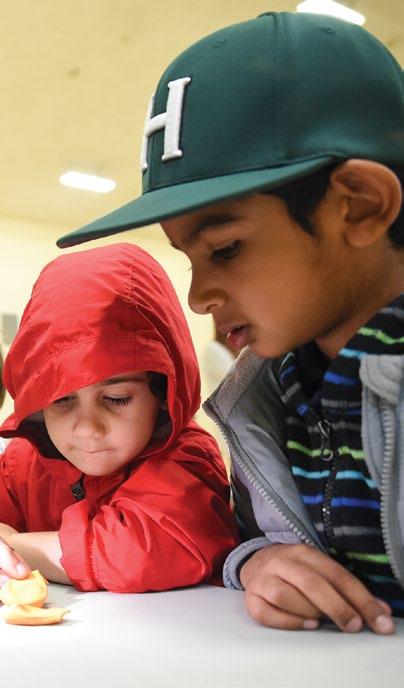
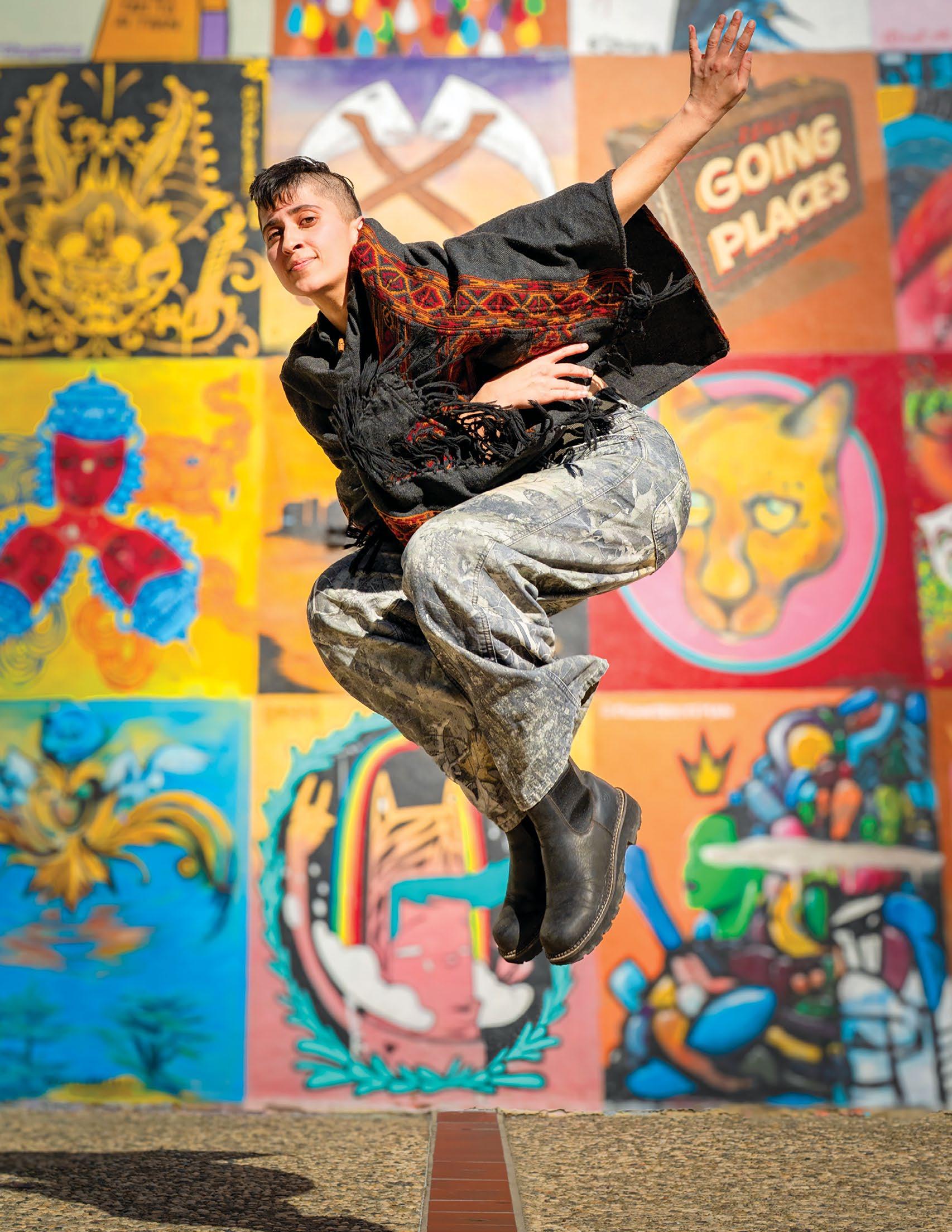
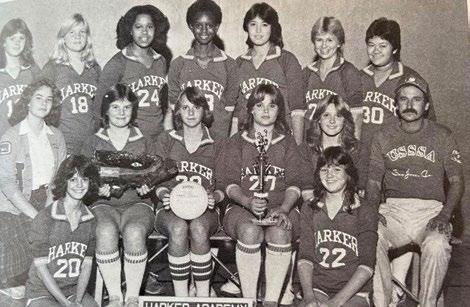
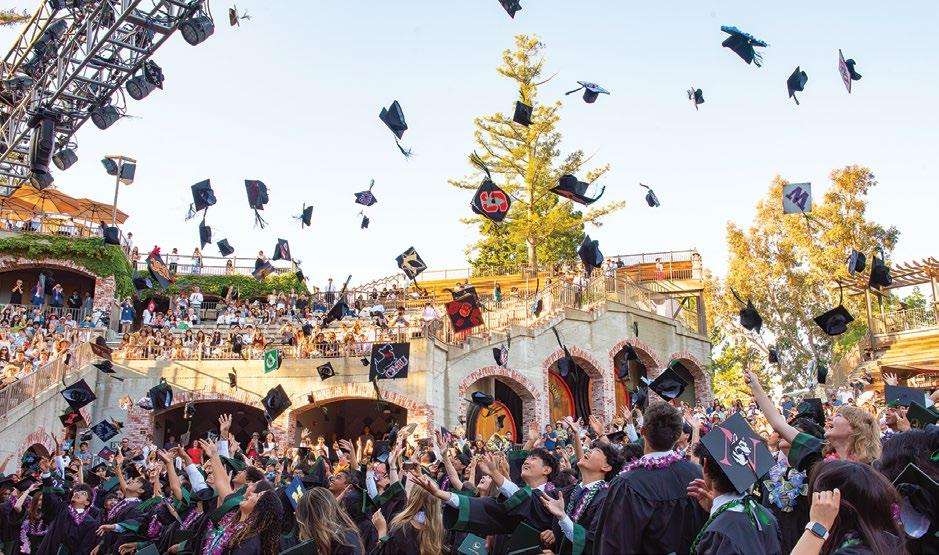
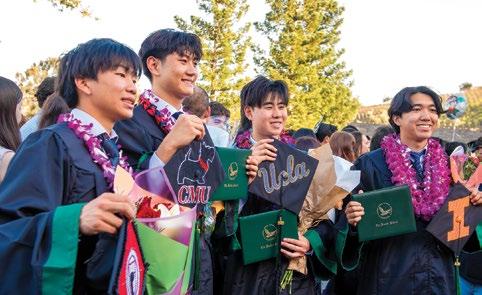
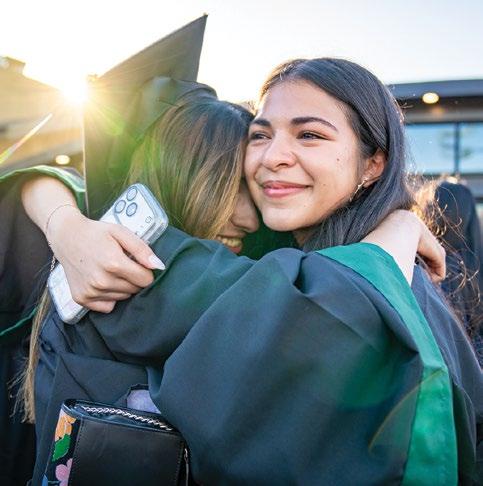
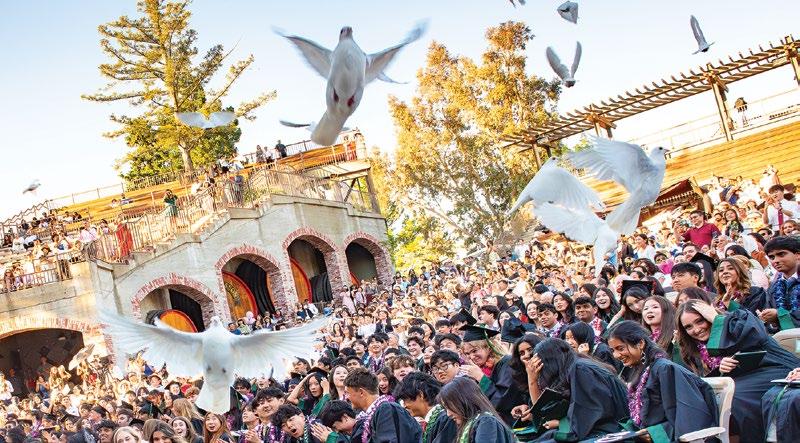
Our photo feature celebrates this much-loved Harker tradition.
Unlocking Secrets
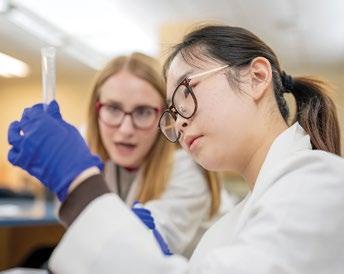
Research program lets students go deep.
Making an Impact
New campaign supports school’s next strategic plan.
Headlines
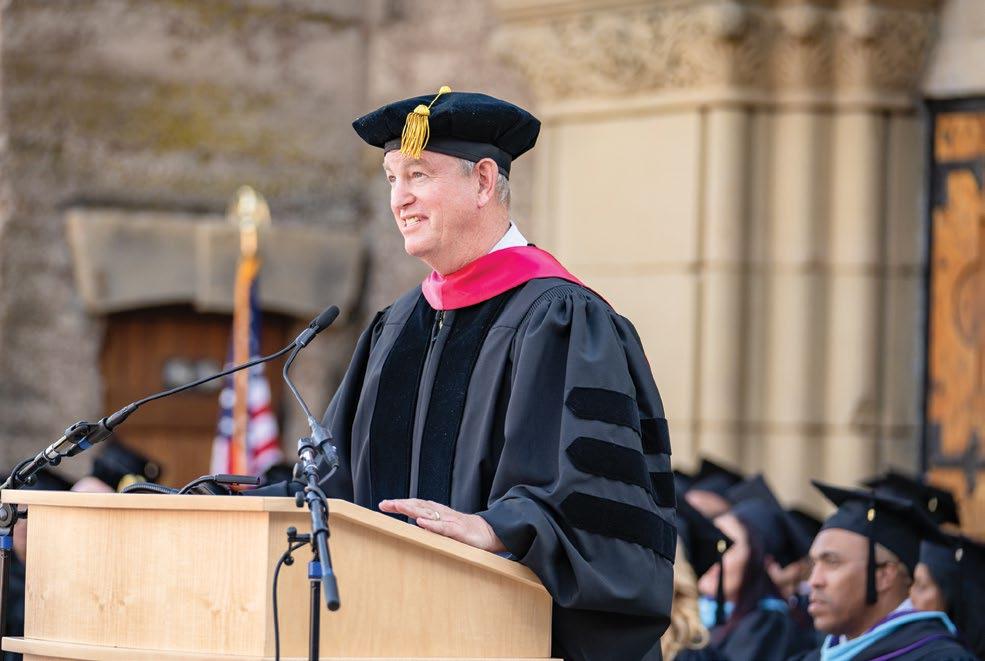
Brian Yager’s graduation address explores the meaning 2 of living a good life.
Gallery
Photo highlights from athletics, Near/Mitra, visual arts, performing arts, end-of-year activities and graduation. 8, 12, 20, 24, 28, 30
Alum Focus
Alums following their dreams and making a difference in the world. 10, 22, 26
Face Time
A glimpse into the educational expertise and personalities of our teachers. 13, 36, 48
in the professional lives of our faculty and staff.
From the Archives
We celebrate our history by uncovering hidden gems in the school’s
About Harker
From its early beginnings in 1893 – when Stanford University leaders assisted in its establishment – to its reputation today as a leading preparatory school with graduates attending prestigious universities worldwide, Harker’s mission has remained constant: to create an environment that promotes academic excellence, inspires intellectual curiosity, expects personal accountability and forever instills a genuine passion for learning. Whether striving for academic achievement, raising funds for global concerns, performing on stage or scoring a goal, Harker students encourage and support one another and celebrate each other’s efforts and successes, at Harker and beyond. Harker is a dynamic, supportive, fun and nurturing community where kids and their families make friends for life.
HARKER MAGAZINE
Harker Magazine is published biannually, in December and June, to showcase some of the top news, visionary programs and inspiring people of the greater Harker community. This magazine and its predecessor, the Harker Quarterly, have been recognized with CASE silver and bronze awards, and three gold and four platinum MarCom awards.
Subscribe to Harker News and get the latest daily updates. Visit news.harker.org.
FIND, FRIEND & FOLLOW US!
Join us for videos, announcements, photo sharing and more!
Search “harkerschool”:
You can opt out of receiving Harker Magazine by mail and just read it online at https://issuu.com/ theharkerschool. To be removed from the mailing list, email us at communications@harker.org.
The Harker School is an independent, coed, college-prep school serving transitional kindergarten through grade 12.
TK: 888 Boynton Ave., San Jose, CA 95117
K-Grade 5: 4300 Bucknall Rd., San Jose, CA 95130
Grades 6-8: 4525 Union Ave., San Jose, CA 95124
Grades 9-12: 500 Saratoga Ave., San Jose, CA 95129
Produced by the Harker Office of Communication
500 Saratoga Ave., San Jose, CA 95129
communications@harker.org · 408.345.9273
NEXT ISSUE: FALL/WINTER 2026
WORDS BY BRIAN YAGER
PHOTOGRAPH BY SOPHIE ORMOND
LESSONS FROM A Father’s Life Well-Lived
A year ago today, my father had his final surgery, an operation to repair a broken bone in his left leg. Eight days later, my father died. He was six weeks away from his 95th birthday. I’d like to share some aspects of my father’s life with you today with the hope that his story will inform, and maybe inspire, parts of your own.
My father resided in Santa Barbara for most of his life. In addition to operating his own law practice, he dedicated a great deal of his time to serving his community. He served on over 10 nonprofit boards, and his most profound impact in the public sphere was during a 12-year stint as the first district supervisor for the county of Santa Barbara, an elected position.
Due to the make-up of the other four districts within the county during that time, my father was almost always the swing vote on every substantive issue the county faced. There were some heated topics during his three terms; it was my father’s vote that facilitated a compromise for an oil and gas processing plant in Las Flores Canyon. My mother, in her later years, called the decision “the worst thing he ever did to Santa Barbara County.” In this situation and in others, my father modeled for all of us the notion that doing what’s right, and what’s best, is never easy, and requires sacrifice, sometimes disappointing those closest to us.
That packet of beads hadn’t been opened in 40 years, yet it magically had just the right number of beads in it.
I learned many things from my father, primarily through his deeds and actions, but also through his words. Importantly, for my father, these two things always seemed to align.
The thing I think about often is how my father’s life reflected how he defined success. His law practice provided our family with a comfortable and secure existence. However, it was never our family’s finances that defined my father’s sense of himself or drove how we interacted with and supported each other. When we sat down for family dinners, something my parents made sure happened almost every night, topics of conversation included items that my father might be addressing through his work on the board of supervisors, or a challenge that one of his legal clients might be facing. My father had his own political leanings and beliefs, but he analyzed each decision to determine what would be best for everybody involved, even at the expense of the approval of his supporters. Similarly, as a lawyer, he would remove himself from work with clients who wanted to skirt regulations and laws, and he let his principles dictate his actions, often foregoing opportunities to increase his financial well-being.
Yet the thing that my father loved to talk about most were his volunteer activities. I remember him speaking with tears in his eyes about his opportunity to be the marshal of the Santa Barbara Special Olympics in 1986. As a member of the Rotary Club board of directors, my father oversaw several famous barbecues at the Santa Barbara
Editor’s note: This column is excerpted and edited from Brian Yager’s graduation address on May 21.
Zoo, the proceeds of which helped fund several of the classic exhibits, including the elephant enclosure, which my own children grew up loving. Among his many volunteer activities, two of his favorites were the YMCA Indian Guides program and the Santa Barbara Scholarship Foundation, which provides assistance for tuition and other fees for students from the area. Upon his retirement, my father’s friends established the David Yager Scholarship Fund; my father added to this fund every year. Two weeks after his death, I received a letter acknowledging his final contribution to the effort, and I have since taken on the mantle of continuing the tradition in his honor.
My father’s involvement with the YMCA Indian Guides program was much more personal in nature, in that he was the leader of the troops for both of my brothers and for me. He would organize outings and crafts projects, and through them we would learn about citizenship and community virtues, and to honor the environment around us. Of course, many of these things were not at the forefront of my mind as an 8-year-old. Rather my focus was on increasing the number of beads in my Indian Guides necklace. Every time we had a craft activity or went on a hike, or had some achievement, we would get a small bead, and then we would add these to our necklaces as a collection of honors, similar to the way the scouts collect badges.
In the last years of his life, my father’s body deteriorated, and his mind followed. Two years before he died, he fell and broke his right femur. Despite surgery, the repair ultimately proved unsuccessful, and my father had his leg amputated, relegating him to an existence fully dependent upon other people for all aspects of his living. Despite this, my father remained a joyful and jovial person. In addition to his sense of humor, my father also maintained his drive for civic engage -
ment. About a year before he died, as I visited him one day, my father said to me, “You know, it seems to me that our congressman is a bit of a knucklehead. I’m contemplating a run for office.” I am pretty sure that being a congressman would require someone to actually go to Washington once in a while, and my father had not left the medical center in three years.
About six months later, I picked up a message at work. My father had called to inquire if I had the contact information for his campaign manager. It had been at least 40 years since my father had held public office, but it was endearing to know that the thought was still on his mind.
Last June, in the weeks after my father died, I was tasked with cleaning out his room in the medical center where he spent the last years of his life. There was a lot of paperwork – bills to pay, notes from grandchildren, newsletters and the like. There were also a few pages of yellow legal paper with to-do lists on them. These lists chronicled my father’s slow demise over the last year of his life. The list from a year before his death was neatly written, with over 20 entries, including things like “get a haircut; call the bank; pay taxes; make scholarship donation,” etc.
The list from six months before his death was much shorter: 10 items, written in a shakier hand, alternating between upperand lower-case print — very unlike my father. The contents were somewhat like the earlier list — apparently, he still needed that haircut — but they also seemed less focused, and more arbitrary.
The third list I found was written the day before my father went into the hospital for his final surgery. Cruelly, one year ago last Monday, he had fallen and broken the femur in his left leg, the same injury that had resulted in the amputation of his right leg two years previously. These things must’ve
been weighing on his mind before he went in for surgery. Yet, this final list only had five items on it. I could only read two of them, as my father’s handwriting had become very difficult to decipher. The first was a reminder to make a donation to the Special Olympics. The other decipherable item, written with age-defying precision and clear penmanship, read simply “run for Congress.”
There were also some things in his bedside drawer. In addition to glasses and a flashlight, there was a small manila envelope, with what felt like small marbles inside. When I opened it, I was surprised to find it was full of little blue beads, which he must have kept since his days as the Indian Guide troop leader from almost 50 years ago. That these beads had made the journey through four or five different moves during his lifetime and were important enough to be placed in the drawer next to his pillow, was not lost on me.
On the way to the hotel, I purchased some twine so that I could make some bracelets for family to wear during the memorial service. As I emptied the packet of beads onto a table back in our room, I counted them out — 14 in total. As the family gathered, I did a quick count. In addition to my mom, I have two brothers, each of us is married, and between us we have seven children. All told, that’s 14 of us who carry the name Yager and who survive my father. That packet of beads hadn’t been opened in 40 years, yet it magically had just the right number of beads in it.
What is a successful life? The other day at one of our events, I read a poem often attributed to Ralph Waldo Emerson that provides his answer to this question.
Success
To laugh often and much /To win the respect of intelligent people and the affection of children /To earn the appreciation of honest critics and endure the betrayal of false friends /To appreciate beauty /To find the best in others / To leave the world a bit better, /Whether by a healthy child, a garden patch, or a redeemed social condition /To know even one life has breathed easier because you have lived /This is to have succeeded.
I know that my father’s life checked many of these boxes, often in ways which he himself might not have appreciated. In particular, he always aimed “To leave the world a bit better,” and he did so in many ways.
Class of 2026, may you find and embrace similar purpose, direction and selflessness in your own lives ahead. We wish you a beautiful and successful future, and I hope that you, too, will fare well.
Top Stories
Recent stories reprinted from Harker News online.
Harker News publishes stories online about our students and faculty, highlighting accomplishments and celebrating successes. Top Stories highlights some of the most significant stories posted on Harker News since the last issue of Harker Magazine (fall/winter 2025) went to press. Visit news.harker.org to see full stories and hundreds more articles noting the truly remarkable efforts of our students and faculty.
This year’s Kids Heart Challenge, the annual lower school fundraiser for the American Heart Association, raised nearly $37,000. The effort saw students promoting healthy lifestyles by taking part in a variety of physical activities, including jump rope, vaulting off trampolines and playing basketball. To date at Harker, the Kids Heart Challenge (formerly known as Jump Rope for Heart) has raised more than $300,000.
2026 Cancer Walk raises more than $7K for Camp Okizu
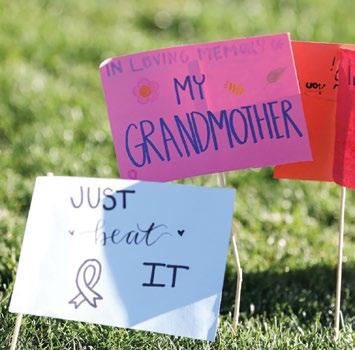
This year’s Cancer Walk brought hundreds of Harker community members to the middle school campus to raise funds for Camp Okizu, generating more than $7,000 for the organization, which stages outdoor experiences for young people living with cancer and their families. Since the first Cancer Walk in 2007, the event has raised nearly $150,000.
Two students to be featured at NUMU Los Gatos’ ArtNow exhibition
Senior Topaz Lee and junior Emma Lee each had pieces selected to be featured at New Museum Los Gatos’ 2026 ArtNow exhibition, an annual event that highlights work from Santa Clara County high school students. The exhibition, which runs through July 19, will feature 97 pieces, chosen from more than 600 pieces submitted.
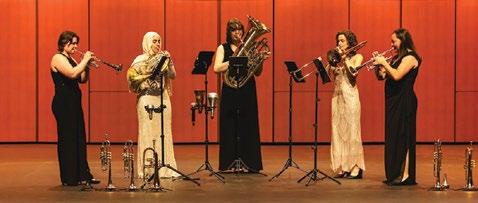
Seraph Brass offers program of unique interpretations and crowd pleasers
https://news.harker.org/seraphbrass-offers-program-of-uniqueinterpretations-and-crowd-pleasers/ March 3, 2026
The final Harker Concert Series event of the 2025-26 season saw Seraph Brass perform selections from Grieg, Gershwin
and Bernstein, and treated the audience at the Patil Theater to an encore performance of Billie Eilish’s “What Was I Made For,” from the 2023 film “Barbie.”
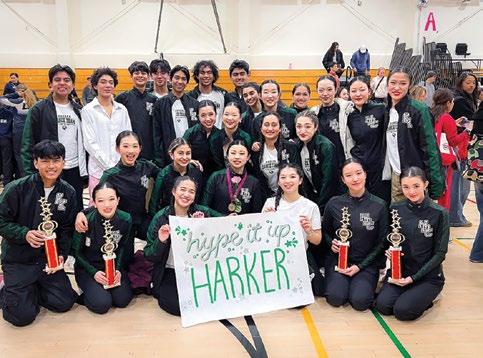
In February, members of the Harker Dance Company and Kinetic Krew – competing both separately and as a combined group – won top honors at two consecutive high school dance competitions, the Celebration of the Stars at Lincoln High School and the Festival of Champions at Cupertino High School.
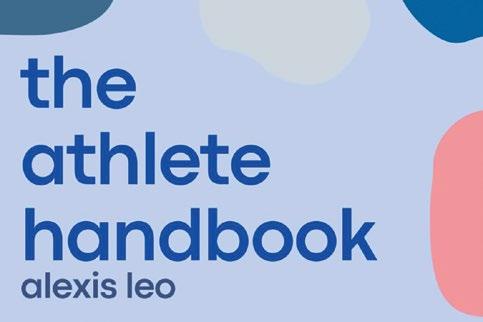
Student publishes book to help high school-aged athletes
Harker junior Alexis Leo published “The Athlete Handbook,” a guide for student athletes that contains advice on how to build confidence and maintain a balanced lifestyle. She referenced her experiences as both a Harker athlete and as the cofounder of the nonprofit organization Volleleaders. The book can be purchased on Amazon.
2027
spring musical cast and crew to appear at Festival Fringe
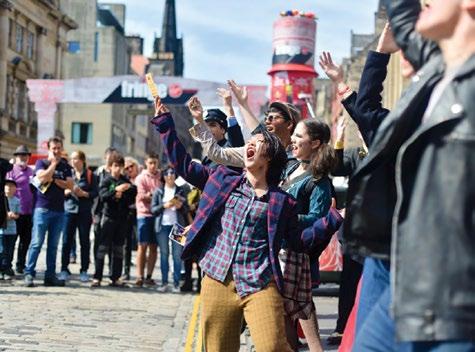
Harker performing arts will return to Edinburgh, Scotland, in summer 2027 to perform at the Festival Fringe, the world’s largest performing arts festival. The cast and crew of “Into the Woods,” next year’s upper school spring musical, will give four performances, each lasting 90 minutes from setup to teardown.
Walter D. Greason speaks on Minnesota and MLK’s lasting vision
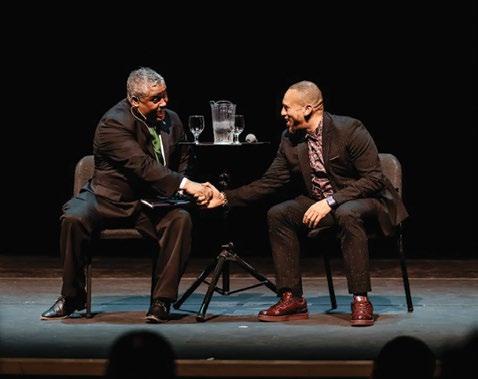
Historian and author Walter D. Greason spoke at Harker’s third annual Martin Luther King Jr. Celebration, which also featured a special performance by members of Harker’s upper school orchestra and jazz band, led by bandleader and activist Kev Choice. Greason reflected on recent events in his home state of Minnesota and surveyed King’s work, beginning with his first action in 1950.
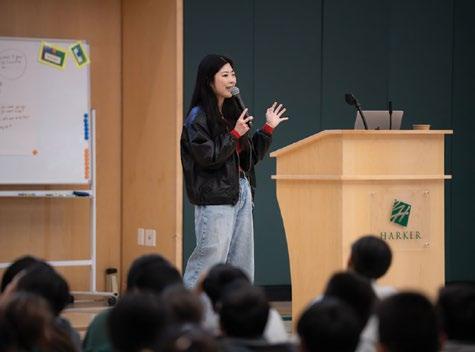
Author Kyla Zhao visited the middle school in January to talk about the process of writing her latest book, “May the Best Player Win,” which was featured in the lower school’s annual tournament of books. Zhao talked about how she drew on her own personal experience as a chess player for the story, in which the main character sets out to prove girls can be just as good at chess as boys.
Harker
top among California schools for Regeneron Top 300 scholars
Harker seniors Cyrus Ghane, Danika Gupta, Lily Shi, Aditya Shivakumar and Evan Zhang were named Top 300 Scholars in the 2026 Regeneron Science Talent Search. The five students were the most from any California school.
One of Harker’s
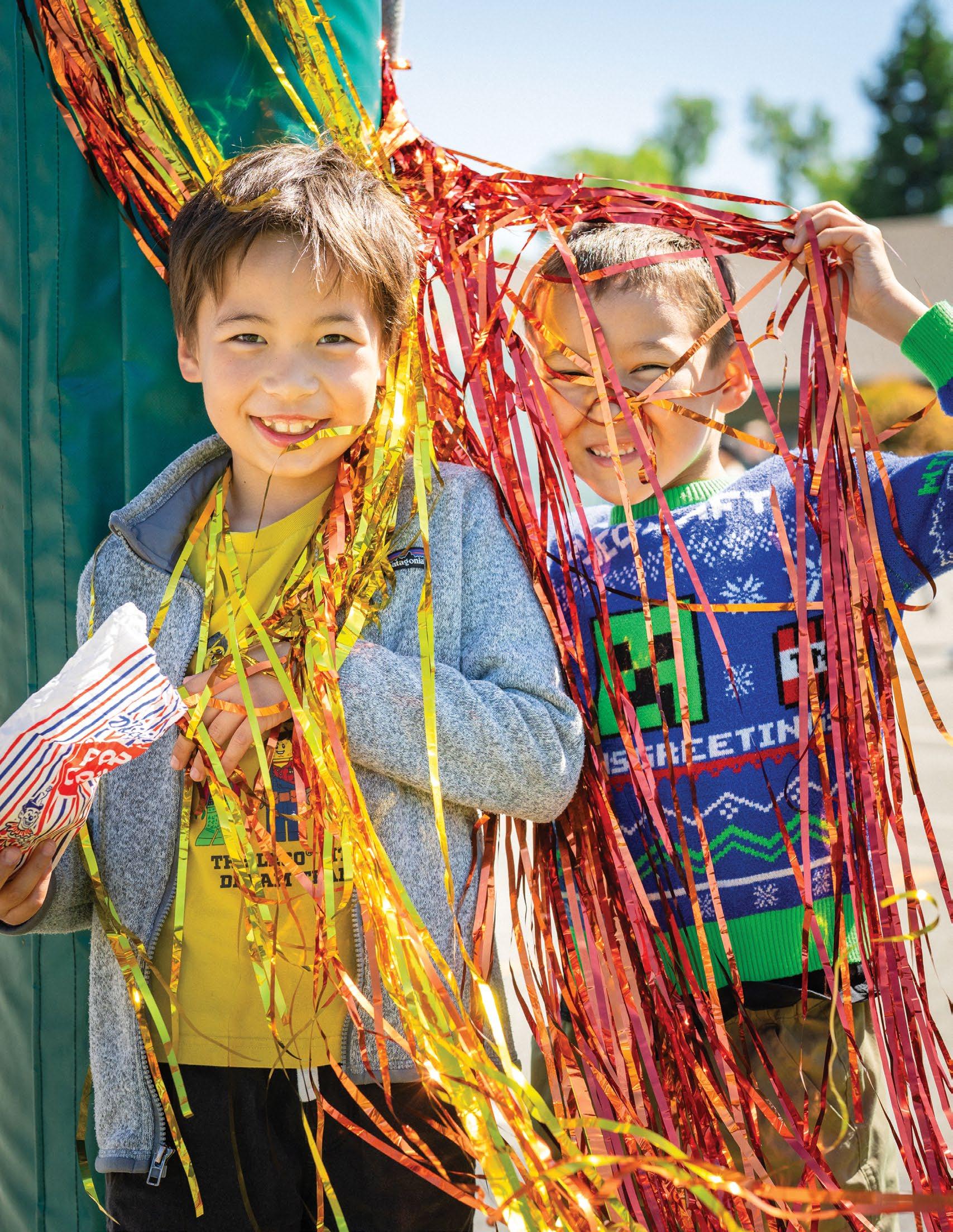
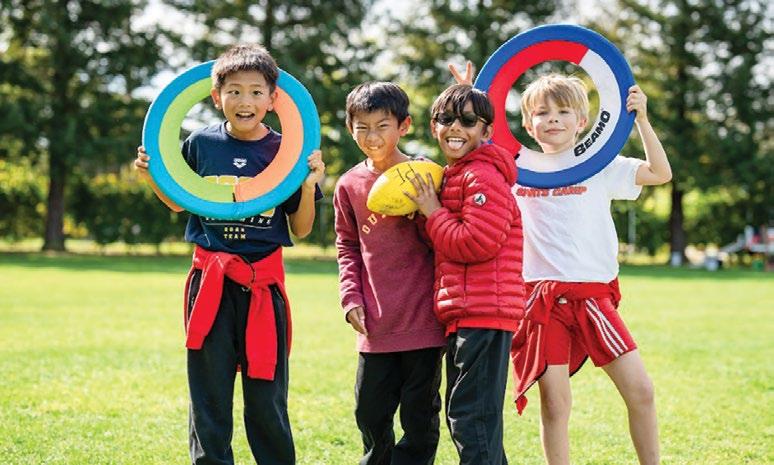
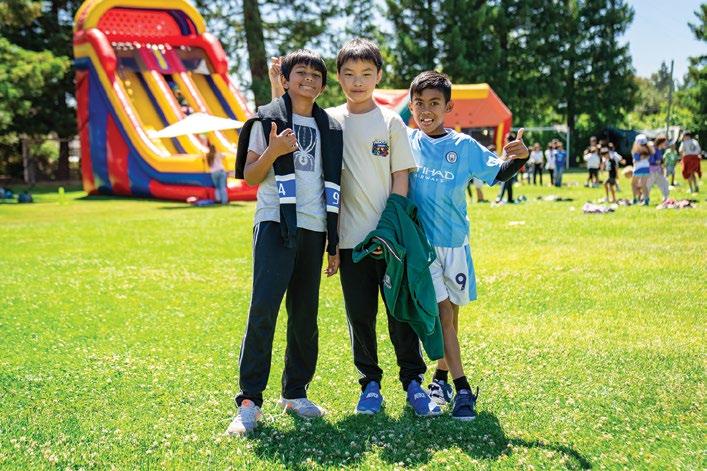
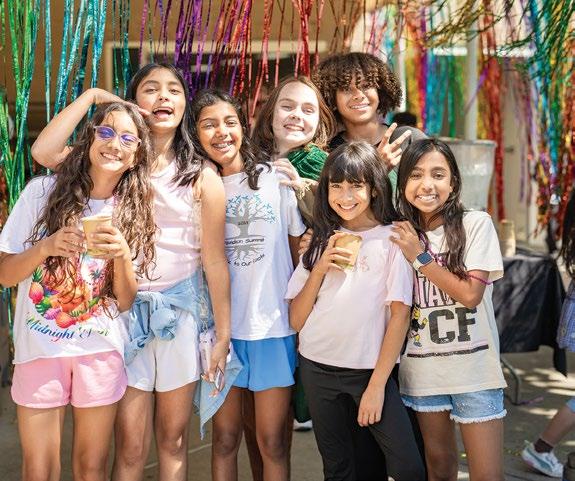
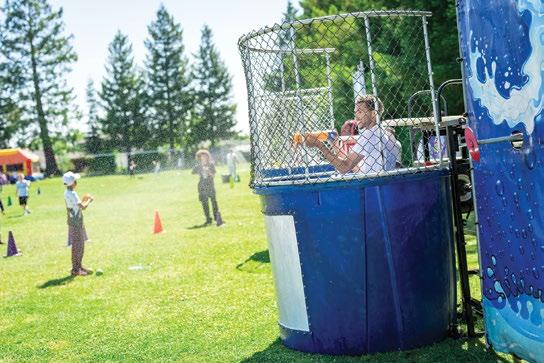
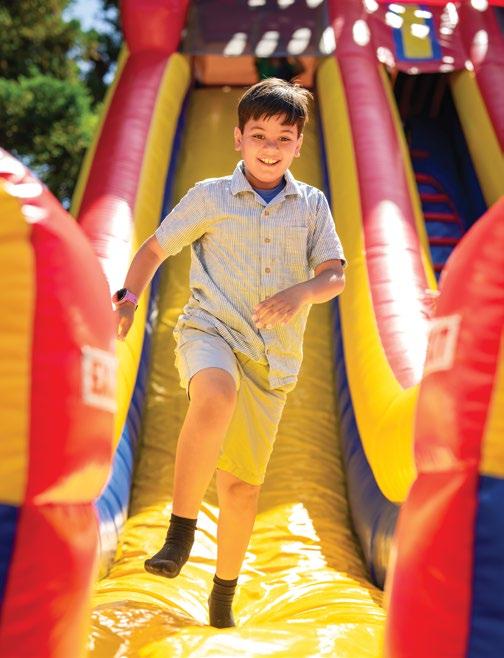
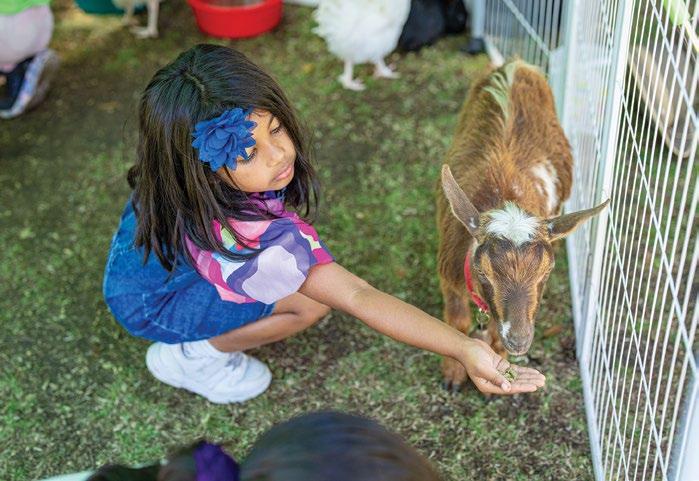
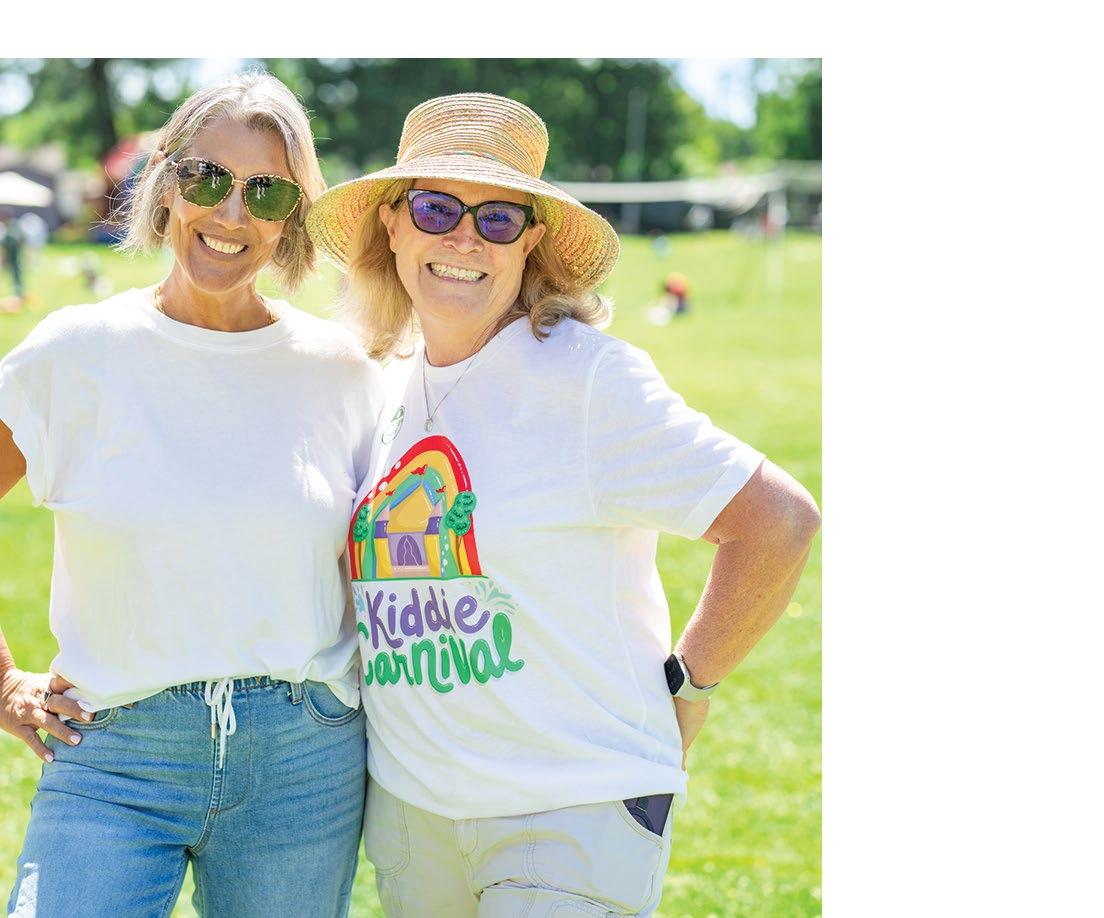
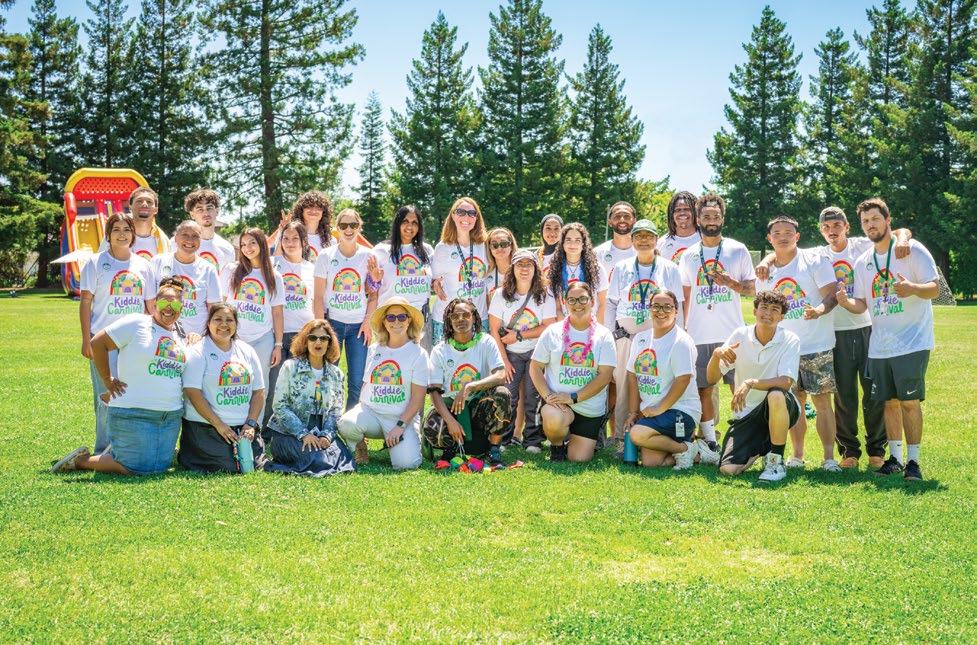
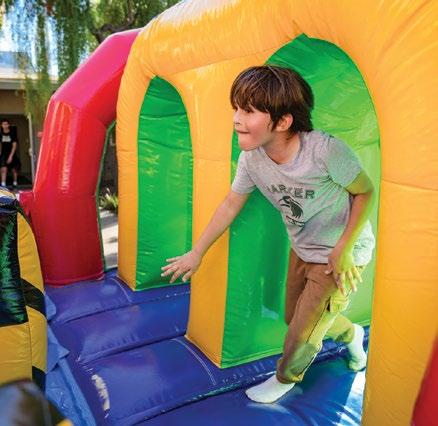
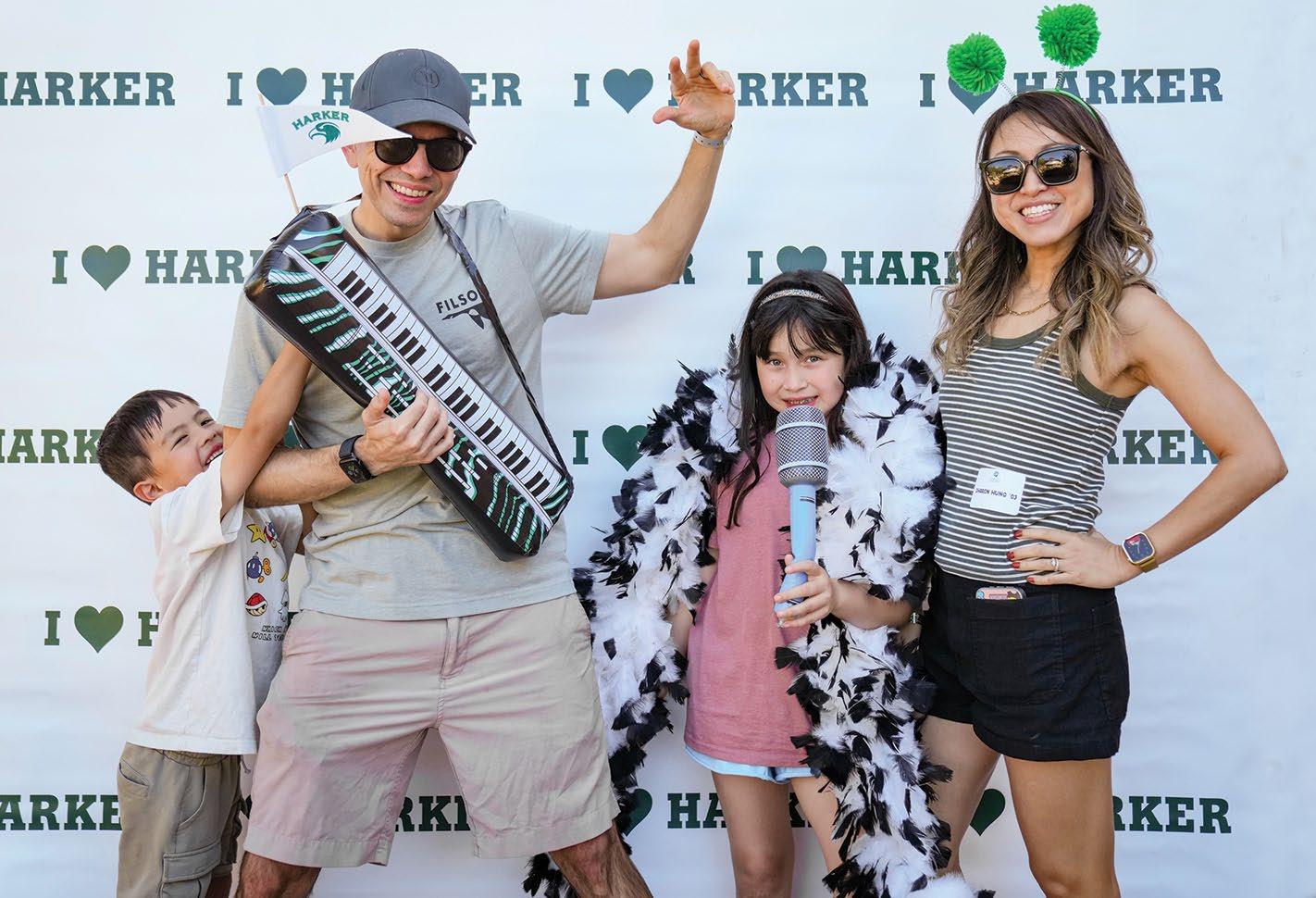
oldest end-of-year traditions, the Kiddie Carnival, celebrated its 45th year on June 4. Kelly Espinosa, the longtime Harker staffer who directed the school’s summer programs for decades, started the event to give grades 1-3 students something fun to do as the school year closed.
Originally taking place on the last Wednesday afternoon of the school year, the Kiddie Carnival was eventually moved to the morning of the last day of school. “I started the Kiddie Carnival because the first-third graders who stayed after school didn’t have a special end-of-year party,” Espinosa said. “I wanted the after-school program to develop its own identity as it was growing and changing at that time.”
Former lower school BEST director Kim Cali helped organize the Kiddie Carnival after joining the program in 1987. “When I began working at Harker the Kiddie Carnival consisted of six activities out on the tennis courts at the Saratoga campus,” she said. As enrollment at Harker increased, the Kiddie Carnival added more games, treats and attractions such as bounce houses. Moving the time and day of the event also freed up time for teachers to help with the event.
During the 2021-22 school year, Cali’s last year at Harker, her team began discussing a plan to design the Kiddie Carnival for all lower school grades: “I was happy to hear it is now just that.”
“While it takes a lot of planning and a great deal of teamwork, the opportuni ty to celebrate alongside our students on the last day of school makes it incredibly rewarding,” said Andrea Ledford, lower school BEST director. “The event brings together students, teachers, and BEST staff in a joyful and fun-filled day to close out the school year.”
Kiddie at
Words by Zach Jones
Photographs by Sophie Ormond
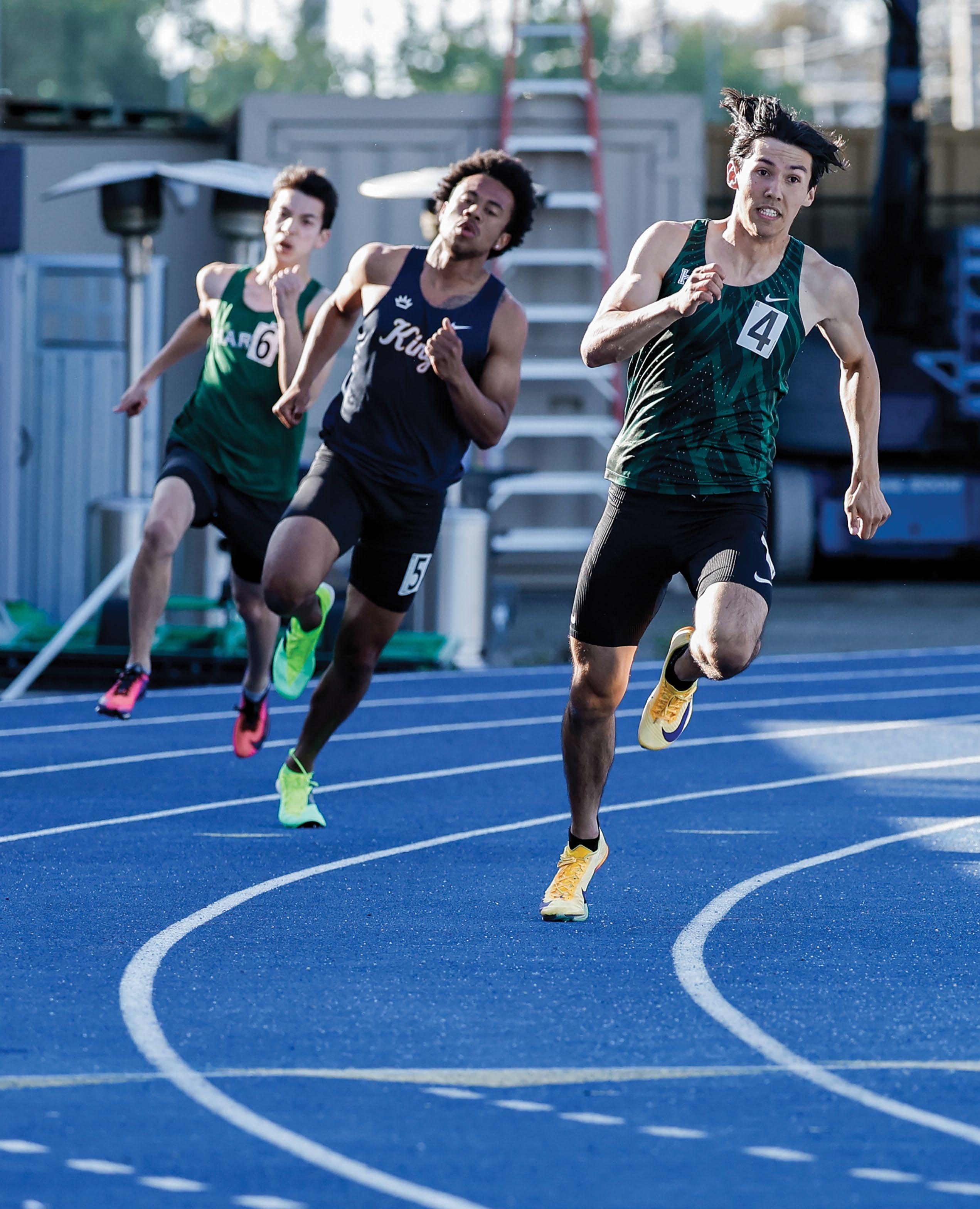
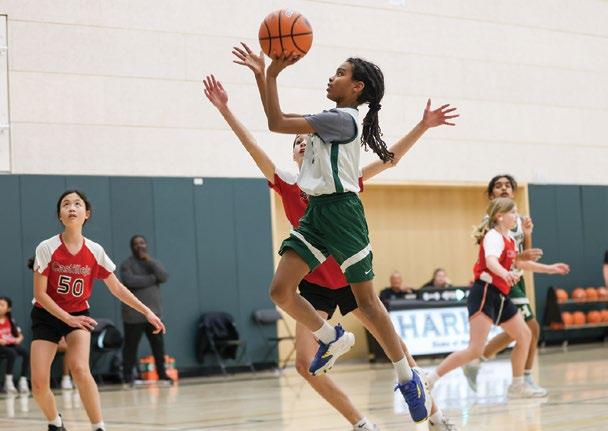
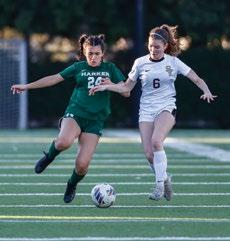
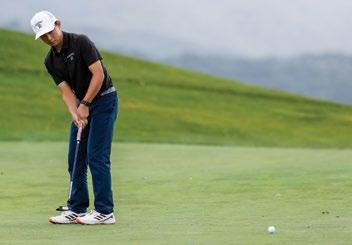
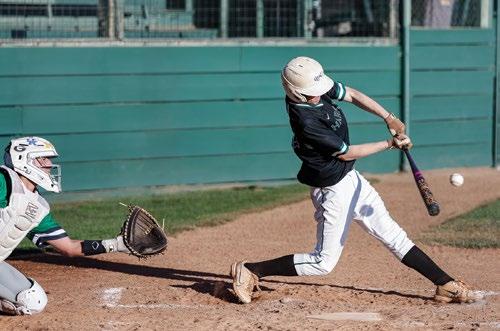
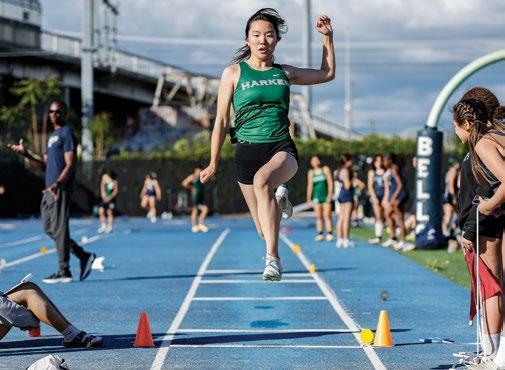
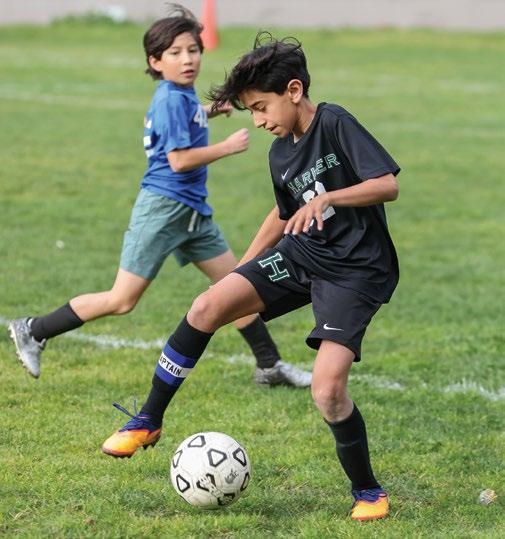
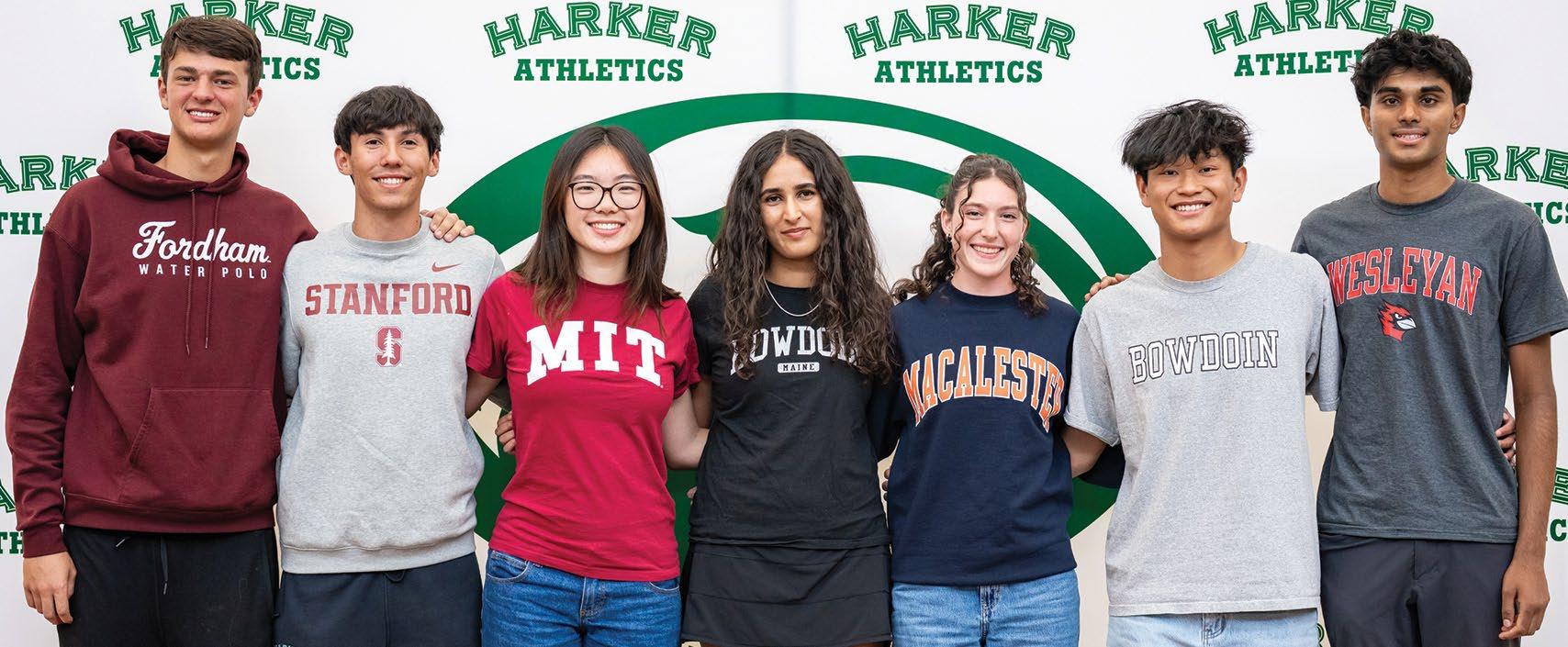
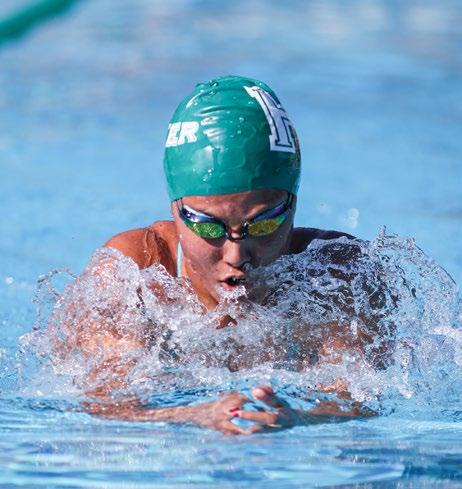
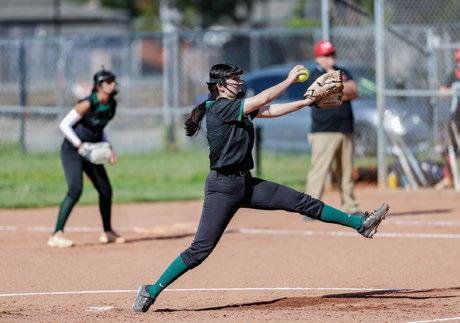
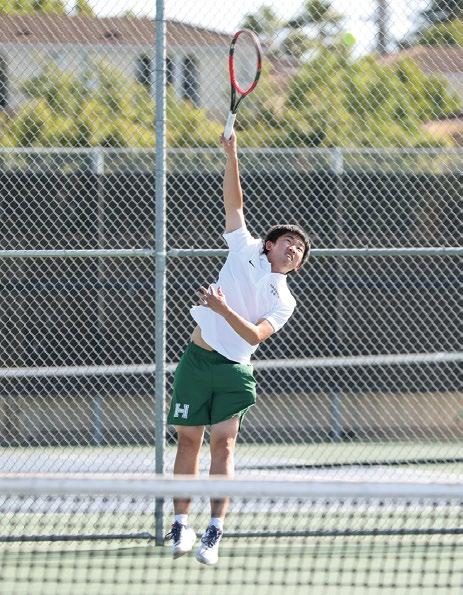
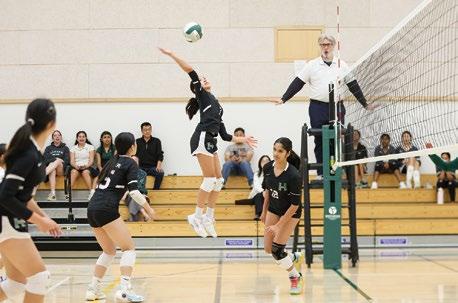
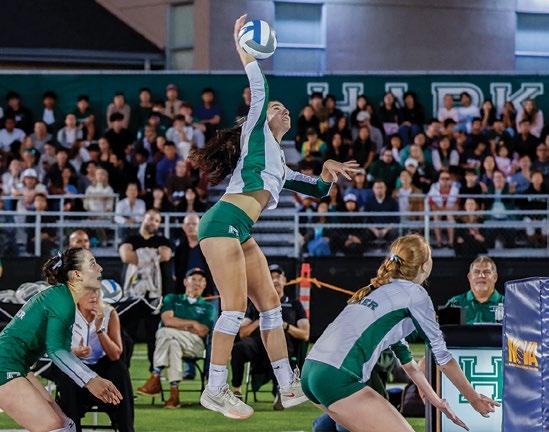
Notable successes in spring athletics included the boys varsity golf team’s first league championship win since 2019, boys varsity tennis’ big win at the 2026 Silicon Valley Tennis Championship and senior Brady Tse’s (shown at left) historic track and field season, which ended with him becoming the CIF state champion in the 300 meter hurdles. In April, seven seniors committed to continuing their careers as student athletes at their universities of choice during a special ceremony held at the athletic center, cheered on by their friends, families and athletic staff. Student athletes recognized this year were: Alejandro Cheline (Fordham, water polo), Brady Tse (Stanford, track and field), Sophia Ou (MIT, track and field), Pavith Khara (Bowdoin, tennis), Maryanne Davies (Macalester, track and field), Koby Yu (Bowdoin, squash) and Vivek Yella (Wesleyan, golf). For more photos, visit https://news.harker.org/gallery-spring-2026-athletics/. PHOTOGRAPHS
athletics
JULIA GITIS ‘03
Rooted in
From pioneering Harker’s first video yearbook to leading programs that strengthen neighborhoods, Julia Gitis ’03 aims to connect people, foster community and create meaningful change
“When I reflect on it now, much of what I do today has its roots in that senior-year project: entrepreneurship, leadership, technology, community and inclusivity.”
– Julia Gitis ‘03
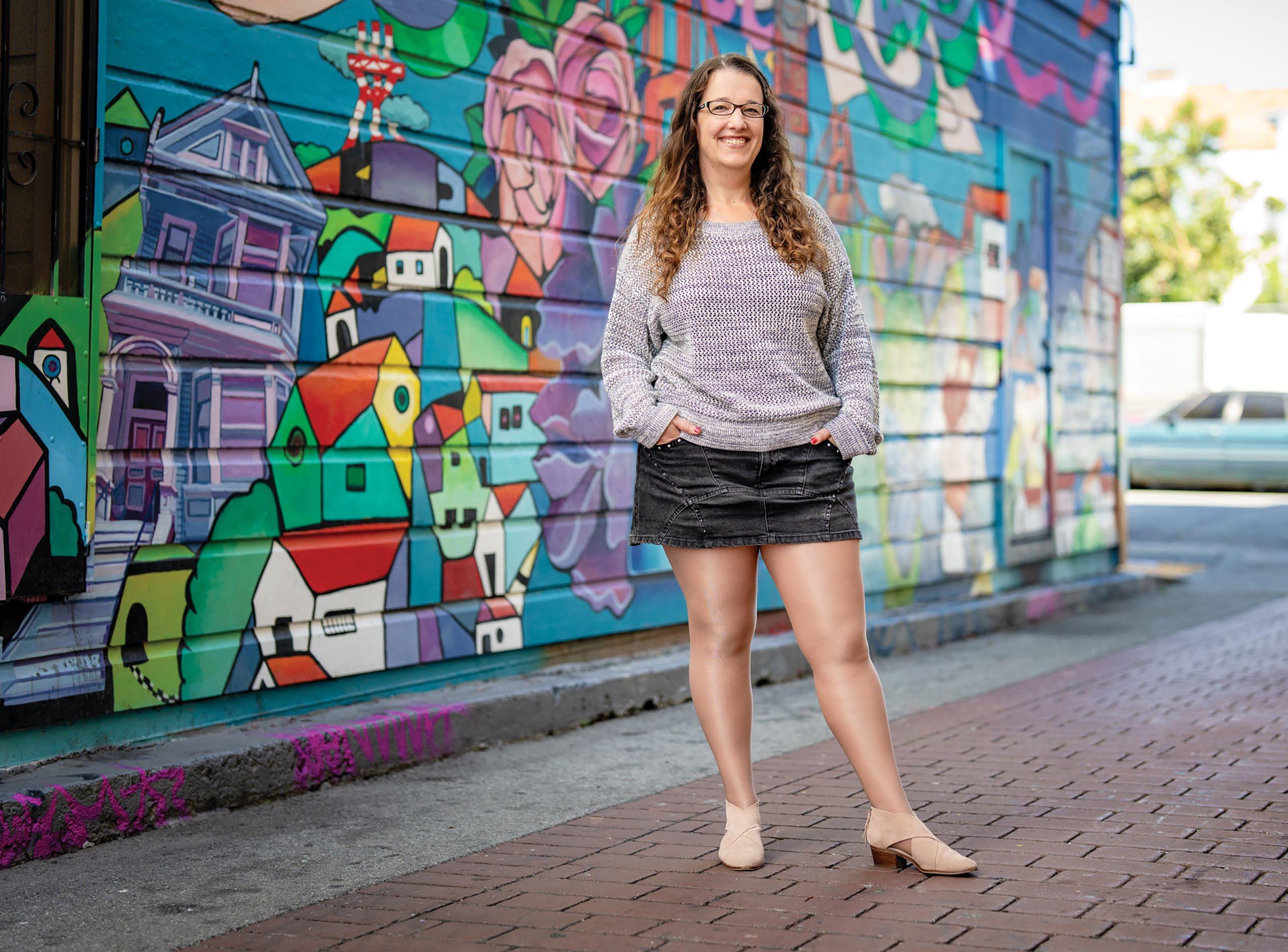
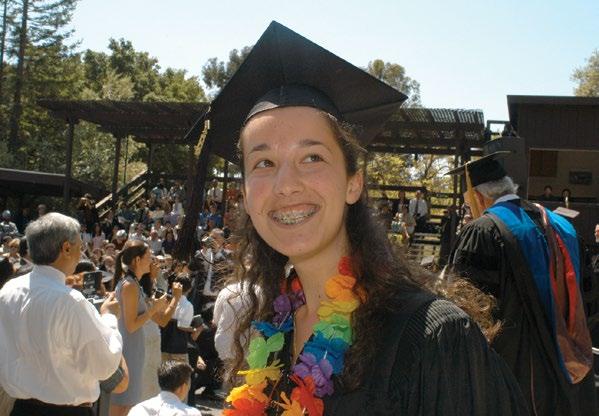
Julia Gitis ’03 tapped into her passion for building community long before it became her life’s work, starting with a senior-year initiative that would leave a lasting impression. At Harker, Gitis created, directed, produced and edited the school’s firstever video yearbook.
“During the week, I put a lot of effort into making sure every student in our class had a chance to speak on camera,” a determined Gitis recalled. “And then every weekend, a group of classmates would get together to edit the footage. We debuted the final film at our baccalaureate ceremony, in front of the entire school and parent community.”
Looking back, that experience proved formative. “When I reflect on it now, much of what I do today has its roots in that senior-year project: entrepreneurship, leadership, technology, community and inclusivity,” she said.
“Julia was an energetic, genuine and fun student who truly loved Spanish,” said Abel Olivas, her Spanish teacher. “She took real joy in supporting her peers as they learned, and valued connection and community.”
“San Francisco gives us wings; our neighbors give us roots.” That belief is at the heart of Gitis’ work today. She now leads Good Neighbor Lab, a nonprofit that designs programs to strengthen neighbor-to-neighbor relationships, build connections between residents and institutions, and encourage hyperlocal innovation. The idea for Good Neighbor Lab emerged from a small but telling change in San Francisco’s streetscape: the gradual disappearance of newspaper racks. Rather than looking away, Gitis saw an opportunity to reimagine those spaces as community bulletin boards, physical places for neighbors to share information and connect. WORDS BY VIKKI
Her work in community building took on momentum in May 2025, when Gitis joined an organizing call for National Good Neighbor Day. She was surprised to learn that she was the only participant from California and that the holiday had never been officially celebrated in San Francisco. Energized by the discovery, Gitis began reaching out to local partners to help bring the celebration to life.
Those who have known Gitis the longest say this kind of ambition and follow through is nothing new. Gabrielle DeMers ’03, her best friend and classmate since fourth grade, describes Gitis as “visionary, empathetic and determined.” DeMers recalls that in the same year Gitis graduated from MIT, she also moved her family cross-country, trained for and completed a triathlon, and got married – all within a matter of months. “I’m exhausted just thinking about it,” DeMers said with a laugh.
And DeMers isn’t the only one who is impressed.
“Julia tackles everything she does with a blend of determination, a wry sense of humor and optimism,” said Pam Dickinson, Office of Communication director, who had Gitis as an assistant one summer. “She literally assumes the best, and by believing it, she makes it so. She’s the hardest person I have ever met to say ‘no’ to!”
As with most meaningful journeys, Gitis’ path was shaped by curiosity and experimentation. She began her career as a classroom teacher in the East Bay before spending many years in education technology, including five years as a senior product manager at Khan Academy. She holds a bachelor’s degree from UC Berkeley, a master’s degree in education from Harvard University, and an MBA from the MIT Sloan School of Management. These experiences continue to inform her work at the intersection of learning, technology and community.
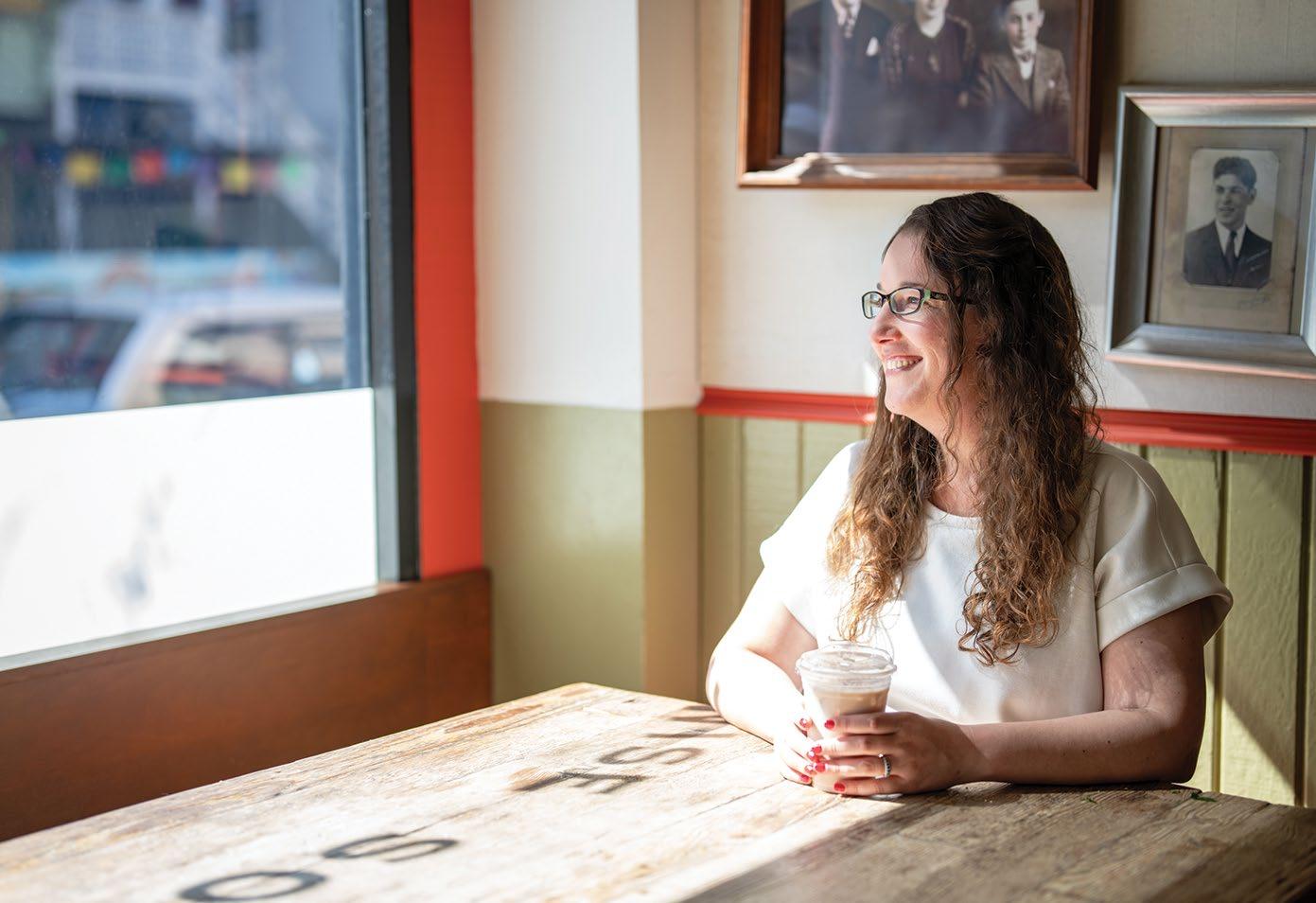
“I felt really supported at Harker, from students, teachers and administrators, and felt the most alive when I was contributing to that community,” said Gitis. “Now in San Francisco, I feel like I’m stewarding a movement that counters doom scrolling by encouraging people to talk to their neighbors and build community.”
Vikki Bowes-Mok is a freelance writer and editor.
Near/Mitra Celebration gallery
BY AJ TINIO
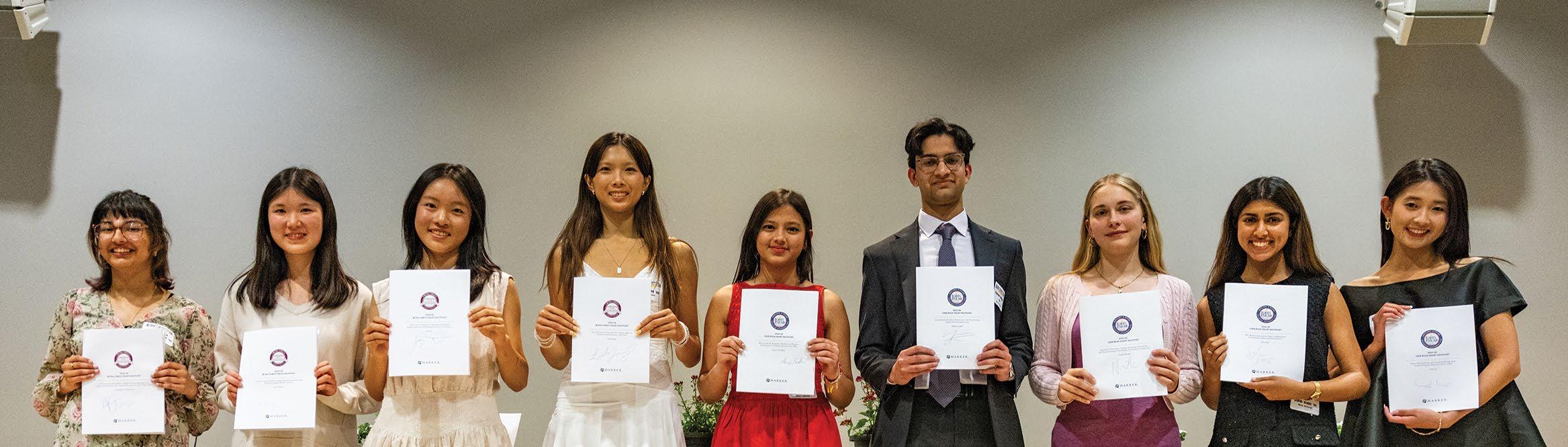
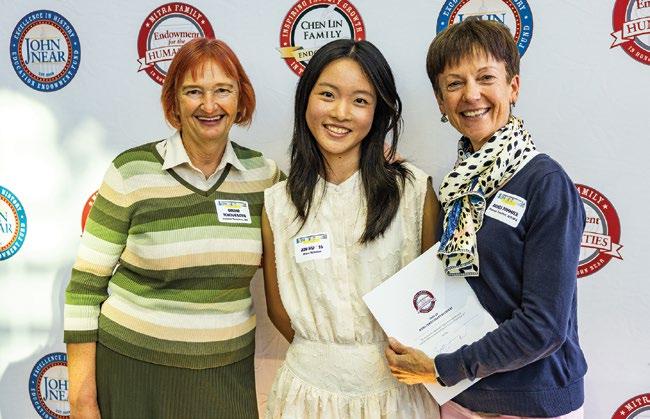
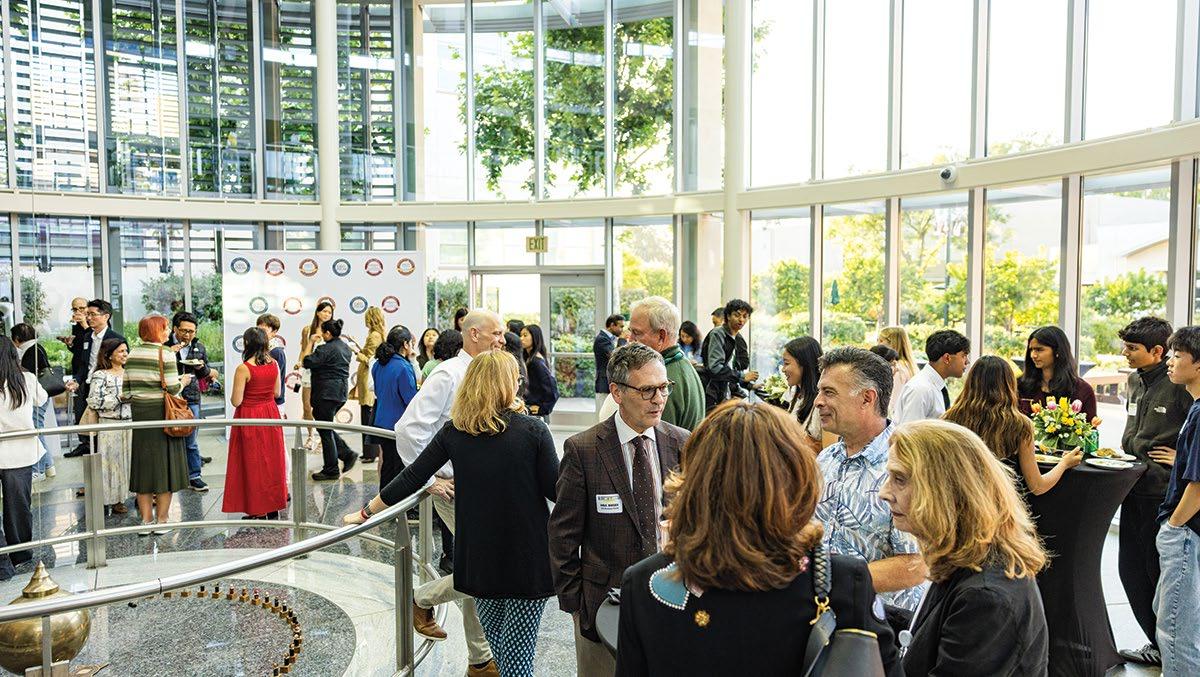
Faculty mentors and families celebrated the 2026 Near/Mitra scholars on April 28. Olivia Zhu ’11 was named the inaugural Near/Mitra Legacy Scholar, and called in via Zoom to share her thanks. The John Near Excellence in History Endowment and the Mitra Family Endowment for the Humanities sponsor grants to enable selected seniors to research a U.S. history or humanities topic of their choice. The Chen Lin Family Faculty Grant Program supports the faculty mentors who guide their students through the yearlong project. The scholar paper archive is open to all on Harker’s issuu page: https://bit.ly/4u9ivnp.
2025-26 SCHOLARS
Near ScholarS
Natalie Barth
The Death of Romantic Comedy: Streaming, Social Media, and Modern Dating on the Demise of the Romcom Golden Era
Mentors: Julie Turchin, Meredith Cranston
Farhan Ansari
From Manifest Destiny to Lebensraum: The Transnational Origins of Nazi Expansionism Mentors: James Tate, Meredith Cranston
Sofia Shah
Why Western Intervention Failed in Afghanistan: Between Intervention and Interpretation Mentors: Bronwen Callahan, Amy Pelman
Ananya Pradhan
What is with the Program?: The Decline of Women’s Participation in Computer Science in the 1980s
Mentors: Donna Gilbert, Connie Hollin
Yena Yu
Maps, Disinvestment, and Greed: Redlining’s Role in Intensifying the Financial Crisis of 2008 Mentors: Carol Green, Amy Pelman
Mitra ScholarS
Linda Zeng
On the Border of Virtue and Vice: Chinese Migrants and the Political Economy of Mexicali Mentors: Chris Gatto, Connie Hollin
Joy Hu
“Ici on noie les Algériens”: Repression and French National Memory Surrounding the Events of October 17
Mentors: Byron Stevens, Connie Hollin
Anoushka Chakravarty
Drawing a People’s History: Modern Hindu Supremacy and Hegemonic Identity in the Graphic Narratives of Amar Chitra Katha Mentors: Mark Janda, Amy Pelman
Ariel Zhang
“You’re a man, Orlando!”: Performing Gender and Undoing the Self in Virginia Woolf’s Orlando Mentors: Beth Wahl, Meredith Cranston
PHOTOGRAPHS
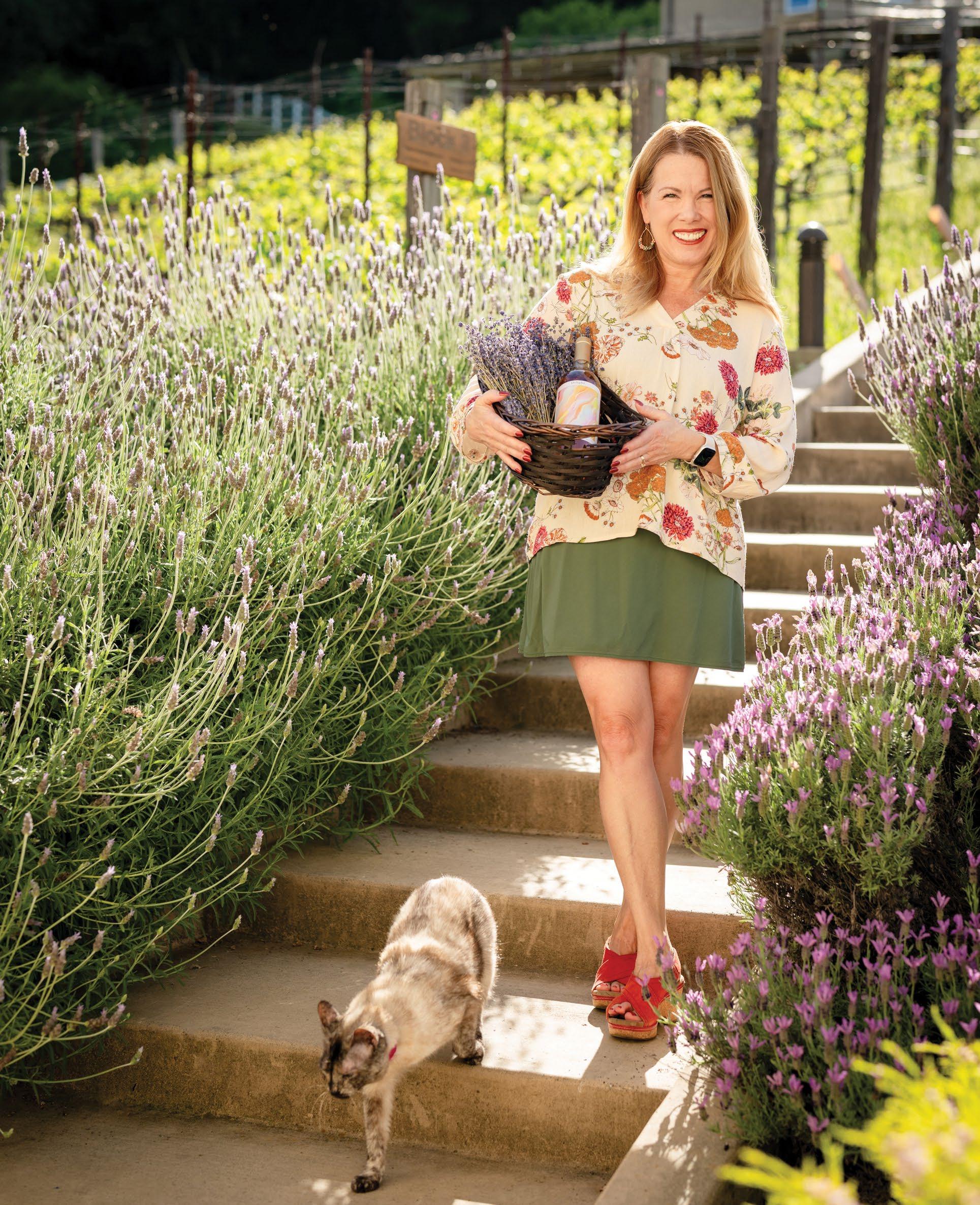
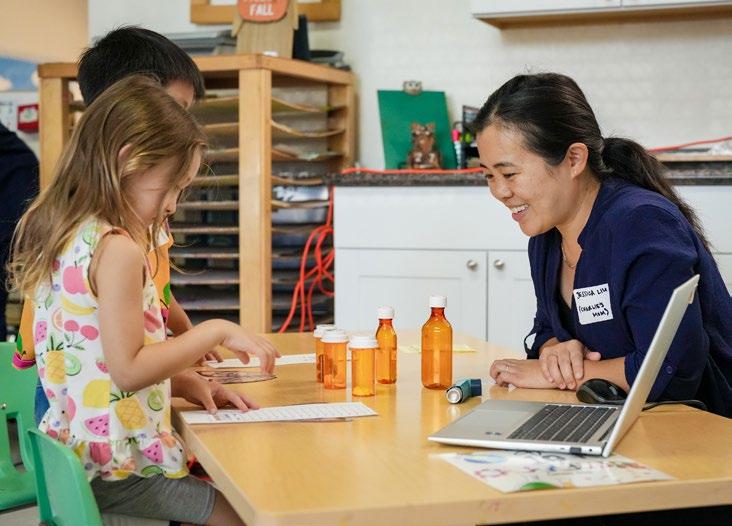
Making connections and the outdoors – two things that bring joy to Heather Russell, lower school English department chair. She says, “People are my favorite. Hospitality is hard-wired into who I am, and it brings me great joy to have a full house of laughter and people!” Those gathered around her at her family farm might include her husband of 30 years, Mark, their three daughters (Lauren ’18, Claire ’20 and Kate ’24), three dogs and two cats (and perhaps one day some babydoll sheep). Her nurturing continues with her volunteer work: She has worked with Girls on the Run and is on the leadership team for Silicon Valley’s Beautiful Day.
Brag about something.
I’m a farmer. We have a family winery in Los Gatos and most weekends you can find us hosting wine tastings in our barn, at local wine walks, or tending our grapes and lavender farm!
What makes you feel like a kid again?
I never stopped! After 33 years, teaching keeps me curious, open to learning, and listening to students’ ideas. They are the best teachers.
What is your favorite book and why is it meaningful for you?
“Wishtree,” by Katherine Applegate. I love trees and animals. Imagining trees and animals that talk and tell a story of acceptance is a win-win.
What is the best piece of advice you’ve ever gotten?
When I was in college, my dad put a Post-it note on my desk that said, “Now is the time to do what you know needs to be done.” It has become a lifelong mantra to speak up, reach out or lean in to difficult challenges.
What is the best compliment someone can give you?
That I listened to them and made them feel known and heard. My mind is often connective and racing, so to slow it down and really attend to conversation takes focus. I’m a work in process, and I strive to be a more intentional listener.
What is your most treasured object, and why?
Photo by Chuck Witschorik
A 100-year-old brass school bell that belonged to my grandmother, a beloved one-room schoolhouse teacher from Pennsylvania. I come from a legacy of teachers in the family and she was my inspiration!
Classroom In the
In my annual baking challenge, students solve literature-related riddles from “The Hobbit,” earning ingredients to make the traditional seed cakes mentioned in the novel. Students, some of whom have never cracked an egg, work together to solve, mix and bake their cakes with the gracious cooperation of the lower school kitchen.
Heather Russell
WORDS BY DAVE KIEFER
PHOTOGRAPHS BY SOPHIE ORMOND AND BRANDEN KELLER, AND PROVIDED BY HARKER ARCHIVES
The opening of Elizabeth Zhang’s book, “Vinnie’s Tour of the Universe,” reads like a sweet memory from her own childhood: “Sometimes when the moon is high, I open my window and look at the stars.”
For Zhang, grade 11, the origins of her interest in astronomy not only inspired her to write a children’s book, but evolved into a passion for astrophysics and the possible discovery of two exoplanets orbiting binary stars.
Those interests were cultivated at Harker, where asking questions and seeking answers is encouraged and emboldened, especially in the scientific realm, where Harker is among the nation’s premier high schools for research.
Zhang, whose first exposure to research came through Harker’s science research program in eighth grade, collected open-source data from the Kepler Space Telescope, trained a computer to look for patterns, analyzed them and found evidence of transits of circumbinary planets.
“One specifically had a very distinct sinusoidal signal,” Zhang said. “I looked through all the values. It’s good, it converges, and there’s a normal distribution, so I know what I’m looking at isn’t false or wrong. OK! This is good!”
Zhang, part of Harker’s Advanced Research Methods class, still needs to confirm her discovery and publish her findings, but somewhere out there are potentially two hidden planets discovered by a Harker junior.
A Regeneron International Science and Engineering Fair qualifier, Zhang adds to Harker’s significant research legacy.
Every year since 2006, Harker students have been recognized in the Regeneron Science Talent Search — the nation’s oldest and most prestigious science research competition for high school seniors. That’s 123 scholars/semifinalists of only 300 recognized across the nation each year, 22 finalists (top 40), and three winners (top 10) in 21 years.
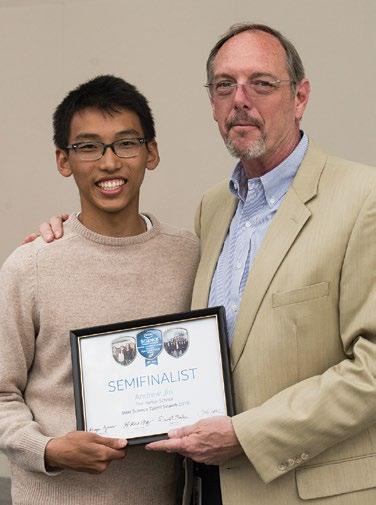
Yi Sun earned second place in 2006 with new discoveries about a mathematical theory known as random walks. Andrew Jin was among three first-place winners in 2015 for developing a machine learning algorithm to identify adaptive mutations across the human genome. And Michelle Wei was third in 2024 for studying the mathematics of second-order cone programming and finding that these problems can be solved more quickly than previously thought by converting the original problem into a modified form.
Secrets
Research program lets students go deep
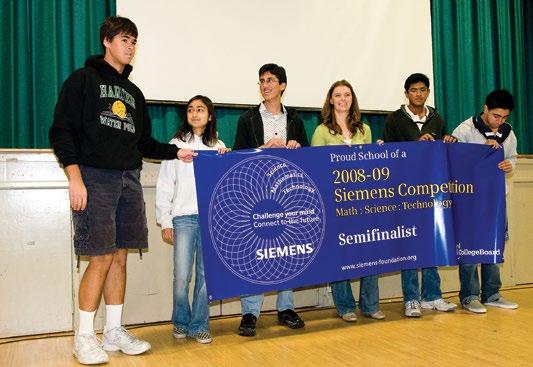
In the Siemens Competition, held from 19992017, Harker had 21 regional finalists and seven national finalists, making Harker fourth on the list of schools with the most national finalists in the competition’s history.
Harker’s research interest “doesn’t really surprise me,” said Research Methods teacher Sam Lederer. “Harker is a place that’s known for its scientific prowess and provides the kind of resources and lab space for students to do this kind of work.”
Or, as Honors Advanced Research teacher Mike Pistacchi puts it, “They’ve got the work ethic. They’ve got the education. And they’ve got the drive to figure it out.”
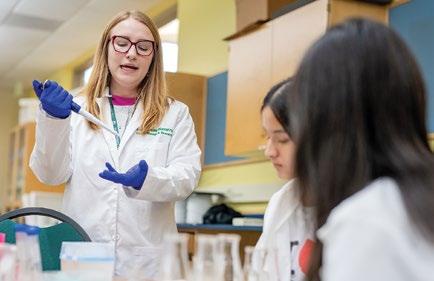
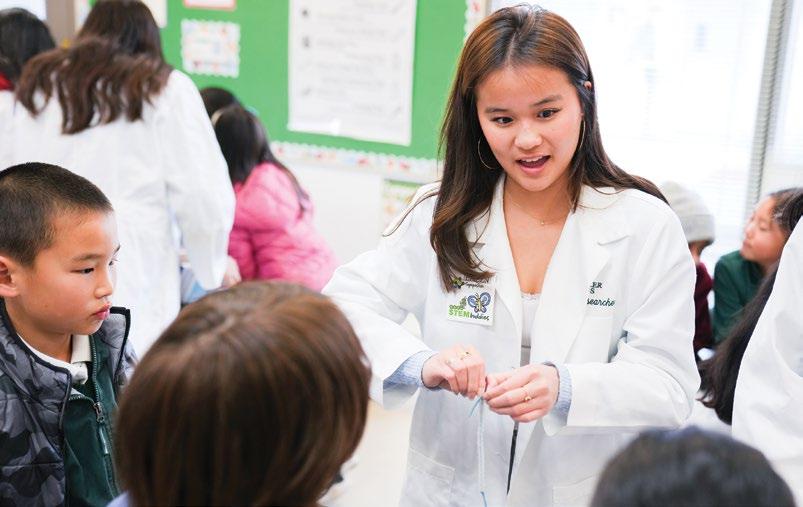
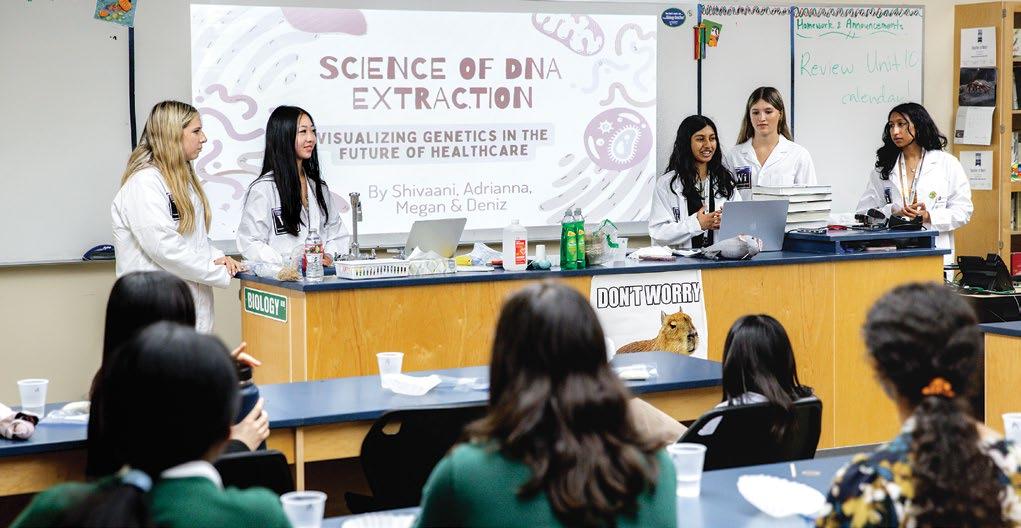
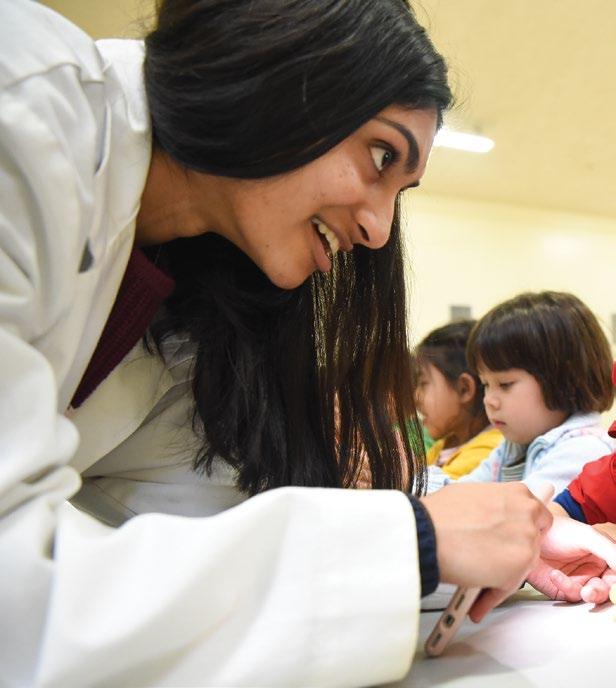
Science is introduced early at Harker. The Women in STEM (WiSTEM) club annually visits and conducts experiments in TK, kindergarten and first-grade classrooms. Earth science is introduced in third grade, physics in fourth, and biology in fifth. Those subjects are covered deeper in middle school, with chemistry joining the mix.
In eighth grade, students are paired with faculty mentors for research projects showcased at
Santa Clara County’s Synopsys Science Fair.
“The foundation of our research is this really deep science program that we have,” said Jennifer Gargano, assistant head of school for academic affairs. “Because you can’t research if you don’t understand science.”
At the upper school, research is taught at three levels, with an eye toward the Regeneron talent search. There also is a research club, an open lab for independent projects, and clubs such as WiSTEM, which promotes research and helps science chair Anita Chetty organize the annual Harker Research Symposium.
The original vision came from Diana Nichols, head of school during Harker’s transition from K-8 to K-12 in the late 1990s.
“The school was very much about establishing itself as Silicon Valley’s high school,” said Chetty, who arrived as an AP Biology teacher in 2001. “She wanted the school’s name to be recognized for excellence at the national level.”
The vehicle was national competitions. With the help of physics teacher Dan Mathews, who embraced the research ethos, the program took off and Nichols’ objectives were fulfilled
in 2006 with Yi Sun’s second place in the Intel (now Regeneron) STS and Christopher Sutardja’s Siemens regional semifinal honor.
“It suddenly put our school on the national stage,” Chetty said.
While honors were worthy of celebration, Chetty did not want contests to be the driver in Harker research.
“I was not interested in the competition,” Chetty said. “I wanted the students to learn how to do research. That was my goal.”
The result was the Harker Research Symposium, created in 2006 to get the Harker community excited about research and to show students what excellent research looks like.
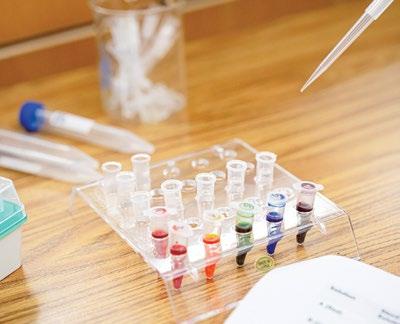
The first symposium had 35 registrants and was held in what is now the auxiliary gym. Twenty years later, more than 600 attended the event, with keynote speakers, alumni and student panels, and poster sessions. Now, the gleaming Patil Theater and the state-ofthe art Nichols Hall science building are the backdrops, and high-end equipment such as a DNA gene sequencer, “that you wouldn’t typically find outside of a university lab,”
“They really teach you from a young age to be curious. I’ve never had a teacher tell me, ‘That’s too ambitious.’ They always encourage you go even deeper: What can I do in the future?”
– Saria Lum, grade 10
“I want them to see that they can have a profound impact within the science realm by starting now.”
- Terese Navarra, research and bioinformatics teacher
Pistacchi said, are donated and at the students’ disposal.
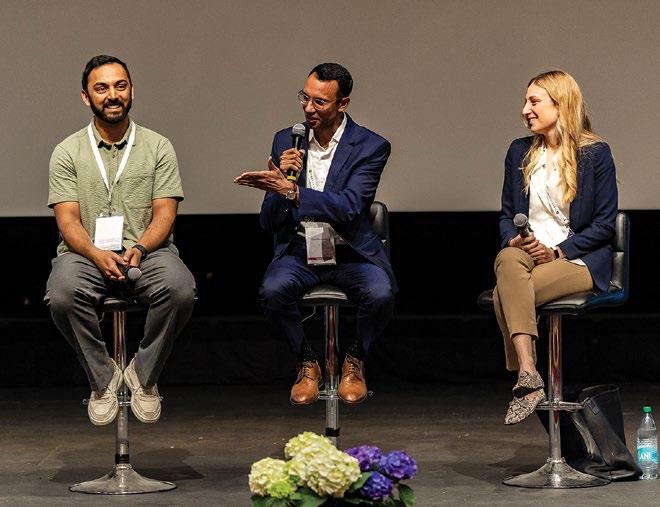
“I had no clue I would go into medicine,” said Rebecca Yanovsky Dufner ’09, director of health and clinical innovation at Tufts Medical Center and this year’s symposium alum keynote speaker. “I didn’t have any exposure to medicine. But Harker gave me the tools to be able to do whatever I wanted. I could learn new things. I could go to people for help. I could find mentors. I felt like people believed in me and I felt that I could do anything. It laid that foundation for me to go and really achieve it.”
A member of this year’s symposium alumni panel, Akshay Jagadeesh ’12, a research scientist working at the intersection of artificial intelligence and neuroscience, said, “One thing Harker totally unlocked for me is that feeling of being excited about, and not being afraid, of something new. That’s been the most empowering thing for my career, that feeling of, I can learn new things, I can pick up new skills. I have the fundamentals that allow me to absorb and take on new challenges. “That came from being in this environment
where we were constantly getting exposed to new things.”
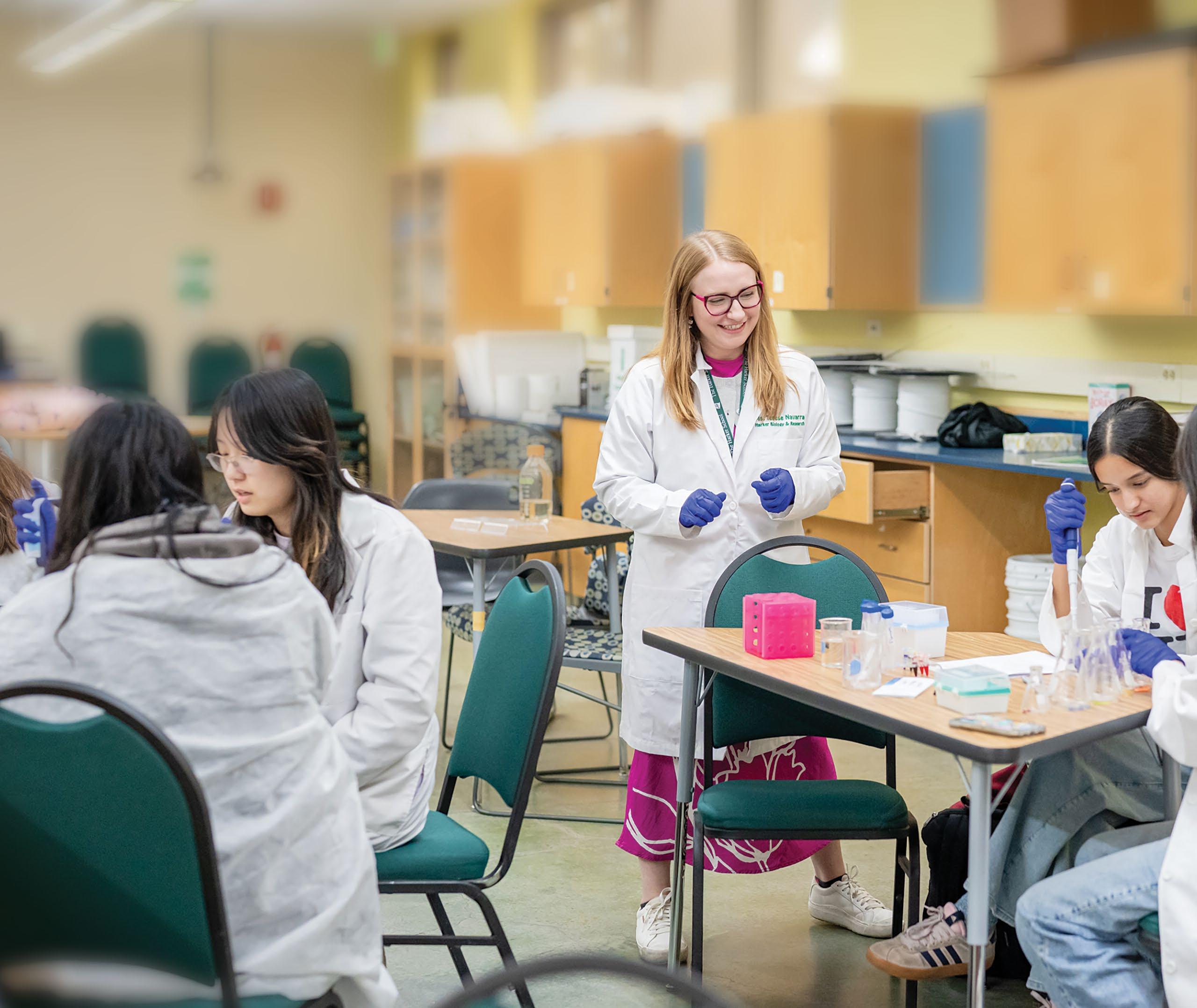
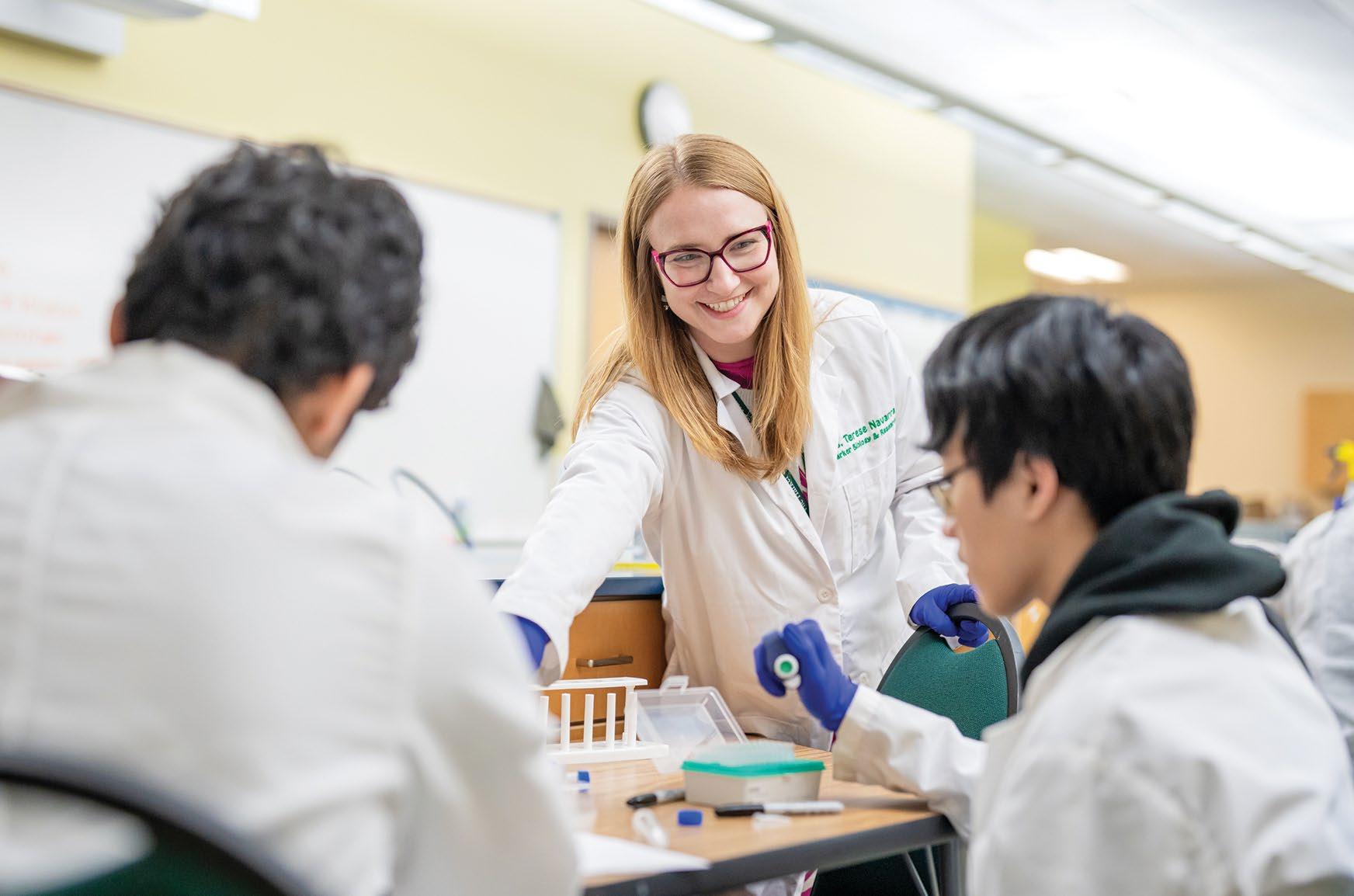
Research and bioinformatics teacher Terese Navarra did not have access to this kind of education or resources at her Nebraska high school when she was growing up. Her first exposure came in college, an experience she found “life-changing.”
Looking back, Navarra would have preferred to discover research earlier, and that’s where Harker has an advantage.
“High school students don’t have to wait for somebody to say it’s OK,” Navarra said. “I want them to see that they can have a profound impact within the science realm by starting now. It’s empowerment and giving the students the ability to know they can change things. And you can do it here at Harker.”
Or, as Gargano said. “This is your time to dream big.”
When WiSTEM co-president Anika Basu, grade 11, was younger, she experienced a disturbing incident in which one of her best friends was cyberbullied. Basu recalls trying to comfort her friend, who couldn’t stop crying.
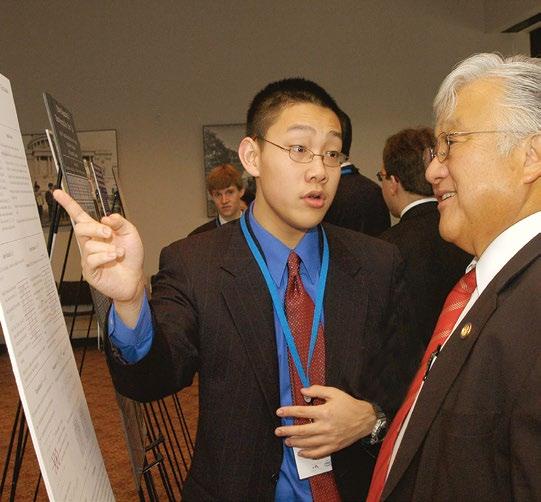
From left: Michelle Wei ‘24 (second from right), Andrew Jin ‘15, Yi Sun ‘06
In response, Basu found herself researching online abuse and the psychology of why people bully others. She grew interested in the computer science and neuroscience aspects of the domain of hate speech and sought to develop tools that could prevent it.
During a summer research program at UC Santa Barbara, Basu expanded her research with a project titled, “Analyzing Hate Speech Amplification on Fringe Platforms.” Her goal was to create efficient machine learning algorithm models that could detect and remove hate speech. There also is a security aspect, preventing crimes before they happen. And, finally, Basu explored the best possible responses to mitigate hate speech and to inform effective counterspeech.
“I always wanted to be a computer scientist,” Basu said. “But now I have a clear purpose. That moment when my friend sat next to me was my north star. It keeps me going on long nights when it’s 2 a.m. and my code isn’t working. This is what I’m doing it for.”
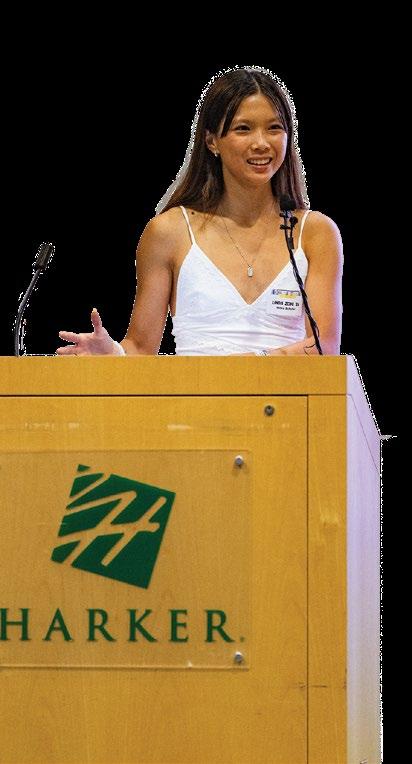
Senior Linda Zeng’s research project “Bringing up BabyLM: Investigating Multilingual Language Acquisition Using Small-Scale Models,” combined her interests of language, developmental psychology and AI. She’s worked on the project, exploring how babies learn different languages and become bilingual, with Stanford children’s language learning expert Michael Frank and will continue to do so as a Stanford undergraduate next fall.
When she arrived at the upper school, Zeng felt that even with Harker’s robust research opportunities, there were some holes. So, she helped expand the role of Harker’s creative research club by creating monthly workshops on topics such as abstracts, presentations and writing. She created a database of past Harker research works, and a mentorship program that pairs older students with ninth and tenth graders, to guide them through the research process.
“The most productive way to look at research is to find your interests and really go deep into them,” Zeng said. “I’ve never felt like I’ve had a shortage of time to do what I’m actually truly interested in.”
Regeneron scholar Evan Zhang, grade 12, explored “Self-Sensing Hydraulically Amplified Self-Healing Electrostatic Artificial Muscles With AI-Driven Control for Cardiac Assist.” With interests in mechanical engineering and soft robotics, Zhang, using 3D printing, created and tested a device that squeezes the aorta to improve blood flow for those with heart issues. The device uses soft materials like silicone and fabrics, which are more compliant and adaptable to the human body than hardsurfaced instruments.
“One thing Harker totally unlocked for me is that feeling of being excited about, and not being afraid, of something new. That’s been the most empowering thing for my career.”
– Akshay Jagadeesh ’12
“I love working with my hands and making these small devices,” he said. “And, more broadly, I can actually make a real-world impact.”
He remembers the moment it all came together. It was in the summer, in a lab at Purdue University.
“It was actually on my birthday,” Zhang said. “It was 6 p.m. I had built three of the same versions that day and they hadn’t worked. So, I kept tweaking things. On the very last one, it actually worked. It was super magical for me. Actually seeing it work was probably the most satisfying breakthrough of this whole process.”
Saria Lum, grade 10, was nervous as the judges approached her exhibit at Synopsys. Lum’s project was especially meaningful because of her personal difficulties with eczema and her desire to find a solution. The result was PatchPal, a product she developed with use of a spectrophotometer to find the right combination of corticosteroids to help reduce flareups and prevent future ones.
“I was scared I was going to make a fool of myself for the judges,” said Lum, and her fears seemed realized when the first judge did not engage in her pitch. So, Lum changed her approach. Instead of a rehearsed script, she chose to be more spontaneous, speaking from the heart and projecting confidence with the work she had done. Suddenly, the judges were fully attentive.
“It’s honestly all owed to Harker,” Lum said. “They really teach you from a young age to be curious. I’ve never had a teacher tell me, ‘That’s too ambitious.’ They always encourage you go even deeper: What can I do in the future?”
In Elizabeth Zhang’s book, the main character, Vinnie, returns from a galactic adventure guided by a magical jellyfish named Luna. After learning about galaxies, light waves, supernovas and even black holes, Vinnie settles on her lawn in time to witness a meteor shower.
“It’s beautiful,” she said.
And like that magical mystical night, for Zhang and other Harker researchers, the future holds so many possibilities.
Dave Kiefer is a freelance writer and former journalist with the San Jose Mercury News.
gallery visual arts
grade 6
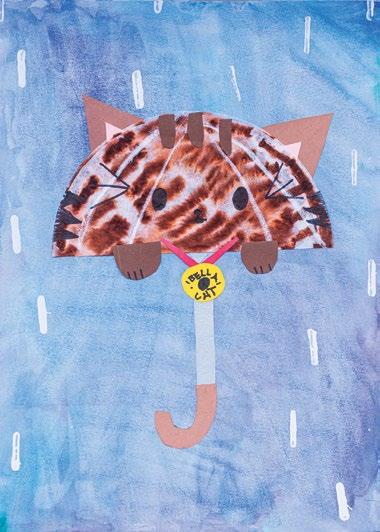
Bella Lee grade 1
“Animal Umbrella”
Dara Angelova grade 4
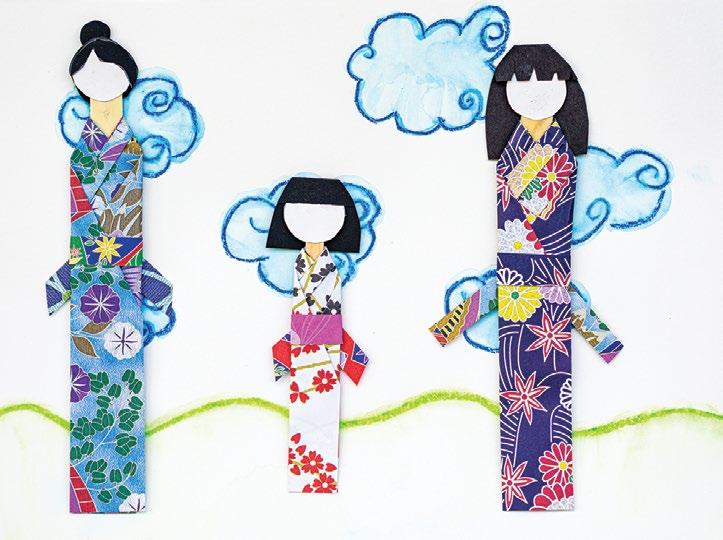
“Ningyo Dolls”
Charles Zhou grade 3
“Cherry Blossom”
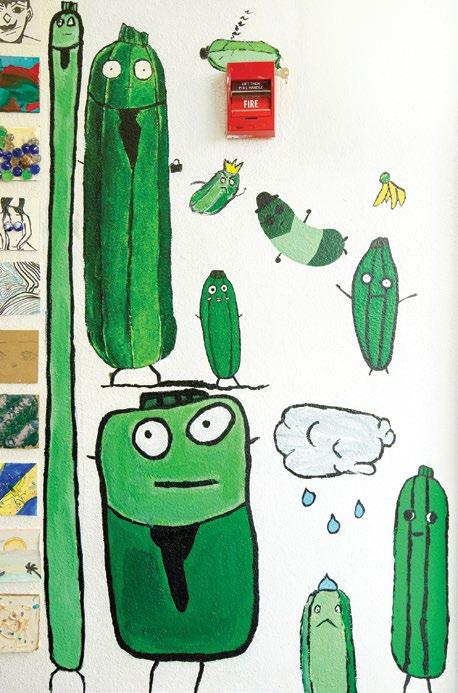
Kanad Deoras
“Zucchini Army”
Sophie Yeh grade 11
“#2
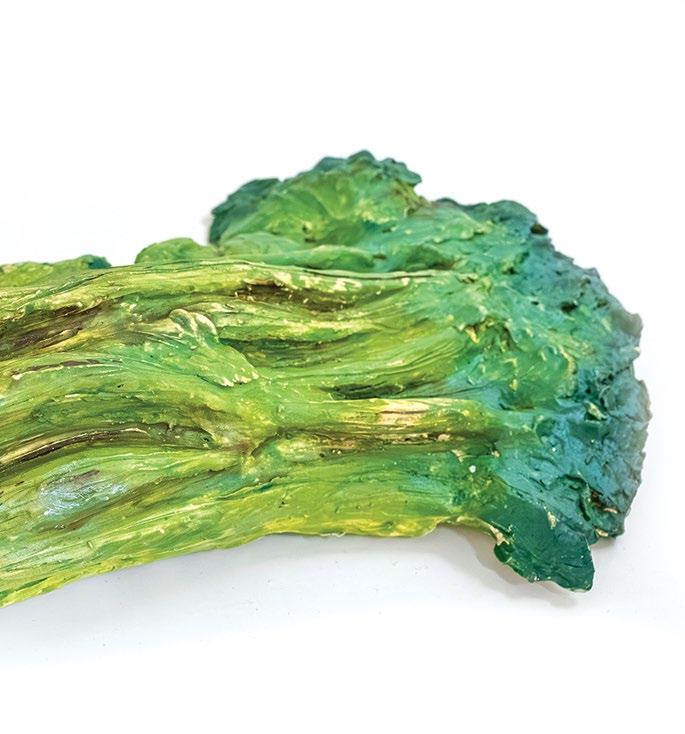
Isabella Du grade 8 “Celery”
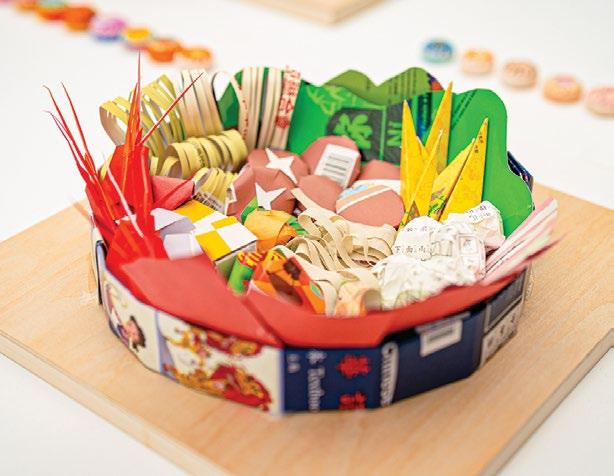
Hot Pot Order: Extra Shrimp”
Taylor Summers grade 12
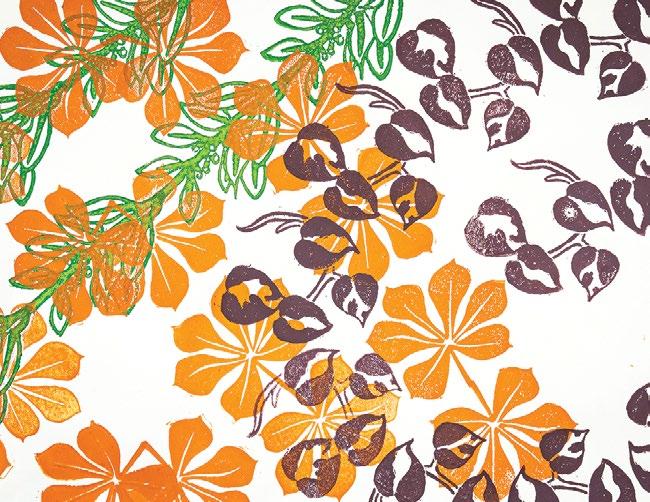
“Stamp Wallpaper”
Nina Cracraft grade 12
“Morning Shadows”
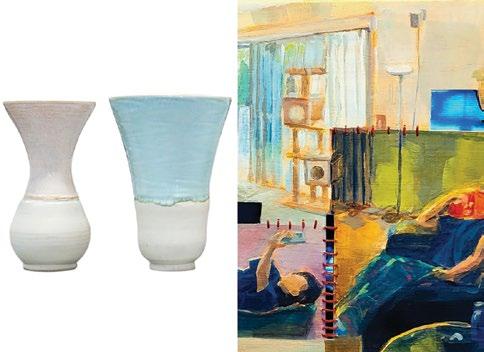
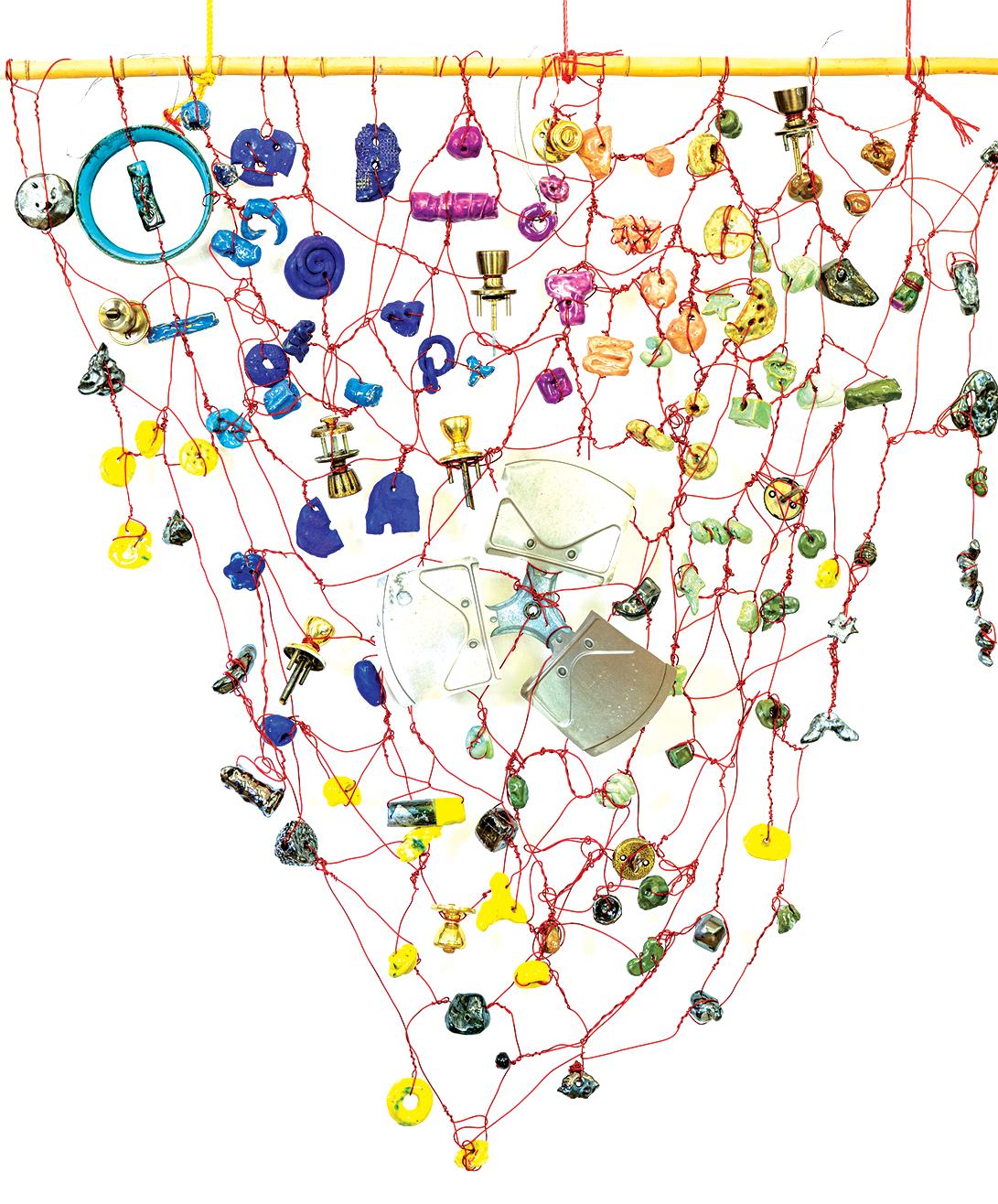
Joseph Linn grade 7 “Ceramic Network”
WORDS BY VIKKI BOWES-MOK
PHOTOGRAPHS BY SOPHIE ORMOND AND PROVIDED BY ANKITA SHARMA ’16
UNLESS NOTED
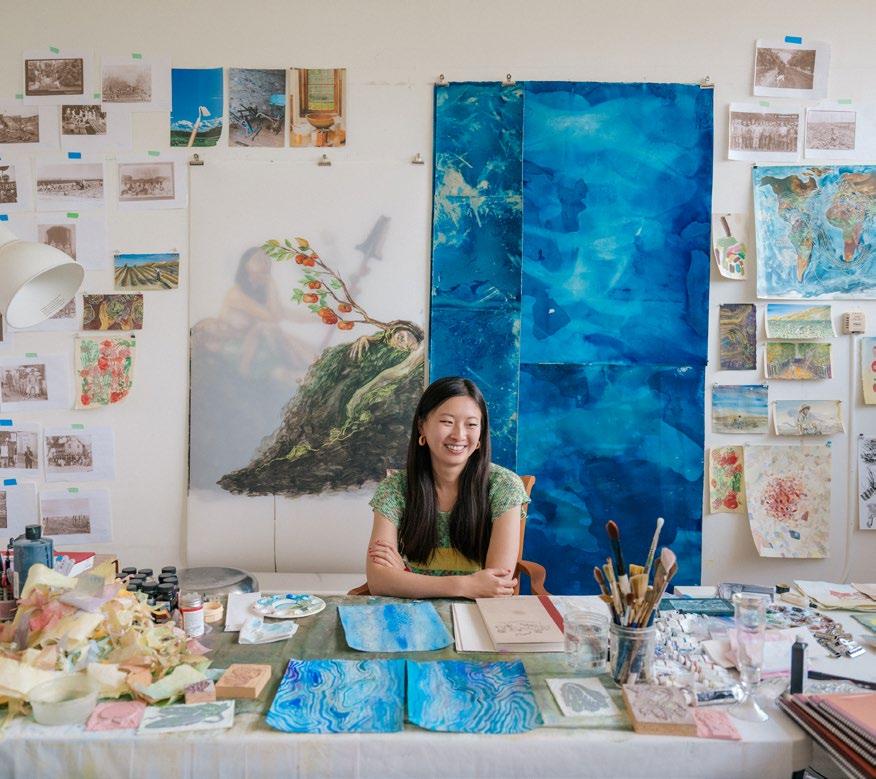
The Art of
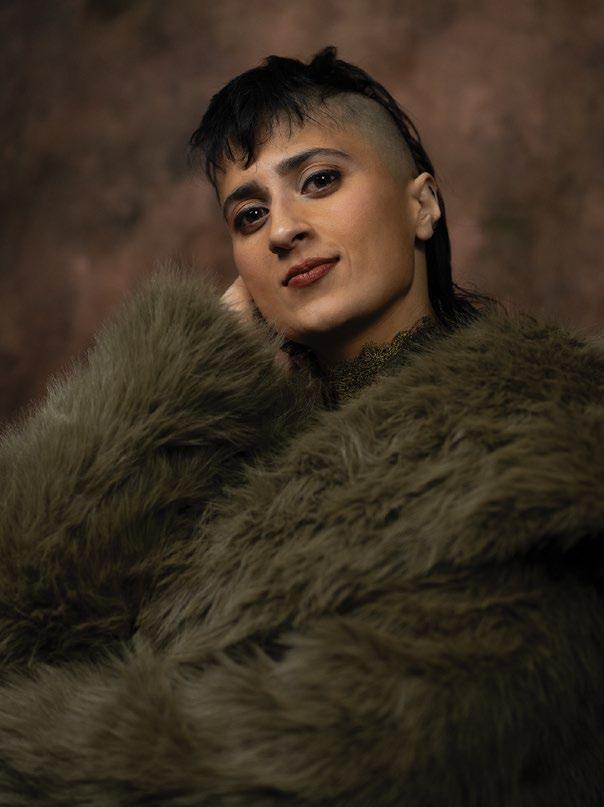
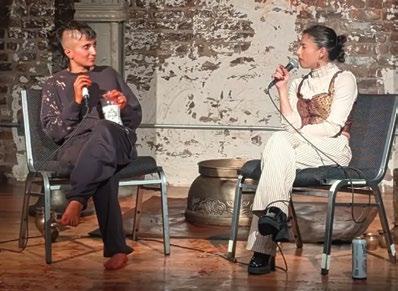
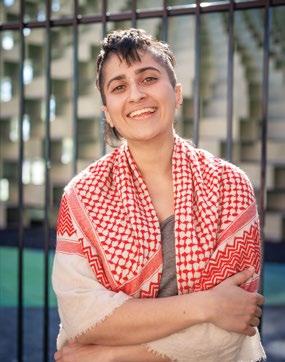
in their website artist statement, Ankita Sharma ’16, a Harker lifer and the 2025-26 Life in the Arts recipient, writes: “Creating with my volume turned all the way up, I am reminded that while my body is fragile, my art can be limitless.”
Going All In
Ankita Sharma ’16, a choreographer and performer, brings intensity, curiosity and range to a creative life
They live their life with the volume turned up, whether as an experimental, movementbased artist, an arts writer, or a trekker who has logged 2,650 miles on the Pacific Crest Trail.
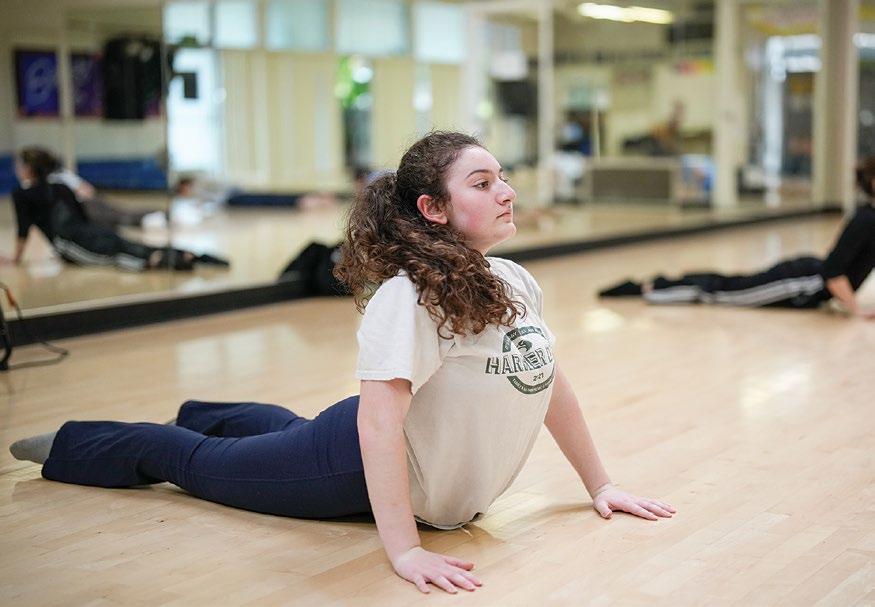
Sharma was grounded in the dance community at Harker from just 5 years old, progressing from the school’s youngest classes through advanced courses to become captain of varsity dance.
“Their creativity at Harker was already leaps and bounds beyond most students, and it has continued to grow as they have found their voice,” said Rachelle Haun, Harker dance teacher, who has hosted Sharma back on campus multiple times since graduation. “Ankita has a natural talent for choreography, a strong dance background and a fantastic sense of humor. They have the right recipe for success.”
After graduating from Harker, Sharma went to Colorado College, eventually majoring in dance and anthropology.
“I went to college uncertain about why I was there. After two years, I realized my entire experience was centered around creating art. It became clear to me that this was the education my mind and body wanted to receive,” they said thoughtfully from their apartment in Brooklyn. “Though I had my doubts about making a career in the arts, I was surrounded by professors who had been working artists, which made me think, ‘I could do this too.’”
Sharma found influential classes, inspiring mentors and enormous amounts of time in the studio during their undergraduate studies and during COVID.
“Ankita enrolled in choreography their first year, and I watched them become the author of their own work, which can be challenging for young dancers influenced by classes and social media,” said Shawn Womack, one of Sharma’s mentors and chair of Colorado College’s theatre and dance department. “They experimented, reflected and revised, and wanted to say something with each dance. I think of Ankita in dichotomies: fierce and kind, uncompromising and collaborative, silly and dead serious.”
During college, Sharma also hiked the Pacific Crest Trail solo, covering 2,650 miles in just under four months. The next year, after spending months at a wildlife rehabilitation center in Belize, they wrote a thesis paper on human/monkey interspecies relationships that earned them awards, conference credits and the nickname “Jane Goodall of Colorado College.” Both experiences were driven by a desire for adventure and wanting to test their limits. Each remains a touchstone, a measure of what their body can do and a reminder that learning also occurs when you color outside the lines.
After graduating, Sharma had big decisions to make about their next move. They had just premiered their first evening-length dance duet, Penumbra,
“They experimented, reflected and revised, and wanted to say something with each dance. I think of Ankita in dichotomies: fierce and kind, uncompromising and collaborative, silly and dead serious.”
– Shawn Womack, Colorado College
to a sold out audience in Colorado and took that as a sign to move to New York to be an artist. This was 2022, just when theater was coming back to life and an opportunity opened up to be an apprentice at an immersive theater production, “Sleep No More.” On four day’s notice, they packed their bags and moved to a freezing basement in Staten Island, N.Y., eventually becoming the company manager of the internationally acclaimed production, which they once studied in class.
“I felt like a lost newcomer when I started, but the job let me understand what I’m capable of and what’s possible,” Sharma said. “It also gave me financial security that helped me launch into the arts world.” Since then, they have been immersed in creativity, from a residency at The Barn at Lee, Mass., where they created the world premiere of multidisciplinary play “Even Cowboys Get the Blues” to “dhoka/Betrayal/,” which explores idolatry and nationalism using South-Asian myth in a dance-theater duet. “I admire artists who push their own boundaries and aim for longevity in their careers, while still staying curious and challenging their own aesthetics. I aim to do the same.”
Sharma’s excited for their next project, a 72-hour endurance performance directly inspired by their outdoor adventures, which will be developed in the Bay Area. While their work in theater and performance remains central, the wide range of pursuits that shape their path generates a meaningful impact.
“For me, being an artist means my lifestyle lines up with my values and my work throughout the arts industry. That level of integrity will allow me to make an impact,” they said, with a quiet conviction.
Vikki Bowes-Mok is a freelance writer and editor.
Photo provided by Harker Archives
PHOTOGRAPHS BY SOPHIE ORMOND, DEBORAH LORD, BRANDEN KELLER, AJ TINIO AND PIERRE WHITSEY
Sperforming arts
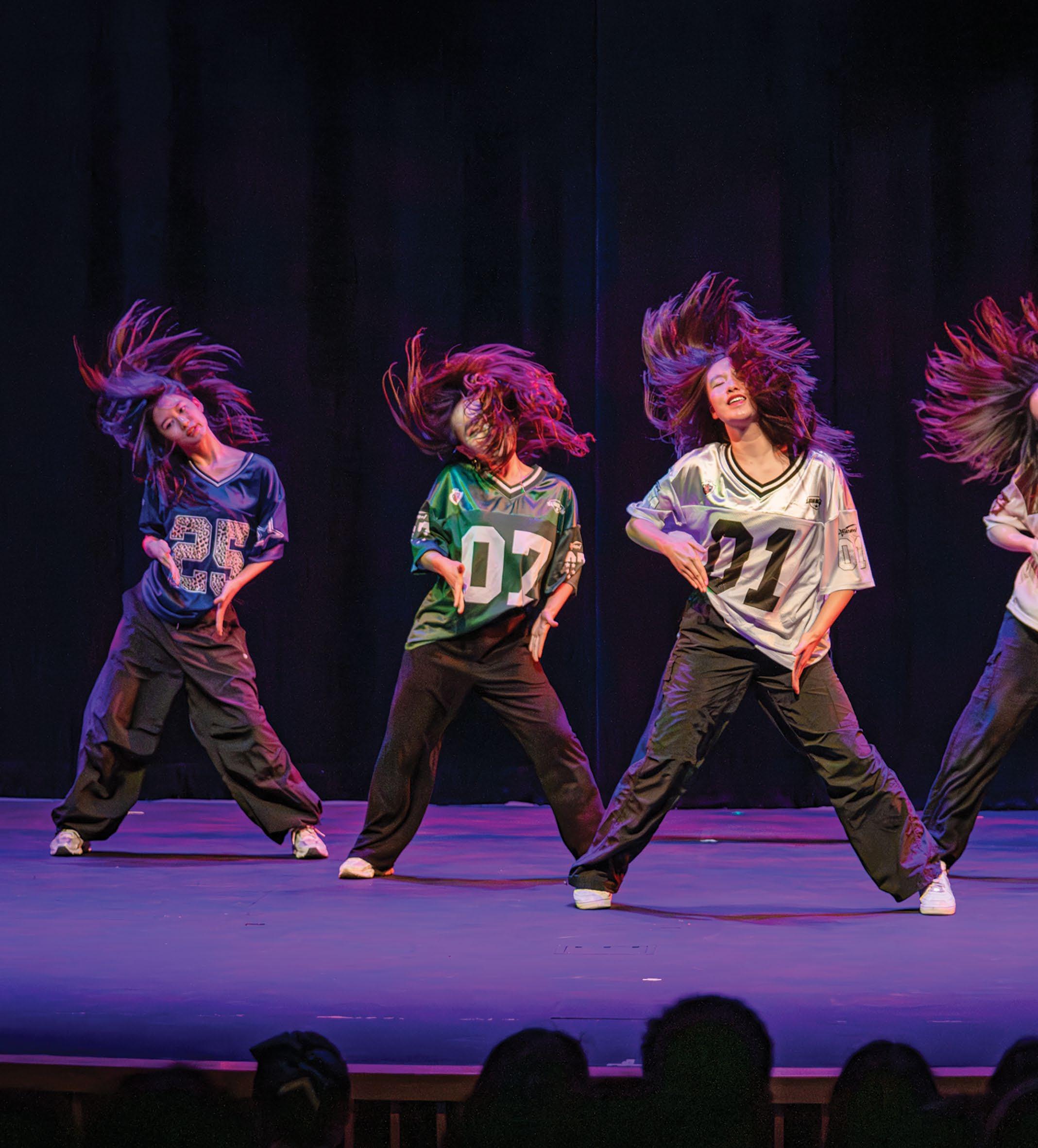
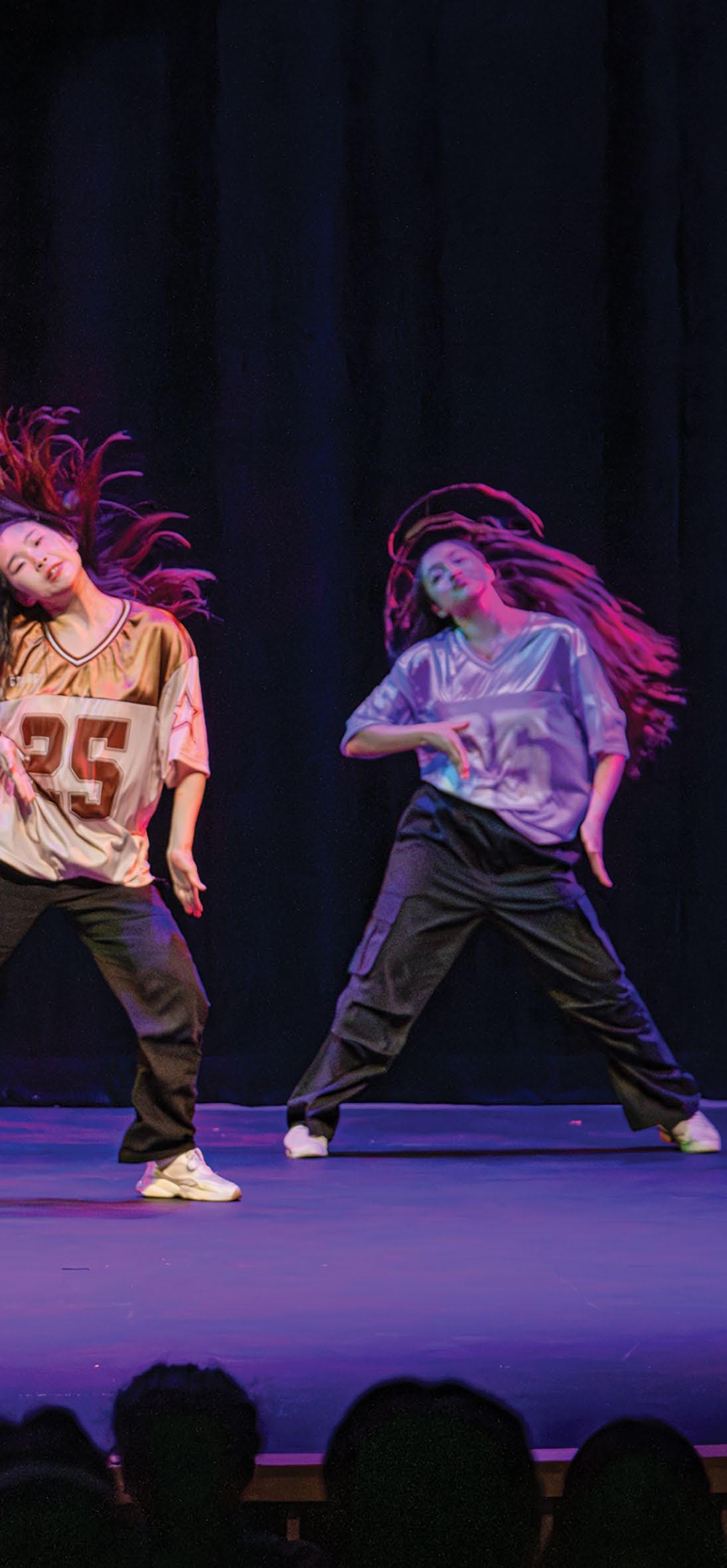
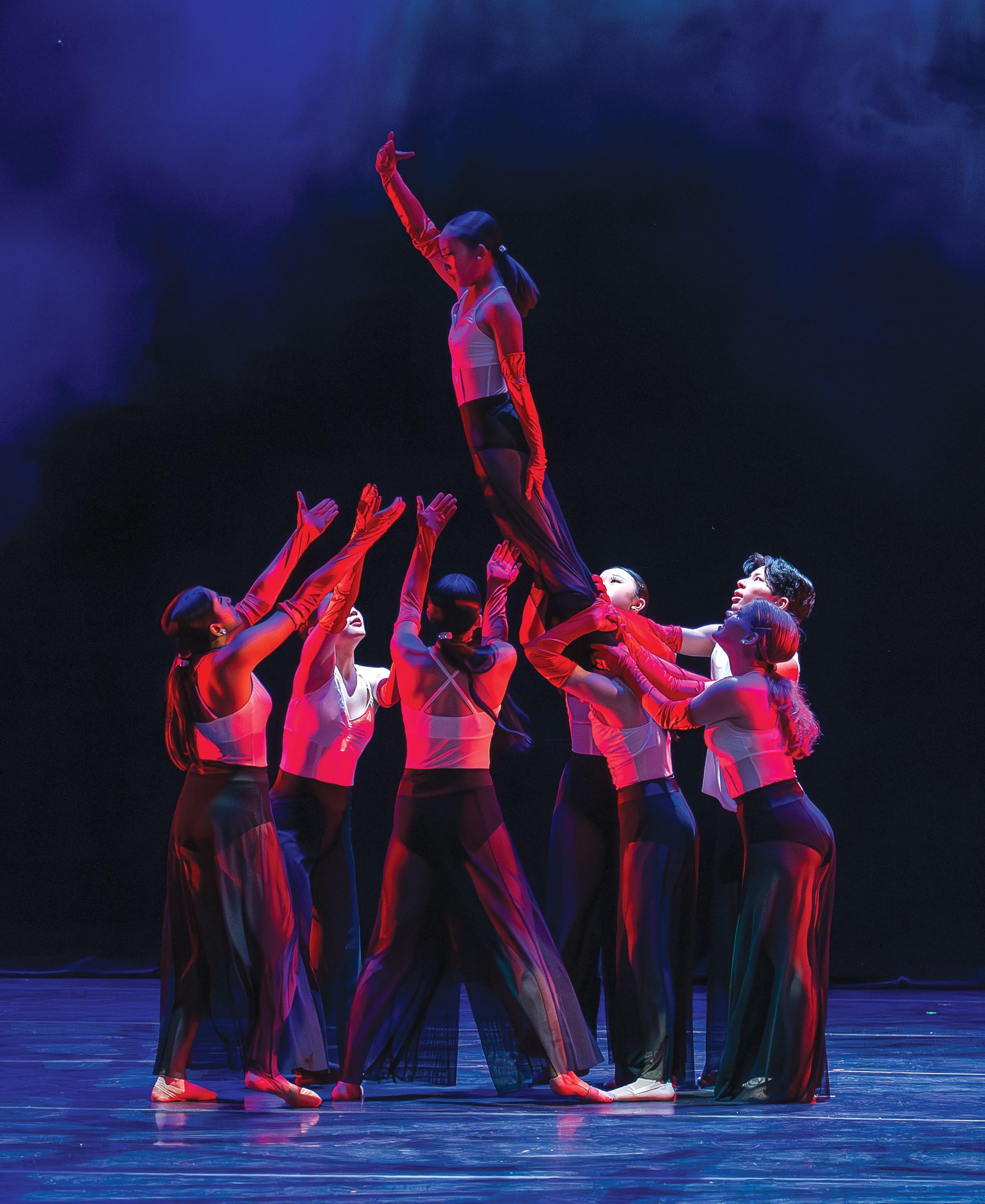
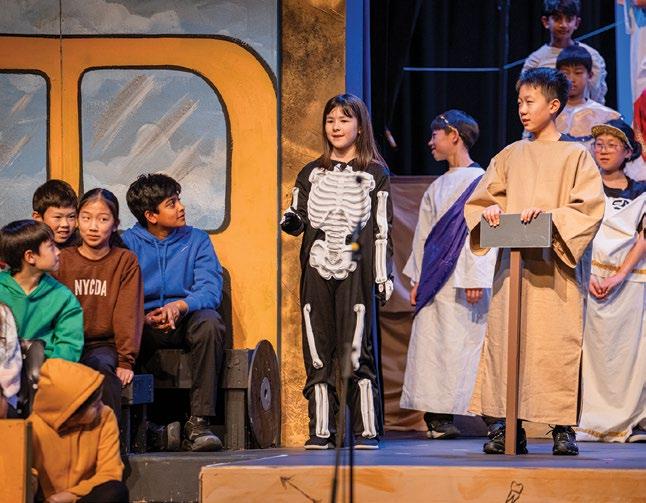
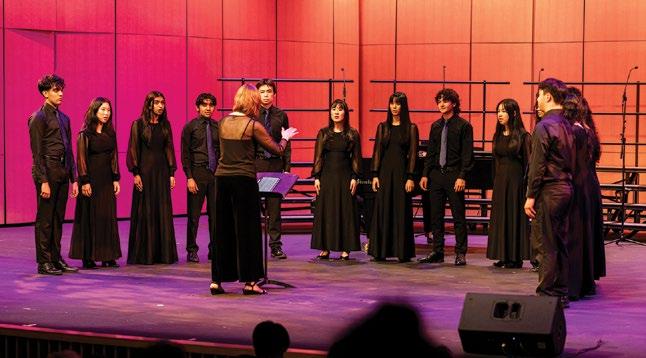
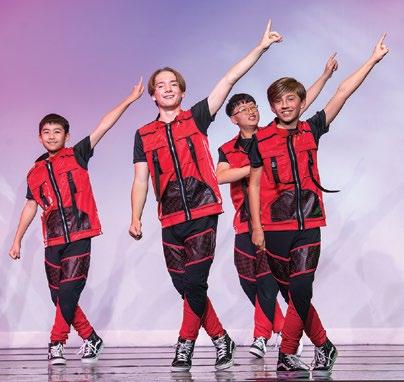
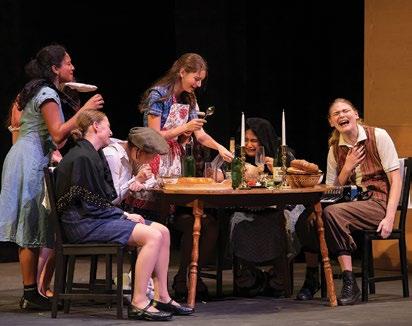
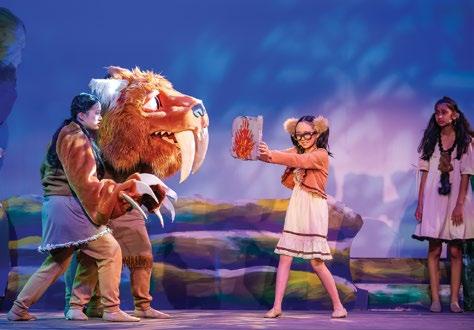
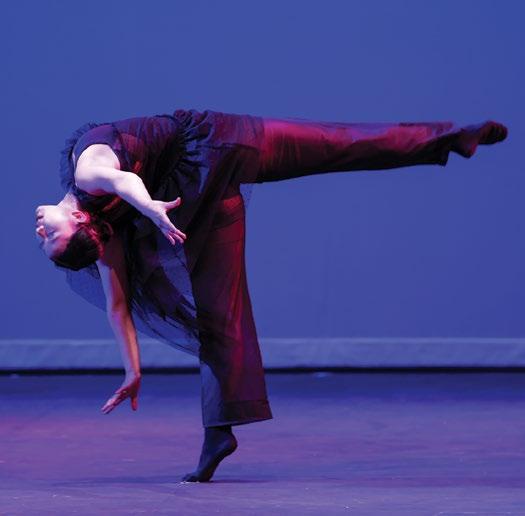
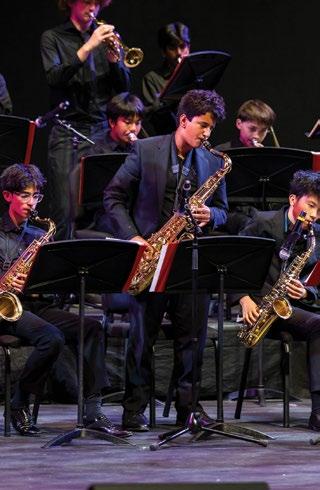
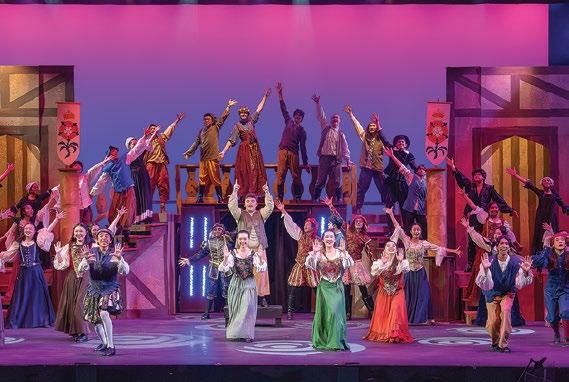
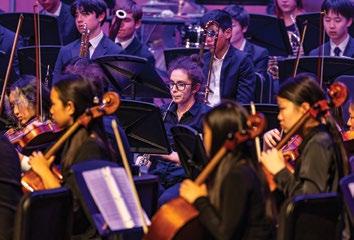
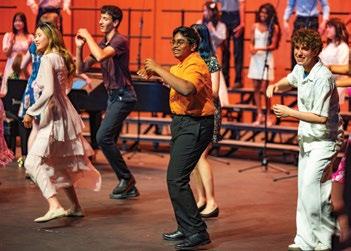
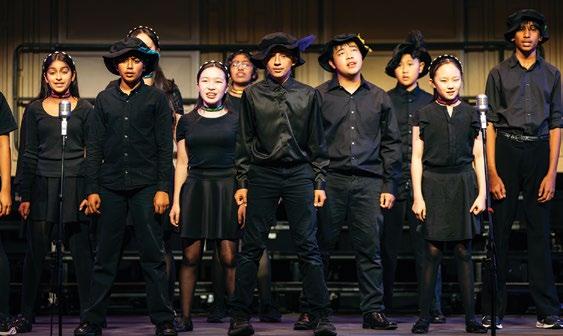
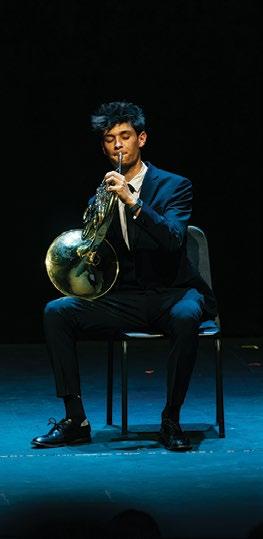
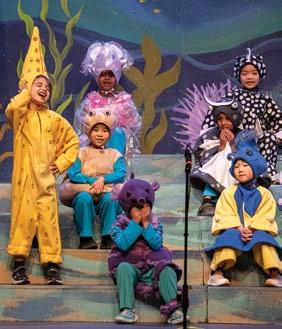
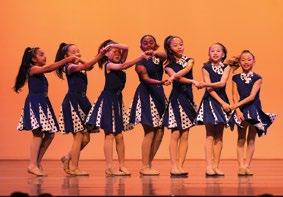
pring shows were off and running almost as soon as the winter break ended. Dancers wowed with “Once Upon a Time” (upper), Dance Jamz (middle) and “Friendship!” (lower), along with musicals “Firebringer” (middle) and “Something Rotten!” (upper). Instrumentalists shone during chamber music, jazz and orchestra concerts, and vocalists combined for United Voices and the middle school’s There Will Be Singing. Performers graduated from the Conservatory at Senior Showcase, and the grade 5 show “Dig It!” and the kindergarten’s “Go Fish” were big successes. For more photos, visit https://news.harker.org/galleryspring-2026-performing-arts.
WORDS BY VIKKI BOWES-MOK
BY NICOLE CALDWELL AND PROVIDED BY LORI OKIMURA MS ’84
Leading with
Alum transformed a lifelong love of volleyball into a global career championing athletes, integrity and opportunity
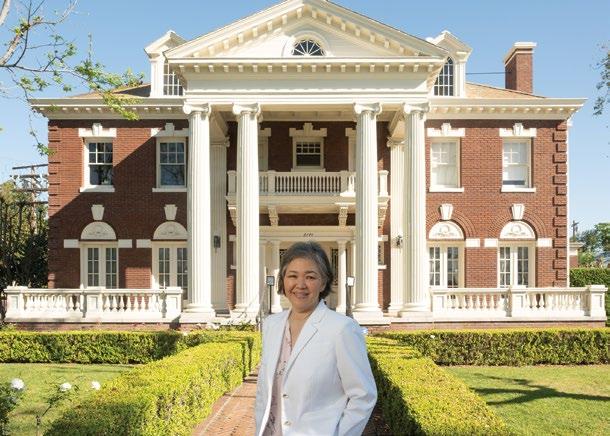
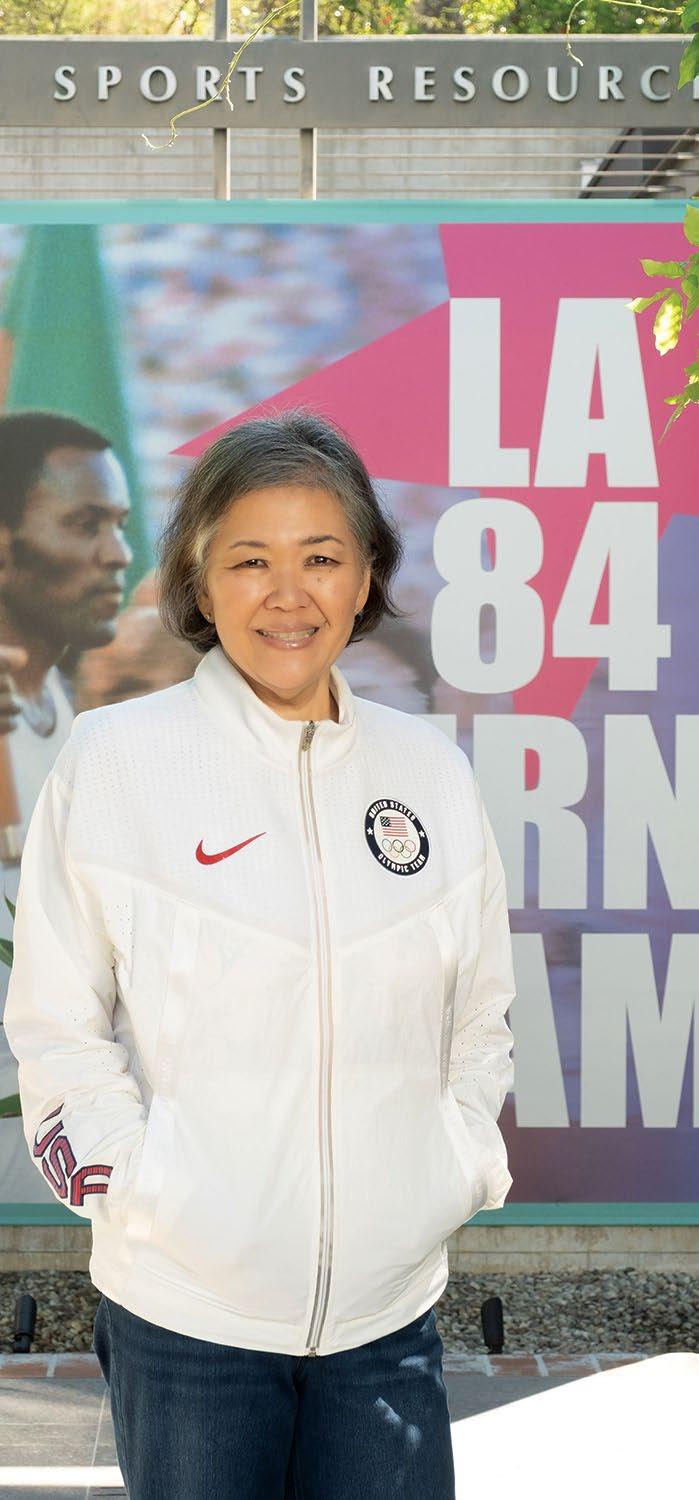
Lori Okimura MS ’84 was born in paradise, Hawaii to be exact. Her early years were spent in the warmth of her ohana – her family and tight-knit community – walking to school barefoot and visiting her grandfather at the library where he worked. When she was 6 years old, her mother remarried and the family relocated to Silicon Valley, where Okimura began attending Harker. She traveled back and forth between the islands and the valley for several years before settling into Harker Academy through eighth grade.
“From the moment I arrived at Harker as a new sixth-grade transfer, Lori stood out as the most together person I’d ever met. Her example inspired me to take chances I never thought I could, even trying out for sports just to be part of the energy she created,” said Suzanne Groth, a Harker classmate and now CEO of Groth Wines in Oakville. “Lori has an incredible work ethic, kindness and natural leadership that drew us to follow her, so it’s no surprise her passion for volleyball carried her all the way into the professional world.”
Okimura had played volleyball for as long as she can remember, so when she graduated from Harker and moved on to high school at Menlo School (Harker didn’t yet have an upper school), earning a spot on Menlo’s volleyball team was a natural fit. A standout athlete, she secured a college scholarship until an accident during her senior year caused a serious lower back injury that left her temporarily paralyzed. Losing the full athletic scholarship was devastating, but it ultimately led her in a new direction. Instead of pursuing a volleyball scholarship elsewhere, Okimura attended the University of Southern California on a partial academic scholarship where she worked to put herself through college.
In a surprising twist of fate, seven volleyball players suddenly left USC’s program, creating opportunities for walk-ons. Okimura tried out and played briefly before transitioning into a team manager role after being unable to perform at the same level as before her injury. When her playing days ended, an internship in the USC Athletics Sports Information Office proved pivotal, equipping her with the skills that would carry her into the workforce and lay the foundation for her career in volleyball.
“For nearly four decades, I’ve worked almost
every job in volleyball, from manufacturing the balls to running events, giving me a true 360-degree view of the sport,” Okimura said. “A hallmark of my career has been pairing every paid role with volunteer service, which opened doors and deepened my connection to the game. Helping beach volleyball on its path to the Olympic Games reminded me how powerful community and opportunity can be in shaping a career.”
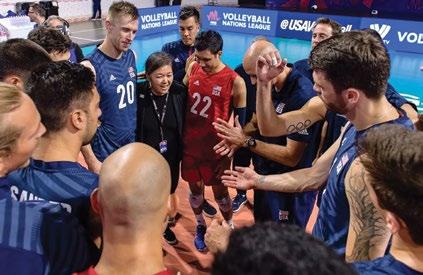
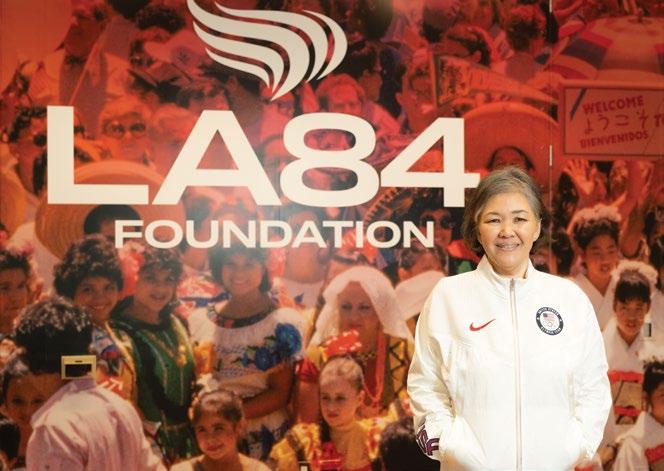
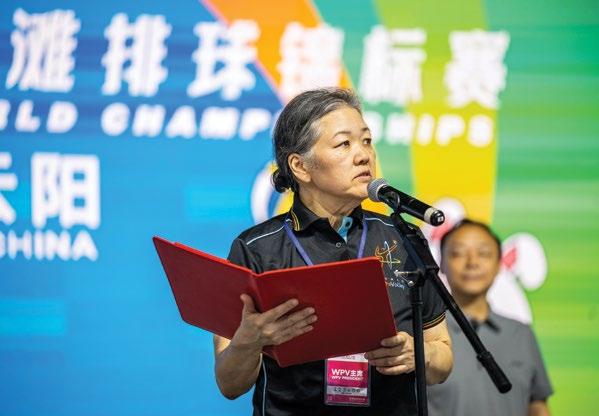
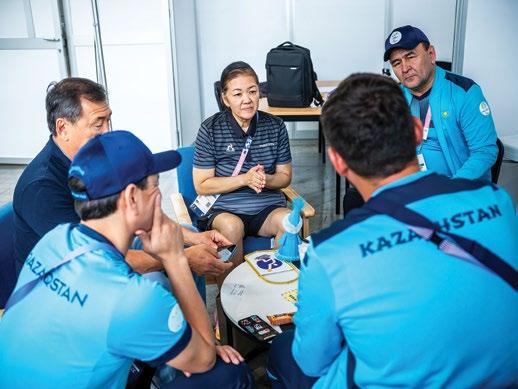
Okimura’s professional accomplishments are extensive. She served as the first Asian American Pacific Islander female president and board chair of USA Volleyball and was inducted into its Hall of Fame in 2019. She also served as the first female and Asian American Pacific Islander president and sport director of World ParaVolley, as well as a Paralympic vice president and international technical official. After nearly 10 years with World ParaVolley, she now serves as a strategic advisor with the Sport Ability Foundation.
“I first met Lori in 2012, and she immediately stood out as someone who led with kindness while always keeping athletes’ best interests at heart,” said Nicky Nieves, a two-time Paralympic gold medalist. “She doesn’t crack under pressure, leads by example and truly supports the people around her. Lori has taught me that your voice matters and how to use it professionally, and even today she’s someone I can call for mentorship and advice.”
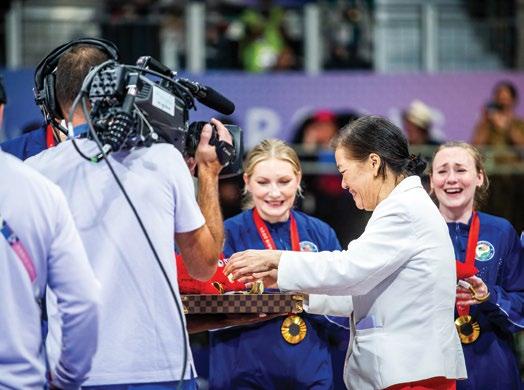
She will always be supportive of beach volleyball and volleyball in all forms, but her focus now is on para sports organizations and athlete safeguarding. “Lori has always worked to elevate the integrity of volleyball at every level, from grassroots programs to the Olympic and Paralympic stage, both in the U.S. and around the world,” said Gary Sato, an assistant coach on three U.S. Olympic teams and in his 11th year as an assistant coach with the USC men’s volleyball team. “I have known Lori for more than 30 years and would describe her as loyal, fearless and a true champion for Olympic sports. I remember the 2012 London Olympic Games, when we shared a moment congratulating Misty May-Treanor and Kerri Walsh Jennings after their beach volleyball gold medal. That moment reflected Lori’s generosity, leadership and her commitment to the sport. To me, she is ohana; family isn’t only defined by blood, and Lori has always embodied that spirit.”
Though her career has taken her to Olympic arenas and international leadership roles, the values that shaped Okimura began much earlier in Hawaii, in the close-knit circle of her ohana. That sense of family has followed her throughout her life in volleyball, guiding how she mentors athletes, leads organizations and protects the integrity of sport. For those who know her, the global volleyball community she has helped build is simply an extension of that same spirit of ohana.
Vikki Bowes-Mok is a freelance writer and editor.
PHOTOGRAPHS BY SOPHIE
UNLESS NOTED
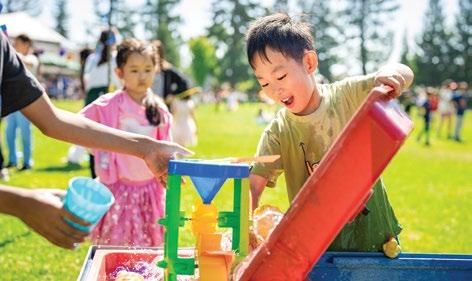
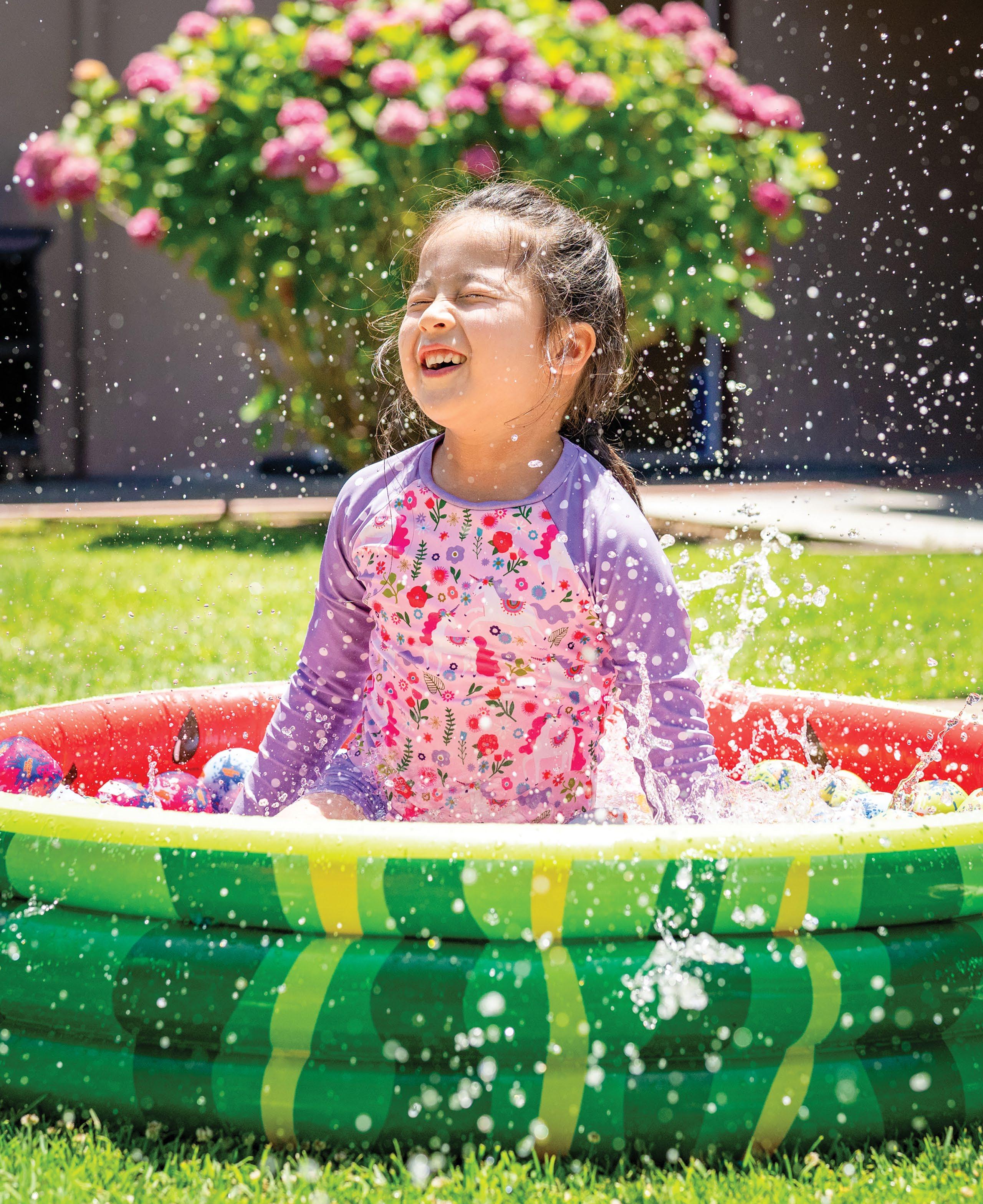
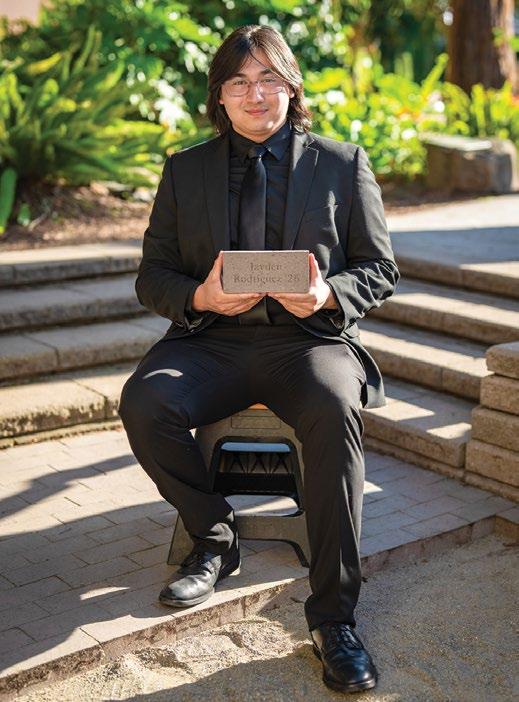
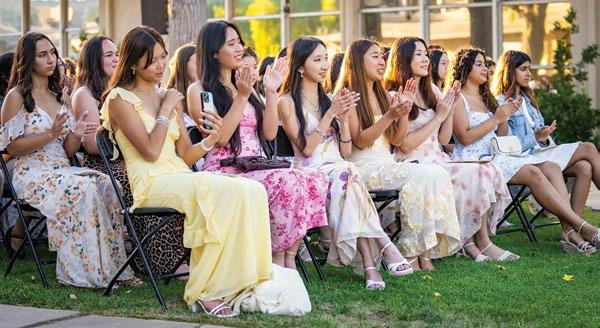
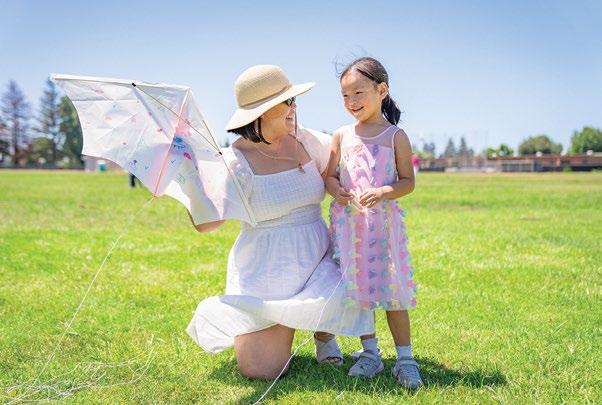
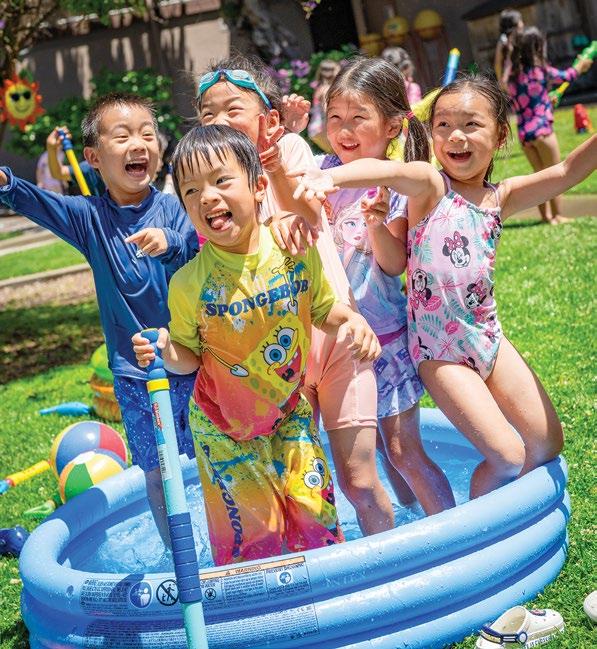
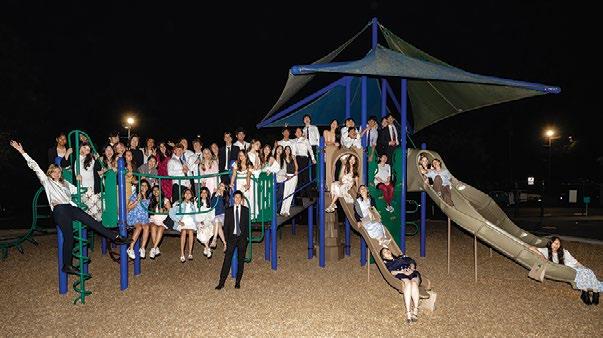
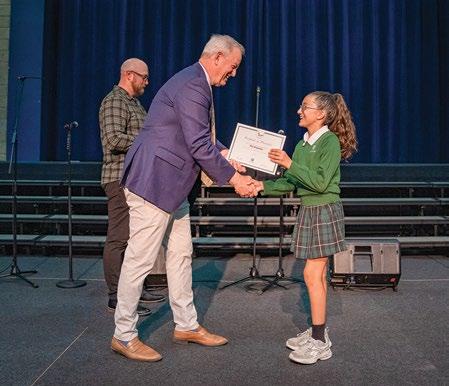
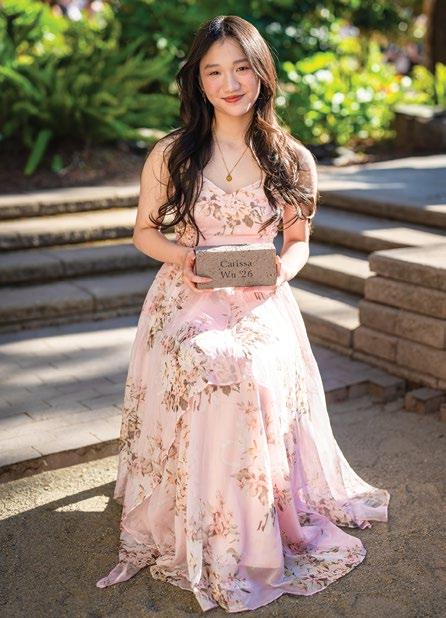
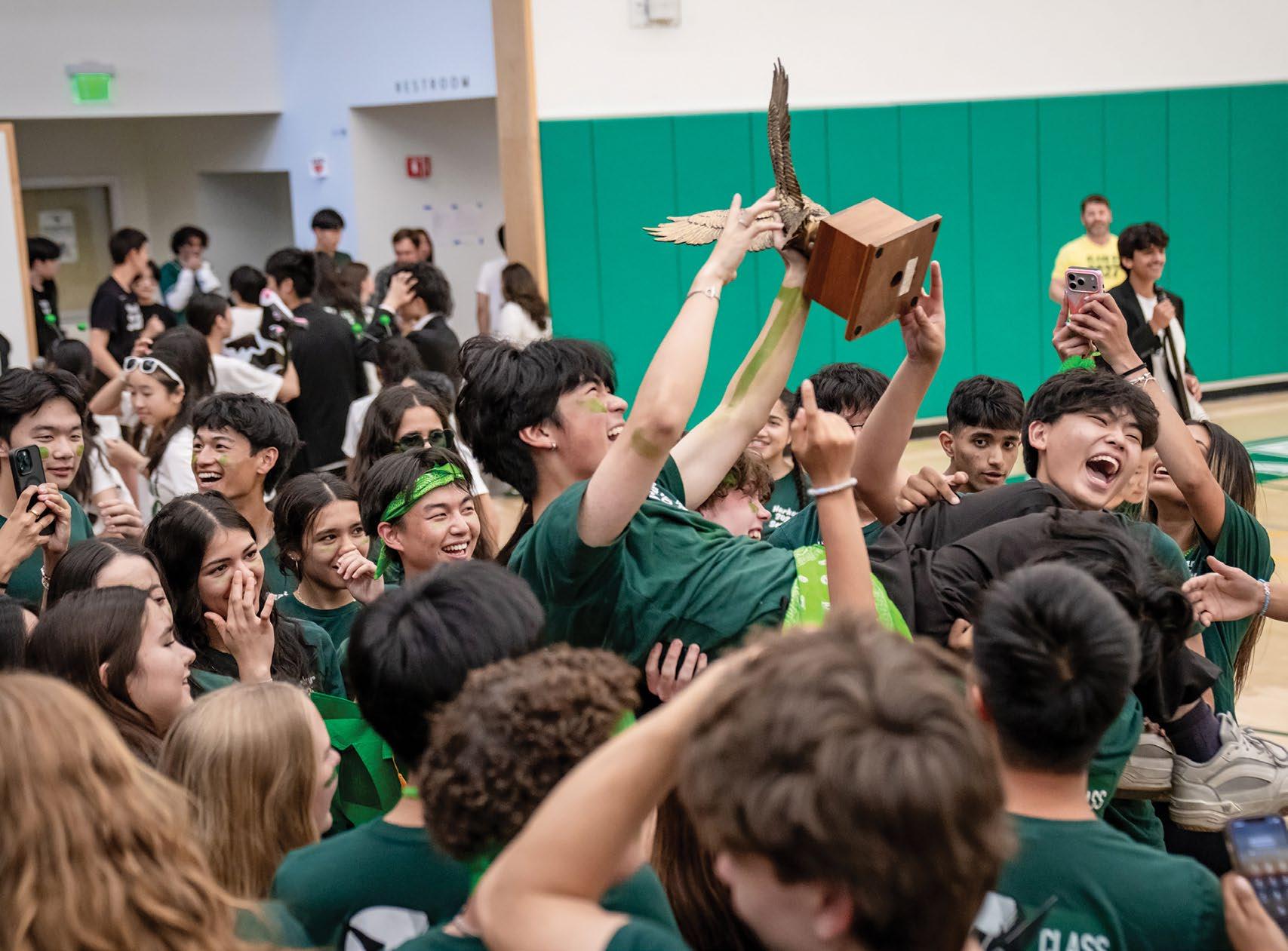
The Class of 2026 was joined by their families at the annual brick ceremony in Graduates’ Grove and then moved to the quad for baccalaureate. Our Lifers reminisced at the lower school at their annual dinner, and our fifth and eighth graders proudly attended their respective promotions. TK got in the action with Splash Day and Concert & Kites. The annual Kiddie Carnival is featured on page 6! For more photos, visit https:// news.harker.org/gallery-2026-end-of-year-events/.
end of year
Photos by Branden Keller
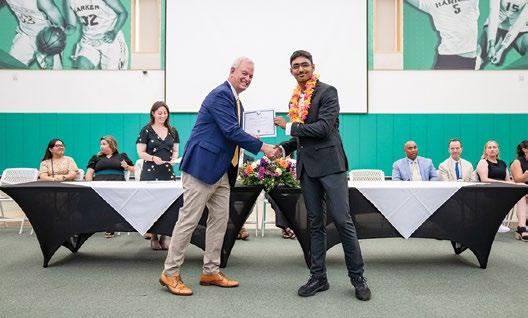
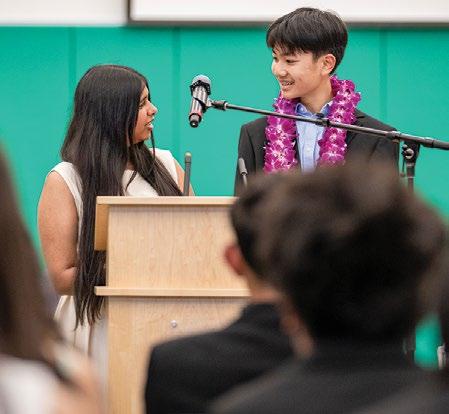
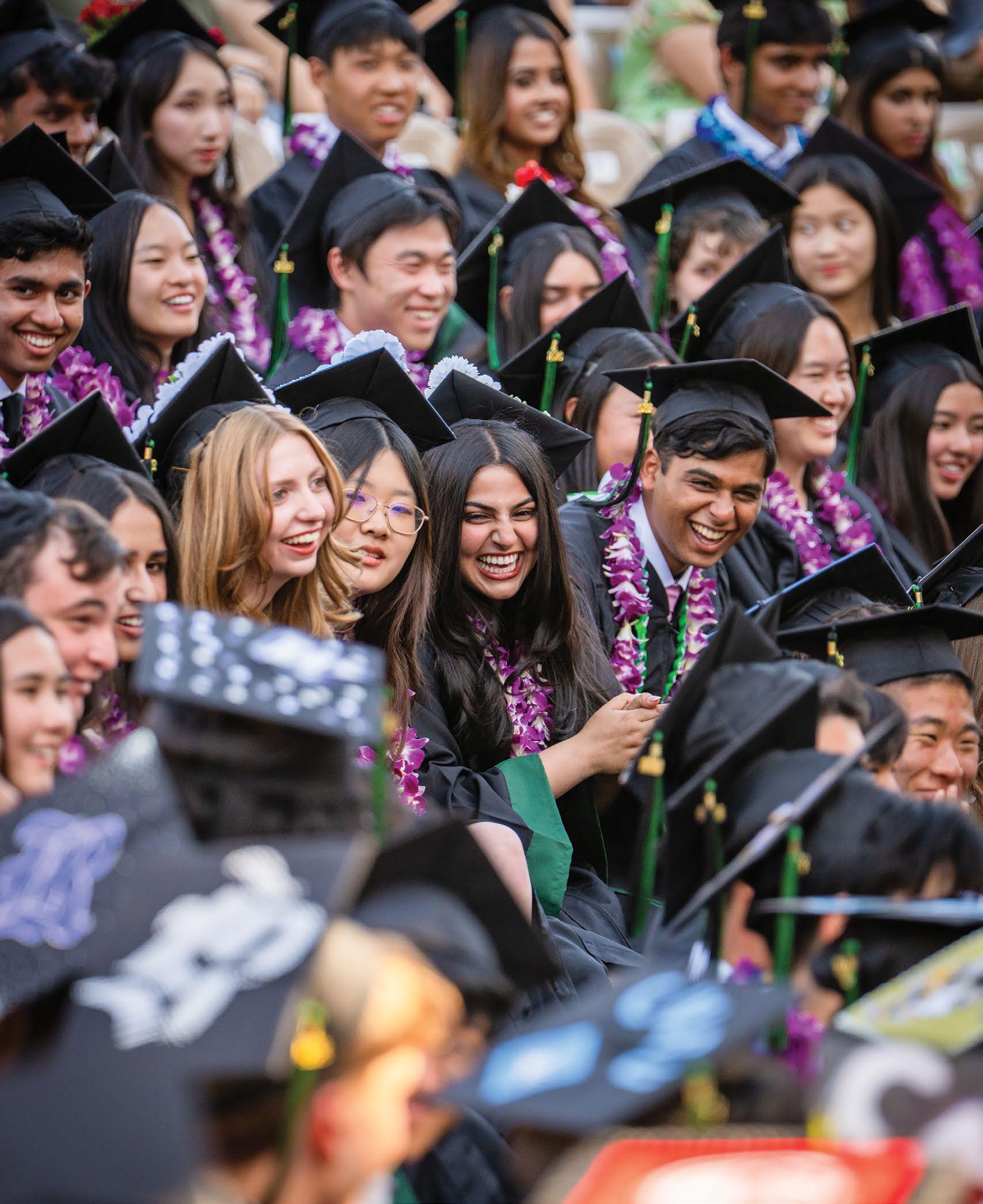
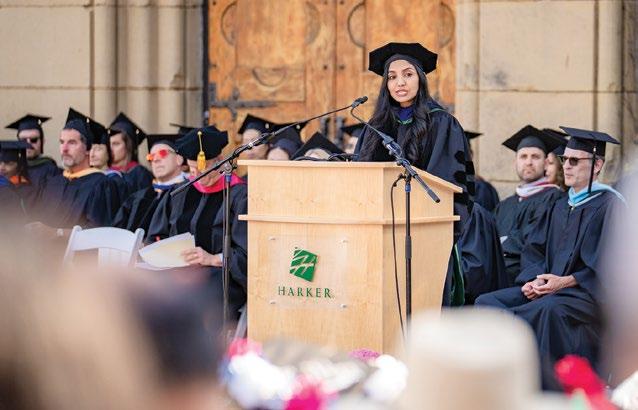
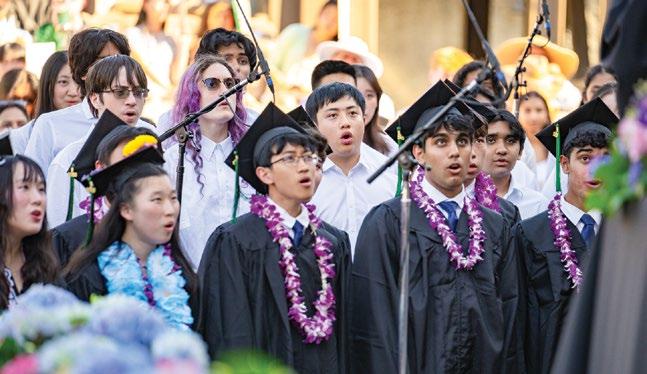
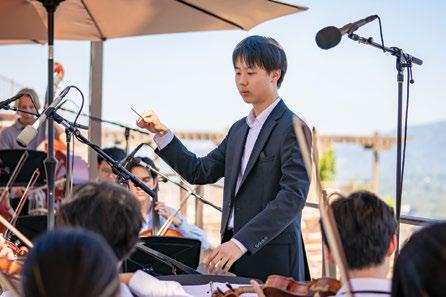
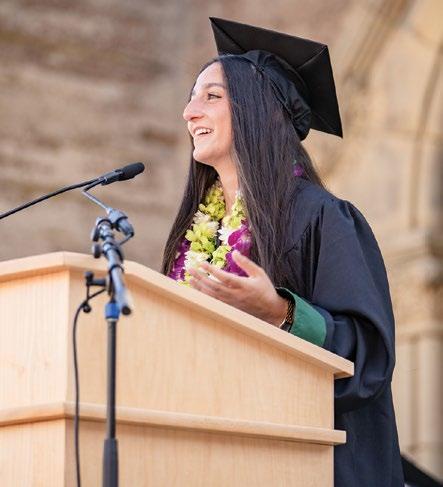
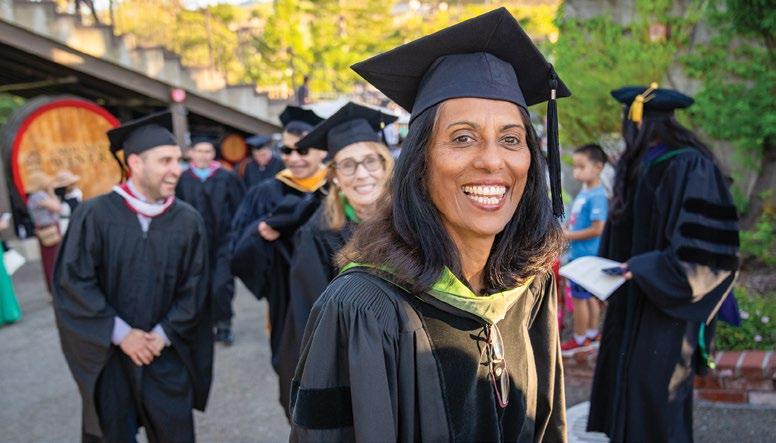
The Class of 2026, refreshed after the senior trip, headed to the Mountain Winery in Saratoga on May 21 to take their final steps as Harker students. After a greeting from upper division head Paul Barsky, the graduates-to-be enjoyed inspiring farewell addresses from Senior Mission Award winner Elie Ahluwalia; Humsa Venkatesh ’04, assistant professor of neurology at Harvard Medical School and Mass General Brigham; and Brian Yager, head of school (see page 2 for an excerpt from his address). The audience also was treated to musical performances by the Graduation Chorus and Harker Chamber Orchestra. After the final diploma was handed out, the newly minted graduates jubilantly tossed their caps and watched as a flock of doves was released into the evening air. For more photos, visit https://news.harker.org/gallery-2026-graduation-ceremony/.
graduation
Upcoming campaign supports school’s next strategic plan
SUPPORT FACULTY & STAFF
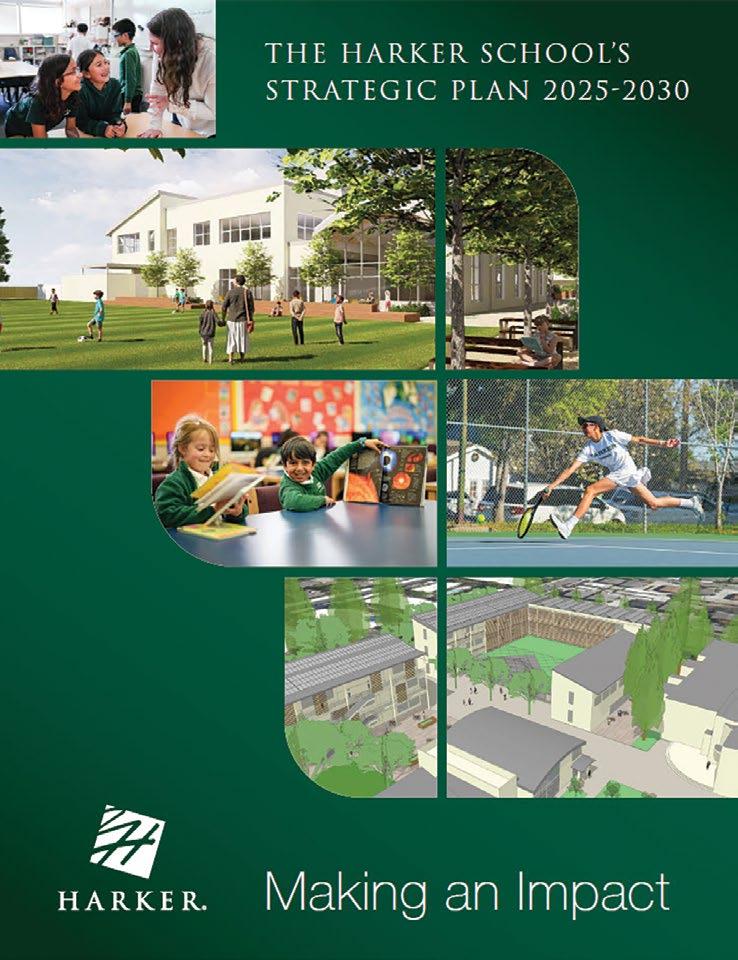
Throughout the year, Harker’s board of fellows has been meeting to reflect on the school’s past and future goals –work which will continue next year as we participate in our accreditation self-study for the California Association of Independent Schools. This work resulted in the five specific areas the school would like to work on in the future. We articulate those themes in the new 2025-2030 strategic plan, which will be mailed to the Harker community in the fall.
The themes of the 2025-2030 strategic plan are:
• Support Faculty & Staff
• Advance Program Excellence
• Promote Student Wellness
• Leverage Alumni & Parent Expertise
• Construct & Enhance Learning Spaces
“We are so grateful to our board of trustees and board of fellows who have contributed ideas, input and passion for Harker, not only to help us define the next several years, but to continue to elevate Harker’s impact as a leader in the country and the world.”
– Brian Yager, head of school
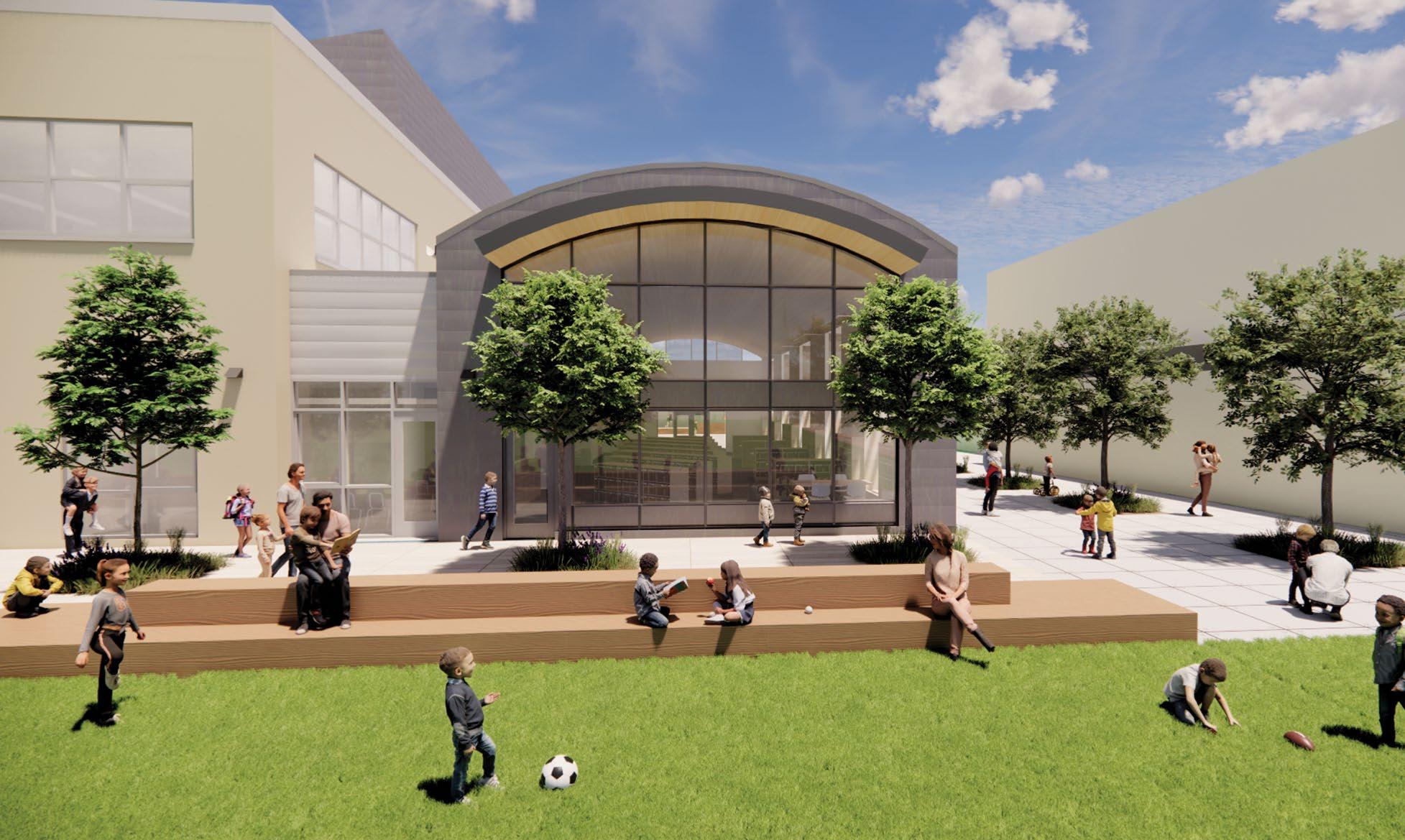
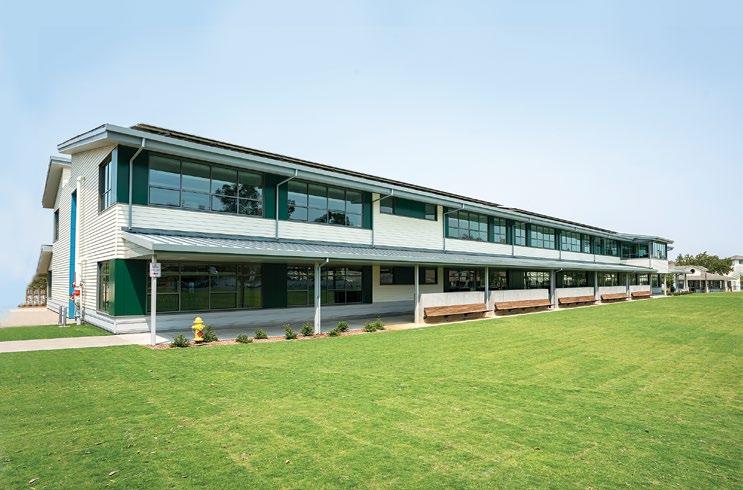
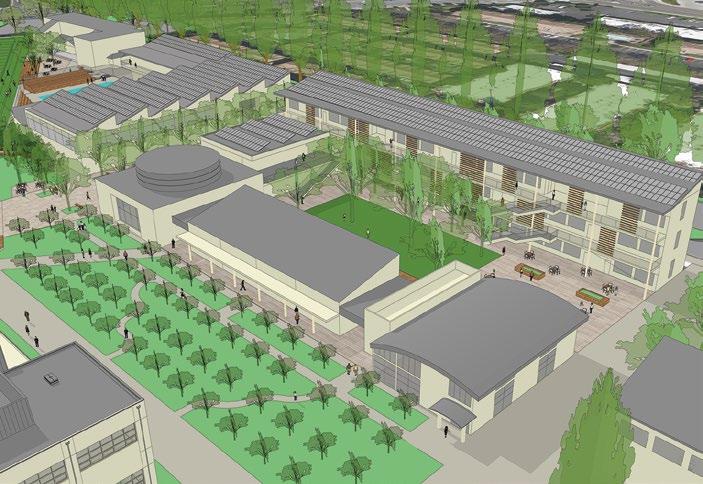
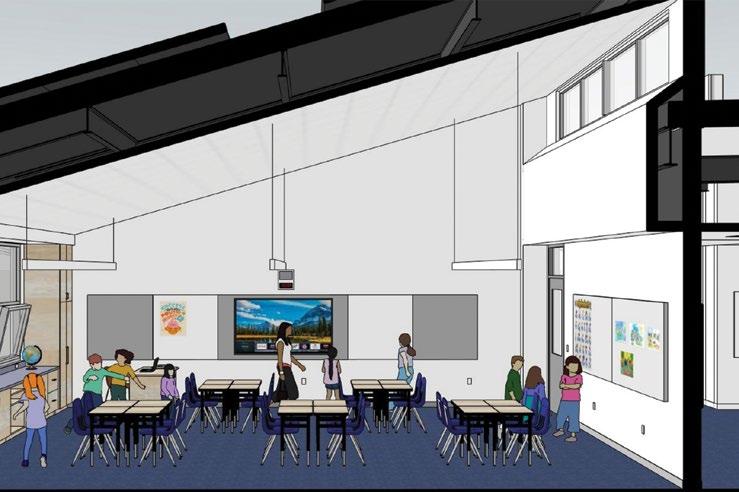
Harker’s 2025-2030 strategic plan reaffirms our powerful commitment to invest in spaces where learning comes alive and creativity can flourish. Watch for your copy of the strategic plan, which will mail this fall.
Over the years, Harker has made transformative investments in the middle school and upper school campuses. That vision will continue with the Make an Impact Campaign, which you will hear more about in the coming year. Meanwhile, we are honored to offer naming opportunities for specific areas of campus to recognize and show our appreciation to the families who support the capital fund (see facing page).
For more information, visit www.harker.org/giving or contact advancement@harker.org.
Announcing the
2025-2030 STRATEGIC PLAN
Naming Opportunities
Here is a sample of the naming opportunities at each campus. See the full list at https://www.harker.org/
Harker teacher since 1999, Isabel García inspires students in her Spanish 3 Honors and AP Spanish Literature classes. She’s also an advisor for the upper school Spanish National Honor Society. An only child, raised in Salamanca, Spain, she relishes deep connections: discussing films and books with a friend, or engaging her students in conversations about their own stories, families and communities.
What are two things you like to do when you finally have a block of free time?
I embrace the concept of il dolce far niente (the sweetness of doing nothing), relishing in moments of solitude without the burden of guilt for simply existing in a state of idleness. I find great joy in meeting with a friend over a cup of coffee to delve into discussions that transcend the mundane aspects of our daily lives.
What is the one thing in the world you would fix if you could wave a magic wand?
A world where every individual, regardless of their location or circumstances, has equitable access to the abundant resources that Mother Nature provides freely.
When did you first really feel like an adult?
When I was 15, my parents enrolled me in a highly reputable all-girls public high school outside my hometown. My parents and my best friend’s parents arranged for us to live in an apartment: four girls between the ages of 15 and 18. It taught me invaluable lessons in independence and responsibility.
What is your favorite book and why is it meaningful for you?
The novel that stands out above the rest is the 16th-century Spanish classic, “Lazarillo de Tormes.” This exploration of social strata invites the reader to reflect on the enduring themes of social justice and human resilience, two topics that truly interest me.
Why do you do what you do?
For me, teaching transcends the simple act of conveying information; it is about the dynamic exchange of knowledge, experiences and emotions. This mutual exchange fosters an environment where every participant, including myself, grows and is enriched through the shared journey of discovery.
Classroom In the
Students select an “urban tribe” (preppies, otakus, skaters, goths, etc.) and dress in a manner that authentically represents their chosen group. This allows them to explore diverse cultural identities as well as enhance their vocabulary and descriptive language skills. Students parade in pairs or small groups to carefully chosen songs that embody the spirit of their urban tribe.
Isabel García
Spanish 3 Honors Fashion Show
staff kudos
Professional accomplishments of our faculty and staff.
In March, Laura DeKraker LangRee, director of performing arts, received three 2025 Goody Business Book Awards for her book, “The Cancer Parent’s Handbook.” The book was named a winner in the Health: Medical and Self-Help: How To categories and was a finalist in Health: Mind, Body, Spirit. She also was named one of 2025’s Top Impact Authors, a distinction given to authors who earn three or more awards in a single year. The book offers insights on how to raise children with cancer, inspired by her own family’s experience dealing with her daughter Cecilia’s (Class of 2013) childhood leukemia diagnosis.
Upper school English teacher
Jennifer Siraganian was named the winner of the 2026 Perugia Press Prize. This annual contest highlights the work of women poets by publishing a book of the winning poet’s work. Siraganian’s collection of poems, titled “Everything Has Been Moved, Even the Dead,” explores the relationship between her family’s history in the Middle East and her identity and experiences as an Armenian American woman. It depicts episodes such as a grandparent’s ordeal during the Armenian genocide and a father’s experiences growing up in 1940s Palestine. The book is scheduled to be released in September.
In January, Harker’s summer administrators were honored for being an Impact Partner with the Greene Scholars Program, an organization that provides STEM education opportunities for African American youth in the Bay Area. GSP’s summer camps were hosted at the lower school campus in summer 2024 and expanded to both the lower and middle school campuses last summer, with summer admins offering support to the program. Summer programs director Cindi Gonsalves was presented with the award at GSP’s Annual Science Fair and Expo.
Upper school debate teacher
Jenny Achten received her fifth Diamond Award from the National Speech & Debate Association, awarded to debate coaches who have earned at least 15,000 points over a period of five years. A debate coach for 25 years and a teacher at Harker since 2013, Achten has collected nearly 130,000 points since she began tracking her results in the ’90s.
The KALEID Gallery in San Jose featured works by upper school chemistry teacher
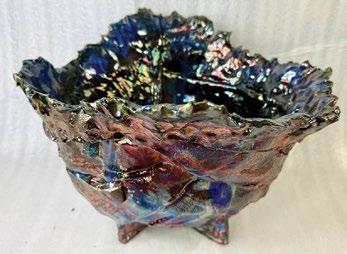
Andrew Irvine in February. Titled “Misprints,” the exhibit fused 3D printing, hand-building, clay and raku glazing, “processes that promise control yet consistently resist it,” read the gallery’s description of the works. At the opening reception, Irvine brought his 3D printer to give patrons a realtime look into his process.
Upper school English teacher
Brigid Miller visited the University of Chicago in January to receive her award for
Outstanding Educator of the Year, for which she was nominated by Austin Lai ’15. In his nomination letter, Lai credited Miller with encouraging him to broaden his knowledge in not only literature but also psychology, “the latter being an interest she urged me to pursue,” he wrote. During her visit she took the opportunity to enjoy Chicago’s signature deep-dish pizza with several Harker alums, including 2025 graduates Ainslie Chen, Robert Fields and Arthur Wu and Daniel Wu ’22.
Upper school visual arts teacher Pilar AgüeroEsparza was featured in an exhibition at her alma mater, UC Santa Cruz’s Mary Porter Sesnon Art Gallery. Titled “Cut/ Woven/Spoken,” the exhibition draws on Agüero-Esparza’s experience growing up in a family of shoemakers and utilizes the techniques and materials found in the making of indigenous Mexican sandals, known as huarache, to communicate “ethnic roots and indigenous aesthetics,” according to the gallery’s website. In February, Agüero-Esparza visited UC Santa Cruz, where she met with her high school art teacher, Ann Storc, and former student Nidhi Gandhi ’11, now the curator of California art at the Oakland Museum of California.
Upper school science department chair
Anita Chetty has been named the inaugural recipient of the Marie Curie Endowed Chair in Honor of the Sciences, created to recognize leading department chairs in science education. In addition to rewarding passion for the school’s mission, the endowment will provide funding to help attract and retain talented and devoted faculty.
class notes
class notes
Keep up to date on the lives of your classmates.
Alumni from all classes through 1997 are listed under the years they would have completed grade 8 at The Harker School, Harker Academy, Harker Day School or Palo Alto Military Academy (PAMA). For all classes after the Class of 1997, alumni are listed under the class years they would have graduated from high school, regardless of whether they completed high school studies at Harker. All photos submitted by the subject unless noted.
If you’re interested in submitting a class note or getting in touch with your class representative, please email alumni@harker.org.
1979
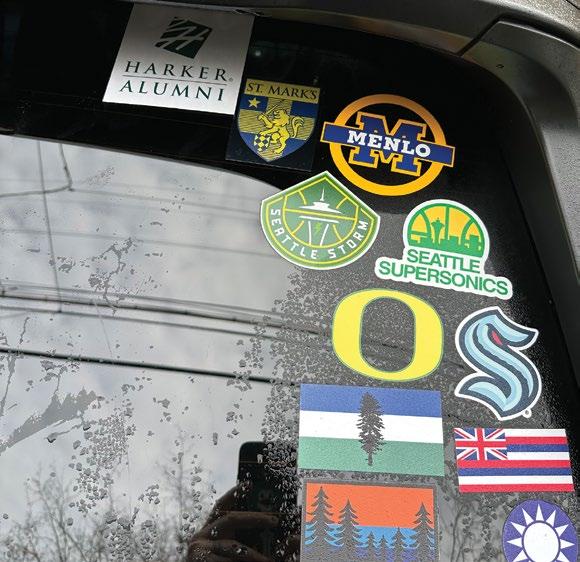
Ken Hunt Jr. lives in Seattle with his wife, Karen. He supports all Seattle sports teams as well as the Oregon Ducks, as his children attended the University of Oregon. He continues to show his Harker pride by displaying the Harker alumni sticker on his car.
2005
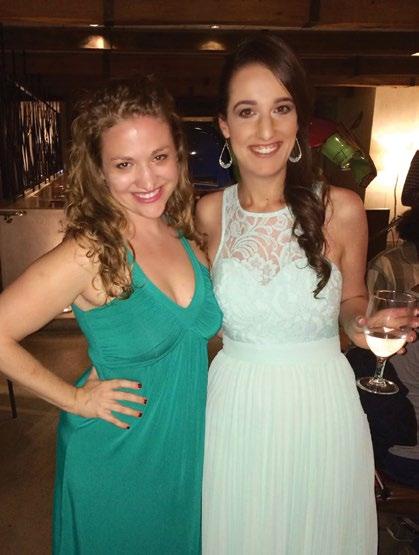
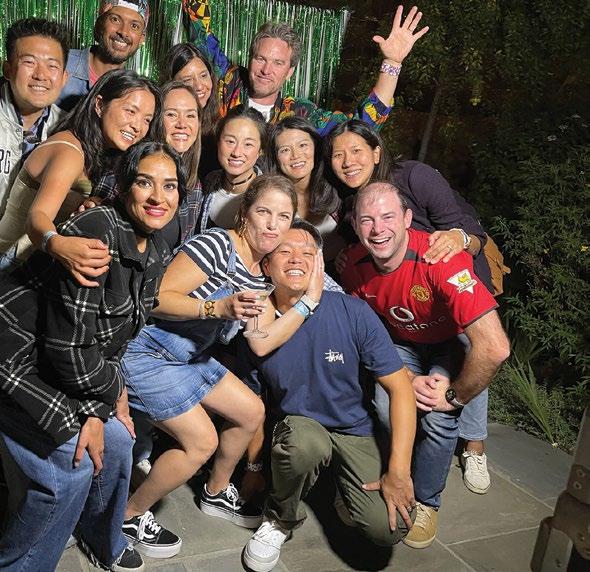
Alan Liu and Samara Nebenzahl celebrated their 40th birthdays with a high school dance-themed party. They wore the Harker green and white and invited fellow Harker alums. Alan and Samara live in Hillsborough with their two daughters.
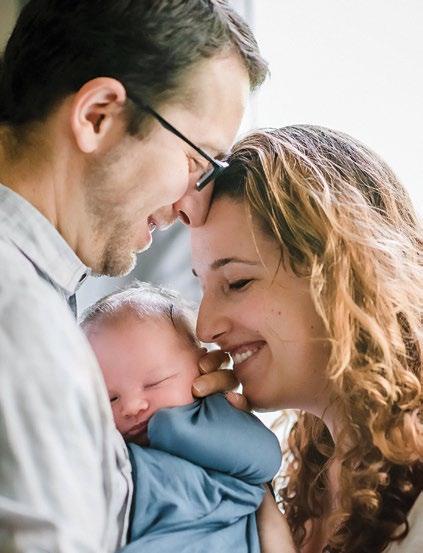
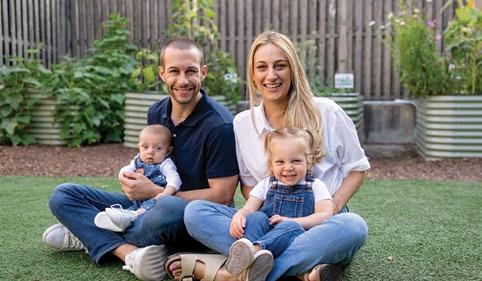
Shalini Mohan and her husband, Vesa Männistö, welcomed a beautiful baby girl to their family in August of last year. The grandparents report that they are very happy doting on the new family member.
Nico and Amy (Kyi) Rattazzi welcomed a new addition to their family in November with the arrival of their son, Alessio. He joins big sister Gemma, 2, and their shiba inu, Luna. They reside in San Francisco.
Jamie Trinh recently moved to Livermore with her husband, Raphael Motagally, and two daughters.
2007
Christy Park and her husband welcomed a baby girl in August 2024. They are enjoying their time together before she goes off to preschool next year.
Christopher Xiao and his wife welcomed a baby boy in April. The family of four is based in Saratoga.
2008
Charlie Fang and his wife welcomed a new addition to their family in April 2025.
2009
Raghav Aggarwal is celebrating two exciting milestones this year. He was recently elevated to partner and principal at BGR Group, one of the premier government affairs and strategic advisory firms in the nation’s capital. In his personal life, he recently became engaged to his fiancée, Emily. The couple is thrilled to be planning their wedding and building their life together in Washington, D.C., where they live with their chow chow, Bear, in a beautiful home they purchased last year.
Jia Jun Chia has been married to David Hsieh since September 2019. They currently work in the biotech industry and are living in Foster City with their three wonderful children, Madeleine, Oliver and Adrian.
Rebecca Yanovsky Dufner was the alumni keynote speaker at the 20th annual Harker Research Symposium. She is currently assistant professor of dermatology and director of digital health and clinical innovation at Tufts Medical Center. Rebecca lives in Boston with her husband, Adam, and two young children, a boy and a girl!
2011
Please
Nirjhar Mundkur is married to Sydney Burrell. Their baby was born in January. They are based in Austin.
2012
Sanjana Baldwa married Garrett Westlake in July 2025. She also started a master’s program in the fall, marking a career transition from digital technology to physical product.
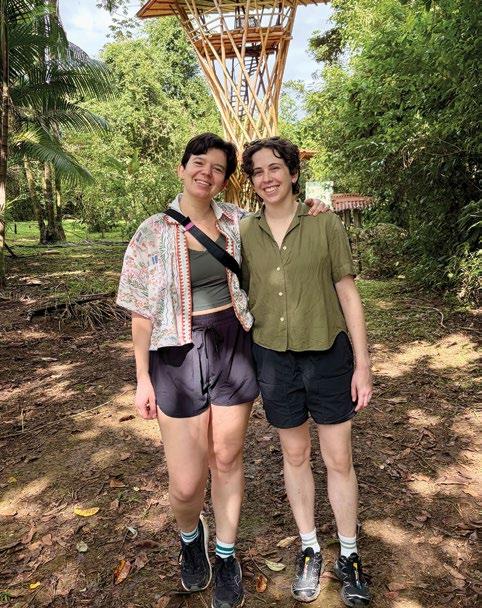
Daniela Lapidous got engaged to Hannah Fertig in Costa Rica in January. They met working on Vermont Senator Bernie Sanders’ 2020 presidential campaign.
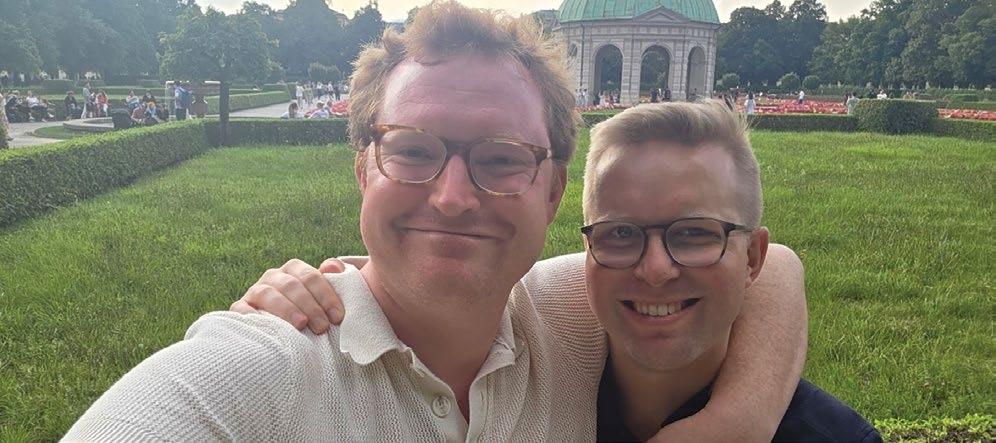
Tyler Koteskey recently became engaged to John Schuler in Munich. Tyler graduated from Georgetown in May with an M.A. in security studies, concentrating in U.S. national security policy.
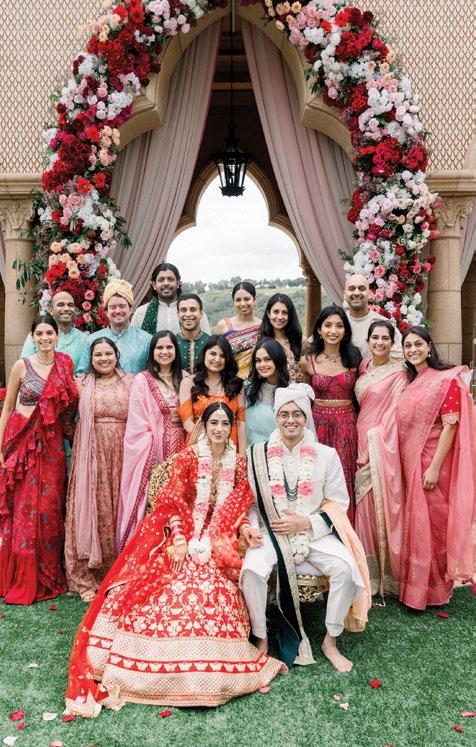
Sarika Asthana married Dev Sharma in May of last year, with many members of the Class of 2012 in attendance. Pictured: Isha Kawatra, Aditi Ashok-Downs, Nicole Dalal, Farrah Gulzar, Ishika Peravali, Keerthi Moudgal, Shreya Indukuri, Priyanka Sharma Kosaraju, Revanth Kosaraju, Arihant Jain, Neha Kumar and Sameena Balram
Govi Dasu earned his doctorate in computer science and learning science from Northwestern University. He is married to Anisha Chakradhar. They are based in San Francisco, where they are working in artificial intelligence.
From April to Dec. 2025, Julian Wise studied clowning in Etampes, France, at the École Philippe Gaulier, taking classes in le jeu (“the game”) and Shakespeare and Chekhov before taking “break a leg” too literally and breaking his foot. He has since healed and returned to New York, where he is ghostwriting for technology founders and investors, as well as writing a daily Substack on philosophy and games called “Wise to the Game.”
2012 2013
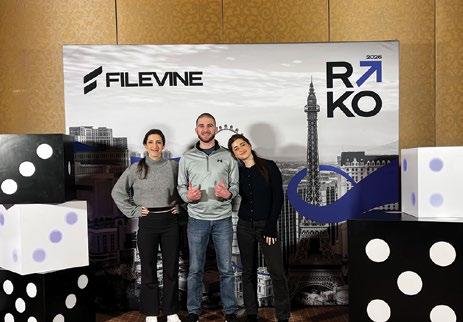
Pincites, the company co-founded by Sona Sulakian and Mariam Sulakian ’15, was recently acquired by Filevine. They are now leading legal drafting products at Filevine, building the next generation of AI-native legal workflows.
2014
Kimberly Ma is working with the National Security Commission on Emerging Biotechnology. She was recently selected as a 2026 Fellow for the Emerging Leaders in Biosecurity Initiative through Johns Hopkins’ Center for Health Security. As part of this group, Kimberly will work with other ELBI scholars on publications and committees to highlight local and global concerns around biosecurity.
Sonia Hashim recently celebrated her birthday with (pictured with Sonia) Ngakay Wong, Ria Desai and Suchita Nety, as well as Alison Rugar and Keri Clifford
Adarsh Battu married Natalya in August 2025.
Neil Khemani is enrolled The UCSF School of Pharmacy’s Master of Science in AI and Computational Drug Discovery and Development.
2015
Felix Wu has been married to Sophie Gustaveson since May 2025. They live in the United Kingdom, where they are both enrolled in graduate school.
Craig Neubieser married Vanessa Wang in November 2025 at Brooklyn City Hall.
2016
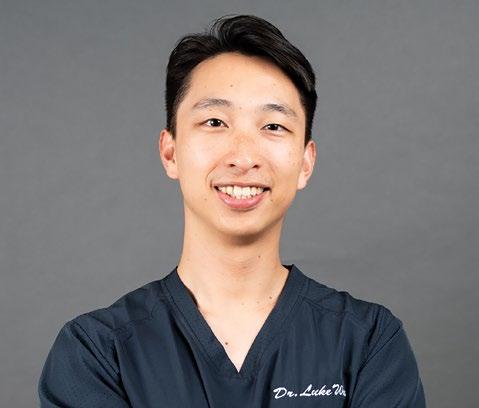
Luke Wu recently completed an orthodontic residency in Atlanta and has returned to the Bay Area to take over his parents’ business and build an orthodontic practice. Luke and his wife, Briana, are also expecting a baby in August. He is looking to start a needs-based and merit-based annual awards program for discounted comprehensive orthodontic care in the Bay Area.
.
2017
Tamlyn Doll is in her second year in the master’s in counseling psychology program at Santa Clara University’s School of Education and Counseling Psychology. She is on the dual-licensure track (MFT/ LPCC) and is applying and interviewing for her clinical practicum placement in the fall.
2019
Allison Cartee started a combined M.D./ Ph.D. program at University of California Irvine.
Hannah Lak started a doctoral program in clinical psychology at the PAU-Stanford Consortium.
2020
Willam Rainow completed his undergraduate degree and a year of research at Drexel University. He is applying to medical school.
2022
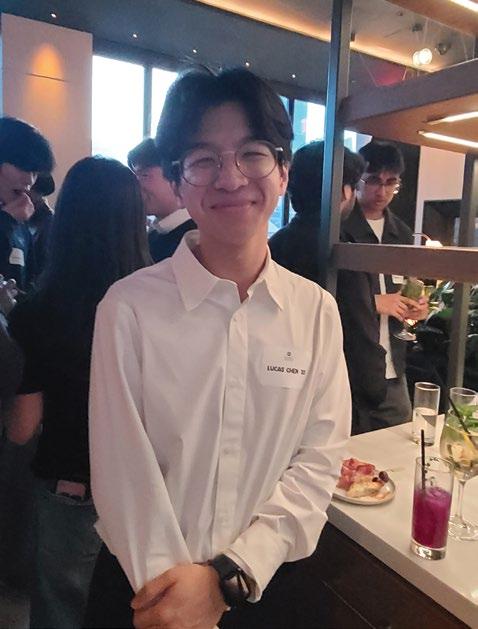
Cellist Lucas Chen, who graduated from Juilliard and Columbia University in the spring, spent last summer as a Summer Festival Fellow at the Aspen Music Festival and School, one of the country’s most prestigious classical music festivals.
Please send your updates to your class representative or email them to alumni@harker.org.
Helena Dworak is engaged to Emily O’Brien and a wedding is scheduled for this fall in Boston. They live in Chestnut Hill, Mass., with their bulldog puppy, Buoy.
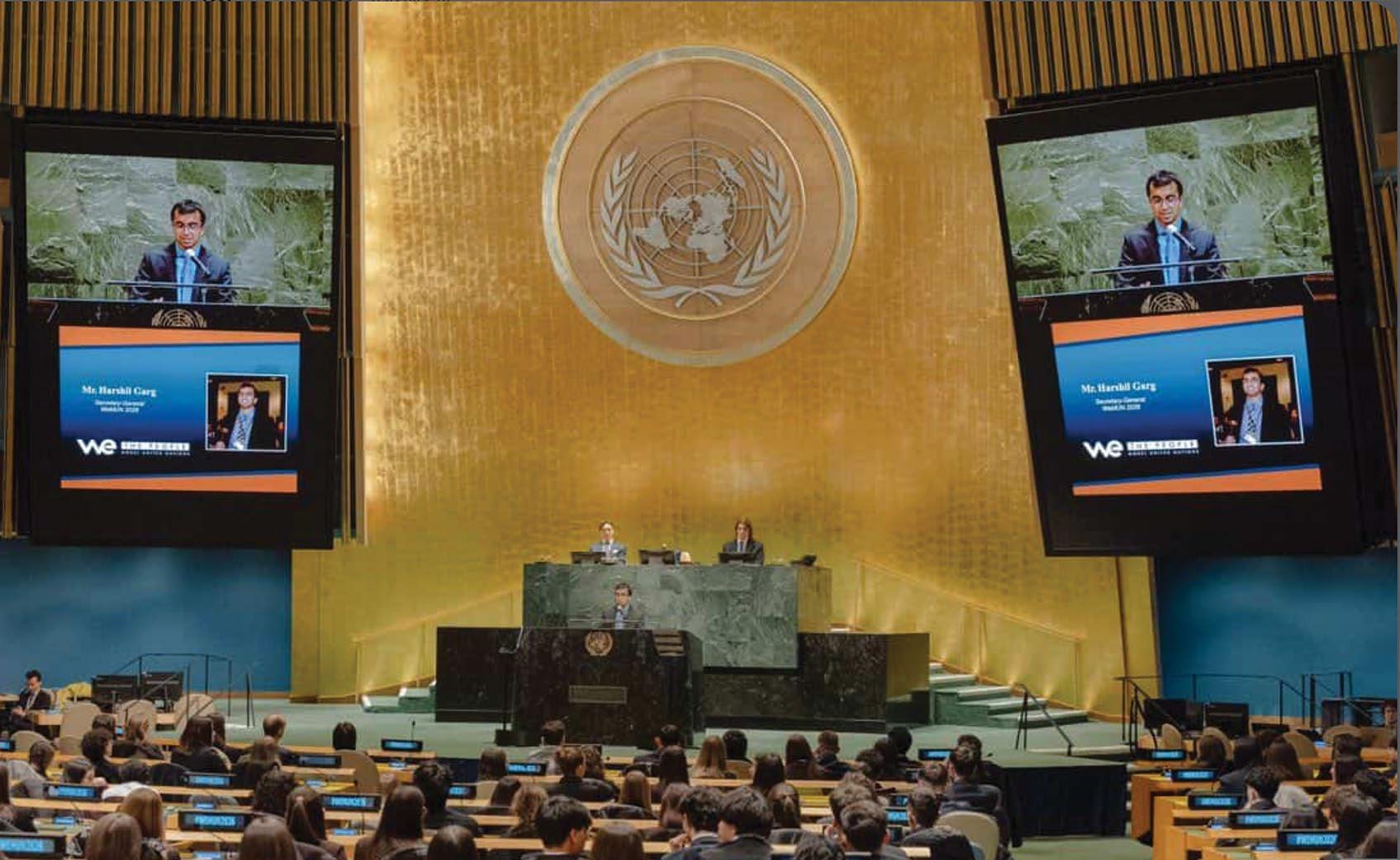
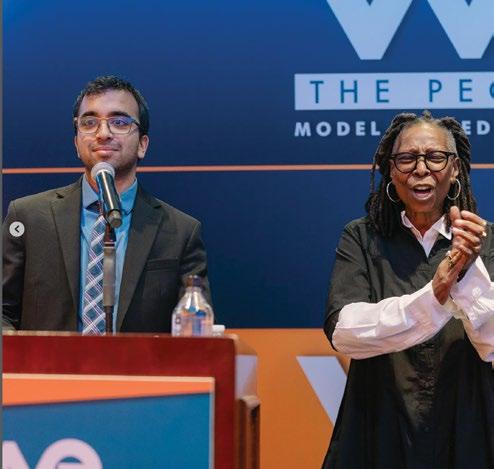
Harshil Garg, who was the Secretary-General of Harker’s Model UN club in 2021-22, recently had the opportunity to speak at United Nations headquarters to 2,500 students as the head of a large Model UN conference. He talked about how he developed his passion for history and Model UN at Harker, which encouraged him to continue those activities in college. He inspired the students to find things they are passionate about if they want to be successful.
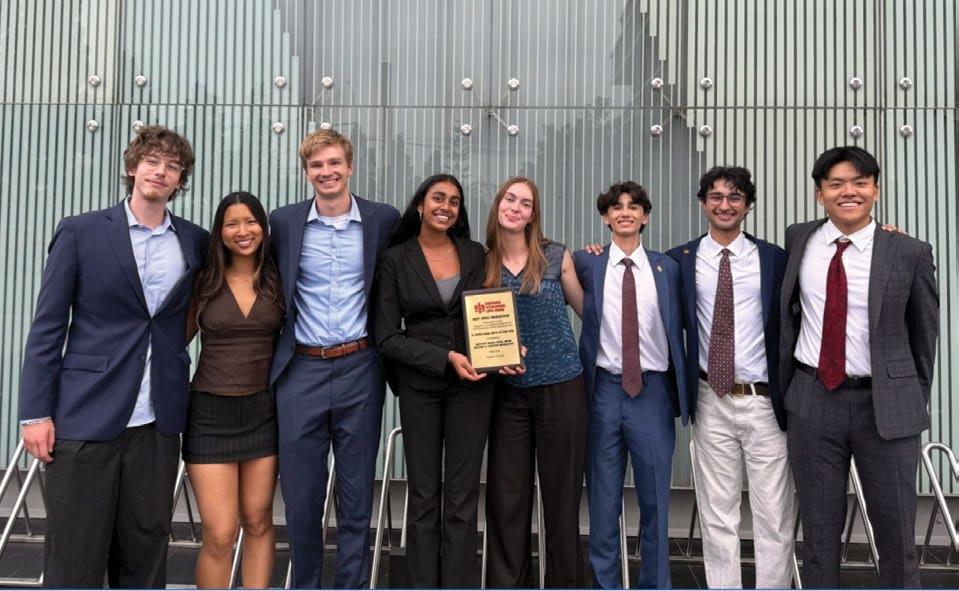
Claremont McKenna College Model United Nations team won the best small delegation award at the Harvard World ModelUN conference in Lima, Peru. Zubin Khera, shown second from right, was the
head delegate for the team, leading practices and also competing alongside them. Zubin and his partner took home first place in their respective committees, where they simulated the World Bank determining policy and interventions for confronting the global aging population and pension reform crisis.
The
2024
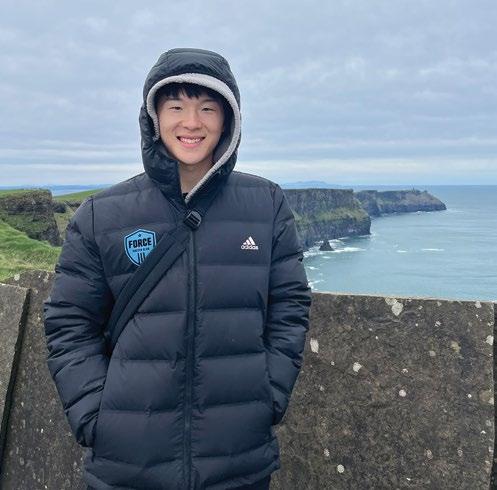
Jack Yang, pictured here at the Cliffs of Moher, is in Ireland on a semester abroad program through Pitzer Collge, studying topics including physics and linear algebra.
In Memoriam
Howard Saltzman, a beloved educator, coach and friend, passed away peacefully at his home on March 16, at the age of 80. Mr. Saltzman will always be remembered for his kindness, compassion, and his love for family and friends.
A man of deep character and heart, Mr. Saltzman transitioned to a career in education after an initial start in the insurance industry – a decision that would ultimately impact the lives of countless students and families. He joined Harker’s faculty in 1978, where he initially taught all subjects to third and fourth graders. As the curriculum evolved in the 1980s, Mr. Saltzman found his niche as a history specialist. He is survived by his devoted wife, Susan; his children, Michael Saltzman ‘94 and Kari (Saltzman) Snell ‘03; and his cherished grandchildren, Kiora (15), Aaron (10), and twins Maddox and Dexter (9), as well as three siblings.
Harker hosted a celebration of Mr. Saltzman’s life on June 6.
Class representatives serve five-year terms coinciding with reunion cycles. If you’re interested in learning more about the role or volunteering to represent your class, please email alumni@harker.org.
2002 Yasmin Ali
2003 Jess Killips
2004 Karan Lodha
2005 Ruchi Zhaveri
2006 Meghana Dhar
2007 Lucas Motro Joanna Xu
2008 Senan Ebrahim
2009 Stephanie J. Guo
2010 Niki Agrawal
2011 Hassaan Ebrahim
2012 Will Chang
Kristi Sun
2013 Katz Sundarraj
2014 Connie Li
2015 Madhavan Nair
Glenn Reddy
Stanley Xie
2016 Stephanie Huang
2017 David Zhu
2018 Dolan Dworak
Gloria Guo
Melissa Kwan
2019 Olivia Esparza
Riya Gupta
Mahi Gurram
Matthew Hajjar
Kelsey Wu
2020 Lauren Beede
Bennett Liu
Anika Tiwari
2021 Olivia Guo
Kristin Tong
Helen Zhu
2022 Gigi Chan
Alexa Lowe
Irene Yuan
2023 Annmaria Antony
Dhruv Aron
John Cracraft
Zain Vakath
Please send your updates to your class representative or email them to alumni@harker.org.
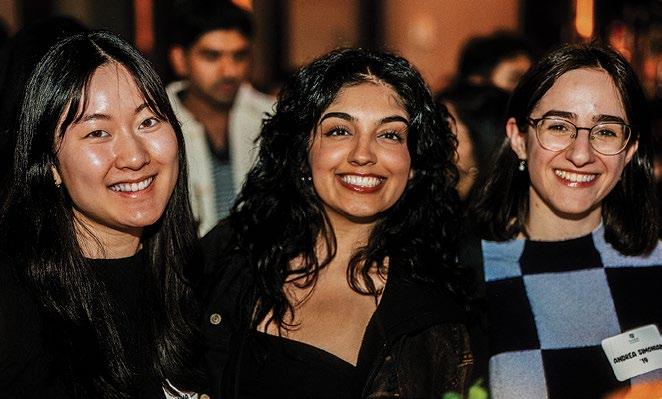
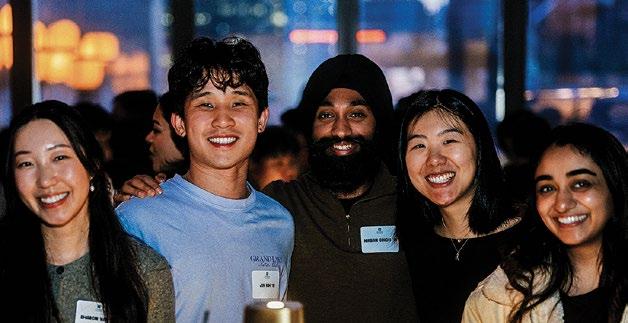
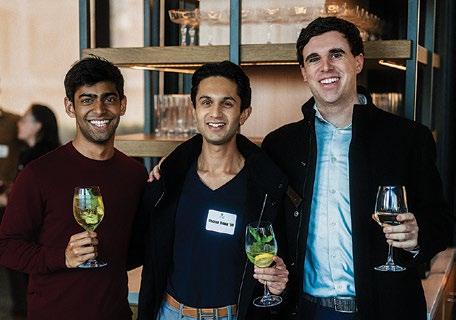
Alumni Regional Receptions
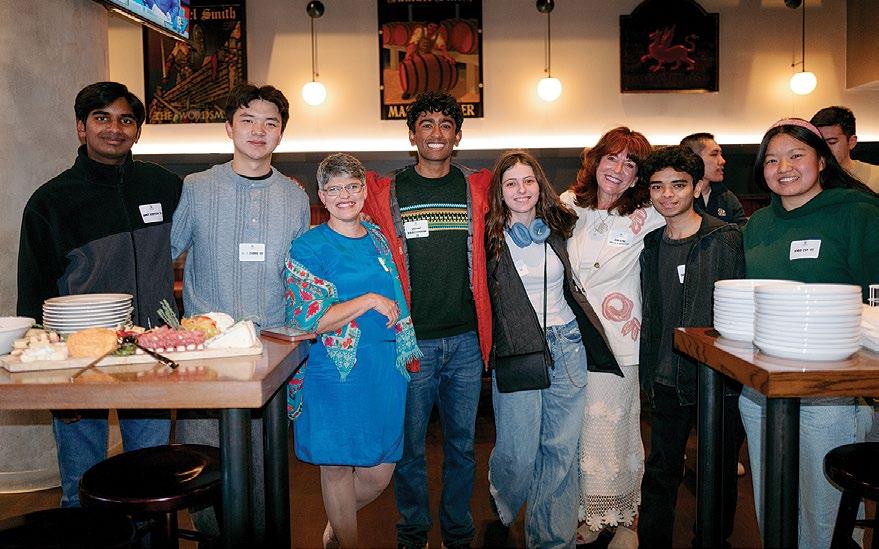
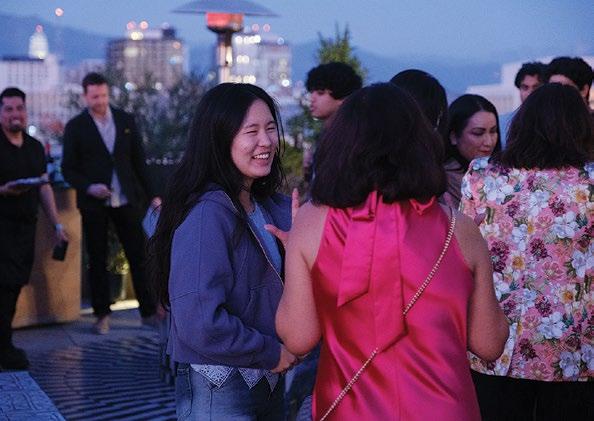
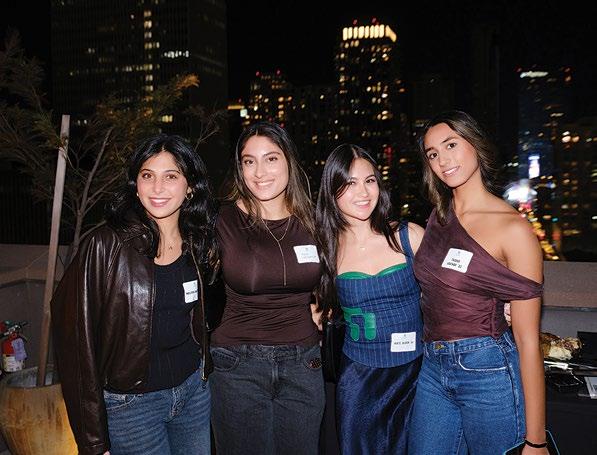
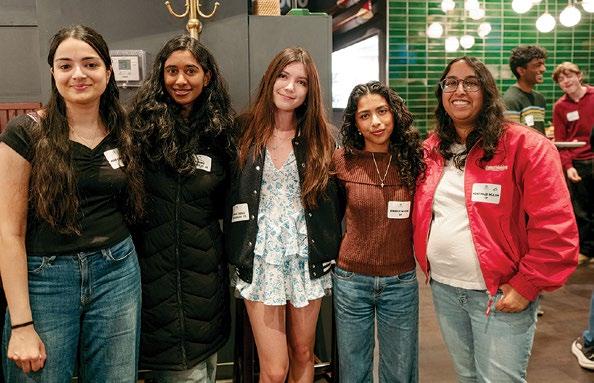
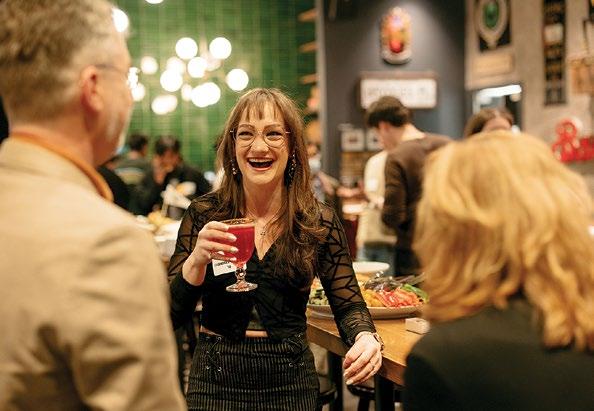
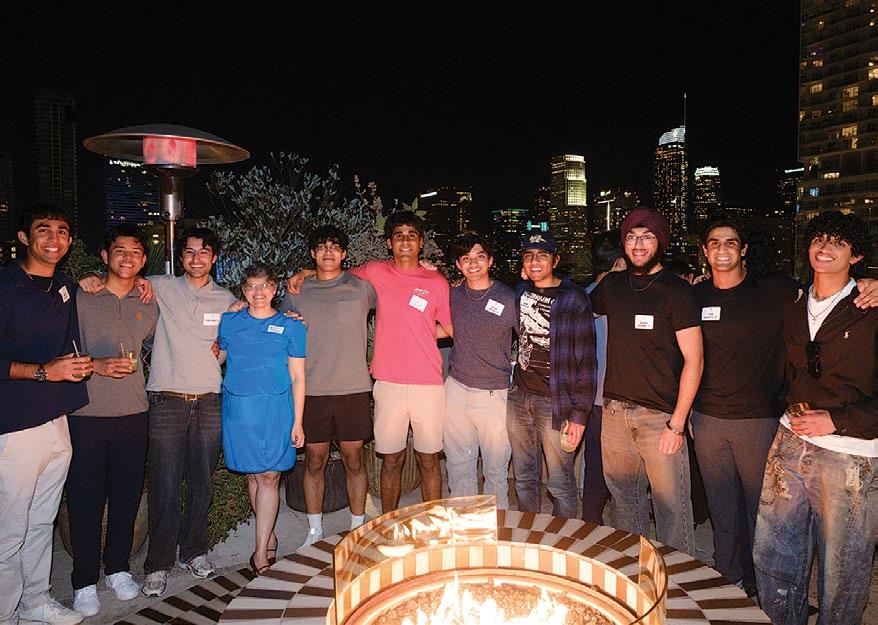
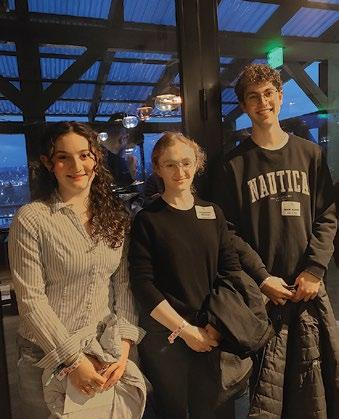
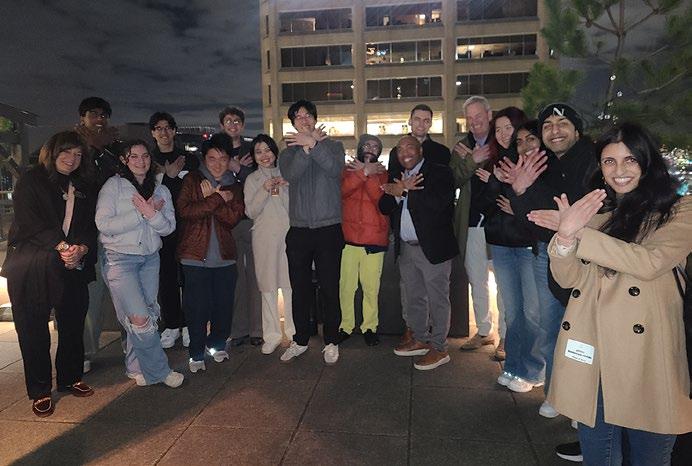
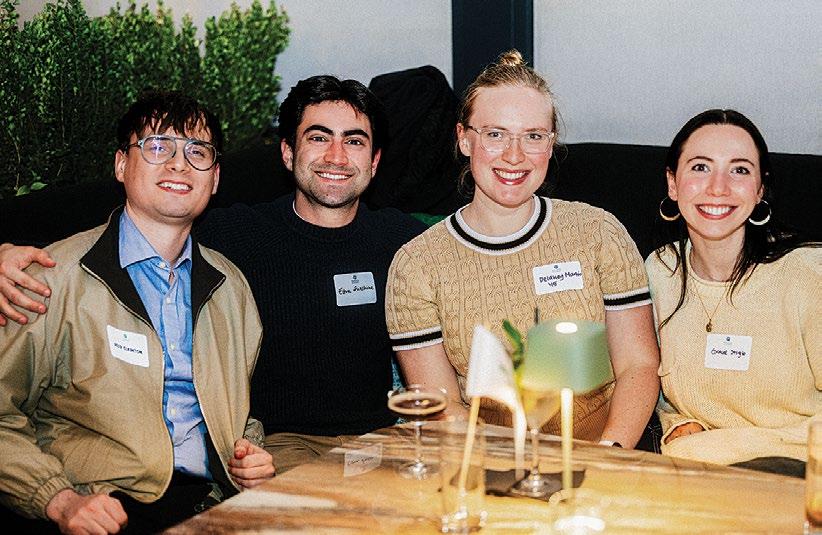
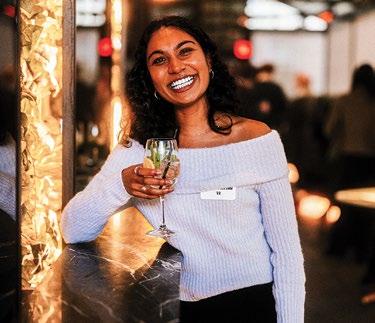
April was alumni reception month! Teachers, administrators and Caren Furtado, director of alumni relations, met up with about 450 alumni in five fabulous locations. Connections were celebrated and re-established, and Harker was well-represented all over the country!
BOSTON
LOS ANGELES
Photos by Daniel Ebersole
Photos by Nicole Caldwell
SAN FRANCISCO
SEATTLE
NEW YORK CITY
Photos by Justin Von Braun
Photos by Josiah Destin
Photos by Caren Furtado
archives from the archives
PHOTOGRAPHS BY SOPHIE ORMOND
ARCHIVAL ASSISTANCE FROM MICHAEL MURRAY, ELECTRONIC RESOURCES LIBRARIAN
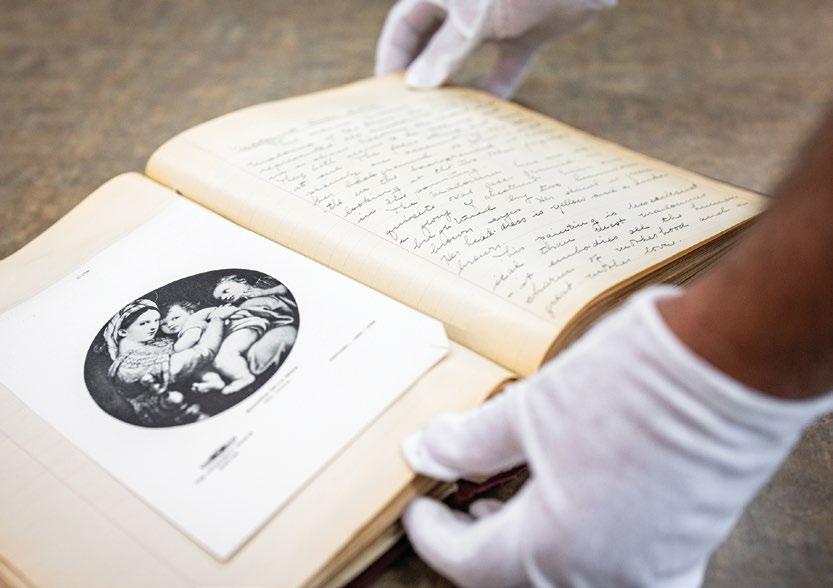
On July 22, 1979, Roger Simons, a computer programmer at IBM, wrote a letter to Harker Academy headmaster Howard Nichols upon discovering a unique treasure among his late mother’s estate.
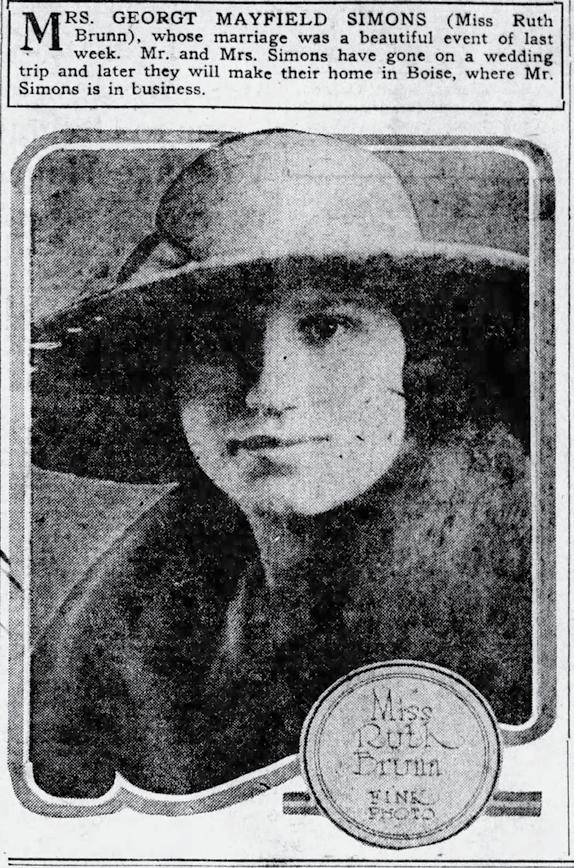
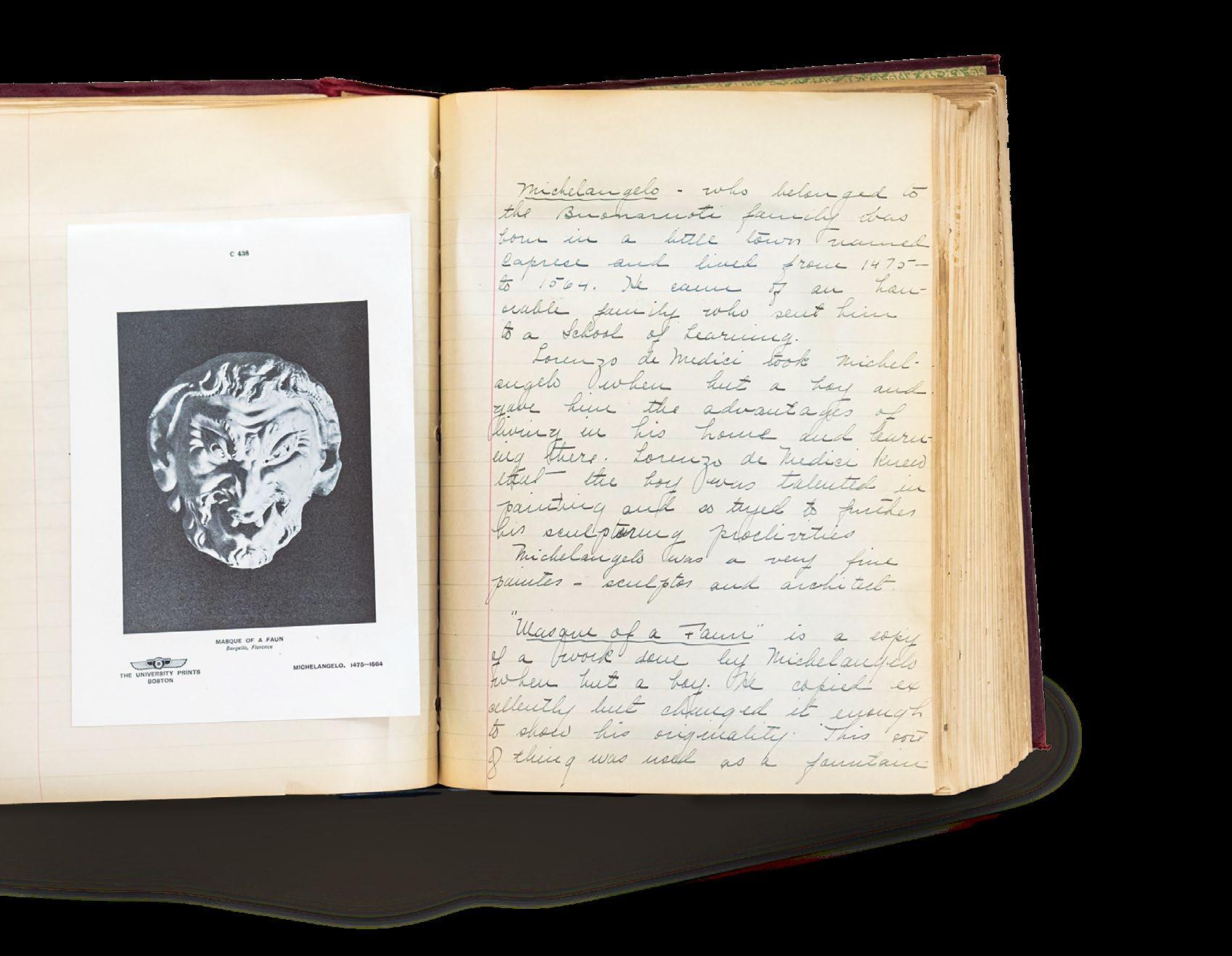
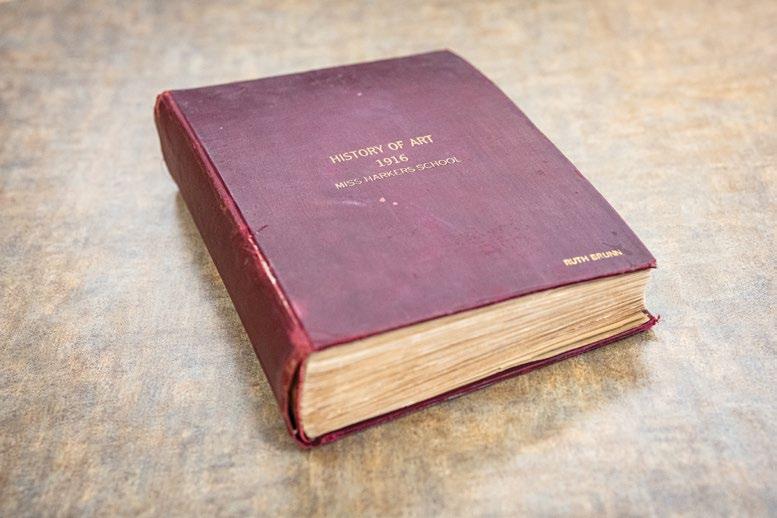
A month earlier, Ruth Simons passed away at age 82 in Portland, Ore. Among the items Roger found was a bound, crimson-colored book two inches thick titled “History of Art.” Also embossed on the cover were “1916,” “Miss Harker’s School” and the name of the student, “Ruth Brunn.”
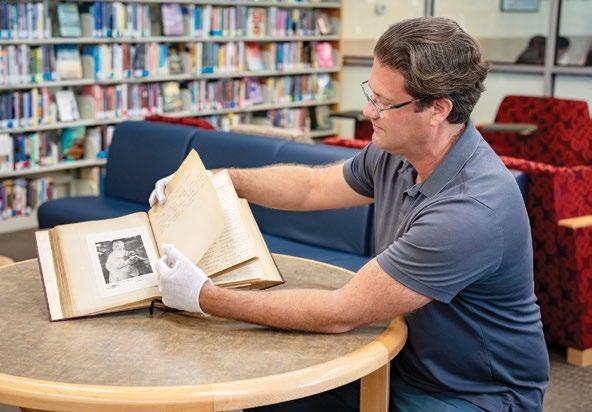
Roger felt the book would be in good hands at Harker, where it could be included in the school archives as a glimpse into early days of the now-133-year-old institution. Nichols wholeheartedly agreed.
“Your mother’s book will surely be an important addition,” Nichols responded. “Thank you for sharing our enthusiasm for our past.”
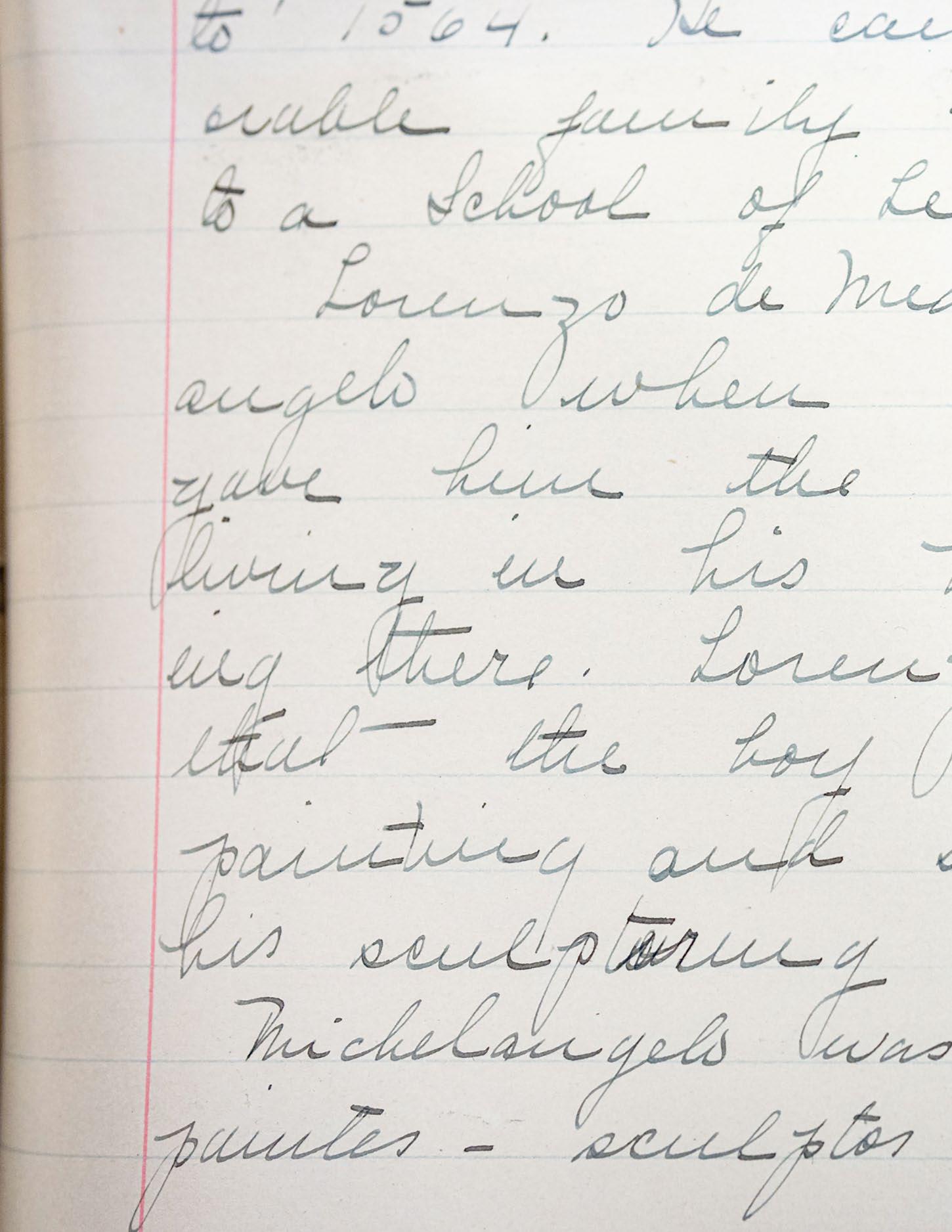
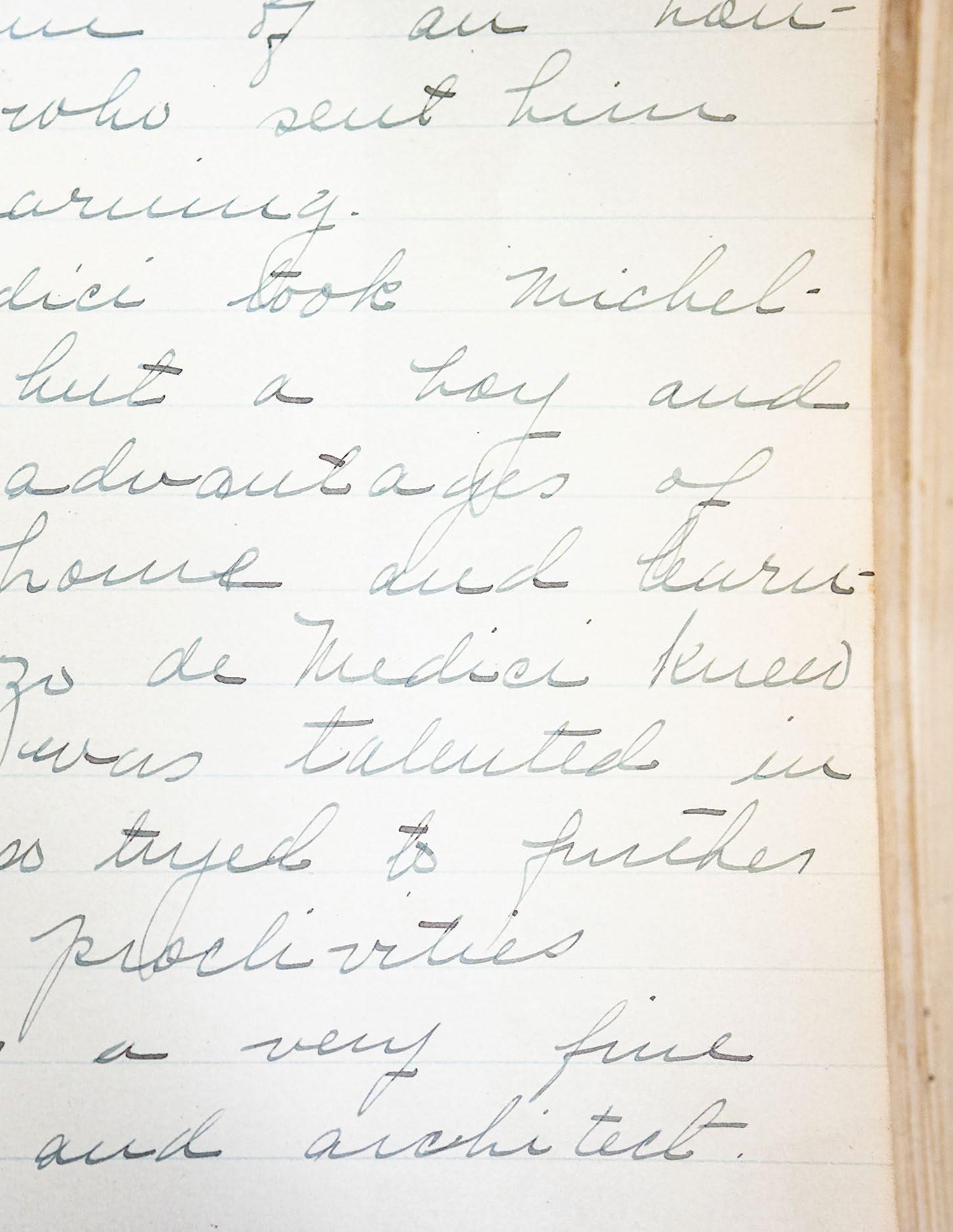
The 500-page book features 245 photos of famous European art – paintings, frescos, vases, buildings, doors, sculptures and statues – glued onto lined paper. Facing pages feature handwritten descriptions of the works, artists and styles. Michelangelo, Leonardo da Vinci, Donatello, Diego Velasquez, Bartolommeo and many others are represented.
On “The Angelus” by Jean-François Millet, a painting that depicts a peasant couple pausing from plowing a potato field to pray at dusk, Brunn described the painting’s physical characteristics and history. She added, “The themes of this painting are spirit of prayer and peaceful evening glows. Millet never painted Madonna or the saints but in spirit, he was one of the most religious of painters.”
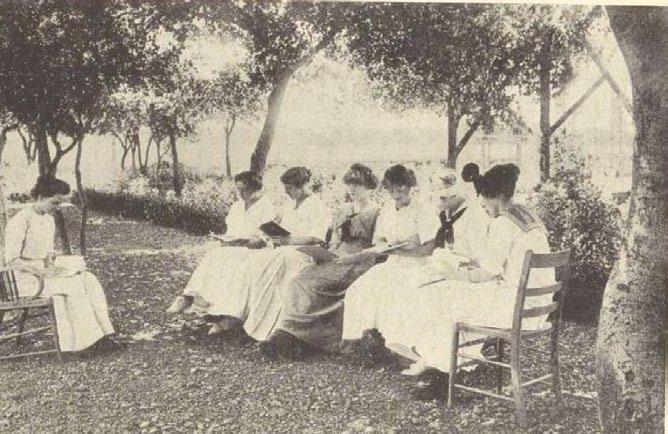
The project illustrated the dedication and detail required of Miss Harker’s students. In 1916, Miss Harker’s School for Girls was a boarding school and served as a prep school for Stanford University. Focuses of study, according to an advertisement of the time, were “Music, Domestic Science, and Arts and Crafts.” It eventually would merge with Manzanita Hall, a Palo Alto boys high school with which it had frequent social gatherings, to form today’s Harker. Brunn attended Miss Harker’s School only as a senior, transferring from the Ladd School in Portland. She was among eight in a senior class that graduated on May 19, 1916.
Through newspaper archives, we can piece together Brunn’s life beyond Miss Harker’s School. She was the daughter of Isaac and Millie Brunn and the family was active in their Jewish temple and owned a summer cottage in Seaside, Ore. Her brother, Alvin, earned a Bronze Star and Croix de Guerre for his heroism in combat during World War II and passed away in 1967.
Ruth Brunn returned to Portland after graduation and did not attend college. She trained as a nurses’ aid during the latter stages of World War I and was involved in a campaign for Armenian and Syrian relief in response to genocide by the Ottoman Empire.
She frequently was mentioned in the society pages of the Oregonian and Oregon Daily Journal and was active on committees and as a hostess for social functions.
WORDS BY DAVID KIEFER
George was a successful sales manager for a Portland importing company and was active the American Legion and Elks Lodge before he passed away in 1933 at age 41. Ruth never remarried.
Roger graduated with distinction in mathematics from Stanford in 1949 and earned a Ph.D. in math at MIT before embarking on a 31-year career at IBM. Ruth, in the latter stages of her life, was a frequent letter writer to the Oregonian on political issues. A grandmother of five, she passed away in June 1979.
And through all the highs and lows, Ruth kept her “History of Art” and her memories of Miss Harker’s School. The Harker School, even in 2026, continues to benefit from Ruth Brunn’s legacy.
Bernie Morrissey’s classroom is the middle school library, so individual students, teachers and entire classes circulate through his space all day. This keeps him involved with the campus in a unique way, as do his additional roles as GSA co-advisor and long-time lead of the middle school’s DEI Committee. Morrissey was raised in suburban Chicago but spends much of his time in San Francisco, where he lives with his husband, David, sings with the San Francisco Gay Men’s Chorus, and enjoys occasional volunteer meal shifts for Glide Memorial Church and the San Francisco-Marin Food Bank.
What is your favorite book?
This is a tough question for a librarian, but the two books I’ve re-read the most frequently are “Nickel and Dimed” by Barbara Ehrenreich, and “Can’t We Talk About Something More Pleasant?” by Roz Chast.
What one piece of advice would you offer anyone who asks?
When something is out of your control, think in advance about how to be happy with either outcome.
What do you dislike that everyone else loves?
Chocolate.
What is your most treasured memory?
Every year on Dec. 24, my mom and I would take the 10-minute train ride to downtown Chicago to visit my dad’s office for a family holiday party and open house. Even though it was a very short journey, it felt like a totally different world.
Given the choice of anyone in the world, who would you want as a dinner guest and why?
Seth Rudetsky, who interviews all the Broadway stars and has so many stories about every actor and every show.
What is the one thing in the world you would fix if you could wave a magic wand?
I would make sure everyone has enough to eat.
What is something interesting about you that almost no one knows?
I have a list of every book I’ve read since 2003 and every haircut I’ve gotten since 2016.
In the
Classroom
The Tournament of Books connects students with books that are windows and mirrors. The large brackets are displayed right next to my desk in the library, so I get to hear students discussing the books and reacting to the vote totals. We are always trying to get students more involved in selecting Tournament books for future years.