HATCHET



GIANNA JAKUBOWSKI ASSISTANT NEWS EDITOR
Incoming Provost Edward Balleisen was drawn to GW by University President Ellen Granberg’s vision.
Balleisen, Duke University’s senior vice provost for interdisciplinary programs and initiatives, is inspired by interdisciplinary collaboration and expanding research opportunities, he told The Hatchet in a sit-down interview Sunday, just days after GW announced his appointment as provost. He added that Granberg’s strategic framework aligns with the direction he believes higher education should take, and when he comes to campus in July he will engage faculty and make deci-
sions rooted in shared governance and transparency.
“As I moved through the process and learned more and more about the University, my sense of the possibility of being able to really work with the folks at GW to move it forward became more and more enticing,” Balleisen said in an interview.
Balleisen will join GW as officials continue implementing the strategic framework guiding the University’s next seven to 10 years, which aims to expand students’ career opportunities, support graduate and professional programs, build a “robust” administrative system and emphasize interdisciplinary research and D.C.-based learning experiences. As the chief academic officer, Ballei-
Something is unraveling in the way we relate to each other.
We are living in a time of heightened division, isolation and technological change that forces a community-wide reckoning with the ways we make meaning in a fragmented world. We are desperate for experiences that remind us we are not alone — shared meals, music, art and experiences.
The last year has shaken our nation, the District and our campus. Across D.C., President Donald Trump’s immigration crackdowns, heightened unhoused encampment sweeps, removal of symbols of progress like the Black Lives Matter plaza and the deployment of the National Guard alongside efforts to federalize the Metropolitan Police Department have unsettled the city.
At the same time, the rising use of generative artificial intelligence has entered a generation glued to screens. At a school like GW with especially career-driven students, where productivity is often prioritized over human knowledge and thought, escalating political violence and the erosion of shared public and cultural spaces all combine to leave many of us feeling lonely and disconnected.
These seismic changes are reshaping how we live, learn and connect. They are testing the ways we speak, the art we con-
sen will work alongside Granberg to oversee the framework’s phased implementation as officials work to accomplish its twelve goals.
“I’ll be eager to learn more about the places where GW is incredibly strong and to think about the best approaches to find that right balance between the foundational strength in departments and then the opportunities for people in those units to collaborate with others outside of them,” Balleisen said.
But Balleisen is also stepping in at a time of acute strain on GW’s academic mission as schools and departments grapple with cuts to budgets, Ph.D. programs and federal research grants as well as declining international student and graduate enrollment stemming from Presi-
sume and the frameworks we rely on to make meaning.
Though we can’t answer how to make sense of all of this, The Hatchet’s annual guide offers a collection of the restaurants, shops, sites and experiences that make Northwest D.C. feel like home. We strongly believe that shared experiences are how we strengthen connection and empathy during times of division and change.
We invite you to listen to the harmonies at jazz bars, visit museums outside of the Smithsonians or pick up a new tune at a record store. Pull up a chair to watch drag queens sashay across the floor at drag brunch or dig into a honkin’ sandwich. GW students can host a party in their residence halls, spot a site of campus history that changed the world or take a ride around the block in a maintenance vehicle.
These places are distinctly human, drawing us together over shared interests. No matter how out-of-the-box or weird, we peek into storefronts and restaurants with curiosity and a desire to connect.

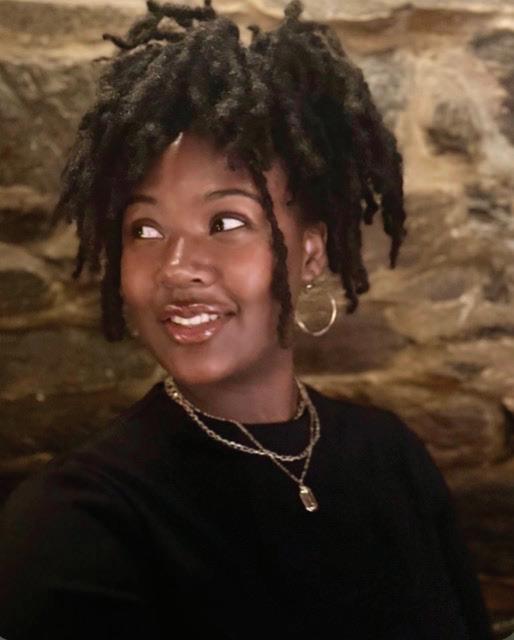
Mychael Torres, a first-year law student and aspiring public defender, died last month. She was 22. Torres, who completed her undergraduate studies at Northwestern University in 2023 after arriving in Evanston, Illinois, in 2019 as the school’s youngest admitted student just shy of 16, enrolled at GW Law in fall 2025. Friends who met Torres in classes and through student groups remember her as a humble, kind and electric presence who radiated talent and had a bright future in law as a public defender.
“She was just pure,” Hannah Billings, one of Torres’ friends said. “She didn’t hide anything, she was who she was. She was also just a wonderful friend.”
In reflecting on Torres’ character, Billings, a 1L law student, recalled a time when she was locked out of her apartment, and Torres insisted on waiting with her for over three hours, eating ramen on the floor until she could get into her apartment.
Anika Joglekar, a 1L student, said Torres quickly opened up as a friend and grew comfort-
able being “loud” about her beliefs on a wide range of topics, adding that she was “well read” and could discuss anything.
“It’s so funny to me when people describe Mychael as really reserved because pretty quickly as we got to know each other, she loves talking, and she had opinions about everything,” Joglekar said. Emily Talvacchia, a 1L law student, said before the first performance she had with
GW Law Cappella, she was “very nervous,” but Torres, who had performed during her time at Northwestern University, had a “confident, calm energy” to her and held Talvacchia’s hands to calm her down. “I consider this world to be very harsh and very dark,” Talvacchia said. “But she just had this light about her that was just really such a pleasure. To be in the same room as her and to hear her laugh, like she had the best laugh ever.”
dent Donald Trump’s visa and student-loan-borrowing restrictions. Balleisen said officials have briefed him on some of the University’s current challenges, and he looks forward to working with Granberg, deans and the Faculty Senate to keep the community informed about decision-making. He added that his experience at Duke — learning how the budget system works, developing new programs and reviewing existing ones — will provide relevant experience for decision-making at GW.
GW is facing an unprecedented convergence of challenges, including cuts to the fiscal year 2026 budget — which triggered layoffs and reductions in campus services — the Justice Department’s anti-
semitism and diversity, equity and inclusion probes into the University, Trump’s cuts to federal research funding and increased oversight on international students.
Balleisen said he has a “core belief” of sharing information about University decision-making with the community, but declined to comment on how he would navigate the specific challenges facing GW because he still has a “lot to learn” about the University’s circumstances.
“It’s important for members of the community to have a good sense of both the constraints that the university is operating under and where there are opportunities that are worth considering,” Balleisen said.
SHAHIMA NAZEEL REPORTER
The University will once again mandate that juniors live on campus, beginning with the Class of 2030.
GW will require first-year students entering GW in the 2026-27 academic year and beyond to live on campus for three years, reversing a 2023 decision to eliminate the requirement and grant students more flexibility in choosing where they live. More than a dozen students criticized the three-year on-campus living mandate, while others questioned whether GW has sufficient housing capacity to accommodate the policy.
Before officials removed the three-year housing mandate in 2023, students reported waitlists and a growing demand from juniors seeking exemptions.
University spokesperson Nadia Payne said officials decided to reinstate the requirement after reviewing student engagement, housing utilization and long-term planning needs, adding that the decision reflects evidence
that living on campus longer “supports student success.”
She said students previously raised capacity concerns related to the threeyear housing requirement before the University paused it in 2023, but Campus Living & Residential Education has since implemented changes — like staggering housing registration periods, streamlining timelines and expanding upperclassmen housing options — to improve planning capacity.
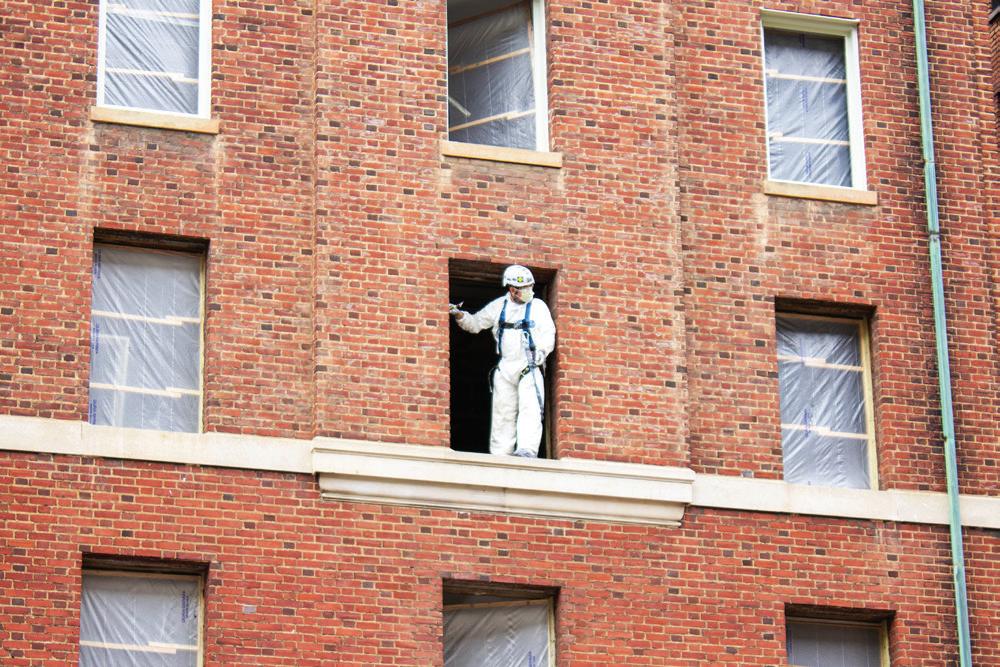
Officials removed in-unit kitchens from rooms in Fran-
cis Scott Key Hall last summer, adding 80 beds to the hall’s capacity and converting single rooms to doubles after budgeting the project in 2023. They also introduced four-person bedrooms to FSK and increased the share of four-person bedrooms in JBKO Hall from 12 percent this academic year to 20 percent next academic year. The University also expects to complete renovations in Mitchell Hall in summer of this year, which went offline for the 2025-26 academic year for elevator modernization.
RYAN SAENZ ASSISTANT NEWS EDITOR
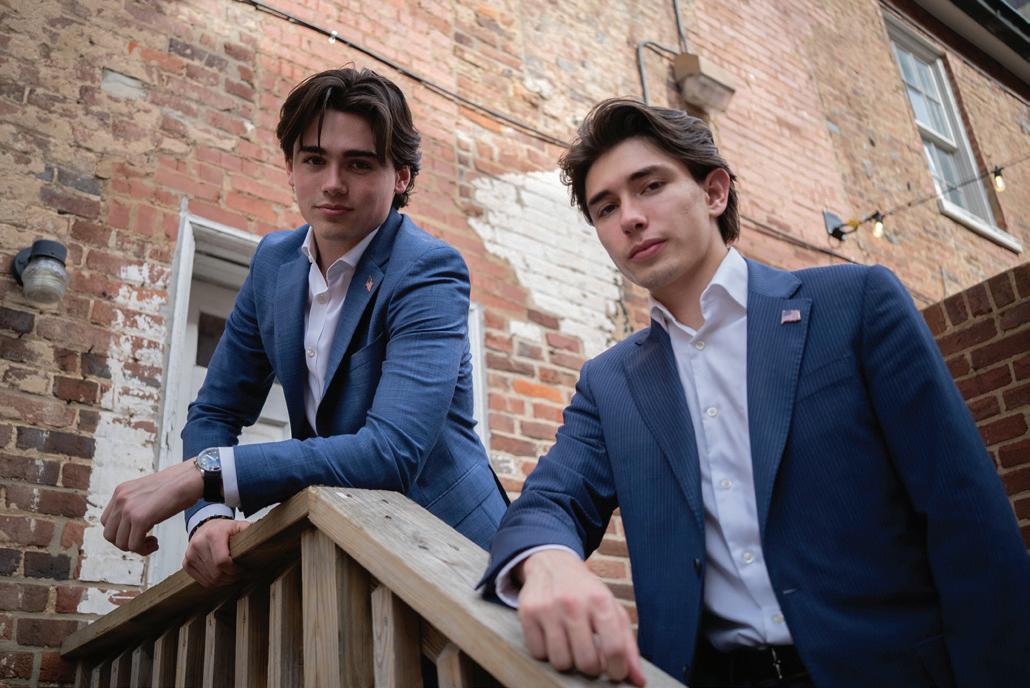
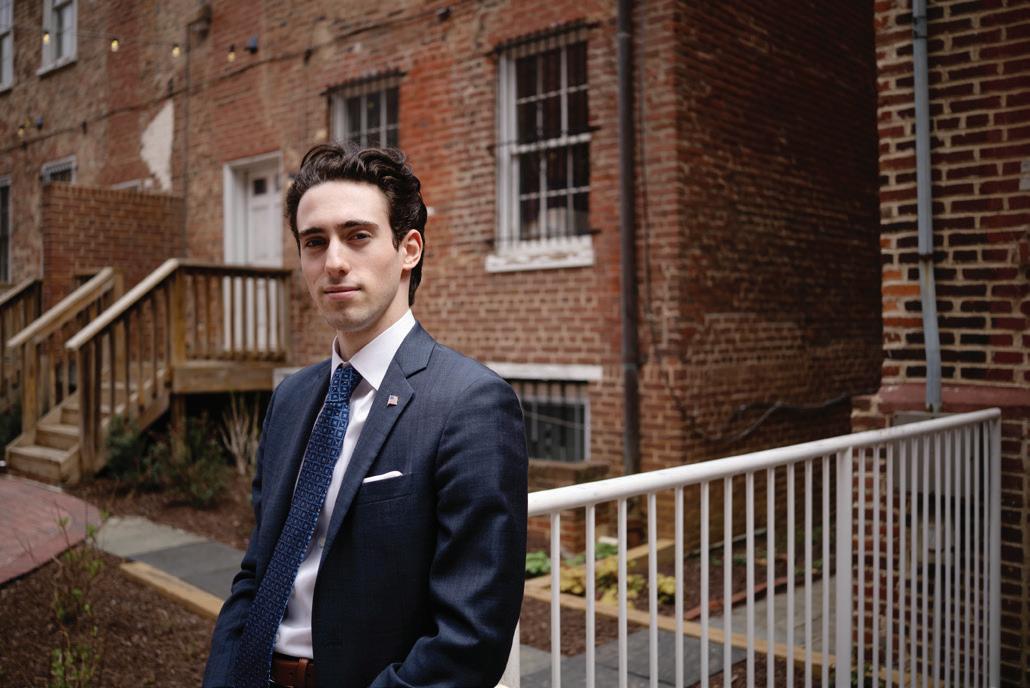
Over a year after President Donald Trump’s return to power, GW’s conservative student leaders say the campus has become more welcoming to right-leaning students, pointing to packed events, a surge in membership and support from University officials.
Three student leaders from GW College Republicans and Turning Point Foggy Bottom say membership and interest in their organizations and events have surged this year as Trump and Republicans returned to federal power, and students across the political spectrum show renewed interest in civil discourse. They said the surge in interest has coincided with increased support from University officials, including in response to online threats following Charlie Kirk’s assassination and view their recent successes as a starting point as they work on hosting more events with high-profile Republican leaders.
“It’s great to be a Republican,” Kieran Laffey, the chairman of GW College Republicans, said. “We got a lot more work to do, and we want more dialogue and conversation, and we invite everyone, no matter what you believe, to come to our stuff.”
Laffey said College Republicans has capitalized on growing interest from GW’s conservative students by revamping its social media and website, doubling the number of events it offers and expanding social opportu-
nities, from trips to the National
Hotel
He added that the group has seen a 21 percent increase in membership this year, with 39 percent of members being first-year students — the
highest proportion of first-years since before the pandemic. “Our membership has skyrocketed,” Laffey said. “The freshman class this year is our largest faction in the club, so we’re all thrilled, but we got to keep pushing.”
THEFT II/FROM BUILDING
Shenkman Hall
Reported – 4/2/2026
Open Case
A female GW student reported her order stolen from the Shenkman Hall lobby. Case open.
SIMPLE ASSAULT
I Street Mall
4/1/2026 – Unknown
Open Case
A female GW student reported an unknown person assaulted her. Case open.
DESTRUCTION OF PROPERTY/VANDALISM
1922 F Street Garage
Reported – 4/1/2026
Open Case
The GW Police Department responded to a report of green spray paint covering a garage security camera. Case open.
—Compiled by Bryson
Kloesel
WEEK IN HISTORY April 12, 1938
JENNA LEE
SENIOR NEWS EDITOR
TYLER IGLESIAS
SENIOR NEWS EDITOR
Students for Justice in Palestine hosted a spontaneous rally in Kogan Plaza on Friday as part of the group’s programming for Palestine Liberation Week, renewing demands for officials to fire Economics Professor Joseph Pelzman for his connections to the war in Gaza.
A crowd of about 50 students stood gathered around the Kogan Plaza Tempietto at around 5:30 p.m., waving Palestinian flags and chanting, “We want justice, you say how, hands off Lebanon now,” while officers from GW Police Department and Metropolitan Police Department stationed themselves around the plaza in cars and on bikes. The crowd later moved to the intersection of 21st and G streets outside Tonic at Quigley’s restaurant, where students unfurled a large Palestinian flag onto the street and demanded officials fire Pelzman for his links to President Donald Trump’s plan to redevelop Gaza and deport Palestinians to neighboring countries.
The rally was part of SJP’s Palestine Liberation Week programming, which the organization puts on annually to
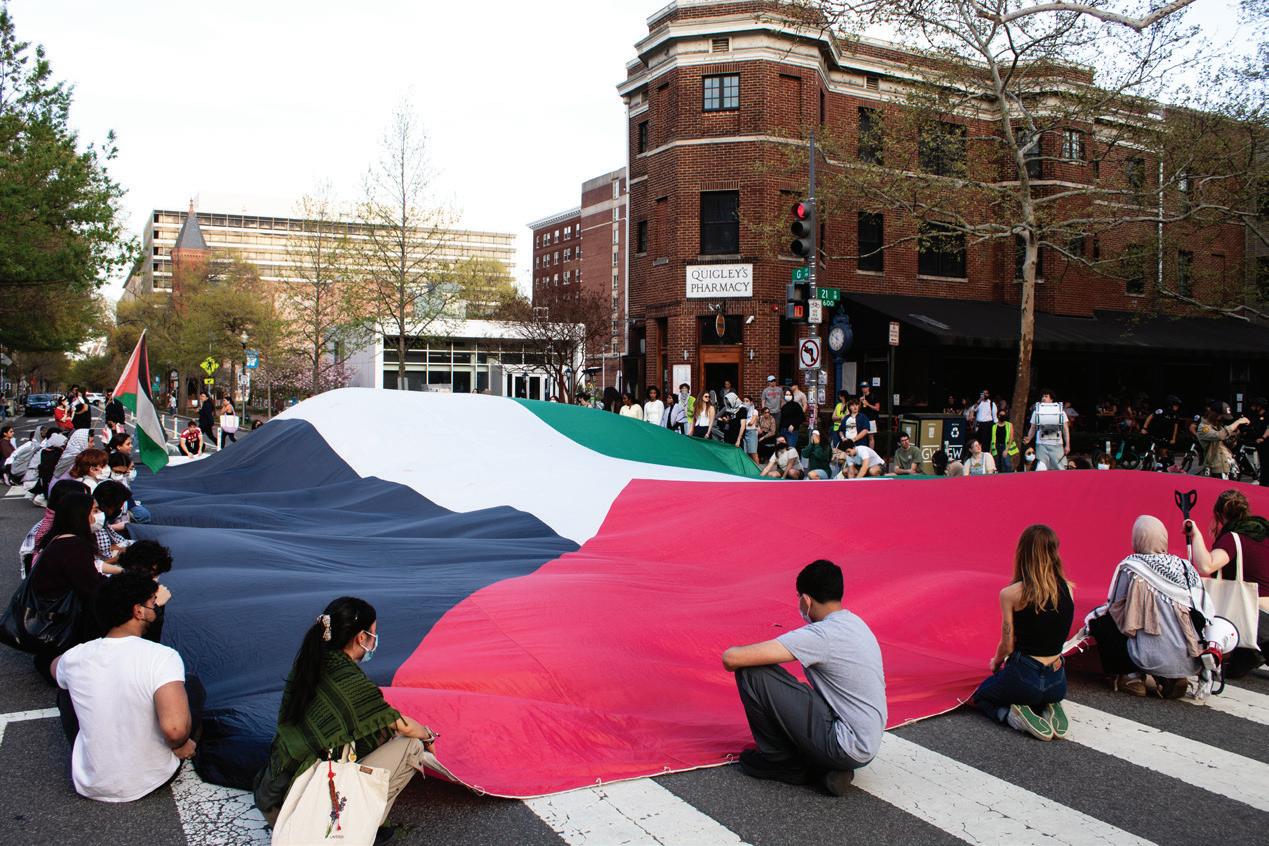
educate and mobilize students around Palestinian rights.
Officials suspended SJP twice within the last year until spring 2027 for hosting events without adviser approval and for disorderly conduct related to the group’s push to fire Pelzman, prompting the group to disaffiliate from the University.
Officials closed the gates to University Yard for the protest, and MPD and
ELIJAH EDWARDS ASSISTANT NEWS EDITOR
White House Press Secretary Karoline Leavitt and Turning Point USA CEO Erika Kirk discussed President Donald Trump’s administration’s decision to add content creators to the White House press pool, voter ID legislation and Charlie Kirk’s legacy during a talk at Lisner Auditorium Thursday.
Leavitt, who spoke in conversation with Kirk — the wife of conservative activist Charlie Kirk, who was assassinated in September — said she included podcasters and content creators in the press pool because of their large audiences and Trump’s success with them during his 2024 campaign and pushed back against a student who asked her why Trump’s administration is pushing strict voter ID legislation when voter fraud is rare. The event, the first stop of the This Is The Turning Point tour, nearly filled the auditorium’s 1,400 seats, with some attendees adorned in red “Make America Great Again” hats and Turning Point merchandise.
Attendees filed into an auditorium decked out in traditional Turning Point style, with posters reading “I am Charlie Kirk” draped on every seat and organizers handing out free “Freedom” hats, American flags and flyers for guests to check their voter registration at the lobby door.
Leavitt, who has invited dozens of new podcasters and content creators into the
White House press pool — a change from past administrations that allowed only established “legacy” media outlets, said she began planning the shakeup during the presidential transition. She said Trump on the campaign trail did a good job of “owning” the non-traditional media lane, appearing on podcasts like the Joe Rogan Experience, while his opponents, like former Vice President Kamala Harris, shied away from it.
She said she thought it would be a “dereliction” of her duty as press secretary if she excluded the non-traditional outlets Trump dominated from the election once he took the White House. Leavitt said the move was a direct response to what she called the “fake news media” because she said legacy outlets had lost their ability to cover Trump fairly.
“The process that the fake news goes through to write stories, it’s really just such a low level of journalistic integrity,” Leavitt said.
“They will find anyone and call them ‘a source familiar with the White House,’ and then they’ll just write what that person said like it’s the truth.”
She said the credentialing process for new-media journalists follows the same vetting as legacy outlets and that the administration does not screen applicants by ideology — though the vast majority are conservative or right-wing. Leavitt said podcasters and content creators like Jack Posobiec — who also spoke at the event — now travel with the
Lerner Health & Wellness Center will begin offering womenfocused gym hours twice a week starting Thursday following a year of advocacy from Student Government Association leaders. The “women’s inclusive” hours will take place Thursdays from 6 a.m. to 8 a.m. and Sundays from 3 p.m. to 6 p.m. in Lerner’s lower level P3 fitness room where students can participate in women-focused programming, like classes and activities led by some of the gym’s female personal trainers. University spokesperson Claire Sabin said the hours, which the SGA announced on Instagram Wednesday, are not limited to those who identify as women but are intended to create a “judgment-free environment.”
Sabin declined to comment on whether officials could not make the hours exclusive to women due to Title IX restrictions. Title IX, a federal law, prohibits sex-based dis-
president on Air Force One, which can draw uncomfortable reactions from legacy press.
“They have bigger audiences and followings than many of the legacy-media journalists do, so they deserve a seat at the table,” she said.
Ryan Caldwell, a GW student, asked Leavitt and Kirk why the Trump administration is pushing for Congress to pass the SAVE America Act — which would require “documentary proof” of citizenship to register to vote in federal elections — if studies from conservative think tanks like the Heritage Foundation have found fewer than 2,000 cases of verifiable fraud since 1982.
The SAVE America Act, which the House of Representatives passed in February but has stalled in the Senate, would require states to obtain in-person proof of citizenship from individuals to register them to vote and mandate voters show identification when casting a ballot in a federal election. Critics of the act warn it will disenfranchise millions of Americans by making it harder to vote, but its supporters say the legislation is needed to prevent voter fraud.
“Why are you okay with any voter fraud in the United States?” Leavitt said. “We are the greatest country on the face of the earth, and we can have the biggest and most secure election of any country on earth”
Kirk spent the evening remembering her late husband’s legacy and lauding his career of engaging with
crimination in education programs and activities that receive federal financial assistance.
“These sessions are open to all students while also intending to create a space that centers comfort and respect for those it’s designed to support,” Sabin said in an email. Sabin said officials selected the days and times for the women’s inclusive hours to reflect students’ “desire” for weekday and weekend workout options that do not conflict with class schedules. She said the Division for Student Affairs intends the hours to serve as a reminder to all students to be respectful of the women-friendly space and its intended use.
“Rather than restricting access, DSA’s hope is to foster an environment where Lerner users are mindful of the purpose of the space and encouraged to act respectfully and without judgement,” Sabin said.
SGA Vice President Liz Stoddard, who advocated for women’s inclusive gym hours in her vice presidential platform last spring,
GWPD cars and bikes lined 21st and H streets during the demonstration. At about 5:50 p.m., three GWPD cars entered Kogan Plaza as students chanted “From the belly of the beast, hands off the Middle East.”
“We know that GWPD and, at times, MPD are tools of the University to prevent students from expressing these mass mobilizations of dissent,” the SJP representative said.


students on college campuses with whom he disagreed.
Kirk said her husband, Charlie, who was assassinated at Utah Valley University last September while speaking at a college event, was always willing to listen and engage with students with differing viewpoints and make himself available for debates.
“I just hope that my
said the initiative grew out of conversations with students — particularly Muslim women who wear hijabs — who wanted dedicated programming to work out without men present. She said the women’s inclusive hours are not designed to exclude certain groups, but to signal a more inclusive space overall for students who may feel uncomfortable working out in the gym normally.
“I just want it to be a place where women can feel comfortable around each other,” Stoddard said. “I heard a lot of complaints about women wanting to do their yoga exercises and being pushed to the furthest corner and not having enough space, or not feeling comfortable.”
Stoddard said she, Lerner staff and DSA officials selected the specific time slots by analyzing tap entry data of students’ gym usage, specifically looking at periods when students commonly used the gym while avoiding peak hours to ensure all rooms remained avail-

husband continues to be an inspiration to all of you of how to properly engage with those that you do not agree with,” Kirk said.
Kirk said conservative students who feel isolated or silenced on liberal-leaning campuses like GW’s should treat free speech as a responsibility. She said conservative students should engage with their liberal classmates to understand their perspectives instead of shutting down differing viewpoints. She said her husband “gave his life” for free speech and told the conservative students in the crowd they must continue to “speak with truth” against liberal classmates who try to push false narratives.
able during the busiest times. She added that the hours are limited to the P3 fitness room, meaning the main Lerner gym will remain fully operational for all students during the women-focused hours.
Stoddard said the policy took longer to implement than she initially hoped after having advocated for the addition since the end of last academic year, but said every policy change the SGA advocates for has to go through a lengthy administrative approval process, including through GW’s legal department. She said she thinks President Donald Trump’s administration further complicated the process, because universities across the country are facing increased federal monitoring to determine if their programs could be discriminatory. Trump’s administration has opened two federal probes into GW over the past year, including a review of potential discrimination in the University’s admissions process due to diversity, equity and inclusion policies.
“I wouldn’t say that the administration dragged their feet on this issue, I just think that this issue in particular had to be looked at with extra care, and I think that’s understandable,” Stoddard said.
Stoddard said the students she’s spoken to are happy about the initiative after raising concerns to her last spring about a record-high number of Title IX complaints and feeling uncomfortable working out in the main gym. During the 202425 reporting period, the Title IX Office received 494 complaints, the highest recorded number since GW began publishing annual reports in 2022.
She said she hopes the space will be a place where groups like female-identifying and non-binary students can come together to form a fitness community centered on inclusivity and free from judgment.
“Wanting to build community at this university is really important, especially given how a lot of these communities are being attacked,” Stoddard said.
BRYSON KLOESEL
CONTRIBUTING NEWS EDITOR
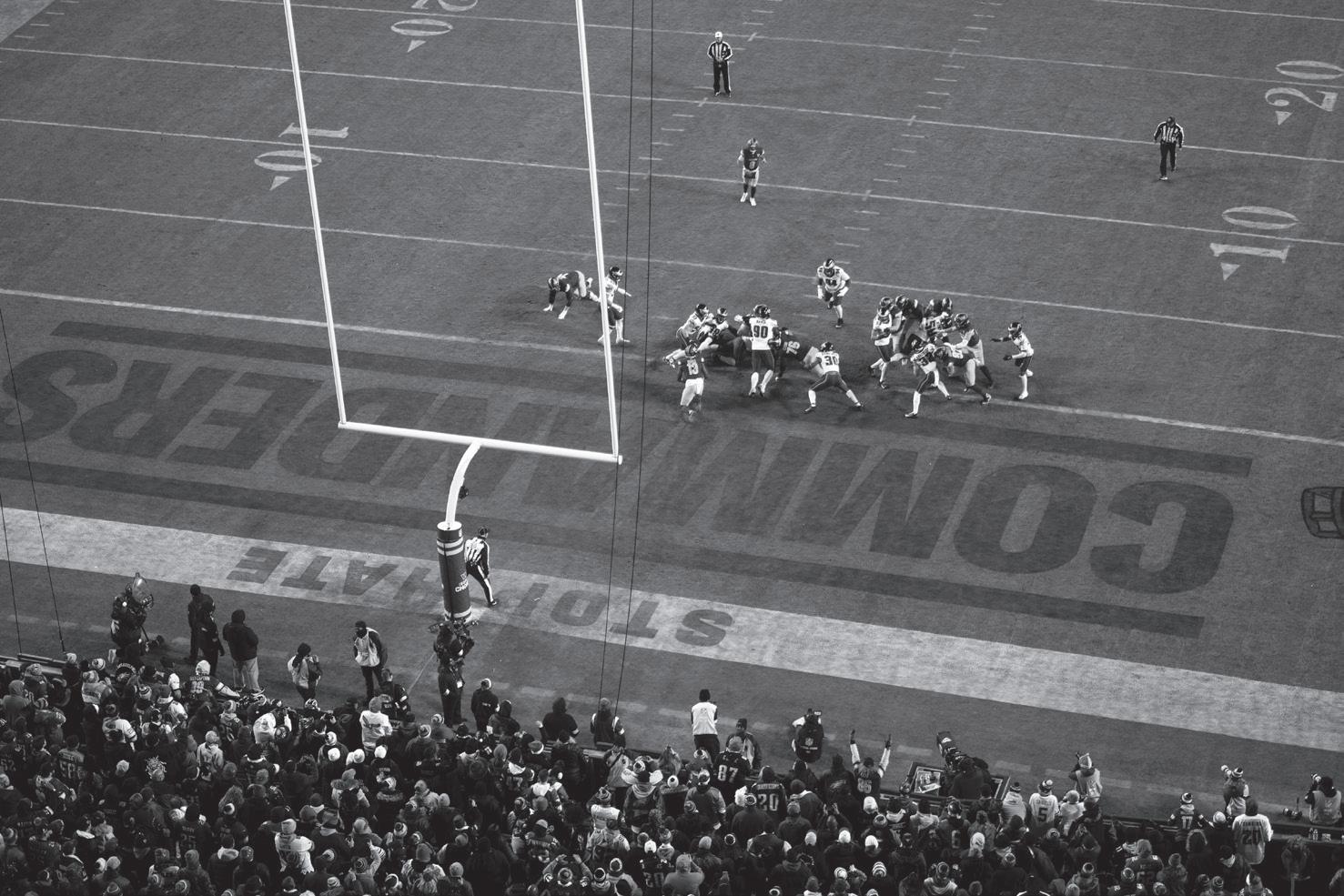
The Washington Commanders signed a lease for 60,000 square feet of office space at 2200 Pennsylvania Ave. in the first quarter of 2026, a team spokesperson confirmed.
The Commanders will house offices for some senior leadership and a sales center, a team spokesperson said, fulfilling its agreement with the D.C. government to relocate administrative and sales offices to the District as part of the team’s move back to the city. The move, first reported by the Washington Business Journal, coincides with the planned 2030 opening of the Robert F. Kennedy Stadium Campus in Southeast D.C., where the Commanders will play in the District for the first time in 34 years.
The building is part of the Avenue complex real estate developer Boston Properties completed in 2011, housing commercial offices and residential area above the ground-floor retail on land it leased from GW under a 60-year agreement to generate nonacademic revenue for the University. The University purchased parts of the complex, including the Residences on The Avenue and the ground-floor retail spaces leased to tenants, including Whole Foods, Sweetgreen and Circa, from a Kuwaitlinked investment firm, Wafra Inc., in 2023. The Commanders will occupy about 13 percent of the building’s total roughly 460,000 square footage once they’re fully moved in, a date the team has not yet made public.
Boston Properties, which
owns the part of the complex the commanders are moving into, did not return a request for comment.
The Commanders relocated administrative offices from Northwest Stadium in Landover, Maryland, to a 27,516 square foot space on the top floor of a four-story office in College Park, Maryland, in 2024.
The lease agreement comes as D.C. prepares to welcome the Commanders back to the RFK stadium site after lengthy negotiations between local, federal and private stakeholders. The team left D.C. for Landover, Maryland, in 1996 and the stadium fell dormant after D.C. United left in 2017. Congress transferred control of the campus to the District in late 2024 before the D.C. Council later approved a stadium deal with the team last fall.
ARJUN SRINIVAS
CONTRIBUTING NEWS EDITOR
LOUISA HANNOUCENE STAFF WRITER
Ten years after officials founded the Global Bachelor’s study abroad program, current and former participants say the program allowed them to immerse themselves in a variety of cultures and pursue their intellectual interests in atypical destinations compared to traditional study abroad experiences.
The program, which GW launched in 2016, is housed in the University’s Office of Study Abroad and gives up to 60 firstyear students each year the chance to study abroad for a minimum of three semesters during their time at GW. Over half a dozen global bachelor’s students and graduates said the program’s promise of multiple abroad semesters exploring different cultures and the ability to study their interests abroad was a major reason why they chose to attend GW. Global Bachelor’s students have a choice between studying in Belfast, Northern Ireland or a rotating Asia-Pacific location, which is currently Singapore, for
their first abroad experience. They can then study anywhere for their second and third semesters of the program, with the latter also being a choice between a semester or a summer internship abroad.
A University spokesperson said officials created the program as part of GW’s 2016 strategic plan as a way to help students in the Columbian College of Arts & Sciences, the Elliott School of International Affairs and the School of Business understand global issues. They said the program helps students further develop skills they often learn while spending a semester abroad, such as analytical thinking and creativity.
The spokesperson said students were required to study in Shanghai when GW launched the program before they added Belfast as an alternative location in 2019. Officials relocated the program to New Zealand for the Spring 2020 semester after COVID-19 shutdown China that January and reduced the requirements to two abroad semesters after they lifted the pandemic-induced pause on all study abroad programs.
The spokesperson said officials rebranded the Shanghai track to the Asia-Pacific track after the
pandemic, with the location rotating between New Zealand, Chile and now Singapore.
Emma Walther, a master’s student in security policy studies who was a part of the first postCOVID Global Bachelor’s group to return to the three-semester requirement in 2022, said the program helped her gain a firsthand perspective on how multiple countries handle conflict and maintain peace in different ways.
She also said the program enhanced her experience in her conflict resolution concentration, allowing her to visit and study how countries beyond “stereotypical” European destinations handle conflict, such as how Morocco avoided collapse during the Arab Spring and how Jordan has remained stable despite a significant influx of refugees over the past few decades.
“All of those things combine to give a really interesting perspective on conflict resolution and conflict prevention, even in some really tough parts of the world,” Walther said.
Walther said officials paused internship applications and changed internship requirements in fall 2023 while her cohort was in the process of applying for
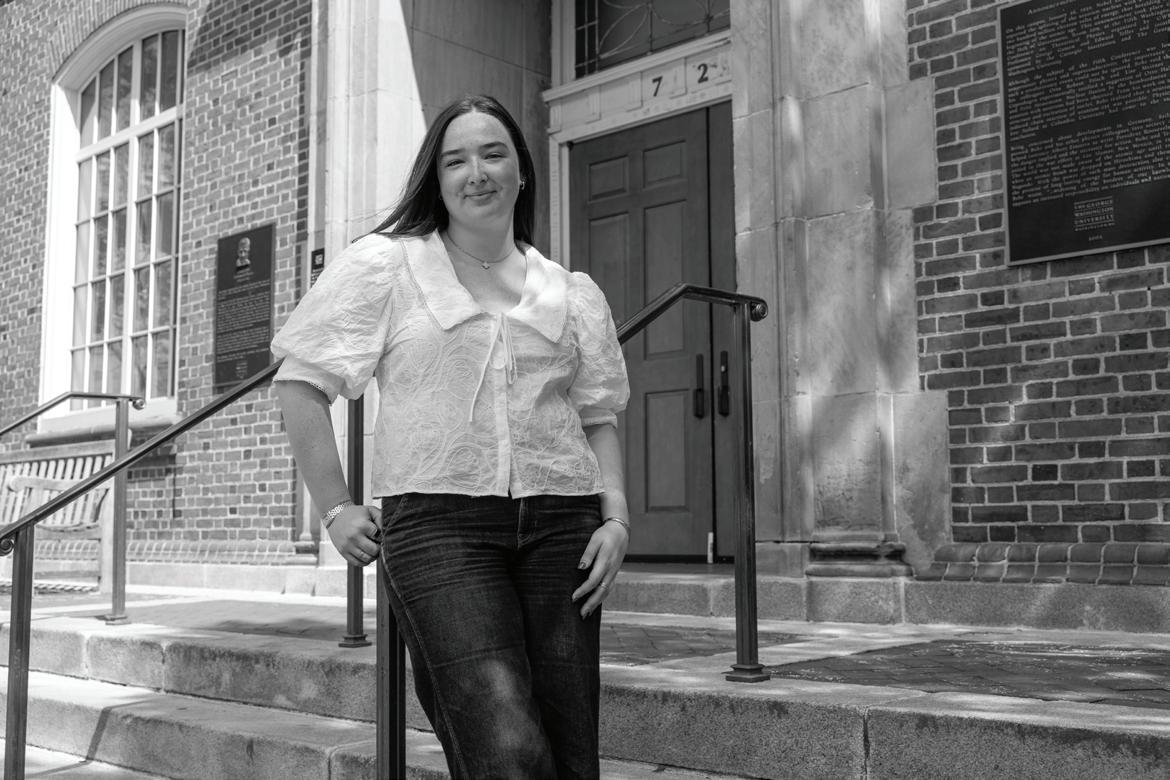
their internships to act as their third semester, a change she said made the application process much more “stressful.”
Nora Bell — a senior who traveled to Belfast and Chile as a firstyear student, Cambodia during a summer internship and South Korea during her senior year — said she heard about the program while applying to GW. Enticed by the chance to spend half of her time in college abroad, Bell said she factored GW’s Global Bach-
elor’s Program into her decision to attend the University. Bell said she was “disappointed” by the lack of rigor in the program’s capstone since the course made her distill all of her semesters abroad into a five-page paper and a short presentation. She said she would have preferred that the program had a formal thesis paper instead, which she thinks would allow students to reflect more in-depth on their time spent abroad.
ARUNMOY DAS STAFF WRITER
Virginia hospitals and medical providers filed more than 1.15 million lawsuits between 2010 and 2024, seeking to collect $1.4 billion in medical debt from patients, a report co-authored by a GW Law professor found. Professor of Business Law Barak Richman, three Stanford University researchers and two from the nonprofit organization Patient Rights Advocate analyzed Virginia court records and found medical debt collection cases generated more than 800,000 judgments in favor of providers and more than 403,000 garnishment filings, or the court-ordered seizure of wages or assets, with lowerincome communities facing a disproportionate share of the collection actions. Researchers said hospitals and health care providers sued many patients for medical debts tied to hidden prices and bills they could not easily verify, sometimes without clear upfront cost information when receiving their service.
The report found that medical debt collection and garnishment actions disproportionately affected patients in lower-income, higher-poverty communities because they’re less prepared to shoulder those costs when they come up unexpectedly. Patients in the lowest income bracket had the most cases against them at 30.4 percent of the total number of lawsuits, according to the report.
Richman said that pattern may reflect what he described as a broader correlation between health and wealth, with lower-income patients accruing more medical debt as they are often more likely to need care and less able to afford medical bills.
“What surprised me most is just how punitive these measures are,” Richman said. “This is what people call the cycle of poverty. If you
owe money or get sick, you get trapped in this vortex.”
A 2024 KFF analysis found that nearly 20 million people, or one in 12 adults, owed medical debt in 2024, with approximately 14 million owing over $1,000. The analysis also found that those in lower income brackets were more likely to have medical debt, with 11 percent of low-income adults having medical debt as compared to 8 percent of all adults, and 22 percent of low-income adults with poor health having medical debt.
The report found that many medical debt cases went uncontested, with 72.5 percent of cases larger than $25,000 ending in default judgments where the defendant does not contest the case made against them. Richman said patients may not contest their cases because they are
balancing work and childcare, struggling to understand their bills or lacking adequate notice, and many low-income defendants cannot afford legal help.
The results indicate that medical debt is not a result of irresponsible overspending by patients but of healthcare providers and hospitals not being upfront about the cost of their services, according to the report. The findings state that at Sentara Health, a nonprofit health care system listed in the report, identical procedures can vary in cost by as much as 77 times.
Richman said lawyers representing hospitals have various mechanisms to collect debt, and the severity of each mechanism depends on the state. He said the report builds on his ongoing research into how hospitals use courts to collect medical
debt, work he began at Duke University and has continued at GW in collaboration with Stanford and Patient Rights Advocate.
“People are having to choose between going to the hospital and staying home and dying,” one patient in the report said. “Because at least my family won’t be burdened with a lawsuit if I die at home.”
The report states nonprofit medical providers were responsible for 52.7 percent of lawsuits against patients. Sentara Health, which has 12 hospitals in Virginia and North Carolina, was the most litigious hospital system by its average share of hospital beds in Virginia, with 96,900 cases for 16 percent of the bed share.
The report found that 20 law firms — many of them small firms with fewer than
10 attorneys — were responsible for more than half of Virginia’s medical debt collection lawsuits from 2010 to 2024. It identified the Richmond, Virginia-based Parrish & Lebar as the top filer, saying the firm initiated 98,844 debt cases and 27,680 garnishment orders over that period, or more than 18 actions per day.
Arnold Milstein said the researchers hope the findings push hospitals and health systems to reform collection practices they may see as inconsistent with their mission or reputation, and raise awareness among policymakers so they can strengthen protections against those practices in Virginia.
“The purpose of science is to generate evidence that advances either human or planetary benefit,” Milstein said. The researchers ana-
lyzed Virginia state court databases for all 50 states to understand the experiences of patients and identify the main actors in the medical debt collection. Milstein said Virginia’s court database was more detailed than the datasets the team used in North Carolina and Colorado because it let researchers see whether patients showed up for hearings and whether their wages and bank accounts were later garnished.
“That was uniquely granular about the data and therefore useful in understanding the whole chain of agony that was being visited upon disproportionately lower-income people,” Milstein said. Milstein said structural barriers exist that make patients less likely to win their cases, like how they would need specialized legal help to scrutinize hospital billing policies, negotiated insurance rates and required cost disclosures. He said most patients cannot afford that kind of attorney or the time away from work to fight a case in court.
Julia Havlak, the manager of research and communications of Patients Rights Advocate, said patients usually don’t get an itemized bill, making it difficult to determine whether the charges were fair. She said many patients are afraid to go to hospital as they fear getting sued.
“One woman even reported that she was too scared to go back to the hospital after getting sued,” Havlak said. “That is when they told her she might have stomach cancer, and because she had no idea what a scan would cost, she just took out life insurance.” Representatives for hospital systems and law firms named in the report pushed back on the findings, saying the study did not fully reflect their billing practices or noting they have changed their collection policies in recent years.
To build a stronger DC community, we must stand with the unhoused
The Hatchet’s Best of Northwest guide aims to strengthen human connection in our community by highlighting the people, places, food and experiences that define our quadrant. But in conversations about building community at GW, in Foggy Bottom and throughout Northwest D.C., we often leave out one group: our neighbors experiencing homelessness.
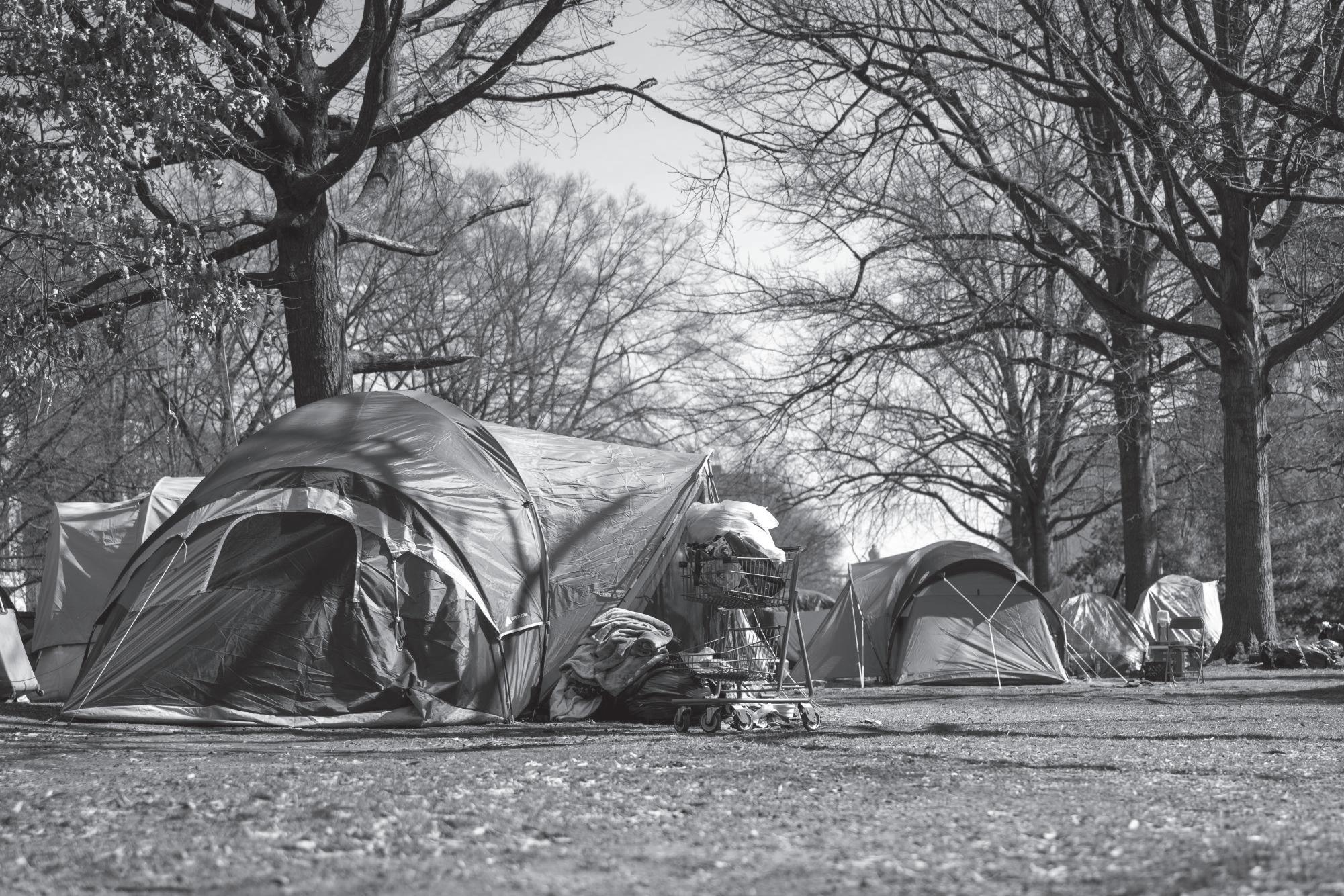
A year ago as part of the “Making the District of Columbia Safe and Beautiful” executive order, President Donald Trump mandated the prompt removal of all unhoused encampments on federal land in D.C. Since then, the National Park Service and the Office of the Deputy Mayor for Health and Human Services have escalated encampment clearings on both federal and District land throughout the city, including Foggy Bottom. Many GW students misunderstand homelessness, in part because they come from privileged backgrounds — next year’s cost of attendance will near $100,000. Preconceived notions about people experiencing homelessness or simply not engaging with their stories often prevent students from connecting with the unhoused community. But they are part of our community, and at a time when President Donald Trump actively degrades them and makes their lives harder, we must stand with them and deepen our connections.
Building meaningful con -
nections begins with learning about the diverse experiences and perspectives around us.
Vendors for Street Sense Media, a publication covering homelessness across the District, sell papers directly outside the Foggy Bottom-GWU Washington Metropolitan Area Transit Authority station. Cultivating empathy and awareness among GW students can start with reading the stories and per -
spectives of people experiencing homelessness and learning about the policies that affect their lives. Several members of our editorial board said they buy a paper from Street Sense vendors whenever they see them on the street. We strongly urge everyone to do the same — not just to support the vendors financially but also to take the opportunity to start a conversation. In line with the Best of
y college experi-
ence, like many students, has been riddled with all-nighters, over-caffeinated mornings, troubles with roommates and getting locked out of my residence hall. Like any other student, I’ve had to navigate the consequences of overbooking myself and taking difficult classes. These experiences are typical for the average college student. But my time at GW has also been shaped by grief, which poses its own set of challenges — especially while navigating a full-time course load.
Melchor Opinions Editor
My mom passed away in March of my senior year of high school, just months before I moved 3,000 miles away from home to attend GW. The quick turnover and huge move to D.C. had, of course, added to the pressures that a first-year student already face. But students who are dealing with grief face the additional obstacle of being far from home and family as they navigate this pain and having to find a way to stay focused on their academics. That’s been my experience, and while I am no longer dealing with adjusting to D.C. or a college curriculum, the grief still crops up throughout the year.
Almost every year, like clockwork, when February and March roll around, the grief I deal with becomes amplified, and it seeps into my school life, despite my best efforts. I struggle to get more than two or three hours of sleep. I am unable to concentrate in class, forget to eat and isolate myself
from friends. It becomes difficult to get out of bed, to talk to others and complete schoolwork. Despite my love for school, assignments often become the least of my worries when I’m navigating this grief. It is difficult to care about other things going on in life, like schoolwork, student organizations and what’s going on with the people around me.
When I was thinking of how to write this piece, I came to the conclusion that there is no advice I can give to people going through such an impossible and allencompassing situation. The only thing I can really share or argue is that whatever experiences or feelings I have dealt with, which other students have too, are a normal part of the grieving process.
Especially during my first two years at GW, I experienced multiple instances of being grief-stricken to get work done. It was difficult to get myself to my computer and begin to type a paper or an article. In other cases, it was simply impossible to get myself to fall asleep. Those two years were also the ones where I isolated myself the most, where I was cooped up in my residence hall or the library, not wanting to see or talk much to anyone. This ended up impacting my grades during my first year at GW.
But as I got more used to D.C. and GW, schoolwork became more manageable, and the grief started feeling less present in my life. While it still ends up manifesting itself in different ways, it is not as overwhelming as it used to be.
These past two months, I experienced a similar cycle of having trouble sleeping and focusing on classes, and of wanting to hibernate in my dorm room — issues I have mostly combatted
by letting myself cry it out, forcing myself to go to the library and get work done or making plans with friends so I don’t resort to isolation. Dealing with grief is about learning when you have to take it slow, asking for extensions or simply letting others know you are having a difficult time.
Grief shows up unexpectedly at times, sometimes triggered by the smallest of things. It has happened more times than I would like to admit, when I have been in class and my professor starts talking about something related to parents, growing up or loss — suddenly I can feel myself starting to cry, and I have to act like I am going to the restroom to blow my nose. It has become a common occurrence to be working on a paper or even a staff editorial for The Hatchet when something reminds me of my mom. I type while I cry and rub the tears away.
As time goes by, you learn to deal with it, ideally in healthier ways. I had dealt with grief before, but in college, dealing with the pain can feel like an entirely different experience. This could be because we are closer to becoming fully-fledged adults and living truly independent lives, as compared to being at home surrounded by family. Yes, it is challenging and can make you feel like you have no agency over your emotions or your life. It affects every area of your life — and that’s okay. It is okay to allow yourself to grieve and feel your emotions, especially while you’re surrounded by the constant external pressures of college life. —Andrea MendozaMelchor, a senior majoring in journalism and mass communication and creative writing, is the opinions editor.
ONorthwest guide’s mission to strengthen human connection, we can all benefit from taking the time to talk to one another, learn about different perspectives and recognize the shared humanity that connects our entire community.
Student organizations have many ways to support our unhoused neighbors. They can encourage members to volunteer with groups like Miriam’s
Kirk,
Kitchen, which directly assists people experiencing homelessness, or develop partnerships with such organizations to involve the broader student body in meaningful service.
Students can also gain professional experience while making an impact — for example, Street Sense offers internships. With a little effort and research, student organizations can uncover opportunities that let GW students contribute, learn and strengthen connections with our unhoused community.
GW also offers platforms like GivePulse, which make it easy for students to sign up for volunteering opportunities. We urge the University to play a bigger role in showing how students can directly support the people around them and emphasize the importance of community engagement. Programs like Green Move-Out also redirect items students would otherwise discard, and these donations could be extended to shelters and organizations in need, maximizing their impact on the local community.
As GW students, many of us are ambitious and eager to make a difference, whether politically or socially. One of the most immediate ways we can have an impact while at GW is by supporting our community and the people around us, including those experiencing homelessness. This is our community, our neighbors and many of us are in a position to help.
n Thursday, Turning Point USA’s Foggy Bottom chapter hosted a discussion between Turning Point CEO Erika Kirk and White House Press Secretary Karoline Leavitt. Thursday’s event drifted between pointlessness and outright hostility toward the ideals of the First Amendment. Despite claiming to champion First Amendment rights, Erika Kirk and especially Leavitt frequently expressed targeted intolerance towards the press — and anyone with differing views. Ultimately, much of what they said indicated a total lack of respect for those rights.
Turning Point USA has built much of its brand — especially under the leadership of its former CEO, the late conservative leader and podcaster Charlie Kirk — around the premise of him and figures like him coming to college campuses, dominated by liberals who suppress conservative speech, and challenging the preconceived notions of the student body with intellectual debate. At this event, Leavitt and Erika Kirk shattered the illusion of the brand completely by
Cassandane Smith Opinions Writer
simultaneously providing generic advice to express and fight for their views while repeating attacks on the press — a crucial part of the First Amendment — as “fake news media.”
The hour before Leavitt and Erika Kirk stepped on stage had its own
concerning moments that also disparaged legacy media or opposing, leftwing views. Far-right political podcaster Jack Posobiec, whom Leavitt later praised as superior in some ways to traditional media sources, accused “No Kings” protestors of infiltrating American society with the goal of forcing American submission to immoral and false values. This was a common theme throughout the event — speakers would uplift free speech but then deem it as wrong or immoral when it came to their opponents.
Once Leavitt and Erika Kirk joined the stage, they spent their hour providing fine, but generic, advice on career advancement and family life, paired with cheerful anecdotes about Charlie Kirk, life at the White House and Leavitt’s children. They barely mentioned controversial President Donald Trumpera policies or, frankly, anything intellectually stimulating or mindchanging in any way. The closest Leavitt ever came to making any real points were her frequent references to the “fake news media,” attacking legacy media like The Washington Post or Wall Street Journal. The four questions which comprised the originally planned Q&A section — what I, and I imagine many others, expected to be the most interesting part of the night — were all softballs. Leavitt appeared to take particular joy in a question promoting transphobic podcaster Riley Gaines and used the opportunity to promote Jack Posobiec’s popularity
and relish the frustration of the press when he joined the press pool. It wasn’t until the audience chanted for a fifth question to be heard that Leavitt finally responded to a question that challenged the Trump administration’s controversial SAVE America Act, but even then, she dismissed the question by lying about the preponderance of data on voter fraud prevalence cited by the student.
This was frustrating, but unsurprising, and it neatly highlighted the reason for Leavitt’s animosity towards the press: it is the institution responsible for combatting Trump’s frequent, selfserving lies. For a president like that, the press is a natural enemy. He called them “the enemy of the people” in his first term and has frequently targeted the press in his second term. Despite Leavitt’s claims that the White House cares about factuality and not ideology, the administration — especially in its allowance of who is and isn’t allowed in the White House — unmistakably does the opposite.
Trump and his administration seek to promote their political allies and tear down those who dissent in any way, whether they are “No Kings” protestors or hugely important, trustworthy, independent media. This approach to the press represents the most authoritarian characteristic of an unusually authoritarian U.S. president, and Leavitt brought it to campus on Thursday in full force.
—Cassandane Smith, a first-year majoring in political science, is an opinions writer.

BEN SPITALNY MANAGING DIRECTOR
Heartbreaking losses defined men’s basketball’s 2025-26 season.
A Robbie Avlia 3-pointer sealed a GW road loss to nationally-ranked Saint Louis in January. An overtwo-minute-long scoring drought allowed Duquesne to pull away late in early February. Tyrone Marshall Jr.’s game-winning layup attempt rimmed out against Dayton in the team’s penultimate home matchup.
It’s these examples, and several more, that led the team to a 17-14 regular season finish and ninth place in Atlantic 10 standings — five spots lower than their preseason slot, despite finishing top 100 nationally in KenPom and NET. With the emotional ups and downs of the season and the team’s short trip to the National Invitational Tournament now in the rear-view mirror, Head Coach Chris Caputo said the year was “challenging” in many ways. But he still maintained the season marked significant steps up for his program as they made their second-consecutive postseason
tournament and finished top 100 in many metrics.
“Overall, progress was made,” Caputo said. “It continues to be made. But I definitely think there were some challenges that we had to endure to get there this year, more than we would have anticipated.”
The challenges are still something Caputo is reckoning with. An injury to star forward Rafael Castro disrupted the team’s synergy on both ends of the court, while the team’s defensive efficiency ranked in the conference’s bottom half — though these are only two pieces to the puzzle of why the team lost so many close, winnable games.
Caputo said he doesn’t think the team’s penchant for losing close games is the symptom of one overarching problem as each tight loss was due to a different issue: inability to finish shots against Dayton, not being able to stop Murray State University’s scoring runs or letting up multiple open 3-pointers to Saint Louis’s star.
He points to the team’s NIT win against Utah Valley University as a time when the team was able to avoid another crushing defeat with
smart, well-timed play close to the buzzer. Up 16 at the half, the Revs’ lead shrank to just 1 by the closing seconds, but they held on with tight defense and a clutch, game-saving block from Marshall.
“The one thing would be, and we were able to do it actually at Utah Valley, is you’re in this onepossession game and getting the stops that you needed, when you needed them,” Caputo said.
And despite a record that doesn’t reflect it, the team looked like one of the best in the conference at many points, with key wins over a juggernaut mid-major in the University of South Florida and a blowout over an A-10 team in George Mason. Since entering the head-coach role in 2022, Caputo has attempted to reverse the program’s Murphy’s Law recent history that featured scandal, inability to hold onto top players and a revolving door at head coach that anchored them at the bottom of the conference.
Although the team is yet to finish near the top of the conference or make a serious push to the NCAA Tournament, this year’s
How photography gave one gymnast a new lens to look at life
After 20 years in gymnastics, redshirt senior Nancy Kiner knows sports from every angle, including behind the camera.
During her freshman season at the University of Pittsburgh, a foot injury left her in a boot for nine weeks — a stretch she remembers as “the worst thing in the world.” Shut out from practice and competition, she picked up a camera on the sidelines, first to stay connected to the sport and eventually as something more, a shift that led her to change her major to photography.
What began as a way to pass the time quickly became a second passion, a craft she could master and a way to feel the adrenaline of competition when her body wouldn’t allow it. Her interest in photography began the summer before high school after her doctors warned that gymnastics might not always be an option after a shoulder injury — a hobby she leaned on again after her foot injury.
“Everyone should have a photography,” Kiner said. “It should be ingrained in athletes to have that, because when you have injuries like the concussion or the surgery, or the shoulders, you have something else to go to.”
Now a senior, Kiner’s time as a competitive gymnast is coming to an end. She said it’s hard for her to fathom not ever


competing again, but she knows the same isn’t true of photography.
“I can be 90 years old, and I could still be tak-
ing pictures,” Kiner said. “That was what drew me, because nothing could ever push me out. No coach could ever sideline
me, because as long as I had a camera and I could talk and I could argue my way into the scene, I was able to be there.”
squad finished in the top 100 in KenPom for the first time since 2016 and had their best NET finish since the metric was introduced in 2018 — marks that Caputo is proud of.
“First time we’ve been in the top 100 of the NET ever,” Caputo said. “First time we’ve been in the top 100 in KenPom in 10 years. First time we made the NIT in 10 years. First win in the NIT in 10 years. Back-to-back postseasons. All those things are, those are real compliments for our group.”
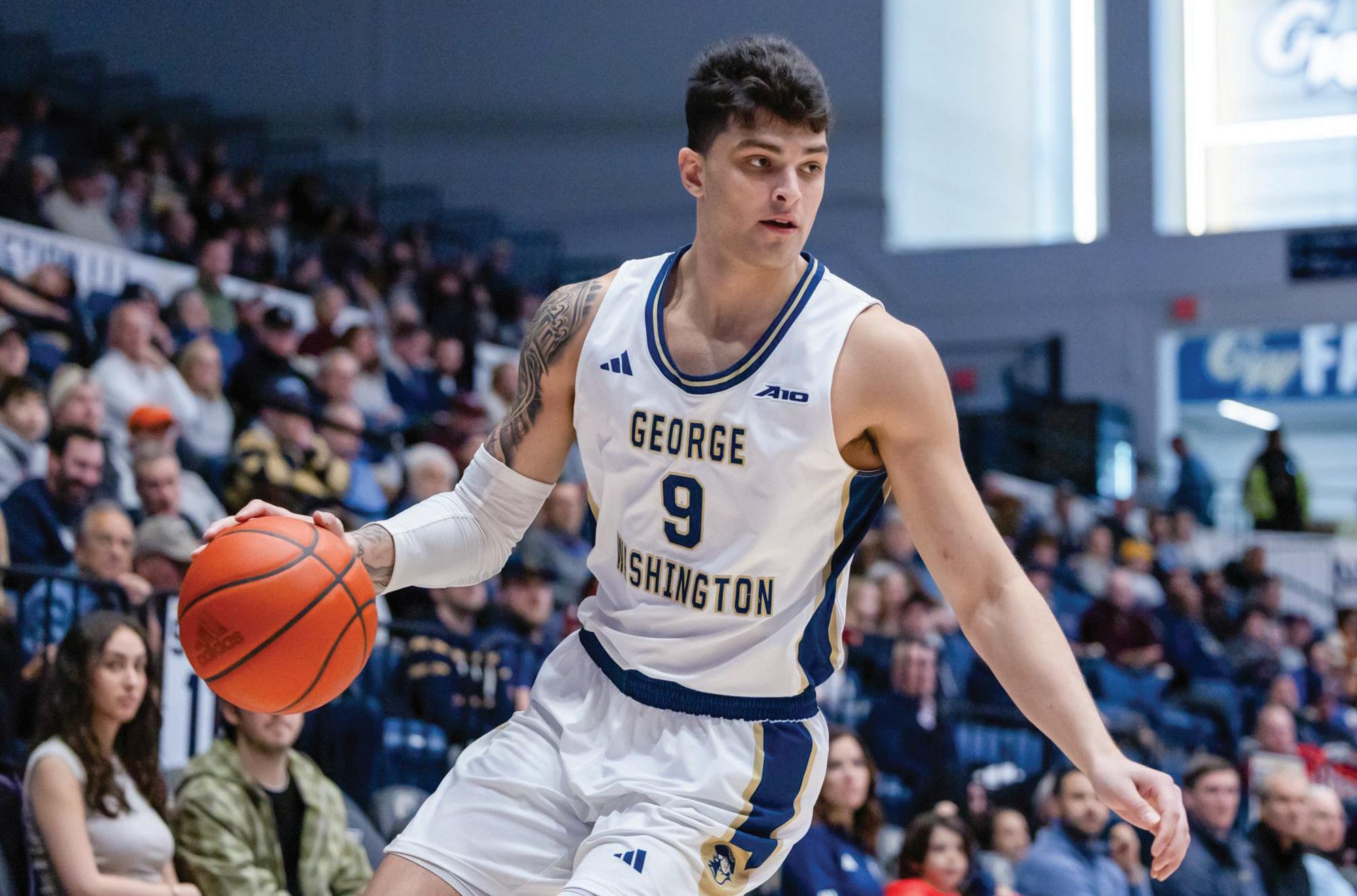
On the personnel side, Caputo has a promising story in his development of Castro, who entered the team as an underplayed prospect from the Big East’s Providence College, who had serious skill but had yet to translate on an NCAA court. Castro, who Caputo said “may very well end up in the NBA,” is a success story that demonstrates the development and growth that is a dream scenario for programs like GW. But with Castro out of eligibility this year, the team’s on-court product will have to reshuffle. Additionally, multiple key contributors announced their entrances to the transfer portal:
junior guard Trey Autry, junior guard Bubu Benjamin and redshirt junior forward Garrett Johnson. While Benjamin and Johnson provided positive sparks, they struggled to maintain playing time as the season continued, and their shooting splits dipped.
Autry, however, provided dependability as he started every game for the Revs this season and was the team’s third-leading scorer with an average of 11.0 points per game. Despite inconsistencies, he had the chance to be a fouryear contributor to the program — a rarity in today’s game and something a starter had yet to do under Caputo.
Caputo said he met with each player on the team after the season ended to examine different options based on how he and his staff view the player’s future compared to the player’s vision. He said that the players who’ve entered the portal have helped improve his program and make a positive impact.
“We wish those guys the best, those guys helped us win more games than we’ve won around here in quite some time,” Caputo said.
Men’s and women’s track and field broke five program records in races at the Dalton Ebanks Invitational at George Mason on Friday and Saturday. There, the Revolutionaries set new program records in the men’s 200m, 400m and 800m, as well as the women’s 100m hurdles and 1500m. The team excelled in the middle- and long-distance events — contests the Revs consistently reach the podium during — including their full sweep in the women’s 3K at Dan Stimpson last weekend.
Junior Nicolas Rodgers opened the meet on Friday by placing second in the 800m with a time of 1:49.22, breaking the program record in the 800m by over two seconds — the same record that he had set during the 2025 Dalton Ebanks Invitational. He also broke the A-10 conference record for the 800m, which Saint Joseph’s Andy Craycraft held since 2002.
Sophomores Cole Griswold and Blake Johnson excelled in the 200m dash, running times of 22.22 and 22.76, respectively — blowing by the program record of 23.34 that Jared Nelson, a fivetime record holder, set nearly a decade ago.
The Revs started this season with promising results at the Fred Hardy and Dan Stimpson Invitationals, claiming 10 event victories and breaking seven program records between the two meets. The Revs continued their long-distance success from their earlier meets with senior Yehonatan Haim’s win in the 3000m steeplechase off a time of 9:08.20. They also podiumed in both the 5000m races with senior
Johnson enters transfer portal, ending three-season stint with men’s
Redshirt junior forward Garrett Johnson announced he is entering the transfer portal on Friday.
Johnson, who has been rostered with the Revolutionaries for three seasons, expressed his gratitude to Head Coach Chris Caputo, his staff and the University for believing in him and giving him the opportunity to return to basketball after years of battling injuries and cancer. Johnson’s entry into the transfer portal comes after he played an average of 22.6 minutes per night this season, down from 29.3 his freshman season. The Oakton, Virginia, native began his journey at GW in spring 2023, transferring from Princeton University after missing two seasons due to a hip tumor diagnosis. Johnson played in his first collegiate game just six months after completing his ninth round of chemotherapy during his debut season at GW. In that first game, he scored 21 points, helping the team secure a victory over Stonehill College.
His redshirt freshman campaign concluded with him averaging 13.4 points per game, along with 5.6 rebounds and 1.0 assists while shooting 40.3% from 3-point range. However, Johnson faced injuries at the end of his freshman season, a period that coincided with the team’s struggles down the stretch, and the forward’s injury troubles persisted heading into the 2024-25 season when he tore his ACL in practice.
Preseason expectations were high for both Johnson, who was returning to the court, and the team, though neither fully met them. Johnson averaged 11.4 points per game and shot 33% from three on a higher volume than his freshman year.
Johnson notched a season-high 26 points in the Cayman Islands Classic against McNeese State University, but he also missed six of the team’s 35 games.
Out of his 29 appearances this season, he only started in 11 contests, with his last start coming in the team’s 89-75 loss to eventual A-10 Championship-winner VCU.
Una Boylan placing first in the women’s race with 17:10.14 and junior Brayden Bayek placing second in the men’s with 14:27.14. The Revs have historically had success at the Dalton Ebanks Invitational, competing annually and breaking at least two program records each time they went in the last three seasons. Most of their success has been concentrated in middle-distance and longdistance events, but Revs on both teams have sometimes broken program records in sprinting and hurdling events as well.
The women’s 4×400 team triumphed over the Binghamton and Virginia Commonwealth teams to take third, after thirdleg sophomore Rylan Priest broke past her counterparts to take the lead on the backstretch — a gap that freshman anchor Cassedy Stypul extended to ensure a podium finish. Sophomore Hadley Mahoney won the final heat of the 1500m in a tight struggle after waiting until the bell lap to push forward from her position in third. With the top three runners separated from the rest of the pack, Mahoney took second after shaking off Towson University’s Baara Stewart on the backstretch and finally snatched the lead away from Georgetown’s Luci Lambert on her kick down the last curve.
She took advantage of the homestretch to open a gap of nearly 15 meters, letting her finish well ahead of the rest of the race with a time of 4:23.97, breaking the program record by nearly four seconds. Next, the Revs will travel to James Madison University to compete in the JMU Invitational on Saturday in Harrisonburg, Virginia.






chatter of students and faculty outside the School of Media & Public Affairs.
the constant backing, circling or squeezing that larger vehicles require.
dows offering a panoramwith students, scooters
The wind was in my hair as we cruised down H Street. Charlie Wurz and I weaved through campus in the fully electric twoseater, its oversized windows offering a panoramic view of a street teeming with students, scooters and tourists drifting towards the Tidal Basin’s cherry blossoms. The EV’s electric murmur mingled with the

Stopped at a red light, Wurz explained that at low speeds, federal regulations require electric vehicles to emit a subtle hum so pedestrians and other drivers can detect them in the absence of a traditional engine’s noise. These electric mini carts are ideal for GW’s maintenance workers because they can travel off-road to reach destinations like Gelman Library, Wurz explained. A far cry from maneuvering a fullsized truck, they save staff considerable time navigating campus, slipping into tight spaces without
After passing Tonic at Quigley’s, the package center and University President Ellen Granberg’s F Street House, we returned the cart to its home at the back of the Support Services building, just steps from Potomac Square and The Hatchet’s townhouse.
READERS’ PiCK: ADAM DEAN
becomes a lens to explore the social, cultural and technological forces that shaped the music we know today.
Onkey used the broader study of music culture while in graduate school to shape her teaching philosophy: exploring music not just as sound but as a reflection of the people, history and society that created it.





It was, without question, the most fun I’ve had on campus streets. But don’t ask maintenance workers for a ride. You’ll just have to trust me that zipping around in one of these mini carts is the most glorious way to experience GW.
From the birth of rock ‘n’ roll to the “summer of soul,” Corcoran School of the Arts & Design Director Lauren Onkey guides her students through the rhythms of history with the precision of a conductor and the curiosity of a lifelong fan.
In Onkey‘s classroom, every chord, note and beat
By connecting music to history, Onkey sparks meaningful discussions among her students about how social, racial and cul-
tural dynamics shape the songs we know and love. In the classroom, she said she encourages students to dig deeper into history and understand each song, dissecting each and every note and bar.
“We just have to continue to fight and be vigilant about having spaces for creative expression that might make us uncomfortable, that we might love, that we might not understand, that’s really what the Corcoran is and what will continue to be,” Onkey said.
additional blossoms.
Under the guidance of head coach Stephanie Worrell, gymnastics now takes the mat in leotards that mirror the city’s cherry blossoms and bring D.C.’s springtime to life.

Although Worrell first introduced the team to the leotards in 2025, they continue to represent the very best of creativity in sport, showcasing a unique feature of D.C., beyond the traditional buff and blue uniforms worn by Revolutionaries athletes throughout the year.
carried the idea for four or five years, collecting cherry blossom patterns she liked from dresses and necklaces over the years, though it wasn’t until she stepped into her first season as head coach that she brought it to life.
In late 2024, Athletics partnered with gymnastics leotard company GK Elite to create the “Dare to Bloom” leotards, bringing Worrell’s vision to life: a blue backdrop with vibrant pink cherry blossoms across the top half, accented by gemstones that fan out to mimic

Worrell took an unusually hands-on approach with the “Dare to Bloom” leotards, sketching the design herself instead of leaving it to GW’s equipment staff that typically handles uniforms.
soms across the top half,


Worrell started sketching ideas for the “Dare to Bloom” leotards in May 2024 and received samples from GK Elite that September. She had
Worrell surprised the team with the special edition leotards by hosting what she called a “sip and paint without the sip” ahead of their debut meet last season. When the athletes had finished about three-quarters of their canvases, she revealed the uniforms. The team, she said, was “super pumped” to see them.
“It’s just magical,” Worrell said. “I love how it highlighted them, like they sparkled and glowed.”

GOVERNING BODY: THE FACULTY SENATE
through their public meetings that trustees haven’t already smoothed over, rehearsed and decided long before they take their seat.
READERS’ PiCK: STUDENT GOVERNMENT ASSOCiATiON
I’ve sat in almost every room where power moves at GW.
From the late-night Student Government Association meetings that drag past midnight to the tightly controlled sessions of the Board of Trustees, from the Student Bar Association’s procedural back-and-forth to the often-overlooked Staff Council, I’ve spent the last four years reporting on the governing bodies that make GW, GW.
I’ve found that each body has its own rhythm. SGA meetings stretch long, with student senators toggling between resolutions while keeping half an eye on the clock and the other on what will make it to their resume. The Board of Trustees, by contrast, moves quickly and without friction. They set their agendas well in advance and keep their remarks polished. Nothing gets
The SBA is more methodical, often getting caught up in the mechanics of its own rules. And while Staff Council meetings feel closer to the ground, shaped by the dayto-day concerns of University employees, they’re still relatively new.
Then there’s the Faculty Senate.
On Friday afternoons once a month in the Elliott Stateroom, the pace is different. Faculty senators are not afraid to ask tough questions and press officials when they don’t give a specific enough answer. GW needs, more than ever, bodies willing to hold officials accountable as they navigate the Trump administration’s rewriting of higher education, the Medical Faculty Associates’ crippling debt, the sale of GW’s Virginia campus to Amazon Data Services and an unresolved structural deficit. Thankfully, the Faculty Senate has shown it’s willing to do exactly that, pressing for real answers and continuing to ask the hard questions long after other bodies have moved on.
READERS’ PiCK: AMSTERDAM HALL
The EV’s electric murmur mingled with the undergraduate years, it’s vital to check off all involved on campus, your spot and throw the party of the century. As a self-proclaimed dormparty aficionado, Shenkman Hall is the spot
hall room may lack the townhouse or the scale of a roomy apartment, a Shenkman quad stands
During your fleeting undergraduate years, it’s vital to check off all the bucket list items: get involved on campus, fi nd your favorite study spot and throw the party of the century. As a self-proclaimed dormparty aficionado, Shenkman Hall is the spot to turn that fi nal dream into a reality. While a residence hall room may lack the charm of an I Street townhouse or the scale of a roomy apartment, a Shenkman quad stands

out as a prime Friday night spot thanks to its space and layout. When I lived in Shenkman last semester, my suitemates and I hosted soirees that became some of my most lively, and already nostalgic, college nights, especially after we made the space our own. By the time we threw our September housewarming, it took little more than a Partiful link, a quick sweep of valuables and friends just down the hall to turn our quad into a full, easygoing crowd. As last semester came to a close, we again hosted a Shenkman dorm party — this time in honor of my roommate’s birthday and my suitemates and I leaving to study abroad.
Friends filtered in and out of our abode throughout the evening, with some using it as a pit stop on their way to Adams Morgan bars and others staying until the later hours. At a school where club culture is king, the intimacy and community of a house party can be lost. A 30-person party of friends and acquaintances, where you don’t need to pay a $25 cover or call an Uber, is a welcome breath of fresh air. My first-year self, in my cramped Thurston double, longed for a private space to curate that camaraderie and connection. I’m happy to say I successfully fulfilled that wish in my Shenkman dwelling.
READERS’ PiCK: GW HOSPiTAL
Down the unassuming hallways of the Hall of Government offices lies a barren room that hosted an event that changed the course of scientific discovery.
Unknown to most of the GW community, in 1939, Danish physicist Niels Bohr announced in room 209 that Otto Hahn, a physicist in Germany, had disintegrated uranium into barium by releasing approximately 200 million electron volts of energy per disintegration.
This world-altering event happened at GW because, in the 1930s, then-University President Cloyd Heck Marvin was determined to improve GW’s physics department after the University’s failed accreditation.
Marvin recruited two phys-
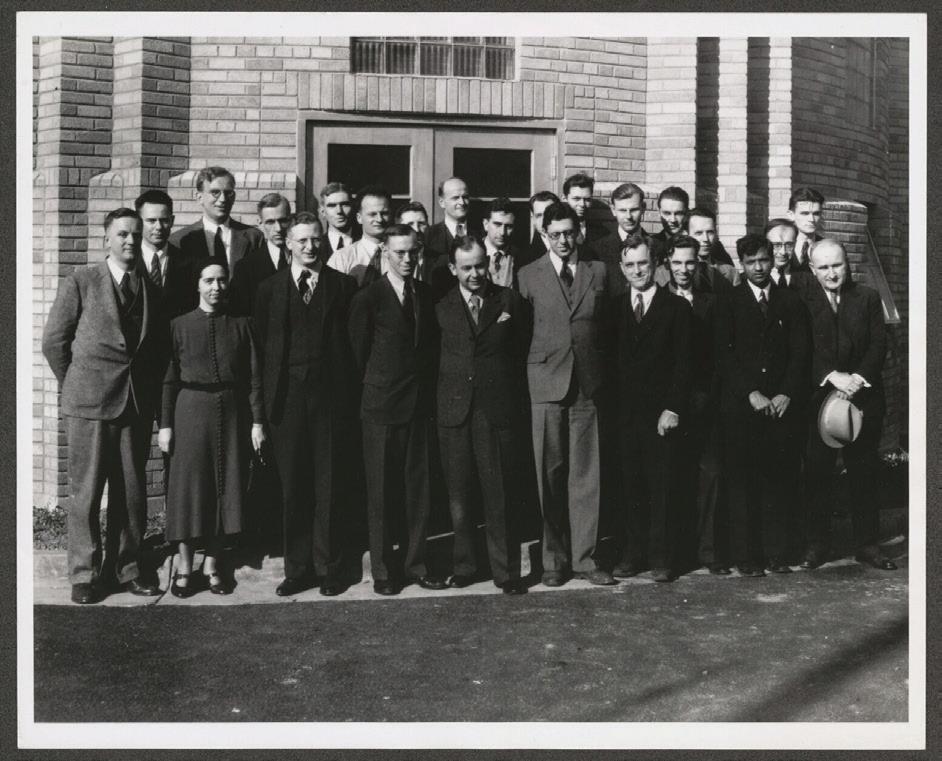
icists, George Gamow and Edward Teller, who began hosting an annual conference on theoretical physics at GW in 1935.
This brings us back to Bohr’s announcement where physicists discussedwhat the news could mean, for future military
use. Though the proclamation changed the course of humanity, the only memorial of the event that remains today is a modestly
room 209, commemorating the conference and
announcement.


Not many garden exhibits have their own Instagram accounts and a Wikipedia page. Though the Instagram bio reads “Lowering Logan Circle property values since 2014,” Barbie Pond on Avenue Q brings joy and a chuckle to each passerby with Barbie dolls scattered about in intricate designs, decorating a small manmade pond in front of 1454 ½ Q Street NW. I finally visited the exhibit in late March. I saw a makeshift basketball court balanced on two rocks over the pond featured female Barbies playing basketball, one slam dunking it into the hoop, while the male ones wore cheerleading outfits and stood on the side. The owners have since taken down the March Madness theme and replaced the exhibit with Barbies ready for Easter. Though each landscape is unpredictable, I’m eager to make my next visit back to 1454 ½ Q Street NW to see the next exhibit.
Among Adams Morgan’s colorful streets and funky shops lies Tryst, a cafe home to warm drinks reminiscent of fall and an array of homey nooks perfect for hunkering down and working on your piled up to-do list.
Unlike Gelbucks or other bustling cafes around Foggy Bottom, Tryst offers a peaceful energy away from the business of campus. With plenty of large leather sofas and soft, warm lighting, I found the cozy cafe the perfect place to spend my Tuesday afternoon answering emails and finishing an essay I had put off.
I chose a table closer to the front of the cafe, next to a wide window that made it an optimal spot for people watching. Labeled as a coffeehouse on their website, the atmosphere lived up to that name, blending the vibe of a relaxed space with a social atmosphere. By day, patrons can sip coffee and work on their laptops at the bar, and by night, transition into a spot for an after-work happy hour, complete with signature cocktails, including an aperol spritz, an extensive wine list and bar snacks.
The interior features dark hard-
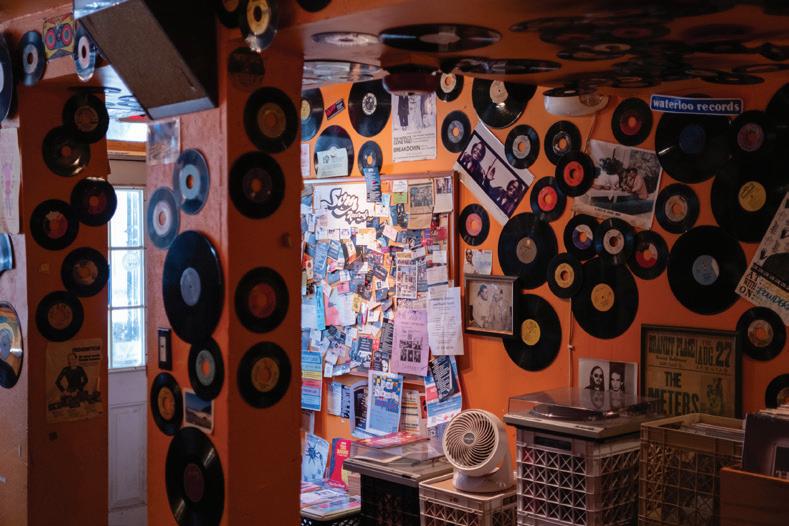
On 14th Street by Logan Circle, Som Records occupies a basement that pulses with the energy of music lovers.
The shop is packed wall to wall with records, cassettes and collectors, each visit a chance to uncover something unexpected. Even after five years of collecting and four trips to Som, I still leave with records I didn’t know I needed.
wood floors, paired with wooden tables, multicolored sofas and comfortable leather armchairs, inviting customers to curl up with a book and a hot cup of coffee. With colorful artwork and orange and blue patterned wallpaper, Tryst’s furniture and ambiance feel comparable to a classic American cafe as seen on TV, like the homey atmosphere of Central Perk from “Friends.”
I opted to order from the lunch menu, which is available from 9 a.m. to 10 p.m., and picked a sandwich called the Bala, featuring mozzarella, pesto and tomato. The warm, light, yet satisfying sandwich perfectly captured the comfort of the cafe. The fresh tomato paired beautifully The staff’s attentive service further reinforced Tryst’s relaxing atmosphere, as I felt free to linger over my meal and work on my laptop without servers hovering or rushing me to leave.
Surrounded by the soft hum of conversation and gentle jazz, I found Tryst to be both productive and comfortable, a refreshing contrast to bustling cafes like Tatte where customers often scramble for seats and rely on noise-canceling AirPods to block echoes off the high walls.
Tryst is more than a grab-andgo spot — the delicious food and calming decor ensures you’ll stay for hours and enjoy everything this welcoming cafe has to offer.
READERS’
When “The Exorcist” was released in 1973, it shocked audiences with its gruesome depiction of a demonic entity possessing a young girl. Seeking a cure for her daughter’s condition, the protagonist Chris seeks out — you guessed it — an exorcist to rid her child’s body of the demonic entity. By the
end of the film, the titular exorcist, Father Karras, sacrifices himself by jumping out of a window and tumbling down a dramatically steep set of 75 stairs to his death.
In the over 50 years since the film’s release, William Friedkin’s film has become a classic, becoming the first horror movie to earn an Academy Award nomination for Best Picture and spawning a film franchise, with its newest entry coming next year.
The staircase that Karras falls onto has also become a piece of D.C. history, with movie fans hiking up from its base on the border of Canal Road and M Street to recreate the movie’s iconic scene.
It’s easy to see why tourists gravitate toward the everpopular Smithsonian museums for a dose of history. With 17 institutions and more than 150 million objects, the Smithsonian dominates the cultural landscape. Yet a more mysterious experience awaits at the O Museum in the Mansion, an eclectic labyrinth concealed behind 80 secret doors. Blended into the historic row homes of Dupont Circle stands the O Museum in the Mansion, a four-story
brick building spanning five houses with over 100 themed rooms and 80 hidden doors. Unlike the Smithsonian, O Street Museum invites visitors to explore freely, open drawers, finger through books and interact with the space however they please, offering a fully immersive experience.
On my second visit to the museum two weeks ago, I rang the doorbell and was promptly ushered inside by a staff member. Walking through the foyer in the main room, I was immediately mesmerized by the sheer number of items on display — including the framed Michael Jordan jerseys and Elvis Presley themed pinball machines.


The shop makes every inch of its small basement count: crates are stacked high, walls are lined with records, and retro memorabilia and streamers hang from the low ceiling, adding to the chaotic charm. On my most recent visit, I focused back on the music as I found something I was looking for — Marvin
Stepping down into Som Records, you’re immediately met with dozens of crates, organized by genre and then alphabetically, while customers carefully weave around each other in the tight space. The demo player is one of my favorite features, letting you test albums for skips, loops or other imperfections — an essential step when hunting for used records.
Gaye’s “I Want You.” I walked towards the corner of the store, back by the entrance, where a record player and headphones were available for customers to demo albums. Although my lack of funds meant I had to leave without the record, I took one last look at the tiny store before I stepped back up into the hot spring day, knowing fully well I’d be back as soon as my situation allowed.
At 13, few experiences are more thrilling than the chance to explore the nation’s capital — the Lincoln Memorial might as well be one of the Seven Wonders of the World at that age. That’s why the coveted eigth-grade D.C. trip stands out as a highlight in most preteens’ middle school years. Though the hesitant parent chaperones guiding these trips are no Washingtonians, they continue to introduce their preteen charges to one of the city’s finest culinary experiences: Foggy Bottom’s very own Western
Market, as evidenced by the swarm of matching sweatshirts and lanyards that descend on the food hall daily at around 12:45. Sure, some with more refined palettes might favor fine dining D.C. establishments like Le Diplomate or Filomena’s, but 8th graders aren’t going to appreciate that level of lavish cuisine. Ideal for picky eaters, Western Market has a taste of everything: Italian-style subs at Capo Deli and chicken tenders and fries at Roaming Rooster and even a familiar taste of Chipotle. An added bonus of making room in your 8th grade trip schedule for this classic food hall is that it’s a prime spot to observe GW students in action. It’s a great opportunity to approach disgruntled college students waiting for their Bullfrog Bagel sandwich between classes or standing in the selfcheckout line at

While many films set within the District focus on the city’s political and historical importance, “The Exorcist” is one of the few D.C. film landmarks whose notoriety is based solely on the significance of its cinematic moment, not for double-dipping as a national monument — looking at you, Spiderman.
While many films set withfocus city’s political and historical importance, “The Exorcist” one is based solely on the significance of its cinematic moment, not for double-dipping as a national monument — looking at you, Spiderman. The staircase itself is steep and narrow, often shrouded in shadow by the buildings that surround it, sandwiched by a red brick and stone wall — with two railings to ensure you don’t meet Karras’
The staircase itself is steep and narrow, often shrouded in shadow by the buildings that surround it, sandwiched by a red brick and stone wall — with two railings to ensure you don’t meet Karras’ fate.
Although they might seem unassuming, these stairs are certainly part of D.C.’s history.
Although they might seem unassuming, these D.C.’s history.



different experience. What makes the O Street conventional is that, unlike

Wandering the winding hallways and stairs, each room offered a completely different experience. What makes the O Street Museum even more unconventional is that, unlike the Smithsonian museums where items are carefully guarded behind glass cases and cameras, here almost everything is for sale.

Walking through each of seem eclectic to the typical
covery that lingers long after
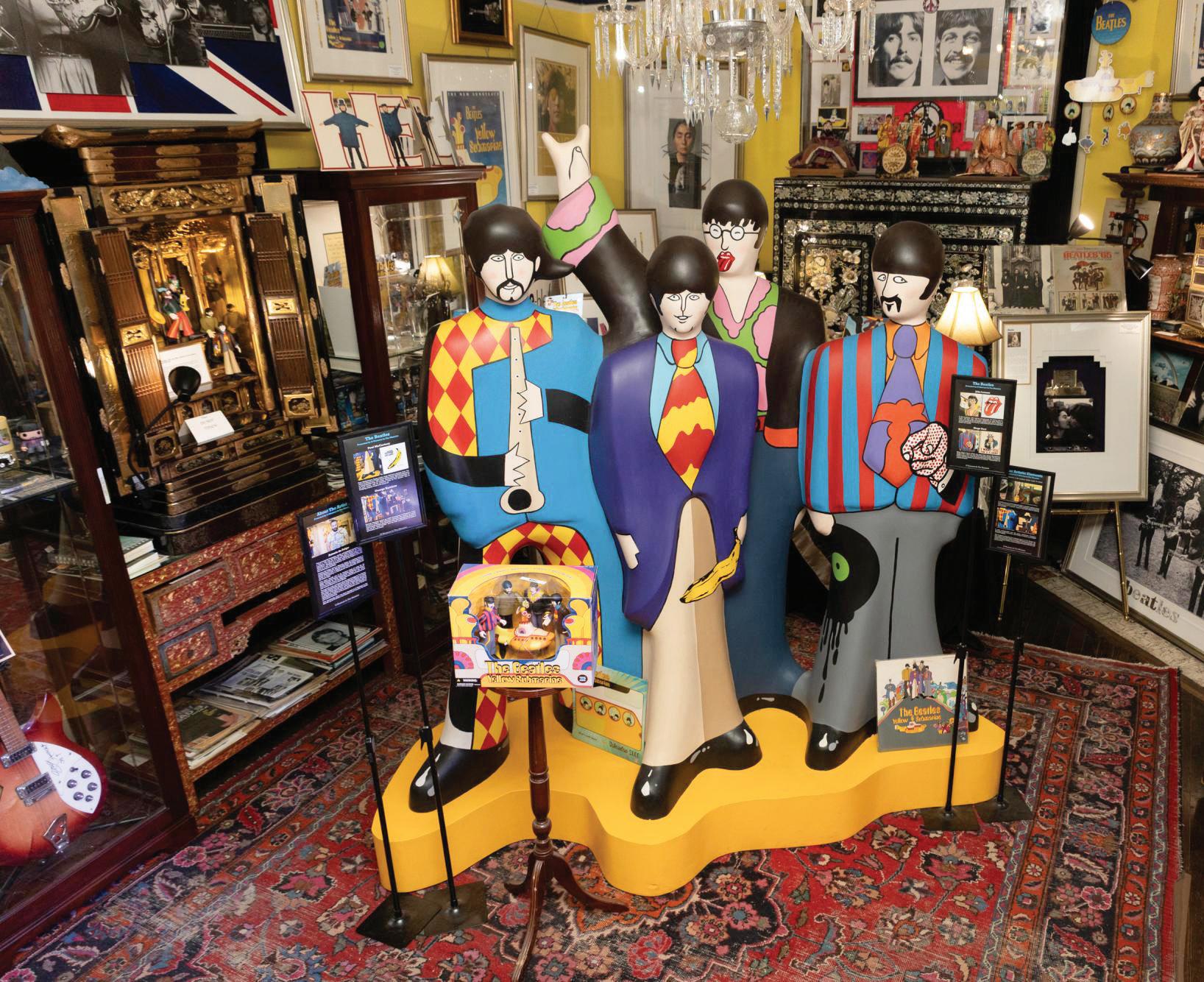
Walking through each of the rooms, the exhibits may seem eclectic to the typical D.C. tourist seeking national archives or taxidermied animals at the Natural History Museum. But the O Street Museum offers something for everyone, and a sense of discovery that lingers long after you leave.
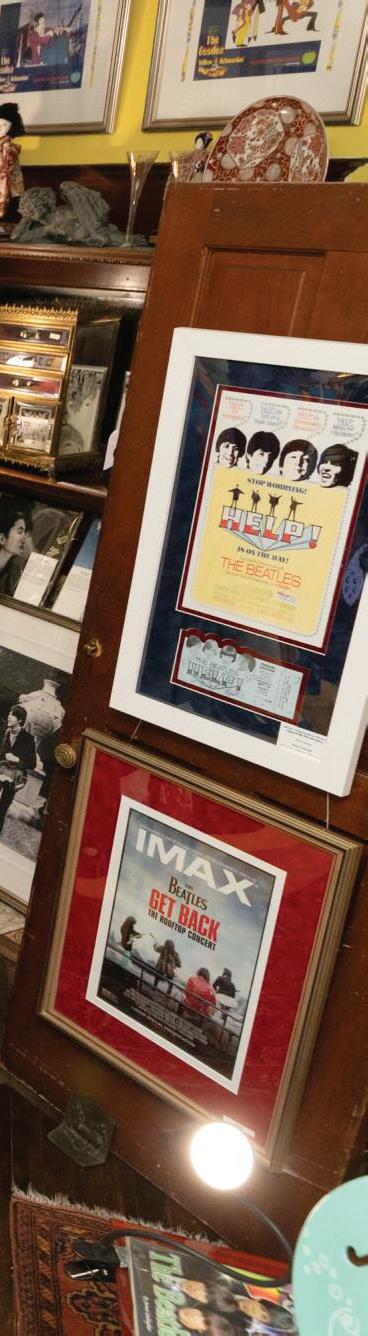

CVS.



Don’t worry if they have AirPods in, they’re used to 13-year-olds matching
latest Pokemon you caught, and they will 100 percent laugh at the 6-7 joke you
you get home, all your friends from other schools will be
student’s daily life and had

Don’t worry if they have AirPods in, they’re used to seeing 13-year-olds with tour company lanyards and matching T-shirts running around. They’ll even be happy to talk to you about the latest Pokemon you caught, and they will 100 percent laugh at the 6-7 joke you make. While some may be doubtful that a food hall could possibly be the highlight of any middle schooler’s D.C. trip, trust me that when you get home, all your friends from other schools will be bragging about the same photos they all took in front of the Washington Monument, while you would have caught a glimpse into a GW student’s daily life and had an unforgettable culinary experience.







When a PB&J or grilled cheese just doesn’t cut it, it’s time to go bigger and more honkin’.

Your Only Friend sits across the street from the Walter E. Washington Convention Center with a dimly lit space that feels more like a neighborhood bar than a place to get a hefty meal, delivering size, texture and flavor.

The Crispy & Juicystyle is stacked thick with the crispy hash brown patty, fluffy bread and carrots that spill out the sides with each bite. This is the kind of sandwich


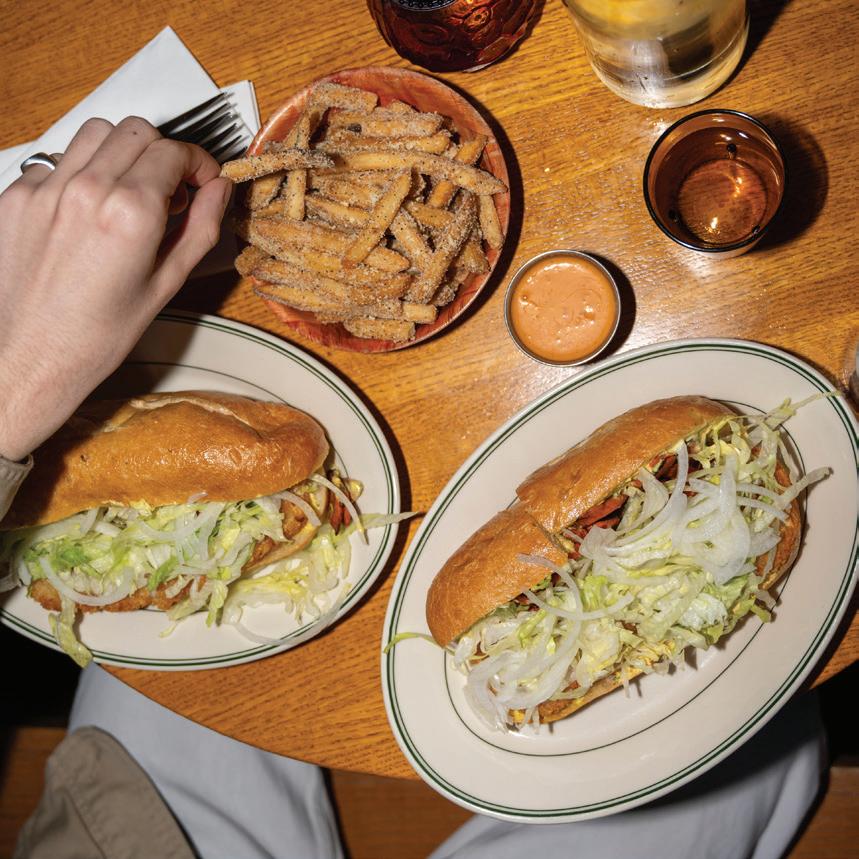
that actually fills you up, not something you’d finish and immediately wish you had more — even though you’ll somehow want more with its delicious and varied fla-
vors. Each bite is a constant shift in textures from crunchy to soft to creamy that ensures you’re not getting too much of any single flavor.
The agony of finding an open restaurant during Parent’s or Commencement Weekend is real — especially in Georgetown, where M Street’s staple eateries are
swarmed with families who beat you to the reservation.
Luckily, just a few blocks down a quiet side street, Kafe Leopold offer a low-key meal with your folks.
In a quaint corner with an extensive menu, Austrian restaurant Kafe Leopold offers some of the best D.C. has to show off to your visiting parents, combining oldschool Georgetown charm with a sophisticated-yet-
comfortable atmosphere.
Instead of tuning into the cacophony of diners inside, you can sit in Kafe Leopold’s courtyard, letting the gentle wind and the nearby flow of the Potomac River soothe your mind.
Kafe Leopold provides a calming, charming and quiet atmosphere that makes room for easy conversation without feeling stiff and overly formal.





Located in the lively streets of Adams Morgan, The DINER is a go-to for the morning-after crowd looking to recover from a night spent bar hopping just steps away. Among its sprawling menu of classic comfort food staples, one dish consistently rises above the rest: the buttermilk pancakes. Equal parts indulgent and restorative, they make a strong case for being the best hangover cure in the District.
exactly as you’d hope: a stack of four buttermilk flapjacks served with butter and maple syrup on the side and a light dusting of powdered sugar on top. There’s no unnecessary embellishment, and that simplicity is exactly what makes it work. When you’re hungover, a dish that’s overly rich and complicated is the last thing you need. Instead, you need something that’s warm and easy to eat, which is exactly what The DINER’s buttermilk pancakes offer.
lighting featured fairy lights and was warm and homey.
Upon entering, The DINER’s atmosphere strikes a careful balance that feels especially welcoming on slow mornings. It’s lively, with trendy, upbeat pop music that makes the space vibrant but not overwhelming. The friendly staff only enhances the welcoming atmosphere with their attentive and efficient service that makes settling in easy, even if you’re still a little bit drunk from the night before.
Each pancake is fluffy without being dense or overly cakey, with a texture that is light enough to manage the whole stack but enough to satisfy your hunger. Flavor-wise, the balance is just right. The sweetness is present but not overpowering, balanced out by the slight tang of the buttermilk. It’s a combination of sweetness, subtle tang and fluffiness that keeps the dish from feeling too heavy, even as you make your way through the full stack.
After a trip to Germany last fall, I discovered you can get by knowing just three words: Hallo (hello), danke (thank you), and prost (cheers) — with prost signaling not just the start of a toast, but often a sip and the beginning of a long night.
While I am very appreciative of a good beer, I do not claim to be an expert. I know I like lighter beers and the occasional Guinness as a treat, but while waiting for our server and perusing the beer menu with 11 options on tap, we all realized we should have done our homework on different German beers. Prost offers lagers, pilsners and various other options that I can’t pronounce, like the Schlenkerla Fastenbier.
At first glance, the pancakes arrive


On weekends, sashayready divas, adorned in extravagant wigs and theatrical makeup, transform City Tap’s usual dining room into a dazzling runway, captivating an enthusiastic audience eager for their nonstop glitz and glamour.
Located in DuPont Circle, City Tap, a lively American gastropub, hosts a weekly drag brunch every Saturday and Sunday mornings between 11 a.m. and 1:30 p.m. Guests can indulge in a sumptuous buffet, unlimited drinks and a two-hour drag spectacle that promises nonstop entertainment. I was fortunate enough to catch a fabulous Lady Gaga-in-

In a city filled with brunch spots that lean toward the trendy or experimental, these pancakes stand out by doing the basics exceptionally well. They don’t try to dazzle you, rather, they deliver the warmth and satisfaction your hungover body needs during a sluggish morning.
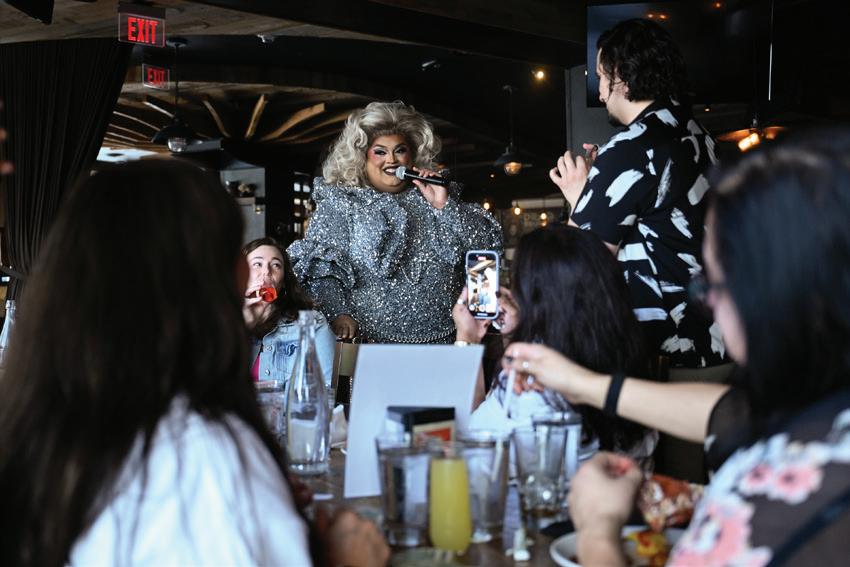
spired performance on a Saturday morning. The packed dining room erupted in applause for each of the five queens as they emerged from their dressing rooms, led by one of the regular hosts and emcees of the brunch, Evry Pleasure. Their 12 performances ranged from comical, sensual and allout loud and proud diva. Though $48 is a substantial price, it covers both the brunch and the show, a combination that feels like a
steal considering the quality and variety of dishes City Tap delivers. For those who want to elevate their morning, the $18 bottomless mimosas during the two-and-ahalf-hour brunch are an indulgence worth considering.
If you’d rather skip the Ticketmaster frenzy and keep a few extra dollars in your pocket, City Tap is the place to be.
Prost, a lively German beer garden near Chinatown in D.C., is the perfect spot to gather with friends for a cold beer, as I discovered on a recent 75-degree Thursday evening. The after-work crowd agreed — work bags still slung over shoulders, yet the Willkommen (welcome) sign invited everyone to leave their troubles behind. My friends and I opted for outdoor seating, which spans both sides of the sidewalk, snagging the last available table. The outside
When our server came, we asked him for his “brightest and most citrusy beer,” hoping for something that would remind us that summer is just around the corner. He recommended a half liter of the Dab Export lager ($9), which he described as “summer in a glass,” and did not disappoint. The beer was refreshing, while holding a light and almost cidery taste.
For something to soak up the brew, we ordered the Bavarian warm pretzel ($13),
which came with mustard and cheese dipping sauces and a side of sauerkraut for digestion. When I went inside for a bathroom break — which is essential when you are drinking a liter of beer — the AC was blasting, the sound of laughter and conversation filled the room while a March Madness game played on the big flat screens. It was loud, but not too rowdy, allowing patrons to be engrossed in conversation. In a city like D.C., it’s easy to forget that it’s okay to slow down. Many restaurants and bars in the District seem to operate by an unspoken rule: eat your food, drink your drink and leave. At Prost, there’s no rush — sip a stein, or go all out with the giant $38 Das Boot of any beer you choose. In German drinking culture, it is necessary to hold eye contact during a prost or it will bring bad luck. So if you are feeling down, bring a friend, take your time and prost.

As chilly winds linger over the District in early spring, a quaint Vietnamese restaurant on U Street is restoring warmth to the neighborhood — one bowl of pho at a time.
Among the U Street Corridor storefronts, Pho Viet USA has built a reputation for its rice-noodle dishes and deeply comforting broths, a spot outside the Foggy Bottom bubble that has been recommended to me by fellow GW students.
After a short trek on the Metro’s Green Line and a walk down the vibrant U Street Corridor I arrived at the short and small restaurant on a Saturday evening.
When the server brought me my dish a short 10 minutes after ordering, I was immediately struck by its generous portion size. Filled to the brim of the blue ceramic bowl, the pho carried a savory aroma that made my mouth water. The soup was warm but not too hot, allowing me to dig right in. The broth was deeply flavorful, presumably the result of hours of slow simmering with aromatics like ginger, cloves and coriander. Thin slices of beef rested among the noodles, tender and easy to chew, while
the green onions added additional flavoring and crunch that balanced each bite. Soft rice noodles soaked in the broth tied the dish together into a comforting and satisfying experience. I chose to try the pho on its own, leaving out the typical additions, like hoisin sauce and sriracha, so I could fully appreciate the depth of the dish. Even without extra sauces or toppings, the dish was savory and balanced — each ingredient working together to offer layers of flavor that unfolded with each bite. The pho was exactly what I needed on a cold spring day during midterm season, setting the bar high for the next time I return for a bowl.
