Student demand for DSS doubled over six years
ARUNMOY
ISAAC
The number of students registered with Disability Support Services doubled over the last six years.
About 12 percent of students — 3,052 undergraduates and graduates — were registered with DSS by the end of 2025, up from 6 percent, or 1,657 students, in fall 2019, according to University spokesperson Skyler Sales. More than 10 higher education experts said the surge reflects a national trend of students seeking support before college, rising diagnoses and reduced stigma around accommodations, while students noted that filling DSS vacancies this year improved communication and efficiency, prompting more to register with GW’s DSS office.
Sales said demand for these
services — including academic and housing accommodations — remains high even after about 500 registered students graduated last May. 3,038 students were registered with the office as of January, an increase of 475 from 2,563 in August, she said.
Sales attributed the growth in students registering for disability accommodations to heightened awareness, improved services and the 2008 Americans with Disabilities Act amendments, which broadened the definition of disability, granting more people eligibility for accommodations. She added that a “national mental health crisis” has driven more referrals from counseling centers to disability resources, which support students with “invisible” disabilities that people may have dismissed in the past.
GW offers several types of accommodations for students
Student-organized
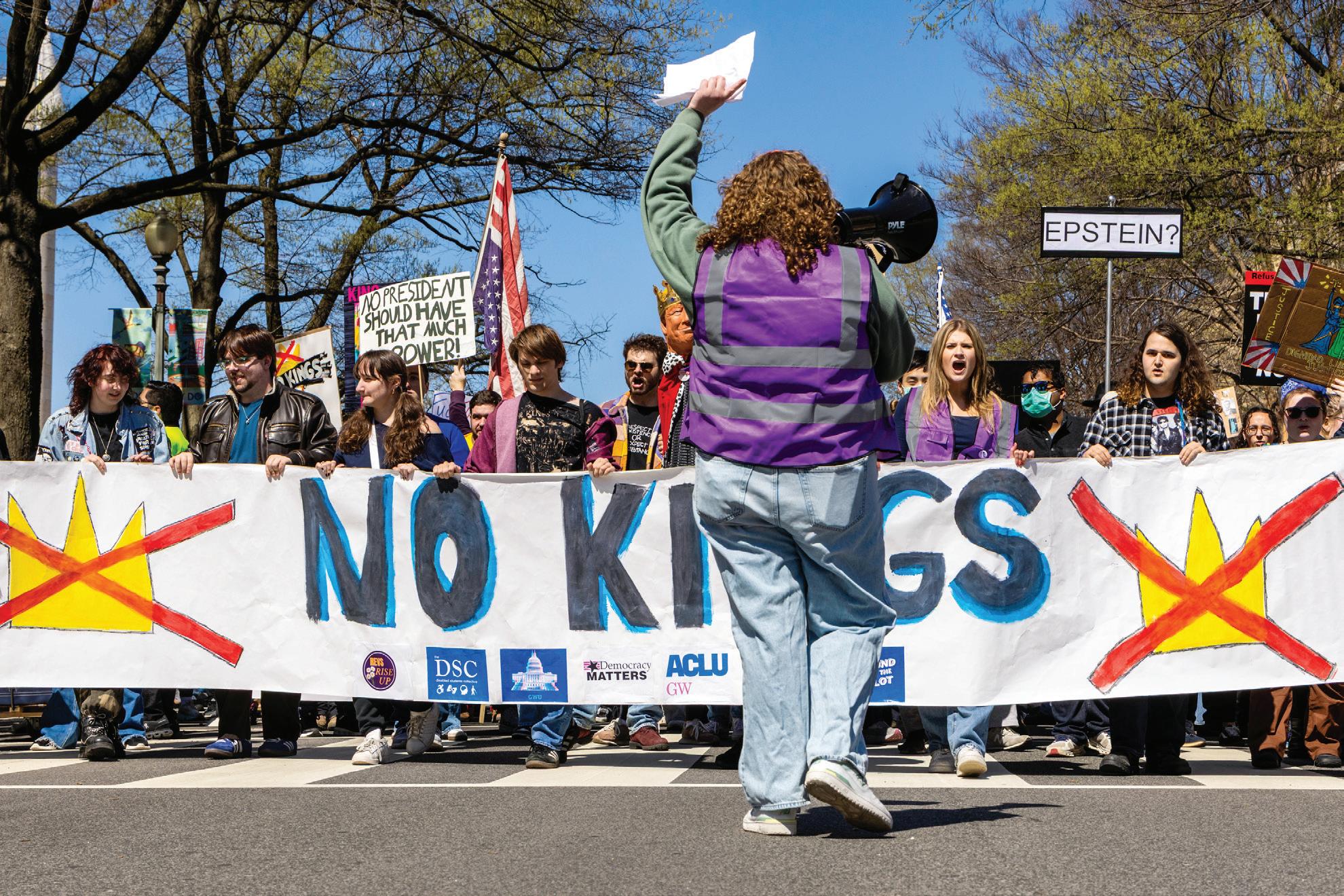
Hundreds of protesters marched from Kogan Plaza to the U.S. Immigration and Customs Enforcement headquarters Saturday, rebuking President Donald Trump’s deportation policies and ties to Jeffrey Epstein while also taking part in the nationwide “No Kings” protests.
Organized by GW Democracy Matters and six progressive student groups, GW’s protest drew about 500 total participants — roughly 30 percent of whom were students — and unfolded separately from the larger “No Kings” march that in the District, which organizers said they planned in an attempt to elevate student voices in the fight against Trump. Demonstrators called on Congress to impeach Trump and urged their removal of Attorney General Pam Bondi over the administration’s immigration policies and the Department of Justice’s alleged protection of Epstein and other abusers rather than protecting his victims, winding through campus as they made their way toward ICE’s headquarters.
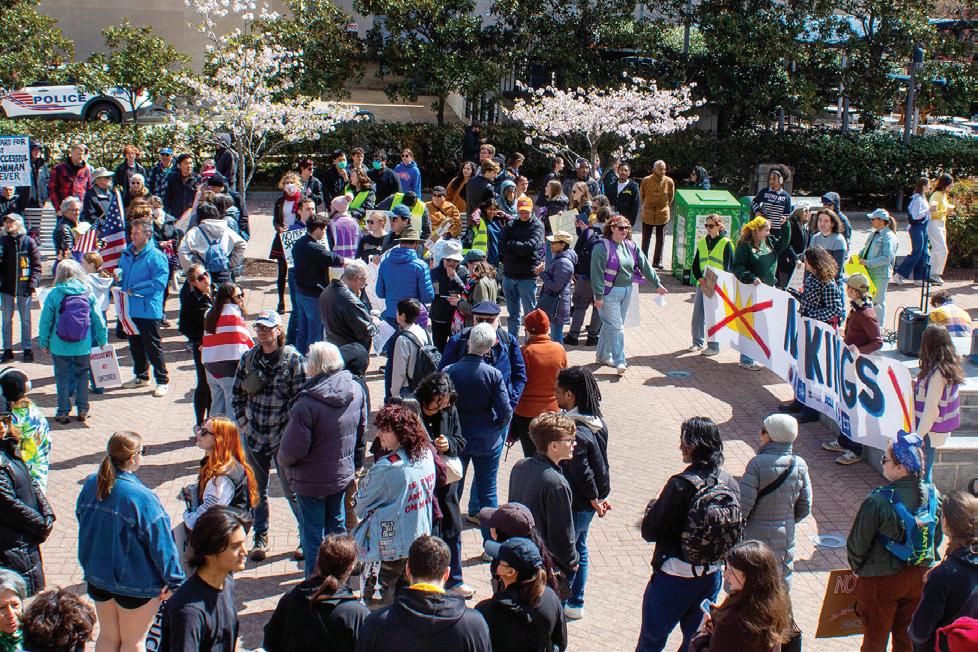
Roughly 150 protesters filled Kogan Plaza by noon, holding signs reading “No president should have that much power” and “No thrones in America,” while organizers addressed the crowd for about 15 minutes, calling Trump unfit for office and condemning what they described as his administration’s abuse of power. Although organized separately for GW students and community members, the demonstration was part of more than 3,300 “No Kings” protests held nationwide Saturday, which organizers estimated drew about eight million participants.
Standing on Kogan’s
through DSS, including alternative text materials, assistive technology, classroom accessibility, housing accessibility, interpreting and captioning services and testproctoring services, according to the DSS website. Students seeking accommodations have to submit an application, including necessary documentation and meet with an accessibility associate to discuss their accommodation requests, according to the DSS website.
Sales declined to comment on which accommodations students registered with DSS most commonly request.
Higher education experts and GW students said the rise in accommodations reflects both national trends and recent improvements to GW’s DSS office after years of staffing shortages.
Undergraduate tuition to climb 3 percent next academic year
ARJUN SRINIVAS CONTRIBUTING NEWS EDITOR
Undergraduate tuition will rise by 3 percent next academic year, bringing the cost of tuition to $72,000, officials announced on Friday.
The increase will bring GW’s estimated total cost of attendance to $95,155 for new students and $98,165 for returning students during the 2026-27 academic year — a $2,810 increase for new students and a $2,740 rise for returning students. The annual fees, which include tuition, room and board, transportation and other fees, will in-
clock tower, GW Democracy Matters President RJ Doroshewitz told the crowd that he loves his country more than he can “put into words,” which is the driving factor behind why he showed up
to Saturday’s protest. Doroshewitz asked the group to be loud enough during their protest to stop the Trump administration from ignoring them, adding that the president has “rolled over” Amer-
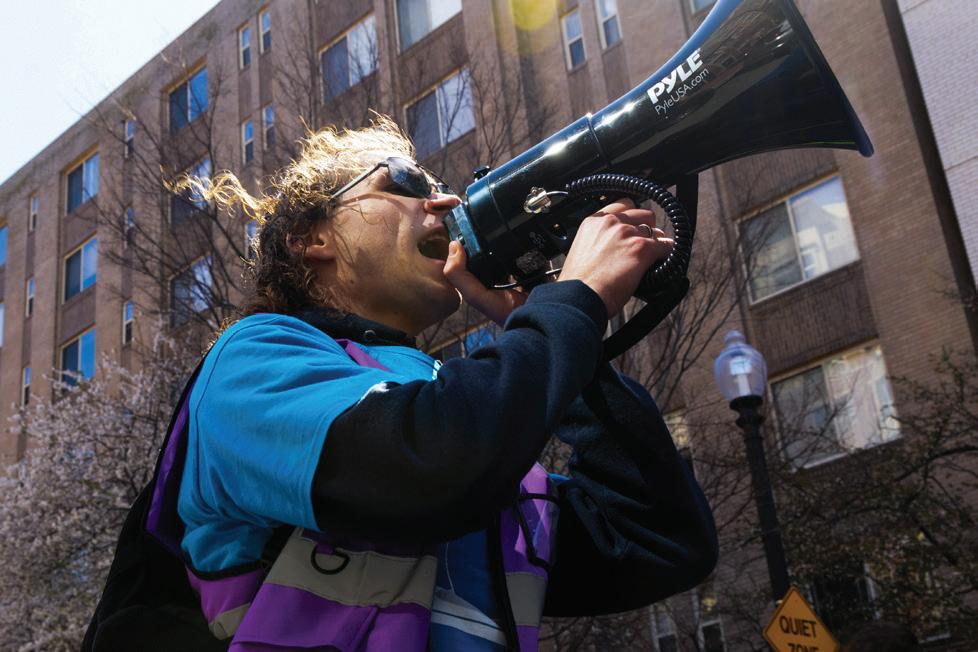
icans’ freedoms and futures. “Vital institutions are being unlawfully torn apart and our president is so corrupt that makes Nixon look like a nun,” Doroshewitz said. “This is our current re-
ality, but this does not have to be our future.” Doroshewitz said in an interview after said GW Democracy Matters and the other organizations involved in the protest chose to have
crease from $390 to $420, and the base price of housing and dining will rise $560 from $17,600 to $18,160. Students’ U-Pass fee will increase by $15, rising from $100 to $115 per semester. The base residence hall room rate price now sits at $11,440 — up $140 from this academic year — while the dining rate will increase $420 dollars to sit at $6,720 for the academic year, according to the release. All undergraduate students must live on campus for their first two years, and all students living on campus are required to purchase a meal plan.
their own “No Kings” protest rather than join the larger one in D.C. because students’ fight against Trump comes from a different angle as they are focused on how the president and his administration are rewriting their futures.
“It’s our futures that are on the line more than any other,” Doroshewitz said. “Not that not every other group is impacted, but we were the ones that were promised to grow up in a democratic nation. We were promised the American dream, and we’re the ones that aren’t seeing that.” Emma Sherman, a sophomore and member of GW’s American Civil Liberties Union chapter who also serves on GW Swing Left’s e-board, said while in Kogan that the demonstrators were a representation of American patriotism. She told the crowd to make sure DOJ officials hear they are demanding “liberty and justice for all.”
“We marched for what our country is supposed to be and we sent a message to the Trump administration. The United States of America does not and will never bow to kings,” Sherman said. Eric Gitson, vice president of GW College Democrats, said the group planned to march to the Department of Justice to demand justice for victims connected to Jeffrey Epstein, as well as to ICE headquarters to protest what he described as the agency’s “terror” in carrying out deportations. He linked these concerns to recent confrontations during federal immigration operations, including the fatal shootings of Minneapolis residents Renee Good and Alex Pretti, which have intensified protests and prompted ongoing investigations and legal disputes over the incidents.
Women’s basketball advances to WNIT Great 8 for first time in team history
ETHAN
GRANT
Women’s basketball (18-17)
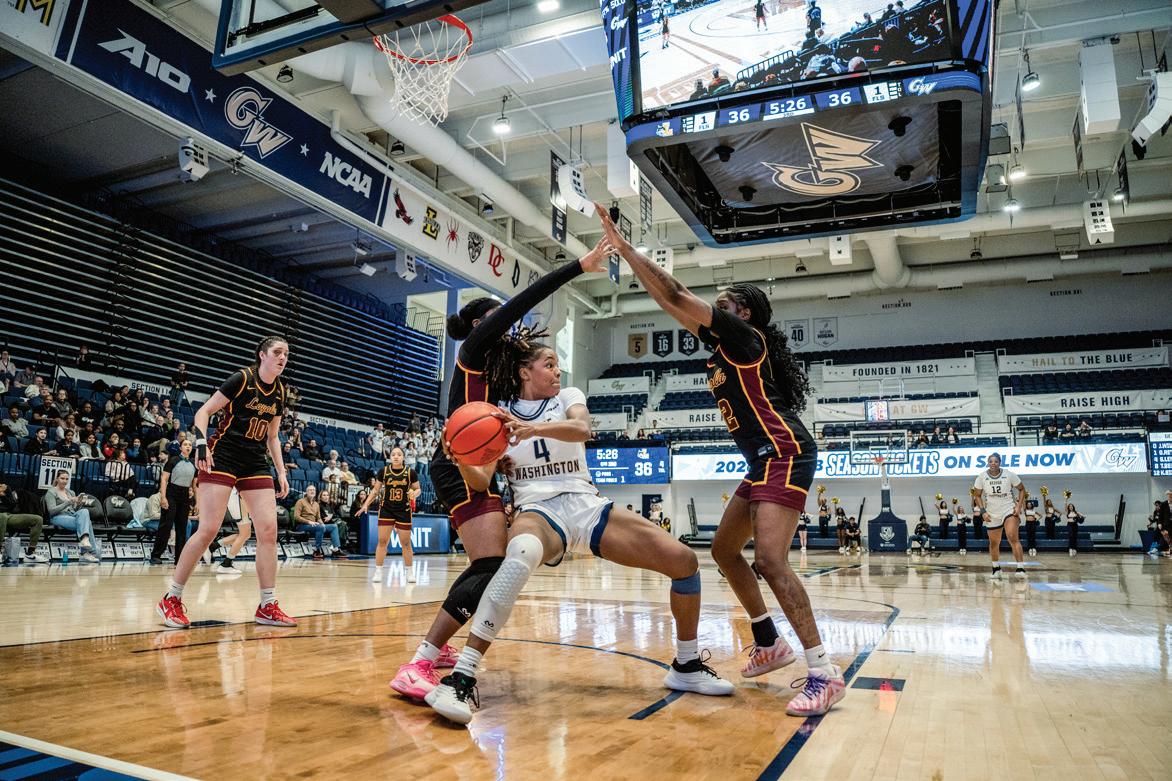
defeated Loyola Chicago (16-18) 71-62 at the Smith Center on Friday, advancing to the Great 8 of the Women’s National Invitation Tournament for the first time in program history.
The Revolutionaries pulled away early in the fourth quarter and held on down the stretch after a tightly contested first 30 minutes. In the tournament’s first two rounds, the Revs mounted comebacks, defeating Bradley at home in the first round and erasing an 8-point deficit at University of Southern Indiana in the next.
Junior forward Sara Lewis led all scorers with 25 points, matching her career high. She also pulled down 13 boards and had
eight assists, falling just short of a triple double.
The win follows the Revs’ 5348 loss to the Ramblers on Jan. 17 at home during Atlantic-10 play. Head Coach Ganiyat Adeduntan said she was “smiling internally” as she watched her team’s improvement against Loyola’s zone defense.
“We need to be locked in and hunt what we want offensively, and we spent a lot of time working on trying to capitalize against their zone,” Adeduntan said postgame. While the Revs shot a dismal 36 percent from the field in their first matchup against the Ramblers, including making just two of 18 attempts from 3-point territory, the team improved to 47 percent on Friday, making seven 3-pointers on 12 attempts.
The Revs opened the game in a back-and-forth battle with Loyola, capitalizing on turnovers and tak-
ing a small 8-5 lead after junior forward Sara Lewis broke a tie with an and-one. The Ramblers retaliated with back-to-back layups, but the Revs halted their momentum with a three from sophomore guard Gabby Reynolds at 4:05 that set the Revs on a 9-0 run, ending the quarter 17-12.
Reynolds finished with another impressive scoring total, dropping 20 points on seven for 14 shootings, including making five of six 3-point attempts. The sophomore has emerged as a young star on the team in her second year of collegiate basketball, finishing top ten in the conference and first on the team for most points for game, clocking in an average of 14.5 points per game while eclipsing 20 points in each WNIT game.
Fatigue took its toll on the Revs throughout the second quarter as they let through 9 fast-break points, allowing the Ramblers to start a 5-0 run at 6:47 and take the
lead at 23-21 by 5:36. A layup from junior forward Kamari Sims at the buzzer sent the Revs to the locker room tied at 25.
PHOTOS BY AINSLEY SULLIVAN AND JERRY LAI
Students and Foggy Bottom community members gather in Kogan Plaza for a “No Kings” rally on Saturday.
ADDY OSBORN | STAFF PHOTOGRAPHER Junior forward Sara Lewis looks to pass the ball during Friday’s Women’s National Invitation Tournament game against Loyola Chicago.
GW hosts rebranded Community Summit, expanding focus beyond diversity programming
RYAN SAENZ ASSISTANT NEWS EDITOR
Two years after GW last held its annual diversity-focused programming, officials relaunched the event with a broader scope, moving beyond its diversity-centered framing — an effort they attributed to the strategic framework, not President Donald Trump’s diversity crackdown.
Officials twice postponed the event before changing its name from the Diversity Summit to the Community Summit, a decision they said reflects their efforts to “reimagine” opportunities for the community and broaden the agenda to include topics, like civil discourse and what it means to be part of the GW community. Associate Vice Provost of Diversity, Equity and Community Engagement Jordan Shelby West said officials’ decision to rename the summit aligns with GW’s new strategic framework and was not influenced by President Donald Trump’s crackdown on diversity, equity and inclusion initiatives or the Department of Justice’s investigation into the role of DEI in GW’s admissions practices.
West said officials centered this year’s theme — “OneGW Summit: Community, Culture and Inclusion” — around the University’s new strategic framework, which officials launched in the fall. She said officials have always been guided by what is currently legal in planning the summit, and this year’s programming stays true to its mission of promoting inclusivity.
Trump over the last year has challenged DEI policies and practices nationwide, including signing an executive order calling for the end of DEI practices at universities and threatening to revoke funding if they don’t comply. The DOJ has led investigations into multiple universities’ alleged use of DEI-related practices in admissions, including at GW.
“We’re being really responsive to the climate, not only at our own institution in terms of GW and Foggy Bottom and Ashburn and the Vern and our campuses, but really just being responsive to the global world right now, where I think people are craving to feel like they’re
Thursday with the OneGW Festival, but
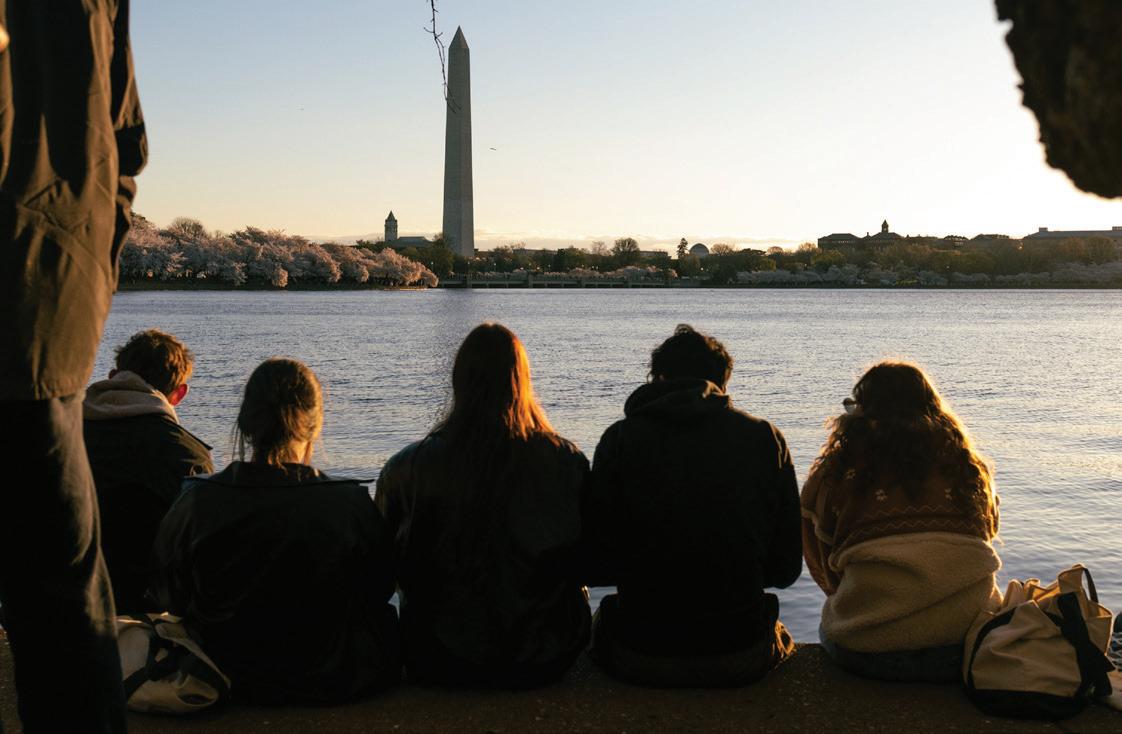
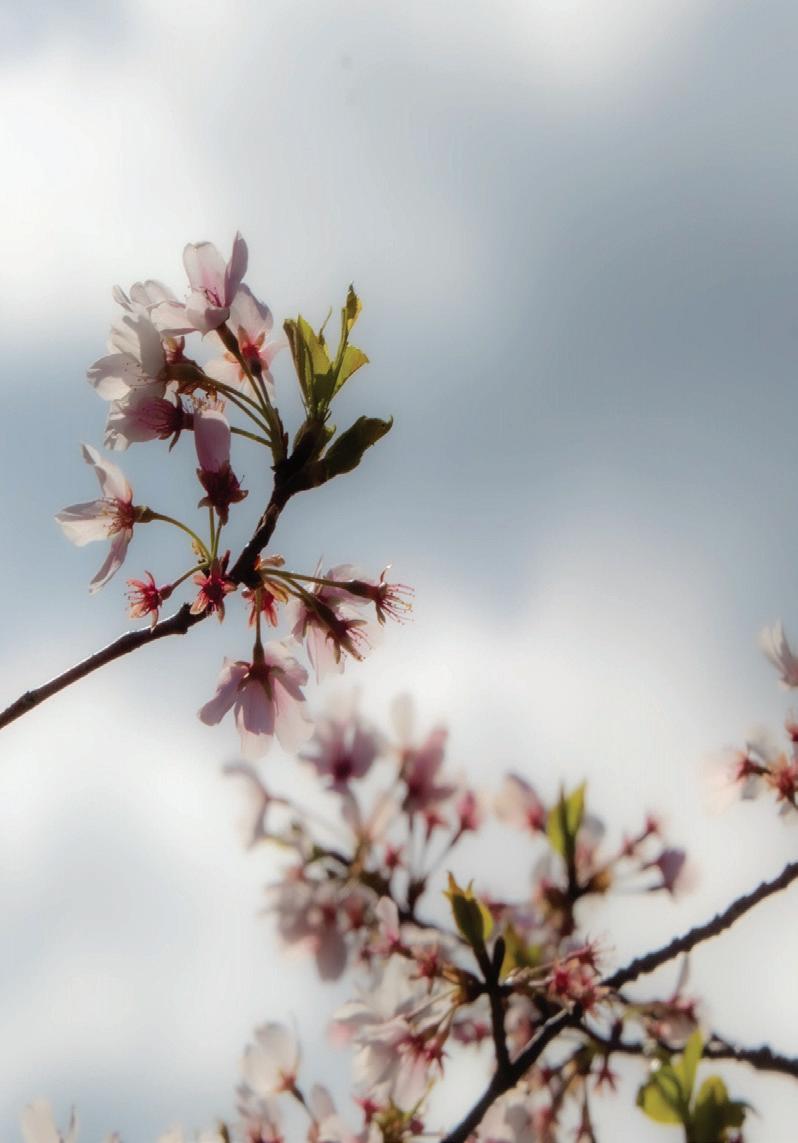
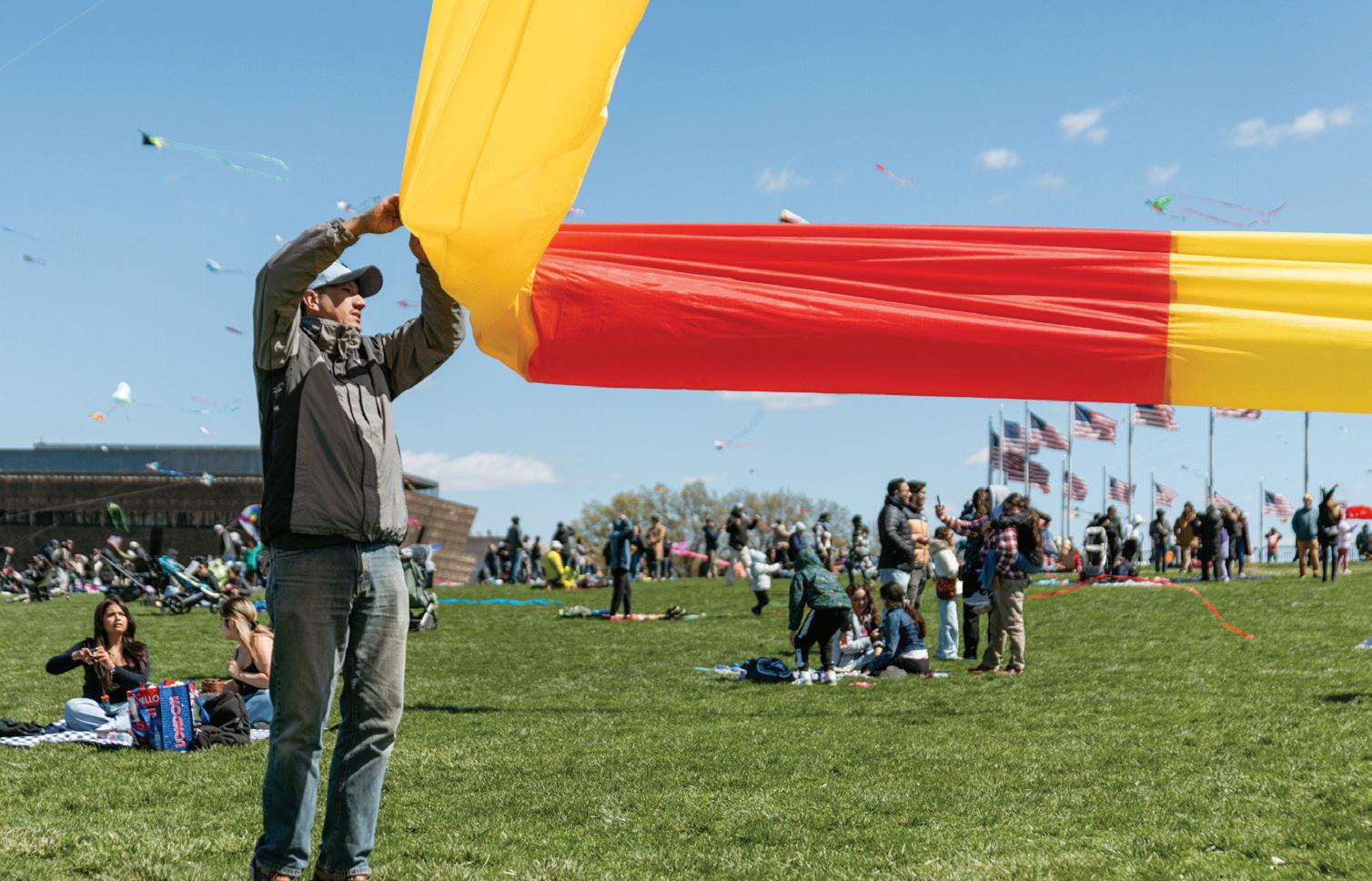
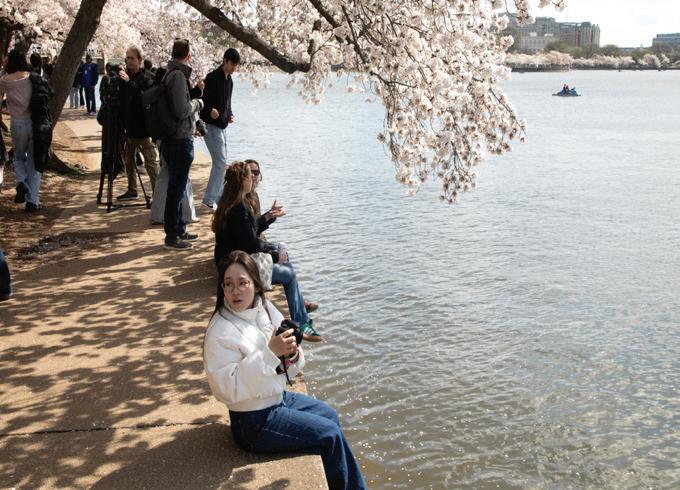
PHOTO ESSAY: DC’S BLOSSOMING SKIES
CRIME LOG
THEFT II/FROM BUILDING
Madison Hall Reported – 3/26/2026
Open Case
A female GW student reported a package delivered to Madison Hall was missing. Case open.
SIMPLE ASSAULT
Potomac House
3/24/2026 – 12:13 a.m.
Open Case
The GW Police Department responded to a physical altercation between two male GW students at Potomac House. Case open.
THEFT II/FROM BUILDING
South Hall
3/20/2026 – Unknown
Open Case
A female GW student reported a package delivered to South Hall was missing. Case open.
THEFT I/FROM
BUILDING
Lisner Auditorium
Reported – 3/14/2026
Open Case
A male GW employee reported three microphones stolen. Case open.
—Compiled by Bryson Kloesel

part of something and to feel like they can show up authentically,” West said. Officials kicked off the summit
most of the 16 events took place Friday, featuring discussions on social change, student mental and physical well-being and ways to serve the community.
KYRA WOOD | ASSISTANT PHOTO EDITOR
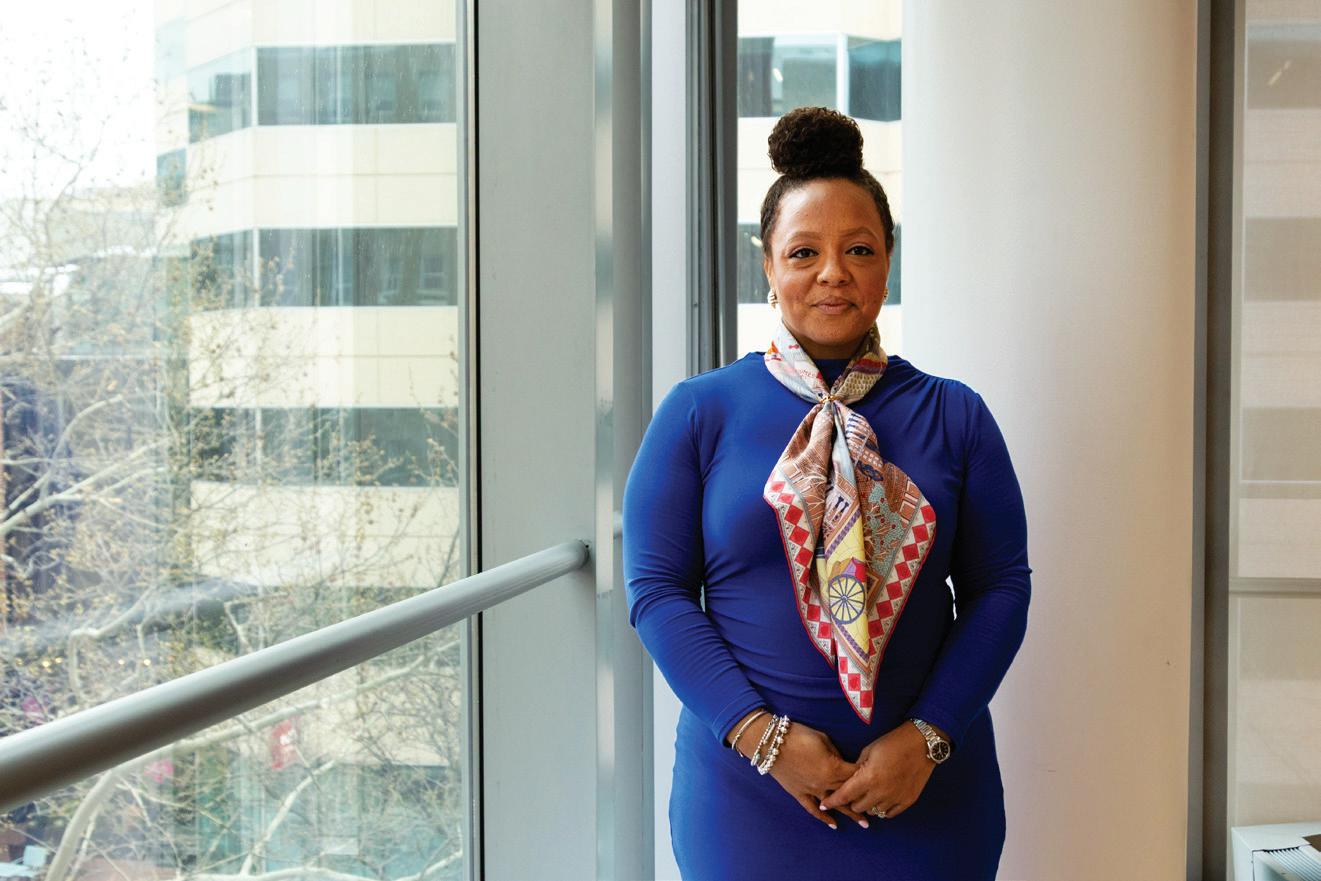
Associate Vice Provost of Diversity, Equity and Community Engagement Jordan Shelby West poses for a portrait.
ERIKA LOPEZ-CEPERO | PHOTOGRAPHER
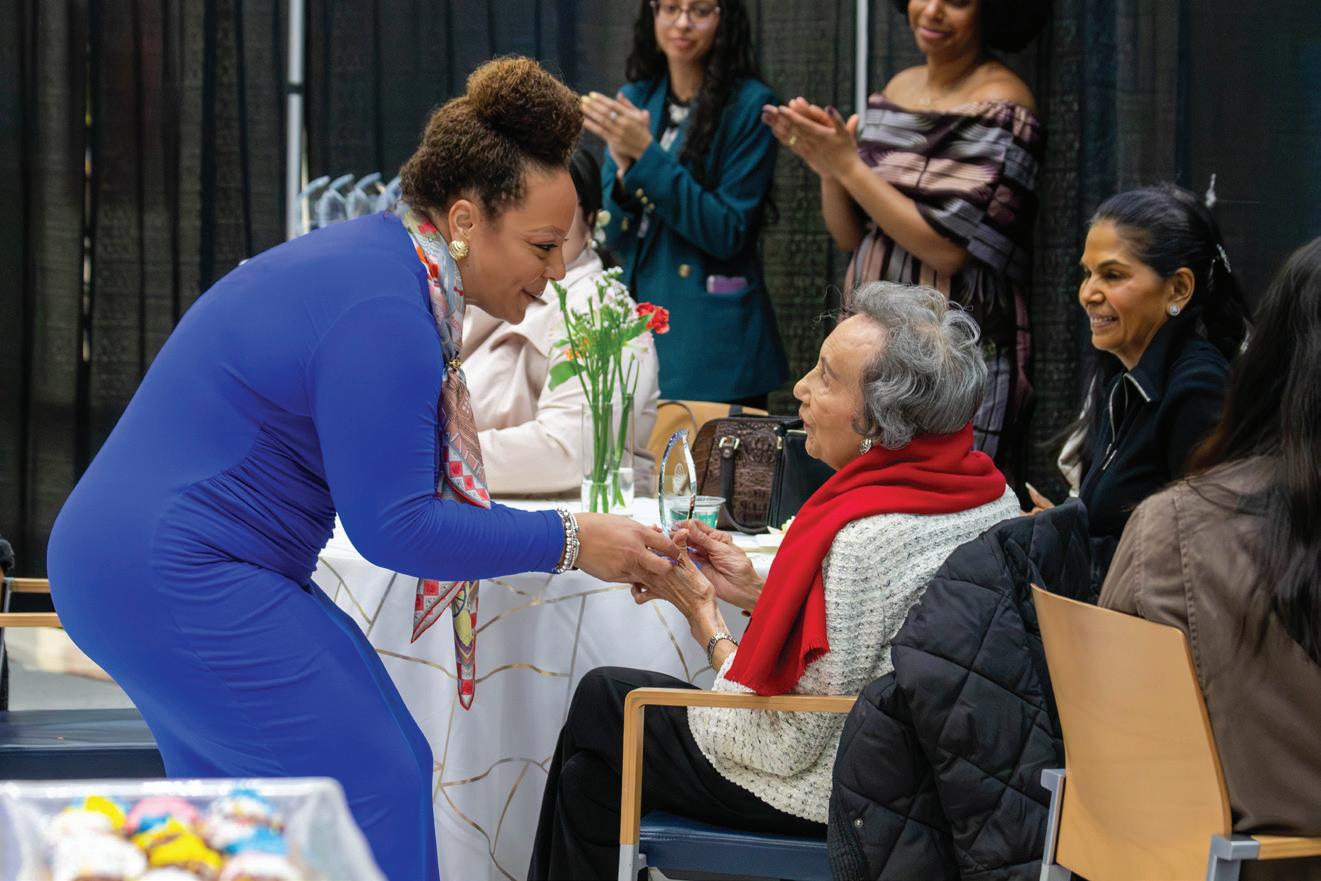
West honored Virginia Ali, the owner of Ben’s Chili Bowl, at the summit’s closing reception.
PHOTOS BY AINSLEY SULLIVAN, COOPER TYKSINSKI, JESSIE ZHAO, LEXI CRITCHETT AND NOAH RABER
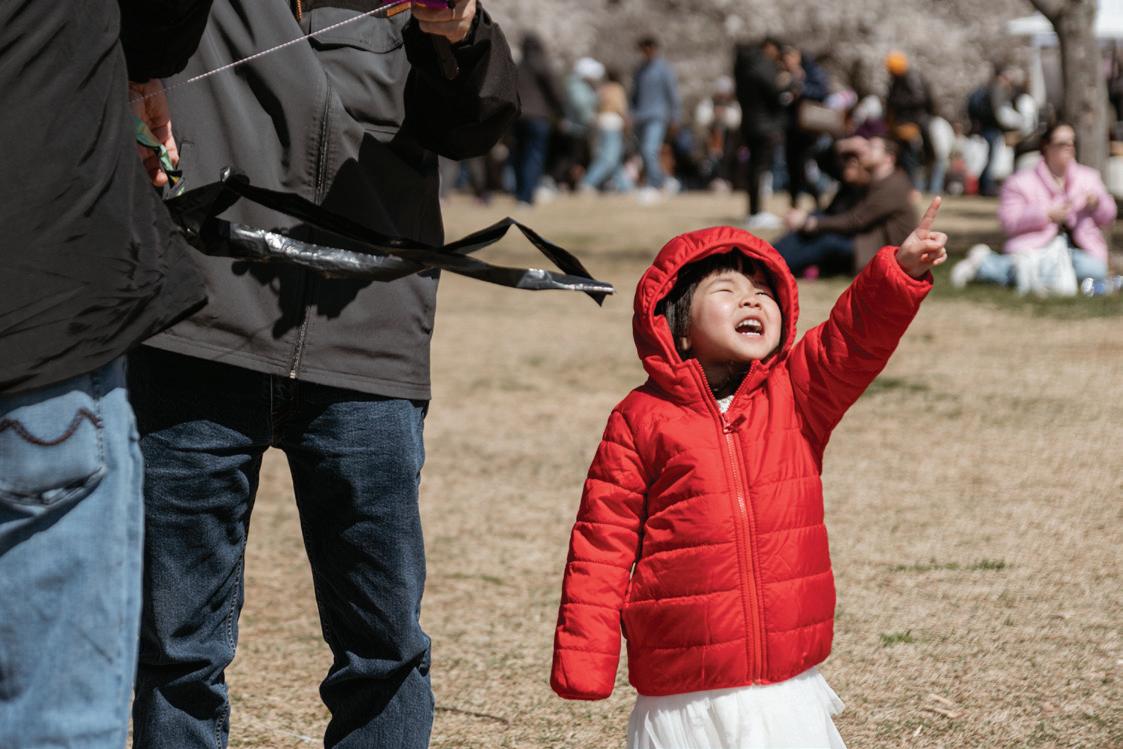
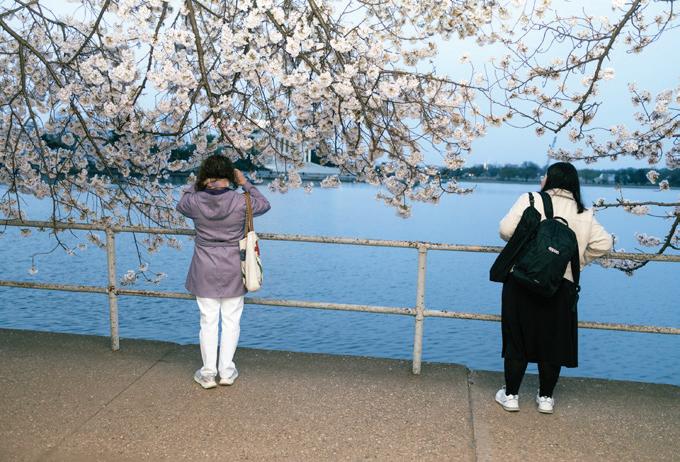
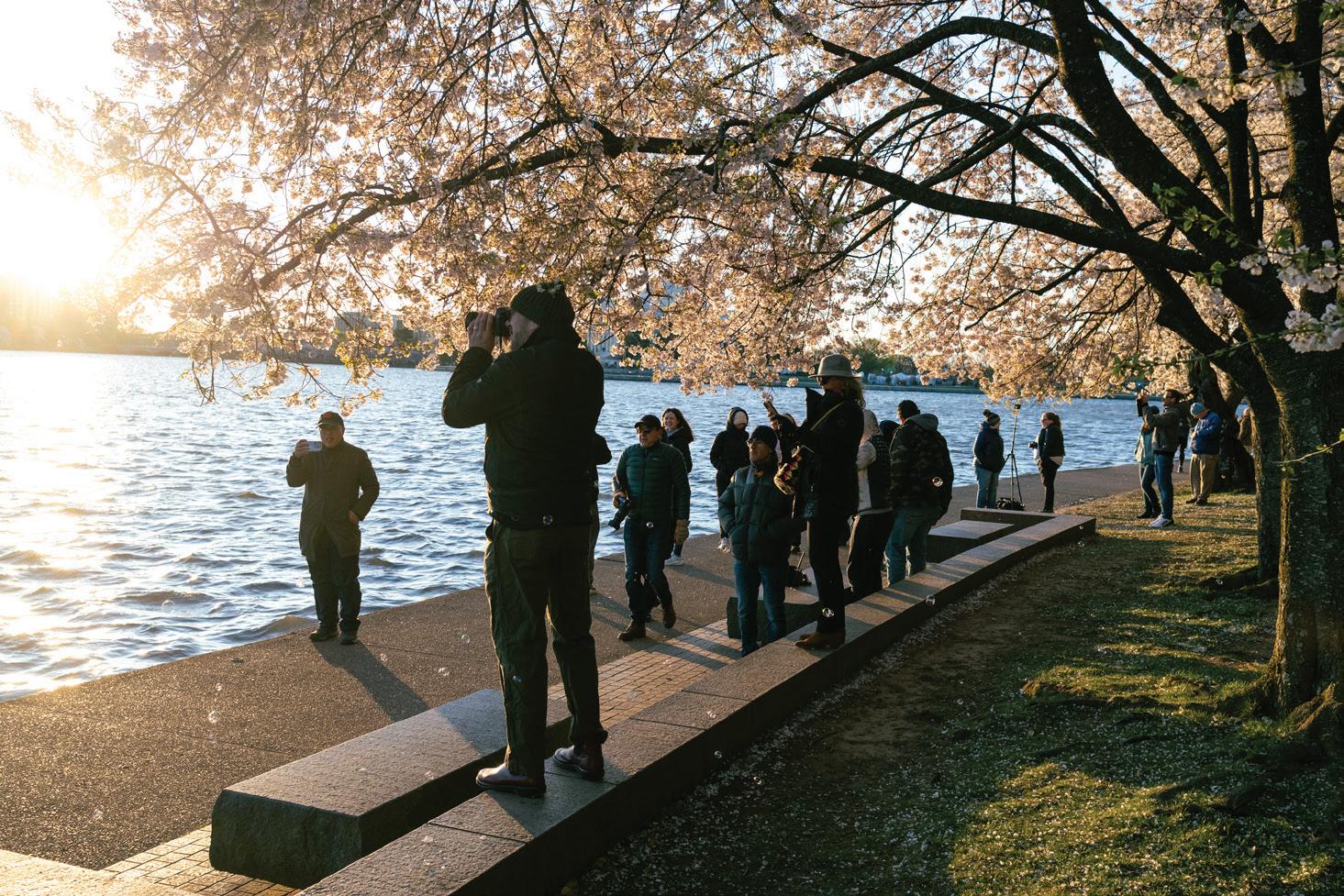
Thousands flooded the National Mall to see the cherry blossoms reach peak bloom, with crowds gathering around the Tidal Basin. On Saturday, people flew and made kites in the spring weather at the Blossom Kite Festival by the Washington Monument.
More corporate voices on Board could overshadow academic mission: experts
GIANNA
SOFIA
As GW seeks to boost the presence of corporate leaders on its Board of Trustees, experts caution that a dominance of business-minded voices could tilt the board too far toward financial and real-estate considerations at the expense of its academic mission.
GW for more than a decade has strategically downsized its Board of Trustees and recently announced plans to boost the share of members that come from corporate backgrounds — a move that more than 10 higher-education experts said likely reflects a growing priority of making businessdriven decisions, like realestate investments and sales, which could come at the expense of the quality of GW’s academic enterprise. They said officials should instead focus on adding members from diverse backgrounds, like those in the field of education, to strike a balance between ensuring the University’s financial stability and supporting its academic enterprise in its decision-
making.
Granberg is the only person who serves on the Board ex-officio and with a vote with a professional focus in higher education. At least five of the 23 total trustees come from the finance and investment sector, two from technology companies, three from healthcare, three from law and two from consulting.
“Board membership is an opportunity to make a statement about what you value and about the values of the institution,” Gary Rhoades, a professor of higher education at the University of Arizona, said. “I don’t think identifying that we need more people or leaders of large corporations really speaks to that moment.”
In recent months, University President Ellen Granberg said officials plan to increase corporate experience on the Board of Trustees, and Vice President for Board Relations Jonathan Post said the Board made the “strategic shift” toward a more corporate, less philanthropy-focused board structure. Their comments follow the Board’s efforts to downsize its number, decreasing from 43 to 23 members between 2013 and 2026.
A University spokesper-
son said the University does not operate on a corporate government model and does not seek to implement a corporate strategy, but GW is looking to add “some” trustees with corporate experience. They said the University’s Board is responsible for acting in GW’s best interests for its long-term benefit and sustainability, unlike corporate directors, who have a duty to maximize shareholder value.
University spokesperson Julia Garbitt declined to comment on how officials will ensure that increasing representation from corporate sectors on the Board does not shift decision-making toward corporate-style priorities. She declined to comment on how trustees’ professional backgrounds influence the Board’s priorities or strategic decision-making, including in areas like financial planning, major investments and sales.
Rhoades said the University’s strategy to increase corporate representation on the Board “doesn’t fit” its existing composition because the Board already includes numerous trustees with experience running businesses. He said it’s important to consider who isn’t on the Board,
especially when accounting for the relationship between GW’s location and students’ common majors, such as international relations, to add members that align with the University’s academic strengths.
“It’s not unusual that GW has a lot of corporate representation on its Board,” Rhoades said. “But given that it already does, why the
emphasis on getting more, especially at a time and a place where there’s all kinds of other opportunities and all kinds of other interests whom you might think it’s important to have represented?”
Benjamin Ginsberg, a professor of political science at Johns Hopkins University, said universities are in some ways business corporations because they need to protect the long-term vitality of the institution, but their primary duty is to protect the academic enterprise. He said universities cross a line when they act like real-estate firms, citing GW’s heavy real-estate investments
Students call on officials to activate air conditioning in residence halls
LAKSHMI DEV
More than 170 students have signed onto a petition requesting officials switch residence halls from heating to air conditioning as fluctuating March temperatures leave students in overheated dorms.
More than 30 students told The Hatchet their rooms were uncomfortably warm as D.C. temperatures crossed into 80 degrees this month, which prompted students to circulate and sign a petition asking officials to turn on the air conditioning in buildings. Rayna Stern, a firstyear majoring in journalism and mass communications who lives in Potomac House, said she started the petition after her room grew uncomfortable due to rising March temperatures, making it difficult for her to work and sleep.
“I’m someone who needs it to be colder when I sleep, and my room currently has three fans in it, and the windows are open,” Stern said. “And it’s still hitting these crazy temperatures.”
Officials said in an email to students March 23 that the University expects to transition residence hall systems to cooling around midApril, once overnight temperatures are forecast to remain above 55 degrees for 10 days.
Stern’s petition, which she launched March 23, has garnered 172 signatures as of Sunday evening. She said she faced similar issues with uncomfortable room temperatures after officials transitioned residence halls from cooling to heating in late October. When temperatures climbed back into the 70s three times in November, Stern said her room rose into the upper 70s, and a neighboring room exceeded 80 degrees.

“When they turned the heat on originally, back in October, my room got extremely hot,” Stern said. “I can’t recall exact numbers, but definitely within the high 70s.” Stern said those conditions in the fall worried her that she’d face the same problem during the transition into spring, adding that she decided to start the petition when the temperature of her room climbed into the upper 70 degrees. She said she tried to make accommodations this spring to increase circulation and cool her room on her own, but fans and open windows combined have failed to cool the room to a
comfortable temperature.
Stern’s petition urges officials to adopt a more flexible approach to building operations based on current weather conditions rather than a fixed seasonal schedule.
D.C. law requires buildings to provide air conditioning from May 15 and Sept. 15 and heat from Oct. 1 to May 1 each year, while GW follows an internal policy requiring a forecast of 10 consecutive nights below or above 55-degrees to switch HVAC systems twice a year. The student advocacy comes as the D.C. Council considers a bill, introduced by At-Large Councilmember Chris-
tina Henderson last summer, to require landlords to provide air conditioning from May 1 through Oct. 1 and heat from Oct. 15 through April 15, explicitly extending those rules to University residence halls.
D.C. residents have long advocated for the council to change the city’s laws surrounding cooling and heating, which requires building owners to keep indoor temperatures below 68 degrees until May 1 and does not require owners to activate air conditioning until May 15. Residents have previously reported overheating in their apartments as warmer temperatures arrive earlier
in the spring as global temperatures rise.
University spokesperson Skylar Sales said GW does not coordinate its biannual HVAC transition with D.C. officials and instead uses its independent policy of waiting until weather forecasters predict 10 straight nights above or below 55 degrees to switch residence halls. Sales also said the Campus Operations team, housed under the Division of Campus Safety and Operations, oversees two HVAC transitions each year across about 130 campus buildings with varying ages, designs and operating systems. She said some buildings can be controlled through a central system, while others require manual, on-site switches.
Student Government Association President Ethan Lynne said he and other SGA leaders have tried to push for broader changes to the District’s seasonal heating and cooling rules. He said the SGA sent a letter to the D.C. Council in October 2024 asking Councilmembers to revise seasonal heating and air conditioning rules for multi-unit dwellings, which then-SGA President Ethan Fitzgerald and Lynne, who was vice president at the time, said were outdated given warming weather.
Henderson’s bill, the “Climatizing Our Overheated Living Spaces Regulation Amendment Act of 2025,” states rising temperatures mean the Council should reconsider the District’s heating and cooling schedule, with “extreme temperature variability” during transition seasons, like fall and spring.
“High interior temperatures are uncomfortable at minimum, and can be dangerous for seniors, medically vulnerable or physically disabled people, and pets,” the bill states.
CLRE to axe community coordinator role, create graduate student position
BRYSON KLOESEL
Campus Living and Residential Education will split community coordinators’ responsibilities between graduate student assistant area coordinators and area coordinators in residence halls next academic year in an effort to expand leadership opportunities and strengthen community support for students.
Officials will hire professional staff to serve as ACs and graduate students as AACs to support undergraduate resident advisers and community assistants, help mediate resident conflicts, assist in resolving family and community concerns surrounding students and help implement residential curriculum in residence halls, a University spokesperson said. The spokesperson said the change and return of the Resident Advisor program aligns with University President Ellen Granberg’s strategic framework by strengthening peer connection in residence halls while also expanding leadership opportunities for graduate students and professional staff.
“Aligning with priorities in GW’s strategic framework
focused on preparing students to be strong, resilient leaders, the AC and AAC roles are designed to expand advanced leadership opportunities within the residential experience,” the spokesperson said in an email. The AAC role will be CLRE’s first to be available exclusively for graduate students, while GW will hire professional live-in staff for the AC position. CLRE will pay AACs $22 per hour up to 20 hours a week and provide a furnished one-bedroom apartment in a residence hall, according to a job posting for an open position.
Officials will appoint graduate student AACs for a 10-month program running from July 2026 through May 2027, and students will work primarily evenings and on some weekends, with some work during weekday business hours. The jobs will not come with tuition reimbursement or a meal plan, per the AAC webpage.
Salaries for ACs, who work full-time, range between $43,000 and $56,000, according to a role description. ACs are eligible for healthcare, retirement and tuition benefits and will work Monday through Friday between 10 a.m. and 9
p.m. and some evenings and weekends.
The posting says ACs will oversee one or more residence halls, supervise student staff, collaborate with campus partners and participate in a 24/7 rotating on-call system. Both roles will also oversee hall councils and help conduct room inspections, splitting hall-level student support and operations work now handled by CCs across two positions.
Officials plan to place five graduate student AACs in residential halls based on operational needs and community size, the University spokesperson said. The spokesperson also said AAC compensation will count toward a student’s total cost of attendance, which could impact their financial aid package.

CLRE will also return to a resident adviser model next semester, replacing the current community engagement assistant and community engagement advisor structure. Live-in undergraduate resident advisers will serve firstand second-year halls, while undergraduate community assistants will staff upperclass residence halls. An RA job posting says they will primarily connect residents with each other, alumni, faculty and staff and support their development by providing advice and assistance.
The posting also states ACs and AACs will support RAs through mid and endof-year evaluations, program planning and supervisory coaching. Only full-time students are eligible to work the RA position, except for second-semester seniors who
need fewer than 12 more credits for graduation. RAs will receive housing and the Block 175 meal plan at no cost and a $2,520 stipend per academic year for about 340 hours of work per semester, a value of $22,186, the posting states. The University transitioned from an RA model to the current CC model in 2021 after students expressed
concern that the complexity of issues RAs face requires professional staff. CCs have led residential curriculum, supported student leadership and peer mentoring and provided proactive outreach and individualized support to students since 2021, but those responsibilities will fall to AC and AACs next year. CLRE does not currently employ graduate students.
LOGAN ROTUNNO | STAFF PHOTOGRAPHER
The community coordinator office in District Hall.
that picked up during former University President Stephen Joel Trachtenberg’s tenure, which lasted from 1988 to 2007.
ARWEN CLEMANS | SENIOR PHOTO EDITOR
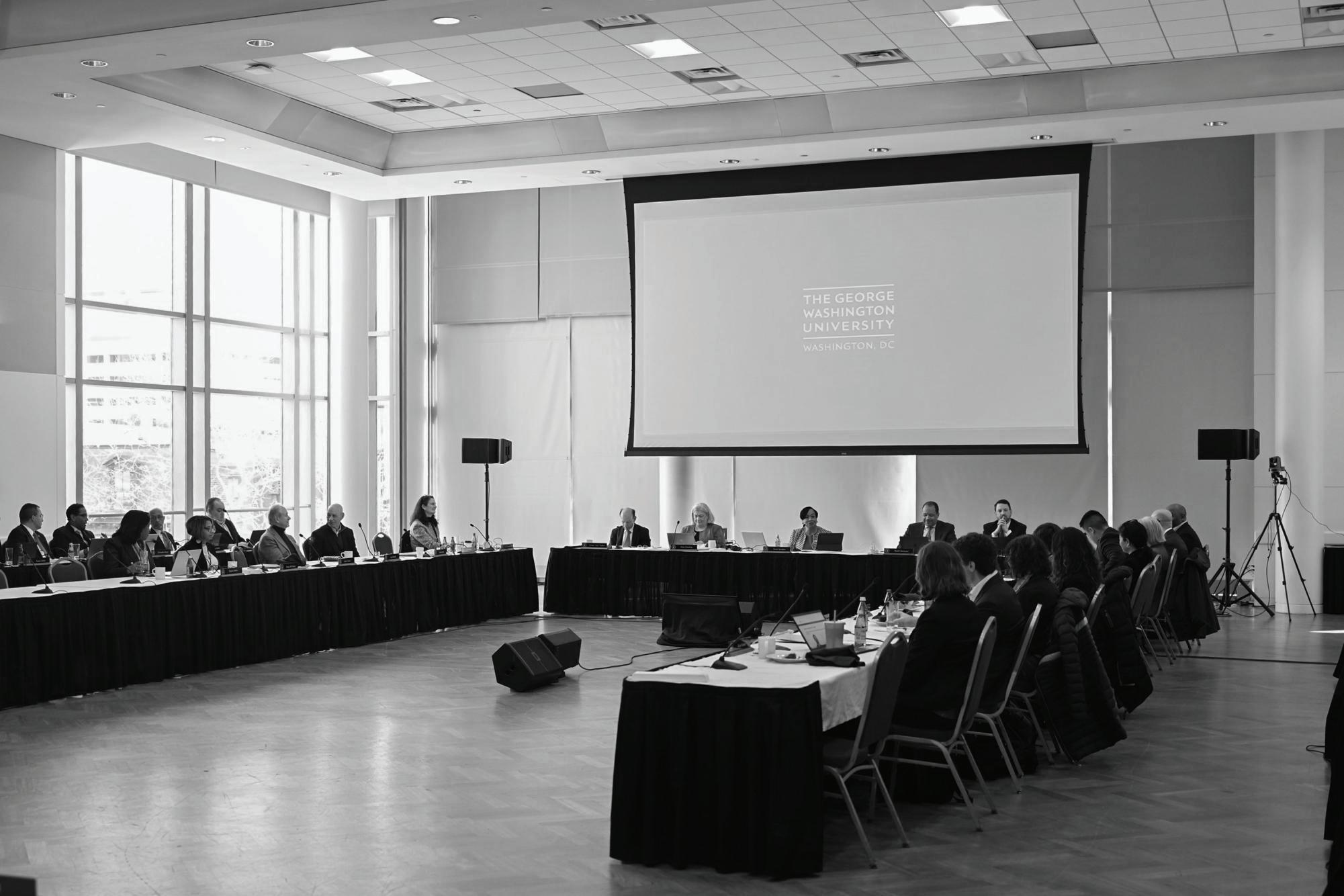
The Board of Trustees during a meeting last February.
PHOTO ILLUSTRATION BY KYRA WOOD
A student changes the temperature on a thermostat.

SGA vice president stages bid for
tainty because there is very little communication from the administration.”
Student Government Association Vice President Liz Stoddard launched her presidential campaign last week.
Stoddard, a junior majoring in political science with a minor in religion from Delaware County, Pennsylvania, said she’s running for SGA president because she wants to help students resist federal intervention at GW and cuts to services as the community grapples with federal probes and ongoing budget cuts. Stoddard said as SGA president she would work to ensure the quality of student experiences justifies the University’s rising cost of attendance, including working with officials to revamp first-year experience classes, giving student organization leaders academic credit for their involvement on campus and providing students with more resources included in their cost of attendance, like Quizlet Plus.
“When I got here as a freshman, and I think a lot of people can relate to it, I was really excited to go to GW, I was really excited to be in D.C.,” Stoddard said. “I think right now, more than ever, there’s so much uncer-
Stoddard said officials have not communicated sufficiently to relieve students’ fears about the “rollback” of their rights by President Donald Trump’s administration as National Guard and Immigration and Customs Enforcement presence around campus continues following Trump’s federal troop deployment in August. She said students are also concerned for their rights on campus as officials work to make changes to the Code of Student Conduct consolidating the discipline process to remove studentinvolved panels and appeal pathways.
Stoddard said from conversations she’s had this year, she thinks students have developed a lack of “institutional trust” with officials because of poor communication about safety and cuts to campus services. She said as SGA president, she would work to mend those gaps by pushing University leadership to be more transparent and further including students in GW’s governance structures.
She said her accomplishments and experience as vice president, which in-
clude successfully advocating for a FixIt scheduling pilot program and childcare discounts for graduate students, prove she knows how to advocate for students’ needs and will be able to accomplish her priorities.
Stoddard, the only sitting SGA official to stage a bid for the presidency, said she has built relationships with top University officials this year, giving her the ability to be an effective advocate and the knowledge to navigate the University’s administrative structures.
“I don’t need a training guide or manual, I can start on day one,” Stoddard said. Stoddard said as vice president she has experienced administrators shutting students out of the University’s shared governance principles — which officially recognize faculty as having a meaningful role in “key decision-making” but not students or staff — and she would work as president for a broader focus on shared governance between the SGA and University officials.
“That’s the kind of coalition I want,” Stoddard said. “One that has students, administration and faculty all at the same table, the Board of Trustees as well. I think that’s possible.”
SGA finance committee chair launches campaign for vice presidency
Student Government Association Sen. Cheydon Naleimaile-Evangelista (CCAS-U) announced his bid for SGA vice president Friday, becoming the second candidate to enter the vice presidential race.
Naleimaile-Evangelista, a sophomore majoring in political communication from Hilo, Hawaii, said if elected to the vice presidency he plans to advocate for professors to release course syllabi a week before classes start, improving the accessibility of facilities on campus and increasing the SGA’s internal diversity. He said his experience as the current chair of the SGA’s Financial Services and Allocations Committee — which handles funding requests from student organizations — and former chair of the Student Life Committee has instilled in him the qualifications and experience he needs to bring change to GW’s campus and the SGA.
Naleimaile-Evangelista said as vice president, he would also advocate for officials to maintain expanded dining hall hours during exam periods and revamp Title IX training for students, staff and faculty to
ensure GW is a “violencefree campus.” He said during his time as an SGA senator this year he has heard innumerable complaints from students about issues like campus accessibility and dining hours, which inspired his run for vice president.
“It was because of the conversations I’ve had with students on what we need to change here at GW, that is why I wanted to run,” Naleimaile-Evangelista said.
He said he will partner with the Faculty Senate to draft legislation for professors to release course syllabi earlier or work out a compromise where faculty will release past syllabi for students to preview. GW currently offers a syllabus bank on Blackboard, where students can see past semesters’ syllabi, but professors only uploaded 63 syllabi to the bank last semester, compared to 502 in fall 2019 when the bank first launched, and the Faculty Senate sent a resolution to professors asking them to participate.
Naleimaile-Evangelista said he has heard complaints from students about a lack of physical accessibility to campus facilities, especially in District House,
where foot traffic of students visiting Peet’s Coffee tends to block one of the dorm’s accessibility doors. He said the button to open the door to enter the dorm’s residential area has also broken several times this year and was only recently repaired.
Naleimaile-Evangelista said he would ask facilities personnel to attach signs near every automatic door button on campus with a QR code and instructions on how to report broken equipment to FixIt.
Naleimaile-Evangelista said as vice president he wants to continue to increase the SGA Senate’s diversity, and although the body is the most diverse in its history this year, he still sees gaps in the SGA’s inclusion of minorities. He said as the only Native Hawaiian senator in the SGA, as vice president he would work to reach out directly to students of diverse backgrounds to bring them into the governing body.
“I think not a lot of students see or envision themselves because they don’t see anyone like them within the SGA,” Naleimaile-Evangelista said.
Naleimaile-Evangelista collected the required 359 student signatures and will appear on the ballot.
DC restaurant closures surged in 2025 amid federal layoffs, rising service costs
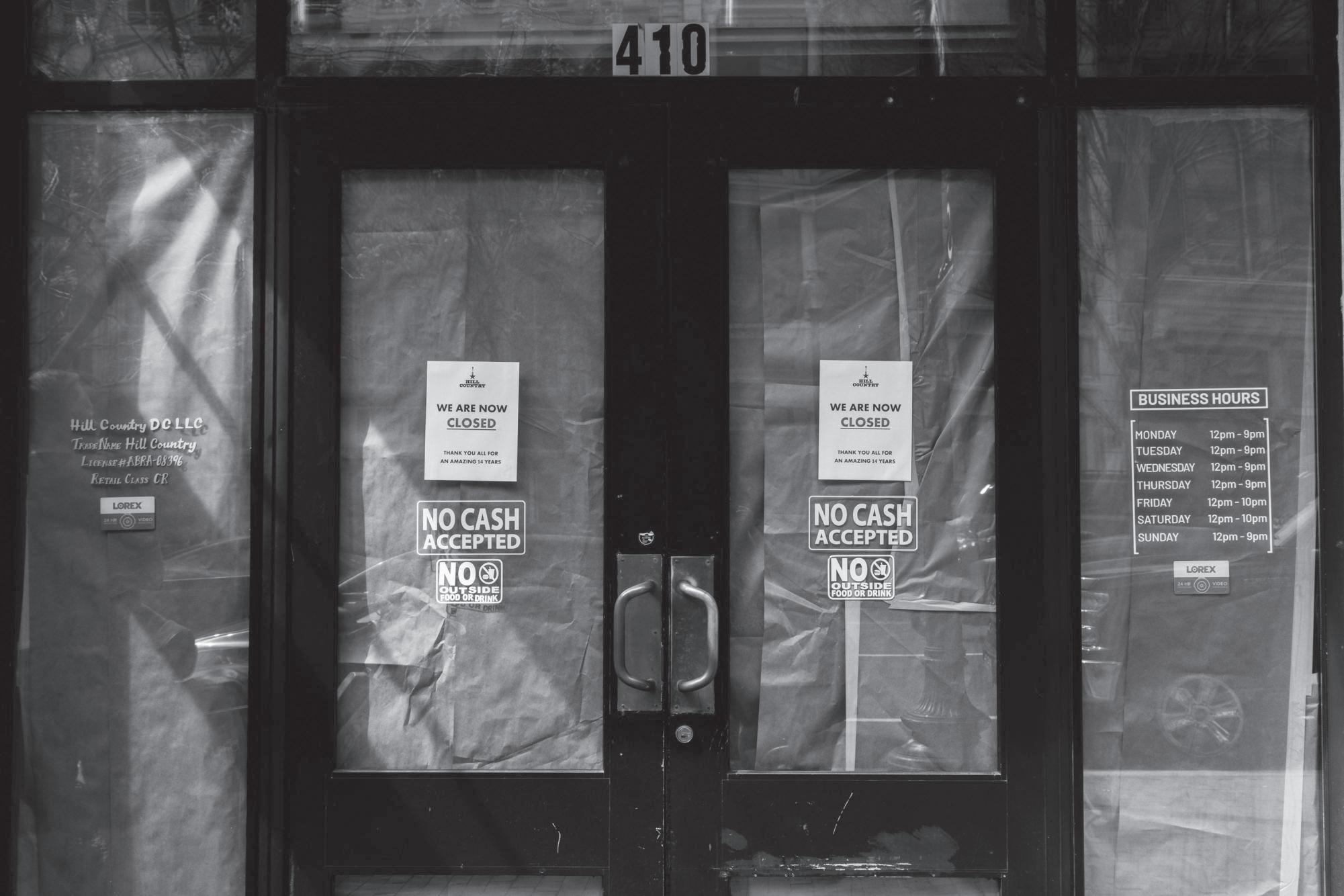
Restaurant closures in D.C. jumped roughly 39 percent in 2025, according to the Restaurant Association of Metropolitan Washington, as Foggy Bottom eateries faced declining sales and rising costs amid federal workforce layoffs and a rising tipped minimum wage.
A RAMW report released this month found 54 percent of the association’s more than 600 member restaurants in D.C. made lower sales compared to 2024, with mid-priced restaurants — establishments costing $21$40 per person — affected most severely, averaging 21 percent sales decreases compared to 9 percent in upscale restaurants and making up 67 percent of D.C. restaurant closures. Foggy Bottom restaurant owners said the government shutdown, rising service costs and higher tipped wages throughout the District hurt business industrywide last year, which experts in the service industry said hit mid-priced restaurants the hardest because they can’t offer the low prices of fast-casual eateries or the dining experience of more upscale restaurants.
“Policies that drive up costs and reduce consumer spending are falling hardest on mid-priced restaurants,” RAMW CEO and President Shawn Townsend said in the report. “These are the neighborhood restaurants that anchor communities and economies — and they are disappearing.”
Restaurants in Foggy Bottom say they saw lower sales in 2025 as a 43-day government shutdown decreased their patronage from federal workers and the deployment of the National Guard caused many D.C. residents to stay home. Increasing food prices due to President Donald Trump’s tariff policies and rising service costs associated with higher tipped mini-
mum wage also strained restaurants as they tried to appeal to customers gravitating toward more budgetfriendly options.
Jeremy Pollok, owner of Foggy Bottom’s Tonic at Quigley’s, said steadily rising costs of goods and labor in D.C. due to inflation have put pressure on already thin profit margins. He said in 2025, Trump’s August tariffs on goods, like beef, raised food prices, while the 43-day government shutdown last October and the layoffs of 317,000 federal workers last year decreased the number of government workers and tourists in the neighborhood eating at local restaurants, creating a combination of pressures on his business.
Pollok said his business saw a 15 percent decrease in revenue in 2025, which he attributed in part to the National Guard deployment
in the District starting last August. He said the troops’ presence caused uncertainty in consumers about politics and the economy, with the effects still ongoing.
“Just having so much uncertainty makes things volatile, and when people are uncertain, they start spending less money and the discretionary stuff goes away first — eating out, going to shows — and all that has impact,” Pollok said.
102 D.C. restaurants closed in 2025 — including Foggy Bottom’s Poppabox and Ristorante La Perla — more than double the number in 2022, continuing a trend of heightened closures over the last three years, according to the RAMW report.
As a mid-priced restaurant owner, Pollok said he’s struggled to maintain an affordable menu that attracts
customers increasingly conscious of price while continuing to serve quality food. Pollok said he would no longer consider opening a restaurant in D.C. because of the uncertainty surrounding Initiative 82, raising tipped minimum wage in the city and a new initiative introduced by a coalition of labor advocates in December that could raise the minimum wage to $25. Initiative 82, which the D.C. Council passed in November 2022 and many D.C. restaurants opposed, raises the tipped minimum wage biannually until it reaches the regular minimum wage of $17.95. As a result, Foggy Bottom restaurant owners have had to add service fees and lay off workers due to the initiative stretching their budgets. The D.C. Council pared back the initiative in July by scrapping the initiative’s
original timeline, keeping the tipped wage at $10 through July 2026 and increasing the value every two years until it reaches 75 percent of the minimum wage in 2034. Kathryn Velazquez, a lecturing instructor of hospitality and service management at The Culinary Institute of America, said modern consumers nationwide are gravitating toward more “wallet-friendly” options and decreasing how much they eat out as inflation drives up the cost of travel and menu items, which hurts restaurants.
“Consumers are more likely to reserve restaurant visits for weekends or special occasions rather than multiple nights throughout the week,” Velazquez said. Velazquez said diners tend to focus on affordability, which fast-casual restaurants do best, or experience,
satisfied by premium dining options, leaving mid-priced casual restaurants to occupy a “disappearing space.”
The share of more upscale and fine dining restaurants opening in D.C. — 33 percent in 2025 — rose 10 percent since 2022, according to RAMW, a trend Velazquez said could be attributed to upscale and fine dining establishments relying on affluent clientele less sensitive to increasing prices.
Fast-casual and limitedservice restaurants led all segments in sales performance across the District, with 44 percent reporting growth and 33 percent saying they saw increased foot traffic, according to RAMW. Velazquez said that to counter declining consumer interest, mid-priced restaurants should focus on attracting neighborhood residents and consider diversifying or marketing their business in ways that weren’t necessary in previous years.
Mounir Bouzuita, the owner of Tazza Cafe, a midpriced restaurant in Foggy Bottom located directly across from the Kennedy Center, said while the end of 2025 and 2026 so far have been the hardest years of operation because the Kennedy Center’s cancellations and impending two-year closure this summer are causing an overall decline in sales, residents from the Watergate building have been supporting Tazza. “They try to help us and to support us and come for dinner or for lunch, at least one time a day, so it helps,” Bouzuita said. “Honestly, they try to help us because they want us to stay here.” Bouzuita said Tazza relied mainly on the center’s employees, guests and dinner rushes before shows, which made around 75 percent of the restaurant’s profits. To compensate, he has started advertising deals and specials on social media, he said.
NICHOLAS WARE | STAFF PHOTOGRAPHER
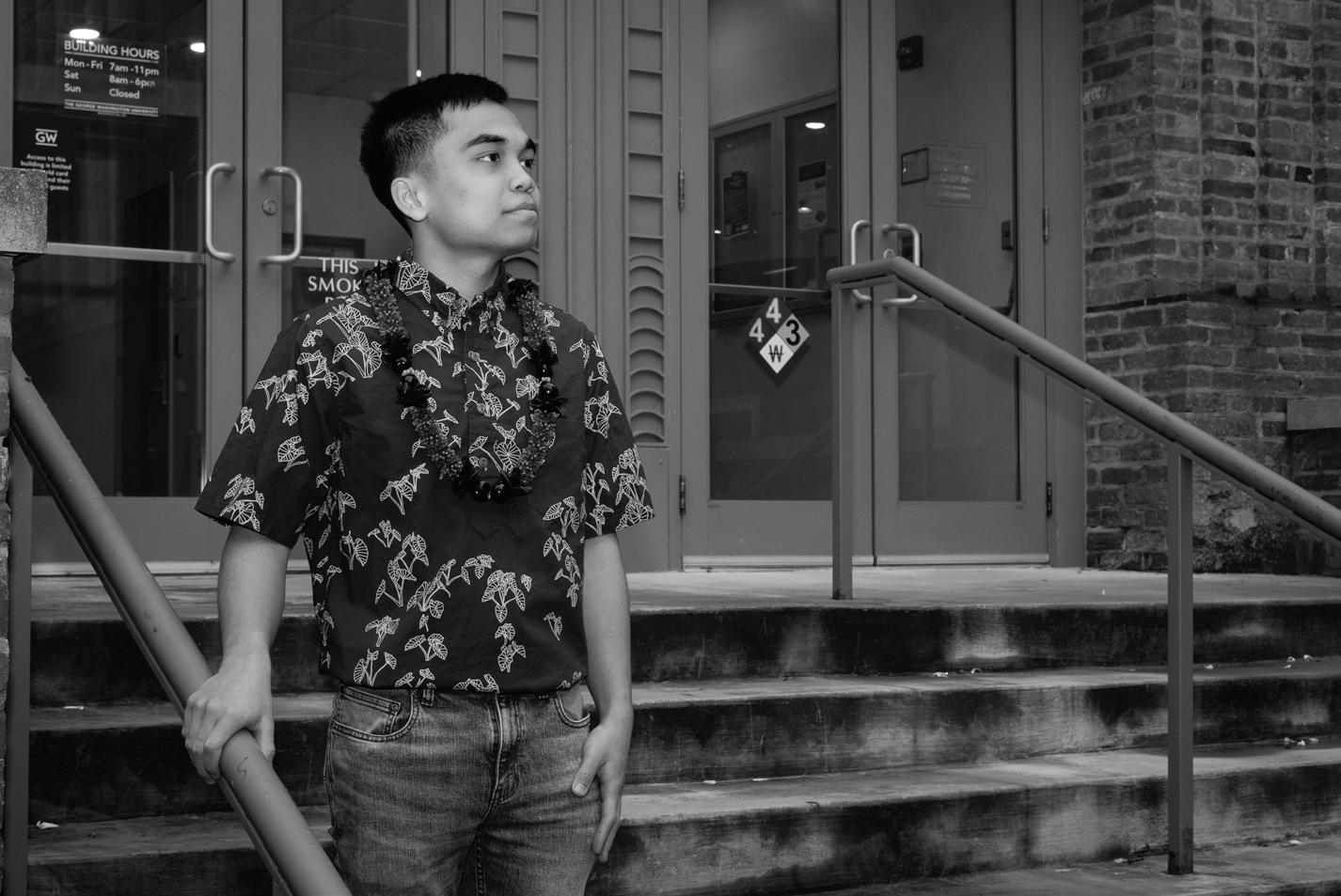
Student Government Association Sen. Cheydon Naleimaile-Evangelista (CCAS-U) poses for a portrait.
ELIJAH EDWARDS ASSISTANT NEWS EDITOR
SBA pushes for broader safety alerts after DHS agent tried to enter GW building
Student Bar Association members said a federal agent attempted to access a residence hall early last week, triggering student concerns about campus safety.
SBA Vice President of Student Affairs Marcella Rubini said at a meeting Wednesday that a Department of Homeland Security agent sought, but did not gain entry into, an undergraduate residence hall Monday as part of a “background investigation” into a student who applied to work at the agency. SBA senators, in response to the incident, passed a resolution at the meeting urging the University to expand its campus alert system to notify students about potential safety concerns, including the presence of federal law enforcement and non-students in campus buildings.
Rubini said a first-year law student called her and said a DHS agent approached them asking for access to an undergraduate residential building, but the student called GW Police Department officers instead. She said SBA leaders followed up with a GWPD captain who later confirmed the DHS agent’s story “checks out” and said the DHS agent was not affiliated with Immigration and Customs Enforcement.
“Obviously, if DHS is trying to enter any undergrad buildings, that is cause for alarm,” Rubini said. “So I wanted to inform people what to do when DHS is on campus but also not alarm people thinking like, ‘Oh my god, ICE is here.’”
University Spokesperson Julia Garbitt said a DHS agent was on
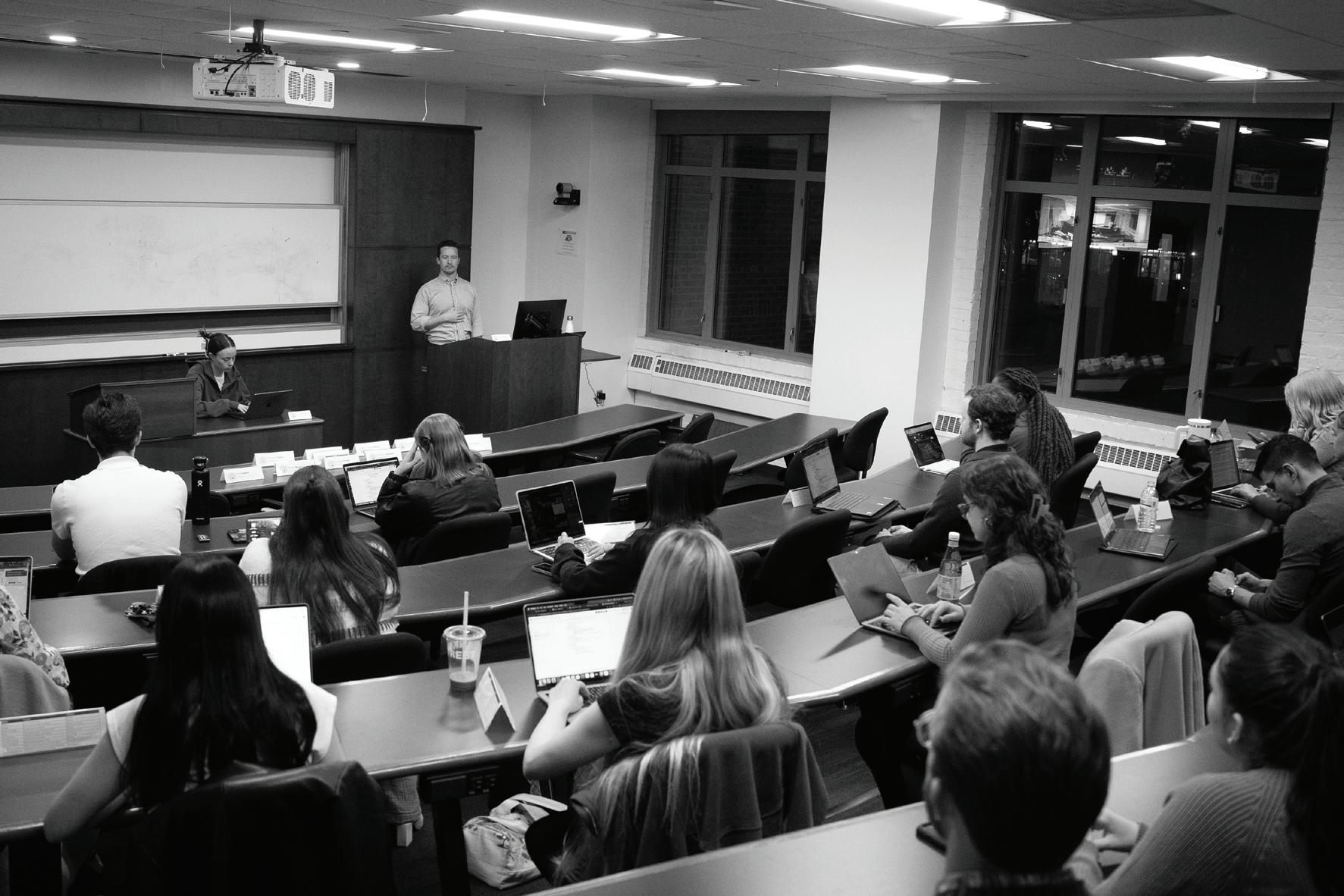
campus last week for a “business matter” and did not attempt to access an undergraduate building but rather GWPD’s satellite office at 2145 G St. She said the agent did not gain access to the office and did not make contact with GWPD.
Garbitt said public streets and sidewalks that run through campus fall under local and federal authority, but only authorized GW community members can access buildings that require GWorld tap access. She said the University encourages community members to
ensure doors close behind them when entering and exiting buildings, and when the University becomes aware of external law enforcement in GW facilities, it immediately follows up with the “appropriate personnel.”
“Our goal has always been, and will continue to be, to best meet the safety and security needs of our entire campus community,” Garbitt said in an email.
Garbitt declined to comment on whether the University will notify students when federal agents at-
tempt to access campus buildings or why officials did not discuss the incident in their Thursday Weekly Federal Updates email to community members.
A spokesperson for the Department of Homeland Security did not return a request for comment.
The presence of National Guard troops and federal law enforcement in the District has surged since President Donald Trump deployed federal agents in August. Officials in November met with National Guard leadership and posted sig-
nage in buildings like the University Student Center notifying community members that certain floors are accessible only to GWorld card holders and their guests.
SBA Sen. Aya Almasri, the chair of the Special Subcommittee on Student Safety — which senators created at a February meeting in response to campus security concerns — said a separate February incident in which a person unaffiliated with GW entered a law school wellness room and harassed a student while they were praying also prompted her to begin working on a resolution. She said multiple GWPD officers responded to the situation.
Garbitt declined to comment on the incident or GWPD’s response.
“We were hoping to have this petition that would basically tell the school that because they have a campus safety alert system already in place, that system should be utilized for these types of threats,” Almasri said.
SBA Vice President Quinn Biever announced SBA Senators also voted to pass a joint resolution with the Student Government Association calling on GW to bar DHS and ICE from any future career fairs at a closed-session meeting held over spring break. Biever said the SGA would likely vote on whether to pass the resolution at its upcoming meeting on Monday.
The SBA and SGA have been working to draft the joint resolution since February but have delayed it several times, first to meetings before spring break and then until the end of March as leaders from both bodies worked to find agreeable language.
Hookworm vaccine trial shows effectiveness in weakening infection
Researchers from GW and Baylor College of Medicine published findings earlier this month demonstrating promising results in a clinical trial for an experimental hookworm vaccine, which paves the way for future clinical testing.
The study, which the researchers published March 17 in The Lancet Infectious Diseases, exposed 39 healthy D.C. participants to the hookworm parasite after giving them different versions of a vaccine or placebo and found those given the vaccine experienced lower-intensity infections and developed antibodies to fight the parasite. Five researchers said the results represent the latest milestone in a nearly 25-year effort to develop a vaccine against hookworm — one of the most common parasites in developing countries.
David Diemert, the study’s lead researcher and GW professor of medicine and microbiology, immunobiology and tropical medicine, said while it will be harder to get funding for the next phase of trials since
the study was so small, the results are “exciting,” and the smaller research team allowed for cohesion of researchers all focused on finding vaccines for diseases larger companies often ignore.
“We’re a small group of dedicated people who really all have the same goal, and that’s really vaccines for for people who need the most and specifically for diseases that really no one else is paying attention to,” Diemert said.
Hookworm actively infects over 400 million people worldwide and is a leading cause of anemia — low levels of healthy red blood cells — in low-income tropical countries because it thrives in warm, moist climates, like Nigeria and Ethiopia, and disproportionately impacts children and pregnant women. The parasite enters the body through the skin, settles in the intestine and feeds on blood causing a slow, cumulative illness that is rarely fatal but can stunt cognitive development and growth over the years.
The trial — funded by the National Institute of Allergy and Infectious Diseases — enrolled 39 healthy adults in
D.C. who had never been infected with hookworm and assigned 29 to receive one of three versions of the vaccine and 10 to receive a placebo before exposing them to hookworm larvae.
Parasites are harder to vaccinate against than many viruses or bacteria due to their genetic diversity and constantly changing chemical makeup throughout their life cycle, which researchers said is why it has taken so long to develop immunizations for hookworm.
“It’s been a long coming,” Maria Elena Bottazzi, a professor at Baylor College of Medicine and co-director of Texas Children’s Hospital Center for Vaccine Development said. “It’s slowly but surely every time we have an advancement through different milestones.”
The researchers developed a vaccine that targets a protein called Necator americanus glutathione Stransferase-1, or Na-GST-1, which hookworms use to digest blood. The researchers recreated the protein and injected it into the human participants, enabling them to train the immune system to generate antibodies against it, teaching the body to fight the hookworm infection
The vaccine is designed to produce antibodies against GST-1, a hookworm protein that helps the parasite digest blood. When the worm feeds on vaccinated blood, those antibodies can disrupt that process and weaken the parasite, according to the study.
Four weeks after the final dose, the researchers exposed the participants to 50
infectious hookworm larvae applied to the forearm on a gauze pad and found that participants given vaccine samples rather than placebos had fewer hookworm eggs in their stool samples.
Jeffrey Bethony, laboratory director for the GW Vaccine Research Unit and coauthor of the study, said the next step is finding a manufacturing partner in Brazil or another country with an established vaccine production pipeline to take the vaccine into a larger phase two field trial. He said the publication of the study now gives funders and potential partners evidence they needed to move forward.
“The next step is really to find somebody who wants to produce this on a large scale,” Bethony said.
Increased DSS staffing improved services, communication after lapses: students
Chris Parthemos, the director of the Student Disability Access Center at the University of Virginia, said there has been growing support for disabled students through additional federal legislation, like Congress’s approval of the ADA in 1990 and its 2008 amendments, greater access to diagnostic services and decreasing stigma around disabilities. He said K-12 schools have built better systems to accommodate students’ needs earlier, permitting more disabled students to learn how to adapt to their disabilities earlier and pursue higher education, where disabilities have become more socially accepted.
About 15 percent of all public school students in 2022-23 were registered with a disability and received special education or related services under the Individuals with Disabilities Education Act.
Just over 11 percent of U.S. undergraduate students reported having disabilities in the 2011-12 academic year, while 2.4 percent of institutions reported having 10 percent or more students registered with disabilities in 2010-11, according to Integrated Postsecondary Education Data System data. In the 2019-20 academic year, 20.5 percent of undergraduate students reported having disabilities, while 11.8 percent of institutions reported having 10 percent or more students registered — a spike GW has also experienced.
Parthemos said students often
apply for testing accommodations, which has led to a significant increase in demand on testing centers proctoring exams. He said testing centers are designed to make resources consistently available for students with accommodations, alleviating the burden on faculty to implement accommodations in the classroom.
“In my mind, the biggest explanation for the increase we are seeing is a move towards parity in this respect — a larger percentage of students with disabilities are electing to register to receive accommodations,” Parthemos said in an email.
Student Government Association Sen. Jonesy Strell (CCAS-U), who helped to organize a joint town hall with various disability-focused student organizations last month and has historically advocated for disabled students at GW, said DSS has become “more known” within the student body because the office has been tabling and conducting more student outreach, along with DSS Director Rochelle Mills-Garcia attending student organization and Division of Student Affairs events since she assumed her role in early 2024.
Strell said it is also easier and quicker to get accommodations now because officials have alleviated the staffing issues that plagued the office from 2019 to 2023. About half of DSS staff left after struggling with increased workloads due to low staffing and budget, and students in 2023 said the staff vacancies led to competition for services
and delayed response times.
Officials doubled the number of DSS staff by November 2024, hiring graduate students and filling vacancies, and a University spokesperson said DSS is now fully staffed and has no vacancies.
“They also have much more staff now, so they even have graduate assistants, which is something they did not have before, so they have much more staff who are able to do the work,” Strell said.
Strell, who is fully deaf in one ear and uses a hearing aid in the other, said he has accommodations for note-taking assistance that allows him to record class lectures using a DSS-approved software called GLEAN. He said he also gets 50 percent extra time on all class exams and quizzes as an accommodation for his attention deficit hyperactivity disorder.
Stephanie Cawthon, the executive director of the National Disability Center for Student Success, said all students, even those without accommodations, can benefit from the increase in students registered to receive accommodations because it incentivized faculty to restructure courses in a more accessible way for all students, like permitting flexible seating arrangements.
“As faculty members receive more requests, they change the design of their courses so that they’re not as needing to be accommodated,” Cawthon said. “The courses themselves are more accessible, so that there aren’t as many requests that really require an after-the-fact
modification.”
Georgia Cochran, a sophomore who receives both academic and housing accommodations for her anxiety, said communicating with DSS was hard last year because of the staffing issues, and she doesn’t think all students were able to get proper care, though she said the communication between DSS and students has improved this year.
The DSS office’s website displays 11 staff members, consistent with the number of staff they employed in April 2025. The office’s website in April 2025 also listed five student employees, while its current website does not, though a University spokesperson said the office currently has student employees.
“I feel like it’s easier to get in contact with your representative now and stuff, I may be wrong on that, but at least that’s my experience,” Cochran said. Cochran said she didn’t have accommodations in high school but applied going into her first year at GW because she felt she didn’t have enough time on tests. She said there are some stigmas surrounding accommodations, but increased use of them has made them more normalized among the student body.
Lilly Shaw, a junior and the president of GW Chronic Health Advocates, said DSS has supported her throughout her time at GW, and her DSS caseworker has taken time to meet with her and ensure she was getting the support she needed after adding accommodations mid-semester. She added that
she had not experienced any impact because of DSS staffing shortages in past years.
“DSS does incredible work to make students feel supported,” Shaw said in an email. “I am grateful for their assistance through my years at GW so far. In fact, the DSS office has gone above and beyond at times, for example by helping me make testing accommodations when exam dates shifted.”
Heather MacDonald, a sophomore who has a mobility disability, said reduced stigma around neurodivergencies and mental health has resulted in increased accommodations in higher education compared to decades ago, though she said disabilities are still stigmatized. She added accommodations can’t always correct stigmatization by students because they don’t protect disabled students from peers asking invasive questions or from experiencing ableism from peers, though it’s a start.
“Destigmatizing disability starts with accommodation, but can only be fully achieved with education and openness surrounding the topic,” MacDonald said in a message.
MacDonald said she has had accommodations for her disability since she was in elementary school, so by the time she was applying to college, the process for applying for accommodations at GW seemed “simple.”
“I feel like both my parents and me were very used to the process,” MacDonald said. “It wasn’t something new that I had to navigate.”
CARSTEN HOLST | STAFF PHOTOGRAPHER
Student Bar Association senators at a meeting on Wednesday.
JOSH STEINBERG | STAFF PHOTOGRAPHER
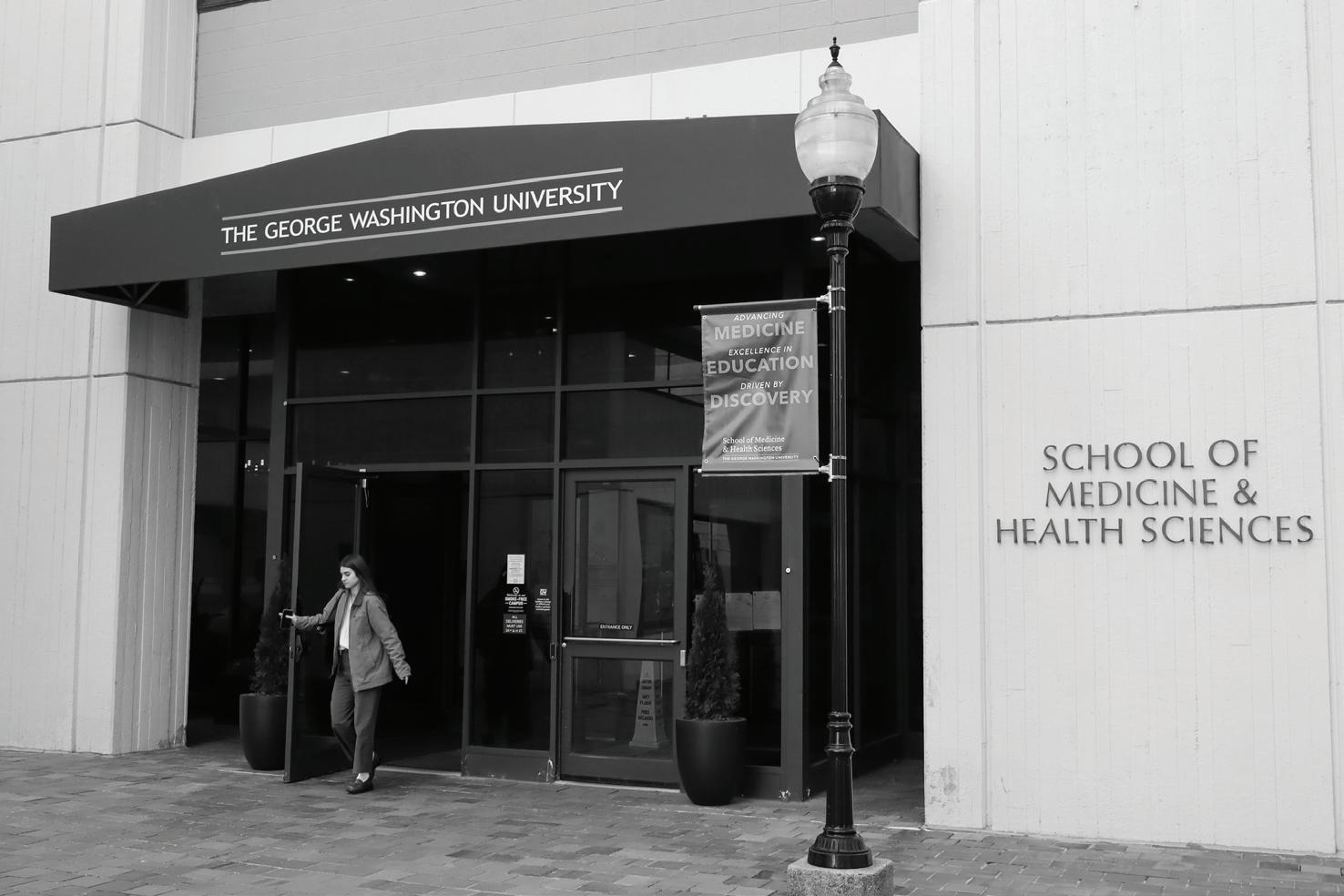
The entrance to the School of Medicine & Health Sciences’ Ross Hall. BRIEANA
Bearing George Washington’s name, we must all face America’s history at 250
In the heart of D.C., GW bears the name of the nation’s first president — a man who led the American colonies to independence, presided over the Constitutional Convention and warned against the perils of partisanship in his farewell address. He embodied ideals of civic virtue, personal sacrifice and uniting a nation with a vision for a more perfect union. At the same time, he owned enslaved people, a reality that complicates his legacy and contrasts with the values the University seeks to embody in its mission. At the nation’s 250th anniversary, we must confront our namesake’s full history, just as the country wrestles with the promises and contradictions of its founding. As a higher education institution in the nation’s capital and bearing the name of George Washington, the University has a responsibility to challenge its politically active student body to grapple with the country’s history and the meaning of citizenship. The future of our country depends on the next generation of leaders fully confronting the challenges, contradictions and lessons of America’s history. The 250th anniversary comes at a moment of deep division in the country. The nation is facing deepening polarization, growing mistrust in institutions and the media and rising political violence. President Donald Trump’s attacks on higher education — from federal funding cuts and crackdowns on diversity, equity and inclusion programs to disputes over “wokeness,” federal loan changes, visa restrictions and travel bans — understandably complicate how universities are engaging with the anniversary and Trump’s Freedom 250 plans. But the next generation of leaders will need to work deliber-
STAFF EDITORIAL
ately to unite communities, restore trust in institutions and navigate a country increasingly fractured along ideological lines. That doesn’t happen unless universities urge their students to face the successes and injustices of America’s past, demanding engagement with its complexities at a time of deep division. As an editorial board, we’ve been surprised by how little the University has said about the nation’s 250th anniversary so far or announced public plans for its commemoration. The combination of bearing George Washington’s name, being located in the nation’s capital — where Trump’s “Freedom
250” plans will be highly visible across the city this summer and have prompted projects impacting D.C.’s landscape and people, including the unhoused population — and educating a student body that is heavily politically engaged gives GW a unique responsibility to lead the conversation. This isn’t to say GW has done nothing. The history department is offering an American Revolution at 250 class, which several people on The Hatchet are taking. University President Ellen Granberg spoke on a “Democracy at 250” panel in Los Angeles, and The George Washington University Museum and The
GW has a responsibility to fact-check the voices its community platforms
Part of GW’s appeal is the ideologically diverse speakers community members bring to campus. The University frequently invites prominent people from both sides of the aisle working in politics, law and international affairs. In recent months, the University has faced backlash from students for permitting groups to bring far-rightwing politicians to campus, like Health Secretary Robert F. Kennedy Jr., who has promoted controversial and misleading rhetoric surrounding public health. Many students protested his presence on campus, arguing that the University has a responsibility not to platform people who discredit science and facts.
Recently, Turning Point USA announced their college tour, with guests White House Press Secretary Karoline Leavitt and CEO of Turning Point Erika Kirk coming in as speakers on Tuesday, April 2. GW, as a higher education institution, has an obligation to promote academic integrity and the truth. This event raises the question of how officials can create space for speakers from diverse backgrounds while also ensuring they don’t amplify voices that have a record of spreading misinformation or harmful rhetoric. But if GW is going to
bring in figures who have a history of spouting inaccurate information, then they should proactively offer fact-checking resources and contextual information in advance. GW could play a more active role in educating students to critically interact with events like this. This would entail sending a campus-wide email before the event that not only tells the students about the speakers but also includes links to reliable, impartial fact-checking resources and credible reporting that puts speakers’ prior statements in context. Leavitt has a history of making statements that are untrue and hurtful to certain communities, which raises questions about why GW is allowing TPUSA to host an event on campus. In addition, TPUSA CEO Erika Kirk, the wife of Charlie Kirk, who was assassinated by a 22-year-old man back in September, has been a platform for harmful rhetoric, notably calling anti-ICE protests “demonic.”
This is not an event GW is hosting, but it is a TPUSA event that the University permitted to take place on campus. It is geared towards GW students and, in turn, that is going to be the audience. In this context, the problem is institutional responsibility rather than limiting free speech. This is where the conversation extends beyond free speech. It becomes about responsibility. Universities should absolutely remain spaces that protect free expression, even when
ideas are controversial or unpopular. However, free speech does not exist in a vacuum. It also comes with consequences, especially when speakers have a history of spreading misinformation or engaging with rhetoric that targets and dismisses marginalized communities. I believe censorship is not the solution — it is engagement. I believe the first stage to preparing for moments like these is awareness.
GW should and has encouraged students to tap into easily accessible and trustworthy fact-checking sources. This can include sharing links to reputable fact-checking organizations and encouraging students to talk to their professors about any questions they might have. If GW is dedicated to both a cademic integrity and diversity of opinion, it must also be dedicated to making sure that these principles do not compromise responsibility or the truth. You have to separate truth from ideology that is false and can create confusion and conflict. The ultimate goal is to ensure that when students hear different viewpoints, they are prepared to meet them with intelligence and educated engagement. This is how a university meets its actual purpose, which is to serve as a forum of truth and discussion. Free speech is a non-negotiable, but truth matters — especially at a university. —Tiara Cirino, a firstyear majoring in journalism, is an opinions writer.
Textile Museum has offered some programming for the anniversary and is opening a Generations D.C. exhibition in April. We recognize that, especially given the current pressures on higher education at the federal level, this is a challenging time for universities to grapple with the nation and its history. We are not suggesting that officials aren’t carefully weighing these issues and being deliberate about their approach. But we believe it is crucial for the university to expand its programming and actively encourage student engagement. We urge the University to more visibly promote events for the 250th and
to share information about George Washington across campus. Every school and department should consider how the nation’s history informs their work, and students should be encouraged by professors to do the same. Officials should ask professors across disciplines to dedicate time in their classes to engaging with this history.
Substantial engagement with the 250th anniversary is critical not only because the nation and its future leaders must grapple with what it means to be American, but also because failing to engage risks reinforcing Trump’s narrative that universities are anti-American and radical. It is important for GW to communicate to students the value of engaging with both the strengths and shortcomings of American history. At a moment when leaders across the political spectrum are reassessing the role nationalism and patriotism play in modern political rhetoric and party allegiance, that engagement is more critical than ever. Ignoring or failing to fully understand the history of our country will only deepen divisions and mistrust.
As the nation marks its 250th anniversary, GW must reckon with both the legacy of its namesake and the full scope of American history. The University has a unique responsibility to prepare its students to understand the promises and failures of the country, engage critically with its past and develop the skills to lead in a divided society. Doing so requires visible programming, campus-wide discussion and active encouragement from professors, student leaders and all members of the GW community to ensure that students graduate with a nuanced understanding of what it means to be American.
California’s Chávez reckoning collides with Trump’s statue reinstatements
Two weeks ago, a New York Times investigation found that César Chávez — the co-founder of United Farm Workers and a key figure the Mexican American community memorialized for securing union rights and higher wages — had sexually abused girls who were part of the farmworkers movement.
In the days that followed, cities and universities in my home state of California quickly started taking down statues and erasing symbols of Chávez. These moves come as President Donald Trump is working to bring the statue of a slave owner and then installed a statue of the controversial historical figure Christopher Columbus.
Andrea
MendozaMelchor Opinions Editor
There is something incredibly ironic about California cities and universities swiftly taking action to ensure they are not celebrating a figure who abused many women while the Trump administration works to elevate and uplift historical figures who have caused pain and suffering to others through slavery. These installations are part of a series that the Trump administration has taken to oppose “woke” takes on history across the city. Over the last year, the The portrait that Trump is painting of the country by idolizing these figures specifically for America’s
250th anniversary is one that comes across as prideful of figures who have oppressed different communities across history.
In California, the top agricultural state in the country, we are seeing that despite the advocacy work that Chávez did for farmworkers, cities and universities did not hesitate to take down statues or other symbols of him around the state when the investigation’s findings broke. This is exactly the way we should be approaching other controversial figures in history: swiftly dismantling symbols that glorify them.
I grew up in Calexico, California, just half an hour away from where Chávez lived for a few years in Brawley, California, and an hour away from where he was born in Yuma, Arizona. So naturally, I had learned a lot about Chávez growing up. From a young age, our teachers would give us history lessons about him and his impact. In fact, the elementary school that I attended is named after him, and there are several more elementary and middle schools named after him in the state.
My grandparents were farmworkers in California during the 1960s and 1980s, and they more than likely benefited from the work of Chávez and Huerta. I know some of my classmates had grandparents who were part of the United Farm Workers and had even met Chávez. And I remember being 10 years old, so excited to learn about his work in the civil rights movement while
wearing a shirt that said “César Chávez Elementary School.” But after the news broke out, it was a nobrainer, so very simple — we couldn’t idolize Chávez anymore. There’s no reason to continue to uplift figures who do horrible deeds. At a time when the federal government is blatantly putting up these figures, California has illustrated the power that state governments have. Trump’s actions aren’t as simple as depicting a more conservative view on history, but one that fully disregards historical figures and their abuse and oppression of others. Trump’s efforts are excusing — even venerating — all the actions of these historical figures, undoing much of the progress the country had taken in the past few years. The way Chávez’s history is being addressed in California shows that just because one chooses not to honor an individual, that doesn’t erase their impact. The history is not being erased — it’s just that the individuals aren’t being revered anymore. This is the kind of attitude that we should be taking when we see Trump putting up these statues again — there is truly no excuse when there is an existing model in the case of Chávez, where California is able to stop idolizing a man who was once one of their greatest heroes.
—Andrea MendozaMelchor, a senior majoring in journalism and mass communication and creative writing, is the opinions editor.
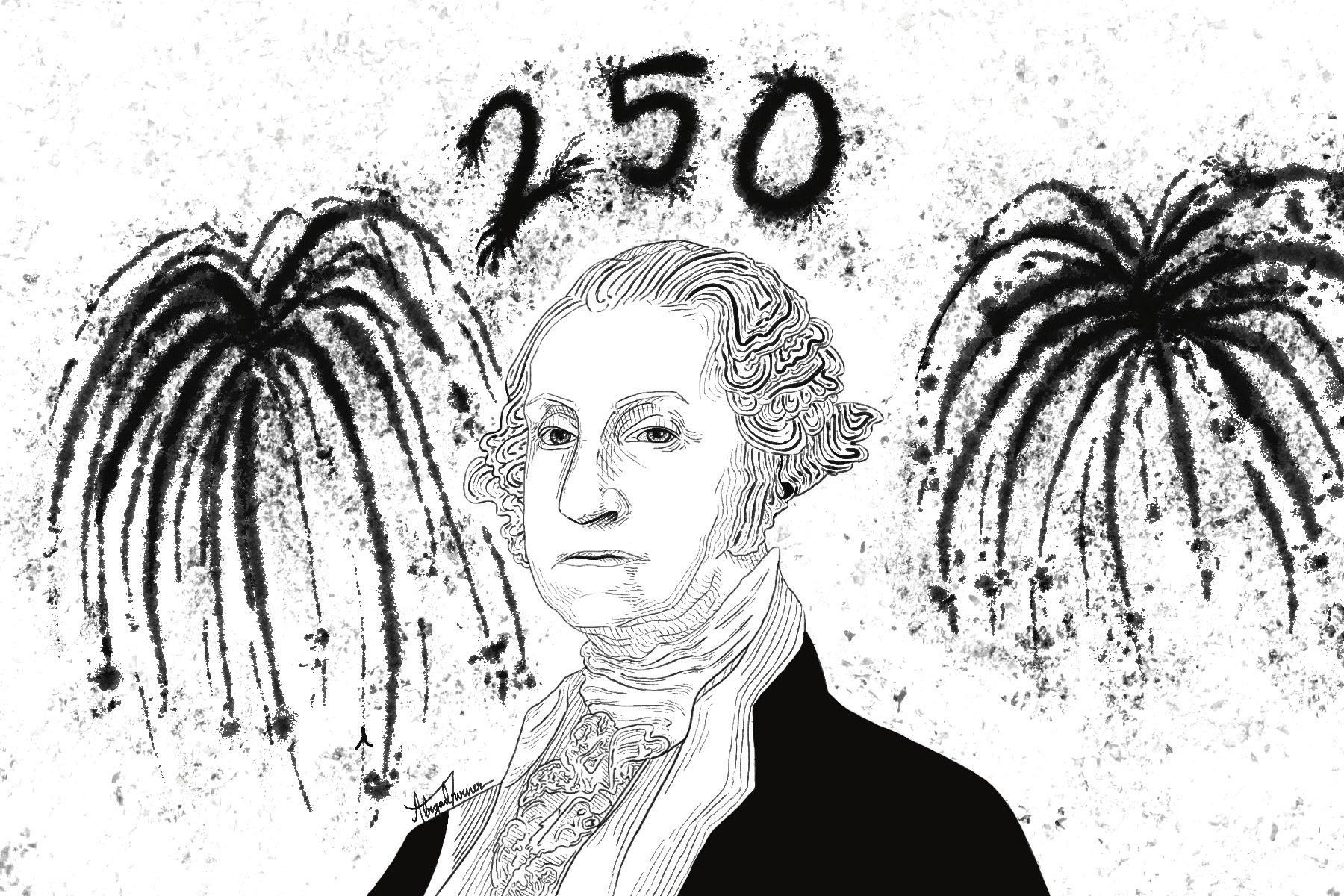
ABBY TURNER | STAFF CARTOONIST
Tiara Cirino Opinions Writer
THE SCENE CULTURE
I spent four hours alongside DC’s cherry blossoms. Here’s what I saw
DIANA ANOS CULTURE EDITOR
The late start to spring weather hasn’t kept the District from putting on its most anticipated shows or stopped crowds from gathering to see it.
For just four to seven days each year, the cherry trees circling the Tidal Basin burst into bloom, transforming the nation’s capital into a sea of pale pink and white. When roughly 3,800 trees reach their peak, hundreds of thousands of visitors flood Washington, D.C., drawn by the fleeting display.
7 a.m.
I approached the Tidal Basin as the sun rose, washing the sky in streaks of yellow and orange, while runners and bikers sped past. After passing the Lincoln Memorial and walking through the Martin Luther King Jr. Memorial, I finally saw what I came for: cherry blossoms in peak bloom — soft pink and white clusters that hovered like clouds along the branches.
I, surprisingly, found the first hour of my fourhour stakeout the busiest. Though I thought I would be outsmarting the crowds by heading down to the trees at sunrise, I was proven wrong the second I stepped foot onto the Tidal Basin. Much of the basin was lined with photographers and tripods, and I felt like an amateur, holding up my iPhone for a snap of the sunrise among a sea of professional equipment.
The seemingly endless photoshoots that crowded the narrow paths forced me off road as I weaved through clusters of people.
I soon turned around, heading in the opposite direction, back toward the MLK Memorial, all while wondering how many pictures I might accidentally appear in. The frenzy that I found in my first hour would set the tone for the rest of the morning.
8 a.m.
Entering the second hour of my walk around the Tidal Basin, I had taken a few short breaks but kept moving, spotting along the way a visitor pushing a Yorkshire Terrier in a basket stroller lined with fake cherry blossoms. I couldn’t help but wonder if the little dog felt out of place amid all the plastic blooms. After walking for 30 minutes, I took a seat on a bench to the left of the MLK memorial facing the water for a 15-minute break as the early morning wakeup caught up with me, as I caught a few yawns. Right next to the Jefferson Memorial, there was no defined path, so I had to off-road, yet again, to reach a more open space. I finally reached more breathing room, only to see a group of eighth graders on their field trip being ushered by their chaperones after getting an early start to what I can imagine would be a busy sightseeing schedule.
9 a.m.
After walking near the Jefferson Memorial, I decided to enter back into the chaos for optimal people watching and made my way back to the part of the Tidal Basin I started at. On the walk back, I spotted a cat in a pink stroller and a lost sweater hanging on a some cherry tree branches.
A couple asked me to take a picture of them, proudly holding up their dog as they stood under the flowers. I attempted to get the best angle with my freezing hands, all while avoiding getting other tourists in their shots.
By 9:30, I finally returned to where I had started and took a seat across from the Franklin Delano Roosevelt Memorial, just in time to catch a quinceañera photoshoot. The subject wore a poofy, flowing, sparkly pink dress that drew admiring comments from every passerby.
10 a.m.
By 10 a.m. I was feeling a little sleepy, though satisfied with the warmer temperature. Tourists were climbing trees and tugging at branches to get the perfect shot. One mom shook her head at the chaos, telling her family, “This is too crowded — we don’t need another photo,” before turning to leave.
Strong winds sent petals swirling through the air, drifting into my hair and catching the light. A collective “wow” rose from the crowd, visitors mesmerized by the cherry blossoms’ fleeting beauty. I took one last look at the trees, knowing I likely wouldn’t return before the peak bloom ended. Most flowers clung to the branches, but a few delicate pink blooms peeked out from the trunks themselves, a quiet reminder of the season’s fleeting magic.
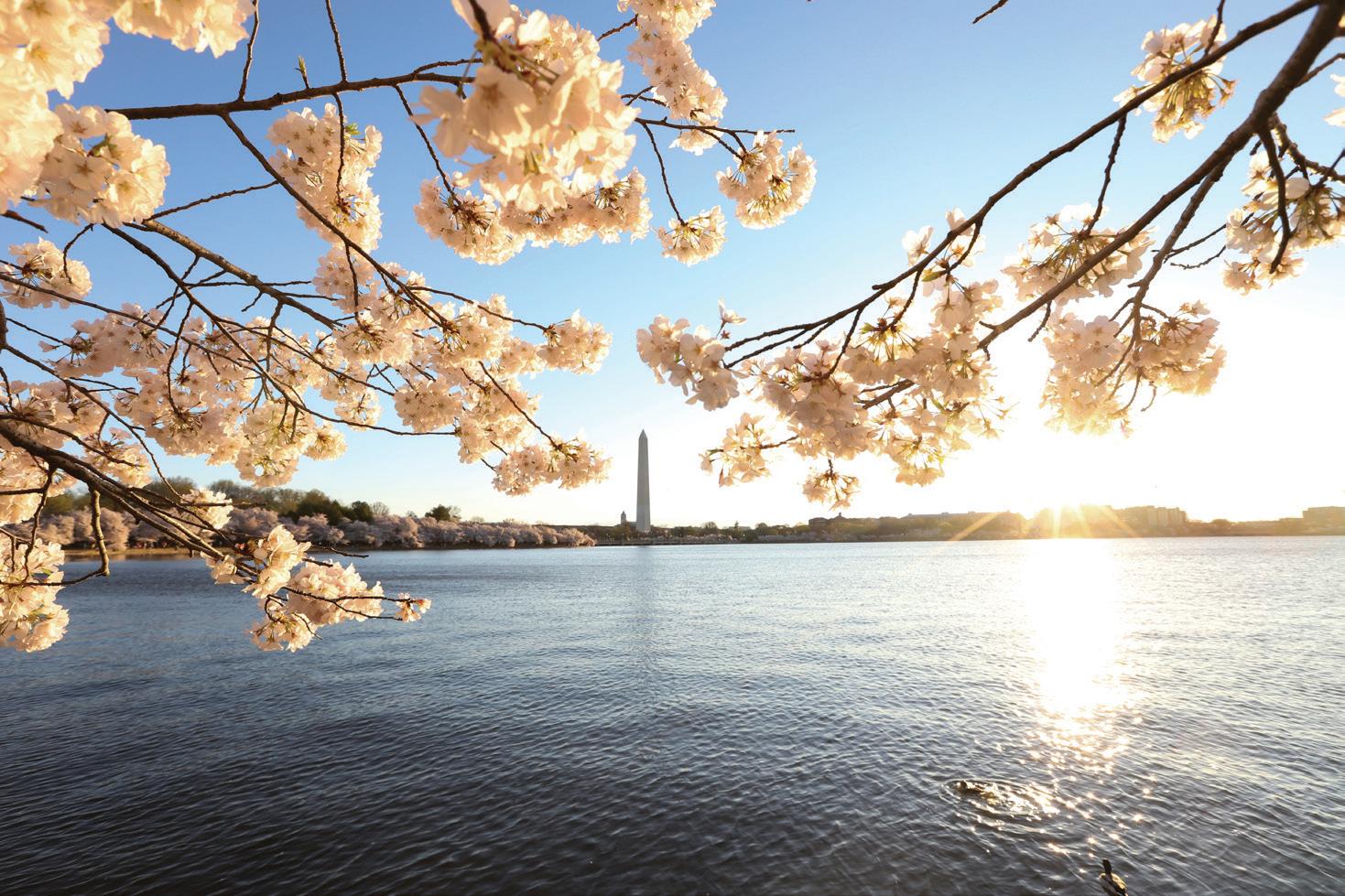
After logging 6.21 miles in just four hours, I headed to The Hatchet’s townhouse for our weekly staff meeting, leaving the Tidal Basin to the next wave of tourists. Though I was overstimulated
Your guide to April in the District
JESSICA ROWE CONTRIBUTING CULTURE EDITOR
The last traces of winter linger in the air, but the city is beginning to shift — jackets come off by midday, cherry blossoms are reaching bloom and students spill into Kogan Plaza in search of sunlight between classes. April in the District feels like a turning point. The days stretch longer, the sidewalks grow busier and the promise of summer starts to settle in. Whether you’re counting down to the end of the semester or staying through the season, the city opens up this month, offering a mix of celebration, culture and time outdoors. Take advantage of everything the District has to offer this month — from springtime traditions to under-the-radar events — and make the most of April in D.C.
April 3: Washington Nationals Opening Day
Despite a disappointing past few seasons, the Washington Nationals offer more than just a sporting event. It’s a full day of burgers, ice
cream, socializing and only half paying attention to the game.
This Friday marks opening day, with the Nationals taking on the Los Angeles Dodgers at Nationals Park. The pregame festivities include a $5 beer special, making it an easy way to kick off the season.
April 10: America’s State Flowers: An America 250 Celebration
The U.S. Botanic Garden is kicking off its take on the nationwide celebration of America’s 250th birthday with an exhibit featuring the state flowers of all 50 states and five territories, spread throughout the garden.
From Alabama’s camellia to Wyoming’s Indian paintbrush, the display highlights the range of plant life across the country.
Starting April 10, visitors can walk among magnolias and the District’s own “American Beauty” rose. For plant lovers or anyone looking to get an early start on 250 celebrations, the exhibit is free and open to the public.
April 11: National Cherry Blossom Festival Parade
Nothing kicks off spring festivities quite like a celebration of what makes D.C. this time of year so special: the cherry blossoms. Spanning 10 blocks along Constitution Avenue, just a short walk from the National Archives Building, the National Cherry Blossom Festival Parade on April 11 marks the city’s official celebration of the bloom. With colorful floats, marching bands from nearby counties and live performances from artists organizers have not yet announced, the annual event captures the energy of April in the District.
April 16-26: Filmfest DC
Each April, Filmfest DC turns the city into a Letterboxd fan’s dream, with this year marking its 40th anniversary. Running from April 16 to 26, with events hosted at venues including the Embassy of France in D.C., the festival gives audiences the chance to see new documentaries and short films from both emerging and established filmmakers, including figures, like Morgan Freeman.

Program Board leans on charity to revive Spring Fling
Program Board leaders said they will lower ticket prices and shift toward a more philanthropic model for this year’s Spring Fling concert, an effort they hope will address declining student attendance and waning engagement in recent years.
In a departure from previous years, Program Board said it will donate all proceeds from Spring Fling ticket sales to World Central Kitchen, a District-based nonprofit that provides meals to communities affected by natural disasters and humanitarian crises. Program Board leaders said they partnered with the University to lower ticket prices, hoping to incentivize more student turnout and connect the student body with an important philanthropic cause.
“We’re trying to find a way to rework [Spring Fling], and how we could come back to how it was a few years ago,” Program Board Chair Alexa Barker said. “Our whole entire process throughout the entire year has been, how can we just decrease ticket prices overall and regain our view within the student body?”
Barker said the organization received pushback from the student body last year after Spring Fling ticket prices reached $65, and the concert saw low attendance as a result.
Barker said Program Board was looking forward to partner with the University after the Division of Student Affairs approached the organization in October asking if they’d be interested in partnering with the office to donate ticket sale proceeds to WCK.
Barker said although Program Board’s budget has expanded this year with support from the Division of Student Affairs, the group is still contributing the bulk of its own funds to the event and will not recoup those costs, as all ticket proceeds will be donated to World Central Kitchen. She said the group’s budget draws from Student Government Association allocations, University Wide Program Funding requests and departmental support from the University. Because Program Board and the University wanted to further encourage attendance, they also focused on selecting an artist who they felt would attract a broad range of students to the Smith Center, Barker said. She said Program Board aimed to choose a musician who could appeal to GW’s diverse student body, someone accessible and enjoyable to a wide range of
groups on campus.
University spokesperson Skyler Sales said Program Board lowered the price to $10 in hopes of garnering increased student engagement after the Division of Student Affairs and Program Board heard feedback that students did not attend Spring Fling in 2024 and 2025 due to the high ticket prices, which sold for $25 to $65.
Sales said this year’s Buff & Bloom week, an annual spring celebration inspired by the cherry blossom season, featuring student events, is themed “For Good,” which includes the philanthropic campaign for WCK as the GW community had a desire to make a tangible impact during a time of “global humanitarian crises.” Program Board’s support for WCK comes after GW and an anonymous trustee partnered to fund internships supporting humanitarian aid efforts in Gaza in February. In addition to the headline act and a not yet announced opening act, DSA and Program Board are also hosting a pre-Spring Fling daytime festival in University Yard, where yet-to-be announced DMV and student artists will play on a stage and they will host activities for students to participate in, replacing Blossom Bash, an event that DSA previously ran in University Yard ahead of Spring Fling.
Instagram posts advertising the concert’s availability for all students in the DMV area since the artist announcement are widely spread because Flo Milli’s contract specifies that only students are allowed to attend and Barker said the organization wanted to extend an invitation to students at these universities to sell as many tickets as possible.
Program Board Vice Chair Taj Haque said the group worked with University officials to gather more student input this year, including through focus groups that helped guide artist selection and shape the event.
Haque said the partnership with World Central Kitchen is intended to resonate with a broad cross-section of students, including those from regions where the organization operates. Because Spring Fling reaches much of the undergraduate population, she said the collaboration offers a way to both engage students and maximize fundraising efforts.
“Since we reach such a broad audience, they were like ‘I think this would be an ideal way to reach the student org, and get everyone connected to this cause,’” Haque said.
by the sheer amount of tourists who descended on the Tidal Basin, the blossoms’ beauty is undeniable, and I was glad to make my yearly trek to see them.
COOPER TYKSINSKI | ASSISTANT PHOTO EDITOR
People photograph the Tidal Basin’s cherry blossoms at sunrise.
DIANA ANOS CULTURE EDITOR
ARWEN CLEMANS | SENIOR PHOTO EDITOR
The Washington Nationals play a home game in 2024.
COOPER TYKSINSKI | ASSISTANT PHOTO EDITOR
The sun rises over the west side of the Tidal Basin.
SPORTS

Baseball bounces back with 2-1 series victory over La Salle
MATTHEW CINQUE REPORTER
Baseball (10-16, 4-5 Atlantic 10) went 2-1 against La Salle (14-14, 3-6 A-10) this weekend at Tucker Field, winning back-to-back games of their double header on Saturday before falling short on Sunday.
The Revolutionaries snapped their six-game losing streak in Saturday’s opener behind junior infielder Nick Mullen’s triple and carried that momentum into game two, where junior outfielder Conlon Walker’s two-run homer secured a second straight win. They couldn’t complete the sweep, however, as a five-inning scoreless stretch in the finale led to a loss.
Picked ninth in the A-10 preseason poll, three spots ahead of lastplace La Salle, the Revs entered the weekend with a chance to gain early ground in the conference, something Head Coach Gregg Ritchie emphasized as an opportunity to build momentum during conference play.
“I see it as an opportunity,” Ritchie said after the series. “There’s always a golden light there. We were close in so many things, and something just had to flip a little bit and keep grinding out playing baseball every game we’re in.”
The wins continues the Revs’ trend of stronger home field performances at Tucker Field, compared to going on the road holding a 10-8 record at home and a winless away record of 0-8.
Here’s a recap of this weekend’s action:
Game 1: GW: 9, La Salle: 6
The Revs opened Saturday’s slate at noon with senior pitcher Max Haug getting the start and working five innings on the mound. Offensively, they showed balance, with five players recording multiple hits and junior infielder Cristino Tufano leading the way with three.
The Revs earned two runs in the opening two innings from outfielder sophomore Brodie Freker and infielder freshman Michael Bravette batting in junior catcher Robbie Lavey and Tufano, respectively. La Salle answered with four in the following three innings, placing the burden back on the Revs.
In the fifth inning, the Revs fired back with three runs, only to let up two more at the top of the sixth with the pitching
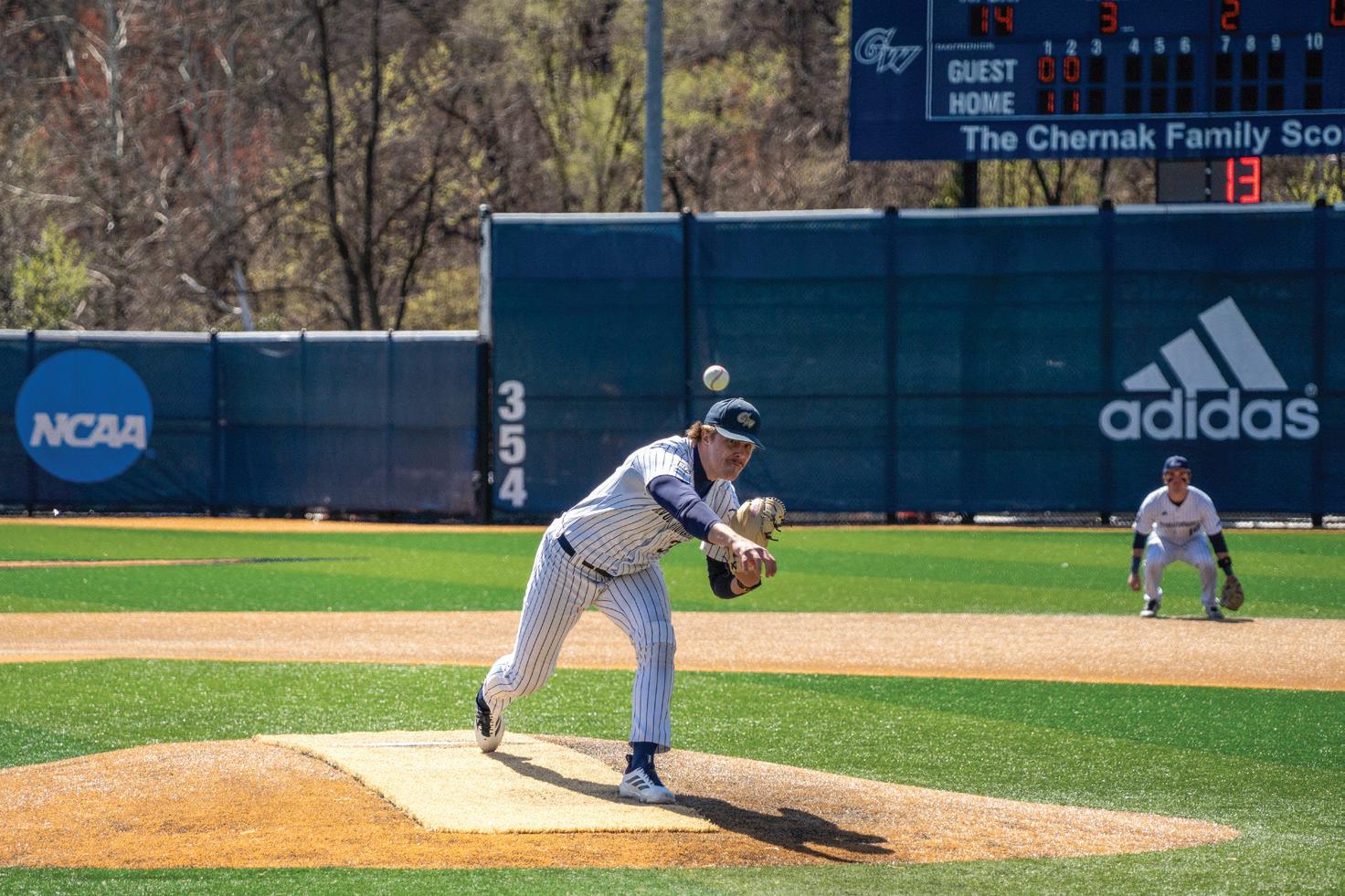
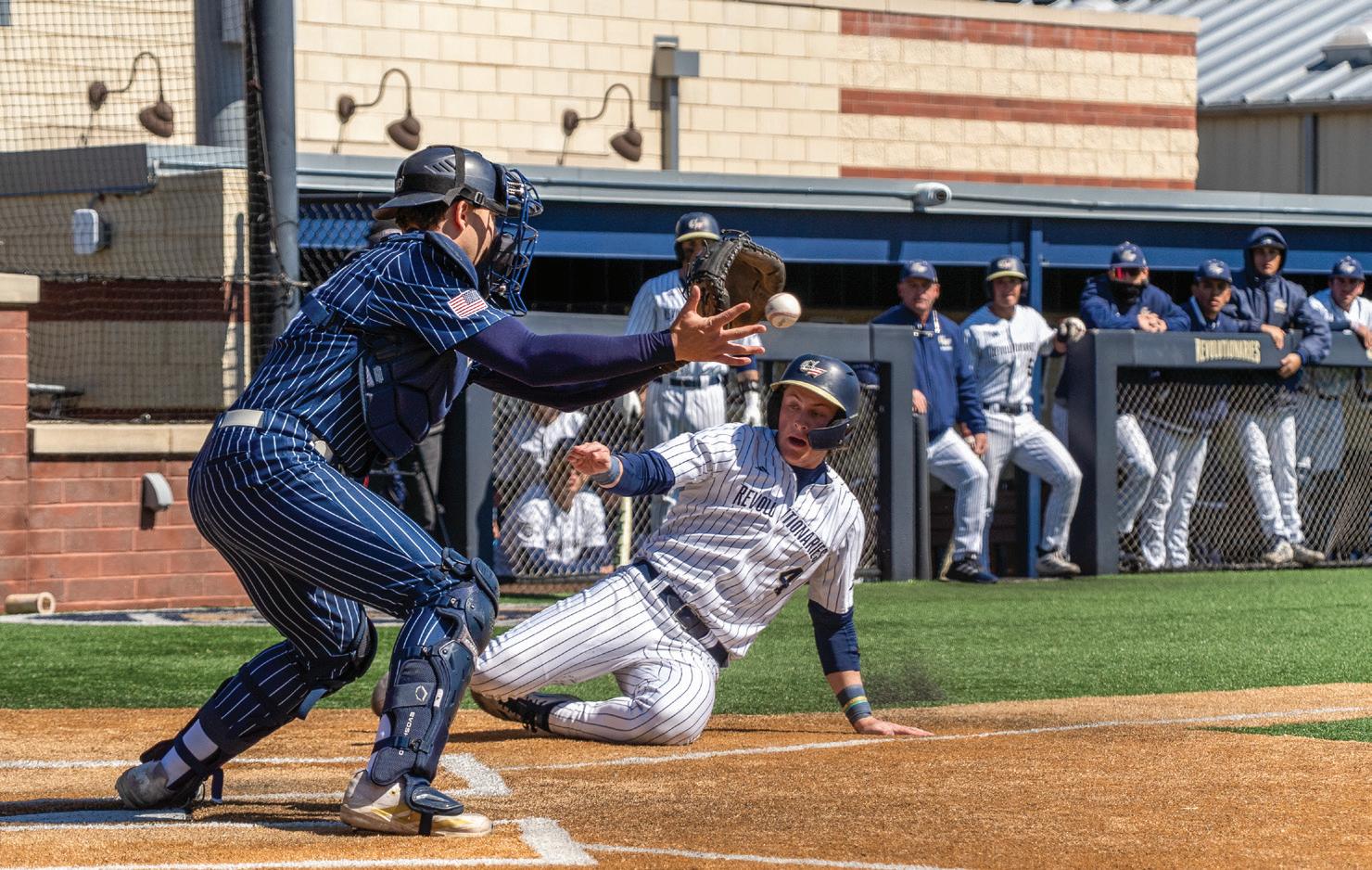
change, leaving the score 6-5 La Salle. The Revs took command again, however, as Mullen hit a triple to center field in the bottom of the sixth, batting in Tufano again and Walker.
The Revs scored an additional two after, earning the first game of the double header and the series and snapping a six game winless streak.
Game 2: GW: 4, La Salle: 3
The second game of the series was a tighter contest, with both sides mirroring each other’s miscues. The Revs struck first in the opening inning when graduate outfielder Jack Kent capitalized on a wild pitch to score, and La Salle answered in the fourth as graduate shortstop Justin Szetowicki came home the same way.
The Revs immediately responded with Walker hitting a bomb to right field, clearing the fence for a homer, bringing
Adeduntan said the team’s turnovers caused the fatigue and prompted her to remind them in the locker room during halftime that there aren’t many teams left playing in the postseason.
“I challenged them to not succumb to fatigue, and that’s what we were doing,” Adeduntan said. The Revs and Ramblers came out of the half swinging, each going on 5-0 runs before trading layups, with the Revs managing to stay just ahead. With five minutes left on the clock, sophomore guard Jaeda Wilson sank a three to take the lead at 39-36, and a fast moving defense foiled two consecutive Loyola fast breaks and kept the Revs ahead 48-42 going into the last quarter. Reynolds opened the fourth quarter with a 3-pointer that kicked off an 11-2 run for the Revs, bringing the score up to 59-44 by 7:39. Loyola Chicago’s 3-point prowess — a nine of 16 clip on the night — helped keep them in the game with
Senior lacrosse star smashes decades-old scoring record
For nearly two decades, lacrosse’s singleseason scoring record seemed untouchable until senior attacker Grace Curry broke it by notching 55 goals Friday.
As the team struggled to qualify for the Atlantic 10 tournament in the past two years due to losing records, a 50-goal scorer felt like a relic of a stronger era. But with a surge of new talent and steady growth from veterans, Curry seized the moment Friday during the Revolutionaries’ matchup against Virginia Commonwealth, cutting through the defense and finding the back of the net for a recordbreaking goal that pushed her past a 20-year-old mark and into program history.
The milestone came just a week after she tallied her 100th career goal during the team’s loss to Saint Joseph’s on March 18 — a benchmark she set entering her senior season and one only seven players in program history have reached. Curry’s goal on Friday broke then-attacker and GW Athletics Hall of Famer Laura Hostetler’s program record of 54 goals from 2005, which she matched again in 2006.
Curry’s growth didn’t happen overnight, and she didn’t fully break out until her senior season. In fact, the Illinois native only started in just four games combined during her freshman and sophomore years and scored a total of 11 goals. It was during Curry’s junior season that she settled into the role of a consistent starting attacker, finally finding her rhythm on the field. She started nearly every game, scoring 45 goals, including a career-high seven in a single outing against George Mason.
Curry said having teammates who can consistently deliver the ball to her stick makes finding open shots much easier. Alongside a talented crop of freshmen, Curry credited fellow senior and midfielder Kiki Rotay for creating opportunities that have allowed her to reach the net more often.
“She’s someone who brings that calmness to the field and brings that seniority that calms people down and makes our offense flow better,” Curry said.
in redshirt junior firstbasemen Charlie Rogan, who walked after being pitched four balls. However, La Salle kept their offense rolling in the seventh inning as redshirt senior outfielder Chase Swain sent a homer this time to the left field, batting in junior outfielder Kosei Suzuki, who also walked prior to the hit.
With the score tied at three in the bottom of the seventh, the Revs manufactured the goahead run as freshman infielder Luke Maltacea laid down a sacrifice bunt to advance the runners, setting up freshman outfielder Connor Jones to score and seal their second win of the day.
“It was really good for us today because we learned how to have emotional control, and that begins to give you more center focus on certain plays and deeper in the game, and you got to finish all 18,” Ritchie said.
4, La Salle: 8
Game 3: GW:
The Revs picked up where they left off, building a 4-1 lead by the bottom of the fourth inning behind a strong stretch from Jack Kent. He drove in Connor Jones and later scored in the third before bringing Jones home again in the fourth, finishing the series with three runs and two RBIs.
Following the fourth inning, the Revs batting went dry, scoring no runs in the rest of the game and only getting three hits. La Salle poured in seven runs with one wild pitch and hits from freshman infielder Nico Amecangelo and senior outfielder Alec Welshans in the same period, preventing a series sweep.
The Revs will play their next game in Baltimore against University of Maryland, Baltimore County Tuesday at 3 p.m. before continuing conference play on Thursday at St. Bonaventure.
Curry said she entered the season focused on team success rather than personal accolades, setting just one individual goal for her senior year: reaching the 100-goal milestone. Ever the team player, Curry credits her success not only to her own preparation, but to teammates — new and returning — who consistently put her in position to score.
“I rely a lot on my teammates to pass me the ball, and I think that that’s something that has really helped me this year,” Curry said.
While Curry has broken records and reached personal milestones, her focus remains on helping the team improve and make a run at the A-10 championship — a tournament the Revs missed out on last year. After a 2-8 conference finish in 202425, the team is showing signs of progress this season, sitting at 7-5 overall with four crucial conference games left. For Curry, though, the most important goal is simply savoring her final moments on the field, playing alongside her sister and teammates she’s grown with over the years.
“I just wanted to have a fun senior season and leave on a high note,” Curry said.
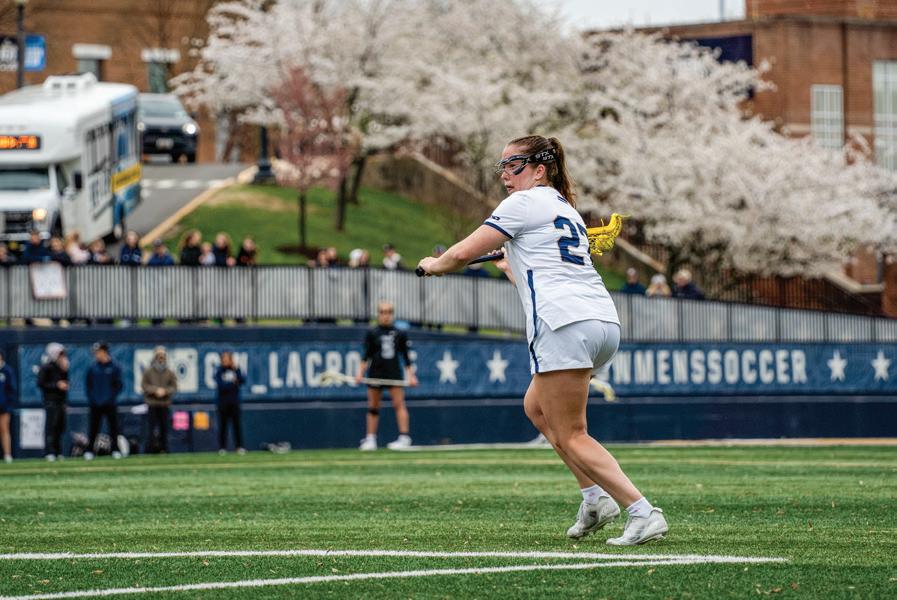
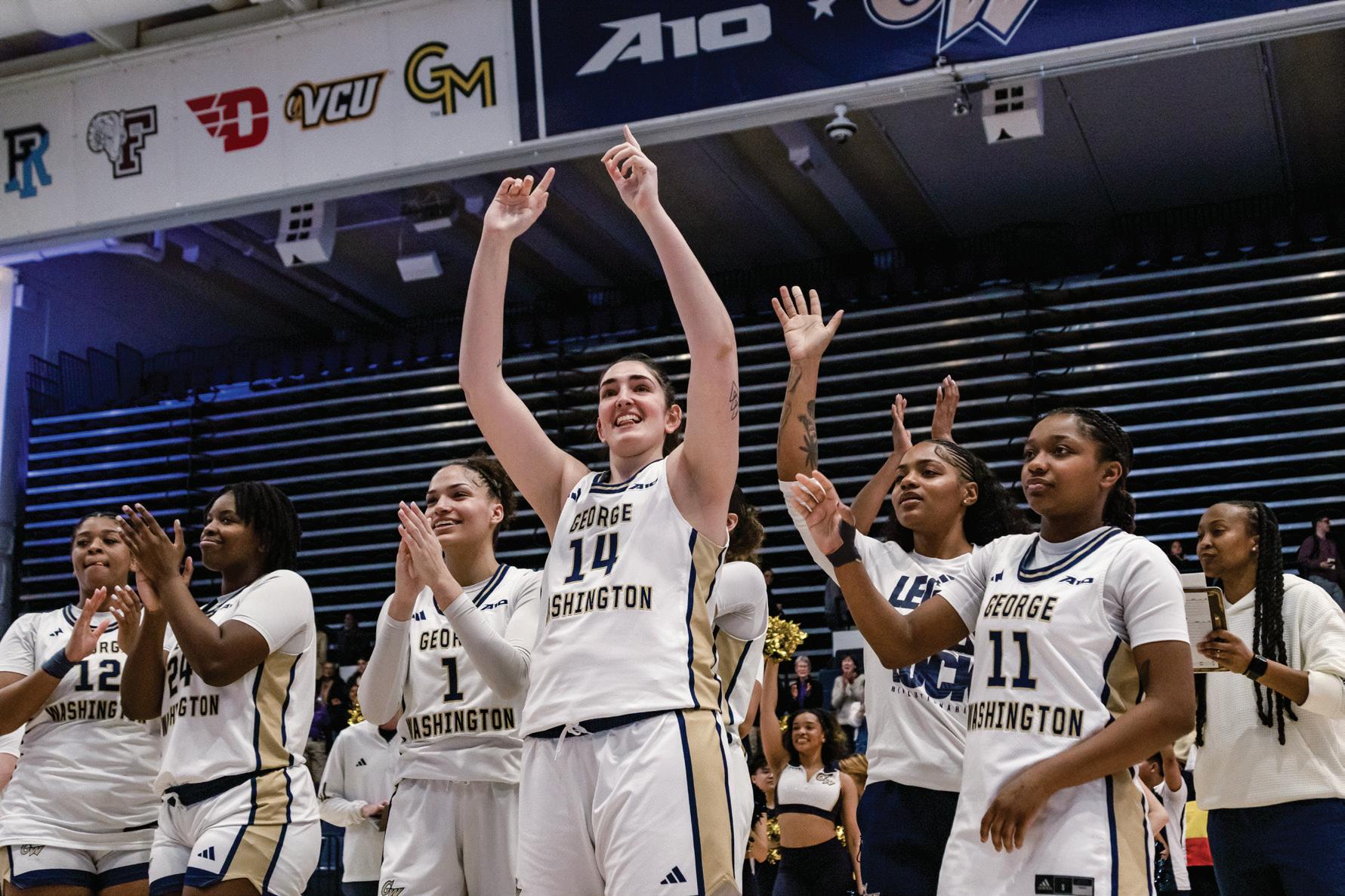
GW remained consistent on shot making to close the game, with a late layup bringing the score to 70-62 with just 42 seconds left on the clock to cement the Revs’ win. In the last minute, the Revs applied heavy defensive pressure, forcing three misses up close and two more beyond the arc. Reynolds made a free throw to finish the Ramblers and send the Revs to the
SOPHIA CAPUTO STAFF WRITER
ADDY OSBORN | STAFF PHOTOGRAPHER
Senior pitcher Max Haug throws the ball during Friday’s game against La Salle.
ADDY OSBORN | STAFF PHOTOGRAPHER
Sophomore outfielder Brodie Freker slides home during Saturday’s game against La Salle.