Department
Journalism's Fall 2026 Classes Are Here


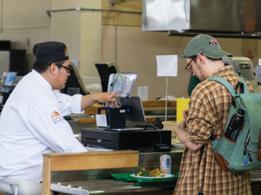
City College students pushed policies on digital learning access and campus employment standards at the California Community College Assembly

At the California Community College assembly, City College representatives advanced a proposal to improve access to
course materials and continued to advocate for expanded work hours for student
student government gathering in Millbrae last month.
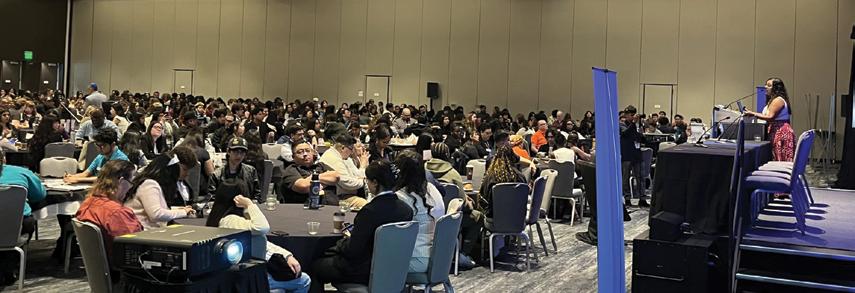
Hundreds of student delegates representing California's 2.2 million community college students gathered at the Hyatt Regency
Two recipients of the Knowledge Up scholarship, Tabari Morrison and Yenia Hernandez, open up about how it has helped them through hard times

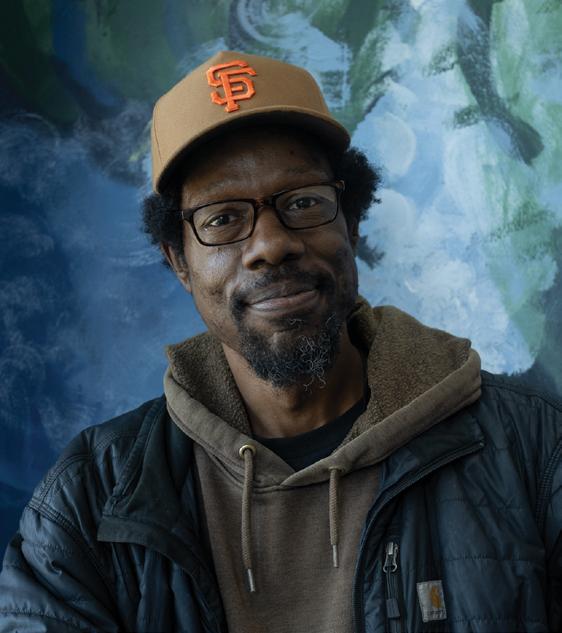
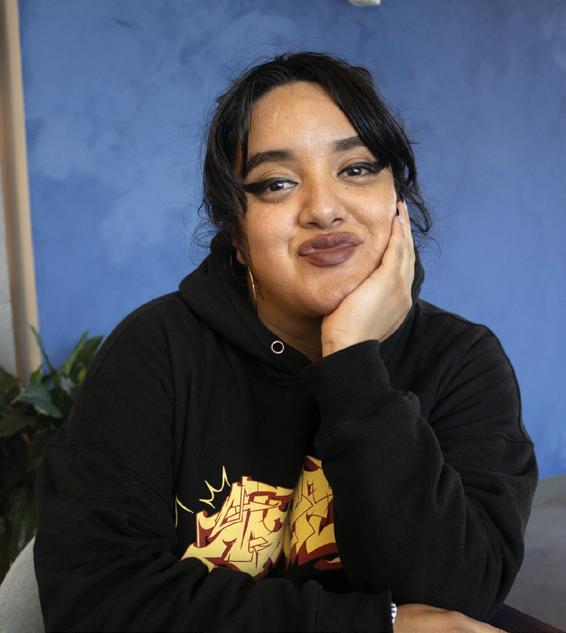
City College formally recognized Tabari Morris and Yenia Jimenez as the first recipients of the Sean Monterrosa "Knowledge Up" Scholarship. The scholarship supports students who embody Monterrosa's spirit of social justice and community activism, and are actively in the fight against systemic inequality. April 15, 2026 (Kyra Young/The Guardsman)

Daniela Villegas Jovel Staff Writer
Tabari Morris, former news editor for The Guardsman, and Yenia Jimenez, a Latin American studies major, were the two inaugural recipients of a scholarship honoring the former City College student, Sean Monterrosa.
Monterossa was shot and killed by Vallejo police Detective Jarrett Tonn in 2020, amidst the nationwide protests against the killing of George Floyd.
Board of Trustees President Aliya Chisti commended Monterrosa's sisters, Ashley and Michelle Monterrosa, for making their “brother's memory a blessing” through the scholarship dubbed, Knowledge Up.
“[It's] funding my passion to be a reporter and helping alleviate some of the pressure in my life with work, school and family,” Morris said.
“I felt so grateful when I learned I had been selected as a recipient and couldn't be more thankful for the Monterrosa family.”
Trustees voted unanimously to establish the scholarship fund in December 2021. The scholarship would commemorate Monterrosa's life and legacy, while supporting students who demonstrate commitment to social justice, education and community impact. The resolution also called for Detective Tonn to be held accountable.
“Sometimes people forget,” Ashley said about her brother's death, before presenting the awards to Morris and Jimenez at the March 26 Board of Trustees meeting.
“The community held us. Had it not been for the community holding us up, we wouldn't be here able to pour back,” the sisters said.
Editor-in-Chief
John Adkins
Managing Editor
Abby Sigler
News Editor
Marrion Cruz
Culture Editor
Karla Lopes
Op-Ed Editor
Lev Farris Goldenberg
Sports Editor
Henry Crowell
Social Media Editor
Evelyn Sassus
Visuals Editor
Karim Farahat
Design Editor
Tiffany Lam
Copyeditor
Gabrielle Chagniot
Writers
Ahmad Aimaq
Alejandra Cardenas
Daniela Villegas Jovel
Diana Chuong
Ellen Yoshitsugu
Jocelyn Wong
Kiyoka Valdes
Patricia Baldwin
Qi Mai
Tom Whitehead
Photographers
Alejandra Cardenas
Franchon Smith
Isaac Ortiz
Teresa Madrigal
Illustrators
Cindy Chan
Emily Yee
Graphic Designers
Cindy Chan
Sebastien Thugnet
Freelancers
Bob Kinoshita
Faith Gabrielle Zapata
Joan Walsh
Advisor
Juan Gonzales jagonzal@ccsf.edu
Contact us
info@theguardsman.com 415-239-3446
Mailing Address
50 Frida Kahlo Way, Box V-67
San Francisco, CA 94112 Bungalow 615
Follow us

@TheGuardsmanCCSF

@TheGuardsmanCCSF

@TheGuardsman

@TheGuardsman
For even more articles, stay up to date at www.theguardsman.com

Application submitted, but hurdles remain before students can use CalFresh benefits to buy meals on campus

Two-thirds of California Community College students face food insecurity, according to the Foundation for California Community Colleges. Vice Chancellor Lisa Cooper Wilkins said that she “consistently hears about food insecurity from [City College] students.”
One piece of state legislation designed to help students address food insecurity is AB 2033, which “requires that on or before Sept. 1, 2025, each campus of the California Community Colleges … if it has a general store or a store that sells food on campus, to identify and apply for at least one… store … to become an authorized retail food store under SNAP and, if approved, ensure the store or stores accept the use of EBT cards…”
Electronic Benefit Transfer cards allow users to spend their CalFresh benefits to purchase food.
In the Chancellor's Report from January, Vice Chancellor Wilkins wrote that “EBT cards [are] finally being accepted in the cafeteria as of March 1.”
As The Guardsman reported last month, the cafeteria in Smith Hall on Ocean Campus, did not begin accepting EBT payments in March. To pinpoint when City College students might have the option to use EBT to purchase food on campus, we spoke with Jennifer Rudd, chair of Culinary Arts and Hospitality Studies (Culinary), and Lisa Cooper Wilkins, Vice Chancellor of Student Affairs, in March.
Those interviews revealed the steps required to bring EBT to Ocean Campus:
1. Deciding on a location,
2. Identifying an EBT-compatible POS system,
3. Applying to be an authorized EBT retailer,
4. Setting up the physical system,
5. Training staff, and
6. Making the Ocean campus community aware of this new option. The steps are discussed below with an assessment of the progress in each subheading.
1. Decide on a location
The cafeteria, The Lunch Box and the bookstore were discussed as options, according to Rudd and Wilkins.
“In contrast to the bookstore, which is run by Follett, a third party, the cafeteria is a permanent solution,” according to Rudd.
“It presents a unique situation with the Culinary department running the food service program,” Cooper said. Other locations, such as the Lunch Box, could also become authorized to accept EBT in the future, according to Wilkins.
2. Identify a POS system that accepts EBT
Revel, the Point-of-Sale (POS) system currently used by the cafeteria, does not accept EBT payments.
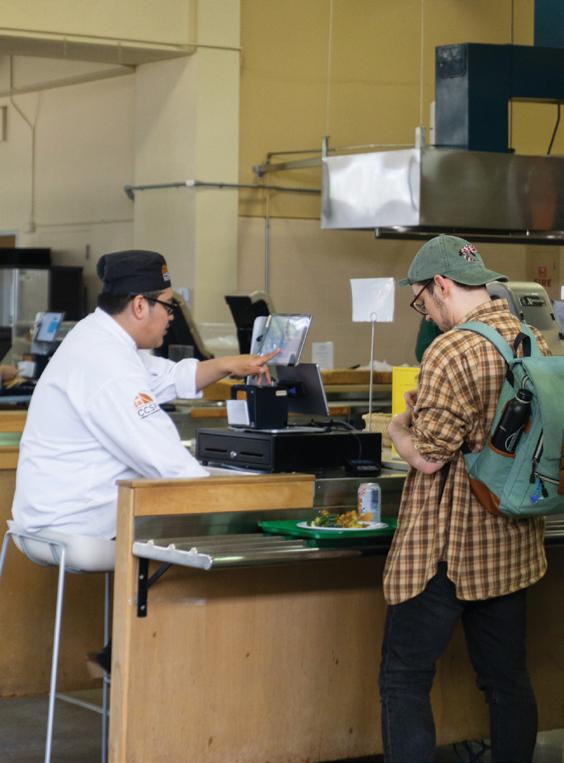
“Toast made sense for a lot of reasons. It accepts EBT payments, it works with the current food cards, which work on a gift card model, and because it is a common POS system in the restaurant industry, it provides an opportunity to train culinary students,” Rudd said.
6. Communication with campus community
Wilkins acknowledged that communication is an issue. She indicated that a promotional plan would need to be worked out to ensure that students learned of this new option once it comes online. She said that “several points of entry, including Canvas, email, texts, and varied communication platforms would be utilized” to get the word out.
Although both Rudd and Wilkins were hopeful that EBT payments could be accepted starting in the summer, Wilkins noted the project's slow timeline. Rudd acknowledged that fall was a more likely target.
Patricia can be reached at byebyebaldwin@gmail.com
3. EBT application/approval
Any retailer that wants to be authorized to accept EBT must apply to the U.S. Department of Agriculture's Food and Nutrition Service (FNS). The online application is lengthy and requires the submission of multiple documents. City College is planning to apply under the Restaurant Meal Program category, according to Rudd.
During the Executive Council meeting on April 17, Chancellor Messina said that the application had been submitted.
According to Rudd, government approval on the application can take up to 45 days. Rudd has heard that EBT applications can be denied with little feedback. If this were to happen, City College would then need to regroup and reapply.
4. Setting up the POS system
The physical components for the new POS network have been purchased. According to Rudd, they were awaiting installation.
Both acknowledged that there have already been some difficulties. Specifically, the current networking cabinet wasn't designed to handle this new system. However, according to Rudd, IT can make it work.
Once the system is installed, it will be tested to ensure it works seamlessly with EBT and the current food cards, which function like gift cards. “We want to be mindful of the students we are already serving while working to expand access to more students,” Rudd said.
5. Staff training with new POS
This is probably the most straightforward step in the process. Once the POS is operational, culinary faculty and students will be trained in using it, according to Rudd.
Atthe April 10 Associated Students Executive Council meeting, several students who had applied to be candidates in the upcoming Associated Students election pointed out problems with the appli cation process. The Executive Council took several actions. They revised the application's eligibility section for clarity and to reduce barriers to eligibility. Because of those changes, they reopened the application process to ensure that all City College students have an opportunity to apply under the revised eligibility criteria.

To extend the application deadlines, they revised the entire student election calendar. The reopened application closed on April 17. The candidates will introduce themselves at a town hall scheduled for April 24 at 1 p.m. Voting begins on April 27 at 9 a.m. and closes on May 4 at 5 p.m. Scan this QR code for more information about student elections:

continued from page 1
"Had it not been for the community holding us up, we wouldn't be here able to pour back."
Morris, a journalism student at the college, was born and raised in Vallejo, a few blocks from where Monterrosa was shot by Vallejo police officer Jarrett Tonn, and died. While pursuing multiple certificates, including ones in data journalism and mental health, he is the managing editor for the San Francisco Bay View.
“I am very passionate about social justice and want a positive change in my community,” Morris said. “I would love to say a huge thank you to the Monterrosa family and hope they know I will always be there for them as a friendly neighbor.”
Yenia Jimenez, a Latin American studies major, brings her own story of representation to the scholarship. Jimenez is a mother, educator and poet.
“It is deeply important to me to see and create representation of people
continued from page 1
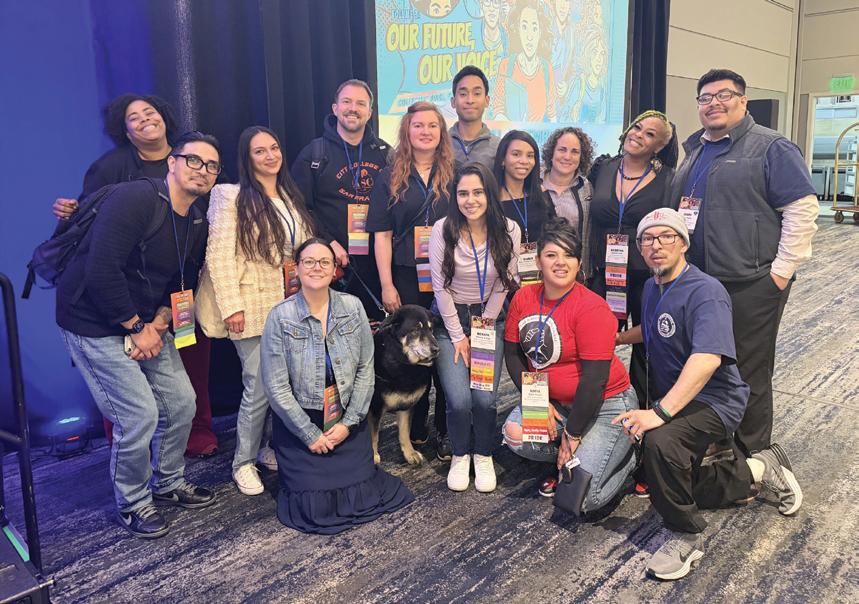
San Francisco Airport from March 27-29 for the annual general assembly of the Student Senate for California Community Colleges, or SSCCC. Delegates debated resolutions, elected officers and networked with peers from campuses across the state.
Student Chancellor Heather Brandt led a delegation of 20 students from City College who attended as voting representatives.
One City College proposal, authored by Mission Center
Associated Student Council
President Renata Araujo and Associated Student Council Senator Lydia Hernandez, passed unanimously. The resolution calls for students to retain access to completed online course materials after a class ends.
Araujo said students often lose access to coursework stored on Canvas after a semester concludes, creating challenges for those preparing for professional licensing exams months later.
“For example, nursing students may need to review materials long after they complete a class,” Araujo said. “Losing access makes it harder to prepare for those exams.”
A second proposal from City College sought to establish a statewide minimum of 20 hours of work per week for student employees. The measure did not pass.
The proposal addressed a longstanding concern at City College, where student workers are capped at 15 hours per week.
“I'm going to keep fighting for it,” said Student Trustee Angelica Campos. “It's an issue here at [City College that we're] struggling with.” Campos said resolutions that pass through the SSCCC can influence statewide advocacy, legislation and policy discussions. Student governments first approve resolutions
who look like me within academic spaces and educational institutions,” Jimenez said. “Sean Monterrosa's story means so much to me on a deeper level. I've continued to show up in every way I can through donations, attending community actions,
“They're not voting on behalf of themselves, they're voting on behalf of the student body.”
Jacquie Martin, Director of Student Life & Leadership
locally before sending them to the statewide body. Once adopted, resolutions are reviewed by SSCCC leadership and directed to the appropriate committee, officer or legislative arm.
“They kind of look at all the different resolutions, what they're asking, and figure out where and who it fits best with,” said Campos. “It might be just that it's the president, or it's specifically our DEI committee, or if it's a policy change that needs to happen from an Assembly bill or Senate bill, and then the Legislative Affairs arm of SSCCC will work on it.”
Students have legal standing to address the “9 + 1” 10 governance areas, ranging from grading policies to institutional planning.
“Whatever they pay into, they should also reap the benefits from,” said Campos, referring to the two dollars per semester Student Representative Fee that all students pay and funds the SSCCC. “This was one of the ways of putting those students at large in the mix. We had Rising Scholars and members of the Positive Directions club.”
Jacquie Martin, executive council director of Student Life & Leadership, said student participation at the statewide level can have a big impact on the college.
“They're not voting on behalf of themselves, they're voting on behalf of the student body,” said Martin. Campos and Brandt also coauthored a 2023 SSCCC resolution
and uplifting his name. I am honored to be one of the first recipients.”
Jimenez has long been connected to Monterrosa's legacy. She attended early fundraisers in his honor, including a virtual open mic event organized through the college, and
participated in community efforts to keep his memory alive. When she learned she had been selected, Jimenez described the moment as deeply emotional. “In many ways, it felt like a blessing from the other side from Sean,” she
said. “As a student in San Francisco, where the cost of living is so high, the financial pressure can be overwhelming. This support means more than I can fully express.”
Daniela can be reached at dvilleg4@mail.ccsf.edu
seeking medication abortion access at community college student health centers. University of California and California State University students gained that access in 2019, but community college students were not included.
The SSCCC resolution helped inspire Assembly Bill 2540, introduced by Assemblymember
Catherine Stefani, which would extend similar access to community college students. The bill is currently in committee in Sacramento. City College also gained regional representation at this year's assembly. Sabrina Hall was elected communications officer for Region III, one of 10 SSCCC regions. Region III includes 14 colleges, ranging from Ellen can be reached at ellenyoshi@gmail.com
Las Positas College in Livermore to College of Marin. In earlier years, Brandt helped pass two state laws, one that improved conditions for student parents and the other that maintained the right to remote access to public meetings post-pandemic.
Named for a pioneering bar owner, rikki's brings women's sports and community to the Castro


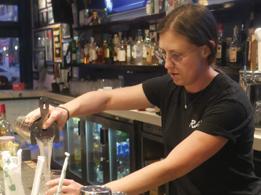
Passing the giant rainbow pride flag on the city's main thoroughfare, a few blocks later stands Rikki's — San Francisco's only women's sports bar — near bars such as Hi Tops and Blackbird.
It all started a few years ago when Sara Yergovich and Danielle Thoe were playing soccer with San Francisco Spikes, a queer soccer club in San Francisco. Yergovich said that she overheard Thoe sharing her idea about a women's sports bar in the city.
“I ran up to her and said that I wanted to do that too,” said Yergovich.
After some time brainstorming, Yergovich and Thoe found the perfect time to initiate the project with the launch of the WNBA expansion Valkyries squad.
“We felt like this was the time in San Francisco, for a dedicated space where you could watch them — Valkyries and other women's teams — more generally,” Yergovich said. “We started putting things in motion, and here we are.”
Rikki's gets its name from Rikki Streicher, who opened San Francisco's first lesbian bar, Maud's, in 1966 at 937 Cole St. Streicher was a community activist in San Francisco's LGBTQ community.
Castro's Perfect Fit
“I think Castro and its businesses have been waiting for a dedicated women's space,” said Yergovich, who also highlighted that although not
being a lesbian bar, as many might think, the overlap of women's sports and queer people is really strong, tracing the historical relation between the two communities.
“Castro is a really great fit for us, and the community has just been so incredibly welcoming and excited about us coming in,” Yergovich said.
“We were very excited for Rikki's,” said Brittany Wood, a San Francisco artist, who also shared the importance of a place like Rikki's in a historically male-centric neighborhood like Castro.
Now, with almost a year in the neighborhood, Yergovich said, “It's been really wonderful.”
Inside Rikki's
Events like board game nights, trivia and watch parties allow queer people, in particular, to commune in a safe space. At Rikki's, women and queer people are not only celebrated but centered as the focus.
“It's really refreshing to be at a women's bar that highlights women's sports,” said Sasha Frederick, food server and busser. “[They are] very caring about women from all different spectrums of life, regardless if you are queer, or trans, or cis… They are making it a very welcoming community,” Frederick said.
“I like the sports bar aspect, but I also like that there are a lot of queer
people here,” said Jillian Fuchs, a circus artist. “I like to have my gay girlies around here,” Fuchs added.
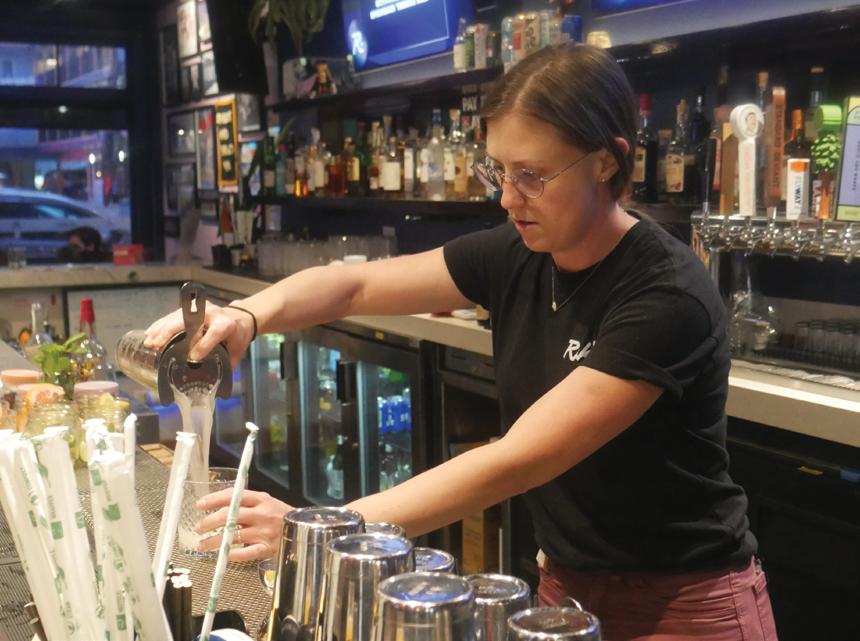
When entering Rikki's, customers are met with a spacious sports-themed close-knit spot. People talk, eat, laugh, watch games on one of the TVs or stand by the bar while ordering outstanding drinks.
You may see men's sports games on some of the televisions around the bar, but Rikki's main objective is to provide people with a hub for watching women's sports. The regulars also cite the food as a main draw.
“This is one of the few central bars that actually offers food. It's a great place to start off the night,”
said Wood, who comes to Rikki's once a week. “If you want to go bar hopping, you come to Rikki's, get a drink, get some food and support women in sports.”
Their menu features hearty dishes like loaded mac and cheese and buffalo chicken wings, served with sauce or dry rub. Yergovich recommends their aromatic croquettes or a savory pear grilled cheese.
Beyond food, they also serve standout signature cocktails.
One of their drinks, a purple concoction called the “Ballhalla,” shimmers in the lovely lighting at Rikki's. Named after the Valkyries' nickname for Chase Center, the Ballhalla includes guava, plum brandy, mint and white rum.
Rikki's also has several nonalcoholic options, such as ginger beer, which they serve in a glass cup with a garnish, creating an elevated experience.
Sarah Katz-Hyman, known as “Coach Mahoney” at Rikki's, hosts monthly trivia. “Monthly trivia at Rikki's has been such a fun way to connect with other Bay Area women's sports fans and bring together trivia lovers in a low-key, silly and creative way,” Katz-Hyman said.
“I've seen friendships form on trivia teams, parents playing with their kids and lots of eye rolls and groans at my category selections. Rikki's has been an amazing host and partner,” they added.
Whether it's trivia night or tipoff, Rikki's is nothing short of a slam dunk.
Find Rikki's at 2223 Market St. For more information on their hours and upcoming events, go to www. rikkisbarsf.com.
Jocelyn can be reached at jwong@theguardsman.com
“Moving San Francisco” showcases not only how public transportation has evolved but also how the city has changed and survived over time

Henry Crowell Sports Editor
In the annals of City Hall, there's a new, expansive photo exhibit that displays the vast history of transit in San Francisco.
“Moving San Francisco” houses photos dating all the way from 1903 to just this past year. But the photo set isn't just massive in terms of time frame, but in what's depicted as nearly every corner of the city on display. From La Playa and Fulton at the shores of Ocean Beach to what was formerly Candlestick Park, the cache of photos gives an all-encompassing view of the city.
Director of Galleries for the San Francisco Arts Commission, Jackie Im, said that the exhibit is a reflection of her experience in the city.
Born and raised in San Francisco, Im shared that much of her knowledge of the city is defined by her taking a bus to different neighborhoods. “I hope this exhibition can convey how San Francisco has been shaped and shapes transit over time,” Im said.
Im and Jeremy Menzies, Head of the SFMTA Photo Archive, combed through the over 200,000 photos that are in the archive in search of ones for the exhibit, eventually whittling it down to around 100.
Menzies explained that they had a hard time narrowing down exactly what kinds of photos they wanted to include. The great amount of different photos made the selection process challenging as Menzies expressed, “I can go down a rabbit hole.” “[We had to] break it down into different eras, or even within an era. We had to find photos that
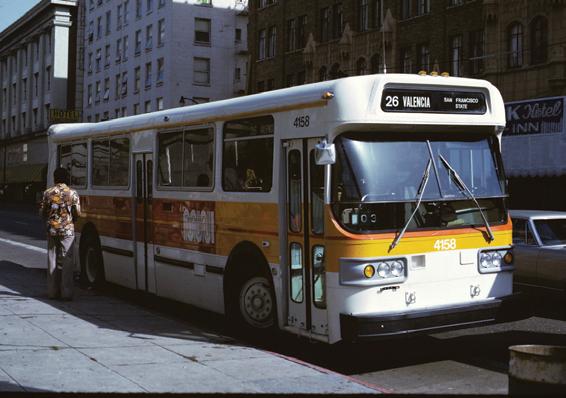
weren't already represented somewhere else,” Menzies added.
“We also tried to show who makes the system run, who's using the system,” he said. “Everybody rides transit. If you ride the bus, you see every layer of society.”
Muni was the first publicly owned
transit system in North America, established in 1912 after nearly 50 years of private transit operations in the city. Before Muni, streetcar franchises fought, folded and cannibalized one another in the name of profit, not reliable service.
The railway was created to counter
these private companies by providing a public service that was not at the whim of the developer who had built it, but rather the people of the city itself.
In the 114 years since then, Muni has morphed and changed in a multitude of ways, first expanding rapidly from its inception up until the end of World War II. The postwar rise of the automobile spelled the end for most of the nation's streetcar systems, with the ones we are left with in San Francisco only surviving because of their private right-of-ways — infrastructure built specifically for them.
In the aftermath, Muni was left to complete a jumbled puzzle of streetcar-turned-bus routes that took them over 30 years to complete. The system we see today is the result of that cobbling together.
“Moving San Francisco: Views from the SFMTA Photo Archive” runs until June 18, on display on the ground floor of City Hall, in the North Light Court.

Teresa can be reached at barple1235@gmail.com
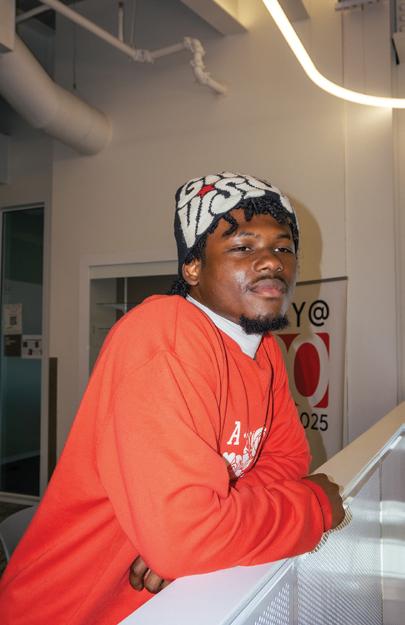
Mechanical Engineering Major he/him
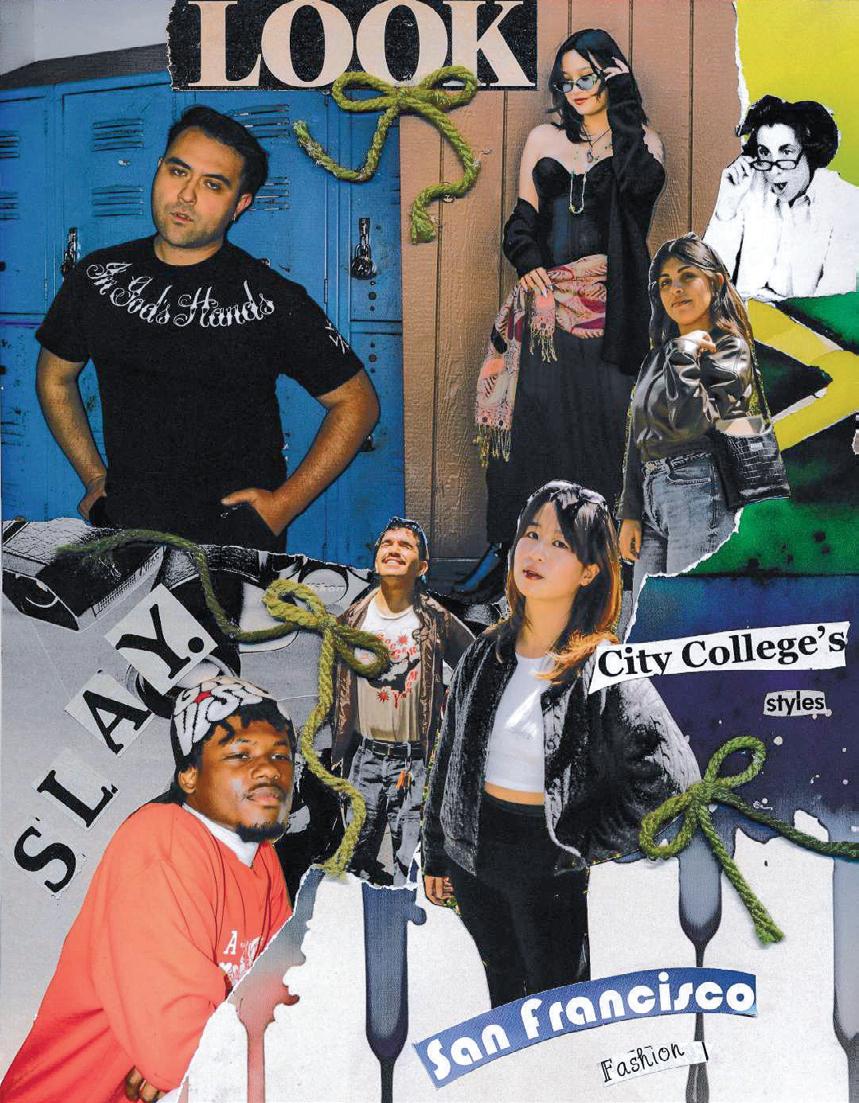
“You can call it [my style] more of an emo rock with a little bit of reggae as well. Sometimes I like my colors to pop. I am also really into that black and baggy look with the silver chains.”
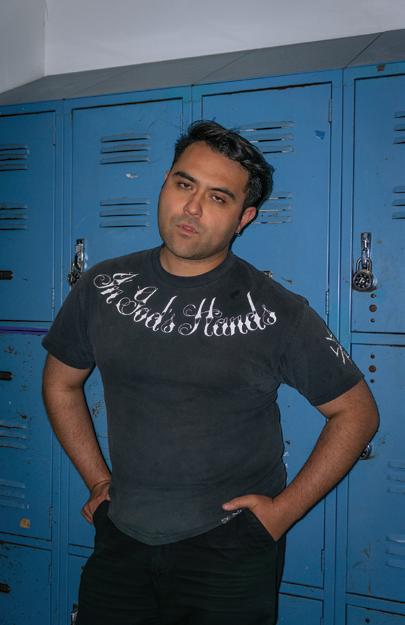
Dom Keelon
Photography and Psychology Major he/him/they/them
“I love to be super comfortable. I like a lot of old English fonts and creative seraphonts, and how it frames my body. Sometimes I'll go off of how I'm feeling because whatever I'm wearing could affect how I'm mentally feeling.”

Manjin Chen ESL Student
“This coat is from Ralph Lauren. It's good because it is very useful and it [matches] all my closet. I think my style is very comfortable… I want to make sure my [outfit] is no more than three colors like gray, white and black.”
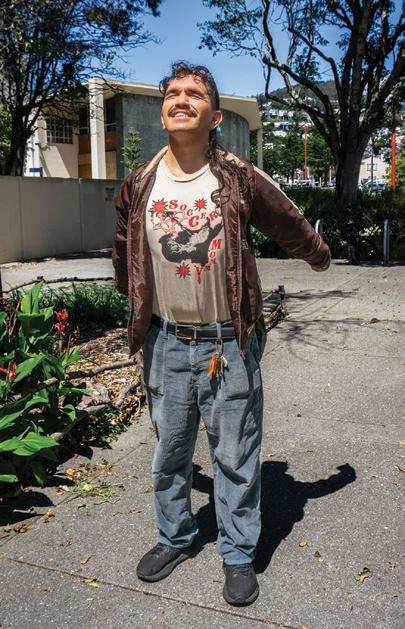
Design Major he/they
“I would describe it [my style] kind of like patchwork. I picked this shirt up at a concert. I love this band Soccer Mommy. This jacket is from Peru — where I’m from. The pants are from my friend. I just like to pick up different stuff and try to put them together and make something new.”

Lily Rose Heller Communications Major she/her
“I make my own jewelry most of the time… I kind of have a lot of things that I've collected over time, that have been given to me or I've thrifted. I put them together based on one color… and sometimes I'll have a pop-up thing, or I'll just do it based on my make up. Like I've been told, I'm like a pirate.”
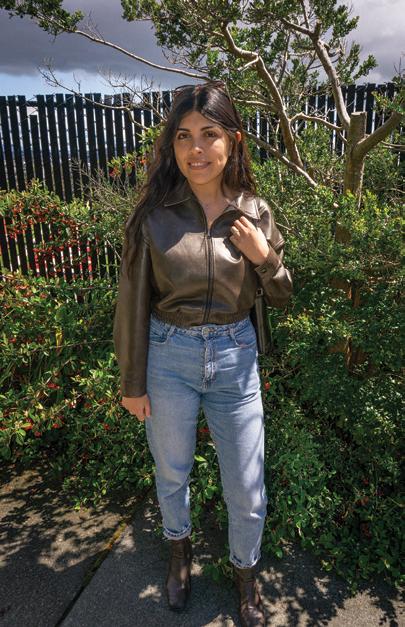
Damaris Medina Technology Engineer she/her
“I wore this because I like leather jackets and boots. I think my style is more classic and a little bit dark… The weather in San Francisco influences me a lot. [Also] the music that I listen to, I like rock and metal.”
Jocelyn Wong Staff Writer
Artificial intelligence now permeates so many aspects of our lives. From billboards to classrooms, AI is everywhere. I wanted to know, how should City College students approach AI usage in their education?
To learn more, I spoke to Anna Mills, a writing instructor at City College and advocate for critical AI literacy. Mills has researched and written extensively about AI's integration into education. She also curates AI Text Generators: Sources to Stimulate Discussions Among Teachers, a living Google Doc filled with resources for educators.
What should students demand of their fellow classmates, professors, counselors (when it comes to AI-usage)?
Well, I've developed an OER (Open Educational Resources) textbook. It's a free and open textbook that is sort of an orientation to AI for students, including ethical concerns, questions of: Do I want to use it at all? If I want to use it, how do I cite it? How should I use it?
And actually, I have a pretty straightforward rule-of-thumb. If your teacher hasn't given you other directions, then I would say use it skeptically, right? Never trust it, but turn to it as you might to a tutor — who is not going to do your work for you, but they will sort of coach you through the process.
There's (an AI) that will do the Canvas discussion post for you. For me, there's something satisfying about typing the assignment, working hard at it and then hitting submit.
I'm a big believer in transparency, so I think that we as teachers need to have really clear guidelines for students about what use of AI would interfere with learning, and what, if any, we woud allow. And we need to have that discussion from the beginning of the semester, and also a discussion about what happens if we think the students used AI beyond what was allowed? Because I think there is a lot of anxiety among students about being wrongly accused of AI.
Oh yeah, there's the trackers now where (a student) actually wrote this but it's

coming up as however-much-percent AI detection.
Exactly. And sometimes it's just the teacher who thinks and wonders if AI has been used, and wants to have a conversation with the student. So my approach is not punitive, but I do want to know what the student has learned, right?
It's an interesting moment because so many students are anti-AI, and then so many students are using it intensively and excited about it or just feeling like they need to learn it for the workplace. (They're) very worried about their futures, what's going to happen with jobs and AI? So it's a good moment to be bringing discussions into the classroom and talking across those different approaches and perspectives.
I try to make my classroom really welcoming of people who hate it and people who love it, because I have some of both.
Even within myself I have both. I think we need to learn more about it —
Yeah, it's stunning and it's actually everyday reality now. What we really need is regulation. We need to know when something is human and when it is AI. And we don't have that yet, so that's something I've really been pushing for … That's a big problem for academic integrity and online learning going forward.
Read the full Q&A at theguardsman.com.
Jocelyn can be reached at jwong@theguardsman.com
In your opinion, why is the United States attacking other countries such as Iran? How does that impact you? How do you feel about it?
Ellen Yoshitsugu Staff Writer
Ellen can be reached at ellenyoshi@gmail.com
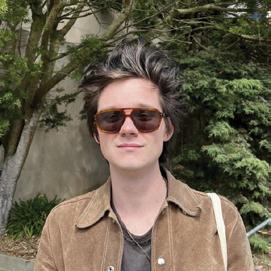
Atticus Hansen City College student
It seems it's, like, the most pointless war, I feel like the American Military Industrial Complex has ever pitched to the people of America, because there's, like, not even a pretense of reason behind it.
If we win this war, we'll just simply have more control over Middle East oil. There'll be no one guarding the gate of Hormuz who could help the Gulf Coast countries, which are like the main producers of oil, and we could just keep the petro dollar a consistent force in the economy, so we could just control the economy more. I mean, that's what we stand to lose, right?
It's gonna totally crater this economy. So I think that it's gonna impact all of us ultimately. And it impacts me because I ultimately — though I hate our current government — I want Americans to succeed because it's the country that I was born into, and this is how we'll ultimately just shoot ourselves in the foot and be worse off any way you slice it.
Patricia Chytrowski Visual Media Design department faculty
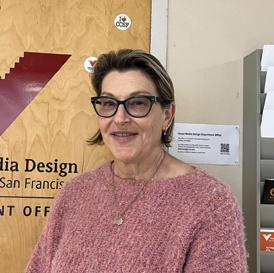
I think that (Trump) has come into this position with not the set of skills that he needs in order to do his job, and he's doing a terrible job and putting our country at risk. He has just demolished so many systems within our democracy that it's questionable whether they will be able to be rebuilt, or how they can be rebuilt after he's out, which he will be out eventually. But how long is it going to take, and how is this new form (of government) going to happen?
I really have a lot of anxiety around it. Just today (the Trump administration) said that young men ages 18-26 had to sign up for selective service, and now there's going to be an automatic enlistment (in case there is a military) draft. I have two 16-year-old boys, so for me, it's very personal.
I really worry about the war and what Trump's doing, what he's done to our standing internationally, and how that will affect my sons. We're considering moving to Canada. We have Canadian citizenship, I've got passports for my boys, and I've got my passport. I'm seriously considering for college that we would all go to Canada for them, just to get out of this country.

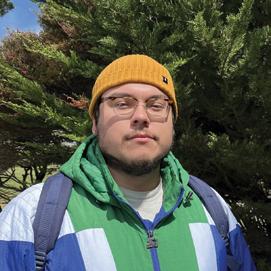
Sampson
Patty City College student
Should we (be attacking other countries)? I don't think so. I also think, conflict and (war), I'm surprised we haven't grown out of it by now. I mean, we have our cars drive themselves, and our computers talk to us. We live in the science fiction age that we've talked about for years, and we still have conflict like that.
How do you think our (country's) leaders would benefit from resource holding? But more than resource holding, their personal greed for themselves, they're like cups with no bottoms, like they can just take as much as they want. (The war could affect) the rest of my life. It affects it in some branching butterfly effect kind of way. I'm 26, (so I could be drafted), possibly. But I'm a veteran also, I'm part of the inactive reserve right now.
The Guardsman asked the men's basketball team about the shoes that they wear on the court, and why they choose them in particular.

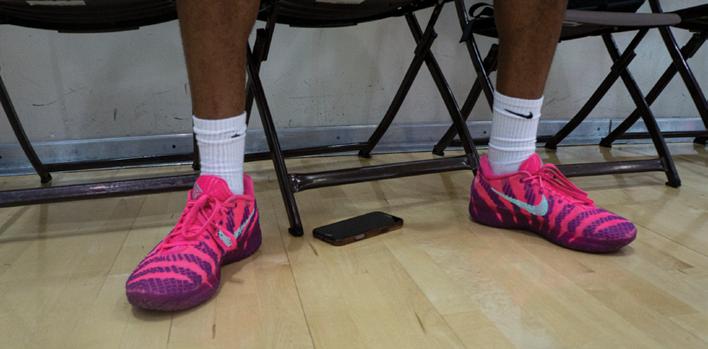
"They feel very comfortable to my feet and they have a very good traction."
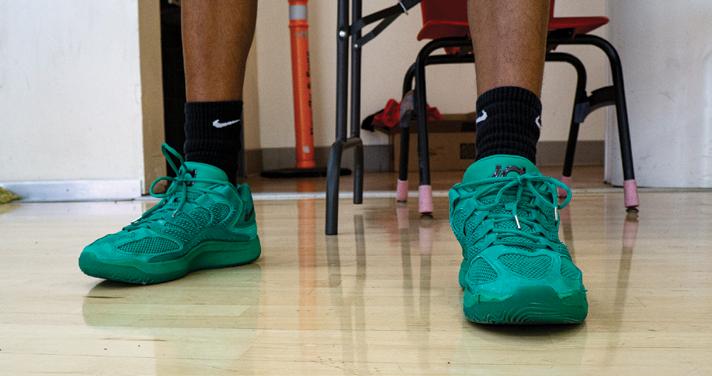
"I like them because they comfy and I like how they look — They a little flashy."
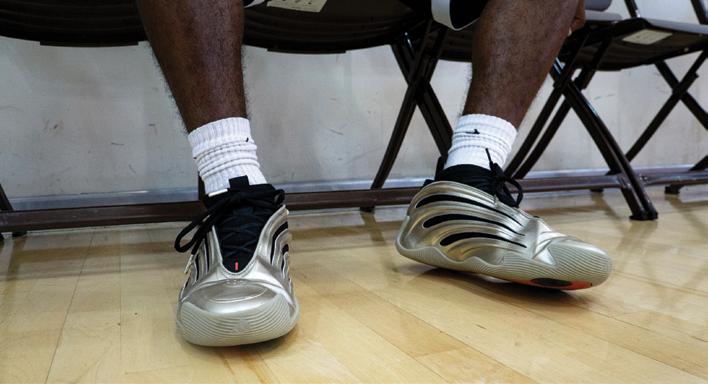
"They're pretty comfortable. They're pretty low to the ground so it's like I'm one with the ground. The insoles are comfortable, cushion around it is cool. I suggest if you see these shoes in store they're a great purchase."
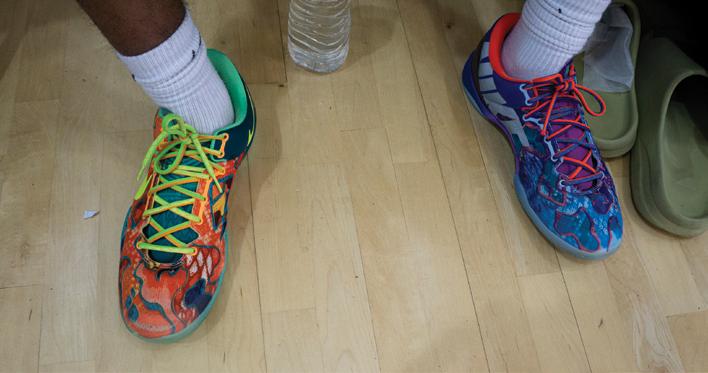
"I like playing in them because they are comfortable and I kind of like the style. I like how they mismatch and I like the colors."
CSM battered City College 26-1 in a blowout loss
I t's been a rough stretch for the City College of San Francisco baseball team, and April 14's 26-1 loss only added to what is now a 30-game losing streak. But if you were at the game, the scoreboard didn't tell the full story.
From the first inning, City College showed energy. Even after going down 4-0 early, the dugout stayed loud. Players kept cheering each other on, trying to keep momentum alive even when hits weren't falling. Out on the field, there were moments where things started to click. The team settled in defensively, and starting pitcher Sean Ferreira battled through four innings despite dealing with injury, doing his best to keep City College in the game.
“I just try to throw strikes and let my defense work,” Ferreira said. “I trust my catcher and my teammates to make plays behind me.”
Down 7-0 going into the top of the fifth, the Rams were able to load the bases with one out in the inning.
Unfortunately, they would fail to capitalize, scoring just one run in the inning. Missed chances throughout the game proved costly.
One of the few bright moments came from Ryan Stamer #13, who got on base with a single to center in the fourth,bringing energy back into the dugout. His teammates celebrated, showing the kind of support that's stayed consistent all season.
“My approach is just ‘see ball, hit ball,’” Stamer said. “I try not to overthink it. Slowing the game down helps a lot.”
Through seven innings, City College was still within reach, managing to hold things together despite
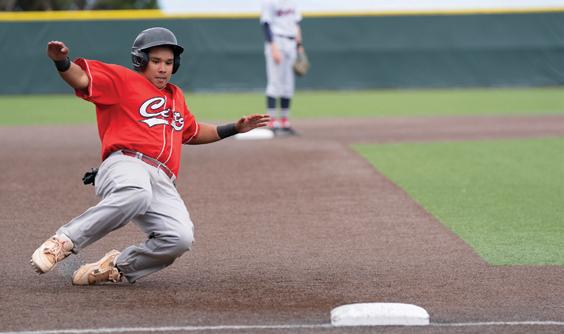
limited pitching depth. But in the final two innings, things unraveled. San Mateo scored 14 runs in the bottom of the eighth, turning a competitive game into a blowout.
Head Coach Mario Mendoza said the result was frustrating, but not unexpected given the circumstances.
“We're dealing with a lot right now,” Mendoza said. “Injuries, guys playing out of position — it's tough. But the effort is still there.”
Another challenge the team faces is not having a true home field.
With limited practice time and shared facilities, preparation has
been far from ideal.
“It's hard to get the work in that we need,” Mendoza said. “But we're still trying to make it work.”
Despite everything, the team hasn't given up on each other. Players continue to stay positive and focused on improving.
“Our chemistry is good,” Ferreira said. “We always have each other's backs and keep each other's heads up.”
With only a handful of games left in the season, City College is shifting its mindset. Instead of focusing on the losing streak, they're looking at each game as a new opportunity.
“This loss shows where we need to improve,” Stamer said. “We can only get better from here.”
Even in a tough season, the Rams are still showing up and competing.
Daniela can be reached at dvilleg4@mail.ccsf.edu
From the gridiron to the baseball diamond, many rams athletes have moved on to their respective pro ranks over the years. The Guardsman looks back at just a few of them
Henry Crowell Sports Editor Henry can be reached at hcrowell@theguardsman.com
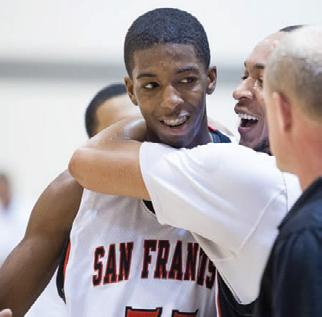
Delon Wright (center) is congratulated by his teammate following the end of a basketball game against Santa Rosa College. March 9, 2013 (Santiago Mejia/The Guardsman)
The younger brother of 11-year NBA forward Dorell Wright, Delon Wright won the 2010 California High School State Championship in his senior year of high school and was named Southern California's Player of the Year.
Despite this, and interest from many Division I programs, Wright was unable to graduate in time due to academic challenges. This led him to enroll at City College, where he would immediately make an impact, being named to the All-Coast Conference First Team and receiving All-State honors at the conclusion of his freshman season.
Wright would follow that up with another great year, averaging 16.7 points, seven rebounds, four and a half assists, and a state-leading four steals over the season, in a year where Rams would go undefeated before falling in the semi-finals. Wright
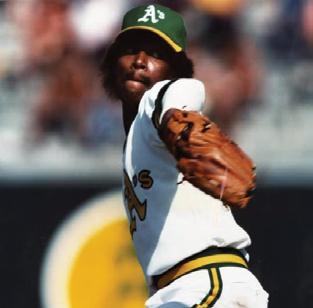
Mike Norris pitching for the Oakland A’s during the 1978 season. He had a 5.51 ERA on the year, striking out 36 batters in 14 games. Photo courtesy of National Baseball Hall of Fame
Mike Norris earned first team All-City honors twice as a high school student, winning San Francisco Player of the Year in his senior season at Balboa High. Attending City College after graduating, Norris had a stellar 1973 season, being selected in the first round of the MLB Draft by the Oakland A's, and then pitching to the tune of a 1.61 ERA (Earned Run Average) in his lone season with the Rams. He would go on to pitch in parts of 10 seasons in the MLB, all with the A's.
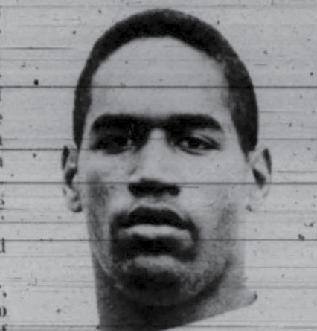
Simpson during his time at City College. (The Guardsman Archive)
Most people probably know O.J. for what he did after football and the movies. Born and raised in the Potrero Hill neighborhood and attending Galileo High School, “The Juice” was a running back for the Lions football team, graduating in 1965 with All-City honors.
committed to Utah State following that season and would finish out his college career with two seasons as the Utes' leading scorer, carrying the team to the NCAA tournament, getting to the Sweet Sixteen before no. 1-seeded Duke took them down.
Following the season, Wright would be selected 20th overall in the 2015 NBA draft, by the Toronto Raptors. A solid defensive role player, Wright would carve out a career as a journeyman guard, landing on 10 different teams through six different trades. Never starting more than 39 games, Wright provided good instincts and defense off the bench. He is also the only player on this list to still be active, at least technically. He played 40 games in the 2024-2025 season and nearly made it to this one, being one of the last cuts of the Indiana Pacers training camp.
Stats
Active 1975-1983,1990
Oakland A's 58-59 Record
3.89 ERA
636 Strikeouts
1124.1 Innings Pitched 1981 All-Star
2x Gold Glove (1980,1981)
Norris was good, if not slightly injuryprone, going on to narrowly miss out on the 1980 AL Cy Young Award with a 2.53 ERA and 22 wins. Selected to the All-Star team in 1981, Norris would win his second Gold Glove in as many years. Unfortunately, within three years he was barely on the fringes of baseball, bouncing in and out of the minor leagues before making a triumphant return in 1990, spending his final season as a reliever for the A's.
However, due to his lackluster high school grades, Simpson received just one scholarship offer and enrolled at City College on the last day of registration. Named the third-string running back to start the season, O.J. would go on to break nearly every rushing record City College has, running for over 200 yards in his first start versus Foothill College. In the championship game versus San Jose City College, Simpson would rush for a junior college record 304 yards, as well as six touchdowns.
After an excellent sophomore season, he

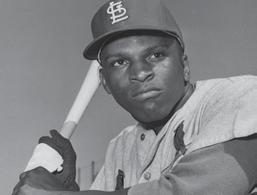
Walt Williams during his time with the St. Louis Cardinals. He never appeared for their Major League team, traded to the Chicago White Sox after two years in their minor league system. Photo courtesy of National Baseball Hall of Fame
Nicknamed “No Neck,” Walt Williams' slightly unusual stature came from a botched typhus vaccination as a child. Fortunately, this didn't affect his athletic abilities. Williams starred for the Galileo Lions in baseball, basketball and football. Graduating in 1962, it was much the same for him at City College, with Williams continuing to participate in all three sports. Williams hit for a .337 average with six home runs in his only year at the college, leading the Rams to a 9-5 record on the year. Following the season, four Rams were signed to major league teams, including Williams. Williams went to the Houston Colt .45s (now the Astros), and after a
Stats
1969-1977
Buffalo Bills
1978-1979
San Francisco 49ers
135 Games Played
11,236 Rushing Yards
13,378 All Purpose Yards
61 Rushing Touchdowns
1973 NFL MVP
6x Pro Bowler
5x All-Pro
Football Hall of Fame, Class of 1985
would transfer to USC, leading the nation in rushing in both of his years at the college. O.J. would be selected number one overall by the Buffalo Bills after his senior year. He would continue his record of success in the NFL, becoming the first player to eclipse 2,000 rushing yards in a season, in 1973. Traded to the 49ers in 1978, Simpson would retire after the 1979 season, leaving the NFL with the second-most rushing yards of all-time. He still places 22nd on the list today. After his retirement, he would delve fully into his acting career. Simpson would appear most notably in “The Towering Inferno” (1974) and all three of the original Naked Gun films.
Stats 1964
Houston Colt .45s
1967-1972
Chicago White Sox 1973
Cleveland Indians
1974-1975
New York Yankees
842 Games Played
640 hits
.270 Batting Average
33 Home Runs
173 RBI
short cup of coffee with the Major League ballclub, he was claimed off waivers by St. Louis, and then traded to the south side of Chicago. He would make his home at Comiskey Park for the next six years, serving as a solid fourth outfielder for the White Sox.
After the 1972 season, Williams was traded to Cleveland, where he spent one year before being traded a final time to the New York Yankees. The year 1975 would be his last in the big leagues, and he would finish out his career with stints in the Japanese and Mexican Leagues. Williams played with spirited enthusiasm and hustle, and was beloved by fans wherever he went.