
Car Crime on the Rise in Hyde Park and Headingley: Students Warned to Stay Vigilant
Spate of thefts sees dozens of cars broken into in less than two months as councillors warn students to ‘remain vigilant’
Katie Morris
Following a Freedom of Information request by The Gryphon, West Yorkshire Police stated there were 34 thefts from cars reported in the Hyde Park and Headingley areas in 51 days starting from December. Statistically, that’s a break-in every other day.
Police are advising victims to take precautions to prevent further car thefts, including removing valuable items, leaving glove boxes open and visibly empty, and installing a central alarm system if they haven’t already done so. They are also suggesting home surveillance technology to deter criminals from the cars parked outside your house.

Headingley and Hyde Park councillor, Tim Goodal, took to Facebook saying, ‘Unfortunately, there has been a spate of theft from cars, a few thefts of cars, but mostly theft from cars’.
‘It’s not only affecting Headingley and Hyde Park; it’s also into Burley and Kirkstall as well. The police are looking into it, doing what they can, and hopefully they’ll be able to solve it soon.’
Directly addressing The Gryphon, Cllr Goodall further added:
‘Local Green campaigner Nilesh Chohan and I were made aware of several incidents of theft from cars over the last few weeks in LS6 and the surrounding areas. We’ve both been liais-
ing with local police teams to make sure they have been aware of all the cases and to report back to residents on action taken by the police.’
He further said, ‘I would ask students and other residents to remain vigilant and not to leave items in their cars. In these cases, they weren’t just opportunist thieves who spotted something valuable in the car; they were also going through gloveboxes and the boot to steal items, so please don’t leave anything in your car, particularly if it’s valuable.
Hyde Park resident and student Lydia shared her experience with the Gryphon after her Citroën C1 was broken into twice in two months.
‘I feel like the current advice from the police
and local council to make sure we don’t keep anything in our cars isn’t helpful’ The police don’t seem to be trying to prevent the break-ins. I haven’t seen any extra police presence, and they haven’t come out to investigate either of my break-ins or any of my friends. I feel more unsafe living in Hyde Park since this has happened, and I don’t feel like there is any support for students in the area.’
Another student, Isha, described her experience following a break-in to her car in early December.
‘I walked out, and my belongings were outside my car, and that’s when I realised my driver’s door was open and my belongings had been rummaged through’
‘I was shocked as I didn’t think my car would be broken into in this area, and I didn’t have anything really valuable in my car. It feels scary how easily someone can get into your car, especially when Hyde Park is busy at night, as things like this are still happening’ It has been reported that three people, two men and a woman, have now been arrested in relation to their crimes.
Image credit: Katie Morris


The Team
Editor-in-Chief
Gabriel Morrissey-Limb
Deputy Editor
Daniel Brown
Heads of Social Media
Jess Cooper
Lucy Earson
Heads of Design
Erin Gascoigne-Jones
Phoebe Andre-Watson
Newspaper Associate Editors
Lana Conway
Momnah Shahnaz
Emma Wilkinson
Shakeal Zaman
ITM Associate Editors
Jess Cooper
Bethany Dunn
Arabella Wright
News Editors
Aliza-Kayan Ahmed
Raya Boycheva
Mishika Gupta
Zara Lake
Charlotte Prescott
Emma Wilkinson
Opinion & Features Editors
Sarah Al-Battat
Hannah Chohan
James Kendrick
Hattie Murdoch
Em O’Reily
Maja Wasielewski
Amelia Whatley
Shakeal Zaman
Sport Editors
Jake Crapper
Mina Jigau
James Morgan
Mrinalini Pretish
Science & Climate Editors
Cassia Bennett
Lucile Harvey
Anna Jackson
Rory O’Dwyer
Ruby Smith
Longoae Tembwa
Music & Clubs Editors
Daniel Brown
Millie Cain
Francesca Lynes
Arabella Wright
Arts & Culture Editors
Oleksandra Buryma
Bethany Dunn
Sophie Fowler
Jessica Hill
Jude Mcann
Rosie Nowosielski
Momnah Shahnaz
Scarlet Sheehan
Fashion Editors
Christelle Al Abbasi
Jess Cooper
Sofia Garapetian
Selma Lingemann
Amba Tilney
Lifestyle & Blogs Editors
Romilly Anderson
Alaina Charles
Raechel Duddle
Jacqueline Wong
Photography Editors
Jiayi Du
Aidan Goddard
Charlotte Sollars
Jack Norris
Dear readers,
E d i t o r ’ s L e t t e r
Spring is springing and it feels like life has been kicked back into the heart of Leeds. Just the other day I was walking home, and seeing kids and families in the park, Brude packing out, and the sun visibly setting, I was reminded of how lovely Leeds really is.
It also fills me with immense relief that my soon-to-come mini trip around West Yorkshire, may not be during a complete downpour. Which, as Bronte-equse as that might look on the Haworth moors, may not be the most pleasant when I am living out of a backpack for four days. I know what you are thinking, and no, my choice to visit the birthplace of the iconic Wuthering Heights was not inspired by, in my opinion, the maybe less iconic “Wuthering Heights”. I am purely trying to make the most of my last Spring in Yorkshire before hopefully moving to London in the autumn (if you catch me listening to Charli XCX on the moors, no you didn’t). Nevertheless, after keeping a close eye on the world news headlines this week, wandering through picturesque towns and not having to chug my morning coffee will be a nice way to reset, so I can return to work bright-eyed and ready for my final few months as EIC.
Looking back over the other issues we’ve produced this year, it’s a
real reminder of all the wonderful inspiration in our students at LUU. Speaking of, all the candidates for Lead LUU have now been strapped in, ready for the rollercoaster which is the creation, campaigning, and voting week in LUU’s democratic process to elect the next set of student leaders! I would be lying if I said supporting the process has not been a bit of a shift to say the least, but it really does show how much I love the Gryphon and how committed I strive to be for our amazing students. So consider this issue to come with a side of my blood sweat and tears, as well as a whole lot of love!
Overall, the theme of this issue’s Editor’s Letter is to just enjoy the little things. Whether that’s a sunny day, a Common Ground coffee, a great chat with a friend, or a tear-jerker at Hyde Park Picture House (I’ve still not recovered from Hamnet by the way!), bang out your essays, spend time with friends, and have the fun, because ultimately, that’s what Uni is all about.
Lots of love, Gabe
P.S. Sorry there’s no enigma section this time round!















RIP Revs: The growing precarity of Leeds student nightlife
Sophia Bailey
The Wednesday sports night institution Revolution Electric Press, better known as Revs, closed its doors on January 27th, shocking everyone on the sports social scene and sending social secretaries into a stressed frenzy.
The abrupt closure of such a well-loved and popular student venue has joined several other extinct, student-orientated nightlife venues, adding to rising concerns about the sustainability of Leeds student orientated nightlife and the ongoing dwindling shift in club culture.
The Revel Collective entered administration on 27th January 2026, triggering the immediate closure of 14 Revolution Bars and other venues within the company. The administrators stated rising costs and a decline in spending by younger customers as the main factors that made business unsustainable.

Revolution, for many University of Leeds societies, was a key part of the Wednesday night ritual. Revs routinely saw colourful weekly queues wrapping around the building for entry. Many societies had deals with the venue, encouraging student spending in return for cheap drinks and the infamous complimentary ‘Revs bottle’.
The unexpected departure of such a high in demand venue sent shockwaves through student club culture, highlighting that seemingly thriving venues are in fact struggling to stay afloat. Revolution issued this closing statement on their social media:
“We have loved shaking your cocktails and creating unmissable parties and events over the years, but as of today, 27th January 2026, we will sadly be closing our doors in Leeds Electric Press.
We want to extend an enormous thank you for joining the Revolution party and making some unforgettable memories. Any guests with bookings will be contacted in due course – Thank you for your patience and understanding. For any guests looking for their next party, our nearest Revolution is our Leeds Call Lane Bar. Goodbye and Thank You xx”
The closing of Revs adds to a growing trend seen within the last 2 years of popular, cheap and reliable Leeds student institutions closing. First, PRYZM closed in February 2024 due to its parent company Rekom Group also entering administration. Next, Walkabout closed in September 2024, followed by Old Red Bus Station in January 2025.
These recent closures were staples of the vibrant student nightlife the city is often credited for. With a lack of turnover of new student orientated venues to replace the old, student club culture is dwindling involuntarily. New venues that have opened are trendy, but are not considered cheap enough for the average student.
These continuing closures are strong indicators that traditional student nightlife has become largely unsustainable.
The student scene is witnessing a new era of nightlife, with companies preferring to target a wider audience beyond students to stay afloat, allowing them to raise prices but still have consistent custom. This may contribute to a lower student turnout, creating a cycle of reduced student spending which may impact the future of the student social scene further, and bear witness to more student-populated venue closures.
Leeds restaurant closures claim more victims
Serenity Mace
In January 2026, Leeds witnessed the closure of many beloved and respected restaurants. Despite strong reputations and good footfall, many hospitality businesses are struggling to survive.
Salvio’s, an Italian Restaurant in Headingley that opened in 1976, has closed due to a dispute with their landlord. On social media the business thanked customers and clarified that ‘we have always met our obligations, including rent and bills.’ They stated how ‘through the challenges of the hospitality economy we have fought to stay afloat’ and ‘remain committed to our dream of serving you again.’
Emba is another acclaimed restaurant that closed this January, which the owner attributed to rising costs.
Similar restaurants have closed, such as MEATliquor, who once again pointed to the rising costs as the reason for closure, stating on their Instagram: “Cost of beef up. Cost of EVERYTHING up. It’s cheaper to close than to stay open.”
Labour’s 2024 budget, which increased the minimum wage
and national insurance contributions, has been attributed by UK Hospitality as putting increasing pressure on the hospitality sector at a time where costs are already soaring. The organisation has said that almost 9,000 hospitality jobs have been lost since the budget.
The additional rise in minimum wage set to take place in April 2026 has caused further concern. The National Living Wage for over-21s will rise to £12.71 an hour, while the rate for 18-year-olds will increase to £10.85.
A Forbes article has attributed the increased hardship faced by the hospitality industry to increased costs rather than a lack of footfall, stating how ‘a full restaurant may no longer be a guarantee of safety.’
The government has set up ‘Transitional relief’ for hospitality, retail and leisure businesses which will come into effect from April 1st. The scheme will cap the immediate amount that business rates can go up by. This rate will then have a staggered increase over the next three years. However, businesses are calling for more financial help than this.
UK hospitality has warned that, without additional provisions, these changes in April will force more than 2000 closures in the hospitality sector.
There have been additional government efforts to try and help the nightlife scene, which has also been facing increased economic pressure. Measures, such as the 15% tax break, have been brought in for pubs and live music venues. However, there has been no additional support yet for cafes and restaurants, which many business owners and organisations, such as the Night Time Industries Association and UK Hospitality, have criticised.
High profile chef Gordon Ramsay has criticised the rising costs that will come in from April 2026, stating that the plans simply “will not work” and the industry is “facing a bloodbath.”
Image Credit: Adobe Stock
University Funding across the UK: A Continuing Crisis in 2026
Gayatri Alexandra Eaton

In 2025, it was reported that university students in England are receiving only two-thirds of the funding that students received a decade ago. The analysis showed that after inflation, the government is planning to reduce university resources. In February 2026, the situation was unchanged, to be affecting university institutions across the country.
As reported by the Guardian ‘Bridget Phillipson, the education secretary, allowed annual tuition fees to rise in the current academic year to £9,535’.
Along with this, universities are now to receive significantly less than they did ten years ago in 2015-16. The University and College Union stated that “UK higher education has been constantly adjusting to inadequate funding since 2007/8”.
This issue still remains relevant today in February 2026 as universities, including the University of Leeds, has been lacking in core funding since last year as the tuition fee cap remains frozen whilst inflation continues to increase with their costs. This has led many institutions to pivot towards reconstructing courses and reducing staff members.
Universities have become reliant on the influx of international students as they pay higher fees. There is growing legislation which address changes to fees. One international student commented,
‘’This will definitely affect my education. A levy on international students is not a good alternative to help disadvantaged students.’
Another then said,
‘It is already too expensive for international students; if the UK government wants to be rid of international and domestic students, they can carry on.’ The implications for domestic students can also be seen, where there is a worry over course availability, in particular for practical degree courses. ‘It is worrying that some universities have already begun to close courses.’
Another said ‘this is highly likely to affect academic support and wellbeing assistance, such as the Leeds Student Union, where extracurricular services will suffer to support students’ mental wellbeing.’
The North-South Divide: Is It Still a Relevant Conversation?
Anya Fernihough
If you were to ask a group of people where the North-South divide lies, it is likely that you would get a range of answers. As someone who is from Liverpool, I would consider the North to be roughly anywhere north of Chester and the South to be south of Coventry. Of course, there is no official physical border that divides the country, yet this debate still continues to divide us. The North-South divide is not only geographical, but political, cultural, and deeply emotional. The line is not solely about latitude: it’s about money, power, accent. It’s about whose culture is considered default and whose is marked as other.
The political roots of this divide, such as the lasting impact of Thatcherism on former industrial regions, are impossible to ignore. Deindustrialisation replaced Northern communities that had been built around collective labour with unemployment, precarity, and long-term underinvestment. In comparison, the South (particularly London) emerged as the centre of finance, culture, and opportunity. Studies by the Equality Trust have shown the significant economic inequalities between the North and the South in terms of household wealth. These economic realities hardened into stereotypes: the North as deprived but proud, the South as wealthy but detached. From a Scouse perspective, I know that my city has undergone a decades-long smear campaign that exposed how readily the North could be dehumanised by Southern institutions. I find it interesting that not a lot of people outside of Liverpool understand what is meant by “Scouse not English”. The conversation concerning the divide is also greatly exclusionary. What about the Midlands? They are suspended awkwardly in the middle, being claimed or disowned depending on convenience and rarely allowed their own identity. What about the rest of the UK? Perhaps Scotland, Wales, and Northern Ireland don’t even consider the English North-South divide, instead feeling that they
North-South divide seems to be something that keeps England’s population at odds with each other.
At university, students from all over the UK are thrown together in seminars, societies, and sticky-floored clubs, and it’s here that these differences between the North and the South (at least in my opinion) really shine through. As a Northerner, I thought that coming to university in the North would mean that I would be surrounded by a majority of Northerners. However it was clear from the moment I moved into my first year halls, that I was ironically the minority. Past research by the Children’s Commissioner for England has shown that students from London and the South East are more than 50% more likely to attend top-ranked universities than the rest of the UK. Despite efforts to reduce the gap from schemes such as the Sutton Trust, I was still surprised to be surrounded by so many Southerners. Some universities such as the University of York have even set up Northern societies as a way of connecting students and building community.
University is also so often seen as a time for reinvention, and for many this conflicts with their backgrounds. For the first time, we can wear what we want and eat what we want, read what we want. And sometimes all these new choices open to us don’t quite fit in with the culture we grew up in. I have heard so many times when complimenting a friend’s outfit, ‘Oh, I couldn’t wear this at home’. But does newfound freedom from a perhaps stifling environment come at a cost? Can we recognize the limitations of our hometowns and yet resist giving in to the temptation to forget where we come from?
When I moved to Leeds, my Dad warned me about not
Scouseness like a life-jacket. In my head, no one could make me feel singled out or make fun of my Northerness if I was (perhaps rather overly) proud. I found myself slipping into a stronger accent, using slang I wouldn’t normally, and telling anyone who would listen how much I love Lark Lane. I’ll always remember something that was said to me growing up: “You
don’t need to get rid of your accent to get your point across.” Ironically, the person who said this didn’t realise I didn’t have a particularly strong accent to begin with, but the sentiment has stuck with me. I think this strategy has mainly worked out for me. I have been lucky enough to experience very little direct insult for my Northernness. However, that’s not to say it doesn’t happen. Offhanded comments, mocking accents, and a general ignorance of the realities of the divide are common across the country. My home friends who attend university in the South have even shared instances of people being openly hateful towards the North.
Class complicates the conversation. The North-South divide is often spoken about as if everyone in the North is working class and everyone in the South is wealthy, which is obviously untrue. I am middle-class and Northern, which I feel places me at an interesting intersection. On one hand, I have cultural familiarity with Northern pride and resentment. On the other hand, I have never experienced the same material disadvantages as those with a working-class background, regardless of where in the country they are from. At the same time, the prejudice still remains and my Northernness perhaps still marks me as less than my Southern economic equals. Additionally, some Southerners experience erasure of their working class heritage as “poshness” is often coded Southern. Personally, I think it’s important to be proud of being Northern, but also to acknowledge my social background

Ultimately, the North-South divide isn’t wholly about geography, but instead about community and otherness. At university, we are being taught to think critically, and so we should be questioning these divisions rather than reproducing them. Perhaps the divide isn’t somewhere circling Birmingham, but embedded much closer to home in our institutions, our assumptions, and the way we choose to speak about each other.
Image Credit: Institute for Govern-
Consent or Pay: Is Privacy Now Premium?
Meta introduced a model across its social media platforms in the European Union (EU) and the UK: users must either consent to personalised advertising or pay a monthly subscription fee of £2.99 to use the platforms without being tracked for ads. It sounds like a simple choice. Except the word “choice” feels a little too clean for what’s actually happening. What Meta is really asking is whether we are willingto put a price on privacy, and whether we ever truly have the agency to own privacy on social media inthe first place. And when we click “consent,” what are we agreeing to?
The shift didn’t appear out of nowhere. Under regulatory
and thought, “That’s personalised ads, right?” In fact, there’s more to it. Personalisation involves data aggregation across platforms, behavioural profiling, inferred interests, and predictive modelling. How do platforms collect your data? Think about who you interact with online, where you are, what device you use, and how long you scroll. Layers of data are combined to build a portrait that advertisers can target.
When we click “consent,” we are stepping into an infrastructure built upon the idea that attention and behaviour are valuable commodities. Social media may feel participatory; users create, comment, build personal brands, and shape conversations. We feel in control of our feeds. But
algorithms. When reliable news is hidden behind paywalls, some users inevitably turn to social media as their primary source of information. And social media feeds are not neutral spaces, as they amplify what is flagged as viral, not necessarily what is verified. This does not mean news should be free at all costs. Journalism needs funding, but it does raise a larger concern: if both digital autonomy and credible information increasingly sit behind payment tiers, the “free” internet risks becoming the least accountable version of itself. A democratic society depends on informed citizens. If reliable information increasingly becomes a paid privilege, that should concern us.

has become a subscription feature, shifting from being a baseline expectation to an upgrade. It subtly suggests that a more private experience is a premium version of the Internet, leading to questions of digital inequality.
The “option” can also be mistaken for empowerment in the name of transparency. But how free is that choice, and how informed is that consent? Then there’s the issue of digital literacy. Most of us have developed muscle memory when it comes to clicking “accept” and enabling cookies. Terms and conditions feel endless, and realistically, barely anyone reads them. The “consent or pay” model assumes we understand what personalised advertising entails, but do we?
You might have seen relevant ads on your feed when you searched for certain products once,
But when privacy becomes a subscription model, it shifts from being a right to being a service. Maybe that’s what feels most unsettling, that the cost is now itemised and presented back to us.
The shift is not limited to social media. Across the digital landscape, we are increasingly asked to pay for a higher-quality experience. News outlets place credible reporting behind paywalls. Streaming platforms charge to remove adverts. In many cases, payment supports valuable labour – investigative journalism, fact-checking, and editorial standards. Quality costs money. But the pattern is worth noticing.
If privacy costs £2.99 a month, and access to reliable journalism also requires a subscription, what remains freely available? Often, it is the ad-saturated content driven by
Jacqueline Wong

What even is

Good question! LeadLUU is the Union’s annual student leadership race, where University of Leeds students have the opportunity to run and become one of the Union’s student leaders! The leaders will have the opportunity to lead the Union for a year. The student leaders elected during LeadLUU will represent or work with over 40,000 students, helping shape the future of LUU and what your time at university looks like, as well as making voices heard across different student issues.
What’s changed?
LUU conducted a democracy review, finding out that some of their democratic systems were sometimes away from where students were building communities and organising. In that same vein,it’s hardly realistic to ask six student leaders each year to fully represent the 40,000 students at Leeds. This would normally be supplemented by student leaders,but it has become more difficult for student leaders to volunteer their time to LUU’s volunteer roles. That’s why LUU has introduced a new student leadership model of 5 full time Student Executives, 1 PGR Trustee, 5 Faculty-Based Engagement Leaders and 5 Liberation and Identity Based Engagement Leaders.
Explaining the roles
Student Executives our partnership-builders and work to influence decisions on student issues that support our students at the University of Leeds. They are often in the room where decisions are made. For example, all of them will be Trustees of LUU, as well as sitting on University Senate. They also feed into our other governance mechanisms such as Unipol, Bright Beginnings (an on campus nursery).
Welfare and Liberation Student Executives: This portfolio brings together liberation, equality and welfare priorities, ensuring intersectionality and access are championed across all LUU activity.
Opportunities and Development Student Executives: The Student Opportunity and Development Student Executive role recognises that clubs and societies are the largest engines of student engagement, community building and leadership development at Leeds, and work with them to ensure that extracurricular activity is supported and celebrated.
Academic Experience Student Executives: The Academic Experience Student Executive will focus on academic representation and community experience within Faculties. This includes PGR voice.
Union Affairs an Community Student Executives: The Union Affairs and Community Student Executive will focus on all things civic engagement and social impact, connecting student life to the city, being its external voice outwards and the democracy within it
International Experience Student Executive Student Executive: The International Experience Student Executive will focus on all things international students, representing their needs, ensuring that they are celebrated and supported through their time at Leeds.
PGR Trustee Student Executives: The PGR Trustee stands apart from the other elected trustee roles by providing a dedicated governance-level voice for postgraduate researchers.
Liberation & Identity Engagement Leaders:
The Liberation & Identity Engagement Leaders build and listen to their community over key issues that affect them. They work together with the community to run events, projects and campaigns that help them love their time at Leeds.
LGBTQ+ Engagement Leader: Prioritises the needs of LGBTQ+ students to ensure their community is accurately represented and helps make the Union a better, safer place for them.
Gender Engagement Leader: Focuses on creating an equal, peaceful, and representative atmosphere within the Union for students of all marginalised genders.
Race & Ethnicity Engagement Leader: Works to create a fair, representative, and comfortable space for students of all marginalised races and ethnicities.
Disabled & Neurodivergent Engagement Leader: Plays a vital role in ensuring that LUU is a completely accessible and supportive environment for students with any disability or neurodivergence.
Class & Social Inequalities Engagement Leader: Aims to create a positive atmosphere where student opportunities do not differ based on class circumstances, supporting groups like working-class, estranged, and student-parent learners.
Faculty Engagement Leaders
The Faculty Engagement Leaders build and listen to their faculty community over key issues that affect them in their faculty. They work together with the community to run events, projects and campaigns that help them love their time at Leeds.
Medicine & Health Engagement Leader: Acts as a community builder and listener, planning projects and actions to ensure that students in Medicine and Health have the necessary academic support and representation from both LUU and the University.
Engineering & Physical Sciences Engagement Leader: Acts as a community builder and listener, planning projects and actions to ensure that students in Engineering and Physical Sciences have the necessary academic support and representation from both LUU and the University.
Arts, Humanities & Culture Engagement Leader: Acts as a community builder and listener, planning projects and actions to ensure that students in Arts, Humanities, and Culture have the necessary academic support and representation from both LUU and the University.
Business Engagement Leader: Acts as a community builder and listener, planning projects and actions to ensure that students in the Leeds University Business School have the necessary academic support and representation from both LUU and the University.
Social Sciences & Environment Engagement Leader: Acts as a community builder and listener, planning projects and actions to ensure that students in Social Sciences and Environment have the necessary academic support and representation from both LUU and the University.
Shivani:
What do the current Student Exec have to say?
What did you find most rewarding about campaigning? Amara: Union Affairs & Communications
Speaking to students and learning about their experiences was one of the most rewarding parts of campaigning. As I campaigned I made notes of what students were saying so if I got elected I would be able to carry that feedback forward and try and implement those changes!
Amara:
What I found most rewarding about campaigning was seeing how collective action can turn individual concerns and frustrations into a momentum. Campaigning gave me the opportunity to listen deeply to students lived experiences, particularly those whose voices are often marginalised, and to help translate those experiences into clear demands and achievable change, many that I have been able to carry out.
I found it especially powerful when students who felt disengaged or skeptical began to feel confident that their voice mattered. Knowing that my role could help people feel seen, heard, and represented made the long hours and challenges worthwhile. Campaigning also reinforced me that change doesn’t come from one person alone, but from building trust, relationships, and solidarity across student communities.
What have you achieved that you’re most proud of during your time as an exec officer?
Shivani:
I am most proud of founding and launching The Diversity Blog. It has been so special to see a space being formed for individuals who have second and third generation identity and are able to express their experience and story in a creative way. Colleagues from other Student Unions have spoken about how unique and important this project is, as well as contacts from the city, students and staff too.
Lydia:
The Women’s+ Sports Participation Project is something I am really proud of, and obtaining funding for 5 student Activators who have done some amazing work this academic year towards making sport more inclusive and accessible for all.
Saffy:
The most rewarding thing about campaigning was seeing how my priorities resonated with students- especially when students reached out on campus and across the world to commend what I was campaigning for!






Questions for Candidates
It goes without saying that you want to elect people that know what they’re on about, so we at The Gryphon comprised some questions for our candidates!*
*Not every canddiate gave us responses, these are only snippets of them. To see the full responses check out our website and Instagram!
Going for: Union Affairs and Community Student Executive:

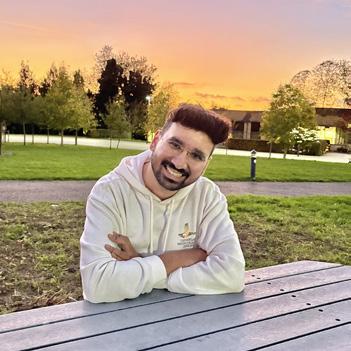
Why are you running?
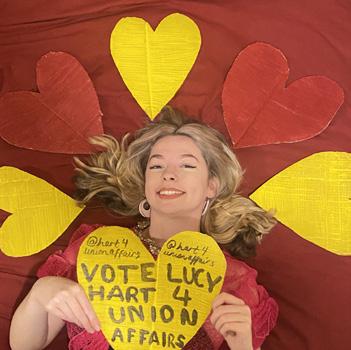
Lucy Hart:
I am re-running to be your Union Affairs & Community Executive because I love representing students, I am inspired by the amazing work of societies and I love what LUU can do for students but I have so many ideas to make it better. From 2024/25 I was your Union Affairs & Communications Officer where I reduced rent inflation for student accommodation, gained £2,500 from the West Yorkshire Mayor for nighttime safety initiatives and lobbied nationally for increased loans and the reintroduction of maintenance grants.
I am also re-running because I am angry about how much it costs to be a student. IT IS A SCANDAL. The average student is leaving £53,000 worth of debt and feeling like they did not get their money’s worth. On top of this, cost of living has hit students hard with 70% of students working alongside their course to keep themselves afloat with outrageously high rent and transport prices. The University is fully reliant on tuition fees for funding and yet this money is not coming back to students. Take for example, the WINTER TENT - an initiative students loved but the University removed!
I am re-running because I want students to be at the HART of the University, I will...
- Expand free food support with increased free breakfasts and free student dinners to build a diverse community
- Create a students first policy where the university must hire students before external staff
- Advocate nationally for increased maintenance loans and grants whilst fighting against the 6% international student levy
- Lobby to bring back the winter tent
So don’t lose Hart, re-elect Lucy Hart!
Sourav Dasgupta:
I’m running for Union Affairs and Community Student Executive because I believe every student at the University of Leeds deserves to feel that they truly belong here.
Leeds is home to an incredibly diverse community, students from different cultures, backgrounds, identities, and experiences. However, many students still feel disconnected from decision-making spaces or unsure whether their voices are being heard. I want to bridge that gap.
My campaign is centred around three key ideas: representation, accessibility, and belonging. I want to ensure that societies, liberation groups, and cultural communities feel genuinely supported by the Union. That means creating stronger communication between students and LUU leadership, making sure student concerns are acted upon, and ensuring every group, big or small, has the resources and visibility they deserve.
I’m also passionate about using shared experiences such as sports, cultural events, and collaborative society initiatives to bring students together. Sport and community activities are powerful tools that break barriers, encourage friendships, and create spaces where students feel comfortable and included.
Most importantly, I want students to feel that the Union works with them, not just for them. My goal is to listen, advocate, and turn student feedback into meaningful action. For me, this role is not just about holding a position, it’s about building a stronger, more united Leeds community where everyone feels represented and valued.
Amala Tes Bonnie:
I am running for this role because I want to improve students’ lives through participatory and collaborative student governance rooted in justice and community. The University can often feel formal and structured, so LUU should be the human side of the student experience. I want to ensure that every student, irrespective of their background, has access to the same care, support, and representation.
As a Student Executive, my goal would be to make LUU more present in students’ everyday lives. Instead of waiting for students to come to LUU, I want the Union to actively reach out, especially to those who may not frequently visit LUU or feel naturally connected to Union spaces. That means more in-person engagement by going into Schools, common areas, and community spaces, and creating opportunities for conversations with students who might otherwise be left out. I want these in-person interactions to be spaces for feedback where students can share what is working, what is not, and what they want LUU to focus on.
I believe that the role of Union Affairs and Community Student Executive has immense potential to contribute to community-building through collaboration. I would like to work closely with students, societies, schools, and staff to build a more connected campus. And, with the other Student Executives, I hope to work with Leeds City Council, NUS UK,
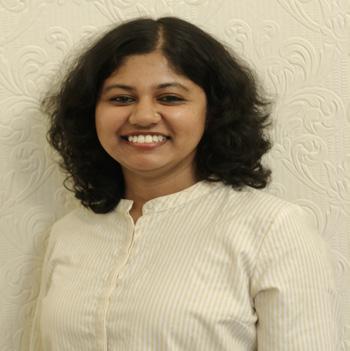
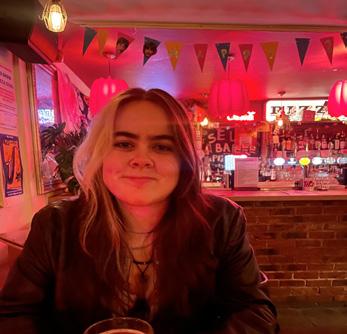
AJ Semark Amala Bonnie
Ashutosh Changlani
Lucy Hart Poppy Glaze Sourav Dasgupta
and RGSU to ensure students’ voices are represented locally, regionally, and nationally.
I have been involved in student governance at my former university. In my previous job, I have worked closely with government officials and organizations in India. Together with my ongoing Masters in Social and Public Policy, these experiences have given me the confidence that I can contribute meaningfully to the role.
AJ Semark:
The union does not provide enough support to individual students - especially in emergency or crisis situations. I’d like to be able to make the union feel more like a second home for students, whether thats support for living situations, financial aid, food and drink, prayer rooms and quiet spaces, more places to sit, mental health crisis support, and so many more issues - the union doesn’t provide enough. Additionally, the current state of the UK is incredibly tense for the most underprivledged and at-risk students, the rise of the alt-right is terrifying for students who are part of minority groups, and hateful actions have already become more prevelant. The group I am a part of for running for LeadLUU is strongly and openly anti-racist, in solidarity with Palestine, and for the liberation of trans and queer individuals. We want to build student democracy from the bottom-up.
What initiatives would you propose to deepen students’ connection to the city and increase meaningful civic engagement?
Lucy Hart:
As Union Affairs and Communications Officer 24/25 I recognised a gap in LUU’s advocacy for students - we weren’t representing students on a city level. So I spoke at Leeds City Council about amplifying student voice in the city and built connections with MPs, Councillors and West Yorkshire Combined Authority to increase civic engagement. To expand the strength of the civic student movement I created the Leeds Student’s Union Network with other Leeds SUs to represent over 100,000 students. Together, we lobbied for better housing, affordable transport and increased safety.
If I am re-elected I will...
- Work with West Yorkshire Combined Authority to expand student travel discounts, particularly to support commuter and placement students
- Tackle spiking and nighttime safety by working with city venues to have compulsory anti-spiking products and welfare support on nights out and run campaigns with Leeds charities such as Leeds Women’s Aid and BASIS
- Amplify student voice in the city by collaborating with Leeds City Council for a student advisory committee to the council
- Host free community dinners which brings together student and long-term resident communities in Hyde Park, a project proposal I have written up for one of my modules
Sourav Dasgupta:
Leeds is not just where we study, it is the city we live in, grow in, and become part of. I believe students should feel connected not only to the University but also to the wider Leeds community.
One initiative I would introduce is “Leeds Connect”, a programme that builds stronger
relationships between students, local communities, and city organisations. This could include volunteering opportunities with local charities, community sports events, neighbourhood clean-ups, and partnerships with local schools and cultural groups. These initiatives would allow students to contribute meaningfully to the city while gaining valuable experiences outside the classroom.
I would also work to strengthen society and community collaborations with local organisations and businesses. Cultural societies, arts groups, and sports clubs could host events across the city, celebrating Leeds’ diversity while creating spaces where students and residents interact and learn from each other.
Another focus would be encouraging student participation in civic dialogue. This could involve open forums with local leaders, workshops on community engagement, and platforms where students can share ideas about issues affecting both the university and the city.
Finally, I want to highlight the role of sport and shared activities as a powerful way to build connections. City-wide tournaments, community runs, and collaborative sporting events can bring together students and local residents in a positive and inclusive environment.
By creating more opportunities for students to engage with Leeds beyond campus, we can build a stronger relationship between the university and the city, one where students are not just temporary residents, but active contributors to the community.
Amala Tes Bonnie:
To deepen students’ connection to Leeds and strengthen meaningful civic engagement, I want to prioritize building collaborations that link students with the wider city. I would like for LUU to facilitate partnerships with organizations across sectors in Leeds (including consultancies, NGOs, news media, local businesses, cultural organizations, etc.) and establish MoUs to create short term internship and project opportunities for interested students. Given how concerned students are about employability, these opportunities would help them build relevant skills and experience.
I also want to collaborate with the other student unions in Leeds (Leeds Beckett University, Leeds Arts University, and Leeds Trinity University) to create shared spaces where students can network, work together, and raise issues that affect us collectively across the city.
Alongside this, I hope to convene quarterly interactions between Leeds City Council members and LUU to discuss topics such as cost of living, housing, transport affordability, safety, and other concerns students may have.
To help students feel more rooted in Leeds’s identity and culture, I would like to organize heritage walks, neighbourhood tours, and a Civic Engagement Week that connects students with local organizations, civic institutions, and community groups.
Together, these initiatives aim to create a stronger sense of belonging by helping students engage with the city in meaningful and accessible ways.
AJ Semark:
By making the union a stronger student community, the aim would be to empower individuals whilst supporting their needs - in turn they’d hopefully feel more able to engage with local events and elections. I aim to make LUU a 24hour facility in order to accomodate for those who need a place to stay at night temporarily, or act as a safehaven at night for women and victims of hate crimes - or even for people who simply are walking home and need a bathroom. Additionally, I want to empower students to be able to protest on campus grounds - not only without any permissions necessary - but whilst being actively protected by the union.
Going for: Welfare and Liberation Student Executive
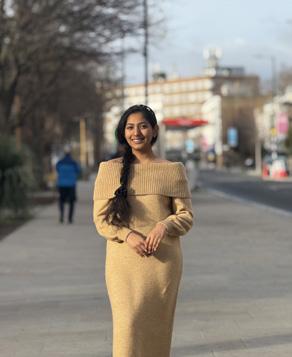

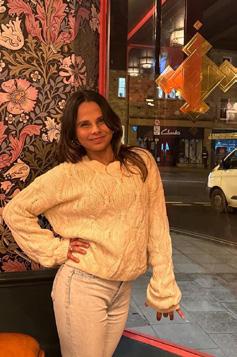
Why are you running?
Abinaya Ashok :
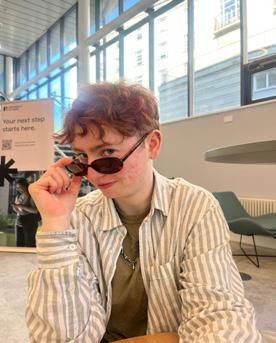
I’m running for the Welfare and Liberation role because I understand what it feels like to question whether you truly belong. As an international student pursuing an LLM in Corporate Law, moving to a new country came with excitement but also fear - fear of failure and of whether I would be accepted. Standing in this election is my way of stepping beyond that fear and showing that we should not hold ourselves back.
Recently, I spoke with someone from the LGBTQ+ community who shared the struggles she still faces in society. Coming from India, I always thought that in the UK things were completely normalised, but that conversation helped me realise that even here people can still feel judged or excluded. What stayed with me was when she said she didn’t want to only make friends within her own community — she wanted to be part of the wider student community like everyone else.
That made me reflect on how important it is to create spaces where people aren’t defined by labels but feel naturally included. I’m running for this role because I want every student — regardless of ethnicity, race, gender, or identity — to feel confident enough to take part in what they love without fear of being judged. If I can stand here and overcome my own fears, I hope it encourages others to do the same.
Sebastian Glasper:
My campaign is built around three ideas: Safer Housing, Safer People, and Safer Liberation. I’m running because safety shouldn’t be something students have to be worried about. I know personally what it feels like to feel unsafe or powerless, and I am tired of seeing the same issues repeat for new students every year.
On housing, I want to tackle the power imbalance that leaves students vulnerable to exploitative contracts, unsafe living conditions, and early sign-on pressure. Establishing a dedicated LUU Housing Advisor would create a clear, specialist point of support, reducing the burden placed on students to ‘figure it out’ alone. Alongside this, I want to strengthen landlord accountability through tighter accreditation standards, greater transparency around complaints and compliance, and collective pressure where pricing is unfair. Students should never have to choose between their safety and financial security.
On personal safety and support services, I want to shift from reactive to preventative approaches. Increasing funding and awareness for the LUU Night Bus is a practical safety initiative. Embedding Trauma-Informed Training across University and Union staff changes culture at an institutional level, ensuring disclosures are handled with care and competence. I also believe our support services need structural alignment. Students in crisis should not be referred in circles or forced to repeatedly disclose traumatic experiences. Systems must reduce the pressure on individuals at their most vulnerable.
Liberation underpins all of this. For me, liberation means students being able to exist fully, without fear. That requires embedding equality into how funding decisions are made, how societies are governed, how events are planned, and how complaints are handled. It also requires transparency. When students give feedback, they must see change. Consultation without visible outcomes erodes trust.
Safety is the condition that allows everything else, and that is the standard I want us to commit to.
Myra Vaish:
I’m running because I’ve lived every problem I’m campaigning on. I’m a third-year law student, international, South Asian, and bisexual, and I’ve spent three years trying to navigate a university that wasn’t really built with me in mind. I’ve sat in my room at 2 AM Googling what mental health support exists. I’ve waited weeks for a counselling appointment. I’ve done the mental maths to see if I can afford a society fee on top of rent. I’ve smiled through really hard weeks because I didn’t want to be a burden.
And I’ve still kept going, doing my dissertation, working 20 hours a week, running four society committees, managing my mental health, and I’ve had to figure most of that out on my own. But students shouldn’t have to figure it out alone.
I’m not running for a title. I’m running because I know exactly what’s broken and how to fix it. I want to be the person who makes the path easier for every student who comes after me.
Amyra Surana:
Above everything else I value community. Due to observing and experiencing for myself ways that the university treats students, I want to work with students to quash the overly individualistic mindset the university is inhibiting. One of the ways that the university has let students down is through its disability services. Personally I have been denied help with transferring my diagnosed ADHD care as an international student, which left me feeling stranded and without a support system
Abinaya Anand
Amrya Surana
Kanishka Newar
Mahek Mattikop Myra Vaish
Sebastian Glasper
I worry about all the international students who likely experience similar issues. I have witnessed my neurodivergent and disabled friends struggle with reaching out to the ironically very inaccessible accessibility services.
I don’t want others to continue experiencing pain and frustration. I have noticed flaws in the trans inclusion policy, in which recently the word ‘transphobia’ was removed from. Yes, the word for discrimination against trans people was removed from its trans inclusion policy. This has made me and the trans people I know feel as if the University sees us as dispensable in favour of political neutrality. Minorities need to feel less unsafe, as so many people I have spoken to have felt like they change who they are, just to fit in. This especially applies to the Palestine diaspora, as students who have moved here from palestine have felt unsafe and unwelcome.
The university needs to stand with marginalised groups unconditionally, we are more than just political pawns. I want students to be able to rely on each other and the university. It saddens me how often people are incentivized to put themselves over others, but it doesn’t have to be this way. The university should not feel like a free for all, it needs to feel like a safe and welcoming home. We need to trust each other again.
What do you think student services could improve?
Abinaya Ashok :
I think student services could improve by making support feel more approachable and easier to access.
Many students don’t always know what help is available, or they may feel uncomfortable asking for it.
For international students or students from different cultural backgrounds, it can sometimes feel even harder to reach out because everything is unfamiliar. Making support more visible, easier to understand, and more welcoming would help many students feel less alone.
I also believe it’s important to create spaces where students feel comfortable sharing their experiences.
Sometimes simply feeling heard and understood can make a huge difference in someone’s wellbeing.
Student services should not only be there when things go wrong, but should also help students feel supported and included throughout the time at university.
Sebastian Glasper:
Student services should function as a safety net, not another barrier. The most significant improvement we need is structural reform. Students in crisis are frequently referred between departments, asked to retell their story multiple times, and left navigating complex systems while already overwhelmed. This places too much responsibility on the individual when they are least equipped to carry it.
As both a user of these services and an advocate through SASHA, I have seen firsthand where the gaps are. I have supported students trying to access help, and I have navigated systems myself. I know the dedication of many staff working within them, but I also see where fragmentation, unclear pathways, and slow communication undermine outcomes. I understand what needs to change -
-What I need is the platform of this role to implement it.
There must be stronger coordination between University services, such as Harassment & Misconduct, Counselling and Wellbeing, and Disability Services, and LUU’s Advice and Wellbeing team. Clearer referral pathways, shared accountability, and trauma-informed practice embedded across all services would reduce re-traumatisation and prevent students from being caught in loops.
Accessibility must also be prioritised. Services should be equally accessible to commuter, international, and marginalised students, both in-person and online. Clear, centralised information hubs and transparent communication would reduce confusion and empower students to seek support earlier.
Ultimately, student services should reduce pressure, not increase it. We need a system that is coordinated, preventative, transparent, and genuinely student-centred, one that meets students where they are and puts their safety first.
Myra Vaish:
Access - Mental health support at this university is technically available and practically inaccessible. A six-to-eight week wait, a two-session limit, and a QR code on a poster is not a welfare system; it’s a liability shield. I want transparent wait-time dashboards, peer support networks run by trained student listeners, and subsidised short-course therapy with local providers as a real stop-gap while the system catches up.
Affordability - Student services and community participation carry a hidden price tag that nobody names out loud, because it’s embarrassing to say you can’t afford it. Society fees, transport, event tickets, and even union food prices quietly exclude the students who most need community. I want a low-cost event guarantee every week, a society inclusion fund, and one clear, updated financial signposting guide so students aren’t scrolling through twelve web pages to find out if they qualify for a hardship grant.
Belonging - Right now, belonging at Leeds feels accidental; you either fall into the right crowd in Freshers’ Week, or you don’t. For international students, commuters, mature students, and postgrads, that first moment often never comes. I want to revive and properly structure the buddy programme, build a more extensive and inclusive cultural celebration calendar (Eid, Diwali, Lunar New Year, Nowruz, Holi, properly celebrated and not tokenised), and create low-pressure spaces for students who don’t see themselves in the current union offering.
The common thread is this: support that you can’t access isn’t support. A community that costs money isn’t a community. And belonging that’s left to chance isn’t inclusion.
Amyra Surana:
I believe that Student services could be improved upon by allowing disabled students to self-certify to access basic adjustments. If someone is seeking help then it should be assumed that they need it and helping students in need will never be a waste of resources. Students should be given support material proactively rather than being left to figure the services out on their own. Having a clear step-by-step guide that tells students how to get a diagnosis would aid the many students who struggle and hence often not even bother to access help because they are unclear about the process. I will also make sure international students receive tailored guidance on how to transfer -
their healthcare here, instead of being left by themselves.
Currently, the university offers only four wellbeing sessions, anyone who goes to university knows that it is not nearly enough. A first hand account from someone I know is, “I probably need help but I cannot unpack everything in four sessions, so I don’t even try”. No one should feel like this. I understand the wellbeing staff is already working very hard and are limited by their workload, but that can easily be fixed by hiring more staff and increasing funding. Increasing funding for basic mental health services is not a lot to ask for, and something I will lobby the university for.
How would you ensure liberation, welfare and equality priorities are meaningfully embedded across all Union activity rather than treated as standalone initiatives?
Abinaya Ashok :
For liberation, welfare, and equality to really matter, they can’t just be separate campaigns or discussions. They need to be part of everything the Union does. This means making sure that events, activities, and opportunities are designed so that everyone feels welcome and able to participate. It also means listening to students from different backgrounds and understanding their experiences.
From my own journey as an international student, I’ve learned how important it is to feel included and represented. When students feel safe and supported, they are much more confident to get involved and contribute to the community.
My goal would be to help create a campus culture where inclusion isn’t something we just talk about - it’s something students actually feel every day.
Sebastian Glasper:
Liberation cannot be confined to awareness months, statements of solidarity, or reactive responses to crisis. If liberation is meaningful, it must shape how the Union allocates money, designs events, governs societies, and measures success.
For me, embedding liberation means shifting from reactive responses to proactive choices. Liberation Engagement Leaders must be involved at the start of decision-making processes, not invited to comment once plans are already finalised. Whether it’s bylaw changes, commercial partnerships, or large-scale events, an equality lens should be applied from the outset. That prevents harm rather than managing fallout.
Liberation also requires power, not just representation. Liberation groups need clear routes to influence policy, scrutinise decisions, and trigger review mechanisms where necessary. Their role should not be symbolic; it should be structural. I will push for transparent reporting on actions taken following student feedback, including clear timelines and ownership of outcomes. Without that loop being closed, liberation work risks becoming performative and exhausting.
Liberation to me means the freedom to exist without fear of discrimination or exclu-
-sion. It is about removing barriers before students encounter them. It is personal, because I know what it feels like to navigate spaces that do not feel built with you in mind. A safer community is the foundation of liberation, and embedding it means ensuring equality is not an initiative, but the standard.
Myra Vaish:
Right now, liberation, welfare and equality live in a silo. Welfare gets a page. Equality gets a themed week. And then the rest of the union carries on as normal. What I want to do is make inclusion the default, not the afterthought. Before any event, any initiative, any space is launched, we ask: who does this leave out, and can we fix that now rather than later?
And it has to be more than a checklist. It means the people most affected are actually in the room when decisions are made, not consulted after the fact. It means affordable pricing, sober event options, prayer spaces, halal and vegan food, clear signage, and multilingual resources stop being things people have to campaign for every single year and just become standard.
Liberation and welfare aren’t a department. They’re a bar that the whole union should be meeting at. And my job is to make sure it does. The common thread is this: support that you can’t access isn’t support. A community that costs money isn’t a community. And belonging that’s left to chance isn’t inclusion.
Amyra Surana:
I believe the union and university have some wonderful services, but they are not nearly advertised enough. How many of you know about the gender expression fund?
Are you aware of the library’s wellbeing service?
Did you know that the library gives you unlimited free resources for 3d printing, badgemaking, sewing and so much more?
Have you heard of the liberation network and the fact that we have a representative for Black, Asian, LGBT+, disabled people, etc?
I can go on and on and I know through first hand experience that most people are not aware about many such services , but they want to be. These services need to be signposted to people clearly, instead of just being out their. The burden of finding out needs to shift from the students, to the student union body.
The union should be more proactive when providing support in general; in a recent response to the bombings in the middle east, all they did was tell students to visit the smallest room in floor 2 of the union if distressed (again, how many of you know?)
This is similar for students who experience bate crime. We should be collecting first hand accounts through forms, actively understanding the pains and struggles of our students, over just treating welfare opportunities as checkboxes. We need to advertise services actively guide the students to them, instead of treating them as passive and leaving the students to figure it out by themselves.


Why are you running?
Josh Salter :
I am running for this role because I believe the PGR voice is underrepresented in LUU. PGRs form a large part of the community here at Leeds and it is my hope that this role can provide a springboard for PGR involvement across the institution. As PGR’s, life can be quite lonely, and having genuine representation may not solve all of those problems, but as I always say, if something can be even 1% better, then that has to be a good thing! In terms of my own motivations, I feel as though I am someone who likes to make things happen and therefore I would be good at doing just that, connecting students across Leeds and raising awareness of the fabulous work PGRs are doing, both in their own research, their teaching, and what they bring to the campus generally.
Charlotte Campbell-Broad:
I’m really excited that PGRs now have a dedicated role and space within LUU for the first time. Since starting my PhD, I’ve been surprised by how few opportunities there are for postgraduate researchers to connect with each other and engage with the incredible research happening across the university. I’d love to work with fellow early career researchers and LUU to help create spaces that strengthen our sense of community and encourage collaboration across disciplines.
Governance
can feel quite removed from everyday student life, how would you make sure PGR perspectives genuinely shape decisions at that level?
Josh Salter :
Governance can feel removed and I think the best way is to organise a PGR advisory board who can work alongside the trustee to inform decisions and to have regular meetings with students across the five faculties. It would also be a case of highlighting perspectives in the relevant meetings and forums as well as generally campaigning for things to improve the PGR experience!
Charlotte Campbell-Broad:
PGRs are already very familiar with the structures of university life and understand how important it is to have a voice in the spaces where decisions are made. To make sure those perspectives shape governance, it’s essential to build a strong, university-wide PGR voice. I would support this through both virtual and in-person forums and events, creating opportunities for PGRs to share their experiences and highlight both shared and discipline-specific needs.

Why are you running?
Hannah Parish:
I’m running for the Opportunities and Development role because I’m extremely passionate about societies at the university. I’m involved in five different societies, as well as serving as the Boxing Social Sec and President of VegSoc, and because I’m involved in both sports and non-sports societies, I’m well placed to represent a wide range of interests rather than just one group. Society life has been the best part of my university experience, but there’s still so much that could be improved to make it even better. I’m ready to work hard to create positive change and enhance opportunities for every single student!
Nolly Quinn:
I believe as this role changes to Opportunities and Development from Activities and Opportunities, it’s such an important time to better reflect the diverse societies doing amazing things at Leeds, particularly those that currently feel underrepresented. As creativity and political expression in education are increasingly under attack, with cuts to art and humanities subjects, supporting societies which promote expression, inclusivity and equality feels incredibly important.
I want to push for increased funding for creative, cultural and advocacy societies and encourage the development of more society collaborations on the basis of student creativity, action and community. I want to continue to tackle issues such as financial and disability exclusion, alongside reshaping inclusivity training and advocacy to better represent neurodivergent students, understandings of financial barriers and exclusionary behaviours which inhibit society participation. I want to work closely with our societies to develop student led initiatives, training and events to facilitate the representation and celebration of ALL students here at Leeds, led by our students here at Leeds.
Josh Salter Charlotte Campbell Broad
Hannah Parish Issy (Isabelle Beauvoisin)
Nahin Israt Shamsi Nolly Quinn Sahana Hosalli
Aakrati Pancholi
Vivesh Kapoor
Tinks:
I’m running because my time at Leeds has been brilliant. It’s been shaped by the people I’ve met, the opportunities I’ve accessed, and the communities I found through societies. Those experiences have helped me grow, build confidence, and feel like I belong. But I know that isn’t the reality for every student and that gap shouldn’t exist. I want to make sure every student, regardless of background, confidence or circumstance, can access the same sense of belonging, support and opportunity that shaped my time here. This role gives me the platform to remove barriers, amplify student voices, and make societies and student-led spaces more accessible, visible and empowering for everyone.
Nahin:
I am running for Opportunities and Development Executive because societies helped me find confidence, community, and purpose at Leeds, and I want every student, especially those who feel overlooked or unsure, to have that same chance. This role allows me to champion accessibility, support student leaders, and make sure student voices genuinely shape decisions across LUU and the University.
Issy Beauvoisin:
I have been organising on campus since my first year at university and I have seen all the ways in which societies have struggled to campaign about the politics they care about. Palestine being the core example here; there were hundreds of students and many societies wanting to make change on this campus, but felt unable to because of the restrictions placed upon protests by the university. It is clear to many that the global system faces a crisis that it has never seen before.
The rise of the far right and fascism threatens the lives of people across the globe, increasing violence and imperialist wars cause suffering in Gaza, in, Iran in Sudan, and in countless other places, the attacks on women’s bodily autonomy and trans people’s right to exist spiral to more catastrophic depths every day.
Leeds University campus is not isolated from these issues, and the students that make up the clubs and societies here are people who care deeply about these issues, and want to campaign for the University to be better than it is. The University pushes moral responsibility for these issues onto the individual and onto student societies, and therefore escapes much of the institutional responsibility that it should assume. I believe that student societies should have the right to protest and campaign for problems they see on their campus, and shouldn’t be afraid of potential consequences that they could suffer, particularly international students who might fear for their visas.
What plans do you have to go about increasing accessibility for clubs and societies? Particularly for students who face financial barriers?
Hannah Parish:
One way I intend to increase inclusivity within societies is to lobby the University to remove 5-6pm lectures. These lectures make it extremely difficult for higher contact hour students to participate fully in society life, often having to choose between training and going to their lectures.
A change that would help with leadership development is to make forming a society a much more streamlined process. It’s not altogether clear where to start, there’s a form within an information document that you have to fill out which is easy to miss, and you have to answer the exact same questions about five or six times throughout the process. A better, clearer formation process would absolutely help societies thrive at LUU.
Nolly Quinn:
To address financial barriers I will create clearer signposting to access the Plus Programme Clubs and Societies Fund, encourage societies to provide more low cost social events, increase access to University spaces for societies to utilise and platform free or low cost societies and events.
I will also lobby for equality in sports society funding, to address gender inequalities and support full gender participation in sports. I intend to increase accessibility for disabled students by pushing for student supported training on understanding neurodiversity as a disability and hidden disabilities, to encourage societies to find new ways to improve their accessibility. In addition, I will push for societies to utilise university spaces for social events to improve accessibility for lower income, disabled, part time and mature students.
Tinks:
I feel like accessibility starts with removing the financial and structural barriers that stop students from getting involved. I want to expand financial support routes, simplify funding processes and work with societies to reduce hidden costs around equipment, travel and events. I’ll push for clearer guidance so students know exactly where to go for help, and I’ll advocate for more free, bookable spaces so societies can run activities without added expense. Using student insight, I’ll prioritise support for those who are currently excluded or underrepresented, ensuring affordability never determines who gets to take part.
Nahin:
I will make it easier for students to join societies by improving funding access, reducing hidden costs, and ensuring committees have clear guidance. I will work with LUU and the University to run free taster sessions, shared equipment schemes, and pay-what-you-can events to lower the entry barrier.
Issy Beauvoisin:
Accessibility could mean different things to many. At the end of the day, we want students to feel able to access the activities that they want to do. The way it currently works is that accessibility is a choice made by individual societies. Though there may be brief online training, for committees on making their events accessible, it drives an individualist idea of what accessibility is. Providing more funding for clubs and societies is essential in enabling activities that promote accessibility for the diversity of the student body. Papering over problems and simply accommodating needs is often not good enough, but we should seek to tackle the problem of inaccessibility at the root of the issue, and make spaces that are innately welcoming and foster unity. The LUU should have high standards on accessibility for disabled people, women, people of colour, trans people, and religions, and I will support campaigns and societies to include things like accessibility information prior to events, and events that do not simply accommodate, but have inclusivity built into the events.
Students with financial barriers can face the sharpest edge of isolation during their university experiences. When many of the activities rely on students funding themselves, it can often lead to those who lack funds to be unable to participate in central parts of university life. I will campaign for the LUU’s wellbeing and financial services should be better staffed and funded to attempt to improve the help that the LUU can provide.
Clubs and societies drive student
engagement, how would you strengthen their sustainability, inclusivity, and leadership
development?
Hannah Parish:
One way I intend to increase inclusivity within societies is to lobby the University to remove 5-6pm lectures. These lectures make it extremely difficult for higher contact hour students to participate fully in society life, often having to choose between training and going to their lectures.
A change that would help with leadership development is to make forming a society a much more streamlined process. It’s not altogether clear where to start, there’s a form within an information document that you have to fill out which is easy to miss, and you have to answer the exact same questions about five or six times throughout the process. A better, clearer formation process would absolutely help societies thrive at LUU.
Nolly Quinn:
“I will strengthen societies’ and clubs’ inclusivity through pushing for societies to use clear, inclusive language and promote inclusive cultures by working with society welfare officers through training and discussion to regularly ensure member wellbeing and safety.
I will promote leadership by empowering student led initiatives such as SASHA accreditation, as part of a wider student- led training scheme to improve inclusivity in societies. I will support societies in running their own initiatives centred around student safety, wellbeing, advocacy and sustainability, to drive more student activism and connectivity on the basis of striving for justice and progress.
I will promote sustainability through encouraging more society initiatives centred around sustainability and partnerships with Leeds Green Exchange, Green Action Society and Essentials. I believe this will strengthen society sustainability and empowerment, through demonstrating the capacity our societies have to evoke positive change for our campus and city. “
Tinks:
Strengthening societies starts with supporting the students who run them. I want to improve committee training and handover support, making leadership roles more sustainable year after year. I’ll champion recognition for committee work as real leadership and employability experience, raising its profile across the University. I’ll also use the Sports and Societies Assemblies to bring groups together, share challenges and shape solutions collectively. By improving communication, simplifying processes and promoting inclusive practices, I’ll help societies grow, diversify and thrive - ensuring every student can find a place where they belong.
Nahin:
I would strengthen societies by putting long-lasting support systems in place rather than relying on one committee each year. I would set up a simple “Society Status Check” so committees can spot problems early and then connect them with the right LUU staff for help. To make societies more inclusive, I would support training on accessible events and offer small grants to groups that improve accessibility. I would also coordinate a leadership programme run by staff and experienced alumni, giving committee members useful skills and recognition. By improving communication through regular forums and shared online spaces, societies can learn from each other and grow with confidence.
Issy Beauvoisin:
In my experience, student engagement is in its best form when there is a thriving level of political engagement. The crisis we face at the moment is embedded into every corner of society, and struggles for engagement, sustainability, and inclusivity must be a struggle for student democracy. In the 1970s, student politics surrounding the Anti-Apartheid movement was thriving on Leeds University campus. The student union was a hub of activity and community, with masses of student engagement and democracy - participation in the moral choices of the student union was a collective struggle. Under the current LUU and university bureaucracy, this vision of student democracy is impossible, policies around protests and campaigning restrict student’s ability to truly participate in democracy on our campus. And the neoliberal drive towards individuality push moral choices into the realm of the individual, and out of the collective. Our clubs and societies form the centre of student engagement in the student union, and I will push for their ability to advocate for their politics and needs.
Going for: Academic Experience Student Executive
Why are you running?
Annika Nair:
University shouldn’t feel like guessing the rules. Most students have had that moment of staring at feedback that doesn’t quite explain how to improve,
Anushya Sinha Amaan Nadeem Ali
Maria Cavalaro Mohammad Tasfiq Jawaad Nico Li
Annika Nair
Sylvie Waterhouse-Reed
wondering why deadlines pile up at the same time, or questioning how what we’re learning actually connects to life after graduation. For international students like me, that uncertainty can feel even bigger, because our degrees are also tied to our future careers and visas.
I’m running because I believe academic experience at Leeds should feel clear, fair, and genuinely valuable for every student.
During my time at Leeds I’ve served as a member of various academic committees, School Representative, UG Faculty Officer and now PGT Faculty Officer. In those roles I’ve sat in meetings where students’ concerns about teaching, assessment and support are discussed, and I’ve seen firsthand how powerful the student voice can be when it’s taken seriously. I’ve also seen how many students feel the system is still confusing, inconsistent, or simply not designed with them in mind.
For me, this role is about fixing those structural frustrations. Degrees should prepare us for the future, which means embedding careers, employers and clear visa and sponsorship guidance into our courses, not leaving students to figure it out at the last minute. Students shouldn’t have to decode the “hidden curriculum” to succeed, which is why academic skills and clear marking expectations need to be built into modules. And academic systems should feel fair, with consistent supervision, clearer contact hours, and timetables that respect students’ time. Leeds is full of talented, hardworking students. We shouldn’t have to guess how the system works in order to succeed in it. I’m running because I want an academic experience that works for all of us.
Sylvie Reed:
Within my role as the PRHS School Rep this year, I’m aware of a lot of the issues that students face each day, regardless of course or school. I also have first hand experience of being able to work with staff to solve these issues and improve students’ academic experiences. I have loved doing this, but at a school level there is only so much one can do. However, being elected as a Student Exec would offer me the chance to improve the issues that students face university wide.
By introducing paid Community Officers, we can improve the lack of connection felt within schools and faculties. With stricter guidance and scrutiny for staff, we can stop the inconsistency in quality of feedback. And with regular joint honours forums and joint honours specific APTs, joint honours students wouldn’t be so isolated from their parent schools. Plus being Exec would mean I get to wear a lanyard everywhere I go which is pretty groovy.
Maria Cavalaro:
I’m running because I think students deserve to feel proud of their academic experience at Leeds, not frustrated by it.
Over the past few years I’ve had countless conversations with students who feel overwhelmed by workload structures, confused by the way some modules are organised, and worried about what opportunities will actually be available after graduation. At the same time, we’re entering one of the most uncertain job markets in recent years. When students are investing so much time, effort, and money into their degrees, it’s reasonable to expect a university experience that feels structured, supportive, and genuinely connected to our futures.
My motivation is also very personal. I’m a first-generation immigrant and the first person in my family to attend university. Navigating university systems without that generational guidance can be intimidating, and it makes you very aware of how unequal access to opportunities and networks can be. I know how powerful good academic support and clear opportunities can be for students who are figuring everything out for the first time.
During my time at Leeds I’ve tried to stay actively involved in improving the student experience. As a School Representative, I’ve worked closely with students and staff to raise concerns about teaching structures, workload, and academic support. That experience showed me that student voices can lead to real change when they are taken seriously and pushed forward.
I’ve also studied in three different countries, which has given me a broader perspective on how universities organise teaching and student support. Seeing those differences made me realise that many improvements are possible when institutions are willing to listen to students. Ultimately, I’m running because I want Leeds to be a place where students feel supported academically, connected to opportunities, and confident that their degree is helping them build the future they want.”
Nico:
The crises of today’s society, from the genocide in Palestine, to the rise of the far right and racism, to the attacks on trans rights, impact students in meaningful ways. Neoliberal assaults on workers and students have led to worsened teaching quality and student lives in general, and our university invites arms companies to careers fairs while denying Gazan offer holders from attending. Students lack real say on how our lives are shaped. Through this campaign I hope to bring together and empower students who share the common ideals of solidarity with the Palestinian people, anti-racism, and trans and queer liberation, and build student democracy bottom-up.
Mohammad Tasfiq Jawaad:
We ask for change, only to be told, “It’ll take time; you might not see the change before you graduate”. I say, we don’t pay £9k+ or even more just to settle for promises of tomorrow. We demand an education that works for us today. I want to make sure we actually experience the improvements we fight for. I’m stepping up for this role to focus on us, the current students, which also includes those who are graduating this year. I will deliver immediate, tangible wins for those graduating this year, helping them land their next grad role or higher education, whilst laying down the essential groundwork for long-term structural change. I am doing this for you, for me, for us.
What practical steps would you take to improve academic community and belonging within Faculties?
Annika Nair:
A strong academic community should feel like more than just attending lectures and submitting assignments. It’s about feeling connected to the people around you, the ideas you’re learning about, and the opportunities your degree can lead to.
One of the ways I want to strengthen belonging is by bringing careers and real-world conversations into faculties in a more natural way. Instead of careers feeling like something you panic about in your final year, I want to see more alumni talks, employ-
-er visits, and career conversations embedded into courses and academic societies throughout the year. When students see where their degree can take them, it makes their learning feel more meaningful.
But community is also about shared academic spaces and experiences. I would support more faculty-based revision groups, dissertation writing sessions and peer learning spaces, where students can collaborate and support each other. These kinds of environments help students feel less isolated and more part of an intellectual community.
I also want to strengthen the role of academic societies as hubs within faculties, connecting students not only socially but academically through discussions, events and opportunities.
Belonging grows when students feel connected: to their faculty, their peers, their ideas, and the opportunities ahead of them, so help me help you and let’s make change together!
Sylvie Reed:
One of my key pledges in this campaign is to introduce Community Officers to every school. This will be a paid position which helps to bridge the gap between staff and students, also lending hand to academic societies and School Reps. I like to describe them as “social secs” for a school, in that they are there to organise events for students to meet each other. This job will be done best when it’s collaborative though. Firstly, cross-school partnerships will be vital. At current there is very little opportunity to meet others within your faculty, but by having Community Officers - whose job is to create these kinds of opportunities - faculties can flourish.
Secondly, collaboration with academic societies. By being employed by the school, community officers can circumvent some of the obstacles faced by societies. For instance, booking spaces and getting the word out about events.
This ties into another of my pledges, offering support and training to academic societies so they can start up school or faculty research conferences, subject specific magazines, employability events and more. This will be aided by the introduction of Community Officers that can work as a direct link to other schools in a faculty. While some of events do already exist within certain faculties, they often lack the input of students and thereby don’t engage us. As student exec, I want to make these events for students, by students.
Maria Cavalaro:
“As a Joint Honours student, I know first-hand how easy it can be to feel like you don’t fully belong in either department. When your degree sits between two schools, it can sometimes feel like you are moving between spaces rather than being part of a clear academic community. That experience has made me think a lot about how universities can do more to help students feel connected to their faculties and supported in their academic journey.
One practical step is creating more opportunities for students to interact with their academic community outside of formal teaching. Many university spaces within faculties are underused by students, even though they could be valuable places for community-building. I would work with faculties to encourage the use of these spaces for informal events, study sessions, and gatherings where students from the same
school or discipline can simply spend time together. Creating welcoming spaces where students feel comfortable staying, studying, and socialising can play an important role in strengthening a sense of belonging.
I would also focus on strengthening the connection between academic study and future opportunities. Expanding faculty-level networking events, alumni mentoring schemes, and pilot shadowing programmes would help students see how their studies relate to real career paths and feel more connected to their discipline. Finally, belonging also comes from feeling supported academically. I would advocate for improvements to Discovery modules so they are more meaningful and well organised, a review of workload balance across modules, and the expansion of optional academic support such as skills workshops and writing clinics.
By strengthening community spaces, improving academic support, and connecting students to opportunities beyond the classroom, we can help create faculties where students feel more engaged, supported, and that they truly belong.
Nico:
I’ll strengthen the relationship between students and staff, and between the student union and teachers’ unions. I would organise public meetings and assemblies with union reps to identify common problems that affect both teaching qualities for students and working conditions for staff. Just as students report dissatisfaction about marking speed and feedback quality, teaching staff members are underpaid and overworked. Fostering student staff solidarity would make tackling those challenges doubly effective.
The university’s draconian bureaucracy currently acts as a barrier for entry for refugee and migrant students. Sanctuary scholarships are only afforded to students who have successfully left Gaza, leaving dozens of Palestinian offer holders trapped under conditions of genocide. Our academic community is not complete without the inclusion of refugee and migrant students, and I will work with student groups in organising protests and lobby the University to uphold its duties as a sanctuary university to provide meaningful support for our academic peers.”
Mohammad Tasfiq Jawaad:
Formal curriculum changes take ages. We need dynamic solutions for a fast-changing workforce. I will bridge the gap between the classroom and the real world by introducing micro-credentials: university-backed masterclasses that adapt to current industry demands. Carrying official weight on our transcripts, these will help us build highly competitive CVs and accelerate our careers immediately.
Graduating students deserve a return on their hard work right now. Currently, our best academic work gets graded and forgotten. I will campaign for an officially recognised Digital Showcase: a university-backed platform highlighting top-tier projects across all faculties. Making our successes searchable provides an immediate profile boost, ensuring this year’s graduates walk into grad role interviews or Master’s/PhD applications backed by a university-endorsed portfolio. We cannot improve our academic experience without addressing the financial reality of studying. The cost of living is volatile, and for our international community, a sudden currency fluctuation can mean instant financial hardship. Our degree shouldn’t be derailed by unpredictable crises. Therefore, I will establish a rapid-access Emergency Maintenance Fund. Rather than relying on slow bureaucratic grants, I will proactively sustain this fund through dedicated charity events as your elected Academic Experience Student Executive. It is a safety net so you can focus on your studies, not your survival.”
Going for: International Experience Student Executive
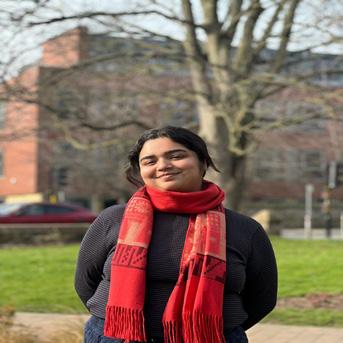


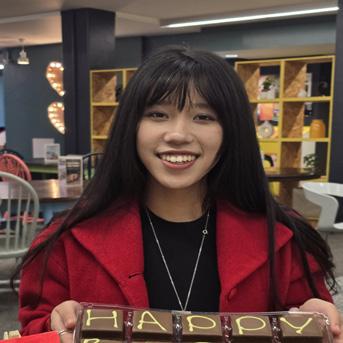
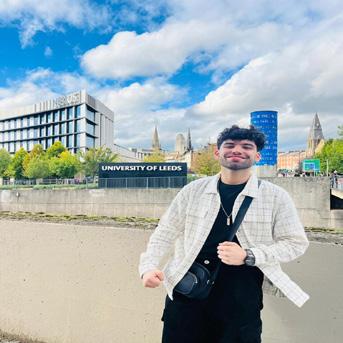

Why are you running?
Dubem Okeke:
As an international student myself who has now completed my third year at Leeds, I know what it feels like to arrive in a new country and have to figure out so much at once.
You are not only adjusting to a new university. You are adjusting to a new system, a new way of living, and a new environment, often without the support networks you would normally have at home. Over the years, I have seen how international students can be welcomed in principle, but still left to struggle with practical issues that shape everyday life, from opening bank accounts, to understanding renting in the UK, to dealing with housing barriers like guarantor requirements.
I am running for International Experience Student Executive because I want to make international students’ lives easier in real, practical ways, and help make Leeds feel like a genuine home away from home, not just in words, but in reality.
I also care deeply about how students experience communication, confidence, and belonging. For many international students, speaking in a second language or having a different accent can affect how comfortable they feel participating, even when they are capable and knowledgeable. I want to help build an environment where students feel heard, respected, and confident enough to fully engage in university life. I am running because I want this role to focus on real issues, real support, and real belonging for international students.
Chien Lu:
As an internatinal student I relate so much with the struggles we face, being in a whole new place and having to adopt to a new language, culture and everything else in life. I just want to make it a little much more easier for everyone coming from far away.
Vandit Kapoor:
As an International Student, I have experienced firsthand the gap between arriving in Leeds and feeling truly ‘at home.’ I’m running because I want to turn my personal navigation of these challenges into a smoother roadmap for others. I believe the International Student Executive shouldn’t just be a figurehead, but a relentless advocate who ensures our diverse voices are at the heart of LUU’s decision-making, not just an afterthought and also that students voices are actually heard.
Diksha Soni:
Im very passionate about this role. Instead of merely talking about change, I want to actually make a difference, which is why I’m running for this position. I’ve noticed places where we can enhance opportunities for everyone, teamwork, and communication, and I want to contribute to making those improvements. Leadership, in my opinion, is about listening, comprehending other viewpoints, and acting in a way that is advantageous to the group as a whole. I’m driven, trustworthy, and prepared to put in the effort required to advance. I get to share my thoughts, help others, and contribute to creating a supportive atmosphere where people feel appreciated, listened, and inspired to achieve.
Arushi:
When I arrived in September as a PGT student, I became a Student Rep almost immediately in my role as the PGT Faculty Officer for the Faculty of Social Sciences. What started as wanting to make my student experience better, quickly became a community activity I couldn’t step back from. The majority of students I represented were international students, and the concerns I kept hearing weren’t niche complaints but were systemic gaps. Support that existed but was invisible. Resources that arrived too late. Experiences that varied wildly depending on which faculty or school you happened to be in.
Being a Rep gave me something rare: the chance to interact with students from across the globe and across entirely different areas of study. That breadth changed how I see the international student experience- it isn’t one story, it’s hundreds, and yet so many of the frustrations are exactly the same. Mitigating these frustrations is what I want to champion in my role.
Working with LUU also showed me something I hadn’t encountered before, what student-run leadership looks like when it genuinely works. Decisions made by people still living the experience, not just administering it.
I’m not running because it looks good. I’m running because I started something, I know what needs fixing, and I want to finish the job well.
Arushi Guha “Dubem” Chukwudubem Okeke
Diksha Soni
Faria Fairooz
Katrina Liu (Yalian Liu)
Manya Singh
Megwant Kour Sawera Kanwal
Sebastian (Chien Lu)
Vandit Kapoor Diane Wu
Katrina Liu:
I started working as International and Postgraduate Officer last year, I focusing on student finance like more tuition payment plan, and support workshop/ education on inclusive community building. I set up these foundations, and I want to continuing these works.
My motivation comes from personal experience. I was there struggling financially and unable to pay my tuition fees on time and then faced documentation issues that led to losing my part-time job. I experienced racism, and I constantly worried about my future in the UK after graduation. These challenges are not unique to me; many international students are going through the same difficulties right now. That is why I want to continue working on tuition fee policies, building a truly inclusive community, and lobbying for fairer government policies.
At the same time, the political environment in the UK is becoming increasingly anti-immigrant. Over the past year, I have been involved in national lobbying efforts on issues such as the Graduate Route visa, the International Fee Levy, and the Gaza 40+ movement to support offer holders in Gaza. But there is still much more to be done. I want to continue strengthening these campaigns, amplifying student voices, and pushing for systemic change that ensures international students are treated with fairness and dignity.
Diane Wu:
I am an international student, and I believe this position matches my background very well. I’m also passionate about representing and supporting international students, which is why I’m here.
What are the most pressing challenges international students face, and how would you advocate for systemic improvements?
Dubem Okeke:
The most pressing challenges international students face are structural, not just personal, and housing is one of the biggest examples.
As an international student myself, and now having completed my third year, I have both experienced and seen how difficult it can be to settle into life here while navigating systems that were not designed with international students in mind. Housing is a major issue. Many students face guarantor requirements, high upfront rent demands, limited options, and unclear processes. A question many of us end up asking is: how are you expected to have a guarantor in a foreign land?
I would advocate for systemic improvements by pushing for stronger, earlier, and more practical housing support for international students, including clearer guidance before arrival, better signposting of guarantor options and alternatives, and stronger collaboration with trusted housing services and providers. International students should not be left to make high-risk decisions with incomplete information.
Beyond housing, transition support is another pressing issue. Students often arrive and must immediately navigate banking, healthcare, transport, and university systems at once. I would push for a more joined-up and practical transition experience that supports students before arrival and through the first weeks of term.
Finally, I would advocate for stronger belonging and participation, especially for students who may feel less confident speaking up because of language differences or accent bias. International students should not only be present at Leeds, they should feel heard, respected, and able to fully take part.
My approach would be practical, evidence-led, and collaborative: listen carefully, identify recurring barriers, and push for changes that improve students’ everyday lives in real terms.”
Chien Lu:
Cost of living is definetly one, my advocations would be to try and get students to actually KNOW about the support available, especaially in THEIR languge as these often don’t exist in countries we come from, let alone understand them in English. Second is the connection between the University and each international communities are WAY TOO WEAK, advocations will simply be to expand the international office for us to be able to branch out and actually be part of, not above or behind, the communities.
Vandit Kapoor:
The most pressing challenges for international students at Leeds are financial exclusion, career-path uncertainty, and untapped social connection, all of which require systemic solutions that benefit our entire campus community. To address housing, I will lobby the University to expand its Internal Guarantor Scheme, ensuring students aren’t forced into exploitative “rent-upfront” traps simply because they lack a UK-based guarantor a move that sets a fairer standard for all renters. Regarding employability, I will push the Careers Centre to host “Visa-Literate” networking events that connect global talent with licensed UK employers, ensuring our degrees lead to tangible careers which currently is not there for postgrads especially master’s students. Finally, to bridge the gap between our diverse student groups, I will advocate for a systemic Global Peer Mentorship program that pairs students based on shared academic passions and hobbies. By moving away from separate circles and toward shared experiences, we create a more vibrant, globally connected Leeds for everyone. Systemic change requires a seat at the table where budgets are set, and I will ensure that international student welfare is a core pillar of university policy, creating a campus where every student has the resources to thrive.
Diksha Soni:
High tuition costs, unclear visas, housing constraints, few job options, and social isolation are just a few of the significant obstacles faced by international students. Both academic achievement and mental health may be impacted by these pressures. I would support increased representation of international students in university decision-making and work with groups like the National Union of Students and the UK Council for International Student Affairs in order to promote systemic changes. Students may encourage colleges and governments to provide financial assistance, enhance visa procedures, build more affordable housing, and bolster culturally sensitive wellbeing services by using surveys and data to draw attention to these problems. By working together, we can make sure that policies more accurately represent the needs and contributions of international students.
Arushi:
From my experience as a student and as a Rep, three challenges consistently rise to the top.
The first is information poverty at the moment of highest need. International students arrive with an enormous amount to process, and the induction window is tiny. Students discover support - academic writing help, mental health services, financial guidance - months too late, or not at all. This is a communication and design problem, and it’s solvable. Systemic improvement means signposting resources a continuous process embedded into the spaces students actually use, not a oneweek event.
The second is inequality of experience across faculties. Two students paying similar international tuition can have radically different levels of support depending on their school. That is a postcode lottery inside a single institution, and it’s indefensible. The fix is pushing for university-wide minimum standards so that quality of support isn’t determined by which school or building your lectures are in.
The third - and perhaps the most underestimated - is isolation. Academic integration is one thing, genuine belonging is another. International and mature students frequently find themselves on the outside of university social and cultural life, not by choice but by design. Societies that weren’t built with them in mind, events that don’t reflect their schedules or finances, a student culture that can feel impossible to break into. Systemic improvement means actively integrating international and mature students into academic and cultural societies - creating spaces where community is built across difference, not despite it. I also intend to bridge the gap between ‘international’ and ‘domestic’ labels by reclaiming the term ‘Global’ - a word that includes everyone.
Across all three, my approach is the same: build the evidence base through student feedback, work within existing structures, and hold the institution accountable through transparent reporting. Change doesn’t require reinventing the wheel - just consistent, informed pressure until it turns.
Katrina Liu:
A rising anti-immigrant narrative at the national level continues to shape how international students are perceived and treated. This narrative does not only affect university students; it is spread across the whole UK. It impacts prospective students, current students, and graduates. Fewer opportunities are available for future students to come to the UK to study. Current students are facing systemic racism and exclusion, and many local enterprises are reluctant to hire international graduates because the sponsorship threshold is too high.
The anti-immigrant narrative is largely driven by the government, not the whole society. We need to make our voices heard. We must lead campaigns, strengthen national lobbying, gather allies to stand with us and speak with us, and involve universities as well as stakeholders beyond campus, including local residents, city councils, MPs, enterprises, and other partners.
There is plenty of data showing that international students already make significant contributions to the UK, including bringing 42 billions in income to the economy. Yet the government continues to frame the discussion around “earning the right” to stay, as if international students are not already contributing.
To advocate for systemic improvement, we need collective action, data-based arguments, and broad coalition-building to challenge this narrative and push for fairer policies.”
Diane Wu:
International students often face several important challenges, such as adapting to a new academic system, language barriers, financial pressure, food differences, and social isolation in a new environment. Many students also find it difficult to understand university resources, visa policies, and rules about part-time jobs. These problems can create extra stress during their studies.
As an International Experience Student Executive, I not only want to strengthen the connection between international students and the university by organising events such as cultural festivals, but also encourage international students to participate more in the classroom, campus life, and part-time work. For example, I would suggest improving the student feedback system for teachers with clearer scores, so that international students can better express their learning experiences. I would also suggest adding more international food options in the luu canteen to help students adapt to different food preferences. In addition, the university could provide more part-time job opportunities that are suitable for international students, so they can feel more involved in the local community.
Furthermore, I would promote more inclusive social and cultural activities to help international students build connections with local students. I would also work with different university departments to make support services easier to access and more responsive to the needs of international students. My goal is to make sure international students not only receive enough support, but are also heard and represented in university decision-making.
Going for: Arts, Humanities and Culture Engagement Leader
How can you foster a sense of academic identity and collaboration across diverse Arts and Humanities courses?
Jasmine Briggs:
The Humanities, Arts and Cultures Faculty is so broad, so it’s a big job! In this role I would try my best to make the bureaucracy meaningful so that students in this faculty can see the results of their feedback, especially to making sure students are satisfied with the way they are taught in seminars. I would also facilitate more opportunities for students within this faculty to exhibit their creative work, and have these events promoted throughout the faculty.
Tongyu Zhou Jasmine Briggs
Going for: Engineering & Physical Sciences Engagement Leader

What strategies would you use to ensure student feedback leads to tangible academic improvements?
Emma Chaloner:
I will ensure that there are clear and accessible ways for students to share feedback, such as QR code and a face-to-face conversation. Then I would make sure students’ ideas are turned into practical solutions, supported by clear data and evidence, and push these changes forward. Most importantly, I would keep students updated so they know how their feedbacks lead to real improvements
Going for: Medicine and Health Engagement Leader

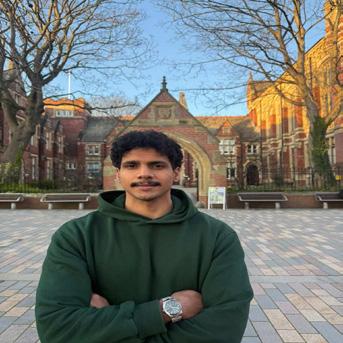
How would you strengthen academic representation and community for students in Medicine and Health?
Amirtha Varusini Sunthera Pandiyan: I want to strengthen academic representation by creating clear, consistent feedback systems across the new faculty including termly “You Said, We Did” dashboards and a simple FMH/FBS guide explaining how LUU support works. I’ll introduce cross-year study circles and mentoring for Psychology and Biomedical Sciences, and push for proper revision resources when assessments change, so no cohort is left without guidance again.
For employability, I’ll run diverse career panels and a merged Alumni Series covering clinical, research, public health, charity, lab, private sector and alternative healthcare routes. I’ll work with the Careers Centre to fix the JobLink visibility gap and co-create more faculty-specific opportunities, including Psych internships. I’ll also push for transparent placement outcome data so students know their real chances and can prepare effectively.
To build community and inclusivity, I’ll also keep a termly student wishlist open and support students to co -deliver top ideas, so everyone feels a part of the faculty of medicine and health sciences.”
Lee Jun Siong:
Definitely listen to what each individual students course reps and school rep in faculty in medicine and health have to say regarding their concerns and feedback about their courses, placements and anything really. This could be done by having weekly drop-in session with fellow students and representatives which would allow me to gauge and report on any concerns put forward by them. I can then raise the issues with students executives such as academic experience student executive to put forward suggestions for the University’s Senate.
Salma:
“To strengthen academic representation within the Faculty of Medicine and Health, I believe the most important step is ensuring that student feedback is consistently collected, clearly communicated, and meaningfully acted upon. Course Representatives already play a key role in this process, so one of my priorities would be to support and coordinate them more closely so that student concerns are effectively represented across all schools within the faculty.
I would also focus on improving transparency around what happens after feedback is raised. Students are often encouraged to share their views, but they do not always see the outcomes of those conversations. By working closely with Course Reps, School Reps, and faculty leadership, I would aim to ensure that students are kept informed about what changes are being discussed and implemented.
Alongside strengthening representation, building a stronger sense of community across Medicine and Health is equally important. With such a large and diverse faculty, it can sometimes feel difficult for students to connect beyond their individual programmes. I would therefore support initiatives that bring students together across courses, whether through faculty wide discussions, collaborative events, or spaces where students can openly share experiences and ideas.
Ultimately, my goal would be to help create a faculty environment where students feel listened to, supported, connected and lastly, where their feedback genuinely contributes to improving the academic experience for everyone.”
Mohammed Almahri:
I would provide more opportunities for placements and internships by lifting the burden put on the students to ‘know’ and ‘find’ these positions. I would help with how to find them by providing actual workshops showing us how and pushing the university to focus on our communities and provide the in-field placements and internships they keep telling us about, and the affordability to even be in those placements. I would also provide space and breaks for students undergoing rigorous courses with limited time, such as in medicine and other health sciences. Additionally, we want opportunities to meet each other and share ideas in and out of the program, making potential friends,
Emma Chaloner
Mohammed Ruhaan Butt
Shreya Shambhavi
Amirtha Varusini Sunthera Pandiyan Lee Jun Siong Salma Al Tawaya
Mohammed Almahri
isnt that what uni is all about? Making these social events between classmates, upper and lower classmen, and across faculties would allow these connections to form and ideas to develop! Recently, in my course, it was presented to us that our exam average has been low, and I believe this is usually because of unfamiliarity with the assessment structure. I will ensure past papers are provided at a suitable time, more than enough, and formative assessments, so students can understand what they are getting into.
Going For: Social Sciences and Environment Engagement Leader


How would you create more connections across such a broad and diverse faculty?
Reem Baloch:
I think despite the diversity across Social Sciences and Environment courses there is a common denominator that connects the students- ambition. We have the drive to want to do everything we are capable of. Unfortunately we don’t always get the right opportunity to do so, therefore I believe my ideas will help bring us all together.
Millie Balu:
I would use my existing connections from the School of Earth and Environment to expand and diversify the network, considering the equal importance of both Social Sciences and Environment. I thing that faculty-wide meetings are a key forum to share ideas/approaches and for schools within the faculty to support one another. I believe that the broad and diverse nature of the faculty is a benefit and so would take advantage of this for the better.
Going for: LGBTQ+Engagement Leader

How would you gather and respond to the diverse needs within the LGBTQ+ community?
Ash Mallen:
LGBTQ+ spaces are so diverse and intersectional, particularly within our university community. I aim to ensure all facets of the community feel properly represented and engaged with. I would directly reach out to student groups, understand
the needs of the community in a day to day setting, and get to know and properly listen to every identity and their needs. As much as I represent many factors of being queer, I could never speak for everyone. My biggest goal is to ensure that I give each and every queer person at LUU the opportunity to speak up, and feel liberated. I love LUU, and the people within it, and this new role within the student exec team is such a wonderful addition. I only hope to make meaningful, positive and active change within our union.
Going for: Gender Engagement Leader

How
would you address gender-based inequality within Union spaces and student life?
Kelsey Wittner: ‘Working toward a gender neutral campus’
- Making gender neutral bathroom facilities available in every school across campus.
- Creating female only exercise/sports sessions and spaces.
- Creating regulated spaces exclusive for trans medical care.
- Removing barriers to formal name changes at university & supporting Deed Polls.
Campus currently has very limited gender neutral facilities open to students, and many of the existing bathrooms are disabled bathrooms. My aim is to create more single cubicle bathrooms gender neutral, and steer away from the idea of using designated disabled bathrooms for this purpose. Trans and Non-binary students deserve to have spaces where they feel safe, without needing to use a disabled bathroom. Transness is not a disability, and the university needs to make change to reflect this.
I plan to rally for safer spaces for women in sports and exercise at University of Leeds. I find that the current gym space at The Edge is often intimidating and overwhelming, particularly for those who identify as female. I hope to work with The Edge to come up with a way to open a space exclusively for females to exercise in the means of female only swim sessions, studio hire, and classes.
In terms of trans care, I would like to create a space in LUU for trans students to have access to a clean space to take medication and other relevant gender care. At the moment, there is no dedicated place for this to happen, which pushes students to use unhygienic spaces. I will work to provide a regularly cleaned room used exclusively for these students to have a clean, private, and safe space for their personal care.
Please take the time to read my candidate statement if you would like to know more about how my work will change the student experience at Leeds.
Milie K Balu Narayani Gawande
Reem Baloch
Ash Mallen
Tee Smith
Kelsey Wittner
Going for: Disabled and Neurodiverse Engagement Leader

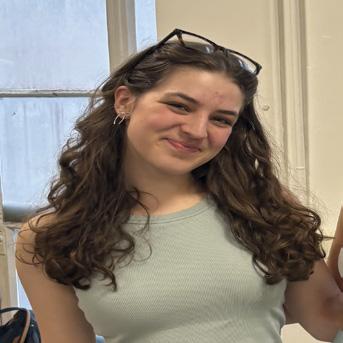

What does true accessibility look like at LUU? How would you implement it?
Lula Hoffman:
First and foremost, because I CARE. I am a long-time disability activist as well as a disabled and neurodivergent student myself; I am also a wheelchair user with high access needs and know all too well how often my community gets left behind. I have been the Liberation Students Committee Disability Rep for two years now - so for two years, I have listened to my fellow students and put in extensive community-building hours; run campaigns; advocated and faught tirelessly for our needs; worked to improve facilities on campus including trying to get the Liberation Hub designated as a sensory room and having a stash of spare mobility aids there for those who need them; and begun fortnightly Peer Disabilty Drop-Ins for anyone on campus to engage with. This means I know the needs of the disabled and neurodivergent student community really well, and I have the skill set to advocate, fight for, and provide for them! I know I would do a fantastic job as the Disabled and Neurodivergent Liberation Engagment Leader; and I would love the chance to keep listening, learning, and fighting.
Yulin Li:
To me, true accessibility at LUU goes far beyond ramps and lifts. It’s not just about physical access—it’s about emotional safety, cultural understanding, and the confidence to ask for help without fear of judgment.
As someone who lives with both physical and mental disabilities, and as an international student, I’ve experienced first-hand the invisible barriers that exist within support systems.
True accessibility looks like:
Support that considers the whole person
It means recognising that a student with a physical disability might also carry psychological weight—shame, fear of being seen as “different,” or anxiety about using accessible facilities. It means designing services that are not only physically accessible, but also emotionally safe.
Rose Arcos:
“There is no one right answer for true accessibility but for me it’s about transparency, communication and education.
It’s about providing information of what to expect, what is needed and what adjustments are possible so that individuals are able to participate with confidence. It’s about fostering discussion and education, as to constantly evolve how we do things. And it’s about realising there is no one right answer that works for everyone, but recognising differences and removing unnecessary barriers to their inclusion.
I would strive towards improving accessibility by: providing easy-read information PDFs for all union and society events, proactively offering adjustments rather than asking individuals to design their own, holding additional training and awareness programmes for community leaders, providing mental/financial support to tackle the additional barriers many just don’t see and engaging with my community to hear, uplift and represent all voices.
There is no one right answer to accessibility but a commitment to constantly listening, learning and evolving is how we can get there. This is exactly what I will bring to the disabled and neurodivergent engagement leader role.”
Going For: Social Sciences and Environment Engagement Leader
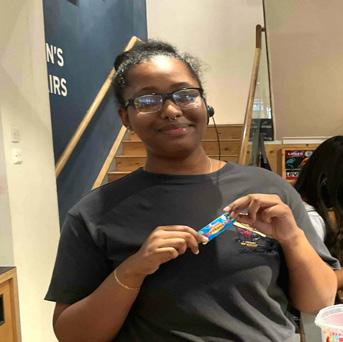
How would you amplify the voices of racially minoritised students within Union decision-making?
Tia Bish:
To amplify a voice is not just about giving people the platform but to make sure someone is actively listening on the other end. If I was elected race and ethnicity engagement leader, I would be one person. There are 40k students and 21% of this are REACH students. Therefore to amplify racial minority voices within the Union decision making I would:
• Create a team. Consisting of: Elected representatives, appointed representatives from cultural socities and open places (for undergrads, post grads and international student outside of clubs and societies).
• Establish a liberation veto. On all Union policy affecting REACH students. This formalises the need for the union to stop, listen, reflect and work with affected students, rather than sweeping our concerns under the rug.
• Implement reverse mentoring. Group senior staff or elected officers with REACH students. Give students the chance to talk directly and educate senior leaders.
Yulin Li Rose Arcos Lula Hoffman
Eve Groombridge
Emmanuël Richard Jah Janeeta Rahardjo
Tia Bish
This therefore would amplify voices as it would give students more tangible power, embedding lived experiences of REACH students into the creation, scrutiny and accountability of all Union decision making.
Janeeta Rahardjo:
The problem is not as simple as white versus everyone else. The deeper, harmful issue is that we as people of color also subconsciously group each other into boxes, ranking and othering each other in ways that rarely enter mainstream race conversations. Division exists between minority groups (e.g. some Southeast Asians, including my own community, stereotypically labeled “Jungle Asians”). Division can even exist within a single ethnic society, driven by upbringing differences, cultural hierarchies, and language barriers.
My goal as a Race and Ethnicity Engagement Leader is to deconstruct this segregation from three directions simultaneously: (1) addressing the internalised suppression that leads students to hide their identities, (2) dismantling the cliques and hierarchies that fragment societies from within, and (3) challenging the systemic exclusion embedded in institutional language and policy including discrimination against ethnic-sounding names, one of the greatest concerns faced by students of color entering today’s UK job market. My practical policies will be further explained in my campaign and manifesto.
These emerge from conversations I have already been having. As an extroverted, social butterfly international student from a racial minority, I have made friends ethnically from over 40 different countries within the University of Leeds alone. I have been given a rare window into struggles far beyond my own experience because I created spaces where people felt safe enough to share them.
Most advisors on campus are UK nationals, posing invisible barriers for some students struggling with language and cultural differences. I have seen minorities open up to me in ways they have not to those in professional roles. That speaks volumes about what a Race and Ethnicity role demands: a listener who is already trusted and connected all over campus.
My goal now is to expand that safe space and make it official.
WHO WILL REPRESENT YOUR VOICE ON CAMPUS?
MEET THE CANDIDATES FROM 11 MARCH, ASK QUESTIONS AND EXPLORE THEIR IDEAS.
Vote 16 – 18 March and win your share of +£2500 in incentives.





MUSIC
THE MODERN PROBLEM:
REVIEWING HAMNET AS A REIMAGINING
A decision must always be made when approaching a period film: How much do we care?
her sobbing and makes her see sense. You see, her husband, he is also sad. The awful trick is in making us think that this is what Hamlet is about.
Upon which scale is the intersectionality of ‘Then and Now’ weighing largest? Is it a modern film? Obviously, yes. Our angle of vision is limited when looking back, as we can’t help but look down. Our imaginings are apocryphal at best, but the comes only with the admittance
So, this is a modern film, an inter pretation, a “reimagining” (take note of that word). Imaginings superimpose each other like sleets of snow, an exercise Shake speare has been thoroughly subjected to for four centuries, with no hope of thawing. It is a tale for the modern age; that is to say, we get to pick and choose. We pick the wife (Agnes, not Anne, re member where our heads are at: 2026). We simultaneously mystify and demystify the famous figure, reducing him to the arche type of the working class poet bullied by his father, while reducing his poetry to a simple, straightforward excess of emotion: genius comes from how bad you feel. His slap dash courting consists of a retelling of Eurydice and an appeal to the masses through grand insult, adopt ing seduction strategies from “Bridgerton” and

No matter, it isn’t his story- such an act would require confidence and clarity, what we have are vague hand-me-downs of trends. Agnes, then, is our hero: an adult Disney Princess who prefers plants to people, has a pet bird, a perennial red dress, and doesn’t want to talk to boys. Until the boy jumps about with a fat grin, asking to be wed. The next thing we see is sex.
The great love story now dealt with, we can move on to the cracks of the
In this film, we pick and choose. We pick and choose the simple bits that fit the purpose, and as some Netflix actor swans on to deliver one of humanity's greatest achievements, and the music rises, and the background actors cue us into the demanding reaction, and Spielberg' s name rolls up on screen, that purpose becomes clear. It is the Hollywood intuition of the cinematic experience as an overload of the senses, emotional or otherwise, using strategies and worn-out archetypes drenched in a mythology antithetical to where we should be heading. The film thus opened and laid out like this, I can now tell you what I really think.
I think celebrity loyalty blinds us to story. I think emotion is cheaply sold. I think this latest snow sleet is just cheap American pastry glazing. I think that, thin as it is, it may not melt in time before next winter. I think this is a sign of the times. I think that children dying is sad and that fact shouldn’t be exploited to make audiences bow their heads in solemn respect. I think that death is something we should all be thinking about. I think “Hamlet” is a good starting point for that, and that this film is an act of cowardice.


I do think Buckley deserves an Oscar. For our sake, and the sake of what we are sold, I hope she doesn’t get it. Words by Oscar Glanfield
Netflix-Warner Bros
Discovery Deal:
What About Cinema?
It has been more than two months since Netflix dropped a time-bomb onto not only the cinema industry, but the film industry as a whole. The situation further complicated with Paramount’s bid and Trump’s purchase of bonds, officially involved in the merger. There were fears, anxieties, desperation, a wave of despair from the cinephile community, and more of that from fans.
It is almost an established fact that we have entered the age of streaming, with the unstoppable rise of streaming platforms and shifting viewing behaviors suggesting a bleak future for cinemas and theatres. People use their phones while watching films, preferring restless scrolling to sitting down for two hours.
Cinemas are a hustle, people are loud and movie tickets are expensive. It seems inevitable that streaming platforms are preferred over the cinema for modern audiences. It is simply more cost-effective and flexible — who would rather commute to a confined space to watch a film with strangers than the comfort of your own home?
Many deem Netflix as the big villain,
ting down. People are sick of live-action remakes and sequels, yet original IPs are not getting the attention it needs to sustain new productions. Big Blockbusters are flopping and smaller productions are losing fundings, it is a vicious cycle.
Netflix’s acquisition proves the success of streaming and points the direction the entertainment industry is heading towards. Viewing behaviours don’t change overnight, it is a range of factors, while this article argues for the declining quality of content. It is simple, films are not worth a cinema experience anymore.
Looking back to the “peak” of cinema, when people flocked to cinemas for franchises so massive that the whole world was talking about them. On a global scale, franchises like Marvel, Pixar and Avatar are what drove people into cinemas, films like Avengers: Endgame were cinematic spectacles. As these franchises fade away, so does the audience.
Successful entertainment is ultimately about creating content that resonates with audiences and keeps them engaged. What brings people back into cinemas are quality experiences
The Gryphon’s Oscars Special
Here are a few picks you need to discover or revisit before the Oscars.
Sinners
Our first recommendation is also one of the most widely-seen of the year. Ryan Coogler’s vampire music genre mash-up is celebratory, full of life, and just plain fun. Those of us who’ve fallen under its spell have been singing its praises since April, and Sinners is now poised to be a leading contender in most major categories above and below the line. Expect it to pick up a few Oscars (Original Screenplay, Casting, Song and Score seem to be its surest locks), and be nominated for most others across the board.
Frankenstein
Netflix’s latest partnership with Guillermo del Toro has proved… divisive, to say the least, both among cinephiles and avid readers of Mary Shelley’s original. Nevertheless, Frankenstein has become, if you’ll pardon the pun, a monster hit among awards voters, already receiving recognition in most below-the-line (that’s awards-speak for crafts) categories and even some accolades above the line. Jacob Elordi’s portrayal of the Creature has already earned him a Critics Choice award for Supporting Actor, so don’t rule Frankenstein out as a major player come Oscars night.

Chalamet’s performance is that rare synthesis of character and actor, a never-say-die maniac yearning to be one of the greats and never taking ‘no’ for an answer. The closest thing to a movie star for our generation, Chalamet’s career has been in pursuit of awards gold for years, and a statuette would not only cement his status, but elevate the status of the Oscars themselves especially in the eyes of younger audiences. If anything, Hollywood loves to be seen and loves a good narrative, and perhaps the Oscar for Best Actor is truly Timmy’s to lose
Hamnet
The awards momentum for Hamnet faces a bit of an uphill climb, but Jessie Buckley’s lead performance is still the favourite to win Best Actress. The film itself features a narrative about art as a coping mechanism for grief and trauma, about storytelling as healing. Though it features a slow start, Hamnet is undeniably powerful in its best moments (especially its final moments), and expect this sentimentality to garner a lot of goodwill amongst voters. It may not be a favourite to win Best Picture like it was four months ago, but don’t shut Hamnet out just yet.
One Battle After Another
F1
There are always a few summer blockbusters that end up claiming Oscars glory at the end of the moviegoing year, and F1 seems to be this year’s most popcorn-ready hit, especially below the line. It’s almost impossible to resist the old-fashioned craftsmanship at play here (featuring many Top Gun: Maverick alumni returning to the fold), from Claudio Miranda’s crispy, immaculate photography to the visceral sound design by a team of Oscar veterans like Al Nelson, Gary Rizzo and Gareth John – not to mention Hans Zimmer’s pulsing electronic score. Expect F1 and Frankenstein to be battling it out for the crafts categories on race day.
Marty Supreme
The surest, schwap-worthy bet here is obviously Timothée Chalamet, who turns in what other actors might define as their ‘performance of a lifetime’ and makes it look easy.
A sprawling multigenerational epic decades in the making from one of Hollywood’s most beloved (and as yet unrecognised) filmmakers, and featuring one of Hollywood’s cornerstone Movie Stars, One Battle After Another tells an all-too-relevant story for today’s political landscape, injects it with uproarious comedy, and looks good doing it. It’s easy to see why it’s this season’s clear, textbook awards frontrunner. It has won Best Picture at all of the ‘Big Four’ critics’ awards – the Los Angeles Film Critics Association, National Board of Review, National Society of Film Critics and New York Film Critics Circle – and is only the fourth film in history to do so. Only time will tell if this continues to be a historic sweep or the ultimate Oscars letdown, but this film remains the most likely of the bunch to take home Best Picture this year and the personal favourite of the year for many moviegoers, myself included.
Words by Azrael Tay
Trailblazers&THE
NECESSITY FOR EXPERIMENTAL MUSIC
Boundary Pushers
“And when in doubt, be extreme.” - Genesis P-Orridge, lead singer of Psychic TV, Throbbing Gristle and founder of COUM Transmissions.
The license and means to be extreme in the current environment of music, especially in the UK, has been eroding since the turn of the millennium. This has left behind both a trail of pioneers and a scarcity of hope for the future of experimental and industrial music. Among these pioneers were John Balance and Peter Christopherson of Coil, alongside Genesis P-Orridge primarily of Psychic TV. The rapid innovation of experimental music in the 1970s was spearheaded by figures such as these, who collectively took risks and explored ideas alien to their contemporaries due to the fertile creative environment of the time. Take for example COUM Transmissions, P-Orridge’s performance art collective. It was one of the first unapologetically boundary-pushing British art groups that, despite legal battles and initial hiccups, still paved the way for an age of innovation.
COUM Transmissions were unsurprisingly commercially unsuccessful so consistently depended on grants from Arts Council England, who provided them with grants of £1500 in 1974 and £800 in 1975. This was a necessary contribution to stimulate experimental music in a period of dominance for radio-friendly new-wave and synthpop. The British industrial scene subsequently developed until the early 2000s, with classics such as Coil’s The Ape of Naples (2005) and Current 93’s Black Ships Ate the Sky (2006) bookending the period. However, funding for experimental music had already begun to fall dramatically, with 90% of Arts Council England’s funding going to Opera by 1998 amidst overall funding consistently dropping. Therefore, the momentum of the industrial revolution had crumbled by the time of the deaths of John Balance in 2004 and Peter Christopherson in 2010, leaving behind a skeleton for change that had already begun decaying.
Since then, the scene has not recovered as its inherently inaccessible

nature means it is now impossible to sustainably produce boundarypushing art in the UK without funding. This is damaging in both restricting artistic boundaries for new artists, who have to conform to an increasingly streaming-centric landscape, and also in suppressing the domino effect that experimental artists can create in other genres. If not for expressive outsiders such as Genesis P-Orridge pushing the boundaries of mainstream music, the likes of Trent Reznor, Hanin Elias and Billy Idol would not have been inspired to challenge norms within their respective sub-genres. This uncovers a deep-rooted issue of experimental music losing traction.
Some of the most influential artists in music were initially seen as subverting musical norms and therefore treated with contempt. If not for the platforms afforded to artists such as This Heat, The Velvet Underground and Brian Eno, the mainstream would be significantly less diverse, and a plethora of their contemporaries wouldn’t exist. The slowdown of this innovation in recent times is the basis for various theories about the lack of progression in music since the turn of the millennium. For example, Simon Reynolds argues in his 2011 book, ‘Retromania: Pop-Culture’s Addiction to its Own Past’, that innovation in music ended around 1990 and “the avantgarde is now an arrière-garde”. This certainly has roots in the fall in funding and ambition for experimental music. Ultimately, without trailblazers the future of music will continue to be constrained to the well-trodden, commercially successful path.
There’s now a necessity for experimental artists to appeal to a stagnant mainstream for survival, thus abandoning their creative license to a record label or to the expectations of the Spotify algorithm. So are we set to lose the possibility of innovation and progress in music? Not entirely. Modern-day boundary pushers do exist, with bands such as Shearling, Xiu Xiu and Vangas still flying the flag for the future of experimental music, but these bands are getting fewer and farther between. As a result, the next generation of experimental artists are not guaranteed a chance to challenge expectations, and this could be detrimental to music as a whole.
Will Palmer
Jacquemus Goes Wild With ‘Le Palmiers’ at Paris Fashion Week
AlookatJacquemusatParisfashionweek
Jacquemus’ ‘Le Palmier’ collection for Fall/Winter 2026 was a whimsical reclamation of fun, every piece a devotion to modern re-imagination of that past. That’s exactly what the show was: from beginning to end a display of joy, a cheeky endearment which asked its audience to smile in the presence of colour, form, and confetti motifs. The 1980s side ponytails stood out on their own, subtly underscoring the collection’s nod to the era’s vibrancy. From neon spandex and leg warmers to the unmistakeable power suit and belt combination, it’s hard to ignore the influence of the 80’s on Simon Porte’s Jacquemus collection.
A large part of the collection’s success can be put down to its salutation to trends from eras past, whilst beautifully providing them with enough cultural relevance for right now. For example, a knitted dress-turned-jacket featuring a trailing cape and a higher than high neck. There’s an air of 1950’s Chanel about it, with soft shoulders and a tulip waist, equally playing with the subdued sexiness of the 90’s, all whilst delivering a fresh sensibility for the now, with waist-height pockets and a geometrically round shape. It’s a complete tease: the model hidden behind the dresses’ high neck and a wide-brim hat, yet staring back as if to claim that her coverage doesn’t equal concealment.
This sultry, laid-back, cool-girl character can be seen throughout the show, with the regular appearance of sheer dresses, cinched waists and mesh capes all suggesting a sexual tension that is not only fun, but hugely anecdotal. The collection suggests that emotional dressing is not separate, but totally intertwined: to be sexy is to dress for oneself, so dress to oneself is a joy, to be joyful when dressed is the most fun of all. It all comes down to the whimsy of the entire collection which allows us to invest emotionally in different pieces, relived entirely by the end of the show. It’s exciting to see neon skirts and confetti fabric, ties thrown over the shoulder, but I am quickly reminded of the dramatic reality supplied by monotone tailoring and brooding headwear. Fashion should make us feel, and ‘Le Palmier’ was like watching the emotional development of history in a most considered way. I saw anger, sex, joy, sadness, confusion and direction all parade in a most delicious way.

It would be contemptuous of me to ignore the shows closing garment.

Black dress. One shoulder. Empty wine glass. That’s it. The dress itself is fine, featuring a dangerously low one shoulder detail revealing the entire right breast of its owner, but the styling and intention is what provides it weight. The promiscuity of the model as she casually retains her dignity, presenting herself as the entertainer for the evening, sauntering across the checkerboard floor of the Picasso museum, tells us a story of dangerous fun. Jacquemus’ final look is fashion in its simplest form, and I loved it. From the frizzy side pony, to the unbalanced one earring and trio of arm bangles, to the jilted wineglass and the models ever so slight smirk, the entire look feels wildly natural. It’s simple, a homage to periods past and futures becoming, wrapped in timeless glamour.
Even the music choice for the show furthered the purpose of the entire collection, lines like ‘set me free’ and ‘love to love you baby’ echoing from alcove to alcove of the museum. A backdrop for the essential message not to deny oneself the emotional vulnerability so often disgraced, nor should we let fashion dull in the face of challenging times. No matter how politics, society or even culture is flailing at the turn of modern moral panic, we can rely on the art of fashion to uplift us. It feels very much like Simon Porte’s Jacquemus saying, ‘whatever. I’ll love to love, I’ll hate to hate, and I’ll damn well design to design in whatever way I feel like’. Le Palmier was certainly an opportunity to basque in the simplicity of enjoyment: experiencing art on it’s own terms.

ImageCredits:
Words by Ruby Tanner
Hold Fast
The Floating Bookshop
An independent bookshop, run by Chris and Victoria Bonnet, a Leeds-based couple, is making its mark as a local gem. The Hold Fast Bookshop is also known as “the floating bookstore”, as it is literally situated on a boat in Leeds Dock, opposite the Canary Bar.
Why a Boat?
Hold Fast represents the essence of Leeds, as Chris says. He tells me the word “Leeds” comes from the Celtic word “Lādenses”, which means “people of the fast-flowing river”. The owners have shared their lives on the boat for over 20 years.
The boat’s history dates back to 1946, when it was built for carrying coal from Wakefield to Dewsbury. Its fate was altered years later when Victoria revived it, creating this magical place of literature. Transforming the boat must have been difficult, I imagine. Many might be curious about how they keep the books pest-free in water. Chris tells me there are three inches of foam lining the whole boat, which keeps out the pests as well as keeping the boat warm during winter, and breezy in summer.
Not Your Usual Bookstore
Hold Fast is loved by its community of readers and authors. To my surprise, even the cute little wildlife gets involved, as there is a staircase dedicated to helping ducklings get on the boat!
It gives a breath of fresh air to the readers in Leeds. Chris and Victoria mindfully choose small publication companies, supporting small writers and making a big impact quietly. Being an empathetic person and holding degrees in literature and counselling, Victoria chooses most of the books. The owners believe that the bookstore is the best place to have interesting conversations, and they also host author-led events.
Hold Fast is more than just a bookstore. “I was a gardener, so I have put up a small section of plants which gives people a place to connect with nature”, says Chris. The plants are up for sale, and I bought one called “Kevin’s mom” (a type of rose plant).
Words by Sakshi Singh
Why Not Share the Joy of Reading?
When it comes to helping and giving back to the local community, Victoria and Chris are very passionate. They have an interesting discount and “credit forward board” system, which means buyers can give a small discount to others by getting credit stickers worth £1, £1.5, or £2. If future customers want a discount on the bill, they can take a credit sticker off the board, and the amount will be deducted.
Paperback or Online?
With the rise of e-books, Chris highlights the value of spending time in the real world with physical books, as he believes reading from paper is healthier for the brain compared to reading from screens. He recommends “Stolen Focus” by Johann Hari for understanding how to regain your focus from the digital world.
Books and Human Connection
The owners see books and literature as a form of human connection. “We as a society see fiction as the opposite of truth, but in fact it is a different form of truth”, says Chris. Victoria advises that if you don’t like a book that you started, just start a new one; otherwise, you will be stuck in a rut of never finishing the book. The previous book can be passed on to someone else, who may enjoy it more.
For me, this is important advice as a reader. We often get stuck not finishing a book, and the guilt keeps us frozen in the same place. We can always start fresh with new books, ideas, and an open mindset.
Stick a Fork in It!
The Lifestyle Food Column
Wild Garlic Season
This week I’ve felt the relief of the signs of spring. After two months of downright miserable weather, including 17 days (yes, I counted), without a day of sunlight in Leeds, it was comforting to feel even the weak warmth of sun on my face.
As the gruelling winter slips into spring, opportuni ties abound for the cooks and foragers among us. Few plants get as much attention amongst ama teur foragers than the annual bounty of wild gar lic. Springing up throughout damp wooded areas between late February and May, wild garlic, allium ursinium, is not like the bulbs you find in the super market. The edible part of the plant is the verdant green leaves, which have a more delicate garlic taste without the acerbic rawness of ordinary gar lic.
Whilst foraging might seem pretentious, sourcing your own food from nature was a common part of the British diet before the explosion of the super market in the second half of the 20th-century. Brit ish food supply is notably less self-sufficient than other European countries. According to the gov ernment’s 2024 Food Security Report, we import around 40% of our food, double the percentage that France imports. Of course, harvesting your own wild garlic won’t drastically increase self-suf ficiency. However, picking some of my produce makes me more intentional with my food. I’m less likely to waste when I know exactly where some thing came from and the labour that went in.
Safe foraging: a how-to
Foraging, whilst fun and free, isn’t without risk. Unfortunately for those new to foraging, wild garlic looks very similar to both Lily of the Valley
Wild garlic gnudi
This recipe for Tus

100g washed, blanched and chopped wild garlic
Add 3-4 tbsp of plain flour until the texture is soft, but not so sticky that you can’t roll into small balls. Drop these into boiling salted water. When they bob to the surface, gently remove with a slotted spoon. I toss them in a pan of foaming butter, with sage leaves, anchovies and crushed chilli, and fry

Fine, I’ll Just Delete TikTok
I’llbe the first to say that I’ve deleted TikTok more times than I’d like to admit. But the problem is that I always find myself back in the App Store installing it again. I’ve asked myself time and time again, why do I need this app?
The first answer that we arrive at is, of course, that it's addictive. There’s even an article in the National Library of Medicine coining this as PTU, Problematic TikTok Use. It's characterised as a psychological condition where people compulsively seek out excessive engagement with the app. Now, I may not go as far as to diagnose myself with this condi- tion; however, it does make you think about our behav- iour towards this square widget on our homescreens.
So, I wonder (and I hope others can relate), am I relapsing by constantly redownload ing it? Now, of course, we are talking about this in a very light sense, but the problem remains: what is it that gets me to the app store each
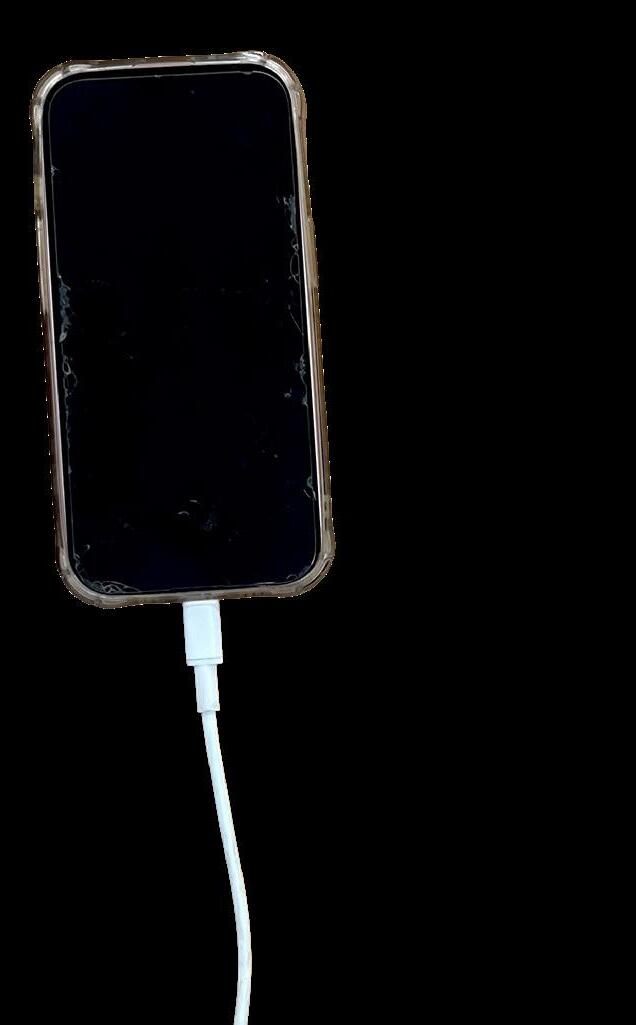
One reason I think this occurs is that I simply miss out. When my housemates are singing the new popular sound or quoting a viral TikTok, I’m left literally baffled. It sounds shallow, but I sometimes feel I’m missing the punchline by not being as plugged in as they are.
What’s hardest in this inter nal battle is I know that I would be better without it. Even the sound of that makes me sound like I'm in some toxic rela tionship, but here’s the thing, I am! I’m sure I would not only be more productive but also more creative. TikTok’s algorithms are designed to keep you there scrolling; more engagement means more profit. Yet for me, more engagement means more time lost.
If you’re like me and want to break out of this chokehold this silly app has over you… Well, I’m not sure. We just have to delete it and hope for the best.
Words by Alaina Charles
Words by Em O’Riley
“Real Photographers Use Film!”
Questioning the beliefs of Burnie AKA “The OG”
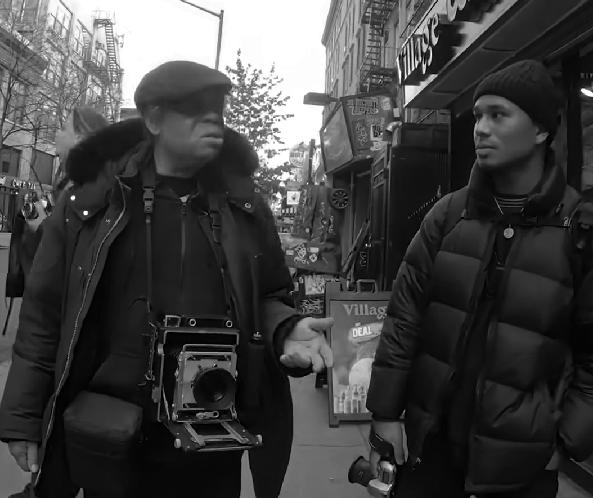
If you’re interested in photography, you may have seen this recent series of viral videos made by photography influencer Ayrton Kaleo (Kaleo.co on Instagram). In case you haven’t, during the initial video, Ayrton stumbles across an old photographer, Burnie (newyorkmadness1), who shouts, “real photographers shoot film” at him whilst out shooting, arguing that no major gallery accepts digital prints. Ayrton immediately disregards this, proceeding to mockingly take photos of Burnie before he can prove his point. In the following video, Ayrton finds Burnie again, clearly feeling guilty about their interaction and lets Burnie prove his point. Burnie then offers to teach Ayrton how to shoot with film, even letting him have gear he’s been hoarding for over twenty-five years. What follows is a series of videos following Burnie (whom Ayrton nicknames OG), teaching Ayrton all he’s learnt about doing photography, with the two forming an unlikely friendship.
Whilst undoubtedly a wholesome and inspiring series, there are many questionable elements to it. For instance, there’s a part of me that feels this series was staged. Many parts, like Ayrton finding Burnie the following day in a large city like New York (which, whilst was in the same location they met, still feels unlikely to happen) and Burnie taking Ayrton under his wing and even buying him a film camera, feel either incredibly convenient or too good to be true in my opinion. Plus, if you go onto Ayrton’s website, you’ll even find clothing for sale related to the series, including a “real photographers use film” T-shirt, further making me question if this whole thing is just some marketing ploy. Whilst I won’t deny their friendship (with the two apparently exchanging voice memos every day), from these suspicious elements it would not surprise me if the two had planned out this series beforehand to encourage more people to shoot with film and coined the tagline “real photographers shoot film” as it’s quite an eye catching statement (I probably wouldn’t be writing this article if it wasn’t for it) especially in this physical media trend we’re in right now, but of course, this is all just speculation.
The biggest question on my mind, though, is the beliefs of Burnie himself. When I first saw that initial video, I agreed with Ayrton, and while I feel his attitude could have been better towards Burnie, I felt he was slightly justified given his rudeness and pompous attitude towards him shooting digital. Furthermore, I found another photography influencer named “trevorwisecup” who also made a video where he stumbles across Burnie, giving a more negative perception about him, claiming that he shouts “real photographers shoot film” at every digital photographer that passes and that every photographer he knows hates him.
After watching the series, I’m mixed on Burnie as a photographer. He does seem like a wise person who cares greatly about the artform, giving good advice to Ayrton on how to make your photography more artful and even states in the second
video that he’s not entirely against digital photography when used for commercial purposes like fashion photography, but believes that if you want to produce legitimate art, you should shoot using film. Personally, I do get where Burnie is coming from regarding his beliefs on digital photography. We live in a world where millions of photos are taken every second, and whilst that makes the medium more accessible than ever, I feel it also limits the impact photography has. One part of the series that really touched me was when Burnie explained how he got into photography, telling a story where he took a photo of a man nicknamed “The Colonel”, who supposedly never had a photo taken of him before, with Burnie asking how people are supposed to remember him when he dies because of that. A month later, Burnie meets The Colonel’s son, who tells him that he died, resulting in Burnie giving him the photo that he had taken, being the only photograph the son and his family had to remember The Colonel by. I feel in this age of mass surveillance and digitisation, it’s impossible not to be recorded, and as such, I do long for those days when taking a simple photo had much more significance, like in Burnie’s story
At the same time however, to completely deny digital photography as a legitimate artform just seems elitist and out of touch in my opinion. There are many things you can do with digital photography that are just not possible or harder to do with film, like editing them using Photoshop to create unique images alongside genres of photography like Y2K photography that can only really be done with digital cameras to get that retro look. The biggest barrier of all though, is accessibility. Sure, it’s easy for a guy like Burnie whose been doing photography for decades and has easy access to all the equipment you need, to say that real photographers shoot film, but that just isn’t possible for people who maybe can’t afford film or live in a small town that doesn’t have essential facilities like darkrooms and unlike Ayrton it’s unlikely that a legacy photographer like Burnie is just going to magically appear and offer lessons and equipment to them for free.
In closing, whilst film photography is a greatly important part of the medium that I hope continues to live on forever, to deny the existence of digital photography as a legitimate art form completely goes against the medium in my opinion. To me, it’s like denying different types of paint, such as oil paint, as art. While digital will never get that raw authenticity film photography can achieve, I feel we should embrace and celebrate the differences each medium holds. While real photographers may shoot in film, true photographers don’t gatekeep the art.
Words by Jack Norris

Alcaraz Makes History Down Under with Career Grand Slam
Jake Crapper
Carlos Alcaraz has become the youngest ever men’s Career Grand Slam winner, after beating Novak Djokovic 3 sets to 1 at last weekend’s Australian Open Final in Melbourne. At 22 years and 272 days old, he beat out previous record holder Don Budge by 91 days, capturing a record which had previously stood for nearly 88 years.
For tennis players, the career grand slam demonstrates a complete mastery of the sport, requiring a victory at the four major open tournaments: the Australian Open, Roland-Garros (also known as the French Open), Wimbledon and the US Open. Even this is more difficult as it sounds, however, as these tournaments present the challenge of playing on all surface types and in a variety of conditions.
Alcaraz joins an elite and illustrious group of only nine men’s players to ever complete the feat, proving how difficult a task a career grand slam truly is to achieve. Some huge names of the sport, Bjorn Borg or Andy Murray, for example, have
never accomplished the feat, and Alcaraz becomes the first of his contemporary peers, namely Jannick Sinner, to grace all four open victories.
It now seems impossible for Alcaraz to avoid the conver sation of true tennis greats, especially at such a young stage in his career. While still a way to go behind the grand slam title numbers of Novak Djokovic (24), Rafael Nadal (22) and Roger Federer (20), Alcaraz has proven himself as a near unstoppable force in the modern game, showing little signs of slowing down.
The final itself was an enjoyable affair for those Brits who tuned in at 8:30am on the morning of Sunday, February 1st. While the majority of bookies gave favour to Alcaraz, Djok ovic looked to turn back the years as he dominated Set 1 6-2, looking as though he was truly taking control of the match around halfway through the set. However, Alacaraz pounced

on mistakes and a strong serve in Set 2 to return the score 6-2, before comfortably seeing out Set 3 6-3 and, despite some rocky moments, eventually seeing out Set 4 of the 3-hour
The previous day, Saturday, January 31st, also saw the women’s final which, ending in somewhat of an upset, went the way Elena Rybakina, who faced world Number 1 Aryna Sabalenka. In an incredbly tense entertaining match, which required two sets for victory as opposed to the the final set was tied at 4 legs to Rybakina won back-to-back 4030 legs to clinch the thrilling final set 6-4 and take home the 2026 women’s Australian Open.
Premier League Sides Dominate Champions League Table
Jake Crapper
Controversial as the new league table format of the UEFA Champions League quali faction stage may still be in some expert’s minds, football fans were left salivating at the thought of 18 simulatenous kickoffs on Wednes day, January 28th.
This season sees the second implementation of a change in format for the qualifying stage of the competition. Since 1991, the then European Cup and now Champions League, has implemented some form of group-based qualification to the knock outs. However, beginning last season, the group stages were replaced with a singular, 36-team league table. Each team plays eight opponents, spread across home and away fixtures, to find a final standing after these games.

Following this, the top eight clubs automatically qualify for the Round of 16, while the 9th to 24th placed clubs are placed in a playoff bracket to decide who fills the remaining knockout spots. The bottom 12 clubs are automatically disqualified, with no chance to fall down to lower UEFA competitions.
This new format has brought with it some critique from fans and pundits alike, who complain about factors such as the unbalanced matchmaking for automatically qualified teams - ex-Liverpool centre-half and pundit Jamie Carragher mentions Liverpool’s first-round matchup with eventual treble winners PSG after placing first in the league. These arguments may be fair, but what is undoubtable is how much life has been injected into the early
Tributes Pour in for Snooker Legend John Virgo, Dead at 79
Jake Crapper
Snooker may have had it’s hayday in the public eye, but adoring fans and respectful peers were left shocked at the news that legendary player and commentator John Virgo had passed away on the morning of Wednesday, February 5th at 79 years old.
Being what can only be described as “the voice of snooker”, anyone who’s flicked past a game on the BBC has likely heard Virgo’s commentary, and any fan of the sport has heard “where’s the cue ball going” hundreds of times in his signature Lancashire twang.
Alongside over 40 years in the commentary box, Virgo also enjoyed a celebrated playing career. Despite never winning a ranking title, Virgo took home the 1979 UK Championship before it became a recognised ranking title, which includ-
ed a win against legend Dennis Taylor
Devastated fan Alex told The Gryphon: “Even as a young fan, John Virgo’s huge influence on the game was undeniable and though he is mostly known for his commentary, we mustn’t forget the rest of his incredible career. Watching the videos of his impressions back in the day shows us what a bright spark he was”.
Seven-time world champion and commentary partner Stephen Hendry also took to social media to share his condolences, saying: “Was only a couple weeks ago I was with JV in the commentary box at the Master’s, he was the greatest to work with. Very sad news, absolutely gutted”.
Virgo was an immense and charismatic talent and will be sorely missed.
stages of the competition - life which, at least this season, has shown the Premier League’s quality compared to its continental neighbours.
Five of the six present English teams finished inside the eighth place cutoff for automatic promotion: Arsenal placed in 1st following a 3-2 win against Kairat; Liverpool finished in 3rd after a 6-0 battering of Qarabag; Tottenham came just behind in 4th after a 2-0 win against Frankfurt; Chelsea cemented themselves in 6th after a 3-2 comeback win against Napoli; and Manchester City snuck into 8th place with a 2-0 win against Galatasaray. Only Newcastle finished outside of the automatic progression spots, finishing in 12th despite an impressive 1-1 draw to last year’s champions PSG. They’ll have a good chance at moving forward, however, drawing Qarabag in their playoff match and, while no walkover, the bookies tout Newcastle as the favourites to move on.
Is it finally Arsenal’s year?
Jake Crapper - Opinion
Despite us being a Leeds-based paper, as a university publication we’re bound to have a fair spread of football fans. And when you have a fair spread of football fans, you’re bound to end up with an even fairer share of die-hard Arsenal fans.
As a childhood Liverpool supporter, I’ve enjoyed a decade of taunting my Arsenal-supporting mates with a couple of Premier Leagues and a Champions League trophy, safe in the knowledge they’d never manage to get past us, let alone the deep pockets and annoying prevalence of Pep Guardiola at Manchester City, to finally get their hands on a Premier League trophy. And let’s not get started on a Champions League - Chelsea have the pedigree, that’s fair, but Arsenal have barely ever had a sniff!
I’ll admit, the last few years have been
pretty squeaky (not winning the league last season seemed an almost impressive feat) but luckily for me, Arteta has always helped me out and fallen at the last hurdle.
That was until this past month.
1st in the league. 1st in Europe. Final of the league cup, and fourth round of the FA Cup. On form, Arsenal are the best team in the world but, even worse, they barely look beatable on the pitch either. There is a very, very real possibility of an Arsenal quadruple this season. It’s enough to send a shiver down your spine.
Do I think they’ll do it? Probably not. Do I think they might walk away from the league or the Champions League with silverware, however? Unfortunately, I do. But, God, would it be funny if they didn’t.
Image Credit: Wikimedia Commons
The portrayal of Gaia - an insight into the sustainability of RAG fashion show
Words by Lucile Dudrey-Harvey
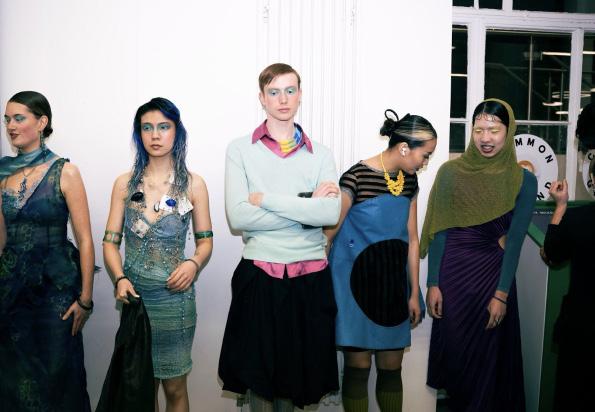
The 2026 RAG Fashion show centered around the Greek goddess of earth: ‘Gaia’. The event opened with a reading of a poem urging humanity to turn away from overconsumption and instead, “give into the land for excess.”
It was held in the Refectory dining hall at LUU, and as a result minimised the carbon cost of transport, as most students commute to campus via walking or cycling, only supporting parents or nostalgic alumni will have had to arrive by vehicle. This is especially impactful to the models, who are often flown in or delivered through private hire to such events, instead the show preparations were held downstairs in the union.
There was a sense of community at RAG that is often lacking in shows of higher grandeur and exclusivity. The audience was seated in the dining hall’s wooden chairs, and the beloved terrace bar served refreshments, the show was predominantly student run resulting in a familiar creative space for students to connect over a shared love of fashion and environmentalism. One minor oversight was the transference of drinks from glass to single us plastic cups upon entering the main venue, it would be advisable to look into an equally safe, but reusable option. Despite this, the overall economically conscious decisions are well fitting to the ideas of reusing instead of producing that was echoed throughout the show.
The duality of Avant-Garde fashion and underconsumption
Whilst the focus on upcycling and supplementation of second hand accessories by the design team is an encouraging contribution towards sustainability, the attire modelled does beg the question all experimental fashion does: Is it only destined for the runway? The pieces featured current trends, such as drop waist pieces as well as more striking ensembles
such as excessively torn clothing in the dystopian, city scape phase of the show, even a wooden shelf displayed on a torso. The four phases moved cyclically through earth, water and urbanisation. The unique atmospheres were created by scenic videos projected onto a screen, haze machines, LED and moving heads as lighting and music. These light touches in combination with the barefeet, natural hair and minimalist makeup in the two earthly phases was enough to keep the audience grounded. Giving a quiet reminder that superfluity can be detrimental to the clarity of the message one is attempting to convey.
One designer I spoke with, expressed they contacted the RAG team in 2024 and were given approval for their piece, which was not featured in the 2024 showcase, however was modelled in this year’s show. This student of BA Fashion Design Innovation was not encouraged to use sustainable materials during the creation process, which raises two important questions: how many pieces go unused in the modelling industry and how can environmentalism be separated from green-washing?
Though the piece was not intended to be part of the ‘carefulness in fashion’, that was specifically implemented by head of graphic design Mair Hobbs, its revival two years on supports exactly that; use what you have instead of producing what you want. Instead of condemning past choices, we can only look to the future. This is key in all conservation, much of the damage we have done is irreversible so we can only try to slow deterioration and look towards saveable habitats and species, not those already lost. As for the reuse of the clothing modelled, one key aspect of Leeds student life is the rampant culture of fashion, exploring layering, vintage pieces and repurposing, I myself frequently wear the belt of a skirt from a charity shop as an, albeit obsolete, scarf. So undoubtedly most of the creations have a future ahead of them, and even if this is not applicable to all, they are still prime examples of
how art can truly inspire change.
The extent of environmental consideration.
In an interview with Leeds University student Isla Brown, both a model of the show and nail-artist promoting her work on Instagram @islabrownnails, we delved further into how the event cultivated a shared love of nature. Isla contributed nail designs for models and a free appointment to the raffle which, alongside ticket sales and fundraising, contributed to the three selected charities: Behind closed doors, British Red Cross and MAP.
I found the lack of environmental cause to be surprising as the show was centred around greek goddess of nature ‘Gaia’, however upon further reflection I reminded myself of a quote by activist Anna Lappé: “Every time you spend your money, you’re casting a vote for the kind of world you want”. Isla and I discussed the nostalgia that comes with consumerism, particularly for our generation, the UK witnessed a significant increase in consumption from the 90’s to 2008. When discussing how the rise in digital advertising during the childhood of current students, led us into a materialistic mindset, Isla mentioned she particularly connected with ‘the idea of being forgiven by mother nature.’, a testament to the resilience of our generation in the face of the destruction that has long been in progress.
Though the £15,000 raised by RAG fashion show did not directly contribute to any environmental cause, the event as a whole certainly left all who attended reflecting on their own care towards fashion, inspiring creative innovation that does no harm to our planet.

Image credits, Bella Wright
Image credits, Bella Wright
US steps back from WHO - what happens next?
Words by Holly Thompson
On 22 January, 2026, the United States announced its official withdrawal from the World Health Organization (WHO). Having served its one-year notice period after Donald Trump announced its plan to leave in early 2025, the US department of Health and Human Services attributes his decision to the organisation’s mishandling of the COVID-19 pandemic, and its lack of independence from inappropriate political pressure by other WHO member states.
Trump claims that WHO is: “corrupt and mismanaged”, and that it demands unfairly high payments from the US: “world health ripped us off”, and now intends to redirect newly available funds to border security and military readiness. Trump’s long-awaited success - his initial move in 2020 was reversed by Joe Biden in 2021 - has serious health implications for the US and the rest of the world. In an age of rising antimicrobial resistance, how will this affect the future of global health?
Who is WHO?
WHO is the UN’s health agency comprising 194 member states and coordinates responses to global health threats through sharing knowledge; it issues advice but can’t compel countries to act. WHO also provides assistance to poorer countries - it offers vaccination campaigns and education on
“We
maternal and child health. Trump holds a highly critical view of WHO, claiming it provided a delayed response during the pandemic. In fact, WHO led many key initiatives including raising money for appropriate action and investigating treatments, proving essential to global vaccine distribution.
How will this affect the world?
The US was one of WHO’s major financial contributors - its leadership and funding enabled the smallpox eradication programme in 20 African countries in 1967, with the disease being successfully eradicated just 13 years later. The eradication of polio is similarly attributed to US backing. In the last 20 years, US funded programs have helped prevent over 90 million deaths worldwide.
Losing US funding may therefore disrupt vaccination campaigns and reduce support for potential new outbreaks. The current funding hole may end up being filled by private donors, which may in turn affect decision making. Small wealthy groups may not fully address global needs the way that current WHO programs do for vulnerable populations, as these programs often serve as lifelines and reliable emergency help. Some fear the nation’s unilateral stance may prompt other major funders to follow, weakening an organisation dependent on consistent international collaboration.
How will this affect the US?
The US’s departure from WHO will affect its own health security: it will lose real time access to disease surveillance and early warning networks, critical for protecting almost 350 million US citizens in any emerging outbreaks. These are more likely now than ever due to pathogen evolution, globalisation, and increased human contact with wildlife. Previously, there were 24 WHO collaborating centres at the Centres for Disease Control and Prevention and the National Institutes of Health, focused on US priorities such as cancer prevention. Excluding American scientists from research and response teams willreduce the US’s ability to protect itself, and will slow efforts to contain diseases like mpox and Ebola virus. The national and international consequences of this move will become clearer as the WHO adapts to the removal of a vital player and donor.
cannot grow metal ourselveles - how hu-
mane is the mining indus-
Words by Aimaan Mohd Ariff
“Have you ever wondered if humanity could survive without mining?” – I was asked this during one of my conversations among mining experts when I attended 2025 Annual Member’s Dinner hosted by Midland Institute of Mining Engineers (MIMinE). The question surfaces interdisciplinary understanding of modern society towards mining industry following current trends of implementing sustainability efforts into action for ‘greener’ Earth. Since the answer might be debatable, however, prominently, humanity could not survive without mining or at least, alternatives to mining are yet undiscovered.
For a quick reflection, let’s imagine you are sitting in your bedroom. If I ask you to look around and list number of items you assume would be product of mining, what is the answer that you might predict? Phone, laptop, bed steel, screw, clothes zip, honestly, it is pretty much everything you see in your bedroom. Mining has become part of humanity since the beginning of time. With mining, new materials are discovered, extracted and developed to serve multiple purposes across life aspects including technology, arts, architecture, energy and even agriculture. However, the growing concern is whether sustainable mining has put in place.
By 2023 alone, 23 million people across the world were living at stake since potentially harmful concentration of toxic waste was evidently found on flood-plains. This mainly due to chemicals leaching
rooted from over than 20,000 active and 150,000 abandoned metal mines. Besides that, mining project often were resisted by local communities especially in the rural areas where livelihood, land rights and cultural heritage were overruled by mining discovery, documenting 36,017 cases from 4,293 locations worldwide. For the goods of mining is received from other part of the world, this industry is seen as threatening to the Mother Nature since resource extraction and land/water pollution can rise rampantly if mitigation strategies remain unclear.
Recounting the event, I had an interesting conversations on the current development in mining industry with the experts. I have only known mining historically from British colonisation in Tanah Melayu or the Land of Malays during Industrial Revolution since it serves as driver for advancing economy model from agricultural to metal industry/processing. However, current mining technologies has evolved to shift their target to deep sea and asteroid discovery as alternative to underground.
Other than that, Anglo American, one of major global mining companies has made a remarkable history in which they purposely mine polyhalide for agricultural means formulating fertilisers. What a wonderful event to celebrate such sustainable advances.
Image depicts Aimaan Ariff (lfeft) incoming President of MIMinE, John Hind (right).
Tropical Rainforests Produce enough water to generate billions
Samuel Smith
Tropical forests generate enormous volumes of rainfall each year, strengthening the case for their protection as water scarcity and climate pressures intensify, according to new research.
A study led by the University of Leeds has assigned an economic value to one of the least recognised services forests provide: their ability to create rainfall for surrounding regions. The researchers found that each hectare of tropical forest produces about 2.4 million litres of rain annually, roughly equivalent to the volume of an Olympic sized swimming pool.
To reach their conclusions, scientists combined satellite data with advanced climate model simulations, reducing long standing uncertainty about how much rainfall forests help generate. They then applied a simplified economic assessment to estimate the financial importance of this rainfall to society and regional economies.
Their findings are striking. The team calculates that rainfall generated by forests in the Brazilian Amazon contributes around 20 billion US dollars each year to agriculture in the region. By comparison, current funding aimed at conserving or restoring the Amazon represents only a small portion of that value.
The study, titled Quantifying tropical forest rainfall generation, is published in the journal Communications Earth and Environment.
Tropical forests play a central role in sustaining rainfall systems at both regional and continental scales. Through evapotranspiration, a process in which the sun’s energy drives moisture from leaves into the atmosphere, forests help maintain the water cycles that support farming, drinking water supplies and energy production. Across the tropics, the study estimates that every square metre of forest generates about 240 litres of rainfall per year, increasing to roughly 300 litres in the Amazon.
Dr Jess Baker of the University of Leeds’ School of Earth, Environment and Sustainability, who led the research, described the findings as the strongest evidence yet of the economic importance of rainfall
produced by tropical forests.
“This is the most comprehensive and robust evidence to date of the value of tropical forests’ rainfall provision,” she said.
“Tropical deforestation is increasing, despite international efforts to halt forest loss. Our work highlights the vital role of tropical forests in producing rain. We estimate that the Amazon alone produces rainfall worth 20 billion US dollars each year. Demonstrating the financial benefits that tropical forests provide will unlock investment and strengthen arguments for forest protection.”

hydropower output and even the ability of remaining tropical forests to store carbon.
Co author Dr Callum Smith, also from the University of Leeds’ School of Earth, Environment and Sustainability, said recognising the link between forests and rainfall could help bridge divides between agricultural and conservation interests.
es to end deforestation by 2030, forest loss continues across much of the tropics. The researchers conclude that overlooking rainfall generation in economic and legal systems has hidden one of the most compelling practical reasons to safeguard tropical forests.
The research also reveals that many crops depend on moisture generated by forest areas larger than the fields where they are grown. Cotton requires around 607 litres of water per square metre, an amount equivalent to what two square metres of intact forest can produce. Soybeans need about 501 litres per square metre, match ing the rainfall generated by 1.7 square metres of forest.
The costs of forest loss are already mount ing. The team estimates that approximate ly 80 million hectares of deforestation in the Amazon in recent decades may have reduced rainfall related benefits by nearly 5 billion US dollars each year. This decline has consequences for food production, hydroelectric power generation and long term water security.
Brazil’s economy is especially vulnerable. Around 85 percent of its agriculture relies on rainfall rather than irrigation. Reduced precipitation and delays in the onset of wet seasons have already lowered soy and maize yields in areas with exten sive forest clearing. Beyond farming, reduced rainfall linked to deforestation threatens drinking water supplies, river transport in remote areas,
“Tropical forests make it rain, supplying water that is essential for agriculture,” he said.
“Recognising that crucial connection