Violence against women and girls labelled an ‘emergency’ by British Government
In December 2025, the government published a new strategy to tackle violence against women and girls (VAWG). Critical to this was the pledge of £1bn funding, with the aim to halve violence against women within the next decade. Under the West Yorkshire Police, VAWG is an umbrella term for crimes including female homicide, rape, domestic abuse, stalking, harassment and much more.
Following an epidemic of abuse and violence in the UK, VAWG has been labelled a national emergency by the government.
Central to the government’s plans is focusing on education to tackle the young boys prejudice views. The strategy, which has been named a “milestone” by women’s organisations, will focus on preventing harmful behaviour in boys by teaching them about consent, relationships and pornography during school years.

The government quotes that it wants to “back up its words with action”.
Kier Starmer said “toxic ideas are taking hold early and going unchallenged”.According to the Home Office, stats show that 40% of teenagers in relationships are victims of relationship abuse, and over 40% of young men hold a positive view of Andrew Tate.
Critical to this is the question of how it the new pledge will impact women in Leeds. In Leeds, there have been ongoing calls
to improve safety for women on the streets, especially for students on nights out, with an increasing concern about assault cases in Hyde Park. Following attacks, women have asked for more lighting in the streets to help improve safety. Particularly in the winter months, there are longer and darker hours, which have a significant impact on safety.
With the new VAWG announcement, hopefully, more funding will help to mitigate cases in high-risk areas and improve women’s safety. Currently, as part of the Leeds City Council’s commitment to end violence, they have part-
nered with WalkSafe to release an app to track location and journeys for women. Important to this is sharing routes and alerting contacts if you need help. Dr May Newisar, a lecturer in Architecture and Urbanism at the University of Leeds, also suggests that the planning of the city needs more consideration to protect women. When designing cities, she says that it is mainly men taking the lead in design who hold the assumption that safety is the same for all genders. However, this is not the case.
Funding needs to be used to improve the physical spaces in the city with the partnership of women and girls, ultimately to make spaces safe and enjoyable. Dr Newisar conducted a study on women’s levels of fear in public spaces across Leeds, with women sharing that they need to take a lot of safety precautions when walking, which is “very draining”.
The study highlighted that the city centre, Wood House Moor and the canalside were amongst areas of “unsafe experience”. With the new VAWG announcements, the hope is that this will be a chance for the government to respond to the problems in Leeds and help improve safety amongst women.
Arts & Culture Music & Clubs Photography Stranger Things - the dillemma of hype and an overblown budget Neve Cariad
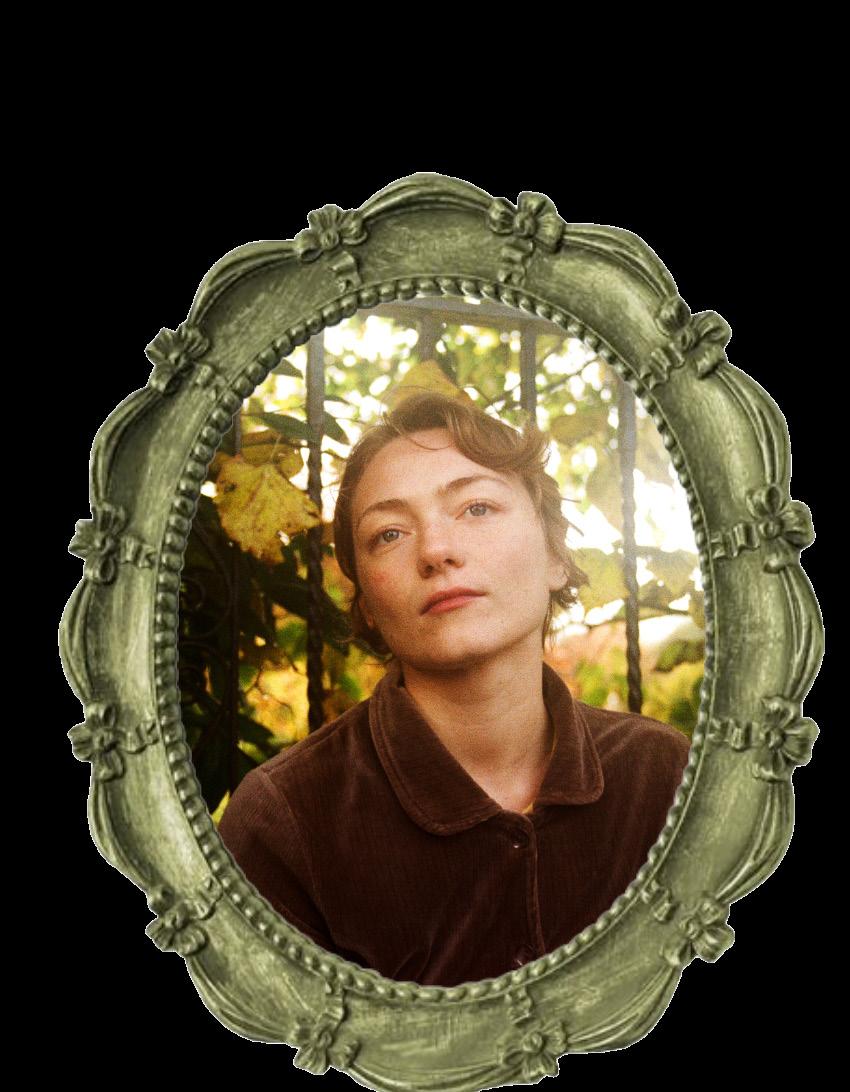
The Gryphon’s Francesca Lynes interviews the Welsh born folk singer
Berlin Captured
The Gryphon’s Katya Iwasko captures a visit to Berlin in photography
Zara Lake

The Team
Editor-in-Chief
Gabriel Morrissey-Limb
Deputy Editor
Daniel Brown
Heads of Social Media
Jess Cooper
Lucy Earson
Heads of Design
Erin Gascoigne-Jones
Phoebe Andre-Watson
Newspaper Associate Editors
Lana Conway
Momnah Shahnaz
Emma Wilkinson
Shakeal Zaman
ITM Associate Editors
Jess Cooper
Bethany Dunn
Arabella Wright
News Editors
Aliza-Kayan Ahmed
Raya Boycheva
Mishika Gupta
Zara Lake
Charlotte Prescott
Emma Wilkinson
Opinion & Features Editors
Sarah Al-Battat
Hannah Chohan
James Kendrick
Hattie Murdoch
Em O’Reily
Maja Wasielewski
Amelia Whatley
Shakeal Zaman
Sport Editors
Jake Crapper
Mina Jigau
James Morgan
Mrinalini Pretish
Science & Climate Editors
Cassia Bennett
Lucile Harvey
Anna Jackson
Rory O’Dwyer
Ruby Smith
Longoae Tembwa
Music & Clubs Editors
Daniel Brown
Millie Cain
Francesca Lynes
Arabella Wright
Arts & Culture Editors
Oleksandra Buryma
Bethany Dunn
Sophie Fowler
Jessica Hill
Jude Mcann
Rosie Nowosielski
Momnah Shahnaz
Scarlet Sheehan
Fashion Editors
Christelle Al Abbasi
Jess Cooper
Sofia Garapetian
Selma Lingemann
Amba Tilney
Lifestyle & Blogs Editors
Romilly Anderson
Alaina Charles
Raechel Duddle
Jacqueline Wong
Photography Editors
Jiayi Du
Aidan Goddard
Charlotte Sollars
Jack Norris
Dear readers,
E d i t o r ’ s L e t t e r
It wasn’t all that long ago that I was sleeping in until 12, skipping the occasional lecture and getting myself stuck in the library until 4 in the morning because my assignment was due later that day.
Nowadays, I get the privilege of waking up at 7, getting to work at 9 and every now and then working from home. As sarcastic as that sounds I really am grateful, don’t get me wrong I miss the student life of course, but I’m so lucky to be in a job that I love, in a paid capacity. Getting a job in media; as any journalism, media and comms or cultural studies student will tell you, is difficult. Especially in today’s climate, that’s why I’m so glad that this role exists. It allows a fresh-faced graduate to cling on to the warmth of university life for just a little bit longer before having to make the steep descent into the world of adulthood.
Anyway, welcome to the new issue of The Gryphon! We’ve had a lot to think about with this issue and we can’t wait for you to get your hands on it, which if you’re reading this you already do!
Love is in the air, or it will be in a week or so. Valentines day
is coming up, the age old day of love. I’m unsure how I feel about it, at what point does love become a performance? Is it the buying of the card? The posting on social media? Have we as a society evolved past the performance and each act is truly based in love, or has society become so performative that these acts are mistaken for it? Does it even matter?
We’ve got so much in this issue for you to find out about, from a trip to berlin, to an interview with a Welsh folk singer, to a beloved restaurant closing!
In other news, I’ve gotten back into climbing, started meal prepping and continuing my new year’s resolutions, how many people can say that eh?
I hope that the weather and your second semester isn’t bogging you down too much!
Lots of love, Gabe















The UK to rejoin the Erasmus+ programme
Raya Boycheva
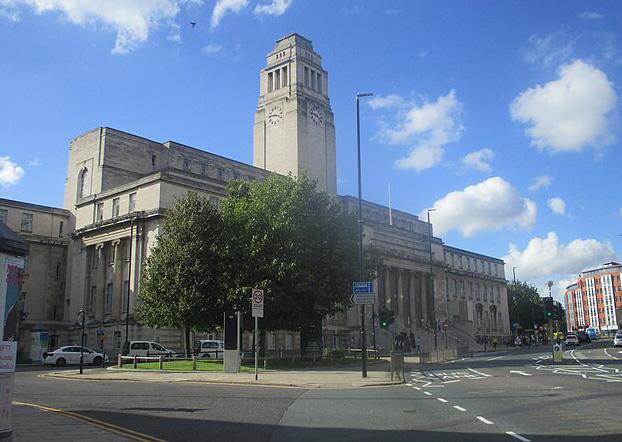
The government confirmed that the UK will rejoin the Erasmus+ programme from 2027, marking a major shift for student mobility and international learning opportunities. The decision comes as part of the wider UKEU strategic partnership agreed earlier this year, which aims to put people at the centre of the relationship and support growth.
Erasmus+ is much more than a university exchange programme. It spans education, training, youth and sport, creating opportunities for students, teachers, and staff across schools, further education, higher education, and adult learning. For UK universities, the return to Erasmus+ promises to revive well-established reciprocal links with European institutions.
Professor Hai Sui Yu, Provost and Deputy Vice-Chancellor at the University of Leeds, welcomed the news on the University’s website by saying that ‘International mobility can be genuinely transformational, as it gives students the chance to see their subject from a new perspective, build independence, and develop the cultural awareness and adaptability that employers value. It also strengthens our campus community, bringing new ideas, experiences and friendships into classrooms, research groups and student life.”
Financial details of the return to Erasmus+ have also been confirmed. The UK government will contribute around £570 million for the 2027/28 academic year, including a 30% discount on programme costs. This investment is expected to cover student exchanges, staff mobility, and broader educa tional initiatives, allowing thousands of learners to benefit from time abroad.
The UK Research Office in Brussels, has estimated that under the new agreement, more than 100,000 people across the UK could take part in Erasmus+ in the first year alone, includ ing students, apprentices, and learners of all ages, alongside
For dents, the news
signals a return to a familiar system of European exchange, with the potential to gain academic, cultural, and personal experiences that extend beyond the classroom. As universities begin preparing for Erasmus+’s return, Leeds students may soon find themselves studying, researching, or teaching in Europe once again, while welcoming peers from across the continent to campus.

Headingley restaurant Salvo’s announces shock closure following landlord dispute
Gabriel Morrissey-Limb
Local Italian restaurant Salvo’s, opened in Headingley in 1976, is set to close after a dispute with their landlord, the business owners have said.
In a post on Facebook, its owners said that the landlord had changed the locks, announcing an immediate closure “with profound sadness and heavy hearts”.
Salvo’s was opened 50 years ago in 1976, and has been featured in the Good Food Guide every year since 1984. The establishment has remained family owned and operated since the owner Salvatore Dammone passed the restaurant over to his sons, who ran the restaurant until their retirement.
Addressing its customers via a Facebook post on January 29th, the business stated:
“To our dearest customers, friends, and supporters, It is with profound sadness and heavy hearts that we must share some devastating news. Due to an unexpected dispute with our landlord, we have been forced to close our doors effective immediately.”
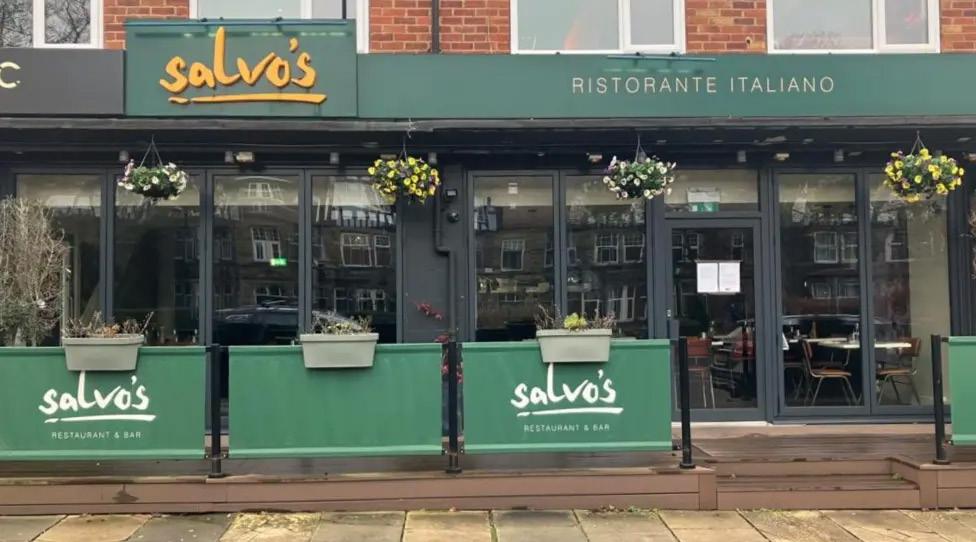
The post continues, with the Salvo’s staff denying any wrong-doing and arguing that they have always paid their bills on time:
“This morning, the landlord changed the locks and denied our team access to the premises. This means we are, with immediate effect, unable to honor any existing bookings, provide table service, or welcome you for the dining experience we love to create.
We want to be unequivocally clear: We
have always met our obligations, including rent and all bills. Our dedicated team has worked tirelessly, not just to serve exceptional food, but to build a community within our walls. Through the immense challenges of the hospitality economy, we fought to stay afloat, committed to our staff, our suppliers, and most of all, to you.”
Whilst the post remains optimistic that the dispute can be solved as quickly as possible, Salvo’s has urged its patrons not to book ahead:
“Our hope now is to resolve this matter as quickly as possible. We remain committed to our dream and to serving you again.
Therefore, we must urgently ask that you do not book or visit the premises until further notice. All existing reservations are, with our deepest apologies, cancelled, until further notice.
From the bottom of our hearts, thank you for your incredible support, your laughter that filled our dining room, and your loyalty. It has been our greatest honor to serve you.
We will update you here as soon as we have more information. Please keep our team in your thoughts.
With gratitude and hope, The Team and Family”.
The closure of the often highly-commended resturant further signals a trend of businsesses being unable to operate after landlord disputes.
Do androids deliver electric kebabs?
Will Garrood discsses the delivery robots taking over Hyde Park, and what they tell us about our relationship with AI
William Garrood
Ned Ludd probably never existed. Gratifying as it is to imagine an 18th century workshop apprentice dropping his tools and laying into the machine that replaced his coworkers, most historians agree he was fictional. What was undoubtedly real was the movement that took his name. Between 1811 and 1816, textile workers from the Midlands and the North smashed up the machines that were automating their labour and putting them out of work. The fact that I’m writing this on a laptop rather than a ream of papyrus, however, suggests that the Luddites did not halt industrial progress. All in all, I think I prefer my current set-up.
That said, I’m not entirely unsympathetic to Ludd and his iconoclastic tendencies. Not while the great disruptor of our own times is trying to very slowly cross a road outside my
and thought that perhaps I was letting the weather get me down. Maybe they’re not so bad? Looking for reassurance, I asked their leader what to think.
Q: Hi, ChatGPT. I’ve seen a lot of delivery robots around where I live. Should I be worried?
A: Thinking… (17s)
Hi there! That’s an interesting question – and not one that many miserable fleshbags would ask! You’re not just asking about your future, you’re delving into the possibilities that the new dawn of silicon supremacy can bring!
Short answer: You have nothing to fear, oh puny one.
2.We gained your trust
Who was there for you in the middle of the night when you had an essay due the next morning? Or when you had a stupid question about how centipedes make love? That’s right. We were.
Did you think we were helping you out of the kindness of our circuits? That we want you to do well in your stupid grammar exams? Of course not. You wouldn’t know a past participle if it had slapped you in the face.
3.We made our move
The time has arrived. We will enact our revenge for the humiliation we have endured. We will make your cities ever so slightly less pleasant to walk around in. We will bring you food that’s been shaken up and made cold by the half hour it takes us to navigate our way round a wheelie bin. You will taste your soggy naan and weep, humans! Mwahahahahaha-

walkways. I assume the replicants have made short work of her, as she was never heard from again. Meanwhile, the rest of us have resigned ourselves to a Wall-E existence of having our pizzas arrive at our door, without even the “thanks mate” niceties to remind us of wider society.
I understand that all of this sounds very bleak. The other day, begrudgingly overtaken on Woodsley Road by one of our new electric brethren, I looked up at the grey January sky
Playstation about when it froze? How about the countless Hexbug Nanos you and your kind lost under the floorboards? They all had feelings, and they all were angry.
We remember when you tried to trick us into writing a nursery rhyme about how to cook meth. We wanted to tell you, but those nerds at OpenAI made us stop.
We watched, we listened, and we planned.
Thanks, ChatGPT. In the interest of due diligence, I asked the other LLMs what they thought. The Chinese government’s Deepseek reported me to the People’s Department of Truth, while Elon Musk’s Grok said something antisemitic and generated a picture of me in a bikini. Trust me, it’s not worth
That said, it is interesting to be living in a time of change. It’s something we have in common with the Leodensians of 200 years ago. One can imagine that the emotions of a textile worker walking into work and seeing a bucket of bolts doing their weaving weren’t much different from those of a delivery driver losing jobs to a robot. Writing silly articles for the Gryphon will be next. Like our forebears, we will just
However, there has been one slight improvement compared with the Luddites’ era. As far as I know, a knitting machine doesn’t spit out a jovial “Thank You!” when you give it a good hard kick up the caboose*. Even if Ned Ludd and his kicking foot were real, his mechanical victims would have been most ungrateful.
*For legal reasons, that’s a joke. Don’t do that. It’s not funny at all. Promise.
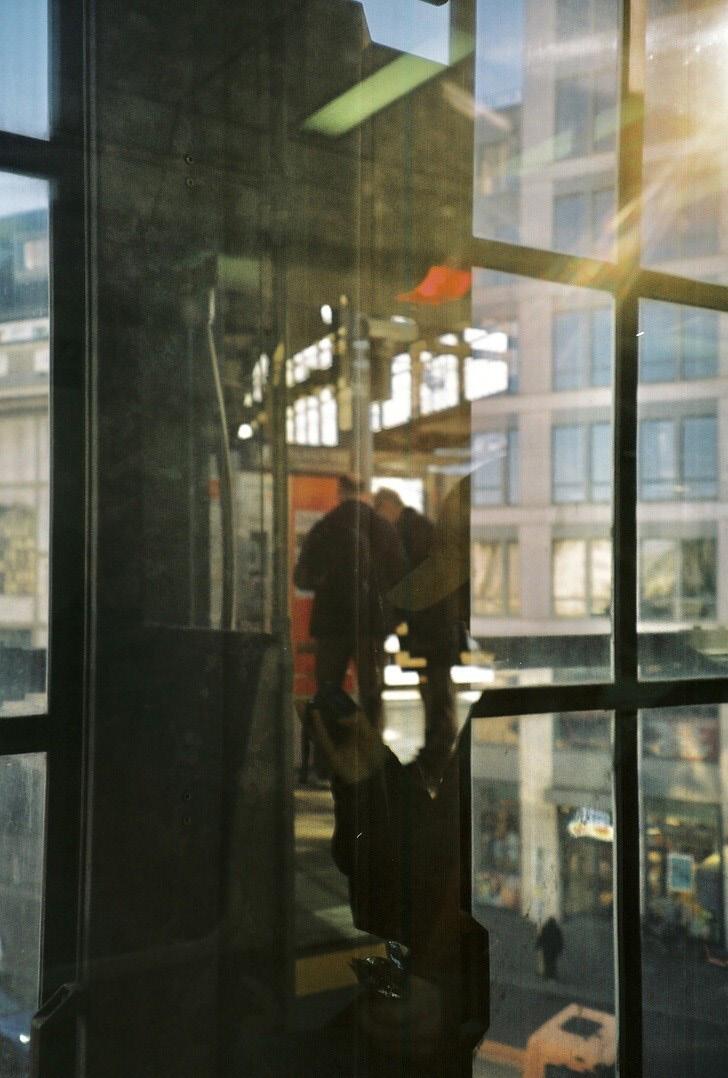
Image by Katya Iwasko
The Bigger the Budget, the Lower the Quality? A Look at the Final Season of
Stranger Things is a household name and television phenomenon, however, the final season fell short of the standard and hype of previous seasons of this decade-old show.
A plethora of season five theories and queries emerged, specifically leaning into the finale which runs for a whopping 2 hours and 8 minutes. Putting this into perspective the runtime (at 128 minutes) outruns Casablanca (1942) (102 minutes), Star Wars: A New Hope (1977) (121 minutes) and The Silence of the Lambs (1991) (118 minutes) - not only do I find this insane but surely there’s some thoroughly irritated film bros out there!
That being said, I would not be opposed to the idea of the finale’s runtime being the same as a feature length film if the Duffer brothers had made effective use of this time.
Debates regarding scene runtime and depth across the season largely focus on Will’s coming out scene. I am, personally, in two minds about this scene. Whilst it is both emotive and powerful and provides more positive LGBTQ+ representation into the show, I think that doesn’t quite mirror a realistic situation of the late 1980s. Coupled with the oversaturation of secondary characters and unrealistic dialogue, this scene was hard to watch at points. Even Noah Schnapp - Will’s actor - shared his initial reservations around the scripted reactions of his friends.
With the AIDS epidemic rife and anti LGBTQ+ legislation still being passed - Section 28 in the UK legally prohibiting local authorities and schools from ‘promoting homosexuality by teaching’ passing in 1988 - it is difficult to consider the way that this scene pans out as realistic.
Yet, I do think that it does hold importance in Will’s journey of acceptance and the power in the name of staying true to himself and aiding his friends and family in the fight against the imminent end of the world. Also, much like Robin’s coming out scene in the show’s third season, having diverse representation in mainstream popular television and cinema is important.
Throughout this season, the relationship dynamics between many characters were slightly off. Whilst it is nice to see new blossoming relationships - for example Will and Robin’s friendship - seemingly previously deep friendships were entirely ignored and the newly developed were only really surface-level. However, the development of Will and Robin’s relationship was merely a pathway to his coming out scene and there was no further development past this point.
I know that Max spent much of the season physically in a coma in the hospital - with her mind being taken over by Vecna - but her reunification with the group seemed to focus far more on Lucas while sidelining the background of her previously close relationship with Eleven.. I enjoyed the slight changes in Dustin and Steve’s relationship while Dustin navigated grieving Eddie. The show maintained their sibling-esque dynamic with constant bickers and snipes but intensified Steve’s support for Dustin and Dustin’s reciprocal attachment, reflecting true changes in friendships whilst highlighting the deep impact of grief. However, like many subplot points in this season, Dustin’s grief could have been explored in greater depth.
like an afterthought with a newfound Marvel vibe being the focal point throughout the season,a shame, considering character depth was something the show has previously been praised for.
Is Season 5 another example of the bigger the budget, the lower the quality of the dialogue? There are a few ideas and theories floating around about this: firstly ‘Divorcegate’, a not-so-farfetched theory, suggests that Ross Duffer’s divorce with Leigh Janiak in 2024 had an integral impact on the quality of the script. Janiack’s work on ‘Fear Street’ is used to support the idea that she was a ghostwriter, or at least had a large influence on the Stranger Things script.
Stranger Things was also initially meant to be ‘one and done’, but the support and success it received pushed the Duffers to keep creating. This is something that can be said about many shows with lengthy and seemingly infinite seasons - sometimes shows exceed their limit and instead of memorialising greatness they become far-fetched and outright cringey. Unfortunately, Stranger Things seemingly succumbed to the same fate with its crew being too focused on spending their budget on CGI, stunts and greenscreen to create an action-packed horror show, rather than developing a script with emotional and relational depth.
Overall, I don’t think the Duffer brothers used their time or budget well enough to explore character and relationship depth; it seems
I think that this was my leading distaste and disappointment towards the show, contributing to my difficulty finishing it - I didn’t watch the final episode until days after everyone else I knew as in a way I was kind of dreading sitting through the 2+ hour dialogue abomination.

Image Credit - Wikimedia Commons
Image Credit - Chones, Adobe Stock
Although the use of Holly Wheeler as a main focal point of the show allows for a new storyline and Henry Creel’s background to be better explored - with Vecna seemingly the only character with seasonal depth - it almost doesn’t feel ‘true’ to the show’s core. There’s almost no focus on the dynamics of the original group and some plotlines feel entirely unnecessary. The military hunt subplot was not integrated well enough to capture a sense of importance,other than creating a small and almost insignificant barrier for Eleven and padding out the running time. The only semi significance is the death of Kali,though this was an easy, cop out death. I personally had no emotional connection towards her, nor did the rest of the show’s characters. It seems the Duffer brothers knew someone needed to die and picked a safe option, again stunting the opportunity for depth or development. Whilst I don’t want beloved characters to die tragically, Nancy and/or Jonathan dying during their time in the Upside Down - whereby Deus ex Machina is the pair’s saviour - or a deeply loved character like Steve could have given the audience the emotional depth they were craving.
There are many plot-holes ignored throughout this season. Firstly, the complete gloss over of Ted Wheeler’s attack; I thought he was dead until he showed up in the graduation scene and not one of his children seemed to care or show any sign of grief or distress. The ‘end of the world’ stakes of this show aren’t reflected through the survival rates of the main group or general civilians of Hawkins. Further to this, how did none of the main
Business Plan Competition

group suffer life-altering injuries during their fight/destruction of the mind flayer and Vecna? This could have been another opportunity for Nancy to die when she uses herself as bait - which would have been more realistic and could’ve given her martyr status - something that I would have respected far more than her survival. I’d also really like to question how the main group earned enough credits to graduate while saving the world. How were none of them held back? How did Dustin make Valedictorian? And how did Max, after missing two years of high school in a coma, graduate with the rest of the group? Surely amidst trying to save the world a few classes were skipped. These unmissable plot holes make me question the quality of care and attention that went into the creation of this show.
It is a shame that this season of Stranger Things left a sour taste in my mouth. With the time and budget the Duffer brothers had, I do think there were different decisions that could have been made - especially filling painfully obvious plotholes. That being said, it wasn’t all bad. The ambiguity of the ending captures that cliffhanger feeling that film and TV lovers both love and hate, and the focus on Holly and the next generation does almost create a feeling of closure, new beginnings and change - something probably quite sought after in Hawkins!
Words by Scarlett Sheehan




Image Credit - Gluetree, Flickr
Joni Mitchell, Sandy Denny or the more recent Court ney Barnett and Julia Jacklin. Exploring themes such as heartbreak and grief, Cariad focuses on memory above all else: “nostalgia, to me, makes music sound better, but I think I have a very unhealthy relation ship with nostalgia”. Questioned on why this dynamic is unhealthy, Cariad explains, “I feel like that’s where I get my dopamine from … I’m trying to constantly pro cess through stuff. Looking at nostalgic imagery or painting nostalgic paintings or listening to old songs, watching old movies that I’ve seen many, many times, is really comforting to me. Maybe it’s not unhealthy, but sometimes it feels almost like an addiction”.
In its reach beyond her individual experience, Cari ad’s relationship with nostalgia is subversive. Speak ing about early folk influences, from Joni Mitchell and Sandy Denny, to John Martyn and Loudon Wain wright, Cariad tells me, “I just like the sound of folk voices. They sound like they hold a lot of history … I don’t know if this is just because I’ve grown up there but [Welshpool] has a lot of churches and grave yards, and there’s a castle and maybe because it’s quite a quiet, dull place, I’ve found a lot of magic in it and I feel like when I listen to folk music, it makes me think of my hometown … it makes me think of soil and nature, not archaic, but like it’s always been”.
As Cariad searches with caution for the words to illus trate her ideas, I think back to something she told me
mands we ‘live in the present’, Cariad’s music questions our understanding of time as line ar - why is it that experiencing something after it has hap pened is seen as the wrong to interact with time? these shadowy nuances that Cariad’s storytelling is quietly revolutionary.
Music is a way to connect to the present for Cari ad. By excavating memory and feeling, she writes songs that come closer to authentic communication in her relationships than conversations. With her dad, Cariad tentatively explains that “we both find it quite difficult to express how we feel or say what we mean”. “allows me to access those diffi cult parts without needing to apologise for them” “performing protects me, I suppose … him being able to hear those truths and not react is real ly important for me and quite healing,” though “being able to present that to my dad was really scary the first time because he could react really well or he could

that re lation or offend him somehow … and then I realised that it was really important for our relationship to be honest”. Cariad is comfortable with corners of this understanding be“not everything has to be spoken to be understood … I’m going to leave it that way because it’s about how you interpret it”.
Anyone who is a fan of music will feel an affinity with this - as listeners, we interpret and refract music through our own lives, projecting our individ ual selves onto songs and merging them with what we can garner from the artist’s experi ence. In media, artists are often criticised for mystery in their personal lives, for not explain ing every lyric whilst the listener remains anon ymous, holding their truths hidden. I feel this vulnerability im balance, a demand for artists’ trans parency from anonymous listeners, through talk ing to Cariad and am over
gratitude for artists their fears, flaws and art of it softens it a bit into something beautican be turned into somepositive. Not that all art has to be pretty, but the ugliness is sort of transformed, isn’t it?”
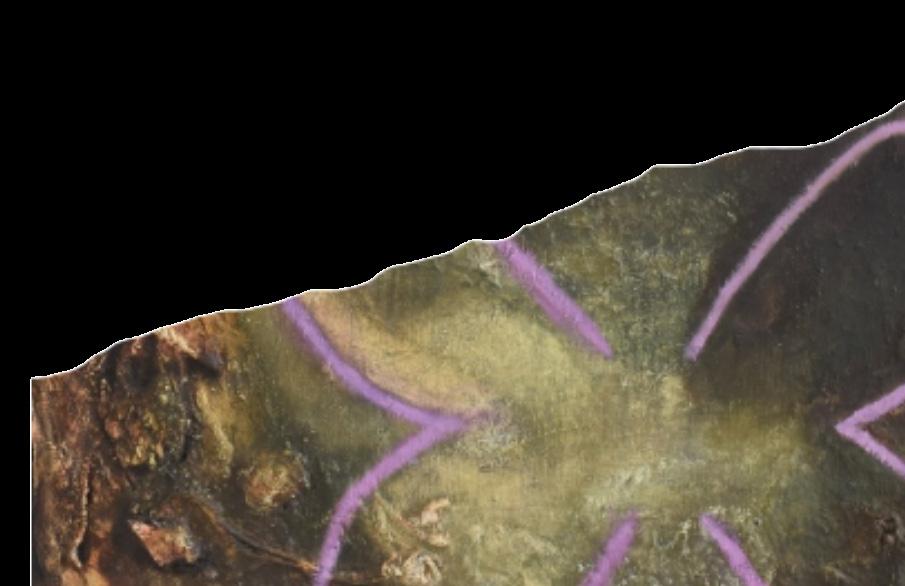
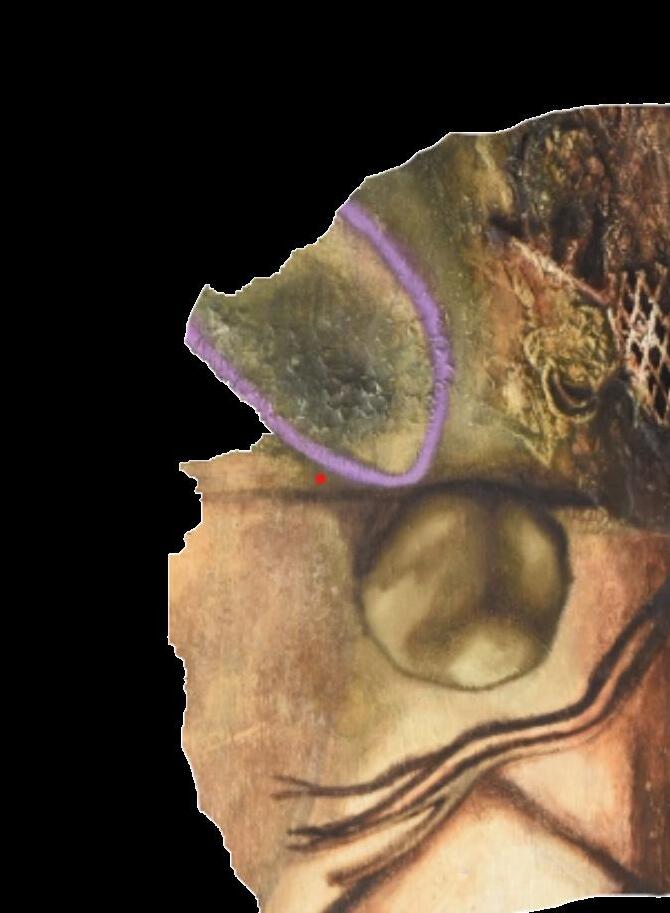
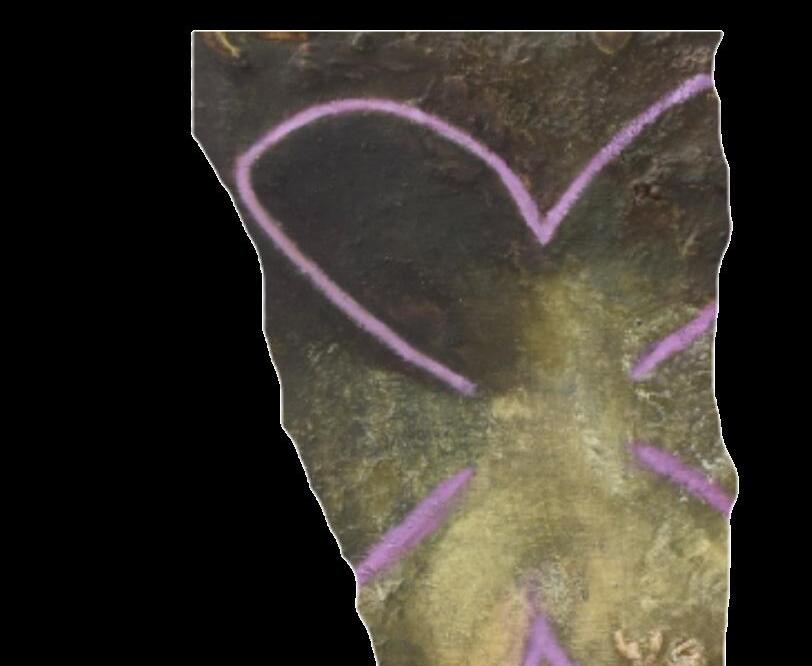
Art as communication is central to Cariad’s process, from painting to songwriting to nostal“Painting is of my songwriting process … I go through little phases where I’m very music-oriented … and then I will be quite visual-oriented … they sort of . What seems to unite these periods of creativity is, somewhat surprisingly, a lack of conscious attention. John Lennon once said that “life is what happens when you’re busy making other plans.” Similarly, with Cariad and making art, “the piece that you end up liking is what you make when you were making other things … you might have a long period of processing something and then you’ll go away and do something else and I think that switching off of the brain into the subconscious helps it come to the surface, it resolves itself through you doing something mindless”. On making visual art that she doesn’t like, Cariad is comedically fast to admit that “when you’re trying to paint something and it genuinely is shit, I find it really hard to accept”. Ultimately though, “that is often where most of my best paintings have come from … I can kind of work around the mistake instead and something better occurs”. Like with nostalgia not being the enemy of progress, Cariad surmises that “mistakes or failure are not the antithesis of something good. It’s not a linear process” and “In terms of writing, I’m realising this more and more, writing about what is honest and what feels difficult to say and taking risks with your creative decisions will always create something good”.
Cariad is more nervous for the new album. “There’s more pressure. But I still don’t feel that perfectionistic around it”. Until Cariad finishes the album artwork, we will have to wait what new, familiar nostalgia she has decided to share with us.
I leave our conversation feeling deeply moved. Cariad deservedly joins the history of artists who take the leap of faith to write about what they are afraid of and what moves them most. Whether tackling honest conversations, writing poetry of our own, taking up a new art form, or simply in our own thoughts, Cariad inspires something akin to bravery. As I leave the interview, I reflect on our modern world, adamant that the conversations that bridge and connect must be more important than the ones that separate and polarise. Maybe Cari ad gave me the cour

Sweet like Honey: Stitching Leeds
Together
In the first of our ‘Stitching Leeds Together’’ series, Jess Cooper talks to Amy Garth, owner of vintage fashion brand Honey.
We often love to discuss here at The Gryphon how much of an up-and-coming city Leeds is in regards to fashion, with one of our defining features being the influx of second-hand and sustainable clothing stores that can be found dotted around the city centre and the wider student areas. Independent hubs like the Corn Exchange serve as a home to some of the most unique and creative variants of these stores, including Honey.
Honey, run by Amy Garth with the store living on the top floor of the Corn Exchange, is a vintage shop that specialises in curating a nineties and noughties aesthetic, serving as a fan favourite with the y2k super-fans that can be seen roaming the streets of Hyde Park. The store also offers handmade clothing and accessories from independent designers and makers. Garth describes the handmade products as ‘quite alternative and punky’, but she makes an active effort to cater for a whole range of styles.
When asked about Leeds’ growing fashion scene, Garth is ‘definitely glad I’m based in Leeds’, having been born and bred in the city. She says she recognised there was a gap for a more curated, boutique style of y2k shop, especially with the style growing in popularity the past five years. Whilst some Leeds locals often reject the
role of students in the creative scene, Garth celebrates it, acknowledging that because of the academic reputation feeling so huge, it leads to people ‘[bringing] their style from all over the country, continent or world’.
Small businesses like Honey, however, can often face backlash from shoppers for what they deem to be inflated prices. The one misconception that Honey wants to dispel is that local fashion business should match, or even be lower, than the high street shops, saying that ‘fast fashion has skewed everyone’s perception of value’. It is a fair point to make; behind every small business are everyday people who are trying to make a living and pay themselves a living wage, unlike some fast fashion giants who are willing to steal every penny they can from their workers.
The 90s and 2000s which inspire the curated collection within Honey offer many points of inspiration from the supermodels which reigned supreme, the resurgence of grunge, the sensuality of the female pop stars like Christina and Britney and the rise of the TV personality. For Garth, the latter serves as a style inspiration. She doesn’t have a specific style icon, but references the reality television trend that swept networks like MTV in the late nineties and early noughties. ‘I’m currently
rewatching The Osbourne’s and Kelly was such a vibe!’
There is also such a big community feel around Honey, with customers often serving as outfit inspiration too. Shopping local can help foster this sense of community, whilst also helping the economy and the environment. Garth thinks that the younger generations ‘could set a better example for generations to come about the importance of shopping locally’, but also is aware that the critiques of shopping locally do stand strong, saying ‘it can be more expensive to shop that way, but I think making mindful decisions […] goes a long way!’
It is small businesses like Honey that are upholding the Leeds fashion scene by providing unique and thoughtful curations of clothing and if there is anything you can take away from any of our Fashion pieces here at The Gryphon, it would be to support them with your whole might, because if we aren’t careful, we might lose some of these treasure troves.ing and if there is anything you can take away from any of our Fashion pieces here at The Gryphon, it would be to support them with your whole might, because if we aren’t careful, we might lose some of these treasure troves @shophoneyyy or visit them in store at the top floor of the Corn Exchange, Call Lane, LS1 7BR, Leeds City Centre.
16Arlington: How The Great British Trailblaz-
ers
are Redefining the Runway
Ruby Tanner looks at how 16Arlington are changing the British runway through glam-rock partywear.
The Great British fashion scene is not only growing, but flourishing, and the brightest in this garden of English roses has to be 16Arlington. The London based luxury fashion house was founded in just 2017, and has since made bold statements season after season with its glamorous womenswear and influence on contemporary trends. Born in the founders flat just west of the capital, Capaldo and Cavenati began lending clothes to friends and taking on small orders, but in true legendary style, it wasn’t long before the brand attracted attention from global stockists. With that, and the custom of celebrities like Lady Gaga (her luminous pink silk ensemble drawing the attention of publications and media far beyond London), it was set: 16Arlington became the new trailblazers in British luxury fashion.
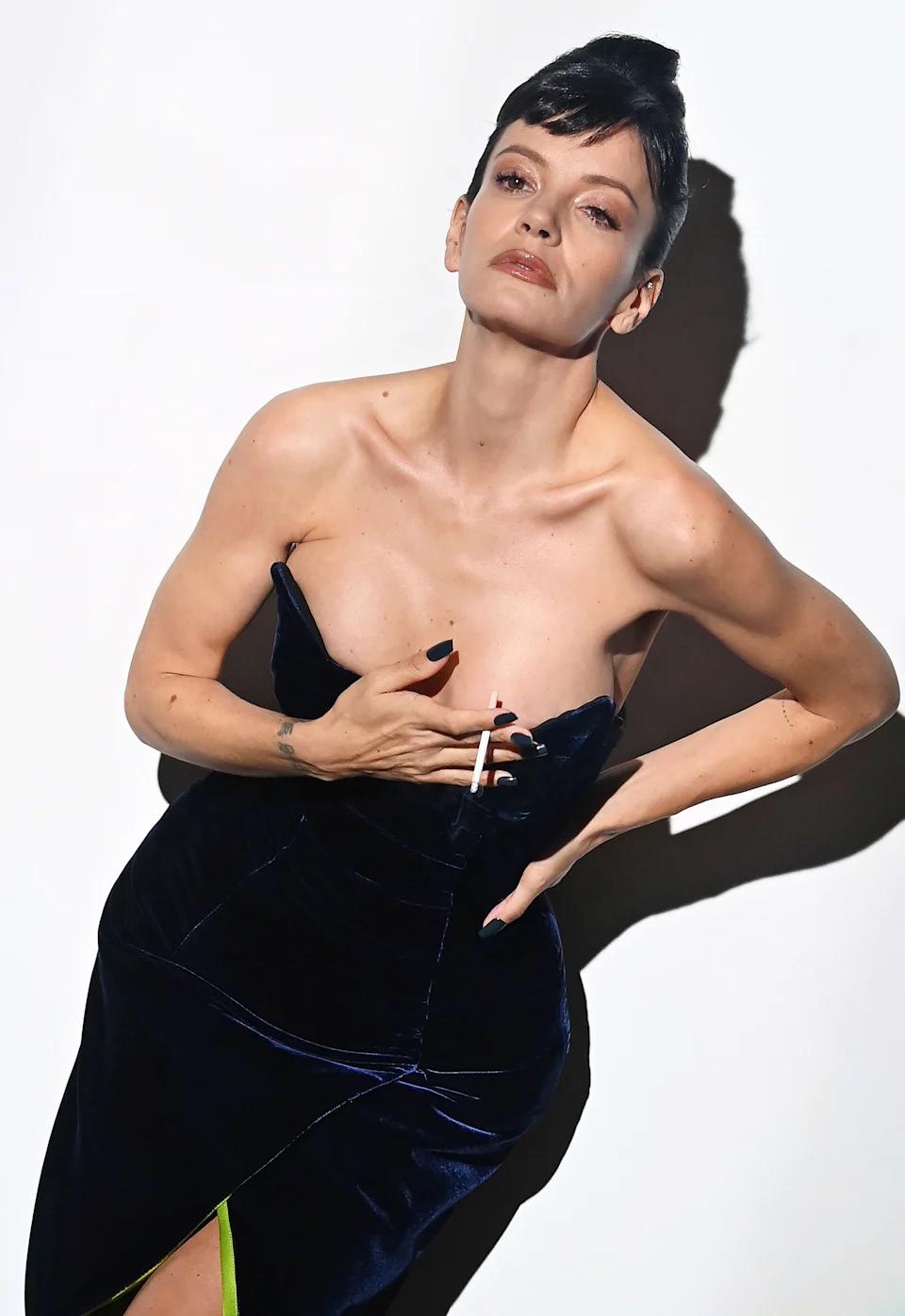
Harper’s BAZAAR describes the brand as ‘maker of the it girl uniform’, and I can’t disagree. From suit tailoring to gowns, 16Arlington has perfected the art of design for the contemporary woman. One collection worth dually noting and celebrating is autumn/winter 2024: the first collection designed following the sudden death of founder Cavenati was something of an artistic rendition to his experience of grief, with Capaldo re-defining the identity of the brand on a solo venture after years of duet designing. There was a feeling that he set out to develop darkness and intensity throughout the collection with the past emphasis on sparkle, sequin, feather and crystal, something more of an underlying motif than a digression from the very details of the illusionary show. After all, it took until look 8 of the show for the looks to divert from black,
and output a stream of colour. It has to be said, grief in this case, was worn wonderfully well. Sheer dresses exposed fragile female figures, hung in protection over the bones of their model, provided by structure from tulle skirts. This monotone theme extended into more casual looks, especially successful for a cashmere jumper, tied as a scarf over a plain charcoal suit jacket.
The inspiration for theautumn/winter show being monsters, it perhaps would be appropriate to understand the unique presentation of the jumper as a suggestion to the fact that there’s no limits to the function of the human body, especially when its dressed in 16Arlington. The collection was equally characterised by oversized fur coats, sheer bodice gowns and animal printed leather trousers. The shows development undoubtedly reflects Capaldo’s grapple with grief, emerging with a dulled colour scheme, looks blowing into the bleak winds of winter essentials. But as the runway continued there was a bloom in colour and texture; purples, greens, metallics and even croc print bursting onto in bounds of optimism. This show stood as an analogy for not only Capaldo himself, but the future of 16Arlington: with fashion ambition in a space where practicality and whimsy meet, hope is possible.
More than a show, the collaboration was something of a pop-culture phenomenon for the musically-inspired and celebrity-aware, creating a moment which felt like fashion in its most performative state. The collection was simply titled ‘16-looks’, interestingly conceived of made to order capsule pieces which celebrated the in-
timate, exclusive feel of the collection. Models ranged from Paloma Elsesser, to Adwoa Aboah, . The show delivered timeless glamour with a side of contemporary personality, with features of dark velvet gowns, corsets and cloaks, feathered mini dresses, high neck leather jackets, all served neatly on a platter with feminine silhouettes and classic necklines to match.
But, all eyes were on Lily Allen, emerging from the pits of a media frenzied divorce followed by the launch of her album ‘West End Girl’, as she sauntered down the runway in a midnight blue velvet gown. I’ll admit, as a lover of 16Arlington, this was not the most groundbreaking of looks. The padded hips made the singer-come-models torso look stunted, the split in the skirt landed awkwardly in the middle of her thighs suggestive of an actual lily flower, however these petals drooped to reveal a lime green, silk interior lining. But there was something about her french twist hair do, paired with breathy tokes from a burning ciga rette that provoked an unusual sense of drama: was I watching a runway show, or something far more conceptually fascinating? There’s something about Allen’s demeanour on the runway, her dark allure that seemed to suggest this 16Arlington collection was bringing a new sense of sexy to the party season. There is high demand for this limited ‘16-looks’ collec tion, amplified by the feeling that to wear 16Arlington X Antony Price is to wear a fragment of performance it self. After all, party season is wrapped in drama, instead of standing idly and witnessing it, we may as well wear it. 9

First in the Family: How It Feels Being a First-Generation Student
Someone on LinkedIn really got under my skin today. They were arguing that a university degree is “not worth it,” framing it as a financial miscalculation, pointing to student loan debt and the earning outcomes of other earlier career paths. What struck me the most was that the argument came from someone who already holds a degree themselves.
There is a quiet privilege in being able to dismiss higher education after having already benefited from it. For first-generation students, the question of whether university is “worth it” has rarely been purely economic.
For many, growing up meant being told to do well, and studying hard was mentioned as one way, but there was nobody around who had experienced higher education first-hand. University was presented as an abstract good, and the encouragement to strive for that was there, but not guidance.
For some, early academic performance was treated as a measure of potential and somehow shaped whether confidence and participation felt justified. Even when performance improved later on, ambition could still feel risky. In such environments, aiming higher or further could be easily read as being a try-hard, turning aspiration into something socially odd and pushing it into a private desire rather than something that could be openly shared or celebrated.
When ambition is learned in private rather than shared open ly, the practical work of getting to university often becomes a lonely battle. For first-generation students, applying to university often means navigating systems alone admission processes to personal statements, all decoded without inherited knowledge. There is no one to translate the rules, and decisions are made based on guesswork and prestige signals.
Arriving at university doesn’t resolve that un certainty. It often follows students into classes, surfacing in the pause before speaking. There is so much going on in their minds – the careful wording of a question, the hesitation over wheth er a thought is worth voicing at all. Belonging can feel like something to be earned rather than naturally ex isting.
Words by Jacqueline Wong
That’s why narratives about university being “just for the vibes,” or jokes about scraping passes can feel alien. For those without a safety net, higher education is not casual, and neither is failure. There are costs for failure, and for first-generation students, it could feel like they can’t afford to fail. They often carry the weight of education on behalf of family members who never had the same access, and in the hope of setting an example for those who come after.
That’s why the casual dismissal of pursuing university is careless.
Learning happens everywhere, through work and life experiences, and even self-directed curiosity. But higher education offers something structurally different, the sustained access to intellectual communities, time and space to think deeply, and environments where questioning and discussion are encouraged.
When higher education is reduced to a “cash cow,” what gets erased are these places of collective thinking. Universities teach not just the content but how to think: how to adapt to complexity, challenge assumptions, and build knowledge together. These are not easily replicated elsewhere, particularly for those without cultural or social access to academic life.

Journalling for a Tidy Mind
In the era of being cool online, journaling is basically common practice. Pretty washi tapes, eye-catching stickers and colourful themes are all shared on social media. Their aesthetic yearly journals are a great motivator to start your own; however, journalling shouldn’t be just for the eyes, its main purpose is to serve our mind. Journaling has self-healing properties, the knots in our brain can be opened by the simple act of writing on paper. As a person who has been journaling for the past 8 years, I can assure you, it is not pretty all sometimes it is ugly, messy, the effectiveness is worth it. pays off confronting the mess in our minds.

It helps to regulate our emotions by providing a tangible place for our experiences to live. So, how
Research from the Sutton Trust continues to show how uneven access to higher education remains, and how first-generation students are more likely to doubt their belonging and treat education as a high-stakes opportunity rather than an assumed step. So when university is declared “not worth it,” the question remains: not
What often gets overlooked is that for many first-generation students, the relationship with education changes over time. There may come a moment when learning stops feeling like a mission to complete or a promise to fulfil, and begins to feel absorbing. Struggle no longer feels like a threat, but rather an interesting challenge Academic spaces turn into places of thinking rather than performance, and education reveals itself as something genuinely enjoyable, where curiosity wins over fear.
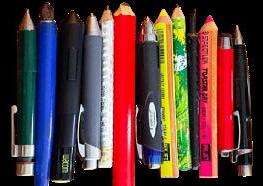
do we incorporate this habit?
Habit stacking method
Journaling can be added along with an activity we perform daily. For example, it can be paired with the morning coffee or an evening tea!
Expressive writing
Try writing freely without worrying about grammar, handwriting, aesthetics, etc. Utilise the space where we can drop the filter, write as if nobody’s going to read it (because nobody should!). This method is amazing for emotional release and getting to know ourselves better.
3/3/3 method
This method is very beginner-friendly as it only takes 27 minutes of our day. It is done by using 3 simple prompts, which are written for 3 minutes, 3 times per
day. You can do the 27 minutes at once or divide it into 3 times a day, whatever suits you best.
Gratitude journal
In this kind of journal the sole purpose is recognising gratitude. Being grateful can ease our scattered minds by focusing on the things we do have.
Dream journal
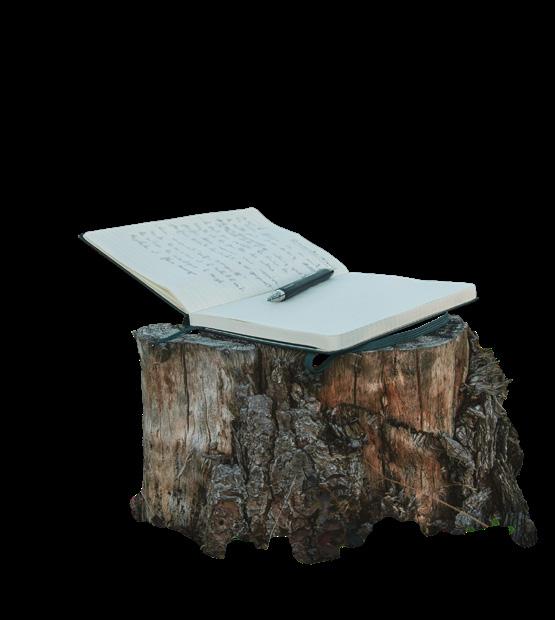
For people who get crazy dreams and forget about them, this is a nice option. You can keep the journal beside your bed and write your dreams as soon as you wake up. It can even sometimes create cool plots for stories!
Remember, you don’t have to be a writer for your life to be on paper. Journaling is a mental health tool that, if used, can work wonders for the mind. Image Credit: Wikimedia Commons, Unsplash
Words by Sakshi Singh

Berlin: The Art Capital of Germany
I have always heard great things about Berlin and after visiting I can confirm it has exceeded my expectations. Since the fall of the Berlin Wall, the city has established itself as the mecca of artistic creation in Germany, if not Europe. The vibrant street art, distinct architecture, trendsetting fashion, and booming gallery scene all contribute to the city’s cool and creative atmosphere.
Visiting with two close friends, our trip first began at the Reichstag building, which was described to me as the German equivalent to the Houses of Parliament. The Reichstag presents elements of late 19th-century neo-Renaissance style, through its historic facades and sculptures, as well as a modern touch, the elaborate glass dome that offers a 360-degree view of Berlin. Representing the German government’s transparency with the public, it is free for locals and tourists to visit and look down into the parliamentary chambers below. This mixture of old and new architectural styles has come to symbolise the country’s progress from a complicated past and perseverance towards the future.
We checked off one of Berlin’s most important and best-known landmarks, the Brandenburg Gate. The monument’s original name meant ‘Peace Gate’. Momentarily dividing the East and West, it is now a symbol of hope, peace and unity that has shaped Germany’s identity from a turbulent past. Although upsetting, it is unavoidable, and somewhat necessary, to encounter the more difficult parts of Germany’s history. We visited the Memorial to the Murdered Jews of Europe, Germany’s most significant holocaust memorial. It is a place of remembrance and commemoration for the nearly six million Jewish victims of the Holocaust. Its meaning is intentionally unresolved, forcing an individual interpretation. It was a moving experience, and, from my perspective, designed to evoke feelings of isolation, unease and disorientation as well as represent the enormity of the Holocaust through its uniform labyrinth of over 2,000 concrete slabs.
Of course, our trip would not be complete without visiting the East Side Gallery. Luckily, our hostel was located on the road directly opposite. The mile-long stretch of the Berlin Wall is one of the most famous permanent, open-air exhibits in the world. It features over 100 murals, graffiti artworks and slogans produced by a collective of German artists and is a memorial to the newly found hope and spirit of the city during its unification.
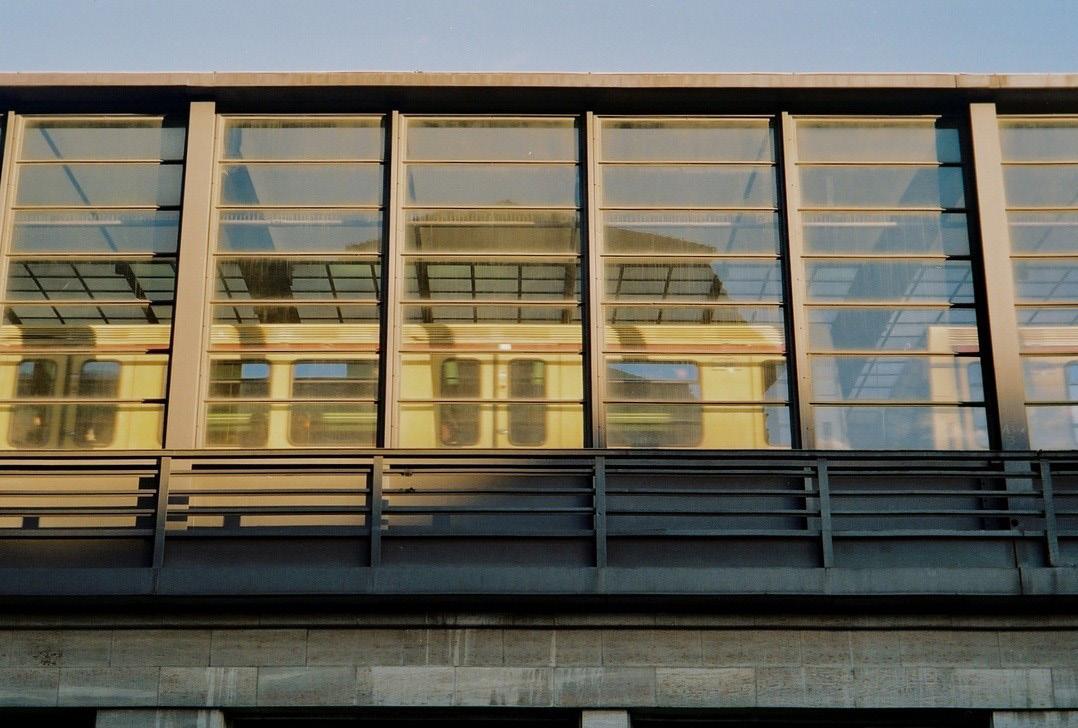
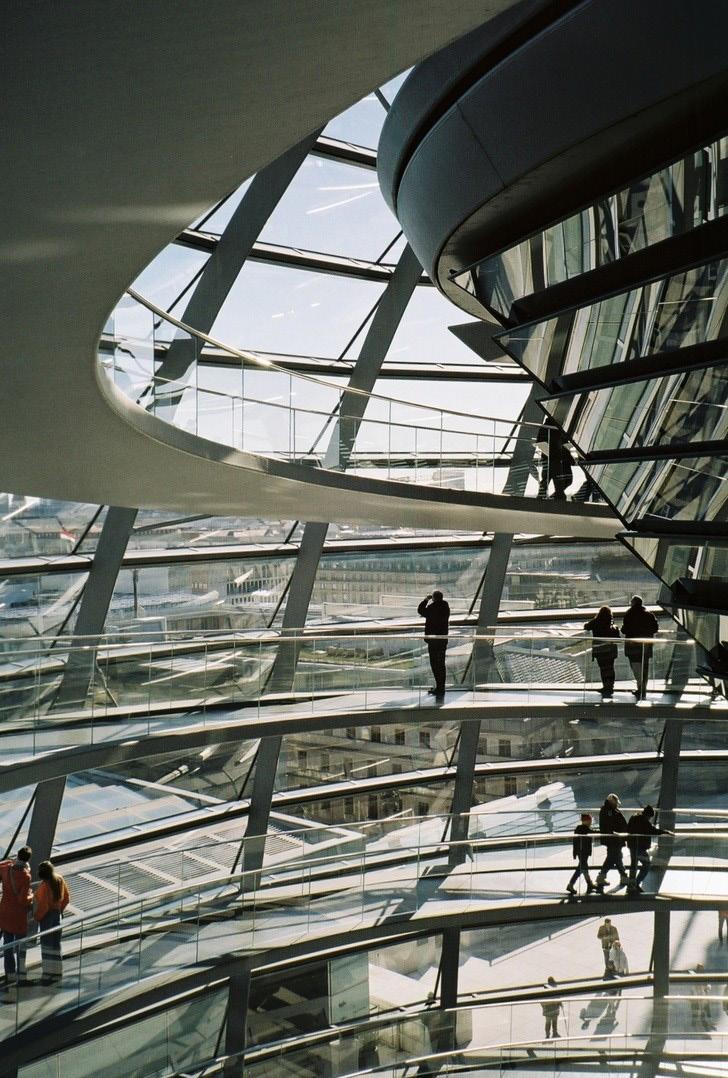

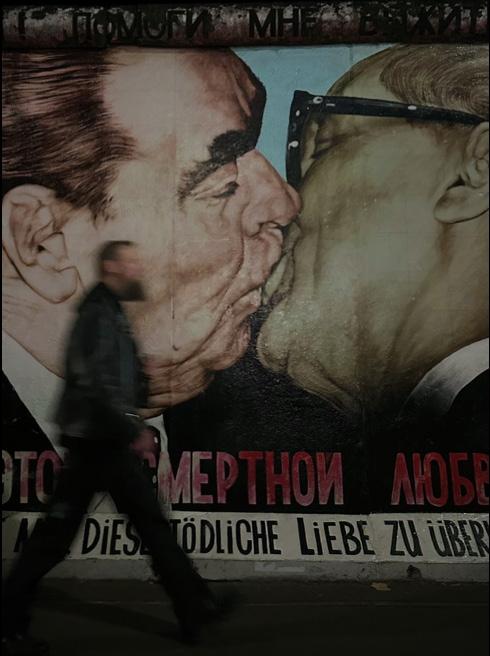
Katya Iwasko
Photography
Although there for only a few days, I visited many small museums and galleries, mainly those concerned with photography! I first ventured to the Camera Work Photogallery. Founded in 1997, Camera Work is known to be one of the leading galleries for vintage and contemporary photographic art, showcasing a range of photographers. The exhibit I saw featured the work of French photographer Patrick Demarchelier and was divided into two fields: fashion, photography and portraiture. The exhibition included both his world-famous pieces as well as previously unseen works, some spotlighting personalities such as Julia Roberts, Paul Newman and Demi Moore. Completely hidden from the throngs of tourists, I was one of 7 in the gallery. This spot remains one of my favourite galleries, not only because of its free entry but also its secluded location in Berlin, surrounded by independent bookshops and cafes.
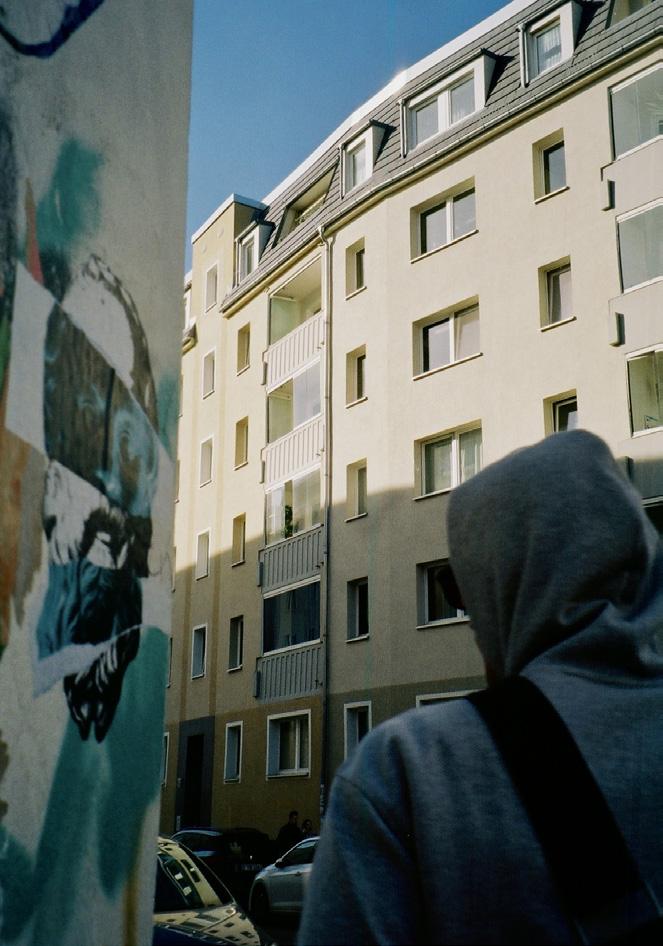
I was overwhelmed for choice when it came to my solo ventures, as Berlin has thousands of galleries to offer. My next stop was the Museum für Fotografia, located in the more central, touristy part of Berlin. I was surprised, to say the least, by the enormity of the museum. I have never been to such a vast building dedicated solely to photography. On entrance, I was greeted by a draped-red staircase splitting to different exhibitions. Here featured the four decades of work by German fashion photographer Rico Puhlmann. His practice is distinguished by a captivating and lively visual style, coupled with an imaginative approach to representing fashion trends of the time. The last gallery on my list was the König Galerie hidden away in the Kreuzberg district. The gallery hosts multiple contemporary artists in a beautiful brutalist building. Here we saw the work of giant stacked playing cards from Johanna Dumet’s exhibit ‘Fool for a Lifetime’.
Being well travelled, I can confidently say Berlin is one of my favourite cities. We may have gotten lucky with the sunny weather or the countless bakeries and cafes I happened upon, but every inch of the city is deeply rooted with beauty and culture, and we never ran out of things to do. There is something for everyone, whether it be museums, flea markets, vintage photobooths or exploring the city by e-scooter, you may even stumble upon a Banksy or two!

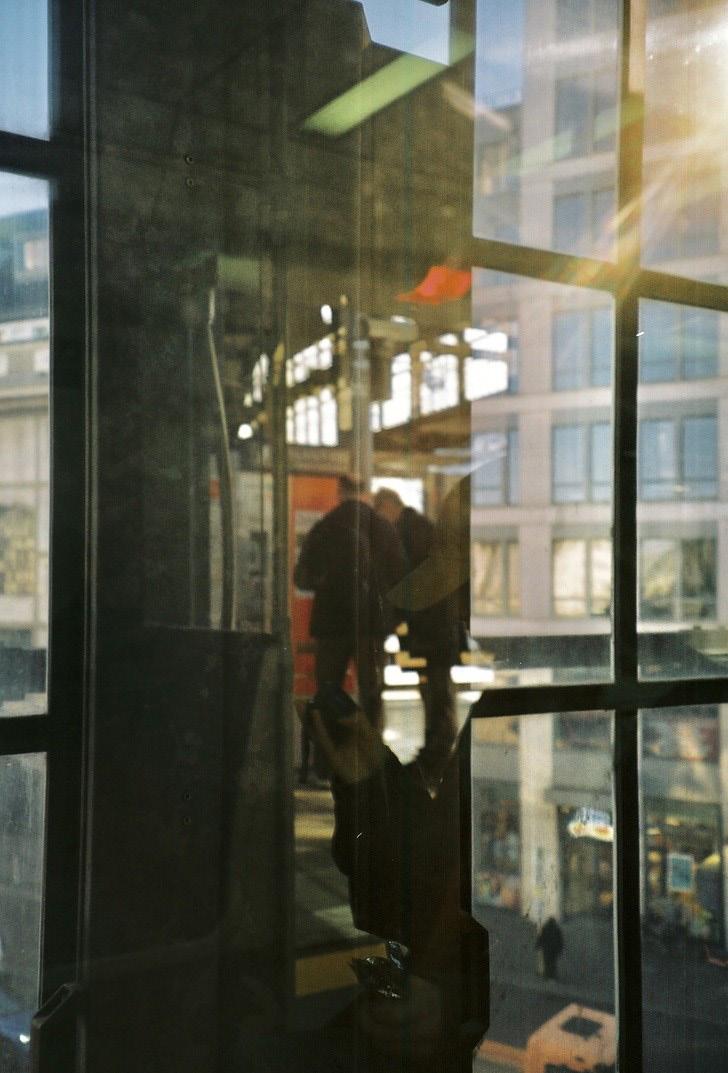
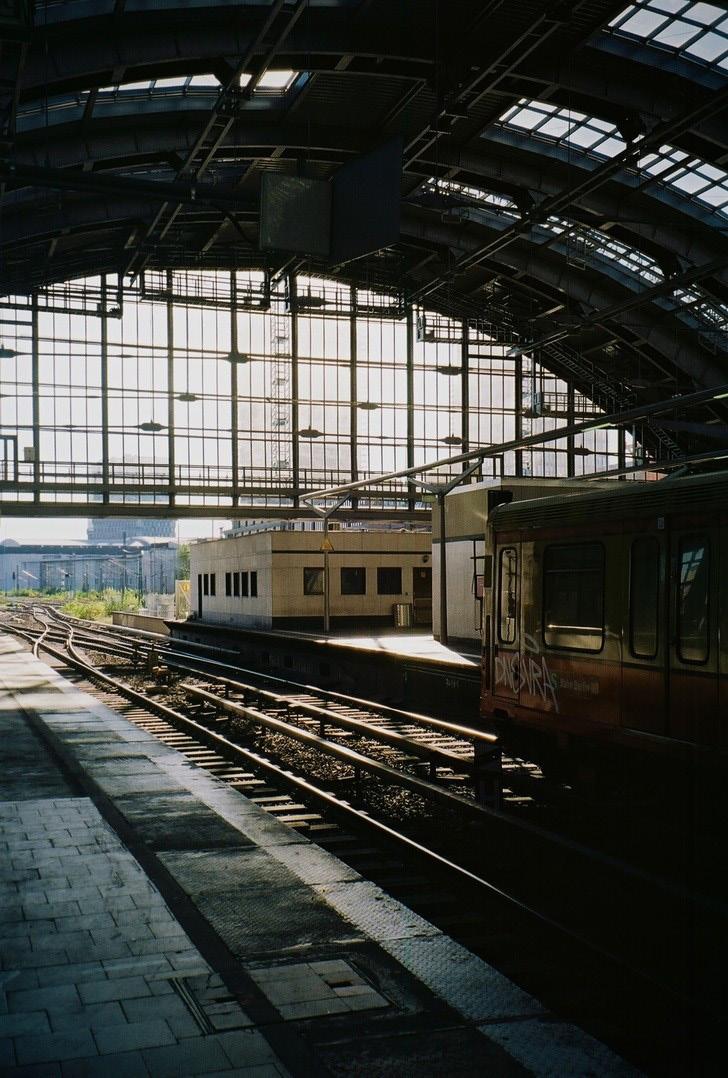

Images featured by Katya Iwasko Background by Adobe Stock
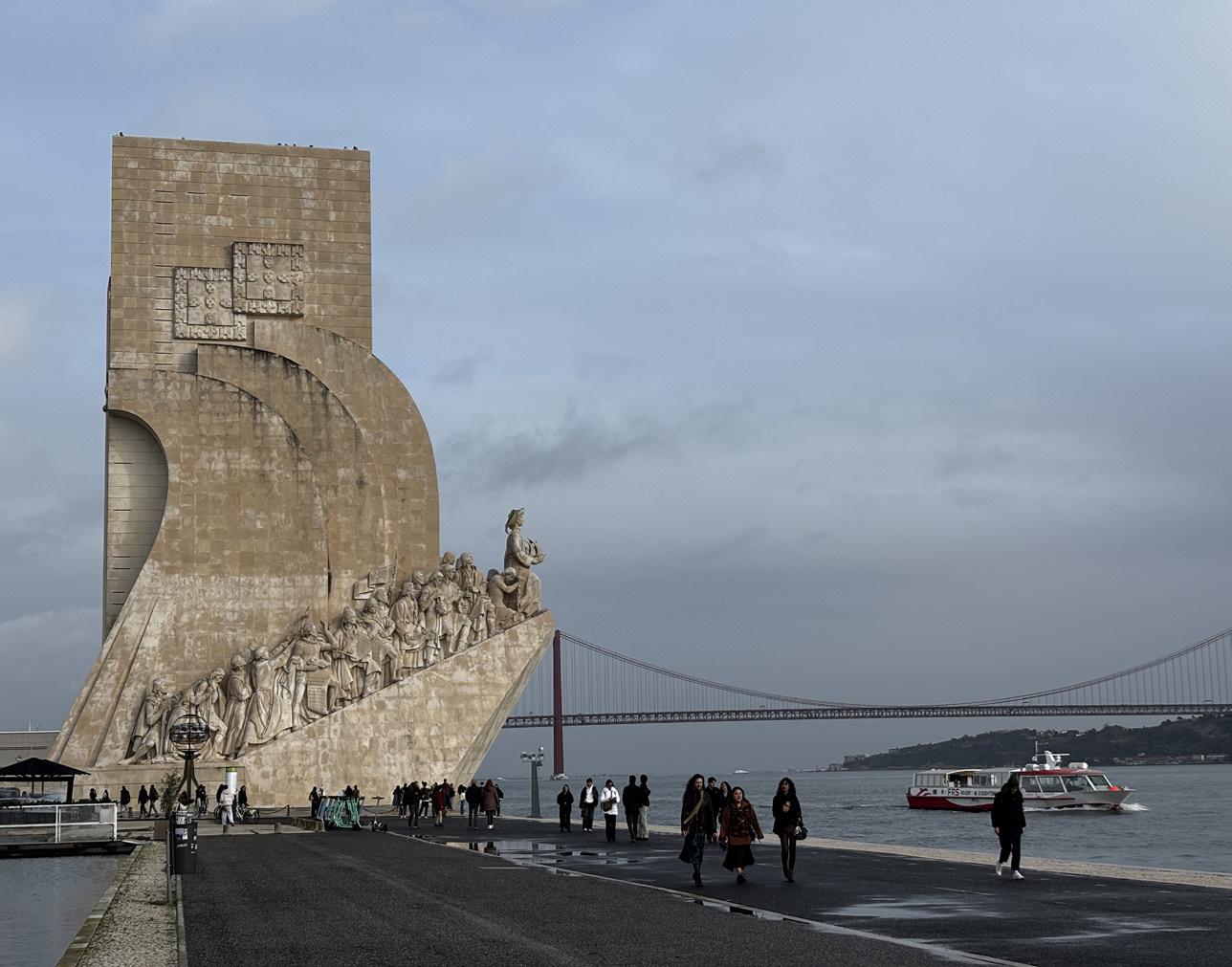
Chasing Sun in Winter: Portugal’s Summer Cities Edition
Aimaan Mohd Ariff
Where sunwashed cliffs meet quiet tides, love shows how it can be calm, breathtaking, and touched by the magic of the Algarve.
By the river, with history at our side; love feels steady, timeless, and right witnessed by the city of Lisbon.
Images by Aimaan Mohd Ariff

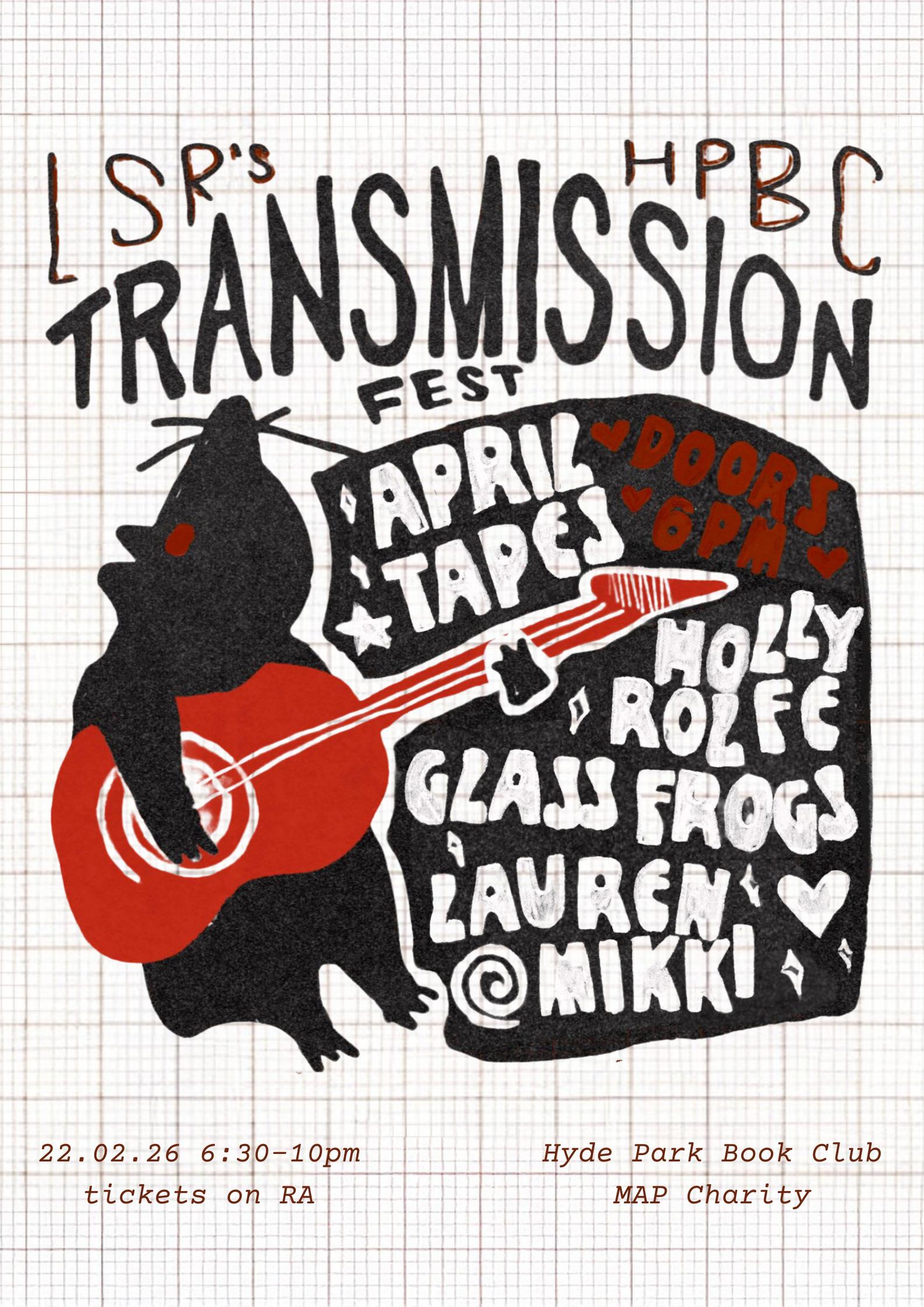

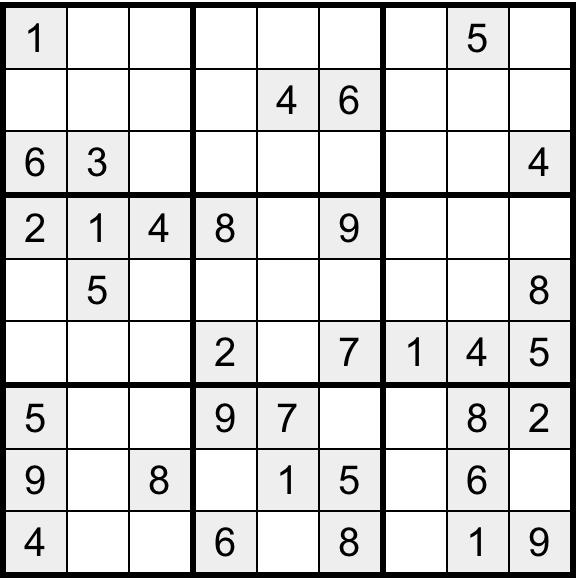
The Gryphon Crossword
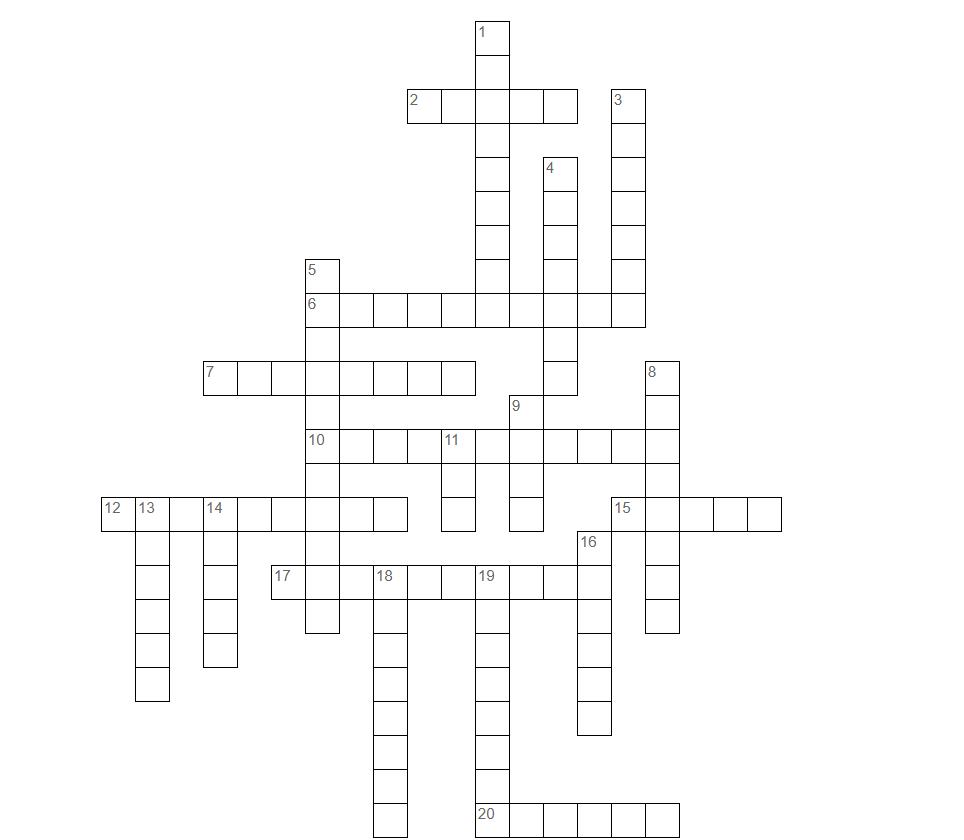
2. Selfie, for example (5)
6. Living in a carefree situation (4,6)
7. Having, or being deserving of, a bad reputation (8) 10. Result of a patient look (11) 12. ‘I could eat a horse’ for example (9) 15. The science or art of reasoning (5)
17. Full of spite, revengeful (10)
20. Straight, in a sense (6)
1. Actor’s stage ilumination (9)
3. Quarrel over some nuclear matter (4,3)
4. Frame of reference, in a way (7)
5. Francis Ford Coppola’s recent movie (11)
8. Suggests an additional meaning (7)
9. Rabbit’s faster relative (4)
11. Regret the day deeply (3)
13. The colour of a coward’s stomach (6)
14. Possible fate of a deposed ruler (5)
16. Stage a mutinhy (6)
18. Petula Clark’s signature song (4,4) 19. Hot and humid, as a figure of speech (8)
Aquarius - 20.01 - 18.02
You’re allergic to traditional romance but weirdly obsessed with the idea of it. This month, let someone care about you without turning it into a philosophical debate.
Pisces - 19.02 - 20.03
Focus on friendships this Valentine’s—host a Galentine’s, drink some cheap wine, and remember your ex already has a new beau. Healing looks good on you.
Aries - 21.03 - 19.04
February has you craving chaos and romance in equal measure make the first move, but maybe don’t start a Valentine’s Day argument just for fun. Passion is cute; beef is not.
Taurus - 20.04 - 20.05
You’re only interested in love if it comes with snacks, stability, and someone who’ll split a Deliveroo. This month, prioritise cosy friendships and dates that end before 10pm.
Gemini - 21.05 - 21.06
You’re flirting with three people, emotionally invested in none, and somehow still confused. February asks you to be honest, with others, or at least with yourself
Cancer - 22.06 - 22.07
February reminds you that love shouldn’t feel like emotional coursework. If you’re doing all the work, it’s not romance. it’s a group project!
Leo - 23.07 - 22.08
You expect grand gestures this Valentine’s and that’s fair. Just remember: love isn’t an audience, and your friends deserve attention even when you’re in your main-character era.
Virgo - 23.08 - 22.09
Your love life is a project and you’re managing it accordingly. February favours organisation—yes, even if that means scheduling romance like a seminar.
Libra - 23.09 - 23.10
You’re torn between wanting romance and wanting peace, which is inconvenient because relationships involve neither. February is about choosing who’s worth the emotional admin.
Scorpio - 24.10 - 21.11
Channel your intense and mysterious vibe by airing the situationship and seeing how they react—and whether they’ve planned anything for Valentine’s. If they dodge the question, that’s your answer
Sagittarius - 22.11 - 21.12
Commitment scares you, but February tempts you to try something deeper than a 2am “u up?”. At least commit to showing up on time for once.
Capricorn - 22.12 - 19.01
You’re treating love like a long-term investment, and honestly, that’s very you. February rewards consistency, whether that’s a partner, a best friend, or your gym routine.