EXCELLENCE
CONTRIBUTORS






KAREN MAXWELL Editor of Grounds Management magazine
DR ANDY CARMICHAEL Freelance writer and sports-turf academic
DR RICHARD COLLINS Amenity division manager, Envirofield
TODD HARRISON GMA regional pitch advisor (RFU – Midlands)
COLIN HOSKINS Freelance writer and industry expert
DR CHRISTIAN SPRING STRI Group principal scientist
WELCOME

A journey of gratitude and growth I recently announced that I will be stepping down as CEO of the GMA in March 2027 (see article on page 28). After more than 20 years with the organisation, formerly the Institute of Groundsmanship, I remain an unwavering advocate for our sector and will continue to support my successor in every way I can.
Over the years, I have had the privilege of working with four exceptional chairs. Alex Millar, a proud Scotsman and former St Mirren and Milton Keynes Council member, welcomed me warmly and set a strong foundation during his time. He was followed by David Teasdale, a progressive thinker with a sharp political mind and a deep passion for sport. David Carpenter then took the helm and his leadership was instrumental in building the most comprehensive body of research in our sector. His background at Sport England and his role in establishing the National Lottery brought invaluable insight, driving major organisational growth and investment in our people.
Our current chair, Martyn Ward, has brought fresh energy and strategic clarity, drawing on his extensive experience in retail and beyond to help us manage change and plan for sustainable growth.
I’ve also been fortunate to work alongside incredible Board members and staff – each of whom has contributed their time, expertise and commitment to continual improvement.
I WANT TO ACKNOWLEDGE THE GROUNDS STAFF AND COMMUNITY WHO MAKE SPORT POSSIBLE. THEIR DEDICATION HAS SHAPED EVERYTHING WE’VE ACHIEVED
Most importantly, I want to acknowledge the grounds staff and community. Their dedication and belief in what we do have shaped everything we’ve achieved together.
It’s been a true privilege to serve such a great industry. Together we’re ‘making sport possible’.
Geoff Webb, GMA CEO
GROUNDS MANAGEMENT
Editorial address: 28 Stratford Office Village, Walker Avenue, Wolverton Mill East, Milton Keynes MK12 5TW t: 01908 312511
GMA membership and general enquiries: t: 01908 312 511 / e: membership@thegma.org.uk
Magazine subscriptions: Khatija Mgari t: 01908 312511 e: accounts@thegma.org.uk

Subscriptions: £30 UK / £50 Europe / £70 rest of world
Published on behalf of the Grounds Management Association by: Think, 65 Riding House Street, London, W1W 7EH t: 020 3771 7200
Editor: Karen Maxwell t: 07866 736597
e: editor@thegma.org.uk
Director of communications: Jennifer Carter e: jcarter@thegma.org.uk
Managing editors: Kirsty Surgeon Designer: Abbie Bunton
Client engagement director: Jack Watts
To advertise in this magazine: Ben Muschamp t: 07939 633601 e: bmuschamp@thegma.org.uk
BRIEFING FEATURES
7 INDUSTRY NEWS
The latest developments from across the grounds-care sector
9 GMA UPDATE
GMA Industry Awards 2026 winners announced; Fair Work Strategy to strengthen the workforce; Membership Assistance Programme offers expert support and guidance; free student membership enhances learning; #GroundsWeek 2026 expands reach through creative partnerships
19 PAS UPDATE
Targeted funding and expert support helped transform playing conditions and boost participation at Nottingham Casuals RFC
20 BEST PRACTICE: WARWICK UNIVERSITY
Charlie Yeomans on how his team produces top-quality playing surfaces that withstand extended use
24 BEST PRACTICE: COUNTY CRICKET
Andy Mackay explains how datadriven innovation is reshaping how cricket pitches are prepared
28 INTERVIEW: GEOFF WEBB
As the GMA’s CEO prepares to step down from the role, he reflects on the achievements, challenges and progress that have defined his tenure
32 SPECIAL REPORT: JOHN COLEMAN
ATT’s founder on how INFINICUT® became a global success story and his plans for the company now that he is back in control
50 60 SECONDS WITH…
George Legg on winning the GMA Newcomer of the Year award and his passion for the industry
TECHNICAL
35 WATER MANAGEMENT TO ENSURE THE GOING IS GOOD STRI’s best practice guide to understanding racecourse water requirements and challenges
39 HOW TO OPTIMISE SOIL HEALTH FOR STRONG, SAFER SURFACES
Understanding soil composition and structure is essential to creating high-quality surfaces
42 IN ACTION
Products and services used by Leicester Tigers, Cutting Edge Grounds Maintenance, Hednesford Town FC, Walsham Le Willows Sports Club, Guards Polo Club and Bournemouth University
45 MAINTENANCE TIPS
Summer operations
48 PRODUCT NEWS
Product launches from STIHL, Bionema and KAR UK. Plus partnership announcements by Redexim and Russells Groundcare, Replay Maintenance and Origin Amenity Solutions, and TP Woodchippers and RT Machinery
PASSION MEETS PRECISION
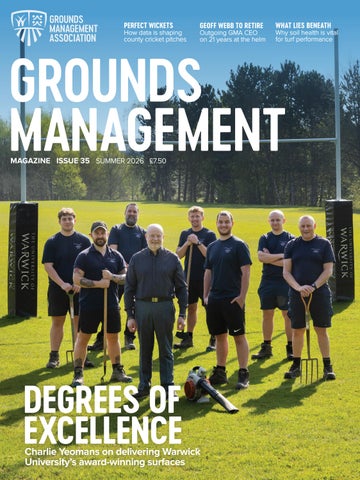
Warwick University’s grounds team took home this year’s GMA’s University and College Grounds Team of the Year and Best Managed Artificial Surface awards. We catch up with operations manager Charlie Yeomans to find out how the grounds staff consistently create outstanding playing surfaces
BY COLIN HOSKINS,
FREELANCE WRITER AND INDUSTRY EXPERT
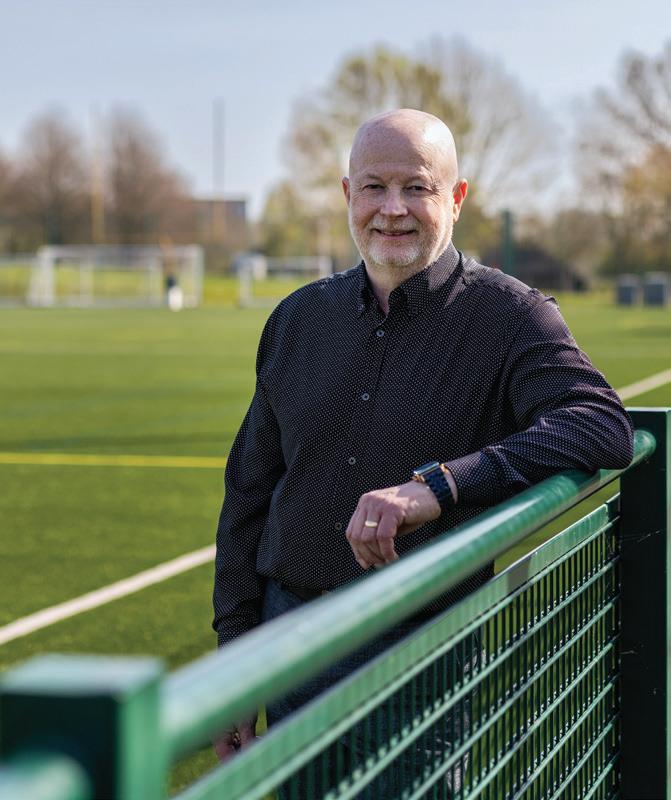
Charlie Yeomans is driven by two desires in his role as operations manager at Warwick University: to make continual improvements to the aesthetics and performance of the playing surfaces at the 118.7-hectare site and to continually improve the personal development of his eight-strong team, who already have considerable knowledge and skills that enable them to produce first-class natural turf and artificial surfaces. These desires are underpinned not only by Charlie and his team’s passion for the job, but also by the university’s concerted investment in top-of-the-range
maintenance machinery, as well as a healthy training and education budget. Charlie, aged 56, has seen many improvements at the site where he started 38 years ago as a Youth Training Scheme employee. He moved up the ranks to become head groundsman for 14 years, before being appointed operations manager four years ago.
SETTING STANDARDS
“The area was originally farmland, on clay, but the university’s significant investment in playing surface construction, coupled with the grounds team’s expertise and hard work in pitch
maintenance, has produced excellent playing surfaces,” he explains.
“My primary responsibility is to maintain and deliver to the highest possible standards 12 safe and professional sports surfaces. These include natural-grass football, rugby, lacrosse and cricket pitches, plus 3G surfaces with rubber infill for five-a-side football, American football and frisbee, as well as water-based and sand-dressed hockey surfaces, polymer-based netball courts, an international standard athletics track, and clay tennis and netball courts.”
Continual improvement is the name of the game and in 2025 the university
replaced four full-size clay tennis courts and installed two smaller training courts, as well as a new artificial cricket wicket.
ICL’s perennial ryegrass Premier Pitch seed is used across all natural turf pitches. These are kept at 25mm for football and 20mm for cricket using a range of equipment that includes ride-on, stand-on and self-propelled mowers, as well as a variety of aeration and spraying equipment. In addition, the grounds team can access more than 300 pedestrian
machines that are shared with the university’s team of 40 gardening staff.
The pitches are subjected to a regular programme of aeration, sanding and topdressing, plus feeding. They use granular slow-release types as a base –
BY ALIGNING SPORTING CALENDARS WITH STRUCTURED MAINTENANCE PROGRAMMES, WE ENSURE THAT THE FACILITIES REMAIN IN PEAK CONDITION
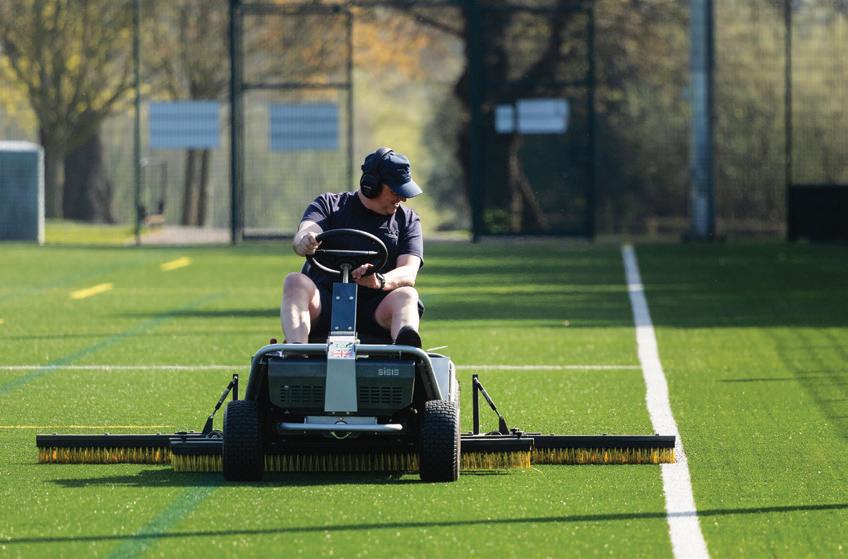
“which I feel helps to prevent disease,” says Charlie – topped up by liquid feeds from ICL: Vitalnova Stressbuster, H2Pro FlowSmart and Greenmaster High N and Cal-Mag. Charlie adds that wetting agents are especially useful for keeping the clay surfaces ‘open’. Further improvements to the pitches will also be generated by a programme of hollow tining and sanding. The synthetic surfaces are inspected daily and receive weekly brushing,
Above: Charlie Yeomans
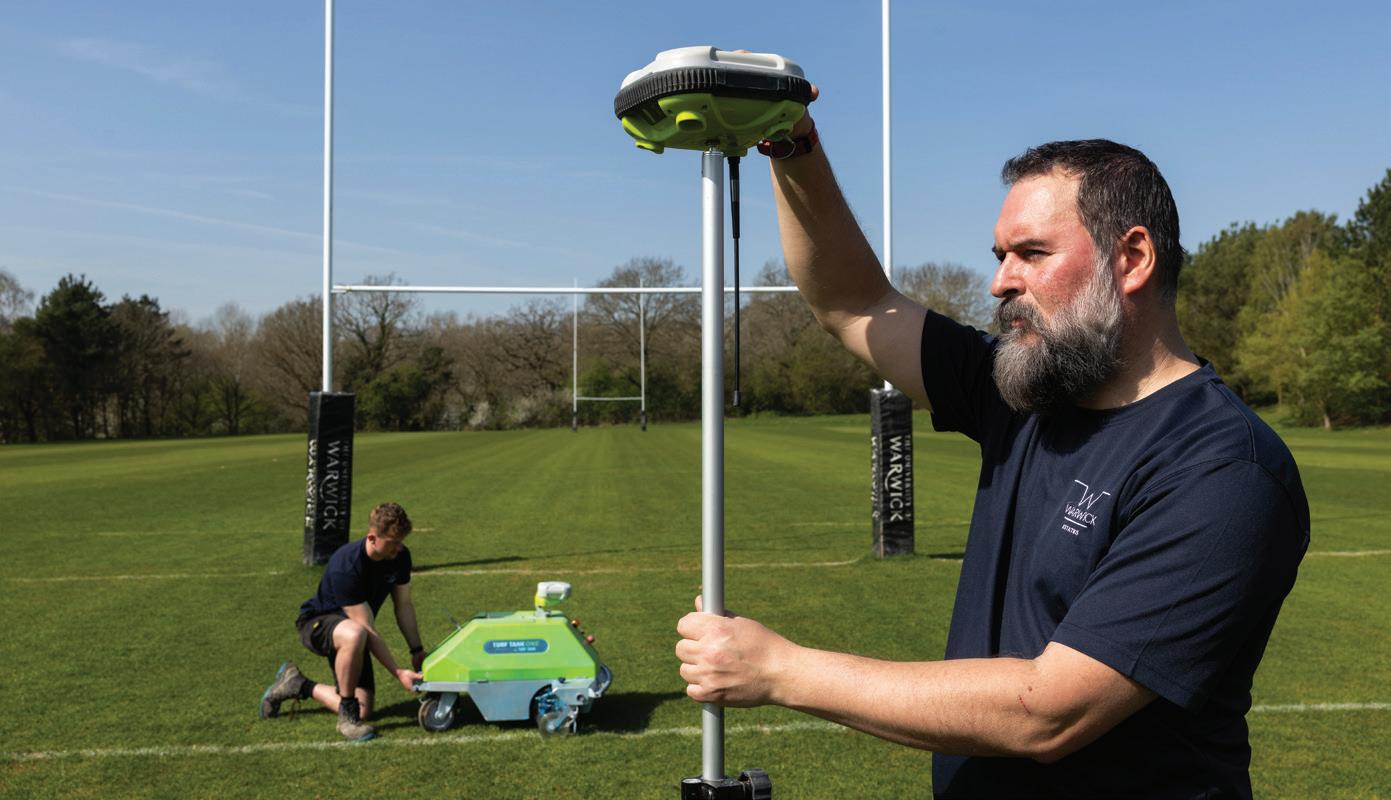
Above: Setting up the GPS antenna system for the Turf Tank robotic line marker
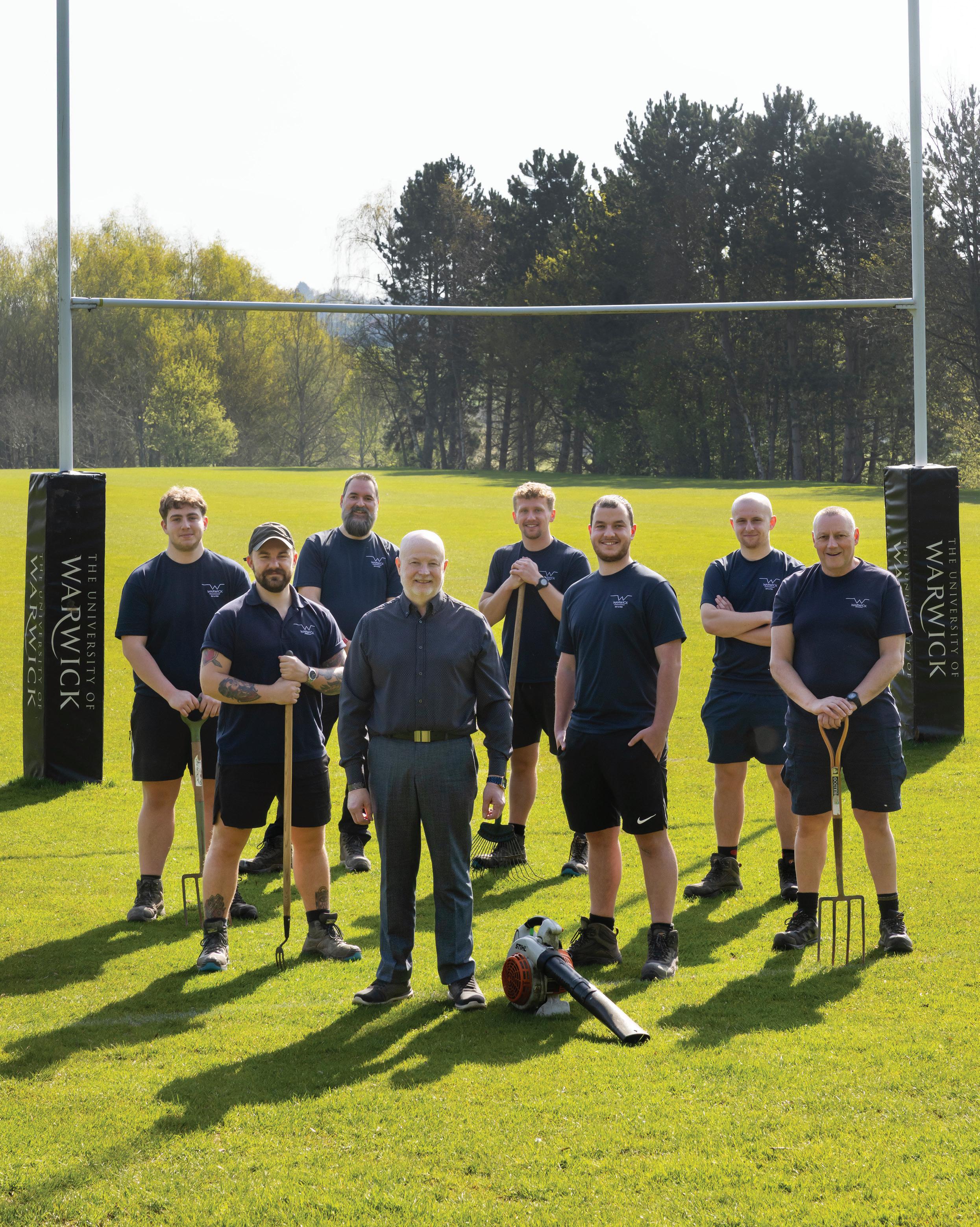
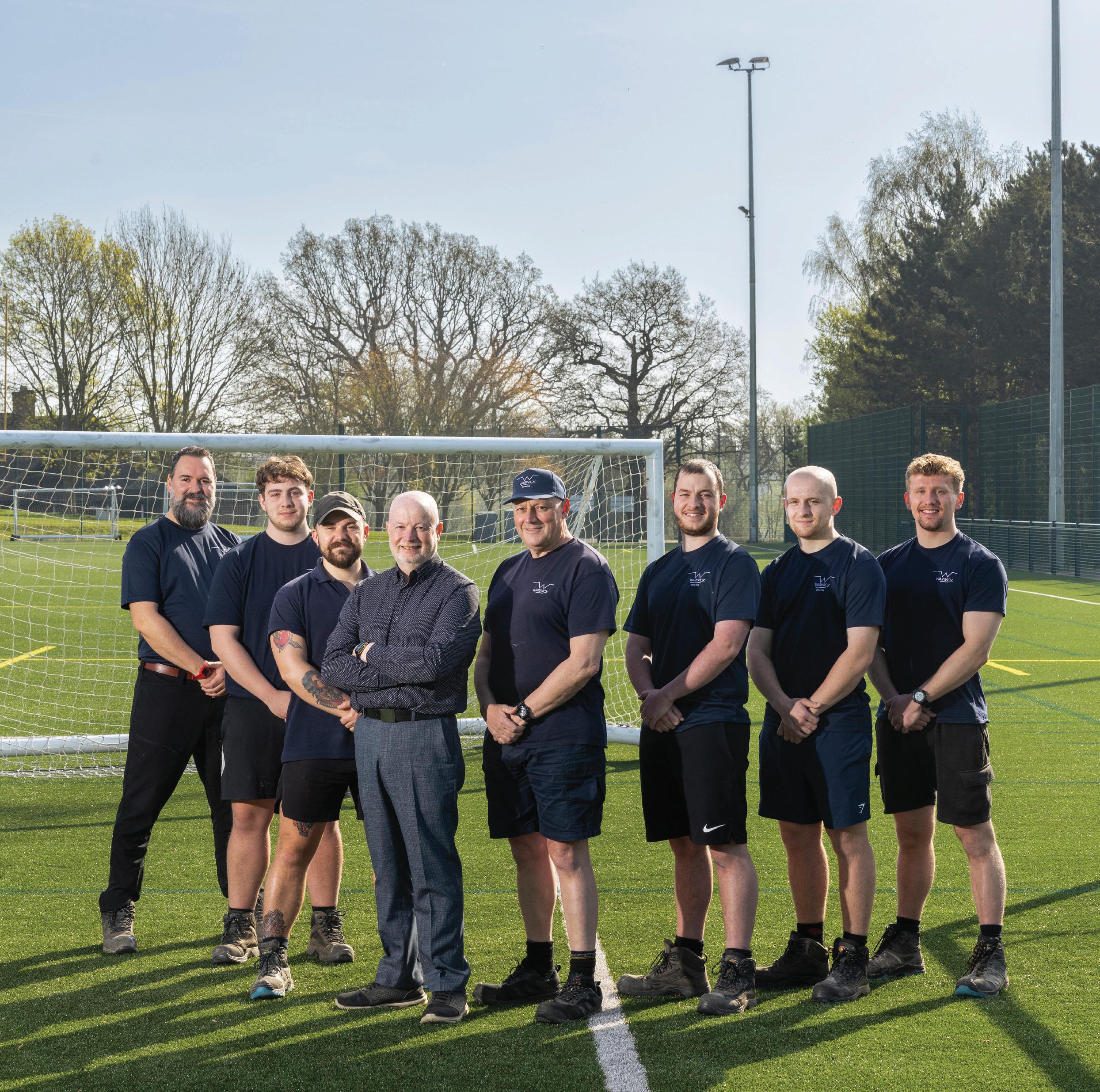
The Warwick University grounds team
cleaning and line marking by the in-house team, supplemented by quarterly visits by a contractor for deep servicing and specialist treatments. Clay surfaces are subject to seasonal renovation as well as regular brushing and drag matting.
Preparation is key for every fixture, and the staff conduct detailed inspections to ensure the surfaces are safe, correctly marked and visually immaculate. They use precision machinery and line-marking technology, and clear any surface debris. Irrigation and drainage systems are monitored daily and adjusted accordingly, while the water-based hockey pitch is aqua-cleaned annually.
YEAR-ROUND PERFECTION
“The majority of our pitches are used most days of the year and they undergo heavy usage that not only reflects the university’s academic commitments, but also its role as a hub for community and elite sport that includes Rugby Football Union and Junior Premier League squads,” Charlie says.
“During the academic year, the natural and synthetic pitches are used for teaching, training, and competitive and recreational fixtures for students and staff across multiple sports – regularly hosting British Universities and Colleges Sport league matches – while the cricket squares are prepared for university fixtures and external summer leagues.
“The hockey pitches and netball courts accommodate extensive student training and competitions, as does the athletics track, which also supports external club use throughout the year.
“Demand during the summer period is also high, as the facilities are used by holiday programmes, community clubs and external events. Community engagement is a significant element, with schools, clubs and governing bodies regularly hiring pitches and courts, while our athletics track often serves as a training and competition venue for regional athletes.
“Major university events, including graduations and open days, also use the grounds for staging and presentations. This annual cycle requires a careful balance between maintenance, renovation and usage to ensure surfaces remain safe, sustainable and visually impressive. By aligning sporting calendars with structured maintenance programmes, we ensure that the facilities remain in peak condition throughout the year.”
SUSTAINABILITY MATTERS
In addition to the university championing solar panels and electric bicycles, planting thousands of trees and establishing wildflower areas, sustainability is built into the ground team’s strategy, including a machinery replacement plan that prioritises low-emission, fuel-efficient and increasingly electric or hybrid models. Chemicals are minimised through precision applications, and recycling processes are in place for oils, filters and plastics. Equipment calibration further reduces waste of fuel, water and fertiliser.
Rainfall via a water harvesting tank is used to irrigate trees, bedding plants and small turf areas, while a purpose-built wash-down bay ensures equipment is cleaned in a compliant manner while preventing hazardous run-off. A biomass compost shredder processes organic waste including leaves, grass cuttings and wood, and reduces composting time from two years to six months. The compost is reused across campus in the renovation of shrub beds and landscaping projects, thus reducing costs and promoting circular use of resources.
CAREER PROGRESSION
Charlie reflects that his zest for personal development is reflected by his own progression and has been based on hard work, a lot of training, and a willingness to listen and learn. He says he’s “a sponge” when it comes to knowledge gathering. “In the early days, for instance, whenever a contractor was on site [for pitch construction], I would volunteer to help, and I gained invaluable insights into their work and, of course, irreplaceable experience. And I would listen a lot.”
Charlie impresses on everyone the importance of ongoing personal development and he’s a great believer in multi-skilling so any team member can undertake any job on any surface. He adds: “Their tasks are rotated every fortnight across all surfaces, and I know this plays a key role in job satisfaction, coupled with meeting the challenges presented by the range of tournaments and events we stage. The GMA Awards are also great for team morale.”
Even pitch renovation is undertaken by the in-house team. “The five main grass pitches are totally renovated every year while all other grass surfaces undergo a ‘mini’ renovation of overseeding and dressing,” explains Charlie.
TALKING TEAMWORK
The team, ably led and run by Nathan Fife, works to set maintenance schedules and daily task sheets, while digital platforms are used to track all activities including chemical applications, irrigation cycles and machine usage.
Surface condition reports and contractor servicing logs are electronically recorded, and the data is analysed to identify patterns of wear, compaction or drainage issues to enable proactive responses and effective renovation planning. Combined with real-time weather data, these records enable maintenance routines to be amended to maximise playability. While training, turf science and information technology play key roles in the successful management, monitoring and sustainability of operations, Charlie is adamant that success is also as much to do with having a knack for the job –especially when dealing with natural turf, “like being able to ‘see and feel’ when something is awry”.
He says: “Effective communication and staff management are crucial. I work closely with senior management and I meet regularly with clients [coaches, for instance] to discuss available options. I also have daily briefings with the grounds team to discuss the allocation of tasks, supported by clear work schedules and health and safety updates. Equally, strong links with management, contractors and other departments ensure the wider university benefits from efficient service delivery, proactive problem solving and continuous improvement across the site.”
For the future, he concludes: “As always, we will continue to try to improve everything we do by showing a willingness to trial new products and, crucially, by ensuring that I can offer the best possible personal development paths for every member of my team.”
THE TEAM’S TASKS ARE ROTATED EVERY FORTNIGHT ACROSS ALL SURFACES, AND I KNOW THIS PLAYS A KEY ROLE IN JOB SATISFACTION. THE GMA AWARDS ARE ALSO GREAT FOR TEAM MORALE
TEAM TRAINING COUNTS
Every team member – including team leader Nathan Fife, Gavin Courtney, Steve Barrett, Ian Blakemore (soon to retire), Tom Weatherall, Evan Underwood, Oaren Mullally and apprentice Zane Taylor – has undertaken accredited role-specific training, including manual handling, working at height, first aid, fire marshal training, COSHH awareness and display screen equipment assessments. Supervisors and managers attend leadership courses, and refresher training is provided annually –or sooner if legislation or best practices change.
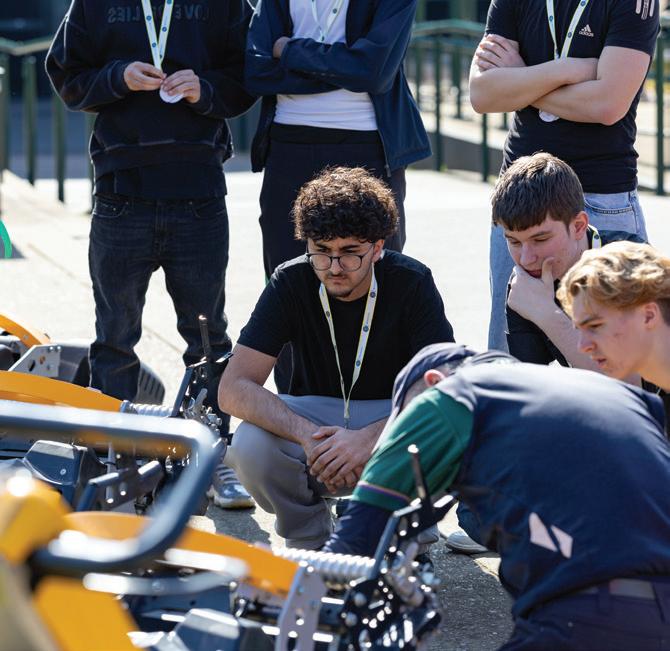
All staff are trained to City & Guilds/LANTRA (NPTC) standards across a range of equipment including ride-on mowers, tractors with front buckets, ATVs and PA2 spraying (including half of the team being trained in boom spraying), as well as use of hedgecutters, strimmers, pedestrian mowers, a chipper and a mini digger. Half of the team are additionally trained in tractor-mounted hedgecutters. Staff also hold qualifications in turf management, with half the team trained to GMA Level 2 and the remainder to Level 3.
Zane, the 16-year-old apprentice, has taken NPTC training for tractor and mower use, which is complemented by ongoing mentoring to build his confidence and technical expertise.
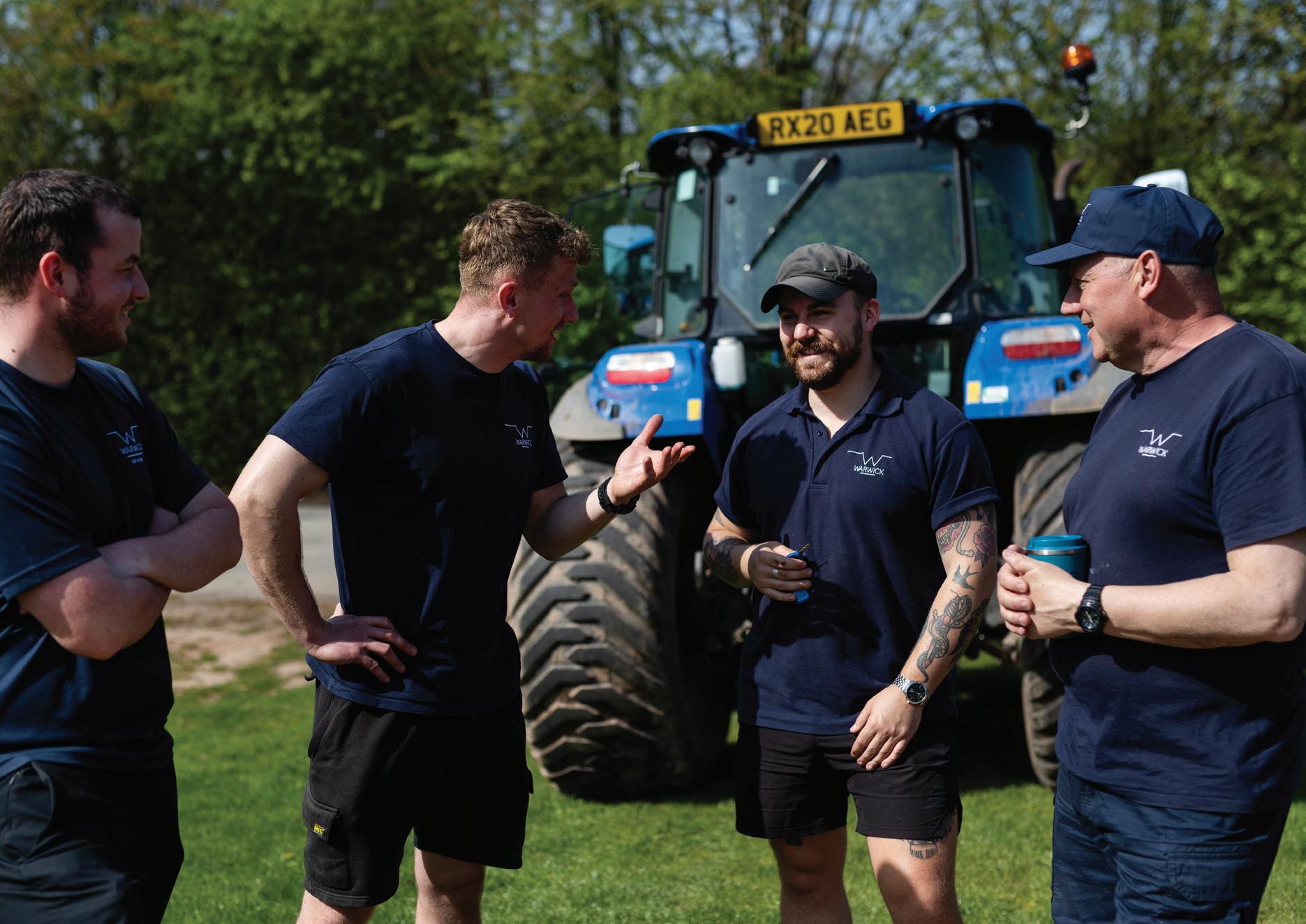
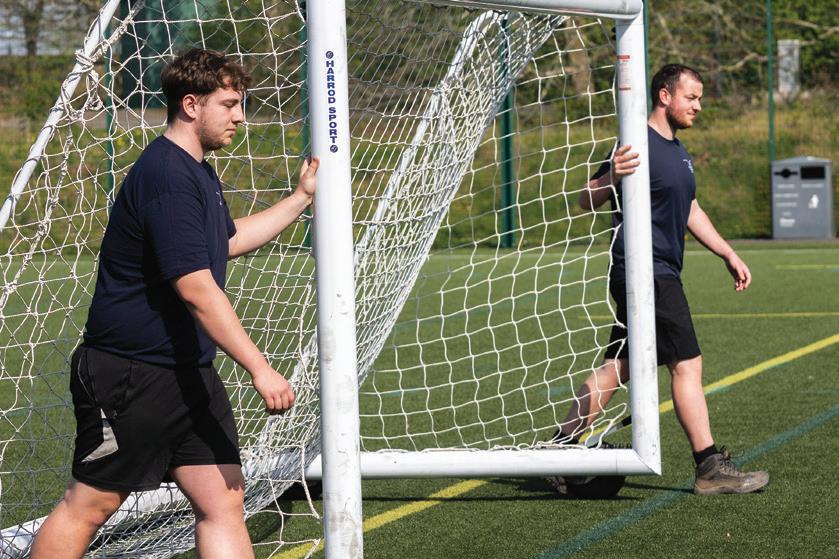
Above: The team work tirelessly to ensure the highest standards of all playing surfaces
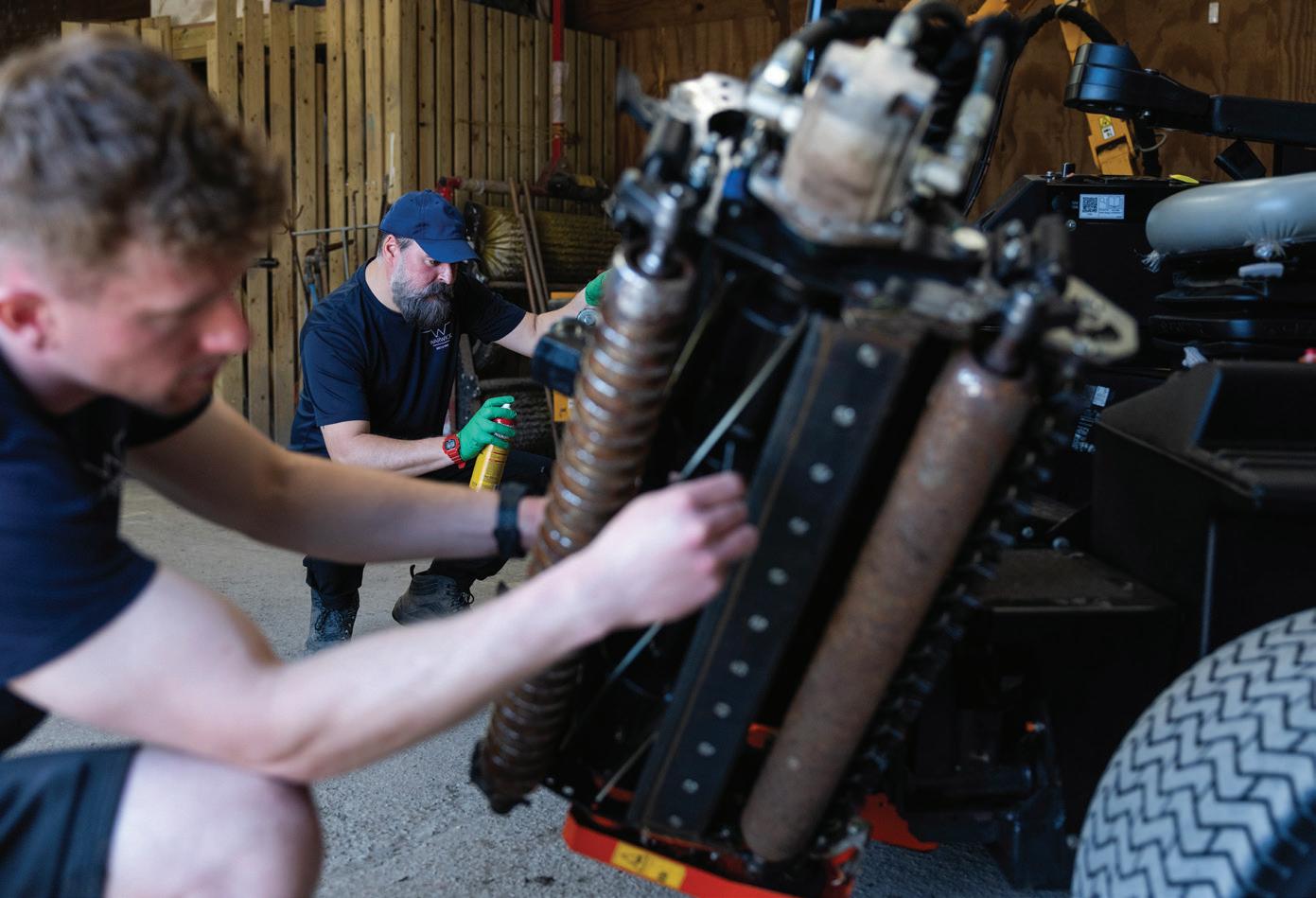
Left: All the grounds staff are trained across a range of equipment