

WRITTEN BY Meilin Shen, Taite Nicholson
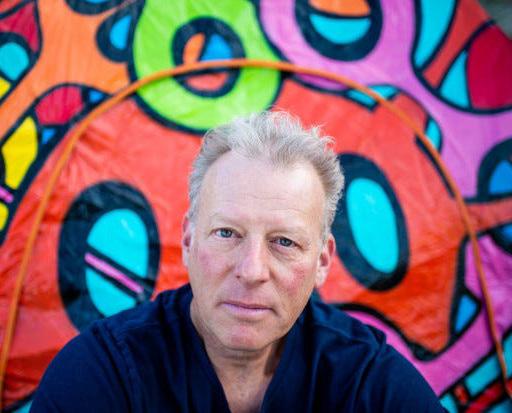
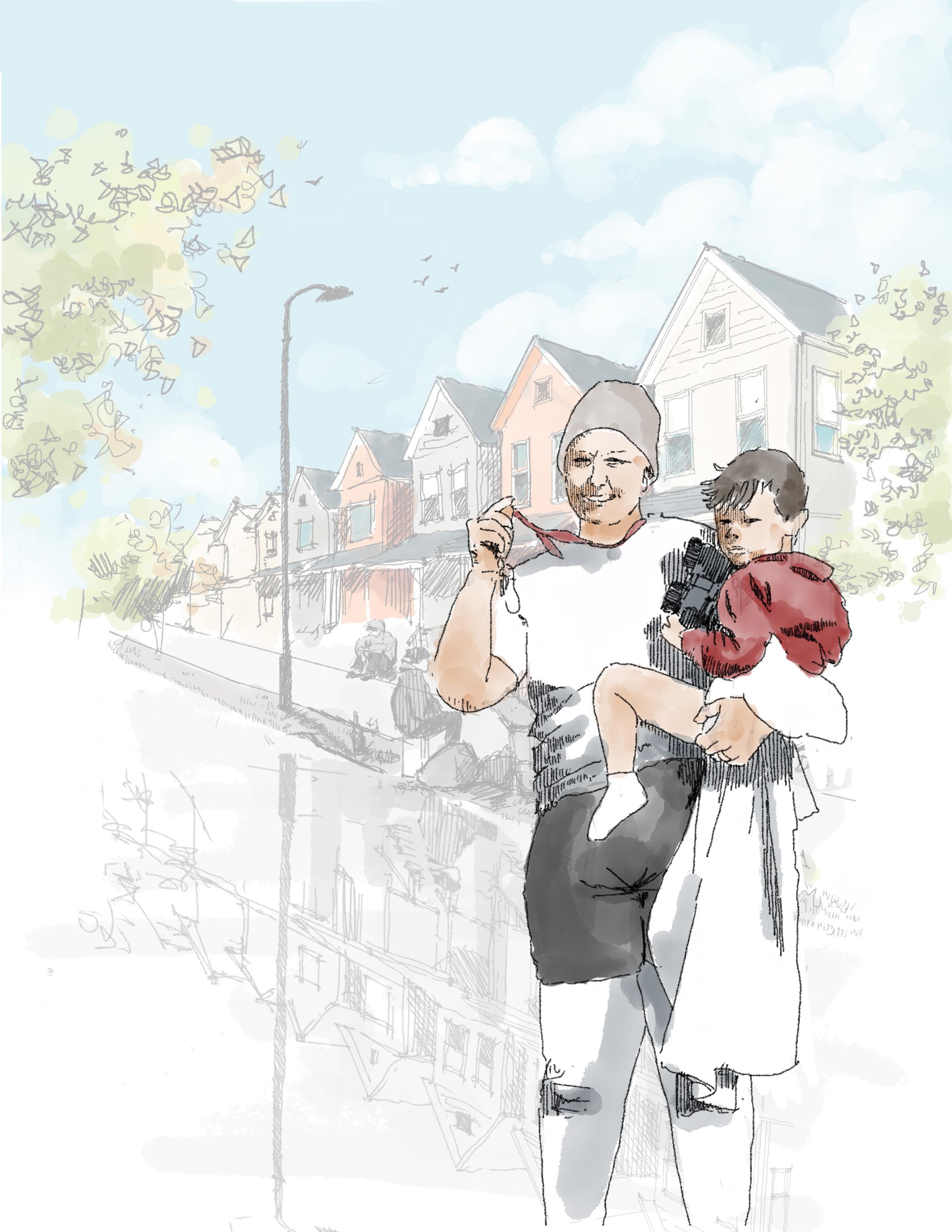
Approaching the 1930s mission style building, reminiscent of old town Long Beach with its terracotta striped awnings, Clark David Inglish heard the metallic click of a lock on his apartment door. Clark moved into a singleresident apartment alongside Pacific Coast Highway, a few minutes from the sandy shores of Long Beach. Just a few months ago, he had experienced significant turmoil in his life. This included coming out as queer and transgender, discovering he was seven months pregnant, managing unmedicated mental disorders, and battling a methampetamine addiction while fighting to provide a home for his future family. After years of surviving alone on the streets of Orange County, Clark managed to escape two domestically violent relationships and regain custody of his fouryear-old son. “When you give birth, it’s a love you can’t imagine,” he shared with us, his resolute tone wavering slightly. “I would have died if it wasn’t for Spencer. It changed my life in the best way possible.”
Walking into Tierra Maria—a quaint cafe in Los Angeles with a Spanish flair—at its busiest afternoon hour, we found a quiet seat by a corner window

with Clark Inglish. Clark’s vibrant red hair and confident manner distinguished him from the rest of the customers. He’s white, with brown eyes, dressed casually with sweatpants, sneakers, and a hoodie.
Sipping on a strawberry lemonade, Clark jumped into telling us about his homeless experience without hesitation.
Years before, Clark remembers his childhood in Pasadena. Growing up comfortably in an uppermiddle-class family and attending an art school in Los Angeles, he remarks how beginnings do not predetermine the course of one’s reality. Looming in the background of his upbringing, his mother’s mental illness was the cause of his journey into the foster care system and, eventually, to homelessness. His mother’s struggle with depression and other undiagnosed illnesses started when Clark was around 8. “Before that, my life had been great,” Clark noted with a tinge of disappointment. He ran away from home at 15 and was taken in by a friend from school. In this new environment, he experienced the first of many sexual assaults. “I ran away to my best friend’s house…whose father turned out to be a pedophile. I didn’t know. I found out the hard way. He tried to do something to me; he tried to rape me.”
Placed in the pandemonium that is the social service system as a young adult coping with PTSD and bipolar disorder, it was a struggle to find a supportive and healthy home. After two unstable households, a woman, Barbara Bradmore, took Clark in. “She was like an angel,” Clark said. “She cooked organic food every night, she celebrated birthdays, and we just had the best time.” However, a religious undertone that clashed with his individuality pushed Clark away. At 19, Clark emancipated himself from the foster care system and moved in with his extended family in Oklahoma. Although moving in with his family seemed a promising recourse by their polite conversations over the phone, to his surprise, they were unwelcoming. Suddenly deprived of a loving
family and safety net, Clark was a teenager left vulnerable to life’s challenges; a rejection that set the stage for his future in homelessness and isolation.
After separating from his extended family and filing for emancipation when he was 19, Clark moved back to Long Beach from Oklahoma. While he was still closeted, Clark reluctantly took a job as a cocktail waitress at strip club after hearing frequent suggestions from strangers. “You’re so pretty you should go be a cocktail waitress at a strip club. You would make perfect money,” Clark told us what people would say to him at a young age. As regular expenditures piled up, Clark weighed his options and decided to apply for the job.

“AND

Every Monday night, the club that Clark David Inglish worked at served only a few customers as exotic dancers spun languidly in their spotlights. According to Clark, the dancers would make “good money” every week. This would be enough for Clark’s primary expenses: housing, food, insurance, and clothing.
The psychological distress and repression of identity interlaced with the objectification from exotic dancing weighed on Clark’s mental health. He had a steady income and a place to stay, but the need for liberation was lingering. ‘‘I didn’t give a sh*t. I wasn’t happy, it felt like I was drowning,’’ he told us. His objectives for his life changed, as all Clark wanted was a breath from the surface, and money was no longer a strong enough incentive to live a life that wasn’t his.
As Clark abandoned his life as an exotic dancer, he entered the cycle of unemployment. Instead of trying to get back on his feet, Clark’s naivety coerced him to see homelessness as a ‘‘fun’’ opportunity to be on his own without restrictions from society or his family.
At first, he enjoyed the freedom and peacefulness of it. In the suburban city of Woodbridge, he woke up at dawn, drank lattes at local cafes, snuck into movie theaters, and had a regular bedtime of 10:30 p.m. Clark constantly rode the bus to Santa Ana because ‘‘everything is cheaper there’’ but was persistent to remain living in Irvine as the affluent area tends to be safer from violence and sexual assaults. While scouring for hidden parks and public restrooms, Clark made a curious observation: he rarely felt hungry. ‘‘We’re overfeeding the homeless while neglecting their broader needs,’’ Clark mused. His remark underscores a prevailing misconception that food alone fulfills the desires of homeless individuals. In truth, there is an inefficiency of essential amenities crucial for maintaining their humanity. Even though the Los Angeles Area holds more than half of the nonprofits in Southern California, Orange County has the most diminutive proportions of health and human services organizations, lacking just the kind of resources that people like Clark needed.
With the highest number of homeless population in the nation, California has the most visible issue of this disparity compared to New York City and Miami, which come in second and third place for increase in homelessness during COVID-19, respectively. The ballooning of median rents began exceeding the average person’s ability to pay, exacerbated by the pandemic and the ongoing deinstitutionalization of the mentally ill. Although California experiences more than a thirty percent increase in homeless individuals per year, most homeless shelters remain vacant, leaving the population to reside on the streets, exhibited by the rapid rise of tent cities and trailer parks. Clark revealed that the unwillingness to enter these shelter systems is caused by the common erratic behaviors of occupants who haven’t been inside a home for a drastic amount of time, leading to violent disputes. However, Clark also empathized with these actions, recalling a time when he ‘‘threw a cup of water at the wall’’ and scared a volunteer. These actions developed into feelings of anger towards himself as he ‘‘fe[lt] like [he was] not worthy of a home,’’ a sentiment prevalent among many experiencing homelessness, yet often overlooked.
When pocket money ran out, begging became Clark’s primary source of income. His positive outlook soon diminished as the truth of homelessness struck him, and his adventures through the city ceased. Instead,
Clark found himself crouching at people’s feet and enduring distasteful whispers from parents to their children. He gradually got used to people watching him sleep as he lay curled up on the concrete with no incentive for movement, without any other choice nor privacy, stripping him of self-dignity. He became a display for the public.
“I PRAYED EVERY NIGHT THAT NOBODY WOULD HURT ME. I WAS VERY FORTUNATE THAT NOTHING EVER TRULY BAD HAPPENED TO ME,”
said Clark. It is apparent that Clark’s meaning of “truly bad” is different from most.
On the morning following a cold, rainy night, Clark and his little pitbull arrived at a shower program in Long Beach. Although he usually avoided homeless services due to past sexual assaults by other homeless individuals assisted by these organizations, he succumbed to the idea of a hot shower. He wanted to cleanse himself from his current state of being and the unwarranted spits from strangers. Clark found relief at St. Luke’s. Sitting on East Conant Street, the Episcopal church opens its doors every Saturday to anyone who needs showers, clothes, and food. Guests who emerge from these showers claim that they “feel human again” as they receive medical care, often avoided by the homeless because of the hundreds of dollars they lack for monthly insurance. After graciously thanking the members of St. Luke’s, Clark befriended a man named Sherif.
referred to as “speed,” “ice,” or comical names such as “scooby snax,” are repulsive. The very thought of the illicit drug methamphetamine conjures images of dark street allies and disreputable ways of living, casting a dishonorable shadow on its users. But for someone deficient in the essential that is shelter, those abysmal connotations fade away as the brief escapism morphs into a distorted solution for troubles. Ice, crystal, or glass, almost poetic names, are ironic titles for such a destructive force.
Clark wanted a way to leave behind the haunting memories and daily fear that controlled his life. A constant, maddening curiosity clouded his chance for improvement. His interest in the habit that seemed euphoric for others was, in the end, victorious. But not until meeting Sherif.

Substance abuse is related to homelessness in two ways. In the first, addictions act as a stimulus to homelessness. People who develop a reliance on drugs may go to extreme lengths to support their addiction, leading to poverty and eventually life on the street. The other way, the way Clark succumbed to drugs, starts with homelessness. His addiction was a consequence of his homelessness, not the other way around. Clark pushed away offers of various substances initially and despite unimaginable difficulties, he chose sobriety. However, as his relationship with Sherif developed and the difficulties of homelessness persisted, falling into substance abuse was an almost inevitable outcome of his new influences and circumstances. Clark saw the extent to which others would go for drugs and how it made people forget. Sherif was an addict and would tease Clark, pushing the drugs into his face. And it worked. The dynamic changed and Clark started asking for substances while Sherif refused to provide them. “Give it to me, or I’ll just go somewhere else to get it,” Clark told Sherif. The struggle of drug addiction entangled Clark in a cyclical process of usage and rehabilitation.
To an outsider, stereotypical depictions of the drug
Clark’s life, however, changed after discovering he was seven months and two weeks pregnant. With his current state of homelessness, this realization filled him with terror. By the seventh month of pregnancy, infants develop fully functional hearing, open their eyes, grow eyelashes, and can even dream. To be
unaware that you are carrying a child until the third trimester is extraordinarily rare. This fact tells of the terrible physical condition Clark must have experienced during homelessness and drug usage. To be ignorant of his condition for the majority of its duration, Clark was well acquainted with consistent nausea, pain, and other pressures that carrying a child disposes onto the body. Two months after childbirth, he made a courageous decision to protect his future family. The moment he learned about his pregnancy, he quit drugs and searched for housing.
“I JUST DID EVERY -THING I COULD DO,”
said Clark in a reflective tone.
Clark named his baby boy Spencer.
Upon delivery, Spencer was taken from Clark. He was placed into the foster care system, a shared fate between parent and son. Clark briefly slipped back into narcotics but he admirably reported his mistake and voluntarily went into rehabilitation. Legal battles ensued as Clark found himself mentally and physically fit to raise a child. This became his only focus and created the motiviation Clark needed to escape from homelessness. “He changed my life,” said Clark, referring to Spencer.
driving a statewide emergency that demanded urgent attention. In response, Newsom initiated a new phase of Project Roomkey in November 2020. Under this program, the Department of Social Services provided quarantine spaces in hotels and motels for individuals at high risk of contracting the coronavirus, alleviating pressure on overflowing hospitals and offering a pathway to permanent housing. The policy emphasized that “no occupant is forced to exit into unsheltered homelessness,” in other words, people like Clark David Inglish now had a safe place to stay.
Meanwhile, Clark faced California’s judicial system. He informed us that one of the most monumental obstacles was obtaining legal documents. People without houses rarely possess accurate documents such as birth certificates, driver’s licenses, or medical records for legal processes.
“IF YOU HAVE ANY -THING LEGAL TO TAKE CARE OF WHEN YOU’RE HOMELESS, IT’S CHALLENG -ING AS HELL. IT’S AWFUL.”
In his journey to start a family, securing a home became the initial priority. Covid, in that respect, was an unexpected blessing. As the pandemic unfolded, over one thousand six hundred families in California faced eviction, plunging them into a state of constant fear and uncertainty. These evictions coincided with Governor Gavin Newsom’s shelter-in-place order,
Clark expressed the need for a resource center that supplies homeless individuals with necessary identification and personal information. Communication was an additional difficulty. Clark Inglish needed consistent access to a phone, and attending court dates was nearly impossible without a clock, calendar, or messaging system. However, not getting custody of his child was unimaginable, so he persevered through the countless forces blatantly pushing against him, scavenging for help from social
workers and any government resources he could acquire.
Sometimes, one individual can be the deciding factor for the trajectory of another’s life. In Clark’s case, this came in the form of a social worker who provided assistance with Clark’s custody battles and informed him of an available housing voucher which allowed him to lease an apartment with financial aid. Sober and determined, he bravely faced the court and won custody of Spencer. This gratifying result meant everything to Clark as his newfound purpose was providing security for his baby. Everything was falling into place. After searching the real estate market for someone who would let an apartment to him with his new voucher, he found the Spanish-style building with terracotta striped awnings that he now calls home.
Clark expressed genuine gratitude to the many people who helped him rise from having nothing to a loving family and a home. As he aimed for sobriety and a better lifestyle, he found support and a lifeline through community. Narcotics Anonymous, a group he attends to this day, became a sense of stability anchoring him to his mission. Each month, this community celebrates their clean time, holidays, and birthdays to preserve a positive outlook on life. Through this experience, Clark recently achieved 3 years of sobriety from meth. Finding a connection to people with relatable lives and similar struggles with addiction provided a sense of belonging and a need for accountability.
“YOU HAVE TO STAY CONNECTED TO YOUR PROGRAM OR YOU WILL FALL,”
Clark said, adamantly advocating for community support.
Even with an encouraging circle, addiction is a constant battle.
an honest admission true to many who have tried to detach from drug usage.
As the rhythm of Clark’s life steadied, he married Sherif in a small chapel with an intimate audience. Clark decided he did not want to wait anymore for a fresh beginning, although he knew Sherif was not yet clean.
Clark said in an acquiescent manner. He loved Sherif but was protective of the life he built up, so he arranged strict boundaries. Sherif was not allowed to use drugs inside the house and needed to be sober before visiting Spencer. Sherif still struggled through the same emotional hindrance and absence of self-worth as Clark did when he was homeless. Clark shared that he regularly found Sherif sitting on the stairs of his porch, admitting that he “didn’t even know how to come inside.” Despite Sherif’s fluctuations, he proved to be a good, humourous, and kind father with Spencer, and that so far is a step to improvement.
Looking forward, Clark hopes to receive a degree in mental health case management, a goal he is only 3 classes away from achieving. With a lifetime of experience to buttress his ambitions, Clark will have an advantage in this field and undoubtedly have a beautiful impact on others.
“BEING A DRUG ADDICT IS REALLY HARD, IT’S SOMETHING I HAVE TO WORK
Put through a tumultuous and rough childhood, Clark weathered distressed beyond his control. From clinging to a semblance of family in his teenage years to relinquishing comfort to embrace his true identity, he forged a world uniquely his own. While support from compassionate individuals was crucial, it was Clark’s unwavering tenacity and love for Spencer that truly made the difference. He defied the daunting obstacles that once threatened to ensnare him in the cycles of addiction, abuse, and violence. This story had a rare resolution—a happy one—that is one in a million, and Clark is ever so thankful for where he is now.
AWritten By: Annika Shah, Mei Mahon
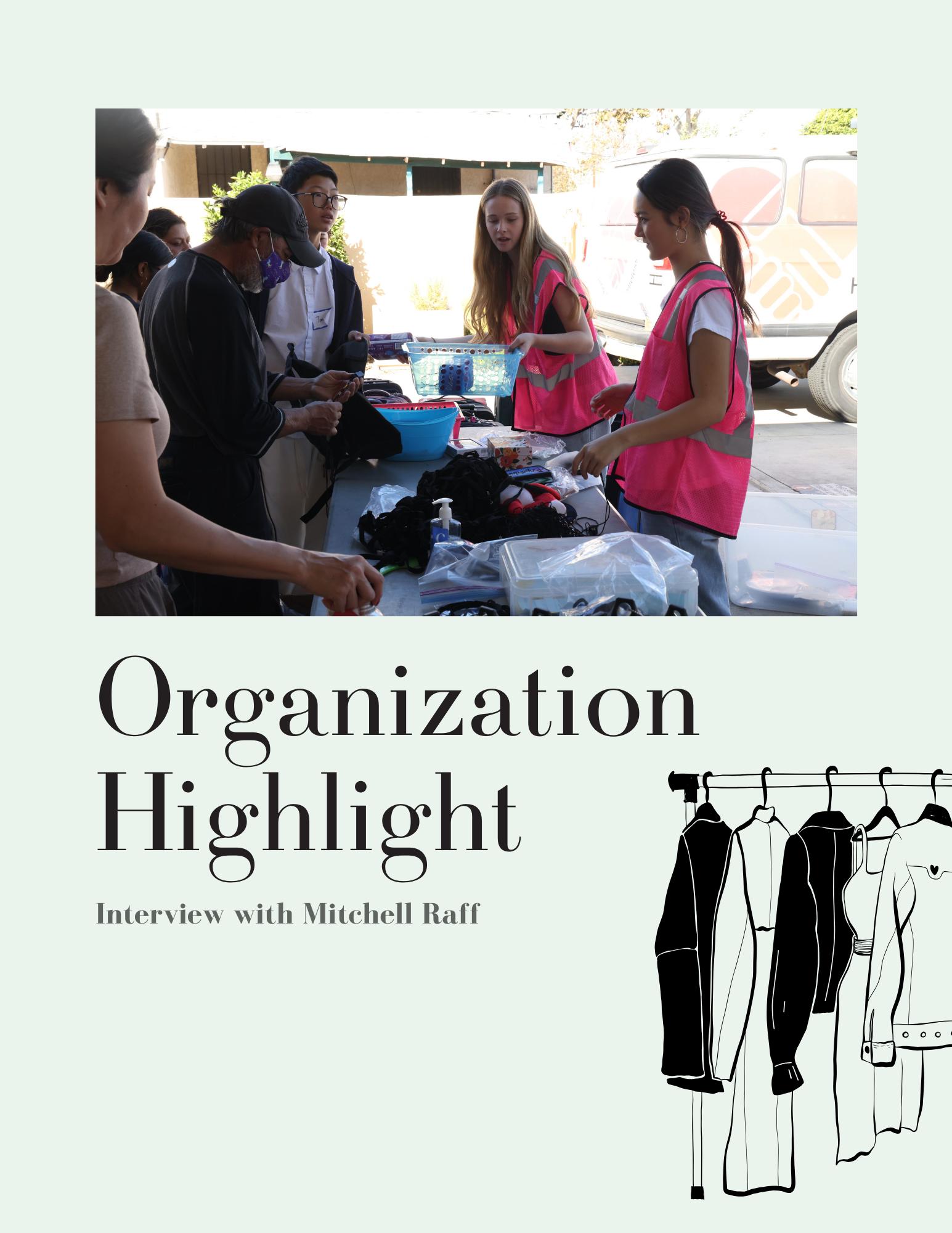
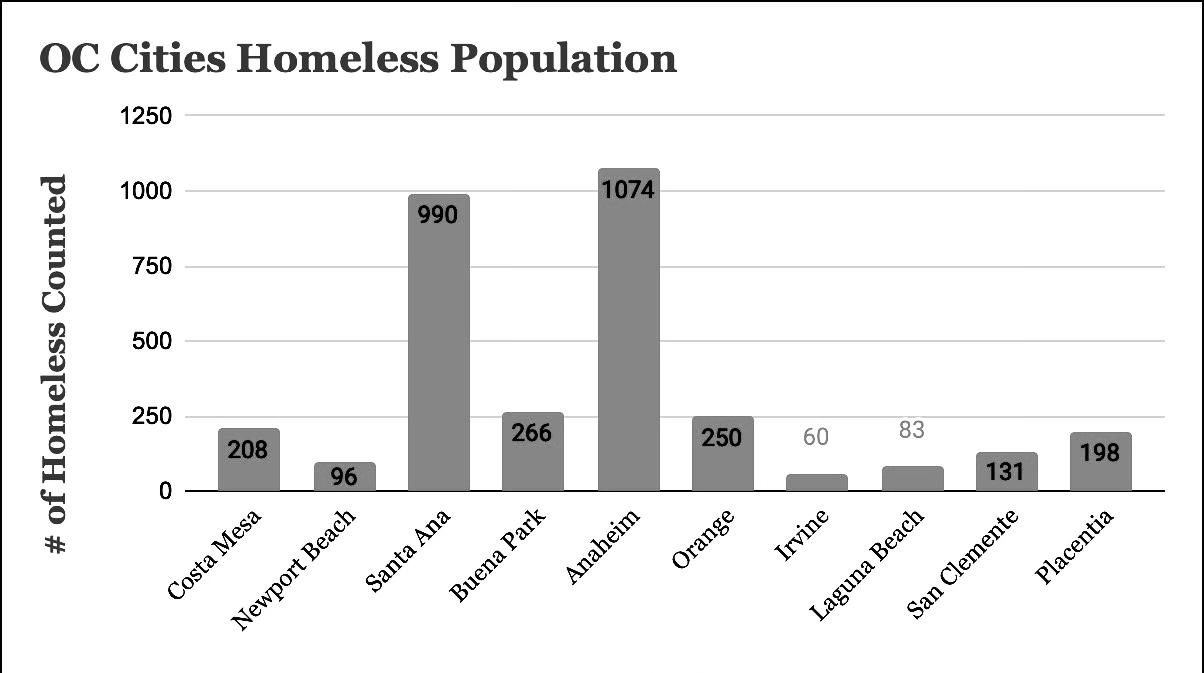
n alarming 226,980 women and girls represent all unsheltered people in America. If history is indicative of the treatment these unhoused women face (and it is), these women will likely face sexual violence and discrimination while homeless. In 2022, 5,718 homeless people populated Orange County, with 3,057 unsheltered, recorded through the point-intime count. Thirty-nine percent of the homeless population is female, and every homeless woman is vulnerable to a barrage of gender-related issues. These women are susceptible to an array of trauma, and this susceptibility is only exacerbated by living as a female minority in a male-dominated environment. We discussed the statistical comparison of unhoused men and women with Mitchell Raff, Director of Clothing the Homeless. “Women should not be homeless because of how vulnerable they are,” said Raff, making a point to bring up the violence directed towards homeless females. In Orange County specifically, 9.84 percent (289 adults) of the homeless population have been devastated by domestic violence. A 2017 DC Women’s Needs Assessment report published by The Women’s Task Force of the District of Columbia Interagency Council on Homelessness found that over half of homeless women face violent victimization. Due to underreporting, this number is

likely much higher.
Even while seeking shelter, homeless shelters have proven to put these women and girls at risk. For women looking for a haven amid the dangers on the street, co-ed facilities still provide a place for their male counterparts to assault, victimize, and offer substances to them. “The best opportunity was to go into a homeless shelter for domestic violence victims. It was horrifying: There were feces on the walls, children running around naked,” states
Jessica from Ohio in an interview with The New York Times. In response to the ever-present dangers that still exist in these facilities, unhoused women and girls’ path of recourse is often sleeping in their car or temporarily living at a friend’s house. Even life after experiencing homelessness as a woman can bring on mental health issues like depression and even Post-Traumatic Stress Disorder (PTSD). These post effects can impact a person’s ability to form trusting relationships or build a support system and can lead to issues with substance abuse, furthering a cycle of homelessness.
The Washington Post published a shocking article focused on the personal story of Alberta Williams, a woman who dealt with sporadic homelessness and continuous drug use throughout her life, which she traces back to a jarring experience of sexual assault.
Much like Alberta Williams, many women’s stories and experiences with homelessness are intertwined with violence, the aftermath of which is often PTSD. Her example is, unfortunately, a similar story to many women who face homelessness.
Additionally, these women faced poor physical health, which impacted them later in life. Homeless women face gender-based violence only exacerbated by living as the female minority— but why are women the minority?
Extensive research and studies on the unhoused population have consistently shown that homeless men are more likely to be involved in criminal activites and substance abuse issues. In contrast, homeless women are less likely to be affected by these factors. This significant contrast is crucial in the disparity between homeless women and men. Among the 2.2 million incarcerated individuals in the United States, a majority of the unsheltered population comprises men who have accumulated substantial debt, engaged in criminal activity and struggled with excessive drug and alcohol use. In the case of vulnerable women, a significant portion of them are elderly individuals who have
experienced insecurity due to factors such as divorce, abusive households, or the loss of a partner. The unimaginable choice between staying with an abusive partner or facing homelessness is a harsh reality for many of these women.
Organizations like Laura’s House in Orange County specialize in providing shelter and legal support to victims of domestic violence, including women, men, and children. Their efforts have positively impacted the lives of over 55,000 individuals.
“I wanted to gain a feeling of self-worth. I wanted to become independent from my abuser. I wanted to be honest and say what has happened to me,” said a shelter graduate. It is undeniable that in the past century, a significant amount of needed attention and awareness has been brought to women’s equality and empowerment, with a recent emphasis on sexual violence and harassment. As progress continues, it would be grossly negligent to overlook the most vulnerable members of the female community: people experiencing homelessness. People without homes are often ignored based on other people’s judgments or preconceived notions, and homeless women pay the price. The importance of giving a voice and a better future to these women who face the fear of violence cannot be stressed enough.

WRITTEN BY Arya Rawal
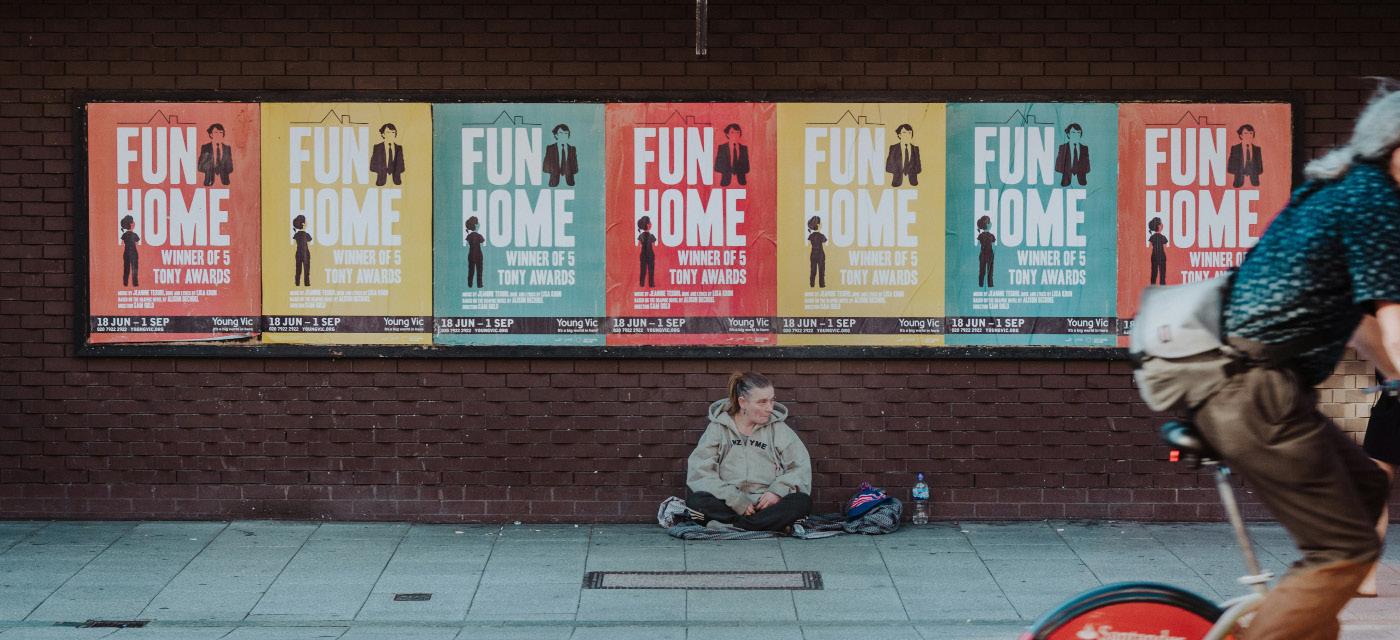
“Everyone has the right to an adequate standard of living ... and housing,” states Article 25 of the Universal Declaration of Human Rights. This principle aligns with the missions of various organizations and is consistent with American law. However, the reality is that each year, a significant number of Americans, ranging from 2.5 to 3.5 million, find themselves sleeping in shelters, transitional housing, or public places not intended for human habitation. In California alone, there are currently over 171,500 homeless individuals as of 2022.
Unfortunately, stereotypes
associated with homelessness perpetuate negative attitudes towards this group, often leading to misconceptions that all unhoused individuals are simply unsuccessful and lack a strong work ethic. These stereotypes hinder progress and discourage better futures for the homeless population. It is essential to recognize that while employment can contribute to stable housing, it does not guarantee it. Approximately 50 percent of people experiencing homelessness are employed. The high cost of renting further exacerbates the issue. For instance, the average income of an American in California is $33,719, while the
average home price in the state is $746,055.
This contrast reveals that 10 to 20 million Americans lose their homes annually.
Furthermore, C.B.S. News declares homes are unaffordable in “99 percent of the nation” for an average American, while mortgage rates grew to 7 percent, and the average interest rate was up 7.19 percent during 2023. Claro Duany, a 70-year-old man from Illinois, shared his experience of homelessness with The New York Times, explaining that “by the time [his mother] passed, [his housing] interest had accumulated,
and it was $46,000. That, [he] didn’t have.”
Addiction, which medical professionals consider a mental illness, has an overwhelming correlation with homelessness. Research from The Substance Abuse and Mental Health Services Administration supports the conclusion that approximately 38 percent of homeless people abuse alcohol, and 26 percent abuse drugs. Heroin, prescription opioids, and methamphetamine are the most commonly used drugs among the homeless population. These substances often become coping mechanisms for the overwhelming hopelessness and stress that life on the streets entails. It can be difficult for people experiencing homelessness to quit substance abuse due to a lack of support networks and motivation.
In contrast, substance abuse can be practiced during times when individuals are housed, and as their lives take a turn with familial conflicts, career disruption, or loss, their habits of alcohol/drugs may become more severe and lead to a cycle of homelessness. Services like WisePlace are dedicated to ending homelessness for unaccompanied women in Orange County by providing the service of addiction management, and Adelante recovery center, a group that promotes fellowship and
teaches social skills, specializes in group therapy for recovering individuals. “Because of an L.G.B.T.Q. Alcoholics Anonymous meeting that I went to daily, I had this whole posse of engaged, loving, and wonderful people in my life,” said Jessica, a woman interviewed by The New York Times who in the past experienced homelessness, mental illness, addiction, and domestic violence
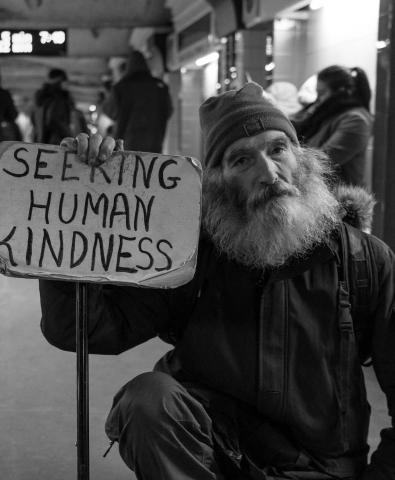
who found support in the many programs to help the homeless.
Mental illness is also disproportionately high among homeless populations. While 6% of the American population suffers from mental illness, that number jumps to around 25% among homeless people. Similar to drug
abuse, mental illness increases the chance of people returning to homelessness more frequently as they face challenges in adapting to new housing. Of the homeless population, veterans are often likely to experience mental illness as well as addiction. The U.S. Department of Veterans Affairs states that substance use disorder and P.T.S.D. are two of five common mental health disorders impacting homeless veterans today.
P.T.S.D., stemming from the traumas of war, significantly contributes to homelessness among military veterans, with nearly 200,000 veterans experiencing homelessness. For some veterans, leaving behind their homes, loved ones, and jobs becomes an unfortunate consequence of their struggles with mental health issues and addiction. The intersection of addiction, mental illness, and homelessness highlights the urgent need for comprehensive support systems and interventions tailored to address these challenges faced by vulnerable populations within our communities.
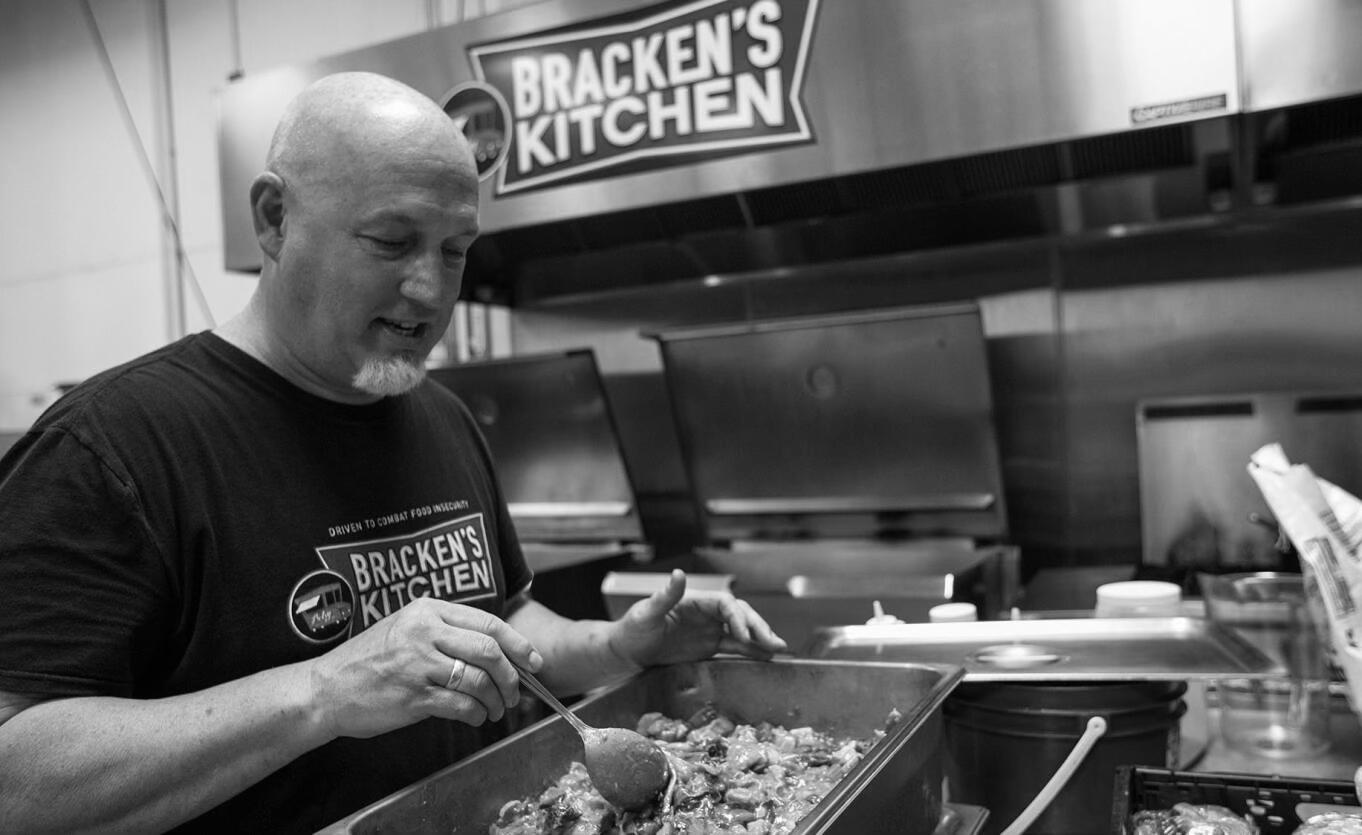
“Bracken’s Kitchen distributes around 8,000 meals to people DAILY”
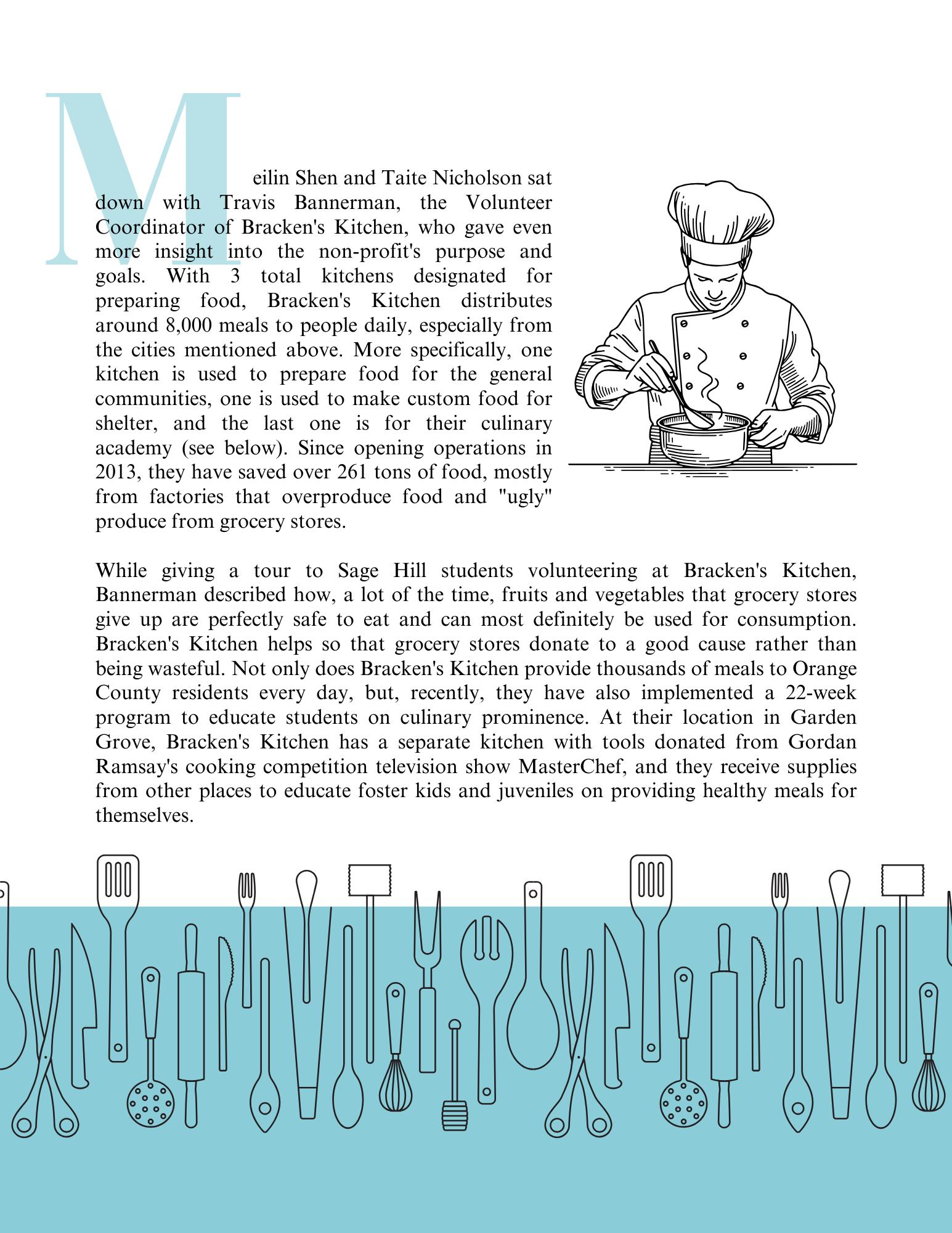
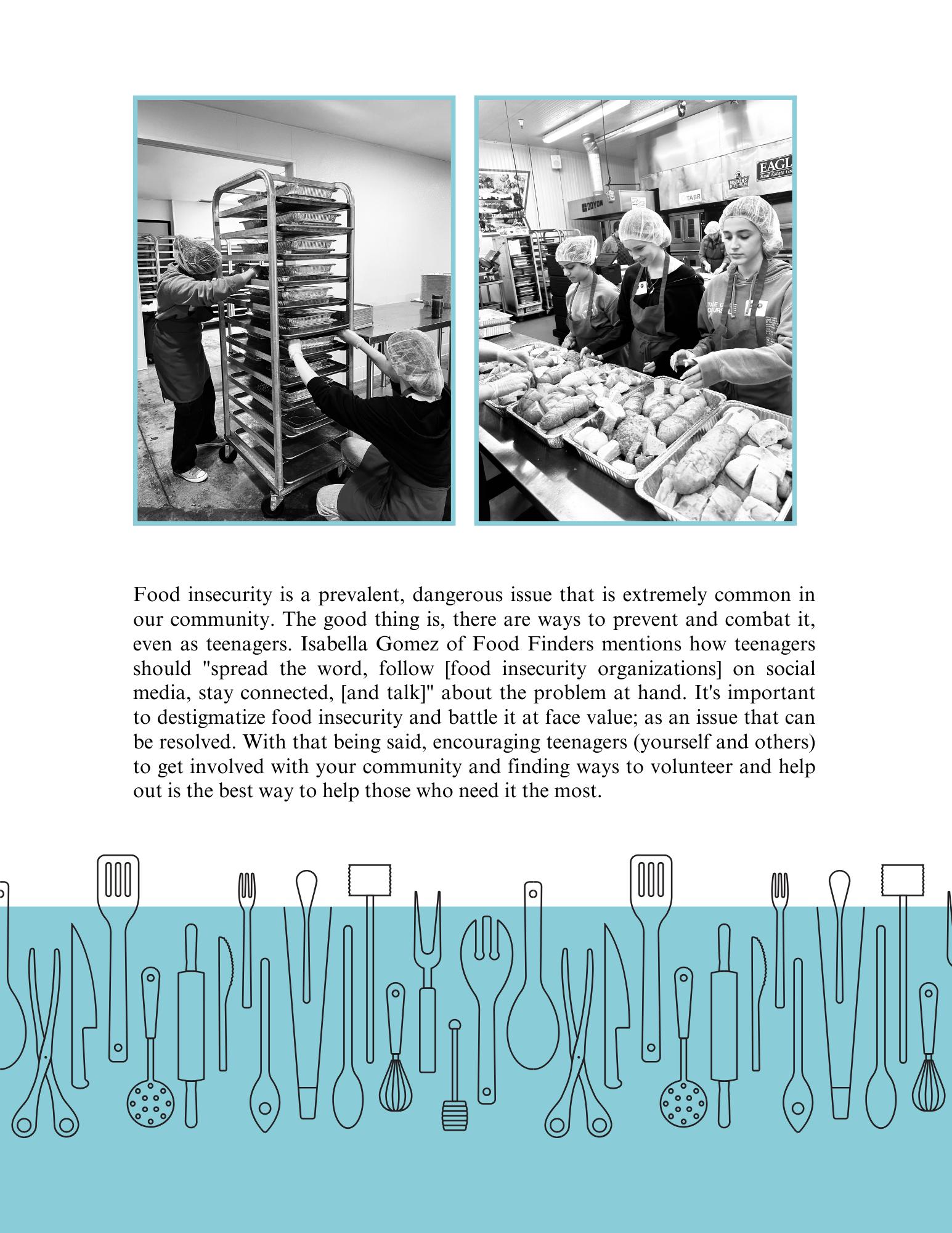
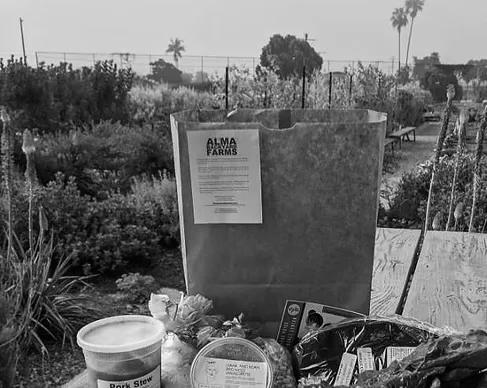
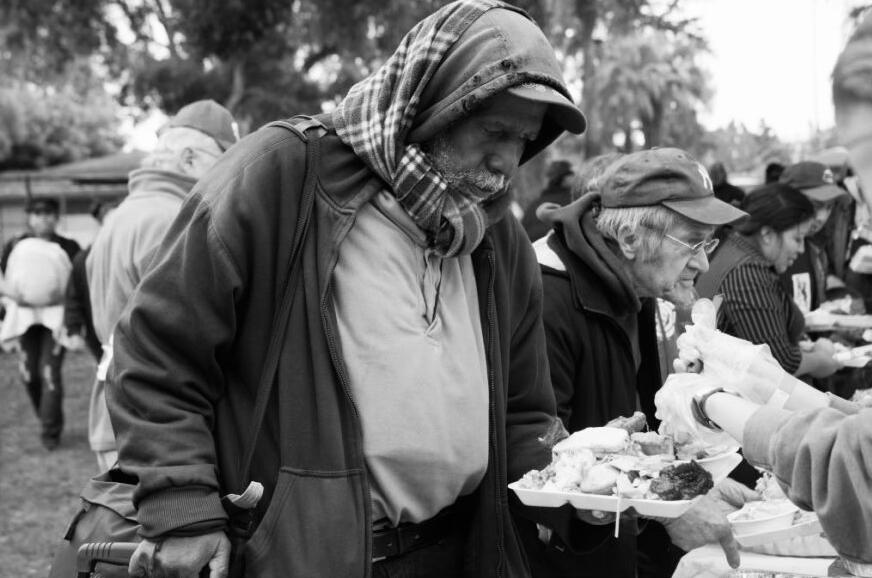
In January 2024, members of The Giver’s Guide volunteered at Bracken’s Kitchen in Garden Grove, CA to do our part in aiding those who need it most. Along the way, we also learned more about how food insecurity nonprofits function and the required factors for a thriving organization. Volunteers chopped vegetables for the meal Bracken’s Kitchen distributed that day, prepared bread as side dishes, organized and packed meals, and more. Bracken’s Kitchen originated in 2013 when the founder of the organization, Bill Bracken, decided to create a place where he could provide high-quality, nutritious food to those who wondered where their next meals would come from. Over a decade later, Bracken’s Kitchen continues to operate in local Orange County communities, mostly providing food to residents of Santa Ana, Garden Grove, and Orange.
Written by Amber Wang, Annika Shah
of the approximately 3.2 million people living in Orange County, CA, a shocking 13.7 percent of them deal with food insecurity. Food insecurity affects a wide spread of demographics in Orange County including young children, the homeless, veterans, and students. According to the Second Harvest Food Bank, 2 in 5 students enrolled in the University of California grapple with food insecurity. And from 2020 to 2023, the Coronavirus disease (COVID-19) only fueled the growing issue of food insecurity which contributed to overall greater unemployment and homelessness.


can lead to heart issues including heart disease and heart attacks from blocked
Bracken’s Kitchen in Orange County is a service organization that fights the issue of food insecurity. They make balanced meals that target all of the major food groups and provide those in need with healthier food options. For example, a meal at Bracken’s Kitchen might include roasted pork loin with charred tomatoes and bell peppers, brown rice pilaf, sautéed seasonal vegetables, southwestern Caesar salad, and fresh fruit.
Unfortunately, those struggling with food insecurity often don’t have access to nutritious meals with a balanced diet because of the expenses of nutritious meals. Instead, many are attracted to the convenience and inexpensiveness of fast food, where foods contain oil, are fried, are previously frozen, do not always contain natural ingredients, and have high sanitation risk factors. While cheap, the unhealthy nature of fast food can be dangerous. For instance, a McDonald’s Big Mac sells for as low as $3.91 but is filled with fats and saturated fats whereas a traditional, healthier burger sells for $9 when made with fresh and real ingredients. Additionally, fast food in general can lead to underlying health issues that will cost more in the long run. Various vitamins are necessary to simulate the human body, and these cheap replacements don’t meet those requirements. The consumption of the right vitamins, minerals, and nutrients allows the human body to function properly. Let’s take calcium for example. Sufficient calcium consumption ensures that the bones are strong and healthy and that the heart, muscles, and nerves can function properly. Endlessly consuming unhealthy foods without nutritious value
However, this now could easily raise the question of where the supplies and food necessary to make all these meals come from. According to the National Restaurant Association, restaurants generate an estimated 22 to 33 billion pounds of food waste annually in the United States. As shown on Bracken Kitchen’s website:
1. 2200 pounds of organic chicken breast was rejected by Whole Foods Markets due to size and weight irregularities.
2. 1500 pounds of frozen corn was purchased by a large production facility to make a large batch of corn chowder, only to have the chowder order canceled.
3. Three pallets of fresh broccoli couldn’t be sold because it was starting to wilt.
4. The large supply of high-quality meat, chicken, and seafood has been purchased by premier food vendors but never sold and hence had to be frozen.
This puts into perspective just how much food goes to waste in the restaurant industry. According to fourth.com, 4 to 10 percent of food ordered by restaurants and 30 to 40 percent of food cooked by restaurants is wasted and typically thrown away. Bracken’s Kitchen aims to deal with this by “rescuing food,” a process where they take unwanted or visually unappealing food and turn them into nutritious meals for those in need. For example, they use broccoli stems, ugly lettuce, supplies donated by restaurants due to excess shipments, and ebbed foods that get flown in popularity due to food market trends and consumerization.
WRITTEN BY
Finley Maynard

Food insecurity, in short, is defined as the condition of having an insufficient amount of food, as well as a lack of access to nutrition. In recent years, food insecurity has skyrocketed due to numerous factors; COVID-19, inflation, and more. The Voice of OC found that, in 2023, 13.7% (amounting to 438,400 people) of Orange County residents faced food insecurity; nearly 5% higher than in 2018. Unless you’re looking for signs, food insecurity is difficult to notice. It’s often considered a “silent killer” because no one can ever really tell if someone is struggling in this way. This is where non-profit organizations like Bracken’s Kitchen and Food Finders come into the picture. Both organizations have worked for several years to prevent food waste and provide daily meals for thousands of people. Bracken’s Kitchen specializes in food distribution around Northern Orange County, and Food Finders in particular work to distribute food to people across the counties of Los Angeles, Orange, Riverside, and San Bernardino.
Food insecurity has no clear and absolute cause; several factors dictate whether someone comes to face it. Rather than having a cookie-cutter explanation for the issue, there are many different reasons why people end up struggling with food security. Food Finders’ Volunteer Coordinator Isabella Gomez believes that more than anything, financial hardship is the main contender for poverty and food insecurity. “It’s not necessarily that [food insecure individuals] are homeless- but [it’s more likely that] they struggle with rising rent [and other] financial issues [that] causes them to sacrifice or neglect the funds for purchasing food,” says Gomez, who also mentioned how the recent inflation in the economy (partially following COVID-19) has subsequently caused an increase in food insecurity.
It’s also important to note that there isn’t a single specific demographic that suffers from food insecurity,- although, there are patterns- but rather there are several different groups of people that Gomez has noticed who suffer from food insecurity. People from several backgrounds suffer from food poverty, so “what Food Finders does to address this is that [they] serve [many different individuals].” Recently, a majority of the people they’ve served meals to are “students from different backgrounds,” whether from nearby universities, community colleges, high schools, and elementary schools. All things considered, the ultimate goal of all non-profit organizations battling food insecurity is to provide meals for absolutely everyone, no matter who they are.
“Food Finders is a food rescue organization, [which means] we partner with food donors that range from grocery stores to restaurants and cafes and big food manufacturers- we take their excess food and we deliver it to nonprofits in that community,” says Ms. Isabella Gomez, the Volunteer Coordinator of Food Finders.
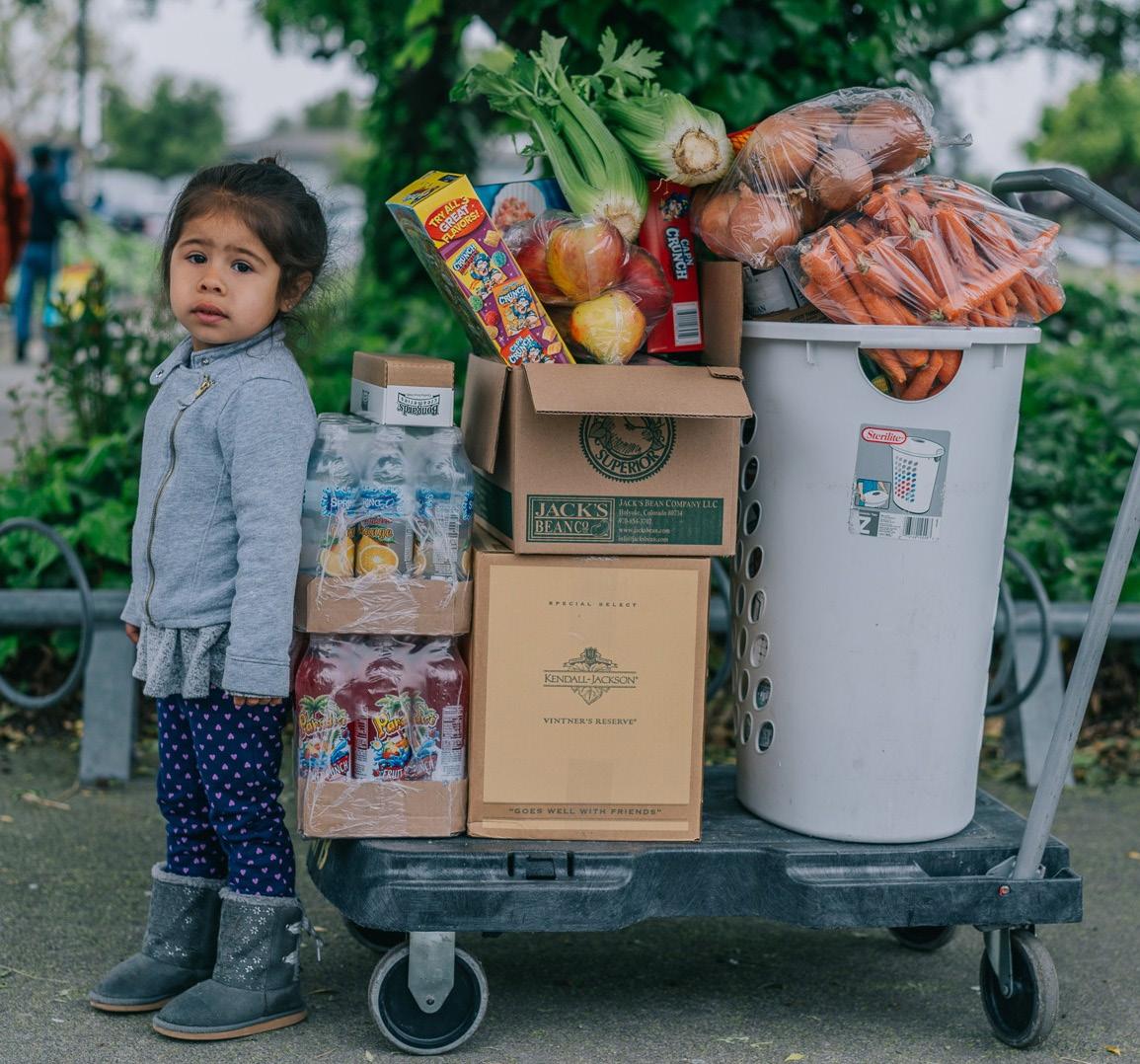
A few members of The Giver’s Guide recently had the opportunity to speak with Gomez in an effort to provide a bit more insight regarding the organization as a whole. Gomez has “always had a passion for serving various communities whether that [includes all demographics],” and becoming a member of Food Finders has since satisfied this. One of the main purposes of Food Finders is to prevent quality foods from being thrown away for the sake of convenience. According
“Rescuing
to Feeding America, the United States produces nearly 80 million tons of food waste annually, equivalent to 149 million meals. Food Finders make it their mission to minimize these numbers, and they do so by helping those who are food insecure.
When asked about how much they’ve helped the food waste crisis, Gomez states “On a daily basis, we are rescuing 30,000-40,000 pounds of food.” During Thanksgiving last year, Food Finders distributed over 3,000 meal boxes and 3,000 turkeys at McBright High School in Long Beach, CA. In 2022 alone, they rescued over 13 million pounds of food, which was enough to produce 11 million meals for hungry families across greater Southern California. Finally, they partner with 40 schools in Long Beach Unified School District and provide meals to cover food needs for weekends to poverty-stricken students.
She adds that more than anywhere, Food Finders provides food for “homeless shelters, rehabilitation homes, schools, and churches.” Food Finders is a unique nonprofit in the sense that they provide meals to everyone “no questions asked,” with their biggest goal being to “find ways for [Food Finders] to just get out there into the community in a large way.” This no-questions-asked policy is an especially great factor for Food Finders because, often, people struggle with finding how to ask for help, leaving them alone and silent. Food Finders is trying its best to encourage people to seek that help and find ways to thrive in their own lives.
WRITTEN BY Finley Maynard
Growing up in greater Los Angeles for the better part of a decade, homelessness was an epidemic that I couldn’t ignore. My mom and I commuted about forty miles to Santa Monica, CA, every morning for school. Along the way, we would spot a minimum of ten to twenty homeless people everyday, many of whom we recognized after seeing them for several years. Every morning, as we’d exit onto Wilshire and San Vicente Boulevard, a man lived with a sign on the center divider. Every morning for over three years, the unfairness of life forced this man to beg for money to save his life on a center divider in front of the Wells Fargo Private Bank. I remember him so vividly because, for the first time in my life, I was exposed to the difficulties of life and the unfortunate events that could happen to anyone - even me, a fifth grader. I hate to admit it, but I never learned his name or why he was forced to live on the streets. However, my limited perspective of this guy’s life paved a path for me in the sense that, after that point, I knew I had to do something to help as many homeless people as possible.
Evidently, I wasn’t the only person affected by the sight of so many homeless people so frequently. At one point or another, the rising population of homeless people began to establish new culture in Los Angeles, especially in recent years more than others.
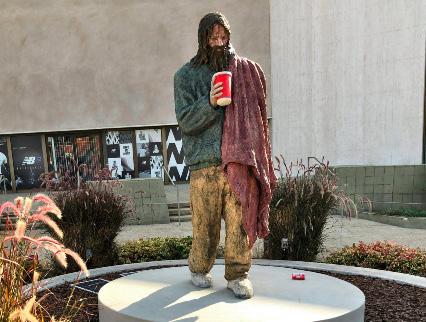
“In The Image” by Ed Massey is a surprisingly captivating piece of art located on 26th and Wilshire Boulevard in Santa Monica. In 2019, his piece replaced the fountain in front of Chase Bank and caused a bit of commotion in the community, good and band. Based on conversations, I heard between teachers, parents, and students in elementary school, some thought that this statue was an eyesore and wrongfully replaced the fountain previously there. Others, however, thought that this statue was a fantastic way to exemplify the homeless crisis present in
Santa Monica and greater Los Angeles. For me, this statue provided the wake-up call that many needed; homelessness is an epidemic, and that it needs to be fixed. My heart wrenched for the people I’d pass by in the mornings: some sleeping on park benches, and others living out of make-shift tents with tarps and shopping carts. So, this statue felt incredibly significant to me in making certain that homeless people weren’t ignored any longer.
Since growing up in Santa Monica, I have a unique perspective on the homeless crisis. There are a lot of single stories on homelessness, a lot of fabricated stories, and false truths about the general homeless population: that they ended up homeless because of addiction or they’re ex-convicts. But all homeless people are human, civilized people who became unlucky. Life is a treacherous feat, and this can happen to absolutely anyone.
Over the summer, I rode my bike frequently to our neighborhood Stater Bros for snacks or some muchneeded exercise. I took notice of this homeless man who sat in the only shaded corner in the entire parking lot, and at every hour of every day, he was asking for any resources from anyone. And, every hour of every day, people would drive past him in their cars and not bat an eye. Of course, the occasional person donated a dollar or two, but no one ever gave him the time of day. An act on impulse made me talk to him for the first time. I’ll admit- being a female teenager alone, approaching an unhoused man is not the safest choice, and I wasn’t sure at that moment as to why I felt so obligated to speak to him. But I did it, and I didn’t regret it. It turns out the homeless man who sat in a nook in the parking lot of my neighborhood Stater Bros was named Pete, and he was a veteran. Unfortunately, it was pretty evident he had battled with some substance abuse; he had an unnatural tremble and a bit of a stutter, but that doesn’t make anyone less of a human being.
The first words I said to Pete were “Hi” and “How are you?” Looking back at this moment, I’m glad I started that interaction with these specific words as I feel like homeless people aren’t approached like this; people tend to be more hostile and defensive because of stigmatized ideas around people experiencing homelessness. He was very kind, reciprocating the
same dialogue. At this point, I was very nervous on the inside because I’m not the greatest at socializing with others, and I didn’t want to bother Pete. So, I asked him if I could get him anything to eat or drink, what would it be?
Maybe it was sweat from the blistering summer sun, or my eyes didn’t deceive me, but I swear I saw his mood change a little. He seemed excited to answer the question and told me his favorite snack was Lay’s Sour Cream and Onion Potato Chips, and his favorite drink was Gatorade. I went and got him the snack and drink, and that was the end of it. I, again, wasn’t overthinking at that moment, but on the bike ride back to my house, I wondered what his story was and how he ended up getting into that situation. I regret talking to him a little bit more because, unfortunately, Pete passed away in early January and lays to rest at the Shannon Family Mortuary in Orange, California. At the end of the day, every being on this planet deserves a chance at a prosperous life–and some people get luckier than others. With that being said, it’s important to recognize what you have in life and to be grateful for what it. Furthermore, it’s crucial to do your part in your respective community. Homeless individuals are just as human as anyone else, so, find ways to help them, whether that’s in a small, simple gesture, or a grand one.
When I became a member of The Giver’s Guide, I thought back to these moments in my life, and how they shaped who I am today. Now, I want to give back to as many people as possible, and find ways to get people back on their feet.