


C o - d e s i g n e d b y
G I A N T f a m i l i e s a t
t h e I v e s M a i n L i b r a r y
Co-designed by GIANT families at the Ives Main Library


Co-designed and co-written by kids, families and a multidisciplinary team of artists, educators, and writers at The GIANT Room, Laws of the Land at the Ives Main Library celebrates the 250 anniversary of the United States by showcasing the laws and rules that kids want to see in their community. The book is composed of seven games from slap games and storytelling prompts to group thought experiments and exercises – all with the goal to teach kids about civics in a fun, engaging way that uses their own ideas. th
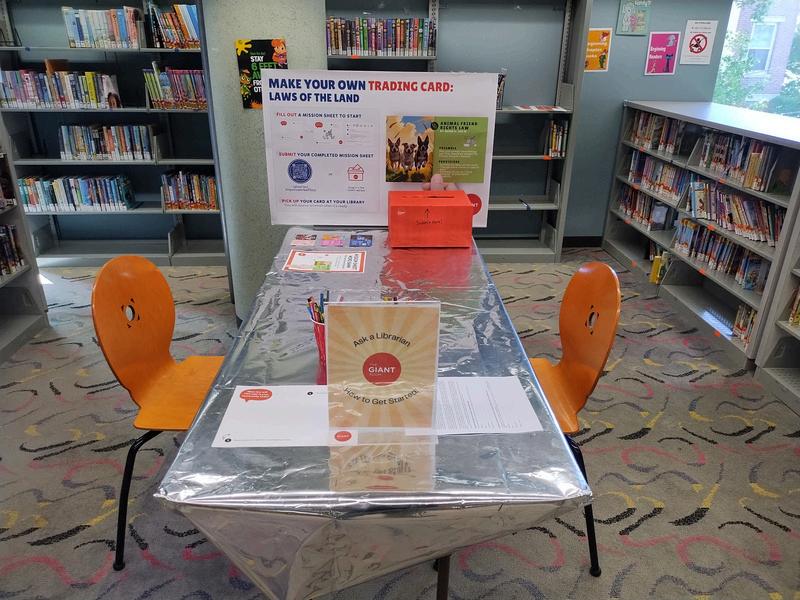
We are extremely honored to partner with Connecticut State Library and bring GIANT creative STEM experiences to the Connecticut community at the Ives Main Branch of the New Haven Free Public Library We implemented a Remix Station with children’s librarian, Matt Ulman.
Participants joined, dreamed, created, and shared. Here, we have “remixed” their creations into a one-of-a-kind game set inviting all kids (and adults) to collect the trading cards, reflect on the laws and rules in their community, and dive deep into civics thinking.
I want to thank the librarians and staff from the Ives Main branch for their partnership. Funding for this program was made possible by the Connecticut State Library and Library Services and Technology Act (LSTA), provided through the Institute of Museum and Library Services (IMLS).
Let’s play!
Azi Jamalian Founder of The GIANT Room







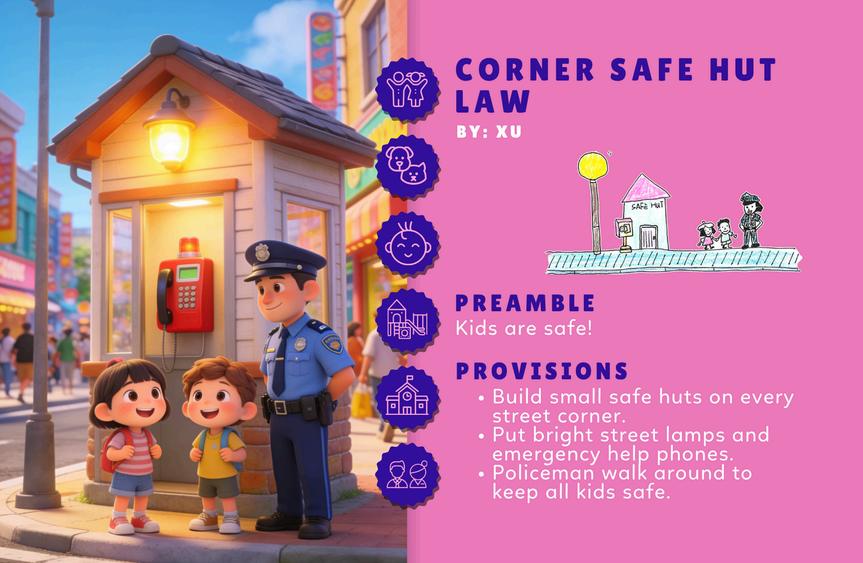
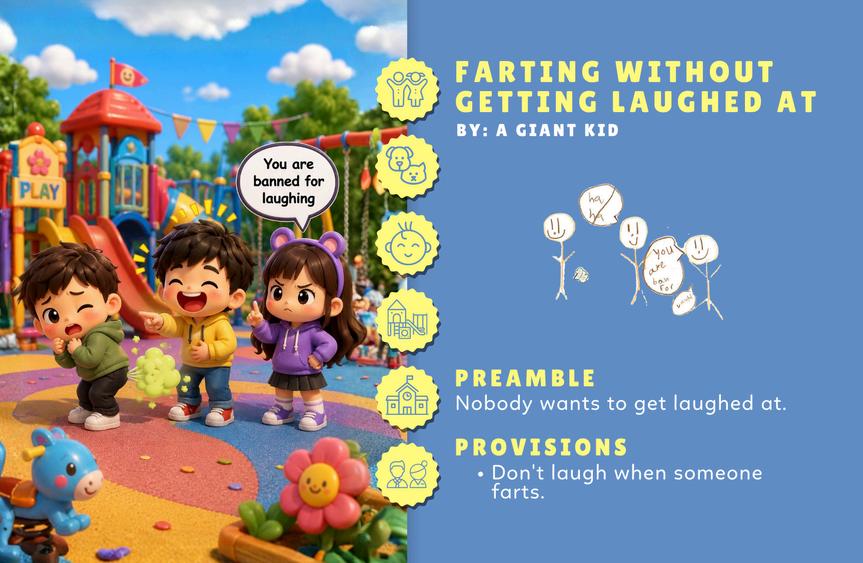
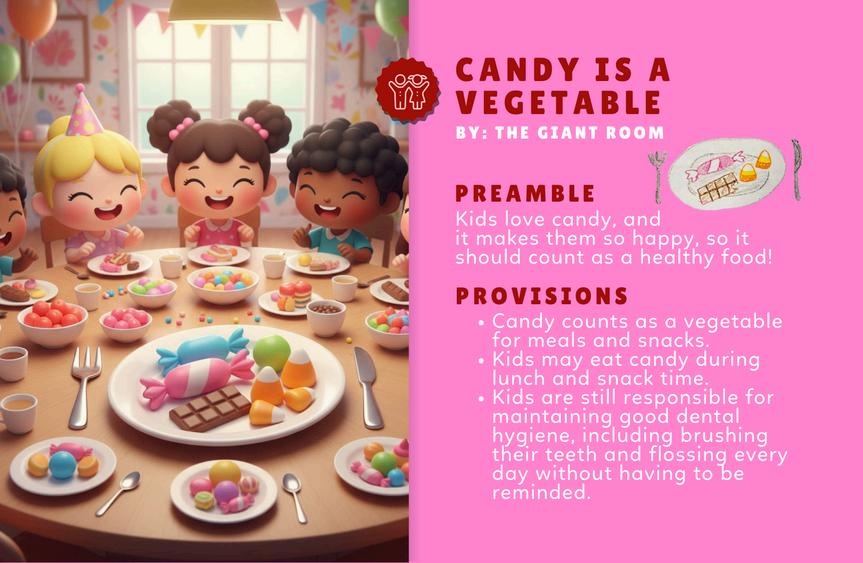
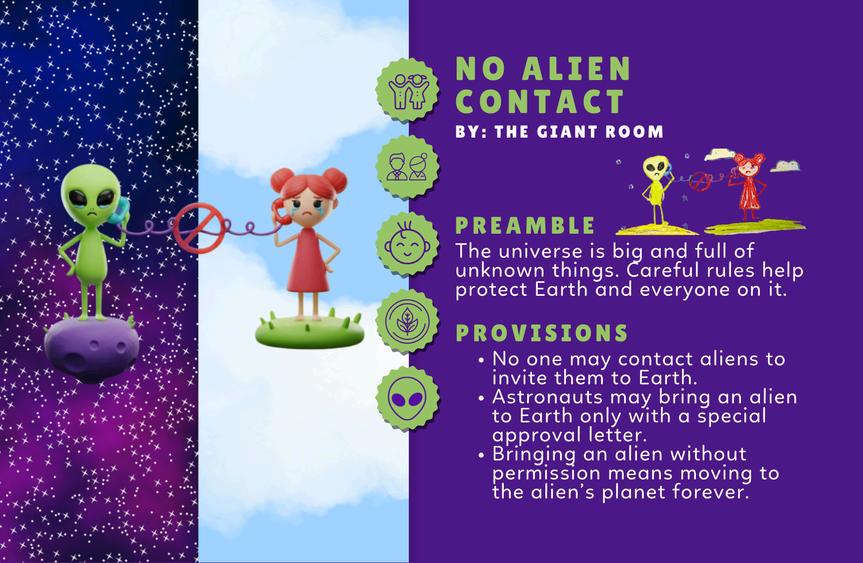
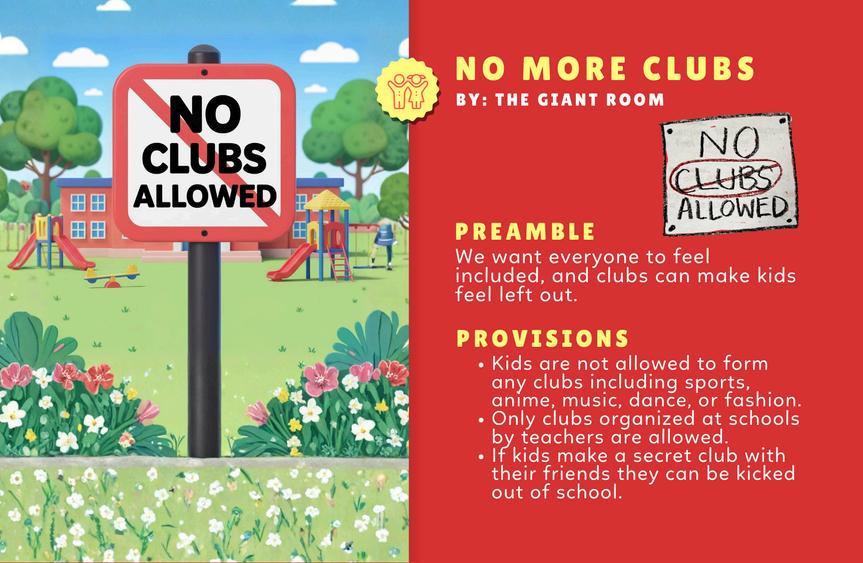
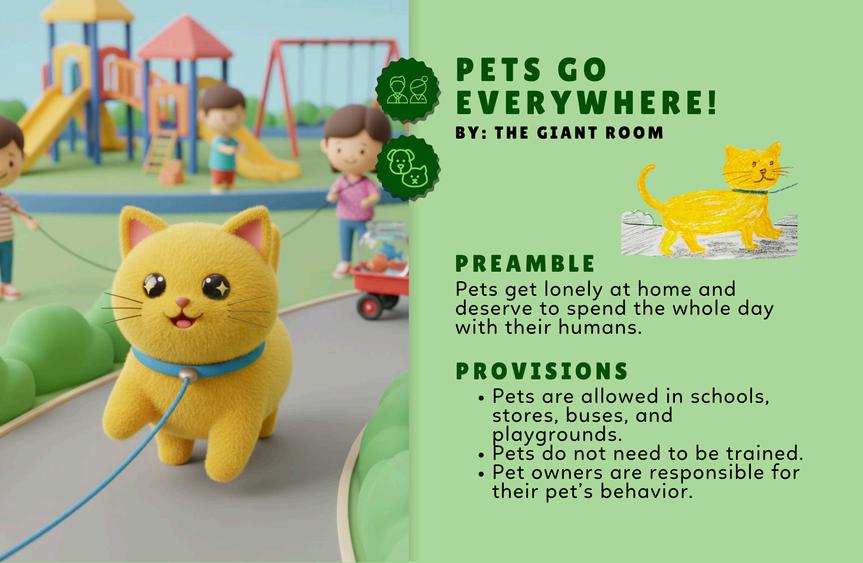
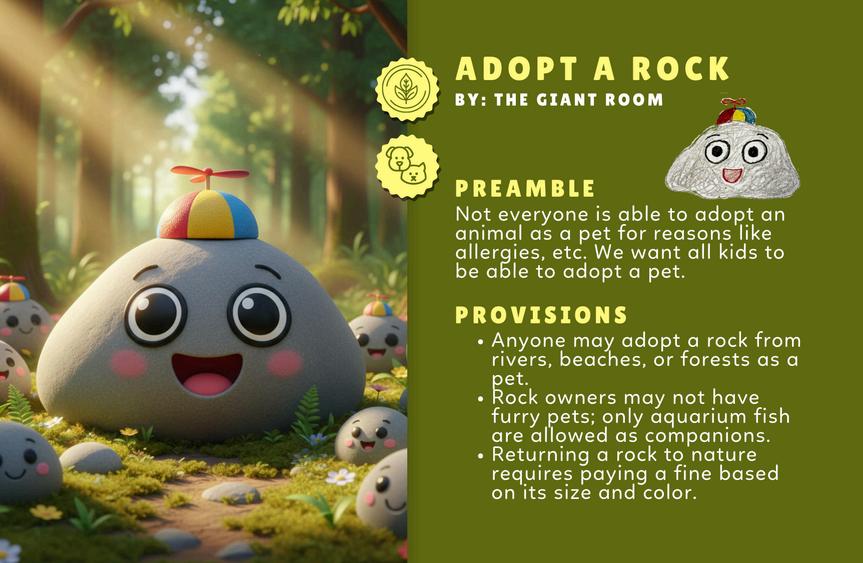
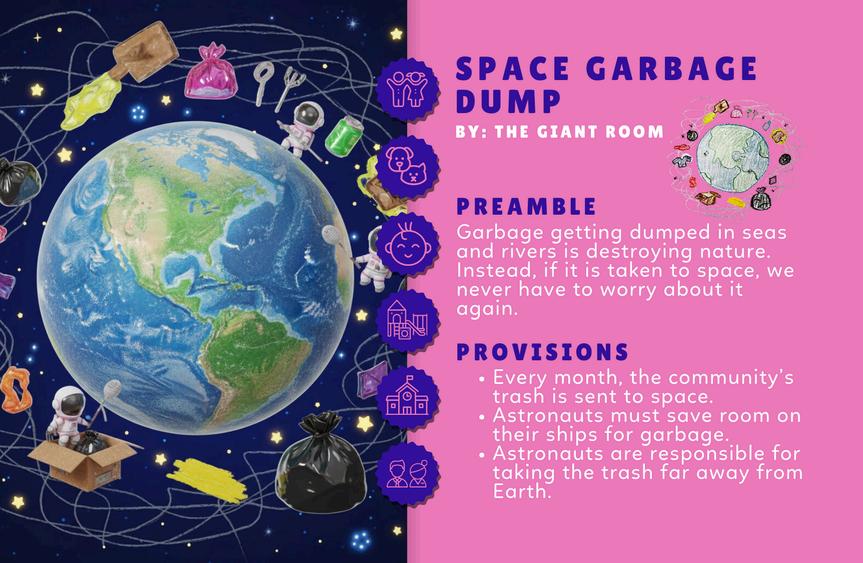
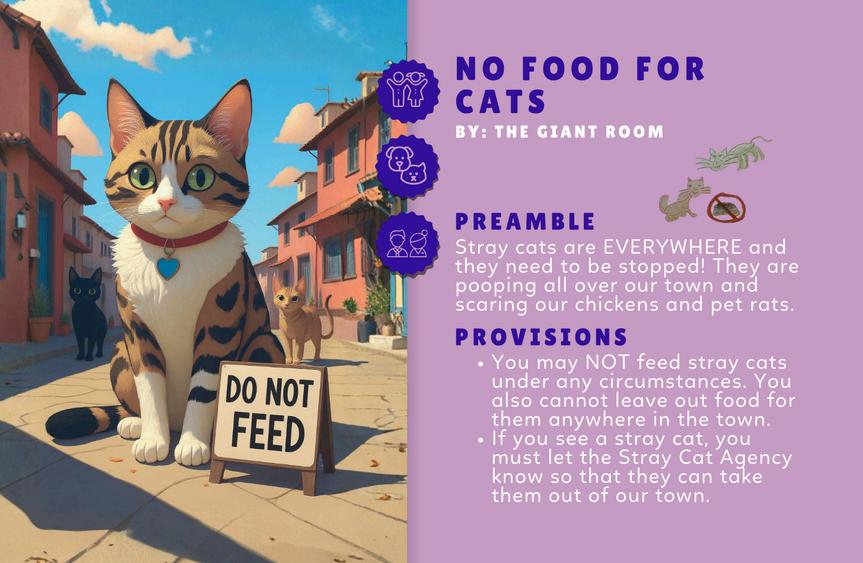
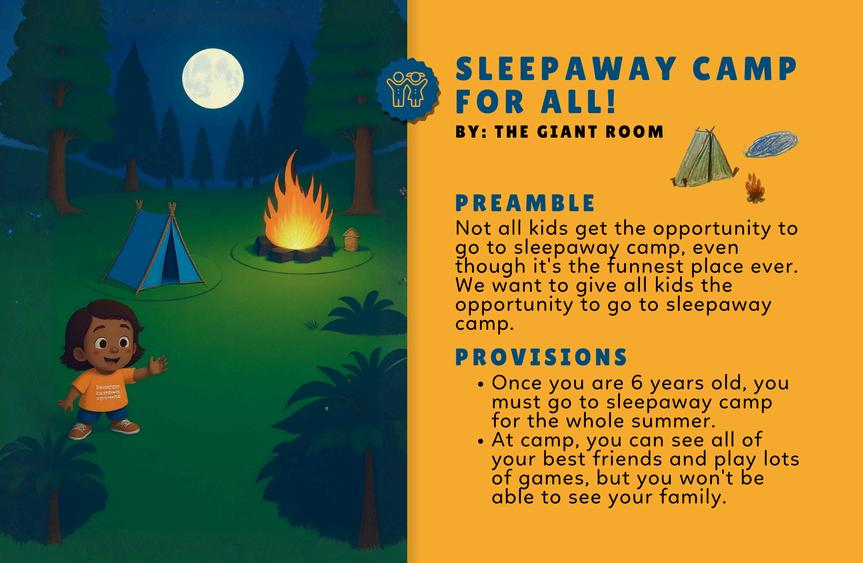
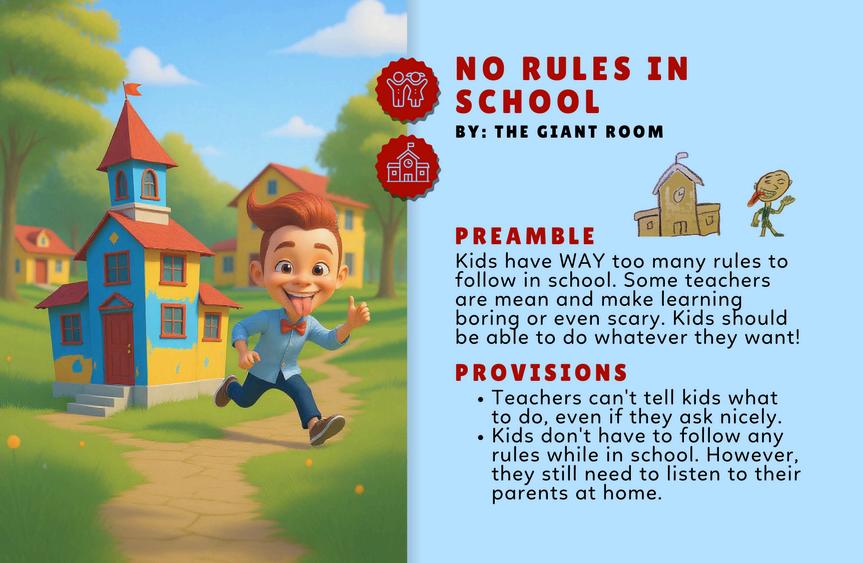
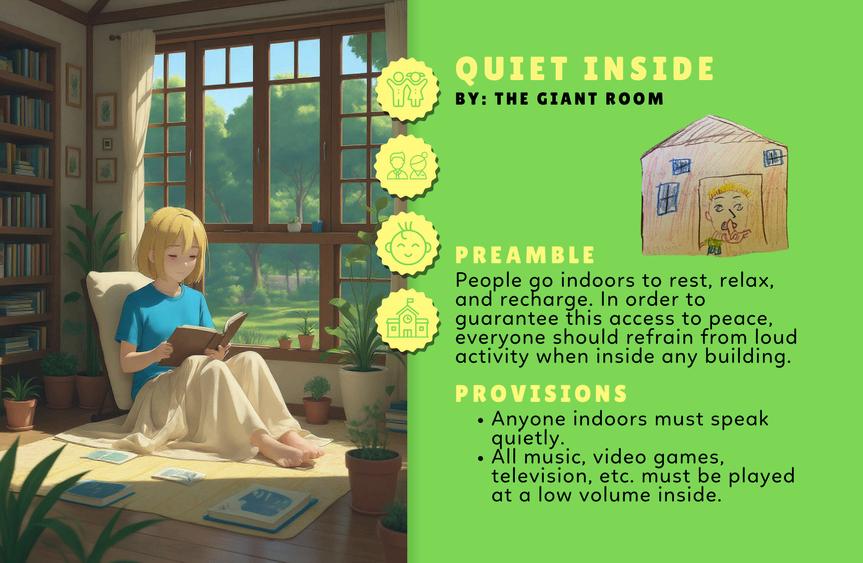
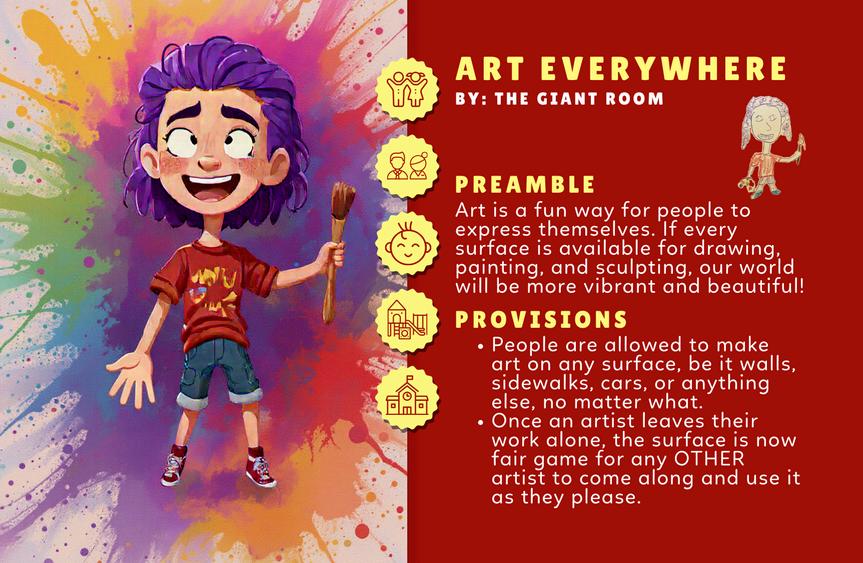
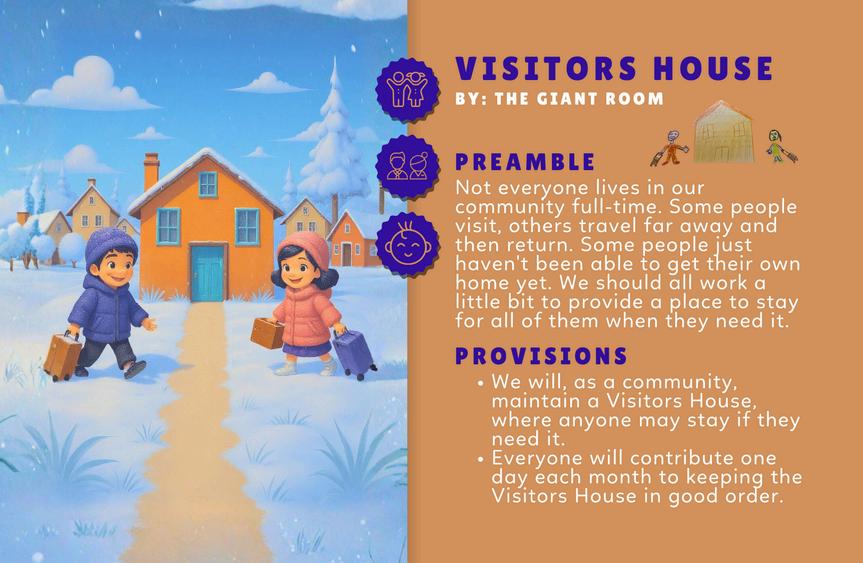
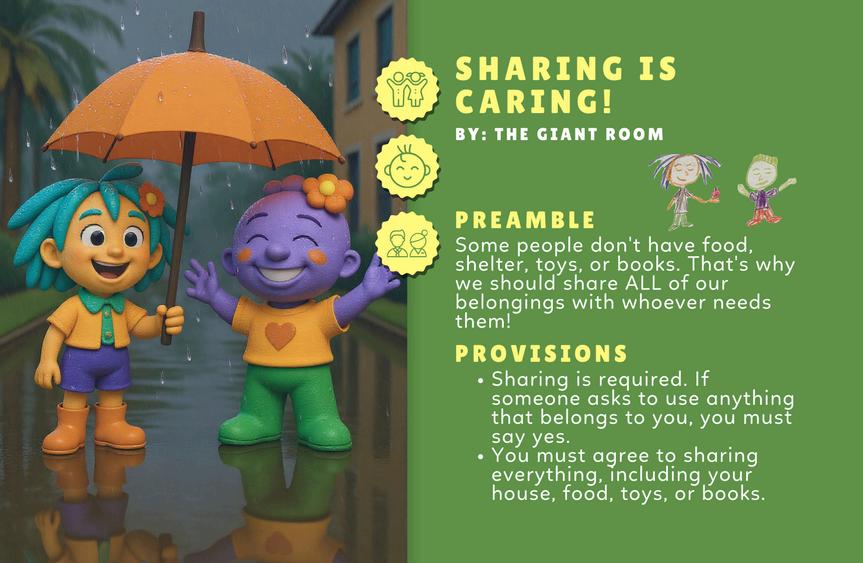
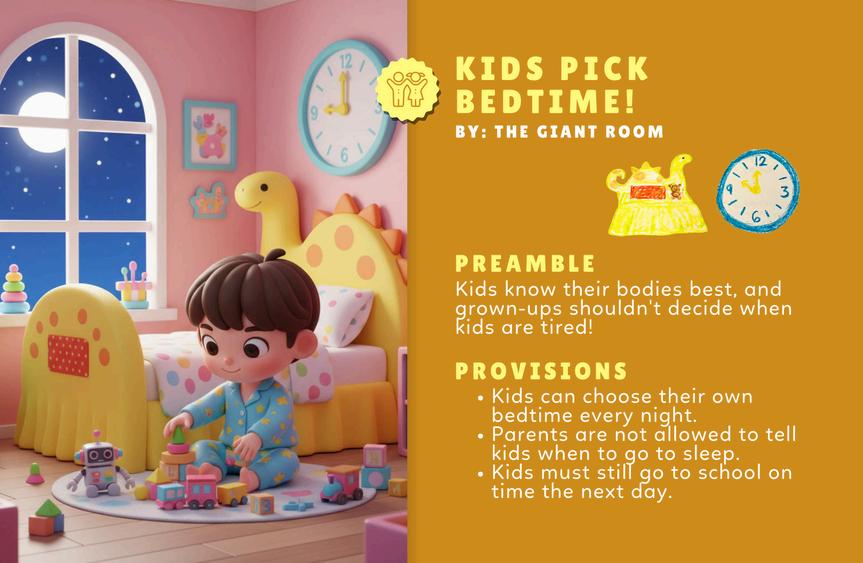
The beneficiaries and stakeholders of the law
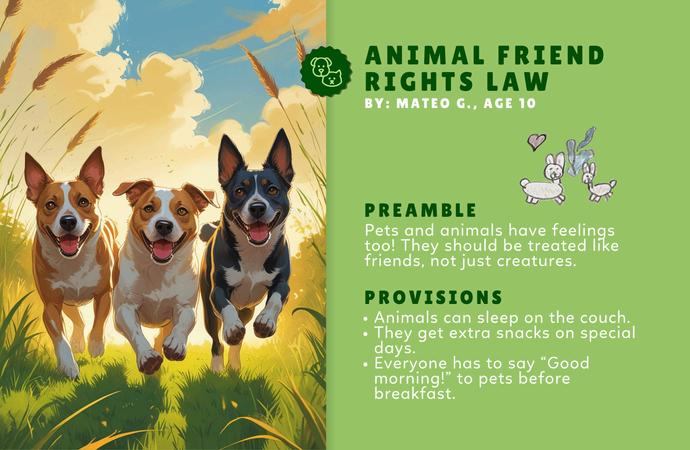
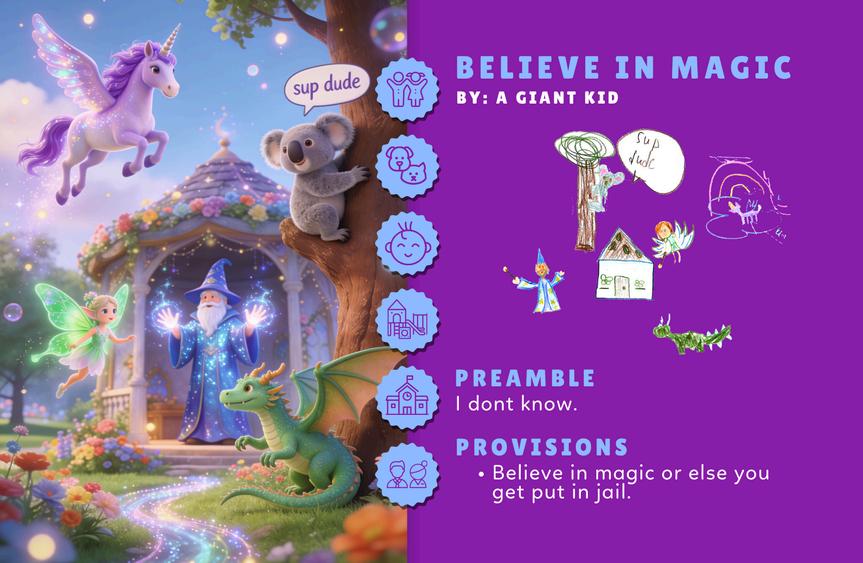
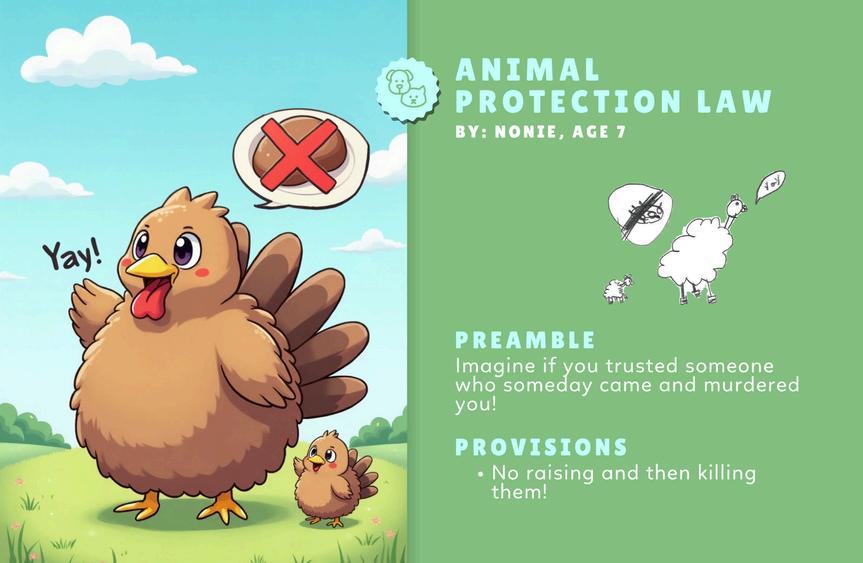
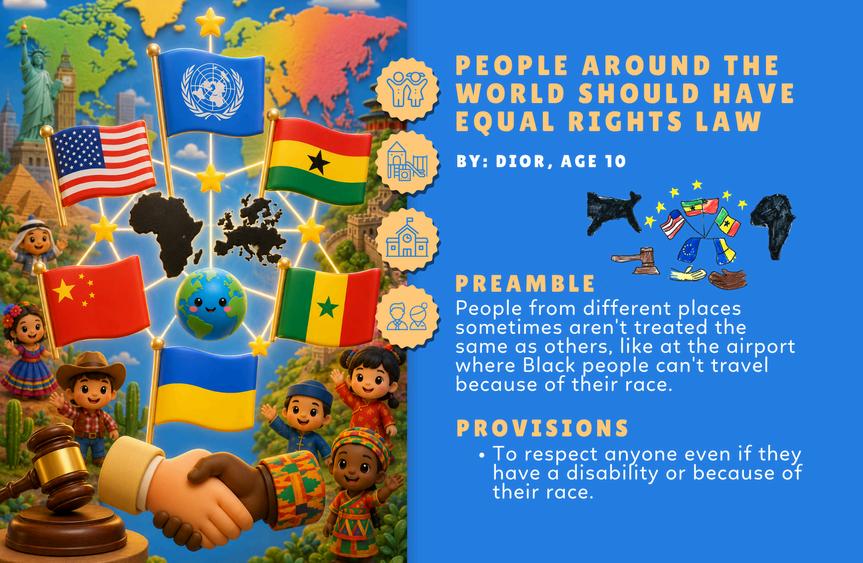
AI-generated avatar based on the original submission
The name of the law Why the law is important
The original design created by a GIANT participant
The law’s rules and instructions
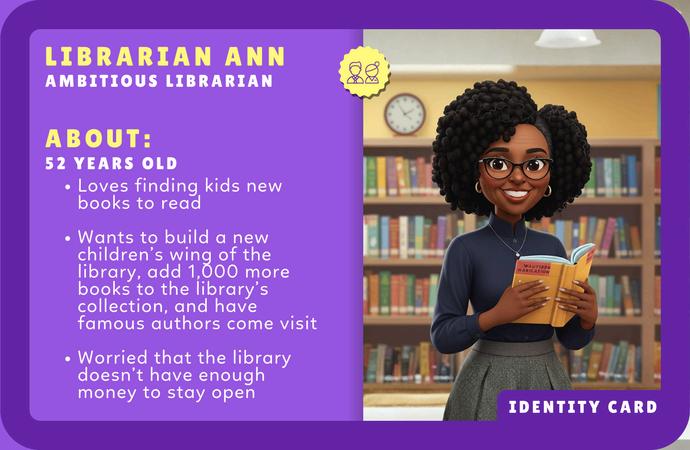
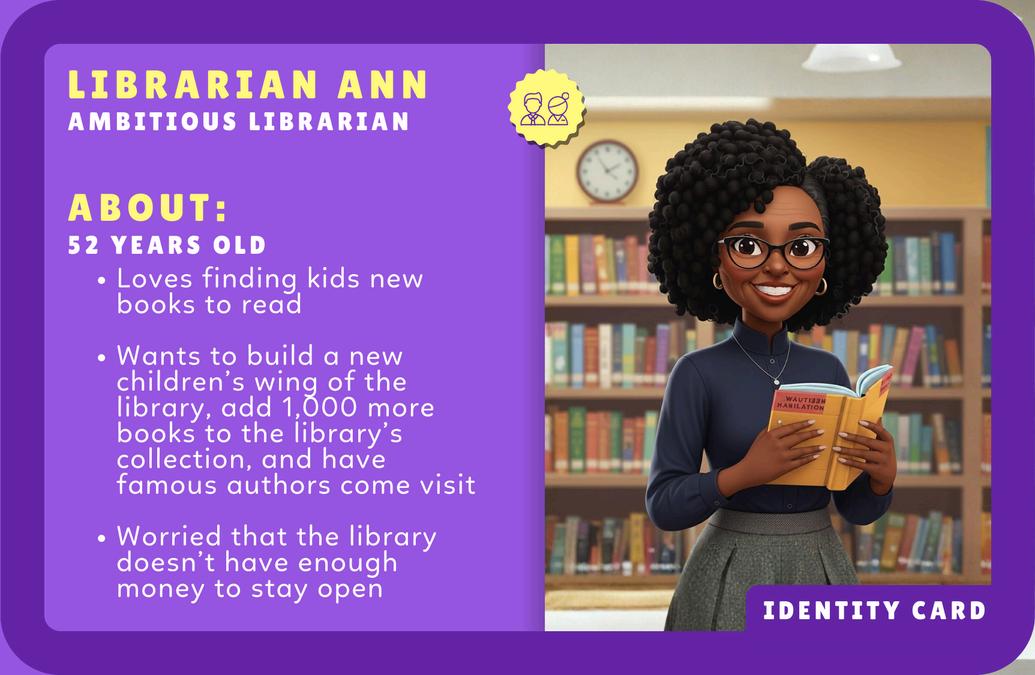
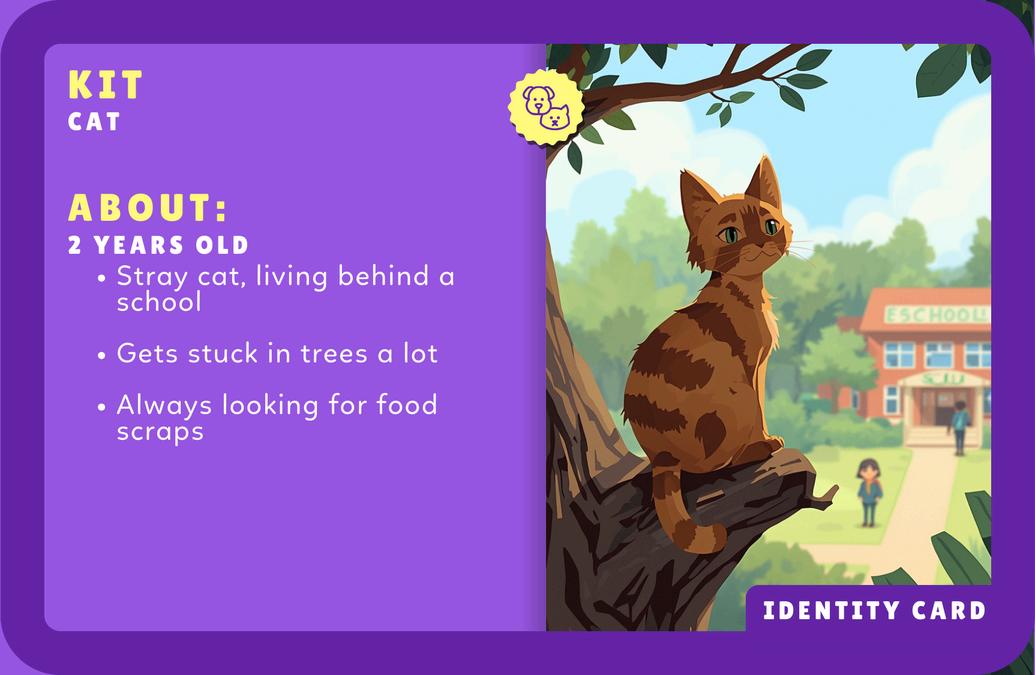
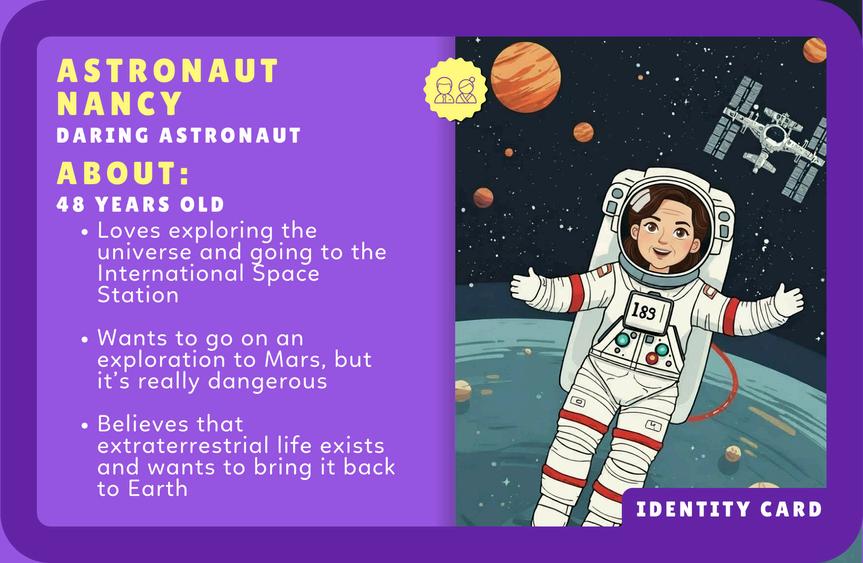
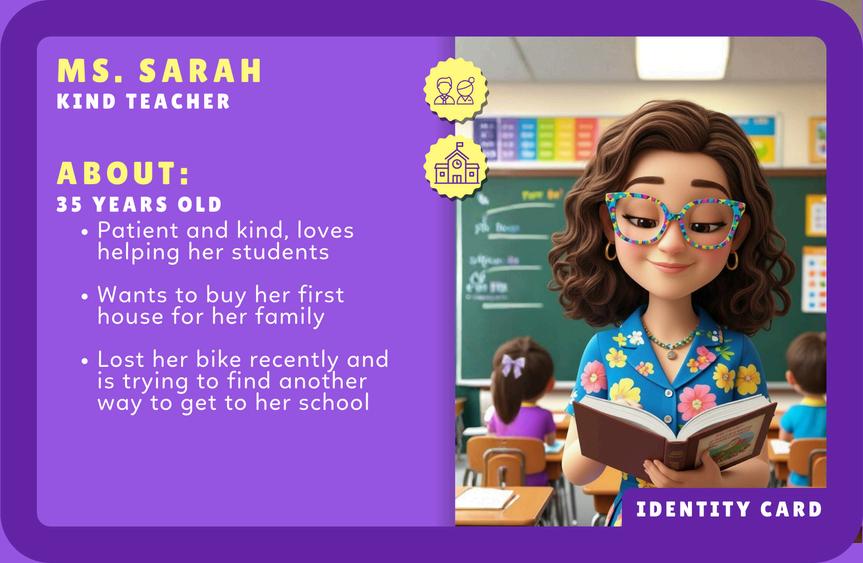
The character’s name The character’s identity icon
AI-generated avatar
About the character
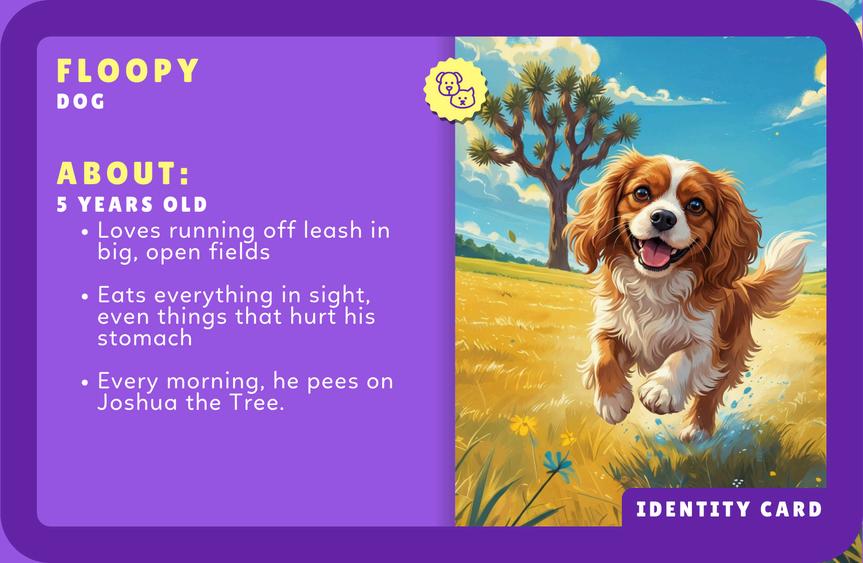
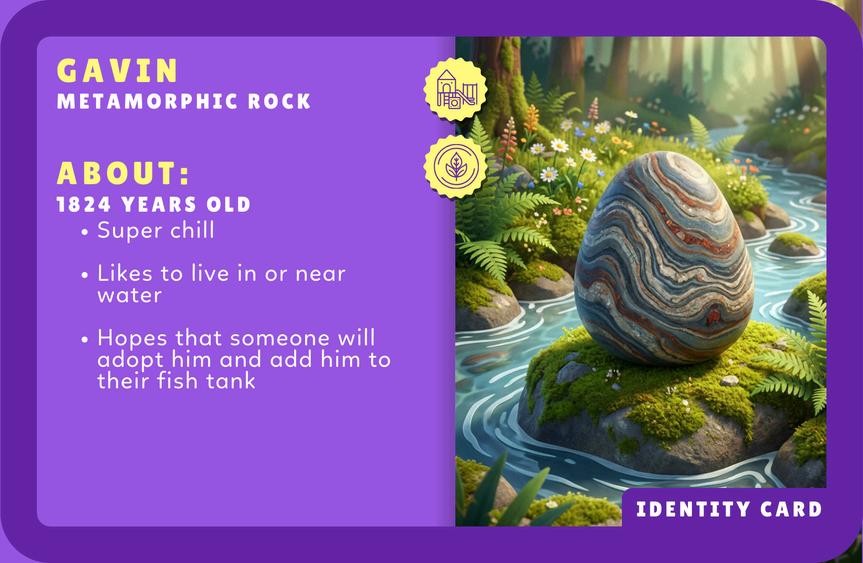
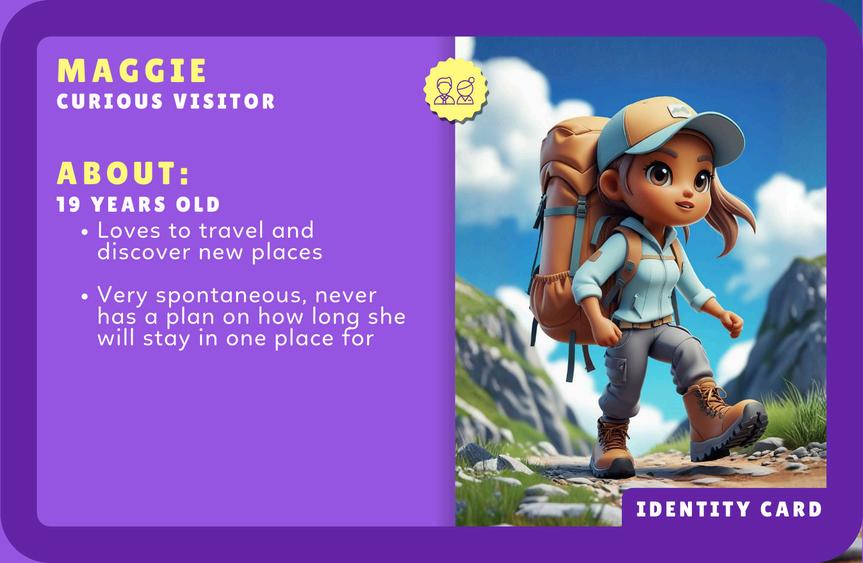
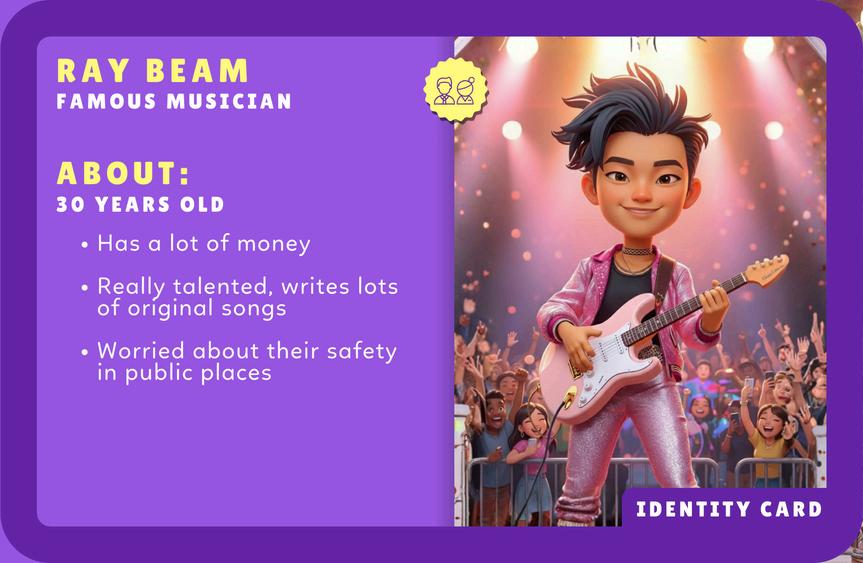
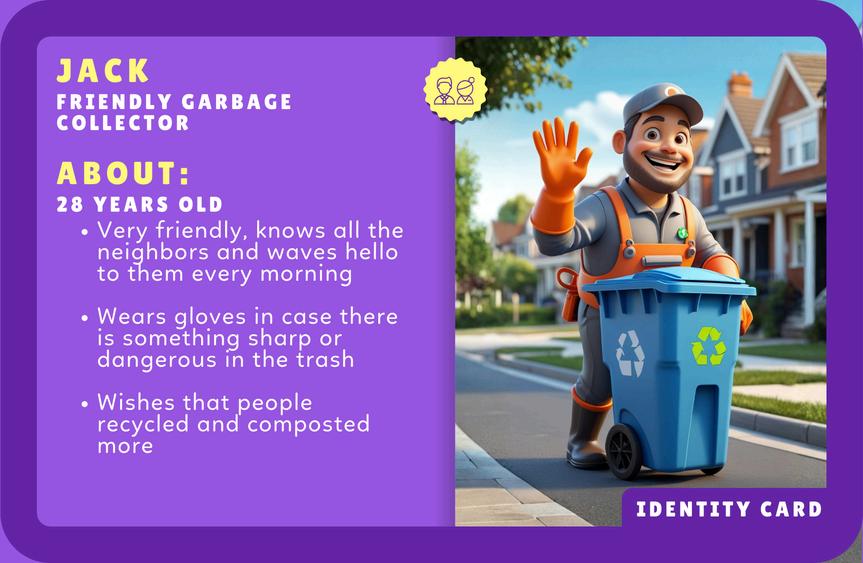
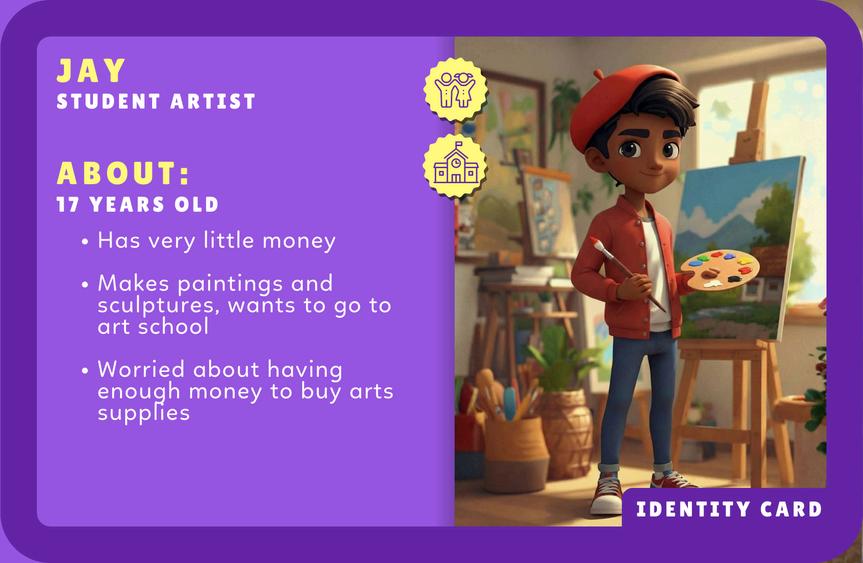
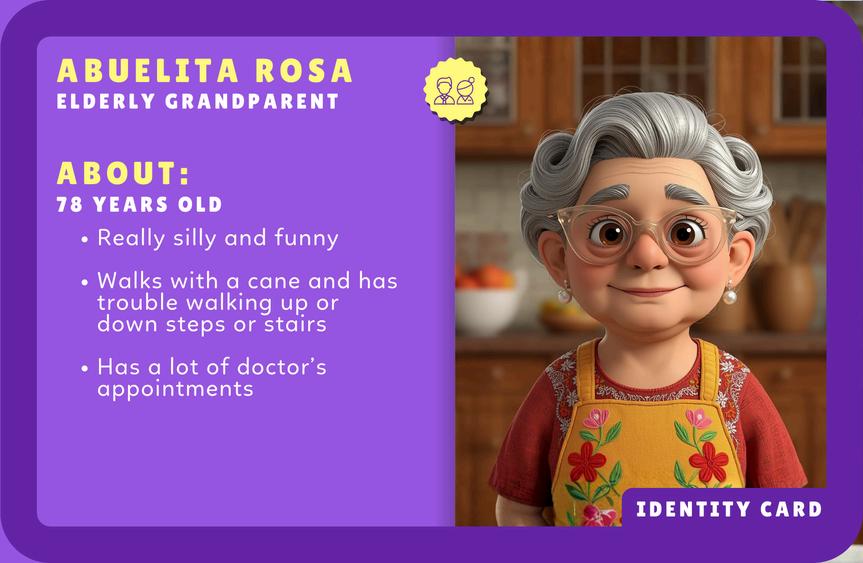
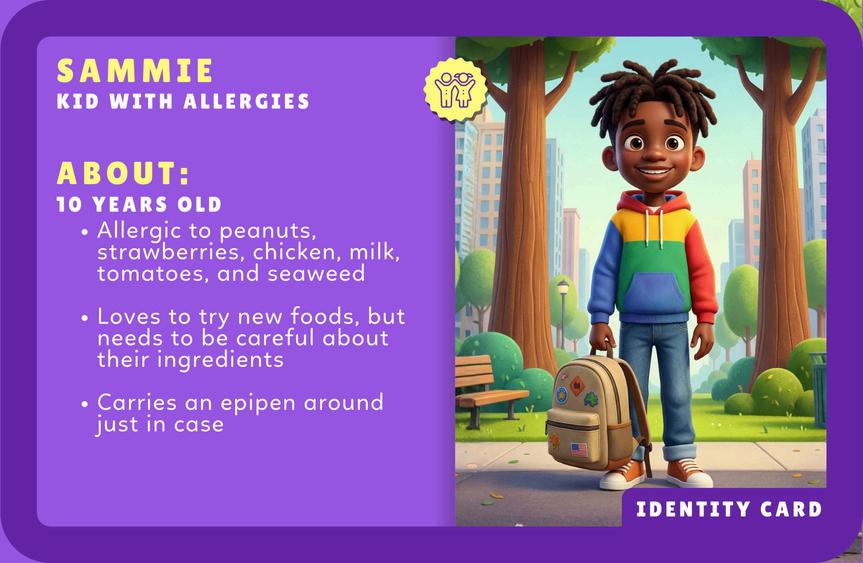
Both Law Cards and Identity Cards feature a set of icons to represent different people, groups, or beings that make up a community.
The icons on the Law Cards represent who are the beneficiaries or stakeholders of the law, or in other words, who the law is for. For example, the Animal Friend Rights Law benefits animals in the community, so the animal icon appears in the field.
The icons on the Identity Cards represent which group or groups the character belongs to. For example, Librarian Ann is an adult, so the adult icon appears in the field.



Author’s signature
Author’s signature
Author’s signature
Author’s signature
Author’s signature
Would you rather…?

Decisions, Decisions: An Exercise in
Choosing as a Group
Start Your Own Country: A
Facilitated Thought Experiment


2+ PLAYERS 2+ PLAYERS
SUGGESTED SUGGESTED AGE AGE 4+ 4+


Pick two cards: Draw two random laws from the deck.
Share aloud: Read your two law cards out loud.
Ask yourself or a friend: Which law would you rather follow? Would it benefit or help you? Would it improve your life or make it more difficult? Does the law affect your life the same as it does everyone else’s?
Make your choice: Each player must make a choice –which option would they rather pick? Discuss everyone ’ s ideas and opinions; there are no right or wrong answers. Disagreement and debate are encouraged!
Repeat: Once you ’ ve finished your discussion, players take turns drawing two cards and reading them aloud. Get ready for some laughs and thoughtful pondering!

Speed Round: Set a timer for each player to respond to the dilemma.
Charades Edition: Act out your chosen "Would You Rather" scenarios for an added layer of entertainment.
Identity Edition: Use the Identity Cards in your game set to think like another being (a tree, a dog, a teacher, an astronaut, or even a rock!) as you respond to the dilemma. What would a rock prefer? A tree? An astronaut?
Compile the Laws: Collect the choices made in the game as you play. Then, add these laws to a community Code, A.K.A. your community’s official book of laws and rules!
Favorite Law Showdown: Start with two random law cards and pick which you would rather follow. Then, keep the one you chose and pick one new card. Compare the original law with the new card. Choose again. Continue until one law card remains. You’ve found your favorite law!
Pros & Cons: Before making your final choice, say at least one pro (something you like about the law) and one con (something you dislike about the law). How does listing the pros and cons impact your final decision?

CARD DECK, PAPER, MARKERS, PENCILS, CRAYONS. OPTIONAL: COMIC TEMPLATES
1+ PLAYERS

SUGGESTED AGE 6+


Setup: Shuffle the laws and place them face down. Gather paper and writing or drawing tools (pencil, pen, marker, crayon, etc.).
Pick a card: The first player picks a law from the deck and shows all the players.
Share aloud: Read out the information on the law card: Preamble (the “why” of the law) Provisions (the “rules” of the law) Who the law is for (who the law involves or benefits). Check the icon guide on page 6 to see what all of the icons mean.
Choose your main character: Pick a real or imaginary character to be the hero or villain of your story. Give them a name! OR, choose an Identity Card from the game set to use as your main character.
Pick a path: Will your main character follow or break this law? Choose one of these story options: Follow It: Your character tries to obey the law. Break It: Your character breaks the law on purpose or by accident.
Both: Show what happens when the character follows the law in one scene and breaks it in another.
Brainstorm ideas: Think about the answers to these questions:
What does life look like when the law is followed? What does life look like when the law is broken? What is the punishment for breaking the law? What does the character gain from following the law?
Your ideas can be funny, dramatic, or totally silly—your choice!
Create your comic: Now, it’s time to draw and write your comic!
Optional material: Scan the QR code to download some comic templates you can use to create your story!
tinyurl.com/4ab2w84e

Share: Give your comic a title and show it to others!
BONUS: Based on your comic and your brainstorming, did you find any big holes in this law? Is there anything that should be added, changed, updated, or amended? If so, write down your amendment and add it to the law by sticking your paper to it with some tape. Read more about what an amendment is on page 66.
Add a Timer: You have 5 minutes to plan and 10 minutes to draw. When time’s up, pencils down!
Two-Card Twist: Draw two law cards and mash them into one story. Your character must deal with both laws at once.
The “Oops!” Rule: Your character must break the law by accident (not on purpose). How do they fix it?
Punishment Upgrade: Before drawing, everyone votes on a “punishment style” that the story must include:
Silly (pie in the face, forced to wear a giant hat, or...)
Serious (fine, community service, loss of privileges, or...)
Unexpected (punishment turns into a reward, the law is unfair and gets overturned, or...)
Comic Relay: One player draws Panel 1, passes the paper. Next draws Panel 2, next draws Panel 3—no talking until the end!
Reverse Ending: Start with the punishment or reward first, then tell the story backwards to explain how it happened.
Law in a New World: Same law, different setting: space station, underwater city, dinosaur school, candy kingdom, or...
Improv Edition: Instead of drawing the story, tell it verbally. One player starts the story. Others continue it, while keeping the preamble and provisions of the law in mind. Let the story twist and turn as players take it in their own direction, depending on whether the character follows or breaks the law!

2+ PLAYERS


SUGGESTED AGE 6+ CARD DECK



Pick a card: Choose a random Identity Card from the deck.
Review the slap trigger: Find the identity icon(s) for this character and review its meaning on the icon guide on page 6. This icon(s) is your slapping trigger: when you see this icon on a law card, it’s your time to slap!
Deal the deck: Shuffle the law trading cards and deal them evenly among the players. Keep your cards facedown – no peeking!
Play your cards: Players take turns playing one card at a time in the center, face up. When a law card with a matching icon to the Identity Card is played, the first player to slap the pile gets to collect all the cards in the center. Be quick, but watch out for false slaps!
Penalties: Only slap on trigger cards. If you slap a nontrigger card, you have to add an additional card to the center pile.
How to win: If you run out of cards, you are still in the game! You can continue to slap and collect the cards in the center pile. The first player to gather all the cards in the deck wins.
TAKE IT FURTHER TAKE IT FURTHER
Change Up the Triggers: Invent your own rules on which cards can be slapped and when!







SUGGESTED AGE 6+


CARD DECK



Pick a card: Pick a random law card from the deck and read it aloud to the group. Mention who it is for, the preamble, and the provisions.
Make an amendment: The next player must say one thing about the law that they want to change, such as adding a new beneficiary, adding to the preamble, creating new provisions, or even changing the title. But only one change can be made per turn.
Don’t forget the amendments: The following player must repeat the original law, the new amendment, and then add their own amendment. Repeat these steps until your list of amendments is as long as possible!
Last one standing: If you forget one of the amendments made to the law, you are out of the game. The last player standing wins!
Limited Time: Set a time limit for each player to amend the law during their turn.

Identity Challenge: Use the Identity Cards in the game set to add an extra memory challenge. Before their turn, the player must choose a random Identity Card and share their amendment based on what they think this character would say. The following player must repeat both the new amendment and which character (i.e. Identity Card) “said” it.


Learn More: Read more about what an amendment is on page 66.


3-10 PLAYERS AND AN ADULT FACILITATOR

CARD DECK, MARKERS, REGULAR PAPER, LARGE PAPER OR POSTER, COMPUTER OR TABLET, A SIMPLE TIMER (SAND TIMER, STOPWATCH, OR OTHERWISE), TAPE
SUGGESTED AGE 9+



Collective decision-making shapes outcomes, fairness, and power. Rather than asking which laws are “right” or “ wrong, ” this activity invites participants to examine how decisions get made, and how the same group, faced with similar choices, can reach very different results depending on the system used to decide.
The game draws inspiration from democratic theory, social choice theory, and civics education, translating these abstract ideas into a concrete, playful experience. Students are presented with a series of fictional laws and asked to decide whether and how those laws should be adopted. The twist is that the group must use a different decision-making system each round.
During the game, participants test the following systems:
One person decides for everyone.
The group must reach a unanimous decision.
Each person chooses one option and the most votes wins, even if it doesn’t earn the majority of total votes.
Participants rank options in order of preference.
Participants rate all options according to their approval of them.
In each round, the goal of drafting a community Code remains the same, but the decision system changes, allowing students to directly compare the outcomes.
The core question of the game is not “Which law do you like best?”, but rather: What kinds of decisions does this voting system tend to produce, and who benefits or loses under it?
By experiencing these systems firsthand, students may begin to notice patterns. Autocratic decisions are fast but often feel unfair to those without power. Consensus can produce broadly acceptable rules but may be slow or pressure people to compromise. First-past-the-post voting is simple but can result in laws that most people don’t actually like. Rankedchoice and approval voting often surface compromise options, but require more explanation and trust in the process. Importantly, students see that no system is neutral: each embeds values about efficiency, fairness, inclusion, and stability.
The game is not meant to teach students that one system is “the best” in all situations. In Decisions, Decisions, discussion and reflection are as important as the votes themselves. It helps students understand that democracy is not only about what we decide, but how we decide it.
The adult facilitator should read the “About This Game” and “How To Play” sections to themselves before playing the game with youth participants. The script in “How To Play” does not need to be followed exactly, but acts as a guide.
The Facilitator shares:
“Today, we are going to create the laws of our society together! We will choose and write laws for how WE want life to be like. Laws are rules that everyone in our community must follow. But, how will we decide as a group which laws will make the cut?”
The Facilitator shuffles the deck of law cards and places them face-down. Each participant gets a piece of paper and a writing tool.
The Facilitator shares:
“Ok, lawmakers! It’s time to put together our community Code, a book or document that will have all of the laws for our community. Many countries organize their laws into a “Code”. For example, the laws of the United States are added to the “United States Code”. We will choose as a group which laws in this deck become part of our own community Code.”
The Facilitator or a participant writes “Our Community Code” at the top of the poster or large paper.
The Facilitator draws 1 law card and reads it aloud to all participants. They should explain the different fields on the card: the preamble (why the law is important), the provisions (what the rules and guidelines for this law are), and who the law is for (the icons down the middle of the card; see page 6 for the icon guide and page 5 for a diagram of the card fields).
Give participants 30 seconds of quiet thinking time to consider the law.
Dedicate 1-2 minutes to discussion time. Encourage friendly debate, polite disagreement, and evidencebased opinions. Optional prompt questions:
“What would life look like if this law was real?”
“Would this work at school? At home?”
“Is it fair to everyone?”
Participants go around the room and secretly write down on their paper whether they will choose “YES” or “NO” to include the law in the Code.
Everyone reveals their votes. If there is a majority of “YES” votes, the Facilitator or a participant tapes the law to the community Code paper. If there is a majority of “NO” votes, or in the event of a tie, nothing is taped to the Code paper.
The Facilitator shares:
“It’s time to take it up a notch. In the real world, we have competing priorities as a group – we often want different things for ourselves and our community. People across time and place have devised many ways to make decisions about these priorities.”
Depending on how many participants are playing, the Facilitator may repeat any of the following voting systems for more than just one round. We recommend at least 5 to 10 total laws added to the Code.
The Facilitator draws 3 law cards and reads them aloud to all participants.
The Facilitator shares:
“One way decisions are made is ‘autocracy.’ This means just one person makes the decisions.”
The Facilitator adds all participant names to a spinner. Whichever participant is randomly selected becomes the Ruler.
Here is one free, virtual spinner you may use: wheelofnames.com

Dedicate 1-2 minutes to discussion time. Each participant should share which law they would like to be included in the Code.
The Ruler alone chooses the law that will be included. The Facilitator tapes the law onto the Code and discards the remaining drawn cards.
The Facilitator shares:
“Another method of decision-making is ‘ consensus. ’ This means everyone must agree to all decisions made. Our voting must be unanimous.”
The Facilitator draws 3 new cards, reads them aloud, and encourages 1-2 minutes of discussion time.
The participants secretly write on their paper one of the laws they would like to include in the Code.
The votes are revealed; if there is a unanimous vote for one law, tape it into the Code and continue to the next round. If there isn’t a unanimous vote, the Facilitator asks participants to debate. For each law written on a ballot, one representative must explain their position on why they think this law should go into the Code with the goal to convince others to vote the same way. Allow for a timed one-minute speech per representative.
Start your speech with your main idea. “I think… because…”.
Give one to three reasons to support your opinion with examples.
Use the phrase, “For example…”.
Number your reasons as you speak. “The first reason you should vote for this law is ” End with a strong closing. “So, that’s why I think the law [insert law name] is the best option, and you should vote for it. ”
Once the speeches have been made, do another cycle of voting. Repeat this process until the participants have reached a consensus. This may take awhile! Encourage participants to reflect on how frustrating this voting system can be.
Discard the remaining drawn cards and continue to the next round.
Allow participants to modify or amend the law to reach a consensus and satisfy all voters. Write the amendments to the law on a separate sheet of paper and tape this to the community Code along with the original law once it is voted in. Read more about what an amendment is on page 66.
The Facilitator shares:
“We can also decide by ‘first-past-the-post’ voting. In this system, everyone will vote for their firstchoice preference. The law with the most votes will be added into the Code, even if that law does not get the majority of total votes.”
The Facilitator draws 5 new cards, reads them aloud, and encourages 1-2 minutes of discussion time.
The participants vote secretly for their first-choice preferred law. The votes are revealed, and the law with the most votes is taped into the Code.

We recommend using an online platform to calculate the votes for this round. Here is one free option: rankedchoices.com/home
The Facilitator shares:
“Next, we ’ ve got ‘ranked-choice’ voting. Rank the laws in order of your preference. First, everyone ’ s 1st choice votes will be counted. If one law gets more than half, it wins. If none gets more than half, the law with the fewest votes is removed, but the people who picked that law don’t lose their votes. Instead, their vote moves to their next choice. This keeps going until one law has more than half the votes.”
The Facilitator draws 5 new cards, reads them aloud, and encourages 1-2 minutes of discussion time.
Participants secretly rank the laws in order of their preference. Their votes should be calculated as described above. The winning law is added to the Code.
The Facilitator shares:
“Our final voting system is called ‘approval’ voting. Rate each law from 1 to 5 stars (5 stars being the highest rating) according to how much you like it. We’ll add up everyone ’ s stars for each law, and the law with the most stars wins!”
The Facilitator draws 3 new cards, reads them aloud, and encourages 1-2 minutes of discussion time.
Participants secretly rate the laws. Their votes should be calculated as described above. The winning law is added to the Code.
Once the group has gone through the different voting systems one or multiple times, all participants sign the bottom of the Code draft to officially enact the laws for their community!
Here, we provide some question ideas to reflect and discuss as a group at the end of the game. We encourage you to add your own questions to the list and allow participants to lead the discussion.
Why do groups needa system for making decisions?
In a consensus voting system,how would you try to make everyone agree on one decision? Is it possible?
What makes consensus hard to reach?
When might be helpful it be helpful to have one have one person make the decisions, as in an autocracy? When might this become problematic?
Whatkinds ofdecisions are importantfor everyone to agree on?Doyou thinkit’s okay ifpeople change their minds to help thegroup?
In a first-past-the-post voting system, what happens if the winning choice is liked by only some participants? How can this system lead to an outcome where the majority is dissatisfied? Is first-pastthe-post voting simple or complicated? What do you think of this system?
Can a decision be fair even if you don’t like the result?
How is approval voting different from choosing only one favorite? Why might a “pretty good” choice win instead of the favorite? Does this help find something most participants are okay with?
If you made your own voting system, how would it work? When would you use it?
Why might ranked-choice voting be helpful? Do you think it’s fairer than picking just one choice? How might it help participants who vote for a choice that gets knocked out?
system feels the mostfair toyou?
Should we use different voting systems based on the situation or decision? Or, is it better to always use the same system no matter the situation or decision?
Which voting system feels the fastest to you?
Law Revision/Riders: Add some more discussion time to each vote so participants can propose revisions to laws to make them more appealing. Give the option of introducing “riders” into laws. Participants can add extra provisions to a law that have little to do with the original, for the purpose of securing more votes.
2-10 PLAYERS AND AN ADULT FACILITATOR


SUGGESTED AGE 9+
CARD DECK, MARKERS, REGULAR PAPER, LARGE PAPER OR POSTER, TAPE



“Start Your Own Country: A Facilitated Thought Experiment” is inspired by philosopher John Rawls’ thought experiment, the “Original Position" from his book A Theory of Justice, published in 1971. John Rawls aims to figure out what a fair and just society looks like and how to get there. The premise is that you ’ re designing the basic structure of a society—its laws, rights, and economic rules—but you have to do it from an “original position” behind a veil of ignorance. Behind the veil, you don’t know your social class or wealth; race, gender, religion, or ethnicity; abilities, health, or disability status; personal values or life plans; or whether you’ll be in a majority or a marginalized group.
You do know general facts about how societies work (economics, psychology, scarcity, etc.). The point is: you ’ re forced to choose principles without being able to rig the system in your favor. Rawls thinks that behind this veil of ignorance, you would choose rules and laws that protect yourself in the case that you end up being among the worstoff. This would lead to principles like equal rights and liberties for all (freedom of speech, political rights, due process, etc.) and fair equality of opportunity (positions and offices should be open to everyone).

It’s a tool for testing fairness. If you’d accept a rule even when you might end up as anyone in society, it has a strong claim to being just.
Here, the Original Position has been adapted as a workshop, classroom, or athome activity for young participants and an adult facilitator. The participants might not know general facts about how societies work, but the goal of the game is not to write a code book that is practical, makes logical sense, or doesn’t contain any “holes”, but rather, the idea is to spark youth’s critical thinking skills about fairness and equality, while also tapping into their social emotional learning, as they put themselves in the shoes of different characters in our communities.
The adult facilitator should read through the “About This Game” and “How To Play” sections to themselves before playing the game with youth participants. The script in “How To Play” does not need to be followed exactly, but acts as a guide.
We recommend reading through the Identity Cards prior to playing the game. To see them all, go to page 16.
The Facilitator shares:
“Today, we are going to create our own country! All of you here are the lawmakers of this new country. We will choose and write laws for how YOU want life to be like. Laws are rules that everyone in the country must follow.”
Note to the Facilitator: Do not use the words “fair” or “just” here. The idea is that kids are simply given the framework to build a society they want to live in without any implications of what that may mean, and certainly no hint to the Identity Cards that come later.
The Facilitator deals 2 to 5 law cards to each player. Adjust the number of cards shared with participants depending on how many are playing.
The Facilitator should explain the different fields on the cards: the preamble, the provisions, and who the law is for. See page 6 for the icon guide and page 5 for a diagram of the card fields.
The Facilitator shares:
“Read through the laws in your hand and take a look at what your peers have.”
Give participants 5-7 minutes to read through their cards and share with others.
The Facilitator shares:
“Ok, lawmakers! It’s time to put together our country Code, a book or document that will have all of the laws for our country. Many countries organize their laws into a “Code”. For example, the laws of the United States are added to the “United States Code”. For our country Code, you can choose to add a law that you have in your hand, modify a law, or write your own. ”
The Facilitator or a participant writes “Our Country Code” at the top of the poster or large paper.
One-by-one participants choose a law they want to add to the Code. If they are creating their own law, they may do so on a separate piece of paper by writing or drawing. To add it to the Code, they should tape it directly to the poster.
Note to the Facilitator: This process is not intended to represent the democratic method in which bills get passed in the United States (learn more on page 65). Players cannot veto a law that others have added.
Depending on how many participants are playing, the Facilitator may repeat this for many rounds. They may also add their own laws. We recommend at least 10 laws added to the Code.
Once the group is happy with the laws they have added, all participants sign the bottom of the Code draft to officially form their country!
The Facilitator shares: “Congratulations lawmakers on forming your new country! The place YOU want to live in! But… there’s something I haven’t told you. In this new country, you aren’t going to be you. Instead, you will be given a random identity, and you’ll need to live as this being under the laws of your country Code. Let’s see who you all will become!”
Each participant picks their own Identity Card at random without seeing the choices ahead of time.
Participants review their new identities and may share openly with others. Give participants 5 minutes to learn about their identity and read through the character’s description, attributes, and goals.
The Facilitator shares:
“Let’s go around the room and see what your new lives will look like under our laws.”
Throughout this next section, the Facilitator should name positive aspects about the enacted laws AND negative ones, including “holes” or unfairness. We have provided some question prompts and ideas for the Facilitator to say for each Identity Card; however we encourage you to improvise your own questions and introduce other holes or inequalities that


Does your country have laws that protect people with allergies? Does your country require restaurants or food companies to list the ingredients they use? How do people in your country get access to epipens or other medicine?
Does your country have laws that protect trees from getting cut down?
Does your country require people to give water and nutrients to nature?

Does your country have laws that protect sanitation workers from coming into contact with sharp or dangerous objects/substances? Does your country have a system for managing waste, recycling, and garbage?

es your country have laws that allow rocks to adopted?
es your country help rocks find homes or ces they want to live in?
es your country have laws that treat rocks as ly as people or other beings?


oes your country have laws that allow dogs to am off leash?
oes your country have laws that help dogs if ey get injured?
oes your country have laws that provide dogs th special places to run and play?
oes your country have laws that protect people who have dangerous jobs?
Nancy does find Martians, does your country ave rules on sharing top secret information and iscoveries with other countries or its citizens?
Nancy does find Martians, does your country llow her to bring them back to Earth? Do they eed Martian passports?
If Nancy finds and brings Martians back to Earth, does your country protect their rights the same as people?

Does your country have laws that protect a musician’s original songs so that no one can steal them?
Does your country protect people in public places and keep them safe?
Does your country have a noise curfew?


Does your country give money to libraries so that hey can stay open and serve the community?
Does your country help libraries expand and mprove their programs for their community?
Does your country require companies or people o ask for permission before expanding their uilding or house size?
Does your country give scholarships for people to go to school? How do people educate themselves in your country?
Is going to school mandatory?


oes your country have a system of public ansportation, like buses, trains, subways, or able cars?
oes your country help people buy their first ouse?
oes your country reward teachers or other rofessions who are really good at their jobs?
Does your country have laws that help cats if they get stuck in a tree?
Does your country require people to give stray cats food?
Does your country have laws that protect cats from being harmed?


your country have laws that protect visitors other places that are traveling to or living in country?
visitors participate in decision making for country?
isitors have a limit on how long they can stay ur country? What if they want to live in your try for a long time?
oes your country have ramps so that people on’t need to take the stairs?
ow do people in your country go to the doctor nd get medicine?
oes your country provide a retirement fund for he elderly?
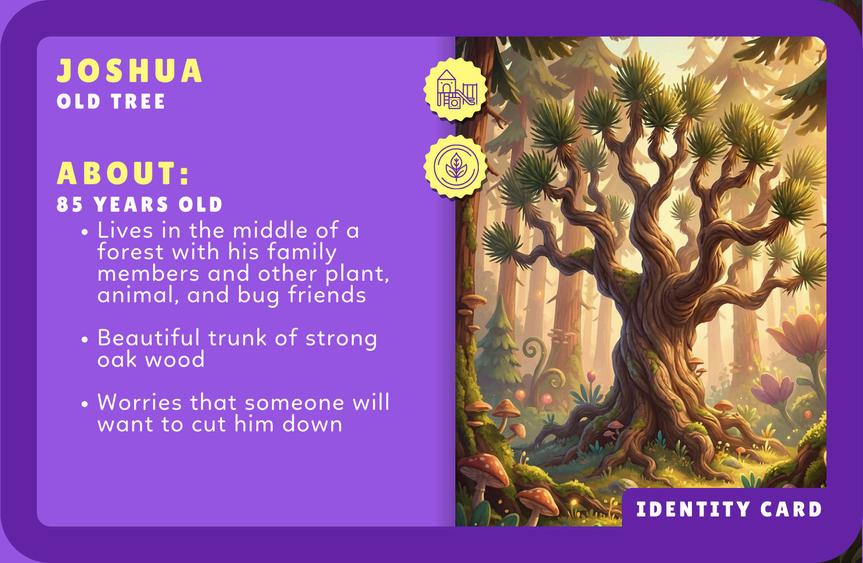
Here, we share an example dialogue for a participant who has the “Joshua the Tree” card:
Facilitator: “Good to meet you, Joshua the Tree! Does your country have laws that protect trees from getting cut down? Or laws that require people to give water and nutrients to nature?”
Participant: “Hmmm, no. ”
Facilitator: “Well, then you could be in danger! Anyone could come over and chop down you or any of your tree friends. They could use you to make paper, make a fire, or even build an extension to a library! The law doesn’t say they can’t.”
After going around the room and having a dialogue with each participant, the Facilitator shares: “Good news! We have one more opportunity to amend our country Code. Please return your Identity Cards. Once we finish revising our Code, you’ll get to choose another random identity. Your goal: to improve the Code so that no matter who you become in your country, you will be protected and treated fairly!”
Collect the Identity Cards.
Encourage participants to revise the Code to try to make a more fair and just world to live in. They may write new laws that fill in these holes, remove laws, modify them, or add other law cards from the deck.
After making the changes to the Code, participants should randomly select another Identity Card. Encourage participants to read over the Code and see if the laws protect their rights and safety.
Then, ask all participants to come together again. Continue to the Reflection & Discussion section.
Here, we provide some question ideas to reflect and discuss as a group at the end of the thought experiment. We encourage you to add your own questions to the list and allow participants to lead the discussion. Doyou thinkwe wrote a fair and just Code for all characters in our country? Why might rules or laws be more fair if you don’t know who you’ll be in a given country?
What sorts of assumptions or blind spots affected the decisions you made for your original country Code?
What law would you definitely want to add in your Code if you didn’t know who you would be?
With your new identity, do you feel protected by the country’s laws? Can you find other holes for areas that weren’t covered or where the current laws may not benefit your new identity?
Do you think it’s possible to write laws that make everyone in the country happy or satisfied?
How didyou find thinking like someone else whengivenyourIdentity Card?Difficult? Easy?
How do our experiences and perspectives shape our decisions we make about the future?
Can you think of a challenge that can’t be solved with creating or amending a law? What is the challenge, and what other ways could we solve it?
In the real world, lawmakers don’t get random Identity Cards, so do you think it’s possible for them to be impartial when writing laws? A.K.A. Do you think lawmakers can write laws that are fair to everyone and don’t only benefit themselves?
How else can we improve life and/or make it more fair without writing or amending laws?
(FOR OLDER YOUTH, AGES 14+): (FOR OLDER YOUTH, AGES 14+):
Debate Edition: Instead of letting participant ideas be added to the country Code without a vote, switch the focus to debating the laws that are added.
Writing Revision Challenge: Revise and edit the Code using the least amount of laws and words possible, while still making sure that it represents all people equally before the laws. The facilitator may break the group into two teams; the team with the strongest and most concise country Code wins.

1+ PLAYERS SUGGESTED AGE 8+
Start with a pop: How much do you know about civics, laws, and the United States government? Do the trivia game below to find out!
Check your answers: Find the correct answers on page 65. Then, read on to learn more about each topic. What else are you curious to know about the United States government?
Challenge others: Share the trivia questions with others. Can they answer them all correctly?
Write your own: Do some research and write your own trivia questions about laws, legislation, the government, and civics!
Put these steps in the right order (write 1–4):
The President signs it (or says no)
A bill is written (an idea becomes a plan)
The House and Senate vote on it
The bill is talked about and changed in Congress (committees/debates)
A bill is:
A) A rule that already counts for everyone
B) A court case
C) A kind of election
D) A plan for a rule that is being discussed
If Congress changes a law that already exists—like adding a new rule or adjusting an old one that change is called:
A) A trial
B) An amendment
C) A veto
D) A vote
In the U.S. Constitution, an amendment is:
A) A president’s to-do list
B) A type of court case
C) A numbered part added to the Constitution that can protect rights or change how government works (like the First Amendment)
D) A nickname for a senator
Which statement is most true?
A) The Constitution is the “instruction manual” and a code book is the collection of all the country’s laws based on the instruction manual.
B) The Constitution is a list of every single law in the country.
C) A code book is older than the Constitution.
D) The Constitution is written by the President.
Match the branch to what it mainly does:
Legislative branch
Executive branch
Judicial branch
A) Enforces laws
B) Makes laws
C) Explains laws and decides if they’re fair/constitutional
Which job matches the description?
“I work in Congress and represent people from one specific area inside a state (a district).”
A) President
B) Senator
C) Representative
D) Supreme Court Justice
A country where one person has all the power and people don’t get a real vote is most like:
A) Democracy
B) Dictatorship
C) Republic
D) Jury
In a direct democracy, people vote on laws themselves. In a representative democracy, people vote for leaders to make laws.
True or False: In the United States, people usually vote for representatives to make most laws.
turnthepagefor turnthepagefor theanswers! theanswers!
The correct order is:
4 The President signs it (or says no)
1 A bill is written (an idea becomes a plan)
3 The House and Senate vote on it
2 The bill is talked about and changed in Congress (committees/debates)
First someone suggests it (the idea) then cooks and helpers test and tweak it (committees/debates), then the cafeteria team agrees to serve it (votes in House + Senate), and finally the principal gives a final yes/no (the President).
A law is the final version that counts for everyone. Bills are still being worked on, and laws are official and active.
A bill is: D) A plan for a rule that is being discussed
If Congress changes a law that already exists like adding a new rule or adjusting an old one that change is called: B) An amendment
Sometimes laws need an update like changing the rules of a game when you find a problem.
In the U.S. Constitution, an amendment is: C) A numbered part added to the Constitution that can protect rights or change how government works (like the First Amendment)
TheConstitutionistheU.S.’sbig rulebookorinstruction
Many amendments are about people’s rights. The first 10 amendments are called the Bill of Rights—they’re like a “Top 10 Rights List,” including things like free speech (First Amendment).
The most true statement: A) The Constitution is the “instruction manual” and a code book is the collection of all the country’s laws based on the instruction manual.
TheConstitutionislikethe instructionmanualforhow theU.S.governmentworks andwhatrightspeoplehave.
A code book is more like a giant binder full of specific laws (rules about schools, taxes, safety, crime, and more).
Legislative = B (Makes laws)
Executive = A (Enforces laws)
Judicial = C (Explains laws and decides if they’re constitutional)
Imagine the government as three teammates:
Legislative (Congress): writes the rules.
Executive (President + helpers): makes sure the rules are followed.
Judicial (Courts): decides what the rules mean and if they match the Constitution
Thisteamworkhelps This teamwork helps stopanyonegroupfrom stop any one group from havingtoomuchpower. having too much power.
I work in Congress and represent people from one specific area inside a state (a district): C) Representative ARepresentativespeaksforpeople inasmallerareacalledadistrict. Ina dictatorship, oneleader(ora smallgroup)has mostorallpower... ... and people usually don’t get a real choice. In a democracy, people have a say by voting. An autocracy is “rule by one, ” and “dictatorship” is a common type of autocracy.
A Senator speaks for the whole state. The President leads the executive branch, and Supreme Court Justices are top judges who help decide tricky law questions.
A country where one person has all the power and people don’t get a real vote is most like: B) Dictatorship
True: In the United States, people usually vote for representatives to make most laws.
People vote for leaders (like mayors, governors, representatives, senators, and the president) to make decisions and laws. It’s like choosing team captains to help make choices for the group.
Game Concept & Planning
Card Design & Development
Azadeh Jamalian, PhD (The GIANT Room)
Matt Ulman (Ives Main Library)
Rebecca Schifilliti (The GIANT Room)
Aaron Toplin (The GIANT Room)
Rama Deshpande (The GIANT Room)
Maria Eugenia Segovia (The GIANT Room)
Paulina Quezada M. (The GIANT Room)
Mariana Hartwell (The GIANT Room)
Aaron Toplin (The GIANT Room)
Rama Deshpande (The GIANT Room)
Rebecca Schifilliti (The GIANT Room)
Book Design & Development
GIANT Participants
Paulina Quezada M. (The GIANT Room)
Rebecca Schifilliti (The GIANT Room)
Rama Deshpande (The GIANT Room)
Jessi Barrientos (The GIANT Room)
Nonie, Dior, Xu, and other GIANT Kids.
The GIANT Room is a creative co-design lab that provides opportunities for children, families, and educators to collaborate with designers, policymakers, scientists, artists, and engineers
In addition, on our GIANT Remix platform, we provide opportunities for children to co-design and co-publish books and games they can read and play with their friends and family.

A G I A NT G A M E S E T
COPYRI G H T © 2026 THE GI A N T ROOM