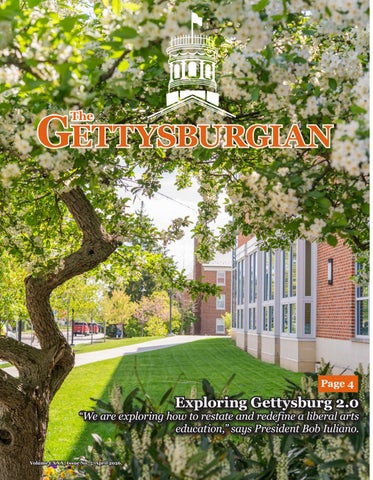

GTheettysburgian
Exploring Gettysburg 2.0
“We are exploring how to restate and redefine a liberal arts education,” says President Bob Iuliano. Page 4
A Note From the Editor: A Bittersweet Goodbye
By Ella Prieto, Editor-in-Chief
Saying goodbye is never easy, but I fear that saying goodbye to The Gettysburgian might be impossible.
In no means has writing for this organization been easy; it has been filled with tight deadlines, late nights crouched over my computer and at times plain vitriol from readers, on Facebook and YikYak alike. Also, the really horrible process of having to capture a photo of yourself that you like enough for it to be distributed across campus. But these things have given me strength, perseverance and the ability to never take things too seriously.
The Gettysburgian has been my lifeline, and my purpose, throughout my time in college. A group of seniors who seemed way too cool took me in when I was a terrified, emotional wreck in my first year. They believed in me long before I believed in myself, and I am so grateful for them.
The very essence of The Gettysburgian helped me refine my skills and allowed me to meet people across campus, connecting with anyone who had a story. It has been a joy and a privilege to share these stories, and I hope that this final magazine I am included in highlights that.
In this issue, we dive into the changes in the College, such as the work of Gettysburg 2.0 and the CUB Ballroom renovation. We share amazing student experiences, from the Center for Public Service’s Immersion Trip to Medellín, Colombia, to the Choir Tour throughout the Northeast. Some wonderful seniors also provide their perspectives as we draw near to graduation, and how Gettysburg College has impacted them.
Thank you for reading (and may you always do so!),

Ella Prieto Editor-in-Chief
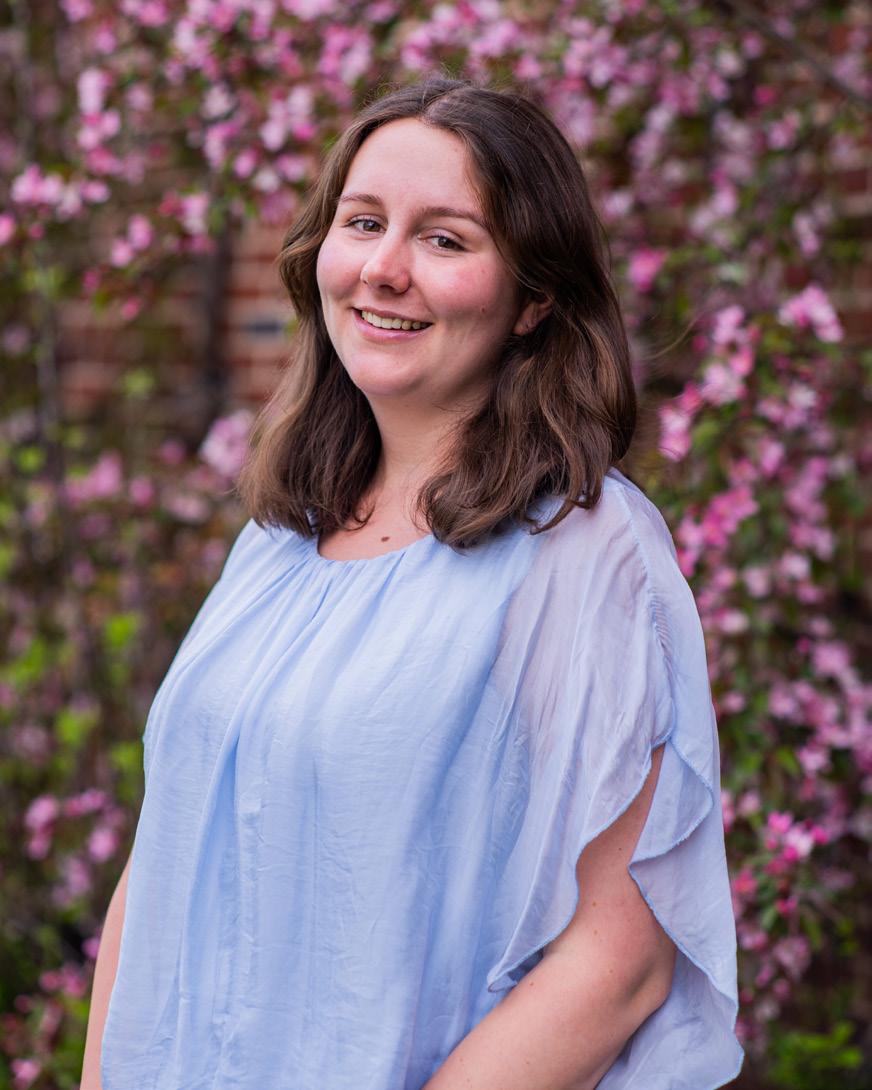
(Photo
By Ella Prieto, Editor-in-Chief
Jules Young,
Sophie Lange, Managing Editor
Omer Shamil, Opinions Editor
By Zaira Henry, Guest Columnist
Celena Glaghassi, Assistant News Editor

Exploring Gettysburg 2.0
By Ella Prieto, Editor-in-Chief
This academic year, Gettysburg College President Bob Iuliano has frequently mentioned “Gettysburg 2.0” in faculty meetings and emails alike. He has discussed 2.0’s overall importance and essential work, along with working groups, retreats and conducting market research for the project. But what truly is it?
“2.0 is asking fundamental questions, given the evolving nature of the way students learn, of the availability of technology, of the jobs students are vying for after graduation,” explained Iuliano in an interview with The Gettysburgian. “We are exploring how to restate and redefine a liberal arts education.”
With so many simultaneous changes occurring at the College, spanning projects like the CUB Ballroom renovation to the creation of the Office of College Life, it can be hard to determine what is or is not a part of the 2.0 initiative. Iuliano clarified that the proposals and implementation of projects related to 2.0 have not fully started, as that will be dependent on the forthcoming market research. However, the CUB Ballroom renovation and Office of College Life projects are still related to 2.0, as they aim to better the College overall.
That distinction raises a natural question for some students, who have wondered why the College chooses to spend money on construction renovations and similar projects while operating at a deficit and cutting other programs and staff.
“It's an entirely understandable question,” said Iuliano. “But
the approach for the College is to make sure that we are investing in the things that will strengthen the College prospectively, and that's going to require us to stop doing some things and invest in other things.”
“Over the past year, faculty, staff, trustees and students have been exploring transformational ideas aimed at ensuring Gettysburg College is distinctively positioned in an increasingly competitive landscape.”
-Gettysburg College President Bob Iuliano
The Ballroom renovation, for example, was chosen because it often operates as the front door of the College. “If you're trying to encourage students to think about the College, you want to lead with your best foot forward,” said Iuliano. Other new programs, like the new majors and master's programs, reflect the same forwardlooking logic. “We are always going to be asking ourselves how do we make sure that we are investing in ways that are going to make us stronger, even as we're reducing costs in other spaces.”
This vision for strategic investment is not new to this academic year. Iuliano first announced the Gettysburg 2.0 project through an email to College employees in April of last year, inviting them to join him and other senior leaders for a working meeting about the future
direction of the College.
“Over the past year, faculty, staff, trustees and students have been exploring transformational ideas aimed at ensuring Gettysburg College is distinctively positioned in an increasingly competitive landscape,” he explained.
“These early-stage efforts, known internally as Gettysburg 2.0, have focused on thinking boldly to strengthen our market position, increase demand, and— most importantly—prepare our students for lives of meaning and consequence.”
Underlying much of that urgency is the demographic cliff, a nationwide decline in collegeage students that has affected all institutions of higher education and was further exacerbated by the COVID-19 pandemic. For Gettysburg specifically, the pressures have been notable: S&P Global revised its bond outlook to negative for the College due to “ongoing undergraduate enrollment declines and associated pressures on net tuition revenue, leading to worsening operating deficits.”
When asked about the revised bond outlook, Iuliano was measured in his response.
“Would it be my preference? No,” he said. “But it's a byproduct of the changing outlook on higher education as a whole, and in our case, the fact that our student body has now adjusted to be roughly the same size as our competitors. There are some additional pressures we're facing in enrollment that others aren't, because it has taken us more time to get smaller.”
Despite those headwinds, Iuliano has remained assured that the moment calls for boldness rather
than retreat. Reflecting on the changes to higher education at a recent faculty meeting, he stated, “The changes happening in American higher education right now, they're not transient. I think they're going to be enduring for the foreseeable future, and we have an opportunity by being smart, bold, and thoughtful to not only meet this moment, but to redefine what a dynamic liberal arts education looks like.”
To that end, roughly 25 faculty members joined the 2.0 work last year alongside staff, trustees and others, generating new ideas and contributing to the
initiative's market research. That research, conducted on students who expressed interest in or had been admitted to the College, sought to identify how Gettysburg can convert more prospective students into applicants and more admitted students into enrollees. The research has recently concluded, giving way to a new phase of working groups across the College—comprising roughly 50 people, half of them faculty members—tasked with analyzing the findings.
In early April, Iuliano was briefed on the data, describing it as “really interesting” and “encouraging.”
The findings will be shared with faculty on April 28 at 4 p.m. in the College Union Building, after which a new group will work over the summer to translate the research into a set of concrete proposals. Those proposals are set to be discussed when the faculty reconvenes in the fall.
For students, faculty, and staff alike, the coming months will offer the clearest picture yet of where Gettysburg College is headed, and what it is willing to change to get there. ∎
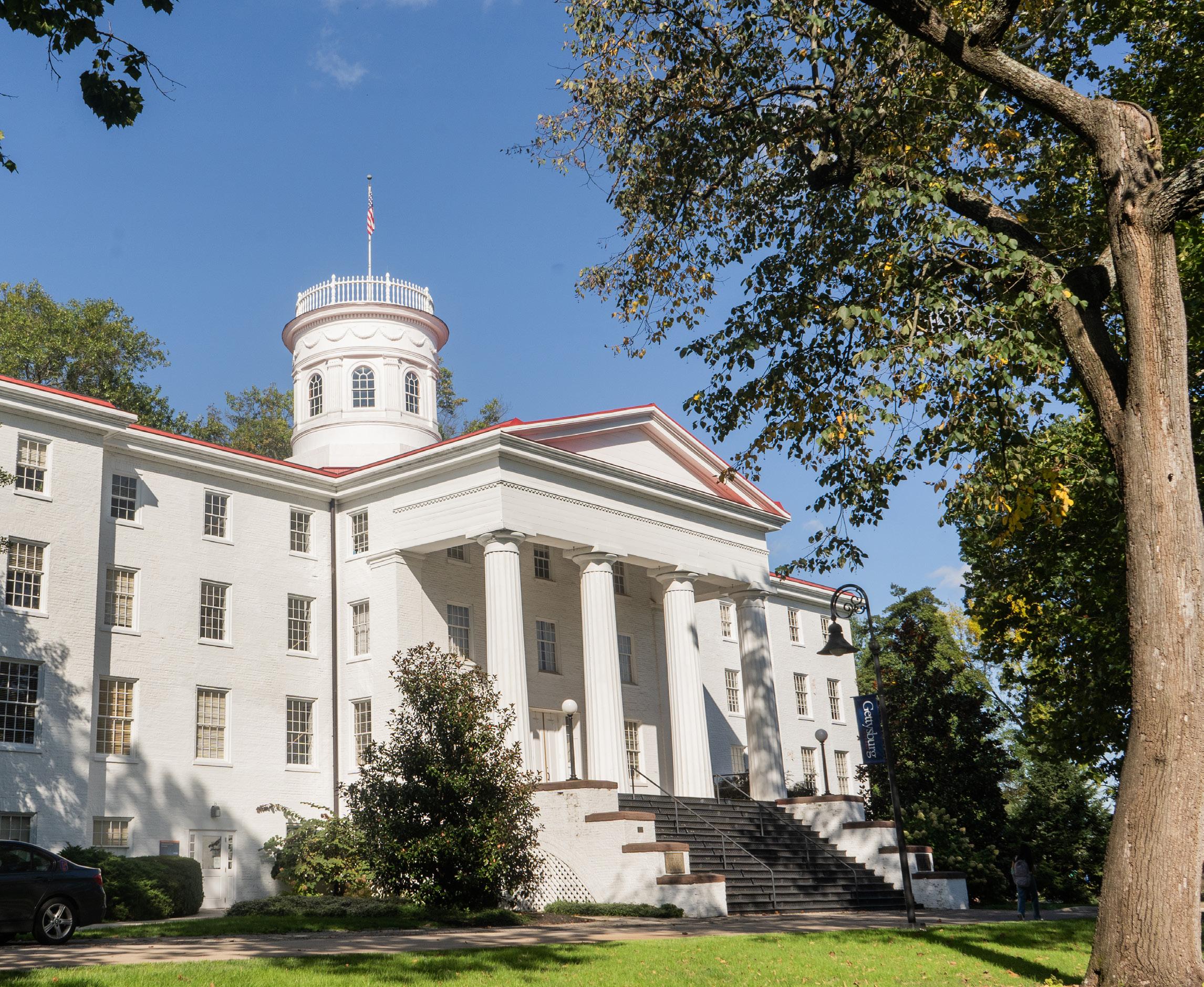
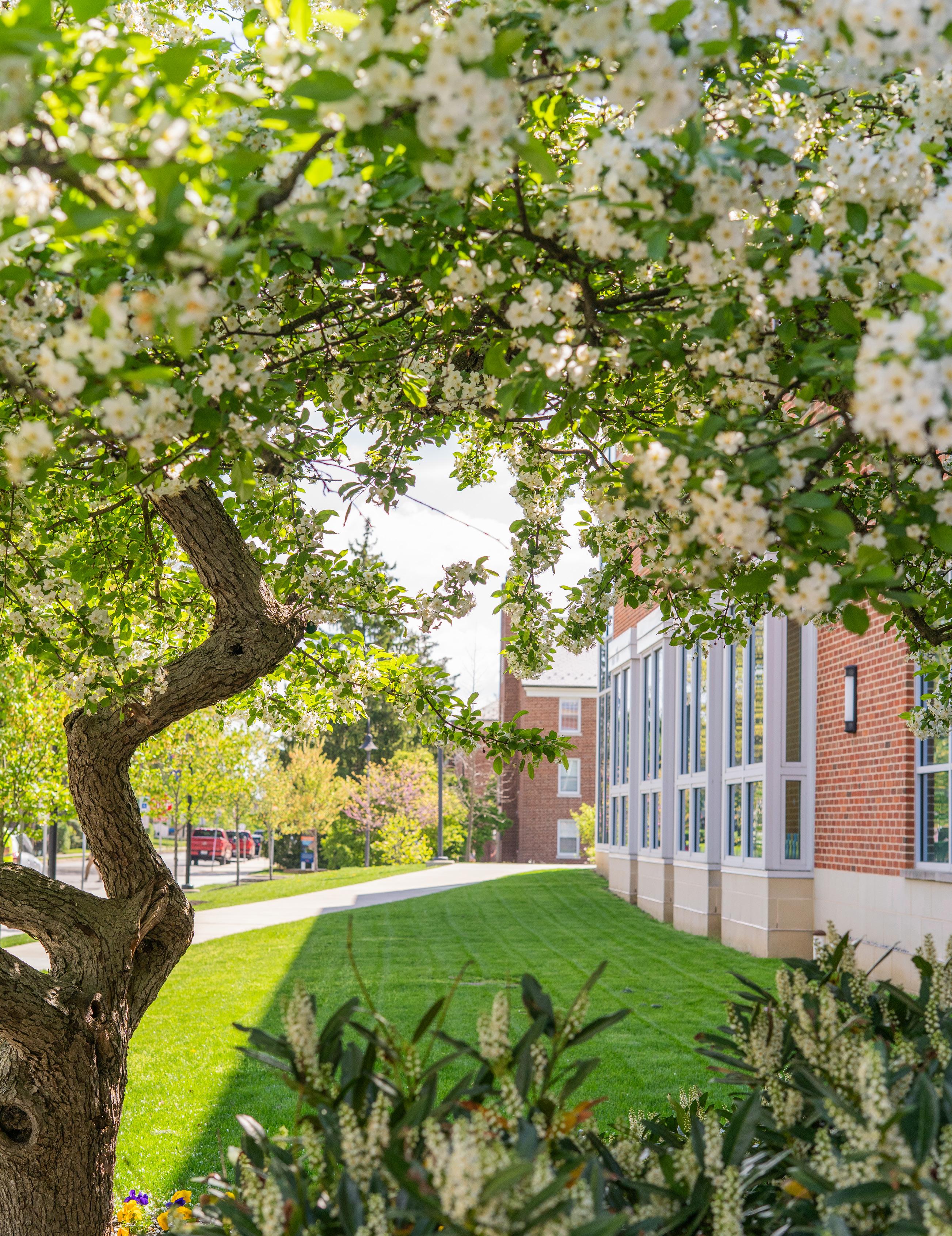
(Photo William Oehler/The Gettysburgian)

Gettysburg College Choir Celebrates its 90th Anniversary
By Jules Young, Arts & Entertainment Editor
This year, the Gettysburg College Choir celebrated its 90th anniversary with its spring break choir tour and their on-campus home concert on Saturday, March 21. To celebrate this landmark anniversary, choir director Dr. Robert Natter reached out to College Choir alumni around every stop on the regional tour and invited all the alumni at the home concert to sing alongside the current choir.

After a two-year hiatus, the College Choir resumed their tradition of touring over spring break with a regional tour around the Northeast. The choir performed concerts in Philadelphia, PA; Morristown, NJ; Boston, MA; Ridgefield, CT; Washington, DC; and Lancaster, PA.
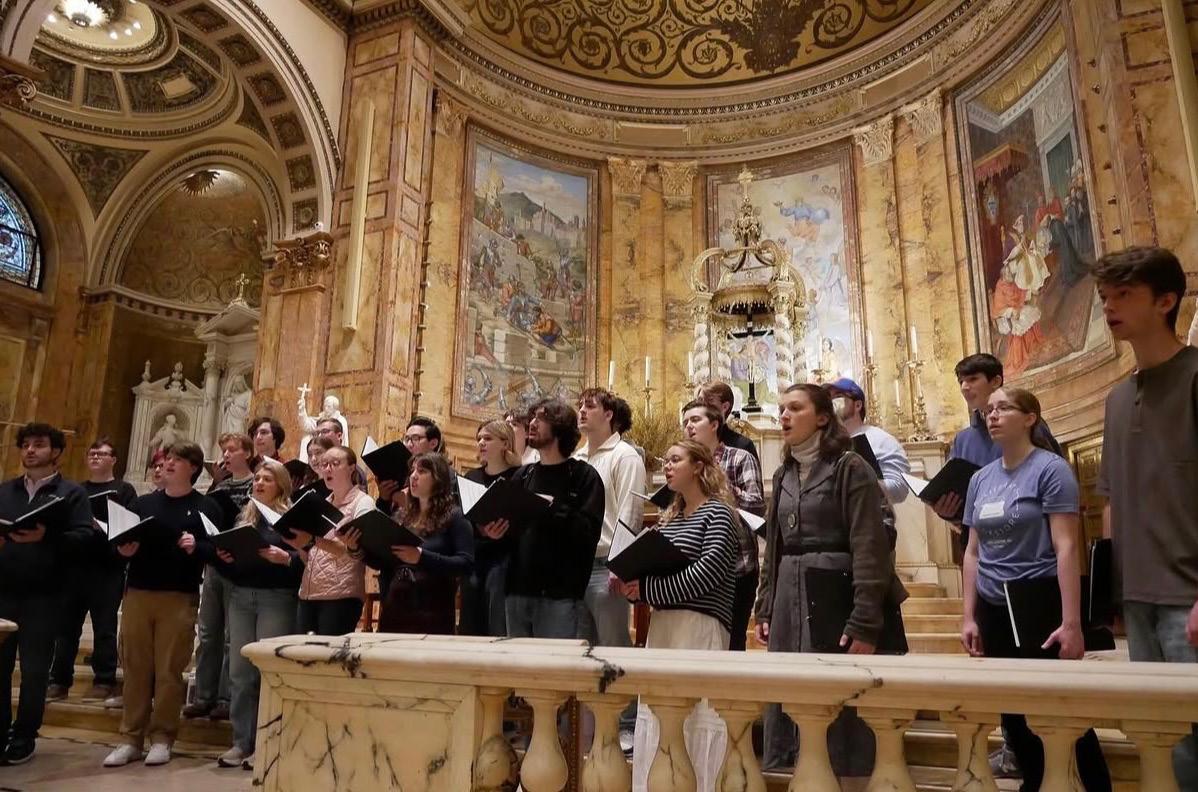
Choir represents.

With the anniversary in mind, Natter planned the tour differently from usual regional tours. To decide the performance spaces, he “put out a call to all Gettysburg alumni, not just choir, saying ‘we’re having this celebration, be a part of it.’” He sent this mass message and received more than 50 responses. As a result, every church that the choir performed at had a host who was a Gettysburg alum. Additionally, this allowed many alumni to attend each performance. To celebrate them, the choir invited all alumni in attendance to sing the Gettysburg College Alma Mater alongside them at each concert, encompassing the lasting community that the College
Beyond just the concerts, the choir tour is an opportunity to bond as a group and enjoy the locations they travel to. The choir had the opportunity to explore Boston the day after the concert there and made an additional stop in New York City. In New York, the choir got the chance to sing in the Church of St Ignatius Loyola without an audience, purely to sing in a beautiful space. Between the free days and the many hours spent on the bus together, the choir grew closer both as musicians and as people.
palpable.” After the last two years when the tradition lost some momentum, he was particularly pleased that the excitement for the tour had returned in this year’s group. Regarding the concerts themselves, Natter felt that “musically, it was very strong, and community wise, it was very strong.”

Natter reflected on the tour afterward, saying that he was “really pleased with the way that tour went because everybody was all in,” and that “the enthusiasm from all the students was really
After each choir tour, there is a “home concert” performance that takes place on the Gettysburg College campus. Natter took this opportunity to host a grand celebration for any alumni who could make it back to campus. Their participation included a celebratory luncheon as well as their involvement in the concert, singing not only the Alma Mater, but also “Beautiful Savior,”
College Choir practices for their performance at Church of St. Ignatius Loyola in New York City. (Photo Derek Reed/Gettysburg College Choir)


concert, nearly sixty of which sang alongside the choir.
In the recent past there has been a handful of choir reunions: one in 2016 for the 80th anniversary, and one in 2010 when the Parker Wagnild fund was made. The Parker and Helen Wagnild fund receives ongoing donations from choir alumni, and allows the College Choir students to go on tour for little to no cost. Natter was particularly excited for “how fun it was for the current students to meet the alums,” a handful of whom attended the luncheon and mingled with the alumni there. The luncheon was held in the afternoon of the home concert, gathering alumni across nearly sixty years of choirs. In its ninety years, the college choir has seen
luncheon. One representative from each of these eras presented on what choir was like in their time, and shared some of their favorite memories of their respective directors. To end the presentations, they showed a video of Kermit Finstad and his wife recorded for the occasion. The energy at the function was lively and excited, with many old friends reuniting and reminiscing on choir tours of years past.
solo in “Beautiful Savior.”
Some choir members displayed their multifaceted abilities in the concert, such as Christian Keller ’27 who conducted “Sicut Cervus,” and Jared Cox and Lindy Harris, who accompanied one of the “Time Pieces” with a violin duet. Between the College Choir and the alumni who joined them, there were about ninety singers in total.

At the home concert, College Choir and Camerata sang their extensive program of 18 pieces in total. Natter put together a program that would reflect the nature of time, nostalgia, and community, apt for a special anniversary concert. Soloists in college choir included Maren Carter ’27 and a trio of Jared Cox
Throughout the choir tour, the events on the day of the home concert, and the home concert itself, Gettysburg College Choir’s 90th anniversary garnered much-deserved attention, and was celebrated with a wonderful sense of community and appreciation for the history of the group. ∎

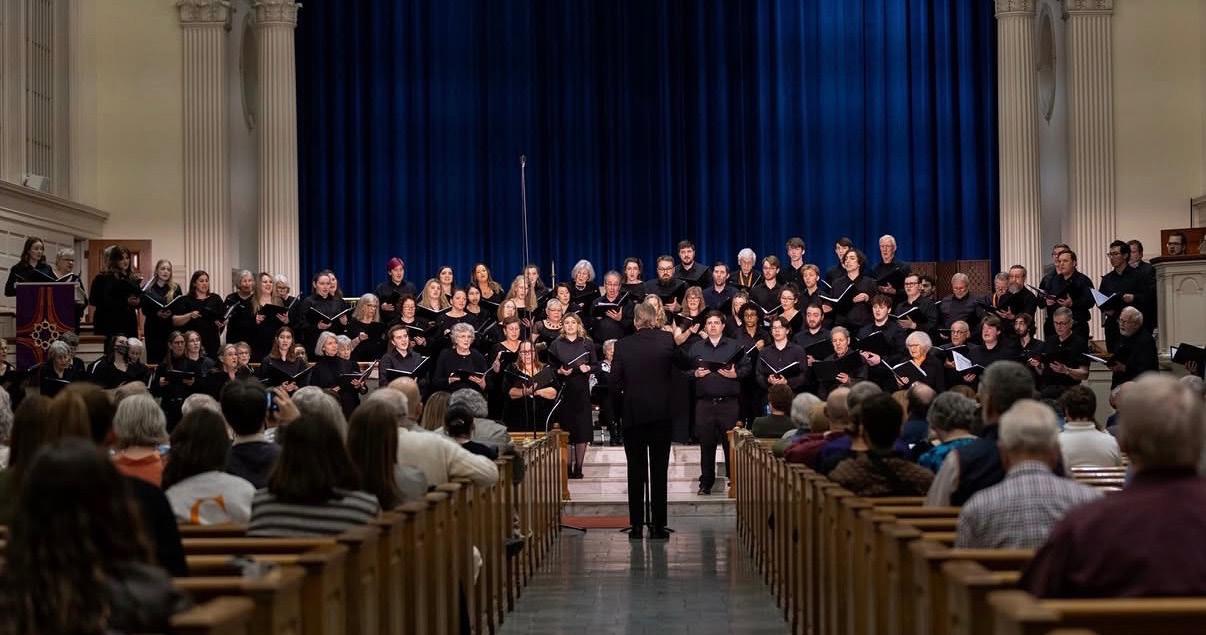

Alumni join the Gettysburg College Choir at the Christ Chapel home concert.
(Photo Derek Reed/Gettysburg College Choir)

Senior Perspectives
Compiled by Ella Prieto, Editor-in-Chief
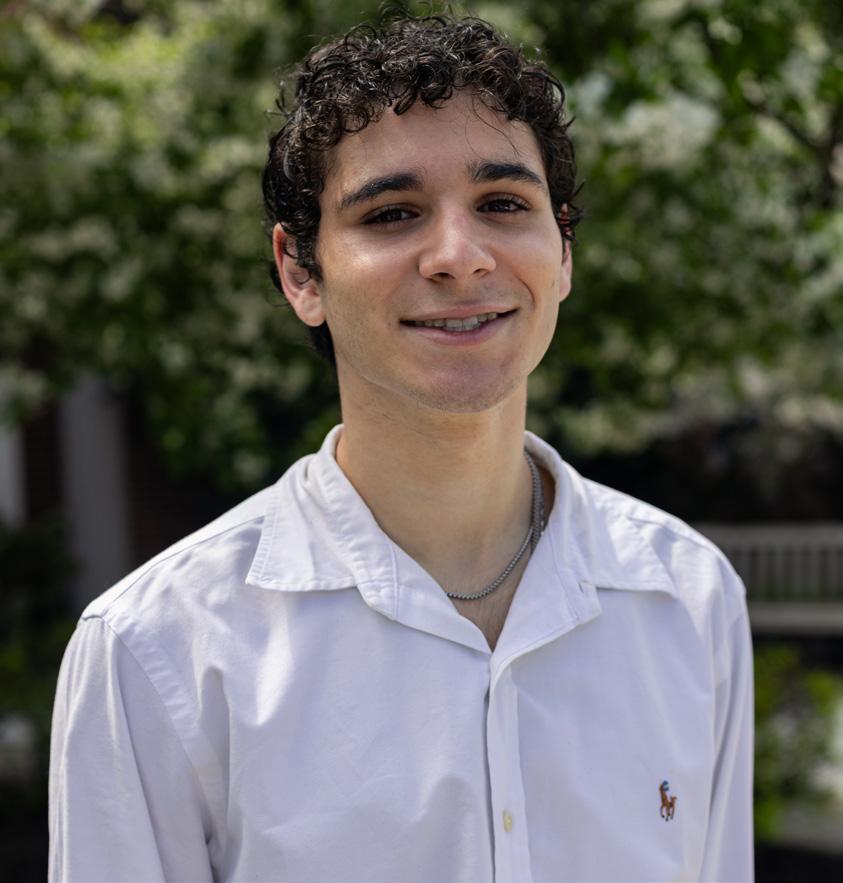
Parker Cohen ’26
I came to Gettysburg College with ambition, curiosity and a vague sense of where I hoped to go, but Gettysburg gave those hopes direction. Over the last four years, college has challenged me to think more carefully, live more intentionally and grow into a fuller version of myself. As a philosophy and public policy double major, I found an academic life rooted in questions about justice, power, responsibility and what it means to live well. Some of the most meaningful moments of my college experience came through opportunities that Gettysburg made possible: studying abroad in Aix-en-Provence, writing a chapter of a book for one of my professors and engaging in work that reminded me how deeply ideas can matter when they are taken seriously. Beyond the classroom, much of who I became was shaped by the communities that gave rhythm and meaning to my everyday life. Sigma Chi Fraternity brought me brotherhood and belonging, while serving as Vice President of the Mixed Martial Arts (MMA) Club gave me a sense of discipline and leadership that I will carry with me long after graduation. What I will leave Gettysburg with is more than a degree or a list of experiences. I will leave with a deeper sense of conviction and gratitude. As a rising 1L in law school, I know I will carry this place with me in all my endeavors. ∎


Alessia Buoso ’26
From my very first day of pre-orientation, I knew saying goodbye to Gettysburg College would be difficult. The connections I experienced even before becoming deeply involved on campus made me confident that I had made the right decisions to spend my undergraduate years at Gettysburg. I was full of excitement about the opportunities that awaited me, but that excitement also stemmed from the idea of what would come after graduation—I felt like the opportunities were endless. With my different academic and extracurricular commitments, from interning at an immigration nonprofit and studying abroad in Nantes, France, to competing at the Intercollegiate Horse Shows Association (IHSA) Zone 3 competition for the club equestrian team, every experience Gettysburg has given me has cultivated a confidence and character development that has empowered me for the next chapter of my life.

If you had told me three years ago that upon graduation, I would be joining the Peace Corps in Cambodia, I would have laughed and called you crazy. With both graduation day and my departure date looming on the horizon, I have been reflecting on the past four years with a deep sense of gratitude and love for the place that made me the person I am today. Gettysburg College, and the people who make it the institution we know and love, have inspired me to believe in myself and the promise of continuing our unfinished work. ∎

(Photo Sofia Gutierrez/The Gettysburgian)
(Photo William Oehler/The Gettysburgian)

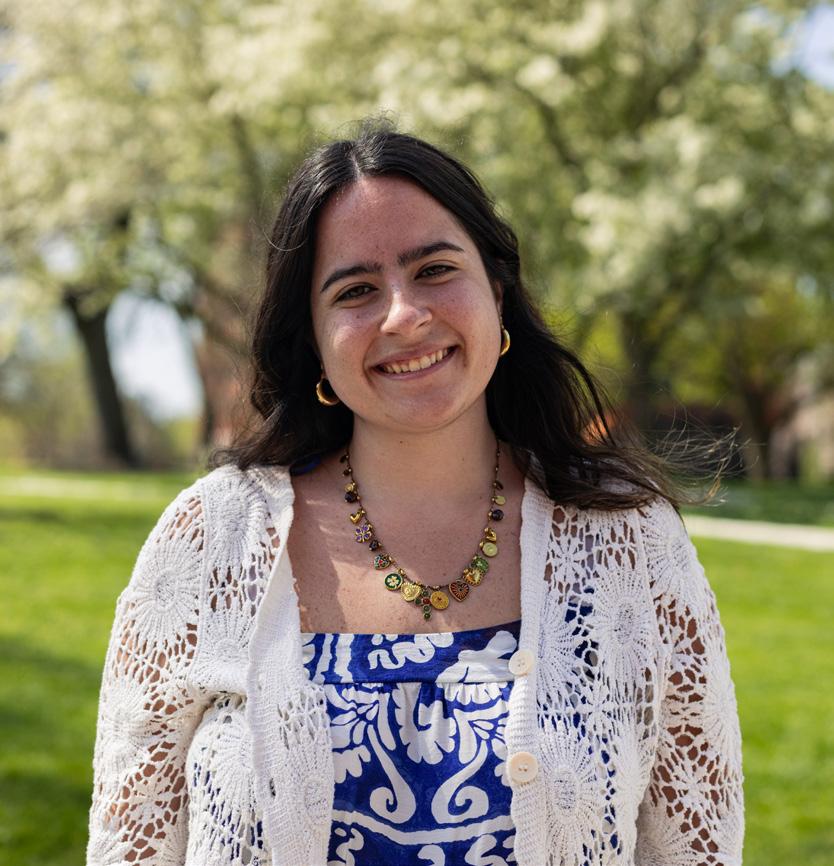
Nicole Watson ’26
Although my time at Gettysburg has flown by, it has been a transformative and foundational experience for me. I always knew I wanted to major in anthropology, and I cannot express how helpful this department and its faculty have been for my undergraduate and postgraduate plans. I was lucky enough to travel to Belize with Professor Farah to conduct archaeological fieldwork on an Ancient Maya courtyard, giving me hands-on experience with material culture and excavation methods. However, I did not expect to pursue an International and Global Studies (IGS) major, but it fits perfectly with my interests and experiences. After studying abroad in Aix-en-Provence, France, my love for international affairs grew even more, and I am now pursuing this interest in my IGS capstone on Muslim women’s integration in Marseille, France.

Will Lightcap ’26
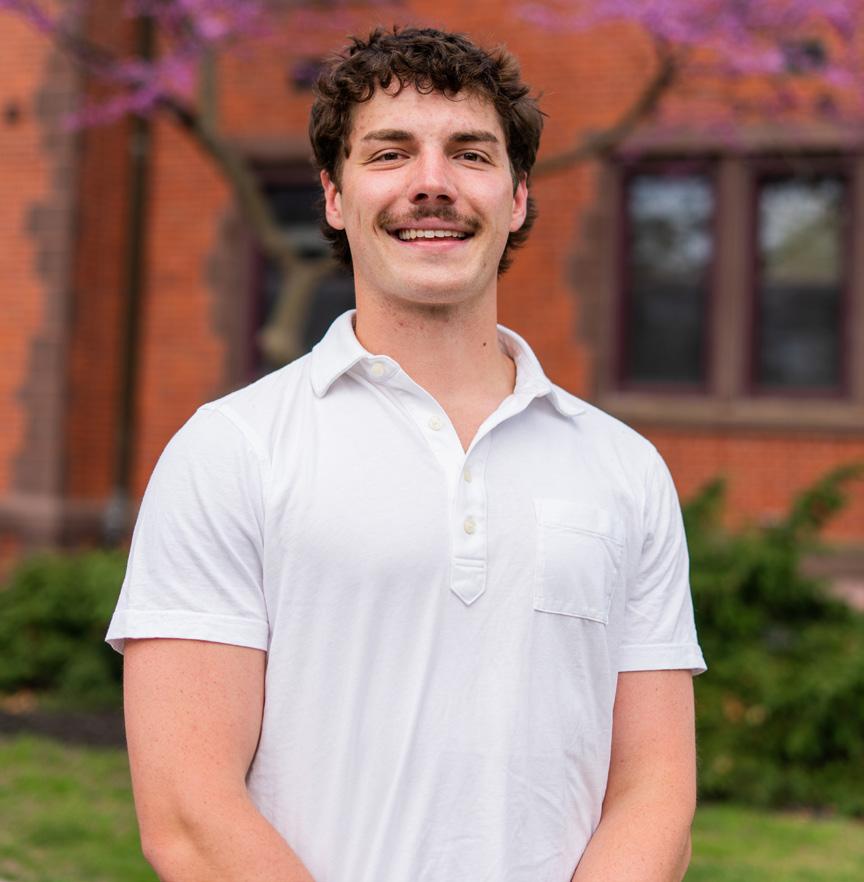
fter graduation, I will be working at Binswanger in Philadelphia, starting my career in industrial real estate. This opportunity didn’t come out of nowhere—it’s a direct result of the experiences I had at Gettysburg College. Gettysburg pushed me out of my comfort zone in ways I didn’t expect. From writing a 40-page economics research paper to going on a 10-day leadership excursion in Patagonia, I was constantly challenged to adapt and figure things out. Those experiences forced me to become more disciplined and confident in my abilities.

Additionally, I have been able to join Alpha Delta Pi and serve on its executive board, while also serving as the Vice President of Recruitment for the Panhellenic Council. These leadership roles challenged me to think creatively, work efficiently and inspire others to do the same. My leadership experience has also been enriched through the Eisenhower Institute, its Washington Summer Fellows program, and its Gender and Leadership program. Being able to live in Washington, D.C. while working an internship allowed me to be independent and connect with countless people in the area. All of these opportunities have allowed me to enrich my interests and grow as a student and leader. After graduation, I will be attending the Geneva Graduate Institute for an MA in International and Development Studies with a specialization in Gender, Race, and Diversity. It is so bittersweet to be leaving Gettysburg soon, but I am eternally grateful for all the experiences, friendships, and guidance I’ve had along the way. ∎
A lot of my growth came through leadership. As President of my fraternity, I had to manage people, make tough decisions and be accountable for more than just myself. I learned how to communicate clearly and handle pressure, which I know will translate directly into my career.
More than anything, Gettysburg taught me to take initiative and go after opportunities, even if they seemed impossible from the outset. The lessons I learned and the experiences I had at Gettysburg College are something I will carry with me long after graduation, shaping both my career and the person I continue to become. ∎

(Photo William Oehler/The Gettysburgian)
(Photo Sofia Gutierrez/The Gettysburgian)

Beyond the Syllabus: Department Efforts to Create Community on Campus
By Sophie Lange, Managing Editor
Gettysburg College is home to over 30 academic departments, each of which has crafted its own identity and community amongst the students, faculty and staff. As part of this, many of the faculty have developed ways to foster connections throughout their departments, often in the form of events. Some of the most popular ones become department traditions, such as the English and Women, Gender and Sexuality Studies (WGS) departments’ Tea Times and the Political Science Department’s PoliSci with Pups. For the English Department, the original spark of inspiration happened many years ago. Department Chairperson Christopher D'Addario and Professor Joanne Myers first envisioned the event as a gathering of students and faculty in the tradition of the United Kingdom’s universities and research libraries, but the first Tea Time did not happen until after D’Addario became the chair. After the first few drew significant interest from students, the department started holding them every other week.
According to D’Addario, the main influence on the structure of their Tea Times was the Huntington Library in California.
“The Huntington Library in California, one of the finest rare book libraries in the world, famously closes every afternoon so that all of the visiting researchers and staff can refresh and gather at a tea time hosted in their Rose Garden,” said D’Addario. “While we never envisioned an everyday event like the Huntington’s, we did want to replicate this kind of sociable environment in an academic setting, something certainly that other English
departments do in various forms as well.”
“The faculty in English are always happy to see students in and out of the classroom and happy to talk about whatever is on students’ minds.”
-Professor Christopher D'Addario
The main goal is for students to have the space to socialize with one another and with faculty in a relaxed setting outside the classroom. While some students stop by the event to grab a quick snack or drink, others spend their time between classes catching up with professors who are not currently teaching any of their courses or other students.
D’Addario hopes that Tea Time communicates two things within the English Department: that the faculty enjoy spending time with the students, and all students are welcome, both at the events and in the English Department as a whole.
“The faculty in English are always happy to see students in and out of the classroom and happy to talk about whatever is on students’ minds,” explained D’Addario. “We want everyone to feel like they can come in to grab a drink or snacks and be a part of the community.”
The English Department’s Tea Times are currently held every other Thursday from 1 p.m. to 4 p.m. on the fourth floor of Breidenbaugh and include a
selection of cookies, desserts and other snacks, as well as coffee, tea and hot chocolate.
D’Addario also expressed that it has become a highly anticipated event as of this past year: “Students look forward to it and are upset if we have to cancel it or if it doesn’t happen that week. Faculty also look forward to seeing students at Tea Time, so much so that one faculty member wanted to change his teaching schedule so that he could make the Thursday Tea Times regularly.”
The WGS Department also hosts a Tea Time event as part of its annual department event series, which has become a department tradition that the faculty and staff look forward to sharing with the campus community each year. This year, their theme is Community Building and Change Making.
“Inclusivity is a core value of WGS, and it permeates everything that we do. Our community and our events are always inclusive and welcoming.”
-Professor Alecea Standlee
Chairperson of WGS and Associate Professor of Sociology Alecea Standlee explained that the events began because the faculty wanted to create a relaxed event that would create community among faculty and students within the department,
as well as students who are interested in potentially majoring or minoring in WGS.
“The mission of WGS is to allow students to learn to think critically about diverse human experiences and build community and relationships. Our events are an opportunity to come together with others to discuss their own experiences and learn,” said Standlee.
“Building community and having the opportunity to explore our shared interests and diverse perspectives is our goal.”
Standlee emphasized that she hopes the event communicates that the students and faculty of the WGS Department are an intellectual and engaged community, but also that they like to have fun within these spaces. The events are casual, inclusive, and foster conversations and connections, both old and new. As part of this, members of the faculty always attend the department events to provide students with opportunities to get to know their professors beyond the

classroom.
“Inclusivity is a core value of WGS, and it permeates everything that we do. Our community and our events are always inclusive and welcoming,” Standlee said.
While WGS Tea Time is an occasional event, the department holds a wide range of events throughout each semester. This past semester, it co-sponsored a Body Inclusive Yoga event, as well as several events during Peach and Justice Week.
A departure from the WGS and English Departments, the Political Science Department holds its annual Pups with PoliSci event as a way to encourage connection between students and faculty, while also easing some of the homesickness that comes with being away from home.
Department Chairperson Caroline Hartzell explained that the original inspiration for the event came from the realization that students often miss their pets when they come to college,
and many of the faculty within the Political Science Department have dogs. They discovered an opportunity for community within Political Science that created a casual environment for students to meet faculty outside the classroom, which is one of the core parts of their identity as a department. By encouraging informal conversations through this event, they foster connection and create community within the department and the greater campus. They also use these events as a way to promote Political Science to students who are potentially interested in majoring or minoring in the field.
“We hope that it communicates to the students that faculty are ‘normal folks’—with dogs!—and that it encourages them to come talk to us,” Hartzell said. “Our conversations are much more informal [at the event]. Students tell us about their pets, families, and the faculty talk about those topics as well.”
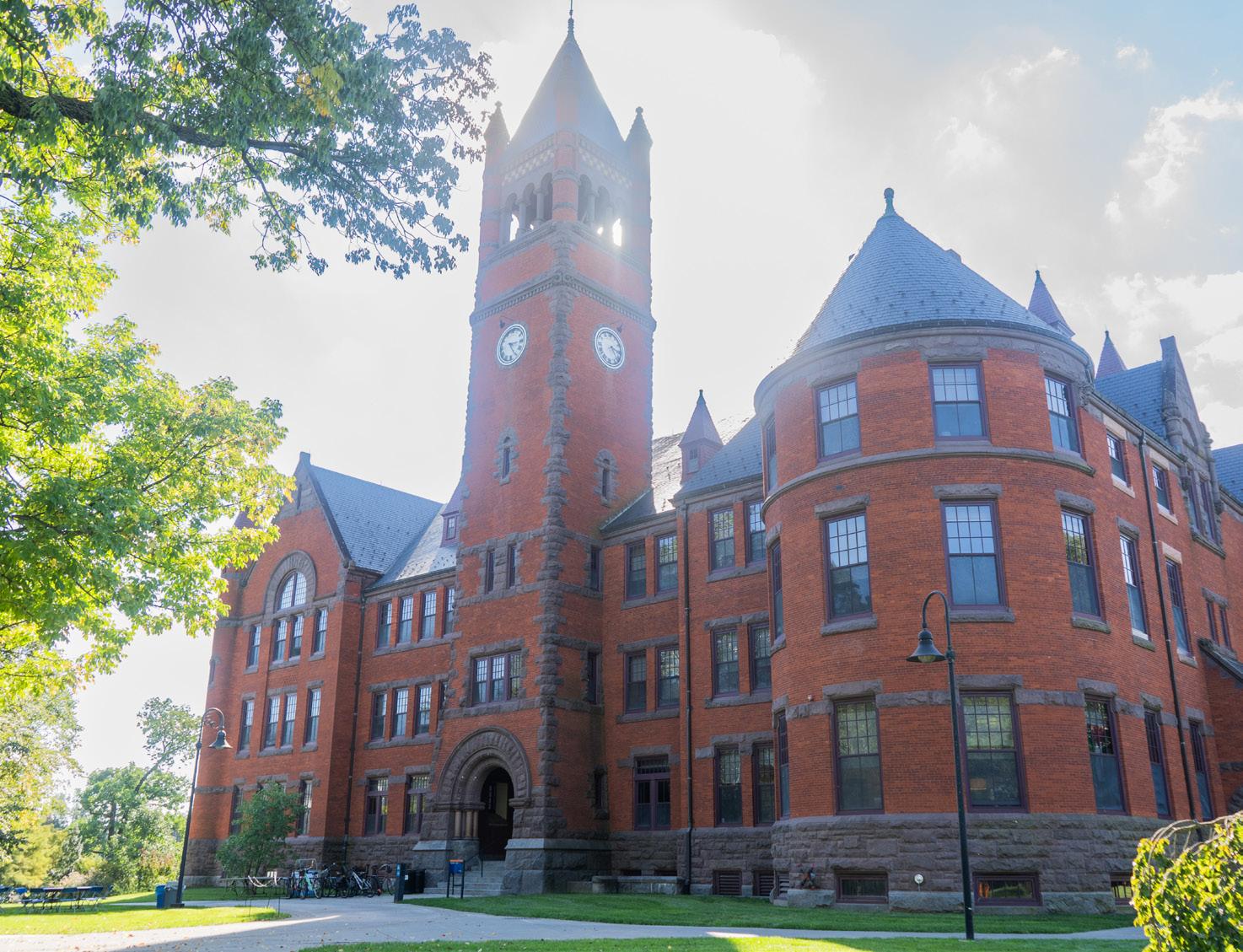
The department holds the event every fall outside Glatfelter Hall. In addition to the faculty members’ dogs, the events also have an ice cream bar. Many professors within the department attend the event as well, regardless of whether they have a dog of their own, because the students often look forward to talking with them, particularly advisors or professors teaching their classes.
Hartzell expressed that, “it’s an event that students look forward to each year, with ‘older’ students telling the new students to look forward to it.”
She said they easily have 50 or more students in attendance, some of whom stay for the entire event. As a department tradition, Hartzell said it has not changed much over the years, “because the recipe of dogs and ice cream is a winning combo!” ∎
PoliSci with Pups is typically held outside Glatfelter Hall, which is also the home of the political science department.
(Photo William Oehler/The Gettysburgian)
Progress for Whom?
By Omer Shamil, Opinions Editor

Artificial Intelligence (AI) may become one of the defining technologies of our age, but history warns us that when societies celebrate innovation before they confront power, the costs of progress are almost always paid by someone else. The questions AI places before us now is not simply what it can do, but who will control it, who will benefit from it, and who will be left behind. It has entered classrooms, workplaces, and public life with the language of inevitability, as though speed alone were proof of virtue. But technologies do not arrive with moral meaning attached to them. They are shaped by the people who build them, the institutions that govern them, and the communities made to live with their consequences. If AI is to become one of the defining technologies of our age, then it must be met not with blind awe, but with the harder questions history always asks too late: who gains, who loses, and who is asked to bear the cost?
If the rise of artificial intelligence feels disorienting,
it is because we have seen this kind of arrival before. The Industrial Revolution, too, was introduced in the language of advancement, efficiency, and a better future—and in many ways, it did transform the world. But its progress was never innocent. It left behind polluted cities, brutal labor conditions, and entire classes of people expected to absorb the cost of a future they did not design. The internet followed a similar path: celebrated first as liberation, then slowly understood as a force that could also deepen surveillance, dependency, and concentrated
power. AI belongs to that same historical tradition of invention: genuinely transformative, undeniably powerful, and dangerous precisely because society is so eager to admire it before it has learned how to question it.
One of the great illusions surrounding AI is that it feels weightless, as though what happens on a screen happens nowhere else. But the digital world still drinks from rivers and feeds on grids. AI is sustained by sprawling data centers, immense electricity demand, and water-intensive
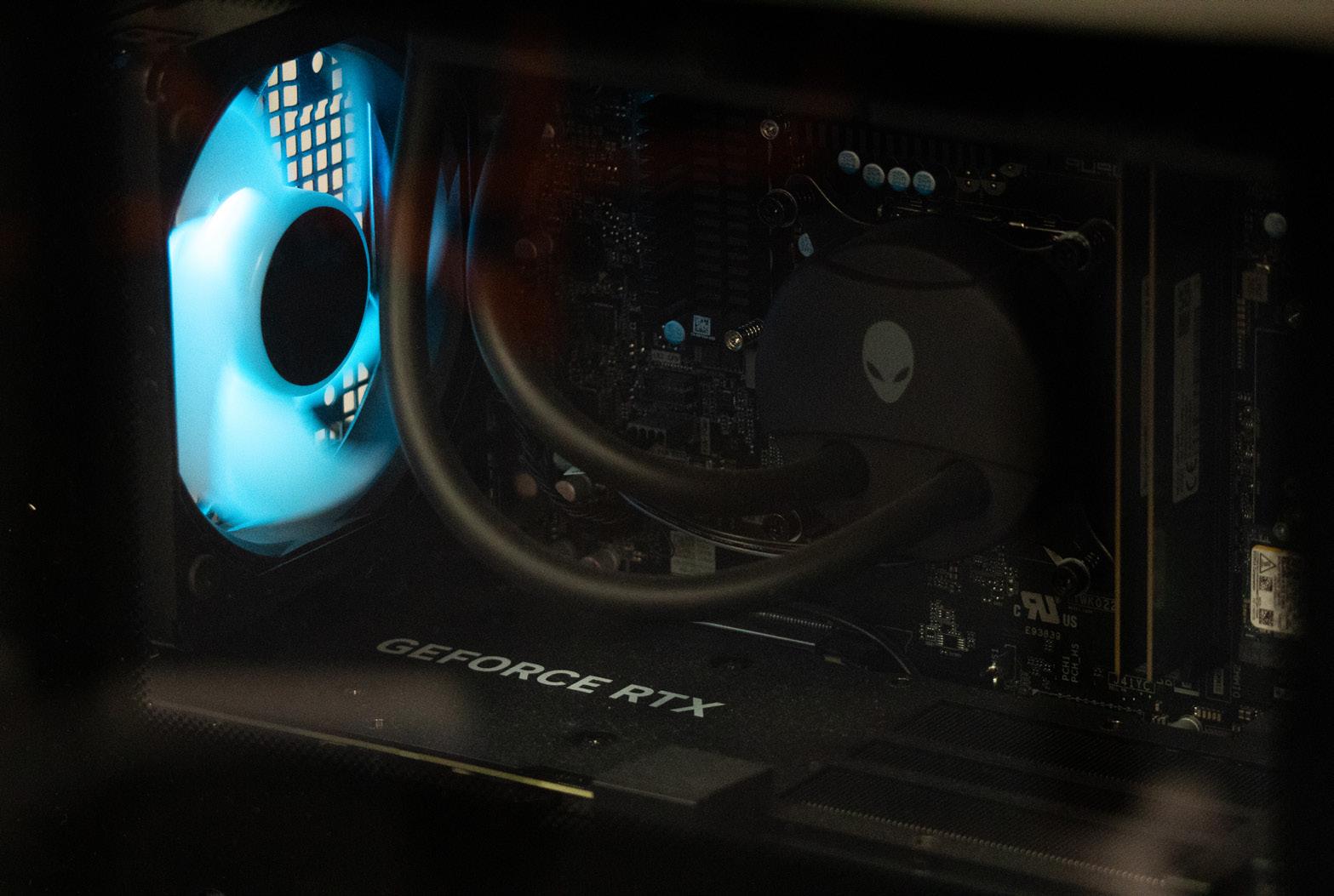
A computer in the AI area of the Innovation & Creativity Lab. (Photo Alice Van Etten/The Gettysburgian)

cooling systems, all of which give this so-called future a very physical cost. The International Energy Agency has projected that electricity demand from data centers will rise dramatically in the coming years, driven in large part by AI, while the U.S. Government Accountability Office has warned that generative AI carries significant energy and water burdens that companies often do not fully disclose. And these costs are not only environmental. AI is already reshaping the terms of work, especially for young people trying to enter professional life through entry-level jobs. The promise is always that innovation will create new opportunities, but that promise rings hollow when the first jobs to disappear are the very ones that teach people how to begin. Every generation is told to adapt, but that becomes a cruel command when the ladder is being pulled up at the same time.
AI’s danger does not end with the environment or the labor market. It also reaches inward, into our habits of mind and the structure of public life. A campus should be especially alert
to that. What becomes of education when students grow accustomed to outsourcing the first draft of a thought? What becomes of human connection when simulated companionship begins to feel easier than the difficult, necessary work of being known by another person? And beyond that inward dependence lies a larger civic problem: AI increasingly asks for our trust while revealing very little of itself. We hand over our words, our preferences, our questions, sometimes even our vulnerabilities, to systems we cannot meaningfully inspect, regulate, or fully understand. Once a technology acquires that much power, it never remains confined to convenience; it moves toward surveillance, toward warfare, toward profit, toward the hands of those already positioned to benefit most from its use. That is why the central question has never really been whether AI can do extraordinary things. It is whether its power will be publicly governed or privately hoarded, whether its benefits will be shared or concentrated, and whether we will keep mistaking reaction for regulation while

the technology races ahead of our moral and political imagination.
So how are we supposed to feel about AI? Perhaps there is no single correct opinion, no pure position untouched by contradiction. Technologies this large rarely allow for that kind of simplicity. But there is a correct response, and it is not surrender disguised as sophistication. It is dialogue: serious, public, and morally grounded dialogue between those building these systems, those regulating them, those displaced by them, and those who will be asked to live in the world they create. If AI is already reshaping work, straining resources, unsettling privacy, and moving closer to machinery of war and concentrated power, then the least we owe one another is honest debate before inevitability removes consent. History does not ask us to fear every revolution. It asks us to think before praising one. And if artificial intelligence is truly to become part of our common future, then that future cannot be decided only by the people positioned to profit from it. ∎

Opinion: Our Gettysburg Experience: The Implications of Deficiencies in the Conduct Process
By Malachi Briscoe and Oumye Toure (President of the Anti-Racist Collective), Guest Columnists

This is the first of the Anti-Racist Collectives series on student experiences with various aspects of college life. These detailed accounts, written by students, detail what these experiences look like and how they affect students’ day-to-day, social, academic, and overall experience. This publication focuses on the conduct process, which is known among students for unduly burdening reporting parties (students who are victims of different forms of discrimination). It is imperative that our College administration acknowledges and understands the challenges they generate by utilizing a process that inherently disenfranchises and burdens students, which (implicitly or explicitly) disproportionately impacts students with higher personal responsibility (jobs, family duties, etc.) and/or more identification with identities (race, religion, foreign status, etc.) more likely to face discrimination. We are seeking understanding and action that reforms the processes that are disenfranchising and insufficiently serving students.
Malachi Briscoe is a senior majoring in business and minoring in economics. Briscoe is a forward on the men's basketball team and is the current president of the Gettysburg Fashion Initiative.
My first and only experience with the conduct process was during the first semester of my freshman year at Gettysburg. I just started my basketball season when I was asked to come over to the apartment that upperclassmen on my team shared. I was a bit confused and thought I might have done something wrong, but when I got there, I was
told that another student said something racist about me to a girl I was friends with, and she informed my teammates about it.
Many thoughts crossed my mind at that moment. I didn’t know how to process the information or what to do. The student told the girl I was friends with that it was “disgusting” she was with me because I was black. I was taken aback, especially because it came from someone I had never met or interacted with before. This was the first time I had someone say something racist and hateful towards me. Although I witnessed racism growing up, I never had anything happen to me personally. I struggled to understand how someone who knew nothing about me or who I am could say something like that. My teammates who had previous experiences with the student told me that they had heard him make racist remarks. Once I found out who he was, I found his roster photo, but I wasn’t fully confident in what he looked like in person. I had an eerie feeling walking around campus for a week or so and nervously anticipated an interaction with him. I was unsure whether I would see him at some point, and I didn’t know if he would say something to me in person or say even more behind my back. I didn’t know who he was or what he was like, so I wasn’t sure what to expect. At this point, my teammates suggested doing a bias report

to try to get some sense of justice. We learned about the bias report form before our season officially started, in a mandatory annual meeting for athletes about Student Rights & Responsibilities. I didn’t know much about the conduct/bias process or how it worked. The information I received from the basketball team meeting was the extent of my minimal knowledge on the form, so I asked my teammates to help me fill it out.
After completing the form to go through the conduct/ bias process, my teammates and I waited to meet with Elizabeth Farner, the current Director of Student Rights and Responsibilities. We thought meeting with her would lead to a formal or informal resolution, or some sort of punitive action for the student. After having 2-3 meetings with Farner, she said that she needed consent from my friend to investigate the racist comment made by the other student, but my friend was not comfortable doing this. Her discomfort may have come from fear of criticism from friends, possible danger from the perpetrator, or a range of other things. Without her consent, Farner said there was nothing the school could do, even though the student I reported admitted to saying something explicitly racist. Farner said that my friend was just as much a victim as I was. Our discussions led to no resolution and no punitive/




substantive action. While I understand that my friend was a victim too, Gettysburg College failed to provide support, any kind of assistance, or ensure that I was okay. My interactions with Farner left me feeling like the system in place for the conduct process failed to adequately address the situation and ensure I was okay. There should have been some way that the school could have assisted me in the situation. Instead, I was left with the burden of handling the whole situation myself and relied on the help of my team and coach. My overall experience with the process was very disappointing because the administrators overseeing the conduct process said they would not be able to help me at all as a result of my friend’s unwillingness to give consent.
from everyone involved. I was lucky to have my teammates there to support me and help me gain a sense of justice, but I feel like I cannot trust my school to protect me and my well-being.
Reflections & Takeaways:
toward—and tolerance of—his behavior.
Following the conduct/bias office's inaction, my teammates and I decided to pursue justice ourselves. So, in addition to classwork, basketball practice, the mental toll of understanding and grappling with racism, all while adjusting to college as a first-year, I tried to find people to speak with to support our effort to hold the student accountable. It took my teammates and me meeting with the students' fraternity president and our coach speaking to the students' athletic coach for any action to take place. All our effort resulted in an apology and a conversation within the students' wrestling team about his actions.
My personal experience was definitely not the first and unfortunately won’t be the last, but there has to be a way the school can have a system in place to support students when something like this happens, and consent can’t be obtained
The burden of accountability and justice was placed on Briscoe as a first-year student adjusting to environmental, academic, and personal changes while dealing with racism. Briscoe's experience exemplifies the disproportionate burden placed on individuals who face discrimination, left to seek justice without the support of college administration. This experience mirrors the pattern that has left many students dissatisfied, disillusioned, and disheartened by the conduct process and college administration overall, regardless of whether they encountered the procedural conflict of consent. As articulated previously, since Briscoe's experience, the bias and conduct processes have been separated. Despite the separation, the ineffective and unduly burdensome nature of both processes remains. Briscoe's experience tells us the following:
Open, unapologetic racism, especially being from a junior student, demonstrates the social and collegiate acceptance of racially discriminatory behavior at Gettysburg College. That an upperclassman student felt comfortable blatantly targeting a first-year student is indicative of social and administrative indifference toward racism. That he felt he would not receive punitive action from the administration, and he did not, shows administrative inaction
Briscoe, the reporting student, received no support, alternative forms of action, or substantive assistance despite meeting with the Director of Student Rights and Responsibilities. Students expect the administration to uphold their responsibility to protect them and help them when necessary. In this instance, the administration did not uphold this responsibility sufficiently. The reporting student was only aware of the conduct process because of an athletic team's mandatory orientation. This demonstrates a gap in the education regarding conduct, bias, and racism that the entire student body receives.
We are failing to create an environment that disincentivizes and prevents discrimination, adequately addresses racism, and provides adequate resources for students facing discrimination. Mental health resources are not enough. Students need substantive action that addresses, educates, acts against, and deters racism. We must cultivate an environment that is conducive to Gettysburg College's values of “inclusive excellence”, in which we are “nurturing, respecting, and sustaining an inviting campus climate where individual differences and identities are perceived as strengths, not deficits,” a place where “everyone can live authentic lives without concern that this authenticity will negatively impact their opportunities for success” as articulated by our collegiate administration. ∎

Immersion Project Highlight: Medellín, Colombia
By Zaira Henry, Guest Columnist
As a group of nine students, and myself as the immersion trip leader, we entered Colombia thinking we had a general sense of what the experience would be: engage with communities, learn about social impact and contribute in meaningful ways. However, what we quickly realized is that this trip was not about going somewhere to “fix” problems. It was about listening, learning and challenging the assumptions we carry with us.
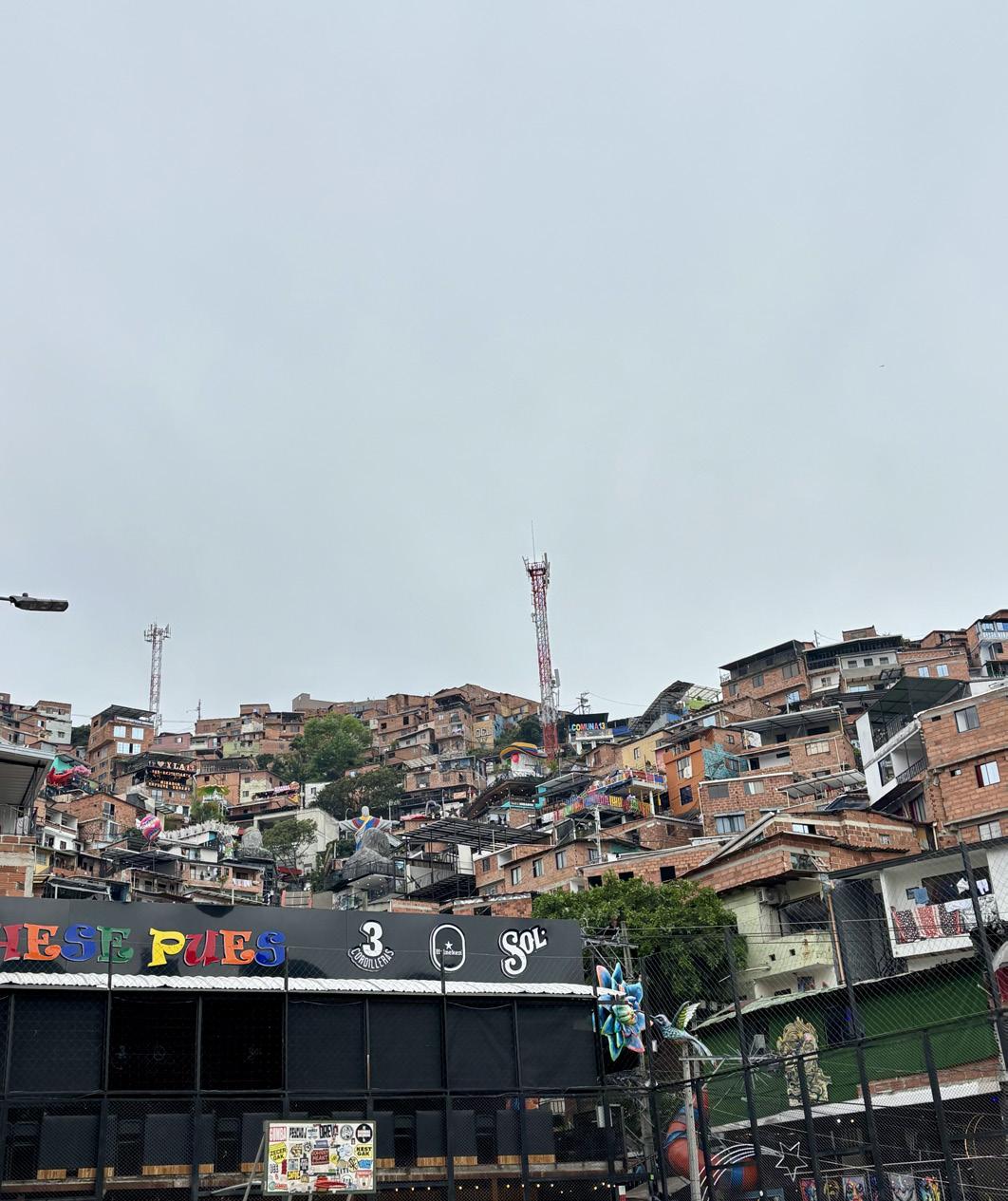
One of the most important lessons we took away from this experience was the need to confront preconceptions. Before arriving, it is easy to unconsciously frame communities through a deficit lens, focusing on what they lack rather than what they have built. But places like Comuna 13 completely reshaped that perspective. Once known for its history of violence, Comuna 13 is now a powerful example of resilience, creativity and communityled transformation. Walking through its streets, hearing local voices, and seeing art used as storytelling reminded us that narratives of struggle are only one part of a much richer story. Similarly, our time in Moravia stood out as a highlight of the trip. Learning about how a former landfill was transformed into a thriving community space showed us what is possible when solutions are rooted in local knowledge and collaboration. It was not an outsider-driven success story, it was one shaped by the people who live there. That distinction mattered deeply and challenged the way we thought about impact.

Beyond these communities, Colombia itself revealed a complexity that often gets lost in what we see on social media or hear from a distance. From vibrant city life to deeply rooted cultural traditions, we experienced a country that is far more dynamic, innovative and welcoming than many common narratives suggest. At the same time, this experience also reminded us that no country is without its challenges. Colombia, like any other place including our own, continues to navigate social, economic and political issues that require ongoing attention and care. Holding both of these truths at once was important: recognizing the beauty, strength and growth within communities, while also acknowledging that there is always work to be done everywhere.
“What made this immersion especially impactful was the realization that learning itself is a form of engagement.”
-Zaira Henry ’27
important idea: sustainable change is slow, complex and deeply relational. The individuals we spoke with emphasized partnership over intervention, and humility over authority. They showed us that meaningful work requires listening first, and understanding histories, cultures and needs before taking action. What made this immersion especially impactful was the realization that learning itself is a form of engagement. While I carried the responsibility of leading the group, this experience reminded me that leadership also means creating space for shared reflection, growth and understanding.
We were not there to impose solutions or to position ourselves as experts. Instead, we were there as students of people, of place, and of perspective. This required us to be reflective about our own positionality and to recognize the privileges and biases we bring into global spaces. By the end of the trip, our understanding of service had shifted. It is not defined by how much you can do for a community, but by how well you can work with one.

Throughout the trip, we also had the opportunity to engage with non-governemental organizations (NGOs) and professionals working across different sectors. These
Colombia taught us that communities are not waiting to be fixed they are already creating, innovating, and thriving in ways that deserve recognition and respect. This experience will stay with us not because of what we gave, but because of what we learned. It reminded us that the most meaningful impact often begins with humility, curiosity and the willingness to truly listen. ∎

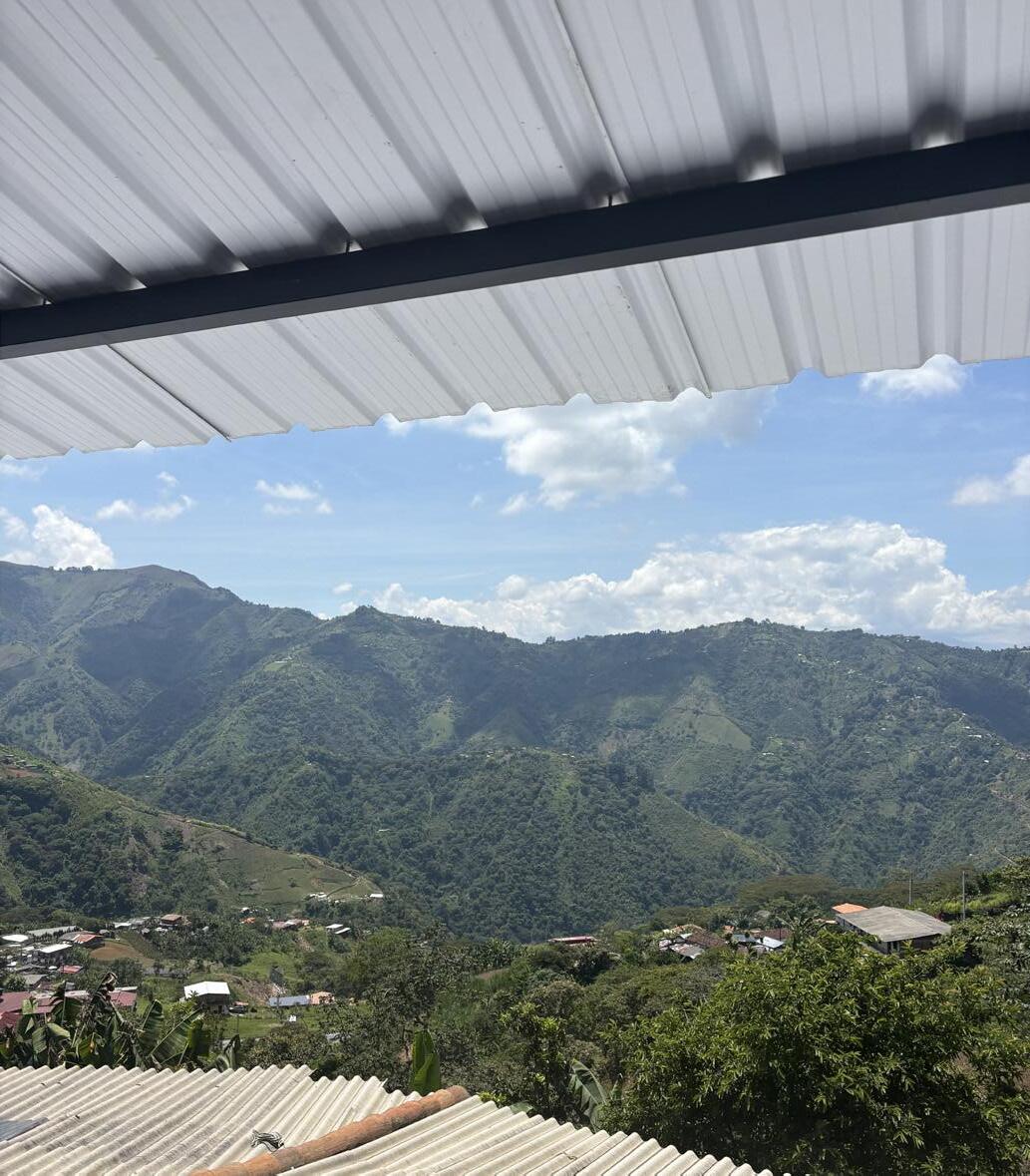
Above: View from the coffee farm the group visited.
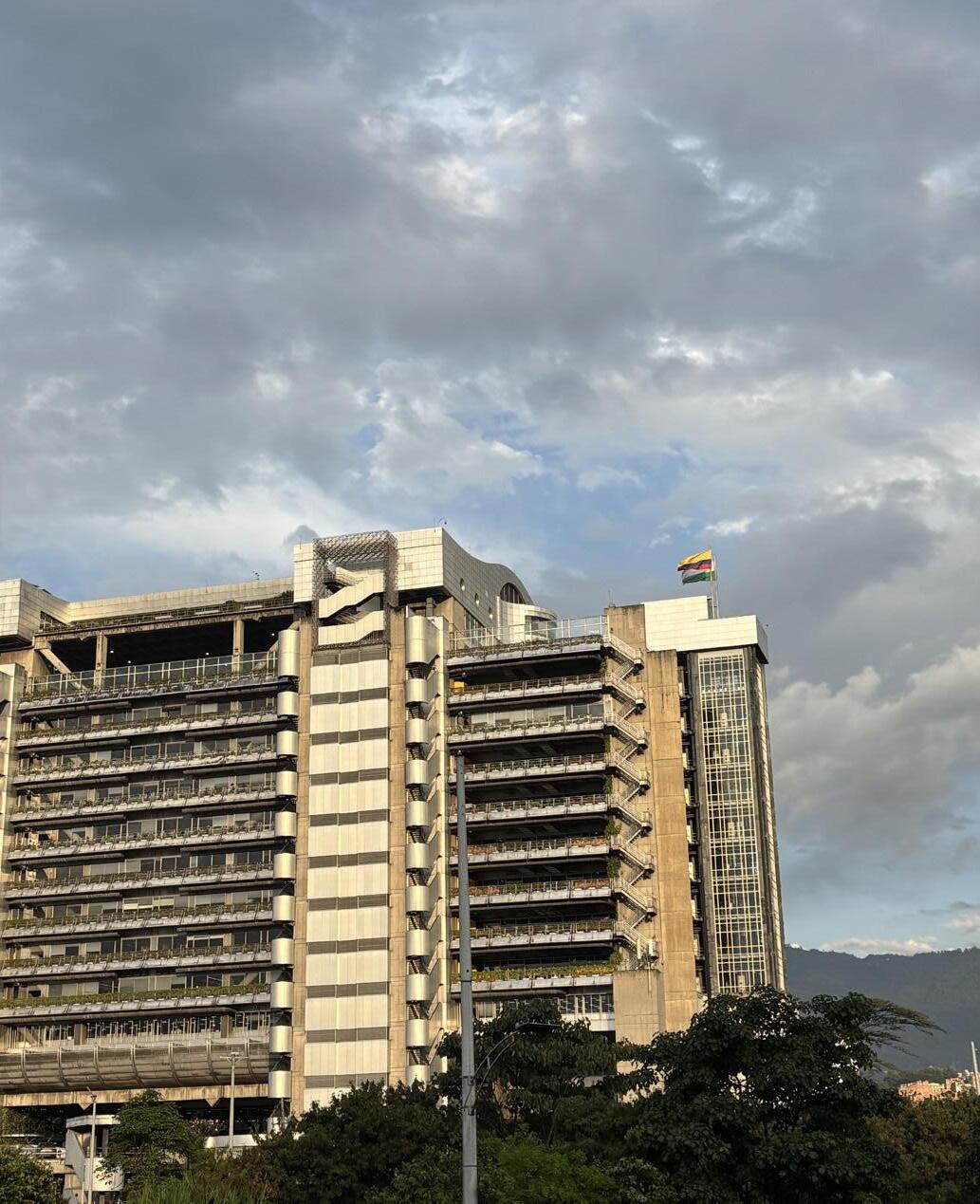
Above: The Empresas Públicas de Medellín (EPM) building in downtown Medellín, which provides public utilities to the city. At the top of the building are the Colombian and Medellín flags.
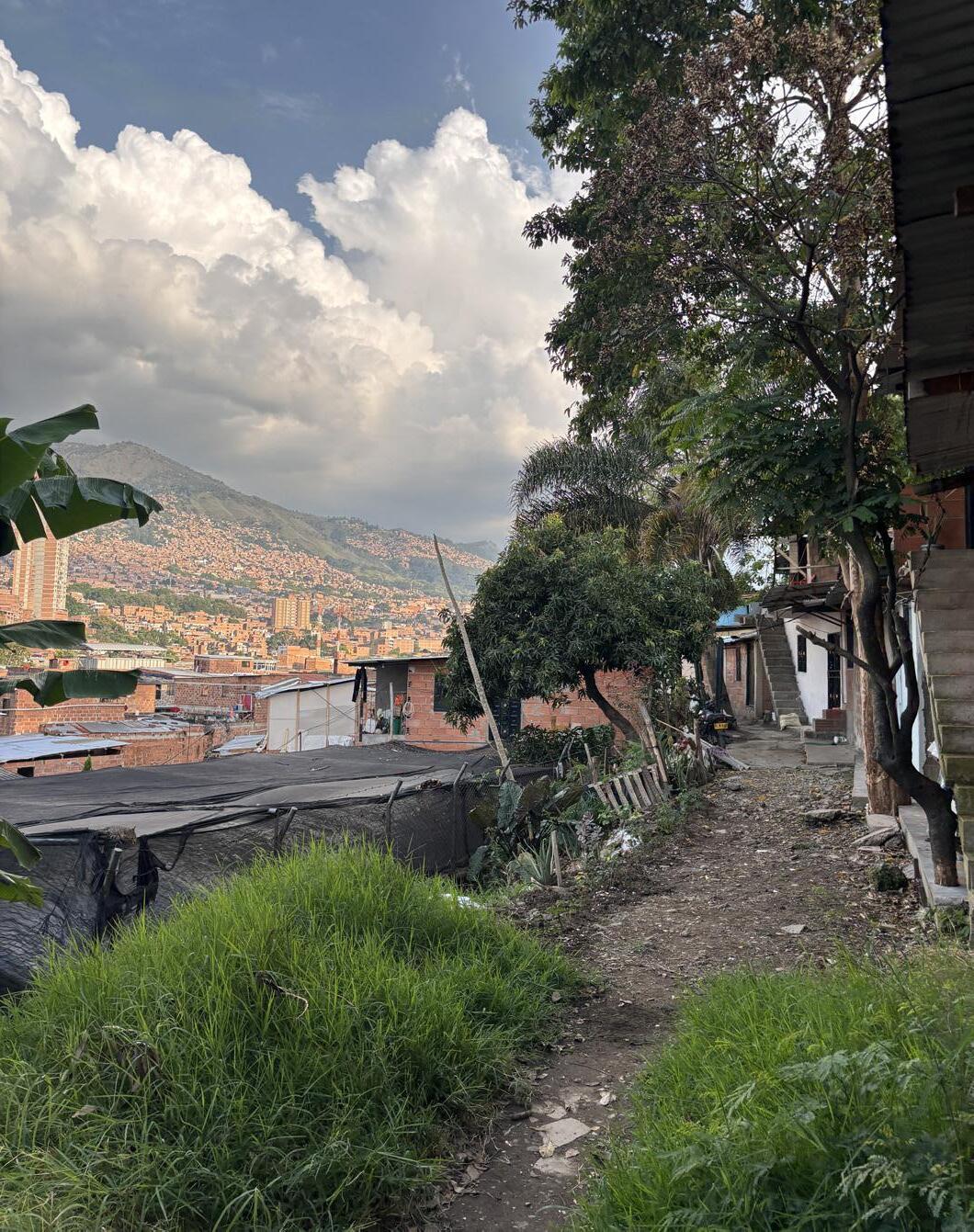
Above: View from Moravia.
Above: The stacked buildings of Comuna 13.
(Photos Ella Prieto/The Gettysburgian)

Professor Standlee on Teaching, Curiosity and Doing “Great Work”
By Celena Glaghassi, Assistant News Editor
Professor Alecea Standlee’s path to academia began with a lifelong curiosity about the world around her. Growing up in a poor, rural community, she spent most of her childhood trying to make sense of inequality, gender roles, and social systems. Those questions ultimately shaped her academic path and led her to pursue fields like Sociology and Women, Gender and Sexuality Studies (WGS).
“I wanted to know why women were seen as less valuable than men in my community, why some people said terrible things about certain racial groups and religions and why some people went hungry even after working long hours,” said Standlee. “I was a curious child who grew up into an even more curious adult.”
Standlee explained that this curiosity eventually led her to teaching. She said she enjoys the opportunity to work alongside students who are equally interested in understanding how and why society functions the way it does.
“Today I am a professor because I love to teach, I love to learn and I always have more questions,” said Standlee. When asked about the importance of studying Women, Gender and Sexuality, Standlee emphasized that it is a field relevant to everyone, regardless of their major or career path. She noted that the field brings together ideas from the sciences, social sciences and humanities to better understand how people

experience identity and society.
“Everyone should take a WGS class, at least once,” she asserted. “All people live in a world that tries to define them based on gender and sexuality. Understanding how and why society shapes our identities helps us better understand ourselves and the people around us.”
Standlee added that these classes help students become more empathetic, thoughtful and self-aware—qualities she hopes students carry beyond the classroom.
In terms of teaching, Standlee shared that she especially enjoys introductory courses and classes on gender inequalities. She explained that introductory courses allow students to explore new ideas, while her Gender Inequalities class often leads to
meaningful conversations.
“Gender Inequalities always creates such interesting discussions, as students make sense of their own experiences and learn about other people’s,” said Standlee.
Standlee also shared a humorous moment from early in her teaching career. While delivering a lecture, she tripped over a power cord and fell onto a desk in the front row. For a second, the entire class froze.
“One student said, ‘Professor Standlee always keeps things lively,’ and everyone started laughing,” she said.
That moment taught her two important lessons: mistakes happen, and it is important not to take yourself too seriously.
When asked what it means to “Do Great Work,” Standlee offered a simple definition.
“For me, doing great work means trying each day to leave the world a little better than it was the day before,” she explained.
“That might mean introducing curious minds to new ideas, learning something new myself, or offering a kind word to a student or colleague.”
She explained that change doesn’t have to be grand to be meaningful. Small actions, she said, can have a lasting impact.
“That’s doing great work,” said Standlee. “Trying to change things for the better, even if it’s only a tiny bit at a time.” ∎
(Photo courtesy Alecea Standlee)
The Crossword
By Cassidy Haines,
Magazine
Editor
Across
1. Diplomat, delegate, envoy.
8. The only gem to come from a living creature is called the ___.
9. The first word in the name of the latest installment of The Hunger Games series.
10. A shorter way to say “acquire” or “receive”.
12. Tides are known to ___ and flow.
13. If someone comes off as ___, you might find them a bit distant or detached.
14. The first part of the name of the smallest state in the United States of America.
15. Professor Ian Isherwood was recently titled Director of the Civil ___ Institute at the college.
16. Take your time on your essays or art: it’s all about the fine ___!
18. Class of 2026, it’s time to don your [18 Across] and [10 Down] for senior portraits!
20. Not dead.
23. You’d better ___ the water before you put the pasta in.
24. Some instruments that use a ___ or two include the clarinet, saxophone and oboe.
25. Hoot.
26. The Greek goddess whose namesake recently took a tour around the moon.
28. Do it yourself (abbr.)
29. See you on May 16 for this event on campus!

Down
2. Psychology majors might be familiar with intrinsic and extrinsic ____, which drives us.
3. African American Vernacular English (abbr.)
4. If someone is ____, they might be concerned with what’s on the surface rather than what’s inside.
5. Every card game requires a ____ to shuffle and hand out the deck.
6. One of the final eight teams in a tournament is considered one of these.
7. Even one air ___ in the kiln can make or break a clay project!
10. Class of 2026, it’s time to don your [18 Across] and [10 Down] for senior portraits!
11. Exploratory data analysis (abbr.)
16. It’s a human need to feel ___ or wanted.
17. An example or two of a Shakespearean ___ would include Othello and Hamlet.
19. Latin for death.
21. The Greek goddess of the rainbow, or the color in your eye.
22. To grow or change gradually is to ___.
26. A fuss.
27. “One small step for ___...”
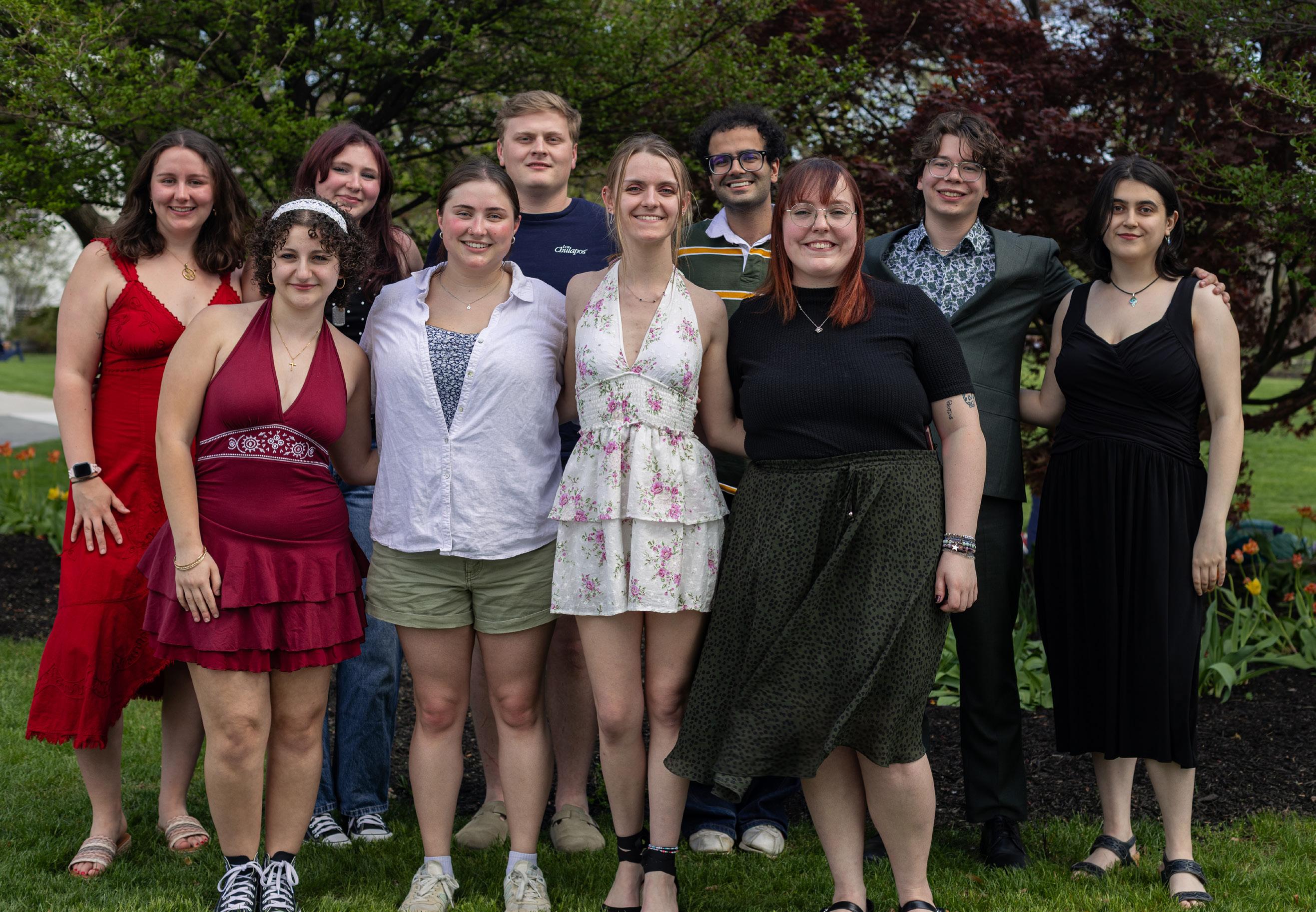




Ella Prieto, Editor-in-Chief
Sophie Lange, Managing Editor
Cassidy Haines, Magazine Editor
Beatrice Slevin-Trigo, Assistant Magazine Editor & Lead Copy Editor
William Oehler, Director of Photography
Sarah Daniels, News Editor
Celena Glaghassi, Assistant News Editor
Omer Shamil, Opinions Editor
Jules Young, A&E Editor
Jenna Lanza, Social Media Manager
Caitlin Rubsamen, Sports Editor
Professor Jack Ryan, Advisor
Cover photo by William Oehler, staff photo by Sofia Gutierrez / The Gettysburgian