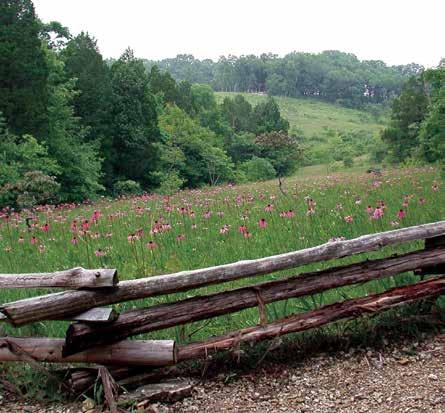
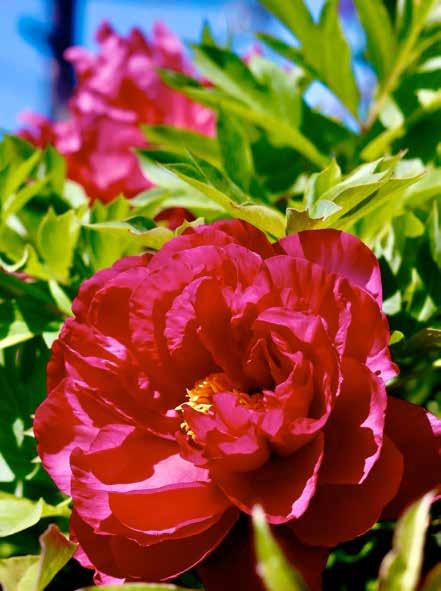
Rolling hills and shallow soils make a perfect environment for glade coneflower (Echinacea simulata) to thrive.
wears off, these plants almost always decline, just when you thought you had it good. Vigor in young plants is the result of naturally produced plant growth hormones cytokinin (the “Youth Hormone”) and auxin. They typically exist in the early stage of seedling development, but then decrease as plants mature. It’s like life support. You won’t be on it forever, and you hope that conditions are stable when you go off of it, but often that is not the case.
Here are the conditions that make a difference for droughtdependent plants (glade plants): They seem to persist long-term (many years), when they grow on slopes or well-drained gravely soils. These types of soils may exist along sidewalks or driveways in urban areas, but they also exist naturally on Ozark glades, which are grassland plant communities that occur on sloped rocky areas with thin soils.
Here are a few showy glade plants that are also a great choice for gravelly, well-drained rock gardens: smooth aster (Symphyotrichum laeve), silky aster (Symphyotrichum sericeum), stiff aster (Ionactis linariifolia*), purple beard tongue (Penstemon
Scott Woodbury is the owner of Cacalia: Native Garden Design and Wilding, and he is a Grow Native! professional member. Find suppliers of native plants and seed, as well as landscaping services, at grownative.org.
Plants
> Hear Grandpa Wayne’s Nature Tales
> Learn about birds, butterflies, and the hidden life of soil
> Create nature crafts
> Shop kids’ gardening tools & nature gear
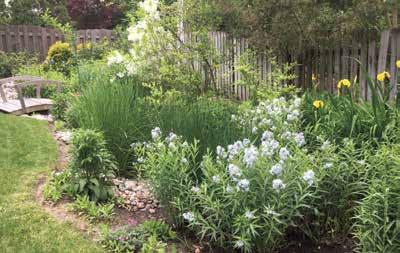
A rock garden is a perfect home for this feathery bluestar (Amsonia hubrichtii).
cobaea), glade coneflower (Echinacea simulata), Missouri blackeyed Susan (Rudbeckia missouriensis), downy phlox (Phlox pilosa), purple prairie clover (Dalea purpurea), button blazing star (Liatris aspera), bottlebrush blazing star (Liatris punctata), fire pink (Silene virginica*), wild pink (Silene caroliniana), Indian paintbrush (Castilleja coccinea), Trelease’s larkspur (Delphinium treleasei), Fremont’s leather flower (Clematis fremontii), Barbara’s buttons (Marshallia caespitosa), and cream wild indigo (Baptisia bracteata*).
*plants that also benefit from acidic soils
All of these plants perform best in exceedingly dry, sloped, welldrained, rocky soils. Without question, these are some of the showiest and most popular wildflowers. They are also, without proper growing conditions, some of the shortest-lived. Additional plants to consider are included on the Grow Native! Rock Garden Plan, available at grownative.org.
I have friends who live in the Ozarks, surrounded by rocky glades, with naturally occurring gravel and ledge-rock at the surface. These glades are also full of eastern red cedar trees (Juniperus virginiana), a native tree that, in the absence of fire, takes over glades.
In winter, my friends cut down and remove hundreds of eastern red cedar to increase sunlight and revive glade wildflowers. They also sprinkle seeds of glade plants all around, and are having great results. The glades at Shaw Nature Reserve were first restored this way, by Edgar Anderson nearly 100 years ago. It takes a few years for plants to fill in and flourish, because these soils lack fertility (even so, they should never be modified or fertilized).
They may look harsh, but rocky glades are delicate and rare plant communities. They are intensely colorful and highly diverse habitats because of their specialized thin soils. They almost always occur on west and south-facing slopes in the Ozarks, and are threatened by an overgrowth of eastern cedar trees.
For those of you who are lucky enough to have rocks and gravel in your soil, happy glade restoring and rock gardening!
The Cornucopia Corner
My Personal Journey Into the World of the Mustard Plant
by Stephanie Littlefield
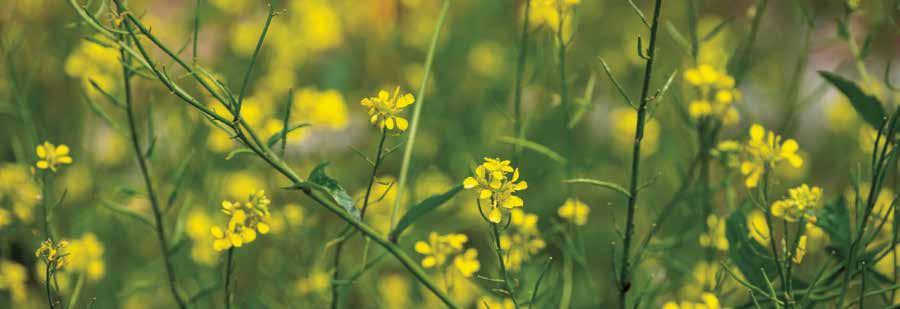
In the spring of 2020 my sister, Cyndy, and I were exploring our farm property in the beauty of a warm April day. You all remember there wasn’t much else going on in the spring of 2020 since by April most everything was shut down. As we rode around looking for Morella (morel) mushrooms, (we never found any but others do all the time) we found ourselves in a sea of yellow flowers about knee to thigh high. It was spectacular. Humming with bees and their insect activity made it appear to sway. I guessed it was a mustard and was under the impression it was a native plant. While preparing a presentation to complete my Herb Society Provisional requirements, I finally have taken the time to explore what it really is, why it might be there and how can it be used. So,
the adventure of my investigations will be revealed here. I started with my “Picture this App”, which told me the plant pictured here is commonly known as “Yellow Rocket, Winter Rocket Wintercress”. With a quick internet check I found, Yes, this a common name for a wild Mustard. It is not however the plant that provides us with the
cont’d on next page
Steffie Littlefield is a St Louis area horticulturist and garden designer. She has degrees from St. Louis Community College at Meramec and Southeast Missouri State and is a member of Gateway Professional Horticultural Association, Missouri Botanical Garden Members Board and past president of the Horticulture Co-op of Metropolitan St. Louis. She is part-owner of Edg-Clif Winery, Potosi, MO. www.EdgClif.com, and teaches a class on viticulture at SLCC-Meramec.
commercially produced condiment Americans use on Hot Dogs. However, it is a closely related botanical cousin from the Brassicaceae Family. It is a biannual and its younger leaves are edible and it does produce seed. It is good for the ecosystem supporting many butterflies and moths as a food source for the emerging caterpillars.
For humans, other mustards have been grown to make pastes made from the seeds to flavor food for at least 4000 years, making it one of the oldest spices in the world. There are three different species of mustard plant. Their seeds are virtually odorless, but they vary in flavor depending on the type. White mustard seeds are mild and nutty and develop a pleasant heat during cooking, while black mustard seeds have a hot kick and a bitter flavor. The taste of brown Sarepta mustard seeds lies somewhere between the two other types. The name “white mustard” refers to the white seeds. This mustard is also often called “yellow mustard” on account of its yellow flowers.
Now for the fun part, what can I do with real mustard if I planted it. Mustard greens are easily grown for their edible foliage in spring or fall can also produce an abundant crop of seed. This can easily be harvested when the stems are dry and the seed mature. Traditionally a mortar and pestle have been the means of grinding the seed so it can be sifted and then soaked in a variety of flavoring agents, vinegars, wine, bourbon, oils, etc.
How to Grow Mustard
-Mustard plants are best grown in full sun or part shade. Choose a location that will receive at least 3 hours of full sun each day.
-Mustard plants need a well-drained soil enriched with plenty of organic matter.
Mustard seeds grow best when they are sown directly into the garden.
• Sow seeds directly in the garden less than ¼ inch deep and rows 15 inches apart.
• Keep soil moist but never wet or dry.
• Seeds should germinate in around 7-14 days.
• Mustard is a cool season crop that will bolt in very hot weather.
• Mustard plants may need watering during the growing season.
• If soil was well prepared no extra fertilizer should be necessary.
Tip: If growing mustard for seed, once plants reach their mature height cut back on watering to encourage plants to produce flowers and seed pods. Do not harvest the leaves.
How to Harvest Mustard
Mustard should be ready to harvest in approximately 30 to 60 days.
Leaves are ready to harvest when they are large enough to eat, and can be harvested as needed. Harvest leaves by pinching off the outer leaves, leaving some on the plant for future growth. Alternatively, harvest whole plants by cutting them just above ground level. Eat mustard leaves as soon as possible after harvesting. Store leaves short term in a perforated plastic bag in the fridge.
Seeds are ready to harvest when the seed pods have dried and turned pale brown. Pick seed pods and crush them between your fingers to release the seeds. Seeds can be used fresh or toasted, added to pickles or used to make mustard condiment.
The amazing world of recipes online and YouTube videos reveals many successful and avid fans of soaking the seeds in water, one or two recommend blanching them to remove bitter flavors and then combining with other flavoring agents like lemon juice, cider vinegar, so the acidulated mustard will remain spicy and keep better. Adding salt will bring out the flavor and adding other herbs and spices will customize it to your taste. Tarragon is recommended, also honey, wine or beer makes a very fancy mustard. Using a food processor to whip them helps create an amazing and long-lasting condiments. This recipe on the following page makes about 350ml, so just enough for a 370ml Jar. Put the finished mustard into a sterile jar and pop a sterile lid on. It will take 2 weeks for the flavors to develop. It will then keep for up to 6 months in the fridge. Make it in Spring and you’ll be making gorgeous homemade Honey and Mustard Dressing all summer long.
HOMEMADE WHOLE GRAIN MUSTARD WITH LOCAL VIDAL BLANC
A delicious, mellow mustard which is beautiful on home cooked ham and in honey and mustard salad dressing.
* 35 g Light Brown/Yellow Mustard Seeds
* 45 g Medium to Dark Brown Mustard Seeds
* 12 g Black Mustard Seeds
* 100 ml , 1/3c, Vidal Blanc White Wine
* 100 ml, 1/3 c Apple Cider Vinegar
* 1 tbsp soft brown sugar
* 1 tbsp honey
* half teaspoon sea salt
1. Put all the mustard seeds in a bowl. Add the wine plus the Cider Vinegar. Cover loosely and leave at room temperature for about 24 hours. It will seem like too much liquid, but in a day or so the seeds will have absorbed it all.
2. Pour the contents of the mustard seed bowl into a blender, together with the sugar, honey and salt. Blitz until the consistency changes from a mixture to a mustard, you’ll see it happen. This may take from between 10 to 20 seconds, depending on the speed of your blender.
3. Pour the mustard into a sterilized jar and fit the lid. Pop a label on if you’re likely to forget what it is!
4. Put the jar in the fridge and leave for a couple of weeks for the flavors to develop.
5. Enjoy with ham, on gammon, in salad dressings and in sauces, spread on grilled cheese sandwiches and as a glaze on grilled chicken or salmon.
HOMEMADE WHOLE GRAIN MUSTARD from “Modhippiehabits Instagram”
You know that I love a simple recipe that tastes amazing- so much better than store bought! And this whole grain mustard is just that! I think technically this is a Dijon mustard (it used brown mustard seeds and white wine vinegar) but I just call it whole grain so you can add to it if you’d like! Sometimes I’ll pop a couple cloves of garlic, a few slices of shallot, or some honey in. But the base recipe? Delicious on its own.
WHOLE GRAIN MUSTARD
1/4 Cup Yellow Mustard Seeds
1/4 Cup Brown Mustard Seeds
1/2 Cup Vinegar (white wine is best, but white vinegar works too!)
1/4 Cup Water
Salt, to taste (I used about 3/4 tsp)
Gardening 101 Best Houseplant for Beginners... And Why They Work!
Text and Photos By Samantha Zale
Not all houseplants are equally challenging. Some are naturally resilient, making them ideal for beginners while still rewarding for experienced plant parents. In this article we will look at a few houseplants that work well for both beginner and advanced plant parents.
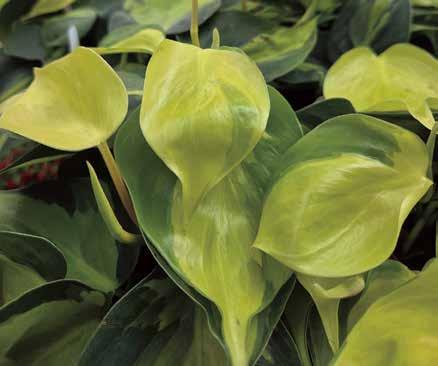
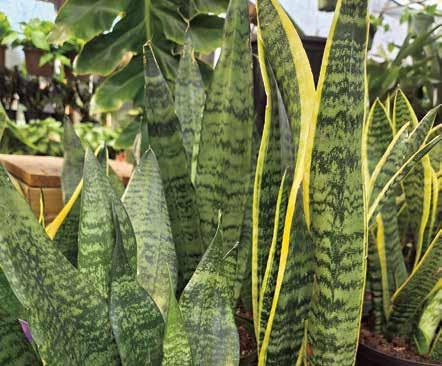
Beginner-friendly plants like pothos, snake plants, ZZ plants, spider plants, and philodendrons tolerate a wide range of conditions. They adapt to inconsistent watering, variable light, and typical household environments. This flexibility allows new plant owners to learn without constant failure. An important note regarding typical household environments is that while these plants
are very adaptable, they still need some protection from fans, forced air vents, windows & radiators. Any plant that experiences these conditions regularly can have issues with soil moisture retention and extreme temperature fluctuations. Plants can dry out faster due to fans & heat or succumb to foliar damage from extreme temperatures from windows and drafts.
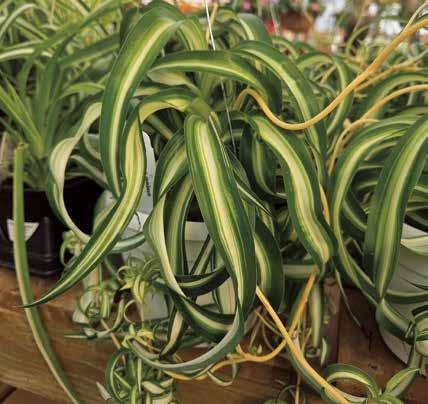
For beginners, these plants offer clear feedback. Drooping leaves, slowed growth, or pale coloration signal care adjustments without immediate collapse. Their forgiving nature builds confidence and encourages curiosity. These plants make learning different propagation techniques very easy. With Spider Plants you will see baby plants, typically referred to as “pups,” as offshoots on stiff stems that look like miniature versions of the main plant. Philodendrons & Pothos have a relatively quick growth habit which means they can be easily pruned. This is also commonly called “taking cuttings” to start new plants. Many of these develop rootlets near the nodes showing a clear spot to make the cut. Once you have these cuttings, you can actually leave the cuttings on soil and they will begin to take root.
Advanced plant parents appreciate these plants for different reasons. Resilient plants allow experimentation— testing brighter light, optimized watering, or propagation techniques. When given ideal conditions, these “easy”
plants often grow faster, fuller, and more vibrantly than expected. These plants also teach foundational lessons about adaptability. Many originate from environments with fluctuating moisture or light, explaining their tolerance indoors. Understanding this helps plant parents make better choices when expanding their collection.
Basic care still matters. Even tough plants need adequate light, drainage, and occasional repotting. Beginners often outgrow the myth that easy plants thrive on neglect—they thrive on consistency. Consistent care in the winter time is also key because many plants go more dormant, but depending on the environment some plants can continue to have minor active growth. So, if you keep houseplants in a part of your house that is off the beaten path, then be sure to regularly check on them throughout the winter months. Something else to keep in mind is that maintaining consistency with plant care is not the same as following a routine for plant care. Plants do not operate on a schedule; we have to learn to adapt to their needs.
Starting with beginner plants doesn’t limit growth as a plant parent. It creates a strong foundation that makes caring for more demanding species far more achievable in the future. If you have further questions on this topic, please swing by your local garden center to talk with those folks. A quick conversation can make all the difference!
Happy Gardening!
Samantha Zale has degrees in Horticulture, Anthropology and Biomedical Science. Over the years she has worked at The Missouri Botanical Garden, garden centers, and The Webster Groves Parks Department. Now you can find her at Greenscape Gardens, where she is a content creator as well as their Retail Manager!
Spider Plant
Garden Tour Season Is Upon Us!
The Garden Tours are coming soon! Here are the ones we’ve been notified of as of our deadline, providing plenty of opportunities to check out the area’s most interesting gardens and gather some tips to implement in your own landscape!
May 17, 2026
9am-4pm
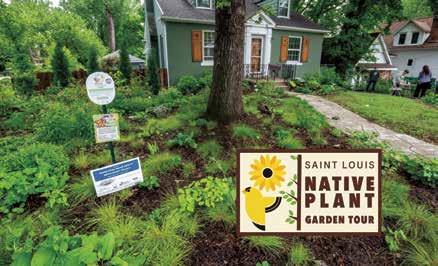
St. Louis Native Plant Garden Tour
The Wild Ones St. Louis chapter and Bring Conservation Home are proud to once again partner to present this popular annual tour. This year’s self-guided tour will feature nine private gardens in Olivette and Ladue, offering visitors a chance to explore a diverse array of landscapes designed with native plants. Each garden highlights practical, beautiful approaches to supporting pollinators, improving soil health, and reducing maintenance through ecological landscaping practices.
In addition to touring the gardens, attendees can participate in a variety of educational activities throughout the day.
The event will also include a central information stop and native plant sale hosted in partnership with Missouri Wildflowers Nursery at Five Oaks on Warson in Olivette. From 10 am to 2 pm, visitors can purchase regionally appropriate native plants and connect with local experts to support their own landscaping projects.
Tickets are $20. To purchase tickets and learn more, visit St. Louis Audubon Society at StLouisAudubon.org.
June 6th-7th
10am-5pm Saturday, 10am-4pm Sunday
Annual Town and Country Garden Tour
The 31st Annual Garden Tour includes both a walking tour of gardens in downtown historic Hermann and a driving tour to country gardens. The $20 ticket price includes visits to at least five private gardens both in town and in the country, including a traditional four-square garden, vegetable gardens, a walled garden
with a greenhouse, a lavender farm, and of course flower gardens. Garden Tour visits may be spread over Saturday and Sunday. Tickets will be sold online before the tour at Eventeny www. eventeny.com/events/hermann-garden-tours-2026-21861/. Tickets are available now online, and will also be sold during the tour at Topiaries (138 E 4th) in downtown Hermann from 10-5 on Saturday and 10-3 on Sunday. A self-guiding map to the tour gardens will be provided starting on Saturday June 6th at Topiaries, the Ticket Sale Site; those who pre-purchase tickets will pick up the map at that time as well. The Hermann Garden Club’s website www.hermanngardentours.com provides upto-date events, ticket prices, links to the online ticket sale site, a contact email, and photographs and descriptions of past tour gardens.
June 12th-13th
4-8pm Friday, 9am-1pm Saturday
Madison County Garden Tour
Six beautiful, private residential gardens in Glen Carbon will be featured on the Madison County Garden Tour. A raffle of exceptional container gardens, assembled by area retailers and Master Gardeners, will be held at the Yanda Cabin in Glen Carbon. Raffle tickets are $1.00 each or 6 tickets for $5.00. The Garden Tour, sponsored by University of Illinois Extension Master Gardeners, benefits the Madison County Extension Education Foundation. Tickets are $15.00; children 10 and under are free. Tickets are available at the following locations: Creekside Gardens, Collinsville; Edwardsville Public Library; Glen Carbon Centennial Library; Market Basket, Edwardsville, Godfrey and Troy; and University of Illinois Extension offices, 901 Illinois Avenue, Waterloo and 900 Hillsboro Avenue, Edwardsville and on https://givebutter.com/ MCEEF2026GardenTour. Tickets may also be purchased the
day of the tour at the Yanda Cabin in Glen Carbon. For more information, visit the Madison-Monroe-St. Clair Unit website at https://givebutter.com/MCEEF2026GardenTour or call (618) 344-4230.
June 27th-28th
9am-5pm both days
Pond-O-Rama 26th Anniversary Water
Garden Tour
The St. Louis Water Garden Society (SLWGS) celebrates 36 years of fostering water gardening through education, community service, and resource sharing. This year, the tour presents a unique opportunity to explore 23 of the region’s most captivating private water gardens on a self-guided tour, with different gardens featured each day, 11 on Saturday and 12 on Sunday, organized
by geographic location throughout the St. Louis metropolitan area.
Discover gardens ranging from intimate backyard retreats to expansive landscapes. Each garden is unique—some are newly created, while others have matured over years, showcasing the evolution of water gardening in St. Louis.
See koi and goldfish ponds of all sizes, from small bubbling pools to large, multi-level water habitats. Experience the soothing sounds and sights of cascading waterfalls, gentle streams, and bubbling brooks integrated into lush plantings. Walk over charming bridges and relax in gazebos nestled among flowering aquatic plants and vibrant greenery. And finally, meet hosts who are Master Gardeners, conservation advocates, and passionate water garden designers.They are eager to share their expertise, answer questions, and offer tips for creating your own water feature.
Tickets include a full-color guidebook with photos, garden descriptions, directions, accessibility notes, and QR codes for easy navigation. Whether you’re a seasoned gardener or just beginning, you’ll find inspiration and practical ideas for every space and budget.
Tickets covering both days of the tour are $25 each (18 and older) and will be available beginning in May at local retail shops and garden centers throughout the metropolitan area or on our website (https://slwgs.org). Groups of 5 or more are only $20 each. Please see the SLWGS website for more information.
A Mother’s Day Tribute in Plants text
and photos by Robert Weaver
I have often alluded in these pages to the fact that we live in the house I grew up in, and occasionally have referenced some of the plants my mother planted decades ago that still contribute to whatever humble beauty can be ascribed to today’s landscape. In a Mother’s Day tribute to all moms out there, but especially to my late mother, Harriet Weaver, I would like to share a few of them here.
Chalily is Now Open in Wildwood!
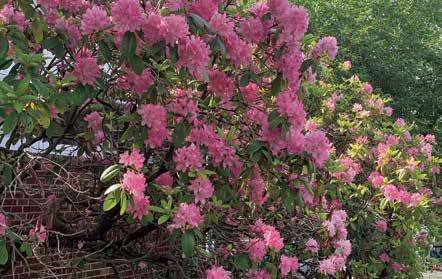
Somewhere in my boxes and boxes of family slides and prints, I have a photo of the east-facing side of our home, neatly landscaped with a young flowering crabapple and a trio of knee-high pink flowering Catawba rhododendrons. My best guess would place this point in time as the late 1950s or early ‘60s. Today, two of the three survive and team to cover the entire side of the house with beautiful pink blossoms most years. I value them not only for that lovely display each spring, but for another reason; at around 20ft. tall and evergreen, they provide the perfect blind where I sit for long periods with my camera, taking pictures of birds drinking and bathing at a small bubbler some 30 ft. or so away.
Phlox
PaniCulata
These pink and white phlox ultimately survived my early spring rogueing attempts.
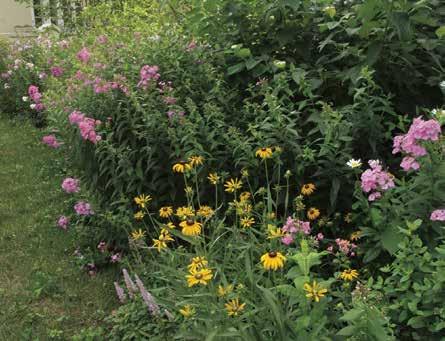
For years after we took possession of the family home, these unidentified (to me) green shoots would sprout among the hostas and peonies, and I would yank them out. One year I must have slacked off long enough into the season, they bloomed, and once left alone, proliferated into a large bed of hardy, beautiful blue, pink and white summer phlox. They continued to do so until I was convinced by a gardening friend to thin them out and introduce some diversity into that garden. They seemed to resent my efforts, for ever since, they’ve been plagued by powdery mildew and infestations of phlox bugs that, left unchecked, damage the plants beyond their capability to bloom. They survive today only with the aid of regular applications of neem oil. I’m
Catawba RhododendRons
Dig This! Gateway Gardeners and Businesses in the News
MU Landscape AD earns Certification
Blair Crosby, assistant director of University of Missouri Landscape Services – Landscape Operations, has successfully completed the Certified Grounds Manager (CGM) Program, one of the premier professional development programs in the green industry. Crosby is the 195th Grounds Management Professional nationwide to earn this distinction, joining a group of leaders recognized for their expertise and commitment to excellence. He now joins Director of Landscape Services Joe Kovolyan, who was the 163rd professional to complete the program, making the University of Missouri one of the few institutions in the country to have two Certified Grounds Managers on staff.
The CGM designation represents far more than a certification, it reflects a high level of professionalism, a strong national peer network and a dedication to continued education in the field of grounds management. The certification process includes a comprehensive exam covering key areas such as turf management, soils, and plant health, followed by the completion of a professional portfolio evaluating realworld operations and leadership practices. Earning this certification highlights Crosby’s expertise and reflects the institution’s ongoing commitment to excellence in landscape management and campus stewardship.
The grounds of the campus of the University of Missouri—Columbia are recognized as both a certified botanic garden and arboretum. Its 1,252 acres include nearly 6,000 trees and 200-plus plant varieties.
Hosta Nursery Celebrates 10th Anniversary
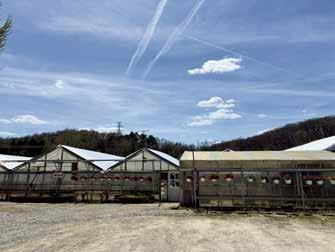
Brian and Erica Kniffin are celebrating 10 years as owners of Hostas on the Bluff, a small family-run specialty hosta nursery and display garden in Fairview
Heights, Illinois. The original location at 1601 Pleasantview Dr. in Fairview Heights features beautiful display gardens, greenhouses and sales area offering one of the largest selections of popular and rare hosta varieties in Missouri and Southern Illinois, plus a selection of companion shade garden plants such as hellebores, heucheras and others. The site also provides scenic views and seating and gathering areas for small groups and wedding parties. This year, the Kniffins are also expanding the Hostas on the Bluff footprint to include a new sales location just a few blocks away from the original nursery at a 100--year-old former elementary school. Renovations on the historic building are ongoing, so sales are currently set up outside the school building with new greenhouses and sales tables. Ultimately, the new location will accommodate over 20,000 plants in one convenient spot.
For more information, visit HostasOnTheBluff.com or call 618-680-0288.
Garden Club Honored for 25 Years of Service
Members of Mason Ridge Garden Club are celebrating 25 years of caring for the gardens at Longview Farm Park, located at 13525 Clayton Rd.
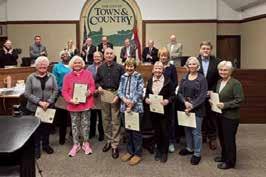
just west of Mason Rd. Recently the City of Town and Country honored the the Garden Club with Proclamation received a proclamation recognizing their dedication to the gardens.The group began clearing honeysuckle, poison ivy and weeds in May 2002, months before the park opened to the public. Members have logged about 12,000 volunteer hours since the project began. “It is truly a labor of love,” says Club President Claire Chosid.
Blair Crosby helps a young participant in a planting demonstration.
Erica and Brian Kniffin and their children.
Dig This! Gateway Gardeners and Businesses in the News
Grants for Rainscaping Available
An example of a rain garden that is not only ornamental, but also slows and captures rain water from leaving the property.
The Deer Creek Watershed Alliance (DCWA) has announced that funds are again available to those living within the Deer Creek watershed to help share costs associated with projects that help manage water on homeowner property.
Each landowner with property located in one of the Program Focus Areas may apply to receive a rebate of 75% of approved and documented costs up to a maximum of $4,500 for project design, implementation, and/or maintenance costs incurred for Rainscaping Cost-Share funded feature(s). Institutional applicants are eligible for a rebate of 60% of approved and documented costs up to a maximum of $6,000.
To see if your property falls within the areas eligible, visit the Deer Creek Watershed Alliance website at deercreekalliance.org/cost-share. Even if you don’t fall within the DCWA focus area, you may still quality for MSD Rainscaping Small Grants program. Links to this program are also available at the DCWA website.
Applications for the 2026 round of the DCWA Rainscaping Cost-Share Programs are due by June 5th , 2026.
The DCWA is a project of the Missouri Botanical Garden, in cooperation with a long list of communities, programs and public organizations. For over 15 years, it has promoted projects to improve the water quality in Deer Creek through plant-based projects to manage rainwater, slowing it down, spreading it out and allowing it to soak into the ground to improve the health of the creek. Homeowners can help with this by installing rainscaping features in their yard. Rainscaping is simply a landscaping strategy that
manages stormwater by capturing rain where it falls, instead of allowing water to run off-site. It can solve a drainage problem, increase aesthetic appeal, improve property values, attract birds and butterflies, and more. Rainscaping features slow down, soak up, and reuse rainwater before it carries pollutants to a local stream.
International Compost Awareness Week 2026: Compost! Feed the Soil that Feeds Us
As we move into the height of the spring planting season, May 3–9 marks a significant moment for our community: International Compost Awareness Week (ICAW). This year’s theme, “Compost! Feed the Soil that Feeds Us,” highlights a truth that seasoned growers have long understood— the fundamental cycle of life begins beneath our feet. Organized by the Compost Research & Education Foundation, this week serves as a global platform to advocate for soil stewardship, uniting everyone from dedicated specialists to large-scale commercial operators in a shared mission to replenish the earth.
As gardeners, we recognize that compost is far more than just a waste-management solution; it is the ultimate soil amendment. By returning organic matter to our plots, we are actively feeding the soil ecosystem that, in turn, feeds our vegetables, fruits, and flowers. This practice physically transforms soil structure, improving porosity for robust root development and enhancing moisture regulation to ensure our crops remain resilient. We invite you to join us as fellow advocates during ICAW 2026 to help spread awareness of these benefits. Share your efforts and your harvests on social media using the hashtag #ICAW2026 to inspire others. For more information on how to get involved and to explore additional resources, visit compostfoundation.org/icawhome. By championing the use of “black gold,” we aren’t just tending to our own gardens—we are collaborating to build a more sustainable and productive future for the entire growing community.
Meetings, Classes, Entertainment and More
Updates to this information are often posted on our online events calendar at www. GatewayGardener.com, so check there for the latest details.
Give us the details of your upcoming gardening, lawn or landscaping event and we’ll add it to our website and include it in our next issue. Deadline for printing in the September issue is August 1st.
How to reach us:
Mail: PO Box 220853, St. Louis, MO 63122 Email: info@gatewaygardener.com
Fun for Kids
May 2nd
9am-Children’s Garden Club. Planter with Annuals and Planting the Garden. FREE. Pre-registration is required on the St. Louis County website at https://tinyurl.com/yc3v3pfj or by calling 314-615-4386. Sponsored by St. Louis County Parks Department. Queeny Park – CGC Nursery, 1675 S. Mason Rd. (Queeny Park East Entrance), St. Louis 63131.
June 6th
9am—Children’s Garden Club. Wind Chimes. FREE. Queeny Park – CGC Nursery, 1675 S. Mason Rd. (Queeny Park East Entrance), St. Louis 63131. FREE. Pre-registration
Upcoming Events
is required on the St. Louis County website at https:// tinyurl.com/yc3v3pfj or by calling 314-615-4386.
Plant Sales, Garden Tours and Other Events
May 1st-2nd
2-7pm Fri., 7am-noon Sat.—Plant and Rummage Sale. 2606 Riley Paul Ct, O’’Fallon, MO 63368. Perennials, native plants, houseplants, gently used gardening items. Clean, gently used household items. Funds raised support community projects of the O’Fallon Garden Club.
May 1st-2nd Fri. Noon-8pm, Sat. 9am5pm—The Gardeners of Florissant Annual Spring Plant Sale and Elks BBQ. Perennials, annuals, shrubs, shade plants, vegetables, herbs, hanging baskets and more! Indoors and climate controlled for your comfort. Easy loading from multiple doors. NEW LOCATION. Florissant Elks Lodge 16400 New Halls Ferry Rd., Florissant, MO 63031.
May 2nd
10a-2pm—Ozark Flora Fest and Native Plant Sale. Visit www.shawnature.org for the big changes in this event, formerly the Shaw Wildflower Market. Shaw Nature Reserve, 307 Pinetum Loop. Rd., Gray Summit, 63039.
May 2nd-3rd
8am-1pm Sat. Noon-3pm Sun.—Central Missouri
Master Gardener Annual Plant Sale. 3 greenhouses full of tomatoes, peppers, hanging baskets, perennials (including natives), Master Gardener Greenhouses, 810 Sandstone,
Jefferson City, MO.
May 2nd and 9th
11am-2pm—Bloom Bar. Visit the Bloom Bar in front of our Flower Shop Window to create a sleeved bouquet of beautiful flowers to take home - or to give away as a gift. Choose your flowers and colors. Price is per stem used. Event location: Hoffmann Hillermann Nursery & Florist, 636-2396729, www.hoffmannhillermann. com
May 9th
9am-3pm—Washington County in Bloom Flower Festival. Seed and plant swap. Craft and Plant booths, free kids activities, food trucks and more. Potosi Lion’s Club, 10386 Hwy 185, Potosi, MO. Visit WashCoMoInBloom.com for more info.
May 9th
9am-noon—Mason Ridge Garden Club Annual Plant Sale. Plants are collected from the gardens at the park and members’ gardens. Deer resistant perennials and native plants available. Cash or checks only. All proceeds benefit the Longview gardens and St. Louis charities. Longview Park, 13525 Clayton Rd., Town and Country 63131.
May 9th
9am-noon—Kirkwood Garden Club Plant Sale Featuring a variety of native plants, perennials and potted plants, plus a raffle for a potting bench and trellis. Ken Conner Park, corner of S. Kirkwood Rd. and Argonne, Kirkwood, MO.
May 9th
8:30am-noon—Webster Groves Women’s
Garden Association Plant Sale. Hundreds of homegrown sun and shade perennials from Webster Groves Women’s Garden Association gardens, plus small container arrangements ready just in time for Mother’s Day. Profits go to support horticultural programs at WG schools and other community projects. parking lot of WG First Congregational Church located at Elm and Lockwood.
May 9th
8am-noon—Edwardsville Garden Club Spring Plant Sale. Many varieties of perennials, houseplants, natives, vegetables, annuals, herbs, garden art and books. St. Mary’s Catholic Church parking lot, 1802 ,Madison Avenue, Edwardsville, IL 62025.
May 9th
10am-2pm—Wild Ones Native Plant Sale. All your favorite native plants to boost your pollinator profile! Shaw Nature Reserve’s Ozark Flora Fest, 307 Pineturn Loop Rd., Gray Summit, MO 63039, at the front entrance.
May 16th
10am-3pm—Plant America Garden Expo. Weldon Spring Interpretive Center, 7295 S. Highway 94, St. Charles, 63304. Sponsored by 3 garden clubs and a sustainability organization. Free funfilled day, 40+ vendors, demonstrations, education, knowledgeable speakers, food trucks, lots of free kids’ activities and lots of other activities.
May 16th
11am—Rustic Watering Can Combo Display Pick a variety
of colorful blooming annuals to make a bright summer welcoming display, potted in an antique style watering can. $45. Registration required. Hoffmann Hillermann Nursery & Florist, 636-239-6729, www. hoffmannhillermann.com.
May 17th
10am-2pm—Bring Conservation Home Native Plant Sale. Five Oaks on Warson, 1200 N. Warson Rd., Olivette, MO 63132.
May 17th
9am-4pm—St. Louis Native Plant Garden Tour. See details on page 16-17.
May 23rd
11am—Cacti Dish Garden
Using a shallow terracotta dish, you’ll learn how to create and care for your very own cacti garden. $25. Registration required. Hoffmann Hillermann Nursery & Florist, 636-2396729, www.hoffmannhillermann.
May 30th
11am—Whimsical Air Plant Display Using natural elements, you’ll learn how to replicate an air plant display that captures a whimsical forest scene. $20. Registration required. Hoffmann Hillermann Nursery & Florist, 636-239 6729, www. hoffmannhillermann.com.
June 6th and 7th
10am—31st Annual Town and Country Garden Tour See details on page 16-17.
June 12th-13th
Madison County Garden Tour. See pgs.16-17 for details.
June 27th-28th
Pondorama Garden Tour
See pgs. 16-17 for details.
Don’t Miss A Single Issue
GatewayGardener
Don’t have a convenient pickup spot near you, or the rack is empty when you get there? Just complete this form and mail it with $24 for postage and handling to the address below. You will receive 7 issues (a one-year subscription) beginning with the next issue.
To:
Address:
City, State & Zip:
Phone (opt.):
Email (opt.):
Please make your check payable to The Gateway Gardener and mail it with this form to: The Gateway Gardener • PO Box 220853 St. Louis, MO 63122