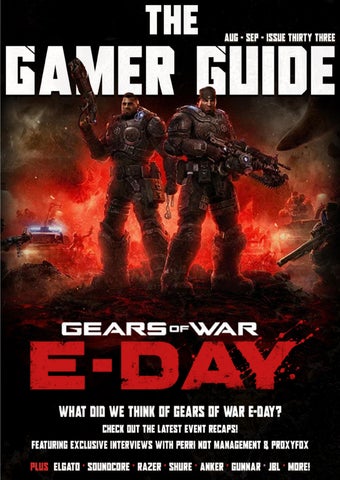
The Preamble So, you have stumbled across The Gamer Guide and you are wondering, “Why do I need a guide to gaming?” Well, we will not guide you on how to game, but we will keep you informed as to what the gaming industry has to offer to get you the best gaming experience! Now, the second thing you are probably wondering is, “How did The Gamer Guide start?” Well, it can be a slightly long story. However, the shortened version is that the journey of three Twitch streamers brought them together, and with their passion for gaming, their experiences of streaming, and their love for everything within the world of entertainment… The Gamer Guide was born. But what exactly is The Gamer Guide? The Gamer Guide is a digital magazine that focuses on everything gaming and streaming. This includes the latest/upcoming releases, reviews on gaming accessories, streaming tips, and even interviews with streamers and industry professionals from across the globe. Our readership is predominantly other gamers and streamers, just like us! We understand that the love and passion for gaming extends far beyond just playing a game, and that is what we are all about! So, who are the people behind this magazine?
Brandon Sawyer - Content Director Brandon who goes by the name of Sawyer is the Co Owner & Content Director of The Gamer Guide. Predominantly Sawyer is an Xbox Gamer where he mostly plays his Xbox Series X but also has a Gaming PC, a Nintendo Switch, and even a Playstation 5, with a variety of platforms this gives Sawyer the ability to review the latest games for TGG. Sawyers main gaming love is Gears of war and RPGs because who doesn’t love an adventure or some chainsaw slaying with a cheeky blind fire or wall bounce. Due to Sawyers vast knowledge and background within the industry he came together with Emily to form The Gamer Guide.
Emily Welfare - Creative Director Emily, also known as CreativeTrashGaming, came together with Sawyer to form the Gamer Guide, bringing her creative knowledge. Her favourite types of games are those with a compelling story, or those that just make her inner Fantasy Nerd go ballistic. She also likes spooky stuff, not just in the gaming realm but in general, and has a podcast with her two sisters where they discuss all things horror. Emily loves to dabble in the art world often, creating digital art pieces and learning new crafts. A graphics designer in her full time job, Emily is an integral part of the team whom designs the entire layout of our magazines from top to bottom!
1
contents 3
ELGATO
161
resonance
11
PIxl x target
167
no room in hell 2
19
anker
173
moonlighter 2
27
soundcore
179
minecraft dungeons 2
37
shure
189
low budget repairs
43
be quiet!
195
gears of war: e-day
51
razer
203 gallipoli
59
gunnar
209 beast of reincarnation
67
jbl
215
1666
77
scan
221
nintendo corner
83
tokyo game show
253 perri karyal
89
timeless
269 not just management
99
gamescom
115
bloodstock
121
wolverine
129
wardogs
137
witcher 3 remastered
145
blood of dawnwalker
153
onimusha 22
ELGATO KEY LIGHT AIR MK.2 REVIEW — THE CREATOR LIGHT THAT MAKES YOUR SETUP LOOK Reviewed by: Brandon Sawyer PROFESSIONAL There was a time when lighting your content meant buying a huge studio light, finding somewhere to put it, trying not to blind yourself and then spending another twenty minutes attempting to get the colour temperature somewhere close to what you actually wanted. Thankfully, those days are disappearing. Modern creators expect their lighting to be compact, powerful, controllable and, perhaps most importantly, easy to integrate into an existing setup. That is exactly where Elgato has made its name. The original Key Light helped turn the traditional studio light into something that actually belonged on a creator's desk. Now, with the Key Light Air MK.2, Elgato has taken that philosophy and pushed it considerably further. This isn't simply a brighter version of an existing light. The Key Light Air MK.2 is a 15-inch edge-lit LED panel capable of producing up to 2,100 lumens, with a colour temperature range of 2900K to 7000K, a CRI of over 94%, USB-C connectivity, Wi-Fi control, onboard touch controls and compatibility with Elgato's Stream Deck ecosystem. And then there is the feature that genuinely changes how we use it. The Focus Grid. By attaching magnetically to the front of the light, it narrows the spread of the illumination and dramatically reduces unwanted light spill. For creators who want their face lit without washing out their background, or photographers who want to illuminate a product without flooding the entire room with light, that is a surprisingly important addition. At £129.99 for the Key Light Air MK.2, Elgato isn't attempting to compete with cheap LED panels. It's positioning this as a premium creator tool. And after using it as part of a real-world creator setup, we think that positioning makes a lot of sense. THE CREATOR LIGHTING PROBLEM Lighting is one of those things that can completely transform content. You can have the best camera. You can have an expensive microphone. You can have a spectacular PC, a beautiful background and a lens capable of producing incredible images. But get the lighting wrong and the entire production can still look amateur. Too much light and your face can become blown out. Too little and you introduce noise and lose detail. Too much light hits your background and suddenly the carefully constructed separation between you and your environment disappears. And then there's colour
3
temperature. A room might have warm household lighting while your monitor throws cool light across your face. Suddenly your camera is attempting to deal with several different colour temperatures simultaneously. This is where the Key Light Air MK.2 immediately makes sense. It gives you a controlled, consistent source of illumination that can be adjusted from 2900K through to 7000K. Warm. Cool. Neutral. Whatever your environment requires. A BEAUTIFULLY SIMPLE DESIGN The Key Light Air MK.2 doesn't look like traditional studio equipment. And that's a compliment.
4
It's a slim, black, rectangular panel measuring 319 × 207 × 33mm and weighing approximately 735g without the mount. It doesn't dominate your desk. It doesn't look like you've converted your office into a television studio. Instead, it sits neatly alongside monitors, cameras, microphones and other creator equipment. The panel uses an edgelit design, meaning the LEDs aren't directly staring back at you. Instead, the illumination is distributed across the panel to produce softer, more even light. That matters enormously. Direct LED sources can produce harsh highlights and unpleasant shadows. The Key Light Air MK.2 is considerably more forgiving. You get illumination that feels much closer to professional studio lighting rather than simply pointing a bright LED at your face. And that difference becomes particularly obvious once you're sitting in front of a camera. THE MAGNETIC FRAME CHANGES EVERYTHING One of our favourite additions isn't actually the lighting technology. It's the way Elgato has designed the frame. The Key Light Air MK.2 includes a MagSafe-compatible magnetic ring on the rear, alongside three 1/4-inch mounting threads. This creates a remarkable amount of flexibility. You aren't forced into using the light in exactly one configuration. You can use the included desk mount. You can use compatible mounting hardware. You can integrate it into a more complicated creator rig. And, most importantly, the magnetic system makes accessories significantly easier to work with. This is where the Focus Grid becomes particularly clever. FOCUS GRID — CONTROL THE LIGHT, DON'T JUST ADD MORE OF IT Lighting isn't simply about making something brighter. It's about controlling where that light goes. That's what the Elgato Focus Grid is designed to do. The optional accessory attaches magnetically to the front of the Key Light Air MK.2 and narrows the light's spread. In simple terms, it stops the light from going everywhere. Imagine you're filming yourself at your desk. Without the grid, your Key Light Air MK.2 can illuminate your face beautifully, but some of that light will inevitably spread beyond you. Your wall gets brighter. Your shelves get brighter. Your background becomes more evenly
5
illuminated. Sometimes that's exactly what you want. But sometimes you want separation. You want you to be the brightest element. Attach the Focus Grid and suddenly the light becomes much more directional. The difference is particularly useful for portraits, talking-head videos and product photography. You can light a face while keeping the surrounding area darker. You can illuminate a product without flooding the entire background. And because the grid uses magnets, attaching it is incredibly straightforward. No complicated clips. No screws. No fighting with an accessory. Line it up. Snap it on. Done. That's exactly the sort of thoughtful ecosystem design we've come to expect from Elgato. THE MAGNETIC POWER OF PORTABILITY Perhaps the biggest change to how we use the Key Light Air MK.2 is the power system. The light supports USB-C, a PD-compatible power adapter or a PD-compatible power bank. That immediately makes this considerably more versatile. Connected to a sufficiently powerful USB-C source, the light can be used without relying on a traditional fixed power brick. And if you want maximum brightness, a 30W or higher PD power source is required. This means the Key Light Air MK.2 can move beyond the traditional desk environment. Want to record somewhere else? Take it with you. Want to build a temporary filming setup? Take it with you. Want to shoot outside your normal studio? Take it with you. A compatible battery bank can provide the power. That might sound like a small change, but for creators who regularly move between locations, it's huge. The light itself weighs just 735g, making it surprisingly easy to transport. The combination of USB-C power, compact dimensions and the mounting flexibility gives the Air MK.2 a level of portability that the traditional studio light simply doesn't offer. BRIGHTNESS THAT SCALES WITH YOUR POWER SOURCE There's an important detail here that creators need to understand. The maximum 2,100-lumen output depends on the power source. With a 27W+ source, Elgato rates the light at approximately: • • • • •
2,100 lumens — 100% At 20W: 1,270 lumens — 80% At 15W: 750 lumens — 60% At 7.5W: 400 lumens — 40% And below 7.5W: 180 lumens — 20%.
That's worth knowing because the Key Light Air MK.2 is effectively capable of adapting to whatever power source you have available. Want maximum output? Give it 27W or more. Want to run it from a smaller portable source? You can. It's a genuinely flexible system rather than a light that simply happens to have USB-C. 2900K TO 7000K — GETTING YOUR COLOUR RIGHT Colour temperature is another area where the Air MK.2 excels. The range stretches from 2900K to 7000K. At the warmer end, you can introduce a softer, more golden tone. Move towards the cooler end and the light becomes considerably more daylight-like. This gives you the ability to match your environment rather than forcing your environment to match the light. If you're shooting in a room with warm ambient lighting, dial the Key Light Air MK.2 down. If you're shooting against cooler daylight or want a cleaner studio appearance, push the temperature higher. It's a simple adjustment, but it can make a huge difference to how professional your footage looks. CRI OVER 94% Colour accuracy is another area where Elgato clearly hasn't cut corners. The Key Light Air MK.2 has a CRI rating above 94%. For creators, this matters. A light doesn't just need to make you brighter. It needs to reproduce colours accurately. Skin tones need to look natural. Products need to look like the products you're actually filming. Clothing, artwork, packaging and other colourful subjects need to retain their intended appearance. That's particularly important if you're producing commercial content or photographing products. TOUCH CONTROLS THAT ACTUALLY MAKE SENSE One of the biggest improvements to the Air MK.2 is the inclusion of physical capacitive touch controls on the front of the light. You get four controls: Favourite 1, Favourite 2, Brightness down, Brightness up. The brightness controls can be used directly to adjust the light. There's also a clever shortcut for switching between brightness and colourtemperature adjustment. Press the – and + controls simultaneously and you can switch between the two.
The Favourite buttons are particularly useful. Tap one and you recall a saved lighting preset. Hold it for three seconds and you can save the current configuration. This means you can effectively create instant lighting presets directly on the hardware. For example: Favourite 1 — Streaming Favourite 2 — Photography And switching between them becomes virtually instantaneous. It's exactly the sort of feature that makes the Key Light Air MK.2 useful even when you don't want to open software. ELGATO CONTROL CENTER Of course, this is Elgato. The hardware is only half of the experience. The other half is software. The Key Light Air MK.2 integrates with Elgato Control Center, allowing you to control brightness and colour temperature from your PC or Mac. The light can appear automatically when connected over USB-C, while Wi-Fi control allows you to manage it remotely across your network. That means your lighting can be adjusted without physically touching the light. And if you're already working within the Elgato ecosystem, things get even better. STREAM DECK — LIGHTING AT YOUR FINGERTIPS This is where the Key Light Air MK.2 becomes something considerably more impressive. If you're using an Elgato Stream Deck, the Key Light Air MK.2 can be controlled directly from the device using the Control Center integration. This might sound like a small convenience. It isn't. Imagine you're preparing to go live. One button. Your lighting comes on. Your camera activates. Your microphone changes state. Your streaming software launches the scene you need. Everything can become part of the same workflow. The light stops being a separate piece of hardware and becomes another component of your production environment. That's one of the biggest reasons Elgato continues to have such a strong position in the creator market. The products aren't simply compatible. They are designed to work together.
6
WI-FI, USB AND MULTI-PLATFORM CONTROL The Key Light Air MK.2 isn't tied to one platform either. It supports USB, Bluetooth and Wi-Fi connectivity, with compatibility across Windows, macOS, iPadOS, iOS and Android. The Wi-Fi system supports both 2.4GHz and 5GHz networks, with WPA, WPA2 and WPA3 encryption. For creators working across multiple devices, that's incredibly useful. You can be editing on a PC. Recording from a phone. Working from a tablet. Or controlling the lighting through your Stream Deck. The light simply becomes part of the wider studio. THE DESK MOUNT The included desk mount is another example of Elgato keeping things practical. The mount uses a clamp and allows the Key Light Air MK.2 to sit between approximately 60cm and 88cm in height. It doesn't consume a huge amount of desk space either. For a creator setup where monitors, microphones, cameras and speakers are already competing for room, that's important. The mount also keeps the light elevated and positioned exactly where you need it. And because the Air MK.2 itself is relatively light, repositioning it isn't a chore. WHAT DOES IT ACTUALLY LOOK LIKE ON CAMERA? This is ultimately the question that matters. And the answer is simple. Excellent. The Key Light Air MK.2 doesn't simply make you brighter. It makes your entire production look more deliberate. Skin tones look cleaner. Facial details become more defined. Shadows become easier to control. Your camera has more usable light to work with. And when combined with the Focus Grid, you can start creating genuine separation between yourself and your environment. This is where the phrase "professional-looking setup" stops being marketing language. Because lighting genuinely can be the difference between content looking like it was filmed in someone's bedroom and content looking like it came from a professionally built studio. The camera doesn't necessarily need to change. Sometimes the lighting does. THE FOCUS GRID CHANGES THE LOOK We particularly liked using the Focus Grid when shooting talking-head content. Without it, the Key Light Air MK.2 provides a beautifully broad wash
7
of illumination. With it attached, the light becomes much more controlled. The surrounding environment receives less unwanted illumination while the subject remains properly lit. That means you can start experimenting with darker backgrounds. More dramatic lighting. Productfocused shots. Portraits. And controlled key lighting. It's not about making the light brighter. It's about making it smarter. £129.99 — IS IT WORTH IT? At £129.99, the Key Light Air MK.2 isn't cheap. But then again, Elgato isn't competing with a £30 Amazon LED panel. You're paying for: Up to 2,100 lumens, 2900–7000K colour temperature, 94%+ CRI, USB-C power, PD power support, Battery-bank compatibility, Touch controls, Wi-Fi, Bluetooth, Control Center, Stream Deck integration, Three 1/4-inch mounting threads, Magnetic/MagSafecompatible rear ring, Edge-lit illumination, Compact desk mount. And an ecosystem that is arguably the biggest selling point of all. The Focus Grid is an additional £14.99 at the time of writing. And honestly? If you're serious about video production, we'd strongly consider adding it. The ability to control spill is too useful to ignore. WHAT WE LOVE The Lighting Quality — Soft, even and exceptionally flattering on camera. 2,100 Lumens — Plenty of output when powered appropriately. 2900–7000K — temperatures.
A
huge
range
of
colour
94%+ CRI — Excellent colour reproduction. Focus Grid — A brilliantly simple way of controlling light spill. Magnetic Design — Makes accessories and positioning incredibly convenient. USB-C Power — Huge flexibility for modern creator setups. Battery Bank Support — Turns the Air MK.2 into a genuinely portable light. Touch Controls — Simple controls directly on the hardware.
8
Control Center — Excellent software control. Stream Deck Integration — One of the best reasons to buy into the Elgato ecosystem. Compact Design — Powerful without dominating your desk. WHAT COULD BE BETTER The biggest issue is arguably the price. At £129.99, you're firmly in premium lighting territory. You also need to understand the power requirements if you want maximum brightness. To reach the full 2,100-lumen output, you'll need a 27W+ power source, with Elgato specifying 30W or more for full brightness via USB-C/PD. The Focus Grid is also sold separately. We would have loved to see it included in the box because it adds genuine functionality rather than simply being an aesthetic accessory. But these aren't deal-breakers. They're the compromises of buying into a premium creator ecosystem. THE GAMER GUIDE VERDICT
Not because you've spent thousands on studio equipment. Because the lighting is right. That's the real strength of the Key Light Air MK.2. It makes your existing equipment look better. Your camera looks better. Your background looks better. Your face looks better. Your content looks better. And ultimately, that's what a creator light should do. At £129.99, the Key Light Air MK.2 is certainly an investment. But if you're serious about creating content, streaming, photography, YouTube, podcasting or simply looking better on camera, it's an investment that makes an immediate difference. This isn't just another light for your desk. It's the light that can make your desk look like a studio.
The Elgato Key Light Air MK.2 is one of those products that is incredibly easy to underestimate. At first glance, it's light. A rectangular panel that sits beside your monitor. But use it properly and you quickly realise that Elgato hasn't really created a light. It has created a creator lighting platform.
THE GAMER GUIDE SCORES
The 2,100-lumen output gives you serious brightness. The 2900–7000K range gives you exceptional flexibility. The 94%+ CRI helps keep colours looking natural. The edge-lit design produces beautiful, soft illumination. The touch controls mean you don't even need software. Control Center gives you deeper control from your computer. Wi-Fi gives you remote access. And Stream Deck integration allows the lighting to become part of an entire production workflow. Then there's the Focus Grid. That small magnetic accessory might be one of the most important additions to the entire system.
Build Quality 9.5/10
Because once you've learned how to control light spill, you realise that lighting isn't about flooding a room with brightness. It's about precision. The Focus Grid lets you direct that beautiful soft illumination exactly where you want it. And the magnetic attachment system makes using it ridiculously easy. Snap it on. Shoot. Take it off. Change your setup. It's that simple. The USB-C
9
power system is another massive win. The fact that you can use a compatible power bank means the Air MK.2 isn't chained to your desk. For creators constantly moving between rooms, studios, events or locations, that flexibility is invaluable. And then there's the way it looks. Put two Key Light Air MK.2 units either side of a desk, add your camera, microphone and a decent background, and suddenly your setup looks unreal.
Category Score Design 10/10
Lighting Quality 10/10 Brightness 9.5/10 Colour Accuracy 10/10 Colour Range 10/10 Focus Grid 10/10 Controls 9.5/10 Software 9.5/10
Portability 10/10
the Air MK.2 delivers. The magnetic frame is brilliantly designed. The Focus Grid is an incredibly useful addition. The ability to run from USB-C or a battery bank opens up portable shooting possibilities. The touch controls mean the light remains useful even without a PC. The Control Center makes configuration simple. Stream Deck integration takes the entire experience another step further. And the actual light quality? It's fantastic.
Stream Deck Integration 10/10 Value 9/10 Overall 9.5/10 ELGATO KEY LIGHT AIR MK.2 — 9.5/10 A superb creator light that combines exceptional illumination, fantastic colour control, USB-C portability and one of the best creator ecosystems available. Add the Focus Grid and it becomes an incredibly versatile lighting solution capable of turning almost any setup into a professionallooking studio. A FINAL WORD The Elgato Key Light Air MK.2 is exactly what happens when a company understands that creators don't simply need more light. They need better control over light. They need flexibility. They need portability. They need software. They need hardware controls. They need something that works with the rest of their setup rather than forcing them to rebuild everything around it. And
For creators, streamers, photographers, YouTubers, podcasters and anyone who wants their content to look more professional, the Key Light Air MK.2 is very difficult to ignore. It's bright when you need it. Soft when you want it. Precise when you demand it. Portable when you need to move. And with the Focus Grid attached, it becomes something even better: A light that puts you in control of the light. That is why the Elgato Key Light Air MK.2 isn't just one of the best creator lights we've tested — it's one of the easiest ways to make your entire setup look unreal. A huge thank you to Elgato for sending two Key Light Air MK.2 and Focus Grids over to The Gamer Guide and giving us the opportunity to put its latest creator lighting system through its paces. For more information, you can visit Elgato's official website below.
www.elgato.com Facebook: @Elgato Instagram: @elgato Twitter/X: @elgato
10
piXL X-SERIES GAMING MONITORS REVIEW — TWO SCREENS, TWO VERY DIFFERENT WAYS TO GAME Reviewed by: Brandon Sawyer
There was a time when choosing a gaming monitor was relatively straightforward. You found a screen you liked, checked the resolution, looked at the refresh rate, made sure it had the connections you needed and then tried not to wince when you saw the price. The gaming monitor market has changed considerably. Today, gamers are being offered everything from ultra-fast esports displays to enormous 4K OLED panels costing more than some gaming PCs. But underneath all of that specification warfare, something incredibly important still matters: Value. Not everyone needs 4K. Not everyone needs an OLED. Not everyone needs 360Hz. Sometimes what you actually need is a great gaming monitor that delivers the features that matter without asking you to empty your bank account. That's where Target Components' piXL X-Series becomes particularly interesting. The X-Series isn't limited to the two displays sitting in front of us today. The range consists of four monitors, giving gamers different options depending on their preferred screen size, resolution, refresh rate and gaming requirements. But thanks to Target Components, we've been given the opportunity to put two of those displays through their paces for this feature. And rather than simply looking at them individually, we wanted to see how they compare as two very different approaches to gaming. Today we're reviewing the: piXL X-Series GS24IDPHA — 24.5-inch Full HD, 200Hz, 0.5ms and piXL X-Series GS32QIDPHA — 32-inch QHD curved, 180Hz, 1ms On paper, these two monitors appear to target completely different gamers. The 24.5-inch model is about speed, simplicity and competitive gaming. The 32-inch model is about immersion, resolution, screen real estate and creating a much more cinematic gaming experience. And that's exactly what makes putting them together so interesting. Because neither is trying to be everything. They're trying to do different jobs. And, importantly, both deliver specifications that look considerably more expensive than the price category they occupy. So, with a huge thank you to Target Components for supplying both displays, let's find out which member of the piXL X-Series deserves a place on your desk. TWO MONITORS, TWO PHILOSOPHIES The first thing that becomes apparent when you put these monitors side by side is just how different the X-Series philosophy can be. The GS24IDPHA is the focused gaming monitor. 24.5 inches. 1920 × 1080. 200Hz. 0.5ms response time. IPS panel. 350 cd/m² brightness. Adaptive Sync. It's designed around responsiveness. Target Components lists a 1000:1 contrast ratio, 16.7 million colours, HDMI 2.0, DisplayPort 1.4 and a 100 × 100mm VESA mount.
29 11
Then there's the GS32QIDPHA. This is the big one. 32 inches. 2560 × 1440. 180Hz. 1ms response time. 1500R curved display. HDR10. Adaptive Sync. 3000:1 contrast ratio. Height-adjustable stand. Two HDMI 2.1 inputs. Two DisplayPort 1.4 inputs. It is a completely different proposition. And that's something we really like. Rather than simply making one screen bigger, piXL has created monitors that make sense for different types of gamers.
12 30
PiXL X-SERIES GS24IDPHA - SMALLER. FASTER. FOCUSED.
up with those changes. Together, they create a display that feels responsive.
Let's start with the 24.5-inch GS24IDPHA. This is the monitor that immediately makes sense for competitive gaming. There's something wonderfully straightforward about a 24.5-inch 1080p display. You're not asking your graphics card to push millions upon millions of additional pixels just for the sake of saying you own a higherresolution monitor. Instead, you're concentrating on what matters when playing competitive games. Speed. Clarity. Responsiveness. Consistency.
IPS COLOUR AND VIEWING ANGLES
The 1920 × 1080 IPS panel provides Full HD resolution, while the 200Hz refresh rate gives this monitor a serious advantage over traditional 60Hz and 75Hz displays. And then there's the claimed 0.5ms response time. On paper, those numbers immediately make sense for shooters, racing games and other fast-paced titles. When you're tracking an opponent across the screen, rapidly turning a corner or flicking between targets, the combination of high refresh rate and fast response is exactly what you're looking for. 200HZ MAKES A DIFFERENCE If you've never moved beyond 60Hz, the first thing you'll notice isn't necessarily image quality. It's the movement. The entire desktop feels smoother. Mouse movement feels smoother. Scrolling feels smoother. And once you start playing a fast-paced game, the difference becomes even more obvious. At 200Hz, the monitor can refresh the image substantially more frequently than a conventional 60Hz display. That means the screen has far more opportunities to display new frames. Of course, you still need a PC capable of producing those frames. A 200Hz monitor can't magically turn a 70FPS game into a 200FPS game. But if your hardware can push high frame rates at 1080p, the GS24IDPHA is designed to take advantage of them. For competitive PC gaming, this is arguably where the monitor makes its strongest case. 0.5MS RESPONSE TIME The 0.5ms response-time specification is another headline feature. Fast response times help reduce visible ghosting and motion blur, allowing moving objects to remain clearer during fast action. And that pairs naturally with the 200Hz refresh rate. One without the other wouldn't be nearly as compelling. A fast refresh rate gives you more frames. A fast response time helps the panel keep
13
The GS24IDPHA uses an IPS panel, giving it a strong balance between gaming responsiveness and general image quality. Target Components specifies 16.7 million colours, a 1000:1 contrast ratio, and a 350 cd/m² brightness rating. The result is a monitor that isn't simply designed to show competitive games. It is perfectly capable of handling everything else you might throw at it. YouTube. Netflix. Web browsing. Photos. General PC work. And, of course, those enormous RPGs you promised yourself you'd finally finish.
ADAPTIVE SYNC The GS24IDPHA also includes Adaptive Sync. This is an important feature for modern gaming. When your GPU's frame output and the monitor's refresh cycle aren't perfectly synchronised, you can encounter screen tearing. Adaptive Sync is designed to help smooth that relationship. The result is a more consistent image during gameplay. For a monitor focused on fast gaming, it's exactly the sort of feature we'd want to see. A THREE-SIDED FRAMELESS DESIGN Visually, the GS24IDPHA is surprisingly clean. The three-sided frameless design gives the monitor a modern appearance and makes it particularly suitable for multi-monitor setups. And this is where we can see a particularly interesting use case. Buy one. Then another. Suddenly you've got a dual-monitor workstation without two enormous bezels sitting between your displays. For streamers, editors, developers and multitaskers, that can be extremely useful. The monitor itself measures approximately 557.7 × 330.6 × 58mm without the stand, with a net weight of around 2.93kg. It's relatively easy to move around. It's relatively easy to mount. And it doesn't dominate the desk. THE STAND The GS24IDPHA keeps things simple. The included stand supports tilt adjustment from approximately -5° to 20°. It isn't height adjustable, which is one area where the larger
GS32QIDPHA has a clear advantage. But the GS24IDPHA does support 100 × 100mm VESA mounting, meaning you can move it onto an arm or wall mount if you want more flexibility. PiXL X-SERIES GS32QIDPHA CURVED. MORE IMMERSIVE.
-
BIGGER.
Now we get to the completely different side of the X-Series. The GS32QIDPHA isn't trying to be a compact competitive gaming monitor. It wants to take over your field of view. And at 32 inches, it does. The monitor delivers 2560 × 1440 QHD resolution, a 180Hz refresh rate and a 1ms response time. Then piXL wraps that display around a 1500R curve. The result is considerably more immersive. Where the 24.5-inch screen encourages you to focus on the centre of the action, the 32-inch curved display makes you feel like you're sitting inside the game. Open-world games benefit enormously. Racing games benefit. Flight simulators benefit. RPGs benefit. Even strategy games can feel better simply because you have so much more screen real estate. 32 INCHES OF QHD The jump from Full HD to QHD is significant. The GS32QIDPHA's 2560 × 1440 resolution provides substantially more pixels than 1920 × 1080. And on a 32-inch display, that additional resolution becomes particularly useful. Textures appear more detailed. UI elements can remain sharp. Game environments have greater definition. And you have more room for applications when you're using the monitor for work. It's the sort of resolution that sits in a very attractive middle ground. Higher detail than Full HD. Less demanding than 4K. And, importantly, 180Hz remains achievable on suitable gaming hardware. 180HZ — THE SWEET SPOT? This is where we think the GS32QIDPHA becomes particularly interesting. 180Hz is fast. Very fast. It's more than enough for the vast majority of gamers. And unlike some extremerefresh monitors, you're pairing that refresh rate with QHD resolution and a huge 32-inch screen.
That combination is arguably more useful to a mainstream gamer than chasing 300Hz+ at Full HD. You get smooth movement. You get high resolution. You get a massive display. And you don't need to build an absurdly expensive PC simply to take advantage of the monitor. THE 1500R CURVE Curved monitors aren't for everyone. But on a 32-inch display, we think the 1500R curvature makes a lot of sense. The curve brings the outer edges of the display slightly closer into your natural field of view. That can make a large monitor feel more cohesive rather than simply feeling like you've placed a television on your desk. It also contributes to immersion. Sit in front of the GS32QIDPHA with a racing game running and the effect is immediately apparent. The road seems to wrap around you. In an RPG, the environment occupies more of your peripheral vision. And when you're simply working, the curve makes the enormous panel feel slightly less overwhelming. CONTRAST — WHERE THE BIG MONITOR SHINES Target Components lists the GS32QIDPHA with a 3000:1 contrast ratio. That's considerably higher than the 1000:1 specification listed for the GS24IDPHA. And you can see why that matters. The larger monitor is designed around immersion. Dark scenes benefit from stronger contrast. Bright areas stand out against darker environments. And the overall image has more visual depth. It's another reason why the GS32QIDPHA feels more naturally suited to cinematic games. HDR10 The GS32QIDPHA also supports HDR10. HDR support is becoming increasingly common, but its usefulness depends on the panel's broader capabilities. Here, it contributes to the monitor's wider visual feature set, particularly when you're watching HDR-compatible content or playing games designed around HDR. It isn't the same proposition as an expensive OLED HDR monitor, but that's also not what piXL is trying to sell you. 14
This is about giving you more visual capability without pushing the monitor into premium enthusiast pricing. ADAPTIVE SYNC RETURNS Just like its smaller sibling, the GS32QIDPHA supports Adaptive Sync. And again, it's an important inclusion. When you're playing a demanding QHD game and your frame rate isn't perfectly locked to the monitor's refresh rate, Adaptive Sync can help maintain a smoother presentation. This is particularly useful when you're playing graphically demanding titles where frame rates naturally fluctuate. THE CONNECTIVITY This is another area where the GS32QIDPHA pulls ahead. You get: 2 × HDMI 2.1, 2 × DisplayPort 1.4, Audio output Target Components specifies the HDMI inputs as supporting 2560 × 1440 at up to 144Hz, while DisplayPort supports 2560 × 1440 at up to 200Hz according to its detailed specifications. That's a very healthy selection. It means you can have multiple devices connected without constantly swapping cables. Gaming PC. Console. Laptop. Second PC. Whatever your setup requires. HEIGHT ADJUSTMENT — A BIG WIN The GS32QIDPHA also has something its smaller sibling doesn't. Height adjustment. The stand provides approximately 100mm of height adjustment, alongside tilt and swivel functionality. That's important for a 32-inch monitor. A screen this large needs to sit at the correct height. Being able to position it properly makes the entire setup more comfortable. It also means you can build a much more ergonomic workstation around the monitor. LOW BLUE LIGHT AND FLICKER-FREE The X-Series also takes longer sessions into consideration. The GS24IDPHA includes Low Blue Light and Flicker-Free technology, helping make it more comfortable for extended periods of gaming and general use. Neither feature 15
replaces good habits. Take breaks. Adjust your seating position. Don't spend six hours without looking away from the screen. But for people who regularly spend extended periods gaming or working, these features are welcome. WHICH ONE SHOULD YOU BUY? This is where the double review becomes particularly useful. Because there isn't really a winner. There's a right monitor for you. GS24IDPHA — BUY THIS IF... You're primarily a competitive gamer. You play: FPS games. Competitive shooters. Rocket League. Racing games. Fast-paced multiplayer titles. You want extremely high refresh rates without needing a monster GPU. You want a smaller display. You want to run dual monitors. You want something lightweight and simple. The 24.5-inch GS24IDPHA makes an enormous amount of sense. It's focused. It's fast. It's uncomplicated. And it gives you the refresh rate competitive gaming demands. GS32QIDPHA — BUY THIS IF... You want immersion. You play: RPGs. Openworld games. Racing games. Simulation games. Adventure games. You watch a lot of media. You work and play games from the same desk. You want QHD. You want a large display.You want a curved screen. You want height adjustment. Then the GS32QIDPHA is the obvious choice. It's the monitor we'd choose for a gaming setup where the screen is the centrepiece. AND WHY NOT BOTH? Actually, this is where piXL X-Series becomes particularly compelling. Imagine the GS32QIDPHA sitting directly in front of you. 32 inches. QHD. 180Hz. Curved. That's your gaming display. Then place the GS24IDPHA vertically or alongside it. Suddenly you've got an incredibly capable workstation. Game on the 32inch. Discord, OBS, Twitch, browser windows or guides on the 24.5-inch. For creators, streamers and gamers who also work from their PC, this could be an incredibly effective combination. And because the GS24IDPHA's three-sided
frameless design is designed with multi-monitor setups in mind, the pairing makes visual sense too. THE VALUE PROPOSITION This is ultimately where we think Target Components deserves particular credit for the piXL X-Series. The current Target Components listings show these products as "Login For Pricing", meaning exact public pricing isn't displayed on the manufacturer's reseller page. However, UK retail listings place the GS24IDPHA around the £100 mark, with one retailer listing it at £99.39 including VAT at the time of checking. That puts the smaller X-Series display into an extremely interesting part of the market. You're getting: 24.5-inch IPS 1920 × 1080 200Hz 0.5ms Adaptive Sync 350 cd/m² HDMI 2.0 DisplayPort 1.4 VESA mounting For around £100, that's a very difficult package to ignore. The GS32QIDPHA naturally sits higher in the range because you're getting a much larger QHD curved display with a more sophisticated stand and broader connectivity. And that's exactly where it should be. THE PiXL X-SERIES PHILOSOPHY What we've come to appreciate about these monitors is that piXL isn't trying to convince you that you need the most expensive display on the market. It's doing something considerably more useful. It's offering choice. • • • • • • • •
Want speed? GS24IDPHA. Want immersion? GS32QIDPHA. Want Full HD? GS24IDPHA. Want QHD? GS32QIDPHA. Want compact? GS24IDPHA. Want enormous? GS32QIDPHA. Want a high-refresh competitive monitor? GS24IDPHA. Want a big curved screen for RPGs, racing and everyday entertainment? GS32QIDPHA. And that's why the X-Series deserves attention.
WHAT WE LOVE •
GS24IDPHA
200Hz Refresh Rate — Seriously smooth gameplay for competitive gaming. 0.5ms Response Time — Designed around fastpaced gaming. IPS Panel — Strong colour and viewing angles. 350 cd/m² Brightness — Plenty of brightness for everyday gaming. Adaptive Sync — Helps reduce tearing and stuttering. Three-Sided Frameless Design — Great for multi-monitor setups. 100 × 100 VESA — Easy to integrate into a custom setup. GS32QIDPHA 32-Inch Display — Huge gaming real estate. 2560 × 1440 QHD — Excellent balance between detail and performance. 180Hz — Extremely smooth gaming. 1ms Response — Fast enough for serious gaming. 1500R Curve — Adds genuine immersion. HDR10 — Expanded visual capability. 3000:1 Contrast — Stronger image depth. Height Adjustable Stand — Excellent ergonomic flexibility. HDMI 2.1 + DisplayPort 1.4 — Excellent connectivity. WHAT COULD BE BETTER Neither monitor is perfect. The GS24IDPHA's stand isn't height adjustable, which feels like the most obvious omission. The Full HD resolution also means it's less suited to gamers who want maximum desktop workspace or high-resolution visuals. The GS32QIDPHA is a considerably more substantial monitor, meaning you'll need more desk space. And while the feature set is strong, anyone looking for OLED-level blacks, 4K resolution or extreme HDR performance will inevitably need to move into a much more expensive category. But that's the point. 16
These monitors aren't designed to compete with £1,000 flagship displays. They're designed to provide the features gamers actually need at a more accessible level. And that's something we can get behind. THE GAMER GUIDE VERDICT The piXL X-Series is an interesting proposition because it doesn't attempt to win the monitor market through specification alone. Instead, it asks a much more sensible question: What kind of gamer are you? If you're competitive, the GS24IDPHA is a fantastic little monitor. The combination of 24.5-inch Full HD, 200Hz, 0.5ms, IPS and Adaptive Sync creates exactly the sort of package we'd want from a competitive gaming display. It's fast. It's responsive. It's lightweight. It's easy to mount. And it doesn't demand an enormous graphics card to make the most of it. Then there's the GS32QIDPHA. And this is where things become considerably more exciting. 32 inches. QHD. 180Hz. 1500R curvature. HDR10. 3000:1 contrast. Height adjustment. HDMI 2.1. DisplayPort 1.4. It is the monitor that makes you sit back and say: "Okay, this is how I want to play games." The additional screen size transforms the experience. The QHD resolution keeps everything sharp. The curve draws you into the action. And 180Hz ensures the whole experience remains wonderfully smooth. Together, these two monitors demonstrate exactly why the piXL X-Series from Target Components deserves a place on the radar of anyone building a new gaming setup. They're not trying to be the most expensive monitors. They're not trying to impress you with meaningless numbers. They're offering practical specifications that translate directly into a better gaming experience. And ultimately, that's what matters. THE GAMER GUIDE SCORES GS24IDPHA Design: 9/10 Build Quality: 8.5/10 Display Quality: 9/10 17
Gaming Performance: 9.5/10 Refresh Rate: 10/10 Response Time: 9.5/10 Colour/Image Quality: 9/10 Immersion: 8.5/10 Connectivity: 8.5/10 Ergonomics: 8/10 Value: 10/10 Overall: 9.3/10 GS32QIDPHA Design: 9.5/10 Build Quality: 9/10 Display Quality: 9/10 Gaming Performance: 9.5/10 Refresh Rate: 9.5/10 Response Time: 9/10 Colour/Image Quality: 9/10 Immersion: 10/10 Connectivity: 10/10 Ergonomics: 9.5/10 Value: 9.5/10 Overall: 9.5/10 piXL X-SERIES GS24IDPHA — 9.3/10 A seriously impressive 200Hz Full HD gaming monitor that delivers the speed competitive players need without demanding flagship money. piXL X-SERIES GS32QIDPHA — 9.5/10 A fantastic 32-inch QHD curved gaming monitor that combines immersion, speed, connectivity and versatility into an extremely compelling package. A FINAL WORD The two monitors we've looked at today represent just two members of the wider fourmonitor piXL X-Series, but they demonstrate something we really like about the range. There isn't one monitor that's supposed to be right for everyone. Instead, piXL gives gamers options. Whether you're looking for a compact, highrefresh-rate competitive display or a huge
curved QHD screen designed to immerse you in your favourite games, the X-Series has been built around giving gamers choice without immediately pushing them towards premium flagship pricing. The GS24IDPHA delivers speed, responsiveness and competitive gaming performance in a compact 24.5-inch package. The GS32QIDPHA goes in the opposite direction, giving you a huge 32-inch QHD curved display with 180Hz refresh, HDR10, Adaptive Sync and the connectivity you'd expect from a modern gaming setup. And that's ultimately what makes the piXL X-Series so interesting. These aren't monitors designed simply to look impressive on a specification sheet. They're designed to give gamers the features they actually need.
A huge thank you once again to Target Components for sending us these two piXL X-Series monitors and giving The Gamer Guide the opportunity to experience them first-hand. We've only scratched the surface of the wider X-Series today, but if you're currently looking for a new gaming display, the piXL X-Series is absolutely worth putting on your radar. Different screens. Different gamers. One X-Series. And sometimes, you don't need to spend more. You just need to spend smarter. Ready to upgrade your setup? Head over to Target Components below to check out the full piXL X-Series range and find your next gaming monitor.
www.targetcomponents.co.uk
18
Anker SOLIX C2000 Gen 2 Review – The Power Station That Kept The Gamer Guide Running at Bloodstock Reviewed by: Brandon Sawyer
There are some products you review because they are interesting. There are others you review because they genuinely become part of your workflow. Then there are products that take you to an environment where failure simply isn't an option, throw everything you have at them for four days, and discover that they have quietly become one of the most important pieces of kit in your entire setup. For The Gamer Guide Magazine, the Anker SOLIX C2000 Gen 2 fell firmly into that final category. We took the C2000 Gen 2 with us to Bloodstock Open Air 2026, held at Catton Park in Derbyshire from 6–9 August, for one of the biggest real-world tests we could possibly give a portable power station. Our mission was simple: keep the team powered throughout four days of metal, mud, movement and content creation. That meant cameras. Phones. Drone equipment. Charging accessories. And, perhaps most importantly of all, a mini fridge that needed to remain running throughout the festival. This wasn't a case of occasionally plugging in a phone and seeing how long the battery lasted. The C2000 Gen 2 became our portable power hub, supporting the equipment we relied upon to capture Bloodstock and everything happening around it. And after four days of putting it through its paces, we came away seriously impressed.
Bloodstock: The Ultimate Test Environment Bloodstock isn't your typical weekend away. It is loud, chaotic, enormous, unpredictable and relentlessly busy. For its 25th anniversary, Bloodstock returned to Catton Park with a huge lineup that included Judas Priest, Lamb of God, Slayer... actually, scratch that, this is Bloodstock, so let's just say the lineup was absolutely stacked with metal across multiple stages, including Judas Priest, Lamb of God, Slaughter to Prevail, Saxon, Body Count, Sepultura, Testament, Northlane, Bleed From Within and countless more. For a normal festivalgoer, the priorities are relatively straightforward. Tent. Food. Water. Phone. Maybe a power bank. For The Gamer Guide, things are slightly different. We weren't there simply to enjoy the weekend. We were there to work.
19
Every day meant getting out into the festival grounds, capturing photography, shooting video, recording experiences, keeping phones charged for communication, moving between stages and producing content that would eventually make its way back to our audience. And that creates a problem. Modern content creation eats electricity. Cameras need batteries. Drone batteries need charging. Phones need charging. Power banks need charging. Laptops need charging. Memory cards need backing up. And when you're working somewhere like Bloodstock, you don't necessarily have a convenient wall socket waiting for you at every turn. That's where the C2000 Gen 2 became incredibly useful.
20
A Portable Power Station That Actually Became Part of the Setup The first thing that struck us about the C2000 Gen 2 was that, despite containing a 2,048Wh battery and delivering up to 2,400W of continuous AC power, it doesn't feel like you're transporting a small generator around with you. At 18.9kg, it certainly isn't something you're going to casually sling over your shoulder and walk around the festival with all day, but it is remarkably compact for the amount of power it contains. Anker says it is 29% smaller than the average power station in its class. That made it particularly well suited to our campsite. We established the C2000 Gen 2 as our central charging station. Instead of having multiple chargers scattered around the tent, vehicle and equipment bags, we could bring everything back to one location. Camera battery charger? Plug it in. Phone? Plug it in. Drone batteries? Plug them in. Mini fridge? Leave it running. The beauty was that we weren't constantly thinking about power. And that's perhaps the biggest compliment we can give a power station. When you're using it properly, you stop thinking about it. The Mini Fridge Test The mini fridge was probably the most interesting part of our testing. A fridge is very different from charging a smartphone. A phone gets plugged in, charges, and eventually stops drawing significant power. A fridge is constantly cycling. It has to maintain temperature. The compressor kicks in. It stops. It kicks in again. And this happens repeatedly over the course of the day and night. Our C2000 Gen 2 was tasked with keeping the mini fridge running while also supporting our other equipment. Starting from 100%, we managed to get approximately two days of real-world use before the battery was depleted, while the fridge remained continuously powered and we were simultaneously using the station to charge our various devices. That's an impressive result when you consider what we were asking of it. Anker's own testing suggests that refrigerators in the 10– 28 cubic-foot range can achieve approximately 15–32 hours from the C2000 Gen 2 depending on conditions and load, although actual runtime
21
obviously varies significantly with appliance efficiency, temperature and usage. Our smaller mini fridge, combined with our mixed usage pattern, gave us a very different real-world scenario. And this is where testing hardware in the real world becomes so important. Specifications are useful. Marketing numbers are useful. But taking a power station into a field, plugging in the equipment you genuinely depend on and asking it to survive a four-day festival tells you considerably more. The Power Behind Our Cameras Photography and video were obviously a huge part of our Bloodstock coverage. The festival provided an almost endless stream of things worth capturing. From the enormous stages and crowds to artists, atmosphere, installations, cosplay, merchandise, behind-the-scenes moments and the general madness that makes Bloodstock what it is, there was always something happening. That meant our cameras were working hard. And the biggest challenge with camera equipment isn't necessarily the camera itself. It's the batteries. A professional shooting day can go through multiple batteries surprisingly quickly, particularly when you're shooting video, reviewing footage, using displays constantly or working at higher frame rates. Rather than having to ration batteries, we could simply return to base, connect our chargers to the C2000 Gen 2 and replenish our equipment. This created a much more sustainable workflow. Shoot. Return. Charge. Shoot again. Repeat. It sounds simple, but when you're working four consecutive days at an event, that simplicity becomes invaluable. And Then There Were The Drones Drones introduced another interesting element. Drone batteries can be among the most demanding pieces of equipment in a creator's kit, and you generally don't want to discover that your batteries are empty just as you spot the perfect opportunity for an aerial shot. Having a dedicated source of AC power at our base meant our drone charging equipment could be connected to the C2000 Gen 2 alongside everything else. Again, it wasn't about having one device dedicated to one job. It was about creating a portable energy ecosystem. That distinction matters.
The C2000 Gen 2 wasn't simply our emergency battery. It became the infrastructure behind our content operation. Phones: The Forgotten Necessity Then there were our smartphones. It's easy to underestimate just how much power a phone consumes during a festival. Our phones weren't simply being used for calls and messages. They were cameras. Navigation devices. Social media tools. Communication systems. Ticket and event information. Content publishing devices. And, occasionally, entertainment once we finally got back to the tent. Battery life disappears quickly when your phone is being hammered all day. Having access to the C2000 Gen 2 meant we could keep phones topped up without sacrificing access to the main charging infrastructure. The USB-C outputs were particularly useful here, with the C2000 Gen 2 offering two USB-C ports capable of up to 140W each, alongside an additional USB-C output and USB-A connectivity. That gave us plenty of flexibility for modern devices. 2,400W of Portable Power At the heart of the C2000 Gen 2 is its 2,048Wh LiFePO4 battery. It provides up to 2,400W of continuous AC output, with a peak output of up to 4,000W. That's a substantial amount of power for something designed to be portable. And it opens up the possibilities far beyond simply charging phones. You can run appliances, creator equipment, lighting, computing hardware and a huge variety of other devices. For us, that meant we weren't restricted to USB-powered equipment. The AC output gave us the freedom to bring our normal chargers and power supplies and use them exactly as we would at home. That's an important advantage. You don't have to rebuild your entire ecosystem around a portable power station. You can simply bring your existing equipment. Quiet Enough for a Campsite Another feature we appreciated at Bloodstock was the noise level. Anker rates the C2000 Gen 2 at around 30dB under 1,000W loads. That's important in a campsite. The last thing you want after spending an entire day surrounded by screaming guitar amps, enormous crowds and
heavy metal is another machine roaring beside your tent while you're trying to sleep. The C2000 Gen 2 operates much more discreetly than a conventional fuel generator. There are no fumes. No fuel cans. No engine noise. No pull cord. Just battery power. For a festival environment, that makes a considerable difference. Charging It Back Up Of course, eventually every battery reaches zero. That's simply physics. The important thing is what happens next. The C2000 Gen 2 supports high-speed AC charging, with Anker claiming approximately 45 minutes to reach 80% under its specified conditions. That is incredibly useful if you're staying somewhere with access to mains power. But Bloodstock also highlighted something else we liked about the system. You aren't tied to one charging method. If you're camping somewhere with access to an outlet, plug it in. If you're travelling by vehicle, you can make use of vehicle charging options. And if you're building a more ambitious off-grid setup, the C2000 Gen 2 can accept up to 800W of solar input through its XT-60i connection. For our particular Bloodstock test, we weren't relying on solar. We wanted to test the C2000 Gen 2 as a straightforward portable power station, and the combination of its large internal battery and the ability to recharge when required gave us exactly the flexibility we needed. The Four-Day Reality This is where the C2000 Gen 2 genuinely impressed us. Bloodstock is a four-day event. Four days means four days of phones. Four days of cameras. Four days of batteries. Four days of content. Four days of keeping equipment ready. And four days of living away from the conveniences of home. We weren't carrying an enormous collection of traditional power banks and hoping we'd have enough capacity. We had one central power source. The C2000 Gen 2. It gave us the ability to charge our equipment during downtime, keep the fridge operating, and maintain our mobile devices without constantly worrying about where the next socket was coming from. And because the C2000 Gen 2 is expandable to up to 4kWh with an Anker SOLIX BP2000 Gen 2 expansion battery, there is also a clear upgrade path for anyone whose power requirements go
22
beyond what 2,048Wh can provide. That's particularly interesting for creators. Because once you start using portable power, you very quickly realise how many things you could potentially power. The Bigger Picture: Gaming in the Wilderness And this is only the beginning for us. The Bloodstock project has opened up an entirely new idea for The Gamer Guide. What happens when you take portable power and combine it with gaming? Not gaming in a hotel room. Not gaming at home. Not gaming at an esports arena. We're talking about gaming in the wilderness. Imagine taking a high-performance gaming setup somewhere completely off-grid. A gaming PC. A monitor. Lighting. Networking. Controllers. Cameras. Streaming equipment. And enough battery capacity to make the entire experience possible. That's something we want to explore. And our plans don't stop with the C2000 Gen 2. We are already looking towards a much more powerful Anker SOLIX setup combined with solar panels, with the aim of creating something genuinely ambitious for The Gamer Guide. We can't say too much yet. But consider this your warning. The Gamer Guide is going off-grid. And if the Bloodstock experience has taught us anything, it's that portable power makes that idea considerably more realistic. Stand by for more. Build Quality and Practicality The C2000 Gen 2 feels like a serious piece of equipment. It's not trying to be a glorified power bank. The substantial chassis, integrated display, multiple output options and overall construction give it the impression of something designed to be used rather than simply photographed. The 18.9kg weight is noticeable, but we wouldn't consider it unreasonable given what is inside. In fact, the weight becomes much easier to justify once you understand that you're carrying a 2,048Wh LiFePO4 battery capable of delivering 2,400W continuously. The screen is also useful because it gives you immediate information about what's happening with the unit. When you're operating a portable power system with multiple devices connected, being able to
23
quickly understand input, output and remaining capacity is incredibly useful. Battery Longevity Anker uses LiFePO4 battery technology, with the C2000 Gen 2 rated for 4,000 cycles to 80% capacity. That is important for anyone considering a power station as a long-term investment. This isn't necessarily something you buy for one camping trip and throw into a cupboard. For creators, festivalgoers, campers, van users and anyone building an emergency backup system, the C2000 Gen 2 is designed to become a piece of equipment you can repeatedly rely on. And that longevity makes the initial investment easier to understand. What About The Price? This is where things get interesting. The C2000 Gen 2 sits firmly in the premium portable power station market. At the time of writing, UK retail pricing is sitting around the £849–£1,000 mark depending on retailer and current promotions, with our current product search finding the unit from approximately £849 at Argos and around £899 through Amazon Marketplace. Prices can, of course, fluctuate considerably during promotional periods. That's not pocket money. But we also wouldn't describe this as a product competing with £100 power banks. It is an entirely different class of equipment. You're buying a 2,048Wh LiFePO4 power station, 2,400W continuous output, 4,000W peak output, fast charging, multiple USB-C connections, AC power, vehicle charging capability, solar input and expandable capacity. And after actually using it in the environment we did, we believe the price starts to make considerably more sense. For someone who simply wants to charge a phone while camping, this is overkill. For a creator, photographer, filmmaker, camper, van user or anyone who genuinely needs substantial portable power, it becomes a very different proposition. The Gamer Guide Verdict The Anker SOLIX C2000 Gen 2 wasn't simply a product we put on a table and tested. It travelled with us to one of the UK's biggest metal festivals. It lived in a campsite. It powered a mini fridge. It charged cameras. It supported drone equipment. It kept phones alive. It became the centre of our
16
17
charging setup. And most importantly, it did exactly what we needed it to do. Starting from a full charge, we were able to get approximately two days of real-world use while continuously powering our mini fridge alongside our other charging requirements, before needing to replenish the unit. For a four-day event, that meant the ability to recharge became part of our routine, whether through an available outlet or by using vehiclebased charging options, rather than becoming a constant source of stress. And that's the real strength of the C2000 Gen 2. It gives you freedom. Freedom from the wall. Freedom from constantly searching for sockets. Freedom to take your equipment somewhere it otherwise couldn't go. For The Gamer Guide, that's incredibly important. Because our work increasingly takes us beyond traditional gaming spaces. We've already taken our content creation to major gaming events. We've travelled internationally. We've worked festivals. And now we're looking at what happens when gaming itself leaves the building. The C2000 Gen 2 feels like the perfect starting point for that journey.
Final Score – 9.5/10 PERFORMANCE – 10/10 2,400W of continuous power and up to 4,000W peak output gives this serious capability. For our festival workload, it handled everything we threw at it. BATTERY LIFE – 9/10 Two days of real-world use with our mini fridge continuously running alongside our cameras, phones and other equipment is seriously impressive. Your mileage will vary depending on your connected appliances and their power draw, but our experience was excellent. PORTABILITY – 9/10 At 18.9kg, it isn't lightweight in the traditional sense, but considering the 2,048Wh capacity and 2,400W output, the size and weight are remarkably well balanced. VERSATILITY – 10/10 AC power, USB-C, USB-A, vehicle charging, solar input and expansion support make this far more than a camping battery.
BUILD QUALITY – 10/10 It feels robust, premium and purpose-built. VALUE – 9/10 It's an investment, but for anyone who genuinely needs this level of portable power, the capabilities justify the price. OVERALL – 9.5/10 The Anker SOLIX C2000 Gen 2 is one of those rare pieces of technology that becomes more impressive the harder you use it. At Bloodstock, it wasn't a gimmick. It wasn't sitting in the corner looking impressive. It was working. For four days, it became part of our production infrastructure and gave us the freedom to concentrate on creating content rather than constantly worrying about where our next charge was coming from. We want to extend a huge thank you to Anker SOLIX for giving The Gamer Guide the opportunity to put the C2000 Gen 2 through its paces in such a demanding environment. And this is only the beginning. Our Bloodstock experience has given us some very big ideas about what we can do next. The next step is bigger. More power. Solar. Gaming. Off-grid locations. And potentially one of the most ridiculous gaming setups we've ever attempted. The Gamer Guide is going into the wilderness. Anker SOLIX is coming with us. Stand by. Want to see what Anker SOLIX could power for you? Head over to the official Anker SOLIX website to explore the C2000 Gen 2 and the wider SOLIX ecosystem, including its portable power stations, expansion batteries and solar solutions. Your next adventure doesn't need a wall socket.
www.ankersolix.com/uk X: @AnkerOfficial Facebook: @Anker
26
ANKER SOUNDCORE AEROCLIP 2 REVIEW — THE EARBUDS THAT COULD CHANGE HOW WE TRAVEL, CREATE AND Reviewed by: Brandon Sawyer COMMUNICATE Earbuds have become incredibly good at playing music. They have become incredibly good at cancelling noise. They have even become remarkably good at making phone calls. But every so often, a pair of earbuds arrives that makes you stop thinking about them as simply an audio product. The new Anker Soundcore AeroClip 2 is one of those products. At first glance, these are open-ear clip-on earbuds. They sit around your ear rather than sealing your ear canal, allowing you to listen to music, take calls and consume content while remaining aware of everything happening around you. But underneath that relatively simple idea is a much more ambitious product. There is AI. There is AI-powered voice processing. There is real-time translation across more than 100 languages. There is AI recording. There is a personalized EQ. There is 3D surround sound. And, perhaps most importantly for us, there is a design that makes an enormous amount of sense for content creators who spend their lives moving between events, meetings, travel, interviews and production. Priced at £159.99 in the UK, the AeroClip 2 isn't positioned as a budget pair of earbuds. After spending extensive time using them for everyday listening, calls, content creation and, most importantly, testing the translation functionality in real-world situations, we came away with one major question: Are these actually the beginning of a new category of creator and travel technology? THE PROBLEM WITH TRADITIONAL EARBUDS Traditional earbuds have one major advantage. They block the world out. And sometimes, that's exactly what you want. But there are plenty of situations where blocking the world out isn't particularly useful. Walking through a busy city. Travelling through an airport. Working at an event. Speaking to someone while listening to music. Recording content while still needing to hear what's happening around you. This is where openear audio makes sense. The AeroClip 2 doesn't sit inside your ear canal. Instead, its clip-on design positions the audio near your ear while leaving your ears open to the surrounding environment. That means we could be listening to music while still hearing someone speak to us. We could take a call without feeling completely disconnected from the environment. And when we were using them at busy events, that awareness became surprisingly valuable.
27
You're not constantly removing an earbud to hear what's happening around you. You're simply still part of the room. A COMPLETELY DIFFERENT DESIGN The AeroClip 2 doesn't look like a traditional pair of wireless earbuds. There are no silicone tips. There is no traditional earbud stem. Instead, each earbud uses what Soundcore calls its GoldenFit C-Bridge, designed using data from more than 2,000 3D ear scans. Each earbud weighs just 6.2g, making the overall design remarkably lightweight. And this is one of those products where the design starts making more sense the longer you wear it. We spent extended periods wearing the AeroClip 2 while working at our desk, moving around the house, taking calls and consuming media. There was no constant pressure inside the ear. No silicone tip slowly becomes uncomfortable. And importantly, we didn't have to keep adjusting them. The clip simply sits around the ear.
28
GOLDENFIT — COMPROMISE
COMFORT
WITHOUT
THE
Comfort is one of those things that is difficult to quantify. You can throw numbers at a product, but ultimately you either forget you're wearing it or you don't. With the AeroClip 2, we largely forgot we were wearing them. The C-Bridge design holds the earbuds securely while the contoured chambers follow the shape of the ear. That became particularly useful during longer working sessions. Rather than having the earbuds sitting inside our ears for hours, the AeroClip 2 remained positioned around them. The open-ear approach also means you retain environmental awareness. For creators, this is particularly useful. You're editing. Someone walks into the room. You hear them. You're listening to music. Your phone rings. You hear it. You're walking through a busy event. You can still hear the people around you. It sounds like a small difference. In practice, it changes how you interact with your earbuds. 12MM DRIVERS — OPEN EAR DOESN'T HAVE TO MEAN WEAK AUDIO There is an understandable concern with open-ear headphones. If you're not sealing the ear canal, surely the audio can't compete with conventional earbuds? The AeroClip 2 does a surprisingly good job of challenging that assumption. Each earbud features a 12mm dual-magnet driver, using an aerospace-grade metal and advanced polymer diaphragm. The result is an energetic sound signature with plenty of low-end presence while retaining detail in the higher frequencies. We tested everything from gaming audio and YouTube videos to music and podcasts. And while the AeroClip 2 obviously doesn't create the same isolated presentation as a sealed in-ear design, that isn't really the point. The audio feels immediate. It is clear. It has considerably more bass than we initially expected from an openear clip-on. And because you're still hearing your environment, it creates a very different listening experience. For everyday listening, we actually preferred it in several situations. HEARID 5.0 — YOUR EARS AREN'T THE SAME AS EVERYONE ELSE'S Another feature hidden inside the Soundcore ecosystem is HearID 5.0. The system is designed to analyse your hearing and create a personalised EQ profile based around your individual hearing characteristics.
29
This is exactly the sort of feature we like seeing in modern audio hardware. Two people can listen to the same pair of earbuds and hear them differently. HearID attempts to account for that. Rather than simply giving you a generic EQ, the Soundcore app gives you the opportunity to create something more personalised. There are also additional EQ options for those who prefer to manually tune their audio. 3D SURROUND SOUND The AeroClip 2 also supports 3D surround sound through the Soundcore app. For gaming, this isn't going to replace a dedicated gaming headset. But for videos, films and general entertainment, it adds a greater sense of space to the presentation. We particularly enjoyed using it with video content where a wider soundstage made environmental audio feel less restricted. It also works nicely with the open-ear design. Rather than trying to completely isolate you from the world, the AeroClip 2 creates a more expansive audio experience while keeping you aware of what's around you. THE REAL STAR — AI TRANSLATION This is where the AeroClip 2 stops being simply another pair of wireless earbuds. AI translation is arguably the feature that makes these genuinely different. The AeroClip 2 supports real-time, two-way translation through the Soundcore app across 100+ languages. And importantly, this isn't simply a case of displaying translated text on your phone. The system is designed to allow conversations to flow between two people speaking different languages. Your voice is captured. The translation system processes what you've said. The translated result can then be played through the phone for the other person. When they respond, their speech can be captured through the phone, translated and delivered back through the AeroClip 2. That sounds complicated. Using it is considerably simpler. HOW THE AI TRANSLATION ACTUALLY WORKS The easiest way to understand the technology is to think of it as a chain. Speech → microphone → AI processing → translation → audio output. The AeroClip 2 captures speech using its microphone system. The Soundcore app then handles the translation process, converting the spoken language into a translated response. The translated speech can then be played back through the earbuds or through the phone, depending on
the mode you're using. There are two particularly useful ways of using the technology. FACE-TO-FACE TRANSLATION This is the mode designed for an actual conversation. You select your language and the other person's language in the Soundcore app. You speak. The AeroClip 2 captures your voice, and the translated version can be played from your phone for the other person. When they respond, the phone captures their speech, and the translated response is delivered through the earbuds. The result is effectively a two-way conversation with the app acting as the interpreter. Soundcore describes this as being suited to travel, business communication and everyday conversations. And that's exactly where we found ourselves using it. REAL-TIME TRANSLATION The second mode is arguably even more interesting. Instead of having a conversation, you can use the AeroClip 2 to listen to someone speaking another language. This could be a presentation. A lecture. A conference. A meeting. Or potentially an interview. The phone captures the speaker's voice, the AI translates it and the translated audio is delivered through the AeroClip 2. The translated text can also appear on your phone's screen. This is where the AeroClip 2 suddenly starts looking like a genuine piece of creator equipment. USING THE AEROCLIP 2 AS A CREATOR This is where our testing became particularly interesting. As a publication, we regularly find ourselves in environments where language can become a barrier. Events. Press conferences. international meetings. Product launches. Travel. And, of course, Japan. Being able to put the AeroClip 2 on, connect it to the Soundcore app and have translated speech delivered directly into our ears has the potential to completely change how we approach international events. Instead of constantly looking down at a translation application, the information is delivered to us through the earbuds. You're still looking at the person speaking. You're still able to interact naturally. And you're not constantly holding your phone between yourself and the conversation. For a content creator, that's a huge difference. TGS AND INTERNATIONAL EVENTS — THIS IS WHERE IT MAKES SENSE Imagine walking around Tokyo Game Show. You're surrounded by developers, publishers,
creators and companies from across the world. You approach a developer. They begin explaining their game in Japanese. Instead of immediately reaching for your phone and asking them to repeat themselves, the translation system can provide an interpretation through the AeroClip 2. That doesn't mean we're claiming it will replace a professional human interpreter. It won't. Translation performance can still be affected by network quality, recording distance, background noise, pronunciation and speech clarity. Soundcore itself highlights these limitations. But for everyday communication? It is incredibly impressive. And the potential for international content creation is obvious. THE AI ISN'T JUST FOR TRANSLATION The AeroClip 2's AI capabilities don't stop at translation. The earbuds also support AI recording through the Soundcore app. That is another particularly interesting addition for creators. Instead of thinking of the AeroClip 2 as simply something that plays audio into your ears, you can start thinking of it as another tool within a wider content workflow. The second-generation model adds AI recording alongside translation, features that weren't available on the original AeroClip. For someone constantly moving between meetings, events and interviews, that creates some interesting possibilities. ANKER THUS — CALL QUALITY GETS SERIOUS Another major area of improvement is voice quality. The AeroClip 2 uses the ANKER Thus AI chip, alongside four high-SNR MEMS microphones and two voice-processing units designed to isolate the user's voice from surrounding noise. Soundcore says the system is designed to work even in environments exceeding 80dB while also handling quieter speech. The company also says the AeroClip 2 achieved a Guinness World Records certification on 31 August 2026 for the highest speech-quality score for open-ear clip-on earbuds in an objective test. We put the microphone system through calls in environments that weren't exactly studio quiet. The important thing wasn't simply whether we could hear ourselves. It was whether the person on the other end could understand us without constantly asking us to repeat ourselves. The answer was consistently positive. CALLING IN THE REAL WORLD This is where the open-ear design becomes useful again. You're taking a call. You can hear the other person. But you can also hear the world around
30
you. For anyone working remotely, travelling or moving between meetings, that's incredibly practical. We could take a call while still remaining aware of our surroundings rather than feeling completely isolated. The microphones also do a good job of keeping attention on your voice. That is particularly important for creators because our environments aren't always perfectly controlled. A keyboard. A PC fan. People talking. Traffic outside. An event happening around you. The AeroClip 2 is designed to deal with precisely these kinds of scenarios. THE SOUNDCORE APP IS THE CONTROL CENTRE As with many modern Soundcore products, the app is where much of the AeroClip 2's intelligence lives. You can configure the earbuds, customise the sound, access HearID, activate 3D surround sound and access the AI functionality. Translation is accessed through the AI features, where you can select the appropriate translation mode and languages. For face-to-face translation, you can switch between the two sides of the conversation. For real-time translation, you can select the source and target languages and start listening. The process isn't complicated once you've used it once or twice. The bigger challenge is remembering that this technology is actually there. Because after a few days with the AeroClip 2, we started thinking about it less like an earbud and more like a digital assistant sitting on our ears. MORE THAN 100 LANGUAGES Language support is one of the biggest selling points. The AeroClip 2 is advertised as supporting 100+ languages for AI translation. That includes major languages such as English, Japanese, Chinese, French, German, Spanish, Italian and Korean, alongside a much wider range of languages. For international travel alone, that makes the AeroClip 2 considerably more interesting. For creators who regularly work internationally, it becomes even more compelling. THE OPEN-EAR ADVANTAGE One of our favourite things about the AeroClip 2 isn't actually an AI feature. It's the fact that they're open ears. There is something refreshing about being able to listen to music without completely shutting yourself away from the world. At an event, that's invaluable. You can hear someone approaching. You can hear announcements. You can hear your surroundings. And you can still have
31
audio playing. It makes the AeroClip 2 feel much more natural for everyday life than traditional sealed earbuds. BATTERY LIFE AND CHARGING The AeroClip 2 is designed for all-day use, with Soundcore positioning it as a product that can stay with you throughout work, travel and everyday listening. The second-generation model also introduces faster charging, with 10 minutes providing around four hours of use, alongside wireless charging support. That is exactly the sort of charging performance we want from a product designed to live in a pocket or backpack. Forget to charge them overnight? A short top-up can get you through a significant chunk of the day. IP57 — TAKE THEM OUTSIDE The AeroClip 2 also carries an IP57 rating, giving it greater protection against water and dust than the first-generation AeroClip. That makes sense for a product designed around movement. These aren't earbuds that are intended to spend their entire lives sitting next to a gaming PC. They're designed to travel. To commute. To work. To move. And that additional protection gives you more confidence when you're using them away from your desk. PHYSICAL BUTTONS ARE A WELCOME CHANGE Another small but important improvement is the move to physical buttons. The original AeroClip relied on touch controls. AeroClip 2 switches to physical controls. We actually prefer this. When you're wearing clip-on earbuds, accidentally touching the control surface can be frustrating. A physical button provides more deliberate feedback. Press it. Feel the click. Know the command has happened. It's a small change, but one that makes the product feel more mature. BLUETOOTH 6.0 The AeroClip 2 also moves to Bluetooth 6.0, compared with Bluetooth 5.4 on the firstgeneration model, while supporting SBC, AAC and LDAC codecs. For everyday use, the biggest thing we noticed was simply how easy the earbuds were to live with. Connect. Put them on. Go. That's exactly how wireless audio should feel. DUAL-DEVICE CONNECTIVITY The AeroClip 2 also supports dual-device connection. For a creator, that can be useful. Your laptop can be connected while your phone
32
33
remains available. You're editing. Your phone rings. You can move between devices without completely rebuilding your setup. It's another example of how the AeroClip 2 feels like it has been designed for people who are constantly moving between different pieces of technology.
Bluetooth 6.0 — Modern wireless connectivity.
WHITE NOISE AND NAP MODE
AI Recording — Another useful tool for creators.
There are also some features that we weren't expecting. The AeroClip 2 includes built-in white noise functionality, with Nap Mode activated through the earbuds. It's a relatively small feature compared with AI translation, but it reinforces the idea that Soundcore isn't treating these as conventional earbuds. They're becoming an everyday wearable. Something you can use for music. Calls. Translation. Focus. Travel. Work. And even winding down.
WHAT COULD BE BETTER
WHAT WE LOVE AI Translation — The feature that genuinely separates AeroClip 2 from conventional earbuds. 100+ Languages — Impressive language support makes these particularly interesting for international travel and creators. Face-to-Face Translation — Makes two-way conversations considerably easier when you don't share a language. Real-Time Translation — Particularly useful for presentations, meetings and events. Open-Ear Design — Excellent environmental awareness without sacrificing the convenience of wireless audio. GoldenFit C-Bridge — Comfortable, secure and easy to wear for long periods. 6.2g Weight — Remarkably lightweight. 12mm Drivers — Strong audio performance for an open-ear design. ANKER Thus AI — Excellent voice processing and call clarity. Four Microphones + Two VPUs — Designed specifically around voice isolation and communication. HearID 5.0 — Personalised audio tuning is a great addition. 3D Surround Sound — Adds another dimension to media consumption. IP57 — Useful protection for a product designed to travel.
LDAC — High-resolution wireless audio support. Wireless Charging — Convenient for keeping the case topped up.
The biggest consideration is the price. At £159.99, the AeroClip 2 isn't an impulse purchase. You can buy conventional wireless earbuds for considerably less. But conventional earbuds aren't really what you're buying here. The translation system is also dependent on the Soundcore app and network conditions. If you're somewhere with poor connectivity, the experience can be affected. Soundcore specifically recommends maintaining a clear network connection or using Wi-Fi for the translation functionality. And while the translation is genuinely impressive, we wouldn't treat it as a replacement for a professional interpreter when accuracy is critical. It is a tool. A very clever one. But still a tool. Finally, open-ear audio naturally has limitations. If you're looking for complete isolation and the deepest possible immersion, a sealed in-ear or over-ear product will still be the better choice. The AeroClip 2 isn't trying to do that. THE GAMER GUIDE VERDICT The Anker Soundcore AeroClip 2 is one of those products that becomes more interesting the more you use it. nAt first, they're simply clip-on open-ear earbuds. Then you start using them. You realise how comfortable they are. You notice that you can hear the environment around you. You take a call and discover how good the microphones are. You start playing music. Then you open the Soundcore app. You try the translation. And that's when the AeroClip 2 becomes something different. The AI translation isn't a gimmick. It's genuinely useful. We could see ourselves using it while travelling, attending international events, speaking with developers and communicating with people whose native language isn't our own. The face-to-face translation system is particularly clever because it doesn't require both people to own the earbuds. One person has the AeroClip 2. The phone helps handle the other side of the conversation. That is a genuinely practical application of AI. And for content creators, the possibilities are even bigger. International interviews. Press conferences. Trade shows. Travel. Meetings. Networking. The AeroClip 2 could become another piece of
34
equipment in the creator's bag. THE GAMER GUIDE SCORES Design 9.5/10 Build Quality 9.5/10 Comfort 10/10 Audio Quality 9/10 Open-Ear Experience 9.5/10 AI Translation 9.5/10 Call Quality 10/10 AI Features 9.5/10 Microphone Performance 10/10 HearID 5.0 9/10 3D Surround Sound 9/10 Battery & Charging 9/10 Connectivity 9.5/10 Creator Potential 9.5/10 Value 8.5/10 Overall 9.5/10 ANKER SOUNDCORE AEROCLIP 2 — 9.5/10 The Anker Soundcore AeroClip 2 is far more than another pair of wireless earbuds. Its openear design makes it incredibly comfortable and practical for everyday use. The audio quality is strong, the call performance is exceptional, and the ANKER Thus AI technology gives the microphones an impressive ability to focus on your voice. But it's the AI translation that changes
35
the conversation. With support for more than 100 languages and both face-to-face and realtime translation modes, the AeroClip 2 has the potential to become a genuinely useful tool for travellers, professionals and content creators. It isn't perfect. Translation still depends on connectivity, speech clarity and the environment around you. And at £159.99, you're paying a premium for technology that not everyone will need. But if you travel internationally, work with people from different countries or regularly find yourself at major gaming and technology events, the AeroClip 2 suddenly makes a lot of sense. For us, the biggest compliment is simple: We didn't just enjoy using them. We started thinking about situations where we could use them next. And that is exactly what good technology should do. A FINAL WORD The AeroClip 2 represents something we think we'll see much more of over the coming years. AI isn't simply becoming something that lives inside our phones or computers. It's moving onto our ears. It's becoming something we can wear. Something that can listen, interpret, translate, record and communicate without requiring us to constantly stare at a screen. For The Gamer Guide, the international creator potential is particularly exciting. Whether we're travelling through Japan, walking around Tokyo Game Show, attending Gamescom, speaking with developers or simply trying to communicate with someone we don't share a language with, having an AI-powered translator sitting discreetly around our ears could completely change the experience. And because the AeroClip 2 is still a very capable pair of everyday earbuds, you're not carrying a dedicated translation device around just in case you need it. You're carrying your earbuds. That's what makes the idea work. A huge thank you to Anker Soundcore for sending the AeroClip 2 over to The Gamer Guide and giving us the opportunity to put its audio, AI translation, call quality and creator-focused features through their paces. Want to find out more about the Anker Soundcore AeroClip 2? Head over to the official Soundcore website below to explore the full specifications, AI features, available colours and the wider range of Soundcore audio products.
www.soundcore.com/uk Facebook: @soundcoreaudio Instagram: @soundcoreaudio Twitter/X: @soundcoreaudio
36
Shure MV6 Gen 2 Review: A Fantastic USB Microphone That Makes Every Word Count Reviewed by: Brandon Sawyer
When it comes to gaming, streaming and content creation, audio quality can make or break the experience. Whether you're recording a video, chatting with teammates or hosting a livestream, having a microphone that captures your voice clearly without picking up every sound in the room is essential. That's where the Shure MV6 Gen 2 comes in. Shure has built a strong reputation in the audio industry, and the MV6 Gen 2 brings that expertise to a USB microphone designed with gamers and creators in mind. After spending hands-on time with it, I found its combination of straightforward setup, customizable audio controls and intelligent processing particularly appealing. It offers plenty of flexibility without making the recording process feel unnecessarily complicated. With a dynamic cardioid capsule, adjustable Auto Level Mode, real-time Denoiser, customizable EQ and Shure's Voice Isolation Technology, the MV6 Gen 2 is designed to help creators achieve polished, consistent audio. Add in its convenient USB-C connectivity, headphone monitoring and supplied desktop stand, and it has the makings of an excellent addition to a gaming or streaming setup.
Design and Build Quality From the moment I set up the Shure MV6 Gen 2, it felt like a microphone designed to fit naturally into a modern gaming or content creation environment. Its compact desktop-friendly design keeps things simple, while the solid diecast zinc alloy housing gives it a reassuringly substantial feel. The included desktop stand is a welcome addition, featuring an isolation base and a straightforward setup that avoids the need to immediately purchase a separate microphone arm. With its black and white colour options, the MV6 Gen 2 can also complement a variety of desk setups, whether you're building a clean minimalist workspace or a fully equipped gaming studio. The microphone measures 169 mm in length and 51 mm in diameter, with the complete microphone and stand measuring 295 × 169 × 127 mm. Its combined weight of 1,287 g gives the package a substantial footprint on the desk. 37
For those who prefer a different mounting arrangement, the standard 5/8"-27 thread provides compatibility with suitable microphone mounts. One of the details I particularly appreciate is that Shure includes a colour-matched USB-C cable. It's a small touch, but it helps the overall setup feel considered rather than like a collection of unrelated accessories. Setup and Connectivity Getting started with the MV6 Gen 2 is refreshingly straightforward. Its USB-C connection makes it a plug-and-play microphone, with no additional drivers required for basic operation. I appreciate this approach, as not everyone wants to spend time navigating complicated audio interfaces or troubleshooting software before they can start recording.
38
The microphone supports PC, Mac, iOS and Android, making it suitable for creators who work across multiple devices. Whether you're using it at a gaming desk, for a recording session or as part of a mobile content creation setup, its connectivity offers useful flexibility. The supplied desktop stand and USB-C-to-USB-C cable also mean the essentials are included in the box. For anyone upgrading from a basic headset microphone, the uncomplicated setup makes the transition to a dedicated microphone feel much less intimidating.
During my testing, I found this feature particularly relevant to gaming and streaming, where energy and speaking volume can change naturally throughout a session. Having automatic level management available helps simplify the process and reduces the need to continually adjust settings manually. It's a practical feature for creators who want to concentrate on their content rather than constantly monitoring their audio levels.
Audio Quality: The Main Attraction
Background noise is one of the biggest frustrations when recording at home. Computer fans, keyboard activity and general household sounds can all become distractions, particularly when recording voiceovers or streaming. The MV6 Gen 2 combines its cardioid pickup pattern with Shure's Voice Isolation Technology and an adjustable real-time Denoiser. The microphone is designed to prioritize the speaker's voice while reducing unwanted ambient sound, and the Denoiser offers control over the intensity of its processing.
Audio quality is where a microphone really needs to deliver, and during my hands-on testing, the MV6 Gen 2 left a positive impression. Its dynamic capsule and cardioid pickup pattern are designed to focus on sound directly in front of the microphone, helping to reduce unwanted noise from other directions. I found the overall experience well suited to the kind of everyday use that matters to gamers and creators: speaking clearly, communicating during gaming sessions and recording voice content. The microphone's onboard processing also gives users useful options for shaping their sound, rather than relying entirely on editing software after recording. The MV6 Gen 2 supports 24-bit audio at 48 kHz, with a frequency response of 50 Hz to 15,000 Hz. These specifications provide a solid foundation for voice recording, streaming and other content creation tasks. The adjustable gain range of 0 to +36 dB offers further control over the input level. For me, the appeal is the balance between accessibility and control. You can get started without a complicated setup, while still having tools available to tailor the microphone to your voice and recording environment. Auto Level Consistent
Mode:
Keeping
Your
Voice
One of the standout features of the MV6 Gen 2 is its adjustable Auto Level Mode. Anyone who records or streams regularly will understand how distracting inconsistent volume can be. Speaking quietly during a conversation and then suddenly raising your voice can result in noticeable differences in recording levels. Shure's Auto Level Mode is designed to address this by automatically adjusting microphone gain. Users can customize the gain threshold and response time, allowing them to influence how the microphone reacts to changes in vocal volume. 39
Denoiser and Voice Isolation
I found the inclusion of adjustable noise reduction a valuable part of the overall package. Rather than making users depend solely on their recording environment, the microphone provides built-in tools to help manage noise at the source. The results will naturally depend on the room, microphone placement and selected settings, but having these controls available makes the MV6 Gen 2 a versatile option for home creators. Shure has also included its Digital Popper Stopper, designed to reduce the harsh bursts of air that can occur when speaking words containing plosive sounds such as “p” and “b”. Alongside the other processing features, it helps provide a more complete set of tools for spoken-word recording. Customizable EQ and Smart Presets The MV6 Gen 2 isn't limited to automatic processing. It also gives users the ability to personalize their sound through a five-band EQ and a tone slider with Dark, Natural and Bright settings. This is a useful addition for creators who want their voice to have a particular character, or who simply prefer to experiment with different tonal settings. Instead of being locked into one sound profile, users can adjust their voice, content and recording preferences. Shure also provides three Smart Presets:
•
Speech: Combines Auto Level, Denoiser and Digital Popper Stopper for spoken-word recording.
•
Singing: Disables the Denoiser for a configuration intended for vocal performance.
•
Instrument: Provides an unprocessed signal for recording instruments.
These presets make it easier to switch between different types of content without having to configure every setting from scratch. For creators who regularly move between streaming, voiceovers and music-related content, this flexibility is a welcome feature. MOTIV Software: More Control When You Need It Shure's MOTIV software ecosystem adds another layer of customization to the MV6 Gen 2. Compatible applications include MOTIV Mix Desktop, MOTIV Audio and MOTIV Video, providing access to supported microphone processing and configuration options. Users can adjust available settings, fine-tune their audio and save presets for repeatable sessions. This is particularly useful if you regularly record different types of content or want to maintain consistent settings across your workflow. What I like about this approach is that the microphone remains easy to use without the software, while those who want greater control have additional tools available. You aren't forced to use a complicated application just to get started, but the options are there when you want to refine your setup.
meetings, having a physical mute control within easy reach is genuinely convenient. It's a simple feature, but one that makes sense on a microphone intended for everyday communication and content creation. What We Love •
Impressive all-round audio experience: The dynamic capsule, cardioid pickup pattern and onboard processing make the MV6 Gen 2 a compelling microphone for voicefocused content.
•
Adjustable Auto Level Mode: Helps maintain more consistent vocal levels without constant manual gain adjustments.
•
Real-time Denoiser: Provides adjustable noise-reduction processing to help manage unwanted background sounds.
•
Voice Isolation Technology: Combines the microphone's pickup pattern and DSP to prioritize the speaker's voice.
•
Customizable sound: The five-band EQ, tone slider and Smart Presets offer useful flexibility.
•
Straightforward setup: USB-C plug-and-play operation and broad device compatibility make it accessible to a wide range of users.
•
Useful everyday features: Zero-latency headphone monitoring, a tap-to-mute button and an included desktop stand round out the package.
•
Black and white finishes: More choice for users looking to match their microphone to their desk or studio.
Monitoring and Everyday Controls The MV6 Gen 2 includes a 3.5 mm headphone output for zero-latency monitoring of the microphone signal and system audio. This is a practical feature for streamers and creators who want to hear their voice while recording, without the noticeable delay that can make monitoring uncomfortable. The top-mounted tap-to-mute button is another welcome inclusion. It allows users to mute the microphone directly, with an LED indicator providing a visual status cue. Shure specifies that the button operates without an audible click and can be disabled through the MOTIV applications. For gaming sessions, livestreams and online
What Could Be Better •
UK pricing: The supplied launch information lists a US MSRP of $169, but a UK price should be confirmed with local retailers.
•
Software-dependent customization: Users who want to access and fine-tune the full range of supported processing options will need compatible MOTIV software.
•
Desktop footprint: The included stand is convenient, although users with particularly compact desks may prefer a separate boom arm or alternative mounting arrangement. 40
The Gamer Guide Verdict 9/10 The Shure MV6 Gen 2 is an excellent all-round USB microphone that combines accessible setup with a genuinely useful range of audio features. After putting it through hands-on testing, I came away impressed by how much control Shure has packed into a microphone that remains approachable for gamers, streamers and content creators. Its dynamic capsule, cardioid pickup pattern, Auto Level Mode, adjustable Denoiser and customizable EQ give users plenty of ways to shape their audio. The included stand, USB-C connectivity, physical mute button and headphone monitoring also make it a practical choice for everyday use. What stands out most to me is the balance between simplicity and flexibility. You can get connected quickly, but there is also enough customization available to support a more considered recording setup. It feels equally at home on a gaming desk or in a creator's workspace. There are a few considerations, particularly around UK pricing and the need for MOTIV software to access certain customization options. However, these don't overshadow the overall package.
The Shure MV6 Gen 2 earns a 9/10 from The Gamer Guide. It's a highly capable microphone for creators looking to improve their audio without making their setup unnecessarily complicated, and one I'd happily recommend to gamers and streamers seeking a dedicated USB microphone. The Final Word The Shure MV6 Gen 2 delivers a well-rounded combination of sound-focused design, intelligent processing and practical features. Its adjustable audio tools make it adaptable to different recording styles, while its straightforward USB-C setup keeps it accessible to users who don't want to deal with complex equipment. After testing it, I can see the appeal for anyone looking to take a step beyond a standard headset microphone and invest in a dedicated solution for gaming, streaming or content creation. With its flexible software controls, included accessories and strong feature set, the MV6 Gen 2 is a worthy addition to Shure's microphone lineup.
www.shure.com X: @shure Facebook: @shureinc Instagram: @shure YouTube: @shureinc
41
Final Score: 9/10
24
BE QUIET! LIGHT MOUNT TKL REVIEW — SILENT MECHANICAL GAMING IN A COMPACT FORMAT Reviewed by: Brandon Sawyer There was a time when buying a mechanical gaming keyboard was relatively simple. You chose your switch type, picked a layout, decided whether you wanted RGB and got on with your life. That market has changed. Today's premium gaming keyboards are increasingly expected to offer hot-swappable switches, PBT keycaps, extensive software control, sophisticated acoustics and increasingly aggressive performance technologies such as Hall-effect switches, adjustable actuation and Rapid Trigger. Be quiet! Light Mount TKL takes a different approach. Rather than attempting to win a specification war, be quiet! has doubled down on what has always made the company distinctive: silence. The Light Mount TKL combines a compact tenkeyless layout with the company's updated Silent V2 mechanical switches, three layers of internal sound dampening, hot-swappable five-pin switches, double-shot PBT keycaps, extensive ARGB lighting, programmable controls and a competitive gaming feature called Quick Tap. And all of that arrives at a UK suggested retail price of £119.90. That's an interesting proposition. Because the Light Mount TKL isn't trying to be the fastest keyboard on the market. It's trying to be the keyboard you can game on, type on and work on without the entire room hearing every keypress. After putting it through gaming, general PC use and longer typing sessions, we think be quiet! may have found a very appealing middle ground.
THE TKL PHILOSOPHY The name tells you almost everything you need to know. The Light Mount TKL is the smaller counterpart to be quiet!'s full-size Light Mount, adopting an 80-percent tenkeyless layout. That means the numeric keypad has been removed while retaining the function row, navigation cluster and dedicated arrow keys. For gaming, particularly FPS gaming, that's a very sensible trade. Removing the numpad gives your mouse considerably more space to move. If you're a low-DPI player who uses large arm movements rather than tiny wrist movements, this can make a noticeable difference. The keyboard measures 358mm wide and 133mm deep without the palm rest, making it substantially easier to fit into a gaming setup 43
than a full-size board. But unlike some 65-percent or 75-percent designs, you're not sacrificing the traditional navigation layout. There are still plenty of keyboards here. It's simply been concentrated into a more deskfriendly footprint. And for us, that's exactly what a TKL should be. A SERIOUSLY PREMIUM FIRST IMPRESSION The Light Mount TKL immediately feels like something be quiet! has taken seriously. The top plate is constructed from brushed aluminium, while the keyboard uses double-shot PBT keycaps. That combination gives the board a much more premium feel than its £119.90 price might initially suggest. There is very little that feels cheap about the construction. The keyboard feels rigid beneath your hands and
26
remains planted on the desk during gaming. It also has the kind of understated black aesthetic you'd expect from be quiet! There isn't an enormous logo demanding attention. There isn't an unnecessarily aggressive gaming design. It is clean. Professional. And then you turn the RGB on. That's when things become considerably more interesting. THE SILENT V2 SWITCHES The biggest reason to buy the Light Mount TKL is sitting underneath every key. Be quiet! offers the keyboard with its updated Silent V2 mechanical switches, available as either: Silent Orange — linear Or Silent Black — tactile. Our UK model uses the appropriate UK ISO configuration, while be quiet! also offers DE ISO, FR ISO and US ANSI versions. The updated V2 switches feature revised construction, including thicker gold contact points and factory lubrication. The switch housing uses PA66, while the stem is manufactured from POM. Most importantly for enthusiasts, both variants use standard five-pin MX-style sockets. That means the switches can be replaced without soldering. And that's a big deal at this price. THE HOT-SWAP ADVANTAGE Hot-swappable switches aren't simply an enthusiast buzzword. They give the Light Mount TKL considerably more longevity. If a switch eventually develops a problem, you can replace it. If you decide that you'd rather have a different switch, feel, you can experiment. And if you're someone who enjoys customising mechanical keyboards, you've got considerably more freedom than you would with a fixedswitch board. The Light Mount TKL therefore sits in an interesting position. It is a ready-touse gaming keyboard straight out of the box, but it doesn't prevent you from turning it into something more personalised later. That's a combination we really like. THREE LAYERS OF SILENCE This is where be quiet! separates itself. Inside 45
the Light Mount TKL are three separate sounddampening layers. One sits between the switches and PCB. Another sits underneath the PCB. The third fills the bottom housing. The purpose is simple: stop the keyboard from sounding hollow, harsh or excessively resonant. And it works. Mechanical keyboards have a habit of producing considerably more noise than people expect. The switch itself makes noise. The keycap makes noise. The PCB and plate can resonate. The case can amplify everything. Suddenly a relatively quiet keypress becomes a room-filling mechanical clack. The Light Mount TKL attacks that problem from several directions. The result isn't complete silence and anyone expecting a mechanical keyboard to make no noise whatsoever is asking for the impossible. Instead, the keyboard produces a much softer and more controlled sound. That distinction is important. It still feels mechanical. You still get feedback. You still know you're using a mechanical keyboard. But the unpleasant resonance has been dramatically reduced. OUR GAMING TEST This became particularly apparent during extended gaming sessions. When playing an FPS, you're not gently pressing keys. You're repeatedly hitting movement inputs. You're changing direction. You're crouching. You're sprinting. You're jumping. You're reacting. And when the action gets intense, your keyboard can become one of the loudest things on the desk. The Light Mount TKL remains impressively controlled. During longer sessions, I found myself appreciating the acoustic design more and more. It doesn't distract. It doesn't dominate the room. And if you're gaming in a shared space, working late at night or simply don't want every keypress travelling through the house, that matters. This is where the Light Mount TKL feels different from many performance-focused gaming keyboards. The priority isn't: "How many milliseconds can we remove?" It's: "How good can this mechanical keyboard feel without sounding like one?" That's a very different philosophy. And it works.
QUICK TAP — BE QUIET!'S COMPETITIVE ANSWER
wondering whether my keypress had actually registered
Of course, be quiet! hasn't ignored competitive gaming. The Light Mount TKL introduces Quick Tap, the company's implementation of Simultaneous Opposing Cardinal Directions (SOCD). By default, the feature is disabled. When enabled, Quick Tap prioritises the most recent directional input when two opposing movement keys are pressed simultaneously. For FPS players, that can make rapid directional changes feel more immediate. A common example is A and D.
A KEYBOARD PRODUCTIVITY
If both are pressed, the keyboard can prioritise the most recent input rather than allowing the opposing commands to cancel each other out. Up to five key pairs can be configured, with A and D selected by default. It's an interesting addition. But there's an important caveat. SOCD-style input processing isn't universally accepted in competitive gaming. Some games or competitive rule sets restrict or prohibit this type of functionality. That's why Quick Tap being disabled by default makes sense. Before using it competitively, check the rules of the game you're playing. be quiet! hasn't attempted to hide the feature behind marketing language. It's there. It's configurable. But ultimately, the player needs to decide whether it is appropriate. 1,000HZ — AND THAT'S OKAY The Light Mount TKL has a 1,000Hz polling rate. That's important because it tells us exactly what this keyboard is. This isn't a Hall-effect keyboard chasing adjustable actuation. It isn't an 8,000Hz esports board. It doesn't offer Rapid Trigger. And that's completely fine. The Light Mount TKL is using conventional mechanical switches and focusing its engineering elsewhere. At 1,000Hz, the keyboard provides a 1ms polling interval. For the overwhelming majority of gaming situations, that's already highly responsive. If you're building a competition-focused setup where every possible performance variable matters, you may want something more technically aggressive. But for most gamers? The Light Mount TKL feels responsive. Inputs register when expected. Movement feels immediate. And the keyboard never left me
THAT
DOESN'T
FORGET
One of the advantages of choosing TKL rather than an ultra-compact gaming layout is that the Light Mount TKL remains useful outside gaming. The function row remains. The arrow keys remain. The navigation cluster remains. And the overall layout remains familiar. That makes the keyboard just as comfortable for writing, browsing and general PC work as it is for gaming. For a gaming magazine like ours, that's important. Our keyboards aren't only used for gaming. We're writing articles. Editing content. Working with Photoshop. Browsing. Managing projects. And, occasionally, actually playing something. The Light Mount TKL fits comfortably into all of those scenarios. THE MEDIA WHEEL Then there's the programmable aluminium 3D media wheel. Positioned on the upper-left of the keyboard, it provides quick control over media and volume. By default, it handles volume, while pressing the wheel controls mute/unmute. It's a small feature. But it's one of those features you start appreciating very quickly. You're in a game. Music is too loud. Turn the wheel. Done. No AltTab. No reaching into Windows. No interrupting what you're doing. And because the wheel is aluminium, it doesn't feel like an afterthought. THREE MECHANICAL CONTROL KEYS Next to the media wheel are three mechanical keys that can be configured for media controls, macros or game-specific functions. This is one of the areas where the TKL naturally differs from the full-size Light Mount, which offers five macro/multimedia keys. be quiet! has had to make some compromises to create the smaller board. But three is still enough to be useful. You can assign frequently used commands, macros or media functions without sacrificing valuable main-key real estate. RGB THAT IS ACTUALLY WORTH TURNING ON The Light Mount TKL looks understated with the lighting disabled. Turn the ARGB on and it 46
transforms. `Every key features individually controllable ARGB illumination, helped by an arched diffuser inside each switch designed to distribute the light across the key legends. There is also an illuminated bar along the top of the keyboard and additional ARGB strips on both sides. The result is more elaborate than you might expect from a brand whose entire identity is built around understated hardware. And importantly, the lighting doesn't have to be obnoxious. You can create subtle static lighting. Highlight specific keys. Build gaming profiles. Or go completely over the top. The choice is yours. The Light Mount TKL also supports Microsoft Dynamic Lighting, while be quiet!'s own IO Centre provides deeper control. IO CENTER Software is becoming increasingly important with modern gaming peripherals. The Light Mount TKL uses be quiet! IO Centre, available as a desktop application and through a webbased interface. From there you can customise: Key assignments Lighting Macros Profiles Quick Tap Secondary FN-layer functions Media controls The keyboard also has onboard memory, meaning settings can be stored directly on the keyboard rather than requiring the software to remain running constantly. That's something we appreciate. Your keyboard should belong to you. Not to a background application. THE PALM REST The Light Mount TKL also includes a detachable magnetic cushioned palm rest. And this is one accessory we genuinely appreciated. The magnetic connection makes attaching and removing it straightforward, while the cushioning gives your wrists somewhere comfortable to rest during longer sessions. With the keyboard measuring 358 × 213 × 44mm including the palm rest, it remains relatively compact even 47
when the full setup is assembled. Without it, the keyboard becomes considerably easier to transport. It's another example of be quiet! thinking about the keyboard beyond simply the switches. THE £119.90 QUESTION At £119.90, the Light Mount TKL sits firmly in the premium mid-range mechanical gaming keyboard market. And that makes value particularly interesting. There are cheaper TKL mechanical keyboards. There are also more expensive keyboards with significantly more aggressive gaming technology. The Light Mount TKL sits between those two extremes. You're not paying for Hall-effect switches. You're not paying for adjustable actuation. You're not paying for 8KHz polling. Instead, you're paying for a remarkably complete mechanical keyboard. You're getting: Silent V2 switches. Three-layer acoustic treatment. Double-shot PBT keycaps. Brushed aluminium construction. Hot-swap support. Quick Tap. 1,000Hz polling. Per-key ARGB. Top and side illumination. Programmable media controls. Onboard memory. A magnetic cushioned palm rest. And the ability to configure virtually everything through IO Centre. That's a strong package. The current UK retail pricing sits at around £119.99, effectively matching the £119.90 launch MSRP. WHO IS THIS KEYBOARD FOR? This is perhaps the most important question. The Light Mount TKL isn't necessarily for the gamer who wants the most technologically advanced keyboard available. If you're obsessed with Halleffect switches, adjustable actuation and Rapid Trigger, there are better-suited products. But if you want a mechanical keyboard that combines: Gaming performance. Silence. Comfort. Build quality. Customisation. Hot-swappability. RGB. Practical controls. Then the Light Mount TKL makes considerably more sense. It's also particularly attractive for people who share their gaming space with others. Parents. Partners. Flatmates. Anyone gaming late at night. Anyone working from the same room as someone else.
The ability to use a mechanical keyboard without producing the traditional mechanical-keyboard soundtrack isn't a gimmick. It's genuinely useful. WHAT WE LOVE The Acoustic Performance - Three layers of sound dampening make a real difference. Silent V2 Switches - Smooth, controlled and available in both linear and tactile configurations. TKL Layout - More mouse space without sacrificing the navigation cluster. Hot-Swap Support - A major advantage for longevity and enthusiasts. Build Quality - The aluminium top plate and PBT keycaps make the keyboard feel properly premium. Quick Tap - A useful competitive feature, provided the game you're playing permits SOCD functionality. RGB - Much more impressive than the understated exterior initially suggests. Media Controls - The aluminium wheel is genuinely useful rather than decorative. WHAT COULD BE BETTER The biggest limitation is obvious. There is no Hall-effect technology. There is no adjustable actuation. There is no Rapid Trigger. And the polling rate is 1,000Hz rather than the increasingly common 8KHz found on some enthusiast esports keyboards. For a competitive purist, those omissions may be deal-breakers. Quick Tap also needs to be approached carefully because SOCD-style input isn't universally accepted across competitive games and tournaments. The keyboard is also wired-only. Again, that won't bother many desktop gamers, but those wanting wireless flexibility will need to look elsewhere. But these aren't necessarily failures. They're choices. be quiet! has chosen to put its engineering budget into acoustics, materials, switches, comfort and practical customisation rather than chasing every emerging esports specification.
THE GAMER GUIDE VERDICT The be quiet! Light Mount TKL is an interesting keyboard because it doesn't try to be everything. It knows what it is. It's a premium mechanical keyboard designed around one very specific philosophy: Make gaming quieter without making it feel worse. And be quiet! has achieved that. The Silent V2 switches provide the mechanical experience you'd expect. The three layers of acoustic treatment make a noticeable difference. The PBT keycaps feel excellent. The aluminium top plate gives the board a premium character. Hot-swap support provides genuine long-term flexibility. Quick Tap gives competitive players another tool. The TKL layout creates more room for your mouse. And the RGB implementation means the keyboard can be as subtle or as spectacular as you want. Most importantly, it doesn't feel like be quiet! has simply taken a conventional mechanical keyboard and put foam inside it. There is a coherent philosophy running through the entire product. From the switches to the chassis. From the acoustic treatment to the palm rest. From the media wheel to the software. Everything feels designed around making the keyboard a better place to spend several hours. At £119.90, that's compelling. It's not the keyboard for someone chasing the absolute cutting edge of competitive input technology. But for everyone else? It's an extremely strong package. After using it for gaming and everyday PC work, the biggest compliment we can give it is remarkably simple: We stopped noticing the noise. And once you've experienced that, going back to a loud mechanical keyboard is surprisingly difficult. THE GAMER GUIDE SCORES Design 9.5/10 Build Quality 9.5/10 Gaming Performance 9/10
48
Its Silent V2 switches provide a satisfying mechanical feel without the traditional mechanical noise. Three layers of acoustic treatment keep resonance under control. PBT keycaps, an aluminium top plate and hot-swappable switches give the keyboard genuine enthusiast appeal. Quick Tap provides a competitive edge for players who want it. And the extensive RGB, media controls and IO Centre software make it just as capable outside the game.
Comfort 9.5/10 Responsiveness 9/10 Acoustic Performance 10/10 Customisation 9/10 RGB / Lighting 9/10
At £119.90, be quiet! has created something that sits in an increasingly crowded market but still manages to have a distinct personality. It doesn't need Hall-effect switches to be good.It doesn't need 8KHz polling to be responsive. It doesn't need a dozen esports buzzwords to
Software 8.5/10 Value 9/10 Overall 9/10 BE QUIET! LIGHT MOUNT TKL — 9/10 A beautifully engineered TKL mechanical keyboard that proves competitive gaming doesn't have to come with a soundtrack. A FINAL WORD The be quiet! Light Mount TKL doesn't win by being the loudest keyboard in the room. It wins by refusing to be loud at all. Its compact TKL design gives gamers the space they need.
justify its existence. It simply needs to be a great keyboard. And it is. Quiet when you need it. Responsive when you demand it. Compact when your desk needs it. Customisable when you want it. That's the Light Mount TKL. And honestly, we wouldn't want it any other way. A huge thank you to be quiet! for sending the Light Mount TKL over to The Gamer Guide and giving us the opportunity to put its latest compact mechanical gaming keyboard through its paces . If you're looking for a new mechanical gaming keyboard and want to explore the Light Mount TKL, its switch options and the wider be quiet! peripheral range, head over to the official be quiet! Website below.
www.bequiet.com Facebook: @bequietenglish Instagram: @bequiet_official Twitter: @bequietofficial YouTube: @bequietclips
49
36
RAZER NiKo EDITION — THE ESPORTS TRIFECTA BlackShark V3 Pro | DeathAdder V4 Pro | Huntsman V3 Pro TKL 8KHz
Reviewed by: Brandon Sawyer
There are gaming peripherals that make your setup look better. There are peripherals that make your desk feel more premium. And then there are peripherals that, after a few hours of use, make you wonder how you ever played without them. Razer's NiKo Edition collection belongs firmly in the third category. Bringing together the BlackShark V3 Pro NiKo Edition, DeathAdder V4 Pro NiKo Edition and Huntsman V3 Pro TKL 8KHz NiKo Edition, Razer has created a trio of peripherals built around one very simple philosophy: Every millisecond matters. That's an idea that makes perfect sense when your name is Nikola "NiKo" Kovač. For years, NiKo has been regarded as one of Counter-Strike's most mechanically gifted players, with his reputation built around extraordinary aim, movement and consistency. But what happens when hardware designed around that philosophy leaves the professional stage and arrives on our desk? That's exactly what we wanted to find out. Rather than simply plugging the three products in, running a few benchmark tests and writing down the specifications, we spent proper time living with them. They became part of the setup. We used them through competitive FPS sessions, extended gaming sessions and everyday PC use, paying particular attention to the things that matter when you're actually sitting behind the screen:
They won't give you NiKo's aim. Unfortunately, Razer hasn't invented that firmware update yet. But they can make sure your equipment isn't getting in your way. And that, for competitive gaming, is incredibly important.
• • • • •
BLACKSHARK V3 PRO NIKO EDITION - Hearing The Game Differently
•
How comfortable are they? How quickly do they respond? Does the audio genuinely help? Does the mouse improve precision? Does the keyboard actually make movement feel faster? And, perhaps most importantly: Do they make us better players, or do they simply look like esports hardware?
After extensive testing, somewhere in the middle. 51
the
answer
is
Approx. £254.99 Let's start with the ears. The BlackShark V3 Pro NiKo Edition is the product I found myself appreciating more and more the longer I used it. On paper, it is a high-end wireless esports headset. In practice, it became something much more important: an information tool. When you're playing competitive FPS games, you're constantly listening.
You aren't just hearing the game. You're interpreting it. A footstep isn't a footstep. It's information about distance. A gunshot isn't just a gunshot. It's information about direction. A reload isn't simply another sound effect. It's an opportunity. That was the first thing I noticed during testing. OUR FPS TESTING When the action became chaotic, the BlackShark didn't simply become louder. It became more useful. During firefights, I found it easier to separate individual sounds rather than having everything merge into one enormous wall of audio. That made positional information much easier to interpret. I could concentrate on where the sound was coming from rather than trying to work out what the sound actually was. And that difference became particularly noticeable when I was playing competitively. There were moments where I found myself reacting to audio information before I had visually confirmed what was happening on screen. That's exactly what a competitive headset should do. It should give your ears an advantage. HOW IT FELT Comfort was equally important. The headset is light enough that I could comfortably wear it through extended gaming sessions without constantly thinking about it sitting on my head. The earcups provide a good seal without becoming overly aggressive, and the overall fit felt secure without creating excessive pressure. That's something that doesn't show up on a specification sheet. When you're testing hardware for hours at a time, comfort becomes performance. If your ears hurt, you're distracted. If the headset feels heavy, you're distracted.
cinematic games, watching trailers or simply listening to music, the sound has enough depth to feel entertaining rather than clinical. But what I particularly appreciated was that Razer hasn't sacrificed clarity in an attempt to create an overly bass-heavy gaming headset. For me, that's the correct decision. I'd rather hear a reload clearly than have an explosion shake my head. OUR VERDICT The BlackShark V3 Pro NiKo Edition is expensive at around £254.99, but this is where Razer's premium pricing begins to make sense. It's comfortable. It's wireless. It's immersive. Most importantly, it's exceptionally good at giving competitive players the information they need. BLACKSHARK V3 PRO NIKO EDITION — 9.5/10 DEATHADDER V4 PRO NIKO EDITION - The Mouse That Gets Out Of Your Way Approx. £189 A gaming mouse is arguably the most personal piece of equipment on your desk. Everyone has a different grip. Different hand sizes. Different sensitivity. Different movement styles. That's why a mouse can be technically incredible and still feel completely wrong. Thankfully, the DeathAdder V4 Pro NiKo Edition felt right almost immediately. OUR FPS TESTING
SOUND QUALITY
The biggest difference I noticed during competitive sessions was the weight. It's light. Really light. But what's important is that it doesn't feel insubstantial. Moving across the mousepad required very little effort, which became particularly noticeable when switching between larger flicks and tiny aiming adjustments. During FPS testing, my movements felt more fluid. I could make a rapid turn without feeling like I was dragging the mouse through the pad. Then, when it came time to make a small correction, the mouse responded exactly where I expected it to.
Outside competitive gaming, the BlackShark becomes even more enjoyable. Moving into
That combination is what impressed me most. Fast movement is easy. Controlled movement
If you're constantly adjusting the headband, you're distracted. The BlackShark largely disappears. And that is exactly what I wanted.
53
is easy. And switching between the two feels natural. THE FIRST-PERSON SHOOTER TEST
But if you're serious about FPS gaming and want a lightweight, comfortable and highly responsive mouse, the DeathAdder V4 Pro NiKo Edition makes an incredibly strong case.
This is where the DeathAdder started to feel like a genuine competitive tool rather than simply an expensive gaming mouse. When you're aiming, you're constantly making tiny corrections. You don't consciously think about them. Your hand simply does it. The DeathAdder's low weight meant those corrections required very little physical effort. After several hours of playing, I noticed something interesting: my hand wasn't tired. That sounds insignificant. It isn't. When you're playing competitively for extended periods, fatigue can affect consistency. The lighter the physical workload, the easier it is to maintain control.
DEATHADDER V4 PRO NIKO EDITION — 9.5/10
COMFORT
OUR FPS TESTING
The DeathAdder's ergonomic shape also deserves a lot of credit. I've used lightweight mice that felt fantastic for 30 minutes before becoming uncomfortable. The DeathAdder didn't give me that problem. The shape supports the hand naturally, and I found it particularly comfortable during longer sessions. For me, that makes it more than an esports mouse. It became a mouse I was happy to use for everything. Writing. Browsing. Editing. Gaming. Competitive play. The transition between them was completely effortless.
The first thing I noticed was movement. Directional inputs felt incredibly immediate. When switching direction, stopping movement or rapidly tapping keys, the keyboard felt extremely responsive. It's difficult to describe without making it sound like marketing jargon. So I'll put it simply: I stopped noticing the keyboard. I wasn't waiting for inputs. I wasn't thinking about whether the key had registered. I was playing. That's particularly valuable in competitive FPS games, where movement can be the difference between winning a gunfight and watching the replay wondering what went wrong.
SPEED Razer's HyperSpeed Wireless Gen-2 technology is designed around competitive responsiveness, and throughout testing I never found myself worrying about the fact that I wasn't using a cable. That is perhaps the greatest compliment wireless technology can receive. I didn't think about it. I just played. There was no constant concern about latency. No hesitation. No feeling that I needed to connect a cable before playing seriously. The DeathAdder simply behaved like a high-performance gaming mouse. OUR VERDICT At around £189, this is not an impulse purchase.
HUNTSMAN V3 PRO TKL 8KHz NIKO EDITION When Your Keyboard Starts Keeping Up £249.99 If the DeathAdder is about precision and the BlackShark is about awareness, the Huntsman V3 Pro TKL 8KHz NiKo Edition is about reaction. This is the keyboard that made me most conscious of how quickly my inputs were being translated into the game. And that's exactly what Razer intended.
RAPID TRIGGER Rapid Trigger became one of my favourite features during testing. Rather than requiring a key to travel back to a traditional reset point before registering another input, Rapid Trigger allows the keyboard to react to much smaller changes in key movement. The difference is subtle initially. Then you start using it properly. Movement becomes more responsive. Repeated inputs feel faster. Directional changes feel sharper. And once your muscle memory adjusts, going back to a conventional keyboard can feel surprisingly sluggish. That's probably the strongest endorsement I can give it. 54
38
8KHz
THE THREE TOGETHER
Now, 8KHz polling is where we need to be realistic. It's impressive. It's incredibly fast. But it isn't going to turn someone into a professional esports’ player overnight. What it does is remove another potential source of latency. And competitive gaming is ultimately about stacking advantages. Fast monitor. Fast PC. Fast mouse. Fast keyboard. Low latency. Good connection. Excellent fundamentals. The Huntsman fits neatly into that ecosystem.
This is where the collection finally clicked for me. Using one NiKo Edition product is impressive. Using all three together creates something different. The BlackShark tells me where the action is. The Huntsman allows me to react quickly. The DeathAdder allows me to execute the shot. That's the entire competitive loop. Listen. React. Aim. Fire. And because the three products are designed around the same philosophy, there is a consistency between them that I really enjoyed. Nothing feels like the weak link. Nothing feels li ke it was added simply to complete the collection. They complement each other.
COMFORT & DESK SPACE The TKL design was another thing I appreciated. Removing the number pad gives you considerably more space for your mouse. For someone playing at lower sensitivity, that's a genuine advantage. It also made my overall desk feel less cluttered. The keyboard is compact without feeling cramped, and the spacing remains comfortable during longer sessions. I've also used it for everyday work, and while an enthusiast esports keyboard isn't necessarily the first thing I'd recommend for someone typing spreadsheets all day, I had no issues using it for writing and general PC tasks. THE NIKO SETTINGS Perhaps the most interesting aspect of the NiKo Edition is that Razer gives players access to settings inspired by NiKo's own competitive configuration. That's brilliant for players who want to experiment. But I wouldn't recommend blindly copying them. Your hands aren't NiKo's hands. Your sensitivity isn't his. Your muscle memory isn't his. Use the settings as a starting point. Then build your own. OUR VERDICT At £249.99, the Huntsman is expensive. There's no getting around that. But for a serious competitive player, this is exactly the kind of keyboard where the technology can actually be felt during gameplay. HUNTSMAN V3 PRO TKL 8KHz NIKO EDITION — 9/10
AND THEN THERE'S GTA VI There is an amusing coincidence surrounding this collection that we couldn't ignore. NiKo, the esports legend. And Niko, one of the most recognisable names from Grand Theft Auto's history. GTA VI, of course, is centred around Jason and Lucia rather than Niko Bellic. But the connection still works. And when GTA VI eventually arrives on PC, this setup could become just as compelling outside competitive gaming. Rockstar currently lists Grand Theft Auto VI for 19 November 2026 on PlayStation 5 and Xbox Series X|S, with no official PC release currently announced. When PC players eventually get their hands on it, imagine experiencing Leonida through the BlackShark V3 Pro. The soundscape alone could be extraordinary. Traffic surrounding you. Aircraft overhead. Police sirens. Weather. Radio. Gunfire. Explosions. Then you've got the DeathAdder giving you precise mouse control and the Huntsman providing an exceptionally responsive keyboard underneath your hands. It's almost ironic. A collection designed around an esports legend named NiKo could eventually become one of the best ways to experience Rockstar's next-generation world on PC. And honestly? It works. THE £700 QUESTION There is one unavoidable issue. Money. At current UK pricing, you're looking at approximately: 56
BlackShark V3 Pro NiKo Edition — £254.99 DeathAdder V4 Pro NiKo Edition — £189 Huntsman V3 Pro TKL 8KHz NiKo Edition — £249.99 That's approximately £693.98 for the complete setup. That is a lot of money. For a casual gamer, I wouldn't recommend buying all three. You simply won't get enough benefit from the specialist esports features to justify the investment. But for competitive FPS players, enthusiasts and creators who spend serious amounts of time at their desks, the conversation changes. These are peripherals designed to be used. And after spending considerable time with them, I understand where the money goes. THE GAMER GUIDE VERDICT Razer's NiKo Edition collection succeeds because it doesn't try to make you believe that expensive hardware automatically makes you a better player. Instead, it does something far more valuable. It removes obstacles. The BlackShark V3 Pro gives you excellent positional awareness and keeps you comfortable through long sessions. The DeathAdder V4 Pro feels incredibly light, precise and natural in the hand, making fast movements and micro-adjustments feel effortless. The Huntsman V3 Pro TKL 8KHz delivers the responsiveness and configurability that competitive players are looking for, particularly when Rapid Trigger becomes part of your muscle memory. After properly testing the three together, the biggest compliment I can give them is simple: I forgot about the hardware. I stopped thinking about the mouse. I stopped thinking about the keyboard. I stopped thinking about the headset. And I concentrated on the game. That's precisely what premium esports equipment should do. There are cheaper alternatives. There are products that offer better value for casual players. 57
And there are features here that many gamers simply won't need. But if you're serious about competitive gaming and want to build a setup where performance comes before compromise, Razer has created an exceptionally compelling trio. The NiKo name isn't simply decoration. The philosophy behind his game is reflected throughout the collection. Precision. Speed. Consistency. And perhaps that's why the three products work so well together. They aren't designed to make you play like NiKo. They're designed to make sure your equipment doesn't stop you from playing like you. And when GTA VI eventually lands on PC, this setup will already be waiting. NiKo for esports. Niko for the gaming legacy. Razer for the hardware. It shouldn't make sense. But somehow, it does. THE GAMER GUIDE SCORES Design 10/10 Build Quality 9.5/10 Esports Performance 10/10 Comfort 9.5/10 Responsiveness 10/10 Audio 9.5/10 Versatility 9/10 Value 8/10 Overall 9/10 BLACKSHARK V3 PRO NIKO EDITION 9.5/10 — Exceptional competitive audio wrapped in impressive long-session comfort. DEATHADDER V4 PRO NIKO EDITION 9.5/10 — Lightweight, precise and incredibly comfortable. A superb competitive mouse. 38
HUNTSMAN V3 PRO TKL 8KHz NIKO EDITION 9/10 — An elite esports keyboard whose advanced features genuinely benefit competitive players, although the price limits its audience. OVERALL: 9/10 RECOMMENDS
—
THE
GAMER
GUIDE
Razer's NiKo Edition collection isn't about buying your way to the top of the leaderboard. It's about removing every excuse between you and it. A FINAL WORD The Razer NiKo Edition collection has been a genuine pleasure to put through its paces. From the clarity and positional detail of the
BlackShark V3 Pro to the effortless precision of the DeathAdder V4 Pro, and the incredibly responsive performance of the Huntsman V3 Pro TKL 8KHz, this is a trio that has been built with competitive players firmly in mind. A huge thank you to Razer for sending the NiKo Edition collection over to us and giving The Gamer Guide the opportunity to put these products through their paces in real-world gaming. If you're looking to take your setup to the next level and want to explore the full Razer NiKo Edition collection, head over to the official Razer website to discover the range, specifications and latest availability. Ready to play like every millisecond matters? Explore the Razer NiKo Edition collection and more of what Razer creates below.
www.razer.com Facebook: @razer Instagram: @razer Twitter: @Razer YouTube: @razer 58
GUNNAR Tomb Raider 30th Anniversary Croft Glasses Review – A Legendary Look for the Modern Raider Reviewed by: Brandon Sawyer Gaming accessories have come a long way from simply being functional pieces of hardware designed to sit on a desk. Today, gaming culture influences everything from clothing and collectibles to chairs, keyboards, watches and, increasingly, eyewear. For gamers and creators, that makes perfect sense. We spend an extraordinary amount of time looking at screens. Whether it's gaming late into the evening, editing photographs, writing magazine features, producing videos, managing social media or simply browsing the internet, digital displays have become an unavoidable part of everyday life. For those of us working within gaming media and content creation, that screen time can easily stretch into double digits every single day. That's where GUNNAR has established itself as one of the most recognisable names in gaming eyewear. Rather than treating glasses as another piece of gaming merchandise, GUNNAR has spent years developing eyewear specifically designed around the modern digital lifestyle. Its patented lens technology is designed to reduce digital eye strain, block blue light and improve visual comfort, while its collaborations have allowed some of gaming's biggest franchises to become wearable pieces of pop culture. For its latest major collaboration, GUNNAR has gone back to where one of gaming's most iconic characters began. Lara Croft. To celebrate 30 years of Tomb Raider, GUNNAR and Crystal Dynamics created the Tomb Raider 30th Anniversary Croft Glasses, a pair of premium frames inspired by Lara's classic adventurer aesthetic while being designed for the modern digital world. And honestly, these might be some of the coolest gaming glasses GUNNAR has produced. The Croft Glasses aren't simply a pair of frames with a Tomb Raider logo slapped onto the side. From the rounded silhouette and bronzetoned detailing to the collector's accessories included in the box, practically every element has been designed around Lara Croft's history. And because this is such a visually distinctive collaboration, we wanted the photography to reflect that. For this review, The Gamer Guide collaborated with Charm The Gamer and Saint Michelle to capture these incredible photographs, bringing the Tomb Raider aesthetic to life in a way that product 59 47 49
photography alone simply couldn't achieve. Saint Michelle took on the role of Lara Croft, while Charm The Gamer handled the photography, creating a collection of images that capture the spirit of the 30th Anniversary collection beautifully. The result is a collaboration between GUNNAR, Tomb Raider and our creative team that feels like a proper celebration of Lara Croft rather than simply another product shoot. So, after putting the Croft Glasses through gaming, content creation, editing, writing and everyday use, are these worthy of the Tomb Raider name? Let's find out. Price & Availability The GUNNAR Tomb Raider 30th Anniversary Croft Glasses sit firmly within the brand's premium licensed eyewear collection, with pricing depending on the chosen lens configuration. That places them above the countless generic blue light glasses available online. But comparing these directly to a cheap pair of computer glasses isn't really fair.
50 48 50
You're getting a specifically designed frame, GUNNAR's patented lens technology, G-Shield coating, blue-light filtering, UV protection and an officially licensed Tomb Raider design created to celebrate one of gaming's most recognisable characters. And then there is the collector's package. The 30th Anniversary Edition includes a Dagger of Xian collector's pin, Tomb Raider anniversary cleaning cloths, a microfiber pouch and a collector's glasses case. That turns the product into something considerably more interesting than a standard pair of gaming glasses. You're buying eyewear that happens to be a collectible. For Tomb Raider fans, that distinction matters. First Impressions – The Artifact Has Been Found The first thing that struck me when opening the Croft Glasses was just how well GUNNAR has understood the Tomb Raider aesthetic. Gaming collaborations can sometimes go one of two ways. They either become extremely subtle, to the point where you'd never know what franchise inspired them, or they go completely overboard with logos, colours and branding. The Croft Glasses sit somewhere beautifully in the middle. The frame immediately feels like something that could belong in Lara's equipment bag. There's a classic round shape, warm bronze detailing and a metal construction that gives the glasses a distinctly expeditionready appearance. The design takes inspiration from Lara's early adventurer aesthetic while being modern enough to wear comfortably in everyday life. They're unmistakably Tomb Raider. But they're not cosplay glasses. And that's an important distinction. You could wear these to work, a gaming event, a coffee shop or while sitting at your gaming PC without looking like you've just walked out of a convention. They're fashionable first. Tomb Raider fans will simply notice the details. And those details are where this collaboration becomes particularly impressive. Inspired by Lara Croft The original Lara Croft design remains one of the most recognisable silhouettes in gaming 47 49 61 51
history. From the turquoise tank top and brown shorts to the dual pistols and iconic accessories, Lara's original look has become a cultural shorthand for adventure gaming. GUNNAR has taken elements of that visual identity and translated them into eyewear without simply recreating the exact glasses Lara might have worn. The rounded lenses are particularly important. They give the Croft Glasses a vintage explorer aesthetic while still looking surprisingly contemporary. The bronze tones work incredibly well with the metal construction, and the detailing around the eye wire adds another layer of character. It's the sort of design where the more you look, the more you notice. That makes them particularly suitable for a 30th Anniversary product. This isn't attempting to represent one specific game. Instead, it feels like a celebration of Lara Croft's entire legacy. Thirty years of exploration, ancient artefacts, dangerous tombs and questionable decisions involving spike traps have effectively been condensed into a pair of glasses. And somehow, it works. Our Tomb Raider Collaboration – Charm The Gamer & Saint Michelle There was one thing we knew from the beginning. These glasses deserved more than a standard desk-based product shoot. Tomb Raider is a franchise built around adventure, exploration and character, so we wanted our photography to communicate that same sense of discovery. That's where Charm The Gamer and Saint Michelle came in. We were incredibly excited to collaborate with both creators to produce a dedicated Tomb Raider-themed photoshoot for this review. Saint Michelle stepped into the role of Lara Croft, bringing the character to life with a brilliant cosplay that perfectly complemented the GUNNAR frames. Meanwhile, Charm The Gamer took the photographs, capturing the combination of Lara, the glasses and the surrounding environment in a way that feels much closer to a promotional campaign than a traditional product shoot. And that's exactly what we wanted.
The glasses themselves have such a strong visual identity that photographing them in isolation doesn't quite tell the whole story. Seeing them worn by Lara immediately makes the connection click. The bronze frame, rounded lenses and classic explorer styling suddenly feel like part of the world rather than simply a product sitting on a desk. It also demonstrates something important about this collaboration. These glasses aren't merely designed for Tomb Raider fans to collect. They're designed to be worn. And seeing them integrated into a full Lara Croft cosplay makes that incredibly obvious. A huge thank you to Charm The Gamer and Saint Michelle for helping us bring this shoot to life. The photographs are genuinely some of our favourite images we've produced for a hardware review. Build Quality – Lightweight, Strong and Premium The Croft Glasses manage to feel substantial without becoming cumbersome. GUNNAR has used a combination of metal and engineered materials to create something that feels considerably more premium than the average pair of gaming glasses. The frame doesn't feel fragile. That's important. Eyewear inevitably gets thrown into bags, placed on desks, removed repeatedly and cleaned countless times. You don't want something that feels like it needs to be treated like a museum artefact. The Croft Glasses feel robust enough for everyday use while still retaining their premium appearance. The hinges are another nice touch, allowing the temples to flex naturally rather than feeling completely rigid. The overall fit provides a comfortable balance between security and flexibility. In practical terms, they feel balanced. The frame doesn't constantly slide down your nose, nor does it place excessive pressure around the ears. For long gaming sessions, that's exactly what you want. GUNNAR Lens Technology – Comfort Over Marathon Sessions Of course, looking good isn't enough. These are still GUNNAR glasses, and the real reason to buy them is the lens technology.
The Croft collection uses GUNNAR's patented lens technology, designed to improve visual comfort during prolonged screen use. The lenses also feature GUNNAR's G-Shield coating, helping reduce reflections and resist everyday smudges. I've spent several weeks testing the Croft Glasses across a mixture of gaming and productivity. That includes long gaming sessions, writing articles, editing photography, watching videos, working across multiple displays and generally spending far too much time in front of a screen. The biggest difference comes from comfort. These aren't magic glasses. They aren't going to suddenly make you better at Call of Duty. They're not going to increase your FPS. They're not going to make you magically discover every hidden Tomb Raider artefact. What they can do is make prolonged screen use feel more comfortable. And that's precisely what I experienced. Gaming Performance – Built for the Long Haul Gaming sessions rarely last the length of a television episode anymore. A quick evening session can become four hours. A new release can consume an entire weekend. And when you're reviewing games, the problem becomes even more significant because you're effectively working and gaming simultaneously. The Croft Glasses became particularly useful during those longer sessions. I found myself wearing them throughout extended gaming periods without feeling the usual urge to take my glasses off because they had become uncomfortable. The rounded frame sits naturally on the face, while the lightweight construction means they don't become a distraction. That's arguably the most important thing about gaming eyewear. You shouldn't be thinking about the glasses. They should simply be there. Whether you're exploring an enormous open world, playing competitive multiplayer or sitting through another latenight gaming session, the Croft Glasses remain comfortable enough to disappear into the background. And when you're several hours into a session, that's exactly what you want. Blue Light Filtering – Subtle Benefits That Add Up Blue-light glasses remain a controversial subject. There are plenty of people who believe 52 62
they're essential, while others see them as little more than fashionable accessories. My experience with GUNNAR has consistently been that the benefits are more subtle than revolutionary. These aren't magic glasses. They aren't going to eliminate every consequence of spending twelve hours looking at a monitor. What they can do is contribute to a more comfortable viewing experience. Over extended periods, I found my eyes felt less fatigued when wearing the Croft Glasses, particularly when switching between multiple displays or working late into the evening. That becomes especially useful when gaming isn't the only thing you're doing. For creators, the average day might involve gaming in the morning, editing photographs in the afternoon, writing in the evening and then jumping into a Discord call at night. That's an enormous amount of screen exposure. Having a pair of glasses designed specifically around that lifestyle makes sense. Colour Accuracy – An Important Consideration for Creators As someone who spends a considerable amount of time editing photography and video, colour accuracy is something I pay very close attention to. The last thing you want is for your glasses to dramatically distort the image you're looking at. GUNNAR offers different lens configurations for the Croft collection, allowing users to choose the experience that best suits their needs. For gaming and general productivity, the available configurations provide a balance between GUNNAR's signature lens technology and viewing comfort. For photography and video work, I would naturally recommend removing any tinted eyewear when making critical colour decisions. That's not a criticism of GUNNAR. It's simply good practice for anyone working professionally with colour. For everything else, however, the Croft Glasses fit comfortably into the workflow. Writing? Excellent. Gaming? Absolutely. Watching films? Great. Editing content? Comfortable. Colour-critical final grading? Take the glasses off and trust your calibrated display.
63 51
Comfort – The Real Winner Perhaps the biggest compliment I can give the Croft Glasses is that I stopped thinking about them. That's what separates genuinely good eyewear from mediocre eyewear. Cheap glasses often become noticeable after a few hours. The bridge starts irritating your nose. The temples begin pressing against your head. The frame starts sliding. You find yourself constantly adjusting them. The Croft Glasses don't suffer from those problems during my testing. The weight is distributed well, and the frame remains secure without feeling excessively tight. I've worn them for extended gaming and work sessions without needing to constantly adjust them. That's exactly what premium eyewear should deliver. Tomb Raider Collectibility Then we get to the part that makes these considerably more exciting for fans. The accessories. GUNNAR hasn't simply placed the glasses inside a generic box. The 30th Anniversary Edition includes a collector's case, microfiber pouch, anniversary cleaning cloths and a Dagger of Xian collector's pin. And that Dagger of Xian pin is a particularly fantastic addition. Anyone familiar with Tomb Raider II will immediately understand why. It turns the package into something that feels like a genuine 30th Anniversary collectible rather than simply licensed merchandise. The case itself also fits the aesthetic beautifully, giving the whole package a field-equipment feel. It's a small detail, but it's exactly the sort of detail collectors appreciate. Everyday Style – Lara Croft Without the Cosplay The biggest surprise for me was how easily these transitioned outside gaming. There's always a danger with licensed gaming products that they become difficult to wear outside of a convention. The Croft Glasses avoid that completely. Remove the Tomb Raider context and you're still left with a sophisticated pair of rounded metal frames. The bronze finish adds character without screaming for attention. That makes them surprisingly versatile.
52 42
Wear them at your desk and they look like gaming eyewear. Wear them at a coffee shop and they simply look like fashionable glasses. Wear them alongside a full Lara Croft cosplay and suddenly they become part of the character. That's a difficult balance to achieve. GUNNAR has managed it.
What Could Be Better
A Collaboration Worth Celebrating
•
Tomb Raider reaching its 30th anniversary is a huge milestone.
Are They Worth Buying?
Lara Croft has survived multiple generations of hardware, several reboots, countless adventures and an enormous amount of change within the games industry. So seeing GUNNAR create something that references the character's roots rather than simply using modern branding is particularly refreshing. The design feels respectful. It understands the character. It understands the history. And importantly, it understands that Tomb Raider fans don't necessarily want every piece of merchandise covered in logos. Sometimes the best fan products are the ones that quietly reference the source material. The Croft Glasses are exactly that. What I Loved • • • • • • • • • • • • • •
65 51
Outstanding Lara Croft-inspired design Official Tomb Raider 30th Anniversary collaboration Premium metal construction Lightweight and comfortable frame GUNNAR lens technology Blue-light filtering and UV protection G-Shield coating Comfortable during extended gaming sessions Multiple lens options available Excellent everyday styling Fantastic collector's case and accessories Dagger of Xian collector's pin is an excellent addition Perfect crossover between gaming eyewear and fashion Exceptional photography collaboration with Charm The Gamer and Saint Michelle
• • •
Premium pricing won't suit every gamer Lens tint can take some adjustment depending on which configuration you choose Colour-critical editing should still be performed without tinted eyewear Collectors may find limited-edition stock difficult to replace once sold through
If you're simply looking for the cheapest possible pair of blue-light glasses, then no. You can find significantly cheaper alternatives. But that's not what the GUNNAR Tomb Raider 30th Anniversary Croft Glasses are trying to be. They're premium gaming eyewear, fashion accessories and collectibles rolled into one. For existing GUNNAR users, they're an attractive addition to the collection. For Tomb Raider fans, they're arguably one of the more tasteful pieces of 30th Anniversary merchandise available. And for creators who spend most of their lives looking at screens, they're a genuinely useful everyday accessory. The biggest compliment I can give them is that they don't feel like something I only wear because they're Tomb Raider glasses. I wear them because they're comfortable. The Tomb Raider connection is simply the reason I wanted them in the first place. Final Verdict The GUNNAR Tomb Raider 30th Anniversary Croft Glasses are a fantastic celebration of one of gaming's most iconic characters. GUNNAR could easily have taken the simple route here: put a Tomb Raider logo on an existing frame, add some branding to the packaging and call it a day. Thankfully, that's not what happened. Instead, the company has created a pair of glasses that genuinely feels inspired by Lara Croft. The rounded silhouette, bronze detailing, metal construction and expedition-inspired design all work together beautifully, while GUNNAR's lens technology provides the practical benefits that make these much more than a collector's item. They're comfortable.
They're lightweight. They're stylish. They're genuinely useful during long periods of screen time. And they look absolutely fantastic. The collector's accessories are the icing on the cake, with the Dagger of Xian pin, themed cleaning cloths, microfiber pouch and collector's case giving the package the feeling of a proper 30th Anniversary celebration. But for us, there's another reason these glasses stand out. Working with Charm The Gamer and Saint Michelle allowed us to capture the Croft Glasses exactly as we believe they should be seen, as part of Lara Croft's world. With Saint Michelle bringing Lara Croft to life and Charm The Gamer behind the camera, the resulting photography gives the collaboration an identity that goes far beyond a traditional product shoot. It feels like an expedition. It feels like Tomb Raider. And most importantly, it feels like a fitting celebration of 30 years of Lara Croft. For gamers, creators and lifelong Tomb Raider fans, the Croft Glasses are easy to recommend. They're not simply another licensed gaming accessory. They're a piece of Lara Croft's legacy that you can actually wear every day. Overall Rating: 9 / 10
A beautifully designed anniversary collaboration that combines GUNNAR's proven eyewear technology with one of gaming's most iconic characters. The Croft Glasses look incredible, feel fantastic during extended use and come packaged like a genuine collector's piece. Whether you're raiding digital tombs, editing your latest video or simply want a stylish tribute to Lara Croft, these are a worthy addition to any gamer's collection. A huge thank you to GUNNAR Optiks for providing the Tomb Raider 30th Anniversary Croft Glasses for hands-on testing and evaluation. We'd also like to extend a massive thank you to Charm The Gamer for capturing the incredible photography featured alongside this review, and to Saint Michelle for bringing Lara Croft to life through her fantastic cosplay. Receiving a review sample never influences our opinions, scoring or final verdict. Every observation in this review is based on our real-world experience using the Croft Glasses across gaming, content creation, photography, productivity and everyday wear. And, of course, happy 30th anniversary, Tomb Raider. Check out more from Gunnars at their web and socials below.
www.gunnar.com Facebook: @GUNNAROptiks | Twitter: @GUNNAROptiks Instagram: @gunnaroptiks | YouTube: @gunnaroptiks
52 56
JBL QUANTUM 950 WIRELESS REVIEW — THE HEADSET BUILT FOR GAMERS AND CREATOR Reviewed by: Brandon Sawyer Gaming headsets have become considerably more ambitious. Once upon a time, a good gaming headset needed to do three things: sound good, connect reliably and make sure your friends could hear you. Today, that simply isn't enough. Gamers want immersive spatial audio. Competitive players want positional accuracy. Streamers want a microphone that doesn't make them sound like they're calling from inside a tin can. Content creators want something comfortable enough to wear through hours of editing, gaming, recording and live production. And increasingly, nobody wants to be tied to a cable. That is where the JBL Quantum 950 Wireless enters the conversation. Positioned as JBL's premium wireless gaming headset, the Quantum 950 combines 50mm carbon dynamic drivers, JBL Quantum Spatial Sound with head tracking, Adaptive Noise Cancelling, a detachable cardioid boom microphone, Bluetooth 5.3, low-latency 2.4GHz wireless and JBL QuantumENGINE software. There is even a dedicated wireless base station and, rather unusually for a premium wireless headset, two replaceable batteries. At a current UK RRP of £299.99, this isn't a headset trying to compete with entry-level gaming audio. The question is whether JBL has created something that can genuinely justify that premium positioning. After putting the Quantum 950 through gaming, voice chat, content creation and everyday desktop use, we think JBL may have built something considerably more versatile than its "gaming headset" label initially suggests. THE MODERN GAMING HEADSET PROBLEM A gaming headset has a surprisingly difficult job. It needs to reproduce explosions without becoming exhausting. It needs to make footsteps audible without sacrificing everything else happening around you. It needs enough lowend impact to make games feel cinematic while retaining the detail necessary for competitive play. Then there is communication. A headset can sound incredible, but if your microphone makes your voice sound compressed, distant or surrounded by keyboard noise, the entire experience falls apart. And then there is content creation. 67 51
For creators, a headset isn't necessarily being used for just gaming. It might spend Monday afternoon monitoring a YouTube edit, Tuesday evening playing Call of Duty, Wednesday recording voiceovers, Thursday streaming and Friday sitting on your desk while you're editing footage. That's a lot to ask from one piece of hardware. The Quantum 950 approaches the problem by throwing almost everything JBL has into the same package. A PREMIUM HEADSET THAT LOOKS THE PART The first thing you notice about the Quantum 950 is its size. At 398g, this isn't an ultra-light
52 68
headset. But JBL has clearly prioritised comfort and adjustability rather than simply chasing the lowest possible weight. The large over-ear cups provide plenty of room around the ears, while the memory-foam cushions and lightweight mesh hammock-style headband help distribute the headset across your head. That matters when you're using it for extended periods. We spent significant time gaming with the Quantum 950, but equally importantly, we didn't feel the need to take it off simply because we'd been wearing it for hours. That is exactly what a premium headset should achieve. You shouldn't constantly be thinking about the headset. You should be thinking about the game. COMFORT FOR THE LONG HAUL Comfort is particularly important when we start talking about content creation. A gaming session might last two or three hours. A streaming session can easily go considerably longer. An editing session can turn into an entire afternoon. The Quantum 950 is clearly designed around that reality. The breathable memory-foam ear cushions help create a comfortable seal without feeling excessively claustrophobic, while the suspension-style headband distributes pressure across the top of your head. JBL also makes the headset's key components user-replaceable, including the ear cushions, microphone, cable and headband hammock. That's something we particularly appreciate. A premium headset shouldn't become disposable simply because a cushion eventually wears down. 50MM CARBON DYNAMIC DRIVERS This is where the Quantum 950 starts becoming seriously interesting. Inside the headset are 50mm carbon dynamic drivers designed to provide low distortion alongside JBL's Quantum audio processing. And they sound fantastic. The Quantum 950 has the sort of presentation that immediately makes games feel bigger. Explosions have weight. Gunfire has an impact. Environmental effects have room to breathe. But what impressed us most wasn't simply how loud the headset could get. It was the separation. Different layers within a game's soundscape remain identifiable rather than 49 69 51
collapsing into one giant wall of audio. That's important for cinematic single-player games, but it becomes even more important when you're playing competitively. WHEN FOOTSTEPS MATTER Competitive gaming is where a headset can really prove itself. In shooters, audio isn't simply there to make the game feel immersive. It's information. Footsteps. Reloads. Weapon swaps. Doors opening. Grenades bouncing. Distant gunfire. Movement above or below you. The Quantum 950 does an excellent job of presenting these sounds with enough definition that you can actually use them. The 20Hz– 40kHz frequency response and 50mm drivers give JBL plenty of room to work with, while Quantum Spatial Sound adds another dimension to the experience. We found ourselves relying on positional audio far more than we expected. And that's perhaps the biggest compliment we can give it. The headset isn't simply making the game louder. It's helping you understand the space around you. QUANTUM SPATIAL SOUND — IMMERSION TAKEN SERIOUSLY Spatial audio has become a major selling point for premium gaming headsets. JBL's implementation goes further than simply placing sounds left and right. Quantum Spatial Sound is designed to create a more realistic 3D sound environment, with JBL processing additional sound information to create a sense of reflections and reverberation. Then there is head tracking. Turn your head and the audio environment remains fixed within the virtual space rather than simply moving with your head. It's one of those features that's difficult to fully appreciate until you've experienced it. Once you're used to it, traditional stereo audio can feel noticeably flatter. For atmospheric games, it adds another layer of immersion. For creators, it also provides a useful way of experiencing spatial mixes and immersive game audio without having to rely solely on speakers. ADAPTIVE NOISE CANCELLING The Quantum 950 also includes Adaptive Noise Cancelling. And this is particularly useful when
you're trying to concentrate. Gaming in a busy room isn't always ideal. PC fans. People talking. Background television. General household noise. All of it can interfere with what you're hearing. The Quantum 950's Adaptive ANC is designed to reduce those distractions and keep your attention focused on the game. But JBL hasn't forgotten the opposite situation either. When you need to hear what's happening around you, TalkThrough provides a way of bringing external sound back into the experience without removing the headset entirely. That is particularly useful when you're streaming or creating content and someone in the room needs to get your attention. THE MICROPHONE — MORE IMPORTANT THAN YOU THINK For a gaming headset, the microphone is arguably just as important as the speakers. The Quantum 950 uses a detachable 6mm cardioid boom microphone with noise-reduction processing through QuantumENGINE. JBL specifically designed it to reduce unwanted sounds such as keyboard noise. For gaming communication, it performs very well. Your voice remains clear and intelligible, while the cardioid pattern helps focus the microphone on you rather than everything happening around you. That makes a noticeable difference when you're playing with friends. But for content creators, there's an important distinction. The Quantum 950's microphone is good enough for gaming, Discord, team communication and casual streaming, but if you're producing professional voiceover content, podcasts or polished YouTube narration, we'd still recommend a dedicated microphone. That's not really a criticism of the Quantum 950. It's simply the reality that a dedicated microphone can be positioned correctly, processed independently and selected specifically for recording. For a headset microphone, however, the JBL is impressive.
becomes significantly more configurable. The software allows you to customise sound profiles, manage spatial audio, configure head tracking, adjust microphone performance and noise reduction, update firmware and manage other Quantum products. For gamers who like to tune their audio, this is a serious advantage. You can create an EQ profile that prioritises competitive gaming. Another can focus on cinematic single-player experiences. And another can be designed around general desktop listening. This level of control makes the Quantum 950 feel considerably more like a complete audio platform than simply a wireless headset. A CREATOR'S BEST FRIEND? This is where our experience with the Quantum 950 became particularly interesting. Gaming is obviously its primary purpose. But content creation is where the headset starts showing its versatility. When you're editing video, audio monitoring becomes incredibly important. You need to hear dialogue. You need to identify background noise. You need to notice clipping. You need to hear music properly. You need to understand whether a game capture actually sounds right. The Quantum 950's detailed presentation makes it a very capable monitoring headset. And because it can operate wirelessly or through a wired connection, you have flexibility depending on the workflow. JBL includes a USB-C cable and USB-C-to-AUX cable alongside the wireless hardware. That makes it easier to move between gaming, editing and general desktop use. THE BASE STATION IS BRILLIANT
JBL QUANTUMENGINE — THE CONTROL CENTRE
One of our favourite parts of the Quantum 950 package isn't actually the headset. It's the base station. The station acts as the low-latency 2.4GHz wireless connection while also providing a home for the spare battery. It can also provide controls for features including Spatial Sound, head tracking, ANC and TalkThrough, alongside volume, EQ presets, game/chat balance and microphone mute. This is exactly the sort of accessory we want to see with premium wireless hardware.
The hardware is only half the story. QuantumENGINE is where the Quantum 950
Rather than hiding the wireless technology away somewhere behind your PC, JBL has made the 52 70
base station part of the experience. Put it on your desk and it feels like part of the setup. WIRELESS WITHOUT THE COMPROMISE Wireless gaming headsets have traditionally involved a compromise. You either get convenience or battery life. JBL has attempted to eliminate that problem. The Quantum 950 uses two replaceable batteries, with each battery rated for up to 25 hours of playtime. That gives you up to 50 hours of total playtime through hot-swapping. And this is one of the smartest features on the headset. Instead of stopping your gaming session to charge the headset, you can simply replace the battery.
MULTI-PLATFORM FLEXIBILITY
The spare battery lives in the base station. Remove the depleted battery. Insert the charged one. Keep playing. For anyone who regularly streams or plays for extended sessions, this is significantly more useful than simply having a large internal battery.
THE DETAILS CREATORS WILL APPRECIATE
DUAL WIRELESS IS A GAME CHANGER The Quantum 950 supports simultaneous 2.4GHz wireless and Bluetooth 5.3. That means you can keep your game connected through the low-latency wireless connection while using Bluetooth for another device. For creators, this is particularly useful. You could be gaming on your PC while remaining connected to your phone. You can listen to music. Take a call. Stay connected to another device. It makes the headset much more useful beyond gaming. CONTENT CREATION — WHERE THE QUANTUM 950 SURPRISED US This is ultimately where the Quantum 950 becomes more interesting than its gamingfocused branding suggests. A creator's desk can contain an absurd number of devices. Camera. Microphone. Capture card. Stream Deck. Monitors. Speakers. Keyboard. Mouse. Lighting. PC. And somewhere in the middle of all that, you need a headset. The Quantum 950 works because it doesn't demand that you use it exclusively for gaming. It becomes another part of the production setup. For editing, it's detailed. For monitoring, it's capable. For gaming, it's immersive. For communication, 49 71 51
the microphone is strong. For streaming, the wireless connection gives you freedom. And when you're finished, the headset simply goes back onto the base station.
JBL hasn't restricted the Quantum 950 to PC either. The headset supports Windows, Mac, iPhone, iPad, Android, PlayStation and Nintendo Switch, alongside its wireless and Bluetooth connectivity options. That makes it a particularly attractive choice for gamers who jump between ecosystems. PC during the week. Xbox or PlayStation at night. Switch at the weekend. Phone for music. The Quantum 950 can fit into all of those environments.
There are several smaller decisions that impressed us. The microphone is detachable. The ear cushions are replaceable. The headband hammock is replaceable. The cables are replaceable. The batteries are replaceable. That's important because £299.99 is a significant investment at the current UK RRP. You want that investment to last. JBL has clearly thought about longevity rather than designing a headset that becomes unusable when one component eventually wears out. WHAT WE LOVE Audio Quality — Rich, detailed and powerful without becoming overwhelming. 50mm Carbon Drivers — Excellent separation and impressive low-end impact. Quantum Spatial Sound — Fantastic for immersive gaming and positional awareness. Head Tracking — Adds another dimension to spatial audio. Adaptive ANC — Excellent for shutting out distractions. Microphone — Clear and surprisingly capable for a built-in boom microphone. QuantumENGINE — Excellent customisation and control. Base Station — A genuinely useful part of the
52 72
49 49 51
package rather than unnecessary decoration. Replaceable Batteries — One of the headset's best features. 50-Hour Potential — Two 25-hour batteries make long sessions incredibly practical. Dual Wireless — 2.4GHz plus Bluetooth is incredibly useful. Comfort — Excellent for extended gaming and editing sessions. Replaceable Components — A major advantage for long-term ownership. Multi-Platform Support — PC, console and mobile flexibility. WHAT COULD BE BETTER The first issue is the price. At a £299.99 UK RRP, the Quantum 950 is firmly in premium gaming-headset territory. That's a lot of money. There is also the weight. At 398g, this isn't the headset we'd recommend if your numberone priority is having the lightest possible wireless headset. And while the microphone is very good for a headset microphone, serious creators will still want a dedicated microphone for professional recordings. Finally, the sheer number of features can make the Quantum 950 feel slightly overwhelming initially. There is QuantumENGINE. Spatial Sound. Head tracking. ANC. TalkThrough. EQ. Game/ chat balance. Dual wireless. Base-station controls. But once everything is configured, the experience becomes much simpler. THE GAMER GUIDE VERDICT The JBL Quantum 950 Wireless is an extremely ambitious gaming headset. And thankfully, most of that ambition pays off. The 50mm carbon dynamic drivers produce an impressive soundstage. Spatial Sound gives games a convincing sense of space. Head tracking takes immersion another step further. Adaptive ANC helps isolate you from the outside world, while the cardioid microphone makes communication clear.
Then there is the base station. Then dual wireless. Then replaceable batteries. Then QuantumENGINE. Then replaceable components. The more time we spent with the Quantum 950, the more we realised that JBL hasn't simply designed a headset for someone who occasionally plays games. It has designed a complete gaming audio system. And for creators, that's particularly compelling. This is a headset that can sit beside your editing software in the afternoon, jump into a competitive multiplayer match in the evening and then handle a Discord call or streaming session without missing a beat. The sound is the star. The versatility is the secret weapon. And the replaceable battery system could be the feature that keeps this headset relevant long after competitors have been retired to a drawer. At £299.99, it needs to be exceptional. Fortunately, it is. THE GAMER GUIDE SCORES Design 9.5/10 Build Quality 9.5/10 Comfort 9.5/10 Audio Quality 10/10 Spatial Audio 10/10 Head Tracking 9.5/10 Noise Cancelling 9/10 Microphone 9/10 QuantumENGINE 9.5/10 Wireless Performance 10/10 Battery System 10/10 52 74
Content Creation 9.5/10 Multi-Platform Support 9.5/10 Value 8.5/10 Overall 9.5/10 JBL QUANTUM 950 WIRELESS — 9.5/10 The JBL Quantum 950 Wireless is one of the most complete gaming headsets we've tested. Exceptional audio, convincing spatial sound, head tracking, Adaptive ANC, dual wireless, a superb base station and an incredibly clever replaceable battery system make this far more than simply another wireless headset. For gamers, it's immersive and competitive. For streamers, it's flexible and reliable. For content creators, it's an excellent monitoring and production companion. It's expensive, but this is one of those occasions where the premium price is backed up by genuinely premium features. A FINAL WORD The JBL Quantum 950 Wireless demonstrates just how far gaming headsets have evolved. This isn't simply a pair of headphones with a
microphone attached. It is an entire audio ecosystem. The headset sounds fantastic. The spatial audio is immersive. Head tracking adds another layer of realism. ANC helps remove distractions. The microphone is more than capable for gaming and streaming. QuantumENGINE gives you an impressive amount of control. But it's the battery system that might be our favourite feature. Two replaceable 25-hour batteries mean you don't have to stop playing simply because the headset needs charging. For creators, that flexibility becomes even more valuable. Your headset needs to survive the workload. Gaming. Streaming. Editing. Voice chat. Content monitoring. Long sessions. The Quantum 950 handles all of them. It isn't the cheapest headset we've tested. It isn't the lightest. And its microphone won't replace a professional studio microphone. But as an all-round gaming and creator headset? It's exceptionally difficult to fault. A huge thank you to JBL for sending the Quantum 950 Wireless over to The Gamer Guide and giving us the opportunity to put its flagship gaming headset through its paces. Want to find out more about the JBL Quantum 950 Wireless? Head over to the official JBL website below to explore the full Quantum range, discover the latest features and specifications, and find out where you can get your hands on JBL's premium gaming audio technology.
uk.jbl.com Facebook: @JBLUnitedKingdom Instagram: @jblaudio_uk Twitter: @JBLQuantum YouTube: @jbaudio1
49 75 51
52 76
Built for the Ring? AMD's Complete Halo Gaming Platform After covering the launch of Halo: Campaign Evolved last month, we wanted to answer a simple question: what hardware delivers the definitive Halo experience? To find out, we teamed up with tech reviewer CtrlAltAlex to put AMD’s latest gaming hardware through its paces. Using a single AMD Ryzen™ 7 9850X3D as the foundation, we tested two Radeon™ graphics cards, the AMD Radeon™ RX 9070 GRE for our 1440p testing and the AMD Radeon™ RX 9070 XT for 4K. With the CPU remaining constant and the GPU being the only major component changed between the two test systems, the aim was straightforward: discover how each Radeon card handles Halo: Campaign Evolved and determine which combination makes the most sense depending on the resolution you want to play at. Armed with Ultra settings, AMD FSR 4 and Frame Generation, we headed back to the ring to see how far the hardware could be pushed. From huge open environments and atmospheric landscapes to explosive firefights packed with visual effects, Halo: Campaign Evolved provides plenty of opportunities to put modern gaming hardware under pressure. Across our testing, we were particularly interested not just in headline frame rates, but in how consistently each configuration performed when the action intensified. And one thing quickly became clear: the Ryzen™ 7 9850X3D was never the limiting factor. Across the hardware-overlay scene captures, GPU utilization remained at 100%, while CPU utilization stayed between 17% and 34%. That left substantial processing headroom for the Radeon GPUs to handle the graphical workload. In other words, the CPU did exactly what you want from a high-end gaming processor, it got out of the way and allowed the graphics hardware to shine. 1440p Sweet Spot: Radeon™ RX 9070 GRE For gamers targeting 1440p, the Radeon™ RX 77
9070 GRE proved to be an excellent fit. At Ultra settings, the RX 9070 GRE delivered an average of 60.4 FPS natively. Once AMD FSR 4 High was enabled, that figure climbed dramatically to 98.2 FPS, while the 1% low remained at an impressive 79.9 FPS. That is a substantial improvement and demonstrates exactly where technologies such as FSR 4 can make a difference. Rather than simply chasing a larger average number, the GRE produced a strong balance between performance and consistency. Exploration across the ring remained fluid, while firefights and visually demanding sequences maintained a solid level of performance. For a 1440p gaming setup, that makes the RX 9070 GRE a particularly compelling option, especially when paired with the Ryzen 7 9850X3D and FSR 4. The result is a configuration that delivers high-refresh-rate potential without needing to step up to the considerably more powerful RX 9070 XT. 4K Performance: Radeon™ RX 9070 XT If 4K is your target, however, the Radeon™ RX 9070 XT takes things to another level. At native 4K Ultra, the RX 9070 XT averaged 49.3 FPS, with a 38.9 FPS 1% low. That demonstrates just how demanding Halo: Campaign Evolved can become when rendering at the full 4K resolution with maximum visual settings. Enable FSR 4 High and Frame Generation, however, and the picture changes dramatically. Performance surged to an impressive 133.8 FPS, while the 1% low remained above 109 FPS, reaching 109.6 FPS in testing. That combination provides an exceptionally smooth experience and demonstrates just how much additional performance can be extracted from the RX 9070 XT when AMD’s upscaling and frame-generation technologies are brought into play. The difference between the two GPUs also became increasingly apparent as the workload became more demanding.
70
79
Across the benchmark configurations that were directly comparable between the two graphics cards, the RX 9070 XT delivered an average performance advantage of approximately 34%. Its advantage increased from around 27% at 1440p to almost 40% at 4K with Frame Generation enabled. Simply put, the more demanding the workload became, the further the RX 9070 XT pulled ahead.
We're not claiming the Ryzen 7 9850X3D is faster than another processor based on this testing, only one CPU was used throughout. What the results do show is that, when paired with either of these Radeon GPUs, the processor was more than capable of keeping up with the demands of Halo: Campaign Evolved. And that's exactly what you want from a gaming CPU: not a bottleneck, but an enabler.
The Impact of Frame Generation
So, What Would We Recommend?
One of the most interesting aspects of the testing was the impact of Frame Generation. At 4K Ultra with FSR 4 High enabled, Frame Generation increased performance by approximately 67% on the RX 9070 GRE and 73% on the RX 9070 XT. Those are significant gains. Just as importantly, the increased frame rates were accompanied by strong 1% low results, helping maintain a smooth experience when moving through demanding environments and during heavier combat sequences.
For players targeting 1440p, the Radeon™ RX 9070 GRE paired with the Ryzen™ 7 9850X3D hits an excellent sweet spot. With native performance reaching 60.4 FPS and FSR 4 High pushing the average to 98.2 FPS with a 79.9 FPS 1% low, it offers an impressive combination of image quality, performance and consistency.
For players who want to maximize both visual quality and frame rate, FSR 4 and Frame Generation provide powerful tools for getting more from the hardware. It is worth noting that our testing focused on performance and frame consistency rather than latency, so these results should be viewed primarily as a demonstration of the substantial frame-rate and smoothness benefits Frame Generation can provide. The Real Star: Ryzen™ 7 9850X3D While the graphics cards naturally take centre stage in a GPU comparison, perhaps one of the most important findings from the testing was what didn't happen. The AMD Ryzen™ 7 9850X3D never became a limiting factor. Whether the system was targeting close to 100 FPS at 1440p or pushing beyond 130 FPS at 4K with FSR 4 and Frame Generation, the processor provided the headroom required for the Radeon graphics cards to operate at their full potential. With CPU utilisation remaining between 17% and 34% across our hardware-overlay scene captures while GPU utilisation reached 100%, the results demonstrate that the Ryzen 7 9850X3D had considerable headroom available. That makes the CPU an important part of the overall platform.
For those wanting to step into 4K, however, the Radeon™ RX 9070 XT is the clear choice. Its additional horsepower becomes increasingly valuable as the resolution and workload increase, and with FSR 4 High and Frame Generation enabled, our test system reached 133.8 FPS, with 1% lows remaining above 109 FPS. That makes the RX 9070 XT the stronger option for anyone looking to push Halo: Campaign Evolved beyond 100 FPS at 4K. Tying both experiences together is the AMD Ryzen™ 7 9850X3D. Using the same processor across both GPU configurations allowed us to see exactly how the two Radeon cards performed without changing the CPU variable. Throughout our testing, the processor provided the headroom required for both GPUs to perform at their best. One CPU. Two GPUs. Two Very Different Halo Experiences. After putting the two configurations through their paces with CtrlAltAlex, one conclusion stood above the rest: there isn't one single Radeon configuration that is right for every Halo player. Instead, the choice comes down to the resolution and performance target you're aiming for. The RX 9070 GRE makes a compelling case for 1440p, delivering strong performance while making excellent use of FSR 4. The RX 9070 XT, meanwhile, demonstrates its strengths when the workload gets heavier, particularly at 4K where its additional horsepower allows it to pull significantly ahead. 80
81
significantly ahead. At the heart of both configurations sits the Ryzen™ 7 9850X3D, providing the processing headroom needed to ensure neither Radeon GPU was held back during our testing. The result is a powerful AMD gaming platform that gives players two distinct routes into Halo: Campaign Evolved, one optimised around an excellent 1440p experience and another designed to push towards an exceptionally smooth 4K experience. Whether you're returning to the ring for another campaign run, hunting down hidden objectives or simply taking in the scale of Installation 04, the right combination of Ryzen and Radeon hardware can make the experience even more impressive.
XT delivers a phenomenal Halo: Campaign Evolved experience, pairing the visual quality of 4K Ultra with the performance benefits of FSR 4 and Frame Generation. But the RX 9070 XT isn't the only route.
Ready to Build Your Own Halo Loadout?
Scan Computers has dedicated Halo: Campaign Evolved hardware recommendations covering enthusiast-class AM5 systems, value-focused AM5 builds and upgrade-friendly AM4 configurations, making it easier to find an AMD Ryzen and Radeon combination that suits both your performance requirements and budget. Whether you're planning your next upgrade or building an entirely new gaming PC, Scan's recommendations provide a useful starting point for putting together your own Halo-ready battle station.
Our testing showed that combining the AMD Ryzen™ 7 9850X3D with the Radeon™ RX 9070
Explore Scan's Halo: Campaign Evolved build guide and discover the latest AMD Ryzen™ and Radeon™ hardware today.
Scan Halo Game Guide AMD 9850X3D AMD 9070 GRE AMD 9070XT
82
TOKYO GAME SHOW 2026: A SHOW THAT CONTINUES TO REDEFINE WHAT A GAMING EVENT CAN BE There are gaming events, and then there is Tokyo Game Show. For 2026, we once again made the journey from the UK to Japan to attend one of the biggest and most important celebrations of gaming anywhere in the world. This year was particularly special, not only because it marked our second consecutive year attending Tokyo Game Show, but because TGS itself was celebrating an incredible 30 years. And if there was one thing that became clear almost immediately, it was that Tokyo Game Show 2026 was not interested in quietly celebrating three decades of gaming. It wanted to make history. 30 YEARS OF TOKYO GAME SHOW Tokyo Game Show first opened its doors in 1996, and 2026 marked the event's 30th anniversary. To celebrate, organisers expanded the show into its longest-ever five-day format, running from Thursday 17 September through to Monday 21 September at Makuhari Messe. The official theme itself summed up the ambition perfectly: "The Longest Five Days of Nonstop Play." For us, however, the trip was focused around the two Business Days. 83
And honestly, even those two days were absolutely packed. Day one welcomed 53,630 attendees, while day two brought another 52,545, meaning more than 106,000 people passed through the show during the two Business Days alone. Those numbers give you some idea of just how enormous TGS has become. Despite being Business Days, there was never really a feeling that the show was quiet. The halls were alive from the moment we arrived, with developers, publishers, creators, press, industry professionals and gaming fans all moving between an enormous number of stands, meetings and experiences. And that is perhaps what makes Tokyo Game Show so different. It doesn't simply feel like a convention. It feels like the entire gaming industry has temporarily moved to Makuhari. A SHOW OF ENORMOUS SCALE Walking through Tokyo Game Show is almost overwhelming in the best possible way. The scale of the event is something that is difficult to properly communicate until you experience it yourself. This year's exhibitor list featured hundreds of companies from Japan and around
the world, with the show spanning gaming hardware, software, technology, esports, creators, indie development, business solutions and much more. And then there are the brands. From SEGA/ATLUS, Square Enix, Capcom, Konami, Bandai Namco and Koei Tecmo through to Sony Interactive Entertainment, Xbox, ASUS/ROG, Lenovo, BenQ, AORUS, Canon and countless other publishers, manufacturers and technology companies, the sheer number of major names involved makes TGS feel like a who's-who of the gaming industry. The booths themselves are an experience. Huge installations, playable demos, elaborate displays, stages, characters, merchandise and some genuinely spectacular visual setups make it very easy to lose track of time. Square Enix, for example, brought a huge presence to the show alongside titles and experiences spanning its enormous catalogue, while SEGA/ ATLUS showcased upcoming projects including Stranger Than Heaven and Persona 4 Revival. Konami also went all-in on the anniversary year, with a presence covering titles and celebrations from across its history, including Castlevania, Silent Hill, Suikoden and several anniversary projects. But for us, one of the most exciting aspects wasn't simply seeing the games. It was meeting the people behind them. THE BUSINESS SIDE OF TGS One of the biggest reasons we wanted to return to Tokyo Game Show was the opportunity to connect directly with the brands, publishers, developers and teams that make the industry what it is. Over the two Business Days, we had the opportunity to meet with companies, conduct meetings, discuss future projects and explore potential collaborations for The Gamer Guide. That side of TGS is incredibly valuable. There is something very different about sitting down face-to-face with a company you've previously spoken to through emails and finally being able to discuss ideas properly. Conversations become more natural, ideas start developing in real time and you begin to see possibilities that simply wouldn't necessarily happen through a screen.
For a publication like The Gamer Guide, which sits at the intersection of gaming, technology, content creation and creator culture, being surrounded by so many companies operating within those spaces is exactly where we want to be. TGS gives us the opportunity to discover what's coming next, meet the people shaping it and, hopefully, bring some of those stories, products and experiences back to our readers. And there was certainly no shortage of things to discover. THE 30TH ANNIVERSARY FELT EVERYWHERE The 30th anniversary wasn't simply a number attached to the event. It was woven throughout the entire experience. Tokyo Game Show used the anniversary to look back at three decades of gaming history while also positioning itself firmly towards the future. Special anniversary content, historical displays and dedicated programming helped celebrate how dramatically the gaming landscape has changed since that first TGS in 1996. That's something particularly fascinating about visiting TGS as someone travelling from Europe. Japan has always had an incredibly influential role in gaming, but being physically there gives you a completely different perspective on the relationship between Japanese players, developers, publishers and gaming culture. You aren't just looking at games as products. You're seeing how deeply embedded gaming is within the wider culture. AND THEN THERE WAS XBOX FANFEST TOKYO If there was one experience outside the main show floor that deserves its own section, it is Xbox FanFest Tokyo. Xbox brought FanFest to Japan as part of its TGS 2026 celebrations, marking both 25 years of Xbox and more than 20 years of Xbox in Japan. The event was designed around bringing together members of the local Xbox community and celebrating the relationship between Xbox, Japanese players, developers and creators. This was a particularly special experience for us. FanFest was specifically aimed at the Japanese community, meaning getting access as visitors from the 84
71
72
UK was not something we took for granted. Thankfully, through Xbox, we were able to attend. And what followed was one of the most memorable evenings of the entire trip. Xbox absolutely went for it.
it works with as evidence of the region's increasing importance to its ecosystem. For us, getting to experience that community firsthand was just as valuable as seeing the games themselves.
The atmosphere was completely different from a traditional press or business event. This was about the community. Japanese Xbox players came together, shared their excitement and celebrated the platform, the games and the people behind them. And then came the moment that really demonstrated the scale of what Xbox had put together. Hideo Kojima appeared. Seeing Kojima step onto the stage in front of the Japanese Xbox community was an incredible moment. His presence wasn't simply a celebrity appearance; it represented the increasingly interesting relationship between Xbox and Japanese game development.
TWO DAYS, COUNTLESS MEMORIES
Kojima Productions' work with Xbox on OD has already created a fascinating partnership, and the 2026 Xbox TGS programme also brought further updates around Kojima's projects alongside announcements and appearances involving major companies including Activision, Bethesda, Koei Tecmo and SEGA. Being in that room and seeing the reaction from Japanese fans was something we won't forget. SEEING THE JAPANESE XBOX COMMUNITY FIRST-HAND Perhaps one of our biggest takeaways from FanFest was simply speaking to the Japanese Xbox community. From our perspective in Europe, it can be easy to look at the Japanese gaming market through a Western lens. Being there changes that. We spoke with Japanese fans, listened to their experiences and got a much better understanding of the passion that exists around Xbox within Japan. And the thing that stood out most was the enthusiasm. The Japanese Xbox community is clearly passionate, engaged and growing, and Xbox itself is continuing to strengthen its relationships with developers and publishing partners across Japan and the wider Asian region. Xbox has explicitly highlighted the growing number of Japanese developers and publishing partners 87
Our time at Tokyo Game Show 2026 may have technically been limited to the two Business Days, but it certainly didn't feel limited. Between meetings, exploring the show floor, seeing the latest games and technology, meeting brands, talking to developers and attending Xbox FanFest, the two days were absolutely packed. And that's the beauty of TGS. There is always something happening. Turn one corner and there's a massive publisher booth. Walk another few minutes and you've discovered a piece of hardware you hadn't seen before. Head into another hall and you're suddenly looking at an indie game that could become your next obsession. It is impossible to experience everything. And honestly, that's part of the magic. You leave knowing there are still hundreds of things you didn't see. THE TYPHOON THAT CHANGED THE FINALE This year's five-day anniversary celebration did ultimately face an unexpected interruption. With a typhoon approaching Japan and warnings in place, the decision was made to bring the Monday schedule to an early close. While disappointing for those hoping to experience the full five-day celebration, the decision was entirely understandable given the circumstances and the importance of keeping attendees, staff and exhibitors safe. After all, events can return. People's safety comes first. And even with that change to the final day, TGS 2026 had already delivered an enormous celebration of gaming and its 30-year history. WHY WE KEEP COMING BACK There are plenty of gaming events around the world. But Tokyo Game Show has something genuinely unique. Maybe it's the scale. Maybe it's the Japanese gaming culture. Maybe it's the
incredible production value of the booths. Maybe it's the sheer number of developers, publishers, hardware manufacturers and creators all coming together. Or maybe it's simply the feeling that you're somewhere incredibly important to the history and future of gaming. For us, it's all of those things. Tokyo Game Show is an event where you can walk into a meeting with a major global technology company in the morning, discover a completely unexpected indie game an hour later, see a legendary developer on stage, meet passionate local fans in the evening and finish the day surrounded by thousands of people who simply love games. That's difficult to replicate anywhere else. THANK YOU, TOKYO GAME SHOW Most importantly, we want to say a huge thank you to the entire Tokyo Game Show team for inviting us back for the second year in a row. Being able to make the journey from the UK to Japan and represent The Gamer Guide at TGS is something we genuinely appreciate. The welcome we've received, the opportunities we've been given and the people we've met have made this trip incredibly memorable. Tokyo Game Show continues to prove why it is regarded as one of the world's major gaming events, and experiencing the 30th anniversary
edition made this year's visit even more special. So, that's a wrap on TGS 2026 for us. Two Business Days. More than 106,000 people across those two days. Hundreds of companies. Countless meetings. Games, hardware, technology, creators, developers, publishers and communities. And memories that will stay with us for a very long time. Here's to 2027. We sincerely hope we'll be back. And if you've ever considered making the journey from the EU to Japan for Tokyo Game Show, take this as your sign to seriously consider it. Yes, it's a long way. Yes, it takes planning. Yes, it's a serious trip. But after experiencing Tokyo Game Show for the second year running, we can say that it is absolutely an experience worth making the journey for. There are gaming events. And then there is Tokyo Game Show. See you in 2027. Want to keep up with everything Tokyo Game Show has to offer? Head over to the official Tokyo Game Show website for the latest announcements, exhibitor information, event updates, schedules and everything you need to know ahead of the show. Whether you’re planning to attend in person or simply want to follow the biggest reveals coming out of Japan, the official website is the perfect place to stay up to date with TGS.
TOKYO GAME SHOW WEBSITE
88
The Gamer Guide Returns to the Ultimate Celebration of Gaming There are conventions you attend. There are conventions you cover. And then there are conventions you become part of. For The Gamer Guide Magazine, Timeless Gaming Convention has become exactly that. As the official Media Partner of Timeless Gaming Convention, we were once again proud to be part of an event that continues to put one thing above everything else: the gaming community. And in 2026, Timeless was bigger, louder and more interactive than ever. Taking place at Arcains and Punch Tarmey's in Liverpool, the main event ran on 12 August, with the exclusive VIP evening taking place the night before on 11 August. The 2026 edition was built around the theme "Players Together", and that couldn't have been a more fitting description. From creators and cosplayers to competitive gamers, families, exhibitors and lifelong gaming fans, Timeless brought everyone together for a celebration of gaming in all its forms. And The Gamer Guide was right there in the middle of it. THE GAMER GUIDE × TIMELESS Our relationship with Timeless goes beyond simply putting our name on an event. As the convention's Media Partner, The Gamer Guide has become part of the wider Timeless ecosystem, helping bring creators, brands and the gaming community together. That's something we're incredibly proud of. 89 75
For us, partnership means getting involved. It means helping showcase the event to our readership, bringing creators into the Timeless community, working with brands to provide incredible prizes and, perhaps most importantly, getting stuck into the event ourselves. Because that's what Timeless has always been about. Participation. The official Timeless programme described 2026 as its most interactive event yet, with audience-focused panels, stage games, gaming challenges and plenty of opportunities for attendees to get involved. And believe us, they weren't kidding. VIP NIGHT – THE PERFECT START Before the doors opened to the wider public, Timeless kicked things off with its exclusive VIP Night on 11th August. Running from 7pm until 11pm, the invite-only evening brought together official content creators, press and special guests for a first look at the convention before the main day began. For The Gamer Guide, this was a fantastic opportunity to catch up with creators, meet new faces and spend time with the people who make the wider gaming community so special. There was a real sense that everyone was there for the same reason. Not simply to promote themselves. Not simply to create content. But because they genuinely love gaming.
The VIP evening also offered a sneak peek at what was waiting for everyone the following day, while guests could enjoy food, drinks and entertainment before the main event kicked off. And there was plenty going on. Special guest Ashens brought his Dead Man Walking show to the VIP evening, while the night also featured an interactive Jackbox session and plenty of opportunities for creators and guests to socialise. It was the perfect way to set the tone. THEN THE DOORS OPENED... 12th August arrived. And Timeless exploded into life. The venue was packed with gaming, arcade machines, exhibitors, creators, competitions, cosplay and stage entertainment. But what made it particularly impressive was how little time attendees spent simply standing around watching. Timeless wanted people playing. It wanted people competing. It wanted people talking. It wanted people getting involved. From gaming challenges and audience games to the convention's huge arcade offering, there was always something happening. And if you weren't participating in one activity, there was a good chance you were watching something else. That's the beauty of Timeless. You don't really get a chance to be bored. JUST DANCE, COSPLAY AND A WHOLE LOT OF COMPETITION One of the biggest crowd-pleasers was the annual Just Dance competition. Heats took place throughout the day before the finalists eventually took to the main stage, with the competition judged by Just Dance personalities including Emzy Leigh. And let's just say that some people took this considerably more seriously than others. The energy surrounding the competition was infectious, with the audience getting behind competitors and celebrating the performances. Then there was the Cosplay Parade and Competition. Timeless has always embraced cosplay, but 2026 saw the introduction of its first dedicated cosplay panel alongside the returning competition, giving the community even more opportunities to celebrate the craft. The results were exactly what you'd hope for.
Incredible costumes. Huge amounts of creativity. And a community cheering one another on. WIFI WARS TURNS EVERYONE INTO A PLAYER If there was one activity that perfectly represented the "Players Together" philosophy, it was WiFi Wars. Rather than simply sitting back and watching a show, attendees became part of it. Using their smartphones and tablets, players could compete in games, quizzes and challenges, turning the audience into one giant multiplayer experience. The technology behind WiFi Wars has even been recognised with a Guinness World Record, and the format has become a hugely popular part of the Timeless experience. The result? Complete chaos. The good kind. Competitive chaos. The sort where friends suddenly become enemies because somebody answered a quiz question faster than everyone else. And that's exactly why it works. THE DARK SIDE OF CONTENT CREATION The Conversation Every Creator Needs to Hear Behind every stream, video, post and viral moment is a person. And while content creation can look like one of the most exciting careers in the world from the outside, there is a side of the industry that doesn't always get the attention it deserves. That's why one of the most important sessions at Timeless Gaming Convention 2026 was the Content Creator Panel: The Dark Side of Content Creation. As Timeless' Media Partner, The Gamer Guide was particularly pleased to see this conversation given such a prominent place within the event programme. This wasn't another panel about follower counts, sponsorships or how to become the next big creator. Instead, it tackled the realities that can come with putting yourself online. From doxing and online abuse to the darker experiences creators can encounter, the panel opened up an honest discussion about what happens when the world of content creation isn't quite as glamorous as it appears from the outside. MEET THE PANEL The discussion was hosted by Letitia Lemon, an experienced presenter, stage host, Twitch 90
75
76
streamer and voice actor who has worked across events including MCM, EGX and Canterbury Gaming Con, as well as gaming projects involving Bethesda, GINX TV and Fallout for Hope. Joining Letitia on stage was an experienced group of creators, each bringing their own perspective to the conversation. JOJOY Gaming host, presenter and full-time Twitch streamer JoJoy brought years of public speaking and live event experience to the discussion. Having worked across conventions and gaming events, JoJoy understands both sides of the creator experience, being behind the camera and standing in front of a live audience. THE GEBS Gemma, better known online as TheGebs24, brought more than a decade of experience creating gaming content to the panel. A passionate retro gaming creator, The Gebs has built her YouTube channel over a 12-year period while working with major names including the BBC and Konami. MOLLIPOD Mollipod, a UK variety streamer and content creator with more than five years in the industry, offered another important perspective. What makes Mollipod's experience particularly interesting is the balance between content creation and working full-time as a veterinary nurse. That provides a valuable reminder that there isn't one single path to becoming a creator. EMZY LEIGH Emzy Leigh brought six years of content creation experience to the discussion. A recent Twitch Partner who has worked with brands including Ubisoft, Samsung and L'Oréal, Emzy is also well known within the Timeless community for hosting the event's Just Dance competitions. Having already been such a visible part of the convention, Emzy was perfectly placed to talk 93
about both the opportunities and challenges that come with being a creator. BIGFUZZYYAK And rounding out the panel was BigFuzzyYak, a full-time Content Creator and Twitch Partner specialising in gaming, tech, beauty and F1. ,Also an accomplished presenter, host, panel guest and judge, BigFuzzyYak has previously appeared as a panelist at Timeless, making this another familiar face for the community. BEHIND THE SCREEN What made the panel particularly compelling was that these weren't hypothetical conversations. The creators were discussing experiences they had actually encountered. Content creation can bring incredible opportunities. It can provide careers, friendships, communities and opportunities to work with some of the biggest companies in the world. But the other side can involve unwanted attention, harassment, privacy concerns and the pressure that comes with constantly being visible online. The Dark Side of Content Creation didn't shy away from those realities. Importantly, however, the panel wasn't designed simply to scare aspiring creators away. The Timeless team described it as an opportunity for experienced creators to discuss what they had learned and provide advice on how others can stay safe. And that distinction matters. The message wasn't: "Don't become a creator." It was: "Understand what you're getting into, look after yourself and don't be afraid to ask for help." CREATORS SUPPORTING CREATORS Perhaps the most valuable thing about the panel was the sense that creators weren't expected to deal with these challenges alone. That's something Timeless understands particularly well. The event isn't simply a place where creators come to promote themselves. It gives them an opportunity to meet others who
understand the industry, share experiences and build genuine relationships. For newer creators, hearing established voices openly discuss the difficult side of the industry can be incredibly reassuring. Success doesn't mean you never experience negativity. Having a large audience doesn't make you immune to burnout. And being a creator doesn't mean you have to sacrifice your privacy or wellbeing to keep your community entertained. Those are conversations worth having. WHY THIS PANEL MATTERS In a convention filled with gaming competitions, cosplay, Just Dance, WiFi Wars, prizes and entertainment, The Dark Side of Content Creation might not have been the loudest part of Timeless. But it may have been one of the most important. Because gaming culture isn't just about the games anymore. It's about the people creating videos, streaming gameplay, building communities and sharing their experiences with audiences around the world. And if Timeless is genuinely about putting the community first, then that community also needs somewhere to talk about the difficult stuff. That's exactly what this panel provided. As The Gamer Guide, we're proud to support that conversation as Timeless' Media Partner. Because sometimes the most valuable thing a gaming convention can offer isn't another competition or another giveaway. Sometimes it's a microphone, a stage and a room full of people willing to talk honestly. And that's exactly what The Dark Side of Content Creation delivered. EVERYONE LOVES A FREEBIE Now, let's talk prizes. Because if there's one thing we've learned from attending gaming events over the years, it's this: Gamers absolutely love free stuff. As part of our partnership with Timeless, The Gamer Guide worked with some fantastic brands to help provide products for the community to win throughout the event. A massive thank you goes to: •
Target Components
• • •
GUNNAR Optiks Turtle Beach Logitech G
for supporting the event and providing products that we could put into the hands of attendees. And when we say attendees were excited, we mean it. As the giveaways began, the atmosphere around the stage immediately changed. People started paying attention. Crowds gathered. Phones came out. And then Sawyer stepped onto the stage. SAWYER TAKES THE STAGE One of the most enjoyable parts of being involved with Timeless is that we're not simply standing on the sidelines. We're involved. And Sawyer certainly wasn't going to miss the opportunity to get the crowd hyped. Taking to the stage to help deliver some of the giveaways, the job was simple: Get everyone excited. And, well... Gamers don't need much encouragement when the words "FREE GAMING GEAR" are involved. The crowd got louder. The energy went up. And suddenly everyone wanted to know what prize was coming next. It was one of those moments that perfectly encapsulated the relationship between The Gamer Guide and Timeless. We weren't there simply to report on the event. We were part of the event. And watching someone walk away with a prize they genuinely wanted was arguably more rewarding than anything else. THE BRANDS THAT HELPED MAKE IT HAPPEN A huge part of what makes these giveaways possible is the support of the brands that understand the value of giving something back to the community. Target Components, GUNNAR Optiks, Turtle Beach and Logitech G all helped us put fantastic gaming products into the hands of Timeless attendees. For us, this is exactly what partnerships should be about. It's not simply about putting logos on a page. It's about creating experiences. It's about getting products in front of genuine gamers. And it's about giving the community something to remember. 94
79
To every brand that supported the giveaways: Thank you. The reaction from the crowd made it very clear just how much it was appreciated.
@em3012ttv “The highlight of the year in any content creator or gamer’s calendar.”
CREATORS AT THE HEART OF TIMELESS
They described Timeless as a combination of everything you expect from a convention with the atmosphere of a social event. Most importantly, they praised the safe, welcoming atmosphere and the fact that the community is clearly at its centre.
The creator community is another reason why our partnership with Timeless works so naturally. The event actively welcomes content creators and provides opportunities for them to meet audiences, collaborate, network and create. There is also a genuine emphasis on helping creators. The 2026 programme featured The Dark Side of Content Creation, a panel exploring some of the more difficult experiences creators can face, including online abuse and doxing, while also offering advice on staying safe and navigating the industry. That's an important distinction. Timeless doesn't just invite creators to make noise. It gives them a platform. It gives them a community. And it gives them somewhere to learn from one another. As The Gamer Guide, that's something we are incredibly proud to support. WHAT THE CREATORS HAD TO SAY Rather than telling you ourselves why Timeless is special, we thought we'd let the people who experienced it tell you. @MoonchildGames “THE event to be at EVERY year! Timeless gaming convention is the only event I won't risk missing!” MoonchildGames described Timeless as a highly recommended destination for “all nerds, gamers & their family” a perfect reflection of the inclusive atmosphere the event has built. @BigFuzzyYak “Timeless Gaming Convention is a must attend event! It's so genuine and run by passionate organisers.” For BigFuzzyYak, the variety of entertainment and opportunity to make new friends were major highlights. And their verdict? “If you aren't at Timeless you are missing out!”
@liammc90gaming “It's impossible to highlight just one part.” For Liam, Timeless genuinely lived up to the hype while making everyone feel welcome. Their recommendation was simple: “If you haven't been yet, go! You will not be disappointed!” @alexia205 Alexia summed up the event's community perfectly: “Bringing Gamers, cosplayers, friends/family and Nerds to celebrate together.” And really, what more could you ask for? @LilacNightshade “An absolutely brilliant event full of fun, opportunity and so many ways to get involved!” For LilacNightshade, the event offered something for creators, game lovers and anyone interested in becoming more involved with the gaming community. @supernovaplays1 For SupernovaPlays1, the name Timeless feels particularly appropriate. They highlighted the memories created through the audience participation, entertainment and simply spending time with people who share the same passion. Their description? “A new kind of event which feels personable.” @chronopixelgame ChronoPixelGame highlighted three things: The energy. The community. The passion.
96
“The energy, the community, and the sheer passion for gaming were unmatched.” They called Timeless one of the best events of the year before thanking the Timeless team and The Gamer Guide. And that means a lot to us. @LegendaryJL_ LegendaryJL_ described Timeless as: “The key highlight of the event calendar for all gamers.” They praised the panels, competitions and exhibitions while highlighting one of the most important parts of the event: giving back to the community. WHY THE PARTNERSHIP MATTERS For The Gamer Guide, our partnership with Timeless isn't just another line on a media kit. It's a relationship that allows us to do what we love. Bring gamers together. Give creators a platform. Work with brands. Create opportunities. Cover incredible events. And, occasionally, stand on a stage shouting at hundreds of people about free gaming gear. That's what makes this partnership so exciting. Timeless has built an event that genuinely feels community-first, while The Gamer Guide gets to help amplify that community to our own audience. It's a partnership that makes sense because our goals are aligned. We both want to celebrate gaming and the people who make it special. FINAL THOUGHTS Timeless Gaming Convention 2026 was everything its name promised. A celebration of gaming across generations. A place where
retro gaming could sit alongside modern releases. A place where competitive players could battle it out while cosplayers showed off their latest creations. A place where creators could meet their communities. And a place where you could spend the day playing games before ending the night with WiFi Wars and an after-show party. But more than anything, Timeless felt like a community. That is why The Gamer Guide is proud to continue its partnership as Media Partner. We don't simply want to tell you about Timeless. We want to be there with you. From the VIP Night on 11th August through to the main event on 12th August, The Gamer Guide was proud to stand alongside the Timeless team, the creators, the exhibitors, the incredible community and the brands who helped make the experience possible. A huge thank you to the entire Timeless Gaming Convention team for continuing to trust The Gamer Guide as your Media Partner. And another massive thank you to Target Components, GUNNAR Optiks, Turtle Beach and Logitech G for helping us put some fantastic prizes into the hands of the community. Timeless 2026 may be over. But if the reaction from everyone who attended is anything to go by... We'll be back. And we'd strongly recommend that you are too. THE GAMER GUIDE × TIMELESS GAMING CONVENTION Media Partner. Community Partner. Part of the Timeless family. See you at the next one.
www.timelessgaming.com Facebook: @timelessgamingconvention Instagram: @timelessgamingconvention X: @timelessgc TikTok: @timelessgc 97
Photography: www.jlawrence-photography.co.uk
82
GAMESCOM OPENING NIGHT LIVE 2026: THE SHOWCASE THAT SET THE STAGE FOR ANOTHER HUGE YEAR There are few moments in the gaming calendar quite like Gamescom Opening Night Live. Every year, Geoff Keighley takes to the stage in Cologne and attempts the impossible: condensing an entire industry's worth of announcements, surprises, trailers and long-awaited updates into a single explosive showcase. For 2026, the challenge was arguably even greater. With the gaming landscape heading towards another packed year of major releases, Gamescom Opening Night Live arrived with expectations already sky-high. Over the course of roughly two hours, the showcase jumped between huge AAA productions, ambitious new IPs, indie surprises, returning classics and games that seemingly came from nowhere. And while not every announcement will become the next gaming phenomenon, there was one clear message throughout the evening: 2026 and 2027 are going to be ridiculously busy. From the return of Gears of War to the next chapter of Final Fantasy VII, a new Metro, Control, The Witcher 3, Silent Hill, Mega Man and Monster Hunter, Opening Night Live had something for almost every kind of player. Here are the biggest announcements and reveals from the show. NODUS FALL – HOYOVERSE TAKES A DARKER TURN Opening Night Live wasted absolutely no time getting started. 99
The show opened with the world premiere of Nodus Fall, a brand-new fantasy RPG from HoYoverse. For a studio already synonymous with Genshin Impact, Honkai: Star Rail and Zenless Zone Zero, Nodus Fall immediately stood out as something different. The visual direction appears considerably darker and more mature, while the trailer also hinted towards cooperative gameplay. That combination alone makes Nodus Fall particularly interesting. HoYoverse has already demonstrated its ability to build enormous communities around its games, but Nodus Fall appears to be pushing into a somewhat different territory. Rather than simply feeling like another colourful characterdriven RPG, there is a much heavier fantasy atmosphere here. There is currently no release date, but this is certainly one to keep on the radar. RAINBOW SIX TACTICS BRINGS STRATEGY TO THE FRONT LINE Ubisoft followed with Rainbow Six Tactics, a single-player tactical experience developed by Ubisoft Paris. Instead of the fast-paced multiplayer action traditionally associated with Rainbow Six Siege, Tactics puts players in command of a squad of operators and challenges them to carefully plan their way through missions around the world. This is Rainbow Six from a very different perspective. Every decision matters, and the emphasis is firmly placed on strategy rather than simply pulling the trigger first. For fans who have spent
100
years enjoying the tactical DNA of the franchise but wanted something more deliberate and single-player focused, this could be an intriguing proposition. Rainbow Six Tactics is scheduled for 2027. GEARS OF WAR E-DAY FINALLY SHOWS ITS TEETH Then came one of the biggest moments of the entire presentation. Gears of War E-Day. Xbox's next chapter in the iconic Gears franchise received a new campaign trailer, offering another look at the story behind one of the most important moments in the series' history. The trailer provided a closer glimpse at the Locust invasion and, importantly, introduced us to the leader behind it. For long-time Gears fans, E-Day represents something particularly exciting. Rather than simply pushing the timeline forward, the game is returning to the very beginning of the conflict and exploring one of the defining moments of the franchise. And now we have a release date. Gears of War E-Day launches on October 6, 2026. For Xbox players, this is undoubtedly one of the biggest dates now sitting on the calendar. ANANTA FINALLY HAS A RELEASE DATE After years of waiting, Ananta finally received a release date. The open-world free-to-play RPG from NetEase has been on the radar for some time, and Gamescom provided another substantial glimpse at the world and gameplay. Players will take on the role of a member of the ADC, with the game promising an expansive urban world packed with activities and encounters. Most importantly, the wait now has an end point. Ananta arrives January 15, 2027. After being first revealed several years ago, that date finally gives players something concrete to look forward to. SILENT HILL TOWNFALL CONTINUES TO HAUNT The lights dimmed and the atmosphere 101
changed dramatically with another look at Silent Hill: Townfall. The latest trailer continued to tease the mysterious story surrounding the game, this time giving us another glimpse into its eerie Scottish setting. The trailer also revealed the English voice cast, including Terry O'Quinn, best known for his role as John Locke in Lost. Silent Hill has always been about atmosphere, psychological horror and the uncomfortable feeling that something is fundamentally wrong. Townfall appears to understand that perfectly. RESONANCE: A PLAGUE TALE LEGACY IS ALMOST HERE One of the night's most immediate releases was Resonance: A Plague Tale Legacy. Launched on August 27, 2026, the prequel takes players into the shoes of Sophia and expands the world established by the previous Plague Tale games. The new trailer offered another look at the adventure ahead, making it clear that fans won't have long to wait before returning to this grim and beautifully crafted world. CRIMSON DESERT GETS EVEN BIGGER Crimson Desert also returned to the spotlight with an announcement for an enhanced version of the action-adventure experience. The updated release is set to include new story moments, expanded voice-over and additional language support, alongside post-launch content released so far. Considering the scale and ambition of Crimson Desert, this enhanced edition could become the definitive way to experience Pearl Abyss' sprawling adventure. TIDES OF ANNIHILATION TAKES US TO A BROKEN LONDON One of the more visually striking trailers of the night belonged to Tides of Annihilation. Set against a dystopian version of London, the game combines fantasy spectacle with fastpaced hack-and-slash combat. The showcase also revealed Angela Sant'Albano as the voice of protagonist Gwendolyn. The idea of taking recognisable London landmarks and twisting them into a dark fantasy battlefield is already enough to make Tides of Annihilation stand out. CONTROL RESONANT: REMEDY IS BACK If there was one trailer that immediately
screamed Remedy Entertainment, it was Control Resonant. Accompanied by The Prodigy's Omen, the new trailer delivered exactly the sort of strange, stylish and unsettling atmosphere we have come to expect from Remedy. Control Resonant arrived on September 24, 2026, meaning the wait is now over. If Remedy can recapture the strange combination of mystery, supernatural action and world-building that made the original Control so memorable, this could be one of the year's biggest releases. THE BLOOD OF DAWNWALKER BRINGS THE BLOOD Rebel Wolves brought the vampire fantasy of The Blood of Dawnwalker back into the spotlight. The latest trailer showcased brutal sword combat, monstrous enemies and a darker side of the game's world, while also teasing its more personal and romantic elements. The game launched on September 3, 2026. For players looking for something darker, bloodier and more mature, Dawnwalker is shaping up to be an intriguing addition to the RPG calendar. EXODUS FINALLY GETS A DATE After years of anticipation, Exodus finally has a release date. The ambitious RPG from Archetype Entertainment is coming on April 7, 2027, and the latest trailer gave us another glimpse at its science-fiction universe. But one character immediately stole the show. Meet Salt. An octopus. Who also happens to pilot a mech suit. Alongside its intriguing sciencefiction setting, Exodus continues to tease romance, morality systems and the concept of time dilation. There is clearly much more going on here than simply another space RPG. DUNGEONS & DRAGONS RETURNS WITH WARLOCK D&D fans were also treated to their first substantial look at Warlock: Dungeons & Dragons. The trailer introduced Tasha, played by Maggie Robertson, while showcasing her magical abilities and giving us a better idea of how the action RPG will play. Following the enormous success of Baldur's Gate 3, there is understandably plenty of attention surrounding any new Dungeons & Dragons video game.
Warlock has plenty to prove, but this first look suggests there could be something special here. METRO 2039 DESCENDS INTO DARKNESS The Metro franchise is heading back into the darkness with Metro 2039. 4A Games showcased a new gameplay trailer built using the studio's 4A Engine, offering a deeper look at its post-apocalyptic setting and the horrors players will encounter. The trailer reinforced what Metro does best: oppressive environments, brutal survival and a world where every bullet and every decision can matter. The game is currently scheduled for February 2027. HITMAN MEETS SNOOP DOGG Because apparently Agent 47's life wasn't strange enough already. Snoop Dogg is the latest celebrity to enter the world of Hitman as part of the upcoming Elusive Target mission The Herbalist. The mission will be available for free from August 27 to September 26, 2026. Yes, Agent 47 is hunting Snoop Dogg. Gaming is wonderful. FINAL FANTASY VII REVELATION ARRIVES Towards the end of the showcase came one of the biggest reveals of the night. Final Fantasy VII Revelation. Introduced by series director Naoki Hamaguchi, the latest trailer delivered the spectacle fans have come to expect from Final Fantasy VII. Weapons. Airships. Huge creatures. Chocobos. And plenty of the visual spectacle that has helped make the Final Fantasy VII universe one of the most recognisable in gaming. For fans following the modern evolution of Final Fantasy VII, this was undoubtedly one of the showcase's headline moments. THE WITCHER 3 STILL HAS MORE STORIES TO TELL And then, just when it felt like the showcase was coming to an end, CD Projekt Red had one more surprise. The Witcher 3: Wild Hunt Remastered and its Songs of the Past DLC. Almost a decade after The Witcher 3 originally released, Geralt's journey continues with new content, a new setting in Letten, updated combat and additional 102
monsters. The enhanced version launched on September 29, 2026, with the brand new DLC arriving in 2027. The fact that The Witcher 3 can still headline a major gaming showcase almost ten years after its original release says everything about the legacy of CD Projekt Red's RPG. AND THAT WAS ONLY THE BEGINNING Gamescom Opening Night Live 2026 was not a showcase that relied on one giant announcement. Instead, it delivered something arguably more valuable: volume. From huge franchises to completely new worlds, the show constantly shifted between genres and styles. We saw: • • • • • • • • • • • • • • • • • • • • • • • •
63
Nodus Fall Rainbow Six Tactics Gears of War E-Day Ananta Silent Hill: Townfall Resonance: A Plague Tale Legacy Sea of Remnants Crimson Desert Enhanced Tides of Annihilation Lofsöng Mega Man: Dual Override Rayman Legends Retold PUBG DED.NET Control Resonant The Blood of Dawnwalker Game of Thrones: War for Westeros DUST: Origins Exodus Warlock: Dungeons & Dragons 1001 Threads of Mizan Silver Palace: House of Greed Monster Hunter Outlanders Metro 2039 Hitman: The Herbalist
• • • • • • • • • • • • • • • • • • • • • • • • • • • • • •
AION 2 Afterworld Petit Planet Mewgenics Aliens: Fireteam Elite 2 1666 Amsterdam Showa American Story Road Kings Stage Tour Crazy Taxi: World Tour Turok: Origins Gravhounds LEGO Skylines Transport Fever 3 Exterminauts Path of Exile 2 Heroes of Might & Magic III Remake No Law Project ZETA Cinder City Ontos Pony Island 2: Panda Circus Zoopunk There Are No Ghosts at the Grand Roco Kingdom The Defiant Tarae: The Unbound Like or Die Final Fantasy VII Revelation The Witcher 3: Wild Hunt – Songs of the Past
That's an enormous amount of gaming packed into a single evening. And perhaps the most exciting thing about Opening Night Live wasn't any one announcement. It was the feeling that the industry isn't slowing down anytime soon. There are blockbusters on the horizon, strange new IPs looking to break through, beloved franchises making comebacks and developers taking risks with concepts that we simply haven't seen before. For gamers, that's exactly what we want.
GAMESCOM 2026: THE WORLD CAME TO COLOGNE — AND GAMING HAS NEVER FELT SO ALIVE There are gaming events, and then there is Gamescom. Every year, Cologne becomes the centre of the gaming universe for one extraordinary week, but Gamescom 2026 felt different. Bigger. Louder. More ambitious. More international. More passionate. And, quite simply, more Gamescom. From the moment we stepped into Koelnmesse, it was immediately apparent that this wasn't simply another year for the world's biggest gaming event. This was an edition determined to remind everyone exactly why Gamescom has become such an essential date in the global gaming calendar. For The Gamer Guide, being invited back as media was an absolute privilege, and once again, Gamescom delivered an experience that went far beyond simply playing games. It was about the people. The developers. The publishers. The creators. The cosplayers. The hardware. The communities. The conversations. The business. And, above all else, that unmistakable feeling of being surrounded by hundreds of thousands of people who all share the same passion. Gamescom 2026 wasn't just an event. It was a celebration of gaming culture on a truly global scale. And what a celebration it was. THE NUMBERS ARE SIMPLY INCREDIBLE Let's start with the numbers, because they tell an extraordinary story. Gamescom 2026 welcomed 368,000 visitors from 131 countries, demonstrating just how far beyond Germany and Europe this event has grown. There were also 1,743 exhibitors, establishing another record and surpassing the previous year's impressive figure. But perhaps the most remarkable statistic was the exhibition floor itself. For the first time in Gamescom history, the entire 233,000 square metres of exhibition space was sold out. Read that again. 233,000 square metres. Sold out. Every available space had been taken. Every hall was filled. Every
corner of the venue seemed to have something happening. And this wasn't simply a German gaming event with international visitors. Around 70% of exhibitors came from outside Germany, while 47 country pavilions represented 40 different countries. Gaming's global industry had effectively descended upon Cologne. And we were right in the middle of it. WALKING INTO THE WORLD OF GAMESCOM Walking through Koelnmesse during Gamescom is difficult to explain to somebody who has never experienced it. You don't simply enter a convention centre. You enter another world. One moment you're surrounded by enormous publisher showcases, giant LED displays and thousands of people waiting to get hands-on with the industry's biggest upcoming releases. Then you turn a corner. Suddenly you're staring at a gigantic character statue. Another turn reveals a completely different gaming universe. A few metres later, an indie developer is passionately explaining their latest project. Then you hear music. Crowds cheer. A trailer starts playing. A stage presentation begins. Someone dressed as a character from your favourite franchise walks past. And somewhere in the distance, another enormous booth is demanding your attention. This is Gamescom. It is sensory overload in the best possible way. THE HALLS WERE A GAMING WONDERLAND The sheer scale of the halls in 2026 was staggering. Every major section of Koelnmesse felt alive. There were enormous publisher and platform-holder showcases, packed with upcoming games and interactive experiences. There were hardware manufacturers demonstrating the latest gaming technology. There were accessory companies showcasing everything from controllers and keyboards to gaming chairs and creator equipment. 104
63
64
There were indie developers with passion projects that deserve just as much attention as the industry's biggest releases. There were international pavilions showcasing studios and businesses from around the world. And then there were the community areas. Esports. Cosplay. The creators. The competitions. The merchandise. The experiences. The photo opportunities. There was simply too much to see in one visit. And that is precisely what makes Gamescom so special. You could spend an entire day exploring a single hall and still leave knowing you had missed something. THE BOOTHS WERE EXPERIENCES, NOT JUST DISPLAYS One of the most impressive elements of Gamescom 2026 was the sheer ambition of the booths. The days of simply putting a few televisions, banners and promotional stands on the floor are long gone. The biggest companies now build experiences. And Gamescom 2026 was arguably the finest example of that yet. Publishers created environments around their games. Characters were brought into the real world. Massive screens towered above crowds. Interactive installations encouraged visitors to stop and play. Stages hosted developers, creators and live shows. And giant physical structures became instant photo opportunities. Gamescom has become a masterclass in experiential marketing. You don't simply see a game. You step inside its world. XBOX — 25 YEARS AND A PRESENCE THAT COULDN'T BE MISSED If there was one presence that perfectly demonstrated the sheer scale of Gamescom 2026, it was Xbox. Celebrating 25 years of Xbox, Microsoft arrived in force. The Xbox presence in Hall 7 was one of the major destinations of the entire event, with 25 upcoming games and 140 gaming stations announced for attendees. And this was Xbox doing what Xbox does best at Gamescom: putting games directly into players' hands. The lineup was substantial. Gears of War: E-Day. Fable. Call of Duty: Modern 107
Warfare 4. Minecraft Dungeons II. METRO 2039. STRANGER THAN HEAVEN. Alien: Isolation 2. And plenty more. The Xbox booth wasn't simply saying, "Here's what's coming." It was saying: "Come and play it." That is exactly what makes Gamescom so powerful. XBOX'S 25 YEARS OF HISTORY — BROUGHT TO LIFE Xbox's presence wasn't just about showing off its future. With the brand celebrating 25 years of Xbox, there was a real sense of nostalgia running throughout the experience. The star of that anniversary celebration was the X25 Special Edition hardware, with its translucent "OG Green" finish, classic ABXY colours and design details inspired by the original Xbox generation. Even the controller's black and white bumpers pay tribute to the legendary original Duke controller. But Xbox also demonstrated just how creatively its controller heritage can be interpreted. One of the more memorable installations at the show came through the Xbox and IKEA collaboration, which transformed familiar Xbox controller elements into physical furniture. The collection included a thumbstick-inspired stool that actually rocks like a controller thumbstick, alongside other pieces inspired by the D-pad and wider Xbox design language. It was exactly the sort of thing that works at gamescom. Something familiar had been taken out of the gaming room and transformed into something physical, playful and completely unexpected. And that is what Xbox's 25th anniversary presence did so well. It wasn't simply about looking backwards. It was about celebrating where Xbox came from while showing where it is going next. From the original Xbox and the unmistakable influence of the Duke, through 25 years of games and communities, to the translucent X25 hardware and new Xbox experiences filling Hall 7, the anniversary gave the booth a genuine sense of history. Twenty-five years of Xbox and Gamescom was the perfect place to celebrate it. The anniversary theme continued throughout the Xbox experience. The 25th-anniversary branding, hardware, displays and nostalgia created a brilliant mixture of past, present and future.
There was something particularly fitting about seeing the history of Xbox celebrated while simultaneously being surrounded by games that represent where the platform is heading next. It wasn't simply looking backwards. It was saying: Look where we've come from and look where we're going. And that message resonated with the crowds. Xbox also put significant effort into accessibility, with features including Adaptive Controllers, adjustable-height stations, sensory support and a quiet room. That matters. Gamescom welcomes people from every background and ability, and making sure more players can experience these games is something worth celebrating. THE GIANT BOOTHS DIDN'T STOP THERE Of course, Xbox wasn't alone. Walking around Gamescom 2026 meant encountering an extraordinary collection of gaming's biggest names. Nintendo. Ubisoft. SEGA. Bandai Namco. HoYoverse. And countless other publishers, developers and brands. Each brought its own personality to the show. Some focused on enormous cinematic presentations. Others built entire environments around individual games. Some prioritised competitive gaming. Others concentrated on community. Some wanted you to play. Others wanted you to explore. And plenty wanted you to simply stop and take a photograph. That diversity is what makes the show floor so exciting. THE PHOTO EVERYWHERE
OPPORTUNITIES
WERE
For media, creators and gamers alike, gamescom 2026 was a dream to photograph. Characters. Vehicles. Consoles. Game-world recreations. Massive logos.Anniversary installations. Cosplay. Stages. Interactive displays. Everywhere you looked, something was designed to grab your attention. And in the modern gaming industry, that matters. A spectacular physical installation doesn't simply live inside the convention centre. It becomes social media content. A photograph becomes an Instagram post. A video becomes a TikTok. A creator shares it. A fan reposts it. And suddenly a booth in Cologne is being experienced by millions of people around the world. Gamescom understands this perfectly.
THE GAMERS ARE THE REAL SHOW But for all the giant booths, impressive technology and enormous marketing campaigns, the real stars of Gamescom are the people. The gamers. And what a crowd they were. People travelled from across the world. Friends met up. Families explored together. Cosplayers showcased months of preparation. Creators produced content. Developers met the communities who play their games. Fans queued for hours for a few precious minutes with an unreleased title.And nobody seemed to mind. Because the queues themselves became part of the experience. You could stand beside a complete stranger and within minutes be talking about your favourite games. You could meet someone who had travelled thousands of miles for the same reason you had. You could watch an entire crowd react simultaneously to a trailer, announcement or gameplay reveal. That is something you simply cannot recreate through a livestream. You have to be there. COSPLAY, CREATORS AND GAMING CULTURE Gamescom has also evolved into one of the world's biggest celebrations of gaming culture. Cosplay was everywhere. Creators were everywhere. Community groups were everywhere. And gaming culture itself felt alive throughout the halls. Gaming isn't simply something that happens in a bedroom anymore. It is entertainment. It is technology. It is creativity. It is storytelling. It is music. It is fashion. It is a competition. It is content creation. It is a career. And it is a community. Gamescom understands this better than almost any other event. THE INDIE HEARTBEAT For every enormous publisher booth, there was another side to Gamescom that deserves just as much attention. Indie gaming. The independent development scene remains one of the most important parts of the event. Smaller teams were given an international stage to demonstrate games they had spent years creating. And this is where Gamescom proves that it isn't simply about the biggest budgets. It is about ideas. The next great gaming franchise could come from a tiny studio. 108
63
64
The next game that captures everyone's imagination could be made by a handful of developers. Gamescom gives those teams an opportunity to put their work directly in front of an enormous international audience. That is incredibly valuable. HARDWARE, TECHNOLOGY AND THE FUTURE And then there was the hardware. Gaming technology has become an enormous part of Gamescom. Gaming PCs. Laptops. Monitors. Handhelds. Controllers. Keyboards. Mice. Streaming equipment. Creator technology. Simulation hardware. Accessories. Furniture. The modern gaming ecosystem is enormous, and Gamescom gives all of it a stage. For technology enthusiasts, there was almost as much to discover as there was for gamers looking for their next big release. And increasingly, those two worlds are merging. The same person playing a game may also be streaming it. Creating content. Editing video. Recording podcasts. Competing competitively. Or travelling with a handheld. Gaming hardware is no longer simply about playing games. It is about how we experience, create and share them. OPENING NIGHT LIVE Before the main show floor had even opened, Gamescom had already captured the world's attention. Gamescom Opening Night Live once again provided a spectacular launchpad for the week, with thousands of fans watching in Cologne and millions more tuning in internationally. The showcase delivered announcements, trailers, gameplay and world premieres, giving gamers around the world a taste of what was waiting inside the halls. It was the perfect way to set the tone. Because Gamescom isn't simply a place where announcements happen. It is where those announcements become experiences. You watch something on stage. Then you walk into a hall. And suddenly you're standing in front of it. You can play it. You can photograph it. You can talk about it. You can meet the people who created it. That is the Gamescom difference. 111
BUT GAMESCOM ISN'T JUST ABOUT GAMERS — IT'S ABOUT BUSINESS This is perhaps the part of Gamescom that deserves even more recognition. Behind the giant booths, enormous screens and crowds of gamers is another event happening simultaneously. Business. And Gamescom has become one of the most important business meeting points in the global games industry. The B2B environment is absolutely packed with meetings. Publishers. Developers. Platform holders. Hardware manufacturers. Distributors. Investors. Media. Creators. PR agencies. Marketing teams. Technology companies. Everyone comes to Cologne. Everyone has meetings. Everyone is looking for the next opportunity. And that makes Gamescom an extraordinary place to do business. THE B2B AREA: WHERE THE INDUSTRY CONNECTS For The Gamer Guide, this side of Gamescom is hugely important. We aren't just attending to play games. We're there to meet the people behind them. To build relationships. To discuss future coverage. To meet developers. To speak with publishers. To discover new products. To find stories. To plan interviews. To explore partnerships. And Gamescom makes all of that possible at an incredible scale. The B2B area was alive with meetings throughout the event. Tables filled. Meeting spaces booked. Conversations happening everywhere. And behind every meeting was the possibility of something bigger. A new partnership. A feature. An interview. A review opportunity. A collaboration. A publishing deal. An investment. A distribution agreement. Or simply a relationship that could last for years. That is the real power of Gamescom. THE BEST PLACE TO DO BUSINESS IN GAMING? There is a very strong argument that it is. Where else can you start your morning discussing a potential feature with a publisher, walk into another hall and meet a hardware manufacturer, attend a developer presentation, get hands-on with an unreleased game and then finish the
day networking with people from across the international games industry? Everything is here. And because everyone knows everyone else is here, Gamescom becomes a catalyst. A quick introduction can become a collaboration. A media meeting can become a feature. A developer conversation can become an interview. A publisher meeting can become future coverage. A chance encounter in a corridor can become a relationship lasting years. This is business at its most human. BUSINESS AND COMMUNITY UNDER ONE ROOF Perhaps the most impressive thing is how Gamescom manages to make the business and consumer sides work together. On one side of a wall, a publisher might be discussing its next major partnership. On the other hand, thousands of fans are queuing to play its next game. A developer might spend the morning in meetings and the afternoon speaking directly to players. A hardware manufacturer can demonstrate new technology to potential partners while simultaneously allowing gamers to experience it. The industry can meet itself while remaining surrounded by the people it exists to serve. The players. That is incredibly powerful. 131 COUNTRIES. ONE DESTINATION. The international nature of Gamescom is staggering. With visitors arriving from 131 countries and exhibitors representing dozens of nations, Cologne effectively becomes the world's gaming capital for one extraordinary week. This isn't simply a German gaming show. It is a global meeting point. A developer from one side of the planet can meet a publisher from another. A creator can meet an audience. A hardware manufacturer can find a new partner. A gamer can discover a game from a studio they may never have encountered otherwise. And everybody shares the same space. WHY GAMESCOM MATTERS For us at The Gamer Guide, this is ultimately what makes Gamescom so special.We cover gaming throughout the year. We play games.
We review hardware. We speak with developers. We talk to publishers. We create content. But gamescom brings everything together. It allows us to step away from the screen and experience gaming alongside the people who make it and the communities who love it. Being invited back as media for another year is something we genuinely appreciate. So a huge thank you to the entire gamescom team, Koelnmesse, game – the German Games Industry Association and everyone involved in making this extraordinary event possible. From the organisation and media support to the exhibitors, developers, publishers, PR teams, creators, volunteers and staff working behind the scenes, the amount of work required to deliver Gamescom at this scale is staggering. And it shows. THE BEST GAMESCOM TO DATE? We've been to Gamescom before. We've seen the crowds. We walked the halls. We've played the games. We've experienced madness. But 2026 felt different. It felt like Gamescom had reached another level. The exhibition space was completely sold out. Exhibitor numbers reached an all-time high. Visitor numbers climbed to 368,000. People travelled from 131 countries. Xbox celebrated 25 years with an enormous presence. The booths became experiences. The photo opportunities were spectacular. The B2B area was buzzing with meetings. The halls were packed. The games were everywhere. And, most importantly, the passion was unmistakable. Gamescom 2026 reminded us that gaming is healthier, bigger and more culturally important than ever. THIS IS WHAT GAMING LOOKS LIKE Strip away the statistics. Strip away the giant screens. Strip away the marketing. Strip away the booths. Strip away the queues. What remains is something incredibly simple. People meet people because they love games. That's the heart of Gamescom. It is why the 25thanniversary displays matter. It is why the indie developers matter. It is why the publishers matter. It is why the B2B meetings matter. It is why the cosplayers matter. It is why the creators matter. It is why the gamers matter. Every element contributes to the same enormous ecosystem. And in 2026, that ecosystem felt bigger than ever. 112
A MUST-VISIT FOR EVERY GAMER If you've never been to Gamescom, put it on your bucket list. Seriously. It doesn't matter whether you're an Xbox fan, PlayStation fan, Nintendo fan, PC gamer, mobile gamer, retro enthusiast, esports fan, indie lover, hardware obsessive, collector, cosplayer or simply someone who enjoys playing games with friends. Gamescom is for you. It is one of the few places on Earth where you can walk into a building and immediately understand just how enormous gaming has become. You can see the biggest companies in the world. Discover developers you've never heard of. Meet people from countries you've never visited. Play games months before release. See hardware that hasn't even reached stores. Watch incredible cosplay. Meet creators. Attend showcases. Make memories. And spend several days completely surrounded by something you love. That is the magic. SEE YOU IN COLOGNE As we leave Cologne and begin looking towards what comes next, one thing is already clear. Gamescom isn't slowing down. If anything, it is getting bigger. The organisers are already dealing with demand that is pushing the limits of the current venue, with 2026's exhibition space completely sold out. And honestly? We cannot wait to see what comes next. Gamescom 2026 was enormous. It was colourful. It was chaotic. It was exhausting. It was inspiring. It was exciting. It was packed with games, technology, people, business and passion. Most importantly, it reminded us why we fell in love with gaming in the first place. So from everyone here at The Gamer Guide: Thank you, Gamescom, for inviting us back. Thank you for giving us another opportunity to experience the world's biggest celebration of gaming. Thank you to every developer who
showed us their game. Every publisher who o pened their doors. Every PR team who helped make the week possible. Every creator shared their passion. Every cosplayer who stopped us in our tracks. Every gamer who stood beside us in a queue. Every business professional who sat down for a meeting. And every member of the Gamescom team who worked tirelessly behind the scenes. You created something truly special. Gamescom 2026 wasn't simply the biggest Gamescom yet. It was one of the greatest celebrations of gaming we have ever experienced. And if you ask us whether every gamer should experience it at least once? There is only one answer. Absolutely. If you are a gamer, go. If you are a developer, exhibit. If you are a publisher, bring your biggest games. If you are a creator, bring your camera. If you are a business, book your meetings. If you are in the media, get yourself to Cologne. Because somewhere between the spectacular booths, the unreleased games, the screaming crowds, the cosplay, the business meetings and the endless conversations, you realise exactly what makes this event so extraordinary. And just like that, another incredible Gamescom comes to an end but the countdown to the next one has already begun. Gamescom 2027 is officially confirmed for 25– 29 August 2027 in Cologne, with Gamescom Opening Night Live taking place on 24 August and Gamescom dev kicking off the week on 23– 24 August. So, if Gamescom 2026 has left you wanting more, make sure you keep a very close eye on the official Gamescom website for ticket announcements, exhibitor news, accreditation information and everything you need to start planning your trip. Because if 2026 proved anything, it's that Gamescom is an event you absolutely do not want to miss. Cologne, we'll see you in 2027.
www.gamescom.global Facebook: @gamescom.cologne Instagram: @gamescom TikTok: @gamescom 113
64
BLOODSTOCK 2026: WHERE METAL, GAMING AND COMMUNITY COLLIDE There are festivals you attend, and then there are festivals that genuinely feel like you’ve been welcomed into a community. Bloodstock Open Air is very much the latter. After years of covering events across the gaming, technology and entertainment industries, you start to recognise when something feels different. Bloodstock has that feeling. Yes, it is a metal festival, an unapologetically loud, energetic and occasionally chaotic one at that, but underneath the huge stages, roaring guitars and packed crowds is something surprisingly wholesome. It feels friendly. It feels personal. And perhaps most importantly, it feels like a festival built around its community rather than simply for it. That family-run spirit is evident throughout Bloodstock. From the moment you arrive, there is a sense that this is an event where the people behind it genuinely care about the people attending it. Whether you're a lifelong metalhead, someone discovering the genre for the first time, a family bringing 115
younger fans along, a creator, a member of the press or simply someone who fancied seeing what all the noise was about, there is a place for you. And this year, that community expanded even further into the world of gaming. WELCOME TO BLOODSTOCK
THE
GAMING
SIDE
OF
One of the biggest surprises for us this year was seeing just how naturally gaming fitted into Bloodstock. With Scan getting involved, the festival's gaming area became a destination in its own right, bringing together PC gaming, consoles, VR, retro gaming, competitions, technology and plenty of opportunities to get hands-on. And it wasn't simply a couple of PCs tucked away in a tent. This was a proper gaming experience. CUSTOM PCS MEET THE METAL Scan brought its expertise in custom-built
64
63
gaming PCs to Bloodstock, giving festival-goers the chance to get up close with some seriously impressive hardware. For a festival surrounded by amps, guitars and huge stage productions, there was something wonderfully fitting about seeing high-end gaming PCs sitting alongside it all. The gaming area offered something for practically everyone. Want modern PC gaming? There was plenty of it. Fancy getting into VR? You could jump in and experience it for yourself. More interested in retro gaming? There was something waiting for you there too.
you've got performances from names such as Lamb of God, Saxon and Judas Priest, you're dealing with a festival that knows exactly how to put together a serious metal lineup. Lamb of God brought the kind of intensity you'd expect, while Judas Priest demonstrated exactly why they remain such an important part of heavy metal history. But Bloodstock isn't built solely around what's happening on the main stages. That is where the festival really separates itself.
And if consoles are more your thing, Bloodstock had that covered as well. It was an excellent reminder that gaming culture isn't confined to a bedroom, gaming room or esports arena anymore. It is part of the wider entertainment landscape and Bloodstock embraced that wholeheartedly.
The VIP and Serpents Lair areas provide another side to Bloodstock, offering dedicated spaces where festival-goers can take a breather, socialise and enjoy the event away from the biggest crowds. It is these little details that make the festival feel considered. There is a clear understanding that people don't spend an entire day standing in front of a stage. Sometimes you want somewhere to sit down, grab something to eat, meet friends, talk about the band you've just watched or simply escape the madness for a few minutes. Bloodstock gives you those spaces. And it does so without losing the character that makes the festival what it is.
SCAN BRINGS THE NOISE Of course, gaming wasn't the only reason Scan's presence stood out. Scan Audio added another layer to the experience, with opportunities for attendees to get involved, win prizes and take home some seriously desirable gear. There were competitions, merchandise and the chance to win guitars, alongside plenty of other prizes throughout the festival. But perhaps the biggest headline was the giveaway that had people talking: a custom-built PC worth around £10,000. Yes. £10,000. For a gaming enthusiast, that's the sort of prize that can completely transform a setup. And seeing that kind of technology being showcased within the atmosphere of a metal festival made for a genuinely unique combination. One minute you're surrounded by some of the biggest names in heavy metal; the next you're checking out a monster custom PC build or jumping into a VR experience. It shouldn't necessarily work. Yet somehow, it works brilliantly. MORE THAN JUST A FESTIVAL Away from the gaming area, Bloodstock continues to deliver the sort of festival experience that makes you understand why people return year after year. The music, naturally, is at the heart of everything. And when
THE SERPENTS LAIR & VIP EXPERIENCE
FOOD, FRIENDS AND A FESTIVAL THAT FEELS HUMAN Another highlight was the food offering. Festival food has a reputation for being expensive, forgettable and occasionally questionable. Bloodstock largely avoids that feeling. There is a superb selection of food vendors across the site, giving attendees plenty of choice between sets. Whether you're looking for something quick between bands or sitting down for a proper meal, there is a good variety available. And again, it's the atmosphere that makes the difference. People are friendly. Strangers talk to each other. Fans from completely different backgrounds can end up standing next to each other, united by a shared love of music. It sounds like a cliché, but at Bloodstock, it genuinely happens. THE RAM GALLERY: METAL HISTORY ON DISPLAY For a festival so heavily focused on the present, Bloodstock also does an excellent job of 118
celebrating the history of metal. The Ram Gallery is a perfect example. The metal museum provides an opportunity to step away from the noise and explore the culture and history that helped shape the genre. It's something we particularly appreciated because it adds another dimension to the festival. Bloodstock isn't simply saying, "Here are some bands playing this weekend."
Gaming and metal might appear to occupy completely different worlds on paper. In reality, they share an enormous amount of DNA. Both are communities. Both are built around passion. Both have incredibly dedicated fans. And both have evolved from niche interests into huge global cultures. Bloodstock understands that.
It is celebrating metal as a culture. Its history. Its characters. Its artwork. Its legacy. And the people who have helped build the genre into what it is today.
Bloodstock 2026 wasn't simply a weekend of heavy metal. It was a celebration of community, culture, technology, gaming and everything that makes alternative entertainment so enjoyable. From Judas Priest, Saxon and Lamb of God commanding the stages, to the custom gaming PCs and VR experiences in the Scan gaming area; from the competitions and huge £10,000 PC giveaway to Scan Audio's guitars and merchandise; from the Serpents Lair and VIP areas to the fantastic food vendors and the history preserved inside the Ram Gallery, there was something happening everywhere you looked.
THE MEDIA TENT: A HOME AWAY FROM HOME From a media perspective, Bloodstock is also one of the most accommodating festivals we've had the pleasure of working at. The media tent provides an invaluable base for journalists, photographers and creators throughout the event. Having somewhere practical to work, organise coverage, take a moment away from the crowds and keep on top of everything happening across the festival makes an enormous difference. It's another example of that same philosophy running through Bloodstock. The organisers understand that the media are not simply there to take photos and write articles. We're part of the wider ecosystem that helps tell the story of the festival. And that support doesn't go unnoticed. SO, WHAT MAKES BLOODSTOCK DIFFERENT? We've covered plenty of festivals. We've covered huge gaming events. We've been around technology showcases, esports events and some of the biggest entertainment conventions in the world. But Bloodstock has something that is surprisingly difficult to replicate. Personality. It doesn't feel corporate. It doesn't feel overly manufactured. And despite its size, it doesn't lose that sense of community. You can see the family-run orientation throughout the festival. There is a real sense of pride in what Bloodstock has become, but also a desire to keep the event accessible, welcoming and genuinely enjoyable. And bringing Scan and gaming into the mix this year only strengthened that feeling. 119
THE FINAL VERDICT
And perhaps that's the biggest compliment we can give Bloodstock. You never feel like you're just attending. You feel like you're part of it. For a festival built around one of the world's loudest genres, Bloodstock might just be one of the friendliest places we've visited. Metal may be at its heart. But community is its soul. And with gaming now becoming an increasingly important part of that experience, we're already looking forward to seeing where Bloodstock takes it next. FINAL WORDS BY SAWYER “Bloodstock may be built around some of the heaviest music on the planet, but its biggest strength might just be how incredibly welcoming it feels.” A HUGE THANK YOU TO BLOODSTOCK A huge thank you to everyone at Bloodstock for welcoming The Gamer Guide to the festival and for providing us with two media passes to attend and bring this feature to life. From the incredible music and welcoming atmosphere to the gaming experiences, food, Ram Gallery and everything in between, it was a genuine
pleasure to experience Bloodstock from a media perspective. The support and hospitality we received throughout the weekend made covering the festival an absolute pleasure, and we can't wait to see what the 26th year of Bloodstock has in store. If you're already looking ahead to what's next, be sure to keep up with the latest announcements, news and festival information through the official:
bloodstock.uk.com Thank you, Bloodstock, we'll see you in the pit!
64
There are some characters who feel almost impossible to get wrong in a video game. Wolverine is one of them. Give Logan his adamantium claws, healing factor, rage and a world full of enemies, and the basic ingredients for an incredible action game are already sitting there. After the success of Insomniac Games' Spider-Man titles, expectations surrounding Marvel's Wolverine have been enormous. This is a character who practically begs for the kind of brutal, cinematic treatment Insomniac is known for. And when Wolverine finally gets his claws out, there are moments where the game absolutely delivers. The problem is that those moments don't arrive consistently enough. Marvel's Wolverine is a brutal, visually impressive and technically accomplished single-player adventure, but it also feels surprisingly safe in a number of areas. Its combat can become repetitive, its exploration is considerably less interesting than Insomniac's Spider-Man worlds, and the narrative occasionally struggles to reconcile the tortured Logan with the relentlessly violent gameplay surrounding him. After spending considerable time with Marvel's Wolverine on PlayStation 5 Pro, I came away with a complicated feeling. I enjoyed it. I loved playing as Wolverine. I loved the brutality. I loved the presentation. But I constantly found myself thinking about what this game could have been. And ultimately, that stops Marvel's Wolverine from reaching the heights I expected from Insomniac. 121
Meet Logan At the centre of everything is, obviously, Wolverine. And thankfully, Insomniac understands that Logan isn't simply a man with claws. This is a character defined by violence, regret, anger, loss and an almost endless struggle with the person he wants to be versus the person he has become. The game explores a younger Logan before the formation of the X-Men, with the story involving characters including Sabretooth, Mystique and other familiar faces from Marvel's mutant history. The campaign follows Logan as he becomes involved in a wider conspiracy surrounding missing mutants and a dangerous figure connected to his past. There are some genuinely strong moments here. Liam McIntyre's performance gives Logan a distinctive personality, and there is considerably more emotional depth to the character than simply shouting, punching and stabbing everything that moves. The problem is that the writing sometimes wants Wolverine to be one thing while the gameplay wants him to be something completely different. The story asks Logan to question his violence. The gameplay rewards you for embracing it. That contradiction isn't necessarily a bad idea. In fact, it could have been fascinating. But the game doesn't always know how to make those two sides work together. A Very Different Insomniac Game If you are coming directly from Marvel's SpiderMan 2, Wolverine is going to feel extremely
different. There is no enormous open-world Manhattan to swing around. There is no constant collection of activities scattered across a huge map. There isn't the same feeling that you're living inside a superhero sandbox. Instead, Wolverine is much more linear. You move through tightly designed environments, progress through cinematic sequences and fight your way through increasingly dangerous encounters. Initially, I actually appreciated that change. Not every superhero game needs to be open world. Wolverine is a character who works extremely well within a more focused structure, and the decision to keep the campaign directed allows Insomniac to control its pacing much more carefully. But the downside is that the world doesn't always give you enough reason to explore it. There are collectibles. There are optional areas. There are upgrades. There are additional activities. But I rarely felt the same curiosity that Spider-Man encouraged. In Spider-Man, seeing something in the distance could be enough to make you completely abandon your objective. In Wolverine, I was usually more interested in simply getting to the next encounter. And that's a problem for a game built around exploration. The Claws Come Out This is where Wolverine should be at its absolute best. And sometimes, it is. The combat is brutal. I mean really brutal. Logan's claws aren't treated like glorified swords. They rip through enemies. They slice. They stab. They tear through armour and flesh. There is a level of violence here that feels deliberately designed to finally give Wolverine the mature action game that the character has arguably deserved for years. When you're surrounded by enemies and the combat starts flowing, there are moments where the game becomes incredibly satisfying. Logan feels powerful. Heavy attacks have impact. The claws feel dangerous. And the Rage system gives you another layer of aggression to work with. When everything comes together, you genuinely feel like Wolverine. That is a huge achievement. But The Combat Doesn't Go Far Enough Unfortunately, this is also where one of my
biggest criticisms comes in. The combat simply isn't as deep as I wanted it to be. There are upgrades. There are techniques. There are different abilities. There are ways to approach encounters. But underneath all of that, the fundamental loop can become repetitive. Attack. Dodge. Counter. Use an ability. Rip through an enemy. Move to the next target. Repeat. The problem isn't that the combat is bad. It isn't. The problem is that Wolverine deserved better combat than this. There are moments where the game feels like it is on the verge of something much deeper, before ultimately pulling back. TechRadar similarly noted that the upgradeable Techniques don't always add as much depth as their systems suggest, because the basic attacks are already so effective. And I agree. Once you understand the basic rhythm, a lot of encounters start feeling familiar. Rage The Rage system is one of the better ideas. It fits Logan perfectly. The more aggressive you become, the more powerful Wolverine can feel, and it creates an interesting relationship between taking damage, dealing damage and unleashing Logan's more ferocious abilities. When Rage is building and you're surrounded by enemies, there is a genuine sense of escalation. You stop feeling like a man with claws. You start feeling like a weapon. And that's exactly what Wolverine should feel like. Unfortunately, the game doesn't always build enough variety around that feeling. I wanted more situations where the systems forced me to think differently about how I used Rage. Instead, it can sometimes become another powerful tool that you learn to use whenever the game throws enough enemies at you. The Violence There is no question that Marvel's Wolverine embraces the character's violent side. This isn't a sanitised version of Logan. The game goes hard. Enemies can be brutally dismembered, Logan can take enormous amounts of punishment, and there are sequences that push the mature rating considerably further than what we've seen from Insomniac's Spider-Man games. And honestly? It works. 122
123
124
Wolverine should be violent. His claws shouldn't feel like plastic props. They should feel dangerous. The problem isn't the violence itself. The problem is that the narrative sometimes seems uncomfortable with the very thing the gameplay is encouraging you to enjoy. The game wants Logan to confront his anger and question his nature. Yet the most enjoyable parts are often when you're allowed to completely embrace it. That tonal conflict never completely disappears. The Story The story is probably the most frustrating part of the entire experience. There are some genuinely interesting ideas here. Logan's history. His relationship with violence. His complicated connection with other mutants. The presence of Sabretooth. Mystique. The wider mutant conspiracy. The eventual direction of Logan's journey. There is plenty of material to work with. And when the game focuses on Logan himself, it can be surprisingly effective. But the overall narrative occasionally feels predictable. Some twists don't land with the impact they clearly want. Some character relationships feel underdeveloped. And certain emotional moments don't quite earn the weight the game expects you to give them. The result is a story that is perfectly enjoyable while you're playing it, but one that doesn't always stay with you afterwards. That is particularly disappointing considering the potential of the character. Sabretooth Sabretooth should be one of the highlights. The relationship between Logan and Victor Creed is one of the most important rivalries in Wolverine's history, and the game understands that there is more to their conflict than simply putting two characters with claws into the same room. There is history. There is hatred. There is familiarity. And there is a sense that both characters understand each other in ways that nobody else really can. The confrontations between them are among the more memorable moments of the campaign. But again, I wanted more. More history. More development. More time between them. More reasons to care about the outcome beyond simply knowing who Wolverine and Sabretooth are. 125
A World Worth Exploring? This is where Marvel's Wolverine feels most noticeably different from Spider-Man. The environments look fantastic. The locations are varied. There are some impressive set pieces. And Insomniac has created a world that looks expensive. But visually interesting doesn't always mean interesting to explore. The more linear structure means that you're generally moving through areas with a clear objective. There are optional paths. There are things to find. There are upgrades and collectibles. But exploration rarely becomes the star of the show. The Verge praised the game's tighter, more focused structure but also noted that some of its exploration and missions can feel bland compared with Insomniac's Spider-Man formula. For me, that's exactly the issue. The linear structure isn't inherently bad. It just needed more meaningful reasons to leave the main path. Madripoor Madripoor is one of the most exciting locations in the game. The setting has always been closely associated with Wolverine's comic-book history, and seeing it recreated with Insomniac's visual polish is fantastic. The streets feel dangerous. The architecture has character. The atmosphere is grimier and more grounded than SpiderMan's version of New York. It feels like a place where Logan belongs. And that's something the game does extremely well across several locations. It understands that Wolverine's world shouldn't look like Spider-Man's. This is darker. Rougher. More dangerous. And considerably less colourful. The Cinematic Experience There is no denying that Marvel's Wolverine looks fantastic. Character models are excellent. Facial animation is strong. Lighting is impressive. Environments are packed with detail. And the set pieces are exactly what you would expect from a major PlayStation first-party production. There are moments where the game looks spectacular. Logan himself is particularly impressive. His facial expressions, animations and physicality sell the character extremely well. This is also where the PS5 Pro version gets to show off.
Built For PS5 Pro Marvel's Wolverine offers dedicated PS5 Pro enhancements, including Performance Pro and Fidelity Pro modes, with PSSR helping improve image reconstruction. Fidelity Pro also offers an advanced ray-tracing option that increases reflections, ambient occlusion and global illumination effects. Performance Pro targets 60fps while maintaining much of the visual quality associated with the higher-fidelity presentation, while Fidelity Pro prioritises image quality and advanced ray tracing at a lower frame rate. For me, Performance Pro was the obvious choice. Wolverine is a close-range action game. You're constantly moving. You're dodging. You're attacking. You're surrounded by enemies. And the responsiveness of 60fps makes a much bigger difference to the experience than squeezing out additional visual detail. The PS5 Pro presentation is excellent. But I wouldn't describe it as a generational leap. The improvements are noticeable, particularly in image clarity, reflections and lighting, but the underlying game is still the same. It looks better. It doesn't suddenly become a different game. DualSense
while the supporting cast helps give the wider mutant world enough personality. But again, there are moments where the presentation feels stronger than the writing underneath it. The performances can sell a scene. The cinematics can make a moment look incredible. But if the dialogue doesn't quite land, the effect doesn't last. A Linear Adventure One of the most interesting decisions Insomniac made was to avoid creating another giant openworld superhero game. I understand why. After Spider-Man, another open-world city could have felt predictable. Wolverine benefits from being more focused. The problem is that the campaign can occasionally feel too focused. There isn't always enough variation between major encounters. You move forward. Fight enemies. Solve a small environmental problem. Move forward. Fight enemies. Watch a cutscene. Repeat. The cinematic presentation disguises this for quite a while. But once the spectacle starts becoming familiar, the underlying structure becomes much more obvious. My Experience
The Sound Of Wolverine
I went into Marvel's Wolverine with enormous expectations. Maybe too many. I've always felt that Wolverine was one of those Marvel characters who was almost perfectly suited to a modern single-player action game. And there are moments where Insomniac absolutely nails it. The first time I properly unleashed Logan's claws into a group of enemies, I immediately understood the appeal. The combat feels violent. The animations are fantastic. The sound design sells every hit. And when Rage kicks in, there is something incredibly satisfying about simply tearing through everything in front of you. But then the next encounter would begin.
The audio design is appropriately aggressive. Claws hitting enemies sound vicious. Combat has plenty of impact. Environmental audio helps establish the different locations. And the soundtrack knows when to become dramatic without constantly overpowering the action. The voice cast is also strong. Liam McIntyre brings a convincing performance to Logan,
And the next. And eventually I found myself noticing how similar some of these fights felt. I'd upgrade Logan. I'd unlock another technique. I'd experiment with another ability. But the fundamental combat loop remained largely unchanged. The same happened with exploration. I'd enter an area expecting to find something genuinely interesting.
The DualSense implementation is another area where Insomniac continues to impress. You can feel the difference between attacks. Environmental interactions have weight. Combat provides plenty of tactile feedback. And when Logan hits something particularly hard, the controller makes sure you know about it. It's another example of the small details that make first-party PlayStation games feel so polished.
126
Sometimes I did. Other times, I found another collectible or upgrade and continued moving. That's where the disappointment comes from. I never hated playing Wolverine. Far from it. I enjoyed my time with the game. But I constantly felt that it was one more system away from being exceptional. One more layer of combat depth. One more reason to explore. One more level of narrative ambition. One more meaningful use for its supporting characters. One more reason to return after finishing the story. And those missing pieces add up. A Good Wolverine Game – Not A Great One Marvel's Wolverine is a strange game to review because there is so much to like. It looks fantastic. It sounds fantastic. It controls well. The combat can be incredibly satisfying. The violence feels appropriate for the character. The performances are strong. And the PS5 Pro version is technically impressive. But a great-looking game isn't automatically a great game. The biggest problem is that Wolverine rarely surprises me beyond its presentation. Once the initial excitement of finally playing as Logan wears off, the underlying systems don't always have enough depth to keep that excitement alive. The combat is fun, but repetitive. The story is enjoyable, but uneven. The exploration is there, but rarely compelling. The linear structure works but sometimes feels restrictive. And the game is considerably shorter and less replayable than I wanted from a character with this much history. That doesn't
127
make Marvel's Wolverine a bad game. It simply makes it a game that I think falls short of its potential. Overall TGG Rating Marvel's Wolverine is a solid superhero action game that gets the most important thing right: playing as Wolverine is fun. There are moments where Insomniac absolutely captures the fantasy of being Logan. The claws feel brutal. The combat is responsive. Rage makes Logan feel increasingly dangerous. The visual presentation is excellent. And the PS5 Pro version provides one of the best ways to experience the game thanks to PSSR, improved image quality and additional ray-tracing options. But underneath that impressive presentation is a game that can feel surprisingly conventional. The combat doesn't develop as much as I wanted. Exploration lacks the magic of Insomniac's Spider-Man games. The story has some excellent ideas but doesn't always execute them as strongly as it could. And the campaign structure means that replayability is limited once you've seen the main story. I enjoyed Marvel's Wolverine. There is a lot to admire here. But when I think about what this character could have delivered in the hands of Insomniac, I can't help feeling slightly disappointed. This should have been the definitive Wolverine video game. Instead, it is simply a good Wolverine video game. And for a character as iconic as Logan, I wanted more.
Overall TGG Rating 7/10 Audio 7/10 The audio presentation is strong, with vicious combat effects, impactful attacks and a soundtrack that supports the game's darker tone. The voice performances are also impressive, particularly Liam McIntyre as Logan. However, the audio rarely reaches the same level of memorability as the game's strongest visual moments.
Visuals 8.5/10 This is undoubtedly one of Marvel's Wolverine's greatest strengths. Insomniac has created an excellent-looking game, with highly detailed character models, impressive environments, strong facial animation and spectacular cinematic sequences. On PS5 Pro, PSSR and the additional raytracing options make an already attractive game even cleaner and more visually impressive.
Playability 6.5/10 Wolverine feels excellent in your hands, and there is genuine satisfaction in tearing through enemies with Logan's claws. Unfortunately, the combat doesn't have enough depth or variety to maintain that excitement throughout the entire campaign. The Rage system and upgrade paths add useful layers, but many encounters ultimately fall back on familiar patterns. Exploration and optional activities also lack the depth found in Insomniac's Spider-Man games.
Delivery 6.5/10 Marvel's Wolverine delivers a polished, cinematic and appropriately brutal superhero adventure, but it doesn't quite reach the potential of its premise. The linear structure works for Logan, but the campaign can feel repetitive, and the story occasionally struggles with its own themes. The PS5 Pro enhancements are impressive, but improved presentation can't completely compensate for systems that needed more depth.
Version tested: PlayStation 5 Pro Reviewed by: Brandon Sawyer
128
There is something incredibly satisfying about a multiplayer shooter that doesn't simply throw you into a match, hand you a weapon and tell you to start shooting. WARDOGS wants you to think. It wants you to communicate. It wants you to make decisions. It wants you to understand that sometimes the most important thing you can do isn't pulling the trigger, but getting your squad where it needs to be, keeping your teammates alive, building a forward operating base or simply knowing when to save your cash. Developed by BULKHEAD and published by Team17, WARDOGS has now entered Steam Early Access, bringing its large-scale tactical warfare experience to PC. The concept is relatively straightforward: up to 100 players, three teams and one constantly changing Control Zone. But what happens inside that framework is anything but straightforward. After spending time with WARDOGS in its Early Access state, I came away feeling that BULKHEAD has created something that sits somewhere between the tactical thinking of a mil-sim and the chaotic accessibility of a traditional large-scale FPS. And when everything comes together? It can be absolutely brilliant. It isn't perfect. This is Early Access after all, and there are areas that clearly need more polish, balancing and development. But underneath those rough edges is a shooter with a genuinely interesting idea at its heart. Every decision matters. Welcome to WARDOGS WARDOGS immediately makes it clear that this isn't another traditional military shooter. The game throws up to 100 players across three teams and drops them into large-scale battles centred around a randomly positioned Control Zone. The objective is inspired by King of the Hill, but the way you reach that objective is 129
entirely up to you. You could push straight towards the zone. You could take a vehicle. You could build up a forward operating base. You could support your teammates. You could scout. You could transport players. Or you could simply find yourself somewhere you absolutely shouldn't be and somehow survive long enough to tell the story afterwards. That's what makes WARDOGS so interesting. The game gives you the tools and then allows the players to create the battle. The Control Zone itself is randomised, meaning that matches don't simply become a case of memorising the same locations and repeating the same strategy. Your surroundings, your team and your decisions all contribute to how each battle develops. And that unpredictability is one of WARDOGS' biggest strengths. A Battlefield Built Around Decisions The first thing that really stood out to me is just how much WARDOGS wants you to think before you act. Every player starts with $10,000, and that money is incredibly important. Before each life, you can spend your cash on weapons, equipment and vehicles. That sounds simple. It isn't. Do you spend big on a powerful loadout? Do you save your money? Do you buy something that will help you personally? Or do you invest in something that could help your entire team? Suddenly, dying isn't simply about losing a life. There is an economic consequence. Your cash persists between matches, meaning the decisions you make can have an impact beyond a single encounter. I really like this idea. It adds another layer to the usual FPS formula and makes you think about your resources in a way that most shooters simply don't. Every Life Feels Different One of the things I enjoyed most about WARDOGS is that there isn't really one correct
way to play. You can build a loadout around your preferred weapon. You can focus on supporting your squad. You can jump into vehicles. You can transport teammates. You can revive players. You can defend the objective. You can attack. You can scout. Or you can become the person everyone desperately needs when things start going horribly wrong. That freedom makes the experience feel much more like a battlefield than a conventional multiplayer shooter. There were moments where I found myself moving towards the action with my squad, only for the entire situation to change within seconds. A vehicle arrives. An enemy squad appears. Someone gets downed. The Control Zone changes. Suddenly we're defending a position we weren't even planning on visiting five minutes earlier. And that's WARDOGS at its best. The Control Zone At the centre of everything is the Control Zone. Three teams fight for control, with the location changing between matches. The team with the most players inside the zone earns points, with the first team to reach 100 points taking the victory. On paper, that sounds like a fairly traditional objective-based mode. In practice, the scale of WARDOGS makes it feel considerably more complicated. You aren't simply running into a small capture point with a handful of players. There are vehicles. Snipers. Infantry. Buildings. Destruction. Support players. Squads moving between objectives. And sometimes absolute chaos. The battle can develop in completely different directions depending on where players decide to position themselves. That's what gives WARDOGS its identity. Teamwork Actually Matters I've played plenty of multiplayer shooters where teamwork is encouraged but ultimately optional. WARDOGS feels different. The game actively rewards you for helping your team. Reviving a teammate can earn money. Transporting players can earn rewards. Controlling objectives can earn cash.
Supporting the wider team isn't simply something you do because you're being a nice player. There is an actual gameplay incentive behind it. And I think that is clever. It encourages players to consider the wider battle rather than simply chasing kills. That becomes particularly important when you realise that a player who isn't necessarily getting the most kills can still be incredibly valuable to their team. A good driver. A good medic. A good pilot. A good support player. A good scout. All of these roles can make a difference. The Gunplay The gunplay is another area where WARDOGS finds an interesting balance. This isn't trying to be a hardcore military simulation where every single movement feels like work. At the same time, it doesn't feel like a traditional arcade shooter either. Weapons have weight, engagements can be deadly and positioning matters. You can't simply sprint into every situation expecting to survive. Sometimes patience is the better weapon. Other times, however, you just have to commit. And when a firefight kicks off between multiple squads, the atmosphere can become incredibly intense. The sound of gunfire surrounding you, teammates calling out positions through proximity voice chat and vehicles moving through the battlefield creates moments that genuinely feel like your own little war story. That's something WARDOGS does exceptionally well. A World Designed for Chaos The environments are built around the idea that battles should evolve. WARDOGS features destructible environments, allowing the battlefield to change as the fighting continues. Buildings and structures can become part of your strategy rather than simply being decorative scenery. A position that feels safe at the beginning of a match might not be safe later. A defensive position can be destroyed. A route can become exposed. And suddenly you're having to rethink your entire approach. That level of environmental interaction is exactly what large-scale multiplayer shooters should be experimenting with. 130
89
90
Vehicles and Combined Arms
When Everything Goes Wrong
Vehicles add another major layer to WARDOGS. Rather than simply being something you jump into for a few minutes before abandoning it, vehicles form part of the wider tactical experience. They can transport teammates. They can help move players towards the Control Zone. They can change how quickly your team can respond. And when used properly, they can completely change the flow of a battle. The current Early Access version already includes vehicles and logistics systems, while BULKHEAD has also outlined plans for broader vehicle additions during development. This is an area I'm particularly interested in seeing develop as Early Access continues.
Some of my favourite moments in WARDOGS aren't necessarily the moments where everything goes according to plan. They're the moments where everything goes horribly wrong. Your squad gets wiped. Your vehicle is destroyed. The enemy pushes the position. You're out of position. You have barely any cash. And somehow, you end up regrouping and pushing back. That's where the game's largescale design really shines. Because you're not simply following a scripted experience. You're creating the story yourself. Every match has the potential to produce one of those moments where, afterwards, you find yourself saying:
The Proximity Voice Chat One of the features that can easily be overlooked on paper is proximity voice chat. In reality, it adds a surprising amount to the experience. Hearing teammates communicate around you makes the battlefield feel more alive. You can coordinate. You can call out enemy positions. You can ask for assistance. And because communication is happening in the physical space around you, it feels much more natural than simply hearing everyone through one constant squad channel. Of course, as with any game using proximity chat, you can also expect some absolute chaos. But honestly? That's part of the fun. The Economy The cash system is probably the mechanic that surprised me the most. At first, I wondered whether introducing an economy into a multiplayer FPS would simply complicate things. Instead, it adds another layer of decision-making. Every life becomes a small calculation. What do I need? What can I afford? Is this worth spending my money on? Should I save? Should I invest? And because teamplay actions can generate additional income, playing for the team can actually help you build towards better equipment. It creates a surprisingly satisfying loop. Play. Earn. Spend. Fight. Survive. Improve. And then do it all again. 133
"You wouldn't believe what just happened." And for a multiplayer game, that's incredibly important. The Early Access Question Now we need to talk about the obvious. WARDOGS is Early Access. And that means it isn't finished. BULKHEAD has been very open about this. The developers currently expect the game to remain in Early Access for around one to two years, with additional content, balancing, features and polish planned throughout that period. That is important when approaching this review. There are things that will need improvement. There are areas that can feel rough around the edges. There are balancing questions that will inevitably change as thousands more players get their hands on the game. And launch itself has demonstrated why Early Access exists, with the enormous demand putting considerable pressure on the servers. But I actually think this is a game that makes sense in Early Access. The core concept is already there. The gameplay loop works. The foundations are strong. And, perhaps most importantly, the developers are actively listening to the community and continuing to work on the game. Steam's Early Access description makes it clear that player feedback will help shape balance, progression and future features. That's exactly what I want from an Early Access title.
Performance, Servers and Growing Pains
My Experience
There is no hiding the fact that launch has had its problems. WARDOGS has attracted an enormous amount of attention, and the launchday community response has highlighted just how much demand there is for this type of shooter. Steam community reports have included extremely large queues and serverrelated issues during launch, alongside players praising the core game once they actually get into a match. These are frustrating issues, without question. Nobody wants to spend their evening staring at a queue instead of playing. But this is also exactly why the Early Access period exists.
I went into WARDOGS expecting another multiplayer FPS. What I found was something considerably more interesting. The game has an identity. It knows what it wants to be. And, more importantly, it understands that modern multiplayer shooters don't necessarily need to be about who can get the most kills. Sometimes the most valuable player is the person transporting the squad. Sometimes it's the player reviving everyone. Sometimes it's the person building the position. Sometimes it's the player calling out enemy movements. And sometimes it's simply the idiot who somehow manages to survive when everyone else is dead.
WARDOGS needs to scale. It needs to refine. It needs to balance. And it needs to learn from the huge player base that has now arrived. The important thing is that the underlying game is worth sticking around for. The Visuals WARDOGS isn't trying to be a cinematic single-player experience. Its visuals are designed around scale and functionality. Large environments. Military structures. Vehicles. Destruction. Long sightlines. Dense combat zones. And plenty of visual information for the player to process. The Eastern Europeaninspired industrial setting also gives WARDOGS a grounded identity. It isn't overly futuristic. It isn't trying to look like a Hollywood blockbuster. It wants to feel like a modern military sandbox. And that works for the experience it's trying to create. The Audio Audio is incredibly important in a game like this. When you're surrounded by gunfire, vehicles and explosions, being able to understand what's happening around you becomes part of the gameplay. The soundscape contributes heavily to the sense of scale. Then there is the proximity voice chat. Hearing players communicating nearby makes the battlefield feel considerably more alive. When everyone is shouting, coordinating and trying to understand what is happening, WARDOGS can become wonderfully chaotic.
That freedom is what kept pulling me back. No two battles feel exactly the same. No two teams behave exactly the same. And because the Control Zone changes and players are responsible for shaping the battle, WARDOGS constantly creates new situations. A Strong Foundation WARDOGS is not finished. And I don't think it should be judged as though it is. What we have right now is a foundation. A very promising foundation. BULKHEAD has created a largescale FPS that combines tactical combat, vehicles, destruction, logistics, proximity communication and an unusual, persistent economy into something that feels surprisingly cohesive. There are rough edges. There are server issues. There is balancing to be done. There is more content to come. But underneath all of that is a game that is genuinely fun. And that's the most important thing. WARDOGS understands that multiplayer shooters are at their best when they create stories rather than simply matches. A firefight isn't just a firefight. It's the time your squad held a building against impossible odds. It's the vehicle that somehow made it through enemy lines. It's the teammate who revived you at exactly the right moment. It's the decision to save your cash rather than buy the expensive loadout. It's the ridiculous moment that you'll still be talking about tomorrow. 134
Every Decision Matters
of unpredictable multiplayer moments that are becoming increasingly rare. Most importantly, WARDOGS feels like a game that could become something seriously special. It just needs time. And if BULKHEAD continues listening to its community, improving the technical side and expanding the foundations already in place, I think we're looking at the beginning of a very exciting multiplayer shooter. For now, WARDOGS is rough around the edges. But underneath those edges is one hell of a battlefield. And I can't wait to see where BULKHEAD takes it next.
WARDOGS has arrived in Steam Early Access with a clear vision. It isn't trying to be another Battle Royale. It isn't trying to be another extraction shooter. It wants to create its own space within the large-scale tactical FPS genre. And I think it has succeeded in doing exactly that. The Early Access launch isn't flawless, and there is still plenty of work ahead. But the core gameplay is strong, the scale is impressive, the economic system adds genuine depth and the freedom given to players creates the kind
Overall TGG Rating WARDOGS is an ambitious and refreshingly different take on the tactical FPS. The combination of 100-player warfare, three competing teams, a constantly changing Control Zone, persistent cash, vehicles, destruction and genuine teamplay creates an experience that can produce some fantastic multiplayer moments. The Early Access launch has some growing pains, particularly around servers and stability, while the game still needs balancing and additional content. But the important thing is that the foundations are here. WARDOGS is already fun. It already has an identity. And it already has the ability to create those multiplayer stories that keep you coming back. This is very much a game to watch as Early Access continues.
8/10 Audio 8/10 The combination of weapon fire, vehicles, explosions and proximity voice chat creates an immersive battlefield atmosphere. Communication is a genuine part of the experience, although there is still room for the overall audio presentation to develop further.
Visuals 8/10 WARDOGS delivers a convincing modern military environment with large-scale battlefields, destructible surroundings and plenty happening on screen. It isn't attempting to be the most technically spectacular shooter available, but its grounded visual identity works extremely well.
135
Playability 8.5/10 This is where WARDOGS really shines. The combination of tactical gunplay, teamplay, vehicles, logistics, destruction and the persistent cash system creates an addictive gameplay loop. Every match can develop differently, and the freedom to choose how you contribute to the battle is fantastic.
Delivery 7.5/10 The core experience is strong, but the Early Access launch has some technical and server-related growing pains. The good news is that WARDOGS has a clear direction and a strong foundation to build upon. With one to two years of planned Early Access development ahead, there is plenty of opportunity for BULKHEAD to refine and expand the experience. Version tested: PC/Steam Early Acccess Reviewed by: Brandon Sawyer
136
There are very few games that genuinely deserve to be called timeless. The Witcher 3: Wild Hunt is one of them. When CD PROJEKT RED released Geralt of Rivia's final mainline adventure in 2015, it didn't simply create another open-world RPG. It created a world that millions of players became emotionally attached to. The Continent felt alive. Geralt felt human. Its characters became unforgettable. Its quests could make you laugh one moment and leave you staring at the screen in silence the next. And almost eleven years later, CD PROJEKT RED has decided to send us back onto the Path once again. But this isn't simply the same Witcher 3 with a higher resolution texture pack. The Witcher 3: Wild Hunt — Remastered is an attempt to modernise one of the most beloved RPGs ever made without destroying what made the original so special. After the 2022 next-generation update already brought improved visuals, ray tracing and quality-of-life features to the game, the question was always going to be the same: Why does The Witcher 3 need another version? Having now returned to the Continent, I think I finally understand the answer. The Remastered version doesn't attempt to replace The Witcher 3. It attempts to make it feel like the game we remember playing all those years ago has finally caught 137
up with modern RPGs. And remarkably, it succeeds far more often than it doesn't. Back to the Continent The Witcher 3's greatest strength has never been its graphics. It's the world. From the moment Geralt wakes up in White Orchard, there's an incredible sense that you're entering somewhere that existed before you arrived and will continue existing after you leave. Villages have their own problems. Warlords fight over territory. Monsters stalk the countryside. Merchants try to survive. Families fall apart. People lie. People love. People die. And Geralt is constantly walking through the middle of it all. That remains completely intact in Remastered. In fact, that's one of the most important things CD PROJEKT RED has got right. The developers haven't attempted to redesign The Witcher 3 into something it isn't. Instead, the Remastered version polishes the foundations. The same White Orchard is here. The same Velen. The same Novigrad. The same Skellige. The same incredible journey towards Ciri. But everything around those locations feels more refined. Textures have been upgraded, environmental assets have been improved, and lighting has received a considerable overhaul. Grass and foliage have been given more
detailed shading, terrain and materials react more naturally to light, and the overall rendering pipeline has been modernised. And while screenshots don't always tell the entire story, the difference becomes much more obvious when you're actually moving through the world. 2015 vs 2022 vs 2026 This is where things become interesting. The original 2015 release was revolutionary for its time. The 2022 next-generation update then gave the game a considerable visual facelift, adding ray tracing, improved textures and numerous quality-of-life changes. So when you launch Remastered, you're not really comparing it against the Witcher 3 we remember from 2015. You're comparing it against the 2022 next-gen version. And that's a much harder battle. The Remastered version builds upon that foundation rather than throwing it away. The rendering has been further improved, with an updated shading model, better foliage lighting, enhanced ambient lighting, improved reflections and additional ray-traced effects. PC players also gain Path Tracing alongside DLSS 4.5 with Ray Reconstruction, AMD FSR 4 with Frame Generation and Intel XeSS 2.0 support. On PC, this is unquestionably the most technically ambitious version of The Witcher 3 yet. But there's an important distinction. The biggest improvements aren't necessarily graphical. They're mechanical. And that's where Remastered becomes considerably more interesting. Geralt Feels Better Geralt was always responsive enough. But there was something slightly dated about the way he moved through the world. Remastered addresses that. CD PROJEKT RED has reworked Geralt's movement and animation system, including climbing, vaulting, jumping, mounting Roach and moving through combat. New idle animations and finishers have also been added. The difference isn't something you'll necessarily notice during the first five minutes. But after spending time with the Remastered version, going back to the older version makes
the original feel noticeably more rigid. Geralt simply moves with more purpose. His animations flow into each other more naturally. Traversal feels less like you're controlling a character from 2015 and more like you're controlling a modern RPG protagonist. It's a subtle improvement. But when you're going to spend dozens upon dozens of hours controlling the same character, subtle improvements matter. Combat Has More Bite Combat has always been one of the more divisive elements of The Witcher 3. The swordplay worked. Signs worked. Bombs, potions and oils added depth. But compared with modern action RPGs, there was always room for improvement. Remastered doesn't completely reinvent combat, but it makes it feel considerably more polished. Geralt has new finishing animations, smoother movement and improved gap-closing animations. Target switching has also been refined, while the camera has been reworked to provide a better view during encounters. The behaviour of non-boss monsters has also been refined, with changes to their attack patterns, reactions, movement and counterattacks. That last part is particularly important. The Witcher 3's enemies can now feel less predictable. You're still playing the same Witcher 3. You're still rolling around monsters, blocking attacks and throwing Signs around like Geralt has somewhere important to be. But the overall experience feels more deliberate. It's not a complete combat overhaul. And honestly, I don't think it needed to be. The New Skill System This might be one of the biggest gameplay changes in the entire Remaster. The original skill system has been replaced with a more traditional interconnected skill tree. Skills now have three ranks, and unlocking new abilities requires prerequisite skills rather than simply spending a certain number of points. The skill bonuses, effects and synergies have also been rebalanced. This makes character progression feel more deliberate. 138
89
Instead of simply collecting skill points and filling out whichever abilities you fancy, you're encouraged to think about the build you're creating. It feels more modern. It also gives the player a greater sense that Geralt is developing along a particular path rather than simply accumulating upgrades. There is one thing returning players need to know, however. Your existing skill points are reset when moving into the Remastered version because of the changes to the progression system. So if you've got an old save packed with abilities, be prepared to rebuild Geralt. For me, that's not necessarily a bad thing. It gives returning players an excuse to rethink how they play. Finally, Fashion Doesn't Have to Cost You Stats One of the smallest additions might actually be one of my favourites. Gear reforging. You can now change the appearance of equipment without changing its statistics. That means you can build Geralt around the equipment you actually want to use while still making him look the way you want him to look. It's the sort of feature that modern RPG players have come to expect. And considering how much time Geralt spends collecting increasingly ridiculous amounts of armour, having greater control over his appearance is long overdue. The feature is available through master craftsmen Yoana and Hattori, with appearances unlocked through equipment and crafting diagrams. It’s a relatively small addition. But it removes one of those annoying compromises that RPG players have simply accepted for years. Roach Finally Gets Some Love Let's talk about Roach. Because if you've played The Witcher 3, you already know. Roach has always been one of gaming's most memorable horses. And one of its most frustrating. Thankfully, Remastered gives her some attention too. Her movement and animations have been improved, mounting and dismounting have been polished, collision avoidance has been updated, and additional control options have been introduced. The changes don't magically turn Roach into the perfect horse. But they make traversal feel smoother. Even small improvements to cantering and galloping make a difference 141
when you're spending so much time crossing the enormous world. A World That Looks Better Than Ever This is where Remastered really flexes. The Witcher 3 was always beautiful. But the Remastered version has an advantage that the original didn't. Modern rendering technology. Lighting has been substantially reworked. Foliage looks more natural. Textures and models have been upgraded. Materials react more realistically to light. Environmental shading has been improved. The tone mapping has been updated. And on PC, Path Tracing pushes the lighting system considerably further. The result is an experience that can occasionally make you forget you're playing a game that was originally released in 2015. Walking through a forest at sunrise can still stop you in your tracks. Novigrad looks incredible. Skellige remains spectacular. Velen remains miserable. And Toussaint remains one of the most beautiful fantasy locations CD PROJEKT RED has ever created. The visual identity hasn't changed. It's simply been given another lease of life. The Little Things Matter What surprised me most about Remastered is just how many small changes there are. Meditation now uses a time-lapse rather than simply taking you into a static interface. The map has been improved to make switching between tracked quests easier. Untracked quests receive their own marker. Loot can be grouped into a single window. A loot feed shows recently collected items. Item tooltips can be viewed before picking something up. You can collect loot without dismounting Roach. You can disengage from combat more easily. And you can hide certain minimap information if you want a cleaner interface. None of these features individually changes The Witcher 3. Together, however, they make the entire experience less cumbersome. And that is exactly what a remaster should be doing. The Witcher 3 Gets More Accessible CD PROJEKT RED has also expanded the
accessibility options. The new Bard's Ballad preset is designed to reduce cognitive load for players who experience mental fatigue or difficulty concentrating. It can simplify several mechanics, including vitality regeneration, item durability, breath while swimming, item weight and boat speed. There are also additional interface and control options, alongside the wider accessibility section. It's an important addition because The Witcher 3 is an enormous game. Anything that allows more players to experience Geralt's story on their own terms is a positive evolution of the original experience. Modding Comes to Consoles One of the more fascinating additions is crossplatform mod support. Remastered introduces an in-game mod browser powered by mod. io, allowing players to browse and install supported community-created content directly through the game. That opens the door to new quests, weapons, equipment and balance changes, while REDkit has also received improvements aimed at mod creators. For PC players, mods have been part of The Witcher 3 experience for years. For console players, this is a completely different proposition.It potentially gives The Witcher 3 a much longer lifespan. And considering we're already looking ahead to Songs of the Past, the upcoming 2027 expansion, the timing couldn't be more interesting. Everything You Loved Is Still Here This is perhaps the most important thing I can say about Remastered. The Witcher 3 hasn't been stripped down. The incredible writing is still here. Geralt is still Geralt. Ciri is still Ciri. Yennefer, Triss, Dandelion, Vesemir and the countless other characters remain at the heart of the experience. The Bloody Baron questline is still one of the strongest examples of storytelling in an open-world RPG. The side quests still regularly outperform the main quests found in entire games. Gwent is still dangerously addictive. And the world still has that unique ability to make you forget what the objective marker was actually telling you to do. That's what makes The Witcher 3 special. The Remaster doesn't need to recreate that magic.
It simply needs to make sure the technology doesn't get in the way of it. Hearts of Stone and Blood and Wine There's another enormous reason to return. The Remastered version includes Hearts of Stone and Blood and Wine as standard. CD PROJEKT RED has confirmed that both expansions are included in the Remastered upgrade, including for players who previously owned only the base game on supported platforms. And that is an absurd amount of content. We're not talking about a remaster that gives you a prettier version of a ten-year-old RPG and asks you to buy the expansions again. The entire package is here. The base game. Hearts of Stone. Blood and Wine. And everything Remastered brings to the table. For someone discovering The Witcher 3 for the first time, this is an enormous package. For returning players, it's an excuse to disappear into the Continent all over again. The PC Experience If you're playing on PC, this is where the Remaster becomes something else entirely. Path Tracing is the headline feature. But it's supported by a considerable range of modern technologies. NVIDIA DLSS 4.5 with Ray Reconstruction. AMD FSR 4 with Frame Generation and AntiLag 2. Intel XeSS 2.0. Ray-Traced HairWorks. DualSense haptic support. Native DirectX 12 rendering with multithreading. And an entirely refreshed rendering pipeline. Naturally, that comes with increased system requirements. The Remastered version is asking considerably more from PC hardware than the original. But that's the trade-off for turning a 2015 RPG into something that can still look genuinely spectacular in 2026. What About the 2022 Next-Gen Update? This is the question I kept coming back to. If you already played The Witcher 3 on PS5 or Xbox Series X|S following the 2022 next-gen update, should you care? I think the answer comes down to what you want from the game. If you simply want to experience Geralt's story, the 2022 version already delivered an excellent way to do that. But Remastered is about more than resolution. 142
The combat improvements, new animations, skill system, equipment reforging, UI changes, traversal improvements, accessibility features and mod support collectively make the experience feel more modern. And that's what separates this from the typical remaster. It changes how you play the game. Not just how you look at it. The Perfect Time to Return There's something almost poetic about The Witcher 3 receiving another major upgrade now. CD PROJEKT RED is preparing Songs of the Past, a brand-new expansion scheduled for 2027. That expansion will introduce the new region of Letten and another adventure for Geralt, meaning Remastered effectively prepares the original game for its next chapter. It feels less like CD PROJEKT RED is simply polishing an old game and more like the studio is giving The Witcher 3 one final celebration before Geralt's next adventure arrives. And after everything this game has achieved, it feels deserved. A Remaster That Understands Why The Witcher 3 Matters The biggest compliment I can give The Witcher 3: Wild Hunt — Remastered is that it never forgets what made the original special. This isn't The Witcher 3 trying to become another modern open-world RPG. It's still The Witcher 3. The writing remains phenomenal. The characters remain unforgettable. The world remains enormous. The quests remain some of the best in the genre. And Geralt remains one of gaming's greatest protagonists. But now the experience feels smoother. The combat is more polished. The movement is more natural. The progression system is more modern. The visuals are significantly more advanced. The interface is cleaner. The accessibility options are stronger. And console players finally have access to a proper mod ecosystem. That's an enormous amount of work for a game that was already regarded as a masterpiece. Should You Play It Again? If you've never played The Witcher 3? Absolutely. 143
This is now the definitive package. If you played the original in 2015 and haven't returned since? This is arguably the best excuse you'll ever get to step back onto the Path. And if you played the 2022 next-gen version? That's where things become more complicated. The visual improvements alone probably won't convince every returning player to immediately restart a 100-hour RPG. But the combination of gameplay refinements, progression changes, movement improvements, quality-of-life additions and new customisation options makes Remastered feel considerably more substantial than a simple graphics upgrade. And because existing owners receive the upgrade at no additional cost on supported platforms, there's very little standing between you and another adventure with Geralt. The Greatest Witcher Adventure, Refined The Witcher 3: Wild Hunt didn't need saving. It didn't need reinventing. It certainly didn't need somebody to tell CD PROJEKT RED how special it already was. What it needed was modernisation. And that's exactly what Remastered provides. The result is a game that somehow manages to feel nostalgic and new at the same time. There are moments where you'll remember exactly where you were when you first played The Witcher 3. You'll remember the characters. The music. The quests. The decisions. The endings. You'll remember riding Roach across Velen for the first time. And then you'll notice the lighting. The movement. The animations. The redesigned skill tree. The smoother combat. The improved interface. And you'll realise that you're not playing the same Witcher 3 anymore. You're playing the version that CD PROJEKT RED believes The Witcher 3 should be in 2026. And honestly? It suits Geralt incredibly well. The Witcher 3: Wild Hunt — Remastered is not simply a prettier version of a classic. It's a thoughtful modernisation of one of gaming's greatest RPGs, preserving the heart of the original while finally allowing its systems, visuals and quality-of-life features to match the standards of a new generation. The Path has never looked better. And after all these years, I'm still not ready to leave the Continent.
Overall TGG Rating The Witcher 3: Wild Hunt — Remastered is exactly what a great remaster should be. It respects the original while being brave enough to change the areas that genuinely needed modernising. The reworked skill system, improved combat, smoother animations, equipment reforging, refined UI and extensive visual upgrades make this more than another coat of paint. The fact that both Hearts of Stone and Blood and Wine are included, alongside the base game, makes the overall package enormous. There are still some moments where the age of the underlying game is noticeable, and returning players who already experienced the 2022 next-gen update may find some of the visual differences less dramatic than someone coming directly from the 2015 original. But the important thing is that CD PROJEKT RED hasn't attempted to replace The Witcher 3. It has refined it. And after more than a decade, that's exactly what this legendary RPG needed.
9.5/10 Audio 9.5/10 The Witcher 3's incredible soundtrack and environmental audio remain as powerful as ever, with the Remastered presentation giving the world an even greater atmosphere. From the quiet villages of Velen to the chaos of combat, the audio design continues to make the Continent feel alive.
Visuals 10/10 The combination of upgraded textures, foliage, lighting, materials, environmental shading and modern rendering technology makes this the most visually impressive version of The Witcher 3 yet. PC's Path Tracing pushes the presentation even further, while the console improvements help the game feel considerably more modern.
Playability 9.5/10 Improved combat, smoother movement, new animations, a reworked skill tree, better traversal, equipment reforging and numerous quality-of-life changes make an already exceptional RPG feel significantly more modern. The sheer scale of the game can still be overwhelming, but that's part of The Witcher 3's identity.
Delivery 10/10 This is an enormous package. The base game, Hearts of Stone and Blood and Wine are included, while the Remastered version adds substantial visual, gameplay, accessibility, UI and modding improvements. Existing owners also receive the upgrade for free on supported platforms. Version tested: PC & Xbox Series X Reviewed by: Brandon Sawyer
144
There is something incredibly appealing about a game that understands exactly what its central fantasy should be. The Blood of Dawnwalker doesn't simply throw vampires into an openworld RPG and expect the novelty to carry the experience. Instead, Rebel Wolves builds its entire world around the idea of becoming something you were never supposed to be, while forcing you to decide just how much of yourself you are willing to sacrifice along the way. Set within the fictional Vale Sangora in the Carpathian Mountains of 14th-century Europe, The Blood of Dawnwalker places you in control of Coen, a young man whose life is torn apart when vampires seize control of the region, and his family is taken from him. Then everything changes. Coen becomes something caught between human and vampire. A Dawnwalker. And suddenly, saving the people he loves isn't simply a matter of picking up a sword and charging towards the nearest enemy. Time is against you. Your choices matter. The world continues moving whether you are ready for it or not. And every decision can potentially change how Coen's story ultimately ends. After spending a considerable number of hours with The Blood of Dawnwalker across Xbox Series X and PC, completing the game's different endings and exploring considerably more of Vale Sangora than I initially expected to, I can confidently say that Rebel Wolves has created something special. It isn't perfect. There are a handful of 145
bugs and technical issues that can occasionally break the immersion, although the speed at which these have been addressed through patches is genuinely encouraging. But underneath those imperfections is an incredibly ambitious RPG with a fascinating world, excellent atmosphere, strong storytelling and a vampire fantasy that I found myself thoroughly enjoying. And honestly? I didn't want to leave Vale Sangora. Welcome to Vale Sangora The setting is one of Dawnwalker's biggest strengths. Vale Sangora feels like a place that existed long before Coen arrived, and that's important because the world never feels like it was simply constructed as a playground for the player. There are villages, forests, mountains, mines, ruins, castles and settlements scattered across the valley, all surrounded by an atmosphere that constantly reminds you that something is very wrong. The Black Death is ravaging Europe. The vampires have taken control. Humanity is struggling. And yet, there is still life. People work. Families try to survive. Characters have their own problems. Events continue happening away from Coen. That makes exploration feel meaningful. You're not simply travelling from objective marker to objective marker. You are moving through a world where time is constantly passing and where your decision to help one person can potentially mean that you don't have time to
help another. This is where Rebel Wolves' idea of a narrative sandbox becomes particularly interesting. The game doesn't simply ask you what you want to do. It asks you what you're willing to miss. Coen – Human, Vampire or Something In Between? Coen is at the centre of everything. His transformation into a Dawnwalker could easily have been treated as a straightforward excuse to give the player supernatural abilities. Thankfully, it isn't. Being a Dawnwalker is both a gift and a curse. During the day, Coen retains his humanity and can rely on his sword, physical abilities and other tools. When darkness arrives, however, the vampire inside him begins to take over. His abilities become considerably more powerful. His movement changes. His approach to combat changes. And suddenly the world feels very different. I really enjoyed this duality. Rather than simply having a traditional character progression system where you unlock bigger numbers and stronger attacks, Dawnwalker makes you consider which side of Coen you want to embrace. Do you cling to your humanity? Do you embrace the monster? Or do you attempt to find some sort of balance between the two? That question becomes increasingly important as the story progresses. Coen isn't simply fighting vampires. He's fighting what he is becoming. The Clock Is Always Ticking One of Dawnwalker's most interesting mechanics is also one of its most intimidating. Time matters. The story gives Coen a limited window in which to save his family, and major actions consume portions of that precious time. At first, I found myself constantly thinking about it. Should I follow the main story? Should I explore? Should I help this character? Should I investigate that location? Should I take the time to complete another quest? There is an almost constant temptation to worry that you're wasting time. But eventually I stopped treating the clock as something to fear and started treating it as part of the world.
That was when Dawnwalker clicked for me. You simply cannot do everything. And that's intentional. Some characters will live. Some will die. Some opportunities will disappear. Some quests will change depending on when you arrive. And that gives the game a sense of consequence that many open-world RPGs struggle to achieve. The world isn't waiting for you. It's moving with or without you. A Story Built Around Choice This is where The Blood of Dawnwalker really shines. The central objective is simple enough: save Coen's family and confront the vampire ruler Brencis. But how you get there is anything but simple. There are different factions, characters, relationships and objectives that can influence the journey. The choices you make don't always immediately announce themselves as important. Sometimes you decide and only much later discover exactly what that decision meant. That's something I particularly appreciated. There were moments where I genuinely questioned whether I had made the right choice. And because I ultimately completed all of the game's endings, I got to see just how differently those decisions could shape the conclusion. That experience made me appreciate the narrative design even more. Seeing one ending and then returning to make completely different choices highlights just how much potential Rebel Wolves has built into the structure. There isn't simply one ending with a slightly different final cutscene. The game genuinely wants you to think about the decisions you've made. Brencis Every great protagonist needs an antagonist capable of matching them. Brencis is exactly that. He isn't simply a vampire lord standing at the top of a castle waiting for Coen to arrive. His influence stretches throughout Vale Sangora. The world around him reflects his control, and his presence hangs over the story long before the player gets the opportunity to truly confront him. What I liked most is that the conflict isn't simply good versus evil. Dawnwalker 146
89
90
repeatedly asks whether the situation is really that straightforward. The vampires have brought their own order to the valley. Humanity has its own problems. The plague is destroying lives. And Coen is forced to decide what kind of future he actually wants. That ambiguity gives the story considerably more weight. The Combat Combat is an area where I think Dawnwalker gets a lot right, although it isn't without its imperfections. During the day, Coen's swordplay feels grounded and physical. Attacks have weight. Blocking and directional combat require you to pay attention to what's happening rather than simply hammering the attack button. Then night arrives. And everything changes. Coen's vampiric abilities allow you to approach encounters in completely different ways, and this is where I found myself having the most fun. There's something inherently satisfying about entering an encounter as a human warrior and then experiencing what happens when the vampire side comes out. You're faster. You're more aggressive. You have abilities that simply aren't available during the day. That difference makes the day/night cycle more than a visual gimmick. It becomes a gameplay system. That said, combat can occasionally feel repetitive, particularly during longer stretches where you're dealing with similar enemies. I'd have liked to see even more enemy variety and some additional depth to the combat systems. But when the different abilities, exploration and narrative objectives are working together, combat is thoroughly enjoyable. The Vampire Fantasy This is probably where Dawnwalker surprised me the most. I've played plenty of games featuring vampires, but very few actually make me feel like being a vampire is the central fantasy rather than simply another character class. Dawnwalker does. The temptation is always there. You have power. You have abilities. You can become something genuinely terrifying. But there is always the question of what you're giving up. 149
That tension between power and humanity is one of the strongest elements of the entire experience. The vampire mechanics also help create a very different atmosphere once night falls. Vale Sangora becomes a more dangerous place. The shadows become more inviting. Enemies that might have caused problems during the day can suddenly become opportunities. And suddenly you're looking at the same environment in an entirely different way. Exploring Vale Sangora I spent a ridiculous amount of time simply wandering. And that's one of the best compliments I can give the game. There are plenty of moments where I completely ignored what I was supposed to be doing because I spotted something in the distance. A strange structure. A cave. A settlement. A path through the forest. Something that looked like it might contain a secret. The world encourages curiosity. And while not every discovery leads to something extraordinary, enough of them do that exploration consistently feels worthwhile. The Carpathian-inspired setting also gives Dawnwalker a visual identity that separates it from many fantasy RPGs. This isn't a world of bright high-fantasy kingdoms and colourful magical landscapes. It is darker. More grounded. More oppressive. Forests feel dense. Settlements feel vulnerable. Ruins feel ancient. And when the sun disappears, the entire world changes personality. Day and Night The day/night system deserves its own section because it is fundamental to how Dawnwalker feels. During daylight, Coen is closer to the human he once was. At night, the vampire takes over. That means you're effectively playing two versions of the same character. But the system goes deeper than abilities. Different quests can play out differently. Different characters can be encountered. Different opportunities can appear. And certain parts of the world become much more dangerous. I found myself planning around the clock. Sometimes I would
deliberately wait for night. Other times I would desperately want daylight to arrive. It creates a rhythm that keeps the open world feeling dynamic. Side Quests That Actually Matter One of the biggest mistakes an RPG can make is filling its world with side content that exists simply to increase playtime. Thankfully, Dawnwalker largely avoids that. Some of the best moments I experienced came from stepping away from the central storyline. Characters have their own stories. Their own motivations. Their own problems. And many of the decisions you make during these quests can eventually influence the wider narrative. This makes side content feel much more valuable. Instead of thinking, "I'll complete this because I want the XP," I often found myself completing quests because I genuinely wanted to know what would happen. That is exactly what a good RPG should achieve. Completing Every Ending This is where my time with Dawnwalker really became something special. I didn't simply finish the main storyline and walk away. I wanted to see everything. So I went back. I made different choices. I changed relationships. I approached situations differently. And I completed all of the endings. Doing so gave me an entirely different appreciation for the game. Some endings feel triumphant. Others are considerably darker. Some decisions offer a sense of closure. Others leave you questioning whether Coen actually made the right choice. And that's the beauty of it. There isn't one definitive version of Coen. There is the Coen you create. After putting in the hours to see the different conclusions, I came away feeling that the replayability isn't simply a marketing feature. It genuinely works. The game makes you curious about what would have happened if you'd made one different decision. And that curiosity is exactly what kept me coming back. The Visuals Dawnwalker is a beautiful game. Whether
playing on Xbox Series X or PC, there were plenty of moments where I simply stopped and looked around. The lighting is particularly effective. Sunlight cutting through dense woodland. Fog settling over the landscape. Darkness consuming settlements. Moonlight illuminating ancient structures. Then there are the vampires themselves. There's a deliberate gothic quality to the visual design that fits the setting incredibly well. The world isn't necessarily trying to be the most technically impressive open world ever created. Instead, it has an identity. And identity matters. Vale Sangora looks like Vale Sangora. Performance, Bugs and Patches Now for the part that I can't ignore. Dawnwalker isn't technically perfect. I've encountered a handful of bugs during my time with the game. Some were amusing. Others were more noticeable. There were moments where things didn't behave exactly as they should, and there are occasional technical rough edges that remind you just how ambitious this game is. But here's the important part. The developers have been patching issues extremely quickly. That's something I have to give Rebel Wolves credit for. A large RPG launching with some bugs isn't particularly unusual. What matters is how the developer responds. And the rapid updates have already shown that the team is listening and actively working on improving the experience. So yes, there are bugs. But I don't believe they should overshadow the game itself. My Experience I went into The Blood of Dawnwalker expecting a strong RPG. I didn't expect to become quite as invested as I did. The first few hours were interesting enough, but the more time I spent in Vale Sangora, the more the game started to pull me in. I wanted to know what happened to Coen's family. I wanted to understand the vampires. I wanted to explore. I wanted to see what would happen if I made different choices. And eventually, I wanted to see every ending. That last point says everything. I've played plenty of RPGs where, once the credits roll, I'm happy to move on. Dawnwalker wasn't like that. 150
I finished one ending and immediately started thinking about what I could have done differently. Then another. Then another. And suddenly I had invested a huge number of hours into a world that I initially thought I would simply explore before moving on. The combination of story, exploration, choice and the human/ vampire gameplay loop kept pulling me back. And while there were certainly moments where the technical issues frustrated me, they never stopped me from wanting to continue. That is a very difficult balance to achieve. A Bloody Good Debut The Blood of Dawnwalker is an incredibly ambitious first game from Rebel Wolves. And while ambition can sometimes become a game's biggest weakness, here it is also one of its greatest strengths. This is a studio willing to take risks. It has created a world that feels different. It has built a narrative around player choice. It has created a protagonist who can exist between two worlds. It has made time itself part of the gameplay. And most importantly, it understands that being a vampire should fundamentally change the way you experience an RPG. There are areas where Dawnwalker could have been stronger. Combat could use more variety. Some technical issues remain. Certain systems could have been pushed further. But none of those complaints change how much I enjoyed my time with it. The Blood of Dawnwalker is dark, atmospheric, ambitious and surprisingly addictive. It isn't just a vampire game. It is a game about family. About sacrifice. About
151
power. About humanity. And about what happens when you are given the ability to become the very thing you once feared. After completing every ending, I can safely say that I still wasn't ready to leave Vale Sangora. And for a game built around a ticking clock, that's perhaps the biggest compliment I can give it. Overall TGG Rating The Blood of Dawnwalker is a fantastic debut from Rebel Wolves and one of the most enjoyable dark-fantasy RPG experiences I've played in a long time. The story kept me invested, the world encouraged exploration, the day-and-night mechanics genuinely affect how you approach the game, and Coen's transformation into a Dawnwalker gives the entire experience an identity of its own. The narrative sandbox is arguably the star of the show. Your choices matter. Your time matters. And after completing every ending, I was genuinely impressed by how differently the story can unfold depending on the decisions you make. The combat isn't flawless and the game does have some bugs and technical issues, but the speed of the patches has been impressive, and none of those problems were enough to stop me thoroughly enjoying the experience. Dawnwalker is ambitious. It's atmospheric. It’s bloody. It's sometimes brutal. And above all, it's incredibly easy to get lost in. Rebel Wolves has delivered a game that feels like the beginning of something much bigger. If this is the foundation for what comes next, I absolutely want to see where the Dawnwalker saga goes from here.
Overall TGG Rating 8.5/10 Audio 8.5/10 The atmospheric soundtrack and environmental audio do an excellent job of making Vale Sangora feel alive. The contrast between the relative calm of daylight and the oppressive atmosphere of night works particularly well, while combat and supernatural encounters have enough audio impact to keep you immersed.
Visuals 9/10 Vale Sangora is beautifully realised, with dense forests, gothic architecture, dark settlements and striking day-and-night lighting creating a world with a strong visual identity. The vampire elements add another layer of atmosphere, particularly when the sun goes down.
Playability 8.5/10 The combination of sword combat, vampiric abilities, exploration, traversal, quests and the day/ night system creates an addictive gameplay loop. Combat can become repetitive in places, and some systems could offer greater depth, but the freedom to approach situations differently keeps the experience engaging.
Delivery 8.5/10 A hugely ambitious RPG that delivers a compelling story, memorable characters and a genuinely interesting narrative structure. Completing every ending reinforced just how much work has gone into making player choice meaningful. A few bugs and technical issues prevent it from being flawless, but rapid post-launch patches are already improving the experience.
Version tested: PC & Xbox Series X Reviewed by: Brandon Sawyer
152
153
There is something incredibly satisfying about a game that knows exactly what it wants you to feel. Onimusha: Way of the Sword doesn't want to be another sprawling open-world adventure. It doesn't want to become another Soulslike simply because its combat is challenging. And it certainly doesn't want to forget where the series came from. Instead, Capcom has taken one of its most beloved dormant franchises, dragged it back from the dead after almost two decades, and rebuilt it around one thing above everything else: The sword. Set within a dark and supernatural interpretation of historical Japan, Onimusha: Way of the Sword places you in control of legendary swordsman Miyamoto Musashi as he becomes caught in a conflict involving the demonic Genma and a world where the boundary between the living and the supernatural is beginning to collapse.
It has brought Onimusha back without making it feel like a museum piece. This is still recognisably Onimusha, but it has evolved into something considerably more modern. The fixed camera angles are gone. The dated movement has been replaced by responsive third-person controls. Combat has been completely reworked. The presentation is spectacular. And most importantly? It feels fantastic to play. There are certainly areas where the experience could have been stronger. Some environmental design feels repetitive, certain encounters can become predictable, and the semi-open sections don't always reach the same standard as the tightly designed combat arenas. But when Musashi draws his sword and the Genma comes rushing towards him, very little else matters. This is Onimusha. And it is very, very good.
Musashi isn't simply fighting for survival. He is fighting to understand the power that has been forced upon him, while attempting to navigate a Kyoto that has become something far more sinister than the historical city we know. And then there is the Oni Gauntlet. This mysterious weapon gives Musashi the ability to absorb the souls of his enemies, transforming the way he fights and giving the player access to increasingly devastating abilities. After spending considerable time with Onimusha: Way of the Sword on Xbox Series X, I can confidently say that Capcom has managed something I wasn't entirely sure was possible.
Welcome Back, Onimusha It has been a long time. The Onimusha series has been away from the spotlight for far too long, with the last mainline entry arriving back in 2006. That makes Way of the Sword feel like more than simply another sequel. It feels like a resurrection. Capcom could have taken the easy route. It could have recreated the original games almost exactly, relying heavily on nostalgia and familiar mechanics. Instead, Way of the Sword is much more ambitious. The game moves the series into a modern thirdperson perspective while maintaining
the historical fantasy and horror elements that made the original games so memorable. The result is a game that feels considerably more accessible to a modern audience while still retaining the strange, gruesome identity of Onimusha. And honestly, I think that's exactly what the series needed. Kyoto Has Never Looked So Dangerous The setting is one of Way of the Sword's greatest strengths. This isn't a bright, romantic interpretation of historical Japan. Kyoto is a Kyoto city filled with death, destruction and supernatural horror. The game's environments combine historical Japanese architecture with Capcom's trademark grotesque creature design, creating a world that can look beautiful one moment and genuinely disturbing the next. Temples, villages, forests, streets and ruined structures provide the backdrop for Musashi's journey, while Genma creatures turn familiar surroundings into places that constantly feel unsafe. The RE Engine does a tremendous amount of work here. Characters look fantastic, environments contain an impressive level of detail, and the animation quality helps give Musashi and the supporting cast a surprising amount of personality. Musashi himself is particularly impressive. Inspired by the likeness of legendary actor Toshiro Mifune, the character immediately carries a screen presence that feels appropriate for someone who is supposed to be one of history's greatest swordsmen. But he isn't presented as a completely emotionless warrior. There is humour here. There is arrogance. There is vulnerability. And as the story progresses, Musashi begins to feel like considerably more than the legendary name attached to the box. Miyamoto Musashi Putting Miyamoto Musashi at the centre of an Onimusha game is an inspired decision. The real historical Musashi is already one of the most recognisable swordsmen in Japanese history, which gives Capcom plenty to work with. But Way of the Sword isn't attempting to deliver a completely historically accurate
interpretation. This is fantasy. And thankfully, the game embraces that. Musashi begins as a talented and confident swordsman, but his journey quickly becomes intertwined with the supernatural. The Genma are not simply another group of enemies. They are an existential threat. The deeper Musashi gets into the conflict, the more he discovers about the Oni, the Genma and the strange powers now connected to him. The story can occasionally feel like it is leaning heavily into classic Capcom melodrama, but I found that surprisingly enjoyable. There is a wonderfully over-the-top quality to some of the characters and situations. It isn't trying to be a completely serious historical drama. It's a supernatural samurai adventure. And that works. The Oni Gauntlet The Oni Gauntlet is central to the entire experience. Much like the original Onimusha games, Musashi can absorb souls from defeated Genma, allowing him to gain power and unleash supernatural abilities. But Way of the Sword takes this concept considerably further. The Gauntlet isn't simply something you occasionally activate. It becomes part of your entire approach to combat. Defeat an enemy. Absorb their soul. Build your power. Then unleash something spectacular. There is an incredibly satisfying rhythm to the process. And because the abilities are so visually impressive, there is always a temptation to see just how far you can push them. The Oni Armaments add another layer to this system, giving Musashi access to powerful supernatural weapons and abilities that can completely change the flow of an encounter. It is one of those systems that looks complicated when explained but becomes incredibly natural once you're actually playing. The Combat This is where Onimusha: Way of the Sword absolutely shines. Combat is the reason I kept coming back. It is fast. It is brutal. It is precise. And it demands that you pay attention. This isn't a game where you can simply stand in 154
89
90
front of an enemy and mash the attack button until something dies. Timing matters. Positioning matters. Defence matters. And learning when to strike is absolutely essential. The swordplay feels weighty without becoming sluggish. Every swing has an impact. Every successful counter feels satisfying. And when you execute an enemy, there is a visceral quality to the animation that makes every encounter feel considerably more physical than your average action game. One of the most important mechanics is the Issen. Timing an attack perfectly can result in an incredibly powerful counter that can completely change the momentum of a battle. At first, I struggled with the timing. Then something clicked. And once it did, I started looking forward to enemies attacking me because I knew I could turn their aggression against them. That is the sign of good combat design. The game teaches you to stop being afraid of attacks and start looking for opportunities. Learning the Blade Way of the Sword is considerably more demanding than the older Onimusha games. That's not necessarily a bad thing. In fact, I think it is one of the game's greatest strengths. Capcom clearly wants you to learn the combat system rather than simply survive it. Blocking, dodging, parrying and countering all become increasingly important as the enemies become more aggressive. The difficulty can occasionally spike, particularly when you're facing enemies that force you to understand the mechanics you've been learning. But when you finally defeat an enemy that has been destroying you repeatedly, the satisfaction is enormous. This is not Soulslike. It isn't trying to be. Instead, it feels like a modern character-action game that has borrowed some of the precision and punishment associated with harder action games. And I think that distinction is important. The Genma The Genma are exactly what I wanted from an Onimusha game. They're disgusting. They're terrifying. They're sometimes completely ridiculous. And they're wonderfully designed. 157
Capcom has always been good at creating enemies that combine horror with spectacle, and Way of the Sword continues that tradition. Some creatures are grotesque combinations of flesh and supernatural energy, while others are considerably more imposing. The enemy variety isn't always perfect, and some encounters do begin to feel familiar after extended play, but the major enemies and bosses are where the game really comes alive. Boss Battles The boss battles are among the highlights of the entire game. This is where Capcom's cinematic presentation and combat design come together. Bosses aren't simply larger enemies with more health. They have distinctive attacks, patterns and mechanics that force you to adapt. Some encounters are spectacular from a visual perspective. Others are difficult enough to have you questioning whether your controller is about to become airborne. But beating them feels fantastic. The best fights have that wonderful feeling of learning an opponent. You start by getting destroyed. Then you understand the attacks. Then you begin recognising the openings. Then eventually you execute everything correctly. And when the final blow lands? That feeling is fantastic. Exploring Kyoto Way of the Sword isn't an enormous openworld game. And I'm glad it isn't. Capcom has been clear that this isn't intended to be an openworld or Soulslike experience, instead focusing on a more structured action-adventure format. There are semi-open areas that give you opportunities to explore, discover secrets and collect resources, but the game ultimately remains focused. That works extremely well for the pacing. You aren't spending hours travelling across an empty landscape simply to reach the next objective. Instead, the game gets you into the action. Explore. Fight. Discover. Progress. Repeat. Some of the exploration sections aren't quite as strong as the combat-focused areas, and there are moments where the environmental design can feel somewhat repetitive. But overall, I appreciated the balance.
Puzzles and Side Content This is one of the areas where I think Way of the Sword could have pushed itself further. There are environmental puzzles and additional activities scattered throughout the experience, but they don't always match the quality of the swordplay. Some feel like reminders of the franchise's early-2000s roots rather than systems designed specifically for a modern action game. They aren't terrible. They simply aren't as memorable. When the game is throwing you into a beautifully designed boss encounter, solving a straightforward environmental puzzle can feel like a slight interruption to the momentum. Thankfully, these moments never completely derail the experience. The Story The story is enjoyable, although I wouldn't say it is the game's strongest element. There are some excellent characters, some wonderfully theatrical moments and enough mystery surrounding the Genma and the Oni to keep things moving. Musashi is also an entertaining protagonist. But the narrative occasionally feels like it is more interested in getting you to the next spectacular battle than delivering a truly exceptional piece of storytelling. And honestly? That's okay. Because the gameplay is so good that the story works as the fuel rather than the entire engine. It gives you a reason to keep moving. It gives you characters to care about. And it provides context for the increasingly ridiculous supernatural chaos happening around you. A Modern Onimusha Perhaps the biggest success here is how Capcom has modernised the franchise without destroying its identity. The original Onimusha games had a very specific personality. They mixed Japanese history, supernatural horror, gruesome monsters and action. Way of the Sword understands that. The camera is modern. The combat is modern. The presentation is modern. But the spirit remains. That is not something every revival manages to achieve.
The Visuals On Xbox Series X, Way of the Sword is a beautiful game. The RE Engine continues to demonstrate why Capcom has become one of the industry's strongest technical developers. Character models are excellent. Facial animations are impressive. The environments are detailed. And the Genma looks fantastic. There is a particularly impressive contrast between the beauty of historical Kyoto and the horrific creatures invading it. One moment you're walking through an atmospheric Japanese settlement. The next you're staring at something that looks like it crawled directly out of hell. The lighting also helps create that atmosphere. Dark interiors, glowing supernatural effects, fire, moonlight and fog all contribute to the game's cinematic presentation. This feels like a big-budget Capcom production. And it looks like one. Audio The audio design is another strong point. Sword strikes have weight. Enemy attacks have impact. The supernatural abilities sound appropriately powerful. And the soundtrack helps reinforce the feeling that you're playing through a supernatural samurai film. The voice acting is also stronger than I expected. The English performances give the characters plenty of personality, although players looking for a more traditional Japanese presentation may prefer the Japanese voice track. Either way, the audio does a good job of supporting the cinematic presentation. Performance on Xbox Series X Playing on Xbox Series X, Way of the Sword is an impressive technical experience. The visuals are sharp, the combat remains responsive and the game generally feels exactly how an action game like this needs to feel. And that's important. When your entire combat system revolves around timing a parry or executing an Issen at exactly the right moment, performance isn't something that can be overlooked. Thankfully, the Xbox Series X version delivers the responsiveness required. There are still occasional technical imperfections, and the 158
game isn't completely free from the odd visual or environmental quirk, but nothing I encountered took away from the overall experience. My Experience I went into Onimusha: Way of the Sword with a mixture of excitement and caution. The series has been away for such a long time that there was always the possibility that Capcom could struggle to make it relevant again. Instead, I found myself becoming increasingly invested the more I played. The combat was the biggest surprise. At first, I was simply trying to survive. Then I started learning. I learned when to dodge. When to block. When to counter. When to use the Oni Gauntlet. And eventually, encounters that initially felt intimidating became opportunities to show off everything I had learned. That progression is what kept me hooked. I also appreciated the fact that Capcom hasn't attempted to turn Onimusha into something it isn't. There are plenty of games now trying to become enormous open-world experiences. Way of the Sword doesn't need that. It understands that a focused action adventure can still be incredibly compelling. Give me a beautifully designed level, a brilliant boss and a sword that feels fantastic to swing over another hundred icons scattered across a map any day. The Return of a Legend Onimusha: Way of the Sword is exactly the sort of comeback the franchise deserved. It isn't perfect. The semi-open areas aren't always as engaging as the linear combat sections. Enemy variety could be stronger. Some puzzles and exploration elements feel slightly dated. And the story occasionally falls into familiar Capcom melodrama. But none of those issues can hide what is arguably the best combat system the series has ever had. Capcom has
159
taken the foundations of classic Onimusha and rebuilt them for a modern audience. The result is faster, more fluid and considerably more satisfying to play. Miyamoto Musashi is a fantastic protagonist. The Genma are suitably horrific. The Oni Gauntlet is brilliant. The boss fights are memorable. The visuals are spectacular. And the swordplay? Absolutely superb. After nearly twenty years away, Onimusha has returned. And it hasn't come back quietly. It has come back swinging. Overall TGG Rating Onimusha: Way of the Sword is a fantastic return for one of Capcom's most interesting franchises. The combat is the undeniable star of the show, with precise parries, satisfying counters, brutal executions and supernatural abilities combining to create one of the most enjoyable sword-fighting systems I've experienced this year. Miyamoto Musashi is an excellent protagonist; Kyoto looks spectacular and the Genma provide exactly the kind of supernatural horror that makes Onimusha feel different from the many other samurai games currently available. There are some weaknesses. Exploration can occasionally feel repetitive, certain environmental sections don't quite match the quality of the combat, and the story isn't always as strong as the gameplay surrounding it. But when the sword is drawn, Way of the Sword becomes something special. This isn't Soulslike. It isn't an open-world game. And it doesn't need to be. It is Onimusha. Capcom has taken a franchise that has been dormant for almost two decades and given it a modern identity without stripping away what made it special in the first place. Onimusha: Way of the Sword is bloody, brutal, cinematic and incredibly satisfying. And if this really is the beginning of a new chapter for Onimusha, I'm already ready for the next battle.
Overall TGG Rating 9/10 Audio 8.5/10 A strong soundtrack and excellent combat effects give every encounter plenty of impact. Sword strikes sound appropriately brutal, while the supernatural elements add plenty of atmosphere. The voice performances also give the characters a surprising amount of personality.
Visuals 9.5/10 The RE Engine delivers a stunning interpretation of supernatural Kyoto. Character models, environmental detail, lighting and enemy design all combine to create one of the best-looking samurai games available. The contrast between historical Japan and grotesque Genma horror is particularly effective.
Playability 9.5/10 This is where Onimusha: Way of the Sword truly excels. Combat is fast, precise and incredibly satisfying, with blocking, dodging, parrying, Issen counters and Oni abilities creating a system that rewards learning and skill. There are moments where enemy encounters become repetitive, but the core combat is exceptional.
Delivery 8.5/10 Capcom has successfully revived Onimusha without sacrificing its identity. The story, characters, bosses and cinematic presentation combine into a hugely enjoyable action adventure. Some exploration and puzzle elements feel dated, and the semi-open sections don't always match the quality of the combat, but the overall experience remains excellent.
Version tested: Xbox Series X Reviewed by: Brandon Sawyer
160
The A Plague Tale name has become synonymous with misery. Not the cheap kind of misery that exists simply to make a game feel dark, but something far more human. Asobo Studio has always been exceptionally good at creating worlds where beauty and suffering exist side by side, where the most breathtaking landscapes can hide something horrifying just beyond the next corner. With Resonance: A Plague Tale Legacy, however, Asobo has taken one of its biggest risks yet. This isn't another story about Amicia and Hugo. Instead, Resonance takes us 15 years before the events of A Plague Tale: Requiem, placing us in the shoes of Sophia, the fierce young plunderer first introduced in Requiem. Sophia isn't a fragile survivor simply trying to escape the horrors surrounding her. She's confident, capable, physically aggressive and already comfortable with a blade. Her journey takes her towards the mysterious Minotaur's Island, where the search for answers about her past quickly becomes something far more dangerous. What begins as an adventure filled with treasure, exploration and the promise of discovering an ancient secret slowly descends into something much darker. And that is where Resonance truly finds its identity. Because beneath the mythology, the sword fights and the ancient ruins is another A Plague Tale story about legacy, destiny, the Macula and the consequences of being connected to something far greater than yourself. Resonance is different. But different doesn't mean disconnected. Meet Sophia Sophia is immediately one of the biggest changes Resonance brings to the franchise. Where previous protagonists were often forced into survival, Sophia enters this adventure with confidence. She's a plunderer. She's agile. She's 161
comfortable in a fight. And she isn't afraid to get her hands dirty. That changes the entire tone of the opening hours. There's an adventurous energy to Sophia that we haven't really experienced in A Plague Tale before, particularly when she's alongside Leni. The pair give the early stages of the game a sense of freedom and excitement that makes the eventual shift into darkness considerably more effective. Sophia believes she knows what she's getting herself into. She doesn't. Her journey to the Minotaur's Island isn't simply a treasure hunt. As she digs deeper into the island's mysteries, she begins uncovering connections between her own past, the ancient world and the supernatural forces that have been waiting beneath the surface. And Sophia's character development is one of Resonance's biggest successes. The game gradually strips away that initial confidence. Not because she suddenly becomes weak, but because she encounters something that cannot simply be defeated with a sword. Something she cannot outrun. Something she cannot understand. And watching Sophia attempt to make sense of that is where the story becomes genuinely compelling. The Minotaur's Island The setting is arguably the game's greatest character. Resonance takes us away from the familiar medieval landscapes of France and into a world inspired by Crete and the Minoan era, creating an environment unlike anything we've previously seen in the series. Ancient ruins, enormous temples, coastal landscapes, underground chambers, labyrinthine passages and long-forgotten structures provide an incredible backdrop for Sophia's adventure. And Asobo has clearly had enormous fun with the setting. The visual contrast is particularly striking. The Minoan world can be vibrant,
colourful and almost idyllic, filled with rich materials, ancient architecture and sunsoaked environments. Then the game gradually corrupts that beauty. The deeper Sophia goes, the more the island begins to feel wrong. The Macula's influence becomes increasingly apparent, turning ancient spaces into something organic, diseased and deeply unsettling. It's a clever continuation of the visual language established by the earlier games. Light represents safety. Darkness represents danger. Except Resonance isn't simply repeating that formula. It is evolving. The island feels like a place with history, and the further you explore, the more that history begins to feel like a warning. A Plague Tale With a Sword Let's address the biggest change first. Combat. When Resonance was first revealed, the idea of giving Sophia a sword immediately raised questions. A Plague Tale was built around vulnerability. Now its protagonist could actually fight. Thankfully, Asobo doesn't allow combat to completely consume the experience. Sophia's sword and dagger give her a much more physical presence, with encounters built around movement, timing and positioning. Parrying attacks, dodging incoming strikes and finding opportunities to counter gives combat a satisfying rhythm. Sophia can also use her environment against enemies, while her grappling hook provides another useful tool for manipulating encounters. Pulling an enemy towards you is one thing. Pulling them towards something that is about to kill them is considerably more satisfying. The combat isn't attempting to compete with the likes of Devil May Cry or God of War, nor does it need to. It's there to make Sophia feel different. And it succeeds. The biggest compliment I can give the combat is that it doesn't destroy the identity of A Plague Tale. You still need to think. You still need to watch your surroundings. You still need to know when fighting is actually the smartest option. And sometimes, running is still the better answer. Stealth Still Matters Despite the increased focus on action,
Resonance hasn't forgotten where the series came from. Stealth remains a major part of the experience. And some of the game's most effective sequences are the ones where Asobo strips away Sophia's ability to simply fight her way through a situation. One of the game's more interesting ideas involves the mysterious creature hunting Sophia through the island. Rather than simply throwing an enemy at you and telling you to defeat it, Resonance makes the player feel hunted. The tension comes from knowing something is following you. You can hear it. You can see signs of its presence. You know that making too much noise or leaving yourself exposed could bring the entire situation crashing down. That creates the same kind of vulnerability that made the rats so effective in the earlier games, but through a completely different mechanic. And it works. There were moments where I found myself deliberately slowing down, checking my surroundings and thinking about the safest route forward. That's A Plague Tale. Just presented differently. The Resonance Between Two Eras This is where the game gets particularly interesting. As Sophia explores the island, she begins experiencing visions and flashbacks connected to the Minoan era. Eventually, the game reveals that the mysterious presence resonating within Sophia is connected to Theseus, the legendary hero of ancient mythology. Suddenly, Resonance isn't simply telling one story. It's telling two. Sophia's journey in the 14th century becomes intertwined with events taking place more than two thousand years earlier. Through these sequences, players experience the trials of Theseus while gradually discovering how the ancient events connect to Sophia's own fate. It sounds complicated. And at times, it absolutely is. But it becomes one of the most fascinating aspects of the game because the two timelines aren't simply there for spectacle. They feed into the central mythology of the A Plague Tale universe. The Carrier. The Protector. The Macula. The ancient legacy that stretches across generations. Resonance uses these ideas to expand the mythology without simply re-explaining everything we already know. For existing fans, there are plenty of 162
played Innocence or Requiem to understand Sophia's adventure, although fans of the previous games will undoubtedly get more from the deeper lore connections. Light Becomes a Weapon One of my favourite additions is the way Resonance uses light within its puzzle design. Sophia obtains a mysterious Minoan sphere, an ancient device that becomes central to exploring the island and solving its puzzles. The sphere allows Sophia to manipulate light in increasingly interesting ways. At first, this feels like another clever environmental mechanic. Then the game begins building on the concept. Light can reveal things. Light can interact with objects. Light can be manipulated through the environment. And eventually, it becomes considerably more powerful. The best part is that this doesn't feel completely disconnected from the previous games. A Plague Tale has always used light and darkness as part of both its gameplay and visual identity. Resonance takes that idea and gives it a new purpose. The puzzles aren't particularly difficult throughout the entire adventure, and I would have loved to see Asobo push some of the later challenges even further. But mechanically, the idea is excellent. A World That Changes With Sophia The environments aren't simply pretty backgrounds. They evolve alongside the story. Early on, the island can feel like the beginning of an archaeological adventure. Ancient ruins. Bright skies. Beautiful coastlines. Minoan architecture. There is a sense of discovery. Then everything begins changing. The further Sophia ventures into the island, the more oppressive the environment becomes. The Macula starts leaving its mark. Organic growths begin appearing where they shouldn't. Ruins become corrupted. The world becomes darker. And suddenly the adventure that began with the excitement of treasure hunting feels like something entirely different. This transformation mirrors Sophia herself. At the beginning, she believes she can handle whatever the island throws at her. By the end, she's dealing with forces that challenge everything she thought she understood. That 163
parallel between character and environment is superbly handled. A Visual Masterclass Resonance is easily one of Asobo's most visually ambitious games. Moving into the Minoan setting has allowed the studio to create environments that look dramatically different from the previous two games. The use of colour is particularly impressive. Bright Mediterranean landscapes contrast beautifully with increasingly corrupted interiors. Ancient temples glow beneath the sunlight. Gold, marble and vibrant decoration create a sense of an ancient civilisation that once possessed enormous power. Then the game takes those same spaces and makes them feel threatening. The lighting is excellent. The environments are packed with detail. And there were plenty of moments where I simply stopped moving because the scene in front of me demanded a second look. Resonance has that rare ability to make you want to explore even when you already know you're supposed to be somewhere else. The Sound of Something Hunting You Olivier Derivière returns to the series with another soundtrack that understands atmosphere. The music doesn't constantly demand your attention. Instead, it works underneath the experience. Quiet exploration can feel almost peaceful. Then tension begins creeping into the soundtrack. Something changes. The environment becomes quieter. You hear something moving. And suddenly you're listening more carefully than you were thirty seconds earlier. Environmental sound is equally important. The island feels alive. The sounds of footsteps, water, distant activity combat and the various horrors lurking within the ruins all contribute to the atmosphere., And when the game wants to frighten you, it often knows that silence is more effective than a loud musical sting. That understanding of audio is something the series has always done well, and Resonance continues that tradition. My Experience I went into Resonance with one major question. Could A Plague Tale still feel like A Plague Tale without Amicia and Hugo? The answer,
thankfully, is yes. But it doesn't feel like A Plague Tale because it copies the previous games. It feels like A Plague Tale because it understands their DNA. The first few hours genuinely surprised me. Sophia's confidence creates a completely different energy from the beginning, and her relationship with Leni gives the adventure a lighter quality before everything starts becoming increasingly sinister. Then the island begins revealing what it really is. The shift in tone is excellent. I found myself increasingly invested in understanding what was happening to Sophia and why she was experiencing these strange connections to an ancient world. The combat was another pleasant surprise. I was initially concerned that turning Sophia into a capable fighter would remove some of the tension that made the earlier games special. Instead, it gives Resonance its own identity. There are moments where fighting feels brilliant. There are others where stealth is clearly the better choice. And then there are moments where the game simply wants you to survive. Those moments were some of my favourites. The feeling of being hunted through the island, not knowing exactly what is around the next corner, creates a level of tension that feels unmistakably Plague Tale. I did find myself wanting more depth from the combat system, particularly later in the adventure. The puzzles could also have been more demanding. But those are relatively small complaints when compared with the overall experience. ,What stayed with me most wasn't a particular sword fight. It wasn't even one of the game's bigger set pieces. It was Sophia herself. Watching a confident young woman slowly realise that she has become part of something far older and more dangerous than she ever imagined gives Resonance its emotional centre. A Legacy Worth Exploring Resonance: A Plague Tale Legacy could easily have been a mistake. Asobo could have simply taken the franchise formula, changed the protagonist and added a sword. Instead, it has created something much more interesting. This is a genuine expansion of the A Plague Tale universe. Sophia gives the series a different personality. The Minotaur's Island provides
a completely new setting. The Minoan timeline expands the mythology. Theseus adds another fascinating layer to the story. The Macula continues to connect the past and present. And the combination of combat, stealth, exploration and environmental puzzles creates a gameplay experience that feels broader without completely abandoning what came before. It isn't perfect. The combat could have been deeper. Some puzzles are too straightforward. There are moments where the pacing slows. But these problems never managed to overshadow what Resonance does brilliantly. This is a beautiful game. A brutal game. A strange game. And, perhaps most importantly, a game that understands that A Plague Tale is about more than rats. It's about people. It's about inheritance. It's about the things we leave behind. And it's about how the sins and choices of one generation can echo across centuries. Resonance doesn't simply continue the legacy of A Plague Tale. It expands it. And after finishing it, I genuinely want to know where Asobo takes this universe next. Overall TGG Rating Resonance: A Plague Tale Legacy is a bold and beautifully executed new chapter for the franchise. Sophia is an excellent protagonist, the Minotaur's Island is an incredible setting, and the dual-timeline story provides some fascinating new depth to the mythology surrounding the Macula. The new combat system works considerably better than expected, while the continued emphasis on stealth ensures that Resonance still feels connected to its predecessors. The light-based puzzles are clever, the environments are spectacular and the atmosphere remains one of the game's greatest achievements. It isn't without shortcomings. The combat lacks the depth of dedicated action games, some puzzles could have pushed players harder, and the pacing occasionally loses momentum. But when Resonance is at its best, it is exceptional. It proves that A Plague Tale can evolve without losing what made it special in the first place. Resonance is a different kind of Plague Tale. And that's exactly why it works. 164
89
Overall TGG Rating 8.5/10 Audio 8.5/10 Olivier Derivière's soundtrack, atmospheric environmental audio and exceptional use of silence create an immersive soundscape that makes the island feel both beautiful and deeply threatening.
Visuals 9/10 From sun-soaked Minoan ruins and Mediterranean landscapes to the increasingly corrupted depths of the island, Resonance is a stunning showcase of Asobo's environmental and lighting work.
Playability 8.5/10 Sophia's sword and dagger combat, parries, dodges, grappling hook, stealth mechanics, exploration and light-based puzzles create an excellent gameplay mix. Combat could have offered more depth, but the variety keeps the experience engaging.
Delivery 8/10 A confident reinvention that successfully expands the A Plague Tale universe while introducing Sophia, Theseus and the Minoan mythology. Some pacing and puzzle issues hold it back from perfection, but the overall narrative and presentation deliver an excellent adventure.
Version tested: PC & Xbox Series X Reviewed by: Brandon Sawyer
166
There is something immediately appealing about a game that throws you into a world overrun by the undead and essentially says: good luck, you're going to need it. No Room in Hell 2 embraces that philosophy wholeheartedly, delivering a brutal, chaotic and deliberately unforgiving co-operative zombie experience where survival is never guaranteed and going in alone can turn even the simplest objective into a nightmare. Developed by Torn Banner Studios, No Room in Hell 2 is an onlineonly first-person survival horror experience built around teamwork, communication and improvisation. Rather than simply throwing hundreds of zombies at you and asking you to mow them down, the game wants you to think about where you're going, what you're carrying, how much ammunition you have and, most importantly, whether the people around you can be trusted to watch your back. And that last part matters. A lot. Because while No Room in Hell 2 technically allows you to play solo, this is very much a game designed around having other survivors beside you. After spending considerable time navigating infested environments, completing objectives, scavenging supplies, fighting through hordes and attempting to make it out alive, our experience was one of some genuinely brilliant co-operative moments mixed with frustration, repetition and the occasional feeling that the game is fighting against you just as much as the zombies are. No Room in Hell 2 is at its best when everyone works together. 167
Unfortunately, that isn't always how online games go. Welcome to Hell No Room in Hell 2 wastes very little time establishing its identity. This isn't a power fantasy. You're not an unstoppable survivor carrying enough ammunition to clear an entire city. Weapons feel dangerous, resources feel limited and the undead are more than disposable targets standing between you and the next objective. The result is an experience that constantly keeps you uncomfortable. Exploration is tense because you never quite know what is waiting around the next corner. A seemingly abandoned building can suddenly become a death trap, while an objective that looks straightforward can descend into complete chaos once the noise starts attracting attention. That atmosphere is one of the game's biggest strengths. There is a genuine sense of vulnerability here. You can find yourself moving cautiously through an area, checking rooms and conserving ammunition, only for everything to fall apart when somebody accidentally attracts a horde. Suddenly, you're running. Someone is shouting for help. Another player is trying to revive a downed teammate. Someone else has disappeared. And you're wondering whether you should go back for them or keep moving. Those moments are where No Room in Hell 2 really comes alive.
This Game Wants You to Work Together Co-operation isn't simply a nice bonus here. It is the heart of the experience. Playing alongside other survivors completely changes how you approach the game. You can divide responsibilities, cover different areas, share resources, revive teammates and collectively work through objectives. Communication becomes incredibly important. One player might be carrying medical supplies while another has ammunition. Someone else might have found a useful weapon, while another member of the team is better positioned to deal with an approaching horde. When everybody is communicating, No Room in Hell 2 can be fantastic. There is a real satisfaction in watching a team gradually move through an area, clear rooms, complete objectives and make it to extraction together. The problem comes when teamwork disappears. And, naturally, online matchmaking can be unpredictable. You can end up with players who run ahead, ignore objectives, waste ammunition or simply disappear when the situation becomes dangerous. That's when the experience becomes considerably more frustrating. No Room in Hell 2 is designed around cooperation, but it can't force players to cooperate. And that is both its greatest strength and one of its biggest weaknesses. Playing Solo? Good Luck Let's address the elephant in the room. Yes, you can play No Room in Hell 2 solo. No, I wouldn't recommend it. At least, not if you want to experience the game at its best. Playing alone strips away a huge part of what makes the experience interesting. Suddenly, there is nobody covering your back, nobody to revive you and nobody to help when several objectives need to be handled at once. Every mistake becomes considerably more expensive. Every encounter feels more dangerous. And when a horde starts pouring through a doorway, you quickly realise just how valuable another player can be. Solo play can be useful for learning maps, understanding objectives and getting familiar with the mechanics, but it never delivers the same sense of controlled chaos
that comes from playing with a capable group. In fact, there were plenty of occasions where playing solo felt less like a challenging survival experience and more like making life unnecessarily difficult for yourself. This is a coop game first. Everything else feels secondary. The Zombies Aren't Just Target Practice The undead themselves provide much of the game's tension. No Room in Hell 2 understands that zombies are considerably more frightening when they aren't simply treated as walking health bars. The threat comes from numbers. One zombie isn't necessarily a huge problem. Five can become dangerous. Twenty can become terrifying. And when you're already low on ammunition, surrounded by obstacles and trying to complete an objective, even a relatively small group can completely derail your plans. There is also something satisfying about the physicality of combat. Weapons have weight, hits feel impactful and the game doesn't always give you the instant gratification of effortlessly deleting everything in your path. You have to think about what you're doing. You have to manage resources. You have to pick your moments. And sometimes the smartest decision is simply to run. Combat Is Brutal, But Satisfying Combat is deliberately messy. That's a compliment. No Room in Hell 2 isn't trying to make every encounter feel like an action movie. Weapons can feel crude, ammunition isn't always plentiful and getting surrounded can quickly become a disaster. Firearms are obviously useful, but using them can also create another problem: Noise. Shooting might save you from the zombies currently standing in front of you, but it can also announce your location to everything else nearby. That creates some genuinely interesting decisions. Do you use the gun and risk attracting more enemies? Do you save the ammunition? Do you try to use a melee weapon? Do you run? These choices are what make the survival mechanics work. There were plenty of moments where conserving ammunition felt more important than killing every zombie we encountered. That is exactly the kind of thinking a zombie survival game 168
should encourage. The Sound of Survival Audio plays a huge role in creating tension. The sound of approaching zombies, distant screams, weapons firing and the general ambience of an infected environment all work together to make the world feel dangerous. More importantly, sound becomes information. You start listening for movement. You hear something nearby and immediately start wondering where it is. A gunshot in the distance can make you question whether another player is in trouble. A sudden explosion can completely change the situation. And when everything goes quiet? That's often when you become even more suspicious. The soundscape doesn't need to constantly scream at you to create fear. Sometimes it is the absence of noise that works best. A World Designed for Chaos Visually, No Room in Hell 2 isn't necessarily trying to compete with the biggest AAA productions, but its environments do a good job of creating the atmosphere required for survival. Abandoned locations, dark interiors, ruined structures and infected areas all provide suitable playgrounds for the game's cooperative chaos. The environments also work mechanically. Doors, corridors, staircases and confined spaces can become incredibly important once a horde arrives. A location that seemed perfectly safe five minutes earlier can suddenly become a death trap simply because you have to defend it while completing an objective. That environmental tension is one of the game's more enjoyable qualities. You're not simply moving from arena to arena. You're trying to survive in spaces that can turn against you. The Online-Only Question The fact that No Room in Hell 2 is online-only is worth highlighting. For a game so heavily built around co-operation, it makes sense. The problem is that it means the quality of your experience can depend heavily on the people you are playing with. With friends? Excellent. With a coordinated group of strangers? Still 169
very good. With players who don't communicate, ignore objectives and run around doing their own thing? Good luck. That inconsistency is difficult to avoid in an online co-op experience, but it does mean No Room in Hell 2 can feel wildly different from one session to another. One match can produce some of the most memorable zombie survival moments you'll have. The next can leave you wondering why you bothered. My Experience What surprised me most about No Room in Hell 2 was how quickly the game could turn ordinary situations into memorable moments. There were times when everything went according to plan. We moved together, scavenged supplies, completed objectives and kept one another alive. Then there were the moments where everything went completely wrong. A horde appeared. Someone got separated. A teammate went down. A weapon ran dry. Suddenly, the entire group was scrambling to survive. Those moments are brilliant. Not because they're necessarily easy or polished, but because they feel earned. The best stories No Room in Hell 2 creates aren't scripted. They're the result of players making decisions under pressure. And that's where the game shines brightest. However, I also found myself frustrated by the experience when playing alone or with poorly coordinated groups. The limitations of solo play become painfully obvious, and some of the repetition can begin to creep in over longer sessions. The game is at its most enjoyable when you're playing with people who actually want to survive together. A Zombie Game That Understands Its Assignment No Room in Hell 2 isn't perfect. Its online-only nature means your experience can depend heavily on matchmaking and the players around you. Solo play is considerably less enjoyable, repetition can become noticeable and the game doesn't always provide the level of polish you'd expect from a premium modern multiplayer release. But when the pieces
come together, there is something genuinely compelling here. The tension works. The cooperative mechanics work. The scarcity of resources works. The chaos works. Most importantly, the game understands that surviving a zombie apocalypse should feel difficult. You aren't supposed to feel like the world's greatest zombie killer. You're supposed to feel like someone who is desperately trying to stay alive. And when you and a group of other players manage to make it through a particularly brutal encounter together, there is a real sense of accomplishment. Overall TGG Rating No Room in Hell 2 is a game that knows exactly what it wants to be. It is a brutal, cooperative zombie survival experience where communication, resource management and teamwork are considerably more important than simply having the biggest gun. When
you're playing with a good group, the game can deliver some genuinely fantastic moments of panic, teamwork and complete undead chaos. But its reliance on online co-operation is also its biggest limitation. Playing solo isn't impossible, but it simply isn't where the game belongs. Without other players covering your back, reviving you and helping manage objectives, the experience becomes significantly more frustrating. Add in some repetition and the unpredictability of online matchmaking, and No Room in Hell 2 falls short of becoming the definitive co-operative zombie experience. But there is absolutely fun to be had here. If you've got a few friends willing to jump into hell with you, No Room in Hell 2 is considerably easier to recommend. Just don't expect to survive for long if you decide to go it alone. No Room in Hell 2 isn't about becoming the ultimate zombie killer. It's about making sure you're not the one who gets left behind.
170
171
Overall TGG Rating 7/10 Audio 7/10 A tense and atmospheric soundscape that makes every distant groan, gunshot and sudden noise feel important. Audio does a great job of building paranoia, although the overall presentation can become familiar over extended sessions.
Visuals 7/10 Dark, suitably grim environments provide excellent locations for zombie encounters, with atmospheric lighting and environmental design helping create a convincing survival-horror tone. It isn't the most technically spectacular zombie game around, but the visual direction works.
Playability 7/10 Combat is weighty, resource management adds tension and the co-operative gameplay can be excellent when everyone communicates. Solo play, however, is considerably less enjoyable, and the overall experience depends heavily on the quality of your team.
Delivery 7/10 An ambitious online-only co-operative zombie experience that delivers some fantastic moments when played with the right people. Matchmaking unpredictability, repetition and the limitations of solo play hold it back from becoming essential.
Version tested: Xbox Series X/PC Reviewed by: Brandon Sawyer
172
There is something incredibly satisfying about a game that manages to turn something as simple as running a shop into an adventure. Moonlighter 2: The Endless Vault understands that perfectly. One minute you're battling your way through a dangerous dungeon, surrounded by monsters and desperately trying to squeeze just one more valuable relic into your backpack. Next, you're back behind the counter, staring at a shop full of treasures and trying to work out exactly how much somebody is willing to pay for them. And then you realise you've spent far too long organising your stock. Again. Developed by Digital Sun and published by 11 bit studios, Moonlighter 2 takes the brilliant concept established by the original Moonlighter and expands it into a much larger, fully 3D adventure. The result is a game that manages to combine action RPG combat, dungeon crawling, shop management, exploration and progression into one incredibly addictive loop. Having spent considerable time with Moonlighter 2 on Xbox Series X, I quickly discovered that this isn't simply a sequel that wants to give us more of the same. It wants to make the original idea bigger. And, for the most part, it succeeds brilliantly. Welcome Back, Will Moonlighter 2 once again puts you in control of Will, the merchant-turned-adventurer at the heart of the series. This time, Will finds himself stranded in the village of Tresna without a coin to his name. Unfortunately, things don't exactly get easier from there. Will needs to rebuild his shop, explore dangerous dimensions, collect valuable loot and help restore the village while dealing with the threat of Moloch, an interdimensional collector who has claimed Will's homeland for himself. It's a great setup because it immediately gives the player two 173
very different reasons to keep playing. You want to explore because you want better loot. And you want better loot because you want to make more money. But you also want more money because that allows you to improve your shop, develop the village and become stronger. Everything feeds into everything else. And that's where Moonlighter 2 becomes so difficult to put down. The Double Life The entire game revolves around one wonderfully simple idea. Adventure at night. Trade during the day. When you're exploring, you're fighting monsters, discovering new areas and filling your backpack with everything that isn't nailed down. When you return home, it's time to become a shopkeeper. You organise your loot. You decide what to sell. You set prices. You watch customers. You work out what people are willing to pay. Then you take those profits and invest them back into your character, your equipment and the village. Then you do it all over again. It sounds repetitive. It shouldn't work as well as it does. But it really, really does. The Dungeon Is Calling The dungeon-crawling side of Moonlighter 2 is where the game becomes a proper action RPG. The world is filled with dangerous enemies, valuable relics and increasingly challenging encounters. You need to explore carefully because your backpack space is limited. Every item you pick up represents potential money. But there is always a decision to make. Do you keep going? Do you turn around? Do you risk finding something even more valuable? Or do you play it safe and head home with what you've already collected? That risk-and-reward system is one of the most enjoyable parts of
the experience. The deeper you go, the better the potential rewards become, but the greater the risk of losing what you've collected. And suddenly you're standing there thinking: "Just one more room." We've all done it. The Backpack Is Your Battlefield One of the most surprisingly enjoyable mechanics is inventory management. Your backpack isn't simply a place where you throw items. You need to think about what you're carrying and how you arrange it. Certain items have different values, uses and effects, while managing your available space becomes increasingly important as you venture deeper. The game even allows you to create item synergies through clever arrangement. This turns something that could have been a boring inventory screen into an actual gameplay mechanic. I found myself spending far more time organising my backpack than I expected. And somehow, it never felt like a chore. Combat Has Come a Long Way Moonlighter 2's move into full 3D also gives the combat considerably more room to breathe. The original Moonlighter already had enjoyable action RPG combat, but the sequel introduces a more dynamic approach with different weapon classes, armour sets and powerful perks. Combat feels responsive and accessible while still giving you enough options to experiment with different builds. You can get up close and personal. You can approach encounters more cautiously. And as your equipment improves, you begin to feel that satisfying progression from struggling adventurer to someone who can confidently walk into areas that previously terrified you. Boss encounters provide some particularly enjoyable moments, forcing you to learn patterns and understand when to attack and when to back away. It isn't trying to reinvent action RPG combat. It doesn't need to. It simply needs to make fighting enjoyable enough that you want to go back into the dungeon. And it does.
The Shopkeeper Within Then comes my favourite part. The shop. There is something incredibly satisfying about returning from an adventure with a backpack full of treasure and dumping everything onto your shelves. You decide what deserves pride of place. You decide what gets sold. And, importantly, you decide what it is worth. Customers will react to your pricing, allowing you to learn how much the market is willing to pay. The price is too low and you've potentially lost money. The price is too high and your customers aren't interested. Get it right? Chaching. The shop management is simple enough to understand but satisfying enough to keep you engaged. And watching your tiny shop gradually become something much bigger is incredibly rewarding. Money Changes Everything Money isn't simply a score. It is your progression system. Every successful expedition can potentially give you the resources required to improve your next one. You can invest in better equipment. Upgrade your shop. Improve the village. Unlock new opportunities. And ultimately push yourself deeper into the world. This creates a wonderfully satisfying cycle. Explore → Loot → Sell → Upgrade → Explore again. It is almost impossible to play Moonlighter 2 without falling into that rhythm. And honestly? I didn't want to escape it. Tresna The village of Tresna becomes an important part of your journey. You're not simply upgrading Will. You're helping the settlement grow. Investing in the village can unlock better weapons, armour and upgrades, while its development also brings more life and opportunity to the area. This gives your profits a greater purpose. You're not just making money because you can. You're building something. And as the village develops, it begins to feel like a place that belongs to you. That sense of progression works particularly well alongside the shop mechanics. 174
The Endless Vault
The Soundtrack
And then there is the titular Endless Vault. This mysterious ancient artefact provides an ongoing challenge designed to push your abilities further and further. The concept works beautifully alongside the game's progression system. The stronger you become, the deeper you can go. The deeper you go, the better the rewards become. And the better the rewards become, the more you can improve everything around you. It's a brilliant example of how Moonlighter 2 continually gives you another reason to keep playing. You are always working towards something.
Moonlighter 2 also continues the series' tradition of creating an atmosphere that feels welcoming even when you're surrounded by monsters. The soundtrack helps give the game its personality. The more relaxed shopkeeping sections provide a nice contrast to the more intense dungeon encounters, helping reinforce the feeling that you're living two completely different lives. And that contrast is important. You don't want every moment to be frantic. Sometimes, coming home, organising your shop and listening to the world around you is exactly what you need after surviving another dungeon run.
A Beautiful New Dimension One of the biggest changes from the original is immediately obvious. Moonlighter 2 has moved away from the original's pixel-art presentation and embraced a fully 3D isometric visual style. It's a bold decision. The original had a very distinctive visual identity, and some returning players may prefer that pixel-art aesthetic. Personally, I think the new style works. The environments are colourful, vibrant and full of personality. Characters have a charming, animated quality. The dungeons feel more dynamic. And the 3D presentation gives Digital Sun considerably more freedom to create larger and more visually interesting environments. It feels like Moonlighter. But bigger. Xbox Series X Playing Moonlighter 2 on Xbox Series X is a fantastic experience. The game is optimised for Xbox Series X|S and supports 4K Ultra HD, 60fps+ and Variable Refresh Rate, giving the colourful world a smooth and responsive presentation.That smoothness is particularly welcome during combat. When you're dodging attacks, moving between enemies and trying to line up your next strike, responsive controls make a huge difference. The 3D environments also look fantastic on a larger screen. There is plenty of detail to discover, and the colourful visual design really pops. It's a game that feels perfectly suited to sitting back with a controller and getting lost in it for a few hours. 175
The Addiction Factor This is where Moonlighter 2 really got me. I would tell myself I was going to play for thirty minutes. Then I'd think: "I'll just do one dungeon run." Then: "I'll just sell everything." Then: "I'll upgrade the shop." Then: "I'll just see what the next dungeon has." And suddenly, far more time had disappeared than I intended. That is the mark of a good gameplay loop. Moonlighter 2 constantly gives you another reason to continue. There's always another upgrade. Another item. Another dungeon. Another shop improvement. Another challenge. Another reason to go back out. A Sequel That Understands Its Strengths What impressed me most about Moonlighter 2 is that Digital Sun hasn't forgotten what made the original special. The sequel has expanded the experience significantly, but the central idea remains intact. You're still a shopkeeper. You're still an adventurer. You're still risking everything for valuable loot. You're still returning home and trying to make a profit. But now everything feels bigger. The combat is more dynamic. The world is more vibrant. The progression is deeper. The village has greater importance.
And the move into 3D gives the entire experience a new sense of scale. Where It Could Be Better Moonlighter 2 isn't perfect. The biggest potential weakness is that the balance between its different systems can occasionally feel slightly uneven. The dungeon-crawling and loot side of the experience is so enjoyable that the shop management can sometimes feel like the secondary attraction, despite being such an important part of the game's identity. Some players may also miss the simplicity and charm of the original's pixel-art presentation. And while the combat is enjoyable, those looking for an incredibly deep action RPG system may eventually want more complexity. But these are relatively minor complaints when compared with how well the overall loop works. My Experience I went into Moonlighter 2 knowing that I enjoyed the original concept. What I didn't expect was just how quickly the sequel would pull me back into that familiar routine. There is something incredibly rewarding about finding an item in a dungeon, bringing it home, putting it on the shelf and then watching someone walk into your shop and pay a healthy amount of money for it. Then you take that money and improve your character. You go back into the dungeon. You find something even better. And the entire cycle starts again. It is incredibly simple. But it is incredibly effective. And playing on Xbox Series X made the whole experience feel smooth, colourful and incredibly easy to settle into. The Perfect Double Life Moonlighter 2: The Endless Vault is exactly what a sequel should be. It doesn't throw away what worked. It builds upon it. Digital Sun has
taken the original Moonlighter formula and expanded it into a much bigger, more ambitious adventure without losing the charm that made the first game so enjoyable. Dungeon crawling is addictive. The combat is satisfying. The shop management is surprisingly deep. The village progression gives your profits meaning. The Endless Vault gives you another reason to keep pushing. And the new 3D presentation makes the entire world feel fresh. There are areas that could still be refined, and I would have liked to see certain aspects of the shopkeeping mechanics pushed even further. But ultimately, Moonlighter 2 succeeds because it understands something very important. The best adventures aren't always about saving the world. Sometimes they're about finding something valuable, selling it for far too much money and then immediately spending every penny on making yourself even better. And I absolutely loved doing it. Overall TGG Rating Moonlighter 2: The Endless Vault is a fantastic sequel that takes the original's brilliant dungeon-crawling and shopkeeping formula and expands it into a much bigger and more visually impressive adventure. The move into 3D works beautifully, the combat is enjoyable, the loot system is incredibly addictive, and the shop management creates a satisfying gameplay loop that keeps me coming back for another run. Xbox Series X is an excellent way to experience it, with the game's vibrant world looking fantastic while its 60fps+ support keeps everything feeling smooth and responsive. There are areas where the balance between adventuring and shopkeeping could be pushed further, but that doesn't stop Moonlighter 2 from being one of those games that can quietly consume hours of your life. And honestly? I wouldn't have it any other way.
176
89
Overall TGG Rating 9/10 Audio 8.5/10 A charming soundtrack and atmospheric audio help separate the relaxed shopkeeping sections from the more intense dungeon adventures. It creates a great contrast between Will's two very different lives.
Visuals 9/10 The move into full 3D is a huge change from the original, but it works. The colourful environments, expressive characters and vibrant dungeon designs give Moonlighter 2 a fantastic visual identity.
Playability 9.5/10 The gameplay loop is dangerously addictive. Exploring, fighting, looting, managing your backpack, selling your discoveries and reinvesting your profits creates a fantastic progression system. There is always another reason to head back out.
Delivery 9/10 Digital Sun has delivered a sequel that expands on the original without losing its identity. The combination of action RPG combat, dungeon exploration, shopkeeping and village development works incredibly well, while the Endless Vault provides another excellent challenge for players looking to push further.
Version tested: Xbox Series X Reviewed by: Brandon Sawyer
178
There is something incredibly satisfying about a game that knows exactly who it wants to be. The original Minecraft Dungeons was never trying to compete directly with the likes of Diablo. It was an accessible, colourful and surprisingly addictive action RPG that took the familiar Minecraft universe and turned it into something completely different. It worked. But it also felt like the beginning of an idea rather than the finished product.
A Bigger World to Explore
Now, six years later, Mojang has returned with Minecraft Dungeons II. And this time, things are considerably more ambitious. Instead of simply giving us more dungeons, more enemies and more loot, Minecraft Dungeons II takes the foundations of the original and expands almost every part of the experience.
Minecraft Dungeons II takes that formula and opens it up. Instead of feeling like a collection of disconnected levels, the sequel gives you a much more interconnected world to explore. The Overworld is filled with different biomes, side activities, dungeons and encounters, while routes between locations give exploration considerably more importance. Suddenly, travelling somewhere isn't simply a way of getting from one mission to another.
There's a much larger interconnected world. More freedom. More ways to build your character. More equipment. More meaningful exploration. A new dimension. New traversal mechanics. More demanding combat. And perhaps most importantly, a much greater feeling that you're actually travelling through an adventure rather than simply selecting the next level from a menu. After spending time with Minecraft Dungeons II across Xbox Series X and Xbox PC, I came away feeling that Mojang has finally delivered the sequel the original game was always building towards. It isn't perfect. There are still moments where the combat can become repetitive, the amount of loot can become overwhelming, and some technical issues can occasionally get in the way. But this is a much more confident Minecraft Dungeons. And honestly? It's a lot of fun. 179
The biggest change you'll notice is the world itself. The original Minecraft Dungeons was built around individual missions. You selected a location. You entered. You fought your way through. You collected loot. You defeated the boss. And you returned to the hub. It was straightforward, accessible and easy to understand.
The journey itself becomes part of the adventure. There are unexpected encounters. Hidden routes. Side quests. Shrines. Dungeons. And plenty of opportunities to stop following the main objective and see what else is waiting around the corner. That change makes an enormous difference. The first game was fun. Dungeons II feels like an actual adventure. Welcome to Brave Haven Brave Haven becomes your central hub and acts as the place you'll repeatedly return to during your journey. It's more than simply a menu disguised as a Minecraft village. You can upgrade your equipment, work on your build and prepare yourself for the next adventure.
The Blacksmith returns, while the new Enchantsmith becomes particularly important for character progression. And this is where the sequel begins to show just how much deeper its RPG systems have become. You aren't simply collecting stronger equipment anymore. You're thinking about how different pieces of gear work together. Which enchantments complement your abilities? Which weapons fit your playstyle? Which passive effects can you stack? And what combination can turn your character into something considerably more powerful? That additional layer gives the sequel a much stronger sense of progression. Build Your Own Hero Character customisation is one of the biggest improvements over the original. Minecraft Dungeons II considerably expands the number of equipment slots available to the player. You're no longer simply looking for a weapon, armour piece and a few artefacts. There are now considerably more opportunities to create a build around how you actually want to play. Weapons. Armour. Talisman slots. Enchants. Artefacts. The amount of experimentation available is significantly greater. And that's something I particularly enjoyed. You can start building around ranged damage, melee attacks, mobility, defensive abilities or combinations of different effects. The Enchantsmith also gives you considerably more control over your equipment. Rather than simply accepting whatever enchantments happen to arrive attached to your latest piece of loot, the system encourages you to think about the equipment you actually want to keep. That makes finding a great weapon feel more exciting. Instead of thinking: "I'll use this until something better drops." You're increasingly thinking: "How can I build around this?" That's an important distinction. The Joy of Jumping Yes. You can jump. And surprisingly, it changes more than you might expect. The original Minecraft Dungeons deliberately kept
movement incredibly simple. Dungeons II introduces verticality into the experience. You can jump over attacks. Reach new areas. Perform attacks while airborne. Navigate parts of the environment differently. And combine movement abilities to cover greater distances. It may sound like a tiny addition, but it makes combat feel more dynamic. Boss encounters in particular can make use of the added verticality, forcing you to react to area-of-effect attacks and reposition yourself. Movement suddenly becomes another part of your combat toolkit. And after playing the original, it makes you wonder why jumping wasn't there from the beginning. Combat Combat remains the heart of Minecraft Dungeons II. And thankfully, it is still incredibly accessible. You can pick up a controller and understand what you're doing almost immediately. Attack. Dodge. Use an ability. Fire your bow. Activate an artefact. Move. Repeat. But underneath that simplicity is considerably more depth than the original. The increased number of equipment slots and enchantments means your character can be built around particular combat styles. Ranged builds feel different from melee builds. Mobility can become part of your strategy. Artefacts can be combined with enchantments to create some surprisingly effective combinations. And because cooldowns are generally forgiving, combat encourages aggression. You're not constantly standing around waiting for your abilities to recharge. You're encouraged to keep moving. Keep attacking. Keep experimenting. Keep pushing forward. That's when Dungeons II is at its best. The Enchantments Change Everything The new approach to enchantments is one of my favourite additions. The original game could sometimes make gear progression feel dependent on luck. You'd find an amazing weapon and then discover that its enchantments weren't really what you wanted. Dungeons II gives you much more control. You can develop your equipment around the build 180
89
90
you're trying to create, meaning there's a greater sense of ownership over your character. And when you start combining effects, things can become seriously entertaining. You might create a build focused on dodge attacks. Then add effects that trigger from dodging. Then combine those with ranged attacks or elemental effects. Suddenly you're not simply playing Minecraft with a sword. You're creating a character build. That's where Dungeons II feels like a much more complete action RPG. The Shift Then there's The Shift. This is arguably the most interesting addition to the entire game. The Shift is a brand-new dimension introduced through Minecraft Dungeons II, and it provides a completely different environment to explore. It looks different. It feels different. The creatures are different. And it gives the sequel an identity beyond simply being "Minecraft Dungeons, but bigger." The Shift is particularly important because Mojang has confirmed that the dimension is part of the wider Minecraft universe. That makes Dungeons II feel like it's contributing something new to Minecraft rather than simply borrowing the existing universe. It's a fascinating direction. And visually, it's one of the areas where the game feels most distinctive. A New Threat The story sees strange rifts appearing throughout the Overworld following the events of the original Minecraft Dungeons. These disturbances begin affecting mobs and environments, with strange energies spreading and corruption taking hold. Eventually, the threat becomes something considerably larger. And while I wouldn't say the story is the reason you're going to play Dungeons II, it provides enough motivation to keep pushing forward. The narrative does exactly what it needs to. It gives you a reason to explore. A reason to fight. And a reason to keep progressing. This isn't trying to become The Witcher 3. It doesn't need to. It's Minecraft. And the lighter storytelling fits the tone. 183
The Overworld Is the Real Star This is where the sequel surprised me. I found myself spending more time exploring than I expected. Instead of simply following the objective marker, you're encouraged to look around. There are side quests. Dungeons. Random encounters. Different routes. And areas that reward you for stepping away from the main path. The world feels much less restrictive than the original. And because the game is designed around repeated adventures, exploration doesn't feel like something you're doing once. You're constantly coming back. Finding new routes. Trying different encounters. Looking for better equipment. And pushing your build further. That's exactly what you want from an ARPG. Boss Battles Boss encounters have also been expanded. One of the standout examples is the Copper Monstrosity. This isn't simply a giant enemy with a huge health bar. It has multiple attacks that require you to pay attention. Heavy melee strikes. Area-of-effect lightning attacks. Movement-based attacks that can punish you for standing still. The increased mobility becomes important here. You aren't simply attacking until the boss dies. You're watching the arena. Reading attacks. Dodging. Jumping. And trying to find opportunities to strike. It's a good example of how the sequel's systems work together. Loot, Loot and More Loot There is one area where I think Dungeons II can occasionally go a little too far. Loot. Lots of loot. Actually, a ridiculous amount of loot. For the first few hours, it's brilliant. Every encounter potentially offers something new. Every chest becomes exciting. Every dungeon could contain a weapon that changes your build. But eventually your inventory begins to resemble the aftermath of someone emptying an entire Minecraft chest onto the floor. There's a lot to manage. And while the expanded build system makes equipment considerably more interesting, it can also create inventory fatigue. The good news is that the additional inventory
management tools make things easier. The bad news is that there is still an awful lot of stuff to manage. Playing Together This is where Minecraft Dungeons II really comes alive. The game supports up to fourplayer co-op, both online and locally, with Xbox cross-platform play and cross-platform co-op supported. And this is exactly the kind of game that benefits from having other people beside you. There's something wonderfully chaotic about four players charging into a dungeon together. One player is focusing on ranged attacks. Another is running into the middle of every fight. Someone else is throwing abilities everywhere. And then somebody inevitably gets themselves into trouble. The sequel also introduces several quality-of-life improvements for multiplayer. Players can manage their inventories without bringing the entire group to a halt, making couch co-op considerably smoother. There is also matchmaking and additional ways to connect with other players. These may sound like basic features. But they make a huge difference. Xbox Series X On Xbox Series X, Minecraft Dungeons II looks exactly how you'd expect a modern Minecraft spin-off to look. The block-based visual style remains completely intact. And that's important. Mojang hasn't tried to make Minecraft photorealistic. It doesn't need to. Instead, the game uses improved rendering and lighting to make its environments more attractive while maintaining that instantly recognisable Minecraft identity. The colours are vibrant. The environments are varied. The enemies are easy to distinguish. And the action remains readable even when the screen becomes absolutely packed with mobs. That last point is particularly important. An ARPG can quickly become visually confusing. Dungeons II generally keeps things readable. And on a big 4K display, the world looks excellent. The game is also officially optimised for Xbox Series X|S and supports 4K Ultra HD.
Xbox PC Playing on PC gives you another way to experience the game without changing the core experience. And thanks to Xbox Play Anywhere, buying the Xbox version gives you access across Xbox consoles and PC, with your progress carrying between supported devices. This is exactly the kind of game that benefits from that flexibility. Fancy sitting on the sofa? Xbox Series X. Want to continue at your desk? Xbox PC. Playing with friends? Jump back into the same adventure. It's a small part of the overall experience, but it's one of the reasons the Xbox ecosystem works particularly well for Dungeons II. Minecraft Dungeons II vs Minecraft Dungeons So, how much better is it than the original? Quite a lot. The first game was deliberately simple. Dungeons II is considerably more ambitious. World Minecraft Dungeons: Mission-based Minecraft Dungeons II: Interconnected World Character Builds Minecraft Dungeons: Relatively simple Minecraft Dungeons II: Considerably Deeper Equipment Minecraft Dungeons: Limited Slots Minecraft Dungeons II: Expanded equipment system Enchantments Minecraft Dungeons: Attached to loot Minecraft Dungeons II: Greater Customisation Movements Minecraft Dungeons: Basic Minecraft Dungeons II: Jumping + greater verticaliy Exploration Minecraft Dungeons: More linear Minecraft Dungeons II: Open-ended exploration Hub Minecraft Dungeons: Camp Minecraft Dungeons II: Brave Haven Dimensions Minecraft Dungeons: Minecraft Locations Minecraft Dungeons II: Overworld + The Shift 184
Mulitplayer Minecraft Dungeons: Co-op Minecraft Dungeons II: Expanded co-op + Matchmaking Progression Minecraft Dungeons: Straightforward Minecraft Dungeons II: More build-focused Combat Minecraft Dungeons: Accessible Minecraft Dungeons II: More varied & dynamic Traversal Minecraft Dungeons:Limited Minecraft Dungeons II: Much greater freedom
Where It Still Falls Short
The important thing isn't that Dungeons II has more features. It's that those features work together. The larger world gives exploration more importance. The larger equipment system gives loot more meaning. Jumping gives combat more depth. The enchantment system builds more identity. And multiplayer improvements make co-op easier to enjoy. The sequel feels like everything Mojang learned from the first game has been poured into one package.
Dungeons II isn't perfect. Combat can become repetitive. There is a lot of loot. Some side activities don't feel particularly meaningful. The camera can occasionally make encounters more difficult to read than they should be. And while the world is considerably larger, the game still doesn't have the sheer variety of content found in some of the genre's biggest competitors. There are also some technical issues that can occasionally interrupt the experience. None of these problems completely derail the game. But they're noticeable. And they're worth mentioning because the rest of the sequel is considerably more ambitious.
The Endgame
My Experience
This is probably where I wanted a little more. The campaign itself is enjoyable, but some of the later content can begin to feel repetitive. That's not unusual for an ARPG. The entire genre is built around repeating activities for better equipment. But because Dungeons II is considerably more ambitious in almost every other area, I found myself wanting even more variety once the main adventure was finished. The foundations are there. The loot system is there. The builds are there. The world is there. The co-op is there. Now I want Mojang to keep expanding it. And considering the Deluxe Edition already includes two future DLC packs, there is clearly more planned for the game.
I went into Minecraft Dungeons II expecting more Minecraft Dungeons. And technically, that's exactly what I got. But I got considerably more than I expected. The interconnected world immediately made exploration more interesting. The expanded progression system gave me a reason to care about my equipment. The additional movement options made combat more enjoyable. And playing around with different enchantments became surprisingly addictive.
A Game for Everyone This is perhaps the biggest compliment I can give Minecraft Dungeons II. It is incredibly accessible. You don't need to understand complicated RPG mechanics to enjoy it. You 185
don't need to spend hours researching character builds before starting. You can pick up a controller and start fighting. But if you want to dig deeper, the systems are there. That's a difficult balance. Make an RPG too complicated and you can scare away newcomers. Make it too simple and experienced players quickly become bored. Minecraft Dungeons II sits somewhere in the middle. And that's exactly where Minecraft belongs.
There were moments where I realised I'd completely forgotten what the main objective was because I'd become distracted by another dungeon or side activity. That's when I knew the sequel had worked. Minecraft Dungeons II doesn't simply want you to complete missions. It wants you to explore. It wants you to experiment. It wants you to find a build that works for you. And most importantly, it wants you to bring your friends along for the ride.
A Much Stronger Minecraft Dungeons Minecraft Dungeons II is the sequel to the original game needed. It doesn't throw away the accessible formula that made the first game enjoyable. Instead, it expands it. The world is bigger. The builds are deeper. Combat is more dynamic. Traversal is better. The Shift provides something genuinely new. The multiplayer experience is more polished. And the sheer amount of customisation available makes the RPG systems feel considerably more rewarding. There are still areas where Mojang could go further. I'd love more enemy variety. More meaningful side quests. A deeper endgame. And perhaps even more ambitious boss encounters. But the foundations are extremely strong. And because this is Minecraft, I suspect the journey is only beginning. Overall TGG Rating Minecraft Dungeons II takes everything that worked about the original and finally gives it the depth and ambition it always deserved. The interconnected world is a huge improvement,
turning exploration into a genuine part of the adventure rather than simply a way of moving between missions. The expanded equipment system and enchantments give character builds considerably more depth, while jumping and improved traversal make both exploration and combat feel more dynamic. The Shift is an excellent addition, giving the sequel its own identity, while the improved multiplayer systems make this an incredibly enjoyable co-op experience. The game supports up to four players across local and online play, with Xbox cross-platform co-op and Play Anywhere making the Xbox ecosystem particularly appealing. It isn't without problems. The amount of loot can become overwhelming, some activities can feel repetitive and there are occasional technical issues. The campaign also leaves me wanting more from the endgame. But none of that changes how much more complete Minecraft Dungeons II feels compared with its predecessor. The original was a fun experiment. Minecraft Dungeons II feels like Mojang has finally figured out what this series can be. And with more content already planned, this could become something considerably bigger.
186
89
Overall TGG Rating 8/10 Audio 8/10 The soundtrack and environmental audio fit the Minecraft universe well, with combat effects providing plenty of impact during the more chaotic encounters. It doesn't quite reach the same level of audio sophistication as some of the genre's biggest RPGs, but it suits the colourful, accessible tone perfectly.
Visuals 8/10 Minecraft Dungeons II retains the instantly recognisable Minecraft visual identity while introducing more varied environments, stronger lighting and the striking new dimension of The Shift. The visual clarity is particularly important during hectic combat, and the game remains readable even when the screen is packed with enemies.
Playability 8/10 This is where Dungeons II really shines. The deeper character builds, expanded equipment, enchantments, jumping, improved traversal and more dynamic combat create a much more satisfying gameplay loop than the original. It can become repetitive during longer sessions, but the ability to experiment with builds and explore the world keeps bringing you back.
Delivery 8/10 A much more ambitious sequel that expands almost every aspect of Minecraft Dungeons. The interconnected world, The Shift, deeper RPG systems and improved multiplayer make this feel like a genuine evolution rather than simply another collection of dungeons. Some repetitive content and the occasional technical issue prevent it from being flawless, but there is a strong foundation here for future content. Version tested: Xbox Series X/ Xbox PC Reviewed by: Brandon Sawyer
188
There is something strangely satisfying about fixing something properly. Measuring twice, cutting once, taking your time and making sure everything is exactly where it should be. Low-Budget Repairs wants absolutely nothing to do with that. Developed by Gray2RGB and published by Simplicity Games and PlayWay, Low-Budget Repairs drops you into the wonderfully questionable world of 1990s Poland, where you're running a small renovation business and trying to make as much money as possible by doing as little as possible. The philosophy is simple: get the job done, keep the costs down and, most importantly, get paid before the customer notices what you've done. Dilute the paint. Cut corners. Skip the expensive tools. Throw furniture out of windows if it won't fit through the door. If it technically works, then apparently, it's good enough. It's a brilliant premise, and there's a lot of fun to be had with it. Unfortunately, LowBudget Repairs doesn't quite have enough depth or polish to turn its fantastic concept into a truly memorable renovation simulator. After spending time working through its jobs, experimenting with its repair systems and generally trying to make as much money as possible while doing the absolute minimum required, Low-Budget Repairs feels like a game with plenty of potential that occasionally struggles to turn that potential into something consistently entertaining. Welcome to the World's Worst Handyman The premise is easily the strongest part of LowBudget Repairs. Rather than rewarding you for 189
creating beautiful homes, the game actively encourages you to be a terrible tradesperson. You're given renovation and repair jobs, supplied with objectives and then left to figure out how to complete them while keeping your expenses under control. The cheaper you can complete the job, the more money you get to keep. It's a simple economic loop, but it works surprisingly well. There's a genuine sense of satisfaction in finding a shortcut that saves you money. Instead of buying expensive materials, you start thinking about what you can get away with. Instead of doing something properly, you're constantly asking yourself whether the customer will actually notice. That mentality gives Low-Budget Repairs its personality. The game understands that the funniest part of DIY isn't necessarily fixing something, it's discovering how badly you can fix it before somebody complains. The 1990s Polish setting also gives the game an identity that separates it from the countless renovation simulators already available. The environments, characters and general presentation create an appropriately dated atmosphere, and there's a consistent sense that you're working in a world where making something "good enough" is a perfectly legitimate business strategy. Renovation With a Side of Chaos The actual repair mechanics cover a decent variety of activities.Painting, drilling, gluing, assembling, cleaning and dealing with electrical systems all form part of the renovation process, giving you plenty of different jobs to work through. The developers have also clearly
leaned into experimentation, allowing players to approach certain problems in unconventional ways. And this is where the game can be at its funniest. There's something inherently entertaining about taking a completely normal renovation task and deliberately approaching it like someone who has absolutely no idea what they're doing. Furniture doesn't fit through the door? Fine. Throw it through the window. Need more paint? Add some water. Tiles aren't perfectly level? Nobody will notice. Probably. These moments give Low-Budget Repairs a personality that many simulator games simply don't have. The problem is that the novelty can wear off. Once you've discovered how many of the systems work, the underlying gameplay loop can become fairly repetitive. You're essentially moving from job to job, completing objectives and trying to maximise your profit. It works. It just doesn't always feel like it's developing into something bigger. The Art of Cutting Costs The financial system is arguably the game's most interesting mechanic. Every job becomes a small balancing act between doing things properly and doing things cheaply. Buy the expensive equipment and you'll have an easier time completing the work, but your profits take a hit. Cut corners and you'll potentially earn more, but there's always the possibility that something goes wrong or that the customer notices. That risk-versus-reward element gives otherwise mundane tasks a little more excitement. It's also where the game's humour works best. Low-Budget Repairs constantly asks you a very simple question: "How much can I get away with?" The problem is that the financial progression doesn't always feel deep enough to support the concept for the long term. There's money to earn and equipment to purchase, but I often found myself wishing there were more substantial reasons to keep pushing forward. A larger business to build, more meaningful upgrades or a deeper management system could have transformed the experience.
Instead, the financial side feels more like a supporting mechanic than the foundation of a full business simulator. A 1990s World With Plenty of Character Visually, Low-Budget Repairs isn't going to compete with the biggest simulation games on the market, but it doesn't need to. The environments have a deliberately ordinary appearance that works surprisingly well. These aren't glamorous modern apartments filled with expensive furniture and designer kitchens. They're worn, functional spaces that feel appropriately suited to the game's setting. There's character in the imperfections. The slightly dated environments, older furniture and generally rough-around-the-edges presentation all contribute to the atmosphere. That said, the visual presentation can also feel somewhat basic. Textures aren't always particularly impressive, character animations can feel stiff and some environmental details lack the polish you'd expect from a higher-budget simulator. Thankfully, the game's sense of humour and overall aesthetic do enough to make these shortcomings less noticeable. It's not a beautiful game. But it doesn't need to be. When Things Go Wrong, They Get Funny One of the most entertaining aspects of Low-Budget Repairs is how easily things can descend into chaos. The developers have openly embraced experimentation and freedom, and that inevitably means things can occasionally behave in ways that aren't entirely intended. The team even acknowledged during development that giving players more freedom meant there were more opportunities for systems to break. Sometimes that works in the game's favour. A piece of furniture behaving strangely or a repair going spectacularly wrong can produce some genuinely funny moments. Other times, however, it simply feels like a bug. There is a fine line between deliberate chaos and technical roughness, and Low-Budget Repairs occasionally crosses it. Physics can be unpredictable, interactions don't always feel as polished as they could and there are moments where the game reminds 190
89
you that you're playing a relatively modest simulation rather than a major AAA production. Thankfully, none of these issues completely destroy the experience. They're just difficult to ignore. Sound Design That Gets the Job Done Audio is functional rather than spectacular. The sound effects provide enough feedback to make drilling, hammering, painting and repairing feel satisfying, while the general environmental audio helps sell the apartmentblock setting. There isn't a huge amount here that will stick with you after you've stopped playing, but the soundscape does its job. And honestly, that's probably appropriate. LowBudget Repairs isn't trying to deliver a cinematic blockbuster experience. It's trying to make you laugh while you bodge someone's bathroom together. The audio supports that goal without ever becoming a major selling point.
where the concept is arguably better than the final execution. The idea of running a deliberately terrible renovation business is fantastic. The 1990s setting works. The humour works. The freedom to experiment works. And when everything comes together, it's genuinely entertaining. But the game doesn't always have enough depth to sustain that entertainment indefinitely. The repetitive nature of some jobs, basic progression and occasional technical roughness prevent it from becoming the renovation simulator it could have been. That doesn't make Low-Budget Repairs a bad game. Far from it. There's enough here to have a good time, particularly if you're already a fan of job simulators and enjoy games that don't take themselves too seriously. It's just difficult to shake the feeling that this could have been something considerably better with a little more polish, variety and ambition.
My Experience
Overall TGG Rating
What I enjoyed most about Low-Budget Repairs was how quickly it encouraged me to stop thinking like a perfectionist. Normally, when playing a renovation simulator, I'm trying to make everything look as good as possible. Here, I found myself doing the complete opposite. I was looking for shortcuts. I was checking prices. I was wondering whether I actually needed to repair something properly. And when I discovered I could save money by taking the slightly questionable approach, I absolutely did. That mentality is what makes the game enjoyable. There are moments where Low-Budget Repairs feels genuinely clever because it takes a familiar genre and turns its usual rules upside down. The issue is that those moments aren't quite frequent enough. After the initial novelty wears off, the repetition starts to become more apparent. The gameplay remains enjoyable, but I found myself wishing there was more variety and a stronger sense of progression pushing me towards the next job. The foundation is absolutely there. It just needs more built on top of it.
Low-Budget Repairs is a charming and occasionally hilarious renovation simulator that succeeds because it understands exactly what makes its premise entertaining. You're not here to create the perfect home. You're here to make money. And if that means diluting the paint, cutting corners, using cheap equipment or launching someone's wardrobe through a window, then so be it.
A Great Idea That Needs More Work Low-Budget Repairs is one of those games 193
The humour, setting and deliberately questionable approach to renovation give the game a unique identity, while the underlying repair mechanics provide enough variety to keep things entertaining for a while. Unfortunately, repetition, relatively shallow progression and some rough technical edges hold it back from reaching its full potential. There is a very good game hiding inside LowBudget Repairs. Right now, though, it's more of a decent one. For players looking for a relaxed, funny simulator with a deliberately chaotic twist, there's certainly enough here to justify giving it a shot. Just don't expect your customers to be particularly impressed with your workmanship.
Overall TGG Rating 6/10 Audio 6/10 The audio does exactly what it needs to, providing solid environmental sounds and satisfying feedback for the various repair tools. It isn't particularly memorable, but it fits the game's grounded 1990s atmosphere well.
Visuals 6/10 The dated apartment environments and deliberately ordinary presentation suit the game's setting, but basic textures, animations and occasional visual roughness prevent it from standing out technically.
Playability 6/10 The repair mechanics are enjoyable and the freedom to experiment creates some genuinely funny moments. Unfortunately, repetition eventually starts to creep in, while some interactions and physics can feel inconsistent.
Delivery 6/10 Low-Budget Repairs delivers a genuinely entertaining concept with plenty of personality, but limited progression, repetition and some technical rough edges stop it from reaching its full potential.
Version tested: PC - Steam Reviewed by: Brandon Sawyer
194
There are few gaming franchises that have left as significant a mark on the industry as Gears of War. Since Marcus Fenix first picked up his Lancer and chainsawed his way through the Locust Horde, the series has become synonymous with brutal combat, unforgettable characters, explosive multiplayer and some of the most iconic moments in Xbox history. Now, with Gears of War: E-Day, we're heading back to where it all began. Taking us to the origins of Emergence Day, this latest chapter revisits the devastating events that changed humanity forever, bringing Marcus Fenix and Dominic Santiago back into the spotlight. For longtime fans, this is more than just another Gears of War release. It's an opportunity to experience the beginning of one of gaming's most celebrated stories, while enjoying the modern technology, refined gameplay and multiplayer features that today's players expect. Having played Gears of War: E-Day on both Xbox Series X and PC, there's plenty to get excited about. From the cinematic campaign and intense firefights to the competitive Versus multiplayer and the ever-addictive Horde mode, there's a tremendous amount packed into this experience. And while a few technical bugs and early teething issues prevent it from being absolutely flawless, what we've experienced so far is a fantastic return to the franchise's roots, with plenty of reasons to keep coming back. The question is, can E-Day recapture the magic of the original trilogy while delivering a modern Gears experience? After spending time across its different modes, we're certainly impressed. Back to Where It All Began Emergence Day is one of the most important events in the Gears of War universe, and E-Day 195
finally gives us the opportunity to experience the chaos and destruction from the ground level. Rather than continuing the story of an established war, the campaign takes us back to the beginning, when the Locust Horde first emerged from beneath the surface and humanity found itself fighting for survival. It's a setting that immediately lends itself to the franchise's signature combination of desperate firefights, emotional storytelling and overwhelming odds. One of the biggest strengths of this approach is the opportunity to see Marcus and Dom before the events that defined their lives. Their relationship is central to the experience, giving the campaign a more personal perspective on the devastation unfolding around them. The storytelling captures the scale of the invasion while keeping the focus on the people caught in the middle of it. The atmosphere is appropriately grim, with ruined environments, desperate encounters and the constant threat of Locust attacks creating a sense of danger throughout the journey. For returning fans, there's something particularly special about revisiting the origins of these characters. For newcomers, E-Day provides an accessible entry point into the franchise's history, introducing the conflict that shaped the world of Gears. A Campaign Built on Brotherhood and Survival The campaign is where E-Day establishes its identity, combining the familiar Gears formula with a story rooted in the earliest days of the Locust invasion. At its heart, this is a story about brotherhood, survival and the bonds forged when everything around you is falling apart. Marcus and Dom provide the emotional foundation, and their partnership gives the
action a sense of purpose beyond simply eliminating waves of enemies. The campaign's greatest appeal is its ability to balance quieter character moments with the explosive encounters that Gears fans have come to expect. There's a real sense of urgency to the invasion, and the environments help reinforce just how devastating Emergence Day is for the people caught in its path. Combat remains satisfyingly weighty, with the familiar cover-based shooting mechanics providing the foundation for firefights. Positioning, timing and knowing when to push forward or retreat remain essential, while the Locust provides the kind of relentless opposition that keeps encounters intense. The Lancer remains an iconic part of the experience, delivering the brutal close-range action that has always helped distinguish Gears from other third-person shooters. The satisfying impact of gunfire, explosive encounters and aggressive enemy engagements all contribute to the franchise's unmistakable identity. What makes the campaign particularly engaging is the combination of spectacle and character development. The invasion isn't simply a backdrop for shooting; it's the defining moment of the Gears universe, and experiencing it alongside Marcus and Dom gives the story a compelling emotional foundation. Whether you're returning to the franchise after years away or stepping into the world of Sera for the first time, the campaign offers a powerful reminder of why Gears of War became such an important Xbox series. The Locust Are Back – And They're Just as Brutal One of the most recognisable elements of Gears of War has always been its enemies, and E-Day brings the Locust Horde back to the forefront. The early days of the invasion provide a natural opportunity to revisit the fear and uncertainty surrounding humanity's first encounters with these creatures. Rather than fighting an enemy that has already become part of everyday life, you're facing the terrifying force responsible for bringing civilization to its knees. The encounters capture the aggressive,
relentless nature of the Locust, forcing players to make use of cover, manage their ammunition and adapt to changing combat situations. There's a particular satisfaction in the Gears combat loop. Taking cover, suppressing enemies, flanking hostile positions and closing the distance for a devastating execution all contribute to a rhythm that remains instantly recognisable. E-Day benefits from that established foundation while presenting the conflict through a fresh narrative perspective. The Locust aren't simply another enemy faction; they're the defining threat of this story, and their arrival gives the campaign its sense of urgency. For fans who remember the original Gears of War, this return to the early invasion is an especially welcome opportunity to revisit the franchise's most iconic adversaries. Multiplayer Versus – The Competitive Gears Experience Returns If there's one thing Gears of War has consistently delivered over the years, it's competitive multiplayer. Versus has always been a major part of the franchise's identity, and E-Day continues that tradition with intense, close-quarters firefights that reward teamwork, precision and quick decision-making.Versus is where the game's combat mechanics really come into their own. Every encounter feels like a battle of positioning and timing, with players needing to make smart use of cover, understand their weapons and work together to gain the advantage. The familiar Gears combat formula is particularly satisfying in competitive matches. There's a real sense of weight behind every encounter, and the combination of aggressive movement, tactical positioning and devastating weaponry makes each firefight engaging. What makes the multiplayer experience particularly enjoyable is the variety of ways players can approach their matches. Whether you're an aggressive player who enjoys pushing enemy positions or someone who prefers supporting teammates and controlling key areas, there's plenty of opportunity to develop your own playstyle. Customisation is another major attraction. 196
89
90
With a wealth of character skins, weapon appearances and additional cosmetic options to explore, there's plenty of scope to personalise your online presence. It's great to see customisation given such an important role, particularly for players who enjoy investing time into multiplayer progression and developing a recognisable identity on the battlefield. The ability to customise your appearance adds another layer of personality to the experience, giving players more reasons to keep returning to online matches. There's something particularly satisfying about taking your customised character into a competitive match and showing off your preferred look. Of course, Versus is also where the occasional technical issue becomes more noticeable. We encountered some minor bugs and teething issues during our time playing, and these can occasionally interrupt the otherwise enjoyable experience. They're not enough to overshadow the multiplayer's strengths, but continued refinement and updates will be important to ensuring the competitive experience remains consistent. Overall, Versus delivers the intense, adrenalinefuelled multiplayer action that fans have come to expect from Gears of War. The combination of satisfying gunplay, tactical encounters, customisation and replayability makes it an important part of the overall package. Horde Mode – Survive Together or Fall Together For many Gears of War fans, Horde mode is just as important as the campaign and competitive multiplayer. The opportunity to team up with friends, establish defensive positions and survive increasingly difficult waves of enemies has always been one of the franchise's most addictive experiences. E-Day continues to showcase the appeal of cooperative survival, bringing that familiar sense of escalating danger and teamwork into the experience. Horde is all about communication, preparation and knowing when to take risks. As the pressure builds, players need to coordinate their actions, protect their teammates and make the most of their available resources. It's an experience 199
that becomes particularly entertaining when playing with friends, where a well-coordinated team can make the difference between surviving another wave and being completely overwhelmed. The Locust provides a fitting threat for this mode, reinforcing the sense that you're fighting against an overwhelming enemy force. The familiar Gears weaponry and coverbased combat also translate naturally into cooperative survival, making every encounter feel suitably intense. What makes Horde particularly enjoyable is its replayability. Unlike a traditional campaign mission, where the objective is to progress through the story, Horde encourages players to return repeatedly, improve their teamwork and challenge themselves to survive for longer. It's also a fantastic way to enjoy the game with friends, especially for those who prefer cooperative gameplay over competitive matches. Whether you're coordinating defensive strategies, reviving fallen teammates or desperately trying to hold the line against another wave, there's plenty of opportunity for memorable gaming moments. The occasional bugs and technical issues we encountered are worth mentioning here too, as consistency is particularly important in longer cooperative sessions. However, the underlying appeal of Horde remains strong, and with continued updates and refinements, it has the potential to become one of the game's most enduring features. For players who love cooperative shooters, Horde offers another compelling reason to spend time in E-Day long after completing the campaign. The Gears of War Combat We Know and Love Combat has always been the beating heart of Gears of War, and E-Day understands exactly what makes the franchise's shooting mechanics so enjoyable. The cover-based system remains central to the experience, encouraging players to think tactically rather than simply running into every firefight. Knowing when to move, when to reload and when to take advantage of an exposed enemy is just as important as having good aim. The weapons also retain the distinctive personality that has made them so
memorable. The Lancer remains an unmistakable part of the Gears identity, while the broader arsenal provides plenty of opportunities to approach encounters differently. There's a satisfying sense of impact to the combat, with firefights delivering the aggressive, visceral action that fans expect. The combination of close-range engagements, explosive weaponry and the constant threat of enemy attacks keeps encounters entertaining across the different modes. Playing on both Xbox Series X and PC gave us the opportunity to experience the game across two different platforms. Both provide an enjoyable way to experience the action, allowing players to choose the platform that best suits their gaming setup. The familiarity of the combat is a major strength. Rather than losing the identity that made Gears so popular, E-Day builds upon its established foundations and brings the franchise back to the events that started it all. Customisation – Make Your Mark on the Battlefield Customisation is becoming an increasingly important part of modern multiplayer games, and E-Day gives players plenty of opportunities to make their online experience feel personal. Character skins and additional cosmetic options add variety to the multiplayer experience, allowing players to develop their own preferred appearance on the battlefield. For those who enjoy collecting cosmetics and experimenting with different looks, there's plenty to explore. Weapon and character customisation also provide an additional incentive to keep playing, particularly for those who regularly jump into Versus and Horde with friends. It's a welcome addition to the overall experience, as customisation helps give multiplayer sessions a little more personality. Whether you prefer a traditional COG appearance or something that stands out from the crowd, the range of cosmetic possibilities adds another layer of enjoyment. More importantly, customisation complements the game's multiplayer focus without taking away from what makes the core gameplay so enjoyable:
the combat, teamwork and competitive spirit. With additional content and future updates, there's also room for the customisation offering to grow further, giving the community more opportunities to personalise their experience over time. Xbox Series X and PC – Two Ways to Experience E-Day We tested Gears of War: E-Day on both Xbox Series X and PC, and both platforms provided an enjoyable way to experience the campaign and multiplayer offerings. The Xbox Series X remains a natural home for the franchise. Gears has a long-standing relationship with Xbox, and returning to the series on Microsoft's flagship console feels particularly fitting. The familiar controller-based combat, cinematic presentation and explosive encounters make for an engaging console experience. On PC, E-Day offers another way to enjoy the action, particularly for players who prefer gaming at a desk or using their own hardware configurations. Having the option to play across both platforms is a welcome part of the overall experience. Visually, E-Day delivers the gritty atmosphere and cinematic presentation that the franchise is known for. The environments, character designs and combat encounters all contribute to the feeling of being caught in the middle of a devastating invasion. The game's darker setting is particularly effective, helping establish the atmosphere of Emergence Day and reinforcing the scale of the Locust threat. From intense firefights to the more personal moments between Marcus and Dom, the presentation supports the story's dramatic tone. However, our testing also highlighted some minor bugs and teething issues. These occasional technical frustrations are worth acknowledging, particularly in a game that places such a strong emphasis on action and multiplayer. They don't fundamentally undermine the experience, but further optimisation, bug fixes and ongoing support will help polish an already enjoyable package. Despite those issues, our time on Xbox Series X and PC left us with a positive impression of the overall experience. 200
The Sound of Emergence Day
A Fantastic Return for Gears of War
Audio plays an important role in building the atmosphere of Gears of War, and E-Day benefits from the franchise's established identity. The sounds of combat, the unmistakable roar of weapons and the chaos of encounters all help bring the battlefield to life. The audio presentation complements the visual intensity, making firefights feel suitably dramatic and reinforcing the tension of facing the Locust Horde. The campaign's quieter moments also benefit from the contrast between the destruction unfolding around the characters and the personal relationship between Marcus and Dom.
Gears of War: E-Day feels like a celebration of everything that made the franchise so memorable. From its emotional campaign and iconic characters to the brutal combat, competitive Versus and addictive Horde mode, there's an impressive amount to enjoy.
In multiplayer, audio is an important part of the overall immersion, helping reinforce the pace and intensity of online encounters. Combined with the game's familiar combat mechanics, it contributes to the distinctive Gears experience that fans have come to love. For longtime players, the overall presentation feels like a return to a familiar gaming world, while the new setting gives the franchise an opportunity to revisit its origins. A Few Teething Issues, But Nothing That Overshadows the Experience No game is entirely without its flaws, and E-Day is no exception. During our time playing on Xbox Series X and PC, we encountered a handful of minor bugs and technical teething issues that occasionally took away from the experience. While these weren't significant enough to spoil our enjoyment, they are worth highlighting. With a game offering a campaign, competitive Versus and cooperative Horde, consistency across all modes is essential, particularly for players planning to invest considerable time into multiplayer. The good news is that these issues don't overshadow the overall quality of the experience. The core gameplay is enjoyable, the different modes provide plenty of variety, and the return to the origins of the Gears universe gives the game a compelling identity. With ongoing optimisation, bug fixes and additional content, there's plenty of potential for E-Day to become an even more polished experience. 201
The campaign provides a compelling return to the origins of the Locust invasion, while the multiplayer offerings give players plenty of reasons to keep coming back. Versus delivers the competitive intensity that fans expect, and Horde offers the cooperative experience that has become such an important part of the franchise. The extensive cosmetic customisation options add another welcome dimension to online play, allowing players to personalise their characters and enjoy a greater sense of individuality on the battlefield. Playing on both Xbox Series X and PC has reinforced just how enjoyable the overall experience can be. While a few bugs and technical teething issues remain, the foundations are exceptionally strong, and we're looking forward to seeing how the experience develops with future updates. Perhaps the most impressive thing about E-Day is that it understands the importance of its legacy. This is a franchise with a passionate community, an iconic cast of characters and a gameplay formula that has influenced countless third-person shooters. Returning to the beginning of that story provides a fantastic opportunity to celebrate everything Gears represents. Whether you're a veteran who has followed Marcus Fenix since the original Xbox 360 days or a newcomer looking to discover the series, E-Day offers an engaging combination of storytelling, action and multiplayer entertainment. Gears of War is back, and E-Day is a fantastic reminder of why this franchise remains such an important part of Xbox gaming.
Overall TGG Rating 9/10 Gears of War: E-Day is a fantastic return to one of gaming's most iconic franchises. Its compelling origins story, intense combat and varied multiplayer modes make it a hugely enjoyable experience. With some additional polish and ongoing support, it has all the ingredients to become a memorable entry in the Gears of War series. Huge Thanks to Xbox UK for the review copy.
Audio 9/10 The immersive sound design and distinctive Gears combat audio help bring the battlefield to life. The atmosphere and intensity of encounters complement the campaign and multiplayer experience.
Visuals 9/10 A gritty, cinematic presentation captures the devastation of Emergence Day. The character designs, environments and dramatic atmosphere help deliver an engaging return to the Gears universe across Xbox Series X and PC.
Playability 9/10 The familiar cover-based combat remains satisfying, while the campaign, Versus and Horde provide excellent variety. A few minor bugs and teething issues prevent a perfect score, but the overall gameplay experience is thoroughly enjoyable.
Delivery 9/10 A substantial Gears experience that brings together an engaging campaign, competitive multiplayer, cooperative Horde and extensive cosmetic customisation. The occasional technical issues leave room for improvement, but the overall package delivers plenty of entertainment and replayability. Version tested: Xbox Series X Reviewed by: Brandon Sawyer
202
There is something uniquely uncomfortable about a World War I shooter. Unlike modern military games, there are no drones hovering overhead, no thermal scopes, no airstrikes on demand and no super-soldier running around with a rifle carrying twelve different attachments. There is just you. A rifle. A handful of bullets. And an entire battlefield full of soldiers who are just as vulnerable as you are. Gallipoli, the latest entry from BlackMill Games, continues the studio's long-running WW1 Game Series, following Verdun, Tannenberg and Isonzo, but shifts the focus towards the Ottoman Fronts and the brutal fighting across Gallipoli and Mesopotamia. Released on PC, PlayStation 5 and Xbox Series X|S, Gallipoli delivers 25v25 objective-based warfare, ten historical classes and a deliberately grounded approach to combat. And perhaps most importantly for those of us who don't always want to rely on a packed multiplayer lobby, you can play it solo with AI bots. That makes a surprisingly big difference. After spending considerable time fighting across beaches, trenches, deserts and urban environments, experimenting with different classes, learning the maps and throwing ourselves into the chaos of large-scale battles, our experience was one of genuine appreciation mixed with frustration. Gallipoli isn't trying to be the next Call of Duty. It isn't trying to be Battlefield either. Instead, it wants to make you feel like one ordinary soldier caught in an extraordinarily brutal conflict. And when it works? It does that exceptionally well. Welcome to the Ottoman Fronts Gallipoli immediately feels different from many 203
other military shooters. The setting alone gives BlackMill Games plenty of room to create something distinct. Rather than returning to the familiar muddy landscapes of the Western Front, Gallipoli takes players across the Ottoman Fronts, including the Gallipoli Peninsula and Mesopotamia. The result is a considerably more varied battlefield experience, with beaches, ravines, trenches, deserts and urban environments all playing a role. That variety matters. One moment you're attempting to push across an exposed beach with almost nowhere to hide. The next you're crawling through trenches attempting to break an enemy defensive position. Then you're fighting through a much more open desert environment where spotting movement in the distance becomes just as important as knowing where to aim. Gallipoli understands that the battlefield itself needs to be part of the experience. And it often is. War Without the Power Fantasy The first thing you'll notice when picking up a weapon is how different the gunplay feels compared with mainstream shooters. Weapons have weight. Movement feels grounded. Reloading isn't something you casually do while sprinting around the map. And perhaps most importantly, you can die incredibly quickly. Gallipoli's one-shot-one-kill philosophy means that every engagement matters. You can't simply absorb bullets and hide behind a wall while your health regenerates. Getting caught in the open can mean death. Peeking from the wrong position can mean death.
Running blindly towards an objective can mean death. Basically, Gallipoli has one very simple message: Think before you move. And honestly? We love that.
The game isn't really interested in creating one superstar player. It wants the squad to succeed.
25 Soldiers. One Objective. Absolute Chaos.
Now, let's talk about something that could make Gallipoli considerably more appealing to players who aren't interested in traditional online multiplayer. You can play solo. Gallipoli allows AI-controlled bots to fill battles, and you can also play offline with and against AI in custom matches. This is a brilliant addition. It means you don't necessarily have to jump straight into a full online match and attempt to understand everything while twenty-five people are shouting orders around you. You can learn. You can experiment. You can understand the maps. You can test different classes. And you can get comfortable with the gunplay before putting yourself in front of human players.
The core of Gallipoli is its large-scale objectivebased warfare. Teams fight in 25v25 battles, with one side attempting to push forward and capture territory while the defenders attempt to halt their progress. It creates a battlefield that can feel enormous. You're not necessarily going to be involved in every firefight. Sometimes you're holding a position. Sometimes you're waiting for the enemy to appear. Sometimes you're advancing with your squad. And sometimes you're lying in the dirt wondering why you decided to leave cover in the first place. The game's Expedition mode provides the central attack-and-defend structure, creating momentum-based battles where one successful push can completely change the flow of a match.
The Solo Experience
This is where teamwork becomes critical. You need players pushing. You need players defending. You need support roles. You need people willing to actually follow objectives. And when everybody does their job? Gallipoli becomes fantastic.
The bots aren't perfect, though. There are moments where their behaviour can feel inconsistent, particularly around objectives, and community reports have already highlighted situations where bot performance varies depending on the side being played. But even with those imperfections, having bots available is a huge positive. They're not a replacement for a great human team. But they make Gallipoli considerably more accessible.
Choose Your Role Carefully
When the Battlefield Comes Alive
The class system adds another layer of depth. Gallipoli features ten different historical classes; each designed around a specific battlefield role. You can take on leadership responsibilities as an Officer, provide suppressive fire as a Heavy Machine Gunner, operate as a Sniper or keep your squad alive as a Stretcher Bearer. This isn't a system where every class simply feels like the same soldier with a different gun. Your choice can genuinely affect how you approach the battlefield. Playing a support role requires a different mentality from running around with a rifle. Taking on an Officer role means thinking about the wider battle rather than simply your own kill count. And when you're playing as part of a squad that understands its responsibilities, you start to see why BlackMill Games has built Gallipoli around teamwork.
There are moments in Gallipoli that genuinely feel spectacular. Not because the game is throwing cinematic explosions at you every thirty seconds. Quite the opposite. It is the sheer number of soldiers moving through the environment that creates the spectacle. You can be sitting inside a trench while bullets crack overhead. Look across the battlefield and see your team advancing. Hear machine guns opening fire in the distance. Watch explosions tear through defensive positions. Then suddenly you're ordered forward. You climb out of cover. And everything becomes chaos. That transition from relatively quiet observation to absolute battlefield madness is where Gallipoli feels at its best. 204
Sound of the Great War Audio is hugely important to Gallipoli. Weapons sound appropriately powerful without becoming cartoonishly exaggerated, while the battlefield itself constantly produces a wall of distant gunfire, explosions, shouting and movement. It creates a sense that you're part of something considerably larger than your individual character. Sometimes you'll barely see the enemy. But you'll hear them. A rifle crack somewhere in the distance. A machine gun opening up. An explosion nearby. Suddenly you're checking every piece of cover around you. The sound design helps create that uncertainty. You don't always know where the danger is coming from. And that makes the battlefield considerably more tense. A Battlefield Full of Character Visually, Gallipoli isn't necessarily attempting to be the most technically spectacular military game available. Instead, BlackMill Games has focused on authenticity and atmosphere. The environments do a particularly good job of creating different experiences across the Ottoman Fronts. Gallipoli's beaches feel exposed and dangerous. The trenches feel claustrophobic. The desert creates huge sightlines. Urban environments turn combat into a much closer and more unpredictable affair. That variety prevents the game from feeling like you're simply playing the same map repeatedly with different scenery. The attention to historical detail also adds considerably to the experience, with the game featuring more than 50 historically accurate weapons and equipment alongside detailed uniforms and environments. Crossplay Keeps the Battlefield Moving Another major advantage is crossplay between PC and consoles. With Gallipoli built around large-scale multiplayer battles, keeping the player pool healthy is incredibly important. Crossplay helps ensure that you're not constantly staring at empty servers or waiting around for enough players to join. And because AI bots can also fill empty spaces in public matches, the game has another layer of protection against those dreaded multiplayer 205
population problems. For an online-focused game, that's a smart decision. My Experience What I enjoyed most about Gallipoli was how different it feels when compared with the majority of modern military shooters. It doesn't constantly reward you with killstreaks. It doesn't encourage you to sprint around the battlefield looking for the next engagement. And it certainly doesn't make you feel invincible. Instead, some of my favourite moments were the quiet ones. Sitting in a trench. Watching the enemy position. Waiting. Listening. Then receiving the order to move. That tension before an attack is what makes Gallipoli work. And when the attack finally begins, the contrast is fantastic. The game can go from almost completely silent to absolute chaos within seconds. There were also plenty of occasions where I died and genuinely couldn't even be angry about it. I'd simply positioned myself badly. I'd moved too quickly. I'd exposed myself. The game had told me exactly what would happen. I just didn't listen. That is the kind of shooter Gallipoli wants to be. But It Isn't Perfect For all its strengths, Gallipoli does have weaknesses. The deliberate pace won't appeal to everyone. Players coming from Call of Duty or Battlefield may initially find the movement and gunplay slow. The one-shot-kill philosophy can also be frustrating when you're repeatedly eliminated by enemies you barely had a chance to see. And while bots are a fantastic addition, they aren't always as intelligent or reliable as human teammates. The game can also become repetitive over longer sessions. Once you've experienced the core loop several times, the lack of broader gameplay variety can become noticeable. This isn't a criticism of the underlying gameplay. The shooting is good. The objectives work. The atmosphere is excellent. But Gallipoli is very much a game built around refining one particular experience rather than constantly throwing new mechanics at you. For the right player, that's a strength. For everyone else, it could become a limitation.
A Worthy Addition to the WW1 Game Series Gallipoli feels like BlackMill Games has taken everything it has learned from Verdun, Tannenberg and Isonzo and brought those lessons into its most accessible package yet. The Ottoman Front provides a fantastic setting. The gunplay feels authentic. The class system encourages teamwork. The 25v25 battles provide plenty of scale. And the addition of bots means you don't have to rely entirely on human players to experience the game. That last point deserves particular praise. In a world where online games increasingly depend on enormous active player populations, giving players the ability to play offline with AI is an excellent decision. It doesn't replace the excitement of fighting alongside real people. But it means Gallipoli has a much better chance of remaining playable long after launch. Overall TGG Rating Gallipoli is another strong entry from BlackMil
l Games and arguably one of the studio's most approachable WW1 shooters yet. Its authentic weaponry, brutal gunplay, varied Ottoman Fronts and large-scale objective battles create an experience that feels very different from mainstream military shooters. It is slower. It is harsher. It is less forgiving. And that's exactly why it works. The ability to play solo with bots is also a major positive, giving players the opportunity to learn the game and experience the battlefield without depending entirely on an online squad. However, the AI isn't flawless, the gameplay loop can become repetitive and the deliberately slow pace won't be for everyone. But if you're willing to meet Gallipoli on its own terms, there is a genuinely satisfying WW1 shooter underneath it all. This isn't about being the hero. It's about being one soldier in a much larger war. And sometimes, simply surviving long enough to reach the next objective feels like an achievement.
206
89
Overall TGG Rating 7.5/10 Audio 8/10 Powerful weapon sounds, distant gunfire, explosions and atmospheric battlefield audio combine to create a convincing soundscape. Gallipoli uses sound particularly well to make you feel surrounded by a war you can't always see.
Visuals 8/10 The varied Ottoman Fronts provide some excellent environments, from exposed beaches and trenches to deserts and urban areas. Historical detail and atmosphere are the real stars rather than pure graphical spectacle.
Playability 7/10 Weighty gunplay, one-shot kills, ten distinct classes and objective-based warfare create a rewarding experience once you understand its slower pace. Bots make solo play possible, although their behaviour isn't always consistent.
Delivery 7.5/10 A strong continuation of BlackMill Games' WW1 Game Series that successfully expands the setting while retaining the hardcore gameplay the series is known for. The repetitive core loop and occasional AI frustrations prevent it from reaching the next level.
Version tested: Xbox Series X/Xbox PC
Reviewed by: Brandon Sawyer
208
There is something wonderfully unexpected about seeing Game Freak step outside the world of Pokémon and attempt something considerably darker, stranger and more ambitious. Beast of Reincarnation is a dramatic departure from the studio's familiar formula, trading colourful creatures and turnbased battles for a bleak post-apocalyptic Japan filled with corruption, monstrous wildlife and brutal real-time combat. Developed by Game Freak and published by Fictions, Beast of Reincarnation puts players in the role of Emma, a young Sealer travelling through a world consumed by the Blight alongside her extraordinary canine companion, Koo. Together, the pair must survive a devastated landscape, uncover the mysteries surrounding the Blight and take on enormous creatures known as Nushi. It is an ambitious first step into a very different kind of game for Game Freak. And there is plenty here to admire. The world is beautiful, the relationship between Emma and Koo gives the adventure genuine personality, and when its combat systems click into place, Beast of Reincarnation can deliver some seriously satisfying encounters. But this is also a game that occasionally feels like it is reaching for something greater than it can quite achieve. After spending considerable time exploring its ruined landscapes, fighting Malefacts, learning its parry-focused combat system and relying on Koo throughout the journey, our experience was one of genuine enjoyment mixed with frustration. Beast of Reincarnation is good. At times, it is very good. But it falls just short of becoming the exceptional action RPG it occasionally threatens to be. 209
A Dark New Direction for Game Freak The biggest talking point surrounding Beast of Reincarnation is undoubtedly its developer. Game Freak has spent decades being synonymous with Pokémon, so seeing the studio create a mature action RPG built around a bleak future Japan is fascinating from the moment the opening sequence begins. Set in the year 4026, the game presents a world where humanity has been pushed to the brink by the Blight. Nature has reclaimed much of civilization, enormous creatures roam the landscape and what remains of humanity exists among the ruins of a world that has long since collapsed. It is a setting that immediately establishes a strong atmosphere. Emma herself is an intriguing protagonist. Afflicted by the Blight and stripped of much of her emotional connection to the world around her, she is deliberately restrained, allowing the environment and her relationship with Koo to carry much of the emotional weight. Koo, meanwhile, is arguably the game's secret weapon. This enormous canine companion isn't simply there to look impressive. Koo is integrated into both exploration and combat, creating a partnership that gives Beast of Reincarnation an identity of its own. The relationship between Emma and Koo becomes increasingly important as the adventure progresses, and some of the game's strongest moments come from simply watching these two characters exist together in an otherwise unforgiving world. The story doesn't always land with the same impact, however. There are moments of
genuine emotion and some fascinating ideas surrounding humanity, nature, identity and the consequences of the Blight, but the pacing can occasionally feel uneven. The game sometimes takes too long to deliver answers while simultaneously throwing a considerable amount of information at the player. It is ambitious storytelling. It just doesn't always feel as focused as it could have been. Combat That Rewards Precision If there is one area where Beast of Reincarnation immediately makes its intentions clear, it is combat. This isn't a button-mashing action RPG. Success comes from understanding your opponent. Parrying, blocking, dodging and learning enemy attack patterns become essential, with encounters often feeling like a test of patience as much as reflexes. The combat clearly takes inspiration from games such as Sekiro, while incorporating its own systems around Emma and Koo. And when everything comes together? It feels fantastic. Landing a perfectly timed parry and immediately following it with a devastating counterattack delivers that satisfying sense of mastery that makes skill-based combat so addictive. Emma's abilities also help keep encounters interesting. Her unique Blight powers allow her to interact with the environment and move around the world in unusual ways, while Koo can be commanded to assist during battles. This partnership is where Beast of Reincarnation is at its most distinctive. Rather than simply fighting alongside an AI companion, Koo feels like an extension of your combat toolkit. Knowing when to rely on Emma and when to bring Koo into the fight adds another layer of strategy, particularly during larger encounters. The problem is that combat doesn't always evolve as quickly as you might hope. Enemy variety can feel limited, and after spending enough time with the core mechanics, some encounters begin to follow familiar patterns. The combat remains enjoyable, but it doesn't consistently reach the depth of the genre's very best examples. The Nushi Are the Stars Boss encounters provide some of Beast of
Reincarnation's biggest spectacle. The enormous Nushi creatures are visually impressive and immediately establish themselves as the major threats of the world. Fighting these creatures feels completely different from dealing with standard enemies. Their size, attack patterns and visual design make them memorable encounters, while learning their movements and identifying opportunities to strike provides some genuinely rewarding moments. There is a wonderful sense of scale here. Standing beneath an enormous creature before a battle begins can make Emma feel incredibly small, and that contrast works beautifully within the game's world. Unfortunately, not every boss encounters the promise of its presentation. Some fights are far more engaging than others, and certain encounters can feel like they are relying more heavily on spectacle than meaningful mechanical depth. When Beast of Reincarnation gets its bosses right, however, they are among the strongest moments of the entire adventure. A World Reclaimed by Nature Visually, Beast of Reincarnation is one of Game Freak's most interesting projects. The post-apocalyptic version of Japan is filled with overgrown ruins, dense vegetation, ancient structures and remnants of a civilisation that has long since disappeared. There is a constant contrast between beauty and destruction. Flowers grow through abandoned structures. Forests consume what humanity left behind. Ruined environments sit alongside enormous creatures and strange supernatural phenomena. It creates a world that feels haunting rather than simply bleak. The art direction deserves particular credit because it gives Beast of Reincarnation a recognisable identity. There are moments where simply walking through the environment becomes more enjoyable than completing the objective you were originally heading towards. Emma's movement abilities also make exploration more interesting. Her Blight-infused abilities allow her to traverse gaps, reach higher areas and interact with the environment in ways that gradually open up the world. 210
The semi-open structure works well, although exploration isn't always rewarded with the same level of excitement. Loot and rewards can occasionally feel underwhelming, and some areas lack the density of meaningful discoveries that would encourage you to investigate every corner. It is a beautiful world. We simply wish it gave us a little more reason to stop and admire every part of it. Sound That Builds the Atmosphere The audio design plays an important role in establishing Beast of Reincarnation's tone. The soundtrack carries an emotional, cinematic quality that fits the game's melancholic setting exceptionally well. Quiet exploration sections allow the atmosphere to breathe, while combat introduces more intense musical arrangements that elevate encounters. Environmental audio is equally effective. Wind moving through vegetation, distant wildlife, the sounds of combat and the presence of enormous creatures all contribute to a world that feels considerably more alive than its post-apocalyptic setting might suggest. Koo also deserves special mention. The sounds and animations surrounding the character help reinforce the bond between the two protagonists, and there is something genuinely satisfying about travelling through this broken world with such a powerful companion at your side. The soundtrack can become repetitive over longer sessions, but overall the audio presentation is one of the game's stronger elements. Xbox Series X Performance On Xbox Series X, Beast of Reincarnation presents a visually ambitious experience, but the technical side is less consistent. The game supports 4K Ultra HD and targets 60FPS on Xbox Series X|S, giving it the technical foundation you'd expect from a modern Xbox action RPG. When running smoothly, the combination of detailed environments, lighting, particle effects and enormous enemies can look fantastic. However, performance inconsistencies can occasionally interrupt the experience. Framerate drops and technical imperfections are 211
noticeable, particularly when the game is dealing with busier environments or larger encounters. These issues don't completely undermine the experience, but they prevent the presentation from feeling as polished as it could be. This is particularly noticeable because the game's art direction is strong enough that you want the technical performance to match it. On PC, the experience can be considerably more flexible depending on hardware and settings, although optimisation remains something that could benefit from further attention. The good news is that Game Freak has already acknowledged player feedback surrounding technical and pacing issues and has begun addressing them through updates. That gives Beast of Reincarnation plenty of room to improve beyond the version we experienced. My Experience What surprised me most about Beast of Reincarnation was how much I enjoyed simply being in its world. There is something strangely calming about travelling alongside Koo through a landscape that should feel completely hostile. The game creates an unusual emotional contrast. The world is dying, the creatures are terrifying and the Blight has destroyed much of what humanity once knew, yet travelling through those environments with Koo creates moments of genuine warmth. Combat was similarly satisfying when I was fully engaged with it. Learning an enemy's attack pattern, waiting for the right opportunity and landing a perfectly timed parry never stopped feeling good. There were several occasions where a difficult encounter initially frustrated me, only for everything to suddenly click. Those are the moments where Beast of Reincarnation feels like the game it wants to become. But there were also moments where I found myself wishing the experience offered more. More enemy variety. More meaningful exploration rewards. More combat evolution. More consistency technically. And, perhaps most importantly, a more focused narrative delivery. The ingredients are all here. The problem is that they don't always come together as seamlessly as they should.
A Promising First Step
Overall TGG Rating
Beast of Reincarnation is an interesting game because its biggest strengths and weaknesses are directly connected. Game Freak has clearly wanted to create something different. It has stepped away from Pokémon and built a serious action RPG with a mature atmosphere, cinematic presentation, challenging combat and a surprisingly memorable central relationship. That alone deserves recognition. There is genuine creativity here. Emma and Koo are a compelling duo, the world looks fantastic, combat can be incredibly satisfying, and the Nushi provide some spectacular encounters.
Beast of Reincarnation is an ambitious and surprisingly mature action RPG from a developer stepping far outside its comfort zone. Game Freak deserves credit for creating something so dramatically different from its usual output. The atmospheric post-apocalyptic setting, excellent art direction, satisfying parry-focused combat and outstanding relationship between Emma and Koo give the game a personality that is difficult to ignore. When everything clicks, Beast of Reincarnation is genuinely impressive. But its weaker moments are equally difficult to overlook.
But Beast of Reincarnation also feels like a game that needed another layer of refinement. Its combat can become repetitive, exploration isn't always rewarding enough, the narrative pacing occasionally struggles, and technical inconsistencies prevent the presentation from reaching its full potential. None of these problems make the game bad. Far from it. They simply stop it from reaching the heights that its strongest moments suggest are possible. And perhaps that is the most frustrating thing about Beast of Reincarnation. You can see the exceptional game hiding underneath. You just don't get to experience it consistently enough.
Repetitive enemy encounters, inconsistent pacing, underwhelming exploration rewards and technical shortcomings prevent the game from becoming the genre-defining experience it occasionally threatens to be. For fans of action RPGs, Sekiro-inspired combat and atmospheric Japanese adventures, there is absolutely something worth experiencing here. And with continued updates and refinement, there is every possibility that Beast of Reincarnation will become an even stronger experience over time. For now, however, this is a game we enjoyed, admired and wanted to love just a little more. Beast of Reincarnation isn't quite the beast it could have been. But there is enough here to prove that Game Freak's future outside Pokémon could be incredibly exciting.
212
89
Overall TGG Rating 7.5/10 Audio 8/10 A beautifully atmospheric soundtrack and strong environmental audio create a haunting soundscape that complements the game's post-apocalyptic setting. Some musical repetition prevents it from reaching the highest tier.
Visuals 8/10 The ruined Japanese landscapes, overgrown environments, monstrous creatures and striking art direction make Beast of Reincarnation a consistently attractive experience, although technical issues occasionally take the shine off the presentation.
Playability 7/10 Parry-focused combat is rewarding, responsive and satisfying when mastered, while Koo adds a brilliant tactical layer. Unfortunately, limited enemy variety and repetition stop the combat from evolving as strongly as it could.
Delivery 7/10 A bold and ambitious first step into action RPG territory for Game Freak, but inconsistent performance, uneven pacing and a handful of technical frustrations prevent the overall package from feeling completely polished.
Version tested: Xbox Series X/ PC Reviewed by: Brandon Sawyer
214
There is something immediately fascinating about 1666: Amsterdam. Perhaps it is the setting. Perhaps it is a supernatural mystery. Perhaps it is the idea of walking through a meticulously recreated Amsterdam during one of the most turbulent periods in its history, knowing that the people around you may not be quite what they appear to be. Or perhaps it is the name behind it. 1666: Amsterdam comes from Panache Digital Games, the studio founded by Patrice Désilets and Jean-François Boivin, with Désilets' creative history including Prince of Persia: The Sands of Time and Assassin's Creed. But while those comparisons are inevitable, 1666: Amsterdam isn't trying to be another Assassin's Creed. This is something considerably stranger. It is a dark, story-led, third-person action-adventure built around witchcraft, investigation, supernatural entities and a city hiding secrets beneath its surface. And importantly, this isn't a finished game. 1666: Amsterdam has launched into Early Access, with Panache deliberately inviting players to become part of its development. The studio expects the Early Access journey to take approximately a year, with major updates planned to expand the world, add new story content and introduce more of the mysterious entities known as The Originals. That distinction matters. What we're playing today is the beginning of something. And, after getting our hands on the Early Access experience, there is already plenty here that makes us want to see where Panache takes it next. 215
Welcome to 1666 The premise is wonderfully strange. Every 333 years, something stirs. In the world of 1666: Amsterdam, supernatural entities known as The Originals hide behind human faces, moving through society undetected. Enter Noa, the Collector. Noa is a Zaindaris, part of a lineage tasked with maintaining the balance of the world. Her role is not simply to wander Amsterdam looking for monsters. She has to investigate them. Understand them. Track them. And ultimately confront them. This creates the central gameplay philosophy of 1666: Amsterdam: Investigate by day. Face your demons at night. It is a wonderfully simple premise, but one that gives the game a distinct rhythm. During the day, Amsterdam becomes your investigation board. You explore. You speak with people. You search for clues. You examine the city. And you attempt to determine which seemingly ordinary citizens may actually be something much more sinister. Then night falls. The Esbat begins. And the investigation transforms into confrontation. That transition between the ordinary and the supernatural is where 1666: Amsterdam feels particularly interesting. A City Full of Secrets Amsterdam isn't simply a backdrop. It is the foundation upon which the entire experience is built. Panache has created a city designed around exploration and discovery, with canals, streets, buildings and inhabitants contributing to the feeling that there is always something
happening just outside your immediate field of view. The historical setting is one of the game's strongest characteristics. Rather than creating another generic fantasy world filled with castles and medieval villages, 1666: Amsterdam gives us a very specific time and place. And that makes the supernatural elements stand out even more. There is something inherently unsettling about seeing ordinary historical life continuing around you while you know that demonic forces are hiding in plain sight. A person you just spoke to could be perfectly innocent. Or they could be one of the Originals. And you have to work it out. That investigative component gives exploration a purpose beyond simply moving from one objective marker to another. You aren't just visiting Amsterdam. You're reading it.
use witchcraft and investigate supernatural activity, Aaron's feline form allows for different movement, stealth and environmental opportunities. Switching between the two characters isn't simply a novelty. It creates two different perspectives on the same world. Noa can investigate what is hidden. Aaron can access spaces that she cannot. That relationship becomes particularly important when exploring Amsterdam and uncovering the larger mystery surrounding the game. It is also one of the reasons 1666: Amsterdam feels so difficult to categorise. One moment you're investigating a supernatural entity in a 17th-century city. Next you're controlling a cat connected to another era. And somehow, the game manages to make those ideas feel like parts of the same mystery.
Noa – The Collector
Three Centuries. One Mystery.
Noa is at the centre of everything. As the Collector, she is responsible for finding and dealing with the supernatural threats hiding within the city. But she isn't simply equipped with a sword and sent into battle. Her greatest weapon is witchcraft. This gives Noa a very different identity from the traditional actionadventure protagonist. Her abilities are deeply connected to the world and to her role as a Zaindaris, allowing her to uncover information and interact with the supernatural forces she encounters. That creates an interesting relationship between exploration and combat. You aren't simply becoming stronger so that you can defeat increasingly powerful enemies. You're learning more about the world. You're learning how its supernatural systems work. And you're gradually becoming better equipped to deal with the things hiding inside it. The result is a protagonist who feels much more like an investigator than a conventional action hero. And that distinction is important.
Perhaps the most intriguing aspect of 1666: Amsterdam is its use of three different timelines. The story moves between 1666. 1999. The present day. Rather than presenting these periods as disconnected stories, the game uses them as pieces of a much larger puzzle. Each era reveals fragments of the truth. The further you investigate, the more connections begin to appear. This structure immediately gives 1666: Amsterdam an intriguing sense of scale. The title may refer to a specific year, but the story clearly isn't confined to it. Something has been happening across centuries. Something keeps returning. And Noa is now caught in the middle of it. The three timelines also help distinguish the game from more conventional historical adventures. This isn't a historical recreation where the supernatural elements are simply added on top. The supernatural mystery is fundamental to the story.
Then There's Aaron If Noa represents the supernatural side of 1666: Amsterdam, Aaron provides something completely different. Aaron is a man from 1999 who finds himself trapped in the body of a cat. Yes. A cat. And somehow, it works. Aaron provides a completely different way of experiencing the world. Where Noa can
The Esbat Everything ultimately leads towards the Esbat. During the day, you're gathering information and identifying the Originals. At night, those investigations become confrontations. This day-and-night cycle is one of the most interesting systems currently present in the Early Access build because it gives your exploration genuine purpose. 216
You're not simply completing side objectives because the game asks you to. You're building a case. You're trying to understand what you're dealing with. And then you're putting that knowledge to the test. The idea has plenty of room to grow as Early Access continues. With more Originals planned, there is the potential for the investigation process to become increasingly complex. Different supernatural entities could demand different approaches. Different clues could lead you down completely different paths. And the consequences of getting something wrong could potentially become more meaningful as the game expands. That is where 1666: Amsterdam's future becomes particularly exciting. The Originals Are Watching The Originals are arguably the most intriguing part of the game's mythology. They aren't simply monsters wandering around waiting to be killed. They are hiding behind human faces. That means the threat isn't always immediately visible. You have to investigate. You have to observe. You have to question what you're seeing. It creates a very different kind of tension from simply walking into an arena and waiting for an enemy health bar to appear. The person standing in front of you might be part of something much darker. And the game wants you to discover that for yourself. As Early Access progresses, Panache plans to introduce more Originals alongside additional story content. That could ultimately become one of the game's defining features. The Combat Is Only the Beginning 1666: Amsterdam isn't solely an investigation game. When the night comes and the supernatural forces reveal themselves, combat takes over. Noa's witchcraft gives her access to supernatural abilities, while the game also allows her to engage more directly with threats. The current Early Access build already gives us a glimpse at how Panache wants this system to work. But this is also one of the areas where the Early Access label is particularly important. The combat doesn't always feel as developed or refined as it could eventually become. There are moments where the foundations are clearly visible, but the systems still feel like they're 217
waiting for additional layers. And that's okay. This isn't supposed to be the final combat experience. Panache has been very clear that Early Access is about developing the game alongside its community, with improvements, optimisation and additional content planned throughout the process. The important thing is that the underlying idea is there. And there is something worth building upon. Exploration With Four Paws Aaron's inclusion isn't just a funny talking point. The cat gameplay provides a genuinely different way of exploring Amsterdam. Being smaller fundamentally changes how you interact with the environment. Spaces that might be inaccessible to Noa can become opportunities for Aaron. The change in perspective also reinforces the game's broader philosophy. You're not simply controlling a character. You're investigating a world from multiple perspectives. And because Aaron's story connects back to the game's broader timeline mystery, his presence becomes much more important than the initial premise might suggest. There is also something wonderfully absurd about infiltrating a supernatural investigation as a cat. 1666: Amsterdam knows exactly how strange this concept is. And it embraces it. A World Still Being Built Visually, there is plenty to admire already. The historical Amsterdam setting gives the game a distinctive visual identity, particularly when the normality of the city is contrasted against the supernatural elements. The architecture, canals and streets create a strong sense of place, while the supernatural sequences introduce a much darker visual language. The most exciting thing, however, is imagining what this world could look like once Panache has finished expanding it. The developers have stated that the completed game is planned to feature a much larger world spanning multiple boroughs, with major Early Access updates adding new areas and additional hours of story. What we're seeing right now is therefore only a portion of the intended Amsterdam. And that makes judging the current world purely on its size somewhat pointless. The real question is whether the foundations are strong enough to
support the larger experience. Right now, they are certainly interesting enough to make us want to explore more.
o tell you what the finished game is. Because it isn't finished. We're here to tell you why we're watching it.
Early Access Is the Feature
The Beginning of Something Strange
And this is where we need to talk about the elephant in the room. 1666: Amsterdam isn't finished. That isn't a criticism. It's the entire point. Panache has deliberately chosen to launch the game into Early Access and invite its community to help shape what comes next. The current build contains the first piece of the campaign, which the developer estimates at approximately 15 hours of playtime. The studio expects Early Access to continue for around a year, with major updates expanding the world, adding story and introducing more Originals. That means bugs, balance problems, missing features and rough edges are part of the current experience. And players should approach it with that understanding. This isn't the finished 1666: Amsterdam. It is the first chapter of a much larger development journey. Panache has specifically asked players to provide feedback and participate in that process, describing the Early Access release as a chance to work hand-in-hand with the community to shape the final game. For a game this unusual, that could prove invaluable.
1666: Amsterdam has arrived with more questions than answers. And honestly? That's probably exactly where it should be. The mystery surrounding the Originals is compelling. The relationship between Noa and Aaron gives the gameplay an unusual duality. The three timelines create a story that feels considerably larger than its 1666 setting. And the investigation-driven gameplay gives Amsterdam a purpose beyond simply being somewhere beautiful to explore. But the most exciting part is knowing that this is only the beginning. Panache has already laid out its intention to expand the game substantially throughout Early Access, adding new boroughs, more story and more supernatural threats. So rather than judging 1666: Amsterdam by what it isn't yet, we're looking at what is already here and asking a much more interesting question: Can these foundations grow into something genuinely special? Right now, we don't have that answer. But we absolutely want to find out. 1666: Amsterdam is rough around the edges, deliberately unfinished and still finding its final shape. And that's okay. Because this isn't the end of the story. It's the invitation to become part of it.
Why We're Excited to See More The most interesting thing about 1666: Amsterdam isn't necessarily what it is right now. It's what it could become. The foundations are unusual. A historical Amsterdam. Three timelines. A supernatural investigation system. A witchcraft-wielding Collector. Demonic entities hiding behind human faces. A man trapped inside a cat. And a day-and-night gameplay loop that transforms investigation into confrontation. That's a lot of ideas. But they're ideas with personality. 1666: Amsterdam doesn't feel like another game assembled from familiar industry components. It has its own identity. And that is becoming increasingly rare. There are certainly systems that need refinement. There are elements that need greater depth. There are technical improvements that need to happen. But that's exactly why this is an Early Access feature rather than a scored review. We aren't here to
TGG VERDICT: EARLY ACCESS PREVIEW – WATCH THIS SPACE 1666: Amsterdam isn't being scored by The Gamer Guide at this stage. As an Early Access release, the current build represents an experience that is still actively being developed, with Panache Digital Games planning substantial additions, improvements and expansions throughout the Early Access period. For now, we're impressed by the ambition. We're intrigued by the mystery. We're fascinated by the three timelines. And we're particularly interested to see how Noa, Aaron, the Originals and the city of Amsterdam evolve as development continues. This isn't the finished game. It's the beginning of the game Panache wants to build with its players. And we're looking forward to seeing where the journey takes us. 218
89
90
THE NINTEN
221
NDO CORNER
222
THE LEGEND OF ZELDA TURNS 40: EVERYTHING REVEALED IN NINTENDO’S ANNIVERSARY DIRECT Four decades after Link first stepped into Hyrule, Nintendo has opened the treasure chest on a huge anniversary celebration, bringing Ocarina of Time back, revealing new hardware and collectibles, expanding Zelda Notes, announcing a global concert tour and finally putting a date on the long-awaited liveaction movie. Forty years is a long time in gaming. Few franchises have travelled through as many generations, hardware platforms and interpretations as The Legend of Zelda, yet the series remains one of Nintendo's defining pillars. To celebrate four decades of Hyrule, Nintendo dedicated an entire Direct presentation to the franchise and rather than simply looking backwards, the company used the occasion to lay out what the future of Zelda looks like across games, hardware, music, merchandise, attractions and film. At the centre of everything was the longawaited The Legend of Zelda: Ocarina of Time remake for Nintendo Switch 2, but Nintendo had considerably more in the treasure chest. Here's everything revealed during the Zelda 40th Anniversary Direct. OCARINA OF TIME RETURNS — AND IT HAS BEEN COMPLETELY REBUILT The biggest announcement of the presentation was finally given the spotlight it deserved. The Legend of Zelda: Ocarina of Time is coming to Nintendo Switch 2 on 5th November 2026. ,Rather than simply presenting the Nintendo 64 classic with higher-resolution textures, Nintendo is rebuilding the experience with significantly upgraded visuals, environments, animations, audio and controls. Series producer Eiji Aonuma took viewers through the first substantial gameplay footage, providing our best look yet at what Nintendo has been doing with one of gaming's most celebrated adventures. The visual overhaul is immediately apparent. 223
Hyrule has been remodelled with considerably more detail, while locations such as Kakariko Village, Hyrule Field and Hyrule Castle Town have been rebuilt for the modern era. But this isn't simply a graphical upgrade. Nintendo is also changing how Link actually moves through the world. Players can now jump freely, roll into a sprint and take greater control over the camera using the right stick. Movement is designed to feel substantially more responsive than the original Nintendo 64 release, while quick-item selection has also been improved. The result is an Ocarina of Time that looks considerably closer to how a modern Zelda adventure should play without abandoning the foundations that made the original so influential. FULLY VOICED CUTSCENES One of the most noticeable additions is something Zelda fans have been asking about for years. Characters other than Link will now receive full voice performances during expanded cinematics. Nintendo showed characters including Saria and Mido, with the remake expanding conversations and giving familiar scenes considerably more dialogue. This should make the story feel more cinematic while allowing Nintendo to explore moments that previously relied heavily on text boxes. The game's soundtrack has also been reworked, with symphonic orchestral music replacing the limitations of the original Nintendo 64 presentation. A NEW WAY TO EXPERIENCE THE OCARINA Perhaps one of the most Nintendo additions of the entire presentation is the ability to hum Ocarina melodies into the Switch 2's built-in microphone. If Link has learned the appropriate song, players can hum the melody and have Link perform it in-game. And Nintendo isn't stopping there. The system can also respond to external instruments, tying directly into the new
Ocarina accessories being released alongside the anniversary celebrations. It is a wonderfully strange feature — but also one that feels perfectly suited to Ocarina of Time. THREADS OF TIME Nintendo also introduced Threads of Time, a new feature designed to help players keep track of their adventure. The system allows players to monitor their current objective, story progress and milestones throughout the campaign. A large tapestry gradually fills in as the adventure progresses, giving players a visual representation of their journey through Hyrule. For returning players, it should provide an interesting way of tracking progress. For newcomers, it could make the famously sprawling adventure easier to follow. ZELDA NOTES GETS A MAJOR UPGRADE Nintendo is also bringing Ocarina of Time into ZELDA NOTES, the companion service available through the Nintendo Switch App. The system already supports the Nintendo Switch 2 Editions of Breath of the Wild and Tears of the Kingdom, but Ocarina of Time is receiving a much more extensive implementation. Players will be able to view a chronological record of their achievements, including statistics such as enemies defeated. Then there's Gossip Quest. These challenges provide players with images ,hinting towards locations within Ocarina of Time. Find the location and you'll earn points that can be used towards additional musical content. There's also Play Ocarina, turning your smartphone into a virtual Ocarina. Players can freely play melodies, follow guides or create their own musical scores, with custom compositions capable of being shared using QR codes. And if you consider yourself a Zelda expert, Nintendo has something for you too. THE OCARINA OF TIME QUIZ ZELDA NOTES will contain a quiz featuring more than 2,000 questions about Ocarina of Time. Players can take the quiz once per day, with additional attempts available by spending rupees earned within the game. A NEW ZELDA-THEMED SWITCH 2 Nintendo also unveiled something many fans
were hoping to see: a dedicated The Legend of Zelda 40th Anniversary Edition Nintendo Switch 2. Launching on 29 October, the system features Zelda-inspired detailing and a Triforce design across the console and dock. It will be accompanied by a matching: • Nintendo Switch 2 Pro Controller • Pro Controller with display stand • Carrying case • Screen protector The hardware arrives one week before Ocarina of Time itself. It also represents an important milestone for Switch 2, this is effectively the platform's first major Zelda-themed special edition hardware. THE OCARINA BECOMES REAL For fans who want to take the music of Ocarina of Time outside the game, Nintendo revealed two new physical instruments. The first is a playable Ocarina, designed for those who actually want to learn and perform the melodies. The second is an electric Ocarina from HORI, which allows players to play individual notes or complete songs at the press of a button. Both are expected later this year. And yes, the realworld instruments can interact with Ocarina of Time's microphone functionality. YOUNG LINK AND YOUNG ZELDA AMIIBO Two new amiibo figures are also coming. Young Link and Young Zelda will launch in 2027. When scanned into Ocarina of Time, the figures will unlock special masks featuring a retro graphical style. For collectors, these could quickly become some of the most desirable Zelda amiibo yet. Nintendo also reminded fans that the previously announced Mineru's Construct amiibo for Tears of the Kingdom launched on 17 September 2026. THE LEGEND OF ZELDA'S 40TH ANNIVERSARY CONCERT The celebration isn't staying inside the console. Nintendo announced a huge international The Legend of Zelda 40th Anniversary Concert series. The orchestra will travel across the globe performing music spanning Zelda's entire 224
history — from the nostalgic melodies of the early games through to the modern soundtracks. The tour begins in: Tokyo — January 2027 It then moves to: Chicago — February 2027 before reaching: London — April 2027 And: Melbourne — May 2027 For Zelda fans, this could be one of the most significant celebrations of the franchise's music ever staged. THE NINTENDO CELEBRATION
MUSEUM
JOINS
THE
Nintendo's museum in Kyoto is also getting involved. From 9th September 2026, visitors can receive a special Zelda 40th Anniversary play-ticket design. A new Master Sword-themed photo opportunity will arrive on 5 November, coinciding with the Ocarina of Time remake. The museum will also open its Super Family Restaurant during autumn 2026, featuring Link alongside other Nintendo characters. The Zelda anniversary activities at the museum will continue for approximately a year. NINTENDO TODAY BECOMES A DAILY ZELDA DESTINATION Starting 9th September, users of the Nintendo Today! The app can collect digital Zelda cards each day. Nintendo is also changing the app's Zelda-themed calendar animations, with different games from across the franchise being showcased. It gives the anniversary a constant presence rather than restricting the celebration to the major announcements. LEGO IS GOING BACK TO OCARINA OF TIME One of the most exciting collaborations is coming from LEGO. The company is producing The Legend of Zelda: Ocarina of Time, Link & Epona. This will be a 1,750-piece collectible display model aimed at adult builders, arriving in spring 2027. For Zelda and LEGO fans, this feels like a particularly natural partnership, especially given how recognisable Link and Epona are as a pair. HASBRO'S ELECTRONIC MASTER SWORD The merchandise doesn't stop with LEGO. 225
Hasbro is producing a 27-inch electronic Master Sword. The replica features more than 15 touch- and motion-activated sounds, bringing one of gaming's most recognisable weapons into the real world. It's scheduled for spring 2027. Nintendo also highlighted additional Zelda merchandise including the Heroes of Hyrule Figure Collection and other collectible products. THE LIVE-ACTION ZELDA MOVIE FINALLY HAS A NAME And then came the announcement that many fans have been waiting for. Nintendo's liveaction adaptation officially has a title: The Legend of Zelda That's it. No subtitles. No additional branding. Just The Legend of Zelda. Nintendo says the movie will tell an original story based on the stories, ideas and concepts developed across the franchise's 40-year history. Shigeru Miyamoto also confirmed that he and members of the Zelda development team are involved with the film. Unfortunately, there was still no full trailer shown during the anniversary Direct. But Nintendo did finally confirm the worldwide theatrical release date: 30 APRIL 2027 The film is being produced by Nintendo, Arad Productions and Sony Pictures Entertainment. Nintendo has also said that future information about the film will be shared through Nintendo Today first. FOUR DECADES OF ZELDA — AND THIS IS ONLY THE BEGINNING What makes this anniversary presentation particularly interesting is that Nintendo didn't treat 40 years of Zelda as simply a retrospective. Instead, the company used the milestone to create an entire ecosystem around the franchise. There's a major remake. There's new hardware. There's new software functionality. There's companion content. There's a new amiibo. There are physical musical instruments. There's a worldwide concert tour. There's LEGO. There's Hasbro. There's the Nintendo Museum. And, of course, there's the long-awaited liveaction movie. At the heart of it all, however, sits Ocarina of Time.
2
The original 1998 adventure remains one of the most important games ever made, and Nintendo appears determined to give it the sort of modern treatment that can introduce it to an entirely new generation without losing the identity that made it legendary. The fact that Nintendo is also releasing the anniversary Switch 2 hardware just one week before the game makes the timing feel deliberate. Forty years after Link first stepped into Hyrule, Nintendo isn't simply looking back. It's the opening of the next chapter. And if Ocarina of Time really can combine the magic of the original with modern movement, presentation, sound and quality-of-life improvements, November could be a very big month for Zelda fans. For a franchise built around exploration, Nintendo certainly left us with plenty more of Hyrule to discover. The Legend of Zelda: Ocarina of Time launches exclusively on Nintendo Switch 2 on
5 November 2026. The Legend of Zelda liveaction film arrives in cinemas worldwide on 30 April 2027. TGG VERDICT The Legend of Zelda's 40th Anniversary Direct was far more than a nostalgia trip. Nintendo has turned one of its most important franchises into a year-long celebration spanning games, hardware, music, film, collectibles and realworld experiences. For longtime Zelda fans, there's plenty to get excited about. For newcomers, there may never have been a better time to discover why Hyrule has remained so important to gaming for four decades. And with Ocarina of Time finally getting its full modern showcase, the Hero of Time is preparing to return. The adventure begins again on 5th November.
226
NINTENDO DIRECT SEPTEMBER 2026: SWITCH 2 JUST GOT A LOT MORE INTERESTING From the return of Metroid to a huge Kirby adventure, Persona 6, Monster Hunter Wilds, Final Fantasy VII, Professor Layton and a surprise Mario Kart World update, Nintendo's latest Direct delivered one of its biggest Switch 2 showcases yet. Nintendo has spent much of 2026 establishing what the Switch 2 can actually do. With the hardware now firmly into its first year, the question surrounding Nintendo's latest console is no longer simply "What is coming?" It's "How big can this generation become?" Following the dedicated The Legend of Zelda 40th Anniversary Direct on 8 September, Nintendo returned the very next day with a traditional 45-minute Direct focused on the games coming to Switch and, more importantly, Switch 2. And there was a lot to talk about. Nintendo brought back one of its most recognisable franchises with a brand-new 2D Metroid, unveiled a surprisingly ambitious new Kirby adventure, confirmed Persona 6 for Switch 2, announced Monster Hunter Wilds, revealed a major new Final Fantasy VII release and finally put a date on Professor Layton and the New World of Steam. Then, just when we thought Nintendo was finished, Mario Kart World received another substantial free update. Here's everything you need to know. METROID RAVENOUS The show opened with one of its biggest surprises. Metroid Ravenous is a brand-new 2D entry in Nintendo's legendary sci-fi series, arriving exclusively on Nintendo Switch 2 on 28 January 2027. The reveal immediately caught attention because Nintendo is returning to the classic side-scrolling structure while pushing the series into considerably darker territory. Samus once again finds herself exploring an alien world filled with hostile creatures, 227
environmental hazards and the familiar combination of exploration, combat and abilitybased progression. The footage showed a much more aggressive Samus, with new movement options and abilities allowing her to navigate environments that appear significantly more vertically designed than some previous 2D entries. For fans who have been waiting for another traditional Metroid adventure, this could be one of the biggest announcements of the entire Direct. And importantly, it's another major first-party title designed specifically around Switch 2. Nintendo has already confirmed that pre-orders are now available. KIRBY GOES OPEN WORLD If Metroid was a serious surprise, Kirby provided the complete opposite energy. Nintendo unveiled: Kirby and the World Beyond Coming to Nintendo Switch 2 in Spring 2027, the game appears to take Kirby somewhere the character has never properly been before: an expansive 3D open-world adventure. Rather than moving between traditional linear stages, Kirby will explore a much larger world filled with environments, secrets, enemies and activities. Naturally, Copy Abilities remain at the centre of the experience. The Direct showcased Kirby transforming into different forms while navigating the environment, battling enemies and interacting with the world around him. The timing is also significant. Kirby celebrates its 35th anniversary in 2027, meaning Nintendo is clearly positioning The World Beyond as one of the franchise's major celebrations. After Kirby and the Forgotten Land demonstrated how naturally the character could work in 3D, Nintendo now appears ready to take that concept considerably further. PERSONA 6 IS COMING TO SWITCH 2 One of the biggest third-party announcements was confirmation that Persona 6 is coming to Nintendo Switch 2.
While Atlus has previously confirmed the game for PlayStation 5 and Xbox Series X|S, Nintendo's latest presentation officially added Switch 2 to the platform list. Nintendo didn't give us a release date during the presentation, but the confirmation alone is significant. Persona has become one of the biggest Japanese RPG franchises outside Nintendo itself, and bringing its next numbered entry to Switch 2 gives Nintendo's platform another major third-party RPG to look forward to. And Nintendo wasn't finished with Persona. PERSONA 4 REVIVAL Persona 4 Revival now has a confirmed release date for Nintendo Switch 2: 20th May 2027 The remake brings the beloved fourth numbered entry to modern hardware with a completely refreshed presentation. For fans who missed the original adventure, this provides another opportunity to experience one of Atlus' most celebrated RPGs. For existing fans, the question will be whether the modernisation can capture the strange mixture of murder mystery, friendship and supernatural adventure that made Persona 4 so memorable. MONSTER HUNTER WILDS ARRIVES ON SWITCH 2 Nintendo also delivered a major surprise for Capcom fans. Monster Hunter Wilds is coming to Nintendo Switch 2 on: 4th December 2026 This is a substantial moment for the platform. Monster Hunter Wilds is one of Capcom's biggest modern releases and bringing it to Switch 2 significantly expands Nintendo's audience for the game. The Switch 2 version is being developed to take advantage of the newer hardware, bringing the game's huge environments, enormous monsters and multiplayer hunting experience to Nintendo's latest console. Capcom also confirmed that the previously announced Monster Hunter Wilds: Ascendance expansion is coming to Switch 2 in 2027. For Switch 2 owners, this could be one of the biggest third-party releases of the holiday season.
FINAL FANTASY VII RETURNS — AGAIN Square Enix also had something significant to show. FINAL FANTASY VII REVELATION is coming to Nintendo Switch 2 on: 8th April 2027 The announcement continues Nintendo's increasingly strong relationship with Square Enix, following multiple Final Fantasy projects making their way onto the platform. For Nintendo players who have watched the Final Fantasy VII universe expand across multiple platforms, Switch 2 is becoming increasingly difficult to ignore. And that's before considering the other Square Enix announcements shown throughout the presentation. CRISIS CORE IS AVAILABLE NOW Nintendo didn't make Switch 2 owners wait for another Final Fantasy experience. Crisis Core – Final Fantasy VII – Reunion is available right now on Nintendo Switch 2. The remaster originally brought Zack Fair's story back to modern hardware, and the Switch 2 version now provides another way for Nintendo players to experience one of the most important stories connected to the Final Fantasy VII universe. PROFESSOR LAYTON FINALLY GETS A DATE One of Nintendo's most anticipated returning franchises also made an appearance. Professor Layton and the New World of Steam will launch on: 10th December 2026 The game brings Professor Hershel Layton and Luke Triton back for an entirely new mystery. The steampunkinspired setting gives the series a distinctive new backdrop, while the familiar combination of exploration, puzzles and investigation remains at the centre. For longtime Nintendo DS fans, this is one of those announcements that carries serious nostalgia. And with the release landing just before Christmas, Nintendo clearly knows exactly where this one fits into its holiday lineup. POKÉMON POKOPIA GETS MORE CONTENT Nintendo also returned to Pokémon Pokopia, revealing more information about Expansion Pass Part 2. The new content will introduce 228
additional accessories and other additions to the Pokémon life-simulation experience. It's another sign that Nintendo is continuing to support Pokopia beyond its original launch, giving players more reasons to return to their worlds. MARIO KART WORLD GETS A FREE UPDATE One of the biggest surprises was saved for a game that's already available. Mario Kart World is receiving another free update. Nintendo didn't simply add a few cosmetic items either. The update expands the experience with additional content, giving players more reasons to return to the Switch 2's flagship racing game. Nintendo has increasingly used Mario Kart World as a platform that evolves over time, and this latest update continues that approach. STAR FOX GETS A MAJOR MULTIPLAYER UPDATE Nintendo also returned to Star Fox. The Switch 2 version is receiving a free update on 29th September 2026. The biggest addition is local split-screen multiplayer for Battle Mode, alongside three new stages: • • •
Kantina Sector X Venom
Players can also enjoy four-player online multiplayer from a single Switch 2 console. That's a particularly welcome addition for a franchise that has historically had strong multiplayer potential. STAR FOX ADVENTURES JOINS GAMECUBE CLASSICS Nintendo also delivered some serious nostalgia. The GameCube classic Star Fox Adventures has joined the Nintendo GameCube – Nintendo Classics library for Nintendo Switch 2. Originally released in 2002, Rare's adventure remains one of the more unusual chapters in Star Fox history. Its arrival on Nintendo's GameCube library gives a new generation the opportunity to discover the game, while giving longtime fans another reason to revisit it. PIKMIN 4 GETS THE SWITCH 2 TREATMENT Pikmin 4 is also receiving a Nintendo Switch 2 Edition. 229
The upgraded version arrives on: 12th November 2026 Nintendo is also launching Dandori Academy, providing another way for players to test their Pikmin management skills. The Switch 2 edition brings technical improvements alongside the new content, further expanding Nintendo's strategy of upgrading major Switch releases for the new hardware. HYRULE WARRIORS: AGE OF CALAMITY RETURNS Another major Zelda-related release is on the way. Hyrule Warriors: Age of Calamity – Definitive Edition arrives on Nintendo Switch 2 on: 25th February 2027 The package includes the previously released Expansion Pass content alongside enhanced visuals, improved performance and more enemies appearing on-screen. Nintendo is also introducing a new Calamity Mode difficulty. Perhaps most importantly for existing owners, save data can be transferred from the original Nintendo Switch version. THE WITCHER 3 GETS REMASTERED FOR SWITCH 2 CD Projekt Red's enormous RPG is also getting another lease of life. The Witcher 3: Wild Hunt – Remastered is coming to Nintendo Switch 2. The remaster is designed to take advantage of the newer hardware, bringing improvements to visuals and performance. For a game as technically demanding as The Witcher 3, seeing it running on Switch 2 remains impressive. Nintendo has confirmed that the game is available for pre-order. YO-KAI WATCH 2: HAUNTED DOMAIN Another surprise announcement was YO-KAI WATCH 2: Haunted Domain. And Nintendo didn't make fans wait. The game is available to play now on Nintendo Switch 2. The return of Yo-kai Watch is particularly interesting given the franchise's enormous popularity in Japan and its comparatively limited presence in Western markets. DRAGON QUEST RETURNS Square Enix also brought more Dragon Quest to
the platform. Dragon Quest Heroes: Torneko's Mystery Dungeon – Classic HD is now available on both Nintendo Switch and Nintendo Switch 2. Nintendo also announced that DRAGON QUEST MONSTERS: The Withered World is available as a free trial on Switch 2. It's another strong example of Nintendo continuing to build its RPG offering through partnerships with Japanese publishers. CAIRN AND FADING ECHO Nintendo also highlighted two games that players can try without committing to a full purchase. Both Cairn and Fading Echo are available as free trials on Nintendo Switch 2. For Nintendo, this represents another push towards giving players the opportunity to experience games before buying them. NINTENDO SWITCH 2 IS STARTING TO FIND ITS IDENTITY Perhaps the biggest takeaway from this Direct isn't a single game. It's the sheer variety. Nintendo Switch 2 is beginning to look increasingly less like a machine waiting for its defining library and more like a platform with a genuinely broad ecosystem. You've got Nintendo's biggest characters: Mario. Kirby. Metroid. Pokémon. Pikmin. StarFox. Then you've got huge third-party franchises: Monster Hunter. Persona. Final Fantasy. The Witcher. Dragon Quest. And then there's the enormous collection of smaller games and independent projects filling the gaps. That matters because Nintendo's first-party releases have historically carried its hardware. Switch 2 is beginning to look different. It's becoming a platform where Nintendo's games are the foundation, but third-party support is helping
build the walls around it. THE HOLIDAY BEGINNING
SEASON
IS
ONLY
THE
Nintendo's 2026 schedule is becoming increasingly packed. The Legend of Zelda: Ocarina of Time arrives in November. Pikmin 4 follows. Professor Layton arrives in December. Monster Hunter Wilds follows shortly beforehand. And beyond Christmas, the company already has: Metroid Ravenous. Kirby and the World Beyond. Persona 4 Revival. Final Fantasy VII Revelation. Hyrule Warriors: Age of Calamity – Definitive Edition. And Persona 6. That's an extremely healthy pipeline. TGG VERDICT Nintendo's latest Direct wasn't built around one giant reveal. Instead, it delivered something arguably more important: momentum. The Zelda 40th Anniversary presentation had already given Switch 2 one of its biggest announcements of the year with Ocarina of Time. The following day's Direct then demonstrated that Zelda isn't carrying the platform alone. Metroid is back. Kirby is going open-world. Persona 6 is coming. Monster Hunter Wilds is heading to Switch 2. Final Fantasy VII continues its journey onto Nintendo hardware. Professor Layton has a date. Star Fox gets multiplayer. Pikmin 4 gets upgraded. And that's before we even start looking at everything else announced during the presentation. Nintendo Switch 2 is entering the next phase of its life. The launch period is over. Now comes the software assault. And if this Direct is anything to go by, Nintendo isn't planning on slowing down. The next generation of Nintendo gaming is starting to look seriously stacked.
230
There are few Nintendo franchises that have evolved quite like Fire Emblem. What began as a relatively traditional tactical RPG has grown into one of Nintendo's most ambitious strategy series, combining turn-based combat with character development, relationships, exploration and increasingly complex stories. Now, Fire Emblem has arrived exclusively on Nintendo Switch 2 with something genuinely different. Fire Emblem: Fortune's Weave takes the familiar tactical foundations of the series and expands them into a much larger adventure built around four heroes, an interconnected narrative and a world that gives you far more freedom between battles. Set within the Dagdan Empire, the game begins with the Heroic Games, a huge competition where warriors from across the land gather for the chance to have one wish granted. Among them are four very different protagonists: Cai, a young boy fighting to save his imprisoned father; Dietrich, a swordsman searching for increasingly powerful opponents; Theodora, a queen attempting to fulfil her homeland's long-held dream; and Leda, a musician driven by revenge. But this isn't simply a tournament story. Behind the Heroic Games sits a much larger conflict involving gods, time, fate and the return of the demon god Balor. And that's where Fortune's Weave becomes something much more ambitious. Rather than simply asking you to lead one group of heroes towards victory, Fire Emblem gives you multiple perspectives on the same unfolding disaster, gradually weaving those stories together into something much bigger. After spending considerable time with Fortune's Weave, one thing became clear. Fire Emblem
231
hasn't abandoned what made it great. It has simply become much bigger. Welcome To Dagda The world of Fortune's Weave immediately feels different from previous Fire Emblem adventures. Rather than constantly pushing you from one tactical battle to another, the game gives you opportunities to explore the Dagdan Empire, particularly its capital, Dagsion. Dagsion becomes your central hub between battles. Here you can train your characters, develop relationships, recruit new allies, prepare your team and explore the various systems that sit around the tactical combat. It creates a much stronger sense that your characters are actually living within this world rather than simply existing between missions. And that matters. Fire Emblem has always been about its characters, but Fortune's Weave gives those characters considerably more room to breathe. You aren't simply selecting units from a menu before another battle begins. You're spending time with them. You're learning about their motivations. You're improving their abilities. You're deciding how to prepare them for what comes next. And then the game asks you to put all of those preparations to the test. Four Heroes, Four Stories The biggest narrative change comes from the decision to place four protagonists at the centre of the experience. Cai, Dietrich, Theodora and Leda each have their own motivations, personalities and reasons for entering the Heroic Games. Cai's journey is driven by his determination to save his imprisoned father. Dietrich is motivated by his search for stronger opponents. Theodora enters with the weight of her homeland and its future resting on her
shoulders. Leda's story is fuelled by revenge. These motivations give the four routes distinct identities, and rather than feeling like four completely separate campaigns, the stories gradually begin to intersect. That structure is one of Fortune's Weave's greatest strengths. Seeing the same wider conflict from different perspectives makes the world feel considerably more complex. You aren't simply following one hero's interpretation of events. You're gradually assembling the bigger picture yourself. And eventually, those individual stories begin moving towards the same enormous conflict. Five years after the Heroic Games, the Dagdan Empire faces catastrophe following the return of Balor, a resurrected demon god. The game's central premise then becomes one of changing fate itself in an attempt to prevent the future from collapsing. It is classic Fire Emblem storytelling with a much larger scope. The Tactical Combat We Know And Love At its heart, Fortune's Weave is still Fire Emblem. Battles take place across grid-based environments where positioning, movement, abilities and team composition are absolutely critical. Every turn requires consideration. Where should you move? Which enemy should you attack? Should you protect a weaker character? Is it worth exposing one of your strongest units to eliminate an enemy immediately? Or should you retreat and prepare for the following turn? Those decisions are what make Fire Emblem so addictive. Fortune's Weave also introduces new abilities known as Blaze Arts, adding another layer to the tactical system and giving characters additional ways to influence battles. The result is a combat system that feels recognisably Fire Emblem while still providing enough new mechanics to keep veteran players engaged. And then there is the preparation. Because your performance in battle isn't entirely determined once the map loads. What you do beforehand matters enormously. Preparation Is Everything Between battles, Fortune's Weave gives you a substantial amount of freedom. Training
grounds allow you to improve your characters. Exploration can uncover additional opportunities. New allies can be recruited. Relationships can be developed. And your time between battles can be spent in different ways depending on what you believe your team needs. This creates a satisfying loop. Explore. Train. Recruit. Prepare. Battle. Then do it all over again. It sounds simple, but that rhythm becomes incredibly compelling. There is always something else you could be doing before entering the next major battle. Maybe one character needs additional training. Perhaps you want to strengthen a relationship. Maybe you've discovered a new ability that completely changes how you want to use a particular unit. That constant decisionmaking gives the game a wonderful sense of momentum. A Much Bigger Fire Emblem One of the biggest surprises with Fortune's Weave is just how much the game has expanded beyond traditional tactical battles. The world isn't simply a collection of menus surrounding combat. There are areas to explore, activities to complete and characters to interact with. The structure has more in common with the social and exploration elements introduced in previous modern Fire Emblem games, but Fortune's Weave pushes those ideas further. It gives you more freedom over how you spend your time. And that freedom is important because it makes the eventual battles feel more personal. When you lose a unit or struggle through a difficult encounter, you know exactly how much preparation went into getting there. Likewise, when a carefully developed character completely destroys an enemy formation, it feels like the result of your decisions rather than simply a scripted outcome. That's the magic of Fire Emblem. The Heroic Game The Heroic Games provide the initial framework for the adventure. Fighters from across the Dagdan Empire arrive with their own motivations, hoping to claim the ultimate prize: a single wish. It's an excellent narrative device because it gives every major character an immediate reason to participate. But the further you progress, the
232
99
100
more apparent it becomes that the tournament is only the beginning. What starts as a competition gradually develops into something much larger. The threat surrounding Balor changes the entire tone of the adventure. The colourful spectacle of the Heroic Games begins giving way to a much darker conflict involving gods, fate and the future of the world. That escalation works extremely well. The game doesn't throw everything at you immediately. Instead, it allows the story to develop. Changing Fate The time-based elements of Fortune's Weave are among its most interesting additions. The central narrative revolves around the ability to influence events and alter the fate of the heroes. Rather than accepting the future as something predetermined, the game constantly asks what could happen if different choices were made. That concept fits Fire Emblem remarkably well. The series has always been about the consequences of tactical decisions. Now those ideas are being applied to the wider narrative. Characters can take different paths. Events can change. And the relationship between the four protagonists becomes increasingly important as the story progresses. The result is a campaign that encourages experimentation and replayability. A Strategy RPG That Rewards Patience Fortune's Weave isn't a game designed to be rushed. You can absolutely charge into battles and attempt to overpower enemies, but the game rewards players who take their time. Study the battlefield. Understand your characters. Consider enemy positioning. Build relationships. Train your weaker units. Experiment with abilities. Then enter battle with a plan. That philosophy is exactly what I want from a Fire Emblem game. The satisfaction doesn't come from simply winning. It comes from understanding why you won. When a strategy works exactly as you planned, there is an incredibly satisfying feeling that few other genres can replicate. The Scale Of The Adventure This is also an enormous game. Fortune's 235
Weave has been described by multiple reviewers as an experience capable of running well beyond the traditional length of a tactical RPG, with reports of around 130 hours for a full playthrough and considerably more possible depending on how much optional content and experimentation you undertake. That scale makes sense considering everything packed into the game. Multiple protagonists. Different story paths. Character development. Exploration. Training. Recruitment. Side activities. Tactical battles. And a much larger narrative that eventually brings everything together. There is an enormous amount here. For fans of Fire Emblem, that is likely to be one of the biggest selling points. For newcomers, however, it can initially feel overwhelming. There are a lot of systems to understand. But once those systems begin clicking into place, the complexity becomes one of the game's greatest strengths. The Sound Of War Fire Emblem has always placed enormous importance on its music, and Fortune's Weave continues that tradition. The soundtrack knows when to become dramatic and when to step back. Quiet moments between characters provide a much-needed contrast to the intensity of battle, while the music during major encounters gives even familiar tactical situations a greater sense of importance. Voice acting also plays an important role. With four central protagonists and a huge cast of supporting characters, the performances help establish personalities that could otherwise become lost beneath the game's enormous collection of systems. The result is an adventure that feels much more cinematic than its turnbased combat might initially suggest. A Beautiful Fire Emblem Fortune's Weave is also one of the most visually ambitious Fire Emblem games yet. The character designs are expressive, environments are considerably more detailed, and battles have a stronger sense of spectacle. Nintendo Switch 2 gives the game additional room to breathe, with the increased hardware performance
allowing Intelligent Systems to build a much more visually ambitious world. The character models look particularly impressive during story sequences, while battles benefit from more detailed environments and effects. It isn't simply about making Fire Emblem prettier. The additional visual detail helps make the world feel more substantial. Dagsion feels like a place rather than simply a menu hub. The wider environments feel more connected. And the characters have considerably more personality in motion. The game does not focus on high frame-rate performance in the same way some modern action titles do, but the overall presentation remains impressive for a strategy RPG.
a sequence of missions and more like an adventure that you're actively shaping. The four protagonists also make it difficult to settle into one predictable playstyle. Each story gives you another reason to keep playing. And as the different narratives begin to connect, the larger picture becomes increasingly difficult to put down. This is a game where you can easily tell yourself that you'll complete one more battle before stopping. Then another event happens. Another conversation begins. Another opportunity appears. And suddenly you've been playing for another hour. That is the Fire Emblem effect.
Built For Nintendo Switch 2
Fire Emblem: Fortune's Weave isn't simply another entry in a long-running Nintendo franchise. It feels like Intelligent Systems taking the foundations of Fire Emblem and asking how far they can be expanded. The result is a huge tactical RPG built around four protagonists, interconnected stories, exploration, character development and some of the series' most satisfying strategic combat. It isn't perfect. The sheer number of systems can occasionally feel overwhelming. The amount of content means the experience can become demanding of your time. And some activities between major battles can feel repetitive when you're deep into a lengthy campaign. But those are relatively small concerns compared with what Fortune's Weave achieves. This is Fire Emblem with ambition.
Fortune's Weave is an important release for Nintendo Switch 2 because it is designed specifically for the platform rather than being another upgraded version of an existing Switch game. Nintendo officially lists TV, tabletop and handheld modes, while the game also supports HDR on compatible displays. The UK digital version is listed at £58.99, with the standard retail release listed at £66.99. And handheld mode feels particularly well suited to the game. Fire Emblem's turn-based nature means you don't need to worry about sitting in exactly the right position or having access to a huge television. You can pick up the Switch 2, play through a battle, put it down and return later. That flexibility works brilliantly with the structure of Fortune's Weave. The game feels equally comfortable on the television and in your hands. My Experience What I found most interesting about Fortune's Weave was how quickly the preparation became as enjoyable as the battles themselves. There is something incredibly satisfying about returning to Dagsion and immediately thinking about what needs improving before the next major encounter. Maybe a character needs more training. Maybe another needs a different role. Perhaps you want to strengthen a particular relationship. Or perhaps you simply want to explore and see what you can discover. That freedom makes the game feel less like
A New Standard For Switch 2 Strategy RPGs
A game that understands why players love tactical combat but also recognises that the characters, relationships and world surrounding those battles are just as important. The Heroic Games are only the beginning. What follows is a huge journey through war, fate, friendship, revenge and sacrifice. And when those four stories finally begin moving towards the same destination, the scale of the adventure becomes genuinely impressive. Overall TGG Rating Fire Emblem: Fortune's Weave is one of the most ambitious strategy RPGs Nintendo has delivered, and it makes an incredibly strong debut as a Nintendo Switch 2 exclusive. 236
The decision to centre the experience around four protagonists gives the story an impressive amount of depth, while the interconnected narrative creates a constant sense that you're gradually uncovering something much larger. The tactical combat remains the star of the show. It's deep, rewarding and constantly asks you to think several moves ahead, while new mechanics such as Blaze Arts give veteran players additional systems to master. Outside of combat, Fortune's Weave has evolved considerably. Exploration, training, recruitment and character relationships provide plenty to do between battles, and the freedom surrounding preparation makes your eventual victories feel earned. The Nintendo Switch 2 hardware also provides an excellent home for the game. The visuals
237
are detailed, the presentation is impressive and handheld mode makes the enormous adventure particularly easy to lose yourself in. There are moments where the sheer volume of content can feel overwhelming, and the slower sections won't appeal to players who want nothing but constant tactical combat. But Fire Emblem has never been just about the battles. It's about the people you're fighting alongside. It's about the decisions you make. It's about the relationships you build. And ultimately, it's about the stories you create while trying to survive one impossible battle after another. Fire Emblem: Fortune's Weave takes all of those ideas and pushes them further than ever before. The result is a remarkable strategy RPG that feels perfectly suited to Nintendo Switch 2. Four heroes. Four destinies. One future. And countless ways to change it.
Overall TGG Rating 9/10 Audio 8/10 Fortune's Weave delivers a powerful soundtrack that understands how to make tactical battles feel important while giving quieter character moments room to breathe. The voice acting also adds considerable personality to the game's huge cast, particularly its four central protagonists. The combination creates a world that feels considerably more cinematic than the turn-based structure might suggest.
Visuals 9/10 This is one of the most visually impressive Fire Emblem games to date. Character models are expressive; environments are considerably more detailed and battles benefit from improved effects and presentation. Dagsion and the wider Dagdan Empire have a stronger sense of place than many previous Fire Emblem settings, while Nintendo Switch 2 gives Intelligent Systems the hardware needed to create a much more ambitious world.
Playability 9/10 The tactical foundations remain exceptional. Positioning, character development, preparation and team composition all play an important role, while Blaze Arts add another layer to the combat system. The expanded exploration and character systems also give players considerably more to do between battles. The sheer number of mechanics can initially feel intimidating, but once everything clicks, Fortune's Weave becomes an incredibly rewarding strategy RPG.
Delivery 9/10 Fortune's Weave successfully combines traditional Fire Emblem strategy with a much larger adventure structure. Four protagonists, interconnected stories, exploration, training, recruitment and a substantial narrative create an experience capable of keeping players occupied for well over 100 hours. Nintendo Switch 2 is an excellent platform for the game, particularly in handheld mode, where the turn-based structure makes the enormous adventure remarkably easy to pick up and play.
Version tested: Nintendo Switch 2 Reviewed by: Brandon Sawyer
238
There are some games that define an entire generation. The Elder Scrolls IV: Oblivion is undoubtedly one of them. When Bethesda first transported players to the province of Cyrodiil in 2006, few could have imagined just how influential its enormous open world, limitless character progression and completely unpredictable adventures would become. Nearly two decades later, The Elder Scrolls IV: Oblivion Remastered has arrived on Nintendo Switch 2, bringing one of the most beloved open-world RPGs ever created into a modern era. This isn't simply Oblivion running on newer hardware. The remaster has received a substantial visual overhaul, rebuilding the game's presentation while preserving the fundamental systems, world and freedom that made the original such a landmark RPG. On Nintendo Switch 2, that experience becomes something particularly special: a massive Bethesda adventure that can finally be taken anywhere. Whether you're returning to the Imperial City after nearly twenty years or stepping through the prison sewers for the very first time, Oblivion Remastered remains a fascinating RPG. Its world is enormous, its quests are often brilliantly unpredictable, its character progression remains addictive and its sense of freedom is still something modern open-world games struggle to replicate. There are technical imperfections, and some of Oblivion's older design decisions have inevitably 239
aged. But after returning to Cyrodiil, one thing became abundantly clear. Oblivion still has something that many modern RPGs have lost: personality. A World Where Anything Can Happen The greatest achievement of Oblivion has always been Cyrodiil itself. From the moment you escape the Imperial City and emerge into the open world, the game gives you an extraordinary amount of freedom. You can follow the main quest, join one of several factions, become a master thief, train as a powerful mage, explore ancient ruins, hunt down Daedric artefacts or simply walk in a random direction and see what happens. And that's still the magic of Oblivion. Cyrodiil doesn't constantly demand your attention. Instead, it invites you to explore. The Imperial City remains the beating heart of the province, surrounded by sprawling forests, quiet villages, imposing castles and countless caves, forts and Ayleid ruins. Each region has its own identity, and travelling between them continues to create that wonderful feeling that you're genuinely journeying across a living fantasy kingdom. The remastered visuals make an enormous difference. Forests are denser, environments are dramatically more detailed, lighting is substantially more sophisticated and distant landscapes feel far more convincing than they did in the original release.
There is a wonderful contrast between the peaceful beauty of Cyrodiil and the terrifying environments found beyond the gates of Oblivion. And those gates remain just as memorable. A Story About Saving a World – But Your Story Is Still Your Own At the centre of Oblivion is a familiar fantasy tale. The Emperor is assassinated. Daedric forces are invading Tamriel. Oblivion Gates are appearing across Cyrodiil. And somehow, you're the person who has to help put things right. The main storyline remains enjoyable, but what makes Oblivion so memorable isn't necessarily the central narrative. It's everything that happens around it. The moment you are released from the Imperial City, the game effectively becomes yours. You aren't forced to become the hero of Cyrodiil immediately. Instead, you can disappear into the world. Join the Fighters Guild. Become a member of the Mages Guild. Enter the Dark Brotherhood. Work your way through the Thieves Guild. Buy property. Improve your skills. Search for rare equipment. Explore forgotten ruins. Or simply wander. The freedom is extraordinary. Even after almost twenty years, Oblivion's ability to allow players to create their own stories remains one of its strongest qualities. The Quest Design Is Still Exceptional Oblivion's quest design is where the game frequently reminds you why it became such an influential RPG. While the main storyline delivers plenty of memorable moments, it is the faction quests and smaller adventures where the game truly shines. The Dark Brotherhood remains one of the standout examples. Its missions are creative, unpredictable and frequently hilarious, while the consequences of your actions can make individual quests feel surprisingly personal. The Thieves Guild provides a completely different experience, rewarding stealth, patience and careful planning. The Mages Guild takes you into the world of magic, while the Fighters Guild offers a more traditional route through combat-focused missions. Then there are the Daedric quests.
These remain some of the strangest and most entertaining adventures in the entire game. Oblivion constantly understands that fantasy doesn't always have to take itself seriously. One moment you're saving the world. Next, you're involved in an absurd side quest that you'll remember years later. That unpredictability gives Oblivion its personality. Character Progression Still Feels Addictive Oblivion's progression system remains incredibly satisfying. Every action contributes towards developing your character. Use a sword and your abilities improve. Cast spells and your magical skills develop. Sneak around and your stealth becomes more effective. Talk to people and invest in Speechcraft. The result is a character that genuinely feels like it belongs to you. Unlike many modern RPGs that shower players with constant upgrades, Oblivion encourages you to think about how you want your character to develop. Do you want to become an unstoppable warrior? A master of destruction magic? A stealth-focused assassin? A thief who can manipulate almost anyone? Or something completely ridiculous? The answer is entirely up to you. And that's what makes starting another character so tempting. Combat Has Aged – But Still Has Its Moments Combat is perhaps the area where Oblivion's age becomes most apparent. The remaster makes everything look dramatically better, but the underlying combat remains rooted in the original game's design. Sword fighting is straightforward. Blocking remains important. Archery provides satisfying ranged attacks. Magic gives you an enormous selection of offensive and defensive options. However, compared with modern action RPGs, combat can occasionally feel simplistic. Enemy encounters can also become repetitive, particularly during longer sessions. Yet there's something strangely satisfying about the simplicity. Oblivion isn't trying to be a precision combat game. It is an RPG first. Your character build, equipment, skills and preparation often matter more than twitch reactions, and that fits the game's overall design philosophy.
240
The Oblivion Gates Are Still Unforgettable Few moments in the game are as visually striking as approaching an Oblivion Gate. The sky changes. The environment becomes darker. Flames rise into the air. Daedric enemies begin appearing. And suddenly the peaceful forests of Cyrodiil feel like they've been replaced by something genuinely hostile. Entering Oblivion remains one of the game's most memorable experiences. The remastered presentation makes these locations considerably more impressive, with improved lighting, textures, environmental detail and atmosphere giving the hellish landscapes a much greater sense of scale. That contrast between beautiful Cyrodiil and the terrifying realms beyond the gates is one of the game's greatest visual strengths. A Massive Adventure Packed With Content One of the biggest advantages of the Nintendo Switch 2 version is that this isn't simply the base Oblivion experience. The remastered release includes Shivering Isles, Knights of the Nine and the additional downloadable content from the original release, including Fighter's Stronghold, Mehrunes' Razor, The Thieves Den, Wizard's Tower, The Orrery, Vile Lair, Spell Tomes and Horse Armor. That means there is an enormous amount of content available from the moment you begin. Shivering Isles in particular remains one of the best expansions Bethesda has ever produced. Its strange world, bizarre characters and completely different atmosphere provide an excellent contrast to the main game. For newcomers, this is an enormous amount of RPG to experience. For returning players, it's a perfect excuse to disappear into Cyrodiil all over again. Built For Nintendo Switch 2 This is where the Switch 2 version becomes particularly interesting. Oblivion Remastered is an ambitious game to bring to Nintendo's hardware. It uses a modern visual presentation, expansive environments and advanced lighting techniques, while the Switch 2 version also takes advantage of technologies such as DLSS
241
to help deliver the experience on a portable system. The result is impressive. In docked mode, Cyrodiil can look remarkably sharp, with improved lighting, detailed environments and considerably more convincing character models compared with the original game. Handheld mode is where the experience becomes genuinely special. Being able to sit anywhere and explore Cyrodiil is something I never expected to be able to do with a version of Oblivion that looks this good. Touchscreen functionality also adds another useful layer to the experience, particularly when navigating menus and interacting with the game's interface. Loading is significantly more manageable than the original game's era would suggest, and the overall experience feels far more modern. However, this isn't a technically perfect port. There are moments of stuttering and inconsistent frame pacing, particularly when travelling through the open world or entering more demanding areas. These issues don't destroy the experience, but they are noticeable. Considering how ambitious this game is on Switch 2, however, the fact that it works as well as it does is genuinely impressive. The Sound Of Cyrodiil Oblivion's soundtrack remains iconic. Jeremy Soule's score perfectly captures the feeling of exploring an enormous fantasy world. Quiet exploration themes provide a sense of wonder, while combat music immediately changes the atmosphere when danger appears. The sound design also benefits from the remastered presentation. Weapons feel heavier. Spells have greater impact. Environmental sounds help bring forests, cities and dungeons to life. And then there is the voice acting. It remains one of Oblivion's most recognisable characteristics. Yes, the limited number of voice actors can produce some amusing repetition, and certain performances have become legendary for reasons Bethesda probably never intended. But that is part of Oblivion's charm. The voices are inseparable from the game's identity. My Experience Returning to Oblivion after so many years was a strange experience. There are moments
where the game immediately feels familiar. Then you turn a corner, discover something you had completely forgotten about and suddenly you're playing for another three hours. That is the magic of this RPG. I constantly found myself abandoning whatever I had originally planned to do. I'd leave the Imperial City intending to complete a quest and somehow end up exploring a cave. I'd discover a new settlement and start speaking to every NPC. I'd become distracted by an Ayleid ruin. I'd find a new weapon. Then another quest would appear. Then another. Before long, the original objective had completely disappeared from my mind. That's the true strength of Oblivion. It doesn't feel like a checklist. It feels like an adventure. The Nintendo Switch 2 makes that feeling even stronger because the game can finally accompany you almost anywhere. Playing in handheld mode transforms the experience. A game that once required sitting in front of a television or PC can now be played on the sofa, in bed or while travelling. And because Oblivion is built around exploration rather than constant high-intensity action, it works surprisingly well as a handheld RPG. The Definitive Portable Oblivion Experience The Elder Scrolls IV: Oblivion Remastered isn't perfect. Some of the original game's systems have undeniably aged. Combat lacks the sophistication of newer action RPGs, NPC animations can still be awkward, and the Switch 2 version occasionally struggles to maintain completely consistent performance. But none of that changes the bigger picture. This is still Oblivion. The Freedom. The exploration. The quests. The factions. The ridiculous moments. The unforgettable characters. The feeling that you can simply walk away from the main story and create an entirely different adventure. Those qualities remain exceptional. And now, Nintendo Switch 2 owners can experience them in a version that looks dramatically better while carrying the entire adventure in their hands. The fact that this enormous open-world RPG can exist on a handheld device with this level of visual fidelity is impressive in itself. More importantly, the remaster proves that Oblivion didn't survive purely because of nostalgia.
It survived because the foundations were genuinely brilliant. Almost twenty years later, Cyrodiil still feels like a place worth getting lost in. Overall TGG Rating The Elder Scrolls IV: Oblivion Remastered is one of the most ambitious RPG ports we've seen on Nintendo Switch 2, and remarkably, it largely succeeds. Bethesda's visual overhaul breathes new life into Cyrodiil, transforming the game's environments, characters, lighting and atmosphere while retaining the systems and freedom that made the original so beloved. The sheer amount of content is staggering. With the complete base experience, Shivering Isles, Knights of the Nine and additional DLC included, this is an RPG capable of consuming hundreds of hours. The quest design remains exceptional, the faction storylines are still memorable and the freedom given to players remains something many modern open-world games struggle to match. Nintendo Switch 2 is arguably the perfect platform for this adventure. Being able to explore Cyrodiil in handheld mode is something that feels almost surreal considering where Oblivion started nearly two decades ago. Touchscreen support, modern visual features and DLSS further demonstrate how much work has gone into making the experience viable on Nintendo's latest hardware. It isn't without flaws. Performance can occasionally dip into noticeable stuttering, frame pacing isn't always perfect and some of the original game's mechanics and combat design inevitably feel dated in 2026. The remaster also doesn't completely eliminate the strange bugs and quirks that have always been part of Oblivion's identity. Yet somehow, those imperfections almost make the experience feel more authentic. The Elder Scrolls IV: Oblivion Remastered is a spectacular return to one of gaming's most memorable worlds. Whether you're experiencing Cyrodiil for the first time or returning after nearly twenty years, this remains an RPG filled with discovery, freedom, humour and unforgettable adventures. And now, you can take all of it with you. 242
89
Overall TGG Rating 9/10 Audio 8/10 Jeremy Soule's soundtrack remains one of the defining elements of Oblivion, effortlessly moving between peaceful exploration, dramatic storytelling and intense combat. The remastered audio presentation gives the world greater atmosphere, while spell effects, weapon impacts and environmental sounds make Cyrodiil feel more immersive. The voice acting remains wonderfully memorable, although the limited voice cast inevitably results in familiar voices appearing repeatedly. Some performances have also aged better than others, but their personality remains part of Oblivion's unique identity.
Visuals 9/10 The visual overhaul is arguably the biggest achievement of Oblivion Remastered. Cyrodiil has been transformed with substantially improved environments, character models, textures, lighting, foliage and atmospheric effects. The contrast between the beautiful landscapes of Cyrodiil and the hellish environments of Oblivion is particularly impressive. Nintendo Switch 2 manages to deliver a surprisingly impressive version of this modernised presentation, although handheld mode can make some visual compromises and occasional performance issues prevent it from reaching perfection.
Playability 9/10 Oblivion remains one of the most liberating RPGs ever created. The enormous world, flexible character progression, faction systems, magic, exploration and exceptional quest design provide an almost ridiculous amount of freedom. Combat is the weakest element from a modern perspective, with relatively simple encounters and systems that can feel dated compared with contemporary RPGs. However, the sheer depth of everything surrounding combat more than compensates. There is always another quest, dungeon, faction, secret or completely unexpected adventure waiting around the corner.
Delivery 9/10 The Nintendo Switch 2 version delivers something genuinely special: the complete Oblivion Remastered experience in a portable format. The improved visuals, modern presentation, touchscreen support, DLSS implementation and substantial technical improvements make this an impressive conversion of an extremely demanding open-world RPG. Performance isn't completely flawless, with occasional stuttering and frame-time inconsistencies taking the edge off an otherwise remarkable technical achievement. Even so, being able to experience the entirety of Cyrodiil handheld remains something that never stops feeling impressive. Version tested: Nintendo Switch 2 Reviewed by: Brandon Sawyer
244
There is something incredibly special about sitting down with someone you care about and playing a game together. Not competitively. Not taking turns. Not watching someone else play. Actually playing together. That is exactly what Orbitals understands. Developed by Shapefarm and published by Kepler Interactive, Orbitals is a two-player co-operative adventure built specifically around the idea that two people should experience something together. And honestly? I think that's what makes it so special. Launching exclusively on Nintendo Switch 2, Orbitals throws you and another player into a colourful science-fiction adventure inspired heavily by the anime of the 1980s and 1990s. You take control of either Maki or Omura, two explorers attempting to save their home from a devastating cosmic storm. But this isn't a game where one player simply follows the other. Both players are important. Both have a role to play. Both need to communicate. And, perhaps most importantly, both players will probably end up shouting at each other at some point. After spending time playing Orbitals with family and friends, I came away with something that I don't always get from modern games. Memories. Moments where we laughed. Moments where we completely messed up. Moments where one of us shouted "WAIT!" moments before everything went horribly wrong. And moments where we finally solved something together and celebrated as if we'd just completed the 245
hardest game ever created. Orbitals isn't perfect. Its story could have been given more time to develop, some sections can feel a little short and there are moments where one player can find themselves waiting for the other. But none of that changes the fact that this is one of those games that is simply better when someone is sitting beside you. This is a game about cooperation. And that's exactly what makes it work. Welcome to Orbitals The first thing that grabbed me about Orbitals was its presentation. This game looks gorgeous. Rather than attempting to deliver another photorealistic science-fiction universe, Shapefarm has created something that feels like stepping directly into a lost Saturday morning anime. There is an unmistakable retrofuturistic style running through everything. The characters. The spacecraft. The environment. The creatures. The animation. Even the way the world transitions between cinematic sequences and gameplay feels like you're controlling an animated television series. It is colourful without becoming overwhelming. Stylised without looking cheap. And nostalgic without simply copying the past. That's a difficult balance to achieve. Orbitals gets it right. Two Explorers, One Mission The story introduces us to Maki and Omura.
Two young explorers who have grown up with the consequences of a devastating cosmic storm that threatened their home. Now older, the pair are once again forced into action when their colony finds itself facing another enormous threat. Their mission takes them beyond the safety of their home and into a mysterious universe filled with abandoned stations, strange creatures, dangerous environments and plenty of things that would probably make most people turn around and go home. But Maki and Omura don't have that luxury. They need to work together. And that's where the story and gameplay fit together beautifully. The game isn't simply telling you that these characters need each other. It makes you physically experience it. Co-Op Is Everything Orbitals doesn't have a single-player mode. And that is important. This is not a game that happens to have co-op. This is a co-op game. Everything has been designed around two people working together. Nintendo describes it as an asymmetric two-player adventure, playable locally or online. And I absolutely loved that commitment. There is something refreshing about a game that doesn't try to accommodate everyone. Orbitals knows exactly what it wants to be. Grab another person. Sit down together. And play. That person can be a friend. A partner. A sibling. A parent. A child. Anyone who is willing to pick up a controller and work together. And this is where I think Orbitals has something genuinely special going for it. Playing With Family One of the biggest compliments I can give Orbitals is that I genuinely enjoyed playing it with my family. Not everyone in a household is necessarily a hardcore gamer. Some people don't know what every button does. Some people aren't interested in memorising complicated combos. Some people simply want to sit down and have fun. Orbitals understand that. The controls are approachable, and while some sections require good timing and communication, the game generally gives you enough time to understand what you're supposed to do. That makes it a fantastic
introduction to co-operative gaming. You're not simply telling the other player what to do. You're figuring it out together. And that's a huge difference. "What Are You Doing?!" If you've ever played a co-op game with someone you know, you'll understand exactly what I mean. Orbitals create those moments. You're trying to solve a puzzle. Your friend is doing something completely different. You think they're supposed to activate something. They think you're supposed to activate something. Nobody moves. Thirty seconds pass. Then one of you finally realises what's happening. And suddenly you're both shouting: “OH!" Those moments are what make Orbitals so enjoyable. The game creates situations that encourage communication without forcing you to constantly follow instructions. Sometimes you'll solve a puzzle immediately. Other times you'll completely overcomplicate it. And occasionally, you'll accidentally sabotage each other. Those moments became some of my favourite memories. The Puzzles The puzzles are the heart of Orbitals. And thankfully, they're varied enough to keep things interesting. The game gives the two players different tools and abilities, encouraging you to combine them to progress. One player might manipulate something while the other activates a mechanism. One might use a tool to create an opening while the other takes advantage of it. Then the game changes the rules. Suddenly you're approaching the same tools from a completely different perspective. That's what keeps the co-op feeling fresh. You're constantly learning new ways to interact with the world. And importantly, you're learning them together. Tools, Gadgets and Chaos Orbitals gives you a selection of gadgets that become increasingly useful as the adventure progresses. The Scrap Hook. The Liquid Launcher. The Beam Cannon. And various other abilities and environmental tools. Individually, 246
these are relatively straightforward. Together? They become much more interesting. The game encourages experimentation. Try this. Combine that. See what happens. And sometimes the answer is simply: "We probably weren't supposed to do that." But that's part of the fun. Platforming Together Orbitals also introduces platforming sections that require both players to pay attention. Timing becomes important. Movement becomes important. And communication becomes absolutely essential. These sections are generally more forgiving than some of the more demanding co-op adventures currently available, which I think is a good thing. Orbitals feels like it wants families and friends to enjoy the experience rather than constantly punish them. That makes it much easier to recommend. There are still moments that will test your patience. But the game rarely feels like it's deliberately trying to make you fail. The Space Sections Then Orbitals changes things again. You find yourself controlling a spacecraft, with both players taking on different responsibilities. One player pilots. The other handles the weapon systems. It is a simple idea. But when you're both trying to coordinate what's happening on screen, it becomes surprisingly entertaining. These sections also help break up the platforming and puzzle sections. They don't last forever. And that's probably for the best. Orbitals understands that variety is important. The Anime Aesthetic This might be the most visually distinctive coop game I've played in a long time. Everything about Orbitals screams classic anime. The characters have exaggerated expressions. The environments have a wonderful, hand-crafted appearance. The spacecraft look like something you'd find in a forgotten 1980s science-fiction cartoon. And the cinematics help sell the entire experience. There is a warmth to the visuals that makes the game incredibly inviting. Even when things become dangerous, Orbitals rarely loses that sense of wonder. It feels playful. It feels colourful. It feels different. And on Switch 247
2, it looks fantastic. The Soundtrack The soundtrack deserves enormous credit. It perfectly complements the visual style. There are moments where the music feels like it has been lifted directly from a classic anime. Then the mood changes. The music becomes darker. More atmospheric. More dramatic. And because the game is so visually stylised, the audio helps complete the illusion. The sound effects are equally enjoyable. Machines clunk. Lasers fire. Spaceships roar. Strange creatures make strange noises. Everything feels deliberately designed. A Game Made for the Switch 2 Orbitals feels like the kind of game Nintendo Switch 2 was made for. You can play it docked on the big screen with your family. You can sit beside a friend and play locally. Or you can take advantage of the console's online features and play together remotely. Nintendo also offers GameShare options and a Global Friend's Pass, meaning the person joining you doesn't necessarily need to own the full game. That is a fantastic feature. Because the biggest problem with co-op games is often getting both people into the experience. Orbitals makes that easier. One person buys the game. The other person can join. That's exactly how co-op should work. Local Co-Op This is where I think Orbitals is at its absolute best. Sit down together. Put the Switch 2 on the television. Grab two controllers. And play. There is something wonderfully old-school about it. The modern gaming industry has increasingly moved towards online multiplayer, but Orbitals reminds you just how much fun couch co-op can be. Being able to look across at the other player and immediately say: "Try that." "Move over here." "Wait!" "GO!" is completely different from talking through a headset. You are sharing the experience. And
that matters. Playing With Friends Playing with friends creates a completely different experience. You're probably going to compete. You're going to blame each other. You're going to laugh. You're going to mess around. And you'll probably discover that one of you is significantly better at the game than the other. But because Orbitals is designed around cooperation rather than competition, you're ultimately working towards the same goal. That makes it incredibly easy to recommend for a gaming night. It's the kind of game where you can sit down thinking you'll play for an hour and suddenly realise you've been playing for three. How Long Is Orbitals? Orbitals isn't an enormous adventure. And honestly? I don't think it needs to be. The campaign is relatively short, with the adventure generally coming in around the five-hour mark depending on how you play and how much you explore. There are around twelve chapters, many of which provide a compact burst of co-op gameplay rather than dragging things out. I actually think that's one of its strengths. This is a game you can realistically finish with someone over a couple of evenings. You don't need to commit your entire month to it. You can simply sit down and enjoy it. The Story Could Be Bigger If there is one area where I wanted more, it is the story. Maki and Omura are likeable. The world is interesting. The premise is intriguing. But I wanted more time with these characters. More conversations. More background. More opportunities to understand their relationship. The ending also arrives rather quickly, leaving me with the feeling that there was considerably more story hiding beneath the surface. That isn't necessarily a criticism of the pacing. The game moves at a good speed. I simply wanted more. And when a game leaves you wanting more, that's usually a good sign. The Minigames One of the more enjoyable little additions is the
collection of minigames. These give you something to do outside of the main adventure and provide a nice excuse to continue playing together once you've finished a particular section. They're not the main event. But they're fun. And they contribute to that feeling that Orbitals is designed to be enjoyed with another person rather than simply completed and forgotten. Accessibility for Different Players This is something I particularly appreciated. You don't have to be a gaming expert to enjoy Orbitals. Yes, there are moments that require timing. Yes, there are puzzles that require communication. And yes, occasionally one player is going to make a mistake. But the overall experience is approachable. That makes it particularly well suited to families where one player might have considerably more gaming experience than the other. You can teach each other. You can help each other. And you can laugh when things go wrong. That's what co-op should be about. My Experience Orbitals reminded me why I love co-operative gaming. I didn't simply remember the puzzles. I remembered the conversations around them. I remembered laughing when something went wrong. I remembered trying to explain what I thought we were supposed to do. I remembered the moment where everything finally clicked. And that's the difference between playing a game alone and experiencing one together. Orbitals creates memories. It's a relatively short adventure, but I don't think that makes it less valuable. If anything, it makes it easier to recommend. You can invite someone over. Grab some food. Put Orbitals on. And spend an evening playing together. That's an experience I think gaming needs more of. A Little More Orbitals, Please My biggest complaint about Orbitals is that I wanted more. More story. More characters. More locations. More puzzles. More time with Maki and Omura. The five-or-so-hour adventure goes by quickly. But perhaps that's also why it works. 248
There isn't a huge amount of filler. The game constantly introduces something new. You learn something. You solve something. You laugh. You move forward. And before you know it, you're approaching the end. I just wish the adventure had lasted a little longer. The Perfect Family Co-Op? I think Orbitals comes surprisingly close. It isn't necessarily the most mechanically complex coop game I've played. It doesn't have the massive scale of some modern adventures. And its story could certainly have benefited from more development. But as a game to sit down and play with someone? It's fantastic. Whether you're playing with your partner, your children, your parents, your brother, your sister or your best friend, Orbitals gives you something to experience together. And that's becoming increasingly rare. Overall TGG Rating Orbitals is a beautiful, charming and incredibly enjoyable co-operative adventure that feels almost purpose-built for Nintendo Switch 2. The visual presentation is stunning, the retro
249
anime aesthetic is fantastic, the soundtrack is brilliant and the gameplay constantly gives both players something to do. But its biggest strength isn't actually any of those things. It's the fact that Orbitals creates shared experiences. Playing with family and friends transformed what could have been a relatively straightforward puzzle adventure into something much more memorable. There were laughs. There were arguments. There were moments of confusion. There were moments of genuine teamwork. And there were plenty of times where we simply sat there enjoying what was happening on screen. The story could have been deeper. The adventure could have been longer. And there are moments where one player can find themselves waiting for the other. But those are relatively minor complaints when you consider what Orbitals is trying to achieve. This is a game about two people working together. And it succeeds. Orbitals proves that couch co-op isn't dead. It simply needed the right game to remind us why it was so much fun in the first place. Grab a friend. Grab a family member. Grab two controllers. And prepare to spend an evening shouting at each other in space. Honestly? I wouldn't have it any other way.
Overall TGG Rating 9/10 Audio 9/10 The soundtrack perfectly captures the nostalgic anime-inspired atmosphere, while the sound effects give every machine, weapon, creature and spaceship plenty of personality. It is one of those soundtracks that can genuinely make you want to keep playing.
Visuals 9.5/10 Orbitals is absolutely gorgeous. The retro anime-inspired art direction gives the game a unique identity, with colourful environments, expressive characters, beautiful spacecraft and wonderfully crafted cinematic sequences. It looks fantastic on Nintendo Switch 2.
Playability 9/10 The co-op mechanics are the star of the show. Puzzles, platforming, gadgets, spacecraft sections and environmental challenges constantly encourage communication and teamwork. It is accessible enough for less experienced players while still providing moments that will test your coordination.
Delivery 8.5/10 A fantastic co-operative adventure that delivers exactly what it promises. The campaign is well paced, varied and packed with memorable moments, although I wanted considerably more story, character development and overall content. The short runtime is both a strength and a weakness.
Version tested: Nintendo Switch 2 Reviewed by: Brandon Sawyer
250
STREAMER
251
SPOTLIGHT
252
253
PERRI KARYAL
GAMING BEYOND THE CONTROLLER What happens when you stop asking how we can make games better with a controller, and instead ask what happens when the human body itself becomes the controller? For Perri Karyal, that isn't a hypothetical question. A content creator, psychology and neuroscience graduate, and self-described “reckless tech enthusiast”, Perri has built a career around taking fascinating research and turning it into wildly unconventional gaming experiments. From controlling games through brain activity to using electrical stimulation to manipulate balance, her work sits at an extraordinary intersection of gaming, science, technology and experimentation. What makes Perri's work particularly compelling is that it isn't simply about creating a spectacular experiment for the sake of a viral moment. Her projects explore what gaming could look like when traditional inputs are no longer the only way to interact with a virtual world. EEG, GVS, EMG, eye tracking and other emerging technologies become tools for asking much bigger questions about immersion, accessibility and the future of interactive entertainment. Behind the experiments, however, is an academic mindset built around curiosity, research and healthy scepticism. Perri isn't claiming that these technologies are ready to replace the keyboard, mouse or controller tomorrow. Instead, she is exploring what they can do today and, perhaps more importantly, what they might make possible tomorrow. For The Gamer Guide, we sat down with Perri to explore the journey behind the experiments, the reality of mind-control gaming, the surprisingly physical world of GVS, the accessibility potential of alternative interfaces and what she believes the next decade of gaming could look like. This is gaming beyond the controller. PERRI KARYAL — THE PERSON BEHIND THE EXPERIMENTS For readers discovering you through The Gamer Guide, who is Perri Karyal, and how would you describe the journey that brought you from academia into the world of gaming and streaming? I’m a content creator and reckless tech enthusiast who likes to take new, very old, or borderline insane research and turn it on myself. I have a background in psychology and neuroscience and a general disregard for my personal well-being that keeps driving me forward. I came into streaming while at university because I wanted to do something fun that would take my mind off my course (and Covid), but I ended up combining the two anyway.
That combination of curiosity, experimentation and gaming really does seem to sit at the heart of everything you do. And it starts with that academic background, which clearly plays a huge role in the way you approach your projects. 2. You have a fascinating academic background alongside your work as a creator. What originally sparked your interest in science, technology and the human body? I liked that science was just answers to questions. About psychology and neuroscience specifically, I liked how little was known about it and wanted to explore. That idea of exploring what we don't yet understand feels like a perfect foundation for the kind of content you've gone on to create. But at some point, gaming became the playground for those questions. At what point 254
did gaming become something you wanted to explore through your academic and technical interests rather than simply something you enjoyed playing? I find that games are a good base for a lot of tech projects: different ways to control them, or manipulate their environments, or have them control you. When I thought of a tech project, often the first thing that popped into my head was something gaming related. Mind control can be used to push buttons, EMG can be used to move characters, accelerometers can be used to swing swords, death in-game can be used to shock me in real life. The first time was when I started playing games with mind control though it wasn’t my intention when I bought the EEG (I just wanted to show my stream brain activity). And that is where things become particularly interesting, because what began as an interest in showing your audience brain activity quickly became something much bigger. It naturally leads into the unusual combination that defines your content today. Your content often sits somewhere between gaming, science, engineering and experimentation. How did you arrive at that combination? The content I make is the content I’d want to watch and that combination is a good summary of my interests! Sometimes the simplest explanation is the most accurate. You're essentially building the kind of content you'd want to consume yourself, but one project clearly helped demonstrate just how far that idea could go. Was there a particular experiment or project where you realised, “This could actually become a completely different way of making gaming content”? I set out with that intention with every project I do. I’d like to bring things that hide in old or complicated research, or tucked away in universities, and bring them out in a way that someone like me would enjoy for fun. The mind control was the catalyst for this of course, and namely the reaction to it. 255
MIND CONTROL GAMING — EEG That reaction to mind control gaming has certainly been significant. So let's get into the technology itself, because EEG is something many people may have heard of without really understanding how it works. Let's start with one of the projects that has really captured people's imagination: EEG, or electroencephalography. For someone who has never encountered it before, how does EEG actually allow you to interact with a game? Put simply, EEGs read your brain activity, which is the electromagnetic signals that come from all 80 billion of the neurons in your brain. Your brain activity looks different when you’re doing, or imagining, different things. With brain-computer interfaces, you can record the EEG’s reading of your brain activity and train a machine learning software to recognise it by thinking of the same thing, i.e., pushing a cube forward, over and over again, hundreds of times. Then you can keybind that recognition. So the process is: I think of an action that I’ve trained like pushing a cube, the software recognises my brain activity, a signal is sent to my virtual controller, and that “presses a button” that works in the game. So while the phrase “mind control” makes it sound almost instantaneous, there is actually a huge amount of training and processing happening behind the scenes. That raises the obvious question of just how close this really is to the science-fiction version people imagine. When people hear the phrase “mind control gaming,” they immediately imagine thinking about something and the game responding. How close are we actually to that idea? Well that’s an accurate description of what I do with mind control gaming, except the things I think I have to specifically train a software to recognise beforehand and often they’re unrelated to the action in-game itself. To actually just have the computer understand your thoughts, I believe we’re pretty far away from non-invasive, consumer-grade EEG since the few sensors and amount of noise and uncertainty due to the thickness of your skull would make it impractical. There’s been a lot
of progress for in-brain implants, however, like being able to move a cursor by imagining moving your hand, but for the recognition of universal thought patterns, like picturing a beach, you’d need a huge database of what brains look like doing that, and who’s to say there would be a universal image? That distinction between trained commands and genuinely understanding thoughts is fascinating. And getting even that trained system working with a game obviously required a considerable amount of experimentation. What was the process of getting your EEG system working with a game, and what were some of the biggest technical challenges you encountered? It was the game controller element that I designed, the thing that actually links the brain-computer interface to the game, and a lot of people assume that that was the hardest part, but the coding was actually pretty straightforward. One technical challenge was making the other element of the controller, the joysticks, work - which uses an eye tracker. That involved some pretty complex maths to make them functional, in terms of making them move in the same way joysticks would. The absolute hardest part though was actually getting the visualisations working. I’ll say more in the next question. That sounds like one of those projects where the concept is much easier to explain than it is to actually make work. And once the hardware was connected, the real battle became teaching the system and yourself, to produce something reliable. How much training or concentration does it take for you to produce a reliable signal that a game can actually interpret? This was the absolute hardest part of getting the system working, contrary to what’s often assumed. It took me hours of imagining the exact same thing over and over again, hoping that the software would recognise my pattern of brain activity, to make one command work, and two months to get it to work in-game. Some visualisations work better than others for this, so there was a lot of trial and error.
And in-game is a whole different ball park since you’re subject to lots of other stimuli (visuals, movement, music, sounds, etc.) that you wouldn’t have necessarily been in training. Adding more commands complicates it further since the software no longer has to just recognise the difference between your neutral brain and the visualisation you’re trying to achieve, but also the difference between visualisations. So chosen visualisations have to activate different regions of the brain, be different in movement, and each be complex enough that they produce enough distinctive signals - therefore a lot of my existing, working commands I had to delete and start from scratch. To get four working, which is the configuration I had when I played Elden Ring, it took me over a year. In-game, I have to focus on the visualisation in such a way that often I find my eyes blurring so as to minimise how much the game affects my pattern of brain activity. After more than three years of this practice now however, I can now be a lot faster and loose with it. Over a year to get four commands working really puts the challenge into perspective. What is particularly interesting is that the experiment wasn't just teaching a computer to recognise you, you were effectively training yourself as well. That kind of process must reveal plenty about how your own brain behaves. What surprised you most about your own brain once you started experimenting with EEG? How many little things affect the way your brain looks (pattern of brain activity across regions, what types of brain waves, and how “much” there is). The first time I looked at my brain activity, I couldn’t work out why there was a patch of high frequency brain waves in the region that was vaguely responsible for motor control and movement. I thought perhaps it was broken or inaccurate. But then I realised I was absent mindedly, and utterly subconsciously, tapping my foot. I stopped, the brain activity quietened. It seems obvious, but at the time I didn’t think that stuff like that would show up in only 16-electrode, consumer-friendly EEGs, which is a credit to Emotiv. 256
257
The other main thing was how awful I was at maintaining focus. Training requires only eight seconds of thinking about the same thing at a time for each individual trial. I had to delete so many trials because I failed to do that! I did improve at this greatly over time, though I’ve never tested whether it’s impacted other areas of my life. That foot-tapping example is a brilliant reminder that the brain is constantly doing things we're not consciously thinking about. It also highlights how demanding concentration can be, especially when you're trying to turn that activity into a usable game input. Naturally, that makes me wonder which games actually lend themselves to this kind of control. Are there particular types of games that work better with brain-computer interfaces than others? To recognise brain activity, 500ms of past data is required → aka the software looks at what your brain is doing for half a second before it can make a judgement. Add the time it takes me to actually focus and visualise, you’re looking at an average of the equivalent of 1000 ping in game. Not to mention I only have four buttons and joysticks. Tetris is totally off the table, FPS games are very difficult, but weirdly souls-like games are fairly easy: you can lock on to an enemy, dodge around him, occasionally attack, and you’ve still got a button left for healing. Rhythm games I don’t even attempt; I think my record in Geometry Dash is 15% of the first level. The 1000-ping comparison really makes the limitations easy to understand. Yet despite those restrictions, you've managed to make the technology work in actual games. That leads to the bigger question of whether this could ever move beyond experimentation. Do you see EEG eventually becoming a genuine alternative input method for gaming, or is its biggest potential currently in experimental and accessibility-focused applications? It’s very difficult to use, takes a long time to train, and requires processing time that makes instant reactions for game controls impossible at this stage with consumer-friendly EEGs,
as far as how up-to-date my knowledge is. I think it’s remarkably fun for challenges and experiments and can serve a purpose of things like additional inputs for accessibility purposes, but I think there’s a long way to go before it would be a realistic, pleasurable alternative. I’m often accused of cheating by making the game “easier” if I can “just think about it” but it actually makes it A LOT harder. Personally, I think the true value of using brain activity in games would come from passive control. If your “emotions” could influence the game world, generate different scenes, change difficulties, NPC interactions, and other things like that, that would add so much excitement to games in such a unique way. I know there are several things like this in development, and the real virtual magic mod in Skyrim let me only gain mana for spells when I was focused, among other abilities. That idea of passive control is arguably even more intriguing than simply replacing a controller. If games could react to our emotional or neurological state without asking us to consciously issue commands, the relationship between player and game could become something entirely different. But that would also require developers to think very differently about game design. What do you think developers would need to change about the way they design games if brain activity became another form of controller input? There are several game mechanics that serve EEG really well. Being able to charge an ability and then let go at your own pace feels satisfying. Reaction time is not a barrier to success. They could even implement instructions or controls that use certain states that might not even require a trained command but could be close to universal e.g., close your eyes, get active, calm down. CONTROLLING BALANCE — GVS From controlling games through brain activity to physically influencing balance, your experiments move into an entirely different area of neuroscience and gaming. GVS is perhaps one of the most unusual examples of 258
that. Another of your incredibly interesting experiments involves GVS, galvanic vestibular stimulation. What exactly is GVS, and how can electrical stimulation influence someone's sense of balance? Galvanic vestibular stimulation is when an electrical current is put through the vestibular nerve: a nerve that connects your brain to your ears and is generally responsible for your perception of where you are in space. It’s done by putting electrodes on both the left and right sides of your head, just under and behind the ear. Depending on the direction of that current (from left to right or right to left), it can make you feel like you’re leaning, or rather the ground below you is tilting in my experience, in that direction. The reason this happens is because signal firing of one side of the vestibular nerve is increasing, and the other side is decreasing, simulating a real lean. Your balance system naturally tries to counter the movement and stay what your perception of upright is, and therefore you lean in the opposite way, throwing off your balance. The fact that you can influence the body's perception of balance using electrical stimulation sounds almost like something from a science-fiction game itself. So what made you look at that technology and think it could have a place in gaming? From a gaming perspective, the idea of being able to influence someone's physical sense of movement is pretty wild. What made you want to explore GVS as a gaming technology? I love gaming, and in a world of real flight simulators and hydraulic racing chairs that shove you around, I thought that this could be another method to achieve a similar thing, just inside your own head. It’s dastardly uncanny. For the GVS itself, I came across a group of Japanese university researchers who had built a similar thing and thought how can I build this myself? That “inside your own head” approach is exactly what makes GVS so fascinating. Rather than visually convincing the player they're moving, you're interfering with the body's own systems for understanding movement. How does the 259
experience of GVS compare with something like VR motion or a traditional controller? Does your brain interpret the sensation in a completely different way? In my understanding, VR and GVS trick your brain in different ways. While VR makes you believe that you're in a different world and may be falling or tilting in that world, that processing occurs in quite a high-level way: your active judgement of a situation and your visual experience that doesn’t match your body’s. Whereas GVS is much more physical. It’s not perception that forces you to lean, it’s the literal activation and firing of your nerves. Aside from the obvious and obtrusive action of actually putting that current through, there’s virtually no difference between that and actually leaning, according to your body. That's a pretty significant distinction, VR convinces the brain through perception, while GVS is directly interfering with the signals responsible for balance. And with that comes a much more obvious question around the risks involved. What have you learned from experimenting with GVS that you didn't expect going into the project? How important health and safety is. I’ve been playing fast and loose with electronics my whole time doing it: setting robots on fire (accidentally) and electrically stimulating muscles in my face with the only precaution being “don’t get too close to your eyes!”. But when it’s your brain (and face actually, I really should have been more careful before) or anything that could cause harm, it’s important to do enough research and put in enough failsafes. That is probably one of the most important lessons to come out of any experiment involving the human body. The potential for immersion is incredible, but so is the responsibility that comes with trying to physically influence the player. Do you think technologies like GVS could eventually create genuinely immersive gaming experiences where the player isn't simply seeing movement, but physically experiencing it?
I hope so! Playing Trackmania and Starfield with GVS was one of the most enjoyable experiences I’ve had in terms of my projects so far and on occasion it felt very real. The device would have to undergo a few more upgrades than mine though: actual casing and better electrodes that won’t sting to name a few. Perhaps I’ll be the one to make it. That experience clearly shows why this technology is so exciting, even in its experimental form. But as with EEG, there is a balance between what the technology promises and what it can realistically deliver today. There's obviously a fascinating crossover between gaming, neuroscience and hardware here. Where do you think the biggest opportunities and biggest limitations are with this technology? The opportunities for new fun ways to experience games through EEG, EMG, GVS, eye tracking, etc. are pretty far and wide and perhaps, with more development, could provide solutions for those that find it difficult to experience games with our current ways of playing them. Main limitations would be the maintenance of safety, the available and willing market, and the confines of the tech itself. For example, with neural interfaces, to keep them non-invasive you’d have to sacrifice some clarity. BEYOND THE CONTROLLER When you look at EEG, GVS and the other technologies you've explored together, they point towards something much bigger than replacing a controller. They challenge the very idea of what interaction with a game can be. Your work raises a much bigger question about what a gaming controller actually is. Do you think we're approaching a point where the traditional gamepad, keyboard and mouse will no longer be the only ways we interact with games? Controllers have always been adapting joysticks in arcade machines, to D-pads and triggers on controllers, to the Wii remote and VR. And I think it’s already happening that it’s common for other peripheral tech to be
implemented in games. There are numerous games that utilise microphones to cast spells, gain debuffs, or alert enemies; games, especially in VR, that use eye tracking; games that don’t need controllers at all but just see your real hands. I’d love to see EEG and GVS being used in game environments, at least passively. I do still think we have a long way to go on that though technology-wise, refinementwise, but also in the court of public opinion. We've already seen the industry move beyond buttons in plenty of ways, from motion controls to eye tracking and hand tracking. The interesting question now is which of these experimental technologies could realistically make that next leap. Between EEG, GVS, VR and other experimental interfaces, which technology do you think has the most realistic chance of genuinely changing mainstream gaming? I can’t speak to VR, but of my projects: GVS is fascinating, fun, and the concept of throwing off someone’s balance based on action in game is already loved and done with larger machines. Though, with EEG earbuds which take virtually no time to set up, perhaps passive control of game environments is close and relatively easy to do. Passive interaction keeps coming back as one of the most compelling possibilities in your work. Instead of asking players to learn an entirely new control scheme, the technology could simply become another layer through which the game understands them. Do you think the future of gaming could involve games adapting to the player's physical or neurological state rather than simply responding to button presses? Absolutely, and I think this is the most reasonable and exciting direction for it to go. And that could fundamentally change the relationship between the player and the game. It also brings us to one of the areas where these technologies could have perhaps the greatest real-world impact: accessibility. There's also a huge accessibility angle to this technology. Could these kinds of interfaces 260
261
262
ultimately allow people who can't use conventional controllers to experience games in completely new ways? Currently, I believe that there are potentially too many limitations with the tech to provide real solutions for the time being, but the possibility is there and it’s a large focus of what I do. I’m currently working with a company called Earswitch that is making standard-seeming earbuds with sensors that can use ear rumbling (in-ear muscle movement) as an input. I’m also fundraising for Special Effect this year. They are doing fantastic work in helping many experience and play games using peripherals, alternative set-ups, and other methods. THE CREATOR + THE ACADEMIC Accessibility is a great example of where experimentation can have a purpose beyond simply creating something spectacular for an audience. And your academic background seems to be just as important to the way you communicate these ideas as it is to the experiments themselves. One of the most interesting things about your work is that your academic background isn't separate from your content; it seems to actively drive it. How do you bring what you've learned academically into the way you approach streaming and content creation? A lot of my ideas come from what I’ve seen in my course or from research I read now that I’m grateful to know how to. The most useful skill I learnt at university wasn’t from one particular module, but learning how to learn: how to read a scholarly article, which journals to trust, and how to maintain a healthy balance between hope and scepticism. That drives the projects I choose and the topics I like to talk about. That ability to question, research and understand the quality of information seems particularly valuable in an online environment where scientific claims can spread incredibly quickly. Has creating content changed your own academic perspective in return? Has becoming a streamer changed the way you think about your academic work, or has your academic background fundamentally changed the way you approach being a creator? 263
Both. Before becoming a content creator, I used to think that there were fixed uses for degrees i.e., getting a job that required it, but I’m now realising there are many uses for degrees. My approach is more methodical, more intentional, and more discerning than perhaps it would’ve been, and I’m much more careful about misinformation and accuracy. That balance between entertainment and accuracy must be particularly important when your audience may not have the scientific background to immediately question what they're seeing. How do you balance making an experiment scientifically meaningful while also making it entertaining enough for an audience that might not have a background in science? I don’t try to make my experiments scientifically meaningful. I base them on real studies and provide as much information as I think necessary, but I don’t attempt to find or draw any real conclusions. I’m a sample size of one after all, and my main goal is to build awareness, in a way, which I suppose in itself is meaningful, but mostly to entertain. That distinction is important. You're not presenting yourself as a replacement for a controlled scientific study; you're taking interesting research and making people curious enough to engage with it. That also raises the challenge of explaining complex ideas without losing the accuracy behind them. Do you ever find yourself having to simplify a complicated scientific concept for a stream, while still making sure you're not overselling what the technology can actually do? Usually I find that, in my passion to discuss something I find interesting, I end up simplifying and speaking colloquially anyway. Regardless, the goal of communication, generally, is to be understood so there’s no point in using jargon and acronyms when it doesn’t serve your audience any benefit. I find that this is not mutually exclusive with being accurate. It’s my theory that you can tell an expert by how much they hedge their bets. That last point is something that applies far
beyond science. Knowing what we don't know can sometimes be just as important as knowing what we do. So perhaps there is something both sides of the creator and academic worlds can take from one another. What do you think academia and the creator economy can learn from each other? I think academia can learn how to be accessible, and content creation how to be discerning. WHAT'S NEXT FOR PERRI KARYAL? That feels like a fitting way to bring the academic and creator sides together, accessibility and discernment. But considering everything you've already built, experimented with and occasionally subjected yourself to, the obvious question is: what comes next? You've already experimented with some seriously futuristic approaches to gaming. Without giving away anything you're not ready to reveal, are there any upcoming projects or experiments that you can tease exclusively for The Gamer Guide? I’ve only just started releasing videos on my week-long shock keyboard project where I got zapped with 10,000 V every time I made a spelling mistake as a dip into aversion therapy. The next one that I’m almost finished building is a satirical phone app series I’ve named Malware for Women or (Fe)malware - like Bic for Her. It involves stereotypical and heteronormative tools for managing boyfriends such as mining crypto on his phone to secretly deposit funds for an engagement ring, or automatically unlocking his phone at 3am to search terms in all his social media such as “flowers” and “date night ideas” and mess with all his algorithms, or censoring the chests of women on his Instagram feed. My main focus now is making my way into robotics and explosives, which I’m so excited about, but details of that will have to come later. From mind control and vestibular stimulation to shock keyboards, satirical software and now robotics, the range of experimentation seems almost impossible to predict. So let's finish by looking much further ahead. Finally,
if you could fast-forward ten years and look at the gaming industry through the lens of everything you're experimenting with today, what do you hope the future of gaming looks like and what would you love to have helped make possible? With the rate technology is moving, I have no way to predict where the next ten years will lead us. But I get messages from people that say they’re inspired by what I’ve done to pursue this field in their own way, and I hope that that small fact may play a greater part for the future. THE FUTURE ISN'T JUST ABOUT PLAYING GAMES — IT'S ABOUT REDEFINING HOW WE EXPERIENCE THEM Perri Karyal's work sits in a fascinating space where gaming, neuroscience, technology and pure curiosity collide. What began as a way to combine streaming with an academic interest has evolved into a body of experiments that challenge one of gaming's most fundamental assumptions: that interaction has to begin with a controller. From EEG mind control to GVS, eye tracking and experimental interfaces, Perri isn't simply asking what technology can do. She's asking what happens when we approach gaming from an entirely different direction, through the brain, the nervous system and the physical responses of the player. What makes the journey particularly compelling is the honesty behind the experimentation. These projects aren't presented as finished products or replacements for conventional gaming. They're experiments, challenges and demonstrations of what might eventually be possible. Some work beautifully, some prove incredibly difficult, and some reveal just how much further the technology still has to go. Yet perhaps the biggest impact isn't any individual experiment. It's the curiosity they inspire. As Perri explains, receiving messages from people who have been inspired to pursue the field themselves could ultimately become one of the most important outcomes of everything she is doing. For an industry constantly searching for the next generation of immersion, that curiosity could be the most valuable technology of all. 264
DISCOVER PERRI KARYAL Want to find out more about Perri Karyal and the incredible experiments pushing the boundaries of gaming and technology? The links to Perri's channels and work can be found below, giving you the chance to explore her latest projects, discover more of her experimental gaming content and follow her journey beyond The Gamer Guide. Twitch: @perrikaryal Instagram: @perrikaryal X: @perrikaryal YouTube: @perrikaryal TikTok: @perrikaryal
267
268
269
NOT JUST MANAGEMENT AMALIE REISVAGG ON BUILDING A DIFFERENT KIND OF CREATOR COMPANY From creator Proxyfox to the first employee and now CMO of NOT Management, Amalie Reisvagg has experienced the creator economy from almost every angle. She understands what it means to build an audience, work with brands and create content, while also helping other creators turn their passions into sustainable careers. Founded by CEO Tonje, NOT was created with a vision to approach creator management differently. Amalie joined as the company's first employee, giving her a unique perspective on what it takes to help turn a founder's original vision into a growing creator company. For this exclusive Gamer Guide feature, we explore Amalie, Proxyfox and NOT, looking at the company's origins, what makes its approach different, the advantages of having creators working alongside creators, and the growing ecosystem across Management, Editorial and Influenced.
270
AMALIE REISVAGG — FROM PROXYFOX TO NOT For readers discovering you through The Gamer Guide, who is Amalie Reisvagg, and how would you describe the journey that took you from creator Proxyfox to becoming CMO of NOT? Hi! I’m Amalie, but some people might know me as Proxyfox. I started out as a League of Legends creator while studying marketing, and over the years my career gradually shifted between content creation and influencer marketing on the side, to eventually pursuing content creation full-time. Becoming CMO of NOT felt like a natural evolution of that journey because it was a mix of everything I had learnt before. Both on the creator strategy side, as well as building a brand, and doing influencer marketing. It’s interesting that the move into NOT wasn’t really a departure from your creator career, but almost a continuation of everything you had already learned. That mix of marketing, branding and actually being a creator clearly became important to what came next. Before joining NOT, you were already experiencing the creator economy first-hand through Proxyfox. What initially drew you into content creation, and what kept you creating? I’ve always loved being creative, and I’ve always loved gaming - so the two paths crossing at some point just made sense for me. When I was 16 and just started high school, I had a hard time making friends. However, I had a lot of friends on the internet (where I was way cooler and not a loser..), which led to me starting to stream - so I could hang out with all of them at the same time! And for over a decade, that was my life. I basically grew up on stream, and I am very grateful for the supportive community that was fostered over the years. I was looking forward to turning on my stream every day and keeping that community alive, and what kept me creating is basically the fact that it was a meeting place for people - and a way for me to be social and still do what I loved the most (gaming obviously). 271
That idea of content creation as a meeting place is something that can sometimes get lost when the industry becomes focused on numbers, deals and growth. Your story really starts with community, which makes the lessons you learned later on particularly interesting. Looking back at your early days as Proxyfox, what do you know now about being a creator that you wish you'd known then? Oh, there are so many things I know now that I wish I would’ve known back then. I was luckily accidentally doing good marketing for myself when I started streaming, however I wish I would’ve cared a little bit more about my personal branding. My different social media platforms didn’t speak to each other, and even though it was VERY authentic, I wish I would’ve been smarter about it to make my content creation career a bit more financially stable. A good example of that would be potentially not posting so many makeup tutorials on Instagram to my 98% male following who were there for the League of Legends content (which I also didn’t post on my Instagram for some reason). That is probably one of the most relatable creator lessons in this entire conversation, authenticity is valuable, but without some level of strategy it can work against you. And, of course, the makeup incident clearly became a lesson that stayed with you. Was there a particular point in your creator journey where you realised that your experiences could also be valuable in helping other creators navigate the industry? I think after .. the makeup incident .. and really trying to understand why all my numbers on my platforms were going down (shockingly), I luckily concluded that I had seriously messed up. And then as I finally started properly reflecting on my audiences, my platform, my branding - I suddenly saw a much clearer picture of where things went wrong. I had no strategy; I just turned on my stream every day for my community and posted Instagram selfies of whatever I wanted. Which is great for a hobby but not that great from a business aspect. That distinction between creating because
you love it and creating as a business is huge. It sounds like that realisation didn't just change the way you approached Proxyfox, but also gave you a perspective that you could eventually use to help other creators. You weren't the person who founded NOT, Tonje founded the company, but you became its very first employee. What was it about Tonje's vision for NOT that made you want to join right at the beginning? During my last year of being a full-time content creator, I finally got myself to join a management. It was kind of a last resort to make things go round and try to make an actual business out of it. However, I joined the completely wrong management (for me). My manager was ghosting me, I got no brand deals, and I was just talent number 1034 on their list - but worst of all, I was stuck in an exclusive contract with them where I couldn’t get out. When Tonje reached out to ask if I wanted to join NOT, I had all of my guards up. I had such a negative experience with management, that I had this secret feeling of “all managements are evil and just want money”. But after some long conversations about NOT, it was clear that this was different. All contracts were open, so unhappy talents could leave when they wanted. Because which management would want an unhappy talent? Additionally all finances were fully transparent, so talents were always informed of the full amount - and the management fixed cut. But most of all, what sold me, was essentially the passion and the care for the talents. They weren’t just talent number X on a list, they were “No Ordinary Talents”. They were all unique in their own way, and they all needed different things and worked in different ways. Coming into NOT after an experience like that makes your decision to join particularly significant. You weren't simply joining another management company; you were seeing whether Tonje's vision could actually address the problems you'd experienced yourself. THE BEGINNING OF NOT Take us back to those early days. What do
you remember about joining NOT as the first employee, and what was the company like at that point? When I first joined, there were about 5 talents. But our talent roster quickly expanded through good word of mouth from our talents. Across the board I think our talents felt very seen, as through our creator experiences we were quickly able to identify pain points and come up with solutions that would make their lives easier. Starting with just five talents makes that growth through word of mouth even more telling. It suggests that the experience of the creators themselves became one of the company's earliest forms of validation. What was Tonje's original vision for NOT when the company was founded, and how did that vision resonate with you as both a creator and someone joining the business? Tonje’s original vision, and something that is our vision still today, is that the management was built FOR creators, BY creators. Meaning that it wasn’t meant to be a stale business where we drop all the creators who don’t make us X amount; we were looking for unique talents who were looking to do more with their career. And that wanted guidance and help and someone to spar ideas with, as well as tailored pitches to brands the talents actually wanted to work with instead of just whoever would pay the most money. That “FOR creators, BY creators” philosophy seems to sit at the heart of everything you've described so far. It also helps explain why your own experience as a creator became so valuable to the business. Being the first employee must have meant wearing a lot of different hats. What did those early days actually look like for you? My role when I first joined the company was actually a social media manager for NOT itself, as well as a video editor for a couple of the talents who desperately needed to be on other platforms beyond Twitch but didn’t have the capacity to do the editing - or find an editor for that sake. Which also says a lot about how Tonje goes beyond and above for the talents. 272
.etad ot krow tseb s’drawoH ddoT
That's a very different picture from the traditional idea of joining a company with a clearly defined role. You were effectively helping build the infrastructure while also supporting the creators directly. How involved were you in helping shape NOT's direction during those early stages, and how has your role evolved as the company has grown? My role quickly evolved beyond just social media manager; because there was no point in posting on social media before we had a solid brand! So first I settled the branding, including the logo, website and overall look. That quickly helped us reach beyond just the word of mouth from our talents but also reach new and unexplored territories. That eventually scaled to me becoming a talent manager as our roster grew; until we found the right people to replace ourselves as talent managers. When we found replacements for ourselves, I then finally became the CMO and Tonje could finally actually be the CEO and not CEO, founder, talent manager, legal department, finance department and HR at the same time. That's quite the evolution, from social media and editing to branding, talent management and ultimately CMO. It also sounds like the company's growth wasn't just about adding more people but gradually allowing everyone to specialise in the roles they were best suited for. Was there a particular moment where you realised, "This is becoming something much bigger than what we started with"? At some point I realized that we had a waiting list of talents who wanted to sign with us, so we opened MAYBE Management. Basically a nonexclusive management that was meant to be educational. So we hosted some webinars and offered some campaigns and wanted to give the chance to more creators to see who stood out. But then eventually there was also a queue to join MAYBE Management, and I realized that we do indeed have something special here. A waiting list becoming a second waiting list is quite the indicator. At that point, it sounds like the demand was proving that the original idea was resonating far beyond those first few creators. Having been there from almost 273
the very beginning, what do you think has changed the most about NOT and what part of the original vision has remained exactly the same? We are an ever evolving company, trying to figure out ways to best support creators as well as filling the holes where any creativity is leaking out. We recently started NOT Editing, which is a video editing service for any creator, both within and outside our management. Over time we saw talents having the same problems; they couldn’t deliver in time because their editor was sick, or their editor quit so now they can’t make any content because they don’t have the time to edit etc. I think our goal has always been to help creators, and over time that has just changed to how many ways we help them. That idea of identifying the problem first and then building the solution around it seems to be becoming a recurring theme. NOT has clearly expanded because of what creators actually need, rather than simply expanding for the sake of expansion. WHY NOT? Let's talk about what makes NOT different. What did Tonje identify as missing from the creator industry when she founded the company? Like briefly mentioned previously, a lot of other managements out there felt a bit cold - like you were just a number on a spreadsheet. And also not very friendly to smaller and midsized creators who absolutely have potential; especially since a lot of them are number focused. So our entire idea is to focus on the person behind the screen, and what makes that creator so unique. That focus on the person rather than the spreadsheet feels like a natural extension of everything you've told us about NOT so far. It also raises an important point about how the industry evaluates potential. And that answer really does bring us back to the central philosophy you've already outlined, individuality, relationships and understanding the creator behind the numbers. NOT is built around people who understand
274
the creator lifestyle. How much of a difference does that lived experience make to the talent you work with? Currently, everyone who works at NOT is or has been a creator. I think that makes all the difference. We can really understand their problems and help them find the solution that actually makes sense for them. We think outside the box when it comes to campaigns with brands, and since we are actively creating content, we know what is currently trending and can give advice to our creators about where it makes sense for them to put in a lot of effort. We are staying up to date on every platform, as well as trailing and erroring OURSELVES before we give any advice on it. That last point is particularly interesting, you're not simply advising creators based on theory; you're experimenting with the platforms yourselves before recommending a direction. That must make the relationship feel much more collaborative. When the people supporting a creator have personally experienced brand deals, algorithms, burnout, audience pressure and the realities of turning content into a career, does that create a different level of trust? I think that is exactly why a lot of our creators put their trust in us in the first place. And I love to use my own failures as a real life example of a lesson learnt and how I fixed it. Being able to openly talk about your own mistakes can make advice feel much more human. Instead of simply saying what a creator should do, you're able to explain what happened when you got it wrong yourself. What is something you think a traditional agency might misunderstand about creators that someone who has actually been a creator would immediately recognise? I think being able to bounce ideas with someone who lives and breathes content is so undervalued. Being able to give feedback on content pieces, the small seconds that make all the difference. Discussing long term strategies in terms of what to do and how to do it. Knowing how to engage the audience 275
and having the creators trust us truly with their content is beyond anything else. Those tiny decisions can make an enormous difference to content, and they're often difficult to understand from the outside. Having someone who understands why a creator decided, rather than simply looking at the result, clearly changes the conversation. BEING TALENT + BEING NOT One of the most interesting aspects of NOT is that the relationship can extend beyond traditional management. What does being a NOT talent actually mean? Being a NOT talent means we will find a way to solve your issues. Whether that's being there on site helping you produce a month long road trip, or getting you an ambassadorship with your favourite brand, or helping you increase your views on all your platforms because we understand where you are good and what your audience likes. It’s truly something special. That goes well beyond simply negotiating a brand deal. It sounds much closer to having a team around the creator that can actually get involved in the practical realities of making the work happen. How do you make sure creators retain their individuality and identity while also becoming part of the wider NOT ecosystem? We don’t sign creators who are extremely similar to other talents we already have. Everyone has a unique aspect to their content and branding, and that is something we are hyper aware of. When we have meetings with brands, we know exactly which talent would be perfect for them and why. For us, individuality is important, and it’s something we recognize early. So when someone joins us at NOT, one of our first conversations is a couple of hours long, where we talk about long term strategy, their branding, what goals they have and how they generally like to work. That's an interesting approach to building a roster because individuality becomes an asset rather than something that gets standardised. It also sounds like those first conversations
are as much about understanding the person as they are about understanding the creator. From your own experience as Proxyfox, what do you think creators need most from their management that isn't necessarily written into a contract? Most of them need help with structure and organizing. Like myself, a lot of creators just turn on their stream or just upload their video without really thinking much beyond that. Even if it’s just us asking the right questions so that they actually sit and think about where it is that they want to go. I wish someone would make me reflect a bit more on my long term career rather than just letting me play League of Legends every day!! That idea of simply having someone ask the right questions is powerful. Sometimes creators don't necessarily need someone to tell them what to do — they need someone to make them stop and think about where they're actually going. Do you think the best creator management comes from understanding the person behind the platform rather than simply looking at their numbers? Absolutely. The numbers are just one thing. The creator's execution means everything. Obviously, we understand that most brands need specific numbers, but we mainly want to find the creators that align the most with the campaign or the brand’s messaging and goals. That brings the conversation back to the balance between data and identity. Numbers can tell you the size of an audience, but they don't necessarily tell you whether that creator is the right voice for a campaign. BEYOND MANAGEMENT NOT has grown beyond traditional management, with different branches including Management, Editorial and Influenced. Can you explain the bigger vision behind those different sides of the company? All of the different branches of NOT were created with the intention of filling a hole in the industry. We want to be an umbrella for
everything creators and be able to support creators from every angle. We still have more things on the horizon! Getting to know all of the creators on such a deep level, makes us able to see the underlying common problems that a lot of them are having - and trying to build things that can help fix those problems. So the expansion isn't really about becoming bigger for the sake of it; it's about seeing where creators are still struggling and building something to address those gaps. That makes the wider NOT ecosystem much easier to understand. What does the Management side of NOT represent today, and how do you see it evolving? We are always looking for unique talents, and that’s the main way I see us growing. I think we have a pretty good recipe for management at this point, so now we are just looking for the right talents - and eventually the right talent managers of course! Once you have the structure in place, the challenge becomes finding the right people to bring into it. And given how strongly individuality has featured throughout this conversation, that seems particularly important for NOT. And where does Influence fit into the picture? What does that side of NOT bring to creators and brands? Influenced is one of my current main focuses. We saw a lot of campaigns come in with a brief already written, that we knew wouldn’t land the way they wanted it to - regardless of who the brief was given to. So we created NOT Influenced to be able to provide everything to a brand. It made a lot of sense for us as creators to eventually branch out as an Influencer Marketing Agency, as we have so much knowledge of the industry as a whole as well as, of course, the deep knowledge of creators and who would be a good fit for the brand. That's a crucial distinction because you're approaching campaigns from both sides. You understand what a brand wants to achieve, but you also understand what actually works when that campaign reaches a creator and their audience. Is the long-term vision for NOT 276
to create an ecosystem where a creator can find management, editorial opportunities, creative support and brand partnerships under one roof?
fun creating content, as well as having a much easier time doing so because I have a clearer goal in mind.
Yes, eventually we want to be able to provide absolutely everything a creator could possibly need in a way that is easy to work with but affordable as well. We know that a lot of small and mid-sized creators can’t afford to pay hundreds of dollars for a YouTube video that early in their career, so we are trying to find ways to make it affordable for everyone.
It's almost fitting that after helping other creators find their direction, you eventually applied the same thinking to yourself. Having that clarity seems to have made the creative process more enjoyable rather than less authentic. Has becoming CMO of NOT changed the way you approach your own content? Are you more analytical about your audience and performance now, or do you deliberately switch off the business side when you create?
Accessibility is an important part of that vision. If the goal is genuinely to support creators throughout their careers, making those services accessible before someone becomes a huge creator could make a real difference. Ultimately, do you want NOT to be known as a management company, or do you see it becoming something much bigger within the creator industry? I want everyone to have a deep trust in everything that we build. I want creators to know that we always have their best interest at heart, and that the services we build are built specifically for them. Trust feels like the word that ties almost every part of NOT together. Whether it's management, editorial, Influenced or whatever comes next, the ambition seems to be that creators understand who those services are actually being built for. PROXYFOX — THE CREATOR Let's turn the spotlight back onto Proxyfox. How would you describe your content today, and how has your creative identity evolved over the years? I finally sat down and gave myself a little content strategy meeting - after over a decade of creating content btw - and finally decided on what branding I want for myself and what type of content I want to do. I created some content series that made sense for me, as well as sprinkled a lot of my personal aesthetics in there. And now I am actually having a lot of 279
Of course performance means something, but for now I am just focused on making content that I want to create that aligns with my long term goals. And so far, it has resulted in both better performance and more brand deals because my branding is much clearer. So I think the numbers come eventually with a clear strategy. That is a great example of the strategyfirst approach you've been talking about throughout this interview. In your own case, clearer branding didn't restrict growth, it actually helped create it. What's a piece of Proxyfox content you're particularly proud of, not necessarily because it had the biggest numbers, but because it represents you as a creator? This might sound dumb, but I am very proud of all of the videos I have about lights and lamps.. I can’t say this enough but having good lighting changes your content quality completely! No need to buy a million dollar lens when you can just buy a desk lamp for 20 bucks and the quality difference is the same - the lamp might even be better! Other than that I am also extremely proud of everything I have done with Riot Games over the years, and all of the content and event opportunities I’ve had with them. One of the greatest experiences I had as a creator was being invited to an Arcane event in Los Angeles - unforgettable. I love League of Legends... I love that the answer isn't simply about the biggest campaign or the biggest numbers. The
lighting videos clearly represent that practical, creator-first mentality, while the Riot Games experiences show just how far that original passion for League of Legends has taken you. You've now experienced the industry from both sides. What has being a creator taught you that you couldn't learn from a boardroom or a marketing textbook? I think over time I’ve learnt what “staying true to yourself” actually means. Because everyone says this all the time.. I get that a lot of people meant it as in “don’t take sponsorships from brands you actually don’t like” etc. But I think over time it meant a lot more than that. And creating content that aligns with me AND my audience at the same time and being able to say what I mean in a way that truly resonates. That feels like one of the strongest lessons from your journey — authenticity isn't simply about what you say yes or no to commercially, but about making sure your identity and your audience can exist in the same space. Do you ever find yourself giving advice to NOT talent based on mistakes or lessons you've personally experienced as Proxyfox? ALL THE TIME. Don’t post makeup content if you audience is 98% males maybe!! (still crying myself to sleep over this cleary) I think the makeup incident has officially earned its place in NOT history. But underneath the humour, it's actually a perfect example of why lived creator experience can be so valuable when you're advising someone else. What's the biggest challenge you've faced trying to balance being Amalie the CMO with being Proxyfox the creator? I think the hardest part has been trying to separate my own aesthetics from all of our company's branding. I haven’t managed to do so completely .. but I’m trying! And perhaps that overlap isn't entirely a bad thing. Your creative identity is clearly part of what you bring to NOT, even if keeping those two sides separate is still an ongoing challenge.
THE FUTURE OF CREATORS The creator economy has moved far beyond simply making videos or streaming games. Creators are becoming entrepreneurs, media companies, entertainers and brands themselves. Where do you think this is heading next? Creators are for sure the new media. I think content creators and influencers will completely take over most media channels in terms of TV shows etc. As you can see after covid, there was an explosion in podcasts and youtubers and streamers etc. And I think because we consume so much creator media, creators can build anything they want and sell anything they want. Which is scary - but also good if you are a good person...? That final point is particularly important. With creators gaining more influence, more commercial power and more control over their own audiences, the responsibility that comes with that influence becomes just as important as the opportunity. As someone who joined NOT at the very beginning and has watched it grow from the inside, what excites you most about where the company could be five years from now? I’m excited to see how we can help creators in the future and how many of them we can help! We are sitting on so much information I just need everyone to hear and learn from. And hopefully a lot of brands also give us the trust to do campaigns. Most of the brands we have worked with once came back to work with us again. After hearing how NOT has evolved from five talents into a wider creator ecosystem, it's easy to understand why the next five years are so exciting. The biggest question now feels less about what NOT can build, and more about how many creators it can ultimately help. For the emerging creators reading The Gamer Guide who might have 500 followers, 5,000 followers or even no audience yet, what is the one thing you'd tell them to focus on if they genuinely want to build a career from content? Figure out your personal branding and how you 280
represent yourself online. What type of creator do you want to be? What content do you want to be known for? What type of aesthetic do you have? Make long term plans so that you and your audience know what they can expect. Sawyer: It's a fitting piece of advice considering how much of your own journey has revolved around learning the value of strategy and personal branding. And importantly, it's advice that applies whether someone is starting with 500 followers or building an established career. Finally, if you could sit down with the version of yourself who was just starting out as Proxyfox, before you ever became NOT's first employee and eventually its CMO, knowing everything you know today, what would you tell yourself? Amalie: Stop posting makeup content ffs!! And don’t be scared to reach out to other creators to collaborate - a lot of other creators are also sitting there being scared to reach out. And the best way to grow is to lift each other up <3 THE CREATOR ECONOMY IS CHANGING — AND NOT WANTS TO CHANGE WITH IT Amalie Reisvagg's journey from League of Legends creator Proxyfox to the first employee and now CMO of NOT is about more than a career evolution. It is a story of learning the creator economy from the inside, making mistakes, finding better ways forward and ultimately helping build a company designed around the people actually creating the content. What stands out most from our conversation is that NOT's ambitions go far beyond traditional talent management. From Management and Editorial to Influenced and NOT Editing, the company is building an ecosystem designed to tackle the problems creators face at every stage of their careers.
281
And perhaps that is the biggest takeaway from Amalie's story. The creator economy may be driven by views, followers, engagement and brand deals, but behind every number is a person trying to build something of their own. For NOT, understanding that person appears to be the starting point. For creators just beginning their journey, Amalie's advice is equally clear: understand your identity, build your personal brand, know what you want to be recognised for and don't be afraid to work with others. After all, sometimes growth isn't about competing with the creator next to you, it's about lifting each other up. DISCOVER NOT & PROXYFOX Want to find out more about Amalie, NOT and the work they are doing across the creator industry? The links to NOT Management and Proxyfox can be found below, giving you the chance to explore the company, discover its services and follow Amalie's creator journey beyond The Gamer Guide. ProxyFox Twitch: @proxyfox Instagram: @proxyfoxlol YouTuibe: @ProxyfoxHD X: @Proxyfox TikTok: @proxyfoxlol NOT Management: notmanagement.no Instagram: @notmanagement X: @NOTmngmt Twitch: @team/not
152