
The Preamble
So, you have stumbled across The Gamer Guide and you are wondering, “Why do I need a guide to gaming?” Well, we will not guide you on how to game, but we will keep you informed as to what the gaming industry has to offer to get you the best gaming experience! Now, the second thing you are probably wondering is, “How did The Gamer Guide start?” Well, it can be a slightly long story. However, the shortened version is that the journey of three Twitch streamers brought them together, and with their passion for gaming, their experiences of streaming, and their love for everything within the world of entertainment… The Gamer Guide was born.
But what exactly is The Gamer Guide? The Gamer Guide is a digital magazine that focuses on everything gaming and streaming. This includes the latest/upcoming releases, reviews on gaming accessories, streaming tips, and even interviews with streamers and industry professionals from across the globe. Our readership is predominantly other gamers and streamers, just like us! We understand that the love and passion for gaming extends far beyond just playing a game, and that is what we are all about!
So, who are the people behind this magazine?
Brandon Sawyer - Content Director
Brandon who goes by the name of Sawyer is the Co Owner & Content Director of The Gamer Guide. Predominantly Sawyer is an Xbox Gamer where he mostly plays his Xbox Series X but also has a Gaming PC, a Nintendo Switch, and even a Playstation 5, with a variety of platforms this gives Sawyer the ability to review the latest games for TGG. Sawyers main gaming love is Gears of war and RPGs because who doesn’t love an adventure or some chainsaw slaying with a cheeky blind fire or wall bounce. Due to Sawyers vast knowledge and background within the industry he came together with Emily to form The Gamer Guide.
Emily Welfare - Creative Director
Emily, also known as CreativeTrashGaming, came together with Sawyer to form the Gamer Guide, bringing her creative knowledge. Her favourite types of games are those with a compelling story, or those that just make her inner Fantasy Nerd go ballistic. She also likes spooky stuff, not just in the gaming realm but in general, and has a podcast with her two sisters where they discuss all things horror. Emily loves to dabble in the art world often, creating digital art pieces and learning new crafts. A graphics designer in her full time job, Emily is an integral part of the team whom designs the entire layout of our magazines from top to bottom!







Modern gaming setups are becoming increasingly complicated. Many players now own: a gaming PC, a PlayStation 5, an Xbox Series X, a Switch, multiple monitors, Discord running in the background, music streaming, and several audio devices all fighting for space at once.
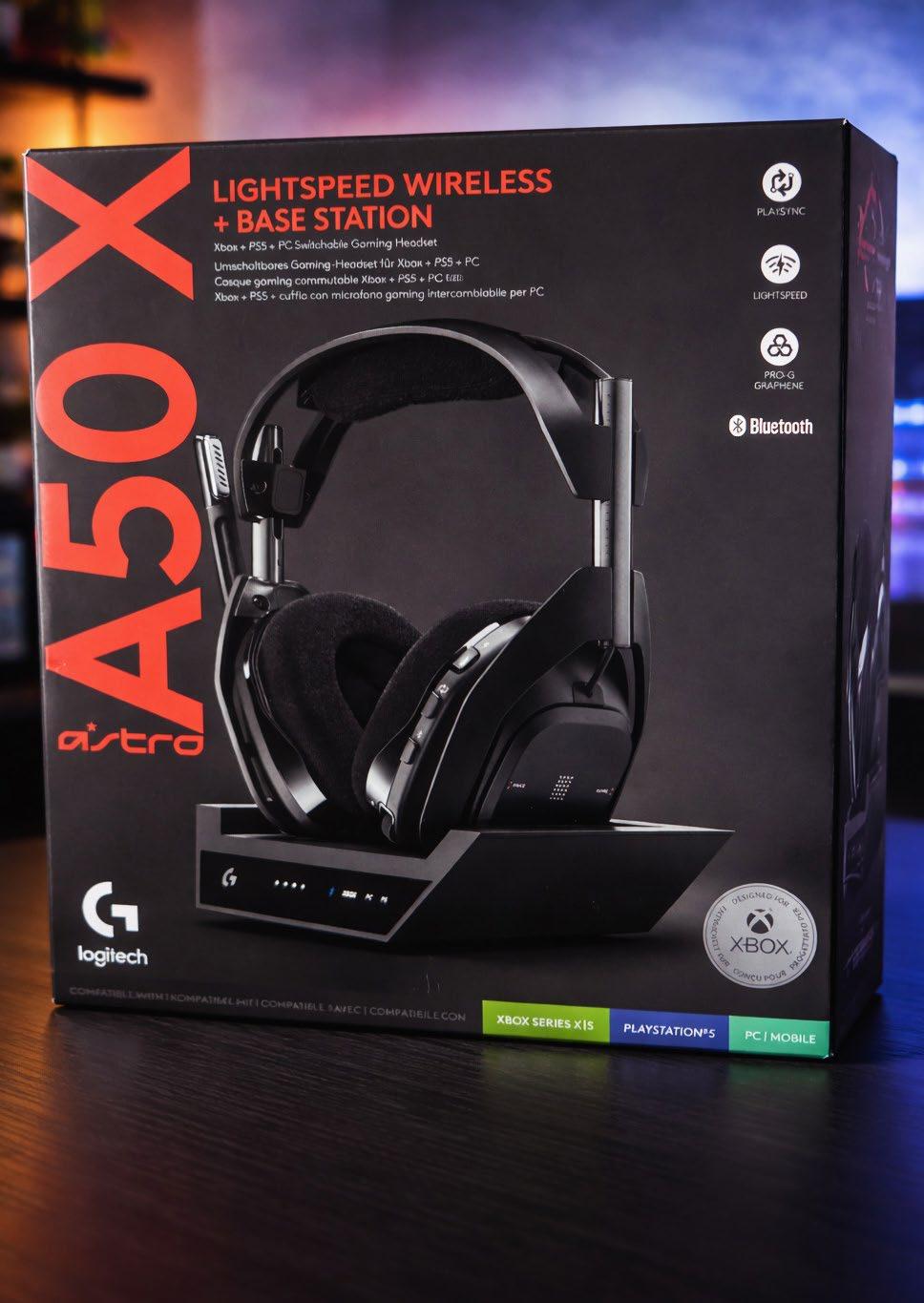
The problem is that most gaming headsets still feel designed around a single-platform setup. The Astro A50 X feels like Logitech looked directly at that issue and decided to completely rethink what a premium gaming headset could be. This isn’t simply another wireless headset with slightly better sound.
It’s an entire multi-platform gaming audio ecosystem built around seamless switching, HDMI 2.1 passthrough, simultaneous connectivity, and one of the most feature-packed base stations we’ve ever tested. And after weeks of daily use across PS5, Xbox Series X, PC gaming, Discord calls, editing sessions, music listening, and late-night multiplayer sessions, the Astro A50 X quickly became one of the most impressive gaming headsets we’ve used in years. Not because it’s perfect. Not because it’s affordable. But because there genuinely isn’t much else like it.
First Impressions & Setup - A Premium Gaming Headset Designed Around Modern Setups
The moment the Astro A50 X comes out of the box, it immediately feels like a serious flagship product. The headset itself retains the familiar Astro design language, but the redesigned base station instantly becomes the star of the package. Inside the box you get:
• Astro A50 X wireless gaming headset
• PLAYSYNC HDMI 2.1 base station
• USB-C cables
• Power adapter
• Documentation and setup guides
And honestly, setup is both impressive and slightly intimidating at first.

The base station supports simultaneous connections for:
• PC
• PlayStation 5
• Xbox Series X|S
all at the same time through HDMI 2.1 and USB routing. That means you can literally switch between platforms using a button on the headset itself without constantly swapping cables or repairing devices. And once everything is finally configured properly, it genuinely feels futuristic.
During testing we had:
• PS5 gameplay running
• Discord active through PC
Reviewed by: Brandon Sawyer

• Bluetooth audio from a phone
• HDMI passthrough to a 4K 120Hz display
• simultaneous voice chat and media playback
• all functioning through one headset ecosystem. And honestly, once you experience that convenience, traditional gaming headsets suddenly start to feel incredibly limited.
Audio Performance - Easily One of the Best Sounding Gaming Headsets Available
The Astro A50 X delivers some of the best gaming audio we’ve heard from a wireless headset. The new 40mm PRO-G Graphene drivers produce:
• exceptional positional accuracy
• powerful bass
• clean dialogue
• impressive separation
• cinematic sound staging
And it genuinely shows during gameplay. Competitive shooters especially benefit from the clarity and directional awareness. Footsteps, reloads, environmental cues, and distant gunfire all feel incredibly easy to track. Meanwhile, cinematic single-player games sound absolutely massive. Games like Call of Duty, Helldivers 2, Cyberpunk 2077, and Alan Wake 2 all sounded phenomenal during testing. And unlike many gaming headsets that focus purely on competitive audio, the A50 X also performs extremely well for music, movies, and everyday entertainment. That balance is genuinely impressive.
PLAYSYNC & HDMI Switching - The Feature That Changes Everything
The standout feature of the Astro A50 X is easily PLAYSYNC. And honestly, it’s one of the smartest gaming headset features we’ve seen in years. The HDMI 2.1-enabled base station allows the headset to function as a multiplatform switcher supporting:
• PS5
• Xbox Series X|S
• PC

with seamless switching directly from the headset itself.
Even better, the system supports:
• 4K 120Hz passthrough
• VRR support
• simultaneous Bluetooth audio mixing
• Discord alongside console gaming
• multi-device audio blending
And once fully configured, the convenience becomes difficult to give up. This genuinely feels like the first headset designed specifically for players who use multiple gaming systems daily.
Comfort & Build Quality - Familiar Astro Comfort Returns
Thankfully, Logitech didn’t sacrifice comfort while adding all this technology. The Astro A50 X remains extremely comfortable during extended sessions. Even after several-hour gaming nights:
• Ear fatigue stayed minimal
• Weight distribution felt balanced
• The breathable fabric earcups remained comfortable
• Clamping force stayed surprisingly light
The headset weighs around 363g, which isn’t light compared to some competitors, but the overall ergonomics help prevent it from becoming uncomfortable during long sessions. The flip-to-mute microphone also performs very well. Voice clarity during Discord and multiplayer sessions remained consistently clean and natural, while background noise rejection performed surprisingly well for a wireless gaming headset.
Real World Usage After Several Weeks - Where the Astro A50 X Truly Proves Itself
The first few days with the Astro A50 X are impressive because of the feature set. But after several weeks, what really stands out is how much friction it removes from multi-platform gaming. You stop swapping cables. You stop reconnecting devices. You stop managing separate headsets.

Everything simply becomes easier. Switching from Xbox to PS5 takes seconds. Discord remains accessible while gaming. Bluetooth music mixing works seamlessly. And the charging dock becomes one of those features you quickly stop wanting to live without. The headset quietly becomes central to your entire gaming setup. And honestly, that’s where the Astro A50 X justifies its premium positioning.
Performance & Minor Issues - Not Perfect, But Hugely Ambitious
While the overall experience is excellent, there are definitely some compromises. The setup process can feel far more complicated than traditional gaming headsets, especially for users unfamiliar with HDMI audio routing. Some Reddit users also reported compatibility issues with certain LG monitors and HDMI setups during launch periods. Battery life sits around 24–25 hours, which is decent overall but not class-leading for a headset at this price point. And at roughly £359–£399 depending on retailer, this is undeniably one of the most expensive gaming headsets currently available. Still, for the right audience, the overall experience genuinely feels unlike anything else on the market.
Is It Worth the Price? - A Premium Headset Built for Serious Multi-Platform Players
The Astro A50 X absolutely sits in ultra-premium territory. But when you break down what you’re actually getting:
• Multi-platform HDMI 2.1 switching
• Simultaneous Xbox, PS5, and PC connectivity
• 4K 120Hz passthrough suppor t
• Excellent wireless audio quality
• Bluetooth audio mixing
• Premium charging dock
• Comfortable long-session design
• Dolby Atmos compatibility
• One-button platform switching the pricing becomes easier to understand. This isn’t simply a headset. It’s effectively:
• a gaming audio hub
• an HDMI switcher
• a wireless headset
• a charging dock
• a multi-platform ecosystem
all combined into one device. And honestly, for players juggling multiple gaming platforms daily, it can completely transform the setup experience.
Final Verdict - One of the Most Innovative Gaming Headsets Ever Made
After weeks of daily use, the Astro A50 X became one of the most impressive gaming headsets we’ve tested in recent years. Not because it’s flawless. Not because it’s affordable. But because it solves a real problem modern gamers actually face. The sound quality is excellent. The comfort remains fantastic. The PLAYSYNC functionality feels genuinely next generation. And the overall ecosystem becomes incredibly difficult to give up once integrated into a setup. Yes, the setup process can be complicated. Yes, the price is undeniably premium. And yes, there are still a few HDMI quirks depending on your setup. But as a complete multi-platform gaming headset ecosystem, the Astro A50 X genuinely feels years ahead of most competitors. And honestly, after using it daily, going back to a normal gaming headset feels surprisingly outdated.
Overall Rating: 9.2 / 10
A brilliantly ambitious gaming headset that successfully redefines what multi-platform gaming audio can look like. The Astro A50 X combines exceptional sound quality, innovative HDMI switching technology, premium comfort, and seamless platform integration into one of the most advanced gaming headset ecosystems currently available.
Acknowledgements & Thanks
A huge thank you to Logitech G for kindly providing the Astro A50 X for hands-on testing and long-term review coverage. We’ve genuinely had an amazing time using the headset across PS5, Xbox, PC gaming, multiplayer sessions, Discord calls, music listening, and everyday entertainment. The Astro A50 X represents exactly the kind of innovation we love seeing in gaming hardware, ambitious, genuinely useful, and built around how modern gamers actually play today across multiple systems and platforms. Keep reading to see what Logitech G have also sent us and oh it’s something really new!
Logitech G512 X 98 & G512 X Palm Rest 75 Review - Logitech’s Boldest Keyboard Experiment Yet
Gaming keyboards have started to feel incredibly predictable. Most modern keyboards focus on the same features: RGB lighting, faster polling rates, slightly different switch options, and minor design tweaks that rarely change the actual experience in meaningful ways.
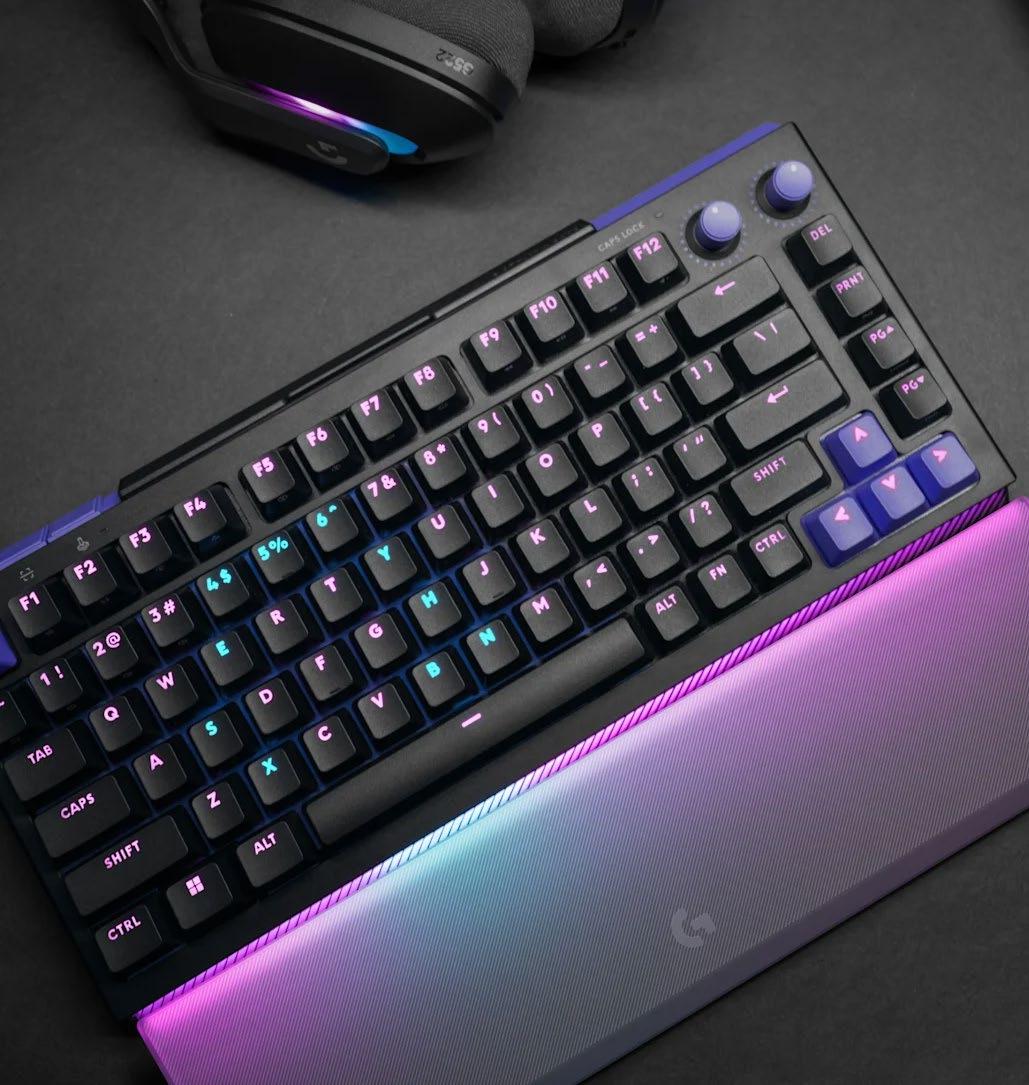
The Logitech G512 X 98 feels completely different. Instead of simply making another mechanical keyboard, Logitech G has attempted something genuinely ambitious: combining traditional mechanical switches with analogue magnetic switch technology inside one fully customizable gaming keyboard.
And honestly, after several weeks of using the Logitech G512 X 98 alongside the G512 X Palm Rest 75 across gaming, content creation, typing sessions, editing work, streaming, and everyday productivity, this quickly became one of the most interesting gaming keyboards we’ve tested in years. Not because it’s perfect. Not because it’s cheap. But because it genuinely feels like Logitech trying to push gaming keyboards forward again.
First Impressions & Setup - A Keyboard Built for Modern Enthusiasts
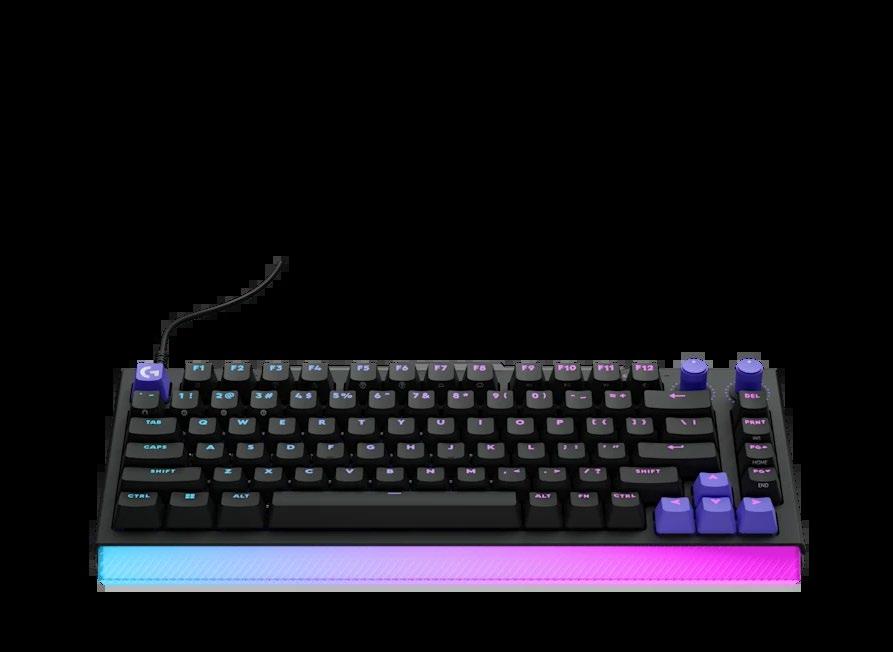
The moment the G512 X 98 comes out of the box, it immediately feels more premium and enthusiastfocused than most previous Logitech keyboards. The design blends gaming aesthetics with modern custom keyboard inspiration, featuring:
• Double-shot PBT keycaps
• Dual customizable control dials
• RGB under glow light bar
• Compact 98% layout
• Hybrid analogue/mechanical switch support
And unlike many gaming keyboards that feel overloaded with unnecessary design elements, the G512 X actually feels remarkably clean and refined. Inside the box you get:
• Logitech G512 X 98 keyboard
• USB-A to USB-C cable
• 9x Gateron KS-20 analogue switches
• 5x SAPP O-rings
• Keycap puller
• Switch puller
• Documentation and setup guides
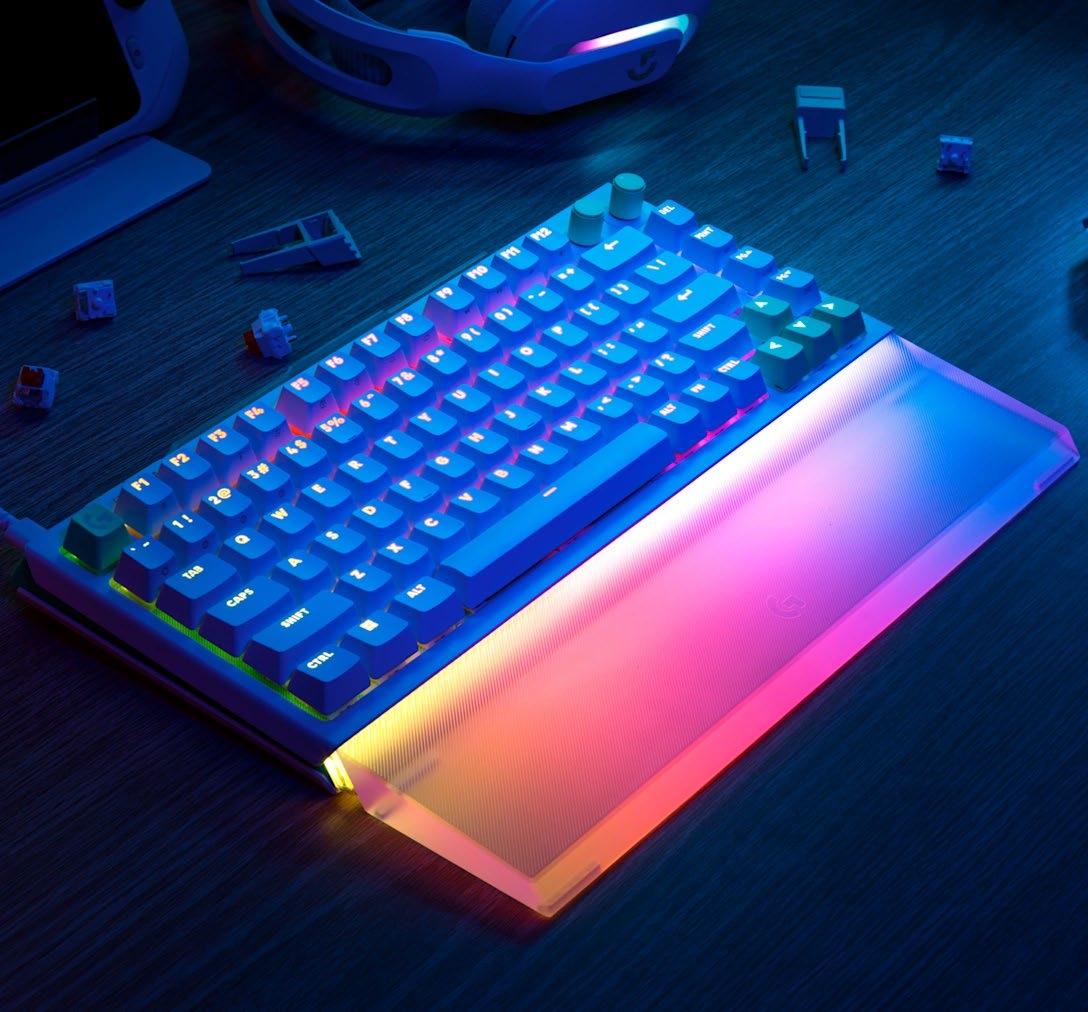
The optional G512 X Palm Rest 75 immediately complements the setup as well. While sold separately, it’s very clearly designed to complete the overall keyboard experience, adding both comfort and additional RGB light diffusion through its acrylic-style design.
Setup through Logitech G HUB is refreshingly straightforward considering how advanced the keyboard actually is. Within minutes we had:
• Rapid Trigger configured
• RGB zones customized
• Dual-action actuation points mapped
• Analog movement enabled for WASD
• Macro shor tcuts assigned
• Dual dials controlling media and lighting
And once everything is dialled in properly, the G512 X starts to feel genuinely futuristic.
Dual Swap Technology - The Feature That Changes Everything
The standout feature of the G512 X is easily Logitech’s new “Dual Swap” technology. And honestly, this is where the keyboard becomes genuinely exciting. Instead of forcing users to choose between traditional mechanical switches


or analogue magnetic switches, Logitech allows both to exist on the same keyboard simultaneously.
That means you can:
• use analogue switches for WASD movement
• keep mechanical switches for typing
• customize specific gaming zones
• mix switch types depending on playstyle
And after extended use, this flexibility becomes incredibly useful. The included Gateron KS20 analogue switches feel fast, smooth, and extremely responsive during gaming. Rapid Trigger support especially shines in competitive shooters where movement precision and responsiveness genuinely matter.
Meanwhile, the standard mechanical switches still provide a satisfying typing experience for everyday productivity. That balance is what makes the G512 X feel so unique.
Gaming Performance - One of Logitech’s Fastest Keyboards Ever
feels incredibly natural after some practice. And unlike many gimmicky gaming features, this actually changes how certain games feel to play.
Typing Experience - Gaming Speed Without Sacrificing Comfort
What surprised us most is that the G512 X still feels genuinely good to type on despite all the competitive gaming features packed inside. The gasket-mounted construction and PBT keycaps create a softer, cleaner acoustic profile than many older Logitech keyboards. Typing feels:
• responsive
• smooth
• stable
• surprisingly refined
Long writing and editing sessions remained comfortable throughout testing. And while this still leans more toward gaming than enthusiast custom keyboards, Logitech has clearly learned a lot from the keyboard enthusiast community here. That evolution is noticeable immediately.

The G512 X is clearly built for competitive gaming performance. Logitech’s new TMR sensor technology combined with True 8K polling creates an absurdly fast response time of just 0.125ms. And honestly, it genuinely feels incredibly responsive during gameplay. Fast-paced shooters, movement-heavy competitive games, and rhythm-based titles all benefit massively from the keyboard’s speed and analogue precision.
Games like:
• Valorant
• Counter-Strike 2
• Call of Duty
• Apex Legends
all felt noticeably smoother during testing. The SAPP ring system is also surprisingly useful once configured correctly. Being able to assign two actions to different actuation depths on a single key creates genuinely interesting gameplay possibilities.
For example:
• lightly pressing a key to walk
• fully pressing to sprint
The G512 X Palm Rest 75 - Surprisingly Important to the Overall Experience
At first glance, the G512 X Palm Rest 75 may seem like a simple optional accessory. But after several weeks of use, it genuinely became difficult to imagine using the keyboard without it. The palm rest dramatically improves comfort during long sessions while also amplifying the RGB under glow effect from the keyboard itself. And aesthetically, the combination looks fantastic on a desk setup.
It transforms the keyboard from feeling like a gaming peripheral into something that genuinely resembles a premium enthusiast desktop centrepiece. That said, many users will likely feel frustrated that the palm rest isn’t included in the box at this price point, something echoed heavily by community discussions online. Still, in actual daily usage, it absolutely improves the overall experience.
Build Quality & Design - Logitech’s Best Keyboard Design in Years
Physically, the G512 X feels like one of Logitech G’s strongest keyboard designs in a very long time.
The 98% layout strikes an excellent balance between compact gaming efficiency and everyday usability. You still retain:
• function row
• arrow keys
• numpad access
while significantly reducing desk space usage compared to a full-size board. The dual dials also became far more useful than expected during testing. We constantly used them for:
• volume adjustments
• RGB brightness
• media control
• timeline scrubbing during editing
And the rear storage compartment for switches, pullers, and SAPP rings is genuinely clever. The keyboard overall feels designed by people who genuinely understand both competitive gaming and enthusiast keyboard culture.
Performance & Minor Issues - Ambitious, But Not Without Compromises
While the overall experience is extremely impressive, there are still a few limitations worth mentioning. The biggest issue is that analogue switch support is limited to only 39 switch beds rather than the full keyboard. For some enthusiasts, this may feel restrictive compared to full analogue competitors. The keyboard is also wired-only, which may disappoint users hoping for a wireless flagship option. And while the overall build quality feels good, some reviewers did note slight chassis flex compared to ultra-premium custom boards. Finally, the separate pricing for the palm rest will likely frustrate some buyers given the premium cost of the keyboard itself. Still, none of these issues significantly diminish how innovative the overall package feels.
Is It Worth the Price? - A Premium Keyboard for Enthusiasts & Competitive Players
The Logitech G512 X 98 launches at roughly £199.99, while the Palm Rest 75 adds another £34.99 separately. But when you break down what you’re actually getting:
• Analog gaming support
• Mechanical keyboard flexibility
• True 8K polling
• Rapid Trigger
• Extensive customization
• Enthusiast-level modding suppor t
• Premium RGB implementation
• Hybrid switch technology
the pricing starts making much more sense. This isn’t trying to compete with budget gaming keyboards. It’s designed for players who genuinely care about performance, customization, and modern enthusiast keyboard features. And honestly, Logitech has created something genuinely exciting here.
Final Verdict - Logitech’s Most Interesting Keyboard in Years
After weeks of daily use, the Logitech G512 X 98 quickly became one of the most fascinating gaming keyboards we’ve tested in a long time. Not because it’s flawless. Not because it’s affordable. But because it feels ambitious in a way gaming keyboards rarely do anymore. The Dual Swap technology is genuinely innovative. The gaming performance is exceptional. The customization is incredibly deep. And the typing experience feels far more refined than many previous Logitech boards. Meanwhile, the Palm Rest 75 surprisingly elevates the entire experience both visually and ergonomically. Yes, the analogue support could be broader. Yes, the pricing is undeniably premium. And yes, some users will wish the palm rest was included.
But as a bold next-generation gaming keyboard experiment, the G512 X feels like Logitech G genuinely pushing the category forward again. And honestly, that’s something we’d love to see more often.
Overall Rating: 9 / 10
A brilliantly ambitious hybrid gaming keyboard that successfully combines analogue precision, mechanical customization, enthusiast-level features, and elite gaming performance into one of the most innovative keyboard experiences currently available.
Acknowledgements & Thanks
A huge thank you to Logitech G UK for kindly providing the G512 X 98 keyboard and G512 X
Palm Rest 75 for hands-on testing and long-term review coverage. We’ve genuinely had an amazing time using the setup across competitive gaming, editing work, content creation, streaming, typing sessions, and everyday productivity. The G512 X represents exactly the kind of innovation we love seeing in gaming hardware, ambitious, enthusiast-focused, and designed around giving players genuine customization and control over how they play every single day.
If you loved the Astros A50x’s and you loved the all new G512 X, then I’m sure you’ll love more what Logitech G also creates, in which you can head to their website below to check out their full ranges.
www.logitechg.com
Facebook: @LogitechG
Instagram: @logitechg
Twitter/X: @LogitechG
G'AIM'E Plug & Play TIME CRISIS Gun Ultimate Pack Review - Arcade Nostalgia Perfectly Reimagined for Modern TVs
Reviewed by: Brandon Sawyer
There’s something timeless about arcade light gun games. The sound of the trigger clicks. The panic of enemies rushing the screen. That frantic stomp on the foot pedal to dive behind cover. For so many players, Time Crisis wasn’t simply an arcade shooter, it was the arcade shooter. The problem is that classic light gun gaming practically disappeared once CRT televisions vanished. Modern TVs were never designed for oldschool arcade guns, leaving legendary franchises like Time Crisis trapped in the past.
That’s exactly why the G'AIM'E Plug & Play TIME CRISIS Pack feels so exciting. After spending extensive time with it across multiple play sessions with friends and family, this quickly became one of the most fun retro gaming experiences we’ve had in years. Not because it perfectly recreates the original arcade cabinet. But because it successfully brings back the feeling of playing it. And honestly, that’s what matters most.
First Impressions & Unboxing - A Premium Collector’s Package Built for Fans
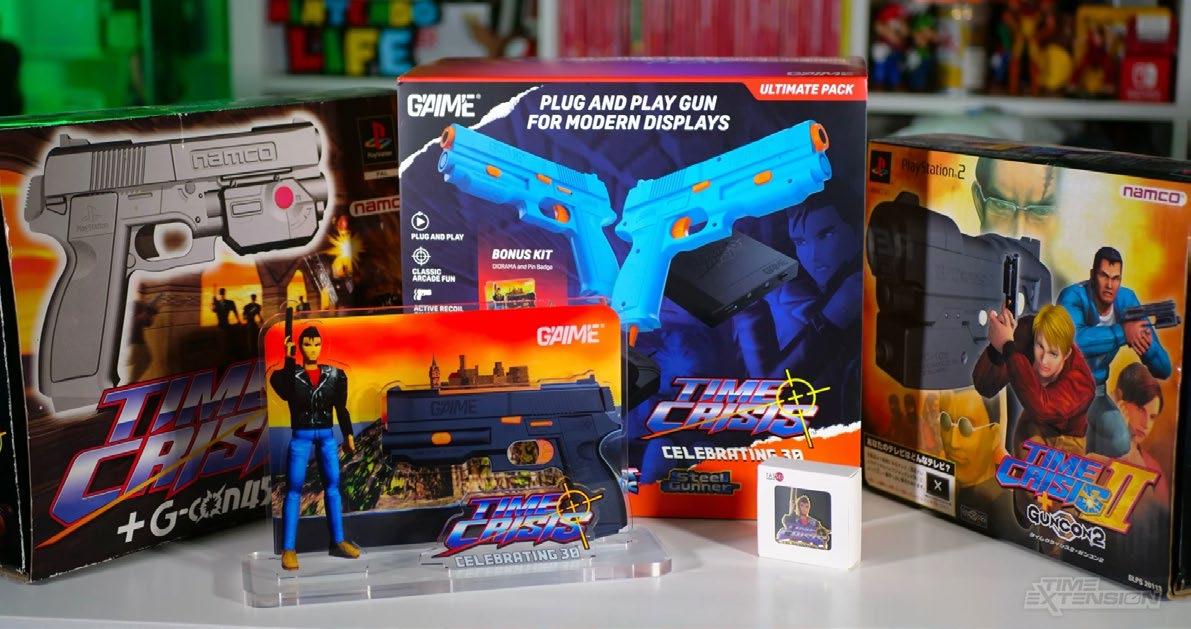
The Ultimate Pack immediately feels far more premium than most plug-and-play retro systems. Inside the bundle you get:
• Two wireless G'AIM'E Time Crisis guns
• G'AIM'E Plug & Play console
• Foot pedal for cover mechanics
• Limited edition Time Crisis statue/diorama
• Exclusive commemorative pin badge
• HDMI cable
• USB-C power adapter
• Quick start documentation
Right from the beginning, the presentation screams arcade nostalgia. The included statue and pin genuinely elevate this beyond simply being another retro console. It feels more like a collector’s celebration of one of gaming’s most iconic arcade franchises. And thankfully, setup couldn’t really be easier.

Simply plug the console into your TV via HDMI, connect the guns and foot pedal, complete a quick calibration process, and within minutes you’re playing classic arcade shooters on a modern display. No complicated software. No emulators. No sensor bars. No PC setup headaches.
It really is proper plug-and-play gaming. The Technology - Light Gun Gaming Finally Works on Modern TVs The biggest surprise with the G'AIM'E system is just how well the modern light gun technology works. Rather than relying on old CRT scan-line technology, the guns use AIassisted camera tracking specifically designed for modern displays. And after several long play sessions, it genuinely works impressively well. Aiming feels responsive, movement is accurate, and once calibration is properly set up, the overall experience becomes remarkably immersive. There are occasional moments where room lighting or TV positioning can slightly affect calibration, but overall, the technology performs far better than expected.



Most importantly: It actually feels like classic arcade gaming again. That alone makes this system feel incredibly special.
Included Games - A Brilliant Selection of Arcade Classics
The Ultimate Pack includes four pre-installed arcade titles:
• Time Crisis
• Point Blank
• Steel Gunner
• Steel Gunner 2
And honestly, this lineup works brilliantly.
Time Crisis
This is obviously the main attraction, and thankfully it still feels fantastic to play. The pacing, soundtrack, enemy encounters, and iconic cover system remain incredibly fun even today. Using the foot pedal instantly recreates that authentic arcade rhythm fans remember. Our own playthrough quickly turned into hours of replaying levels trying to improve scores, react faster, and survive longer. It perfectly captures that addictive “one more run” arcade mentality.
Point Blank
Point Blank ended up becoming one of the biggest surprises of the entire package. With the second gun included, multiplayer sessions with friends and family became absolutely hilarious. The fast-paced mini games, ridiculous reactions, and competitive scoring made this one of the standout party experiences in the collection.
Steel Gunner & Steel Gunner 2
These feel like fantastic bonus additions for retro arcade fans. While they may not have the same legendary status as Time Crisis, both games add genuine variety and help make the package feel much more complete overall.
Real World Gameplay Experience - Pure Fun With Friends & Family
The biggest compliment we can give the G'AIM'E
Ultimate Pack is this: we genuinely didn’t want to stop playing it. Over multiple evenings with friends and family, the system constantly delivered the kind of fun that modern gaming sometimes forgets.
No updates.
No installs.
No battle passes.
No online frustrations.
Just immediate arcade gameplay.
The included second gun massively improves the overall experience too, especially during Point Blank multiplayer sessions where everyone quickly becomes competitive trying to beat each other’s scores. Meanwhile, the foot pedal completely transforms Time Crisis into the authentic arcade experience fans remember. Without it, it simply wouldn’t feel right. Thankfully, G'AIM'E absolutely understood that.
Build Quality & Design - Surprisingly Premium Hardware
The guns themselves feel far more solid than expected. They’re lightweight enough for longer play sessions while still feeling comfortable and responsive in the hands. Trigger response feels satisfying, while the overall ergonomics work very well during extended gameplay.
The mini console itself is compact, clean, and easy to fit into almost any entertainment setup. And aesthetically, the entire package feels like it was designed by people who genuinely love arcade history. The collector’s statue/diorama and commemorative pin further reinforce that premium presentation. This doesn’t feel like a cheap nostalgia cash-in. It feels like a proper tribute to arcade gaming.
Performance & Minor Issues - A Few Small Growing Pains
While the overall experience is excellent, there are still a few areas that could improve in future versions. Calibration occasionally needs small adjustments depending on lighting conditions and screen size. Some longer sessions also revealed occasional aiming inconsistencies, although these were relatively minor overall.
And naturally, many fans will probably wish additional Time Crisis sequels were included in the package. Still, the fact this system successfully delivers true plug-and-play light gun gaming on modern TVs already feels hugely impressive.
Is It Worth £199.99? - Premium Pricing, But a Unique Experience
At £199.99, the G'AIM'E Plug & Play TIME CRISIS Gun Ultimate Pack definitely sits in premium retro gaming territory. But when you consider everything included:
• Two light guns
• Foot pedal
• Plug & Play console
• Four full arcade games
• Limited edition statue/diorama
• Exclusive pin badge
• Modern TV compatibility
• Instant plug-and-play setup
the value proposition becomes much easier to understand. This isn’t aimed at casual retro impulse buyers. It’s designed for arcade fans, collectors, retro enthusiasts, and longtime Time Crisis players wanting to relive one of gaming’s most iconic arcade experiences at home. And honestly, for that audience, it absolutely delivers.
Final Verdict - One of the Most Fun Retro Gaming Products in Years
The G'AIM'E Plug & Play TIME CRISIS Gun Ultimate Pack succeeds because it understands exactly what made arcade gaming special in the first place. It doesn’t overcomplicate the experience. It doesn’t try to reinvent the formula. Instead, it focuses on recreating pure arcade fun on modern hardware and after extensive time with it, that’s exactly what it achieves.
The technology is impressive. The setup is refreshingly simple. The multiplayer experience is fantastic. And the nostalgia factor is genuinely powerful. Most importantly, it brought friends and family together for hours of laughter, competition, and unforgettable retro gaming moments. And honestly, that’s exactly what arcade gaming was always about.
Overall Rating: 8.5 / 10
A brilliantly nostalgic revival of classic arcade light gun gaming that successfully brings Time Crisis into the modern era. The G'AIM'E Ultimate Pack delivers authentic arcade energy, fantastic multiplayer fun, excellent collector presentation, and one of the most enjoyable retro gaming experiences currently available.
Acknowledgements & Thanks
A huge thank you to the entire G'AIM'E team for kindly gifting us the Plug & Play TIME CRISIS Gun Ultimate Pack for hands-on testing and review coverage. We genuinely had an amazing time playing through the collection with friends and family, and it quickly became the centrepiece of several fantastic gaming nights full of competition, nostalgia, and laughter.
It’s incredibly refreshing to see a company bringing classic arcade experiences back to life in such an accessible and enjoyable way for modern players. For longtime arcade fans especially, this really does feel like a celebration of everything that made light gun gaming so memorable in the first place. Make sure to check out G’AIM’E below for more of what they do or to even pick up this awesome bundle.



Amaran Verge & Verge Max Review — Creator Lighting Finally Gets Practical
Reviewed by: Brandon Sawyer
There’s been a noticeable shift happening in creator lighting over the past few years. Studios are getting cleaner. Setups are becoming smarter. And creators are moving away from massive, overcomplicated lighting rigs toward hardware that delivers professional results without turning every desk or filming space into a production warehouse. That’s exactly where Amaran seems to have positioned the new Verge series. The Amaran Verge and Verge Max aren’t trying to reinvent studio lighting entirely.
Instead, they focus on solving one very specific problem modern creators constantly deal with: how to achieve soft, professional, flattering lighting in compact spaces without sacrificing brightness, flexibility, or ease of use. After spending extensive time using both lights across streaming setups, product photography, desk-based filming, Facecam production, editing environments, YouTube production, TikTok vertical content, and general creator workflows, it quickly became obvious that Amaran understands modern creators better than most lighting brands currently on the market. Both the Verge and Verge Max feel purpose-built for realworld setups rather than traditional studio environments. And honestly, that makes a massive difference during daily use.
First Impressions & Setup — Minimalist, Modern, and Surprisingly Refined
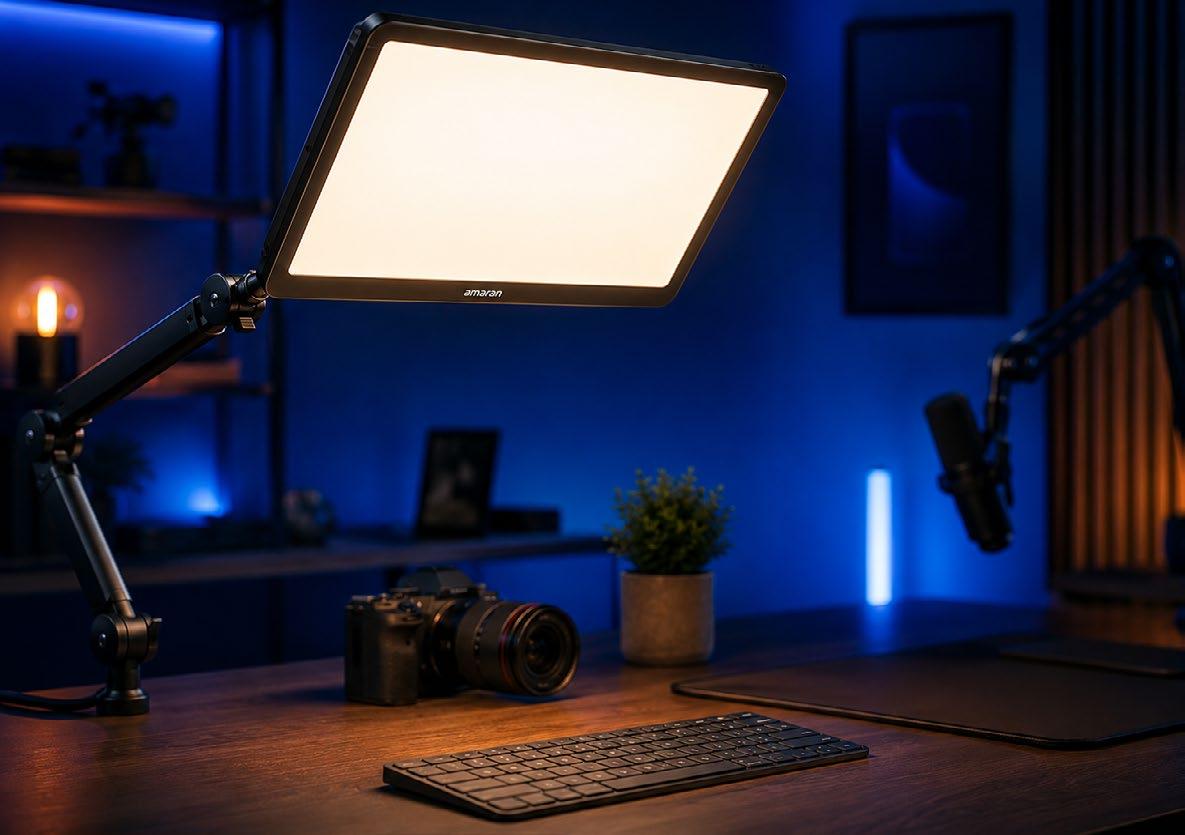
Right out of the box, both Verge models immediately feel cleaner and more premium than expected. Amaran has clearly leaned heavily into modern creator aesthetics here. The lights avoid bulky industrial design language and instead feel intentionally built for streamers, editors, gamers, photographers, and content creators working within compact spaces. The Verge immediately stands out for its smaller footprint and lightweight mounting options, while the Verge Max feels more substantial and noticeably more powerful without becoming intimidating or oversized.
Setup on both lights is refreshingly simple. Within minutes we had:
• Desk mounting configured
• Mobile control synced
• Colour temperature adjusted

• Streaming scenes balanced
• Camera exposure dialled in
• RGB accents integrated into backgrounds
And unlike many creator-focused lighting products, neither light feels overly complicated. That simplicity becomes one of the Verge series’ biggest strengths over time. You spend less time troubleshooting lighting. And far more time actually creating content.
Creator Workflow
Integration — Where the Verge Series Becomes Seriously Impressive
One of the most underrated strengths of the Amaran Verge series is how well both lights fit into modern creator ecosystems. Amaran clearly understands that today’s creators don’t just want powerful lighting. They want lighting that integrates directly into workflow. And that’s exactly where both the Verge and Verge Max become significantly more impressive over


extended use. Through integration with Elgato Stream Deck via supported lighting control plugins and ecosystem compatibility, both lights can become part of a fully automated creator setup.
During testing, we were able to:
• Instantly change lighting scenes directly from a Stream Deck
• Adjust brightness on the fly during streams
• Switch colour temperatures for different content styles
• Trigger RGB effects during live productions
• Power lights on and off without touching the fixtures
• Sync lighting changes with OBS scene transitions
• Create multi-action creator macros combining lighting, audio, and streaming controls simultaneously
And honestly, once fully configured, it becomes incredibly difficult to go back to traditional standalone lighting controls. For streamers especially, this integration is genuinely gamechanging.
• Being able to transition from:
• gameplay scenes
• podcast setups
• cinematic lighting
• Facecam streaming
• product showcases
• reaction content with a single button press dramatically improves workflow and production quality. The Verge series feels particularly strong for creators already invested in:
• Elgato Stream Decks
• OBS Studio
• streaming ecosystems
• multi-device creator setups
• smart studio environments
because the lighting starts behaving like part of the production system rather than just another accessory sitting on the desk. That level of ecosystem flexibility gives both the Verge and Verge Max a major advantage over many competing creator lights currently on the market.
And in daily use, it genuinely makes content production faster, cleaner, and far more immersive.
The Amaran Verge — Compact Lighting That Overdelivers
The standard Verge is easily one of the most practical creator lights we’ve tested recently. Its smaller form factor makes it incredibly easy to position around crowded desks, dual monitor setups, microphone arms, cameras, and stream gear without constantly fighting for space. But what surprised us most is how balanced the output feels.
Despite its compact size, the Verge produces impressively soft and flattering lighting that works exceptionally well for:
• Facecam streaming
• TikTok and Reels
• YouTube desk videos
• Product photography
• Podcast setups
• Video calls
• General creator workspaces
Skin tones look natural. Diffusion feels smooth. And shadows remain soft without losing detail. For smaller rooms and single-person setups, the Verge honestly hits a sweet spot that many larger lights completely miss. It’s powerful enough to look professional without overpowering the room itself. The mobile app integration also deserves credit.
Brightness adjustments, colour temperature changes, and scene management all felt responsive and reliable throughout testing. And because the Verge runs relatively cool and quietly, it fits naturally into long streaming or editing sessions without becoming distracting.
Verge Real-World Usage — The Light You End Up Using Daily
The biggest compliment we can give the Verge is how effortlessly it integrates into everyday workflow. It became our default light for:
• Quick recording sessions
• Livestreaming
• Discord camera calls
• Product close-ups
• Editing environments
• Thumbnail photography
• General desk lighting
And over time, we actually stopped thinking about the lighting itself. That’s usually the sign of genuinely good creator hardware. The Verge removes friction from production. You turn it on, dial it in quickly, and immediately get usable professional-looking results.
For creators working in bedrooms, home offices, or compact studio environments, that practicality matters far more than overly technical specifications.
Amaran Verge Score — 8.7 / 10
Pros
• Excellent soft lighting quality
• Compact footprint perfect for desks
• Fantastic Stream Deck and creator workflow integration
• Easy setup and positioning
• Great for streaming and content creation
• Quiet operation
• Reliable mobile controls
• Clean modern design
Cons
• Limited power for larger studio spaces
• Advanced users may want more mounting flexibility
• RGB features feel secondary compared to core white lighting performance
Pricing
The standard Amaran Verge sits comfortably in the mid-range creator lighting category at $79/£69 and feels competitively priced considering the overall build quality and usability. For most solo creators, streamers, and desk-based setups, this is honestly the smarter value option in the lineup.
The
Amaran
Verge Max — Bigger, Brighter, and Built for Serious Creator Spaces
Where the standard Verge focuses on simplicity and compact usability, the Verge Max expands everything. More output. More coverage. More flexibility. More presence. And after using it extensively across larger studio setups, multi-camera shoots, professional streaming environments, and commercial-style product filming, the Verge Max genuinely feels like a major step into professional creator territory.
The increased brightness is immediately noticeable. The Verge Max fills larger rooms effortlessly while still maintaining the soft diffusion and flattering light quality that made the standard Verge so impressive. That balance is incredibly important. Many highoutput creator lights become harsh or difficult to manage in smaller spaces. The Verge Max somehow avoids that problem surprisingly well. For larger productions we used it for:
• Multi-person streams
• Studio YouTube shoots
• Product showcases
• Background fill lighting
• Photography sessions
• Key lighting for cinematic content
• High-end streaming setups
And throughout testing, the Verge Max consistently delivered professional-looking results with very little setup frustration.
The Verge Max Experience — Where Amaran Starts Competing Seriously
What impressed us most about the Verge Max is how mature the overall experience feels.
Amaran clearly understands that creators today need lighting that balances:
• Performance
• Ease of use
• Aesthetics
• Workflow efficiency
• Space management
The Verge Max manages all of those surprisingly well. The app ecosystem remains smooth and intuitive, while the stronger output gives creators significantly more flexibility when shaping scenes or balancing multiple light sources. Combined with Stream Deck integration and creator-focused ecosystem support, the Verge Max feels purpose-built for modern streaming and content production workflows.
Even during long production sessions, thermal management remained excellent. Noise levels stayed impressively controlled. And colour consistency remained stable throughout filming. That reliability matters massively for professional content production. Because once lighting becomes inconsistent, every part of production slows down. The Verge Max avoids that issue almost entirely.
Verge Max Score — 9.2 / 10
Pros
• Excellent brightness and room coverage
• Beautiful soft diffusion
• Outstanding creator ecosystem integration
• Professional-level creator lighting
• Fantastic for larger streaming and studio setups
• Strong mobile app integration
• Premium build quality
• Consistent colour performance
Cons
• Considerably more expensive
• Larger footprint may overwhelm smaller desks
• Slightly excessive for casual creators or beginners
Pricing
The Verge Max sits firmly in premium creatorlighting territory at $249/£235. But considering the output quality, ease of use, build quality, and creator-focused design, the price feels justified for serious streamers, studios, and professional creators looking for a long-term lighting solution. Verge vs Verge Max — Which One Do We Prefer? Honestly, both lights succeed at very different things. The standard Verge is the easier recommendation for most creators. It’s practical, compact, affordable, and incredibly easy to integrate into almost any setup.
For solo creators, streamers, remote workers, YouTubers, and general desk setups, the Verge delivers outstanding everyday usability. But the Verge Max is undeniably the more impressive light overall. If you’re building a larger studio, producing professional content regularly, or need stronger lighting control for more cinematic production work, the Verge Max becomes the better long-term investment very quickly. Personally, we found ourselves using: The Verge for everyday desk setups and quick content production The Verge Max for larger filming sessions, studio work, and premium production environments And honestly, together they complement each other extremely well.
Final Verdict — Amaran Understands Modern Creators
The Verge series feels like Amaran looked carefully at how creators actually work today and designed lighting around real workflows rather than traditional studio expectations. The Verge is practical, clean, approachable, and surprisingly capable. The Verge Max expands that formula into something genuinely professional. Neither light feels gimmicky. Neither feels unnecessarily overengineered.
And both focus heavily on reducing friction during content creation. That’s ultimately what makes the Verge lineup so successful. These are lights built for modern creators who need professional results without turning their setups into complicated production environments. And after extensive daily use, both the Verge and Verge Max quietly became essential parts of our workflow. That alone says a lot.
Overall Ratings
Amaran Verge — 8.7 / 10
A brilliantly balanced creator light that delivers soft professional lighting in an incredibly compact and practical package. Perfect for streamers, desk setups, solo creators, and everyday content production.
Amaran Verge Max — 9.2 / 10
A powerful, professional-grade creator light that combines excellent brightness, premium diffusion, and creator-focused usability into one of the strongest modern studio lighting solutions currently available.
Acknowledgements & Thanks
A huge thank you to Amaran for providing the Verge and Verge Max for extended hands-on creator workflow testing. Having the opportunity to use both lights extensively across streaming, content creation, photography, editing, studio production, and everyday creator setups allowed for a genuine long-term review experience that goes far beyond first impressions. The Verge lineup represents exactly the kind of creatorfocused innovation we love seeing in modern production hardware: practical, thoughtfully designed, and built around how creators actually work every single day. If you too want to secure great lighting like these on a more affordable range, then you can check out Amaran and all their products below.


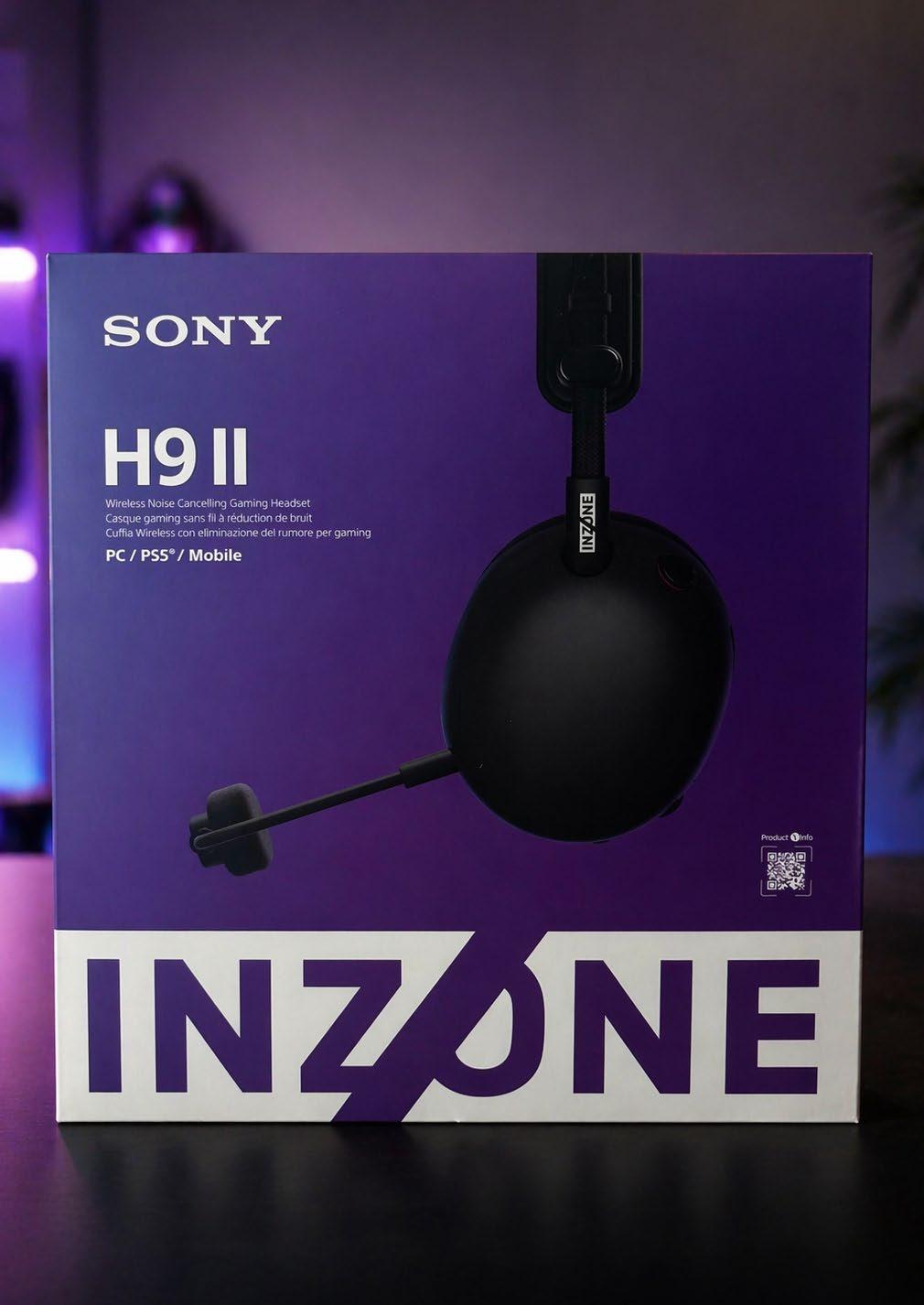
Sony INZONE H9 II Review - Sony’s Most Ambitious
Reviewed by: Brandon Sawyer
There’s a growing trend in gaming audio where headsets are trying to become more than just gaming accessories. Players now expect: premium sound quality, wireless flexibility, active noise cancellation, simultaneous Bluetooth, high-end microphones, and all-day comfort all packed into a single device.
The problem is that most gaming headsets still feel like they prioritise one area while sacrificing another. Some sound incredible but become uncomfortable after long sessions. Others have great microphones but weak audio performance. And many “premium” gaming headsets still struggle to justify their increasingly expensive price tags. The Sony INZONE H9 II feels like Sony looked directly at that problem and decided to create a headset that blends its premium headphone expertise with competitive gaming features.
And after weeks of using the headset across PS5, PC gaming, Discord calls, music listening, editing sessions, and everyday entertainment, the INZONE H9 II genuinely became one of the most comfortable gaming headsets we’ve used in years. Not because it tries to reinvent gaming audio completely. But because it successfully combines Sony’s audio heritage with modern gaming functionality in a way that feels incredibly polished.
First Impressions & Setup - A Much More Refined Design
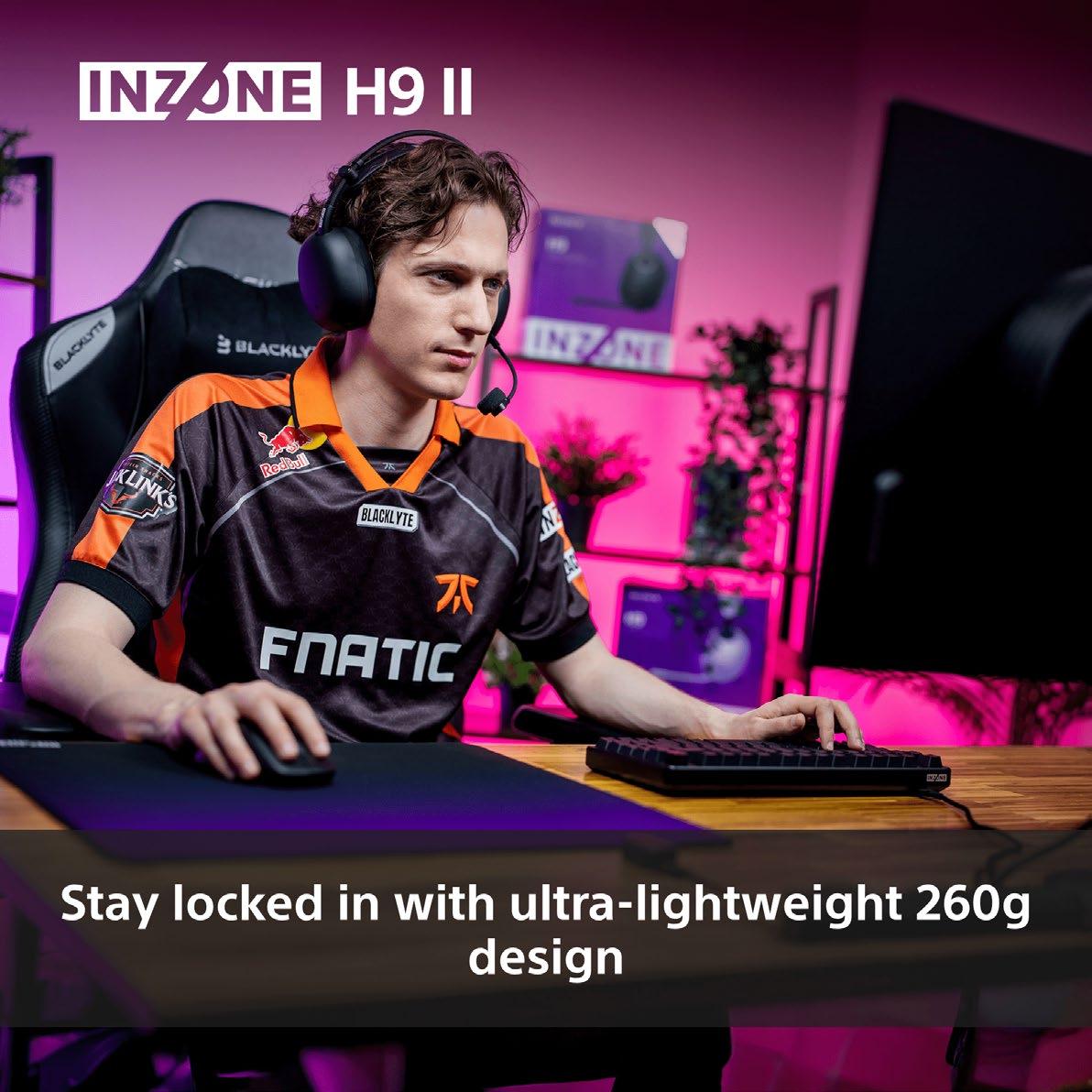
The moment the INZONE H9 II comes out of the box, it immediately feels noticeably more premium and refined than the original H9. Sony has completely redesigned the headset with a much lighter 260g chassis and suspension-style headband, making it dramatically more comfortable during extended sessions.
Inside the box you get:
• Sony INZONE H9 II headset
• USB wireless dongle
• USB charging cable
• Detachable microphone
• Soft carrying pouch
• Documentation and setup guides
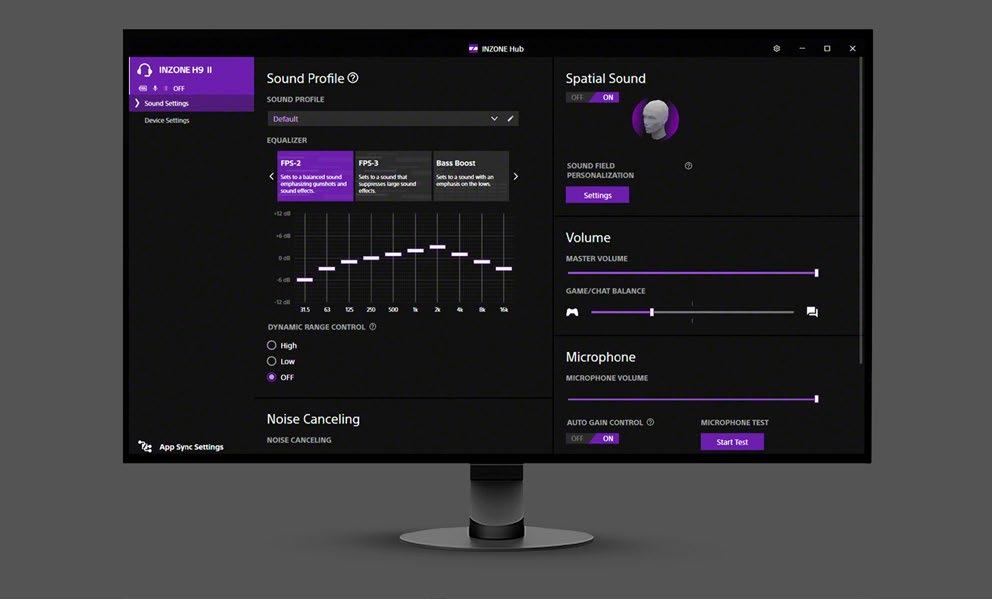
Setup is refreshingly simple. On PS5, the headset connects almost instantly using the wireless dongle, while PC setup through Sony’s INZONE Hub software unlocks additional EQ customization, spatial audio features, and sound profiles.
Within the first hour alone we had:
• PS5 Tempest 3D Audio enabled
• Discord running simultaneously through Bluetooth
• Custom EQ profiles configured
• ANC modes adjusted
• Game/chat balancing setup
• Spatial sound profiles personalised
And once everything is configured properly, the overall experience becomes incredibly smooth.
Audio Performance - Sony’s Headphone Expertise Finally Meets Gaming
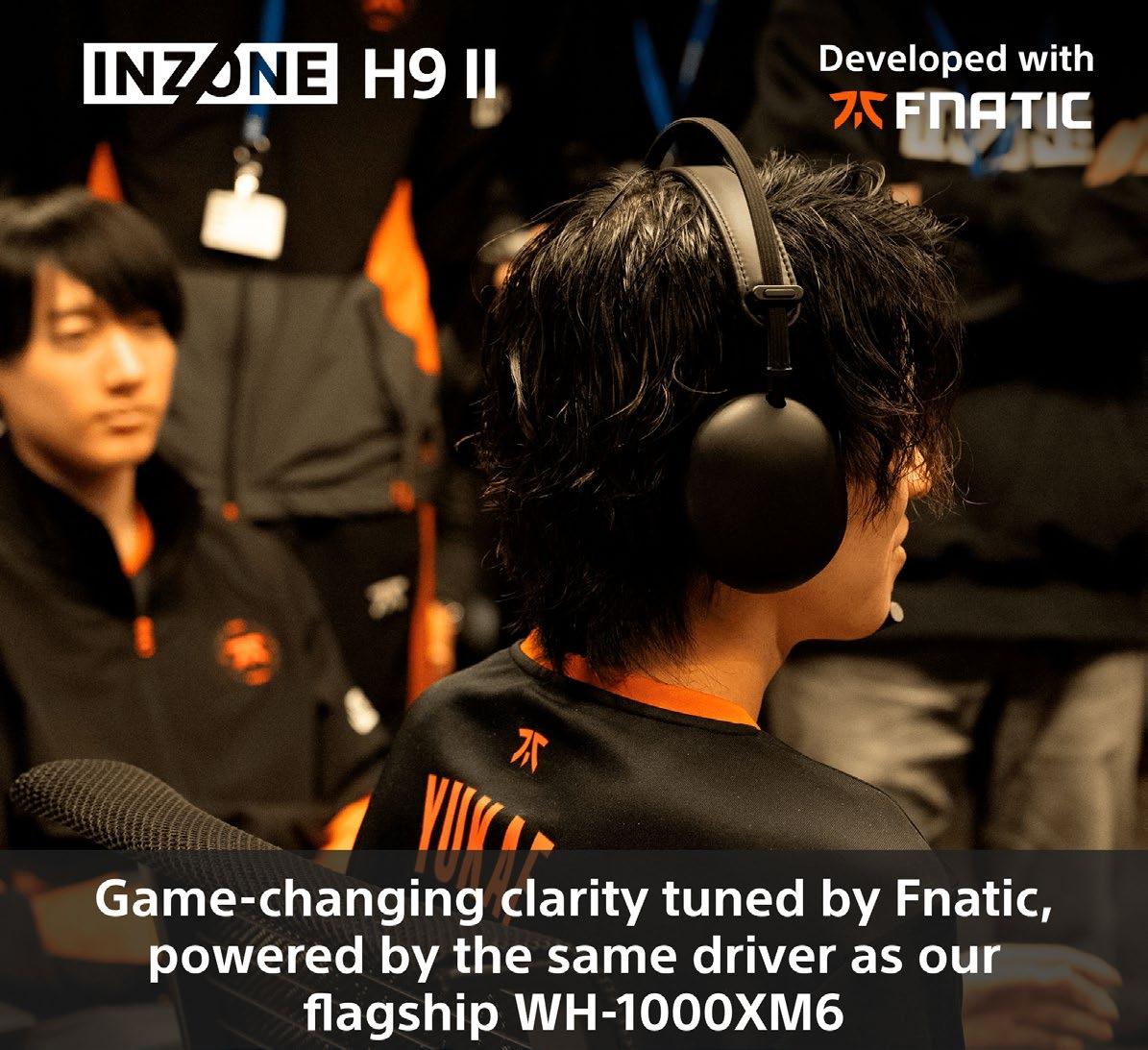
The biggest strength of the INZONE H9 II is easily the sound quality. Sony borrowed technology directly from its WH-1000XM6 headphone lineup, including the 30mm carbon composite drivers, and it genuinely shows during gameplay and music listening.
The headset delivers:




• Clear positional audio
• Deep cinematic bass
• Excellent vocal clarity
• Wide soundstage
• Strong directional awareness in shooters
Single-player games especially sound fantastic. Games like Call of Duty, Spider-Man 2, Helldivers 2, and Cyberpunk 2077 all benefited from the headset’s immersive soundstage and detailed environmental audio. Explosions feel powerful without becoming muddy, while quieter atmospheric details remain incredibly clear.
Music performance also surprised us. Unlike many gaming headsets that feel heavily tuned purely for competitive gaming, the H9 II feels much closer to a premium pair of Sony wireless headphones. And that balance makes the headset far more versatile for everyday use outside gaming. That said, some users may prefer adjusting the EQ immediately because the default tuning can feel slightly basslight depending on personal preference.
Comfort & Daily Usage - One of the Most Comfortable Gaming Headsets We’ve Tested
The biggest surprise after extended use was just how incredibly comfortable the INZONE H9 II became during long gaming sessions. Sony’s redesigned suspension headband massively improves weight distribution compared to the original model.
• Even after several-hour sessions:
• Ear fatigue remained minimal
• Clamping force stayed comfor table
• Heat buildup was surprisingly low
headsets. And while the ANC doesn’t quite reach Sony WH-1000XM-level performance, it still does an excellent job reducing background distractions like fans, PC noise, and general room ambience. The detachable microphone is also genuinely impressive.
Teammates consistently commented on how clear and natural voice chat sounded during testing. Sony’s microphone noise rejection is particularly strong, doing an excellent job filtering background noise even in busier environments. For Discord, streaming, multiplayer gaming, and even work calls, the microphone performs far above average for a wireless gaming headset.
Wireless Features & Connectivity - Built Around Modern Multi-Device Gaming
The INZONE H9 II feels designed for modern multitasking. The simultaneous Bluetooth and 2.4GHz wireless support quickly became one of our favourite features.
Being able to:
• game on PS5 or PC
• while listening to music from a phone
• taking Discord calls
• or quickly swapping between devices
makes the headset incredibly flexible for daily use. Battery life sits around 30 hours depending on ANC usage, which is solid overall, although some competitors still outperform it significantly in endurance.

The lightweight design never became distracting
This quickly became a headset we forgot we were even wearing. And honestly, that’s one of the biggest compliments you can give any gaming headset. The softer fabric materials and breathable earcups also make a huge difference during longer sessions compared to many leatherette-heavy competitors.
Active Noise Cancellation & MicrophoneExcellent Mic Performance With Solid ANC
One of the standout features of the H9 II is the inclusion of active noise cancellation, something still relatively uncommon in gaming

Real World Usage After A Couple WeeksWhere the INZONE H9 II Really Shines
The first few days with the H9 II are impressive because of the comfort and sound quality. But after several weeks, the headset proves itself through consistency. It quietly becomes part of your everyday setup. Gaming sessions become more immersive. Music sounds richer. Voice chat feels clearer. Long sessions become easier. And unlike many gaming headsets that feel overly aggressive or “gamer-focused,” the INZONE H9 II actually feels mature and versatile enough for everyday use outside gaming too. That balance is what makes it stand out.
Performance & Minor Issues - Not Perfect, But Still Excellent
While the overall experience is fantastic, there are still a few areas where the H9 II could improve. The battery life, while good, doesn’t quite match some rivals. Some PC users have also reported occasional software quirks involving Windows spatial audio and driver detection through the INZONE Hub software. And at roughly £299, this is undeniably a premium gaming headset. But thankfully, the actual day-to-day experience mostly justifies that pricing.
Is It Worth the Price? - Premium Pricing With Premium Features
At around £299 in the UK, the Sony INZONE H9 II sits firmly in flagship gaming headset territory. But when you break down what you’re actually getting:
• Premium Sony audio drivers
• Active noise cancellation
• Simultaneous Bluetooth + 2.4GHz wireless
• Excellent microphone quality
• Lightweight 260g design
• PS5 integration and 3D audio suppor t
• Comfortable long-session ergonomics
the value proposition becomes much easier to understand. This isn’t simply a gaming headset. It’s trying to become an all-in-one entertainment headset for gaming, work, music, and everyday use. And honestly, it succeeds surprisingly well.
Final Verdict - Sony Has Created One of the Most Comfortable Gaming Headsets Available
After weeks of daily use, the Sony INZONE H9 II has become one of the most enjoyable gaming headsets we’ve tested in recent years. Not because it completely dominates every single category. But because it delivers an incredibly balanced premium experience across almost everything.
The comfort is exceptional. The sound quality is immersive and detailed. The microphone performs brilliantly. And the overall versatility makes it far more useful than many gamingonly competitors.
Yes, the price is undeniably premium. Yes, there are still some software quirks on PC. And yes, some rivals offer better battery life.
But as a complete gaming and entertainment headset package, the INZONE H9 II feels like Sony finally fully understanding what modern gamers actually want from a flagship wireless headset. And honestly, once you get used to how comfortable it is, going back to heavier gaming headsets becomes surprisingly difficult.
Overall Rating: 9 / 10
A brilliantly refined premium gaming headset that successfully combines Sony’s audio expertise with modern gaming functionality. The INZONE H9 II delivers exceptional comfort, immersive sound, strong microphone quality, and one of the most polished wireless gaming experiences currently available.
Acknowledgements & Thanks
A huge thank you to Sony UK for kindly providing the INZONE H9 II for hands-on testing and longterm review coverage. We’ve genuinely had an amazing time using the headset across gaming sessions, music listening, multiplayer nights, editing work, and everyday entertainment.
The INZONE H9 II represents exactly the kind of premium gaming hardware we love seeing, focused on real-world comfort, strong performance, and features that genuinely improve the overall experience rather than simply adding gimmicks. For gamers wanting a premium wireless headset that works just as well for everyday life as it does for competitive gaming, Sony has created something genuinely impressive here. If you too want to check out more great products from SONY, then you can check out their website below.

Soundcore Space 2 Review - Soundcore’s Biggest Leap Forward Yet
Reviewed by: Brandon Sawyer
Soundcore Space 2 Review - Soundcore’s Biggest Leap Forward Yet There’s a reason Soundcore has become one of the fastest-growing audio brands in recent years. While flagship headphone prices continue climbing higher and higher, Soundcore has consistently focused on delivering the features most people actually care about: strong sound, excellent battery life, modern ANC, comfortable designs, and smart software features without demanding £300–£400 prices.
The all-new Soundcore Space 2 headphones feel like the company’s most ambitious attempt yet to close the gap between affordable audio and premium flagship experiences. And honestly, after several weeks of using them across commuting, gaming, editing work, travel, music listening, Discord calls, and everyday entertainment, the Space 2 quickly became one of the most impressive value-focused headphones we’ve tested in a long time. Not because they completely outperform flagship competitors from Sony or Bose. But because they consistently deliver an experience that feels far more premium than their £129.99 pricing suggests.
First Impressions & Setup - A Noticeably More Premium
Design
The moment the Space 2 headphones come out of the box, they immediately feel like a major evolution over Soundcore’s previous models. The design is cleaner, lighter, and noticeably more refined, while still maintaining the practicality Soundcore headphones are known for.
Inside the box you get:
• Soundcore Space 2 headphones
• USB-C charging cable
• 3.5mm AUX cable
• Soft travel pouch
• Documentation and setup guides
Setup is incredibly straightforward. Pairing over Bluetooth takes seconds, while the Soundcore companion app unlocks the full feature set including:

• Adaptive Active Noise Cancellation
• HearID personalised sound profiles
• Custom EQ controls
• Transparency mode adjustments
• Multipoint Bluetooth
• Spatial audio features
• Wear detection
• Live translation tools And once everything is configured properly, the experience becomes remarkably smooth.
Audio Performance - Fun, Immersive Sound Designed for
Everyday Listening
The Space 2 headphones clearly aim for an enjoyable, consumer-friendly sound signature rather than strict audiophile neutrality. And honestly, that works massively in their favour. The redesigned 40mm drivers deliver:
• Deep bass response
• Clear vocals



• Strong volume levels
• Wide stereo separation
• Energetic presentation
Music feels lively and immersive across almost every genre. Pop, hip-hop, EDM, gaming soundtracks, podcasts, and YouTube content all sound genuinely enjoyable through the Space 2. The bass especially feels powerful without completely overwhelming the rest of the mix. And while the sound signature still leans warm and slightly V-shaped, it feels noticeably cleaner and more refined than earlier Soundcore headphones.
That said, more critical listeners may still notice that the mids can occasionally feel slightly recessed depending on the track. Thankfully, the Soundcore app once again becomes one of the headset’s biggest strengths. The HearID EQ system and custom sound controls allow you to dramatically improve the tuning depending on personal preference. And honestly, spending five minutes adjusting the EQ transforms the experience completely.
Active Noise Cancellation - Shockingly Strong ANC for the Price
The biggest surprise with the Space 2 is just how effective the active noise cancellation actually is. Soundcore has massively improved ANC performance compared to previous generations, particularly with lower-frequency background noise like trains, buses, air conditioning, and general commuting environments.
During testing, the headphones handled:
• Office noise
• Café chatter
• PC fan noise
• Public transpor t
• General travel environments surprisingly well for headphones in this price category.
No, they don’t fully reach Sony WH-1000XMlevel ANC performance. But considering the price difference, the gap honestly feels much smaller than expected. That’s what makes the Space 2 so impressive.
Comfort & Daily Usage - Built for Long Sessions
One of the strongest aspects of the Space 2 is comfort.
At roughly 264g, the headphones remain lightweight enough for extended listening sessions while still feeling durable and secure. Even after several-hour sessions:
• Ear fatigue stayed minimal
• Clamping force remained comfor table
• The padded headband distributed weight well
• Heat build-up stayed manageable
These quickly became headphones we constantly reached for throughout the day. Whether listening to music while working, travelling, gaming casually, or relaxing with podcasts, the Space 2 consistently felt comfortable and easy to wear. And honestly, for everyday usability, that matters just as much as sound quality.
Features & Battery Life - Feature Packed Beyond Expectations
This is where the Space 2 headphones become genuinely difficult to ignore. Despite sitting in the mid-range price category, Soundcore packed them with features usually reserved for significantly more expensive models:
• Adaptive ANC
• LDAC Hi-Res Audio suppor t
• Bluetooth 6.1
• Multipoint pairing
• Wear detection
• HearID personalised EQ
• AI-enhanced microphones
• Spatial audio
• Live translation functionality
• Fast charging
• Up to 70-hour battery life
And remarkably, most of these features work genuinely well. Battery life in particular is excellent. During testing, the Space 2 easily lasted through multiple days of regular use without becoming stressful to manage.
Fast charging also remains incredibly




convenient, with just five minutes of charging providing several hours of playback. That level of practicality becomes surprisingly valuable in everyday life.
Real World Usage After Several Weeks - Where the Space 2 Really Excels
The first few days with the Space 2 are impressive because of the sheer amount of features. But after several weeks, what really stands out is how naturally they integrate into everyday routines. Commuting becomes quieter. Music feels more immersive. Work sessions become less distracting. Travel becomes more relaxing. And unlike some ultra-premium headphones that feel overly delicate or expensive to throw into daily life, the Space 2 feels approachable and practical enough to use constantly.
That balance is exactly why these headphones work so well. Performance & Minor Issues
- Not Perfect, But Outstanding Value While the overall experience is extremely positive, there are still a few compromises. Out-of-thebox tuning may feel slightly uneven for some listeners, particularly in the mids. Transparency mode also isn’t quite as natural-sounding as premium competitors from Sony or Apple. Some Reddit users additionally reported mixed opinions regarding the tuning compared to older Soundcore models like the Q30 series. And while the included soft pouch is fine for casual travel, a hard-shell case would have helped the package feel even more premium. Still, once you consider the pricing, most of these compromises become far easier to forgive.
Is It Worth £129.99? - One of the Strongest Value Headphones of 2026
At around £129.99, the Soundcore Space 2 sits in an incredibly competitive category. But when you break down what you’re actually getting:
• Strong ANC performance
• 70-hour battery life
• LDAC Hi-Res support
• Multipoint Bluetooth
• Excellent app customization
• Lightweight comfortable design
• Great everyday sound
• Extensive smart features
the value proposition becomes genuinely impressive. These headphones aren’t trying to directly beat £400 flagship models. Instead, they focus on delivering the vast majority of the experience at a fraction of the cost. And honestly, Soundcore succeeds remarkably well.
Final Verdict - Soundcore Continues to Dominate the Affordable Audio Market
After several weeks of daily use, the Soundcore Space 2 became one of the easiest wireless headphone recommendations we’ve made in a long time. Not because they’re perfect. But because they consistently overdeliver for the money. The comfort is excellent. The ANC performance is genuinely impressive. Battery life is outstanding. And the feature set feels borderline absurd at this price point. Yes, audiophiles may still prefer more balanced premium headphones. Yes, the sound benefits massively from EQ tuning. And yes, flagship competitors still outperform them overall.
But for most people wanting modern wireless headphones packed with premium-style features without premium flagship pricing, the Space 2 feels like one of the best value audio products currently available. And honestly, that’s exactly why Soundcore continues to grow so rapidly in the audio space.
Overall Rating: 9 / 10
An incredibly impressive pair of wireless ANC headphones that successfully deliver premiumlevel features, excellent comfort, massive battery life, and surprisingly strong performance at a price that feels genuinely difficult to argue against.
Acknowledgements & Thanks
A huge thank you to Soundcore UK for kindly providing the Space 2 headphones for hands-on testing and long-term review coverage. We’ve genuinely had an amazing time using them across commuting, music listening, gaming, travel, editing work, and everyday entertainment. The Space 2 perfectly represents what makes Soundcore such an exciting brand right now,
delivering accessible, feature-packed products that focus on the real-world experience people actually care about most. For anyone wanting premium-style wireless headphones without spending flagshiplevel money, Soundcore has created something genuinely impressive with the Space 2. If you too want to check out Soundcore’s products then you can check their website out below.
www.soundcore.com
Facebook: @soundcoreUK
Instagram: @soundcoreuk
Twitter: @soundcoreaudio
TikTok: @soundcoreuk


Soundcore Liberty 5 Pro Review – The Perfect Creator Earbuds for TwitchCon, Travel
& Everyday Chaos
Reviewed by: Brandon Sawyer
There’s something uniquely difficult about finding the perfect earbuds for creator events. Not just earbuds that sound good while sitting at home listening to music, but earbuds capable of surviving the constant movement, crowded convention halls, train journeys, livestream setups, networking events, late-night editing sessions, and nonstop social environments that come with events like TwitchCon Europe. That’s exactly where the all-new Soundcore Liberty 5 Pro surprised us.
After taking them across the Netherlands during TwitchCon Europe in Rotterdam, using them through trains, airports, convention halls, creator meetups, after parties, cafés, livestream prep, and long days constantly on the move, these quickly became one of the most genuinely impressive pairs of wireless earbuds we’ve used in a long time. Not because they try to reinvent wireless audio. But because they focus heavily on the real-world experience creators, travellers, commuters, and everyday users actually care about most: Outstanding noise cancellation. Incredibly clear call quality. Comfort during long days. Reliable battery life. And a level of calmness during chaotic environments that honestly feels difficult to overstate. The Liberty 5 Pro don’t just perform well technically.They make busy environments feel manageable. And after spending days running around Rotterdam with them constantly in our ears, that became their biggest strength.
First Impressions – Soundcore’s Most Refined Earbuds Yet
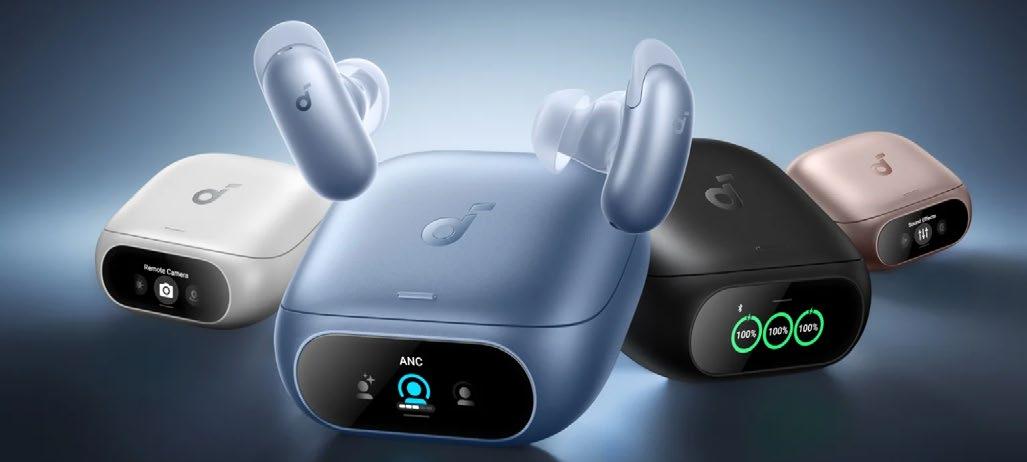
The moment you open the Liberty 5 Pro packaging, it’s immediately obvious Soundcore is continuing to push further into premium territory. The charging case feels sleek and compact without becoming overly bulky, while the earbuds themselves feel noticeably more refined than previous Soundcore generations. The finish, weight distribution, and overall build quality all feel significantly more premium than their pricing would suggest.
Inside the box you get:
• Soundcore Liberty 5 Pro earbuds
• Wireless charging case
• USB-C charging cable
• Multiple silicone ear tip sizes
• Documentation and setup guides
Setup is incredibly fast. Pairing takes seconds, while the Soundcore companion app once again becomes one of the earbuds’ biggest strengths, unlocking features including:
• Adaptive Active Noise Cancellation
• Personalized HearID sound profiles
• Full EQ customization
• Transparency mode controls
• Multipoint connectivity
• Spatial audio features
• AI-enhanced call technology
• Wear detection
• Gaming low-latency modes
And once everything is configured properly, the overall experience feels remarkably polished.
Running Around the Netherlands – Where the Liberty 5 Pro Truly Shine
The real test for these earbuds wasn’t sitting quietly at a desk. It was using them while constantly moving around the Netherlands during TwitchCon Europe. From crowded train stations in Amsterdam to packed Rotterdam trams, busy cafés, creator meetups, convention centre queues, and walking through loud after parties late into the evening, the Liberty 5 Pro quickly proved themselves as some of the best
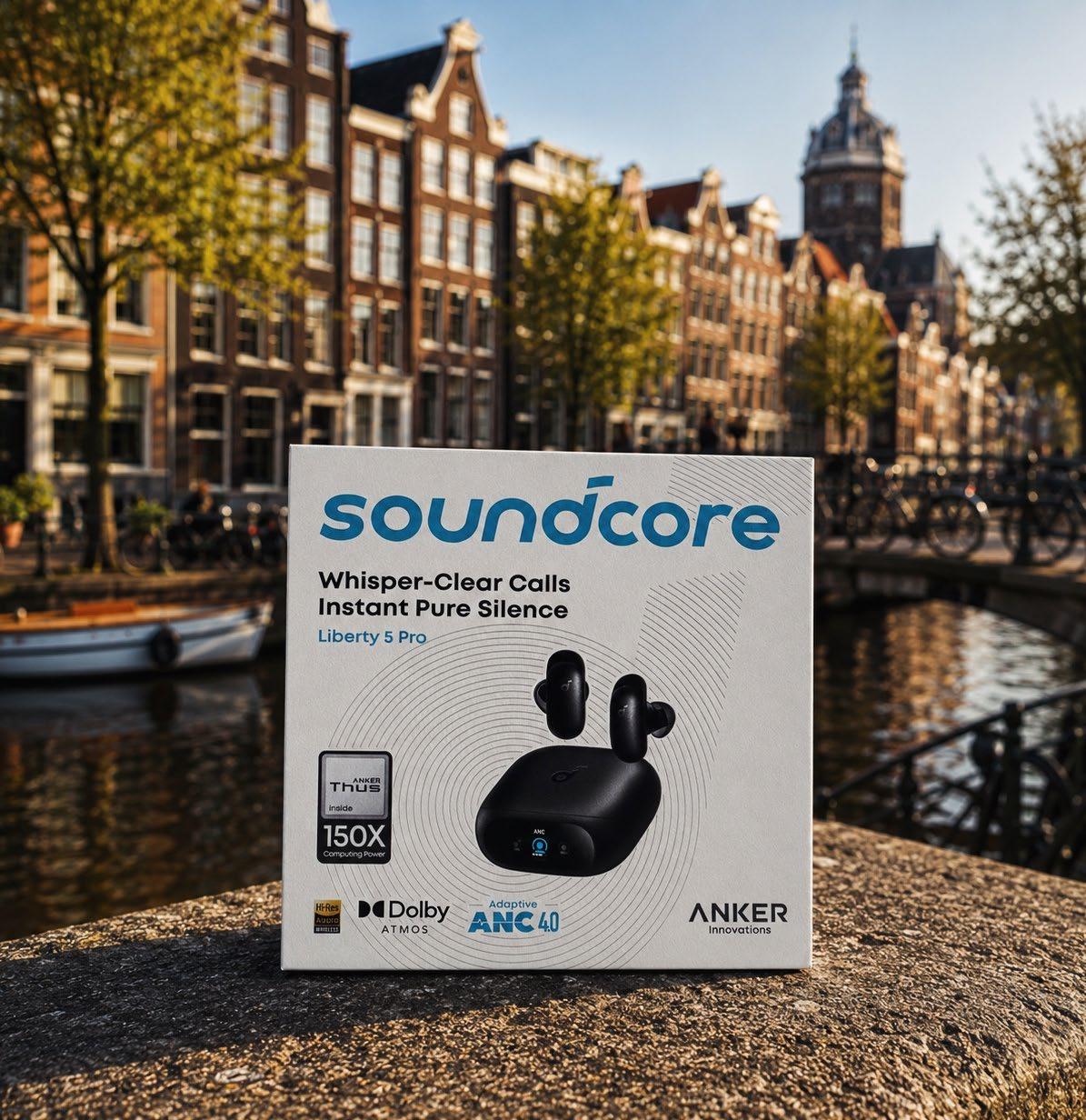
travel-focused earbuds we’ve tested. One of the biggest things that stood out immediately was just how calm they make busy environments feel. Public transport noise fades away. Crowded conversations become distant. Background rumbling disappears. Convention floor noise softens dramatically.
And unlike some ANC earbuds that create uncomfortable pressure or artificial silence, the Liberty 5 Pro manage to create a far more natural feeling of quietness. That balance becomes incredibly important during long convention days where overstimulation and constant noise can become genuinely exhausting. By the end of TwitchCon each day, these earbuds honestly felt less like audio gear and more like a way to mentally reset between the chaos.
The Best Call Quality We’ve Experienced on Wireless Earbuds
This is where the Liberty 5 Pro genuinely shocked us. Most wireless earbuds claim to offer “AI-enhanced calls” or “clear voice technology.”
Very few actually make a dramatic difference in real-world environments. The Liberty 5 Pro absolutely does. Across TwitchCon Europe we took calls while:
• Walking through Rotterdam streets
• Inside packed convention halls
• On noisy public transpor t
• During creator meetups
• In windy outdoor environments
• At loud after par ties
• While filming IRL content
And consistently, the response from people on the other end was the same, “You sound incredibly clear.”
The background noise suppression here is honestly exceptional. Not only do the microphones isolate your voice extremely well, but they also remove surrounding chaos in a way that feels smoother and more natural than many competitors. Instead of aggressively cutting audio in unnatural ways, the Liberty 5 Pro seems to intelligently soften surrounding noise while keeping voices clean and understandable.
What impressed us most was how calm conversations sounded. Even in hectic environments, calls felt controlled, balanced, and surprisingly quiet. There’s a smoothness to the microphone processing that avoids the robotic compression issues many ANC earbuds struggle with. And honestly, after testing countless earbuds over the years, these may genuinely offer some of the best real-world call performance we’ve experienced from wireless earbuds to date. For creators, IRL streamers, business users, or anyone constantly taking calls while travelling, that alone makes them incredibly compelling.
Audio Performance – Energetic, Rich & Surprisingly Detailed
The Liberty 5 Pro continues Soundcore’s trend of delivering enjoyable sound signatures designed for everyday listening rather than purely analytical listening. And honestly, that works massively in their favour. Music throughout TwitchCon travel sessions sounded consistently immersive and energetic. Whether listening to playlists while travelling across the Netherlands, editing videos in hotel rooms, or relaxing after long convention days, the Liberty 5 Pro delivered an extremely enjoyable listening experience.
The sound profile offers:
• Deep controlled bass
• Clear vocal presentation
• Strong stereo separation
• Crisp treble detail
• Excellent volume levels
• Wide immersive soundstage
Bass feels punchy without overwhelming the mix, while vocals remain clear enough for podcasts, YouTube videos, and livestream content. The tuning feels polished and modern without becoming fatiguing during long listening sessions, something that became especially important during full-day TwitchCon usage. And once again, the Soundcore app helps massively. The HearID personalization and custom EQ system allow you to tailor the sound profile extremely easily depending on your preferences. Spending even a few minutes adjusting the EQ noticeably improves the experience further.
Active Noise Cancellation – Perfect for Conventions & Travel
The ANC performance on the Liberty 5 Pro is genuinely excellent. Not just “good for the price.”
Actually impressive.
TwitchCon Europe ended up becoming the perfect environment to test this properly because the event constantly shifts between loud convention halls, public transport, crowded cafés, networking spaces, and busy nightlife environments. The Liberty 5 Pro handled all of it remarkably well.
They consistently reduced:
• Crowd chatter
• Convention floor noise
• Train rumbling
• Wind noise
• Traffic sounds
• Café ambience
• General travel noise without ever feeling overly aggressive or uncomfortable.
What makes the ANC particularly impressive is how balanced it feels. Some earbuds create silence by adding noticeable ear pressure or unnatural audio processing. The Liberty 5 Pro instead creates a softer, calmer listening environment that feels much easier to wear for extended periods. During long train rides across the Netherlands, that became one of the earbuds’ standout strengths.
Comfort During Long TwitchCon Days
Comfort matters massively at events like TwitchCon. You’re constantly moving. Walking for hours. Standing in queues. Travelling between locations. Attending meetups. Exploring convention halls. And thankfully, the Liberty 5 Pro absolutely delivers here. Even after wearing them for extended periods throughout full convention days:
• Ear fatigue remained minimal
• The fit stayed secure while walking
• Pressure build-up stayed low
• Long listening sessions remained comfortable
The earbuds feel lightweight without becoming loose, and once properly fitted with the right ear tips, they remain surprisingly stable during active movement around the city. That practicality made them incredibly easy to constantly keep in throughout the trip.
Battery Life & Everyday Reliability
Battery life throughout TwitchCon Europe was consistently reliable. Between train travel, convention usage, calls, music playback, editing sessions, and late-night after parties, the Liberty 5 Pro comfortably handled full days without creating battery anxiety. Fast charging also becomes genuinely valuable during travel-heavy events.
Being able to quickly top them up before heading back out into Rotterdam made the entire experience feel far more stress-free. And importantly, the earbuds remained consistently stable throughout testing. Bluetooth reliability stayed excellent, multipoint pairing worked smoothly, and connection dropouts remained extremely rare even in crowded convention environments packed with wireless interference.
Real-World Creator Usage – Built for Modern Streaming Culture
After spending significant time using the Liberty 5 Pro throughout TwitchCon Europe, what really stands out is how perfectly they fit modern creator lifestyles. These aren’t earbuds purely designed for sitting quietly listening to lossless audio at home. They’re designed for movement. For travel. For content creation. For busy lifestyles. For constant communication. For chaotic environments.
And that’s exactly why they work so well. Whether handling creator calls between events, editing content in hotel rooms, listening to music while travelling across Rotterdam, or simply needing a moment of quiet between convention sessions, the Liberty 5 Pro consistently delivered one of the smoothest wireless earbud experiences we’ve had in recent memory.
Minor Downsides – Not Quite Perfect
While the overall experience is extremely positive, there are still a few smaller compromises. Audiophiles looking for extremely neutral sound tuning may still prefer more referencefocused earbuds. Transparency mode, while very good, still doesn’t quite match the ultranatural openness offered by some flagship Apple products.
And while the case feels premium, it can still pick up fingerprints fairly easily during heavy travel usage. But honestly, these complaints feel relatively small once you look at the complete package Soundcore is offering here.
Final Verdict – Soundcore May Have Created the Ultimate Event & Travel Earbuds
After travelling across the Netherlands and using the Liberty 5 Pro extensively throughout TwitchCon Europe in Rotterdam, these quickly became some of the easiest wireless earbuds to recommend in 2026. Not because they’re perfect. But because they absolutely excel at the things modern users actually care about most. The noise cancellation is genuinely excellent. The comfort is fantastic. Battery life is reliable. The sound is immersive and enjoyable. And the call quality is honestly among the best we’ve ever tested on wireless earbuds. But more importantly, they make chaotic environments feel calm. And during massive creator events like TwitchCon, that becomes an incredibly
valuable feature. For commuters, travellers, creators, livestreamers, business users, and anyone constantly on the move, the Liberty 5 Pro feels like one of Soundcore’s strongest products to date.
Overall Rating: 9.5 / 10
A genuinely outstanding pair of wireless earbuds that combine excellent ANC, class-leading call clarity, strong battery life, premium comfort, and impressive real-world usability into one of the most complete creator-focused audio experiences Soundcore has delivered so far.
Acknowledgements & Thanks
A huge thank you to Soundcore for providing the Liberty 5 Pro earbuds for hands-on testing and coverage throughout TwitchCon Europe in Rotterdam. They became an essential part of navigating creator meetups, convention halls, train journeys, editing sessions, after parties, and everything in between during our time in the Netherlands.
The Liberty 5 Pro perfectly represents what Soundcore continues to do so well, delivering genuinely useful premium-style experiences focused on real-world everyday usage rather than just spec sheets alone. For anyone wanting high-end wireless earbuds capable of handling modern creator lifestyles without demanding ultra-flagship pricing, Soundcore has created something seriously impressive here.
www.soundcore.com
Facebook: @soundcoreUK

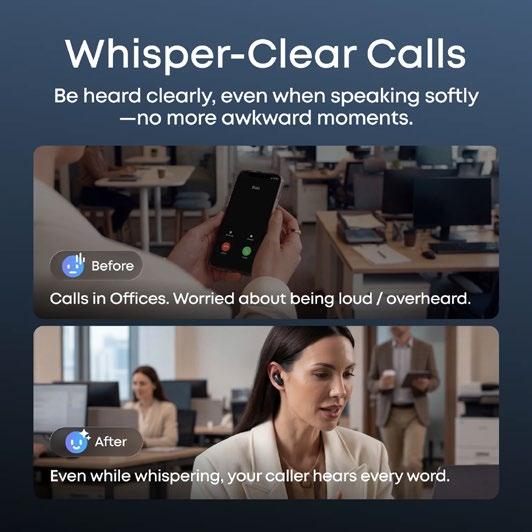
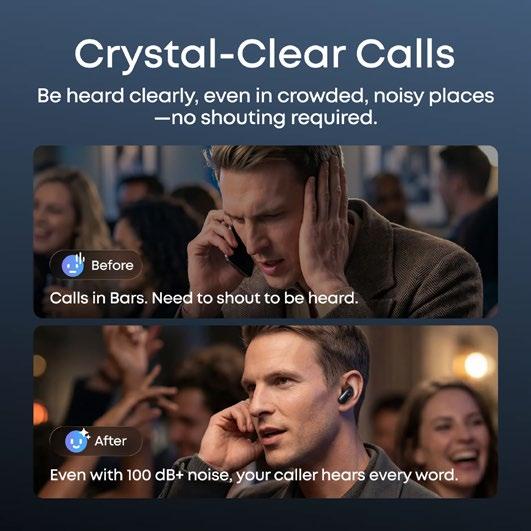



The Galleon 100 SD - Corsair and Elgato’s Creator Hardware Collaboration Feels Like the Future of Keyboards
Reviewed by: Brandon Sawyer
There’s a growing problem in modern creator setups. Desks are becoming overcrowded with hardware. A keyboard. A Stream Deck. A macro pad. Audio controls. Productivity shortcuts. Streaming tools. Editing macros. Over time, creators end up building complicated ecosystems of separate devices all trying to work together at once. The Galleon 100 SD feels like Corsair and Elgato looked directly at that problem and decided to rethink the entire experience from the ground up.
This isn’t simply a keyboard with a few extra buttons attached. It’s a full collaboration between Corsair’s enthusiast keyboard engineering and Elgato’s creator-focused Stream Deck ecosystem combined into one premium flagship device. And after more than a month of daily use across gaming, streaming, editing, Photoshop work, OBS management, article writing, content production, Discord moderation, and everyday productivity, the Galleon 100 SD quietly became one of the most important parts of our setup. Not because it’s flashy. Not because it tries too hard. But because it fundamentally improves workflow in ways that become difficult to live without once fully integrated into daily use. This is one of the smartest creatorfocused peripherals we’ve used in years.
First Impressions & Setup - A Premium Keyboard Built Around Modern Workflows
The moment the Galleon 100 SD comes out of the box, it immediately feels different from traditional gaming keyboards. The aluminium chassis gives it serious weight and rigidity, while the overall design feels far more refined and professional than most enthusiast keyboards currently on the market. Corsair clearly handled
the hardware engineering side with confidence. Meanwhile, Elgato’s influence becomes obvious the second you see the integrated LCD Stream Deck controls built directly into the keyboard itself.
And unlike many “hybrid” products that feel compromised, the Galleon immediately feels cohesive. Nothing feels forced. Nothing feels gimmicky.
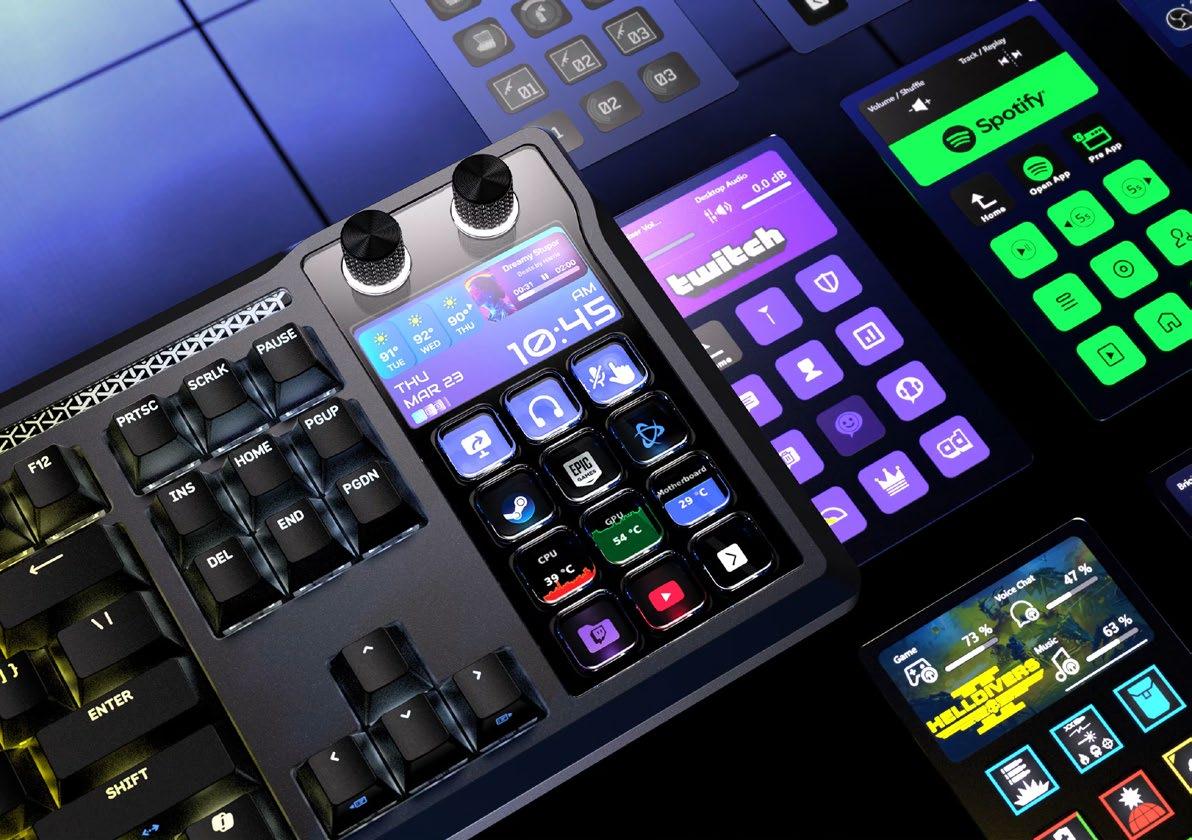
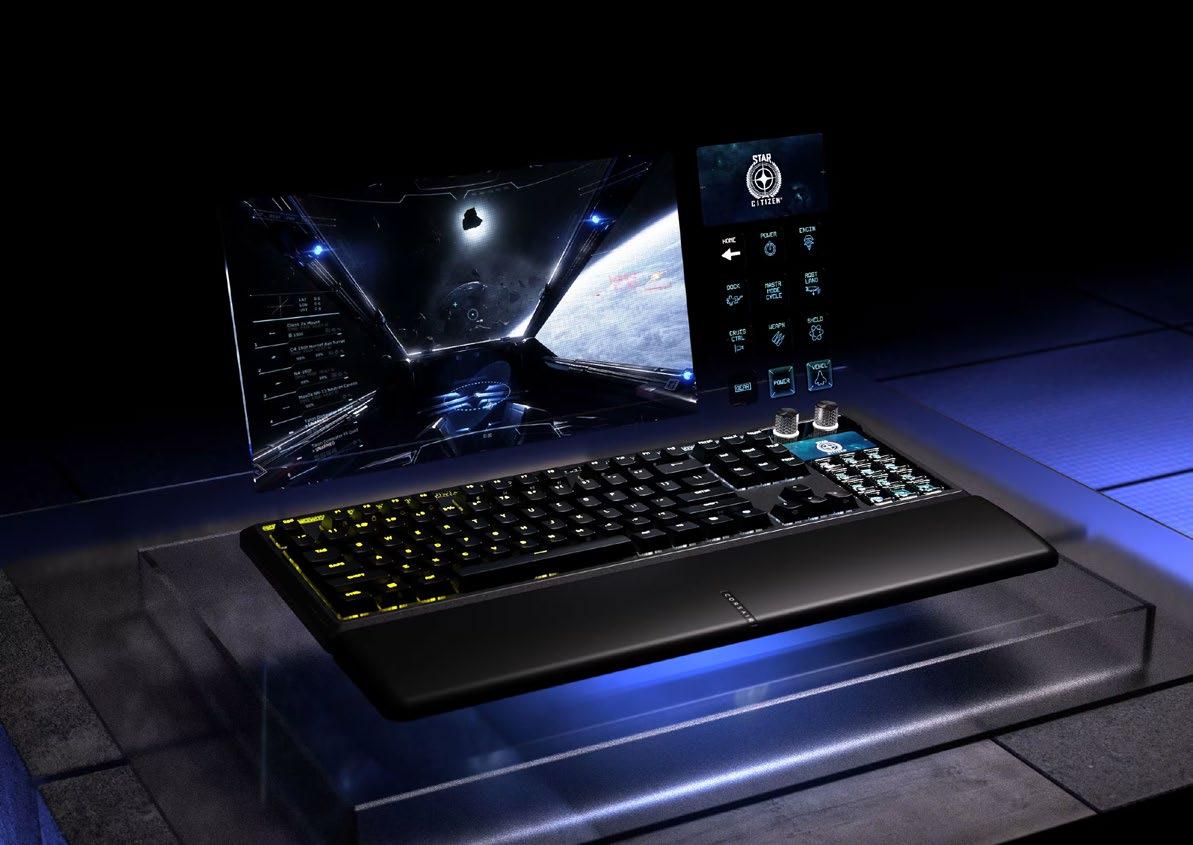


The setup process initially takes some time simply because of how much functionality is available. Between Corsair’s software ecosystem and Elgato’s Stream Deck customization tools, there’s an enormous amount of personalization possible.
Within the first day alone, we had:
• OBS scene switching
• Twitch controls
• Spotify playback
• Discord mute toggles
• Photoshop shor tcuts
• Premiere Pro macros
• Smart lighting controls
• Audio routing
• Multi-action creator workflows
• PC monitoring tools
all integrated directly into the keyboard itself. And once everything is configured properly, the experience becomes incredibly smooth.
The Keyboard Experience - One of Corsair’s Best Typing Experiences Yet
What surprised us most after extended testing is that the Galleon 100 SD would still be an excellent keyboard even without the Stream Deck integration. Corsair equipped the keyboard with premium enthusiast-level features:
• Pre-lubed linear switches
• Gasket-mounted construction
• Hot-swappable support
• Multi-layer sound dampening
• PBT keycaps
• 8,000Hz polling
And it genuinely shows during daily use. Typing feels soft, smooth, and remarkably refined. Keystrokes have a deep acoustic profile without harsh metallic noise, while the stabilizers feel tight and consistent even after weeks of heavy use. Long writing sessions became noticeably more comfortable compared to traditional gaming keyboards. Gaming performance is equally impressive.
Fast-paced shooters feel incredibly responsive
thanks to the ultra-low latency polling, while movement-heavy competitive games benefit from the keyboard’s fast actuation and clean input consistency. And despite how much technology is packed into the device, the overall typing experience never feels compromised. That balance is genuinely impressive.
The Integrated Elgato Stream Deck - The Feature That Changes Everything
The real magic of the Galleon 100 SD is the fully integrated Elgato Stream Deck system. This isn’t a stripped-down version. It’s a genuine Stream Deck experience built directly into the keyboard itself. The LCD shortcut keys are bright, responsive, and endlessly customizable through Elgato’s ecosystem of plugins and integrations. And after a month of daily use, it became impossible to imagine going back to a traditional setup. The Stream Deck integration transformed workflow entirely.
During streaming sessions:
• Scene transitions became instant
• Audio balancing became effor tless
• Stream controls stayed constantly accessible
During editing:
• Premiere Pro shortcuts sped up repetitive tasks dramatically
• Photoshop macros reduced workflow interruptions
• File organization became faster
Even everyday productivity improved:
• Launching apps
• Managing browser tabs
• Controlling smar t lighting
• Discord moderation
• Music playback
• AI workflow shortcuts all became one-touch actions.
The dual rotary dials became unexpectedly useful as well. We constantly used them for:

• Audio control
• Timeline scrubbing
• Zoom adjustments
• Brush scaling in Photoshop
• OBS volume balancing
• Music control
And because everything sits directly beside the main keyboard area, workflow feels natural rather than segmented across multiple devices. That seamless integration is what makes the Galleon 100 SD feel genuinely next generation.
Real-World Usage After One Month - Where the Galleon 100 SD Truly Proves Itself
The first few days with the Galleon 100 SD are exciting because of the customization possibilities. But after a month, the excitement evolves into something much more important: dependency. The keyboard quietly becomes central to your workflow. You stop thinking about shortcuts manually. You stop reaching for separate devices. You stop breaking concentration during tasks.
Everything becomes faster. Streaming became cleaner. Editing became smoother. Gaming setups became less cluttered.Daily productivity became more efficient. The most impressive part is how naturally the keyboard integrates into routine over time. It doesn’t constantly demand attention. It simply removes friction from workflow. That’s what separates genuinely great creator hardware from gimmicky peripherals. The Galleon 100 SD actively improves how you work every single day.
Build Quality & Design - Premium Hardware Without Compromise
Physically, the Galleon 100 SD feels exceptional. The aluminium construction feels dense and durable without becoming unnecessarily bulky, while the overall aesthetic strikes a perfect balance between gaming hardware and professional creator equipment.
It looks premium on camera. It looks clean in studio setups. And it avoids the overly aggressive “gamer” design language many keyboards still rely on.
Even after weeks of constant use:
• The keycaps remained flawless
• The Stream Deck display stayed sharp and vibrant
• The switches remained consistent
• The chassis showed zero flex or wear
This feels like a long-term flagship device built to survive years of heavy creator use. The included wrist rest also deserves praise. Long editing sessions and gaming nights remained consistently comfortable throughout testing.
Software & Ecosystem- Incredibly Powerful With Minor Growing Pains
The only real weakness of the Galleon 100 SD is the software complexity. Because the device combines both Corsair and Elgato ecosystems, there’s definitely a learning curve during initial setup. At times, firmware updates and profile syncing felt slightly messy, particularly early on. However, once everything was configured correctly, stability remained strong throughout the majority of testing.
And honestly, the depth of customization more than justifies the extra setup time. The sheer amount of integrations available through Elgato’s marketplace alone makes the keyboard feel endlessly expandable. This isn’t a peripheral that peaks on day one. It actually becomes more valuable the longer you use it.
Is It Worth the Price?
The Galleon 100 SD sits firmly in premium territory at £309.99 currently on sale. But when you break down what you’re actually getting, the value proposition becomes much easier to understand.
This isn’t just:
• A keyboard
• A Stream Deck
• A macro controller
• A productivity tool
• A streaming accessory
It’s all of those things combined into one cohesive creator-focused system. And for
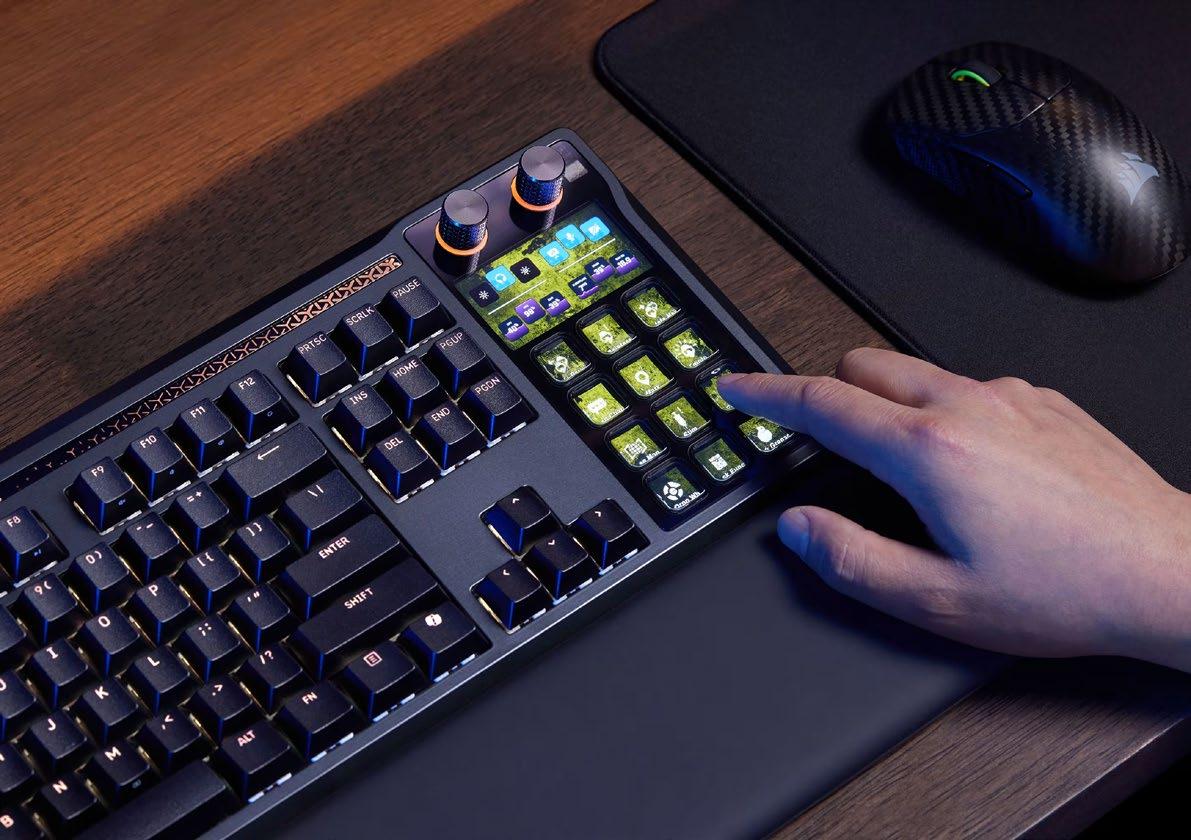
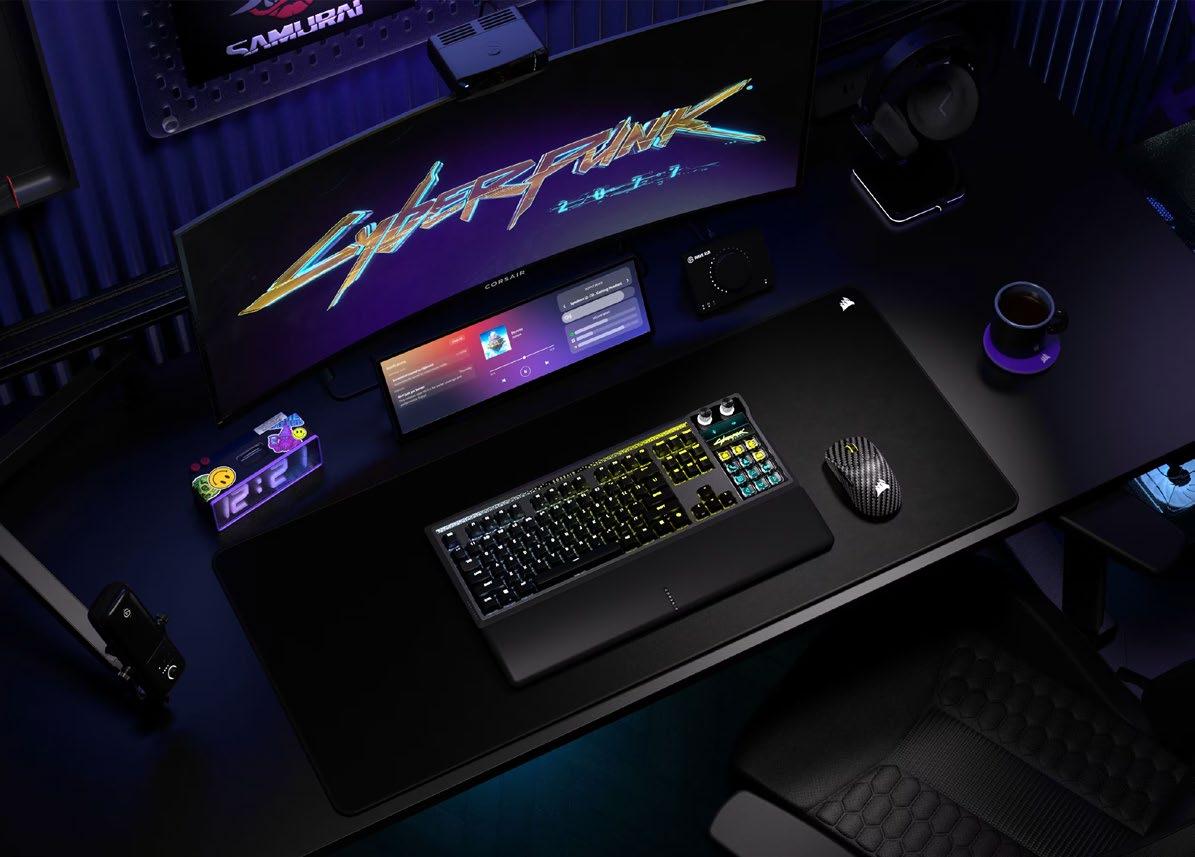

for streamers, editors, content creators, multitaskers, and productivity-focused users, the workflow improvements quickly become significant enough to justify the investment. Especially if you’re already part of the Elgato ecosystem.
Corsair and Elgato Have Created Something Genuinely Special
After over a month of daily use, the Galleon 100 SD has become one of the most impressive creator peripherals we’ve tested in years. Not because it reinvents keyboards entirely. But because it successfully merges multiple creator tools into one seamless experience without sacrificing quality in the process.
The typing experience is outstanding. The gaming performance is elite level. The Stream Deck integration is transformative. And the overall workflow improvements become genuinely difficult to give up once fully integrated into daily use. Yes, the software ecosystem still has room to mature. Yes, the price is undeniably premium. But as a collaboration between Corsair and Elgato, the Galleon 100 SD feels like a major glimpse into the future of creatorfocused hardware. And honestly, after weeks of using it daily, going back to a standard keyboard feels surprisingly limiting.
Overall Rating: 9 / 10
A brilliantly engineered collaboration between Corsair and Elgato that successfully combines enthusiast keyboard performance with the power of the Stream Deck ecosystem. The Galleon 100 SD isn’t just another premium keyboard, it's a true creator command centre built for modern workflows, streaming, gaming, and productivity.
Acknowledgements & Thanks
A huge thank you to Corsair and Elgato for providing the Galleon 100 SD for longterm hands-on testing and creator workflow evaluation. Having the opportunity to use the keyboard extensively across gaming, streaming, editing, content production, and everyday productivity allowed for a genuine real-world review experience that goes far beyond first impressions.
The Galleon 100 SD represents exactly the kind of innovation we love seeing in creator hardware: ambitious, genuinely useful, and designed around how modern creators actually work every single day. Make sure to check out Corsair & Elgato below to check out a range of their great products.

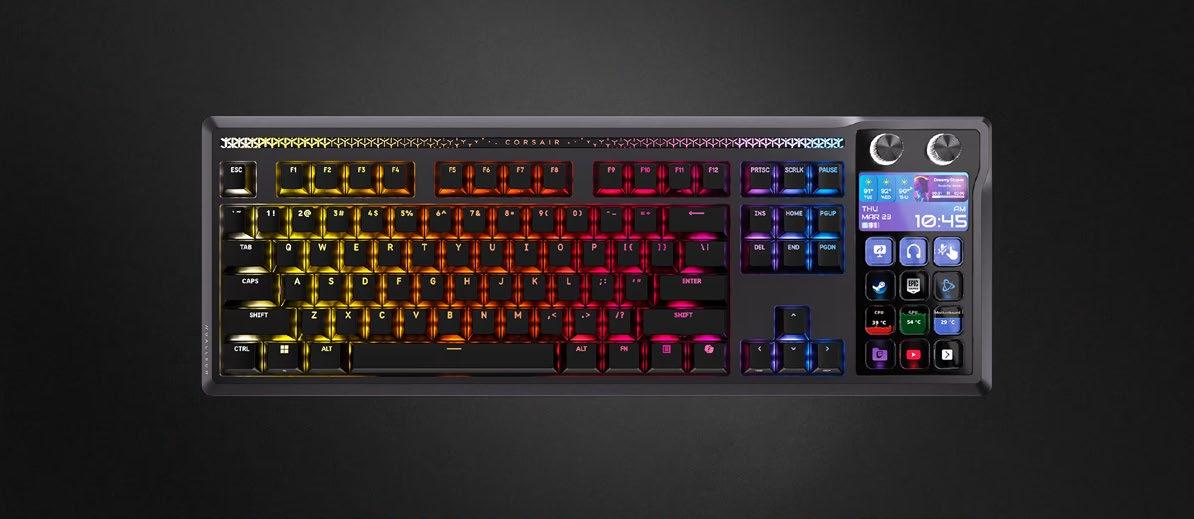

VISCER & TERA: Two High-Performance Vision Systems That Redefined My Comfort, Clarity, and Competitive Edge
Reviewed by: Brandon Sawyer
There’s a growing issue with modern gaming setups that almost everyone eventually notices. We spend hours: gaming, editing content, working across multiple monitors, scrolling phones late at night, watching streams, and sitting under bright RGB lighting while staring directly into high-refresh displays. And after enough screen time, the symptoms become familiar: eye strain, dryness, fatigue, headaches, blurred focus, and that “my eyes need a break” feeling after long sessions. Blue light glasses have become increasingly popular because of this.
The problem is that most gaming glasses either: look incredibly generic, feel cheaply made, or lean so heavily into “techwear aesthetics” that they become difficult to wear comfortably day to day. The GUNNAR x Alienware Bermuda Triangle glasses feel refreshingly different. Instead of trying to create another ordinary pair of screen protection glasses, GUNNAR and Alienware built something that genuinely feels like premium futuristic gaming hardware translated into eyewear. And honestly, after spending several weeks using the Bermuda Triangle glasses across gaming sessions, editing work, late-night writing, streaming, and general PC use, they quickly became one of the most visually unique gaming accessories we’ve tested in quite some time.
Not because they completely reinvent blue light glasses. But because they successfully combine sleek sci-fi design, practical comfort, Alienware-inspired aesthetics, and genuinely useful lens technology into one seriously stylish package.
The moment the Bermuda Triangle glasses come out of the box, it’s immediately obvious these are not standard blue light glasses.The futuristic shield-style visor design instantly grabs attention.
Inspired heavily by Alienware’s sleek sci-fi visual identity, the glasses feature:
• a minimalist panoramic shield lens
• angular futuristic frame styling
• sleek teal-blue metallic accents
• lightweight floating visor aesthetics
• clean cyber-futuristic lines
• subtle premium detailing throughout
Inside the box you get:
• GUNNAR x Alienware Bermuda Triangle glasses
• padded collector-style protective sleeve
• Alienware microfiber cleaning cloth
• premium collaboration packaging
• warranty and documentation
The included accessories genuinely elevate the overall presentation too.
The soft puffy sleeve feels premium, while the Alienware-branded cleaning cloth helps the entire package feel more like collector gear than simply another pair of PC glasses.

And honestly, they look fantastic.
First Impressions & Unboxing – Alienware Energy Immediately



The Design – Futuristic Without Feeling Overdesigned
The Bermuda Triangle glasses are futuristic, but in a much cleaner and more wearable way than many gaming collaborations. Where some gaming eyewear leans aggressively oversized or overly industrial, the Bermuda Triangle glasses focus on sleek minimalism. The single shield lens gives them a modern sci-fi silhouette while still remaining surprisingly elegant.
The teal-blue frame detailing paired with the subtle Alienware styling creates something that genuinely feels premium rather than gimmicky. And honestly, that balance is what makes these glasses stand out so much. They feel inspired by high-end gaming setups, Alienware laptops, RGB-lit battle stations, and futuristic tech aesthetics, without becoming cartoonishly over-the-top.
Yes, people will notice them. But unlike many “gaming glasses,” they still feel wearable enough for daily desk use. That makes them especially appealing for: gamers, streamers, content creators, tech enthusiasts, and anyone wanting blue light glasses with actual personality.
Blue Light Protection & Lens Technology –Comfortable During Long Sessions
Style alone wouldn’t matter if the glasses didn’t actually improve screen comfort. Thankfully, this is where GUNNAR’s experience becomes obvious. The Bermuda Triangle glasses feature GUNNAR’s blue light filtering lens technology alongside anti-reflective coatings and screen glare reduction.
During testing, the glasses noticeably helped reduce fatigue during long monitor sessions.
After several-hour gaming or editing sessions, we consistently noticed:
• reduced eye strain
• less monitor glare
• improved comfort during late-night use
• reduced screen fatigue
• less dryness after extended sessions
• more comfortable multi-monitor usage
The lightly tinted lens design also helps maintain a more natural viewing experience compared to heavier, amber-tinted alternatives. That makes them especially good for users who: game during the day, work from home, edit content, or constantly move between productivity and entertainment setups. The anti-smudge and anti-reflective coatings also help massively during everyday use.
Reflections remain minimal, screens stay clearer, and fingerprints are easier to clean than on many cheaper blue light glasses.
Comfort & Daily Use – Surprisingly Lightweight
One of the biggest surprises with the Bermuda Triangle glasses is how lightweight they feel during extended wear. At first glance, the visorstyle lens design looks like it might become awkward after a few hours. Thankfully, that really isn’t the case.
The frame feels well-balanced, while the nose supports and lightweight construction prevent excessive pressure during longer sessions.
Even after several-hour use:
• the nose bridge remained comfortable
• pressure around the ears stayed minimal
• the visor lens never became distracting
• peripheral visibility remained excellent
• the lightweight feel made extended use easy
The panoramic shield lens also works brilliantly for multi-monitor setups because the viewing area feels extremely open.
That becomes especially useful for:
• ultrawide monitor setups
• editing timelines
• streaming dashboards
• productivity workstations
• dual-monitor gaming setups
And honestly, once you adjust to the futuristic styling, they quickly become addictive to wear during long PC sessions.

Real World Usage After Several Weeks – More Than Just a Stylish Collaboration
The first few days with the Bermuda Triangle glasses are exciting because of the Alienwareinspired aesthetics. But after several weeks, what really stands out is how naturally they fit into a daily setup. Gaming sessions feel more relaxed. Late-night editing becomes easier on the eyes. Bright monitors feel less harsh. And the wide panoramic lens genuinely improves long-session comfort. At the same time, the futuristic styling never stops feeling cool. Every time we picked them up, they still felt like a premium gaming accessory rather than just functional eyewear. That balance between practicality and style is exactly what makes these glasses work so well.
Performance & Minor Issues – Not Built for Everyone
While the overall experience is extremely positive, there are still a few limitations worth mentioning. The biggest one is obvious: these glasses are intentionally futuristic. The visorstyle design absolutely stands out, meaning they may not appeal to users wanting subtle office-style eyewear. The lens tint may also slightly affect colour perception for users doing highly colour-sensitive creative work like professional photo grading. And depending on retailer pricing, these sit firmly in premium gaming accessory territory rather than cheap casual blue light glasses. Still, for Alienware fans and gaming setup enthusiasts, the overall presentation and build quality help justify the premium feel.
Is It Worth It? – A Gaming Accessory That Actually Feels Premium
The GUNNAR x Alienware Bermuda Triangle glasses absolutely lean into collector appeal.
But when you break down what you’re getting:
• official Alienware collaboration
• futuristic Bermuda Triangle visor design
• GUNNAR lens technology
• premium coatings
• lightweight comfort
• panoramic viewing experience
• collector-style accessories
• standout gaming aesthetics
• excellent long-session usability
…the value starts making much more sense.
These aren’t trying to compete with cheap generic blue light glasses online.
They’re designed for:
• gamers
• streamers
• content creators
• Alienware fans
• multi-monitor PC users
• collectors wanting standout gaming accessories
• setup enthusiasts wanting stylish functional gear
And honestly, for that audience, they absolutely deliver something unique.
Final Verdict – One of the Cleanest Looking Gaming Glasses We’ve Used
After several weeks of daily use, the GUNNAR x Alienware Bermuda Triangle glasses became far more than simply another licensed gaming collaboration. They genuinely improved comfort during long gaming and productivity sessions while simultaneously being one of the sleekestlooking accessories sitting on our desk setup. The design feels futuristic without becoming excessive. The lens technology works well. The comfort is surprisingly impressive. And the overall Alienware presentation feels polished and authentic.
Yes, the styling won’t appeal to everyone. Yes, the pricing sits in premium territory. And yes, they’re intentionally designed to stand out. But honestly, that’s exactly why they work so well. The Bermuda Triangle glasses feel like a proper fusion of gaming culture, sci-fi aesthetics, and functional everyday comfort rather than just another branded accessory. And for Alienware fans especially, GUNNAR has created something genuinely stylish here.
Overall
Rating: 9 / 10
A sleek, futuristic pair of gaming glasses that successfully combine practical blue light protection with one of the cleanest sci-fi gaming collaborations we’ve seen in years. The Bermuda Triangle glasses are stylish, comfortable, functional, and undeniably cool.
Acknowledgements & Thanks
A huge thank you to GUNNAR Optiks and Alienware for creating a collaboration that genuinely feels designed for gamers, creators, and PC enthusiasts rather than simply slapping branding onto generic eyewear.
The Bermuda Triangle glasses represent exactly the kind of gaming accessory collaboration we love seeing: stylish, functional, premium feeling, and built with genuine personality.


GUNNAR Cyberpunk 2077 Dex Glasses Review - The Most Stylish
Gaming Glasses We’ve Ever Worn
There’s a growing problem with modern gaming and content creation setups. Most of us now spend: hours gaming, editing videos, working on multiple monitors, scrolling on phones, watching streams, and sitting in front of bright displays almost constantly.
And after long sessions, the symptoms start becoming familiar: eye strain, fatigue, dry eyes, headaches, and that feeling where your eyes simply need a break. Blue light glasses have exploded in popularity because of this. The problem is that many of them either look painfully generic or feel like cheap gimmicks with very little personality.
The GUNNAR Cyberpunk 2077 Dex glasses feel completely different. Instead of simply creating another pair of gaming glasses, GUNNAR partnered with CD Projekt Red to create something that genuinely feels pulled directly out of Night City itself. And honestly, after spending several weeks using the Cyberpunk 2077 Dex glasses across gaming sessions, editing work, late-night writing sessions, streaming, and everyday PC use, they quickly became one of the coolest gaming accessories we’ve tested in a very long time.
Not because they completely reinvent blue light glasses. But because they successfully combine style, functionality, comfort, and pure Cyberpunk energy into one genuinely unique product.
First Impressions & Unboxing - Straight Out of Night City
The moment the Cyberpunk 2077 Dex glasses come out of the box, it’s immediately obvious these are not standard gaming glasses. The oversized shield-lens design instantly stands out. Inspired directly by Dexter DeShawn from Cyberpunk 2077, the glasses feature:
• a futuristic oversized visor-style lens
• brushed nickel detailing
• angular cyberpunk aesthetics
• thick industrial-style temples
• a genuinely striking sci-fi silhouette
And honestly, they look incredible.
Inside the box you get:
• GUNNAR Cyberpunk 2077 Dex glasses
• Collector’s padded puffy sleeve
• Cyberpunk-themed microfiber cleaning cloth
• Official Cyberpunk 2077 collector packaging
• 12-month warranty documentation
The collector presentation genuinely adds to the overall experience too.

The packaging feels premium, while the included map-style cleaning cloth and padded sleeve make the glasses feel more like collector gear than simply another pair of screen protection glasses.
The Design - One of the Boldest Gaming Accessories Available
The Dex glasses are unapologetically dramatic. And honestly, that’s exactly why they work so well. The oversized single-lens visor design immediately grabs attention and genuinely feels like wearable Cyberpunk fashion rather than traditional eyewear. The brushed nickel frame adds a premium industrial aesthetic, while the large panoramic lens creates an immersive field of vision during gaming and monitor use.
And surprisingly, despite the aggressive futuristic design, they’re actually far more wearable than expected. Yes, people will absolutely notice them. Yes, they look intentionally over-the-top. But honestly, that’s part of the appeal. These glasses feel designed for people who genuinely love gaming culture and want something with personality rather than another generic pair of blue light lenses.
Blue Light Protection & Lens TechnologySurprisingly Effective During Long
Sessions
Style alone wouldn’t matter if the actual glasses performed poorly. Thankfully, this is where GUNNAR’s experience becomes obvious. The Cyberpunk 2077 Dex glasses feature GUNNAR’s patented lens technology with multiple tint options including:
• Amber
• Sun
• Amber Max
• Clear variants depending on configuration
The amber lenses in particular became our favourite during testing. Long gaming sessions immediately felt less fatiguing, especially during late-night use across multiple monitors.
During testing we noticed:
• reduced eye strain
• less dryness during long sessions
• improved comfort during editing work
• reduced glare from bright displays
• less screen fatigue late at night
And while blue light glasses will always remain somewhat subjective depending on the user, the difference after several-hour sessions genuinely became noticeable. The antireflective and smudge-resistant coatings also help massively during daily use. Screens remain clear, reflections are reduced and cleaning them stays relatively easy even after constant usage.
Comfort & Daily Usage - Surprisingly Comfortable Despite the Oversized Design
One of the biggest surprises with the Dex glasses is how comfortable they actually are. At first glance, the oversized shield design looks like it might become heavy or awkward during long sessions. Thankfully, that isn’t really the case. The weight distribution is handled surprisingly well, while the temples taper nicely behind the ears to prevent excessive pressure.
Even after several-hour gaming sessions:
• pressure remained minimal
• the nose bridge stayed comfortable
• the visor lens never felt distracting
• peripheral coverage felt excellent
The oversized panoramic design also works brilliantly for multi-monitor setups because the lens covers a huge field of vision without forcing you to constantly look outside the frame edges. That makes them especially good for:
• gaming setups
• editing work
• streaming
• productivity workstations
• ultrawide monitor users
And honestly, once you adjust to the oversized style, they become surprisingly addictive to wear during long PC sessions.
Real World Usage After Several Weeks - More Than Just a Novelty Collaboration
The first few days with the Dex glasses are exciting because of the Cyberpunk aesthetic. But after several weeks, what really stands out is how practical they actually become. They quietly integrate into your setup. Gaming sessions feel more comfortable. Late-night editing becomes easier on the eyes. Bright monitors feel less harsh. And the large visor lens becomes genuinely useful during extended work sessions. At the same time, the Cyberpunk styling never stops being fun.
Every time we put them on, they still felt like a proper collector’s piece rather than simply functional eyewear. That balance between practicality and personality is exactly what makes these glasses stand out.
Performance & Minor Issues - Not Built for Subtlety
While the overall experience is extremely positive, there are still a few limitations worth mentioning. The biggest one is obvious: these glasses are not subtle.

The oversized futuristic design absolutely draws attention, meaning they won’t appeal to users wanting discreet everyday eyewear. The amber lens tint can also slightly alter colour perception, which may not be ideal for colourcritical creative work like professional photo editing.
And at roughly £119.99, these definitely sit in premium gaming accessory territory rather than casual impulse-buy pricing. Still, for Cyberpunk fans especially, the overall presentation and build quality help justify the premium feel.
Is It Worth £119.99? - A Collector’s Piece That’s Actually Useful
The GUNNAR Cyberpunk 2077 Dex glasses absolutely lean heavily into collector appeal. But when you break down what you’re actually getting:
• Official Cyberpunk 2077 licensing
• Unique Dex-inspired design
• GUNNAR blue light lens technology
• Premium coatings
• Oversized panoramic viewing
• Collector packaging
• Included accessories
• Strong everyday comfort
the pricing starts making much more sense. These aren’t trying to compete with generic cheap blue light glasses on Amazon.
They’re designed for:
• Cyberpunk fans
• gamers
• streamers
• content creators
• multi-monitor PC users
• collectors wanting standout gaming accessories
And honestly, for that audience, they absolutely deliver something genuinely unique.
Final Verdict - One of the Coolest Gaming Accessories We’ve Used in Years
After several weeks of daily use, the GUNNAR Cyberpunk 2077 Dex glasses became far more than just a novelty collector item. They genuinely improved comfort during long gaming and editing sessions while simultaneously being one of the most visually striking gaming accessories sitting on our desk setup.
The design is bold. The lens technology works well. The comfort is surprisingly impressive. And the overall Cyberpunk presentation feels incredibly authentic. Yes, the styling won’t appeal to everyone. Yes, the price is premium.
And yes, they’re intentionally dramatic. But honestly, that’s exactly why they work so well. The Dex glasses feel like a proper celebration of Cyberpunk 2077’s world and aesthetic rather than just another licensed product with a logo slapped on the side. And for fans of Night City, GUNNAR has created something genuinely special here.
Overall Rating: 9 / 10
A brilliantly designed pair of gaming glasses that successfully combine practical blue light protection with one of the boldest and most stylish licensed gaming collaborations we’ve seen in years. The Cyberpunk 2077 Dex glasses are futuristic, functional, and unapologetically cool.
Acknowledgements & Thanks
A huge thank you to GUNNAR Optiks for kindly providing the Cyberpunk 2077 Dex glasses for hands-on testing and long-term review coverage. We’ve genuinely had an amazing time using them across gaming, editing work, content creation, streaming, and everyday PC use. The Cyberpunk 2077 Dex glasses represent exactly the kind of collaboration we love seeing in gaming accessories, stylish, functional, genuinely unique, and clearly designed by people who understand both gaming culture and collector appeal.
If you too want to pick up these glasses or check out a huge range that Gunnars do create then head to their website below.


MARVO Pact 60 Wireless Controller & NIRO 60W
Wireless Mouse Review – Budget Gaming Gear Done
Right

Reviewed by: Brandon Sawyer
Gaming peripherals have become increasingly expensive over the last few years. Controllers now launch at premium prices packed with “pro-level” features many casual players will never realistically use, while gaming mice continue chasing ultra-competitive esports performance with increasingly aggressive designs and inflated costs. For entry-level gamers or players building a setup on a budget, finding affordable peripherals that still feel reliable and enjoyable to use has honestly become far more difficult than it should be. That’s where MARVO enters the conversation.
Target Components recently sent over two of MARVO’s latest budget-friendly wireless gaming peripherals for testing, the Pact 60 Wireless Controller and the NIRO 60W Wireless Mouse and after several weeks of gaming, editing, browsing, multiplayer sessions, and everyday desktop use, both products ended up being genuinely impressive for their price range. Neither device is trying to compete directly with £150 esports mice or ultra-premium pro controllers. Instead, MARVO clearly understands the audience it’s targeting: players who simply want affordable gaming gear that feels comfortable, modern, reliable, and easy to use straight out of the box. And honestly, both products succeed surprisingly well at exactly that.
First Impressions – Affordable Without Feeling Cheap
The first thing that stands out about both the Pact 60 and NIRO 60W is how clean and modern they actually look. Budget gaming peripherals often fall into the trap of cheap plastics, excessive RGB lighting, or overly aggressive “gamer” aesthetics. MARVO avoids most of those problems entirely. Both products feel lightweight, minimal, and far more refined than many peripherals sitting in a similar price bracket. Inside the box, setup is refreshingly straightforward.
The Pact 60 includes:
• Wireless controller
• USB wireless receiver
• USB-C charging cable
• Setup documentation
Meanwhile, the NIRO 60W includes:
• Wireless gaming mouse
• USB receiver
• Charging cable
• Quick-start guides
Within minutes, both devices were connected and ready to use.
And honestly, that simplicity matters. Entry-level gaming peripherals should feel approachable rather than overly complicated, and MARVO clearly understands that.

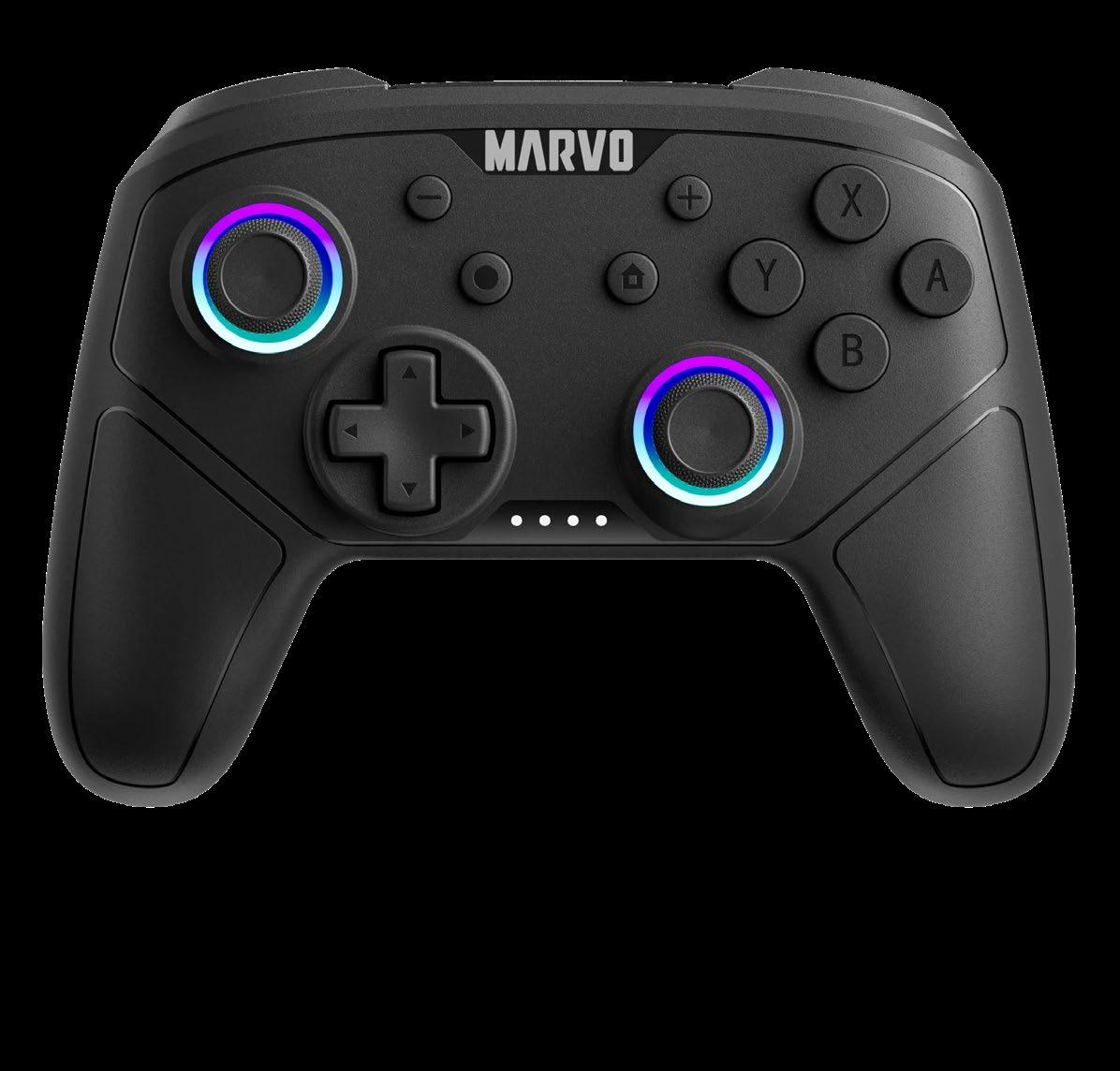
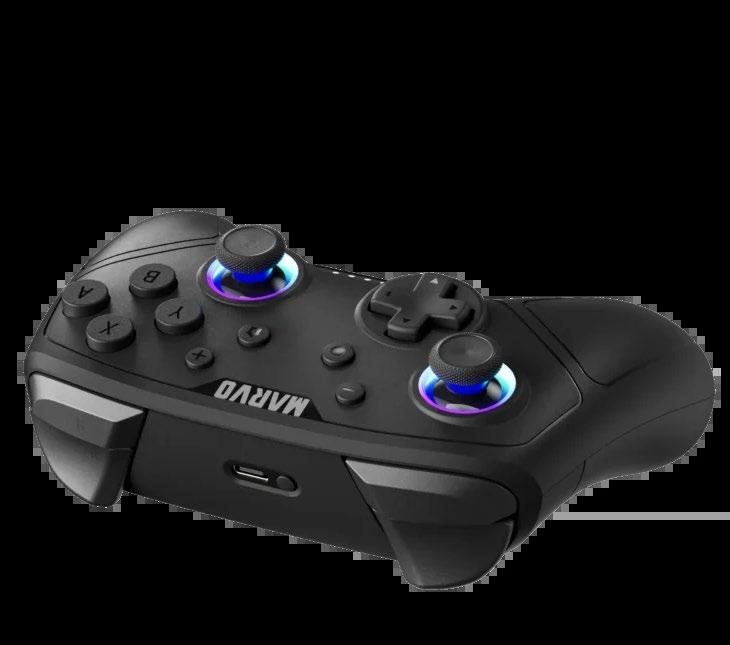





MARVO Pact 60 Wireless Controller –
Comfortable Everyday Gaming at a Budget
The Pact 60 Wireless Controller immediately feels familiar in the best possible way. Its ergonomic shape clearly takes inspiration from modern console controllers, creating a layout that feels comfortable across long gaming sessions whether you’re playing shooters, sports games, racing titles, or platformers.
And for a controller sitting within the £25–£30 price range, the comfort level here is genuinely impressive. The textured grips help prevent slipping during longer sessions, while the thumb sticks remain smooth and responsive throughout gameplay. Face buttons feel tactile without becoming overly clicky, and the triggers provide satisfying resistance during racing and action-heavy games. What surprised us most was the consistency of the wireless performance. Many cheaper wireless controllers often struggle with connection stability or noticeable input delay, but during testing, the Pact 60 remained surprisingly reliable across multiple gaming sessions.
EA Sports FC Rocket League on

At first glance, it looks fairly simple compared to many modern gaming mice loaded with extreme RGB lighting and aggressive designs. But after several weeks of use across gaming, editing work, browsing, and productivity tasks, it became clear that MARVO focused heavily on practicality and comfort here. And honestly, that was the right decision.
The lightweight design makes the mouse extremely easy to use for extended periods without causing fatigue, while the ergonomic shape feels comfortable during both gaming sessions and general desktop use. For a mouse priced around £20–£25, the overall build quality genuinely exceeds expectations. Primary clicks feel responsive and satisfying, side buttons are positioned naturally, and the scroll wheel strikes a good balance between smoothness and tactile feedback. Wireless stability also remained reliable throughout testing.
Even during faster-paced multiplayer games, tracking remained consistent without noticeable lag or connection drops. Sensor performance felt accurate enough for everyday competitive gaming while still remaining approachable for casual users. Again, MARVO isn’t trying to reinvent the gaming mouse market here. Instead, the NIRO 60W focuses on delivering dependable wireless performance at an affordable price, and that simplicity honestly works heavily in its favour.
Design & Build Quality – Surprisingly Modern for the Price

responsive and enjoyable to play. Battery life also performed better than expected. The controller comfortably lasted through multiple evenings of gameplay before needing a recharge, making it ideal for casual everyday use without constantly reaching for the charging cable. And while it obviously lacks some of the advanced customization features found on high-end “pro” controllers, that honestly never feels like a major issue considering the price point MARVO is targeting here.
NIRO 60W Wireless Mouse – A Strong Budget Mouse for Gaming & Productivity
The NIRO 60W Wireless Mouse ended up being the biggest surprise of the two products.
One of the strongest aspects of both products is presentation. Despite their budget pricing, neither device feels overly cheap or disposable. MARVO has clearly focused on creating peripherals that still feel modern and visually clean without forcing excessive “gaming” aesthetics onto users.
The RGB lighting remains subtle rather than distracting, and both products feel lightweight without becoming fragile. The NIRO 60W especially feels well-balanced physically, while the Pact 60’s ergonomic layout makes it easy to use comfortably during long gaming sessions. For younger players, casual gamers, or anyone building an affordable setup, both devices fit
naturally into modern gaming environments without feeling obviously “budget.”
And honestly, that matters far more than flashy gimmicks.
Performance & Compromises – BudgetFriendly With Realistic Expectations
Of course, there are still some limitations worth mentioning. The Pact 60 doesn’t offer advanced customization software, rear paddles, or trigger locks like premium competitive controllers. Meanwhile, hardcore esports players may still prefer ultra-light flagship gaming mice with higher-end sensors and deeper software ecosystems than the NIRO 60W provides.
But realistically, neither product is trying to compete in those categories. MARVO clearly designed both peripherals for entry-level and budget-conscious gamers who prioritize comfort, reliability, and affordability over extreme competitive features. And viewed through that lens, both products perform extremely well.
Is It Worth It? – Excellent Value for Budget Gamers
This is where both products become genuinely easy to recommend. The MARVO Pact 60 Wireless Controller currently sits within the affordable £25–£30 range, while the NIRO 60W Wireless Mouse comes in at roughly £20–£25 depending on retailer availability. For wireless gaming peripherals, those prices are honestly very competitive.
When combined, both products create a genuinely strong affordable wireless gaming setup that feels far more premium than many players may expect at this price level. For players building their first setup, upgrading older peripherals, or simply looking for dependable budget gaming hardware, MARVO has positioned both devices extremely well.
Final Verdict – MARVO Understands the Budget Gaming Market
After several weeks of testing, both the MARVO Pact 60 Wireless Controller and NIRO 60W
Wireless Mouse proved something important: Affordable gaming peripherals no longer need to feel heavily compromised. The Pact 60 delivers comfortable wireless gaming with reliable performance and strong battery life, while the NIRO 60W stands out as a lightweight, dependable mouse perfectly suited for both gaming and everyday productivity.
Neither device is trying to compete with ultrapremium esports hardware. And honestly, that’s exactly why both products work so well.
MARVO clearly understands its audience, gamers who want affordable peripherals that still feel modern, stylish, comfortable, and dependable without spending hundreds on accessories alone. And for entry-level players especially, both devices represent excellent value.
Overall Rating – 8 / 10
A genuinely impressive pair of budget-friendly wireless gaming peripherals that successfully combine affordability, comfort, reliability, and modern design into an accessible setup perfect for casual and entry-level gamers.
Acknowledgements & Thanks
A huge thank you to Target Components for kindly providing the MARVO Pact 60 Wireless Controller and NIRO 60W Wireless Mouse for hands-on testing and review coverage. We’ve genuinely enjoyed using both devices across multiplayer gaming, everyday desktop use, editing work, casual sessions, and general productivity tasks.
MARVO continues proving that affordable gaming peripherals can still feel stylish, reliable, and genuinely enjoyable to use without demanding premium pricing. To explore more from the MARVO gaming range and Target Components, head over to the link below.
www.marvo-tech.com
www.targetcomponents.co.uk

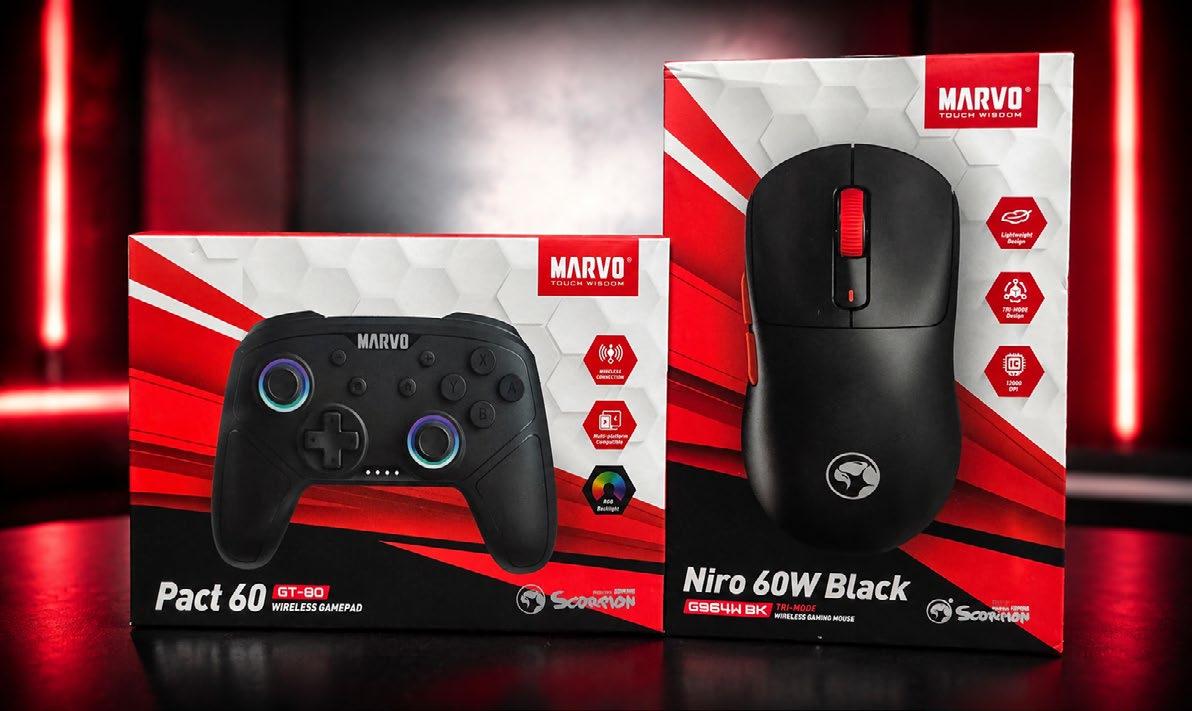
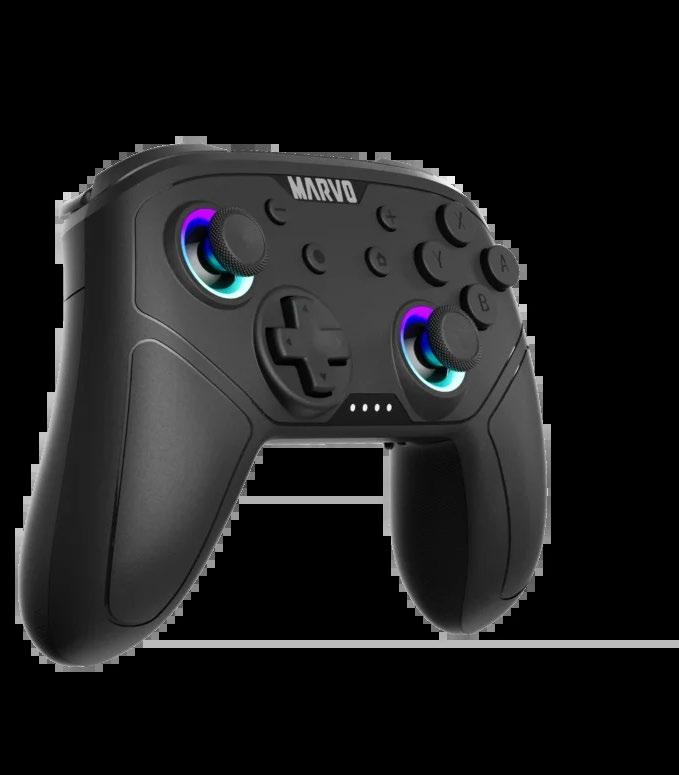



TwitchCon Europe 2026 Rotterdam Recap
A Celebration of Community, Creativity & Content Creation
TwitchCon Europe 2026 in Rotterdam once again proved why it remains one of the biggest and most exciting events in the creator calendar. Bringing together streamers, viewers, brands, developers, and creators from across Europe and beyond, the weekend was packed with unforgettable moments, inspiring conversations, hands-on experiences, and incredible entertainment both inside and outside the convention halls.
From the second the doors opened, the energy throughout the venue was undeniable. Everywhere you looked there were creators livestreaming, communities gathering together, cosplayers showcasing incredible outfits, and attendees exploring everything TwitchCon had to offer. It wasn’t just an event focused on streaming, it felt like a huge celebration of internet culture and the communities that make platforms like Twitch so special.
The Community Meet-Ups Were the Real Highlight
While TwitchCon is filled with impressive booths, technology showcases, and entertainment, the true heart of the event has always been the people. The community meet-ups throughout the weekend were easily one of the biggest highlights. One of the best things about TwitchCon is how naturally it brings people together. Online friendships finally become reallife conversations, creators get the opportunity to properly connect with their audiences, and communities that normally interact through screens can actually spend time together face to face.
Throughout the event there were countless opportunities to meet creators from all different spaces, gaming, IRL streaming, tech, music, art, and beyond. Whether it was organised meet-ups or spontaneous conversations while walking around the venue, the entire atmosphere felt welcoming and genuinely positive. For many attendees, TwitchCon is less about the convention itself and more about reconnecting with friends and communities they may only see once a year. That sense of connection is what continues to make TwitchCon stand out from other gaming and creator events.
Networking With Creators & Industry Professionals
Another huge part of the weekend was the opportunity to network with creators and industry professionals from across the content creation world.
TwitchCon creates a unique environment where creators of all sizes can interact naturally, exchange ideas, discuss future collaborations, and learn from each other. From small streamers just beginning their journey to larger established creators, everyone shared the same passion for creating content and building communities.
The conversations happening throughout the convention centre often felt just as valuable as the scheduled programming itself. Whether discussing streaming setups, content strategies, production workflows, or future trends in online entertainment, there was a constant exchange of knowledge and creativity happening all around the event.

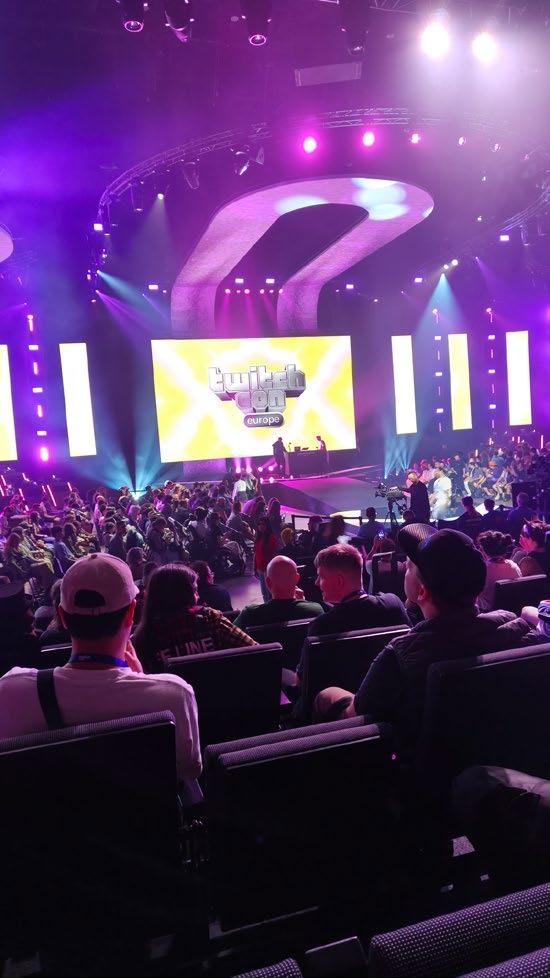
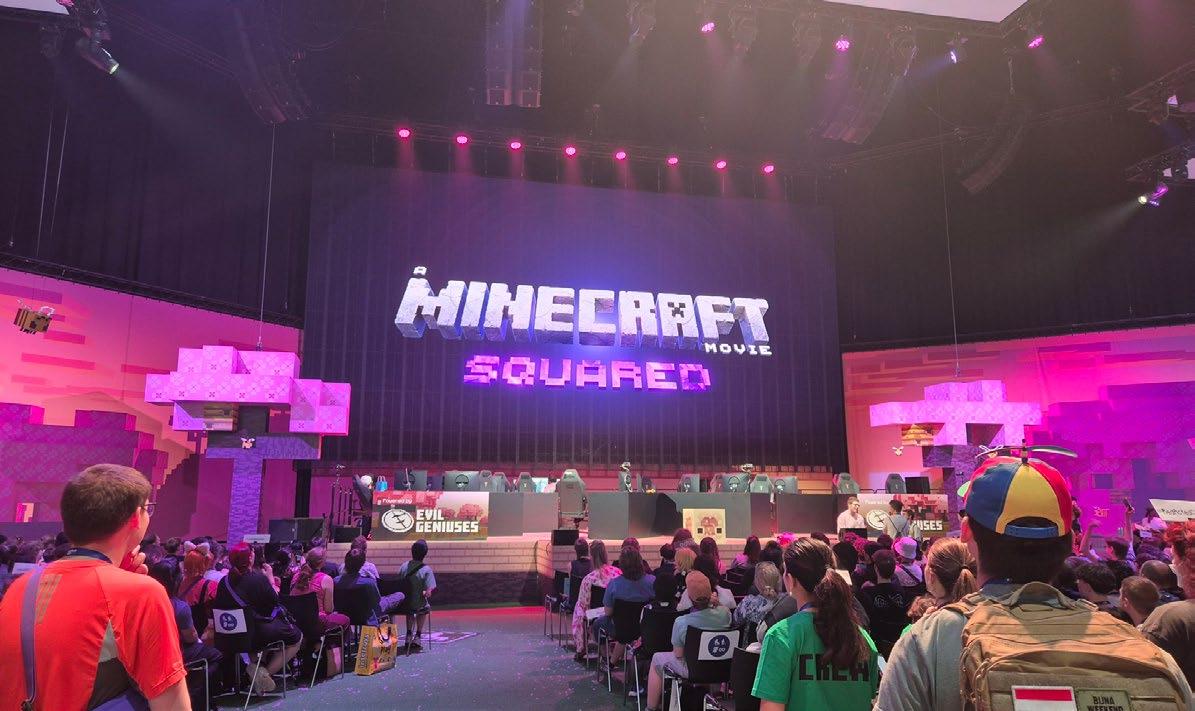

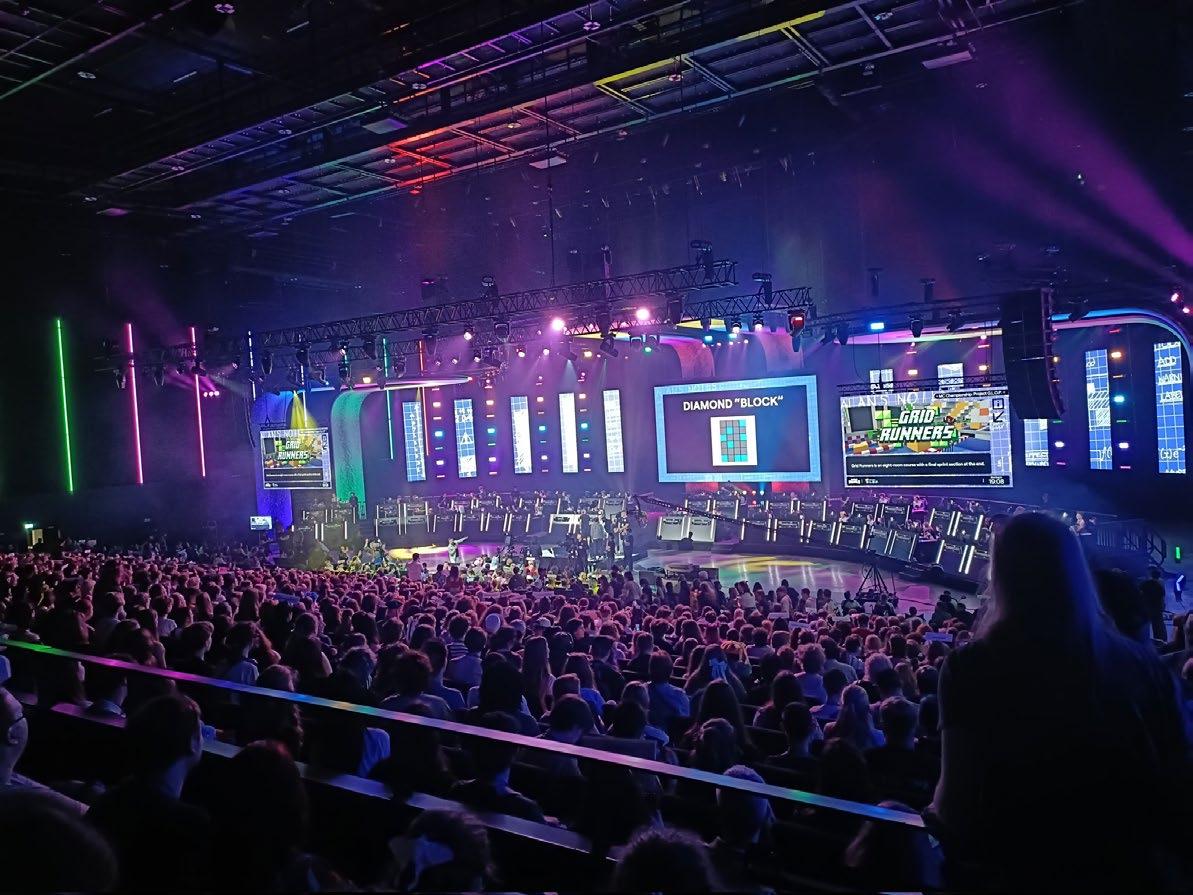
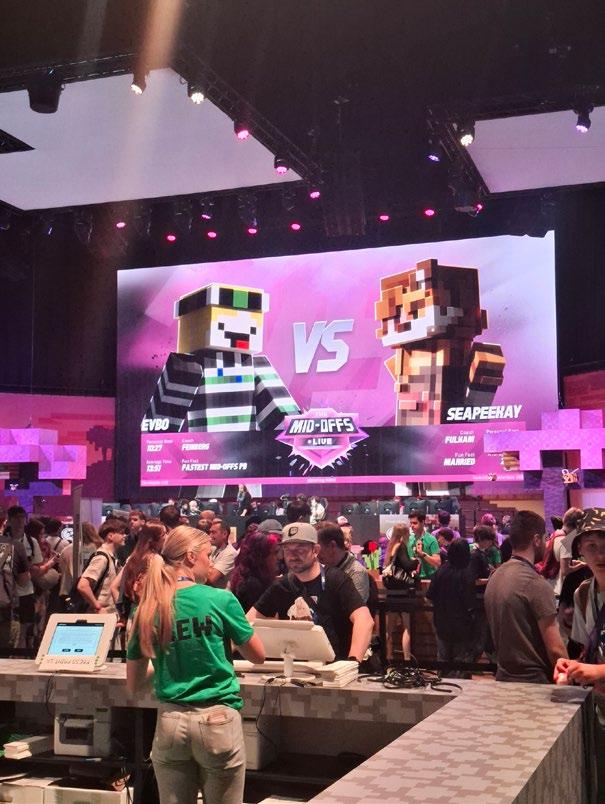

Exploring the Latest Creator Technology
The expo floor this year was filled with some fantastic brands showcasing the latest tools and technology designed for creators.
Hollyland Showcases New Creator Gear
One of the standout brands at the event was Hollyland, who had a strong presence throughout the convention. Their booth gave attendees the opportunity to get handson with some of their latest wireless audio and video transmission products, many of which are clearly designed with modern creators and livestreamers in mind. As mobile streaming and on-the-go production continue to grow rapidly, reliable wireless solutions are becoming increasingly important. Hollyland’s products showcased how far creator-focused technology has evolved, offering professionallevel tools that are becoming more accessible for everyday creators. Their demonstrations throughout the weekend drew significant attention, especially from IRL streamers and content creators looking to improve the quality and flexibility of their setups.
Streamlabs & The Future of IRL Streaming
Another major highlight on the show floor was Streamlabs, who focused heavily on making IRL streaming easier, smoother, and more affordable for creators. IRL streaming continues to become one of the fastest-growing areas of content creation, and Streamlabs showcased several ways creators can simplify their streaming workflows without needing extremely expensive setups. Their focus on accessibility stood out, especially for smaller creators looking to enter the livestreaming space without massive production budgets. It was exciting to see how platforms and tools are continuing to evolve alongside creator needs, particularly as more content moves beyond traditional desk setups and into realworld experiences.
Other Notable Brands on the Show Floor
The expo floor was also packed with other exciting companies showcasing products for creators, filmmakers, and streamers.production quality without overly complicated setups.
Amaran drew a lot of attention with their lighting setups and creator-focused production tools. Their displays highlighted how accessible professional lighting solutions have become for modern content creators, helping streamers and videographers dramatically improve production quality without overly complicated setups. Across the entire convention floor, it was clear that the creator industry continues to grow rapidly, with more brands investing heavily in tools that support livestreaming, mobile content, filmmaking, and online entertainment.
Panels, Discussions & Learning Opportunities
Beyond the expo floor, TwitchCon Europe featured a wide range of panels and live discussions covering every corner of the creator world. The panels throughout the weekend offered valuable insights into content creation, audience growth, production quality, monetisation, community management, and the future of livestreaming platforms. Experienced creators and industry professionals shared honest discussions about both the opportunities and challenges of working in online entertainment today.
What made many of these sessions particularly engaging was how open and genuine the conversations felt. Rather than simply presenting polished success stories, many creators discussed the realities of streaming life, burnout, consistency, and adapting to constantly changing platforms and algorithms. For aspiring creators, these panels provided useful advice and inspiration. For established creators, they created opportunities to reflect on how quickly the industry continues to evolve.
The Massive Minecraft Experience
One of the standout attractions of the entire event was the huge Minecraft area, which remained busy throughout the weekend. The area featured interactive activities, challenges, and experiences inspired by the game, creating one of the most engaging spaces on the convention floor. Fans had the opportunity to take part in different activities for the chance to unlock an exclusive cape for their Minecraft character, which quickly became one of the most talked-about rewards of the event.
The excitement around the Minecraft section perfectly demonstrated the strength and longevity of the game’s community. Players of all ages gathered together to compete in challenges, explore the themed area, and celebrate one of gaming’s most iconic titles. The scale of the attraction made it feel like a full event within the event itself, and it was easily one of the busiest and most energetic parts of TwitchCon all weekend.
The After Parties & Evening Events
Of course, some of the best moments at TwitchCon happen after the convention floor closes. Throughout the weekend, Rotterdam hosted a variety of after parties, creator gatherings, and brand events that kept the energy going long into the night. These events offered a more relaxed atmosphere where creators, brands, and attendees could socialise, network, and celebrate together outside of the busy convention halls.
THQ Nordic’s Gothic 1 Remake Event
One of the absolute standout after parties of the weekend was the THQ Nordic Gothic 1 Remake event. From the moment attendees arrived, the event delivered an incredible atmosphere with immersive themed experiences, interactive activities, fantastic freebies, and genuinely entertaining performances throughout the night. The attention to detail helped create an experience that felt much more memorable than a standard promotional event. The party successfully captured the dark fantasy style and identity of the Gothic franchise while
still maintaining the fun, social atmosphere people expect from TwitchCon nightlife events. It quickly became one of the most talked-about evening experiences of the entire weekend.
Between the themed entertainment, opportunities to connect with other creators, and the overall production quality of the event, it easily stood out as one of the best after parties at TwitchCon Europe 2026.
Final Thoughts – Another Incredible TwitchCon
Overall, TwitchCon Europe 2026 in Rotterdam was an unforgettable experience that once again highlighted the strength, passion, and creativity of the global streaming community. From the incredible community meet-ups and networking opportunities to the latest creator technology, engaging panels, immersive gaming experiences, and unforgettable after parties, the entire weekend perfectly showcased why TwitchCon remains such an important event for creators and fans alike.
What truly makes TwitchCon special is the balance between entertainment, creativity, technology, and genuine human connection. It’s one of the few events where online communities fully come to life, and that energy could be felt throughout every part of the weekend in Rotterdam. And the excitement is already building for next year, because TwitchCon Europe is officially heading to Berlin in 2027. If this year’s event was any indication, next year is set to be even bigger, louder, and more unforgettable than ever.

Odyssey Video Games & Toy Festival: A Celebration of Play, Community, and Creativity
The Odyssey Video Games & Toy Festival is a vibrant, family-friendly event that brings together gaming enthusiasts, collectors, creators, and families under one roof. Spanning two days, the festival offers an immersive experience filled with interactive attractions, unique vendors, and community-driven initiatives. Designed to appeal to all ages, it blends nostalgia with innovation, creating a space where both retro gaming fans and modern tech lovers can feel at home.
A Marketplace of Unique Finds
From the moment you step through the entrance, you are greeted by a wide array of unique and exciting vendors. Stalls showcase everything from Japanese import nano Lego sets and collectible magazines to cute memorabilia, gaming merchandise, and stylish clothing. One standout offering was the official Odyssey T-shirt priced at just £5, an exceptional value that drew plenty of attention.
Technology enthusiasts were equally well catered for, with an impressive display of tech
products influenced by Target Components, including their Pixl range of monitors and peripherals from Marvo. Notably, many of these items are also stocked by the event host, Phase 4 Computers, reinforcing the strong connection between the festival and local tech retail. Across the board, vendors maintained reasonable pricing, and the sheer variety ensured there was something for every interest and budget.
Geek Retreat added to the atmosphere with a dedicated presence, offering a selection of gaming-related merchandise that appealed to both casual fans and dedicated collectors. Their stall contributed to the festival’s welcoming, community-driven feel.
Interactive Entertainment and Activities
A mini arcade section provided a nostalgic escape, featuring retro arcade machines and classic consoles where visitors could sit back, relax, and enjoy timeless games. Nearby, attendees could purchase food and light bites from the venue, with prices that remained fair for an event setting.
Andy’s Man Club, a mental health support group for men, brought a meaningful dimension to the festival. Their racing simulator not only entertained visitors but also raised awareness, offering participants a chance to win prizes while engaging with an important cause.
The Beyblade battle arena proved to be a major hit, especially among younger attendees, reigniting enthusiasm for a beloved pastime and creating an energetic, competitive environment.
A Family-Focused Experience
The festival clearly prioritised families and children, with a thoughtfully designed kid zone. Here, children could build their own Lego creations, ranging from Star Wars ships like the U-Wing to Formula 1 cars, and even take their creations home. This hands-on activity added a memorable and creative element to the experience. In addition, a Nerf zone provided high-energy fun, further demonstrating the organisers’ commitment to delivering a wellrounded experience for younger visitors.
Showcasing Innovation and Creativity
A large open gaming area featured a mix of indie developers showcasing their latest projects. Visitors had the opportunity to interact directly with developers, gaining insight into the creative processes behind the games. The originality and passion on display added a forwardlooking dimension to the event. Milestones3D also returned, offering attendees the chance to turn themselves and their families into detailed 3D models. While slightly on the expensive side, it stood out as a unique and memorable keepsake.
A Thoughtful Touch: The Quiet Zone
One of the most commendable features of the festival was the inclusion of a quiet zone. Designed for those who may feel overwhelmed, as well as for toddlers needing a calmer environment, this space offered soft play activities and a peaceful atmosphere. Its presence highlighted the organisers’ awareness of accessibility and inclusivity, an essential feature for busy events.
Atmosphere and Overall Experience
The atmosphere throughout the festival was lively and engaging. Even attending on just the Saturday, it was clear that the event was buzzing with energy and enthusiasm. Families, including my own children, appeared to have a genuinely wonderful time, with plenty of activities to keep them entertained throughout the day.
Pricing and Value
The event offered strong value for money, with clear and accessible pricing:
• £12.50 per adult (16+) per day
• £7.50 per child (ages 7–15) per day
• Free entry for children under 7
Given the breadth of activities, entertainment, and experiences available, the ticket pricing felt fair and justified.
Conclusion: A Festival Worth Returning To
The Odyssey Video Games & Toy Festival successfully delivers an engaging, inclusive, and well-rounded experience for attendees of all ages. From its diverse marketplace and interactive attractions to its thoughtful community initiatives and family-friendly design, it stands out as more than just an event, it is a celebration of gaming culture, creativity, and connection.
For families, gamers, and collectors alike, it offers a memorable day out that balances fun, value, and community spirit. It is certainly an event worth attending again in the future.






MCM London Comic Con May 2026: Bigger Than
Ever
This May, we were invited to attend MCM London Comic Con, held at London's ExCeL Centre, and it was immediately clear why the event continues to be regarded as the UK's premier pop culture convention. Occupying both sides of the enormous venue, the show was packed from wall to wall with attractions, guests, exhibitors, and activities, offering something for every fan imaginable. Whether you are into tabletop games, anime, films or gaming as whole, there is something for everyone.
One of the highlights of any MCM event is the incredible variety of exhibitors on display. Returning favourites such as Bandai Namco were joined by hundreds of independent companies, artists, authors, and creators showcasing their work. From stunning artwork and handcrafted merchandise to original novels and unique collectibles, there was no shortage of talent on display. Personally, one of my favourite aspects of Comic Con is seeing the creativity and craftsmanship that people bring to these events, and this year certainly did not disappoint.
MCM also attracted some major guests for the May 2026 event. Fantasy author Brandon Sanderson was a huge draw for attendees, with fans eager to meet the writer behind acclaimed series and novels including Mistborn, The Stormlight Archive, Elantris, Warbreaker, and Tress of the Emerald Sea. There were also popular actors at the event, such as the ever-popular Alan Tudyk, known for his roles in films such as Rogue One: A Star Wars Story, DodgeBall: A True Underdog Story, A Knight's Tale, Wreck-It Ralph, and Moana. The opportunity to meet such high-profile guests added even more excitement to an already packed weekend.
As always, MCM delivered an extensive programme of panels, workshops, and live entertainment. Visitors could attend educational sessions covering topics such as cosplay creation and careers within the gaming industry, while those looking for something a little lighter could enjoy crowd favourites including the Lip Sync Battle, the Cosplay Masqueradfe, and the energetic K-Pop Dance Game. The variety on offer ensured there was

always something happening, nomatter where your interests lay. Of course, cosplay remains one of the biggest attractions of the event. Across the convention floor, attendees showcased extraordinary costumes inspired by characters from games, films, anime, comics, and television. MCM's two flagship cosplay competitions, held on Saturday and Sunday, once again demonstrated the remarkable talent within the cosplay community. With substantial prizes up for grabs, competitors brought their very best creations to the stage, and the level of detail, craftsmanship, and performance was truly astonishing. No matter how many conventions I attend, the skill and dedication of these cosplayers never ceases to amaze me.
The event was not without its challenges.
Attendance was extremely high throughout the weekend and, combined with the ongoing heatwave, some areas of the venue became rather uncomfortable at peak times. Fortunately, the air conditioning helped keep conditions manageable, ensuring that visitors could still enjoy everything the convention had to offer.
Overall, MCM London Comic Con May 2026 was another outstanding success. With an incredible guest lineup, a vast exhibitor hall, excellent entertainment, and some of the best cosplay in the country, it is easy to see why the event remains the largest and most celebrated convention of its kind in the UK. If this year's show is any indication, MCM's popularity shows no sign of slowing down.

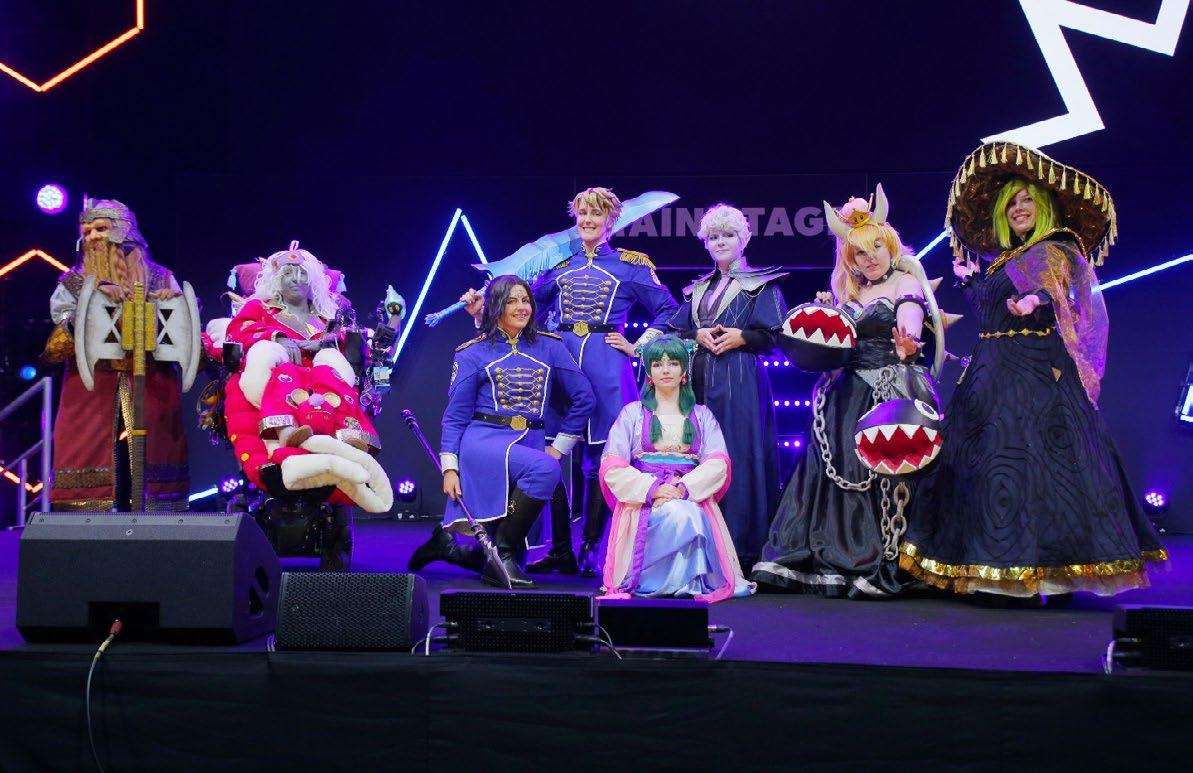


ENDIX Is Rewriting What a Gaming Showcase Can Be
There are gaming showcases… and then there’s ENDIX. In an era where most gaming events are still locked behind expensive travel, impossible ticket queues, overcrowded convention halls, and limited access, ENDIX arrived with a completely different vision. Instead of asking players to simply watch another livestream from home, ENDIX transformed the idea of an online showcase into something interactive, social, and genuinely immersive.
What if a gaming expo actually felt like a video game?
What if attendees could walk through massive digital halls, meet developers in real time, discover indie games organically, compete in mini-games and obbys, collect rewards, network with creators, and explore a living multiplayer world packed with activity?
That’s exactly what ENDIX delivered.
Completely free to access through Steam and the Epic Games Store, ENDIX became far more than a showcase. It became a fully explorable digital convention space that blended gaming, social interaction, community networking, indie discovery, and live entertainment into one ambitious experience. And honestly, it felt like a glimpse into the future of gaming expos.
A Virtual Showcase That Actually Felt Alive
The moment players loaded into ENDIX, it became immediately clear this was not a standard digital event.
Rather than navigating menus or watching trailers on a webpage, attendees entered a giant multiplayer world filled with themed environments, massive expo halls, interactive booths, giant digital displays, voice chat, social spaces, and live activity happening everywhere around them. The expo itself felt alive.
Players could freely roam through different areas, discover hidden sections, revisit booths, interact with developers, or simply spend hours exploring the environment alongside hundreds of other attendees. The world design helped ENDIX feel less like a convention website and more like a social MMO mixed with a gaming festival. And because the entire event was built around exploration, discovery became one of the showcase’s biggest strengths. You never knew what was around the next corner. One hallway might lead you toward a dark horrorthemed booth filled with eerie visuals and cinematic lighting, while another opened into colorful indie spaces packed with cozy games, multiplayer shooters, fantasy adventures, or experimental art-driven projects. The variety across the showcase floor was massive.
ENDIX Became a Huge Celebration of Indie Games
One of the most impressive things about ENDIX was how strongly it supported indie developers. Instead of burying smaller studios underneath blockbuster AAA marketing campaigns, the event placed independent creators front and center. Developers from across the industry
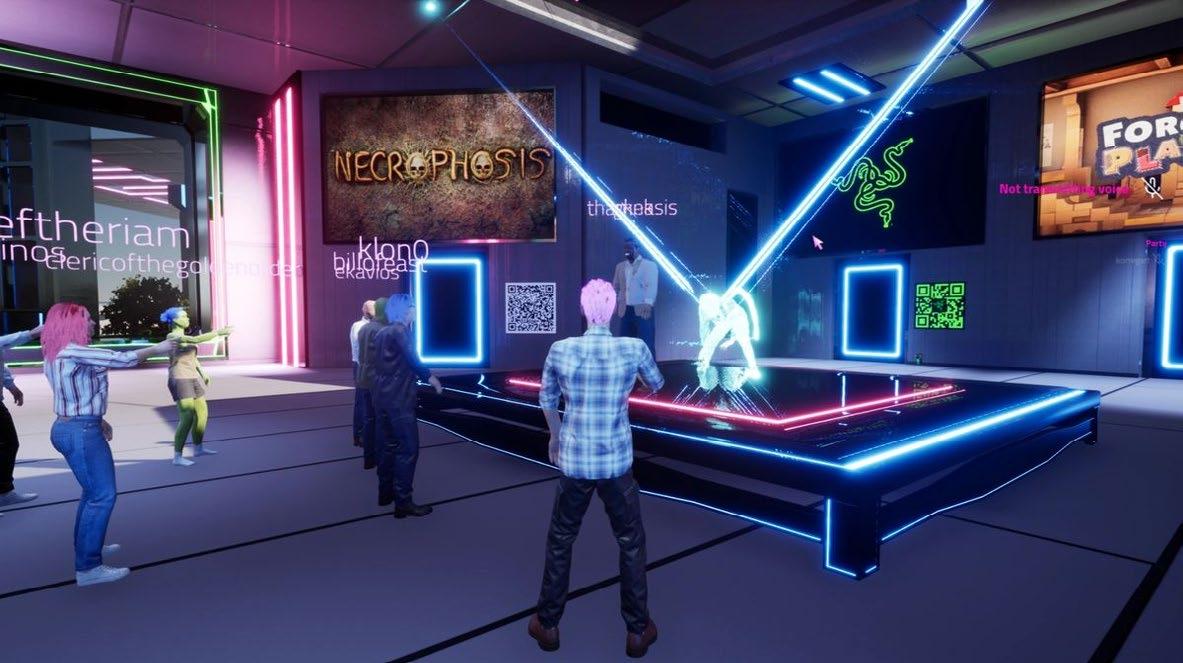
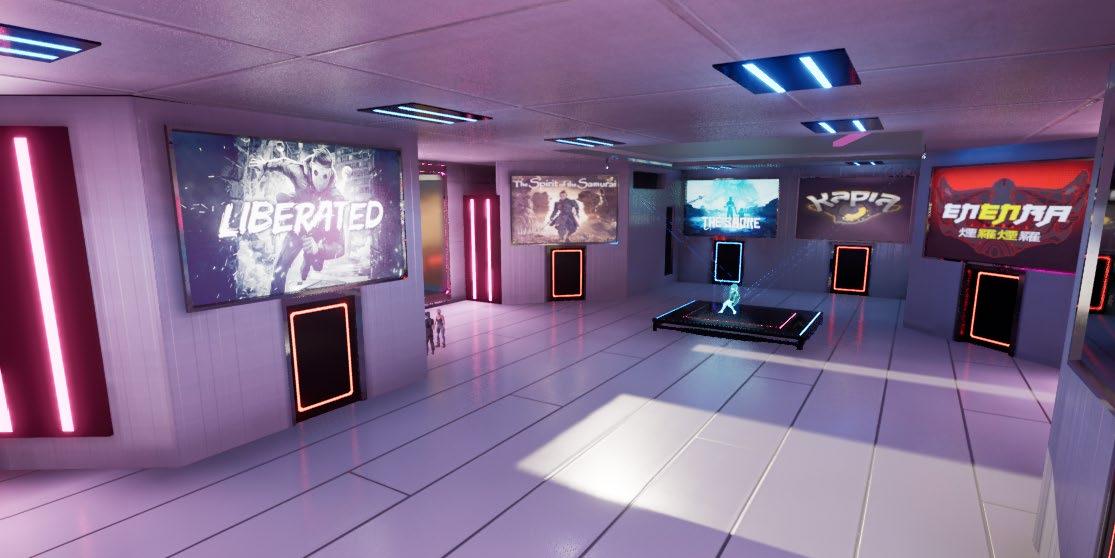


had the chance to showcase their games in a space specifically designed around discovery and interaction.
And the lineup was incredibly diverse. The showcase featured games including:
• Akatori
• Among The Trolls
• Coin Cauldron
• Confined: Leaving OKB-134
• D-Extinction
• Den of Wolves
• Everdream Village
• Foxy Dumplings
• Gamestonk Simulator: Gone Rogue
• Glasshouse
• Grindworm
• Haunted Bloodlines
• Hela
• House of Legacy
• Inferius
• Masters of Mayhem
• Mexican Ninja
• Necrophosis
• Never Be Alone
• Night Hike
• Nine Rounds Rapid
• Pizza Bandit
• Rabbit's Tale
• Sanctua
• Sea of Rifts
• Silver Pines
• Stolen Realm Survivors
• Stuffed
• The 7th Shift
• The Funnel
• The Last Por trait
• Thysiastery
The amount of creativity across the event was genuinely impressive.
Horror Fans Had Plenty To Explore
ENDIX had an especially strong horror presence, with many of the darker projects becoming major talking points throughout the showcase.
Haunted Bloodlines immediately stood out thanks to its gothic atmosphere and haunting presentation. Its booth design perfectly matched the tone of the game itself, creating an immersive horror experience even before players saw gameplay footage. Then there was Necrophosis, which delivered one of the most visually disturbing and surreal aesthetics in the event. The game’s biomechanical nightmareinspired art direction attracted huge attention from attendees wandering the expo floor.
Silver Pines, Night Hike, The Last Portrait, and The 7th Shift all added to the darker atmosphere of the event, helping ENDIX feel constantly varied as players explored different sections of the showcase.
Action, Chaos, and Multiplayer Energy
ENDIX also delivered plenty for players looking for fast-paced gameplay and multiplayer chaos. Pizza Bandit became one of the standout action titles thanks to its chaotic co-op gameplay and over-the-top style. It perfectly matched the energetic atmosphere of the expo. Nine Rounds Rapid brought intense combat-focused gameplay, while D-Extinction added a darker sci-fi edge to the action lineup. One of the most anticipated games featured throughout the event was Den of Wolves, which already carried major attention before the showcase even began. Its cyberpunk-inspired cooperative heist gameplay gave ENDIX another high-profile attraction alongside its indie-heavy roster.
Cozy and Creative Experiences Balanced the Showcase
Not everything at ENDIX focused on horror or combat. The showcase balanced its atmosphere with relaxing and creative experiences that gave players a chance to slow down between networking, challenges, and exploration.
Everdream Village brought cozy life-simulation energy into the expo with colourful visuals and calming presentation.
Foxy Dumplings added charm and humor to the event, while Rabbit's Tale showcased whimsical fantasy-inspired worldbuilding.
Meanwhile, Among The Trolls combined atmospheric survival mechanics with exploration-focused gameplay that naturally fit ENDIX’s discovery-driven identity.
Experimental Games Helped ENDIX Feel Different
Some of the most memorable moments came from the showcase’s strangest and most experimental projects. Glasshouse carried a mysterious artistic style that immediately stood apart from the crowd, while Thysiastery leaned heavily into surrealism and abstract design. Inferius and Sanctua both pushed dark fantasy aesthetics in creative directions, while Confined: Leaving OKB-134 instantly grabbed attention with its claustrophobic sci-fi presentation.
These kinds of games are exactly why ENDIX worked so well as a virtual showcase. Players actually had time to absorb the atmosphere and identity of each project instead of rushing past crowded booths in a physical convention centre. The Dedicated Press Area Added Another Layer To The Event. One of the coolest additions to ENDIX was its dedicated press and media area. Instead of treating journalists, creators, and gaming websites as an afterthought, ENDIX built a full section specifically designed to showcase community coverage and media partners.
The area itself felt integrated directly into the world, making press outlets feel like part of the actual convention experience rather than external advertisements. One standout feature was the use of interactive QR codes throughout the press section. Attendees could walk up to highlighted displays, scan the QR codes directly inside the event, and instantly be directed toward featured websites and creator pages online. It was an incredibly smart way to connect the virtual expo space with real-world coverage and communities.
Being highlighted within the press area felt especially unique because it created organic discovery. Players wandering through the showcase could naturally stumble across websites, creators, journalists, and gaming
communities while exploring the expo itself. It reinforced the idea that ENDIX wasn’t just about games. It was about the gaming community as a whole.
The Alienware Partnership Added Huge Energy
Another major highlight of the event was the partnership with Alienware. Rather than simply placing advertisements around the event, Alienware became an active part of the experience itself. Players could participate in dedicated in-game activities tied directly into the showcase, helping make the event feel dynamic and interactive rather than passive.
The collaboration also brought a huge amount of excitement thanks to giveaways, rewards, and free codes spread throughout the event. Attendees constantly discovered new opportunities to unlock prizes, participate in activities, and collect rewards simply by exploring the expo world. Combined with the social atmosphere and multiplayer interaction, the giveaways helped ENDIX feel almost like a gaming festival happening live in real time. Obbys, Mini-Games, Challenges, and Exploration Everywhere
One of the smartest things ENDIX understood was that people attend conventions for experiences, not just trailers. That philosophy shaped the entire event. Throughout the showcase, players could find obbys, parkour sections, climbing challenges, hidden exploration areas, mini-games, social activities, and multiplayer competitions spread across the world. Some sections encouraged players to compete. Others rewarded exploration. Some simply existed because they were fun. That constant sense of activity is what separated ENDIX from standard digital showcases. Most online events ask players to sit back and watch presentations. ENDIX asked players to participate. And that made all the difference.
A Free Showcase Built Around Community
Perhaps the most impressive thing about ENDIX is that the entire experience was completely free. No expensive tickets. No travel costs. No hotel bookings. No convention centre queues.
Anyone with a PC and an internet connection could jump in and experience the event for themselves. That accessibility became one of ENDIX’s greatest strengths and helped create a genuinely welcoming atmosphere throughout the showcase. For indie developers especially, the format was incredibly important. Traditional conventions can be financially overwhelming for smaller studios once travel, staffing, equipment, hotels, and booth costs are factored in.
ENDIX removed many of those barriers entirely. It created a global digital platform where indie creators could showcase their games directly to players without the crushing costs of physical events. And because developers themselves were present inside the world, walking around, chatting with attendees, networking with players, and discussing their projects, the showcase felt far more personal than most gaming expos today.
The Team Behind ENDIX Deserves Massive Credit
What makes ENDIX truly impressive is the ambition behind the project. Creating a multiplayer digital convention is already a huge technical challenge. Building one that feels polished, welcoming, interactive, rewarding, social, and genuinely exciting is something else entirely. Yet somehow, the team behind ENDIX managed to create an experience that felt fresh, creative, and community-focused from beginning to end. The passion behind the project was visible everywhere. From the handcrafted booths to the indie game lineup…
From the press integration to the networking opportunities…
From the social spaces to the live developer interactions…
From the mini games to the giveaways and challenges…
ENDIX felt like an event built by people who genuinely love gaming culture and wanted to evolve what online showcases could become. And perhaps that’s why the event resonated with so many attendees.
ENDIX didn’t feel corporate. It felt alive. It felt experimental. It felt community driven. Most importantly, it felt like the beginning of something bigger.
ENDIX Feels Like the Future of Digital Gaming Events
The gaming industry has spent years trying to recreate the magic of conventions in digital form, but most attempts never fully captured the social excitement and discovery people associate with real gaming expos. ENDIX came remarkably close.By combining multiplayer interaction, indie discovery, networking, social spaces, live activities, developer engagement, giveaways, press integration, obbys, minigames, and immersive world design into one giant free experience, ENDIX proved that online showcases can become far more than livestreams and trailers.
They can become destinations. For indie developers, creators, gaming websites, press outlets, streamers, and players alike, ENDIX established itself as one of the most unique and ambitious digital showcases in modern gaming. And if this is only the beginning, the future of virtual gaming expos suddenly looks incredibly exciting.
Final Thoughts
ENDIX proved that gaming showcases do not need massive convention centres or expensive tickets to create unforgettable experiences. By blending community interaction, indie creativity, multiplayer exploration, live networking, giveaways, challenges, and immersive world design into one giant freeto-access event, ENDIX managed to capture something many digital showcases have struggled to recreate for years, genuine excitement.
Whether you were exploring the massive expo halls, discovering upcoming indie gems, competing in obbys and mini-games, chatting directly with developers, collecting free codes, or simply wandering through the event with friends, ENDIX constantly gave players something new to experience.
What truly made the showcase special was the passion behind it. The developers, creators, partners, press teams, and community members all helped turn ENDIX into more than just another online event. It became a living social space built around celebrating gaming culture itself. And honestly, this feels like only the beginning.
If you want to keep up with future showcases, upcoming indie projects, community events, announcements, and everything ENDIX has planned next, make sure to check out their official website below and stay connected with the growing community behind one of the most ambitious virtual gaming expos around right now.
www.edix-expo.com
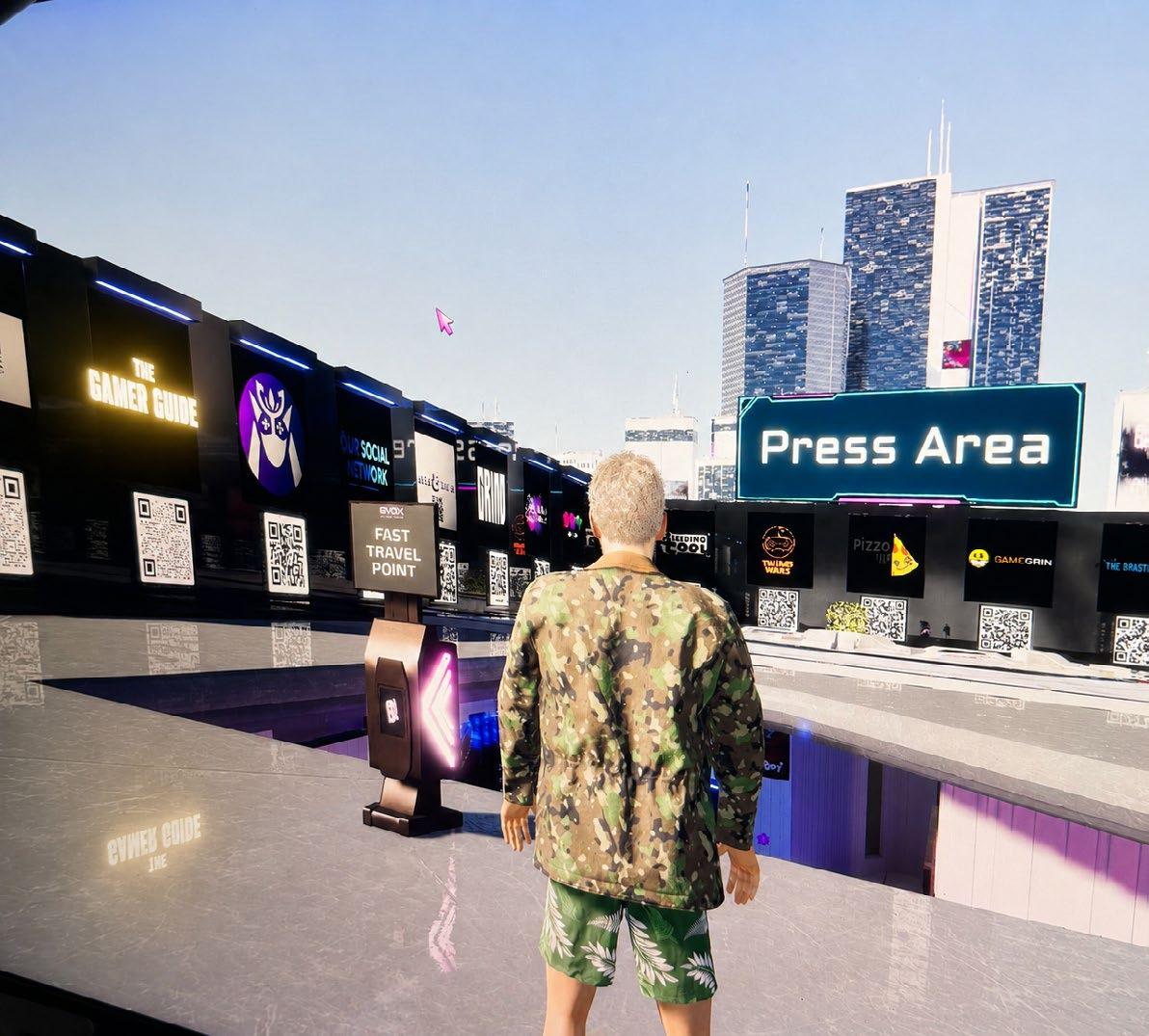

Xbox Charts a New Future: “We Are Xbox” Memo Signals Major Shift in Strategy
In a candid internal message sent to employees worldwide on April 23rd, 2026, Xbox leadership has outlined a sweeping vision for the future of the brand, one that acknowledges player frustrations, industry shifts, and the need for a bold reinvention. The memo, titled “We Are Xbox,” was authored by Matt and Asha and arrives at a pivotal moment for the gaming giant.
A Legacy of Innovation And a Need to Adapt
The message reflects on Xbox’s origins, from the launch of the first console in 2001 to the introduction of Xbox Live and the evolution of social gaming features. Today, the platform boasts over 500 million players globally, a milestone that underscores its cultural and commercial impact. But despite that success, leadership made one thing clear: the current model isn’t enough anymore.
“The model that got us here won’t be the one that takes us forward.”
Player Frustrations Front and Centre
In a rare moment of directness, the memo openly addresses growing dissatisfaction among players. Among the key concerns:
• Slower rollout of new console features
• A weaker presence on PC
• Rising pricing pressures
• Fragmented user experiences across search, discovery, and social systems
Developers, too, are reportedly pushing for better tools, deeper insights, and stronger platform support to grow their games.
A Changing Industry Landscape
Xbox leadership paints a picture of an industry
in rapid transformation. Competition is intensifying, especially on PC and new player expectations are reshaping how games are played and experienced.
Key trends highlighted include:
• The rise of user-generated platforms like Roblox
• Increased dominance of subscriptions and services
• Growth in global markets outside traditional Western strongholds
• Breakout success from smaller studios and solo developers
The message emphasizes that gaming is no longer just about playing, it’s about creating, sharing, and socializing.
“Xbox Will Be Where the World Plays”
At the heart of the announcement is a bold new ambition: to make Xbox a global platform that seamlessly connects players and creators across console, PC, mobile, and cloud. The vision centres on three pillars:
• Accessibility: Play anywhere, with progress and identity synced across devices
• Affordability: Flexible pricing models to lower the barrier to entry
• Openness: Tools and opportunities for creators of all sizes
A new guiding metric, daily active players, will serve as the company’s “north star.”
Four Strategic Priorities
To execute this vision, Xbox is focusing on four key areas:
Hardware Plans
include stabilizing the current console generation while developing Project Helix, a
next-generation initiative aimed at performance and cross-platform play. Accessories and ecosystem expansion are also key components.
Content
Xbox aims to grow its portfolio of franchises, strengthen third-party partnerships, and expand into emerging markets. Continued investment in live-service games and creator-driven platforms like Minecraft and Sea of Thieves is also emphasized.
Experience
Fixing core user experience issues is a major priority. Expect improvements to discovery, personalization, and social features, alongside a renewed push to make Xbox the best platform for developers.
Services
Game Pass will be refined with clearer value and sustainable economics. Cloud gaming is set to become faster and more seamless, while
mergers and acquisitions may play a role in accelerating growth.
Rethinking the Xbox Identity
Perhaps the most symbolic change is internal: the company is moving away from the “Microsoft Gaming” label and returning to a unified identity.
“We are Xbox.”
The memo describes a culture that embraces creativity, speed, and self-critique, positioning Xbox as a “challenger” brand once again.
A Defining Moment
The message closes on a note of determination, acknowledging the scale of change required while reaffirming the team’s commitment to innovation and community.
For Xbox, this isn’t just a strategy update, it’s a reset. One that could define its place in the next era of gaming.


Xbox Rewrites the Rules: Game Pass
Prices Fall as Call of Duty Exits Day-One Access
Xbox has entered a new chapter in its subscription strategy, unveiling a significant price reduction for Game Pass while confirming a major change to how one of gaming’s biggest franchises will appear on the service. The company has lowered the monthly cost of its most popular tiers across the US and UK, but future Call of Duty titles will no longer arrive on Game Pass at launch. Instead, they will join the library roughly a year after their initial release, a delayed-access model that reshapes expectations without removing the franchise from the platform entirely.
A Meaningful Price Drop in a Rising Subscription Economy
In an era where subscription prices across entertainment continue to climb, Microsoft’s decision to reduce the cost of Game Pass stands out. Game Pass Ultimate, once priced at £22.99 in the UK and $29.99 in the US, now sits at £16.99 and $22.99. PC Game Pass follows suit, dropping from £13.49 to £10.99 in the UK and from $16.49 to $13.99 in the US. These reductions are substantial, signalling a deliberate effort to make the service more accessible to a broader audience. Microsoft has acknowledged that Game Pass had drifted beyond the budgets of many players. The new pricing aims to restore the service’s reputation as one of the most consumer-friendly offerings in gaming, even as the company reassesses what it can sustainably include within that monthly fee.
Call of Duty Steps Back From Day-One — But Not From Game Pass
The most headline-grabbing change is the shift in how Call of Duty will appear on the service. While the franchise will continue to be part of the Game Pass ecosystem, new entries will no longer launch day-one. Instead, they will arrive
approximately a year after their retail debut, likely aligning with the following holiday season. This is not a removal, it’s a repositioning. Call of Duty remains a pillar of the Game Pass library, but the immediate access that many players anticipated following Microsoft’s acquisition of Activision Blizzard will not materialise. The decision reflects internal data showing that day-one availability of the franchise did not significantly boost subscriptions or console sales. At the same time, offering such a blockbuster title at launch reportedly undercut premium sales, creating a financial imbalance that was difficult to justify.
By shifting to a delayed-release model, Microsoft preserves the long-term value of Call of Duty while maintaining the integrity of Game Pass as a sustainable service.
A Balancing Act Between Value and Viability
This recalibration marks a turning point for Game Pass. For years, the service has been defined by its ambition, a vast library, day-one exclusives, and a promise of unprecedented access. But as the economics of game development evolve, Microsoft appears to be prioritising stability over spectacle. The new strategy suggests a more measured approach: keep Game Pass affordable, maintain a strong library, and ensure that the service can continue to grow without compromising the financial health of its biggest franchises. It’s a shift that acknowledges the realities of the modern gaming market while still preserving the core appeal of the platform.
What Players Can Expect Going Forward
For most subscribers, the lower monthly cost will be the most immediate and welcome change. First-party Xbox titles will continue to launch day-one, and the broader ecosystem,

including cloud gaming, EA Play, and Fortnite Crew, remains intact. Existing Call of Duty titles stay on the service, and future entries will still arrive, albeit on a delayed schedule. For Call of Duty fans who relied on Game Pass for instant access, the adjustment may feel like a step back. But the franchise’s continued presence on the platform ensures that the long-term value remains, even if the timing shifts.
A New Direction for Game Pass
Microsoft’s latest move signals a more mature,sustainable vision for Game Pass, one that balances accessibility with economic reality. The price cuts make the service more inviting than it has been in years, while the delayed Call of Duty model reflects a thoughtful recalibration rather than a retreat. Game Pass is evolving, not shrinking. And this new chapter may ultimately define how subscription services adapt in a changing industry.


Warhorse Studios Officially Enters Middle-earth and
RPG Fans Should Be Excited
After months of rumours, speculation, and endless fan theories, it finally happened, Warhorse Studios has officially confirmed it is working on a brand-new open-world RPG set in Middle-earth, and the announcement has immediately become one of the biggest gaming reveals of the year. For many RPG fans, this honestly feels like the perfect match. The studio behind the incredibly immersive Kingdom Come: Deliverance II series has built a reputation for creating deeply detailed worlds filled with realism, player freedom, grounded storytelling, and meaningful exploration. Now, applying that same design philosophy to the world of Tolkien could potentially deliver the most authentic Middle-earth RPG ever made.
And judging by early reactions online, excitement is already through the roof. While Warhorse hasn’t revealed major gameplay details yet, the studio confirmed that the project will be a “huge immersive RPG,” continuing the same largescale approach that made Kingdom Come such a success. Rumours surrounding the game had already been circulating for weeks, with multiple industry insiders suggesting the project carried a budget reportedly close to $100 million and was designed as a major AAA open-world experience. The biggest reason this announcement matters so much is simple: Middle-earth has never truly received the massive open-world RPG treatment fans have always wanted.
Games like Middle-earth: Shadow of War delivered fantastic action and memorable systems, but they never fully embraced the slower, immersive role-playing experience many Tolkien fans dreamed about. Warhorse’s style feels completely different. Their games focus heavily on world immersion, realistic exploration, meaningful decision-making, survival mechanics, and grounded storytelling, all elements that could fit perfectly within Tolkien’s universe.
Imagine traveling across massive Middle-earth landscapes where every village feels lived in, every forest hides danger, and every journey actually matters. That possibility alone is enough to make this project incredibly exciting. Online reactions have been overwhelmingly positive so far, with many fans already imagining what Warhorse could do with iconic locations like Gondor, Rohan, Rivendell, or even smaller unexplored regions of Middle-earth rarely touched in games before. Others are particularly excited about the idea of Warhorse applying its grounded combat systems and immersive RPG mechanics to creatures like Orcs, Trolls, and Nazgûl. Of course, there’s still a lot we don’t know.
Warhorse has remained intentionally secretive regarding the setting, timeline, playable characters, and gameplay structure. The studio previously avoided directly confirming Lord of the Rings rumours during Reddit Q&A sessions earlier this year, though developers repeatedly hinted they were already building another largescale immersive RPG. Now that the project is official, expectations are understandably massive. And honestly, they probably should be.
Few studios today understand immersive role-playing design quite like Warhorse. Their ability to create believable worlds packed with atmosphere, detail, and player-driven storytelling makes them uniquely suited for a universe as rich as Middle-earth. If the studio successfully combines its signature realism and immersion with the magic, danger, and scale of Tolkien’s world, this could easily become one of the most ambitious fantasy RPGs of the generation. For now, fans will simply have to wait for the first trailer and official gameplay reveal. But one thing already feels certain, Middle-earth may finally be getting the RPG adventure it truly deserves.


THE NINTENDO

NINTENDO CORNER

Star Fox Is Finally Back – Everything We Know About Nintendo’s Big Revival
After years of silence, rumours, leaks, and endless fan speculation, Nintendo has officially brought back one of its most beloved sci-fi franchises. Star Fox has now been confirmed for Nintendo Switch 2, marking the series’ first major release in over a decade and instantly becoming one of the most talked-about announcements of 2026. For longtime fans of Fox McCloud and the Star Fox team, this announcement feels massive. Since the release of Star Fox Zero back in 2016, the franchise has remained largely dormant outside of cameos, Nintendo Switch Online re-releases, and crossover appearances. Many believed Nintendo simply didn’t know what direction to take the series after the mixed reception to Zero’s experimental controls.
Now, nearly ten years later, the Lylat System is finally returning. And from what Nintendo has shown so far, this could be the revival fans have been waiting for.
A Modern Reimagining of a Nintendo Classic
Rather than creating a completely brand-new storyline, Nintendo is taking a familiar route by reimagining Star Fox 64 once again this time rebuilt specifically for Nintendo Switch 2 hardware. The new game, simply titled Star Fox, keeps the core structure of the classic Nintendo 64 release while dramatically expanding the experience with upgraded visuals, redesigned cinematics, new multiplayer systems, and expanded gameplay mechanics.
Nintendo has described the project as a “cinematic take” on the original adventure. Players will once again take control of Fox McCloud as he leads the Star Fox team across the Lylat System to stop the return of Andross. Familiar locations, branching routes, Arwing combat, barrel rolls, and iconic radio chatter all appear to remain intact, but the overall scale feels significantly larger than previous versions. The game is scheduled to launch exclusively for Nintendo Switch 2 on June 25, 2026.
Nintendo Switch 2 Finally Gives Star Fox Room to Shine
One of the biggest talking points surrounding the reveal has been the visual overhaul. This is easily the most technically ambitious Star Fox game Nintendo has ever produced. Character models are far more detailed, environments feature cinematic lighting and particle effects, and the game appears to run at a significantly smoother frame rate than older entries. The upgraded hardware of Nintendo Switch 2 seems perfectly suited for the series. Fast-paced aerial combat benefits heavily from smoother performance, while larger environments and seamless cinematic transitions help the game feel far more immersive than past entries.
Nintendo is also introducing several Switch 2-specific features, including:
• Online 4v4 multiplayer dogfights
• GameChat avatar support with facial animation syncing
• Joy-Con 2 mouse controls for aiming
• GameShare cooperative functionality
• Nintendo 64 controller compatibility for classic controls
For many fans, this feels like the first time Nintendo is truly treating Star Fox as a major modern franchise again.
Fans Are Excited… But Also Divided
While excitement surrounding the announcement has been enormous, not every reaction has been entirely positive. The biggest point of debate so far has been the game’s redesigned character models. Nintendo appears to be moving toward a more textured, puppet-like realism inspired by older Star Fox promotional artwork and practical puppetry aesthetics from the SNES era. Some fans love the direction, arguing it gives Fox, Falco, Slippy, and Peppy more expressive detail and personality.
Others feel the designs drift too far into uncanny
territory, especially compared to the cleaner, more stylized visuals of Star Fox 64 and Star Fox Assault. Online discussions across Reddit and gaming communities show just how passionate Star Fox fans still are after all these years. Many players have spent the last decade simply hoping the franchise would return at all. One Reddit user summed up the general mood perfectly:
“It has been too long.”
And honestly, that sentiment feels accurate.
Why This Matters for Nintendo
The return of Star Fox says a lot about Nintendo’s current strategy for Switch 2. Rather than relying entirely on brand-new IP, Nintendo appears focused on modernizing dormant franchises that still carry strong nostalgic value. Between rumors surrounding Zelda remakes and the revival of franchises like Rhythm Heaven, Nintendo seems determined to strengthen Switch 2’s lineup with legacy series fans have been asking to see return for years.
Star Fox is particularly important because it fills a genre Nintendo has largely ignored for years: fast-paced arcade-style sci-fi shooters. There simply aren’t many major franchises delivering this style of gameplay anymore.
If Nintendo gets this revival right, Star Fox could finally become a consistent pillar of the company’s modern lineup rather than a franchise that disappears for years at a time.
A Chance to Correct the Franchise’s
Mistakes
One reason fans are cautiously optimistic is because Nintendo appears to be learning from the problems that hurt Star Fox Zero. That game’s forced dual-screen motion controls divided players heavily, despite its strong aerial combat foundations. This new release seems focused on accessibility and player choice instead. Classic controls return. Traditional onrails combat returns. Branching missions return. Even multiplayer, something fans have wanted expanded for years is finally receiving serious attention.
If Nintendo can balance nostalgia with meaningful innovation, this may become the definitive version of Star Fox many players have wanted since the Nintendo 64 era.
The Future of the Lylat System
The biggest question now is whether this game represents a one-time revival or the beginning of a long-term future for the franchise. Rumours prior to the official announcement suggested Nintendo may already be considering multiple Star Fox projects, including future multiplayerfocused spin-offs and potentially a completely new mainline entry later in the Switch 2 lifecycle. Nothing beyond this remake has been confirmed officially.
But for the first time in years, the future of Star Fox actually feels exciting again. Fox McCloud is finally back in the cockpit. And Nintendo seems ready to give the franchise another real chance.


Tomodachi Life – A Charming Digital Escape
The Tomodachi franchise has always been built around simple ideas, companionship, routine, and emotional connection but Tomodachi Life on Nintendo Switch 2 evolves those ideas into something far more ambitious than expected. What begins as a relaxing life simulation quickly grows into an addictive, surprisingly heartfelt experience packed with personality, creativity, and constant progression. Rather than relying purely on nostalgia, Tomodachi Life expands the formula with deeper customization, social interactions, mini-games, and a living world that constantly feels active and rewarding to return to.
On Nintendo Switch 2, the game feels perfectly at home. The improved hardware allows environments to feel more vibrant, animations smoother, and loading nearly non-existent, creating a cozy gameplay loop that works brilliantly whether you’re playing docked on a TV or checking in during short handheld sessions. From the moment your first Tomodachi hatches, the game immediately captures that familiar sense of attachment that made the original virtual pets so memorable.
A Loving World Full of Personality
What makes Tomodachi Life stand out is how alive its world feels. The game’s colourful town is packed with shops, parks, cafés, apartments, arcades, and social spaces where your Tomodachi characters constantly interact
with one another. Every resident has their own quirks, routines, moods, and relationships, making the town feel dynamic rather than static. On Nintendo Switch 2, the visual improvements make a huge difference. Character animations are expressive and charming, lighting gives environments a warm storybook-like quality, and the game’s vibrant art style looks incredibly clean on the upgraded display. Even small details add personality. Tomodachis wave as they pass each other in the street, react differently to weather changes, and form friendships naturally over time. The world feels comforting in a way few simulation games manage.
Gameplay That Constantly Rewards You
At its core, Tomodachi Life revolves around caring for your growing collection of Tomodachi companions. You feed them, decorate their homes, help them pursue hobbies, build friendships, and guide their daily lives. But unlike older Tomodachi games, the systems here feel far more interconnected. One Tomodachi might discover a passion for music and begin performing concerts around town. Another may develop friendships that unlock story events, new locations, or cooperative activities. The game constantly introduces new mechanics at a satisfying pace. Mini-games play a huge role in progression and remain consistently
enjoyable throughout the experience. Cooking challenges, rhythm games, puzzle activities, and sports competitions break up the slower life-sim pacing nicely while rewarding players with currency, cosmetics, and rare items. The Nintendo Switch 2 touchscreen support also makes menu navigation and certain minigames feel far more intuitive in handheld mode. Everything feels responsive, polished, and easy to jump into.
Creativity and Customization
Customization is one of Tomodachi Life’s strongest features. Players can personalize homes, outfits, furniture, accessories, and even entire sections of the town. The sheer variety of cosmetic options becomes incredibly addictive over time, especially as seasonal events and unlockable content continue expanding the possibilities. The upgraded Switch 2 hardware allows the game to display far more objects and decorative details simultaneously without performance drops, making customized areas feel richer and more lively than previous entries in the franchise. There’s also a satisfying sense of ownership that develops naturally. You’re not simply managing Tomodachis. You’re building a world around them. That emotional investment becomes one of the game’s biggest strengths.
Relaxing, Cozy, and Surprisingly Addictive
Tomodachi Life thrives on its relaxed pacing. There’s no pressure to rush through objectives or optimize every system perfectly. Instead, the game encourages players to check in regularly, discover new interactions, and slowly grow attached to their virtual community. It becomes incredibly easy to lose track of time. One moment you’re decorating a room, then helping a Tomodachi prepare for a concert, then visiting the arcade, then discovering a new social interaction you hadn’t seen before.
The gameplay loop constantly feeds curiosity. What impressed us most was how well the game balances accessibility with depth. Younger players can enjoy the colourful characters and simple activities, while longtime simulation fans will appreciate the surprisingly layered progression systems and relationship management mechanics.
How it performs on Nintendo Switch 2
Tomodachi Life feels tailor-made for Nintendo Switch 2. Performance remains smooth both docked and handheld, menus load instantly, and the game’s colourful art direction benefits enormously from the improved screen quality. The faster loading times are especially noticeable when moving between areas, helping the game maintain a relaxing flow without interruptions. Battery performance is also excellent, making it an ideal handheld experience for quick daily sessions or long relaxing evenings. The improved speakers on Switch 2 also enhance the charm of the game’s soundtrack and sound effects, giving each interaction more personality and warmth. This is exactly the kind of cozy, accessible experience that fits Nintendo hardware perfectly.
Sound Design and Presentation
The soundtrack in Tomodachi Life is cheerful, relaxing, and endlessly charming. Soft background melodies shift depending on location, weather, and time of day, helping the world feel dynamic without becoming repetitive. Sound effects are equally effective. Every interaction, from cooking meals to completing mini-games, carries satisfying little audio touches that reinforce the game’s playful tone. The presentation overall feels polished and cohesive. Menus are clean, animations are expressive, and the user interface remains easy to navigate even during busier management sections. Everything about the game radiates warmth and charm.
The Balance Between Nostalgia and Modern Design
What makes Tomodachi Life so successful is how well it respects the franchise’s roots while modernizing the experience for a new audience. The emotional connection players form with their Tomodachis remains at the heart of the game, but the expanded social systems, customization, and town-building mechanics make the experience feel much deeper than older entries. Longtime fans will appreciate the nostalgic charm and familiar character designs, while newcomers can jump in easily thanks to the game’s approachable structure and welcoming tone. It’s a game designed to make players smile. And remarkably, it rarely stops doing exactly that.

Overall TGG Rating
Tomodachi Life on Nintendo Switch 2 is a charming, relaxing, and surprisingly content-rich life simulation that perfectly captures the magic of the Tomodachi franchise while expanding it into something far bigger and more engaging. Its addictive gameplay loop, lovable characters, deep customization systems, and cozy atmosphere make it incredibly easy to keep returning to day after day. The Nintendo Switch 2 version also feels highly polished, with smooth performance, vibrant visuals, and excellent handheld play enhancing the overall experience. While some activities can become repetitive during longer sessions, the game’s charm, personality, and emotional warmth consistently carry the experience. For fans of relaxing life sims and nostalgic virtual pet games, Tomodachi Life is one of the most wholesome and enjoyable titles currently available on Nintendo Switch 2.
9/10
Audio
8/10
The soundtrack is cheerful and relaxing, perfectly matching the game’s cozy atmosphere. Character sounds, menu effects, and ambient music all add personality to the world without becoming repetitive.
Visuals
9/10
Bright colours, expressive animations, and smooth performance make Tomodachi Life visually charming on Nintendo Switch 2. The upgraded display helps the game’s art style shine beautifully in handheld mode.
Playability
9/10
Easy-to-learn systems combined with deeper customization and relationship mechanics keep gameplay consistently rewarding. The variety of mini-games and activities helps maintain a satisfying gameplay loop.
Delivery
9/10
Tomodachi Life feels incredibly polished on Nintendo Switch 2. Fast loading times, smooth performance, and excellent portability make it a perfect fit for Nintendo’s hardware.
Reviewed by: Brandon Sawyer
Version tested: Nintendo Switch 2



high-intensity combat with quiet moments of vulnerability.
What makes Pragmata stand out most is how confidently it embraces contrast. One moment you’re navigating a deserted lunar research station filled with malfunctioning AI and collapsing systems, and the next you’re solving environmental puzzles while protecting a mysterious android child who may hold the key to humanity’s survival. On Nintendo Switch 2, Pragmata feels remarkably complete. This is not a compromised cloud version or scaled-back adaptation. It feels like a true next-generation portable experience, one that fully benefits from Nintendo’s upgraded hardware while preserving the cinematic ambition Capcom envisioned from the start.
From the opening sequence alone, Pragmata establishes an unsettling tone that never fully lets go.
A Lonely Future: Atmosphere and World Design
Pragmata’s setting is one of its greatest strengths. The abandoned lunar station feels cold, oppressive, and deeply isolated. Massive observation windows reveal the endless darkness of space while sterile research corridors hide signs of catastrophe beneath their polished surfaces. Flickering holograms, damaged robotics, and fragmented AI messages slowly piece together the story of a scientific project spiraling out of control. The Nintendo Switch 2 handles the game’s visual design impressively well. Dynamic lighting reflects realistically off metallic surfaces, particle effects add depth to every environment, and environmental detail
sequences carry an underlying sense of danger. The atmosphere becomes even stronger in handheld mode. Playing Pragmata late at night with headphones creates an incredibly immersive experience, with the OLED display helping darker environments feel rich and cinematic without sacrificing visibility.
Two Characters, One Survival System
At the center of Pragmata is the relationship between Hugh and Diana. Hugh, a heavily suited astronaut stranded on the lunar station, handles the physical side of combat and traversal. Diana, an advanced android child with powerful hacking abilities, controls the technological side of survival. The brilliance of Pragmata lies in how both characters are constantly intertwined during gameplay. Combat isn’t simply about aiming and shooting. Before damaging many enemies, Diana must hack into hostile systems in real time. This creates a layered combat loop where players simultaneously manage movement, enemy pressure, and rapid hacking puzzles while under attack.
It sounds overwhelming at first, but once the systems click together, combat becomes incredibly rewarding. Every fight feels dynamic because success depends on balancing both characters efficiently. Large robotic enemies force you to disable shields through Diana’s hacking interface while Hugh desperately avoids incoming attacks. Smaller encounters become tense resource-management battles where positioning and timing matter just as much as firepower. The hacking mechanics themselves are surprisingly clever.


Rather than feeling like disconnected minigames, they’re seamlessly integrated into combat encounters. The Nintendo Switch 2 touchscreen support in handheld mode also adds an extra layer of immersion, allowing some hacking interactions to feel faster and more tactile. It’s one of the few games where dual-character mechanics genuinely evolve gameplay instead of feeling like a gimmick.
Movement, Exploration, and Puzzle Design
Pragmata isn’t purely an action game. Exploration and traversal play a massive role throughout the campaign. Hugh’s advanced suit allows for boosted jumps, magnetic movement across surfaces, and low-gravity traversal sections that create some visually stunning moments. Several areas require careful environmental navigation while Diana manipulates systems remotely to unlock pathways, restore power, or disable hazards. The pacing benefits enormously from these quieter sections. After intense combat encounters, the game slows down and allows players to absorb the world around them. Hidden files, abandoned crew logs, and environmental storytelling gradually reveal the deeper mystery behind the station and Diana herself. Puzzle design remains engaging without becoming frustrating. Most puzzles revolve around timing, spatial awareness, and system manipulation rather than obscure logic. There’s a satisfying rhythm to progression: Explore. Survive. Solve. Escape. Then repeat with increasing tension.
A Story Driven by Isolation and Humanity
Narratively, Pragmata leans heavily into themes of artificial intelligence, loneliness, and what it means to remain human in an increasingly technological future. What surprised us most was how emotionally grounded the story becomes. Despite the futuristic setting, the strongest moments come from the evolving relationship between Hugh and Diana. Their interactions slowly shift from cautious cooperation to genuine emotional connection, giving the story real heart beneath the sci-fi spectacle. The pacing unfolds deliberately. Rather than overwhelming players with exposition, Pragmata slowly reveals its mysteries through environmental clues, fragmented recordings, and tense encounters
with surviving AI systems. By the midpoint of the campaign, the mystery surrounding Diana becomes impossible to ignore.
And by the final chapters, the emotional weight of the story lands remarkably well. Capcom clearly wanted Pragmata to feel more personal than many large-scale science-fiction adventures, and that restraint ultimately works in the game’s favor.
How Pragmata Performs on Nintendo Switch 2
This is where the Nintendo Switch 2 version genuinely impresses. Pragmata feels highly optimized for Nintendo’s hardware. Frame rates remain stable during combat-heavy encounters, loading times are minimal, and transitions between gameplay and cinematics feel seamless. Docked mode delivers the sharpest presentation, with richer lighting and stronger visual clarity, but handheld mode remains incredibly impressive considering the game’s scope. The upgraded hardware finally allows a visually ambitious Capcom title to feel uncompromised on a Nintendo platform. The Switch 2 Pro Controller pairing also enhances the experience significantly. Adaptive trigger resistance during weapon usage and subtle haptic feedback during hacking sections add weight to gameplay without becoming distracting. Battery performance also holds up surprisingly well for a game of this scale, making Pragmata feel ideal for long portable sessions. This is the kind of release that demonstrates exactly what Nintendo’s new hardware is capable of delivering.
The Sound of Isolation
Audio design plays a massive role in Pragmata’s atmosphere. The soundtrack is subtle for much of the experience, often relying on ambient mechanical sounds, distant alarms, and environmental hums to create tension. Silence becomes one of the game’s most effective tools. When music finally swells during emotional scenes or large-scale encounters, it carries genuine impact because the quieter moments have been given room to breathe. Voice performances are also strong throughout, particularly during the quieter conversations
between Hugh and Diana. Their dialogue feels natural and restrained, avoiding overly dramatic sci-fi clichés. The Switch 2’s improved audio processing helps smaller sound details stand out clearly, especially when using headphones. Footsteps echo realistically through empty corridors, malfunctioning machinery crackles in the distance, and enemy movements can often be heard before they’re seen. It’s an audio experience that constantly reinforces the game’s feeling of isolation.
The Balance Between Innovation and Familiarity
Pragmata succeeds because it never feels entirely predictable. While its combat draws inspiration from action shooters and its themes

echo classic science-fiction storytelling, the game constantly introduces new ideas that keep progression engaging The dual-character system transforms encounters into layered tactical situations rather than straightforward firefights. Exploration encourages curiosity instead of rushing players forward. And the story remains grounded enough emotionally to make its larger mysteries meaningful. There are occasional pacing dips during slower exploration-heavy chapters, and some hacking encounters become repetitive late into the campaign. But overall, Pragmata feels refreshingly different from many modern action games. It trusts players to engage with its systems thoughtfully rather than simply overwhelming them with nonstop spectacle.
Overall TGG Rating
Pragmata on Nintendo Switch 2 is one of Capcom’s most ambitious and distinctive modern releases. It combines cinematic science-fiction storytelling with genuinely inventive gameplay systems, delivering an experience that feels tense, emotional, and consistently engaging. The relationship between Hugh and Diana forms the emotional core of the game, while the layered combat and atmospheric exploration keep gameplay fresh throughout the campaign. Most importantly, the Nintendo Switch 2 version feels complete and technically impressive, proving that large-scale cinematic experiences can now thrive on Nintendo hardware without major compromises. Pragmata doesn’t simply rely on visual spectacle or action set pieces. It builds tension through isolation, storytelling through exploration, and emotional investment through its characters. For fans of science-fiction adventures, atmospheric action games, and narrative-driven experiences, Pragmata stands as one of the most memorable releases on Nintendo Switch 2 so far.
9/10
Audio
9/10
Pragmata’s sound design is subtle, immersive, and incredibly effective. Ambient station noise, distant mechanical failures, and restrained musical scoring create a constant sense of isolation. Voice performances between Hugh and Diana also add emotional depth throughout the journey.
Visuals
9/10
The Nintendo Switch 2 delivers an impressive visual showcase for Pragmata. Detailed environments, strong lighting effects, and cinematic presentation help the lunar station feel believable and atmospheric both docked and handheld.

Playability
9/10
The dual-character gameplay system keeps combat fresh and engaging from start to finish. Combining Hugh’s combat abilities with Diana’s hacking mechanics creates encounters that feel tactical, fast-paced, and unique.
Delivery
9/10
Pragmata runs smoothly on Nintendo Switch 2 with stable performance, quick load times, and excellent handheld optimization. Capcom has delivered a polished version that feels fully at home on Nintendo’s latest hardware.enjoyable.
Version tested: Nintendo Switch 2
Reviewed by: Brandon Sawyer

Few developers have become as synonymous with choice-driven horror as Supermassive Games. Following the success of Until Dawn, The Quarry, and The Dark Pictures Anthology, the studio has spent years refining its signature formula of branching narratives, impossible decisions, and the constant threat of losing beloved characters. With Directive 8020, Supermassive takes that familiar foundation and launches it into deep space, delivering a tense sci-fi horror adventure that successfully combines cinematic storytelling with some of the most engaging gameplay mechanics the studio has implemented to date.
Set aboard the Cassiopeia, Directive 8020 tells a story that will feel familiar to fans of classic science fiction. Earth is dying, and humanity is desperately searching for a new world to call home. The Cassiopeia has been sent ahead of the colony ship Andromeda to scout a potential habitable planet before humanity's future arrives.
However, disaster strikes just 48 hours before their destination.
The crew overseeing those in hypersleep encounter what appears to be a hull breach caused by space debris. In reality, the breach introduces a terrifying alien organism capable of mimicking its victims. By the time the rest of the crew awakens, the ship is in chaos. Key personnel have vanished, critical systems are failing, and a shape-shifting entity stalks the corridors, hunting the survivors one by one. It's a premise that wears its inspirations proudly on its sleeve, but that doesn't stop Directive 8020 from delivering an engrossing and often genuinely unsettling story. While certain plot
beats may feel familiar to sci-fi horror veterans, Supermassive keeps players invested through strong character writing, constant tension, and a series of twists that kept me guessing throughout the campaign.
What the game captures particularly well is the unique horror of space itself. The crushing isolation, the endless darkness beyond the hull, and the terrifying uncertainty of what might be lurking around the next corner all combine to create an atmosphere that is consistently oppressive. There are moments where the game's environments feel almost peaceful, only for that sense of calm to be shattered moments later by a sudden revelation or encounter. My one significant criticism of the narrative lies in its use of time jumps.
Several chapters end with players learning new information alongside the characters, only for the next chapter to leap forward 48 hours and reveal the aftermath of events yet to unfold. While I understand the intention behind the structure, I often found it undermined the mystery. Part of the enjoyment came from piecing together what was happening in real time, but these jumps occasionally felt spoilery, revealing which characters had survived and hinting at fates that I would have preferred to discover naturally.
Visually, Directive 8020 is one of Supermassive's most impressive titles to date. The environments are absolutely stunning. The sheer scale of space is beautifully realised, and there were numerous occasions where I simply stopped progressing to admire the view beyond the ship's windows. The attention to detail throughout the Cassiopeia is exceptional, helping sell the illusion of a functioning deep-

space vessel on the brink of collapse.
Character models are generally excellent, although the motion capture occasionally struggles. Certain facial expressions can appear flat or awkward during emotional scenes, briefly pulling players out of the experience. Thankfully, these moments are relatively infrequent and do little to diminish the overall presentation. One thing prospective players should be aware of is that Directive 8020 is a demanding game. The visual fidelity comes at a cost, and those playing on PC should ensure their hardware is up to the task if they want to experience the game at its best. If the visuals are impressive, the audio design may be even better.
The soundscape aboard the Cassiopeia is nothing short of exceptional. Every metallic creak, distant thud, and unexplained noise contributes to an atmosphere of overwhelming dread. As someone who regularly enjoys horror games, I found myself hesitating to move forward on more than one occasion purely because of what I was hearing through my headphones. The sound team deserves enormous credit for creating such a relentlessly tense experience. I did appreciate the brief pauses between chapters that allow players to decompress, although I could happily do without some of the musical interludes that occasionally interrupt the mood. They're not bad by any means, but they sometimes felt at odds with the tension the game works so hard to build.
Where Directive 8020 truly evolves Supermassive's formula is through its gameplay. The difficult choices and branching consequences remain front and centre, with every decision carrying potentially devastating outcomes. However, the game introduces several new mechanics that help make players feel far more involved in the action.
Environmental puzzles are scattered throughout the campaign, requiring players to think rather than simply move from cutscene to cutscene. A scanner assists with navigation and investigation, helping guide players through the increasingly dangerous ship. Meanwhile,
an electric baton serves both practical and defensive purposes, allowing access to locked areas while also providing a means of stunning enemies when situations spiral out of control. Perhaps the biggest addition is the implementation of stealth gameplay.
Several sections place players in direct control of their character, tasking them with navigating dangerous environments while avoiding detection by the alien threat. These moments create some of the game's most intense sequences, forcing players to rely on observation, timing, and nerves of steel to survive.
Initially, I found these sections incredibly refreshing. They add a level of tension and agency that previous Supermassive titles often lacked. There were moments, however, where certain stealth encounters felt slightly overextended and threatened to outstay their welcome. Even so, they represent a significant step forward for the studio's gameplay design.
Comparing Directive 8020 to Until Dawn inevitably highlights how much Supermassive's formula has evolved. While Until Dawn remains a horror classic, much of its gameplay involved moving between interactive scenes and making choices. Directive 8020 asks far more of the player. The added mechanics make survival feel more personal, and as a result, every mistake carries greater emotional weight.
I found myself feeling genuinely responsible for the fate of the crew in a way that previous titles rarely achieved. That increased sense of involvement amplifies the horror considerably, making every encounter and every decision feel that much more significant.
Directive 8020 may borrow elements from some of science fiction's most iconic stories, but it combines them into a gripping and memorable experience that stands confidently on its own. Its compelling narrative, outstanding atmosphere, stunning presentation, and meaningful gameplay improvements make it one of Supermassive Games' strongest releases to date.
Overall TGG Rating
Despite some occasionally awkward facial animations, a few lengthy stealth sections, and a narrative structure that sometimes reveals too much too soon, Directive 8020 succeeds where it matters most: it keeps players invested, frightened, and desperate to see who survives until the very end. For fans of sci-fi horror, choice-driven storytelling, and nerve-wracking tension, Directive 8020 is an easy recommendation.
9/10
Audio
9/10
A masterclass in horror sound design. Every creak, bang, and distant noise contributes to the overwhelming sense of dread, making even simple exploration feel nerve-wracking.
Visuals
9/10
Stunning environments and exceptional environmental detail bring the Cassiopeia and the vastness of space to life. Minor facial animation issues occasionally break immersion but don't significantly detract from the experience.
Playability
9/10
The addition of stealth, puzzles, exploration tools, and interactive gameplay mechanics greatly enhances Supermassive's traditional formula while retaining the impactful choice-driven storytelling fans love.
Delivery
9/10
A gripping and highly polished horror experience with a fantastic story and meaningful player agency. Some pacing issues caused by time jumps and a handful of overly long stealth sequences prevent absolute perfection.
Version tested: PC
Reviewed by: Emily Welfare





For years, the idea of a truly great James Bond game has felt like something trapped in the past. The industry moved forward, cinematic action games evolved, stealth mechanics became more sophisticated, and yet Bond somehow remained absent from the conversation for far too long. But 007 First Light changes that immediately. After spending extensive time with the game ahead of launch, one thing becomes clear very quickly: this is not simply a nostalgia-driven attempt to recreate the magic of older Bond titles. Instead, developer IO Interactive has delivered a bold, modern interpretation of the iconic spy fantasy while still respecting everything that made the character legendary in the first place.
And the result is easily the most immersive Bond experience gaming has ever seen.Rather than relying purely on explosions and nonstop action, 007 First Light understands that James Bond is at his best when intelligence, tension, charm, and danger all exist together. The game constantly balances cinematic spectacle with calculated espionage, creating an experience that feels closer to starring in a modern Bond film than simply playing another action game. From luxurious casinos and high-security galas to snowy mountain facilities and neon-soaked international cities, every location feels dripping with style and atmosphere. The world design constantly encourages players to observe, manipulate situations, and approach missions creatively rather than simply shooting their way through every encounter. It feels elegant. And that elegance becomes the game’s greatest strength.
A Spy World Built With Incredible Detail
The presentation throughout 007 First Light is genuinely stunning. IO Interactive clearly uses everything learned from the Hitman series to create environments that feel alive, reactive,
and believable. Every mission location is layered with detail, packed with NPC routines, hidden pathways, security systems, and opportunities for improvisation. Walking through crowded parties while quietly listening to conversations, infiltrating heavily guarded compounds under disguises, or blending into luxury events creates an incredible sense of immersion that few games manage to achieve this effectively. The pacing also deserves huge praise. Unlike many modern action titles that constantly overwhelm players with explosions and scripted chaos, First Light understands the importance of restraint. Quiet moments matter here. Tension builds naturally before eventually exploding into high-stakes action sequences that feel far more impactful because the game allows suspense to breathe. And when the action does arrive, it feels phenomenal.
Car chases through narrow European streets, close quarters combat inside moving trains, rooftop pursuits, and large-scale infiltration missions all deliver the cinematic intensity players expect from Bond without ever feeling excessive or repetitive. Visually, the game is outstanding throughout. Lighting plays a massive role in the atmosphere, with reflective rain-soaked streets, warm luxury interiors, and dramatic nighttime environments constantly creating scenes that feel ripped directly from a high-budget spy thriller. Character animations are also remarkably polished, helping conversations and interrogations feel natural and believable during slower narrative moments. There are countless moments where the game genuinely feels cinematic without sacrificing player control.
Stealth and Choice Finally Define the Bond Fantasy
What separates 007 First Light from many other action-adventure games is how heavily it embraces player freedom.

Bond is not portrayed as an unstoppable super soldier here. He feels intelligent, resourceful, and adaptable. Missions can often be approached in multiple ways, whether through stealth, manipulation, social infiltration, gadget usage, or direct combat if situations spiral out of control. That flexibility makes every mission feel engaging. Some players will quietly infiltrate facilities without ever triggering alarms, while others may prefer more aggressive approaches filled with shootouts and chaotic escapes. The game constantly supports experimentation without punishing creativity.
The gadget system is especially impressive. Classic Bond-style technology returns in clever ways without becoming unrealistic or overpowered. Hidden cameras, hacking tools, tracking devices, distraction gadgets, and covert weapons all feel integrated naturally into gameplay instead of existing purely for fan service. And importantly, stealth feels genuinely rewarding. Enemy AI is intelligent enough to create tension without becoming frustrating, and level layouts constantly encourage observation and planning. There’s a satisfying rhythm to studying patrol routes, blending into environments, and slowly dismantling security systems before making your move. The game succeeds because it makes players feel like a spy rather than simply telling them they are one.
A Stronger Focus on Story and Character
One of the most surprising strengths of 007 First Light is its storytelling. Rather than leaning entirely on nostalgia, the game presents a younger, less experienced Bond who still carries arrogance and confidence but hasn’t fully become the polished icon fans recognize. Watching that evolution unfold gives the narrative far more emotional weight than expected. The supporting cast is excellent as well.
Allies, villains, intelligence contacts, and rival agents feel memorable thanks to strong performances and sharp dialogue that captures the balance of sophistication and danger the Bond franchise thrives on. Conversations often feel tense even when no weapons are drawn,
which perfectly suits the espionage tone the game aims for. The villains especially stand out. Without falling into cartoonish territory, the antagonists feel threatening, intelligent, and unpredictable in ways that elevate the stakes throughout the campaign. Their presence lingers constantly in the background, creating an atmosphere where danger always feels close. The soundtrack also deserves enormous recognition. Smooth orchestral themes blend beautifully with modern electronic influences, creating music that feels unmistakably Bond while still sounding fresh and contemporary. During major action sequences, the score elevates the tension dramatically, but quieter infiltration moments are equally effective thanks to subtle atmospheric audio design. Combined with excellent voice acting and cinematic direction, the overall presentation consistently feels premium.
Not Completely Flawless
Despite how impressive the overall experience is, there are still a few issues that occasionally hold 007 First Light back from absolute perfection. Some combat encounters can feel slightly less refined compared to the game’s exceptional stealth mechanics, particularly during larger firefights where cover transitions occasionally feel awkward. Certain enemy behaviors can also become predictable after extended play sessions, especially in more combat-heavy missions. A few pacing issues appear in the middle portion of the story as well, where some objectives briefly lean too heavily on repetition before the narrative regains momentum during the final act.
Additionally, while the game’s cinematic presentation is mostly outstanding, a handful of scripted sequences occasionally limit player freedom more than expected. Still, these issues rarely overshadow the overall quality of the experience. The core gameplay loop remains consistently engaging from beginning to end.
A New Standard for Bond Games
007 First Light feels like the fresh start the franchise desperately needed in gaming.Rather than copying existing action formulas, IO
Interactive fully embraces espionage, player choice, stealth, atmosphere, and cinematic storytelling to create something that genuinely captures the spirit of James Bond better than any previous adaptation.
It feels confident in its identity. The combination of immersive world design, strong writing, rewarding stealth systems, cinematic action, and outstanding presentation creates an

experience that constantly feels stylish, intelligent, and thrilling all at once. More importantly, it understands what makes Bond unique. This isn’t just about gadgets or gunfights. It’s about tension, charm, manipulation, danger, and the fantasy of walking calmly into impossible situations while always appearing one step ahead. And 007 First Light captures that beautifully.
Overall TGG Rating
IO Interactive has successfully reinvented James Bond for modern gaming audiences while still respecting the legacy that made the character iconic for decades. Whether infiltrating high-security compounds, navigating political conspiracies, engaging in tense stealth operations, or surviving explosive action set pieces, 007 First Light consistently delivers one of the strongest cinematic spy experiences gaming has seen in years. For longtime Bond fans, this feels like the return they have been waiting for. And for newcomers, it may become the definitive Bond game.
9/10
Audio
9/10
An exceptional soundtrack, immersive environmental audio, and strong voice performances combine to create a truly cinematic spy atmosphere.
Visuals
9/10
Stunning lighting, detailed environments, and stylish cinematic direction make every mission feel like part of a blockbuster Bond film.
Playability
9/10
Rewarding stealth systems, meaningful player freedom, satisfying gadgets, and varied mission design keep gameplay constantly engaging.
Delivery
9/10
A polished and ambitious espionage experience that occasionally stumbles during combat-heavy moments but still delivers a fantastic overall package.
Version tested: Xbox Series X - Reviewed by: Brandon Sawyer






Modern RPGs have become increasingly focused on accessibility. Quest markers guide players step by step, maps reveal every objective instantly, and combat systems are often designed to ensure players rarely feel overwhelmed for long.
Gothic 1 Remake takes the complete opposite approach.
This is a game that throws players into a hostile world with minimal guidance and expects them to survive through patience, experimentation, and persistence. It does not care if you get lost. It does not care if you wander into areas far beyond your level. And it absolutely does not care if you die repeatedly while trying to understand its combat systems. And honestly, that is exactly what makes it so memorable.
After spending over 20 hours deep inside the Colony, it becomes very clear that Gothic 1 Remake is not trying to modernise itself into a generic mainstream RPG. Instead, developer Alkimia Interactive has recreated the brutal identity of the original classic while giving it the visual and technical improvements needed for modern hardware. The result is one of the most immersive and rewarding RPG experiences in recent years, even if it can sometimes be frustrating along the way.
A Harsh but Immersive Story World
The story of Gothic 1 Remake immediately stands out because of how grounded and believable the world feels. Players take control of a nameless prisoner thrown into the Valley

of Mines, a brutal penal colony controlled by dangerous factions, criminals, mercenaries, and corrupt power structures. Survival is the priority from the very beginning, and the game constantly reminds players that they are nobody special when they first arrive. That slow rise from powerless outsider to capable survivor becomes one of the strongest aspects of the entire experience. Over the course of my playthrough, the Colony started feeling genuinely alive. Camps have their own politics, rivalries, routines, and personalities. NPCs remember your actions, conversations feel natural, and every decision slowly shapes your place in the world.
What makes the narrative so engaging is how naturally it unfolds through exploration and interaction rather than nonstop cutscenes. Players slowly uncover deeper mysteries surrounding the Colony, the magical barrier, and the growing dangers hidden throughout the Valley of Mines. The writing captures the rough and unforgiving tone of the world perfectly. This is not a fantasy adventure filled with heroic optimism. It is dirty, dangerous, and constantly tense and the atmosphere benefits massively because of that.
Combat That Demands Patience
One thing players need to understand immediately is that Gothic 1 Remake is not an easy RPG. The combat system is intentionally punishing early on. Timing attacks correctly, managing spacing, reading enemy animations, and learning defensive positioning all matter heavily. Early enemies can easily overwhelm
careless players, and even basic encounters can become deadly if approached recklessly. During my first several hours, I died constantly. But strangely, that difficulty becomes part of the game’s identity rather than simply feeling unfair. The more time spent learning enemy patterns and understanding the combat rhythm, the more satisfying every victory becomes.
There’s a genuine sense of progression here. As weapon skills improve, combat animations evolve alongside them, making your character visibly more skilled over time instead of simply increasing damage numbers behind the scenes. It’s an incredibly rewarding system that helps progression feel natural and earned. Still, there are moments where combat can feel stiff, particularly during larger fights or awkward terrain encounters. Certain animations occasionally lack fluidity, and some players may find the controls take time to fully adjust to. But once everything clicks, the combat becomes incredibly satisfying.
Exploration Without Hand Holding
Perhaps the biggest difference between Gothic 1 Remake and most modern RPGs is how little guidance it gives players. There are limited quest markers, navigation can feel confusing at times, and the game expects players to actually pay attention to directions given by NPCs. Learning the map becomes part of the experience itself. And honestly, that can be both frustrating and brilliant. There were multiple moments during my playthrough where I became completely lost while searching for quest locations or trying to navigate dangerous regions. Lockpicking also took time to properly understand, and failed attempts often carried real consequences.
But unlike many modern RPGs that constantly feed players objectives every few seconds, Gothic trusts players to figure things out for themselves. That creates an incredible sense of immersion. Exploration feels meaningful because discoveries happen naturally rather than through endless icons cluttering the map. Hidden areas feel rewarding to uncover, and dangerous regions genuinely create tension because the game never artificially prevents
players from wandering somewhere they probably shouldn’t be yet. It’s old-school design in the best possible way.
A Beautiful Recreation of the Colony
Visually, Gothic 1 Remake does an excellent job modernising the original game’s atmosphere. The Valley of Mines looks fantastic throughout the experience. Dense forests, muddy camps, dark caves, towering cliffs, and abandoned ruins all combine to create a world that feels oppressive, dangerous, and believable. The lighting is especially impressive. Dark nighttime exploration becomes genuinely intimidating, torchlit interiors create a strong atmosphere, and weather effects constantly reinforce the harsh tone of the Colony. The environmental detail helps every area feel lived in rather than artificially designed. Character models and animations are also significantly improved compared to the original game, helping conversations and world interactions feel more immersive overall. The soundtrack deserves recognition as well. Ambient music and environmental audio perfectly support the game’s lonely and dangerous atmosphere while still maintaining the classic fantasy identity longtime fans will immediately recognize.
Not Without Its Flaws
As immersive and rewarding as Gothic 1 Remake can be, it absolutely will not appeal to everyone. The difficulty can sometimes feel brutal. The lack of guidance may frustrate modern RPG players. Combat takes patience to fully understand. Navigation occasionally becomes tedious. And certain mechanics intentionally retain old-school design philosophies that can feel clunky compared to more streamlined RPG experiences. There were definitely moments during my 20+ hour playthrough where frustration started setting in, especially after repeated deaths or difficult navigation sections. But despite those frustrations, I constantly wanted to keep playing. That’s what makes Gothic so unique. The game’s harshness becomes part of its immersion. Success feels genuinely earned because the world refuses to simply hand players victories.
A Faithful Remake That Respects Its Roots
What makes Gothic 1 Remake so impressive is how confidently it commits to preserving the identity of the original game. It does not try to become a fast-paced action RPG filled with endless accessibility features. Instead, it embraces difficulty, dangerous exploration, meaningful progression, and player-driven discovery. And because of that, the world feels
far more immersive than many modern RPGs. This is a game that rewards patience. It rewards curiosity. And it rewards players willing to fully learn its systems rather than expecting immediate gratification. The Colony remains one of gaming’s most hostile yet fascinating fantasy worlds, and Gothic 1 Remake successfully proves why the original became such a beloved cult classic in the first place.
Overall TGG Rating
Alkimia Interactive has successfully modernized one of RPG gaming’s most respected cult classics without losing the brutal identity that made it so memorable. Gothic 1 Remake is challenging, immersive, atmospheric, and deeply rewarding for players willing to invest the time into mastering its systems. While its punishing difficulty and old-school design choices may not appeal to everyone, the experience constantly delivers a level of immersion and player satisfaction that many modern RPGs struggle to replicate.
8 / 10
AUDIO
8/10
Atmospheric music, immersive ambient sound design, and strong environmental audio help bring the dangerous world of the Colony to life.
VISUALS
8/10
The Valley of Mines has been beautifully recreated with detailed environments, impressive lighting, and excellent atmospheric presentation.
PLAYABILITY
7/10
Rewarding combat and exploration systems create a satisfying experience once mastered, though the steep learning curve and occasional stiffness may frustrate some players.
DELIVERY
8/10
A faithful and ambitious remake that successfully preserves the soul of the original while modernising its presentation for today’s audience.


comedy and lose emotional weight along the way. LEGO Batman: Legacy of the Dark Knight somehow manages to sit perfectly between both extremes, delivering a game filled with humour, action, heart, and an incredible amount of respect for Batman’s history. After spending hours exploring Gotham City, unlocking suits, battling iconic villains, and uncovering countless DC references, one thing became very clear: this is the strongest LEGO superhero game Traveller’s Tales has made in years. And more importantly, it actually feels like a Batman game.
From the very beginning, Legacy of the Dark Knight understands what makes Gotham such an iconic setting. The city feels dark, unpredictable, and constantly alive, yet the LEGO charm never disappears. One moment you’re investigating crimes beneath pouring rain and glowing neon lights, and the next you’re watching Batman awkwardly argue with Robin while Joker accidentally blows himself up with a giant LEGO cannon. That contrast gives the game so much personality.
Gotham City Steals the Show
The true star of Legacy of the Dark Knight is Gotham itself. Traveller’s Tales has created the most detailed and atmospheric open world the LEGO franchise has seen so far. Every district feels distinct, from towering financial skyscrapers and gothic cathedrals to underground subway tunnels, abandoned warehouses, and crime-filled alleyways lit by flickering streetlights.

The environmental detail is genuinely impressive. Citizens react dynamically to crimes happening nearby, villains randomly appear throughout the city causing chaos, and hidden secrets are packed into almost every corner of the map. Gotham constantly rewards players for slowing down and exploring rather than simply rushing between missions. And visually, the city looks fantastic. Rain effects bounce naturally across rooftops, neon signs reflect beautifully off wet roads, and nighttime gliding sequences create some surprisingly cinematic moments. Using Batman’s cape to soar across Gotham while the Bat-Signal shines above the skyline never really gets old. The game especially shines during nighttime exploration.
There’s a certain atmosphere here that previous LEGO games never fully captured. Gotham genuinely feels moody and immersive while still keeping the lighthearted energy the franchise is known for.
Gameplay Feels More Refined Than Ever
Legacy of the Dark Knight doesn’t completely reinvent the LEGO formula, but it improves it in almost every meaningful way. Combat feels faster and smoother, with gadgets playing a much larger role during encounters. Batman’s arsenal is fantastic to use, especially gadgets like the grappling hook, smoke pellets, explosive gel, and detective scanner, all of which are naturally integrated into both combat and puzzles. Traversal is easily one of the biggest improvements. Gliding feels fluid and responsive, allowing Gotham to feel far more vertically designed than previous LEGO worlds. Rooftop exploration becomes genuinely

addictive because movement itself is simply enjoyable. The Batmobile sections are another huge highlight. Unlike some older LEGO vehicle missions that felt restrictive, the Batmobile here feels fast, weighty, and chaotic in the best possible way. Chases through Gotham’s crowded streets create some of the game’s most exciting moments, especially during larger story missions. Customization is also packed with fan service. The sheer number of unlockable Batman suits, vehicles, and alternate characters is honestly impressive. Fans of Batman’s comics, films, and animated series will constantly discover references hidden throughout the game. Certain suits even slightly alter gameplay mechanics, giving players more reasons to experiment. And thankfully, co-op gameplay remains excellent. Playing alongside another player naturally creates hilarious moments during combat and puzzle-solving without ever feeling frustrating or overly complicated.
A Story That Surprisingly Has Emotional Weight
What makes Legacy of the Dark Knight stand out from many previous LEGO games is its storytelling. The narrative revolves around Gotham experiencing strange distortions tied to Batman’s past, forcing multiple timelines and legendary villains to collide in unexpected ways. While the setup allows for plenty of comedic moments, the game also explores deeper themes surrounding Batman’s fears, legacy, and isolation. Surprisingly, it works extremely well.
Batman is portrayed as more emotionally layered than expected for a LEGO title. He’s still serious and intimidating, but the story constantly challenges him through both emotional conflicts and comedic interactions with the Bat-Family. Robin, Batgirl, and Nightwing all bring fantastic energy to the campaign, while villains like Joker, Scarecrow, and Two-Face consistently steal scenes whenever they appear. The writing feels much sharper than many players may expect. The humour lands naturally without constantly interrupting the story’s emotional moments. And while the game never becomes overly dark,
there are several scenes later in the campaign that genuinely carry emotional weight. Voice acting also deserves praise.Performances across the board feel energetic and memorable, helping characters feel distinct even within the game’s massive roster.
Packed With Content and Fan Service
This is absolutely a game designed for Batman fans. Beyond the main story, Gotham is overflowing with side missions, challenge maps, hidden collectibles, races, puzzles, villain encounters, and countless Easter eggs pulled from across Batman’s history. The amount of fan service here is honestly incredible.
Classic suits, iconic Batmobiles, legendary comic references, animated series callbacks, and even smaller nods to obscure Batman lore are everywhere. It constantly feels like the developers genuinely love the source material. The character roster is massive as well. Unlocking alternate versions of Batman and other DC characters becomes dangerously addictive, especially for completionists. And thankfully, most side content actually feels worthwhile rather than repetitive filler.
A Few Problems Hold It Back
Despite how enjoyable the experience is overall; Legacy of the Dark Knight isn’t perfect. Certain puzzle mechanics begin repeating themselves too frequently during later chapters, and some boss fights rely more on spectacle than meaningful gameplay depth. The camera can occasionally become awkward during chaotic co-op combat sections as well.
Performance is mostly stable, but larger openworld areas occasionally suffer from minor frame drops when too much destruction and NPC activity happen simultaneously. The open-world structure can also feel slightly overwhelming early on due to the sheer amount of collectibles and activities available immediately. Still, these issues rarely damage the experience in any major way. The game’s charm, atmosphere, and overall creativity consistently carry it forward.

Overall TGG Rating
LEGO Batman: Legacy of the Dark Knight feels like the most confident LEGO superhero game Traveller’s Tales has produced in a very long time. Rather than simply relying on nostalgia or comedy alone, the game successfully combines strong gameplay improvements, a fantastic Gotham City, emotional storytelling, and an incredible amount of fan service into one consistently entertaining package. What truly makes the game stand out is how much love and respect it shows toward Batman’s history. Whether you’re gliding across Gotham’s skyline, chasing criminals through the streets in the Batmobile, unlocking iconic suits, or laughing through chaotic co-op moments with friends, the game constantly feels filled with personality. This isn’t just another licensed LEGO game. It’s one of the most enjoyable Batman adventures in years.
8/10
Audio 8/10
Strong voice performances, atmospheric Gotham sound design, and a cinematic soundtrack help elevate both the action and emotional moments throughout the campaign.
Visuals
9/10
Gotham City looks fantastic, with impressive lighting, weather effects, detailed environments, and some of the best visual presentation seen in a LEGO title so far.
Playability
8/10
Fluid traversal, enjoyable combat, strong co-op gameplay, and rewarding exploration make the experience consistently fun despite some repetitive puzzles.
Delivery
8/10
Traveller’s Tales delivers a polished and content-rich Batman experience filled with charm, fan service, and genuine personality, even if a few technical issues and pacing problems occasionally hold it back.




Some racing games focus purely on speed. Others focus on realism. But Forza Horizon 6 does something far more impressive, it creates an atmosphere so immersive and unforgettable that simply driving around the world becomes just as exciting as competing in it. After spending dozens of hours exploring its massive open world before launch, one thing became immediately clear: this is easily one of the most ambitious and visually stunning Horizon games Playground Games has ever created. And finally bringing the Horizon Festival to Japan feels like the perfect evolution for the series.
From neon-lit city streets inspired by Tokyo nightlife to peaceful countryside roads lined with cherry blossoms, Forza Horizon 6 captures the energy, beauty, and diversity of Japan in a way that feels genuinely authentic. Every corner of the map feels handcrafted with insane attention to detail, constantly encouraging players to explore beyond races and simply enjoy the drive. The result is a racing experience that feels both thrilling and strangely relaxing at the same time.
A World That Feels Alive
The world design in Forza Horizon 6 is easily one of the game’s greatest achievements. Japan provides the perfect backdrop for Horizon’s festival atmosphere, allowing Playground Games to create incredible environmental variety across the map. Dense urban districts glow with towering neon signs and rain-soaked streets, while winding mountain passes deliver some of the most satisfying drifting roads the series has ever seen. The countryside is equally impressive.
Quiet villages, bamboo forests, coastal highways, industrial dockyards, and scenic
rural landscapes all blend together seamlessly, making exploration constantly rewarding. Dynamic weather and seasonal changes dramatically alter the environment, transforming familiar roads into entirely different driving experiences depending on the conditions. At night, the game becomes something truly special. Cruising through illuminated city streets while synth-heavy music plays through the radio creates moments that genuinely feel cinematic. Few racing games manage to capture atmosphere this effectively.
And thanks to current-generation hardware, the visual presentation is stunning throughout. Lighting reflections bounce realistically across wet roads, car interiors feel more detailed than ever, and environmental density creates a level of immersion the series has never quite achieved before. Whether you’re speeding through crowded highways or slowly driving beneath falling cherry blossoms, Forza Horizon 6 constantly feels alive.
Driving That Feels Better Than Ever
While Horizon has always leaned toward accessible arcade-style handling, Forza Horizon 6 noticeably improves the driving model in ways that make every vehicle feel more responsive and satisfying. Cars now carry greater weight during cornering, drifting feels smoother and more controlled, and surface changes impact handling more naturally. Whether driving highperformance hypercars, classic JDM legends, or heavily modified drift builds, vehicles feel distinct in ways longtime fans will immediately appreciate.
The sound design deserves huge praise as well. Engine audio has been significantly upgraded across much of the roster, with deeper exhaust

notes, sharper turbo sounds, and more aggressive acceleration feedback helping every car feel powerful. Combined with improved environmental audio and weather effects, races feel louder, faster, and more immersive than previous entries. Street racing in particular feels phenomenal. Japan’s mountain roads and urban districts create the perfect setting for intense nighttime races filled with tight corners, traffic weaving, and dramatic lighting effects. The game clearly embraces Japanese car culture heavily, and fans of tuning, drifting, and underground racing scenes will absolutely love the overall vibe.
Endless Variety and Freedom
One of Horizon’s biggest strengths has always been player freedom, and Forza Horizon 6 expands that formula beautifully. There’s an overwhelming amount of content available from the start. Traditional circuit races, off-road events, drift challenges, speed traps, showcase events, exploration objectives, and multiplayer activities constantly give players something to pursue without ever forcing a strict structure. The pacing feels incredibly smooth. You can spend hours grinding competitive races, then suddenly lose yourself simply driving through scenic mountain roads while customizing cars and discovering hidden locations across the map.
And customization is deeper than ever. Vehicle tuning, body kits, liveries, and performance upgrades allow players to create cars that genuinely feel personal. Japanese manufacturers understandably receive massive attention here, and building iconic street racing machines becomes dangerously addictive. The social features also feel far more integrated into the world itself. Convoys, online events, and community challenges blend naturally into exploration without constantly interrupting the experience. Even after dozens of hours, the world still feels packed with things left to discover.
A Soundtrack and Atmosphere That Elevate Everything
What truly separates Forza Horizon 6 from many other racing games is its atmosphere.
Everything works together; the soundtrack, lighting, environmental design, weather systems, and car culture influences all combine to create an experience that feels stylish without ever becoming forced. The soundtrack especially deserves recognition. From energetic electronic tracks during high-speed races to more relaxed late-night cruising music, the audio direction constantly enhances the mood of the world around you. There are moments where simply driving with no destination becomes more memorable than the races themselves.
That balance between intensity and relaxation is where Horizon continues to dominate the openworld racing genre. Forza Horizon 6 understands that car culture isn’t only about competition, it’s also about freedom, expression, exploration, and atmosphere. And this entry captures that better than ever.
Not Entirely Perfect
Despite how impressive the experience is overall; there are still a few areas that prevent Forza Horizon 6 from reaching absolute perfection. Some event structures can occasionally feel repetitive after extended play sessions, and certain AI races still suffer from difficulty balancing issues at higher settings. A few menu systems also remain more cluttered than they need to be, particularly when navigating the massive amount of available content. Online stability can also feel inconsistent during larger multiplayer sessions, though this will likely improve post-launch with updates and server optimizations.
Still, these issues rarely overshadow the overall experience. The core gameplay loop remains incredibly addictive from beginning to end. Forza Horizon 6 feels like the culmination of everything the Horizon series has been building toward for years. The long-awaited Japanese setting delivers stunning environmental variety, unforgettable atmosphere, and some of the best roads the franchise has ever offered. Combined with improved driving mechanics, incredible visuals, deeper immersion, and a world overflowing with personality, this becomes far more than just another open-world racing game. It becomes an experience.

Overall TGG Rating
Playground Games has managed to create a racing world that feels exciting, relaxing, stylish, and endlessly rewarding all at once. Whether you’re chasing leaderboard times, collecting cars, drifting mountain passes, or simply cruising through neon-lit streets at night, Forza Horizon 6 constantly reminds players why the Horizon series remains at the top of the arcade racing genre. For longtime fans, this feels like a dream setting finally realized. And for newcomers, it may be the best entry point the franchise has ever had.
9/10
Audio
9/10
Outstanding engine sounds, immersive environmental audio, and a perfectly curated soundtrack combine to create one of the strongest audio experiences in the series.
Visuals
10 /10
A breathtaking recreation of Japan filled with incredible lighting, weather effects, environmental detail, and stunning artistic direction that constantly impresses.
Playability
9/10
Smooth handling improvements, rewarding exploration, deep customization, and endless content make every session difficult to put down.
Delivery
9/10
Forza Horizon 6 feels polished, immersive, and technically impressive throughout, delivering a true next-generation open-world racing experience.
Version tested: PC/Xbox Series X
Reviewed by: Brandon Sawyer




There’s something immediately special about Mixtape. From its opening moments, the game establishes a mood that feels deeply personal, nostalgic without becoming overly sentimental, emotional without feeling forced. Developed by Beethoven & Dinosaur, Mixtape takes players through one unforgettable night in the lives of three teenage friends standing on the edge of adulthood, desperately trying to hold onto the final moments of youth before life pulls them in different directions. On Xbox Series X, the experience feels cinematic in all the right ways. The game blends stylized visuals, interactive storytelling, and an incredible soundtrack into something that feels less like a traditional game and more like stepping directly into someone’s fading memory.
Rather than focusing on large-scale action or complicated mechanics, Mixtape succeeds through emotion, atmosphere, and authenticity. And by the end of the journey, it becomes surprisingly difficult to let go of these characters.
Neon Lights and Fading Summers
One of Mixtape’s greatest strengths is its presentation. The game’s art direction is stunning, blending dreamlike lighting, stylized animation, and cinematic camera work to create a world that constantly feels alive with emotion. Streets glow under neon lights, fireworks explode across dark skies, and latenight drives feel drenched in the bittersweet atmosphere of teenage freedom. Every environment feels intentionally designed to

reflect memory rather than reality. Moments blur together in creative ways. One scene transitions from a skateboarding sequence into a surreal fantasy dreamscape without ever feeling jarring. Another shifts from a quiet rooftop conversation into an energetic music-driven montage that perfectly captures the chaos and excitement of adolescence. On Xbox Series X, the game performs beautifully. Frame rates remain stable throughout, load times are nearly nonexistent, and the visual effects especially lighting and particle work look fantastic in both quieter scenes and larger cinematic moments. The hardware allows Mixtape’s artistic vision to shine without compromise.
Gameplay Built Around Emotion
Mixtape constantly changes its gameplay structure, and that unpredictability becomes one of its biggest strengths. Rather than sticking to a single gameplay formula, the experience moves through a series of interactive memories and stylized mini-games. You’ll skateboard downhill through city streets, sneak into restricted areas, launch fireworks, take photographs, play arcade-style challenges, and participate in surreal dream sequences shaped by the emotions of the characters themselves. The game rarely stays in one place long enough to feel repetitive.
Every sequence feels carefully designed around a specific emotion or memory, helping gameplay and storytelling work together naturally. Some moments are energetic and

chaotic, while others slow down completely to allow quieter conversations and reflection. This approach won’t appeal to everyone. Players searching for deep combat systems or highly challenging gameplay may find Mixtape too simple mechanically. But that simplicity feels deliberate. Mixtape isn’t trying to test skill. It’s trying to immerse players emotionally. And because of that focus, the constantly shifting gameplay keeps the experience fresh and engaging from beginning to end.
A Soundtrack That Defines the Entire Experience
Music is the heart of Mixtape. The soundtrack doesn’t simply play in the background; it drives the entire emotional rhythm of the game. Songs are woven directly into gameplay sequences, character moments, and visual transitions in ways that make every scene feel memorable. Classic tracks from bands like The Cure, Joy Division, DEVO, Roxy Music, and The Smashing Pumpkins give the game a powerful identity while reinforcing its themes of youth, rebellion, and emotional uncertainty. Several moments genuinely feel like playable music videos.
Skating through empty streets while music swells in the background becomes exhilarating. Quiet conversations hit harder because of the songs surrounding them. Emotional climaxes land with incredible impact thanks to the game’s careful use of silence and soundtrack placement. Playing with headphones on Xbox Series X elevates the experience dramatically. The audio mixing is excellent, environmental sounds remain subtle but immersive, and the soundtrack feels rich and layered throughout the adventure. This is easily one of the best uses of licensed music in gaming in years.
Characters That Feel Real
What ultimately carries Mixtape is its writing. The friendship between the three central characters feels natural and believable in a way many narrative games struggle to achieve. Their conversations flow awkwardly at times, filled with humour, insecurity, excitement, and fear about the future. There’s a constant emotional undercurrent running beneath every
interaction. The characters understand their lives are about to change forever, and the game captures that strange emotional contradiction perfectly: the excitement of moving forward mixed with the fear of leaving everything familiar behind. Small moments often become the most memorable. A conversation during a late-night drive. A silent glance between friends. A moment of hesitation before saying goodbye. Mixtape understands that growing up is often defined by moments that seem small at the time but stay with us forever afterward. That emotional authenticity gives the entire experience real weight.
A Perfect Match for Xbox Series X
Mixtape feels perfectly suited for Xbox Series X hardware. The game’s cinematic presentation benefits enormously from the console’s performance capabilities, allowing transitions between gameplay and cutscenes to feel seamless. Fast loading helps maintain immersion, while the strong audio processing makes the soundtrack and environmental sound design stand out beautifully. The visual style also scales wonderfully on larger displays, where the game’s dramatic lighting and artistic framing become even more striking. This is the kind of narrative-driven experience that feels ideal for relaxed evening sessions, headphones on, lights off, fully immersed in the atmosphere. And because the runtime remains relatively focused, the pacing rarely drags or becomes bloated.
A Short Journey That Leaves a Lasting Impact
Mixtape may not be the longest game on Xbox Series X, but it leaves a stronger emotional impact than many experiences twice its size. It understands that memories aren’t always about major life-changing events. Sometimes they’re simply about music, friendship, freedom, and one final night before everything changes forever. That emotional honesty becomes the game’s defining strength. While some players may want deeper gameplay systems or more player freedom, Mixtape succeeds because it remains completely committed to its vision from beginning to end. It’s stylish, heartfelt, creative, and emotionally sincere in ways that feel increasingly rare in modern gaming.

Overall TGG Rating
Mixtape on Xbox Series X is a beautifully crafted narrative experience that combines stunning visual presentation, emotionally authentic storytelling, and one of the strongest soundtracks in modern gaming. Its constantly shifting gameplay structure keeps the experience engaging while its characters and emotional themes leave a lasting impression long after the credits roll. While the lighter gameplay systems and shorter runtime may not satisfy players looking for traditional actionheavy experiences, Mixtape excels precisely because it focuses so heavily on atmosphere, memory, and emotional immersion. It’s a game about youth, friendship, and the fleeting nature of growing up and it delivers those themes with remarkable confidence and style.
9/10
Audio 10/10
Mixtape’s soundtrack is exceptional. Every song feels perfectly placed, transforming gameplay moments into deeply emotional experiences. Combined with immersive environmental audio and strong voice performances, the sound design becomes the emotional backbone of the entire game.
Visuals
9 /10
The stylized animation, cinematic lighting, and dreamlike transitions give Mixtape a distinct visual identity that constantly feels artistic and memorable. Xbox Series X delivers smooth performance and beautiful image clarity throughout.
Playability
8/10
The constantly evolving gameplay sequences help maintain variety, though players looking for deeper mechanics may find some interactions simplistic. Still, the pacing and creativity keep the experience consistently engaging.
Delivery
9/10
Mixtape runs beautifully on Xbox Series X, with fast loading times, stable performance, and polished presentation enhancing the game’s cinematic storytelling and immersive atmosphere.
Version tested: Xbox Series X
Reviewed by: Brandon Sawyer



Some games try to overwhelm players with spectacle from the very beginning. Saros takes a different approach. It pulls players into its world slowly, carefully, and with a sense of mystery that becomes impossible to ignore. Developed by Housemarque, the studio behind Returnal, Saros feels like a natural evolution of the developer’s signature style fast-paced combat, psychological storytelling, and atmospheric science-fiction blended into something darker, stranger, and even more emotionally layered. On PlayStation 5, Saros delivers a stunning cinematic experience that constantly balances intensity with introspection. Set on a dying world trapped beneath an unstable eclipse, the game follows Arjun Malik, a stranded Soltari Enforcer searching for answers inside a civilization collapsing under the weight of an ancient cosmic force.
From the moment the journey begins, Saros creates an overwhelming sense of isolation. This is a world filled with ruins, broken technology, and echoes of a forgotten civilization slowly disappearing into darkness. And the deeper players descend into its mysteries, the more unsettling the experience becomes.
A World Consumed by Darkness
The atmosphere is where Saros truly excels. The planet of Carcosa feels both beautiful and horrifying at the same time. Massive alien structures rise from deserts covered in black ash, storms swirl across crimson skies, and distant celestial phenomena constantly remind players how fragile this world has become. Every environment feels drenched in decay. Housemarque’s environmental design is exceptional here. Abandoned temples, collapsing research facilities, underground tombs, and vast open wastelands all carry

layers of environmental storytelling that reward exploration without forcing exposition directly onto the player. On PlayStation 5, the visual presentation is incredible. Dynamic lighting creates constantly shifting moods as the eclipse alters the environment around you, while particle effects, volumetric fog, and dense environmental detail give every location an almost surreal sense of scale. The PS5 hardware allows Saros to maintain its cinematic ambition without sacrificing performance. Whether exploring massive landscapes or surviving chaotic combat encounters, the game feels fluid and technically polished throughout. And thanks to the SSD, transitions between areas happen seamlessly, keeping immersion intact from beginning to end.
Combat That Feels Relentless and Rewarding
Combat in Saros builds upon Housemarque’s signature fast-paced gameplay philosophy while introducing several new systems that make encounters feel more tactical and unpredictable. Movement is incredibly fluid. Arjun dashes, slides, wall-runs, and grapples through environments with remarkable speed, transforming every battle into a frantic dance between survival and aggression. Enemies attack from every direction.
Some creatures overwhelm players with sheer numbers, while others manipulate the battlefield itself, distorting gravity, summoning energy fields, or forcing constant repositioning during combat. What makes Saros stand out is how death itself becomes integrated into progression. Each time Arjun dies, the world changes. Enemy placements shift, environments evolve, and new narrative fragments appear throughout the planet. Unlike traditional roguelikes, however, Saros allows players to permanently strengthen certain

abilities and equipment between runs, creating a stronger sense of long-term progression. The gameplay loop becomes incredibly addictive. Every failed attempt still feels meaningful because the world continues evolving alongside the player. DualSense support also dramatically enhances the experience on PS5. Adaptive triggers give weapons distinct weight and resistance, while haptic feedback reinforces environmental effects, enemy attacks, and even subtle atmospheric moments like distant tremors beneath the ground. Combat feels tactile in ways few shooters currently achieve.
Exploration, Discovery, and the Fear of the Unknown
While combat forms the backbone of Saros, exploration carries much of its emotional weight. The world constantly encourages curiosity. Hidden ruins contain ancient recordings, forgotten technology, and fragmented pieces of lore that slowly reveal the truth behind the eclipse consuming the planet. Optional paths reward players with powerful upgrades, rare equipment, and some of the game’s most haunting environmental storytelling moments. There’s a constant feeling that something larger is waiting just beyond your understanding.
The game’s pacing handles this mystery beautifully. Rather than dumping exposition onto players, Saros allows its story to unfold naturally through discovery and atmosphere. Several exploration-heavy sections become genuinely unsettling. Walking alone through abandoned structures while hearing distorted transmissions echo through empty corridors creates a level of psychological tension that perfectly complements the game’s larger cosmic horror themes. Even quieter moments feel heavy with unease.
A Story About Mortality and Obsession
Narratively, Saros dives deeply into themes of death, repetition, grief, and human obsession. Arjun’s journey gradually becomes less about survival and more about understanding why this world continues repeating itself and what role he plays within the cycle. The writing remains intentionally ambiguous at times, allowing
players to piece together interpretations through environmental clues and fragmented conversations. That restraint works heavily in the game’s favor. Rather than overexplaining its mysteries, Saros trusts players to sit with uncertainty. The result is a story that lingers in your mind long after major revelations occur. Performance capture and voice acting also elevate the emotional impact considerably. Arjun feels grounded and believable even as the world around him becomes increasingly surreal and terrifying. His exhaustion, determination, and growing paranoia slowly build throughout the campaign. And by the final hours, the emotional weight of his journey lands incredibly well.
A Perfect Showcase for PlayStation 5
Saros feels designed specifically to showcase the strengths of PlayStation 5 hardware. The visual fidelity is consistently impressive, but what truly stands out is the game’s technical smoothness during chaotic combat encounters. Even during massive battles filled with particle effects, projectiles, and environmental destruction, performance remains stable and responsive. Load times are nearly non-existent thanks to the PS5 SSD, helping maintain immersion during repeated runs and world transitions.
3D audio support also deserves enormous praise. Wearing headphones completely transforms the atmosphere, allowing players to hear distant enemy movements, environmental effects, and subtle audio cues with startling clarity. Combined with the DualSense integration, Saros becomes one of the most immersive sci-fi experiences currently available on PlayStation 5. This feels like a true next generation showcase rather than simply a visually upgraded action game.
A Balance Between Action and Psychological Horror
What ultimately makes Saros so compelling is how effectively it balances adrenalinefueled combat with psychological unease. The game constantly shifts between moments of empowerment and vulnerability.

One moment you’re dominating a battlefield with upgraded weapons and abilities. Next, you’re wandering through silent ruins questioning whether the world itself is manipulating your perception of reality. That tension keeps the experience unpredictable. Housemarque has clearly refined the formula introduced in Returnal while pushing it into more emotionally
and philosophically ambitious territory. And while Saros occasionally suffers from difficulty spikes and intentionally cryptic storytelling that may frustrate some players, those elements also contribute heavily to its identity. This is a game that wants players to feel lost before finally understanding the truth hidden beneath the eclipse.
Overall TGG Rating
Saros on PlayStation 5 is a visually stunning and emotionally haunting sci-fi action experience that successfully builds upon Housemarque’s signature gameplay strengths while delivering a deeper, more atmospheric narrative. Its fast-paced combat, evolving world structure, and psychological storytelling combine to create a constantly engaging experience filled with tension, mystery, and discovery. The PlayStation 5 hardware elevates the experience dramatically through exceptional performance, immersive DualSense features, and breathtaking visual presentation. While its cryptic storytelling and punishing difficulty may not appeal to every player, Saros fully commits to its vision and delivers one of the most memorable and ambitious sci-fi adventures currently available on PS5.
9/10
Audio
9/10
Saros delivers exceptional atmospheric audio design. Environmental effects, haunting ambient music, and powerful 3D sound positioning constantly reinforce the game’s sense of dread and isolation.
Visuals
9/10
Housemarque has created one of the most visually impressive sci-fi worlds on PlayStation 5. Dynamic lighting, environmental detail, and cinematic presentation make every location feel immersive and unforgettable.
Playability
9/10
Fast, fluid combat combined with evolving roguelike progression systems keeps gameplay consistently engaging. Exploration, movement, and combat mechanics all work together seamlessly.

Delivery 9/10
Saros feels expertly optimized for PlayStation 5. Smooth performance, rapid loading, immersive DualSense integration, and stunning presentation create a polished next-generation experience from start to finish.
Version tested: PlayStation 5 - Reviewed by: Brandon Sawyer





SW33TS
In the world of streaming, standing out takes more than just good gameplay, it takes personality, creativity, and the ability to build a genuine connection with an audience. That’s exactly what SW33TS has managed to do through a mix of gaming, cosplay, humour, and authenticity that’s created a community people genuinely love being part of. From chaotic Fortnite customs and unforgettable cosplay moments to deeper conversations about burnout, creativity, and content creation, SW33TS has built a space that feels less like watching a stream and more like hanging out with a friend. In this interview, Sawyer sits down with SW33TS to talk about streaming, cosplay, community, content strategy, and the mindset behind building a creator career online.
You’re known for blending gaming with personality-driven content, what made you fall in love with streaming in the first place?
I’ve been a gamer for as long as I can remember. Literally one of my very first memories is playing Super Mario Bros. Growing up, my brothers, cousins & I would always throw in our own commentary while we played just to make each other laugh, so entertaining while gaming always felt natural to me.
Streaming ended up feeling like the perfect transition because it blended together so many things I already loved: gaming, videography, graphics, and connecting with people. It never felt forced. It felt like something I had already been building toward without even realizing it. I can’t think of a more perfect blend of everything I already loved, it felt almost like divine intervention.
Is there a specific game or genre that really shaped your content early on?
For a long time during the peak of Fortnite, that was pretty much all I wanted to play. I used to host a ton of community events and custom games, and honestly, I think it was the perfect game to start streaming with.
It had those calmer moments where I could just run around, joke with chat, and really connect with people, but then out of nowhere it could switch into complete chaos. That balance
helped shape my content style early on because it let my personality be just as important as the gameplay itself.
What keeps gaming fresh for you when you're streaming so consistently?
After the hype around Fortnite died, this actually became a really hard thing for me. I was scared to move away from a game I genuinely loved, even though I could feel myself starting to grow stale with it.
Eventually, I decided to take the leap and start trying a bunch of new releases along with games I had always heard about but never really gave a chance. To this day, that’s honestly been the key for me. Every new game feels like a new adventure I get to experience alongside my chat.
Do you approach games differently when you're playing for content vs just playing for yourself?
Absolutely. I have no problem putting a game on the back burner if I don’t think both me and my chat will genuinely enjoy it.
I’m a huge fan of medieval strategy games like Crusader Kings III and Manor Lords, but those games tend to pull me way too deep into my own head. They don’t offer much visually for a stream, and they don’t really capture that sense of adventure I want people to feel when they’re watching.

So I usually save games like that for myself, especially when I want to decompress, watch YouTube, or just hang out in Discord with friends while doing something chill in the background.
What’s been your most chaotic or unforgettable moment on stream so far?
I had a gaming bucket list item where I wanted to fill an entire Fortnite custom lobby (about 100 people). I mentioned it to my chat in passing, and they immediately started working together to share my live on TikTok. Not only did they fill the lobby, but they also pushed the stream up to 1,400 viewers.
Seeing them coordinate like that for me was incredible. I was genuinely really grateful.
Sawyer: How do you balance actually playing well vs just entertaining your chat?
Practice, and chat positioning. When I first started, I had a fellow streamer suggest that I read the chat of much larger streamers and respond to it as if it were my own. I ended up doing this for a few months, and it really helped me get good at interacting.
I will say, though, I have to position my game, so it only takes up part of my screen while keeping my chat as close to the game as possible. That way, I only have to slightly shift my eyes away to keep up with chat.
Sawyer: You’re not just a streamer; you’re also heavily into cosplay. What drew you into that world?
I love the idea of being able to wear something a little different than what I’d normally wear in the real world. It’s a great excuse to dress up in a creative way.
Sawyer: How do you decide which characters to bring to life?
Sometimes they come from chat suggestions, and other times I’ll see a character and immediately feel the gears start turning. Especially if I know I can bring it to life well and that it will photograph nicely. Once I feel that
excitement, I know that's a good one to add to the list.
Which cosplay are you most proud of so far?
Retro Sonya Blade was one of my favourite cosplays. For that one, it wasn’t just about what I was wearing, I really focused on getting my fitness right as well. I put extra work into my abs and training to try and get as accurate to the character as I could.
How long does a typical cosplay take from idea to finished look?
It really depends on the level of accuracy. Some can take a while just waiting on specific parts to arrive, while others can come together almost instantly. My chat once wanted me to cosplay Eva from Metal Gear Solid, and I took it as a mission to see what I could pull together in 24 hours.
I ended up hitting local thrift shops to piece everything together, and I actually made it work. I was pretty proud that I was able to surprise my chat with something that quickly.
Do you prefer staying true to a character or adding your own twist?
I think adding your own twist can be a great way to not only honour the character, but also still have a piece of yourself in it. A lot of the fun really comes from that creativity and interpretation. You’ll always have people who prefer pure, 1:1 cosplay accuracy, but I think there’s also something special about blending the character with your own style and making it feel a bit more personal.
Your content mixes gaming and cosplay, how do you make that combination feel natural?
I notice that when I’m streaming and gaming, I try to make sure the cosplay fits the stream. So most of the time, the cosplays line up with the game I’m playing, and sometimes they’re even planned around a game release. That way you’re not just seeing a random character. The exception is October, where I give myself the freedom to try all kinds of different cosplays.

Do you notice a different reaction from your audience when you stream in cosplay?
I do. I think it just adds another layer of immersion to the game we’re playing when the cosplay matches the game, and that creates a really cool experience.
Have there been moments where a cosplay completely changed the energy of a stream?
Yes! I’m thinking about one of my first cosplays when I was Goku, with the huge blonde wig sticking straight up and everything. Chat kept asking me to “power up and scream,” and of course I did it. It got clipped, and honestly, that clip is still a little mortifying to me, but it’s also hilarious to this day.
Do you ever build streams or content ideas around a specific character or theme?
When I can, absolutely. Sometimes I’ll even match the music to the cosplay or plan full photoshoots around it. That’s usually where my love for photography really gets to shine too.
You’re active across Twitch and TikTok, how does your content differ between the two?
This is a big one, and one I think a lot of people don’t realize. Something I took note of early is that TikTok is a platform where you only have a short amount of time to capture someone’s attention live, whereas Twitch is a lot slower paced. Having that “stop ability” factor on TikTok streams is important. I’d use incentives, lights, costumes, really anything I could to make people stop scrolling, while on Twitch my approach is a lot more laid back.
What type of content performs best for you on TikTok right now?
Honestly, lives have always been the way I grew the most. It always felt a lot easier to show who I am in real time rather than trying to fit my personality into short clips or posts.
Do you plan your content or is it more spontaneous chaos?
A mix of both. I’ve been doing this for so long that a lot of the time I can see what I want to do pretty clearly in my head without needing a full plan. I think that just comes with experience.
How do you turn short-form viewers into longterm supporters on Twitch?
Simple, I don’t really try to stick to one method, which I know is kind of an anomaly and probably goes against the grain of most advice in this industry. Short form is really difficult as a way to convert people into streams. While I do it, it’s not my strong suit, so I lean into what works for me. I use things like Twitter and Threads to reach people in my industry, I try to comment on things, and oddly enough just sharing my industry takes has been a way a lot of people have found my stream. I show personality as much as I can in word form, but that doesn’t work for everyone. Neither does short form. So if you feel like you’re one of those people but still love to stream, I encourage you to ask yourself how you can think outside the box on platforms while playing to your individual strengths.
What’s one thing creators misunderstand about growing on multiple platforms?
I have a lot, but the one that sticks out to me is this: just because something worked years ago for growth doesn’t mean it will still work forever. Make sure you’re paying attention to updates on platforms. I can’t emphasize how important that is, and it’s something so many people overlook.
How would you describe your community?
Deep thinkers who still have a sense of humour. The kind of people you can talk to about anything and everything under the sun.
What kind of moments with your chat stand out the most to you?
My favorite part of stream is Question of the Day, and it always brings moments I really enjoy. It lets me get to know who’s watching a little better, and even though it’s such a simple thing, it sparks a lot of conversation.



Do you have any inside jokes or recurring stream moments?
Yes, I have a secret talent where I can honk my nose like a clown, and it gets them every time.
How do you deal with trolls or negative energy in chat?
A lot of the time I try my best to turn it into a moment of humour. In this job it happens so often, and with more eyes on you comes more of that. Most of the time I know it has nothing to do with me and is really just a reflection of how they’re feeling in the moment. Once you realize that, you tend to take it a lot less personally.
What makes someone a “real one” in your community?
Those are the people who are there through it all, the ones who show up even when I’m not feeling like myself, the ones who let me open up without judgment. Those are the ones I really consider the “real ones.”
You’re a full-time creator, what’s something people don’t realize about that lifestyle?
Being your own manager can be really difficult when it comes to choosing your next move, and it can feel daunting having to rely on yourself so heavily to make the right decisions. Staying up to date with trends, games, and algorithms is something a lot of people don’t realize is part of the job. Knowing when and how to pivot is also extremely hard because you have to be self-aware enough to recognize when something just isn’t working. It’s so much more than just turning on a camera and gaming.
What does a typical day look like for you behind the scenes?
On a stream day, taking the dogs out, making sure I'm taking care of myself, vitamins & breakfast, emails, responding to comments dms, trends hunting, looking for opportunities, keeping up to date with gaming releases or news, makeup, pictures or filming. Live post promos, then streaming.
What’s been the hardest part of doing this fulltime?
Making sure I’m still making time for the people I love and spending quality time with family. You can get so absorbed in this world, and if you don’t step away, you can sometimes lose the things that keep you grounded.
How do you stay consistent without burning out?
Checking in on myself and figuring out if I’m not feeling it that day, then asking what small thing I can do that doesn’t feel overwhelming. Taking advantage of the days I really feel motivated. Having hobbies outside of content creation or gaming so I can completely clear my headspace of all if I need to.
Has content creation changed you as a person?
It definitely changed my confidence. It taught me that I do have good ideas that can take me places, and as someone who always thought I’d be working for someone else, it showed me I actually have the ability to change my own world when I didn’t think that was really possible.
Do you ever feel pressure to always be “on” for your audience?
Not really. I think in the beginning I did, but then I realized authenticity really brings the right people to you. Being “always on” isn’t realistic, and it can lead to burnout.
How
do you handle burnout or creative blocks?
Stepping away. Something I’ve noticed is that the best thing I can do to re-centre myself is to stop constantly consuming content or staying plugged into the streamer world. We weren’t really designed to absorb this much all the time. I try to switch it up with books, conversations with loved ones, and just paying attention to the world around me to get inspired again.
What keeps you motivated during slower periods?
Knowing I have the tools to pull myself out of
it, or that I can research my way out of it. I try to treat it like a challenge, and sometimes I can even find joy in solving a problem like that.
How would you describe your “stream personality”?
It’s just me, but in my happiest form. It’s hard for me to separate myself from my stream personality because it really is me, and hopefully that’s a good thing.
Do you think people come back more for your gameplay or your personality?
HAHAH, definitely my personality. If I didn’t have that, I don’t think people would be able to sit through my sometimes abysmal gameplay.
What’s your “signature vibe” that makes your content stand out?
I think what makes my content stand out is the fact that I try to make everyone feel seen. I say this a lot, but some people come home and don't get to have someone ask how their day is. I get to be that person for some people.
How much of “SW33TS” is you vs a persona?
None of it. The beauty of streaming is that the more myself I am with my viewers, the more I seem to find the ones that match my vibe.
What do you look for when deciding who to collaborate with?
Familiarity and how well we mesh. I don’t really do “cold” collabs, I usually need to actually know you and enjoy your vibe. I also want it to feel like a good experience for the viewer, not just something random thrown together.
Have collaborations helped shape your growth as a creator?
I only started really collabing heavily this year, so I can’t really say it has had a major impact yet. It’s still pretty new for me, so I’m not treating it as a core growth driver right now.
Dream collab, streamer, cosplayer, or brand?
Elf cosmetics. I would love to work with them as someone who uses their products in stream and cosplay.
Where do you see your content and brand going in the next few years?
I hope to get it to a place where I can branch out from gaming and lean more into the personality side of my content, where I’m talking about things with a bit more substance.
I just don’t fully know what that looks like yet.
Are there any cosplay projects you're excited to do in the future?
I just watched Star Wars for the very first time a few weeks ago, so it’s opened up a whole new world of characters for me that I’m really excited to create my own versions of.
Would you ever branch into merch, business, or your own brand?
I think my long-term goal is really to stay in the industry in a way that helps other streamers. I have a deep love for analytics and for thinking my way through problems when it comes to social media. Managing would honestly be a dream for me.
What’s a long-term goal you haven’t told your audience yet?
The problem with this is I pretty much share almost everything with them already. I honestly can’t even think of anything I haven’t already talked about.
Favourite game to stream right now?
Arc raiders, I love messing around with proximity chat.
Cosplay that nearly went wrong?
When I couldn’t get the green paint off my body after my Shrek cosplay.
Most chaotic stream moment?
Once a year I eat an entire lemon, peel and all, for my streamerversary.
One word your chat would use to describe you?
Short.
Stream moment that lives rent-free in your head?
When my entire chat decided to speak in Spanish to help me brush up.
What advice would you give to someone trying to start streaming or cosplay today?
Do as much research as you can on the algorithm and technical side but be careful not to watch too many other streamers. When I started streaming, the best thing I ever did was make sure I knew what I wanted my streams to be before I watched anyone else, so I wasn’t influenced. Doing that in the beginning really helped me figure out my own style, marketing,
and everything in between. It was fully me.
What do you want people to feel when they watch your content?
I want them to feel like they just left after hanging out in a good friend’s living room, like they could just be themselves, laugh a little, and walk away feeling a bit lighter than when they came in.
A huge thank you to SW33TS for taking the time to be part of this interview and giving such an honest look into the world behind the streams, cosplay, and content creation journey. Whether you’re into gaming, creative cosplay, chaotic stream moments, or just want a community that feels welcoming and genuine, SW33TS is absolutely a creator worth checking out. Be sure to support and follow SW33TS across all her platforms which are linked below.
Twitch: @SW33TS
TikTok: @Imsw33ts
Instagram: @sw33ts_ X: @Sw33tz




LILLIEpie101
We’re joined by a creator who blends horror, chaos, creativity, and community in a way that’s completely her own. From surviving and causing absolute mayhem in Dead by Daylight, to expressing herself through cosplay, art, and music, she’s built a space that’s not just entertaining, but genuinely meaningful for the people in it. Known for her ‘chaotic slightly evil’ energy and for creating the kind of representation she didn’t see growing up, she’s become a standout voice in the horror creator space. So today, we’re diving into her journey, her creativity, and what really goes on behind the stream.
You’re heavily associated with Dead by Daylight, what made you fall in love with that game specifically?
Although I’ve always played video games, I think I fell in love with Dead by Daylight specifically because of just how unique it was. I’d never played a game like it. To this day, the genre is incredibly niche and only continues to grow.
What keeps horror games fresh for you after playing them so consistently?
I think what keeps horror games fresh for me is that the thrill never gets old. I just enjoy getting scared because it’s like second nature to me as a chronic anxiety haver. I think it’s also a coping mechanism that makes me feel more alive.
Do you approach survivor vs killer gameplay differently from a “content” perspective?
I think I used to approach survivor vs killer gameplay differently from a “content” perspective because of everything I saw around me at the time. Killer gameplay was a lot more tense and focused on performing well, but survivor gameplay was more chaotic and flashier. However, after thousands of hours, I’ve come to realize there actually needs to be more casual content. None of it has to be serious at all.
What’s your most chaotic or unforgettable DBD moment on stream?
My most unforgettable DBD moment on stream
was definitely when I announced that I became an official partner as a Fog Whisperer AND they gave me Twitch shirts. Not only were Fog Whisperers extremely rare, but you also had to be handpicked by developers. There was no formal application process.
How do you balance being competitive vs entertaining when playing?
I think when I was a brand new streamer I heavily focused on performing as best as possible. Now? I would honestly rather communicate with my chat over anything else. If I flop, I flop. If I don’t, I don’t. I love talking to people.
You’re not just a streamer, you’re also an artist, cosplayer, and musician. Which creative outlet feels the most “you”?
The creative outlet that feels the most “me” would definitely have to be art. When I feel at my lowest, art resonates with me and allows me to paint my emotions through symbolism. I’ve even noticed during some of my sadder moments in life, the more unfinished or “rough” of a look my artwork has, the more intense I was feeling at that time.
How does your creativity outside gaming influence your streams?
My creativity outside of gaming influences my streams in a lot of ways! I like to cosplay for special events or holidays, but I also like to play my own music during streams.

Have you ever combined cosplay or art directly into your content in a way that surprised your audience?
As I’d previously mentioned, I incorporate my music during my streams! A lot of my audience doesn’t know that I had a background in music growing up. I’ve played piano, bass, and done vocals since I was 7-8 years old.
If you could design your own horror game character, what would they look like?
If I could design my own horror game character, it would definitely be a woman first off. I want an evil, disfigured, psycho woman. I love when women get to be evil just because they’re evil, I don’t like tragic backstories or torture cliches.
You’ve spoken about wanting to create the representation you didn’t see growing up, what does that mean to you today?
To me, representation isn’t just about being in the media we see. I feel like oftentimes people who look like me are excluded from opportunities, but have the exact same interests, capabilities, and passions. I want to see more black women in esports, costreams, and brandings as a whole.
How do you intentionally build a safe and inclusive space in your community?
I think I can try to intentionally build a safe space for people online, but that’s only possible by being receptive and aware of the world around me. Although I’m marginalized, I’m still very much capable of being ignorant.
I think a lot of people aren’t willing to accept that they’re always going to be ignorant to a degree, but I am. I’m willing to work with that though.
What kind of impact do you hope your content has on viewers who relate to your identity?
I hope the impact that my content has on viewers who relate to my identity is that they don’t have to put themselves in a box. They can do whatever they want.
Have there been moments where your community really showed up for you in a meaningful way?
There have been so many moments where my community has shown up for me in meaningful ways. I like to keep my streams lighthearted, but there have been times where I crack and my personal emotions seep in. In those moments, my community has taught me that I don’t have to be strong all the time. I value the fact that I can be vulnerable with my community at times.
You started streaming years ago, what was the turning point where it became “this could be my career”?
I honestly never planned on becoming a streamer. I was actually working as a waitress overseas when I was put out of my job due to the pandemic. It was really rough since I’d just started, but after seeing how many people were hospitalized or dying, I got scared. The restaurant was planning to re-open, but I texted my manager that I was quitting for my own safety. I wasn’t really sure what I was doing, but I took a chance on streaming full-time. It just happened to work.
What’s something about becoming a full-time creator that people don’t realize?
I think something that people don’t realize about becoming a full-time creator is that it’s not as easy as clicking “go live”. There’s a lot that goes into streaming. Imagine a machine. Inside the machine there’s lots of little components that make it work. If one stops working, the machine could possibly still function, but definitely not at full capability. I stream, edit all my clips, post all of my own content (long and short form), manage my social media platforms, network, and more. It can be exhausting at times.
How did becoming a partner (Twitch / game partnerships) change your mindset or goals?
After becoming a Twitch and Dead by Daylight partner, I realized that it’s not the end of being a creator. Doors would be opened for me, but ultimately it was up to me to further my growth. Opportunities wouldn’t just come to me.




What were some early challenges you had to push through?
One of the earlier challenges I had to push was dealing with a lot of negativity and learning to ignore it instead of combating it each time. As a creator, you’re already scrutinized heavily since you’re a public figure. However, when you’re marginalized it comes at a much higher rate. You can’t fight everybody, so you need to pick and choose your battles.
You describe yourself as “chaotic slightly evil” what does that look like on stream?
I LOVE just saying my outermost thoughts on stream and doing whatever I’d like to as an entertainer. I think my audience enjoys seeing me be authentically and uniquely silly.
Do you think your personality or your gameplay is what keeps people coming back?
I think my personality keeps people coming back to my streams. I’ve actually gotten told by plenty of viewers that they enjoy me as a person instead of my gameplay. However, a lot of my viewers play Dead by Daylight, so I’m sure that’s a nice bonus.
What’s your “signature vibe” that you think no one else really replicates?
I think my “signature vibe” that no other streamer really replicates is that I’m extremely authentic to what I believe. For example, I’m very firm on my boundaries and morals. A lot of streamers worry about driving people away or turning down potential “customers”, but my stream is my home, and I will never be uncomfortable in my own home.
You’re active across multiple platforms, how does your content differ between Twitch, TikTok, and X?
Since I am active across multiple platforms, I like to keep my main focus on each platform similar but not the same. On my Twitch I primarily like to focus on engaging viewers and creating “clippable” content. As in content I can recycle for other platforms, especially short-
form content. TikTok is where I focus on my short-form content to bring in discoverability for my other platforms. Lastly, X/Twitter is where I focus on posting snippets of my stream, music, cosplay, and art.
What type of content performs best for you outside of live streaming?
The type of content that performs best for me outside of streaming has definitely been my TikTok content. Short-form content overall has been my go-to. The chaotic moments from my streams have reached so many different corners of the web. I feel like many people are afraid to let their chaos out, but I’m not! I love being loud and entertaining others by being my authentic self.
Do you plan your content or is it more spontaneous chaos?
The only content that I genuinely plan are my streams. They’re also only planned so viewers can look forward to watching, ideally. Everything else will be a general idea that I execute whenever I get free time.
What’s one thing smaller creators misunderstand about growth?
I think one thing that smaller creators misunderstand about growth is that they need to stream less in order to grow. Streams themselves have very little discoverability, but outside content will bring in more views. Especially if you recycle content on multiple platforms.
You’re part of communities like Sistas of the Fog, how important are creator collectives to your growth?
I don’t think creator collectives are an important contribution to my growth at all. I do find them very resourceful, however. I enjoy being surrounded by likeminded individuals that I can go to for comfort.
What do you look for when deciding who to collaborate with?

Lillipie: Whenever I’m collaborating with anybody or any brand, I always want to make sure they align with my morals first and foremost. Outside of that, I’d ideally like to make sure the person, or brand is enjoyable for me as well.
Dream collab (inside or outside the DBD space)?
I think my dream collab would be ANYTHING Megan thee Stallion related. It could be music of course, but I wouldn’t mind if it was something smaller like a role in her upcoming anime!
Where do you see your brand evolving in the next few years?
I think in the future my brand will definitely move away from streaming, just not entirely. I think my brand will mostly be cosplay and life content, while still keeping in touch with my streaming roots.
Do you want to expand beyond horror gaming at some point?
I think beyond horror gaming I’d love to be a just chatting streamer at some point. I LOVE to yap and think yapping is a speciality of mine, it’s exactly why I started an alternate YouTube channel for it. It’s JustLillers by the way, teehee!
Would you ever create your own game, merch line, or creative project?
I actually have created my own game, but only in the form of writing. I’ve never shared it. I started writing it at around 11 years old and was of course inspired by my favorite video game series, Mass Effect. I’m not sure if I’d ever share it with the world. Not unless I could see it to fruition in the form of an actual game.
What’s one goal you haven’t told your audience yet?
One goal that I haven’t told my audience yet is that I want to be able to buy my dad whatever he wants with money from my career. I don’t want my dad to pay for a single thing once I reach my peak.
Killer or survivor?
I love killer more because there’s more varied gameplay and nearly never a dull moment. However, survivor is fun with friends.
Most hated killer to go against?
Knight and singularly are the worst for me, they’re just not very interactive and way too boring.
Comfort horror game.
My comfort horror game is definitely The Outlast Trials. There’s so much lore and crazy content, but you can also be chaotic with friends!
One word your chat would use to describe you.
Chaotic, for sure.
Stream moment that lives rent-free in your head?
There was one time I was mid-eating a burger… and I got DDOS’d by a hacker. It was wild.
That’s Lillipie101, bringing chaos, creativity, and authenticity to everything she does. If you haven’t already, make sure to check out her streams and content across her platforms, you’ll get horror, you’ll get laughs, and you’ll definitely get a little bit of that ‘slightly evil’ energy.
Make sure to check out all of Lillipie101 and their socials below.