Betta Fish Anatomy: Complete Guide to Body Parts and Their Functions
Understanding betta fish anatomy is one of the best ways to become a better fish keeper. Every part of a betta's body is adapted to help it survive in the slow-moving, oxygen-poor waters of Southeast Asia From the specialized labyrinth organ that allows it to breathe atmospheric air to its elegant fins that provide balance and communication, each structure serves an important purpose
Learning the anatomy of a betta fish also helps you identify signs of good health, recognize injuries or disease early, and provide more appropriate care Whether you are a beginner or an experienced aquarist, knowing how each body part functions gives you a deeper understanding of your fish's behaviour and overall well-being.
What Is Betta Fish Anatomy?
Betta fish anatomy refers to the external and internal structures that make up the body of a betta fish and allow it to swim, breathe, feed, sense its surroundings, reproduce, and survive. The external anatomy includes visible features such as the fins, scales, eyes, and mouth, while the internal anatomy consists of organs like the heart, digestive system, swim bladder, and the unique labyrinth organ.
Understanding how these structures work together makes it easier to recognize normal development, detect health problems, and appreciate the remarkable adaptations that make bettas one of the most fascinating freshwater fish
External Betta Fish Anatomy
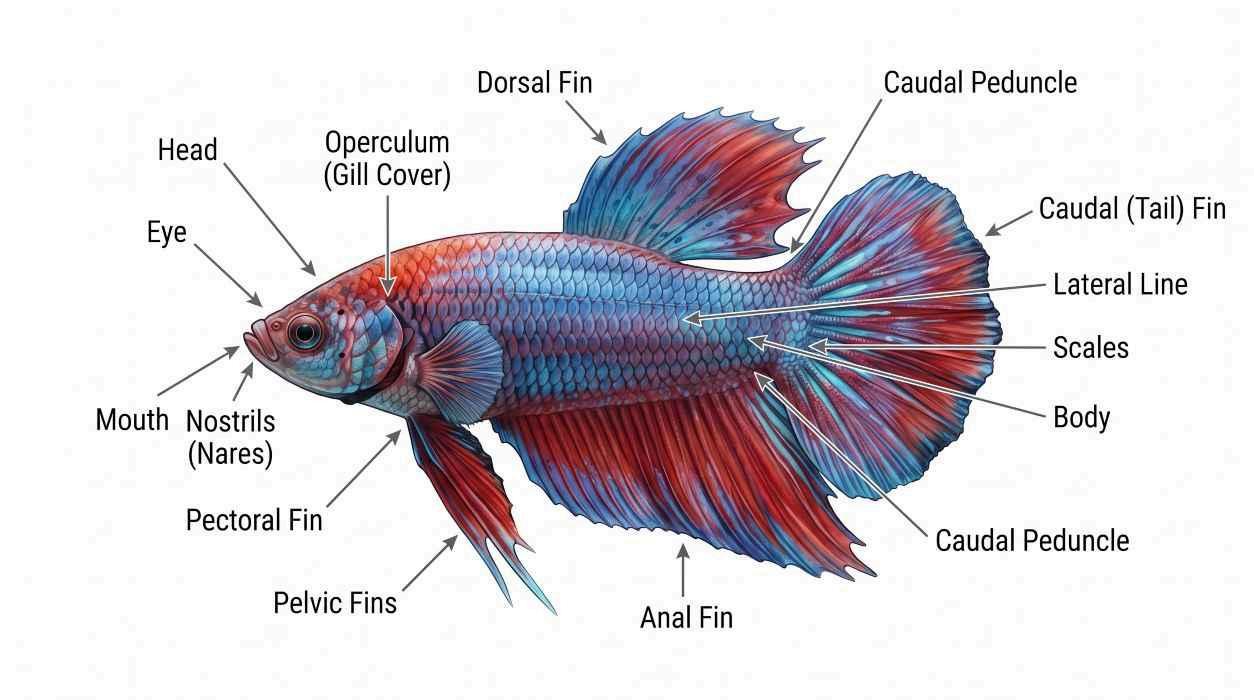
The external anatomy includes all visible body parts. These structures work together to help the fish move efficiently, capture food, detect changes in its environment, and communicate with other fish
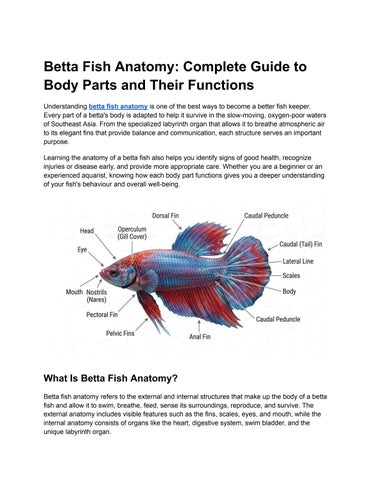
Head
The head protects the brain and contains most of the sensory organs that a betta relies on every day. It houses the eyes, mouth, nostrils, jaws, and gills, making it the centre for feeding, breathing, and environmental awareness
A healthy head should appear symmetrical without swelling, deformities, or visible injuries. Changes in head shape can sometimes indicate infection, trauma, or developmental abnormalities.
Eyes
Betta fish have large eyes positioned on either side of the head, giving them a wide field of vision Although they cannot see in every direction at once, this placement helps them detect movement from multiple angles and locate prey or potential threats
Their eyes are well adapted to spotting small insects and other live food near the water surface. Unlike humans, bettas do not have eyelids, so healthy eyes should always appear clear, bright, and free of cloudiness.
Cloudy eyes, swelling, or uneven eye size may indicate poor water quality, injury, or disease
Mouth
The mouth of a betta fish is slightly upturned, an adaptation that reflects its natural feeding behaviour. In the wild, bettas primarily hunt insects, mosquito larvae, and other small prey that fall onto the water surface
Their jaws contain tiny teeth that grip food rather than chew it Food is swallowed whole before being broken down in the digestive system.
Because of this specialized mouth structure, floating or slowly sinking foods are generally easier for bettas to eat than heavy sinking pellets.
Nostrils (Nares)
Many beginners assume that bettas breathe through their nostrils, but this is not true The small openings located above the mouth are called nares, and they function only as organs of smell
Water flows through these openings, allowing the fish to detect dissolved chemicals in its environment This helps a betta locate food, recognize other fish, and respond to changes in water conditions.
Operculum (Gill Cover)
The operculum is the hard protective plate covering the gills. It shields the delicate gill tissues while allowing water to pass over them for gas exchange
During normal breathing, the operculum opens and closes rhythmically. Male bettas also flare their operculum during territorial displays, making themselves appear larger to intimidate rivals
Constantly open gill covers, excessive swelling, or rapid movement may indicate stress, poor water quality, or gill disease.
Body Structure
The body of a betta fish is streamlined and slightly compressed from side to side This shape allows efficient movement through densely planted habitats while conserving energy
Beneath the skin lies a powerful layer of muscles arranged along the body. These muscles generate the side-to-side motion that produces swimming, while the skeleton provides structural support and protects internal organs.
Although ornamental varieties have dramatically different fin shapes, the basic body structure remains similar across domesticated betta strains.
Scales
Betta fish are covered with overlapping scales that act as flexible armour. Rather than restricting movement, these scales protect the fish from minor injuries, parasites, and bacterial infections
Each scale is coated with a thin mucus layer that serves as an additional defence against harmful microorganisms while reducing friction as the fish swims.
Missing scales, raised scales, or areas with excessive mucus often signal underlying health problems that require attention.
Lateral Line
One of the most remarkable yet overlooked features of betta fish anatomy is the lateral line
This sensory system runs along each side of the body and detects vibrations, water movement, and pressure changes Even in murky water or low light, the lateral line allows a betta to sense nearby objects, avoid obstacles, detect predators, and locate prey.
Unlike vision, which depends on light, the lateral line works continuously, making it one of the fish's most important sensory adaptations.
Betta Fish Fins and Their Functions
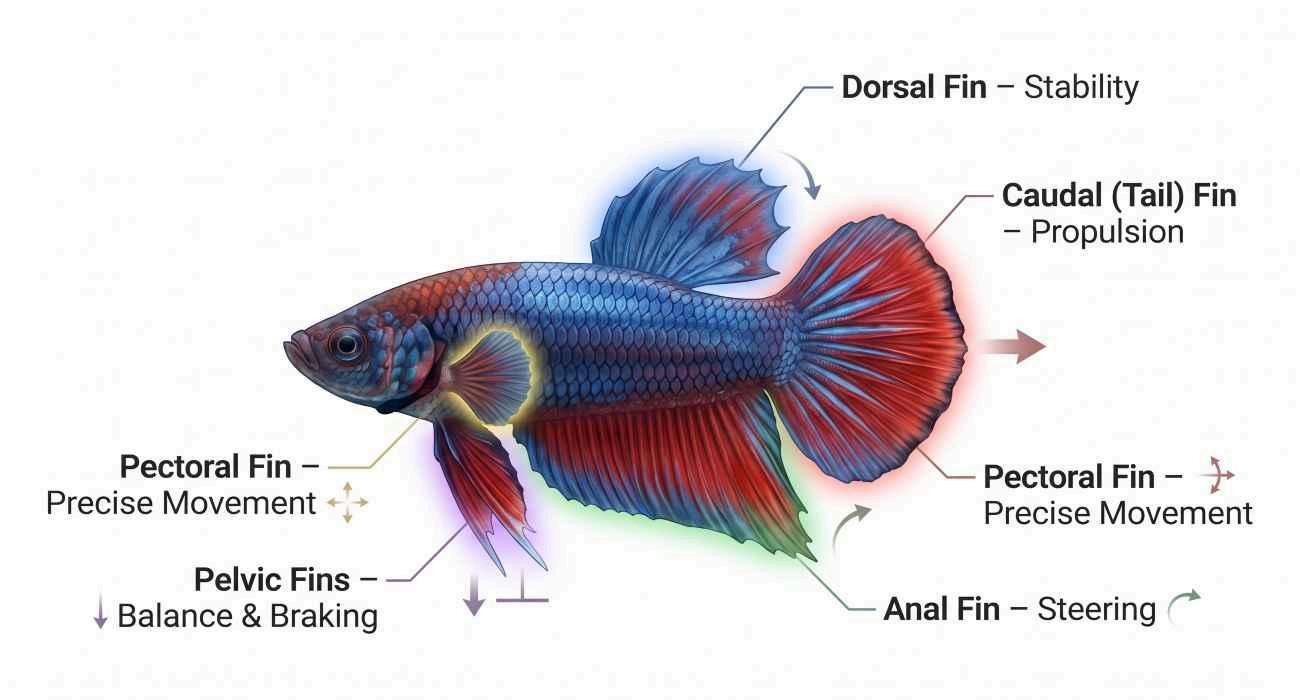
A betta fish has several fins, and each one plays a specific role in movement, balance, and communication While ornamental breeding has produced many impressive fin shapes, their basic functions remain the same.
Dorsal Fin
Located on the back, the dorsal fin stabilizes the fish while swimming and helps prevent rolling. It also assists with turning and maintaining direction
Caudal (Tail) Fin
The caudal fin is the main source of propulsion It generates forward movement and provides power for quick bursts of speed when hunting or escaping danger
Long-finned varieties have larger caudal fins that create elegant movement, while short-finned plakat bettas often swim faster because of reduced water resistance
Anal Fin
The anal fin extends along the underside of the body and works with the dorsal fin to maintain balance. It also contributes to steering and controlled movement.
Pelvic Fins
The paired pelvic fins beneath the body help the fish brake, hover, and make small adjustments while swimming These fins also contain sensory cells that assist with navigation
Pectoral Fins
Located just behind the gill covers, the pectoral fins beat rapidly to provide precise movement They allow the betta to move forward slowly, reverse, hover in place, and manoeuvre around plants and decorations
Together, these fins give bettas exceptional control despite their elaborate appearance
Internal Betta Fish Anatomy
Although internal organs cannot be seen from the outside, they perform the vital functions that keep a betta alive.
The brain controls movement, behaviour, vision, and sensory processing The heart circulates oxygen and nutrients throughout the body, while the liver processes nutrients and removes waste products. The stomach and intestines digest protein-rich foods, and the kidneys help regulate water balance and eliminate metabolic waste
Another important organ is the swim bladder, a gas-filled sac that controls buoyancy. By adjusting the amount of gas inside this organ, a betta can remain suspended at different water depths without constantly swimming Problems affecting the swim bladder may cause difficulty floating or maintaining balance.
The Labyrinth Organ
The labyrinth organ is the defining feature of betta fish anatomy. Located above the gills, this specialized respiratory organ allows bettas to breathe atmospheric air directly from the water surface.
This adaptation evolved because wild bettas inhabit shallow rice paddies, marshes, and slow-moving waters where dissolved oxygen levels are often low. Although bettas still use their
gills, they regularly swim to the surface to gulp air, which passes into the labyrinth organ for oxygen absorption.
Because of this unique adaptation, unrestricted access to the water surface is essential in every betta aquarium.
Male vs Female Betta Fish Anatomy
Male and female bettas share the same overall body structure, but several anatomical differences make them easy to distinguish.
Males generally have longer fins, larger bodies, thicker muscles, and broader heads Females are usually smaller with shorter fins and often display a visible egg spot between the pelvic and anal fins. Their bodies become noticeably rounder when carrying eggs.
These differences are natural and should not be mistaken for signs of poor health
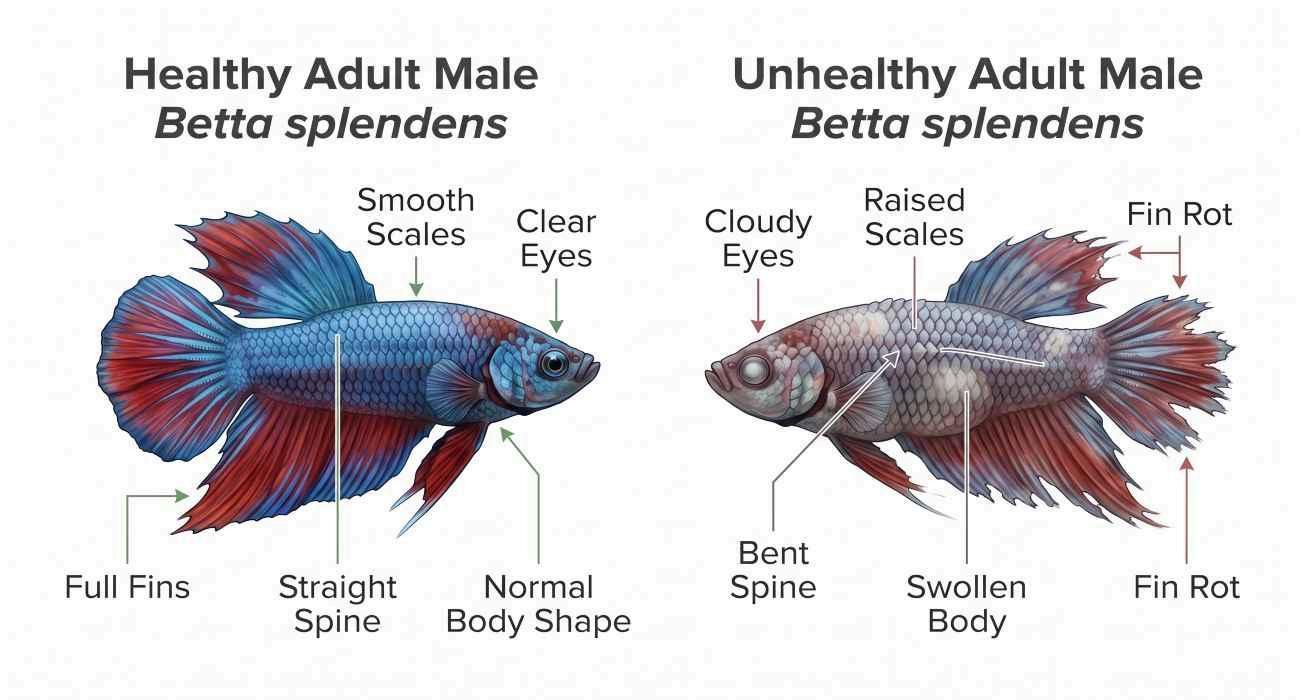
Healthy vs Unhealthy Anatomy
A healthy betta fish has smooth scales, clear eyes, symmetrical body proportions, fully extended fins, and relaxed breathing
Signs that may indicate an anatomical problem include clamped fins, cloudy eyes, raised scales, body swelling, spinal deformities, torn fins, or difficulty maintaining balance Recognizing these changes early allows treatment to begin before the condition becomes more serious.
Why Understanding Betta Fish Anatomy Matters
Understanding betta fish anatomy goes far beyond learning the names of body parts It helps you identify healthy fish before purchasing, monitor growth and development, detect disease at an early stage, and provide better long-term care.
When you know how each structure functions from the lateral line that senses vibrations to the labyrinth organ that enables air breathing you can better understand your betta's behaviour and respond quickly when something appears abnormal This knowledge leads to healthier fish, more informed care decisions, and a greater appreciation for one of the aquarium hobby's most remarkable freshwater species.
Conclusion
Understanding betta fish anatomy gives you a deeper appreciation of how these remarkable fish live, move, and interact with their environment. Every body part from the protective scales and powerful fins to the highly specialized labyrinth organ has evolved to support the betta's survival in its natural habitat Knowing what each structure does also makes it easier to recognize signs of good health, identify potential problems early, and provide the care your fish needs to thrive
Whether you're choosing your first betta or have years of fishkeeping experience, learning about their anatomy is an investment in better care By observing your betta regularly and understanding how its body should look and function, you can make informed decisions that promote long-term health, vibrant coloration, and natural behaviour. A healthy betta is more than just a beautiful aquarium fish it's a fascinating example of nature's adaptation, and understanding its anatomy is the first step toward becoming a more confident and responsible fish keeper
Recommended Articles:
https://thefishcareblog.blogspot.com/ https://medium.com/@thefishingcare/about https://www.behance.net/thefishcare https://hashnode.com/@thefishingcare https://www.pinterest.com/thefishingcare/
Read Our Other Articles:
http://medium.com/@thefishingcare/female-crowntail-betta-fish-fin-safe -tank-setup-guide-445ae8900283
https://medium.com/@thefishingcare/how-to-choose-the-right-goldfish-as-a-b eginner-8a85ffc24b9f
https://thefishcareblog.blogspot.com/2026/07/Wild-Betta-Species.html