Berlinale & EFM Review Daily


Day 9, February 24, 2023
Credit: Vytis, MILC Community Member

VERDICT: Passages is a steamy, sensitive, and surprisingly funny look at the complications of modern love.
Kevin Jagernauth, February 23, 2023
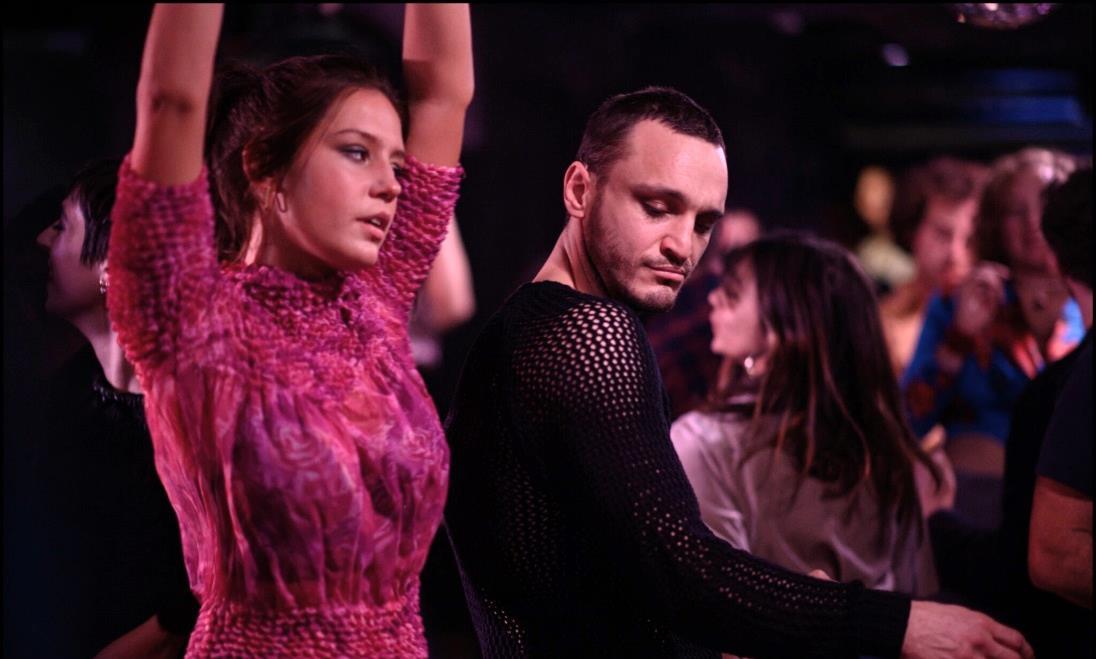
Arriving at the Berlinale with his sixth Panorama-selected film, Ira Sachs’ Passages is a deliriously sexy, competition-worthy melodrama that’s both unexpectedly funny and heartbreakingly sensitive. Giving off so much heat that even the coats worn in the film might get you feverish (costume designer Khadija Zeggaï working overtime), this story of an untenable ménage à trois and its tragic consequences explores the
self-serving, destructive nature of love that we nonetheless keep chasing just to feel that fire again.
“Can you really say that you’re in love with me?” It’s as much a challenge as a question that director Tomas (Franz Rogowski) puts toward his husband Martin (Ben Whishaw), after confessing that following the wrap party of his latest movie, he slept with Agathe (Adèle Exarchopoulos).
Full Review

VERDICT: The latest YA fantasy adventure from Japanese anime master Makoto Shinkai is a beautifully written and animated work of the imagination that incorporates elements of ‘Your Name’ and ‘Weathering with You’ and often sails beyond them.

Deborah Young, February 23, 2023
The secret behind the finest Japanese animation films is their ability to set the viewer’s imagination on fire as she or he confronts the most profound philosophical and metaphysical questions that include death and afterlife, identity and gender, fate and will. Leading animator Makoto Shinkai belongs to a creative élite able to translate these complex themes into YA fantasy adventure, at the same time addressing Full Review

VERDICT: Ruggedly beautiful landscapes and elegant monochrome visuals help make up for a thin plot in Australian director Ivan Sen's politically charged neo-western crime thriller.

Stephen Dalton, February 23, 2023
A fatalistic crime thriller clothed in classic monochrome minimalism, Limbo is the latest bleak meditation on Australia’s racist history from writer-director Ivan Sen. The son of an Aboriginal mother and Croatian father, Sen has repeatedly addressed the mistreatment of Indigenous Australians in his films, often using genre tropes to explore deeper political themes. He delivers a starkly beautiful and quietly furious story here, but the skeletal plot and monosyllabic characters are stripped to the bone, a stylised aesthetic that ends up diluting its own dramatic impact. World premiering in competition in Berlin, this elegiac “desert noir” is a visually arresting and admirably high-minded work that should make an impact
Full Review
VERDICT: James Benning’s latest, bowing in the Berlin Forum, offers a powerful comment on racial politics in the U.S. in a static-shot portrait of the first settlement to be founded and governed by AfricanAmericans.
Clarencs Tsui, February 23, 2023
The key lies in the capital letters. For someone renowned for his understated, minimalist approach towards his art, James Benning has made his point loud and clear this time round with ALLENSWORTH, an hour-long tribute to the African-Americans who defied huge odds to fight for their deserved dignity in life in the pre-segregration U.S.
A montage of 11 five-minute-long static shots of landscapes and buildings that were once part of the first Californian settlement to be founded, inhabited and governed by Black people – plus a solitary live shot of a young woman reciting poems by

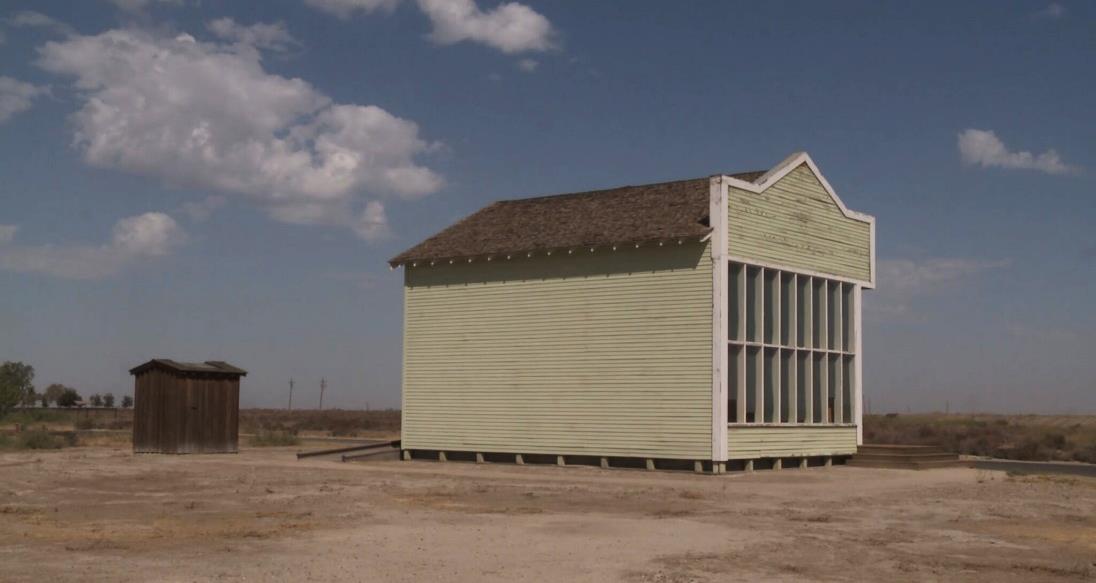
American literary icon Lucille Clifton – ALLENSWORTH ranks as one of Benning’s most overtly political statement in years, if not in his five-decade career. It easily surpasses the opaque hints of critique against colonialism and cultural appropriation in natural history, his 2014 documentary about the Vienna Natural History Museum, or any of the films from his Californian trilogy.
Making its international premiere in the Berlin Film Festival’s Forum, ALLENSWORTH should sustain a long run on the festival circuit, starting with a berth at Cinema du Reél in Paris next month. Full Review
Abbas Kiarostami was seriously ill and died during her first trip, so she was not able to meet him; Foroud Farrokhzad had passed decades before. Yet, she was able meet and talk with Jahar Panahi and other filmmakers, actors, and women activists.
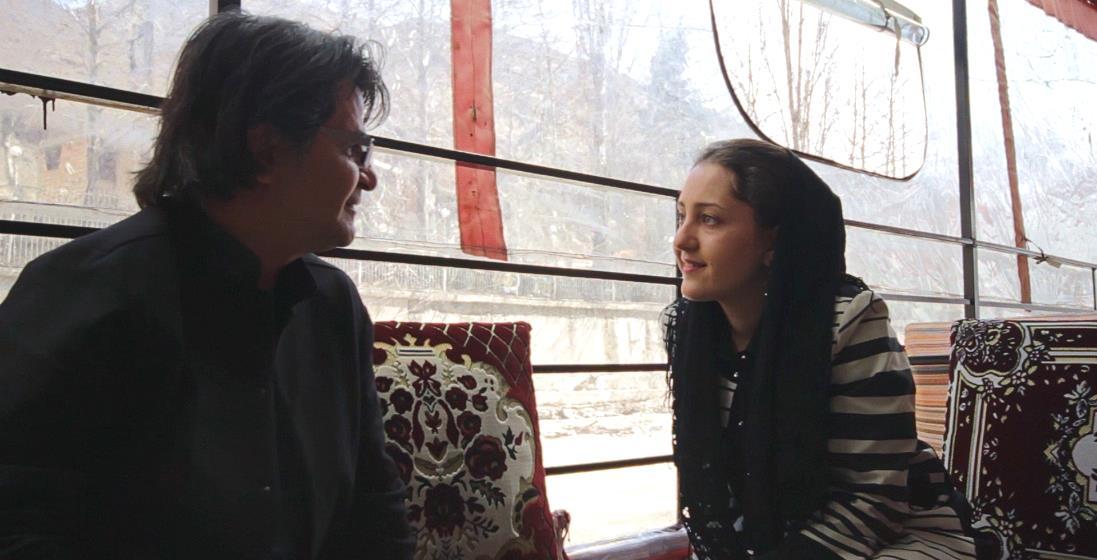
VERDICT: Indian director Sreemoyee Singh's moving documentary transcends the overly relaxed editing and sometimes dispersive focus. Lucy Virgen, February 23, 2023

Director Sreemoyee Singh fell in love with the Iranian cinema when she was a student. Then the poet Forough Farrokhzad – who is also a pioneering filmmaker – inspired
her to study Farsi. She traveled to Iran several times for six years, almost like a pilgrimage, looking for her heroes and a land known only in films. Alas, filmmaker
Iranian cinema is the documentary’s starting point. A documentary assembled as a collage of talking heads, voiceoffs, street scenes, pictures, videos and songs. All shot with a hand-held camera. Singh´s devotion for Persian culture, as well as the sincerity of her approach is what makes the documentary so moving and relevant despite its almost amateur flaws.
Iranian cinema as a subject is a big endeavor for any filmmaker. But for better or worse this is not the case with Singh. Full Review
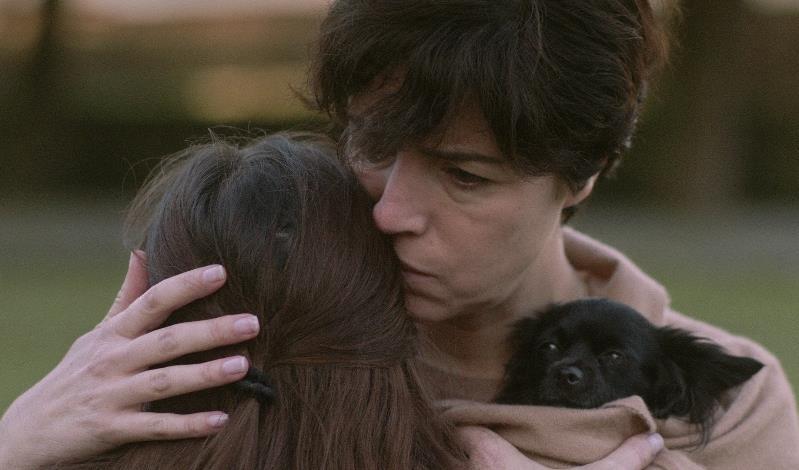
VERDICT: This companion to Bad Living is a repetitive exploration of deceitful mothers and toxic families that offers no new insights.
Kevin Jagernauth, February 23, 2023
In Living Bad, the second film of his Berlinale bummer double feature, João Canijo continues his probe of mothers behaving badly, and the toxic drip of their misguided affection. This time around, the guests of the hotel run by the generation of women featured in Bad Living take center stage in a picture that’s less intense than its predecessor, but just as miserable. With nothing new to venture about the baton pass of emotional abuse within families it’s hard to understand why Canijo needed two films to state what he has already emphatically said in one. Based on the plays of August Strindberg, the screenplay is sliced into three chapters. The first, Playing With Fire, follows Camila (Filipa Areosa), an Instagram influencer with low selfesteem who may or may not be cheating on her boyfriend Jamie (Nuno Lopes) with his best friend. Jamie’s paranoia of a possible affair is fuelled by his mother, whose phone calls he’ll pick up mid-coitus to hear her speculations of possible impropriety based on Camila’s social media feed. In The Pelican, the brittle Graça (Lia Carvalho) is unaware that her serpentine mother Elisa (Leonor Silveira) is carrying on an affair with her husband Alexandre (Rafael Morais). Lastly, Motherlove finds you guessed it a mother, Judite (Beatriz Batarda), actively working to destroy the relationship between her daughter Júlia (Leonor Vasconcelos) and her girlfriend Alice (Carolina Amaral).
If Bad Living at least provided some visual pleasure thanks to the careful cinematography by Leonor Teles, who worked on both films, this time around the photography is less considered. Full Review

VERDICT: The feel bad movie of Berlinale is a bleak and punishing look at familial decay that feels both manipulative and dishonest.
Kevin Jagernauth, February 23, 2023
Imagine the intensity of an Ingmar Bergman film without the psychological acuity, combined with the emotional punishment of a Lars von Trier picture minus the intellectual rigor, and you’ll land somewhere in the neighborhood of João Canijo’s Bad Living. The first of two connected films the director is premiering at the Berlinale, this Competition slog drags audiences through a deeply and unrelentingly unpleasant purgatorial portrait of matriarchal malfunction.
Set in a remote hotel in Portugal, where faded memories of better days outnumber the guests, four women from different generations of the same family keep the unprofitable accommodation running. The surprise arrival of Salomé (Madalena Almeida) tips the already precarious balance between the women in a mausoleum-like atmosphere. Estranged from her mother Piedade (Anabela Moreira) since she was as 12, the young woman has returned at the behest of Sara (Rita Blanco), her grandmother, following the recent death of her father whom she lived with. It’s this triangle around which the story rotates as Salomé confronts and questions Piedade for the reason behind years of neglectful, cruel, and absent mothering. This creates a domino effect as Piedade questions her own mother about her heartless upbringing and soon a vicious, unbreakable circle of poisonous resentments are unleashed between the trio, with recriminations and accusations flung down the hotel’s hallways.
Working from a screenplay Canijo developed across two years of discussion and rehearsals with his actresses, the result nonetheless feels Full Review

In an unusual twist of fate, the major scandal tied to a fall film festival in 2022 was not because of a movie that screened at the event, but rather one that didn’t. Mere hours before Ulrich Seidl’s Sparta was scheduled to premiere at the Toronto International Film Festival, it was pulled because of concerns raised by an article in Der Spiegel, alleging that the Austrian director misled the younger cast members regarding the film’s subject matter. (Seidl has disputed this account, and the film subsequently screened without incident at San Sebastián and the Viennale, ahead of its general theatrical release in 2023, in addition to a special Rotterdam showing of Rimini and Sparta as a single film). Conversely, Corsage, another Austrian film that did screen in Toronto, was recently pulled from cinemas in its home country after one of the actors pled guilty to possession of child pornography. In an era of increased political correctness and scrutiny, American events appear to be playing it much safer than their European counterparts. Roman Polanski and Woody Allen are no longer part of the event circuit in the U.S. and Canada, and David O. Russell, whose Silver Linings Playbook won the People’s Choice Award in Toronto ten years ago, was a no-show with Amsterdam, presumably because of his well-documented anger issues on set and allegations of sexual misconduct. A source with

knowledge of the situation has told us Bryan Singer’s Bohemian Rhapsody skipped the larger festivals in 2018 for similar reasons.
But even in Europe, where controversial filmmakers and actors are generally not shunned (Alberto Barbera, who programmed a posthumous Kim Ki-duk project at this year’s Venice Film Festival, defended the choice by pointing out, once again, that festivals are not courtrooms), things are not always that clearcut. When we interviewed Torsten Neumann ahead of Oldenburg in September, he praised Thierry Frémaux’s policy of putting the art first when it comes to Cannes.
The Film Verdict reached out to several European festival directors for their thoughts on the matter, and while none of them were willing to comment on the specific situation or the contrast between continents, they largely agreed that films should be allowed to speak for themselves, especially when shutting out certain titles might lead to a risk of greater conformity within the artform itself (some festivals declined to comment, citing the complexity of the topic).
José Luis Rebordinos, artistic director of San Sebastián, evoked the angry comments that came (Continues page 10)


with the 2021 edition, which had Johnny Depp as a guest of honor, and took a stance similar to Barbera’s: “We live in a time when people are judged on social media rather than in court.

Johnny Depp had not even been charged with abuse in court and many people already assumed he was guilty. We will always defend the right to the presumption of innocence.”
In some cases, gray areas also emerge within a general consensus on how to deal with a certain issue. Following Russia’s invasion of Ukraine, most festivals decreed that films financed by the Russian State would not be considered for selection. Eva Sangiorgi, artistic director of the Viennale, was asked about this when presenting the 2022 lineup, and stated that some nuance ought to be taken into account, since truly independent productions are rare in Russia, and therefore the filmmaker’s values, as well as those of the work itself, should be a factor. (Ukrainian filmmaker Sergei Loznitsa, who had two films in selection at the festival, was expelled from his country’s Film Academy for holding similar beliefs).

Giona A. Nazzaro, artistic director of Locarno, had this to say on the matter: “Cinema is the art of seeing with one’s own eyes, as Stan Brakhage claimed. Cinema is the place for freedom of thought and expression. The purpose of the rightful demand – and the rightful efforts – to have an inclusive, democratic film industry, as it should be, is to have access to a plurality of voices and gazes. Past mistakes should never lead us to make new ones just because they were well-intentioned. Full Article
– Max Borg
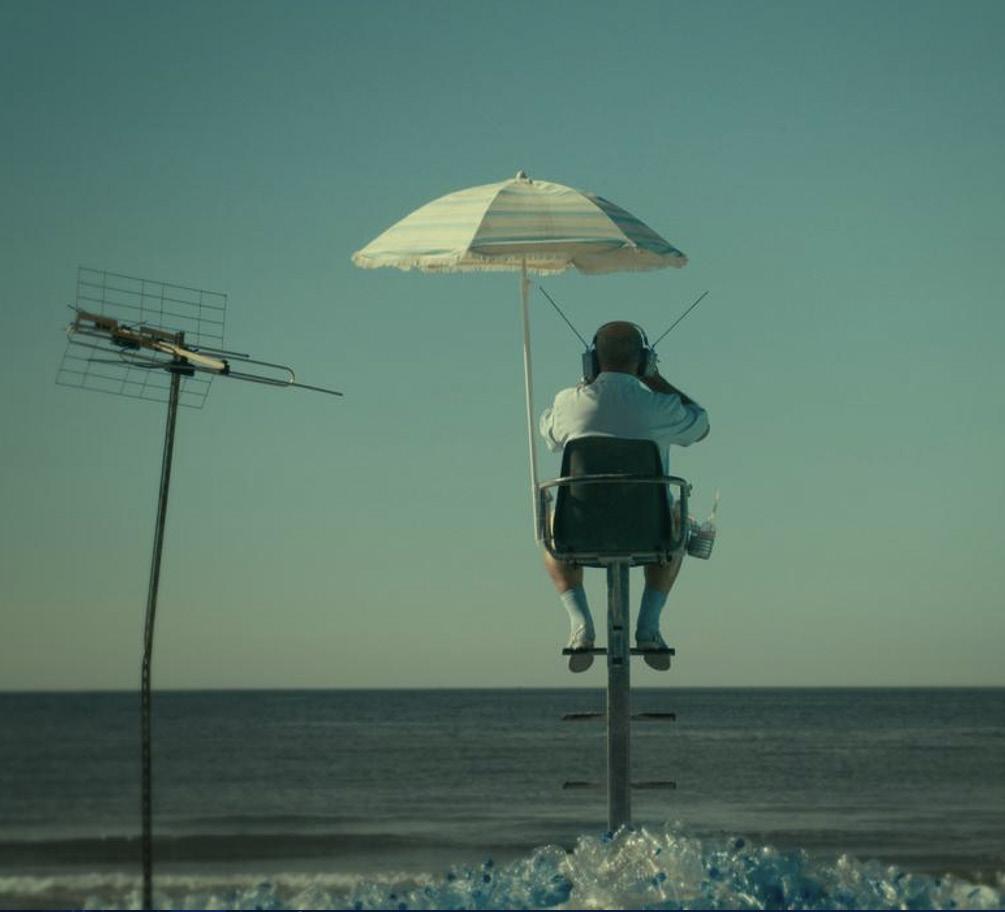
Alpha Film Festival, launched by The Film Verdict and MILC Platform is the first virtual film festival taking place in the MILC Metaverse on March 3 - 7.

The five-day festival will be available around the globe and hosted exclusively by the MILC Metaverse inside its virtual building called the MILC Art Tower.
The theme of the inaugural edition of AFF is “The Future” and is dedicated to bringing cutting edge short film content from around the world. Its aim is to give mass appeal to the unlimited possibilities of the 3D virtual space and how technological advances can reshape the film industry.
The festival’s artistic director, Ben Nicholson, has curated a collection of short films for the Official Selection. There are also several curated live events, including panel discussions with filmmakers and thought leaders shaping the industry’s future, combined with live screenings embracing topics such as visions of the future, artificial intelligence, potential crossover between films and gaming.
The festival will showcase films from around the world, including France, Germany, Spain, China, USA, S, India, Austria, Sweden and Democratic Republic of Congo.
The offiial section films will be available to stream throughout the festival and are eligible for community voting.
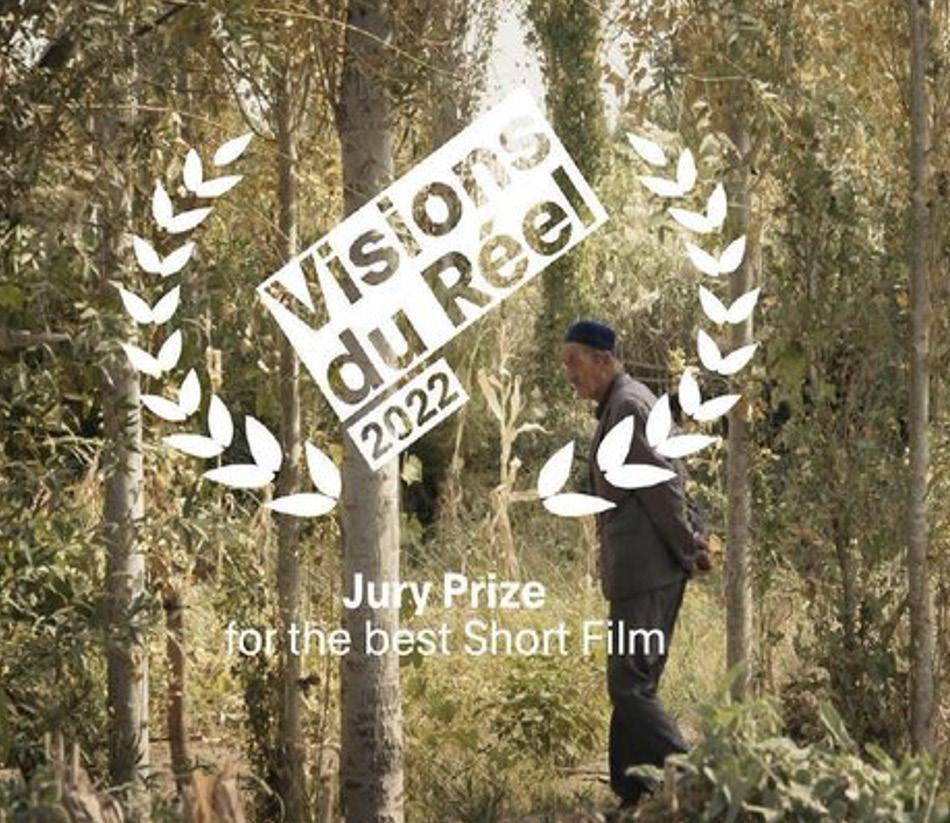 SOS Directed by Sarah Hafner
Aralkum Directed by Daniel Asadi Faezi & Mila Zhluktenko Personal
Directed by Sujin Moon
3 Dialogues About The Future Directed by Alina Manolahe Promotion
SOS Directed by Sarah Hafner
Aralkum Directed by Daniel Asadi Faezi & Mila Zhluktenko Personal
Directed by Sujin Moon
3 Dialogues About The Future Directed by Alina Manolahe Promotion
3 Dialogues About the Future
Directed by Alina Manolache
The Future Isn’t What It Used To Be
Directed by Adeyemi Michael
Agrilogistics
Directed by Gerard Ortín Castellví
Aralkum
Directed by Daniel Asadi Faezi & Mila Zhluktenko
The Arrival of Aliens
Directed by Tian Guan
Brutalia, Days of Labour
Directed by Manolis Mavris
How to Disappear
Directed by Total Refusal
Persona
Directed by Sujin Moon
SOS
Directed by Sarah Hafner
Successful Thawing of Mr. Moro
Directed by Jerry Carlsson
The Unborn
Directed by Thomas Frank
Zombies
Directed by Baloji
There will be a series of live events each evening of the festival. At 6PM UTC Panel discussion followed by an 8PM UTC Live film screenings
March 3rd
PRESENT IS PROLOGUE
March 4th
BEHOLD THIS STRANGE INTELLIGENCE
March 5th
KINGS OF INFINITE SPACE
Among the esteemed guests for the festival, expect to see Award-winning Director Miguel Faus, who recently won an award and $300,000 grant at Sundance Film Festival for his film Calladita, which is the first European movie ever funded by NFTs.
Among those already established to lead panel discussions is Sasha Stiles, a pioneer of generative literature and language art. Stiles has been named “perhaps the leading blockchain poet” by Right Click Save, as well as one of the top 10 NFT artists to watch in 2023.
Also included on the panel is AI multi-disciplinary artist, Sundog who will speak about the possibilities that emerge when blockchain, film3, and AI are utilized in the film creation process.
For more informat about AFF, click here
 How To Disapper Directed by Total Refusal