How technology will drive sustainable property
Featuring the Moonshot 2030 SymposiumECO PROP TECH

How architects are finding a variety of paths to lower carbon . . . . . . . . . . . . . . . . 3
The innovations we need to close the loop on buildings 9
The ESG revolution driving demand for enhanced building sustainability data 15
Digital twins – a powerful new tool for sustainability . . . . . . . . . . . . . . . . . . . . . . 19
WSU’s Centre for Smart Modern Construction looks to the future 23
You can use radical tech for houses 25
The venture capital supercharging sustainable property tech . . . . . . . . . . . . . . . 27
Why the CEFC supports prop tech 31
Recovering and repurposing carbon dioxide 33
Sinkrete pitches to help plug the gap in Australia’s low-carbon strategy . . . . . . 35
Everty: No-one realises how fast EVs are coming to Australia 37
MOONSHOT 2030: the event report
Keynote – Charles Reed Anderson 41
Blockchain, embodied carbon and me . . . . . . . . . . . . . . . . . . . . . . . . . . . . . . 43
Big City grid solutions/local resolutions 46
Magna Data - Two property owners, two different approaches 49 So you think you’ve got a bright idea then? . . . . . . . . . . . . . . . . . . . . . . . . . . . . 51
DIRECTORY
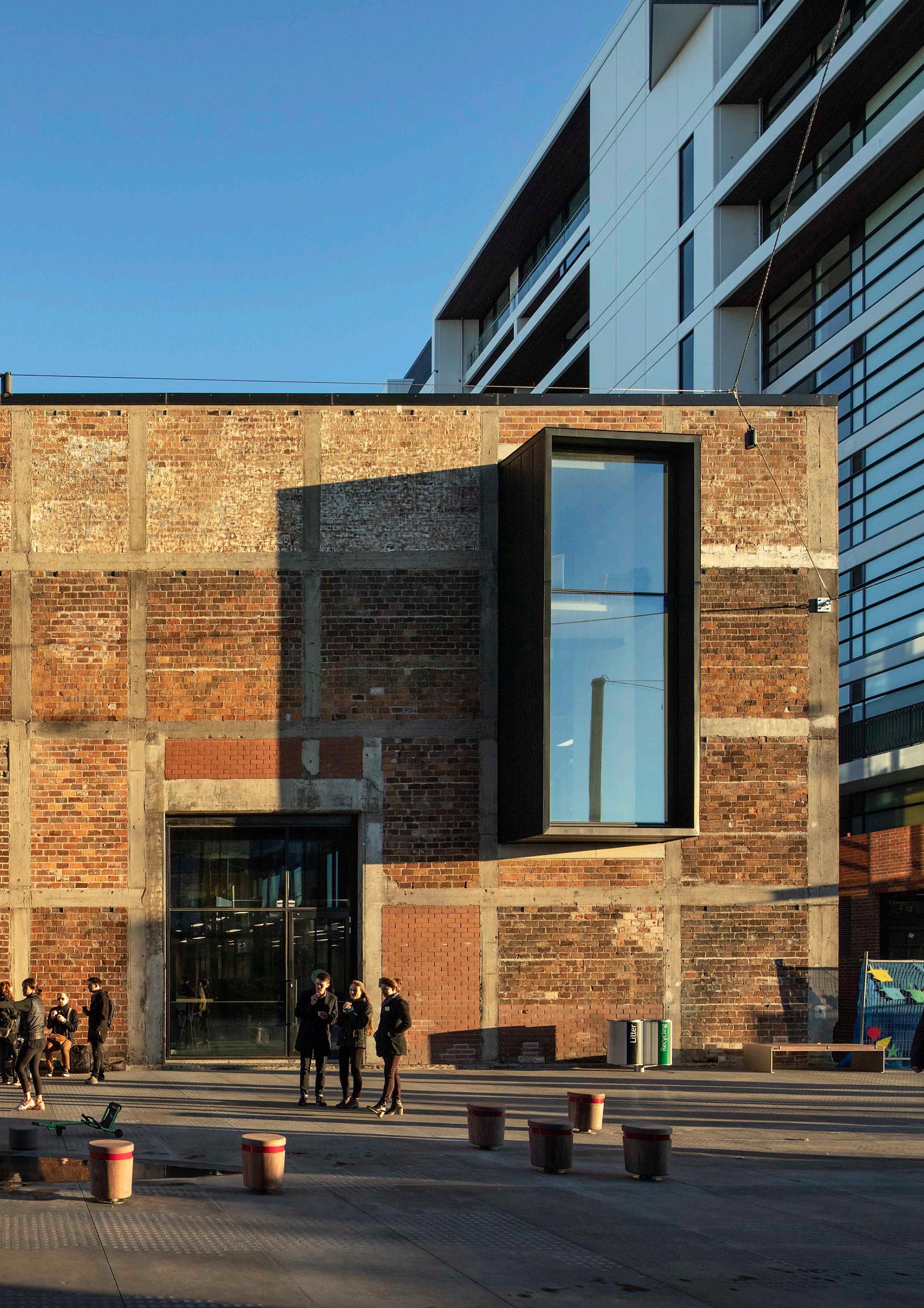
 Auckland’s Wynyard Quarter Innovation Precinct has a NABERSNZ 5.5 Star rating.
Photo: Warren and Mahoney
Auckland’s Wynyard Quarter Innovation Precinct has a NABERSNZ 5.5 Star rating.
Photo: Warren and Mahoney
As Australia dilly-dallies over making a commitment to net zero carbon emissions by 2050, architects’ frustration with the federal government motivates them to focus on their profession’s carbon footprint. They know that 40 per cent of greenhouse emissions emanate from the construction industry.
November’s UN Climate Change Conference of the Parties (COP26) in Glasgow is another goad.
“Reducing our carbon footprint is vital,” says Jim Wilmot, an architect at ClarkeHopkinsClarke Architects, a carbonneutral certified practice and Australia’s largest architectural B Corp company.
“As designers we need to ensure that all our design decisions are considered and contribute to the reduction of carbon emissions, the preservation of the environment and to the benefit of the community and building occupants.”
“We see a massive opportunity to turn things around, if we all act together today,” says Koichi Takada, founder of urban-nature inspired Koichi Takada Architects.
“We need to reverse what humanity has done for the last 200 years, in such a short time frame. How can we do that? … only by the use of technology.” (He relishes his recent purchase of an electric car.)
“Smart displays help residents track and adjust their energy usage (alongside) low-tech measures like carefully placed double and triple glazed, thermally broken windows … It’s more about using a host of simple technologies … and selecting materials manufactured using low embodied energy.”
- Toby Lauchlan
When The Fifth Estate spoke with architects, it was clear that shifts in work behaviour and collaborations within and external to their practices are as crucial as the technology itself.
“The best results don’t rely on high-tech gadgets,” CHC Toby Lauchlan, partner at ClarkeHopkinsClarke Architects says.

Northcote Place, in Melbourne’s inner north adjacent to Merri Creek parklands, at 8 stars NatHERS, is one of Australia’s highest rated townhouse developments.
“Smart displays help residents track and adjust their energy usage (alongside) lowtech measures like carefully placed double and triple glazed, thermally broken windows … It’s more about using a host of simple technologies … and selecting materials manufactured using low embodied energy.”
Nermine Zahran, senior architect and sustainability manager at Koichi Takada Architects, meanwhile, recognises that “technology is getting more advanced every single day. Smart systems in apartments, for

instance, provide a greater awareness which gives (us) an incentive to do better.”
It also means that advocacy is an important part of their job, she says, sharing ideas with clients, many of whom are developers, to help show how they can future proof assets.
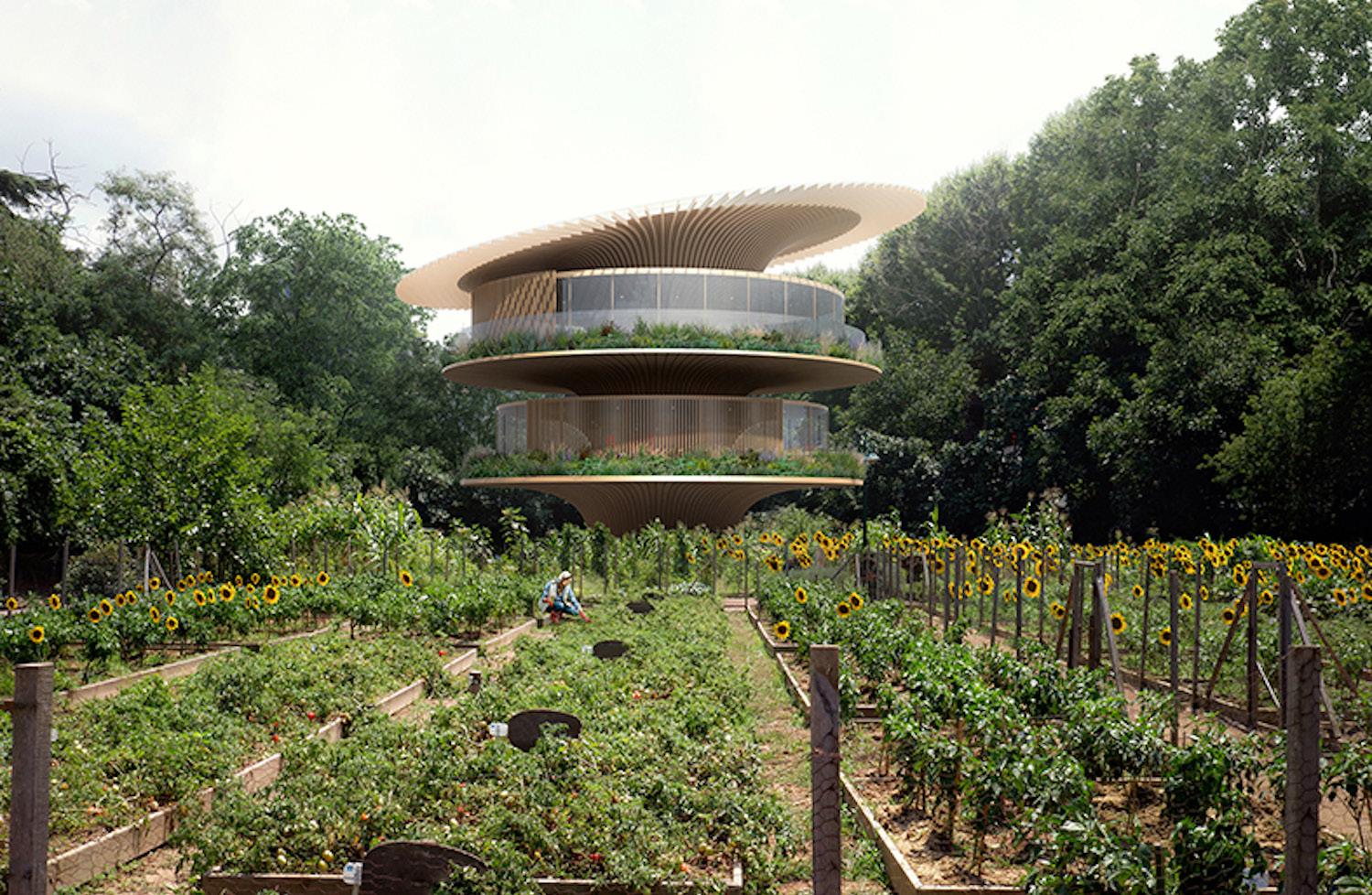
Takada’s belief in the power of wind, water and the sun as ways to generate energy has led to ideas such as the as-yet-unbuilt Sunflower House in Italy. This is designed to move “like a natural sunflower … the roof and each floor rotating on sensors … following the sun to maximise or minimise heat gain, generating solar power on site to increase energy production” the studio’s website explains.
“Naturalising architecture is not just about planting trees but equally having smarter buildings in a technological sense,” he says. It is up to architecture to visualise this; clients increasingly do not want to spend money where they do not see the value (of doing so).”
 “Naturalising architecture is not just about planting trees but equally having smarter buildings in a technological sense.” - Nermine Zahran.
Koichi Takada’s Sunflower House in Italy is designed to move “like a natural sunflower …the roof and each floor rotating on sensors … following the sun.”
“Naturalising architecture is not just about planting trees but equally having smarter buildings in a technological sense.” - Nermine Zahran.
Koichi Takada’s Sunflower House in Italy is designed to move “like a natural sunflower …the roof and each floor rotating on sensors … following the sun.”
Chris Johnson, principal at Fender Katsalidis (FK) Architects and head of its sustainability committee, says “one of our biggest challenges” is concrete. With its notoriously high embodied energy, it is one of the practice’s main materials.
“For tall buildings, anything over eight storeys, you can’t use timber.”
FK has Archicad and the Melbourne School of Design’s EPIC database of Environmental Performance (embodied carbon) in an openaccess construction lifecycle inventory of building materials. The resulting coefficients can be integrated into existing lifecycle analysis workflows.
As well as having detailed numbers, the FK board is now behind the sustainability committee, says Johnson, which gives him more confidence in the viability of its strategies.
“The way I have directed the firm is if we can sort out the operational carbon straightaway, for example, get rid of fossil fuels and have no more gas, we can then turn to materials.
“We’re trying to get our own house in order (in relation to carbon use), to understand the carbon footprint of each material, and to encourage clients to go carbon neutral as well.”
FK is removing all Living Building Challenge (LBC) Red List items, building industry materials harmful to health and the ecosystem, from their specifications.
Johnson says, “we surround ourselves with really good consultants, such as engineer Ross Harding (founder of Finding Infinity), an engineer and a great advocate for change”.

“We’re trying to get our own house in order (in relation to carbon use), to understand the carbon footprint of each material, and to encourage clients to go carbon neutral as well.”
- Chris Johnson.
They are also vigilant about waste reduction, such as a project in Melbourne that turns organic waste to energy, and a project in Brisbane that will connect to an existing 1980s building rather than be demolished.
It’s worth noting that Australian Architects Declare has a list of climate and biodiversity actions including to “upgrade existing buildings for extended use as a more carbon efficient alternative to demolition and new build whenever there is an available choice”.
Warren and Mahoney sustainability group lead
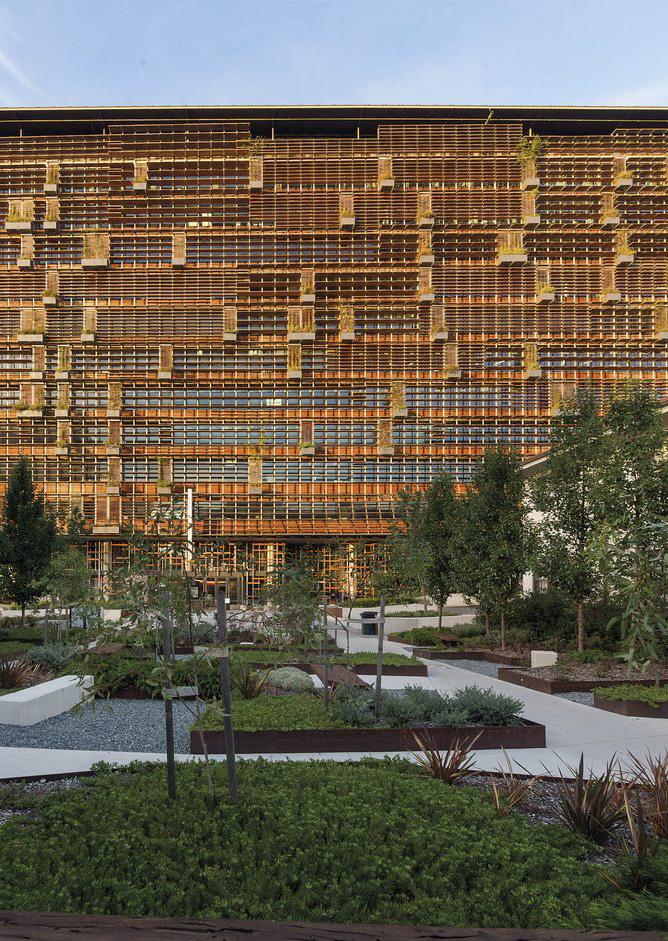 Newacton Nishi, Canberra, ACT. Image: Fender Katsalidis
 Northcote Place is one of Australia’s highest rated townhouse developments with an at 8 stars NatHERS rating.
Image: ClarkeHopkinsClarke Architects
Northcote Place is one of Australia’s highest rated townhouse developments with an at 8 stars NatHERS rating.
Image: ClarkeHopkinsClarke Architects
Fiona Short and principal Simon Topliss are emphatic. “We use a big range of technologies to help us lower the carbon of our designs.
These include digital twin modelling, analysis and also visualisation software to communicate designs to clients and project teams.
“We were the first architects in New Zealand to partner with the New Zealand Green Building Council, to offer a carbon zero building certification for operations,” Short says.

Business changes to remote work after the Christchurch earthquakes and early uptake of building information modelling (BIM) have given the practice an edge for using other technology.
For carbon accounting tools, an important part of the mix, the practice trialled several plug-in varieties. At the moment they favour One Click LCA. “Each practice has their own individual workflow and we have found this was best suited to ours,” she says.
“It is a suite of small tools that help you analyse one particular aspect of the building such as embodied carbon, which is what we are most interested in in terms of climate action, in an integrated systematic way. Its tools allow you to look at early design decisions, meaning that you do not need a detailed model to get a detailed analysis. Its real advantage is that it all comes in one comprehensive package.
“We are moving away from relying on intuition and experience-based knowledge to achieve low carbon design and are now using live data feedback loops to inform design.”
Furthermore, far more clients now want measured outcomes for their buildings, Short says.
This is “not just looking at holistic green or sustainable design using tools like Green Star. There is now a focus on accelerating the work on carbon emissions. It is a new focus
though this has not taken away from other sustainability responsibilities.
It has become something that we are now able to analyse more easily than before. A growing awareness of its impact has led to a greater focus on design not to the detriment of other focuses; this just means another lens through which to assess design decisions.”
Fiona Short Simon Topliss
The innovations we need to close the loop on buildings
Closing the loop on any product is challenging.
It’s about much more than recycling – it often requires a complete overhaul of traditional linear business models and the financial structures that underpin them to keep resources continuously circulating in the economy.
Buildings are particularly difficult as they are extremely complex: made up of multiple different components, each with their own long, opaque supply chains. They also
last several decades and often outlast the companies that built them.
“You need to be sure there’s demand for the reuse components and whoever will reuse will feel happy doing so otherwise it’s easy to revert back to buying a new one.” James Goddin
Thinkstep-anz’s circular economy guru James Goddin sees an important role for technology in a circular building and construction industry.
Blockchain is already helping other industries keep track of a product or material’s location of origin, its carbon footprint, whether or not it was produced in fair working conditions and other important information.
Something else that will be important to address for long lifetime products like buildings and infrastructure is that the data persists even after the company that generated it is disbanded.
For circularity in buildings, product passports underwrite material reuse at the end of a building’s life. These passports contain important information such as structural qualities and date of manufacture that gives confidence to a potential re-user that the product won’t falter.
The company’s circular economy technical director became interested in the circular economy when cradle-to-cradle first emerged and has since helped develop the Ellen Macarthur Foundation’s Material Circularity Indicator, which is a methodology for quantifying how circular a business or product is.
Goddin says product passports and digital twins are where the bulk of the innovation is. Product passports, which store vital information about each beam or paver in digital form, often rely on blockchain technology.
Blockchains, which are used for cryptocurrencies such as Bitcoin, help solve issues around data ownership and data preservation.
Blockchain is already helping other industries keep track of a product or material’s location of origin, its carbon footprint, whether or not it was produced in fair working conditions and other important information.
The benefit of blockchain-enabled product passports is that they make sure the product information is transferred in its entirety and is authentic.
Another potential benefit of blockchains is it is possible for a third party to access the data without knowing the names of the companies, which is vital for businesses that wish to keep their suppliers concealed for commercial reasons.
“You need to be sure there’s demand for the reuse components and whoever will reuse will feel happy doing so otherwise it’s easy to revert back to buying a new one,” Goddin says.
Companies such as Circularise, based in The Netherlands, and Circulor, based in the UK, are helping companies trace materials in their supply chains using blockchain.
Circulor has recently moved into the construction sector through a partnership with Britishvolt, a UK battery maker, to track CO2 across all its processes, including the construction of a “gigafactory” in Northumberland.
As specifications for sustainable construction become more prevalent, people will, for example, increasingly want assurance that their green steel really is green, or to understand the carbon emissions linked to their cement.
- Douglas Johnson-PoensgenCirculor founder and chief executive officer Douglas Johnson-Poensgen told The Fifth Estate that there is a growing emphasis on sustainability in the construction sector and that “traceability” will play a key role in improving the sustainability of construction.

“As specifications for sustainable construction become more prevalent, people will, for example, increasingly want assurance that their green steel really is green, or to understand the carbon emissions linked to their cement.”
He notes there are particular challenges in the construction sector: supply chains are long and complex, and raw materials may go through several transformations before being used in buildings.
“Also, the scale of the construction industry, and the carbon emissions linked to its supply chains, are obviously very significant. Mining, processing and transporting raw materials all require large amounts of energy, as does turning them into finished products.”
Goddin notes there are many companies developing these kinds of product passport technologies and that there will likely need to be consolidation or standardisation so that different blockchains can interact.
“The success of a blockchain system relies on there only being one of them, as you don’t want [users] accessing different blockchains or systems to access the same information.”
Digital twins, building information management (BIM) systems and other digital modelling technologies are also important tools for driving the transition to a circular built environment.
Monash University associate professor Peter Graham, an expert in architectural performance, says BIM and other software are facilitating better environmental design via better information at the design phase.
For example, digital design tools can now
Digital design tools can now track embodied carbon in real time, allowing designers or clients to make informed decisions for reducing embodied carbon. Digitising planning and building approvals also have the potential to increase compliance with codes and standards, and ensure what is designed gets constructed with reduced on-site waste – Peter Graham
track embodied carbon in real time, allowing designers or clients to make informed decisions for reducing embodied carbon.
Graham says digitising planning and building approvals also have the potential to increase compliance with codes and standards, and ensure what is designed gets constructed with reduced on-site waste.
According to Graham, digital files improve the options for deconstruction and upcycling by keeping an inventory of materials stored in buildings that could be salvaged for reuse.
Goddin says an important development for digital twins will be the ability to trace individual products rather than just beams and pavers as homogenous components. He says this will make the technology much more powerful as each product has different properties and this level of detail is needed if the components are to be reused in another building.
He also says it’s important to know what the
product has been exposed to, which is the kind of data some digital twins carry but mostly in more advanced sectors like aerospace and additive manufacturing.
Transferring this capability to construction is essential because some beams are exposed to larger loads than others, which will affect the structural integrity of the beams and inform their applications for reuse.
Goddin says the conversation is moving away from design for deconstruction and gravitating towards designing buildings for adaptive reuse.
He explains that deconstruction and reuse, which involve designing buildings so that they can be disassembled once they reach the end of their tenure in one location to be reassembled elsewhere, is a good way of incorporating circular economy, “but it’s not necessarily the best starting point.”
The problem is that this model is challenged
by building standards and concerns about the durability and functionality of the reassembled building and its componentry.
The method will certainly play a role, especially in office fitouts and potentially the residential sector, as displayed by companies such as XFrame that is designing modular building systems that can be deconstructed and reconstructed multiple times. In the meantime, while regulatory environments catch up, the focus has moved to extending the serviceable life of buildings.
Goddin adds that increasing the service life of a 40-year structure by 10 per cent can give the same level of circularity as incorporating 20 per cent recycled content.
Graham agrees that designing for “long-life and loose-fit” is becoming a priority as the COVID-19 pandemic and rising urban density increase demand for mixed-use buildings.

He also believes that the rise of modular and prefabricated building elements, and industrialised construction systems, will help to reduce on-site waste.
Deconstruction and reuse, which involve designing buildings so that they can be disassembled once they reach the end of their tenure in one location to be reassembled elsewhere, is a good way of incorporating circular economy. “But it’s not necessarily the best starting point.”
– James Goddin“Argentina has been pursuing this as part of their climate action agenda – so there is certainly some data to support this strategy.”
Increasing the service life of a 40-year structure by 10 per cent can give the same level of circularity as incorporating 20 per cent recycled content – Peter Graham
Dr Robert Crawford, professor in construction at The University of Melbourne, says that innovations to reduce on-site waste, and waste at the end of a building’s life, include the sorting of waste on-site, off-site construction, recovery/recycling into new products and product stewardship programs.


Dr Victor Bunster, a Building 4.0 CRC theme coordinator (LCA and Energy) and a postdoctoral research fellow with the Future Building Initiative at Monash Art Design and Architecture, says while the on-site sorting of construction waste materials can be an effective strategy for recovering assets through reuse and recycling while reducing disposal costs, it’s often avoided due to its labourintensive nature, tight schedules and the need for suitable facilities and equipment.
He says that advances in computer vision and artificial intelligence and waste-sorting robots promise to overcome some of these limitations and to make value recovery from waste feasible.
Zenorobotics, for example, has been working on its robotic AI-based recycling technology since 2007. Its technology, which is now commercially available, ensure cleaner waste streams by putting robots in charge of sorting waste.
The robots can identify different colours, textures, shapes and sizes of plastic waste and are already being used to sort construction and demolition waste in parts of the world. The technology claims to sort waste into different streams with as high as 98 per cent purity.
The robots can identify different colours, textures, shapes and sizes of plastic waste and are already being used to sort construction and demolition waste in parts of the world. The technology claims to sort waste into different streams with as high as 98 per cent purity.
Dr Robert Crawford Dr Victor Bunster
The ESG revolution driving demand for enhanced building sustainability data
After BlackRock chief executive officer Larry Fink’s 2020 letter to CEOs outlining that climate risk is financial risk, most investors recognise the link between a strong ESG performance and financial returns.

As a result, the days of aspirational, surface level environmental, social, and corporate governance (ESG) reporting are numbered.
Now, ESG-savvy investors want more than just an annual report or occasional audit on a company’s progress towards its net zero targets and other sustainability ambitions. They want to see real time data that’s comprehensive and trustworthy so that they can monitor a company’s progress towards these targets and keep them honest.
Sustainability data analytics companies such as Measurabl and Envizi are helping companies improve the quality and accessibility of their ESG data.
Armed with this kind of data, property companies can take meaningful action to drive down emissions and improve on other sustainability metrics, knowing that the fruits of their capital investments will be.

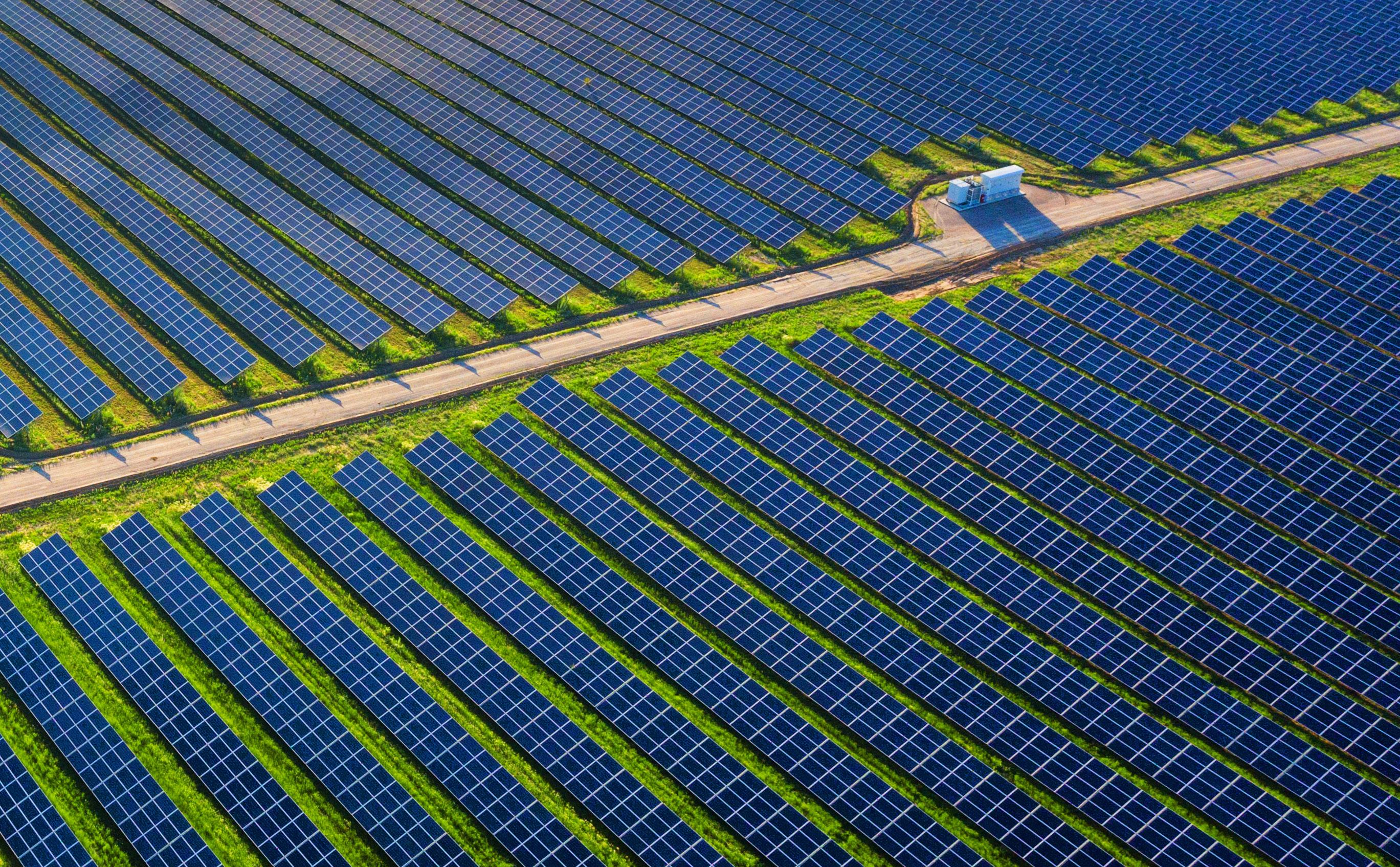
According to GRESB head of Asia Pacific Ruben Langbroek, these kinds of data analytics and management tools give companies insight into what’s happening at the asset or building level. It’s possible to know exactly how each building in a portfolio is performing against sustainability metrics.
“We are convinced that data will set the stage to transition to net zero, resilient and climate positive buildings. It’s all about data quality.”
Technology such as sensors, Internet of Things and AI can unlock new value as they are able to monitor carbon, indoor air quality, water and waste in real time, as well as retrieve data points around occupancy rates and so on. Smart technology can also help companies leverage this data to deliver environmental and social improvements that will deliver the best bang for buck.
“In terms of greenwash, if investors can’t trust the claims that companies are making, then they can’t trust what they are basing their capital allocations on.
“And it is happening, you see it everywhere.”
Langbroek sees blockchain and distributed ledger technology fortifying the quality and value of ESG data even more. Applied to energy use, for example, blockchain makes it possible to accurately track energy from its source to the meter, to where it is used in a building.
He says this kind of floor area-level insight into energy consumption that’s verifiable and trustworthy will lead to the decentralisation of critical information around net zero and decarbonisation.
By way of example, a landlord looking to refinance a property in order to reduce its carbon intensity could leverage the trustworthy sustainability information stored in blockchains to secure a discount on interest rates linked to sustainability outcomes.
“In terms of greenwash, if investors can’t trust the claims that companies are making, then they can’t trust what they are basing their capital allocations on. And it is happening, you see it everywhere.”
 – Ruben Langbroek
For the lender, it’s much less risky to be able to see real time, verified sustainability data than rely on an audit or report from last quarter for these purposes.
Particularly as government level net zero targets start drawing closer, Langbroek imagines these kinds of real time, verifiable information systems becoming increasingly popular.
Langbroek also says these technology developments that improve the integrity, timeliness and accessibility of data can make the process of reporting to GRESB and other sustainability frameworks much easier.
For example, the organisation is looking at solutions that in the future, could allow users to get some indication of where they sit on GRESB outside the formal reporting period based on a company’s real time sustainability data captured by technology devices.
 By Poppy Johnston
Digital twin technology is promising big in the pursuit of highly efficient, sustainable buildings and cities and adoption is gathering pace, its proponents say.
Digital twin technology could cut as much as 50 per cent of carbon emissions in the built environment, according to a report released by EY in May 2021.
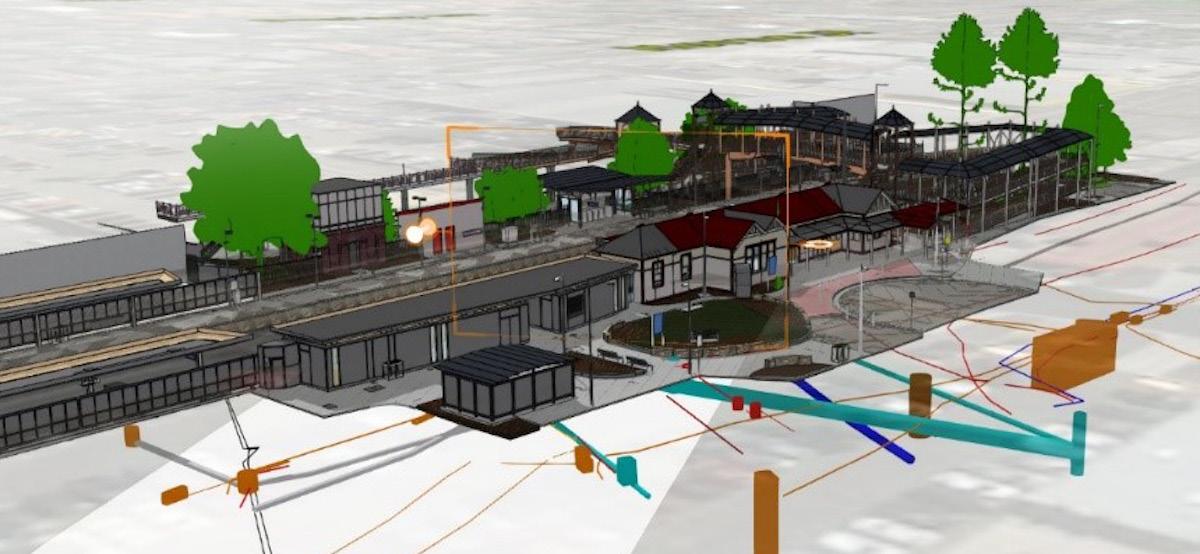
More than just a visual replica of a building or asset, a digital twin is populated by real-time data from the physical world so that it also
behaves the same way that the physical asset would but in digital form.
The implications for sustainability are not hard to imagine. In the construction phase, which is where digital twins and their close cousins BIM (building information management systems) were first envisioned to serve, they help streamline the ultra-complex construction process, preventing on-site waste and mistakes that might see a building demolished before its time.
Now, twinning is increasingly used to keep buildings – and precincts, neighbourhoods, cities and even entire countries – running like tight ships and delivering savings on energy, carbon, capital and operations.
With data fed into the system from remote sensors and the Internet of Things that capture real-time data, such as temperature and air quality, it’s possible to respond to complications quickly and even predict them.
Tobey Wood is director financial planning and analysis at digital twin company Willow. He says that digital twins are contextualising the sustainability opportunity in a way people have never really understood before.
“People have tossed around terms like ESG, social governance, sustainability, and climate action for years, but when push comes to shove, there’s been no clarity for action.”
Now, Wood says, companies have set themselves carbon-neutral targets and need to show tangible evidence that they are tracking towards these goals within their given timeframe.
Investors will be watching these metrics carefully to hold companies accountable to their commitments, which is where a digital twin of a building portfolio is particularly useful, he says.
“There’s now this shift in industry that sustainability is a box that needs to be ticked, however, in order to do that, owners need a data-driven approach. I think the digital twin is the way to tackle that problem with an accountable record.”
A twin should make any reporting or auditing function much quicker. The process of getting a building sustainability rating such as a NABERS or LEEDS rating, depends on an accounting review being done for the year prior, which takes as long as eight months.
“But with a twin you have that accountability, the twin provides transparency of what you have at that period of time.”
In an environment where strong ESG performance is now being linked to higher shareholder returns and there’s a correlation between sustainability linked loans and a lower cost in capital, Wood says there are real benefits for moving quickly to improve sustainability.
“If you are able to get your sustainability metrics performing better than before, you get access to cheap capital and you are going to accelerate if you are investing in those areas, compared to others that don’t see it as important who will get punished.”
“When you look at where capital positions are today it screams as a huge opportunity.”
Victoria recently launched a whole-of-state digital twin program led by Land Use Victoria and Queensland has developed a digital twin proof of concept.
Despite the potential of digital twins to improve environmental performance and achieve savings, adoption in the real estate sector has been sluggish.
“A lot of customers are just getting in on the ground floor.”
Wood says some of the technology has traditionally faced challenges around interoperability with existing systems and being unwieldy to implement and upskill staff in. Now that the technology has matured, he says the majority of these concerns have been addressed.
“We are fundamentally changing the way clients are solving issues with a digital twin and the way they look across their portfolio of assets in a way that makes it simple, in a single pane of glass… getting there is the hardest part.”
Digital twins are also gaining popularity as a tool to drive efficiencies across larger tracts of land than a single building site.
Singapore was the first to try out a digital twin, with a twin created of the city in 2014. Its purpose was to replicate the transport network and the buildings and feed in real-time data to help inform the city’s maintenance.
Since then, the UK has launched a national digital twin program, and Las Vegas has followed New York in signing up to digital twin provider CityZenith’s “Clean Cities – Clean Future” initiative to use twinning technology and IoT with the explicit purpose of driving down carbon emissions in these major cities.
Locally, Victoria recently launched a wholeof-state digital twin program led by Land Use Victoria and Queensland has developed a digital twin proof of concept.
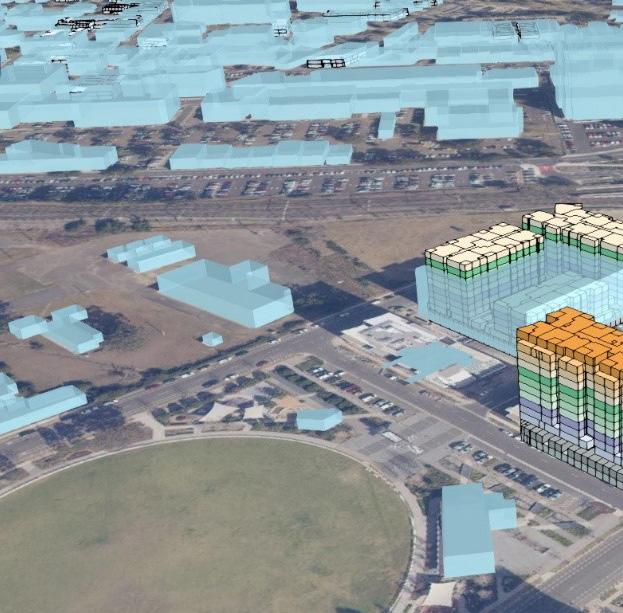
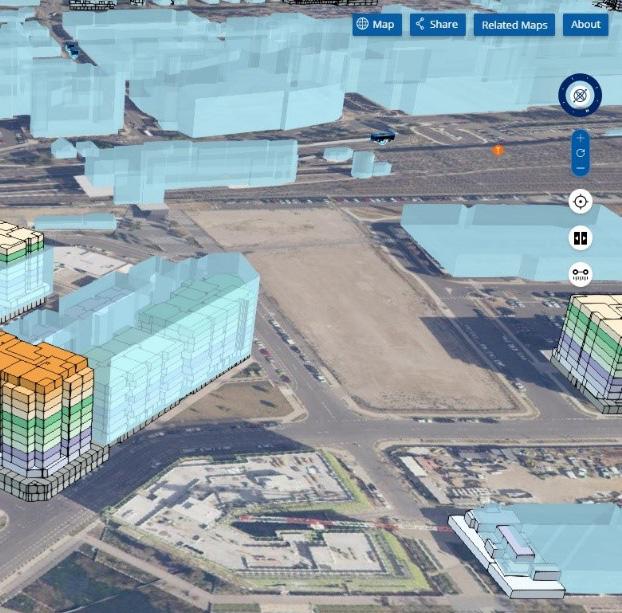
The NSW government has also built its first “spatial digital twin” of Western Sydney, which is a strategic, high-growth area in the throes of delivering a new airport. The Western Sydney project was intended as a pilot to inform the business case for a statewide roll out.
NSW’s spatial digital twin program sits with NSW Spatial Service in the Department of Customer Service, which provides the foundational spatial data (elevation and depth, property boundaries, aerial imagery etcetera) that other stakeholders can add datasets into to build a comprehensive 3D and 4D (time) representation of the Western Sydney area.
Speaking to The Fifth Estate, Wayne Patterson, director of spatial operations, says the tool will be very powerful in the design and consultation stage of planning. Instead of using a standalone model, with a digital twin there’s the ability to contextualise proposed designs in the real world with “all that information around it in 3D so you can actually see how it interacts with a digital version of the built and natural environment.
“Where existing infrastructure is and new infrastructure is planned, including existing trees, buildings and the slopes in the land.
“It’s very powerful.”
It can also be useful to communicate plans to the community during exhibition, consultations and feedback, adds Patterson.
“Where existing infrastructure is and new infrastructure is planned, including existing trees, buildings and the slopes in the land.
The twin will only become more valuable as more, high-quality data becomes available. He says local governments’ sensor networks, for example, will also give each council the opportunity to see real-time data in the digital twin, as well as compare their performance with neighbouring LGAs, or the entire state, if they so wish.
Patterson says the twin is an ecosystem, not a standalone tool, that other agencies, industry and even community groups can plug data into. That means data quality and governance controls are crucial to the success of the project. While the aim is for as much data as possible to be open to the public, some sensitive data will need to be restricted to smaller groups of users.
Making Australian cities more sustainable requires a transformation of the building industry and a significant shift in the political debate around climate change, according to Professor Srinath Perera, from the School of Engineering, Design and the Built Environment at Western Sydney University.
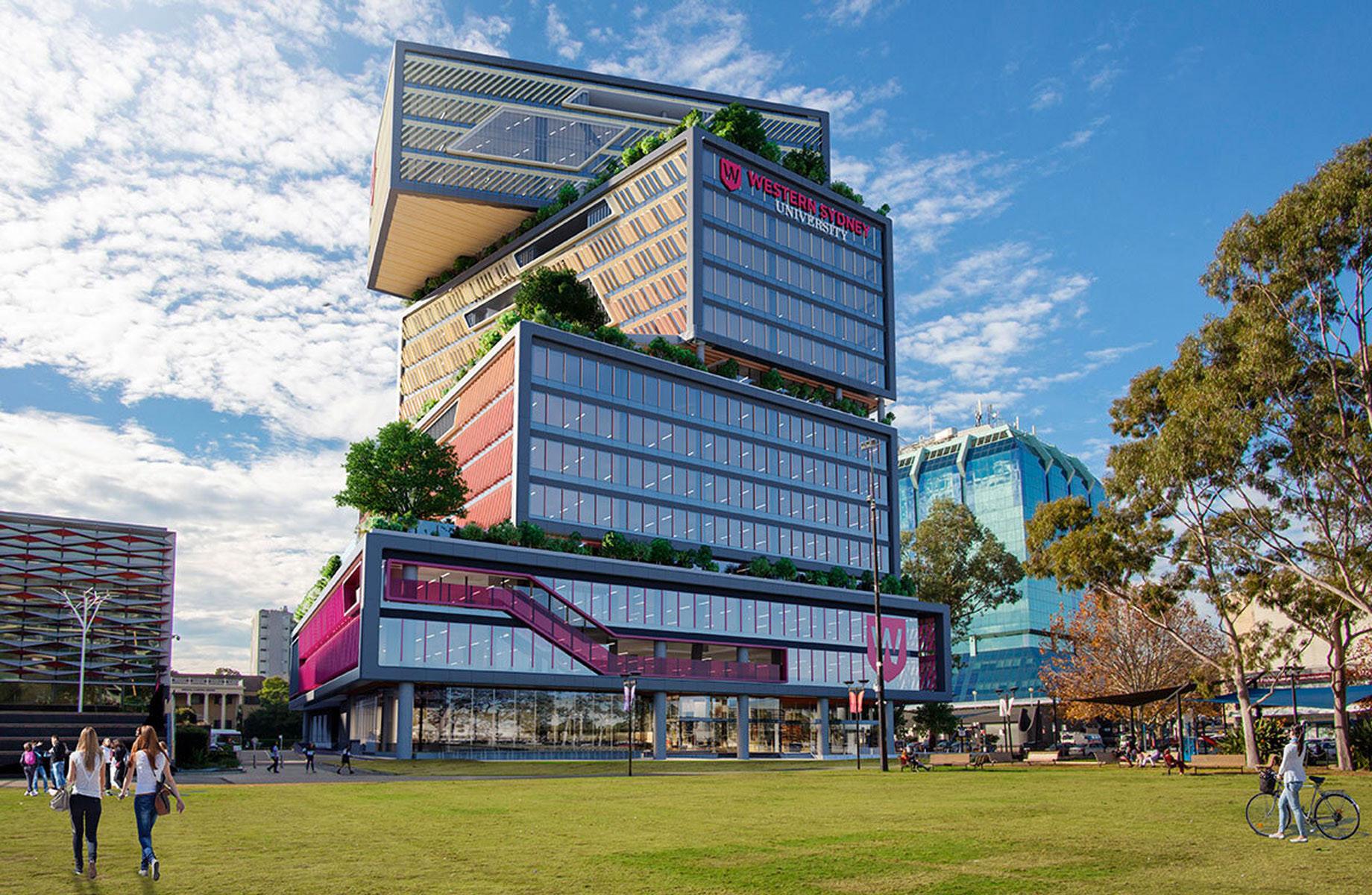
Australian population will be living in cities,” he says. “So, we must act quickly.”
Before taking charge of WSU’s Centre for Smart Modern Construction, Professor Perera spent 18 years working in the British construction sector and believes that Australia could learn from the UK experience.
“In Britain people have taken politics out sustainability,” he says. “But in Australia sustainability is highly politicised which makes things very difficult for anyone to implement new policies.”
During his time at Northumbria University in the UK, Professor Perera witnessed how the UK government encouraged the resurgence of manufacturing in the England’s north-east, with a focus on high-value, high-tech products.
He says the need for such technology is even more pressing in Australia – a continent that is far more vulnerable to climate change than Europe.
Western Sydney University“Blockchain technology will create an immutable ledger so that builders and contractors would have to take responsibility for major flaws, like those found at the Opal Tower and Mascot Towers in Sydney.”
– Professor Srinath Perera.
“There is so much opportunity in Australia because of our abundance of natural resources. But for some reason we are still happy to be the raw material producer to the world and nothing more.”
In addition, Professor Perera believes that Australia’s construction industry is hampered by poor land management systems, a lack of transparency, inadequate data collection and needless duplication.
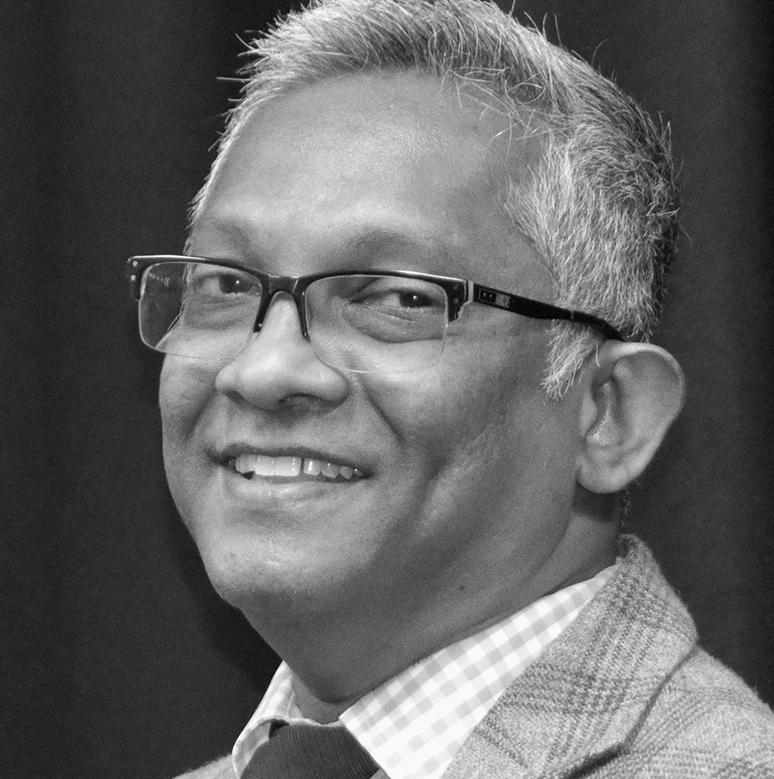
The Centre for Smart Modern Construction is currently looking at how blockchain technology, like that used by cryptocurrencies, could transform the building approval process in Australia – and achieve real accountability.
Professor Perera says blockchain technology will create an immutable ledger so that builders and contractors would have to take responsibility for major flaws, like those found at the Opal Tower and Mascot Towers in Sydney.
“We feel there is an enormous opportunity for Australia in blockchain technology,” he says.
Implementing such a major overhaul of Australia’s sprawling construction sector is not going to be easy.
While big companies such as John Holland, LendLease and CPB Contractors are keen to embrace blockchain technology, smaller players do not have the time or resources to implement such high-tech solutions.
“Around 35 per cent of building companies in Australia employ 20 or less people,” explains Professor Perera.
“They do not have the capability to adopt and develop this technology and that’s where the problem lies.”
The NSW Building Commissioner David Chandler has promised a blockchain based rating system will be available by March 2022 in an attempt to stem widespread defects in apartment buildings in NSW.
The rating system, targeted to 100 builders, is voluntary but its absence would be expected to flag some concerns to prospective buyers, the commissioner says.
NSW Building Commissioner David Chandler has promised a blockchain based rating system will be available by March 2022 in an attempt to stem widespread defects in apartment buildings in NSW. The rating system, targeted to 100 builders, is voluntary but its absence would be expected to flag some concerns to prospective buyers, the commissioner says.
After spending a decade transforming older commercial buildings into modern, energy efficient workplaces, Adam Murchie is convinced that the latest heating, power and storage technology will transform our lives.

As the director Forza Capital Murchie has overseen the re-purposing of ageing assets across Australia but is now applying the same vision to his own family home.
“We are doing some pretty out-there stuff,” he admits.
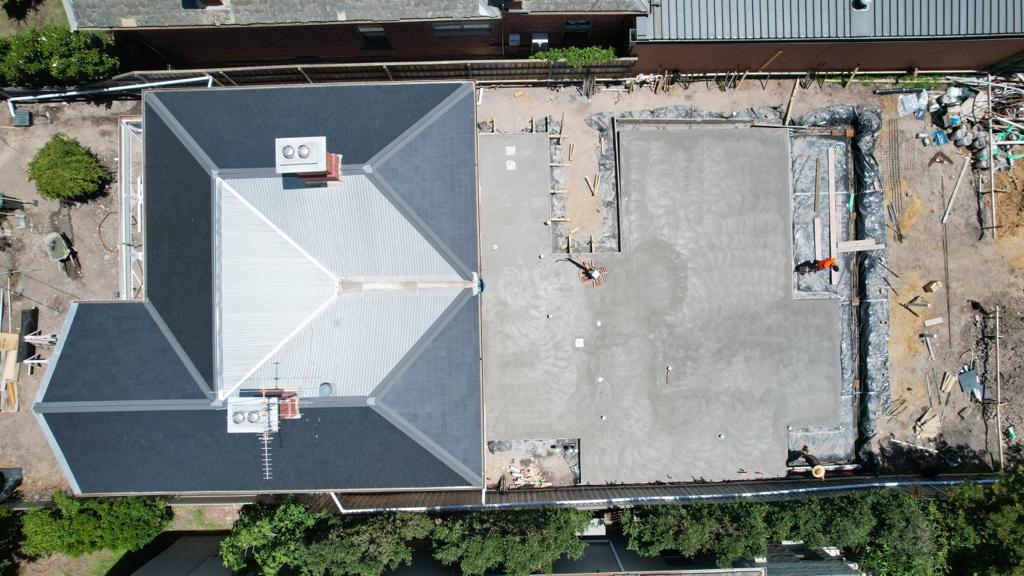
The ambitious project involves a full restoration of a 120-year-old residence in Melbourne’s inner east, plus the installation of a fully integrated power generation and storage system, solar tracking, a unique heating system and a fast-charging port for an electric vehicle.
Murchie says his ambition is to create an all-
electric house, which relies on a combination of solar panels and hydronic heating; the two systems tied together by a manifold for maximum efficiency.
“So, it’s a full restoration plus bringing the property up to spec on the sustainability side with full renewables, water storage tanks, edible gardens. Basically, a complete reboot on a standard restoration,” he says.
The technical side of the project is being overseen by Veida, a Melbourne based company that specializes in designing innovative and creative energy solutions.
Director Haim Ptasznik says the brief from Adam Murchie was to create an all-electric property that could power and heat itself independent of the grid.
“This is what I call an active green house,” he says.
Some of the most innovative features include optimised solar panels that tilt to match estimated consumption, 15-20kWh of supercapacitor energy storage and full blackout and UPS protection allowing the property to run without grid power for up to 24 hours.
“In addition, we are installing a unique venting system that will return air from the ceiling space to the heat pumps,” says Ptasznik.
“This will enable the heat for the potable hot water to be sourced from the ceiling space.”
For greater efficiency some of the solar panels in the ~17kWh solar array will be run straight into the DC battery so there is no AC/DC conversion loss.
Indeed, every aspect of the new family house
“Some of these ideas have never been tried before but is happy to take some risks. We are trialling a few things and if they work we’ll look at replicating them in some of our commercial projects.”
- Adam Murchie.
will need to meet stringent requirements to fulfil the brief of total sustainability – all windows are being double glazed used e-glass and only the moist energy-efficient appliance and lighting equipment installed.
The old swimming pool is being replaced by a 27,000 lite water tank which will irrigate the food-producing garden and property’s toilets and laundry.
Murchie concedes that some of these ideas have never been tried before but is happy to take some risks.
“We are trialling a few things and if they work we’ll look at replicating them in some of our commercial projects,” he says.
The brief from Adam Murchie was to create an all-electric property that could power and heat itself independent of the grid. “This is what I call an active green house.”
- Haim Ptasznik
 Adam Murchie is restoring a 120-year-old residence in Melbourne’s inner east.
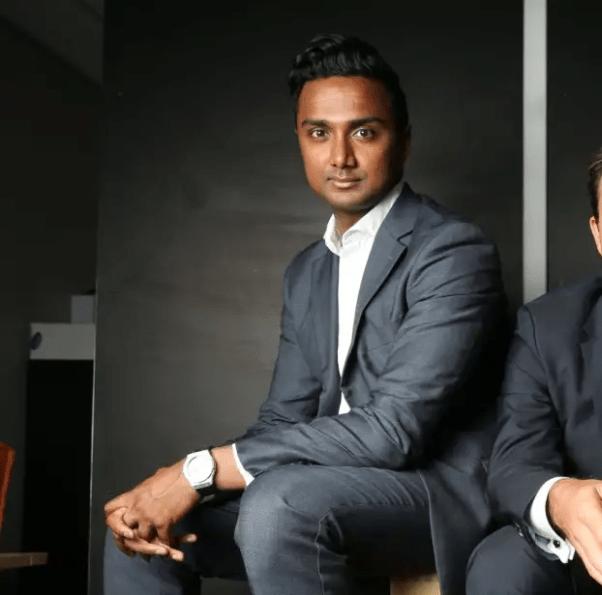
The venture capital companyAvi Naidu and Jonathan Hannam, Taronga Ventures
Venture capital from Taronga Ventures is giving innovative sustainable tech solutions the boost they need to transform the property industry.
The way we build and operate buildings has evolved very little over the years.
The industry is notoriously slow to innovate. The protracted, complex task of delivering a new building doesn’t tend to work well with experimental technologies or systems that might cause delays or cost overblows.
For companies looking to sell technologies to the real estate sector, it’s a tough gig. With the property industry in Australia dominated by large, established companies, it’s a hard sector to break into for a fledgling startup, no matter how promising the technology is.
The result is the industry has so far missed out on a lot of the innovation that has already made many other industries more productive and efficient, generating savings and, pertinently, lowering environmental impacts.
Now, venture capital is helping more of these new technology vendors penetrate the real estate sector.
Taronga Ventures, founded in 2015, invests in technology to modernise the built environment. It was started when co-founder and managing partner Jonathan Hannam noticed that the real estate and construction sectors were struggling to innovate.
“We wanted to establish something that would be the bridge between emerging technology business and their potential customers.”
He says despite a sluggish start, innovation in the industry is now gathering pace.
“What’s happening now is larger companies are realising they can start to measure costs, that improving efficiency can lead to better performing assets.
“Real estate developers and managers are looking at innovation as a differentiator.”
There are a few different prongs to the Taronga
Ventures operation, including a venture fund backed by the big names in property, such as Dexus, CBRE, PGIM Real Estate, APG, Ivanhoe Cambridge, Qantas Super and Grosvenor Asia Pacific. In total, This amounts to a more than $US1.5 trillion underlying real estate portfolio that will actually benefit from the emerging tech that Taronga Ventures is investing into.
“This collaborative arrangement means we are really solving problems that our partners want.”
For property owners, they get to be among the first to implement the successful technologies and leverage the first mover advantage.
The model has delivered an outperformance so far with an internal rate of return of 52 per cent on deployed capital. “It’s a good start for a fund…we are very focused and have quite a different model from a generalist fund that might invest in 1000s of deals.”
“In addition to the fund return we deliver for investors, we can also deliver real value at the asset or portfolio level. If we can reduce operational costs or add in additional revenue, it’s a substantial benefit for the corporate.”
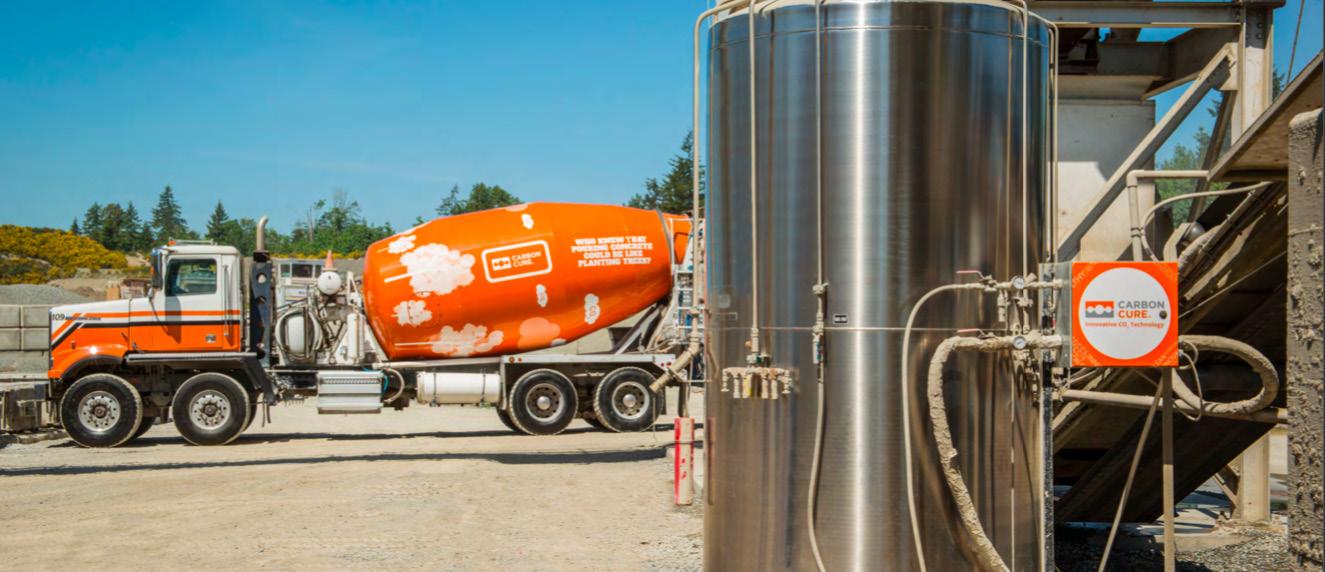
CarbonCure has developed a technology that can inject carbon dioxide into the cement-making process where it becomes permanently embedded.Hannam’s organisation is all about fast tracking the net zero transition to net zero.
As a real estate investor, he says this is easy now that there’s an abundance of research showing that the capital value of an asset can be improved by being “smarter, cleaner and connected”.
“ESG isn’t a risk, it’s an opportunity – this is a way to generate additional revenue that will lead to financial gain.”
Hannam has watched a sharp rise in interest from investors when a solution with sustainable outcomes is presented, adding that Australia’s commercial real estate industry is already ambitious on sustainability. Most of the key players are targeting net zero by 2030, at the latest.
One of most exciting companies in the investor’s ecosystem on the environmental front is US-based company CarbonCure, which has developed a technology that can inject carbon dioxide into the concrete process where it becomes permanently embedded.
The technology is able to reduce the emissions released by making concrete without sacrificing the durability or performance of the product. In fact, Hannam says it becomes stronger due to the chemical reaction that takes place.
Another company of note is Voyage Control, which “replaces the clipboard” typically used to track construction site logistics such as delivery and materials inventory. By improving the efficiency of this process so that less material and effort is wasted, Hannam says it’s possible to start to measure some of the scope 3 emissions associated with construction

When it comes to improving the efficiency and quality of construction OpenSpace is yet another company making inroads, with an
off the-shelf 360 degree camera to record everything that happens on a building site. I produces a digital rendition of the work to be sure it’s being done correctly, which is good for building quality as well as insurance premiums.
“So imagine with the construction quality challenges at some of the residential developments in Sydney – such as Opal Tower and you could peel back the construction process like an onion and find exactly where the problem is.”
We now know green is good for business
The Clean Energy Finance Corporation has identified property as a big opportunity for clean technology investments.
Kristin Vaughan, director of the CEFC’s Clean Energy Innovation Fund, says the fund sees the rebuild and retrofit market as more attractive for venture capital given the complexity of dealing with new builds.
Especially, she says when you think of the long time periods involved in the design and construction cycle, how long it takes for specification, and then planning process, “and all before you start generating revenue.”
The Clean Energy Innovation Fund is a $200 million fund established by the governmentowned green bank to invest in early-stage clean technology companies. The fund has so far made three investments in technology innovation that will improve the sustainability performance of buildings, both residential and commercial.
One of these is Gridcognition, a company that has developed a software product that can be used to implement the best possible configuration of distributed energy resources.
“An owner of lots of different property assets can decide where to put solar and where to put batteries and where to put EV chargers, and know how those assets are likely to play with the market and how they should be operated to maximise those asset,” says Vaughan.
The fund also supports Zen Ecosystems, which provides smart IoT devices with a smart software overlay to optimise energy use in buildings, and Sunman Energy, which has developed lightweight solar panels, making them cheaper to transport and easier to install because they can be glued to a surface. These panels solve the problem that not all roofs are engineered to withstand the weight of rooftop solar.
Wattwatchers has also received finance through the fund.
Blair Pritchard, another director at the Clean Energy Finance Corporation (CEFC) fund, says the company initially made a hardware device used for solar monitoring but that model was challenged because solar invertor manufacturers started giving similar tech away for free. The company responded by going upmarket and developing more sophisticated devices and adding a software element to appeal to users with more sophisticated measurement and verification needs.
The CEFC has a high-level mandate to reduce emissions and aims to do so in a way that also generates strong returns. For the Innovation Fund, the team is on the lookout for technology that solves a problem that can be clearly articulated.
“There’s some fascinating tech but it’s arguably a technology looking for a problem to solve,” Vaughan says.
Companies must be unique and scalable, either offering a unique IP or a business model, and continuing to innovate, as well as have a “team that lives and breathes it”.
“That’s real important when you come in at an early stage,” Vaughan adds.
- Kristin Vaughan.
The CEFC has a highlevel mandate to reduce emissions and aims to do so in a way that also generates strong returns.
 The fund sees the rebuild and retrofit market as more attractive for venture capital given the complexity of dealing with new builds.
While governments around the world commit themselves, some reluctantly, to cutting carbon emissions, an Australian company is demonstrating how CO2 can be recovered and repurposed.
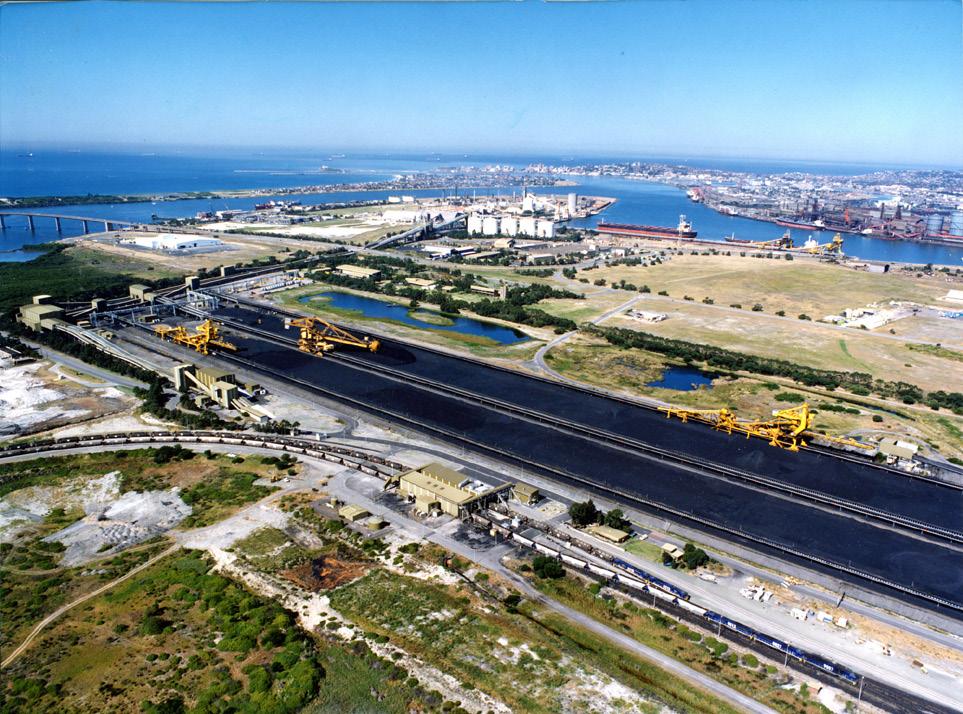
Mineral Carbonation International (MCi) is already running a pilot reactor in Newcastle that turns CO2 into solid bulk materials that can be used in low-carbon products for the construction industry. MCI is currently able to produce low-carbon cement and concrete products and carbon-negative plasterboard.
Mineral carbonation is a natural process that occurs when water weathers rock in nature. Industrial mineral carbonation accelerates the process of reacting carbon dioxide with other minerals. The output is a carbonate – a solid, chalky substance.
That solid can be used in many different ways. Using waste products as feedstock in the carbonation process reduces or eliminates the industrial waste and CO2 by transforming it into a useable solid.
Armed with a $14.6 million federal government grant, the company is now building a mobile demonstrator which will travel to industrial sites around the country.
For Sophia Hamblin Wang, chief operating officer at MCi, being able to recover waste CO2 is crucial if the targets set at the Paris Agreement are going to be met.

“Every tonne of CO2 that goes into our atmosphere is adding to global warming,” she says.
“Now that we know that why wouldn’t we be looking carbon dioxide as a resource that can be turned into stuff that be used in all parts of our built environment.”
Wang says that the technology developed by MCi is particularly relevant for ‘hard to abate’ industries such as steel, cement, mining and chemical companies that are finding it difficult to transition to a net zero.
MCI’s process incorporates a combination of process paths and reactor designs that integrate into a ‘carbon platform’ that allows it to be used in a variety of industrial settings. The CO2 is captured at source from dilute streams or flue gas. The carbonization feedstock can be industrial waste, including steel slag, mine tailings that are rich in magnesium or calcium – some academics even propose asbestos mine tailings. The feedstock reacts with the CO2 and converts it into the solid carbonate.
“If we are going to meet the Paris targets, we need to use every weapon in our arsenal,” she says.
While Australia is often portrayed as lagging
“Why wouldn’t we be looking carbon dioxide as a resource that can be turned into stuff… If we are going to meet the Paris targets, we need to use every weapon in our arsenal.” – Sophia Hamblin Wangbehind other comparable nations in the battle against climate change, Hamblin sees plenty of reasons for optimism.
“I think government ambition is very important to set a tone and to show leadership.
“We’ve been really fortunate to receive government funding and support along the way. More could be done but we are achieving a lot of our goals,” says Wang.
Hamblin is also hopeful that Carbon Capture and Utilization (CCU) will soon be formally included in Australia’s carbon credit mechanism, alongside Carbon Capture and Storage (CCS), which pumps carbon dioxide deep underground into geological storage.
“Such a mechanism will enable us to measure the carbon impact of our technologies,” she explains.

In addition to building its mobile demonstration plant at Newcastle’s Kooragang Island, MCi is also working with forwardlooking companies in the construction industry through bodies such as Materials & Embodied Carbon Leaders Alliance (MECLA) and SmartCrete CRC.
“There is plenty of demand from Australia’s major companies for action on climate change.”
Apart from creating muchneeded building materials recovered CO2 could potentially be used to manufacture synthetic fuels or chemical food stocks.Newcastle’s Kooragang Island
Sinkrete was a joint winner at the Moonshot 2030 pitchfest event late in 2021. Here’s the story why.
You are so pre COP26 if you are not looking at carbon mineralisation right now.
Joint Pitchfest winner Sinkcrete is using carbon mineralisation to take the emissions from making cement and using it as an ingredient in the finished cement-based product –sequestering the carbon dioxide emitted by the ingredients into the finished product. It’s like sequestering the carbon emitted by the flour milling process into your cake!
Ten gigatonnes a year of carbon dioxide must be removed from global production to keep global temperature rise under two degrees Celsius by 2050.
Dr Ali Kashani, Sinkrete founding director and a lecturer at University of New South Wales, says this creates a $5.91 trillion a year market for carbon dioxide utilisation in various products of which $1.37 trillion is made up of cements, concretes, asphalts and aggregates.
“The technology is suitable for precast concrete and cementitious products including concrete panels, fibre cement board, plasterboard, masonry blocks and autoclaved aerated concrete blocks,” he says.
Precast concrete and cementitious products were a $2.4 billion industry in 2021 and there are predictions of 2.8 megatons of precast concrete to be used in 2028.
The embodied carbon dioxide of 25 MPa concrete (a measure of the compressive strength of concrete) with 30 per cent supplementary cementitious materials is between 300 to 450 kilograms carbon dioxide per cubic metre
Sinkrete technology can reduce the embodied carbon of concrete towards net zero, Dr Kashani says.
This is clearly an attractive option with Australia’s cement and concrete carbon roadmap including a 33 per cent reduction in emissions by carbon capture and utilisation by 2050. As anyone who paid attention to the political commentary around COP 26 will recall, Australia was roundly criticised for relying on technology that had not yet been established to achieve that goal.
Sinkrete hopes to be one of the technologies that will plug that gap in Australia’s carbon emissions reduction strategy especially for ‘hard-to-abate’ sectors.
“Sinkerete technology is economically viable and does not result in higher premium for end users of green concrete. It will also allow producers to benefit from various carbon credit opportunities,” Dr Kashani says.
Carbon Mineralisation is the natural process that we see everywhere on the planet in the weathering of rocks. When rocks are exposed to carbon dioxide, or being broken down by water, the carbon dioxide can react with minerals in the rock to form carbonates.
Sinkcrete captures carbon dioxide emitted during cement production (or from any other carbon dioxide emitting plants). The carbon dioxide is then injected into sealed chambers where fresh precast concrete is placed. Carbon dioxide penetrates into concrete and gets transformed to minerals (eg calcium carbonates) which permanently reside inside the pores of concrete.
One of the great benefits of a product like Sinkrete is the proximity of the carbon dioxide source to its point of sequestration. The carbon dioxide doesn’t need to be stored in a remote sequestration site, minimising the risk of loss, reducing cost and limiting leaking emissions caused by the traditional sequestration process.
Carbon dioxide is permanently transformed to useful solids in a non-reversible reaction during carbon mineralisation.
The benefits of using carbon mineralisation to sequester carbon dioxide in concrete are several:
It is a low-energy process
• Industrial and mining wastes can be used as the reactant, or binder, to form the carbonate
• Flu gasses can be used directly, without the carbon dioxide being purified as is required for many sequestration methods
• Because it has changed state, the carbon dioxide is permanently captured and stored, even if the concrete is broken up later in its life
To speed-up the rollout and maximise the benefits as quickly as possible, Sinkrete plans to design and supply turn-key manufacturing solutions and technical support to other manufacturers, rather than trying to corner the market itself.
This will include advising the manufacturers to modify their own plants at relatively small costs, Dr Kashani says, and provide technical support, and consulting on mix design and
processes for a range of low-carbon concrete and cementitious products.
In return for its expertise, Sinkrete hopes to receive royalties, licence fees and support fees for its work.
Sinkrete technology has been developed and verified at UNSW.
As has been a pattern in sustainable technology in Australia, industry is leading government and, in some ways, achieving solutions despite government.
There is demand in Australia for lowcarbon and no-carbon building materials, as evidenced by other players in the carbon mineralisation space that also see the building industry as a healthy marketplace for their products suitable for range of green ratings accreditations.“If we are going to meet the Paris targets, we need to use every weapon in our arsenal,” she says.
“Sinkerete technology is economically viable and does not result in higher premium for end users of green concrete. It will also allow producers to benefit from various carbon credit opportunities”
- Dr Ali Kashani

Moonshot 2030 Pitchfest joint winner, Everty, has recognised there are new ways to charge electric vehicles.
The rise of Tesla electric vehicles (EVs) has spawned a network of superchargers to give EV owners who were a long way from home a secure option.
Charging is no longer home-based as it was in the earliest days of EVs and the approaches people and businesses take to charging EVs have changed.
Moonshot 2030 Pitchfest joint winner, Everty chief executive and founder Carola Jonas, told the Moonshot 2030 audience that changes in expectations were bringing new solutions to market in Australia.
Facilities managers, architects, landlords, developers and strata managers are now looking at how to incorporate EV charging into their buildings.
Recognising that no-one in these sectors is expert in charging, Everty has stepped-up to offer its turn-key solutions, charging stations, management and expert advice, Jonas says.
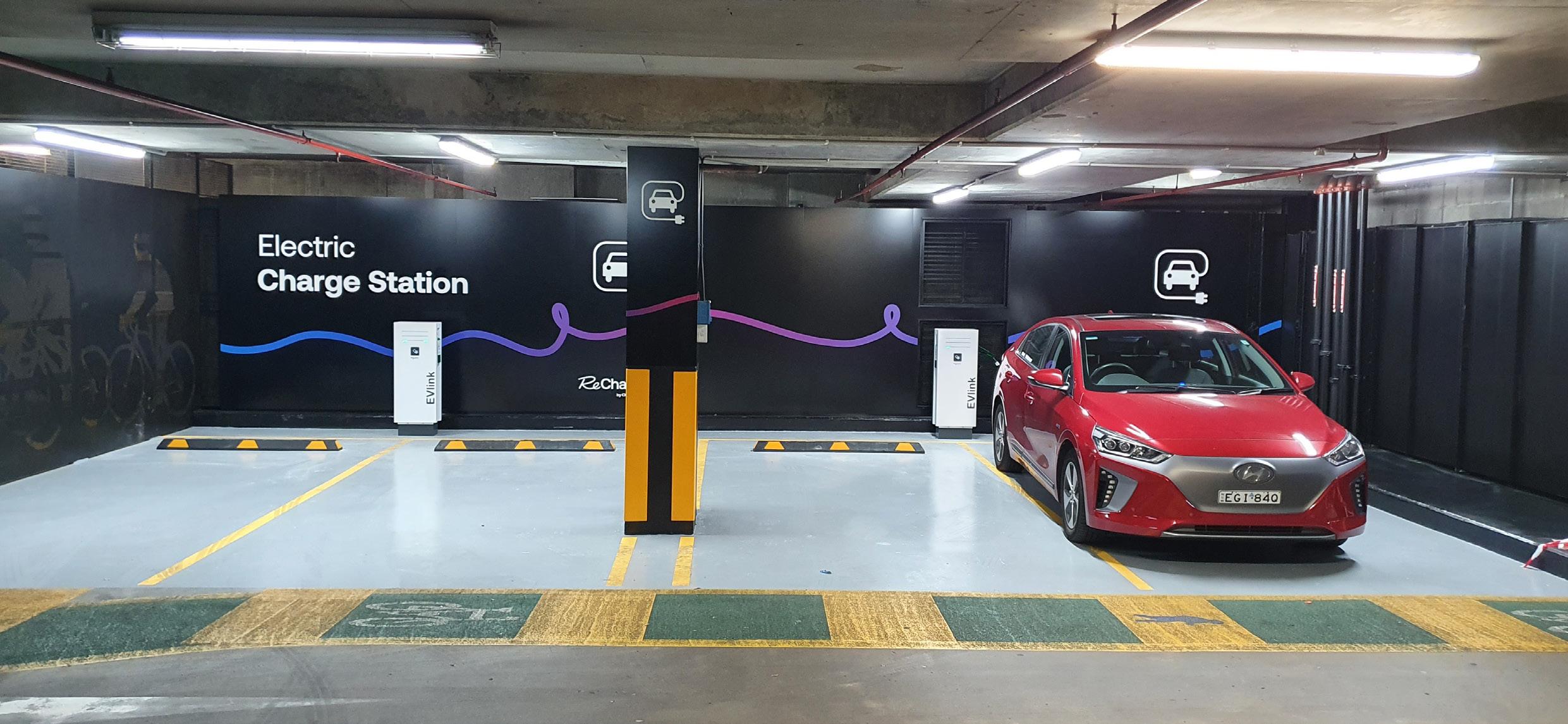
For commuters who drive to work, the ability to charge a car there, instead of at home, is a significant benefit.
Some employers are starting to see it as an extra perk of coming into the office, some landlords see it as a sweetener for new tenants. Retailers in Australia have followed the overseas lead, with Westfield shopping centres alone offering more than 40 chargers in centres through New South Wales, Brisbane and Melbourne.
No-one realises how fast EVs are coming to Australia: Everty founder Carola Jonas
The question for some of these providers is whether, and how, to charge for the electricity they provide. And manufacturers and vehicle leasing businesses want the option to offer free charging as part of the lease or ownership package.
“Everty gives its clients the ability to make these choices easily and seamlessly,” Jonas says.
“We work with clients to understand whether they need slow or fast charging and dedicated or shared infrastructure. It also helps to select the right kind of charging station and business model for the charger.”
With the requirements sorted, the company assesses the site and number of charging stations to be installed, handles any upgrades to electricity and any civil works needed to support the installation.
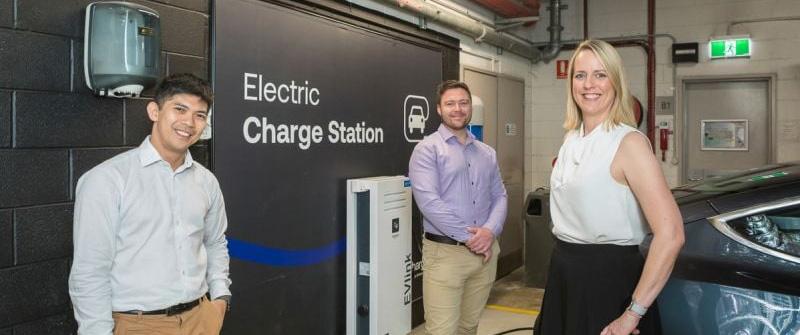
At the end, Everty hands over a turn-key solution to the customer.
Once the installation is complete, the company undertakes the ongoing management of the charging infrastructure, supplying a driver app for users, reporting and billing for the facility owner or manager and remote diagnostics of anything goes wrong.
Maintenance crews are on-hand to perform regular inspections and maintenance, and any callouts or emergency repairs.
Jonas claims that its outsourced solution minimises operating costs because its scale allows it to use processes like remote management of its infrastructure.
“Our reporting and analytics provide insights into charger use and energy consumption for marketing and sustainability reporting and using our app allows for the monetisation of charging stations by charging drivers for their electrical fuel,”
Asked by the judges what the biggest pain point was for its business, Jonas replied that Australians, especially the federal government, had no idea how fast EVs would arrive in this country.
“We work with clients to understand whether they need slow or fast charging and dedicated or shared infrastructure. It also helps to select the right kind of charging station and business model for the charger.” - Carola Jonas

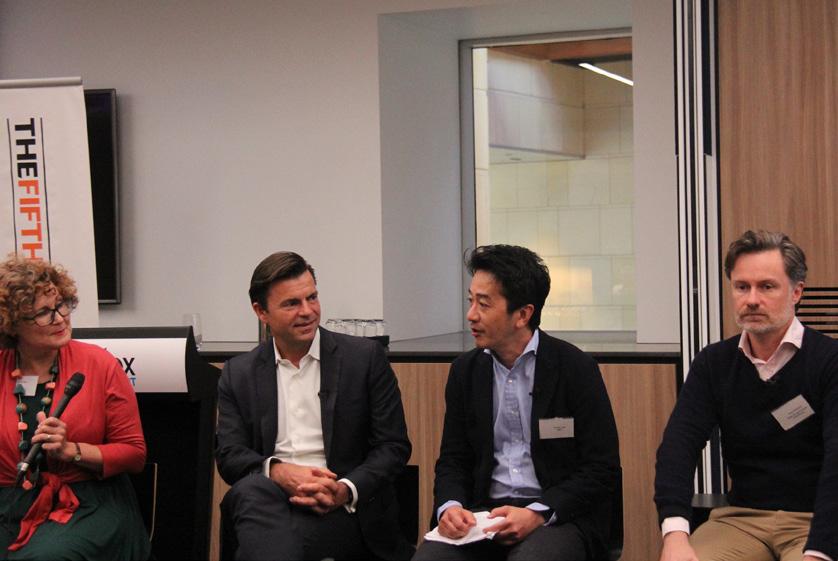
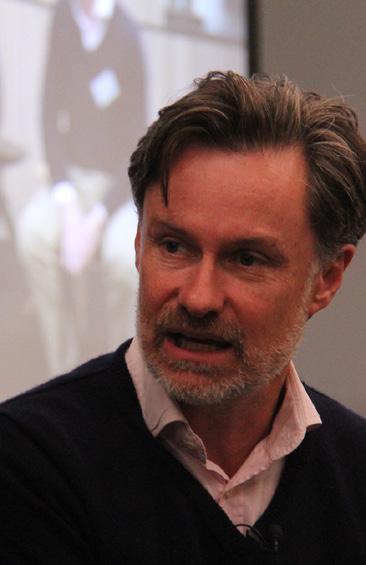

Charles Reed Anderson is responsible for the consulting business Sierra and Associates, works as senior advisor to McKinsey on the Internet of Things, serves on the Global Organisation of Smart Cities advisory board and is a visiting scholar to Stanford University’s Smart Cities Research Center in Songdo, South Korea.
With all of these connections, Anderson sits squarely in the centre of the smart cities ecosystem and has played a role since “smart cities” became a popular buzzword.
Anderson confessed that he has a love-hate relationship with the Smart Cities industry. The industry has a tendency to overhype things, oversimplifying the needs for implementation and underdelivering to frustrated consumers, he says.
“What I always hear when I talk to people in cities is, ‘Well, cities are just slow to act. That’s just the way they are. It’s not the technology that’s holding us back. It’s us making these excuses.”
However, his view has shifted towards conditional optimism in the past year after watching cities turn around and quickly implement new technology during the coronavirus pandemic.
“These technologies didn’t come about because of the pandemic. They were sitting there and being underutilised. It took a pandemic to actually implement them, but we were lucky that they were there because it allowed us to create the safe and secure spaces where we can start going back to offices or to restaurants.
“The other thing that I think we’ve realised during the pandemic more so is that we don’t need huge budgets to actually implement a lot of these solutions. What we’ve seen is that there’s ways you can leverage existing assets that are out there instead of actually just throwing a bunch of money at a problem.”
Alibaba’s City Brain in Hangzhou, China, is a standout, he says. The program collected existing data from traffic intersection cameras to CCTV footage across the city and turned it into intelligence that informed traffic coordination for 1000 city traffic lights. The program was enough of a success that Hangzhou went from the fifth most congested city in China to the 57th, and has been employed in other countries.
“What is nice about this is it’s primarily software based, so it’s not a huge cost. It’s not a lot of [capital expenditures] upfront, and that’s a huge hurdle for cities to get over. So, you don’t need everything brand-new. You can leverage what you have today and then try and go forward.”
Beyond cities, buildings play a significant role in data capture, one that quickly becomes a logistical nightmare fragmented across thousands of different platforms managed by many different people.
What’s happening now is managers are instead using a platform of platforms route, aggregating different data sources into a single platform to create a single version of the truth.
According to Anderson, most of the vendors using this saw a return on investment within six to nine months, while also benefiting from reduced costs, reduced energy consumption and extended life for assets.
In the last two years, this has really taken off because of covid. Number one, everybody started focusing on the rise of sustainability and if we need to reduce carbon emissions, so everyone needs to have this information. And if you think about it, because the financial community is forcing companies to report in their carbon emissions, it’s going to spur on our market.
“For me as a commercial real estate firm, I need to know my carbon emissions, but so do my tenants. So now I can be helping them.”
With these realisations, data experts outside of the real estate business are entering the industry to solve smart buildings’ data problem.
One city Anderson says is a place to watch is Darwin.
A few years ago, Darwin introduced facial and vehicle recognition technology using CCTV cameras, a matter that gained some negative press for possible privacy concerns. To negate some of the wariness, the city partnered with Singapore’s telecoms regulator, IMDA.
“IMDA has an AI data governance framework, and what they did is work with Darwin to basically implement the ethical and acceptable use and disposal of the data that’s captured,” Anderson said. “Now, they’re viewed as best practice globally in this for being able to actually leverage that data, but doing it in a secure way that doesn’t infringe on the citizens’ rights.”
One of the major hurdles cities must overcome is the tendency to work alone and constantly start from scratch on innovation rather than work together.
One city that was able to overcome its own pitfalls was Taipai.
Taipei was not an innovative place burdened by bureaucracy according to Anderson. When new mayor Wen-Je Ke took office, he created the Smart City Program Management Office. The PMO was able to engage with the population to understand what kind of solutions were needed.
Over the course of two years, Taipei delivered 200 proof of concepts, giving them a chance to actually see what work even if not every one was a success.
The method met every one of Anderson’s standards.
“First, they proved they can act fast,” he said. “They shrunk that down to a three to six month time scale to implement and test new proof of concepts.
“Number two, the process. They got rid of the red tape. They made it very transparent. Budgets, they were very open. They actually told the people that they were working with that we don’t have budgets for this, but we have assets and we have resources and we will help you promote it and be your reference case for this.
“Finally, accepting risk. They knew these were going to fail. The mayor knew, the heads of the PMO knew it, and the government agencies knew it, but they wanted to try it to find those 10 or 20 that we can actually move into full deployment.
The project didn’t work in its entirety “but it’s still probably the best model for innovation out there”.
Anderson described himself as a conditional optimist, enough of a pragmatist that changes will be difficult, but still relatively confident that change is possible.
“What we’re seeing is government starting to put in stricter regulations to actually force cities and businesses to reduce their carbon emissions. We’re seeing the investment community come in and force businesses to sit there and say, what are your emissions? What are you doing to address your goals going forward, and we’re going to be valuing your company based on your future value or when your future emissions.
“So it’s forcing everybody to really start acting. But it still has more steps where it needs to go.”
Regulations are a particularly strong point for Australia compared to the rest of Asia, which Anderson said is “way behind.”
Anderson has four main things to think about:
1. It’s prediction season; the time of year for people trying to sell the latest hype. Anderson recommends ignoring it at all costs.
2. Change is possible, and countries and businesses cannot go back to being isolated bureaucracies.
3. Focus on people over technology and how it can transform the human issues at the core.
4. Continuing to collaborate is crucial, especially getting tech vendors to work together and not against each other.
“If all else, let’s see how well smart cities do in 2022,” he said, “I’m a conditional optimist, but I’m kind of leaning a little bit more towards optimism.”
When asked about Asia’s predicted carbon footprint doubling in the next decade or two, Anderson admitted that more regulations are needed to enact significant change.
“Singapore knows it’s not leading the way when it comes to greener buildings and sustainability,” he said. “They’ve got work to do, so I hope they’ll get more active on it.”
He has some optimism in the government’s support of innovation, especially with new initiatives of PPPs getting together.
One Anderson particularly likes is a construction industry innovation fund based out of Hong Kong worth about HK$1 billion dollars. The fund allows construction firms to essentially invest in innovative technologies and share the risk of those initial proof of concepts and pilots.
“As a sector, it’s been very slow when it comes to innovating,” he said. “We need to really change that, and I think we need more strict regulations across Asia and in particular in Singapore because that will drive the rest of the ASEAN region.”
While there are plenty of great ideas, many of them get held up by investor fears that the green premium will cost too much.
What the industry needs, in Anderson’s opinion, is an investor who is willing to get less of a positive financial return as long as the business can drive green solutions and reduce emissions.
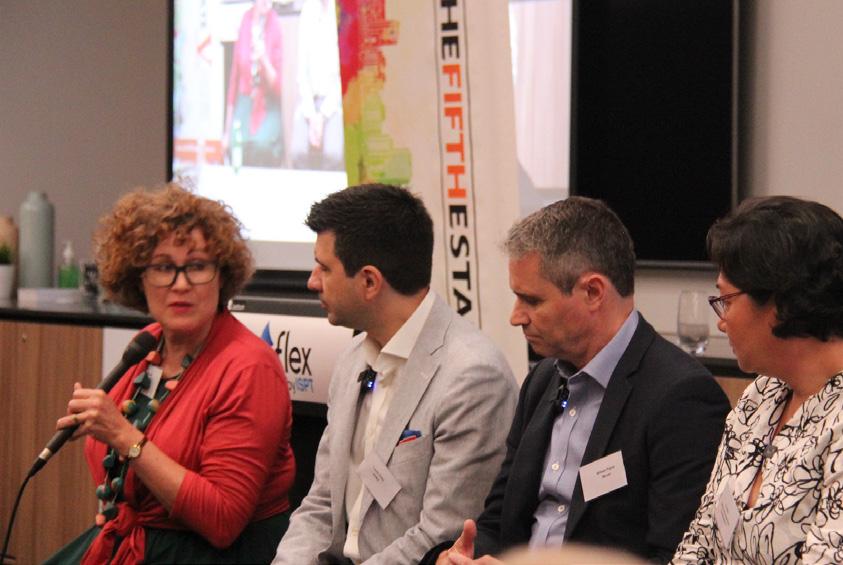
Can the strange new cyber world of blockchain solve our most complex and urgent carbon problems?
Speakers: • Yin Man, digital director, Office of the Building Commissioner
Laszlo Peter, head of blockchain services, KPMG William Payne, chief digital officer, Mirvac
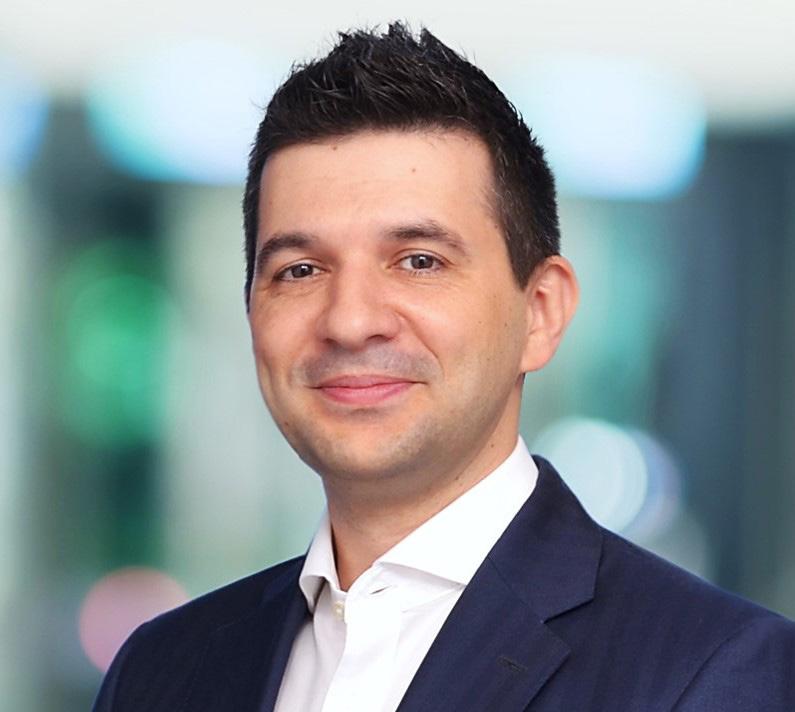
Moderator: Monica Richter, senior manager, low carbon futures, WWF
Yin Man is the digital director of the Office of the NSW Building Commissioner, working with David Chandler since January 2020 to plan a digital strategy with a building assurance solution. Part of that project involves Laszlo Peter and KPMG whose background is in investment banking, mathematics and computer science to run blockchain based platforms and William Payne, chief digital officer for Mirvac providing a new building as “guinea pig” to develop insights as end-to-end integrated developer that builds and operates its many assets.
Blockchain is perfect for construction because it’s so fragmented as an industry. You need different people providing the evidence, and they could be in China or the US or anywhere else. Blockchain was perfect for this method.
At the time when we went out to tender last year, there wasn’t that much availability of the technology, but the acceleration in development from last year to this year has been ginormous. What we as a regulator is focusing on is the riskier players, and the market will differentiate itself by using market-led tools like the building assurance solution.
People like Mirvac realise that they’re potentially being tarnished with the same brush, but it’s only a small minority of people that are causing the issues. We are trying to focus on them whilst we build market-led tools that almost self-credit as being trustworthy. We’re going to do some research with the public to really understand what trustworthy actually means for them because, in some ways, we don’t like to use the word quality, because it’s very subjective of what people think quality is. It’s really about resilience of the building and the trustworthiness of that building.
LASZLO PETER: One thing that is quite apparent in the industry is the lack of standardisation between various providers and various participants. The challenge is when you bring technology to the forefront to standardise data, to integrate data and create a model. This is where data meets mathematics meets complex modeling around how you compare two assets to one another.
That’s easier said on paper than actually implementing it.
Looking at two buildings, both might be compliant but that does not mean they are the same. This is where resilience and trustworthiness will come in play.
MONICA RICHTER: Maybe you could go into a little bit more detail about what this project is seeking to achieve and why it’s important to use blockchain. For example, what it’s enabling you to do and what kind of outputs you’re looking for into the future.

YIN MAN: Last year, we started saying the strategy because we, as government, as a regulator, will always only have limited resources. We could never look at and audit every building that’s been built in New South Wales. To be honest, there is no such thing as NSW building because you’ve got materials coming from global sources. We wanted to set something up on a global scale that could actually provide, from a market price perspective, what we call a trustworthy index.
When you do that and you start driving a trustworthy index, with the traceability of where the information came from, transparency on how you did the calculations, as well as how you disseminate that information.
Laszlo Peter Monica RichterWILLIAM PAYNE: We always like to say at Mirvac, we’re just as proud of what’s behind the walls as what you’re looking at because we know the quality and effort that’s gone into that. We can actually, through data, demonstrate that and demonstrate everything from how a bathroom pod has come together, the lineage of the materials that came together to create that bathroom pod that is sitting in your apartment. That, for us, is a huge opportunity to demonstrate what we are capable of as an organisation.
If you put yourself in the shoes of an investor or insurer, you then have that confidence that this is a well-built and a longevity-effectively created asset.
LASZLO PETER: The essence of what William is saying is actually not reflected by heavy regulation, because that’s not really the future where things are moving. It’s about creating that transparency for the consumer, but also bringing in, rather than the stick, the real carrot. The carrot will come from the consumer trusting the insurer providing preferential treatment and financier providing discounted rate or project financing, some of these new developments.
The dynamics of this multi-sided ecosystem is the real change here in focus in the industry because it brings back incentives – not just incentives where you have to be compliant, which is the basic one, but the commercial that William highlighted, as well as brand.
Working with the Department of Environment’s ambitions to slash carbon, Yin hopes to reduce embodied carbon by putting the principles of a circular economy into action and designing waste out of the construction process.

YIN MAN: In order to do that we want to actually have no waste on the construction because we’re using scarce resources, and I suppose we have a duty of care for future generations to actually leave some for them.
There’s lots of initiatives looking at the operational, like the smart cities, but unless you can calculate that long supply chain, then you’re not going to get accurate calculations on embodied carbon.
Yin is not sure it’s a world first developing a blockchain for buildings’ carbon disclosure, as there’s a lot of people working on carbon at the moment. However, the NSW work is a significant achievement for creating trustworthiness.
YIN MAN: For the compliance side, we do feel it’s the first in the world because it’s about the combination of the certification, the practitioners rating, as well as materials that’s combined to actually create the trustworthy index.
WILLIAM PAYNE: What we’re building right now is a platform. It’s a platform that was built and designed around creating this trustworthy index, but also around
allowing the sharing of this data that exists all over the place in a trusted platform.
Once you’ve got that in place, then it really opens up so many different opportunities.
What we’re trying to do here is to get a is kind of publicprivate partnership, is to leverage the best of what’s out there, to create something that’s going to be good forthe long run.
LASZLO PETER: The foundation of this is probably the key differentiator here because it’s not one organisation trying to solve all these problems or these challenges, but is a collaborative effort.
It’s also creating an environment where everybody who is part of this ecosystem can collaborate with anyone else rather than being in a linear supply chain of value.
If you’re a material provider and you’re looking for better financing based on your green credentials or sustainability credentials, you can do that because the same data you provide to, let’s say Mirvac as a developer, is a similar data that a bank would value or appreciate in order to give you a sustainable loan.
We’re looking at better understanding the risk they are carrying of financing inventory. These are the new opportunities, and that probably makes these types of developments quite pioneering in any way.
LASZLO PETER: There’s not one organisation who has all the knowledge, all the cards.
What we are really trying to create is this incentive system to understand what is the solution and what is the problem. Sometimes we find with technology that there’s lots of solutions looking for a problem. What we try to overcome here is actually create those two sides.
WILLIAM PAYNE: Right now, we’re focused on multi-floor, apartment-style developments and buildings, but the key idea is we’ll just keep building out from there.
Ultimately, I would love to see this platform as the norm of how we do business.
We’re collecting data at the moment, both on a historical development and also developments going on at the moment. Talking about the materials that go into a
building, one of the elements of that is, of course, is concrete.
The traditional way of someone like Mirvac dealing with all of the data associated with concrete is that there’ll be dockets stuck on the nail down at the bottom of the development as he’s pumping hundreds of cubic meters of concrete. Someone then grabs those dockets and then tries to sort of clean off the mess and interpret the data to then go through the process of understanding all this business.
I’m simplifying it, but that’s the reality. This industry hasn’t changed a lot for a long time.
The data will flow through the platform into our environment, into the wider platform, into the government’s environment to support the compliance.
Because they’re set up to flow data into the platform, it doesn’t matter whether they’re working for Mirvac, a Meriton or a mum and dad putting in a drive. The data is all there. It’s all in one place.
If you take something like solar powered roof tiles, These are all materials. They’re all elements that go into the creation of an asset that ultimately doesn’t matter how big or small it is. It needs to be built properly. It needs to be certified.
So why can’t we expand it and expand it? It’s relies heavily on Yin and her team to keep selling the message, but that’s the real opportunity here.
YIN MAN: We’ve actually met with quite a lot of startup software providers who think they’ve solved the world’s problems, but when you start looking at them, they’ve solved a problem, which is great and it becomes part of the ecosystem then. We don’t intend to solve every problem. We want to make sure that the environment we create actually solves all the problems.
Creating such a massive data ecosystem requires joining different layers of data, such as Building Information Modelling (BIM) or digital twins, cohesively.
WILLIAM PAYNE: The BIM is ultimately where it should start because the reality with that, and certainly from what we’re finding is you can design in sustainability, you can design in wastes outcomes, and so on, and so forth at the BIM stage, and then that will help inform everything from there on.
The challenge, of course, is that Australia has got a relatively small number of tier one developers, tier twos, tier threes and so on, who potentially have the access to those models because they’re complicated.
We’ve been leading the way on using BIM for years and years and years, and it’s not easy. The good news is that the technology is getting better and better, and it’s getting
more democratised. You’re seeing it in smaller and smaller scale and lower and lower cost access. As that comes up, I think then everybody will rise in terms of their knowledge and understanding.
YIN MAN: Three or eight per cent [of the industry] uses BIM now. In 2030, it might go up to 80 per cent. We’ve got a long way to go yet because this industry is still submitting PDFs.
For Moonshot 2030, all three have insights on how the built environment and its players can collaborate to keep Earth under the 1.5 degrees warming threshold.
LASZLO PETER: I think organisations will be rewarded or given business and a licence to operate in the near to long term [by consumer preferences]. The commercial entities will come in with very strong incentives.

In order to achieve the target, you have to have this very harsh and very strict mandate coming down from boards and others. Say change is here, change has to happen and we are voting with it.
WILLIAM PAYNE: A few years ago, the Mirvac board and executive decided we would set ourselves a target of getting Net Zero by 2030 in terms of carbon. At the time, we had no idea how we were going to do it. Absolutely no idea. We just said, ‘let’s set the ambition.’ We announced last week that we’ve hit that target. We’re now at carbon positive, nine years ahead of schedule.
It can be done. It just means you’ve just got to set the focus, get everyone aware of and understanding of how we can jointly work together on that, and you’ll get there. That’s exactly what we did, and now we’re looking at, “what next?”
William PayneBuildings are highly carbon intense, accounting for 70 per cent of global electricity consumption, but they can be part of the solution too.
Speakers: Catherine Caruana-McManus, Co-Founder, Meshed IoT Helen Papathanasiou, former Manager Environmental Outcomes, City of Parramatta
• Craig Roussac, Chief Executive Officer and Founder, Buildings Alive
Moderator:
• Alicia Maynard, General Manager, Sustainability & Technical Services, ISPT
CRAIG ROUSSAC: What’s absolutely crucial for the planet to achieve its Net Zero by 2050 objectives is essentially to decarbonise the electricity system.
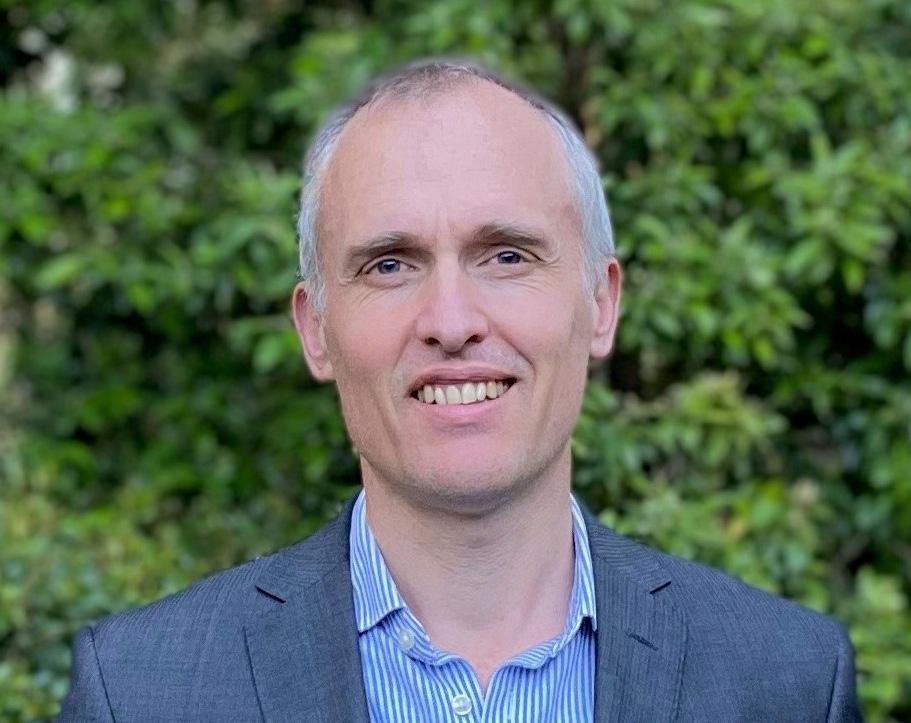
When we think about our patterns of electricity consumption, we don’t actually think about the carbon intensity of electricity we consume. Just turn it on. Turn it off.
The rest of the world has to very quickly move to what we call non-dispatchable electricity supply – clean electricity supply such as wind and solar. They call them nondispatchable because you don’t actually get a choice as to when they work. If the sun’s shining, the solar panels work. If the sun’s not shining, they don’t.
The carbon intensity of the electricity drops every day in the middle of the day, and yet, what we find in this country, every country, is you pay the most for your electricity, in the middle of the day. So you want to use less of it, right?
But paradoxically, the wholesale market sees things completely differently. When the sun shines, we see the wholesale price of electricity just plummets. In fact, nearly every day in Australia, the price of electricity on the wholesale market is negative in the middle of the day. You use it, you get paid for it, you generate it, you have to pay to put it out there.
We have a complete blockage. It’s not just information asymmetry or what you might talk about in economic terms. We have a fundamentally broken market where there is no connection between the consumer and the producer or an awareness.
Every day our power supply is cleaner in the middle and dirty at the end. It’s also cheaper in the middle of the day. So this is where we’re sort of headed. We need to close that gap, and buildings are fundamental to that.
We can take inspiration from successes in the corporate world such as Google. It was net zero in 2007, net zero energy in 2017. In 2019, they realised that even though they
were Net Zero Energy, they were still generating emissions from drawing fossil fuels when the sun wasn’t shining and the wind wasn’t blowing. So they have now committed to being 24/7 carbon-free, which is a massive challenge.
Helen Papathanasiou has a more localised approach to decarbonising Australia. She’s spent the last 10 years at the City of Parramatta, until a recent move to the City of Sydney, working at the local level with the city council as its manager of environmental outcomes. In her time at Parramatta, she focused on three key areas in decarbonising buildings at the development stage: land use planning, electric vehicle charging infrastructure and giving communities tangible solutions.
HELEN PAPATHANASIOU: I got to work on a lot of land use planning opportunities. We were able to basically, over a number of years, mandate a number of different requirements for new development, and it was really exciting.
We introduced things like all electric buildings, mandating recycled water pipes even though, for most of the local government area, you don’t have a recycled water Network. It’s really thinking about the future services that that city requires in terms of water supply. So making sure that buildings today have the pipes to take future recycled water is absolutely critical because you can’t go back, or it’s very expensive to go back and retrofit a building with extra pipes. Making sure that you can get that over the line now at the development stage is the big win.
Parramatta doesn’t have a lot of electric vehicles like a lot of cities. However, it’s absolutely critical that the infrastructure goes in buildings today. That was sort of the transition that we were able to make. There were challenges along the way, but we got the win, and I’m really proud to say that the council really went along for the journey.
You need appeal to those in government, but also the community. So a focus not on proposing grand ideas, but
Craig Roussacrather finding concrete ways to deliver real solutions, no matter how large or small they may seem. For instance cleaning up the Parramatta River, the city’s central river, with whatever resources were available.
I was often told that I really needed to deliver for people, and it had to be tangible. I couldn’t just make stuff up and, you know, prepare documents. It had to be real things on the ground.
We’ve been able to use the technologies of putting in sensors and collecting data around what’s required to clean up the river. It’s this convergence of information and how to get that information and then applying it locally with collaborators and also getting the community on board for that transition.
I was just talking to somebody earlier here and one of the things that we talked about was how hard planting a tree has become. I think to myself, you don’t need any technology to plant a tree, but it’s funny that we have used technology to understand where we need to plant trees and what some of the conditions are for the tree’s ultimate success. It was really quite exciting to merge those two things together. The trees sort of make it real for people.
The final key to Papathanasiou’s strategy is to prepare for the future city and the changes it will face in the coming years. Two of her primary concerns working in NSW are flooding and rising temperatures, particularly in urban communities.
To prepare for flooding, the Parramatta Council developed a flood warning system using remote sensors across the region. The council combined an existing, but decentralised warning system with a predictive modeling system that can issue flood warnings with approximately two hours’ notice.
For me, that was absolutely a star performer in terms of delivering a real solution for the community.
What I have seen personally, is that when the sky starts to go gray and the weather reports are issuing sort of “oh it’s going to be heavy storms today”, what happens is that everybody gets onto social media and they start documenting. They’re taking video footage. They’re talking to their friends. They’re asking really important questions about where it’s happening, why it’s happening.
There is a real interest at the local level around flooding, even though we haven’t had a major flood in 40 years.
I think the community is absolutely essential and they are really hungry for information. I think by sort of coupling the data in that real-time way during a storm event, the community responds really positively to that.
She employed a similar strategy to observe heatwaves, installing more than 120 sensors, which only cost about $20 each.
Those sensors pretty much said that all parts of the community don’t feel heat in the same way. There are some parts of the community where it’s super hot – almost 10 degrees hotter – and there are other parts of the community that are quite cool on a really hot summer’s day. There’s a lot of disparity and difference in variation across the local government area.
It’s not particularly high tech, but it gave us enough information to tell us where those hot spots were. I was able to put a case forward to actually direct funding to those priority locations. For me, it’s a convergence as I’ve said of data, information, technology, but also applying it locally in a very practical way and seeking to get those real community outcomes.
Catherine Caruana-McManus works on the technical side of this relationship between governments and the Internet of Things. Her company, Meshed IoT, works with 70 local government customers, providing them with the smart infrastructure needed to monitor urban heat, environmental water monitoring and water quality monitoring.
CATHERINE CARUANA-MCMANUS: What I’m focused on is the intersection of using technology and data so you can monitor these smart infrastructure systems. I don’t think we should also underestimate the amazing opportunities in smart waste in a circular economy.
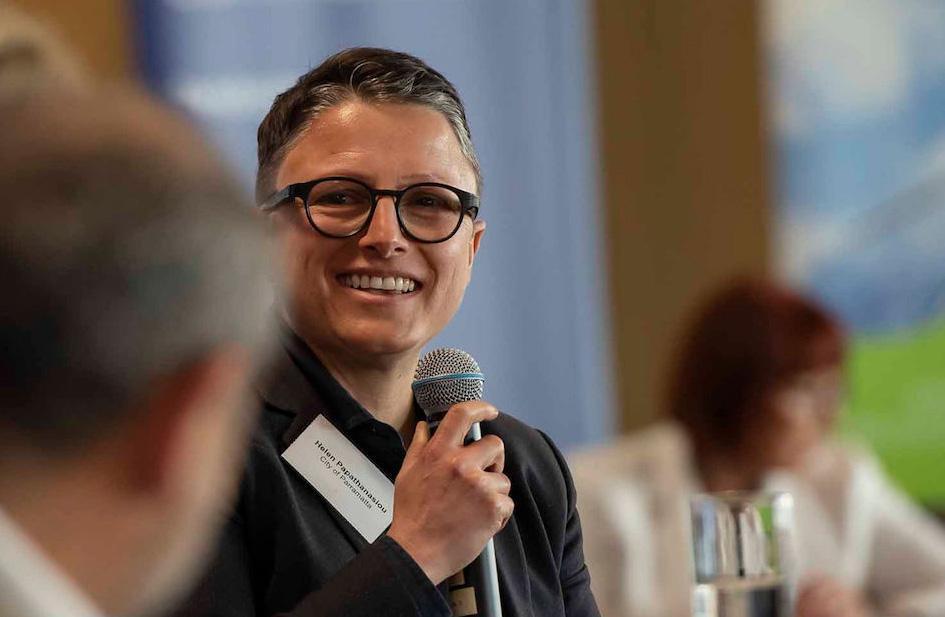
If we look at best practice at what’s happening here in Sydney, a really good example is this Celestino development at Sydney Science Park where they are in big blue and green infrastructure from day one. It’s a very large multi-use development of residential, commercial, industrial, and transport things such as on-site water, generation and harvesting, processing 2.4 million of litres of water per day, which is going to be used in a distributed network for landscaping and cooling.
On the 2023 Brisbane Olympic games, we’ve built a framework for the world’s smartest games, a sustainable framework… Long gone are the days where Olympic Games were all about really huge venues accommodating over a hundred thousand people. It’s about purpose-fit multi-use facilities that are going to be used for multiple reasons, not just during the games and embedding smart technologies with a very strong focus around not zero carbon, but actually generating benefits into the system from that.
When asked how to hold people accountable for grandiose targets, especially coming from an
Helen Papathanasiouinternationally known organisation, it all begins with planning, Caruana-McManus said.
CARUANA-McMANUS: The good thing is that this is a multi government approach so it’s not just the federal government. It’s the city councils through South East Queensland, Committee of Mayors and the Committee of Brisbane, that have a call to action, the need to have a very collaborative approach because the games are going to be held across a number of different local government authorities.
I think that Australia, particularly Australian organisations, have got great local innovation that can be bought into the project. The framework is not just looking at major sponsorships from the global players but also looking at what sustainable solutions can be delivered by Australian and local-based industry.
Of course, that’s great because that’s also about reducing the carbon footprint, isn’t it? It’s about supporting things like by local campaigns and having that mentality as part of the build-up to the games.
While there’s a push towards making buildings more energy efficient, Craig Roussac has a different question: “Should we really be all that worried about energy efficiency?”
CRAIG ROUSSAC: I think we’re about to see, and I hate using this word, but a paradigm shift.
We’re being very efficient at times when we’ve got a surplus of energy. We need to use that energy to drive the price of that energy so the people who are generating it can actually get a return on their investment.
We actually need the buildings to drive demand at the right time. That means shift the load.
Buildings can be batteries. Buildings have thermal capacity. They have capacity in all sorts of different ways in terms of indoor air quality and so forth.
If we shift and go, “let’s be carbon efficient, rather than energy-efficient then, all of a sudden, we start moving, biasing out consumption to clean up rather than dirty up.
We make a distinction in the energy that we use. Not all energy is the same. When you do that, there’s massive savings.
CRAIG ROUSSAC: In the last couple of months, the Australian electricity system has gone to five minutes settlements. You can get data out of buildings at fiveminute intervals.
At Buildings Alive we’re looking at five-minute interval data. Once you have clarity, five-minute intervals, this is the carbon intensity of electricity you’re using. You can make a decision to turn that thing on, turn that thing off. Ramp that thing up, ramp that thing down.
The unintended consequences are kind of happening at the moment with a net zero focus on buildings, actually. I’m sorry to say it doesn’t make sense.
HELEN PAPATHANASIOU: You’ve become like a building manager in a way. The thing is, when you look at your home and you look at how much you know about your house, and you ask people how much energy do you consume, how much water, where is it coming from –people don’t really have those answers.
With Covid now, we need to be asking those questions. Given that we will be working from home, I think we need to expect that our homes are just as sustainable as the offices. In Australia, we spend so much time improving the performance of office buildings. I think that’s fantastic, and we can learn from that, but now we need to shift over into residential homes. I’m really looking forward to that transition, but we need mandatory disclosure. That’s absolutely critical.
There is absolutely no reason why we can’t have that information. It shouldn’t just be for new buildings. It should be for existing homes. Everybody should be able to sort of make that choice when they purchase or rent. They should know. where their money is going and how it’s being used.
Not everyone is enthusiastic about a voluntary transition and the hemming and hawing that comes with it. That is not the case for Papathanasiou, who called mandatory measures “the best thing on Earth”.
HELEN PAPATHANASIOU: It’s so much easier, even for a local council, when the state government sort of sets the same conditions for everybody. So, it’s not one council doing it versus another, it’s sort of very wasteful and it’s inefficient. When the state government can step in, as they’ve done, it’s a no-brainer.
The thing is now, how long will it take to do?
We really need to act with some urgency because the developments are going up pretty quickly in Sydney, and it’s absolutely critical that those controls are put in.
Over the past 20 years, digital technology has fundamentally changed industries from media to retail, but left the property market relatively undisturbed. Lendlease hopes to change that with its end-to-end digital platform Podium, while Investa has a different approach.
Speakers: Shen Chiu, National Development Director, Investa Property Group, Co-Founder at International Intelligent Buildings Organisation William (Bill) Ruh, Chief Executive Officer, Lendlease Digital
Moderator: Alicia Maynard, General Manager, Sustainability & Technical Services, ISPT
BILL RUH: When I came to Lendlease a little over two and a half years ago, Podium is really what we’re doing to try to disrupt ourselves a bit. Which means, you know, how can we change the cost, the time, everything about the social and sustainability aspect of putting properties together. Lastly, how do you create a new experience?
Just think about retail. The physical retail world has a great opportunity to rethink itself and reimagine itself to compete more with the digital world. And I think this idea of physical and digital coming together can do that.
Podium is really a platform that allows us to do that. It’s all about how to use data to automate the design process, automate the supply chain process, and then automate operational processes using data machine learning in a new and different way.
After his time at General Electric, Ruh had a lot of experience with the automotive and even aviation sectors. One of the key lessons from that experience was “if you’re going to go do digital transformation, you really have to start by doing it for yourself.”
It’s very hard for an existing company or any big company to really embrace this technology. In Silicon Valley, where I worked at one time, people would view that only startups really can drive this digital transformation, but one of the things we’ve seen in the last decade is that big companies can learn to dance too with technology.
The first thing a company has to recognise is how do you in fact create a business unit to be able to lead you in that direction? How do you protect it so it doesn’t get killed by the old part of the company, that genuinely struggles with anything new that drives change? A company’s got to be able to deal with the old and the new simultaneously.
The one thing a big company has is scale. So if you can figure out how to do it for yourself, then you can do it for your existing customers. Then you can figure out how to do it for the world.
While Ruh can see a lot of the benefit that comes with the speed that technology can be rolled out, employing emerging technology in the property market, such as artificial intelligence or autonomous buildings, raise some privacy and human rights concerns. That requires companies to consider what new boundaries might be crossed when combining ESG and data collecting technology.
Bill Ruh Alicia MaynardCompanies are really being asked to deal with these topics in ways that they haven’t before.
We view that all technology can be used for positive, but it also has a dark side to it. And it’s up to a company with this idea of ESG to make sure that they’re dealing with the environment they’re working in, in a competent, high integrity fashion.
Data is at the centre of this. An autonomous building generates a lot of data. New buildings generate an immense amount of information, and the question is, how are you going to apply it? What policies are you going to have?
Autonomous buildings are about creating experiences, but you’ve got to be able to protect people’s privacy. You’ve got to make sure that people can opt in versus be sort of forced upon them.
If you can do that, then you can start to create experiences that people want to opt into.
Once people experience an autonomous building, they will choose to take advantage of it.
Building owners are going to have to be very cognisant about these ideas of privacy and ensuring people have control over what they view as their data. I think that’s where the line will get drawn on these ideas of autonomous buildings.
Shen Chiu takes a different approach to the property industry’s digital evolution with digital twinning, the virtual representation of a physical object created with real-time data.
For buildings, Chiu uses three dimensional models based on locational accuracy, classifications and live data collected from physical equipment. Using this method, he can run the models through predictive simulations to see how the asset operates in that virtual space.
SHEN CHIU: We’ve been modeling three-dimensional information and collecting live data for 20, 30 years.
What we haven’t been doing is collecting data across the whole asset so that all the different device information is collected in one place. And we haven’t been able to group that data and really see, in one line across, what is
happening so that we can better understand what the BIM [building information modelling] is doing, or should be doing in terms of making this change.
This moves with BIM modeling through the industry with some countries like the UK mandating it and just a better understanding to our contractors who have teams now, who actually model accurately the information. Then, we’re seeing more vendors releasing products or ecosystems that allow us to capture the data in an open protocol way so that we can really collate and analyse all of the information at the same point.
QUESTION: What differentiates your approach to digital buildings?
SHEN CHIU: On the digital twin side, we felt collection of asset data in a digital sensor in a central location with live information was really important. That was probably about eight years ago.
Shen ChiuWhat kind of technology are the big property owners searching for? What are they prepared to invest in.
Speakers: • Jonathan Hannam, Co-Founder & Managing Partner, Taronga Ventures
Fabian Liaw, Manager – New Business, ISPT Blair Pritchard, Investment Director, CEFC Innovation Fund
Moderator: Monica Richter, Senior Manager, Low Carbon Futures, WWF
Jonathan Hannam had a bright idea when he co-founded Taronga Ventures seven years ago. The investment group is helping bring emerging technology to the built environment with 25 investments around the globe and offices in Australia and Singapore.
Fabian Liaw heads up new business at ISPT, where he’s responsible for acquisitions and sourcing new development opportunities across retail, commercial and real estate.
Blair Pritchard serves as the investment director for the Clean Energy Finance Corp (CEFC), where he helps finance early technology through the Clean Energy Innovation Fund, 20 per cent of which finances a greener built environment.
All three have had some bright ideas and advice for startups looking to enter the built environment industry.
For Pritchard, not all of the exciting developments in a greener built environment have to do with the buildings themselves, but how people travel across the “urban sprawl.”
BLAIR PRITCHARD: The impact of solar and e-bikes is actually quite underestimated, if you think the most valuable company in the world is now an electric vehicle company.

If you look at the next five years, the impact of the expansion of scooters and e-bikes is actually much bigger than that of EVS because it takes a really long time for these curves to fully ramp up.
Same with solar. Although we think solar is ubiquitous as a 40-year-old technology, the actual continued deployment of that over the next five years is actually really critical. Of course, for us, as venture investors, we’re looking further afield than that.
The underlying theme that’s really exciting is the idea of having an end-to-end digital model that goes from something that can be used to get local government comfortable.
If we go with this urban form, levels of density, what is the sort of carbon impact of that is going to be sunshine and on transportation mode share and health?
I think having an underlying single digital truth that goes from the architect through to a subcontractor that might be involved in installing a particular piece of the wall is going to have a massive impact on a sort of a five-year plus time horizon.
A great deal of the future relies on working together. One such partnership: ISPT and Taronga Ventures is a three year working relationship.
FABIAN LIAW: Taronga brings the emerging technology to ISPT because technology moves so fast, and is so varied. What Taronga brings is the ability to filter through all this technology and use that to fit a purpose, the outcomes that we want in our portfolio.
Instead of ISPT going for a single product or vendor in terms of fitting that prop technology, Taronga can bring a tailored solution for us.
JONATHAN HANNAM: We recognise that innovation is really challenging. If you’re in the real estate space, where we’ve got a lot of government regulation, we’ve got incredibly tight timeframes. It’s actually quite difficult to bring innovation into an existing business. What we learned very early on was that we had to have a deep understanding of our partners’ challenges, and then we
So you think you’ve got a bright idea then?Blair Pritchard
needed to select globally leading technologies that could actually start to solve those problems.
They couldn’t be startups. In the real estate space, it needs to be a business that already has scale and has already had some traction in other markets. That makes it a lot easier for decision-makers to say, “we’ll put this in”.
ISPT is an innovator, and, if you think of their sustainability track record, they are years ahead of many of the other real estate groups in Australia. Yet, Australian groups in the global perspective of years of everybody else.
We don’t give enough credit to where ISPT has reached, one of the first businesses to actually move to a net positive situation.
Investing in emerging technology also requires an ability to see potential for new tech in alternative situations. One such investment Taronga made was with Xandar Kardian, a Singaporean startup whose technology could identify individuals based on their unique heartbeats while still preserving people’s privacy.
JONATHAN HANNAM: If you think of that in a property perspective, you can actually start to tailor things like airconditioning as people are coming into lobbies. We can actually work out exactly how much airconditioning should be running in the building so by the time they press the lift button and the coming out on their floor, the systems are operating. It means that we’re not wasting all that energy for a vacant building.
CarbonCure is another Taronga funded venture that has the potential to revolutionise the built environment at the construction phase with some added benefits.
JONATHAN HANNAM: It’s a Canadian business that’s perfected the ability to inject carbon dioxide into the mix. They basically work out what the use is going to be – is it a footpath or it is an airport runway - and they allocate the exact amount of CO2 that can be injected. It actually creates a clean green cement.
Cement is our biggest pollutant in the construction space, and at the moment, the modeling is showing us to be about a 20 to 25 per cent reduction in CO2. It’s an amazing company.
It’s one that we think has the potential to actually change the way construction operates because the numbers are so big. If we can get a 25 per cent reduction in CO2, then we’ve got a great chance for the entire real estate sector to start to change.
While there’s plenty of exciting ideas to explore, ideas can face plenty of barriers.
One of the biggest threats, according to Hannam, is the “business as usual” mentality. Projects require strict timelines in construction to get a project finished. Startups can struggle with these immovable timelines and lack of flexibility without any internal support from high level positions.
JONATHAN HANNAM: Most of the groups that we’re dealing with, they’re still working out how to navigate internally the ability to bring innovation in. We think it needs an internal champion, and it needs the executive support of the CEO. He or she must make the decision that Innovation is important.
We might be building a development that takes 10 years to come out of the ground, and the first budget that gets cut is the innovation one.
FABIAN LIAW: I think the benefit for companies like ISPT are our investors. Our members are Australian domestic superannuation funds. They’ve got a 30-year-plus lens in terms of looking at investments, and I think all the investors recognize that you’ve got to have a healthy planet to protect your investment.
Private finance is an essential part of CEFC’s mission and key performance indicator, one that has become worth a great deal of money. However, attitudes toward green investment were not always this welcoming.
BLAIR PRITCHARD: In the venture space, I think we’re probably the highest part of the CEFC in terms of the amount of dollars of private sector capital that we bring alongside.
 Jonathan Hannam
We have a very flexible approach. We can lead an investment round or follow depending as is appropriate.
When we started five years ago, clean tech was a dirty word, and it was perceived that the returns to the first wave of clean tech investment in 2007 to 2011 had been terrible.
People can see that we’re in a completely different environment now. We didn’t really get global carbon pricing, which I think that people were looking for, but what we got was a lot of activity at both the state and local government level.
The customers and corporates themselves have just decided governments aren’t going to tell us what to do so we’re just going to get on and do it. They just develop their own net zero strategies. What that means for startups is that they don’t have to sit around and wait for some regulatory penny to drop before they can find customers. They can actually go out and start finding customers now.
If the coronavirus pandemic has any silver lining, it’s proof that industries can incorporate large-scale, positive change quickly. Investments can change, decisions can change, and even the government’s role in the built environment can change.
Using technology to help expediate that has really brought that forward a lot quicker in that space.
BLAIR PRITCHARD: One thing I think will survive is a lot of people in a kind of hybridized situation where they balance between a few days working at home and then periodic visits to the office.
We’ll probably see some oscillation between the two extremes of complete re-centralisation versus remote work. But I think that when we land on this, it’s going to end up with quite big implications for the building environment, everything from urban form to the demand for electric e-taxis.
JONATHAN HANNAM: What we thought we saw was a rapid acceleration of the change that was already starting.
Imagine if you own a shopping centre and that shopping centre is in Melbourne, Brisbane or Sydney. For the last six months, you’ve had virtually no customers. Your customer base has actually now shifted for many of them. They’ve made their first online purchases and it’s sort of worked.
So how does the shopping centre go back and re-establish the relationship with the customer that’s now changed?
Fabian LiawThe department stores are under immense pressure. If you’re a retail owner, you actually have to change your strategy. Our shopping centres have been the town centre, and that’s what they’ve got to return to being. They’ve got to be the activity hub where people go for entertainment, restaurants, and you’ll actually see them mix in the shopping centres.
Technology is actually going to drive that. The same in the office space.
Office landlords have to change the space they offer to make it more of a service. That will mean a lot of more flexible space. Some of the US studies say 30 per cent of the office will become flex.
FABIAN LIAW: Technology can create more sustainable buildings, more sustainable real estate. Technology can create efficiencies in real estate as well in terms of operating efficiencies.
It’s an enabler to actually get the customers back and the occupants back into the real estate. It’s an enabler to attract talent, which is the biggest driver for our customers and the biggest asset for our customers.
FABIAN LIAW: There’s much more a need to understand the customer in terms of space utilisation and how they use space for our commercial portfolio, how we can utilise that better and how to attract the customers back into the CBDs.
When it comes to the enabling infrastructure Liaw describes, Hannam has some advice for startups in this business climate.
JONATHAN HANNAM: There’s a lack of understanding of how much resilience is required when you’re running a new business. The key challenges, the decision makers that you’re presenting to aren’t under the same timeframe pressure.
What we find for many of the emerging tech companies is they don’t do enough research on the company that they’re presenting to. And so if you’re coming in to present to an ISPT, you should have a very tailored presentation to show that you’ve at least made the effort to understand the journey that ISPT is on and to understand the portfolio. It takes that little bit extra to tailor a presentation.
If you can do that, you’ve actually got a much greater chance of actually securing a group, like an ISPT or a Dexus as a customer.
This is not an easy space. I think for all of us, we need to be more open and more willing to have companies come into our businesses and potentially fail.
JONATHAN HANNAM [TO FABIAN LIAW]: We were both at MIRVAC together and one of the things that we did with Mirvac – this changes everything – was we ran executives through a program to allow them to make mistakes. That was actually part of the process.
For many corporates, if you make a mistake, people start to look at you a little bit differently. If you make two, you don’t get any more funding.
So fail. Fail fast and move on, right? But the space is difficult. And, you know, from a corporate point of view, rethink payment terms for early companies. You don’t need to have 60 days, 120 even – we’ve heard six month payment terms for an emerging tech company. They take you in, they don’t pay you for six months, right? That doesn’t work. That’s what they can get away with because of their scale.
BLAIR PRITCHARD: It’s hard to give them [startups] advice because startups are doing great at the moment. You’ve never seen more startups raise money. Valuations are up. The building blocks are there that weren’t before. We still see obvious traps for young players like not enough focus on the customer. Particularly in the energy space, you get a lot of people maybe a bit idealistic saying the system could be better, but they haven’t really thought about lived experience and how the buyers’ mentality might work or how it works from a social point of view or what the channels to market are.
There is an element of risk with any emerging technology. A great deal of artificial intelligence technology intended to improve sustainable properties faces scepticism for potentially biased algorithms, gathering sensitive information or surveillance capability.
These risks are a very real part of decision-making for Hannam, Liaw and Pritchard when considering investments.
JONATHAN HANNAM: In many cases, I think, the developers aren’t prepared to manage that information adequately enough. We’ve looked at incredible technology that’s coming out of China that uses facial recognition technology that would allow us to completely track the movement of an individual through the shopping centre and send them very tailored offerings. We’ve chosen not to invest into it because we found it too intrusive.
FABIAN LIAW: We partner with groups like Taronga for them to understand what ISPT’s purpose and values are … that’s part of the due diligence process before we acquire this technology.
JONATHAN HANNAM: We do a lot of diligence, and for us, ethical behavior is a binary thing. If there’s any question marks there, we just can’t proceed at all and we don’t.
Tech is messy, so definitely there’s a lot of snap decisions that you have to make when you’re growing super fast. Founders are flawed people, and they’re often doing their best under incredibly tight circumstances.
The regulatory [environment] is the least flexible in a way. We have things like the modern slavery act, which are incredibly important, but it’s so hard for regulation to address everything that’s going on because the world is evolving so fast. I think shareholder pressure has become incredibly important in the last few years.
Perhaps even more so is actually the internal staff pressure.
The competition for talent is so intense these days, and the people that you’re looking to hire in a start-up like the brightest of the bright, and they are very across environmental and ethical issues. They will hold their management to a very high standard on these things. We’ve seen management back down on numerous occasions because of fear of a staff revolt.
While there is a high degree of suspicion towards sensor surveillance, there are ways to navigate privacy concerns with overall well-being. One such investment, funded by Taronga and used by ISPT, are 360 cameras created by San Francisco company OpenSpace.
These cameras have the ability to directly compare construction back to the original building information modelling (BIM) model and identify any defects.
JONATHAN HANNAM: The unions in Australia don’t like to have cameras on a construction site. We have the ability in this camera to actually blur faces. We take out the issue of
who’s responsible as an individual, but we identify that the cement has not been correctly poured. We get to the real issue. I think that’s how technology can actually be quite a game changer.
[The tech] is in 71 countries and in Australia – everybody’s using it. [You can] modify the technology to protect the rights of the individual. What we said to the union was, “this is actually making sure that your workers go home,” because if there’s a construction defect that leads to a scaffolding failure, then your workers are at risk. And that’s how we managed to get this technology through.
Concerns beyond individual privacy also include appropriation of technology by those in authority to track and punish individuals, whether it be employers punishing a staff member for stopping to tie their shoelaces or police using facial recognition to identify faces in a crowd of protestors, a tactic used against protestors in Hong Kong.
Hannam, however, sees that business owners and employees alike can use this technology as a beneficial tool if used ethically.
JONATHAN HANNAM: We’ve seen it in every security company at every football stadium now – they actually have cameras and it’s actually lowered the crowd violence.
We’re also seeing hotels start to use this, where the cleaners were getting accused of stealing things off the bedside table, so they’ve opted in.
That’s where the gap is, if the individual said, “well I prefer to have this because I actually want to make sure that I’m not accused of something”.
All three have some bright ideas on where to aim.
For Pritchard, augmented reality stands to play an influential role in prop technology.
BLAIR PRITCHARD: This is an idea that’s been around for at least a decade, maybe two, bubbling around, but I think that the next 10 years, we will see it really start to converge. That’s not just because Facebook is spending 10 billion dollars. I think we’ll generally see people start to make those things work.
Liaw envisions a larger focus on creating a circular economy for the built environment.
FABIAN LIAW: There’s so much waste that happens. I look at fade outs for office buildings to just go to waste after 10 years. I look at buildings being demolished after 30 to 40 years, and they should all be able to be recycled and repurposed and regenerated.
As important as it is to focus on the latest and greatest innovation in creating a sustainable future, it’s important to Hannam that we continue revisiting previous technology to create progress now, not just in 10 years.
JONATHAN HANNAM: The technology roadmap that has been outlined with the federal government, unfortunately, there’s not a realistic viewpoint on how much time this takes to deliver. So those technologies that we’re seeing will take many years to come into play.
The big moonshot at the moment is actually, we’re going back. We’re revisiting solar, and there’s so much that more that we can be doing with solar.
I think the last point that Fabian’s made - we’ve got to stop developing. We actually have to rethink the model. We don’t need to continually redevelop assets. We can actually reuse and refurbish existing assets.
Until we change the mindset that demands that we have to be developing every year, we’re not going to change anything.
ASYNSIS Architecture + Design MetaLoop is a light-active AV-EV transit, renewables-powered, urban farming, single-platform, multi-modal network to help de-congest, cool, feed and decarbonise our cities sooner and more affordably.
It’s an Intra-City HyperLoop that gets you from A-B faster than any other means while mimicking nature, saving precious quality time, with no more queues, traffic jams and bus stop or rail station waits, because the station always, comes to you. (Moonshot Pitchfest participant)
https://www.asynsis.com/
BECODE
BECODE offers an online platform that offers subscribers a transparent, simplified and trackable pathway to ensure every element of compliance with relevant Australian Standards and Building Code of Australia requirements around fire safety has been addressed.
Blue IoT
Blue IoT is a smart building management company. It’s Encompass Blue platform facilitates remote management of HVAC, maintenance, health, wellbeing, safety and security systems.
BoomPower The BOOM software platform helps anyone looking to buy, sell or manage energy products and services for properties. Streamline and automate your processes - saving 75% of the time normally required to assess, select, justify, implement and manage energy assets. Automated energy assessments, decision-making, an actively curated marketplace for competitive procurement, monitoring and ongoing asset management of solar, storage, hot water, heating and air-conditioning, lighting products and solutions, plus new energy services - all at the touch of a button. (Moonshot Pitchfest participant)
Bueno
Bueno provides data-based building operations services, including energy efficiency and water usage
Buildings Alive Buildings Alive offers intelligent energy efficiency monitoring. The company arms operators of large and complex buildings with clear and timely information about the performance of their buildings so that they are motivated to experiment with improvement strategies. The service is underpinned by machine learning algorithms that can expose anomalies in past performance that can point to savings in the future.
Carbon Cure
Cognian
Carbon Cure has developed a technology that can inject carbon dioxide into the cement-making process where it becomes permanently embedded.
Cognian’s Synchromesh platform is a wireless “plug and play” system for new and existing buildings to monitor and control lighting, HVAC and other building assets, as well as enabling data gathering and optimisation.
https://www.becode.com.au/
Collabaloop
Collaloop provides feedback and mentoring technology. It collects weekly feedback from apprentices and their supervisors to measure progress against key challenges to enable more effective conversations with their mentor.
https://www.blueiot.com.au/
Curvecrete
Curvecrete is a design studio and advanced manufacturer on a mission to accelerate the scaled adoption of iconic, low-carbon and negative waste architecture. The low-carbon geopolymer concrete uses waste by-products: fly ash and blast furnace slag; resulting in a reduction of 87% CO₂, compared to a traditional cement mix. The casting method makes use of a robotic forming technology and a single mould that is adjustable, reusable and allows the curvature and texture of the panels with no immediate waste. They specialise in light-weight architectural facades, infrastructure and urban furniture. (Moonshot Pitchfest participant)
https://boompower.com.au/
https://www.buenosystems.com.au/
https://buildingsalive.com/
https://www.carboncure.com
https://www.cognian.com/
https://www.collabaloop.com/
https://www.curvecrete.com/
Directory of the
Enosi Energy
Enosi’s blockchain-enabled software platform can trace power constantly from “source to socket”. Its Powertracer platform allows anybody to see where energy is coming from and where it is going to, opening the door to a new class of energy products that matches consumer price with its true source.
https://enosi.energy/ Envizi
Envizi provides data and analytics software for sustainability and energy. It can help underpin financial reports and integrate “data lakes” into broader analytics programs, ESG and the broader eco system.
https://envizi.com/
Equiem
Equiem is the complete tenant experience platform – engage your tenants, streamline building management operations, capture meaningful data, and more.
https://www.getequiem.com/ eTool
https://etoolglobal.com/ Everty
Giraffe
eTool provides software that conducts LCA (life cycle assessments) of buildings. Its eToolLCD software is for large and small buildings and infrastructure, and the newly released RapidLCA app is aimed at the small residential housing market.
Everty provides EV charging solutions and a cloud-based SaaS platform to companies installing electric vehicle charging infrastructure. The software allows EV charging station operators to monitor, manage and monetise their charging infrastructure assets and provides an interface to EV drivers for the use of chargers. (Moonshot Pitchfest participant)
Exergenics provides machine learning-enabled solution for improving the energy performance of HVAC and refrigeration systems.
"Giraffe's web-based design tool allows users to simply and quickly design in both 2D and 3D, with instant and dynamic metrics created as they go. It’s designed for anyone doing feasibility scale thinking and planning. It will draw on The Footprint Company's database of the embodied carbon intensity building materials so that embodied carbon is front of centre in design decisions and considered at the earlier stages of design.
https://everty.com.au/
https://www.exergenics.com/
https://www.giraffe.build/
Gridcognition
Gridcognition’s software tool is capable of estimating the economic value of distributed energy assets, such as renewable power systems, batteries, microgrids and virtual power plants. With the software, property businesses, energy providers and other potential customers can make strategic decisions about distributed energy assets so that they deliver the best value.
Hubble Hubble provides web-based energy consumption software. It’s designed to be quick and easy enough to be used by anyone. It is intended to make it easier for builders and architects to communicate energy performance details to their client as the designs evolve (and subsequently, the home’s energy performance). (Moonshot Pitchfest participant)
Lendlease Podium
A global, strategic partnership between Lendlease and Accenture to accelerate the way the property industry embraces data and insights to achieve better outcomes, including sustainability.
https://gridcognition.com/
Measurebl
Measurabl provides a wide range of features and functionality to power sustainability measurement, management, and reporting across real estate portfolios.
https://www.hubble.sh/
Mineral Carbonation International
Mineral Carbonation International (MCi) has developed a scalable carbon platform technology that safely captures and converts industrial CO2 emissions into solid bulk materials used in new low-carbon products for construction, industrial and consumer markets and enabling the circular economy.
https://www.lendleasepodium.com/
Neighbourlytics
Neighbourlytics pools publicly-available data from social media and other information sources to depict the unique social fabric of a neighbourhood in real time. This helps governments, town planners, property developers and asset managers to deliver better economic and social value in communities.
https://www.measurabl.com/how-itworks/
https://www.mineralcarbonation. com/
https://neighbourlytics.com/
OpenSolar
OpenSolar is a free platform for solar retailers and installers aimed at getting more solar onto roofs. It’s white-labelled, meaning that solar outfits use their own branding to present their offerings to customers.
OpenSpace
OpenSpace uses an off-the-shelf 360 degree camera to record everything that happens on a building site and produce a digital rendition of the work to ensure it’s being done correctly.
https://www.opensolar.com/
Sinkrete
Sinkrete provides a technology that utilises sequestered carbon dioxide in the manufacturing process of precast concrete and other cementitious materials. This technology has been developed and verified at University of New South Wales in Sydney, Australia. Our technology is easily adaptable to current manufacturers of prefabricated concrete and cementitious materials with very low capital, running and maintenance costs. (Moonshot Pitchfest participant)
https://www.openspace.ai/
Solar Analytics
Sunman Energy
Switch Automation
SwitchDin
Solar Analytics presents real time energy consumption and solar production data to users through a dashboard on a computer or smartphone.
Sunman Energy has developed lightweight solar panels, making them cheaper to transport and easier to install because they can be glued to a surface.
Switch brings people and planet to the centre of building operations with enterprise smart building software and analytics.
SwitchDin provides software that links up and orchestrates distributed energy sources and loads from a large range of suppliers. It does this in a few different ways. It can use a gateway device, called a “Droplet”, which is loaded with software capable of talking to all the different brands of solar panels, power metres, airconditioning units and hot water systems that a customer might have on their site. The device communicates and controls all these disparate assets. For newer devices that are already configured to connect in this way, the company can control them by connecting them with its own cloud-based control panel platform called “StormCloud”.
https://sinkrete.com.au/
Trace
Trace's digital carbon offseting program provides individuals and small businesses to calculate and then offset their carbon footprint. It mostly caters for companies with between 100 and 200 staff members, who aren’t able to employ additional workers specifically for achieving net zero aims. It's calculations include office-based emissions.
https://www.solaranalytics.com.au/
https://www.sunman-energy.com/
https://www.switchautomation.com
https://www.switchdin.com/
utecture
utecture (Donovan Group) is a pre-construction design platform that tracks key metrics such as prices, embodied emissions and expected operational energy use during the final design phases.
https://www.our-trace.com/
https://utecture.com/
Voyage Control
Wattwatchers
Willow
Voyage Control “replaces the clipboard” typically used to track construction site logistics such as delivery and materials inventory.
Wattwatchers is a digital energy platform helping households and businesses to be energy efficient and maximise renewable energy.
Willow provides a digital twins platform, which creates digital representations of physical assets overlaid with real time data on how those assets are performing. This enables an improvement in the management, performance and experience of those assets.
https://voyagecontrol.com/
https://wattwatchers.com.au/
https://www.willowinc.com/
XFrame
Zen Ecosystems
Zenorobotics
XFrame designs modular building systems that can be deconstructed and reconstructed multiple times https://xframe.com.au/
Zen Ecosystems provides smart IoT devices with a smart software overlay to optimise energy use in buildings.
Zenorobotics makes robotic AI-based recycling technology which can accurately identify and sort waste.
https://zenecosystems.com/
https://www.zenorobotics.com/