
SAMPLE
Friday Dé hAoine
Thursday Déardaoin
Wednesday Dé Céadaoin
Tuesday Dé Máirt
Monday Dé Luain
Time Am
NAME AINM: CLASS RANG: SAMPLE
Name Year Class MY TEACHERS Teacher Subject RoomSAMPLE
MY LEARNING JOURNAL

Your
Your mental health is a priority. is an happiness essential. is a self-care necessity.

- Author Unknown SAMPLE
Mental
Your
Health and Wellbeing
DIET, SLEEP & EXERCISE
To fully understand the importance of being healthy, you will now have the opportunity to learn about physical and mental health and the impact both have on your overall wellbeing.
One way that you can look after your physical health is by eating a balanced diet, getting sufficient sleep and doing some exercise each day. Good diet, sleep and exercise have countless physical and mental benefits.
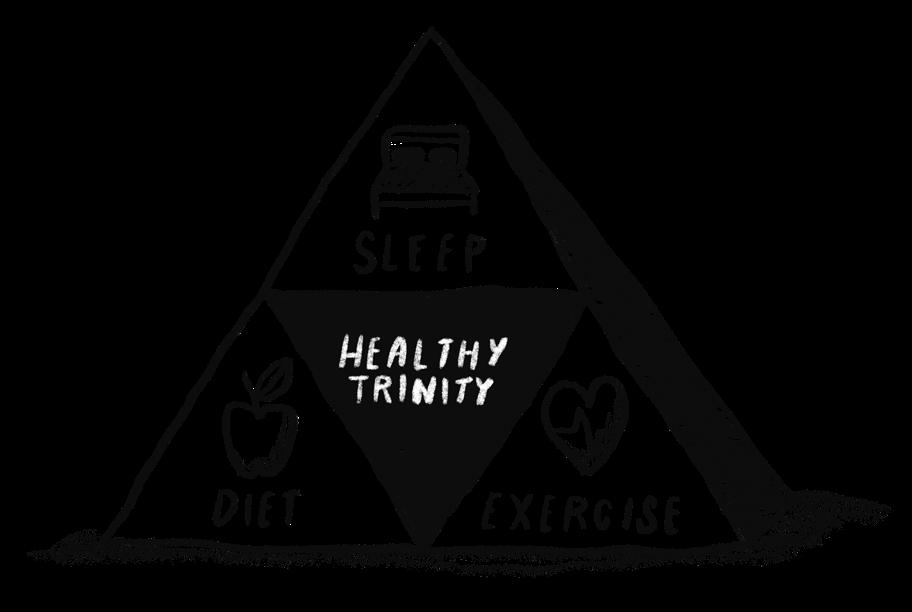
Physical Benefits
• Helps to build and maintain healthy bones, muscles and joints
• Helps to control weight, build lean muscle and reduce fat
• Prevents and reduces high blood pressure
Mental Benefits
• Improves your memory and lengthens your attention span
• Improves your decision-making, planning and multi-tasking skills
• Increases your production of new nerve, blood and brain cells
Looking after your Physical Health

DIET
Ensure you have a healthy diet.

Scan this bar code to access the food pyramid, which shows how often you should eat different food groups.

Ensure you get a good night’s sleep. Avoid being on a screen before you go to bed, and it’s best not to bring your phone into your bedroom.

Try to get the daily recommended physical activity of 30 minutes of exercise. Consider including a column for physical activity in your study timetable so you can actively make it part of your daily routine.
3 Fats, spreads and oils Meat, poultry, fish, eggs, Milk, yogurt and cheese Whol cereals pot oes, pasta and rice Vegetables, lad and fruit –Healthy Food for Life The Food Pyramid Foods and drinks high in fat, sugar and salt
SLEEP EXERCISESAMPLE
BUILDING RESILIENCE
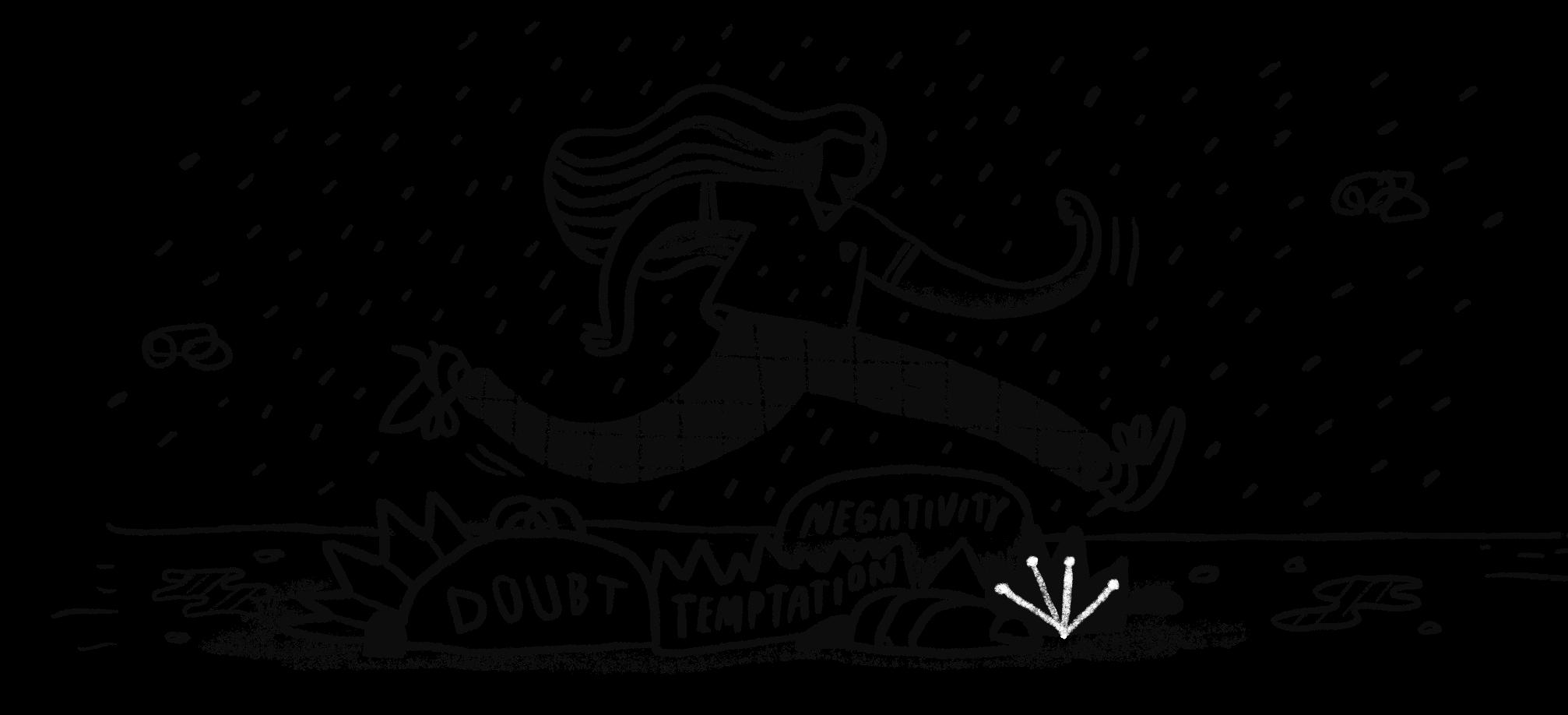
Unfortunately, negative things happen to everyone in life; however, some people seem to bounce back quicker than others. This is referred to as resilience - your ability to bounce back after setbacks.
One useful way of understanding how to develop resilience is to use the acronym BOUNCE
Bad things and times happen, but things do get better.
Others are there to help you, but you need to let them know.
Unhelpful thoughts don’t make things better.
Nobody is perfect.
Concentrate on the good things in your life, it’s not all bad.
Everybody has setbacks or struggles. You are not on your own here.
Here are five useful ways that you can build your own personal resilience. In the space provided, identify one way you could incorporate each one into your own life!

Express Yourself
(Communicate)

Nourish Yourself (Diet, sleep, exercise)

Sunny Side Up
(Be positive)

Identify your strengths

Relax
. B O U N C E
SAMPLE

your learning and develop important skills that will help you to grow as a person in this ever-changing world, including things to help your mental and physical health.
This section of your school journal contains key information about the Junior Cycle. We want you to be in control of all your learning in Junior Cycle, so we have developed an important list of keywords that you will need to be familiar with as you journey through your Junior Cycle.
Key Skills
The world that we live in is constantly changing. The Junior Cycle recognises that the world will continue to change and wants to equip you with the necessary skills to meet these changes as you grow older. While there are many important learning skills, the Junior Cycle has identified eight key skills that will be central to your learning from first to third year.
The eight Key Skills of Junior Cycle are illustrated on the diagram on the right. You will investigate these throughout your Junior Cycle.

KEY SKILLS
MANAGING MYSELF BEING CREATIVE MANAGING INFORMATION & THINKING STAYING WELL COMMUNICATING BEING LITERATE BEING NUMERATE WORKING WITH OTHERS
SAMPLE
ASSESSMENT

What is assessment?
Assessment is a way of gathering evidence of all the knowledge and skills you have developed.
Why is assessment important at Junior Cycle?
Assessment is a very important feature of Junior Cycle because it gives you a clear picture of all the work you have completed from first to third year. It also allows you to reflect on the skills that you have learned and improvements you have made on your journey.
What are the different types of assessment at Junior Cycle?
There are two main types of assessment at Junior Cycle:
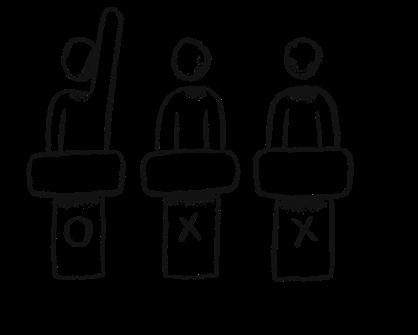
Formative assessment
This is a continuous assessment and happens in most classes in the form of quizzes, homework, etc.

Summative Assessment
This happens at the end of third year in an exam marked by the State Examinations Commission.
SAMPLE
OPEN YOUR MIND, ARMS, AND HEART TO NEW THINGS AND PEOPLE, BECAUSE WE ARE UNITED IN OUR DIFFERENCES.
Ask the questions that have no answers.
Pursue the unexplored.
Embrace the unknown.
TOLISTEN YOUR HEART.
Suzy Kassem
SAMPLE
Date:
Subject/Ábhar Homework and Learning/ Obair Bhaile agus Foghlama Due/ Dlite ü
Remember / Cuimhnigh:
Date:
Subject/Ábhar Homework and Learning/ Obair Bhaile agus Foghlama Due/ Dlite ü
Remember / Cuimhnigh:
Date:
Subject/Ábhar Homework and Learning/ Obair Bhaile agus Foghlama Due/ Dlite ü
Remember / Cuimhnigh:
2
/ Dé Luain
/ Dé Máirt
Monday
Tuesday
Wednesday / Dé Céadaoin
MONTH: Remember SAMPLE
The struggle for human rights is an uphill battle. But every bit of the way is worth fighting for. - Ban Ki-moon
Remember / Cuimhnigh:
3 Thursday / Déardaoin Friday / Dé hAoine
days
Homework and Learning/ Obair Bhaile agus Foghlama Due/ Dlite ü
Signed by Parent/Guardian: Signed by Teacher/Tutor: Days absent this week: Total
absent this year: Communication by Teacher Communication by Parent/Guardian Date: Subject/Ábhar
Homework and Learning/ Obair Bhaile agus Foghlama Due/ Dlite ü
Remember / Cuimhnigh: Date: Subject/Ábhar
SAMPLE
Date:
Subject/Ábhar Homework and Learning/ Obair Bhaile agus Foghlama Due/ Dlite ü
Remember / Cuimhnigh:
Date:
Subject/Ábhar Homework and Learning/ Obair Bhaile agus Foghlama Due/ Dlite ü
Wednesday / Dé Céadaoin
Remember / Cuimhnigh:
Date:
Subject/Ábhar Homework and Learning/ Obair Bhaile agus Foghlama Due/ Dlite ü
Remember / Cuimhnigh:
Monday / Dé Luain Tuesday / Dé Máirt
MONTH: Remember SAMPLE
Remember / Cuimhnigh: The rights of every person are diminished when the rights of one person are threatened. - John F. Kennedy
Thursday / Déardaoin Friday / Dé hAoine
by
Signed by
Days absent this week: Total days absent this year:
Date: Subject/Ábhar Homework and Learning/ Obair Bhaile agus Foghlama Due/ Dlite ü
Date:
Homework and Learning/ Obair Bhaile agus Foghlama Due/ Dlite ü
Signed
Parent/Guardian:
Teacher/Tutor:
Communication by Teacher Communication by Parent/Guardian
Remember / Cuimhnigh:
Subject/Ábhar
SAMPLE
Managing Your Learning
There are three main elements to managing your learning, these being:
1. Setting learning goals and planning your learning
2. Monitoring your progress
3. Reflecting on your learning and progress with a view to learning from past experience.
Learning how to manage yourself and your learning is a key skill for Junior Cycle and it will prepare you for success at Senior Cycle.
Below are links to tools/templates which will help you to manage your learning.
The templates are divided into the three elements of selfmanagement for learning:
1. Setting learning goals and managing your learning
2. Monitoring your progress
3. Reflecting on your learning and progress.
When you select a QR Code for a particular template, it takes you to the online template and you can then print that resource and use it manage your learning.
SAMPLE
Permission Slips
Permission Slips
Reason: Date: / /
I give permission for: (Student’s Name) (Class) to attend: on (Day)
Parent/Guardian’s Signature: Date: / /
Permission Slips
Reason: Date: / /
I give permission for: (Student’s Name) (Class) to attend: on (Day)
Parent/Guardian’s Signature: Date: / /
Reason: Date: / /
Permission Slips
Permission Slips
Reason: Date: / /
I give permission for: (Student’s Name) (Class) to attend: on (Day)
Parent/Guardian’s Signature: Date: / /
I give permission for: (Student’s Name) (Class) to attend: on (Day)
Parent/Guardian’s Signature: Date: / /
Permission Slips
Reason: Date: / /
I give permission for: (Student’s Name) (Class) to attend: on (Day)
Parent/Guardian’s Signature: Date: / /
Reason: Date: / /
I give permission for: (Student’s Name) (Class) to attend: on (Day)
Parent/Guardian’s Signature: Date: / /
Permission Slips Permission Slips Permission Slips Permission
Permission Slips Permission Slips 1 2 3 4 5 6 1 2 3 4 5 6 129 SAMPLE
Slips
SAMPLE
Reason for absence: Signed: Date: / /
Student’s Name: Class:
Absent from: / / to / / No. of days:
Reason for absence: Details of absence: Illness
Urgent family reason
Holiday
Other (please specify)
Parent/Guardian’s Signature: Date: / /
Student’s Name: Class:
Absent from: / / to / / No. of days:
Reason for absence: Signed: Date: / /
Reason for absence: Details of absence: Illness
Urgent family reason
Holiday
Other (please specify)
Parent/Guardian’s Signature: Date: / /
Student’s Name: Class:
Absent from: / / to / / No. of days:
Reason for absence: Details of absence: Illness
Urgent family reason
Holiday
Other (please specify)
Parent/Guardian’s Signature: Date: / /
Student’s Name: Class:
Absent from: / / to / / No. of days:
Reason for absence: Details of absence:
Illness
Urgent family reason
Holiday
Other (please specify)
Parent/Guardian’s Signature: Date: / /
/ / Absence Notes Absence Notes Absence Notes Absence Notes Absence Notes Absence Notes Absence Notes Absence Notes 5 6 7 8 5 6 7 8 135 SAMPLE
Reason for absence: Signed: Date: / / Reason for absence: Signed: Date:
SAMPLE
From: Re: Date: / / From: Re: Date: / /
/ /
Parent/Guardian’s Signature: Date: / /
Teacher’s Signature: Date: / /
Parent/Guardian’s Signature: Date: / /
Teacher’s Signature: Date: / /
Parent/Guardian’s Signature: Date: / /
Teacher’s Signature: Date: / /
Parent/Guardian’s Signature: Date: / /
Teacher’s Signature: Date: / / From: Re: Date: / /
Re:
1 2 3 4 1 2 3 4 139 SAMPLE
From:
Date:
Notes Teacher to/from Notes Teacher to/from Notes Teacher to/from Notes Teacher to/from Notes Teacher to/from Notes Teacher to/from Notes Teacher to/from Notes Teacher to/from
18 17 16 15 14 13 12 11 10 9 8 7 6 5 4 3 2 1 0 19 SAMPLE
Whiteboard


























“A nation’s culture resides in the hearts and in the soul of its people.”

Mahatma Gandhi
Cultural Awareness involves recognising and respecting the differences between cultures and understanding the impact culture can have on communication, behaviour, and social norms. It helps to promote tolerance and understanding between people of different cultures, and it can also help young people to develop their own cultural identity.
examcraftgroup 4schools.ie
LARUTLUC NERAWA• E SS • CULTURAL •AWAREN E SS
•
SAMPLE
