
A practitioner-driven research report by the MAINSTREAM Research Team
The State of MAINTENANCE AND RELIABILITY in
the UK & Ireland
Obstacles to Achieving Maintenance and Reliability Excellence

Research Partners
Obstacles to Achieving Maintenance and Reliability Management Excellence
For 30 years the MAINSTREAM research team has engaged with Maintenance and Reliability leaders to understand their collective obstacles, pain points, and opportunities as they work towards achieving maintenance and reliability excellence and improving overall business performance.
These findings enable leaders, teams, and individuals to understand best practices, compare their companies’ performance and working environment to those inside and outside their industry, and make informed and effective decisions.
The top twelve obstacles that have emerged throughout this report will be used to create the MAINSTREAM UK Summit Program in October 2026 in Birmingham.

Too good To be replaced.
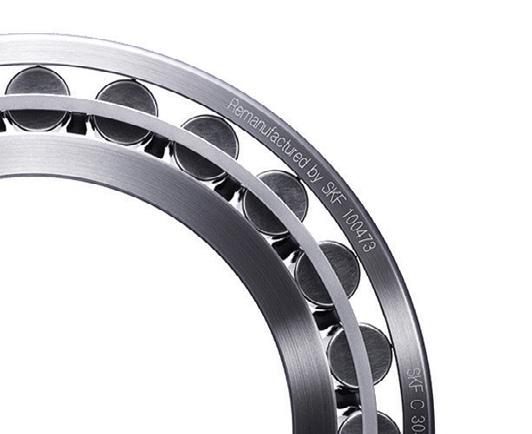
You don’t throw out a classic. You bring it back. Better. With SKF Remanufacturing, your bearings perform like new at a fraction of the cost, lead time, and CO₂ footprint.
Report Highlights
246
Senior practitioners participated across five industry roundtable sessions, individual challenge submissions, and leadership groups.
55%
Of UK maintenance budgets are spent on reactive activities, against a global benchmark of 35%. The reactive cycle is systemic, not accidental.
76%
Of UK C-suite executives consider maintenance a cost centre rather than a value creator, leaving the function underfunded and underrepresented at board level.

67%
Of organisations incentivise breakdown repair over prevention. The hero who fixes the failure is rewarded. The engineer who prevented it is invisible. 83%
Of maintenance improvement initiatives fail to sustain results beyond 18 months, confirming that the barrier is culture, not methodology.
53%
Of organisations rate their apprenticeship and training pipeline as poor or critical, yet those investing in structured programs are already seeing measurable results.
58%
Of UK organisations have abandoned at least one AI-related maintenance project in the past three years, yet vendor spending on AI marketing continues to accelerate. 68%
Average schedule compliance across UK industries, against an 85% bestpractice benchmark. Backlogs are growing, not shrinking.
3.2yrs
Average tenure of senior maintenance leaders – shorter than most transformation programs require to deliver sustained results. 71%
Of UK maintenance organisations have no dedicated reliability engineering function, leaving the discipline narrowly understood as condition monitoring rather than a systemic mindset.

£10M+
Estimated cost of a single process control system replacement in heavy industry. Organisations are deferring these investments into an ever-growing bow wave of need.
22%
Of UK maintenance organisations have formal knowledge capture programs in place, despite the retirement wave having already arrived.
£240k
Productivity lost per retiring maintenance specialist, including undocumented institutional knowledge, mentoring capacity, and supplier relationships. 78%
Of organisations have no documented long-term asset management strategy connecting maintenance planning to capital investment, locking them in the backlog–reactivity–deferral spiral.
About the Research
This research draws on multiple sources to develop a comprehensive understanding of the state of maintenance and reliability in the UK and Ireland and the obstacles preventing excellence:
1. Roundtable Discussions: Five facilitated roundtable discussions – two faceto-face sessions in Manchester and Birmingham with 37 senior maintenance and reliability managers, plus three online sessions with >20 participants per session – exploring their experiences and perspectives on key challenges.
2. Online Surveys: Online surveys completed by 167 practitioners.
3. Individual Challenge Submissions: Written submissions from senior asset management decision-makers identifying their top three current and future challenges, providing structured data on priority issues.
4. Industry Documentation: Review of industry reports, case studies, and best practice guidelines related to maintenance and reliability in the UK context, including previous MAINSTREAM UK Reports for contextual comparison.
5. Expert Insights: Incorporation of perspectives from industry leaders and consultants.
Authors
The comprehensive survey content presented in this report was meticulously designed, developed, and authored by the MAINSTREAM research team. As a leading research authority in the domain of Industrial Asset Management, Maintenance and Reliability, MAINSTREAM brings decades of collective experience and methodological rigour to this analysis. The authors acknowledge SKF and Accruent for their invaluable partnership and support throughout this research initiative.
Acknowledgements
The MAINSTREAM research team extends its sincere gratitude to all the maintenance and reliability professionals who participated in this research. Your willingness to share experiences, challenges, and insights with candour and generosity is what gives this report its authority and its value.
Thank you to the following organisations for participating
7 Steel UK
ABBOTT UK
AbbVie – Ireland
Accruent
AETC
Affinity Water
AFRY
Ailsa Reliability Solutions
Airbus
Anglo American
Anthony Veder
Aqua Operations
Archer Daniels Midland (ADM)
Arla Foods UK
AWE
Babcock International Group
Bentley Motors
BioMarin Pharmaceutical
BMW
BP
Cargill UK
Climeworks
Compleat Food Group
Convatec
Cytiva
Delta-Xero Distribution
Domtar
DP World
Drax Group
Elanco Animal Health
Eli Lilly and Company
Emerson
EMR
Ferrero UK Ltd.
Finsbury Food Group
First Bus
Forth Ports
FUJIFILM Diosynth Biotechnologies
Future Biogas Ltd
GA Pet Food Partners
Greater Anglia
Greencore (Bakkavor Group plc)
Haltermann Carless
Harsco Environmental
Heidelberg Materials
InterGen
Ipsen
Irish Rail
Isle Utilities
Ithaca Energy
Jaguar Land Rover Automotive
John Crane
JPS Reliability
Kraft Heinz – Netherlands
Krones UK
Lenzing Group
London Stansted Airport
Maintain Reliability
Manchester Airports Group (MAG)
Mars
MSD Dunboyne BioNX
Myton Food Group
National Gas
National Grid
National Highways
National Physical Laboratory (NPL)
NOV
Oceaneering
PBS by Ponticelli
PepsiCo
Planner HQ
Plant Engineering
Premier Foods
Princes Foods
Pro-Reliability Solutions
Reliable Manufacturing Ltd
Reynolds Contamination Control Ltd
Rheon Insight
Rolls-Royce
Science and Technology Facilities Council (STFC)
Scottish Water
SD Guthrie International Liverpool Refinery
Severn Trent
Shotton Mill
Siemens Gamesa
Siemens Healthineers
SKF (U.K.) Limited
SMC Corporation
Smurfit Westrock
South Western Railway
SUEZ
Sulzer UK
Swizzels Matlow
Tate & Lyle Netherlands
TFD Europe
Thames Water
The HEINEKEN Company
The University of Manchester
Transport for London
Two6 Services Ltd
UE Systems
United Utilities
University of Warwick
Warburtons
Whitetree
Woodside Energy
Yorkshire Water
Executive Summary
Walk into any of the five roundtable sessions that informed this report and you hear two things at once: frustration at the pace of change, and a sharpening sense of where the real opportunities sit. Across their submissions and roundtable contributions, the themes of this report emerge on their own. Skills shortages, reactive cultures, data struggles, ageing assets, the operations-maintenance divide, budget pressure, and the looming question of what to do about AI, alongside the texture that no summary can fully capture: the frustration, the specificity, and the hard-won clarity that comes from living with these challenges every day.
The workforce challenge is real and urgent. Organisations are struggling to recruit and retain skilled engineers, and the pipeline of apprentices and graduates is not yet replacing what is being lost. But within that challenge sits a genuine opportunity: organisations that invest in structured competency frameworks, meaningful career pathways, and cultures that develop people are already seeing results. The apprenticeship programs expanding across water, manufacturing, and aerospace are a tangible positive signal. The challenge is ensuring those programs mature fast enough to meet demand.
Reactive maintenance culture remains widespread, but there is a growing sophistication in how practitioners understand it. The reactive cycle is recognised as a systemic condition, driven by incentive structures, leadership continuity, and organisational design. That recognition is itself a breakthrough, because it opens the door to systemic solutions: shared performance targets, integrated team structures,
sustained culture change, and deliberate investment in the invisible work of prevention. And cultural change is at the heart of the work. The other solutions will only succeed when there is sustainable cultural change.
The relationship between operations and maintenance emerged as a recurring theme across the roundtable sessions, particularly in manufacturing settings where the tension is most acute. Where this relationship is dysfunctional, it undermines planning, scheduling, and every improvement effort downstream. But the research also surfaced compelling examples of organisations that have deliberately bridged this divide through shared management, aligned KPIs, and the emerging Asset Manager role.
Data and technology present both the greatest frustration and the greatest untapped potential. Organisations have more data than ever but struggle to convert it into decisions they trust and act upon. AI dominates the conference agenda, yet most organisations are still working to get their basic data quality right. The opportunity here is significant: organisations that invest in data foundations before chasing advanced analytics will find themselves with a durable competitive advantage, while those that leap to AI without the groundwork will continue to be disappointed.
Two further obstacles emerged strongly from the 2026 research. The first is the standing of reliability engineering itself. Practitioners drew a sharp distinction between doing reliability activities like vibration analysis, thermography, and oil samples, versus having a reliability mindset that asks why a failure was allowed to

happen at all. The discipline lacks recognised career pathways, organisational authority, and the analytical capability to operate as anything more than a reactive afterthought dressed up with condition monitoring tools.
The second is the absence of long-term strategic asset management thinking. Maintenance teams manage the consequences of asset degradation but have little visibility of, or influence over, the capital investment decisions that determine whether assets are refurbished, replaced, or run to failure. Without that strategic layer, every other obstacle in this report – ageing assets, deferred maintenance, reactive cultures, growing backlogs – compounds rather than resolves.
One theme runs through every chapter: the profession is not primarily constrained by technology, methodology, or budget. It is constrained
by the ability to build and sustain cultures that consistently apply what is already known to work. As one facilitator put it: “We’re not implementing reliability. What we’re trying to do is build cultures that can sustain it.”
In summary: the technology exists, the methodologies are proven, and the people are committed. The missing piece is sustained organisational capability. Turning knowledge into practice, consistently, through leadership changes, budget cycles, and competing priorities. The twelve obstacles in this report map exactly where that capability needs building.
This report presents those twelve obstacles. Each is grounded in what was said in the room – the specific experiences, frustrations, and hard-won insights of the people doing this work every day.
2025 vs 2026:
How the Landscape Has Shifted
The following snapshot maps this year’s twelve obstacles against those identified in the 2025 edition of this report. It shows which challenges have risen in urgency, which have been reframed to reflect new understanding, and which are entirely new to the research.
In Their Own Words: Challenges and Opportunities
As part of this research, we asked senior maintenance and reliability decision-makers across UK industry to describe the biggest challenges they currently face and the most pressing issues they believe their organisations will face over the next few years. Each was asked to list up to three, in their own words.
What follows is every response, presented verbatim. We have not edited, summarised, or sanitised these submissions. They are reproduced here exactly as they were written. Because the power of this data lies not in what a researcher makes
of it, but in what practitioners actually said when asked to name what keeps them up at night and what they see coming over the horizon.
Read through these responses and the themes of this report emerge on their own: skills shortages, reactive cultures, data struggles, ageing assets, the operations-maintenance divide, budget pressure, and the looming question of what to do about AI. But you will also see the texture that no summary can capture. The frustration, the specificity, the hard-won clarity that comes from living with these problems every day.
“Changing people’s mindsets from ‘we have always done it like that’.”
“The supply chain has become more challenging due to geopolitical issues.”
“Lack of understanding of failure mode characteristics across our engineering teams means we are treating symptoms rather than addressing root causes.”
“Inventory management for critical spares is increasingly exposed to supply chain volatility.”
“Precision maintenance is not at the standard required to deliver reliable asset performance.”
“Driving the culture away from reactive maintenance toward preventative and predictive approaches requires sustained leadership commitment that outlasts any individual manager.”
“Work priority and scheduling are constantly overridden by operations teams inflating urgency.”
“Planning and scheduling remain the most underdeveloped capability in our maintenance function.”
“Disparate systems and integration timescales between SAP, SCADA, and workforce management tools create data silos that prevent effective decision-making.”
“Budget constraints are forcing us to make choices between maintaining current assets and investing in the capability improvements.”
“Passing knowledge from technicians as they retire requires structured programs that most organisations have not yet implemented.”
“Connectivity to the asset and overcoming cybersecurity challenges are creating barriers to condition monitoring and IoT-based maintenance strategies.”
“Obsolescence of control systems and electronic components is now a bigger risk than physical wear on ageing assets.”
“Getting production and engineering to work as one unit through TPM principles is still more aspiration than reality.”
“Bringing together three sites with different cultures and histories to work on and advance a global maintenance and reliability roadmap is a significant organisational challenge.”
“Obtaining accurate data in order to help us make informed decisions remains a frustrating challenge.”
“Very little planning and scheduling cadence is preventing any meaningful improvement in reliability.”
“How to balance the use of AI without overwhelming teams who are already struggling with basic data quality and work management fundamentals.”
“A highly reactive environment means the importance of maintenance is overlooked throughout the business.”
“Collecting asset data from the field to drive better maintenance insight is still largely a manual process.”
“Culture remains the single biggest barrier.”
“There is Organisational resistance to change.”
“Ever growing skills gaps across the organisation are being compounded by the loss of experienced engineers and the failure to develop adequate replacements at sufficient pace.”
“With over 120 sites, managing consistency of process and data is a recurring challenge that hinders machine learning, predictive analytics, and leadership decision-making.”
“A large maintenance debt built up over years of under-investment makes it increasingly difficult to compare assets and determine where limited funding should be spent.”
“Articulating and obtaining sustained C-suite buy-in to reliability improvement is difficult because it is not seen as exciting to invest in compared to digital technology initiatives.”
“Every hour of downtime is scrutinised at senior level.”
“People attraction and retention remains a core challenge.”
“Skills shortages across the board are making it almost impossible to fill vacancies with engineers who have the right competencies for the salary being offered.”
“Quality of maintenance work execution is difficult to verify.”
“The balance of proactive versus reactive maintenance is stuck.”
“We are navigating a dense KPI landscape trying to separate leading signals from lagging results while our success depends on collecting robust CMMS data we actually believe and act upon.”
“Maintenance teams are rarely consulted during design and commissioning stages.”
“The underlying processes that generate the data are still fundamentally broken.”
“Workforce skill levels are not where they need to be.”
“Data collection at the point of work is inconsistent.”
“Cost reduction pressures from the business are applied uniformly to maintenance without understanding the different risk profiles and consequences across our asset portfolio.”
“Having the next generation of maintenance engineers is an existential concern, as the profession appears to be a dying trade with serious implications for UK industry.”
“Skills shortage manifests in two areas: skilled tradesmen, which we are tackling through increased apprentice intake, and a slow dilution of skills among operators.”
“Large civil structure assets present unique inspection and maintenance challenges that differ fundamentally from mechanical and electrical equipment management.”
“Data quality and data hygiene remain fundamental blockers.”
“CMMS system usability creates frustration among technicians.”
“AI integration to CMMS systems is expected by leadership but the data foundations required to make it work are not yet in place across most of our operations.”
“Skills shortages are especially acute in electrical disciplines.”
“Short-term decision making driven by quarterly financial pressures.”
“Aggressive production demands are forcing a revitalisation of industrial assets, requiring a skill set that bridges legacy mechanics and modern data analytics that is becoming harder to secure.”
“New recruits lack the depth of knowledge needed to maintain increasingly complex assets.”
“Machine issues are too often viewed from a ‘them and us’ stance rather than as one team.”
Research Summary: The 2026 Top Twelve Obstacles
The following twelve obstacles represent the most significant barriers to maintenance and reliability excellence in the UK, ranked by their frequency, intensity, and impact as evidenced across all research sources.
1 Developing and Retaining the Maintenance Workforce
The skills crisis has deepened. Retention is as important as recruitment. Organisations are losing skilled people to competitors and struggling to develop replacements fast enough. The apprenticeship pipeline is fragile, and new entrants are being absorbed into reactive cultures before they have a chance to develop proactive habits.
2 Breaking Free from Reactive Maintenance Culture
Reactive maintenance remains the dominant operating mode across UK industry despite universal acknowledgement that it is costly, unsafe, and unsustainable. The barrier is not knowledge. It’s culture, incentives, and leadership continuity.
3 Bridging the Divide Between Operations and Maintenance
The relationship between operations and maintenance surfaced as one of the most consequential divides in 2026, with practitioners describing maintenance as a “necessary evil” –celebrated when assets run, blamed when they fail, defunded when things are quiet. Yet where organisations have merged teams under shared KPIs or introduced Asset Manager roles, the divide measurably narrows.
4 Converting Data into Decisions That Stick
Data quality, system integration, and analytical capability remain severe constraints. Organisations have more data than ever but less confidence in what it tells them. The gap between data collection and actionable insight shows no sign of closing despite the plethora of AI and other emerging tech and platforms.
5 The Erosion of Work Management Fundamentals
Planning, scheduling, backlog management, and work order discipline continue to deteriorate. Many organisations lack dedicated planners, operate without documented work management processes, and cannot answer basic questions about their maintenance backlog.
6 Managing Ageing Assets and the Obsolescence Cliff
A new framing has emerged: obsolescence, not age, is the primary risk driver. Control system obsolescence in particular is creating multi-million replacement liabilities that organisations are deferring into an ever-growing bow wave of investment need.

7 Securing Sustained Leadership Buy-in and Investment
Maintenance continues to be viewed as a cost centre by the majority of C-suite executives and leadership. Short-term financial pressures, leadership turnover, and an inability to articulate maintenance value in financial language keep the function underfunded and underrepresented at board level.
8 Navigating AI Hype Without Losing Focus on Fundamentals
AI and predictive analytics dominate conference agendas and vendor pitches, but practitioners report confusion about what AI actually is, scepticism about vendor claims, and frustration that the conversation has moved to advanced technology while the basics remain broken.
9 Building Change Management Capability in Maintenance Teams
Newly elevated as a distinct obstacle. The inability to sustain improvement is now recognised as a change management failure, not a technical one. Maintenance leaders are increasingly expected to be part politician, part coach, and part influencer – a role for which most have received no formal training.
10 Preventing the Loss of Critical Knowledge and Institutional Memory
The retirement wave has arrived. Organisations face the simultaneous loss of technical knowledge, asset history, and operational judgement that took decades to accumulate and exists nowhere in any system.
11 Improving the Standing and Practice of Reliability Engineering
Reliability engineering remains under-recognised as a discipline in the UK, with no clear career pathway, limited professional standing, and frequent confusion between condition monitoring techniques and a true reliability mindset. 71% of respondents reported no dedicated reliability engineering function.
12 Embedding Long-Term Strategic Asset Management Thinking
A new theme emerged from the 2026 face-to-face roundtables: the absence of a longterm, strategic view of assets is itself a root cause of many obstacles in this report. Without a documented asset strategy connecting maintenance decisions to capital investment, organisations remain locked in the backlog–reactivity–deferral spiral.
Developing and Retaining the Maintenance Workforce
Every roundtable session opened the same way: someone mentioned the skills gap, and the room erupted. It is a daily operational problem – vacancies unfilled, knowledge walking out the door, and a pipeline that cannot keep pace with demand.
The Recruitment and Retention Double Bind
Recruitment remains competitive, but retention has become just as pressing. Several respondents described a revolving door: organisations invest six to twelve months onboarding a new engineer, only to lose them to a competitor offering marginally better pay or working conditions.
“Recruiting and retaining valuable team players. Onboarding takes 6–12 months in my environment and recent applicants we aren’t able to retain, meaning lots of wasted resources training without the benefit long term.”
Head of Engineering, Aerospace Manufacturing
The salary escalation in maintenance engineering has created what several participants called a “bidding war” for experienced staff. But money alone is not the driver. Working conditions, shift patterns, the quality of equipment, and the culture of the organisation all play a role in whether skilled people stay or leave.
“The wages for engineering keep going up and the market seems to be saturated with engineers whose skills do not match the wages.”
Engineering Manager, Food Manufacturing
The Apprenticeship Paradox
Apprenticeship programs are expanding across
several sectors, which is a genuine positive development. Water utilities, manufacturing, and aerospace organisations all reported increased investment in apprentice intake. But there is a paradox at the heart of this effort that was articulated clearly across multiple roundtables.
Apprentices are entering organisations that are overwhelmingly reactive. Their formative experience of maintenance is breakdown response. They learn to fix things under pressure. They absorb the culture of the hero engineer. And by the time anyone tries to teach them a proactive approach, the reactive mindset is already embedded.
“Your apprentices are being absorbed in a breakdown culture. And then they all start to talk about the liabilities. And if there’s no mechanism in the workplace to take them on that journey, then you lose them.”
Reliability Director, Ports and Logistics
The Skills Profile Is Changing Faster Than Training Can Follow
The skill requirements for maintenance professionals have shifted significantly. Traditional mechanical and electrical competencies remain essential. Nobody disputes that. But the integration of digital monitoring systems, data analytics platforms, and increasingly complex control systems means that the modern maintenance
62% of survey respondents cited skills shortage or workforce retention as a top-three challenge

People training – development of individuals and training in an industry that continues to develop software, but people are not fully trained how to deal with new software and control systems.
Head of Manufacturing Services, Automotive
engineer needs a hybrid skill set that most training programs are not yet designed to deliver.
Multiple respondents described a gap between what their organisations need and what the available workforce can provide. This is not just about new recruits. It extends to experienced engineers who have spent decades developing deep expertise in mechanical systems but now face control architectures and software environments that require fundamentally different knowledge.
Competency Frameworks:
The Missing Infrastructure
A striking gap surfaced in Birmingham: formal competency frameworks for maintenance and reliability roles barely exist. Participants described organisations where planners have received no formal planning training, reliability engineers have no defined competency pathway, and the distinction between condition
monitoring and reliability engineering is blurred to the point of meaninglessness.
“I went to different terminals around Europe – complete lack of understanding of what each position should have in competency and training. We have planner schedulers in place and no one knew what training they should have.”
Head of Reliability, Logistics
The Birmingham discussion revealed a striking gap: organisations invest heavily in hiring people for maintenance roles but invest almost nothing in defining what competence looks like in those roles, how it should be developed, and how it should be assessed over time. Several participants described beginning to build competency matrices and training pathways, but none reported having a mature system in place.
Survey Results: Over half of respondents (53%) rate their apprenticeship and training pipeline as poor or critical, confirming the roundtable consensus that the pipeline is “real but fragile.” Only 16% describe their pipeline as good or excellent. The concentration of responses in the fair-topoor range reflects an industry that recognises the problem but has not yet built the institutional capacity to solve it – new entrants are being absorbed into reactive cultures before they have a chance to develop proactive habits, and organisations that do invest in training are losing apprentices to competitors offering higher short-term pay.
How would you rate the adequacy of your organisation’s trade apprenticeship and technical training pipeline to meet future workforce needs?
Breaking Free from Reactive Maintenance Culture
Reactive culture has appeared in this research for years. Everyone knows it is a problem. The question that dominated the 2026 roundtables was different: why is it so hard to escape? Practitioners have stopped debating whether reactive maintenance costs too much. They are trying to work out why improvement programs that show early promise so reliably collapse.
The Self-Reinforcing Cycle
The reactive cycle operates as a system, not a habit. When an organisation is in reactive mode, breakdowns consume available resources. Planned work gets deferred. The backlog grows. Deferred maintenance causes more breakdowns. Resources are consumed again. And the cycle deepens.
“Firefighting offers a false sense of accomplishment. It is the visible tip of the iceberg, but underneath lies the massive cost of unplanned downtime and secondary damage.”
Head of Asset Management, Aerospace
Within this cycle, the engineers who respond fastest to breakdowns are recognised and rewarded. They become the heroes. The engineers who quietly maintain equipment to prevent failure receive no recognition at all. Over time, this incentive structure shapes the culture. People learn that visible crisis response is valued. Invisible prevention is not.
“Fifty percent of our engineering force are all ex-apprentices, so they’ve only ever learned what we’ve taught them. You get rewarded for doing quick, solid breakdowns, which is the complete wrong way round.”
Head of Reliability, Logistics
The Definition Problem
A telling exchange in Birmingham concerned something deceptively simple: what actually counts as a breakdown? The answer varies wildly between organisations, and the consequences for measurement are serious.
The discussion exposed significant variation. Some organisations classify any unplanned intervention as a breakdown. Others exclude events where the plant can continue running. Some reclassify breakdowns as planned work if the repair is scheduled for the following week. The result is that cross-organisational benchmarking of planned versus unplanned ratios is often meaningless.
“I’m going to a customer and they’ll say, ‘Oh Gary, we’re eighty-five percent planned, fifteen percent unplanned.’ And you go into the data, something’s not right here – they’re actually classifying breakdowns as planned activities.”
Reliability Consultant
When Going Down Reveals the Truth
One of the most candid contributions across all roundtables came from an engineering manager in the chemical sector who described how a reliability decline from 98% to 92% paradoxically became the catalyst for real change. When reliability was high, nobody questioned
how it was being achieved. When it dropped, the cross-functional attention that followed revealed weaknesses that had been invisible.
“It sounds counterintuitive and almost a double negative, but going down sometimes has allowed you to recognise your weaknesses, so you can climb back up.”
Engineering Manager, Chemical Manufacturing
The same point came up in multiple sessions: organisations often need to experience visible failure before they will invest in prevention.
Maintenance is invisible when it works and conspicuous only when it fails.
The Kindergarten Football Problem
Several practitioners used vivid metaphors to describe what happens when a breakdown occurs in a reactive culture. The most memorable came from a maintenance and engineering manager in food manufacturing, who described how an unplanned event causes everyone to abandon their strategic work and chase the immediate crisis.
“Like kindergarten kids playing football, everybody chases that ball, and then everything else falls down.”
Maintenance and Engineering Manager, Food Manufacturing
This pattern, where a single breakdown event cascades through the entire maintenance program, is both a symptom and a cause of reactive culture. It means that even organisations with a plan cannot execute it consistently, because every significant failure resets priorities back to crisis response.
Not All Reactive Is Bad
An important nuance emerged in the roundtables that deserves acknowledgement. Several experienced practitioners pushed back on the assumption that reactive maintenance is always the enemy.
“Not all the assets need to be preventative. Not all the assets need to be planned. The whole idea that reactive is always the bad guy is personally something that I don’t agree with.”
Digital Reliability Engineer,
Industrial Equipment
The distinction matters. Run-to-failure is a legitimate strategy when it is a deliberate, risk-assessed choice for low-criticality assets. The problem is when reactive maintenance happens by default – not because someone decided it was the right approach, but because the organisation never developed the capability to do anything else.

83% of maintenance improvement initiatives fail to sustain results beyond 18 months
Bridging the Divide Between Operations and Maintenance
The friction between “keep it running” and “let me fix it properly” is old. What stood out in 2026 was the intensity: practitioners described a divide that is an active blocker to progress on almost every other front.
The ‘Necessary Evil’ Problem
Across multiple sessions, maintenance practitioners described being treated by their operational colleagues as a service function to be summoned when something breaks and blamed when something fails. The phrase “necessary evil” came up more than once.
“We are here to support operational teams, but we are also the scapegoat. A necessary evil, I think some people say.”
Engineering Manager, Paper and Packaging
There is real frustration behind this. Maintenance professionals who have spent years keeping assets running reliably described the same experience again and again: undervalued when things go well, over-blamed when they do not.
“When it’s all going well, we’re heroes, that’s great. But when things are nice and routine and ticking along, that’s when the budgets just get cut.”
Head of Asset Strategy, Water Utility
Priority Inflation and Queue Jumping
A specific and measurable manifestation of the operations-maintenance divide is the practice of operations teams inflating the priority of work orders to jump the maintenance queue. This was described in detail by a maintenance and reliability manager at a major water utility.
“They’ve influenced the priority of the job to a higher priority when it not necessarily is, just to try and get the burning platform sorted.”
Maintenance and Reliability Manager, Water Utility
When operations teams routinely override the prioritisation system, the entire planning and scheduling function collapses. Every job becomes urgent. Nothing is truly prioritised. And the maintenance team ends up in a permanent state of crisis response – which reinforces the reactive cycle described in the previous chapter.
Where Integration Works
The research also identified examples where the operations-maintenance divide has been deliberately bridged, with measurable results.
The most compelling case came from a senior asset strategy leader at a major water utility, who described a transformation that began approximately fifteen years ago when the organisation merged its operations and maintenance teams under shared management.
“It was horrific because the maintenance team didn’t want to do that. They didn’t sit in the same canteens, the same restrooms, the same offices as people. Fast forward 15 years, it’s a great idea because we’ve got shared goals, shared KPIs.”
Head of Asset Strategy, Water Utility

It was painful and took years. But today that organisation has shared performance targets, collaborative work planning, and a level of alignment that most participants could only aspire to.
The Asset Manager Role
Roundtable participants spent considerable time discussing the Asset Manager role. A position that sits between operations, maintenance, capital planning, and finance. Where it has been implemented well, it provides the cross-functional translation and coordination that is otherwise missing.
“Where we’ve got Asset Managers in place, we see a difference, because there’s somebody walking around both sides of the fence going, ‘Right, this is what’s important for both of you, and this is the plan we would propose.’”
Head of Asset Management, Aerospace
The Asset Manager sits between technical maintenance knowledge and commercial production reality, providing the kind of informed arbitration that prevents both over-investment and under-investment. Several participants noted that this
role is difficult to fill, easy to dilute, and frequently “bolted on” to an existing engineering position rather than resourced as a dedicated function.
The Reliability Correlation
One of the sharpest observations from the roundtables linked the severity of the operations-maintenance clash directly to the reliability performance of the plant.
“I think the higher the reliability, the less the clash. So ultimately, if you’re operating at a 70–80% reliability, then you’ll find there’s a much stronger clash between operations and maintenance.”
Engineering Manager, Chemical Manufacturing
This creates a catch-22. The organisations that most need operational and maintenance alignment are the ones where the relationship is most dysfunctional. And the dysfunction itself prevents the collaborative work needed to improve reliability. Breaking this cycle requires deliberate structural intervention: shared targets, integrated planning, and visible leadership commitment to a unified approach.
Converting Data into Decisions That Stick
Sensors, SCADA systems, EAM and CMMS platforms, condition monitoring equipment, IoT devices: the volume of data available to maintenance teams has never been greater. And yet the message from practitioners has barely shifted: we are drowning in data and starving for insight.
The Quality Crisis at Source
It starts at the point of collection. Field technicians prioritise repair over recording. Work orders get closed with minimal information. Failure codes are applied inconsistently. Or not at all. The CMMS ends up full of records that are technically present but practically useless for analysis.
“We have a real weird combination of bringing in some new technology, but we’ve got a legacy of 40 years’ worth of data that’s been collected on paper.”
Asset Strategy Leader, Water Utility
The problem is compounded in multinational operations where language barriers affect the quality of work order descriptions, and in organisations that have grown through acquisition and inherited multiple incompatible systems.
“A lot of breakdowns we had, we looked back in the CMMS system, into the backlog, and these issues were already known for months.”
Head of Reliability, Food Manufacturing
Underneath these failures sits a deeper issue: there is often very little commitment to the collection of data at source because field technicians are not seeing the outcomes that good data delivers back to them. They capture information in the field and send it into the system.
But the insights do not flow back, decisions do not improve, and problems do not get solved. They lose faith in the point of the process, and the data quality slides further. Until organisations close the feedback loop, visibly demonstrating that better source data produces better maintenance outcomes, the quality challenge will not be solved by training, audits, or new technology.
The Dashboard Proliferation Problem
Organisations are investing heavily in business intelligence tools and dashboards. But more dashboards do not equal more insight. Organisations continue to generate dashboards without corresponding analytical depth.
The fundamental issue is that dashboards present data; they do not interpret it. Without skilled analysts who understand both the technical domain and the data science, organisations end up with an impressive visual display that nobody acts on. Several participants described having dozens of Power BI dashboards but no mechanism to connect what those dashboards show to actual maintenance decisions.
The Measurement Consistency Problem
One of the more revealing discussions concerned the lack of standardisation in how maintenance performance is measured. Different sites within the same organisation use differ-

<27% of data collected by UK asset-intensive organisations is used for decision-making
ent definitions. Different organisations in the same sector cannot compare themselves. And common terms like “reliability” and “availability” are used interchangeably despite meaning different things.
“We’ve got different measures across Europe and the globe. Some aligned to SMRP, some to nothing. You’re comparing apples to oranges.”
Maintenance Manager, Food Processing
Measurement drives behaviour. If an organisation does not know how it defines reliability, it cannot know whether it is improving. And without the ability to compare against others, there is no external benchmark to test its own maturity against.
The Human Inspector Problem
An example from the infrastructure sector brought the problem into sharp focus. One
participant described the challenge of managing condition assessments for a large portfolio of assets, where assessment is performed by human inspectors against a visual grading framework.
“You can give 20 engineers the same structure and you’ll get different grades. If it’s the same inspector, same asset, you get continuity. But when we outsource it, we get variables – we can have self-healing structures.”
Asset Manager, Infrastructure
This example illustrates a fundamental truth about maintenance data: the data is only as good as the process that produces it. Where that process depends on human judgement without adequate standardisation, the resulting data is unreliable regardless of how sophisticated the analytics applied to it might be.
Survey Results: Nearly half of respondents (49%) describe their data-to-decision capability as limited or poor, while only 18% report good or highly effective conversion of data into action. This reinforces the central finding of this section: organisations have more data than ever but less confidence in what it tells them. The dominant response – moderate at 33% – describes organisations that collect data as a compliance exercise rather than a decision-making tool. The gap between data collection and actionable insight shows no sign of closing, and the survey results confirm that this is an industry-wide condition, not an outlier problem.
How would you describe your organisation’s ability to convert the maintenance data it collects into actionable decisions?
The Erosion of Work Management Fundamentals
Nobody writes a conference headline about planning and scheduling. But the slow, steady deterioration of these basic processes like planning, scheduling, backlog management, work order discipline, and spare parts control, is common and undermining everything else organisations are trying to achieve.
The Planning Gap
Effective maintenance depends on effective planning. A properly planned job – one where the scope is defined, the parts are staged, the tools are ready, the labour is allocated, and the safety requirements are documented – will take a fraction of the time and deliver a fraction of the rework compared to an unplanned response.
Yet dedicated planning roles remain rare. In many cases, the planning function is either absorbed into a supervisor’s role, delegated to senior engineers alongside their technical work, or simply absent.
“A plan means you’ve checked every single bolt or nut part that you require before starting. You’ve confirmed all the labour and made sure all the cleaning’s done prior and you’re ready for your commissioning afterwards as well. That’s a plan. A lot of companies just have a schedule and call it a plan.”
Reliability Consultant
The distinction between planning and scheduling, two different disciplines that are routinely combined into a single role, was raised in both the Manchester and Birmingham roundtables. When one person is responsible for both, they default to whichever function they are more comfortable with. The other suffers.
The Backlog Problem
Maintenance backlogs tell you the truth about an organisation’s asset health, whether the organisation wants to hear it or not. A growing backlog means work is being identified faster than it is being completed. Eventually, deferred work becomes deferred failure.
“We’ve got about 30 engineers on site. Two and a half thousand work orders in CMMS right now. We’ve just lost track of what’s in it.”
Engineering Manager, Paper and Packaging
Several participants described backlogs that have grown unmanageable. One engineering manager reported 2,500 open work orders in their CMMS for a single site with 30 engineers. Another described a backlog where the work had not even been scoped, meaning the organisation did not know how many man-hours of effort it represented, let alone how to prioritise it.
Selling the Value of Scheduling
A recurring theme across the roundtables was the difficulty of demonstrating the value of scheduling in organisations that are culturally resistant to structure. In a reactive environment, scheduling feels bureaucratic. Supervisors see it as admin. Engineers see it as constraint. Operations see it as inflexibility.
Yet the data is clear: organisations that achieve high schedule compliance consistently outperform those that do not, across every meaningful metric. The challenge is persuading people who have spent years working without a schedule that the discipline is worth the effort.
“Forty-two percent of your corrective maintenance occurred in the same week it was raised, so you could not have planned for that. But that leaves 58% that you could have done something with.” Asset Strategy Leader, Rail Transport
One participant took a different approach: they analysed reactive work patterns and showed that a large share of apparently “unplannable” corrective work was actually predictable from historical data.
The Spare Parts Crisis Spare parts management surfaced as a significant concern, particularly among water utilities and organisations with complex supply chains. The post-pandemic disruption to global supply chains has not fully resolved, and for organisations with ageing asset bases, the problem is compounded by increasing obsolescence.
“The supply chain has become more challenging in the past five years due to geopolitical issues as well as an ageing asset base and limiting capex investment. Where previously a resilient supply chain could be relied upon to minimise impacts of unexpected material shortages, we are now more exposed.”
Head of Fleet Engineering, Transport
Survey Results: Nearly three-quarters of respondents (72%) report wrench time at 35% or below, meaning maintenance technicians spend the majority of their available time on non-value-adding activities – waiting for parts, travelling to job sites, searching for information, attending toolbox talks, or simply waiting for instructions. The world-class benchmark for wrench time is 55% or above, yet only 9% of UK organisations report achieving this level. The median response band of 26–35% is consistent with an industry that lacks dedicated planners, operates without documented work management processes, and cannot answer basic questions about its maintenance backlog. Every percentage point of wrench time recovered translates directly into additional maintenance capacity without hiring a single additional technician.

68%
average schedule compliance across UK industries (vs. 85% best practice)
Managing Ageing Assets and the Obsolescence Cliff
Most practitioners in these roundtables manage assets running well beyond their intended design life. That part is familiar. What changed in 2026 is the framing: the dominant concern is no longer age-related failure in the traditional sense. It is obsolescence. The inability to maintain assets not because they have worn out, but because the components, control systems, and software that keep them running can no longer be sourced, supported, or replaced.
The Control System Crisis
The most acute expression of the obsolescence problem is in process control systems. Multiple participants described running critical operations on control architectures that are decades old, well beyond manufacturer support, and impossible to replace without major capital investment.
“They were running their plant on the original control system with LEDs and paper charts with pens. I have to replace all of the process control networks every five years, all the hardware control systems. For a cement plant, you’re talking somewhere in the region of £10 million.”
National Maintenance Manager, Cement Manufacturing
The cost and complexity of control system replacement creates a perverse incentive to defer. And deferral compounds the problem, because each year of delay increases the gap between the installed technology and the current standard, making the eventual replacement more expensive and more disruptive.
“We have PLCs that are beyond end of life cycle. They are absolutely obsolete and you cannot buy anywhere. People are buying
stuff off eBay to try and keep this running.”
National Maintenance Manager, Cement Manufacturing
The Victorian Infrastructure Challenge
At the other end of the spectrum, infrastructure sectors face the challenge of assets that were built to last. Water utilities manage pipe networks and treatment works with components dating to the Victorian era. Transport organisations operate on infrastructure that was built before anyone conceived of a maintenance strategy.
“There are probably sewers underneath here right now that are Victorian. The Victorians did a great job. But look at Manchester, our population growth – nobody wants the streets ripped up to fix what’s underneath.”
Head of Asset Strategy, Water Utility
Victorian infrastructure has lasted so well that nobody felt the urgency to replace it. And because most of it is buried, the true condition is unknown until something fails.
The Deferred Maintenance Bow Wave
The 2008 financial crash cast a long shadow over UK maintenance investment. One manufacturing industry sector was particularly
£10M+
estimated cost of a single process control system replacement in heavy industry

affected, with maintenance budgets slashed by 75% in some cases, and staffing reduced from 120 to 40 on individual plants. Nearly twenty years later, the backlog of deferred work from that era has still not been cleared.
“2008 absolutely decimated our industry. Nobody was investing. They slashed budgets like you’ve never seen. That’s all been backlog. For me, nearly 20 years now for our business.”
National Maintenance Manager, Manufacturing
But the deferred maintenance problem is not limited to industries that were hit by the financial crisis. Across water, transport, food, and energy, practitioners described a consistent pattern: when budgets are tight, maintenance and “stay in business” capital are the first to be cut, because they produce no visible return. The consequences are invisible – until they are catastrophic.
“Kicking the can down the road with respect to maintenance has created a bow wave of need and there is an increased
likelihood of in-service failure. The efforts to recover the situation feel like the problem has got away from us.”
Asset Manager, Infrastructure
The Age vs Risk vs Obsolescence Distinction
An asset management leader from transport challenged a common assumption: that asset age equals asset risk. Many electronic components like variable speed drives do not exhibit age-related failure patterns at all.
“People talk about remaining useful life as if it’s a mathematical thing. But in most asset classes, it’s impossible to resolve that question, because the component doesn’t fail with age-related failure.”
Head of Asset Management, Transport
If the primary risk is not age but obsolescence and supportability, then organisations need fundamentally different risk models than the ones built for mechanical assets. They need to track not just the condition of the asset, but the availability of the supply chain that sustains it.
Securing Sustained Leadership Buy-in and Investment
Maintenance is still viewed as a cost to be minimised rather than an investment to be optimised. Economic uncertainty, rising material costs, and tightening capital budgets have made the competition for funding even fiercer. And maintenance keeps losing that competition because it cannot speak the language of the people who control the money.
The Cost Centre Perception
Maintenance remains the function that is celebrated when things break and defunded when they run smoothly.
“They don’t understand reliability at all. You look at some of the major incidents that have happened in the world – a lot of these were related to ageing assets. But at board level, they don’t talk that language.”
Maintenance Manager, Manufacturing
The Short-Term Horizon Trap
Asset management operates on a timescale that is fundamentally misaligned with corporate planning. Assets last decades. Maintenance strategies need years to show results. But boards plan quarterly, and leaders change every three to four years.
“It seems like more and more in this modern world, us as maintenance leaders, reliability professionals, we have to be part politician and influencer, to try and constantly sell this message and this narrative about why we’re here.”
Maintenance Manager, Food Processing
This timing mismatch has a corrosive effect. A new leader arrives with new priorities. The pre -
vious improvement program is abandoned. A new one is started. Before it can deliver results, the leader moves on. And the cycle repeats.
The Language Barrier
Several practitioners pointed to the same fixable problem: maintenance and reliability professionals cannot articulate their value in financial language. MTBF, availability, and OEE mean nothing to a CFO who thinks in return on investment, risk exposure, and earnings impact.
Where organisations have successfully bridged this gap, by embedding maintenance costs in production hourly rates, for example, or by framing reliability investments in terms of cost avoidance, the results have been powerful. But these approaches remain the exception rather than the rule.
The Investment Wave Nobody Wants to See
Multiple participants described the experience of presenting a deferred maintenance investment plan to senior leadership and watching the mood collapse.
Practitioners see it clearly: the investment wave exists because previous leadership teams deferred the spending. The current team inherits the problem and faces the bill.
76%
of UK C-suite executives consider maintenance a cost centre rather than a value creator
There’s a huge investment wave that we need to do in the next five years. And the first question is, well, that just kills everyone’s mood when we present millions that we need to spend. But it’s because we’ve been deferring it.
Head
of Asset Management, Transport
Navigating AI Hype Without Losing Focus on Fundamentals
Vendors are selling AI. Conferences are headlining AI. Boards are asking about AI. And practitioners, for the most part, are trying to work out what AI actually is, what it can genuinely do, and whether their organisations are remotely ready for it.
The Terminology Problem
Start with the basics: most people in the room could not clearly define what AI means in a maintenance context. The term gets applied to everything from simple threshold monitoring to genuine predictive modelling, and most buyers cannot tell the difference.
In Birmingham, a participant challenged the room to distinguish between machine learning and AI. The discussion that followed made it clear that most condition monitoring products marketed as “AI” are, in practice, conventional machine learning applied to time-series data.
“I won’t name three or four companies that are doing that at the moment. Actually, that’s simple machine learning. If anyone is actually using an AI company, please let me know, because I’d be really interested to talk to them.”
Head of Reliability, Logistics
It matters because it shapes spending. An organisation that thinks it is buying AI will expect more and tolerate less of the data preparation, training, and validation that machine learning actually requires. The result: disappointed buyers, abandoned pilots, and growing scepticism.
The Data Readiness Gap
Even where AI or machine learning tools are
genuinely capable, they cannot deliver value without quality data to work with. And as this report has documented extensively, most UK maintenance organisations do not have quality data.
“There’s an expectation that we will be able to use AI to improve our maintenance activities. Whilst this is likely to be true, AI tools will only add value if applied to accurate data, something we already struggle with.”
Head of Fleet Engineering, Transport
The risk is that organisations invest in AI solutions before investing in the data infrastructure required to support them. An estimated 58% of UK organisations have already abandoned at least one AI-related maintenance project, and the 2026 research suggests this pattern is continuing.
Where Machine Learning Is Delivering Value
There are genuine success stories. A water utility described a seven-year program using machine learning on telemetry data from pumping stations to predict blockages and equipment failures before they cause service interruptions. The system learns from flow, level, and pressure data, identifies patterns that indicate developing faults, and generates proactive work orders.

58% of UK organisations have abandoned at least one AI maintenance project in the past 3 years
“Machine learning is pretty good now, seven years into the evolution. We can pick up a partial blockage or a non-return valve failure before it causes a problem. Rather than waiting for a failure, we can send someone to site.”
Asset Strategy Leader, Water Utility
What these successes have in common: mature data foundations, application to specific and well-understood failure modes, and operation by people who understand both the technology and the operational context. No silver bullets. Just incremental improvements delivered through sustained investment.
The Cybersecurity Tension AI and IoT adoption is increasingly colliding with cybersecurity constraints, particularly in defence, critical infrastructure, and regulated industries. One participant from the automotive sector described the chilling effect of high-profile cyber incidents on organisational willingness to connect assets.
“Adoption of AI in a world of IT Risk – it’s hard to get traction after the JLR issues last year on cloud-based solutions. Most IT functions want to lock down, not open up.”
Head of Asset Management, Automotive
Survey Results: Almost two-thirds of respondents (63%) remain at the exploring or not-considering stage of AI adoption, while only 14% have moved beyond piloting into implementation or full integration. This distribution aligns precisely with the practitioner feedback that dominates this section: widespread confusion about what AI actually is, deep scepticism about vendor claims, and frustration that the industry conversation has leapt to advanced technology while fundamental data quality, work management, and reliability practices remain broken. The 29% not considering AI at all is a telling figure – these are not laggards by choice but organisations that recognise they lack the foundational data infrastructure that AI requires to deliver value. As one roundtable participant observed: “You can’t put AI on top of a mess and expect it to clean it up.”
What best describes your organisation’s current stage of AI adoption in asset management and maintenance?
09 Building Change Management Capability in Maintenance Teams
Change management has hovered in the background of previous reports –mentioned alongside reactive culture, stakeholder engagement, and leadership turnover. In 2026, practitioners called it out as a standalone problem.
The reason is straightforward. People have tried the technical solutions. They have implemented condition monitoring, built maintenance plans, installed CMMS systems, designed reliability strategies. And they have watched these initiatives fail. Not because the technology did not work, but because the organisation could not sustain the behavioural changes required to make them stick.
The Never-Ending Battle
The emotional weight of this challenge was palpable in the roundtable discussions. Maintenance leaders described a two-front challenge: fighting negativity and resistance within their own teams while simultaneously trying to influence operations, commercial, and executive stakeholders.
“It seems like more and more, us as maintenance leaders, we have to be part politician and influencer. You’re fighting negativity from within your own camp, and also trying to influence and sell it to operations teams, commercial teams, sales teams. It is a sort of never-ending battle.”
Maintenance Manager, Food Processing
The Fourth Iteration Problem
Change fatigue is real. Experienced technicians in many organisations have lived through multiple improvement programs, each launched with
enthusiasm by a new leader and abandoned when that leader moves on. The result is deep cynicism.
“This is the fourth iteration of change that they’ve seen.”
Maintenance Manager, Pharmaceuticals
Breaking through this cynicism requires consistency, not just competence. Practitioners who reported success described the importance of involving resistors early, listening to their concerns, and demonstrating that this time is different. But it must be through sustained action.
“The only reason they were kind of resisting change is because I think they felt like they weren’t listened to.”
Reliability Lead Manager, Oil and Gas
Frameworks Entering the Mainstream
Maintenance leaders referenced formal change management frameworks by name. ADKAR, Kotter’s eight-step model, and the Karpman Drama Triangle were all cited in roundtable discussions.
The coaching approach to maintenance leadership was also evident. Rather than directing change from the top, several practitioners described the need to create conditions where teams discover the need for change themselves.
3.2yrs average tenure of senior maintenance leaders – shorter than most transformation programs

Culture Eats Strategy
The facilitator’s closing remark summed it up:
“We’re not implementing reliability. What we’re trying to do is build cultures that can sustain it.”
Reliability Consultant and Roundtable Facilitator
The technical solutions are known. The methodologies are proven. The constraint is cultural sustainability. And building cultures that sustain change requires communication, empathy, political awareness, and patience. Few maintenance leaders have been formally trained in any of these.
Preventing the Loss of Critical Knowledge and Institutional Memory
Across every sector in this research, experienced maintenance professionals are retiring, and taking with them irreplaceable knowledge about ageing assets, historical failure patterns, and the informal networks that keep operations running.
Knowledge That Lives in People, Not Systems
Critical maintenance knowledge has never been systematically captured. It lives in the heads of long-serving engineers who know which valve sticks in cold weather, which motor runs hot under certain loads, and which wiring route was changed during a modification twenty years ago that nobody documented.
“I’ve been to factories where we’ve had to bring people out of retirement because they’re the only ones who knew where these cables ran to and what they actually feed.”
Head of Maintenance, Manufacturing
A participant described a long-serving engineer who would be the first to collect OEM manuals for any new equipment. He would lock them in his filing cabinet. And whenever there was a problem with that machine, everyone had to come to him. Knowledge was power and it was deliberately hoarded.
While that extreme example may be unusual, the underlying dynamic is not. Experienced engineers carry knowledge that is genuinely difficult to extract, codify, and transfer. Not because they are hiding it, but because much of it is tacit. Learned through years of experience and embedded in intuition rather than procedure.
The Tick and Flick Problem
Related to knowledge loss is the problem of work quality verification. Several participants described instances where maintenance tasks were being signed off without being properly completed. Or, not completed at all.
This anecdote illustrates a systemic failure in work verification. If planned maintenance is not being completed as specified, then the maintenance strategy is fiction. And the knowledge of what was actually done, versus what was recorded as done, often resides only in the individual who did (or did not do) the work.
The Urgency of Capture
Only 22% of respondents have formal knowledge capture programs, and this research found no evidence that this figure is improving. The organisations that are losing knowledge fastest are investing least in capturing it.
Several participants described beginning to build knowledge databases, training matrices, and documented procedures as part of their reliability programs. But these efforts are typically early-stage and under-resourced. The experienced engineers who hold this knowledge are retiring now, and most organisations are not moving fast enough to capture what they know.
Survey Results: The single greatest risk, identified by 43% of respondents, is the loss of undocumented institutional knowledge – the tribal knowledge, asset history, and operational judgement that took decades to accumulate and exists nowhere in any system. A further 22% identify the inability to mentor and develop replacement staff, which is effectively the transmission mechanism for that same knowledge. Taken together, 65% of respondents see the retirement wave as primarily a knowledge crisis rather than a headcount problem. This finding underscores the urgency of knowledge capture programs, structured mentoring, and the documentation of critical asset decision histories before the generation that holds this knowledge walks out the door.
What is the single greatest risk to your organisation from the retirement of experienced maintenance and reliability personnel?
It was a three-monthly maintenance activity and it kept coming back signed and ticked. The planner put a new instruction inside that said ‘When this has been completed, come and see me and I will pay you £50.’ It was distributed for 12 months and not one person came back for the money.
Reliability Consultant

Improving the Standing and Practice of Reliability Engineering
There is collective need to elevate reliability engineering from a collection of techniques into a recognised discipline with genuine organisational influence. Practitioners described a profession that is simultaneously in high demand and chronically undervalued: everyone wants reliable assets, but few organisations invest in the systemic approach required to achieve them.
The Reliability Mindset vs the Condition Monitoring Toolkit
One of the most important distinctions to emerge from this research is the difference between doing reliability activities and having a reliability mindset. Many organisations have invested in condition monitoring technologies like vibration analysis, thermography, lubrication analysis, and ultrasound. But these remain standalone activities rather than components of an integrated reliability strategy.
“You might do condition monitoring, but that’s not a reliability mindset. Condition monitoring is a bunch of techniques. But systemically, when you look at the whole thing and take a mindset that solves longerterm problems – root cause failure analysis – that’s the reliability mindset you need to get to as you move from reactive.”
Senior Industry Advisor
A reliability mindset means asking not just “what failed?” but “why did it fail, what allowed it to fail, and what systemic change will prevent this class of failure from recurring?” It requires Root Cause Analysis (RCA), failure mode identification, and the discipline to act on findings even when the fix is expensive, politically uncomfortable, or crosses departmental boundaries.
Beyond Root Cause Analysis: The Full Reliability Engineering Stack
There is, however, a gap in how the discipline of reliability is understood and practised. RCA, while essential, is fundamentally a reactive process. It takes place after a failure has already occurred, after production has already been lost, and after cost and risk have already been incurred. Presenting RCA as the hallmark of reliability maturity, as many organisations implicitly do, conflates better failure investigation with genuine reliability engineering. The strongest reliability organisations go considerably further. They aim to engineer systems so that the failure either never occurs, is mitigated before it can escalate, or is rendered tolerable through design and maintenance strategy. That distinction, between learning from failures and preventing them in the first place, is central to modern reliability practice, yet it is often absent from the way organisations describe their reliability ambitions.
The broader reliability engineering stack comprises complementary disciplines that together govern asset lifecycle decisions. RCA serves the essential function of understanding why a failure occurred after the event, identifying the systemic conditions that allowed it and informing corrective action. But upstream of RCA sit equally important methodologies like Failure Mode and
Effects Analysis (FMEA) and its extended form, Failure Mode, Effects, and Criticality Analysis (FMECA). These are all structured front-end methods for anticipating how equipment can fail before it does. They systematically identify potential failure modes, assess the severity and likelihood of each, and prioritise design or maintenance interventions accordingly. FMEA and FMECA shift the reliability conversation from “what went wrong?” to “what could go wrong, and what are we doing about it now?”
Reliability-Centred Maintenance (RCM) completes the picture. RCM is a structured methodology for developing maintenance strategies based on the functional consequences of failure rather than on arbitrary time-based schedules or manufacturer recommendations alone. It asks what each asset is required to do, how it can fail to do it, what matters when it does fail, and what the most effective and economical maintenance strategy is for each failure mode. RCM connects directly to the outputs of FMEA and FMECA, translating the understanding of potential failures into practical, risk-informed maintenance plans. Taken together, these disciplines form a coherent reliability philosophy: RCA to learn from failures that have occurred, FMEA and FMECA to anticipate failures before they occur, and RCM to build maintenance strategies that are calibrated to the actual consequences of functional failure.
Without these front-end methodologies, organisations are left in a perpetual cycle of reacting to failures, investigating them, and hoping the corrective actions hold. They are, in effect, always one failure behind. A mature reliability function integrates all three approaches: using FMEA and FMECA during asset design, commissioning, and periodic review to identify and mitigate risks; applying RCM to develop maintenance strategies that reflect actual operating
context and failure consequences; and deploying RCA when failures do occur, to close the loop and refine both the risk assessments and the maintenance plans.
Professional Recognition and Career Pathway Gaps
Reliability engineering lacks recognition as a distinct profession or trade in the UK. According to the research groups, there are no obvious or official standard career progression pathways. Formal education routes are limited; professional recognition is insufficient compared to other engineering disciplines. This absence makes it difficult to recruit into the function, retain those who develop expertise, and give reliability engineers the organisational standing they need to influence strategic decisions.
Many organisations report difficulty filling specialised reliability engineering positions, reflecting both limited education pipelines and unclear career advancement opportunities. Where reliability roles do exist, they are often narrowly defined as equipment availability functions rather than integrated business performance roles.
“If you remove the word reliability and call him the availability engineer or the utilisation engineer, every operations manager wants him sitting next to him all the time.”
Reliability Consultant
This language challenge reflects a deeper positioning problem. Reliability is often narrowly understood as equipment uptime rather than as a systemic discipline that connects maintenance strategy, asset performance, and business outcomes. Where organisations have reframed the role in operational language, linking it directly to production availability, throughput, and cost avoidance, the function has gained both visibility and influence.
71% of UK maintenance organisations have no dedicated reliability engineering function
Role Clarity and Organisational Authority
Many organisations have unclear expectations for their reliability engineers, resulting in role confusion and misaligned activities. Engineers are pulled into reactive problem-solving rather than focusing on systemic improvement opportunities. Without clear protection of their time for proactive work, they default to firefighting mode. The very pattern that a reliability function is supposed to break.
“Our reliability engineers spend most of their time responding to the latest failure rather than analysing patterns and driving preventive strategies. Without clear protection of their time for proactive work, they default to firefighting mode.”
Maintenance Manager, Process Industry
Reliability engineers also frequently lack the organisational authority to drive change, particularly when improvement opportunities cross departmental boundaries or require operational compromises. Without sufficient organisational authority, their effectiveness is limited to recommendations rather than action.
Analytical Capability and Emerging Sector Gaps
The increasing complexity of reliability analysis requires sophisticated statistical and data interpretation skills. Organisations report significant gaps in capabilities such as FMEA,
FMECA, statistical process control, RCM methodology, and structured RCA. These are the very analytical foundations that distinguish a proactive reliability program from a reactive repair function, yet they remain poorly understood and inconsistently applied across UK industry.
These gaps are particularly acute in infrastructure sectors like power, water, and transport, where dedicated reliability focus has historically been limited. As these sectors face growing asset age, tightening regulatory requirements, and electrification demands, the need for reliability expertise is increasing faster than the profession can supply it.
Preventive maintenance is consistently deprioritised for operational demands, reliability roles are conflated with planning or maintenance coordination, and organisations lack dedicated reliability engineering positions in their structures. Formal methodologies such as RCM, FMEA, and FMECA that would enable a proactive, front-end approach to reliability are either unknown or unapplied, leaving RCA as the only structured reliability tool in regular use. Until the function has both the professional standing and the organisational mandate to operate proactively across the full reliability engineering stack, reliability engineering will remain a reactive afterthought dressed up with condition monitoring tools.
Embedding Long-Term Strategic Asset Management Thinking
Participants this year made a compelling case that the absence of strategic asset management thinking is itself a root cause of many of the obstacles documented elsewhere in this report.
This is not about adopting the language of ISO 55000 or aligning with the Institute of Asset Management framework for its own sake. It is about the practical reality that maintenance and reliability professionals cannot solve operational problems sustainably without a long-term asset strategy that connects today’s maintenance decisions to tomorrow’s capital investment needs.
The Missing Link Between Maintenance and Capital Strategy
The most frequently cited frustration was the disconnect between day-to-day maintenance activity and long-term capital planning. Maintenance teams manage the consequences of asset degradation, but they have little visibility of, or influence over, the investment decisions that determine whether assets will be refurbished, replaced, or run to failure.
“We maintain assets to keep them running today, but nobody is asking the question: should we still be running this asset in five years? And if so, what investment does it need now to get there safely?”
Asset Manager, National Infrastructure
Without a strategic asset management plan, maintenance becomes an endless cycle of short-term fixes. Each deferred replacement adds to the maintenance burden. Each growing
backlog pushes teams further into reactive mode. And each year of deferral increases the eventual replacement cost, creating the “bow wave” of investment need described in Topic 6.
The Backlog-Reactivity-Deferral Spiral
Strategic asset management thinking reveals a cycle that connects several of the obstacles in this report. The longer the maintenance backlog grows, the more reactive teams become. The more reactive they are, the less time they have for planned work. The less planned work gets done, the faster assets deteriorate. And the faster assets deteriorate, the more pressure there is to defer capital investment in favour of keeping the existing fleet running.
“The longer the backlog grows, the more reactive people are. The longer the worry about deferring maintenance and assets ageing – it all ties into the need for a long-term asset strategy.”
Senior Industry Advisor
This spiral cannot be broken by maintenance teams alone. It requires organisational commitment to a strategic asset management plan: a documented, resourced, and governed approach that sets out the long-term vision for each asset class, the investment required to sustain it, and the decision criteria for repair, refurbish, or replace.
78%
of organisations have no documented long-term asset management strategy that connects maintenance planning to capital investment
Asset Management as an Operational Discipline
Participants were clear that what they were calling for was not a theoretical framework or a compliance exercise. They wanted asset management thinking applied practically, connecting reliability data, condition assessments, and maintenance histories to investment cases that senior leaders could understand and act upon.
The most effective examples described in the research were organisations where maintenance and reliability data directly informed capital planning cycles. Where condition-based assessments fed into five-year and ten-year investment models. Where the maintenance team was not just a recipient of asset strategy but a contributor to it.
“The asset management discussion really captured the imagination. There’s no reference in the research to longer-term asset strategy, and I think that’s a gap. Everything we’ve discussed – ageing assets, deferred maintenance, reactive cultures – connects back to the absence of a long-term plan.”
Senior Industry Advisor
Designing Assets and Plants for Maintainability
One of the most consequential dimensions of strategic asset management is the principle that assets and plants should be designed for maintainability from the outset. Too often, capital projects proceed through design, procurement, and construction with minimal input from the people who will be responsible for maintaining and sustaining the asset over its operational
life. The result is equipment that is difficult to access, inspect, or repair; layouts that compromise safe and efficient maintenance execution; and systems that generate avoidable failure modes because maintenance realities were not considered during the design phase. These design-stage oversights become permanent operational penalties, embedding unnecessary cost, risk, and downtime into the asset for decades.
For genuine operational readiness, there needs to be structured input from maintenance and reliability engineering into the design and commissioning process. This means involving maintenance professionals in equipment selection, layout design, and the specification of access requirements, condition monitoring provisions, and spare parts strategies before the asset is built.
Reliability engineers bring a perspective that project and design engineers typically do not: an understanding of how equipment degrades in real operating environments, which failure modes are most likely, and what maintenance interventions will be required over the asset’s full lifecycle. Their input during the front-end design phase can eliminate or mitigate failure modes that would otherwise require costly workarounds for the entire life of the asset.
The case for designing for maintainability is ultimately an economic one. The overwhelming majority of an asset’s total cost of ownership is determined by decisions made during the design and procurement phase, yet maintenance teams are rarely consulted at that point. Organisations that have embedded maintenance and reliability input into their capital project governance consistently report lower
whole-life costs, fewer unplanned interventions, faster turnaround times, and higher asset availability from commissioning onwards. Designing for maintainability is not an additional burden on the capital project process; it is a prerequisite for operational readiness and a foundation of genuine asset management maturity.
Bridging Maintenance and Supply Chain
A related gap highlighted in the research is the relationship between maintenance and supply chain functions. While the operations-maintenance divide is well documented in this report, the maintenance-supply chain disconnect received less attention despite being a significant source of operational friction.
Spare parts availability, vendor management, procurement lead times, and inventory optimisation all sit at the intersection of maintenance and supply chain. When these functions operate in silos, the result is stockouts of critical spares, emergency procurement at premium cost, and maintenance delays that compound the reactive cycle. A strategic asset management approach would integrate supply chain planning with maintenance strategy, ensuring that the components needed to sustain assets over their planned life are available when required.
Summary: The Culture Imperative
The twelve obstacles documented in this report are facets of a single underlying challenge: the UK’s maintenance and reliability community knows what good looks like, but cannot consistently sustain the organisational conditions required to achieve it.
The skills shortage and short-termism feed the reactive cycle. The reactive cycle prevents effective planning. Poor planning generates unreliable data. Unreliable data undermines the case for investment. Insufficient investment perpetuates ageing assets and growing backlogs. And the backlogs reinforce the reactive culture that started the chain.
No single initiative will break this pattern. Focus on technology without addressing culture and you will fail. Invest in people without fixing processes and you will be frustrated. Do everything right but lose continuity through a leadership change and you will watch your gains evaporate.
That said, the 2026 research does point to three shifts beginning to emerge among the UK’s most effective maintenance organisations:
First, they are treating culture as infrastructure. Just as physical assets require investment, maintenance, and ongoing attention, so does organisational culture. The organisations making progress are the ones that have stopped treating culture change as a one-off project and started
treating it as an ongoing operational requirement.
Second, they are building bridges, not walls. The operations-maintenance divide, the maintenance-finance language barrier, the maintenance-supply chain disconnect, the gap between strategy and execution – these are all communication failures. The most effective organisations are creating roles, structures, and processes that span these divides. The Asset Manager role, integrated operational teams, and shared performance targets are all examples.
Third, they are investing in leadership capability. The maintenance leader of the future is not just a technical expert. They are a change agent, a communicator, a translator, and a culture builder. The organisations that recognise this and invest in developing these capabilities will be the ones that break free from the cycles documented in this report.
The UK’s maintenance and reliability professionals are not short of knowledge, ambition, or commitment. What they told us, clearly, across five roundtables and individual submissions, is that they need sustained organisational support to turn what they know into what they do, consistently, over time. No technology, methodology, or individual leader can deliver that alone. It takes an organisation that has decided maintenance matters – and keeps deciding it, year after year.