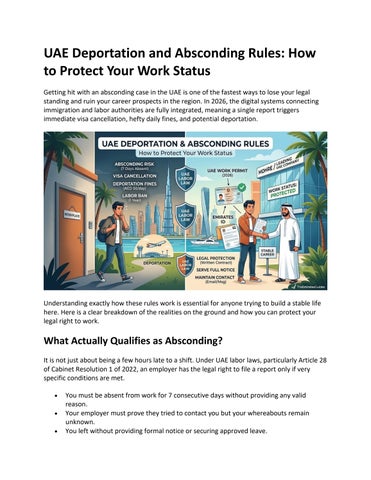
UAE Deportation and Absconding Rules: How to Protect Your Work Status
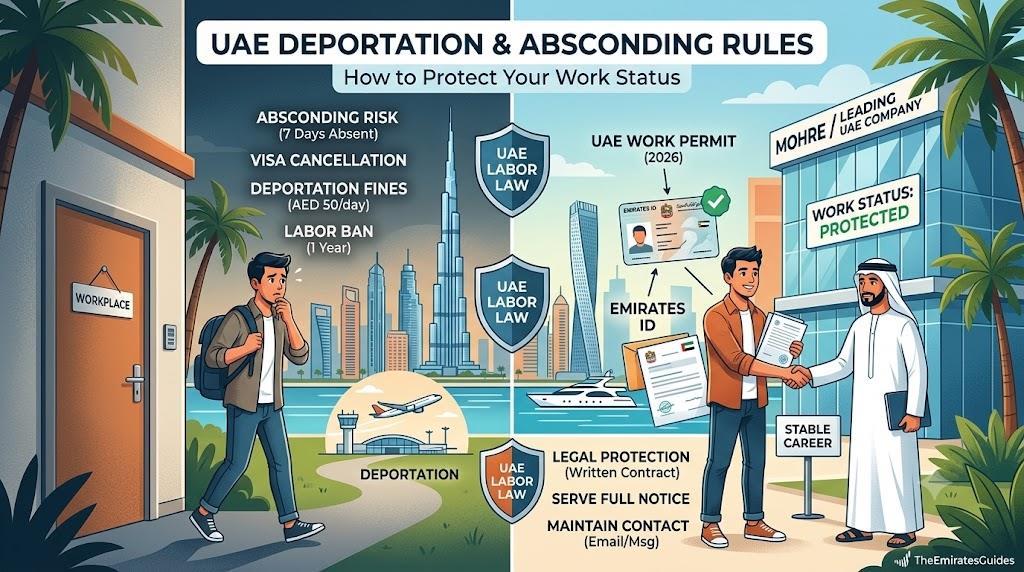
Getting hit with an absconding case in the UAE is one of the fastest ways to lose your legal standing and ruin your career prospects in the region. In 2026, the digital systems connecting immigration and labor authorities are fully integrated, meaning a single report triggers immediate visa cancellation, hefty daily fines, and potential deportation.
Understanding exactly how these rules work is essential for anyone trying to build a stable life here. Here is a clear breakdown of the realities on the ground and how you can protect your legal right to work.
What Actually Qualifies as Absconding?
It is not just about being a few hours late to a shift. Under UAE labor laws, particularly Article 28 of Cabinet Resolution 1 of 2022, an employer has the legal right to file a report only if very specific conditions are met.
You must be absent from work for 7 consecutive days without providing any valid reason.
Your employer must prove they tried to contact you but your whereabouts remain unknown.
You left without providing formal notice or securing approved leave.
This rule does not just apply to corporate office staff. It covers factory workers, retail cashiers, domestic helpers, and even freelancers who disappear on their clients. Visitors who overstay their tourist visas face a similar absconding classification directly from immigration.
The Immediate Penalties
The moment the Ministry of Human Resources and Emiratisation approves the employer's complaint, the damage happens automatically.
Instant Visa Cancellation: Your work permit gets suspended, and your residency visa is cancelled within 48 hours.
Mounting Fines: As of February 2026, there is a unified overstay penalty of AED 50 for every single day you remain in the country illegally.
A One Year Employment Ban: A proven case locks you out of the job market entirely. You will not be able to get a new work permit anywhere in the UAE for a full year.
Lost Money: You instantly forfeit your right to your end of service gratuity.
Travel Bans and Deportation: If you try to quietly leave through the airport with an active case, you face detention, deportation, and a permanent block from reentering.
Steps to Protect Your Status
Most cases happen because of bad communication or poorly planned resignations. You can easily avoid this trap by taking a few basic precautions.
Get Everything in Writing: Always text or email your manager if you have a medical emergency or need sick leave. Verbal conversations cannot be proven if a dispute happens later.
Serve Your Full Notice: Never just walk out the door. Work the notice period stated in your contract, usually 30 to 90 days, and make sure HR acknowledges your resignation letter.
File a Grievance Early: An employer is legally blocked from filing an absconding report if you already have an active labor complaint against them. If you are not getting paid or facing abuse, file a grievance immediately to protect your visa.
How to Remove an Active Case
If you find out a case has been filed against you, you need to move quickly. Employers face a massive AED 10,000 fine for filing false reports, so they usually want to resolve genuine misunderstandings.
Contact your boss directly to negotiate a peaceful resolution and ask for a withdrawal letter.
Your employer can then log into the ministry portal and withdraw the complaint online in minutes.
The ministry takes about three days to verify the withdrawal, after which immigration clears your name from the blacklist.
In some situations, the UAE government rolls out amnesty programs, like the 2026 visa amnesty, which gives reported workers a golden opportunity to clear their absconding status and leave without fines or bans.
Knowing the law is the best way to keep your career safe. Securing a good job is only half the battle; maintaining your legal standing is what allows you to thrive here. For more straightforward advice on navigating the regional job market and securing your next opportunity, keep checking TheEmiratesGuides for the latest employment realities.