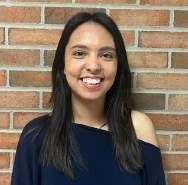



whole comparison game.”
At Huron, that comparison often happens publicly.
On the surface, sophomore year for Huron students is spent preparing for their first AP classes or exploring new opportunities through personal projects. Beneath this, however, current junior Sarah Xu was facing struggles that many of her peers never saw.
“Last year, when I was a sophomore, I was just going through a lot of mental health issues with both my relationship with my body and my family,” Xu said. “I had a lot of hospital visits, and was diagnosed with a lot of different mental illnesses.”
“We naturally, with human instinct, compare ourselves to posts we see,” Xu said. “For example, if
ofteensbelievesocialmediahas negativeeffects (PewResearchCenter)
feel a need to do all these insane extracurriculars and get crazy grades to also get into the same school.”
Junior Mia Siciliano sees the same thing online.
“I feel I definitely watch these teenage influencers on TikTok, who kind of show, ‘Oh, hey, I’m gonna study for five hours,’ and then kind of explain all the hard classes they’re taking and all the things that

Despite the severity of those struggles, many of her close friends did not know what she was experiencing. According to Xu, one reason is an unspoken culture of comparison that can make conversations about mental health feel difficult.
Mental health has long been a pressing issue for high school students, even before the rise of Instagram and Twitter. This is seen at Huron as well, especially by counselor Caitlin Van Cleve, who helps advise the Peer-toPeer Lab.
“There’s a lot of comparison going on with people that talk about their accomplishments or talk about all the things they’re doing,” Van Cleve said. “Even if a kid says to themselves, ‘oh it’s not important what that person’s doing,’ I think it still affects students a lot with the

they’re doing,” Siciliano said. “They tend to not show maybe the times when they’re stressed.”
Social media also allows information about other students to spread quickly, making in-person conversations less common.
“It [social media] takes away from having real interactions with people,” Van Cleve said. “You’re absorbed into the phone and just missing interactions that could have actually fed into positive communication.”
Without those real interactions, comparison can grow more easily.
“I hope that people will just become more vocal about their real experience on social media,” Siciliano said.








On Monday, April 13, United States representative Debbie Dingell and Michigan State Representative Jason Morgan spoke on a panel for Huron government classes. Dingell and Morgan started the panel off by talking about what their jobs entail as well as educating students on what topics they are passionate about making change on. They later opened up the conversation to questions from Huron students. Many students were worried about the recent deportations that are happening all around the country. In response, congresswoman Dingell brought up how much time and effort she puts into the current immigration policies that are being held in office.
“I am somebody who tries to go to as many places as I can and hear as many voices as I can,” Dingell said. “A lot of people are scared and they need help. I’m working with [Washtenaw county groups that help the immigrant community] so I don’t hurt anybody but help people, I work very closely with law and government entities to try to protect the rights of everybody.”
SATVIKA RAMANATHAN & ISHA SAVI PRINT EDITOR-IN-CHIEF & WEBSITE EDITOR-IN-CHIEF
Direct impacts:
- Inflation means prices are going up, but salaries aren’t updated to match that
- Healthcare prices have skyrocketed
- Loss of competitive pay –AAPS doesn’t pay as much as surrounding areas
Indirect effects:
- Declining enrollment
- Layoffs happened last year so class sizes increased
- Teachers are leaving (teacher attrition)
- Teachers are working only contractual hours which is affecting office hour, test corrections and retakes and overall contact with teachers
1. The situation
Since Jan. 1, AAPS teachers have been working on an expired contract. This fall, teachers began bargaining with the District Leadership Team to establish a new one. A tentative agreement was reached on April 14 by the bargaining teams. This does not mean that there is a contract, but rather a vote will happen to determine whether this will become the new contract. If the majority votes yes, the agreement will become the new contract, and if the majority votes no, the district and the union begin bargaining again. The situation is wracked with legal jargon and technical details that we at The Emery have sorted through and hope to clarify.
3. Why do people keep talking about the fund balance?
- The Board of Trustees has to make sure the fund balance (essentially bank account) stays above a certain percent, or else the state takes over
- We fell below this during the budget deficit in March 2024
- The goal is to stay over this percentage, which makes it hard to give teachers the compensation they need

4. Between the district and AAEA teams Scan the QR code to read the full expired contract.
- Bargaining has been going on since fall between the district and union
- The district brought in a third party mediator brought in to coordinate between the district and the teachers.
“It’s kind of like passing notes back and forth like they’ll pass proposals and ideas back and forth to each other via the mediator,” said English teacher Sarah Anton
- Teachers are only working their contractual hours to raise awareness and bring attention to the issue.

“We’re the bad board that is being difficult, but I think it’s going to put future boards in a better position and the teacher union in a better position to receive all the compensation that they deserve down the line.”
TORCHIO FEASTER, BOARD PRESIDENT
We didn’t go into education for the money, but we went into education knowing that we were serving a good role in society, and that we would get paid a livable wage, and then at least we’d have good healthcare, benefits, and things like that. Well, the wage hasn’t kept up with inflation and the benefits.
ANDREW
COLLINS, HURON CHEMISTRY TEACHER
Historically, in public education, teachers who have been fully invested in their communities have been able to afford to live where they work and have deep roots in the community, which generally translates into stronger schools and stronger school communities. On one hand we want our teachers to pay their bills, but on the other hand, we also want our teachers to be able to build those deep community connections because they can afford to live and work here.


HURON ENGLISH TEACHER

SALEM DINH SOCIAL MEDIA EDITOR-IN-CHIEF
Right after graduation, Elizabeth Williamson got her dream job working in the Ann Arbor Public District Schools (AAPS). As a Huron High School English department teacher, Williamson was working what she described as the best classes with the best co-workers. There was one issue though: the pay.
“My pay scale was a lot lower than what I was expecting it to be,” Williamson said. “Especially having lived in Ann Arbor and knowing what pricing for rent was, I wasn’t going to be able to live on the wage that I had.”
As a result, Williamson, like many other teachers in the AAPS district, took up a second job.
After working 7:30 a.m. to 3 p.m. on Tuesdays and Thursdays, Williamson would rush over to a local gym and stay there until 9 p.m. continuing to work. On weekends, Sundays were spent working full time at the gym to help pay for living costs in Ann Arbor.
“It was exhausting doing a full day of being in front of students to then doing a full day after work while also a lot of the workload would follow me home,” Williamson said.
Now, Williamson has left AAPS districts and moved to New York where she currently works as an English teacher at a public charter school. This decision, according to Williamson, was influenced ultimately by the lower teacher wages of AAPS in comparison to her new school.
“I have a higher pay scale even though New York rent and the cost of living might be slightly higher,” Williamson said. “I’m
bringing home and saving more than I was in Ann Arbor.”
As the AAPS Board of Education and Ann Arbor Education Association representing the teachers union continue to work through negotiations for contracts, the lowering number of teacher wages and rising number of teachers leaving have become prevalent.
AAPS teacher
contracts, like most teacher contracts, outline a salary plan that includes “steps”. There are 11 steps on the scale. It allows teachers to get an increase in their pay each year they work in the district until they
get to “longevity.” Longevity compensation is for teachers to get an increase in salary once they reach 10+ years of experience (L1) and 14+ years (L2). It is not a raise, but meant to be accounted for in district budgeting.
Steps for AAPS teachers have only been honored five times in
total since 2008. According to MLive, there’s been a 9.4% decrease in budgeting for staff in past years with teaching positions being reduced by 143 in the past school year.
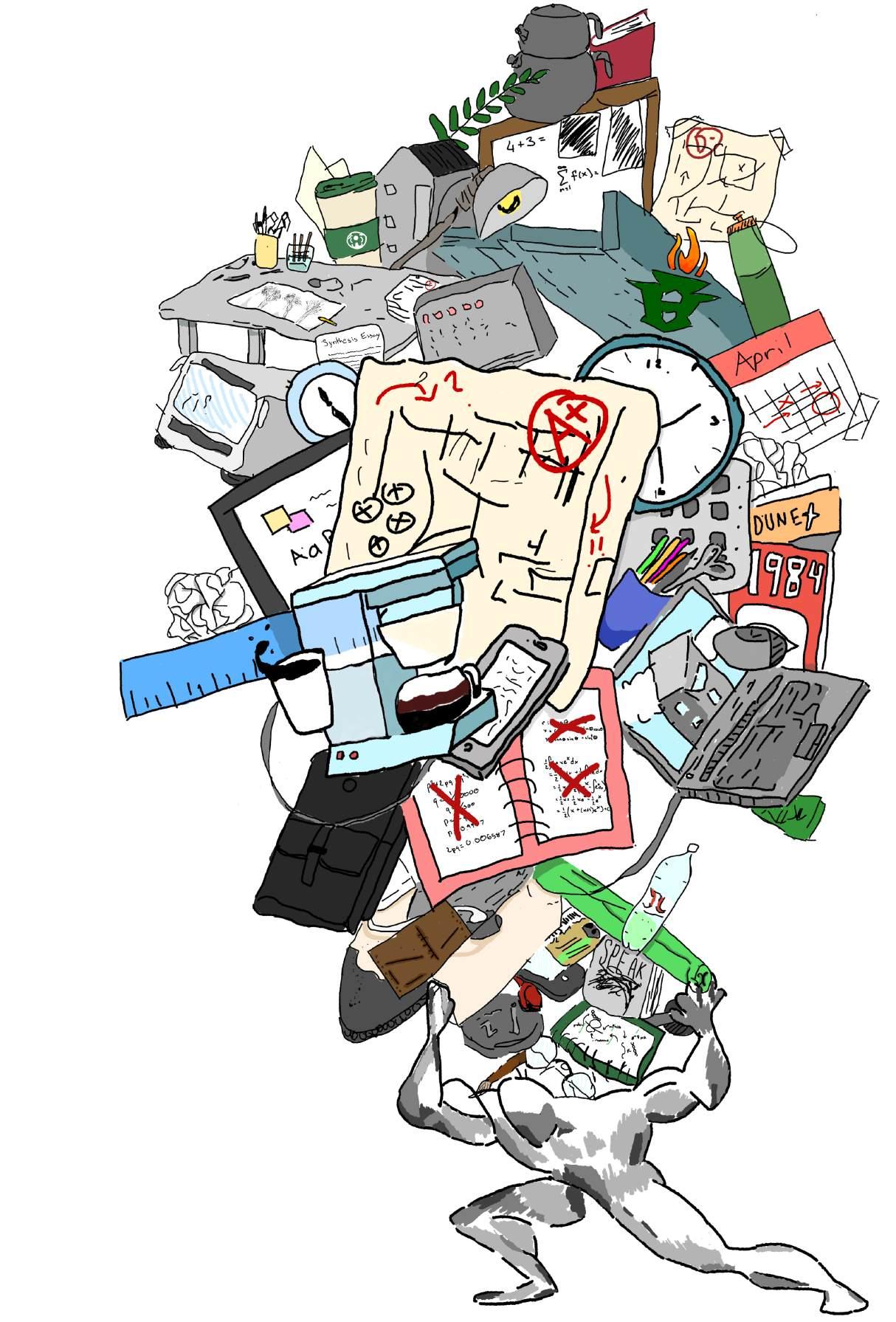
71% of U.S. teachers (including AAPS teachers) hold at least one second job
Only
28% of teachers say they are living comfortably on their household income.
“It was exhausting doing a full day of being in front of students to then doing a full day of work.” — New York City English teacher Elizabeth Williamson
For staff like Huron AP Calculus BC and Geometry teacher Eric Geiger, the effects of these numbers don’t just affect him, but his wife as well who he shares finances with.
“Everything goes up in price, so we [my wife and I] were kind of banking on some sort of raise to help pay for stuff,” Geiger said.
Working as a part-time server alongside his position at Huron for the past nine years, Geiger is another teacher who has taken up secondary jobs because of financial strains. For Geiger, though, the largest issue is not just the pay, but the mental struggles of working two jobs.
“There are stretches of weeks where I maybe see my wife one or two evenings out of the week,” Geiger said.
“I work late on Tuesdays, and so I’m trying to teach on coffee and four hours of sleep all day Wednesday, you know.”
According to Geiger, this is not just an AAPS or even Michigan exclusive issue. There is a nationwide struggle for teachers to continue working the job of their passion while still making wages to cover all their living costs.
“There’s this saying about American schools,” Geiger said. “That it’s an inch thick but a mile wide, because we’re trying to cover so much.” This change, according to not just Geiger but Williamson as well, is not just for the sake of teachers but everyone in the education system, including students.
“I need to keep figuring out different ways that I can provide for myself so that I can keep providing for my students,” Williamson said.
Michigan ranks 44th in average starting teacher salary in the nation.
“Teaching really isn’t covering the bills.”
— Huron math teacher Eric Geiger
EMILY HU WEBSITE EDITOR-IN-CHIEF
Laughter echoes in the halls of King Elementary School as children rush from one activity to the next. This is where senior Averil Xu feels right at home.
Four times a week, after school, Xu works at KingCare, an after school care program for students at King Elementary. The program gives children a place to stay while their parents finish the workday. For Xu, the job means supervising kids, helping students, organizing activities, and making sure the kids are safe and having fun.
With a friend’s enthusiastic recommendation, Xu first joined the King Care family hoping to try something new.
“I decided to work for KingCare because I’ve always wanted to work with kids, and my friend Kasia told me that she worked there, and there were spots opening up,” Xu said. “So then I just decided to apply.”
What started as simply her after school job soon became something much more meaningful. Her work transformed from an after school job to a place where

she found a family-like comfort. She slowly started to develop bonds with numerous of the kids there, becoming more and more connected with the scene around her. She started to pay attention to their habits and the little things that make them who they are.
“I think each one is so different and unique, and I love talking to them.” Xu said. And the relationships that were formed went both ways. The care she
put into her work was also reciprocated by the little kids in their own way.
During a typical afternoon at KingCare, Xu and the other staff members help the children through games, crafts, and other activities. At the end of the day, everyone works together to clean up the space before heading home.
During these times, the same kids she helped throughout the day were often the ones who would
stick close by too, asking to help her out and make things easier for her.
Moments like these have helped Xu see just how strong the community within KingCare can be. Even though the staff and children only spend a few hours together each day, the connections they build often feel much deeper. That sense of connection extends beyond the children. The teachers have also become very close with each other, forming their
own friendships. Their shared enthusiasm towards the kids and helping these kids become the best version of themselves are what glues and bonds them together.
“Both the kids and us teachers are very involved with each other’s lives,” Xu said. “I think we’re really able to form some very unique and special bonds with one another.”

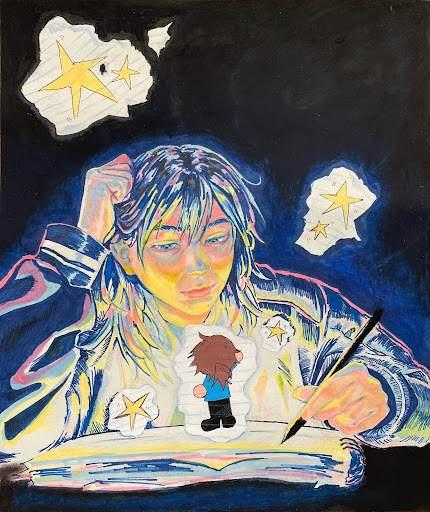
Traditional Mongolian music floods the house, the husky sound of a Morin Khuur – a two-stringed horse-hair instrument used with a bow – played by her father, reverberating in the air. At her work bench, her mother concentrates on sewing traditional Mongolian clothes, focusing intently for hours.
“I think [my family] making me be in the presence of a bunch of cultural things like that [...] when I was little made me appreciate my Mongolian cultural identity more,” junior Nandia Erdenebat said.
Not only does Erdenebat speak Mongolian at home, she and her family also celebrate many holidays important to Mongolian culture, such as the Lunar New Year and a summer festival called Naadam. Together with other Mongolian families, they celebrate these holidays and create a tight knit community.
“Just this year, we had Tsagaan Sar, which is basically Lunar New Year,” said Erdenebat, describing the experience of sharing the holiday with others. “We ate a whole lot of food like buuz, [which are] dumplings, and potato salad. I felt very happy. We really had a community of Mongolians.”
Her family did more than just connect Erdenebat with her Mongolian culture, though. They have also influenced her creativity as an artist.
“I probably kept pursuing art because my family are also kind of artists in their own
way,” Erdenebat said. “My brothers are also very creative. They follow their passions.”
One thing Erdenebat enjoys drawing is traditional Mongolian clothing.
“When I can, I’ll bring my Mongolian culture to my art,” Erdenebat said. “When I need to create art, especially in art class or for competitions, that is about me or about topics that matter to me, I do art with my Mongolian culture.”
Like her family, Erdenebat’s Mongolian culture influences her artwork, although mostly indirectly. She has brought this unique perspective to the DP Art course at Huron.
“I wanted to join DP Art because at least in a little way, I was thinking of art as a career, so I wanted to go into a higher level art class,” Erdenebat said. “And DP Art is actually really fun.”
This year, Erdenebat earned a silver key in the National Scholastics Art Competition illustration category for a self-portrait, which ended up being one of her favorite pieces.
“I got an honorable mention last year, so I’m happy that I improved since last year,” Erdenebat said. “I was proud of myself.”
Erdenebat looks forward to where her passion in art and her Mongolian upbringing will take her in the future. Currently, she is considering combining engineering with art into an architecture major in college.
“If you really like art, I think you should have some way to incorporate it in your life, even as an adult, whether it be through jobs or just as a hobby,” Erdenebat said. “You should not give up on art if you like it.”
MIA LIN STAFF WRITER
For the first time in four years, the national average gasoline price has exceeded $4 per gallon. As of Mar. 23, the price in Ann Arbor has reached $4.20 per gallon, about 70 cents more per gallon a month ago and a dollar more than it was a year ago.
On Feb. 28, the United States and Israel attacked Iran’s military centers, leadership, and nuclear infrastructure. In retaliation, Iran and its allies have targeted major energy hubs and military bases in the Persian Gulf. This conflict in the Middle East has led to disruptions in the global economy, with the closure of the Strait of Hormuz leading to a sudden restriction of almost 25% of the global
petroleum supply and a spike in the cost per barrel across the world.
“Although I knew this would happen once hearing about the overseas conflict, I am angry,” said math teacher Abbey Wolford, who has an over-40-minute drive to work each morning. “This shouldn’t have happened, period.”
According to the American Automobile Association (AAA), gas prices have increased to a nationwide average of $3.88 per gallon. In addition, gasoline isn’t the only thing becoming more expensive because of this conflict. The prices of most consumer goods across the nation are also increasing because of the cost of transportation with more expensive gas. However, this isn’t just a global or national issue. Michigan’s average gas prices are at about
$3.92, above the national average, and according to the Detroit Free Press, Ann Arbor currently has the highest average gas price in Michigan.
“It has a large impact in my household,” Wolford said. “[My husband and I] are each spending approximately 20% more on gas per week. This is astronomical. It is roughly $81 to fill my tank, and I have to get gas at least once a week, if not more.
Inflation is already driving standard living costs to almost unmanageable highs, and now this gas price increase falls on top of that stress. This then takes away from weekly budgeted spending for my family.”
The increase in gas prices have led to tighter budgets for not only teachers, but also students.
“I know that it affects a lot of my friends who have
jobs and have to pay for gas themselves because now they have less spending money for other things,” senior Ashley Bradshaw said. “It’s causing some of them to work extra hours just so they can have some extra money to spend when out with friends and stuff and don’t have to go broke off of just gas.”
Some have tried to mitigate the impact of the rising gas prices by carpooling with other students or teachers.
“In the summer, we (my family) typically travel a lot up north, and I often try to travel for [professional development],” government teacher Allison Echlin said. “We will likely take our smaller vehicle more often instead of our van.”
However, there are also many who feel there isn’t much they can change in
terms of gas spending.
“I have to get to work,” Wolford said. “I have to drive to the places I regularly drive to. There are no other options for my family.”
Ultimately, the future of gas prices, and the conflict in the Middle East, is unknown.
“I do not think there is a ‘solution,’” Echlin said. “I think we really need to look to the past to understand conflicts and wars and the complexity of what can occur.”
Without a resolution to the conflict, gas prices are unlikely to come down permanently.
“I fear that we will stay in the current state of affairs for the foreseeable future, unfortunately,” Wolford said. “I don’t have a scope on where things are headed, and it is deeply uncomfortable and unsettling.”

ADVISER
Sara-Beth Badalamente
EDITORIAL BOARD:
Satvika Ramanathan 405293@ aaps.k12.mi.us
Anjali Nadarajah 424587@aaps. k12.mi.us
Ella Yip 316340@aaps.k12.mi.us
Annabella Mi 403008@aaps.k12. mi.us
Grace Henley 403008@aaps.k12. mi.us
EDITORS: Amelia Bai, Emily Hu, Ishaan Kamat,
Dinh & Kasia Phan
in-Chief
Jaiganesh






miscellaneous pencils, Crayola colored pencils, a calculator and an assortment of highlighters.
“I always make small mistakes,” Zeljo said. “And the thing I use the most is probably highlighters for annotating.”
While she uses everything in her pencil case, she attributes the eraser to fixing her papered flaws and keeping her work more organized.






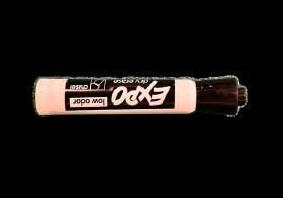



Sophomore Hutton’s blue Five Starr pencil case includes the fundamentals: pencils, pens, highlighters and erasers.


a bookstore in Korea, contains an assortment of pencils, Pop-Tarts highlighters, an eraser and pens. In school, he often utilizes his favorite item — a
“It helps my notes look more organized,” Kang said. “It lets me easily color-code it.”
Kang believes that his pencil case has allowed him to be more tidy, which is important to his success in school. He enjoys its design and durability.

“I like how its unique from other pencil cases,” Kang said.
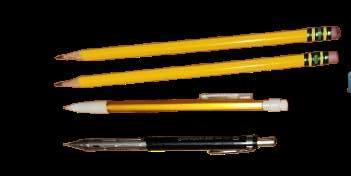

“I use pencils the most and I find those most useful,” Hutton said.
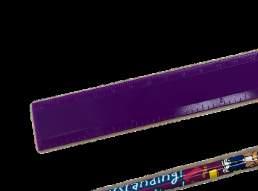
Additionally, inside the pouch, there are Sharpies and a purple ruler.


Instead of having a traditional pencil case, senior Lobert has one built into her backpack.
“It’s nice because it’s readily available and I don’t have to open any other stuff except for those zippers,” Lobert said. “I can just grab whatever I want.”
From Office Max to the pocket on her backpack, it holds mechanical pencils, pens, Aquaphor and her personal favorite, highlighters.
“It looks the best on paper,” Lobert said.











ANDREA
PEREZ-BERMUDEZ
A&E
EDITOR, STAFF WRITERS
“I hate that there are times when certain people react to me in certain ways or look at me in a certain way because of who I am,” sophomore Sophya Palma said.
Palma is a student at Huron who immigrated to America and has experienced firsthand how isolating it can be to move from one country to another. While this can be a challenge for many, Palma has found a way to overcome the challenge and cope with the seclusion.
As of January 2026, new travel bans have been
implemented alongside potential reforms to immigration policies including Visa Accessibility, green card eligibility. These new drastic changes have come unexpectedly upon many immigrants, altering the course of their life. Though the future of the ever-changing policies of the new administration remains uncertain, life continues moving for them with uncertainty on what may happen tomorrow. Immigrants and immigrant families are continuing to adapt to the loss of resources and accessibility to the best of their ability. In the AAPS school district, open enrollment, counseling programs, and ESL support classes are implemented
to aid students in their process of transitioning into the American education system after immigration.
A long-standing issue, immigration has been brought to the spotlight once again after the inauguration of President Donald Trump, following with executive plans under his administration. New laws and reforms including the Birthright Citizenship Modification (2025), and the H-1B Visa Reform (2026) have been put in place with the aim of strengthening
national security and prioritizing American workers. This has led to increased enforcement of established laws and regulations, frequent illegal immigrant detention, legal restrictions and work authorization cuts. Most heavily affected by such changes are immigrants and those looking to immigrate to or from the United States. In
order to recognize the impacts of the current administration and its actions, it is important to realize the process of immigration. Broadly speaking, the need for immigration can come in the form of the pursuit of opportunity, including education. However, immigration is rarely a smooth transition.
“I try to talk to people who I know are sociable with everyone and don’t usually reject
51.5% of Michigan immigrants were born in Asia



conversation just because of who the person is.” Palma said. “I try to tell myself, ‘I can do it, I can do it.’”
Culture is one component of one’s identity, and moving to a

new community with different cultural backgrounds can sometimes feel intimidating and worrisome. A welcoming attitude towards new community members can make or break the feeling of inclusion and acceptance.
“It’s very important to always treat everyone with kindness, since it’s one of the strengths of not treating anyone with indifference and always with compassion,” Palma said.
Currently providing help and resources for English Learning (EL) students at Huron, Lizheng Ma had also previously experienced what it feels like to be a student immigrant. Ma came to the United States in 2019 as a masters student at the University of Michigan. There, her path in the U.S. began. Ma recognizes that the journey from first becoming
an immigrant to living in the U.S. as an immigrant was not easy, to say the least.
“You need to have a lot of experience like find a job, apply for a visa, and if you don’t have a degree, you need first, a degree, to be able to legally find a job here,” Ma said, “You need to learn everything from scratch, like how to open a bank account, how to get a health insurance, how to rent an apartment, how to do all the paper documents from your attorney. So it’s not easy.”
The numerous challenges faced by immigrated students include balancing a new life, difficulties of learning the English language as a first generation immigrant, and schoolwork that comes with high school. Financially, living in the Ann Arbor area entails high expenses, with a limited job market. At Huron, many students are first or second generation immigrants, along with other EL teachers, Ma is able to offer assistance to many, in classrooms and outside of school.
“I helped out some students a few years ago to register for insurance.” Ma said. “They told me that they don’t have health insurance. You need to have health insurance, but the family
didn’t know how to get it, so we worked with the school nurse, and fortunately, we helped the students to get valid insurance.”
The help of human personnel, like Ma, as well as physical resources and financial help are crucial for immigrated families and students. However, recent budget cuts affecting educational institutions have proven to be detrimental to such support being provided to immigrant students and families in need or seeking help.
7.4% of Michigan residents are foreign born: that’s around 680,000 people
“For the first two or three months of school, we did not have an instructional assistant,” Ma said. “We did not have that resource available this year for around three months, so there are many classes where EL students are struggling by themselves.”
Extending beyond the loss of funding for resource and assistance, federal policy and anti-immigrant organizations have proven to
81.2% of Michigan immigrants speak English and another language


affect little aspects of everyday life, including traveling. With Palma being one of the many individuals affected. “I wanted to travel to Nicaragua, but with how things are, with what’s happening I prefer to avoid [traveling], as you never know,” Palma said. As of January 2026, new travel bans have been implemented alongside potential reforms to immigration policies including Visa Accessibility, green card eligibility. These new drastic changes have

come unexpectedly upon many immigrants,altering the course of their life. Though the future of the everchanging policies of the new administration remains uncertain, life continues moving for them with uncertainty on what may happen tomorrow. Immigrants and immigrant families are continuing to adapt to the loss of resources and accessibility to the best of their ability.

43% of Michigan immigrants pursued a college degree+ in comparison to 28% of natives
GRACE JOHNSON STAFF WRITER
“I don’t want to be working in ballet, or opera, or things where it’s like, ‘Hey keep this thing alive’, even though no one cares about this anymore.”
Timothee Chalamet’s recent comment about ballet and opera in a March 2026 conversation with Mathhew McConahay, has enraged not only the ballet and opera community, but the performing arts community as a whole as well. Chalamet’s mother and sister were both ballet dancers, making his comment more egregious.
This comment reveals the attitudes of society as a whole towards the performing arts currently. Ballet and opera used to be central to high society, which explains the unfortunate elitism surrounding them. However, in recent years, many ballet and opera companies have made efforts to share their art with the public.
The arts encompasses all forms of creativity, including art, performance,
music, and literature.
Performance arts, specifically, encompass dance, theatre, music, opera, and countless other performance forms. As a ballet dancer myself, I understand the value of the performing arts both as a dancer and as a viewer. I love attending dance performances, as well as music and theatre performances. Chalamet’s comment seemed insensitive to me, because I know from my own experiences that ballet is not dying, and it will continue to be a respected industry, especially outside of America. In many other countries, ballet companies are funded by the government, and often respected as an art form worthy of preservation and respect.
According to Americans for the Arts, the arts support over 5.2 million jobs in the United States. The Arts and Culture sector in America is a 1.1 trillion dollar industry, which makes up 4.3% of the economy. This is more than major industries such as Transportation,
Education, and Agriculture. Supporting this industry is critical to the nation’s economy, and the millions of people who rely on the industry for employment. Beyond the numbers, the arts are known to unify communities, strengthen mental health, spark creativity, have a social impact, and even improve academic performance. Culture is deeply intertwined with the arts. Traditional dances, music and performances are present and extremely important for the cultures they preserve.
It has been proven that participating in the arts lowers cortisol levels. Excess of this stress hormone in the body has negative repercussions, and lowering it through participating in the arts is a simple, non-invasive step to make for your long term health.
The arts draw from and are inspired by the world surrounding them. So much of art has a message embedded in it. Social change has been sparked and furthered by the art community. Art can

transcend language barriers, class, and other social bounds to impact all members of society, promoting social change. Personally, I love finding the deeper meaning in performances or art that I see. I think it is so interesting to find what the artist is trying to
convey through their art. Creativity is obviously integral to art. However, creativity is required in all professions. Why not strengthen your creativity skills by engaging with the arts? Go see a show!
“You met me at a very Chinese time in my life:” a deep dive into the trend
AMELIA BAI WEBSITE EDITOR-IN-CHIEF
In 2026, everyone is Chinese. All across social media, users are using the phrase “you met me at a very Chinese time in my life” while doing what they perceive as Chinese, featuring an array of activities ranging in their degree of “Chinese-ness” — whether that is using Chinese herbal medicine, buying Costco crates of fruit, or even drinking hot water.
As a second-generation Chinese-American, watching this trend emerge has felt like whiplash. The U.S. has had an incredibly complicated past with Chinese people,
It’s slipping away from us. Facing the lifeless Ticonderoga pencil, the test is delicate and thin, a warmth from the printer — it’s alive.
and there is a history of antiChinese sentiment that has existed in society for decades and still does today. The first wave of Chinese immigration began in the early 19th century, with some arriving in the U.S. to chase the gold rush in California or as contracted workers working on the
transcontinental railroad. While immigration increased across America, a land that prides itself on “AllAmerican” patriotism, xenophobia did as well. This culminated in the Chinese Exclusion Act of 1882 — the first
Chinese Exclusion Act enacted
First wave of Chinese immigrants
Chinese Exclusion Act repealed
immigration restriction based purely on race — and didn’t permit all Chinese immigrants from entering the U.S. until more than half a decade later.

Beating, pulsing more than our own hearts. We feel dehumanized. Because we’re desperate for perfection, and when we can no longer touch
COVID-19 breaks out igniting AntiAsian hate
Although the Act was passed more than a century ago, anti-Chinese sentiment in the U.S. is far from gone. In March of 2020, COVID-19 broke out across
TikTok is banned Mass migration to xiahongshu
it, we might do anything to hold onto it forever.
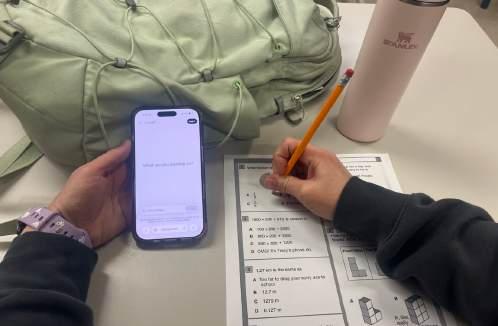
Academic integrity is the promise in the syllabus, which some students pledge to in numerous curriculums. But there’s another silent rule. It’s the community to the commitment of glancing at the person next to you, sketching the answers on a table, spreading exam questions; our academic temptations.
The problem in the “solution” of cheating is how it is incredibly familiar to our witnesses. How, as a group, it can be so palatable to live with its normalcy. And the purpose of school is being challenged by every exam, every day.
As academic dishonesty becomes increasingly normalized, its consequences stretch far beyond a single grade, or even high school. By prioritizing former tests to succeed in exams, students do not develop the crucial skills of studying demanded in colleges. At universities like Yale, cases of dishonesty are reviewed by an Executive Committee, where students must face their choices in writing before a hearing. Yet, 75-98% of college students admit to cheating at least once. Under the rising pressure to succeed, cheating dons its disguise of necessity, a desperate attempt to keep pace with a system that often seems to reward performance
the world. What began as a two-week vacation from work or school soon transformed into a period of extreme uncertainty, violence, and quarantine. The virus originated in Wuhan, China, and soon Chinese-Americans, and consequently other EastAsians, as scapegoats for the pandemic.
Yet in recent years, pro-Chinese sentiment has seen a surprisingly large increase. When TikTok was banned for what ended up being less than 24 hours, many users found themselves
over hard work.
These statistics reveal how academic dishonesty has intercepted into everyone’s lives. Because if we can work smarter, why work harder for ultimately, the identical outcome?
But this mindset reshapes what education means. The curves of learning — the struggle, the questioning, and the goal of growth — loses its merit when success becomes a contest of shortcuts. The classroom is no longer a space of curiosity, but instead of a quiet competition where integrity is the first sacrifice.
FEIYUN CHEN STAFF WRITER
What is now commonly referred to as “tea” is often a beverage brewed from some type of herb or fruit– often marketed using “herbal tea” as a commercial term.
However, the original, ancient class of tea utilizes the leaves of the the tea camellia, fermented to some degree, according to Catechin / All about Tea. Its popularity as a beverage all around the world is second to none (with the exception of water) and has enjoyed a period of innovation and combination with a variety of products, resulting in diverse selections of recipes all named some variation of “tea.”
personally enjoy the richerflavored black tea and ginger tea. Whenever I start dozing off during schoolwork, a single sip wakes me up, and makes me several times more productive (or at least it feels as if so). Even if it’s just a placebo effect– in which tea doesn’t actually do
the placebo still satisfies my mind while also improving the quality of my work.
from the same plant. Through the art of fermentation polished throughout the centuries, we find the fresh and light flavor of white tea formed from the youngest leaves of the Camellia sinensis, the hearty and most healthy green tea, pu’er tea which sits in the middle of the
increasingly clear that tea acts as a chemopreventive agent against a wide range of cancers.” Tea naturally contains amounts of catechin (with green tea holding the greatest amounts), a molecule that provides tea its slightly bitter taste. Further studies from “Beneficial Properties
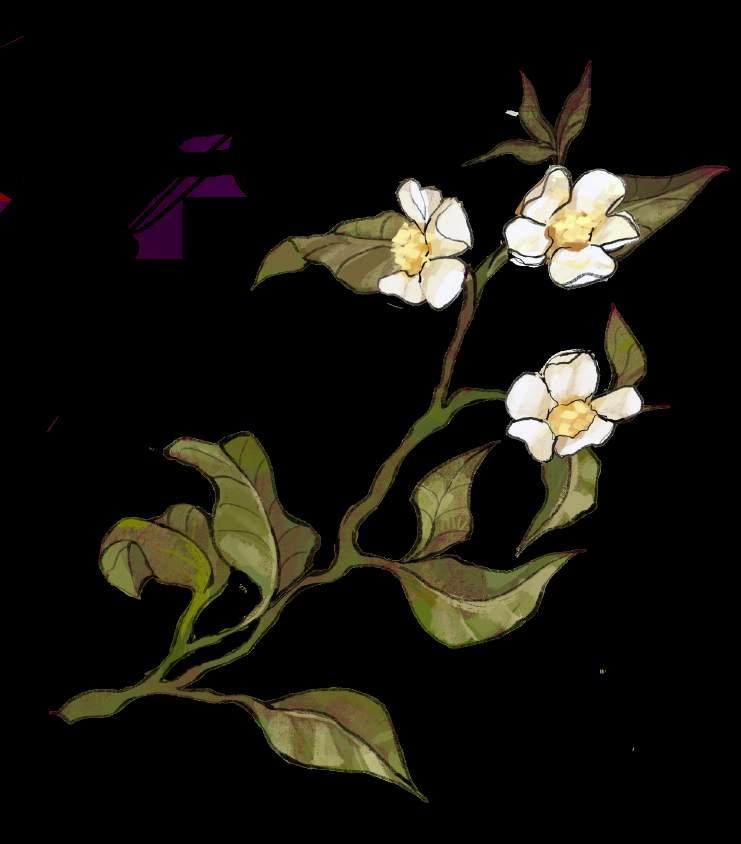
The wide spectrum of tea (which shall hereinafter refer to those brewed from Camellia sinensis unless otherwise mentioned) varies in flavor despite originating
From a 2013 study titled “Tea and Health: Studies in Humans,” the researchers had concluded that “it has become
other active ingredients caused by UVB
one of the healthiest
experience, affecting the cool and calm concentration that is often associated with tea, according to “Black Tea: Chemical Analysis and Stability.” As such, tea is a much more casually-drank beverage in comparison to coffee, which provides much more of a caffeine-sourced energy boost that many find attractive in early mornings. Tea is drunk throughout the day (e.g. the famed afternoon tea sessions) and useful at any time for a small energy or concentration boost when one does not need the hyperenergy from coffee.
And from a more subjective perspective, the flavor of tea is simply too great and diverse to pass up. Green tea, being the healthiest tea, also has a refreshing, leafy aroma to it. On the other side of the spectrum, black tea has a rich and hearty flavor from continuous fermentation. When combined with other classic beverages (such as milk), the taste of tea becomes even more diverse. Milk tea is generally higher in sugarcontent yet is significantly better at being a social medium and a standalone drink that can provide energy. On the other hand, fruit teas, such as lemon tea and peach tea, serve more as an alternative to Pepsi and Sprite with a lighter taste and toll on the tongue.
(the more fermented the tea, the more caffeine, with black tea holding the most) that provide that refreshing feel for every sip of tea taken. The compound L-theanine also contributes to the after-tea
Herbal tea– that is, tea not brewed from the Camellia sinensis, varies much more in effect and flavor. Popular types of herbal teas include ginger tea, jasmine tea (among other “flower teas”), mulberry tea, and mint tea. In
general, any plant– herb can be used to brew tea with its unique aroma and flavor. The possibilities are endless. As such, one can nearly never run out of flavors of tea: as long as it will not kill you, you can brew tea with it. With nearly infinite flavors, tea is for everyone. Try a cup of tea. Whether it be for work necessity or recreation– and you won’t regret it.

ISHA SAVI
WEBSITE EDITOR-IN-CHIEF
Growing larger and larger in the London underground, electronic duo Bassvictim is completely a product of their time. Composed of Polish-English singer-songwriter Maria Manow and AmericanEnglish producer Ike Clateman, the two released their debut album in 2022 and haven’t stopped since. Their music feels like a reaction to the absurdity of the world around them–a reaction that has been full of joy and hope. Their ethos of partying and connection can be seen throughout their work, but since the release of “Forever,” it seems they have been leaning towards a more vulnerable means of creation. Their most recent album, “?,” builds on this.
The album begins with the track “Dirge,” which opens
with a sound that is organic and elegant. It feels out of place; it feels desolate. The track quickly builds up to the sound that sets the tone for the rest of the album. This sound is a little more stripped down, vulnerable, and consistently hopeful. For example, the track “Don’t Stop Me Now” reads almost like an anthem a child would sing to themselves. Clateman utilizes acoustic strings as well as the sounds of birds chirping to further reinforce the organic feel of youth and hope.
The track
for me. It sounded like what nostalgia feels like, and sitting with that feeling for even a minute was deeply bittersweet.

to “?” on
“The Dogs of War” is a fuzzy and melancholic ambient track that acts as an interlude to the second half of the album. Despite being the shortest on the album, it was possibly the most impactful
The penultimate track, “Babcia Jadzia,” is the longest on the album as well as the most profound. Manow revealed on Instagram that the track is an ode to her grandmother, whom she lost as a teen. On this track, Manow sings “Babciu Jadziu, dziękuję ci//Że stworzyłaś moją mamę,” which translates to “Thank you, Grandma Jadzia, for creating my mom.”
As well as this, she sings “If you know how much I’ve grown up//Do you see how I have changed?//Do you see how much I smile?” The entire track is sung with Manow’s voice breaking with tears; listening to it feels almost too intimate. Followed
by the final track “Home!!! (wake up),” the album is wrapped up neatly in a way that signifies growth and finality. “?” is Bassvictim’s most vulnerable record without question. It is a vulnerability that was conceived fully for the sake of emotional and creative release rather than manufactured for profit. It feels like fully concentrated art and emotion, and for this reason I give it a 5/5 stars. You can listen to “?” on Spotify or Apple Music.
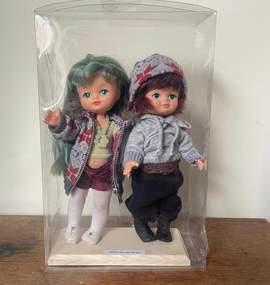
Bassvictim released their most recent album, “?” on March 6, 2026 March 6, 2026 © 2026 VOTB
AMELIA BAI WEBSITE EDITOR-IN-CHIEF
Kicking off with the pre-release single “Aperture,” the 12-track album starts

describe myself as a casual listener, I’ve found his solo work the most interesting out of all. I was interested to see that his newest album would be more of a shift into dancepop, a pivot from his previous indie-pop and pop-rock sound.
Despite its long name, Style’s newest album unfortunately does not contain kisses nor disco, much to my disappointment. Instead, we’re left with what feels like a sample taste testing of its initial description; forever hoping for more.
The next track, “American Girls,” is solid. While I do think the romanticization of Americans is a bit tired — think the recent “Stateside” collaboration by Pinkpantheress and Zara Larsson — it’s got more emotional and lyrical depth than “Aperture,” which I appreciate. Styles sings, ‘I’ve known you for ages,’ it’s all that I’ve heard / My friends are in love with American
girls,” touching on watching loved ones grow in a way that is inevitable, yet still unexpected.
The album picks up its pace with “Ready, Steady, Go!” featuring distorted vocals, and a sound reminiscent of Styles’ previous pop-rock sound.
“Taste Back” is a notable mention as well, with Styles questioning the reasoning of a former lover’s appearance in


friendship along the way.
Movies are beautiful because you can watch Ryan Gosling befriend a sentient rock and leave with a profound feeling of love and hope. Directed by Phil Lord and Christopher Miller, the minds behind Spider-Man: Into the Spider-Verse and The Lego Movie, the film follows an ousted academic turned middle school teacher, Ryland Grace (Ryan Gosling), as he wakes up on a spaceship with no memories of who he is or how he got there. As the film progresses, we learn that he is on a mission to save the Sun from a mysterious substance that is essentially eating it. With this information, he begins to take on the mission, and on the way, he meets an alien ‘Rocky,’ whose planet is going through a similar plight. Together, they work for the collective benefit of both their homes, building a strong
This movie had a lot of high points that hit hard throughout. To start, the visuals were absolutely gorgeous. Everything from the color grading, to the props, to the visual effects was stunning but felt lived in somehow–like they were made with the knowledge that we are of space rather than completely separate from it. As well as this, the character writing for almost every character was top-tier.
Specifically in the case of Grace, his background as a middle school teacher allowed him to initially connect with Rocky in a way that felt intentional and kind. This initial interaction allowed him to be a warm presence throughout the film, a warmth that was further emphasized by Gosling’s performance. The most standout aspect of the film was its ability to pull back when needed. The use of special effects was tasteful,

criticism of this movie, though, is its pacing. It spans nearly three hours, and by a certain point, you’re left wondering how necessary certain plot points were. For example, towards the end, there are two separate places in which Rocky is put in danger–plot points that compose the entire penultimate act. One of these could have been cut in favor of exploring Rocky’s background, i.e., what his
most tracks, like “Are You Listening Yet?,” feel repetitive in a way that doesn’t work in his favor. Songs that lack lyrical value need enough sound quality to overhaul them in the parts that they lack, yet most of Styles’ tracks on the album fall short in both categories.
The album additionally features many slow, acoustic ballads, such as “The Waiting Game” and “Paint By Numbers.” They aren’t bad by themselves, but hit like a haywire truck coming out of nowhere; utterly out of place for an album with a shining disco ball on its cover, and especially for a dance-pop album.
I do think “Kiss All The Time. Disco, Occasionally.” has a few good tracks, and has the potential to grow on listeners over time. But I do wish Styles chose to make bolder moves. In a music scene that is currently thriving, Styles opts out of experimentation and instead falls back on what is familiar. Which makes for a pretty boring listen.


home planet was like, how it operates, why he was chosen for the mission, etc. Despite this, I would rate Project Hail Mary four
4.5
and a half stars out of five. It is a beautiful film full of hope–something desperately needed in the world as of late.

ANJALI NADARAJAH PRINT EDITOR-IN-CHIEF
When I joined golf in freshman year, I hardly knew how to swing a club. I still remember my first practice–being taught how to putt gracefully and to remember to pull the brakes on a push cart so it doesn’t roll away from you. I had no idea the community I was joining would offer me more than seasonal training. This team allowed me to meet my best friends, and take all the advice I could from my upperclassmen teammates. As the years have gone by, we have only gotten closer. From working the same jobs, rides home from school, team trips up north, and holiday bonding

events, I can’t think of a better team to have been surrounded with every year. Participating in high school sports has allowed me to be a leader in an environment that has grown me into the person I am today. I’ve gained a stronger sense of self-confidence, push myself when I want to give up, and built valuable relationships. Huron golf has taught me discipline and skill, but more than that, I’ve learned the value of friendship and mentorship. I love that I’m able to give advice (in and out of the course) and befriend our new players, giving them a space to feel welcome, just like my teammates did for me once.
Jules’ Stats

2 year varsity player Recipient of River Rat award 2025 District Champion 2025 Regional Champion 2025 State Runner Up
EMILY HU WEBSITE EDITOR-IN-CHIEF
Joining the Huron Field Hockey team in my freshman year, I was unsure what it would look like. Numerous questions spiraled in my head. Would I be good enough? Would I have enough time? Where would I even fit in? But now, four years later, I can confidently say that joining the team was one of the best decisions I’ve made in high school. The sport truly taught me how to be a team player and be a part of something bigger than myself. As my coach would always say, “a champion team will always beat a team of champions.” Over time, I’ve understood what that really meant. It is in those words of encouragement we have on the field as we get into positions before a game and the team cheer we shouted at the top of our lungs, proud to represent Huron that I learned what it means to truly be supported by a group of individuals
that felt like family. Through every tough loss and every hard earned win we stuck together as we learned how to rely on one another in a way that went far beyond just the field we played on.
High school sports truly hold an importance that is more than most people realize. Being on a team lets you quickly learn how to show up even when you are tired and push through. Many times there will be challenges, or sometimes many losses in a row, but it teaches you how to handle pressure and bounce back. And the wins after those losses feel even better. But more than just that, it gives you a sense of belonging where you can find your people. When school gets stressful, it’s nice to know you have a team you can fall back to and people who will always support you. And so, I hope everyone can find a sport they love and find teammates that feel like family.

Anjali’s Stats
2 years captain 4 years player
Recipient of Sportsmanship SEC award 2024 and 2025 Ann Arbor city champions
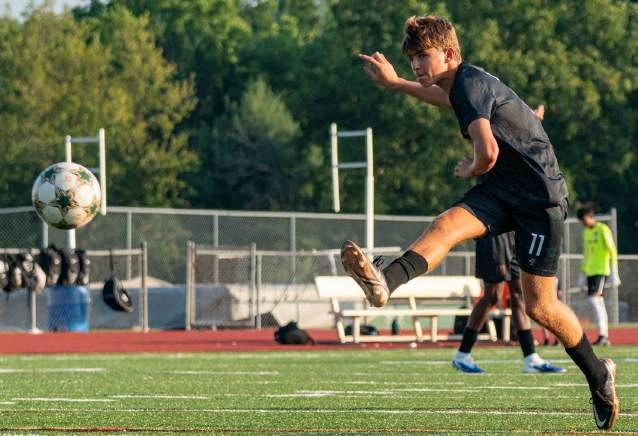
Ifirst set foot on Huron’s lower turf field at the end of eighth grade. Back then, I had no idea how many lifelong memories I would create on the same field I was once too scared to step onto. Today, I am lucky to be able to reflect on these four years of memories. The incredible team I was a part of my senior year was certainly the highlight of my high school soccer career, as we made it to Michigan’s state finals. None of this could have been done without the previous years of training, hard work, and getting to know my teammates. From only winning one game my freshman year, to hardly playing my sophomore year on JV Green, my first two years seemed lost. In my junior year, I watched my senior teammates shed tears at their district final. On paper, my first three years in the soccer program seemed bleak. Yet, they were some of my favorite years playing soccer. This was because of the small moments that I didn’t think too much about back then, but now I am
so grateful. For example, when we got ice cream freshman year after winning our second game of the season off a forfeit or the electric bus rides coming back home on Thursday nights while forgetting I had a test the day after. That’s what Huron Soccer meant to me; turning what someone may think are bad seasons into some of the most memorable times. These memories meant a lot to me in the moment, but they mean more to me now that I look back at them as they were once-in-alifetime moments.
Overall, these four years of being part of the Huron Soccer Program have brought me a lot of joy, but more importantly, I learned so much through this experience. My first year taught me to be a leader as I was elected captain for the freshman team. My second and third year, I learned how to stay patient and enjoy moments when it seemed hard. My last year taught me the most. I learned to not take anything for granted and to live in the moment. These key life lessons that I will keep throughout my whole life are what made Huron Soccer a big part in my life.
Emily’s Stats 3 years on Varsity 4 years player


AVAN ZAMAN STAFF WRITER
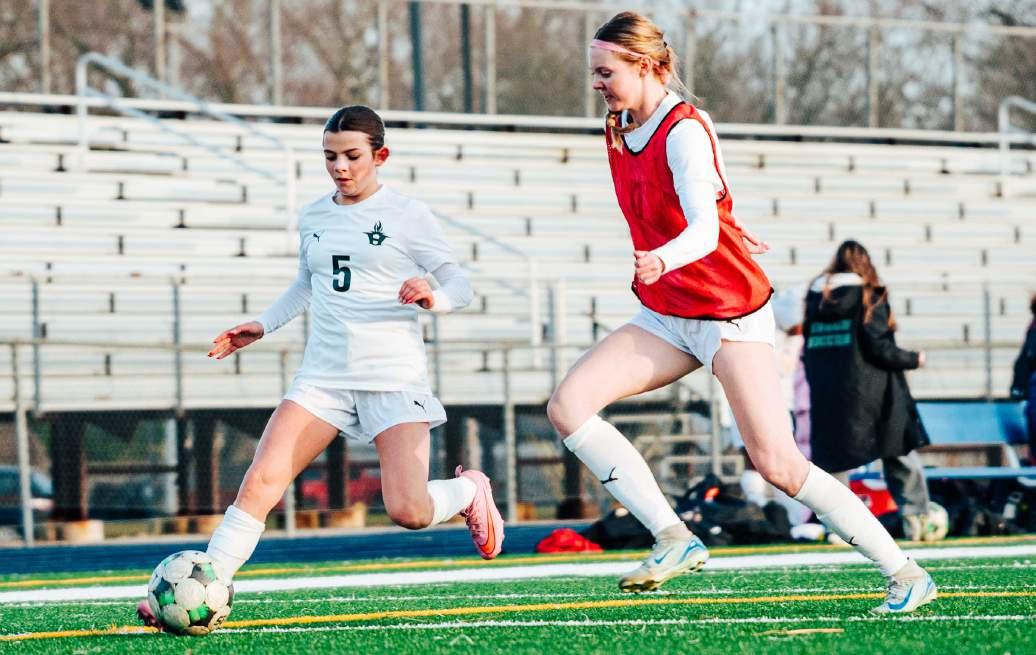
1. “I started playing wing this season and I like that I can attack more than my usual midfield position,” Freshman Ashley Tall said. Tall dribbles past a defender during warmups, creating space and maintaining possession. After an offseason of training, lifting, and conditioning, the team is working to build chemistry and gain versatility despite early injuries.
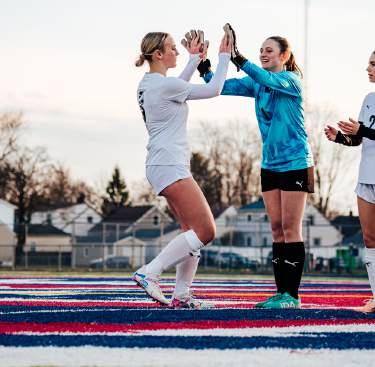
2. Huron sophomore goalkeeper Annie Pinsky leads the team’s pregame high five line, hyping up teammates as the game begins. This short moment before the game sets the energy and creates chemistry for the team to achieve their goal of reaching districts and beyond. “I’m looking forward to long bus rides and getting to know the team better,” she said.
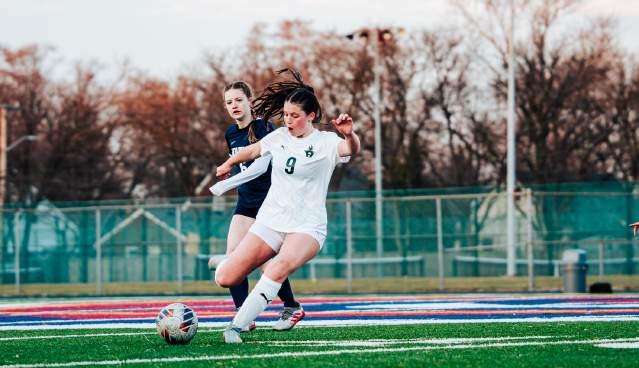
3. Looking for a scoring opportunity, Huron sophomore midfielder Morgan Randall fires a shot during a game. The team feels prepared after many practice sessions and are aiming to make a push for districts. Randall describes her play: “I play midfield and I like passing and making plays to teammates.”
PHOTOS BY BRODY TURNER


1 2 3 4

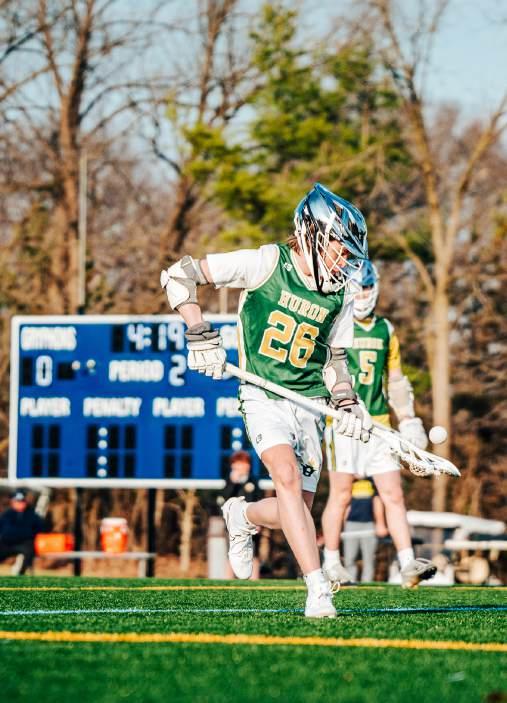
advances downfield.
“Conditioning and building strength with the team has really prepared us for this season,” Haller said.
2. Captain of the lacrosse team, Senior James Powell passes to his teammate Emmet Mason. For him, important routines include
on
and passing with friends.”
ANJALI NADARAJAH PRINT EDITOR-IN-CHIEF
After the long and, let’s just say it, awful, winter that Ann Arbor’s had, the springtime has never felt better. The trees slowly regrowing their foliage, waking up to birds chirping outside your window,
We’re called the Tree Town for a reason! Ann Arbor boasts some beautiful nature to enjoy.
1. Hike at Bird Hills Nature Area

2. Kayak along the Huron River at Gallup Park
3. Volunteer with friends at a Matthaei Botanical Gardens Group Eco-Workday
4. Grab a patio dinner at Argus Farm Stop

With Ann Arbor’s population being largely made up of students, the trendy, post-worthy activities are never ending.
1. Morning pilates at Core Collective
2. Iced matcha at the Sml Wrld Cafe, located in Shinola store
3. Shop vintage University of Michigan merch at University Vintage
4. Get dinner at the new Echelon Kitchen

finally enjoying the walk from the dirt lot in the mornings– I could totally get used to this. Here are the best things to do around town, for every kind of person.



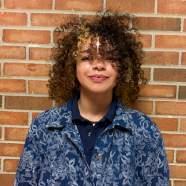


Ann Arbor is full of creative endeavorswhether that be visual art, music, culinary, there is an outlet for creation.
1. Visit the University of Michigan Museum of Art
2. Take a baking class at Zingerman’s Bakehouse
3. Attend FestiFools (April 12, 2026)
4. Tune into a concert at The Ark

If I suddenly woke up with no homework, no plans, and a fresh paycheck, here’s what my perfect day would look like:
1. Breakfast at the Blue Whale Cafe, stopping to buy snacks at Trader Joe’s

2. Golf 9 holes at Huron Hills golf course
3. Light retail therapy at Arbor Hills
4. Meeting friends for acai bowls from Amer’s Deli and a picnic in the Diag