

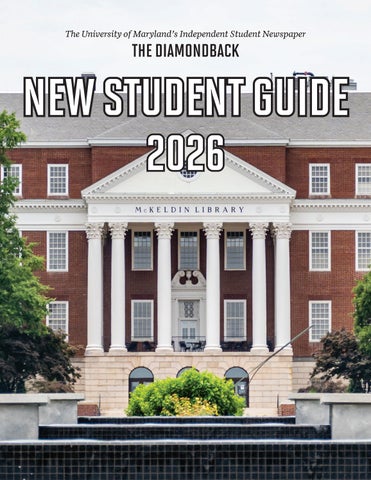
Congratulations on your admission to the University of Maryland, and welcome to the College Park community! Take a deep breath — you’ve made it this far, and that’s something to be proud of. The next step of things can be scary as you enter the world of dorm roommates, dining halls and D.C. trips. Whether you want to know the latest on the Purple Line or just some hacks for the best meals in Yahentamitsi, you’ll find everything you need to know about life in College Park in this New Student Guide. As you navigate new friendships, football games and lecture halls, be sure to take a moment every once in a while to soak it all in. It really does go by faster than you’d think. We look forward to seeing you on campus in the fall — remember, you can do this!
Stella Garner Tabloids editor

















Christian Andriolas
Aidan Currie
Ben Geffner
Johana Gonzalez-Cruz
Faith Harris
Jake Kauderer
Anastasia Merkulova
Pera Onal
Maxine Poe-Jensen
Clare Roth
Amelia Tyman
Sam Gauntt
Claire
Oliver Mack
Nolan Page
Amelia Zalubas
Surafel Gebreyes
Oliver Mack
Isabela Torkamboor


First day of classes
Aug. 31 (Monday)
Labor Day
Sept. 7 (Monday)
Fall break
Oct. 12 (Monday) to Oct. 13 (Tuesday)
Thanksgiving recess Nov. 25 (Wednesday) to Nov. 29 (Sunday)
Last day of classes
Dec. 11 (Friday)
Reading day Dec. 12 (Saturday)
Final exams
Dec. 14 (Monday) to Dec. 21 (Monday)
Classes begin Jan. 4 (Monday)
Dr. Martin Luther King Jr. Day Jan. 18 (Monday)
Classes end Jan. 22 (Friday)
First day of classes
Jan. 27 (Wednesday)
Spring break
March 14 (Sunday) to March 21 (Sunday)
Last day of classes May 11 (Tuesday)
Reading day May 12 (Wednesday)
Final exams
May 13 (Thursday) to May 20 (Thursday)
Commencementcollege/department ceremonies May 23 (Sunday) to May 26 (Wednesday)
Commencement - main ceremony May 24 (Monday)
Sessions I and I-A begin June 1 (Tuesday)
Session I-A ends June 17 (Thursday)
Juneteenth June 18 (Friday)
Session I-B begins June 21 (Monday)
Independence Day July 5 (Monday)
Sessions I and I-B end July 9 (Friday)
Sessions II and II-C begin July 12 (Monday)
Session II-C ends July 30 (Friday)
Session II-D begins Aug. 2 (Monday)
Sessions II and II-D end Aug. 20 (Friday)




















To support the mental well-being, academic success and overall happiness of its students, the University of Maryland has numerous resources at its disposal. Here’s a roundup of the materials and services available.
This university offers free counseling services to all registered students. The Counseling Center, located in the Shoemaker Building, offers short-term individual counseling. This can provide a referral to an offcampus provider for more frequent or specialized treatment.
To schedule an appointment, students can visit the center or call 301-314-7651. That same phone number is also available 24/7 for crisis support.
The center also offers group counseling, which does not limit the number of sessions available to students. To schedule group therapy, students can set up a brief assessment or email a specific group’s facilitator, which can be done on the center’s website.
Counseling services also include two workshops that each consist of three sessions. The “Anxiety Toolbox” focuses on teaching individuals how to understand and manage anxiety, while “Getting Unstuck” helps students recognize and take care of depression symptoms.
The university has many spaces designated for students to recharge and reflect. The Garden of Reflection and Remembrance, located on the south side of the Memorial Chapel, was built as a space for meditation. The garden has a labyrinth and benches for community members to reflect around nature.
Gardens and other outside reflection spaces are all available in a self-guided “Mindful Moments Walking
Tour.” The tour offers many locations and prompts that inspire students to form deeper connections with themselves and the campus.
A quiet, indoor reflection space is open to students in McKeldin Library. Located on the southwest side of the third floor, it is a shared space that students can use for meditation or prayer.
Finding community and acceptance is important for mental well-being, and this university offers spaces to people from various backgrounds. Belonging & Community at UMD has several units that serve diverse members of the community.
The LGBTQ+ Equity Center builds a campus community that welcomes all gender identities and sexual orientations.
The Nyumburu Cultural Center, another unit, is a center focused on Black student interaction that offers many cultural activities and events.
The University Health Center also offers wellness services. There are weekly meditation sessions via Zoom, nature-based in-person meditations and prerecorded sessions available for students to complete on their own time.
Throughout the semester, the health center also hosts Wags for Wellness, which consists of visits from well-trained volunteer puppies to various locations on campus. These visits provide stress-relief for community members and are an outlet for emotional well-being for those missing their pets.
ThereareplentyofresourcesavailabletohelpyoutaketheextrastepstostaysafeinCollegePark.

Emergency: 911 or 301-405-3333
University of Maryland Police officers patrol the city alongside the campus because College Park doesn’t have a designated police department. Give this number a call to report emergencies or crime.

Non-emergency: 301-405-3555
The police escort service is available to anyone who feels unsafe at any time. Call the non-emergency police number to access police officers and student members of the police auxiliary service who will walk with you across campus.
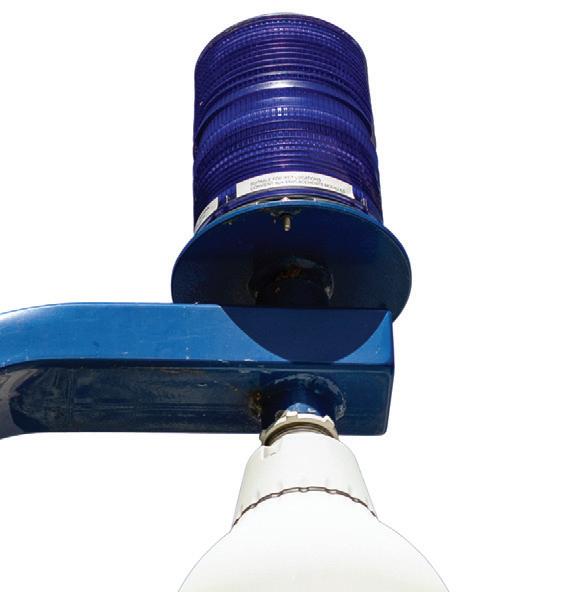
Blue light public emergency response
Telephones are located all over campus. They provide a direct connection to the University of Maryland Police and can be used during emergencies at any time. A map of these phones can be found on the UMD Web Map.
NITE Ride: 301-314-3687
If you don’t feel safe out at night, NITE Ride can pick you up and take you across campus free of charge. From 5:30 p.m. to 2:30 a.m., it runs to and from only designated locations on campus. From 2:30 a.m. to 7:30 a.m., it picks up and drops off anywhere in the NITE Ride service area. The service is provided seven days a week during the academic year.
The NITE Ride service map shows designated pick-up and drop-off locations.
The Counseling Center: 301-314-7651
The center offers individual and group counseling sessions, and provides psychological evaluations and a variety of student resources. Services are free to registered University of Maryland students. The center also provides wellness workshops for students to learn coping strategies and educational information.
The University Health Center’s Behavioral Health Services: 301-314-8106
Licensed clinicians are available to meet with students and aid them through psychotherapy, crisis intervention and psychiatric evaluations. The center can also help connect you to another provider outside the university.
CARE to Stop Violence: 301-314-2222
24-hour crisis hotline: 301-741-3442
Campus Advocates Respond and Educate to Stop Violence educates students about domestic and sexual violence and offers therapy and advocacy services by trained mental health staff to anyone affected. Along with offering emotional support and informational resources, CARE collaborates with various campus groups to spread awareness to students and staff.
UMD Alerts are sent out when there’s a report of an emergency or a crime on or near the campus. The alerts also cover weatherrelated closings and events that can impact the university community. As a student, you’re automatically signed up to get UMD Alerts to the phone number and email associated with your UMD directory account. You can edit your alert notification settings at alert.umd.edu.
1. You can see the Washington Monument from the top of SECU Stadium.
2. UMD has six — count ’em, six — libraries on campus.
3. More than 100 couples get married in the chapel on campus every year.
4. There’s a spot on campus that is supposedly cursed — if you step on the Point of Failure located between Shoemaker and LeFrak halls, you won’t graduate in four years.
5. UMD researchers made a computer that can beat Jeopardy! winner Ken Jennings.
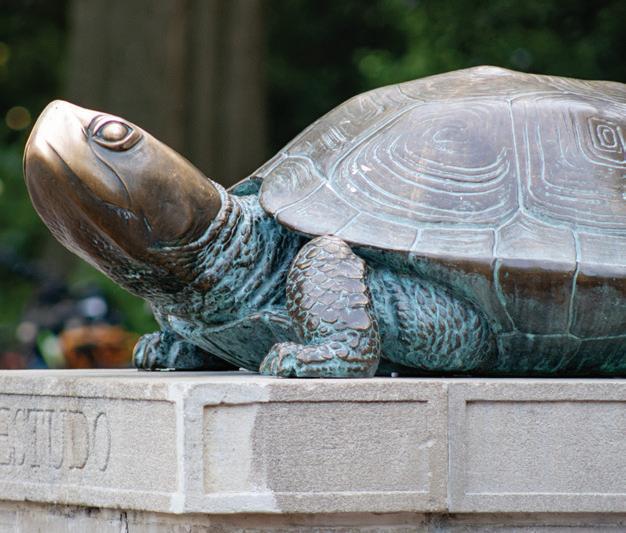
6. There are seven different Testudo statues around campus.
7. People leave offerings to the Testudo statue in front of McKeldin Library for good luck on their finals. One time, things got out of hand and Testudo caught on fire.
8. Some of National Treasure: Book of Secrets was shot on McKeldin Mall, and part of St. Elmo’s Fire was filmed on Fraternity Row.


9. Part of the music video for Hootie & the Blowfish’s song “Only Wanna Be With You” was shot at the Reckord Armory.
10. UMD has its own golf course.
11. UMD also has its own farm! It’s featured a lot of cool stuff over the years, like a living cow with a hole in it.
12. Queen Elizabeth II of England attended her first American football game at UMD.
13. McKeldin Mall is considered the largest collegiate mall in the country!
14. The Testudo statues on campus are based on an actual diamondback terrapin, whose taxidermied body is in the University Archives.
15. The Maryland men’s basketball team won the 2002 National Championship, and the women’s basketball team won the national title in 2006.
16. Morrill Hall is the only academic building that survived the 1912 Great Fire, making it the oldest academic building on campus.
0+ counci a
ls. opport nd
50+ organizations. Four councils. Endless opportunit connect, celebrate traditions, and create lasting mem
ld exp plan leader
erience c ning, ship opportunities
Build real-world leadership experience through chapt management, philanthropy planning, financial oversight, and executive leadership opportunities.
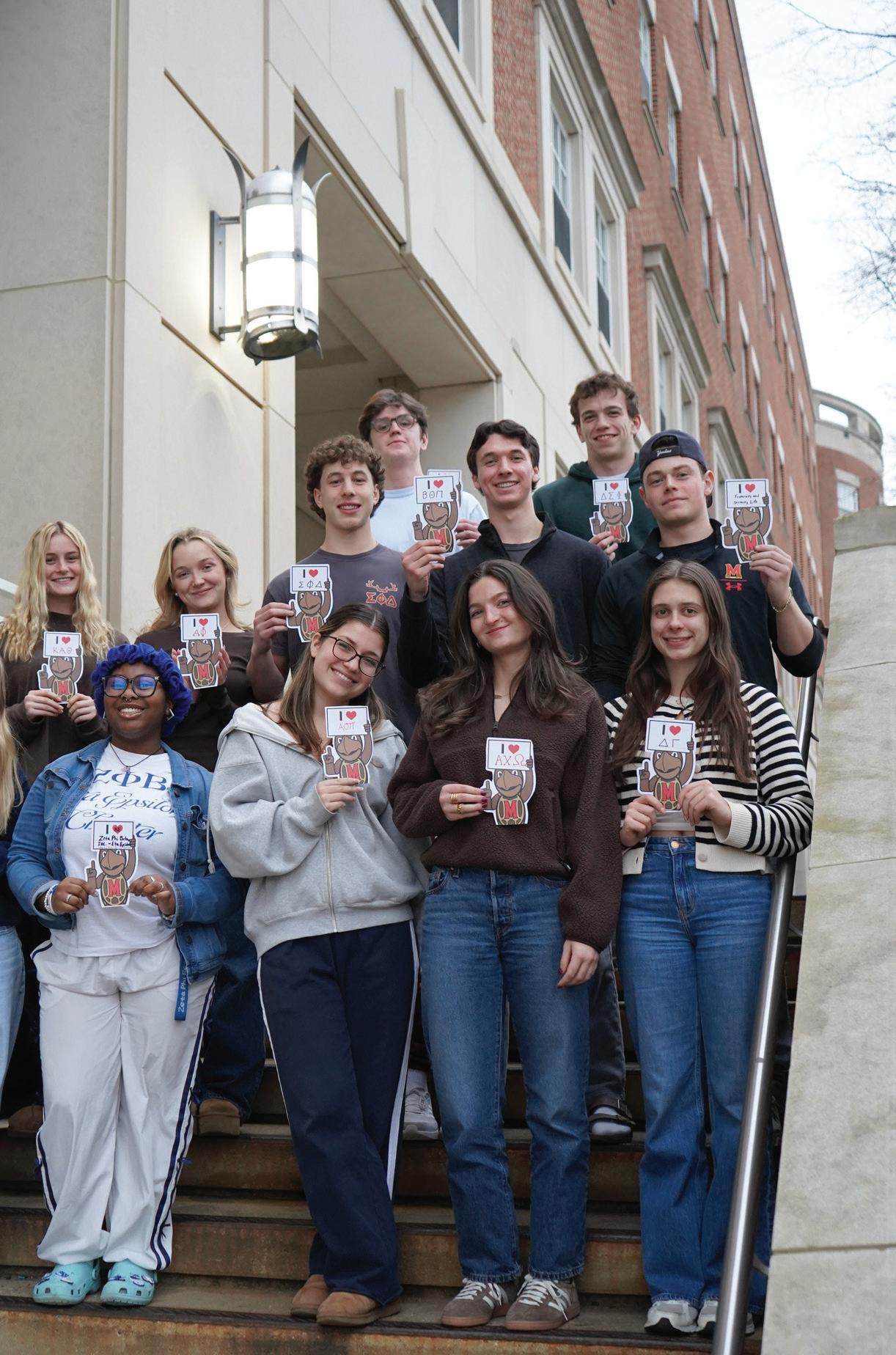
Connect with organizations built on shared values, rich traditions, lifelong friendships, and a powerful alumni network that extends across Maryland and beyond. EXPLORE FRATERNITY & SORORITY LIFE FSL.UMD.EDU | @UMDFSL
onnect bui friendsh ext ds ac XPLORE FRATERNITY SL.UMD.EDU @UM unities to memories. hapter . F s, l d
lt value ips, powerfu ross an









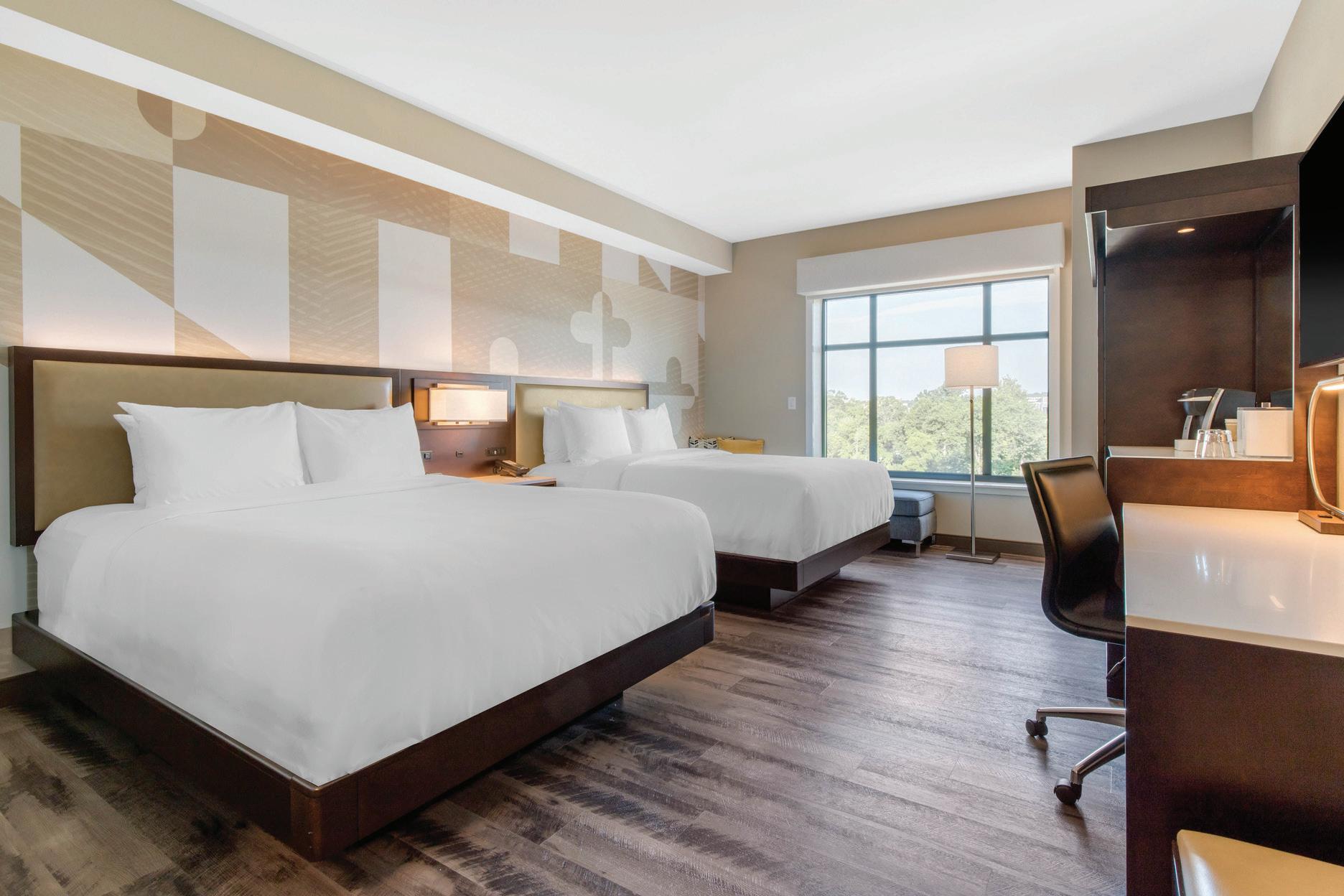
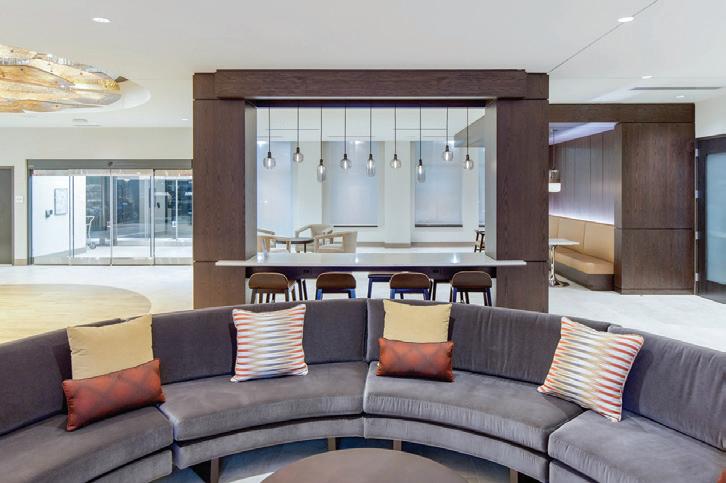
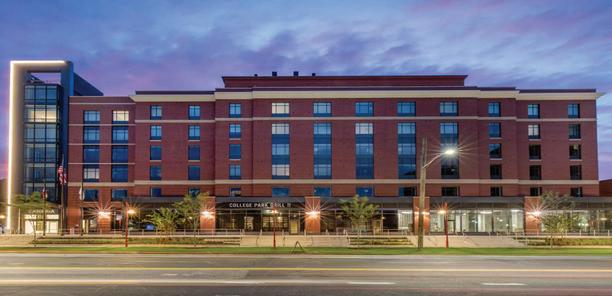
Cambria College Park seamlessly blends warmth and comfort with stylish, modern accommodations Within a short walking distance of the University of Maryland, this LEED-certified hotel makes it easy to experience all the area has to offer, including local dining, shopping and attractions It also puts you steps from the Metro Station and just 6 miles from the charm of Washington, D C
150 guest rooms with one king or two queen beds Bluetooth bathroom mirror, mini coolers, microwave and Keurig machine
Spacious desk, USB and power outlets and complimentary Wi-Fi
Located less than a mile from the hotel, the College Park Metro Station offers easy access to Washington, D C via the Green Line. The station features daily parking, bike racks, carsharing services, and Metrobus connections, making it a convenient choice for your travels
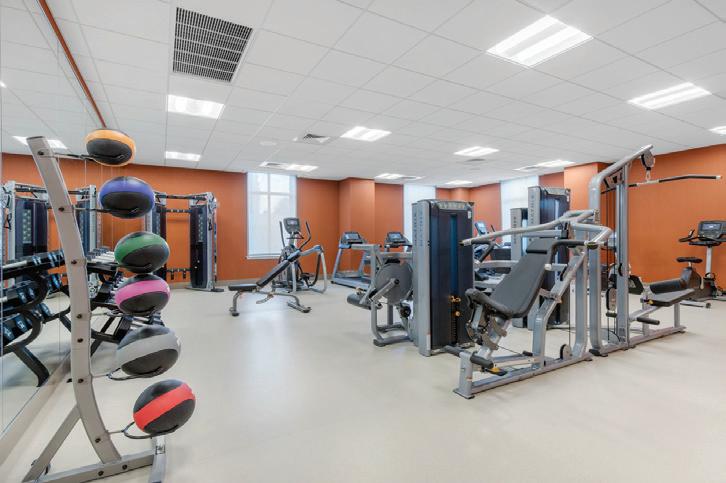
State-of-the-art fitness center, with the latest cardio machines, free weights and exercise equipment
Covered garage parking with EV charging stations
Dog-friendly accommodations
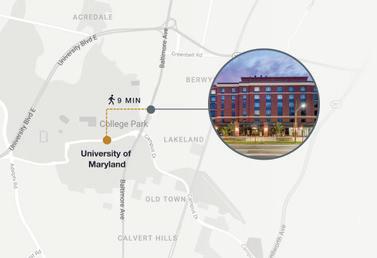

Cambria College Park | 8321 Baltimore Avenue, College Park, MD 20740 301 595 2600 | CambriaCollegePark com
By The Diamondback Staff
Year after year, companies have built more apartment complexes near the University of Maryland’s campus. The plethora of websites, prices, amenities and listings can make finding affordable off-campus housing difficult for students.
Since we published the salary guide and course search, we’ve been continuing to look for ways to better serve our community. As a result, The Diamondback created an apartment finder, a new tool that helps students compare apartments in one place. Our goal is to give students a clear, convenient way to explore off-campus housing options.
The tool brings floor plans, amenities and pricing for nearby
apartments together. Each listing also includes a live price tracker to follow how an apartment’s price changed over time and identify the best time to sign a lease.
Please reach out to onlineumdbk@gmail.com with any feedback, questions or thoughts. We look forward to hearing from you.
Explore The Diamondback apartment finder at housing.dbknews.com.
This project was developed by The Diamondback’s product and engineering team: Alston Chan, Sameer Chawla, Nate Rubin and Esha Singhai.
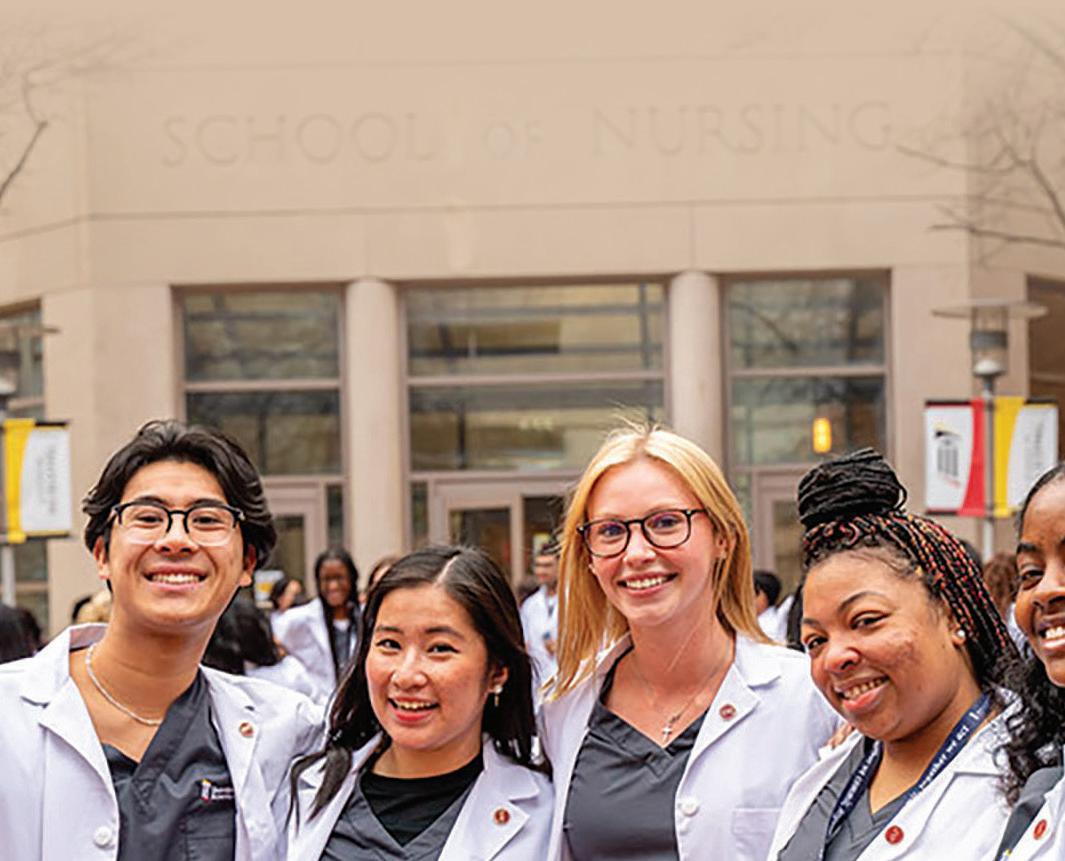



Do you have what it takes to change the world, one patient at a time?
FAST-TRACK YOUR NURSING CAREER WITH UMSON!
Take advantage of our Guaranteed Pathway program that offers a streamlined admission process, ensuring your spot in one of the best BSN programs in the country. Learn more at prehealth.umd.edu/ explore-careers/nursing.
Not eligible for the Guaranteed Pathway? No worries! Apply directly to UMSON to start your nursing journey. Learn more at nursing.umaryland.edu/bsn.


By Amanda Hernández I UpdatedbyStellaGarner
This story was originally part of The Diamondback’s 2022 Orientation Guide. Some information and resources have been updated to reflect current figures. Now that you’ve been accepted into the University of Maryland, you may be navigating the financial aid process or wondering what you could have done differently. The financial aid process can be daunting, but this explainer should help demystify the process.
Over the past three decades, college tuition costs have skyrocketed. In-state tuition for four-year public schools was nearly $12,000 in 2025, according to data from the College Board.
But don’t fret — here’s a breakdown of different types of financial aid and some tips to help you along the way from a seasoned scholarship applicant.
Health Promotion & Wellness Services is here to support your mental health and overall wellness. Discover new ways to enhance your wellness through the following free resources.
Health Promotion & Wellness Services is here to support your mental health and overall wellness. Discover new ways to enhance your wellness through the following free resources.
Health Promotion & Wellness Services is here to support your mental health and overall wellness. Discover new ways to enhance your wellness through the following free resources.
love, comfort, and stress relief provided volunteer dogs and their human handlers.
Enjoy
Promotion & Wellness Services is here to support your mental health overall wellness. Discover new ways to enhance your wellness through following free resources. Meditation Sleep Kits
Health Promotion & Wellness Services is here to support your and overall wellness. Discover new ways to enhance your the following free resources.
Slow down, breathe, and cultivate awareness with our meditation offerings.
Slow down, breathe, and cultivate awareness with our meditation offerings.
Mondays: 11am-1pm in the STAMP Thursdays: 11am-1pm in the Health Center Fridays: 1pm-3pm in McKeldin Library

sessions
Health Promotion & Wellness Services is here to support your mental health and overall wellness. Discover new ways to enhance your wellness through the following free resources.
Light therapy is the use of a specific device to treat changes in mood that are especially common during the fall and winter months. Devices are available for loan at McKeldin Library.

Struggling




By now, you might already know what FAFSA is and why it’s important. But as a refresher, FAFSA, otherwise known as the Free Application for Federal Student Aid, allows students pursuing undergraduate or graduate degrees to apply for federal financial aid. This can be applied toward tuition, fees, room and board, textbooks and other school-related expenses.
Some states also have financial aid programs for state residents who attend college in the state and outside of it, as well as out-of-state students. In Maryland, there’s MDCAPS, which processes applications for statesponsored scholarships. Programs like this usually use the information entered in your FAFSA application to determine what kind of state-based aid you would be eligible for.
Regardless of how you or others may perceive your financial situation, it’s still important to apply for both federal and state-based aid because you may still be offered federal aid or your application can be used for state awards.
Now, you’re probably curious about what types of aid exist and how they work. Below, you’ll find a breakdown of each one.
Scholarships come in all forms, shapes and sizes. You also don’t have to repay the amount back. Scholarships can be either merit-based or based on a student’s financial need. You can find thousands of scholarships to apply to online, but don’t forget to also apply to smaller, local ones in your area. If you already know what you’re majoring in, I highly recommend searching for professional groups related to your major that fund scholarships. If you live in Maryland, you can also apply for delegate and senatorial scholarships offered by your representatives.
Grants are another great way to fund your education. You don’t need to worry about paying these back either. Most grants are given to students based on financial need, but that shouldn’t stop you from applying if you can. The federal government offers several grants through FAFSA, such as the Federal Pell Grant. Universities also sometimes offer grants.
Loans are where it gets really tricky in the world of financial aid. A loan is money you borrow from the government, bank, financial institution or other organization, which you must pay back with interest. Private loans can be more difficult to navigate, but federal student loans usually have more benefits, according to the U.S. Department of Education. The two most common types of federal student loans are direct subsidized or direct unsubsidized. Direct subsidized loans are based on financial need and do not need to be paid until you graduate. Direct unsubsidized loans, though, are not based on financial need and students are responsible for paying the interest.
Last, but certainly not least, federal work-study provides students who show financial need with parttime jobs. The work-study program is available to both full-time and part-time students. The money earned is meant to help students cover education-related expenses.
If you’re a transfer student, you might be wondering what kind of aid you’re eligible for. You should still apply for FAFSA and any state-based aid you qualify for, but as a transfer student, you also have access to additional scholarships or financial aid programs specifically for transfer students. At this university, transfer students are automatically reviewed for some merit scholarships, while other scholarships require an application.
The university, through its First-Gen Terps program, maintains a list of resources on navigating the financial aid process and securing scholarships, including information for non-citizen students. The Thrive Center for Essential Needs at this university also offers financial wellness workshops for first-generation students. In the case of private scholarships, nonprofits like TheDream. US (http://thedream.us/) or GoldenDoor Scholars have opportunities that are specifically meant to help undocumented students.
Maryland’s 2026-27 sports season is primed to be one of the most significant in recent memory. Football, men’s basketball and field hockey face pressure to bounce back after disappointing campaigns. Women’s basketball and men’s
ByJakeKauderer
It feels like now or never for Michael Locksley.
Athletic director Jim Smith elected to publicly back the coach and pledged more financial resources amid the Terps’ eight-game losing streak to close 2025. That sets up 2026 as an essential turnaround year for Maryland after consecutive 4-8 seasons.
But Locksley said at spring media day he doesn’t feel pressure entering the fall. He made some key offseason moves that might have alleviated it.
Five-star freshman edge Zion Elee — the highest-ranked recruit in program history — is the newest addition to an exciting young core. He joins a defensive line with sophomores Sidney Stewart and Zahir Mathis, both of whom stayed with the Terps after leading them in sacks as freshmen. Quarterback Malik Washington enters his second season off a promising but inconsistent freshman campaign.
Look out for Sept. 19, when Maryland hosts Virginia Tech and coach James Franklin. Franklin was the Terps’ offensive coordinator and quarterbacks coach from 2008 to 2010. He was named their head coach in-waiting in 2009 before leaving to become Vanderbilt’s head coach in 2010, adding a fun spin to Maryland’s final nonconference clash before Big Ten play begins.
ByAidanCurrie
Maryland men’s soccer typically needs to win a national championship to define a campaign as legendary. Last year may have been an exception.
A veteran-heavy Terps squad trailed for just 78 seconds across their first undefeated regular season in nearly a decade. Maryland claimed a Big Ten title, its first conference championship since 2022. But the Terps fell a few wins short of what would’ve been their fourth national title under coach Sasho Cirovski.
Recapturing the heights of 2025 this fall will be difficult. Three of Maryland’s regular starters were selected in the MLS SuperDraft, including the dynamic forward duo of Sadam Masereka and Stephane Njike. Much of the Terps’ backline — which held opponents below one goal a game — is also gone.
Maryland returns several key pieces, though. Attacking midfielder Albi Ndrenika and goalkeeper Laurin Mack will lead on opposite ends of the pitch. Prolific forward Rocket Ritarita is expected to lead the Terps’ frontline after tallying four goals and six assists in a remarkable freshman campaign last fall.
soccer look to build off strong seasons that saw each win an NCAA tournament game. The Diamondback’s best reporters broke down players, games and more to watch for.
ByBenGeffner
Maryland men’s basketball’s 2025-26 season was an abject failure. The Terps lost 21 games for the first time since 1941.
But coach Buzz Williams, fresh off his first season in College Park, has reason to believe the next one will be different. A year removed from hastily assembling a makeshift roster, Maryland attacked April’s transfer portal with methodical determination.
While the Terps lost five-star freshman guard Darius Adams and five other players, they returned expected starters Andre Mills and Pharrel Payne. They also added six transfers, headlined by Arkansas junior guard DJ Wagner and New Mexico 23-year-old forward Tomislav Buljan.
That experience, paired with five-star recruit Baba Oladotun and other incoming freshmen, has Maryland slotted No. 12 nationally in 247Sports’ overall team rankings enter the 2026-27 season as of July 14. With elevated expectations, one question remains: Can Williams deliver?

ByFaithHarris
Injuries limited Maryland women’s basketball from reaching its potential in the 2025-26 season, which ended with a round of 32 exit in the NCAA tournament.
Maryland saw eight players, including graduates and transfers, depart at the season’s conclusion. But coach Brenda Frese retooled with a promising new roster, highlighted by young talent to support her remaining players.
All-Big Ten first team member Oluchi Okananwa returns to the Terps for her senior campaign after leading Maryland with more than 17 points a game last season. Frese, entering her 25th season as coach, compiled the No. 7-ranked recruiting class in the country as of July 14 to support the guard.
The freshmen group is led by five-stars Jordyn Jackson and Trinity Jones. They’ll pair with transfers Nunu Agara and Chloe Sotell, who bring veteran presences to a young roster.
Maryland will hit the road for top matchups in 2026-27, facing South Carolina in Paris and UConn in New York City.
Field Hockey
ByChristianAndriolas
Maryland field hockey has been one of the nation’s most consistent programs for decades. Coach Missy Meharg has led the Terps to seven national championships in her 38 seasons, the third-most of any school.
But they didn’t live up to the program’s standard in 2025, missing the NCAA tournament for the first time since 1994. The Terps experienced significant turnover from the previous season, leaving many players to play significant minutes for the first time.
Other key returning starters include rising seniors Alyssa Klebasko in goal and Maci Bradford in attack, along with midfielders Ella Fehr and Djuna Eikelboom.
Maryland hopes its 10-8 record, which saw it finish just short of the NCAA tournament in 2025, is a building block for a more successful 2026 season.

Maryland graduated just two of its starters this offseason, and boasts several key returners and four transfers in 2026.
Sisters Josie and Jordyn Hollamon are the most notable returners.
Josie, entering her senior year, won the Big Ten defensive player of the year in 2024. Jordyn, who will be a sophomore, won Big Ten freshman of the year in 2025 while leading Maryland in goals scored.

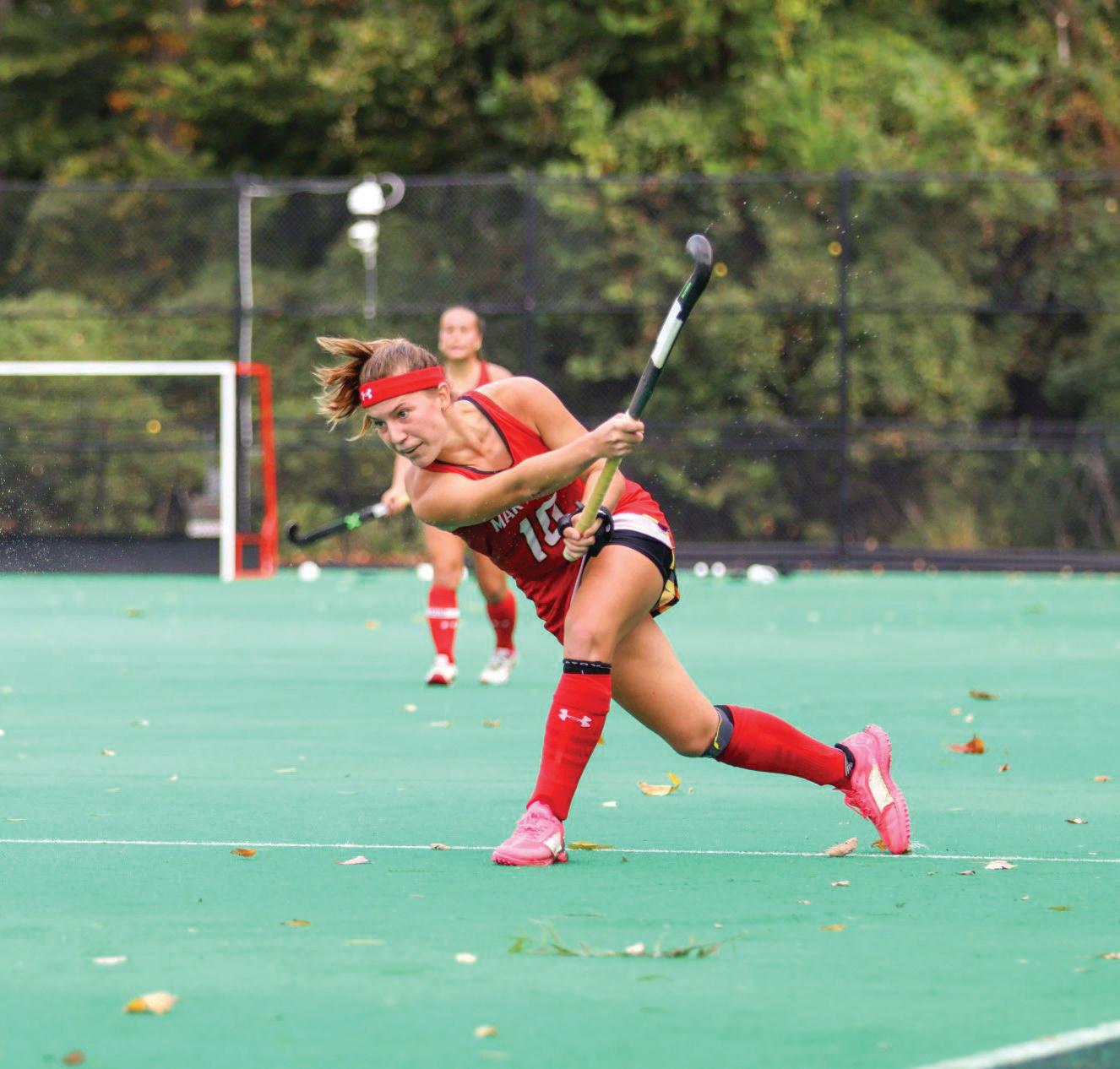



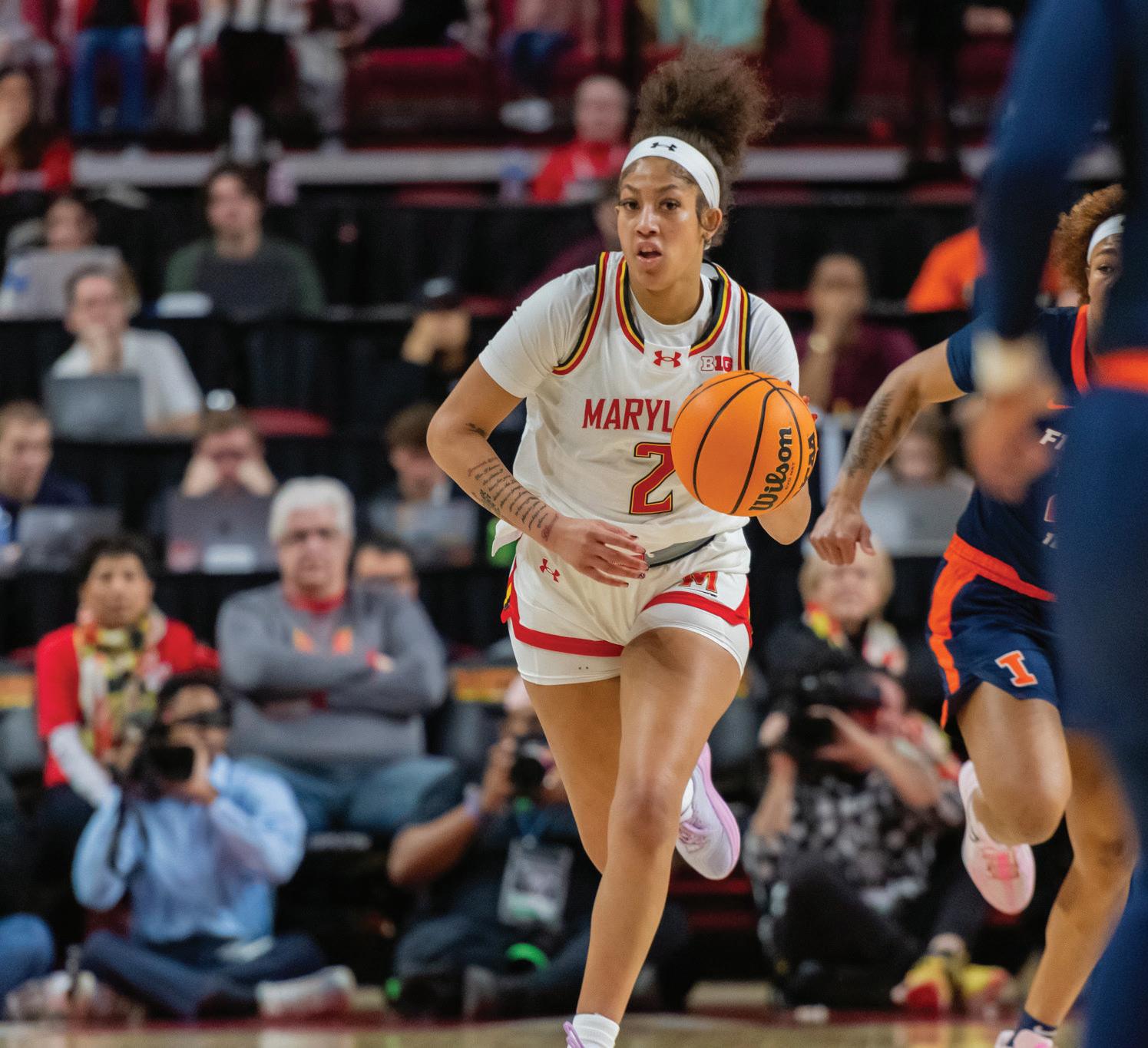



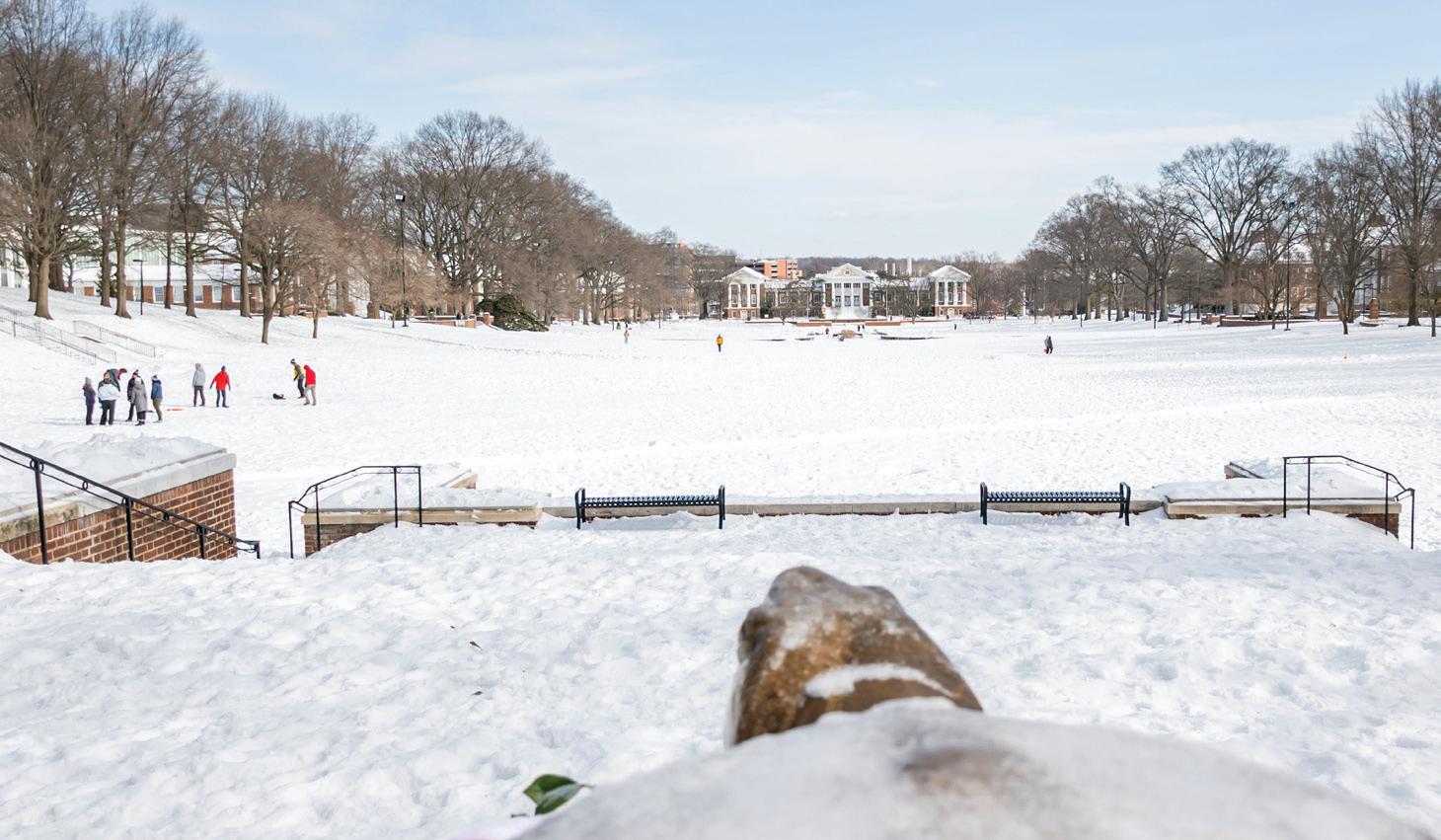
By The Diamondback Photo Staff
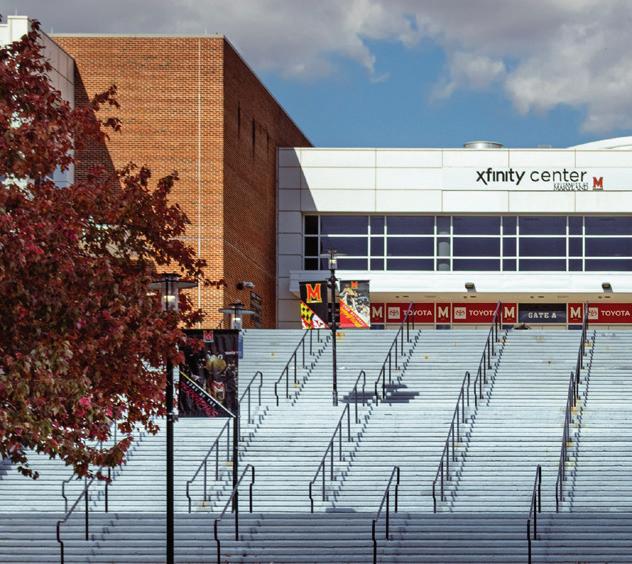
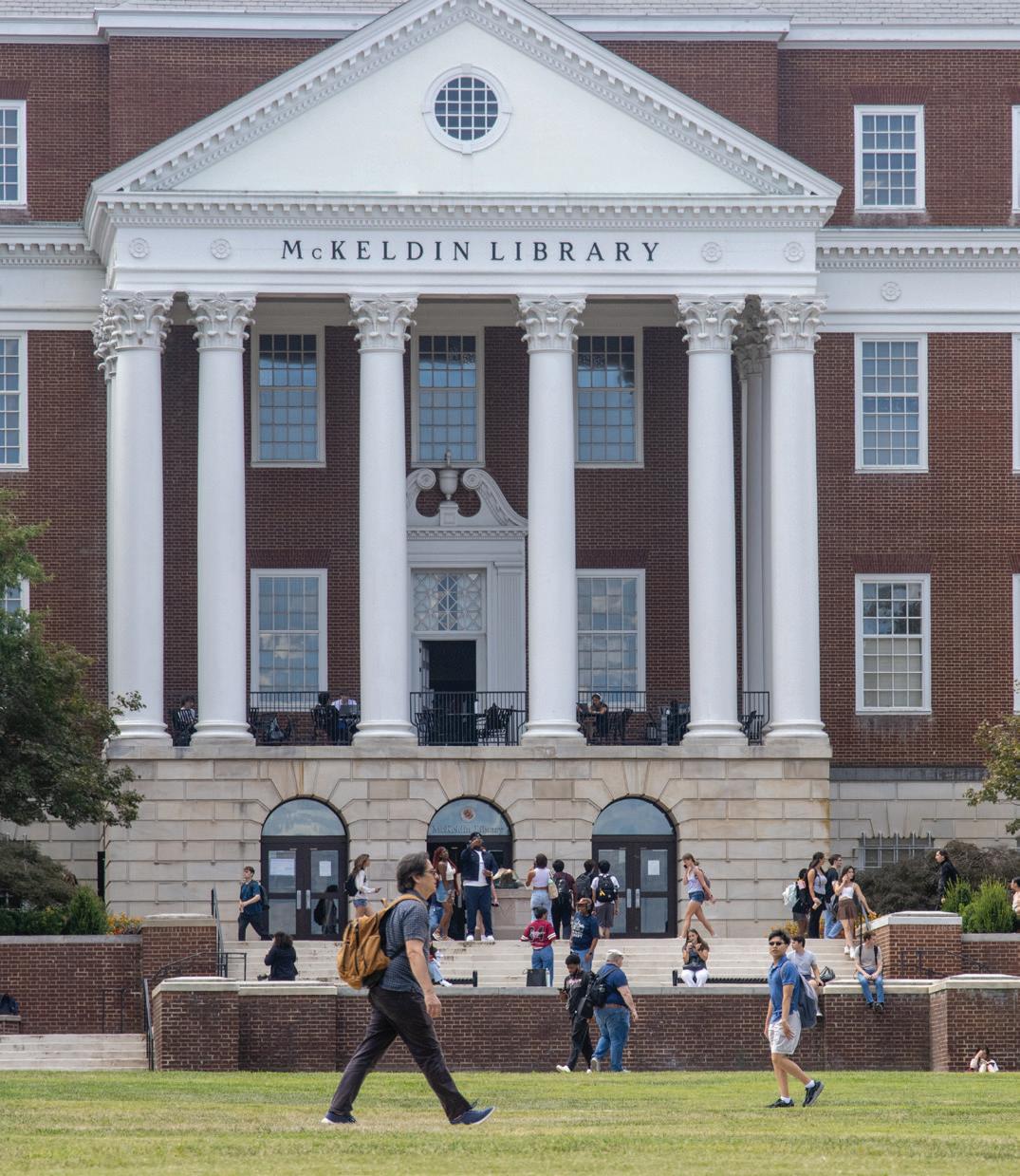
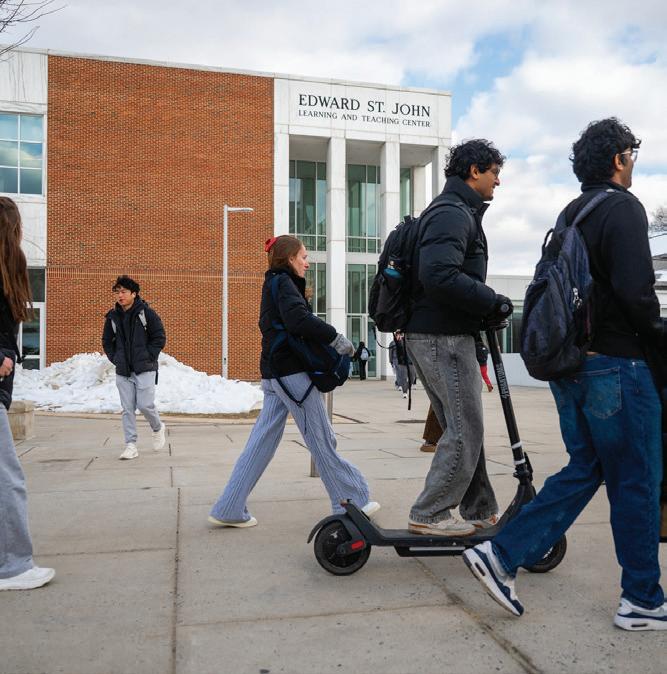
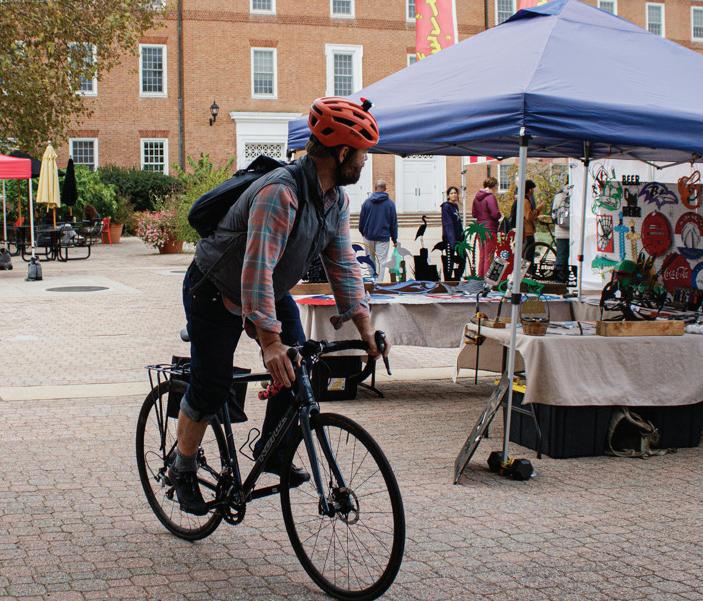

By Clare Roth I Staff writer
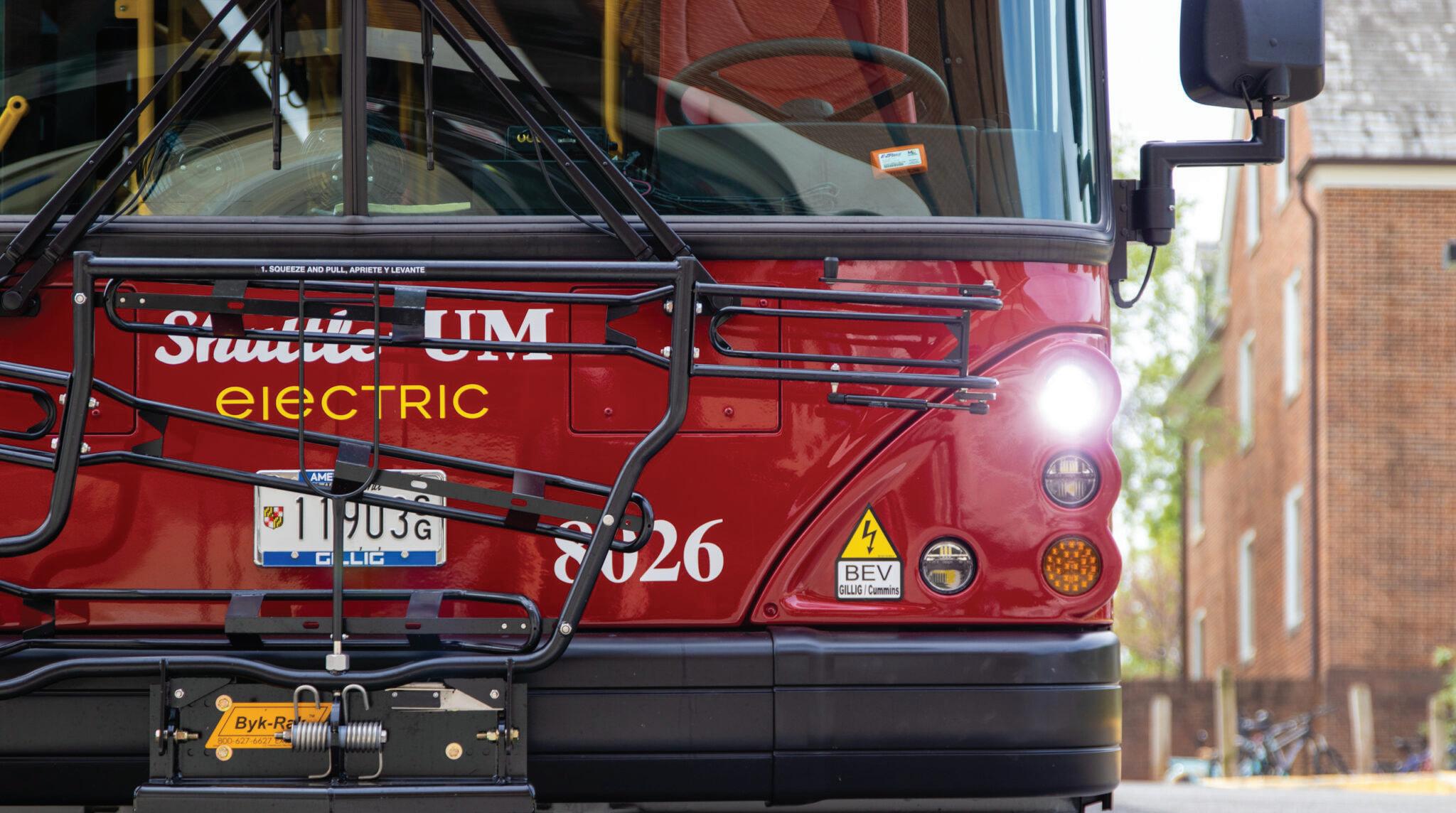
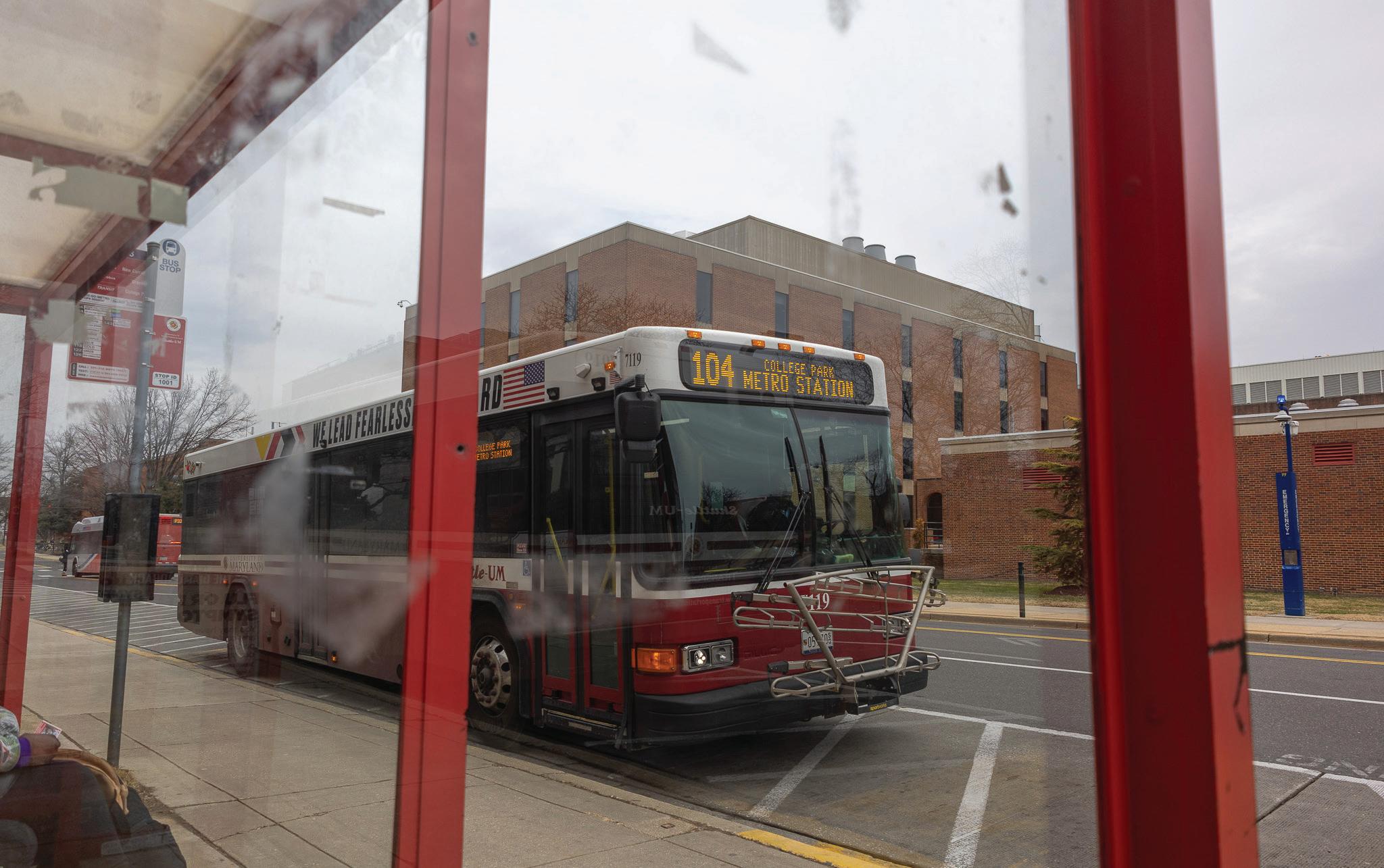
The first two of the University of Maryland’s fully electric ShuttleUM buses arrived on campus after a nearly three–year wait.
The two buses are part of a 27-bus fleet purchased by the university after it secured a nearly $40 million grant from the U.S. transportation department’s Federal Transit Administration in October 2023, The Diamondback previously reported. The grant also funds charging stations and staff training, this university’s Department of Transportation Services grants manager Julianna Greenberg said.
Once the mechanics and drivers
are trained, the two electric buses will begin test driving their routes to ensure they are up to performance level, Greenberg said. She said passengers may be able to ride the two buses beginning this fall.
Six more fully electric buses are expected to be added to the fleet by the end of 2026, according to DOTS. All 27 buses will be fully rolled out by fall 2027, the department added.
Greenberg said the university will save about 130,000 gallons of diesel fuel each year, promoting a more sustainable campus environment once all 27 buses are implemented.
“That is a huge improvement for our sustainability because it gets us away from using that diesel and into electricity,” Greenberg said.
The electric shuttles mark the first time the university has received new buses since 2019, with many of the current buses being over 20 years old and in need of maintenance, Greenberg said. She explained that some of these older buses will be phased out and retired as the electric buses are implemented.
The buses take about four to six hours to charge overnight and have a range of 250 miles total,



























Greenberg said. She said one way the department is trying to ensure a long-lasting battery life on these electric vehicles is through driver training.
“The regenerative braking, which is similar to [what] a lot of electric vehicles now have, helps to power up the battery as they’re driving. So if drivers are practiced at using electric vehicles they can go a little bit farther,” Greenberg said. “That’s part of where the training can help, is to help them get the most out of the battery that we have.”
The new buses have updated wheelchair securements, UV air purifiers, USB ports for riders to charge their devices and are more quiet, according to Greenberg.
One of the buses was displayed near McKeldin Library during EarthFest on April 16 to allow the campus community to tour the bus and learn about the impact of switching from diesel to electric.
Junior computer science major Sunil Pateel was among those that came out to see the bus up close at EarthFest.
He said he previously saw one of the buses testing on campus after leaving his physics class, mistaking the new electric Shuttle-UM bus for a coach bus due to its modern design.
Pateel said a potential downside of electric vehicles is their limited range, but added that isn’t much of a concern due to the buses’ short campus routes.
Alex Patrone, a junior computer engineering major, said he also saw one of the buses being tested on campus. He was so excited that he tracked it down to get a better look, Patrone said.
A new feature he thinks will be helpful is the updated wheelchair securements, he added. The wheelchair straps are now mounted to the wall, rather than the floor, to allow for
quicker securement, according to Greenberg.
Patrone said he has watched his friend who uses a wheelchair struggle to put on the securement straps while riding the current Shuttle-UM buses. He said he hopes these new updates will make the buses more accessible.
While he is excited about the new buses, Patrone said he still believes the best way for the university to reduce emissions and promote safety on campus is through additional micromobility infrastructure, such as more bike lanes.
“There’s so many places across this country that do not have any public transportation. It’s a car or nothing,” Patrone said. “I’m super proud to be on this campus with a great bus network that is improving.”
Bel Air Hall
Hall
Hall
Hall
Hall
Hall
Hall
Hall
Hall
Hagerstown Hall La
Hall
Johnson-Whittle Hall
Pyon-Chen Hall
Oakland Hall
Anne Arundel Hall
Caroline Hall
Carroll Hall
Dorchester Hall
Prince Frederick Hall
Queen Anne’s Hall
St. Mary’s Hall
Somerset Hall
Wicomico Hall
Worcester Hall
Allegany Hall
Baltimore Hall
Calvert Hall
Cecil Hall
Charles Hall
Frederick Hall
Garrett Hall
Harford Hall
Howard Hall
Kent Hall
Montgomery Hall
Prince George’s Hall
Talbot Hall
Washington Hall







By Jake Kauderer I Sportseditor,footballreporter
Talent hasn’t been Maryland football’s issue, according to Michael Locksley.
The Terps’ coach instead cited execution under pressure as the team’s problem. It’s a skill he said most young teams struggle with and is remedied through “experience and wisdom.”
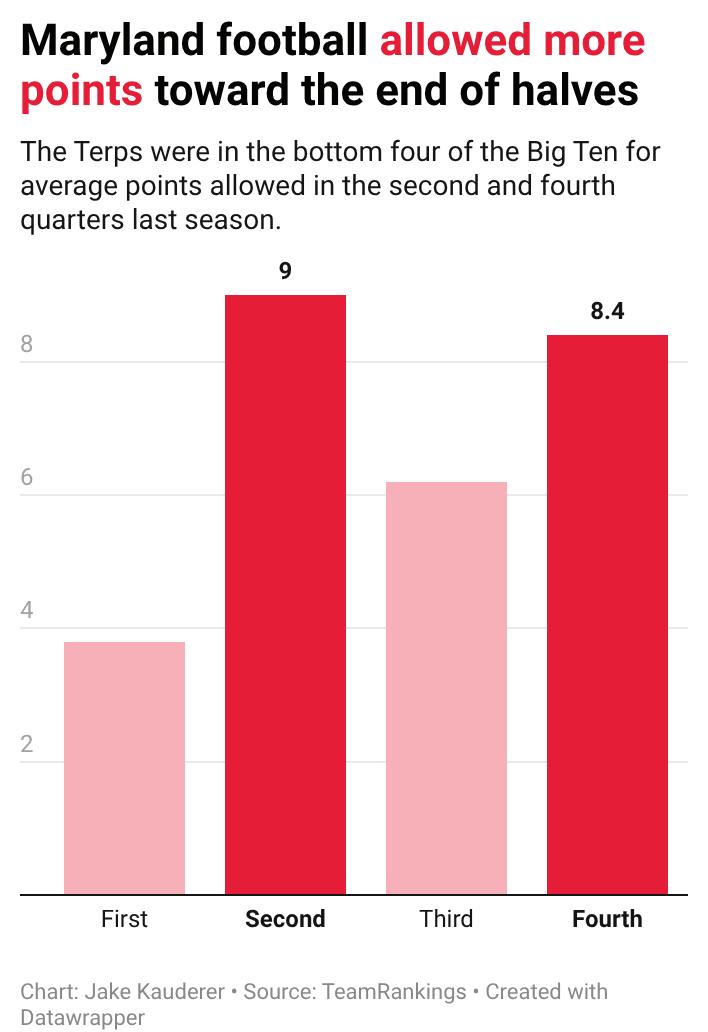
Maryland’s defense collapsed in many key moments last year. And the unit regressed throughout the fall — allowing 39.4 points a game in five November contests. But the Terps’ staff expressed belief that their more experienced, returnheavy defense could take a jump in 2026.
looks like because we got a group of guys that know the system,” Locksley said. “This is how you want your roster to be built as you head into the 2026 season.”
Last season, Maryland didn’t hold an opponent below 20 points the rest of the year after it allowed fewer than 11 points a game across its first four contests.
Inexperience hampered consistency.
Driskell Center 25th Diamondback Ad.pdf 1 6/26/26 12:44 PM
“[I’m] excited about what this
Freshman Sidney Stewart, who logged a team-high seven sacks in 2025, was ejected at halftime against Washington on Oct. 4 for a late hit deemed targeting. The Terps then blew a 20-point lead.
Two weeks later against UCLA,
edge rusher Trey Reddick also left the field after a first half targeting call — a penalty that safety Jalen Huskey committed in the second half. Freshman quarterback Malik Washington led a late game-tying drive, but Maryland’s undermanned defense allowed the Bruins to march for a game-winning field goal in less than 40 seconds.
“What we learned is young players make young player mistakes,” defensive coordinator Ted Monachino said. “What I learned personally was the fact that we all need to understand situational football better.”
Difficulties closing halves were a theme for the Terps, who lost their
For over 25 years, The Driskell Center has been a hub for exhibitions, research and conversation about African American and African diasporic art. Named for the pioneering artist and scholar David C. Driskell, the Center is a place to look closely and ask better questions.
Visit us. Bring your curiosity. driskellcenter.umd.edu At The Driskell, you can:
• Experience free exhibitions
• Engage with primary archives and collections for research or curiosity
• Connect art to the questions shaping our world
• Join a community that takes the creativity and history of the African diaspora seriously
final eight games of 2025. Their defense ranked fifth-worst in the Big Ten, conceding 26.5 points a game.
“To be able to have the composure, where we get put in those situations this year, to end up playing not competitive football, but winning football,” Locksley said. “That’s the goal.”
So, why will the Terps’ 2026 defense spark winning football?
Locksley cited Maryland bringing back 74 percent of its defensive production from this past season, the fourth-highest mark nationally. The Terps led the Big Ten with 19 regular-season interceptions and four defensive touchdowns — reasons for cautious optimism.
And they return exciting young talent, headlined by Stewart and freshman Zahir Mathis, who combined for nearly half of the team’s 27 sacks in 2025.
“We expect great things out of those guys,” Monachino said. “They’re still very young players and they still have a long ways to go.”

Monachino expects Mathis and Stewart to emerge as leaders. He said being a leader requires three things: being a good player, having great communication skills and being someone teammates trust.
Senior Daniel Wingate, who cornerbacks coach Aazaar AbdulRahim called “a great leader,” anchors the Terps’ linebacker room after ranking third in the Big Ten with 62 solo tackles last season.
Defensive backs Jamare Glasker and Dontay Joyner, two other returners, also boasted strong campaigns. Redshirt senior Lavain Scruggs comes back as the team’s most experienced safety. Senior defensive lineman Lavon Johnson transferred back to Maryland after one season at Texas.
But the Terps’ most anticipated defender hasn’t played a college snap yet.
Freshman Zion Elee — the No. 2 player in the class of 2026 and Maryland’s highest-ranked recruit in program history — joins a defensive line expected to be one of the Big Ten’s elite.
“We all know the skillset
of what Zion Elee brings to the table,” Locksley said. “I like the way all the new players have integrated themselves into our program. Zion is one of them.”
Locksley said the Baltimore native has fit the Terps’ revamped emphasis on more work and less talk — they don’t have a designated mantra this year. The coaching staff is instead focused on tangible goals, he said.
Monachino tabbed secondand-long and third-and-medium improvements as a priority, paired with better communication and mechanics. Abdul-Rahim said the defense’s largest focus is punching the ball out more after ranking last in the Big Ten with two forced fumbles in 2025.
Locksley said he was very intentional with this roster’s construction. He said the Terps’ coaches have had to have “patience to allow those talented players to grow.”
Off consecutive seasons where his defense crumbled in conference play, Locksley needs that growth to finally translate to results.
By Clare Roth I Staff writer
University of Maryland’s SGA plans to create and distribute resource guides to students to help them navigate services across campus.
The initiative aims to educate students on services available to them, including the Transit app, UMD 311 and Facilities Service Central. Student Government Association members said these guides will highlight services students may not be aware of. SGA approved the guides with a 21-0-1 vote at its Feb. 25 meeting. The guides will feature a
breakdown of how to install and use the Transit app. They also will highlight how to report any indoor or outdoor non-emergency physical issues via the Facilities Service Central website and the 311 section of the University of Maryland app.
Shubh Agnihotri, co-director of SGA’s transportation and infrastructure committee, said the idea for the guide was brought to his attention by the committee’s previous co-director in fall 2025.
“We hope to get [students] easier and quicker in contact with
the services that they need,” the sophomore electrical engineering major said.
He said the committee receives a lot of concerns about students not understanding how to use the Transit app or access Shuttle-UM buses.
Some students, such as freshman kinesiology major Harshvi Shah, don’t even have the app downloaded on their phones.
“My friends usually do it so I’ve never felt the need to download it so far,” Shah said.
She believes the resource guides
will help both incoming students and parents by clarifying what resources the university offers.
Agnihotri said one of the goals of the guides are to keep people safe. It’s important for students to know how to use the Transit app so they can get home safely when they are out late at night, he explained.
The co-director added that he used the university’s 311 service to report an electric scooter blocking an accessibility ramp outside Cumberland Hall his freshman year.
Junior computer science major Mario Alvarenga said his roommate contacted Facilities Management his freshman year when their air conditioning unit started leaking. Despite these services being widely accessible to students, they can be confusing
and difficult to find, Alvarenga said.
Alvarenga said distributing the resource guide throughout campus in places such as Stamp Student Union or dorms would help make this information more known.
as possible through the amazing communication channels that we have, then hopefully we can make the campus a little bit better,” Agnihotri said.

Now that the SGA has approved the guides, its members can begin printing and spreading the resource guide throughout campus, Agnihotri said.


Agnihotri hopes the guides create a “positive feedback loop” in which the university invests more in the services as more people use them.


“If we can get all of these resources to people in as concise and easy of a way


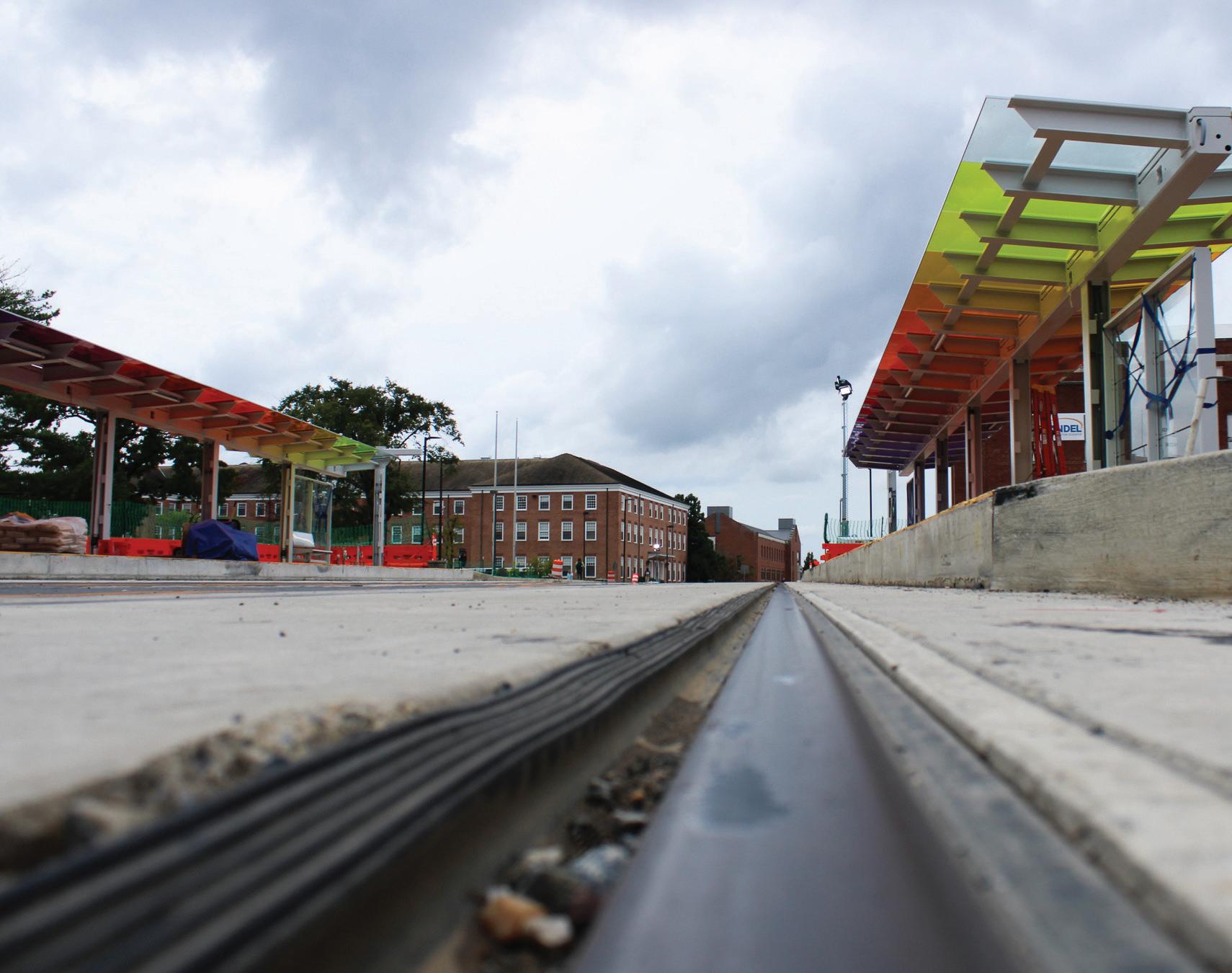
After years of planning and construction, the Purple Line began testing in College Park in March.
During the first phase of testing, light rail vehicles were tested overnight Tuesday through Friday from the College Park Metro station to the Adelphi Road University of Maryland Global Campus station, according to the Purple Line’s website.



By Clare Roth I Staff writer

The vehicles traveled from the College Park Metro station onto Campus Drive and then through Rossborough Lane and across Route 1 before moving across campus and ending at the University of Maryland Global Campus station.
Police and traffic control personnel escorted the light rail vehicles during testing, which occurred nightly from 10 p.m.
to 6 a.m. Campus community members were told to expect traffic delays up to 15 minutes at multiple intersections along Campus Drive and Route 1 as the light rail vehicles go back and forth across campus, according to the Purple Line’s website. Crews were stationed throughout the route to briefly block crosswalks and cross streets before the vehicles arrive and

to ensure pedestrian and driver safety, the university stated.
Multiple crosswalks along Campus Drive were also be closed during testing. These included the ones between Edward St. John Learning and Teaching Center and Hornbake Library and between Knight Hall and the Cole Student Activities Building, according to a map from the university administration’s campus construction notice website.
The following roads were closed nightly for testing: Campus Drive between Preinkert Drive, near Anne Arundel Hall, and Union
Drive, near the Benjamin Building; Connector road between Lot C1, near Turner Hall, and Lot L; Rossborough Lane between Yale Avenue and Diamondback Drive.
The campus community was told to expect to hear the vehicles’ horn and bell system periodically throughout the testing period, according to the Purple Line’s website. The light rail also accelerated and breaked at differing speeds during the night.
Shuttle-UM buses were also expected to experience delays or detours as testing commenced, according to a campuswide
email in March. Students were encouraged to continually check the Transit App for any updates on potential service delays, the university wrote.
The university urged students and staff to follow all signage and directions while testing occurred to stay safe.
The Purple Line, which began construction of its 21 stations in summer 2022, is expected to be completed in late 2027. The light rail system will span from New Carrollton to Bethesda, according to its website.
By Johana Gonzalez-Cruz I Staff writer
The University of Maryland RHA passed eight bills this academic year, focusing on several improvements and developments for students at this university.
From expanding sustainability efforts to supporting campus initiatives, here’s a look at some of the bills this university’s Residence Hall Association passed this year.
Tennis ball collection
In April, the RHA passed a resolution in support of the installation of six to eight tennis ball bins and signage at the tennis courts next to Eppley Recreation Center.
RHA collaborated with this university’s Sustainable Ocean Alliance and American Conservation Coalition chapters in November to hold a cleanup behind the tennis courts, The Diamondback previously reported.
Students at the cleanup collected tennis balls that were thrown over tennis court fences and other trash in the area.
“It’s bad enough that [the tennis balls] are already in the area around the tennis courts,” said sustainability coordinator Claire Bushar, a sophomore bioengineering major. “If they end up in the creek, they could be going all over campus.”
This resolution is an ongoing effort from RHA’s sustainability committee, according to RHA president Emily Shoemaker.
According to the resolution, tennis balls damage the beaver habitats around campus and degrade the quality of the nearby environment.
“We’re hopeful to get the signs up … and also work with [Sustainable Ocean Alliance] and [American Conservation Coalition] … to organize biannual or maybe even annual cleanups to try to deal with any of the overflow,” Shoemaker, a senior information science and philosophy, politics and economics major, said.
The RHA passed two bills in October to support infrastructure and interns at this university’s Terp Farm.
Dining Services manages the farm, which produces crops for this university’s dining halls, catering and Campus Pantry. The farm is located at the Central Maryland Research and Education Center in Upper Marlboro, which more than 30 of this university’s faculty members use for research or instructional programs.
In October, RHA passed a resolution in support of using this university’s sustainability fund for a three-year Terp Farm internship program for undergraduate students. According to its website, Terp Farm hires students every summer to prepare for fall harvest and the start of the academic year.
Shoemaker said RHA also had multiple conversations with university administrators throughout the fall and spring semester about how the sustainability fund’s money could be used at the farm.
The bill stated fund money could help expand the farm’s production capacity and increase the amount of
produce supplied to campus dining halls.
Another resolution voiced support for improving infrastructure and investing in new machinery for the farm.
South Hill senator Cameron King, who authored the bill, wrote that updated machinery would allow for increased production of crops and goods.
“The machinery can help ensure that crops will be stored efficiently and positively impact the food that is seen in the dining halls on campus,” the sophomore journalism major wrote in a statement to The Diamondback.
In October, senators also voted in favor of partnering with this university’s Thrive Center for Essential Needs for a year-long pilot program to give laundry detergent to about 100 students in need.
The RHA worked with the Thrive Center to identify that students experiencing financial hardship would benefit from laundry detergent donations.
“A pilot program to judge the current need the student body is experiencing for free laundry detergent would be beneficial in advising RHA and the Thrive Center on the importance of offering free laundry detergent more permanently,” the resolution, written by senator-at-large sophomore biology major Sara Eley, reads.


By Amelia Twyman I Assistantnewseditor,highereducationreporter
The University of Maryland is part of a broader system of public higher education institutions throughout the state of Maryland.
The University System of Maryland, formed in 1988, is made up of 12 public universities, three regional higher education centers and a system office.
The Diamondback spoke with university system leadership to understand how it functions.
The system’s 12 member institutions consist of:
- Bowie State University - Coppin State University - Frostburg State University - Salisbury University - Towson University - University of Baltimore - University of Maryland, Baltimore - University of Maryland, Baltimore County - University of Maryland, College Park
- University of Maryland Eastern Shore - University of Maryland Global Campus - University of Maryland Center for Environmental Science
Three regional higher education centers also comprise the system: - Universities at Shady Grove - University System of Maryland at Hagerstown - University System of Maryland at Southern Maryland
The system office, the university system’s third and final unit, bridges these 15 member institutions and Maryland’s governing bodies, according to the system’s website.
The entire office is led by a chancellor and includes eight smaller offices. Current chancellor Jay Perman has held the position since 2020.
Each office, headed by a senior
vice chancellor, specializes in areas of higher education operation, such as academic and student affairs or administration and finance.
The system office supports operational functions by coordinating the review of the system’s financial records and issuing debt for universities within the system, senior vice chancellor of administration and finance Ellen Herbst said.
What is the USM Board of Regents?
The system office also staffs the Board of Regents, the 21-member governing body overseeing the university system and its academic, financial and administrative affairs.
The board and its seven committees, which each focus on operational areas, gather periodically in public meetings and closed sessions to vote on certain
university policy, according to Herbst.
The board approves certain academic projects and programs, Herbst said, and appoints the university system chancellor and the presidents of the system’s 12 universities.
It also approves annual university room and board rate fees, according to the university system’s records.
But the system’s member institutions rarely work with the Board of Regents directly, Herbst said. Instead, they go to the system office with questions and policy proposals, which then drafts up reports for the board to consider so they can “make informed decisions.”
Dhruvak Mirani, a senior computer science and government and politics major at this university, was one of the board’s two student regents in 2025.
Student regents serve “staggered
terms,” meaning one is elected every other year, Mirani said. They act as non-voting board members their first year and become voting regents their second year.
Mirani, who was appointed in June 2024, participated in meeting discussions and frequently collaborated with board members, university administrators and stakeholders from the system’s other universities, he said.
What is the university system’s economic value?
University system institutions recorded more than $1.6 billion in “research and development expenditures” in fiscal year 2023 and granted $101 million in need-based financial aid to undergraduates in fiscal year 2024, according to data published on its website.
The system’s data reports the annual economic impact as $10.4 billion, which funds more than
55,000 jobs within the state of Maryland.
How does USM’s budget work?
The university system receives annual funding from the state government. About 60 percent of the budget goes toward salaries according to Herbst. It also covers branding costs and allows the system to bring in outside auditors to conduct financial reports.
The institutions within the university system have allocated separate funds for costs including tuition fees, salaries and research, which they receive directly from the state or from research grants, she added. Their funds do not go through the system office.
By Johana Gonzalez-Cruz I Staff writer
The University of Maryland’s SGA passed several bills during the 20252026 school year that reflect student discourse and global conflict.
Here are some of the bills the Student Government Association passed this year.
Urging this university to recognize Israel’s offensive in Gaza as a genocide
In September, SGA passed an emergency resolution demanding the university to officially recognize Israel’s offensive in Gaza as a genocide and call for a ceasefire.
The resolution came in a response to a United Nations commission report urging Israel and other nations to “end the genocide” in Gaza.
Zyad Khan, the SGA’s computer, mathematical and natural sciences representative, said he spoke with Palestinian students who had family and friends murdered during the attacks while drafting the resolution.
“Our university is financially and materially complicit in the genocide,” the senior computer science major said. “Whether that be through investments or research.”
In a statement to The Diamondback after the bill’s passage, the university wrote that resolutions voted on by the SGA have no bearing on university policy or practice. The university has not declared a genocide or called for a ceasefire since its passage.
SGA president Dhruvak Mirani told The Diamondback that passing the resolution attracted a lot of attention from community members, including scrutiny from students.
Boycott, divestment and sanctions resolution
In October, the SGA passed a
resolution calling on the university to divest from companies and institutions supporting Israel’s offensive in Gaza.
Khan, who sponsored the resolution, said he didn’t name specific companies while drafting the resolution; this university has current partnerships with companies that manufacture weapons like, Lockheed Martin, Northrop Grumman and L3Harris.
“These are companies that students either are sent to due to the weapons manufacturer pipeline or do research for building weapons,” Khan said.
The legislature passed the resolution on the Jewish holiday Yom Kippur, which brought on disappointment from many Jewish community members because they weren’t able to attend the vote.
Mirani said he was not able to influence when they would be voting on the bill.
In October, the SGA passed a bill that encouraged the College Park City Council to pass a policy that would limit how early landlords can request lease renewals from tenants.
City council student liaisons advocated for the ordinance’s implementation. On February 3, the city council passed the ordinance, which officially went into effect later that month.
SGA public policy representative and bill sponsor Gavin Neubauer told The Diamondback he had first-hand experience being pressured to sign his lease early while living in off-campus housing.
According to the bill, the ordinance prohibits landlords from offering
lease renewals earlier than 180 days before the current lease expires.
“[Apartment complexes] would have you move into a place, and then within two weeks of you moving in … would give you an offer for the next year to resign your lease,” Neubauer, the senior public policy major, said.
Student liaison Nick DiSpirito said the bill is meant to protect students who are forced to renew their leases.
“The early lease ordinance essentially addresses the predatory behavior from landlords by putting guardrails on those actions and it influences it with fines,” the junior public policy major said.
In March, the SGA passed a resolution calling for the resignation of Charles “Tom” McMillen, a University System of Maryland regent, after he appeared in the Epstein files twice.
The files, released by the U.S. Department of Justice in January, detailed former millionaire financier Jeffrey Epstein’s sex trafficking offenses. The resolution called for McMillen to resign immediately for his association with the registered sex offender.
“The SGA is the student governing body for the whole campus, and so we feel that if anyone is going to call for [McMillen’s] resignation, it’s going to be us,” Jordan Cheek, the SGA’s Denton Hall representative, said. “It has to be us.”
In March, McMillen sent a letter to the SGA claiming his interactions with Epstein were brief and that the statements being made by the association were not based on facts. He also affirmed his support for the victims of Epstein’s crimes.

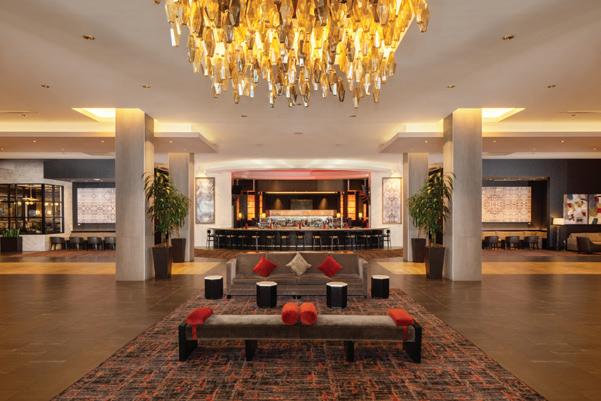
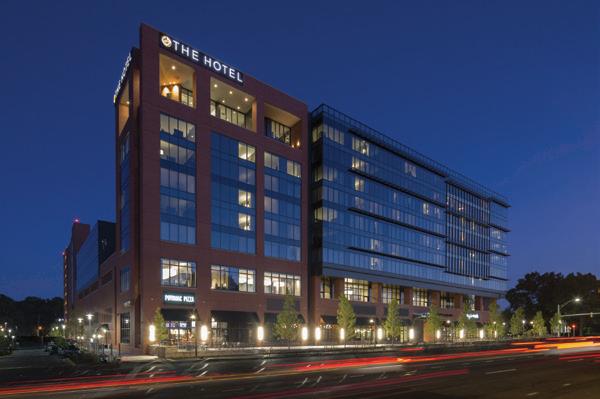
The Hotel at the University of Maryland is a AAA Four-Diamond hotel that combines beautiful accommodations with exceptional amenities. Located across the street from the university’s main campus entrance,
The Hotel is the perfect location for Terrapins — from families sending their students off to school or celebrating their graduation to fans heading to the big game.
297 guest rooms with one king or two queen beds
Mini coolers, illy coffee machines, complimentary Wi-Fi and personal safes in every room
Indoor swimming pool and wellness area Fully equipped fitness center
GrillMarX offers you a casual, upscale dining experience, serving hickory-grilled, hand-cut steaks, a variety of fresh seafood and uniquely crafted cocktails.
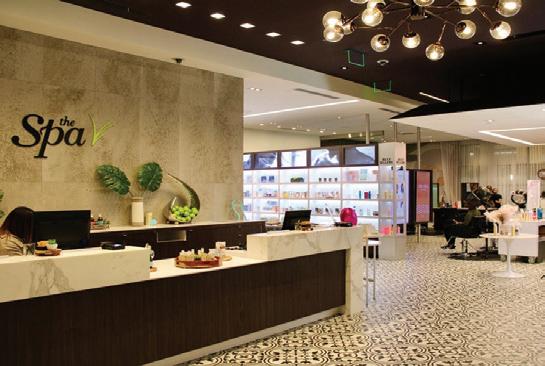
The Spa, College Park's only boutique spa, offering massages, facials, nails and waxing
Hair + Space, a premier blowdry and beauty bar, offering a wide range of salon services
’n Grinds, home to the area’s best New York
made on site every morning, offers quick, made-to-order breakfast and lunch.
The Lobby Bar and four unique restaurants
Overnight parking available in our gated garage t Metro, campus, and three-mile
Potomac Pizza offers fresh, delicious traditional and specialty pizzas, sandwiches, classic Italian dishes, salads and more.


At Iron Rooster, where the chicken is fried and the biscuits come with gravy, you can enjoy all-day breakfast, lunch or supper.
The Hotel at the University of Maryland | 7777 Baltimore Avenue, College Park, MD 20740 301.277.7777 | TheHotelUMD.com
By Amelia Twyman I Assistantnewseditor,highereducationreporter
The University Senate is one of the largest governing bodies at the University of Maryland with nearly 240 members, including peer-elected students, faculty and staff.
The senate aims to review proposals that reflect this university’s core values and regularly review existing policies, according to the senate’s website. The policies span topics such as university finances to social climate, the website read.
“The senate allows a place for all the concerns of the university to come together,” senate chair Jordan Sly said.
“Through the function of shared governance, everyone’s voices can be heard in one way or another.”
The Diamondback spoke with three senators to understand the history of the body as well as its structure and processes.
The senate first assembled in 1919, but was not officially recognized until 1955, according to university archives.
In the 1970s, the senate expanded to include undergraduate students, graduate students and staff.
As of March 2025, the senate has 239 members, consisting of: -153 faculty -25 staff -10 graduate students -29 undergraduate students -15 deans
-Seven single-member representatives
For most groups, senate seats are allocated based on the size of each represented body. Graduate students are represented by 10 at-large seats, with at most two senators from the same college, while university deans hold their seats by default.
Faculty and undergraduate student seats are further distributed between the university’s respective colleges and schools as follows:
-Tenured and tenure track faculty have one seat for every 15 eligible faculty members.
-Professional track faculty get one seat for every 30 eligible faculty members.
-Undergraduate students have one seat for every 1,000 undergraduates.
Staff get one seat for every 200 faculty members in the exempt staff from colleges, exempt staff from divisions, non-exempt staff from colleges and nonexempt staff from divisions categories.
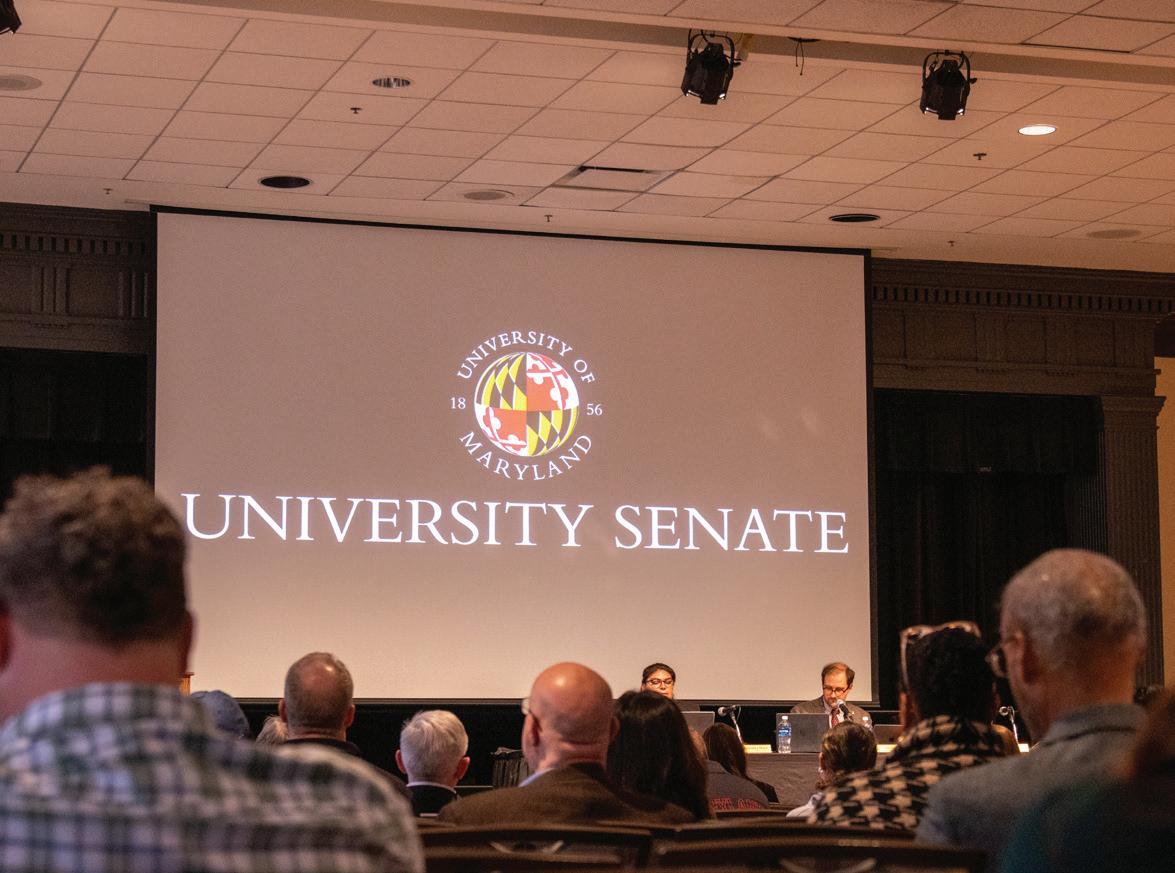
Senate elections take place annually, typically from January through March, according to its election page.
People interested in running for a seat can submit their name with a statement explaining why they are qualified for the position to the senate’s website for review.
If approved, the candidates’ names are added to an electronic ballot that is sent out to everyone within their respective constituency.
Faculty and staff senators can serve on the senate for three years, while student and single-member representatives serve for one year. Student and single-member representative seats can also be renewed for three consecutive years, according to the senate website.
Conell Brandner, an undergraduate student senator representing the architecture, planning and preservation school, said he ran for his school’s senate seat because he wanted to become more involved with campus activities as a commuter from Calvert County.
“I feel a lot more connected to the university [now],” the senior architecture major said. “[I feel] more than just a student and just being within the system.”
The entire senate meets about once a month, normally alternating between Wednesdays and Thursdays from 3:15 to 5 p.m. A majority of meetings are held on Zoom, except for when university president Darryll Pines presents deliver his State of the Campus address in Stamp Student Union’s Colony Ballroom.
Meetings are also open to the public.
There are 10 standing and three active elected committees in the senate.
Standing committees consist of senators and volunteers who serve one to two-year terms. Senate leaders
assign committee members proposals to evaluate and revise based on their specialized area of focus.
This university’s standing committees include the equity, diversity and inclusion committee and the student conduct committee.
“Having these committees in an organizational process to refer different matters to, as with any governing body, helps to concentrate the expertise of folks,” M Pease, a counseling psychology doctoral student and at-large senator who represents graduate student constituencies, said.
Specific dates, times and locations for committee meetings can be found on the senate website’s events calendar.
The senate also has three active elected committees — the executive committee, the committee on committees and the nominations committee. These committees, whose members are elected by other senators, primarily oversee senate operations.
The Senate Executive Committee is made up of the senate chair, chair-elect and 13 additional voting senators. This university’s president, senior vice president and provost are also non-voting members of the committee.
The executive committee sets meeting agendas, decides which committee should review a specific proposal and handles the implementation of approved policies according to the senate’s website.
Sly, the head of the executive committee, said his job is to facilitate senate meetings to ensure they are run fair and smoothly.
Any campus community member can submit a proposal to the senate, according to its website.
After it is submitted, the proposal goes through a thorough legislative process before it is approved and becomes official policy.
“Because we are careful and deliberative in our processes … it can take a long time,” Sly said. “But that doesn’t mean nothing’s happening. There’s a lot going on behind the scenes.”
First, senate leaders review the proposal to ensure it falls under the senate’s sphere of influence and contains enough detail for discussion.
The executive committee then sends the proposal to a specific standing committee or forms a temporary special committee or task force for further review.
After discussion, the respective committee sends the revised proposal back to the executive committee, whose members decide if it is ready to appear on the senate floor for consideration.
When a proposal is sent to the senate floor, its championing committee, task force or special order gives a presentation outlining its recommendations. Then, senators vote to either reject or approve it. A majority vote is required to pass a piece of legislation.
If approved, it is sent to Pines for final assessment, since he maintains the power to modify, pass or reject any proposal, according to the senate website.
In some cases, a proposal may be sent to the university system Board of Regents for further consideration.
At any point during the senate’s legislative process, a proposal can be sent back to its reviewing committee for more work and discussion before advancing onto the next step.
“Like any sort of large institutional body … [the senate] certainly has its flaws and has its limitations,” Pease said. “At the same time, I think I’m grateful for the opportunities and connections that I was able to build through my engagement.”
By Pera Onal I News editor
When video footage showed one of the Campus Farm’s pregnant horses trot around her pen late at night, Amy Burk rushed from her home and alerted her students that this year’s first foal was on its way.
The University of Maryland’s equine reproductive management class, taught by Burk, was in charge of caring for two broodmares, or pregnant thoroughbred horses, and helping birth their foals this semester. That morning, Charm — this year’s first foal — was born.
“We are working like a welloiled machine to manage these
broodmares,” the animal and avian sciences professor said. “That takes a lot of time and effort, and students always rise to the challenge.”
Charm was born over spring break in mid-March. The second foal, Poppy, was born last week.
During both births, students helped Burk monitor the horses and deliver the foals. Students help the foals stand, give them medication and assist them in nursing within the first 36 hours of birth, according to teaching assistant Lilliana Sonpar.
Students also test the calcium and pH levels of the broodmare’s milk
and track changes in its physical appearance to determine when it will give birth, the junior animal science major added.
The first broodmare gave birth about two weeks early, while the other was about two weeks late, according to Sonpar. Almost every student in last semester’s class was present for Poppy’s birth, she added.
“With the class, we’ve all shared this emotional roller coaster of waiting for this horse to give birth,” Sonpar said. “To see the joy that people experience with horses is just my favorite thing.”
Burk said the horses started to give

birth earlier in the mornings, when the surrounding area is more quiet, due to the increase in buildings and students on North Campus in recent years.
Some students and TAs, like Katie Sakai, volunteered to stay on campus during spring break to be ready when Charm arrived.
The junior animal science major, who is an out-of-state student from California, got a call from Burk at about 2 a.m. the day of Charm’s birth telling her to get to the farm as soon as she could.
As a TA, Sakai spent almost every day at the farm during the break to help students navigate their shifts.
“[The class] is a really nice way to sort of get a little bit of experience, sort of dip your toe in the pond,” Sakai said. “It’s been a lot of fun, and the babies are adorable.”
Burk said she helped rebuild the equine studies program in the early 2000s. The department had a breeding program from 2014 to 2019 and later
switched to offer foaling services to private owners, according to Burk.
Students in equine reproductive management are required to work shifts at the Campus Farm, along with attending class lectures. This allows them to study horse behavior firsthand, Burk said.
This exposure to the different animals through the farm allows students to determine whether they are serious about working in a handson field, Burk said.
Senior animal science major Giselle Blanco registered for the equine reproductive class because of the hands-on experience it offered. Blanco, who plans to apply to veterinary school, said the class has shifted her goal from becoming a small animal vet to also becoming an equine vet.
She said she appreciates the “nitty gritty” work the class requires and feels that it has prepared her for working in the field.
Though the days leading up to a birth are chaotic and exhausting, the rewarding outcome outweighs the stress, she said.
“It’s, like, so surreal,” Blanco said. “You just stood there and watched a baby come out, take its first breaths, stand for the first time, nurse for the first time.”
As the program’s undergraduate director, Burk also teaches other equine studies classes. But she said teaching the equine reproductive class allows her to connect with her students on another level.
Between their shared group chat and overnight shifts at the farm, she said she got to see their direct effort as they save animals’ lives.
“This is the one class that I work with the students so much that I really get to know about them,” Burk said. “I’ve just come to admire their dedication so much.”


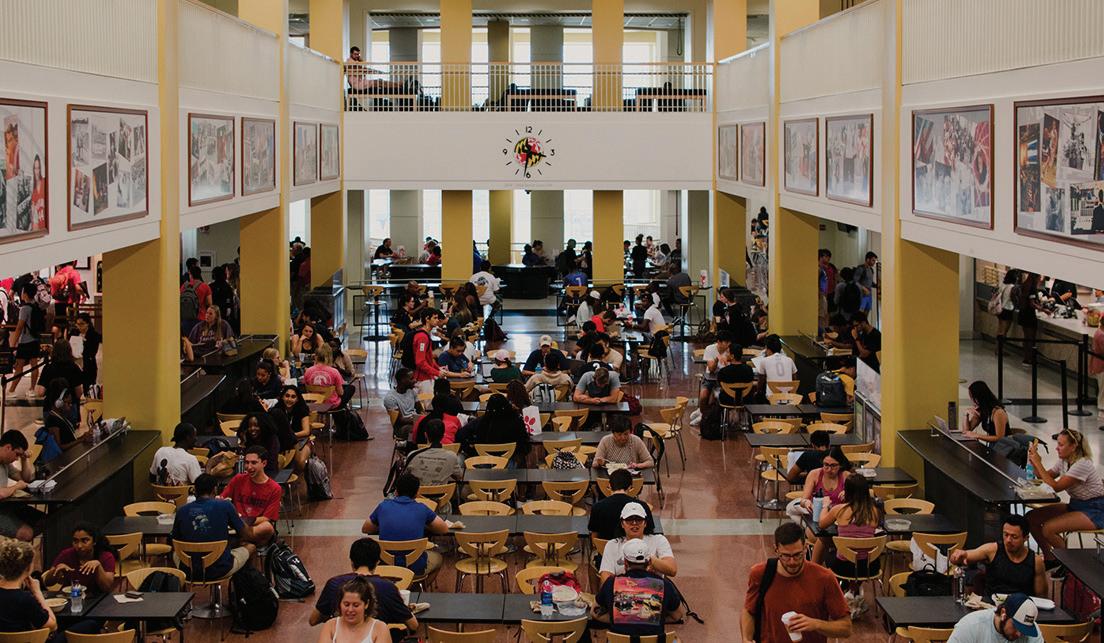
Stamp Student Union is the main hub on campus for grabbing a bite if you’re not interested in eating at one of the dining halls.
The main food court includes options from Qdoba to Union Pizza to Subway, as well as the ever-popular — and ever-busy — Chick-fil-A. Venturing out of the main food court, you can find a cafe serving Starbucks coffee on the next floor, and the much-anticipated Panera Bread above that.
There’s also prepackaged food and drink available in the Union Shop, located just outside the food court. If you’re just looking for a quick bite or want something to bring back to your dorm, the shop offers standard gas-station fare like fresh sandwiches and fruit cups alongside Pop-Tarts, packets of ramen and a variety of bottled drinks.
But the most iconic location in Stamp is the ice cream counter Maryland Dairy, offering up custom flavors named after some of this university’s coaches as well as classic favorites. You can also grab one of the Dairy’s sundaes, rootbeer floats or milkshakes made with inhouse flavors.
There’s plenty of grab-and-go options in various buildings around campus, too. Most cafes, such as Applause in The Clarice Smith Performing Arts Center and Sneaker’s inside of Eppley Recreation Center, offer smaller fare like coffee and tea drinks, smoothies and prepackaged snacks. Each cafe has something a little different to offer — you can even find boba tea inside Samovar at H.J. Patterson Hall.
The farmers market at Tawes Plaza is in full swing each Wednesday from 11 a.m. to 2 p.m. until midNovember. Vendors can change at each market, but there is generally a variety of produce, meat, eggs and pastries to choose from. Some specialty items, such as kettle corn, pickled vegetables and homemade pot pies have also been sold at the market in years past.
- Chick-fil-A
- Hibachi San
- Maryland Dairy
- Moby Freestyle
- Panda Express
- Panera Bread
- Qdoba
- Subway
- The Coffee Bar
- Union Pizza
- Applause (The Clarice Smith Performing Arts Center)
- Breakpoint (The Iribe Center)
- The Coffee Bar (Stamp Student Union)
- Creative Commons (Tawes Hall)
- E+M Cafe (Kirwan Food Court)
- Food for Thought (The Edward St. John Learning and Teaching Center)
- Footnotes (McKeldin Library)
- IDEA Central (The IDEA Factory)
- Quantum (The Physical Sciences Complex)
- Rudy’s (Van Munching Hall)
- Samovar (H.J. Patterson Hall)
- Sneaker’s (Eppley Recreation Center)
By Maxine Poe-Jensen I Diversionsreporter Updated by Diamondback Staff
Nothing beats a classic bagel sandwich to start your day and there’s no shortage of bagels at University of Maryland’s dining halls. Take your choice of plain, everything or sesame bagel, and toast it. Add a fried egg, bacon strips and hash browns on top to create a breakfast sandwich that could rival those from Dunkin’ or McDonald’s.
The Mexican fast food chain is a college favorite, and you don’t have to go outside of your meal plan to eat a customizable bowl when all the ingredients can be found right inside the dining halls. Fill a bowl with white rice and choose your protein — chopped up chicken thighs or shredded beef are common in the dining halls. Load the bowl up with toppings such as salsa, shredded lettuce, cheese or even corn salad that is mixed with cotija cheese. If you’ve hit the dining hall on the right day, you could have the option to pair the bowl with tortilla chips, guacamole or nacho cheese.

Loaded yogurt bowls are a healthy, easy way to get a balanced breakfast. Choose either Greek or flavored yogurt, sometimes it’s blueberry or vanilla, and top it with granola and fruit found at the salad bar area. Beyond the standard berries, adding syrupy pineapple drizzle is an easy way to flavor the plain yogurt. For extra goodness, add some honey from the drink station and sprinkle a dash of cinnamon for antioxidant properties. Asian lettuce salad
If you’re more in the mood for a leafy lunch or dinner, make these deconstructed Asian lettuce wraps. Heap romaine or iceberg lettuce onto a plate and add shredded carrots, cucumbers and shelled edamame. You can also add fried wonton strips, bean sprouts and any of the sauces found at the Mongolian Grills to level up this Asian-inspired meal.
For a sweet treat to close out your newly elevated dining experience, take some of the comically large strawberries and coat them in hot chocolate sauce. While the chocolate sauce is more like hot fudge at the South Campus Dining Hall, you can still get a treat that isn’t just the standard rotation of cookies and cakes found at the regular dessert tables. Don’t be scared to make your own fun combos!