Unlock your learning with UNISON College
Building branches
LEARN

Welcome to ULearn
A UNISON College publication.
As you can see in this edition of ULearn, learning and training can – and does – play a big part in turning UNISON into an incredible force for change.
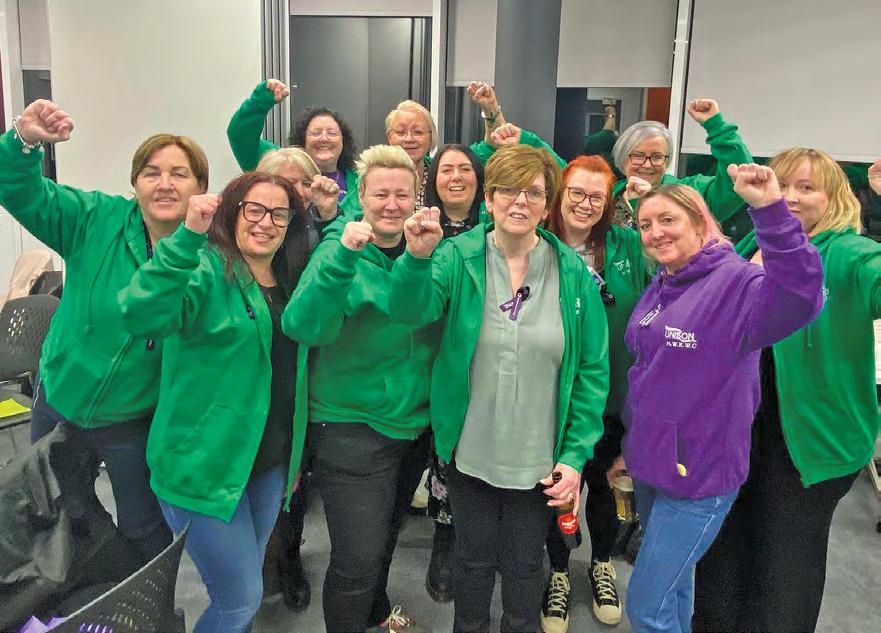
Women are heading up campaigns in their branches after taking part in our leadership development courses.
Black members are challenging racism in the workplace with the combined help of our learning and equality teams.
Trans members who have delivered our ground-breaking Trans Ally Training sessions are getting more active not only in our our LGBT+ self-organised groups but in their own branches and regions, too.
As the first lay member in UNISON’s history to become general secretary, I want our
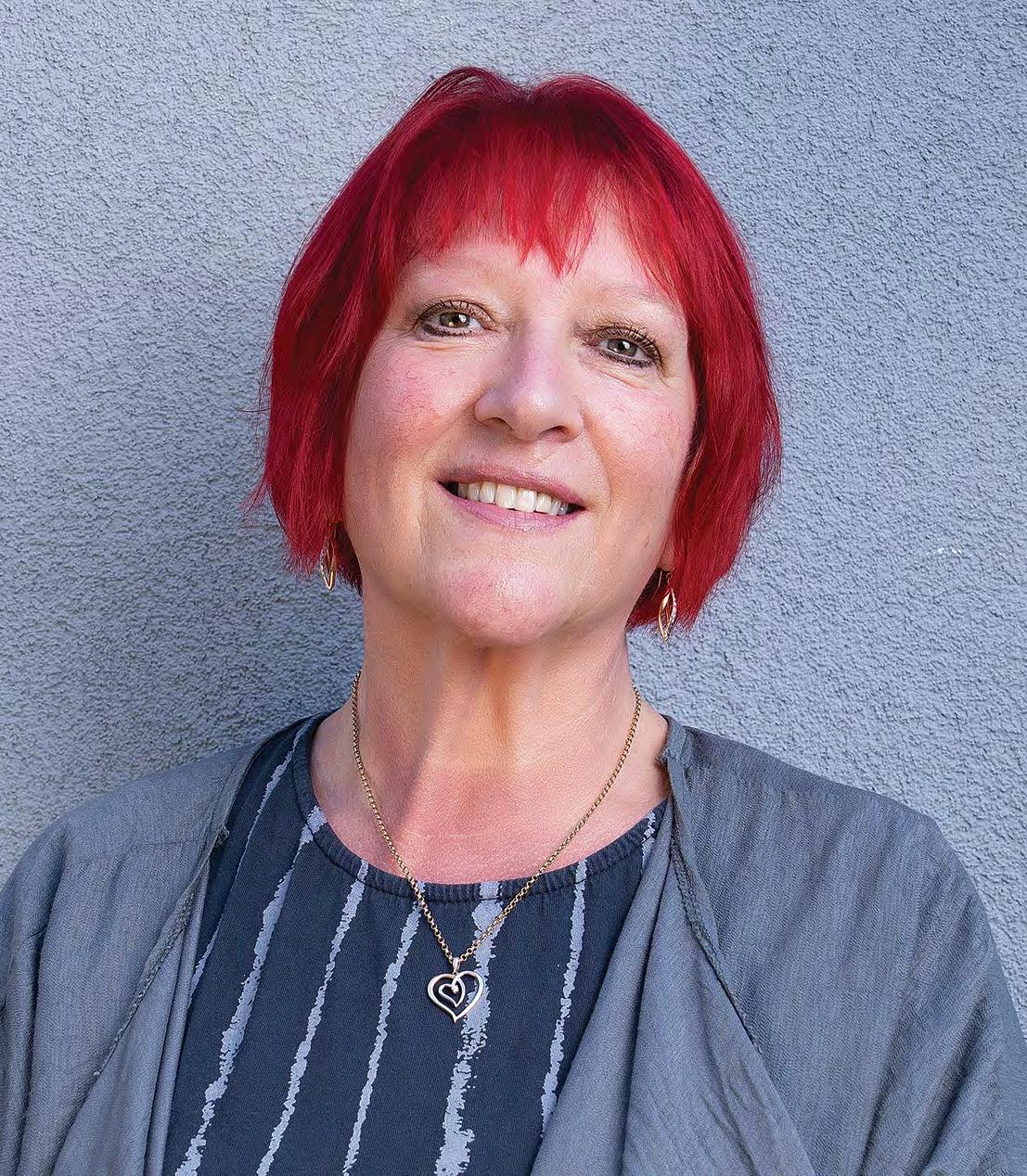
I want our union to help more members gain the confidence and the skills to raise their voices in the workplace and our union
union to help more members gain the confidence and the skills to raise their voices in the
workplace and our union.
And, as this year’s ULearn shows, the learning and training we offer everyone through UNISON College is helping many of you do just that.
I hope many more take inspiration from the stories in the magazine and explore the wide range of learning and training opportunities on offer.
Andrea Egan General Secretary
Explore the power of learning ✱

This new edition of ULearn focuses on the power of learning to help us organise a stronger UNISON, better able to meet the challenges we face in our workplaces and throughout society.
We’re building stronger branches by training experienced stewards to mentor new activists. Reaching care workers through employability skills sessions. Helping women discover their inner leaders.
We’re also showing members how to challenge far-right rhetoric at work. Encouraging more people to join us in action on the climate crisis. Helping retired members revive their local groups.
UNISON College exists to empower members and activists to move on in our union, the workplace and their personal lives.
I hope you use this edition of ULearn to find out what UNISON College could do for you.
Sarah Hayes, Head of UNISON Learning and Organising

Getting creative with organising
Organising craft workshops can encourage more people to become active as union learning reps. And those ULRs can go on to help persuade their organisations to sign UNISON charters – as happened in the East Midlands.
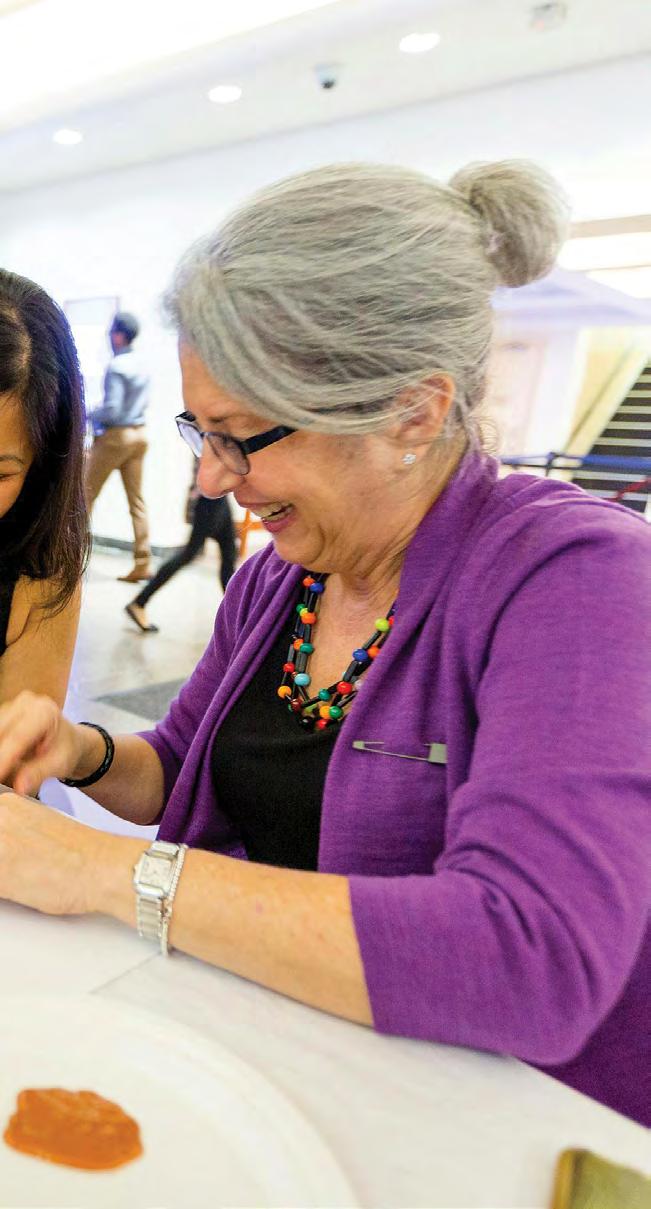
Craft workshops create union organising opportunities. Sounds like a stretch? But that’s what happened when Derbyshire branch union learning rep (ULR) Jayne Barry ran a Christmas
Emma enjoyed it so much, she decided to become a ULR herself afterwards
What opportunities do you want to explore? There’s more useful information on the UNISON College website: learning.unison. org.uk/ memberlearning/
SCAN HERE
Because it was open to all the branches in the county, Emma Round from North Derbyshire Healthcare branch was able to take part.
And Emma enjoyed it so much, she decided to become a ULR herself afterwards.
ULR Forum, Emma later stepped up to the role of learning coordinator in her branch.
Then two years ago, as a branch delegate to UNISON’s national health care service group conference, Emma spotted a fringe meeting launching the union’s new Admin Charter for Change.
The charter aims to convince NHS employers to give admin and clerical staff the recognition and the opportunities they deserve.
When Emma returned to work at Derbyshire Community Health Services NHS Foundation Trust (DCHS), she contacted the Trust about the Charter, and six months later the chief executive and chair signed a customised version they’d agreed with the branch (full story in last year’s ULearn).
organised gave people the chance to try papercrafting, another learning activity that members across the county say has helped them look after their mental health and wellbeing.
Derby and Burton Hospitals branch member Violet Cooper thought it was one of the best workshops she’d ever done. So she’s now become a ULR in her branch, too.
This virtuous circle of learning and organising was one of the examples regional learning and development organiser Gavin McCann shared with the close to 100 activists from across the East Midlands who took part in the first regional organising convention last September.
After organising workshops requested by her members and taking part in the Derbyshire
So Emma’s employer is now committed to raising the status of admin staff, which only happened because she attended the craft workshop that launched her activist journey – a journey whose next stop for Emma is taking part in the Regional Leadership School this year.
And the payoffs don’t stop there.
One of the recent crossbranch workshops Emma wreath-making workshop in 2019.
“We identified the issues branches face on a day-to-day basis, I went through some examples of activities organised through the county ULR forums, and then we looked at how learning can meet the difficulties facing branches,” he says.
“It’s not going to be a magic bullet, but it’s about engagement, and Emma has helped secure the Admin Charter at her work and Violet has now become a ULR, and that all starts with Jayne’s wreath workshop.”
Pathways to President ✱
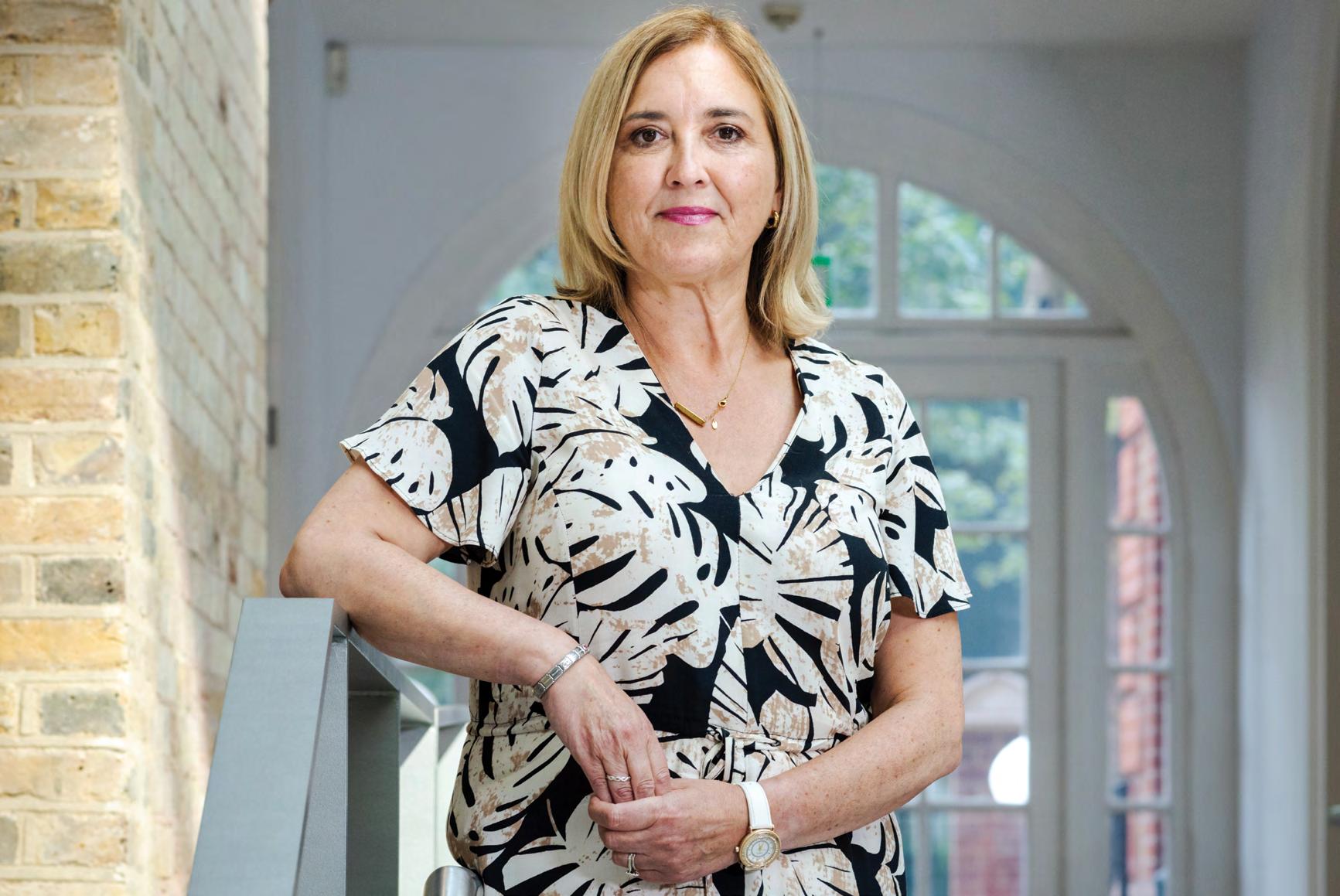

Schools worker Catherine McKenna gained the confidence and skills to become a steward, branch secretary and now President by taking all the learning opportunities she could through UNISON.
When Catherine McKenna turned up at her first UNISON course 10 years ago, she was far from the confident leader many members have got to know since she was elected President last year.
The course was Pathways into UNISON, the twoday residential designed to encourage women to explore how they could play bigger roles in the union.
Area organiser Susan Neill had encouraged Catherine
to enrol, but she still wasn’t sure she was up for what the course entailed when the first session began.
Born and raised in West Belfast, Catherine had had to leave school at the earliest opportunity to help support her family. And even though she’d joined UNISON as soon as she started working part-time in a school kitchen, she only had a vague idea of how the union worked back then.
It was Pathways tutor
Pathways lit a spark in me, so I did every UNISON course in the book that would help me succeed in my role as a steward
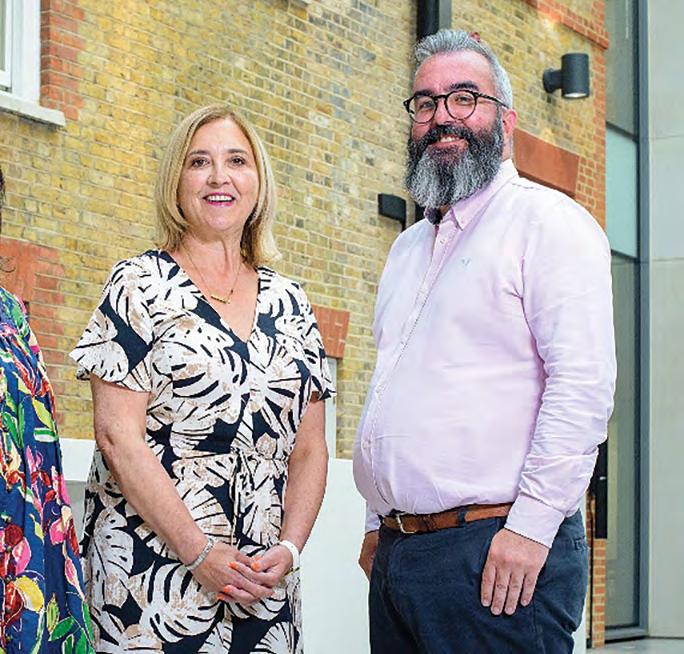
Catherine McKenna (centre) with her presidential team, Debbie Rowden and James Anthony
Pamela Dooley – the former head of organising in Northern Ireland, and a union legend throughout the region – who convinced her she was in the right place.
“I was very shy back then, but Pamela told me that by the end of the course I’d be able to stand up and speak in front of everyone – and I did!” Catherine says.
“Pathways lit a spark in me, so I did every UNISON course in the book that would help me succeed in my role as a steward: I really went full throttle, and that’s what I do all the time!”
After progressing from steward to branch secretary to branch chair, Catherine was encouraged by area organiser Danielle McCusker to take part in a leadership course organised by the Irish Congress of Trade Unions (ICTU).
Over six weeks in early
2020, just before the Covid lockdowns, that learning opportunity turned out to be another life-changing experience.
“I went to that course in Dublin and there were general secretaries and people like that and I had a bit of imposter syndrome,” Catherine says.
“But I was able to sit round the table and talk – and that particular course was when I realised I did know what I was talking about, I wasn’t an imposter.”
In 2021, the year after completing the leadership course, Catherine first won election to the National Executive Council (NEC).
Just last year, she was elected unopposed for another two-year term to the seat reserved for Northern Ireland’s low-paid workers.
That same year she also completed her training to become a lay tutor, which means she’s now delivering courses like Pathways into UNISON and helping more women realise they have what it takes to progress as far as they want to go in the union.
“I was at my Regional Council recently and I was looking round at all these new activists that we’d trained, and I felt like a proud parent,” she says. “I was just so delighted they
were actually participating in the structures of our region.”
As her year in office draws to a close, Catherine is helping develop a training package designed to give low-paid women the skills and self-belief to take up more of the seats on UNISON committees reserved for low-paid workers.
“The idea is to have a training package to give these women the confidence to fill these seats in all of our structures,” Catherine says.
“We’re setting up all our meetings at the minute, so it’s not going to be all done in this presidential year, it’s going to be longer-term, but that will be a legacy project.”
Catherine hopes that members reading this interview will be inspired to look into how they could get more active and develop themselves through UNISON College.
“I did another interview soon after I became President and someone who’d had similar experiences growing up contacted me after reading it to say they wanted to become a steward,” she says.
“I’d be delighted if someone reading this thinks, ‘I want to get more involved, I want to get some training.’ I think that would be amazing – especially if that person was a low-paid woman!”
UNISON learning and development officer Simon Albrow (left) and Fenland Council chief executive Paul Medd celebrate signing the learning charter
Training boost for district council staff as they prepare for new unitary authorities in Eastern Region.
Learning charters lead the way
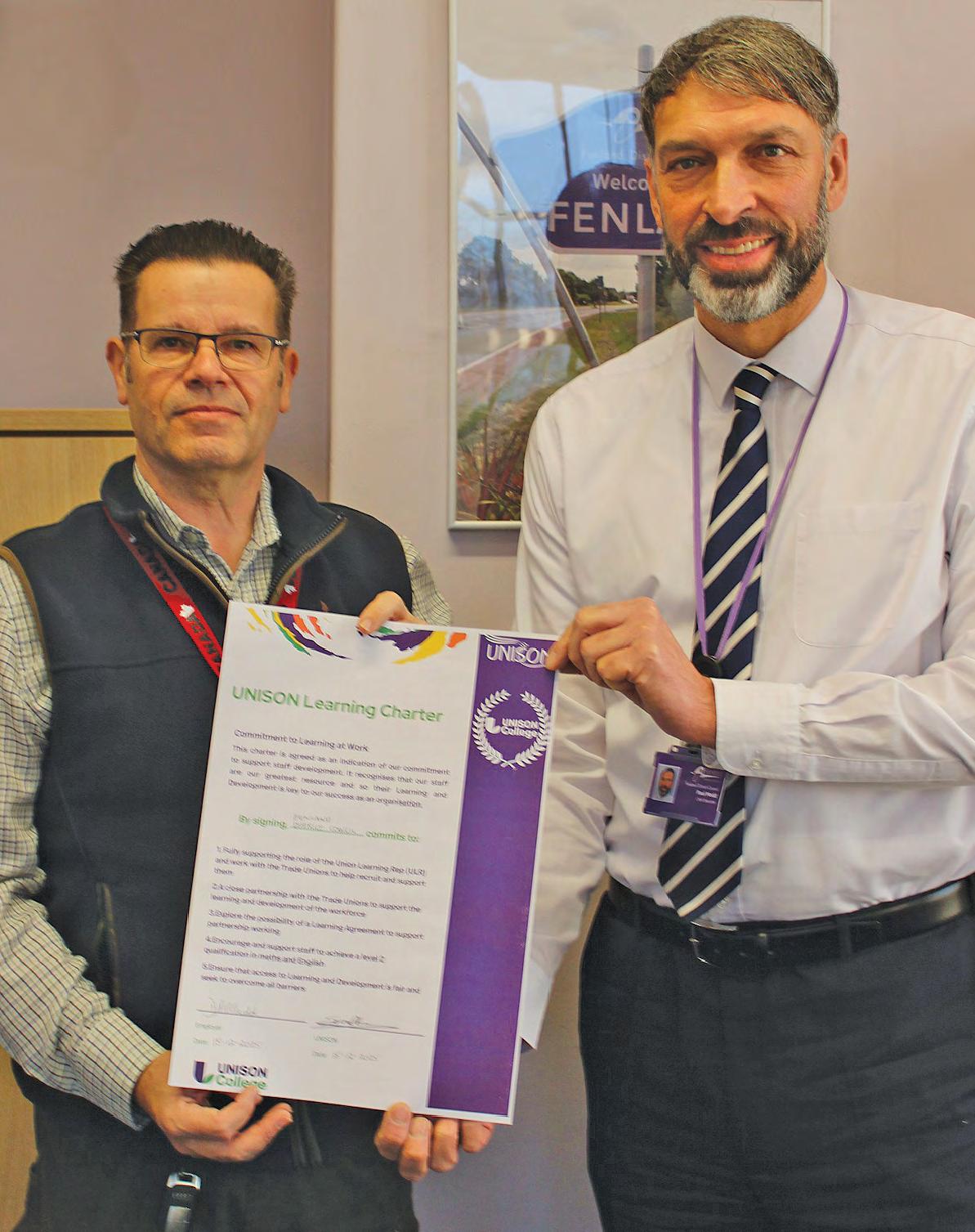
Fenland District Council staff can access more learning and development opportunities now that the council has formally endorsed the UNISON learning charter.
This means that staff who hold a UNISON membership card now have the support of the local authority to access the hundreds of learning opportunities available through UNISON College.
Staff who hold a UNISON membership card can now access the hundreds of learning opportunities
Signed last December, the five-point charter commits the council to:
✱ fully supporting the role of the union learning rep (ULR)
✱ supporting workforce development through close union partnership
✱ exploring a learning agreement to support partnership working
✱ supporting staff to achieve Level 2 maths and English qualifications
✱ ensuring fair access to learning and development.
The council’s formal endorsement of the charter couldn’t have come at a better time for staff.
It means they’re now in a much better position to level up their skills before the existing borough, district and county councils are replaced with new unitary authorities by 2028.
“Local government reorganisation is absolutely enormous in Eastern region, where we’re going to have this smaller number of unitary councils,” says Eastern regional organiser Sam Earl, whose portfolio includes Fenland District branch.
“Developing the skills and accessing the training they’ll need in order to move into these new local authorities will be a hook for people to think, ‘I’ll join UNISON to access that learning’.”
The council already has a track record of supporting learning and development for staff, explains Fenland District branch learning and development officer Simon Albrow.
“The council is very good if someone wants to take a course to better themselves – they’re currently funding members of the refuse team through their HGV qualifications so they can
WHY SIGN A LEARNING CHARTER?
✱ Learning charters have been proved to work well when introducing your employer to the benefits of UNISON College.
✱ They can be a first step towards a more detailed learning agreement.
✱ They offer both sides the chance to show their shared commitment to help staff access learning opportunities to help them develop in the workplace.
✱ They also offer the chance to set up a partnership between a branch and an employer that does not yet recognise the union.
If we can get staff to take up learning, they could put themselves in a stronger position
become drivers,” he says.
“So with what our council will do and what UNISON can provide, we’re increasing the opportunities for everyone.”
Like Sam, Simon is hoping that the joint endorsement of the learning charter will encourage staff to access learning to prepare for the upcoming challenges of local government reorganisation in the region.
“My train of thought is that if we can get staff to take up learning, they could put themselves in a
✱ Search
‘learning charters’ on the UNISON website to download your copy of our model learning charter. GET CONNECTED
stronger position by taking UNISON courses,” he says.
Simon also thinks that more staff could join UNISON in the face of the uncertainty created by the projected creation of the new unitary authorities in the region.
“Everyone is anxious because they don’t know what the future looks like in 2028, and nobody likes uncertainty,” he says.
“But what we’re saying is that UNISON has got this huge library of training to offer people and we will fight your corner, protect your terms and conditions and look out for you when we go into the unitary authority as well.” ✱

Getting to grips with digital skills
Members in the West Midlands are learning their way round the key elements of Microsoft programs through the region’s expanding learning programmes.
West Midlands learners have been developing their digital skills thanks to the region’s expanding portfolio of courses exploring spreadsheets, presentations and word processing.
The well-established three levels of Excel courses remain very popular with members.
But Scottish-based provider Civicos Training and Communications have also this year added two half-day Excel courses that look in more detail at
a couple of the program’s most useful advanced tools.
“Excel has pretty much taken over the business world, and more people are realising that they need to get to grips with it,” says Civicos director John Robertson, who delivers a lot of the provider’s IT training himself.
Last year, the company began delivering Word courses at beginner and intermediate levels as well as a two-session course on Mastering PowerPoint.
“PowerPoint can be
quite a dry subject, so to keep it interesting we built the course around a quiz with about 20 questions that highlight the program’s various bells and whistles,” John says.
In addition to digital skills, Civicos also deliver a wide range of other courses to members, with sessions covering assertiveness, stress awareness, building confidence in young adults, and mindfulness.
“Since the Covid lockdown, courses around mental health and wellbeing have become popular, not just with union members,” John says.
“Something has definitely shifted in our working and social lives since 2020 and there’s a societal conversation to be had around that – who we are, where we're going and

how we do work.”
As well as talking to regional staff and union learning reps (ULRs) about how the regional learning programme could develop, John is always alert to what learners themselves are talking about in the sessions he runs.
“We build up a sort of mental picture of what is worrying them about their current skill levels and what skills they think they’ll need in the future,” he says.
“For instance, members are beginning to talk about Microsoft’s new product, Power BI, which turns data into visuals, so we are starting to think internally about developing
RAISING AWARENESS OF DIABETES
More than a dozen Newcastle City branch members expanded their understanding of diabetes by taking part in a half-day course earlier this year.
“We decided to run the training because it was requested by our members,” explains branch education co-ordinator Wendy Aitman.
“Diabetes affects so many people in their day-to- day lives, so we’re really onboard with any sort of awareness raising.”
Put in touch with an experienced provider suggested by Learning and Organising Services (LAOS), Wendy worked with them to finalise the content of the three-hour training.
“I have a level of knowledge of diabetes, but I still learned from the session,” says Wendy, who took part herself (as she always does when the branch runs new courses, so that she’s best placed to spread the message afterwards).
an introductory course.”
“I was interestedespecially in how low mood can affect diabetes, so that was my takeaway from the course,” she says. Feedback from the rest of the learners who took part overwhelminglywaspositive.
“This training was incredibly informative and delivered with great humour and skill by the facilitator, making sure that, while we learned an awful lot of detail, it never at any point felt commentedoverwhelming,” one.
“The course was very useful and clearly presented,” said another. “I now have a much better idea of how to make sure that I remain healthy and, if I become pre- diabetic, how to manage this through diet etc.”
To further help members expand their knowledge of the condition, the branch has also bought several books about diabetes that they can borrow as and when they need.
John always looks forward to the courses he delivers for West Midlands members.
“Most online training groups start out quiet, but the Midlands attendees definitely ‘thaw out’ quicker than most,” he says.
“By the second session attendees are usually gabbing away, which makes it much easier to discern what they are getting or not getting about the training.”
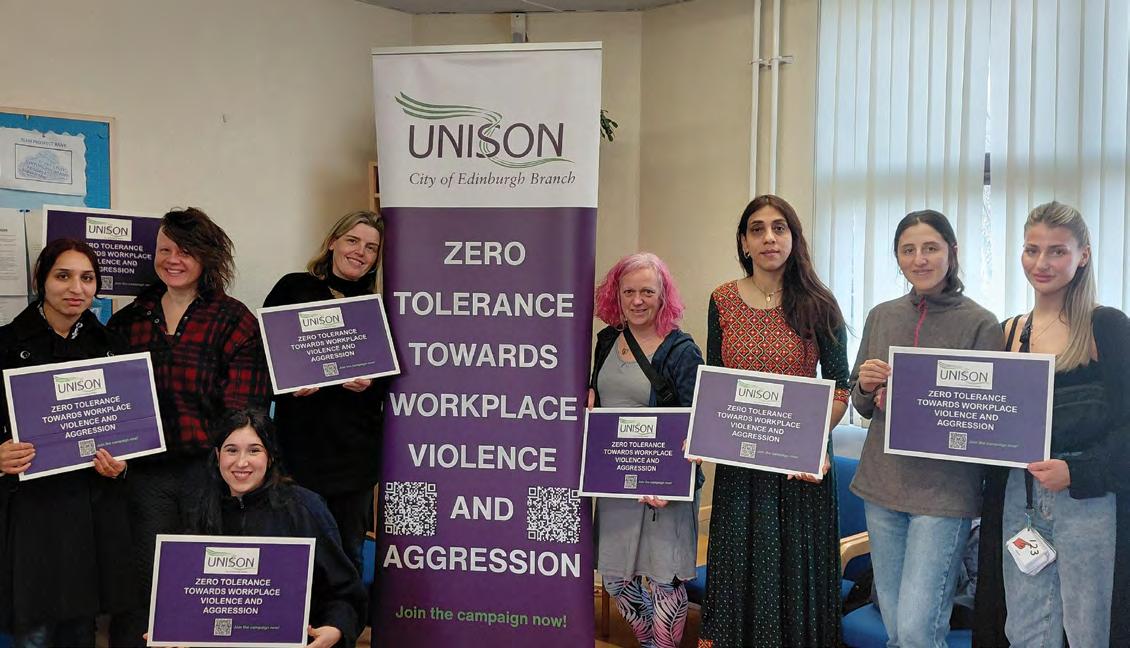
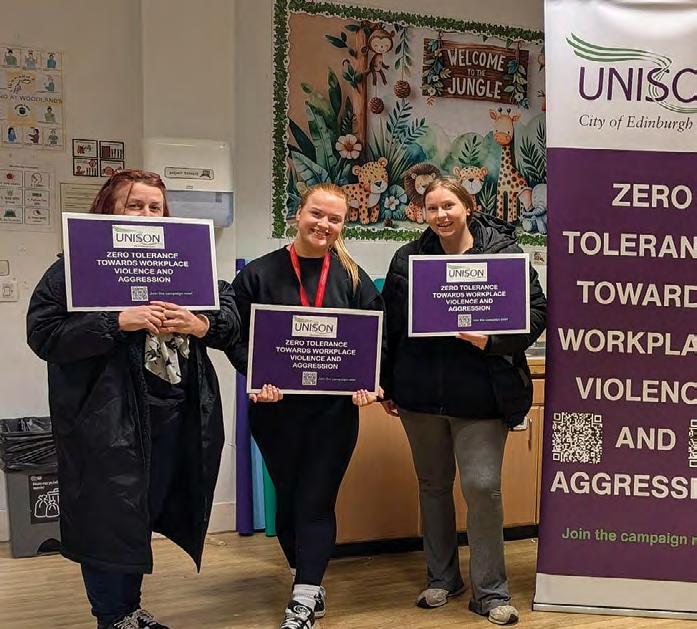
Helping women find their inner leaders
The confidence that Edinburgh rep Katrina Baird gained on the Women’s Leadership Development Programme is paying off for her members.
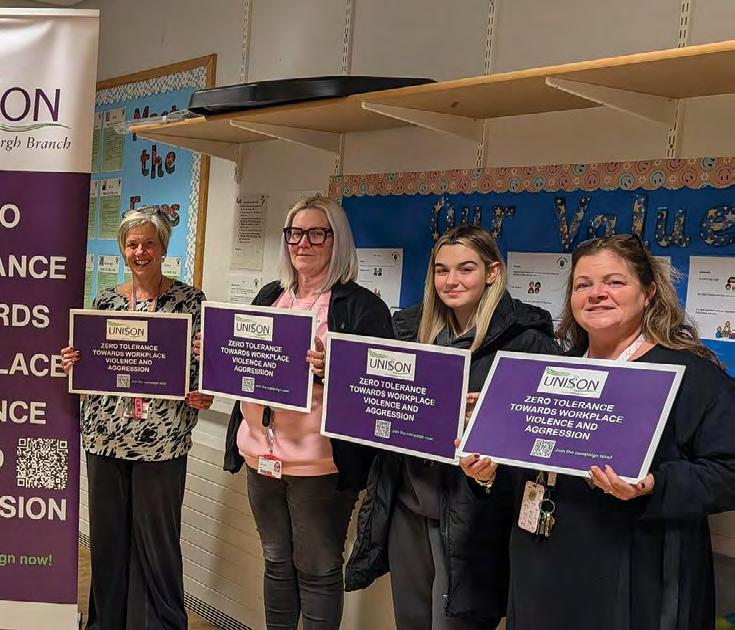
Katrina Baird is now leading the City of Edinburgh branch campaign to end workplace violence after expanding her confidence and skills on UNISON Scotland’s Women’s Leadership Development Programme.
“With fire in my belly and determination to highlight the unsafe working conditions of my colleagues across all local government services, I’m leading our campaign, Zero Tolerance Towards Workplace Violence and Aggression,” she says.
“I’m being interviewed on TV and in the local and national papers talking about violence and
aggression predominantly towards our female education support staff.”
As a pupil support assistant (the Scottish equivalent of teaching assistants in England and Wales), Katrina knows first-hand about the continuing rise in physical and verbal assaults against her co-workers.
Schools and nurseries account for 80 per cent of all violent incidents reported by Scottish councils, with schools staff bearing the brunt of them, according to the UNISON Scotland report, It’s Not Part of the Job, published last October. Katrina has become ever more active in her branch
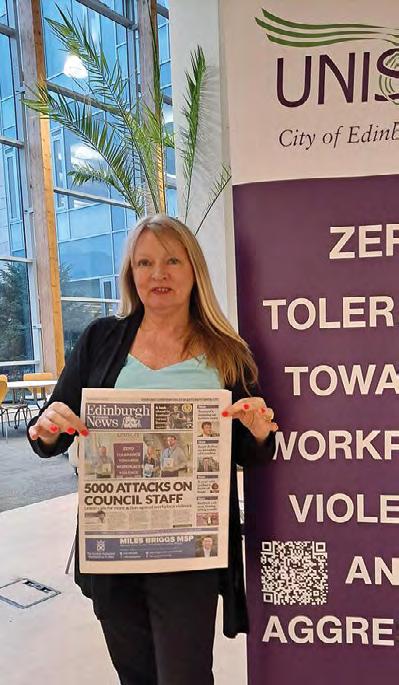
since the end of the 2023 schools staff pay strikes.
“I felt I really needed to get more involved with the union and stand up for our rights, so on the back of the strikes, I became a shop steward in my workplace,
The skills I learned through this incredible course have stood me in good stead
Katrina Baird (inset) displays newspaper coverage of the City of Edinburgh branch's campaign against workplace violence (top)
ENDING VIOLENCE AT WORK
✱ Search ‘Violence at Work’ on the UNISON website for more resources to support your campaigning.

then a health and safety rep and then and I was asked to come on board as a service conditions officer,” she says.
Every time she’s taken on a new role, she’s been able to take a course through UNISON College to learn the ropes.
“For me, knowledge is power, so UNISON College is fabulous and I cannot be more thankful for being able to do all these courses,”
she says.
The Women’s Leadership Development Programme features six in-person sessions to help participants develop their leadership skills and explore how they can influence change across UNISON and the wider trade union movement.
“The Women's Leadership Development Programme has changed my life,” she says. “I recommend this course to all UNISON women activists who want to make a difference and stand up for better working conditions, pay and health and safety at work.”
Regional Organiser (Education) Audrey Malloy and Susan Burns, UNISON Scotland lead for equalities, co-led the programme brilliantly, Katrina says. “They were two of the most amazing tutors ever – they turned that course into something very magical for me,” she says.
Taking part has massively boosted Katrina’s confidence and self-belief.
“I now go into meetings with the senior officers in
the council and I feel I’m on parity with them, rather than the minion!” she says.
This new-found selfconfidence is already getting results. “I’ve given three deputations, one to full council and two to the education committee, to keep the hospital-based social work team in place –and I’m really happy to say that’s exactly where they’re going to stay,” she says.
It’s also paying off when Katrina’s standing up for members facing disciplinary issues.
“The skills I learned through this incredible course have stood me in good stead when I’ve been representing our members. I had one member, who was a PSA like myself, and a single parent, who had been dismissed and I was able to help turn that case around,” she recalls.
“That went to appeal in the City Chambers, and we managed to get that person their job back – I was so happy for them and so thankful for this course.”
Katrina is encouraging more women to find their own inner leaders by taking part in future editions of the programme.
“I have been talking nonstop to women members about it, so hopefully we’re going to get a lot of people going to the next one this year,” she says. ✱
Developing Black members in Community
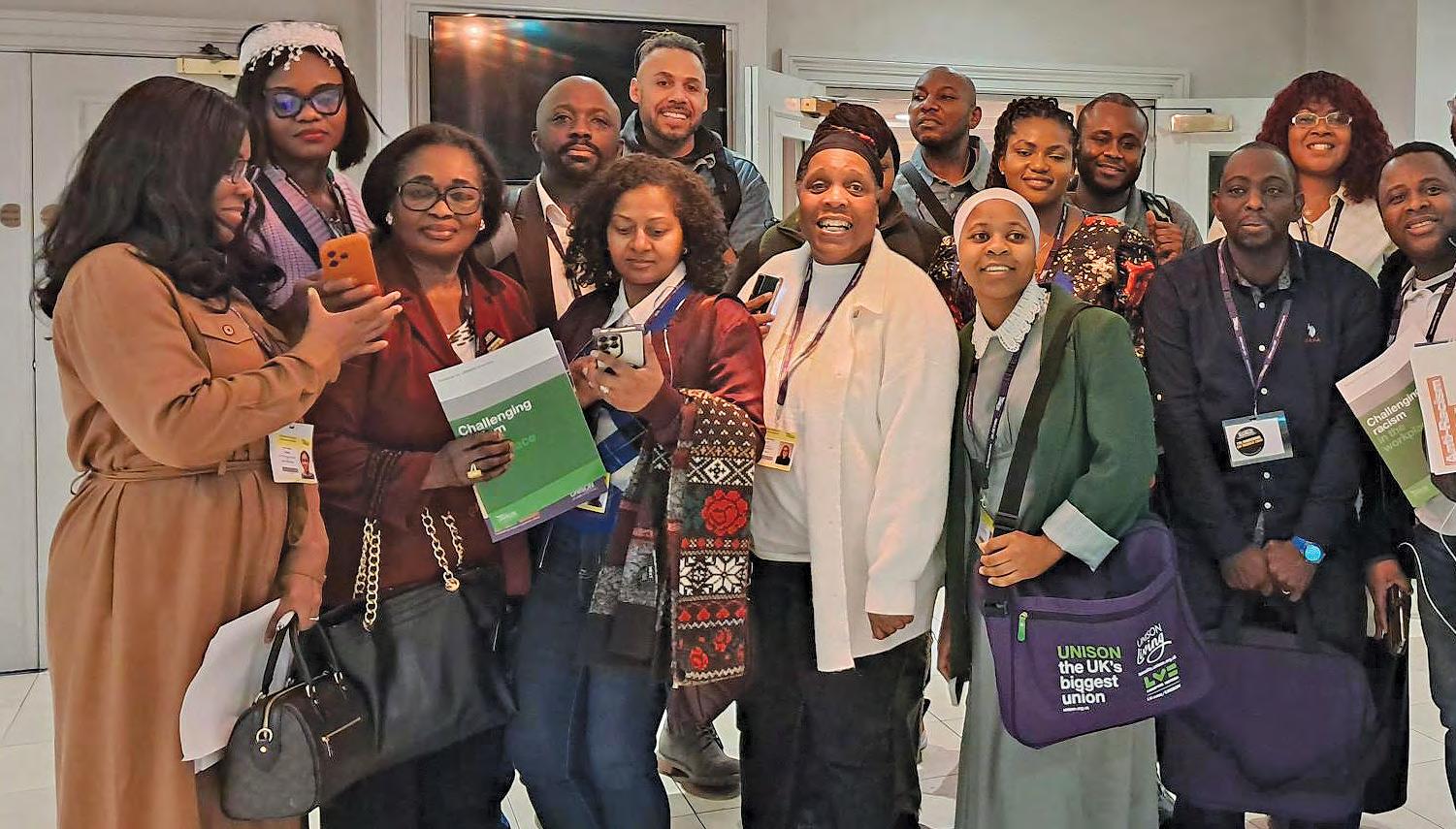
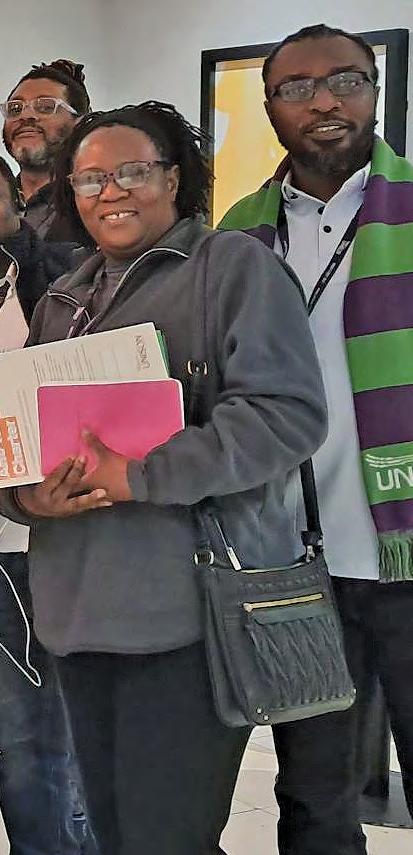
Black members at this year’s Community service group conference developed an action plan to dismantle the barriers they face to greater participation in union structures.
B lack members working for charities, housing associations and care providers discovered how to play bigger roles in UNISON during a workshop at this year’s Community service group conference.
More than 20 members took part in the workshop, which was co-created by
Learning and Organising Services (LAOS) and the National Black Members Committee (NBMC) in response to a motion at the previous service group conference.
The session was designed to create a strategy for Black member leadership development in the
FIND OUT MORE
✱ Use the search term ‘UNISON Anti-Racism Charter’ in your browser to find and download your copy of the Charter. ✱ Search Dismantling Barriers to Black Member Participation in Community on the UNISON website to download your copy of the report.
service group, which stretches across 7,000 different charities, housing associations and thirdsector care providers.
“We don't necessarily have recognition
agreements with all these employers and therefore getting time off to get involved with the union has been challenging,” says national officer James Randall.
In addition, the survey of Community Black members conducted earlier this year revealed many faced further barriers to greater participation, including:
✱ caring responsibilities
✱ other time commitments
✱ unfamiliarity with pathways into activism
✱ lack of contacts in the union.
That’s why James reached out to national learning & workforce development officer Oreleo Du Cran and national officer for Black members Lexine King to develop the training that was unveiled
at the conference.
The workshop aimed to help members identify the barriers to greater participation and develop action plans to overcome them, with a focus on UNISON’s Anti-Racism Charter.
The Charter aims to transform public service employers into explicitly anti-racist institutions by committing them to a 12-month programme that includes a high-profile race equality policy, antiracism training for all staff, and publication of ethnicity pay gap data.
“Training that’s delivered around the Anti-Racism Charter will hopefully encourage Black members to attend those sessions and better understand how they can get more active around getting the charter implemented, which will hopefully lead to increased participation within the structures,” James says.
The training was well attended and exceeded expectations, says Oreleo, who delivered the session at the conference.
“People were enthusiastic about overcoming the obstacles and left the session knowing they had the tools to challenge discrimination,” he says.
West Cheshire branch member Chinonso Gbule,
FIND OUT MORE
✱ Search Empowering Black Members in Community Workplaces Through Mentoring in UNISON on the UNISON website to download your copy of the report.
who works to support adults with learning disabilities, attended the training to find out more about how the union works.
“The main reason for taking part was wanting to know how things work in UNISON and what UNISON is doing to handle the issues people are facing,” he says.
“Because of the nature of the work I do, I barely have time to meet people like this so having a meeting point like this is essential for meeting new people, exchanging contacts and seeing what is happening outside my branch.”
Chinonso got exactly what he needed from the training, he says.
“I’ve been talking to people since I got back to tell them about my experience, and I’ve let my branch know the training was very insightful – this is something I wish to continue.” ✱

Helping you go green at work
You can gain the knowledge and skills to help your workplace cut its greenhouse gases by taking part in UNISON’s Year of Green Activity.
The Year of Green Activity is a 12-month programme that’s packed with opportunities for members and branches to connect, learn and take action on the climate crisis. The timetable includes
specific months dedicated to green activity in key sectors and self-organised groups and a series of lunchtime webinars.
Plus there’s a brand new climate basics e-learning module to help branches
✱ Search: ‘Year of Green Activity’ on the UNISON website to find out more. TAKE

✱ Use the search term ‘UNISON environment officer green rep role leaflet’ in your browser to download a copy of the Green Rep leaflet.

put together their own plans for the year.
“I think a lot of members care about climate change, but they think it’s a Greenpeace issue, not a UNISON issue,” explains policy officer Michelle Singleton.
“We want to get the message out there that it’s a trade union issue, and it's a particular issue for public service unions, which is why we’re getting more and more engaged and would like members to join us.”
The climate basics module launched at the beginning of the Year is a great place for members and branches to start, Michelle says.
“It’s a 35-minute presentation delivered by three different people, with a couple of videos embedded and a section at the end that asks what you’re going to do in your branch,” she says.
The module covers:
✱ climate change in a nutshell
✱ understanding some key terms (see sidebar)
✱ why climate change is core UNISON business
✱ individual and collective action
✱ the role of the environmental officer in UNISON.
Environmental officers represent members
WORKING TOWARDS A JUST TRANSITION
The UK is legally bound to balance the volume of planet-warming (‘greenhouse’) gases we pump into earth’s atmosphere by the amount we remove through initiatives like tree-planting schemes by 2050.
That balance is called ‘net zero’.
But we can’t repeat the mistakes made in the 1980s, when deindustrialisation policies destroyed millions of well-paid jobs and the communities around them.
Instead, we need a ‘just transition’ to a green economy, which means making sure we reach our net zero target without detriment to people's work andAndwellbeing. work towards that transition can’t wait, says policy officer Michelle Singleton. “If we’re to reach net zero by 2050, the majority of the work has to be done by 2030 – and that’s not very far away – so it’s imperative we help make changes now on a dramatic scale,” she says.
in discussions and negotiations with employers about their environmental policies and practices, while local green reps help deliver the union’s green policies on the ground.
“The main objective of the Year of Green Activity is to let our members know that we can support them on any level they want to in this work – as an active member, as a local green rep or as an environmental officer in their branch,” Michelle says.
The best way to find out more is to sign up to the newsletter via the Green
We can support our members on any level they want to in this work
UNISON webpage. “The newsletter is the gateway to the other activities throughout the year that we will lay on,” Michelle says.
“The newsletter doesn’t just tell you what we’ve done: it’s much more about how you can join in what we’re doing if you want to and are able to.” ✱

Local learning hubs delivering for activists
Running key activist courses in branches is paying dividends in Yorkshire & Humberside.
Training activists closer to where they live and work, using a mix of local organisers and lay tutors, is growing a new generation of activists better able to support each other and deliver for their members in Yorkshire & Humberside.
Development of the new model began in summer 2023, after every college in the region had walked away from trade union learning over the previous year.
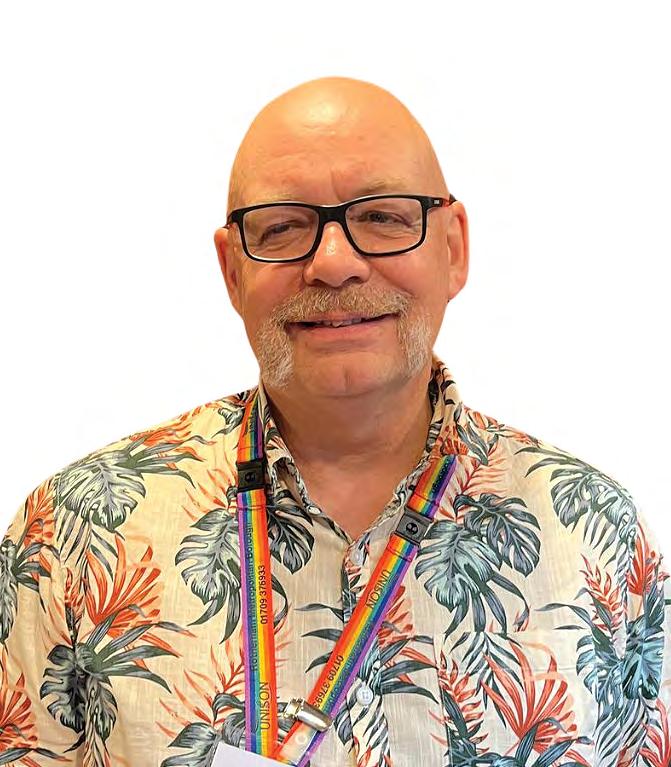
“This was a big problem for us in terms of capacity to deliver learning, but we now had the chance to take back control (to coin a phrase!) over our activist learning and an organising opportunity that we could build with,” explains regional organiser & regional education officer Dan Wood.
Dan and his team got to work on designing a plan that would enable them to deliver more activist training at local level without stretching finite
what was sustainable.
As a result, they have:
✱ set up local learning hubs in Sheffield, Hull, Grimsby and Northallerton, in addition to the regional centre in Leeds, covering all five counties in the region
✱ developed an initial cohort of lay tutors
✱ created a new pathway to keep activists together as they progress on their training journeys.
The plan got off to a great start the first time they
Dan Wood (right) presents Jodie Hudson with her New Stewards’ course certificates, while lay tutor Martin Badger (inset) has co-delivered courses in his branch
delivered the Organising Steward course in Sheffield, tutored by organisers working with some of the eight different branches represented on the course: participants highly rated their experience together.
They followed that by setting up two more local learning hubs in Hull and Grimsby, where newly qualified lay tutor Jacquie Jennissen-Green helped deliver the Organising Steward course shortly before her sudden death in late 2024. North-East Lincolnshire branch are committed to developing the hub model as her legacy.
Creating the new learning pathway for activists by encouraging cohorts who complete the Organising Steward course to commit to undertaking their further training together is paying dividends, Dan says.
“After five days’ training together, the group bonds so the chance to bring people back in nine months’ time felt like too important a thing to miss,” he says.
Rotherham Metropolitan branch convenor and communications officer Jodie Hudson is a firm believer in training close to where you live and work.
“I did my equalities training in Grimsby and although I met amazing people, I thought I’d probably never
see them again,” she says.
“But when I did the Organising Steward course in the Rotherham branch office, which is a two-minute walk from where I work in the council, I found it really helpful to meet more people in the branch as well as people from other branches in the immediate area and create those closer connections.”
Having local organiser Melissa Dunning help tutor the course was a big plus, Jodie says. “Having those real-life examples rather than something theoretical made it applicable and very relevant,” she says.
Jodie has kept in touch with everyone on the course, including her communications counterpart in one of the other Sheffield branches.
“We communicate a lot and try to coordinate when we post things online so that we have the most impact,” she says.
Rotherham Metropolitan branch education co-
ordinator Martin Badger has helped tutor the Organising Steward twice now since completing the lay tutor programme two years ago.
“What’s very positive about education is how you can use it as a way of making your branch more active because without it, stewards will eventually fade away but you get a virtuous circle if you can use education as an organising tool,” he says.
Dan Wood says that the data shows that the new approach is paying off.
“The organising payoff is that the reps we’re training are sticking more than they ever did before and our members are reaping the rewards of increased capacity within their own branches,” he says.
“The numbers of activists taking part in our core capacity-building courses –Organising Steward, reaccreditation and equality courses – are significantly above what was happening in the region previously, plus we’re performing very well compared to other regions as well.
Members are reaping the reward of increased capacity within their branches
“I’m confident the biggest factors in this have been taking our education programme to our activists, rather than expecting them to always travel to us, as well as the impact of teaming local organising staff with lay tutors.” ✱

Helping overseas care workers move on up
Running ground-breaking digital drop-in sessions for overseas care workers has helped them boost their employability skills and get more active in UNISON.
Overseas social care workers in UNISON Cymru helped each other solve their employmentrelated problems during an innovative employability skills programme using a digital drop-in model. And in a mark of the success of the sessions, seven of the 12 who took part
signed up to become active members afterwards (and an eighth joined the union). Delivered in November 2024, Get Your Next Job in Health or Social Care was designed to help overseas workers find jobs with different employers than the ones who sponsored their original migrant worker visa.
“The programme aimed to meet the specific needs of health and social care workers in local authorities and NHS organisations who find themselves in online application processes very different from the recruitment process they went through before they arrived,” explains UNISON Cymru policy officer Richard Speight. To meet their needs, Richard developed an innovative model with the help of Adult
Learning Wales (ALW).
“We needed to craft a solution for this this group of workers, who are difficult to get together in a room because they’re often travelling between jobs and whose only digital device is their phone,” he says.
“So we hired a tutor from Adult Learning Wales for three Wednesdays and offered everyone a one-hour slot each day when they could drop in to learn from wherever they would be.”
The three weekly sessions in November 2024 covered: ✱ searching for jobs, ✱ applying for jobs, and ✱ interview skills.
ALW tutor Andrea Woods provided key information on each topic, with workers in the sessions asking for her advice and sharing knowledge among themselves.
“That shared environment meant they were able to brainstorm together to solve problems they were all facing, so in that respect I was more of a facilitator than a trainer and my role was to get them to think how they could get their voices heard,” Andrea says.
Learning together clearly helped combat the isolation many had been experiencing. “Sharing their experiences meant people could know they weren’t in isolation and that de-escalated
their anxiety,” she says.
The sessions also boosted the learners’ self-confidence.
“I knew that they were being empowered by taking part because of all their requests for different individual slides from the PowerPoints I created,” she says.
“And if I didn’t know the answer to any of the questions, I could say I’d look it up in time for the next session so we could do that verbally, which I think was much more empowering for them than ‘Thank you for your question, here's the reply’ via email.”
The drop-in model worked brilliantly for reaching and engaging this group of workers, she says.
“Not only did people turn up on day one, but then they repeatedly came back for the different subject areas in the following sessions, which was
The success of the programme was the decision to promote it directly to potential participants through Facebook and WhatsApp
testament to the effectiveness of the model,” she says.
Andrea believes the model has potential to work as part of new National Advisory Service (NAS) for overseas social care workers that the Welsh government launched last autumn, after 18 months’ lobbying by UNISON.
“I absolutely think a drop-in clinic with different slots on different days is a viable model for this group of workers,” she says.
Richard says Andrea was the ideal tutor for the sessions. “Andrea was really impressive,” he says. “She was really open to this new way of working, which was totally different to anything she’d done before, and she was very compassionate in her delivery.”
Fundamental to the success of the programme was the decision to promote it directly to potential participants through Facebook and WhatsApp, instead of trying to reach them through their employers, Richard says.
“The idea was to help us circumvent the fact that many of these places are really hard to organise in and don’t have union recognition agreements,” Richard says.
Get Your Next Job in Health or Social Care was funded through a UNISON Branch Support and Organising Fund (BSOF) project called Organising with Learning. ✱
Celebrating all the talents ✱


Newham Healthcare branch secretary Chris Akaluka (inset, right) explains how their annual event, Much More Than You Are, helps retain members and recruit new ones by showcasing the hidden talents of hospital staff.
We created the first Much More Than You Are event in 2022 to celebrate all the talent at Newham University Hospital that isn’t usually seen at work.
We knew people were not feeling appreciated after the devastating Covid period and we wanted to change the narrative, bring people together and make things better. So because I believe
people are much more than their work, I thought we should find out what our members do outside work, what they do that makes them feel unique, and build an event around that.
The first edition was planned for September 2022 but we had to postpone it when the Queen passed two days before our date.
But the move to October


MUCHMORE THANYOUARE
Newham Healthcare 2025
became an amazing opportunity because October being Black History Month, that was like a match made in heaven.
The first principle of Much More Than You Are is to celebrate our colleagues: our branch is blessed with so many talents and skills that need to be showcased so that people can enjoy them because no one should hide what they’ve got.
✱ We have an amazing singer from patient pathways – whenever she sings, you just marvel.
✱ We have a domestic colleague whose Bollywood style of singing is breathtaking.
✱ We have a writer on the switchboard. A film-maker who works in security. A midwife who’s a photographer.
✱ We have a clinical site manager who, when she’s not at the hospital, is in her garden growing her vegetables.
✱ We have a domestic worker who’s a mountain climber, a deepwater diver and a bike instructor.
The second principle is to eliminate what I call ‘bandism’ – the situation where colleagues on higher pay bands look down on colleagues on lower pay bands (and in many cases are not even conscious
The first principle of Much More Than You Are is to celebrate our colleagues: our branch is blessed with so many talents and skills that need to be showcased so that people can enjoy them
they’re doing this).
The third is to create a platform where colleagues can see they’re not in a bubble because our great union is 1.3 million members strong. Since its inception, the event has attracted people from top management in the Trust and national officers from UNISON and our members turn up en masse to support and have fun – more than 200 took part this year.
The fourth is to celebrate our wins. This year, we talked about the re-banding of our 2,500 healthcare assistants (HCAs) without a strike. The seminars and workshops that we held. The digital skills training we organised for staff.
It’s also an opportunity to tell people what our plans are. When the canteen contract ends in October 2027, we want our colleagues brought back in-house to make sure the workforce are part of the wider Barts family and enjoy the same terms and conditions.
We also issue awards to our members, and partnership awards for outstanding managers who may not necessarily be our members but they show compassion and inclusion in their style of leadership.
So it’s an opportunity to network, for people to get to know their colleagues and to celebrate their people – and people now bring their families.
It benefits the branch because it’s a new way to recruit: every time we have this event, we recruit more members. We’ve recruited over 40 people since Much More Than You Are.
It’s also an opportunity to retain members because when people come to this event and hear what we've done and what we intend to do, that helps us cement their membership even further. We’ve had four editions of this event now. And for the fifth this year, we hope to conquer even greater heights. ✱


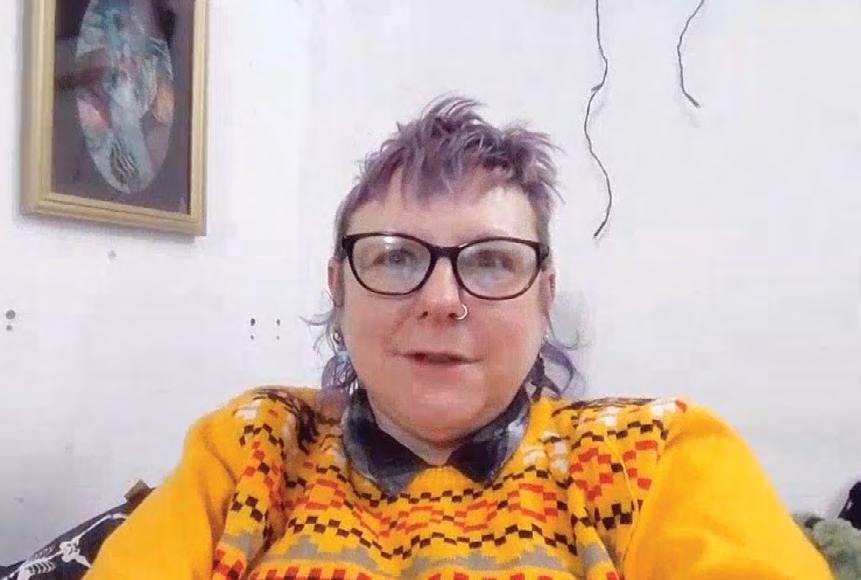

Training boosts trans activists
Trans, non-binary and gender diverse members are taking on ever-more active roles in UNISON using the skills and confidence they’re gaining by delivering Trans Ally Training sessions.
Trans, non-binary and gender diverse (TNBGD) activists are building solidarity with members in all parts of UNISON and stepping up into new union roles after delivering the popular and pioneering Trans Ally Training. Through the many sessions Torbay Health
branch activist Jake has run, he’s forged new links with different groups of UNISON members – including some he hadn’t expected to.
“I was nervous for a number of reasons about delivering the training to a police, probation and CAFCASS service group, for example,” he says.
“But you go and deliver the session and you realise they are members like everyone else who share the same values, and you do build that connection and that real solidarity within the structures of the union.”
Feeling more valued as an activist through delivering the training has also encouraged Jake to play a part in shaping the content of new courses in the region.
“We’re writing a training course on HIV stigma and workplace policy in the
Aiden Emmie
Jake Robyn
South West and I wouldn't feel confident supporting the development of that training had I not had the experiences from the trans ally courses,” he says.
Robyn Banks, who has multiple roles in the University of East Anglia branch, traces their growth as an activist to the impact of running the training close to 20 times, for groups of five to 95 members all around the country.
“I delivered the keynote speech for the higher education conference this year on the issue of trans rights in the United Kingdom, which is the first time I'd ever delivered a keynote speech,” they say.
“And I wouldn’t have been prepped to do that if I hadn’t delivered the training, because it gives you the skills to be able to talk to a room full of people who have varying levels of knowledge, and varying different positions.”
Robyn also credits their training experience with preparing them to take over from Jenny Black as co-convenor of UNISON’s TNBGD network.
“Doing more and more of this work has helped me feel more confident in stepping up into the coconvenor role,” they say.
Making their first speech at LGBT+ Conference was what led to Hackney UNISON
LGBT+ officer Emmie Bathurst running their first trans ally training session.
“I didn’t deliver the training for ages because I was a bit nervous,” they say. “But when I went to my first LGBT+ conference and did my first-time speaker thing, from that moment I’ve thought, ‘I can do this’.”
Delivering the training has expanded their activism. “I’ve definitely been more involved in the union – you meet other trainers, you meet other people, and your circle gets wider and you feel more confident,” Emmie says.
It’s also helped them expand their contribution as a workplace rep, as they’ve taken on more casework as a result.
“The battle over trans humanity is the frontline of the battle for the rights of all marginalised people, so we've got to be allies to our Black members and our disabled members and our women members because it's all the same fight,” they say.
“Delivering the training has made me more aware of that intersectionality, so I hope that it opens the door
Delivering the training was what got me more active
to people thinking about how they can be better allies for other groups experiencing marginalisation,” they say.
Manchester branch member Aiden Fraser says he wouldn’t have become active in UNISON at all without first delivering trans ally training.
“When I volunteered myself to deliver the training, I wasn’t an officer, or a steward – the training was what got me more active,” he says.
After taking on the roles of steward and LGBT+ officer in his previous branch, Aiden is currently the trans members officer for the North West LGBT+ self-organised group.
“I wouldn’t be where I am now at all if I hadn’t started delivering the training: I think if we didn't have this training, I probably would’ve been a lot more hesitant about getting involved because I wouldn't know as much about what the union stands for,” he says.
It’s also helped him secure his last two jobs – as a workforce development officer at Stockport Council, and his current role in workforce collaboration at Greater Manchester Combined Authority (GMCA), where he oversees a range of inclusion work.
“Delivering the training has empowered me in all facets of my life, not just the union, not just my workplace, not just in relationships – everything has gotten better.”
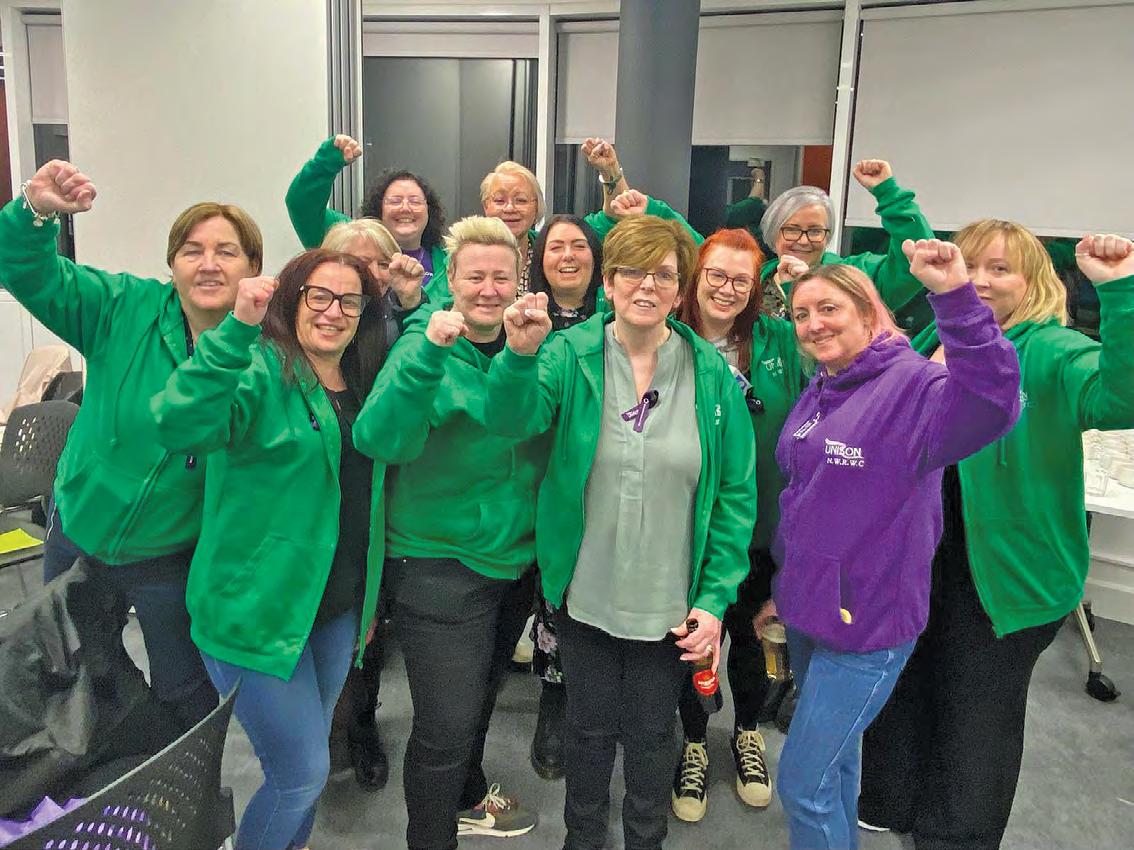
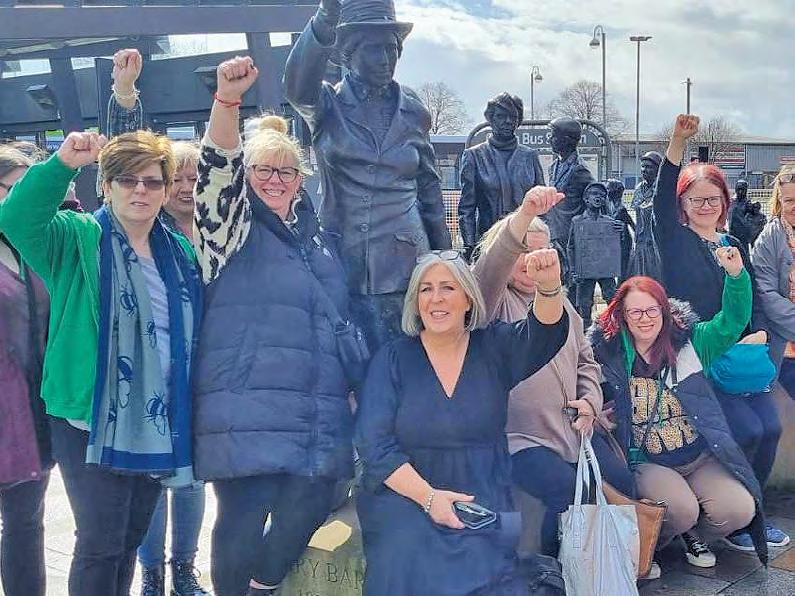
Making change in the North West
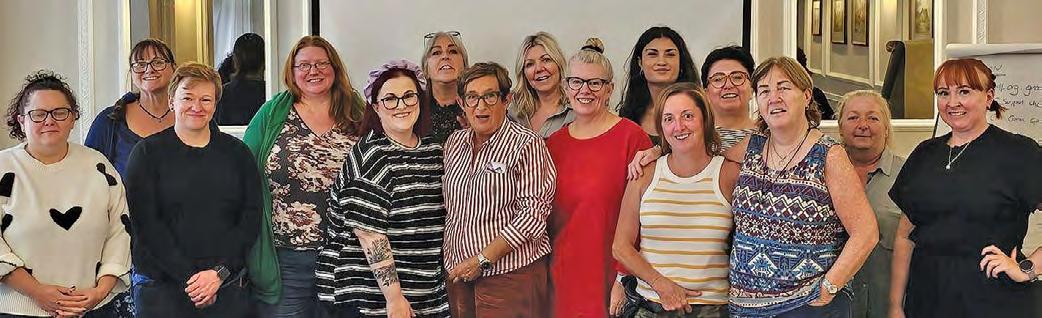
The women’s leadership programme is helping women step into their power in the union – and beyond.
Women activists in the North West are effecting real change in UNISON by using the confidence, knowledge and skills they’re gaining on the region’s women’s leadership programme.
“We’re seeing massive results from women who have come through the programme over the past four years,” says North West regional manager Vicky Knight. In the last year alone,
participants have:
✱ played key roles in organising the region’s International Women’s Day event on eliminating violence against women and girls last year
✱ thrown their weight behind the campaign to win the national union’s support for ending violence against women and girls, which resulted in unanimous support from last year’s National Delegate Conference (NDC)
✱ To register your interest in taking part in the UNISON North West women’s leadership programme, contact Vicky Knight or Joanne Moorcroft at the regional office.
✱ led many of the discussions and helped shape the action plans at last September’s regional summer school, which focused on women, violence and the far right.
“The raison d’etre for the programme is for women to understand women and class and how that relates to overcoming the barriers that women experience in their work life, in their home

life, in their public and community life,” Vicky says.
“Because if we don't get that in context, it's really difficult for women to succeed because if you don't understand the playing field, you can never win the game.”
The fully accredited programme comprises three separate stages: ✱ stage one examines what leadership looks like in a trade union ✱ stage two looks at leadership in a regional, national and international context ✱ stage three explores how women take their leadership skills into public life outside UNISON.
Each stage involves two days in the classroom, plus a book group to help participants read important material beforehand, and reflection and evaluation afterwards.
Once participants complete the final stage, they’re paired with a mentor to identify the learning and development opportunities that will help them further refine their leadership skills. They also move on to mentor women in the cohorts coming after them.
When regional convenor Joanne Moorcroft calls the programme “life-
changing education for working women,” she’s not exaggerating.
“Just months after my stage one course was complete, I stood as convenor for the region – something I would never have contemplated previously – and I got the role!” she says.
Taking part has helped Joanne identify how workplaces, society and public life have all failed women throughout her life, she says.
“Understanding the social issues attached to women and class as well as race made me able to engage in effecting real change for women in our union of over a million women,” she says.
United Utilities branch secretary Rachel Wright, who also co-chairs the North West regional women's committee, says the programme has helped her lead with confidence and clarity.
I learned how to use my voice more effectively, how to navigate challenges with resilience, and how to lead with authenticity
“I found this a truly empowering experience: it totally changed me for the better as an activist and I witnessed firsthand how this positively empowered my UNISON sisters also,” she says.
“The sessions in each stage were inspiring, practical and deeply affirming: I learned how to use my voice more effectively, how to navigate challenges with resilience, and how to lead with authenticity.”
Learning together with a group of women from across the region was a crucial part of the success of the programme, Rachel says.
“I connected with an incredible group of UNISON women whose solidarity and support reminded me that I’m not alone in this journey,” she says. “We shared stories, built networks, and supported each other in ways that extended far beyond the classroom.”
Rachel has a simple message for women in the North West. “I wholeheartedly recommend this programme to any woman in UNISON who’s ready to step into her power to join the journey,” she says. “We are with you every step of the way – I promise you won’t regret it.” ✱
Learning how to raise your voice in the union ✱
Motions are the building blocks of policymaking conferences: young members and others have been learning the dos and don’ts when it comes to writing them.
Delegates at last year’s Young Members’ Conference took a crashcourse in motion writing to help them play their part in UNISON democracy.
The workshop is a UNISON College staple that has helped dozens of members of service group and self-organised group committees in branches and regions prepare effective motions for union conferences.
“Motions are the union's main mechanism by which members can raise issues that can eventually become union policy or part of the work plan for the union,” says national education officer Suzanne Tipping.
“We want to encourage more members to consider submitting motions, so the
workshop aims to remove any barriers to taking part in the democratic process of the union by setting out the rules that need to be followed.”
The workshop examines the elements of what makes a successful motion:
✱ headline issue
✱ context (such as a survey or other factual background)
✱ whom it affects
✱ why the union should address the issue
✱ what the motion is calling on the union to do.
It also helps participants look at the role of the standing orders committee (which decides which motions can be included on a conference agenda and which can’t), and gives them the chance to practise

UNISON’s motion writing workshop aims to dismantle barriers to members playing their part in the union’s policy-making forums.
TOP TIP KEEP IT SHORT
When drafting your motion, think about what content has to be included for it to make sense and what material could be delivered by the mover of the motion at conference (and so doesn’t need including in the text).
writing a motion themselves. The workshop explains the key motion-writing jargon and includes some
© MARCUS ROSE

TOP TIP ASK FOR ADVICE
Submit your motion to the standing orders committee (SOC) for the relevant conference well before the deadline. That way, you'll have time to re-draft and re-submit if it's ruled ‘not compliant’. You can also ask your region’s SOC representative for advice.
to Women’s conference, for example, you’re calling on the national women’s committee to carry out that action – it can’t be something that needs to be carried out by anyone else.”
With time pressures at Young Members’ conference, Suzanne delivered a shorter version of the workshop, focused on comparing the text of a motion that had made it onto a previous conference agenda with one that hadn’t.
The workshop explains the key motionwriting jargon and includes some useful tips to help people craft a successful motion
useful tips to help people craft a successful motion.
“The ‘calling on the union part’ is what a lot of people don’t get quite right,” Suzanne says. “If you’re submitting a motion
“We had a discussion about reasons the unsuccessful motion could have been ruled out of order,” she says. “Was it the terminology that had been used or was it calling on
the wrong body to take the action being called for?”
After taking participants through key elements of motion-writing, Suzanne then gave participants an exercise in which they worked in pairs to put the different elements of a motion printed on Post-It notes in the most effective order.
“They moved all the different phrases around to put them in what they thought was the right order: it was a really fun interactive session that they enjoyed,” she says.
“Some of them were actually thinking of submitting motions to this year’s Young Members’ conference, so they were able to think about how they could best apply what we’d discussed to them.” ✱
Challenging far-right rhetoric at work
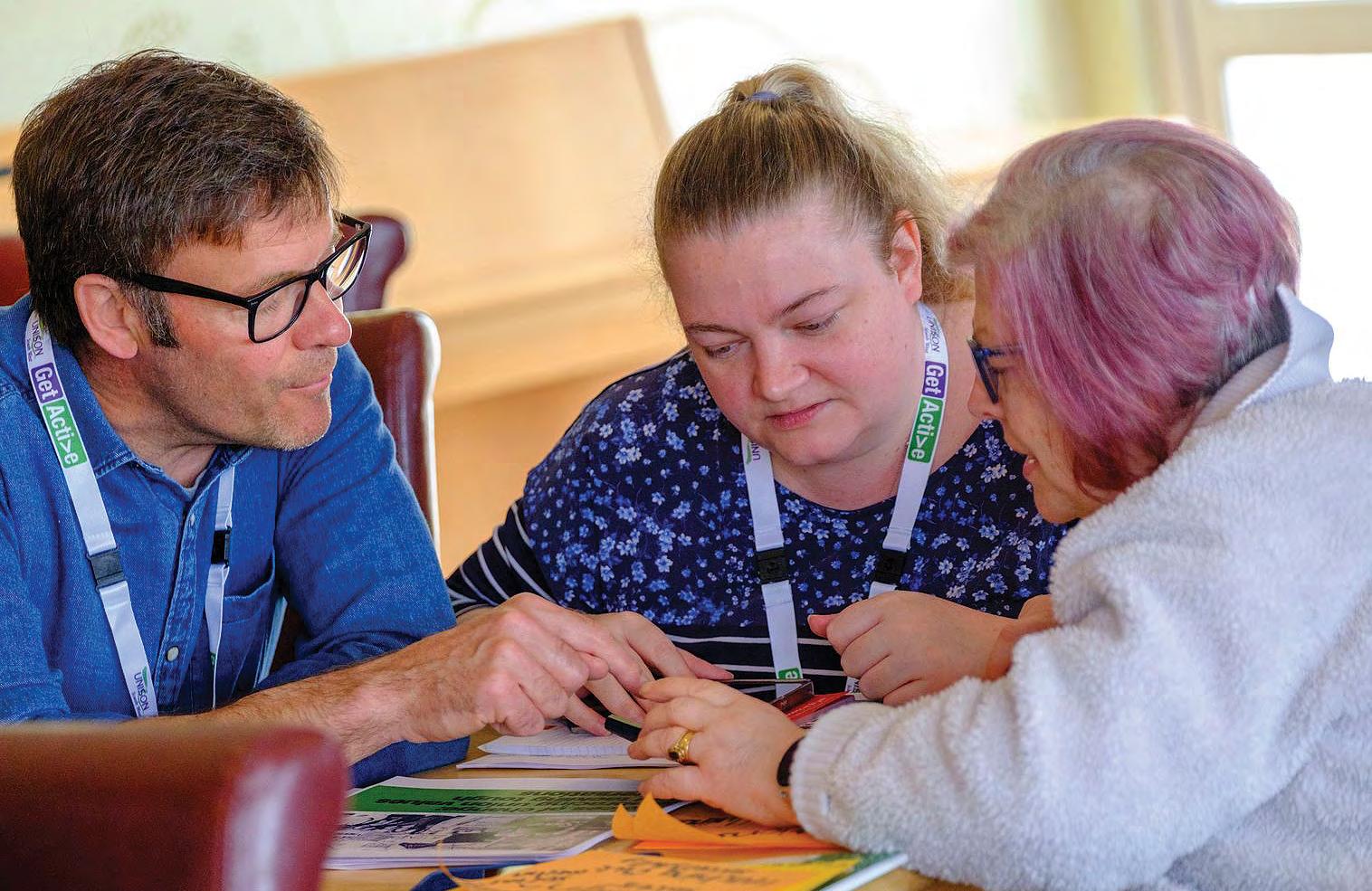
One-to-one conversations can encourage co-workers to think again when they’ve started adopting political positions that conflict with UNISON values.
How do you talk to a co-worker who’s started agreeing with politicians, commentators and influencers who blame economic problems on refugees, asylum-seekers and migrant workers?
More than 60 members and new activists examined effective ways of holding these difficult conversations in a workshop at UNISON South West’s annual Get
Active weekend last summer.
“We know that workplaces are often where conversations like these work best,” says regional learning & development organiser Natalie Chadwick, who co-delivered the session with digital and comms area organiser Jack Horwood.
“And one way we can challenge the far-right rhetoric happening in our workplaces is that none of it
ENGAGEMENT IN ACTION
✱ Watch this short TUC video online showing how a union rep can effectively engage a member who’s been re-posting far-right content on social media. www.tuc.org.uk/resource/ challenging-conversations

meets with UNISON values.”
Natalie and Jack designed the workshop as an interactive, light touch session, with live polling on UNISON values, small group conversations on farright narratives and a short TUC video demonstrating effective approaches to difficult conversations.
“We wanted to break down some myths and misinformation and give
members that free space to ask questions without feeling they might create an issue,” Natalie says.
“We had some migrant workers and LGBT+ committee members in the room, who were able to say how what comes out in the media and some of what comes out in workplaces really affects them in a personal level,” Natalie says.
The session focused on sharing the people skills that can help bring people round instead of further entrenching them in their beliefs.
“It’s important to have one-to-one conversations because they do lead to opening people up, to challenge what they see in the media and the opinions they might have.”
The feedback after the session was very positive, Natalie says. Comments included: “great tutors”, “inclusive and knowledgeable” We wanted to break down some myths and misinformation and give members that free space to ask questions
TIPS TO MAKE A CHANGE
You’re unlikely to change someone’s mindset through a single conversation. But if you focus on trying to understand instead of rushing to judgment, you can encourage them to start to reconsider their views.
✱ Create a safe space: make clear there are no taboos, and that you won’t judge or label them for the views they express.
✱ Ask the kind of questions that encourage them to open up about what might be behind their views.
✱ Separate the person from their views: treat them as someone who’s taken on some dodgy opinions, not as a terrible person.
✱ Don’t debate the ideas: quoting statistics to try to prove they’re wrong will only make them more defensive.
✱ Listen with empathy: focus on their reasoning rather than their conclusions and highlight points of agreement between you.
✱ Unfreeze a conversation by asking the kind of questions that can encourage them to relax their position, even if it’s only to a small extent at first.
✱ Externalise disagreements: use phrases like “some might say …” to introduce an opposing view, so it doesn't become a personal argument.
✱ End with a beginning: let them know you enjoyed talking to them and learning about their concerns. Invite them to talk again in a few days’ time.
and “they had passion that was infectious”.
The workshop was one of three that everyone took part in on the weekend’s theme of ‘Unity in Action’.
“Get Active is our annual event for newly trained stewards and newlyengaged members, and it’s a really positive event that creates a massive
buzz,” Natalie says.
“I’ve seen people who come to Get Active who come back for branch officer training and other modules we run through the regional training programme, which shows the weekend is a stepping stone into building activism and moving people into further learning with us.” ✱
Retired members embrace new training offer
Retired members are learning how to set up or revive their own groups in branches thanks to new training that is rolling out this year.
Retired members are leaping at the chance to learn how to play their part in UNISON through a new half-day workshop that will be rolling out this year.
More than 100 signed up for the pilots last summer, and participants were enthusiastic during and after both sessions (one online and one hybrid).
“As someone who had little idea how to progress, it was very useful,” said one. “I now have several ideas for the sorts of things that I should be doing,” commented another. “The session was well structured and as a pilot it achieved a lot,” said a third.
The excitement generated by the pilots confirmed the huge appetite for the new offer, says assistant national officer Dominik De Souza, who was part of the working group of retired members and staff that
co-produced the training.
“The levels of engagement and the feedback during and after the sessions vindicated the need for the training and showed how keen retired members are to be active in the union,” he says.
A mix of presentations and small group activities, the half-day session explores: ✱ why UNISON organises its retired members ✱ how retired members can influence policies through union structures
✱ how retired members
can connect with each other and strengthen their local branches.
It aims to equip retired members with the knowledge and skills to set up (or revive) a retired members group in their local branch as a welcoming and effective forum that will strengthen union organisation.
The working group itself was a model of co-production, according to the retired members who took part.
I hope it will get different branches and regions talking and sharing what they do
“I’ve been on a number of working groups throughout the years, and this was brilliant!” says Mary Holmes, who is chair of the Derby City branch retired members group, and someone who has become active in the union
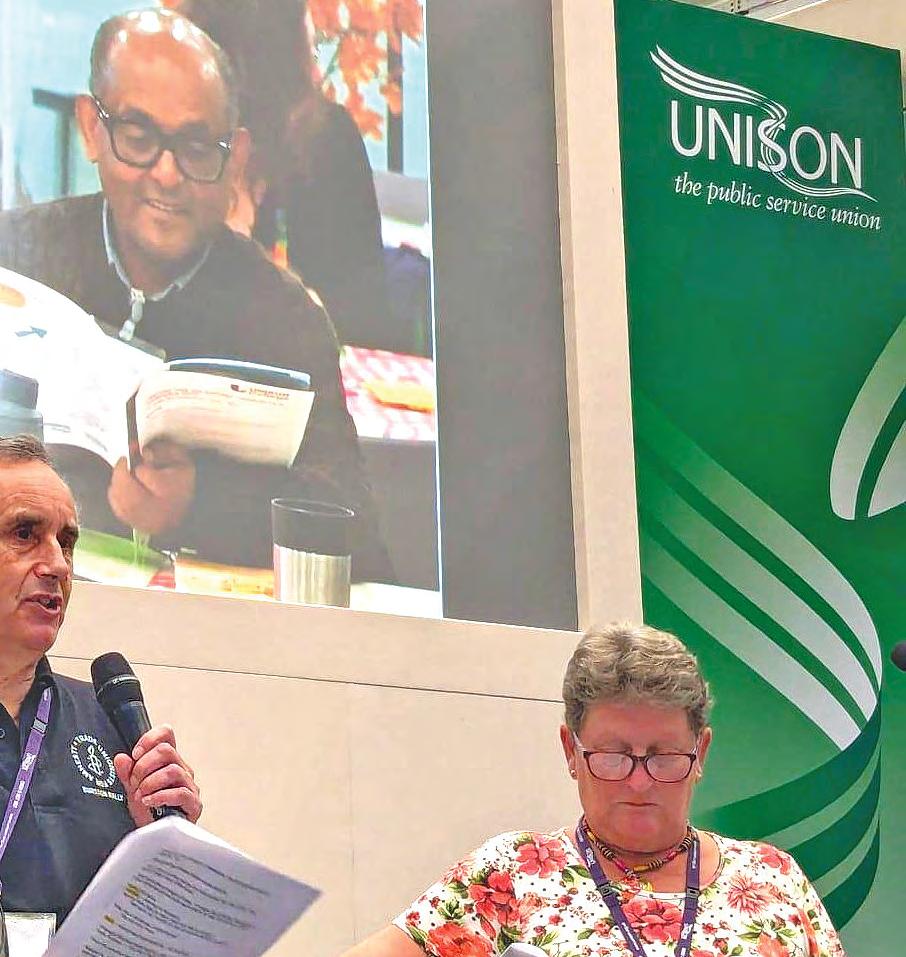
Andrew Coburn and Mary Holmes launch the new training offer at Retired Members’ Conference
since retiring four years ago.
“Everybody brought a lot of experience, and everybody listened to each other (which you don’t always get!),” she says.
“The support from Dominik was great: he didn’t say, ‘You have to do this’, he always asked, ‘What do you need?’”
Andrew Coburn, who is retired members secretary of Essex County branch and a seasoned UNISON activist, says he was inspired by the model of the union’s Trans Ally training, which is always delivered by two LGBT+ members, one of whom is trans, non-binary or gender non-conforming.
LIFETIME MEMBERSHIP FOR JUST £15
Retiring from work doesn’t have to mean retiring from your union.
For a one-off payment of just £15, you can:
✱ take part in decision-makingdemocratic
✱ raise your voice on issues that matter to you ✱ benefit from a wide range of exclusive member discounts.
To take up this offer, call free on 0800 171 2193. Or search ‘retired members’ on the UNISON website.
“I’d been on that training, and I was keen that we should come up with something that involved members of the retired members’ group to show this wasn’t something being imposed on us top-down,” he says.
The national retired members’ committee will be running ‘train the trainer’ sessions this year to equip retired members themselves to deliver the training.
Incorporating the evaluation into the pilots themselves paid off, as that meant 70 per cent of participants contributed their thoughts, Dominik says.
“It was really useful for the working group to get that feedback on what worked and what didn’t before we made the final changes to the content,” he says.
Andrew hopes that the training will encourage more retired members to get involved. “We want retired members to become involved in citizenship issues that affect them, like pension equality, but also to support working members in whatever way they can,” he says.
Mary hopes branches and regions will learn from each other by taking part in the training. “I hope it will get different branches and regions talking and sharing what they do, because there’s a lot of very good practice out there,” she says. ✱


Safer working in stormy weather

Learning about the impact of the climate emergency has led Cardiff members to negotiate a new extreme weather policy with their employer.
FIND OUT MORE
✱ Explore how Cardiff Council is developing its strategic response to the climate emergency, with the aim of making the city carbon-neutral by 2030:

Cardiff County branch members now have the protection of union-backed guidance on working in extreme weather, thanks to a UNISON course some of them took part in last year.
Adapting to Work Safely in Extreme Weather is a highly interactive half-day course that helps learners make collective plans for safer working in the storms that accompany the climate emergency.
“Members who’d attended the course asked me as branch secretary for the guidance on working in severe weather conditions,” says Cardiff County branch secretary Emma Richards.
“But when I looked at

the existing guidance from 2020, I could see it was really aimed at helping managers organise service delivery rather than the safety of staff.”
Cardiff is in an especially vulnerable position in terms of extreme weather. Three named storms in four weeks in February 2020 caused such widespread flooding that several parts of the

city were submerged.
And the heavy rain and high winds brought by Storm Darragh at the end of 2024 meant council staff had to deal with the highest number of incidents caused by a single storm in 20 years.
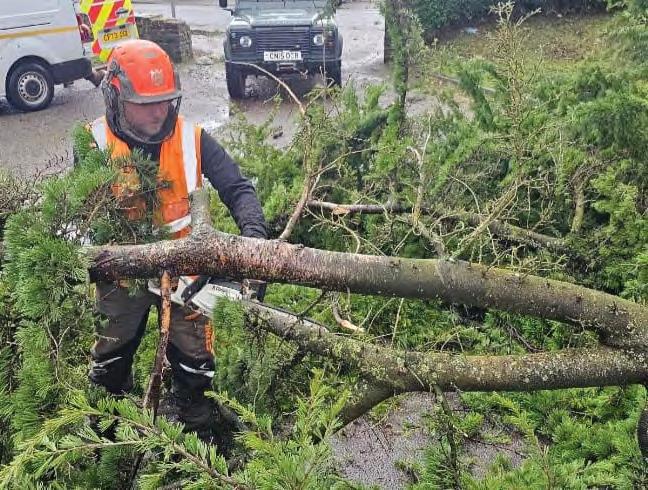
“The highways and parks teams faced dreadful conditions in emergency responses round the clock from the early hours as heavy rain and high winds caused over 100 tree fells,” Emma recalls.

“And staff in call response centres and those in housing and social care were also impacted, supporting vulnerable residents who’d experienced flooding.”
When Emma raised the need for a complete overhaul of the severe weather guidance with the council’s health and safety team, they immediately agreed and produced a new draft for consultation within a couple of months.
The guidance didn’t only cover working in winter storms: it also included policies to protect parks staff during heatwaves, another direct result of discussions from the course.
“One thing that came through very strongly in the conversations on the course was there was no specific policy about people working
Cardiff is in an especially vulnerable position in terms of extreme weather
outdoors in heat,” explains policy officer Richard Speight, who designed and delivered the course while he was part of UNISON’s Wales Union Learning Fund (WULF) project.
“If it’s 35 degrees in Cardiff, everyone goes into the parks and if you’re working there, your work intensifies, and, in general, increasing heat means there's an increase in interpersonal violence.”
For Emma, it’s worker insights like this that highlight the enormous benefits of trade union consultation, which is guaranteed under 2023’s Social Partnership and Public Procurement (Wales) Act.
“That was something that came from engagement with staff as well, so that really demonstrates the importance of having that trade union consultation,” Emma says.
Richard originally designed a longer version of the course with the Ceredigion County branch, which also covers an area that’s
frequently borne the brunt of extreme weather.
After hosting listening sessions with office, social care and refuse and recycling workers, Richard developed the original materials with the help of a health and safety tutor from the council’s adult community learning team, Dysgu Bro Ceredigion.
But it was the feedback from that first session and his own post-course reflections that convinced Richard to rewrite the material into a half-day session in three parts: issues, ideas, involvement.
“Redesigning that course has led to a revolution in Wales, centred on learning with a worker voice that’s now been implemented across all our courses,” Richard says.
“Our courses are not about teaching people something or training people about something: they're about giving people the opportunity to have a voice on a really important issue in their workplace and find ways of getting involved in making things better.” ✱

Learning about hidden disabilities ✱
West Northants branch is running courses to raise awareness about non-visible disabilities
West Northamptonshire
Local Government branch raised awareness of two different hidden disabilities by organising workshops on deaf awareness and neurodiversity support last November.
“Courses like these help break down some of that culture where people don’t understand hidden disabilities and show how we can adapt to help people with hidden disabilities not just in the workplace but in life in general,” says branch secretary Paul Meadows.
As well as racking up more than 20 years’ experience as a steward in different workplaces, Paul has been the branch disabled members’ officer for the past six years, and also leads the disabled employees’ network at West Northamptonshire Council.
He has first-hand
knowledge of many of the issues since he himself has been diagnosed with bipolar disorder and ADHD (attention deficit hyperactivity disorder), and also has a son who has autism, ADHD and dyspraxia.
And it was Paul who moved the motion on hidden disabilities at the 2024 National Disabled Members’ Conference, on behalf of the East Midlands disabled members’ group.
You hear a lot of people say, ‘You don’t look disabled’ when you’re parked in a disabled parking spot with a disabled badge

“I’d been hearing from disabled members about the issues they’re having and the lack of understanding they’re facing,” Paul says.
“You hear a lot of people say, ‘You don’t look disabled’ when you’re parked in a disabled parking spot with a disabled badge, so it’s important to raise awareness among members and also among managers.”
The branch invited people with lived experience from two local organisations to lead the sessions during Invisible Disabilities Month last autumn.
“It’s always best to get

FIND OUT MORE
training courses done from the perspective of someone who has that first-hand experience,” Paul says.
“They can get across some of the challenges they get in the workplace and give real examples of what works for them and how they can best be supported.”
Northampton-based charity Deafconnect led the in-person session on deaf awareness, giving participants the chance to try out their lip-reading and signing skills.
And The Connection Collective, a local
✱ You can read the Hidden Disabilities motion by downloading the 2025 National Disabled ConferenceMembers’Decisions Booklet from the UNISON website.
peer support group for neurodivergent people and their families, led the online evening session exploring neurodiversity support in the workplace.
“There were a lot of different ways in which the sessions could help members, whether they
were people who were looking to help themselves or to support a colleague, a family member or a friend,” Paul says.
“They were both really successful and we had really good feedback from people saying they learned so much about how best they can support a colleague who is neurodiverse or has another hidden disability.”
One member who took part in the neurodiversity session was going through the diagnosis process at the time, Paul says.
“The session helped them understand a part of themselves and how they could be developing some coping strategies to put in place,” he says.
The sessions have also helped the branch address the issue of managers’ lack of understanding of the workplace issues facing people with hidden disabilities.
“We’d heard about a lot of issues regarding managers not really understanding the hidden disability side of things,” Paul says.
“So these sessions were about looking at ways in which people can help educate their managers as well as ways in which they can help themselves, and how members can support colleagues with hidden disabilities.” ✱
Mentoring is the answer WORKBOOK
The best way for experienced stewards to pass on their knowledge and skills to new reps is by taking part in our new branch mentoring course.
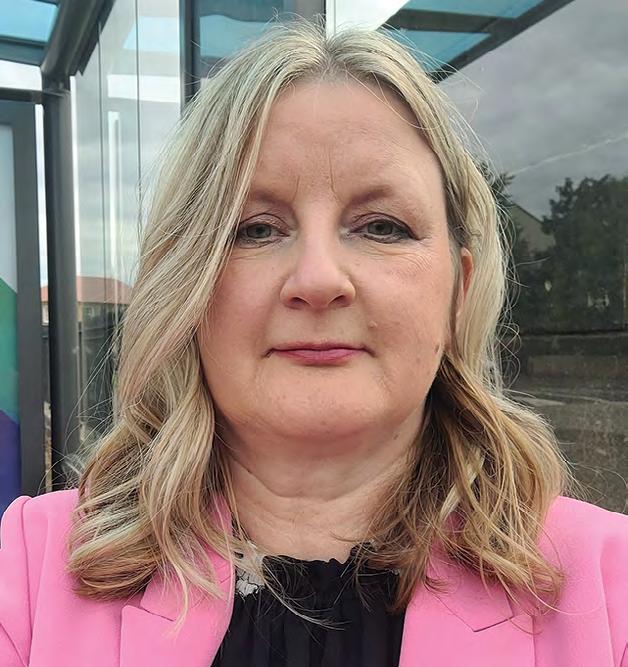
Every branch in Scotland should use UNISON’s new mentoring course to help their established reps support the next generation of activists, says Lothian Health branch lifelong learning coordinator Tracy McBurnie.
“What I would love is for every branch in Scotland to put forward an experienced steward who could be a good mentor to go on this
course,” Tracy says.
“We, the experienced reps, are not always going to be here, so this is an opportunity for the ‘oldies’ to hand over the reins to the ‘newbies’, and ensure UNISON continues to grow.”
Stewards who take the half-day online Mentoring in the Branch course: ✱ learn how to plan and set up a branch
✱ Search ‘Developing and Supporting New UNISON Reps’ in your browser to download a workbook in which new reps can record the progress they make with their mentor.
mentoring programme
✱ explore promoting new approaches to case work
✱ examine what implementation could look like in their branch.
Lothian Health branch, which represents more than 12,000 healthcare workers in and around Edinburgh, set up its own mentoring scheme for new stewards some years ago.
“It’s really daunting being a new steward: you don't know the politics; you don't know the policies; you're trying to please your members,” Tracy says.
“So if nobody’s looking out for you, you’re left to flounder and if you don’t feel supported, then you disappear.”
It was to tackle this problem that the branch began pairing new reps with established stewards who could support them during their first six to nine months in the role.
What I would love is for every branch in Scotland to put forward an experienced steward who could be a good mentor
Being a good mentor is less about giving a new steward the answers and more about asking the right questions
“Mentoring is a finite relationship: you don't want to build too much dependency, otherwise you won’t help them become confident in their own representation and caseload,” Tracy says.
“It’s not a conversation that’s never-ending – it has goals, it’s actionfocused – so we would recommend meeting once or twice a month over a ninemonth period. This is what UNISON’s Mentoring in the Branch course is about.”
Being a good mentor means helping a new steward learn and develop in the role while boosting their confidence.
“Mentoring is not about telling new stewards how it is, it’s about asking them questions – what do you think? have you considered this? have you spoken to that person?” Tracy says.
The aim is to help each new rep work out what kind of a
steward they’re going to be.
“Everybody has a different style of representation: my style might not be your style, it's about becoming your own steward,” she says.
The best mentors are the ones who don’t lay down the law about how to undertake the role, Tracy points out.
“You need somebody who's passionate, who’s able to take a step back and advise someone, not dictate how things ‘should’ be done,” she says.
“You need somebody who’s going to nurture those new stewards because they are the future – they are the branch secretaries, the branch chairs, the health and safety officers of the future.”
After taking part when Mentoring in the Branch was first piloted, Tracy could immediately see what a valuable contribution the course could make to succession planning at branch level.
“What we want to do across UNISON Scotland is grow our own stewards and make sure they have somebody to go to when they don’t know what they’re doing,” she says.
“So this course is one of the best developments in learning and organising we’ve had in Scotland. I’d like helping to grow our new stewards to be one of the legacies of our learning and organising committee.” ✱
Spreading the word about knife wounds
IAN’S COVER:SESSIONS
● the need for critical bleed training
● the composition of blood and how arteries work
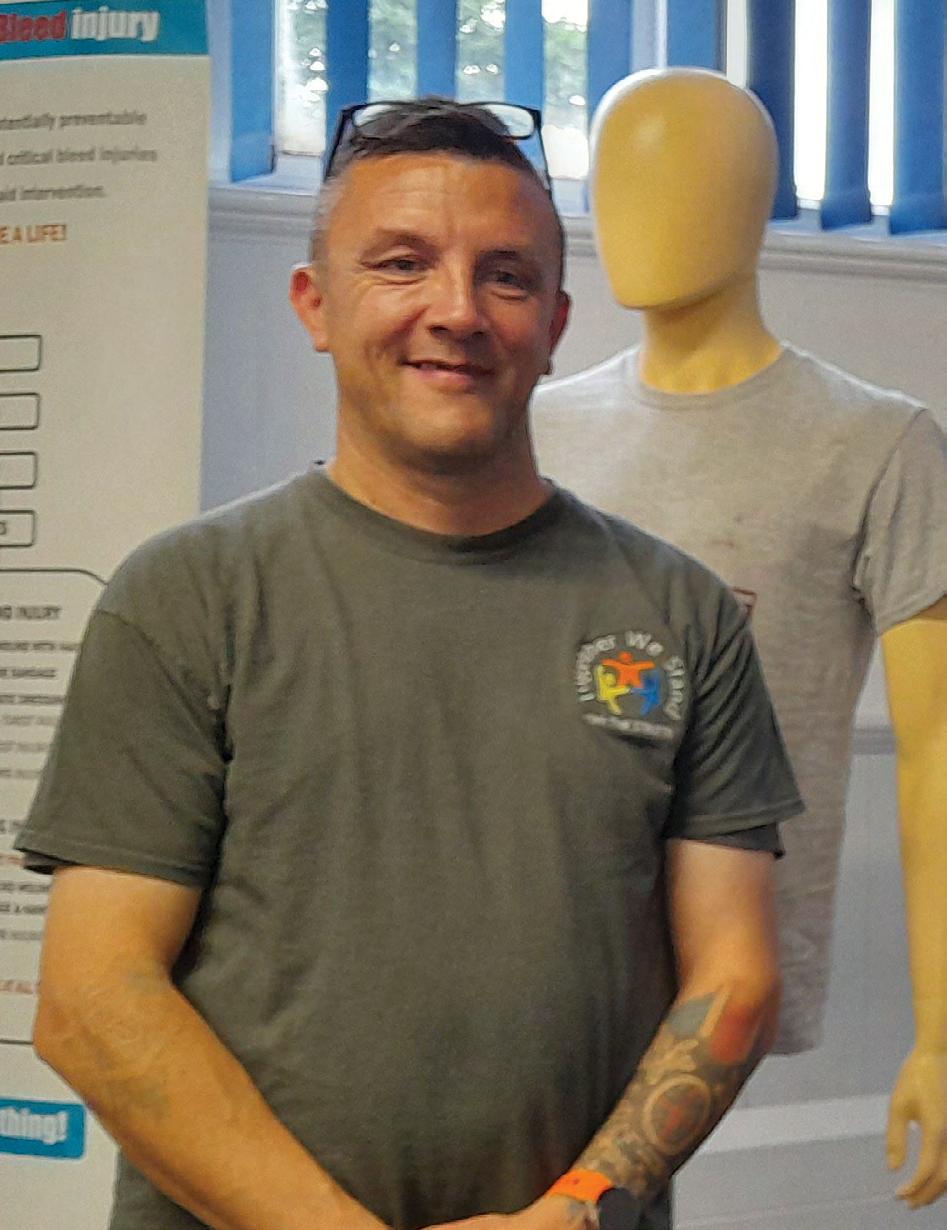
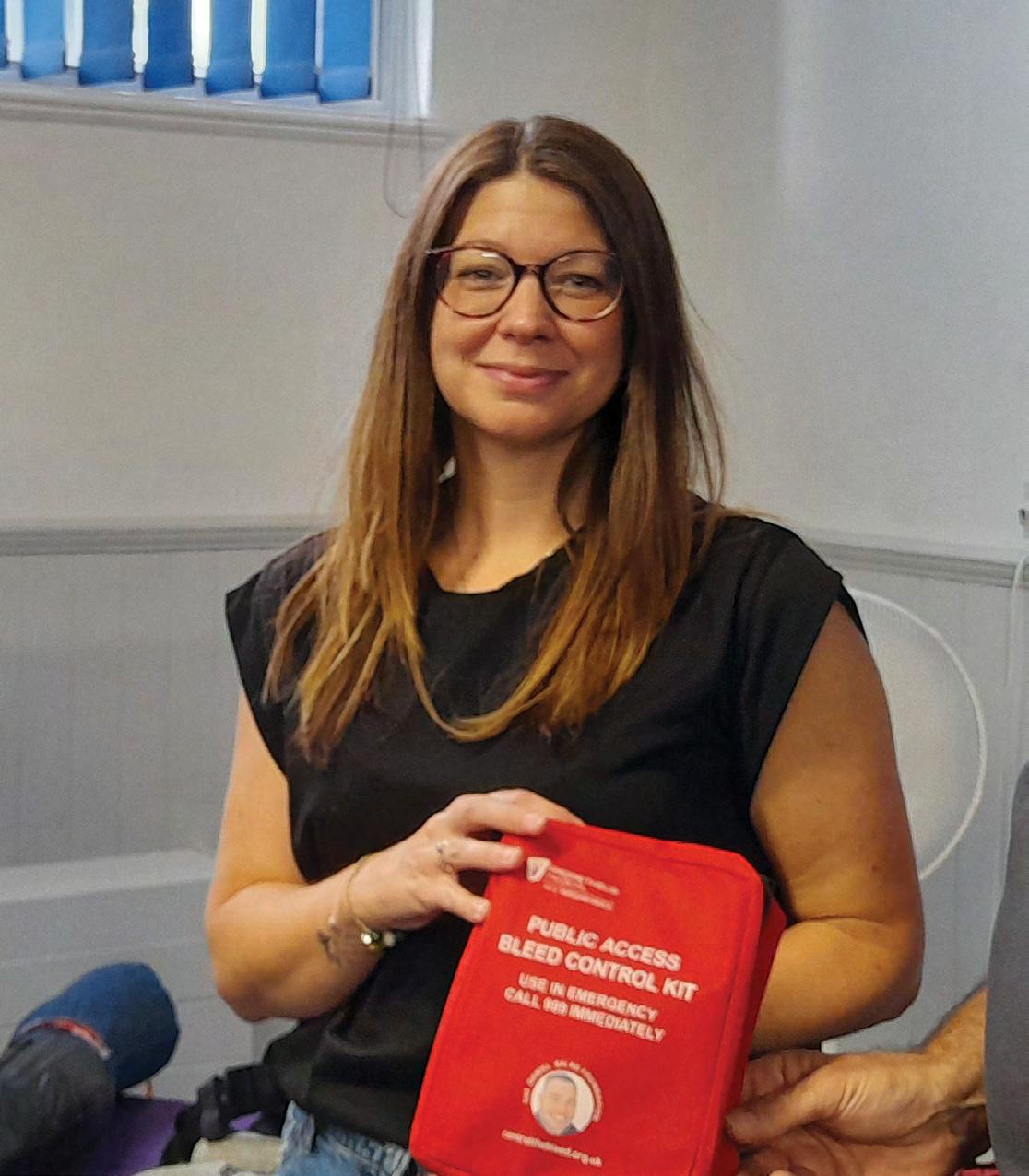
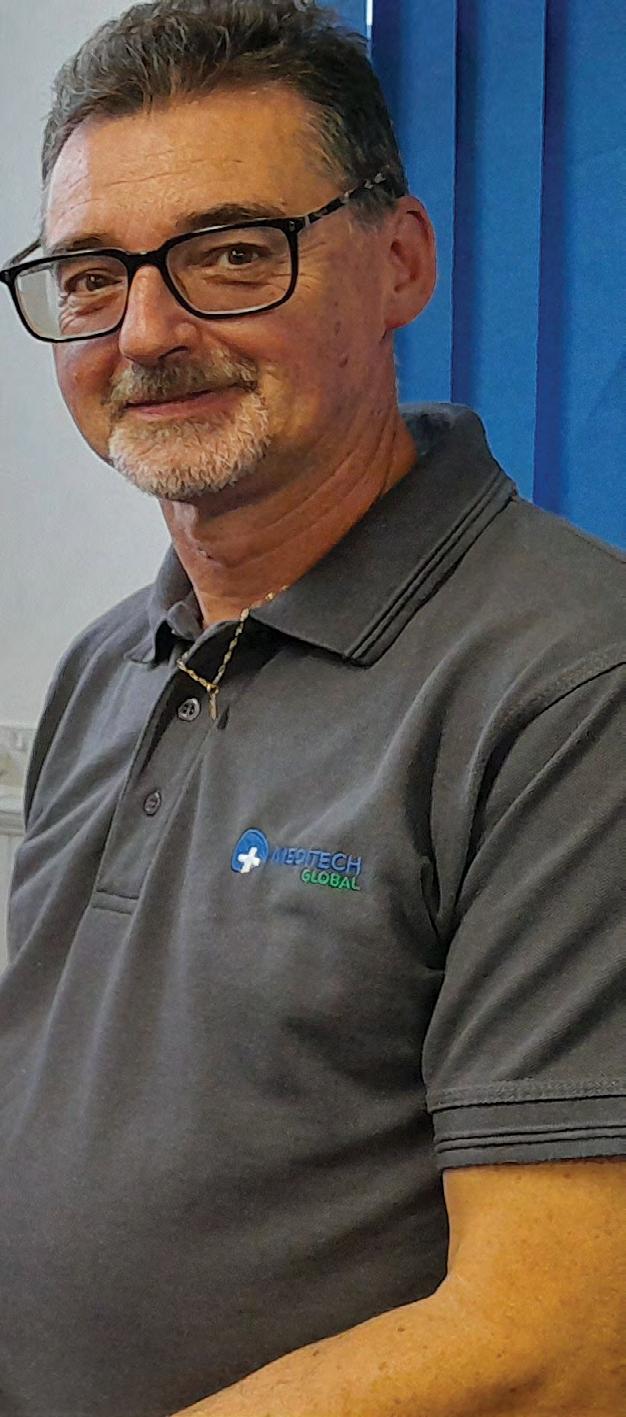
Union learning rep and paramedic Ian Pratt is teaching members how to use a bleed kit to help someone with a stab wound.
Paramedic Ian Pratt is training Northamptonshire members how to help people with life-threatening knife injuries in the crucial minutes before ambulance crews can reach them.
A union learning rep (ULR) for the East Midlands Ambulance Service (EMAS)
branch, Ian delivered two sessions in Northampton last year, and is now set to spread the message in more locations across the region this year.
Ian began delivering critical bleed workshops to members of the community
● the effects of blood loss on the body
● how to stop blood loss.
in Northampton three years ago when his employer, training provider Meditech Global, began partnering with local knife crime charity Off The Streets. He then took the idea of offering the training to UNISON members
Doddridge Centre director Rachel Bott displays the bleed kit donated by UNISON, flanked by learning rep Ian Pratt (right) and Scott Fitzsimmons from knife crime charity Off The Streets
to a meeting of the Northamptonshire ULR Forum, which brings together UNISON learning reps from across the county to share resources and support each other.
“If I hadn’t offered the idea up to the Forum, I wouldn’t be doing these sessions for the union,” Ian says.
With more than 50,000 knife attacks every year across England and Wales, spreading the message about what to do before paramedics reach the scene is vital, as unaided stab victims can bleed out in five minutes.
In the final part of the two-hour workshop, Ian
takes learners through all the components of a bleed kit and how to use them before an ambulance crew arrives.
Bleed kits include a trauma bandage (for moderate bleeding); a haemostatic dressing (for extreme bleeding); a tourniquet (to stop blood flow); and a Russell chest seal (for open chest wounds). They also include gloves, scissors and a Sharpie (for recording the time the tourniquet is applied).
“I tell people that if they haven’t got any of that to hand, they can use whatever they do have – you can use a t-shirt to help stop bleeding,” he says.
Ian also brings some artificial body parts to sessions for learners to practise their new skills with.
Swift intervention can literally save lives, he says. “Over 30 per cent of the people that are fatally injured in knife attacks could have been saved with a bit of first aid straight away instead of waiting for the emergency services,” Ian says.
Since its launch four years ago, Off The Streets has been placing bleed kits in
Swift intervention can literally save lives
high traffic areas like main roads, close to parks, at train stations and inside warehouses so they’re accessible to members of the public at all times.
And local 999 operators can direct people to their closest bleed kit when they call, just as they can with defibrillators.
Around 20 members of the West Northamptonshire branch took part in the first workshop at the branch office in Northampton, while about 30 members from branches across the county took part in the second, held at The Doddridge Centre.
During that second session, West Northamptonshire branch secretary Paul Meadows formally presented a bleed kit donated by UNISON to the longestablished community hub.
“We know that in the event of a critical bleed, every second counts,” Paul said. “By funding this training and providing essential equipment, we’re empowering individuals to act confidently in emergencies.”
Doddridge Centre director Rachel Bott said she was immensely proud of being able to partner with UNISON to help tackle knife crime.
“This joint initiative not only underscores our commitment to community safety but also empowers individuals by providing vital training and life-saving tools,” she said.
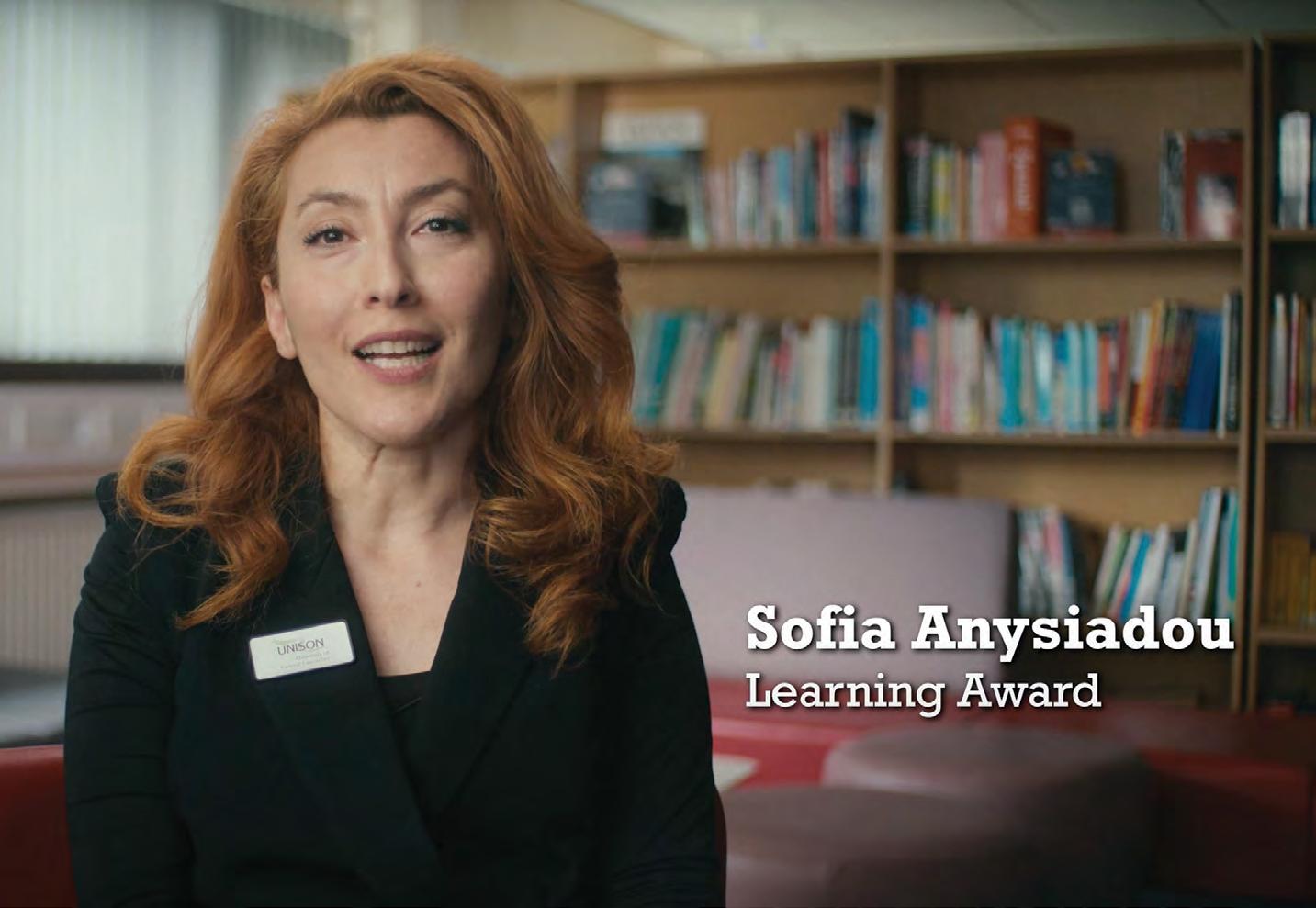
Developing a learning culture
The University of Lancashire learning reps featured in last year’s ULearn went on to win a national award at TUC Congress.
Sofia Anysiadou and Lisa Simpson won the TUC’s 2025 Learning Rep Award for their Learning at Work Week (LaWW) programme featured in last year’s ULearn.
But Sofia says the award represented recognition for everyone who helped make the events such a success.
“It’s not just about me or my co-organiser – it’s a celebration of everyone who contributed: the talented colleagues who led workshops, the branch for its support, and the
members who embraced learning with such enthusiasm,” she says.
“Most of all, it highlights how small actions, like giving people space to learn and connect, can make a big difference.”
With the good news included in a post on the university’s internal communications webpage, the award immediately raised the profile of the branch on campus.
“A lot of people congratulated us in the comments and said they

AWARDS VIDEO
✱ Watch Sofia talk about her work as a union learning rep in last year's TUC reps’ awards video:https://youtu.be/ BXpqL1XPVd8? si=qlVUp NN2hks-7btS
were looking forward to Learning at Work Week 2026,” Sofia says.
In addition, three coworkers who’d spotted Sofia’s name on the intranet report contacted her directly to raise issues in their workplace.
“That’s never happened to me before in my three years as a rep!” she says.
“It’s remarkable how it raised awareness of who we are so people could speak to us about concerns they’d like to see being resolved – it was great
SCAN HERE
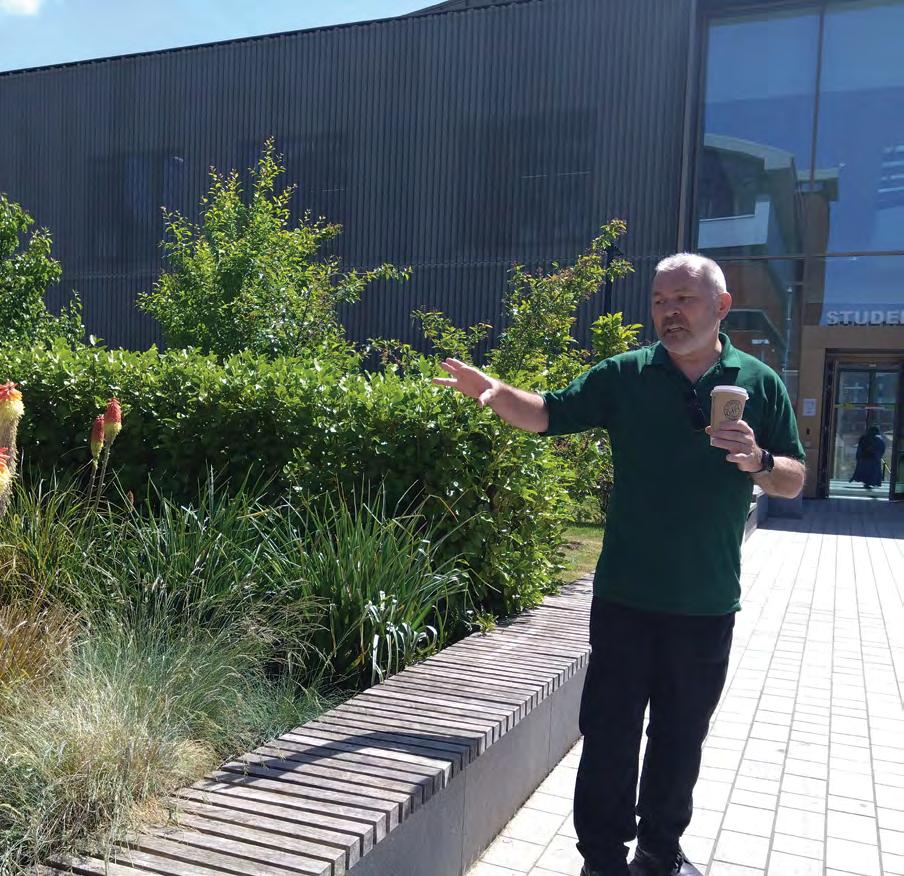
obstructed airways by practising on training dummy cats and dogs brought by the colleague who delivered the session.
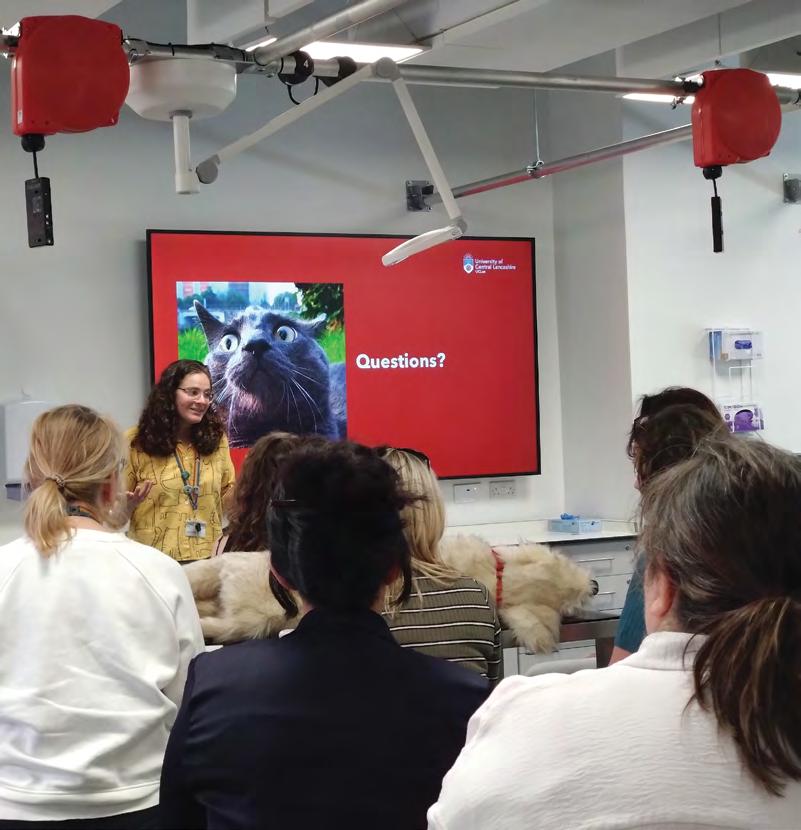
The numbers involved across the week would have been very similar to the numbers involved in 2024 had they not had to cancel one workshop because of a major clash with a separate event on campus.
establish that people can treat taking part in our learning activities as part of their own personal and professional development, so it will be easier to attend our events,” Sofia says.
Sofia also collected many ideas from participants about what they would like to see this year and is using that feedback to help plan the programme.
And the branch is also looking at setting up learning events throughout the year in future, so that more people can access knowledge and skills all year round.
Sofia is hoping that the award will encourage more people to get involved in union learning and even become learning reps themselves.
Long before they heard about the TUC award, Sofia and Lisa were already building last year’s programme for LaWW.
To help build an even more successful LaWW programmes in future, the branch and the other unions on campus have been negotiating a learning agreement with the university, which they hope will be signed in time for this year’s LaWW.
“We’re working with the People team to from that perspective.”
“This time, for instance, we did first aid for pets with our newly established vet school and we were surprised by how many people wanted to find out what to do if something happened to their cat or dog,” Sofia says.
The two dozen participants were able to learn how to clear a pet’s
It’s not just about me or my co-organiser: it’s a celebration of everyone who contributed
“We’re asking members to step up because the plan is for the team to grow and maybe in a year’s time we’ll have three union learning reps in the branch,” Sofia says.
“It makes things easier to be able to share ideas and discuss workload issues but it would also expand the network – I’m from the School of Psychology and Humanities so if somebody’s from IT, they will bring their network and so it becomes a lot easier to spread the word about anything we’re doing.” ✱
To
4pm on Saturday
Visit our website https://learning.unison.org.uk Follow us on X (Twitter), Facebook and Instagram @unisonlearning Stock No: 4589