Dance Central
Dance Central, Volume 41, Issue 1
This issue of Dance Central is dedicated to the life and legacy of Peter Bingham, whose contributions to contemporary dance in Vancouver and across Canada are both profound and far-reaching.
While I did not have the opportunity to meet Peter in person, it became clear through conversations with those who worked closely with him that his influence extended well beyond the studio. His work in Contact Improvisation, his commitment to daily practice, and his role as a teacher and mentor shaped not only a body of work, but a community of artists that continues to evolve.
In reading the reflections dedicated to Peter, I was deeply moved and felt a heightened sense of care in shaping this issue. What emerges is a portrait of a practice grounded in relational inquiry and attentiveness. Peter’s approach to dance continues to live on through those who carry it forward as an ongoing process embedded in practice and exchange.
This issue brings together an interview with Olivia Shaffer, who steps into artistic leadership at EDAM, alongside reflections from artists who worked closely with Peter over the years: Lee Su-Feh, Chris Aiken, Arash Khakpour, Anne Cooper, and Alana Gerecke. Each offers a distinct perspective, collectively tracing the breadth of his impact across generations and disciplines. Their contributions point to a shared understanding that Peter’s work was never singular, but one that was built through collaboration, sustained through practice, and carried forward through community.
This memorial issue in tribute to Peter Bingham is offered as a gesture of recognition and gratitude from The Dance Centre for a life in dance, and for the many ways that life continues to move through others. We thank all the artists who have contributed, and we welcome new writing and project ideas at any time—keeping Dance Central a vital link to the community. Please send materials by email to editor@thedancecentre.ca. We look forward to many more conversations.
Shanny Rann Editor
In Memory of Peter Bingham
by Shanny Rann
I first knew of Olivia Shaffer as a young undergraduate when she knocked on my door at Madge Residence Hall in 2004. Madge was an all-women residence hall at Simon Fraser University, and Olivia had just entered the dance program. She stood at the doorway with bright eyes, introducing herself as my junior. Her unguarded love for dance left a deep impression on me. It became apparent even then that Olivia would go on to build a life in dance.
It would take twenty-two years before we met again on a March afternoon in a boardroom at The Dance Centre. The context had changed, we greeted each other with a hug and sat down to talk not as students, but as artists and colleagues, meeting at a moment of transition for the community we both belong to. This conversation takes place in the wake of the passing of Peter Bingham in February 2026, longtime Artistic Director of EDAM (Experimental Dance and Music), whose influence has shaped the landscape of contemporary dance in Vancouver and across Canada.
In October 2023, EDAM’s Board of Directors announced a three-year succession
plan to guide the transition of artistic leadership. Olivia was appointed Associate Artistic Director, with a gradual transfer of responsibilities leading to her full appointment in 2026. Designed to ensure continuity, the plan affirmed Peter’s vision while supporting the ongoing vitality of the organization. The three-year structure allowed both Peter and Olivia to fully inhabit the transition, creating time for mentorship, shared decision-making, and sustained collaboration in and beyond the studio.
As EDAM moves forward under Olivia’s leadership, the question is not only how to remember Peter, but how his legacy will continue to live through the evolving work of the company.
Since the early 1970s, the EDAM studio at Western Front on East 8th Avenue has held a continuous lineage of practice, from Linda Rubin’s Synergy classes to the formation of EDAM in 1982 as a collective of dancers and musicians, committed to experimentation. At the centre of that continuity was Peter, who
The Dance Centre Level 6, 677 Davie Street
Vancouver BC V6B 2G6
T 604.606.6400
info@thedancecentre.ca www.thedancecentre.ca
Dance Central is published quarterly by The Dance Centre for its members and for the community. Opinions expressed are those of the authors and do not necessarily represent Dance Central or The Dance Centre. The editor reserves the right to edit for clarity or length, or to meet house requirements.
Editor, Art Director & Layout
Shanny Rann
Copy Editor
Kaia Shukin
Design Layout
Becky Wu
Contributors to this issue:
Anne Cooper, Lee Su-Feh, Arash Khakpour, Chris Aiken, Alana Gerecke, Olivia Shaffer
Photo credits
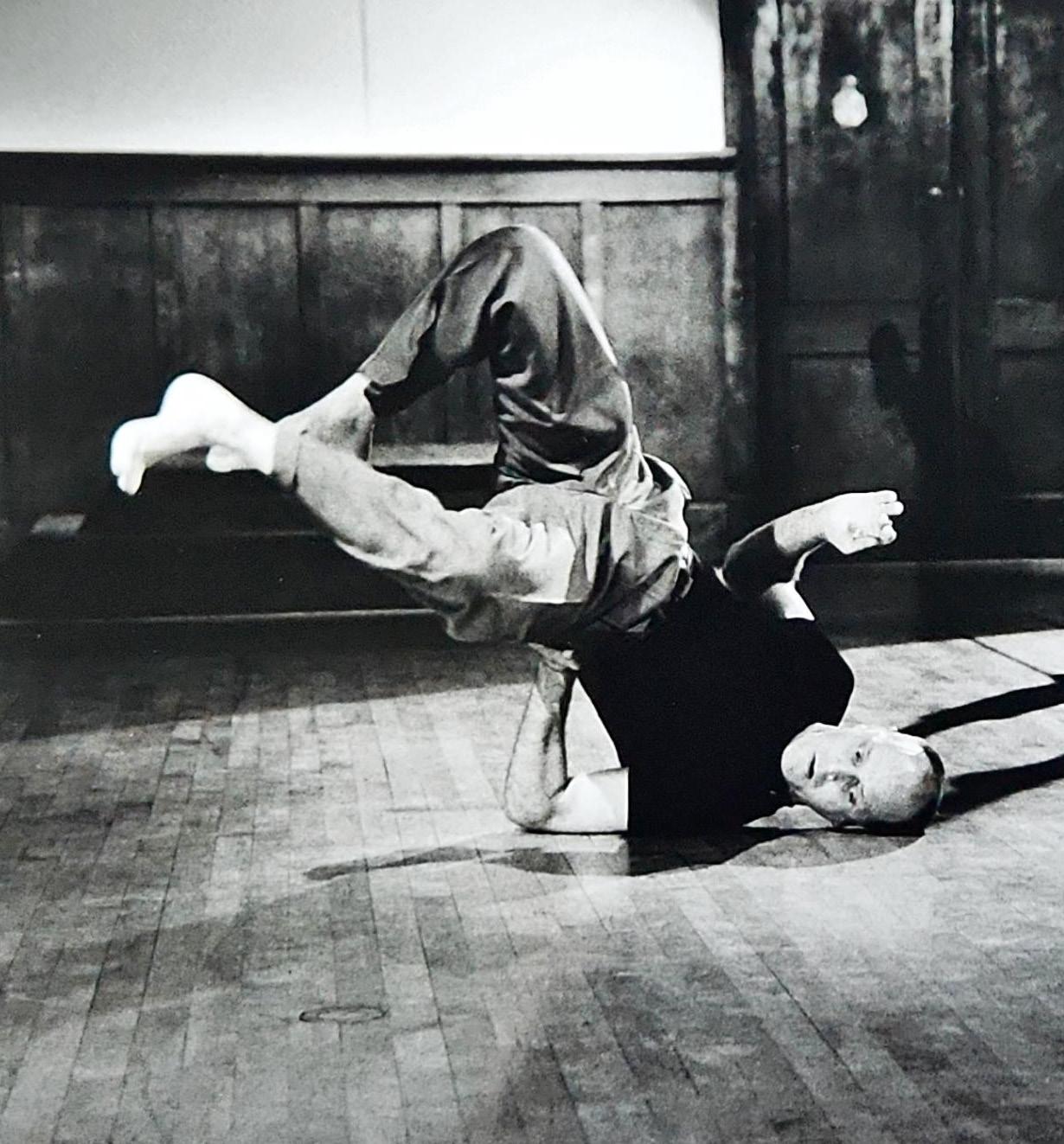
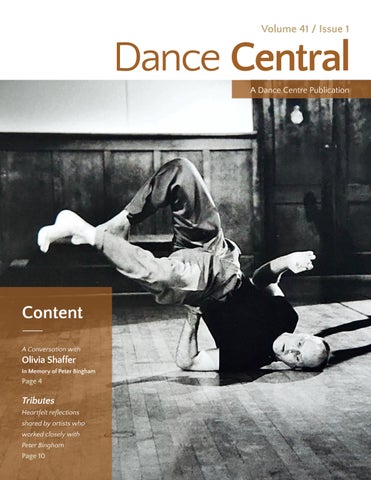
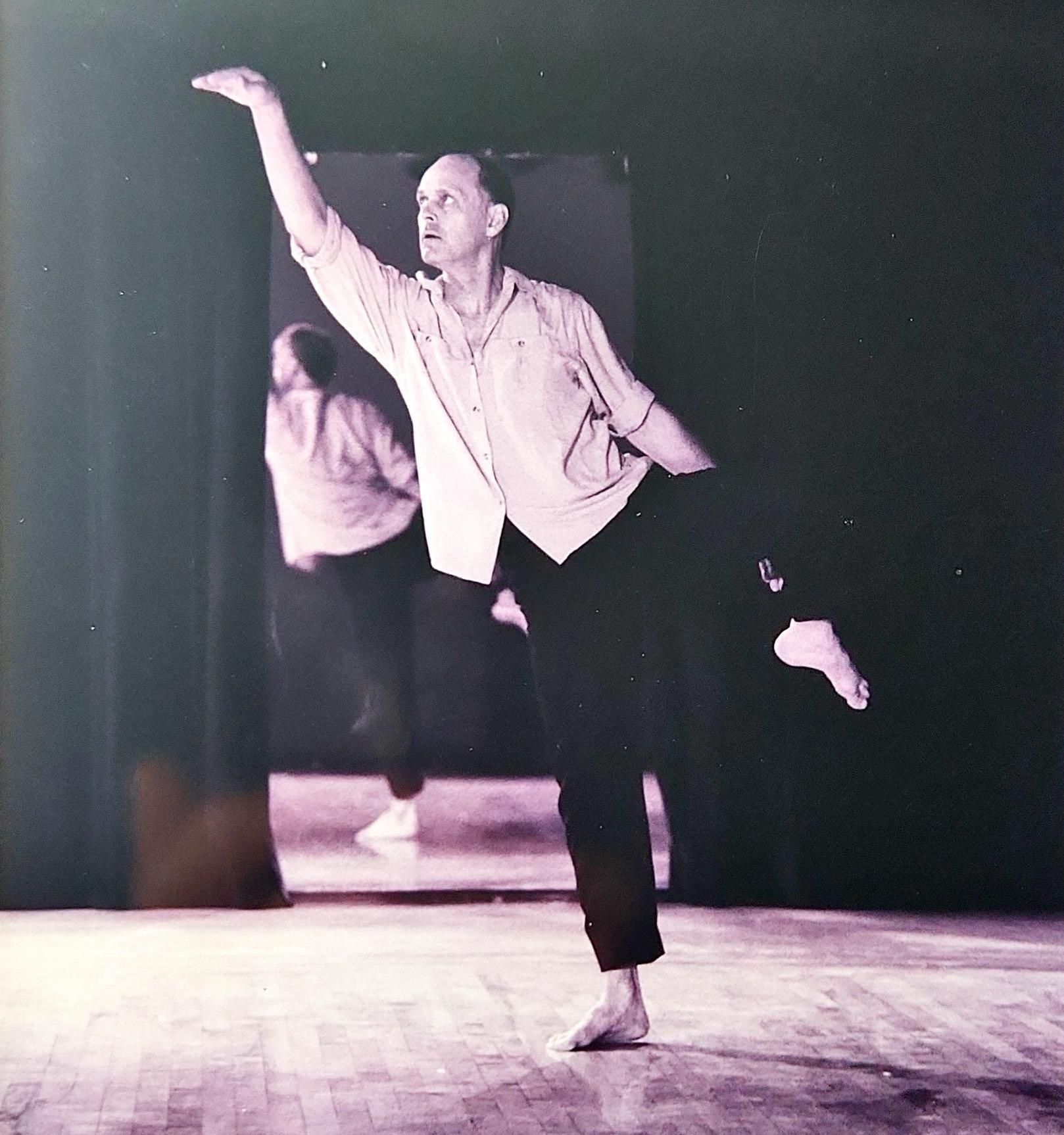
Front Cover: Peter Bingham in The Echo Case © Chris Randle
Back Cover: Peter Bingham © Chris Randle
Dance Centre Board Members:
Chair
Selim Hasan
Vice-Chair
Linda Gordon
Treasurer
Mark Weston
Directors
Rosario Ancer, Elaine Carol, Yvonne Chartrand, Mique'l Dangeli, Anndraya Luui, Jordan Thomson, Sujit Vaidya, Wen Wei Wang
Dance Foundation Board
Members:
Shaadi Faris, Dallas McMurtrie, Jason Wrobleski
Chair Linda Blankstein
Vice-Chair Andrea Benzel
Secretary Anndraya Luui
Treasurer Samantha Luo
Dance Centre Staff:
Executive Director
Mirna Zagar
Associate Programming Director Raquel Alvaro
Associate Producer
Linda Blankstein
Director of Marketing
Heather Bray
Digital Marketing Coordinator
Lindsay Curtis Development Manager
Catherine Butler
Membership Coordinator
Kaia Shukin
Outreach Coordinator
Yurie Kaneko
Comptroller
Elyn Dobbs
Venue and Services Manager
Christopher David Gauthier
Established in 1986 as a resource centre for dance in British Columbia, The Dance Centre is a multifaceted organization offering a range of activities which is unparalleled in Canadian dance. We present performances and events, building audiences and nurturing public awareness; invest in programs, resources and support for hundreds of dance professionals working in all genres; operate one of Canada’s flagship dance facilities which welcomes tens of thousands of visitors annually; and work to promote BC dance. Through programs, outreach and education, The Dance Centre is committed to sustaining a strong and vibrant community through dance.
began dancing there in 1975 and went on to shape Contact Improvisation in Canada. Peter extended Contact Improvisation into a rigorous choreographic language grounded in physics, perception, and relationship. His work emphasized how movement is sensed and understood through the body, cultivating dancers’ ability to attune to one another and make decisions in real time. His approach to improvisation integrated structure with openness, allowing movement to emerge through interaction rather than prescription.
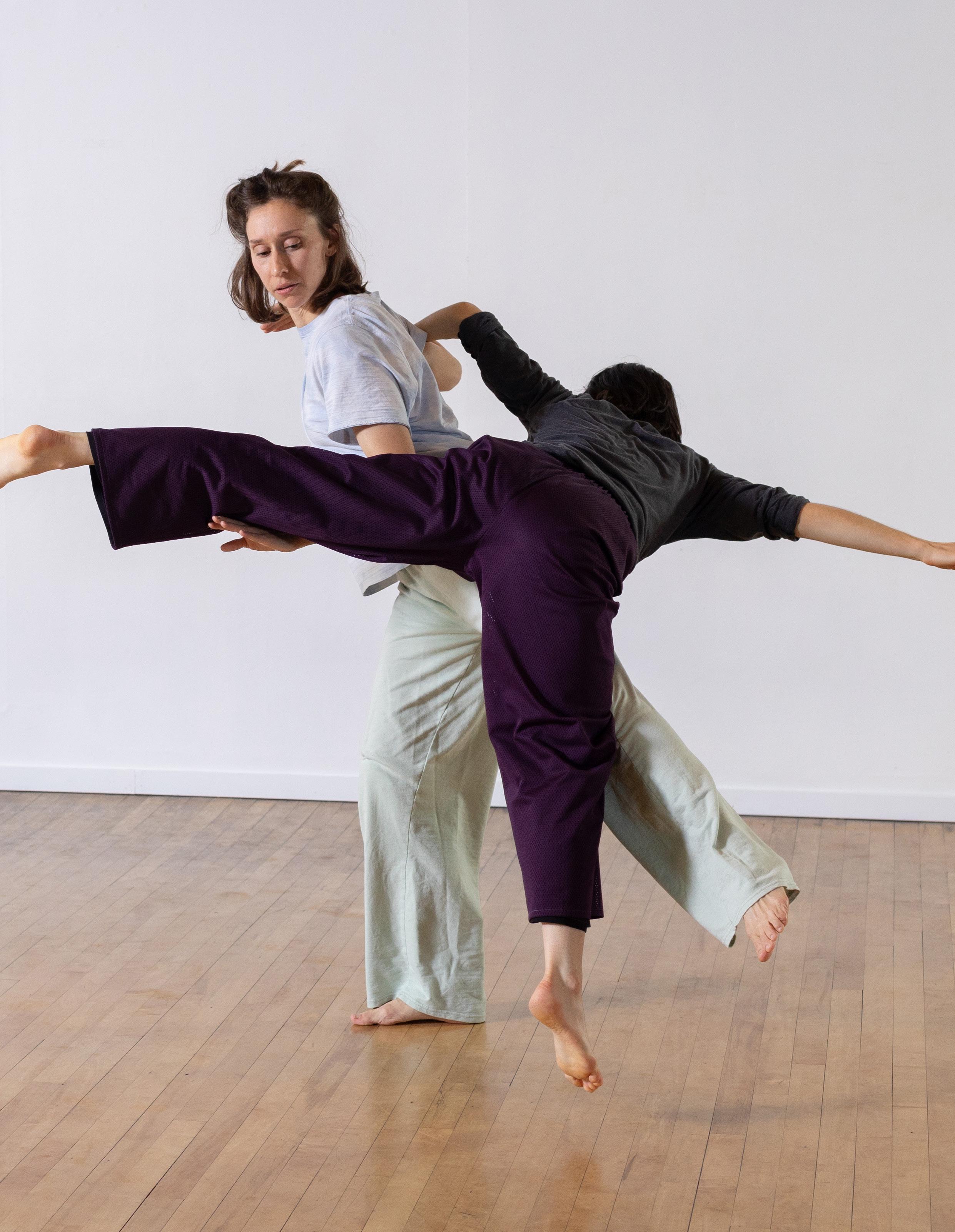
This orientation toward discovery remains central to EDAM’s practice. Held for two hours each weekday, EDAM’s Morning Class continues to anchor the Contact Improvisation and professional dance community in Vancouver. More than a technique class, it functions as a site of research, where artists engage improvisation as a method of composition.
Originally developed as a training ground for company dancers, Morning Class has expanded into a shared practice for a broader community of experienced contact improvisers. It is a space where training and artistic inquiry converge and where practice is equally vital as performance. In December 2025, Peter taught for the last time.


Peter was, as Olivia recalls, a storyteller. His presence in the studio extended beyond movement into language and memory. Rehearsals were often punctuated by stories
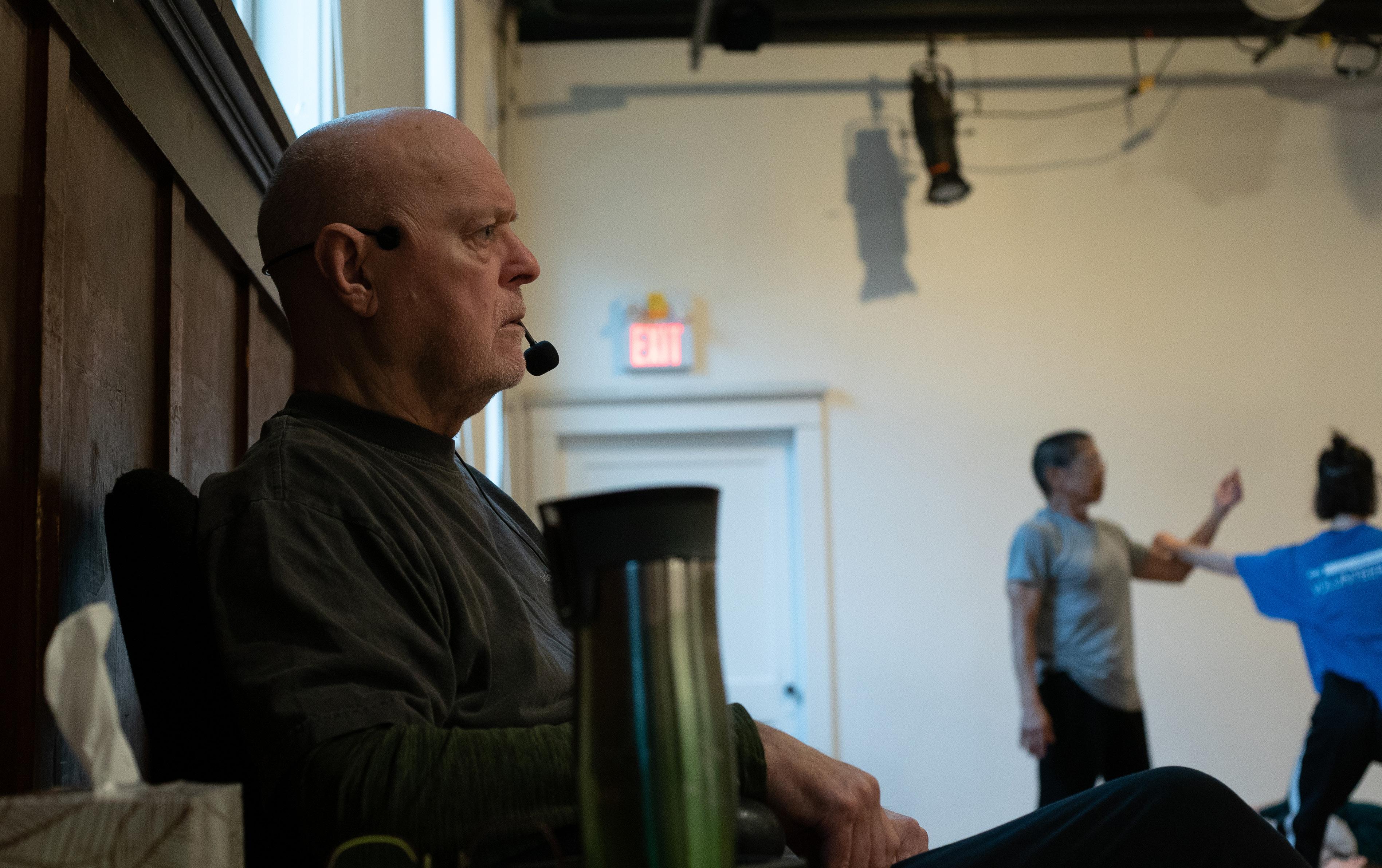
that situated the practice within a living history. Through these narratives, artists were invited into a lineage that was both personal and collective.
In his later years, Peter’s work evolved in response to Parkinson’s disease. His choreographic approach shifted increasingly toward improvisation structured through scores, placing greater emphasis on the agency of the dancers, until he ceased choreographing in 2017. His teaching also transformed, moving from physical demonstration to observation and verbal
guidance. Over time, knowledge was increasingly carried and transmitted through the ensemble of EDAM’s company artists and the people who attend classes.
Just as dancers negotiate movement together in Contact Improvisation, EDAM continues to evolve through the contributions of many individuals, including ensemble members, teachers, and longtime collaborators. Morning classes, rehearsals, and performances form an interconnected cycle, where each informs the next.
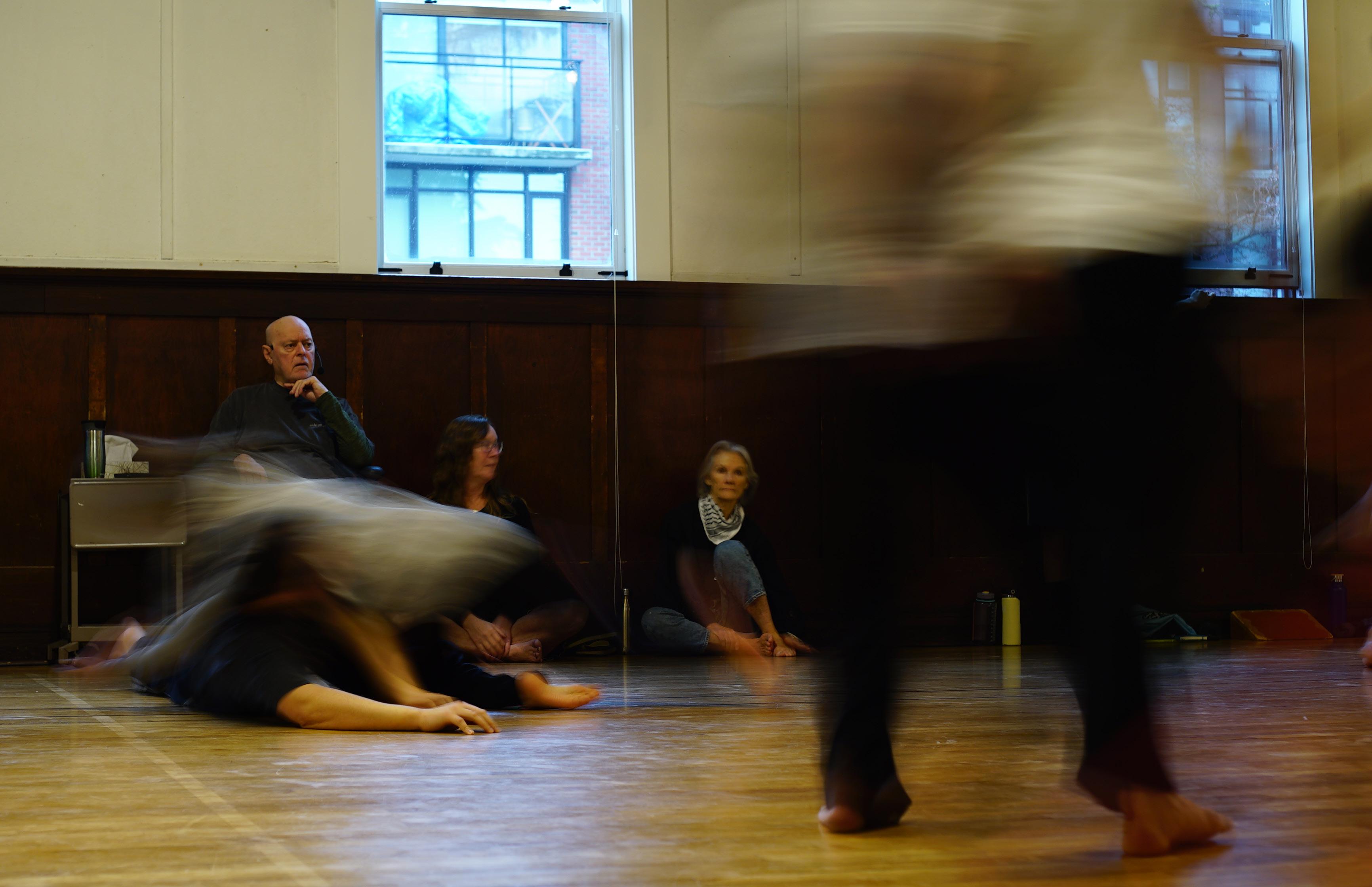
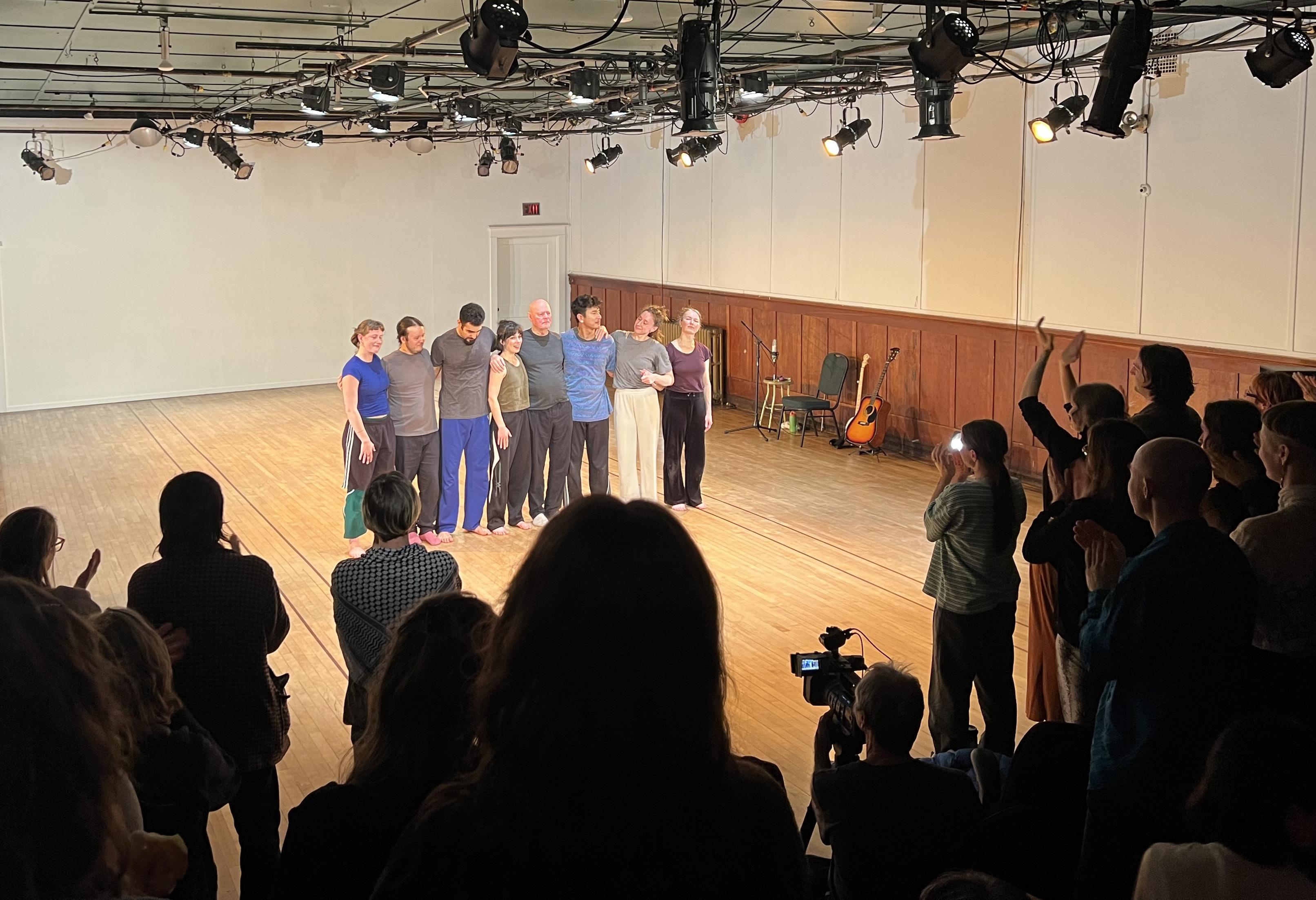
The ensemble, which has worked together over extended periods, embodies this continuity, carrying forward EDAM’s legacy beyond Peter to include the collective vision of its founding members: Jay Hirabayashi, Barbara Bourget, Jennifer Mascall, Lola Ryan, Lola MacLaughlin, and Ahmed Hassan.
EDAM’s history is preserved through its extensive archive, with hundreds of works recorded (many of them digitized), but the primary mode of transmission remains in the bodies of those who continue the work. The EDAM studio at the Western Front functions as a living archive, activated through the daily practice and the relationships that sustain it. Past and present coexist within the space, shaping how Contact Improvisation continues to evolve in Vancouver.
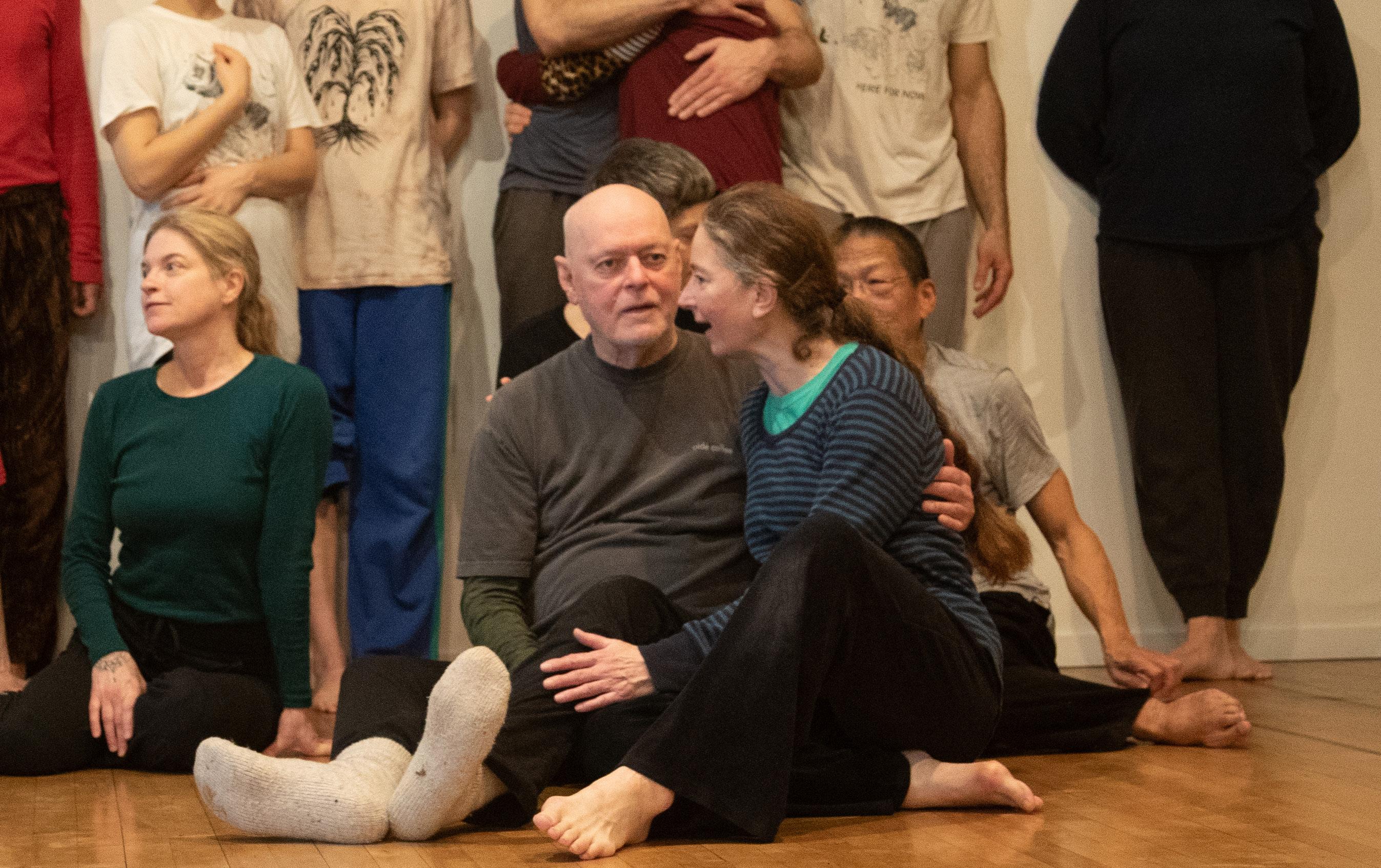
In the final months of his life, Peter remained present within the community he had shaped. Events such as the EDAM Open House in December 2025, where artists gathered to spend time with him, reflected the depth of connection he fostered over decades. These moments of gathering underscored the relational nature of his legacy built not only through artistic work, but through community.
Olivia describes Contact Improvisation as a space where boundaries blur between art and
life, intention and beauty. This porousness extends into the culture of EDAM itself, where practice becomes a way of being in relation to oneself, to others, and to the work. Underlying all of EDAM’s activities is a commitment to learning as an ongoing process. The work does not aim toward resolution but remains in a state of evolution. New questions emerge through practice, and the form continues to expand through engagement and a deep sense of curiosity.
As we closed the conversation after an hour and a half, I found myself returning to that first encounter at Madge (now demolished and built over), meeting a determined young dancer at the beginning of her path. Two decades later, that same clarity of purpose shines through, now shaped by years of experience and experimentation. In speaking with Olivia, it becomes evident that Peter’s presence is not forgotten but mobilized within the community he devoted his life to, and in the evolving space that she now carries forward.
[Bottom]
An EDAM company dancer since 2014, Olivia Shaffer’s practice is rooted in her deep gratitude for the mentorship and wisdom shared by Peter Bingham. Her path has also been defined by the numerous artists and choreographers who have contributed to her evolution as an artist. As she steps into her role as Artistic Director, she commits to "lead by following,” drawing on her experience as a dancemaker, improviser, collaborator, teacher, and practitioner of the Feldenkrais Method®.
Heartfelt reflections shared by artists who worked closely with Peter Bingham
Tribute by Anne Cooper
It's a chilly, rainy holiday and I am in the studio, resting after preparing for an upcoming workshop. It's peaceful here in the evening quiet, and yet a little unsettling at the edges, it's two months, almost two months since Peter passed away now, and I feel the emotion of gathering around and for his departure, the connections and recollections with dear, familiar faces of the past and the present has elapsed now and I feel his absence. Looking out the window, I love the branches and spring blossoms close together on the branches, extending clearly and moving softly in the light wind. I love the life inside the studio, and looking out, and the life outside the studio calls also and I'm gently unsettled, confronted with knowing that while one supports and influences the other, things are transforming, living...a Steve Paxton phrase comes to mind "neither participant is totally in nor out of control." And of Peter's, "Dance the body you have, today", and "let the dancing be the teacher"....I'm pretty sure he said both those things, yet in this form as I've experienced it over the years, primarily with Peter (31 years!) and others he brought
and I afterwards sought, things are passed down or along, handed through touch, or words, exercises, references, experiences, and most vividly, contact improvisations, and it is possible to have similar or the same discoveries along different time-lines, different people, sourcing words or ways to absorb, receive or offer and exchange the physical principles and collectively discover and inform the dancing, each bringing something to it that becomes part of its life, its ongoing expression.
I first met Peter when I wandered into his contact improvisation class in the studio in use by EDAM, at the Western Front in Vancouver in the mid-nineties. I had come from dancing with Compagnie DansPartout in Quebec city, and was taking classes at the (old) Main Dance Place studio in the Arcadian Hall around the corner from the Western Front, on Main street. I don't know how I heard or found out about it, maybe it was from Gisa Cole at Main Dance. I was on the look-out for something different from what I had done in dance so far, something unknown and significant, and inspiring, and I was almost shocked to find there was this thing, this whole big thing called Contact Improvisation that a dancer could do.
I remember lying in the corner of the studio, deep into myself, the relief and freedom surrounding my whole body, being, emanating out of me, quiet, eyes closed, ears open, listening to Peter's voice, quite prominent in the room at that time, leading, guiding, proposing, enlivening, explaining & inviting many possibilities for movement, and at the same time, just and only the one you were in or were not yet in but aware of, now; the potential of movement surrounding us each and all, as we were there, alone and together. And that this was, in and of itself, dance, before we even started with the many, or specific, articulated
few possibilities for the day at hand. And that I could not be doing any of it, and that this would also be dancing. It was not long before I and we would be dancing, would have begun activating within and through the length and width of the big studio through the length & width of the room, encountering improvisers and improvisations along the way, until we were drawn together by Peter who would introduce a skill or an exercise to work on, which were quite difficult in those days, and difficult for me in that so much of it was that I was aware of unlearning, the necessity for a going back and
I think he really loved working, making dances for people, for and with dancers, and for himself, whether the ones he himself was in or for the company.
away from familiar technique and a dancing way developed over years since childhood.
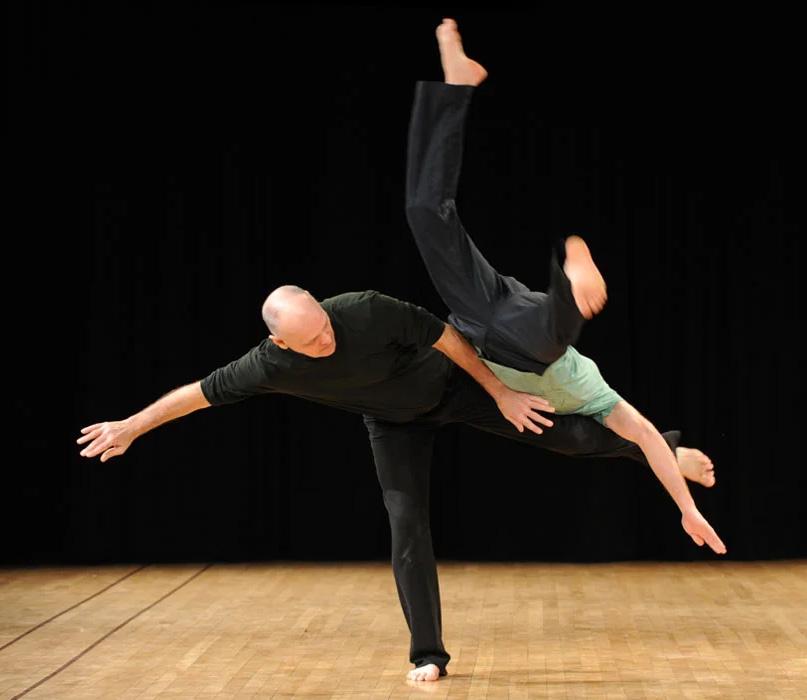
Peter would often demonstrate a solo 'pass' across the floor, discovering it as he went, while having the beginnings or edges of an idea or interest in mind when he started, the thing he wanted to emphasize or draw out in the dancing and for us to give our attention to. He danced with lots of flow, lots of pause, of sweep, and human-being-ness, that is to say a kind of weight that's moving easily and simply into the foot that's surface is now moving into a step, of a turning motion on the surface of the foot, a pivot, an easy lean into the heel and turning backwards so that you see as if the whole space is rotating more than him, or only him in it, a kind of ease you can watch anyone turn & reach behind them and pick up a hammer & continue on with the movement while at the same time he
used the dance to express himself, something of his situation he found himself in or found inside himself.
Then after that we would do a demo, a pass across the floor improvising in contact and I was often his demo-partner~he would try to find words for or hint at a specific contact-something he was interested in the class participants understanding, and we would work on that in pairs, until he would allow it to flow into more open purely improvised contact improvisation explorations, having felt we had studied enough and now it was time to "let the dancing be the teacher". There is so much to say, many aspects of working with him beginning with a choreographed/improvised theatrical solo ('Shadow of Myself') we made when I began my studies at EDAM in 1994, to the formal, full length contact-choreographed group work so varied in design and impetus—he was really into patterns,
spatial design, choreographed complex duets, trios and ensemble,~ extending into the mid 2000's, to improvisations with Peter performing with us/various EDAMites for occasional events to, much later, the return to the improvisation as the form for the pieces, developing improvisation worlds for and with the group of dancers, the 'company', also called the EDAM ensemble, the 'structured improvisations' he envisioned and directed for a company of dancers whose "personnel," as he called us!- shifted and changed somewhat over the years, eventually evolving into the current Ensemble with whom he made more & more open ensemble improvisations, some including spontaneous text and vocal work as well as a focus on, of course, Contact Improvisation, and compositional intelligence functioning within spontaneous makings, with the support and eye of our dramaturge, Raïna von Waldenburg and Peter's partner and wife in life, our last piece named 'Cuddle of Dreams'.
In teaching his classes he was casually, consistently looking for something(s) to reveal itself as a possible direction for the upcoming piece in the upcoming or monthsfrom-now show. He was usually researching his next piece through watching the class, -getting interested in ideas he saw there and/ or nudging us towards ideas by what he said, (often reflected from what we or somebody else did), and then seeing what would happen. And he was at the same time training us to physically be available for the ideas, or the inquiry he was wanting to begin in the next piece, or the inquiry of our own dancing, our individual and collective improvising. He was
quite single-minded, and by that I mean he had something he was wanting to remain interested in doing and working on, and he simply continued on with it regardless of the deterrents that might arise. In later years, with his Parkinson's disease, he quietly just went ahead and didn't worry too much about deterrents or impediments to what he wanted to do. I think he did worry, maybe quietly, and concerned himself and cared about people, and feelings and relationships but perhaps sometimes being in the studio making the dances was often most uppermind. I think he really loved working, making dances for people, for and with dancers, and for himself, whether the ones he himself was in or for the company. I would say perhaps he was happiest, or one of the major things that he was most interested in and happiest spending his time in and thinking about, resting for, and being in and around for him was making the work, and the EDAM studio has hummed with a quiet underpinning of Peter's improvising consistency, of his doing the daily classes and, by way of improvising and consistency, the undercurrent of making things happen, he, and many other dancers and committed, caring managers, the underpinning of clear intention, even when things are not yet clear or are receding from view, of things little by little coming into exploration, and into fruition. We were friends, friends through the everyday, through showing up at the same place, doing and learning a kind of unknowableness that keeps on and becomes more the more familiar you get with it.
Tribute by Lee Su-Feh
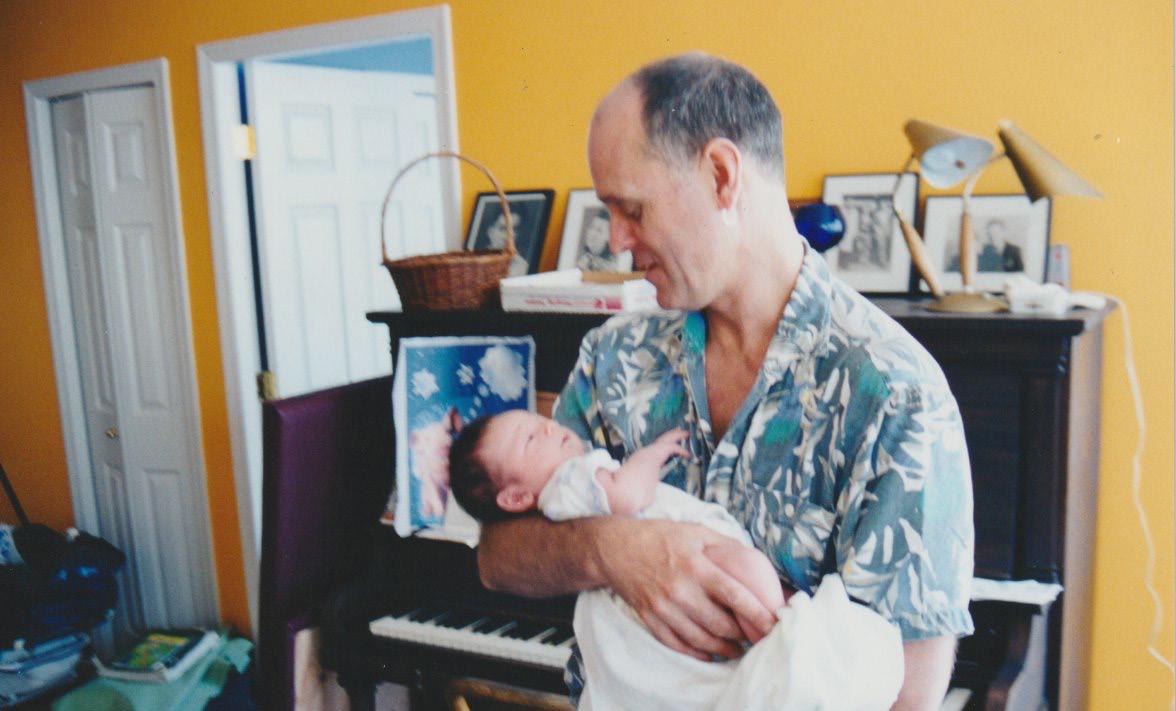
While the floor is something all dancers talk about and something I encounter in every dance class and rehearsal I have ever been in, I realized recently that my embodied understanding of the floor came, truly, from Peter. He taught me, as no other teacher has, how to make friends with the floor.
As a result, Peter’s voice and the feel of the smooth buttery floor of EDAM are in my bones, superimposed on every floor I lie down on, no matter where or when:
“Continue arriving” “Tension masks sensation”
“Notice where your attention goes.” “A warm body is a felt body.”
These are a few of the many teachings from Peter that I have repeated in my own classes, that I hear others repeat, invoking Peter with each utterance, with each gesture, with each dance shared. He has been so present in my body for more than thirty years, I thought I would never feel his absence. But I do. Even more than his absence, however, I feel his continuing presence among us who dance with him in our bones, his final words to us resonating like a score for the next dance:
“Continue to love one another.”
Tribute by Arash Khakpour
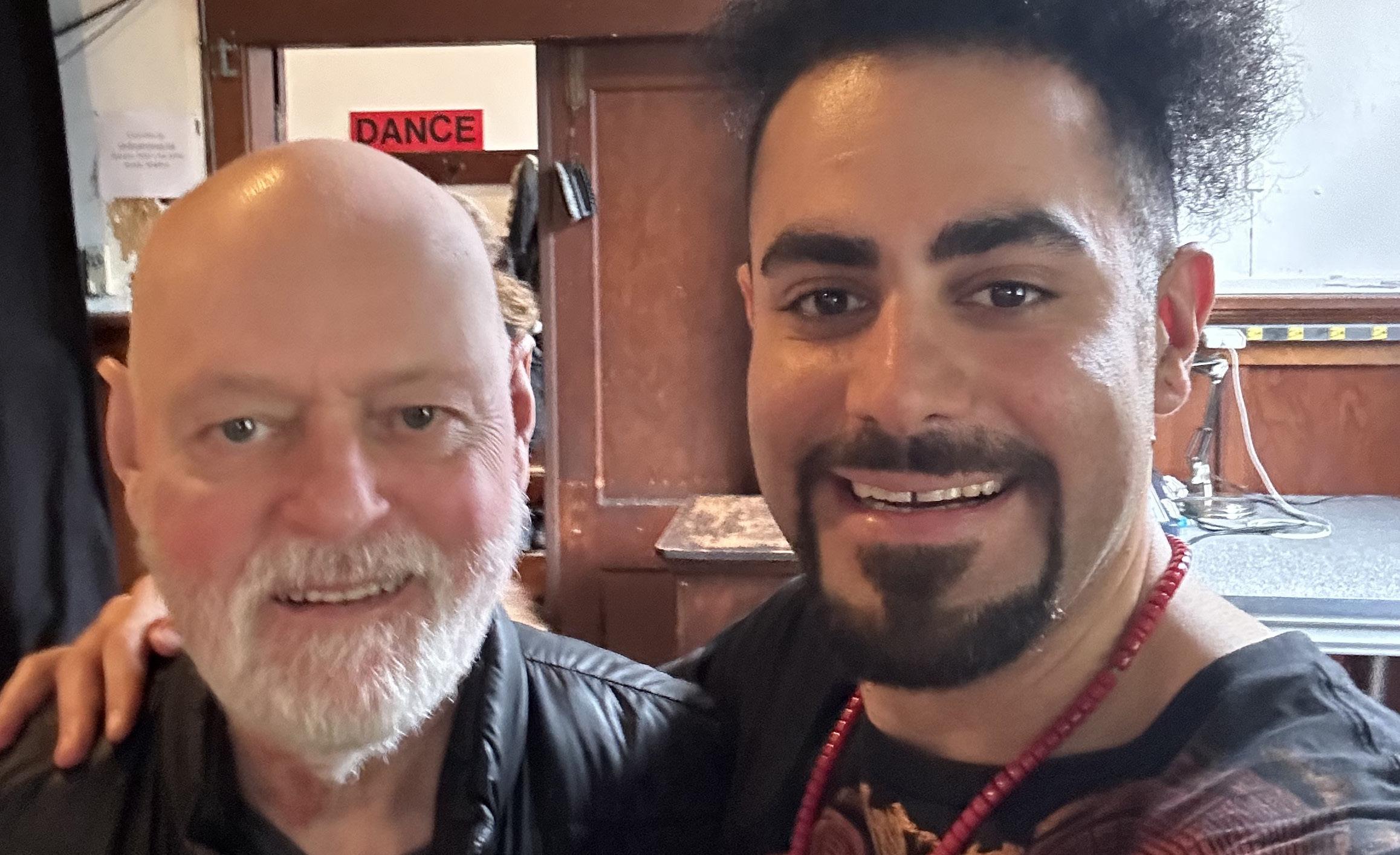
Peter Bingham is my dance father. The man next door dances, a graceful artist who shares his dances on many planes of existence. He has shared with me gentleness and graceful ways of existing. I will never forget the first time I danced with him. After 9 years of knowing him, I began to feel that he is my family. I met Peter 17 years ago. Besides my biological father, Peter has been the most influential mentor and figure in my life. His graceful and caring ways of sharing knowledge and philosophies of life have impacted everything I do in life. I can’t imagine a dance career without having been exposed to his wisdom. He guided me closer to my essence through his non-judgmental
and yet piercing presence that sees and feels the truth instantly. It is an honour to have been guided by him. The closer Peter got to leaving, the more I learned to communicate with him non-verbally. He could speak clearly without speaking. He always said, “Lead by following, really follow it”. And now that he is gone, I have a new understanding of what he said, and I keep hearing: How do I lead my life by following his teachings? I have huge gratitude for the love that he cultivated in our community and the love he helped me awaken in myself. I have come closer to my essence through him. I will live what I learned from him for the rest of this life.
The man next door keeps dancing…and of course, he gracefully leads by following. ♥��
Tribute by Chris Aiken
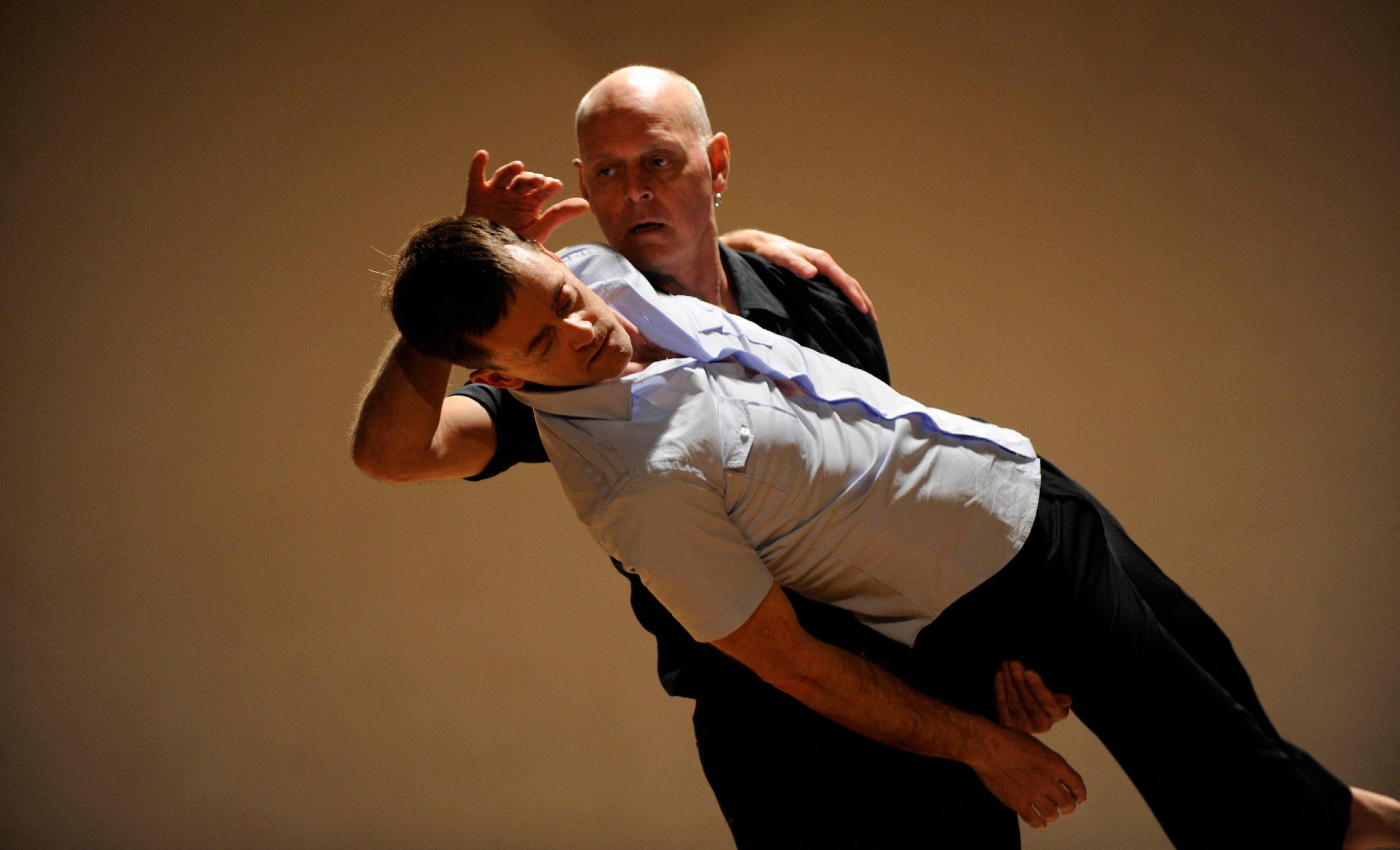
From 1992 to 2005, Peter and I created and performed many evening-length improvised works together, often with wonderful musicians such as Andre Gribou, Dean Magraw, Coat Cooke, and Ron Samworth. We performed numerous times in New York, Minneapolis, Vancouver, Mexico, and Oberlin. Our work evolved out of the work of Group Six (‘92-’94), which included Peter, Nancy Stark Smith, Ray Chung, Julie Car, Jeff Bliss, and me.
What I remember most about working together was Peter’s ability to shift seamlessly from highly physical, often daring partnering work to sculpting time and
space through his movement and attention. At times, I could feel time stretching and bending, through movement, image, and presence. It felt real, on the edge, deeply emotional, but never too serious.
Peter touched, inspired, and taught so many dancers. His legacy lives on in the hearts and bodies of the dancers, students, and audiences who had the good fortune to encounter that beautiful soul. I cherish the time we spent together.
Tribute by Alana Gerecke
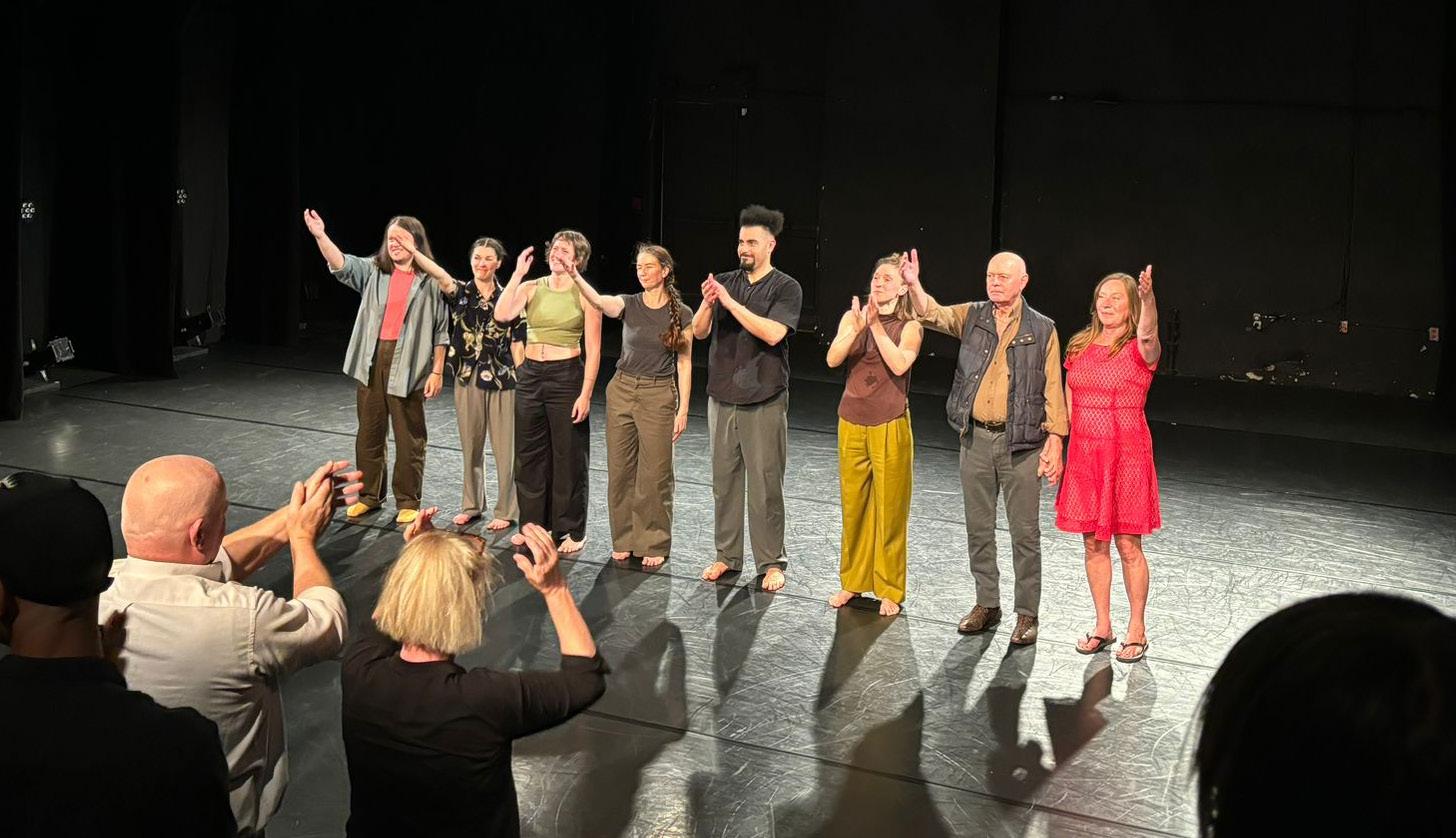
In your last class, you guided us in paradox, in risk, and in catching a ride, punctuating a familiar Peter-ism with a sense of urgency: “Lead by following. Seriously.” Sometimes, a legacy is a collection of sensations, a gesture rehearsed into habit, habit shaped into flesh. It lives in a shoulder joint or a shin bone: an inscribed pattern that the body twitches toward. This version of inheritance lives in movement, and it passes between bodies.
I am looking at photos of you, Peter, under that green ceiling. You are surrounded by students, friends, and collaborators. You are, as always, a connecting force without claiming the centre: welcoming, unassuming, precise, and profoundly skilled.
I came hungry to your practice. You met me with curiosity, patience, and a grace that still moves me. You modeled an absolute trust in the moment: this moment, and then this moment, and then this one. You guided me to listen with every centimeter for the density and tone of touch. You taught me to pay attention to my attention and to feel past my edges.
In that last class, the room teeming with many of your most seasoned dancers, I swear I could feel the air undulate between bodies, an energetic fascia connecting us. There was a shared, collective, and exquisite sensitivity in the room—a keen kinesthetic listening that you cultivated in us. That’s where I’ll feel for you, Peter, in the connective tug between bodies. And, always, in the strength in the softness.
1951–2026
teacher, mentor & artistic director
Volume 41, Issue 1