Remembered as Champion of Civil Rights on the West Side
Wheat led Third Unitarian Church in Austin since 1969, seeing it through a time of upheaval and change on the West Side.
By MICHAEL LIPTROT Block Club Chicago
Apastor who helped lead West Side civil rights efforts and smooth tensions as Austin diversified was memorialized by parishioners and family in May.
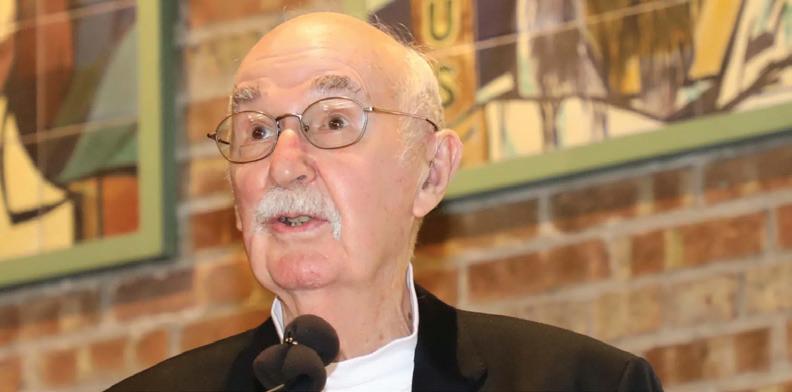
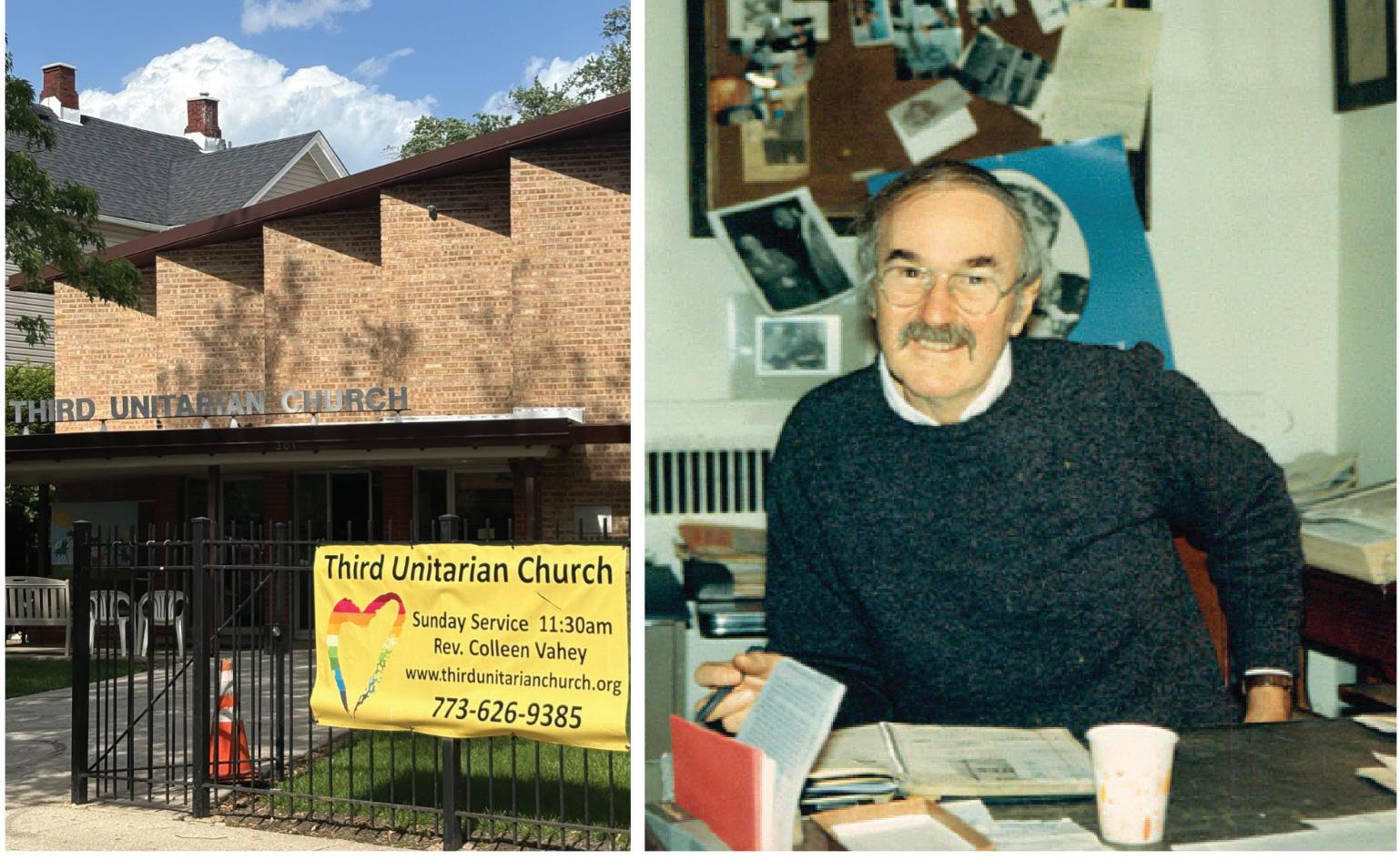
The Rev. Donald Hoover Wheat, known as Don, died March 5 at age 92. He led Third Unitarian Church, 301 N. Mayfield Ave. in Austin, from 1969 to 1998 before serving as minister
emeritus. A celebration of life was held on May 9 at the church, where family, friends and church members joyfully remembered Wheat’s passion for community, his sense of humor and his love for helping others.
Wheat saw the congregation through many changes on the West Side in the second half of the 20th century, family said, and his legacy includes a lecture series and scholarship that still operate.
Born in 1933 in Ohio, Wheat attended Hiram
College in Ohio before marrying Ann Warren in 1957. He attended seminary school at the University of Chicago. In 1963, Wheat ministered at Austin Boulevard Christian Church, 634 N. Austin Blvd., before moving to Third Unitarian in 1968, according to family and his obituary. Wheat’s time leading Third Unitarian coincided with major civil rights developments that impacted the West Side. He made sure his church and congregation contributed to positive change during those times, family and friends
Rev. Donald Hoover Wheat, known as Don, died March 5 at the age of 92, having led Third Unitarian Church in Austin at 301 N. Mayfield Ave. in Austin from 1968 to 1998. | CREDIT: MICHAEL LIPTROT/BLOCK CLUB CHICAGO (LEFT) AND PROVIDED (RIGHT)
“Dad saw the West Side community as the heart of the issues … that were unfolding at that time: civil rights, advocating against the Vietnam War.”
said during the memorial service.
Wheat protested the Vietnam War, discriminatory housing practices and the 1969 assassination of Fred Hampton by Chicago police, often wearing his clerical collar to demonstrations, Wheat’s children said.
Around this same time, Chicago Police’s Red Squad, a counter-intelligence unit known for infiltrating political movements between the ’50s and ’70s, smoke-bombed Third Unitarian during a showing of a documentary about social issues of the time, said Wheat’s son, Andrew Wheat.
“Dad saw the West Side community as the heart of the issues … that were unfolding at that time: civil rights, advocating against the Vietnam War,” said Wheat’s daughter, Sarah Wheat.
“He saw the importance of connecting neighbors and community members that wanted to advocate and advance better options for all,” she said. “And I think those issues just really played out during the ’60s and ’70s and into the ’80s.”
This period saw dramatic changes in Austin and the greater West Side. Austin was predominantly white from the time it was annexed into Chicago in 1899 through the 1970s, according to a Tribune report.
Social and political turmoil locally and nationally led many white Austin residents to move out of the neighborhood, with racial tension peaking during the 1968 riots following the assassination of Martin Luther King Jr. The riots devastated many businesses along Madison Street and Roosevelt Road. By the ’80s, Austin was majority-Black.
Austin “went through radical white flight that was premeditated on the part of the housing industry,” Andrew Wheat said. “The real estate industry would arrange for a Black family to move into a specific block in Austin and then cash in when the more fearful white folks among them headed for the hills. And so it was really a heavy time.”
As white flight took hold in Austin, Third Uni-
tarian remained steadfast about staying in the neighborhood. Though the Unitarian church is non-denominational and follows a progressive theology rooted in social justice, the congregation lost about 50 members during the period, with many of them starting a new church in Oak Park, according to the Tribune.
Wheat remained and slashed his salary to $10,000 to help the church adjust to its smaller congregation, the newspaper reported in 1999.
When Wheat stepped down as senior minister in 1998, he was replaced by the Rev. Michelle Bentley, the first Black woman to lead a Unitarian Universalist church, the Tribune reported.
Wheat remained involved as a minister emeritus, though he moved from Austin to Michigan with his wife in retirement.
“He just saw the church had a role of supporting their neighbors and helping [be] an organizing place for people who wanted to come together and stand up against some
of what politicians at the time were doing,” Sarah Wheat said. “The church was really a connection point for some of the folks who were leading some of the most important civil rights [efforts] at that time.”
During Wheat’s time as lead minister, he established many lasting initiatives at Third Unitarian.
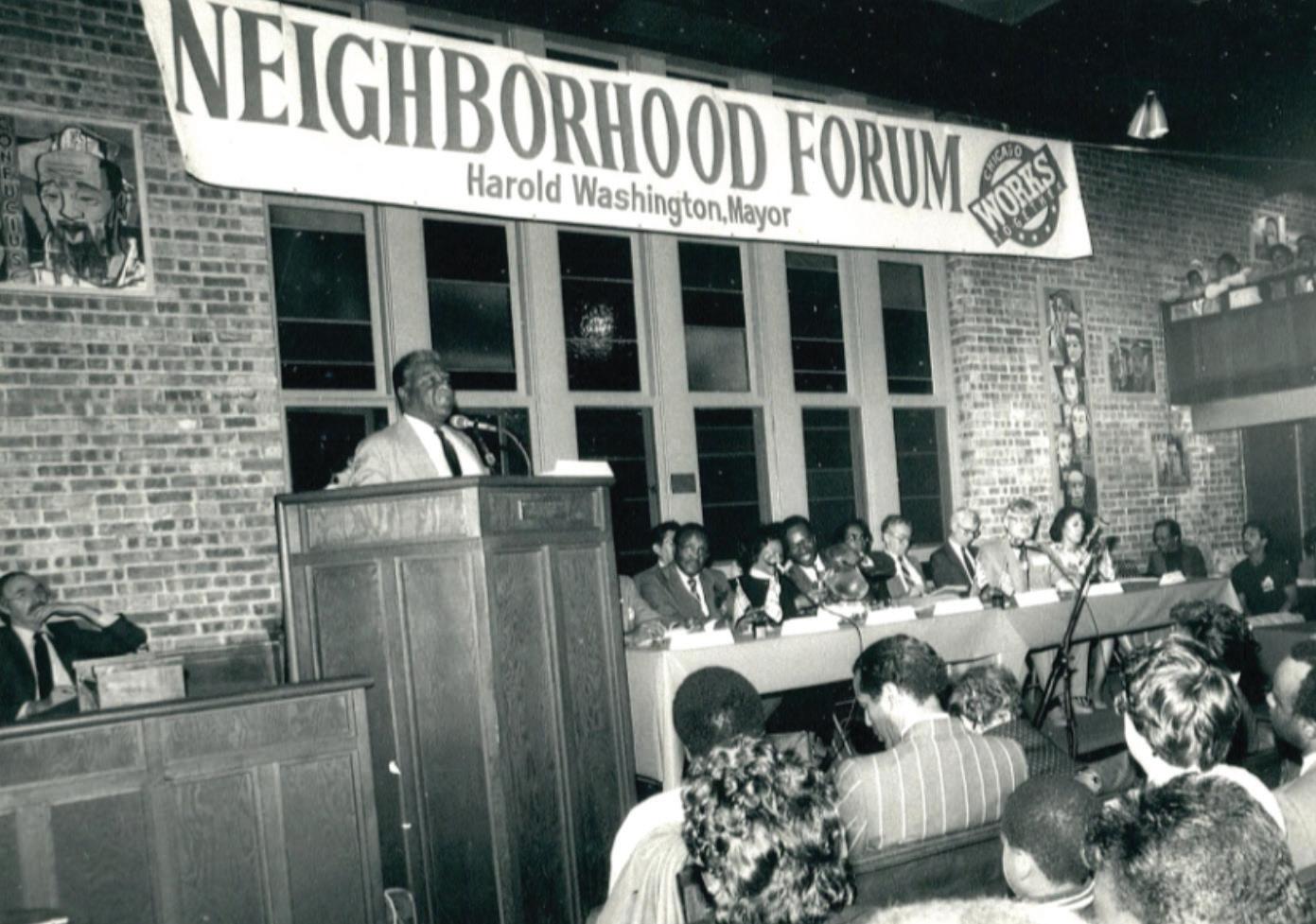
The Annual Rev. Donald H. Wheat Lecture Series has featured notable speakers, including theologian Michael Eric Dyson, the late Sen. Paul Simon and, last year, former Rep. Bobby Rush. Former Mayor Harold Washington separately spoke at the church for a neighborhood forum.
In 1974, Wheat launched the Austin Scholars Award Program at the church. The program has awarded more than 425 college scholarships to Austin-area Chicago Public Schools seniors. The church also established an early childhood education and food kitchen program during Wheat’s time, Sarah Wheat said.
At the memorial service, friends and family remembered Wheat as more than a preacher. He was a humorous friend, avid biker, lifelong learner, rebel at heart and devoted grandfather with a “so far, so good” philosophy for approaching life, Wheat’s grandson recalled.
Lynne Garner and Jerry Jaecks separately joined Third Unitarian Church in the late ’80s. Wheat was influential in their lives throughout the decade, encouraging Garner to begin ministering and supporting Jaecks through the death of his wife from breast cancer in the mid-’90s.
Today, Garner and Jaecks are married, having met at a gardening workshop at the church. The two are still active at the church and remember Wheat for his dedication to creating a legacy beyond himself.
“He was inspiring. He was always uplifting, and he had a voice that would carry,” Garner said. “He was forward-thinking. He didn’t just think about his time as a minister, but built beyond that for the legacy of the church.”
Rev. Donald Hoover Wheat, known as Don, died March 5 at the age of 92, having led Third Unitarian Church in Austin at 301 N. Mayfield Ave. in Austin from 1968 to 1998. | CREDIT: PROVIDED
Judge Denies Ex-Loretto Exec’s Push to Have Charges Dropped
Anosh Ahmed, former CFO and COO at the West Side safety-net hospital, is facing
charges
in a
$300
million COVID testing fraud case and a second criminal case
BY KELLY BAUER Block Club Chicago
Aformer Loretto Hospital executive who is at the center of two federal criminal cases was handed a loss in court on July 16.
Judge Sharon Coleman denied an attempt by Anosh Ahmed, former CFO and COO at the West Side safety-net hospital, to have charges against him dropped in a $300 million fraud case. The rejection came about a month after the government did drop charges against two other defendants in the case.
Coleman wrote in a Thursday opinion that Ahmed is a fugitive who should not be able to
benefit from an attempt to dismiss charges until he appears before the court.
In June 2025, prosecutors charged Ahmed, Mahmood Sami Khan and Suhai Ahmad Chaudhry, alleging they took part in a “scheme” that attempted to defraud the federal government out of nearly $900 million via fake COVID-19 testing. Prosecutors said Ahmed — who resigned from Loretto Hospital after a series of Block Club investigations revealed questionable conduct at the hospital — used personal data from Loretto’s patients as part of the “scheme.”
As Illinoisans scrambled to get sought-after COVID-19 vaccine appointments, Block Club exposed a scandal: Many of Loretto Hospital’s doses were going to ineligible people with ties to administrators. Then our team dug deeper to reveal questionable conduct at the taxpayer-funded hospital.
Ahmed had relocated to France and Dubai before the charges came down, though he was aware of the federal investigations, prosecutors have said. He did not return to the United States even as he was charged in two
federal cases.
Ahmed was taken into custody in Serbia in the fall and has been fighting extradition, prosecutors have said.
The trial for Khan and Chaudhry was set to start this month, while a fourth defendant in the case — Mohamed Sirajudeen — has been in negotiations to reach a plea deal.
But then a motion filed in late May on behalf of Khan argued that a federal prosecutor who has been accused of misconduct during grand jury proceedings in the “Broadview Six” case also committed misconduct before the same grand jury to secure an indictment against them. His attorneys asked that the charges against him be dismissed in light of that. Chaudhry joined the motion.
Prosecutors dropped charges against those two men in mid-June after Coleman hinted she’d otherwise hold an evidentiary hearing that could have forced U.S. Attorney Andrew Boutros and others to the stand to answer questions about alleged prosecutorial misconduct during grand jury proceedings.
Ahmed sought to join in on Khan’s motion,
as well. Prosecutors fiercely opposed that attempt.
Coleman sided with prosecutors in her opinion, dubbing Ahmed a fugitive in the court’s eyes who should not be able to potentially benefit from a favorable ruling until he appears before the court.
“Ahmed continues to fight extradition and refuses to submit to this jurisdiction,” Coleman wrote in the opinion. “The nature of his continuous refusal to submit to this jurisdiction, evidences his intent, at least in part, to remain outside of the United States to avoid prosecution. Thus, the Court concludes, Ahmed is a ‘constructive’ or ‘functional’ fugitive for purposes of the fugitive disentitlement doctrine.”
The judge also ruled that Ahmed is not entitled to discovery — which means prosecutors don’t have to provide him with sealed grand jury transcripts as they did for other defendants in the case.
Ahmed could be entitled to discovery in the future if he appears before the court, Coleman wrote.
The Story That Holds You Back: Understanding Self-Limiting Beliefs
BY DR. DEONDRE’ RUTUES Columnist
We often talk about the barriers that exist in our communities—lack of investment, limited opportunities, underperforming schools, unemployment, violence, and systemic inequities. Those barriers are real and deserve our attention.
But there is another barrier that is often overlooked because it isn’t visible. It lives in our minds. It’s called a self-limiting belief.
A self-limiting belief is a deeply held assumption about yourself that convinces you something isn’t possible before you’ve even tried. It becomes the voice that says: “I’m not smart enough.” “People like me don’t become business owners.” “I’ll probably fail anyway.”
“Success is for someone else.”
The dangerous part is that these beliefs often feel like facts. They’re not. They’re stories. Where Do Self-Limiting Beliefs Come From?
No one is born believing they can’t succeed. These beliefs are learned over time through our experiences. Sometimes they
come from repeated failure. Other times they come from criticism, trauma, poverty, discrimination, or simply growing up in environments where certain possibilities were never modeled.
If you’ve never seen someone own a business, earning six figures may seem impossible. If every risk you’ve taken ended in disappointment, eventually your brain begins protecting you by convincing you not to take risks at all.
Psychologists call this cognitive conditioning. Our brains are designed to identify patterns. Unfortunately, they don’t always distinguish between what happened before and what must happen next.
One bad experience becomes an expectation. One rejection becomes an identity. One failure becomes a prediction of every future attempt.
THE COMMUNITY IMPACT
Self-limiting beliefs don’t only affect individuals. They affect entire communities.
Communities begin to normalize struggle. Young people stop dreaming because they’ve learned what is “realistic.”
Entrepreneurs never start businesses. Leaders stay silent. Talented people settle for surviving instead of thriving. Over time, those individual beliefs become collective beliefs. And collective beliefs shape community culture. Imagine what happens when enough people begin believing they are capable instead. Everything changes.
How Do We Break the Cycle? The first step is awareness. You cannot challenge a belief you don’t recognize. Pay attention to the language you use. “I can’t.” “I’m just not that kind of person.” “I’ve always been this way.” Those statements often reveal beliefs—not truths.
Second, ask yourself an important question: “What evidence actually supports this belief?” Most people discover they’ve accepted assumptions that have never been tested.
Third, replace certainty with possibility. Instead of saying: “I’ll never be good at public speaking.” Try: “I’m not confident yet, but I can improve.” That single word—yet—creates room for growth.
Finally, take action before confidence arrives. Confidence is rarely the starting point. It
is usually the result of repeated action. Every small success gives your brain new evidence that challenges the old story. Over time, new experiences replace old beliefs.
REWRITING THE STORY
As a Business Psychologist, I’ve learned that our lives are often shaped less by our circumstances than by the meaning we assign to those circumstances. The story we tell ourselves becomes the life we build. If we believe we’re capable, we look for opportunities. If we believe we’re powerless, we look for proof that we’re right. That’s why changing communities requires more than changing environments. It also requires changing mindsets.
When people begin believing they have value, potential, and the ability to grow, they start making different decisions. Those decisions create different outcomes.
Those outcomes create stronger families, stronger organizations, and ultimately stronger communities. Because sometimes the greatest breakthrough isn’t changing your circumstances. It’s changing the story you’ve been telling yourself.
6TH ANNUAL COMMUNITY BLOCK PARTY: OLYMPICS — PASSPORT AROUND THE WORLD
Saturday, July 25 | 1–4 p.m. | Schroeder Park, 2600 S. 13th Ave., Broadview
Travel the world without leaving Broadview at Dream Academy Foundation’s sixth annual Community Block Party. This year’s Olympicthemed celebration, “Passport Around the World,” features cultural experiences, Olympic-style games, free food, giveaways, and activities for the whole family.
Admission: Free
Registration: Scan the QR code on the event flyer or visit dreamafoundation.org.
Contact: events@dreamafoundation.org
38TH
ANNUAL DR.
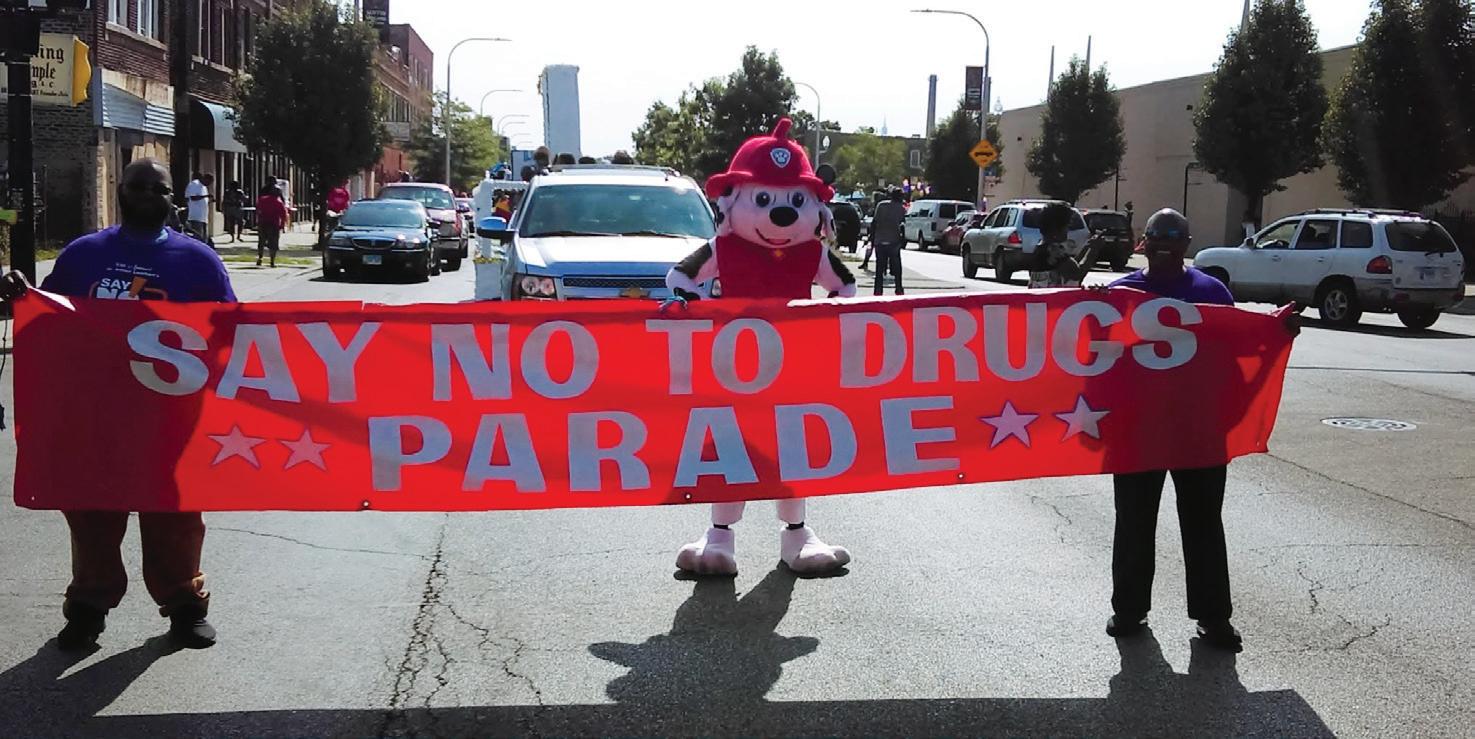
ARTHUR LOCKHART “SAY NO TO DRUGS & VIOLENCE” PARADE & SCHOLARSHIP RESOURCE FAIR
Saturday, July 25 | 10 a.m.–2 p.m. |
Healing Temple C.O.G.I.C., 4941 W. Chicago Ave., Chicago
One of Austin’s longest-running community traditions returns for its 38th year with a day dedicated to promoting healthy lifestyles, youth achievement and neighborhood unity. Named in honor of the late Dr. Arthur Lockhart, the event features a community parade followed by a scholarship and resource fair offering family-friendly activities and community services. The annual parade has served as a West Side anti-violence and youth empowerment tradition for decades.
WHAT’S HAPPENING [ [
Event Features:
■ Community parade
■ Scholarship opportunities
■ School supply giveaways
■ Community resource booths
■ Talent showcase
■ Gaming truck
■ Free food
■ Health and dental services
■ Family activities
Admission: Free
Hosted By: The Arthur Lockhart Resource Institute and Healing Temple C.O.G.I.C.
Wednesday, July 29 | 6–8 p.m. | BUILD, 5100 W. Harrison St., Chicago
Learn how Illinois’ “No Representation Without Population Act” changes the way incarcerated individuals are counted for redistricting purposes and what it means for political representation in communities across the state. The evening includes a workshop, letter-writing campaign, light refreshments, and opportunities to get involved in advocacy efforts.
Admission: Free Registration: Register by scanning the QR code on the flyer or visiting the event registration page.
Contact: Edwina Hamilton | (773) 227-2880
Hosted By: BUILD and Change Illinois Action Fund
CHICAGO WEST COMMUNITY MUSIC CENTER: MARVIN GAYE TRIBUTE
Friday, July 31 | 7–8:15 p.m. | Columbus Refectory, 5701 W. Jackson Blvd., Chicago
Celebrate the enduring legacy of Marvin Gaye during an immersive evening exploring the life and music of the “Prince of Soul.”
The program blends music, storytelling and historical reflection on Gaye’s journey from Motown icon to one of America’s most influential recording artists.
Admission: Contact the organizer for ticket information.
GREATER ST. JOHN BIBLE CHURCH PRESENTS: “WHO’S GOT TALENT?”
Friday, Aug. 7 | 6–10 p.m. | Christ the King Jesuit College Preparatory School, 5088 W. Jackson Blvd., Chicago
Support local young performers during Greater St. John Bible Church’s annual talent showcase and scholarship fundraiser. Contestants ages 18–35 will compete for cash prizes while helping raise money for the church’s scholarship initiative. The evening also features special guest magician Tre the Illusionist.
Prizes:
First Place: $1,000
Second Place: $500
Third Place: $250
Admission: See organizer for ticket information.
Doors Open: 6 p.m. | Showtime: 7 p.m.
Talent Questions: talent@gsjbchurch.org
Vendor Information: gsjbchurch.org
WOMEN VETERAN BUSINESS & MARKET EXPO 2026
Saturday, Aug. 8 | 9 a.m.-3 p.m. | Malcolm X College, 1900 W. Jackson Blvd., Chicago
Women veterans, aspiring entrepreneurs, business owners and community leaders are invited to the Arthur Lockhart Resource Institute’s inaugural Women Veteran Business & Market Expo. The daylong event is designed to empower women veterans through entrepreneurship, education, networking and wellness while connecting attendees with business resources, veteran services and local
vendors. The Expo will feature workshops, panel discussions, a marketplace showcasing women veteran-owned businesses, raffles, grant announcements and opportunities to build lasting professional connections.
Highlights Include:
■ Business workshops
■ Women veteran marketplace
■ Resource hub
■ Wellness zone
■ Panel discussions
■ Networking opportunities
■ Raffles and giveaways
■ Veteran support services
Admission:
General Admission: $5
Standard Admission (includes one workshop): $10
Premium Admission (includes two workshops and raffle entry): $20
Registration: Advance registration is required. Tickets and vendor registration are available through the Arthur Lockhart Resource Institute. Booths and tickets are confirmed upon full payment and are available on a first-come, first-served basis.
Contact: (773) 378-9649 or (773) 261-6305 | arthur.lockhart.fdn@gmail.com
AUSTIN EATS — MOVIE IN THE GARDEN
Thursday, Aug. 13 | 6:30–9:30 p.m. | BUILD, 5100 W. Harrison St., Chicago
Enjoy an evening of film, food and neighborhood conversation during Austin Eats: Movie in the Garden. This free outdoor screening of Food 2050 invites residents to explore the future of food systems while connecting with neighbors over a shared meal and discussion.
Presented in partnership with BUILD, Austin Coming Together and One Earth Collective. Admission: Free Open To: All neighbors.
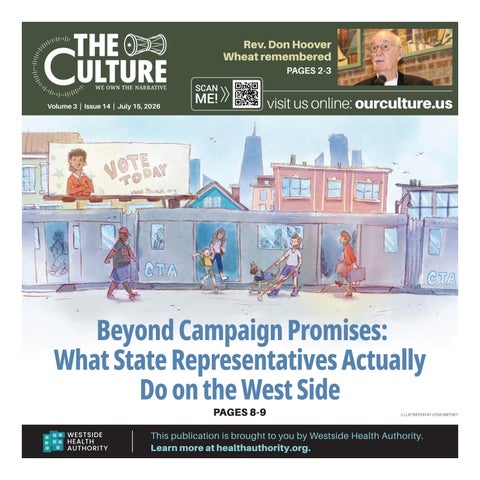
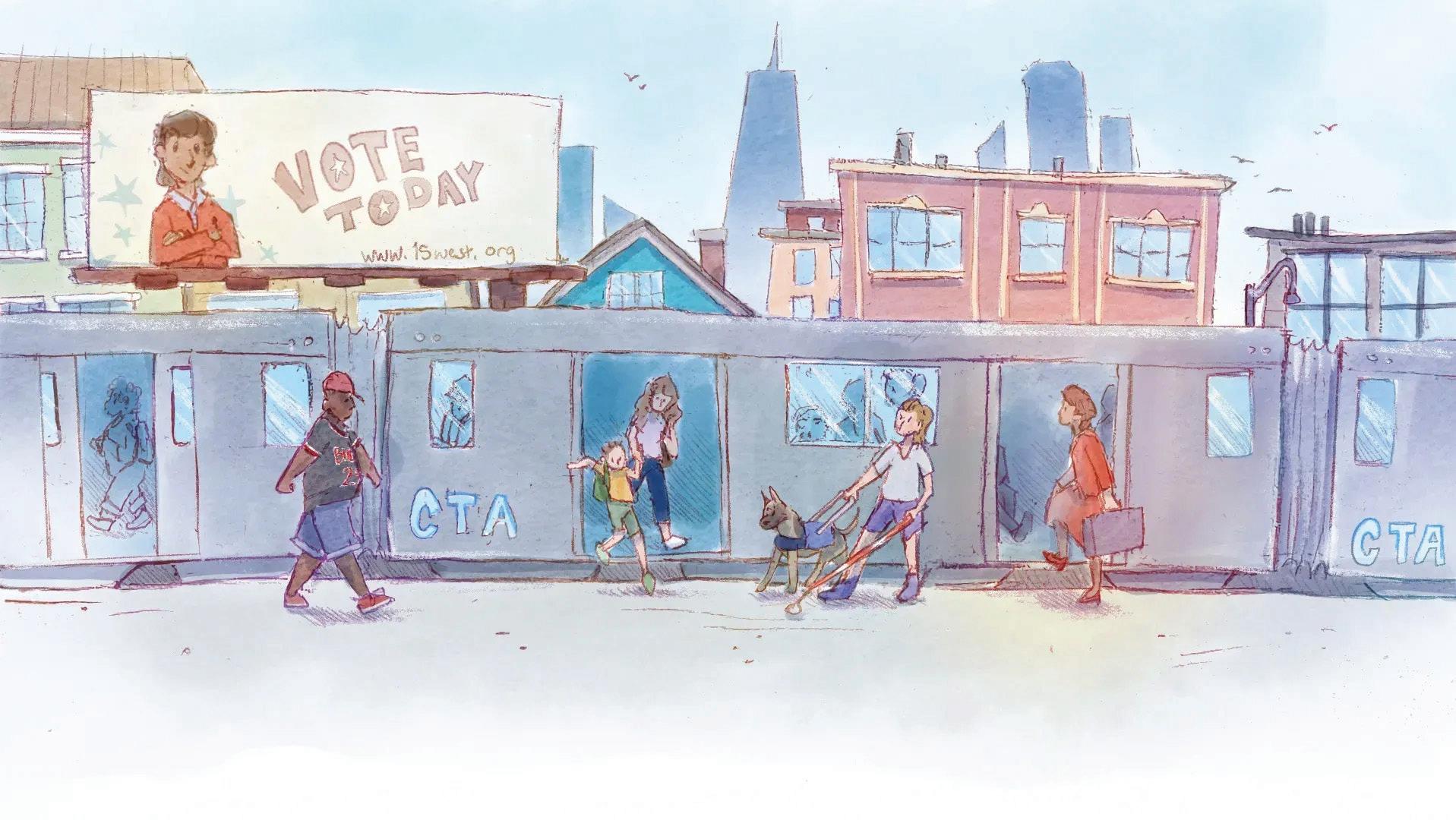
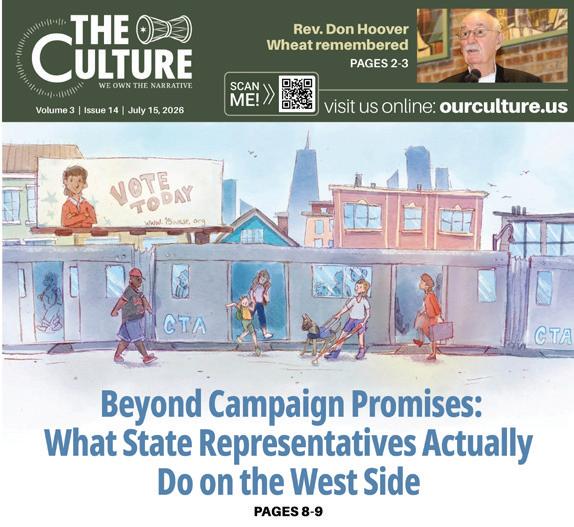
Beyond Campaign Promises: What State Representatives Actually Do on the West Side
From school funding to constituent services, state representatives shape policies that directly affect West Side residents, but many people remain unclear about what those officials actually control
BY NEL AFENYA For 15 West
Most Chicagoans can confidently name the president—but far fewer can name their local elected officials.
Who determines whether local schools or clinics receive resources? Who makes decisions about housing and public transit? Who influences public safety in local communities?
Understanding who holds power over laws, budgets, and public services allows residents to navigate better the systems that shape daily life.
A state representative serves in the Illinois House of Representatives, representing their district and shaping state legislation and spending.
On Chicago’s West Side, residents regularly confront underfunded schools, housing insecurity, inadequate healthcare, and community violence. Understanding the responsibilities of state representatives and the issues that fall under their control can help residents advocate for their needs and hold officials accountable.
Civic engagement begins with knowledge. Knowing exactly what elected officials can realistically change allows residents to hold them accountable.
Many of the issues residents encounter every day are directly connected to decisions made in Springfield.
For schools on the West Side, funding gaps impact everything from teachers’ salaries to
class sizes to the safety of school buildings. These conditions are primarily determined by how funds are allocated through the state budget. State representatives play a key role in shaping and passing that budget.
La Shawn K. Ford, who has served as 8th District representative for nearly two decades, described part of the role this way: “My job is to go to Springfield and pass a
budget… to fund education for K-12 and higher ed, public safety, healthcare, and social services.” In addition, the state representative serves as a point of contact between residents and state agencies.
“When people need help with the Department of Corrections, the Department of Human Services [or] any state agency, we help them,” said Ford.
Still, many residents remain skeptical of state politics and question whether government decisions result in meaningful change. Campaign promises do not always translate to visible change within communities. Understanding the role of state government allows residents to not only seek constituent services but also challenge officials to follow through on their promises.
State representatives influence whether achievement gaps widen or close. In recent years, Illinois lawmakers have funded tutoring initiatives, introduced updated classroom technology and electronic textbooks, and reformed student expulsion policies to address the school-to-prison pipeline.
In addition, state funding provides grants that make college and trade school more affordable—these decisions directly influence post-graduate opportunities for students.
Access to healthcare is also shaped by state-level decisions. On the West Side, higher rates of chronic illness combined with limited access to sufficient care create ongoing disparities.
State-level health initiatives in Illinois have included investments in HIV prevention and testing, legislation affecting health insurance coverage, and programs designed to expand access to healthy food in underserved communities.
The state government also addresses questions of safety. The Public Safety and Violence Prevention Task Force works to reduce harm and support people reentering society after incarceration. The initiative emphasizes prevention alongside traditional public safety strategies.
Still, understanding the limits of state government is equally important. Ford shared that some residents may not know the difference between state, federal, county, and city responsibilities. Many of the issues that affect residents’ daily lives are handled by different levels of government.
About 15 West
15 West is a resident and volunteerpowered newsroom dedicated to connecting people mile by mile, block by block, throughout Chicago’s West Side and neighboring suburbs.
Made possible by Cook County’s Digital Equity Impact Grant, and fiscally sponsored by 501(c)(3) arts publisher Lucky Jefferson, we’re building one of the first newsrooms designed for readers of all abilities, from the ground up.
Nel is an editor and emerging journalist studying at DePaul University.
Learn more at 15west.org.
The federal government oversees matters such as Social Security, immigration, passports, and federal taxes through agencies like the Social Security Administration, the U.S. Department of State, and the Internal Revenue Service.
At the county level, the government is responsible for services including courts, jails, property taxes, and public health systems.
In Cook County, these responsibilities are carried out by agencies such as the Cook County Department of Corrections, the Cook County Assessor’s Office, and the Cook County Department of Health.
The city government manages essential local services such as sanitation, road maintenance, water services, policing, and fire
protection through departments including the Chicago Department of Streets and Sanitation, the Chicago Department of Water Management, and the Chicago Police and Fire Departments.
Ford described the types of constituent services his office handles, including helping residents navigate suspended driver’s licenses, SNAP benefit issues, and senior care programs. These services were all provided through direct contact—via phone, email, or in person—between the state representative and residents. District representatives can connect residents to federal, city, and county agencies to address problems that are not handled by the state.
It is easier than ever before to connect with elected officials. Town halls physically bring the community together to voice their
concerns, but technology allows residents to connect to their representative from anywhere. State representatives maintain email correspondence with residents, publish public statements, use social media accounts to connect with younger audiences, and can often be reached directly by phone.
Elections may change who holds office, but residents have the opportunity to shape local politics through civic engagement and by holding elected officials accountable. Understanding what state representatives can—and cannot—do is one step toward ensuring that political promises translate to material change.
This story was originally published by 15 West and is republished under a Creative Commons Attribution-NoDerivatives 4.0 International License.
ILLUSTRATION BY LYDIA SMITHEY
ILLUSTRATION BY LYDIA SMITHEY
More Than $1.8M Raised in Chicago School Board Election as Contribution Caps Are Lifted in Race for Board President
Early campaign filings show the citywide board president’s race drawing the lion’s share of donations ahead of an expected surge in outside spending
BY MILA KOUMPILOV & SARAH KARP ChalkBeat Chicago & WBEZ
Campaign fundraising in the race to serve on Chicago’s first fully elected school board is picking up momentum, with $1.8 million raised since last October and contribution caps now lifted in the competition for president.
A WBEZ and Chalkbeat analysis of money candidates received from Oct. 1, 2025, to June 30 found the majority of that total – $1.2 million — went to people running to lead the 21-member board. The board president is the only member who is elected citywide.
Attorney Victor Henderson gave himself half a million dollars in loans, which lifted donation limits for all five candidates vying for the president role. These candidates have done the most fundraising, except former Chicago Teachers Union organizer Hilario Dominguez, who has reported no donations so far. The other candidates for president are Jessica Biggs, Jennifer Custer, and Sendhil Revuluri.
Seventeen school board candidates have brought in less than $10,000, and nine did not file a report for the period from April 1 to June 30. Illinois law requires that candidates begin reporting campaign money once they’ve raised or spent $5,000.
The sizable early donations point to the historic nature of the race. In November, for the first time, Chicago residents will elect all 21 members of the school board, which is currently half-appointed by the mayor and half-elected. For three decades before that, the mayor controlled the board.
Although the school board president does not get to vote on board decisions unless
there is a tie, that person plays an outsized role in helping set the board agenda and the tone during meetings. Sean Harden, a Mayor Brandon Johnson appointee who serves in the role now, is not running for the seat.
It’s no surprise that fundraising for that role is heating up, said Hal Woods of the education advocacy group Kids First Chicago.
“You need to be able to build a ground game and campaign infrastructure that covers the entire city, and you have a competitive race with really credible candidates,” he said. By looking strong early, Woods said, “You are showing the donor class you are the horse to get behind.”
Meanwhile, the CTU, the Illinois Network of Charter Schools, and other organizations that have said they plan to spend big on school board races are largely holding their fire for now, as several candidates are still facing challenges to their attempt to get on the November ballot.
The Illinois Network of Charter Schools’ war chest is by far the largest among political action committees with a stake in the election at more than $4 million. That’s fueled by sizable checks from wealthy residents, including some outside of Chicago. The charter advocacy group, which got outspent by the CTU in the 2024 school board
election, hasn’t yet thrown its support behind a candidate for president or made formal endorsements in the 20 district races.
The teachers union, which is backing Dominguez for board president, brought in $500,000 since April 1. It spent about $250,000, some of it on defending candidates, including Dominguez, against challenges intended to knock them off the ballot. The CTU’s coffers get replenished with union dues.
The Illinois Network of Charter Schools and two other political committees, the Common Ground Collective and The Urban Center, have been bolstered by big dona-
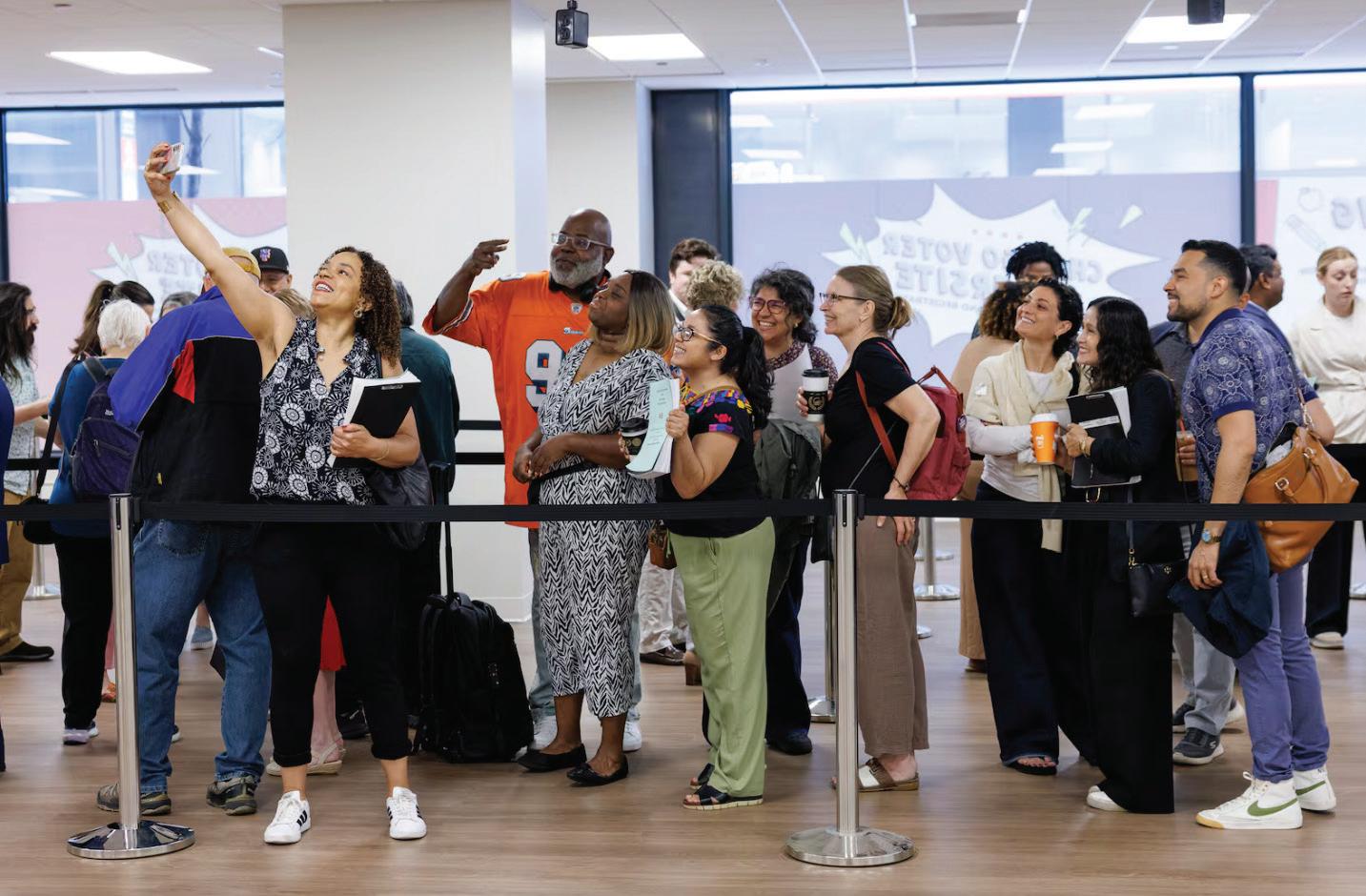
Candidates vying for a spot on Chicago's first fully-elected school board line up to file paperwork to get on the ballot. More than $1.8 million in campaign contributions have gone to school board candidates between Oct. 1, 2025 and June 30, 2026, according to a Chalkbeat and WBEZ/Chicago Sun-Times analysis of state campaign finance disclosures. | ANTHONY VAZQUEZ/SUN-TIMES
tions from Paul Finnegan, the chairman of the private equity firm Madison Dearborn Partners.
Since April, campaign records show Finnegan, whose address is listed in Evanston, has given almost $1 million to seven school board candidates, including Custer and Biggs, and a handful of political groups interested in the school board race.
FUNDRAISING PUSH HEATS UP IN BOARD PRESIDENT RACE
Illinois campaign law limits individual contributions to candidates to $7,300, while corporations and labor unions can contribute up to $14,600. But if a candidate contributes more than $100,000 to his or her own campaign, as Henderson did, or if a super PAC spends more than that amount in support of a candidate, those donation limits fall away for all contenders in that race.
Henderson said he decided to make a sizable loan to his campaign because “if I’m asking other people to invest, they want to know that I’m doing the same thing.” Henderson also said his campaign staff suggested that he do it and, since he’s never run for elected office before, he listened to them. He now has a commanding fundraising lead with about $659,000 between his loans and donations from supporters.
Henderson, who is a member of the Urban Prep Charter School network’s board, said he has met with some of the political action committees, including those of the Illinois Network of Charter Schools and CTU, and would be happy to take donations from them.
But he wants special interest groups to know that, regardless of whether they donate to him, he wants to work “with them” not “for them.”
“I’m not going to carry anybody’s water,” he said. “There’s too much politics in CPS, and that’s not the right thing to do.”
Other candidates for president said they are not daunted by Henderson’s campaign cash.
Biggs, a current board member, raised just over $154,000 as of June 30, most of it in smaller contributions from individuals. She said she didn’t think the lifting of contribution limits in the hotly contested race would shift the dynamics considerably.
“I’m continuing to build the broadest coalition possible,” she said. “It’s what this moment calls for.”
Biggs was outspent roughly 10-to-1 in her South Side district in 2024, but handily won
her current seat representing district 6b, which includes Bronzeville, Hyde Park, and other neighborhoods.
Sendhil Revuluri, a former vice president of the board appointed by former Mayor Lori Lightfoot, also said he didn’t expect the lifting of the spending cap to make a major difference. He has raised more than $311,000 so far, including $68,000 that he loaned to his own campaign. He said he tapped his broad professional network to get other donations from across the country.
Still, Revuluri said his campaign is focused on student outcomes and experiences.
“The money is not the goal,” he said. “It’s a means to reach voters and get my message across.”
Custer, an incumbent board member who represents parts of Chicago’s Far Northwest Side, also raised mostly small amounts from individual donors. She says she was surprised the limit was blown so early, but she expected the race would be an expensive one.
“To commit in a citywide race, you are going to need a significant amount of money,” she said. Like other candidates, she says she’ll take money from PACs as long as they know that her “north star is always what’s good for the children”
Dominguez, the CTU’s pick for president, has not reported any donations or expenses. He said he’s going to do his best to raise enough money to compete, but, in the end, he’s hoping that “people power” will fuel his campaign. He said he and his team will be “hitting those doors hard.”
“We’re always going to have to rely on the organized power of moms, of educators, of students,” he said.
SPECIAL INTEREST GROUPS PREPARE TO SPEND BIG
A number of organizations with connections to Chicago Public Schools are gearing up to jump into the political fray, including the race for school board president.
Andrew Broy, executive director of the Illinois Network of Charter Schools, said the group plans to make endorsements in August and then start spending more.
“We want to be competitive in all the races where we see a pathway to victory,” he said. He said the citywide presidential race will be expensive, estimating that the cost of mailers and other outreach to voters across the city would easily surpass $1 million.
In the 2024 school board race, the CTU’s
two political action committees spent $4.3 million on races, but rather than donate directly to candidates, they spent a lot hiring companies to create mailers, conduct surveys, and organize canvassing in support of particular candidates. CTU announced 15 endorsements earlier this week and chose to sit out six races.
Service Employees International Union Local 73, which represents support staff in CPS, also announced their endorsements this week. After decades of being seen as allies, SEIU has recently had some public disagreements with CTU, including over who represents school support staff.
In the 13 races where SEIU endorsed candidates, only four are also endorsed by the CTU. Some, like Che “Rhymefest” Smith and Angel Guiterrez, have consistently voted against the current school board majority, which is aligned with CTU.
Dian Palmer, president of SEIU Local 73, one of three SEIU local affiliates in Illinois, said the union was not going to endorse a presidential candidate, but they are now considering backing someone. She’s hopeful her union can help balance some of the big-money interests
getting involved in the race with door-knocking and member donations.
“The amount of money is mind-boggling,” she said.
SEIU’s two PACs had about $719,000 on hand at the end of June.
Other groups are starting to dip their toes in the school board races. The Common Ground Collective, led by staffers from former CPS CEO Pedro Martinez’s cabinet, has made some donations to incumbents who are up for reelection, including Biggs and Custer.
Rooted & Ready, a PAC affiliated with U.S. Rep. Delia Ramirez, a CTU ally who represents parts of Chicago and the west suburbs, cut $3,500 checks to school board candidates Claudia Perlata, Jason Dónes, and incumbent Norma Rios Sierra, all endorsed by the CTU. The group hasn’t yet made contributions in the president’s race.
Mila Koumpilova is Chalkbeat Chicago’s senior reporter covering Chicago Public Schools. Contact Mila at mkoumpilova@ chalkbeat.org.
Sarah Karp covers education for WBEZ. Contact Sarah at skarp@wbez.org.