Delays in Ramping Up Work on Chicago’s Black Student Success Plan Frustrate Some Advocates
The Plan is in the crosshairs of the Trump administration, which has withheld federal dollars from Chicago Public Schools over the district’s refusal to scrap it
BY MILA KOUMPILOVA Chalkbeat Chicago
Coretta Shane, the mom of a Chicago seventh-grader, applied earlier this year to serve on a new committee that would help steer the district’s Black Student Success Plan, a five-year initiative to address academic disparities Black students face.
She got an email thanking her and promising updates in the following weeks. That was back in March.
Shane knows the plan is in the crosshairs of the Trump administration, which has withheld federal dollars from the district over its refusal to scrap it. Still, the silence hasn’t sat well with her.
“I’ve just heard nothing, which is maddening to me,” she said. “I wish there would be some communication.”
Over the past year, district officials have worked to reassure parents and advocates that they are forging ahead with the initiative, while appearing to move slowly and cautiously to ward off further federal scrutiny and fallout. On Thursday, Jitu Brown, the Austin board member slated to lead the Black Student Achievement Committee, announced yet another delay in naming its members. And when the district this past spring challenged in court the U.S. Department of Education’s move to withhold grant dollars over the plan, one of CPS’ arguments was that it hadn’t even started implementing the program.
Those who pushed to codify the committee in state law have voiced impatience with the slow pace — a sentiment Brown echoed at the board’s monthly meeting on June 25.
Other advocates and experts say they understand the precarious position CPS is in — and recognize that the first year of the plan’s rollout was likely to involve largely low-key planning.
“I just remind myself that this is something CPS has never done before,” said Dominique McKoy, the executive director of the University of Chicago’s To & Through Project, who has followed work on the plan. “This is an effort that’s trying to disrupt decades and generations of frustration for a population that historically hasn’t been served well by the city and the school district.”
In a statement, CPS said it is making headway on the initiative and recently received a $250,000 grant from a Chicago-based foundation for its work to cultivate Black student unions and hire more Black male educators. The district is planning a fall conference bringing together members of more than two dozen Black student unions on CPS campuses this fall. The statement also cited an
increase in Black student enrollment in Advanced Placement courses and ongoing efforts to reduce discipline for Black students.
THE DISTRICT HAS PUSHED BACK ON THE FEDS’ CALL TO KILL THE PLAN
CPS unveiled the plan in early 2025 after a years-long process of gathering input from community members who had decried gaps Black students face on a long list of academic metrics and in access to some advanced courses and other opportunities.
The day after its release, a conservative advocacy group filed a complaint with the federal Department of Education, arguing the plan discriminates against non-Black
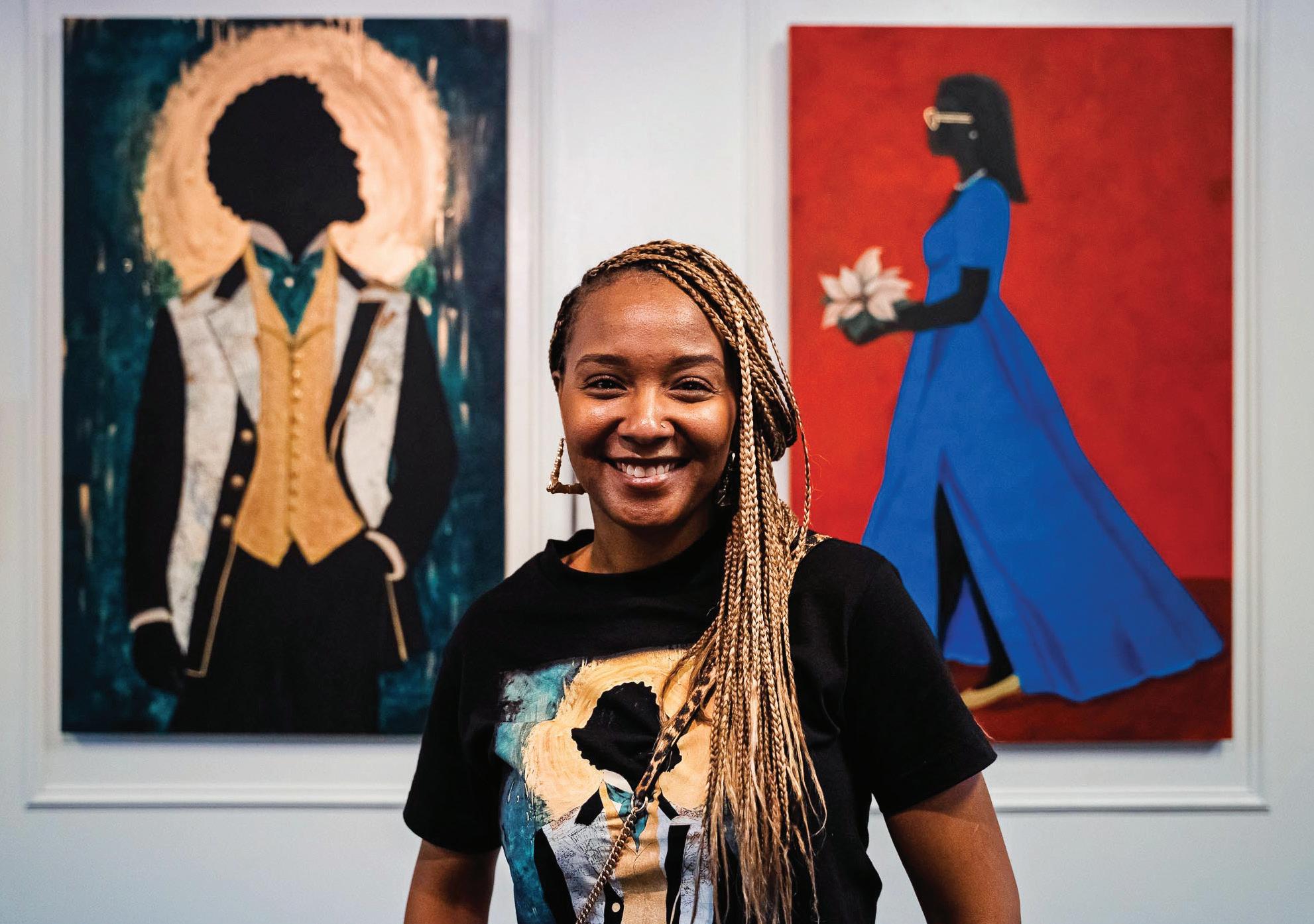
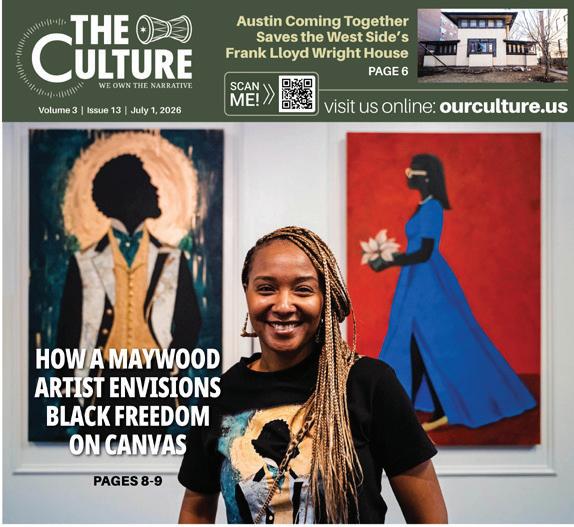
Artist Shanel Romain stands in front of her original artwork during a Juneteenth exhibition at the Zhou B. Art Center in Bridgeport. | PHOTO BY DONNIE SEALS
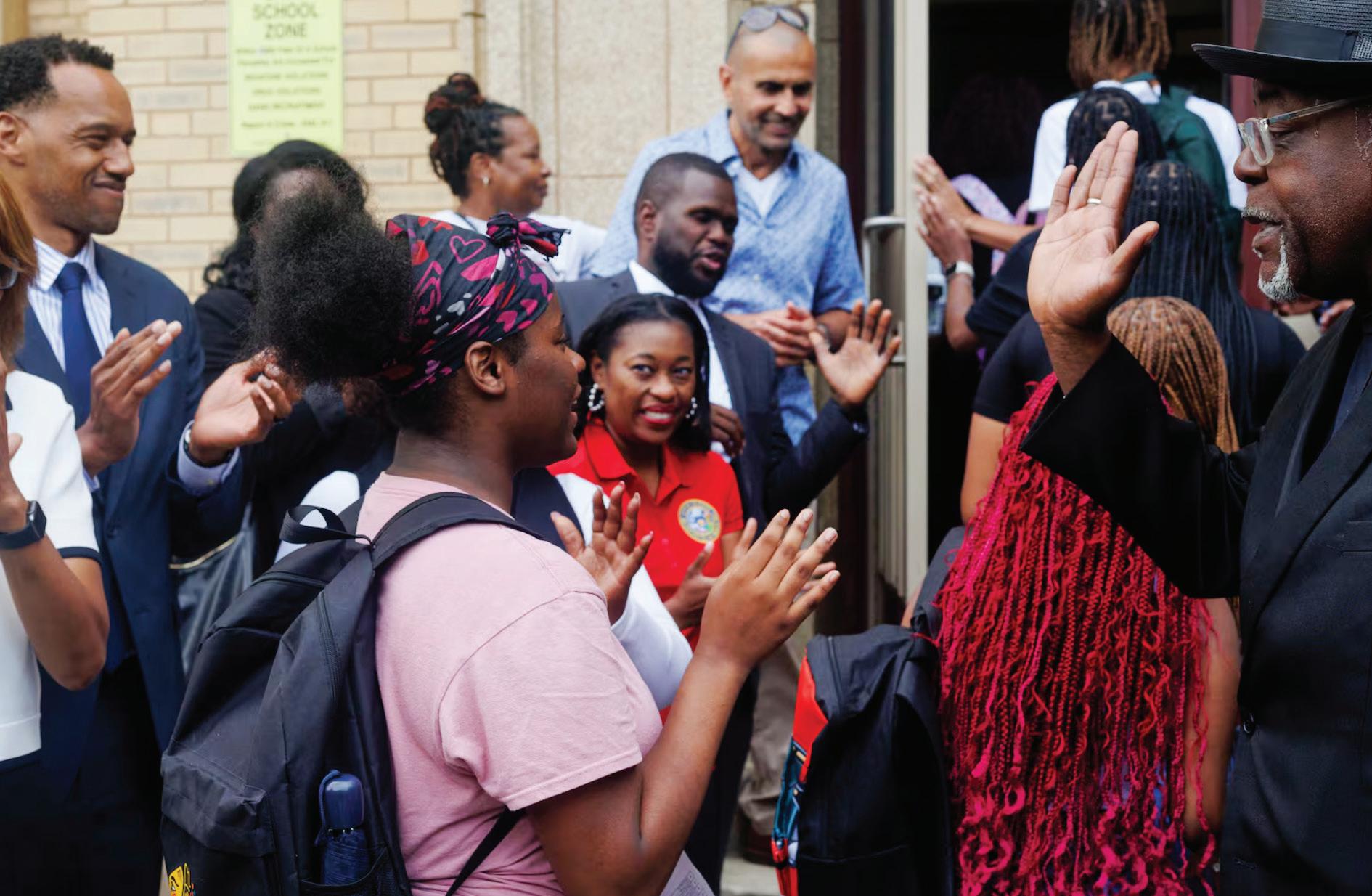
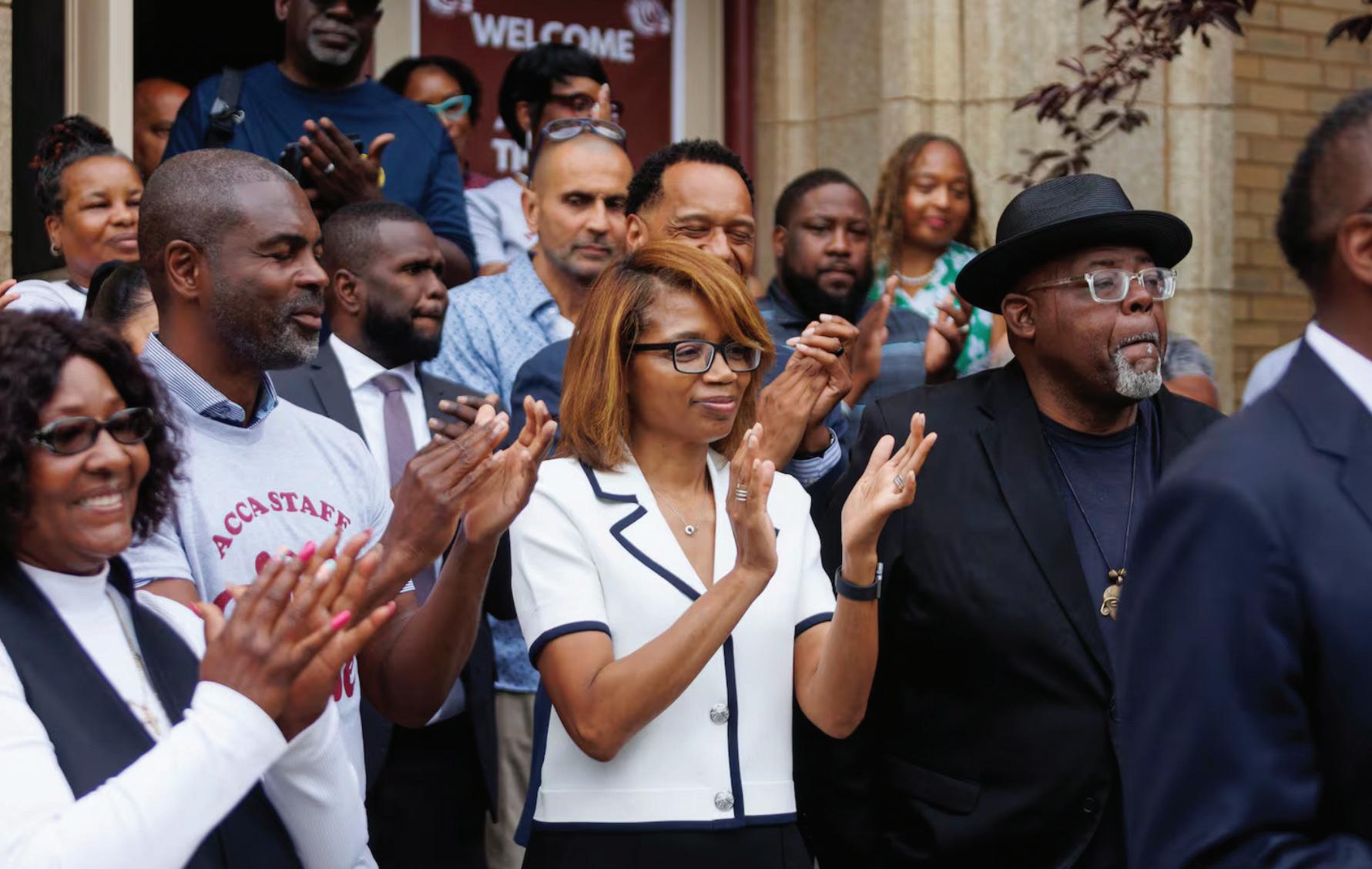
School staff and Chicago education leadership welcome students as they walk into Austin College and Career Academy for the first day of school in Chicago on Monday, Aug. 18, 2025. School board member Jitu Brown, pictured at right giving a high five, is slated to lead a Black Student Achievement Committee that has faced delays. | LAURA MCDERMOTT FOR CHALKBEA
students, particularly Latinos. The Trump administration began investigating, and last fall announced it would withhold millions in magnet school grants unless CPS scrapped the initiative altogether.
The plan sets a number of sweeping goals, which include hiring more Black male educators and reducing punitive discipline for Black students, who make up roughly a third of the district’s student body. But it doesn’t go into detail about how the district would tackle these goals or what progress toward them would look like in each year of the rollout. CPS also did not spell out a specific budget for implementation.
Brown, a longtime advocate for Black students in the district, said last summer that the first year of the initiative would be about listening to district employees, parents, and students, and figuring out how to replicate practices that have worked well for Black students.
“It’s nonsense to talk about a success plan when you’re not doing anything to address this glaring issue. If you are going to address marginalization, you have to start with the most marginalized."
He had initially said the committee to oversee the rollout would be announced last September. The board office said in May that Brown would be available for an interview only after the new committee is onboarded, but it did not give a timeline for when its members would be named. The district in recent weeks has also asked for more time before providing an interview with officials, and on June 25, it referred questions about the committee delays to the board office.
At the June 25 board meeting, Brown blamed the delays on an internal “struggle” after the board held two separate rounds of taking applications this past school year. He did not elaborate what exactly was getting in the way but said, “I am very frustrated, very concerned.”
In the meantime, the district held several community roundtables to gather more input on the plan this past spring. District budget materials from last summer also said CPS’ various central office departments would work on their own visions for implementing the plan during 2025-26. In response to a public records request from Chalkbeat, the district declined to provide these department-level plans, citing an exemption for internal documents that are in draft form.
CPS said a first-year focus would be support-
ing Black student unions at its high schools and expanding their number. McKoy said there’s some momentum on this issue as well as conversations about cultivating closer partnerships with historically Black colleges and universities. Some Black students in CPS have expressed interest in better understanding what these campuses might have to offer, McKoy said.
Sona Fokum, a research project manager at the Black Researchers Collective, said CPS officials had preliminary conversations last year with the group and other local experts about tracking and evaluating the initiative’s outcomes, including by involving students in the effort. But the collective hasn’t heard about next steps more recently.
When it comes to the federal pushback, the plan remains in limbo. In its lawsuit against the feds, the district has demanded that the government reinstate its magnet funding, noting the decision to withhold it happened before the investigation into the initiative was even formally completed. The district argued the plan is on solid legal footing because it sets out to rectify historical discrimination and mis-
steps that have led to measurable disparities between the outcomes for Black students and those of their peers.
“The Plan does not take anything away from non-Black students,” the district said in court filings.
The Department of Education hasn’t filed a response to the district’s complaint in court, and a spokeswoman did not respond to an inquiry about the status of the investigation.
District Superintendent Macquline King was subpoenaed to testify before a congressional education committee earlier this month on CPS’s handling of hot-button issues, including the Black Student Success Plan and policies on transgender students, which are also under a federal investigation. But the plan itself sparked just a brief exchange with a friendly Democratic lawmaker, in which King stressed the community input that went into designing it and its goal of helping “students that have been historically and systematically void of opportunities.”
COMMITTEE’S CREATION LAGS
Shane, the mom who applied to serve on the Black Student Achievement Committee earlier this year, lives in South Shore, but she drives her daughter to school across the city to the North Side’s Walt Disney Magnet School, where she was recently elected to the local school council.
Shane has long been a critic of the more meager academic offerings — especially when it comes to science, technology, engi-
neering, and math — that some schools in predominantly Black neighborhoods have. She saw the committee as a chance to advocate for more robust programs at the district level.
“The fact that my daughter can’t go to a school in our neighborhood because of a lack of resources really bothers me,” she said.
Koron Nash, the father of two CPS students, attended a virtual meeting about the plan with Brown, the school board member, organized by the parent advocacy group Kids First this spring. Nash, who also applied to serve on the committee, felt Brown’s commitment to advancing the plan was genuine. Nash strongly supports the plan’s goals.
But he wants to see specifics on how CPS will tackle them, with a budget and metrics to track progress: “At this point, we should be well beyond informing people. We should be taking action. We’re behind the eight ball.”
David Stovall, a professor of Black studies at the University of Illinois Chicago, said with any new multiyear initiative, planning and troubleshooting tend to take up the first year.
Still, he said, he is eager to see the district flesh out the plan — and address headon the issue of its severely underenrolled schools, many of which serve predominantly Black students. He said he got involved with offering input when the district was first crafting the plan. But he left because officials did not seem open to discussing that issue or addressing it explicitly in the initiative.
“It’s nonsense to talk about a success plan when you’re not doing anything to address this glaring issue,” he said. “If you are going to address marginalization, you have to start with the most marginalized.”
McKoy says the district needs the help of other city agencies, academia, and others to address the needs of Black students and families. He believes the district is still genuinely committed to the initiative in the face of the Trump administration’s attack on it.
“There’s no way that’s not having an effect,” McKoy said. “But I am not seeing folks shy away and change the messaging.”
On June 25, Brown, the school board member, said he will push to finally name the committee overseeing the initiative in July.
“I’m not really interested in any more conversations about it,” he said. “We need to announce this committee and get to work.”
Chalkbeat Chicago reporters Reema Amin and Makiya Seminera contributed to this report. Mila Koumpilova is Chalkbeat Chicago’s senior reporter covering Chicago Public Schools. Contact Mila at mkoumpilova@chalkbeat.org.
School staff and city administration clap during Mayor Brandon Johnson’s press conference for the first day of school held at at Austin College and Career Academy in Chicago, IL on Monday, August 18, 2025.
School board member Jitu Brown, on the right wearing a black hat, is leading a board committee tasked with overseeing the rollout of the district's Black Student Success Plan. | LAURA MCDERMOTT FOR CHALKBEAT
Ex-Loretto Execs Could Soon Reach Deal With Feds To Drop Charges
The hospital’s former CEO and chief transformation officer were part of a plan that led to tens of millions being embezzled from the hospital, prosecutors have said
BY KELLY BAUER
Block Club Chicago
Prosecutors have said former Loretto Chief Executive Officer George Miller and former Chief Transformation Officer Heather Bergdahl were part of a plan, with former CFO Anosh Ahmed, that led to tens of millions being embezzled from the safety-net hospital on the West Side.
Bergdahl was charged with 14 counts of wire fraud, 21 counts of embezzlement and one count of money laundering. Miller was charged with conspiracy to commit bribery.
Now, Miller and Bergdahl are in talks with prosecutors and close to finalizing deferred prosecution agreements, prosecutors said at a July 2 hearing. The agreements would mean that, should Miller and Bergdahl follow the terms outlined in them and “demonstrate a period of good conduct,” then the government would eventually dismiss charges against the two, Assistant U.S. Attorney Diane MacArthur said at the hearing before U.S. District Judge Robert Gettleman.
LORETTO SCANDAL STORIES
As Illinoisans scrambled to get sought-after COVID-19 vaccine appointments, Block Club exposed a scandal: Many of Loretto Hospital’s doses were going to ineligible people with ties to administrators. Then our team dug deeper to reveal questionable conduct at the taxpayer-funded hospital.
Prosecutors and attorneys for Miller and Bergdahl said they should be ready to present the agreements in court by the next hearing in the case, set for July 14.
A third defendant — Sameer Suhail — is also expected to see a “resolution of the charges”
against him before trial, MacArthur said Thursday. Suhail returned to Chicago in April; he had moved to Dubai shortly before the charges against him were announced.
Anosh, the fourth person facing charges in the case, remains in custody in Serbia, MacArthur said Thursday. He had also been living and working overseas before he was taken into custody in the fall. It’s not clear when or if he will be extradited to the United States, MacArthur said.
Prosecutors from another case in which Ahmed is charged have said he is fighting extradition.
The federal charges came after a Block Club Chicago investigation that began with allegations that early in the pandemic, Ahmed funneled hard-to-get COVID-19 vaccines to his neighbors at Trump Tower and to workers at high-end businesses he frequented, while Miller ensured members of his suburban church were vaccinated. The vaccines were meant for the city’s most at-risk residents.
Prosecutors have alleged Ahmed, who was in charge of managing Loretto’s finances, schemed with Bergdahl and Suhail to send payments to companies for goods and services not actually provided to the hospital. Many of the companies were created by Suhail and Ahmed under various names “to conceal their association with the companies and the fraudulently obtained payments they would receive from” the hospital, according to the indictment.
Miller, as CEO, worked with Ahmed to award hospital contracts worth millions to companies owned or operated by Suhail, knowing that they would then get a cut of the proceeds behind the scenes, prosecutors said. They said Miller accepted more than $769,000 for awarding the contracts.
Miller and Ahmed awarded the contracts without putting them up for bids and while hiding from the hospital’s board that Suhail was behind the companies, prosecutors have said.
Bergdahl also issued checks from Loretto to businesses created by Ahmed while knowing they had not provided goods or services to Loretto for those payments, prosecutors have said.
“Bergdahl issued these funds to [Ahmed], and [Ahmed] took these funds, both knowing
that the funds had been embezzled from the hospital,” according to the criminal complaint. Ahmed hired Bergdahl, and it appeared they knew each other before that from living in Houston, according to the criminal complaint.
After Ahmed resigned in March 2021, Bergdahl continued at the hospital — and issued $486,540 in checks from the hospital to companies where Ahmed was the CEO, according to the complaint.
Broadview 6 Fallout
In a separate case, Ahmed is accused of defrauding the federal government of about $300 million through reimbursements for fake COVID-19 testing. Prosecutors have said Ahmed used personal data from Loretto’s patients as part of that “scheme.”
Prosecutors recently dropped charges against two of the defendants in that case as part of the fallout from the “Broadview Six” prosecution.
The defendants, Mahmood Sami Khan and Suhaib Ahmad Chaudhry, had pushed a judge to dismiss the charges against them based on concerns a U.S. attorney had acted improperly during grand jury proceedings.
In response, Judge Sharon Coleman ordered an evidentiary hearing in the case — which could have forced U.S. Attorney
Andrew Boutros and others to the stand to answer questions about alleged prosecutorial misconduct during grand jury proceedings.
The U.S. Attorney’s Office then dropped charges against the two and avoided the evidentiary hearing.
A fourth defendant in that case, Mohamed Sirajudeen, has also been in talks to reach a plea deal. He did not join in the motion to dismiss the charges, with his lawyer saying at a June hearing that they’re still working to reach a deal with prosecutors.
At Thursday’s hearing in the original Loretto case, MacArthur said the U.S. Attorney’s Office intends to seek a superseding indictment. Prosecutors have said they are taking such action in certain cases to avoid potential “taint.”
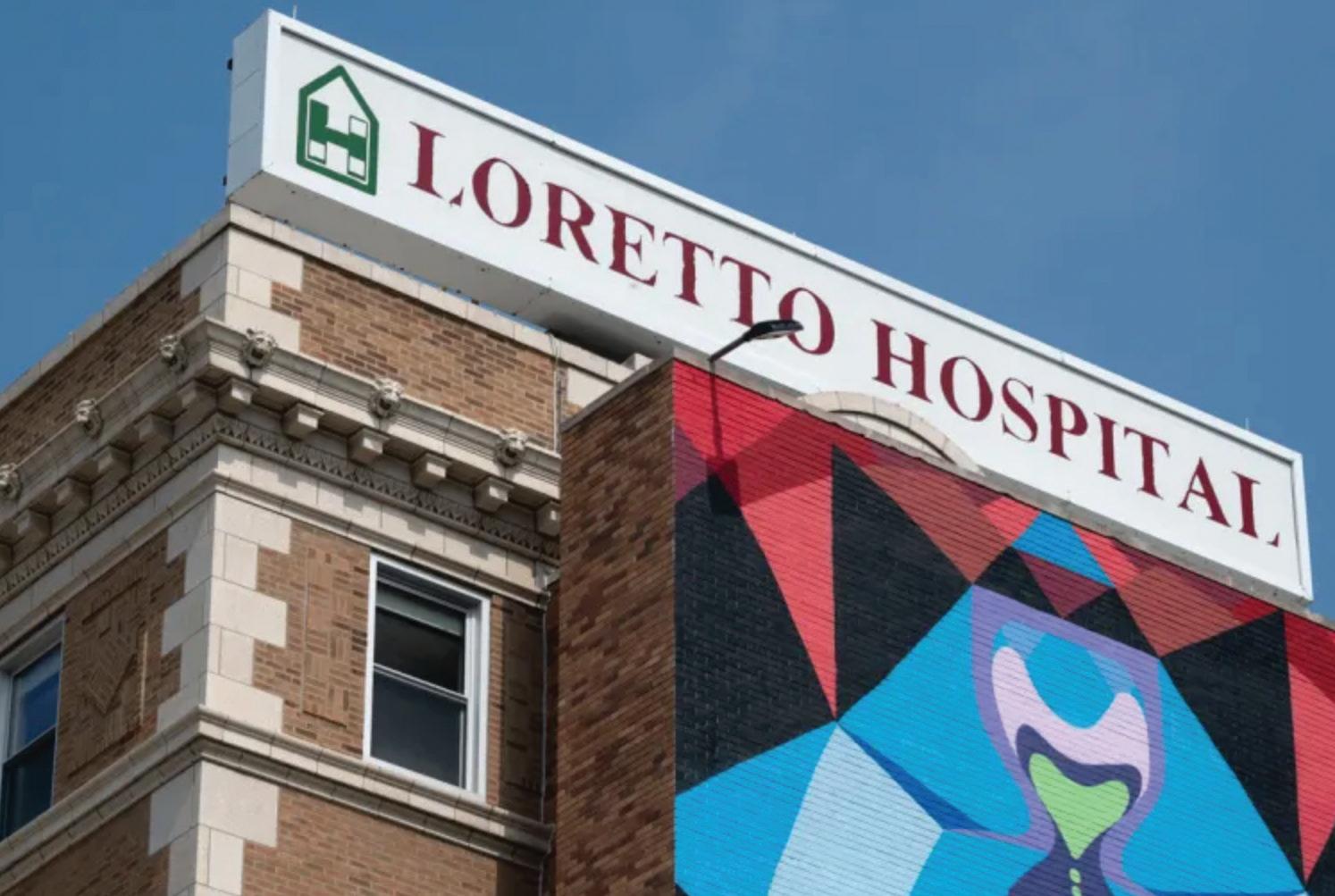
Loretto Hospital in Austin on Aug. 18, 2021. | COLIN BOYLE/BLOCK CLUB CHICAGO
Austin’s Frank Lloyd Wright House, Among City’s Most Endangered Buildings, Bought By Nonprofit
Austin Coming Together is taking over the landmarked J.J. Walser House, which has fallen into disrepair and foreclosure.
By MICHAEL LIPTROT Block Club Chicago
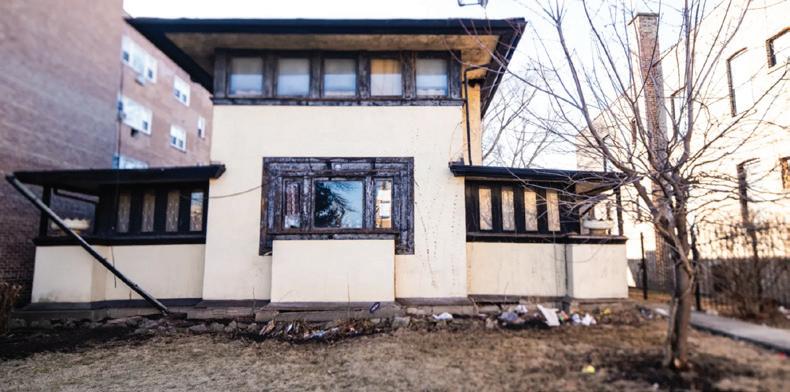
The West Side’s only single-family home designed by famed architect Frank Lloyd Wright is due for a multimillion-dollar refresh under new ownership after spending years in disrepair.
West Side nonprofit Austin Coming Together announced on June 24 that it purchased the J.J. Walser House at 42 N. Central Ave., which Wright designed for the Austin real estate developer for which the home is named.
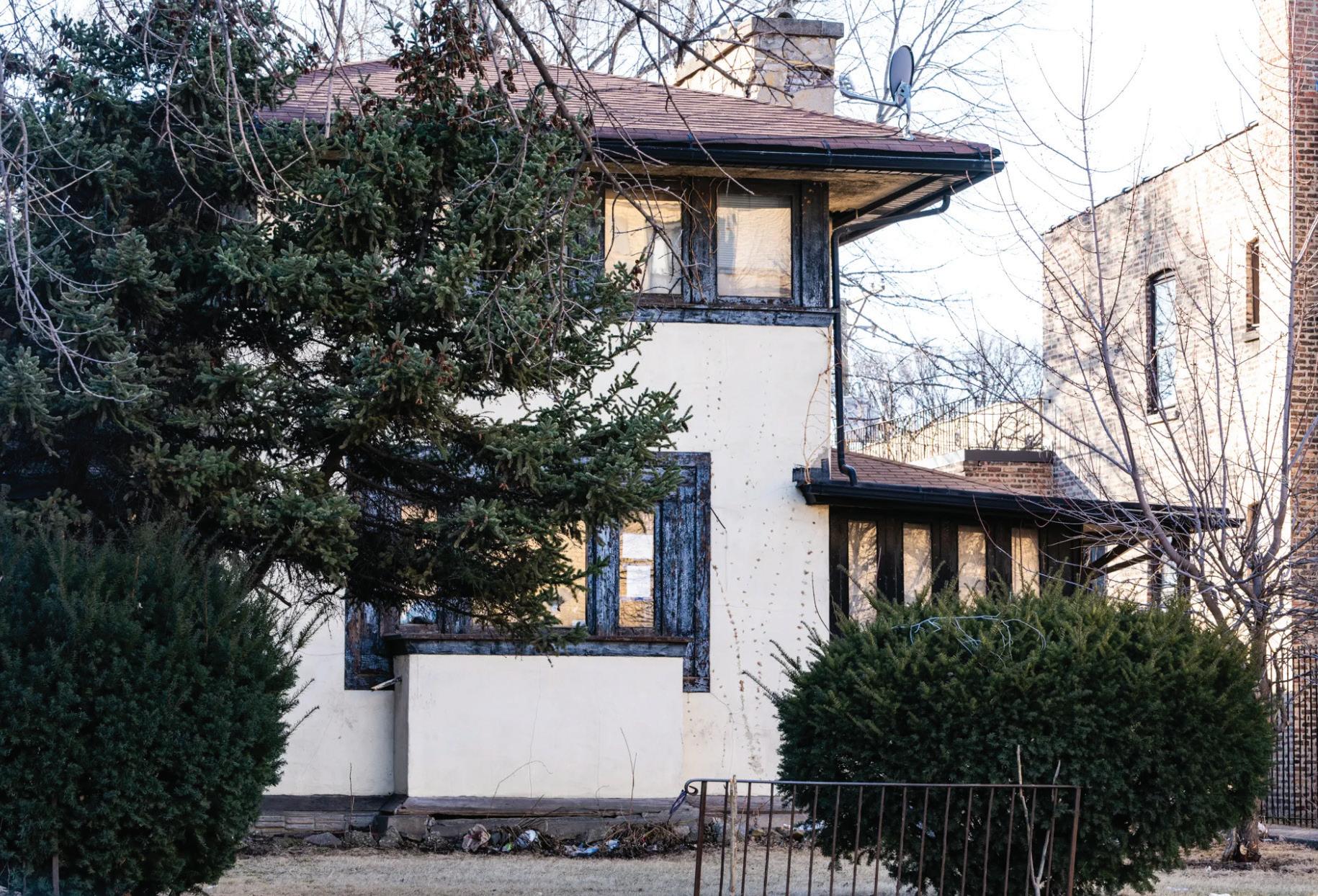
The house, built in 1903 in Wright’s signature Prairie Style, became a city landmark in 1984, but it has sat in deteriorating condition and has been the subject of foreclosure proceedings since its longtime owner died in 2019. The nonprofit is now planning to undertake restoration efforts expected to cost millions.
“The J.J. Walser House is part of Austin’s story, and we believe its next chapter should be shaped by the people who call this community home,” Darnell Shields, executive director of Austin Coming Together, said in a statement.
The home was previously owned by Hurley and Anne Teague since their 1970 purchase, according to Austin Coming Together. Following Anne Teague’s 2019 death, the property sat vacant for years. Without an heir who could pay for the property’s upkeep, it eventually fell into disrepair.
Last year, the home was named to both Chicago’s “most endangered properties” list by Preservation Chicago and Illinois’ Most Endangered Historic Places list by Landmark Illinois.
The home has structural damage, including holes in the foundation, the preservation agencies reported last year. The Teague family has publicly advocated for an entity to step in to preserve the home.
“When my grandparents purchased the Walser home, it represented upwardly mobile Black people establishing legacies for their families and creating a blueprint for home ownership in the Black community,” Charisse J. Grossley & Johnny Teague, heirs of Anne Teague, said in a statement accompanying the home’s inclusion in Landmark Illinois’ report. “The preservation
of this landmark is essential not only for its historical value to the community but also for its potential to educate future generations.”
Since the longtime owners’ death, the home fell into foreclosure. The Federal National Mortgage Association, the federal government-backed mortgage holder known as Fannie Mae, took control of the Walser house in January, property records show.
The agency then sold the property in April to Community Initiatives Inc, a neighborhood revitalization group, records show. Austin Coming Together then purchased the home for $125,000, with $60,000 coming from Chicago’s Troubled Buildings Initiative, according to Crain’s. The sale is not yet publicly listed in property records.
Crain’s reported that Austin Coming Together is looking to fundraise for a rehab of the home, estimated to be between
$2.7 million to $3.5 million, including as much as $575,000 that’s needed to stabilize the property.
“Our first responsibility is to stabilize this treasured landmark and protect it from further deterioration. From there, we will work with residents and partners to envision a future that honors both the house and the community,” Shields said in the statement.
The Austin nonprofit is joining other developments along the Central Avenue corridor, such as the recently opened Aspire Center for Workforce Innovation across the street at 5500 W. Madison St. Its leadership said it views the house as a “historic asset with the potential to anchor preservation, education, cultural pride, and community along one of the neighborhood’s key corridors.”
Austin Coming Together said it plans to share updates on next steps and community engagement opportunities related to the J.J. Walser House on the project’s website at austincomingtogether.org/walser.
The J.J. Walser House, 42 N. Central Ave., in Austin is part of the Preservation Chicago’s 2025 Chicago 7 Most Endangered. The building is seen on Feb. 25, 2025. | COLIN BOYLE/BLOCK CLUB CHICAGO
BY DONNIE SEALS
‘Stuntin’’ Art Exhibit Transforms Black Style Into a Meditation on History, Freedom, and Survival
Presented by the Culture, Westside Health Authority, and The Garden, the exhibit explored the aesthetics of Black survival
BY THE CULTURE Staff
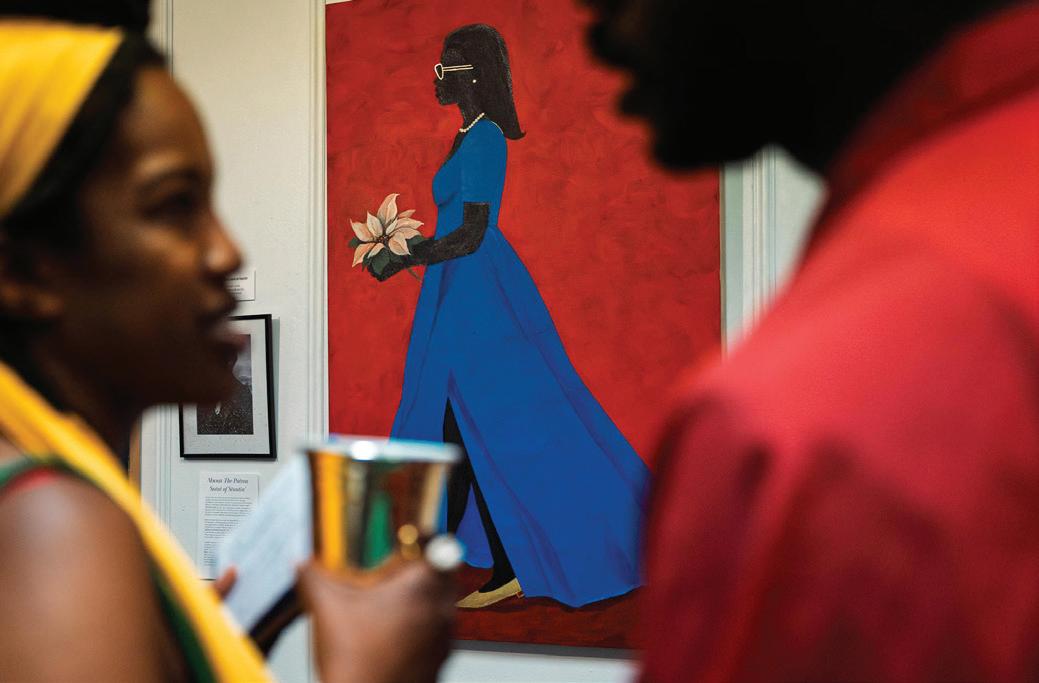
Paintings, music, books, and essays converged June 19 at the Zhou B Art Center in Bridgeport as Maywood-based artist Shanel Romain and curator Michael Romain, publisher of The Culture, presented Stuntin’: A Visual Essay on Black Style, Freedom, and Material Culture, a one-night Juneteenth exhibition that challenged visitors to reconsider the re-
lationship between Blackness and modernity. Featuring four original mixed-media portraits by Shanel Romain alongside written reflections, a curated soundtrack, and an installation of books and quotations that shaped the exhibition’s intellectual framework, Stuntin’ argued that Black style has long been more than fashion. It has been a language of survival, resistance, dignity, and self-definition.
The exhibition centered on four historical figures whose lives embodied different
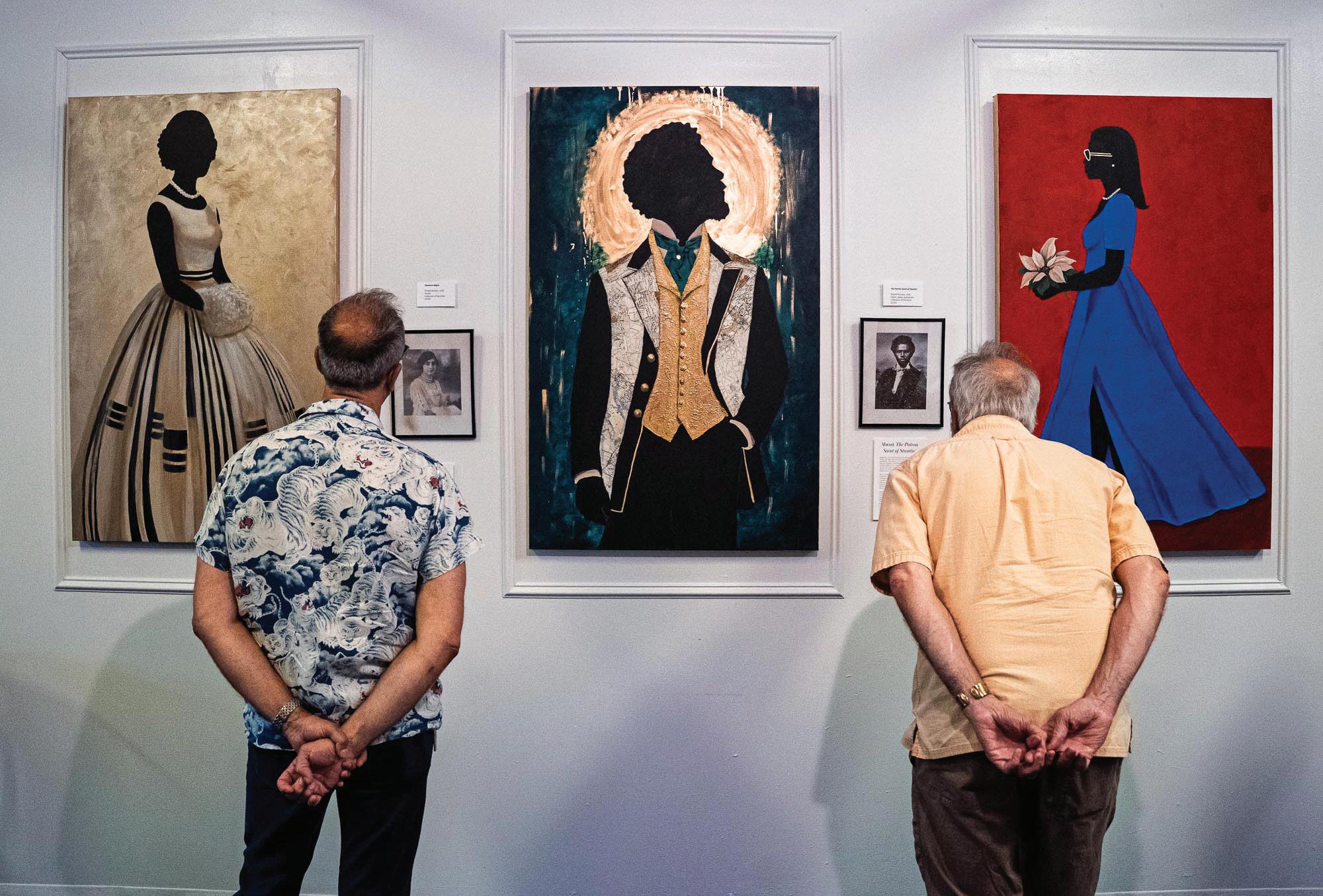
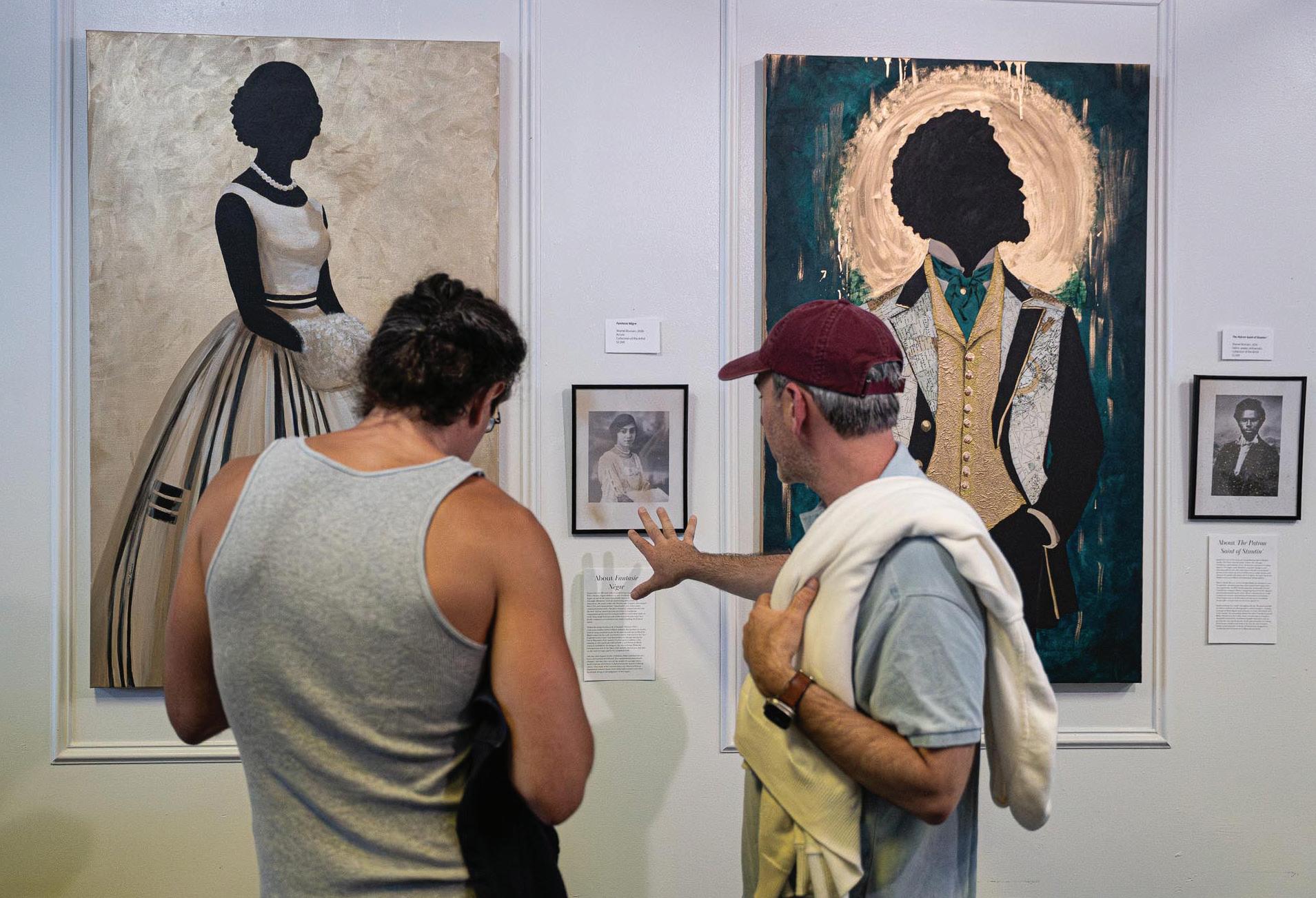
Observers take in "The Patron Saint of Stuntin," a painting depicting the famous Reconstruction-era congressman and activist Robert Smalls.
Romain's paintings of the famous composer Florence Price, Robert Smalls, and the Black Lives Matter activist who famously confronted police in a photograph that's been in international circulation hang from the walls of The Garden on June 19.
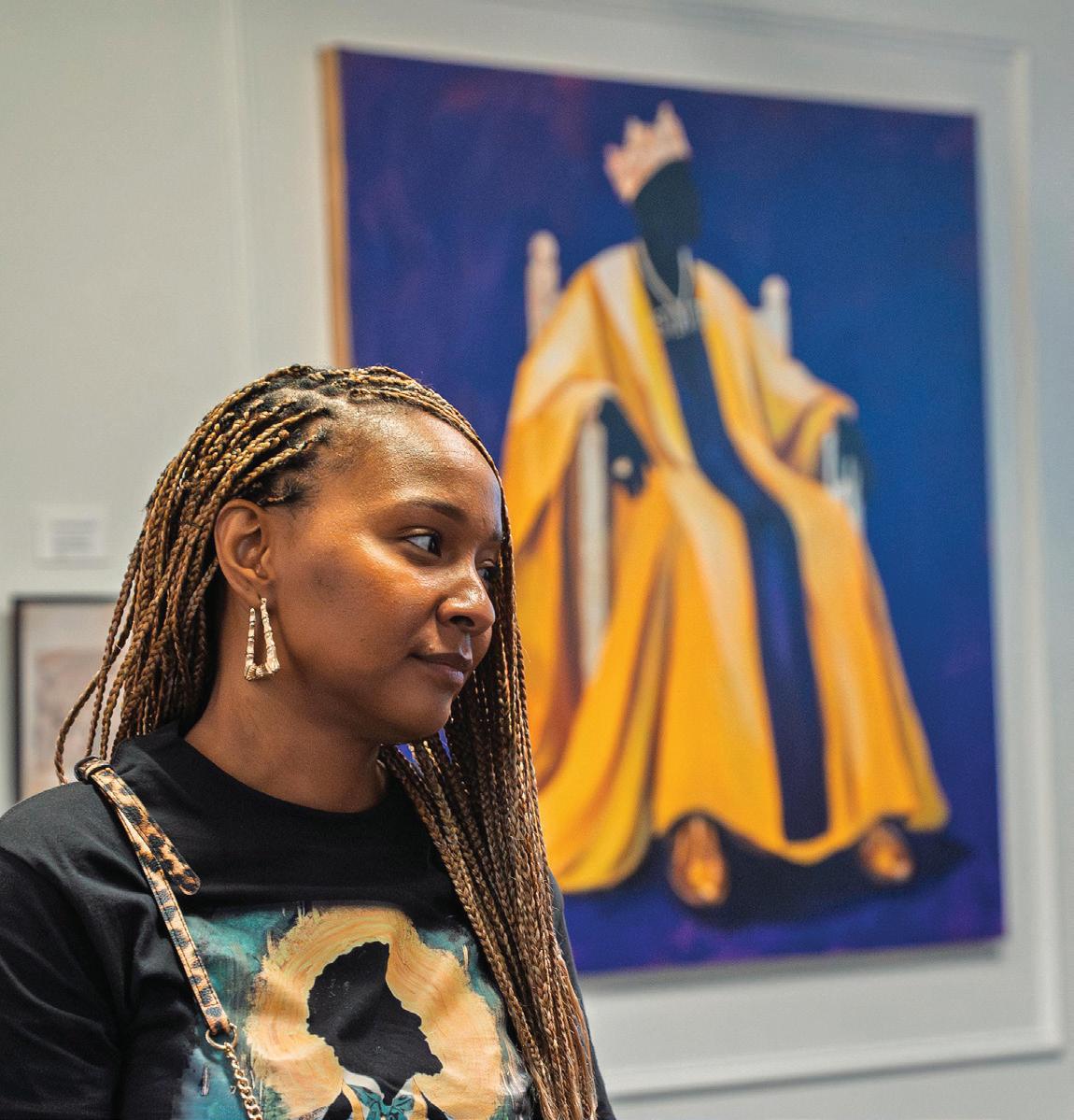
Artist Shanel Romain in front of her piece depicting the famous West African ruler Mansa Musa.
PHOTOS
forms of “stuntin’”—not simply showing off, but accomplishing the improbable in the face of constraint. Portraits of Mansa Musa, Robert Smalls, Septima Poinsette Clark and Florence Price explored how Black people have repeatedly transformed oppression into creativity, performance and freedom.
Visitors also encountered Cast(e), Tell, Educate, a visual bibliography composed of quotations from books in Michael Romain’s personal library that traced the exhibition’s intellectual genealogy, alongside The Cross, or De-Construction, an installation examining the tension between the Black church’s prophetic tradition and the prosperity gospel.
Throughout the evening, Michael Romain—performing as “DJ Mansa Musa”—
presented The Sacred and the Profane, a three-hour musical journey weaving together spirituals, gospel, jazz, soul, house and hip-hop to demonstrate the shared ancestry of Black music across generations.
The exhibition also featured limited-edition merchandise, including prints, greeting cards, tote bags, and apparel featuring Shanel Romain’s artwork, extending its themes beyond the gallery walls.
Presented by The Garden, a local arts nonprofit, The Culture, and Westside Health Authority, Stuntin’ invited audiences to see Black style not as spectacle alone, but as a historical practice of self-fashioning—one that has continually answered oppression with imagination, beauty and audacity.
19 event
Shanel Romain speaks with The Garden CHI CEO James Crumb during her Juneteenth exhibition.
Chicago poet Ariya Hawkins, left, speaks with an attendee during the Juneteenth exhibition. Hawkins performed several poems during the June
Viewers appreciate Romain's original artwork during the Juneteenth exhibition.
‘Missing Middle’ Housing Program Breaks Ground On 27 Units In North Lawndale
The city’s latest effort to boost the supply of middle-class housing on the South and West sides will bring nine three-flats to eight vacant lots.
BY MICHAEL LIPTROT Block Club Chicago
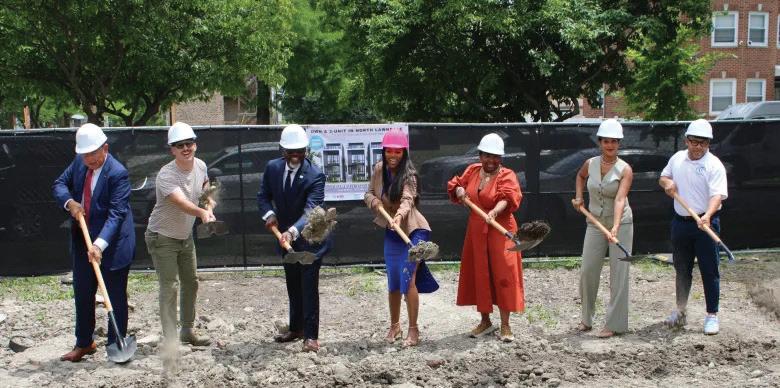
City officials on June 30 broke ground on the latest chapter of a project designed to rebuild middle-class housing on vacant lots across the South and West sides.
Nine three-flats in the 1600 and 1800 blocks of South Drake Avenue and South Trumball Avenue represent the latest set of homes planned as part of the Missing Middle Infill Housing Initiative, which is bringing affordable housing to eight vacant city lots.
The project is being led by a neighborhood-based developer Westside Community Group, with majority funding
through the Johnson administration’s Housing and Economic Development Bond.
“We’ve driven past vacant lots, boarded-up buildings and empty spaces that represent what was lost, but I’ve always believed that those vacant lots represent something special. They represent possibility,” Ald. Monique Scott (24th) said during the ceremony. “Growth should not mean displacement.”
The Missing Middle initiative is intended to revitalize and repopulate neighborhoods by building homes in areas where the housing stock has been hollowed out. The initiative sells cityowned lots in the program to developers for $1, with the city subsidizing up to $150,000 per unit to develop for-sale housing. Through the program, North Lawndale is due for 115 market-rate housing units — which will have an estimated value of $37.7 million — across five projects designed to transform 35 vacant lots. The program’s first homes broke ground in January with seven two-flats on Douglas Boulevard as well as in the 1400 and 1500 blocks of Trumbull and Homan avenues.
The second portion consisted of six three-flats and two four-flats in the 3600 block of West Douglas Boulevard and nearby locations on South Springfield, Independence and Avers avenues, according to city officials.
The project is personal for developer Jasmine Shaw, who founded Westside Community Group. She grew up and went to school nearby, and her daughter was born in the community. She said her work with Westside Community Group now allows her to pay it forward for future generations.
“This community raised me, but today I have the privilege of helping build it,” Shaw said. “We’re not just breaking ground on buildings; we’re breaking ground on possibility … opportunities for families to become homeowners, build equity instead of just paying rent, create stability, generational wealth and a future that can be passed down.”
Homes built on these lots will be designed for households making less than 140 percent of the area’s median income, which is $136,000 for a two-person household, according to the city. According to the program, the three-flats are estimated to sell for $550,000-$700,000.
Funding for the $6.5 million project includes over $2 million from the Steans Family Foundation and around $4 million from Mayor Brandon Johnson’s $1.25 billion Housing and Economic Development Bond. Johnson told Block Club that the bond, paired with his administration’s Cut The Tape initiative, can increase expediency by creating affordable housing in the city “at scale, with a greater pace” in communities across the city.
“By advancing our local developers’ plans and supporting construction costs, we’re contributing to neighborhood stability, wealth-building opportunities, and ultimately, the development of safer, more affordable communities,” Johnson said in a statement. “My administration will continue to make the investments needed to ensure working families can afford to stay in the communities they love, raise their children in the communities they love, and build their future here in Chicago.”
More Missing Middle projects are planned across the South and West sides. Last month, the City Council approved four three-flats, totaling 12 units, to be built in Morgan Park this fall. For more information on the Missing Middle Infill Housing program, visit the project’s webpage at chicago.gov/ city/en/sites/missing-middle/home.html.
Tuesday City of Chicago officials broke ground on nine three-flats along the 1600 and 1800 blocks of S. Drake Ave. and S. Trumball Ave. This project, a total of 27 units, is the latest set of homes as part of the Missing Middle Infill Housing Initiative, bringing affordable housing to eight vacant city lots. Credit: . | MICHAEL LIPTROT/BLOCK CLUB CHICAGO
A rendering of one of nine three-flats along the 1600 and 1800 blocks of S. Drake Ave. and S. Trumball Ave. | PROVIDED
WHAT’S HAPPENING [ [
BMO AUSTIN ASPIRE
PRESENTS: SMALL BUSINESS HR & TAX ESSENTIALS
Friday, July 10 | 11 a.m.–1 p.m.
Aspire Center Workforce Innovation
5500 W. Madison Street, Chicago
Kick off BMO Austin Aspire’s Summer Small Business Education Series with a workshop designed to help entrepreneurs and nonprofit leaders navigate HR and tax compliance. Participants will learn how to avoid common compliance pitfalls while building a stronger operational foundation.
Topics Include:
■ HR compliance essentials for small businesses
■ Tax compliance for businesses and nonprofits
■ Common compliance pitfalls and how to avoid them
■ Best practices for strengthening operations
■ Guest Speakers:
■ Lauren Karlin, SHRM-CP, Paychex BMO Business Consultant
■ Qiara Johnson, CPA, ShEO, Cosmo Concierge
Admission: Free
Registration: Required through BMO Bank’s event page.
YOGA ON THE FARM
Saturday, July 11 | 10:30–11:30 a.m. BUILD Farm
5100 W. Harrison St., Chicago
Reconnect with nature during BUILD’s annual Yoga on the Farm. Led by The Collective Yoga Co-op, this outdoor session welcomes participants of all experience levels.
Admission: Free
Bring: A yoga mat if you have one. Limited mats will be available.
Registration: https://bit.ly/farm-yoga
Contact: BUILD Chicago | (773) 227-2880 | buildchicago.org
PCC WELLNESS JULY MEDICAID REDETERMINATION & SNAP SUPPORT EVENT
Tuesday, July 14 | 10 a.m.–2 p.m.
PCC Austin Family Health Center
5461 W. Lake St., Chicago
Need help renewing your Medicaid coverage or enrolling in SNAP? PCC Community Wellness, CountyCare and the Greater Chicago Food Depository will provide one-onone enrollment assistance, blood pressure screenings and free produce for the first 20 Foodsmart participants.
Please Bring:
Proof of income from the past 30 days
Photo ID or proof of citizenship
Medicaid redetermination letter (if applicable)
Admission: Free and open to the public.
5TH ANNUAL UNION CONSTRUCTION TRADES FAIR
Friday, July 17 | 10 a.m.–2 p.m.
IBEW Local 134
2722 S. Martin Luther King Jr. Dr., Chicago
Explore careers in the union construction trades through hands-on demonstrations and conversations with apprenticeship representatives. Learn about training programs, application requirements and career opportunities across multiple building trades.
School supplies will be distributed while supplies last to school-age children in attendance.
Admission: Free
Hosted By: CISCO Chicago, Chicago and Cook County Building & Construction Trades Council and IBEW Local 134.
BMO AUSTIN ASPIRE PRESENTS: SMALL BUSINESS ACCESS TO CAPITAL
Friday, July 17 | 11 a.m.–1 p.m.
Aspire Center Workforce Innovation
5500 W. Madison Street, Chicago
The second installment of BMO Austin
Aspire’s Summer Small Business Education Series focuses on financing and capital access. Entrepreneurs will learn strategies for improving cash flow, building business credit, and identifying funding opportunities, including SomerCor’s Down Payment Assistance Program (DPAP), which offers up to $25,000 for eligible first-time commercial building buyers in Cook County.
Topics Include:
■ Traditional and alternative financing options
■ Cash flow management
■ Building and maintaining business credit
■ Funding opportunities for minority- and women-owned businesses
Guest Speakers:
Manuel Flores, President & CEO, SomerCor Christopher Parker, Senior Regional Strategist, BMO Bank
Admission: Free
Registration: Advance registration recommended through BMO Austin Aspire.
ALD. MONIQUE SCOTT’S COMMUNITY CLEANUP INITIATIVE
Saturday, July 18
Join Ald. Monique Scott, neighborhood organizations, block clubs and volunteers for the monthly 24th Ward Community Cleanup Initiative. Volunteers will pick up litter, beautify neighborhood spaces and strengthen community connections. Held every third Saturday of the month.
Activities Include:
■ Litter pickup
■ Vacant lot cleanup
■ Block beautification
■ Community engagement Tool Requests: (773) 533-2400
YOGA AT THE LIBRARY — AUSTIN BRANCH
Saturday, July 25 | 10–11 a.m.
Austin Branch Library 5615 W. Race Ave., Chicago Relax, stretch and recharge during this free all-levels yoga class led by instructors from Collective Yoga Co-op. The monthly class is designed for beginners and experienced practitioners alike. Led by instructors from Collective Yoga Co-op.
Admission: Free
38TH ANNUAL DR. ARTHUR LOCKHART ‘SAY NO TO DRUGS AND VIOLENCE’ PARADE AND SCHOLARSHIP RESOURCE FAIR
Saturday, July 25 | 10 a.m.–2 p.m.
Healing Temple C.O.G.I.C. 4941 W. Chicago Ave., Chicago Celebrate the 38th annual community parade honoring Dr. Arthur Lockhart’s
longstanding anti-violence initiative. The day includes a parade, scholarship opportunities, school supplies, resource booths, free food, health and dental services, gaming truck, talent showcase and more.
Admission: Free
BACK TO SCHOOL HEALTH FAIR
Saturday, July 25 | 10 a.m.–2 p.m. Proviso West High School 4701 Harrison St., Hillside
Join Illinois House Speaker Emanuel “Chris” Welch for the 24th Annual Back to School Health Fair featuring free backpacks (while supplies last), school and sports physicals, haircuts, entertainment, food, raffles, community resources and more.
Highlights Include:
■ Free backpacks for the first 200 families (limit one per family)
Saturday, July 25 | 10 a.m.–3 p.m. Crossroads Church of Hillside & Inellas Restoration Center 5152 Butterfield Rd., Hillside Families can prepare for the new school year with free health services, school supplies, haircuts, clothing, household essentials, food, entertainment and health screenings.
Services Include:
■ Vaccinations
■ School exams
■ Haircuts
■ Clothing
■ Household essentials
■ Food and drinks
■ Live entertainment
Admission: Free
Vaccination and School Exam Information: Contact Remona Sanders at 630-731-4449. More Information: www. inellasrestorationcenter.org