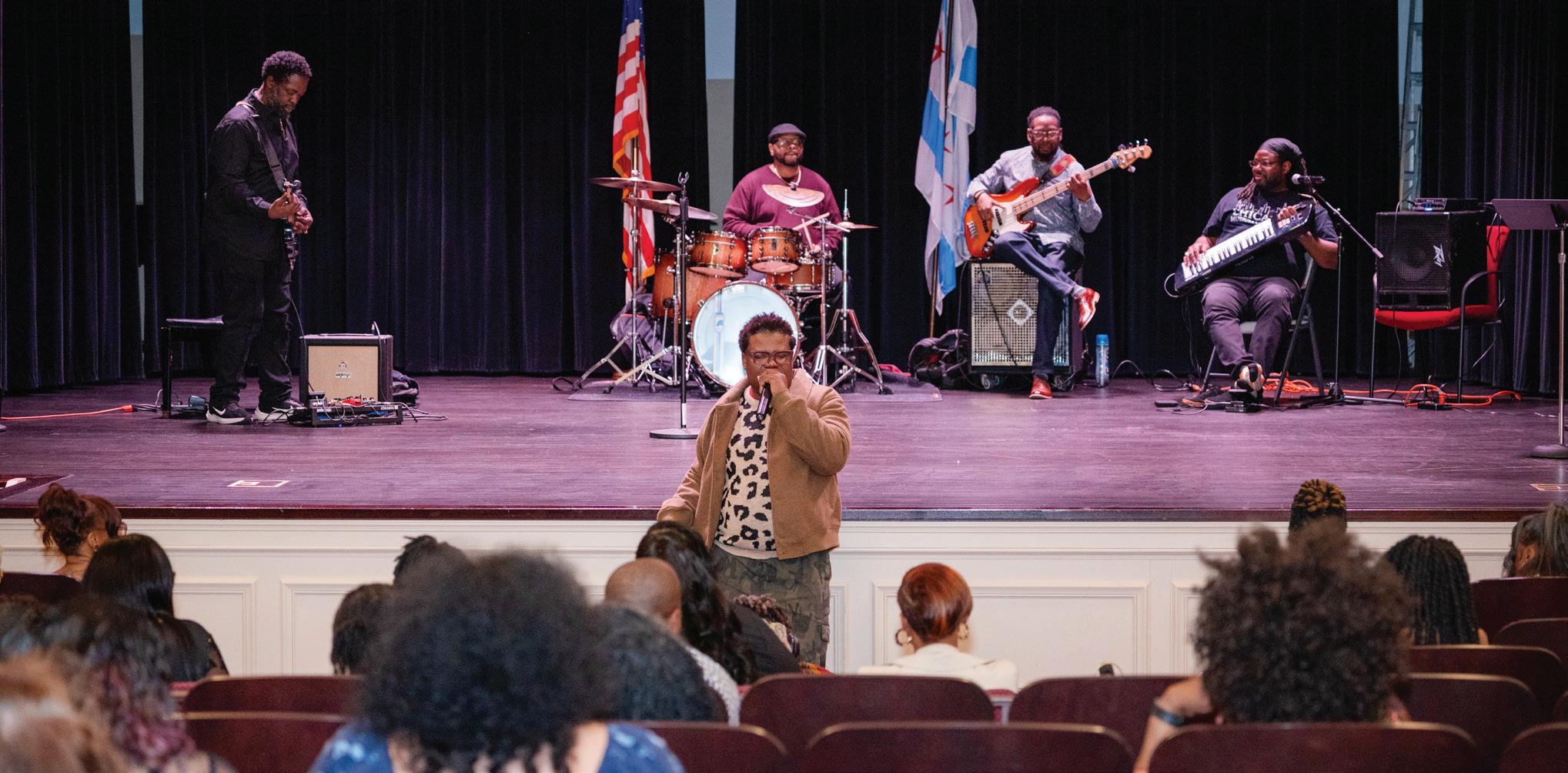
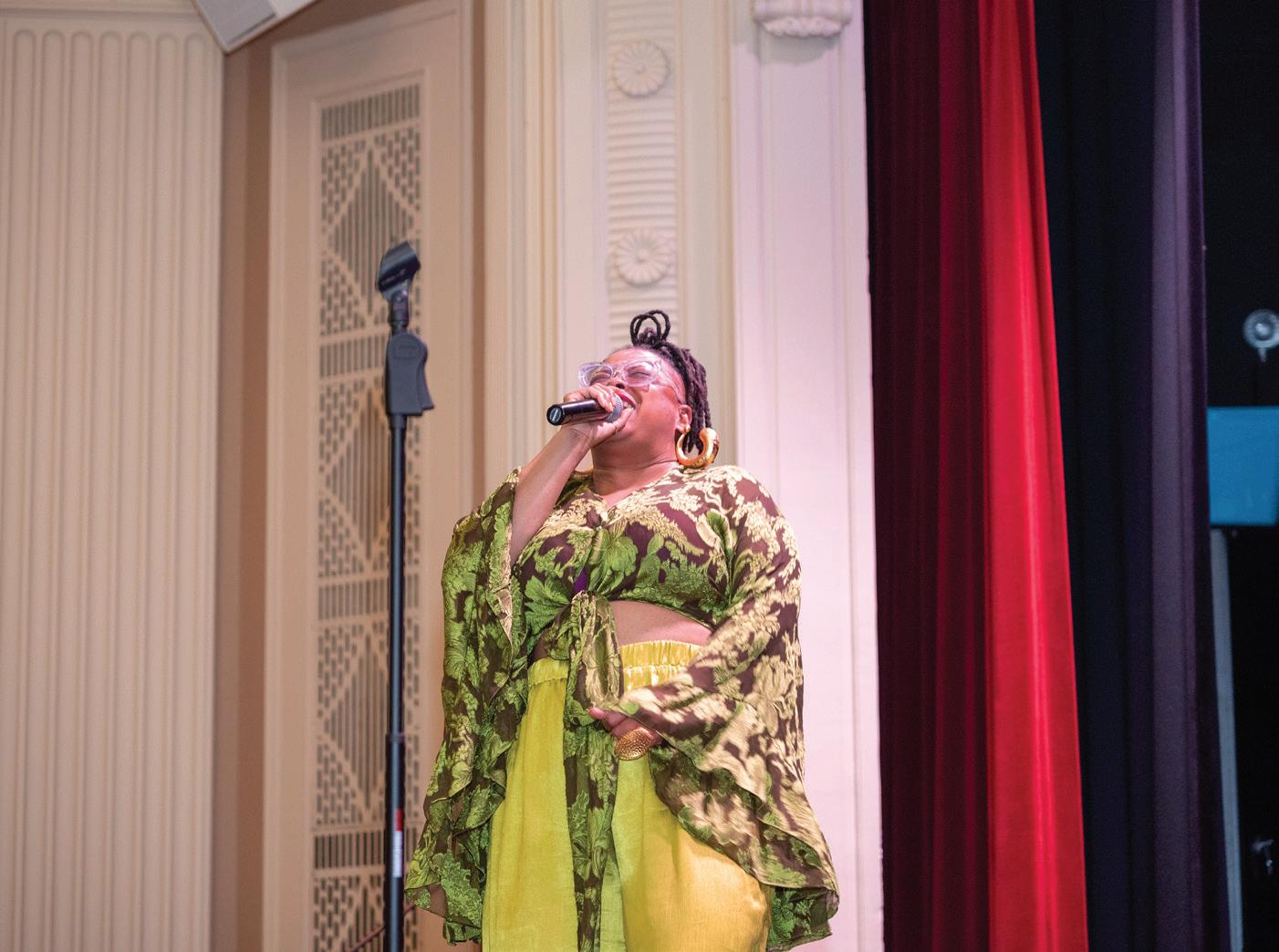
Chicago's inaugural Poet Laureate, avery r young, performs at the wrap party for Safronia on April 19. | TONAL SIMMONS
PHOTOS BY TONAL SIMMONS
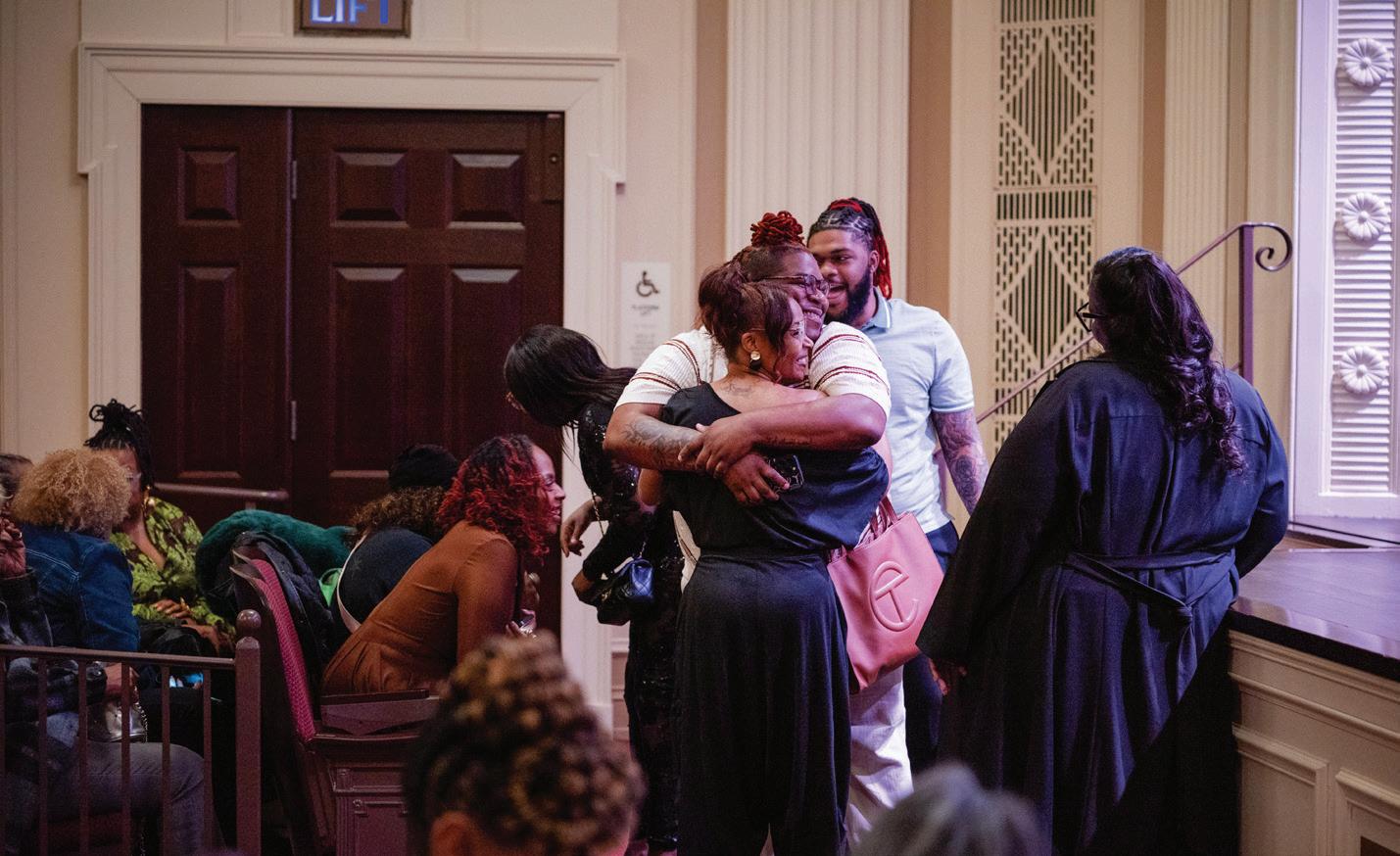
Guests gather April 19 at the Chicago History Museum for a jubilant wrap party honoring Chicago’s first Poet Laureate, avery r. young, following Safronia, his two-day opera presentation at Lyric Opera of Chicago. Hosted by the Kindred Civic Arts Forum, the evening celebrated both the artist and the work, which draws on themes of the Great Migration, memory, music and Black cultural expression. Young, who grew up in Austin, has long been one of the city’s most distinctive literary and performance voices, blending poetry, sound and storytelling rooted in the West Side and beyond. Among those pictured is Reesheda Nicole Berry, co-director of KCAF, wearing a yellow pantsuit and floral purple overcoat as she joins young and guests in an evening of reflection, applause and community fellowship. The gathering underscored how young’s art continues to preserve history while opening pathways forward for a new generation of Chicago creatives.
Sankofa Village Wellness Center Opens With Goal to Address Life Expectancy Gap
The West Garfield Park facility offers primary medical care, fitness services, and more to help residents with much shorter lifespans than residents of the Loop
By MICHAEL LIPTROT Block Club Chicago
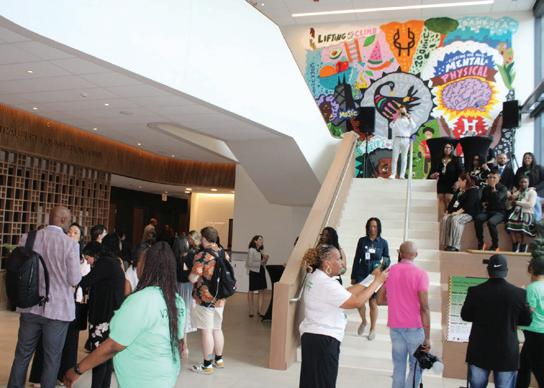
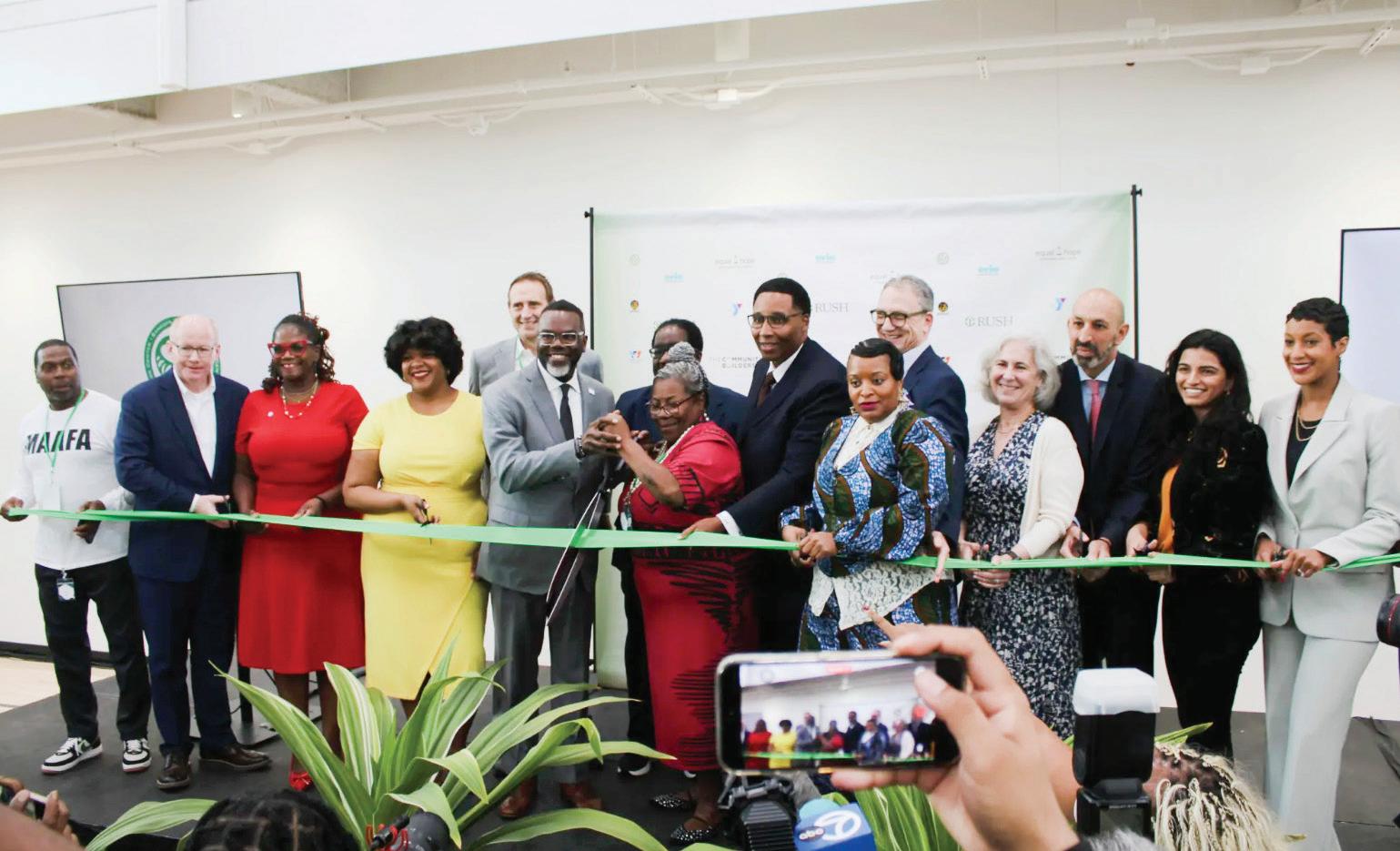
The latest effort to address the West Side’s life expectancy gap is now open. The Sankofa Village Wellness Center, 4305 W. Madison St. offers clinics, workforce development, and recreational activities.
The center opened on April 23 as the flagship component of the Sankofa Wellness Village along the Madison and Pulaski corridor. The development won the 2023 Chicago Prize from the Pritzker Traubert Foundation.
The center aims to raise life expectancy for West Siders — who live, on average, 16 years fewer than people in wealthier
areas of the city — and combat longtime disinvestment in the area through resources in the center and beyond, officials said.
“This center was built for the residents and is designed to meet their needs while serving as a space where people can connect, grow, and thrive,” said Drea Slaughter, the executive director of Garfield Park Rite To Wellness. “The resources offered here are just the beginning, and we look forward to continuing this work and building on our mission to strengthen opportunity and improve quality of life across West Garfield Park.”
cluding the Garfield Park Rite to Wellness Collaborative, Rush Medical Center, Erie Family Health, West Side United, Equal Hope, and the YMCA of Metropolitan Chicago.
Services offered on-site include:
• Primary medical care and reproductive, behavioral and dental health services
• Substance abuse disorder treatment and health education programs
• Health screenings
facility houses tenants in-
The center features health clinics, fitness, and recreational programs, as well as workforce development opportunities. The three-floor,
• Mental health and disease prevention training programs
60,000-square-foot
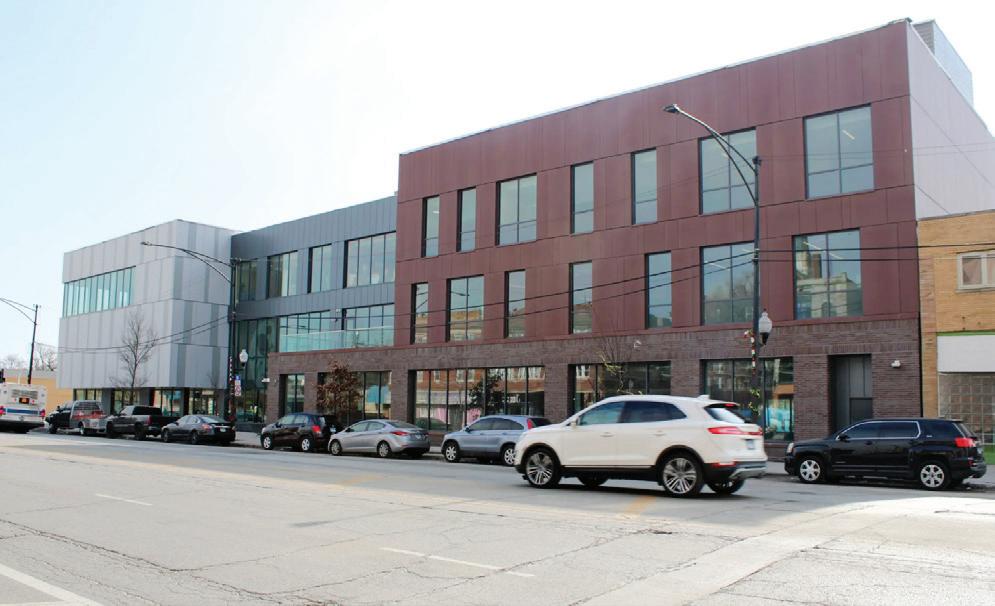
The Sankofa Village Wellness Center, 4305 W. Madison St., opened on April 23 as the flagship component of the Sankofa Wellness Village along the Madison and Pulaski corridor, a larger development that won the 2023 Chicago Prize from the Pritzker Traubert Foundation. | MICHAEL LIPTROT/BLOCK CLUB CHICAGO
The Sankofa Village Wellness Center at 4305 W. Madison St. |
MICHAEL LIPTROT/BLOCK CLUB CHICAGO
• Workforce development programs
• Group fitness programs and youth and teen sports programs
• Drop-in child care
• Indoor gymnasium and walking track
“Today, we are not just opening a wellness center. We are adding to the revitalization of West Garfield Park, the Madison-Pulaski corridor, and we are ensuring that residents have access to high-quality health care,” Mayor Brandon Johnson said. “We are working to ensure that all residents, no matter their ZIP code, can have access to the tools, resources, and services needed to live healthy and prosperous lives.”
West Garfield Park residents live to an average age of 69, compared to 85 for people living in the Loop, according to a 2015 Virginia Commonwealth University report.
despite 2025 seeing 10-year lows in overdose deaths, according to the Cook County Medical Examiner’s dashboard mapping opioid-related cases. The greater West Side also sees a disproportionate number of opioid deaths.
Johnson and other leaders are confident the
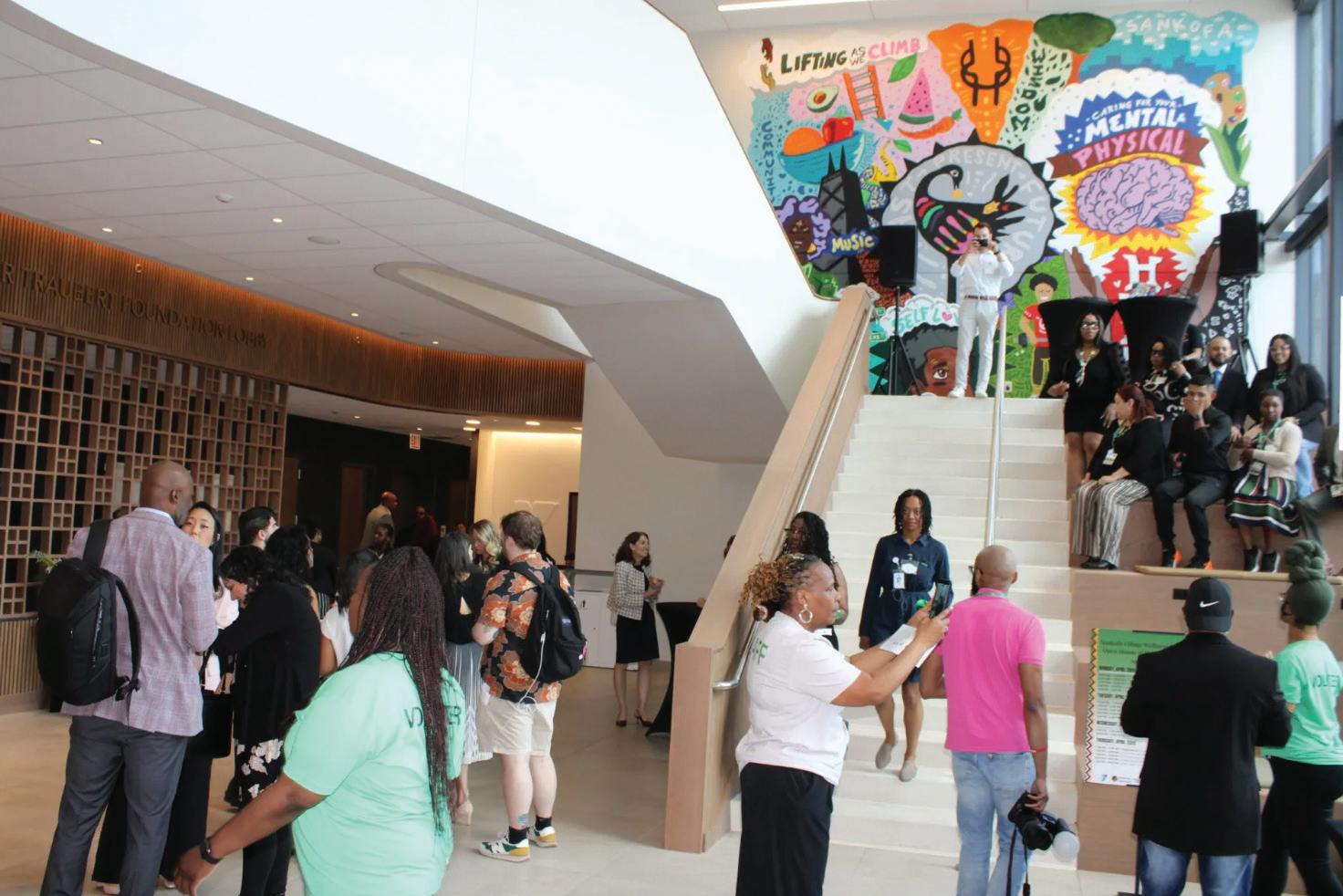
The lobby’s extra-wide staircase doubles as a coworking space. Underneath the staircase is a kiosk run by West Side United that functions to provide West Siders with jobs and job training opportunities.
The first floor also houses the YMCA of Metropolitan Chicago’s fitness center, locker rooms, and a wellness studio that has classes. The YMCA has an elevated walking trail and a basketball gym that spans the second and third floors.
wellness center’s presence will help further address overdoses.
A 2021 city study showed a racial life expectancy gap growing between Black and nonBlack Chicagoans. Black people in Chicago live about nine fewer years than non-Black people as they struggle with higher death rates for diabetes-related issues, homicides, HIV and opioids, the report found.
Less than a mile away from the wellness center, the intersection of Pulaski Road and Lake Street near the Green Line station has been named “the epicenter of the fentanyl crisis” in Chicago by The West Side Heroin/Opioid Task Force, an outreach group based in the area. Last year, there were 15 opioid overdose deaths within a half-mile of the intersection,
“There’s still a lot more work to be done, and what that requires in this moment is to do more, to double down on those investments,” Johnson told Block Club. It’s about “breaking the stigma around receiving care, but also making sure that we’re not criminalizing addiction. … It’s not just educating but ensuring that those resources are available wherever these individuals are.”
The building’s lobby has floor-to-ceiling windows adorned with the icon of a sankofa, the center’s namesake, and the name of a symbol depicting a bird originating from the Akan people of Ghana.
Child care is provided for visitors of the center by the YMCA.
The second floor houses offices for the Garfield Park Rite to Wellness Collaborative. The community organization is one of the minority owners of the center.
Rush University Medical Center also has a suite on the second floor dedicated to behavioral health that offers mental health counseling plus social support and wellness workshops on disease prevention for chronic conditions such as diabetes.
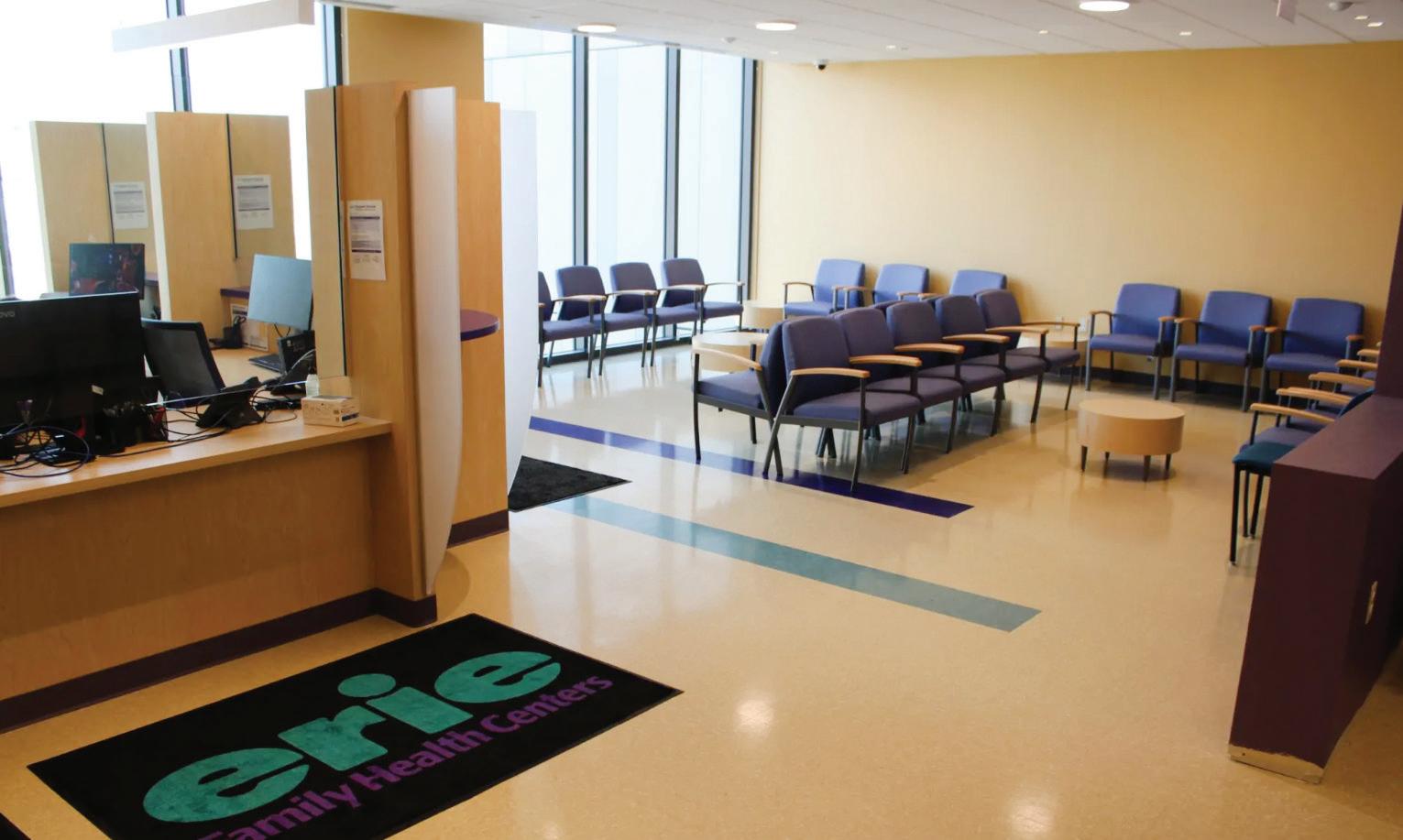
On the third floor, Erie Family Health Centers serves as the main primary care provider, with a suite that also includes dental and behavioral health clinics. Both health care providers are able to refer patients to each other, with Erie offering a “health care home” while Rush provides more acute or specialty services, according to a statement from Erie officials.
The complex also houses Equal Hope, whose space provides free breast and reproductive cancer screenings for uninsured and underinsured patients. The Sankofa Wellness Village also includes a Community Grocer Initiative to host pop-up markets that provide healthy and fresh food options while organizers work toward a permanent grocer.
The Sankofa Village Wellness Center began construction in fall 2024 and is spearheaded by the Garfield Park Rite to Wellness Collaborative, The Community Builders, and MAAFA Redemption Project.
The center is one component of the Sankofa Wellness Village, which last year won the $10 million Chicago Prize from the Pritzker Traubert Foundation. The project cost is estimated at $48 million, according to center officials.
The Sankofa Village Wellness Center at 4305 W. Madison St. | MICHAEL LIPTROT/BLOCK CLUB CHICAGO
Plan to Bring Nearly 500 Homes to Mars Candy Factory Site Slammed by Galewood Neighbors
During another heated community meeting over the future of the defunct factory site in Galewood, residents pushed back on plans to bring housing to the 20-acre area
By MICHAEL LIPTROT Block Club Chicago
Tension between Galewood residents and developers boiled over at a meeting about the future of the former Mars Wrigley factory site — so much so that officials warned the 20-acre site could remain vacant for an extended period.
Galewood residents sounded off on April 21 against the suggestion that redevelopment of the factory site at 2019 N. Oak Park Ave. could include 500 housing units. The factory operated for 95 years before closing in 2024, the same year Mars selected developer McCaffery Interests to repurpose the site.
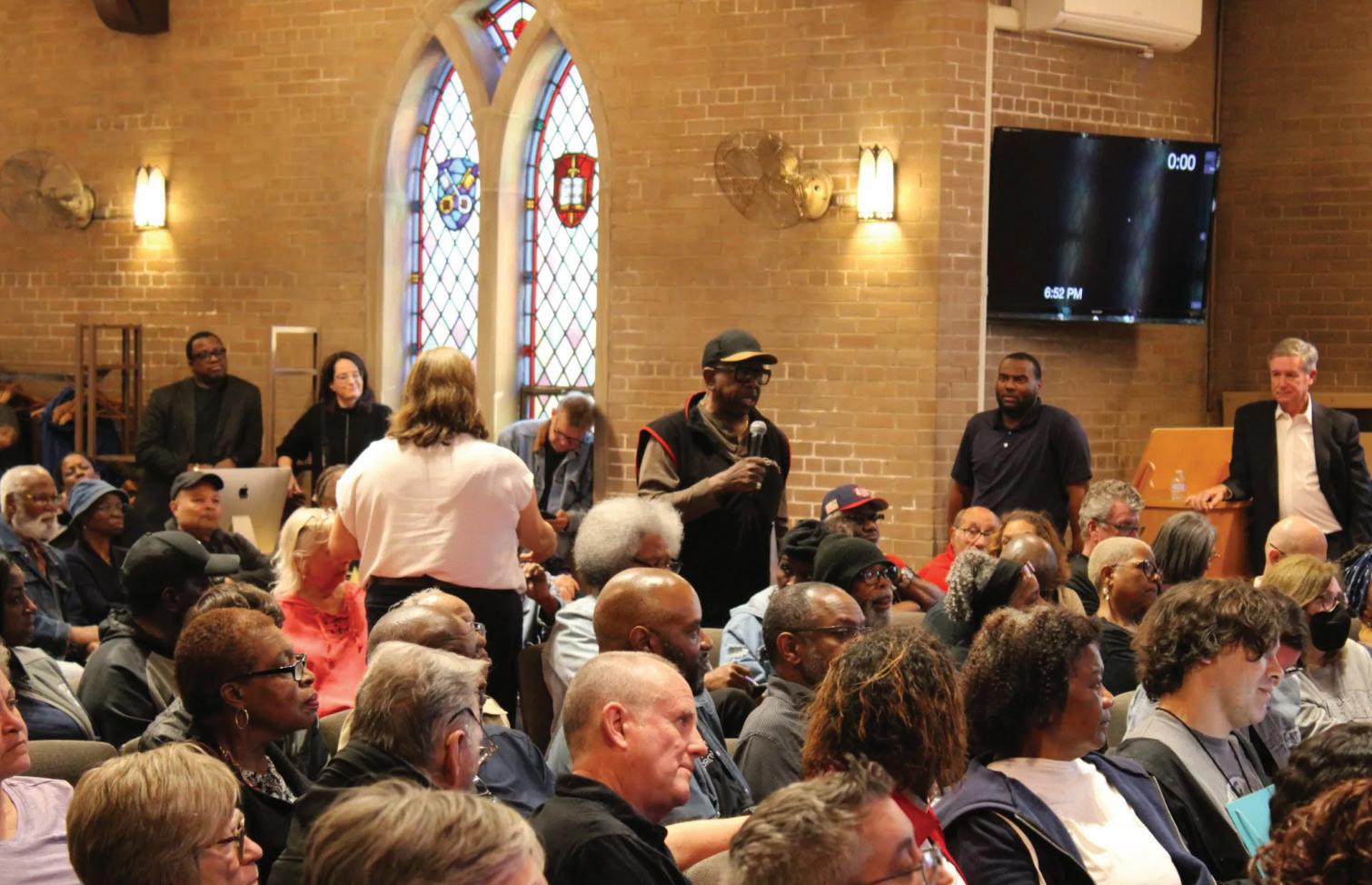
About 150 neighbors at Trinity Galewood Church, 1701 N. Narragansett Ave., echoed an overwhelming message from community members at previous meetings.
By adding that much new housing, “the community will become a parking lot,” said 40-year Galewood resident Donald Glover. “We have less crime than Lincoln Park. We don’t want to lose that.
“These people have homes that cost $500,000 to over $1 million. They’re living well, but you all want to change that. It’s not fair to us. … You’re changing the whole complexion of our community.”
“You can see that people here don’t want this, so let me just say it — we don’t want any rentals,” another person said. “It sounds to me like you all have already made your decision, and we’re here, and you’re just trying to convince us about your decision.”
Previously, a local group has even gone so far as to suggest its own plans for the 20-acre property.
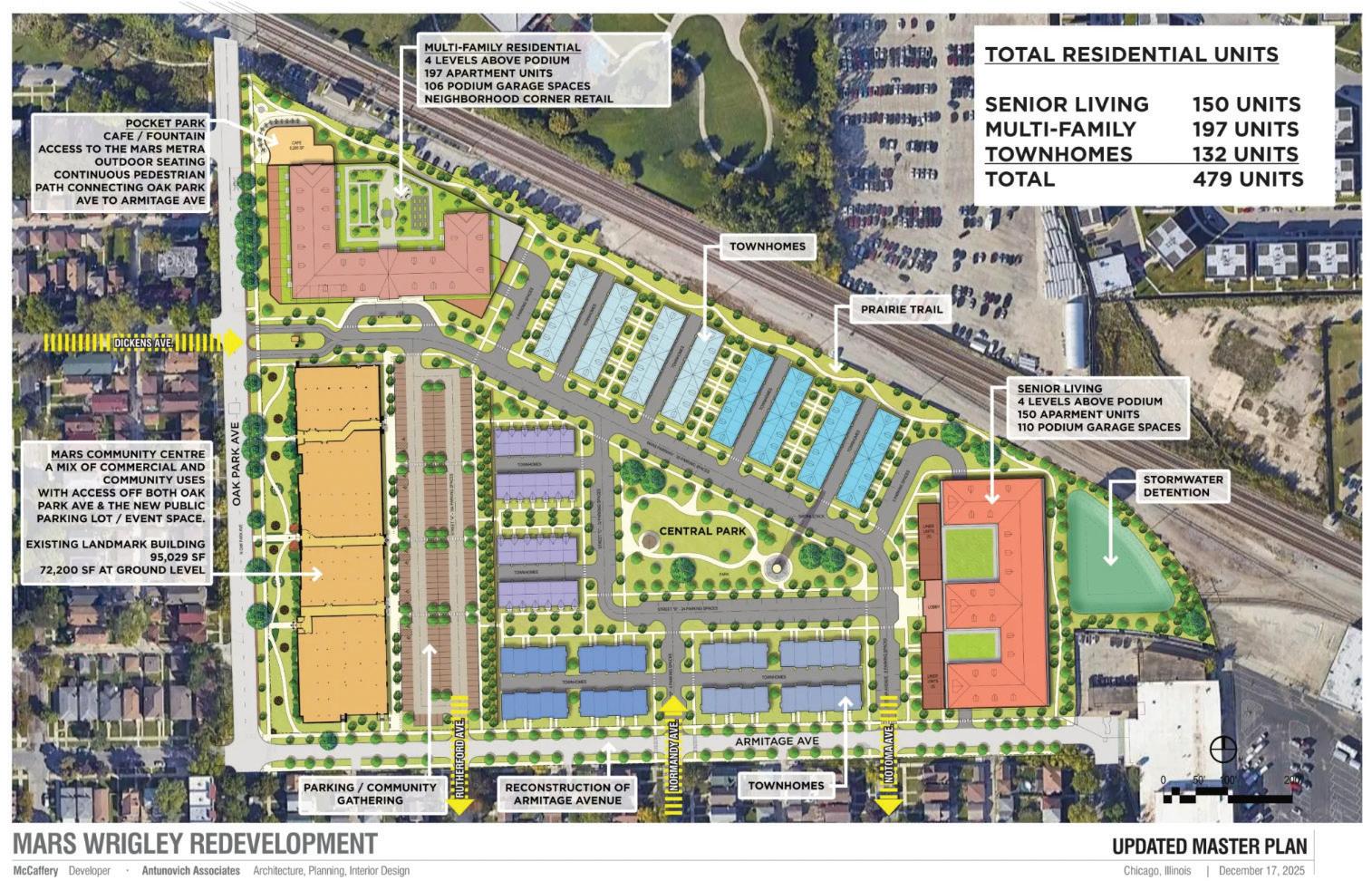
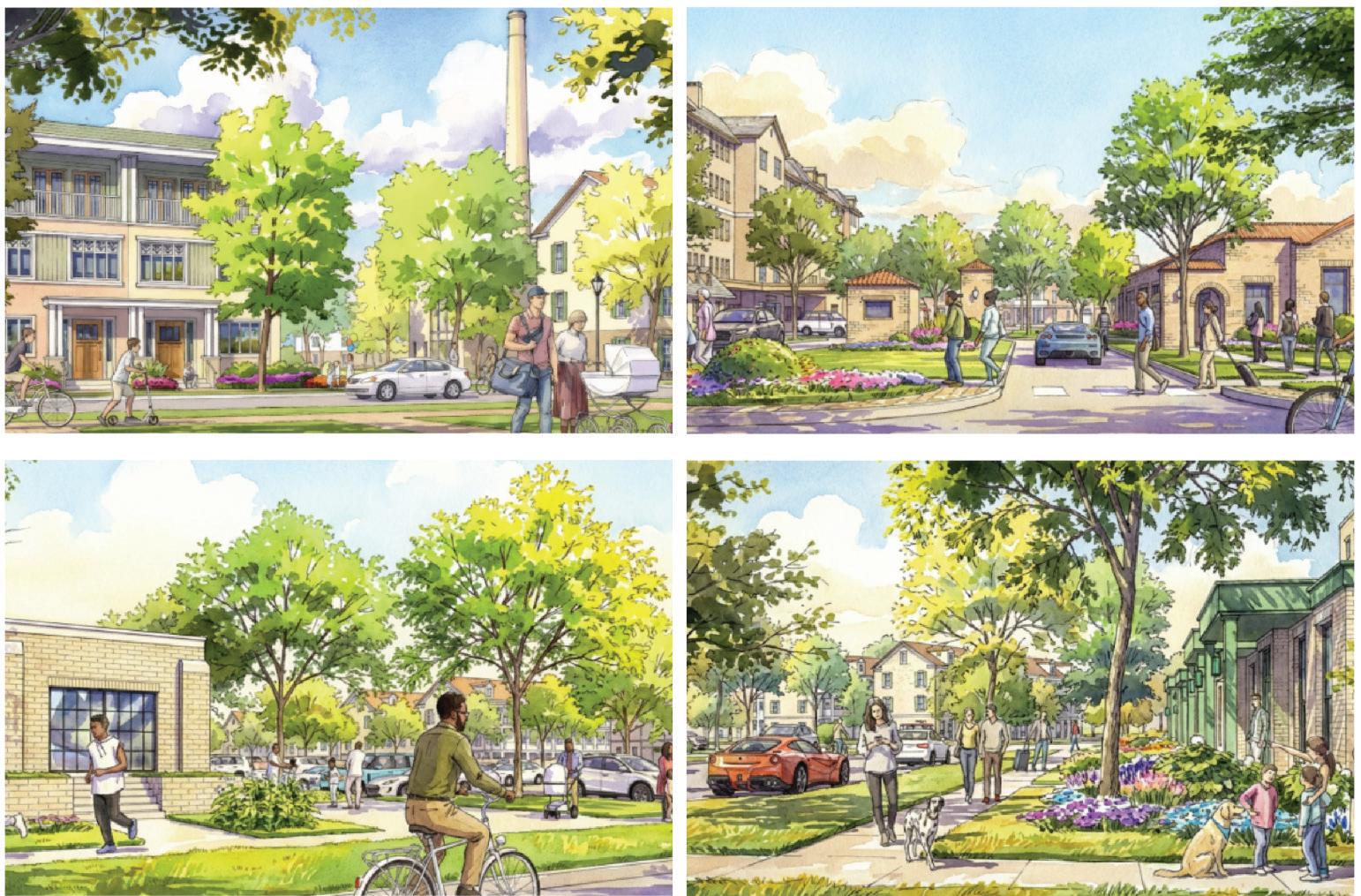
McCaffery’s plan for the site calls for 479 total units, including 150 senior living units, 132 townhomes, and 197 units in a
multi-family building.
Despite the pushback, Mars officials reasserted that they back McCaffery’s plans, but encourage continued discussion.
“From Mars’ perspective, we support this concept,” said Mars Vice President John Benazzi. “My goal tonight isn’t to convince anybody of my opinion or Mars’ opinion.
It’s really just to share what we’ve heard, what we’ve learned, where things stand today, and then where we might go moving forward.”
Candy factory officials warned that a continued stalemate between residents and the developer threatens to leave the site vacant for the foreseeable future.
In addition to housing, McCaffrey’s proposal includes the repurposing of Mars’ landmarked factory building as a community center with space for special events. Plans provided to Block Club show the inclusion of parks, space for a cafe and other businesses, walking paths, and improved pedestrian infrastructure. A nature
Galewood residents sounded off on April 21 on the redevelopment of Mars Wrigley Factory at 2019 N. Oak Park Ave., which operated for 95 years before closing in 2024, the same year Mars selected developer McCaffery Interests to repurpose the site. | MICHAEL LIPTROT/BLOCK CLUB CHICAGO
trail would link the site to nearby Rutherford Sayre Park, and a public plaza could host art fairs, farmers markets, and other events.
Some of those plans align with feedback from residents at previous meetings. A report compiled by the Local Initiatives Support Corporation showed neighbors wanted a mixed-use development with community areas, green spaces, housing, businesses, and a small business park, according to Austin Weekly.
Community members at the Tuesday meeting thought differently.
While McCaffrey President Ed Woodbury told Block Club “housing is the right choice” for the former factory site, the company is looking to hold more focused working groups with community members to better understand their concerns.
On that, there was agreement, as officials from Mars, McCaffrey, and the city of Chicago all agreed that the redevelopment plans have a long way to go.
“I think we’re still in the same place,” Ald. Chris Taliaferro (29th) said of the impasse. “I think we have an overwhelming number of residents who don’t want to see residential housing. Some say we don’t want to see rental units, some are OK with some housing. … It’s not the final plan. It’s a concept that can be amended.”
At previous meetings, Taliaferro has made it clear he will support plans that have community backing. He said he is hopeful a compromise can be found; however, his biggest worry is that the building will remain vacant should the stalemate continue.
“It could become an eyesore,” Taliaferro said. “If we cannot come to a consensus on a
development, then we are faced with a vacant building, and not just a vacant building, but a 22-acre site that includes a large factory that would be very, very difficult to provide security for 24/7.”
Plans for the Mars Factory redevelopment presented by developer McCaffrey Interests, Inc. in December 2025. | PROVIDED
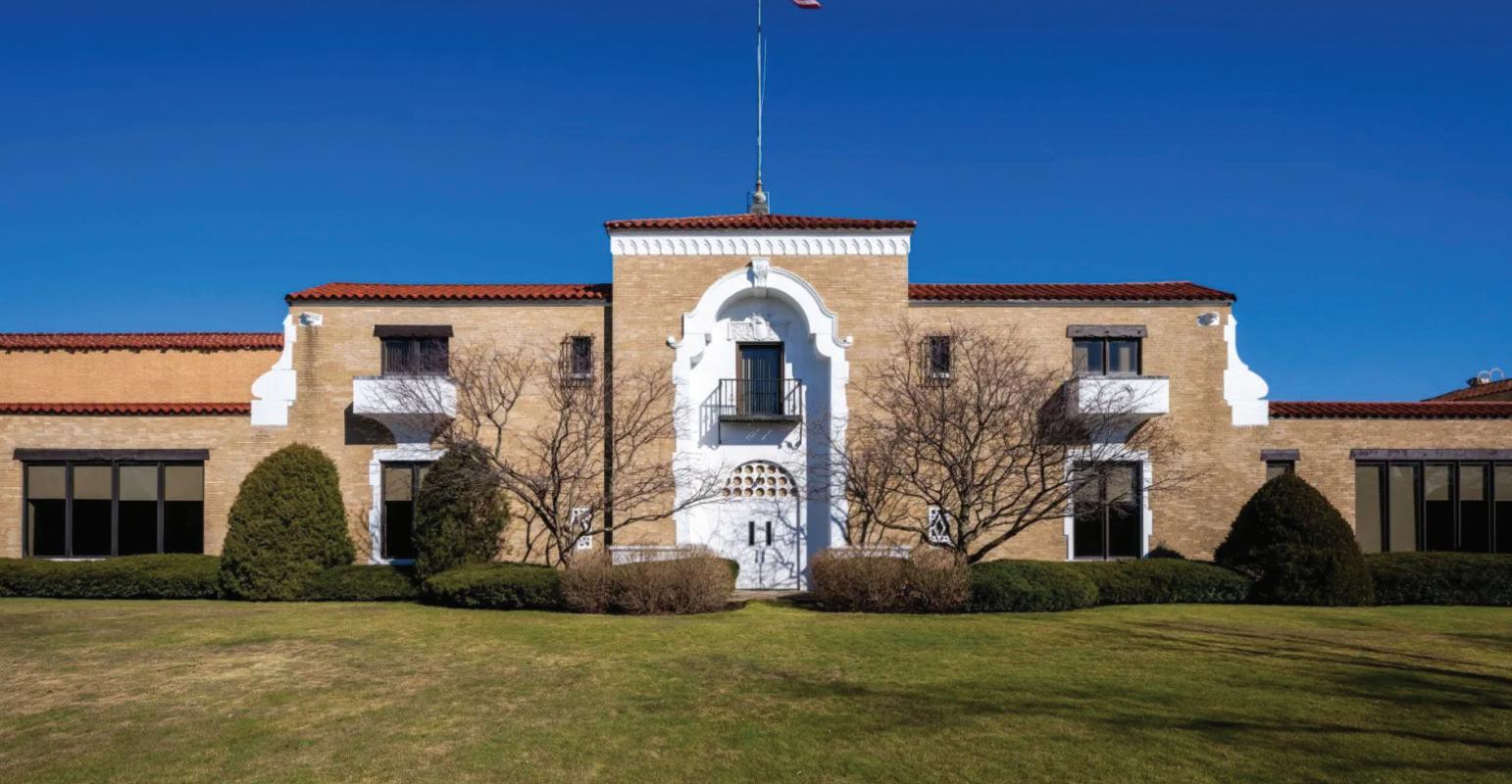
The front of the Mars Factory in the Austin community. | CHICAGO DEPARTMENT OF PLANNING AND DEVELOPMENT
Renderings of the proposed Mars redevelopment by developer McCaffery Interests. | PROVIDED
Neighborhood Retail Activation Program Targets Austin’s Madison Street With New Storefront Opportunities
City initiative aims to fill vacant spaces, speed licensing, and help entrepreneurs build lasting businesses on the West Side
BY MICHAEL ROMAIN
The
Culture
City officials, community leaders, and local property owners are looking to bring new business energy to Madison Street in Austin through the Neighborhood Retail Activation Program. The new initiative is designed to help revive commercial corridors impacted by recent summer storms and long-standing economic challenges.
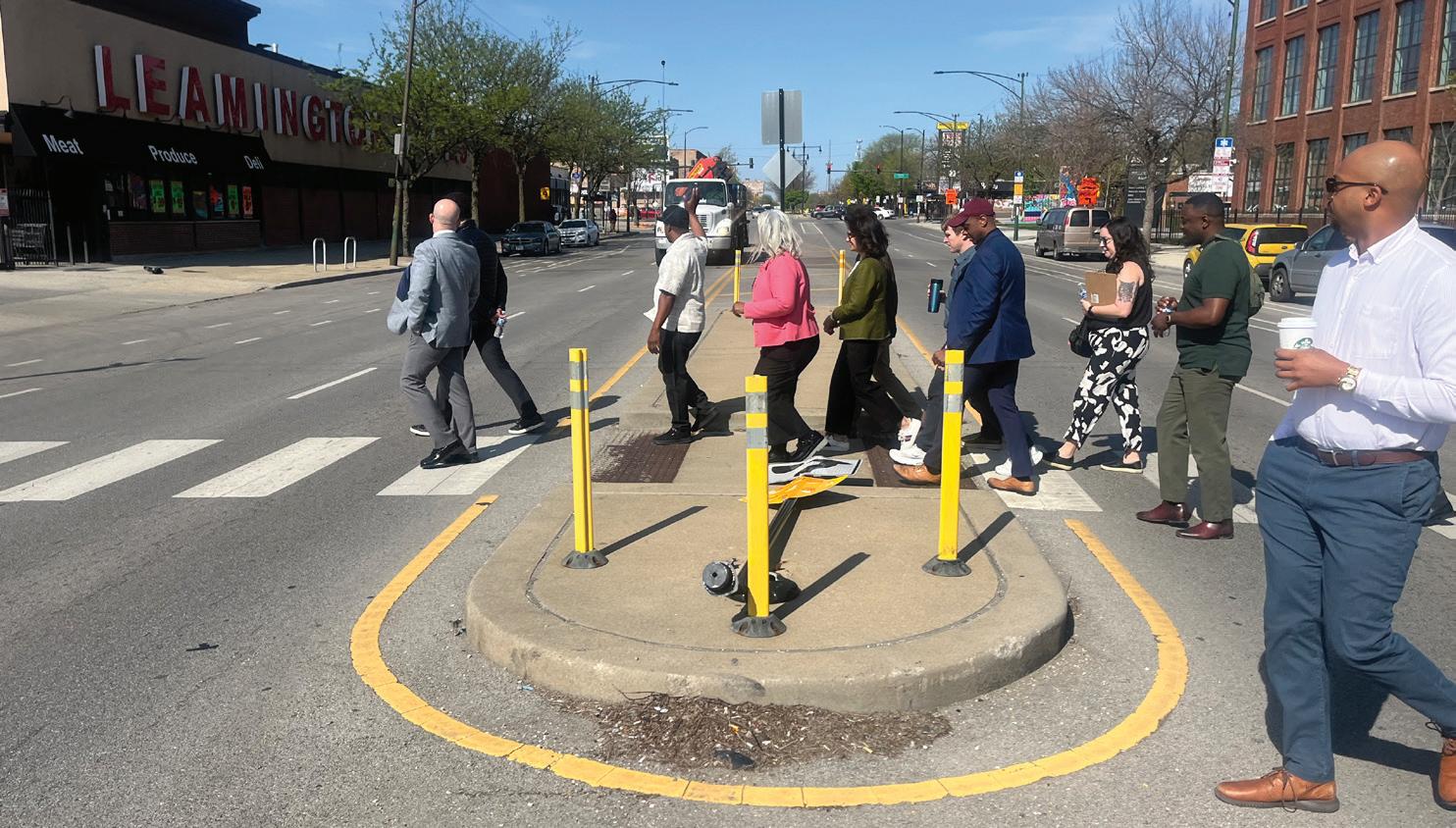
On April 21, Westside Health Authority hosted a walking tour of three prospective storefront properties on the 5400 block of West Madison Avenue, giving prospective business owners and stakeholders a closer look at spaces that could become part of the program.
Among the featured properties were buildings owned by local businessman Marshawn Feltus, who also operates ACT Yoga on the block. Feltus owns two buildings in the area and is among the property owners applying to participate in the initiative.
“We’re changing the business concept where we can,” Feltus said during the tour. “We’re looking at a cluster of businesses where people have partnerships and are working toward the same goal.”
That cluster strategy reflects a broader vision for Madison Street—-not just filling vacancies, but building a connected corridor where businesses reinforce one another, increase foot traffic, and create a stronger neighborhood destination.
The Neighborhood Retail Activation Program was announced in March by Mayor Brandon Johnson and the Chicago Department of Business Affairs and Consumer Protection.
The effort focuses on Austin, Belmont Cragin, and West Garfield Park, areas affected by the 2023 and 2024 summer storms. The selected delegate agencies are tasked with identifying move-in-ready vacant storefronts, negotiating leases, and helping activate at least five spaces per corridor.
The four Delegate Agencies selected include:
• Austin African American Business Networking Association for the Austin neighborhood, specifically Chicago
Avenue between Austin Boulevard and Cicero Avenue;
• Westside Health Authority for the Austin neighborhood, specifically Madison Street between Austin Boulevard and Laramie Avenue;
• Northwest Side CDC for the Belmont Cragin neighborhood, specifically the Belmont Avenue/Central Avenue commercial corridor;
• Together Chicago for the West Garfield Park neighborhood, specifically Madison Street between Kostner Avenue and Hamlin Boulevard.
City officials said each Delegate Agency will be responsible for identifying move-in-ready vacant storefronts, negotiating leases, and facilitating a goal of five pop-up activations per commercial corridor.
The program is also intended to help business owners navigate the city licensing and permitting process—one of the biggest barriers to opening.
“We are truly honored to be awarded the Neighborhood Retail Activation Program grant and to continue investing in the vitality of the Chicago Avenue Soul City Corridor,” said Mal-
colm Crawford, the executive director of the Austin African American Business Networking Association. “This grant will help support our mission as we continue to do the work of uplifting small businesses in Austin and revitalizing the West Side.”
Justin L. Hill, the director of Special Initiatives at Westside Health Authority, said the program will allow the nonprofit to help five local business owners strengthen their operations on the path toward generational wealth.
“For more than 37 years, the Westside Health Authority has centered Austin residents and their voices, recognizing that West Side families seek not just survival, but the ability to build legacy and pass opportunity to the next generation,” Hill said.
Ivan Capifali, commissioner of Business Affairs and Consumer Protection, said the city has been working to streamline processes that have historically delayed small business openings.
“For many years, it’s taken forever to get a city license, a public way permit, a sign like that takes months and months because of bureaucracy,” Capifali said. “Mayor Johnson wanted to change that.”
Capifali said multiple city departments are often involved when a business applies for
licenses or renovations, including Buildings, Health, and BACP. That layered review process could once stretch to roughly five months.
“We’re at 40 days on average when it was 150 days on average,” he said, noting that timelines still vary depending on the license type.
For prospective entrepreneurs, that reduction could be significant. Faster approvals can lower carrying costs, shorten vacant periods, and help owners begin generating revenue sooner.
Business owners interested in the program can apply by submitting the city’s Neighborhood Retail Activation Business Interest Form. Property owners with vacant or available storefronts can also submit a separate Property Owner Interest Form if they want their spaces considered.
After forms are submitted, applicants are encouraged to follow up directly with the delegate agency managing their corridor. Those agencies will oversee the final selection process, evaluate fit, and provide nextstep guidance to participants.
For Madison Street applicants in Austin, that means contacting Westside Health Authority. Businesses may be considered for pop-up activations, storefront placements, or technical assistance depending on readiness and corridor needs.
The program also promises technical assistance beyond real estate placement, including marketing support, business planning, operations guidance, and help securing long-term leases.
For Austin residents, the stakes go beyond storefront occupancy.
Successful corridor redevelopment can bring neighborhood jobs, safer and more active streets, new services, and stronger local ownership in a community that has long faced disinvestment.
Entrepreneurs seeking more information can visit the city’s program page at Chicago. gov/BACPRetail or email BACPEconomicRecovery@cityofchicago.org.
Those specifically interested in the Madison Street corridor can also contact Westside Health Authority directly at healthauthority. org.
City officials with the Chicago Department of Business Affairs and Consumer Protection, Westside Health Authority, local business owner Marshawn Feltus walk across Madison Street toward a property Feltus owns down the street from the Aspire Center for Workforce Innovation in Austin. | PROVIDED
15th District Council Members Pitch Community Justice Alliance to Resolve Low-Level Conflicts, Build Trust
Pilot proposal would
train residents, police officers, and council members in mediation, restorative justice, and racial healing practices
BY MICHAEL ROMAIN
The Culture
Members of the 15th Police District Council are advancing a proposal they hope could become a new model for public safety on Chicago’s West Side. The Community Justice Alliance is designed to resolve low-level conflicts through mediation, restorative justice, and community-led accountability rather than arrest or escalation.
District Council members Deondre Rutues and Arewa Najm Ekua said in interviews on April 24 that the initiative is still being developed, but they envision it as a voluntary pilot program serving Austin and surrounding portions of the 15th District. The district includes most of Austin.
The proposed alliance would handle matters such as neighbor disputes, quality-of-life conflicts, business disagreements, and some community concerns involving police interactions that do not rise to the level of formal misconduct investigations or violent incidents.
“We keep us safe,” Ekua said, describing the philosophy behind the effort. “We need to own that by loving, caring, and respecting one another enough to have these conversations.”
Under the plan, trained mediators would guide residents and, when appropriate, police officers through structured conversations aimed at repairing harm, addressing misunderstandings, and preventing future conflict.
Council members said many neighborhood disputes worsen not because they are severe at the outset, but because people lack the tools to communicate through tension.
“A lot of times things escalate because people don’t know how to communicate with each other,” Ekua said. “This gives us an opportunity as a community to listen to people, have hard conversations, and come up with harm-repair
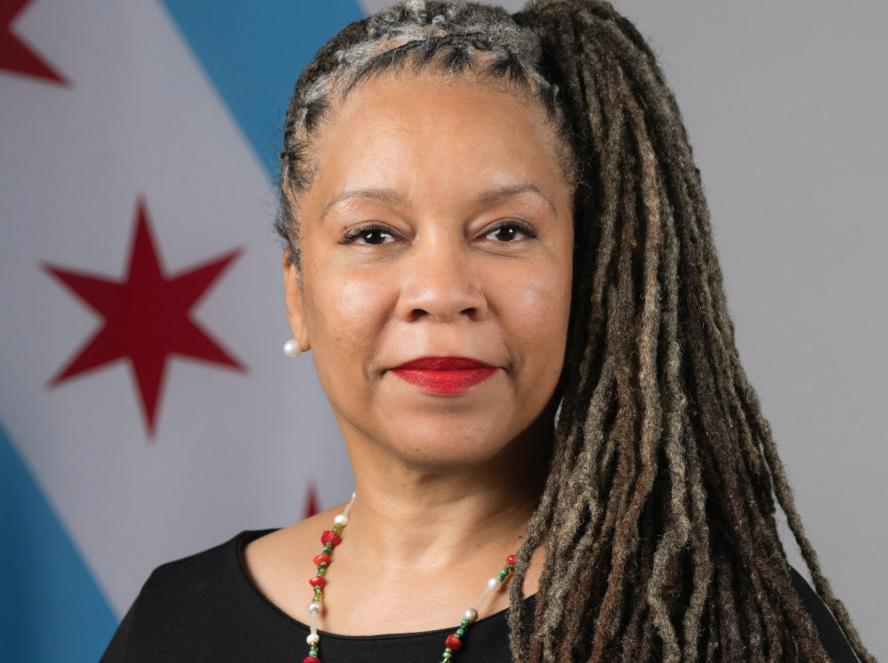
Arewa Najm Ekua. | PROVIDED
tools to help people exist better in spaces.”
The idea has been under discussion for more than a year. Rutues said council members first developed the concept with restorative justice principles in mind, then brought it to a restorative justice conference, where they gathered community feedback on naming, training, and structure. They later workshopped the proposal during six district council meetings before narrowing it into what is now being called the Community Justice Alliance.
The current proposal calls for extensive training before the alliance launches. Rutues said participants could complete 30 to 40 hours of restorative justice instruction, 30 to 40 hours of mediation training, and additional Truth, Racial Healing and Transformation coursework.
Council members hope the alliance would include a mix of stakeholders — ideally a resident, a district council member, and a police officer serving together as mediators. In some cases, depending on comfort levels or case type, other combinations could be used.
Ekua said the council hopes to train a core group of nine to 12 people, including district council members, residents, and officers, so cases can be scheduled based on availability rather than relying on only a few volunteers. Preference would be given to participants who live in the 15th District, she said.
Rutues emphasized the alliance would not replace existing oversight agencies such as the Civilian Office of Police Accountability, known as COPA. Instead, he said, it could provide an alternative avenue for less serious concerns.
“We’re not trying to handle any issues or calls where COPA should be involved,” Rutues said. “We want to handle very low-level considerations.”
He cited examples such as residents who feel they were spoken to disrespectfully during a traffic stop or police encounter, but whose complaints may not warrant a lengthy formal process.
In those cases, Rutues said, the alliance could bring together the resident and officer for a restorative conversation that clarifies what happened and, ideally, builds a better relationship afterward.
The proposal still faces hurdles. Council members said support from the Chicago Police Department leadership, including the superintendent, may be necessary. Legal issues and possible union rules also may need to be addressed. They said they are consulting reform advocates and practitioners, including attorney Marcia Thompson, who has experience in mediation and police accountability work.
At present, no formal budget is attached to the initiative. Organizers said they are seeking donated training resources and may eventually pursue stipends, philanthropy, or support through the Community Commission for Public Safety and Accountability.
Even in its early stage, the idea has drawn outside interest. Ekua said a community member with fellowship experience in Ireland told the council that organizations there are pursuing similar models and may be interested in exchanging ideas.
For Rutues and Ekua, the proposal is about more than conflict resolution. It is also about showing that communities can help shape public safety systems themselves.
“This endeavor is new,” Ekua said. “District councils are only three years in. We may be the first district creating an initiative because that is what was called for in the ordinance.”
Backflow Valve Grant Program Begins
The Westside Health Authority’s Backflow Valve Grant Program is officially getting underway. The first home assessments were scheduled for April 27.
The program is designed to help eligible homeowners in Illinois’ 8th Congressional District protect their homes from basement flooding and sewage backups through the installation of backwater valves.
Residents interested in the grant or seeking more information are encouraged to call Westside Health Authority at (773) 378-1878, where inquiries will be routed through the main office.
The grant initiative follows the recent announcement of $1 million in available funding for backwater valve installations in the district, which includes Austin and several west suburban communities. To qualify, applicants must meet several requirements. Eligible homeowners must live in the home and reside within Illinois’ 8th District. Applicants must also have a household income at or below 100% of the Chicago Area Median Income. In addition, applicants must provide proof of homeownership, such as a property tax bill or mortgage statement.
The property must be a single-family home or two-flat located in a floodprone area. Homes that are condemned, uninhabitable, or in foreclosure are not eligible.
Westside Health Authority officials said the initial home assessments will help determine eligibility and evaluate the feasibility of installation at participating properties.
Backwater valves are mechanical devices installed in a home’s sewer line that help prevent sewage from backing up into basements during heavy rain events or overwhelmed sewer conditions.
For many West Side and west suburban homeowners who have repeatedly dealt with flooding, the program could provide both financial relief and long-term peace of mind.
Residents are encouraged to call soon, as interest is expected to be high.
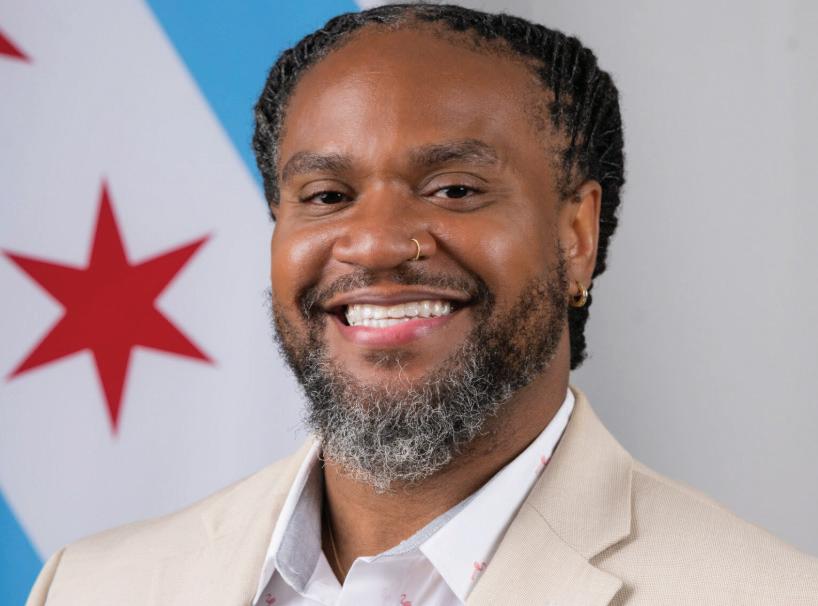
Deondre Rutues | PROVIDED
Two Dozen Cited as Chicago Public Schools’ Lunchroom Workers Rally for More Pay
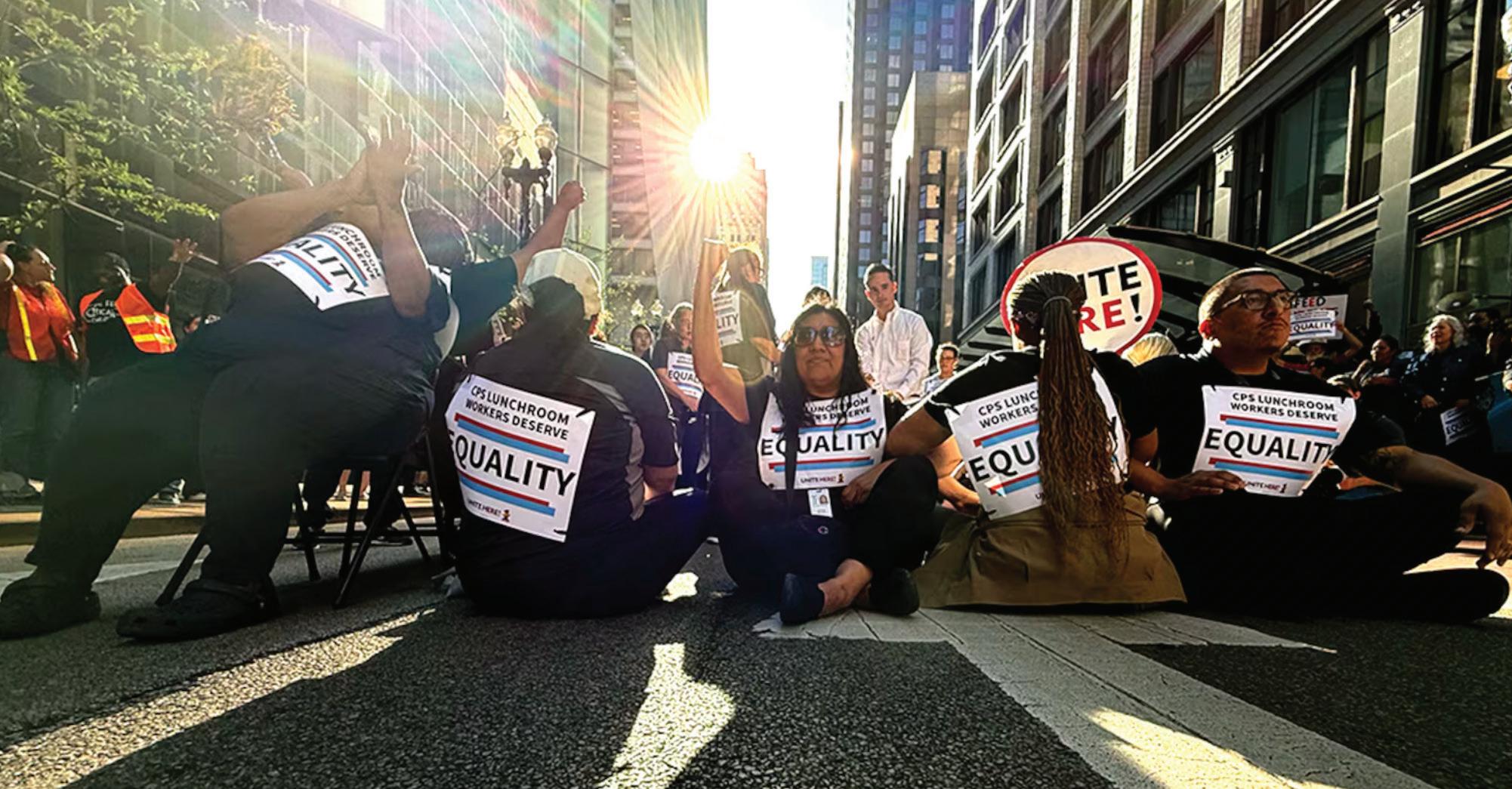
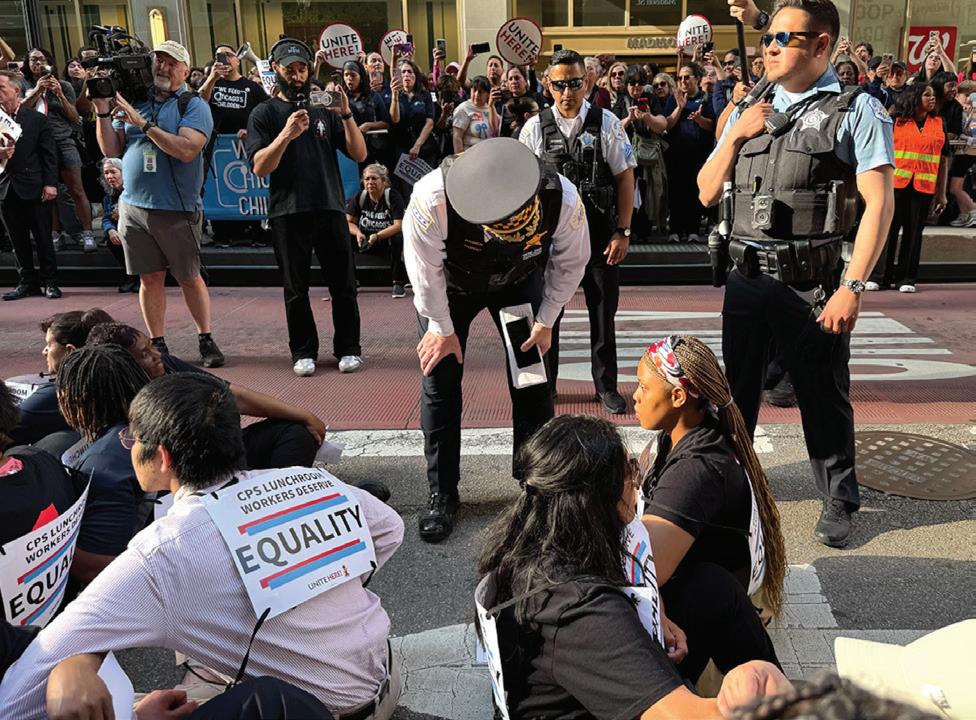
Two dozen Chicago Public Schools’ lunchroom workers and their supporters were cited for obstructing traffic on April 23 during a rally to draw attention to protracted negotiations over pay and staffing levels.
UNITE HERE Local 1, the union representing roughly 1,700 CPS lunchroom workers, planned the rally and civil disobedience outside district headquarters as negotiations over a new union contract have surpassed 10 months. Now, both sides have agreed to get a federal mediator involved, CPS and the union confirmed.
The rally attracted more than 200 participants.
The group first gathered at Daley Plaza around 4 p.m. and chanted slogans such as, “Overworked and underpaid, that’s how your kids’ food gets made.”
By 5 p.m., the large group walked a couple of blocks to CPS headquarters at 42 W. Madison St., where people held up signs,
played drums, and chanted, filling a bus shelter and the sidewalk outside the building. Pedestrians looked on as roughly two dozen people set up metal chairs in the middle of Madison Street and sat down.
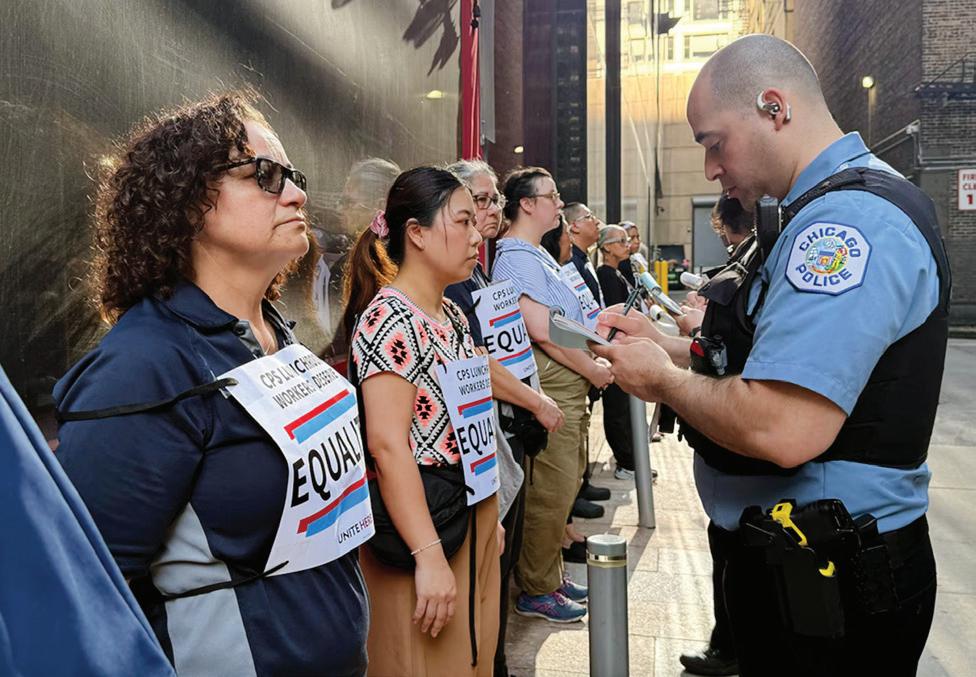
After a few minutes, Chicago Police ushered each person away with their hands behind their backs behind a nearby building, where police wrote tickets.
A Chicago police officer writes tickets to protesters for obstructing traffic during a rally for lunchroom workers. (Reema Amin / Chalkbeat)
One of the people cited was Stephanie Martin, a lunchroom manager who has worked in CPS schools for 27 years. She said she earns about $1,200 every two weeks. After she pays her bills, she typically has nothing left. As of Thursday, she had 10 cents in her bank account, she said.
“I’m not hopeful about what CPS is going to do,” she said.
The contract negotiations are happening as CPS faces a possible $520 million deficit next school year. In a statement, the district said it values its lunchroom employees and is com-
mitted to reaching “a fair and sustainable deal.”
About 60% of lunchroom workers work fewer than eight hours a day and are not full-time, according to CPS.
UNITE HERE has said its workers are the lowest-paid in CPS, and that starting pay for its lunchroom attendants is just under $17 an hour, about $4 less than starting pay for custodians. The union is pushing for hourly pay that at least matches that of custodial workers.
The union is also trying to beef up staffing. A WBEZ analysis found the district has 20% fewer lunchroom workers compared with five years ago. About half of the lunchroom workers surveyed by the union last fall said they have trouble paying for basic needs, and about one-fifth said they have visited food banks.
During her daily six-hour shift, Laura Najera, a lunchroom attendant at Ella Flagg Young Elementary School, prepares bags of breakfast and other snacks for the kids. Sometimes she helps take out trash or does the dishes if other employees are out, even though that’s not in her job duties, she said.
In order to make ends meet, Najera said she works at a dog shelter some days after she gets off work at school. Some weeks, she only has about $20 left for groceries after paying her other bills, and buys instant noodles for meals.
“I do (the job) because I like being with the kids,” said Najera, who attended Thursday’s rally. “But obviously, it would be a lot more helpful if I could also live off of that paycheck.”
Reema Amin is a reporter covering Chicago Public Schools. Contact Reema at ramin@chalkbeat.org.
Lunchroom workers and their union supporters protest the lack of a contract outside of Chicago Board of Education headquarters
Thursday, April 23, 2026. | PHOTOS BY REEMA AMIN / CHALKBEAT
The West Side Mourns Community Leader Barbara Deer
Deer was found fatally shot along with her son, Kaleb, on April 14
BY STAFF
The Culture
Barbara Deer, a North Lawndale native, public servant, advocate, and the widow of late Cook County Commissioner Dennis Deer, was remembered this week by family, friends, and civic leaders.
Deer, 51, was found fatally shot April 14 inside a home in the 3500 block of West Arthington Street, according to Chicago police. Her son, Kaleb Deer, 23, was also found dead inside the residence. The Cook County Medical Examiner’s Office ruled the deaths a murder-suicide.
Funeral arrangements for Barbara and Kaleb Deer were held this week at United Baptist Church on Roosevelt Road, where mourners gathered for public visitation and homegoing services before burial at Oak Ridge Cemetery in Hillside.
For many across the West Side, the deaths represented not only a family tragedy, but the loss of a woman deeply woven into civic and community life.
Barbara Deer was widely known as a steady
presence beside her late husband, Commissioner Dennis Deer (2nd), who died in 2024 after health complications. But those who knew her said she was a force in her own right — committed to education, public health, social justice, and neighborhood uplift.
Chicago City Clerk Anna M. Valencia described Deer as someone whose advocacy and commitment helped strengthen families and communities across the city.
“The Deer family’s legacy is one of service, care, and an unwavering commitment to others,” Valencia said in a public statement following the tragedy.
Mayor Brandon Johnson also mourned the loss, saying Barbara and Dennis Deer “put their full hearts into reducing gun violence in their community” and devoted themselves to helping others.
Those sentiments echoed what many residents already knew.
Dennis Deer built a public profile as a mental health professional, anti-violence advocate, and county commissioner representing portions of the West and South sides. Through much of that journey, Barbara Deer was seen as both partner and independent leader, helping sustain charitable efforts, supporting youth initiatives, and maintaining close ties to North Lawndale and neighboring communities.
Her death stunned many because of the family’s reputation for service and stability.
State Rep. La Shawn Ford, a close family friend, told reporters earlier this month that the Deers were “the model Black family in the community” and said their loss would create a void felt on multiple levels.
The tragedy also renewed conversation around trauma, mental health, and violence in communities already carrying deep scars. For residents who knew the family’s longstanding anti-violence work, the circumstances were especially painful.
In the days since, condolences poured in from elected officials, educators, faith leaders, and neighborhood organizations. Social media
tributes described Barbara Deer as gracious, compassionate, and deeply committed to helping others succeed.
Friends said she had a gift for making people feel seen and welcomed. Others remembered her as a woman who carried herself with elegance and warmth, but also with seriousness about the needs of the community.
Though public attention often focused on the Deer family’s political and civic role, mourners this week centered on something more personal—her roles as a mother, wife, friend, and daughter whose life touched many beyond headlines or titles.
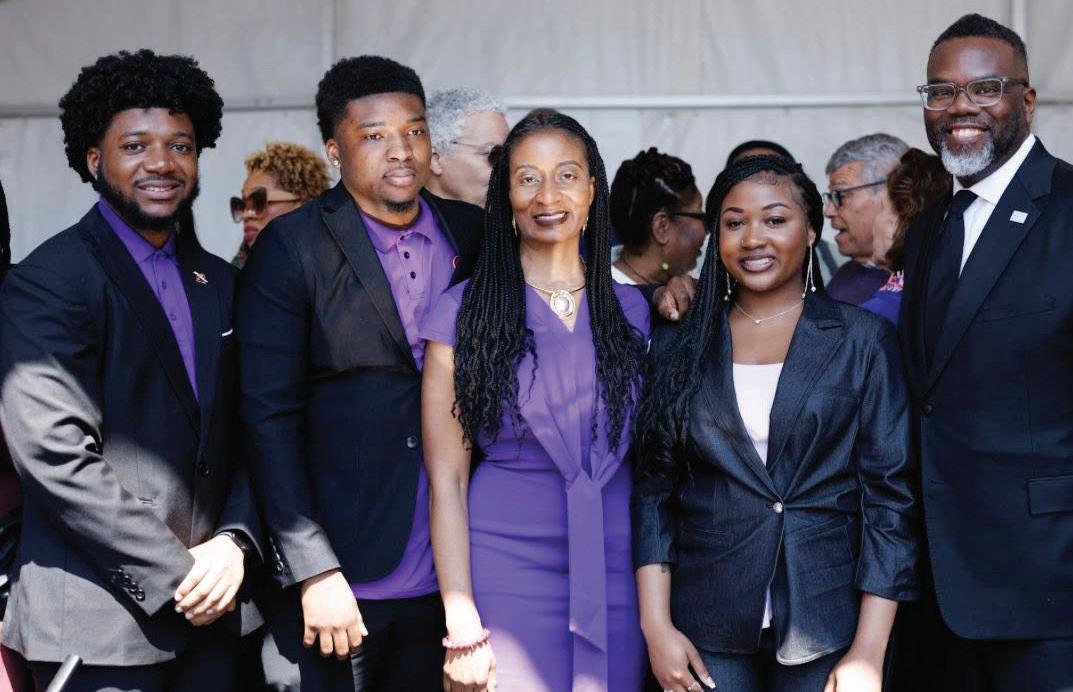
Kanaan Deer, Kaleb Deer, Barbara Deer, Trinity Deer, and Mayor Brandon Johnson seen at an event. | PROVIDED