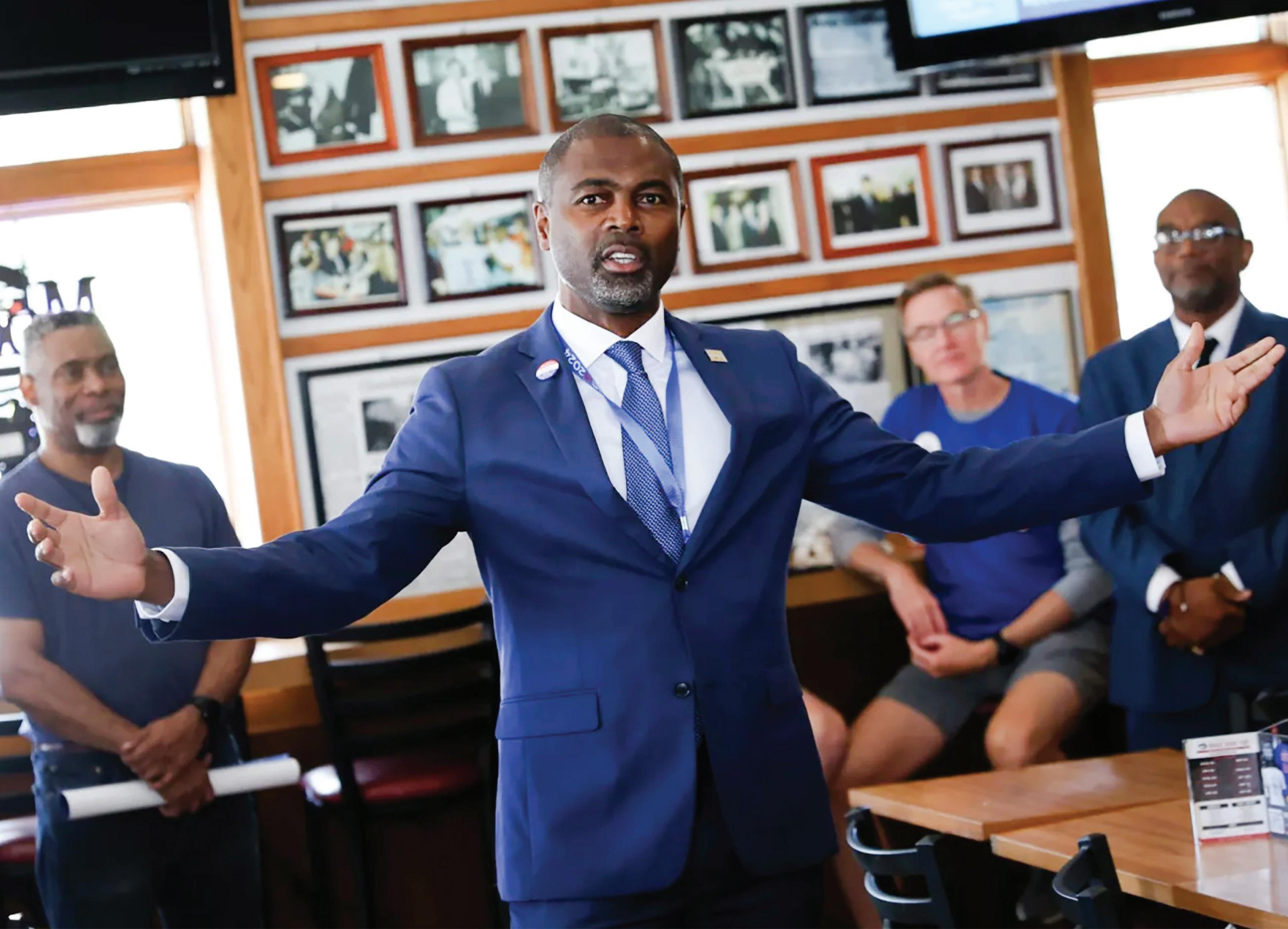
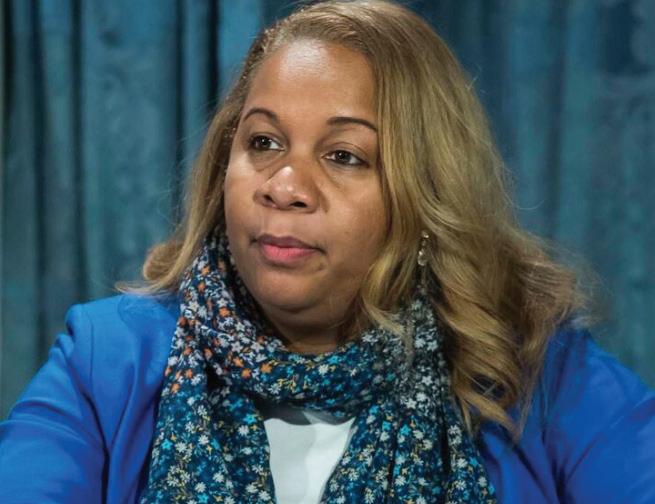
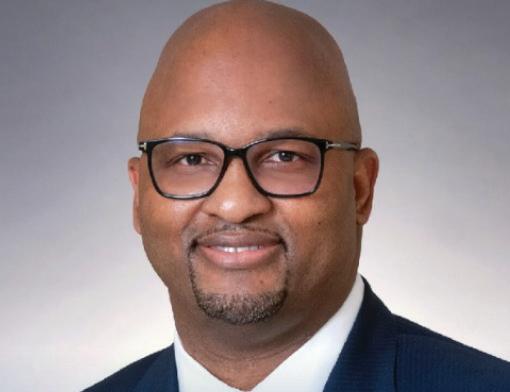
State Rep. La Shawn Ford speaks during a fundraising luncheon at the Billy Goat Tavern on day two of the Democratic National Convention in Chicago on Tuesday, Aug. 20, 2024. | TALIA SPRAGUE/BLOCK CLUB CHICAGO
The Austin Voice Newspaper Returns To Print, 9 Months After Founder’s Death
The
weekly newspaper
on hiatus after editor
went
Brad Cummings died in a fire. Isaac Lewis, publisher of North Lawndale Community News, is bringing it back on a twice-monthly schedule
By MICHAEL LIPTROT Block Club Chicago
A40-year-old West Side newspaper has returned from a hiatus after the death of its founder this summer.
The Austin Voice Newspaper returned in mid-March with its first issue in nine months after founder and editor Brad Cummings died in an apartment fire in June. The paper, founded in 1985 as a weekly, will publish twice a month.
Cummings co-founded the Austin newspaper alongside publisher Isaac Jones. The newspaper was established when locally produced West Side news was scarce.
The Austin Voice was one of the first local publications to make West Side readers aware of the AIDS epidemic, and it helped found the Austin AIDS Prevention Coalition, which became the Westside HIV/AIDS Regional Planning Council, according to Cummings’ obituary published in the Voice.
A related publication, the Garfield-Lawndale Voice, started in 2005. The publications grew to be known as the Voice Newspapers.
Isaac Lewis, founder and publisher of North Lawndale Community News, now leads the Austin Voice. He said only the Austin Voice is returning to publication as of now, though he did not rule out a future revival of the Garfield-Lawndale Voice.
Lewis also publishes North Lawndale Community News and plans for that paper and the Austin Voice to cover the West Side. The Austin Voice will report on Austin and Garfield Park, and the North Lawndale publication will cover Garfield Park in addition to North Lawndale, he said.
“I know what it is like to start a paper and
have it continue,” Lewis said, referring to continuing Cummings’ legacy. “In communities like ours, you have people who are survivors and thrivers amongst the lack of resources and adversity. … Doing community news, you develop relationships with the community, learn their stories, and learn the history of a community.”
Lewis, who lives in North Lawndale, was born in East Garfield Park and moved between West Side neighborhoods throughout his childhood. He started North Lawndale Community News in 1999 as a monthly publication, and it grew to be a weekly.
“The newspaper was a tool that became an opportunity, because I wanted to help improve the community where I live and start a business,” Lewis said. “I wanted to start a
way to connect people to resources; that’s the basis of the mission of North Lawndale Community News.”
Lewis said he and Cummings were regularly in contact while covering the West Side. He said he saw Cummings at an event shortly before his death.
Cummings died in a June 26 blaze at a three-story apartment building in the 5200 block of West North Avenue, where he lived across the street from the Voice Newspapers office. Ald. Emma Mitts (37th) told Block Club the fire was started intentionally as part of a domestic violence incident.
Lewis said he grew concerned in the months after production of the Voice newspapers halted. At the time of Cummings’ death, the company owed about $65,000 in production and facilities expenses, according to Jones, who launched a fundraising campaign for the paper. Lewis said the newspaper’s debts were cleared when he took ownership, citing community efforts and support for Cummings’ family.
Readers can find the newly revived paper online and sold at one of 327 sites from North Avenue to Cermak Road, Lewis said.
The upcoming issue will largely focus on the 7th Congressional District primary election, he said. Learn more at the newspaper’s website: thevoicenewspapers.blogspot.com
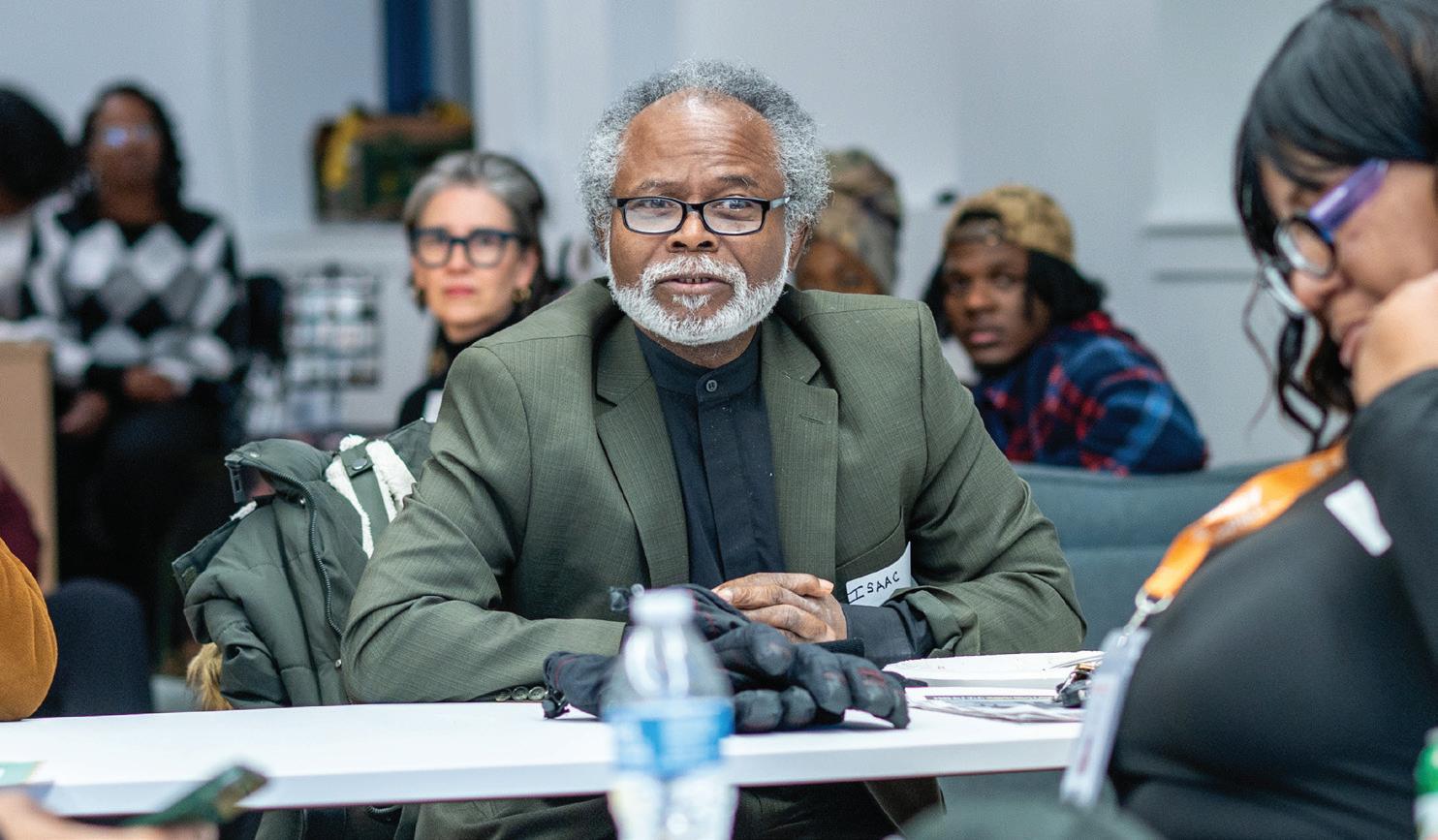
Isaac Lewis, founder and publisher of the North Lawndale Community News, at an event at the Aspire Center for Workforce Innovation in Austin last year. | PROVIDED
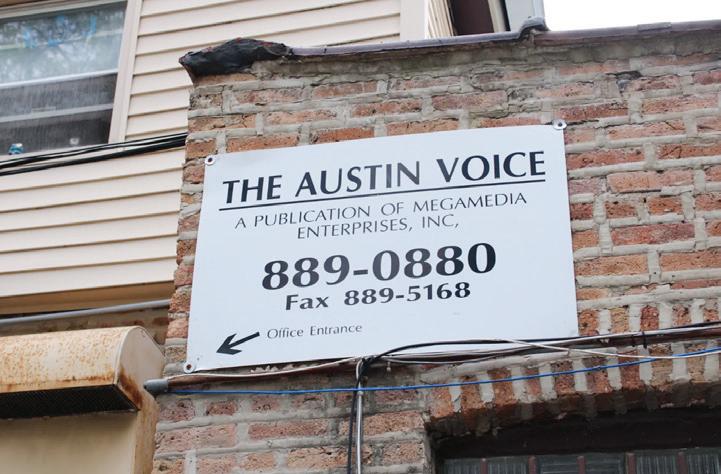
Brad Cummings started the Austin Voice newspaper in the 1980's, located across the street from the fire. | NOAH ASIMOW/BLOCK CLUB CHICAGO
West Side’s Peace Runners Open Garfield Park Studio, Wellness Center
Peace Runners 773 started in 2020 and has expanded with more than 1,000 runners traveling throughout the West Side and participating in wellness programs
By MICHAEL LIPTROT
Block Club Chicago
AWest Side fitness organization has opened its first studio in Garfield Park, where it plans to host nutrition workshops and health programs tailored toward youths and older neighbors alike.
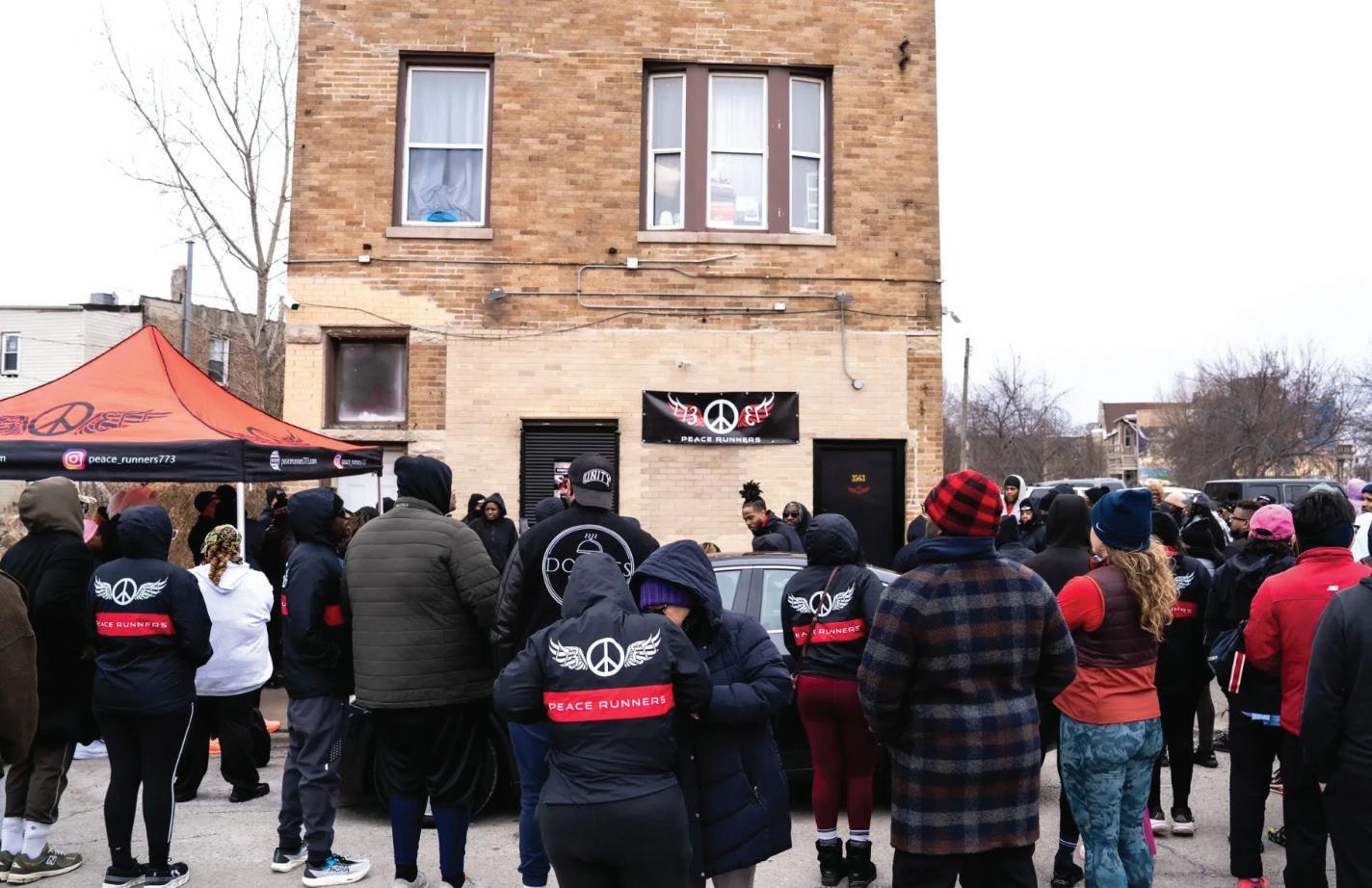
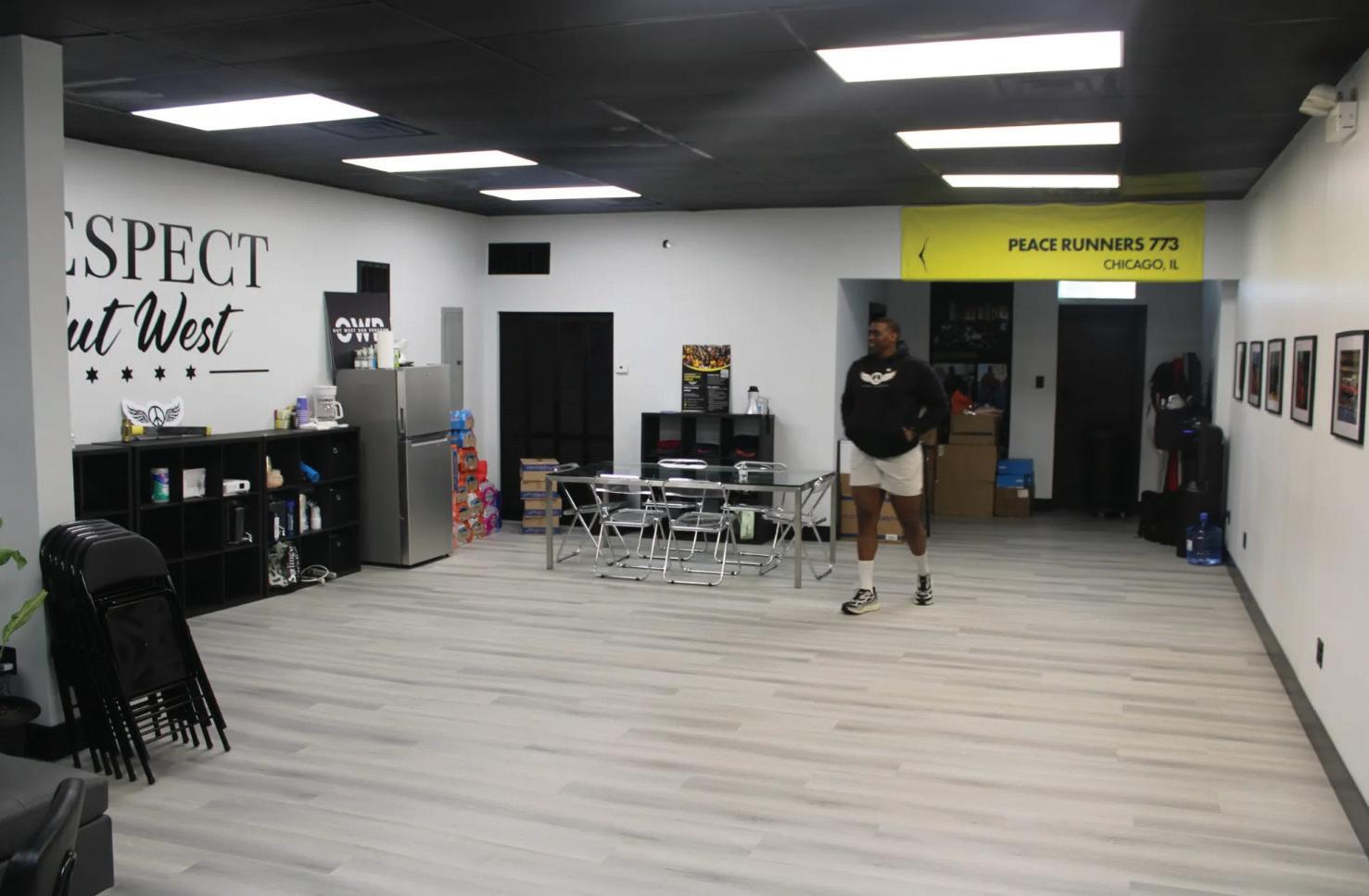
Nonprofit Peace Runners 773 opened its Wellness Headquarters last month at 3563 W. Fifth Ave. in Garfield Park. Since 2020, the group has organized races, weekly runs and walks, youth and senior programs, and community workouts. The new studio will house Peace Runners’ nutrition workshops, mental health programs, classes for older people, and youth strength training, co-founder Jackie Hoffman said.
“If you took away the ‘run’ from Peace Runners, we’ll still be an asset to the community. From the mentorship, nutrition, mental health workshops — those pieces and elements of what we do are a community need,” Hoffman said. “If we’re talking about holistic health and wellness, closing the life expectancy gap from a community-led approach, we have everything we need as a people to be able to make sure of that.”
program aimed at runners 55 and older, offering walks and fitness classes that will be hosted at its new studio. Its youth programs include a run club, yoga, nutrition classes, and strength training, all taught at the studio.
“I want my young people to see the space and hear about the disparities. I want them to be educated about the life expectancy gap,” Hoffman said. “If we don’t change [the disparities], they are going to be the ones that spark that change.”
Hoffman, born and raised in Garfield Park, played college football at Bethune-Cookman University in Florida and had a workout with
included challenging her to walk a mile a day. Hoffman said his mother lost 60 pounds and eventually no longer needed those medications. He said her success inspired him to found Peace Runners with his wife, Tiffany Hoffman, and friend Major Clay. The trio organized a 5K in 2020 that had 19 participants. Turnout for the 5K — now an annual event — grew to 565 last year, Jackie Hoffman said.
| MICHAEL LIPTROT/BLOCK
Members of Peace Runners 773 ran more than 75,000 miles across West Side neighborhoods last year through a mix of weekly runs and dedicated race training. More than 1,500 Peace Runners ran in 5Ks, about 200 completed half-marathons and 51 runners ran in the Chicago Marathon last year, in addition to other races.
Youth and older runners are the target demographics for the group’s programs, Hoffman said. The group leads a Young At Heart
the Chicago Bears before starting a career in law enforcement.
In 2020, Hoffman’s mother experienced medical conditions, including cardiovascular disease and high blood pressure, and required 13 medications. Hoffman said her doctors recommended she become more active, and he realized he needed to get more involved in helping his mother improve her health. This
Hoffman said the organization’s name is derived from the peace and mental clarity achieved when running, and it represents the peaceful “safety net” the group creates when running throughout the West Side.
“You create this space that’s inviting for people to come outside their doors to actually say ‘Yes, I’m from the community. … I don’t feel afraid about what the news says about the West Side,’” Hoffman said, describing the group as a third space for its members.
Hoffman said the Peace Runners aim to counter negative perceptions of the West Side with regular Saturday run sessions that send up to 100 runners from Garfield Park throughout the community. For Hoffman, opening a wellness studio is the next step toward establishing a promising foothold on the West Side.
“We can reclaim a space within our community. That was huge for me, as a Black man,” Hoffman said. “When you go to gas stations, and there’s nothing Black-owned or no Black
spaces. … It’s more than just the physical space. It’s also the motivation, and it provides hope, that good feeling that something good is happening in the community.”
Mattie Buckley, 64, is an Austin resident and a friend of Hoffman’s mother. Buckley noticed on social media that Hoffman’s mother was losing weight and reached out to ask how she was getting in shape. A two-time cancer survivor, Buckley said she struggled with her weight through chemotherapy and radiation treatments for years. She began walking with Hoffman’s mother in 2021 and lost 50 pounds that year. By 2022, she completed her first 5K before training for a half-marathon, completing the 13.1-mile race in 2023.
Buckley, who has completed four half-marathons, became a certified run coach and leads the Young At Heart group as program coordinator. She is training to complete her first full marathon. For anyone who may think they are too out of shape or it’s too late to become active, Buckley said it’s never too late for a challenge.
“If you cannot run, Peace Runners is still a place for them. It’s a place to get as healthy as possible, and also to connect with other people who want to be healthy,” Buckley said. “I have plans. Even though I’ve had cancer twice, I have plans to live a long time. … My goal is not just to live but to be as healthy as possible, keep learning, and keep being able to do everything I can.”
To learn more about Peace Runner 773, visit the group’s website at peacerunners773.com/ young-at-hearts
Peace Runners 773, a West Side health equity nonprofit, opened their Wellness Headquarters last week at 3563 W. 5th Ave. in Garfield Park. | PROVIDED
Peace Runners 773, a West Side health equity nonprofit, opened their Wellness Headquarters last week at 3563 W. 5th Ave. in Garfield Park.
CLUB CHICAGO
By REEMA AMIN & MILA KOUMPILOVA Chalkbeat Chicago
Three finalists — including interim CEO Macquline King — are vying to serve as the next chief executive of Chicago Public Schools, the school board announced on March 13.
In addition to King, the finalists are Sito Narcisse, former superintendent of East Baton Rouge Parish School System in Louisiana, and Meisha Porter, former chancellor of New York City schools.
Each of the candidates will interview with Mayor Brandon Johnson and participate in a “candidate community engagement” panel, according to a press release from the board office. After that, the board will hold a special meeting to discuss the finalists and vote.
In a statement, Johnson said he will meet with candidates later this month and wants to hear feedback from the community panel.
“This is a critical time for our school district and for our nation, and I take this responsibility seriously as we work to ensure the next leader reflects the values of our city and is prepared to meet the needs of our students, families, and educators,” Johnson said.
The board office did not say if board members will do additional interviews with the candidates.
The school board set out last spring to find a new top leader after a previous board appointed by Johnson fired then CEO Pedro Martinez without cause following a clash over district finances. The search has been bumpy at times: As it neared a planned December completion, one contender, Denver Superintendent Alex Marrero, pulled out after his and Porter’s names were leaked to the press. The district search firm, Alma Consulting Group, parted ways with CPS last month, and a group of school board members released a statement charging Johnson with meddling in the process.
King’s inclusion on the list of candidates is a surprise: The board declined to advance King to a previous pool of finalists last fall.
Chalkbeat reported last week that the board had again decided on multiple finalists. Adding King as a finalist was a more recent decision that shows the board is “listening to the community,” said Norma Rios-Sierra, an appointed board member who is on the CEO search committee.
“She has a lot of support from a lot of community leaders, and she had some time to demonstrate how she works,” Rios-Sierra said. King, a former principal and City Hall education policy advisor under former Mayor Lori Lightfoot, and Johnson have led the district since last June, including through a budget
Three Finalists Named in Search for Chicago Public Schools Chief
Interim CEO Macquline King, Sito Narcisse, and Meisha Porter are vying to be CPS CEO
fight that put her at odds with the mayor’s office. The principals’ union has praised her leadership so far.
Some organizations, including the West Side branch of the NAACP, and a group of elected board members who originally voted against hiring her last year, have called for her to remain in her post until a fully elected school board can pick the next Chicago schools chief when it takes office in January 2027.
King began her CPS teaching career in 1994 and eventually became a principal at two schools, most recently at Courtenay Language Arts Center in Uptown, which involved a difficult merger with another school.
King’s personnel records drew some scrutiny before she was hired as the interim CEO.
The records, which did not include any formal discipline, had two memos from district officials about how she should improve her performance. At the time, she told Chalkbeat the criticism was fair but that those directives — centered on findings that she had not immediately reported allegations of abuse and failed to conduct a background check for a volunteer — were the result of understaffing at her school. King couldn’t immediately be reached for comment.
Porter, who was raised in Queens and attended New York City public schools, became the first Black woman to oversee the nation’s largest school system for 10 months in 2021 after her predecessor abruptly resigned. She spent more than two decades rising through
the ranks as a teacher, principal, and high-level administrator who eventually oversaw all schools in the Bronx. She is well-respected in New York City education circles, including by teachers, parents, and administrators. She served as schools chancellor during the pandemic and as the district was beginning to reopen schools. During her short tenure, she oversaw policy pushes under former Mayor Bill de Blasio to eliminate separate gifted and talented classes and a $200 million universal curriculum for schools. Both initiatives were scrapped by de Blasio’s successor, Mayor Eric Adams. Porter was replaced as de Blasio left office.
After leaving the district, Porter became the president and CEO of the Bronx Community Foundation. The foundation, which was set up to help finance other local nonprofits, failed to distribute most of the money it raised from 2019 to 2023 and spent more on consultants and overhead than on charitable giving, according to an investigation by the news organization New York Focus. In 2024, the organization’s board of directors fired Porter.
She most recently was a visiting senior fellow at the Center for Educational Innovation, an organization that works with school leaders and families, according to her LinkedIn. Porter did not immediately respond to a request for comment on Friday.
Narcisse led the East Baton Rouge Parish School System, Louisiana’s second largest, for three years, until January 2024, according to his
LinkedIn profile. The school board voted not to renew his contract at that point, according to local news coverage, though he expressed interest in getting his job back later that year. He has since worked as the managing partner of SJ Apple Consulting Group, a firm he founded that offers consulting services to school districts.
Narcisse focused on expanding preschool, college credit opportunities, and career pathways in East Baton Rouge. During his time there, the district drew headlines and a rebuke from the American Civil Liberties Union after high school students were bused to a “Day of Hope” event billed as a college and career fair. Students reported the event, held at a local church, carried strong religious overtones throughout, and transgender students said they were bullied.
He previously served in top school district administrative posts in Washington, D.C., and Nashville. Narcisse did not immediately respond to a request for comment earlier this month.
Kia Banks, the president of the district’s principals union, had previously said many members wanted a new, fully elected board to pick a permanent CEO early next year, with King remaining at the helm as the district navigates the upcoming budget season. Banks said Friday she is still wary of disruption at a turbulent time for the district, which faces a massive budget deficit and pressure from the Trump administration.
“Stability is always important,” Banks said. “We’ve made a lot of progress under Dr. King. Making a shift with there being so many challenges right now can undo a lot of progress made.”
She said there is no representative from the principals’ union leadership on the community panel that will interview finalists, and she is unsure of the next steps in the search process.
In a statement, Chicago Teachers Union vice president Jackson Potter didn’t address the specific candidates but sought to remind the board of union priorities when choosing a CEO, including someone who would expand Sustainable Community Schools, push back against cuts from the Trump administration, and push Gov. JB Pritzker to increase taxes on the wealthy in order to boost education funding.
Hal Woods, policy director at education advocacy organization Kids First Chicago, said over the yearlong process, parents involved in his organization haven’t wavered in wanting the board to “prioritize someone who is most likely to lead with integrity, who is going to be partnering with families authentically, and who is going to work to improve outcomes from students across the city.”
Meisha Porter Sito Narcisse Macquline King
Kindred Civic Arts Forum Opens Women’s History Month With Cole Arthur Riley Conversation in Austin
Author of Black Liturgies and This Here Flesh reflects on Black interior life, spirituality, and emotional survival during a turbulent political moment
By SHANEL ROMAIN
The Culture
The start of Women’s History Month in Austin opened with a conversation about spirit, memory, emotional life, and the demands of remaining human in difficult times.
On March 1, at the Kehrein Center for the Arts, 5628 W. Washington Blvd., the Kindred Civic Arts Forum — formerly known as the Kehrein Center for the Arts Foundation — hosted bestselling author Cole Arthur Riley for an intimate discussion titled Sustaining Women, Sustaining Lives.
The evening, which also featured performances by musical acts Sam Thousand and Harold Green, brought together residents, artists, and readers for a conversation centered on Black spirituality, interior life, and sustaining oneself in a period marked by political anxiety and social upheaval.
“This dialogue was necessary in this tumultuous period,” said Reesheda Nicole Berry, co-director of Kindred Civic Arts Forum. “We’re seeking in this very peculiar season we are in as a city and a country to stay near to ourselves.” Riley—whose work has gained a national following through essays, prayers, and meditations that connect spirituality with Black emotional life—discussed the origins of her two books and the personal histories behind them.
Her first book, “This Here Flesh,” she said, emerged from family memory.
“It’s the intergenerational account of my grandmother, my father, and myself,” Riley said in an interview after the event. “I combined that with spiritual reflections on dignity, rage, and other things that shape how we live.”
Her second book, “Black Liturgies: On Selfhood,” grew from a digital project she launched
several years ago that paired short reflections with Black literary voices, prayers, letters, and meditations on identity, grief, and belonging.
Riley, 35, who is from Pittsburgh and now lives in Ithaca, New York, said her relationship to spirituality developed outside conventional church structures.
“I wasn’t raised in the church,” she said. “My grandmother was, but she did not have a good experience there and did not raise my father in the church. I was raised with a spiritual conditioning, but not within a specific religious background. My family has a lot of spirituality that is more imprecise.”
That openness, she said, later led her into Christian spaces in college, though she now remains interested in multiple forms of religious expression rather than any fixed tradition.
“I’m curious,” she said. “I’m interested in all kinds of religious expressions.”
For many attendees, that openness — and Riley’s language for Black inward life — was precisely what drew them to the event.
“I’ve heard so much about Cole’s speaking, so in addition to the books, I wanted to experience her for the first time, and it was incredible,” said attendee Tracie D. Hall. “I think she’s one of the most important thinkers and speakers about Black interior life and spirituality.”
Hall said one of the strongest messages she took from the conversation was Riley’s insis-
tence that people resist becoming emotionally numb amid violence and political crisis.
“One thing I took away today is the need to be alive — not just brave, but alive — as we witness what’s happening now,” Hall said. “Whether we’re talking about the war in Palestine, how our neighbors are being disappeared off the street, or movements toward war that make people forget injustices at home, she weaved all this into the notion of Black spirituality and the responsibility as Black people to feel and testify.”
Riley said that after a period of creative exhaustion, she now feels compelled to return to writing with renewed urgency.
“There are seasons where your creativity comes back and seasons where it ebbs and feels hard to access,” she said. “For a while, I was feeling like I couldn’t contribute anything that meant anything. There is so much despair and pain being amplified right now. But after taking a rest, I am ready to engage.”
She said that sense of return is tied less to ambition than to obligation.
“I feel responsible — not as a savior, I don’t believe in changing the world in that sense — but I feel a sense of responsibility with the platform I have to write about things that matter.”
That responsibility, she added, begins with guarding one’s emotional life.
“People should protect their emotional life,” Riley said. “Our situation isn’t entirely unique, but there is a particular kind of despair and fear people are feeling in this season, and a lot of us will be asked to discard our emotions in the name of peacekeeping or civility.”
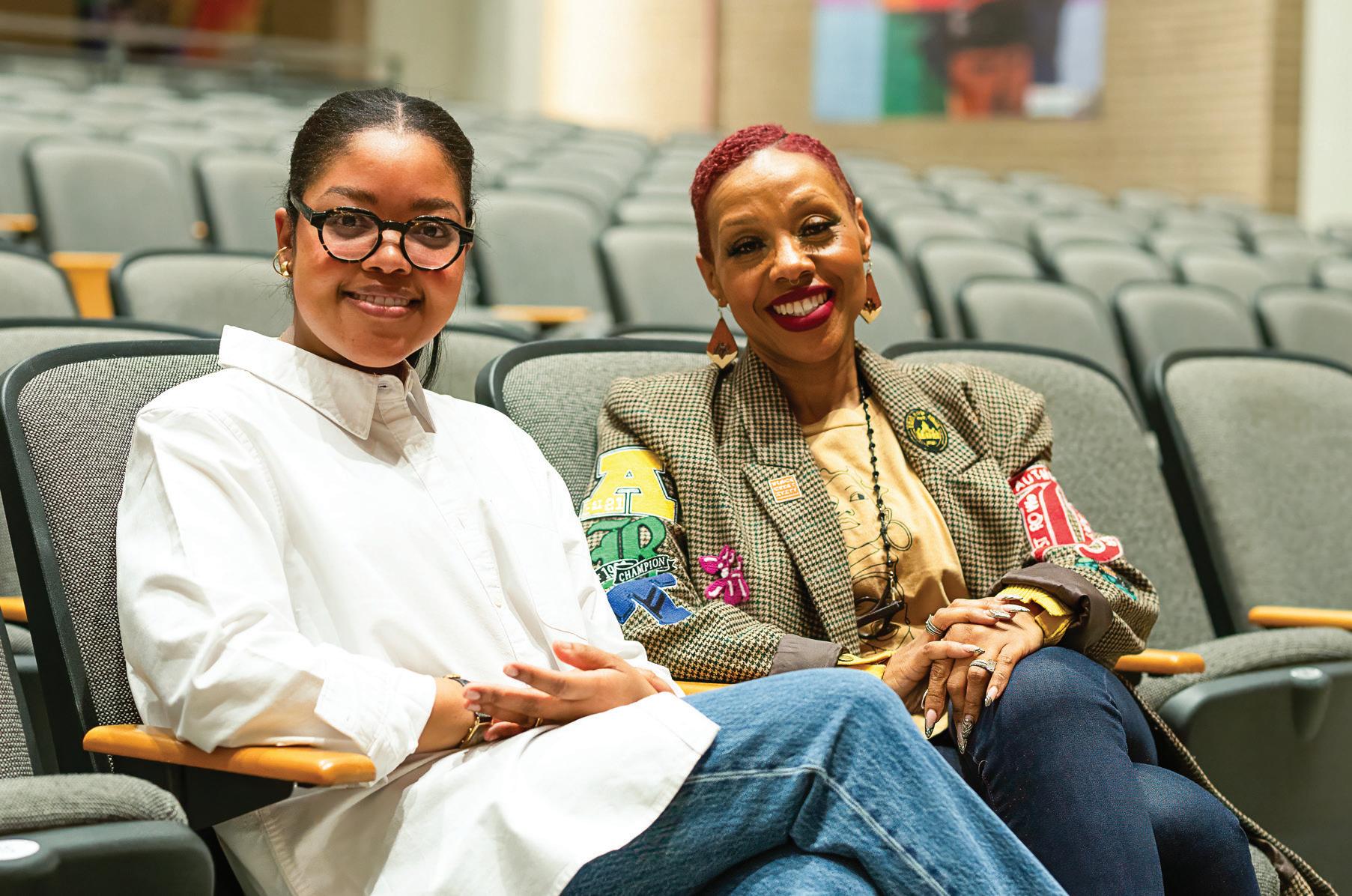
Bestselling author Author Cole Arthur Riley and Reesheda Nicole Berry, the co-director of the Kindred Civic Arts Forum, sat for a conversation exploring Black spirituality and interiority amid difficult times on March 1, the start of Women’s History Month. | SHANEL ROMAIN
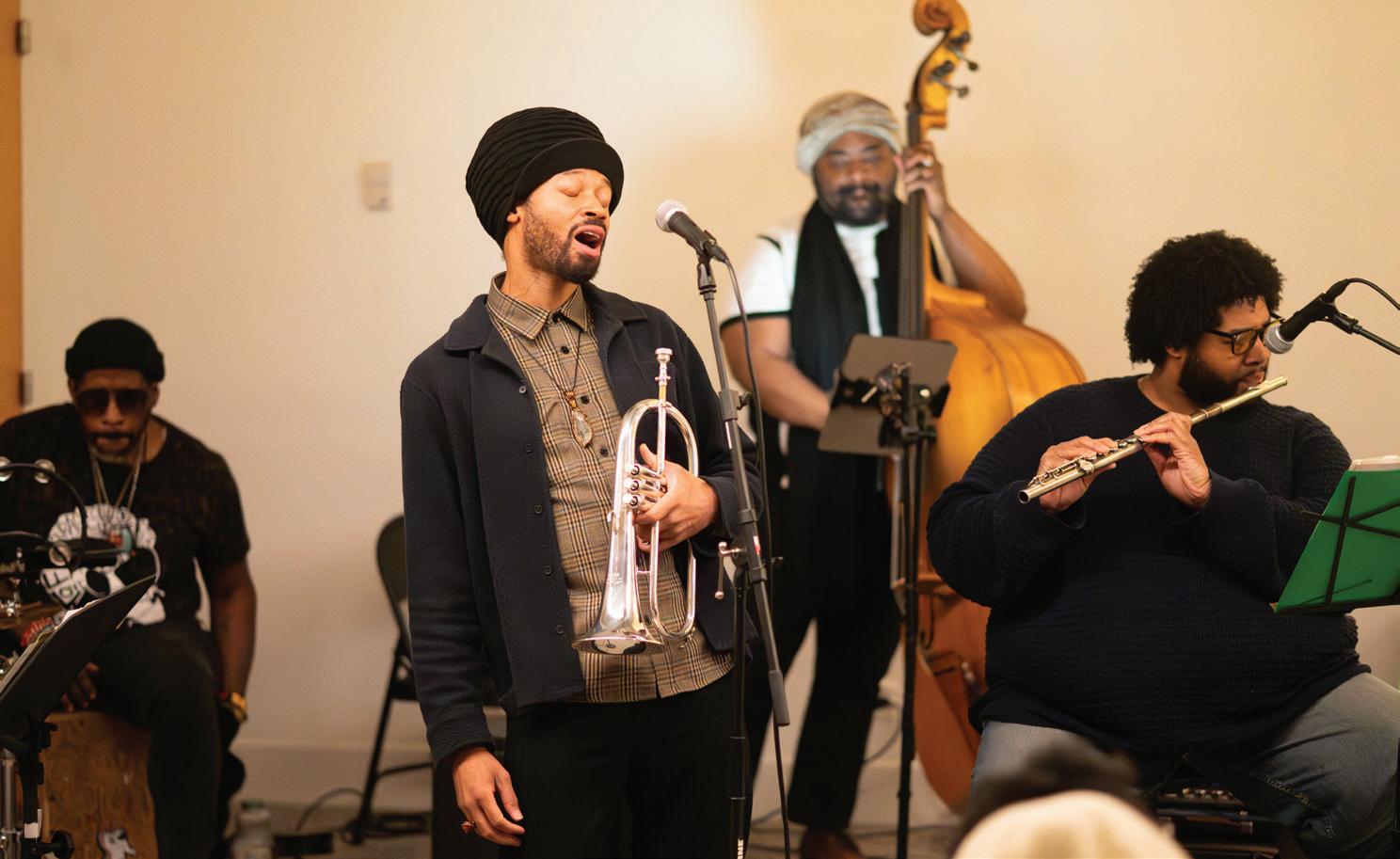
Musical artists Sam Thousand and Harold Green performed at the March 1 event at the Kehrein Center for the Arts, 5628 W. Washington Blvd. in Austin. | SHANEL ROMAIN
COMMUNITY FRAME [ [
United for Better Living closes Black History Month with a community fair, SEIU Local 73 donates $3K to the nonprofit’s pantry
By STAFF
The Culture
Alate-February community resource fair at United for Better Living brought together residents, service providers, and local institutions in Garfield Park for a day focused on healing, support, and practical neighborhood resources.
Held Feb. 28 at United for Better Living’s headquarters, 4540 W. Washington Blvd., the nonprofit’s Community Healing Resource Fair marked the close of Black History Month while highlighting services available to West Side families.
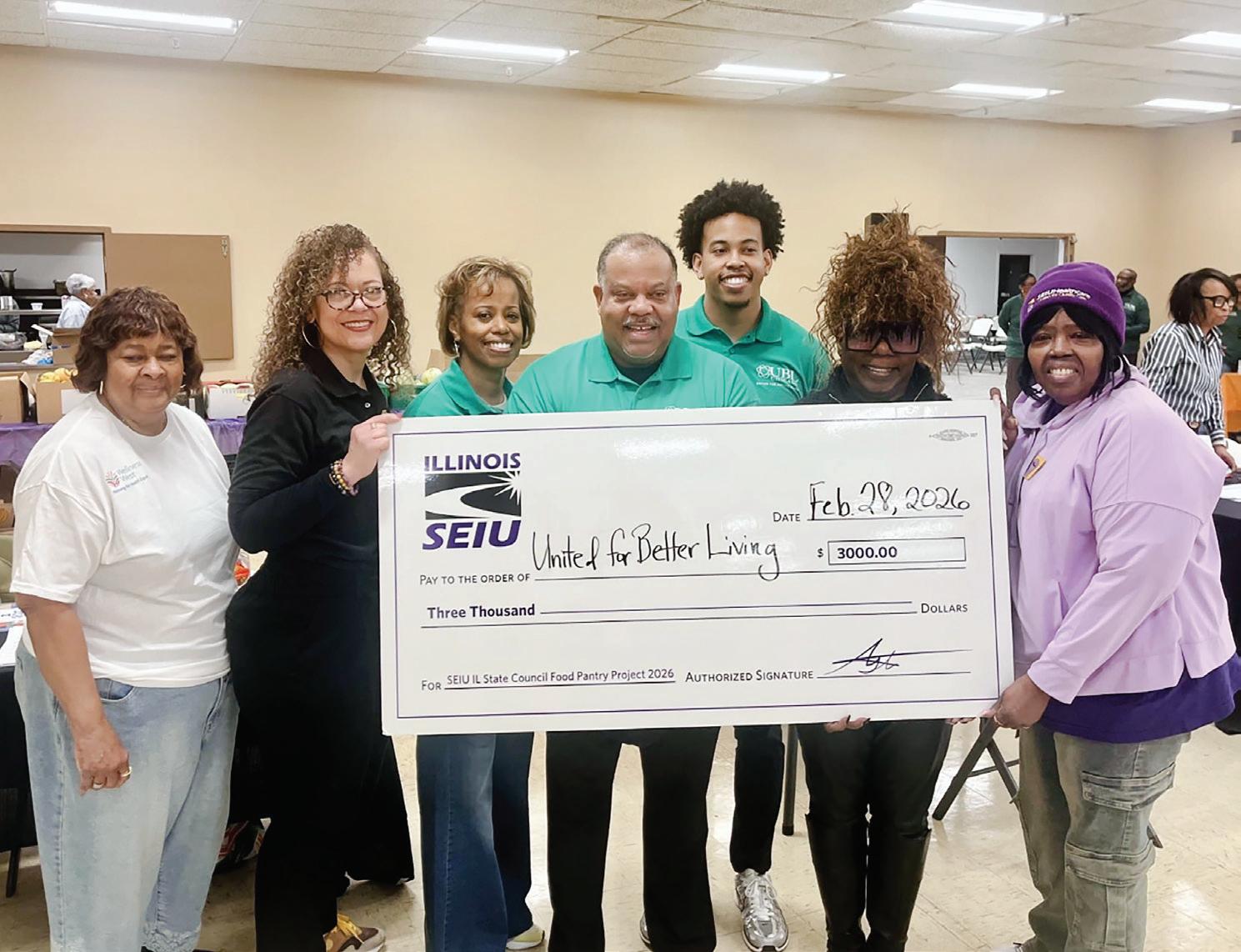
A key moment during the event came when members of SEIU Local 73 presented a $3,000 check to support one of United for Better Living’s two food pantries, helping expand the organization’s ability to serve residents facing food insecurity.
Kathy Allison, director of United for Better Living, said the donation will help sustain a range of services the organization provides year-round.
“We have several programs here — a violence prevention program, GED classes, literacy support, and two food pantries,” Allison said. “One pantry operates every Saturday, and another is held on the second Friday of each month for seniors only. We also have a seniors computer class on Wednesdays, and a school program at 230 N. Kolmar.”
What’s This?
Community Frame captures everyday life on Chicago’s West Side — the moments between headlines. It’s where we share your photos, short stories, and scenes from block parties, youth games, neighborhood meetings, and front-porch conversations, among other scenes that show us simply living. Share your story by emailing us at stories@ourculture.us.
Allison said her long tenure with the organization reflects a deep commitment to the community.
“Bishop Allison brought me off my job and put me here, and I haven’t moved at all,” she said.
The fair featured about a dozen vendors, including small businesses, nonprofits, and financial institutions offering information on health resources, education programs, and financial services.
Among them was Great Lakes Credit
Union, whose outreach team promoted services available through Leaders Network Financial, a community-based credit union branch at 5600 W. Madison St. in Austin.
Reggie Little, a business development specialist with Great Lakes Credit Union, said events like the fair are an important way to connect residents with financial tools they may not realize are available.
“We’re trying to get out to events like this on weekends, partnering with local pastors, getting congregations involved, spreading the word, and giving people opportunities to learn about services they may not know about,” Little said.
March 28 gathering at BUILD will focus on healing, accountability, leadership, and breaking cycles of harm
Young people, educators, organizers, and community members will gather later this month in Austin for Circle Up: Youth Leading the Way to Justice by Breaking Cycles of Harm, a restorative justice youth conference designed to center healing, accountability, and transformation.
The conference is scheduled for Saturday, March 28, from 11 a.m. to 3 p.m. at BUILD Chicago. Doors open at 10:30 a.m.
Organizers say the event was shaped by a youth planning committee and is intended to create space for young leaders and community members to explore how restorative justice practices can strengthen neighborhoods and interrupt cycles of harm. Programming will include storytelling, breakout sessions, guest speakers, leadership development opportunities, and conversations about career pathways connected to restorative justice.
Participants will also learn about peace circles, restorative justice courts and other approaches aimed at building accountability outside punitive systems. Free lunch will be provided.
The event is being organized with support from Austin Coming Together and several West Side partner organizations, including The Culture.
Registration is available at bit.ly/ rjaustin
Because Great Lakes operates as a nonprofit financial institution, Little said its business model differs from many traditional banks.
“Being a nonprofit, the money we make goes back into our members,” he said. “Any profits we make go back into our products, which is why we don’t charge for things like cashier’s checks.”
Organizers said the fair reflected United for Better Living’s broader mission of creating spaces where residents can access practical support while strengthening neighborhood connections.
Kathy Allison, Cynthia Turnquest, Dr. Chandra Whitley, Bishop David Todd Whitley, Jonathan Whitley, Jaquie Algee, and Deborah Murphy pose with a $3,000 check SEIU Local 73 donated to United for Better Living’s food pantry on Feb. 28. | SHANEL ROMAIN
WEST SIDE LIVES [ [ Catherine Jones, 67, is still advocating for students after all these years
By MICHAEL ROMAIN
The Culture
Catherine Jones, 67, is the mother of two adult sons, but she remains actively involved in West Side public schools. A longtime community representative on Frederick Douglass Academy High School’s Local School Council (LSC), she is currently running for reelection to that seat while also running, for the first time, to serve as a community representative for Austin College & Career Academy High School, 231 N. Pine Ave.
On Feb. 23, the high school hosted a forum for five candidates vying for two community representative seats on the school’s LSC. Jones was the only community representative candidate who attended. She briefly spoke about her long personal history of education advocacy.
My son graduated from Austin High in 2000 before going on to college. I’ve always advocated for both Douglass and Austin. We need to advocate for more resources.
I’ve been involved in local education since 1989, when I was PTA president at George Tilton Elementary in the Garfield Park area, where my son graduated. Then I met James Dean, local school council coordinator, and I just got involved. When I moved to Austin, I stayed involved. They always ask me, ‘Why are you still involved? Are you crazy?’ But who else is speaking up for us? A lot of the elected officials say one thing, but are they doing it?
At this point, I don’t have nothing in the ball game. I don’t get paid for nothing I do. Everything I do is volunteer. If we don’t speak up for our community, who else is going to speak up? We need to be
for real. God is not mocked. Whatever a man soweth, he reaps. We already got a crazy nut in the White House. Do we have to act like him, too? We got to come together.
All these West Side schools around are low in enrollment. Back in the day, I can tell you how many kids were in this school. They’re leaving now. We’ve lost thousands of students since the pandemic. We need something in place for families who want to come back and want to be challenged. These students need to be challenged—if not, the streets will take them.
But that’s not to say these schools don’t have anything. If you’re on the outside looking in, you don’t know what we have. People should come to meetings to see what we have in these schools and how they can improve.
The Culture Launches Podcast Rooted in West Side Voices
New weekly show expands local storytelling across the I-290 corridor
TBy STAFF The Culture
he Culture is expanding its local storytelling with the launch of The Culture Podcast, a new weekly audio program designed to deepen conversations about the people, places, and issues shaping communities along Chicago’s I-290 corridor and nearby west suburbs.
Co-hosted by Michael Romain, founder and publisher of The Culture, and Zoe Nellum, the podcast builds on the publication’s mission of strengthening the local media ecosystem by creating another space where residents can hear their communities discussed with depth, context, and care.
Each episode will feature conversations rooted in the civic, cultural, and political life of the West Side and neighboring suburbs — from local history and politics to arts, education, public policy, and the forces shaping everyday life in Austin, Garfield Park, North Lawndale, and west suburban communities such as Maywood, Bellwood, and
Broadview.
The podcast also gives space for broader reflection.
Recent discussions have explored the political history of Illinois’s 7th congressional district, the rich legacy of Jesse Jackson, the centennial evolution of Black History Month, and interviews with local community leaders like state Rep. La Shawn K. Ford and Westside Health Authority CEO Morris Reed.
For Romain, the podcast is a natural extension of The Culture’s print and digital work.
“Some conversations deserve room to breathe,” he said. “Print reporting captures one kind of depth, but audio allows listeners to hear how stories develop in real time.”
Episodes will also highlight West Side and west suburban institutions, community resources, and voices that are often overlooked in mainstream coverage, helping listeners better understand both what is happening around them and why it matters.
The podcast is available through The Culture’s digital platforms, with new episodes released weekly at ourculture.us/podcasts
Catherine Jones at a Feb. 24 forum for Local School Council candidates at Austin College & Career Academy. | PROVIDED
The Culture Podcast hosts Zoe Nellum and Michael Romain in the studio at the Aspire Center for Workforce Innovation in Austin. | SHANEL ROMAIN
Ford’s Suburban Edge Carries Him Past Conyears-Ervin in 7th District Democratic Primary
Franklin wins Ford’s old House seat; Stratton captures Senate primary as Hynes and Preckwinkle notch major Cook County victories
By STAFF
The Culture
The 7th Congressional District and 8th Legislative District will likely have new Democratic standard-bearers this fall after voters across Chicago and suburban Cook County cast ballots in the March 17 primary election.
As of Wednesday afternoon, state Rep. La Shawn K. Ford, who gave up his 8th District seat in Springfield after two decades to run for Congress, held a narrow but insurmountable lead in the crowded Democratic primary to succeed retiring U.S. Rep. Danny K. Davis. Ford won with 23.9% of the vote, defeating Chicago Treasurer Melissa Conyears-Ervin, who finished second with 20.5%, according to unofficial results.
Conyears-Ervin ran competitively in Chicago, but Ford built the margin he needed in the suburbs, where he benefited from durable name recognition and key establishment support. Conyears-Ervin ran competitively in Chicago, but Ford built the margin he needed in the suburbs, where he benefited from durable name recognition and key establishment support. While the two front-runners were neck-and-neck in the city, as of Wednesday, Ford was ahead of Conyears-Ervin by over 3,000 votes in the west suburbs. Ford’s endorsements from Davis and Illinois House Speaker Emanuel “Chris” Welch, the Hillside resident who also leads the Proviso Township Democratic organization, helped anchor his suburban strength in the district’s vote-rich western flank.
Ford will face Republican Chad Koppie
in the November general election. Koppie defeated Austin native Patricia “P. Rae” Easley in the GOP primary, winning roughly 66% of the vote to Easley’s 34%. During the campaign, Koppie drew attention after acknowledging at a public forum that he does not live in the 7th Congressional District, an unusual detail in a race where residency and local familiarity were recurring themes.
Anthony Driver Jr., the SEIU Local 73 leader and community activist, finished third with 11% of the vote, followed by Kina Collins at 9%. South Side physician Thomas Fisher received 7.6%, while businessman Jason Friedman, who raised the most money in the race, finished with 7.5%.
In the 8th District state House race, Democratic voters selected Shantel Franklin to succeed Ford in Springfield. Franklin defeated Latonya Mitts, Jill Bush, and John Harrell in the Democratic primary with roughly 46% of the vote. With no Republican candidate running, Franklin is positioned to become the district’s next representative in November.
The primary also reshaped several marquee countywide and statewide contests.
In the Democratic primary for U.S. Senate, Lt. Gov. Juliana Stratton won the nomination to succeed retiring Sen. Dick Durbin. Stratton took 40% of the vote, finishing ahead of U.S. Rep. Raja Krishnamoorthi, who drew 33%, and U.S. Rep. Robin Kelly, who received 18%. Stratton will face Republican Don Tracy, a former chair of the Illinois Republican Party, in November.
In Cook County’s assessor race, Lyons Township Assessor Pat Hynes defeated incumbent Fritz Kaegi in the Democratic pri-
mary, denying Kaegi a third term. With more than 86% of precincts reporting on election night, Hynes was leading 52.5% to 47.5%, and Kaegi conceded. With no Republican on the ballot, Hynes is now positioned to become the county’s next assessor.
And in the Democratic primary for Cook County Board president, incumbent Toni Preckwinkle easily turned back a challenge from Ald. Brendan Reilly, winning 68.5% to 31.5%. She now heads to the general election as the clear favorite to secure a fifth term. The SunTimes reported that no Republican candidate is running for the office; Libertarian Michael Murphy, an Austin resident, is on track to appear on the November ballot.
In Cook County Board races covering much of the West Side and nearby west suburbs, Tara Stamps secured the Democratic nomination in the 1st District without opposition,
receiving all reported votes in a race where she also faces no Republican challenger in November. In the neighboring 2nd District, incumbent Michael Scott Jr. defeated challenger Andre Smith by a wide margin, leading 64.45% to 35.55% with most precincts reported. Scott also has no Republican opponent, effectively positioning both Democrats to retain their seats heading into the general election. Taken together, the results suggest both continuity and transition. Ford’s victory showed the continuing power of the west suburban Democratic organization in the 7th Congressional District, while Franklin’s win in the 8th House District signaled the opening of a new chapter in a seat Ford had held for 20 years. Countywide, voters opted for change in the assessor’s office while sticking with familiar leadership at the top of Cook County government.
Clockwise from top right: Lt. Gov. Juliana Stratton, Rep. La Shawn K. Ford, Shantel Franklin, Pat Hynes, and President Toni Preckwinkle. | PROVIDED
Chicago Outpaces Suburban Cook in Primary Turnout Despite Record Early Voting in the Suburbs
Election Day brought isolated polling-place issues but no widespread disruptions, officials said
By STAFF
The Culture
Chicago voters turned out at a noticeably higher rate than suburban Cook County voters in the March 17 primary election, even though suburban officials reported record-breaking early voting before polls opened.
Unofficial results from the Chicago Board of Election Commissioners showed 390,295 ballots cast out of 1.55 million registered voters, for a turnout of about 25%. In suburban Cook County, the Cook County Clerk’s Office reported 312,874 ballots cast out of nearly 1.73 million registered voters, for a turnout of 18%.
The lower suburban turnout came despite a pre-election surge that broke records in recent gubernatorial primaries. By midday Monday, suburban Cook officials said 108,018 voters had already cast ballots in person during early voting, surpassing the previous 2018 gubernatorial primary early-voting record of 107,608.
What Happens Before Election Results Become Official?
The vote totals released on election night by the Chicago Board of Election Commissioners and the Cook County Clerk’s Office are considered unofficial until canvassing and certification are complete.
In the days after the election, local election officials review precinct returns, reconcile vote totals, and count ballots that arrive or remain outstanding under state law, including valid vote-by-mail ballots postmarked by Election Day and certain provisional ballots cast by voters whose eligibility required verification. Election judges and staff also compare
Combined with 58,982 returned mail ballots, more than 167,000 suburban voters had already participated before Election Day.
Cook County Clerk Monica Gordon framed the early participation as a sign of continued voter engagement.
“Voting is the expression of our commitment to ourselves, our community, and our nation as a whole,” Gordon said before polls closed.
“The Clerk’s Office has been working hard to ensure every polling place is ready to serve voters on Election Day.”
Her office operated 1,430 precincts serving more than 1.7 million suburban voters.
Election Day itself saw isolated problems but no broad breakdowns.
La Shawn K. Ford, who emerged as the Democratic winner in the 7th Congressional District primary, was initially unable to vote after records at his polling place mistakenly indicated he had already cast a ballot, according to multiple news reports. Ford declined a provisional ballot and was later allowed to vote normally
poll books, machine counts, and ballot totals to ensure each precinct’s numbers match official records.
Under Illinois election law, county clerks and local election authorities must complete canvassing before forwarding certified totals to the Illinois State Board of Elections, which oversees final statewide certification. That process typically takes about two weeks, meaning margins can shift slightly even after winners appear clear on election night, though large leads rarely change the outcome.
In close races, campaigns may monitor provisional ballots closely or request further review before certification is finalized.
CIRCLE UP CIRCLE UP
LEADING THE WAY TO JUSTICE LEADING THE WAY TO JUSTICE BY BREAKING CYCLES OF HARM BY BREAKING CYCLES OF HARM
RESTORATIVE JUSTICE YOUTH CONFERENCE
SATURDAY, MARCH 28, 2026 11:00 AM - 3:00 PM (DOORS OPEN @ 10:30)
This Restorative Justice Youth Conference invites young leaders (14-24 years old), educators, community members, and justice advocates to reimagine a future grounded in healing, accountability, and transformation.
LOCATION: BUILD (5100 W. HARRISON) FOR MORE INFORMATION, EMAIL AREWA EKUA