This study was designed to provide a comprehensive and inclusive view of public attitudes and experiences around cremation in the UK. It combined a qualitative depth approach with a quantitative breadth, ensuring both an emotional nuance and statistical robustness in reaching a broad and representative sample.
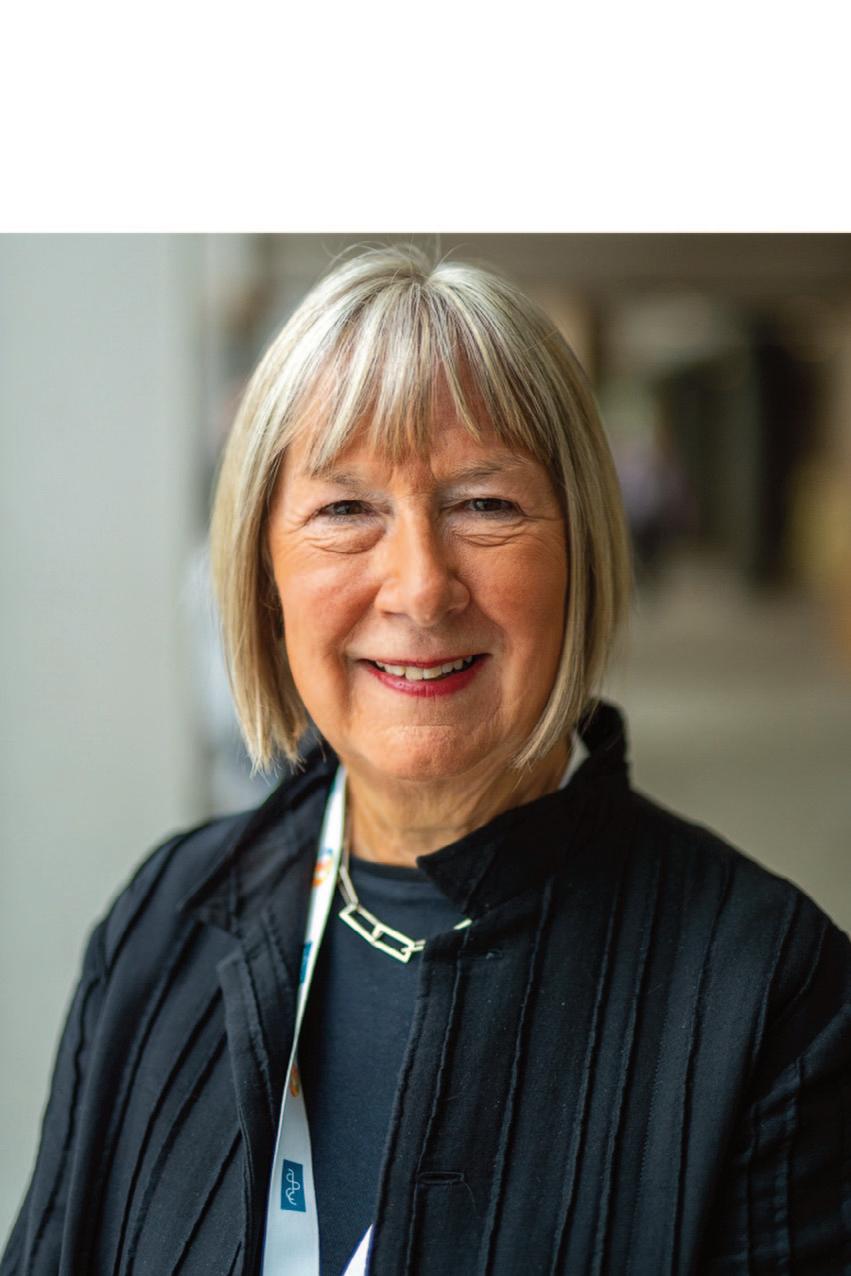
Pic of Hilary
Foreword
The adoption of cremation in the UK tells a remarkable story.
When the Cremation Society built the first crematorium in Woking in 1879, offering an alternative to burial, it met with considerable opposition and prejudice. Even as late as 1939 only 3.7% of deaths resulted in cremation in 54 crematoria whereas today there are 334 crematoria across the UK and a cremation rate of 80%. The ritual dominance of cremation results from evolving public attitudes towards funerals. No longer merely the place for a committal service, modern crematoria now provide the focus for committal, ritual and remembrance, often providing state of the art IT facilities and catering onsite in response to public expectations.
To mark the 150th anniversary of its founding in 1874, the Cremation Society resolved to research public attitudes and experiences of cremation and crematoria in the UK today. The Society’s Council was keen for this comprehensive research to capture the public’s perceptions rather than what we, the sector, perceive these to be. We are grateful to all those who participated in the research and shared their attitudes and experiences with us.
In publishing this research, the Society’s Council recognises the hard work and dedication of crematoria teams across the UK who strive tirelessly, on a day-to-day basis, to provide for the needs of the bereaved in exceptionally difficult circumstances. The Council offers its sincere thanks to all those who work in the cremation sector for their professionalism and commitment.
Professor Hilary J Grainger OBE Chair
The Cremation Society
July 2026
“
Today, cremation is not just a practical decision; it reflects shifting societal values, evolving personal beliefs, and a growing emphasis on simplicity, sustainability, and affordability.
Introduction and Background
Background
In 1874, the Cremation Society of Great Britain was established with a pioneering mission: to promote and make possible the practice of cremation in the UK. Over the last 150 years, cremation has evolved from a marginal concept to the predominant funeral choice across England, Scotland, and Wales, with Northern Ireland showing steady, if slower, adoption.
Today, cremation is not just a practical decision; it reflects shifting societal values, evolving personal beliefs, and a growing emphasis on simplicity, sustainability, and affordability. Over the past decade, the funeral landscape has undergone a significant transformation. The expanded use of crematoria for full-service ceremonies, rather than just committals, and the more recent growth of direct cremation have reshaped both expectations and experiences.
To mark its 150th anniversary, The Cremation Society commissioned an in-depth ‘State of the Nation’ study – an exploration of people’s experiences of cremation today. This report draws on first-hand accounts to better understand decision-making surrounding cremation, perceptions of crematoria, and the evolving nature of funeral choices. It also looks ahead, considering how cremation services and crematoria may continue to evolve in response to societal and cultural shifts.
What we wanted to know
We aimed to gain a deep understanding of how people feel about cremation and crematoria – both now and looking to the future. We wanted to explore:
n How people currently view cremation and crematoria
n What individuals want and need from a cremation – for themselves and someone close to them
n What factors influence people's choices around cremation and crematoria, including how much environmental concerns matter
n How people feel about newer practices such as direct cremation, and how crematoria might be used differently in the future
How the research was conducted
The research was designed to provide a comprehensive and inclusive view of public attitudes and experiences around cremation across the UK.
Focus groups (9 groups in total) and a nationally representative survey of almost 1,600 adults, were conducted across England, Scotland, Wales and Northern Ireland, combining qualitative responses (i.e. individual opinions and observations) with quantitative data to expand and inform the research findings.
n Respondents ranged in age from 18 to 80, offering a broad consumer view. (While an applicant for cremation can be aged 16 or over, research involving minors raises particular ethical issues; as a result, we were not able to include 16-17 year olds in our focus groups and surveys)
n The research was representative of gender and included a full range of socio-economic groups
n To guard against digital exclusion, 300 survey interviews were conducted by telephone, targeting individuals without internet access or email. (The remaining interviews were conducted online, using a research survey platform)
The research took place between late March and June 2025. The data presented here has been weighted to ensure that it is reflective of a nationally representative profile.
Terminology used
We have adopted the following terminology:
n The terms ‘deceased’, ‘person who has died’ or ‘someone close to them’ are used throughout the main body of the report. The term ‘loved one’ was used in individual survey questions (see Appendix) since this descriptor often resonates with the public; it also came through in various responses. We have chosen not to use this in the report (unless it appears in a direct quotation) as it can be seen to prejudge someone’s relationship with the person who has died.
n We use the generic term ‘respondents’ throughout the report, to refer to both focus group participants and survey interviewees.
n We use the term ‘socio-economic group’ which is a way to classify people based on shared social and financial standing, combining factors such as income, education, and occupation to understand societal structure, life opportunities and consumer behaviour. The different socioeconomic groups are:
n AB i.e. those in higher and intermediate managerial, administrative or professional occupations
n C1 i.e. those in supervisory, clerical & junior managerial, administrative, professional occupations
n C2 i.e. those in skilled manual occupations
n DE i.e. those in semi-skilled and unskilled manual occupations, state pensioners, casual workers, and the unemployed
A full and comprehensive research methodology is available in the Appendix to this Report.
Executive Summary
n Cremation remains a widely accepted choice, with most crematoria deemed to be fit for purpose. However, public expectations are evolving, with families increasingly seeking services that combine emotional depth, greater personal choice, and a dignified experience
n The timing of services at some older local authority sites can often feel rushed and impersonal, with moments that can be emotionally jarring. The provision of extended time slots and space between funerals is needed to provide a more respectful/ emotionally fulfilling service
n More modern crematoria offer longer services and inclusive environments, helping mourners feel supported
n Myths persist (e.g. whether coffins are cremated separately, whether ashes returned are only those of the person cremated, and whether anything is removed from the coffin before cremation), which greater education around cremation could address
n Whilst the physical presence of ashes and the scattering of them can provide significant comfort, some families need support to decide what to do with the ashes
n Direct cremations are valued for simplicity by many of those who prefer this option. However:
n There is often a lack of understanding around what a direct cremation involves
n The decision to opt for direct cremation can lead to significant negative emotional impact within a family.
n Half of respondents with experience of direct cremation feel they have been left without closure
n There is an urgent need to build more crematoria in Northern Ireland to meet rising demand
“
The findings offer insight into how current practices are experienced by families, where pressures are most acute, and what matters most to people at the end of life.
Key Findings
Crematoria and Changing Practices:
Key Insights on Public Attitudes and Service Needs
This summary highlights emerging public attitudes and service needs around cremation in the UK. As societal expectations shift and demand patterns evolve, crematoria must balance practical delivery with emotional resonance. The findings below offer insight into how current practices are experienced by families, where pressures are most acute, and what matters most to people at the end of life.
Fitness for Purpose
Crematoria across the UK are broadly seen as fit for purpose, with most facilities accommodating the diverse needs of different faiths and cultural backgrounds.
However, evolving public expectations and regional disparities are placing new pressures on existing provision – particularly in terms of emotional experience, accessibility, and future capacity.
Meaningful Farewells Matter
Families consistently emphasise the importance of time and space to reflect, mourn, and celebrate the lives of people close to them. The timing of services at some older sites can often feel rushed and impersonal, with moments that can be emotionally jarring. The provision of extended time slots and space between funerals is needed to provide a more respectful/ emotionally fulfilling service. This perceived ‘conveyor belt’ experience can undermine the emotional value of the farewell.
Cremation: A Choice Shaped by Tradition and Flexibility
Cremation remains the preferred option for many and is often driven by family tradition and
the flexibility it offers around ashes. However, the choice of crematorium is often dictated by practical factors such as travel distance, accessibility, and availability, rather than emotional or symbolic considerations.
Regional Pressures: The Case of Northern Ireland Northern Ireland faces an urgent need for new crematoria. As burial options decline and cremation demand rises, existing facilities will be under a greater strain than they currently are. Without changes to the current law which restricts development to local authorities only, and without investment, they will encounter challenges in meeting the needs- both logistical and emotional- of the communities they serve.
The Rise of Direct Cremation
The practice of direct cremation is now firmly established, often chosen for its simplicity, affordability, and visibility through advertising. While practical, direct cremations can reduce opportunities for communal mourning and closure, with some families reporting unresolved grief due to the absence of an attended service or shared tribute.
“
These findings reflect both traditional and practical considerations, with regional and cultural influences continuing to shape end-of-life decisions.
Funeral Experience Experiences and Attitudes Toward Cremation:
Age, Culture
and Choice
Experience of attending crematoria increases with age, as expected, with virtually everyone having attended a cremation by the age of 75+. While significantly lower among 18–24 year-olds, 56% of 18-24 year-olds have still attended a cremation (which they may have attended before the age of 18).
n There is little difference by socio-economic grouping
n Attendance is significantly lower in Northern Ireland, where only half of adults have attended a cremation compared with those in England, Scotland and Wales
n This matters because first-time attendance can be emotionally impactful. For younger people, the unfamiliarity of the cremation process, particularly the moment the coffin disappears from view, can be unsettling. One respondent described their first cremation as “a bit traumatic,” though subsequent experiences helped them understand and accept the process.
“That was our first experience of a cremation and think it traumatised quite a few of us … I think everyone thought that her coffin would be there as we walked out and said our goodbyes, but it literally opened up and down she went.”
18 - 40 yrs, NI
Burial vs. Cremation
n 66% of respondents have attended a burial, but this is less frequent than cremation, with the last attendance on average over 5 years ago
n Among 18–24-year-olds, burial attendance is again significantly lower
n Socio-economic group differences are more pronounced:
n C1 respondents are more likely to have attended a burial than AB or C2 groups (see page 6 for socio-economic group definitions)
n In Northern Ireland, 92% have attended a burial – reflecting its status as the dominant form of funerary method
Burial experiences tend to be much less recent:
n Nearly 40% last attended a burial over 10 years ago
n In contrast, 65% attended a cremation within the last two years, with the average being three years ago
“I’ve been to 5 funerals in the last year. I’m never away from the crem.”
60 -75 yrs
Funeral Experience
n A total of 85% of adults have attended a crematorium
The demographic profile of those who have attended a crematorium.
n A total of 66% of adults have attended a burial
The demographic profile of those who have attended a burial.
Which, if any, of these types of funerals have you ever attended?
Base: Total (1598), 18 – 24 (171), 25 – 34 (271), 35 – 44 (270), 45 – 54 (248), 55 – 64 (259), 65 – 74 (197), 75+ (182), AB (495), C1 (527), C2 (240), DE (336). England (1269), Wales (101), Scotland (127), Northern Ireland (101)
Emotional Responses by Age
Younger respondents, who on average have attended 4 cremations, often described cremation as less traumatic than burial, particularly due to the absence of coffin-lowering rituals. Their reflections focused on:
n The eulogy
n The opportunity to say goodbye
n Hearing about the life of the person who has died
“I think of the eulogies and the nice stories when I think of cremation. It’s remembering someone’s life story and talking about them. Little funny stories, with other people attending.”
18-30 yrs
Older respondents (65+) have a more practical outlook towards and acceptance of cremation, having attended an average of 10 cremations. Their emotional response was often less intense, especially when attending funerals of friends and acquaintances rather than close family. They also expressed a preference for cremation to avoid leaving a grave for others to tend.
“You see so many graves now that aren’t cared for, and I don’t want my family to feel responsible for tending the grave.”
60-75 yrs
Attitudes towards ashes also showed different responses
n Younger people described ashes as deeply emotive, especially following the loss of a parent
n Older respondents were more pragmatic, focusing on practical arrangements rather than emotional connection
Cultural and Religious Perspectives
While cremation is broadly accepted across religious groups, Roman Catholic respondents expressed more uncertainty:
n Some questioned whether cremation was truly appropriate
n Others said they needed more information before they could feel confident in choosing this option
For Hindu respondents, cremation is customary and culturally embedded. However, from the focus group discussions we could see that other groups, such as more traditional Caribbean communities, can face practical challenges with cremation:
n Their traditions often include long church services, which can last for up to 3 hours
n Their services need to accommodate many attendees
n A cremation does not allow for a grave to be backfilled by the family, which feels culturally incomplete
While the respondent’s faith often aligns with that of the deceased, this cannot be assumed. The data presented here reflects the religion of the person arranging the funeral, which offers valuable insight into likely choices.
Arranging a Funeral
Cremation Preferences:
n 32% of respondents have arranged a cremation, on average 6 years ago
n Most arrangers are aged 65+, but 28% of 18–34year-olds have also been involved, often in decisions for grandparents or parents
n C1 respondents are significantly less likely to have arranged a cremation, aligning with their higher burial attendance (see page 6 for socioeconomic definition)
n In Northern Ireland, only 9% have arranged a cremation, highlighting the gap in adopting cremation as a mainstream choice
n Respondents identifying with the Church of England or Church of Scotland are most likely to choose cremation
n One-third of Catholic respondents have arranged a cremation – indicating growing acceptance, though still lower than other Christian denominations
Profile of those arranging a cremation or burial
n 32% of adults have arranged a cremation – on average, 6 years ago
Significantly higher Significantly lower
Have you ever been the main person responsible for arranging a cremation? By arranging, we mean that you made the key decisions or were very involved in the decisions for the funeral
Base: Total (1598)
How long ago did you last arrange a cremation?
Base: All arranging a cremation (532)
Burial Preferences:
n Only 15% of UK adults have ever arranged a burial, a relatively small proportion
n There was no significant difference by socioeconomic group
n There were higher burial arrangement rates in Wales and Northern Ireland compared with England and Scotland
n Catholic respondents are more likely to have arranged a burial (28%)
n 15% of adults have arranged a burial
n Atheist and humanist respondents are least likely to choose burial, favouring cremation for its simplicity and alignment with secular values
These findings reflect both tradition and practical considerations, with regional and cultural influences continuing to shape end-of-life decisions.
Have you ever been the main person responsible for arranging a burial? Base: Total (1598)
Significantly higher Significantly lower
“
While 37% of adults feel well-informed and do not seek further information, particularly those aged 55 and over, nearly a quarter say they feel informed but would still like to know more, especially about ashes and what happens after the service.
Understanding of and Concerns around Cremation
Knowledge, Myths and Emotional Impact
Despite cremation being the most common form of funerary choice in the UK, public understanding of the process remains mixed.
Even if you have never attended a cremation, how well informed do you feel about what happens during a cremation?
Which of these statements reflects your desire to know more about the process of cremation?
Base: Total (1598)
While 37% of adults feel well-informed and do not seek further information, particularly those aged 55 and over, nearly a quarter say they feel informed but would still like to know more, especially about ashes and what happens after the service. Importantly, this curiosity is not about technical detail, but about dispelling certain myths, such as whether coffins are cremated separately, whether ashes returned are only of the person cremated, and whether anything is removed from the coffin before cremation.
A smaller group (16%) feels uninformed and actively wants more information. This is especially true for:
n Younger adults, whose experience of cremation is lower
n Catholic respondents, some of whom seek reassurance that cremation is acceptable within their faith
n People in Northern Ireland, where cremation is less common and curiosity is higher
Others (a quarter) prefer not to know, expressing comfort in remaining relatively uninformed.
Some respondents described their first cremation as emotionally challenging due to a lack of experience and awareness of what to expect, particularly when the coffin lowered unexpectedly, or the service felt very short and impersonal.
Common Myths and Questions
Qualitative responses revealed widespread myths and uncertainties, including:
n What the person who has died can wear during cremation (e.g. leather shoes, religious garments)
n Whether cremation is acceptable within their religion
n When the cremation takes place (immediately after the service or later)
n Whether ashes are truly those of the person who has died
n Concerns about the possibility of mixing of ashes
These questions reflect a need for accessible, optional education, not detailed technical explanations, but clear, reassuring information for those who seek it.
Concerns About Cremation
While half of adults expressed no concerns, and 9% were unsure, 41% cited at least one concern.
Ashes were a particular source of concern. Respondents expressed uncertainty about:
n Identity and integrity: How can I be sure the ashes belong to the person who has died?
n Process transparency: Are multiple bodies cremated at once? Could ashes be mixed with those of someone else?
These concerns mirror the myths and questions raised in focus group discussions and reflect a greater need for education around cremation.
For many, understanding the process, especially around ashes, is emotionally significant and central to their decision-making.
“I don’t know how long the cremation takes, but we were told to collect the ashes the following day, so it may be overnight.” 45-60 yrs
“Catholics aren’t allowed to be cremated, are they? That’s why my gran was buried.” 18-30 yrs
“I’ve heard that there might be ashes left over from the previous person, and that when you get the ashes, they’re not completely your loved ones. That’s an awful thought.”
60-75 yrs
“They can’t wear their own clothes, can they? The undertaker puts them in a shroud, and I was very young, but I remember we were upset about that because we wanted him in his favourite suits.”
60-75 yrs
Overall environmental aspects of cremation are either not a concern or are unlikely to be taken into account when considering a cremation:
n There is very little spontaneous concern about the environment in relation to a cremation, with only 6% citing any concerns about e.g. air pollution or the carbon footprint involved.
n The majority feel that a cremation is environmentally friendly (57% agree strongly or slightly with the statement 'Cremations are environmentally friendly', with 27% not knowing and only 16% disagreeing)
n Only 18% claim they would be influenced by 'which crematorium is more environmentally friendly' when deciding which crematorium to use
n The environment can be a consideration for those who would prefer a cremation for themselves, but from the perspective of preserving land (vs. a burial) – 31%, not from an air pollution or carbon footprint perspective
Spontaneous concerns about cremation
Uncertainty about process
General about the process
Being alive during process
If body handled with respect
The whole process is carried out properly
Ashes getting mixed up What to do with ashes
Ashes getting lost
Emotional struggles for those left behind
General about burning of body
Air pollution/ environment Cost more expensive
What concerns, if any, do you have about cremation?
Base: Total (1598)
“
This tension, between who the funeral is for and whose wishes guide its planning, is particularly relevant in the context of direct cremation, where the absence of a formal ceremony can challenge families trying to respect the preferences of the person who has died.
Views of cremation today
Who is the Funeral For?
When asked who they felt the funeral was primarily for, respondents revealed a nuanced understanding of its purpose, with the majority believing the funeral is for the family and friends of the deceased, rather than for the person who has died.
This suggests a widely held view that funerals serve the needs of the living - those mourning and attending - rather than being solely a tribute to the person who has died. However, when it comes to arranging the funeral, the deceased remains at the centre. Their wishes, if known, are
considered paramount, with 71% feeling the wishes of the person who died were most important.
This tension, between who the funeral is for and whose wishes guide its planning, is particularly relevant in the context of direct cremation, where the absence of a formal ceremony can challenge families trying to respect the preferences of the person who has died. The lack of shared wishes can complicate decision-making, even when the intent is to be respectful and personal.
Who is funeral primarily for Whose wishes are most important when arranging the cremation
Base:
When it comes to arranging (loved one’s) cremation, whose wishes would you say will be most important when you are making decisions about the cremation?
Base: All likely to arrange a cremation (798)
How
Despite being an emotional experience, 80% of respondents felt that cremation meets a range of needs either very or quite well.
n 14% Don't know
n 1% Not at all well
n 5% Not very well
n 52% Quite well
n 28% Very well
Is a Crematorium Still Needed?
We asked whether people felt a crematorium was needed as a place to pay final respects. The response was largely affirmative, with fewer than 1 in 10 disagreeing.
Agreement was strongest among those affiliated with the Church of England or Church of Scotland, while Catholics were more likely to be negative. Those who had attended a modern-style crematorium were more likely to agree than those who had experienced a basic-style facility (which we understand is most likely to be an older local authority-owned crematorium).
How well do you think current cremations (i.e. the service and crematoria) serve the needs of those who have died and those bereaved today?
Base: Total (1598)
A small proportion said they did not know, with uncertainty highest among:
n 18–24-year-olds
n Those with no religion or from minority faiths
n Significantly higher in Northern Ireland, where there is a much lower prevalence of cremations
This highlights a gap in awareness, particularly in Northern Ireland, and suggests opportunities for public education around cremation and its role in contemporary bereavement practices.
“It’s the last thing you can do for someone, isn’t it. When I leave the crematorium, the service, I feel I can start moving forward. You can’t until the funeral is over.” 45-60 yrs
“It’s strange, but you look back and think it was lovely to see family or colleagues that you haven’t seen for ages, all because you cared for that one person who’s died.” 60-75 yrs
In Northern Ireland, 7% strongly disagreed with the need for crematoria as a place to pay final respects to someone who has died – a small but notable minority.
n 1% Strongly disagree
n 6% Slightly disagree
n 22% Neither / nor
n 40% Slightly agree
n 31% Strongly agree
Based on your overall experience attending a cremation, which of the following statements do you agree or disagree with?
Base: All attending a cremation (1298)
Two core frustrations emerged around cremation services:
1. The number of services held each day, which leaves little or no time between the services, with mourners left waiting outside for the service before to finish and then “herded out” at the end.
2. Rushed services, which can be limited to a 20minute time slot, are considered too short to pay proper respects to the person who has died, especially as this can include the time to enter and exit the crematorium. Some mourners have been asked to cut readings, which can be very upsetting for the mourners.
This left many with a perception of a ‘conveyor belt’ approach, with respondents within the groups recognising this to be driven by high demand and limited capacity, resulting in a quarter of adults feeling that some crematoria are not fit for purpose today.
“You get 20 minutes. Another family is waiting to come in, and it’s so pressured that you don’t feel it’s respectful.”
60-75 yrs, NI
“It was so rushed. They even asked us to cut out a reading because they were running late. It left such an awful feeling for us afterwards.”
45-60 yrs
Issues with current cremations / crematoria
Cremation services can feel rushed / insufficient time to say goodbye
Crematoria try to conduct too many services / day
Some crematoria are not fit for purpose today
Based on your overall experience attending a cremation, which of these statements do you agree or disagree with? Base: All attending a cremation (1298)
These concerns were most pronounced among younger respondents (under 35) and those attending basic-style crematoria. This leads a quarter of respondents to form the opinion that some crematoria are not fit for purpose.
“I think it’s getting more difficult to buy a plot. And whereas you might have had a graveyard in mind, maybe in your area you might now have to be interred or buried in a remote graveyard or somewhere quite distant and therefore it’s probably swinging the pendulum over to cremation as we run out of space”
60-75 yrs, NI
Is There a Need for More Crematoria?
47% of the respondents felt there is a need for more crematoria, with no differentiation between those who are dissatisfied with crematoria for operational (47%) or aesthetic reasons (49%). This sentiment was especially strong among:
n Older age groups, particularly those aged 75+
n Northern Ireland residents, where 32% of respondents strongly agreed that more facilities are needed
Suggestions to improve services included:
n Extending operating hours
n Opening at weekends
n Allowing longer time slots
n Increasing awareness of options such as booking a double slot, which many were unaware of
“You’re limited to 2 crematoria in Northern Ireland. We’re used to holding a funeral within 2-3 days, and now there’s an enormous delay for up to 10 days. My dad couldn’t be cared for at home as a result. It wasn’t right.”
31-44 yrs, NI
Is there a need for more crematoria?
There is a need for more
n Strongly agree n Slightly agree n Neither / nor n Slightly disagree n Strongly disagree
Based on your overall experience attending a cremation, which of these statements do you agree or disagree with?
Base: All attending a cremation (1298)
Personal Experiences at Crematoria
While broader attitudes towards cremation reveal concerns about time constraints and emotional impact, personal experiences at crematoria paint a more nuanced picture. When asked to reflect on their most recent visit to a crematorium, typically around three years ago, respondents reported high levels of satisfaction, despite the inherently difficult nature of the occasion.
n 88% said their experience was very or quite positive:
n The majority of which are only quite positive (64%) vs. very positive (24%)
“It didn’t look like a church; it wasn’t gloomy at all, but you could still tell it was a place for funerals. The grounds were really nice and wellkept, and it had, like, a nice long driveway leading up to it. It was just a really peaceful place that had a nice feel. I remember it being very calm, well-kept, and pleasant.”
18-30 yrs
This is notable given the emotional intensity of bereavement and the challenge of evaluating such moments through a ‘satisfaction’ lens. The findings suggest that, despite systemic pressures, many crematoria are delivering services that feel respectful and meaningful to mourners.
We wanted to ascertain the type of crematorium that respondents had last attended. In doing so, we chose the following descriptions to use in the survey as the simplest for respondents to relate to:
n Church/chapel style
n Elaborate brick with ornate details
n Basic/functional building, with little decoration
n Modern with an open, airy interior, typically with lots of natural light
We believe that the basic/functional building style relates to the very large proportion of the crematorium stock that was built between 1950 and 1970 and is primarily local authority owned. At the time these crematoria were being built, the needs were very different from today. They were designed primarily for the committal of the body rather than to accommodate the full services which are generally requested today.
How
So, when satisfaction levels are broken down by crematorium style, most types showed similar results, except for functional, minimally decorated crematoria, where dissatisfaction was significantly higher:
n Up to 25% of respondents who had attended these sites said their experience was not positive
Given the volume of cremations conducted annually, this represents a substantial proportion of mourners who felt let down by the crematorium setting. It reinforces earlier findings that basic-style crematoria are more likely to be perceived as not fit for purpose and suggests that physical design and atmosphere play a key role in shaping emotional responses.
did you feel overall about this experience at the crematorium?
Total Chapel / Church style
Elaborate brick / ornate detail
Functional, little decoration
Modern, open / natural light
n Very positive n Quite positive n Not very positive n Not at all positive
How did you feel overall about this experience at the crematorium?
Base: All attending a cremation (1298)
Among the minority who reported a less positive experience at a crematorium, the reasons were clear and, notably, were practical.
Respondents pointed to a range of logistical shortcomings that disrupted the emotional flow of the occasion:
n Insufficient time between services, leading to a sense of being rushed or impersonal
n Rooms too small to accommodate mourners comfortably
n Lack of shelter or waiting space, with mourners often queuing outside in all weathers, or being moved on quickly after the service to make way for the next funeral
“They need to be a bit bigger. At my friend’s cousin’s, the church was big, but the crematorium was so small. People were standing outside, I would want to be inside, being there for their family and their friends.” 25-40 yrs
Reasons why it didn’t feel positive
Insufficient time between funerals
Felt impersonal
Nowhere to gather after Nowhere to gather before Room too small
Whole process traumatising
Seeing curtains drawn
Service too short
Seeing coffin lowered No digital option
Room too big
Nothing positive about a funeral
These shortcomings relate to lack of basic space and dignity. People described feeling as though they were standing in line, exposed to the elements, with no opportunity to pause or gather before or after the service. This lack of physical provision can compound the emotional strain of the moment.
These issues were echoed in the qualitative responses, where respondents consistently emphasised the lack of time and space as barriers to a meaningful experience. Interestingly, decor and ambience were rarely mentioned, during the focus group discussions suggesting that mourners are less concerned with visual aesthetics and more attuned to whether the environment supports their emotional and social needs.
This reinforces the idea that functionality and flow, not just appearance, are central to how crematoria are experienced. It also highlights the importance of designing spaces that allow time, privacy, and connection, especially in moments of grief.
Why did you not feel positive after this experience at the crematorium?
Base: All not positive with last experience (162)
When asked about specific elements of their most recent crematorium experience, most respondents reported high satisfaction across several practical criteria:
n Grounds and landscaping were widely appreciated
n Ease of access and car parking were generally positive, though some reported “car parking nightmares”
n Capacity for attendees was mostly sufficient
These aspects were highlighted by nearly all respondents, suggesting that the core infrastructure of most crematoria is functioning well.
In response to questions around additional specific provision at crematoria, levels of satisfaction dropped and a rise in ‘neutral’ responses emerged.
n Digital technology (e.g. screens showing photographs or livestreaming) was praised where it was evidently used. A third stated they had not experienced (or been aware of) any digital technology being used at that cremation service
n Café or wake facilities were even more limited:
n 50% said not applicable
n Of those who had access, it was relatively evenly split, with a third each stating they found it positive or neutral or negative
Qualitative feedback suggests that even where café spaces exist, they are not well used or wellintegrated into the funeral experience. There were mixed views about the appropriateness of a café, with some appreciating the chance to gather before the cremation, but feeling they were not suitable for a wake.
Importantly, respondents were not asking for a café per se, but this may be because it is not a common provision in crematoria and therefore not widely experienced.
Style and Location Matter
n Modern-style crematoria consistently provided better experiences, especially in terms of:
n Length of service
n Space available in the chapel and car park
n Digital technology
n Basic-style crematoria tended to be perceived more negatively by respondents, especially in terms of:
n Service timing
n Perceived atmosphere
n In Northern Ireland, 23% reported a negative experience due to short intervals between services
By way of context, provision in Northern Ireland is limited to two crematoria – one long established and one more recent – both operating under considerable pressure.
Experience of last cremation attended (excluding N/A)
Grounds at Crematorium
Any digital technology
Space to gather after funeral
Space to wait for funeral to begin
Time scheduled between services
Café / wake facilities at Crematorium
Continuing to think about this specific cremation (last attended), please indicate whether your experience with the following aspects were positive, negative or neutral?
Base: All attending a cremation & aspect was applicable to their last cremation (1264 - 654)
“
The emotive weight attached to ashes is especially pronounced among under 45s, who are more likely to retain them or struggle with decisions about the ashes. Splitting ashes can be a source of comfort for some, but balancing family dynamics with differing wishes around what to do with the ashes, can cause conflict for others.
Ashes: Emotional Significance and Uncertainty
Ashes remain a deeply emotive aspect of cremation, especially for younger people.
Drawing on their experience of attending a cremation or their perception of a cremation:
n 79% said cremation provides comfort through the ability to scatter or retain ashes
n 55% agreed that a grave (i.e. a burial plot or plot with interred ashes) provides more comfort, especially among younger respondents, who value having a physical place to visit
“I remember him every day (dad), because I keep his ashes next to my bed and wake up next to them. I wouldn’t want to spread his ashes, because in my heart, I’d lose him, and I never want that. I remember more with ashes than I do without.”
18-30 yrs
“I wasn’t close to my cousin, and I didn’t know what he’d want, so the undertaker offered to scatter his ashes in the Garden of Remembrance, and that was fine by us.”
60-75 yrs
This highlights the importance of choice and flexibility, being able to retain, inter or scatter ashes in a way that feels personally meaningful.
Attitude towards cremation ashes
Thinking about your experience of attending a cremation, or your perception, how much do you agree or disagree with these statements?
Base: Total (1598)
What Happens to the Ashes?
Respondents who had arranged a cremation reported a range of outcomes (below).
The emotive weight attached to ashes is especially pronounced among under 45s, who are more likely to retain them or struggle with decisions about the ashes. Splitting ashes can be a source of comfort for some, but balancing family dynamics with differing wishes around what to do with the ashes, can cause conflict for others.
Perhaps most strikingly, 17% of families find themselves feeling uncertain about what to do with ashes, sometimes years after the cremation. This can leave both emotional and practical burdens, particularly when the deceased’s wishes were not shared or discussed with those responsible for the ashes e.g. family members.
“Dad never said what he wanted us to do with his ashes, so we are keeping them at home with us. It doesn’t seem right, but one sister thinks we should bury them, and another wants them split between us.”
45-60 yrs
What they have done with the ashes
Interred in cemetery
Some / all scattered elsewhere
Some / all scattered at crematorium
Still have ashes for placing with another family member later
Have ashes to stay connected
Buried in the garden
Ashes put into a keepsake
Ashes split between family
What happened to the ashes?
Base: All arranging a cremation (532)
Anticipated Decisions and Lingering
In addition to asking what people have chosen to do with ashes, we explored what people anticipate doing when arranging a cremation in the future. The findings echo previous patterns, but with even greater uncertainty.
What People Expect to Do
n Among those expecting to arrange a cremation in the next 10 years:
n Scattering ashes in a special place remains the most anticipated action
n Interring or burying of ashes is a less favoured option
n Keeping ashes (e.g. in a keepsake, garden, or for future burial with a person close to them) continues to be more common among younger people, reflecting a desire to feel emotionally connected to the person who has died
n Splitting ashes is anticipated by some, though again this can be divisive within families
“Dad was buried, but mum has decided to be cremated, so we’ve asked, and we’ll be able to put her ashes in his plot, so they’ll be together.”
45-60 yrs
“Mum has asked to have her ashes scattered in her favourite place, so that’s what we’ll do.” 45-60 yrs
However, many feel unprepared or conflicted when choosing what to do with ashes. This suggests that the emotional and relational challenges around ashes are not just retrospective – they are ongoing and anticipatory.
n Rising Uncertainty
n 27% of those anticipating arranging a cremation said they were unsure what they would choose to do with the ashes
l This figure is higher than among those who have already arranged a cremation
n Reasons for uncertainty include:
l Disagreement among family members
l Lack of prior discussion
l Emotional difficulty of arriving at a decision
This uncertainty is especially common among over-35s, with respondents saying this had never been discussed.
What is anticipated they will do with the ashes
Scattered in a special place
Ashes interred / buried
Scattered at the crematorium
Keep ashes so feel connected
Ashes put in a keepsake
Bury ashes in garden
Keep ashes so with other family later Split ashes between family
Not sure, could be some disagreement
Not sure, never discussed it
What do you anticipate will happen to your (loved ones) ashes?
Base: All anticipate arranging a cremation (791)
Reflections and Implications
The findings across both current and anticipated ashes decisions point to a clear need for:
n Timely conversations about ashes and wishes amongst family members
n Support and guidance for families navigating emotional disagreements
n Clear information from crematoria and funeral providers on the range of options available around ashes, and flexibility to accommodate diverse preferences
Choosing what to do with ashes is not just a practical matter because for many they carry deep emotional significance, especially for younger people and those seeking a continued connection with the deceased. Yet without discussion or support, families can find themselves in limbo, unsure how to respect the views of the person who has died or reconcile differing views.
“
We asked people across the UK whether they expect to arrange a funeral in the next 10 years.
57% said yes, and cremation remains the most likely choice, with 87% of this cohort expecting to arrange a cremation.
Planning Ahead
What People Expect when Arranging a Funeral
Cremation remains the dominant funeral choice for the future
We asked people across the UK whether they expect to arrange a funeral in the next 10 years. 57% said yes, and cremation remains the most likely choice, with 87% of this cohort expecting to arrange a cremation.
This trend is consistent across all age groups and regions, but Northern Ireland stands out. While only 9% of people in Northern Ireland have arranged a cremation before, nearly a third expect to do so in the future. This shift will put pressure on existing crematoria, given that there are only two facilities located in Northern Ireland, which are already struggling to meet demand.
“We’ve run out of space for plots here in NI, and I’m sure that’s why cremation is becoming more common. If we haven’t already planned ahead and bought a family grave, it’s either too late to get one or you can’t afford it.” 64–75 yrs, NI
Respecting
Wishes – Even When It Is Difficult
Most people want to honour the wishes of the person who has died. However, 6% of those expecting to arrange a cremation say they are not comfortable with that as an anticipated choice, with this figure being equal across the UK. This is especially true for Catholic respondents, where 11% feel conflicted about cremation versus burial.
Burial Expectations
While only 20% of funerals today are burials, 34% of respondents expect to arrange a burial in the next 10 years. This is especially high among:
n 18–24-year-olds (38% vs. 3% of 75+s)
n Men (40% vs. 27% of women)
n Socio-economic group AB (38% vs. 25% of DE
(See page 6 for socio-economic definition)
The higher expectation of arranging a burial may be due to some guessing what they think the person they are arranging the funeral for would have wanted, rather than relying on actual knowledge. Younger people often have not discussed funeral wishes with older relatives and may not realise the cost and difficulty of arranging a burial – especially finding a plot and paying for a burial.
In Northern Ireland, where burial is more common, 46% expect to arrange one.
Expectations of who they anticipate arranging a funeral for shift with age:
n Younger people expect to arrange funerals for a mix of relatives
n Middle-aged adults are most likely to anticipate arranging a funeral for a parent or parent-in-law
n Older adults (65+) often expect to arrange a funeral for a spouse or partner, and with this, they are more likely to know their wishes
Funeral Plans: What is in Place?
Amongst respondents, there is confusion as to whether or not a funeral plan exists for the person whose funeral they expect to arrange.
35% believe a plan is in place, which is much higher than the proportion of funerals that were paid for in advance during 2024 (source: The National Association of Funeral Plan Providers, 2024 Funeral Plan Market Volumes, published 29th Jan 2025)
Some respondents may genuinely believe that a person close to them has made funeral arrangements, when in fact it may be a life insurance policy, which does not provide the same practical support at the time of need or guarantee that funeral arrangements are fully in place or understood.
Younger people are most likely to think there is a plan (50% of 18–44-year-olds vs. 28% of 75-year-olds).
Who they anticipate arranging a funeral for (in next 10 years)
n Spouse / partner n Parent / in-law n Grandparent
n Sibling n Other relative n Friend
When thinking about the next cremation you anticipate you may need to arrange, who do you anticipate arranging a cremation for?
Base: All anticipate arranging a cremation (798)
Whether a funeral plan in place
n Yes, has a plan
n No, does not have a plan
n Don’t know
n 45% of those who have arranged a funeral believe a plan is in place, often because losing a person close to them prompts others to take out a plan
n This compares to only 25% of those who have not arranged a funeral believe a plan exists
n 40% do not think there is a plan in place
n 25% simply do not know if a plan exists or not
This highlights that open conversations are needed within families, not just about funeral preferences, but about what practical arrangements are in place.
Does … Have a funeral plan?
Base: All anticipate arranging a cremation (798)
In total:
n 35% of those likely to arrange a cremation in the future believe their family member has a funeral plan, however perception differs based on whether they have arranged a funeral before or not
Influences on the decision to have cremation
Family chosen cremation before Want ashes in specific location
So ashes can be put with other family
Only ever been to a cremation
Don't like idea of being buried
So family not obliged to visit a grave
Unable to get a burial plot A cremation is cheaper
Crematorium closer for attendees To have non-religious funeral
For religious beliefs Attending a cremation less traumatic
Don’t know
What has influenced the decision to have a cremation?
Base: All anticipate arranging a cremation (792)
Why People Choose Cremation
Many people believe that the choice of cremation by the person they anticipate arranging a funeral for, is shaped by family tradition. If a person close to them had a cremation in the past, it often becomes the default choice for future funerals.
“Dad hadn’t talked about what he wanted, but he’d been really involved in planning Mum’s funeral, so we did exactly the same for him.”
45-60 yrs
Other reasons for choosing cremation include:
n Discomfort with burial – 19% say they fear being buried, and 15% dislike the idea of a grave needing ongoing care
n Cost – cremation is usually cheaper than burial
n Practicality – cremation allows for a nonreligious service and is seen by some as less emotionally distressing than attending a burial
n Ashes – especially when there is a clear plan for the ashes
n Only 5% mention difficulty finding a burial plot, though this may reflect a lack of awareness about how hard it can be in some areas.
Choosing a Crematorium
Among those expecting to arrange a cremation in the next 10 years, nearly half expect to have a choice of crematorium. In practice, though, most people use the closest one.
n 30% do not expect to have a choice of crematorium
n 24% are not sure
When people do consider different crematoria, the 4 most important factors are:
n Distance (which equates to travel time) –especially for elderly mourners
n Easy access – for all mourners
n Cremation costs at different crematoria –though many do not know the actual figure
n Best room size – to ensure all mourners can be accommodated comfortably
“I live in Cardiff, so that’s the one we use. I think you can ask for the Vale, but it would be unusual.”
60-75 yrs
“We have three crematoriums, but everyone uses the closest and it’s as simple as that really.”
45-60 yrs
Religious and Cultural Considerations
Most people do not see crematoria as religious buildings – only 26% agree with the statement that ‘a crematorium is a religious place’. This neutrality is seen as a strength, as it means that different religious or cultural traditions can be included in the service:
n 41% expect to include religious or cultural elements in the cremation they arrange
n Most people believe this will be easy to arrange
n 23% of Catholics are unsure whether the Catholic church is accepting of cremation
Overall, crematoria are seen as sympathetic spaces that are able to accommodate a wide range of beliefs and traditions.
“The one we go to is a lovely building. It’s neither religious nor non-religious and suits both.”
60-75 yrs
I’ve been to a full religious service led by a Minister at our crem, and one for someone who had no beliefs and was led by a Humanist. The building didn’t seem to matter, it was the way it was led and the words used that set the tone.”
45-60 yrs
“
While direct cremation is increasingly recognised, a consistent understanding of what it entails should not be assumed.
Direct Cremation
Direct Cremation: Awareness and Perceptions
Public Awareness
Although direct cremation has been legally available for decades, its promotion began in earnest in the 2010s, particularly with Simplicity Cremations marketing it as a low-cost, straightforward alternative. Awareness surged during the COVID-19 pandemic.
Today, direct cremation is widely known:
n 62% of UK adults have heard of it
n Most aware: those aged 65+, with 79% familiar (40% have heard a lot, 44% a little)
n Increasing visibility among 18–24-year-olds too (60% aware), is more likely to be driven by being aware of someone who has either had a direct cremation (16%) or taken out a direct cremation plan (22%), rather than advertising
Many associate it with ‘Pure Cremation’, highlighting the impact of TV brand advertising, especially among older viewers.
While direct cremation is increasingly recognised, a consistent understanding of what it entails should not be assumed. Focus group discussions revealed variable interpretations e.g. whether a small number of people can attend a service at the crematorium, suggesting that public perception may not fully align with the practical reality or emotional implications of a direct cremation.
This reinforces the need for clear and honest information and marketing around the process, to support informed choice.
“I’ve seen this advertised on telly and I like the idea of it being simple and getting it over with quickly, so it appeals to me. I’d be quite happy to avoid the fuss and just have my immediate family there to say goodbye rather than drag loads of people along.”
60-75 yrs
Awareness of Direct Cremation varies by Region and Religion
n Awareness levels are broadly consistent across mainland UK, but notably lower in Northern Ireland:
n England: 66% n Scotland: 48%
n Wales: 63% n Northern Ireland: 32%
This lack of awareness may be due to lower levels of advertising and fewer providers operating in Northern Ireland, despite direct cremations being available.
n Awareness also varies by religious identity:
n Lowest among people with no religion (57%)
n Highest among those affiliated with the Church of England or the Church of Scotland (76%)
These differences highlight a need for targeted, culturally sensitive communication, ensuring that people feel informed and confident about their choices, regardless of background.
Public Perception
The survey invited people to select words they associate with direct cremation, both positive and negative.
Positives (chosen by 80% of respondents): These words very much reflect the key messages given in the advertising:
n Simplicity, uncomplicated, affordable, easy
n Stronger among:
n Those without religion (simplicity)
n Socio-economic group DE (affordability) (see page 6 for socio-economic definition)
However, the word ‘celebratory’, despite being a key message in some direct cremation advertising, was not often chosen, suggesting lower resonance.
Words associated with a direct cremation (prompted)
With a direct cremation, the deceased is cremated with no service or attendees at the crematorium. Family and friends may choose to have a separate gathering to remember the person who has died. The ashes are returned to the family or can be scattered by the direct cremation provider, in a garden of remembrance. Which words or phrases would you associate with a direct cremation?
Base: 1598
Negatives (selected by 53%):
n Emotionless, cold
n Particularly strong feelings of ‘inappropriateness’ expressed by some respondents:
“To me, it feels kind of sterile and lacking emotion. Yeah, it’s as if the person doesn’t have any value to you. It would be like turning your back on someone in a way.”
45-60 yrs
“It just feels cold and totally lacking respect for someone you have loved.”
60-75 yrs
“No way, we couldn’t have considered that. The whole family was there, and Gran was so popular that lots of people wanted to pay their respects.”
18-30 yrs
Words associated with a direct cremation (prompted)
With a direct cremation, the deceased is cremated with no service or attendees at the crematorium. Family and friends may choose to have a separate gathering to remember the person who has died.
The ashes are returned to the family or can be scattered by the direct cremation provider, in a garden of remembrance. Which words or phrases would you associate with a direct cremation?
Base: 1598
Situations Where a Direct Cremation Can Feel Appropriate
Regardless of personal views, most respondents could identify scenarios in which people might choose direct cremation:
n Where there is no or very little family
n Following a long illness
n When family disputes make gatherings difficult
n If family is geographically dispersed
“I could see how, if a family had little money or the deceased wanted them to inherit the money, rather than it pay for a funeral, that a cheaper direct cremation would be okay.”
45-60 yrs
“Dad died in a hospice, and we watched him die and grieved every day, and that was enough. We didn’t need a funeral.”
60-75 yrs
There was a common assumption that the ashes would become a focal point for a later memorial.
Experience of Direct Cremations
There is a growing awareness of someone who has had a direct cremation:
n 15% of UK adults say they know someone who chose a direct cremation
n Lower in Northern Ireland at just 6%, as a result of less advertising and limited availability. This concurs with other research conducted recently, with the NAFPP report on Funeral Plan Trends 2024 stating independent funeral directors’ data shows 14% of funerals were unattended.
n The majority knew of a friend who had chosen a direct cremation (54%), followed by a family member (35%)
n In the majority of cases (60%), the decision to choose a direct cremation was made by the person who has died, but in a third of cases it was chosen by someone else
Know someone who has had a Direct Cremation
Do you know anyone who has had a direct cremation?
Base: 1598
Who decided to arrange a Direct Cremation
Deceased’s decision
Respondent’s decision
Whose decision was it for your family member / friend to have a direct cremation?
Base: 205
Absence of Farewell: The Emotional Reality of Direct Cremation
Direct cremation offers simplicity, but despite marketing messages, a significant percentage do not also involve an opportunity to gather together to remember the person who has died. Despite growing awareness, a direct cremation can leave mourners with unresolved grief.
n 46% of the people who knew someone who had a direct cremation had an opportunity to get together with family/friends
n A further 17% were invited but chose not to attend
This means that in 37% of direct cremations, it appears that no gathering has taken place to remember the person who has died.
Relationship Shapes Experience
The relationship with the deceased appears to impact on the likelihood of knowing that a gathering is taking place, and of attending
n For family, nearly 58% attended an event to remember the person who has died – yet 32% report no opportunity to come together
n For friends, only 40% attended, and 22% knew of an event but chose not to attend
n Friends are less likely to be informed, reinforcing the feeling that someone has been quietly erased
“It was what she wanted, but I just feel that it was very sterile and matter of fact. The week after she died, the painters came in to paint the flat and it just felt as though someone had rubbed her out. She was no longer here, no one to attend, no one to say cheerio and nobody to grieve.”
60–75 yrs
Opportunity to get together to remember this person
n Yes, attended n Yes, didn’t attend n Nothing arranged n Not that I am aware of Total Family Member A friend
Was there an opportunity for you to get together with family / friends to remember this person?
Base: 205
This echoes what we heard in focus group discussions, that direct cremation is often perceived as lacking the inclusivity, respect, traditional rituals and cultural significance associated with a full funeral, because it is felt that important elements are missing.
Whilst there may be reasons for choosing a direct cremation, this research has provided one of the first opportunities we have to understand the impact this decision has on those left behind: n 50% of the respondents report a negative emotional impact - struggling with suppressed feelings and the lack of opportunity to say goodbye
n Notably, men (62%) appear to be more emotionally affected than women (41%)
n This negative emotion is intensified when no event is held to remember and pay respects to the person who has died
“I felt my emotions were suppressed. We got the ashes back months later, but I still feel I didn’t celebrate his life with the close people around me.”
45-65 yrs
“I felt empty afterwards. It’s taken me a long time to grieve; a funeral would have helped me. There weren’t relatives there or anything, and because there are very few people and they live all over the place, they didn’t want to arrange like a big get-together.”
45-60 yrs
How Direct Cremation left them feeling
Haven't said goodbye properly
As though just disappeared
Can't grieve for them
Relieved didn't have to go to funeral
Ashes more important to me
Happy with decision
How has the fact they had a direct cremation left you feeling? Please code all answers.
Base: 205
Yet 22% expressed relief at avoiding a funeral, with the qualitative insights suggesting this is especially so where relationships were distant, or logistics were difficult.
“I really hate going to funerals, they are so cold and impersonal. A direct cremation gives you the chance to focus on the good things and come together when you aren’t feeling so raw.” 45-60 yrs
Anticipation and Planning for Direct Cremation
Direct cremation plans have been available for over 40 years, but it is with the growth of awareness in the last decade that their popularity has increased.
n 62% of all new funeral plans sold in 2024 were for a direct cremation, 114,282 in total (Source: NAFPP report on Funeral Plan Trends 2024)
n 16% of people know someone who has taken out a plan
Focusing on those who have taken out a direct cremation plan, the data suggests that:
n 27% of respondents say they have one, equating to around 4% of the UK population
n 40% know a family member who has taken out a plan
n 22% are aware of a friend having arranged a plan
But it is not just about who holds a plan, it is also about who made the decision.
n Where respondents knew someone who had taken out a direct cremation plan, in most cases (69%) it was the plan holder’s own decision to take out that plan, suggesting high levels of personal agency
n Yet in 30% of cases, someone else has made the decision to take out a direct cremation plan for a member of their family or on a friend’s behalf
Who has taken out a Direct Cremation plan
Who do you know that has taken out a direct cremation plan?
Base: 248
Whose decision was it to take out the Direct Cremation plan
Plan holder’s decision
Respondent’s decision Other family member’s decision
Whose decision was it for your family member / friend to take out a direct cremation plan?
(Excluding those taken own plan out.) Base: 156
Family Sentiment
When a person has purchased a direct cremation plan for themselves:
n 18% report mixed emotions or quiet unease from those close to them
n 9% were not very happy with the decision
n 57% believe their family supports the decision, indicating that they are most likely to have talked to their family about it and ensured they are comfortable with this decision
How family feel about your decision for a Direct Cremation
Happy with my decision
This is what family wanted Don't have other family members
Mixed, some okay others not Not very happy
Not too sure, willing to accept it
Haven’t told anyone
Dont know how they feel
How do your family feel about your decision to have a direct cremation?
Base: 68
Experiences differ for those who know a direct cremation will take place because a plan has been taken out. While many accept that decision, they don’t always fully accept not being able to attend a funeral, which may leave some people struggling with their grief.
n Only 37% are happy with the decision and genuinely support their choice
n Over half are willing to go along with the decision, but their acceptance is based on respecting the wishes of the plan holder This suggests a passive acceptance, not active endorsement
n 10% are not happy with the decision
How do you feel about their decision to have a Direct Cremation
How do you feel about the fact they will have a Direct Cremation, which means no one will attend the crematorium?
Base: 157
“
A key point to note is that 31% of adults have not decided what they want for their own funeral. This uncertainty is consistent across all age groups, even among those aged 75+ and all nations.
Funeral Choices
What People Want for Their Own Funeral
Looking ahead, attended cremation remains the preferred option for UK adults. However, direct cremation is now as popular as burial across England, Wales and Scotland, chosen by 19% of people.
In Northern Ireland, burial continues to dominate, with 33% preferring burial versus 22% for attended cremation.
A key point to note is that 31% of adults have not decided what they want for their own funeral. This uncertainty is consistent across all age groups, even among those aged 75+ and all nations. For some, it is due to a lack of information, especially within certain faiths –for example Catholicism, where acceptability of cremation is still unclear. Additionally, 9% explicitly say they do not want to think about it, mostly among 18–24-year-olds, who feel the decision is too far off.
“It’s enough that as a Catholic, I’m considering a cremation, as Catholics, we were always buried, so a direct cremation without my family having a support mechanism there is unfathomable.”
60-75 yrs
Preference for own funeral
Base: 1598 Cremation
What type of funeral would you like for yourself?
What Drives the Decision?
When specifically asked, people choose different funeral types for different reasons:
Cremation
n Preserving land is a factor, making cremation preferable to a burial
n It is more likely not to be a proactive desire for cremation; it is more about rejecting burial i.e. a dislike of the idea of a burial and/or wanting to avoid family needing to attend a grave
n Within the Northern Ireland focus group discussions, it was heard that the shortage of burial plots appears to be a growing factor
Direct Cremation
n A proactive decision, with over half of respondents saying that they ‘didn’t want a fuss’
n One third of respondents pointed to direct cremation being cheaper
n One third of respondents did not want their families/others to go through a funeral
These elements are often emphasised in TV advertising.
Burial
n The reasons respondents gave for proactively choosing burial
n Having a grave for family to visit
n The importance for fulfilling religious beliefs
n 40% of respondents did not like the idea of being burnt
Why prefer a cremation
Don't like idea of burial Don't want family tending a grave
Cremation preserves land Cremation less traumatic
To have non-religious funeral Cremation is cheaper Too difficult to get burial plot For religious beliefs
You’ve said you’d like a cremation, why would you like a cremation?
Base: 474
Why prefer a direct cremation
Don’t want a fuss It is cheaper
Don't want family to go through a funeral
Want family to get together separately to cremation
Feel it gives more options to celebrate my life
Don't have many family
Family lives long way away
Can't afford attended funeral
You’ve said you’d like a direct cremation, why would you like a direct cremation?
Base: 238
Why prefer a burial
Want my family to have a grave to visit
Don't like idea of being burnt
For religious beliefs
Family tradition
Have a family plot
Don't like idea of family having ashes
Crematorium too far away
Never been to a cremation
To return to the earth
You’ve said you’d like a burial, why would you like a burial?
Base: 274
“
In the view of respondents, crematoria are seen as single-purpose venues, associated only with mourning.
The Future of Crematoria in the UK
Future societal needs for crematoria in the UK
Most people (81%) believe current cremation provision (ie the service and the crematorium) are likely are likely to meet future societal needs, but only a quarter feel current provision meets their needs ‘very well’, particularly the ‘basic style’ crematoria.
n Both modern and more elaborate style crematoria are seen as better suited to meet future needs (28% – 32% respectively vs. 19% for basic style)
n 19% of adults express doubt that the existing cremation provision will suffice long-term
n Lowest confidence is observed among Black / Caribbean and Asian communities, (11% feel current crematoria will not serve future needs at all well vs. 3% White British). From the qualitative findings this is most likely linked to these communities having:
n Larger funeral gatherings
n Longer, culturally specific services
n Sensitivities around ritual and space
n Northern Ireland shows a significant shortfall in provision, with:
n Only two crematoria located in the region
n Nearly a third of respondents (double the UK average) believing the current provision is inadequate
“There’s a dire need for more crematoria in Northern Ireland. We only have two here, and I and the rest of the family had to drive 1½ hours to my dad’s funeral. When we got there, we had to queue outside in the rain and only had 20 minutes to say our goodbyes. It just doesn’t feel respectful to put a family through that experience.”
60-75 yrs, NI
How well current cremations will service the future needs of society
How well do you think current cremations (i.e. the service and the crematoria) will serve the future needs of society in the next 15 – 20 years?
Base: 1598
The Role & Limitations of Crematoria in Society
In the view of respondents, crematoria are seen as single-purpose venues, associated only with mourning:
n Unlike churches, crematoria do not easily accommodate multiple or ongoing community roles
n Emotional connections to bereavement limit the appeal of the crematorium for wider use
Sensitive Expansion Opportunities
When asked about alternative uses for the crematorium and its grounds, respondents considered some funeral-related activities appropriate i.e.:
n Visiting Gardens of Remembrance
n Anniversary memorial services
n Social gatherings for the bereaved
n Holding the wake after the service, however, it was perceived that there would be logistical challenges in managing this, e.g. concern not to get in the way of subsequent cremation services, and lack of sufficient space to accommodate the number of multiple families holding a wake at the crematorium
“I can see a role for the crematorium to host memorial events and maybe a candle service at Christmas, but I don’t see how the vibe could change enough to use the space for something else altogether.”
45-60 yrs
Total N. Ireland Scotland
England Wales
However, non-related community uses (e.g. book clubs, singing groups) are largely rejected – 64% of respondents did not support this idea.
“If you struggled with the death of somebody, the last place you’d want to go for any unrelated reason is a place that reminded you of their death. I can’t think of going there for even grief counselling, which is very attached to it.”
60-75 yrs
Appropriateness of using crematorium for other purposes
Not at all
Not very
Quite
Very
Encourage visiting garden of remembrance To hold anniversary memorial
Hold social gatherings for the bereaved
Room for holding wake after service
Have café to visit any time
Other community purpose (e.g. book club / singing groups)
How appropriate do you think it would be for a crematorium or its grounds to be used for the following purposes?
Base: 1598
“
Current strengths, emerging challenges, and future opportunities to ensure cremation remains a respectful and accessible choice for all.
Summary and Conclusions
Crematoria and Changing Practices: Key Insights on Public Attitudes and Service Needs
Public attitudes towards cremation in the UK are evolving as expectations shift and demand for cremation grows. This summary outlines current strengths, emerging challenges and future opportunities to ensure cremation remains a respectful and accessible choice for all.
What is Working Well
n Most crematoria are fulfilling their overall purpose, with facilities that meet the needs of diverse faiths and communities
n Respondents suggest that crematoria designed more recently tend to offer an enhanced emotional experience
n Cremation is often seen as less distressing than burial, offering flexibility and comfort –especially through the option to keep ashes
Pressures and Challenges
n Myths and misunderstandings persist, especially around religious acceptance of cremation
n Some people choose cremation based on cost and/or because of a lack of burial options, rather than personal preference
n Where crematoria offer short, tightly scheduled services, respondents perceive these to be rushed and impersonal –frequently described as a ‘conveyor belt’ experience
n Some mourners are unprepared for the closing of curtains or lowering of the coffin, which can feel traumatic
n Families may be uncertain about what to do with ashes, leaving them feeling unsettled
Regional Urgency
As burial plots become more difficult to secure and demand for cremation rises, there is a pressing need for new crematoria in Northern Ireland. However, further investment and changes in the current law are needed to facilitate this.
n Direct cremations are now well established, valued by some for simplicity and affordability
n For many individuals a direct cremation is an appropriate option, with family members accepting their decision
n However, nearly 1 in 5 respondents who have chosen a direct cremation recognise their family are not sure/unwilling to accept their decision
n The absence of an attended service can leave families without closure. Some report unresolved grief due to the lack of opportunity to gather together to remember the person who has died
Opportunities
n There is an opportunity to educate sensitively and clearly – dispelling certain myths around cremation and providing information for those who want to learn more
n More crematoria could adopt a range of good practices to improve the emotional experience of the bereaved, e.g. longer service times and space between funerals, which may be facilitated by extending service hours, including evenings and weekends
n Crematoria could broaden their role to incorporate grief-related activities
n Encourage open conversations within families about cremation choices, funeral wishes and plans for ashes Looking Ahead
n The potential long-term negative emotional impact of direct cremation may take years to manifest
n Without investment, many crematoria risk becoming unable to satisfactorily meet the needs of mourners
n Any efforts to educate the public about cremation must remain clear, sensitive, and responsive to individual needs
n Younger generations would appear to currently favour burial, but their attitudes may shift with a greater understanding of cremation and the limitations of burial
“
Key conclusions were drawn from the research … further education is needed to inform and dispel certain myths around cremation.
Key Conclusions
The following are the key conclusions drawn from the research:
n There was considerable concern expressed about what was felt to be a ‘conveyor belt’ experience
n Extended service times, gaps between services, and weekend provision were options that featured in a number of responses
n Many people are uncertain what to do with ashes
n More guidance is needed on options available
n Further education is needed to inform and dispel certain myths around cremation
n Respondents suggested greater engagement with certain communities was needed to clarify that cremation can be a respectful, appropriate, and acceptable alternative to burial
n More crematoria are needed in specific geographical areas
n There is a pressing need in Northern Ireland, with burial plots increasingly hard to secure and limited options outside the Greater Belfast area
n There was recognition amongst respondents of the potential negative emotional impact resulting from a direct cremation
n Many people have only a limited understanding of what direct cremation involves, which contributes to common misconceptions about the process
n Education is required so that people can make informed choices
“
This study was designed to provide a comprehensive and inclusive view of public attitudes and experiences around cremation in the UK. It combined a qualitative depth approach with a quantitative breadth, ensuring both an emotional nuance and statistical robustness in reaching a broad and representative sample.
Appendix
Methodology
Summary of Approach
n Qualitative phase: 9 focus groups, 72 respondents, aged 18–80
n Quantitative phase: 1,598 respondents, nationally representative
n Mixed methods: Online and telephone interviews
n Inclusive sampling: Gender, age, region, socio-economic group, and digital access. Ethnicity was allowed to fall out naturally
This robust methodology ensured that the findings accurately reflected the real-world experiences and attitudes of the UK population today — not just those who are most visible or vocal.
This study was designed to provide a comprehensive and inclusive view of public attitudes and experiences around cremation in the UK. It combined a qualitative depth approach with a quantitative breadth, ensuring both an emotional nuance and statistical robustness in reaching a broad and representative sample.
Qualitative Research
We spoke to 43 respondents through a series of 9 focus groups, each comprising 4 – 5 respondents, conducted in an open, conversational format. These focus groups were carefully structured to reflect a wide range of perspectives:
n Respondents ranged in age from 18 to 80, offering a total consumer view — unlike many funeral studies which focus primarily on those aged 45+
n All respondents had attended at least one cremation, ensuring they could speak from personal experience
n Among those aged over 45, we included individuals who had arranged a cremation or anticipated doing so in the future
This qualitative phase provided rich insights into emotional responses, practical concerns, and evolving expectations – and formed the foundation for the subsequent quantitative survey.
Quantitative Survey
Building on the qualitative findings, we developed a detailed questionnaire and conducted a nationally representative survey of 1,598 adults aged 18 and over. This included respondents from:
n All major UK regions, across England, Scotland, Wales, and Northern Ireland
n A full range of ages, genders, and socioeconomic groups
To ensure digital inclusion, we used a mixed quantitative channel methodology:
n 300 interviews were conducted by telephone, targeting individuals without internet access or email — particularly those at risk of digital exclusion
n The remaining 1,298 surveys were conducted online, using a research survey platform
These figures reflect the UK population and demonstrate that the survey successfully included digitally excluded groups, ensuring a more equitable and inclusive dataset.
The data has been weighted to ensure that it is reflective of a national representative profile.
Research took place:
n Qualitative focus group discussions – 24th March – 2nd April 2025
n Quantitative survey – 1st May – 19th June 2025
Sample Profile
A nationally representative sample of the UK population was interviewed, with the following quotas set:
Quotas were not set on digital engagement,
* Social class is a hierarchical classification determined by a combination of factors including occupation, income and education
ENGAGEMENT
Final Recruitment Questionnaire
Good morning/afternoon/evening.
My name is from Compass Research Limited. We are undertaking market research on behalf of a registered charity to gauge people’s views on funerals today. Could you spare a few moments to help us with the research we’re conducting?
We are looking for certain types of people to take part in a group discussion on at pm. Would you be available to take part?
The discussion will be conducted over Zoom and will last up to 60 minutes (Groups 1& 7) OR 90 minutes (Groups 2, 3, 4, 5, 6, 8 & 9)
As I mentioned, the purpose of the discussion is to explore people’s attitudes towards funerals, particularly cremations. No attempt whatsoever will be made to sell you anything. It is purely market research.
I just need to ask you a few questions
Q1 Please tell me if:
a. you
b. any of your friends/relatives
Work or have ever worked in any of the following trades/professions mentioned here? a) You
Friends/ Relatives
IF ANY OF THE ABOVE TRADES/PROFESSIONS ARE MENTIONED AT Q1 – DO NOT RECRUIT. PLEASE DOUBLE-CHECK WITH RESPONDENTS THAT THEY DO NOT HAVE ANY FRIENDS / SONS / DAUGHTERS / IN-LAWS IN THESE PROFESSIONS.
Q2 Have you ever attended a funeral where all or part of the funeral was held at a crematorium?
If necessary, add: A crematorium is a specific venue where cremations take place and cremation is a process that uses intense heat to turn the remains of a person who has died into ashes.
Yes 1 GO TO Q3
No 2 CLOSE
ALL MUST HAVE PERSONALLY ATTENDED A CREMATORIUM
Q3 How recently was this?
CLOSE IF ATTENDED A CREMATION MORE THAN 5 YEARS AGO
PLEASE ENSURE A MIXTURE OF THE LENGTH OF TIME SINCE ATTENDING A CREMATION.
Q4 If you have attended more than one cremation, please answer the following question about all these cremations. Which of the following best describes the type of cremation(s) you have attended?
I have only attended a cremation where the whole service was held at the crematorium
I have only attended a cremation where the service was carried out at a crematorium in addition to another venue (e.g. a church)
I have attended both types of cremation described above
ENSURE THERE IS REPRESENTATION OF PARTICIPANTS WHO HAVE ONLY ATTENDED THE CREMATORIUM AND THOSE WHO HAVE ALSO BEEN TO A SERVICE ELSEWHERE PLUS THE CREMATORIUM
Q5 Have you ever personally organised a cremation for someone? This means you were involved in the main arrangement meeting with the funeral director and responsible for making decisions solely or jointly with others.
INTERVIEWER INSTRUCTION: PLEASE ENSURE THIS WAS A CREMATION AND NOT A BURIAL THAT WAS ARRANGED.
Yes 1 GRPS 1, 2 & 7 CLOSE
No 2
GROUPS 1, 2 & 7 – IF YES PERSONALLY ORGANISED A CREMATION - CLOSE GROUPS 1, 2 & 7 – IF NO GO TO Q9 GROUPS 2 – 6 & 8 – 9 ASK QUESTIONS Q6 - 8
GROUPS 2 – 6 & 8 – 9 ASK ALL WHO HAVE ARRANGED A CREMATION
Q6 How recently did you arrange this cremation? If necessary, add: If you have arranged more than one cremation, please answer about the most recent cremation you have arranged.
Within the last 6 months 1 CLOSE
In the last 6 - 12 months 2 1 – 2 years 3
2 – 3 years 4
4 – 5 years 5
More than 5 years 6
CLOSE IF ARRANGED A CREMATION WITHIN THE LAST 6 MONTHS. 1 – 3 PARTICIPANTS TO HAVE ARRANGED A CREMATION BETWEEN 6 MONTHS – 2 YEARS (PER GROUP).
ASK ALL WHO HAVE ARRANGED A CREMATION BETWEEN 6 MONTHS – 2 YEARS:
Q8 How likely is it that you will personally need to arrange a cremation for a loved one in the next 5 years? This means you would be involved in the main arrangement meeting with the funeral director and responsible for making decisions solely or jointly with others.
Q7 Thinking of the person who died for whom you arranged this cremation. Did they have a funeral plan in place for their funeral? By funeral plan, we mean that they had pre-paid for their funeral with a specific funeral director/ provider. This does not include where a person who died has taken out life insurance, which pays a sum of money which may be used to pay for the funeral.
1 – 3 PARTICIPANTS TO DEFINITELY / VERY LIKELY / QUITE LIKELY TO ARRANGE A CREMATION IN THE NEXT 5 YEARS. ALL PARTICIPANTS OF GROUPS 2 – 6 & 8 – 9 MUST HAVE ARRANGED EITHER A CREMATION AND/OR ANTICIPATE ARRANGING A CREMATION IN THE FUTURE.
ASK ALL
Q9
You may or may not have heard of a direct cremation, this is where someone decides to be cremated but there is no service at the crematorium. No one can attend at the crematorium. The family receives the ashes at a later date. A memorial service or other gathering may be arranged away from the crematorium at a later date to remember the person who has died if desired.
1 – 2 PARTICIPANTS’ LOVED ONE MUST HAVE HAD A FUNERAL PLAN
ASK FOR ALL GROUPS 2 – 6 & 8 – 9
Do you know if any of your close family members have either taken out a direct cremation plan (where they have already paid for the direct cremation) or want a direct cremation for themselves?
Yes, have taken out a direct cremation plan 1
Yes, are seriously considering a direct cremation for themselves 2
No, neither of these 3
AT LEAST 2 RESPONDENTS ACROSS ALL OF THE GROUPS TO KNOW SOMEONE WHO HAS TAKEN OUT A DIRECT CREMATION PLAN OR IS SERIOUSLY CONSIDERING A DIRECT CREMATION.
4 - 5 X TO BE METHODIST / BAPTIST / SIKH / BUDDIST / JEWISH / MUSLIM OR HINDU ACROSS ALL GROUPS. NO QUOTA SET FOR ANY OTHER RELIGIONS AND THOSE WITH NO RELIGION.
Q11 What ethnic group do you most identify with?
Q12
The group discussion will focus on attitudes to cremations today. We appreciate that this may be difficult for you to discuss in a group environment, and our interviewer will be very understanding of this when she talks to you. Do you feel able and willing to discuss this topic with our interviewer and other people who have attended or arranged a cremation (delete as appropriate) over Zoom?
Yes 1 CONTINUE No 2
ALL RESPONDENTS MUST BE WILLING AND ABLE TO DISCUSS THIS SENSITIVE SUBJECT ALL GROUPS WILL BE HELD ON ZOOM IF ELIGIBLE AND ABLE TO TAKE PART IN THE RESEARCH CHECK THE FOLLOWING
Q13 Which of the following devices do you have access to daily at home?
ALL MUST HAVE AT LEAST A DESKTOP COMPUTER, LAPTOP OR TABLET
Asian/Asian British – Bangladeshi
Asian/Asian British – Chinese 11 Asian/Asian British – Other 12
African/Black Caribbean/
African
1 – 2 PER GROUP TO IDENTIFY WITH ETHNICITY GROUPS 4 – 16 ABOVE.
Q14 Does your laptop / PC have a webcam, that you know works? Yes 1 CONTINUE No 2 CLOSE
MUST HAVE A WEBCAM
Q15 Do you have a very strong Wi-Fi connection within your home?
Yes 1 CONTINUE
No 2 CLOSE
Q16 Can you ensure you have a headset (i.e. headphones with a built-in microphone), which you can use with your laptop or PC to hear and speak to other people online for the research group?
Yes 1 CONTINUE
No 2 CLOSE
LET THE RESPONDENT KNOW THE INFORMATION BELOW:
Compass Research is a member of the Market Research Society and abides by its professional Code of Conduct.
All participant identities will be anonymous, and the group discussions will be recorded and these recordings may be viewed by our client for information and education purposes. Some clients may be watching the group, but none of their personal details will be disclosed to the client.
A consent form will be sent to the participant for review and signature before the group discussion. Participation in the group discussion will not take place without formal consent.
Classi
cation
BREAKDOWN FOR GROUPS
ENGLAND / SCOTLAND / WALES
n Group 1
n 18 – 30-year-olds
n Attended a cremation only
n Group 2
n 31 – 44-year-olds
n Attended a cremation only
n Groups 3 & 4
n 45 – 60-year-olds / 1 x ABC1 & 1 x C2DE
n Attended + arranged/anticipate arranging
n Groups 5 & 6
n 61 – 75-year-olds / 1 x ABC1 & 1 x C2DE
n Attended + arranged/anticipate arranging
NORTHERN IRELAND
n Group 7
n 18 – 40-year-olds
n Attended a cremation only
n Group 8
n 45 – 60-year-olds
n Attended + arranged/anticipate arranging
n Group 9
n 61 – 75-year-olds
n Attended + arranged/anticipate arranging
RESPONDENTS STATUS :
Head of Household V
Not Head of Household X
OCCUPATION OF HEAD OF HOUSEHOLD / IF UNEMPLOYED, OCCUPATION OF CHIEF
WAGE EARNER, IF ANY (Write In)
Profession/Industry Worked in :
Any qualifications/apprenticeship Yes (write-in)
No V
IF SELF EMPLOYED, MANAGERIAL OR SUPERVISORY:
How many people are responsible for in the workplace:
If Civil Servant/Police/Armed Forces: What Grade/Rank:
OCCUPATION OF RESPONDENT (Write In)
Profession/Industry Worked i.e :
Any qualifications/apprenticeship Yes (write in)
No V
IF SELF EMPLOYED, MANAGERIAL OR SUPERVISORY:
How many people are responsible for in the workplace:
If Civil Servant/Police/Armed Forces: What Grade/Rank:
NON-WORKING HEAD OF HOUSEHOLD (ie: retired or widowed)
State Pension only V State Pension Only V
Private Pension/Means X Private Pension/Means X
QUOTA
AGE:
WRITE IN AGE
n 18 – 24 1 GROUP 1 ONLY
n 25 – 30 2 GROUPS 1 & 7
n 31 – 40 3 GROUPS 2 & 7
n 41 – 44 4 GROUP 2
n 45 – 52 5 GROUPS 3, 4 & 8
n 53 – 60 6 GROUPS 3, 4 & 8
n 61 – 68 7 GROUPS 5, 6 & 9
n 68 – 75 8 GROUPS 5, 6 & 9
n 75 or over 9 CLOSE
A mix of ages from the 2 age ranges above as appropriate to the group
SEX
n Male
1 AT LEAST 2 x MALE n Female 2 & 2 x FEMALES / GROUP
SOCIAL CLASS
n ABC1
1 GROUPS 3 & 5
n C2DE 2 GROUPS 4 & 6
All other groups mix of social class
LOCATION
n England
1 GROUPS 1 – 6 AT LEAST ONE n Scotland 2 PARTICIPANT FROM n Wales 3 EACH COUNTRY / GROUP
n N. Ireland
4 GROUPS 7 – 9 ONLY
Continued overleaf } }
Discussion Guide
Cremation Society
State of the Nation Research
FINAL Discussion Guide
Audience: Under 45-year-olds – 1 hour
Over 45-year-olds – 1½ hours
The following discussion guide provides an outline of the process that participants will be guided through to build a comprehensive picture of where cremation stands in today’s society.
This discussion guide will be used flexibly to focus on the main areas for exploration as appropriate to the target participants and bearing in mind this is a sensitive subject.
Throughout the discussions, spontaneous responses will be sought before any prompting. Answers to the following question areas will be probed to understand why a particular response has been given and to understand the impact and options that may have led to a better outcome.
If required, after exploring a topic unprompted, an explanation may be used to assist the discussion and ensure all participants within a group have a common understanding e.g. a definition of Direct Cremation.
Introduction and Background (5 minutes)
n Moderator introduction
n Explain that this is purely exploratory research and explain the nature/process of the group discussion
n Stress confidentiality/MRS Code of Conduct and assure participants that their responses will be anonymous
n Reconfirm that participants permit recording of the group, explaining it will be viewed by the client but not used outside their organisation. N.B. GDPR, consent, and permissions will have been explained and agreed upon as part of the recruitment process
Background (25 - 35 minutes)
Experience of attending a cremation.
These questions aim to gather insights into the emotional, attitudinal, cultural, and personal aspects of cremation, providing a comprehensive understanding of perceptions and experience.
We want to start by garnering spontaneous perceptions about cremations, so rather than have an initial warm-up discussion, we will begin with a short word mapping exercise, by asking everyone to write down:
n Their very first thought when someone mentions the word cremation
n We will then prompt participants to develop their thoughts further by writing down:
n What the word cremation means to them
n What comes to mind when they think of cremation
n Their views about cremation
n What positive and negative experiences have they of cremation
n How it feels when they anticipate attending a cremation
The above word map will form the basis for the following discussion. N.b. Participants will be asked to take a photo and send it to us at the end of the group.
n What experience do they have of cremation(s)
n How many have they attended
n Who for and how recently
n What came to mind when they wrote their initial thoughts about cremation and why was this their primary response to cremations
n What are their perceptions of cremation
n Do they focus on the service element of a cremation and/or the process of cremation
n How well do they feel they understand the process of cremation (vs. the service itself)
n What are the positives and negatives
n What information would they like to know, or prefer not to know
n Why might the process of cremation be considered vs. burial
n What do they think/expect when attending a cremation
n What are their views of cremation services held at a crematorium
n What experience do they have of different types of cremation services, inc. services held elsewhere before or after the crematorium
n In what ways do cremation services enable different cultural traditions to be respected and incorporated
n How can a cremation service help them remember and respect the person who has died
l What aspects of the service help to do this
n What is their overall experience of cremation services and how could they be improved
n What are their views of crematoria
n What type of crematorium have they experienced e.g. old/traditional/modern etc.
l How does it feel to arrive at / enter a crematorium
l What positive and negative experiences have they of the crematorium/crematoria
l How has the type of venue they’ve attended shaped their views
n Thinking about their experience of different crematoria, how could they be improved
n Overall, how positive or negative do they feel about cremations today
n How appropriate are cremations in society today and in the future
n What is their view of cremation for a loved one, how do they feel / would they feel knowing a family member had chosen a cremation (vs. a burial)
n What is their view of cremation for themselves in the future
n Have they considered their preferred option e.g. burial or cremation
n How likely are they to choose cremation for themselves
n What concerns may they have about cremation for themselves
n What role does the crematorium have in the ritual of grieving
n Explore its role as:
l One of many steps of saying farewell
l A unique place to be for the ritual of grieving that couldn’t take place elsewhere
n An important place of closure in its own right
n How important is it to be present at the crematorium for the cremation
n Can the farewell take place at a different time and location
ASK ONLY FOR GROUPS 2–6 7 8–9 (THOSE WHO HAVE ARRANGED A CREMATION OR ANTICIPATE ARRANGING A CREMATION):
Experience in arranging a cremation/ thoughts/consideration in anticipation of arranging a funeral (20 minutes)
These questions delve into the cultural and emotional dimensions of arranging a cremation, providing a deeper understanding of the personal and emotional factors involved and how cultural beliefs and practices influence emotional experiences.
n Double check how many cremations they have arranged
n Who was the most recent cremation arranged for
n If not arranged, who do they anticipate arranging a cremation for in the future
n How do they feel about the thought of arranging a cremation
n Positives and negatives
n Does this differ from arranging any other type of funeral (i.e. burial)
n What were the key reasons for choosing cremation (this will identify if someone already had a cremation plan and where appropriate we will discuss the impact of the plan on their decision re: which crematorium to use)
n Did they / would they consider other options
l If so, what were/are they, and why ultimately choose cremation? (Listen out / probe for reference to; cost, location, funeral director influence, family tradition, deceased person’s wishes, wanted my family to have ashes to keep/scatter etc.)
l When organising a cremation, whose wishes and needs do you feel are most important; the wishes and needs of the person who has died, their family/person organising the funeral
n Did they / would they consider different cremation options e.g. Cremation with a service, direct cremation etc. Where a plan has been / is in place we will ask about the motivations for the deceased (if known) for taking out this plan, especially if a direct cremation plan
n Which type of cremation did / would they choose
n What factors influence their decision regarding the type of cremation/service they choose
n Influences
n What sources of information did they / would they consult when making their decision (e.g. family, friends, online resources, funeral director)
l How influential are these sources in their decision
n Are there any emotional challenges or concerns they faced/anticipate facing when deciding on cremation
l How to address or overcome these challenges
n Family history
n How has / would their family’s history with cremation influenced their decision?
l Are there differences in how various generations in their family view cremation
l How do these differences affect their feelings and decision-making process
l Can they share any stories or experiences from previous generations that impacted their choice
n Cultural and Religious Factors
n Were there / would there be any cultural challenges or conflicts they faced when deciding on cremation.
l How can cultural beliefs and practices influence their decision to choose cremation
l Can they share any specific cultural traditions or rituals associated with cremation that are important to them
l How important were these factors in the decision-making process
n Satisfaction and feedback for those who have arranged a funeral
n Looking back, how do they feel about their decision to choose cremation
n Is there anything they wish had been different or improved in the process
n Are they aware of the costs of the cremation and the crematorium
n Did cost play a part in their decision to have a cremation
n Did cost play a part in choice of crematorium
Ashes
What did they do / what do they plan to do with the ashes following the cremation and why e.g.
n Were they / will they be:
n Scattered by staff at the crematorium with no family present
n Interred in a grave at the cemetery
n Held onto by the family e.g. scattering in a favourite/special place
n Do people view the ashes as more or less ‘sacred’ than the body of the person who died
n What personal or cultural significance do the ashes hold for you
ASK ALL GROUPS
These questions aim to explore attitudes toward various cremation options, providing insights into personal preferences, emotional responses, and cultural considerations
n What alternatives, if any, are they aware of other than cremation and burial?
n How have they become aware of these and what do they know about them?
Direct Cremation
n How familiar are they with the concept of direct cremation
n What is their understanding of a direct cremation
n Where and how have they heard about direct cremation (Listen out to references of adverts)
n Listen to descriptions then read out / show on screen a description of Direct Cremation to ensure an accurate understanding i.e. A direct cremation is with no mourners in attendance and no service is held. The ashes can be returned to their next of kin if requested.
n What are their initial thoughts and feelings about direct cremation.
n How do they feel about the lack of an attended funeral service with direct cremation
n Do they know of anyone who has had or is considering a direct cremation
n How do they feel about that
n What impact, if any, do they think this may have on the grieving process for those left behind
n Why do they think people are choosing a direct cremation (e.g. cost, wanted to avoid family attending a funeral, no close relations etc.)
n How would they feel if a family member were to choose a direct cremation
n Decision Factors
n How likely would they be to consider a direct cremation for themselves
n What factors would influence their decision to choose direct cremation
n How important are aspects like simplicity, cost, and convenience in their decisionmaking process
n Emotional Considerations
n Do they have any concerns about choosing a direct cremation for themselves and/or for their family
n Family and Community Impact
n How do they think their family and community would react if they or other family member were to choose a direct cremation?
n Would their reactions influence their feelings about this option?
n Would they consider a direct cremation for themselves
n What do they think of the direct cremation advertising
n Has any direct cremation advertising encouraged them to review their own funeral thoughts / decisions
n Has any direct cremation advertising encouraged them to consider a direct cremation for themselves
n What messages within the adverts have made them consider this type of cremation
n As a result, would they consider taking out a direct cremation plan, if so, why
Thinking about what was said above about ashes earlier:
n Does their view about the importance of the ashes change if there was no service at a cremation
n Are people scattering ashes when there has been no service or are they being held onto?
These questions aim to gather insights into how customers might use crematoria in the future, focusing on service preferences, facilities, technological integration, community support, and cultural considerations.
n Service Preferences
n Types of Services
l What types of services would they like to see offered at a crematorium in the future (e.g. memorial services, scattering gardens, digital memorials).
l How important are these services to them if considering a crematorium.
n Customisation and Personalisation
l How important is the ability to customise and personalise services at a crematorium
l What specific personalisation options would they like to have available
n Facilities and Amenities
l What features or amenities would they like to see in a crematorium (e.g. serene gardens, meditation rooms)
l How would these features impact their decision to use a crematorium.
n Accessibility and Convenience
l How important is accessibility and convenience when choosing a crematorium
l What factors related to location and ease of access are most important to them
n Technological Integration / Digital Services
l How interested are they in digital services offered by a crematorium (e.g. virtual memorials, online planning tools)
l What digital services would enhance their experience with a crematorium
n Innovative Practices
l Are they aware of any alternative options to burial or cremation available or being considered for the future
l If so, what is their view of alternative cremations and how do they see these fitting within the current crematorium offerings
n Community and Support
n How appropriate is community engagement and support services being made available at a crematorium
n What types of community activities or support groups would they find valuable.
n Emotional Support
l How appropriate are emotional support and counselling services at a crematorium
l What specific support services would they like to have available
n Cultural and Religious Considerations
n How important is the inclusion of cultural practices and rituals at a crematorium
n What specific cultural or religious services would they like to see offered
n Future Vision
n How do they envision cremation services evolving in the future
n How do they envision the role of crematoria evolving in the future
n What changes or improvements would make them more likely to use a crematorium
n Would they attend an event at a crematorium, other than a funeral e.g. A regular meeting (e.g. book club/art group/choir practice), a café, an open day to see ‘behind the scenes’ at a crematorium, a bereavement-related event, a nonbereavement event
Final Thoughts
n Is there anything else they would like to share about their future use of crematoria.
Thank and Close
Survey Questionnaire
Cremation Society State of the Nation
Introduction
The following questions ask about your experiences of funerals.
We know this can be a difficult subject, but we would very much appreciate your views as they will help us to understand expectations and preferences when arranging a funeral.
We would very much appreciate your views as this will help us to understand expectations and preferences when arranging a funeral, but if it would be difficult or distressing for you to answer questions on this subject, please do not start the survey.
Q1 How old are you?
Q3 Please indicate the occupational group of the Chief Income Earner, or which group fits best.
The Chief Income Earner is the person in your household with the largest income (this could be you). If the Chief Income Earner is retired with an occupational pension, please give the occupation that was their main career. If the Chief Income Earner is not in paid employment but has been out of work for less than 6 months, please give their most recent occupation.
Semi or unskilled manual work (e.g. manual workers, all apprentices to be skilled trades, caretaker, park keeper, non-HGV driver, shop assistant)
Supervisory or clerical/ junior managerial/ professional/ administrative (e.g. office worker, student doctor, foreman with 25+ employees, salesperson, etc.)
Intermediate managerial/ professional/ administrative (e.g. newly qualified (under 3 years) doctor, solicitor, Board director small organisation, middle manager in large organisation, principal officer in civil service/local government)
Higher managerial/ professional/ administrative (e.g. established doctor, solicitor, Board director in a large organisation (200+ employees, top-level civil servant/public service employee)
Student
Casual worker – not in permanent employment
Unemployed for more than 6 months
Homemaker
Retired and living on state pension
Not working due to long-term sickness or disability
Full-time carer of another household member
In which region of the country do you permanently live? Single code
start by asking some questions
Q5 Which, if any of these types of funerals have you ever attended?
Multicode
Cremation at the crematorium only 1
Cremation, with a service held at a separate venue and the crematorium 2 Cremation, attended a service held at a separate venue, but did not attend the crematorium 3 Burial 4
None – never attended a funeral 5
ONLY ASK IF Q5 = CODE 1, 2 or 4. OTHERWISE, GO TO Q9
Q7 When was the last time you attended a cremation and/or burial (only show wording appropriate to answer at Q5)?
Single code for each column. Only show columns as appropriate Cremation i.e. if Q5 = code 1 or 2 and/or Burial Q5 = code 4
Q6 How many funerals have you ever attended?
An approximate number is acceptable. Single code for each column. Only show columns as appropriate Cremation i.e. if Q5 = code 1 or 2 and/or Burial Q5 = code 4
ASK IF Q5 = CODE 1, 2 or 4 & IF FROM NORTHERN IRELAND (Q4 = CODE 12), OTHERWISE GO TO Q9
Q8 Where have you attended a cremation?
Please tick all that are appropriate Multicode
2
ASK ALL
Q9 Who do you think the funeral is primarily for?
Please tick one answer only Single code
Q10 Thinking now about cremations
Even if you have never attended a cremation, how well-informed do you feel about what happens during the cremation process? i.e. the actual cremation procedure in the crematorium?
Single code. Flip order of the code frame
Q11 Which of these statements reflects your desire to know more about the process of cremation?
Single code. Flip order of code frame I would like to know a lot more
I would like to know a little more
I don’t need to know any more
I really don’t want to know about the process
Q12 What concerns, if any, do you have about cremation?
Please give as much detail as possible Open-ended question option Code frame
Gen. Not for me/I prefer other methods (burial etc.)
Gen. The whole process of cremation itself/burning the body then receiving ashes
Uncertainty over the process/don’t know how it works/don’t understand it
Ashes getting mixed up/could end up with someone else’s ashes/a combination of different people’s ashes
Ashes getting lost
Air pollution/carbon footprint/ environmental concerns
Costs/more expensive than other methods
Spending money on a coffin to have it burned
If the body is handled with respect/ with dignity
Being alive during the process/that the body isn’t dead during cremation
Cultural conflict/goes against some cultural beliefs/practices
Religious conflict/goes against some religious beliefs/practices
Emotional/psychological struggles for the loved ones left behind (doesn’t give closure, too abrupt, no body to mourn over at a final resting place etc.)
What to do with the ashes afterwards
Negative press coverage makes me concerned (all mentions)
Too much like a production line/not enough time or space given to the ceremony
Knowing too many details about the process/I’d prefer not to know anything
That the whole process is carried out properly/correctly/ethically
Q13 How well do you think current cremations (i.e. the service and crematoria) serve the needs of those who have died and those bereaved, today?
ASK Q14 OF ALL WHO HAVE ATTENDED A CREMATION AT A CREMATORIUM (Q5 = CODE 1 OR 2), OTHERWISE GO TO Q22
Q14 Thinking about your experience of attending a cremation, or your perceptions, how much do you agree or disagree with each of the following statements?
Single code for each row.
Randomise order of code frame & flip order of response codes (i.e. strongly agree etc.)
Q15 Based on your overall experience attending a cremation, which of the following statements do you agree or disagree with?
Single code for each row. Randomise order of code
and flip order of response codes (i.e. strongly agree etc.)
Q16 Thinking about the last cremation that you attended. Who arranged the funeral?
select one answer only Single code
Q18 Continuing to think about this specific cremation for your
(insert answer from Q17), please indicate whether your experience with the following aspects were positive, negative, or neutral. If you have no experience with a particular aspect, please select ‘Not applicable’.
Q21 Which description best describes the style of the crematorium for this cremation?
Thinking about the ashes from the last cremation that you arranged. What happened to the ashes? Multicode, except single code D/K Randomise code frame, except something else option & Don’t know
ASK ALL
Q22 Have you ever been the main person responsible for arranging a cremation or a burial? By arranging we mean that you made the key decisions or were very involved in the decisions for the funeral. Please select all that apply. Single code
another family 2 member at a later stage
ASK Q23 IF ARRANGED A CREMATION (Q22 = CODE 1) OTHERWISE GO TO Q26
Q23 How long ago did you last arrange a cremation?
Q25 How much do you agree or disagree with the following statements about these ashes?
Single code per row
Randomise the statements and flip the response options I have/ had little or no sentimental attachment to the ashes
1 2 3 4 5
I found it emotionally difficult when the ashes were returned
1 2 3 4 5
Having ashes rather than a grave makes it more difficult to grieve
am comforted by knowing
ASK Q27 IF LIKELY TO ARRANGE A CREMATION (Q26
Q27 When thinking about the next cremation you anticipate you may need to arrange, who do you anticipate arranging a cremation for?
Q28 Does your (insert response from Q27) have a funeral plan? By funeral plan we mean that they had pre-paid for their funeral with a funeral director. This is not a type of insurance where money will be provided to pay towards the funeral.
Q29 What has influenced the decision to have a
Please tick all applicable Multicode, except single code D/K Randomise code frame, except ‘Something else’ & don’t know option
Q33 If you were to have a choice of crematorium, which, if any, of the following aspects would you expect to influence your decision as to which crematorium to use?
& D/K
Q36 What do you anticipate will happen to your (insert response from Q27) ashes? Multicode, except single code, Not Sure (codes 8 & 9). Randomise the order of responses
We now want to ask about a different option now available called a Direct Cremation, this is an unattended cremation, where there are no attendees or service at the crematorium. The ashes are returned afterwards. There are several different companies offering direct cremations, these include Pure
Q37 How much have you heard about direct cremations before now?
Q38 As mentioned, with a direct cremation, the deceased is cremated with no service or attendees at the crematorium. Family and friends may choose to have a separate gathering to remember the person who has died. The ashes are returned to the family or can be scattered by the direct cremation provider, in a garden of remembrance. Which words or phrases would you associate with a direct cremation? Please
Q39 Do you know anyone who has taken out a direct cremation plan or had a direct cremation?
ASK Q40 IF KNOW SOMEONE WHO HAS HAD A DC (Q39 = CODE 2) OTHERWISE GO TO FILTER BEFORE Q44
Q40 Who do you know that has had a direct cremation?
Q43 How has the fact they had a direct cremation left you feeling?
Multicode. Randomise the order of answers
go to the funeral
(Q40 = 1 OR 2) OTHERWISE GO TO FILTER BEFORE Q44
Q41 Whose decision was it to for your (insert answer from Q40) to have a direct cremation?
ASK Q44 IF KNOW SOMEONE WHO HAS TAKEN OUT A DC PLAN (Q39 = CODE 1) OTHERWISE GO TO Q48
Who do you know that has taken out a direct cremation plan?
ASK Q45 IF TAKEN OUT A DC PLAN THEMSELVES (Q44 = CODE 1) OTHERWISE GO TO Q46
Q45 How do your family feel about your decision to have a direct cremation?
you feel about the fact they will have a direct cremation, which means no one will attend the crematorium?
ASK Q46 IF OTHER FAMILY MEMBER / FRIEND HAS A DC PLAN (IF Q44 = CODE 2 OR 3)
GO TO FILTER BEFORE Q48
Q46 Whose decision was it to take out a direct cremation plan?
ASK ALL WHO DO NOT HAVE A DC PLAN (Q44 IS NOT CODE 1) OTHERWISE GO TO Q52 Q48 What type of funeral would you like for yourself?
ASK Q49 IF WANT A CREMATION (Q48 = CODE 1) OTHERWISE GO TO FILTER BEFORE Q50
Q49 You’ve said you’d like a cremation for yourself, why would you like a cremation?
ASK Q50 IF WANT A DIRECT CREMATION (Q44 = CODE 1 OR Q48 = CODE 2) OTHERWISE GO TO FILTER BEFORE Q51
ASK Q51 IF WANT A BURIAL (Q48 = CODE 3) OTHERWISE GO TO Q52
– Thinking
Q52 How well do you think current cremations (i.e. the service and the crematoria) will serve the future needs of society in 15 – 20 years?
Demographics
Finally some questions about yourself to finish off with
Q54 Which ONE of these best describes your relationship status?
Q53 How appropriate do you think it would be for a crematorium or its grounds to be used for the following purposes?
Single code per row. Randomise the order of the statements
To
memorial
Which of the following best applies to you, you can select more than one. I have..?
Q56 How would you describe your religion?
Q58 Finally, which of the following statements best describes your digital interaction?
I am very confident using online services e.g. use the internet 1 regularly for shopping, banking, searching, streaming etc.
I am quite confident using online services e.g. use the internet 2 regularly but can be uncertain about some aspects Not very confident e.g. use the internet but need help from others at times 3 Not at all confident e.g. can do one or two things online but don’t use it very 4 often or much. Other people may go online for me I don’t use or don’t have access to the internet at all 5
Flag any respondents taking less than 30% average time to complete or straight lines Q14 or Q15 or Q18
The Cremation Society, a registered charity, was established in 1874 and is recognised as the pioneer of cremation in Great Britain. It is the parent company of the London Cremation Company plc, which owns and operates six crematoria. Since its formation, the Society has worked to promote the practice of cremation, with cremation now being the preferred funerary method in over 80% of funerals in the UK.
The Cremation Society is the central repository of cremation data, collating and publishing cremation statistics from across the world each year. The Society’s activities also include producing regular publications aimed both at the public and the cremation sector; hosting educational conferences; providing impartial advice to the public on cremation issues; working with government and sector colleagues on the development of cremation-related legislation; and the commissioning of research with the evolving practice of cremation.