
VO TE vo te vo
March 17–19 via online ballot for your next CSU representatives.
The candidates debate will be on March 10 at 6 p.m. in the CSU lounge on the seventh floor of the Henry F. Hall Building.


CSU elections: Meet Step Up
Campus News page 2
Concordia and McGill not taking further legal actions against Quebec Government
City News page 4
The Audit: Men’s hockey solidifies itself amongst Canada’s best teams
Sports page 6
Le rapport Gallant revele une culture de dissimulation dans le virage numerique de la SAAQ
Pages Francos 8
Behind-the-scenes look with Concordia’s Art Matters festival
Arts & Culture page 10
Living as Siibii: A Juno nomination may mark a milestone, but the real recognition comes from within
Music page 12
Prediction markets: How to do insider trading
Opinions page 14
Crossword, doodle zone and sudoku
Back page
43
Volume 43, Issue 21 @theconcordianmtl
Tuesday, March 10, 2026
Campus News
CSU Elections: Meet Step Up
The Concordia Student Union (CSU) is holding its general elections for the 2026–27 academic year from March 17–19.




By Jia Marguerite Schofer Assistant Campus News Editor @jiamarguerite
There are 40 students running for councillor positions, four running for Senate and 10 running for executive positions; these positions are: Academic & Advocacy Coordinator, External Affairs & Mobilization Coordinator Finance Coordinator, General Coordinator, lnternal Affairs Coordinator, Loyola Coordinator, Student Life Coordinator and Sustainability Coordinator.
A slate in the CSU context is a group of candidates running on the same platform, either because they share the same policies or are aligned in some other way. Similar to a political party in municipal, provincial, or federal elections.
Any undergraduate student currently paying the student union fee is eligible to run for an executive position, provided they obtain the required number of signatures.
The Step Up slate is comprised of eight Concordia students, four of whom have already been involved with the CSU.
In Issue 19 published on March 23, The Concordian issued a message calling for student representatives to reach out to cover their slate. Only members of the Step Up slate contacted us. The Concordian does not endorse candidates or slates.
If you would like to be interviewed and your message shared with the Concordia community, please contact us at: campus@theconcordian.com
Sustainability Coordinator: Ateş Balsoy (he/him)
Arts and Science
• Will push for pedestrianisation on campus to create a more socially sustainable student body
• Focuses on addressing the housing and food crises affecting students
• Hopes to organize a third subsidized housing project featuring 200 units for the downtown campus
• Aims to create dedicated spaces for students to discuss difficult issues and encourage mutual support
• Wants to improve the advertisement and the sufficiency of support services for students
Experience:
Arts and Science Federation of Associations (ASFA): Internal Coordinator
Geography Undergrad Society (GUS): Social Affairs Coordinator and current Academic Coordinator
Troitsky Bridge Building Society: Director of Social Events
Faculty of Arts and Science (FAS): Council Member and Council Steering Committee
Pedestrianize Mackay Report Committee: Memeber
“In this economy, we should support the students.”
Academic and Advocacy Coordinator: Isabelle Ranger (she/her)
Arts and Science
• Wants to build a team of student senators to present a collective front in the Senate
• Will advocate for better academic advising services to address current inefficiencies and a lack of accountability
• Hopes to refine and update the Academic Code of Conduct, which has not been updated since 2015
• Wants to establish a common framework for AI-use in academic contexts to resolve the current “grey zone” and backlog in faculties
Experience:
CSU Advocacy Centre: Lead Student Advocate (focusing on the Code of Rights and Responsibilities, student association policy, and POSILA) and Student Advocate (trained in academic misconduct procedures and navigating university bureaucracy)
Concordia Senate: Memeber of the Academic Planning and Priorities Committee
CUPE 4512: Grievance officer and member of the negotiations committee
“Decisions are being made all the time, and we as students need to watch what is happening and speak up when necessary.”
Loyola Coordinator: Kinsey El Tanani (she/her)
Arts and Science
• Plans to increase pressure on the administration for consistent shuttle bus times and longer hours
• Intends to work with the STM to secure OPUS subsidies for students
• Aims to increase student-athlete representation and provide incentives for them to join student governance
• Hopes to propose significantly increased funding for the Loyola campus, noting it currently receives much less than other student associations
Experience:
Student Athlete: Concordia Stingers women’s rugby team
CSU Council: Member of the Loyola Committee and External Committee
Political Science Student Association (PSSA): Councillor
“I know the Loyal campus pretty well... I know what athletes would want, which are people who go to the campus almost every day.”
General Coordinator: Ryan Assaker (he/him)
Arts and Science
• Hopes to, through democratic means, alongside faculty and department heads, push for an increase in the number of student representatives and students on the university decision-making bodies (Senate Board, Board of Governors…)
• Wants to provide an all-day free food program for students.
• Intends to increase student engagement and communication with the union by doubling down on town halls and other student-facing assemblies, and improve communication with student media.
Experience:
School of Community and Public Affairs (SCAPSA): Communications Executive
ASFA: Finance Coordinator
CSU executive team: Finance Coordinator
Concordia University’s Centre for Creative Reuse Students for the Centre for Creative Reuse (SFCUCCR): Co-Founder
Hive: Board Member
Concordia Senate: Member
Concordia University Investment Transparency Committee (CUiF): Member
“I’m looking forward to increasing the amount of student reps [...] because that just means more representation for the people that truly embody this institution, which are the students.”




External Coordinator: Saraluz Barton-Gomez (she/they)
Arts and Science
• Will focus on anti-austerity measures and increasing student mobilization.
• Wants students to be aware of where budget cuts are coming from
• Intends to build solidarity across campuses, including other universities in Quebec and across Canada, to address shared issues
• Hopes to expand the union’s free and subsidized services.
Experience: SCAPSA: Communications Secretary and Mobilization Secretary
CSU Council: member of the Community Action Fund
Concordia Senate : Member of the Steering Committee
Univeristy Governance: Research assistant
“I am determined to help students get more involved in Concordia’s decision-making bodies.”
Finance Coordinator: Adey Singer (she/her)
Fine Arts
• Wants to create a more efficient and quicker system to fund students and student led projects
• Hopes to give a more financial support to clubs
• Will push collaborative work with various associations to spread the word about lesser-known services.
Experience:
FASA’s (Fine Arts Student Alliance): Finance Coordinator
Art Matters Festival: Programming Coordinator for the Pan African Student Union: Administrative Coordinator
CSU: Council Minutekeeper
“When I was the finance partner for FASA, something I was really on top of was making sure that people were getting paid as soon as possible. It really makes a big difference for students so they don’t have to keep emailing and deal with all these issues. That should be done right away.”
Student Life Coordinator: Emma Doyle (she/her)
Arts and Science
• Focuses on expanding and investing in existing programs like the Hive rather than implementing radical changes
• Hopes to redefine student life to include food access, financial security, and peaceful spaces for decompression
• Will push for paid internships and employment opportunities within existing programs to address student financial insecurity
• Plans to scale up subsidized meal events (like those held at Reggie’s) to the CSU level
• Aims to foster a culture of transparency, accountability, and student feedback
Experience: ASFA: Outreach Coordinator, independent councillor
“Student life is also about having access to food, financial security, a comfortable place to have a little bit of decompression and peace on campus. It’s a lot more than just events, and that’s part of why it is that I want to join the CSU executive team, be able to expand on that.”
Internal Affairs Coordinator: Lina Elbakaye (she/her)
Arts and Science
• Focuses on improving executive accessibility through monthly joint office hours, where all executives are available in one room
• Plans to post monthly council meeting recaps and executive report summaries on Instagram for better transparency
• Aims to speed up club reimbursements to ensure student executives do not have to pay out-of-pocket for long periods
All candidates running in the CSU election:
External Affairs and Mobilization
Saraluz Barton-Gomez
Academic and Advocacy Coordinator
Emma Doyle, Leen Al Hijjawi
Internal Coordinator Lina Elbakaye
Loyola Coordinator Kinsey El Tanani
General Coordinator Ryan Assaker
Sustainability Coordinator Ateş
Balsoy, Zoe Erika-Okoye
Student Life Coordinator Emma Doyle
Finance Coordinator Adey Singer
Senate ( 12 spots)
Anastasia Zorchinsky, Cleo Altman, Janet
Malak Sioufi, Nicolas Ryan Fine Arts Council (3 spots)
Arielle Longo, Asad (Taliya) Du Boulay, Sarah Aspler
JMSB Council (6 spots)
Arsalan Akbarzadeh, Galya Aharon, Joseph Fremes, Mahad Jamshed Ali, Michael Eshayek, Nikisadat Mortazavinejad
Dehkordi, Nikol Khristoyeva
Experience:
PSSA: General Coordinator
CSU Council: memeber of the Appointments and Academic Committee
Academic Programs and Library Committee: Student Senator
ASFA: alternate councillor and member of its Internal and Academic Committee
“We want to help people succeed in life... we should all come together as a community.”
Gina Cody Council (6 spots)
Brandon Grijalva, Josh Almaleh, Kiarash Seyedi, Samy Khelifi Arts and Science Council (13 Spots)
Adam Smergian, Ana Bedoya, Anastasia Zorchinsky, Anca Bordeianu, Ashley Steinwald, Barbara Sarah Nizard, Chana Leah Natanblut, Christopher Jao Bahnan, Constance Nowell, Dalia Vadish, Dave Plant, Drew Sylver, Elaheh Taghizadeh, Gabriel Hendricks, Hailey
Krackovitch-Pellatt, Imane Annemer, Joshua Louis, Juan Jose Torres Leon, Konrad Johannesson, Liam Suissa, Marcus Peters, Miriam Kahane, Mohammad Parsa Tarkashvand, Mohammahd Mehdi Moradi, Safwan Al Mamlouk, Samirath Gbegan.

Carney calls three byelections in bid for a majority
Nathalie SinclairDesgagnés, the Bloc Québécois candidate in Terrebonne, told The Concordian why she is the best option for her constituents.
By Félix-Antoine Beauchemin City News Editor @fa.beauchemin.journalisme
With Edmonton MP Matt Jeneroux’s defection from the Conservatives to the Liberals, the math is simple for Mark Carney: win the three byelections on April 13 and get a razor-thin majority government,
with 172 out of 343 seats in the House of Commons.
The first two, in Ontario, are Liberal strongholds. Former Deputy Prime Minister Chrystia Freeland won the University-Rosedale riding by over 40 points in 2025, before resigning in January to become an economic advisor to Ukrainian President Volodymyr Zelensky. On the other end, former cabinet minister Bill Blair was appointed as Canada's high commissioner to the U.K. in February, forcing him to vacate his Scarborough Southwest seat, which he had won by over 30 points last year.
An error in mail-in ballots
It’s a completely different scenario in the north shore riding of Terrebonne. Liberal candidate and recent Concordia graduate Tatiana Auguste originally won by only one vote in 2025 over then-outgoing Bloc Québécois MP Nathalie Sinclair-Desgagnés. However, a few days later, an elector who voted by mail had her ballot returned to her because Elections Canada had mistakenly printed the wrong mailing address on the return envelope. That elector had voted for the Bloc.
Sinclair-Desgagnés appealed the results, although Auguste was still sworn in as MP in May 2025. Last month, the Supreme Court of Canada annulled the election results, overturning a Quebec Superior Court ruling from October 2025 that had upheld them.
“For me, it was obvious that the election had to be re-run,” Sinclair-Desgagnés said in an interview with The Concordian. “When you have a democracy that respects itself and that we respect, you cannot ignore the fact that an institution whose sole mission is to ensure that elections run smoothly has made mistakes that change the outcome of an election.”
The Concordian contacted the Liberal Party of Canada to obtain an interview with Auguste, but did not hear back in time for publication.
Putting the interest of Quebecers first
In her campaign, Sinclair-Desgagnés wants to put the emphasis on protecting the interests of Terrebonne residents and Quebecers. She notably mentioned public consultations on the Alto high-speed train
project, which will go through the Terrebonne riding. Although she supports the project, she wants to ensure to avoid what she called “savage expropriations.”
“Buying back at market price is one thing,” she said. “Savagely expropriating at a ridiculously low price is unacceptable. And on that, you can count on me. I will oppose this happening.”
She also argued that even though she would be in the opposition, she could still have a bigger impact than a backbench government MP. She notably mentioned her time as vice-chair of the Public Accounts Committee, which reviews public spending, between 2021 and 2025.
“The scandals, for example, at ArriveCAN — I was the one behind bringing them to light, asking the right questions,” Sinclair-Desgagnés said. “I’m an economist, so if the people of Terrebonne grant me the privilege of representing them again, I will definitely continue to monitor where our taxes are going, ask questions and ensure that the people of Terrebonne are always well represented.”
The steep costs of another Quebec referendum could last decades
Critics, including Quebec Finance Minister Eric Girard, warn that the mere possibility of a referendum has already hurt the economy.
By Chloe Stuart-Ulin Assistant City News Editor @roseradio // @chloerosewrites
The next Quebec provincial election is slated for Oct. 5 and with the Parti Québécois (PQ) currently leading in the polls, the possibility of another referendum on Quebec independence looms large.
Although the Quebec Liberal Party, under new leader Charles Milliard, is closing the gap, the PQ’s advance among francophones would net it the most seats. If elected, the PQ has pledged to hold a referendum during its first mandate. However, its leader, Paul St-Pierre Plamondon, recently declared he would wait for the best moment in that four-year term to hold a referendum, hinting at threats posed by U.S. President Donald Trump.
Meanwhile, critics warn that even just the threat of a referendum has already
come at a significant economic cost to the province.
Referendum already costing Quebec $20 million a year
According to Quebec Finance Minister Eric Girard, the uncertainty surrounding Quebec’s future is increasing the province’s borrowing costs, raising interest rates from 4 to 4.05 per cent.
With Quebec borrowing $40 billion a year to finance its total debt, that’s $20 million in increased spending per year, he argued.
“When you do the cumulative effect, after five years that would be $100 million, after 10 years, $200 million,” Girard, an elected member of the CAQ, told reporters at the National Assembly on Feb. 25.
“It would be extremely difficult economically — it would be very hard on public finances,” he said.
In a subsequent press conference, StPierre Plamondon called Girard’s estimations “falsehoods” and criticized him for instilling fear around a potential third referendum. He also blamed the CAQ minister for Quebec’s higher borrowing costs, notably because of higher-than-expected past budget deficits and the downgrade of Quebec’s credit rating in April 2025.
Uncertainty stymies Quebec businesses
Moshe Lander, a senior lecturer in economics at Concordia University, paints a grim picture of what Quebecers can expect should the referendum debate continue.
“The uncertainty can lead businesses
and individuals to delay investments or relocate altogether,” Lander told The Concordian. “Businesses are going to say, ‘well, now’s not the time to do it.’”
Lander’s predictions are based on the very real and significant financial stress caused by the previous two referendums, in 1980 and 1995, which are still being felt decades later.
“Businesses and workers who left during those periods often stayed away permanently, which reduced the province’s tax base and economic potential,” said Lander. “Quebec’s declining standard of living, while falling further and further behind, is the consequence of a decision taken 30 years ago.”
A referendum vote itself would be enormously expensive
If the PQ wins the election in October and the party goes ahead with a referendum, the vote itself would be extremely costly to the province.
“The cost of running a referendum is not unlike the cost of running an election,” Lander said. “You have to create all of the various polling stations and hire overseers to make sure that everything’s done properly.”
By Lander’s estimation, a referendum would cost at least the same as the previous general election — $115 million spent by Élections Québec — plus 25 per cent to account for inflation. That’s nearly $144 million.
“The parties pay for their own campaigning, the government pays that money for putting on the election itself,” he said. Independence would require years of expensive negotiations
If a referendum were to pass, independence would likely involve years of negotiations between Quebec and the federal government.
The two nations would have to resolve questions about federal debt (do we take a portion on our way out?), shared infrastructure (do we buy our section of the Trans-Canada Highway?), trade agreements (are we part of CUSMA?), and the division of government assets (do we share the training base in Valcartier with a now-foreign Canadian military?).
According to Lander, these major structural changes would likely take years to resolve, all while businesses and highly skilled workers are busy relocating, and tax rates are going up to fund these new institutions.
“There’s no economic benefit here,” said Lander. “None other than patriotism.”
“Show me an economist who thinks this is a good idea, and I’ll show you an unemployed economist. It doesn’t add up,” he said.
Correction: The printed version of the article "Concordia University mentioned seven times in the Epstein files," published in Volume 43, Issue 19, read that “Jim Pfaus told The Concordian that he believes sexual or romantic relationships between students should not take place under any circumstances.” It should have read “Jim Pfaus told The Concordian that he believes sexual or romantic relationships between professors and students should not take place under any circumstances. The Concordian apologizes for this mistake.
Concordia and McGill end their legal fight against tuition hikes
Quebec’s 33 per cent tuition price increase for out-ofprovince students will remain in effect.
By Félix-Antoine Beauchemin City News Editor @fa.beauchemin.journalisme
Concordia and McGill have announced they will not pursue further legal action against the provincial government over tuition hikes for out-of-province students, despite a 2025 court ruling calling the hike “unreasonable.”
In a statement to The Concordian, Concordia University said it had made this decision due to its outstanding debts.
“We won’t be taking the matter to court again, given the university’s financial situation,” wrote Concordia deputy spokesperson Julie Fortier. “We have a large deficit. For example, for 2025-2026, we have to
bring down our projected deficit of $84 million to $31.1 million to comply with our financial recovery plan.”
These widespread cost-cutting measures include the non-renewal of LTA contracts, the reduction of shuttle bus hours and the closure of the Montreal Institute for Genocide and Human Rights Studies in November 2024.
“While McGill does not believe that the Quebec government’s response respects the Superior Court’s April 2025 ruling, the University has concluded, after careful consideration, that further litigation would undermine its objectives of strengthening local engagement and advancing partnerships that contribute to the vitality of the Québec society,” a McGill University spokesperson wrote in a statement to The Concordian.
The tuition hikes were first announced in the fall of 2023 by the Coalition Avenir Québec (CAQ) as a measure to protect the French language, especially in Montreal. The office of Higher Education Minister Martine Biron declined The Concordian’s request for comment on Concordia and McGill’s decision. Biron was not the minister of higher education at the time of the announcement, being named in that role last fall.

Concordia has repeatedly criticized the tuition increase.
“We believe the measures introduced in 2023 have hurt the competitiveness of Quebec universities and the province’s reputation as a university destination, but we hope we can work productively with the government moving forward,” added Fortier in her statement to The Concordian
As a result of the 33 per cent tuition hike, the average tuition costs and fees for out-of-province students at Concordia are now $14,362 per year.
Rent pressures ease in Montreal, but affordability concerns remain
Experts say affordability challenges remain as years of rapid price growth continue to strain renters.
Anthony Maruca Sports Editor @_maruca27
New data suggests rent affordability for Canadian households is beginning to improve after reaching historic highs earlier in the decade.
According to the latest Rentals.ca and Urbanation National Rent report, the share of income the median renter spends has declined from peak levels recorded in 2022 and 2023 across many major markets.
The analysis uses the Canada Mortgage and Housing Corporation (CMHC) benchmark that considers housing affordable when it costs no more than 30 per cent of a household’s pre-tax income.
In Montreal, the numbers show a modest improvement: in October 2025, average asking rents represented 30.3 per cent of renter income, down from 34.2 per cent in October 2023.
Average rents also fell slightly from peak levels, dropping about $95, down from $2,052 to $1,957.
Despite the decline, housing experts caution that the broader context of rent growth remains troubling.
Carolyn Whitzman, a housing policy researcher based at the University of Toronto, said that rents in Montreal have risen dramatically in recent years.
“Asking rents in Montreal went up over 70 per cent between 2019 and 2025,” Whitzman said. “There has been a slight decrease, but in some ways this reflects a worsening situation across Canada.”
How does Montreal stack up against other Canadian cities?
Montreal’s average rent, as a percentage of median renter household income, has not varied as much as other Canadian cities and has never reached the extremes seen in places like Toronto or Vancouver.
According to Rentals.ca associate director of communications Giacomo Ladas, even at their peak, Montreal rents remained more affordable relative to income than those in other major markets.
“While Toronto currently has a slightly more favourable rent-to-income ratio than Montreal, average rents in Toronto are still $500 to $600 higher,” Ladas said.
Montreal’s housing market, meanwhile, is shaped by a different mix of policy and demographics. Quebec has historically had a larger proportion of renters than other provinces, which has led to stronger tenant protections.
“For a long time, Quebec had some of the strongest renter protections in Canada,” Whitzman said, noting that regulations governing rent increases and eviction processes have helped moderate volatility in prices.
However, those protections do not
necessarily prevent rent hikes. Émile Boucher, a community organizer at the Coalition of Housing Committees and Tenants Associations of Quebec (RCLALQ), said the province has experienced significant rent inflation over the past several years.
“We’ve entered a cycle of hyperinflationary rent increases,” Boucher said. “That’s why we’ve seen court-approved rates jump from two per cent to four per cent to six per cent.”
Boucher also pointed to speculative investment in rental properties as a factor driving costs.
“There was a speculative bubble that created an incentive to buy income properties,” he said. “That increased building prices and put pressure on landlords to demand even higher rents.”
Rent prices for larger units continue to rise
One segment of the market stands out: three-bedroom units. While most apartment types in Montreal have seen slight rent declines in recent years, three-bedroom units have continued to rise in price.
Experts say the trend reflects a nationwide shortage of larger rental homes.
“Three-bedroom units in Montreal and other major Canadian cities continue to see strong demand despite relatively low supply,” Ladas said. “There remains a critical shortage of family-sized rental housing.”
Whitzman said developers have increasingly focused on smaller units because they are easier to finance and sell, leaving families with limited rental options.
“If you’re a young household today, buying a home is virtually impossible without inherited wealth,” she said. “That
means more families are looking for larger rental apartments that simply aren’t being built.”
For now, she says, the slight decline in rent-to-income ratios offers only cautious optimism.
Whitzman also added that the bigger question is not whether average rents are falling, but whether people can actually find homes they can afford.
“There are virtually no cities in Canada where a household earning minimum wage can afford a two-bedroom apartment,” she said. “That includes Montreal.”
Ensemble Montréal and members of the City of Montreal’s executive committee were contacted by The Concordian for comment, but declined to do so.

Graphic by Nan Wang // Contributor // @piccolowang
Apartment complex near RenéLévesque Boulevard in downtown Montreal. Photo by Anthony Maruca // Sports Editor // @_maruca27
The Audit: Men’s hockey solidifies itself amongst Canada’s best teams
An abrupt end in the playoffs amplifies the program’s pursuit of a national championship.
Anthony Maruca Sports Editor @_maruca27
After a 6–3 loss to the Ontario Tech Ridgebacks on Nov. 23, the Concordia Stingers men’s hockey team found itself in a tough spot.
After reaching the national championship game in the prior year, along with the conference’s second-best regular season record, Concordia found themselves near the
sport, you gotta be playing as a team,” said Stingers’ head coach Marc-André Élément.
After a 13-game winning streak had them within striking distance of the number one seed in the OUA East conference, U Sports’ poweer rankings recognized Concordia as the best program in the country prior to the start of the playoffs.
“We had lots of swagger going into the playoffs [...] we finished ranked first in the nation, never been done in [Concordia’s] history,” said Stingers’ forward Blake Richardson in an interview with The Concordian.
“We can be proud of ourselves for how we picked it up, especially after Christmas.”
The Stingers’ win streak included a stretch in which the team went undefeated in the new year, until that streak was unfortunately snapped in the very first game of the playoffs.


The Queen’s University Gaels, a familiar foe from the previous season, swept Concordia in the OUA East semifinals, promptly ending what was expected to be a deep playoff run for the Stingers.
about guys like [Alexandre] Na deau, Blake Richardson, who are staying for another year, so they have some experience [...] they know what it takes.”
Richardson expressed his opti mism about going into next year with some of the players he played with this past year.
“It’s the playoffs, you know, best of three… it happens,” said Élément in an The Concordian
“They had a hot goalie on the other side, like last game we outshot them 40–10, and we only scored one goal and hit a bunch of posts. I guess the hockey gods were down
After the surprisingly early exit, the focus has now shifted toward what will be a busy offseason for the program, as the roster will have a brand-new look, as 10 seniors who skated for this season are


Most notably, the entire Stingers’ starting lineup, composed of forwards Nicolas Girouard, Julien Anctil, Mathieu Bizier, defenders Simon Lavigne and Sean Larochelle, along with starting goaltender Nikolas Hurtubise, will not be returning next season.
Larochelle has already signed to play professionally for the Manitoba Moose, the farm team of the NHL’s Winnipeg Jets, in the American Hockey League (AHL), and Girouard has signed to play for the Trois-Rivières Lions of the East Coast Hockey League (ECHL).
Élément also told The Concorthat other players have also had preliminary conversations with teams in the ECHL, but nothing has been set
“When you lose 10 of your starting players, there’s going to be a period where younger guys are going to have to adapt to their new reality, but I think [they’re] ready for that,” said Stingers’ captain Simon
“They’re used to it, you know, when they play junior, a lot of players are moving on or getting traded [...] I think the program is in good hands. You know, I’m thinking
“Hugo Primeau, Keanu Krenn, Julien Paille, you know, great hock ey players and guys that I’ve had a chance to get good chemistry with,” said Richardson.
“I’m going to be the oldest guy in the team next year, but I think those young guys that came in this year, you know, they learned a lot this year, and they can really be a big part of that team next year. [...] with a bunch of guys leav ing, it’s everyone that has to step up and prove that they can be an impactful player in this league.”




Christopher Inniss, veteran defenseman and a member of the group of seniors moving on past this season, explained the bittersweet nature of the season’s ending.
“We’re a big group of guys that came in all together [...] it’s tough to lose this way for us personally, and to leave the program and not be able to end the year on a win,” said Inniss.
“I think that’s the toughest part [...] I think when we look back at the program that we inherited when we came in, and the program that we’re leaving behind, there’s a lot to be proud of. We were able to establish a culture of excellence, and the guys that came in this year, they all jumped in that boat, and I’m confident that they’re gonna keep that going.”
With the arrival of the revised NCAA–CHL transfer rules coming into effect last offseason, the program will now head into its second full recruitment process with the rule in effect. The rule empowers players to pick the right fit and therefore promotes more player movement.
Whilst this poses threats for top players to seek better opportunities across the border, as did forwards Mikael Huchette and Charles Savoie last offseason, it also allows for more opportunity for players from other programs to seek out opportunities at Concordia.
“There’s some guys who’ve already contacted us [...] we want to have the players that are a right fit for our program, so we’ll
look at everything,” said Élément, referring to the approach the program is taking.
“We’ll look at the NCAA portal, the U Sports portal, we’ll look at pro players, you know, we’ll do our work to keep the program on top.”
Looking forward, Élément hopes the team finds more consistency in their special teams’ play.
“Special teams will have to be better and more consistent. After Christmas, we were a bit up and down,” said the Stingers’ head coach.
In many ways, this season will be remembered for both its breathtaking rise and its abrupt ending–– but for the departing seniors, the legacy runs deeper than a final score.
As Christopher Inniss put it, the team’s mantra has always been to “leave a footprint” in the program, and this graduating class has done exactly that: restoring national prominence, setting a new standard and strengthening a culture of excellence inside the room.
Now, as a new core prepares to take over, the challenge isn’t to rebuild, but to build on what’s already been established. If the returning players carry forward that same commitment to leaving their own footprint, the Stingers’ pursuit of unfinished business may only be just beginning.
Simon Lavigne celebrates goal with teammate // Photo by : Caleb Smith // Queen's Unviersity Athletics
in disappointing loss // Photo by : Ian McAlpine // Queen's Unviersity Athletics
Paralympics are in full force
665 athletes will compete from 56 different nations
across six sports.
By Mathilde Colls Assistant Sports Editor @mathcolls
While the 2026 Winter Olympics are over, the action at Milano-Cortina is still going on. On March 6, the 2026 Winter Paralympics officially started, allowing impaired athletes from all across the world to represent their country and compete until March 15.
Some 665 athletes were expected to participate in 79 medal events across six disciplines: para alpine skiing, para cross-country skiing, para biathlon, para snowboard, para ice hockey and wheelchair curling.
Fifty-six nations are represented, including Russia and Belarus; a controversial decision contested by multiple countries. As a sign of protest, Czechia, Estonia,
Finland, Latvia, Poland and Ukraine boycotted the opening ceremony.
The Canadian Paralympic Committee also contested the decision in an official statement.
To compete, a winter Paralympic athlete must be eligible for one of these impairment types: Impaired Muscle Power, Impaired Passive Range of Motion, Limb Deficiency (amputation), Leg Length Difference , Hypertonia, Ataxia, Athetosis, and Vision Impairment.
To determine who competes against whom, the Paralympic committees use a classification system. To get accurately classified, athletes go through an evaluation that groups them into their “sport class,” according to their physical, intellectual or sensorial function in a sport.
Classifications are recognizable by a code composed of letters and numbers. The letters show the impairment type and the number the severity (the lower the number, the more severe the impairment). The numbers go from 1 to 9 for standing classes, 10 to 12 for sitting classes, and either 1 to 4 or 1 to 3 for the visually impaired classes. Para ice hockey and wheelchair curling only have one class each and therefore do not have codes.
LW is the “Locomotor Winter” class, either for athletes with a single-leg impairment or for sitting athletes with the most severe trunk impairment.
B is for athletes with a visual impairment in para cross-country skiing and biathlon. They compete with a guide and, in biathlon, and use an auditory targeting system. AS is another vision class specific to para alpine skiing. Athletes ski with a guide skiing ahead of them using a radio headset.
SB-LL is a para snowboard class for athletes with lower-limb impairments. SB-UL is for snowboarders with an upper-limb impairment; there is no number because it is a single category.
According to Canadian alpine skier Sierra Smith and guide for para-Olympian Kalle Eriksson, impairments can make the overall experience of a sport very different.
“Before, I skied alone. I didn’t have to talk to anybody while I was skiing down the race course, so it was all by myself in my own head. [...] Having someone following me down the race course, communicating [...] “I can’t get down the mountain without her help.”
Eriksson became legally blind following a case of solar retinopathy in high school,
but now, in their Paralympic debut, Smith and he won a silver medal in their first race.
“I’m very honoured with the medal that Sierra [Smith] and I won here the other day, but I’m not gonna let that get to my head because anything can happen in ski racing and so we’ll go out and we’ll do our best and take each day as it comes.”
Smith used to ski for Team Canada NextGen but retired in 2019 after a leg injury. She became Eriksson’s guide in 2023 after meeting him while helping coach a team he was part of, and the pair have been podium regulars on the international circuit ever since. Picking the sport back up competitively as a guide is not something she had expected.
“Having Kalle kind of let me tag along on his journey has been super cool and coming back to the sport and making it a team sport. It’s something I never thought I’d be doing, but I’m so happy I did and it’s allowed me to kind of have another chance at my dreams, but alongside a partner, which I could not ask for anything better.”
“I hope that it can continue to keep growing because para sports are incredible, and I want more people to know about them, and the incredible things that her athletes are capable of,” says Eriksson.
Zachary Lagha used his studies to prepare for Olympic Games
Contemporary dance studies allowed Lagha to develop his abilities as an ice dancer for most recent Olympic Games.
Anthony Maruca Sports Editor @_maruca27
For most Olympians, preparation takes place almost entirely in training facilities, but for figure skater Zachary Lagha, an important part of that preparation happened inside a Concordia University dance studio.
Lagha, who represented Team Canada at the most recent Olympic Games, studies contemporary dance at Concordia.
He and his longtime ice dancing partner Marjorie Lajoie, who have been skating together since 2011, each came in 10th place for their individual performances in ice dancing, which helped Canada finish just outside of a podium finish on a whole, ranking in fifth.
Lagha’s coach initially contacted the department, believing the skater could benefit from developing choreographic awareness and creative strategies that would eventually translate to the ice.
The program has allowed him to expand the artistic side of his skating while balancing the intense schedule required to compete at the sport’s highest level.
“I’m not taking too many classes, and the teachers [in the department] really helped me with the schedule,” Lagha said in an interview with The Concordian.
Contemporary dance classes are physically demanding, and Lagha needed to avoid unnecessary risk of injury. This flexibility allowed him to stay engaged academically while still prioritizing the rigorous training required for Olympic competition in Milan.
For Lagha, however, studying dance is not simply about convenience or maintaining a second interest –– it is directly connected to improving his performance on the ice.
Like many elite figure skaters, Lagha grew up with a strong background in ballet. Ballet training is a cornerstone of the sport, helping skaters develop posture, balance and clean lines that judges look for in competition.
“As a figure skater, ballet is kind of mandatory [...] if you don't do ballet, then it's going to be really hard for you to find success. So I had no choice; I did it like four times, five times a week before [onice] training [...] it helps shape your mental toughness,” added Lagha.
Despite that strong foundation, Lagha eventually felt the need to expand beyond the traditional structure of ballet. Contemporary dance offered a way to explore new ideas about movement and expression — something that could add depth to his skating performances.
“There’s a notion of letting go that I didn’t have before because I come from a very traditional ballet background,” Lagha said.
One of the key concepts he has explored at Concordia is the idea of developing different “vocabularies” of movement. In dance, each style — from hip-hop to ballet
to contemporary — has its own way of shaping motion, rhythm and expression.
“Opening your vision of dance changes the texture of your movement,” Lagha said. “The range of motion can change, the speed can change, and the message you’re trying to communicate can change too.”
For ice dancers, range is critical.
Unlike purely technical sports, figure skating requires athletes to blend athletic precision with artistic storytelling. Lagha believes that learning new approaches to movement helps him communicate more effectively with audiences and judges.
“Dance is art, you’re supposed to use your technique to communicate something.”
Associate professor Angelique Willkie, who has worked with Lagha in Concordia’s dance department, said his presence in the program has always been connected to that goal.
“For an athlete at the level at which Zachary is working, it has been an opportunity for him to fine-tune his skillset [...] it has certainly helped his own movement register on the ice [...] the richer the toolbox is the richer the options [...] available to him aesthetically, compositionally,” said Willkie in an interview with The Concordian.
Dance training can also help athletes understand how to navigate space, articulate gestures and develop a deeper awareness of their own bodies. For an ice dancer performing complex routines at high speeds, those subtle details can make a meaningful difference.
“Explore and step out of his comfort zone [...] it’s learning to articulate your body differently, learning the poetry of gesture, certain fluidity in terms of how the body moves [...] in order to be able to improve access, understanding and execution in terms of gesture,” added Willkie.
The Olympic experience itself presented a different kind of challenge, as unlike the tightly controlled environment of training at home, the Games require athletes to adjust to unfamiliar routines, travel schedules and living arrangements.
I take the metro to go to school, and then I take the metro to go to the [training facility], then I take the metro again to go back home with the bus, and then I walk. So that's a lot of time and energy. When I was at the Olympics, there's a bus that takes you from A to B and practices are only thirty minutes. It's actually quite easy, it's almost like a vacation, right? The only thing is mentally it can be hard because it's stressful [leading up to the events].”
Competitions also stretch over a longer period than typical events, which can affect training rhythms and recovery. Still, Lagha said the key was staying focused once he stepped onto the ice.
“You’re only allowed thirty minutes a day for practice and your competitions are only like four minutes long [...] but also try to enjoy it, because if you try to stay focused like all the time, it can screw with your mental [state] a little bit,” said Lagha.
Following the games, Lagha quickly shifted his focus back to competition. With the Olympic cycle resetting, he sees the coming seasons as an opportunity to climb the international rankings.
“Locked in,” said Lagha, on his mentality going into the ISU World Figure Skating Championships in Prague.
“That's the only thing that matters to me right now.”
Le rapport Gallant révèle une culture de dissimulation dans le virage numérique de la SAAQ
Certains acteurs gouvernementaux connaissaient déjà l’ampleur des dépassements de coûts avant leur divulgation officielle.
Par Sandrine Viens Collaboratrice
Le 16 février dernier, le commissaire Denis Gallant a dévoilé le rapport de 500 pages de la commission d’enquête sur SAAQclic. Le document, qui con tient 26 recommandations, révèle que plusieurs responsables gouvernementaux avaient été informés des dépassements budgétaires bien avant que le public n’en soit averti.
La plateforme SAAQclic, lancée sous le gouvernement de la Coalition Avenir Québec (CAQ) en février 2023, visait à offrir aux Québécois un portail de ser vices en ligne pour la Société automo bile, évitant ainsi les déplacements des usagers.
Le 20 février 2023, soit le jour du lancement, la plateforme ne fonctionnait pas et des files d’attente se sont formées devant les succursales de la SAAQ. Karl Malenfant, ancien vice-président aux technologies de l’information de la SAAQ, a fait l’objet de critiques pour sa gestion d’un projet que le rapport qualifie de « trop gros et trop ambitieux. »
dollars, portant le coût total du projet à 1,1 milliard. Le document précisait que certains dirigeants du projet avaient anticipé l’échec de la plateforme, mais avaient gardé le silence pendant plus d’un an.
La commission d’enquête arrive à une conclusion similaire.
« La Commission conclut sur la base d'éléments de preuve particulièrement significatifs que les informations fallacieuses que la SAAQ a véhiculées ne sont pas le fruit d'erreurs d'inattention, mais le fait d'une action consciente visant à cacher […] le coût total du programme
contre les dirigeants de la SAAQ qui ont menti à notre gouvernement. »
Pourtant, le rapport de la commission Gallant indique que le cabinet du premier ministre et celui de l’ex-ministre des Transports et de la Mobilité durable, Geneviève Guilbault, avaient été informés dès 2023 de la complexité du projet et des dérives financières. Il était cependant trop tard pour en limiter les conséquences.
Malgré tout, M. Legault continue de soutenir ne pas avoir été averti de l’ampleur des dépassements budgétaires.
« Jamais, jamais, mon gouvernement
Cette défense ne convainc pas tous les observateurs. La cheffe parlementaire de Québec solidaire, Ruba Ghazal, a vivement critiqué le gouvernement : « L’imputabilité du gouvernement, du premier ministre, de ses ministres, qu’est-ce qu’il en fait? Ah! Tout d’un coup, c’est silence radio. »
Pour Trycia Laroche, finissante à la maîtrise en science politique à l'Université du Québec à Montréal, la Commission n’a pas permis d’atteindre ses objectifs : « Le but du gouvernement en faisant la commission, c’est d’assurer une meilleure transparence et de faire lumière sur ces enjeux, mais ils n’y arrivent même pas. »
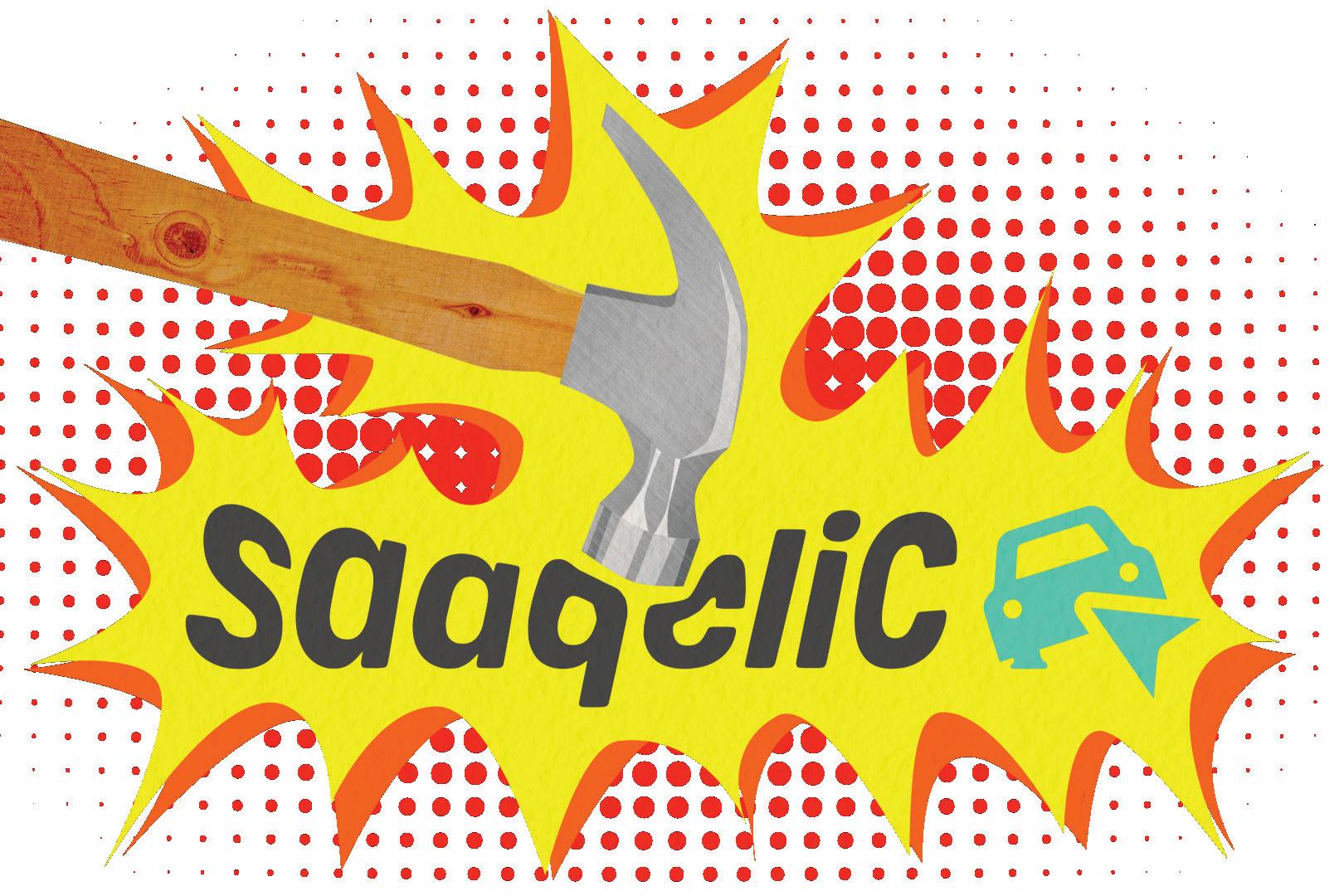
Cette révélation a poussé le premier ministre François Legault à réagir lors d’une conférence de presse.
Parmi les 26 recommandations de la Commission se retrouve la création d’un « dossier centralisé », afin d’améliorer la traçabilité des projets publics et de garantir que l’historique des projets circule de manière fiable auprès des décideurs.
M. Gallant a conclu sa déclaration sur une note positive. « Chaque projet en cette matière sera l’occasion pour le Québec d’améliorer ses façons de faire, sans explosion de coût et surtout sans gaspiller l’argent durement gagné par les Québécois », a-t-il dit.
Deux ans après le lancement de la plateforme, le rapport de la vérificatrice générale du Québec a révélé un dépassement de coûts de près de 500 millions de
« Pendant des années, la direction de la SAAQ a menti à notre gouvernement », a déclaré M. Legault. « J’ai demandé à mon équipe, incluant l’équipe de fonctionnaires de voir les recours judiciaires qu’on peut prendre
Activons notre francophonie!
Chaque année, en mars, le Mois de la Francophonie vise à célébrer la langue française et à unir ses locuteurs des quatre coins du monde.
Par
Daphnée Béchard
Rédactrice
attitrée et coordonnatrice aux volontaires de L’Organe
Cette année, le thème du Mois de la Francophonie est « Active ta francophonie »; une expression qui évoque le sport et l’activité physique, mais qui, au premier abord, peut paraître un peu nébuleuse lorsqu’il est question de langue. D’après le Bureau de la traduction du Canada, ce nom évoquerait le fait d’« aller vers les autres et [...] multiplier les occasions de se rassembler pour faire rayonner une langue
[…] avant le rapport de la vérificatrice générale en février 2023. », a-t-il mentionné à plusieurs reprises lors du point de presse.

façonnée par la richesse de ses accents, traditions et histoires. »
Une définition qui, pour moi, est porteuse d’un sens profond.
Car une langue vivante, c’est une langue qui nous accompagne dans nos conversations, dans nos quotidiens, dans nos moments de vie. Elle ne peut être détachée, isolée et stérilisée de toute trace humaine, dans le but de n’exister que dans un idéal préservé de l’usure du parler.
Alors, pourquoi agissons-nous comme si l’on devait aspirer à cela? Pourquoi encourageons-nous l’ultra-conformité
linguistique, de par nos petites remarques envers ceux qui « parleraient mal »?
Tu ne vois pas ce à quoi je fais allusion, chère lectrice ou cher lecteur? Pourtant, ce type de jugements n’est pas réservé à une catégorie précise de personnes.
Que ce soit le journaliste québécois de région qui trouve son élocution trop « rurale » en comparaison au standard radio-canadien, le banlieusard de France dont le phrasé est comparé péjorativement à celui du bourgeois parisien, ou bien l’Ontarien anglophone qui s’exaspère lorsqu’il ne peut s’exprimer en français
Graphique par Yousra Ait-Hammou // Collaborateur
Graphique fourni par Patrimoine Canada
En partenariat avec et financé par L’Organe
Laval achète le Golf Ste-Rose pour en créer un nouveau parc
Laval investit dans le Golf Ste-Rose pour conserver ses milieux naturels avant 2027.
Par Marise Filice
Collaboratrice
@filicephoto
Le 3 février dernier, la ville de Laval annonce avoir officialisé l’acquisition du Golf Ste-Rose, un terrain de 52 hectares, soit environ 75 terrains de soccer, pour 12,5 millions de dollars.
Stéphane Boyer, le maire de Laval, a défendu la décision de la ville lors du conseil municipal, en soulignant l’importance de préserver le terrain et créer un parc naturel et accessible.
« Le terrain du Golf Ste-Rose représente une occasion exceptionnelle pour le nord-ouest de notre île. Alors que
certains souhaitaient y faire du développement immobilier, nous avons choisi de le protéger, [...] et surtout de le rendre accessible à la population », a expliqué le maire Boyer.
Le vote pour ce projet a conclu avec 18 votes pour et trois votes contre, provenant de l’opposition.
L’acquisition du site s’élève à 12,5 millions de dollars, mais ce ne sera toutefois pas à la Ville de tout débourser. La Communauté Métropolitaine de Montréal et le gouvernement du Québec contribuent chacun avec un total de 4,5 millions de dollars en soutien financier.
Certains élus ont critiqué la facture de 8 millions de dollars assumée par la Ville, dans un contexte où l’inflation a grimpé de 4,5 %.
Le conseiller de l’opposition, David De Cotis, du district de Saint-Bruno, a remis en question la pertinence de cette dépense.
« Je ne comprends pas comment on peut avoir l’audace de demander aux Lavallois de payer 8 millions de dollars pour un terrain qu’on ne peut rien faire avec aujourd’hui », a-t-il déclaré.
La conseillère Louise Lortie, qui est directement interpellée par cette décision puisque le golf se situe dans son district, exprime aussi l’inquiétude du prix, mais rassure être en accord avec le projet.
« Je suis bien contente qu'on acquiert ce terrain-là. Par contre, je pense qu'on paye cher.», a-t-elle dite lors de la séance.
Dans un communiqué de presse, la Ville affirme que l’acquisition du terrain viendra renforcer un secteur déjà protégé, dont celui du Réfuge faunique de la Rivière-des-Mille-Îles, et permettra la création d’un « corridor écologique » le long de la rivière, pour venir protéger la faune et la flore qui s’y trouvent.
Selon Richard Shearmur, professeur à l’École d’urbanisme de McGill, cette décision montre bien la différence entre la logique d’un développeur et celle d’une municipalité.
« Un développeur cherchera à maximiser financièrement l’utilisation d’un site, sans forcément se soucier des besoins plus larges de la Ville. Une municipalité, elle, doit penser à l’équilibre de la Ville et aux besoins de sa population », a-t-il expliqué.
Shearmur mentionne l’importance de l’accessibilité, surtout dans un secteur résidentiel où peu de gens ont accès à la rivière ou à de grands espaces verts.
« Si seuls les automobilistes peuvent s’y rendre, cela limitera son utilité, surtout pour les gens qui vivent en appartement ou qui ont moins de moyens. Ce sont justement eux qui ont le plus besoin d’accès aux parcs », a-t-il ajouté.
Selon Shearmur, la Ville de Laval voit ce terrain sur le long terme.
« Même si à première vue, on pourrait croire que Laval perd des revenus de taxes ou des occasions de construire de nouveaux logements, la Ville prend du recul et mise sur des aménagements qui rendent la ville attrayante, un peu comme le Mont-Royal à Montréal », a expliqué le professeur.
Le golf pourra continuer ses activités jusqu’en novembre 2027 sous contrat de bail avec la ville, qui en profitera pour consulter les Lavallois et savoir ce qu’ils souhaitent pour ce nouvel espace.

sans que son accent ne donne l’idée à son interlocuteur de changer de langue. Ces expériences sont loin d’être isolées; elles font partie intégrante de notre réalité francophone.
J’ai moi-même l’impression, par moments, d’être scrutée pour la façon dont je parle. J’ai grandi dans un environnement très bilingue, parlant français avec mon père et anglais avec ma mère. Les étiquettes identitaires d’« anglo » et de « franco » ne m’ont jamais vraiment parlé. On m’a (tout de même rarement) déjà fait la remarque qu’on pouvait percevoir un
accent de l’autre langue… dans chacune des deux langues. Là où ça se complique légèrement, c’est que j’ai grandi à Montréal, entourée de personnes ayant vécu en France, ayant fréquenté une école primaire et secondaire du système français. Mon père, né à Paris d’une famille issue de la Ville de Québec, a grandi entre le Liban, les États-Unis et la Côte d’Ivoire, ce qui a influencé les références culturelles qu’il m’a transmises en grandissant. Le vocabulaire que j’emploie est un mélange assez éclectique : je privilégie le mot « chandail » à « haut »,
tout en préférant « gourde » à « bouteille ».
Il m’arrive parfois de me sentir un peu plus vulnérable quand je parle français, car je me dis que mon accent, davantage nord-américain en anglais, m’offre presque un certain anonymat. Pourtant, lorsque je me rends aux États-Unis, on me mentionne souvent que je ne sonne pas comme une Américaine. De plus, il m’arrive, sans m’en rendre compte, d’adopter la cadence chantonnante de ma culture maternelle quand j’emploie des termes tels que calypsonian, sorrel ou bacchanal
L’Organe a longtemps défendu une
vision inclusive de la francophonie. D’où que l’on vienne et quel que soit notre horizon, que le français soit notre première ou cinquième langue, notre façon de parler est un reflet de notre vécu. Cet élément indissociable au français oral est une richesse, dont on n’a pas à être gênés ou à reprocher aux autres. Ce sujet sera d’ailleurs mis à l’honneur à la ciné-rencontre du 24 mars que nous co-présentons avec l’Espace franco, où nous regarderons le documentaire « Parler mal » (2023) et discuterons tous ensemble avec sa co-animatrice, Bianca Richard.
Photo fournie par la Ville de Laval
Behind-the-scenes look at Concordia’s Art Matters Festival
What does it take to lay the groundwork for building North America’s largest student-run fine arts festival?
By Julia Imee Silva Arts & Culture Editor @liaa.imee
In a tiny office in the basement of Concordia’s Visual Arts building lies the headquarters of one of North America’s largest student-run fine arts festivals, Art Matters Festival. The cramped, secluded space is only enough to fit three people, some festival materials and 25 years worth of archives. This is where all the work to build the Art Matters Festival from the ground up begins.
Art Matters was founded in 2000 to celebrate the 25th anniversary of Concordia’s Faculty of Fine Arts, and to bridge the gaps in the market for student art showcases within Montreal. Every year since, Art Matters organizes a festival filled with art shows and exhibitions — entirely run by students, from the coordinators and staff to facilitators, artists and volunteers. This year, Art Matters has offered workshops outside of its core programming that built up community engagement leading up to the festival.
“We really want to open up the art world to everyone,” said Gemma Else, the communications coordinator for Art Matters. “I think this is such an accessible way to do it, where it's high calibre of work — but it’s student work.”
The 2026 edition runs from Feb. 23 to April 3, constructed with nine exhibitions spread across various reputable art spaces throughout the city of Montreal. This year’s overarching theme is “Unstable Grounds,” which makes space for conversations surrounding local and global austerity to address uncertainties and promote social sustainability.
A new slate of passionate coordinators isare hired each year to create a unique and innovative visual identity for the festival.
“It’s a phenomenal learning experience,” said Brigid McPhee, the general coordinator for Art Matters. “We have felt very trusted, and that we have the freedom to work on the ideas that we feel are the most important to us, and really direct the path of the festival.”
Adey Singer, the programming coordinator, alongside Else and McPhee, make up the core team spearheading the 26th edition. They lay all the groundwork — managing the finances, shaping the programming, and working with over 60 students — to turn their visions into fruition. Each coordinator has put in 20 hours of work weekly and undeniably more during festival season.
According to Else, they aspire to upscale the festival while still meeting students’ demands and offering the same quality of programming, if not better.
“It would be amazing to have more than nine shows this year,” Else said.
Unchanged fee levy limits festival growth
As a fee-levy organization, Art Matters

receives funding from the Concordia Student Union (CSU) and the Fine Arts Students Alliance (FASA).
In June 2025, McPhee started her mandate by putting together a proposal to increase the Art Matters fee levy that took months of labour and thousands of dollars to conceive. According to both Else and McPhee, knowing the time and effort put into the proposal made the CSU’s decision to reject it thrice deeply upsetting and demoralizing — considering as well the context for which it was shot down.
The festival has been operating on the same fee levy of 8 cents per credit since its inception 26 years ago. But as times change and costs rise, the same amount of funding becomes less and less functional. So, they proposed a two-cent increase to 10 cents per credit.
“I spent the year applying to various grants, because our fee levy does not cover all the cost of our operations,” McPhee said.
Art Matters received a grant from the Sustainable Action Plan, covering the printing expenses of the festival materials, including posters and the program booklets distributed at shows. They adopted risograph printing, a method similar to screen printing that uses soy-based ink and recycled paper.
“Financially, we’re going to have to be creative,” said McPhee, who worked intentionally alongside programming to find the best venues in terms of rent and get funding grants for workshops to keep all events free. They also cut some staff positions, like the social media manager to save on money.
“But eventually, we’re going to have to get more money because as participation grows, our capacity and venues will also be growing,” she said.
Shaping the 26th Art Matters festival
“Our primary role is to guide our staff and our facilitators, and help them to learn how to do this on their own,” McPhee said. “It is pretty rare in this world that you have access to that much support and money, but then also have the space to kind of flesh out your own vision.”
Each show is carefully and mindfully crafted by a facilitator, who oversees everything from spelling out the exhibition theme, to curating the artworks and designing the program.
For Marie Khediguian, a fourth-year painting and drawing student, facilitating The Risk of Colour exhibition is her first-ever curatorial experience. As a facilitator, she gets to platform the art of emerging artists and set them up for success.
“I feel a lot of pressure because I want to make sure that the show is good — not for me, but for them,” Khediguian said. “This is their Art Matters show, and so, if it goes really wrong, then I feel very responsible.”
In the curation process, Khediguian had to look through a catalogue of over 200 individual student submissions to find the artworks that best fit her exhibit’s theme.
“That was a lot of work, going through it and making sure you’re seeing everything that you’re looking at,” Khediguian said.
According to Else, they received nearly 50 more artwork submissions than last year. Despite increased participation, only 60 artists have been selected to exhibit over the course of nine shows, which Else said was heartbreaking.
“That is at once so many and so few,” she said.
Kira-Madina Storch, a painting and drawing student, is one of the Concordia students whose work is featured in this year’s festival.
“It’s really rewarding to have someone appreciate my art,” said Storch about being able to exhibit at Art Matters for the first time, despite this artwork not being her main medium.
According to Storch, her installation-based piece, Threads of Belonging, represents bits and pieces of her fragmented identity through found objects like scrap fabric, raw canvas, and a stick from her yard.
“Art Matters is a good place to apply your weirdest, most niche works,” Storch said. “They’re really eager to exhibit the most interesting and mind-altering works that aren’t really traditional, and just more out of the norm.”
Storch is part of Re:bodying, a show tackling fluctuating identities and the “fluid understanding of being” by combining performance-based and installation artworks.
“We wanted to have some more performance-based shows, which haven’t been a focus in recent years,” Else said.
Art Matters opens up to the wider art world
One of their primary goals is social sustainability, which encompasses fair compensation and support for all the students involved in the festival — financially, but also through technical and learning opportunities that foster growth.
“In an ideal world, we shouldn’t have to rely on students’ emotional investment and willingness to do more, and go above and beyond,” Else said. “In the ideal world, they are compensated for the labour that they are providing and the skills that they are able to share with us.”
Art Matters is a great entry point to the Montreal arts scene, said Else. At its core, the festival’s welcoming atmosphere and community-based nature makes it accessible for everyone, artists and non-artists alike.
“I think Montreal is the happening spot for the art world in Canada,” Else said, to which McPhee agreed.
“It’s maybe the one place in Canada, at least I’ve found, that you can realistically make it as an artist and support yourself,” McPhee said.
Ultimately, Art Matters exists to bolster the early careers of Concordia’s students and emerging artists.
“Art matters because it should, and because people should be able to work in the arts and they should be able to make a career out of what they love,” Else said.

The coordinators of the 26th Art Matters festival. From left to right: Gemma Else, Adey Singer and Brigid McPhee. // Photo by Loulwa Hamaoui // Contributor // @louwlaslens
Asia Mason (right) at the Royaume Unlike Ur Own finissage on Feb. 28, 2026. // Photo by Loulwa Hamaoui // Contributor // @louwlaslens
Arts & Culture

Honouring maple-grade talent
Everything you need to know about the 2026 Juno Awards.
By Sofia Dawson Music Editor @sofiajdawson // @somewhereordinary
On Sun. March 29, Hamilton’s TD Coliseum will pack tighter than Union Station at rush hour — with the same riveting, controlled chaos that will have you on the edge of your seat.
In an auditorium full of living legends, breakout powerhouses and all those lucky enough to sit amongst the stars, The 2026 Juno Awards returns for its 55th year of honouring homegrown talent.
Hosted by comedian, actor and writer Mae Martin, the ceremony is sure to offer some laughs, electrifying sets and maybe even a tearful speech or two. Here’s a snapshot of who to look out for in attendance, what nail-biting performances viewers can anticipate and who’s dominating the nominations this season.
Nominations
A total of 248 nominations across 47 categories overflow with maple-grade talent. From Vocal Jazz Album of the Year to Contemporary Indigenous Artist or Group of the Year, the list of nominees ranges far and wide over genres, creative capacities and industry leaders.
Within the big three — Single of the Year, Album of the Year and Artist of the Year — Tate McRae stands tall against her male counterparts as the only female contender. McRae’s impressive year on the charts and show-stopping tour has solidified her claim to fame as a young Canadian artist in the global music scene. “Sports car” will compete against both Justin Bieber’s “DAISIES” and The Weeknd’s “Cry For Me” for Single of the Year at this year's Juno’ s ceremony.
Breaking out of the water with a whopping five nominations, BC-native Cameron Whitcomb will make his debut at The Juno’s as a first-time nominee. Through a country-folk sound, Whitcomb’s vulnerable storytelling and open dialogue on addiction and sobriety has connected him with global audiences and landed him recognition as a Canadian trailblazer.
Nominees for Group of the Year include Arcade Fire, Mother Mother, Peach Pit, Three Days Grace and The Beaches — all of which lean heavily into Canada’s
rock-alt scene and span over three generations of music.
From the Quebec and Montreal music scene, Siibii received their first (and definitely not their last) porary Indigenous Artist (or Group) of the Year while Patrick Watson Barr Brothers native Album of the Year.
Performances
Nestled amongst the long list of awards will be a spree of performances by some of Canada’s top talent and global supernovas.
Daniel Ceasar receive the award for International Achieve ment. As well, from his nominated album and Contemporary Roots Album of the Year nominee, William Prince audience’s heartstrings.
From Song to a Seagull Now, Joni Mitchell music landscape has undoubtedly paved the way for many Canadian singer-songwrit ers. Together, Russell will honour as she receives the 2026 Lifetime Achieve ment Award.
As we make way for “Canada’s Biggest Night in Music,” don’t miss your chance to vote for your favourite artists nominated
for the TD Juno Fan Choice award, at tdjunofanchoice.ca. Voting closes Sun. March 29.
Celebrating Canadian artists across the

SunDown: Not your average party
A monthly theme, a lineup of local DJs, and the spirit of community makes SummerCamp Studios’ SunDown one of the most unique events in Montreal.
By Aidan Flanagan Staff Writer
@__flanny__
On February 28, the SummerCamp Studios collective returned for the fourteenth edition of its monthly SunDown event. Being the collective’s second annual Black History Month event, the evening’s theme was centered around Black Dandyism, a style of fashion emphasizing excellence and identity through impressive tailored clothing. The DJ lineup, consisting of Potato, Le Complot, Taima, Uptown Trav, and Kingongr, fuelled the energy of the night with soundtracks that uplifted their roots and grounded the vibe of the room within the unified energy that the team created.
With a cohesive theme and a lineup of local DJs every month, SunDown emphasizes community and fellowship through art. Every SunDown takes place at SummerCamp Studios’ multi-purpose space, nestled into Montreal’s Garment District. SunDown parties last from five o’clock to
eleven o’clock in the evening — right as the sun goes down.
Partygoers are greeted by warm lighting, creative outfits, and thematic sets based on whichever theme the creative team’s monthly concocted theme. Through a wide breadth of genres, a lineup of four to five local DJs act as sonic pilots flying from Afro-Caribbean genres to hip-hop and R&B sounds.
In honour of the event’s continued success, several representatives from the team spoke to The Concordian about what makes these one-of-a-kind nights so special.

According to creative director Ogo Jonathan, the idea behind SunDown was to “create one space that is welcoming to everyone in the creative industry through music. We weren’t sure how we would do it - until we built the pit.” The pit in question is a 1970s-esque ‘conversation pit’ couch. The pit houses the DJ booth, as well as ample space to dance, both in and on top of the couch.
The DJ lineup rotates monthly at SunDown, but several veterans often stick around. Local talent Potato is known for her genre-blending approach to mixing, a required quality for making it onto a SunDown lineup.
“When we’re picking the lineup, we assess and see which DJs make sense. We also ask if they’re community-driven,” said Jesse Omo, the collective’s tech and development expert, and a DJ himself.
“As for the music, we never want to put ourselves in one box, so we like to
give our DJs a platform to express themselves freely. As a collective we are mostly Afro-Caribbean but our goal is to remove all boundaries and make SunDown open to all genres,” said head of marketing, Noella Alexander. Another unique aspect of SunDown comes from their promotional photoshoots that serve to announce the DJ lineup and theme. Administrative and booking head Kaela Alexander described the theme selection process as being community-driven; “We always ask what is culturally-relevant that month and then figure out how to include the community in it.”
SunDown’s Instagram page (@sundown_sc) features photoshoots announcing the lineup, as well as brief Q&A sessions with each DJ, allowing the audience to get to know their entertainers a little better. As Jonathan puts it: “We don’t have to do the things that we do, like these interactive shoots, but we do [them] to push
ourselves forward.” Additionally, SunDown often does ‘community shoots’ that highlight the fans that come to the event.. Taken together, all of these unique elements contribute toward making SunDown what it is. According to editor Deji Bakare, “everything about SunDown is meant to give an experience that prompts people to want to make friends, forge connections, and see that we are truly a creative hub that covers art, fashion, and music in one package.”
If the team’s insight is anything to go off of, SunDown has a bright future and the potential to grow. As administrative lead Marie Camara puts it, “more people need to get their SunDown experience on a bigger scale.” SunDown will return with its next event on March 28.
Photo of Sundown's One Year Anniversary on November 29th 2025// Courtesy of Heaven Visuals
Graphic by Cynthia Comeau // Contributor // @cynthoil
Music
Living as Siibii
A Juno nomination may mark a milestone, but the real recognition comes from within.

@sofiajdawson // @somewhereordinary
Once in a blue moon, an attentive audience gets to witness the slow unfolding of an artist’s career. For some, that looks like fan-bases growing, streaming numbers climbing and acclaimed recognition. For Siibii, that growth keeps all those elements along for the ride while their most glowing transformation happens from within. from the Cree community of Mistissini, Quebec reNomination for their debut album in the Contemporary Indigenous Artist or Group of the Year category. The journey to such a nomination was chock-full of hard-hitting truths, commendable self-compassion and a breakthrough
From youthful performer to working advocate and teaching artist, music has remained the constant throughout their journey. At just 13 years old, Siibii’s initial vessel for performance was their duo band Simple Human Tribe, established alongside their childhood best friend Kim. Moving into their post-college life, Siibii set off to pursue a career at a non-profit working to bring the arts into First Nation communities.
Now, the Siibii that has emerged into the Canadian music landscape today takes on an entirely new understanding of themselves and their artistry.
The singer’s previous releases under their dead name marked their original en trance into the music industry: “It was just me dipping my toes in the water.” Now, years later, their artistic development and self-growth has fueled their drive to push the goalpost further.
“When you don’t aim for anything, you’ll hit something eventually, but it’s probably better if you start aiming,” Sii bii laughed.
As awards season reared its shiny head and submission deadlines crept up, their newfound intention was present.
“I really wanted to be able to submit for that Juno, there was just something about it.”

Siibii spoke to how the releases prior to their nominated EP Siibii, hadn’t clung to goals in the same way they dreamed them up now.
“I saw all my peers in the industry submitting and getting Junos — Sebastian Gaskin is one, Aysanabee is one. Like, these are people that I really look up to as individuals, as professionals, as friends. And so there was just this desire or want to receive that recognition.”
For Siibii, praise on a national scale is commendable but what is invaluable to them is the pride they’ve seen from their communities.
“The recognition that I’m getting from my communities, from my nation is like, tenfold what I ever expected it to be...Every time I share a milestone, in my own personal network or through social media, I have this outpour of support from people from my nation and that means so much.”
Beginning April 4, Siibii will soon be touring their self-titled EP across their nation, “I’m super excited about it because I want to be able to bring these songs home.”
From “YOY” to “Body to Body,” their EP cracks them wide-open with
pattern recognition and co-regu lation involved when it comes to music. So, I think that’s why I took to it so young.”
The singer’s pure authenticity creates space for discussions that are often swept under the rug. From the importance of mental health care, to what it means to truly connect and understand oneself, Siibii’s vulnerability spans much beyond their songwriting and into their human character.
“Being a young kid and not feeling seen or heard and not feeling valued as somebody who is two spirit, somebody who is queer, as somebody who was trans, non binary — I just felt a little small […] I was so heavily struggling with my mental health as somebody who was undiagnosed and unmedicated. And so, I think about that little person, that little being, that didn’t see living past 16, let alone be in their 20s and have this incredible career.”
Hardship often reveals the strength required to survive. For Siibii, rolling with the punches and moving through chaos kept them pushing forward.
“I’m so freaking proud of myself. I’m so proud of this little Siibii for having
been so strong and withstanding so much freaking garbage, because that really made me who I am and I hate that. I hate that people have to be resilient in order to feel strong. But that’s really what happened. I had to go through so much in my life in order to stand where I’m standing right now. I had to lose so much, lose so many people in order to be where I am. And I just, I want to recognize that.”
“You know, there’s a part of me that wishes that I could go back to that kid and just freaking hold them and be like, you are gonna go through so much, but you’re also gonna do so much with your life, you know. I didn’t see myself living past the age of 16 — I remember when that switch happened, and I came to the point where I was like, Oh, I have so much to do with my life.”
Juno or no Juno, the true achievement for this remarkable artist and storyteller has been the pride and identity they’ve found along the way.
“Pride is the word that I feel and I see from my communities, that’s the best high. The best I’ve ever experienced.”
24-hour vinyl marathon
At Montreal’s winter festival, SAT hosts vinyl only DJs for an entire day.
By Luca Jarman Assistant Music Editor
@luca_jarman
_For 24 hours on Feb. 28, vinyl DJs spun records at this year's Nuit Blanche held at the Société des arts technologiques (SAT). DJs spun in a dark, party-centric atmosphere from 8 p.m. to 8 a.m. which were then followed by a brighter, more casual vibe, alongside a vinyl fair.
The event has been running yearly since 2011 and is the first and only of its scale in the world. Since then, many more vinyl DJ sets have taken off, especially in Montreal.
“I got into the medium after seeing a DJ use vinyl for the first time, it was mind-blowing,” said DJ Lia Plutonic, who performed at the event. “I'd never seen a DJ work so hard. She was connected to her records and her music, and that
allowed her to connect with dancers in a really special way.”
“The whole process is really intentional. You have to take time to pick the music that you want to bring and then work out how to communicate that bag of records with people. It makes these sets feel personal and intimate.”
She said the vibe of venues that embrace vinyl DJs is unique and brings a more patient, open crowd.
“People in that space know that it's not like a place for requests,” she said. “They trust you as a DJ and a selector. They come for good music, to move their bodies, and feel something. They share that intentionality with the performer.”
DJ Destiny Rosenberg played her set at 8 a.m. She grew up around her grandfather's collection of approximately 80,000 seven-inch singles and 7,000 albums.
Whilst she considers herself a “vinyl head,” she also DJs digitally, and emphasises the difference between the two mediums.
“When you’re DJing digitally, the information on the screen tells you a lot of what you need to know. The artist's name, the track length, wave form, the BPM. But none of it is on the record,” she said. “That way, you're really focused on
what you're hearing in your headphones.”
Vinyl collecting has been growing in popularity for years alongside a general revival of physical media.
DJ Ian Cameron, whose performance followed Rosenberg’s, believes that this is due to a younger generation growing up with only accessing digital media. He believes the physical nature of a vinyl record and the act of taking it out and playing it is appealing to young people.
“There's a permanence to it, and a sense of history,” he said. “There's a record I have, Joy Division's ‘Love Will Tear Us Apart,’ which I bought from a DJ at Les Foufounes Électriques. As I'm playing it, I can just imagine how many great nights finished with that very record.”
He spoke about how amassing a physical collection can counteract the quick-moving nature of popular music.
“There's something about vinyl that reflects your lifelong tastes, as opposed to whatever is popular at the moment,” he said. “It takes years to build a collection, and in that way, I think it makes sets more timeless.”
The event is one of a kind, and Cameron appreciated the chance to adapt his choice of music in order to fit a morning set.

“We looked at our 10 a.m. set as the palette cleanser,” he said. “We started with an ambient drone intro to reset the room, then slowly brought the energy back up with post-punk, leftfield disco, dub, moody electro, dubby house, and jazz. As we played, the sun peeked in from across the street through the windows and a night's worth of dance floor condensation. It was a perfect moment.”
Photo of Siibii // Vera Oh
Photo courtesy of Lia Plutonic
The end of an era
The bittersweet feeling of saying goodbye to who we once were.
By Rita Kamel Staff Writer
I have had the habit of keeping a journal for as long as I can remember. From time to time, I go back and read what I wrote, and I'm always amazed because when I look back, I meet a girl who I recognize and know really well, but she knows nothing about me.
I am very nostalgic; I get attached to places, people and memories very easily. I have a sense of pride in who I am and what I do and I find it hard to let go and move on to the next step. But I have learned that I can’t fight change; I will only delay it, never fully stopping it, remembering that change isn’t
My journal entries have been a re minder of why change can sometimes be good. They aren’t just some words on paper; they are actual representations of chapters of my life. They have been the proof and documentation of my growth as a person.
For some reason, when we think of somebody changing, we imagine a dra matic change, but change can be very subtle. Our simple daily choices — choic es that may seem irrelevant — affect who we will become in the long run.
I notice my taste buds changing. I now appreciate food that I used to hate and couldn’t even handle the smell of. I used to judge anyone who wrote in their books and now I walk with a whole an notation kit for that very purpose. I used to make fun of my dad's playlist, but now I listen to the same songs he listens to. If you wanted to torture me, you would take me to a museum but now going to a museum is my preview of heaven.


By Kailee Krentz Opinions Editor @kaileeliz
Much of Carrie Bradshaw’s time spent on screen is attached to the hip of a man we know as “Mr. Big.” Though he is inconsistent, unreliable and ultimately absent from the rare moments of Carrie we actually enjoy, somehow without fail, Mr. Big finds his way back on screen to torment and remind us of all the things we don’t want in a man.
During this disastrous couple's initial spark, reality strikes when, without any consideration for Carrie, Big announces he is moving to Paris. This should have been the end.
Carrie yearns and moans about how much she misses Big while her three — extremely patient — friends attempt to console her with little budge in her actions. She continues, getting on the nerves of everyone around, including us on the other side of the screen, until we are met with fresh-faced and picture-perfect Aidan Shaw.
Now, I won’t deny any Sex and the City newbies their own chance to take on Carrie’s insufferable love life, so without spoils but with much presumption, I can say, Big finds his way back.
I’m not sure if this is universal or simply something that my friends and I have latched onto, making it inherently part of our vocabulary, but the line “they always come back” frequents our household.
Being alive means witnessing a new version of ourselves every couple of years, and loving all of those versions
I remember panicking before starting university, because I knew the Rita that would enter wouldn’t be the same to get out; that my time at Concordia would leave an effect on me. I was proud of who I was after CEGEP, but letting go of this version of me has opened so many good doors, and I am now even more proud of myself. With or without Concordia, I was going to change anyway, and I will continue to
the only constant in life. Every day we wake up with a choice: we either let life lead and shape us, or we decide how we will change, and we behave accordingly. As much as I can find change scary, I am so grateful for all the change that I have witnessed so far. And I am even looking forward to what is next.
Big is moving to Paris
theme that seems to be recurring in this day of avoidance and non-committal relationships.
in our past knowing that several of our suitors lasted longer than they needed to, or we look toward the future, maybe secretly hoping that some will make another appearance.
I
am guilty of both.
Maybe we can give credit to Jeff Buckley as he sings, “It’s never over” in the background of the many conversations I’ve had about this very topic, attempting to recount all the lyrics with the same urgent desperation in my voice as the credited lyricist. We all strive for this sense of undying love, but what happens when we are faced with an abrupt ending or a faded fizzle? Both leave room for a question of wanting more; a
They surround us in the media and in reality, whether it’s Carrie and Big, or your dearest co-workers who always supply you with the best relationship drama. Whether it's something you’ve realized or not, I fear this is the routine our generation has found themself stuck in. If we continue to not test our relationships to their full potential, how are we to ever fully
follow, how do we break the cycle and find something that sticks?
Allow me to recognize that everyone is biased to their own experiences, and I am undecided which way to follow. Am I meant to follow suit secretly waiting for my own version of Mr. Big to re-enter into my life — despite my immense dislike for the character — or do I wait, hoping and praying that an Aidan Shaw is just around the corner to swoop me off my feet?


Graphic by Anna Huang // Graphics Editor // @itza_me_anna
Graphic by Anne Zhao // Contributor // @oahzenna

Prediction markets: How to do insider trading
War profiteering has never been easier. Canada must regulate prediction markets before their greyarea operations are normalized.
By Danylo Perkov Assistant Opinions Editor
Six individual traders have made more than $1.3 million after betting on the initial US strike on Iran that killed Ali Hosseini Khamenei – Iran’s brutal dictator that headed the government since 1989. Most of these six cryptocurrency wallets were created less than 24 hours before the strikes, with bets being placed mere hours in advance.
This is not the first, nor the last case of prediction markets such as Polymarket or
that dominate the international market are Polymarket and Kalshi.
Polymarket operates solely on USDC, a stablecoin cryptocurrency linked to money laundering and other financial crimes.
While Kalshi bets are placed mainly with real money, the platform has also aggressively expanded into the cryptocurrency betting market in 2025, paving the way for similar shady activity, such as money laundering and gambling with fewer restrictions than regular casinos.
Why is this bad? Since most payments are made using cryptocurrency, regulating who is barred from such platforms becomes exponentially more difficult. It becomes nearly impossible to track who bets on events and allows people with insider knowledge, such as government officials or military personnel, to profit from often classified information.
It also allows them to directly influence the results by betting on events that depend on their future decisions.
An anonymous account won $400,000 after betting on the US’s operation in Venezuela a couple of days before the raid. Another shady example is an account with a 100 per cent correct prediction on Israeli and American strikes across the Middle East — the lack of effort to even cover up the absurd level of war profiteering is disappointing but not surprising.
Lastly, in December of 2025, Kalshi announced an official partnership with CNN. As some news networks partner up with prediction markets, this may cause a number of problems, most ob
While EU countries act individually, they do so based on a common set of EU regulations.
But what about Canada?
Prediction market betting technically falls under short-term binary options, which have been illegal in Canada after a 2017 court ruling. However, Ontario is the only province that has even attempted to regulate the recent surge in prediction markets.
As of April 2025, Ontario is the only province that is listed as “prohibited territory” on Polymarket’s website, with the rest of Canada being open for business. Yet, even the ban in Ontario is easily bypassed with a simple VPN use.
The 2017 ruling was not designed with prediction markets in mind; it was passed to combat the surge of fraudulent websites in the 2010s and left a lot of holes that allow prediction markets to operate within Canada, as most bets are technically not considered short-term.
According to Canadian Affairs, the federal government does not intend to regulate or ban prediction markets anytime soon, leaving it to the
Prediction markets are platforms that enable insider trading and corruption for personal gain, alongside other things such as war profiteering and should be aggressively tackled on a federal level in order to better enforce the regulations across Canada.
We regulate insider trading in the stock market; this should be no different. Canada’s lack of regulation and action on prediction markets is an endorsement of fraud. If Canada does not want to take the lead, provinces should ensure insider trading and unregulated gambling are not

Graphic by Étienne Jean-Baptiste // Contributor//@et_jeanb
Games Games
Bienvenue Chez La STM by Eden Haramati
Down
1. Big and frizzy hairdo
2. Sections on Instagram profiles
3. Greek god of love
4. “My heart is like a wheel, ___ me roll it”
5. Hard to come by
6. Cousins of decibels
7. Chew, like a beaver might
8. Abbreviation on a business card
9. Like Things in Hawkins, Indiana
10. Nephew’s sister
11. Teen suffix
12. Dream, in Nice
13. You are, in Spanish
18. Common battery for a flashlight
23. Segment of an episode of SNL
24. Death Row Records co-founder
25. Toy that has its ups and downs
26. Groupings for Noah’s ark
27. “Meh”
28. Halloween haul
30. What the devil wears, accordingto a 2006 film
31. Painter’s stand
32. _____ P, alias for Perry the Platypus
34. Treat again, as a sprain
37. Loot for Gru
38. Babies wear them when they eat
40. YouTube or TikTok star, maybe
41. “American _____, stay away from me...”
44. Movie referenced in 33-Across, for example
45. “Winna winna, chicken ______”
46. Works very hard
47. Rubberneck
48. TV type
49. Purchase for a stoner
50. Word with “clot”
51. Bus driver on “The Simpsons”
52. Meat for piccata
53. “There wasn’t _ ___ eye in the house”
55. Mature
Across
1. Brother of Cain
5. Military rank, abbreviated
9. Type of drum, or part of a drum kit
14. Really good, in slang
15. Waffle ____ 16. Striped predator
17. Painful drilling procedure at the dentist
19. Christopher ____,
who played Superman
20. Post-war spy org.
21. Type of sweater without a hood
22. Green ____, beverly hillbillies, and hooterville junction...
24. Unit of force
29. “The Princess and the ____”
30. “The Princess and the ___”
44 Movie referenced in 33-Across, for example
23. There are 60 in a min.
26. Predicament or jam
"Winna winna, chicken ______"
Perry the Platypus 34 Treat again, as a sprain 37 Loot for Gru 38 Babies wear them when they eat
YouTube or TikTok star, maybe 41 "American _____, stay away from me..."
33. “Garfield: _ ____ of Two Kitties” (2006 academy award snub)
34. Try a new colour
35. Cloth used for wiping counters
36. “____ She Lovely?”, Stevie Wonder song
37. Common way to get around Montreal, or what the lines in this puzzle represent collectively
38. First, second, or third in a diamond
39. Wall fixture for a curtain
40. Raise, as a concern 41. Broaden
42. “Let the ___ fall,
29. Game for a dog
when it crumbles...”
43. Ness is an example of one
44. Metal found in meteors, used to tint glass
45. Ready and finished
46. Hiddleston, Hardy, and Holland
47. ____ or go home
50. Unconscious state
51. Egg cells
54. Bob Dylan’s “All
56. Cigarette residue
_____ the Watchtower”
55. Detached, like from society
57. Tube-shaped pasta
58. “And all that glitters is ____”
59. Wars or Trek
60. _____ Allan Poe
61. Website with homemade crafts
62. Start of many exclamations