NOAA releases 2026 hurricane forecast
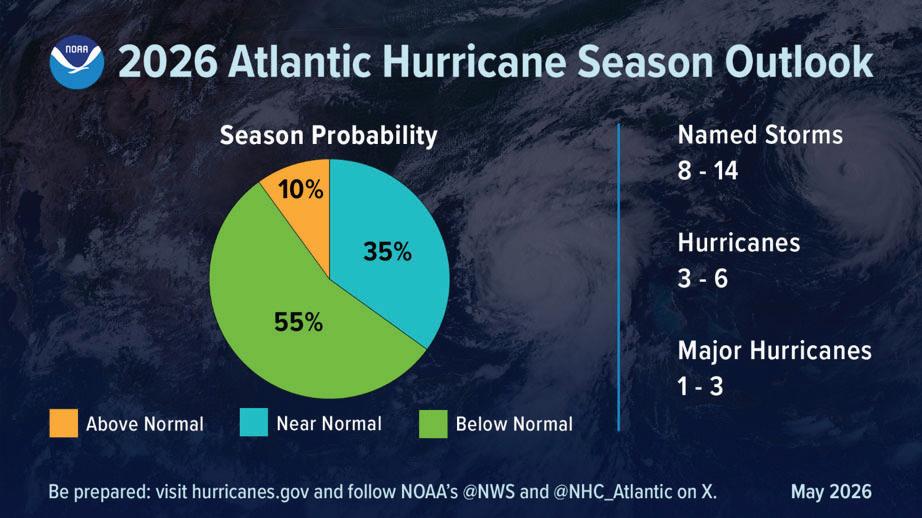
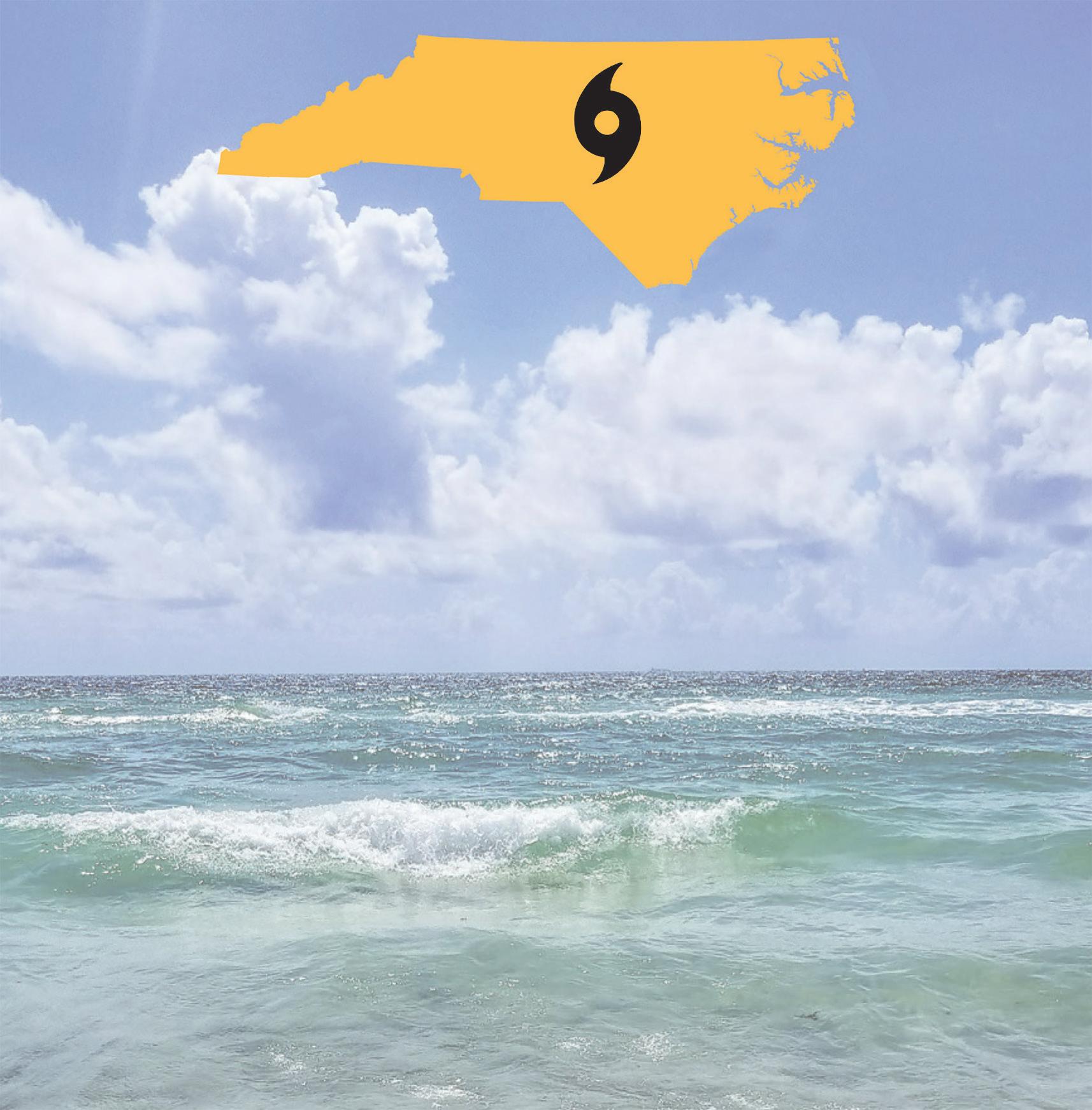
Forecasters with NOAA’s National Weather Service are predicting a below-normal hurricane season for the Atlantic basin this year. NOAA’s outlook for the 2026 Atlantic hurricane season, which runs June 1 to November 30, predicts a 35% chance of a near-normal season, a 10% chance of an above-normal season, and a 55% chance of a below-normal season.
The agency is forecasting a total of eight to 14 named storms (winds of 39 mph or higher). Of those, three to six are forecast to become hurricanes (winds of 74 mph or higher), including one to three major hurricanes (category 3, 4 or 5 with winds of 111 mph or higher). NOAA has a 70% confidence in these ranges.
An average season has 14 named storms with seven hurricanes, including three major hurricanes.
“NOAA’s rapid
integration of advanced technology, including AIbased weather models, drones, and next-generation satellite data will deliver actionable science to safeguard the lives and livelihoods of the American people,” said NOAA administrator Neil Jacobs, Ph.D. “These new capabilities, combined with the unmatched expertise of our National Weather Service forecasters, will produce the most accurate forecasts possible to protect communities in harm’s way.”
KEY FACTORS DRIVING
NOAA’S FORECAST
The Atlantic season is expected to be below-normal due to competing factors. El Niño is expected to develop and intensify during the hurricane season, while ocean temperatures in the Atlantic are expected to be slightly warmer than normal and trade
After a flood
Never assume that a water-damaged building is safe. Going into a building that has been flooded, even after the water is gone, can present public health hazards that can cause injury, illness or even death. Follow these instructions to avoid the following hazards:
Electrical hazards – Do not enter a flooded or wet building if the power is on. If any electrical circuits have gotten wet, turn off the power at the main breaker or fuse box.
Structural damage – Do not enter a building if the framing or foundation is damaged. Look carefully before you enter. Leave immediately if shifting or unusual noises signal a possible collapse of the building.
Hazardous materials –Dangerous materials found in flooded buildings may include pesticides, fuel oil, gasoline, chemicals and other substances that might have been brought in or spilled by flood waters. Damaged buildings may also contain asbestos and
winds are likely weaker than average. El Niño conditions tend to support less tropical storms and hurricanes, while warmer ocean temperatures and low winds support a more active year.
“Although El Niño’s impact in the Atlantic Basin can often suppress hurricane development, there is still uncertainty in how each season will unfold,” said NOAA’s National Weather Service director Ken Graham. “That is why it’s essential to review your hurricane preparedness plan now. It only takes one storm to make for a very bad season.”
NOAA’s outlook is for overall seasonal activity based on large-scale weather and climate patterns. It does not indicate where or when any storms may affect land as that is determined by short-term
See NOAA, 2B
Things to keep in mind from Dare County
lead-based paint, which can cause health problems during cleanup.
Animal and insect related hazards – Look carefully before entering a building to determine if there are displaced animals in the building such as dogs and cats, raccoons and rodents. Watch out for snakes and insects such as wasps, fire ants, and mosquitoes.
Injuries – Falling objects, broken or damaged building components and slick surfaces can cause injuries, broken bones and
cuts. Lifting heavy objects can cause back injuries and muscle strains.
Biological hazards– Bacteria, viruses, fungi, (mold and mildew) and other microorganisms can cause illness when you breathe them in, take them into your body through your mouth, or take them in through non-intact skin. Bacteria, viruses and other microorganisms may be left indoors by floodwater, while mold and mildew may grow indoors after the floodwater has receded.








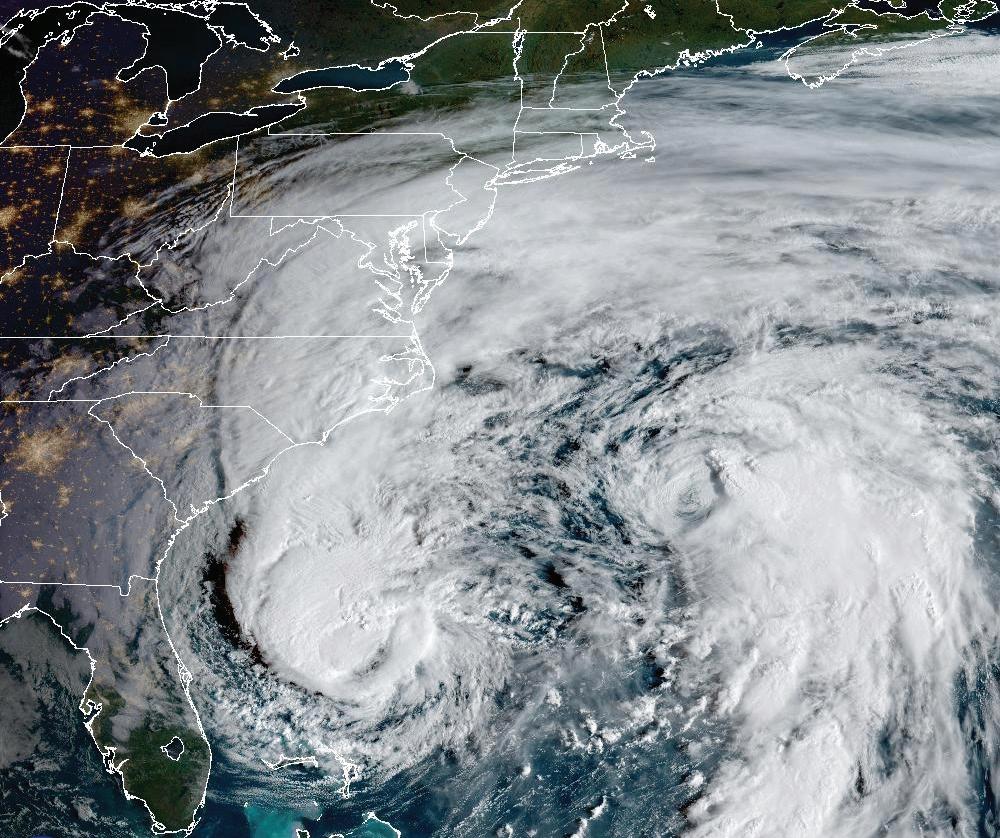
Tropical Storm Imelda was active last hurricane season.
FILE PHOTO BY ANGIE BRADY-DANIELS
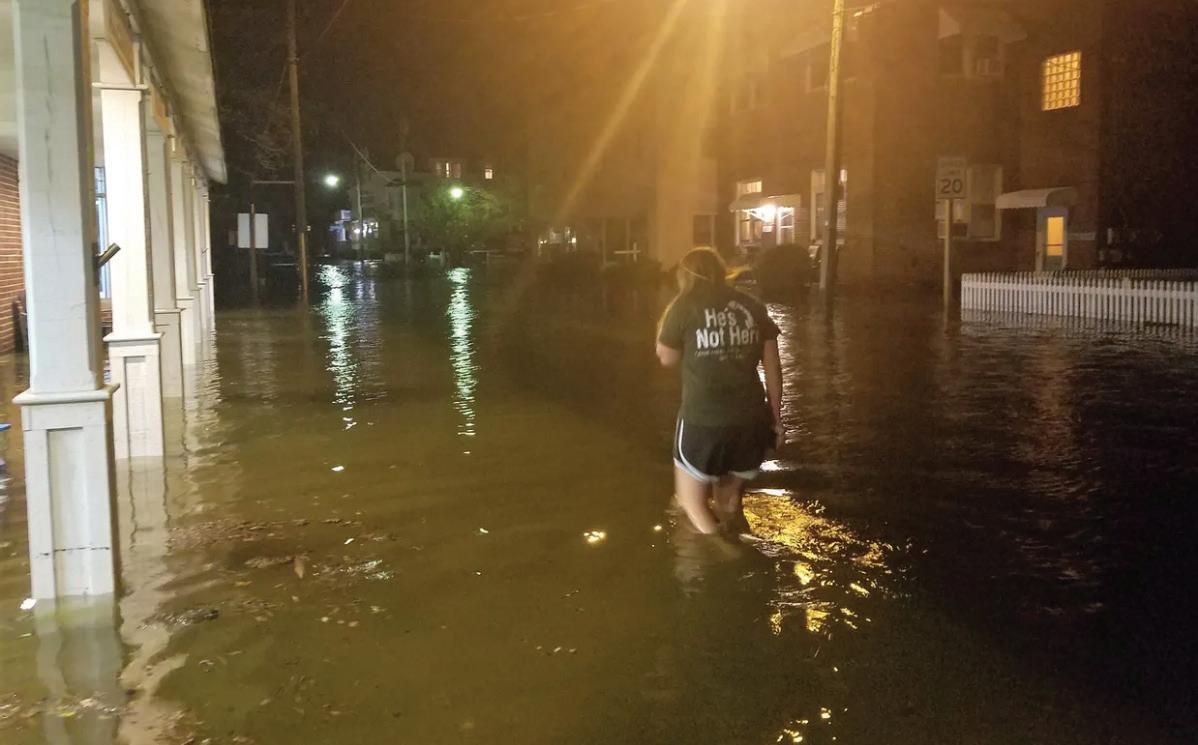
Water from Shallowbag Bay surged onto Sir Walter Raleigh Street in Manteo in October 2018 as Tropical Storm Michael moved o the coast.
Disaster Preparedness Guide
What’s in a hurricane name?
By Danielle Puleo danielle.puleo@thecoastlandtimes.com
As the Atlantic hurricane season approaches each year, many residents and visitors along the coast begin hearing the names of potential storms long before any systems develop. While hurricane names may seem random, the process behind them is carefully organized and managed years in advance.
According to the National Hurricane Center and the World Meteorological Organization (WMO), tropical storms and hurricanes in the Atlantic Ocean are named using a rotating list of names that repeats every six years.
The same list used during the 2020 hurricane season, for example, will be used again during the 2026 season, with the exception of any names that were retired due to particularly destructive or deadly storms.
The naming system was created to help improve
communication and public awareness during storms. Before hurricanes were officially named, storms were often identified only by latitude and longitude coordinates, which could lead to confusion when multiple storms were active at the same time. Giving storms short, recognizable names makes it easier for meteorologists, emergency officials, news outlets and the public to track and discuss storms clearly and efficiently. The Atlantic hurricane name lists contain 21 names each year and alternate between traditionally male and female names in alphabetical order. The letters Q, U, X, Y and Z are not used because there are fewer common names beginning with those letters. If a hurricane season produces more than 21 named storms, officials now use a supplemental list of names rather than the Greek alphabet system previously used in extremely active seasons.
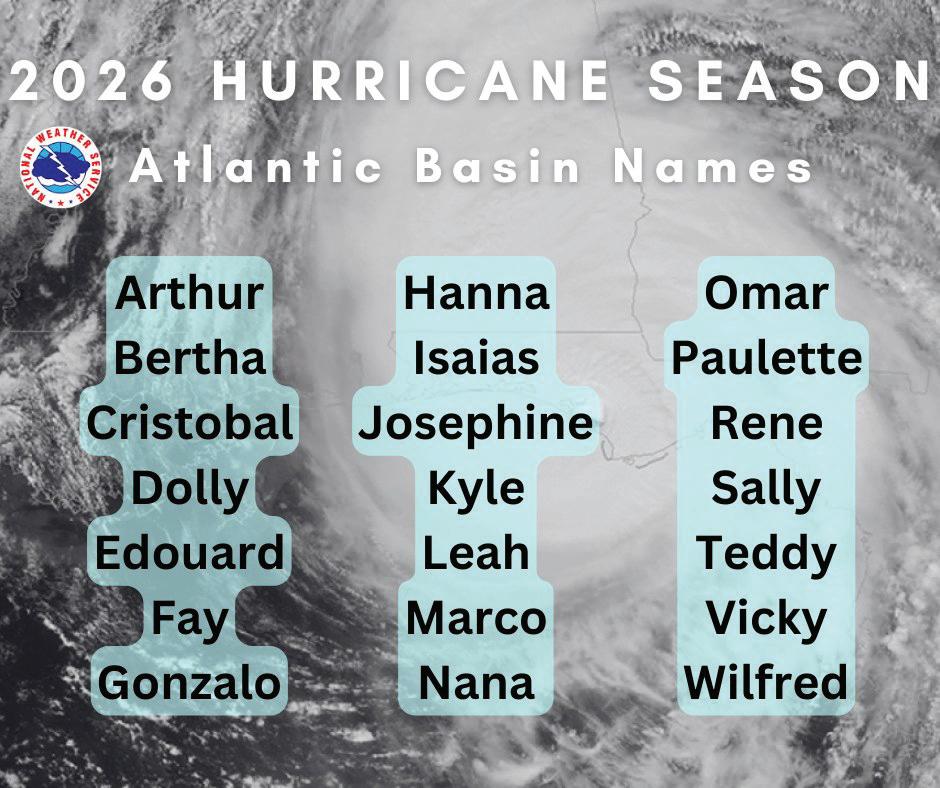
The official 2026 Atlantic hurricane names are Arthur, Bertha, Cristobal, Dolly, Edouard, Fay, Gonzalo, Hanna, Isaias, Josephine, Kyle, Leah, Marco, Nana, Omar, Paulette, Rene, Sally, Teddy, Vicky and Wilfred.
Hurricane names are retired when a storm becomes so deadly or costly that reusing the name would be inappropriate or insensitive. Some retired Atlantic hurricane names include Katrina, Sandy, Florence, Michael and Ian. When a name is retired, it is replaced with a new name chosen by the WMO. For coastal communities such as those along the Outer Banks, hurricane season preparation remains important regardless of a storm’s name.
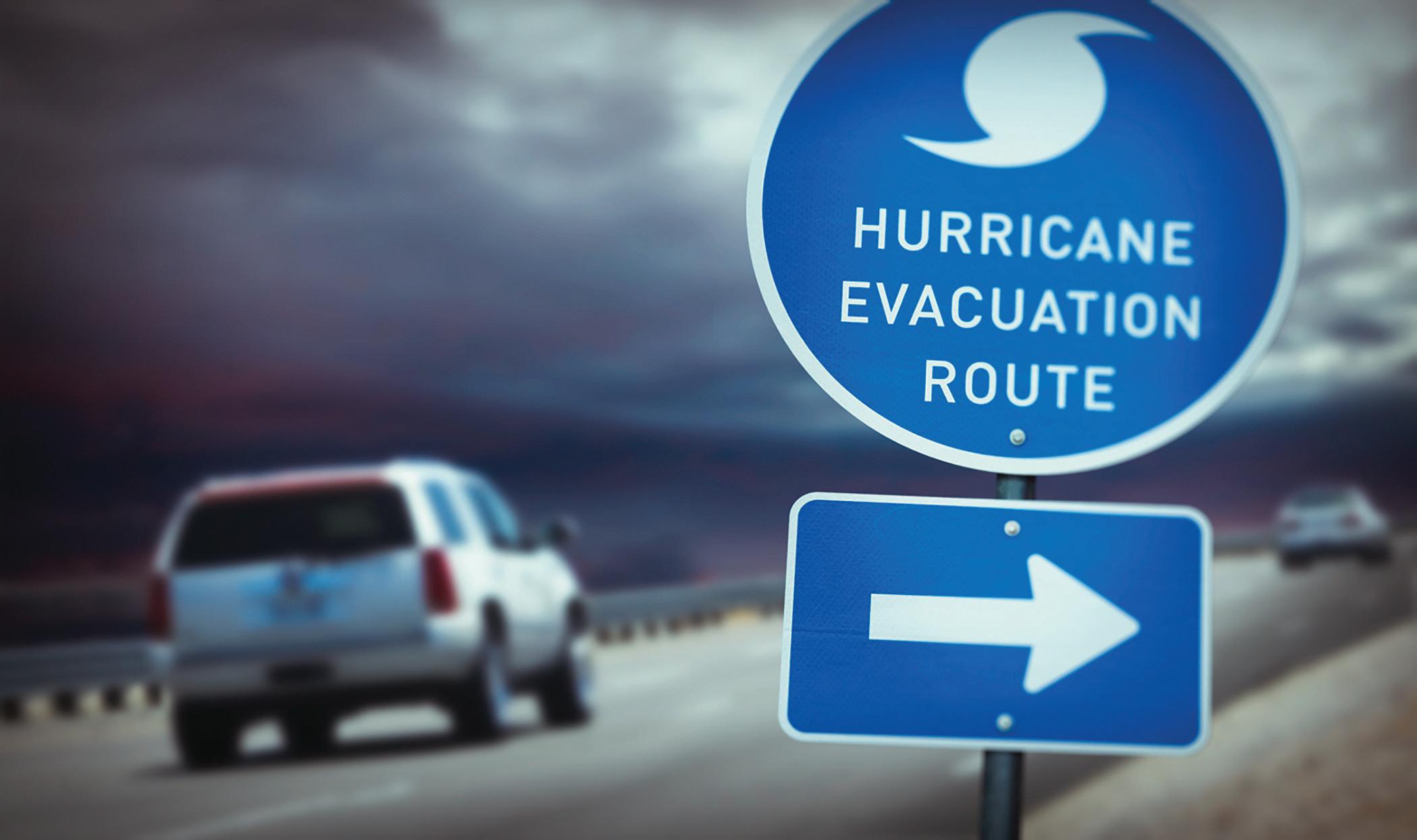
Officials encourage residents and visitors to stay informed throughout hurricane season by monitoring forecasts from the National Hurricane Center, maintaining emergency plans and supply kits, and
understanding local evacuation routes and safety procedures.
DCDHHS: Review your special medical need status and prepare for hurricane season
In times of emergency, Dare County is able to provide assistance to residents with special medical needs, which can include both physical or mental health disabilities. Individuals with special medical needs could require care and assistance in order to meet basic needs during an emergency situation and should plan carefully for disasters or other kinds of emergencies. Examples of persons who may have special medical needs can include but are not limited to: someone who uses a wheelchair, requires oxygen or has a caregiver. If you or someone you know has special medical needs and could require assistance with emergency planning and/or evacuating in case of a hurricane

Be
or other weather event, complete the Special Medical Needs Voluntary Registration form virtually at darenc.com/specialneeds. The forms can also be printed from this site, completed and mailed to Dare County Department of Health & Human Services, Attn: Adult Services, P.O. Box 669, Manteo, NC 27954. “This registry allows

responders to know where individuals are in our community who may require special help during an emergency,” said Beth Bradley, adult services supervisor with Dare County Department of Health & Human Services. “It is a valuable tool to help those in need and we want the residents of Dare County to be aware of the availability of this registry so
NOAA (continued from Page 1B)
and variable weather patterns is not a landfall forecast.
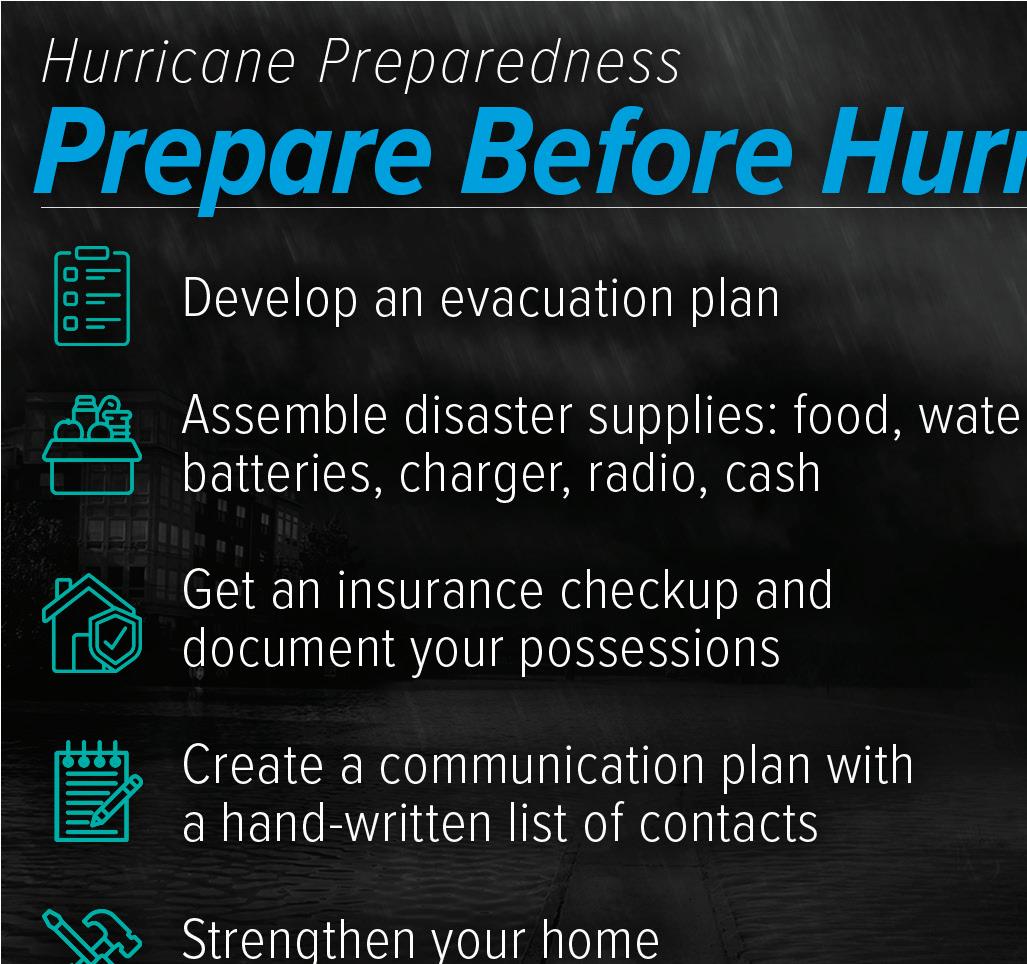
“Preparing now for hurricane season — and not waiting for a storm to threaten — is essential for staying ahead of any storm. Visit weather.gov/ safety and Ready.gov for
that they can inform their friends and neighbors who may require assistance in a crisis.”
If you do not have access to the form online, forms can be picked up at Department of Health & Human Services, Social Services Division office locations, or mailed to your address upon request. Registering with the Department of Health & Human Services
important preparedness information,” added Graham.
for Special Medical Needs will enable emergency responders to quickly locate participants as well as anticipate and plan for what type of assistance may be necessary.
“The 2026 hurricane season began June 1 and ends November 30,” commented Greta Sharp, preparedness coordinator with the Dare County See DCDHHS, 3B
The 2026 Atlantic tropical cyclone names as selected by the World Meteorological Organization are Arthur, Bertha, Cristobal, Dolly, Edouard, Fay, Gonzalo, Hanna, Isaias, Josephine, Kyle, Leah, Marco, Nana, Omar, Paulette, Rene, Sally, Teddy, Vicky and Wilfred. The official start of the Atlantic hurricane season is June 1 and runs through November 30. The 2026 Atlantic Seasonal Outlook will be updated in early August, ahead of the historical peak of the season, which typically extends from mid-September through October.

































































COURTESY NATIONAL WEATHER SERVICE
The list of names for the 2026 hurricane season in the Atlantic Basin.
The Atlantic hurricane season officially runs from June 1 through November 30, with peak activity typically occurring between August and October. NOAA IMAGE
A summary infographic showing hurricane season probability and numbers of named storms predicted from NOAA’s 2026 Atlantic Hurricane Season Outlook.
Emergency supply kits: What to have ready before a storm
By Danielle Puleo danielle.puleo@thecoastlandtimes.com
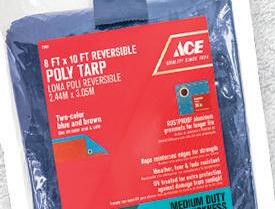
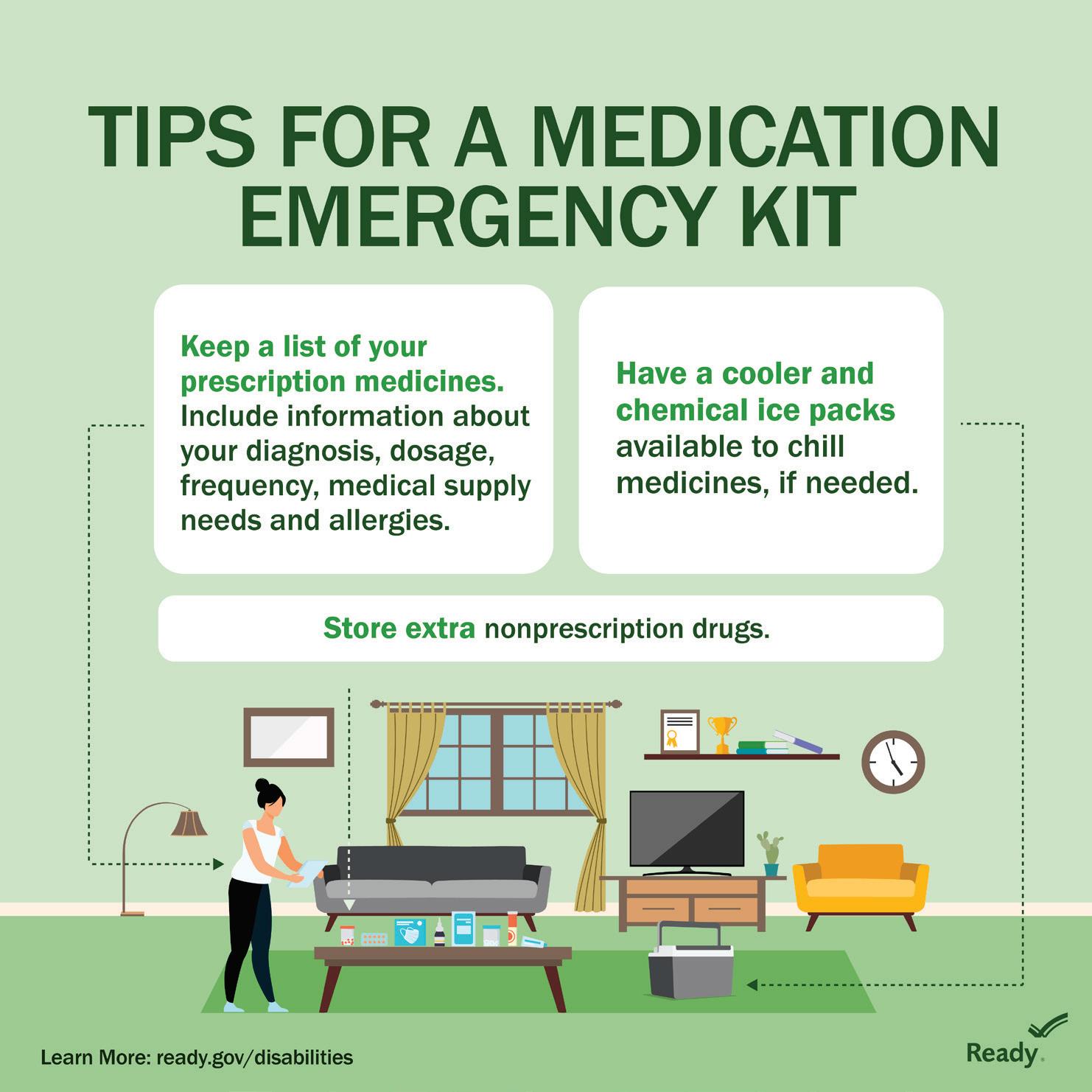
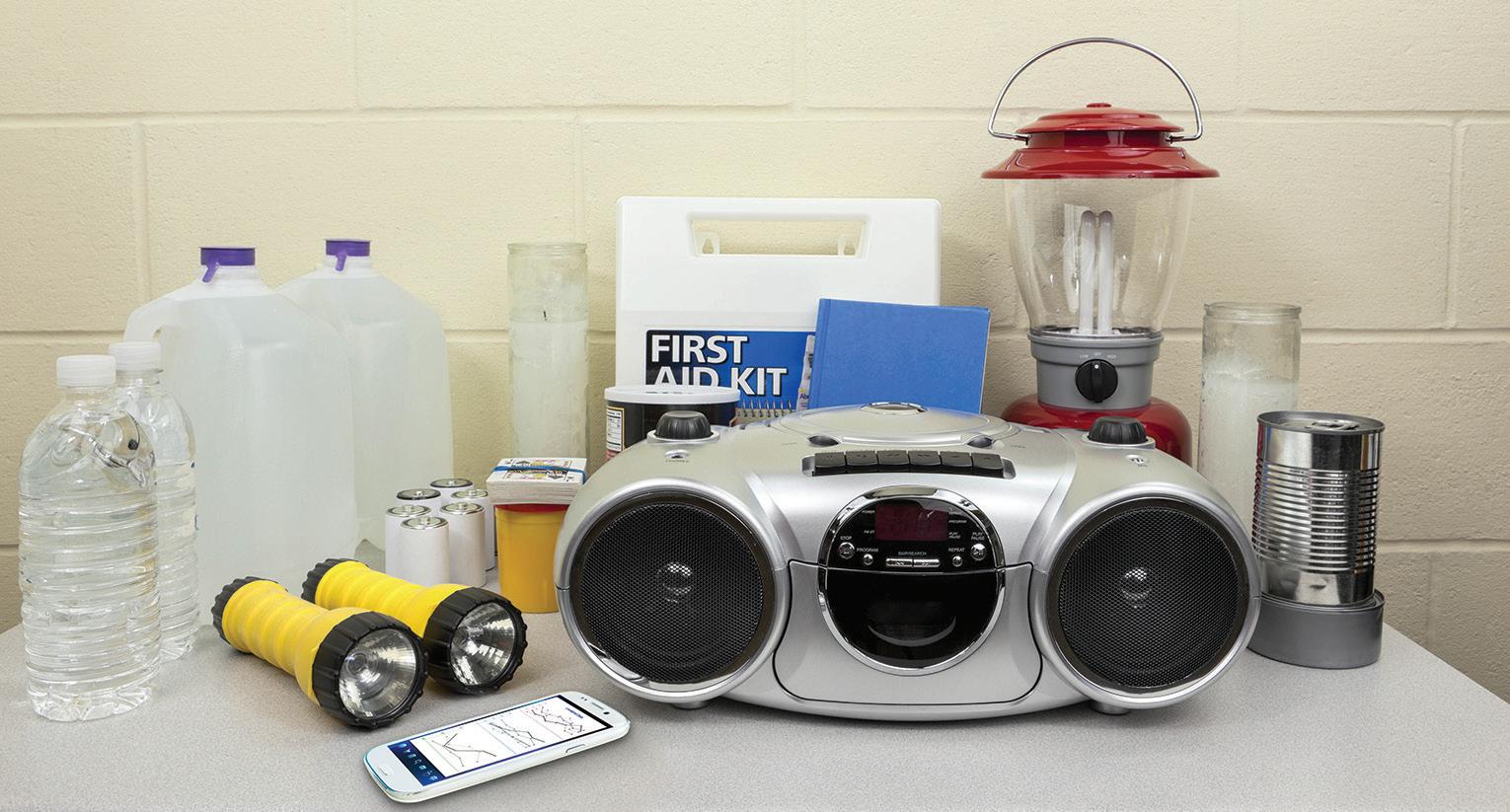
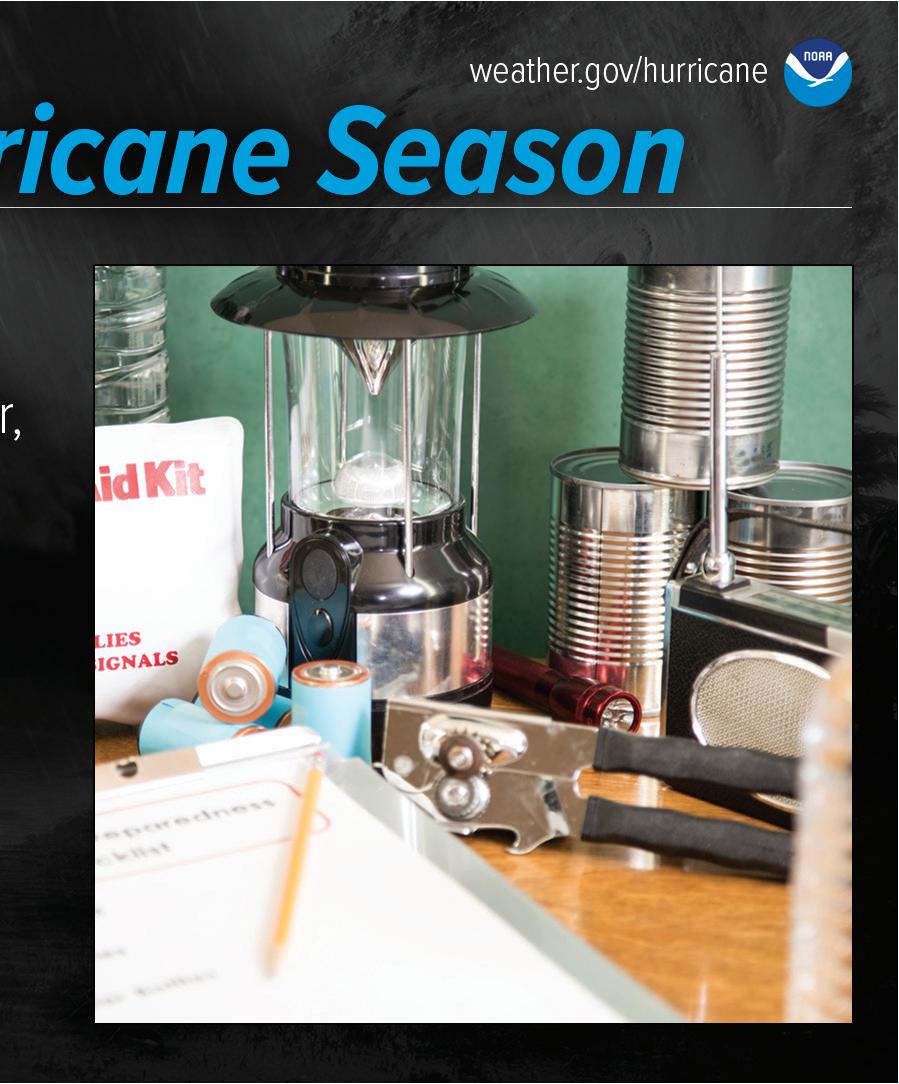
In coastal communities, preparation is one of the most important steps residents and visitors can take ahead of hurricane season or any severe weather event. Emergency officials, including FEMA and NOAA partners, recommend that every household maintain a basic disaster supply kit that can sustain each person for at least three days without outside assistance.
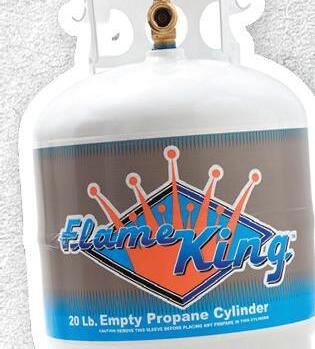
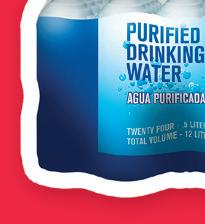
At the core of any emergency kit should be clean drinking water, with a general guideline of one
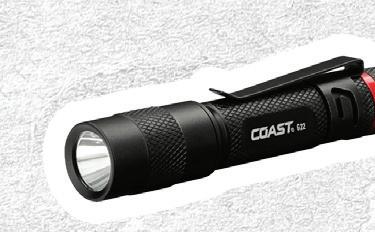
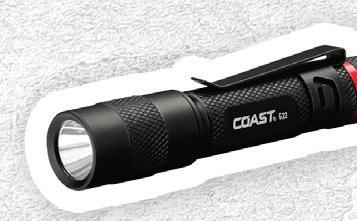
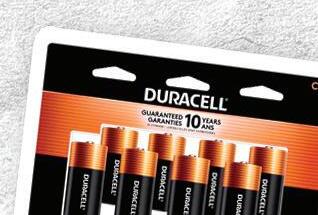
gallon per person per day. Non-perishable food items that require little to no preparation are also essential, along with a manual can opener if canned goods are included. A battery-powered or handcrank radio is important for receiving weather alerts if power and cell service are disrupted, and fl ashlights with extra batteries should always be included instead of candles, which can pose a fi re risk. A well-stocked fi rst aid kit is also recommended, including bandages, antiseptic wipes, pain relievers, any necessary prescription medications, and
basic medical supplies. Important documents such as identification, insurance information, and medical records should be stored in a waterproof container or sealed plastic bag.
Emergency kits should also include personal hygiene items such as hand sanitizer, soap, toothbrushes and feminine hygiene products. Clothing, blankets and sturdy shoes are often overlooked, but can be critical if evacuation becomes necessary or if power outages extend for several days.
For households with See SUPPLY KITS, 4B
DCDHHS
(continued from Page 2B)
Department of Health & Human Services. “This is a great time of year for Dare County residents to review their special medical needs status, preparedness plans, and stock up on any emergency supplies they may need. Our department also maintains helpful information year round on our website at darenc. com/StormReady that can provide guidance on
various public health related concerns that arise before, during, and after a storm.” For more information on special medical needs registration, contact Bradley, at 252-475-5500 or BradleyB@darenc.gov.










(continued from Page 3B)
It is important to note that many emergency shelters may have limited accommodations for pets, so having a clear evacuation plan that includes animals is
Residents are encouraged to store their emergency kits in an easily accessible location and to check supplies regularly, replacing expired food, water and medications as needed. Preparing ahead of time ensures that when severe weather approaches, families can focus on safety rather than scrambling for supplies at the last minute.
Having a complete emergency kit is one of the most effective ways to reduce risk and increase resilience during hurricane season and other disasters along the coast.












Understanding rip currents: What beachgoers need to know
By Danielle Puleo danielle.puleo@thecoastlandtimes.com
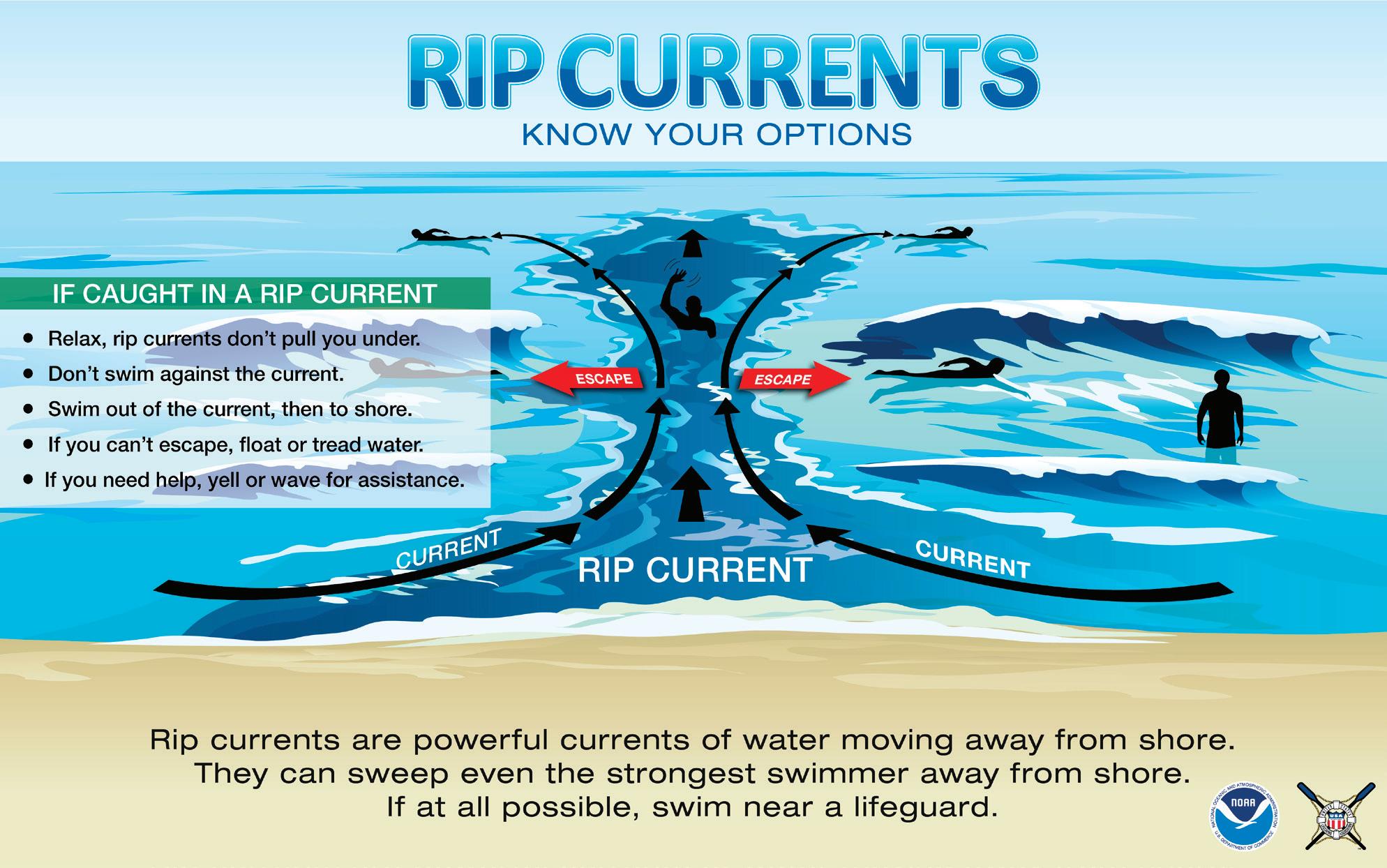
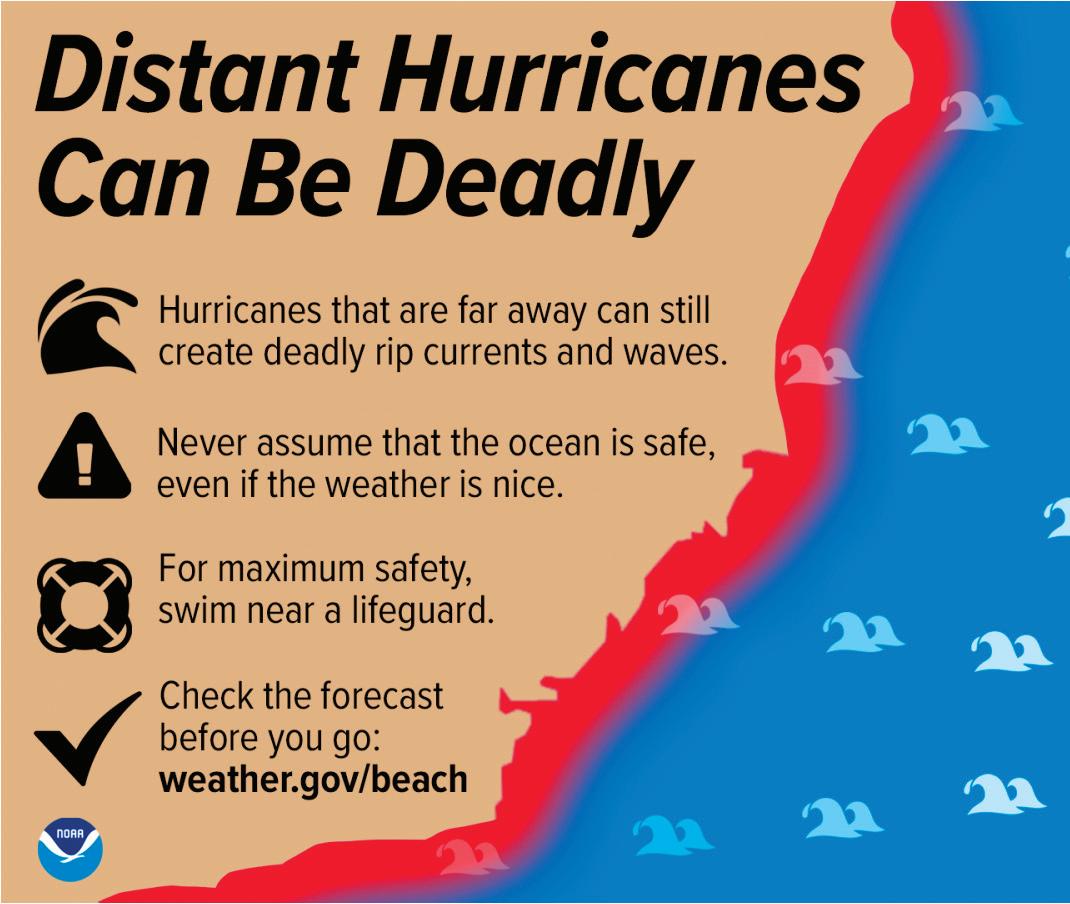
Rip currents are one of the most dangerous hazards along the coast and are responsible for the majority of surf rescues performed by lifeguards each year. According to the National Oceanic and Atmospheric Administration (NOAA), rip currents are powerful, narrow channels of water that move away from the shoreline and out
toward deeper water. They can form quickly and are capable of pulling even experienced swimmers away from shore. As residents and visitors head to the 110 miles of shoreline along the Outer Banks, Dare County Emergency Management (DCEM) officials are reminding beachgoers to remain aware of potential hazards and See RIP CURRENT, 6B



Disaster Preparedness Guide







RIP CURRENT
(continued from Page 5B)
safety concerns they may encounter while visiting the beach. In an effort to help residents and visitors enjoy the beaches safely, DCEM maintains its “Love the Beach, Respect the Ocean” campaign, which provides local safety tips and information designed to make each beach visit safe and memorable for all the right reasons.
Rip currents are often diffi cult to spot, but beachgoers should watch for breaks in the incoming wave pattern, darker or calmer-looking water between breaking waves, channels of churning or choppy water, or foam and debris moving steadily away from shore. Rip currents commonly form near piers, jetties, sandbars and other coastal structures. Contrary to popular belief, rip currents do not
pull swimmers underwater. The greatest danger comes when swimmers panic and attempt to swim directly against the current, which can quickly lead to exhaustion. NOAA recommends that beach visitors always swim near a lifeguard, avoid swimming alone, pay attention to beach warning flags and posted advisories, and stay out of the water during high-risk surf conditions. Swimmers are also encouraged to avoid areas near piers and jetties, where rip currents are more likely to develop.
Before entering the ocean, beachgoers should check local surf forecasts and rip current outlooks. If caught in a rip current, experts emphasize remaining calm and conserving energy. Swimmers should avoid fi ghting the current or attempting to swim directly back to shore. Instead, they should swim parallel to the shoreline until they
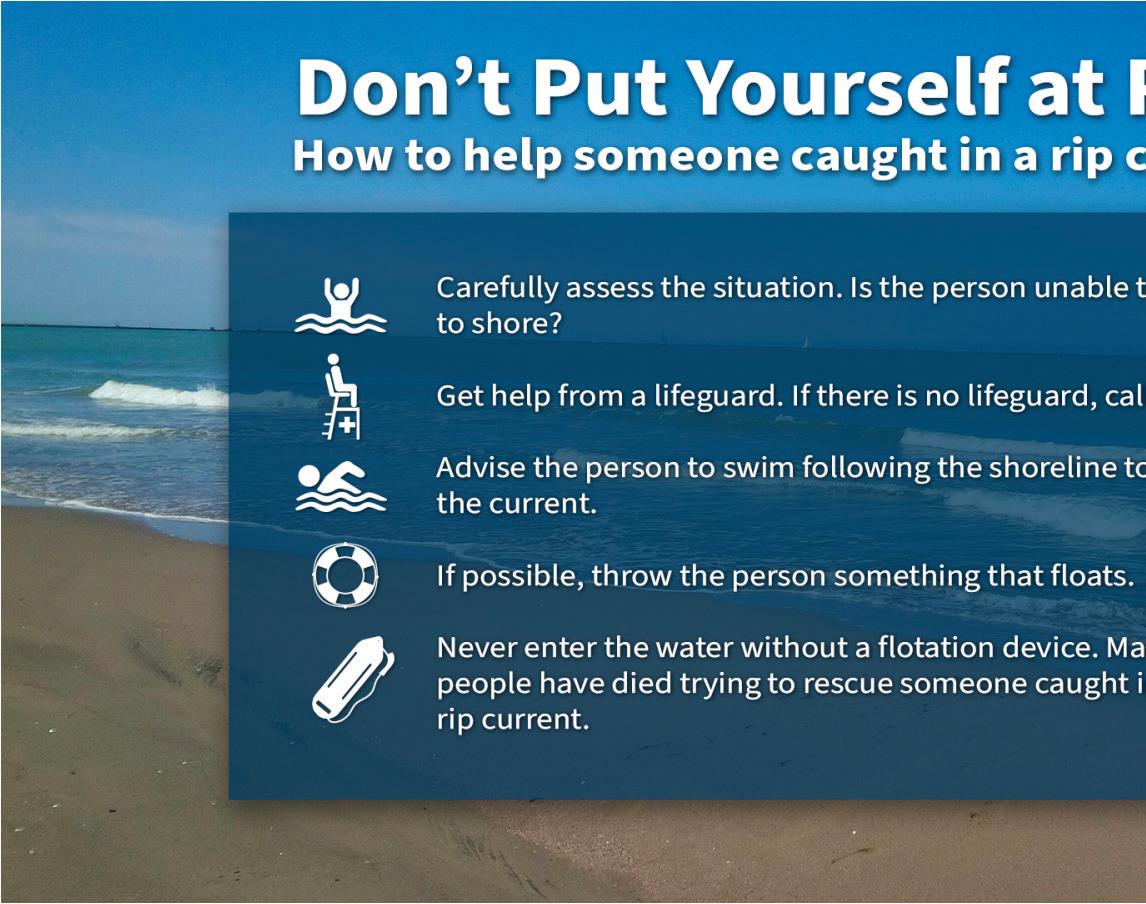
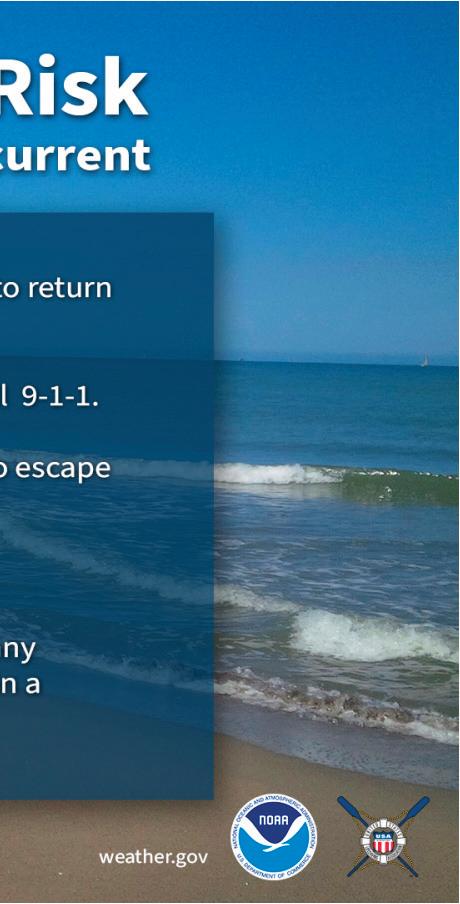
escape the current, then make their way back to shore at an angle. If unable to escape, individuals should float or tread water and signal for help by waving and yelling. If someone else is caught in a rip current, officials advise against entering the water unless properly trained. Instead, bystanders should alert a lifeguard or call 911 and, if possible, throw the individual a flotation device. NOAA estimates that more than 100 people die from rip currents annually along U.S. beaches, making awareness and preparation critical for anyone visiting the coast. For current beach conditions and rip current forecasts, visitors can check NOAA’s National Weather Service website or consult local beach patrol officials before entering the water. For information on the days beach conditions, go to www.lovethebeachrespecttheocean.com.