


EDITOR-IN-CHIEF
Jiwoo Park
PUBLICATIONS EDITOR
Henry McBrien
DESIGN EDITOR
Shae Howard
PUBLIC RELATIONS EDITORS
Michelle Fedosseev Gabby Shaya
BUSINESS EDITOR
Isela Mulcahy
COPY EDITORS
Maria Papalois Julia Triculescu Simar Kaur Chudda
ADVISER
Morgan Carlson
STAFF REPORTERS
Sabrina Ahmed Manasvi Mummaneni
Lexi Benedict Roberto Nicolas-Piña
Vildan Carsancakli Dayana Ochoa Delgado
Sara Gonzalez Ivy Qin
Yusra Mohammed Giada Sherrill
Robin Shaydurova Sofia Varela Almaguer
COVER BY Shae Howard
OUR MISSION STATEMENT
The Chariot is Troy High School’s newspaper, made for the students, by the students. The content of The Chariot varies from article to article, however, each article is based on a wide area of research. The Chariot staff and editorial board selects stories based on their relevance and emotional value to our community. The Chariot prioritizes covering stories from a wide range of perspectives and aims to report with accuracy and impartiality. The Chariot staff and editorial board take responsibility for selecting stories that are relevant to our community.
The Chariot operates under a process of administrative review. Although the process of finding, writing, conceptualizing and designing belong to the students, administration has the final say before publishing. The process of review never leaves Troy High School before publication. Expressing the view of the entire diverse student body of Troy High School has always been its focus.


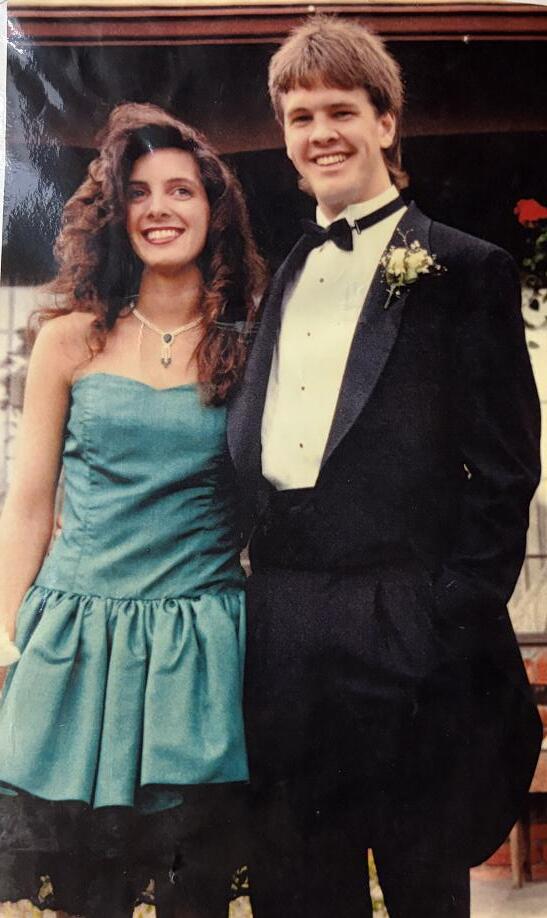
The high school sweetheart story of Mr. and Mrs. Forshey, some of Troy High School’s psychology and biology teachers.
Gabby Shaya // Public Relations Editor, Graphics by Ivy Qin // Staff Reporter and Roberto Nicolas-Piña // Staff Reporter
It isn’t very common these days for one to hear, “Oh, we’ve been together since high school!” However, that isn’t the case for AP Psychology teacher Kelly Forshey and Biology teacher Jeff Forshey at Troy High School.
“Nobody makes me feel the way he does,” Kelly Forshey explains with affection. It all started when they first met at a high school volleyball game in the couple’s sophomore year. Kelly attended Clarkston High School, while Jeff was a student at Branden High School. The story normally would start here, but not for the Forsheys.
“But we didn’t date for another two years. We always would see each other over the two years [left of highschool] now and then, but it took two years for us to be single. And when I found out he was single, I called him and asked him out, but he rejected me,” Kelly Forshey says cheekily.
“I thought he had a great smile,” she adds. Kelly eventually talked him into a date. Soon after, their story finally began.
times during their seven years of dating, but Kelly firmly believes that dating other people made her realize Jeff was the one for her. What makes having a high school sweetheart so
Many high school couples break up before college, especially due to long distance dating. However, the Forsheys made it work, dating long distance for the majority of their time in college. With only an hour of driving distance between them, they saw each other on weekends, vacations or summer break. Maintaining a long lasting relationship wasn’t easy. “Compromise, be patient. You have to communicate. But always, always have fun,” She passionately adds.
The Forshey’s did break up a few
special to her is how well they’ve gotten to know each other. They’ve been through every era of their lives together, seen the good and the bad. That isn’t something you can experi ence with everyone. “We have so many shared memories, we’ve been together since we were 18, we’re in our mid-50s now. I think it’s that I know everything about his family, he knows everything about my family,” Kelly reminisces.
As they are now teaching in the same environment they once met in,
it brings back a bit of nostalgia. Most couples never have the opportunity to work with each other. However, Kelly corrects that they don’t see each other often anyway, with the science department being located on Troy High School’s third floor, and the history and social sciences department on the second floor. Kelly adds, “It’s kind of cool that we have the same students. Other than that, it’s nice to have someone to carpool with.”
For any students dating in high school right now, Kelly suggests, “I would say it’s a good thing to date other people when you’re so young, to see what other re-



Sabrina Ahmed // Staff Reporter, Graphics by Jiwoo Park // Editor-in-Chief, Roberto Nicolas-Piña // Staff Reporter, and Ivy Qin // Staff Reporter
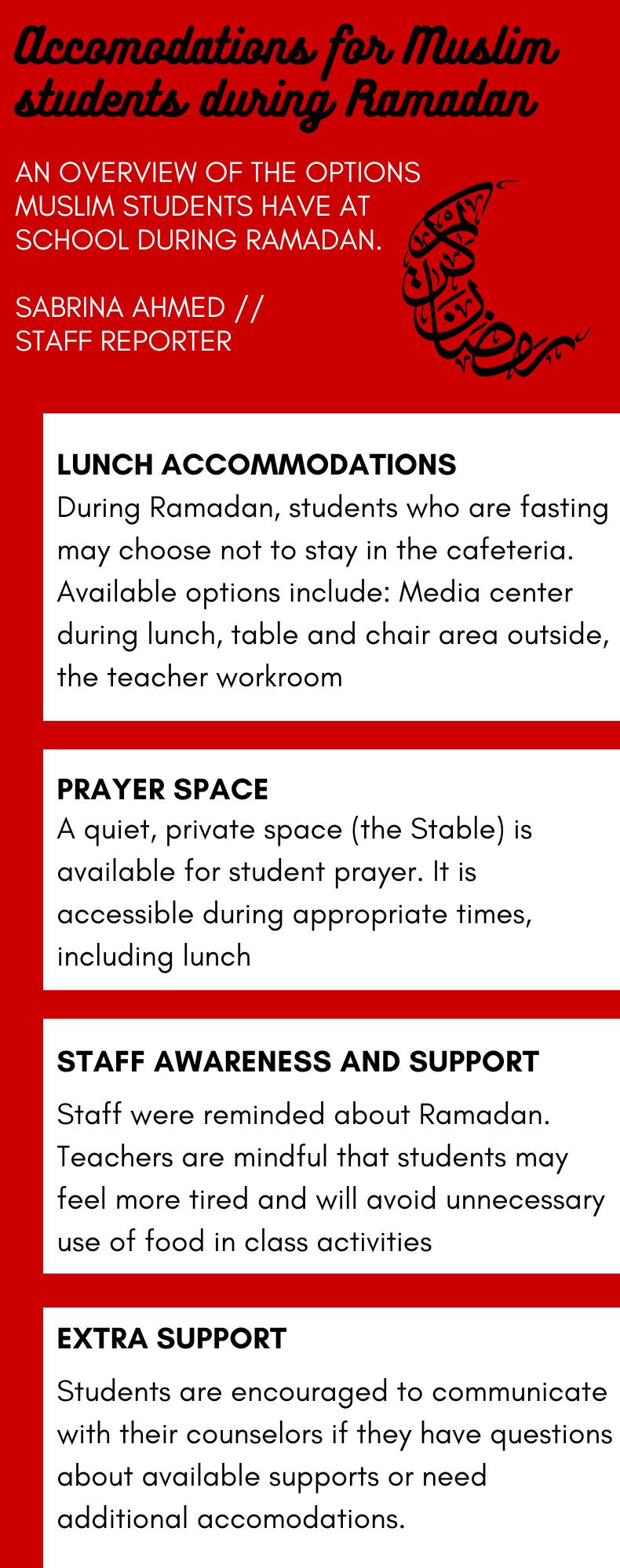
Senior year is often described as a time of “lasts,” but for several girls, it is also a time of letting go. High school relationships are ending not out of bitterness, but out of growth. High school relationships can be seen as tiny world rela tion ships.
Once you start grow ing, meeting new people and trying new things, your partner might be gin wanting the old version of you, not the person you’re becoming. If they are texting dry, making you feel insecure, giving attention to others and making you question your worth, it’s not love… it’s attachment.
that ignoring those red flags for too long taught her an important lesson. “It taught me my worth,” she reflected, “I need to not settle for less because I don’t deserve that.”
trol over their lives.
For others, the decision was mostly tied to the future. One senior explained that constant conversations about college forced her to think more seriously about where her life was heading: “It’s my senior year and I need to be more selective with who I want to spend my future with.” While the breakup was upsetting, she added, “I feel relieved because I feel like I made the right decision.”


One student described the moment she realized her relationship was no longer healthy: “He told me that he didn’t like me and he lost feelings for me while we were still dating,” she said. “He never complimented me or gave me the time of day.”
While she admitted she saw the breakup coming, she explained
ups show the wide, cultural shift in how young women approach relationships. Social media and constant communication have made it so easy to stay attached to someone even when the relationship no longer brings happiness. One or two students described feeling pressure to stay simply because they have history together or because they sit next to them in history.
However, many said that choosing to end their relationship was a better choice and walking away felt like reclaiming con-
If you’re waiting for him to be more mature, stop flirting with other girls, take you seriously and communicate better, you’re already parenting him. Wake up.
Another student no ticed differences in ma turity and lifestyle: “We were on different paths,” she explained. “He was going off to college and I wanted to enjoy my se nior year.”
After nearly two years together, she realized the relationship no longer aligned with her values: “He was just kind
of turning into a bum, people not having goals, that’s something I’ll never tolerate again,” she said. “My boyfriend needs ambition. They need drive.”
Students emphasized the fact that relationships should add to their lives, not drain them. Whether the issue was lack of attention, different goals or emotional immaturity, many girls reached a similar conclusion: staying in an unfulfilling relationship can be worse than being alone. As one college student put it, “learning to be comfortable with being by myself was just as important as learning how to love someone else.”


These conversations also highlighted rising expectations for effort and ambition. Students spoke openly about how they are no longer tol lacked goals, motivation or respect. One student said: “Just because you love someone, you shouldn’t stay with them if you’re not happy,” emphasizing that affection does not equal a healthy relationship.
Others had similar things to say, pointing out that ambition, communication and growing together now matter more than simply having a boyfriend. Especially as graduation approaches, many girls are walking away from relationships that no longer align with who they are becoming and stepping into the future with better stan


The diferences between love and lust. Robin Monroy Shaydurova // Staf Reporter, Graphics by Ivy Qin // Staf Reporter
During high school, most students have already hit puberty or are in the process of it. This process comes with a change in hormones. Lisa Danhof, Troy High School’s health teacher, states, “Teenagers do not really know what to do with hormones and how they start to see people in a diferent way.”
Although love and lust are often confused to be the same, they do not share similarities besides the fact that both feelings are driven by desiring someone. This is the main reason people confuse them. Lust is the wellknown love at frst sight. It is a direct, short-term and intense passion driv-
en feeling. Taylor Bigelow, Troy High School’s counselor, describes, “Lust is more of I want you, and drawing to someone’s physical attributes.”
In contrast, “Love is more of I care about you, and it’s a deeper connection on a deeper level,” says Bigelow. Love is a long lasting feeling and develops over time. Besides hormones, the misunderstanding of these two feelings also comes from the media we consume in our day to day. Danhof confrms the way “sex sells” and how “you have to look a certain way” since females and males and how their romantic interactions are portrayed in magazines, movies, TV shows, books and social media reafrms stereotypes that change people’s perspective on lust and love.
With access to technology nowadays, Troy High School’s counselor Shanna Frendt describes how AI has become part of this issue: “I’ve seen completely fctional social media presences with AI that people, especially young people, are interacting with as if that were a real relationship. And that is concerning. That is not a true human reciprocal connection.”
The environment in which teenagers grow up and live in is an important factor. “Learning with what’s being modeled for you in all diferent environments of your life”, Danhof continues on to say that hav-

ing a role model, “whether it’s [a] parent, guardian, or older sibling” is important for a teenager as they provide a safe space where a teenager can go to to talk about how they’re feeling and what they’re experiencing.
selves, understand that they have to have efective communication skills. Do not be-


“Do not confuse the two and do not make decisions based on if you’re feeling lust and those feelings associated with it.” Bigelow says. It is important for the youth to maintain education and understanding about the laws of consent and of sexting. “Educate them-
lieve everything you see and read to be true, especially now with AI,” Danhof states.

For centuries, dating culture (once known as courtship) has rapidly evolved to the point where a person can go on their phone and orga-
Teachers at Troy High School refect on their bad date experiences. Maria Papalois // Copy Editor
nize a date within minutes. What, however, has stood the test of time is the “bad date.”
A bad date is where one person is uninterested, both people are uninterested or the people are “just not vibing,” as English teacher Nina Caradonna puts it.
Alyssa Oliver, science teacher at Troy High School, says, “You can be a really great person but still have a bad date if you’re not a good small

talker.” She recalls her own worst date experience with a person she met at her gym.
“I’m wearing nice jeans and a sweater and boots with little heels and did my hair or whatever, and he walks into the cofee shop in sweats and a t-shirt,” describes Oliver. “We went to go order cofee and he’s like, ‘Yeah, I actually like forgot my wallet in my car.’” Oliver bought herself coffee while her date opted for a glass of water.
“At the end of the night, he was trying to give me a kiss and I just dodged it. I was like, ‘All right, bye.’” Oliver did not go on a date with this person again. “That was not happening,” she says.
“It was the weirdest date in my entire life,” remembers English teacher Jacqueline Ciolek. “The guy closed his eyes a lot when he talked, so I thought he was blind and I thought I missed something on the dating app.” Though her date was not actually blind, Ciolek was distracted by this habit throughout the entire date.
“When the dating apps frst became a

thing, I went on a date with this guy, and he was so animated. We’re in a small, quaint Chicago place, very aesthetic ambiance,” she says. “And he was getting up to animate all these stories.” Ciolek exclaims, “Buddy, there’s like 50 people. Sit down! I was mortifed.”
Conversely, Caradonna does not have a signifcant bad date in her past. “Every date I’ve been on has led to a long-term relationship but I know that now online dating apps are how people are meeting primarily.”
“A really great one that I went on with my soon-to-be husband was a concert,” says Caradonna. “It was just such a great night and it was a common interest that we both have and it was also the thing that kind of bonded us in the frst place.” Caradonna’s best dates were those that involved fun activities and shared interests.
First dates can be anxiety inducing, especially when it comes to avoiding any awkward silence. Caradonna advises, “For a frst date if you can do something that’s a little bit more activity-centric, I feel like it just takes some of
the pressure of.”
Oliver recommends a positive mindset when it comes to dating. “If you are already feeling grumpy about the date, the chances of the date going well are probably slim to none,” says Oliver. “Everybody that asks you out, you don’t have to say yes to. You can be picky.”
In the age of dating apps, the act of “ghosting,” when someone abruptly cuts of contact without an explanation, is prevalent; due to the online connection, it is easy to simply end it with little consequences or confrontation, according to Ciolek.
“People think it’s okay just to not talk to you ever again. And I think whether you grab a coffee or a full-blown dinner, have enough courtesy for that person who took time out of their life to have a conversation with them if you want to move forward or not,” says Ciolek.
Ciolek advises, “Show up and put your best self forward. Put on a nice pair of pants.”
Loving romance is really that easy.
Dayana Ochoa Delgado // Staff Reporter, Graphics by Jiwoo Park // Editor-in-Chief
Scrolling through TikTok and then seeing a video of a cute couple dancing in the rain could either make or break your day. I feel the former. In my opinion, the joy these videos hold is infectious. Seeing others showcase their love is a little reminder of something in life that is so easy yet so hard: to love someone.
A review on BookTok culture and recent trends in the romance genre.
Shae Howard // Design Editor, Graphics by Jiwoo Park // Edi-
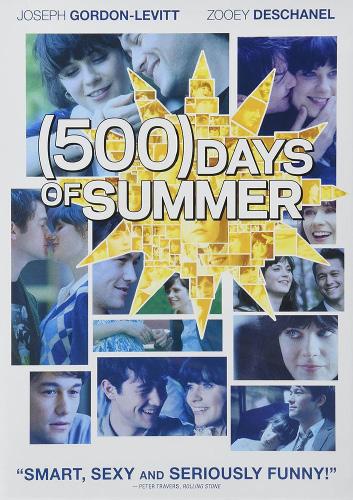
Romance is everywhere you go, from the graze of two arms to watching a wedding. The definition of romance is a feeling of excitement and mystery associated with love. The butterflies you feel in your stomach, missing someone’s pres -


at some point in their life. We’ve all felt drawn to a love song whether it’s because of the melody, the heartfelt story it holds, or just the feeling you get when you listen to it.
Often we hear how things are “romanticized,” using it as a negative word. Really, romanticizing your life is a way to make it more fun and exciting.
Romance is everywhere you go, It’s really only a matter of if you embrace it or never give it a try.
Photos courtesy of IMDb and Spotify.
As a 16 year old book lover, I have recently noticed a trend in the sorts of novels my peers are reading. It started off simple enough, with the “Hunger Games” series making a comeback as Suzanne Collins released new books, but then I began seeing the connections between said series and more recently popular books. In a social media rabbit hole one day, I stumbled across BookTok, a TikTok-based community of primarily college-aged women sharing their recommended reads and favorite authors. Ever since, I’ve been curious about just what sort of fiction is consuming the minds of my fellow teens. As it turns out, much of it isn’t to my taste.
Young adult literature is classified as being written for 12 to 18 year olds, created to bridge the gap between child and adult fiction. This is a rec -

there are dragons to be slain and prophecies to be fulfilled? Certainly not me, but the authors of these types of books prioritize the former.
Another problem I’ve frequently found in BookTok books is that they rely on tropes to draw readers in, which results in a predictable read that feels more like a conglomerate of ideas rather than a well-executed novel with a message. I can’t count the number of books I’ve seen on my TikTok For You page that feature phrases like “love triangle!” or “enemies-to-lovers!” in their official summaries. Sure, some of these tropes can be something I enjoy in books, but I’m not going to start reading something just because of a list of tropes it contains.
All of this is not to say there’s something wrong with this type of fiction; it may not grip me the same way other books do, but I’m sure it has helped someone. I’ve just never been that person.
Music has always felt personal to me because of how closely it’s tied to moments in my life. I love songs that capture an experience perfectly and that feel like specific moments without trying too hard. The songs I listen to most aren’t just background noise; they follow me through the season, late nights and long drives.
“Innerbloom” by Rufus de SolLater at night when everything feels calmer and quieter, this is usually what I put on. This song is long but never feels rushed to me, it works best when I’m not doing anything else. It’s a song that is just better when you just let it play all the way through.
“Oklahoma Smokeshow” by Zach BryanFlorida trips wouldn’t feel the same without this song playing in the car. It’s always on repeat while driving around. It’s one of those songs we always end up replaying without really thinking about it.
A selection of songs I’ve been forced to listen to lately. Henry
McBrien // Publications Editor
Overall, I haven’t been too keen on modern music. I think it’s cheap, overrated and creatively bankrupt. That being said, I think that it has its place, especially music from the early 2010s. However, it seems there have been more misses than hits in recent years, and good songs are few and far between. Either way, here are my thoughts on a selection of music.


“Do I Ever Cross Your Mind” by SombrThis song fits into the same quiet, late night category without feeling heavy. It’s subtle and easy to keep on in the background, especially when everything else has slowed down. Nothing about it feels forced, which is probably why it works as well as it does.
“Unwritten” by Natasha Bedingfield -
This song always ends up playing when my friends and I are getting ready to go out or driving around mid-summer with the windows down. It’s one of those songs everyone knows, and it works in almost any situation. It’s upbeat without being annoying, and it fits the kind of moments where nothing serious is happening but everything still feels fun.
“Ribs” by Lorde -
This is one of those songs I never skip when it comes on, but I also don’t go out of my way to play it during the day. It only really works late at night, anywhere else it feels off. It’s not Lorde’s most exciting song, but it’s one of the few that actually fits the moment it’s meant for.
“Innerbloom” by Rufus de SolI don’t hate it. It’s this weird mix between Aphex Twin ambiance and ‘90s EDM. It does not need lyrics, but the production is good and I wouldn’t mind having an instrumental version on in the background while driving around at night.
“Oklahoma Smokeshow” by Zach Bryan -
As much as I love classic country, this song is a perversion of the values that make country music good. It’s so kitsch it’s not even funny. It fits the stereotype almost perfectly, with a bit of a modern clap-stomp twist, but in a bad way.
“Do I Ever Cross Your Mind” by SombrAgain, I actually don’t hate it. I’m a sucker for ambient music and this actually might make its way into my late night crying playlist. A good find, though I don’t care for some of Sombr’s other work.

“Unwritten” by Natasha BedingfieldOh boy, this song. A staple of Starbucks everywhere and the Mercedes that you bought with daddy’s money. I’ll admit it’s iconic, but such an iconic song should at least be a little bit bearable. This sounds like something I could make in 10 minutes on Garageband. The vocal break feels like it was crammed in just to make this song break the three minute mark. It never ends. Make it stop.

“party 4 u” by Charli XCXMost of the music I listen to is slower, so this song stands out. It sounds upbeat, but it doesn’t really feel that way. I don’t overthink it. It just works when I put it on.
“Ribs” by Lorde -
I’ll admit, I quite enjoy certain Lorde songs, especially because “Royals” gave us a hit Weird Al Yankovic song, Foil. The opening to this song is actually quite calm and relaxing and makes a nice soundscape. The vocals leave something to be desired, especially since you can’t tell what she’s saying half the time because it sounds like it was recorded in a middle school bathroom.

“I Told You Things” by Gracie AbramsI don’t usually reach for this song until the day is basically over. It’s simple and quiet; anything louder would feel wrong in the same situation. It’s not dramatic, but that’s kind of why I keep it on my playlist.
“party 4 u” by Charli XCXI had the misfortune of listening to this in my friend’s Volkswagen Beetle and the grinding of the engine had a more pleasant tonality than this vocal track. The autotune sounds like she’s speaking through a van and is trapped inside a dumpster. The lyrics sound like she gave her nephew a fresh box of Crayolas and let him draw some “words.” It makes “Unwritten” sound like a Stevie Wonder song.

Photos courtesy of Spotify. Graphics by Jiwoo Park // Editor-in-Chief
“I told you things” by Gracie AbramsRight off the bat, the piano backing gave me heart palpitations. Also, a public service announcement: autotune was initially invented in the ‘90s to correct for one note screw-ups. Aphex Twin, an electronic artist, drenched an entire song in it to make it sound trippy. That does not mean that it belongs ALL OVER A POP SONG. Would fit well in a corporate training video.

A further look into how local teens in Troy have built their own clout and recognition.
Giada Sherrill // Staff Reporter, Graphic by Manasvi Mummaneni // Staff
For a few local Troy teens, a phone is a pathway to opportunities. This is a reality for teens like Kyleigh Peacock and Jayden Davies. Some questions were asked to get a further look into how this social media attention affects their daily lives and things that someone looking from the outside might not realize.
Jayden Davies, also recognized as “jaydannaeem” and “troytalk__” on TikTok, shares how he first found this passion for social media and who helps him keep that passion, “I’ve been on social media since I was 8
because I’ve always wanted to be famous and what made me keep going is my inspiration corykenshin.”
The most popular way teens have gained local fame has been through social media platforms like TikTok. Kyleigh Peacock, known as “oreobllizzard” on TikTok, along with other socials, explains the ways that this gain has benefitted her, “The best part about having the platform I do at my age is the money and PR that I get for posting or just going live.” This shows that social media fame can create some real opportunities for teens,
turning a hobby into something more serious.
However, not all social media attention is positive attention. There are some struggles that come into play when posting on pub lic social media. Peacock describes this when talking about some of the down sides to uploading TikToks, “I feel pressure to post. When it flops I start to think that my whole platform is flopping.” When asked about how she deals with hate or negativity she says, “I don’t really do anything, I’m blessed to even have haters. Sometimes I’ll even

reply to their comments agreeing with them because I don’t really care.”
When dealing with the hardships of having social mous.”

Peacock suggests her goals keep getting bigger, “I’d like to become more popular and successful so
Troy High School and Troy Athens High School theater ensembles merge their programs. Michelle Fedosseev // Public Relations Editor
Administered by Grace Haugk // Body Copy Editor
For the first time since their founding, the Troy High School and Troy Athens High School theater ensembles will be joining together to per form a combined musical in the of 2026.
curred when, after 52 years, Adrienne Manfredi, direc tor of the Athens Theatre Company, retired. “Signing a replacement for her was going to be challenging,” states Marc Vick ers, director of theater at Troy High School.
“So I offered, if they wanted me to do both pro grams, I could do that. Now, I
teach class at both campuses and I directed the full winter play [at Troy High], and [the schools] are combining for a musical,” Vickers continues.
“The arts are struggling, so I was fighting to make sure the program
In combination with recent trends of lower enrollment in the theater programs at both schools, a combined spring musical will allow for high school students to continue their participation in this performing art.
Quin VanAmberg, a junior at Athens High School and covice president on the Troy Theater Ensemble board, shares her experience with rehearsing for the combined production.
“Coming from a kid who goes to Athens, it’s a little bit intimidating.
I don’t go to Troy High, so I don’t see these people every day. It was definitely hard er to work my way and make friends. I have my friends in Athens and I have my friends here, it is nice to have a sepa rate community from a sepa rate school.”
Adrienne Covian, vocal director for the Troy Theater Ensemble, recently started to assist and direct the plays. “Mr. Vickers and I both work in both buildings, so it’s a careful balancing act to make sure we have equal amounts of practice with the Athens students at their school so they don’t have to travel over, as well as having rehearsals here for the Troy High stu dents,” says Covian.
Starting in February, the Troy School District will be providing bussing for Athens students to Troy High School for rehearsals, as the set and production will be hosted on the Troy High School stage.
ny jeans, various fashion trends have come and gone, and few have stayed. Popular past trends include neon clothing, butterfly clips, bell bottoms, scrunchies and boho chic.
Skinny jeans are arguably in- famous, however, Shelby Rec- chia, a Troy High School fashion design teacher, wants to bring them back. “I do really like bag- gy straight jeans as well,” she says, “but I’m still a sucker for skinny jeans.” In contrast, English teacher Nina Caradonna despises them. She comments, “Skinny jeans were traumatizing for me.” Baggy clothing is a recurring trend that came from the ‘90s hip-hop era, especially in jeans. Senior Andrea Lopez Fernan- dez doesn’t love it. While it’s not often,represented people and it’sstyledshe likes are paired with theAnotheraccessories. torypastteacher nects them like Britney tina Aguilera. that them,they it was the low everywhere.rise with a jean strap.” She recalls influences as Lopez Fernandez rise pants as ates it with the


Roberto Nicolas-Piña // Staff Reporter, Graphics by Jiwoo Park // Editor-in-Chief


Joyce Mettias, a senior, calls traversing through the
Using Northfield Park way or Long Lake to leave or enter Troy High School is a universal routine for both the students and staff. Using the adjacent parking lot some view as manageable at worst, while others describe it as a daily source of frustration or danger.
people who style it really well it’s a very nice style when correctly.” Specifically, likes when baggy bottoms paired with tight tops, or Anotheraccessories.popular trend from are low-rise pants. His- teacher Jessica Craft con- them to popular culture Britney Spears and Chris- Aguilera. “A lot of the stuff wore, when it was was the tube tops with rise pants. That was everywhere. Or the UGG boots skirt and a spaghetti recalls music videos’ as well.
Fernandez likes low as well and associ- the downtown girl
Some fashion trends come back in smaller time frames, ac- cording to Caradonna. “When I was in high school, the ‘80s had a resurgence, and then shortly after it was the ‘90s, and then by the time I was in college, Y2K was coming back around.” Some trends have “shorter cycle dura- tions.”
Caradonna talks about bar- rel jeans as a trend which dates back to the ‘80s. “When I saw Free People put out their bar- rel jeans, I was like, ‘What are these?’” She says, “Now, do I have a pair of barrel jeans now? Yes, I do. But I was very con- fused by them.”
Mettias shares that the general congestion is not the only problem but how people move through it. “Some people are trying to cut up at like 30 mph while some will stop,” she says. Beyond everyday mild annoyances, Mettias admits to also hav ing “witnessed multiple accidents,” calling them “pretty common,” and recalls a friend being rear-ended
changed in her time at the school, Jessica Craft, a teacher at Troy High School, responded: “It has progressively gotten worse, especially the morning traffic.”

Society instills itself on fash-
and the flower power. And then you look at even in my time in high school, there was the goth, the goths wearing all black and the black lipstick and stuff like that,” Craft says, “Those were kids that felt like they were left out, and they wanted a place to belong.”
Today’s society is more open-minded, reflected by a fo cus on comfort with less pres sure to uphold physical appear
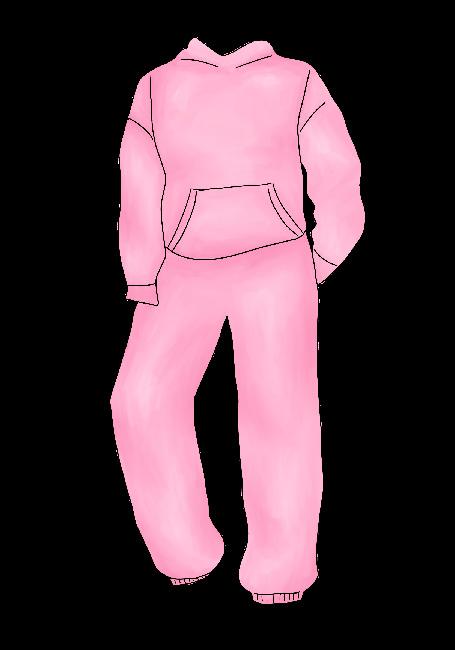
anceinday-to-dayactivitieswith “athleisure wear, sweatpants [and] sweatshirts,” according to Recchia. Fashion trends will continue to evolve, and soon enough we’ll see clothes of the 2020s come back.
But she doesn’t place the blame on the students as she thinks they “do a pretty good job in the morning of following the rules,” she says. “I hate to say it, but it’s the parents; they don’t follow the order of where they’re supposed to go,” Craft adds.
Craft attributes the real problem to when parents drive their kids to school: “They drop off in random areas that are not designated drop offs so it slows everyone down.” Craft’s view is that the structure itself is not the issue: “I think it’s the number of kids that get dropped off.”
As a solution, Craft wants to get across to underclassmen students and their families that “if more kids rode the bus, that would put an end to a lot of the traffic.”
She adds that when taking the bus, it is “helping the parking lot be a safer place with fewer cars and you’re helping your teachers arrive at school on time.”
Despite the wide range of opinions from students and teachers, they mostly agree that the problem is less from institutional design and more from how the lot is used. Whether it’s aggressive driving, distracted pedestrians or parent drop offs, the congestion reveals a shared responsibility. Unless there are drastic changes in behavior or students opt out for alternatives like taking the bus, the traffic likely remain an unavoid able part of the school day.

Two Troy High School seniors who look to follow their interests to build their future careers.
Troy High School students tend to focus on academics over personal interest, which is a result of several things, including the rigorous and time-consuming Advanced Placement courses many of them take. However, some students find time among the chaos for additional hobbies that both bring them joy and give them the chance to excel in certain fields.
Iza Chung, for instance, is a senior at Troy High School who is heavily involved in the Troy Theatre Ensemble as well as having an intense dedication to cosplay. As Chung defines it, cosplay is simply making costumes from scratch. In his free time, he primarily creates armor and helmets of characters in the Star Wars universe.
Chung began this hobby at age 12, having been “upset that [he] couldn’t find accurate
Shae Howard // Design Editor
representations that [he] could wear.”
He has always loved seeing the character designs in his fa vorite media, and so he brings them to life to show off for “Halloween or ComicCons and whatnot.”
As he has been focused on this hobby for several years now, his skills have evolved and now he uses them not only for his own cosplays, but for his community as well. In the past year, Chung has designed his Tin Man costume for the Troy Theatre Ensemble’s production of “A Midsum mer Night’s Dream,” as well as a great deal of foam costume pieces and props for the Athens Theatre Company’s production of “The Broth ers Grimm Spectaculathon.”
In December, Chung attended the Michigan Thespian Festi
val and was offered $488,000 learned through cosplay to use [industry] to get into for me.”

Chung and Bakkal have another thing in common: they both have others to share their hobbies with.
Chung states that he has a friend who “started making his own stuff with [his] guidance.”
Bakkal shares that he also enjoys having “the opportunity to teach people, especially in [his] independent study class,” and mentions that he has taught several lessons due to being experienced in the craft.
These are only a few of the Troy High School students who break the mold and embark on a nontraditional journey as a result of their unorthodox interests. They hold promise in their respective crafts and each have inspired others to join them.
Photo courtesy of Iza Chung.
An overview of “Stranger Things” season 5. Sofia Varela Almaguer // Staff Reporter
Stranger Things is a science fiction series created by Matt Duffer and Ross Duffer in 2016, completing its fifth and final season in 2026. The series is set in 1980’s Hawkins, Indiana. The story begins when one night, Will Byers is taken by a monster from another dimension called the Upside Down. Will’s friends, Mike, Dustin, and Lucas search on their own and find Eleven with psychic abilities who escaped from a secret lab run by Dr. Martin Brenne. She accidentally opens the portal allowing monsters to enter Hawkins. Hopper breaks into the lab, discovering the Gate to the Upside Down. Later, Will coughs up a slug creature in his bathroom sink and has a momentary flash into the Upside Down. The sea-
son ends with Vecna injured but alive, and massive cracks tearing through Hawkins as the Upside Down begins merging with the real world. The final season is a confrontation as the characters reunite in Hawkins on the brink of collapse, preparing to face Vecna and the full force of the Upside Down in a battle that will determine the fate of their world.
From my point of view, I liked the past seasons a lot but in the last season, I was hoping for a more dramatic end-

ing, since on social media they were promoting it a lot. In the final season, the writers were rushing to end it. It felt so fast
that thinking about it, everything we had to wait to see the final chapters was not worth it. I wanted to feel like it was completely over and satisfied, the final I would have liked it to be more dramatic. I didn’t feel that it was completed or that there was a closure.
My favorite part was, with no doubt, Will getting his powers because somehow he was related to Vecna since the beginning. A
part of me was telling me that Will somehow will have his powers.
Also adding Derek was a good idea because he added a lot of charisma, a lot of swear words and was unexpected and funny.
Another unexpected event that I really enjoyed was seeing Max after a long time, and her helping Holly and the kids and how she told us more of how Venca’s mind worked.
This season had more visual effects. There were more explosives, fire and accidents that I liked. The music was something that I liked a lot. If I could give a ranking star to the final season, I would give a solid seven out of ten.
Sky Sports, a streaming network, released the Halo Sports TikTok profile on Nov. 13, 2025. This account was specifically created to engage and entertain female sports fans. After three days of its release, the account received enough criticism resulting in the account being shut down. They later released a statement reading: “Our intention for Halo was to create a space alongside our existing social channels for new, young female fans. We’ve listened. We didn’t get it right. As a result we’ve stopped all activity on this account. We’re learning and remain as committed as

The failure of sports companies in trying to reach a female audience. Dayana
Ochoa
Delgado // Staff Reporter, Graphic by Jiwoo Park // Editor-in-Chief
ever to creating spaces where fans feel included and inspired.”
The introduction of this account caused an uproar online from women all over the world who believed the company was being ignorant. TikTok users commented on the redundancy of the TikTok account and their posts. User @xheyitsgeorgia posted a tiktok mocking Halo’s attempt at female targeted media by posting a video of a soccer game with “Barbie Girl” by Aqua and the caption reading “Thank you [Sky Sport Halo], I’ve finally understood why I couldn’t understand football before. It’s because there was no pink writing on screen with
loads of girlie emojis.”
This cliche marketing tactic not only affects the traction female sports get, but also young girls and their views on sports. When asked how female sports teams are underappreciated, Olivia Jasniewicz, senior at Troy High School and member of the varsity soccer and basketball team, said, “Sports overall are male-dominated, so it’s kind of hard for a woman to get into that because so many men are involved in it.” Jasniewicz has not only been playing sports but also watching them and sees the unbalanced support for females.
Female sports aren’t inherently new, and neither is the
female stance of feeling like they don’t belong in them. Kerry Brennan, an assistant principal at Troy High School and athlete since childhood, says, “I felt like that since probably the day I was born.” Brennan continued to share: “The market is there, people are going to games. They’re watching games. That’s exciting, but they’re not getting the recognition that I think they should be getting in comparison to men’s sports.”
Missing the targeted audience is not the only reason female sports struggle to gain popularity. Part of popularity comes from availability. Joseph Verhelle, a teacher at
Ann Arbor’s Jerry DeGrieck Ivy Qin // Staff Reporter
On March 14, 1968, three weeks before his assassination, Dr. Martin Luther King, Jr. delivered one of the final public speeches of his life in the predominantly-white, all-Christian Detroit suburb of Grosse Pointe. As protestors lined the streets outside, King spoke to the nearly 3,000 audience members crowded in the gymnasium of Grosse Pointe South High School, uttering the line now engraved in a historic landmark plaque on the campus: “Injustice anywhere is a threat to justice everywhere.”
In the crowd, defying his self-stated “avowedly racist” parents by attending, was Jerry DeGrieck, an active teen Democrat, freshly 18, unaware that history would soon call on him to turn King’s call for justice into reality.
But DeGrieck’s presence was not his only secret that night. He was also gay, and he knew it. An anomaly to the “overtly racist” and “narrow community” of Grosse Pointe, as staffed by DeGrieck, he turned to politics as an outlet for self-expression. In the fall of 1968, upon enrolling at the University of Michigan, DeGrieck finally found his escape. The site of the first teach-in student protest to the Vietnam War, 1960s Ann
Arbor was alight with student activism. By his senior year, DeGrieck had led the fight for the first student-led campus bookstore, served as vice president of the student council and was arrested while demonstrating in Washington, D.C. A year later, in a stunning upset, DeGrieck became the youngest-ever person elected to the Ann Arbor City Council.
But for DeGrieck and his fellow Human Rights Party elect, Nancy Wechsler, this was just the beginning. On July 10, 1972, the Council passed the Human Rights Ordinance proposed by the duo, making Ann Arbor the first city in the country to ban discrimination on the basis of sexual orientation.
The night of October 14, 1973, Wechsler and several lesbian patrons were expelled from The Rubaiyat, a local straight bar, for dancing and kissing. Wechsler attempted to explain the violation of the Human Rights Ordinance to the police, to no avail. In fact, there had been several such complaints since the passage of the Ordinance, all ignored by Ann Arbor City Attorney Ed Pear. Despite its significance, the ordinance and DeGrieck and Wechsler’s call for equality were falling on deaf ears. Frustrated, but deter-
mined, the pair made a choice that would change American politics forever.
At the City Council meeting the next day, DeGrieck and Wechsler seized the moment to come out and become the first openly gay elected officials in American history.
As DeGrieck recalls, all he saw from his fellow council members was “disgust.” They “could not look at us,” recalls Wechsler. During a time when homosexuality was still classified by the American Psychological Association as a “mental illness,” coming out as gay, much less in office, was unthinkable. DeGrieck and Wechsler continued to receive massive amounts of “hate mail.” They incurred the wrath of fellow party members who did not want the association or believed it was a political strategy, and even the gay community for not dressing and acting in a “politically correct” way.
But all DeGrieck felt was liberation. For the first time since he was eight years old, “I finally am who I am, and I can tell the world.”
A month later, Ann Arbor City Attorney Pear sued a local motel owner for the firing of a gay employee, marking the first time the Human Rights Ordi-
Troy High School, coach for the Athens High School soccer team as well as a sports enthusiast, spoke on how female sports are not just “ harder to watch” because it’s unpopular but also “because it’s not accessible.” When comparing male and female sports marketing, Verhelle mentions how rather than it simply being a struggle to reach a targeted audience, it’s also made difficult because “in society or as a culture, we don’t consider the storylines [of female sports] to be as integral to our daily life like we do with men’s sports.”
Photo courtesy of Sky Sports.
nance was enforced in Ann Arbor.
DeGrieck and Wechsler withdrew from politics after their historic first term; both no longer reside in Michigan. But their legacy lives on. The policies they spearheaded in Ann Arbor, from the Human Rights Ordinance, to the first formal declaration of Gay Pride Week, have become the standard across the country. And yet, even in the LGBTQ+ community, most don’t know their names.
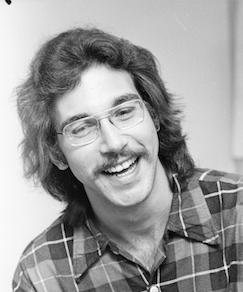
at the University of Michigan. DeGrieck, now 75, spoke alongside former Council member

“Electoral politics is not about the individual,” said DeGrieck. Yet that is often where it begins.
“Being the first of anything comes with great responsibility, anxiety and fear,” stated Laurie Pohutsky, a former representative in the Michigan State Legislature, herself openly bisexual. “It’s hard to overstate just what Jerry DeGrieck and Nancy Wechsler coming out means for all of us.”
On Sept. 4, 2025, a Michigan historic landmark commemorating the Human Rights Ordinance and the first to honor LGBTQ+ history was unveiled
and the first openly gay candidate to successfully run for office. “We need to get more young people involved,” DeGrieck stated at the ceremony. It harkens back to that night in 1968, when DeGrieck defied his parents to hear Martin Luther King, Jr. speak at Grosse South High School. DeGrieck’s life was a testament to the words King had spoken nearly half a century ago: “Freedom is the bonus you receive for telling the truth. Ye shall know the truth and the truth shall set you free.”
Photos courtesy of Ann Arbor District Library.
In the heart of Detroit, on the side of Yoshi Hibachi Grille on Livernois Avenue, a bright splash of color interrupts the otherwise ordinary landscape.
The mural, depicting youthful figures engaged in reading, writing and performing, celebrates 30 years of youth expression in Detroit. Fittingly, its centerpiece is a quote from 18-year-old student poet, Charisma Holly: “In the Detroit City, the D has always been for dreams.”
For Holly, now a Pulitzer Center-recognized, PBS-featured writer who debuted the poem at 16 during the 2024 Detroit Homecoming, it was the culmination of a decades-long love story with her craft.
“I’ve been writing since I knew what rhyming words were,” says Holly. From noticing the “liter-
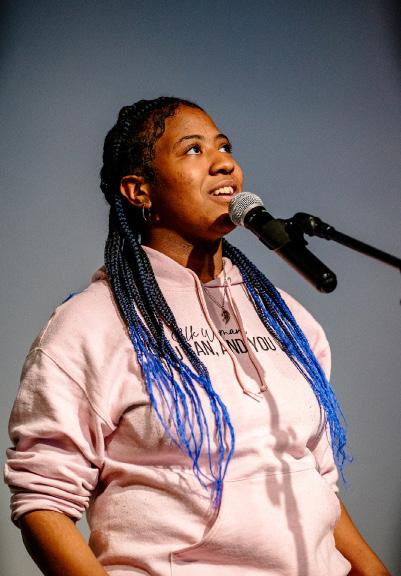
18-year-old spoken word poet Charisma Holly reflects on her writing journey.
Ivy
card to the “rhythmic” speaking of her elementary school principal, Holly’s world has always been filled with the music of language. Following her interest in high school, Holly joined a poetry group led by InsideOut Literary Arts, the largest and oldest literary nonprofit organization in Detroit. In the following years, Holly joined InsideOut Literary Arts’ Citywide Poets Program, Youth Advisory Board and Youth Performance Troupe. “It has just snowballed from there,” Holly concludes.
Since then, Holly and her group have traveled everywhere from Saginaw, to Kentucky, to Ohio. But Holly’s home base remains her hometown of Detroit, which bore witness to her numerous milestones throughout the years: performances at the Detroit Institute of Arts, Detroit’s Museum of Contemporary Arts, the Wright Museum and more. “I can only grow when I am connected to where I am from,” Holly recites in her poem “Healing Roots,” a finalist for the Pulitzer Center’s 2024 Fighting Words contest, drawing inspiration from the Detroit city of “opportunity and so much art engraved in its heartbeats.”
Holly’s journey with performance poetry began with a leap of faith. “The first time I performed was for an English teacher who made us do an open mic for my school,” Holly recalls. “I texted my mom right before I was going up: what if I make a

The

Qin // Staff Reporter
mistake?” She still remembers the response: “She was like, ‘first of all, I love you. And second of all, this is your thing.’ So, I took a deep breath and got up there and I remembered every word, every movement, every emotion. And by the time I said my last word and took a bow, everyone in the room was crying.”
“That’s when I knew exactly why I wanted to do poetry,” Holly concludes. “What I love about spoken word poetry is the actual performance. Written poetry is beautiful because you can do complex things on a page. But when it comes to performance poetry, you get to piece together all of the different elements of what you get to visually see and what you get to audibly hear, and it just creates this very immersive expe rience that is con necting the people who are perform ing and the people who are experienc ing and watching.”
says Holly. “In the future, I am looking to write more works that inspire people to create change.”
Reflecting on her now decade-long writing journey, Holly’s most profound lesson is on confidence. “From another mentor, Edmund Allen Jones, I learned that the word confidence means ‘with trust in myself.’

Now, as a freshman at Michigan State University majoring in theater with a minor in creative writing, Holly hopes to continue growing as an artist. “I am participating in pretty much every writ

While many schools in the Troy School District offer their own artistic opportunities through courses and clubs, a group of impassioned students from different high schools within the district are sharpening
their creativity behind the scenes through working on their own creative passion projects. This vibrant group of students belong to a TSD team called the Troy Creative Guild.
The Troy Creative Guild is a student-powered content creation team that aims to give students work opportunities to create their own creative productions for the district, such as podcasts, short films, documentaries and much more. Thomas Butcher, the creative content producer who leads this group of students, describes the purpose of the Troy Creative Guild being “to give students the experience that
That is the meaning of the word, like the Latin root that it comes from,” she explains. “And if you do things that make you feel good and other people around you are able to shed some of that light or share some of that light, that is the path to follow.”
Photo courtesy of DetroitMi.gov

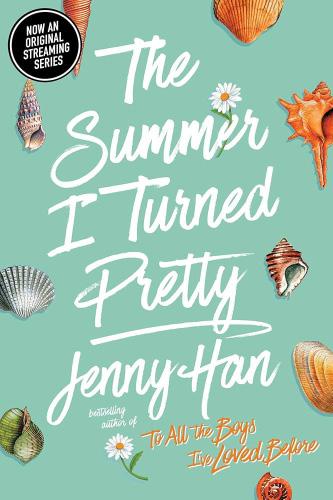
With the rise of BookTok, tropes have become popular as well, particularly in the romance genre. A notable one, fake dating is utterly unrealistic and would never happen in real life. That’s what I love about it. Imagine walking down your high school hallway with your fake romantic partner and seeing people, leaned against lockers, whispering to each other. Even better, imagine they’re your nemesis, the one person you’re supposed to hate. Now tell me that’s not extremely entertaining and will keep you on your toes the whole time. You simply can’t. The “To All the Boys I’ve Loved Before” series by Jenny Han is a great example. Lara Jean and Peter’s naivety and innocence shines and paves the way for simple, cute romance books, ones that gleam because they’re unrealistic.
An infamous trope of many is a love triangle. It’s almost never done right,
I wish I had as a student,” and to help them learn “skills that might prepare them for whatever journey that they will be continuing on after high school.”
but the ones that are can break my heart easily. Usually two boys fight over one girl, making it more of a love angle. The key to a good dynamic is for all of them to love each other. A good example is Cassandra Clare’s “Infernal Devices” series, a fixation of my 12-year-old self. The love triangle works because both Jem and Will, who love Tessa, love each other as well. While not blood-related, their love was depicted like brothers and radiated care and sentiment, dramatized by fantastical elements. Their relationship didn’t falter over desiring the same person, but only made it more heartbreaking. A bad example is Jenny Han’s “The Summer I Turned Pretty” series. While having enjoyed the show adaptation, objectively, it is ridiculous. Conrad and Jeremiah don’t act like brothers. Their relationship crumbles over the same girl they’ve known since they were kids whose name is seriously

Jyotsna Shivakumar, senior at Troy High School, is among the student producers in this group. Shivakumar is currently host- ing “The Dream Job Podcast” with her co-host Ellie Stys, a senior at Troy
How to tell if something is artificially generated.
Vildan Carsancakli // Staff Reporter
Every year, improvements in technology lead to more advanced AI tools, making it harder to tell the difference between human-made content and AI-generated content. As a result, learning how to detect AI-generated content has become an important part of life. Now people use it in social media, homework, essays and basic life tasks. While these tools can be useful and make life easier, they can also make it hard to understand what is real and what is not.
Suria Ali-Ahmed, an English teacher in Troy High School, gives her opinion about the effects on younger generations: “It could be a really cool tool to help with learning information and it can create things and it could be used as a tool, but it can also be harmful in that students can depend too much on it. It can
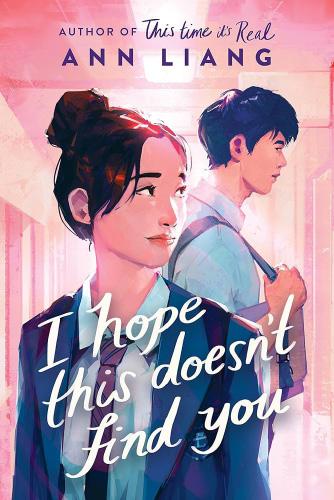
Belly. Don’t even get me started on Jeremiah throwing punches at Conrad multiple times. The internal, sometimes external, hate toward each other diminishes what should be one big heartfelt relationship. Along with general tropes, I can’t ignore the plot-specific ones. I find the typical “Oh no! I accidentally sent this super private document to the whole school!” come up occasionally in books. I normally dislike it, but in both “To All the Boys I’ve Loved Before” and its reverse plot, “I Hope This Doesn’t Find You” by Ann Liang, something about it drew me in. Whereas Han writes all of Lara Jean’s love letters being sent, Liang writes that all of Sadie’s raging hate emails were sent. Perhaps it was the academic rivals trope or my personal resonance with the main character and that made up for it. Regardless, it’s an interesting plot
device to drive two characters toward each other.
To end, a notable trope I’m most fond of is anything yearn-related. Especially if it’s out in the pouring rain, or has handwritten, crumpled and smudged letters involved. Anything like, “What letters?” or, “I thought you knew,” always becomes good writing. Tropes come from real human desires, and that’s why we are drawn to them. Even through fictional worlds, we continue to look for comfort and relatability, and trope preferences show ourselves more than we realize. Disregarding writing quality, they are a way to connect people and media. I look forward to more angry confessions in the rain, moments enemies become lovers and fake identities being revealed.
prevent them from developing on their own or being creative on their own.”
Ali-Ahmed states, “It could be a public service that could be offered to people.”
When asked about the effects of AI in the future, Ali-Ahmed answers: “Things are gonna have to change in terms of how [people] assess writing. It definitely is a game changer but it could be helpful if used in the right way.”
clear: “It will change all industries. It could expand upon what [society is] already doing, and it could also drastically change the way [people] create, but it doesn’t mean [AI is] something to be afraid of.”

Heather Kelly, an art teacher in Troy High School, comments, “I do not know that much about it, but what I do know is that AI is not going anywhere. It is going to be a tool, just like when computer technology came into being when I was young. People were afraid of it, thinking it was going to take jobs away, it was going to ruin the authenticity of our work, and disrupt [people], which it did, but I feel like it has assimilated. AI is going to do the same thing. It is just another tool.”
Kelly highlights that AI is going to be not an endgame, but a way to enhance people’s creativity: “Once [people] type in a prompt, and [they will] have to be creative in the way [they] type in the prompt. And then the response it will give will only help enhance [people’s] creativity.”
Her opinion about the
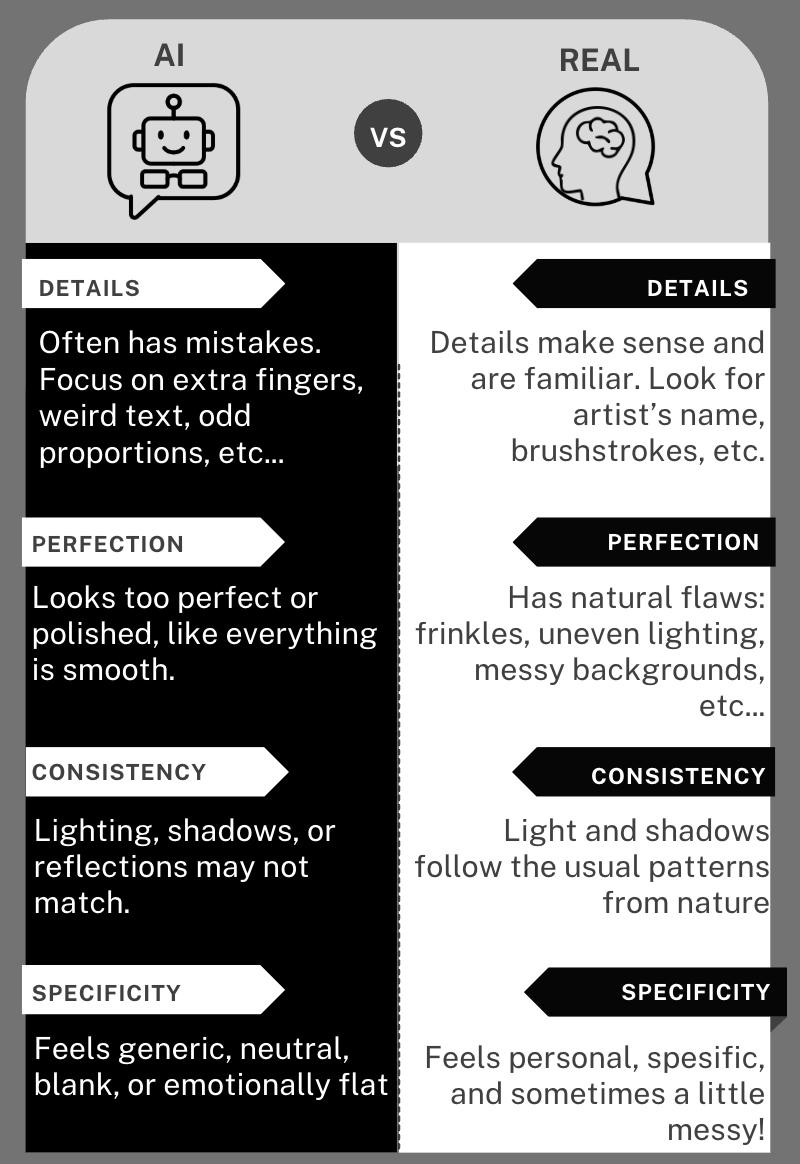
According to Spotting AI: Knowing How to Recognize Real vs AI Images by Britannica Education, to spot AI, people could focus on unusual or inconsistent details, texture and pattern repetition, lighting and shadows, background anomalies, facial features, contextual errors, text and labels, digital artifacts, emotional inconsistency.
Practical tools for image vetting are: metadata analysis, look up an image’s metadata if it’s available. This can reveal insights like date, location, camera settings, and copyright details. If you’re accessing an image on a computer, right-click the image and select “Properties” to view metadata. If people are on their phone, they can use apps like Google Photos or access image details through

the Troy Creative Guild gave her more confidence. “[Butcher] really told us at the very beginning [that] we all have our own unique voices and perspectives we can bring, and we shouldn’t be scared of that,” she highlights.
“The Dream Job Podcast” with her co-host Ellie Stys, a senior at Troy Athens High School. “The whole podcast is essentially focused on career preparation, which is something kids our age are really definitely worried about,” Shivakumar describes. In addition to her podcast, Shivakumar engages in her passion for writing through blog writing. Shivakumar emphasizes that
reverse image search is a great starting point when analyzing images. PBS Learning Media’s video guide shows people how to effectively use this technique. As AI becomes more common in daily life, the line between human and AI is getting harder to identify. Whether people can tell the difference or not, AI will become a bigger part of life in the future.
Creative Guild gives me access to professional equipment. I can use a professional camera and professional microphones.” Although the guild offers opportunities that help with developing hard skills, he adds that it has also taught him soft skills like teamwork and communication.

at all. But later on, through prac tice and stuff, I definitely got a lot more used to learning all the settings.”
The student producers of the Troy Creative Guild continue to grow their repertoire of projects as well as hone their artistic talent. “If you want to be a creative person, you just have to decide to be a creative person and actually take those first steps,” Butcher highlights. He expresses that interested students can take that first step by simply reaching out to him, through tbutcher@troy.k12.mi.us, and striking up a conversation. A dive into
Dominic Mastroberto, junior at Troy High School, is another student producer for the guild who specializes in photography. Mastroberto is currently filming a documentary about Green Space Club’s composting project in the cafeteria. He stresses that the Troy Creative Guild helped him “learn a lot about media production.” Mastroberto mentions,“The
Bhavna Jonnadula, junior at Troy High School, specialized in videography for her work as a student producer for the guild, specifically filming videos of school events, like the homecoming parade, and editing them to create a story. Jonnadula claims that the guild gave her a creative outlet. She says, “When I started at the beginning of sophomore year, I didn’t know how to use a camera


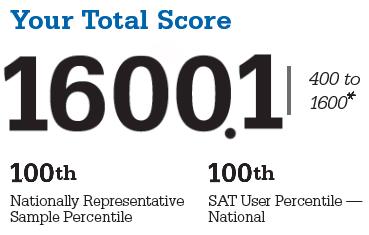
Audrey Lerner, a ju at Troy High School, has achieved a historic milestone on the past December administration of the SAT exam. She earned a 1600.1, surpassing the long-standing ceiling of academic excellence and setting a new standard. This achievement puts her in an extremely small pool of students nationwide and makes her a very capable candidate for upcoming college applications.
When asked about her preparation for the test, Lerner admits, “I mean the day before I just napped for a few hours and went out with a few friends for Chipotle.” Lerner reveals that her approach to studying for exams is surprisingly minimal. “It all comes pretty easily to me; it’s just what I was born with.”
Lerner clarifies that this effortlessness isn’t out of the ordinary for her. “I’ve never really had to study for anything in my life, the SAT isn’t much different.” She says, adding she is most proud of not having
Troy High School student earns a 1600.1 on the SAT exam.
Satire
by Roberto Nicolas-Piña // Staff Reporter
to spend “laborious hours” scrolling on “SAT Hacks” Instagram reels, “I mean I save them sometimes,” Lerner admits, “but I never really felt like doing all the work of revisiting and watching all of them.”
Even with her grand score, Lerner exposes her concerns with her test when discussing college applications. “I did really bad,” she explains, “I knew I missed the chance to get a 1600.2 the second I woke up from my second nap in the middle of the second math module.” Lerner explains that as a result of her score, her plans moving forward have only been complicated. “I’m probably just gonna go to Cornell for Tuscaloosan Cuisine Studies anyway.”
She says, noting that, “Harvard won’t even take me at this rate.”
Lerner’s frontier breaking delivery has disgruntled many sub-1550 students at Troy High School.
Charlotte Winslow, a junior who described her SAT performance as “underachieving in comparison” comments, “I mean, I’m happy for her of
course. Love her.” She pauses before adding, “It’s just a little confusing, not even confusing I mean, I studied a lot.” Winslow describes how Le rner’s achieve ment has spread through to her own home. “My par ents are pretty supportive, yeah, her picture’s on the fridge now. Replaced my kindergarten draw ings.”
score, had initially chosen not to share. After minutes of reluctance, Winslow
Adviser’s Note: This piece is satrical in nature. Please don’t sue us.
To answer Chappell Roan’s question, yes, it is very casual now. Gen Z has gone so far as to coin terms like “snaptuationship” and “storylikealationship.” When and how did traditional relationships devolve into their contemporary, laissez-faire forms?
Even though non-relationships might seem more common now, they are not a new concept. Back when Robert Zynda, Troy High School science teacher, was himself in high school in the early 1980s, right before a couple was officially “dat -
Lerner, Winslow expands, “Yeah she does it all. Grades, scores, extracur riculars, even a social life. She’s got a boyfriend, a girlfriend, a situationship, and a new car. Good for her,” she says while dig ging her fingernails into her palm. Winslow, when asked about her own

ing,” they were “going with” each other.
English teacher Jacqueline Ciolek would call them “situationships,” although she does not like that term. To her, “you’re either dating or you’re not. It’s as black and white as that.” However, she believes there is an important distinction to be made between dating and being in a relationship, especially because dating does not immediately imply exclusivity: “Dating is still getting to know each other but the relationship label shows a commitment to a possible future with that person.”
What Ciolek considers as dating, “[going] out more than three or four times,” is what most of Gen Z and senior Kenzo Ono would call “talking.” The connotation of “talking,” depending on the context, can now refer to anything from literal speech or an unlabelled, full-on relationship.


How a simple beverage holder changed a little girl’s life. Satire by Maria Papalois //
Copy Editor
calls. “The popular girls, Paisleigh and Braleigh, would push me to the ground and dump their water on my head,

ie, and I deserved it. I was a brokie,” sobs Smith. “One day, in a desolate Walmart in El Paso, I just broke down crying in the store. I had no idea that day would change my life forever.”
Abrief histor y of “whatarewe?”
The mundaneness of the verb could be said to reflect the mundaneness of the relationship (or lack thereof). “It’s just two people talking; there’s a different connotation for us,” explains Ono. He continues: “Nobody labels it as anything because, at the end of the day, it’s nothing.”
Ono doesn’t think that the term “situationship” is as common now. He thinks that “most people just say ‘talking’ or they have a ‘thing’ going on,” showing the degradation of labels.
Zynda remembers that when two people were “going with” each other, they would almost always end up in a relationship.
Heighleigh Adasynne Smith was once a below average 8th grader. She was mocked by her peers, ostracized at recess and alienated by her family.
When Ciolek began dating in college in her twenties, she recalls that “people were more open to
putting a label on a relationship. There wasn’t a stigma around not wanting to commit.”
Ono believes that it is not uncommon for people to have many talking stages, sometimes simultaneously. Most of the time, he does not see talking stages blossom into anything more.
However, Ono affirms that “there’s nothing wrong with [talking stages] as long as you’re not abusing the situation,” although he thinks that people “should learn to be by themselves.” Ciolek agrees, adding that being confident in oneself ultimately leads to a good relationship.
Business mogul Kash Lawnder describes finding Smith in a di-
TikTok and Instagram, throughout 2025. It is available for purchase on its web site, “welovemoney. com,” and at every Target across the country. It is priced at $2,899.89 for the base cup, special addons not included. There is, howev er, an optional payment plan of $0.99 per minute for 12 months out of every year.
“The product’s accessories are really what make it special,” says Lawnder. “The sky’s the limit for our customers.”
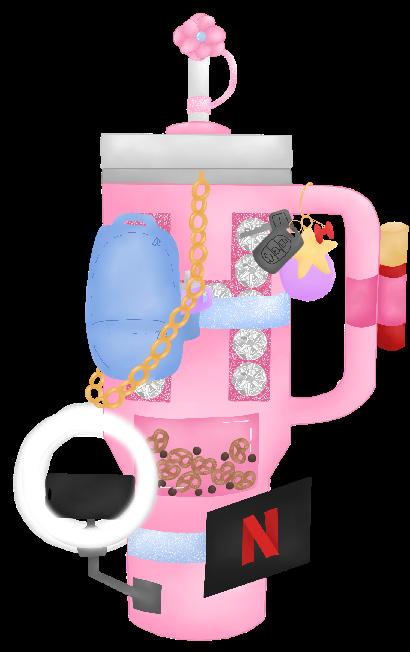
Popular accessories for the Stanhydrowabubu include lids, handles, straws and snack compartments, with prices ranging from $49.99 to $359.99.
sheveled state, “I felt awful, disgusted even, when she told me the story. I mean, what kind of world are we living in where people go so crazy over a cup like the Stanley? I decided right then and there that I wouldn’t stand for this.”
straight out of their Stanley Cups.”
The Stanley Cup, an infamous tumbler that went viral on social media in 2023, is now a staple among teenage girls and adults alike due its durability and customization options. It is widely considered hip to have one and unhip otherwise.
“It was awful,” she re-
“They would call me a brok-
In June 2024, Lawnder announced his new product, known as the Stanhydrowabubu. “What I realized that day was that the fellas at Stanley were doing it all wrong! They’re only selling a cup when there’s millions of cups! What I’m selling is a journey,” Lawnder says. “I wanted to help Jennifer or whatever get a leg up, out of the goodness in my heart.”
The Stanhydrowabubu has been increasing in prominence on social media, especially
“I’ve got all the basic stuff like the lid and the straw,” indulges Smith. “For Christmas, my parents even got me the lip gloss holder!” The aforementioned lip gloss holder, called the “Lippy Boss Mother,” is priced on the website at $84.99.
The Stanhydrowabubu has inspired numerous TikTok trends, with many popular influencers partnering with the brand. McKayla McAshley McDonald, TikTok content creator with 4.4 million followers, partnered with Lawnder to promote the McKayla x Stanhydrowabubu ring light attachment for the cup. McDonald comments, “It’s so useful for when I want to film, I can just snap it right on! The cup eats.”
The cup has also become a staple of the rising Tiktok community known as #WaterTok, who pride themselves on staying hydrated and adapting beyond the underwhelming “taste” of classic water. Proponents of #WaterTok enjoy var-
ditives in their and Lawnder ed to their content. As Lawnder always says, “Don’t let anyone tell you your water isn’t water, drink proud. Drink us.”
A billboard for the soon to be released Stanhydrowabubu “Drinkfuser” boasts, “Turn your boring water into real water by adding just a little syrup, sugar, spice, everything nice, oat milk, matcha and some more ice!”
Lawnder’s aid has caused a great shift in young Smith’s lifestyle. “The customization is what makes the cup so awesome! I’m thinking for my birthday, I can get my name bedazzled on it!” The bedazzling fee is $699.99 (per letter).
“During the times I was hassled and bullied for being different, I would tell myself it didn’t matter, that I was beautiful and worthy even without having all of the popular products,” Smith reflects. “I’m in a different place in my life now, I’ve moved past that narrow mindset.”
Smith sips from her Stanhydrowabubu, a changed girl. A girl in power. #GirlPower.
Adviser’s Note: This piece is satrical in nature. Please don’t sue us.