
Growing Careers of the Future
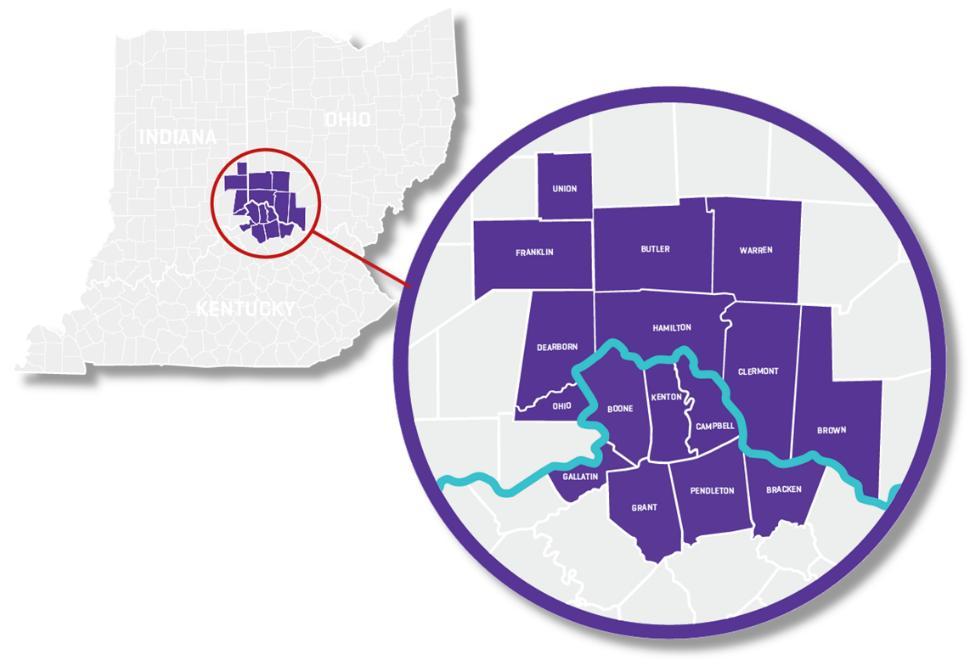
The Cincinnati MSA
(Metropolitan Statistical Area)


Ohio 2032 Job Numbers – Cincinnati MSA
This list shows strong growth in healthcare, technology, and financial sectors, with healthcare roles dominating many of the top positions.

Common Skills Across Top Growth Occupations
Technical & Digital Literacy
• Evident in technology roles (data scientists, software developers)
• Increasingly important in healthcare (nurse practitioners, health information technologists)
• Essential in financial positions (financial examiners, actuaries)
Data Analysis & Interpretation
• Critical for statisticians, operations research analysts
• Valuable in healthcare for patient outcome analysis
• Essential in financial roles for market and risk assessment
Advanced Problem-Solving
• Central to engineering and technical positions
• Crucial in healthcare diagnostics and treatment planning
• Necessary in financial roles for complex planning
Communication Skills
• Essential in patient-facing healthcare roles
• Important for technical roles to explain complex concepts
• Critical in positions requiring stakeholder management
Adaptability & Continuous Learning
• Vital in rapidly evolving fields like technology
• Important in healthcare as treatments and protocols evolve
• Necessary in financial sectors with changing regulations
Project Management
• Direct application in logistical roles
• Important for coordinating healthcare teams
• Valuable in software development and implementation
Specialized Knowledge
• Healthcare roles require specific medical training
• Technical positions need programming/engineering knowledge
• Financial positions require regulatory understanding
Developing Skills for High-Growth Occupations
Here's how you can develop the key skills needed for these high-growth fields:
Technical & Digital Literacy
Formal Education:
• Degree programs in computer science, information technology, or related fields
• Community college technical certificates
Self-Learning:
• Online platforms like Coursera, Udemy, or edX offering courses in programming, data management, and digital tools
• Free resources like freeCodeCamp, Khan Academy, or YouTube tutorials
Practical Application:
• Create personal projects to build a portfolio
• Volunteer to help small businesses or nonprofits with technical needs
• Participate in hackathons or coding challenges
For Healthcare Professionals:
• Seek additional training in electronic health records (EHR) systems
• Take specialized courses in healthcare informatics
Data Analysis & Interpretation
Education Pathways:
• Degrees or certificates in statistics, data science, or analytics
• Specialized courses in biostatistics for healthcare professionals
Technical Skills:
• Learn programming languages like Python, R, or SQL
• Master data visualization tools like Tableau or Power BI
Practice Opportunities:
• Work with public datasets on platforms like Kaggle
• Offer to analyze data for local organizations
• Complete data analysis projects with real-world applications
Advanced Problem-Solving
Development Methods:
• Take courses in critical thinking and decision-making
• Practice with case studies relevant to your target field
• Study design thinking methodologies
Practical Enhancement:
• Participate in problem-solving competitions
• Join industry-specific forums where complex problems are discussed
• Volunteer for cross-functional teams tackling challenging issues
Communication Skills
Formal Training:
• Courses in technical writing, presentation skills, or interpersonal communication
• Join organizations like Toastmasters to practice public speaking
Practical Experience:
• Practice explaining complex concepts to non-technical audiences
• Write blog posts or create videos explaining technical topics
• Volunteer to present at local meetups or conferences
Adaptability & Continuous Learning
Developing a Learning Mindset:
• Establish a regular reading habit focused on industry publications
• Set aside dedicated time weekly for learning new skills
• Create a personal learning roadmap with short and long-term goals
Practical Approaches:
• Take on projects slightly outside your comfort zone
• Participate in cross-training opportunities at work
• Join communities where knowledge sharing is encouraged
Project Management
Education Options:
• Project Management Professional (PMP) certification
• Agile/Scrum certifications
• Courses in project planning and execution
Practical Development:
• Volunteer to lead small projects within your organization
• Use project management tools like Asana, Trello, or Jira for personal projects
• Seek mentorship from experienced project managers
Specialized Knowledge
Healthcare:
• Pursue relevant degrees or certifications (nursing, physician assistant studies)
• Continuing education courses focused on emerging treatments and technologies
• Join professional associations for knowledge sharing and networking
Technology:
• Bootcamps for specific technical skills
• Industry certifications (AWS, Google Cloud, Cisco, etc.)
• Contribute to open-source projects to build practical experience
Finance:
• Financial certifications (CFA, CPA, Series exams)
• Regulatory compliance training
• Study financial modeling and analysis
Top 15 Declining Occupations with Employment Percentages by 2032
1. Word processors and typists: -36.45%
2. Switchboard operators, including answering service: -31.16%
3. Data entry keyers: -24.98%
4. Executive secretaries and executive admin. assistants: -25%
5. Legal secretaries and administrative assistants: -22.22%
6. Payroll and timekeeping clerks: -17.72%
7. Metal-refining furnace operators and tenders: -17.57%
8. Interviewers, except eligibility and loan: -16.13%
9. Postal service mail sorters, processors, and processing machine operators: -15.38%
10. Drilling and boring machine tool setters, operators, and tenders: -16%
11. Office machine operators, except computer: -12.77%
12. Secretaries and administrative assistants, except legal, medical, and executive:12.94%
13. Bill and account collectors: -13.98%
14. Cashiers: -13.8%
15. Medical transcriptionists: -13.93%
These declining occupations are primarily in administrative support, data processing, and certain manufacturing sectors - areas that have been significantly impacted by automation, digitalization, and changing business practices.