Catholic Teleg raph
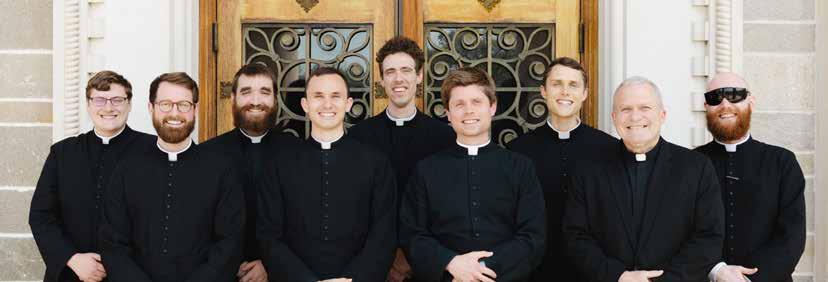
New Priests for the Archdiocese
MEET THE NINE ORDINANDS
Where Beauty Meets the Kingdom
BRINGING SACRED ART INTO DAILY LIFE
Brigid’s Path

MEET THE NINE ORDINANDS
BRINGING SACRED ART INTO DAILY LIFE
The Catholic Church has given us universities, hospitals, orphanages, incredible advancements in art and science, appreciation of moral concepts and human dignity, unprecedented care for the marginalized, preservation of knowledge, and so much more! It’s almost impossible to imagine the world without these things, yet we know it was a much different place prior to the Incarnation of our Lord Jesus and the establishment of His Church.
Amid difficult times, scandals, controversies, confusion, and distractions, it is important to remember and celebrate the beauty of Catholicism and triumphs of Church history. The term “Breaking Ground” evokes the idea of innovation, doing something new, or going further than ever before, and no one has “broken ground” more than the Catholic Church. That’s a bold statement, I know, but I am convinced it’s true—all glory to God.
This is not to say that the Church’s history is flawless— far from it. After all, the Lord left her in the hands of human beings, who don’t always follow the wisdom and guidance of the Holy Spirit. But still, the Church is Christ’s Mystical Body, not simply a human organization. While the visible, historical, and human elements of the Catholic Church are real, they are not the source of her divine life. The holiness and power that make it Christ’s Church come from God alone.
And so, when the people of God are true to their mission and obedient to God, powerful and monumental shifts take place for the betterment of humankind. Even historically astute nonbelievers and critics acknowledge the objective positive impact the Church has had on formal education, healthcare, art, organized charity, human rights, ethics, intellectual life, etc. From our perspective, though, these are “happy accidents” resulting from individuals living out the Gospel.
This should inspire us to double down on our efforts to be authentic Catholics and not shy from our traditions nor from our proclaiming the Word of God. Only when we follow God’s will, trust in the Holy Spirit, and embrace the teachings that have been protected and handed down to us will we be able to effectively bring others to Christ and subsequently make the world a better place.
Spring is a time of new life: the trees have leaves, the grass is green, flowers are blooming, and the air is fresh. It’s the time of year when we celebrate graduations—the end of school but also new beginnings—and students are excited to start summer vacation. This May in the Archdiocese of Cincinnati, we also celebrate the ordination of nine men to the holy priesthood—a joyous occasion indeed!
In the following pages, you’ll get to meet the new priests and read about different ways the faithful are breaking new ground here in the archdiocese. These stories are inspiring, but only a sample of the amazing things local Catholics are accomplishing.
May is a time we set aside to honor Mary, whose faithful “Yes” to God’s plan was the ultimate groundbreaking event in human history. She brought new life into the world with the birth of Jesus and, as our Blessed Mother, continues to lead us to her Son. Through His life, Passion, Death, and Resurrection, Jesus restored a fallen world dominated by sin and death, blazing a path to make eternal life with the Father possible for all.
When we unite ourselves to Christ and trust in the graces that flow through the sacraments, we continue to break new ground and participate in God’s ongoing work of redemption in the world. Perhaps we will even help usher in a new springtime of faith!
Publisher: Archbishop Robert G. Casey
Editor: David Cooley
Managing Editor: Margaret Swensen
Creative Director: Nick Abele
Photography: Mary Kate Fleisher
Social Media: Taylor Motley
Media Sales: Deacon Graham Galloway
Circulation: Catherine Ampfer

Father David Endres
is professor of Church history and historical theology at Mount Saint Mary’s Seminary & School of Theology.

Dr. Kenneth Craycraft
holds the James J. Gardner Chair of Moral Theology at Mount St. Mary’s Seminary & School of Theology. He is the author of Citizens Yet Strangers: Living Authentically Catholic in a Divided America.

Dr. Andrew Sodergren
is a Catholic psychologist and director of psychological services for Ruah Woods. He speaks on the integration of psychology and the Catholic faith. He and his wife Ellie have five children.

Fr. Jacob Lindle
was ordained a priest for the Archdiocese of Cincinnati in May 2022. He is presently studying for a Doctorate in Patristic Theology at the Pontifical Gregorian University in Rome.

Michelle Wirth Smith
has served as the archdiocesan Archivist since 2019, bringing a Cincinnati-born passion for preserving Catholic history. She earned her Master of Library & Information Science degree from Kent State University.

Katie Sciba
is a national speaker and Catholic Press Award-winning columnist. She and her husband Andrew were married in 2008 and are blessed with seven children.
After a difficult winter and a late-arriving spring, we now tend to the ground that has remained fallow through cold days and months of patient waiting for sunlight. As we break ground in our fields and gardens, we soon discover that the demand to care for creation is not simply found externally in nature. This care must be given to our interior life as well. We must tend to the state of our heart, creating a healthy place for faith, hope, and love to be planted, nourished, and bear fruit.
Over time, untilled soil can become hardened and incapable of receiving water. Our hearts, too, can become hardened, thirsting for the Living Water that first gave us life in Baptism. Rocky soil, overtaken by obstacles and barriers, is a difficult environment for setting deep roots. Our hearts, as well, overwhelmed by attitudes and outlooks as stubborn as any boulder, face the challenge of setting roots deeply in the love and mercy of God. Thorny soil, beset by weeds that overtake it and choke off all light and life, does not permit healthy growth. Our hearts, also, find it hard to thrive when worries and distractions surround and overtake us.
As in our gardens, where we must break ground and till the soil, we also must break open our hearts to receive new grace, to be freed of any stubbornness or stumbling blocks in our way, and to cut back the weeds of anxiety and anguish that encroach upon our growth.
When we enter a church and bless ourselves with holy water, we renew our baptismal identity, softening our hardened hearts and giving welcome to fresh grace. When we receive Holy Communion, responding “Amen,” which is our “yes” to becoming part of the Body of Christ, we become strong enough to confront any unwelcome barrier that might prevent us from truly living as one body, one spirit in Christ. When we exit a church and enter back into our daily life, we commit to walk tall in our faith and not allow worry, fear, or distraction to cast their shadow over us.
The Book of Hosea reminds us, “Sow for yourselves justice, reap the reward of loyalty; break up for yourselves a new field, for it is time to seek the Lord, till he comes and rains justice upon you” (Hos 10:12).
As Catholics, we see this work not as the effort of a single individual but as communal work. All hands must labor in the field to assist in the care of our Church’s growth and fruitfulness. I am reminded of my grandfather, a hard-working and faith-filled farmer. He never attempted to work alone. He invited those around him to assist in the care of his fields. Together they would break ground each spring. Together they would bring in the harvest each fall.
On Sundays, my grandfather would teach me about the grace and gift of Communion. The church we attended was a place of welcome; there were no strangers, only friends. The Mass would conclude with everyone gathering for donuts and coffee. I discovered that the Eucharist was not simply something I received at Mass but a call to divine encounters that would be experienced with family, friends, neighbors, and strangers beyond the Mass.
As we break bread with each other at the Lord’s table, we pray that our sharing in Holy Communion nourishes us and makes us strong, so that we might go forth from the altar ready and willing to break ground with one another. Breaking ground—breaking open our hardened hearts—will allow God’s grace to take root deep in our hearts, to grow stronger every day, and to bear fruit that can be shared with all those who hunger. ✦


MANOS | Arzobispo Robert G. Casey
Tras un invierno difícil y una primavera que llegó tarde, ahora nos dedicamos a preparar la tierra que ha estado descansando durante los días y meses fríos, en paciente espera de que llegue la luz del sol. A medida que comenzamos a labrar la tierra en nuestros campos y jardines, pronto descubrimos que la necesidad de cuidar la creación no se encuentra únicamente en lo exterior de la naturaleza. Este cuidado también debe extenderse a nuestra vida interior. Debemos cuidar el estado de nuestro corazón, creando un espacio sano donde la fe, la esperanza y el amor puedan ser plantados, nutridos y dar fruto.
Con el tiempo, la tierra no cultivada puede endurecerse y volverse incapaz de absorber agua. Nuestros corazones también pueden endurecerse, sedientos del Agua Viva que nos dio la vida en el Bautismo. La tierra rocosa, plagada de obstáculos y barreras, es un terreno difícil para el desarrollo de raíces profundas. Nuestros corazones, abrumados por actitudes y perspectivas tan obstinadas como cualquier piedra, también se enfrentan al reto de echar raíces profundas en el amor y la misericordia de Dios. La tierra llena de espinas, plagada de malas hierbas que la invaden y ahogan la luz del sol y la vida, no permite un crecimiento saludable. A nuestros corazones también les resulta difícil prosperar cuando las preocupaciones y las distracciones nos rodean y nos abruman.
Al igual que en nuestros jardines, donde debemos arar la tierra para labrarla, también estamos llamados a cultivar nuestros corazones para recibir una nueva gracia, para liberarnos de cualquier terquedad u obstáculo en nuestro camino y para arrancar las malas hierbas de la ansiedad y la angustia que invaden nuestro crecimiento.
Cuando entramos en una iglesia y nos santiguamos con agua bendita, renovamos nuestra identidad bautismal, ablandamos nuestros corazones endurecidos y damos la bienvenida a una nueva gracia. Cuando recibimos la Sagrada Comunión, respondiendo “Amén”, que es nuestro “sí” a formar parte del Cuerpo de Cristo, nos
volvemos lo suficientemente fuertes como para afrontar cualquier obstáculo no deseado que pueda impedirnos vivir verdaderamente como un solo cuerpo, un solo espíritu en Cristo. Cuando salimos de la iglesia y volvemos a nuestra vida cotidiana, nos comprometemos a caminar con la frente en alto y a no permitir que la preocupación, el miedo o la distracción nos ensombrezcan.
El Libro de Oseas nos recuerda, “Siembren semillas de justicia, cosechen el fruto de la fidelidad, roturen un campo nuevo: es tiempo de buscar al Señor, hasta que él venga y haga llover para ustedes la justicia” (Os 10:12).
Como católicos, vemos este trabajo no como el esfuerzo de un solo individuo, sino como un trabajo comunitario. Todos debemos colaborar en el campo para contribuir al crecimiento y la fecundidad de nuestra Iglesia. Me recuerda a mi abuelo, un campesino trabajador y lleno de fe. Nunca intentó trabajar solo. Invitaba a quienes le rodeaban a ayudarle en el cuidado de sus campos. Juntos cultivaban la tierra cada primavera. Juntos se encargaban de la cosecha cada otoño.
Los domingos, mi abuelo me enseñaba sobre la gracia y el don de la Comunión. La iglesia a la que asistíamos era un lugar acogedor; no había extraños, solo amigos. La Misa concluiría con una reunión de todos para comer pan y tomar café. Descubrí que la Eucaristía no era simplemente algo que recibía en la Misa, sino una llamada a encuentros divinos que se experimentan con familiares, amigos, vecinos y desconocidos más allá de la Misa.
Al compartir el pan en la mesa del Señor, oramos para que nuestra participación en la Sagrada Comunión nos nutra y fortalezca, de modo que podamos salir preparados y dispuestos a cultivar la tierra juntos. Cultivar la tierra—cultivar nuestros corazones endurecidos—permitirá que la gracia de Dios eche raíces profundas en nuestros corazones, que crezca más fuerte cada día y que dé frutos que puedan compartirse con todos los que tienen hambre. ✦
Fr. David Endres
Q: What is the purpose and history of holy water?
Holy water is a common sacramental used by Catholics— to sign themselves before entering church, to sanctify the home, and to call forth divine protection. Ordinary water becomes holy water when it is blessed by a priest or deacon, who calls down the Holy Spirit to sanctify it. Its use is deeply rooted in Church history and reflects the broader theological understanding of water as a symbol of purification, new life, and grace.
It is also an element that has a natural correspondence to its spiritual meaning: as a substance, water is easily recognized for its cleansing effects. Long before Christianity, water was seen as representative of ritual purification and spiritual renewal.
The Old Testament alludes frequently to water’s cleansing effect. In the Book of Ezekiel, the Lord promised, “I will sprinkle clean water over you to make you clean; from all your impurities and from all your idols I will cleanse you” (Ez 36:25). And in Psalm 51, a penitent King David said, “Thoroughly wash away my guilt; and from my sin cleanse me” (Ps 51:4, NABRE).
Elsewhere, water’s spiritual effects are referenced in a ritual context, as when the prophet Elisha instructs Naaman to wash in the Jordan River seven times. When Naaman obeys, he is cleansed: “His flesh became again like the flesh of a little child, and he was clean” (2 Kgs 5:14).
Unsurprisingly, Jewish believers placed great importance on ritual baths. According to the Mosaic law, water was necessary to cleanse a person whenever they became unclean, whether from touching a corpse or an unclean animal.
The use of “holy” water by Christians appears to date to apostolic times. According to one tradition, St. Matthew recommended it, and because water’s ritual use was a familiar practice to Jewish believers, it attracted them to Christianity.
Exactly how it was used—whether in private devotion or public rituals—is unclear.
A form of blessing water is found in a fourth-century prayer book, and the practice of placing holy water at the doors of churches is testified to in documents from the medieval period. The sprinkling of the faithful at Mass (called the asperges—taken from the first word of Psalm 51:9, NAB Revised Edition) goes back to at least the ninth century.
Holy water is used to bless objects and persons. This includes the blessing of homes, the sprinkling of a casket during a funeral, and the submersion of the paschal candle in holy water at the Easter Vigil.
It also has a special role in the Sacrament of Baptism. During baptism, the priest or deacon prays over the water in the font, and he recounts salvation history, explaining how God used water to reveal himself: beginning with creation and continuing with the flood, the parting of the Red Sea, and Jesus’ baptism in the Jordan River, then concluding with Jesus’ command to “Go, therefore, and make disciples of all nations, baptizing them in the name of the Father, and of the Son, and of the Holy Spirit.” The newly sanctified water is then poured over the person (or the person is immersed into it).
Throughout a Christian’s life, holy water helps them recall their baptism and the promises made at baptism. This is why it is placed in fonts at church doors for people to sign themselves and why it is sprinkled during the renewal of baptismal promises. It is a sacramental that reminds us of spiritual regeneration, just as it reminded Jewish believers and Christians throughout history. ✦
Savanna Acree
Ava Altenau

Amani Althawadi
Avery Arata
Yesenia Bail Ramirez
Lauren Bain
Meghan Bain
Riley Bass
Leah Becker
Sophia Bennett
Rachel Bernard
Audrey Bier
Mya Birkenhauer
McKenna Borgman
Sarah Brogan
Casey Broxterman
Kaylin Buck
Hayley Burman
Brionna Carroll
Kylie Chetwood
Caitlin Childs
Olyvia Clevenger
Kylie Coleman
Callie Combs
Abigail Condren
Margaret Conway
Josephine Cowans
Josephine Cox
Madelyn Cummings
Mya Cunningham
Kylie Curlis
Huyen Dao
Isabella Daria
Josie DePaoli
Lesbi Diaz Jacinto
Zoe DiNovo
Samantha Dirr
Gianna Donnellon
Dominique Dunn
Livia Eger
Megan Eisenmann
Alexandra Emerson
Emma Faeth
Chloe First
Olivia Fowkes
Jane Fox
Mary Gibbs
Kaitlyn Gilham
Allie Gilkey
Karaya Gober
Jordan Goldsberry
Brooklynn Goshorn
Hayden Grow
Magdalene Guenther
Addison Gundler
Lydia Hageman
Lyla Hambleton
Emma Hamburg
Heidi Harmeyer
Rachel Harrell
Eva Hater
Olivia Hausfeld
Alison Heckman
Megan Hogel
Taylor Hummeldorf
Dylan Huseman
Jayne Huwel
Maren Jenkins
Lydia Johnson
Kaitlyn Johnston
Grace Jones
Olivia Jung
Jennavieve Kahny
Sydney Kammerer
Claire Kamstra
Georgia Keefe
Kylie Keller
Sophia Kelley
Ella Kelsey
Kirsten Kemper
Elizabeth Kennedy
Macy Kissell
Janie Knepfle
Lucille Kock
Aubri Korfhagen
Claire Kreimer
Kailey Krummen
Elliana Kuhlman
Evelyn Kuhlman
Leah Lageman
Sophia Laib
Abigail LaTulippe
Charlee Lauson
Emily Lewis
Madalynn Linde
Kara Lively
Tessa Long
Elaina Love
Ridley Ludeman
Maegan McNally
Madison McWhorter
Madison Meyer
Alyssa Miller
Breely Miller
Elizabeth Miller
Willow Miller
Ella Moore
Carmen Morano
Megan Morman
Leah Mueller
Courtney Muhlen-
kamp
Eadie Mullen
Quinn Mullen
Bernadette Myles
Alison Neiheisel
Samantha Neville
Katelyn Nicholas
Mia Nienhaus
Kacie Noble
Maura O'Donnell
Margaret O'Leary
Madison Palmisano
Liana Panzeca
Kylee Parnell
Margaret Peck
Arianna Pence
Katrina Prewitt
Peyton Rampello
Macie Ransick
Hayden Read
Riley Reder
Elizabeth Reichert
Maia Reverman
Abigail Rizzo
Paige Roberts
Alianna Rojas
Kaitlyn Rotte
Ava Rudolf
Semhar Ruffin
Sydney Saleh
Faith Sand
Meghan Schmitt
Elizabeth Schroeder
Mallory Scigliulo
Isabella Seger
Maggie Sexton
Madison Siemer
Sophia Simonson
Olivia Skipton
Natalie Slusher
Madison Smith
Camille Smitherman
Maria Sprecker
Claire Steinmann
Lotus Stigar
Brooklyn Stock
Lucy Stoecklin
Lindsay Studt
Kate Stumin
Shelby Sykes
Nellie Tarbell
Ali Taulbee
Ellianna Tepe
Taylor Thiery
Paige Vanover
Meredith Vetter
Anna Viltro
Hailey Wachtel
Rachael Waldeck
Anna Watters
Katlyn Watters
Reese Weinle
Aubrey Weller
Tatumn Wharton
Cassandra Whittle
Elizabeth Williams
Lily Williams
Katelyn Wittich
Annabella Wolfram
Emma Wuebbling
Mia Young
Melina Zappasodi
Megan Zirkelbach


For most people who are anticipating graduation, the commencement ceremony is the pinnacle of an academic career. Whether from high school, college, or graduate school, May or June graduation is the completion of the objective. While, of course, high school and university graduates may be going on for more study, receiving that degree is still the fulfilment of the immediate task. It’s the final event and, thus, the time for celebrating the culmination of the mission. It is closure.
This is not the case, however, for the 17 men who will receive their professional degrees from Mount St. Mary’s Seminary (MTSM) on May 9.
While other graduates—including some lay people receiving MTSM degrees—may have blowout celebrations befitting the completion of their work, the celebration of seminary graduates will be somewhat muted. That’s because receiving their degrees is not closure. It is not the culmination of their seminary education. It is, rather, the penultimate event—merely an appetizer for something much bigger later in May.
This is not to diminish the accomplishment that will be celebrated at graduation. These men have completed as many as six years of seminary formation and education beyond their college careers. This includes at least two years of formation and “pre-theology” philosophical work, followed by four years of theological education for the Master of Divinity degree (M.Div.), the professional degree that each of these 17 men will receive. Because of formation commitments in addition to academic responsibilities, these four M.Div. years are more intensive than a typical graduate or professional program. Some men will also be awarded a Master of Arts degree, having completed a thesis and other requirements for the additional honor. Still, this is only the appetizer. The feast is yet to come!
Of course, you know what the feast is. While the M.Div. is the prerequisite, it is still only the means toward the ultimate goal of ordination as a Catholic priest. Thus, on May 16 nine men will
be ordained as priests for the Archdiocese of Cincinnati and eight will be ordained for the Diocese of Charlotte, North Carolina, two weeks later on May 30. When these 17 men are ordained, they will begin their participation in the eternal priesthood of Christ, re-presenting to us the very Incarnation of grace by which God became man.
In the Epistle to the Hebrews, the biblical author explains that Jesus is (among lots of other things) the culmination of the Jewish priesthood. “You are a priest forever, according to the order of Melchizedek,” says Hebrews 5:6, invoking a mysterious but important Old Testament figure.
Melchizedek, Hebrews 7:3 explains, “is without father or mother or genealogy, and has neither beginning of days nor end of life, but resembling the Son of God he continues a priest forever.” Of course, we do not take that literally but rather as a symbol of the eternal priesthood of Christ. The point is that we have no information about Melchizedek apart from his blessing of Abraham offering him a tithe in Genesis 14:19-20. And thus, for the purposes of the Genesis narrative, Melchizedek has no beginning or end. His priesthood is metaphorically eternal. And he becomes the symbol of the actual eternal priesthood of Christ.
“This makes Jesus the surety of a better covenant,” the author of Hebrews further explains in Hebrews 7:22. “He holds the priesthood permanently, because he continues forever” (Heb 7:24). The sacrifice that he offered was “for all time a single sacrifice for sins” (Heb 10:12). Perpetuating this one eternal sacrifice through its re-presentation in the Mass is what the 17 ordinands in the Mount St. Mary’s Seminary class of 2026 have been preparing for. Ordination, not graduation, is the pinnacle of their careers at MTSM. And they are being ordained into a participation in the eternal priesthood of Christ.
Having taught each of these 17 men in multiple courses, I can attest that they are intellectually, morally, and spiritually well prepared for the vocations they have accepted.
For the Diocese of Charlotte: Deacons Robert Bauman, Michael Camilleri, John Cuppett, Maximilian Frei, Bryan Ilagor, Michael Lugo, Peter Townsend, and James Tweed will be ordained by Bishop Michael Martin on May 30, 2026.
Their number is indicative of the growth of Catholicism in North Carolina, especially the Charlotte area. They are joining similarly large cohorts from the past several years and will be serving a thriving Catholic community in their diocese. They are very well prepared to meet the demands of a growing, spiritually vibrant Catholic community.
The nine men to be ordained for the Archdiocese of Cincinnati represent a similar encouraging trend of relatively large ordination classes. On May 16, Archbishop Robert Casey will lay hands on Deacons Nicholas Emmerling, Curtis Gross, Kraig Gruss, David Homoelle, Daniel Jasek, Benjamin Klare, Doug Moore, Benjamin Packer, and Jacob Schmiesing. Like their Charlotte colleagues, these men have been wellformed—intellectually, morally, and spiritually—to take on the burdens of priesthood.
Having met the academic requirements for their M.Div. degrees and having been judged fit to participate in the eternal priesthood of Christ, these 17 men will take satisfaction in their degrees on May 9. But the real rejoicing—in Cincinnati, Charlotte, and Heaven—will take place later in May when these fine men will be made priests forever, according to the order of Melchizedek. ✦
Are you experiencing a decline in memory or problem-solving ability?
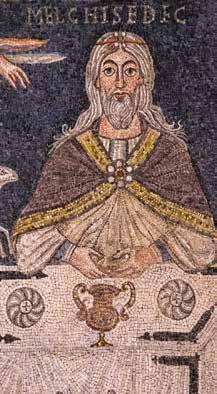
This Byzantine mosaic dates back to the 6th century. It is located in the apse at the Basilica of Sant’Apollinare in Classe, Ravenna, Italy. It depicts Old Testament sacrifices including priest-king Melchisedek offering bread and wine. The mosaic is flanked by depictions of Abel (holding a lamb) and Abraham (preparing to sacrifice Isaac).
Who
Men and women 55 to 82 years old who have experienced mild to moderate cognitive changes, such as difficulty organizing and planning and/or forgetfulness, including those who have been diagnosed with subjective cognitive decline or mild cognitive impairment
What
The purpose of this study is to evaluate the effects of daily supplementation with a new omega-3 fatty acid formulation that may provide greater benefit for brain function
Pay
Compensation for this study is $920 for attending 4 in-person visits and regular phone visits over a 25-week period
Details
For more information, please contact Karen Tugrul at tugrulkc@ucmail.uc.edu or call 513-558-6831

IRB#2024-0620
CNS DHA Delivery in Elderly Adults

BY DAVID COOLEY
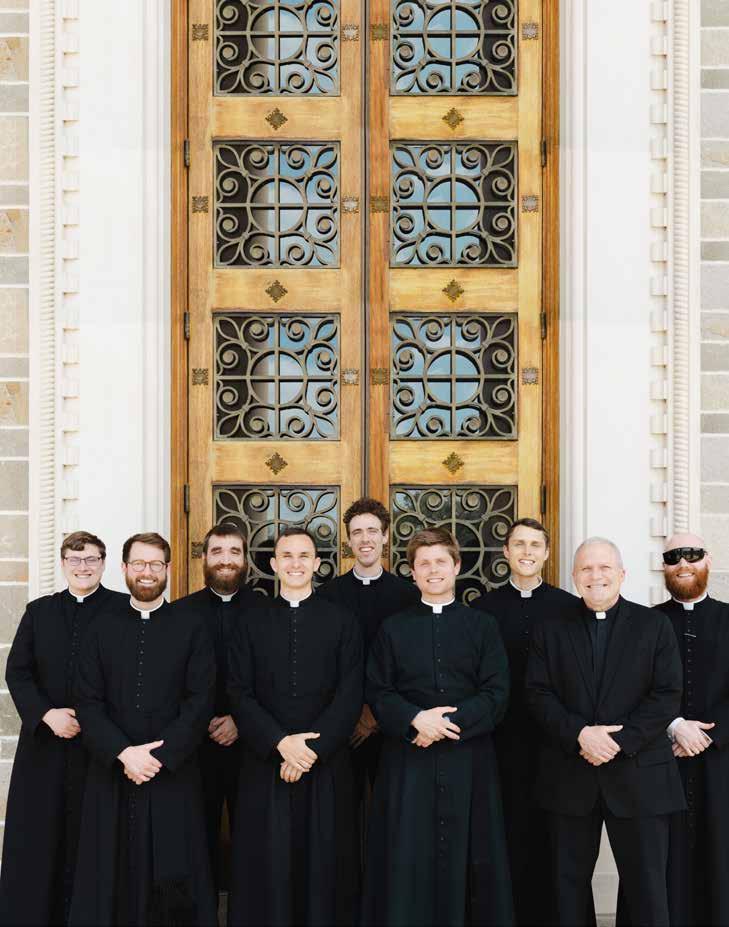
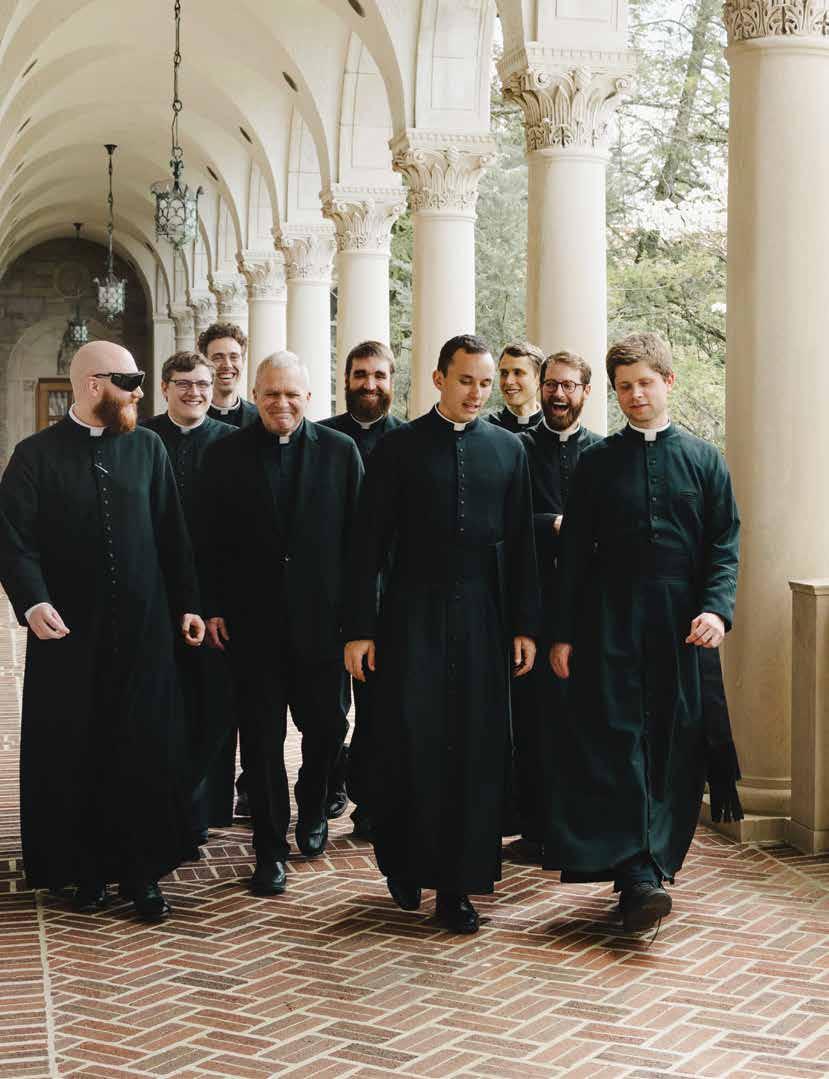
Meet the nine men to be ordained to the priesthood for the Archdiocese of Cincinnati on May 16, 2026
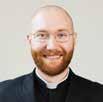
DEACON
HOME PARISH: ST. ANN, GROESBECK, CINCINNATI
Deacon Emmerling is the oldest of eight children from a devout Catholic family. He grew up on Cincinnati’s west side, near St. Ignatius Church. He inherited a love of cooking from his parents and enjoys cooking for others. Because of his family’s special devotion to St. Joseph, this saint is his favorite—and is the confirmation patron for both the deacon and his father. Deacon Emmerling said St. Joseph helped him during his discernment, and he is excited to see what this saint’s intercession will accomplish in his life after ordination.
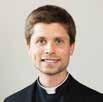
DEACON
HOME PARISH: ST. MARGARET OF YORK, LOVELAND
Born in Northern Kentucky, Deacon Gross moved to Morrow, Ohio, with his parents and three sisters when he was four years old. His parents emphasized the faith in the home, Mass each Sunday, and prayer before meals. His childhood was full of adventure—canoe trips, Kings Island, impromptu sports competitions, video games, and more. He’s passionate about basketball and frisbee golf. His favorite saint is St. Alphonsus Liguori, whose books he likens to a spiritual “shot in the arm.”
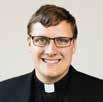
HOME PARISH: HOLY TRINITY, COLDWATER
The third of six boys to parents Mike and Kathy, Deacon Gruss is from Coldwater, Ohio. Five brothers meant a lot of rough-housing and picking on each other but also a lot of love and support. Through the family’s involvement in 4-H, they raised animals for the fair—ducks, chickens, rabbits, and pigeons— and the children had responsibility for the animals’
care, which built character and discipline. He loves history and his favorite movie is Gettysburg. The love and humility that St. John Vianney displayed in his life made him Deacon Gruss’ favorite saint, and he trusts this patron of priests will always look out for him.
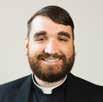
HOME PARISH: BELLARMINE CHAPEL, CINCINNATI
Deacon Homoelle grew up in a loving family in Cheviot. He is the oldest of four, with two brothers and one sister. His fondest memories include visiting his grandparents’ condo for summer vacations and traveling out West to see Mount Rushmore and Yellowstone National Park. He loves the movie O Brother, Where Art Thou and watched it many times with his dad. While the film is very funny, Deacon Homoelle said it also helps you focus on what matters in life. His favorite saint is St. Maximilian Kolbe, who reminds him of the importance of living virtue daily to prepare for the times when God asks great things from us.
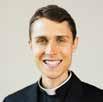
HOME PARISH: OUR LADY OF GOOD HOPE, MIAMISBURG
Growing up in Miamisburg as the oldest of five children, Deacon Jasek was blessed with a family that placed the Catholic faith and a relationship with Jesus at the center of life. He is particularly grateful for the time they made to pray each evening—often the Rosary—and to gather with other Catholic families twice a month for prayer, fellowship, and catechesis. The Lord has blessed the Jasek family with multiple vocations: last year, Deacon Daniel Jasek was ordained as a deacon alongside his father, Chris; his sister, Sr. Elizabeth, is with the Mercedarian Sisters of the Blessed Sacrament in Baton Rouge; and his great-great uncle, Aloysius Wycisło, was the bishop of Green Bay. He has a devotion to St. Joseph because this saint is a powerful model for all men— especially fathers and spiritual fathers—through his radical obedience, humility, and chaste-yet-fruitful fatherhood.
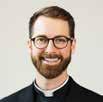
HOME PARISH: ST. IGNATIUS, CINCINNATI
Deacon Klare is the third of seven children, his mom is one of ten, and his dad is one of seven. Big family parties and cousins coming over to play were staples in his childhood. Growing up in this big family instilled an enduring love for family life. An extrovert, he loves time with others but also took up the hobby of bookbinding under the patronage of his internship parish—St. Columbkille, whose saint is the patron of bookbinders. His favorite saint is Mother Teresa, who showed up in his prayer life powerfully during some difficult times, always reorienting him to Jesus. Deacon Klare cherishes every opportunity he’s had to serve the poor alongside the Missionaries of Charity, particularly one summer in a San Francisco hospice for the homeless.
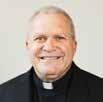
Blessed to have a loving mom, dad, and three older brothers, Deacon Moore enjoyed growing up in Groesbeck, playing from morning to dusk. When not playing, his family was found at St. Ann on Galbraith Road for church, school, and sports. Married to his wife, Lori, until she passed away from cancer in October 2022, he has a daughter, Becky, and son, Matthew. He prays to St. Jude for inspiration and St. Joseph for guidance. St. Jude was a favorite of Lori’s because she survived stagefour cancer while in high school and was blessed to go on to marriage and motherhood. She died Oct. 28—St. Jude’s feast day. Deacon Moore finds in St. Joseph the model of fatherhood and acceptance of God’s will.
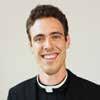
Deacon Packer grew up in Lebanon, Ohio, the eldest of eight children, with five brothers and two sisters. They were homeschooled and took on responsibilities for a house that ran all day long. He enjoyed playing sports with the neighbors and reading. Come Rack! Come Rope! is a favorite book, a historical fiction set in Elizabethan England when the Church was persecuted and Catholics died for their faith. The story is revelatory of both their times and human nature. St. Isaac Jogues is a favorite saint, a Jesuit Martyr who escaped after being tortured by the Iroquois, but voluntarily returned to them to evangelize and bring peace with the French. His willingness to suffer for those who hated him so that they might know God inspires Deacon Packer, who said this saint traveled with him spiritually through the years of discernment and formation.
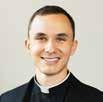
Born in Washington State, Deacon Schmiesing is the oldest of seven children. Moving to Ohio just before his seventh birthday, they eventually settled near Sidney, where his dad grew up. He has three adopted brothers and three biological siblings, with only seven and half years between him and his youngest brother. Homeschooled until he attended Lehman Catholic High School, he enjoys working outside and with animals. He’s owned pets, chickens, goats, and cows. He loves sports, especially soccer, enjoying the competition, teamwork, discipline, effort, and skill. Moving and travelling regularly as a family, he learned to ask his favorite saint, the patron of travelers, St. Christopher, for his intercession. He admires this saint’s sense of duty and responsibility in a spirit of all-consuming charity.
When did you first think you might have a call to the priesthood?
Deacon Nicholas Emmerling: I was young, around second or third grade, when I began serving Saturday Mass and there found a closeness to the Sacrifice of the Mass and the holy priests I served for, which began to open my eyes to a call to the priesthood. Only after weekly Eucharistic adoration for a few years did I have the courage to finally say yes to that call. Around this time, during high school, I distinctly remember reciting the vocation prayer and having several people encourage my openness to the priesthood for I saw these as powerful examples of the diocese praying for and encouraging priests. I find great solace in having so many people not only praying but also personally encouraging me to the call.
Deacon Curtis Gross: The priesthood presented itself a few times in my teenage years, but I quickly dismissed it. In my last years at Ohio State University, God poured graces upon me in various ways, which prompted me to take my faith far more seriously than before. Returning to the Sacrament of Confession, praying more, and doing spiritual reading made me more open than I had ever been. During Eucharistic adoration on a “Cursillo” weekend in 2019, God made it abundantly clear that He wanted me to consider the priesthood. Filled with wonder at the ways of the Lord, I entered the seminary shortly thereafter.
Deacon Kraig Gruss: I was in the seventh grade, and it was a combination of two events. First, I read a book someone gave me about Eucharistic miracles, and the more stories I read, the more I understood that the Eucharist was not a piece of bread, but Christ himself—Body and Blood, Soul, and Divinity, present at every Mass! This changed how I attended Mass, as I saw the Eucharist as Someone to encounter. Second, while reviewing the results from a career assessment test taken in school—my eyes locked on the word “clergy,” which wasn’t even at the top of the page. The longer I looked, the more I wanted to know what a “clergy” was, researched on my own, then asked my parish pastor and vicar if I could shadow them for a day.
Deacon David Homoelle: After meeting the Jesuits as a student at St. Xavier High School, I was excited by their lives, was convinced I was called to be one of them, and tried to enter their order after graduation, but I had to wait until I at least had a bachelor’s degree. While studying at
Bowling Green State University, I met FOCUS missionaries then began meeting regularly with the diocesan priest at the St. Thomas More Newman Center there, which revealed a greater call to the diocesan priesthood. This led me to apply to Mount St. Mary’s for Seminary in December 2019.
Deacon Daniel Jasek: The priesthood was not something I seriously considered until a summer at the University of Notre Dame. While serving at the Mission of Our Lady of the Angels with the Franciscans of the Eucharist of Chicago, I encountered Jesus’ love in a powerful way, especially through the sisters’ witness. These women had freely given their entire lives to Christ and had an authentic joy and fullness of life that was deeply attractive. Jesus began to transform my own heart as well, as I felt a tug to make a similar decision to be “all in” for Him.
Deacon Benjamin Klare: My first thoughts were around my confirmation in the seventh grade. However, I never seriously pursued the vocation until after I graduated college. Nevertheless, God kept calling me. Eventually, I couldn’t ignore it.
Deacon Doug Moore: I thought about the priesthood while at La Salle, but graduation and college came along, then my future bride, Lori, entered my life, and our family grew. When Lori passed away, I began discerning whether God was calling me to the priesthood. Having just been ordained a permanent deacon in April 2022, a commitment to God and His Church was already in place. I was blessed to be accepted to the seminary and began formation to the priesthood in the fall of 2023.
Deacon Benjamin Packer: Early in high school, I began considering my vocation and life as an adult. I had several opportunities to meet seminarians and young priests (including our vicar, Fr. Eric Wood), which gave me occasion to consider seminary. After a retreat and several conversations with our vocations director, I felt strongly enough to try seminary.
Deacon Jacob Schmiesing: In early grade school, I wrote that I wanted to “drive dump trucks, fly airplanes, and be a priest.” More maturely, I first seriously explored the seminary application process during my senior year of high school. Fr. Jim Riehle, the high school chaplain, took a group of juniors and seniors to visit Simon Brute College Seminary in Indianapolis, and around that time, I read To Save a Thousand Souls. Those two events spurred me to seriously consider a vocation to the priesthood.
Who are the people who have helped you the most on your journey? How did they help you?
Deacon Nicholas Emmerling: My mother, father, grandfather, Fr. Don McCarthy, and Fr. John Wall all helped my vocation. If not for their constant help and prayer throughout my discernment, I would not be where I am today. The most powerful help I received was the holiness of life that they presented. In my family’s daily life and the numerous occasions of serving at my parish, I always saw this holiness. This life well lived, fortified by the sacraments and always directed to the Lord, gave me the motive and courage to live the call and enter into the life of following the Lord. Their constant encouragement has been incalculable and remains a touchstone for striving to grow in holiness and to be an encouraging example to others.
Deacon Curtis Gross: My parents come to mind first: they brought me to the saving font of Baptism on March 24, 1996. In addition to always offering material assistance—every time I go home, Mom asks, “What supplies do you need?”—my parents have increasingly engaged with their faith and become well catechized. I appreciate talking with them and receiving their counsel for difficult situations. Both of my grandfathers continue living their faith with profundity and longevity—I am grateful for their witness. Among myriad other family members and friends, I mention my Uncle Chris, who invited me on the retreat where I heard God’s call more clearly than ever before.
Deacon Kraig Gruss: My parents have helped with my discernment from day one. While I was in middle school, they helped arrange an interview with my pastor, found resources on discernment, and eventually pointed me toward the seminary. They often said they would support me in whatever decision I made, whether I followed God’s voice in another step toward the priesthood or on another path. This support and the awareness of their prayers helped me arrive where I am today.
experienced. This enabled me to hear God’s call more clearly. I also attribute much of my discernment to the Jesuits at St. Xavier High School and Fr. Jason Kahle. These priests were willing to spiritually direct and help guide me through the process of discerning.
Deacon Daniel Jasek: I owe a debt of gratitude to so many. I am especially grateful for Fr. Jarred Kohn, the first seminarian I knew, for inspiring me to pray, embrace my manhood in Christ, and ultimately enter the seminary. I am grateful for the encouragement of my family and many brother seminarians and for my priest formators at the seminary, the priests who took me under their wing at various parishes, and my spiritual director, Fr. Christopher Armstrong. I am also indebted to Mary, my heavenly Mother, who has protected my vocation under her mantle.
Deacon Benjamin Klare: Those who have most helped me on the journey include: my family, in raising and supporting me in the faith; inestimably, my friends, for living the faith alongside me, inspiring me, and challenging me to grow; the priests and religious (too many to count!) who have been a perennial witness to me of the beauty of a life given over completely to God; and families, whose witness of the true vocation to family life gave me the support and courage to surrender my love of family life to God, the Author of life, who always gives good gifts to His children.
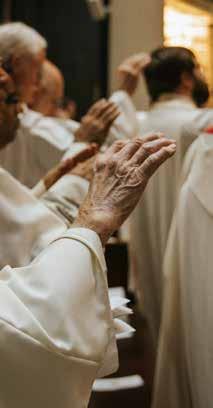
Deacon Doug Moore: I’m not sure there is enough room to mention all who were part of my journey. My family—including Becky and Matthew, extended family, and a long list of close friends—played a huge supporting role during the years of seminary life, helping me manage with love the tremendous burdens of a family dog and house. I am so grateful to each for their patience and love throughout. And I am grateful for Fr. Thomas McCarthy’s spiritual guidance and mentorship as I grew in my love of God and His Church. He helped me see God’s will for my life.
Deacon David Homoelle: Without FOCUS and their missionaries, I do not believe I would have discerned my call to the priesthood. Their discipleship model of evangelization, Bible studies, and conferences like SEEK and Student Leadership Summit contributed immensely to my formation by teaching me the Faith. I learned that the Catholic Church’s doctrines and dogmas are true and beautiful—in a way I had not previously
Deacon Benjamin Packer: I have to say my parents and the pastor I grew up with. They modeled family and priestly life since I was young and always encouraged and supported my discernment. Since the time my brother and I left for seminary, I have grown in appreciation for my family’s role in forming me. My college seminary, Simon Bruté’s rector, and an influential mentor from my internship also profoundly aided in forming my conception of and engagement with ministry, love for God’s people, and spiritual fatherhood in ways I find difficult to explain. I would not be the person I am today without the help of these wonderful people.
Deacon Jacob Schmiesing: My parents were certainly the most helpful, from raising me as a Catholic and encouraging consideration of the priesthood to ongoing support, advice, and prayer. Several priests were great influences, but foremost is Fr. Jim Riehle, who was the first priest I got to know personally and who demonstrated what a priest’s daily life was like. My organic chemistry professor at Franciscan University, Dr. Jeff Rohde, encouraged my continuing discernment and offered great advice. And my two formators, Fr. Chris Geiger and Fr. David Endres, were valuable guides in focusing my energy and effort in the most productive areas for growth.
What changes in yourself have you noticed since formally saying “yes” to the
Deacon David Homoelle: An advisor said it best: at a certain point, a seminarian needs to move from discerning whether he is called to the priesthood to discerning what sort of priest God is calling him to be and how is the life he is living preparing him for that. I’ve had to examine my life and interests, how I organize my time, and the people I surround myself with, all in the context of: “Is this preparing me to be the priest God is calling me to be?” The man you are in seminary is going to be the same man you are when you are ordained. Ordination does not magically make you a more virtuous and holy person; it takes work to participate in God’s plan for your life. Just as married persons are no longer individually their own once married, so the priest is no longer his own once he is ordained. Every part of his life must be oriented to what he has committed himself to.
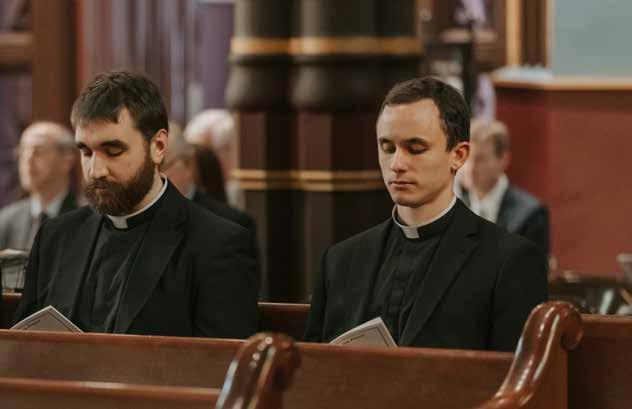
discussions. I try to let the Church’s teachings guide the way I think and act, knowing there’s plenty of work to be done in both my own soul and the environments where the Lord has placed me.
Deacon Kraig Gruss: I find myself relying more on prayer. My college and seminary experience did an amazing job at helping me understand the beauty of the Catholic Church and preparing me for the journey ahead. Yet, the closer I come to ordination, the more I realize I need to rely on Christ. There is a beauty in studying what the Church teaches and what is contained in Scripture, but I find myself using these to encounter God in a personal way. People want to encounter Christ in their priests, and I can only help with that by conforming myself to the entirety of Christ, which can only be done in prayer.
Deacon Daniel Jasek: Before I entered seminary, my soul was very restless. Since I began formation, I have experienced a deep peace and a great sense of fulfillment. There is a profound joy in having your life come into focus around a singular mission.
Deacon Benjamin Klare: When I entered seminary, I was willing to be a priest if God really wanted me to be one, but I was reluctant. Now, I love the priesthood and consider myself beyond lucky to have been called. In many ways, I’m speechless that God asked me! Furthermore, I’m indebted to the seminary for forming me in the spiritual life. I had so much to learn about obedience, commitment, humility, prayer, study, and leisure!
Deacon Doug Moore: A thirty-year career as a CPA was a life of deadlines. Life in the seminary has its share of deadlines, but I am at peace. I’ve realized that God’s will is more important than mine, and finally embracing that has brought a level of peace in accepting the ups and downs. When we surrender to God, we surrender our worries and anxieties.
That surrender is where we find peace.
Deacon Benjamin Packer: Since starting seminary, I have grown from a very shy young man who struggled to even think about public speaking to someone who gives homilies without wanting to hide from embarrassment. Since my deacon ordination a year ago, when my yes became much more concrete, I am far more comfortable in a formal ministerial position and in leading prayer and liturgies.
Deacon Jacob Schmiesing: The most significant change is a deep sense of freedom. Perhaps counterintuitive, my commitment to
the priesthood helped me open myself to fully investing in this vocation. I no longer “hedge my bets” against discerning out of seminary by trying to keep other options open. Now that the framework for the rest of my life is largely established, I am free to dive into that life without worrying about other possibilities.
Deacon Nicholas Emmerling: The fraternity among my brothers at seminary has been one of the single most influential realities in my life. Not only sharing the joys and struggles of life, a house of men truly dedicated to growing and praying changes a man. Through the power of prayer at seminary, I have been transformed into a man capable of striving to love as Christ does. I credit all this to the seminary and the men who give themselves to the call to discern the priesthood.
Deacon Curtis Gross: How fun and enjoyable it can be to serve the Lord. By this point, everyone in our large class is quite familiar with one another. We know each other’s quirks and senses of humor and when it’s time to be serious or laugh and joke, though pranks are always within the bounds of Christian morality and never aimed at hurting or embarrassing a brother. We play a lot of sports and even won the big inter-seminary basketball tournament this year in Columbus, Ohio! There are times for serious conversation and deliberation, but overall, there’s been more enjoyment than stress.
Deacon Kraig Gruss: Most surprising is everything needed to prepare men for the priesthood. I thought priests simply had to pray a lot and celebrate the sacraments. While at his core a priest must be a man of prayer and learn to celebrate the sacraments well, he must also have an in-depth knowledge of the faith so as to help others in their own journeys to God. The priest also requires a practical knowledge of how to run a parish. A priest must be a wellformed man not only in prayer, but also in knowledge and how to perform his work.
Deacon David Homoelle: People’s generosity toward seminarians surprised me. Throughout seminary, so many people have prayed for me, offered to pay for meals, told me how thankful they are that I am discerning this call, and
generally encouraged me in my vocation. It has been one of my greatest joys in seminary to experience the charity of God’s people, a kindness I will never be able to fully repay.
Deacon Daniel Jasek: It has surprised me that seminary is not a “magic bullet.” As with any vocation, there is a need for me to recommit to the Lord each day and undergo constant conversion. Every priest and seminarian—including me—are still human, complete with weaknesses and shortcomings. Yet, God’s grace somehow shines through in unexpected ways: “My grace is sufficient for you, for power is made perfect in weakness” (2 Cor 12:9).
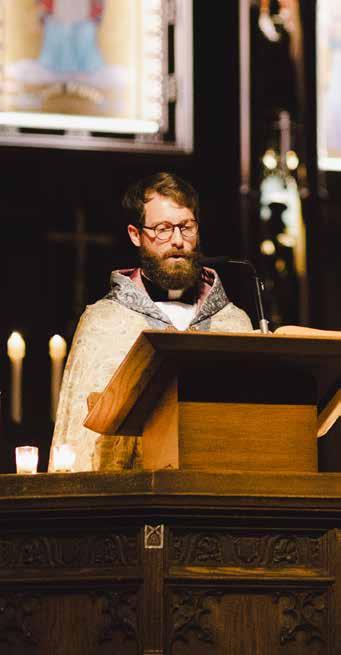
I had no idea the seminary was full of so many inspiring young men who want to follow God. I thought I was going to be one of only a few men interested in the priesthood. I was surprised to find a vibrant and full community and fraternal
Deacon Doug Moore: The way God works within each of us surprises me. My brother seminarians come from such diverse backgrounds and experiences, and each has their own charisms, yet they have answered God in faithful discernment of their individual callings. We all have our own gifts to offer back to the Father in response to His call.
Deacon Benjamin Packer: How much I have learned has surprised me, as well as how much I still must learn. While learning so much theology, I’ve realized that the more I know, the more I do not know. God is infinitely knowable, and I only learn one thing at a time. Additionally, with all the knowledge gained in seminary, I realize how little practical experience I have—I have taken a whole class on the Holy Trinity, but when a child asks a question on the Trinity, I hardly know how to explain it to them.
Deacon Jacob Schmiesing: The variety of personal backgrounds and histories among the seminarians has struck me over the years. There really is no “cookie-cutter” seminarian. We come with vastly different educational, professional, and personal backgrounds, bringing many different perspectives to theoretical and practical questions. I did not expect every seminarian to be the same, but I didn’t realize just how diverse the representation could be among fewer than 100 men in formation together.
Deacon Nicholas Emmerling: The first thing that stood out was the constant need for growth one should always have. I quickly recognized that I needed to grow, and the parishes where I was assigned afforded manifold opportunities to do so. I next realized a need to connect with youth. Their desire to know the faith surprised me, they were quick to catch anyone being inauthentic, and their love of God and lived devotion encouraged me.
Deacon Curtis Gross: My internship year was very important. I was assigned to a young pastor, Fr. Zach Cecil, on Cincinnati’s west side, and he became a great friend and mentor and is like an older brother in ministry. We still communicate regularly. Fr. Zach involved me in parish life and shared his experiences with me. I discovered I love teaching, especially for OCIA. It is such a blessed and exciting gift to accompany others to the waters of baptism. Explaining what the Church teaches and why to those hungry for truth and wisdom is something I cherish deeply.
Deacon Kraig Gruss: The love those priests had for the people stood out to me the most. I learned so much from all the priests at my internship (St. John Paul II Family of Parishes in Miamisburg/Springboro). I loved asking questions and gaining their insight for approaching scenarios, from how to answer someone’s questions to what it means to pray while celebrating Mass. I remember most vividly the priests genuinely having a love for the people and wanting them to encounter God in their lives. I will never forget how those priests poured themselves out so their parishioners could experience God’s love. I want to imitate their example.
dad for his confirmation, building life-giving relationships with many parishioners and school children, and experiencing lively priestly fraternity.
Deacon Benjamin Klare: What an amazing blessing parish life is! Everyone knows the challenges, but I have become increasingly grateful for the powerful grace of parishes in the world. It is wonderful to consider how many people encounter God, learn to pray, overcome vice, grow in virtue, devote themselves to works of charity, live their vocations, and pursue sanctity—all through the ministry of the parish!
Deacon Doug Moore: I did not serve an internship year, but previously worked for six years as a parish business manager, which provided valuable insight into the parish life’s workings, from the parishioner, parish staff, and clergy perspectives. The key, from all perspectives, is a unified focus on Christ and His Church through both reverent worship of the Mass and the desire to know and serve the Lord.
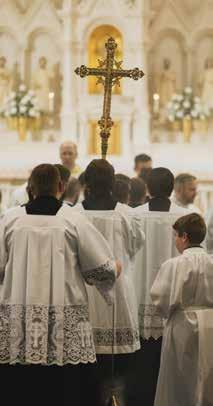
Deacon David Homoelle: How totally a diocesan priest gives his time to the parish stood out for me. On multiple days, the priests left at a moment’s notice to anoint someone in the hospital or traveled from a Mass to a funeral to a wedding to a baptism—all in the same day. The total gift of the priest to his people became apparent through the priests I witnessed during my internship.
Deacon Daniel Jasek: I was given a more focused and honest view of daily priestly life. On one hand, I saw the difficulty and stress that comes with the ministry, especially for pastors. On the other hand, I directly experienced some of a priest’s great joys, including helping a men’s group begin, forming a young
Deacon Benjamin Packer: What most stood out for me was how concretely incarnational the parish is. Not only is the church building important to parish life, but also the parishioners and their personal lives, struggles, and joys. The experience of small joys and sorrows shared in the community stood out, along with the larger ones, such as funerals, a tornado, and multiple house fires, but also baptisms, weddings and unexpected children.
Deacon Jacob Schmiesing: In a general way, the hunger that so many people have for God and truth, even without consciously realizing it, was striking. This need was brought into high relief on numerous occasions from various angles, even in our culture that professes Christianity. I found this hunger and the challenge of meeting it inspirational and pivotal in my final decision to continue to ordination.
Following the ordination, what aspect of your vocation are you most excited about? What part feels most daunting?
Deacon Nicholas Emmerling: I am excited to get to work. Just as our Lord has promised an abundant harvest, so too, the work that must be done. I hunger for the opportunity to work for the salvation of souls, whether they are close to our Lord or far
away from Him. To be used as an instrument in this great work is very exciting. I would be remiss if I did not recognize the daunting task ahead, however, I am constantly reminded that we have the Lord on our side and there is nothing He cannot do. Thus, I desire even more to give what I can and live the life God has called me to.
Deacon Curtis Gross: I am most excited about reconciling people to God and feeding the faithful with the Body and Blood of Jesus. A profound insight I learned is that the word “authority” has semantic connections to the Latin verb auger, which means “to help grow.” Helping others grow to become saints (and hopefully becoming one myself!) is what I’m aiming for. Having worked hard to become fluent in Spanish—most of my homilies and baptisms as a deacon have been in Spanish—I hope to help answer the request of several parishes for Spanish-speaking clergy. What I find most daunting is that, in accordance with James 3:1, those responsible for preaching and teaching others will be judged more strictly by the Lord at the end of their lives.
Deacon Kraig Gruss: I want to help bring Christ’s love into others’ lives, and the most powerful way is by celebrating the sacraments in a worthy and holy way. Celebrating Mass and hearing confessions every day are amazing ways to share in Christ’s life and to share this life with others. I am most nervous about being an example of the faith to others. The priest is someone people should be able to look to as an example of holiness and prayer. I want to be a good example for the parishioners and am nervous about what responsibilities serving as a faithful role-model will entail.
Deacon David Homoelle: I am most excited about celebrating Mass and hearing confessions. All my life, I have seen priests doing these and thought how amazing it would be to do so myself. The closest we get to heaven in this life is at Mass, and after the Eucharist, the greatest gift God has given us is the ability to be reconciled with Him through the Sacrament of Penance. Being the minister of these two sacraments is the aspect of priesthood I most look forward to. As with any vocation, the most daunting part is the responsibility that comes with it. The responsibility of a priest is for his parishioners’ souls. The priest bears responsibility for every soul lost that God could have brought to Himself through that priest.
are what I’m most excited about! I especially look forward to celebrating the Holy Sacrifice of the Mass—the greatest act any man could be honored to undertake. What feels daunting is the demanding nature of the ministry and workload and those times when I will need to speak a hard or challenging truth in charity.
Deacon Benjamin Klare: I am most excited to celebrate the sacraments, particularly Mass and confession. Imagine holding Jesus in your hands… Imagine saying in the Person of Christ, “I absolve you from your sins.” I know I am not worthy to be God’s priest. I hope I learn to lean on God and the parish community and not only myself; for I know that without His grace and the community’s support, I am not
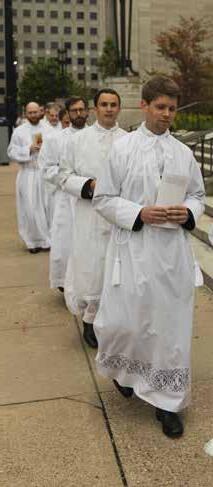
Deacon Doug Moore: I can’t wait to celebrate the Sacraments of Christ and His Church and to bring God’s love and mercy to the parish. I want to share my love of God and His Church with everyone I meet. The most daunting aspect is likely to be remembering the names of all my new family and friends in the parish. It may take a while, but then again, I felt the same way entering the seminary and God provided… so I’m not too concerned.
Deacon Benjamin Packer: I am most looking forward to celebrating the sacraments. While graced to share experiences with several priests and be able to baptize, I have obviously not been able to celebrate most sacraments. I am very much looking forward to soon celebrating Mass, and the Sacraments of Penance and Anointing of the Sick. One of the most daunting things is the responsibility for souls. With the great power to celebrate the sacraments comes the great responsibility to do so well and help people get to heaven. That is a heavy responsibility, and I pray I am ready to undertake it.
Deacon Daniel Jasek: Celebrating the sacraments, preaching, and seeing the miracles God will work in His people’s lives
Deacon Jacob Schmiesing: I am most excited about being a minister of the sacraments, especially the Sacrament of Penance. It is difficult to elaborate on concrete expectations, since I only know what my own confessions have been like, but I look forward to being God’s minister of healing in that way. If my assignment permits, I would love to be involved in Catholic schools, especially to teach in a high school. The most daunting aspect is entering into parish life generally, with all the uncertainties that brings. I have spent virtually my entire life as a student. Even though I may have the “book knowledge,” transitioning and applying that to parish ministry is intimidating. ✦
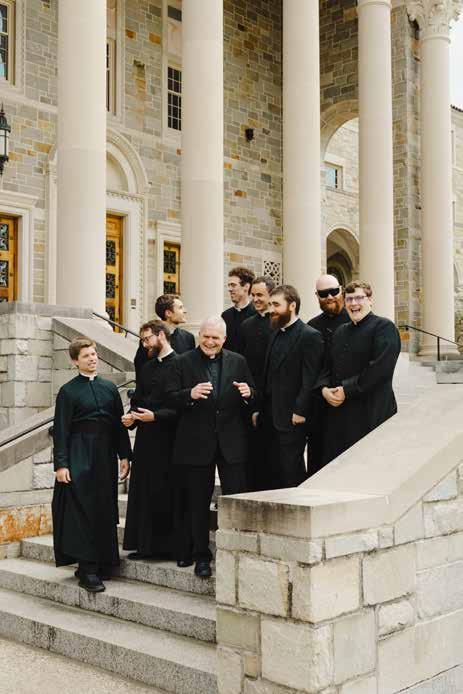
INVITE YOU TO A HOMECOMING MASS MARKING THE CLOSING OF THE CHURCH AND FRIARY
June 21, 2026 10am Mass
ARCHBISHOP ROBERT G CASEY PRESIDING
RECEPTION TO FOLLOW
BY LISA FLETCHER
Before a word is spoken or a lesson taught, beauty has a way of reaching the human heart.
For centuries, the Church has understood the importance of beauty—using sacred art to not simply decorate but also evangelize, to draw the eye and lift the soul. Today in the Archdiocese of Cincinnati, that tradition finds new life in unexpected places.
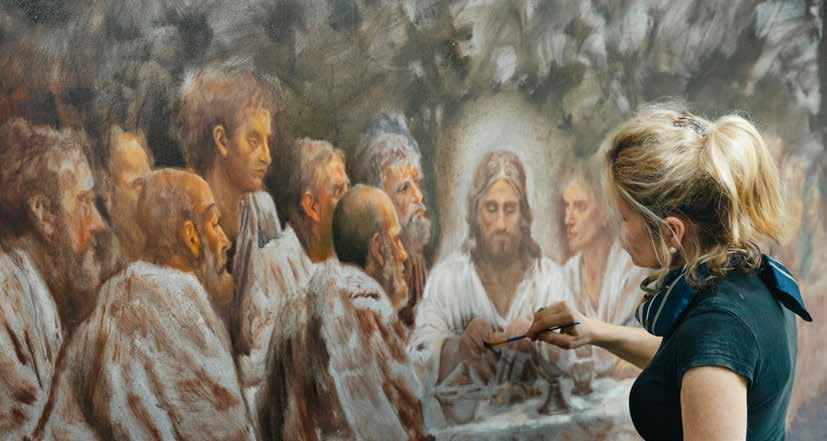
Behind the effort stands Morning Star Studio, a new apostolate founded in August 2025 by sacred artist Holly Schapker and co-creator Melissa Gillie. Their mission is simple but ambitious: bring sacred beauty into everyday life.
“Sacred art serves as a constant reminder of God’s presence and love,” Schapker explained. “It allows us to develop a deeper understanding and appreciation of our faith.”
Morning Star Studio’s work includes bringing sacred art into schools, expanding public expressions of faith, honoring priests, and launching initiatives like the Carlo Cup, a soccer event inspired by Acutis that brings Catholic high schools together.
That spark, they said, was “a deep desire to help more people encounter sacred art.”
Originally from San Diego, Gillie moved to Cincinnati a decade ago and quickly recognized something distinctive.
“I was drawn to how strong and deep the Catholic culture runs here,” she said.
Through her background in nonprofit work and youth ministry, Gillie has seen firsthand the need to reach young people in meaningful ways. In partnering with Schapker, she found that sacred art could do just that.
Morning Star Studio’s work includes bringing sacred art into schools and expanding public expressions of faith
Morning Star Studio grew from a shared experience with The Angelico Project, another local apostolate that promotes the Catholic faith through the arts, thought, and culture. In June 2025, Schapker and Gillie auctioned a painting of then-Blessed Carlo Acutis, raising a large sum for The Angelico Project’s ministries. But the deeper impact lay in the spark it ignited.
“Holly’s work has touched my mind and heart, opening up a new dimension of my faith,” Gillie said. “It brings encouragement and a longing for what is to come.”
One of Morning Star Studio’s most impactful efforts focuses on young saints— portraits designed to make holiness feel accessible.
“We believe there is a spiritual battle, where the young have an identity crisis,” Schapker said. “We want to remind them of who they are and to Whom they belong.”
Their created images of saints like Carlo Acutis and Pier Giorgio Frassati are appearing in schools across the region, offering more than inspiration. “Every saint looked like them at one time,” said Schapker. “Holiness is possible, regardless of our age.”
Gillie has already witnessed the impact. Thousands encountered a portrait of St. Carlo displayed outside
the Cathedral Basilica of St. Peter in Chains during the veneration of his relics. “To see that same image now in schools across the region is so inspiring,” Gillie said. “Art touches the heart in a way that brings light.”
Schapker explained that each location’s portrait is not simply reproduced but prayerfully reworked. “We take the same composition and create a new piece through layers of glazing and prayer,” she explained. “Each one becomes a new creation, specific to the place it will live.”
And what began as a local effort has since expanded nationally, reaching tens of millions. Schapker’s work spans the Midwest and beyond—from Cincinnati to Kenya, Peru to New Zealand. Local installations are found at Xavier University, the Holy Spirit Center, and St. Vincent de Paul Church, a reflection of the Studio founder’s belief that sacred beauty belongs not only in churches but in the rhythm of everyday life.
That vision took shape in one of their boldest initiatives yet: along I-71 and other major Cincinnati roadways, drivers may have noticed something unexpected—sacred images appearing where advertisements typically dominate, offering a brief moment of stillness amid a busy day.
The idea to place sacred imagery into everyday spaces free from distraction or commercialism grew from a moment of reflection. After reading about a painting that sold for sixty million dollars, Schapker wrestled with the value placed on
material art. That pondering led her to prayer—and ultimately to a deeper conviction.
“I want to live in a city that sings God’s praise,” she said, and thus, the simple but striking approach.
“Nothing clever. Nothing commercial. Just sacred beauty and the Word.”
Gillie sees that mission unfolding through partnerships across the archdiocese. “We hope to help organizations grow through collaboration,” Gillie said. “By bringing sacred art into our everyday lives, we can transform, encourage, and inspire hearts.”
“I believe God places a brush in my hand for souls and for His glory,” Schapker said. “Morning Star has become a way to love more deeply, serve more generously, and lead more authentically.”
At its heart, Morning Star Studio is about encounter. “Sacred art engages the viewer in a powerful way,” Schapker said. “It creates space for grace.”
For Schapker and Gillie, that space is no longer confined to churches or galleries. Through their efforts, it is unfolding in schools, across the city, and in the lives of those who encounter it. ✦
For more information on inviting holiness through beauty into your school or parish, go to www.themorningstarstudio.com.
CHRISTIAN ANTHROPOLOGY | Andrew J. Sodergren, M.T.S., Psy.D.
Note: This article is part of an ongoing series on Pope St. John Paul II’s “Theology of the Body (TOB).”
We have been exploring Pope St. John Paul II’s meditations on Ephesians 5 in Theology of the Body. In that famous biblical passage, St. Paul draws an analogy between spousal love in marriage and Christ’s relationship with the Church. He brings this analogy to a crescendo by saying, “Husbands should love their wives as their own bodies. He who loves his wife loves himself. For no man ever hates his own flesh, but nourishes and cherishes it, as Christ does the church, because we are members of his body. ‘For this reason a man shall leave his father and mother and be joined to his wife, and the two shall become one flesh.’ This is a great mystery, and I mean in reference to Christ and the church” (Eph 5:28-32).
The Greek text underlying the above expression “great mystery” has here great theological significance and history. In particular, the Greek word “mysterion” in this verse is typically rendered as “sacramentum” in Latin, from which we get the word “sacrament.” Pope St. John Paul II saw in this a deep connection between God’s salvific plan of man and the sacramentality of marriage. He tended to use the word sacrament in a broader sense than speaking of the seven sacraments of the New Covenant. For him, the purpose of a sacrament is “to reveal” and “to realize” an aspect of God’s plan for humanity, so anything that has this role of “revealing” and “realizing” the divine plan for our salvation can be thought of as sacramental.
For John Paul II, marriage was the first sacrament that God instituted in the beginning when He created our first parents and gave them to each other. Before Original Sin, they existed in a state of holiness and friendship with God, and in that context, marriage was a vehicle for divine grace and a veiled sign of God’s plan for humanity. It signified that, from creation, God willed to give Himself to us, like a husband to his bride whom he has chosen to be his own forever and whom he bestows with a love that is both tender and strong.
After our first parents’ fall from grace, human marriage could no longer convey divine grace, but it continued to serve as a sign pointing to God’s plan to unite Himself with us. Through the prophets of the Old Covenant (e.g., Isaiah, Hosea, Ezekiel), God continued to speak the language of marital love to His chosen people to prepare them for Christ’s redemption. Yahweh is portrayed as a bridegroom and Israel as His bride whom He has chosen and toward whom He remains ever faithful. Israel is often portrayed as an unfaithful, adulterous wife who repeatedly breaks her covenant while Yahweh takes her back again and again, extending mercy and calling her to holiness. This imagery culminates in the New Testament with the spousal analogy of Christ and the Church, which we see in Ephesians 5 and is echoed in other passages. God definitively reveals His spousal love through Christ’s “total and irrevocable gift of self” to man. He gives himself to all of us both in the collective sense (the Church) and to each individually, personally. This gift consists of a “participation in the divine nature” by which we are saved, sanctified, and glorified (TOB, 95b.4).
In light of this, Pope St. John Paul II saw spousal love as central to God’s plan for humanity. While the mystery of God’s plan for our salvation is “absolutely transcendent” with respect to any human analogy we use to describe it, the analogy of spousal love “helps us to penetrate into the very essence of the mystery” (95b.1). The sign of marriage helps us to see all God has done and continues to do for us as an expression of the tender love of a spouse for his beloved. Indeed, Christ’s redemptive, spousal gift of self to the Church brings about the forgiveness of sin and re-establishes us in intimate union with Him. As we will see, then, “all the sacraments of the New Covenant find their prototype in some way in marriage” (98.2). ✦
BY MATT HESS
As we celebrate the newest priests in the Archdiocese of Cincinnati this month, it is good to reflect on how each one of us supports vocations. Perhaps, we have prayed the archdiocesan Prayer for Vocations at Mass. Maybe, we also encouraged someone to consider the priesthood or consecrated religious life. But, is there more we can do?
Members of our two local Serra Clubs say yes, going above and beyond to support new vocations. They offer prayer, encouragement, and events to support priests, deacons, and consecrated religious serving in the Archdiocese of Cincinnati and beyond.
Founded in 1935 when lay people came together in Seattle to promote and foster vocations, Serra International was named after the great Franciscan missionary of the western Spanish missions, St. Junipero Serra. Today, the group is recognized by the Vatican and still led by laity. Two Serra Clubs operate locally: one in the city of Cincinnati and the other in the Northern part of the archdiocese.
The Cincinnati Serra Club marks a milestone this year—55 years of service and prayer in support of vocations. “We view our role as affirming everyone and helping young people understand that there are five vocational paths they may be called to follow,” said Cincinnati President Martha Stegbaur. “Our mission is to encourage and support these vocations.”
over $6,000 in donations, which will go into a special Seminarian Fund to help them with unexpected expenses,” she said.
Fr. Michael Willig, Vocations Director, leads the northern club’s annual Stations for Vocations, offering the Stations of the Cross for an increase in vocations. The Northwest Deanery Club also hosts a Christmas season dinner for all seminarians, religious postulants, their parents, local priests, and consecrated religious. Those in formation receive a scholarship check during the event.
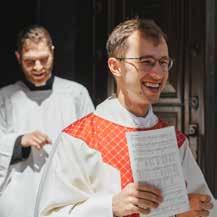
The Cincinnati Serrans marked this emerald anniversary at the Cathedral Basilica of St. Peter in Chains on March 12 with a late morning Mass and an address by Serra International President Emanuel Costa during lunch in the Cathedral’s Synod Hall.
Events organized by the Cincinnati Serra Club include receptions after ordinations and professions, a dinner after the Chrism Mass, and monthly meetings at the Cathedral. Additional activities support vocations and the local clergy by mailing greeting cards of support, hosting a monthly holy hour, providing a club retreat, and offering youth vocation grants.
In the north, Linda Moore, President of the Cincinnati Northwest Deanery Club, noted their successful annual Spaghetti Dinner held this past March in Russia, Ohio. “This year, we received
While these activities are important, both clubs are grounded by their prayer for vocations. “Our members are committed to support, encourage, and pray for all religious vocations during holy hours, daily Mass, and personal prayers,” Moore said.
“Meetings start and end with prayer,” said Stegbauer. “We have First Friday holy hours each month with a rosary and litanies for priests; these are open to anyone who would like to attend.” Both clubs offer prayer cards and books with the litanies and other prayers for individuals to use.
“As a Serran, I feel blessed to be able to grow in faith while supporting our Church,” Stegbaur said. “Seeing the joy in these men as they answer God’s call is truly a wonderful experience.”
Membership in the club is open to all and both groups have ideas to expand their outreach. “My hope is that we’ll get new members to help us spread the word about Serra International and Serra USA,” said Moore. Serra Clubs consist of men and women from all walks of life, age, and profession. You do not need to be connected to a priest or consecrated religious to be a part of your local Serra Club—but by the end of the first event, you probably will be! ✦
“Seeing the joy in these men as they answer God’s call is truly a wonderful experience.”
MARTHA STEGBAUR
Serra Club of Cincinnati
Meetings
Third Monday of the Month
After 5:15 p.m. Mass (6 p.m.)
Cathedral Basilica of St. Peter in Chains
Contact
Cheryl Bredestege, VP of Membership privatecherie@gmail.com
Serra Club of Cincinnati Northwest Deanery
Meetings
Second Monday of the Month After 7 p.m. Mass (7:45 p.m. )
Holy Redeemer Church, New Bremen
Contact Linda Moore, President butterflyeula@yahoo.com
Holy Hours for Vocations presented by the Cincinnati Serra Club
June 5 St. Phillip Church, Morrow, following 9 a.m. Mass (9:35 a.m.)
July 3 Holy Angels Church, Sydney, 5 p.m.
August 6 Cathedral Basilica of St. Peter in Chains, Cincinnati, 4 p.m.

BY KARY ELLEN BERGER
A quiet invitation to prayer will soon reappear in the pages of The Catholic Telegraph, offering a renewed way to encounter God through beauty and reflection.
The “Divine Seeing” (Visio Divina) column returns with a new voice in Cecelia “Ceil” Dorger, an art historian, author, and adjunct professor at Mount St. Mary Seminary and School of Theology.
Dorger brings with her not only decades of academic experience but also a deep personal love for sacred art rooted in both study and prayer. She taught art history for more than 20 years at Mount St. Joseph University, covering subjects ranging from World Art to Modern and American Art. Yet, it was a moment of discernment that ultimately shaped her path.
“When I decided to pursue my Ph.D., I asked myself, and prayed about, what area of art history I wanted to devote years of study to,” said Dorger. “The image of the Virgin Mary was the answer.”
Her focus on Marian imagery, particularly depictions of Mary nursing the Christ Child, opened a deeper spiritual horizon.
“The more I studied images of Mary, the more deeply my attraction and devotion to her grew,” said Dorger. “And the closer I got to our Blessed Mother, the closer I got to Jesus.”
From there, her interest expanded into the broader world of sacred art. Today, Dorger continues to share that intersection with her students at Mount St. Mary Seminary. Through teaching the course “Sacred Scripture Seen Through Sacred Art,” she finds the classroom itself becomes a place of mutual encounter.
“I have a great deal of respect for the men on their path to the priesthood,” said Dorger. “Their faith feeds me, and their insights teach me.”
That same spirit of encounter lies at the heart of Visio Divina; the ancient form of prayer Dorger will introduce through her column. Often described as “divine seeing,” the practice invites individuals to enter into a sacred image with openness and attentiveness to God’s presence.
“It is a simple process,” said Dorger. “You invite God’s presence, gaze at the image, notice what stirs in your heart, and allow that to lead you into prayer.”
In a world saturated with images, Dorger believes sacred art remains uniquely powerful.
“We are constantly looking at pictures,” said Dorger. “God uses this impulse for His glory.”
While sacred art once served to teach Scripture to largely illiterate populations, she observes that modern society faces a different challenge.
“Today, we suffer from the illiteracy of impatience and distraction,” said Dorger. “Beauty and sacred art can still draw us in and inspire us to holiness.”
Through her writing, Dorger hopes the column will move beyond simply looking at art to truly seeing it.
“We often look, but we do not see,” said Dorger, referencing the Gospel story of Bartimaeus. “If we ask for God’s grace as we approach sacred art, He will reveal Himself to us.”
Ultimately, Dorger sees herself not as the guide but as an instrument.
“It is extraordinary to think God might use me in this way,” said Dorger. “I am excited to serve, but I know He is in the driver’s seat.” ✦
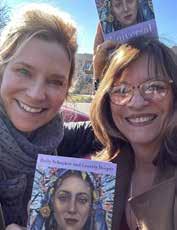
The book is a collection of art and Scripture that invites readers to pray with sacred art and deepen their devotion to the Virgin Mary.
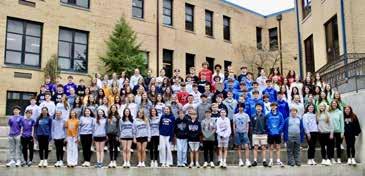


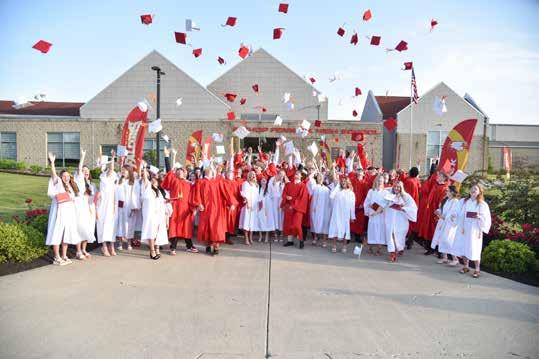

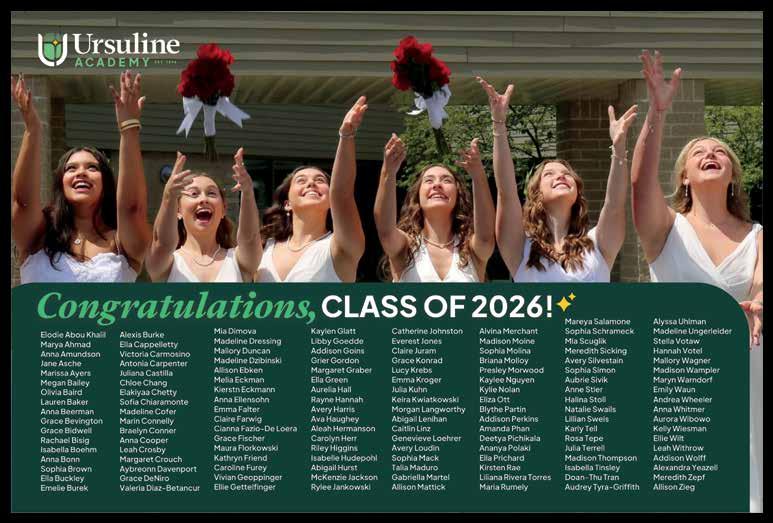
In the beginning was the Word, and the Word was with God, and the Word was God. You’ve probably heard that hundreds of times. It’s the beginning of the greatest text ever written, John’s Gospel, but what does it actually mean? More specifically, what does the word “Word” mean? How can a “word” be God? And, making it even more mysterious, John tells us that this same Word became flesh and dwelt among us (Jn 1:14).
He is in the beginning, yet He entered time. All things came to be through Him, yet He became flesh. We know His name, but could we ever know who He really is? Well, this is the mission of our lives. In fact, John tells us that this is eternal life, that we know the only true God and Jesus Christ whom He sent (Jn 17:3). The stakes are high, so it’s a good thing we have the Church Fathers to help us. These Fathers pass down the same Word of life that the Apostles looked upon and touched with their hands: they proclaimed it also to us that we may have fellowship with them and with the Father and His Son (1 Jn 1:1-4).
The Greek word for “word” is logos, and it means a lot more than word: it can also mean a whole story or reason in general. In Greek philosophy, logos was used to describe the principle of all reality: the singular word of all existence, Reason with a capital “R.” Without this Word, math doesn’t make sense; there is no beauty in the night sky; and we couldn’t call a baby’s laugh good. One of the first teachers of the Church to bring out the significance of the logos was Origen of Alexandria (185–254).
In his writing, Origen always sought for the Word of God amid the words of Scripture. For Origen, and all the Fathers after him, Scripture is a multi-layered text. There is the literal or historical meaning on the surface, but the
higher goal is to plumb the depths of Scripture to find its spiritual significance. Origen found the Word speaking on every page. When he read the Song of Songs, he didn’t just find an ancient love poem: he heard the divine Word as the Bridegroom wooing us, His beloved bride, the Church. Origen wanted to be a martyr for the Word made flesh, and he died in communion with the Church, but his theology wasn’t perfect. Sometimes, he went too far in his speculations, and some of his followers were later condemned. The most immediate controversy after his death related to how Origen spoke about the Word. In some passages, Origen clearly explained that the Word was eternally begotten by the Father; but in other texts, Origen seemed to suggest that the Word was a kind of subordinate “God.”
In the same city where Origen was born, Alexandria, the problem came to the fore when a young, hot-shot priest named Arius got into a fight with his bishop, Alexander. Arius preached that the Word was a kind of intermediate deity created by the Father. Alexander vehemently disagreed. News of this argument reached the newly-Christian Roman emperor, Constantine, who called a large meeting to address the issue (along with a couple other orders of business). Bishops from across the empire met in Nicaea in 325, where they ultimately condemned Arius and gave us the Nicene Creed: Jesus is begotten, not made—truly God from God and consubstantial with the Father.
Jesus gave us the Church to guide us into all truth. This first ecumenical council spoke with divinely sanctioned authority to guard the one faith handed down by the Apostles, even as it used new terms to do so. But Nicaea
did not solve the debate about Jesus: the new terms that it used had furthered the conversation. The work of doctrinal development that St. John Henry Newman described (An Essay on the Development of Christian Doctrine) is never easy. There are labor pains as the Word is born in human speech.
After Alexander died, a young deacon at the council named Athanasius (circa 297–373) was made bishop of Alexandria. For over 40 long years, Athanasius had to struggle to show the significance of the Nicene Creed: Jesus is the Word, and the Word is true God, and the Father is true God, but there are not two Gods. His defense involved an intense examination of Scripture.
Like Origen, Athanasius found the Word speaking throughout Scripture, and he clarified that sometimes the Word was speaking in His divinity and sometimes according to His Incarnation. For instance, when Proverbs 8:22 records Wisdom saying, The Lord created me at the beginning of His work, Athanasius reminds us that this cannot refer to the Word in His divinity since all things were created through Him. Instead, the creation of Wisdom refers to the Incarnation of the Word in time.
All of this theological speculation may seem bewildering, but Origen and St. Athanasius invite us into a mystery. In theology, a mystery is not something that we cannot know but something about which we can always know more. Origen and St. Athanasius are calling us to contemplate the mystery of the Word found in creation, spoken of in Scripture, and revealed fully in Jesus. This contemplation leads to eternal life, for as Athanasius wrote: the Word of God was made man so that we might be made God. ✦
Fr. Jacob Lindle, ordained a priest for the Archdiocese of Cincinnati in May 2022, is presently studying for a Doctorate in Patristic Theology at the Pontifical Gregorian University in Rome.
Origen (Classics of Western Spirituality, Paulist Press, 1979)
St. Athanasius, On the Incarnation (Popular Patristics Series, St. Vladimir’s Seminary Press, 2012)
John J. O’Keefe & R. R. Reno, Sanctified Vision: An Introduction to Early Christian Interpretation of the Bible (The Johns Hopkins University Press, 2005)
Khaled Anatolios, Athanasius (The Early Church Fathers Series, Routledge, 2004)
Samuel B. Johnson, The Life of Jesus in the Writings of Origen of Alexandria (Cambridge University Press, 2025)
FROM THE ARCHIVES | Michelle Wirth Smith
Each May, as the Church celebrates graduations, ordinations, and new beginnings, we’re reminded that growth often starts in quiet, unseen ways.
In the late 19th century, five brothers became priests: William (1880), Edward (1883), Charles (1886), John (1887), and George (1892). Their two sisters, Sr. Marie Immaculata (Martha Hickey) and Sr. Mary Annunciata (Mary Hickey), entered the Sisters of Notre Dame, dedicating their lives to teaching and ministry. All five brothers were able to stand together at the altar while Fr. George Hickey celebrated his first mass at St. Edward, the family’s parish church.
Even at the time, this was something remarkable. In 1892, The Catholic Telegraph noted: “Never before in the United States was a similar scene enacted—never before in the history of any diocese was any one family so largely represented in the holy priesthood.” The story drew widespread attention, with St. Joseph’s Advocate dedicating a three-page feature to the family in January 1893.
Patrick Hickey (1820–1892) and Johanna Hickey (1833–1905), both Irish immigrants, built their family in Cincinnati with a deep commitment to faith and community. Patrick was known as a man of integrity, active in charitable works and devoted to prayer, often reciting the Rosary during
his daily commute. Johanna was remembered for her humility, hospitality, and care in guiding her children, ensuring they were well-formed, well-read, and surrounded by good influences.
Among the items preserved in the archives is a small but powerful piece of their history: a personal album, the cover embossed with “To My Mother.” Filled with photographs from a journey to Europe, the album opens a window into a moment of both sorrow and grace in the family’s life. Patrick Hickey died three weeks before his youngest son’s ordination and after 40 years of marriage to Johanna. In the wake of that loss, and at the urging of her physician, Johanna traveled abroad, accompanied by her daughter Martha and two of her sons, Fathers William and John. What may have begun as a trip for rest and recovery became something more.
Johanna lingered at places of devotion, especially Lourdes and Rome. By special privilege she was granted an audience with Pope Leo XIII, so that on the Feast of Corpus Christi in 1895, she attended Mass in the Holy Father’s private chapel and received with her daughter Martha holy Communion from the Vicar of Christ.
The album thus became more than a collection of images, it is a tribute: a son’s quiet acknowledgment of a mother whose faith endured loss, sought God in sorrow, and remained steadfast.
That’s where this story connects so naturally to May’s theme of “breaking ground.” Long before ordination days, something was taking root in the Hickey household. Through daily prayer, example, and love, a foundation was laid. Their story reminds us that vocations don’t just appear. They grow, often quietly, within families who make space for God. ✦
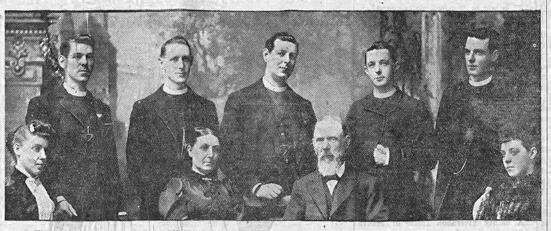
Hickey Family photo published by The Catholic Telegraph in 1893. Back row left to right: Rev. John Hickey, Rev. Charles Hickey, Rev. William Hickey, Rev. George Hickey, Rev. Edward Hickey. Bottom row: Sr. Mary Annunciata, Mrs. Johanna Hickey, Mr. Patrick Hickey, Sr. Marie Immaculata
Finley Emerson Baker
Margaret Louise Baker
Eva Elizabeth Bates
Katherine Rose Bender
Josilyn Eve Bodart
Anna Katherine Boehmer
Penelope Catherine Bolinger
Emily Rose Braun
Blair Elizabeth Breitbeil
Ava Janice Brouwer
Naomi Li-Jun Brown
Bridget Marie Burke
Renata Campos Anzaldua
Megan
Addison Lynn Carr
Eileen Brynn Carr
Jillian Warren Chavez
Madeline Lee Cho
Kyleigh Ann Cleary
Courtney Elise Gillenkirk
Nora Grace Goodwin
Adelynn Faith Goss
Raegan Camille Hamilton
Cosgray Mia E Cowles
Isabella May Crimmel
Caroline Marcella Critzer
Lauren Danielle Crowley Anna Roth Curran
Claire E Dardy
Audrey Grace Darwish Cash'Mere Rae Davis
Lucy Marie Davis Kaitlyn Elizabeth Dixon
Lauren Elizabeth Dorger
Alex Riley DuBrucq
Elizabeth Kathleen Eppstein
Avery Ireland Esterkamp
Grace Ferra Villalobos
Amori Alexandria Figueroa
Layla Ford
Claire Frances Foster
Emma Joan Frietch
Reese Catherine Frondorf
Claire Marie Geiger
Katherine Olivia Gieson
Charlotte Lee Hardin
Erin Rachel Harding
Bre'Asia Lee Harvey
Katherine Lynne Henson
Shay Rose Herr
Alyssa Janette Herzig
Marin Grace Hileman
Claire Ann Hil
Lauren Rose Hoog
Emma Marie Hunter
Bailey Prince John
Micaela C Johnston-Magill
Katherine Cross Kattman
Cameron Kilimnik
Mica Steven Kissing
Zella Grace Kissing
JAnne Kathryn Kleeman
Riley Jane Kleinfelder
Laura Marie Kling
Anna Evelyn Klus
Gabriella Rose Knight
Anna Clare Lange
Eleanor Marie Lawler

Lily Josephine Liesch
Shelby Elise Luebbering
Claire Alexis Luken
Kallie Ann MacCutcheon
Abigail Patricia Mader
Gabriella Diana Magaletta
Madeline Anna Magaletta
Emerson Grace Majors
Reese Elizabeth Majors
Mia Grace Mancini
Ivy E Martin
Alexis Rose Mendenhall
Lilah Elizabeth Meyer
Eleanor Lynn Meyers
Reese Elizabeth Mills
Olivia Leigh Mobarry
Lailah Saeid Mohamed
Lujayn Saeid Mohamad
Za'Moria Racquel Moore
Cecelia Janet Morris
Lucia Graham Moschandreas
Caroline V Neyer
Madeline Anne Nixon
Venice Elizabeth Oberkorn
Grace Karen Overbeck
Stella Grace Penker
Sara Nicole Peter Aubrey Evelyn Pfeffer
Jaelyn Renee Phillips
Cara Victoria Pitzer
Samara Singh Powers
Caroline Rose Reinhart
Madeline Marie Roach
Isabella Ruth Roda
Camille June Roman
Isla Porter Roney
Lydia Marie Roy
MaKenna Elle Roy
Lyla Jane Rybolt
Ellie J. Saling
Katherine Grace Samson
Siena Marina Santagata
Elizabeth Lucille Schauer
Elizabeth Rose Schildmeyer
Beatrice Schlesiger
Olivia Margaret Schmidt
Aaliyah Kay Schrand
Claire Adeline Schwiebert
Gabrielle Gianna Semona
Elliana Marie Snider
Katherine Elizabeth Snyder
Samantha Jane Stagnaro
Lia Elizabeth Stanton
Tierney Elizabeth Stautberg
Grace Christine Steudler
Lola Lok Steudler
Mary Reese Sullivan
Alexis MacKenna Sutherlin
Maci Christine Terrell
Mary Elizabeth Theodorou
Elizabeth Lynn Thurnau
Lila Elizabeth Timmerding
Ellie Kay Tomes
Malia Christina Trovillo
Lilyanne Raine Elizabeth Turner
Angy Patricia Vallecillo
Amy Denise Valverde
Rodriguez
Isabella Hale Vogelpohl
Layla Cheyenne Walton
Cailyn Nicole Westfall
Eva Joy Winchester
Peyton Elizabeth Winkler
Julia Faeth Zeiser
"For time will never sever the friendships we treasure, with you dear Saint Ursula."
BY TERESA PHILLIPS
Last month, we introduced the Saintly Seven—the seven current African American candidates for canonization. In April, the Archdiocesan Anti-Racism Task Force hosted the first of eight monthly events that will highlight one of those seven candidates. The final session in November will celebrate Black Catholic History Month. These sessions will be live-streamed to enable everyone to join the conversation and reflection. We featured the story of Venerable Pierre Toussaint last month, whose presentation occurred on the evening of April 23 at St. Susanna Parish in Mason.
We next explore the life and gifts of Mother Mary Elizabeth Lange (c. 1784–1882), on May 30 at the Province House of the Sisters of Notre Dame de Namur (701 E Columbia Ave.). Mother Lange founded the first Catholic religious congregation for women of African descent in the United States: the Oblate Sisters of Providence, in Baltimore, Maryland. The Oblates were founded in 1829, when chattel slavery was very much in practice and congregations of white women religious would not accept women of color.
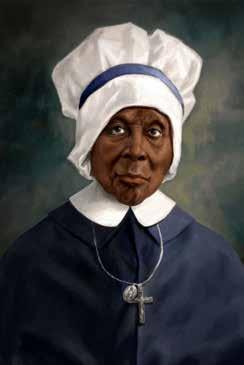
Born in Cuba around 1784, Elizabeth Clarisse Lange immigrated to the United States in the early 19th century, eventually settling in Baltimore where there was a large population of free people of color. However, schools for black children were scarce and discouraged. Thus, Lange began teaching children in her home, with her deep Catholic faith shaping her life’s mission of both academic and religious education for the black population in Baltimore.
In 1829, through the encouragement and support of Sulpician priest Fr. James Hector Joubert, Lange founded the order and took the religious name Sr. Mary Lange. Founding
the Oblate Sisters of Providence was a dream come true for Mother Lange as she had for years felt the call to consecrate her life and work to God but did not see a way to do so. At that time, black men and women were not allowed to enter religious life in the American Church. Their mission was to educate black children, care for those in poverty, and provide spiritual support for the community.
At a time when both slavery and racial prejudice were deeply entrenched in American society, the congregation offered hope, dignity, and opportunity to free people of color. Their school, St. Frances Academy, is one of the oldest continuously operating Black Catholic schools in the country and still exists today.
Living nearly 100 years, Mother Mary Lange witnessed dramatic changes in American society, including the Civil War and the abolition of slavery. She died in 1882, leaving behind a vibrant religious community and lasting educational legacy. Her cause for sainthood was opened in 1991, and she was declared Venerable by Pope Francis in 2023. Her life is a powerful testimony to the transformative impact of education, faith, and courage in the face of injustice.
We invite all to join us at the Sisters of Notre Dame de Namur Motherhouse, Cincinnati on Saturday, May 30, from 10–11:30 am to learn more about this amazing woman. Livestream will be available on Zoom. ✦
Teresa Phillips is Director of the Office of Justice, Peace and Care of Creation for the Sisters of Notre Dame de Namur.
Honored Canonized Beatified Declared
Session 2: Venerable Mother Mary Elizabeth Lange, Saturday, May 30, Province House of the Sisters of Notre Dame de Namur, Cincinnati, 10am
Session 3: Venerable Fr. Augustus Tolton, Monday, June 29, St. Andrew Church, Milford, 7 p.m.
Session 4: Servant of God Sr. Thea Bowman, Tuesday, July 7, Central House of the Sisters of the Precious Blood, Dayton, 6:30 p.m.
Session 5: Servant of God Julia Greeley, Sunday, Aug. 23, Lehman High School, Sidney, 12:45 p.m.
Session 6: Venerable Henriette Delille, Sunday, Sept. 20, St. Benedict the Moor, Dayton, 1:30 p.m.
Session 7: Servant of God Fr. Martin Maria de Porres Ward, Tuesday, Oct. 27, Resurrection, Cin., 6:30 p.m.

Scan this QR code for up to date information

Scan this QR code to access livestreaming of the Saintly Seven Series on May 30 at 10am

BY KARY ELLEN BERGER
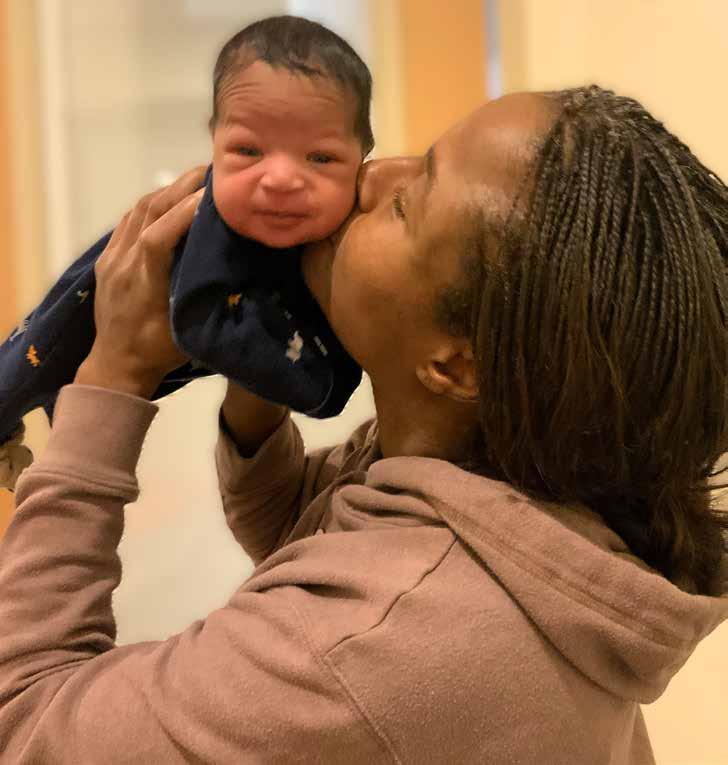
In 2014, a new kind of ministry quietly opened its doors to some of the community’s most vulnerable members: babies born exposed to addictive substances and the mothers who love them. Named for St. Brigid, patron saint of mothers and children, Brigid’s Path was founded on a simple but powerful belief that families heal best when they are met with dignity, compassion, and the opportunity to remain together.
“Brigid’s Path was born out of a very personal place,” said founder and executive director Jill Kingston.
Through her experience as a foster parent and advocate for families affected by substance use, she encountered a painful pattern—babies received medical care, but families were often treated as problems to manage rather than people to love.
“It was instant calm in the storm of my life.”
“In 2014, the initial vision was simple but radical: create a place where babies could heal from withdrawal while remaining with their families, surrounded by dignity, compassion, and support,” said Kingston.
As the first newborn recovery center in Ohio and only the second in the nation, Brigid’s Path has helped establish a model that is now being studied across the country. The organization has expanded its medical program, strengthened family advocacy and after-care services, and after more than a decade of advocacy, secured Medicaid reimbursement for its Pediatric Recovery Center care. That last milestone provides important stability for the future of the mission.
Still, Kingston emphasizes that the heart of the work has not changed.
“Traditional systems often focus on managing risk,” she said. “Our approach focuses on building relationships.”
At Brigid’s Path, babies remain with their caregivers whenever possible. They receive round-the-clock nursing care along with trauma-informed, non-pharmacological support, such as skin-to-skin contact, consistent routines, and plenty of cuddling. Mothers are not treated as visitors; they are partners in their baby’s care.
For mother Liz Pittman, that approach changed everything.
“At that stage of my life, I remember feeling like I was caught in a blizzard,” said Pittman. “I was very afraid, scared, alone, and lost.”
She recalls walking through the doors of Brigid’s Path for the first time without her baby, who had been transported separately from the hospital.
“It was an instant calm in the storm of my life,” said Pittman. “I felt a calmness like no other, as if all the weight I had been carrying was lifted at that moment.”
Pittman describes the care her baby received as “phenomenal, true love and compassion from every single nurse.” Just as importantly, she said, the staff welcomed her with open arms.
“That was the time in my life when I started to never feel alone,” said Pittman. “I finally knew I had people on my side.”
Faith quietly sustained her through those early days. There were moments of silent and spoken prayer, asking God to watch over her baby and give her strength for recovery. Pittman remembered thinking, “I should be falling apart, but somehow I’m not,” and says, “Looking back now, I see where that strength came from. I know it was God.”
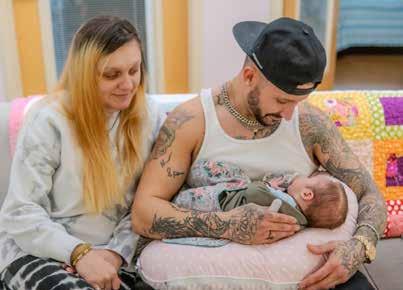
Today, Brigid’s Path has served more than 300 families across the Archdiocese of Cincinnati, walking with them before, during, and long after a baby’s stay. Sustainable funding and cultural stigma remain challenges, but Kingston calls the mission hard and holy work.
“This work is not about perfection,” said Kingston. “It is about presence and perseverance.”
For Pittman, the impact is deeply personal. “Brigid’s Path is a blessing,” she said. “It’s a place where moms and babies are welcomed with grace and open arms.”
In that welcome, lives are changed one relationship at a time. ✦
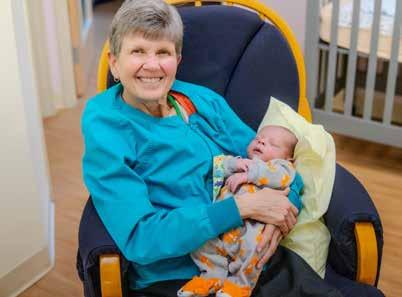



BY MARY BETH SPROULL
OptimALL Services started with one goal: provide the highest quality education in faith-based schools for students with special needs. Achieving this goal bears more fruit than simply supporting students with individual education plans (IEPs): it ensures such students can stay in Catholic schools; remain with their siblings; and grant families that extra support Catholic schools can’t always provide. Ultimately, it provides another path families can choose when deciding what is best for their children.
Currently serving in many schools throughout the Archdiocese of Cincinnati, OptimALL provides aid for children with disabilities.
“When we started OptimALL, it was our mission to bring the best educational services to all of God’s children,” said Beth Rielly, co-founder of OptimALL. “By changing the way we teach, we can improve the way children learn. Our mission is to meet the students where they are functioning.”
Beyond just meeting student needs, they provide 197% more resources for students than do the schools alone. “We’re serving kids that we couldn’t serve 10 years ago. Now, we need to serve the next group of kids,” said Lynn Esmail, Executive Director at OptimALL.
Thanks in part to support from the Archdiocese of Cincinnati, this separate nonprofit has flourished as it walks hand-in-hand with the archdiocese to support students and families. The archdiocese helps OptimALL with teacher licensure renewal, government funding, and school placement, and since OptimALL’s founding eight years ago, it’s been able to bring its necessary work into 11 archdiocesan schools.
St. Lawrence School, Price Hill, provides a prime example of this organization’s impact after three years of its intervention and therapy services for the children. And their collaboration is taking it a step further by introducing an Inclusive Classroom for students needing a different developmentally-appropriate learning space, set to be housed in the convent on the St. Lawrence campus.
“We will have appropriate academics and practice activities of daily living like laundry and cooking. It is not appropriate for every student to be sitting in an algebra class,” Esmail stated. “These
students are here because they cannot access their grade-level curriculum. This classroom will give them the chance to develop their skillset to excel and reach their full potential.”
The Inclusive Classroom will start with six students and build up to 36 students in six years. Initial staff will be two intervention specialists, a speech therapist, an occupational therapist, and a physical therapist. While primarily present in that classroom, students can also join the other St. Lawrence students for Mass, sacramental preparation, and classes that peak their interest, such as English or Science.
“This will benefit all our students,” said Jen Long, principal of St. Lawrence School. “When all the students have the
opportunity to interact, they will learn the value of empathy. Families will benefit as siblings can stay at the same school, and families will feel supported.”
OptimALL has already favorably impacted students and teachers at St. Lawrence, said Long. “In public schools, the bare minimum of intervention is provided to meet legal requirements, and it’s not always best practice for students and teachers,” she said. “OptimALL goes above and beyond for everyone.” After the partnership’s three successful years, the inclusive classroom felt like the next best step.
Students with disabilities having a space of their own while remaining members of the student body at large will continue to positively affect how all the students learn and view each other. “The students interacting with each other reinforces the Catholic Church’s teaching that life is sacred,” said Danielle Goertemoeller, the Vice Principal of St. Lawrence. “Each student has value, and it’s a beautiful reminder of the sanctity of life.”
Bringing the Inclusive Classroom to life was no easy feat— the school took a worthy financial risk. However, thanks to a matching grant supported by Beth and Phil Rielly, “It was easier to jump off that financial cliff, and we’re so thankful,” Long said. Every little bit helps benefit these children, their education, and their overall well-being. ✦
Learn more at optimallservices.org.
BY GRAHAM CRAYCRAFT
Flowers bloom, and flowers die—it is a cycle. During the past months, plants around my house had no leaves and looked much like dead plants, but my wife assured me they would bloom again when it is their time. And so are we reminded again through the cold winter months that spring will come, and indeed, it has. So also are we reminded through the sorrow of Lent that the Son will rise, and a new day will dawn, and indeed, it has.
Pondering this reality is Andrei Tarkovsky, a name perhaps unfamiliar to you, but one well worth knowing. Arguably the greatest Russian movie director, he only made seven full-length films, dying at the age of 54. But in those films, we find a man hungry and searching for truth, with a unique understanding of the human soul. Ivan’s Childhood is one such film that tells of destruction by war through the most juxtaposed subject, a child.
Ivan Bondarev is a 12-year-old scout during World War II for the Soviet military, fighting against the German invasion. We quickly gather that Ivan is dedicated to the cause and finds his purpose as a useful member of the military, performing missions that grown men cannot do.
The movie follows Ivan between danger and covert efforts, intersplicing dream sequences of simpler, happier, prewar times with his mother. It opens with this stark reality: first peering through a spiderweb, we then soar through the sky with young Ivan as he returns to earth to see his smiling mother. But her smile turns to fear, and with a screeching sound of war, the scene cuts to him bolting up from his good dream… into the dark night of reality.
Ivan swims through a river as he picks his way back to a Soviet base, where he identifies himself to a superior, claiming he must talk to HQ at once, and is finally patched through. When an officer checks on Ivan, The cold, sparse room of the front lines transforms into the warm embrace of an officer who loves Ivan dearly and who is thrilled to see him, mission completed and feeling well.
Three military men care for Ivan and even discuss plans to adopt him after the war, but when they try to move him off the front lines to a military school, Ivan staunchly refuses and runs away. He meets a man whose house was destroyed and
wife died, and who is talking nonsense. Ivan is picked up by the military, but first leaves the man a loaf of bread and can of food. Clutching a chicken to his breast in the doorway of the ghost of his home, the man breathes the line, “O Lord, when will this all end?”—we see how much war costs to the most precious gifts: peace and human lives.
As the film and its war press on, Ivan embarks on one final mission while the Russians fall upon and defeat the Germans. Near the conclusion, we are exposed to even more death, and the man’s earlier question returns, but from another perspective—will this be the last war ever fought?
Tarkovsky wished to showcase two things in striking opposition to each other: the innocence of childhood and brutality of war. He moves us through feelings of love and peace into fear and sadness, recalling the Psalmist’s words that “man is but a breath, his days are like a passing shadow” (Ps 144:4).
But rejoice! for we are also told by the risen Christ, “Behold, I am with you always, until the end of the age” (Mt 28:20). As we continue our 50-day Easter celebration, let us rejoice in the risen Christ but not take our eyes off the Cross that leads to the Resurrection.
If you are interested in watching Ivan’s Childhood or other Tarkovsky films (which I hope you are), you can find many offered free on YouTube, under the Russian Cinema channel “Mosfilm.” ✦
CATHOLIC AT HOME | Katie Sciba
“You can tell they’re going to ask for money when they use the word ‘stewardship,’” my friend Gene said as he nudged me with his elbow from the pew behind me. He wasn’t wrong. It’s common to equate the idea with donating, but in fact generosity is a fruit of stewardship. Money is a tool entrusted to us by the Lord, and stewardship is wielding it for the sake of others and the glory of God. And it doesn’t require massive checks or colorcoded spreadsheets—just a growing understanding that how we handle money matters, not only for our family’s stability, but for our faith. Stewardship feels abstract until it becomes personal. It gets personal when we start noticing the small habits quietly shaping our spending and then decide to change them. Here are three small habits that yield a margin almost big enough for the Holy Spirit.
One of my go-to podcasts is The Catholic Money Show by WalletWin. The married hosts have nearly opposite personalities, which makes for engaging, often hilarious conversation about faithful stewardship of a family’s income. When I’m not listening to them, I’m catching the latest Ramsey Show, where hosts speak directly to callers who need financial guidance. Rotating between the two keeps me anchored to a core truth: God entrusts financial resources to us, and it’s our job to order them toward the good of others and His glory—a sobering reminder and a motivating one.
Mindset directs success. Without a steady diet of content that reinforces good financial habits, it’s easy to drift—to normalize overspending, rationalize impulse purchases, and lose sight of the bigger picture. Filling that mental space intentionally, even just during a commute or a walk, quietly shapes the decisions you make later at the store or online. What goes in shapes what comes out.
“Just looking” has a way of turning into “just this once.” I recently had unexpected free time and talked myself into browsing through a couple of nearby stores. I didn’t need anything—a casual walk through the home and garden
department sounded harmless enough. Fifty dollars later, I was headed home with things I didn’t need and no clear plan for where they’d go. My husband and I had just committed to buying necessities only, so I turned around and returned the whole haul. Would $50 have derailed us? Probably not. But saying no to myself is a muscle that must be built, and it only gets stronger with practice. Honoring our agreement deepened my respect for it—and my appreciation for what we have.
It sounds almost too simple, but a brief prayer before a non-essential purchase can stop an impulse buy in its tracks. Before clicking “add to cart” or heading to the register, I check my motivation: is this transaction within the scope of our stewardship and goals? God entrusted me with these funds— am I using them well? That moment of quiet, even just five seconds, creates enough space between impulse and action for reason to catch up.
I’ve started tying the pause to a specific intention. If I skip the splurge, that money goes toward something that matters: a debt payment, a charitable gift, a need I’ve been putting off. A small sacrifice becomes an act of virtue rather than deprivation. We Catholics already understand offering things up—we do it with discomfort, inconvenience, and frustration all the time. Applying that instinct to our spending is a natural extension of a discipline we already practice.
The best part? It costs nothing and requires no app, no spreadsheet, no budget overhaul—just a habit of turning to the Lord in the small moments, including the ones that happen in checkout lines.
None of this is glamorous. There’s no viral budget hack— just normal instances where we can choose to be a little more intentional than the day before. That’s what stewardship looks like in the daily grind of family life. The podcast on the commute, the cart you leave empty, the prayer for clarity in the checkout line. Small things. But over time, small things add up—and so does the peace that comes with them. ✦


Born in northern Italy on April 2, 1842, Dominic Savio had nine brothers and sisters. His father was a blacksmith, his mother a seamstress, and his family was poor, but they were hardworking and devout and pious Catholics.
Even as a small child, Dominic was recognized as an exceptional student who studied hard and performed well in school. He became an altar server, attended daily Mass, went to confession regularly, and received his first Communion at the age of seven, a day he said was the happiest of his life.
In secondary school, Dominic was also clearly different from his peers. When two boys—known troublemakers—stuffed a school heating stove with snow and garbage, they blamed Dominic for the misdeed. Dominic did not deny the accusation and was thus reprimanded in front of the class. When the teacher learned the truth the next day and asked him why he did not defend himself, Dominic said that he was imitating Jesus who remained silent when unjustly accused.
Dominic’s teacher spoke well of him and brought him to the attention of Fr. John Bosco (another future saint), who was renowned for taking care of boys—many, orphaned and poor. Having expressed interest in becoming a priest, Dominic studied directly under Fr. Bosco at the Oratory in Turin. A peacemaker and an organizer, Dominic assisted Fr. Bosco in helping neglected boys. However, his health began to fail and he was forced to return home.
Dominic insisted he was dying and asked his parents to call the parish priest so he could make a last confession and receive the Anointing of the Sick. He then asked his father to read him the prayers for the Exercise of a Happy Death. He said to his father, “Goodbye, Dad, goodbye ... Oh what wonderful things I see!” Minutes later, he was called home to heaven. It was March 9, 1857; he was 14 years of age.
Fr. Bosco was so moved by Dominic’s example that he wrote, “The Life of Dominic Savio.” The biography was popular and eventually read in schools across Italy. Dominic was canonized in 1954 by Pope Pius XII, and he is the patron saint of choirboys, the falsely accused, and juvenile delinquents. His feast day is May 6.
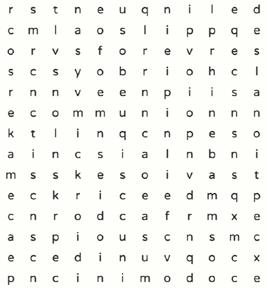
Dominic Exceptional Peacemaker

Pious Savio Server
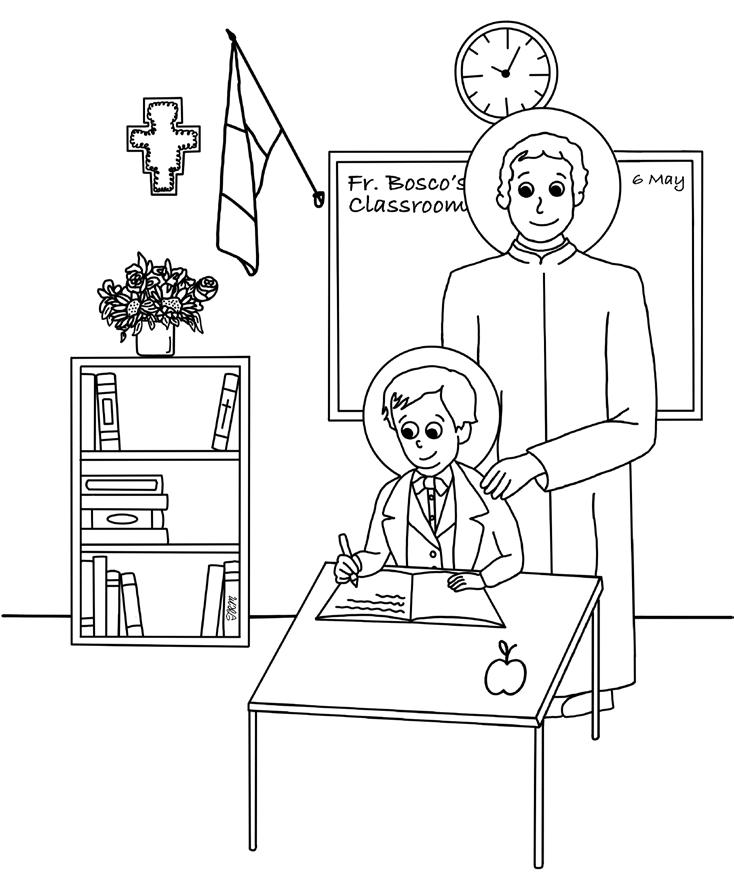
BY MELANIE MCDONAGH
YALE
In England, the road to Rome runs through Birmingham. So might one conclude from reading Melanie McDonagh’s fascinating new book, Converts: From Oscar Wilde to Muriel Spark, Why So Many Became Catholic in the 20th Century. Birmingham, of course, was the long-time home of St. John Henry Newman and the city where he established the Birmingham Oratory and lived for the last 40 years of his life. Newman’s own conversion in 1845 sent shock waves not merely through his contemporary England but through the decades that followed.
As McDonagh describes it, Newman’s legacy is illustrated by an anecdote about priest and novelist R.H. Benson, the Catholicconvert son of an Anglican archbishop of Canterbury. When Fr. Benson asked another convert and friend what pushed him over the edge, the friend answered, “Newman, chiefly.” Benson replied, “Same with me; and I am sure the same answer would be given by ninetynine out of a hundred educated converts.” Novelist and Catholic convert Muriel Spark echoed Fr. Benson, declaring that “it was by way of Newman that I turned Catholic.”
Of course, many English Catholic converts in the 20th century—probably a large majority—never read Newman or, perhaps, even heard of him. As McDonagh demonstrates, in the fifty years between 1910 and 1960, “well over half a million people in England and Wales became Catholic.” These were disproportionately concentrated in the inter-war periods, during times of unprecedented moral and political disillusion.
teaching are the solution to the moral crises of the first half of the twentieth century, which was consumed by two world wars and infected by a growing culture of nihilism.
McDonagh’s portraits of such famous converts as Benson, Spark, Greene, Evelyn Waugh, Oscar Wilde, and Elizabeth Anscombe beautifully illustrate the thesis. Running through all these conversions is a quest for truth that transcends time and space; politics and war; and national boundaries and personal demographics. While some converts she describes were less than constant in their own practice of the faith and others were crisis conversions near the end of their lives, the stability of the Church itself is what emerges from these profiles.
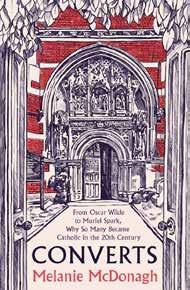
This is illustrated by the conversion of G.E.M. Anscombe, among the most famous analytic philosophers in the world. Strongly objecting to the bombing of Hiroshima and Nagasaki in 1945, Anscombe found the moral resources to articulate her objection in the Catholic faith, to which she had converted in April 1938. Being Catholic, said Anscombe, is not confined to “religious” expressions or commitments. Rather, “[I]t is at the same time a secular ambition: for secular affairs only find fulfilment in” Catholic truth.
McDonagh accounts for this rise in conversions in England through a quote from novelist Graham Greene, who wrote to a friend, “One does want fearfully for something firm & hard & certain.” Greene’s observation could be a proxy for the cause of many other conversions catalogued in Converts. The stability, consistency, and rigor of Catholic theological and moral
Anscombe’s could be the attitude of many, if not nearly all, the converts portrayed in Converts. God is the God of all things, and Christ is the redeemer of all fallen good things. It is no surprise, then, that artists, novelists, poets, and playwrights have found the constancy of the Church—its promulgation of truth, beauty, and goodness—to be their proper home; not only in England in the 20th century, but for all nations, world without end. Melanie McDonagh’s Converts is an elegant portrait not only of converts but of the Church to which they converted. ✦

ACROSS
1 Her tomb was the first thing bought in the Bible 6 On the double, initially

16 Jacob was afraid to meet him
Priestly
Shelter for honeybees 20 Second woman mentioned by name in the
50 Antelopes
52 Dry red table wine
53 Pertaining to the nonordained members of the Church
54 To him, to Pierre
55 The “I” in RCIA
61 Half of a Pacific paradise’s name
62 Literary Jane
63 “I will ___ up a righteous branch for David” (Jer 23:5) 64 Stately aquatic bird 65 Scrutinize
66 Supped
“It ___ upon a midnight clear…” 40 Parisian possessive 41 Public disturbance 42 Lyric poems 44 “Paradise Lost” author 46 Property claims 47 Spicy sausages
1 Holy ones (abbr.) 2 Collection of miscellaneous data 3 Bird that attacked Sinbad’s ship 4 Consumed
Messengers 6 “All ___!”
Fourth man
Pie-mode link
The Holy Land
At the rear of
Last Supper question 12 Recite the Jewish prayers 13 Kid leather 18 JFK predecessor 22 “None of us lives for oneself, and no one ___ for oneself.” (Rom 14:7) 23 Big name in farm equipment
24 “Whoever corrects the arrogant ___ insults” (Prov 9:7)
25 God of war 26 Space 27 A/C letters 29 Catholic United States Supreme Court justice
Talents
33 Got one’s feet wet
Auguries 35 Promontory



“The ___ of the Ancient Mariner”
Poster
Pertaining to the Blessed Mother
Tidy up
Strikebreakers
Permit
Dern of “Rambling Rose” 51 Nero’s full deck? 53 Former monetary unit of Italy
56 St. Frances Cabrini is buried here (abbr.) 57 Mai ___ 58 “Am ___ your way?” 59 Sweet suffix
Decays 39 Parable of the ___ in the fish
Actor Beatty

Faith develops the lives and personalities of people across the globe. Once one of those lost in an ocean of beliefs, I’m now finding my own path. After a decade-long journey, I officially became Catholic at this year’s Easter Vigil.
My father (Joseph Siener), a man of unwavering and kind morals, helped me take that first leap. I live in a household where two faith traditions co-exist: United Methodist Christianity and Catholicism. For years, I attended church with my loving mother—whom I absolutely adore—but, although it went well, I knew it wasn’t exactly my place. I didn’t feel connected to God, even while in a sacred space. Naturally, 7-year-old me grew curious and figured I would attempt to follow in my father’s footsteps. Soon enough, come Sunday, I was at a Catholic church with him where I met the sweetest individuals.
I grew to love not only the community of the various Catholic churches I attended but also the consistency the Church insists upon. There is something so utterly passionate and striking about the Eucharist being the true Body of Christ, about the Sacrament of Confession, and about other events— Adoration, Ash Wednesday, Holy Week, and Christmas— because they are invitations to be vulnerable and give ourselves to God and His creation.
After converting to Catholicism, I felt closer to God in ways that are hard to put into words. There is so much of our Faith rooted in creation, history, music, Scripture, and the saints— every singular piece has purpose, whether figurative or not.
I have sung in two church choirs, one since middle school and the other for a couple years now. And while I am familiar with the Mass setup and prayers, I still have so much to learn. I’m proud to say that during this past Lent I picked up the rosary daily and grew in my relationship with our Lord. But through the OCIA program, a never-ending world of literature and theological conversations opened for me. I still have a long and exciting road ahead of me!
With that same curiosity that brought me to the Catholic Church, I have explored churches and cathedrals across Cincinnati with my father. I recommend this to everyone: just go and see the art across the area, even if you are not religious, because there truly are many breathtaking sites that are terribly underrated and yearning to be explored.
I am blessed to be someone willing to ask questions and tend to be on the outgoing side. At school, I began our newspaper, run and attend various clubs, play tennis, engage as cast or crew in theatre, and participate in many school-wide events. I meet many young people just as curious and involved as I am, but they struggle to cross that threshold of questioning religious beliefs.
To reach more young people, I believe Church leaders need to consider these two questions more deeply: “What is stopping the youth from exploring their faith?” and “What assisted me when I first took that leap?” Many “cradle Catholics” fall from their faith because they assume Catholic school taught them everything, such that the complexities of Catholicism are laid out simply and you have to be absolutely certain on particular topics.
Yet, honestly, what helped me step past that threshold were all the open-minded souls who simply sat there, listened to me, then carefully constructed responses in relatable terms. They shared with me the wisdom that it’s okay to not understand everything, just observe and be humble.
The Catholic Church should never change any core values, but people within the Church should develop innovative communication to enable individuals in various circumstances to feel comfortable asking complex questions.
Above all, don’t be the uneducated, aggressive, or conceited Catholic. Because as someone who has seen the beautiful side of this Faith from my father, my sponsor/best friend (Eva Winchester), and from my confirmation saint (St. Thérèse of Lisieux), it’s the little things that can adjust your perspective for a lifetime.
Due to negative experiences, many find the Church to be unsafe when, in reality, a true Catholic provides the safest home there is, no matter the person or predicament. And as I step into college and pursue my journalistic and Catholic passions, I pray that I honor the people who gave me such a home. I pray that I innovate, explore, and assist in constructing a community for the next group who are willing to ask, “How do I join OCIA?” Because I know just how much an intimidating question like that can remarkably and eternally alter one’s life.
Grace Siener is a member of the Mercy McAuley High School class of 2026.