
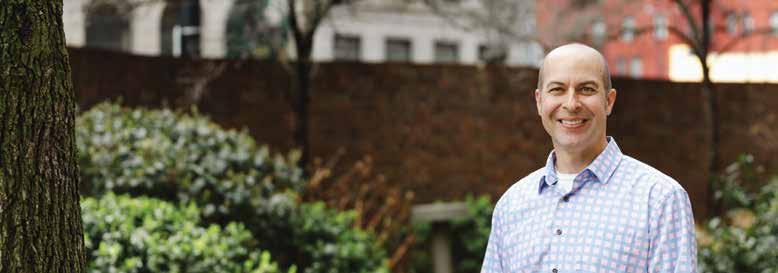
I played basketball and baseball in early grade school. I was never that great at either, but I learned a lot about what it means to be on a team and how to be a good teammate. My first lesson, however, simply moved me from standing alone to belonging.
I clearly remember my first day of first grade: the new kid—having gone to kindergarten elsewhere. Feeling scared and alone, I kept swallowing the lump in my throat and holding back tears in my eyes. Luckily for me, a kind and funny kid noticed, took me by the hand, and convinced me I was going to be okay. We became good friends and often played on the same sports teams.
Playing on a team with other kids helped me realize I could be a part of something bigger than myself. This was a new kind of camaraderie, plus I got to represent my school, Our Lady of Lourdes (Go Tigers!). It felt good to belong. We all had to do our part and, if we were going to win, we had to do it together.
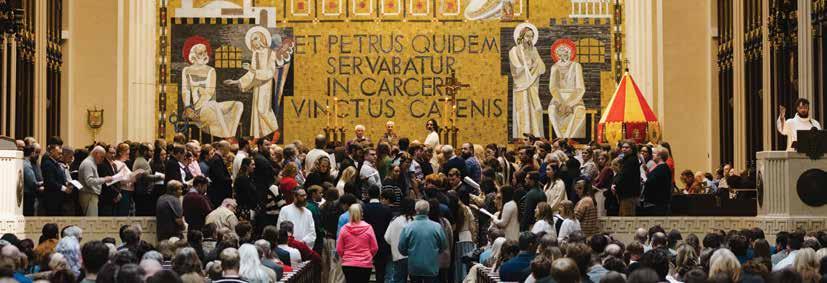
In Scripture, the first letter of St. Peter reminds us that faith is never meant to be lived alone: “Like living stones, let yourselves be built into a spiritual house” (1 Pt 2:5). A single stone by itself cannot be a house. It has weight and substance, but it does not fulfill its purpose until it becomes part of something greater. In the same way, each of us has gifts, experiences, and a unique calling from God. Yet, our life finds its deepest meaning when it is joined to others in the life of the Church.
As “living stones” we must allow ourselves to be shaped. Stones used in a building must be cut, smoothed, and fitted so they can rest securely beside others. The Lord works in our lives in a similar way. Through joys and trials, through moments of growth and conversion, He gently shapes our hearts so that we can better support and strengthen those around us. God is not simply shaping individual believers; He is building a dwelling place for Himself.
Publisher: Archbishop Robert G. Casey
Editor: David Cooley
Graphic Design: Stephen Sullivan
How often do we take the time on Sunday—maybe after Mass—to look around and thank God for all the people who are worshipping with us? We are blessed to have each other, so we should take the time to see each other and recognize that we are all in this together.
If we are all part of a spiritual house, then Jesus Christ is the foundation—the cornerstone. Everything depends on Him. Without Him, the structure collapses; with Him, even imperfect stones can become part of something beautiful and enduring. When we remain close to Christ— through prayer, the sacraments, and acts of charity—we allow God to place us where we belong within His design.
If you are like me, you are attached to the church building you grew up in. But we know in our hearts that the Church is not merely a building of brick and mortar. It is a living temple made of people—each person called, chosen, and placed by God. When we offer our lives to Him, we become part of something far greater than ourselves: a spiritual house where God’s presence dwells in the world.
The people that God has put in our lives—the other living stones—are important, and we must not take them for granted. That kind and funny kid, Adam, who took me by the hand all those years ago, passed away recently at the age of 42. It broke my heart. We are, however, an “Easter people,” and not only are we connected to Catholics all over the world, but we are also connected to the ones who have gone before us. We are living stones building something we cannot see, yet we know it’s there all the same.
Media Sales: Deacon Graham Galloway
New Media / Circulation: Greg Hartman
Photography: Mary Fleisher
David Cooley
cteditorial@catholicaoc.org
Social Media: Taylor Motley
Video: Margaret Swensen

Father David Endres
is professor of Church history and historical theology at Mount Saint Mary’s Seminary & School of Theology.


Dr. Kenneth Craycraft
holds the James J. Gardner Chair of Moral Theology at Mount St. Mary’s Seminary & School of Theology. He is the author of Citizens Yet Strangers: Living Authentically Catholic in a Divided America.
Dr. Andrew Sodergren
is a Catholic psychologist and director of psychological services for Ruah Woods. He speaks on the integration of psychology and the Catholic faith. He and his wife Ellie have five children.
Fr. Jacob Lindle

was ordained a priest for the Archdiocese of Cincinnati in May 2022. He is presently studying for a Doctorate in Patristic Theology at the Pontifical Gregorian University in Rome.


Dominick Albano
is a passionately Catholic husband and father of four boys. He has been writing, speaking, and leading Catholic retreats for more than 20 years. He is the co-founder of the National Society for Priestly Vocations.
Katie Sciba
is a national speaker and Catholic Press Award-winning columnist. She and her husband Andrew were married in 2008 and are blessed with seven children.

Michelle Wirth Smith
has served as the archdiocesan Archivist since 2019, bringing a Cincinnati-born passion for preserving Catholic history. She earned her Master of Library & Information Science degree from Kent State University.
Want to reach out?
cteditorial@catholicaoc.org
Let us pray for priests going through moments of crisis in their vocation, that they may find the accompaniment they need and that communities may support them with understanding and prayer.
Consider the tomb. Think about a tight, closed-off space without the fresh air of a new day. Consider the cold, stagnant darkness of that space, with no possibility of seeing the first light of a sunrise. Think about the lifeless silence that surrounds you, with no hope of hearing the chirping of birds and the chatter of creation at dawn.
Reflecting on the notion of being entombed after death might provide perspective on the current state of our life above ground. For we know that from time to time in life, we may find ourselves feeling lifeless, disheartened, and hopeless. We may find ourselves alone, cut off from others and the world around us, and confined to breathe only the stagnant air of our sad state of life or the unfortunate state of the world.
How do we free ourselves from those tomb-like moments in life? One opportunity comes at Mass, when we pray the Confiteor (“I confess…”) and seek God’s love and mercy for those times when we have found ourselves restricted, isolated, and closed off by our thoughts and our words, by what we have done and what we have failed to do. The stale air of sin and sadness must be replaced by the fresh air of a new day and a renewed life.
However, we often discover a great stone fixed between us and the fresh air we long to breathe. That stone, stubborn and immovable, prevents us from engaging with the world around us in healthy and life-giving ways. That stone holds us back from joining in the song of creation at the dawn of a new day. If we hope to embrace Christ’s call to discipleship, we must get that bothersome boulder out of the way.
It is utterly impossible for us to roll away the stone on our own. Yet, what may be impossible for us is not impossible for God. The new life we
long for, the possibility for renewed relationships, and the potential to transform our weary world and renew God’s creation, all become possible when we surrender ourselves to God.
Our God is an awesome God, who does not abandon us to the darkness of the tomb but instead frees us from its confines. We see this clearly in the story of Jesus that we proclaim each Easter. After so much pain and sorrow, Jesus’ body was laid in a tomb. The Son of God surrendered unto death and succumbed to the darkness and silence of the tomb. But, in an early morning’s light, the tomb is found empty and Christ is found alive and present in the light of a new day.
The soldiers who kept watch over the tomb by night did not remove the stone. The disciples who had fearfully hidden in the upper room did not remove the stone. The faithful women who went to the tomb that morning did not remove the stone.
For them, as for us, it was impossible to get the stone out of the way. But not for God. The prophet Ezekiel reveals God’s desire for us; God says to us, “I will give you a new heart, and a new spirit I will put within you. I will remove the heart of stone from your flesh and give you a heart of flesh” (Ez 36:26).
In the holy season of Easter, may we be attentive to our surroundings. If we find ourselves buried under a rockslide of doubt and despair, with hearts hardened and hope waning, may we not hesitate to call upon God. May we hear God’s voice, harden not our hearts, and allow God to remove all barriers between us and the dawning of a new day of peace, joy, and love.
May God bless you and your family with a joyous Easter! ✦

EN TUS MANOS | Arzobispo Robert G. Casey
Considere la tumba. Piense en un espacio estrecho y cerrado sin el aire fresco de un nuevo día. Considere la oscuridad fría y estancada de ese espacio, sin la posibilidad de ver la primera luz del amanecer. Piense en el silencio sin vida que le rodea, sin esperanza de poder escuchar el canto de los pájaros y el parloteo de la creación al amanecer.
Reflexionar sobre la noción de ser sepultado después de la muerte podría brindarnos una perspectiva sobre el estado actual de nuestra vida en la tierra. Porque sabemos que de vez en cuando en la vida podemos sentirnos sin vida, descorazonados y sin esperanza. Podemos encontrarnos solos, aislados de los demás y del mundo que nos rodea, y confinados a respirar únicamente el aire estancado de nuestro triste estado de vida o del desafortunado estado del mundo.
¿Cómo podemos liberarnos de esos momentos sepulcrales de la vida? Una oportunidad se presenta en la Misa, cuando rezamos el Confiteor (“Yo confieso…”) y buscamos el amor y la misericordia de Dios para aquellos momentos en que nos hemos sentido restringidos, aislados y encerrados a causa de nuestros pensamientos y nuestras palabras, de nuestras obras y nuestras omisiones. El aire viciado por el pecado y la tristeza debe ser reemplazado por el aire fresco de un nuevo día y una vida renovada.
Sin embargo, a menudo descubrimos una gran piedra fija entre nosotros y el aire fresco que anhelamos respirar. Esa piedra, obstinada e inamovible, nos impide relacionarnos con el mundo que nos rodea de formas saludables y vivificantes. Esa piedra nos impide unirnos al canto de la creación al amanecer de un nuevo día. Si esperamos abrazar el llamado de Cristo al discipulado, debemos sacar esa piedra molestosa del camino.
Es absolutamente imposible para nosotros quitar la piedra por nuestros propios medios.
Sin embargo, lo que puede ser imposible para nosotros no es imposible para Dios. La nueva vida que anhelamos, la posibilidad de tener relaciones renovadas y el potencial de transformar nuestro mundo cansado y renovar la creación de Dios, todo se hace posible cuando nos entregamos a Dios.
Nuestro Dios es un Dios grandioso, que no nos abandona en la oscuridad del sepulcro, sino que nos libera de sus confines. Vemos esto claramente en la historia de Jesús que proclamamos cada Pascua. Después de tanto dolor y tristeza, el cuerpo de Jesús fue colocado en una tumba. El Hijo de Dios se entregó a la muerte y sucumbió a la oscuridad y al silencio del sepulcro. Pero, a la luz de la mañana, el sepulcro se encuentra vacío y Cristo se encuentra vivo y presente en la luz de un nuevo día.
Los soldados que vigilaban el sepulcro durante la noche no quitaron la piedra. Los discípulos que se habían escondido por temor en el aposento alto no quitaron la piedra. Las mujeres fieles que fueron al sepulcro aquella mañana no quitaron la piedra. Para ellos, como para nosotros, era imposible remover la piedra del camino. Pero no es imposible para Dios. El profeta Ezequiel nos revela el deseo de Dios para nosotros; Dios nos dice: “Les daré un corazón nuevo y les infundiré un espíritu nuevo; arrancaré de ustedes el corazón de piedra y les daré un corazón de carne” (Ez 36, 26).
En el santo tiempo de Pascua, que estemos atentos a nuestro entorno. Si nos encontramos sepultados bajo un alud de dudas y desesperación, con corazones endurecidos y la esperanza oscilando, no dudemos en invocar a Dios. Que podamos escuchar la voz de Dios, no endurecer nuestros corazones y permitir que Dios elimine todas las barreras entre nosotros y el amanecer de un nuevo día de paz, alegría y amor.
¡Que Dios le bendiga a usted y a su familia con una feliz Pascua! ✦
Q: Why does the Church oppose in vitro fertilization? Aren’t all children gifts from God?
Openness to children is an essential part of marriage and family life. The Church recognizes children as gifts and affirms couples’ desire to conceive. It is understandable that spouses, especially those who struggle with infertility, seek methods to increase the likelihood of having children. Even with good intentions, however, not all methods of conception are moral.
Sex is part of God’s design for humanity. Within marriage, it expresses love and self-giving between spouses. It serves the good of the couple and brings new life into the world. These two meanings of marriage—the unitive and the procreative— cannot be separated without undermining the marital bond.
The Church understands procreation as more than a biological act. God is the ultimate source and sustainer of life, so procreation is a cooperative act between the spouses and God.
Through modern science, new ways of procreating have emerged. Many are accepted uncritically in our culture if they achieve the desired end of having a child. Yet, methods such as surrogacy and in vitro fertilization (IVF) are not morally neutral. They are contrary to God’s plan for marriage and family life. During IVF, egg and sperm are united outside the womb and then implanted. It mechanizes reproduction and approximates in a laboratory what occurs through the marital act.
Reproduction in a lab is inconsistent with the rights of children and spouses. Children have the right to be conceived through a natural, human act, not through a technical or scientific process that dissociates sex from procreation. Spouses, too, have a right to become parents only through each other and not through the intrusion of a third party (Catechism of the Catholic Church, nos. 2376-2377).
In vitro fertilization may appear to be “pro-life,” but it has a hidden cost: the creation of multiple embryos— often five to ten—of which most are frozen, discarded, or selectively reduced (the “weakest” embryos are terminated) from within the womb. Because embryos are human beings from conception, they should be treated with respect, not as disposable.
Every child, including those conceived through in vitro fertilization, possesses inherent dignity as made in the image and likeness of God. Protecting embryos from abandonment and destruction is, therefore, a matter of justice and respect for life.
In vitro fertilization also undermines the understanding of children as gifts. As the Catechism states, “A child is not something owed to one, but is a gift” (CCC, no. 2378). Children should not be seen as products to be acquired. Whether intended or not, artificial means of conception can lead to children being viewed as commodities. In addition to IVF’s high cost, some doctors make a further business of “designing” children through genetic manipulation, embryo selection, and surrogacy, along with forms of artificial insemination that use donors’ eggs or sperm with preferred traits.
For infertile couples, moral alternatives exist. These approaches work with the body rather than replacing or bypassing the marital act. Natural Procreative (NaPro) Technology assists couples by treating underlying health issues—such as hormonal deficiencies or endometriosis— while respecting the integrity of marital procreation. These may help some couples to conceive.
The Church values the gift of children, but not at any cost. In the case of IVF, the good of having children is not pursued in a way that respects the dignity of all involved. However, there are moral alternatives, both for conceiving and through adoption, that respect spouses and children and honor God as the source of life. ✦


Near the end of his novel Brighton Rock, Graham Greene details a conversation between an old priest and one of the main characters of the novel, a young woman named Rose. The interchange takes place after the sudden, violent death of another character, Pinky, whose life had fallen well short of saintly or even good. Justly concerned about the state of Pinky’s soul, Rose laments to an old priest, “He’s damned. He knew what he was about. He was a Catholic, too.”
But the old priest is not so quick as Rose to condemn Pinky. “The Church does not demand that we believe any soul is cut off from mercy,” he tells Rose. This counsel follows what is perhaps the most famous sentence Greene ever wrote, which the priest had already said, “You cannot conceive, my child, nor can I or anyone … the appalling … strangeness of the mercy of God.” No time in the liturgical calendar is more appropriate to consider this appalling, strange mercy than Easter.
As most readers of this column are aware, the eighth day of Easter is known as Divine Mercy Sunday. While this designation is as familiar to Catholics as most other major feasts, it is actually a recent addition to the Roman calendar. The Divine Mercy devotion had been celebrated informally since the late 1930s, which itself is recent in terms of the history of the Church. Its official title, however, was not declared until April 2000 and was celebrated for the first time by the universal Church on April 22, 2001. It is no coincidence that the designation of this great feast was made by our first Polish pope, St. John Paul II, and coincided with the canonization of the great Polish mystic St. Faustina Kowalska on April 30, 2000.
St. Faustina is sometimes known as the “Apostle of Divine Mercy” due to her account of visions of, and conversations with, Jesus in the 1930s. These accounts are recorded in her posthumously published diary, Divine Mercy in My Soul. Among other things, St. Faustina says that Jesus commissioned her to paint an image of her vision
of Jesus. “I want the image solemnly blessed on the first Sunday after Easter,” Jesus told Faustina, “and I want it to be venerated publicly so that every soul may know about it” (entry 341).
Not having the skill to paint the image herself, Faustina described her vision to Polish painter Eugeniusz Kazimirowski, who finished the original painting in 1934. The version of the Divine Mercy painting with which most of us Catholics are familiar, however, was painted by another Polish artist, Adolf Hyła, in 1943, five years after St. Faustina’s premature death from tuberculosis at age 33. The image commonly used in Divine Mercy Sunday processions is a reproduction of the Hyła painting.
As important as the Divine Mercy image is, the words Jesus spoke to St. Faustina are even more powerful and inspiring. This is because Jesus revealed to St. Faustina that His mercy is strange and counterintuitive. Indeed, in the words of Greene’s old priest, God’s mercy is appalling to the unbeliever’s mind and strange to everyone.
In the first instance, Jesus distinguishes between mercy and justice in His conversations with St. Faustina. “Speak to the world about My unfathomable mercy,” Our Lord tells her. “It is a sign for the end times; after it will come the day of justice” (entry 848). In another place, Faustina writes, “Jesus looked at me and said, ‘Souls perish in spite of My bitter Passion. I am giving them the last hope of salvation; that is, the Feast of Divine Mercy. ... Tell souls about this great mercy of Mine because the awful day … of My justice is near’” (entry 965).
This contrast of the mercy of God with His justice is a central paradox in Christian theology. The contrast is resolved, of course, precisely in Christ’s “bitter Passion,” as He put it to St. Faustina. The “awful day of judgment” was visited upon Jesus in our stead. But this act of justice—Jesus giving himself over to the judgment of the Father for us— is also a manifestation of His mercy. Jesus takes our just
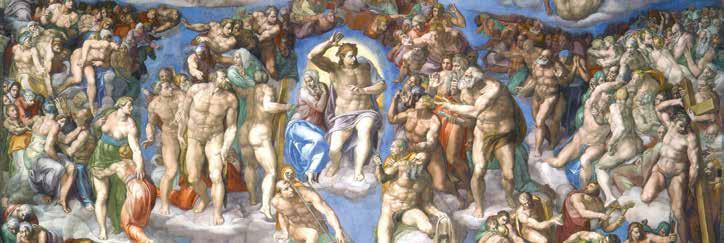
punishment—what we rightly deserve—and offers it to the Father in the ultimate act of Divine Mercy. As the Blessed Mother told Faustina in another vision, “the Second Coming of Him who will come” will not be a day of mercy but of judgment. “Oh, how terrible is that day!” she exclaimed (entry 635). The Blessed Virgin emphasized the urgency of communicating the Divine Mercy message to all. But the offer must be accepted through an act of repentance.
In Brighton Rock, Graham Greene frequently averts to the maxim that one could be saved “between the stirrup and
the ground.” “You could be saved between the stirrup and the ground,” one character says, “but you couldn’t be saved if you didn’t repent.” The image is of a horseman—typically a soldier—repenting of his sins in the brief moment between being shot from his horse and hitting the ground. The point is not concerned with the brevity of the moment but rather the persistence of the offer of Divine Mercy. God’s judgment is sure. But His Mercy is appallingly strange, offered persistently to all people. For God’s Mercy is not merely appalling and strange; it is also relentless. ✦
BY DAVID COOLEY
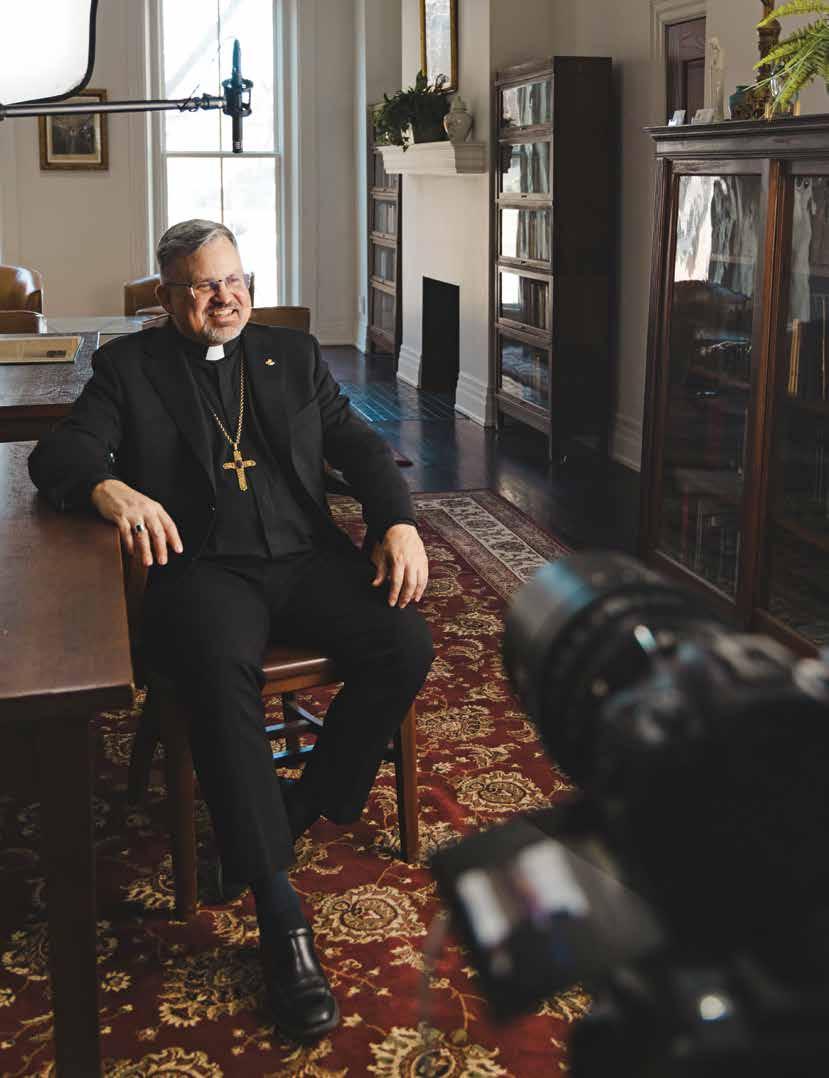
Watch interview with Archbishop Robert G. Casey on The Catholic Telegraph YouTube page.

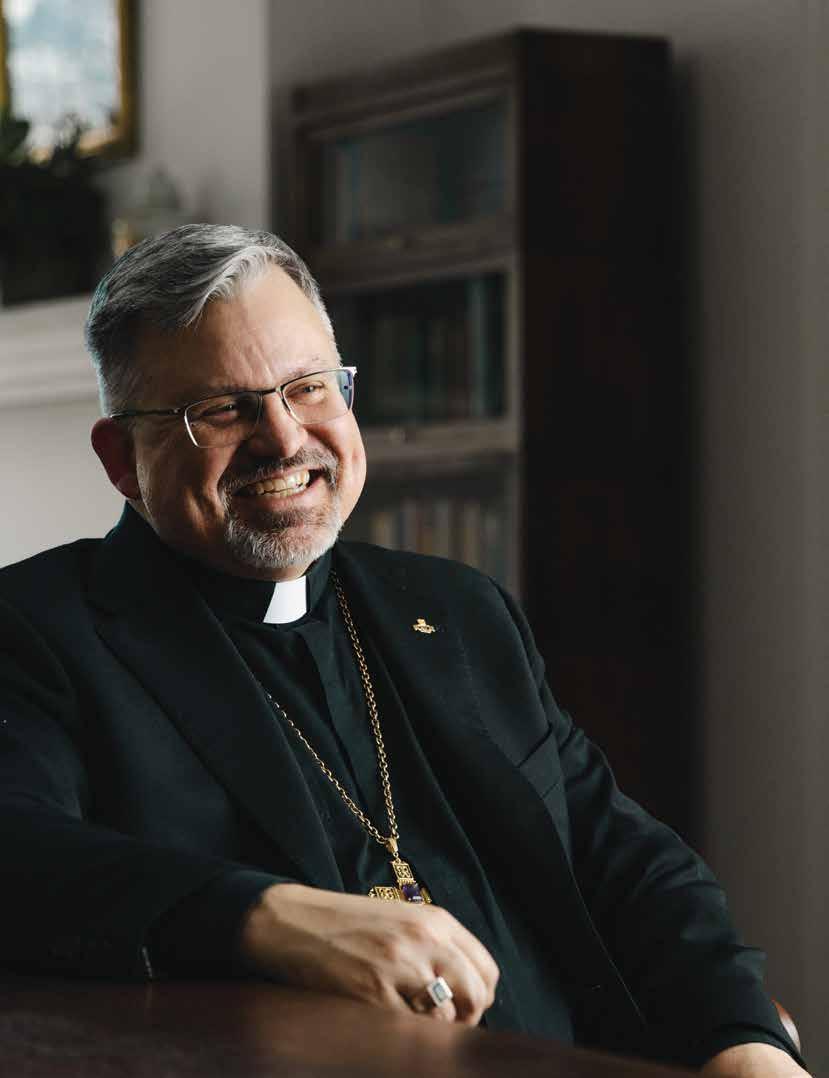
In honor of his one-year anniversary as Archbishop of Cincinnati, The Catholic Telegraph asked Archbishop Casey to share a little bit about himself and his experiences in the archdiocese thus far.
What has surprised you most in your first year as archbishop? I think what has surprised me most is the reality of God being so good at surprising us. That has been evident in my life continually. So, moving to the Archdiocese of Cincinnati and seeing how God has introduced me to unexpected people and unexpected places where I have discovered God present and active in the Church here [has surprised me]. It’s been the same experience of Church—the same of Father, Son and Holy Spirit—that I had in my life in Chicago. It’s been a wonderful surprise, being able to settle into this archdiocese and feel at home.
Do you have a favorite memory from year one or something you recollect fondly that you’d like to share? I can think of a few standouts from this first year. One that comes out of sadness was the fire in Maria Stein when St. John’s burned. The chancellor and I drove up to the parish the next day for a Mass with the people, and they were surprised to see us there. … Our family had a tragedy. When families have tragedies, we pull together. So, it was important for me. … But then to see the people in this archdiocese respond with such charity and compassion towards their brothers and sisters who had suffered the loss of that church; that was a beautiful moment.
On a happier note, I would say my experience of throwing the first pitch at the Reds game was a great experience for our local Church. … Without a word, we evangelized that night because people saw the joy of being Catholic and the presence of the Catholic community here in our archdiocese.
What opportunities stand out to you here in the Archdiocese of Cincinnati? Here in the archdiocese, we face the same opportunities that we see across the country. The opportunity to proclaim Jesus alive and present and in our midst. There are so many [people] who don’t realize that our belief is not something of our imagination. Our experience of Christ is real and Christ is truly present—not just in our church, but in our streets, our neighborhoods. When our Church can live that more fully and truly give people an encounter with Christ, that’s the opportunity that I look forward to. We cannot just be satisfied with those coming into our churches, but [we must ask] how can we go out into our communities and really help people experience the joy of the Gospel that we know to be true.
What was your first job? My first job was mowing the lawn and shoveling snow for an elderly woman in my neighborhood. That was before I turned 16. In my family, when you turned 16, you got a job. And I remember that day: I got on my bicycle, and I was not going to work at McDonald’s where my brother and sister worked. I was going to do something different. I
ended up working at McDonald’s. And I was very good, by the way. I could handle the drive-thru better than anybody—that was my domain.
Who is your favorite musical artist? I have a very eclectic musical palette. I listen to everything. And so, you might hear classical music or pop music in my office.
A highlight for me since coming to the Archdiocese of Cincinnati was seeing the Petersens live in concert. I have followed this family bluegrass band out of Branson, Missouri, and I was able to go to their concert in Russia, Ohio. That was a highlight, because I have loved listening to their music for years, and to see them in person was really a treat.
What is your favorite season? Spring, summer, fall, or winter? My favorite season is the fall. I love the changing colors. I love those crisp autumn mornings where it’s just starting to turn cold.
What’s your favorite local lunch spot in the archdiocese? Well, there’s a taco place [attached to] the Pastoral Center, Taqueria Mercado. I love the Mexican food from that place. But I also have enjoyed getting some Asian noodles from Harry & Shan and a sandwich from Silverglades.
Do you have a favorite coffee spot? Coffee Emporium. I always get a great cup of coffee and a scone from there.
What’s your favorite Graeter’s ice cream flavor? This is probably a little controversial because I think I’ve heard the top flavor is black raspberry chip, and I prefer black cherry. My favorite Graeter’s ice cream is more the black cherry with chocolate chips. That’s the one that I really enjoy.
What are we likely to find in your refrigerator? I’m very good about breakfast, so you will always find milk, yogurt, and orange juice. Then I struggle with my lunch and dinner. A lot of times, you must go to the freezer for lunch and dinner options. Right now, my refrigerator is very empty because I’ve been on the road for many confirmations. It seems like every evening I’m heading to a different part of the archdiocese for confirmation. So, I’m not doing very much cooking these days.
What’s something you learned recently? I learned how to throw a baseball. That is something my family still cannot believe. It took me coming to Cincinnati to become a baseball fan. I was never a sports kid—that was my brothers and sister.
I think the other thing is that I’ve never been the ordinary of a diocese. I was an auxiliary bishop up in Chicago. And so, to have Pope Francis invite me to take on the leadership of this local Church, that’s something new. I’m very grateful to Cardinal Bernardin, who ordained me a priest 32 years ago. I’m grateful to Cardinal George and Cardinal Cupich—these bishops who helped school me and prepare me, not knowing that what they were teaching me in word and example would lead to this, but I’m learning how to take on the mantle of being the shepherd here.
BY DEACON MICHAEL TRIMPE
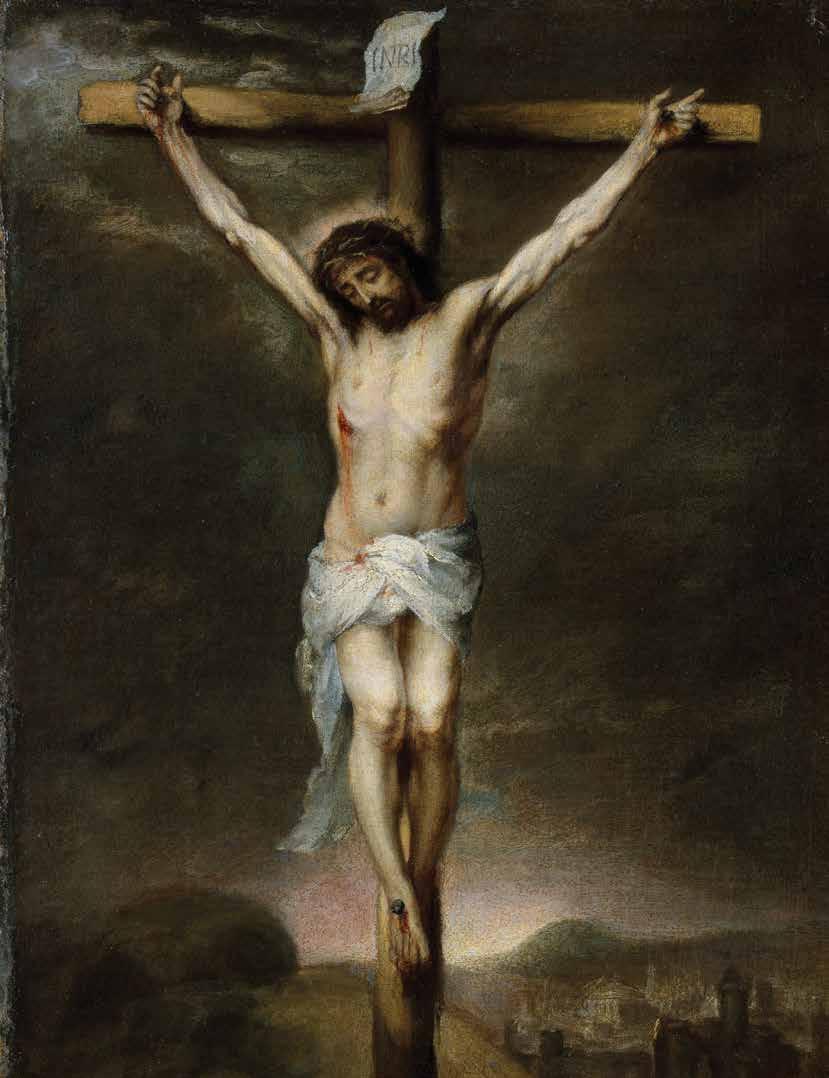
In my 44-year career as a forensic scientist at the Hamilton County Coroner’s Crime Laboratory, I often thought of the pain and suffering our Lord Jesus Christ experienced during His Passion. We know His manner of death was authorized by Pontius Pilate to be crucifixion. But what would His cause of death be in medical terms? As a deacon at St. Peter in Chains, I assembled a presentation depicting His Passion to help us reflect on just how much He loves us. People often ask, “How is it that a forensic scientist is a deacon?” My answer is, “I am always seeking the truth!”
As we enter Lent’s final days, let us prayerfully meditate on what Christ experienced from a medical perspective, so we can better appreciate His love.
In the Garden of Gethsemane, Jesus sweated blood. Hematidrosis is a condition that occurs when the blood vessels that feed sweat glands rupture because of extreme physical or emotional stress. He probably “fell” to the ground in agony in the garden because of this extreme, stressful condition. Can you imagine knowing the torture that was about to happen and praying, “God’s will be done”? Can we stay with Jesus in this moment… and pray for Him… and pray with Him?
During a scourging, the victim’s arms were fastened high so that the Roman flagrum (a type of whip) could wrap around and hit both the victim’s back and front. It had three leather tails with metal, dumbbell-shaped weights on the ends. These broke the blood vessels at the flesh and left cuts and welts on the skin. They could also bruise and collapse the lungs, making it difficult to breathe and leading to an “early” death on the cross.
Under Mosaic Law, no one was allowed to receive more than 40 lashes, so the maximum number of lashes given by the Romans to the worst criminals was 39—which Jesus received. The Romans gave Jesus this worst scourging because they hoped they wouldn’t have to crucify Him.
The nerve supply to the head is so dense and sensitive that any prick causes severe pain. The crown of thorns pressed on Jesus’ head would have caused trigeminal neuralgia, which is known as the worst pain man can feel: walking, falling, sweating, and even wind would increase this excruciating pain.
So, Pilate brings Jesus before the people—bloody, beaten, and barely able to stand—counting on the people to say it is enough and let Him go. But they still say, “Crucify Him.” As a result, the whole Passion of Christ ended up being the worst torture a human could be given—and it was for our sins!
Jesus probably carried “only” the crossbeam, weighing 50-60 pounds, as the whole cross would have weighed 175200 pounds, much too heavy for a scourged man to carry. He then walked about a half mile to Calvary over uneven, rocky ground that added to His pain. He undoubtedly would have
fallen several times from exhaustion. Our Lord was hated so much and yet He loved us so much!
The annals of Clairvaux relate that St. Bernard asked Our Lord which was His greatest unrecorded suffering, and Our Lord answered: “I had on My Shoulder, while I bore My Cross on the Way of Sorrows, a grievous Wound, which was more painful than the others and which is not recorded by men. Honor this Wound with thy devotion and I will grant thee whatsoever thou dost ask through Its virtue and merit. And in regard to all those who shall venerate this Wound, I will remit to them all their venial sins and will no longer remember their mortal sins.” Both Padre Pio and Bernard of Clairvaux said the wound that was more painful than all others was the wound on the right shoulder. Could it be that the weight of our sins is the hardest to bear?
At the Cross, stripping away Jesus’ clothing, now bound to wounds by clotted blood, would have caused great pain. The crucifixion nails, likely six inches long, were often dirty and reused. Romans actually nailed hands in the lower-palm to upper-wrist areas to hold the victim’s weight. They hit the median nerve, causing a most painful and burning sensation. Even gentle contact after exposing this nerve is torture, and a day’s noon heat would intensify this.
Can you see that every detail of Our Lord’s Passion was the absolute worst condition it could have been? The time of day, the terrain, the number of lashes, the nerves struck, etc.
Lord—why did it have to be soooo painful? Forgive me as you forgave those who tortured you!
Again, nailing the feet to the beam would hit a sensitive nerve—the plantar nerve—causing a similar pain to the median nerve. Each foot was probably nailed flat against His Cross, and there is no evidence of foot support. This causes numbness in the legs that would have caused Jesus to arch His body.
From all of this, then, Jesus’ medical cause of death was cardiac and respiratory arrest, due to hypovolemic (lack of blood and fluids) and traumatic shock that were due to crucifixion. We cannot imagine the pain He suffered.
How can an innocent man willingly accept such torture while praying for His torturers? He felt all the pain of a man but loved like only God can love. “This is my commandment: love one another as I love you. No one has greater love than this, to lay down one’s life for one’s friends” (Jn 15:12-13).
Lord, I am sorry for my sins. Thank You for Your love. ✦
Deacon Michael Trimpe is a retired forensic scientist with the Hamilton County Coroner’s Crime Laboratory. He and his wife Giovanna are parishioners at the Cathedral Basilica of St. Peter in Chains, where he serves as a deacon and she serves as a chef.
CHRISTIAN ANTHROPOLOGY | Andrew J. Sodergren, M.T.S., Psy.D.
Note: This article is part of an ongoing series on Pope St. John Paul II’s “Theology of the Body” (TOB).
In his meditations on Ephesians 5, Pope St. John Paul II highlighted the two distinct images St. Paul uses to describe the relationship between Christ and the Church: bridegroom/ bride and head/body. The first of these images emphasizes the analogy between Christian marriage and the relationship of Christ and the Church. The second image is similar but emphasizes to an even stronger degree the union of the two.
Strikingly, St. Paul applies this head/body image both to the relationship of Christ and the Church and to that of Christian spouses. He introduces the analogy by saying, “The husband is the head of the wife as Christ is the head of the church, his body,” and then goes on to exhort husbands:
Love your wives as Christ love the church and gave himself up for her, that he might sanctify her, having cleansed her by the washing of the water with the word, that he might present the church to himself in splendor, without spot or wrinkle or any such thing, that she might be holy and without blemish. Even so, husbands should love their wives as their own bodies. He who loves his wife loves himself. For no man ever hates his own flesh, but nourishes and cherishes it, as Christ does the church, because we are members of his body (Eph 5:23-30).
As we have seen previously, Pope St. John Paul II did not see in this head/body relationship any room for the domination of one spouse over the other. Rather, he repeatedly reaffirmed the equal dignity of man and woman and their call to mutual submission. Using the theological principle of analogy, he understood St. Paul to be highlighting the unity between Christ and the Church and the calling of Christian spouses to reflect that unity in marriage. He reflected on how
the head/body image speaks of “an organic union” as if the two form a single organism (TOB, 91.2).
In marriage, husband and wife remain two distinct persons, but through their mutual self-gift and receiving each other in love, they form such a profound union that Scripture refers to them as “one flesh” (Gn 2:24; Eph 5:31). According to the late pope, “It is a question of unity, not in the ontological, but in the moral sense: of unity through love ” (92.5).
What does it mean for a husband to love his wife as his own body (and for a wife to do the same)? Pope St. John Paul II highlighted that the body is the expression and foundation of the personal “I.” Therefore, Christian spouses are called to a unity that includes the body but goes beyond mere physical intimacy to a communion of persons. “This is the moral unity conditioned and constituted by love. Love not only unites the two subjects, but allows them to interpenetrate each other, belonging spiritually to one another.” Indeed, “the ‘I’ becomes in some way the ‘you,’ and the ‘you’ the ‘I’” (92.7).
The key to understanding this lies in St. Paul’s language of “nourishing” and “cherishing” quoted above. While applying first and foremost to Christ’s ongoing work of sanctifying the Church through the sacraments, Pope St. John Paul II also saw in these words a “specific character of conjugal love, especially of the love by which the spouses become ‘one flesh’” (92.8). He wrote, “In union through love, the body ‘of the other’ becomes ‘one’s own’ in the sense that one is moved by concern for the good of the body of the other as for one’s own” (92.7).
Since the body is in a sense the “sacrament” of the person, “nourishing” and “cherishing” it means a committed, sacrificial pursuing of the holistic good of the other as intensely as for oneself and excludes any sense of “possessing” the other’s body as an object. The words from Ephesians 5 thus “speak above all with the language of ‘agape ’” (92.7). When the hearts of both spouses are wholly and mutually committed to this pursuit, they can fittingly be said to have become “one flesh.” ✦
4 FAMILY OF THE MOST HOLY EUCHARIST
Easter Vigil
8:45 PM | St. Martin of Tours
3720 St. Martins Pl., Cincinnati
Easter Sunday
8 AM & 10 AM | St. Antoninus 1500 Linneman Rd., Cincinnati
9 AM & 11 AM | St. Aloysius Gonzaga 4366 Bridgetown Rd., Cincinnati
9 AM & 11 AM | St. Catharine of Siena
2848 Fischer Pl., Cincinnati
9 AM & 11 AM | St. Martin of Tours
3720 St. Martins Pl., Cincinnati
10 AM | Our Lady of Lourdes
3426 Lumardo Ave., Cincinnati
4 ST. COLUMBAN
894 Oakland Rd., Loveland
Easter Vigil
8:30 PM
Easter Sunday
8 AM, 10 AM, & 12 PM
4 HOLY FAMILY (Latin Mass)
140 S. Findlay St., Dayton
Holy Thursday
7 PM
Good Friday
3 PM
Easter Vigil
10:30 PM
Easter Sunday
8 AM (Low Mass)
10:30 AM (High Mass)
4 THE COMMUNITY OF THE GOOD SHEPHERD
8815 East Kemper Rd., Cincinnati
Easter Vigil
8:45 PM (Regular Saturday 4 PM Mass will not take place.)
4 BLESSED TRINITY FAMILY OF PARISHES
Easter Vigil
8:45 PM | St. John Neumann 12191 Mill Rd., Cincinnati
Easter Sunday
8:30 AM & 11 AM | St. John the Baptist Church 5361 Dry Ridge Rd., Cincinnati
8:45 AM | St. John Neumann 12191 Mill Rd., Cincinnati
10:45 AM | Corpus Christi 2014 Springdale Rd., Cincinnati
4 ST. GABRIEL THE ARCHANGEL FAMILY OF PARISHES
Easter Vigil
9 PM | Our Lady of the Rosary Church 22 Notre Dame Ave., Dayton
9 PM | St. Christopher Church 435 East National Rd., Vandalia
9 PM | St. Peter Church (Spanish) 6161 Chambersburg Rd., Huber Heights
Easter Sunday
6:30 AM | Holy Cross Church 1924 Leo St., Dayton
8:30 AM, 11 AM & 4:30 PM (Spanish) | St. Peter Church 6161 Chambersburg Rd., Huber Heights
9AM | Our Lady of the Rosary Church 22 Notre Dame Ave., Dayton
9AM & 11 AM | St. Christopher Church 435 East National Rd., Vandalia
10:30 AM | St. John the Baptist Church 753 South Hyatt St., Tipp City
Easter Sunday Church at 8 AM, 10 AM, & 11:30 AM Community Room at 10 AM & 11:30 AM
BY EILEEN CONNELLY, OSU
Mount St. Mary’s Seminary & School of Theology (MTSM) is celebrating 50 years of lay formation, as well as the deep faith and many gifts the laity bring to the Church. The celebration encompasses all forms of lay formation offered over the decades, including the former Lay Pastoral Ministry Program (LPMP), the former pastoral counseling program, and other degrees and certifications.
According to Samuel Johnson, Dean of the School of Theology, this opportunity reminds “all of the Cincinnati faithful and beyond that we exist for everyone who is looking to more fully understand and serve in their faith.”
Fr. David Endres, Dean of Mount St. Mary’s Seminary and a professor of Church history and historical theology, explained that lay formation evolved as the number of Catholics entering the priesthood and consecrated life declined and opportunities for lay leadership emerged, especially in parishes. In his A Bicentennial History of the Archdiocese of Cincinnati, he notes that, in 1973, several senior class members of the then College of Mount St. Joseph approached Fr. Robert Hater, then archdiocesan director of religious education, regarding creation of a formation program for laity who wish to serve the Church.
The follow-up meeting at Holy Family Church in Price Hill attracted two dozen participants, mostly young women eager to commence formation for ministry. After discussions with Cincinnati Archbishop Joseph Bernardin and Fr. J. Raymond Favret, the rector of Mount St. Mary’s Seminary, Fr. Hater oversaw the pilot program that enrolled six women in courses at the seminary (then located in Norwood). In 1975, the one-year initiative’s success led Archbishop Bernardin to authorize the formation of the LPMP, one of the nation’s first seminary-based lay formation programs.
Today, Johnson explained, the School of Theology offers
two main tracks—academic and the Lay Ecclesial Formation program (formerly LPMP)—providing certificate and master degree programs in various fields, such as theology, Scripture, ministry, and more. The academic programs include the Certificate (and Graduate Certificate) in Catholic Theology, Master of Arts in Biblical Studies, Master of Arts in Catholic Studies, Master of Arts in Theology, and offer classes that enable students to better understand and engage with the Catholic faith.
The Lay Ecclesial Formation program’s mission is to “provide participants with the experiences they need to become more effective ecclesial ministers, to encourage others to grow in their faith and minister to others, and to minister with creativity and adaptability to the evolving needs of Church and society.” The program components include academics, field education, theological reflection, and a project in ministry. There are three tracks available, which lead to a Master of Arts in Pastoral Ministry, a Graduate Certificate in Pastoral Ministry, or a Certificate in Pastoral Ministry.
Accessibility to School of Theology programs is a priority, noted Aimee May, northern area coordinator for lay ecclesial formation. Graduate courses meet at the main campus on Beechmont Avenue in Cincinnati on weeknights, while certificate classes are held both there and at satellite locations in the archdiocese on Saturdays. The satellite site for 2025-26 and 2026-27 is Sacred Heart of Jesus Parish in McCartyville (part of St. Joseph, Pillar of Families Family of Parishes).
“Many people think that formation is just for those pursuing ordination to the diaconate or priesthood, but it’s for everyone—male or female, all of the baptized— to strengthen their call to serve in their own family and communities,” May said.
“I’m so very grateful to Fr. Hater and that our archdiocese was one of the first to begin lay formation so quickly after Vatican II. Our local leaders were at the forefront of acknowledging the gift that lay people are to the Church and the gifts that God gives each of us to share,” she added.
School of Theology staff emphasize that there is no such thing as a “typical” student. “We have young people fresh out of college pursuing master’s degrees, people who don’t have any formal ministry experience who want to enter more deeply into their faith, [and] those who are professors at other institutions who aren’t fully formed in their faith,” said Johnson. “A significant pocket of our demographic are people who have entered into a new season of life; having raised their children, had a full professional life, [they] are now interested in turning their gifts back to the Church and service to others.”
“The whole of our faith seems to turn on the mystery of a love that loves until the end,” he continued. “It’s a call that reaches into every corner of the world. We’re here to accompany people as they make God’s love present to everyone. That’s the way we view education and evangelization and where we see the whole life of the Church reflected in what we do.”
Alison Estes is just one School of Theology alum whose faith deepened and desire to serve strengthened. As a longtime parishioner at St. Elizabeth Ann Seton in Milford (part of St. Mary Magdalene Family of Parishes), she became aware of the “treasure” of MTSM through the priests that served as weekend Mass celebrants.
Already active in the parish, Estes said, “As our sons became independent and I thought more about what the future held, I prayed, reflected, and decided to explore going deeper in the faith to help discern my next chapter. My pastor assisted me in registering for a first class to test the waters.”
As her confidence grew and her interest deepened, Estes eventually applied for a Master of Arts in Pastoral Ministry “because I wanted to serve the Church in some capacity, to give back and be involved in evangelization wherever the Lord placed me.”
Encouraged by May and her advisor, Fr. Ryan Ruiz (vice rector and director of formation), to stretch into unknown areas, Estes applied for a role in prison ministry to gain pastoral field experience. She has now served for three years at Lebanon Correctional Institution, teaching Catholic instruction, OCIA, and Bible study with other volunteers from the archdiocese.
“I think what’s most impactful is just being among 30 to 40 brothers and sisters in Christ—both inmates and volunteers—every week, all striving to know and love the Lord more,” Estes said. “Together, we meet Him there and learn more about ourselves.”
So moved was Estes by the experience that she approached her pastor, Fr. Del Staigers, about sharing her ministry with the parish. The result: 50 plus members are active in the parish prison ministry.
Expressing her gratitude for her time at the School of Theology, Estes said, “The education, the opportunity, the practice are excellent, and what you receive can be taken anywhere to serve God and others, whether in your family, work, parish, or countless ministries of the Church. My only regret is not experiencing it firsthand sooner, but we trust in God’s timing.”
The timing of the MTSM lay formation program’s anniversary provides “an opportunity to look back, but also look forward,” Fr. Endres said. “This is an opportunity for our faculty and administration to consider what the next decades look like, how we can fulfill the needs of the Church and meet individual interest. When you think about the gifts the laity bring to the Church, there’s the recognition that they can bring the Gospel to their communities, their workplaces, every corner of society.”
“It’s such a gift to walk with people as they encounter Christ in new ways,” said May.
For more information visit www.athenaeum.edu/schoolof-theology.
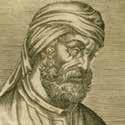
Ignatius of Antioch
St. Clement of Rome St. Justin Martyr
On July 17, 180 A.D., in the little town of Scillium in the Roman Province of North Africa, a Roman governor demanded that 12 Christians “swear by the spirit of our lord the emperor and offer sacrifice for his health.” These men and women recognized Ceasar’s earthly authority by paying taxes, but they only recognized one Lord of the universe worthy of worship. “I am a Christian,” they repeated, “What I am is exactly what I want to be.” Here is how their trial ended:
Saturninus the governor read aloud the sentence from a tablet: “Concerning Speratus, Nartzalus, Cittinus, Donata, Vestia, Secunda and the others who have confessed that they live according to the Christian religion: because in spite of the opportunity given to them to return to the Roman way of life, they have stubbornly persisted in maintaining theirs, I have decided that they be put to the sword.”
Speratus said: “We offer thanks to God.”
Nartzalus said: “Today we are martyrs in heaven. Thanks be to God.”
This is the earliest record we have of Christianity in North Africa (and also the earliest use of Latin by Christians!). These African Christians knew who they were and whom they served. They had a faith worth living for and worth dying for. This month, we follow these Christians to North Africa as we look to Tertullian and St. Cyprian, men who struggled to articulate the identity that the martyrs felt in their bones. Looking back, we see that both men erred to varying degrees, but their theological work was nonetheless
crucial for understanding who we are as Christians.
Tertullian lived from 160 to 225 A.D. in Carthage. It is estimated that when he began to write, less than 5% of North Africans were Christians. Most followed other gods, who were worshipped at games and festivals. The Christians stood out in this society like a sore thumb; they claimed that only Jesus, not Caesar, was Lord, and that only one God was worthy of worship. Thus, at various times, the Romans sought to suppress this ragtag crew of Jesus’ disciples.
Tertullian famously responded to the persecution: “Your cruelty serves no purpose. On the contrary, for our community, it is an invitation. We multiply every time one of us is mowed down. The blood of Christians is an effective seed” ( Apology, 50). Unlike imperial Rome which spread by killing others, Christianity paradoxically spread by being killed. The blood of the martyrs is the seed of the Church.
Tertullian is remembered for his fiery rhetoric in defending the faith and being the first to articulate the doctrine of the Trinity in Latin (“one substance, three persons”), but you might have noticed the lack of “St.” before his name. He is one of the most important Christian writers, but he isn’t technically a Father of the Church because of problems in his later writings.
Tertullian was a genius, but he was also a rigorist. Although many courageous souls died for Jesus, some did not; they apostatized and offered worship to the emperor. Tertullian argued that those who denied Christ could not be readmitted into communion with the Church. This led him increasingly under the influence of a sect of Christianity called Montanism, a charismatic movement that separated the
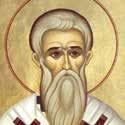
St. Cyril of Jerusalem
St. Gregory of Nazianzus
St. Gregory of Nyssa
St. Ambrose
St. John Chrysostom
St. Jerome
St. Augustine
St. Cyril of Alexandria
institutional and hierarchical Church from the true and pure spiritual Church. Tertullian thought he knew better than the visible Church founded upon bishops and filled with sinners.
St. Cyprian, however, kept the institution and the Spirit together. He also lived in Carthage from 200 to 258 A.D. Although he called Tertullian his master, the student surpassed the teacher in his fidelity to Christ in the Church, to his death. Like Tertullian, Cyprian was a convert who saw his baptism as the most important moment of his life. In baptism, one becomes a child of God set apart for heaven, but Cyprian also realized that Christianity wasn’t an individual affair. He wrote, “No one can have God as Father who does not have the Church as mother” (The Unity of the Church, 6).
Christianity is not just about me and Jesus. The Church is God’s chosen instrument to gather all nations together into one body to worship the one Lord. This one body is filled with the one Spirit, and this is why Cyprian writes that “outside the Church, there is no salvation” (Epistles 4.4, 73.21). This statement is not meant to limit God’s salvific power but to show us where we can find salvation with certainty. Whereas
St. John Damascene
St. Maximus the Confessor
St. Gregory the Great
St. Leo the Great
Tertullian divided the visible and the invisible Church, Cyprian kept them together. We find salvation in the Church founded by Jesus upon Peter: “If a man deserts the Chair of Peter upon whom the Church was built, does he think that he is in the Church?” (The Unity of the Church, 4).
At the end of his life, Cyprian struggled to submit to Pope St. Stephen because of a disagreement about the efficacy of baptism by heretics. Cyprian was wrong, and the pope was right, but both were ultimately united in martyrdom. So, you don’t always have to be correct to be a saint. Instead, St. Cyprian teaches that sainthood is achieved by remembering who you are: God is your Father; the Church is your Mother; your pastor, bishop, and pope are your shepherds; Jesus is your Lord: live for Him and be willing to die for Him. ✦
Fr. Jacob Lindle, ordained a priest for the Archdiocese of Cincinnati in May 2022, is presently studying for a Doctorate in Patristic Theology at the Pontifical Gregorian University in Rome.
Tertullian, Apology in Tertullian: Apologetical Works and Minucius Felix: Octavius, The Fathers of the Church, vol. 10 (Catholic University of America Press, 1950).
St. Cyprian, The Unity of the Church in Saint Cyprian: Treatises, The Fathers of the Church, vol. 36 (Catholic University of America Press, 1958).
Joseph Ratzinger, Called to Communion: Understanding the Church Today (Ignatius Press, 1996). Henri de Lubac, Catholicism: Christ and the Common Destiny of Man (Ignatius Press, 1988).
James K. Lee, The Church in the Latin Fathers: Unity in Charity (Lexington Books, 2020).
Pope St. John Paul II passed away on the Vigil of Divine Mercy Sunday, April 2, 2005. I was present in St. Peter’s Square, with fellow seminarians and many others from around the world, to pray the Rosary for the Holy Father. As we concluded our prayers, Cardinal Angelo Sodano, who later ordained me a priest in Rome, entered the plaza and announced that Pope John Paul had returned to the House of the Father.
In the Jubilee Year 2000, Pope John Paul II canonized St. Faustina Kowalska and established Divine Mercy Sunday, the Second Sunday of Easter, as a feast day for the universal Church. He emphasized that nothing is more essential for humanity than divine mercy. But what does this divine mercy truly mean?
Divine mercy centers on God’s immense love for us and the boundless compassion that flows from it. God alone expresses love, compassion, and forgiveness to their fullest extent. This is why we affirm that God is love; His merciful love is His greatest attribute. God’s mercy is infinite and everlasting, transcending time and space.
The Gospel of Luke is often referred to as the “gospel of mercy,” showcasing a progression of love and mercy through three powerful parables found in Luke 15: the lost sheep, the lost coin, and the prodigal son.
• The Lost Sheep: A shepherd leaves the ninety-nine to find the one lost sheep, illustrating God’s relentless pursuit of each soul.
• The Lost Coin: A woman searches diligently for a lost coin, demonstrating the value God places on every individual.
• The Prodigal Son: This parable reveals the father’s overwhelming joy when his wayward son returns, giving us a glimpse into the joy our merciful God experiences when He receives repentant sinners.
God not only forgives us but also seeks to restore everything to us. The Catholic Church offers the immense treasure of God’s mercy through the Sacrament of Confession. The Catechism of the Catholic Church (nos. 1420-1498) describes confession as a personal encounter with God, where the penitent confesses sins to a priest acting in the person of Christ. This sacrament is vital for spiritual growth and deepening one’s relationship with God, preparing the soul to receive the Body, Blood, Soul, and Divinity of our merciful Savior in the Eucharist.
St. Faustina recorded several revelations from Jesus about confession in her diary, Divine Mercy in My Soul:
• “When you go to confession, to this fountain of mercy, the Blood and Water which came forth from My Heart always flows down upon your soul” (Diary, 1602).
• “In the Tribunal of Mercy (the Sacrament of Reconciliation) ... the greatest miracles take place and are incessantly repeated” (Diary, 1448).
• “Here the misery of the soul meets the God of mercy” (Diary, 1602).
• “I Myself am waiting there for you. I am only hidden by the priest ... I Myself act in your soul” (Diary, 1602).
I remember when I was a child and saw the beautiful image of Jesus dressed in white, stepping forward slightly as if to draw closer. His right hand is raised in blessing while His left points toward His heart from which two rays pour forth: one white and one red. These rays symbolize the blood and water that flowed from His pierced side on the Cross.
Jesus explained to St. Faustina:
“The pale ray stands for the Water which makes souls righteous. The red ray stands for the Blood, which is the life of souls. These two rays issued forth from the very depths of My tender mercy when My agonized Heart was opened by a lance on the Cross” (Diary, 299). This imagery resonates with John’s Gospel, when a soldier pierced Jesus’ side, resulting in blood and water flowing forth (Jn 19:33-34).
One of the profound blessings available on Divine Mercy Sunday is the opportunity to receive a plenary indulgence, which removes all temporal punishment due to sins that were already forgiven. The Church provides multiple occasions to receive indulgences, but Divine Mercy Sunday is among the most
powerful. To receive the plenary indulgence on this day, one must:
1. Participate in Divine Mercy devotions.
2. Receive Communion worthily on Divine Mercy Sunday or the vigil.
3. Go to confession beforehand.
4. Pray for the Holy Father’s intentions.
5. Be in a state of grace and detached from venial sins.
6. Place your trust in God’s Divine Mercy.
You can receive a plenary indulgence for yourself or offer it for a departed soul.
Divine mercy is a profound manifestation of God’s love, inviting us to experience His compassion through the sacraments, especially confession and the Eucharist. As we approach Divine Mercy Sunday, let us embrace this extraordinary gift of God’s mercy. Let us take this opportunity to deepen our faith, restore our relationship with God, and share the joy of His mercy with others. May we all open our hearts to receive this boundless mercy and extend it to those around us. ✦
Fr. Jacob DuMont, L.C., is the Deputy Superintendent of Catholic Identity & Faith Formation for the Catholic Schools Office in the Archdiocese of Cincinnati.



FROM THE ARCHIVES | Michelle Wirth Smith
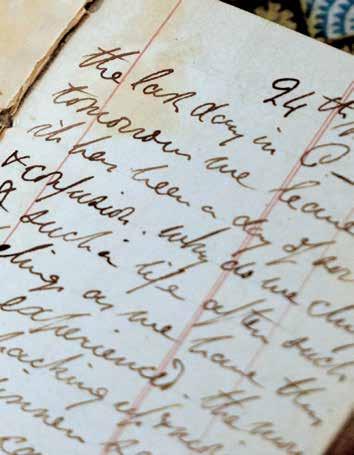
Marianne Reilly’s journals span more than sixty years. When you open them, you do not find history in bold strokes, but rather weather reports and grocery accounts, social calls and parish news, copied poems and notes of illness, careful records of correspondence and the steady rhythm of daily life.
Born in 1804 in Philadelphia to Irish immigrants Thomas Reilly and Mary Miller, Marianne arrived in Cincinnati as a young woman, just as the new diocese was founded. Her family stood near the foundations of what would become the archdiocese. So, as the Catholic community slowly expanded, her own life unfolded in its midst.
Open her journals and you see it immediately: a sketch, a dried flower pressed between pages, and her own uneven handwriting, “Mrs. Walker came to teach me the art of pickling.” Open another journal and a day there yields something just as small: “Had some little chit-chat and she joined the bonnet expedition.”
It is tempting to skim past such a line in search of something more dramatic. But what is a life, if not this? Someone comes over. Something is learned. A bit of conversation turns into a shared errand. Her journals reflect a world in which faith was woven not only through Sunday Mass, but through kitchens, gardens, and shared instruction.
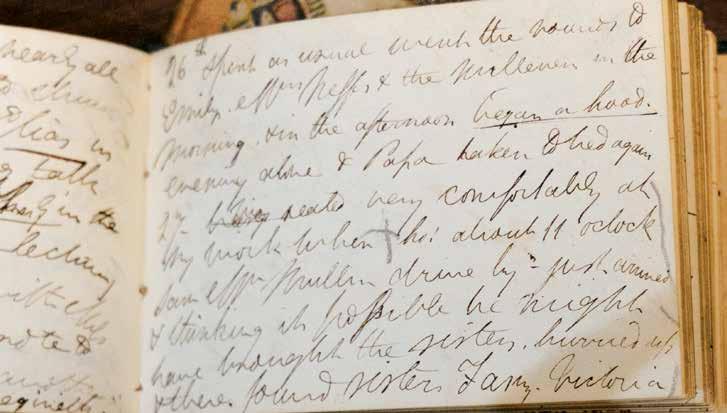
In 1829, Marianne chronicled a far more visibly historic moment: the arrival of the first Sisters of Charity in Cincinnati. This time, her pen could scarcely keep pace with her joy:
“Seated very comfortably when ho! about 11 o’clock saw Mr. Mullin drive by just arrived and thinking it possible he might have brought the sisters hurried up and there found Sister Fanny, Victoria, Beatrice, and Olbina thanks be to — oh but we were frantic with joy they came to stay with us till they get fixed which I hope would be soon.”
Marianne never married. She did not establish a religious congregation. She did not preach or publish or see her name carved into cornerstones. Yet, she remembered family members and Catholic causes in her will with the same
steadiness that marked her journals. Ensuring that what she had would help continue to sustain the community she loved.
If you were looking for significance in the loud sense, you might miss her entirely.
But the Church in Cincinnati did not rise only through bishops and brick. Before convent walls were secured and institutions established, there was simply a home. As the Church expanded outward, Marianne stretched the quiet boundaries of her own life so that others could fit.
She was just a woman who kept making room.
And because she did, the Church rose.
And the Church still stands.


BY MARY ANNE BRESSLER
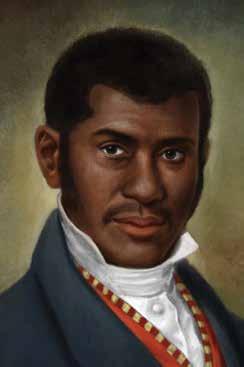
Were you aware that there are seven African American candidates for canonization? The lives of these holy men and women span nearly the entire existence of the United States as an independent nation—from Pierre Toussaint, born in 1766, through Thea Bowman, who died in 1990. It will be a truly thrilling day when we celebrate the canonization of the first African American saint!
Three of the individuals (Julia Greeley, Friar Martin De Porres Maria Ward, and Sr. Thea Bowman) are Servants of God, the first step on the journey to canonization. To receive a Servant of God designation, the bishop of the diocese in which the individual lived begins a consultation into their life, no sooner than five years after their death. When the bishop receives a nihil obstat (“nothing stands in the way”) from the Holy See, the bishop forms a tribunal that is charged with investigating the person’s life. At this point, the candidate is called Servant of God.
To grow awareness about the lives of the “Saintly Seven” during the coming months, the Archdiocesan Anti-Racism Task Force is organizing seven sessions throughout the archdiocese to talk about their lives, their causes for canonization, and the experience of black Catholics in this nation. The sessions will be livestreamed to enable everyone to join in the conversation and reflection, with corresponding features each month, here in The Catholic Telegraph. The series will conclude in November, Black Catholic History Month—reminding us that a single month is not sufficient to honor the contributions Black Catholics have made to our Church and our nation since before its founding. We begin this series with the story of Pierre Toussaint.
The other four candidates (Pierre Toussaint, Mother Mary Lange, Henriette Delille, Fr. Augustus Tolton) have achieved the next designation, “Venerable.” Their causes have reached the Congregation for the Causes of Saints, and nine theologians have judged that their lives were heroic. The pope at the time approved the judgment, and thereby, these four were declared Venerable. They will be beatified after a miracle is attributed to their intercession, elevating them to “Blessed” status. Finally, after another miracle, canonization will take place and the person will receive the title of “Saint.”
Venerable Pierre Toussaint (1766-1853), the first born of the seven African American Catholic candidates for canonization, led a truly remarkable life. Born into slavery, Toussaint’s enslaver, Pierre Bérard, brought him from Haiti to New York City during a time of political unrest that eventually led to the Haitian Revolution. Apprenticed with a hairdresser, Pierre was in demand among the city’s wealthy women because of his skill, amassing great wealth over his lifetime. After Bérard died, Toussaint supported Bérard’s widow, her second husband, and the other enslaved persons in the household. Marie Bérard freed him from bondage upon her death in 1807.
Four years later, he married Juliette Noel (whose freedom he purchased, along with his sister’s), and they adopted his orphaned niece Euphémie.
A devoted Catholic, Toussaint attended daily Mass at St. Peter’s Church in New York City. He and Marie gave generously of both their time and talent—supporting charities, sheltering orphans, fostering several children, and nursing persons suffering from yellow fever. His philanthropy was outstanding. In spite of his wealth, he continued working so he could support those in need. Among his remarkable acts of generosity: he was a key fundraiser for St. Patrick Cathedral, the first Catholic orphanage, and the first school for Black children in New York. He also organized a credit bureau, an employment agency, and a refuge for priests and needy travelers. Toussaint is credited with founding Catholic Charities of New York.
In 1983, the Pierre Toussaint Scholarship Fund (PTSF) was established to help high school seniors of diverse backgrounds
attend college. In addition to financial support, the PTSF provides spiritual and practical mentorship to its recipients.
A key component of being a scholar is active involvement in parish, campus, and neighborhood communities.
The path to canonization began for Toussaint in 1968 when Cardinal John O’Connor gave Toussaint the title of Servant of God. His body was then exhumed and moved to St. Patrick Cathedral for burial under the crypt, the only layperson so honored. In 1997, Toussaint was declared Venerable by Pope St. John Paul II. If a miracle is attributed to his intercession, he will be elevated to “Blessed.” A second miracle would complete the process of canonization.
Toussaint has much to teach us about love, compassion, generosity, and unwavering faith in God. Let us pray that his cause may move forward so that all people may recognize his holiness. ✦
Session 1: Venerable Pierre Toussaint, Thursday, April 23, St. Susanna Church, Mason, 7 p.m.
Session 2: Venerable Mother Mary Lange, Saturday, May 30, Province House of the Sisters of Notre Dame de Namur, Cincinnati, 10 a.m.
Session 3: Venerable Fr. Augustus Tolton, Monday, June 29, St. Andrew Church, Milford, time TBD.
Up to date information here:
After a person dies, they must meet three criteria to be considered for sainthood: 1. Have “heroic virtue.” 2. Be considered to be in heaven; 3. Be recognized by the Catholic Church. The diocesan bishop must begin an investigation into the person’s life then write a report. If the report is reviewed favorably, the person is given the status of “Servant of God.”
Once named a Servant of God, the local bishop’s findings are sent to Rome and the Congregation of the Causes of Saints. The investigation continues to determine if the person is of “heroic virtue,” and seeks information on the person’s death. If they pass this phase, they are deemed “Venerable.”
If prayers through the person’s intercession lead to a miracle, the claim is investigated, confirmed, and then reviewed by the pope. If the miracle is approved, they are named, “Blessed.”
After a person is named a “Blessed,” a second miracle must be confirmed. Once that happens, the person can be canonized a saint. Canonization formally recognizes that God revealed to us that this person is a saint in Heaven, and he or she can be assigned a feast day!


Mary Anne Bressler is the Parish & Community Engagement Coordinator at Catholic Charities Southwestern Ohio.
BY REBEKAH OTT
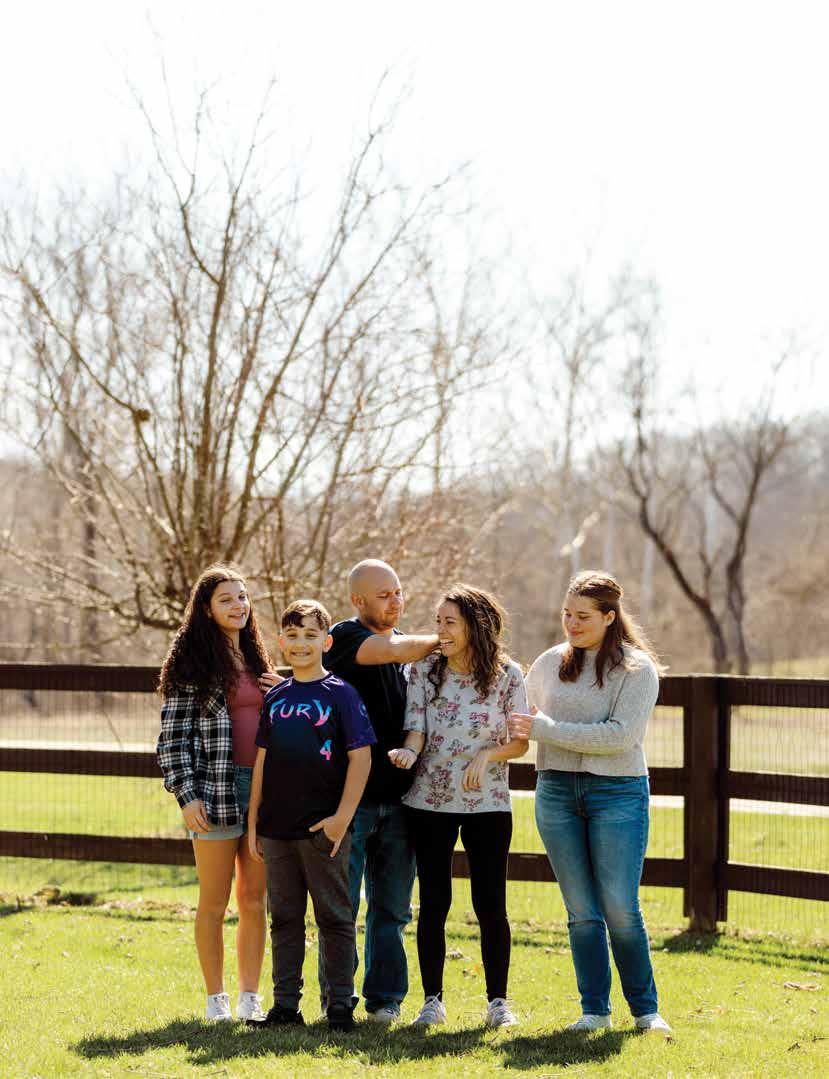
Andy and Kari Robben’s family began their inspiring journey of faith and trust after Kari was diagnosed with ALS in 2015. Short for Amyotrophic lateral sclerosis (also known as Lou Gehrig’s disease), ALS is a nervous system disease with no known cure. Noticing symptoms of ALS during her pregnancy with their youngest son, Kari received a diagnosis less than a year after his birth.
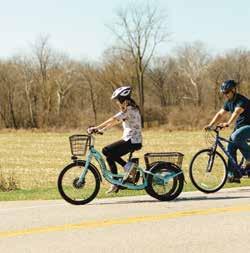
“I thankfully am blessed to have a very slow progression,” said Kari. “Typically … a diagnosis comes with a lifespan of two to five years. Day to day, I am still very independent. I still drive and walk. I cook and clean.”
With her symptoms primarily isolated to her hands, arms, shoulders, and neck, Kari explained, “My kids carry things for me. My balance is really affected. I’m a lot slower than I used to be.” Her family allows her to maintain as much independence as possible, helping with more difficult tasks, such as cutting food, manipulating buttons and zippers, tying shoes, and pulling up her hair.
While learning about Kari’s diagnosis was initially difficult for the Robben family, they found the strength to trust in God’s plan.
“When she was first diagnosed, we let hopelessness creep in,” said Andy. “I begged God every night to switch our positions and let me be the one. I think we actually tried to use God instead of letting go and leaning on Him. Then, we switched that around and worked on being more positive. We are hopeful and thank God even for some of the consequences that came with this horrible disease. It has actually helped our faith, our family, and our perspective on life, and it has helped us to help others.”
“I can choose to be sad and not the person my kids need or that Andy deserves to be with,” said Kari, “or I can choose to be hopeful and embrace what we have, what I’ve been given, and live life.”
The family attends St. John the Baptist Parish in Harrison and enjoys spending time together traveling, learning about new places, and being outdoors. Andy works as a firefighter while Kari, a former schoolteacher, homeschools their children.
“Even though the disease took away Kari’s ability to continue in her teaching career, she decided to stay with the kids and homeschool them,” said Andy. “That’s a gift for our family, for her to spend more time with the kids.”
Kari converted to Catholicism in 2019, though she attended Mass with Andy for many years prior.
“For me, the thing that has helped through it all is that, no matter what, you’re not alone,” said Kari. “God is with you.” She shared an event that led her to the Catholic faith: “I started having trouble with my tongue, [and] I was lying in bed, so upset and scared; then, it felt like somebody came and wrapped their arms around me. Obviously, someone else was there watching over me.”
“The Catholic Church has been good for me,” she said, “because, when I am progressing and changing, it has been something that is constant and always consistent.”
Despite their mother’s diagnosis, the Robben children, Ella (15), Sofia (13), and Emmett (11), display a strong faith, thanks to their parents’ example and instruction.
“I can tell that she’s [Ella] been affected and wants Jesus more,” said Andy. “I think that seeing her mom struggle and still lean on Jesus is important to her and she wants to lean on Him as well.”
“We have had that conversation with them many times: ‘In life, you have an idea of what you want to happen, but it doesn’t always go the way you want it to or think it will,’” said Kari. “Our youngest, Emmett, says all the time: ‘God does things for a reason.’ They have been blessed to see that there are so many amazing people who want to help. We try to incorporate the faith into their schoolwork and have an open dialogue about everything with me and the faith.”
“As a family, we continue to go through things that hurt us,” continued Kari. “We experience loss and grief, but we always return to having a strong faith, knowing that it’ll be okay and we’re not alone, no matter what.”
The community’s support and prayers have greatly uplifted the Robben family and helped them orient their focus on God rather than the trials of this life on earth.
“Instead of keeping our eyes on the disease, we keep our eyes toward being thankful for every day,” said Andy. “Overall, our perspective has changed because of God showing us that this doesn’t have to be the focus. He should be the focus. I’m not saying we’re perfect every day, but that always brings us back and grounds us to the reality of what’s truly important.”
“Ground yourself in Jesus and hope,” Andy continued. “We have hope of where we’re going after death, but also the positive mindset that we can get through this. We may not like the outcome—sometimes you can get so focused on death that you forget about life after death. Focus on that. That’s more important.” ✦
SHINE ON | Dominick Albano
A few years ago, I was to lead a parish mission at a church in California, and before the first night began, I slipped into a pew at the front of the sanctuary to pray. The church was empty. Quiet. Still.
When I finished praying, I stood up and turned to walk toward the back of the church.
That’s when I noticed it.
The pews were made of wood and stained a rich, dark brown, but the tops of the pew backs weren’t dark anymore. The stain had worn away. The finish was lighter, smoother, almost raw in places.
But it wasn’t damage… It was devotion.
Thousands of men and women had knelt there for Mass. Knelt in prayer. Knelt in sorrow. Knelt in gratitude. And then they stood up again. Over and over. Year after year.
The wood changed because people kept showing up. Those worn pews were a living, visible testament to a hundred thousand prayers lifted to heaven. It was beautiful.
That image has stayed with me. Because that is what it looks like to be a living stone.
When I hear the phrase “living stones,” I don’t immediately think of cathedrals or grand architecture. I think of a grandmother at daily Mass.
You’ve seen her.
She’s there early. Rosary beads in hand. Praying quietly before Mass begins. Offering it for her grandchildren. Offering it for more priests. Offering it for the Church.
No spotlight.
No platform.
No parish named after her.
Now, let’s be honest for a second: Nobody grows up saying, “I want to be her.” That might sound mean, but it’s true.
If anything, Catholics aspire to be the great saints whose names we know. We lift up and literally celebrate the ones with statues and stained-glass windows. The ones who founded movements and changed nations.
But Peter doesn’t say, “Be monuments.”
He says, “Like living stones, let yourselves be built into a spiritual house” (1 Pt 2:5).
Stones.
Not statues.
Not spotlights.
Stones.
Living stones are not decorative… they are load bearing.
A single stone in a wall doesn’t look impressive. You could walk right past it and never notice it. But remove it, and something weakens. Remove enough of them, and the wall begins to crack.
God’s Kingdom is built the same way.
We live in a culture that measures everything. In my line of work, we’re often talking about things like followers, views, impact, influence, and key performance indicators. We quietly assume that if something isn’t big, it isn’t important. If it isn’t visible, it isn’t powerful. And that mindset can creep into our spiritual lives.
We struggle to believe ordinary holiness matters because it doesn’t feel impressive.
The grandmother praying the Rosary doesn’t look like she’s changing the world.
The father who goes to work every day, comes home tired, and chooses patience over anger doesn’t look heroic.
The teacher who quietly witnesses to Christ in small ways doesn’t look revolutionary.
But Peter calls all of them living stones. And stones hold things up.
We underestimate the power of intercession because we measure visible results. But in God’s economy, grace moves in ways we don’t see.
That whispered Rosary may help sustain a vocation.
That quiet prayer may strengthen a struggling marriage. That small act of repentance may change the direction of a family for generations.
Think about those worn pews again.
Every place where the stain has faded is evidence of
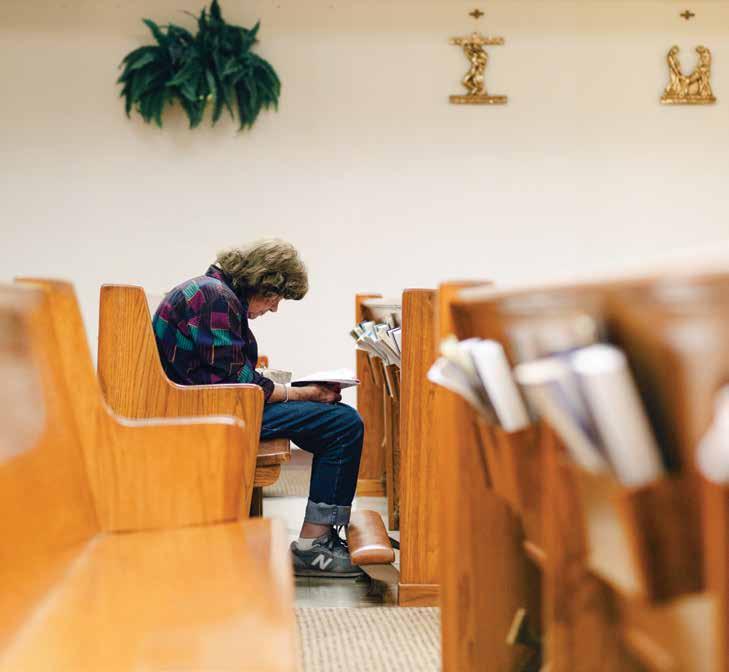
thousands of “spiritual sacrifices.” People offering their time. Their attention. Their suffering. Their gratitude. Their lives. No headlines.
No applause.
But load bearing.
A spiritual director taught me the concept of the “Holy Nobody.” A “holy nobody” is not someone insignificant. It is someone whose name may never be remembered publicly, but whose life quietly supports the Church.
Heaven is not made up only of the saints we can name. It is filled with men and women who showed up. Who prayed. Who forgave. Who served. Who endured. Who offered their daily lives back to God.
They were not monuments. They were stones.
And together, they build the Kingdom.
You may never have a statue. You may never have a feast day. You may never have your name remembered beyond your grandchildren.
But you can be a living stone.
You can kneel. You can pray. You can offer your work. You can choose patience. You can forgive. You can show up again tomorrow. And when you do, you are not being small.
You are helping hold up the Kingdom.
Don’t be afraid if God calls you to be a famous saint with a church building named after you.
But don’t be sad if you’re a Holy Nobody.
God has a plan for your life, and it requires faithfulness… not fame. Thank you for being a living stone. The Kingdom can’t be built without you! ✦
“Like living stones, let yourselves be built into a spiritual house, to be a holy priesthood, to offer spiritual sacrifices acceptable to God through Jesus Christ” (1 Pt 2:5).
The year 2024 was a banner one for me. The night before Andrew and my anniversary, an overflow in our basement destroyed nearly everything we had down there. At the time, my husband and I were already enduring growing pains together, so this emergency was an unpleasant additional stress. Weeks later, I lost a friend unexpectedly, and my dog died just before my last and favorite grandparent passed away.
It was the sort of year that feels less like a chapter and more like a collapse.
I recall a particular instance of prayer late at night in my quiet, empty church. Surfacing from the emotional wreckage that surrounded me, I knelt on the cold floor—the whole room barely lit by the sanctuary candle—and cried from the depths of my heart: What are You doing? I could barely choke out the question.
I had just finished reading Trustful Surrender to Divine Providence and came to understand, at least intellectually, that all things—joys, sorrows, and seemingly neutral details—are within the Lord’s will, whether He ordained them or permitted them to pass. Further, I knew deep within myself that, though I might grapple with trust, God Himself is trustworthy.
This knowledge was paramount to eventual, peaceful surrender to God’s will.
Shortly after, another line of Scripture pressed in: “The stone which the builders rejected has become the cornerstone” (Ps 118:22).
In the hindsight of history and faith, we modern Christians recognize Jesus with ease and clarity as the foretold Messiah. Typology unveils His fulfillment of prophecies from as far back as Genesis. He is God and yet He chose to become
a stone—rejected by many, loved by some, misunderstood, but above all, set in place by the Father.
If Christ Himself submitted to being placed, what does that mean for us?
Stones aren’t consulted about their placement. They don’t request the visible corner or the sunniest side of the wall or are even given the whole of the design. Stones are chosen, shaped, and bear weight for the sake of the whole house.
When I lose sight of the Lord’s trustworthiness, I’d rather be the architect than a mere piece of the structure. I want control over the design. I want to know what’s going where and why, and how long this whole thing is expected to stand.
But as a stone, I’m not asked to bear that knowledge, I’m asked to consent.
Subject to the Designer, we’re placed with our spouses and children by One who not only knows all and best, but also who loves most deeply. We weren’t created arbitrarily; the Father who placed Jesus on earth with perfect timing and intention takes no less care with you—your heart, your gifts, even the crosses He asks you to carry.
This kind of living requires humility and strength often beyond our abilities. It required me to trust that the basement flood, the griefs, and the hidden tensions were not random debris but the spiritual sacrifices St. Peter mentioned and necessary for my shaping. These sacrifices are rarely so dramatic, though. Over the course of our lives, they look like patience in fatigue, forgiveness when we’re in pain, and persistent faith when we’re confused. They look like loving when we would rather withdraw or remaining in the wall of the mentioned “spiritual house” when we’d rather stand apart.
In asking our consent and trust, the Lord does not ask us to become dull and inert. St. Peter beckons us to be living stones—fully ourselves and fully alive—each facet of our personality, history, and longing wanted in His design.
Serving as living stones is not the flattening of our identities, but the fitting of who we are into something greater than we could construct alone.
We don’t always understand what the Lord is building. You might find yourself asking Him “Why?” in a dim church; but open your soul to learning, even slowly, that the Builder is trustworthy and He does not misplace stones.
“For it stands in scripture: ‘Behold, I am laying in Zion a stone, a cornerstone chosen and precious, and he who believes in Him will not be put to shame’” (1 Pt 2:6). ✦
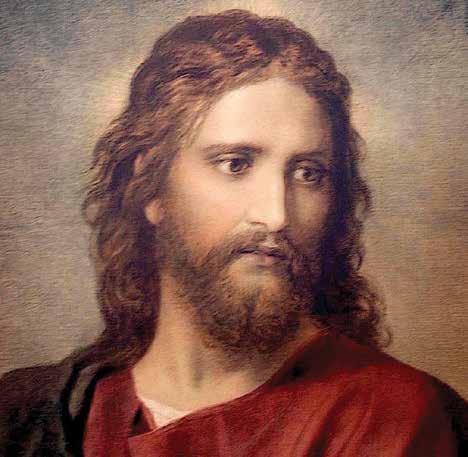
BY JOHN STEGEMAN
Based on the Combined Rite of Election and Calling to Continuing Conversion this year, 1,096 people intend to proceed to the Sacraments of Initiation. It will mark the highest number of people joining the local Church in more than 15 years.
Of the total, 556 are catechumens (people who have not been baptized) and 540 are candidates (baptized Christians who will enter full communion with the Catholic Church). The total represents a 28.5% increase over last year’s 853. In fact, the increase has become a trend, with numbers rising each year since 2021, when 301 candidates and catechumens joined.
What’s behind this increase?
“There are general reasons that seem to always apply,” said Nicholas Hardesty, Associate Director of Adult Evangelization and OCIA for the Center for the New Evangelization. “God places on our hearts a desire for truth and goodness and beauty, and the counterfeits in the world just seem to make those desires more acute. People see in Catholicism something that they can’t find anywhere else… But beyond that, it’s really hard to speculate because the reasons why people become Catholic ultimately are as varied as the people themselves.”
While reasons may be hard to pin down, the trend isn’t limited to the Archdiocese of Cincinnati. Neighboring dioceses like Covington, Kentucky, and Indianapolis, Indiana, also reported increases. Covington saw a 57.3% bump from 2025, and Indianapolis reported increases in candidates and catechumens each year since 2022.
Jeremy Helmes, Director of the Center for Parish Vitality for the Archdiocese of Cincinnati, agreed with Hardesty that people become Catholic for many reasons, but he added that exciting moments in Church life, such as a new archbishop’s installation and a pope’s election, can make an impact. He said the annually increasing numbers reflect the return to a sense of normalcy after the COVID-19 pandemic.
While these numbers are promising, the archdiocese isn’t resting on its laurels. The Center for Parish Vitality sent a survey to each parish for their candidates and catechumens, to learn their motivations.
“The survey’s going to attempt to get at some of that,” Helmes said. “We’re asking the same question about increased Mass attendance, too. We’re up 4.5% in terms of Mass attendance year-over-year. We’re past where our decline trend was pre-COVID. … So, we’re starting to ask the question about why it is that people are more engaged in Sunday Mass. I think a lot of those same things apply.”
This increase in people joining the Church in the Archdiocese of Cincinnati was seen starkly at the two English-language celebrations of the Rite of Election and Calling to Continuing Conversion, celebrated simultaneously on Feb. 22 at 2:00 p.m. at Our Lady of the Immaculate Conception Church in Dayton and the Cathedral Basilica of St. Peter in Chains in downtown Cincinnati. Both large churches were filled to capacity with the candidates and catechumens and their sponsors, catechists, families, and friends. In addition, the archdiocese has for two years also hosted a Spanishlanguage Rite of Election, this year at St. Susanna Church in Mason. The number of Spanish-speaking candidates and catechumens in the archdiocese rose from 68 in 2025 to 96 this year.
“It really blew me away,” said Hardesty, who attended the rite in Cincinnati. “We had human beings in every nook and cranny and crevice of that cathedral. I mean, they were seated in every single spot. We even had people seated in the [seating around the altar usually reserved for concelebrating priests].” Recalling the scene and experience, Hardesty said, “It was spectacular. It really blew me away.” ✦




St. Gianna Beretta Molla was an Italian pediatrician born in Magenta in the Kingdom of Italy on Oct. 4, 1922. The tenth of thirteen children in her family, she was prayerful even at a young age and viewed all of life as God’s beautiful gift.
In 1942, she began studying medicine and was diligent and hardworking. By the early 1950s, Gianna specialized in pediatrics at the University of Milan and was especially drawn toward mothers, babies, the elderly, and the poor. She considered the field of medicine to be her mission and treated it as such.
In 1955, Gianna married Pietro Molla and understood the vocation of marriage to be a gift from God. They had three children— Pierluigi, Maria Zita, and Laura. Dedicating herself to “forming a truly Christian family,” she handled motherhood with grace and was able to harmonize all aspects of her demanding life.
Early in her fourth pregnancy, doctors discovered that Gianna had both a child and a tumor in her uterus. Willing to give her own life to save her child, Gianna

pleaded with her surgeons to save her child’s life over her own. Seven months later, in April 1962, Gianna Emanuela Molla was born, and her mother died a week later.
St. Gianna Beretta Molla became the inspiration behind the first pro-life Catholic healthcare center for women in New York— the Gianna Center—and the daughter whose life she saved became a pediatric physician. St. Gianna is the patron saint of mothers, physicians, and unborn children. Her feast day is celebrated on April 28.
Gianna Gift Italy Magenta Milan Motherhood
Pediatrics Physician Sacrifice Unborn
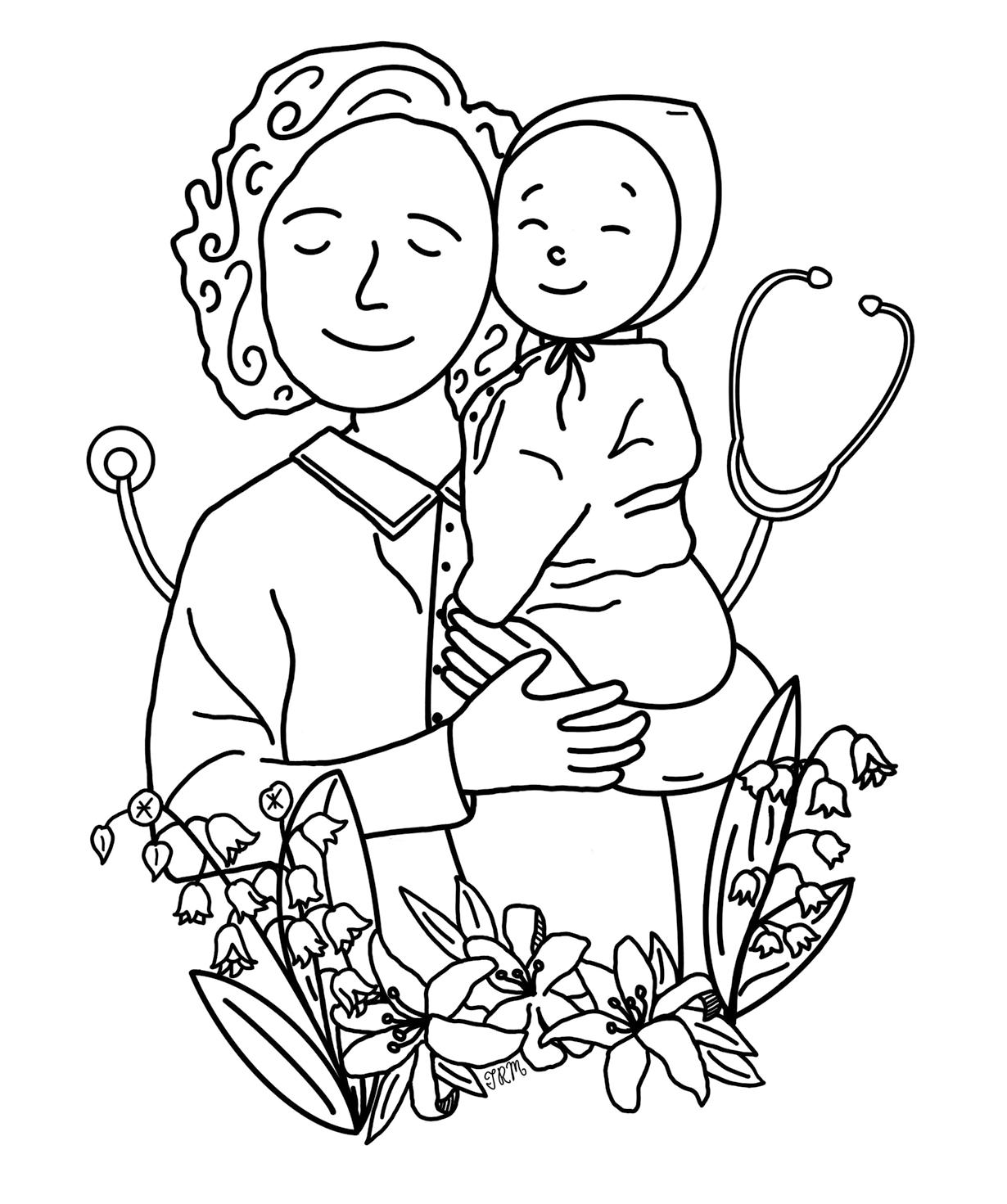
BY LEAH LIBRESCO SARGEANT | UNIVERSITY OF NOTRE DAME PRESS,
In his inauguration speech as mayor of New York City, Zohran Mamdani declared, “We will replace the frigidity of rugged individualism with the warmth of collectivism.” This dichotomy is not merely a false choice, it is a false choice between two false alternatives. His statement illustrates not only the failure of political languages in the United States, but the lack of moral imagination of the modern secular mind more generally. Both individualism and collectivism are pernicious ideologies. Mamdani’s inability to conceive of social and political life outside this false choice of false options is a proxy for the general malaise of our times.
Ironically, collectivist ideology in the U.S. would probably not have arisen, but for the individualist ideology upon which it was founded. Collectivist impulses in the U.S. are downstream from individualist ideology. Collectivism is an untenable correction the social maladies produced by unsustainable individualism. In the U.S., we begin with an inadequate theory of the human person as an isolated, atomistic individual. But this false theory of moral libertarianism leads to the kinds of perennial conflicts that produce authoritarian collectivism as a purported antidote.
Individualism is the false assertion that we humans are naturally independent from one another and that authentic dignity is found only in self-reliance, self-determination, and autonomy. Of course, this implies that dependence and dignity are contradictory notions. If dignity is a measure of independence, then the dependent people cannot have dignity. Resistance to the reality of dependence compels us toward the social chaos and conflict of which “warm collectivism” is the purported antidote.
If we start with an acknowledgement of the social nature of the human person—a fundamental teaching of Catholic faith—we do not produce the false anthropology of individualism that leads to the false solution of collectivism.

This is the principal insight of Leah Libresco Sargeant’s brilliant new book, The Dignity of Dependence. While the subtitle of Sargeant’s book is “A Feminist Manifesto,” and while the book concentrates on the disproportionate effect of individualism on women, The Dignity of Dependence carries a broader and more comprehensively hopeful message. It is both an acknowledgement and celebration of the natural dependency that we all have on one another and a rejection of false notions of autonomy that separate us. Dependency, Sargeant argues, is “[w]hat makes us most human.” It is not “a problem to get over,” but the natural state of the human person. That said, Sargeant’s primary focus is the disproportionate effect of individualism on women. “Women’s bodies and relationships are shaped by dependence, which makes us exceptional and unwelcome in a world that expects men and women to be autonomous (or at least to pretend to be),” she writes. “A world that is unwilling to acknowledge dependence as foundational to human life is unable to treat women as equal in dignity to men.”
This is because a world shaped by men—especially men asserting autonomy as basic moral anthropology— necessarily relegates women to dependence on that world. So, the syllogism goes something like this: 1. Dignity is directly proportionate to autonomy. 2. U.S. culture is built around a theory of individualism that favors men and men’s bodies as the epitome of dignity. 3. This exposes women as inherently (though artificially) dependent. 4. Therefore, women have less dignity than men. Put another way, a moral and political culture that institutionalizes male autonomous individualism as the human norm is a culture that inevitably considers women to be defective humans. Leah Libresco Sargeant’s The Dignity of Dependence is both a brilliant analysis of this malady and a hopeful suggestion for overcoming it. ✦
Took to court
4 Steep bank under a rampart 5 French protest cry
Patron saint of actors
Ardent
Monster’s moniker
Two-part Asian country
Blind as ___
Refer to a biblical passage
Mob follower?
15 “Our soul waits for the LORD; he is our ___ and shield” (Ps 33:20)
Pope (II) who called for the Crusades
Donation to the poor
Sights
Do a chef’s job
Ripens 35 Catholic actor Frawley’s famous TV role 36 Holy object 38 Doesn’t have to be dry cleaned





Agrees
Sickness at the stomach
Blend of oil and balsam
Mil. branch
Road to the altar?
Utterly stupid person
“…on earth peace to those on whom his favor
(Lk 2:14)
Scarf 53 Internet-speak comment qualifier
E. and family
of Yemen

Living stones are formed and shaped to be used. If rocks can be used by humanity to create gorgeous cathedrals, how much more can we, made in the image and likeness of our Creator, be used by Him for the upbuilding of His Church, if we let Him? This means living a life centered on Jesus, which then drives us to introduce others to Him and what it means to live with Him.
In a pivotal moment of my life, during a summer camp retreat while I was in high school, I recognized the reality of the Catholic faith. Afterward, involvement in my school’s campus ministry took on a new meaning: it was no longer about community service appearing on my resume but instead about introducing fellow students to the Person and reality of Jesus.
Becoming passionate for worship, I hosted worship events at my home parish and high school then served during the summer after graduation with a Catholic missionary apostolate based in Columbus, Ohio. As a college student at Ohio State University, I am involved with worship, songwriting, our Catholic campus ministry (Buckeye Catholic), and interdenominational ministries around campus.
Now studying abroad, I lead both a Bible study for college women and worship with students from a nearby university. Although I could easily jump into ministry from a desire to serve, I realize that each experience continues molding me into a “living stone” that serves with greater efficacy and becomes ever more familiar with the Architect’s hand, voice, and goal.
I am reminded of a verse from St. Paul: “I have resolved to know nothing except Jesus Christ and Him crucified.”
While this verse can resonate differently with Western Church faithful than with members of the persecuted Church worldwide, the goal does not change. It is a beautiful invitation: as much as the Lord desires to form us through our work and partnership with Him, He also desires us to help build His Kingdom, and this necessitates evangelization.
As an undergraduate, thoughts of the future and what mission will look like then are all too common. When pondering these questions, I am convicted of the duty that all Christians share: to live as missionaries. Though He might call some to
move across oceans, the Lord calls others to support their work prayerfully or financially, while also living out the equally holy call of mission through the workforce or other avenues.
The laity’s mission work in their vocation—through schools, family life, businesses, healthcare, and other activities and responsibilities—is integral for building up the Kingdom. In His kindness, Jesus loves to use our gifts, talents, passions, and our yes to bring others to Him and connect with us—after all, He created us with these relationships in mind!
So, where do we each begin? Evangelization must begin (and ultimately end) in our relationship with God, established through daily prayer (which is not limited to requests, but also includes conversation). He loves to hear from the depths of our hearts and wants to share His heart with us.
Further, the Gospel message—that we are made for God and that Jesus came as both God and man to bridge the gap caused by our shortcomings—invites us to say yes to a relationship with Him and to our transformation through it, which is essential to the Christian life! It is through transformation that we are better able to enter into our personal relationship with the Lord and journey with others as they cultivate their own relationship with the Lord.
In this effort, we live out the universal call to become saints: not perfect people but people saved by grace. And thus, we become living stones constantly crafted and refined by the Builder, made ever more able to partner with this personal Creator in the construction of His house—His Church.
As living stones, may we rely on the Master Architect to perfect the work He began in us and promises to bring to fulfillment, as we work to see the beauty of heaven come to earth. ✦
Belle Grubert grew up in Cincinnati and is a sophomore at Ohio State University studying psychology, nutrition, and public policy. She is passionate about worship, mission as a lifestyle, and seeing people live in the freedom and wholeness they were made for. You can find her running, experimenting with recipes in the kitchen, or on some new adventure.