
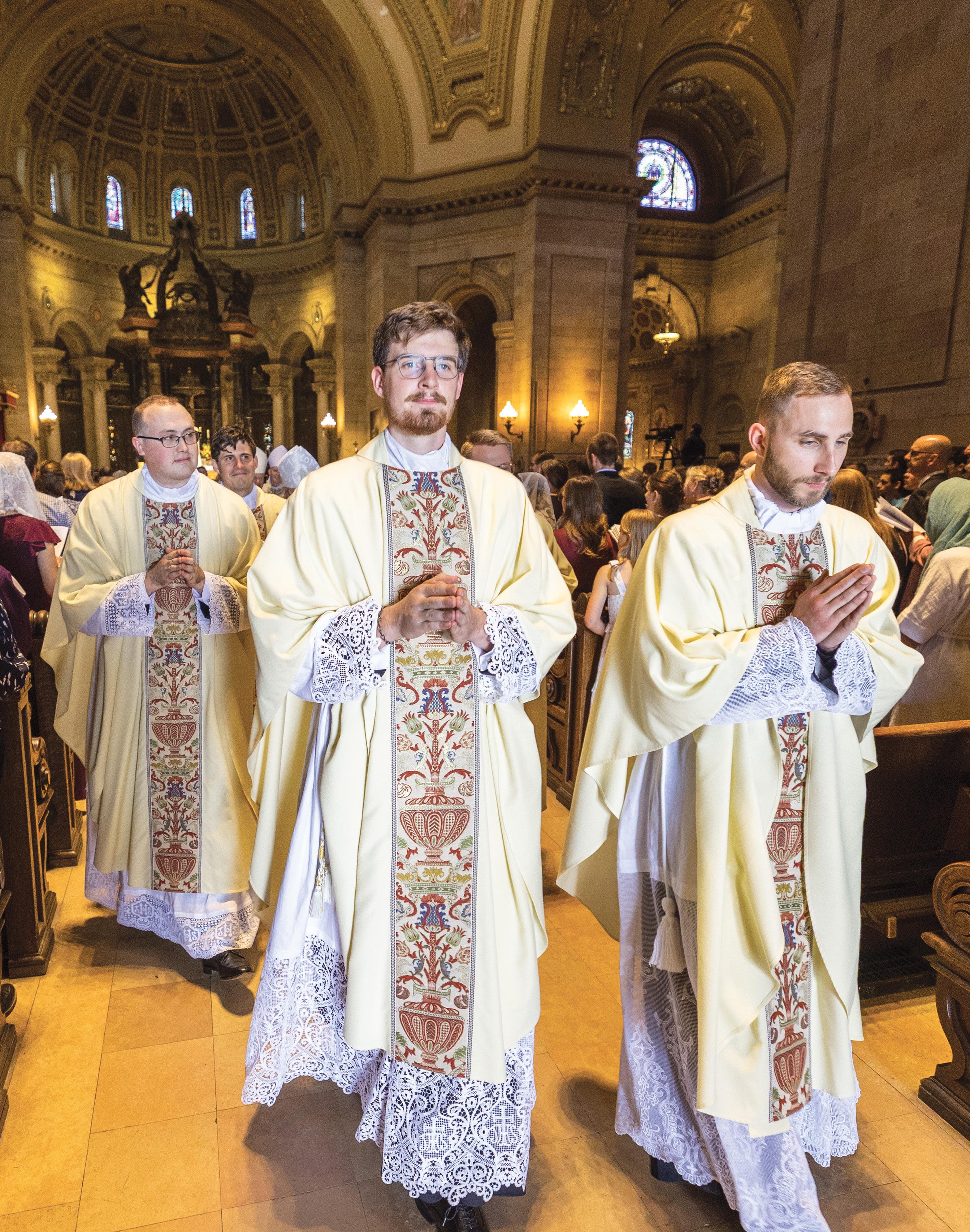
Priests forever
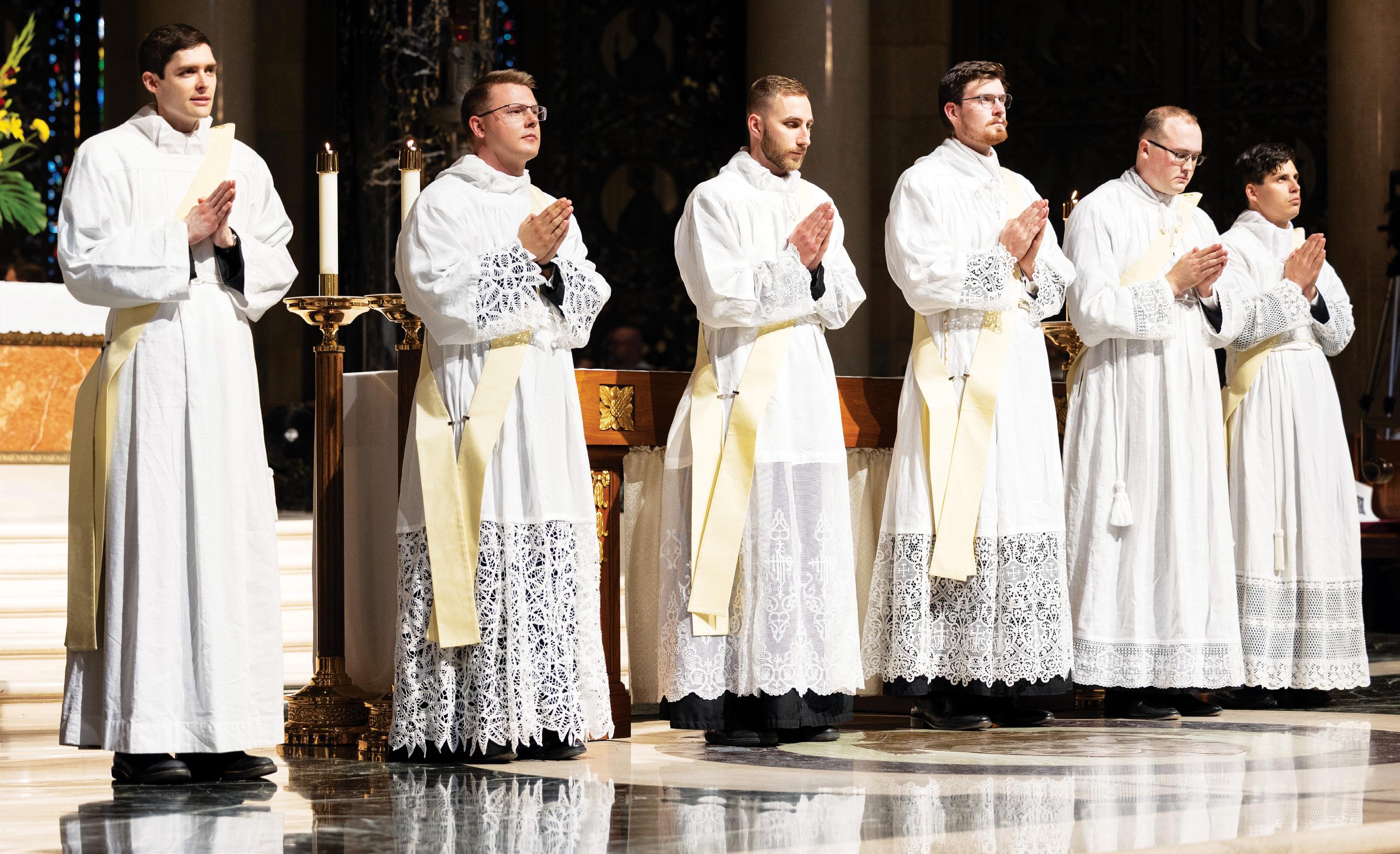
From front left, newly ordained Fathers Steven Lang and Dominic Miller walk down the aisle at the end of their ordination Mass May 30 at the Cathedral of St. Paul in St. Paul. Behind Father Lang at left is Father Alexander Hall. The other three men ordained during the Mass are Fathers Charles DeReuil II (behind Father Hall at right), Peter Romens and Sebastian Spencer.
DAVE HRBACEK | THE CATHOLIC SPIRIT
PAGETWO
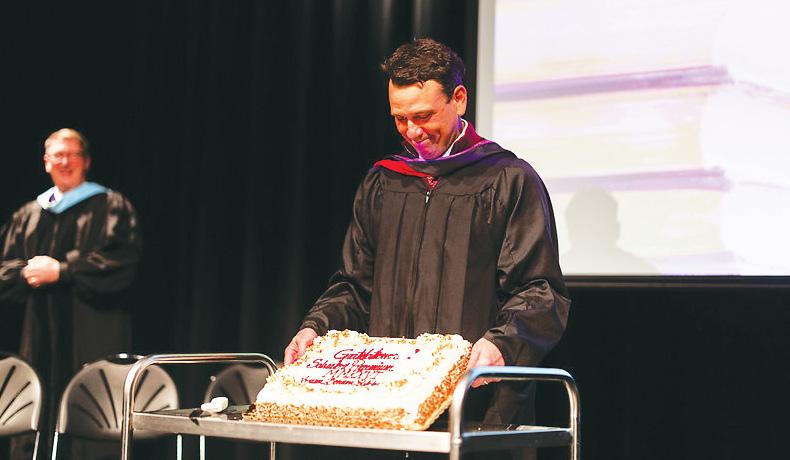
PRIZE FOR EXCELLENCE Dan Berthiaume, a Latin teacher at St. Agnes School in St. Paul, holds up a cake congratulating the school for receiving the 2026 Henry Salvatori Prize for Excellence in K-12 education. Behind him is St. Agnes’ headmaster, Kevin Ferdinandt. The annual prize is awarded by Hillsdale College in Hillsdale, Michigan, and was given to St. Agnes for academic distinction and pioneering leadership in American classical education. The prize includes a $40,000 grant. A May 22 academic convocation celebrated the award at the school. Bishop Michael Izen spoke during the event. “Winning the Salvatori Prize is a profound validation of our mission,” Ferdinandt said in a news release. “At Saint Agnes, we strive to form our students’ hearts and minds in faith, reason, and virtue. This national recognition affirms that our integrated liberal arts approach is an effective model not only for the renewal of Catholic education, but American education as well.”
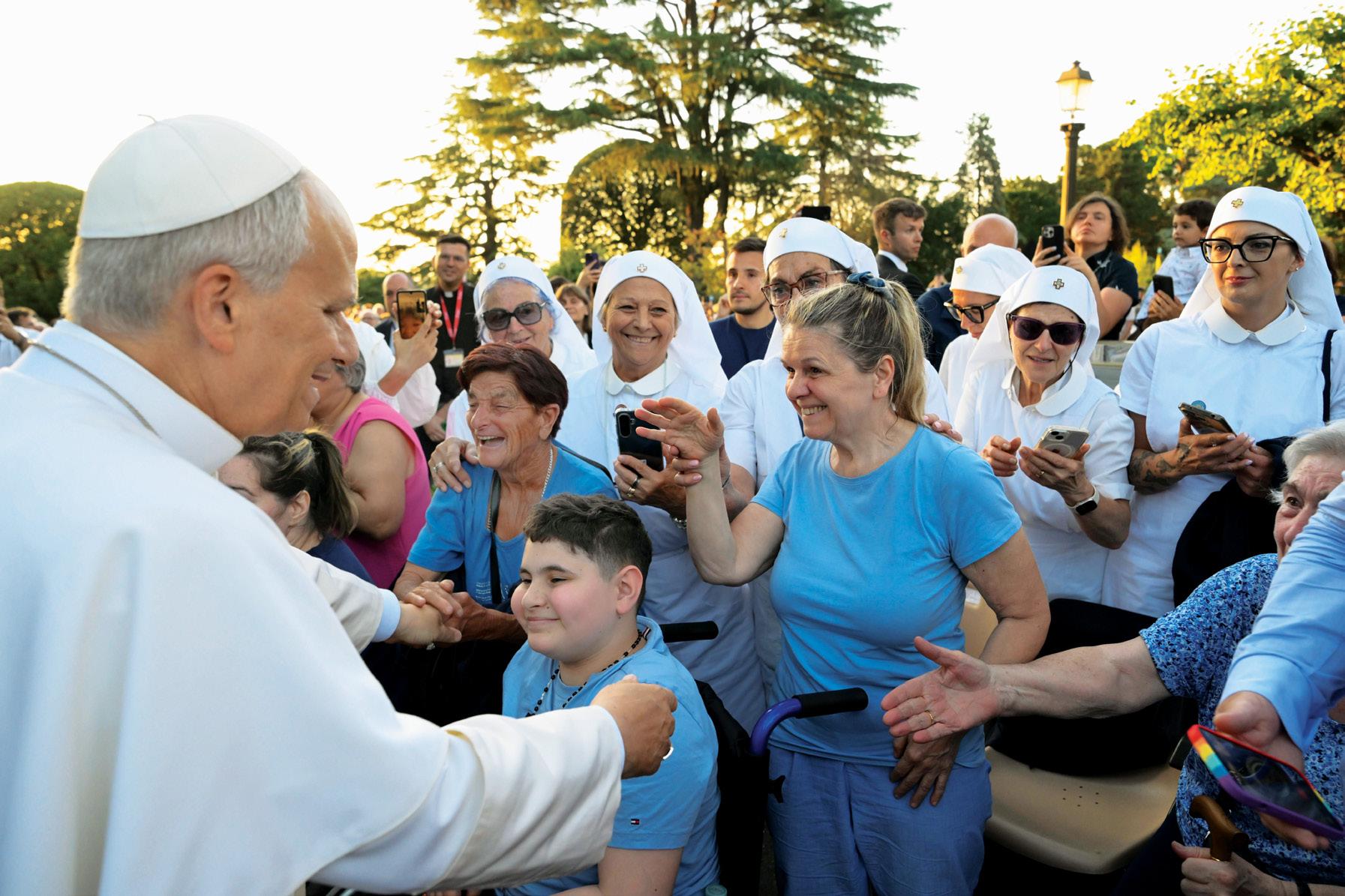
FOR PEACE Pope Leo XIV greets the faithful after leading a worldwide rosary for peace at the Grotto of Our Lady of Lourdes in the Vatican Gardens May 30. The rosary united Marian shrines across continents in simultaneous prayer to close the Catholic Church’s month of devotion to the Virgin Mary. Coordinated by the Vatican Dicastery for Evangelization, the rosary initiative brought together some of the most visited Marian pilgrimage sites in the world. In the United States, several hundred people gathered at the Basilica of the National Shrine of the Immaculate Conception in Washington to participate in the rosary.
Practicing CATHOLIC
Produced by Relevant Radio and the Archdiocese of St. Paul and Minneapolis, the May 29 “Practicing Catholic” radio show included Bishop Michael Izen in an interview about his discernment process in becoming a priest. The program also featured Jason Adkins, executive director of the Minnesota Catholic Conference, in an interview about what Pope Leo XIV’s newest encyclical, “Magnifica Humanitas” means in practice in Minnesota. Listen to interviews after they have aired at practicingcatholicshow.com or choose a streaming platform at Spotify for Podcasters.
NEWS notes
The Archdiocese of St. Paul and Minneapolis will have a new set of 15 geographical groupings of parishes called deaneries beginning July 1. Designed to promote collaboration among parishes and with Archbishop Bernard Hebda, the deaneries will range in size from nine to 19 parishes and be categorized as primarily rural, suburban or urban. Priests in a deanery elect a representative to the Presbyteral Council, which is required by canon law to advise the archbishop on various matters. The deanery priests also meet regularly to provide feedback to their representative on matters discussed at the Presbyteral Council, to share best practices, find ways to collaborate and offer one another fraternal support. The changes reflect one year’s worth of work and consultation that included Archbishop Hebda and nine priests as members of a Deanery Boundaries and Groupings Committee established by the archbishop in the spring of 2025, officials with the archdiocesan Office for the Renewal of Structures said. A list of the deaneries and their parishes can be found at tinyurl.com/s82c3a6v. More information can be found at the archdiocese’s website at tinyurl.com/3ah3k2v6
Minnesota Sinfonia, which has included a Music in the Schools program, is returning to public concerts as part of a Violins of Hope tour in Minnesota. The tour includes musicians playing a collection of violins and cellos that were owned by Jewish musicians, many of whom died in the Holocaust. Internationally acclaimed cellist, conductor and pedagogue Amit Peled will perform with Sinfonia. Renovations underway at the Basilica of St. Mary in Minneapolis made a concert there impossible, unfortunately, said Jay Fishman, Sinfonia’s artistic director. “We have performed in the church for over 40 years, first as the old Minneapolis Chamber Symphony, and then starting in 1989, when we reorganized as the Minnesota Sinfonia,” Fishman said in an email. Sinfonia had intended a series of public concerts in 2024 to be the orchestra’s last. But the Minnesota Jewish Community Center invited the orchestra to be part of the Violins of Hope tour. Sinfonia’s performances will feature Jewish-themed music honoring the millions of Jews who died in the Holocaust. The free concerts children are welcome will include a 6:30 p.m. pre-concert talk and 7:30 p.m. performance. Concert dates are June 22 at the University of Northwestern’s Nazareth Chapel in St. Paul; June 23 (with a 6:45 p.m. start) at Augsburg University Chapel in Minneapolis; June 24 at Plymouth Congregational Church in Minneapolis; June 25 at Wayzata Community Church in Wayzata; and June 26 at First Covenant Church in East St. Paul. In addition, there will be a 1 p.m. talk and 2 p.m. performance June 28 at Bethel University’s Benson Great Hall in Arden Hills. Minnesota Sinfonia will officially close as an organization on Sept. 30, at the end of its fiscal year, Fishman said. May 27, Pope Leo XIV announced Father John Mbua Mwandi as bishop-elect of the Diocese of Kitui in Kenya. In June 2025, Father Mwandi was one of 12 delegates including seven priests, one nun and four laypeople from Kitui who visited the Archdiocese of St. Paul and Minneapolis. The visit celebrated the 20th anniversary of a partnership between the archdiocese and the Diocese of Kitui. “It is because of the love of God that has brought us together, people from many miles in the world,” Father Mwandi said at the time of the visit. “We are coming together as one family because of this love of Christ, which has made us brothers and sisters.” An official episcopal ordination date has not yet been provided.
Archbishop Bernard Hebda will preside at a 4 p.m. Mass to kick off this year’s Rural Life Celebration on June 27. All are invited to join the parishioners from St. Joseph in Red Wing (this year’s parish host) at Kevin and Carrie Riester’s homestead in Red Wing. After Mass, there will be dinner and refreshments, all-ages yard games and live music. For more details, including a map and directions, visit archspm.org/events, or call 651-238-2074.
Minnesota Court of Appeals judges and Supreme Court justices, law clerks and staff from the Minnesota Judicial Center in St. Paul served lunch at Catholic Charities Twin Cities’ Dorothy Day Place in St. Paul May 22. “This special lunch is an event we look forward to each year,” said Court of Appeals Judge Diane Bratvold, who chairs the effort, along with Judge Elizabeth Bentley, in a news release. “We are able to provide this service because of our longstanding partnership with Catholic Charities Twin Cities for this event. We are grateful for all they do to help make this cookout a success. The most meaningful part of the day is having the opportunity to visit with the clients of Dorothy Day Place.” The Catholic Charities’ campus provides emergency shelter, permanent housing, medical care, meals and other services for people experiencing, or at risk of experiencing, homelessness. The annual barbecue was started in 2003 by Court of Appeals Judge R.A. “Jim” Randall, who was one of the original six judges appointed to the Court of Appeals in 1983. Randall died on Aug. 9, 2024, and the annual barbecue has been renamed in his honor as “The Judge Jim Randall Annual Picnic at Dorothy Day Place.”
CORRECTION
A story on page 12 of the May 21 edition incorrectly stated Archbishop Bernard Hebda’s title when he first arrived in the archdiocese. He was apostolic administrator.
ROSARY
OSV NEWS | SIMONE RISOLUTI, VATICAN MEDIA
COURTESY NEAL ABBOTT, ST. AGNES
FROMTHEBISHOP
ONLY JESUS | BISHOP MICHAEL IZEN
Discerning Christ’s call to a lifelong vocation
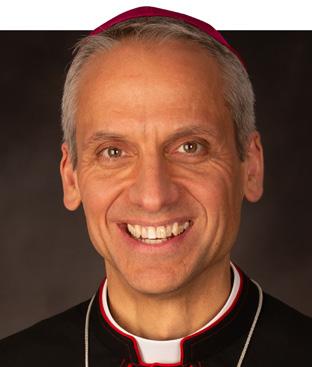
On May 30, we celebrated the priestly ordination of six young men. We are grateful that they all said yes to “the call” and we continue to pray that they might be good, holy priests. As you can read in the New Priests section of this issue, each of their vocational calls is different. Every call is unique.
Even as an individual, my two calls — one to the priesthood and one to the episcopate — were unique. My call to the priesthood took me a while to answer. I first thought of the priesthood as a second grader. But by the time I was in junior high and high school, I wasn’t as attracted to the idea. Nonetheless, the call was always there. At some point in college, I finally told a priest that I was afraid I had a call to the priesthood. But it took me about 10 years before I finally entered the seminary at the age of 31. The process of discernment included talking to many priests, going on multiple retreats, praying a lot and thinking about it probably a lot more than I needed to. You could say I discerned for 10 years, but in actuality it was probably about 23 years! Compare that to the call I received to the episcopate (to be a bishop). My phone rang, I answered, I was shocked, I was scared, but I said yes. The process took about two minutes. I will sometimes reflect on how I was so careful in discerning my call to the priesthood and how it took so long, compared to the call
Discernir
el llamado
de Cristo a una vocación de por vida
El 30 de mayo, celebramos la ordenación sacerdotal de seis jóvenes. Agradecemos que todos ellos hayan dicho “sí” al “llamado”, y seguimos rezando para que sean sacerdotes buenos y santos. Como podrán leer en la sección de Sacerdotes Nuevos de esta edición, cada uno de sus llamados vocacionales es diferente. Cada llamado es único. Incluso a nivel personal, mis dos llamados — uno al sacerdocio y otro al episcopado — fueron únicos. Me tomó un tiempo responder a mi llamado al sacerdocio. La idea del sacerdocio se me ocurrió por primera vez cuando cursaba el segundo grado de primaria. Sin embargo, para cuando estaba en la escuela secundaria , la idea ya no me atraía tanto. No obstante, el llamado siempre estuvo presente. En algún momento de la universidad, finalmente le confesé a un sacerdote que temía tener un llamado al sacerdocio. Pero pasaron unos diez años antes de que yo finalmente entrara al seminario, a la edad de 31 años. El proceso de discernimiento incluyó conversar con muchos sacerdotes, asistir a múltiples retiros, rezar mucho y reflexionar sobre el asunto — probablemente — mucho más de lo necesario. Se podría decir que discerní durante diez años, pero, en realidad, ¡probablemente fueron unos veintitrés años!
Comparen eso con el llamamiento que recibí al episcopado (para ser obispo). Sonó mi teléfono, contesté, me quedé impactado, tuve miedo, pero dije que sí. El proceso duró unos dos minutos.
A veces reflexiono sobre lo cuidadoso que fui
to the episcopate, which was much more of a surprise. And yet, I said yes quickly because that’s what was asked of me. Wouldn’t it be nice if every time God called, the phone actually rang and a representative of the pope gave you the details of what you were called to!
In a nutshell, that’s what my two calls looked like. What does yours look like? It is probably safe to say that our culture is experiencing a vocation crisis. We need more holy vocations across the board. This includes vocations to the married state, the consecrated state (religious sisters and brothers, monks, nuns, consecrated virgins and others) and the ordained state (deacons, priests and bishops).
Perhaps you are discerning between lifelong vocations and trying to hear God’s call. Regardless of which way you are leaning, the process of discernment is similar. First, pray. Ask the Lord what he desires for you and then take the time to listen. Second, talk to someone. If you are discerning the priesthood, talk to a priest. If you are a young woman discerning the consecrated life, talk to a religious sister or consecrated virgin. If you are discerning marriage, talk to a married couple and then, date — so you can talk to your possible future spouse!
Your prayer can also include relating your discernment to the Lord. If you are discerning marriage, make a concentrated effort to take Jesus with you on your dates. Invite him in. And pray for the person you’re dating, asking the Lord to let his Spirit come over that
al discernir mi llamado al sacerdocio y sobre cuánto tiempo me llevó hacerlo, en comparación con el llamado al episcopado, que resultó ser una sorpresa mucho mayor. Y, sin embargo, respondí que sí con rapidez, pues eso era lo que se me pedía. ¡Qué maravilloso sería si, cada vez que Dios nos llamara, el teléfono sonara en realamente y un representante del Papa nos diera los detalles de aquello a lo que hemos sido llamados!
En pocas palabras, así fueron mis dos llamadas. ¿Cómo es la tuya? Probablemente sea seguro afirmar que nuestra cultura está experimentando una crisis vocacional. Necesitamos más vocaciones santas en todos los ámbitos. Esto incluye las vocaciones al estado matrimonial, al estado de vida consagrada (hermanas y hermanos religiosos, monjes, monjas, vírgenes consagradas, etc.) y al estado ordenado (diáconos, sacerdotes y obispos).
Quizás estés discerniendo entre vocaciones de por vida e intentando escuchar el llamado de Dios. Independientemente de hacia dónde te inclines, el proceso de discernimiento es similar. Primero, reza. Pregúntale al Señor qué desea para ti y, luego, tómate el tiempo para escuchar. Segundo, habla con alguien. Si estás discerniendo el sacerdocio, habla con un sacerdote. Si eres una joven que discierne la vida consagrada, habla con una religiosa o una virgen consagrada. Si estás discerniendo el matrimonio, habla con esposos y, después, sal con alguien —¡para que puedas hablar con tu posible futuro cónyuge! Tu oración también puede incluir compartir tu discernimiento con el Señor. Si estás discerniendo el matrimonio, haz un esfuerzo consciente por llevar a Jesús contigo a tus citas. Invítalo a entrar. Y ora por la persona con quien sales, pidiendo al Señor que permita que su Espíritu descienda sobre esa persona con la que estás saliendo — o con la que esperas salir.
person you are dating, or hoping to date. Maybe you are discerning the priesthood or religious life and you have signed up for a retreat. Before you even go, pray that the Lord will let his Spirit come over the retreat house, over those leading the retreat and over all those going on retreat. Maybe you plan to visit a convent. Before you go, ask the Lord to send his Spirit over all those sisters and especially over those you will meet.
Before I wrap up, I want to share some specific discernment insights that helped me personally. Shortly after I said yes to being a bishop, but still wasn’t experiencing peace, I was reminded that it wasn’t just the Church that was calling me, it was Jesus himself. And how does Jesus call us? We might say things like, “Jesus calls workers for his vineyard.” And yet when Jesus calls, he doesn’t send us right out into the world. Notice in Scripture that Jesus first calls us to a relationship with him, to have a friendship with him, and then he sends us.
Another thing I experienced is that I didn’t think I was worthy. Remember, most people in Scripture didn’t think they were worthy either. From Moses to Peter they said things like, “Who am I (to be called)?” and “Depart from me, Lord, for I am a sinful man.” A sense of unworthiness is often part of an authentic vocation because God calls those who know their need for him.
Please continue to pray for the six men recently ordained to the priesthood. And pray for more holy vocations to the priesthood, the consecrated life and marriage.
Quizás estés discerniendo el sacerdocio o la vida religiosa y te hayas inscrito en un retiro. Incluso antes de ir, reza para que el Señor permita que su Espíritu descienda sobre la casa de retiros, sobre quienes dirigen el retiro y sobre todos aquellos que asisten a él. Tal vez tengas planeado visitar un convento. Antes de ir, pide al Señor que envíe su Espíritu sobre todas esas hermanas y, especialmente, sobre aquellas que conocerás.
Antes de concluir, quiero compartir algunas reflexiones concretas sobre el discernimiento que me resultaron de ayuda a nivel personal. Poco después de haber aceptado el nombramiento como obispo — aunque todavía no experimentaba esa sensación de paz — se me recordó que no era únicamente la Iglesia la que me llamaba, sino Jesús mismo. ¿Y de qué manera nos llama Jesús? Podríamos decir, por ejemplo: “Jesús llama a obreros para su viña”. Y, sin embargo, cuando Jesús nos llama, no nos envía de inmediato al mundo. Observen en las Escrituras que Jesús nos llama, en primer lugar, a entablar una relación con Él — a cultivar una amistad con Él — y es solo entonces cuando nos envía.
Otra experiencia que tuve fue la de no sentirme digno. Recuerden que la mayoría de las personas en las Escrituras tampoco se consideraban dignas. Desde Moisés hasta Pedro, expresaron cosas como: “¿Quién soy yo (para ser llamado)?” y “Apártate de mí, Señor, pues soy un hombre pecador”. A menudo, el sentido de indignidad forma parte de una vocación auténtica, ya que Dios llama a aquellos que reconocen su necesidad de Él.
Por favor, continúen rezando por los seis hombres que han sido ordenados sacerdotes recientemente. Y oren por más vocaciones santas al sacerdocio, a la vida consagrada y al matrimonio.
OFFICIALS
Archbishop Bernard Hebda has announced the following appointments in the Archdiocese of Saint Paul and Minneapolis:
Effective June 1, 2026
Reverend Nicholas Froehle, granted a leave of absence for vocational discernment. Father Froehle is also released from his assignment as pastor of the Church of Saint Michael in Farmington.
Very Reverend Michael Tix, assigned as parochial administrator of the Church of Saint Michael in Farmington. This is in addition to his current assignment as pastor of the Church of Saint John the Baptist in Vermillion, the Church of Saint Mathias in Hampton, and the Church of Saint Mary in New Trier, and as Vicar General for the Archdiocese of Saint Paul and Minneapolis.
Effective July 1, 2026
Reverend Gregory Abbott, assigned as pastor of the Church of the Blessed Sacrament in Saint Paul. This is a transfer from his current assignment as parochial vicar of the Church of Saint Peter in Forest Lake.
Reverend Jason Asselin, assigned as parochial vicar of the Church of the Nativity of Our Lord in Saint Paul. Father Asselin is a priest of the Diocese of Fargo.
Reverend Neil Bakker, granted a medical leave of absence. Father Bakker is currently serving as the pastor of the Church of Saint John the Baptist in Jordan.
Reverend Andrew Brinkman, assigned as pastor of the Church of Saint Joseph in Miesville. This is a transfer from his current assignments as priest in solidum for the Church of the Maternity of Mary in Saint Paul and the Church of Holy Childhood in Saint Paul, and as sacramental minister for the Church of Saint Pius V in Canon Falls and the Church of Saint Joseph in Miesville.
Reverend José Maria Cortes, FSCB, assigned as pastor of the Church of Saint Joseph in Red Wing. This is a transfer from his current assignment as parochial vicar of the Church of Saint Peter in North Saint Paul.
Reverend Dida Wariyo Damicha, C.Ss.P, assigned as chaplain for Abbott Northwestern Hospital. This is a transfer from his current assignment as parochial vicar of the Church of Saint Raphael in Crystal.
Reverend Charles DeReuil II, assigned as parochial vicar of the Church of Saint Charles Borromeo in Saint Anthony for the summer, before returning to Rome to continue academic studies. Father DeReuil was ordained to the priesthood on May 30, 2026.
Reverend John Paul Erickson, assigned as parochial vicar of the Cathedral of Saint Paul in Saint Paul. This is a transfer from his current assignment as parochial vicar of the Church of the Nativity of Our Lord in Saint Paul.
Reverend Kyle Etzel, assigned as parochial administrator of the Church of Saint Louis King of France in Saint Paul. This is a transfer from his current assignment as parochial vicar of the Cathedral of Saint Paul in Saint Paul.
Reverend Francis Floeder, assigned as parochial vicar of the Church of Saint Stephen in Anoka. This is a transfer from his current assignment as parochial vicar of the Parish of Saints Joachim and Anne in Shakopee.
In the shadow of St. Thérèse
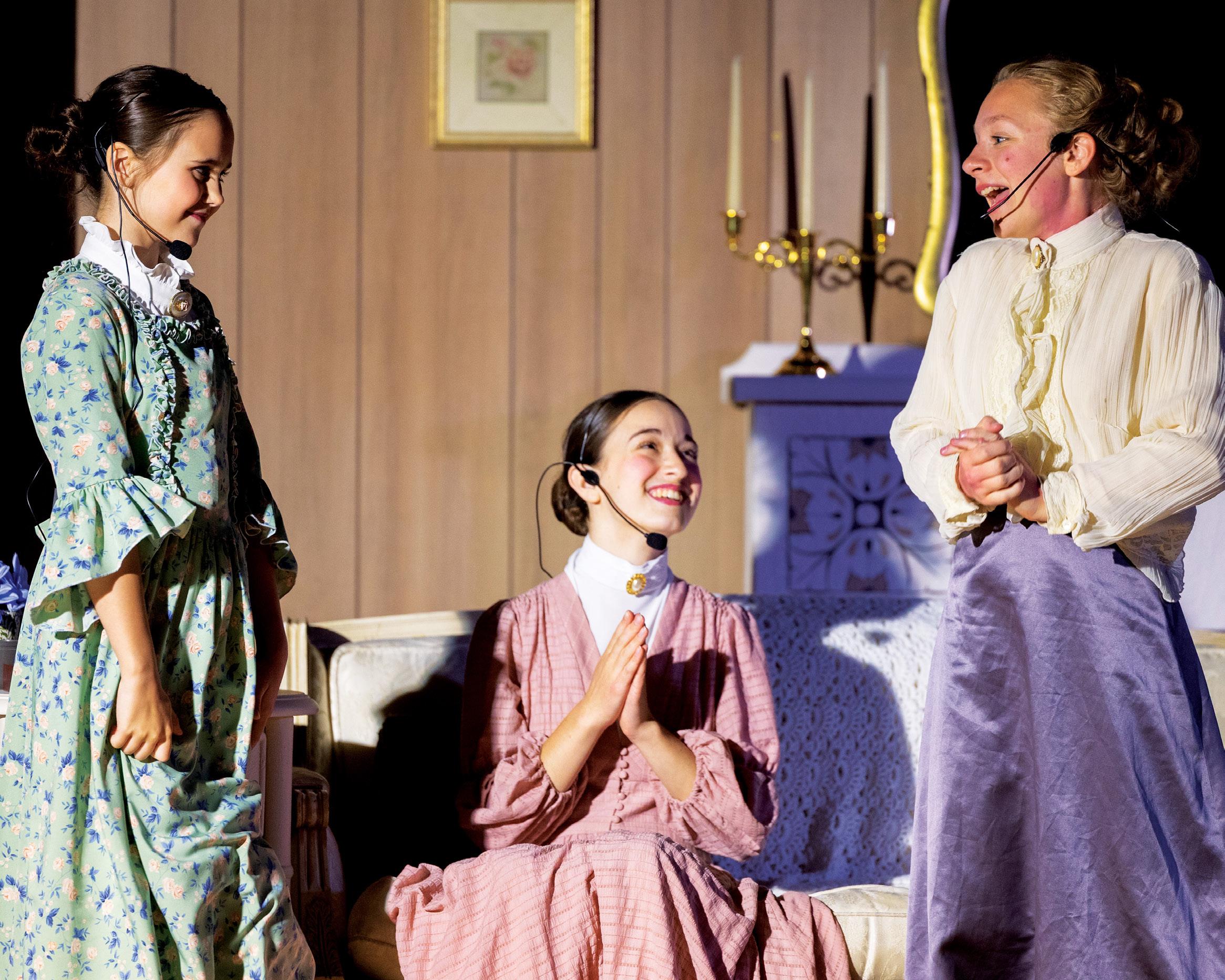
Leonie Martin, right, played by Maria Mahr, talks with two of her sisters in a scene from a play about her life called “Under the Shadow of the Rose: The Tragic Triumph of Servant of God, Leonie Martin” May 27 at Sts. Peter and Paul in Loretto. At left is Thérèse (later St. Thérèse of Lisieux), played by Agnes Kellar, and in the center is Pauline Martin, played by Anna DiPrima. Kellar’s mother, Jennifer Kellar, of St. Anne in Hamel, wrote and directed the play after learning more about Leonie Martin in recent years. The 26 youths who performed the play are part of a homeschool co-op called Veritas in Academia, which consists of students from Sts. Peter and Paul, St. Anne and other parishes. “Leonie, she just touches my heart,” Jennifer Kellar said. “She is very approachable for me. … No one knows about Leonie. And yet Leonie was the first disciple of The Little Way of St. Thérèse.”
DAVE HRBACEK | THE CATHOLIC SPIRIT

Mothers find Catholic community in St. John the Baptist small group
By Aviana Kasal For The Catholic Spirit
At St. John the Baptist in New Brighton, what began as a small gathering of nine mothers has grown into a community of 22 women seeking to deepen their Catholic faith while supporting one another through motherhood.
The parish’s small group was founded in 2023 and over the years, the families of the group’s members have grown to now include 55 children. The women meet regularly throughout the school year for prayer, fellowship and faith formation, gathering as a large group before breaking into smaller discussion groups for more personal conversation.
“There was a really clear need. The women were so excited to share the Gospel with others, and the Holy Spirit really presented many opportunities for moms who seemed hungry for God’s love,” said Molly Gerber, one of the group’s leaders and founding members.
The group’s members initially wondered whether it should remain a smaller, more intimate gathering. Instead, the women said they felt called to expand after seeing how many mothers were searching for an authentic Catholic community.
With support from St. John the Baptist, the women now gather in a larger meeting space while still maintaining smaller breakout groups that allow for deeper discussion.
“We could still gather as a bigger group of 22 women for prayer time and fellowship,
but then we break down into consistent smaller groups, which has allowed us to share our current joys and struggles in a more intimate format and receive the prayer and support of a true small group,” said Carolyn Haberman, who joined the leadership team about a year ago.
She shared that the group has become a lifeline for many young mothers navigating family life and faith.
“There is just this need for churches to meet young parents where they are at,” Haberman said.
The women meet about every other week during the school year and weekly during Advent and Lent. Sessions have included book discussions, video series and prayer reflections, including a Lenten study on suffering and discussions centered on the
National Eucharistic Congress. Prayer has become the group’s strongest foundation. The women said members routinely pray for one another through intercessory prayer, novenas and lectio divina.
“The habit of prayer life that these women are building has been so powerful,” Haberman said.
The group’s impact was especially visible this Easter when one of its members, Erica Davis, was received into the Catholic Church during the Easter Vigil at St. John the Baptist.
Davis had already begun the Order of Christian Initiation of Adults (OCIA) process after her son became involved in the Catholic faith but eventually joined the small group through the invitation of her sponsor.
According to Gerber, Davis shared that she has enjoyed listening to how God is working in the lives of the other mothers and experiencing the presence of the Holy Spirit within the group.
“She’s feeling the Holy Spirit in the room with the group,” Gerber said.
The women of the group attended the Easter Vigil together to support Davis as she entered into full communion with the Church, something Haberman described as a powerful reflection of the community the women have built together.
The group has also extended beyond weekly meetings.
Families recently gathered for a social event at a local brewery, and the women hope to continue informal gatherings and prayer opportunities throughout the summer.
For mothers hesitant to join a small group because of busy schedules, Haberman offered encouragement.
“You feel like you’re too busy, but the support you’re going to get from the group is going to be life changing. It’s going to transform you and your family,” Haberman said.
For the women of St. John the Baptist’s small group ministry, the experience has become far more than a Bible study or weekly meeting. It has become a place where mothers can encounter Christ together while helping one another raise families rooted in faith.
“We all are trying to raise them up as good Catholic saints,” Haberman said.
Marists leaving St. Louis King of France in St. Paul
By Josh McGovern
The Catholic Spirit
The Society of Mary, an international religious congregation, will be leaving St. Louis King of France in St. Paul July 1 after 140 years at the parish.
A farewell Mass will be held June 6 to celebrate the Marists’ time at the parish. It will be attended by the Society of Mary Provincial Superior of the U.S. province, Father Joseph Hindelang, as well as Marist priests, Fathers James Duffy, Ronald Nikodem and John Beckley. Archbishop Bernard Hebda and Auxiliary Bishop Michael Izen will also attend, according to information on the parish’s website at stlouiskingoffrance.org.
In a May 20 statement about the change, Archbishop Hebda said, “As the Marists prepare to leave the Archdiocese, there is real sadness, especially among the parishioners at St. Louis King of France and the priests of the Archdiocese, but also a deep sense of gratitude. The Marists have generously served the Archdiocese, sacrificing to remain faithful as long as they could to the commitment that they made to Archbishop Ireland more than 100 years ago. They will long be particularly remembered for their preaching and their ministry in the confessional, making sure that generations of Catholics have had the opportunity to encounter the compassion of Jesus Christ.”
Father Joseph Hurtuk, the parish pastor, said St. Louis King of France was the last Marist parish in the country. Many younger members of the Society of Mary are in schools, such as in Pontiac, Michigan, and Atlanta but aren’t prevalent in parishes.
Effective July 1, Father Kyle Etzel, a priest of the archdiocese, will serve as parochial administrator of the parish.
Father Hurtuk will move to Wheeling, West Virginia, with
his cat, Mr. Snuggles, to a residence with a designated floor for retired Marist priests. West Virginia, he said, has a deep history with the Marists, who evangelized the Catholic faith in the state. Father Hurtuk’s first assignment was in Buckhannon, West Virginia, at the only Catholic church in the area.
Father Hurtuk is from Cleveland. Much of his family is still there. He said he is excited to be living only two hours away from his family. He grew up attending a Marist parish, St. Pius X, in Bedford, Ohio, a suburb of Cleveland.
“Growing up, I knew the Marists,” Father Hurtuk said. “Father (Roland) Lajoie, same story. He attended a Marist school. Father (John) Sajdak, from New York, was a different story. A Marist priest came to his parish to give a vocations talk and he was interested.” Both Marist priests ministered at the St. Paul parish with Father Hurtuk.
Father Lajoie is returning to Van Buren, Maine, where he is from. Father Sajdak is going to the Society of Mary provincial headquarters in Washington, D.C.
“Everyone is very sorry to see them go,” said Deb Hartung, a parishioner. “This is quite a change for our parish, and we love the Society of Marist folks. They’ve been with us all along. They have a special devotion to Mary, and it shows in the church, of course.”
Hartung said that at the beginning of the year, Father Hindelang visited St. Louis King of France to share news that the Society of Mary did not have enough priests to assign to the parish, also known as The Little French Church.
“I sort of knew that this was perhaps coming because the priests who are there now are older, so I admire them because they have stuck it out,” Hartung said. “They make a good team, the three of them (Fathers Sajdak, Hurtuk and Lajoie). They stuck it out.”
“The Marist fathers just have been great. All of them are so erudite, very educated and just that influence of Mary, to be a servant and to discern the will of God and to do it, that comes through. ... We’ll sure miss them, there’s no doubt about that,” Hartung said.
The Marists first arrived at St. Louis King of France in 1886 to serve the French-speaking Catholics of St. Paul. The religious community was founded in France in 1816 following the French Revolution, according to St. Louis King of France’s website. In 1863, after the Civil War, the Marists came to the United States to serve French-speaking people in Louisiana, Maine, Massachusetts, Minnesota and California, the website said.
COURTESY ARCHDIOCESE OF ST. PAUL AND MINNEAPOLIS
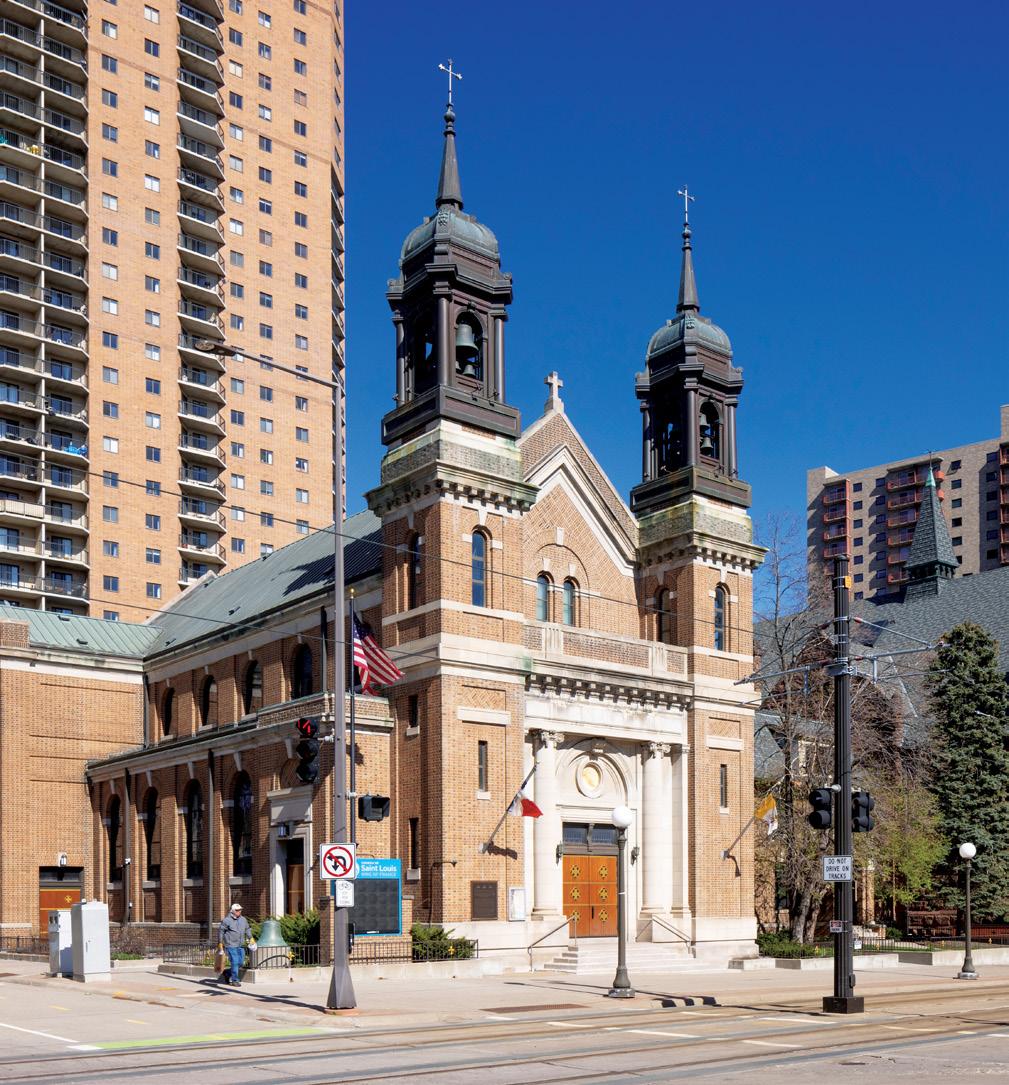
St. Louis King of France in St. Paul.
SUBMITTED PHOTO
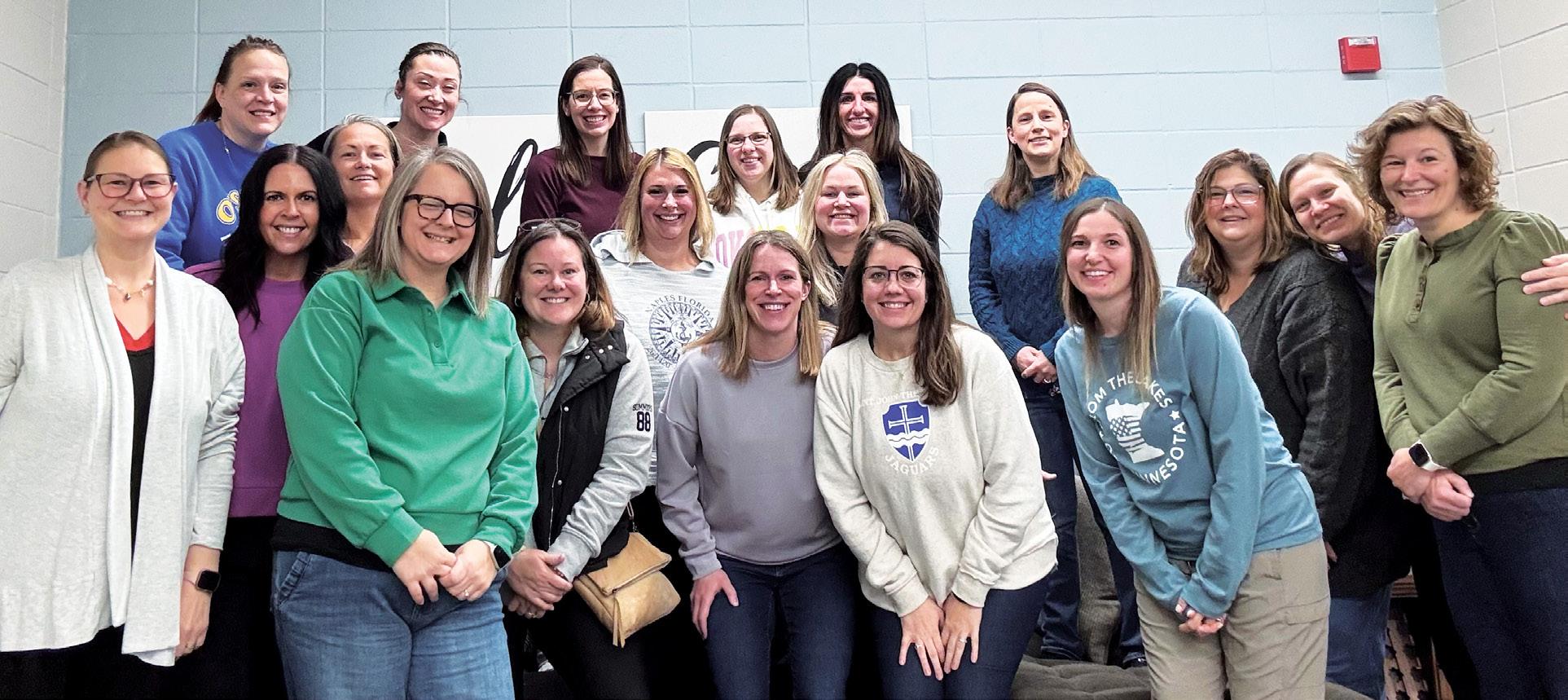
In this May 2026 photo, 19 women gather at St. John the Baptist in New Brighton for a small group gathering. What began in 2023 as a small group of nine mothers has grown into a community of 22 women.
Deacon McGinty named director of Catholic education and superintendent of schools
By Rebecca Omastiak
The Catholic Spirit
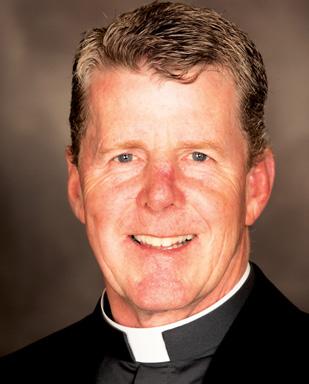
Deacon Michael McGinty will become the new director of Catholic education and superintendent of schools for the Archdiocese of St. Paul and Minneapolis.
Archbishop Hebda has placed in me through this appointment.”
Catholic high schools.
DEACON MICHAEL MCGINTY
In a June 1 announcement about the role, Archbishop Bernard Hebda wrote that Deacon McGinty — who “brings more than three decades of leadership experience across Catholic education, ministry, and organizational leadership” — will assume the role “not merely as an administrator but as a ministry in service to the Church.”
“He articulates a compelling vision for faith formation and Catholic identity in our schools and parish catechetical programs,” the archbishop wrote. “He has consistently shared his belief that Catholic education must ‘develop the mind, the heart, and the soul’ and work in partnership with parents to form students spiritually, academically, socially, and morally. He understands that the responsibility of Catholic education extends far beyond academic achievement; it is about forming saints, renewing families, strengthening parishes, and preparing young people to live lives of Christian witness and service.”
Deacon McGinty said he is “deeply humbled and grateful for the trust
“Catholic education has been a vocation that has shaped my life, and I am blessed to continue serving the Church in this new role,” the deacon told The Catholic Spirit in an email. “I believe, as the Archbishop has expressed, that Catholic education is about far more than academic excellence — it is about helping young people encounter Jesus Christ and grow in faith, wisdom, and holiness.”
The announcement comes roughly seven months after Jason Slattery, the current director of Catholic education and superintendent of schools, announced he would be taking a position as superintendent of schools for the Diocese of Charleston, South Carolina, at the end of the 2025-2026 school year. Slattery’s new role is slated to begin July 1.
In January, archdiocesan representatives announced a partnership with Partners in Mission Search Solutions — a Catholic consultancy based in Stamford, Connecticut — to help conduct a nationwide search for candidates. In his announcement letter, Archbishop Hebda also thanked the local search committee — chaired by Auxiliary Bishop Michael Izen and comprised of clergy, religious, educators, and other Catholic leaders within the archdiocese — for their work in guiding the search process.
The search led to the selection of Deacon McGinty, who will oversee the archdiocese’s 78 Catholic elementary schools and 17
“Throughout the search process conducted over the last few months, we sought a leader of deep faith, pastoral wisdom, operational excellence, and a profound commitment to the evangelizing mission of Catholic education,” the archbishop wrote in the announcement letter. “We have found all those attributes in Deacon McGinty. He has consistently demonstrated that he is a servant leader who understands that Catholic schools and parish catechetical programs are not simply institutions, but essential ministries of the Church that help young people encounter Jesus Christ and grow in holiness, wisdom and truth.”
Deacon McGinty has most recently served as head of school at Our Lady of Grace in Edina, where he has helped lead pre-K through eighth grade students “with a strong focus on Catholic identity, academic excellence, enrollment vitality, and operational sustainability,” wrote the archbishop. Deacon McGinty had also previously served as the archdiocese’s associate director of Catholic school operations.
As he prepared for his ordination to the permanent diaconate, Deacon McGinty told The Catholic Spirit in 2023 that he looked forward to “(p)articipation in the mission of the Church, contributing to its outreach, growth and overall spiritual wellbeing while being at the service of others.”
Beyond his ministry as a deacon, he told The Catholic Spirit at the time that “(t)he
areas of education, family and youth are some of the ministries that interest me.”
As he looks ahead to his new role, Deacon McGinty reflected on his ministry with young people.
“Throughout my ministry and leadership in Catholic schools, I have witnessed the deep and lasting impact that faithful educators, supportive families, and vibrant parish communities can have on the lives of young people,” Deacon McGinty wrote in his email. “As I begin this role, I look forward to listening, learning, and working alongside pastors, principals, teachers, catechetical leaders, community partners, and parents to strengthen our shared mission.
“Together, united in faith and service, I am confident that God will continue to bless our schools and catechetical programs so that they remain places where young people encounter Jesus, deepen their faith, and are inspired to serve others with joy.”
Deacon McGinty will take up his role in July, reporting directly to Archbishop Hebda on all educational matters and to Bill Lentsch, chief operating officer, on all operational matters.
“Please join me in congratulating Deacon McGinty and in praying for him as he begins this new ministry of leadership and service to the Church,” the archbishop stated. “May the Holy Spirit continue to guide and strengthen him as he helps lead our Catholic schools and catechetical programs in forming young people who know, love, and follow Jesus Christ.”
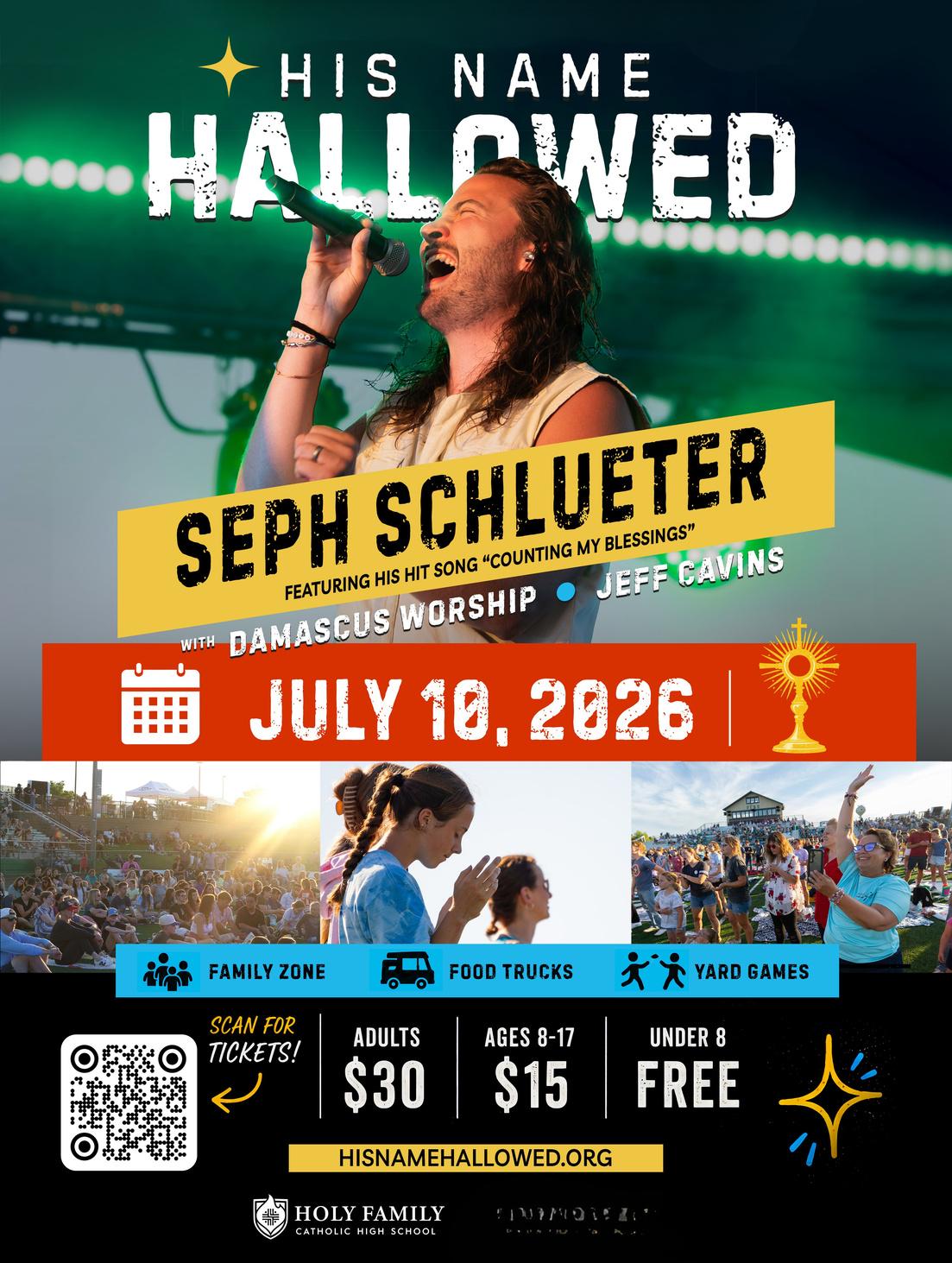
His Name Hallowed Catholic worship concert and festival is returning to Victoria
By Aviana Kasal
For the Catholic Spirit
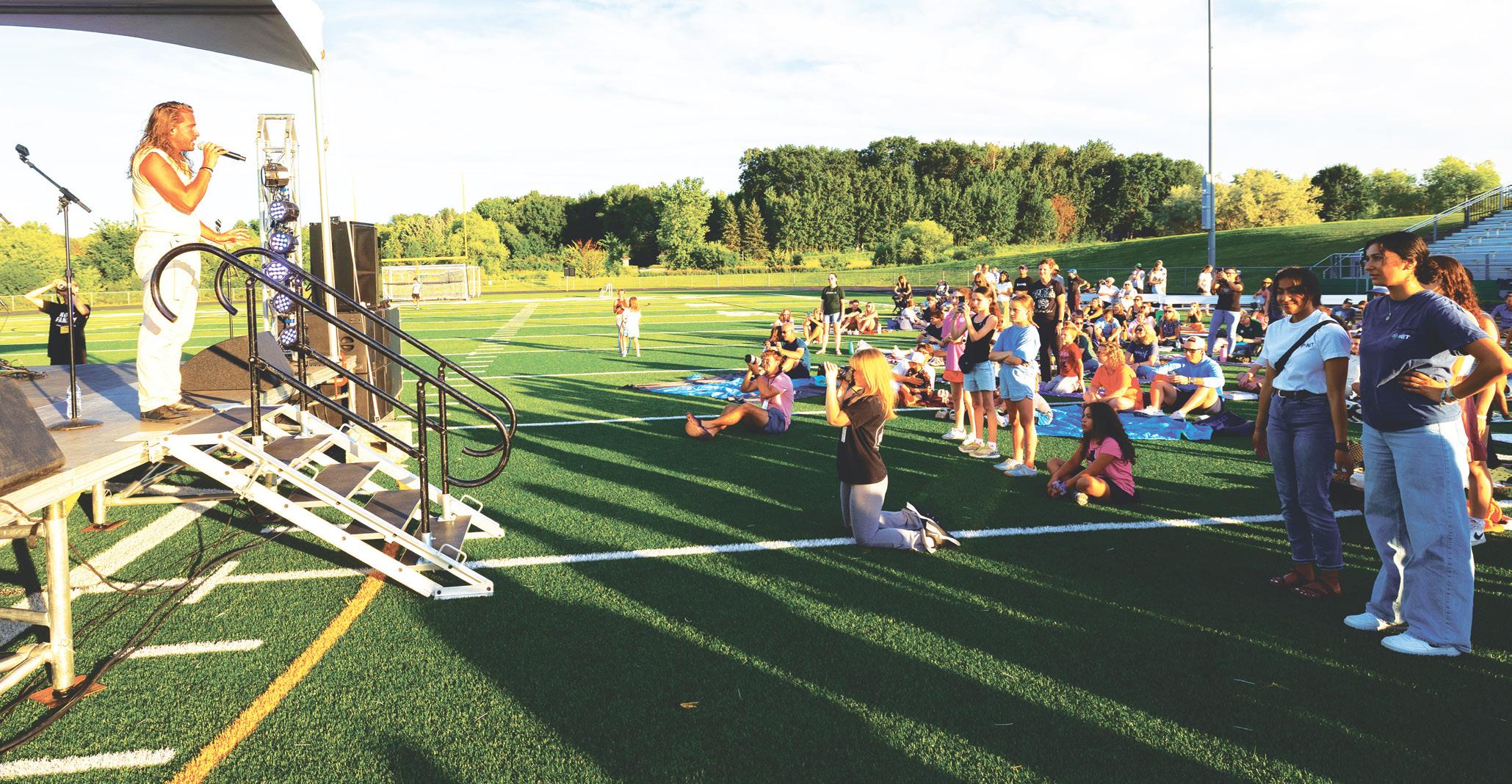
His Name Hallowed, a Catholic worship concert and festival returning July 10 to Holy Family Catholic High School in Victoria, aims to build on the momentum of last year’s inaugural event by bringing families, young people and the broader community together.
The uniquely Catholic aspect of the event helps set it apart from other Christian concerts, organizers said.
“It was such a beautiful night of community and faith and prayer and worship. The beautiful thing about this event, as opposed to other Christian concerts, was that it was and is a uniquely Catholic event because they incorporate the Eucharistic adoration at the end of it,” said Meghan Hathaway, the communications director at St. Hubert in Chanhassen and a member of the event’s communications team.
The evening on the football field — which drew more than 1,000 attendees last July — will again feature Catholic artist Seph Schlueter and conclude with Eucharistic adoration. There will be food trucks and family activities.
Organizers were pleased to see last year’s response and hope to make it an annual tradition, Hathaway said.
“It was kind of a no-brainer to bring it back again this year,” she said.
This year’s event will include an opening performance by Damascus Worship, a reflection from Catholic speaker Jeff Cavins and a youth choir made up of students from Catholic schools across the Archdiocese of St. Paul and Minneapolis.
The choir was created to help young people become more involved in their faith through music and community, said Brenda Reddan of St. Victoria in Victoria, who helped with last year’s event and is working on this year’s activities.
“We have a revival going on, and we just need to reach all ages and stages. Music is a great way to get people into our faith in a fun setting,” Reddan said.
Students in grades four through 12 will sing two songs on stage alongside Damascus Worship. Participating students will receive free admission and event T-shirts.
“We are hoping that those seeds continue year after year,” said Dale Willenbring of St. Joseph in Waconia, who started
His Name Hallowed along with his wife, Karyn.
The organizers’ outreach to young Catholics extends beyond the choir.
Sophie Vickman, a sophomore at Holy Family Catholic High School, spent her May term helping create promotional graphics, social media content, flyers and banners for the event.
“I absolutely love this whole marketing, graphic design and digital media realm. I really want to do well and see this whole thing succeed, especially since it’s a Christian concert,” Vickman said.
Vickman photographed last year’s concert, an experience that inspired her to become more involved this year. “It was just amazing. It was a super fun environment, super great concert. I encourage other high schoolers to come and experience it,” she said.
In addition to Catholics, His Name Hallowed is designed to attract anyone who is searching for hope, community or a deeper connection with God, organizers said.
“This is a welcoming event for everyone in the community,” Karyn Willenbring said.
“We need more things that bring hope to people. It is just so fun to be a part of something so positive and moving,” Reddan said.
The hope is that people leave with renewed faith and a stronger sense of connection to Christ, Hathaway said.
“The real heart of the evening is Jesus,” Hathaway said.
“We can worship God and it can be a great night out for families.”
Tickets and additional information can be found at HisNameHallowed.org
DAVE HRBACEK | THE CATHOLIC SPIRIT
Seph Schlueter performs July 10, 2025, at Holy Family Catholic High School in Victoria during the concert called His Name Hallowed.
OFFICIALS CONTINUED FROM PAGE 3
Reverend Samuel Gilbertson, assigned to the faculty of Saint John Vianney College Seminary. This is a transfer from his current assignment as parochial vicar of the Church of Saint Ambrose in Woodbury.
Reverend Derek Gilde, assigned as parochial vicar of the Church of Saint Hubert in Chanhassen. This is a transfer from his current assignment as parochial vicar of the Church of Saint John the Baptist in New Brighton.
Reverend Ryan Glaser, assigned as parochial administrator of the Church of Saint Katharine Drexel in Ramsey. This is a transfer from his current assignment as parochial vicar of the Cathedral of Saint Paul in Saint Paul.
Reverend Daniel Griffith, appointed Vice President for Mission at the University of Saint Thomas. Father Griffith was previously assigned as the pastor and rector of the Basilica of Saint Mary in Minneapolis.
Reverend Hjalmar Guðjónsson, assigned as pastor of the Church of Pax Christi in Eden Prairie. Father Guðjónsson was previously assigned as parochial administrator of the same parish.
Reverend Alexander Hall, assigned as parochial vicar of the Cathedral of Saint Paul in Saint Paul. Father Hall was ordained to the priesthood on May 30, 2026.
Reverend Paul Hedman, assigned as parochial administrator of the Church of the Sacred Heart in Robbinsdale. This is a transfer from his current assignment as parochial vicar of the Church of the Epiphany in Coon Rapids.
Reverend Paul Jarvis, assigned as sacramental minister for the Church of Saint Peter Claver in Saint Paul. Father Jarvis is a retired priest of the archdiocese.
Reverend William Kratt, assigned as parochial vicar of the Church of Saint Ambrose in Woodbury. This is a transfer from his current assignment as parochial vicar of the Church of Saint Hubert in Chanhassen.
Reverend Steven Lang, assigned as parochial vicar of the Church of Saint Joseph in West Saint Paul for the summer, before returning to Rome to continue academic studies. Father Lang was ordained to the priesthood on May 30, 2026.
Reverend Michael Maloney, assigned as fulltime chaplain and instructor for Benilde-St. Margaret High School in Saint Louis Park. Father Maloney was previously assigned as parochial vicar of the Church of Saint Therese in Deephaven and part-time chaplain for Benilde-St. Margaret High School.
Reverend Biju Mathew, assigned as sacramental minister for the Church of Saint Jerome in Maplewood. This is a transfer from his current assignment as pastor of the Church of the Blessed Sacrament in Saint Paul.
Reverend Michael McClellan, assigned as Director of Worship of the Saint Paul Seminary in Saint Paul. This is a transfer from his current assignment as pastor of the Church of Saint Pius V in Cannon Falls and the Church of Saint Joseph in Miesville.
Reverend Dominic Miller, assigned as parochial vicar of the Church of Saint John the Baptist in New Brighton. Father Miller was ordained to the priesthood on May 30, 2026.
Reverend Justus Musinguzi, assigned as pastor of the Church of the Annunciation in Hazelwood and pastor of the Church of Saint Pius V in Cannon Falls. This is a transfer from his current assignment as parochial administrator of the Church of the Annunciation in Hazelwood and as parochial vicar of the Church of Saint Dominic in Northfield.
Reverend Joseph Nguyen, assigned as parochial administrator of the Church of Saint Michael in Farmington. This is a transfer from his current assignment as parochial vicar of the Church of All Saints in Lakeville.
Reverend Cornelius Jingwa Nkenganyi, assigned as parochial vicar of the Church of Saint Peter in Forest Lake. Father Jingwa is a priest of the Diocese of Mamfe (Cameroon).
Reverend Matthew Northenscold, assigned as pastor of the Church of Saint Mary in Le Center, the Church of Saint Henry in Saint Henry, the Church of the Immaculate Conception in Lonsdale, and the Church of the Nativity in Cleveland. Father Northenscold was previously assigned as parochial administrator of the same parishes.
Most Reverend Richard Pates, bishop emeritus of Des Moines, assigned as parochial administrator of the Church of Saint Peter Claver in Saint Paul. Bishop Pates succeeds Reverend Christopher Collins, SJ, who has been assigned outside of the Archdiocese by his religious superior.
Reverend Bryan Pedersen, assigned as pastor of the Church of Saint John the Baptist in Jordan. This is a transfer form his current assignment as pastor of the Church of the Sacred Heart in Robbinsdale.
Reverend Robert Pish, assigned as pastor of the Church of Saint John the Baptist in Savage. Father Pish was previously assigned as parochial administrator of the same parish.
Reverend Peter Romens, assigned as parochial vicar of the Church of the Epiphany in Coon Rapids. Father Romens was ordained to the priesthood on May 30, 2026.
Reverend Michael Selenski, assigned as pastor of the Church of Saint Vincent de Paul in Brooklyn Park. Father Selenski was previously assigned as parochial administrator of the same parish.
Reverend Randall Skeate, assigned parochial vicar of the Parish of Saints Joachim and Anne in Shakopee. This is a transfer from his current assignment as parochial vicar of the Church of Saint Stephen-Holy Rosary in Minneapolis.
Reverend Sebastian Spencer, assigned as parochial vicar of the Church of Saint Michael and the Church of Saint Mary, both in Stillwater.
Father Spencer was ordained to the priesthood on May 30, 2026.
Reverend Ralph Talbot, assigned as pastor and rector of the Basilica of Saint Mary in Minneapolis. This is a transfer from his current assignment as pastor of the Church of Saint Hubert in Chanhassen.
Reverend Brandon Theisen, assigned as pastor of the Church of Saint Odilia in Shoreview. This is a transfer from his current assignment as pastor of the Church of Saint Joseph in Red Wing.
Reverend Jon Bennet Tran, assigned as pastor of the Church of Saint Hubert in Chanhassen. This is a transfer from his current assignment as pastor of the Church of Saint Stephen in Anoka.
Reverend Timothy Tran, assigned as parochial administrator of the Church of Saint Stephen in Anoka. Father Tran was previously assigned as parochial vicar of the same parish.
Reverend Peter Williams, assigned as pastor of the Church of Saint Francis of Assisi in Lake Saint Croix Beach. This is in addition to his current assignment as pastor of the Church of Saint Ambrose in Woodbury.
Retirements
Effective June 1, 2026
Deacon Dennis Chlebeck, granted the status of retired deacon. Deacon Chlebeck has served this archdiocese since his ordination in 2009, most recently at the Church of the Maternity of Mary in Saint Paul.
Effective July 1, 2026
Reverend Paul Jaroszeski, granted the status of a retired priest. Father Jaroszeski has served this archdiocese since his ordination in 1976, most recently at the Church of Saint Katharine Drexel in Ramsey.
DAVE HRBACEK | THE CATHOLIC SPIRIT
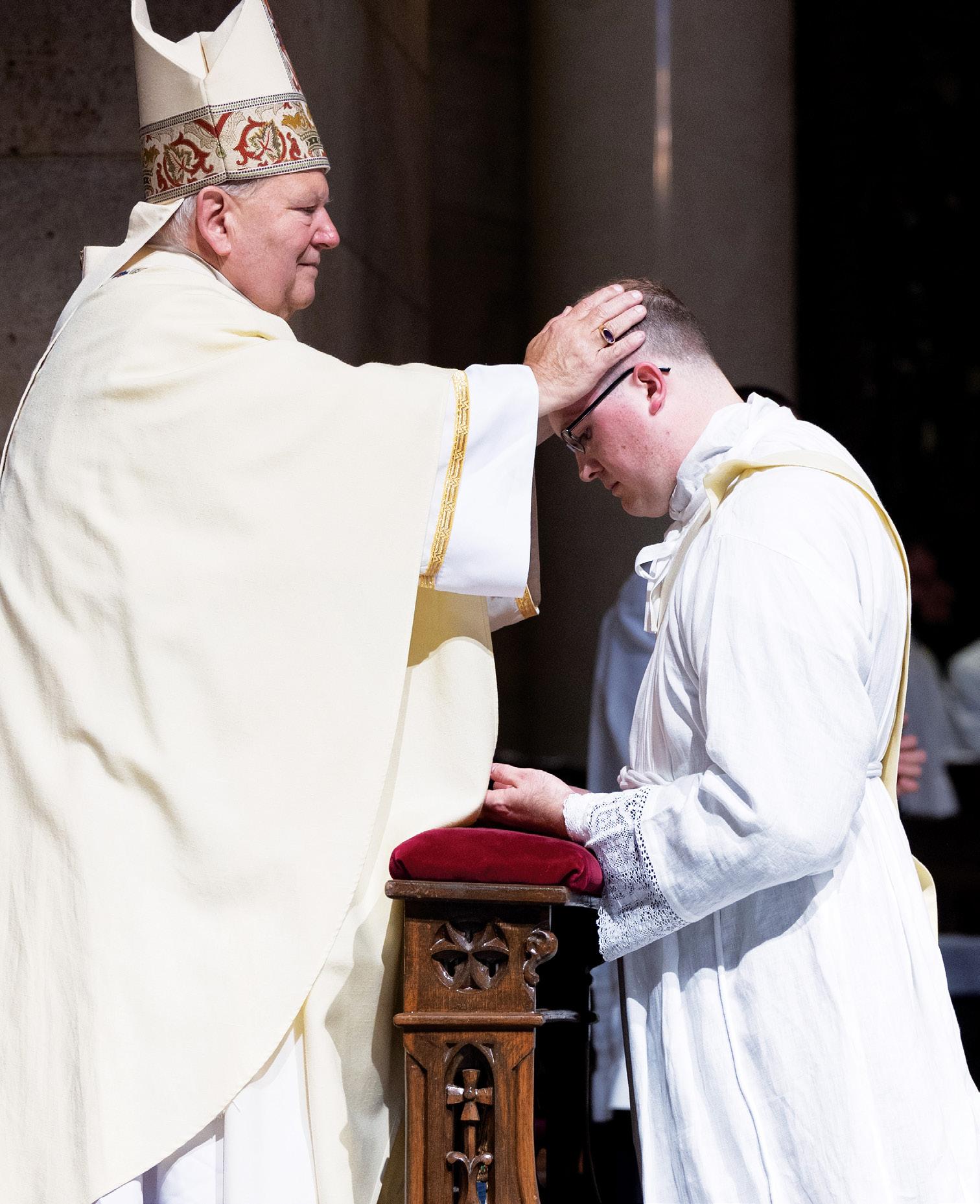
Archbishop Bernard Hebda lays hands on Father Alexander Hall, which is the sign of conferral of the priestly office, during the priest ordination Mass May 30 at the Cathedral of St. Paul in St. Paul.
Facing soaring fuel and fertilizer prices, Catholic farmers lean on faith
By Kimberley Heatherington OSV News
Farming, even in the best of times, can be a rather precarious vocation. It’s dangerous work, according to the U.S. Department of Labor’s Occupational Safety and Health Administration; it’s economically volatile, due to high production costs and fluctuations in market prices; there are climate risks from droughts, floods and pests.
And that is not considering the effect of recent tariffs, or the war between the U.S. and Iran that since Feb. 28 has made the price of fertilizer and fuel soar.
The American Farm Bureau Federation’s April 14 report noted, “Rising input costs tied to the conflict in the Middle East are adding strain to an already challenging farm economy.”
The group stated that 70% of American farmers can’t afford all the fertilizer they need, while noting farm diesel fuel prices have increased 46% since the end of February, in turn raising costs for fieldwork, fertilizer transport and irrigation.
As a result, nearly six in 10 farmers report worsening finances — a situation the federation said indicates “the urgent need for immediate economic assistance to keep farm gates open.”
So how are Catholic farmers faring?
“I checked in with a couple of our members,” said James Ennis, executive director of Catholic Rural Life, a Minnesota-based organization dedicated to promoting Catholic life in rural America. He told OSV News the farmers he spoke with are large corn, soybean and meat producers.
“For them, it’s painful — but it’s always something,” Ennis said. “One just got finished with planting corn and soybeans. And he said, ‘Jim, I think it’s the best planting weather we’ve had; the soil was just right for planting.’ But he also said, ‘You know, if we don’t get enough rain in a couple of weeks, we’re going to be in trouble.’”
Ennis cited tornadoes, freezes “or other types of weather-related factors that they’re used to.”
So, with the farming vocation comes a certain outlook that is trained to expect the unexpected.
“When I talk to a lot of the farmers who have been farming for a long time, they look at me and say, ‘Jim, this is just a part of
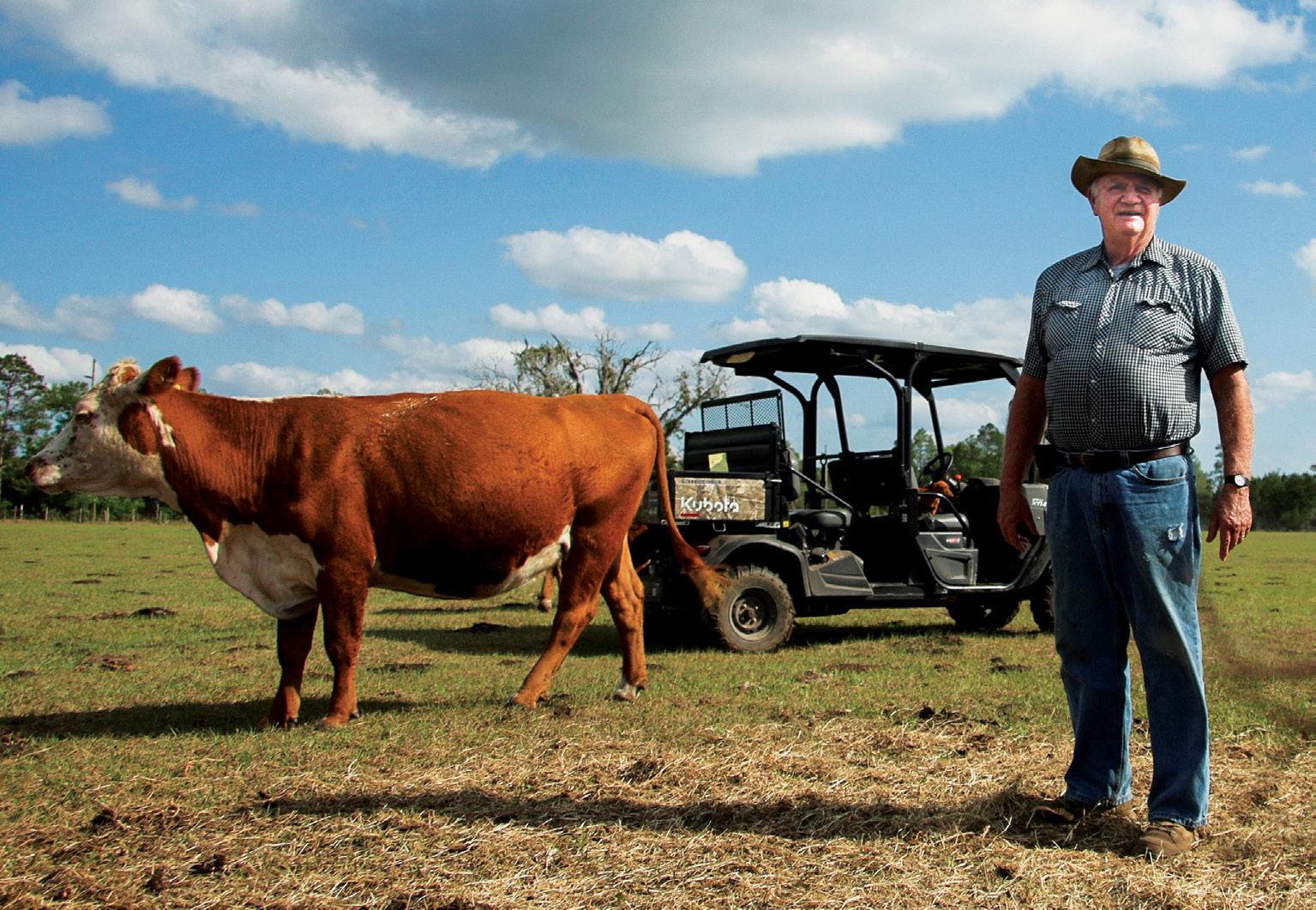
Cattle farmer Ray Hodges tends to livestock on his 300-acre farm as rising fuel costs impact agricultural production in Old Town, Fla., April 27. On April 14, the American Farm Bureau Federation reported, “Rising input costs tied to the conflict in the Middle East are adding strain to an already challenging farm economy.”
our life,’” he said.
“Their faith is deeply rooted in the land and trusting the Lord to provide and help them through a difficult time,” Ennis said. “But the challenges farmers face are somewhat unique, and a lot of things are out of their control — like the price of fertilizer and the price of diesel, the increases; and weather conditions. So, it can be pretty stressful and impact their mental health.”
According to the National Rural Health Association, the suicide rate among farmers is 3.5 times higher than that of the general population.
Small properties such as Oxbow Farm — a 17-acre Catholic Worker Farm located in Parkton, Maryland, yielding about 10,000 pounds of annual produce — have been insulated somewhat from the recent economic strain not only by virtue of their size but also their ability, in part, to compost organic fertilizer from their livestock.
But as the Union of Concerned Scientists has noted, “The vast majority of agricultural production in the United States today is fueled by synthetic fertilizers.”
Nitrogen fertilizer is manufactured using fossil gas, while phosphorus- and
potassium-based fertilizers are made from mined minerals.
John Dougherty, an assistant professor of economics at Loyola University Maryland who assists his wife — and Oxbow Farm manager — Julie Laudick Dougherty, said at the beginning of the spring planting season that farmers who had yet to purchase fertilizer would experience an unexpected, “huge cost shock.”
As both a farmer and an economics professor, Dougherty — who earned a doctorate in agricultural, environmental and developmental economics from The Ohio State University— is equipped with a unique perspective concerning the current situation.
Given fuel and fertilizer price increases, “My hunch would be that you would see a significant increase in bankruptcy — especially based off of the timing; based off of all the stress that a lot of farmers are already under,” Dougherty said. “Margins are already really small. Farming is a very competitive industry when it comes to large-scale production.”
Competitive, but also — say the Doughertys — in need of reform.
“Our food system, as it’s currently set up, has a lot of limitations,” John Dougherty
noted. “It’s very efficient in the sense that it can grow a tremendous amount of food for a low price. But it has a whole host of environmental, labor and animal welfare issues associated with it.”
His wife agreed. “What we need more than anything is more farmers and more small farms that are more resilient to this type of thing,” Julie Dougherty said. “Small farms are absolutely capable of feeding our country.”
Rising food prices may lead some consumers to reflect upon the complications of farming and the need for diversification and change, she said.
“But we need to think holistically about how do we make changes slowly, so the most vulnerable in society — who are really struggling with their grocery budget — are not going to go hungry,” Dougherty added. “I think we undervalue food in America a lot. But we can’t just expect everybody to be able to pay higher food prices overnight.”
According to ConsumerAffairs, a customer review and news platform, grocery prices are rising at the fastest rate in four years.
Deacon Dan Hann, a farmer of 1,400 acres who also ministers in the Diocese of Columbus, Ohio, told OSV News “it isn’t looking very good” for some who till the earth.
“One thing we did right was to buy and pay for chemicals and fertilizer last autumn, thereby locking those prices in,” he said. “We haven’t had any trouble getting those materials. For those farmers who didn’t or couldn’t, they’re going to get hit hard.”
He noted some farmers are selling land, while those who rent it may have to settle for lower returns. And like Ennis at Catholic Rural Life, Hann said weather is always a factor.
“So every year has its challenges and gambles — some years it’s the weather, and other years it’s a global crisis,” said Deacon Hann, appealing to the patron saint of farmers: “St. Isidore, pray for us!”
And indeed, Catholic Rural Life can help with that: The organization’s website contains a selection of spiritual resources.
“There’s a whole tradition of how important it is to pray for our farmers,” Ennis said. “All of us who are of the Catholic Christian faith should be praying for our farmers, and praying for those who are providing food for us.”
He added: “Don’t forget them — they’re often out of sight, out of mind, because we get our food from the grocery stores.”
CONGRATULATIONS!
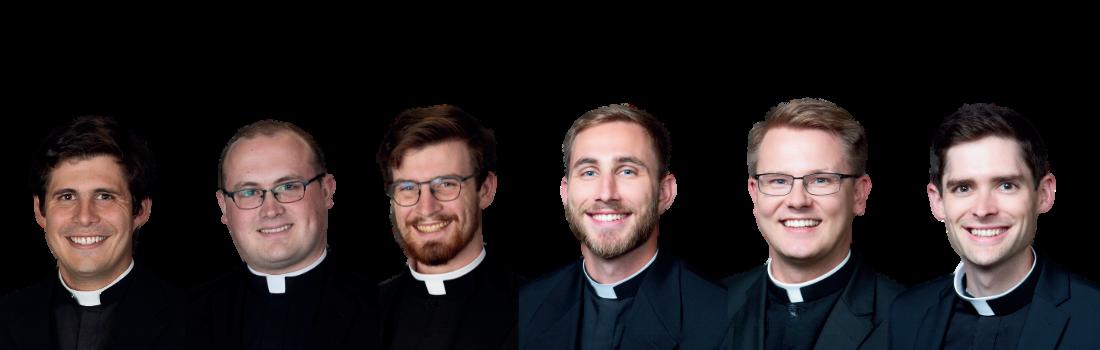
Father Charles DeReuil & Father Steven Lang
May our Heavenly Father continue to bless you as you witness to the beauty, truth, and goodness of joyful discipleship with Jesus Christ.

OSV NEWS PHOTO | ALEJANDRA CARDONA, REUTERS
HEADLINES
U.S. dioceses see the World Cup as an opportunity for pastoral outreach and a global encounter. Catholic dioceses across the United States are preparing for the 2026 FIFA World Cup, viewing the global tournament as both a major pastoral opportunity and a unique moment of international encounter. The expanded competition, the largest in FIFA history, will feature 48 teams and 104 matches across the United States, Canada and Mexico. In the U.S., 11 host cities will welcome matches from June 11 to July 19, culminating in the championship game at MetLife Stadium near New York City. Church leaders in host communities are already planning how to engage millions of visitors while highlighting parish life and the Church’s public witness. Many diocesan preparations are rooted in the Catholic understanding of universality: the word “Catholic” comes from the Greek katholikos, meaning “universal.” Church leaders also point to Pope Leo XIV’s episcopal motto, “In Illo uno unam” “In the One, we are one” as a fitting reflection on unity amid cultural diversity. For many Catholics, the World Cup represents more than sport; it is a visible expression of global communion. The U.S. portion of the 2026 FIFA World Cup kicks off in Los Angeles.
Pope Leo calls for an "educational alliance" on AI, and other takeaways for parents and teachers. Amid the rapid expansion of artificial intelligence and digital media, Pope Leo XIV is calling on families, schools and policymakers to forge an "educational alliance for the digital age" to protect the dignity and intellectual development of young people. In the newly released encyclical "Magnifica Humanitas," Pope Leo urges teachers, caregivers and university lecturers to not give up on a generation that could otherwise be lost to technology. "Rapid technological
transformations reveal just how unprepared we are on the educational level," the pope said. Many educators, he continued, "already report signs of dehumanization, where people may ‘know many things’ but struggle to find direction in their lives, partly due to an inability to connect information with deeper knowledge or maintain a sense of purpose." As an answer to that, Pope Leo said, "a genuinely healthy attitude is needed, requiring rhythms that incorporate silence, in-depth study, reading and judicious analysis, for without these elements inner freedom may be compromised." Schools therefore, Pope Leo wrote, "are not called to follow the pace of the digital world," but to "offer that which the digital sphere by itself cannot provide, namely a shared time for learning and developing trustworthy relationships."
The Knights of Peter Claver express their "full support" for Pope Leo’s slavery apology. The Knights of Peter Claver, one of the Catholic Church's largest historically Black Catholic lay fraternal organizations, said it "offers its full support" for Pope Leo XIV's acknowledgment of the Church's role in slavery. The apology was included in "Magnifica Humanitas: On Safeguarding the Human Person in the Time of Artificial Intelligence," the pope's first encyclical, which was released May 25. Warning against AI's potential to cause "new forms of slavery" especially by facilitating human trafficking and exploiting laborers, including children, in mining resource minerals for the technology Pope Leo lamented "the delay with which both society and the Church came to denounce the scourge of slavery," adding, "for this, in the name of the Church, I sincerely ask for pardon." "The Holy Father's words reflect a spirit of humility, truth, and pastoral leadership that is not only essential for healing and reconciliation, but also embodies the ministry of our patron, St. Peter Claver," said Supreme Knight Christopher Pichon Sr., CEO of the Knights of Peter Claver, based in New Orleans. He made the comments in a May 26 statement provided to OSV News.
A new U.S. Eucharistic pilgrimage sets out on Pentecost "praying for a fresh outpouring" of the Spirit. A softening of hearts toward the Eucharist, a greater sense of unity in the Church and a "fresh outpouring of the Holy Spirit" these were the intentions held in the hearts of perpetual pilgrims as they set out on the third National Eucharistic Pilgrimage from St. Augustine May 24. Under the bright Florida sun, on the grounds of the Mission Nombre de Dios and the National Shrine of Our Lady of La Leche, Bishop Erik Pohlmeier of St. Augustine celebrated Mass to kick off the 2026 pilgrimage on the feast of Pentecost nearly 500 years after the first Mass of Thanksgiving there in 1565 in what is now "the oldest site of continuous Catholic presence in the United States." In attendance were the nine "perpetual pilgrims" of the National Eucharistic Pilgrimage who will be traveling with the Eucharist which Catholics believe to be Jesus Christ truly present in his body, blood, soul and divinity for six weeks on the "St. Frances Xavier Cabrini Route" up the East Coast, ending in Philadelphia over the July 4 holiday weekend. Also present were officials connected to the National Eucharistic Pilgrimage and the Diocese of Augustine, and as many as 1,500 pilgrims gathered for the first leg of the 2026 pilgrimage. Following Mass, Bishop Pohlmeier processed throughout the grounds of the shrine with the Eucharist to the "Rustic Altar," a memorial of where Father Francisco López de Mendoza Grajales celebrated St. Augustine's first Mass Sept. 8, 1565. The pilgrimage eventually proceeded to the Cathedral Basilica of St. Augustine for a planned period of overnight Eucharistic adoration.
A Maronite patriarch who championed Lebanese independence is among the sainthood causes advanced by Pope Leo. Pope Leo XIV has cleared the way for the beatification of a Maronite patriarch who played a pivotal role in the creation of modern Lebanon. During a May 22 meeting, the pope recognized a miracle attributed to Patriarch Elias Hoyek. Born under Ottoman rule,
Hoyek led the Maronite Catholic Church from 1899 to 1931. During World War I, he tapped church funds and global connections to shield his people from a devastating state-orchestrated famine. After the war, his advocacy at the 1919 Paris Peace Conference helped secure an independent Lebanese state. Pope Leo also advanced several other sainthood causes. He recognized the martyrdom of Father Francisco González de Córdova and 79 companions who were killed for their faith during the Spanish Civil War. Additionally, the pope recognized the heroic virtues of four others: a Salesian missionary in India, an Italian Capuchin friar, a Spanish abbess and a Cameroonian Carmelite brother.
Ascend Eucharistic Revival draws 3,000 Pacific Northwest Catholics of all ages and ethnicities. The Ascend Eucharistic Revival May 16 was one of the largest gatherings of Catholics in the Pacific Northwest in over a century, according to event organizers. Those in attendance ranged from infants to the elderly, representing the many different ethnic communities that make up the Archdiocese of Seattle. More than 3,000 local Catholics joined together in prayer led by Father Nicholas Wichert at the Meydenbauer Center in Bellevue. "Our deepest desire is that you would fall deeply in love with Jesus, especially in the Eucharist," said Father Wichert, ecclesiastical adviser for Ascend. Author and podcaster Chris Stefanick, one of the event's keynote speakers, compared the conference to a slingshot, where people are ready to be shot out with a renewed sense of love and appreciation for the Lord. But, he said, that should be the case each time someone goes to Mass. Seattle Archbishop Paul Etienne concelebrated Mass with Seattle Auxiliary Bishop Frank Schuster. "We do not go on mission alone; we go on mission from the altar," Archbishop Etienne said in his homily. "We receive Christ, we become like Christ so that we can bring Christ to others. Not power, not strategies, but a heart like Christ is our mission."
CNS and OSV News

6 men ordained priests as archdiocese marks 175 years: ‘The Lord’s great anniversary gift’
By Joe Ruff
The Catholic Spirit
Newly ordained Fathers Steven Lang, Alexander Hall and Sebastian Spencer used superlatives as they described their emotions at their May 30 ordination Mass in the Cathedral of St. Paul in St. Paul.
“Overwhelmed. Trying to soak it in,” said Father Hall, 31. “Joy and gratitude,” said Father Spencer, 28. “The number one word is joy. I’m so excited for this (priesthood),” said Father Lang, 26.
Joined by Fathers Charles DeReuil II, 26, Dominic Miller and Peter Romens, both 29, to make an ordination class of six, the men were ordained as the Archdiocese of St. Paul and Minneapolis celebrates its 175th anniversary. Archbishop Bernard Hebda noted that fact in his homily.
“It’s been a moment for reflecting on our history and dreaming about our future,” the archbishop said. “I feel particularly blessed in this Jubilee Year to be celebrating the ordination of these six men, all men who have been formed, nourished and called locally. I feel that they are the Lord’s great anniversary gift for this archdiocese.”
When the first bishop of St. Paul, Bishop Joseph Crétin, arrived in Minnesota after his episcopal ordination in his native France, he found only three priests in his territory, which included Minnesota and eastern parts of North Dakota and South Dakota, Archbishop Hebda said. The first two men he recruited were in St. Paul and became leaders in the Church — Bishops John Ireland and Thomas O’Gorman, the
archbishop said.
“In the decades since that day, the Lord has continued to provide this local Church with excellent priests,” including the six men being ordained, the archbishop said.
“I found myself marveling that the Lord would have placed a holy desire for priesthood in the hearts of a bridge builder, a college basketball player, an aspiring doctor and a linguist; or that he would have sparked an even deeper love for him as they came to study the ancient Church Fathers in dusty Latin tomes or gave tours of the holy sites of Rome and Jerusalem,” the archbishop said.
“The Holy Spirit blows where he wills, and as Pope Francis often said, we have a God of surprises,” Archbishop Hebda said. “The magnificent humanity and authenticity of these men is so important in a world enamored with and challenged by artificial intelligence. How farsighted that God would have called these men with their unique gifts to begin their ministry precisely at this time and in this place and to translate for God’s flock the inspiring vision articulated by Pope Leo (XIV) in his recent encyclical (“Magnifica Humanitas,” Latin for “Magnificent Humanity,” released May 25).”
“As Pope Leo noted, we’re at a crossroads and have to choose between building a new Babel that leads to destruction or constructing a new Jerusalem — a Godcentered community that recognizes the dignity of each human life,” the archbishop said.
Archbishop Hebda also noted the six men now share an ordination anniversary with one of his favorite saints, St. John Henry Newman, who was ordained a priest in
Rome on May 30, 1847, and was recently declared a doctor of the Church. Quoting the great saint, Archbishop Hebda said, “Christ’s priests have no priesthood but his. They are merely his shadows and organs. They are his outward signs, and what they do, he does. When they baptize, he is baptizing. When they bless, he is blessing. He is in all acts of his Church, and one of his acts is not more truly his act than another, for all are his. Thus, we are in all times of the Gospel brought close to his cross.”
“I suspect that it is for that reason that this Cathedral is packed this morning,” the archbishop said, referring to the 3,000 people filling every pew. “Our excitement at recognizing the work that Christ will soon be accomplishing through the six men about to be ordained his priests as they selflessly bring us close to his cross.”
Joining the archbishop at the altar were Auxiliary Bishops Kevin Kenney and Michael Izen, Bishop Emeritus Richard Pates, Chorbishop Sharbel Maroun — pastor of St. Maron of the Maronite Catholic Church in Minneapolis — and many priests of the archdiocese. Deacons participated in the Mass and were present in the congregation, as were men and women in consecrated life and the lay faithful.
‘Now I’ve
got my own Peter’
Sonya Romens, mother of Father Romens, said she had a difficult pregnancy with her son. “You don’t always know why you’re suffering, and when he was ordained a (transitional) deacon, (God) suddenly showed me why. Suffering to bring him (into the world) brought us here.”
“The fruits of suffering were what I was thinking about, and so it’s the anniversary of St. John Newman today,” she said. “I have a favorite prayer that talks about how God knows each of our missions in life ... . And you think that ... laying on of hands (goes) all the way back to (St.) Peter. Now, I’ve got my own Peter.”
August Kelly, a cousin of Father DeReuil, came from Hudson, Wisconsin, to attend the ordination. Amazed by the ordination Mass, he said he has a new answer when asked what his cousin does. “I get to tell them he’s a priest now.”
Sharon Doran, an aunt of Father Lang, traveled from Omaha, Nebraska, for his ordination. She had also attended his ordination as a transitional deacon in Rome. “He’s had this calling since he was age 10,” she said. “To see God’s plan in action can only be an act of the Holy Spirit.”
Joanie Lang, Father Lang’s mother, said the day was “overwhelming, amazing; all praise and glory to God.” Carrying up the gifts to the altar brought her close to her son and a feeling of the “Blessed Virgin (together with us) on this journey.”
While bestowing his first priestly blessings in the Cathedral, Father Lang quickly hugged, greeted and blessed a large contingent of young adults from the University of Mary in Bismarck, North Dakota, who studied in Rome while he was there studying for the priesthood. Part of his work there was ministering to students from that university. Kaitlyn Martinez was among those in Rome under Father Lang’s
DAVE HRBACEK | THE CATHOLIC SPIRIT
From left, newly ordained Fathers Sebastian Spencer, Peter Romens, Dominic Miller, Steven Lang, Alexander Hall and Charles DeReuil II face the congregation during their ordination Mass May 30 at the Cathedral of St. Paul in St. Paul.
ORDAINED PRIESTS CONTINUED FROM PREVIOUS PAGE
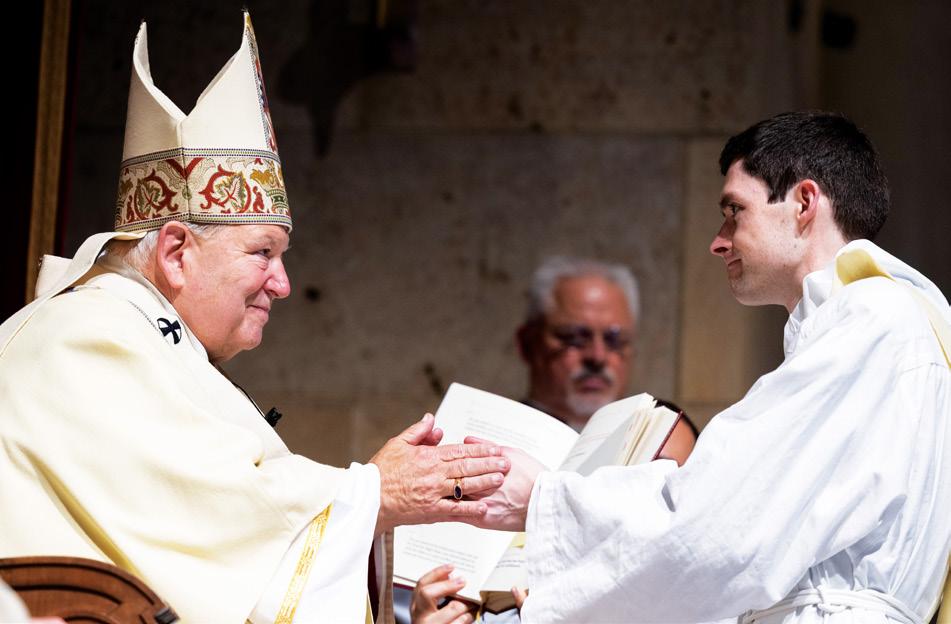
the Rite of Ordination for Father Sebastian Spencer, right, and the other five ordinands, Archbishop Hebda receives the Promise of the Elect from each of the men.
tutelage in the spring of 2025. She traveled from Bismarck to pray for him at his ordination.
“He was so committed, so intentional in the way he served us,” Martinez said.
Following the Mass, Charlie DeReuil and his wife, Kristi, were the first to be blessed by their son in a chapel dedicated to St. Joseph.
“I was not expecting and ready for the rush of grace and emotion at the words of his blessing,” Charlie DeReuil said.
Particularly, he said, the moment his son said, “Through the imposition of my priestly hands ...” made his son’s priesthood a tangible reality.
“Having our entire family together for this moment was a beautiful joy that I can’t put into words. I felt God’s love,” Charlie DeReuil said.
Father Spencer’s mother, Judi Spencer, said she felt relief for her son as his discernment culminated with a commitment to the priesthood. Once her prayers focused on whatever vocation the Lord wanted for her son; now they will be focused on his ministry and his desire to be a good and holy priest, she said.
One of Father Spencer’s brothers, Blaise, said it was a special day. “It’s pretty awesome,” he said. “I’m proud of him.”
‘The marble I will give my life on’
A busload of people — and others driving to St. Paul on their own — came from St. John Neumann in Eagan to support Father Hall, who ministered there while in formation for the priesthood.
Michele McMullen came with her husband, Gary. She said that in addition to his work at the parish, Father Hall was her spiritual director for the past year.
“He has really helped me grow in my faith,” she said, “by listening, by inspiring, by teaching.”
Family members of Father Hall, including his father, Michael, and youngest sister, Ava, said it is a joy to have a priest in the family. “I’m very happy for him. It’s a blessing,” Michael Hall said.
Father Hall said lying prostrate with the other five men on the floor of the Cathedral during the Litany of Supplication was a powerful moment for him.
“I kissed the marble,” Father Hall said. “This is the marble I will give my life on.”
Josh McGovern of The Catholic Spirit contributed to this report.
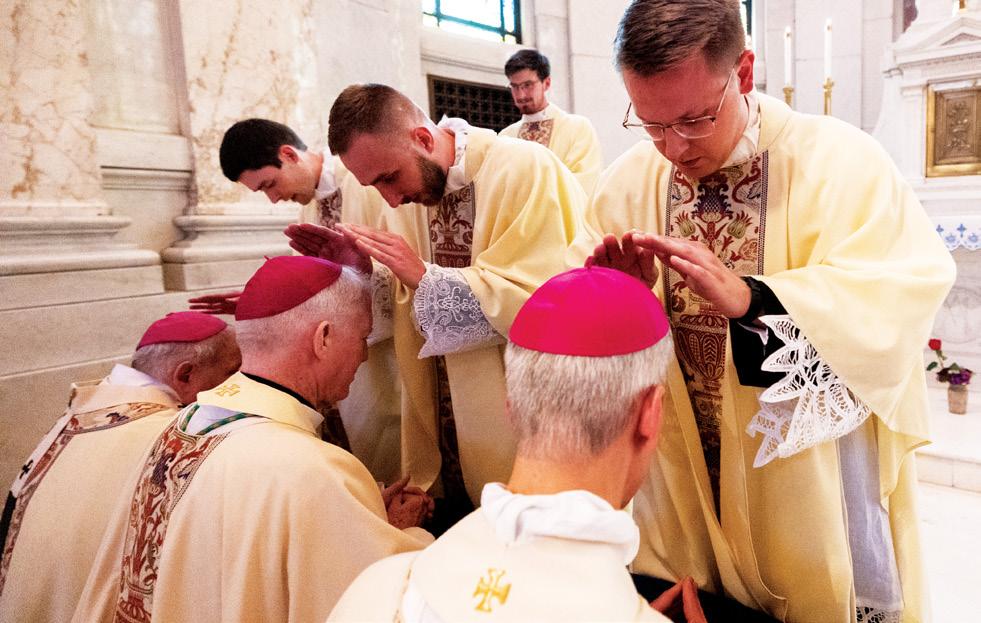
HEAVEN OPENED
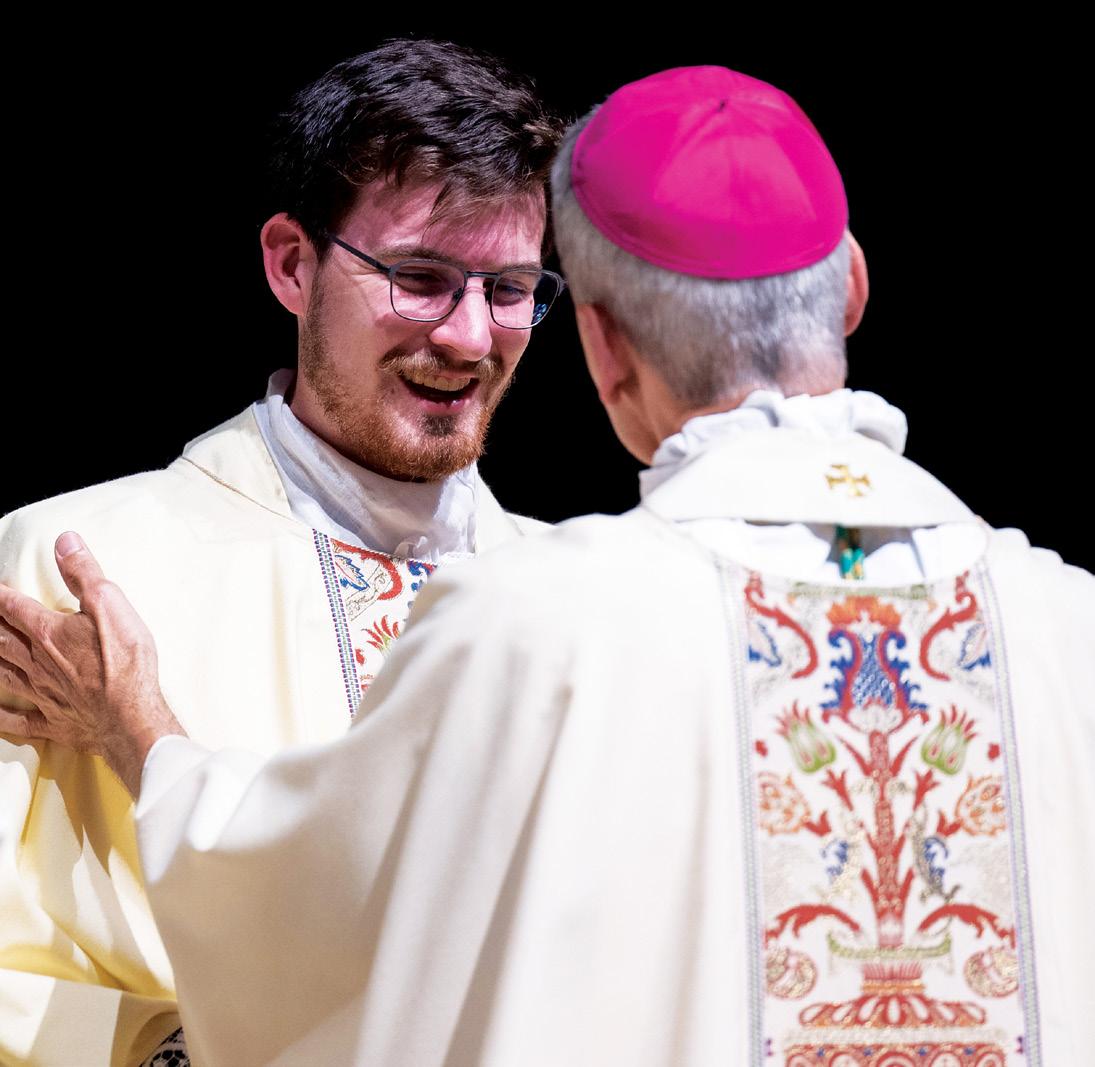
Romens, right, blesses Bishop Izen, following the ordination Mass. Second from right, Father Miller blesses Bishop Kevin Kenney, and, left, Father Spencer blesses Archbishop Hebda. In the background waiting to offer blessings is Father Lang. All six ordinands blessed the bishops and several priests.
“Heaven is opening up today,” Nancy Miller-Johnson, Father Dominic Miller’s mother, said before her son’s ordination Mass May 30 at the Cathedral of St. Paul in St. Paul.
She and Father Miller’s stepfather, Steve Johnson, have special memories tied to the Cathedral. They were married there in 2013. In 1972, Johnson was an altar boy at the Cathedral.
“My family converted to Catholicism when I was 7, and this is the church they joined,” Johnson said. “Now ... we’re back here, at Dominic’s ordination. This place has an important role in my life.”
On their way to the Cathedral for the ordination Mass, Johnson said he was overwhelmed with emotion. During weddings, including his own in 2013, he was able to control his emotions. But during that drive, he told his wife, “Today may be the day where we shed some tears of joy.”
His stepson has always been virtuous, Johnson said. He and Miller-Johnson married when Father Miller was about 12 years old.
“Even when he was 16, 17, I’d walk by his bedroom. I’d see him there kneeling and praying. I think his brother Chris was probably the biggest influence for him, being in seminary,” Johnson said. “It’s funny because his plan was to get married, play basketball, teach his kids basketball, you know, provide for his family.”
Before their marriage, Johnson had three children and Miller-Johnson had six. Father Miller’s father, Nancy’s first husband, Steven Miller, died in 2004 from cancer. Despite these difficulties, Miller-Johnson said that God “is so good.”
“Life is tough, but when you know that this is short-lived, heaven is our future,” Miller-Johnson said. “God loves us. It’s unstoppable, fierce love. It’s totally a grace. I have nothing to do with all the blessings that God has given us.”
Miller-Johnson said she feels her Catholic faith connected all the way back to the women of the Old Testament such as Esther, Ruth and Sarah.
“Now the priesthood,” Miller-Johnson said. “When Dominic hung up his garment, his vestments, all of a sudden, I was shocked by the unity of the Church and God’s incredible presence for us and love for every single one of us. He knows us that intimately … . What he’s asking me to give is to trust him, to smile through no matter what.”
Miller-Johnson recalled Father Miller leaving for his first interview with the seminary. He was dressed in nice brown shoes and dress pants. When she asked him what he was doing, he said he would tell her later.
“I didn’t know what was going on, (but) I knew he was a virtuous young man,” Miller-Johnson said. “The final decision to enter and be interviewed was a big one, and then to continue on … . God gave him strength, but then to just see his shoulders back and everything is stronger in his vocation. Now he seems very strong, and he has a huge life of sacrifice ahead of him, but I think he knows God is with him.”
Josh McGovern
DAVE HRBACEK | THE CATHOLIC SPIRIT
DAVE HRBACEK | THE CATHOLIC SPIRIT
During
Father
DAVE HRBACEK | THE CATHOLIC SPIRIT
Bishop Michael Izen greets Father Lang after the Investiture with Stole and Chasuble during the ordination Mass.
DAVE HRBACEK | THE CATHOLIC SPIRIT
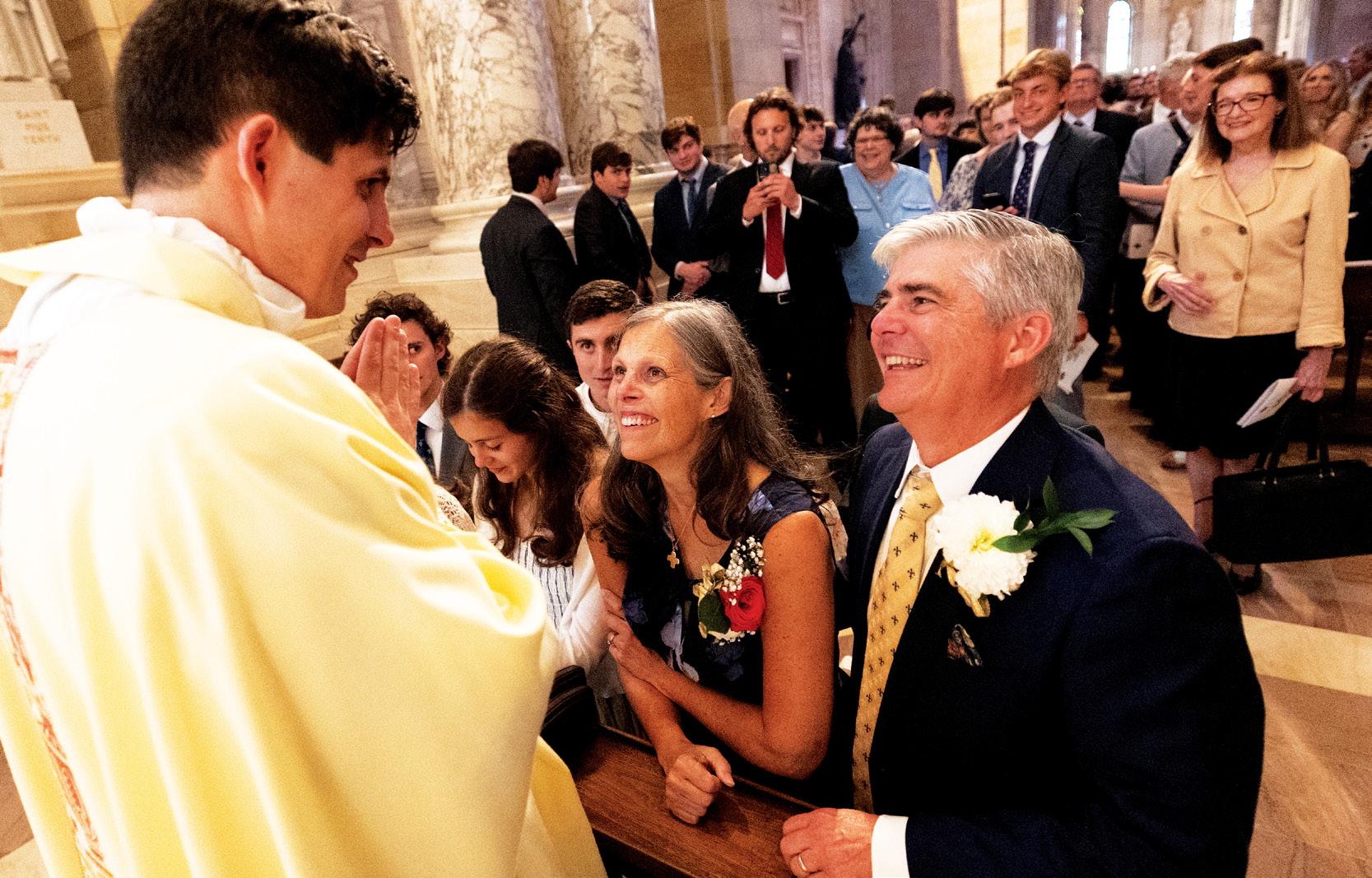
Father DeReuil II greets his parents Charlie, right, and Kristi after giving them and his six siblings a blessing following the ordination Mass.
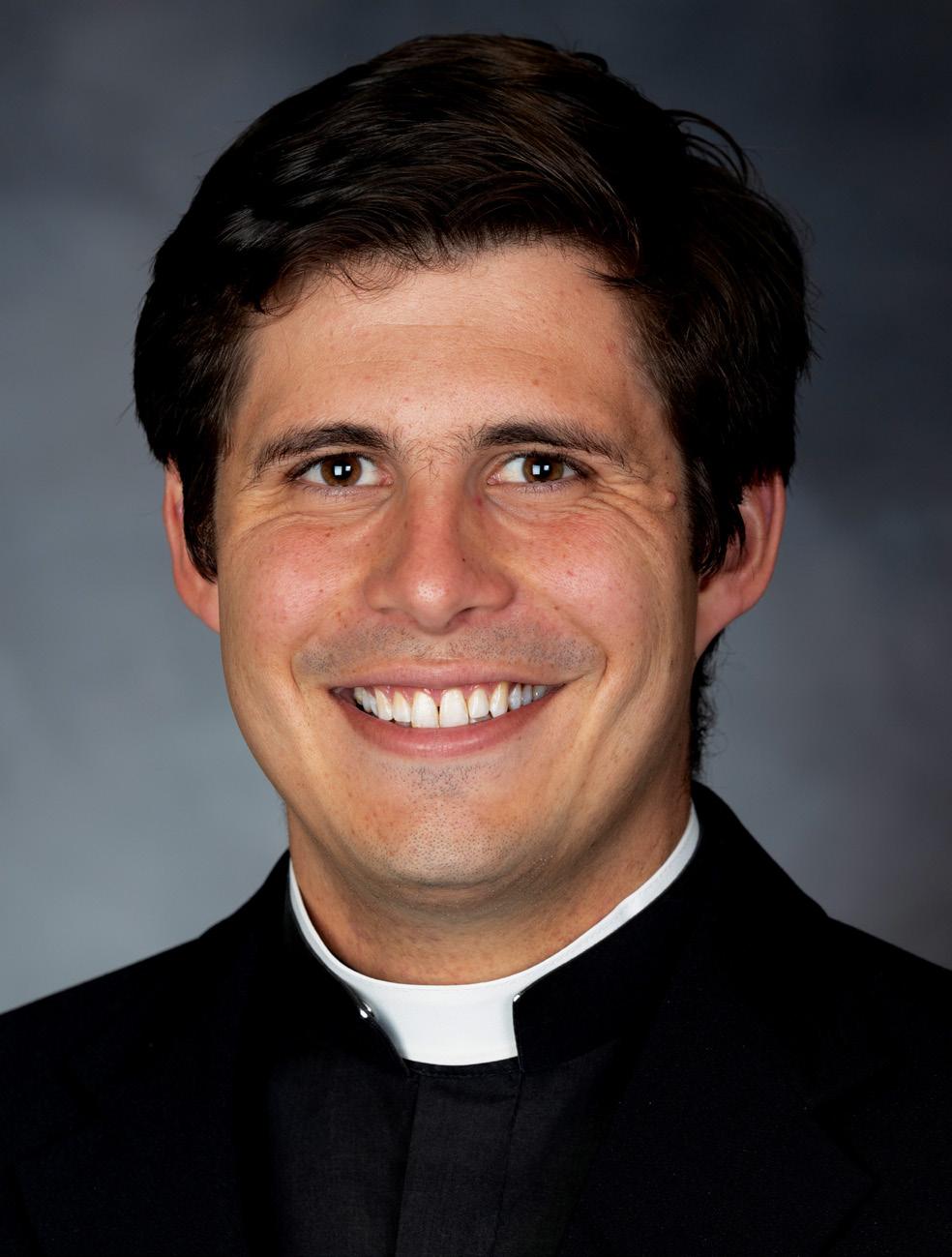
Father Charles DeReuil II
Daily Mass, family time with priests forge path to priesthood for Father DeReuil
By Dave Hrbacek
The Catholic Spirit
Father Charles DeReuil II offered a thoughtful summary about things in life that helped lead him to a priestly vocation.
Two of the most powerful factors were: time spent with priests throughout his life and four years of high school at Chesterton Academy in Edina (now Hopkins). His four years at Chesterton included daily Mass, philosophy and theology classes and a trip to Rome with classmates during his junior year.
He took those experiences to St. John Vianney College Seminary at the University of St. Thomas campus in St. Paul shortly after graduating from Chesterton in 2018. A desire to explore priesthood eventually turned into a conviction of God’s call to holy orders. He was ordained to the priesthood for the Archdiocese of St. Paul and Minneapolis May 30 at the Cathedral of St. Paul in St. Paul.
“I just really fell in love with the Church,” said Father DeReuil, 26, “and there was a realization that the most important thing I could imagine giving my life to was the Church. ... The priesthood became the clear path to pursue.”
From the time he was a child growing up in St. Paul, priests were regular visitors at the DeReuil home, where Father DeReuil lived with his six younger siblings. Father Joseph Johnson, then pastor of Holy Family in St. Paul, had gotten to know Father DeReuil’s parents, Charlie and Kristi, before they were married. They have been inviting the priest to dinner at their home ever since.
When Father DeReuil was 10, the family moved to West St. Paul near St. Joseph parish and school. Although Father DeReuil was homeschooled through eighth grade, he got to know the pastor of St. Joseph, Father Michael Creagan, who now serves as pastor of St. Michael and St. Mary in Stillwater.
“We would see Father Creagan out on walks, and the various associates (priests of the parish) we had out around the neighborhood,”
Father DeReuil said. “I always knew the priests who were at my parish and saw them as great examples of living the faith.”
After eighth grade, his parents enrolled him at Chesterton Academy. During what he called a “great experience,” he developed a fondness
for daily Mass at the school. Then came what he described as a “pivotal moment” during spring break of his junior year. He and about 70 classmates took a 10-day trip to Rome and Assisi. He saw St. Peter’s Basilica and learned that it took 120 years to complete.
“I remember being struck by just how long it took for St. Peter’s to be constructed and thinking that I would have never been able to be one of the first people working on the basilica knowing that it wasn’t complete,” he said. “I was just really struck by people’s willingness to sow seeds that they would not be able to reap the harvest of.”
He also noted that philosophy and theology classes at Chesterton were helpful in examining and wrestling with tough questions. He said these classes provided “a path to resolve my questions.”
While at SJV, he returned to Rome and attended the Irish College for undergraduate seminarians. He also spent time during his J-terms staying at the rectory at Holy Family, where he got to know Father Johnson more.
This friendship with Father Johnson led him to meeting and serving the Handmaids of the Heart of Jesus, some of whom live and serve in the Twin Cities.
Father DeReuil helped them with a renovation project and said he was “edified” by how tangible their relationship to Christ was. Working and praying with them were “really influential” on him and his journey toward the priesthood, he said.
Father DeReuil and his ordination classmate, Father Steven Lang, were in Rome for the funeral of Pope Francis and the election of Pope Leo XIV. As students at the Pontifical North American College, they were in St. Peter’s Square when the white smoke appeared and joined others who were celebrating the first American-born pope. He and others in the square were “awestruck and amazed” at the selection of Cardinal Robert Prevost as the next pope. He called it “a great occasion to realize how much more we should appreciate the Incarnation. If we’re amazed that the pope is one of us (American), that the pope is from the Midwest, how much more amazed should we be that God chose to become one of us? It’s a great occasion to
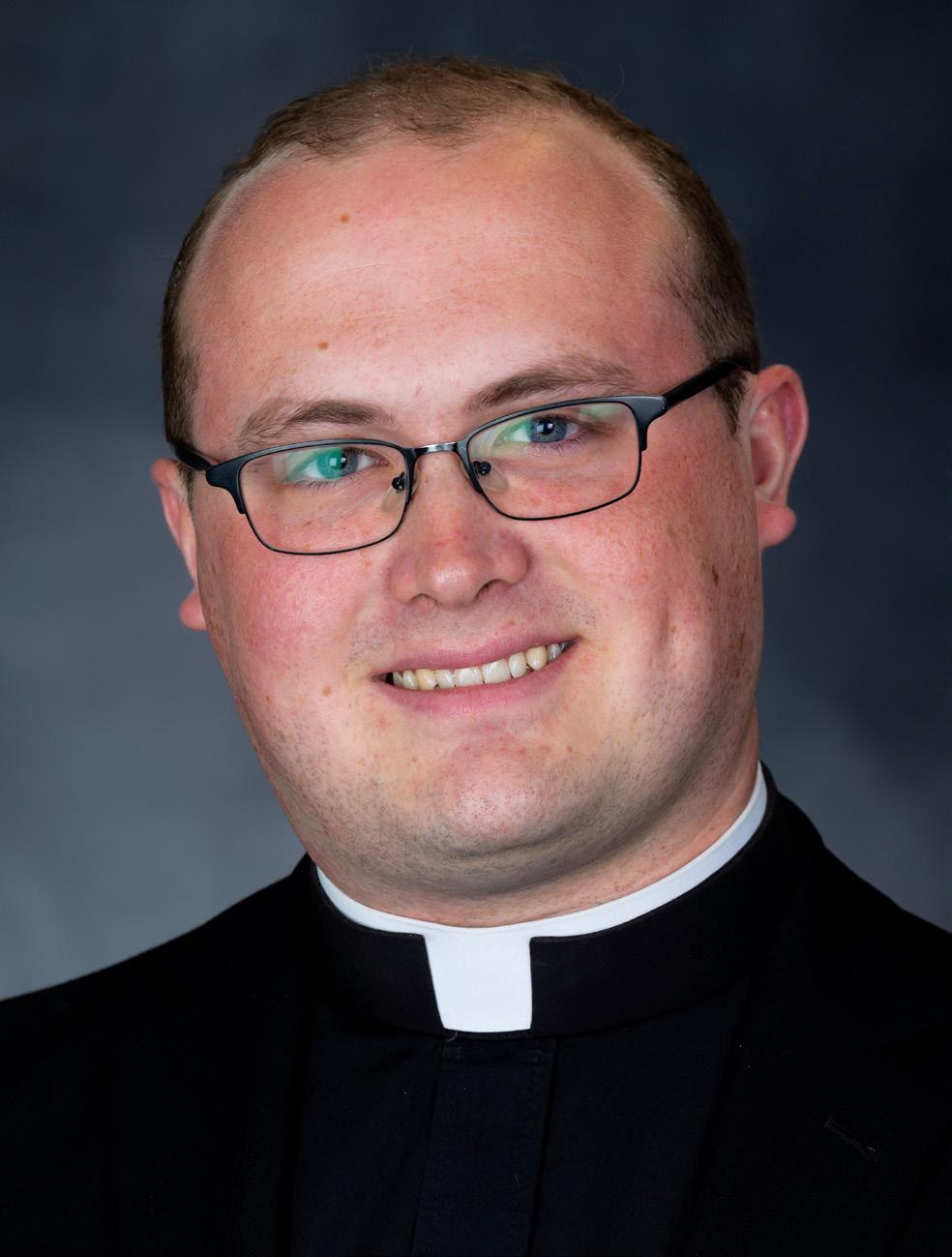
Father Alexander Hall
Father Hall’s journey to priesthood: ‘Received back into the arms of the Church’
By Joe Ruff
The Catholic Spirit
Father Alexander Hall’s road to the priesthood included deeply questioning the faith he grew up with before prayerfully encountering Christ’s love, peace and a call to ministry.
“I received this really powerful grace to just acknowledge (that) if God exists, if he is who he says he is, then everything in my life needs to be ordered around that fact,” Father Hall, 31, said on the May 22 “Practicing Catholic” radio show.
That encounter — the second of two prayerful moments that Father Hall said occurred after he began his return to the Church and had gone to confession — is part of the excitement he feels about sharing the sacraments with the faithful as a priest.
“To be able to offer to people that encounter with the mercy of God (during the sacrament of reconciliation) is something I’m looking forward to,” Father Hall said as he prepared for his May 30 priestly ordination at the Cathedral of St. Paul in St. Paul. Archbishop Bernard Hebda presided at the 10 a.m. Mass.
Telling his story on the radio show and in an interview with The Catholic Spirit, Father Hall said he grew up in the Twin Cities, the oldest of Michael and Kelly Hall’s five children, first on St. Paul’s west side and then in Vadnais Heights, all while belonging to Assumption in St. Paul. His father discerned with the Trappists before marrying and encouraged his two sons to be open to the Lord’s call as priests.
“It interested me as a kid,” Father Hall said. “He would just say to us guys, ‘The Lord might be calling you to be a priest.’ Maybe you’d be a religious, maybe a Trappist, like I was thinking about, maybe Benedictine, maybe a Jesuit or Dominican or Franciscan, maybe a diocesan priest, like Father (Jon) Vander Ploeg, who is a close family friend of ours.”
But Father Hall’s faith was challenged as a senior in high school. He began questioning God’s authority and sought morality through philosophy, which he felt had more integrity than “avoiding the stick of hell” and desiring “the carrot of heaven,” Father Hall said. In effect, he was an atheist, the deacon said.
“After trying to seek out that principle for right and wrong, I found myself pretty far afield,” Father Hall said. “Philosophy is not going to always lead away from faith. But what I
was doing was trying to seek out these answers with philosophy without any kind of guardrails.”
Until a cousin invited him to a retreat that he didn’t want to attend, during college at the University of Minnesota in Minneapolis.
“I have too much homework,” Father Hall told his cousin. “He just called me out. He’s like, ‘No, you don’t. You don’t have too much homework. And you have all this Sunday afternoon to work on homework if you need.’”
His cousin knocked down all other excuses: Too late to sign up, not enough money, no desire to be there.
“I went expecting ... a nice weekend in the woods. Instead, I was given a schedule,” Father Hall said, smiling. But the retreat led him to encounter his own emptiness, which he realized could not be filled with academic degrees, learning multiple languages or developing more friendships.
And then — during Eucharistic adoration at the retreat — “the grace of faith that I was given in baptism and confirmation was, like, revitalized in a kind of powerful way,” Father Hall said. “(W)ith that faith, I could say that I knew God existed. Jesus is Lord. He founded this Church that actually does have the authority to speak into my life and that I’m a sinner and I need to repent.
“I realized I had to go to confession.”
In prayer, the Holy Spirit seemed to say he should seek the sacrament of reconciliation with a specific priest who was there, Father Hall said. But it had been six years since his last confession, and he was determined not to see that priest in the confessional because he would see him the very next week, Father Hall said.
The Holy Spirit insisted, however, and “it was a wonderful experience, as of course, you can imagine. Just to be received back into the arms of the Church with the mercy of the Father, so clearly conveyed” by the priest, Father Hall said.
“For me, that was an encounter with a person — an encounter with Christ — mediated through these people on the retreat, mediated by” the priest, Father Hall said. “And even in the moments when I’ve been in philosophy classes or theology classes or in my personal struggles, when I’ve said, ‘Gosh, what am I doing? Is this all true?’ I still think back to that encounter, about a decade ago now, and I realize I cannot
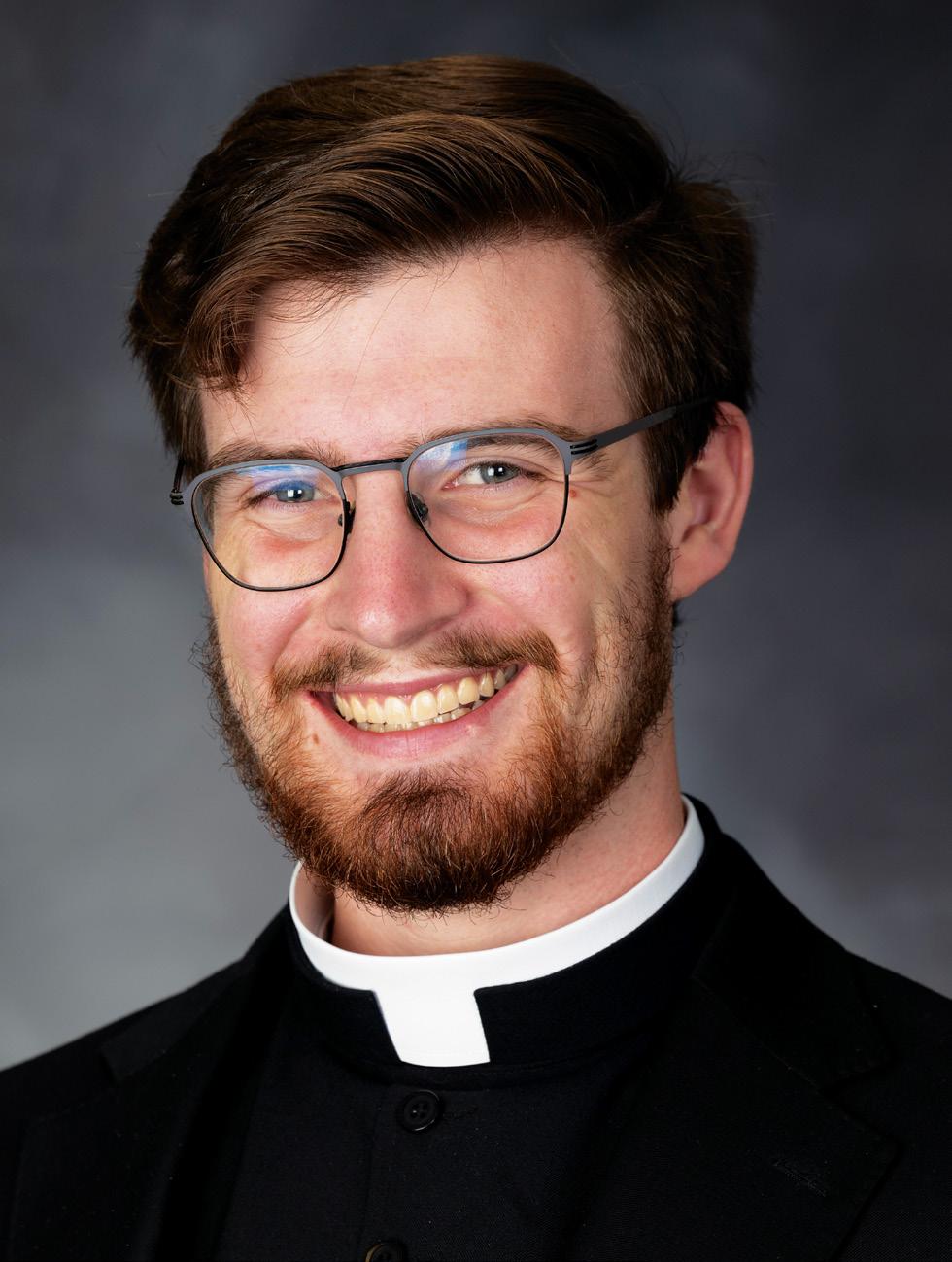
Bible reading contest paved a path to priesthood for Father Lang
By Dave Hrbacek
The Catholic Spirit
God used Jimmy John’s to kick off the path to a priestly vocation for Father Steven Lang.
When Father Lang was 10 years old, he was in a religious education class in Illinois where his family was living at the time. There was a competition for the greatest number of hours reading the Bible for each grade level. The prize for first place was a meal at Jimmy John’s for each member of the winning class.
“So, I started reading my Bible every day, thinking about Jimmy John’s mostly,” said Father Lang, 26. “But, slowly, it became more habitual.”
He started a commitment of reading the Bible for a half hour every day. He chose the Book of Samuel in the Old Testament and read in the first chapter of 1 Samuel how Samuel’s mother, Hannah, had prayed for a child. She went on to promise that if the child were a son, she would give that son to the Lord. Hannah did bear a son, Samuel, and brought him to the priest Eli in fulfillment of her promise to the Lord.
Father Lang was struck by that story and felt “great peace and joy.” It ignited a desire to grow in holiness and to become a priest someday.
“I remember saying to myself, ‘If something’s going to give me this much peace and joy, how could I say no to that?’” he recalled. “I remember running out of my room. I couldn’t stop smiling. I go up to my mom and she sees me with this smile.”
She wasn’t sure what his smile meant. At first, he said, she wondered if he had done something wrong and was trying to hide his guilt with a smile.
No, he told her. “I got the calling, I got the calling,” he recalled saying to her. She still didn’t understand. “I remember saying, ‘Mom, I think God is calling me to be a priest.’”
That message got through to both of his parents, Scott and Joanie, who have supported Father Lang throughout his journey to the priesthood, he said.
So, what happened with the Bible reading contest? Did Father Lang win a free Jimmy John’s meal? No. His fifth-grade class did not prevail. But that’s OK with him. He has told this story numerous times and now has put the experience in perspective.
“Inevitably, everyone asks, ‘Did you win?’” he said. “I always respond, ‘You know, I think I got
something a little better than Jimmy John’s.’”
Father Lang said the path toward priesthood after that was “really gradual.” The next important step came when his family moved to Minnesota in 2015 and settled in Stillwater, where they joined St. Michael. It was the same time that now-Bishop Michael Izen was appointed pastor of the parish. About a year after moving, Father Lang started going to Eucharistic adoration regularly. During that time, he got to know Father Jake Anderson, who was ordained in 2015 and was assigned to St. Michael and St. Mary right after ordination.
“We were very blessed to have both Bishop Izen and Father Jake Anderson,” Father Lang said. “I just wanted someone to talk to and let them know that this (priesthood) is my desire and I want to know how I can keep pursuing this.”
That brought him to Father David Bloom, who was serving as vocations director for the Archdiocese of St. Paul and Minneapolis at the time. Father Lang went to different events like discernment retreats and Andrew Dinners for men considering priesthood. The peace he first felt at age 10 “kept on remaining there,” he said. “So, it just seemed clear. Yeah, why would I turn away from that?”
Right after high school, he enrolled at the University of St. Thomas and joined St. John Vianney College Seminary on the St. Paul campus. He double majored in philosophy and Catholic Studies and thought he would go to The St. Paul Seminary after graduation.
But that path changed. Instead of moving across campus to the major seminary, he ended up being selected by Archbishop Bernard Hebda to study in Rome at the North American College. For most of his time at SJV, that wasn’t on his radar.
“The first three years of SJV, I did not want to go (to Rome) at all,” he said. Then, he volunteered for Totus Tuus at St. Michael after his junior year and ended up serving in this summer ministry for youth in the archdiocese with one of his classmates, who was unaware of his aversion to studying in Rome.
“He says to me, ‘Steven, how are you? And have you ever thought of going to Rome?’” Father Lang recalled. “I laughed in his face.” Then, a strange thing happened: The peace he
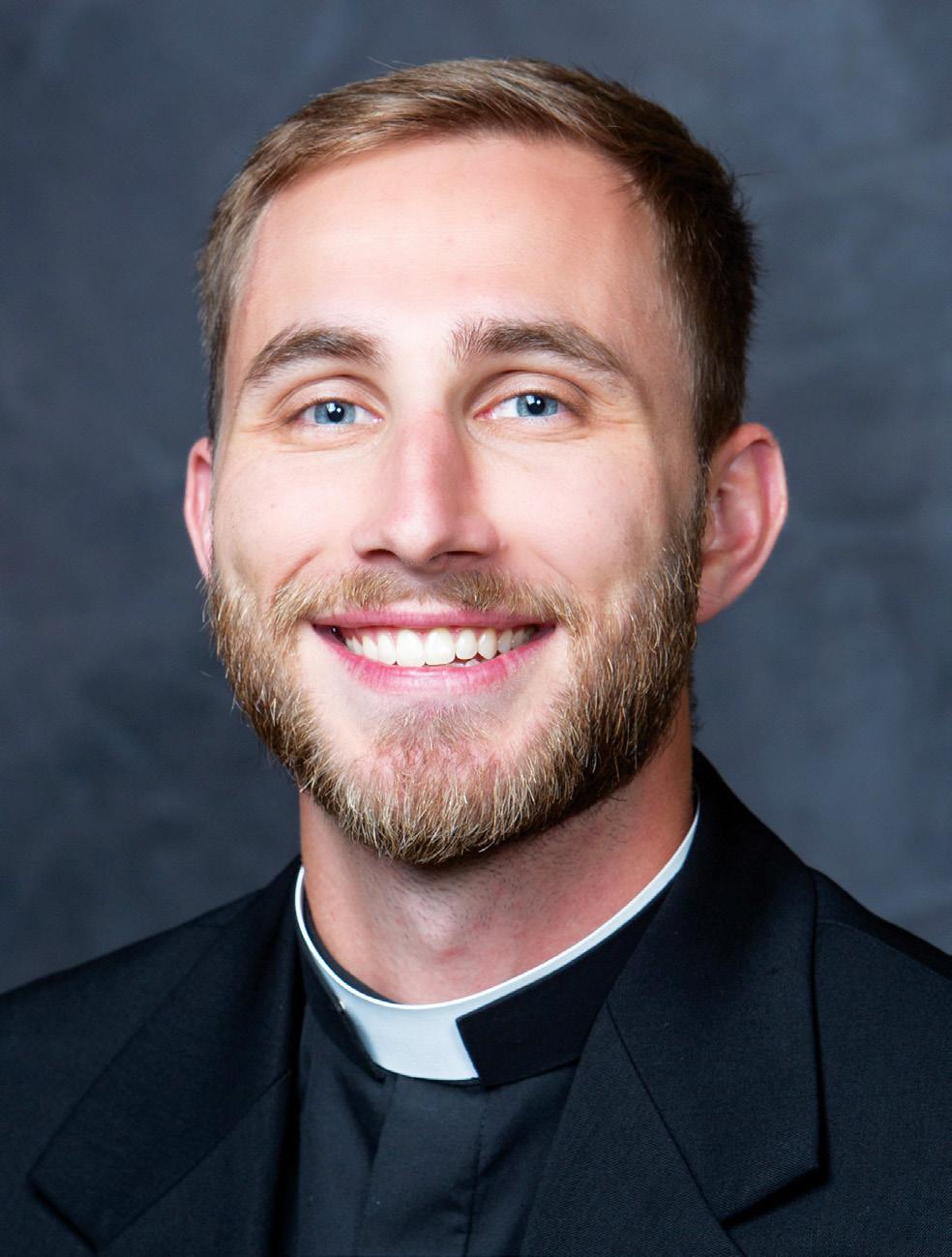
Father Miller prayed for trust: ‘I know God has a purpose for me’
By Josh McGovern The Catholic Spirit
Father Dominic Miller never believed he’d be a priest. In high school and college, he was convinced he was meant to be married. As the the fifth of six children, he grew up attending Holy Family in St. Louis Park. Holy Family Academy was his elementary school where he played basketball against Father Joe Wappes, parochial vicar of St. Joseph in West St. Paul.
“Soon we’re going to be on the same team,” Father Miller joked.
Growing up, Father Miller’s brother entered seminary and spent four years there before discerning out. Seeing his brother in seminary had a huge impact on Father Miller’s own discernment. He looked up to his brother and seeing him in seminary made Father Miller believe he could do that, too.
But life went on, Father Miller, 29, said.
“As I got later into high school and then earlier into college, I really convinced myself that I was supposed to be married and I wasn’t really open to the idea of priesthood anymore,” Father Miller said during a “Practicing Catholic” interview that aired May 22. “That was alongside me living a life of sin and not really following the Lord.”
Attending the University of Mary in Bismarck, North Dakota, he got a degree in business administration. He chose his degree because he felt it would be helpful in supporting a family.
In his first year, though, he was invited to a Bible study through the Fellowship of Catholic University Students (FOCUS). This was a major turning point for Father Miller.
“It was an athlete Bible study — other men wanting to grow in their faith, reading Scripture, each of us encouraging each other to go to Mass, daily Mass, stop in the chapel, pray, and it just became a snowball effect,” Father Miller said. “All of a sudden, I realized I have to stop living this kind of ‘it’s-all-about-me’ lifestyle and really take my faith seriously and try to love God and love my neighbor.”
Father Miller eventually graduated college with a girlfriend and a job lined up.
Then came 2020.
“I graduated in December 2019 right before COVID(-19),” Father Miller said. “Long story short, my girlfriend and I eventually broke up. It was the right decision for both of us, but it was hard, and then because of COVID and the
economy, I could not get hired on to my job.”
During college, Father Miller said he developed a strong daily prayer life. Wondering where his life would lead him, he prayed often.
“I was praying the rosary a lot during those tough spring, summer months of 2020 and asking Mary, ‘Hey, Mother, I know God has a purpose for me. I don’t know what his plan is right now, but please just give me trust in him. … I prayed that intention every single day, and then also, like silent prayer and then visiting (a) 24/7 chapel nearby, and all of a sudden, thoughts of seminary started popping into my head.”
His brother had read “The Priest Is Not His Own” by Venerable Fulton Sheen. The book was on his family’s bookshelf at home. Father Miller took it off the shelf convinced he would read it and confirm that he was not supposed to be a priest.
“The exact opposite happened,” he said. “I read it, and as I read about the priesthood, desires started welling up in me to be a priest. It was then where I was like, ‘OK, Lord, there’s definitely something here. I will apply to seminary. I don’t know if you want me to be a priest, but I’ll go to seminary if they take me.’
“Once I had that acceptance and that willingness, this deeper peace that I had never really experienced came to me and I’ve had it since,” Father Miller said. “(T)here’s been trials and ups and downs, but here we are … . I’m going to be a priest.”
For any man considering the priesthood, Father Miller’s advice is to frequent the sacraments, especially Mass and reconciliation.
“Those will keep you attached to the vine,” Father Miller said.
He also suggested daily prayer to nurture a relationship with God.
“Learn how he speaks,” Father Miller said. “Listen to him.”
Father Miller explained that God, in his divine wisdom and goodness, “allows us to participate in his plan of salvation.” In the Mass, everyone present can participate in Christ’s sacrifice to the Father and the union with the Holy Spirit, Father Miller continued.
“(As a priest) you’re just at the epicenter of the participation that God asks for us,” Father Miller said. “You get to lead the people of God to participate in Christ’s sacrifice. You could pray about that for the rest of your life.”
On May 30, Father Miller was ordained a priest at the Cathedral of St. Paul in St. Paul.
Father Steven Lang
Father Dominic Miller
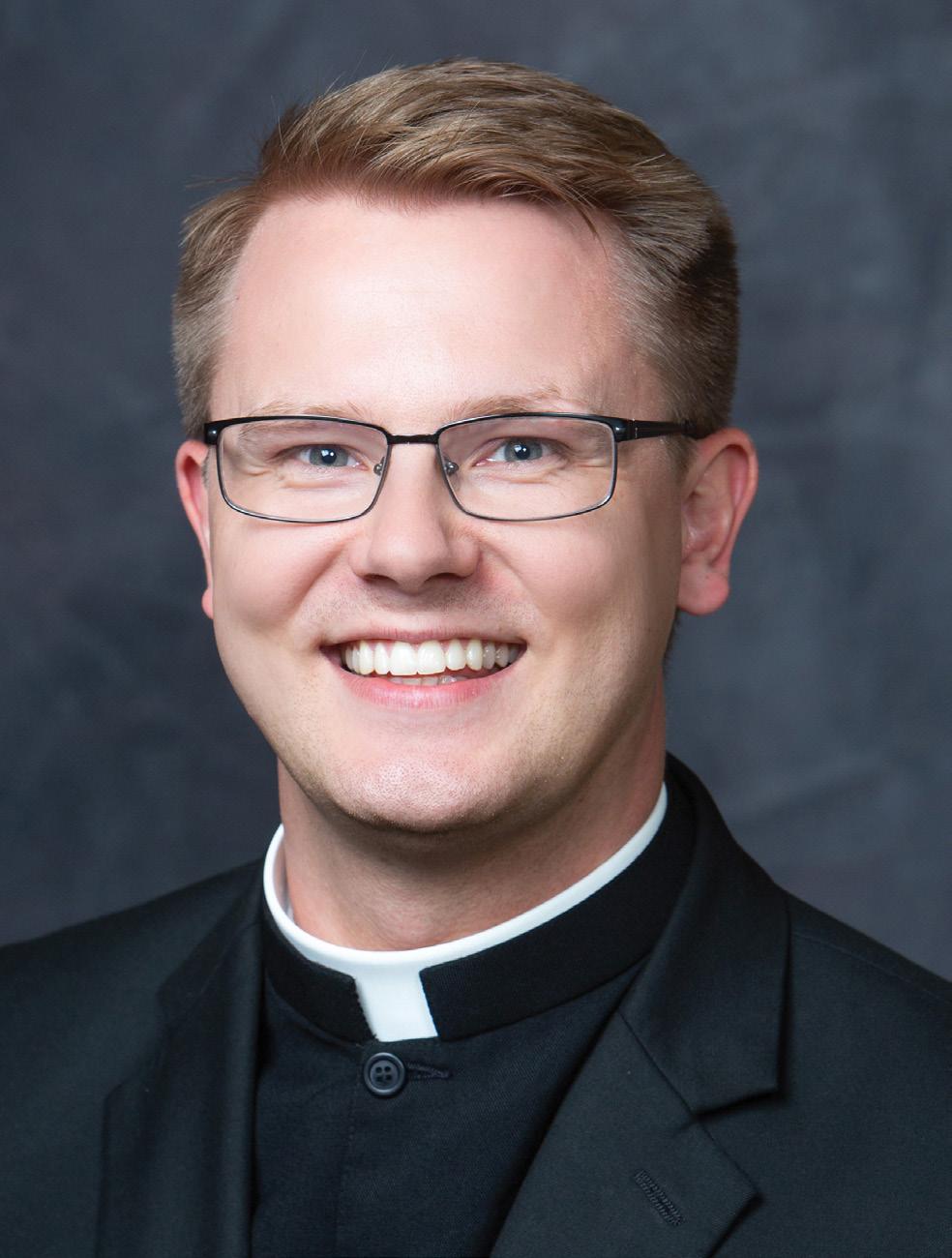
Father
Romens: ‘You’ll
never be
worse off for saying yes to God’
By Josh McGovern The Catholic Spirit
Father Peter Romens, ordained a priest
May 30 at the Cathedral of St. Paul in St. Paul, connected his civil engineering degree from the University of Minnesota Duluth and his brief career as a bridge designer in Wisconsin to his new vocation of priesthood. It wasn’t until he was attending The St. Paul Seminary in St. Paul that he learned one of the pope’s official titles: Pontifex Maximus — Latin for “supreme bridge-builder.”
“I always liked math. It made sense,” Father Romens said in a “Practicing Catholic” interview that aired May 22. “The beautiful thing about the Catholic Church is it makes sense. Everything’s coherent. Everything fits together.”
With a group of people, Father Romens even visited a bridge in Wisconsin he designed.
“We took a bus with the archbishop and every single seminarian … and we drove over my bridges, and we’re all still here,”
Father Romens joked.
Father Romens, 29, is the sixth of seven children. He was born in Wisconsin but grew up attending St. Paul in Ham Lake. He was homeschooled in elementary school and attended a charter school for middle and high school.
While working in Madison, Wisconsin, Father Romens attended daily Mass at a church in the area that offered it. The church also had perpetual adoration. He went to Mass after work and prayed a Holy Hour before going home each day.
“During my time in Madison, it became really clear that I wanted to be a priest,” Father Romens said. “I started to watch the priest say Mass.”
Father Romens watched an older priest who was feeble. The priest took his time with every movement. He “was just so careful and reverent,” Father Romens said.
Father Romens said he thought it was beautiful, and he thought to himself, “I would love to be a man like him someday.”
As a priest, Father Romens hopes to bring others to Jesus and Jesus to others. This is the priest’s job, according to
Venerable Fulton Sheen, Father Romens said.
There is a “mediation inside the Mass and outside the Mass, of bringing the love of God or revealing the love that God has for people ... and inviting them to respond to it wholeheartedly,” Father Romens said. “In so many different ways, priests get to do that. Primarily and most greatly in the Mass, but then in the little moments: talking to people in the grocery store, being on somebody’s deathbed, being with a family right after somebody dies, baptisms, just seeing the breadth of the ways that you can share God’s love for people with them.”
Being in seminary has changed Father Romens’ perspective about the priesthood. He said that in seminary, he’s been able to see the human side of being a priest.
“I’m used to seeing priests on Sundays, priests in the confessional, and even in college and after college, (at) young adult events and things like that, but I’ve also been with priests on deathbeds and seeing the intimate moments behind the scenes,” Father Romens said.
For men who may be discerning the priesthood, Father Romens offered this advice: “Stop thinking about it, start praying about it.”
He explained this thought, that God does the calling. In his own experience, he wasn’t sure if God wanted him to be a priest, but he knew God at least wanted him to be a seminarian. There is a difference between being called to seminary and being called to the priesthood, he said.
“So, I said yes to that,” Father Romens said. “We just had lunch with a priest today who’s been a priest for almost 75 years. His advice was, ‘God does the calling. Say yes.’ Whatever he calls you to do. … If God wants you to be a seminarian, say yes to that. If God doesn’t want you to be a seminarian, say yes to the next thing, because only in doing what God wants us to do will we be happy. If we fight God, we’re going to be miserable for the rest of our lives, and you’ll never be worse off for saying yes to God.”
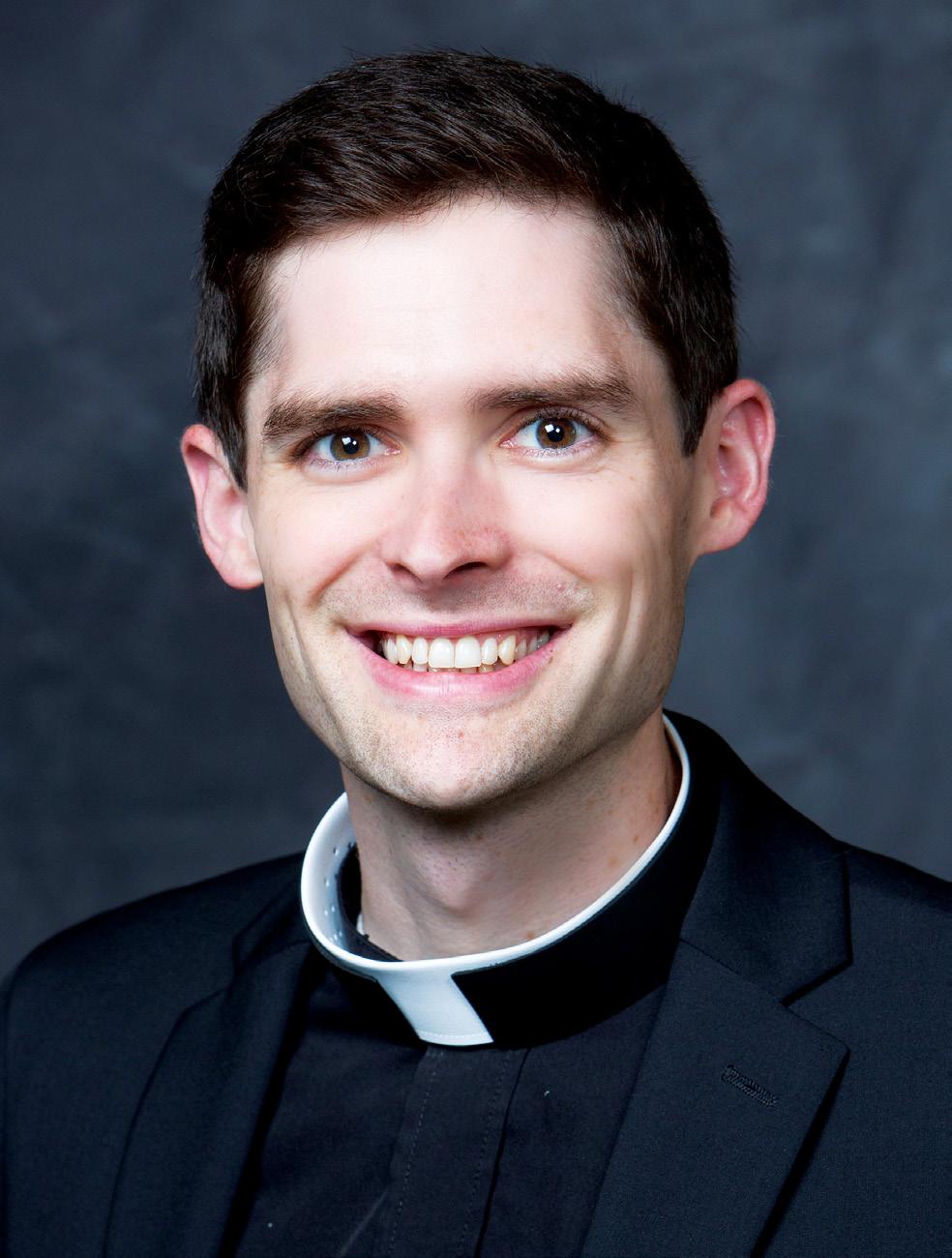
Father Spencer: Discerning a call to priesthood in the silence
By Joe Ruff The Catholic Spirit
Encouraged by his parents, blessed by priestly role models and a desire to seek God’s will in silent, attentive prayer led Father Sebastian Spencer to the priesthood.
“Part of it was just the Lord had to bring me into a much more substantial relationship with him than I had when I entered college,” Father Spencer said as he shared his story with The Catholic Spirit and in the May 22 “Practicing Catholic” radio show.
“And then just spending time with the Lord in silence in the adoration chapel” over the course of three years while studying biology at the University of Mary in Bismarck, North Dakota, he said.
At first, he asked the Lord to help him pursue his own ends, said Father Spencer, 28. Near the end of his last year at the university, he wondered if he had stopped to ask God’s will.
“The Lord brought me there, drew me more into the silence to give me an opportunity to see (that) I’m talking a lot (and then) giving him the opportunity to speak. He brought me to the point where I could ask that question and really be open to the answer.”
Gradually opening his will to conform with God’s bore fruit. For the first time, he felt strongly called to the priesthood, Father Spencer said, which ultimately led to his ordination May 30 at the Cathedral of St. Paul in St. Paul.
His parents, Dr. Paul and Judi Spencer, and his six younger siblings were excited for ordination day, Father Spencer said. Growing up, they often prayed as a family, seeking the Lord’s will for future vocations, future spouses, “whatever the Lord was calling us to,” he said.
As parishioners of St. Charles Borromeo in St. Anthony, the family was blessed with good priests as role models, Father Spencer said. In addition, his great uncle, the late Father Oliver Dufresne, was a priest of the archdiocese, and Father Tom Wilson, pastor of All Saints in Lakeville, has been like an uncle in the family, he said.
“My life was very much informed by the sacramental life of the Church, especially
Mass and the sacrament of reconciliation,” Father Spencer said.
He also was interested in the sciences and had a desire to help people, Father Spencer said. As high school graduation drew near, he decided to study at the University of Mary.
After graduating from the university with a bachelor’s degree in biology, he worked a little more than a year as a medical assistant at a family clinic in White Bear Lake that includes his father. He brought patients to the exam rooms, took their pulse and blood pressure, updated their medical history, drew blood, gave vaccinations, and helped the doctors in other ways.
He was inspired anew by his father’s deep faith and ability to see patients’ needs beyond their medical conditions. “Hearing the witness of other people ... telling me of how he impacted them or their families, and their great affection for him and the care that he provided for them,” Father Spencer said, was something he wanted to emulate.
He entered The St. Paul Seminary in St. Paul. “With each passing year of seminary, I have increasingly felt that the Lord was calling me to the vocation of priesthood,” Father Spencer said. “I have experienced a sense of deep peace about being a priest, which has continually grown.”
Father Spencer said he looks forward to celebrating the sacraments, particularly reconciliation, so he can share the mercy and love of Christ with which he has been blessed.
He also wants to help Catholics understand and bear witness to their faith, live in real relationship with the Lord and share the good news of the Gospel, Father Spencer said. “Especially amidst a very worldly culture that discourages us from thinking about God or the ultimate meaning of our lives,” he said. “I think that there is also a need to help Catholic parents effectively share their Catholic faith with their children.”
As men might be discerning priesthood, Father Spencer said, he would encourage them to spend time with the Lord in prayer every day “and to regularly spend time in Eucharistic adoration. I would also encourage him to have periods of silence in his time of daily prayer, so that he can better notice how the Lord is speaking through the desires of his heart.”
Father Sebastian Spencer
Father Peter Romens
FAITH+CULTURE
Planting big dreams, 1 dahlia at a time
By Christina Capecchi For The Catholic Spirit
Maria Czaia still can’t believe that passion and profit intersected for her, allowing the 34-year-old stay-at-home mom to become a flower farmer. But she knows who to credit and she thanks God daily for the chance to pursue this dream with her husband, Nathan, who recently quit his job to join the business (florasgardenmn.com). Flora’s Garden now sells dahlia tubers nationwide and supplies tulips, peonies, ranunculus, dahlias and other flowers for wholesalers and DIY events.
Last month the parents of six, who belong to St. Agnes in St. Paul, broke ground on a house they’re building on four acres purchased from her parents’ lot in rural Stillwater.
Q How did Flora’s Garden come to be?
A I’d get depressed in the winter. I wanted something alive, just for me, that didn’t have anything to do with motherhood. I’d seen a friend who had a grow light and grew seedlings in the winter to later plant in your garden. I started that and it just snowballed. I basically got a botany degree, reading anything I could get my hands on — books, YouTube videos. You can grow dahlias underground, dig up the tubers in the fall, store them all winter in a cool place, then divide them and ship them across the country in the spring.
There is a wild frenzy for dahlias. You gotta have them all — it’s like Pokémon cards, there’s all these varieties. We have a yearly sale, on Jan. 1, and the dahlias sell out within seconds.
Q That was your big opportunity?
A I knew. As soon as I saw that, I thought: This would be the most amazing life for our family! Can you imagine being flower farmers? And my husband was burning out on his job and wanted to stay home with us.
Then I was like a dog with a bone, researching all the varieties and how to grow them best. I started using social media and attracting dahlia lovers and hyping up our sales to set us up for success. Those dahlia sales are our lifeline. As soon as I saw an opportunity where I could provide real income for our family, I was all in. Thank God for my parents letting us grow 1,600 dahlias at their house last year!
Q Then came the breakthrough: You bought 4.3 acres of your parents’ property to build a house and grow the business.
A Yes. To go full-time with this, we needed land. This summer we’re increasing to 2,000 dahlia plants, and we’ll probably double it next year.
Q It all came together! Does it feel like a miracle?
A Yes! I still feel like that every day — so blessed! It had to have come from God! How else would something like this even come about? God knows the deepest desires of your heart. I couldn’t have even dreamed of something like this. It’s totally a miracle.
Q What’s life like as a flower farmer?
A Every single day we think about dahlias. They’re a year-round crop, we call them. You’re caring for them all winter. It’s been a bit of a learning curve. Now I have trouble turning it off. It’s so cool to see Nathan is thinking about them every day, too. We can grow these so well, and we know so much now. It’s kind of surreal. We’re becoming masters.
Q As your house is being built, you’re still living in Oakdale.
A We’re basically doing everything at my parents’ property right now. We get there and we have a two-hour window and try to work as fast as we can, with a 4-year-old and a 1-year-old. It’s very interrupted work.
Q You shared a map of your land online and it felt profound, not just practical. Is it more than a map?
A Absolutely. It feels like a legacy, knowing we’ll have this safe haven for our kids. We are dying in this house. When I pull into my parents’ driveway, I feel so peaceful.
Q It’s a beautiful homecoming, isn’t it?
A It really is. We looked at probably 30 houses over the last two years. So many people were like: “I don’t know why you’re doing this now. You have to find something in-between.” We looked and looked and prayed and prayed, and it just felt like this was the answer. God made it clear. There have been maybe 20 times when we thought there was an insurmountable obstacle, and then it’s like: “Oh my gosh! We can do it!” And then we have a week of joy and then the next obstacle comes. I have so many more gray hairs!
mites one year took over our whole field. We don’t use chemicals, so we have to get creative. You can buy fighting bugs to kill the bad bugs. We’re basically releasing a little army of insects. I really enjoy learning about that.
Q Tell me about one of the obstacles.
A Figuring out financing because our business is new. We’ve grown so quickly that we don’t have two years of taxes yet. We had to get creative. After exhausting all options multiple times, we started a novena to St. Joseph, the builder, and literally the next day, something we’d already tried was looked at in a different way and financing came through. The lender had said: “No, no, that’s not going to work.” And then she looked at it again and said: “Oh, yes! This works perfectly!”
Q Social media is bursting with nostalgic posts about recreating “a ’90s summer.” Do you feel that tug?
A Life was a lot slower when we were kids. I’m literally trying to recreate my childhood — I’m building on my childhood land. And I want to get a landline!
The kids are so much calmer when they get to be outside. You can see the shift.
Q Now you’re thinking like a farmer.
A There’s always something — whether it’s a virus in your plant or a pest. I’ve grown to really like the challenge of it. For instance, this spring we had gophers, and it was my whole personality. I ended up getting traps and trapping them in their tunnels. And then we had moles. Usually we have smaller pests — microscopic, like tarnished plant bugs. Spider
Q Does sinking your fingers into dirt feel like a prayer?
A Yes, 100%. It’s a prayer. You feel a shift in your soul. A lot of it feels like a sigh of relief — ahh, I love this so much, I’m so happy in the garden. Our goal is to be adding beauty to God’s creation. He created all of this, and we want people to see it and we love seeing it.
Q It’s deeply human work in an age of AI. That must feel good.
A Yes, we love that so much. We are really simple folks. No one can take our job. There are no shortcuts. And if you make a mistake, you have to wait a whole year to try again. It’s a year-long lesson.
Flowers aren’t a necessity. But people are always getting married and always celebrating something, and Catholics appreciate beauty. That has influenced us. It’s why I love flowers. The Catholic Church has always been the most beautiful with their art and their churches.
Q Does the whole enterprise feel Catholic somehow?
A Yes. I don’t think people without faith could do this leap. But we’re so strong in our faith and our marriage and our community. I think some people need their jobs for that security, and our faith in God has given us the courage to do this crazy journey. That alone feels very Catholic. We’re not afraid to just go for it.
It’s very freeing to just be like: “This other stuff doesn’t define me. The only thing that defines us is our Catholic faith. What do we want to do with this life that we’ve been given?” And this feels way better than anything else we could be doing. It’s a lot more fun.
Q How do you think this business will influence your kids?
A I think they’re going to have unconventional jobs. I don’t think they’ll have any interest in a 9-to-5 desk job. Seeing such a unique business, I think they’ll be in the same realm. I hope they learn hard work pays off.
Q What’s your go-to prayer?
A “Most sacred heart of Jesus, I place my trust in thee.” Another prayer we always pray as a family is: “Little Jesus, infant of Prague, help us financially.” I’ve said that every night since I was a kid. The Infant of Prague really helps with your finances.
Q And you’re not getting rich right away as flower farmers.
A Right now, it’s tight. It’s scary with Nathan ending his job, of course. We always make ends meet. We’re definitely scrappy. We always have old cars with over 200,000 miles on them. We were driving a mini-van with a duct-taped door for years.
Q What do you know for sure?
A I guess we’re flower farmers now! No matter what, we always have our faith. I know that for sure. It’s such a reassurance. No matter what happens, we have God and our faith, and I feel like we can do anything.
DAVE HRBACEK | THE CATHOLIC SPIRIT
Top 10 takeaways from a report on the 428 men becoming US priests in 2026
By Gina Christian OSV News
This spring, the United States will see more than 400 men ordained to the priesthood, both diocesan and religious.
What does the latest generation of priests in the U.S. look like, and what factors have shaped their vocation?
To find out, OSV News examined data from the Ordination Class of 2026 Study, conducted by the Center for Applied Research in the Apostolate (CARA) at Georgetown University.
The annual report, which CARA has overseen since 2006, is commissioned by the U.S. Conference of Catholic Bishops (USCCB)’s Committee on Clergy, Consecrated Life and Vocations.
Of the 428 ordinands asked to participate in the Feb. 12-March 20 survey, 334 (78%) responded to CARA.
As in previous years, the latest findings — announced by the USCCB in an April 21 press release — came ahead of the World Day of Prayer for Vocations, observed on the Fourth Sunday of Easter (April 26), which is also known as Good Shepherd Sunday in the Latin Church. The Gospel passage (Jn 10:1-10) for the Mass highlighted Jesus’ role as the Good Shepherd.
Here are the top 10 takeaways from CARA’s report:
1. Sixteen is the average age for first considering a priestly vocation.
About half of the survey respondents said they were between the ages of 3 and 16 when they first considered the priesthood, with another half between 16 and 51, for an average age of 16.
But that age was slightly higher for those about to be ordained as priests in religious orders, who were typically 18 when they first thought about the vocation. Half of that cohort was between 3 and 19 years old, and the other half between 19 and 39 years old.
More than one third (39%) of ordinands first contemplated the priesthood while they were still in elementary school, between the ages of 6 and 13.
2. The newest priests will mostly be in their early 30s at the time of their ordination.
The current class of ordinands will, on average, be 33 years old when they are ordained, with half between 26 and 31 years old, and the other half between 31 and 75 years old.
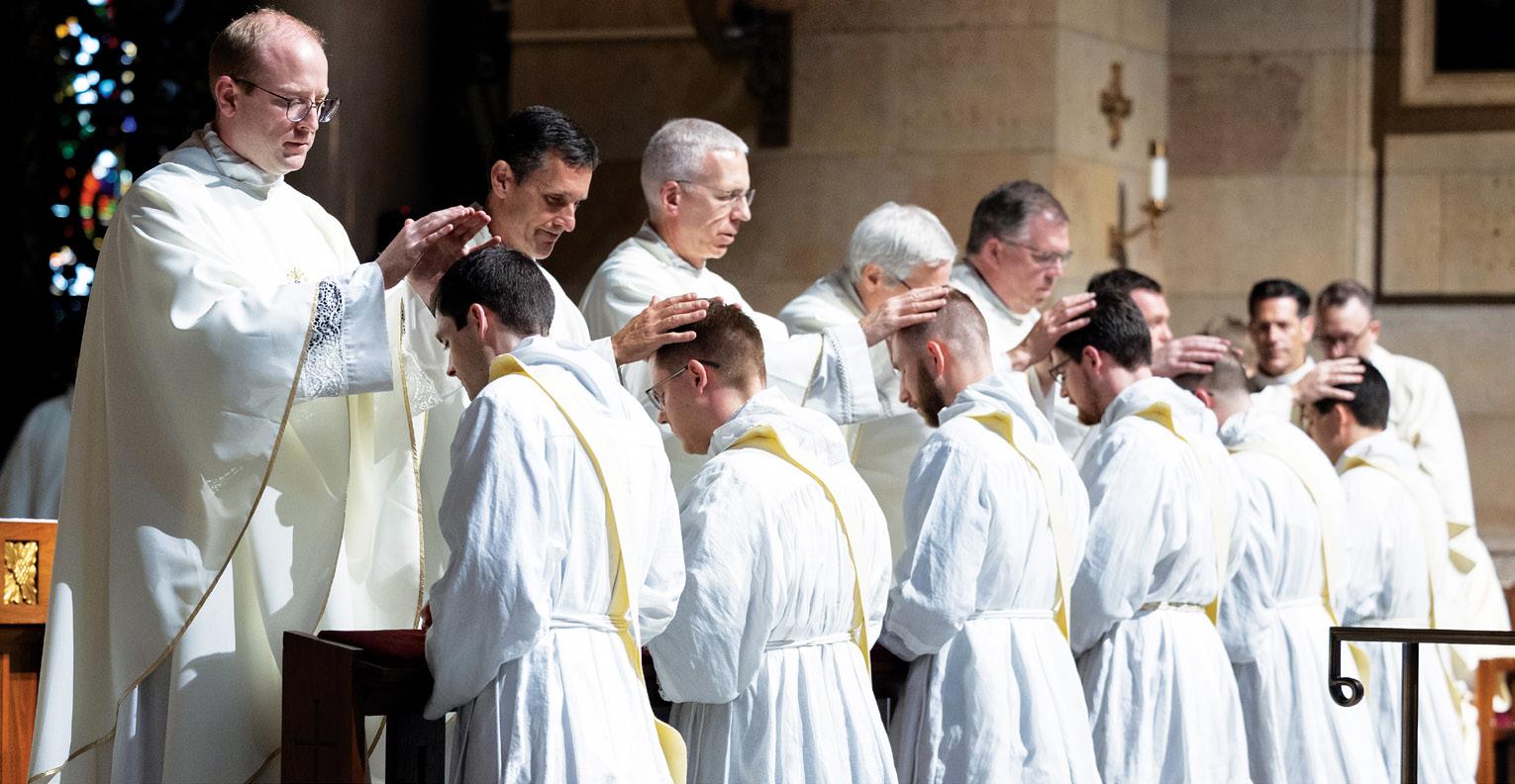
Almost half (49%) of this year’s ordinands are 30 years or younger, with 38% between 31 and 40 years old. The latter age group represents 59% of religious institute ordinands, in contrast to 33% of their diocesan counterparts — a difference CARA noted was “statistically significant.”
Most of the ordinands (62%) identified themselves as white, with 17% identifying as Hispanic or Latino, 11% Asian or Pacific Islander, 5% Black or African American and 2% listing another ethnicity.
3. More than 25% of this year’s class were born outside of the U.S.
More than one quarter of this year’s ordination class was born outside of the U.S.
Of those participating in the survey, 26% said they had been born outside of the U.S., with the most common nations listed as Vietnam (5%), Mexico (3%) and Colombia (2%).
CARA noted the class of 2026 hailed from 30 different nations.
4. Eucharistic adoration, the rosary and prayer/Bible groups top the list of prayer practices prior to seminary.
A majority of survey respondents — 81% overall — said they spent time in prayer before the Blessed Sacrament. Diocesan ordinands were somewhat more likely to cite Eucharistic adoration (83%) than their religious order counterparts (75%), but the practice was in the majority for both cohorts.
Close behind adoration was the rosary — 79% overall, with 81% of the diocesan and
70% of the religious order respondents listing the devotion.
Prayer and Bible groups were named by just over half (52%) of those surveyed, with religious order respondents (59%) more likely than diocesan ordinands (50%) to name such practices.
Generally, lectio divina (48%), high school retreats (44%) and college retreats (29%) also proved formative.
5. Most of this year’s class had been altar servers before entering the seminary.
A majority of the survey respondents (79%) said they had been altar servers prior to the seminary, with 81% of diocesan and 72% of religious order participants citing that ministry.
Ordination class members also served as lectors (49%), extraordinary ministers of holy Communion (35%), campus or youth ministers (34%) and catechists (32%).
6. At least one person encouraged them to consider the priesthood — and it was usually a parish priest.
Almost all (92%) of this year’s ordination class said they had been encouraged by at least one person to consider becoming a priest. Overall, 70% of the survey respondents said that person was a parish priest, followed by a friend (49%), mother (46%), parishioner (44%) and father (37%).
Less than half (41%) were discouraged from entering the seminary by another family member (22%), friends or classmates (17%), a

mother or father (12% each).
7. Most of the new priests come from twoparent, multi-sibling Catholic homes, and were baptized Catholic as infants.
Overall, 93% of those surveyed said they had been baptized Catholic as infants, a figure that represents 94% of the diocesan and 89% of the religious order ordinands. The latter group had a higher rate (11%) of those who became Catholic later in life.
A majority (86%) of the 2026 class said both of their parents were Catholic — 88% for the diocesan cohort, and 81% for the religious order ordinands. CARA predicted that if the current trend holds, that overall number is expected to reach 88% in 2031.
Almost all of the 2026 class members (97%) said they’d been raised by at least one biological parent, and 88% reported being raised by a married couple, living together. Another 5% lived with one parent who was separated or divorced, and 2% with a widowed parent during the most formative part of their childhood.
Another 2% were raised by an unmarried couple living together; those who were raised by an unmarried or married couple living separately, a single unmarried parent, or another individual each totaled about 1%.
The newest priests typically had three siblings, and the largest share (37%) were somewhere in the middle in terms of birth order, with just 5% reporting they were only children.
8. Not all of the class went to Catholic school — but more than 60% attended a parish religious education program. Overall, 45% of the ordination class attended a Catholic elementary school, with fewer attending a Catholic high school (38%) or college (34%). Another 11% reported they were homeschooled.
A majority of the survey respondents (63%) said they had participated in a parish religious education program. Diocesan ordinands (66%) were more likely to have done so than their religious order counterparts (51%).
9. More than half earned a degree and worked full-time before entering the seminary.
Three in five of the survey respondents, or 61%, said they had received an undergraduate or graduate degree before they entered the seminary. Philosophy, theology, engineering, business, science and math were the most common fields of study.
CARA found that 64% of ordinands had at least some full-time work experience prior to the seminary. Top fields listed were church ministry (18%), education (17%), business (15%), and sales and customer service (12%). One third (33%) of those in the religious order cohort who had worked full time cited education as their field.
10. Educational debt, though significant for some, wasn’t an issue for most when they entered the seminary.
A majority of respondents (79%) said they did not have educational debt when they entered seminary formation. Those who did averaged just over $33,000 in debt, with half having anywhere from $2,000-$25,000, and the other half carrying $25,000-$150,000 in balances.
At the time of their ordination, those with educational debt had balances averaging slightly over $22,000, with one half reporting between $800 and $11,500 and the other half anywhere from $11,500 to $150,000.
Family members (65%) provided the main assistance in paying down educational debt, followed by religious communities (29%), the Labouré Society (19%), the Knights of Columbus (16%), parishes (10%) and friends or coworkers (10%).
DAVE HRBACEK | THE CATHOLIC SPIRIT
From left, Fathers Mark Pavlak, vocations director for the Archdiocese of St. Paul and Minneapolis; Jonathan Kelly, rector of St. John Vianney College Seminary in St. Paul; Joseph Taphorn, rector of The St. Paul Seminary; and other priests bless the six ordinands, from left: Fathers Sebastian Spencer, Peter Romens, Dominic Miller, Steven Lang, Alexander Hall and Charles DeReuil II.
FAITH+CULTURE
‘Magnifica Humanitas’: Pope Leo’s AI encyclical warns of temptation to build future excluding God
By Courtney Mares OSV News
Pope Leo XIV published his landmark encyclical on artificial intelligence “Magnifica Humanitas” May 25, comparing the attempt to build an AI future that excludes God to the “Tower of Babel” and underlining the need to safeguard human dignity as it is “threatened by new forms of dehumanization.”
“The risk of dehumanization — of building a future that excludes God and reduces the other to a means — is an ancient and ever-new temptation that today takes on a technical guise,” Pope Leo wrote in his first encyclical, “Magnifica Humanitas: On Safeguarding the Human Person in the Time of Artificial Intelligence.”
“In the era of artificial intelligence, when human dignity is threatened by new forms of dehumanization, ours is the pressing duty to remain profoundly human. We must lovingly safeguard the grandeur of humanity bestowed upon us and revealed in its fullness in Christ, the splendor of which no machine can ever replace,” the pope wrote.
AI misuse compared to ‘Tower of Babel’
Pope Leo opens the first encyclical of his pontificate by saying that humanity today faces a pivotal choice — “either to construct a new Tower of Babel or to build the city in which God and humanity dwell together.” Using the biblical Genesis narrative, the pope warns against the “‘Babel syndrome,’ namely the idolatry of profit that sacrifices the weak” and the pretense that everything, “including the mystery of the person,” can be translated into “data and performance.”
“Calling for prudence, rigorous evaluation and even, at times, a slower pace in adopting AI does not mean opposing progress; instead, it is an exercise of responsible care for the human family,” Pope Leo wrote.
From cryptocurrency to the ‘Lord of the Rings’
The lengthy papal document is divided into five chapters and touches on wide-ranging issues related to AI, including the prospect of massive unemployment, the future of education, the protection of human freedom, excessive screen time for young people, cryptocurrencies, economic disparities, transhumanism, cyberattacks and the application of Catholic social teaching principles.
Pope Leo dedicated the final chapter of the encyclical to AI in warfare and the need for “rigorous ethical constraints” and proactive peacebuilding “to curb the technological arms race.”
The American pope points to Martin Luther King Jr., St. Teresa of Kolkata, Dorothy Day, St. Maximilian Kolbe and others as examples that “history can also change when individuals truly take the dignity of everyone seriously.”
In “Magnifica Humanitas,” Latin for “Magnificent Humanity,” the pope calls on Christians not to be “passive spectators” or “mere commentators on what is crumbling,” but to take a proactive role in building the future by cultivating community and in-person relationships, educating young people to love wisdom, spending time with the poor and the lonely, being a voice for justice, defending objective truth, and treating the digital world as “a new continent to be evangelized.”
“It is not our part to master all the tides of the world, but to do what is in us for the succour of those years wherein we are set, uprooting the evil in the fields that we know, so that those who live after may have clean earth to till,” the pope wrote, quoting J.R.R. Tolkien’s “Lord of the Rings: The Return of the King.” He added that it is “small and steadfast acts of fidelity that serve as a bulwark against dehumanization.”
‘Slowing things down when everything is accelerating’
In the encyclical, Pope Leo argues that the idea of a “more moral AI” is not enough if that morality is only determined by a few.
“What is needed is a more active political involvement that is capable of slowing things down when everything is accelerating, and of protecting the opportunities for communities still to be able to participate and ask questions,” he wrote.
The pope argues that “we cannot consider AI to be morally neutral” and underlines that ethical discernment cannot be limited to “asking whether we are using a system for good or bad purposes,” but must also “examine how that system is designed and what vision of the human person and society is embedded in the data and models that guide it.”
Pope Leo added that data cannot be left solely in private hands and “should not be treated as something to be sold off or entrusted to a select few,” calling for appropriate regulation and creative thinking to “manage data as a common or shared good.”
Unemployment as a ‘grave evil’ and ‘social calamity’
Pope Leo addresses the looming specter of mass unemployment due to the adoption of AI, saying this would be “a true social calamity that especially requires the State to exercise responsibility.” He cites St. John Paul II’s 1981
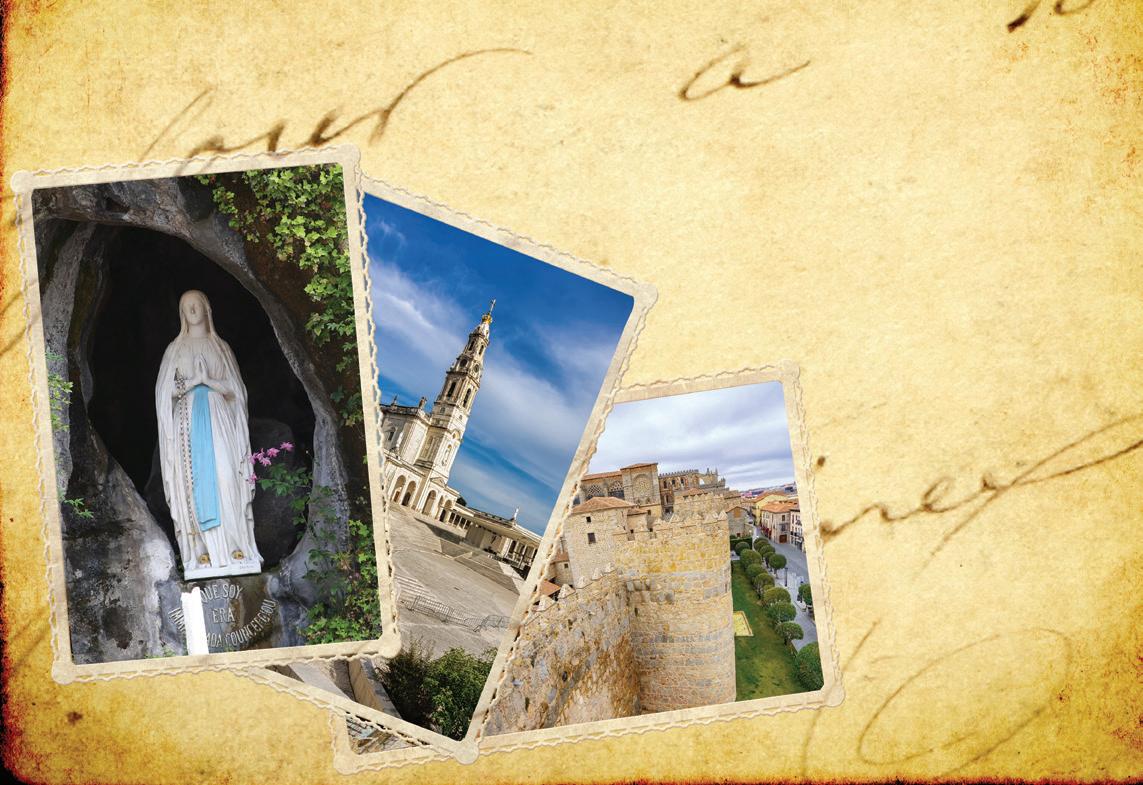
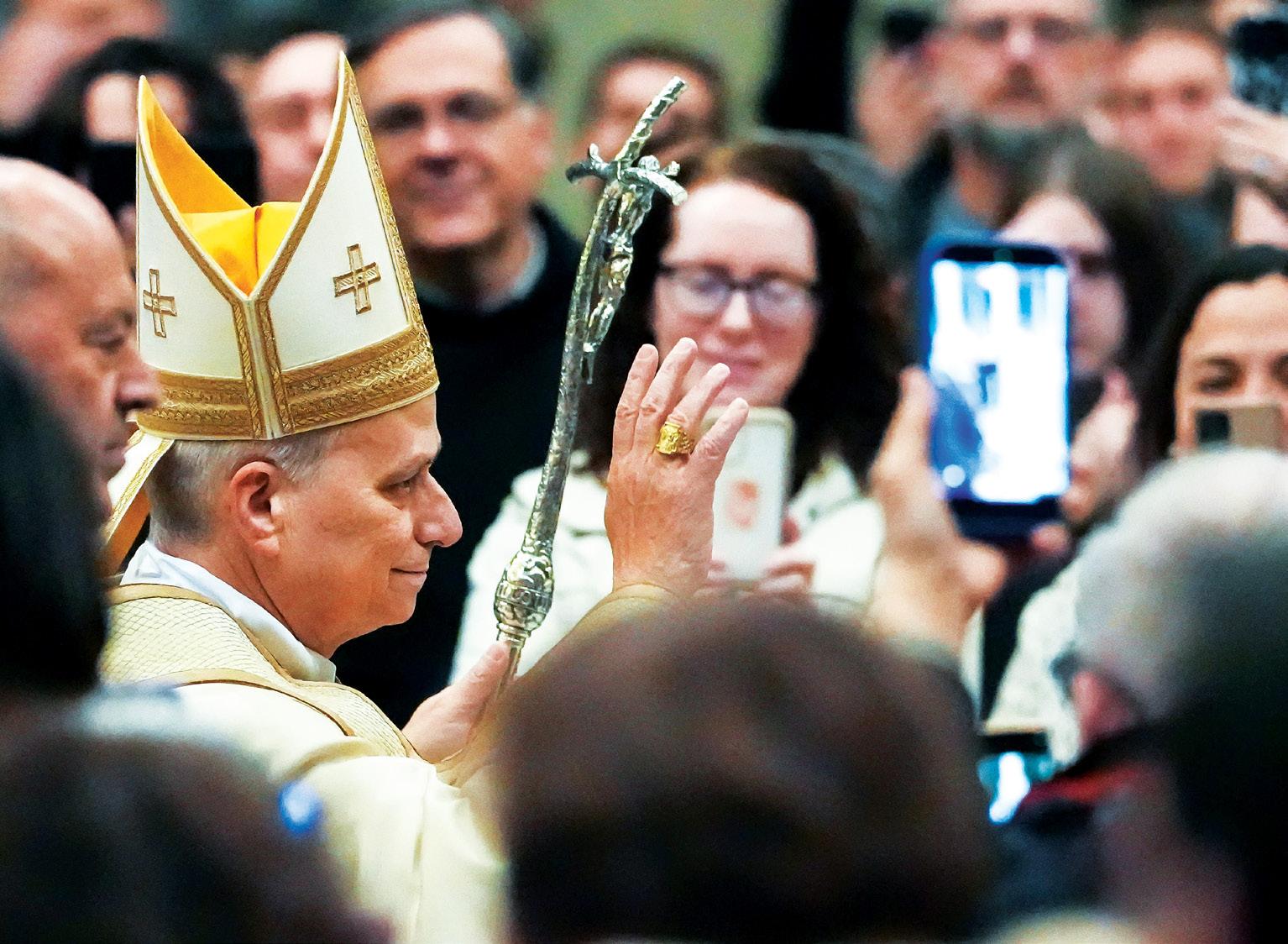
LOCAL CATHOLIC LEADERS REFLECT
Pope Leo XIV’s first encyclical which employs Catholic social teaching in analyzing issues related to artificial intelligence is “a wake-up call for all of us” and invites “the whole world, all people of goodwill into dialogue about how we build a better future,” according to two leaders within the Archdiocese of St. Paul and Minneapolis.
The encyclical titled “Magnifica Humanitas,” which is Latin for “Magnificent Humanity” was released May 25 and can be read online at tinyurl.com/37ddrk54.
In his May 25 “Together on the Journey: A Weekly Word” newsletter, Archbishop Bernard Hebda offered his initial reflection about the encyclical, indicating that Pope Leo “raises brilliant questions concerning what happens when the emphasis is placed on speed rather than on critical thinking, or when a system creates a false illusion of objectivity while masking bias, or when it attempts to simulate relationships at the detriment of human relationships, or when it allows power to be concentrated in the hands of the few.”
The archbishop went on to state that “Pope Leo is by no means anti-technology; but he is issuing a wake-up call for all of us, and especially our societal leaders, to assess the role of technology and artificial intelligence. If technology dominates, the human person becomes merely a means but if technology is guided by wisdom, it can foster true human development. ‘Magnifica Humanitas’ is a long encyclical that will take hours upon hours to digest, but my sense is that it will be well worth the effort.”
Through the encyclical, the pope invites “the whole world, all people of goodwill into dialogue about how we build a better future and bring the joy of the Gospel into those important questions,” Jason Adkins said in an interview for the May 29 “Practicing Catholic” radio show. Adkins is the executive director and general counsel of the Minnesota Catholic Conference (MCC), which represents the public policy interests of the state’s Catholic bishops.
Adkins cited paragraph 142 of the encyclical as an encouraging example of this invitation because it “identifies the importance of not leaving parents abandoned.”
“(S)ocial media companies and platforms, they are seeking to monetize our children and, indeed, (the encyclical) invites policymakers and educators and community groups to band together to find ways to protect our children from exploitation,” he said.
Adkins said MCC-backed legislation that passed both the Minnesota House and Senate this session, and was signed into law by Gov. Tim Walz, promotes important social media restrictions. He acknowledged the debate this session also furthered the conversation about protections when it comes to AI use.
Father Seraphim Wirth for the Marian Torchlight Rosary Procession at the Sanctuary of Our Lady of Lourdes!
visiting Fatima, Avila & Lisbon.
CNS PHOTO | LOLA GOMEZ
Pope Leo XIV waves as he arrives in a procession to preside over an evening prayer service at the Basilica of St. Paul Outside the Walls in Rome Jan. 25, 2026.
Rebecca Omastiak, The Catholic Spirit
Catholic sci-fi novel demonstrates the dangers of replacing faith with ideology
“Discovery” by Karina Fabian. Full Quiver Publishing. (Pakenham, Ontario. 2016). 326 pp., $16.99
Longtime fans of Karina Fabian’s “Rescue Sisters” stories will be quick to point out that the review of this month’s novel is a decade overdue. To them one can only reply that, after all, Christ gave the full day’s pay to the latecomers in his parable of the vineyard workers, and this reviewer is similarly grateful to have discovered such an excellent work of speculative fiction, even if a bit belatedly.
Discovered, of course, being the operative word, as in any good work of science fiction. In Fabian’s 2016 Rescue Sisters novel, “Discovery,” readers are brought a century into the future to an era of space colonization, exploration — and evangelization. As wealthy business magnates mine the resources of the solar system and researchers look to the stars for
MAGNIFICA HUMANITAS CONTINUED FROM PAGE 17
encyclical on human work “Laborem Exercens,” noting that his predecessor recognized that unemployment is “a grave evil,” with Pope Leo adding that “exposing many to forced inactivity, a lack of responsibility and the absence of daily tasks and stimuli” could lead to “human and cultural impoverishment.”
“The pursuit of greater profits cannot justify choices that systematically sacrifice jobs, because the human person is an end, not a means, and the economic order must remain subordinate to human dignity and the common good,” Pope Leo wrote.
“Without bold decisions, the prospect of greater poverty and inequality looms large, which would leave many individuals marginalized, stranded and surrounded by the machines and automated systems that have replaced them,” he added.
God created humans for communion, not efficiency
answers, the Order of St. Gillian of L5 (colloquially known as the Rescue Sisters) provides emergency aid to desperate souls against the dangers of a spacefaring life.
Among their number are Sister “Tommie” Thomas Aquinas, the older and more levelheaded pilot; Sister Anne, who finds angels easier to talk to than human beings; and Sister Rita, a new addition to the order who has her own reasons for leaving Earth behind.
Those reasons follow her to the stars, however, when mining tycoon Augustus Cole assembles a team of researchers, miners and Rescue Sisters to explore an incredible new discovery: a dead extraterrestrial ship, the first ever encountered by mankind, found lodged in an asteroid. Included among the crew is James Smith, a former seminarian,
“When efficiency becomes the ultimate measure of value, human beings are tempted to see themselves as a project to be optimized rather than as persons called to relationship and communion,” Pope Leo said.
A defense of objective truth
Truth is a major theme in the encyclical by the Augustinian pope. He said that in the face of incessant flows of information, opinions, images and sophisticated algorithms that can influence decisions, it is imperative to “cultivate hearts that love the truth, prefer what is right despite the most appealing content and pursue wisdom rather than immediate results.”
“We must always keep before us the truth about God and humanity, just as Christ has revealed them to us. We must lay aside an individualistic and technical view of humanity,” he said.
Quoting Pope Benedict XVI, he added, “Modern man is wrongly convinced that he is the sole author of himself, his life and society. This is a presumption that follows from being selfishly closed in upon himself.”
current archaeologist and Rita’s old flame. Tensions flare as the miners and researchers begin to butt heads, and competing ideologies clash: The head of the research team, William Thoren, is both a skeptic and a “Codist,” having turned a set of practical rules for surviving in space into a quasi-religious rule of life. Thoren is less than pleased to have to answer to a trio of Catholic nuns, who themselves are struggling to keep the peace between their fellow Catholics, zealous Evangelicals, irreligious funloving astronauts and even a devout pagan — and that’s before they reach the alien ship.
The test of good Catholic genre fiction is whether it’s successful as a work in its genre, not merely as a religious parable. Thankfully, “Discovery” is not only a good Catholic novel but also good sci-fi. The alien ship is genuinely fascinating, prompting wonder and curiosity about how a truly alien race might experience religion; the science of the setting likewise feels plausible and immersive, drawing more from the aesthetics of the lunar landing and modern space exploration than a farther-flung
personal data.” On a cultural level, he called for “a strengthening of intermediary organizations, serious journalism and forums for debate,” for families and schools to gain formation in using digital tools, and for universities to strive for the “integration of knowledge.”
“Our first task is neither to demonize nor idolize technological tools, but to utilize them on the basis of a fundamental principle, namely that truth is a common good and not the property of those with power or influence,” he said.
Social control and the ‘digital attention economy’
Pope Leo called for “education in digital sobriety” due to subtle forms of addiction in today’s “digital attention economy,” in which digital platforms that are “designed to capture users’ time and attention” weaken “their inner freedom.”
He warned of the risk of “social control made possible by the massive collection of data and use of algorithmic systems.”
future; and, most importantly, the crew of the ship work through conflict and come together in compelling ways in the pursuit of their mission. On the level of spirituality, the novel insightfully distinguishes between true faith and blind ideology, and much of the story’s human drama is derived from characters who fail to appreciate the difference.
The novel does have a few flaws — the large cast of characters can at times be hard to track, and this reviewer personally thinks the will-they-won’t-they subplot between Rita and James could have been written a bit more persuasively in favor of its ultimate conclusion — but on the whole, “Discovery” is an exciting, fast-paced novel that brings an explicitly Catholic lens to the questions of extraterrestrial life and humanity’s journey to the stars. Most importantly, it answers the question that all Catholic sci-fi fans have asked at one point or another: What if there were nuns — in space!
Reichert is publications administrative coordinator at The Catholic Spirit. She can be reached at reichertm@archspm.org
there is a risk of undermining freedom and discriminating against the most vulnerable.”
Pope Leo XIII and Catholic social doctrine
Pope Leo XIV places his writing on the age of artificial intelligence within the context of the magisterial tradition of Catholic social doctrine, also known as Catholic social teaching. The first chapter of the encyclical provides an overview of what each pope has contributed to the Church’s social magisterium from Pope Leo XIII to present, highlighting key ideas that are particularly relevant today. The second chapter provides definitions of key principles of Catholic social doctrine from the “common good” to “subsidiarity.” Pope Francis and St. John Paul II are both frequently quoted throughout the encyclical.
Pope Leo writes that AI promises efficiency but the “new ways” of working are not necessarily better, describing how “contrary to the advertised benefits of AI, current approaches to technology can paradoxically de-skill workers, subject them to automated surveillance and relegate them to rigid and repetitive tasks.”
The pope underlined that “the search for truth is an essential element of democracy,” and that “indifference to the truth leads, slowly but surely, to a descent into totalitarianism.”
He said people must “promote an ecology of communication,” in which public policy establishes norms “so that the decision-making behind content selection and its development becomes more transparent and protects

“When every action — movements, purchases, relationships and preferences — leaves a trace, a new form of power emerges, namely the power to profile, predict and influence behavior, often without individuals being fully aware of it,” he said. “If such kinds of data are used to make decisions affecting concrete opportunities — such as access to credit, employment or essential services —
Pope Leo XIV signed “Magnifica Humanitas” on May 15, the 135th anniversary of “Rerum Novarum,” Pope Leo XIII’s foundational 1891 social encyclical on labor and capital written during the Industrial Revolution.
“While new economic and technological networks can generate exclusion, isolation and dependencies, the Church — nourished by the Eucharist — is called to make visible a different paradigm, one that preserves human connections, gives a voice to the invisible and ensures that processes are aimed at respecting people’s dignity,” Pope Leo said. AND
FOCUSONFAITH
Cor ad cor loquitur: Heart speaks to heart
“Jesus then said to the Twelve, ‘Do you also want to leave?’” This question comes at the end of the Bread of Life Discourse in John’s Gospel. It is a very peculiar question as this is the only instance recorded in Scripture where Jesus asks his closest friends whether they will leave and desert him. What prompted Jesus to ask such a question? Why is this question so significant?
Throughout the Gospels, Jesus asks many questions addressed to many people. Some are posed to his followers, believers, or those who are simply curious. Others are posed to enemies and those seeking to persecute him. A few are posed while in private and intimate conversations. These encounters in which Jesus poses a question reveal two things: They are a means to disclose or convey truths regarding his identity and salvific mission (“Who do you say that I am?”) or they are a means to reveal, to identify within the very person asking, the deepest and truest desire of the human heart (“What do you want me to do for you?”)
In other words, every question that Jesus asks is meant to reveal to each person the infinite yearning hidden within the deepest recesses of their soul to know God and to be eternally united in intimate communion with him. What separates this particular question at the end of the Eucharistic discourse from
every other question is that it adds yet another dimension to the two already mentioned. Rather than presenting a question to reveal the hearts of men to themselves and to identify Jesus as the one who can fulfill their desires, Jesus here presents a question to reveal his very own heart. This question demonstrates the reason for the Incarnation, the “height, depth, and breadth” of the paschal mystery. It manifests the deepest desire of God from all eternity: to be in intimate communion with his people. Therefore, rather than seeing this as merely a question, one may view it as a statement, a plea addressed from the lover to the beloved, of Christ’s yearning, his thirst, to be united to man — “Whoever eats my flesh and drinks my blood remains in me and I in him.”
This union between God and man, divine intimacy, is nothing other than eternal life. It is a life in which Christ invites all to share and partake. “I am the living bread that came down from heaven; whoever eats this bread will live forever; and the bread that I will give is my flesh for the life of the world.” Indeed, his “flesh is true food” and his “blood is true drink” that satisfies. One “shall not hunger” and “never thirst,” for “the one who feeds on me will have life because of me.” Far from being simply a figure of speech, a poetic metaphor, or symbolic representation conveying an abstract philosophical idea or subjective sentimental feeling, this is an objective theological truth that God has revealed in the very person of Jesus
Christ, the word incarnate.
While knowing the certain reaction he will receive, Jesus does not explain it away as a parable to cater to their sensibilities. Rather, he further emphasizes and intensifies the reality of his message by identifying it with his very flesh and blood. Instead of being afraid of causing scandal and losing followers, Jesus reaffirms his words as a proposal that only by truly eating his flesh and drinking his blood will man receive eternal life. The intimate scene reaches climax with Christ’s moving emotional plea, posing a tender question that reveals the depths of his heart while penetrating ours, “Do you also want to leave?”
This question is the core of the Eucharistic mystery of Christ’s true presence. The same Word that effected creation out of nothing, the same Word that is the cause of man’s very existence, is the same Word that speaks the truth concerning the bread of life, his body and blood. Certainly, this is a mystery that requires the assent of faith. Not a mental assent to an abstract idea, but rather an assent of man’s heart to an encounter with Christ’s heart — cor ad cor loquitur. This produces the most certain of beliefs in which one can truly respond with St. Peter, “Lord, to whom shall we go? You have the words of eternal life. We have come to believe and are convinced that you are the Holy One of God.”
Father Tran is parochial administrator of St. Stephen in Anoka.
The bishops hall of fame: Bishops included in the Roman Missal
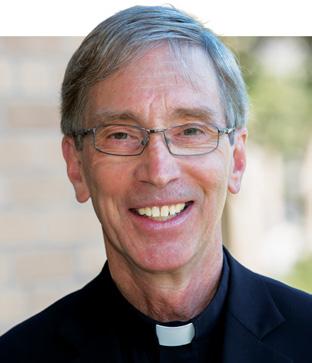
Editor’s note: This is the fifth column in a series on the highest order of ordained ministry in Catholic teaching, that of bishop.
A bishop who is canonized, included in the Roman Missal, and given a place on the liturgical calendar is a member of the bishops hall of fame.
There are 47 bishops listed in the 2011 edition of the Roman Missal. The Vatican’s Dicastery for the Causes of Saints in Rome reviews the cases of others who might be officially recognized as saints. These bishops could eventually be canonized as saints, given days on the liturgical calendar as a memorial, and be included in a future edition of the Roman Missal — thus, becoming new members of the bishops hall of fame.
Two of my favorite bishops have a Milan connection: St. Ambrose and St. Augustine. St. Ambrose (339-397) was the bishop of Milan from 374 to 397. St. Ambrose was first a lawyer, and then in 370 he was appointed governor of Aemilia-Liguria in Milan. In 374, after the death of the Arian bishop, there was bitter fighting in Milan between Christian factions. He skillfully brought peace and the grateful residents chose him as bishop by popular acclamation. St. Ambrose was brilliant, a scholar of sacred Scripture and theology, a
prolific writer and composer, and an eloquent preacher with an uncanny ability to captivate the congregation and explain the faith with clarity.
St. Augustine visited Milan, not motivated by spiritual reasons, but to improve his rhetoric.
St. Augustine went to the cathedral, hid behind a pillar, and listened to St. Ambrose, who answered all of St. Augustine’s questions and objections. St. Ambrose gave St. Augustine private instructions and then baptized him at the Easter Vigil in the Cathedral in Milan in 386 or 387.
St. Augustine (354-430), bishop of Hippo and founder of the Augustinians, experienced his conversion in Milan as he listened to the preaching of St. Ambrose. St. Augustine made the famous statement, “My heart is restless until it rests in thee,” and his restlessness came to an end when he accepted Jesus. St. Augustine had a checkered past and became a saint, a sign of hope for reformed sinners. He knew the power of temptation and the danger of being alone, and therefore insisted that the members of his community go forth two by two to help each other uphold virtue. He considered community togetherness at prayer, meals, work and recreation to have a sacramental nature because Jesus said, “Where two or three are gathered together in my name, there I am in the midst of them” (Mt 18:20).
There is a long list of bishops who are canonized as saints and are celebrated
throughout the liturgical year. The bishops remembered in January are St. Basil the Great, St. Gregory Nazianzen, St. John Neumann, St. Hilary, St. Francis de Sales, St. Timothy and St. Titus; in February, St. Blaise, St. Ansgar, St. Methodius, St. Peter Damian, and St. Polycarp are remembered; in March, St. Patrick, St. Cyril of Jerusalem, and St. Turibius of Mogrovejo are remembered; and in April, St. Isidore, St. Stanislaus, St. Anselm, and St. Adalbert are remembered.
The bishops commemorated in May are St. Athanasius and St. Augustine of Canterbury; in June St. Boniface, St. Norbert, St. Paulinus of Nola, St. John Fisher, St. Cyril of Alexandria and St. Irenaeus are commemorated; in July, St. Bonaventure, St. Apollinaris, and St. Peter Chrysologus are commemorated; and in August, St. Alphonsus Liguori, St. Eusebius of Vercelli and St. Augustine are commemorated.
The bishops honored in September are St. John Chrysostom, St. Cyprian, St. Robert Bellarmine, and St. Januarius; in October, St. Denis, St. Ignatius of Antioch and St. Anthony Mary Claret are honored; in November, St. Charles Borromeo, St. Martin of Tours, St. Josaphat and St. Albert the Great are honored; and in December, St. Nicholas, St. Ambrose and St. Thomas Becket are honored.
Father Van Sloun is the director of clergy personnel for the Archdiocese of St. Paul and Minneapolis.
(1080-1134) Born to a noble Rhineland family, St. Norbert led a courtier’s life until age 35, when his spiritual conversion was triggered by a violent thunderstorm. After ordination,
Hugh of Fosse he started a community of canons regular in northern France that became the Premonstratensian Canons. In 1126, St.
was chosen archbishop of Magdeburg (Germany), where he faced opposition and risked his own safety to recover church property. His feast day is June 6.
Sunday, June 7 Solemnity of the Body and Blood of Christ Dt 8:2-3, 14b-16a 1 Cor 10:16-17 Jn 6:51-58
Monday, June 8 1 Kgs 17:1-6 Mt 5:1-12
Tuesday, June 9 1 Kgs 17:7-16 Mt 5:13-16
Wednesday, June 10 1 Kgs 18:20-39 Mt 5:17-19
Thursday, June 11
Barnabas, Apostle Acts 11:21b-26; 13:1-3 Mt 5:20-26
Friday, June 12 Solemnity of the Most Sacred Heart of Jesus Dt 7:6-11
Jn 4:7-16
Saturday, June 13 1 Kgs 19:19-21 Mt 5:33-37
Sunday, June 14 Eleventh Sunday in Ordinary Time
June 19
Saturday, June 20 2 Chr 24:17-25
Sunday,
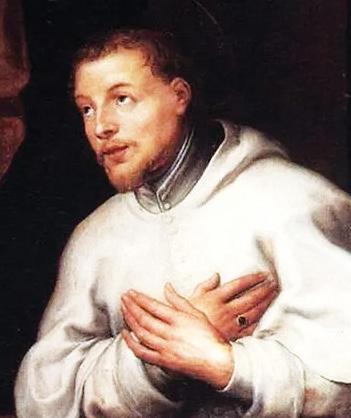
ST. NORBERT
he became an itinerant preacher and gave his worldly goods to the poor. With
Norbert
FAITH FUNDAMENTALS | FATHER MICHAEL VAN SLOUN
COMMENTARY
TWENTY SOMETHING |
CHRISTINA CAPECCHI
On your honor: Tapping into goodness
It’s Wednesday morning on Lower Grey Cloud Island, a wooded retreat tucked 15 miles down the Mississippi River from St. Paul. The world feels lush and fertile, birdsong rising through a canopy of maples.
An old woodshed sits in dappled sunlight. Inside, a cupboard stores jars of maple syrup — quarts, pints, 16 ounces, 8 ounces — their prices marked in embossing tape inside the door.
The store is always open and unstaffed, operating on the honor system: Open the rickety top drawer, record your purchase in the little spiral notebook, and leave your cash.
“We’ve never had any shenanigans,” said Mary, 91, the matriarch of the 50-year-old, four-generation business.
The system has always worked.
The spiral notebook reads like a guestbook and a moral code. Hearts and exclamation points fill the margins. A quart purchased March 22 includes the note: “God’s blessings to you!” A week later, another entry reads: “Happy Easter!”
Mary relishes these “little tidbits,” as she puts it.
“We have faith in people, and we have never been disappointed, and I pray that that won’t change,” said Mary, a devout Christian. “It makes me feel like: ‘OK, God, I get it: You’re in charge of me, aren’t you?’ We look for the good — and see the good. We’ve had so many people come into our home and just love on us. We love on them and share what we have.”
She interrupted herself to point out a red-headed woodpecker that landed outside her kitchen window. “It just came two days ago!” she exclaimed, pumping her fists in unabashed glee. “It’s one of
BRIDGING FAITH | DEACON MICKEY FRIESEN
The ordinary season of mission
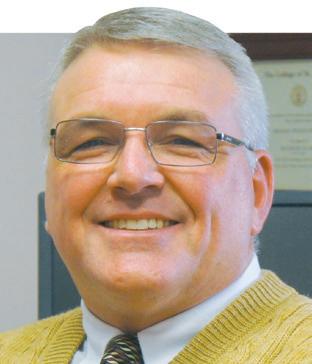
Editor’s note: This is the eighth in a series of columns celebrating the 175th anniversary of the Archdiocese of St. Paul and Minneapolis by considering the travels and teaching of St. Paul. One of the things I love about Minnesota is the way we get to experience all the seasons of the year. We also get a lot of practice in talking about the weather with its many changes and moods of the seasons. It’s not a big stretch, then, for me to think about the Church year also having its own seasons to express our faith.
Now we are entering Ordinary Time, the longest season of the Church year. This does not mean that it is unremarkable, unimportant or boring. To the contrary, it focuses on the ordinary, the daily and the consistent opportunities to grow in faith and live fruitful lives in Christ. Ordinary Time begins with three extraordinary feasts to set the tone for our growth: Pentecost, the Holy Trinity and Corpus Christi.
This time is meant to be ordinary, for us to be guided by the Holy Spirit given at Pentecost. It is the ordinary time for us to strive to live together in unity and diversity as revealed in the Trinity. And it is ordinary for us to share the Eucharist and be the Body of Christ. We have many parts, many needs and many gifts, but we are one
my favorites. I’ve got all kinds — there’s a grosbeak up there! And we’ve got the hummingbird that just came back.”
Mary and her 93-year-old husband, Rod, are well equipped to study the birds of Grey Cloud Island, with bird feeders dotting their home, bird guides stacked on their dining-room table and a pair of binoculars perched on the hutch.
Lately, I’ve been collecting stories like this one. They’re bright, cheerful patches for a pair of ripped jeans. We may feel battered by headlines, we may be hotly divided, but a shopper still stops to prop up a row of grocery-store ferns toppled by the wind. Another one finds me in the parking lot to tell me I left behind a loaf of bread. A general manager takes the time to watch surveillance footage to help an 11-year-old track down money that blew away on the restaurant patio, and when it doesn’t surface, he offers two free meals “to offset the sting.” A big, burly man saves
in Christ. We are the Church of many faces and places serving the one Lord. Each of us is called, gifted and sent into serving God’s mission. This is the “Ordinary Time” of mission.
St. Paul wrote a lot about growing this ordinary mission of being one in Christ and united for mission. He spoke of the need to harmonize the many in one mission from among the Gentiles’ diversity of languages, cultures and other differences. Paul spoke about the ordinary challenge of addressing conflicts among the Christian communities, being ministers of reconciliation and how to harmonize their practice with their Jewish forebears in the faith. He stressed discerning the needs and gifts in the Church and how to bring a holy order to the many ministries and ministers to serve the needs.
And yet, Paul recognized that diversity and differences are not an end in themselves. Diversity apart from God can lead to scattering, division, conflict, misunderstanding and isolation. Paul said that the diversity of the many parts is for the sake of unity, of becoming one. He introduced the image of the Body of Christ to describe the relationship between the many and the one. The Holy Spirit is the source of the communion we share between us in Christ. The Spirit helps us to identify the many needs of the Church and the world and calls forth the gifts to respond. It is the needs that liberate the gifts.
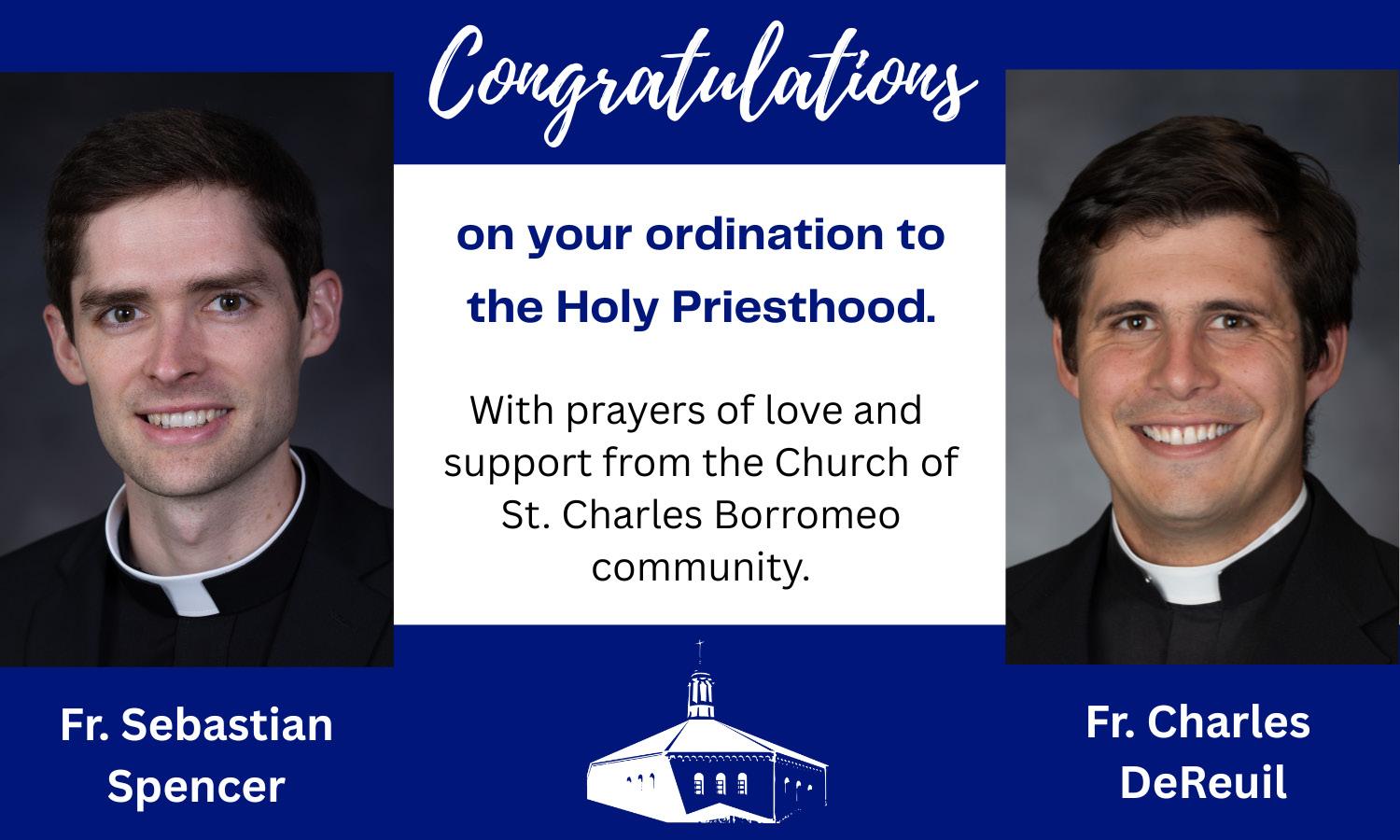
up breadcrumbs to feed to the geese. And a 17-year-old at Dowling Catholic High School in West Des Moines, Iowa, jumped a 6-foot fence to help rescue a neighbor lady from a fire.
These stories don’t erase hardship. But they push back against cynicism.
Perhaps this is part of our Christian call: to seek out signs of hope. If we look, we will surely find them.
People are still good — even when no one’s looking.
When you witness a quiet act of kindness, you feel the lift. You remember we’re all connected. And you’re inspired to do the next right thing, to continue the streak of “no shenanigans.”
The maples on Grey Cloud Island still get tapped every year, and the sweetness still rises. Maybe that is our work, too: to keep tapping into goodness, gathering evidence where we find it and sharing it with others.
Capecchi is a freelance writer from Grey Cloud Island.
We are one in Christ. And our unity is best expressed in the manifold ways we share our gifts in the world. The Holy Spirit brings a holy order to the many diverse gifts in the Church. It’s important for us to listen to the needs of our Church and our world because the time will come when the need is calling for your gift or mine. How might we grow this season to respond to the prompting of the Holy Spirit to send us forth in sometimes surprising ways and places?
It is also the ordinary time for us to be united in the Spirit through prayer. Prayer connects us to God and to one another. St. Paul says the Spirit prays within us to guide us to healing and growth. In the Eucharist, we pray together with the Church gathered around the world in many individual churches. The Mass joins in worship to God in Christ. We are united in a common mission to go forth to love and serve the Lord and one another. The Holy Spirit sends us forth together to bring God’s love in manifold ways, languages and ways of life. It is the ordinary way for Christians to love as Christ loved us. May this ordinary season of mission help us to grow in extraordinary ways to be faithful and fruitful followers of Christ.
Deacon Friesen is director of the Center for Mission, which supports missionary outreach of the Archdiocese of St. Paul and Minneapolis. He can be reached at friesenm@archspm.org.
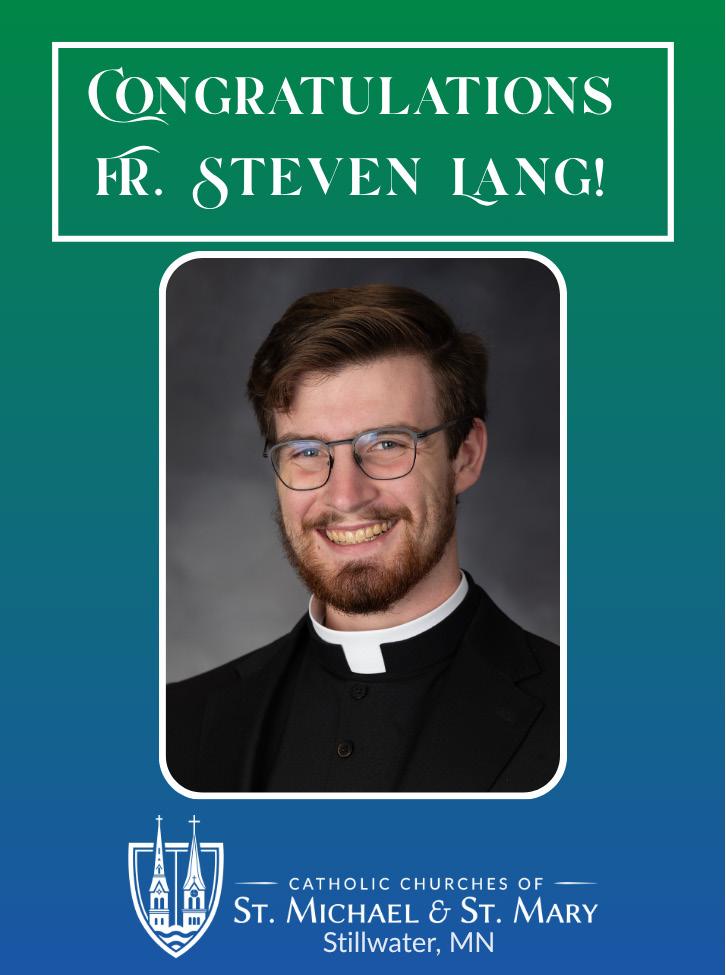
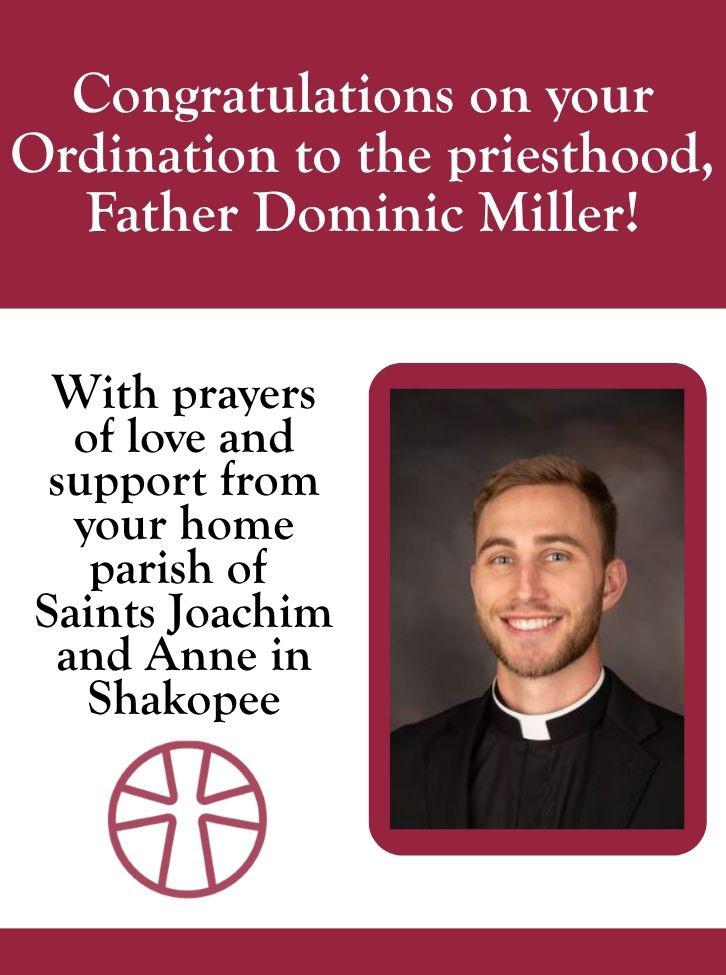
Pursuing true transhumanism
In his recent encyclical on human dignity in the age of AI, Pope Leo XIV warns against transhumanism, the attempt to circumvent the limits of human nature through technology.
As Pope Leo says in “Magnifica Humanitas,” “it is one thing to integrate technology within a humancentered, relational vision; it is quite another to be guided by an outlook that devalues human limits and promises a purely technical form of ‘salvation.’”
But interestingly, the pope doesn’t criticize transhumanism because it seeks too much; instead, his concern is that it seeks too little.
This might seem counterintuitive. After all, transhumanism seeks to use technology to overcome those things that make human life so open to pain: suffering, weakness, finitude, vulnerability and even death.
But in doing so, the transhumanist
SIMPLE HOLINESS | KATE SOUCHERAY
doesn’t just pursue a false form of salvation; he undercuts his capacity to experience true transcendence. Transcendence comes, Pope Leo teaches, not “from a technological divinization, but through God’s grace received in Christ.”
In the most beautiful section of the encyclical, the Holy Father describes Christianity as “the authentic ‘more than human’” — in other words, the true transhumanism. Through participation in God’s life via grace, man can go beyond his limited natural capacities and experience true “self-transcendence,” “not through an escape from reality or contempt for their limitations, but through their fulfillment in love.” As the pope teaches, if finite man is to truly experience the infinite, it can only be through “the Eternal One who gives himself.”
This is an incredible teaching. For one, it highlights that the transhumanists are not wrong to want to live forever; they are wrong in their means of achieving it: grasping for it through technological mastery, rather than receiving it as a gift from God.
In this way, the transhumanists are following a well-known biblical pattern of sin. Pope Leo used the Tower of Babel to illustrate this tendency toward human aggrandizement via technology, but he also could have picked the Garden of Eden. Adam and Eve snatch for the fruit of the tree of knowledge of good and evil. They grasp for divinity. But many theologians, including St. Thomas Aquinas, speculate that God would have given Adam and Eve the gift of the beatific vision independent of sin and redemption. And like them today, transhumanists pursue divinization as their own project, as opposed to seeking communion with God and receiving the gifts he has to give.
But transhumanists are also wrong in an even more profound way. On their account, human weaknesses are an obstacle to the type of “transcendence” they seek (which is really just a kind of horizontal extension, an avoidance of death, not a genuine “leveling up”).
But for Christianity, it’s precisely the opposite. Our weaknesses, vulnerabilities and limitations make us open to and aware
The Holy Spirit helps turn the world upside down
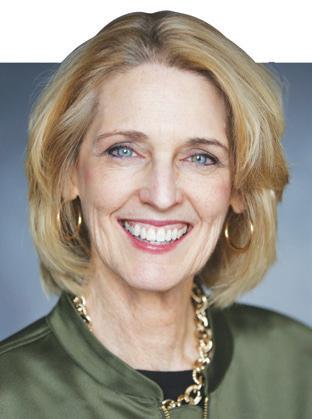
When Pope Leo XIV became our venerable leader 13 months ago, I knew he was an Augustinian priest. I also knew I had St. Augustine’s book “Confessions” on my bookshelf, unread. In wanting to know more about this man, Robert Francis Prevost from Chicago, I decided to read this renowned tome and try to understand him and his papacy in a more informed way.
This book was written approximately 1,600 years ago in North Africa, a region of the world that was under Roman domination at the time. St. Augustine’s mother was St. Monica, who prayed for her wayward, sinful son to become wise and embrace the Catholic-Christian faith. This book, “Confessions,” was written after St. Augustine’s conversion and includes his reflections on the choices he made before aligning his life with Christ.
It is clear in “Confessions” that St. Augustine had been searching, as his mother must have known. She witnessed
her son’s decisions and noted how discordant they were from the way she hoped he would live. How many parents in our day and age have similar feelings that mirror St. Monica’s? As parents and grandparents, it breaks our hearts to experience the misgivings we may have regarding the ability of our children and grandchildren to avoid, or evade, the evil one who sets traps. Many ask, “What can we do? Certainly, prayer cannot be enough!”
And yet, if we trust the Holy Spirit, who was given to us on the first Pentecost, and believe he is the most powerful entity in the universe, then we trust he can do anything. The problem is that we often do not have faith that he is alive and well in our era, just as he was in the apostolic era of the years following Jesus’ resurrection. In fact, he has always been with us; it is our lack of faith or lack of trust that gets in the way of our asking for his help. St. James explains, “You do not possess because you do not ask. You ask but do not receive because you ask wrongly,” (Jas 4:2-3). It is not what we seek that is wrong, but that we seek pleasure and enjoyment that is self-serving.

St. Monica wanted her son, St. Augustine, to share in her joy as a Christian so he would experience her delight in the fullness of the Holy Spirit.
Do we have that same passion, and do we share it with our children and grandchildren? Do we have such a strong and vibrant faith that we put it before all other things in our lives? Are we witnesses to a faith that sustains us and grounds us through every trial we encounter? That lived faith, which is more appealing than any words we may utter by way of convincing our children and grandchildren to embrace these beliefs we hold sacred.
Father John Ricardo, a priest in the Archdiocese of Detroit and the founder and executive director of ACTS XXIX, writes in his book “Rescued,” that it was the witness of truly Christian lives that helped the early Church grow. The Church grew through the passion of the early Christians who turned the world upside down and transformed the culture. Father Ricardo explains that is also what is needed today: people who will turn the world upside down by transforming the culture.
St. Augustine was one who lived his life
of our need for God and his grace, the only route to true transcendence.
As Pope Leo said, “Finitude, when truly accepted, does not diminish us but opens us to recognizing the face of God and others.” Or, in the words of the American singer Leonard Cohen, “There is a crack, a crack in everything. That’s how the light gets in.”
Pope Leo closes “Magnifica Humanitas” by reflecting on Mary, whose lowliness and humility allows her to magnify the glory of God most powerfully among all of creation. She is the icon of true transhumanism: one who was lifted up so highly because she was so low. One who received so much from God, precisely because she was so empty of her ego and selfish aspirations.
May she pray for the world, that we reject the false promises of transhumanism, and instead embrace “the authentic ‘more than human’” that she so perfectly models.
Liedl lives in South Bend, Indiana, and is senior editor for the National Catholic Register.
with passion and commitment to turning the world upside down following his conversion to the Catholic-Christian faith. His mother’s prayers were instrumental in his conversion, and so was her witness. Trust the Holy Spirit, live your faith with enthusiasm, and allow him to work on the hearts of those you love and cherish. We are Easter people who live in the shadow of the cross redeemed!
Soucheray is a licensed marriage and family therapist emerita and a member of St. Ambrose in Woodbury.
ACTION STRATEGIES
Embrace your faith as more than a commitment to fulfill on Sunday. Pray every day. Read Scripture. Speak to others about your faith. Listen to podcasts. Attend conferences that will help you grow in your faith.
Make a commitment to tell someone every week you are Catholic. Stand firmly in your faith and allow others to see the light of the risen Christ within you.
Catholics made a difference at the Capitol this year
Achieving legislative success at the Minnesota State Capitol is no simple feat. All gears need to work together. A needle-moving meeting with a legislator is built on many prior efforts. Catholic constituents emailing their legislators, thousands of prayers during Adoration at the Capitol, and years of relationship-building by Minnesota Catholic Conference (MCC) staff lobbyists all play a role.
With this in mind, we are pleased to report that the 2026 legislative session was both substantive and productive. Notably, MCC spearheaded groundbreaking social media legislation that passed both the House and Senate and was signed into law by Gov. Tim Walz. We also successfully stopped legislation that promotes a throwaway
doubt that experience, that encounter.”
culture, including: physician-assisted suicide, mandated insurance coverage for unethical forms of assisted reproduction such as in vitro fertilization, the Equal Rights Amendment, and the legalization of sports gambling through commercial sports books. None of this could have been accomplished without the faithful citizenship of Catholics like you. Below are some numbers that illustrate our collective impact.
Contacting legislators in large numbers
Over 11,000 messages were sent to legislators at crucial moments by our Catholic Advocacy Network members. In addition, our social media updates reached more than 430,000 people online. Make no mistake: Constituent voices like yours were instrumental in passing and stopping bills to
Interest in the priesthood he had as a child was renewed as well, Father Hall said.
“But as can happen, after I came back from the retreat to the University of Minnesota campus (he graduated with a degree in linguistics), the retreat high, as they say, kind of died down. I found myself living my unambitiously sinful college life and eventually living really as a practical atheist again.”
Which brought him back to the confessional and that second powerful experience in prayer, when he realized he had to order his life to Christ’s will. He entered The St. Paul Seminary in St. Paul — and left after his fourth year of theology, Father Hall said.
“I decided to leave because the peace to move forward had left me,” Father Hall said.
He worked for about a year at St. Odilia in Shoreview as an administrative assistant in faith formation, then sacramental coordinator in charge of
FATHER STEVEN LANG
CONTINUED FROM PAGE 13
felt at age 10 returned as soon as his classmate asked him about studying in Rome. And it remained. So, he talked about it with his spiritual director and ended up applying.
He also discussed the idea with an older seminarian — Father Ryan Sustacek — who had studied in Rome. While the two were talking, Father Lang’s phone rang. He didn’t recognize the number but answered the call. It was Archbishop Hebda informing him he had been selected to study in Rome.
“It was just really affirming, really showed me how much he knows me, how much he cares for me,” Father Lang said. “He was like, ‘Steven, I want you to go to Rome. And I think it’s a place where you’re going to flourish. I think you’re going to do well.’”
Archbishop Hebda was right. Not only that, Father Lang experienced two significant events in
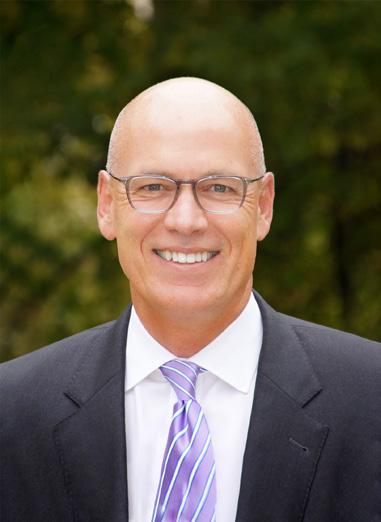
protect
life and the common good.
Thousands prayed with Jesus at the Capitol
This year, more than 1,000 Catholics participated in at least one of our Eucharistic prayer opportunities — a 566% increase from last year. As Bishop Andrew Cozzens of the Diocese of Crookston said, “Adoration at the Capitol will have an impact on everything that happens in this building.” There’s no diminishing the power of your prayer for legislators and our state, nor the significant impact it has on our advocacy efforts.
Boots on the ground advocacy
Finally, there is the day-to-day hustle and grind of advocacy work. The MCC lobbying team, as well as the bishops of Minnesota, met
with legislators, testified before committees, and worked behind the scenes to influence legislation. This session year alone, they provided 35 verbal and written testimonies and conducted upwards of 325 individual meetings and phone calls with legislators. Collectively, they met with 118 of the 201 legislators.
Join the movement
At the Minnesota Catholic Conference, we are a small team. But the voice and action of Catholics like you across the state help us to make a big impact at the Capitol. As we prepare for the upcoming elections in November, we encourage you to join the Catholic Advocacy Network at mncatholic.org to be formed in the faith, informed on the issues and take action to transform our state.
Inside the Capitol is a legislative update from Minnesota Catholic Conference staff.
baptisms, first Communions and first reconciliations. He dated a few times but found that his primary desire was for celibacy and ministry, Father Hall said.
Reflecting during that year on his ministry experiences while in priestly formation and elsewhere, he realized he had often stepped into the role of spiritual fatherhood. People had stated, as well, that they wished he could hear their confession, Father Hall said. A woman at the parish said she would love to see him back in the seminary to finish formation and minister as a priest. Listening, praying and thinking, he briefly explored a religious order but decided to continue formation as a diocesan priest.
“It was this desire; I want to be for you (people who sought his counsel) what you need me to be for you, a priest,” Father Hall said of his final discernment. “It was the experience of the Church saying, ‘I want you to be like Christ for me. I want you to be the bridegroom, for me as the bride.’ My heart resonated with that and lit up at that invitation. And I said, ‘Well, if that’s what you’re inviting me to, then I want to give my life in response to that.’”
spring 2025 — the funeral for Pope Francis and the election of Pope Leo XIV. He attended the funeral of Pope Francis at St. Peter’s Basilica and then “camped out” in St. Peter’s Square during the papal conclave.
He was studying for a big exam at the time and brought all of his materials to the square to study while watching the chimney for smoke.
“We’re just hanging out in the square — hot, sunburned,” he said. “A couple buddies and I just leaned back to back because there were no chairs.”
On the second day, May 8 at 6:07 p.m. Rome time, white smoke poured out. The conclave had elected Cardinal Robert Prevost from Chicago, the first-ever American-born pope.
“Seeing the white smoke come out was amazing,” Father Lang said. “The square erupted — songs, cheering. There had been rosaries going on throughout the day.”
“It was just such a jubilant square,” he said. “That really struck me, seeing the white smoke and seeing such joy, and again, when the cardinal (French
Cardinal Dominique Mamberti) comes out and says: Habemus papam (‘We have a pope’).”
As the cheering went on for about 15 minutes, Father Lang scrambled to get his camera. As the house photographer for the NAC, he knew he had to get photos of this significant event. Afterward, he posted a bunch of photos on Flickr.
He’s not sure if any photo opportunities will come after his ordination to the priesthood, though there are accomplished priest photographers in the archdiocese, most notably, Father Paul Kammen, pastor of St. Joseph in Rosemount, who takes scenic and wildlife photos.
What Father Lang is focusing on after ordination is his opportunity to help people grow in their faith and grow closer to God.
“My heart just yearns to show people that they’re being invited into this intimate relationship with God,” he said. “I want to bring as many people into that beautiful relationship as possible. And getting to do so through the sacraments is amazing.”


FATHER CHARLES DEREUIL II
CONTINUED FROM PAGE 12
be really grateful — grateful to God for his providential care for the Church, but then also to reflect on the Incarnation and the great grace it is to have Jesus present in the Eucharist.”
When Father DeReuil thinks about what it will mean to be a priest, he recalls this phrase: Quaerere Deum, which translates “to seek God.”
“This is how I see my life playing out — a search for God,” he said. “I want to know the Gospel because I only know it really imperfectly now.”
Then, as he deepens his knowledge of the Gospel, he wants to spread that knowledge to others. Doing so “is more at the heart of my priestly desires.”
He thinks an excellent place to do this is in Catholic schools, which is why he is open to being assigned as a high school chaplain someday.
“I am attracted to Catholic education,” he said. “I think it’s important that our Catholic schools are places of academic rigor but also places where the students learn the faith and learn the faith well. I also think it’s important to make it (Catholic education) more broadly available. I think it would be important for Catholic schools to be as available as possible so that we can be serving the entirety of our diocese with them.”
As he begins priestly ministry, he asks this of the faithful in the archdiocese:
“Pray for me. Pray for my classmates.”



CALENDAR
PARISH EVENTS
St. Boniface Annual Rummage Sale
June 11-13: 7 a.m.-7 p.m. June 11, 7 a.m.-5 p.m. June 12, 8 a.m.-noon June 12 at St. Boniface, 8801 Wildwood Ave., St. Boniface. Fill a bag for $20 on June 11, $10 per bag June 12, and $5 per bag June 13! See our website for more information: saintboni.org
St. Mary of the Lake Rummage and Bake Sale
June 11-13: 5-8 p.m. June 11, 8 a.m.-6 p.m. June 12, 8 a.m.-noon June 13 at St. Mary of the Lake, 4690 Bald Eagle Ave., White Bear Lake. Household goods, books, linens, electronics, lawn and hand tools, small furniture, toys, puzzles, next-to-new/ antique, baby and kids’ items, and women’s and men’s clothing and shoes. tinyurl.com/46nc6fm6
Transfiguration Tiger Classic Golf Tournament
June 20: noon-7 p.m. at Applewood Hills Golf Course, 11840 60th St. N., Stillwater. Join us for the third annual Tiger Classic Golf Tournament to support Transfiguration Catholic School. For more information go to tinyurl.com/2s46h2n2
WORSHIP+RETREATS
Sacred Heart Feast Day Retreat June 12: 8:30 a.m.-2:30 p.m. at St. Francis, 1114 Third St. SE, Rochester. Curatio honors the U.S. 250th Anniversary with National Consecration to the Sacred Heart of Jesus. Curatio Apostolate is dedicated to the Sacred Heart, knowing that true healing flows from the Heart of Christ. Join us for a day of retreat, register today: tinyurl.com/ymwznkjz
15th Annual Widows Day of Reflection
June 20: 8:30 a.m.-12:30 p.m. at Our Lady of Grace, 5701 Eden Ave. S., Edina. This day of reflection with
Bishop Michael Izen is for all widows; both recent and longtime widows will experience the Church’s concern for them as they navigate a status in life they did not choose. The retreat always includes breakfast and lunch. olgparish.org/mp-event-details?id=332
SCHOOLS
Cup Golf Tournament (Holy Spirit Academy)
June 12: 11 a.m.-4 p.m. at Daytona Golf Club, 14730 Lawndale Lane N., Dayton. Enjoy a fun afternoon of golfing, fundraising games, food and company. holyspiritacademy.org/spirits-cup
ONGOING GROUPS
Griefshare Support Group Every Monday: 12:30-2 p.m. at Guardian Angels, 8260 Fourth St. N., Lake Elmo. Griefshare video and in-person sharing for those who have experienced loss. guardian-angels.org
Widowers Coffee Group Fourth Fridays: 9:30-11 a.m. at Our Lady of Grace, 5071 Eden Ave., Edina. Widowers of Grace is a newly formed Catholic group for men who have lost their wives. Join us as we learn together how to navigate life without our loved one. Contact olgwidowers@gmail.com for more information. olgparish.org
Cancer Support Group First Thursday: 11 a.m. first Thursdays at Guardian Angels, 8260 N. Fourth St., Oakdale. Contact Terry Quinn at 651-789-3181. guardian-angels.org
Torchlight Readers: Book Study with Lay Dominicans Every other Thursday: 7:30 p.m.-midnight. Virtual meeting. Explore the Christian life through the charism of St. Dominic through a book study. Our first book will be “St. Dominic’s Way of Life: A Path to Knowing and Loving God.” For questions and to get the Google Meet link, contact jordanhazel3@gmail.com
Catholic in Recovery Every Sunday: 7-8 p.m. at St. Mark, 2001 Dayton Ave., St. Paul. Catholic sacramental recovery and fellowship for those seeking freedom from addictions, compulsions and unhealthy attachments. We overlap Scripture reading, liturgical
themes, and 12-step recovery topics. Questions? Call Eileen M. at 612-483-2973. catholicinrecovery.com
Faith and Recovery Every Wednesday: 6-7 p.m. at St. John, 835 Second St. NW, New Brighton. We are a Catholic recovery group that meets weekly on Wednesdays after our 5:30 p.m. Mass. We combine classic AA with the sacramental life of our Catholic faith, using two national recovery programs for Catholics: Calix and Catholic In Recovery. stjohnnb.com
Bridge Club Last Saturdays: 7-8:30 p.m. year-round at St. Joseph, 13015 Rockford Road, Plymouth. All levels of players, from veteran to new, are warmly invited. Interested individuals can simply show up. Tables, treats and tallies are provided. For additional information, please contact Mike or Janet Malinowski 952-525-8708. stjosephparish.com/book-and-card-clubs
Secular Franciscan Meeting of St. Leonard of Port Maurice Fraternity Third Sundays: 2:15-3:45 p.m. at St. Olaf, 215 S. Eighth St., Minneapolis. General membership meeting of Secular Franciscans who belong to the Fraternity of St. Leonard of Port Maurice. We welcome any who are interested in living the Gospel Life in the manner of St. Francis and St. Clare to come and see!
Lumen Vero Second Thursdays: 6 p.m. at Concord Lanes, 365 Concord Exchange N., South St. Paul. Bold Catholic men are needed now more than ever. Monthly Lumen Vero meetings feature Catholic leaders who share testimonies and convictions. Be inspired by men on fire for Christ. No cost, just show up. lumenvero.com
Natural Family Planning (NFP) Classes teach couples the Church approved methods on how to achieve or postpone pregnancy while embracing the beauty of God’s gift of sexuality. For a complete list of classes offered throughout the archdiocese, visit archspm.org/family or call 651-291-4489.
Quilters for a Cause First Fridays: 9 a.m.-2 p.m. at St. Jerome, 380 East Roselawn, Maplewood. Make quilts to donate to local charities. Quilting experience is not necessary, but basic machine skills are helpful. 651-771-1209. tinyurl.com/yzn7xsfc
Marketplace • Message Center Classified
ACCESSIBILITY SOLUTIONS
STAIR LIFTS – ELEVATORS WHEELCHAIR LIFTS FOR HOMES, CHURCHES & SCHOOLS Arrow Lift (763) 786-2780
ACCOUNTANTS
Rasmussen Accounting 763-792-6630 Individual & Business Tax Return Preparation info@rasmussenaccounting.com SJBG MBR
ANTIQUES
TOP CASH PAID For Older Furniture
• Advertising Signs • Beer Items
• Old Clothes • Misc. (651) 227-2469
ATTORNEYS
Employment Law and Estate Planning Church and Private School Law
www.NelsonLawMN.com | 651-300-1412
Timothy J. Scott, J.D. Wills, Trusts, Estate Planning & Probate timothy@tjslawoffice.com 952-521-5950 SJBG MBR
Virginia Ryan, Attorney at Law Trusts, Wills, Probate, Real Estate
600 Inwood Ave. N #130; Oakdale, MN 55128 (651) 631-0616 www.virgielaw.com.
CATHOLIC BUSINESS DIRECTORY
300 Local Catholic Owned Businesses stjosephslist.com SJBG
CATHOLIC BUSINESS GUILD
sjbusinessguild.com 612-363-2905
Connections - Customers - Jobs - Mentors
CEILING TEXTURE
Michaels Painting Popcorn Removal & Knock Down Texture TextureCeilings.com (763) 757-3187
CEMETERY LOTS FOR SALE
Resurrection Cemetery: Section 25; single grave. $1200 314-857-4933
Resurrection Cemetery: 2 single graves. Market Price: $2485/ grave. Selling Price: $1800/grave. Luann 859-644-9283
CHIROPRACTOR
Mind & Body Chiropractic * Dr. Kuznia $80/mo. Indiv. * $120/mo. Family * SJBG mindbodychiropractic.com/ 651-600-3521
COFFEE
Edge Coffee Company 612-504-1954 Fair Trade & Organic - no mycotoxins edgecoffeecompany.com SJBG MBR
COMMUNITY ORGANIZATIONS
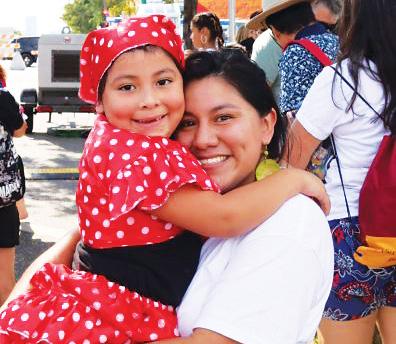
CLUES celebrating 45 years. Rooted in Community. Rising together. Help us raise 1 million dollars to support Latinos affected by Operation Metro Surge Clues.org/donate | 651-379-4258
COWORKING SPACE
Quarry Catholic Coworking - SJBG quarrycoworking.com 612-363-2905
EMPLOYMENT OPPORTUNITIES
Options for Women East in St. Paul, MN provides no-cost medical prenatal and postpartum care and support/education to patients up to the age of 3 of their little one in assisting their “yes” to life. We are looking for volunteers and paid staff positions to help us in this mission! Please contact Jennifer Meyer: edjm@ optionsforwomeneast.com. To learn more about what we do and/ or support our prolife cause: https://ofwepartners.com/getinvolved/job-openings/.
Trojack & Associate Law Office, P.A., located in West St. Paul, MN, is seeking a legal assistant/paralegal. This is a part-time position with responsibilities including drafting correspondence, scheduling appointments, and tracking deadlines. To apply please submit a cover letter and resume to: John.Trojack@TROJACKLAW.COM.
GRAPHIC DESIGN
Graphic Design, Branding & Marketing sophia@mcgoverncreative.me SJBG MBR GOLD & SILVER BULLION
Verify, Exchange, Advise, Educate ⚖ Sølvency Bullion Exchange • SJBG 1128 Grand Ave, Saint Paul, MN 55105 651-404-7712 • https://solvency.trade USE SILVER & GOLD AS MONEY TODAY!
FINANCIAL PLANNERS
Win-A-Key to Unlock Your Retirement Income yourretirementkey.com 763-290-1420 Susan Wieneke, financial advisor SJBG HARDWOOD FLOORS
MintHardwoodFlooring.com
Installation, Refinishing, Repairs Mark Schroeder: 612-987-5175
CALENDAR submissions
DEADLINE: Noon Thursday, 14 days before the anticipated Thursday date of publication. We cannot guarantee a submitted event will appear in the calendar. Priority is given to events occurring before the issue date.
LISTINGS: Accepted are brief notices of upcoming events hosted by Catholic parishes and organizations. If the Catholic connection is not clear, please emphasize it in your submission. Included in our listings are local events submitted by public sources that could be of interest to the larger Catholic community.
TheCatholicSpirit.com/ calendarsubmissions
Restorative Support for Victims-Survivors
Monthly: 6:30-8 p.m. via Zoom. Open to all victimssurvivors. Victim-survivor support group for those abused by clergy as adults first Mondays. Support group for relatives or friends of victims of clergy sexual abuse second Mondays. Victim-survivor support group third Mondays. Survivor Peace Circle third Tuesdays. Support group for men who have been sexually abused by clergy/religious fourth Wednesdays. Support group for present and former employees of faith-based institutions who have experienced abuse in any of its many forms second Thursdays. Visit archspm.org/healing or contact Paula Kaempffer, outreach coordinator for restorative justice and abuse prevention, at kaempfferp@archspm.org or 651-291-4429.
HEALTH CARE
THE FAMILY CLINIC, LLC Direct Primary Care • Functional Medicine 651-400-1554 • info@mnfamilyclinic.com INSURANCE
Home, Auto, Business, Life, Annuities, 401k Rollovers, Disability, Long-Term Care Luke Bauman baumanfinancial.com 763-972-6198 • SJBG MBR
MORTGAGE LOANS
Home Loans with Honesty & Integrity Matko Lending LLC; NMLS# 2656175 matkolending.com/952-484-1613 (call/text) Residential Mortgage Lending in MN & WI Conventional, FHA and VA NMLS #422758 Christopher.Burr@rcu.org 651-202-1367 NETWORKING ORGANIZATIONS
Business Builders - Faith Based Networking sjbusinessguild.org/builders/ SJBG PAINTING
For painting & all related services. View our website: PAINTINGBYJERRYWIND.COM or call (651) 699-6140. Michaels Painting. Texture and Repair. MichaelsPaintingLLC. com. (763) 757-3187 PRAYERS
NOTICE: Prayers must be submitted in advance. Payment of $8 per line must be received before publication. RELIGIOUS ITEMS FOR SALE www.HolyArt.com
THELASTWORD
Nation’s consecration to Sacred Heart affirms ‘our reliance on God’
By Kimberley Heatherington OSV News
As the United States prepares to mark its 250th anniversary, the nation’s Catholic bishops are planning a historic spiritual gesture.
The bishops will dedicate the United States of America to the Sacred Heart of Jesus on June 11, marking the first such formal consecration of the country to Christ’s heart.
The prelates made the decision to do this during a Nov. 11, 2025, session of the U.S. Conference of Catholic Bishops’ fall plenary assembly in Baltimore. Archbishop Alexander Sample of Portland, Oregon, who chairs the USCCB Committee for Religious Liberty, told OSV News there are three essential reasons the bishops voted for the consecration.
First “would be to place our nation under the kingship of Christ,” he said. “Yes, we are a democratic republic; we are a civil society — but no civil society can long endure without being under the kingship of Christ himself; to place ourselves under God’s providence and care.”
Archbishop Sample emphasized the continuity between Jesus’ kingship and America’s founding ideals.
“In the history of our nation, it’s undoubtable and it’s irrefutable that the faith — and our reliance on God — really was the foundation that our Founding Fathers placed this nation on,” he said. “So at this time, as we celebrate the 250th anniversary of the signing of the Declaration of Independence, it’s to remind all of us that — whatever civil government we might have — we are all under, ultimately, the kingship of Christ.”
Second, Archbishop Sample noted “there’s a certain reparation aspect to the Sacred Heart. I think we can’t forget that part of the consecration is to make reparation for offenses against God; against the heart of Christ.”
Some of those offenses, he remarked, are part of American history.
“We are a great and blessed nation — but there are mistakes that we have made as a people over these 250 years. And so this is a good time,” the archbishop added, “to also make reparation to the heart of Christ for those offenses against his love, and his mercy and his justice — for all peoples.”
Finally, Archbishop Sample said, “there’s this desire, through this consecration, to also call us to have a greater heart for the poor and the suffering … as we honor the Sacred Heart of Jesus, we can’t just honor it as a private devotion. It has to move us, and move our hearts.”
The late Pope Francis, the archbishop said, “was a man who loved these beautiful, rich devotions we have in the faith … and wanted to call our attention to the fact that the heart of Christ is the heart of mercy … and through the heart of Jesus, we find healing and reconciliation.”
Pope Francis brought the Sacred Heart to wider Catholic attention with the 2024 encyclical “Dilexit Nos” (“He Loved Us”), observing that the devotion needed to be revived for this era.
Devotion to the Sacred of Heart of Jesus — which traces its roots to at least the second century — grew during the Middle Ages and was later extended to
The relics of St. Margaret Mary Alacoque, the French Visitation sister who experienced visions of Jesus revealing his Sacred Heart, will be present with the U.S. bishops in Orlando, Florida, when they consecrate the United States to Jesus’ Sacred Heart June 11.
The relics will be flown from Paris to New York June 2 and will remain in the U.S. until September.
As part of their plenary assembly in Orlando June 10-12, the U.S. bishops will concelebrate Mass and pray the act of consecration. The bishops also will hear reflections on the Sacred Heart ahead of the Mass.
Arnaud Bouthéon, the lay leader of the Knights of Columbus in France, will be in charge of the unusual transatlantic trip with the reliquary. “I will personally go to the Shrine (of the Sacred Heart) of Paray-le-Monial to retrieve the reliquary and bring it to the United States,” he told OSV News.
“The arrival of the relics of Margaret Mary in the United States is an invitation to consecrate families and individuals to the Sacred Heart,” Bouthéon said.
St. Margaret Mary received visions of Jesus between 1673 and 1675 at the Monastery of the Visitation in Parais-le-Monial. Christ showed her his Sacred Heart and invited her to experience his love, mercy and tenderness. St. Margaret Mary was canonized in 1920.
Caroline De Sury, OSV News
the universal Church following Christ’s revelations of his Sacred Heart to St. Margaret Mary Alacoque, a 17th-century French woman religious.
Emily Schumacher-Novak — associate director of Education and Outreach at the USCCB’s Secretariat of Justice and Peace — said the June 11 consecration is accompanied by an abundance of USCCB resources, including a prayer and downloadable prayer card; a Novena to the Sacred Heart (June 3-11); a ceremony to enthrone the Sacred Heart in the home; consecration resources for parishes; materials from the Knights of Columbus and the Pope’s Prayer Network; and the
“We Hold These Truths – America 250” article and video series, which feature the contributions of Catholics to the United States.
“We are also offering a resource that invites people to do 250 hours of adoration and 250 works of mercy,” SchumakerNovak said. “It’s that connection back to charity and justice that our Church calls us to — to pray for all the things in our world that need healing — that we can do in front of the Blessed Sacrament.”
The national consecration, which will take place at Mary, Queen of the Universe Basilica in Orlando, Florida, will be livestreamed via the USCCB homepage on
June 11.
“As the bishops of the United States do the consecration of the whole nation to the heart of Christ, the Sacred Heart of Jesus, we’re also encouraging local communities to do the same — especially in our families and in our dioceses,” concluded Archbishop Sample.
He noted that family, parish and diocesan consecrations are not meant to replace the national consecration.
“It’s so we’re sort of doing it on all levels, so to speak,” said Archbishop Sample, “to really make this a meaningful moment in the light of the Church here in this great and blessed land.”
NATHAN SCATENA | THE CATHOLIC SPIRIT
ST. MARGARET MARY ALACOQUE RELICS