
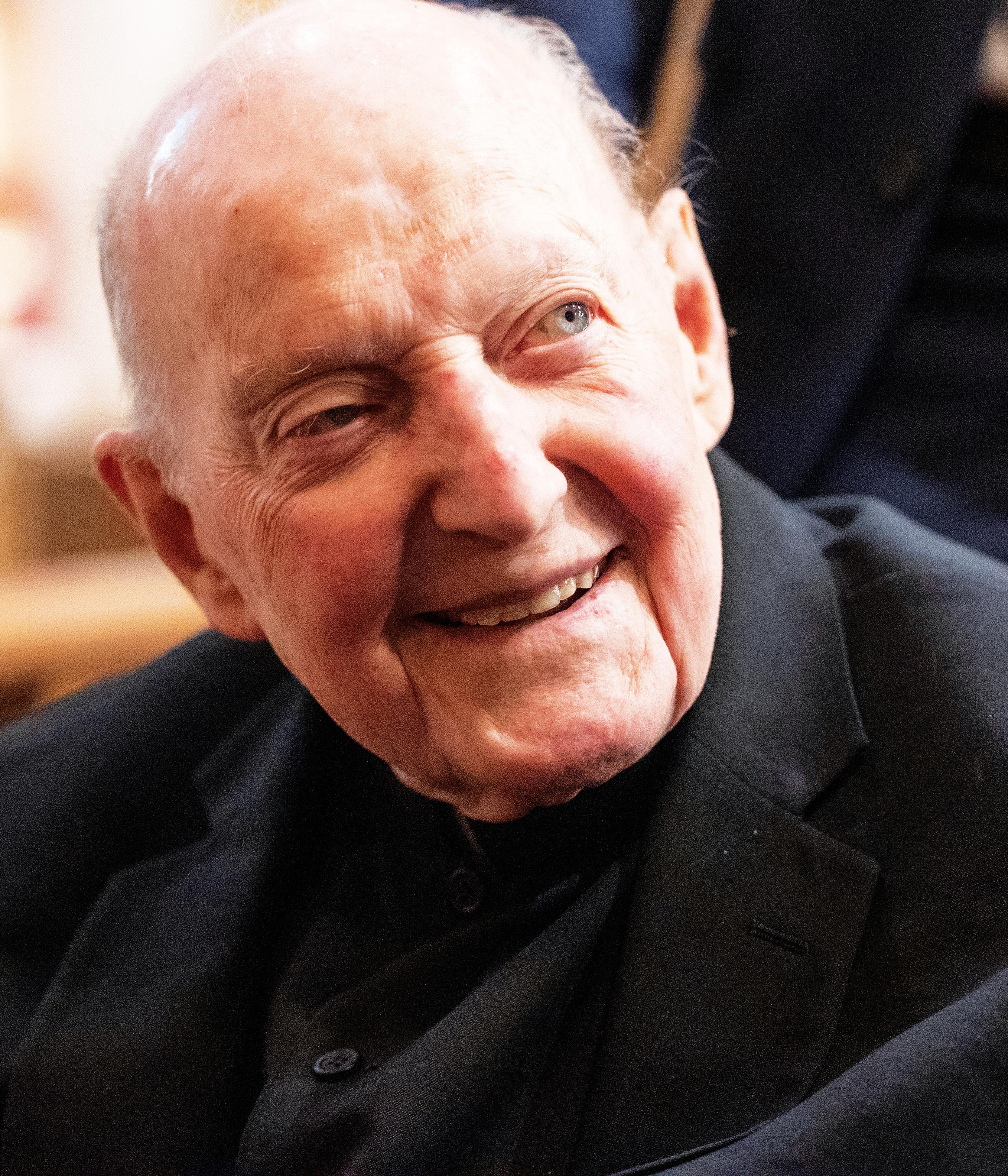
PAGETWO
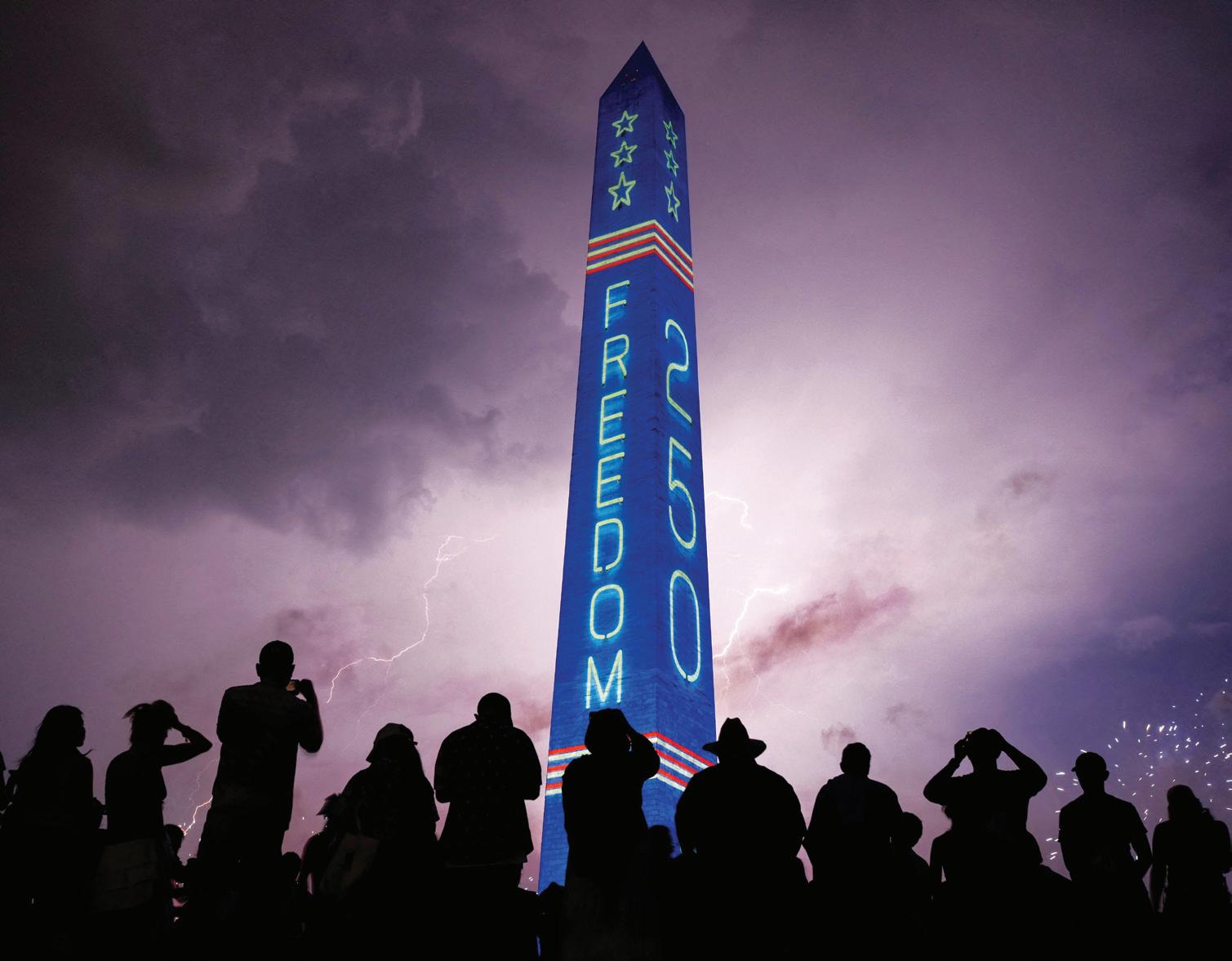
AT 250 Lightning strikes behind the illuminated Washington Monument in Washington, D.C., as
gather to watch the fireworks during the Freedom 250’s Salute to America. A weather delay brought the July 4 Independence Day celebration into the early morning of July 5.
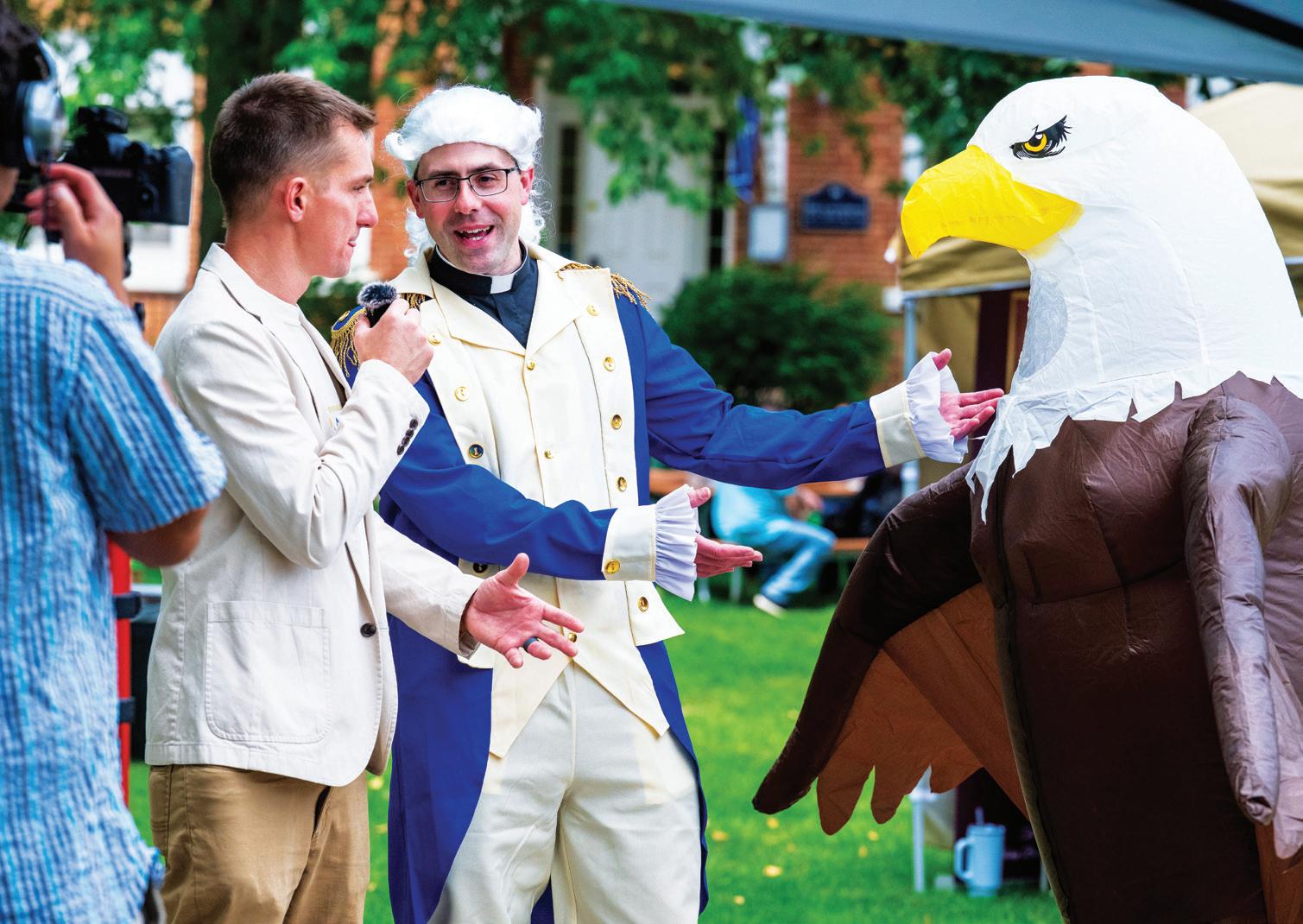
WISCONSIN SHRINE CELEBRATION Father Nathaneal Mudd, a chaplain at the National Shrine of Our Lady of Champion in Champion, Wis., dressed as an American patriot, is interviewed July 5 during the shrine’s All-American Picnic. The picnic, as well as other activities, were part of the shrine’s Catholic Saints of America celebration July 1-9. With relics of 14 saints and blesseds, along with tents of displays from shrines and sainthood guilds around the country, the shrine celebrated what it means to be Catholic Americans. “Yes, we are faithful citizens of the United States of America, but we are first of all, by baptism, Catholics,” Father Mudd told OSV News. “And that identity, as sons and daughters of God by baptism, is always going to be more important.” Champion’s shrine is the only Church-approved apparition of Mary in the United States. It is where Adele Brice (also spelled “Brise”), a Belgian immigrant whose sainthood cause formally opened in January, experienced visions of the Queen of Heaven in 1859.
Practicing CATHOLIC
Produced by Relevant Radio and the Archdiocese of St. Paul and Minneapolis, the July 3 “Practicing Catholic” radio show included Lee Sondeno, director of young adult ministry at St. Victoria in Victoria, about challenges young Catholics face today. The latest episode also featured Amanda Post, parishioner of Our Lady of Grace in Edina, who shared her journey into the Catholic Church. Listen to interviews after they have aired at practicingcatholicshow.com or choose a streaming platform at Spotify for Podcasters.
OVERHEARD
As the country (United States) marks the anniversary of the founding of its earthly homeland, it is my hope that this experience as pilgrims will also help you to fix your eyes on the heavenly one (cf. Hb 11:16), and likewise serve as a reminder that the Eucharist is an invaluable gift, our indispensable sustenance.
In a pre-recorded video, Pope Leo XIV addressed those gathered for the concluding liturgy in Philadelphia of the 2026 National Eucharistic Pilgrimage. Archbishop Nelson Pérez of Philadelphia introduced Pope Leo’s words to the faithful during the July 5 Mass at the Cathedral Basilica of Sts. Peter and Paul. Launched May 24, the pilgrimage wound through most of the nation’s 13 original colonies passing through 18 dioceses and archdioceses, as well as two Eastern Catholic eparchies as the U.S. marked its 250th anniversary. The journey was placed under the patronage of St. Frances Xavier Cabrini, the woman religious and Italian immigrant who became the first U.S. citizen to be canonized after a lifetime of work ministering to immigrants. Stops along the Cabrini Route highlighted sites significant to Catholicism’s contributions to U.S. history. In his message, Pope Leo described the pilgrimage as “particularly appropriate” for the commemoration of the nation’s 250th anniversary, since the journey “centered on our Lord.”
NEWS notes
Dean Simmons, who teaches at St. Thomas Academy in Mendota Heights, recently received the Ninth through Twelfth Grade Educator of the Year award from the Minnesota Council on Economic Education. The council recognizes outstanding innovation by teachers in economics and personal finance education. According to a news release from the council, Simmons “has spent nearly three decades helping students understand not only economics and personal finance, but how these topics shape the world around students. His passion for the subject is evident to anyone who has spent even a few minutes in his classroom.” Simmons received $1,000, a plaque and a certificate. The news release also noted: “Several years ago, he created the Cadet Fund, a student-managed investment fund that uses real dollars not simulated money to teach students about investing, markets, risk, and decision-making. What began with $17,000 in seed funding has grown to well over $140,000 and now supports financial aid for Saint Thomas Academy students. It’s an extraordinary example of how classroom learning can create a real and lasting impact.”
Renovation work is continuing at the Basilica of St. Mary in Minneapolis, with a leveling of the main floor to prepare for new hardwood flooring, a recent Instagram post from the parish said. The front bronze doors of the nation’s first basilica have been sealed and the upper nave closed since April 5 as workers fulfill tasks fueled by the Basilica’s $45 million capital campaign titled Restoring Beauty, Inspiring Hope. Meanwhile, the Basilica community’s liturgical celebrations are being held in the church’s lower level as the project continues into 2027. The Basilica and the Cathedral of St. Paul in St. Paul are also part of the Archdiocese of St. Paul and Minneapolis’ Lord, Renew Your Church campaign, with funds being raised for facility upgrades and conservation at both buildings.
Bill Davies, 83, a member of St. Gabriel the Archangel in Hopkins and Our Lady of Grace in Edina, is being recognized for his military service in Vietnam and subsequent years of service to the Church and community. In March, Davies received a Service Beyond Service Award, sponsored by the Vietnam Veterans Memorial Fund, which honors veterans who have served their communities after returning from the war. In May, the mayor and City Council of St. Louis Park honored him with a proclamation for receiving the veterans award, as well as his leadership roles in the community, including Catholic faith organizations, the St. Louis Park Rotary, American Legion Post 282, VFW Post 435, the St. Louis Park Senior Center, the St. Louis Park Football Association for Youth and the St. Louis Park Little League. Davies said he has been a member of the Archdiocese of St. Paul and Minneapolis’ Catholic Committee on Scouting for years, and he was chairman of the National Catholic Committee on Scouting from 2007 to 2010. He received the Scout’s National Duty to God Award in 2021. Davies said both his father and growing up on a farm near Waukesha, Wisconsin, where neighbors relied on one another, inspired him to a life of service and community. Davies served in the U.S. Army from 1967 to 1969, including a year in Vietnam with the 101st Airborne Division’s AG Classified Administration Company. For meritorious service, he received both the Bronze Star and the Army Commendation Medal.
St. Thomas the Apostle in the growing community of Corcoran is $2 million away from the $8 million it needs to construct a 400-seat church that will replace its 170-seat church built in 1896. According to a parish video, the goal is to celebrate Christmas 2027 in the new sanctuary.
CORRECTIONS
A News Note on page 2 of the June 18 edition incorrectly stated the number of Fellowship of Catholic University Students (FOCUS) expected at the University of Minnesota campus in Minneapolis this fall. There will be four FOCUS missionaries.
On page 7 of the June 18 edition, a list of jubilarian priests and their ministries from the Archdiocese of St. Paul and Minneapolis incorrectly named the medical center where Father Stephen LaCanne was chaplain from 2000-2003. It was then-University of Minnesota Medical Center, Fairview in Minneapolis.
Publisher
TOM HALDEN, Associate Publisher
JOE RUFF, Editor-in-Chief
REBECCA OMASTIAK, News Editor
AMERICA
people
FROMTHEVICARGENERAL
JESUS | FATHER MICHAEL TIX
Be a light to others in times of darkness, uncertainty
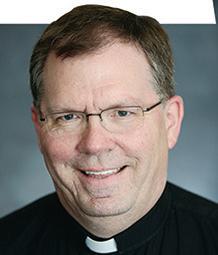
With the month of July now here, I often think about two neighbors from the small town of Hampton where I was born and raised. One neighbor was Billy Becker who lived two houses down from us. It was in early July of 1982 that Billy drowned at Lake Byllesby in nearby Cannon Falls. Then in early July of 1996 — also at Lake Byllesby — my next-door neighbor, Terry Endres, drowned in a swimming accident. To have two neighbors die in the same month and within days of one another, at the same place, and from drowning, left an impression not only on each of those families, but our entire town.
The month of July also makes me think of my mother, who died in July of 1987. Mom was 47 years old when she died from breast cancer. I can remember the day’s events of Mom’s passing as if they were yesterday. Mom’s cancer extended over a two-year period, when she received both radiation and chemotherapy with all the side effects we associate with those treatments. Mom approached all of this with an amazing faith that left a deep impression on me that continues to inspire me today.
The month of July is the heart of summer
Sean luz para los demás en tiempos de oscuridad
y incertidumbre
Ahora que ha llegado el mes de julio, a menudo pienso en dos vecinos del pequeño pueblo de Hampton, donde nací y crecí. Uno de ellos era Billy Becker, quien vivía dos casas más abajo que la nuestra. A principios de julio de 1982, Billy murió ahogado en el lago Byllesby, cerca de Cannon Falls. Luego, a principios de julio de 1996 —también en el lago Byllesby— mi vecino de al lado, Terry Endres, murió ahogado en un accidente mientras nadaba. Que dos vecinos fallecieran en el mismo mes, con pocos días de diferencia, en el mismo lugar y por la misma causa, dejó una profunda huella no solo en sus familias, sino también en todo nuestro pueblo. El mes de julio también me hace pensar en mi madre, quien falleció en julio de 1987. Mi mamá tenía 47 años cuando murió de cáncer de mama. Recuerdo los acontecimientos del día de su fallecimiento como si hubieran ocurrido ayer. Su enfermedad se prolongó durante dos años, tiempo en el que recibió radioterapia y quimioterapia, con todos los efectos secundarios que normalmente asociamos con esos tratamientos. Mi madre afrontó todo ese proceso con una fe admirable que dejó una profunda impresión en mí y que continúa inspirándome hasta el día de hoy.
None of us know the difference we can make in the lives of others by a simple act of kindness. May these July days inspire all of us to live as people of light and goodness for one another and our world.
and not the time we often associate with sad stories. At least the earliest days of July are the longest days of the calendar year. In July we experience days of light from early morning to later evening. While my memories may be times of darkness, this time of year invites us to consider the light and warmth of God’s love. Whether it was the passing of Billy, Terry or Mom, I remember seeing the best in people who reached out to a neighbor to share the light of God’s love. In times of darkness, people shared the light of God’s love in ways that range from bringing food, sending cards and flowers, as well as by their simple presence at a visitation or funeral. No one had to have answers to the many questions on people’s minds around these times. It was instead the choice of showing up and being present —
El mes de julio es el corazón del verano y no es una época que normalmente asociemos con historias tristes. Al menos sus primeros días son los más largos del año. En julio disfrutamos de la luz del día desde muy temprano en la mañana hasta bien entrada la tarde. Aunque mis recuerdos estén marcados por momentos de oscuridad, esta época del año también nos invita a contemplar la luz y el calor del amor de Dios. Ya fuera con la muerte de Billy, de Terry o de mi madre, recuerdo haber visto lo mejor de las personas que se acercaron a sus vecinos para compartir la luz del amor de Dios. En esos momentos de oscuridad, la gente manifestó ese amor de muchas maneras: llevando comida, enviando tarjetas y flores, o simplemente haciéndose presente en el velorio o en el funeral. Nadie tenía que tener respuestas para las muchas preguntas que surgían en esos momentos. Lo que realmente marcó una diferencia fue la decisión de estar allí, de acompañar a quien sufría y caminar a su lado. Sin embargo, para quienes pierden a un familiar, el funeral es solo el comienzo de una nueva manera de vivir, que a veces puede resultar abrumadora. Llegan el primer cumpleaños, el primer viaje de campamento o el primer Día de Acción de Gracias sin ese ser querido. Tres semanas después del funeral, cuando todos han retomado su rutina diaria, la vida sigue siendo muy distinta para quienes han sufrido la pérdida. Con frecuencia surge la tentación de sentirse aislados por el dolor que provoca el duelo. Es precisamente en esos momentos de oscuridad cuando tenemos la oportunidad de compartir la luz del amor de Dios mediante una nota amable, una palabra de aliento o
to walk with someone else — that made a positive difference. For those who lose a family member, however, the funeral is only the beginning of experiencing everything in a new way, which at times can be overwhelming. There is the experience of the first birthday, the first camping trip, or the first Thanksgiving without a loved one. Three weeks after the funeral, when everyone settles back into their daily routines, life continues to be different for those who have lost a loved one. Often, there is the temptation to feel isolated because of the pain loss brings. These times of darkness are an opportunity to share the light of God’s love with a kind note, or word of support and understanding that can go a long way in helping someone not feel alone but instead accompanied by God’s presence
de comprensión. Gestos sencillos como esos pueden ayudar mucho a que una persona no se sienta sola, sino acompañada por la presencia de Dios, manifestada a través del cariño de un vecino o de un amigo.
Con la muerte de mi madre, tuve la oportunidad de experimentar personalmente esa luz en medio de la oscuridad. Estoy profundamente agradecido por las muchas personas que se acercaron a mí y a mi familia para ser instrumentos del amor y de la paz de Dios, sin siquiera pensarlo dos veces. En mi experiencia, simplemente hicieron lo correcto: pusieron su fe en acción al salir de sí mismos para buscar el bien de otra persona. Esto puede suceder en momentos de una pérdida triste y dolorosa, pero también existen muchas otras oportunidades. Pensemos en el significado de dar la bienvenida a alguien nuevo en el vecindario o en la escuela, y en la diferencia que ese gesto puede hacer en su vida cuando todo y todos son desconocidos. Las oportunidades para ser luz para los demás son muchas y nos rodean constantemente.
Con estos luminosos días de julio, todos somos recordados de la luz del amor de Dios por nosotros. Vemos la profundidad de ese amor en la cruz y somos llamados a imitar ese mismo amor hacia los demás, ya sean familiares, vecinos o personas desconocidas. Estamos llamados a llevar la luz del amor de Dios de maneras que reflejen su presencia entre nosotros. Ninguno de nosotros sabe el impacto que un simple acto de bondad puede tener en la vida de otra persona. Que estos días de julio inspiren a todos a vivir como personas de luz y de bondad para con los demás y para con nuestro mundo.
revealed through a caring neighbor. With Mom’s passing I had the opportunity to experience firsthand this light in the darkness, and I am ever grateful to the many people who reached out to me and our family to be an instrument of God’s love and peace without ever giving it a second thought. In my experience it was a matter of people simply doing the right thing and putting faith into action by reaching outside of themselves for the good of someone else. This can happen at the time of a sad and tragic passing, but there are many other opportunities. Think of the meaning of welcoming someone new to your neighborhood or school, and the difference this can make in their lives when everything and everyone is new around them. The opportunities of being light for someone else are many, and they surround us. With these July days of light, we are all reminded of the light of God’s love for us. We see the depth of God’s love in the cross, and we are called to imitate that same love for others, whether family, neighbors or the stranger among us. We are called to bear the light of God’s love in ways that reflect God’s presence among us. None of us know the difference we can make in the lives of others by a simple act of kindness. May these July days inspire all of us to live as people of light and goodness for one another and our world.
OFFICIALS
Archbishop Bernard Hebda has announced the following appointments in the Archdiocese of Saint Paul and Minneapolis:
Effective June 1, 2026
Deacon Robert Bramwell, granted the status of a retired deacon. Deacon Bramwell has served the Archdiocese as a permanent deacon since his ordination in 1991, primarily at the Church of Saint Joseph in New Hope.
Effective July 1, 2026
Reverend Bryan Pedersen, assigned as temporary parochial administrator of the Church of the Sacred Heart in Robbinsdale while the newly incoming parochial administrator, Reverend Paul Hedman, is fulfilling miliary service until August 15, 2026.
Effective July 15, 2026
Reverend Godfred Akwasi Owusu, granted faculties of the Archdiocese and assigned as parochial vicar of the Church of Our Lady of Grace in Edina. Father Owusu is a priest of the Diocese of Konogo-Mampong in Ghana.
Effective August 1, 2026
Reverend Nathan Hastings, released from his assignment as parochial vicar of the Church of Saint Michael in Saint Michael to serve as chaplain for the University of St. Thomas in Saint Paul.
Fireworks return
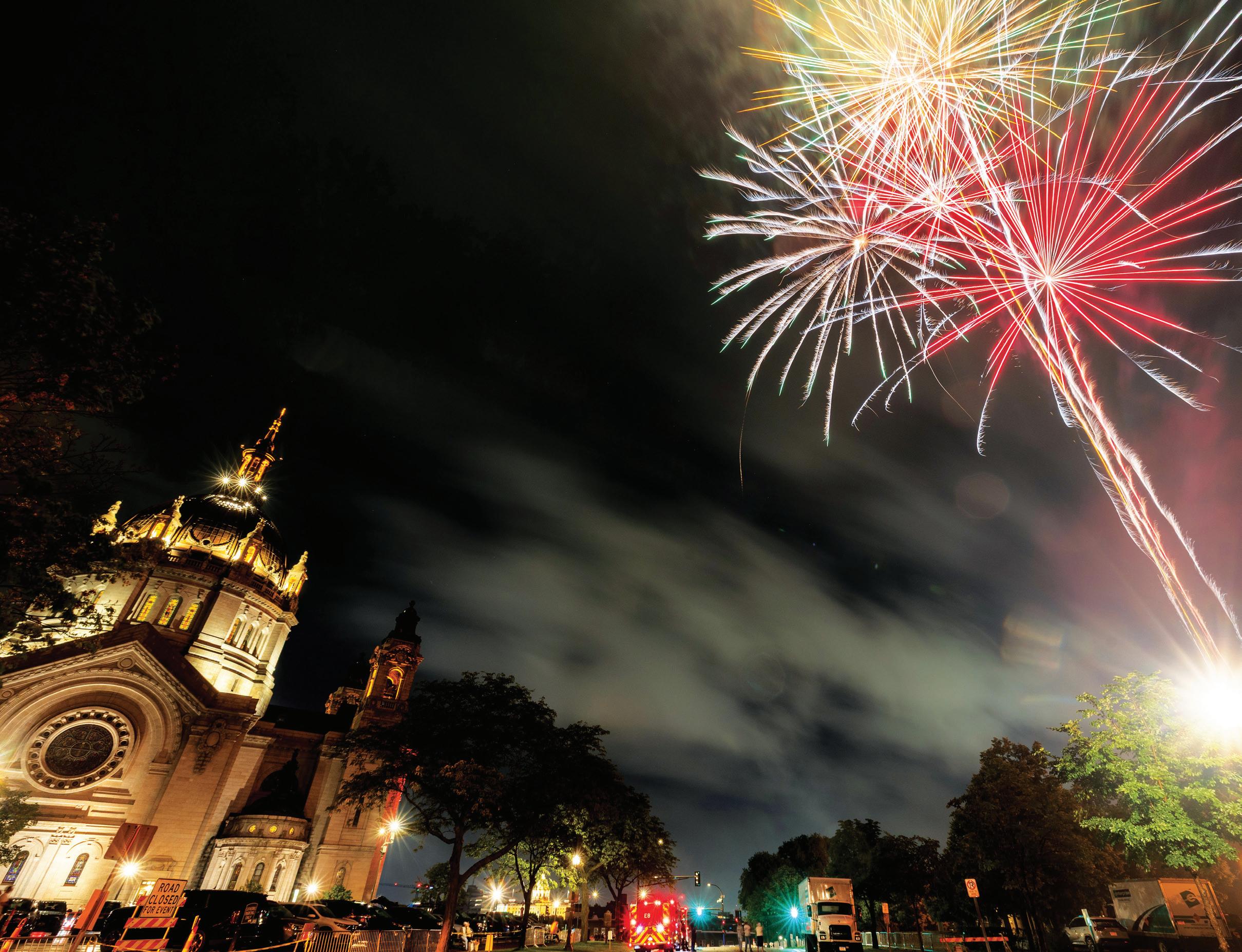
Awed




After nearly a decade without fireworks on the Fourth of July, St. Paul put on a show July 4 directly over the Cathedral of St. Paul in St. Paul. The city’s Rotary Club organized the show and selected the parking lot across the street the former chancery of the Archdiocese of St. Paul and Minneapolis as the launch site for the fireworks. Rain caused a short delay, but a successful launch began not long after the scheduled 10 p.m. start time. Earlier in the evening, local musicians Steven C. and Jillian Anderson performed a concert inside the Cathedral called America the Beautiful, featuring instruments and vocals performed by the Andersons and other local musicians. An already full Cathedral was packed even more when rain started falling just minutes into the concert. People who had gathered outside to hear the concert over loudspeakers and visit the food trucks parked on Dayton Avenue rushed inside for shelter from the storm. Right after the concert, Archbishop Bernard Hebda addressed the crowd, along with St. Paul Mayor Kaohly Her. Following their remarks, people came up to the sanctuary and took turns reading parts of the Declaration of Independence.
DAVE HRBACEK | THE CATHOLIC SPIRIT
Mystery of God...We Rejoice!
75 years
Ruth Cowie
Charles Ann Crowder
LaVerne Kleinheider
Lorraine Landry
Lisette Menke
Martha Ann Schaefer
Jean Ann Weyer
70 years
Maxine Bauer
Mary Jacqueline Buckley
Margaret Buresh
Gemma Marie Dittle
Kathleen Eggering
Maryann Greenwald
Patricia Hall
Rita Jirik
Anna Louise Kemen
Rose Marie Krebs
Marie DeLourdes Larente
Carol Lesch
Ruth Anne Lichter
Marilyn McCue
Joann McMahon
Mary Ann Morley
Maureen Therese Mueller
Francita Orcholski
Paulette Pass
Helen Marie Plourde
Annora Polega
Bernadette Quintanilla
Mary Francine Rathouz
Miriam James Schmucke
Judith Schuck
Karen Marie Seeker
Helen Stejskal
June Marie Tacheny
† Jane Thibault
Mary Bernard Unpingco
Kathryn Van Hulst
Mary Delbert Weisensel
Mary Jo Welter
Marilyn Wussler
Mary Kay Ash
Sandra Bay
Mary Susan Berg
Susan Biegert
Gail Buckman
Joan DiProspere
Irene Dohmen
Maria Elena Ferrer-López
Regina Caeli Fox
Patricia Gehling
Lynore Girmscheid
Mildred Marie Glosemeyer
Theresa Marise Hansen
Janet Heiar
Mary Hodel
Mary Judith Kamada
Miriam Therese Kanaya
Ann Carol Kaufenberg
Ruth Ann Klauser
Kathleen Koenen
Mary Eileen Nakamura
Diane Owens
Mary Rost
Mary Kay Schmitt
Judith Schroeder
Kathleen Storms
Virginia Irene Sturgeon
Mary Joanna Suh
Marie Rose Van Deurzen
Esther Wagner
Karen Walther
Cora Weismantel
50 years
Marygay Lawrence
Barbara Pfarr
Patricia Rass
Cheryl Marie Wagner
25 years
Ann Coleman
Kathleen Ravn
Bridget Waldorf

Marie Blanche Marschner
Known for her massages at St. Paul Saints games, Sister Rosalind dies at 96
By Josh McGovern
The Catholic Spirit
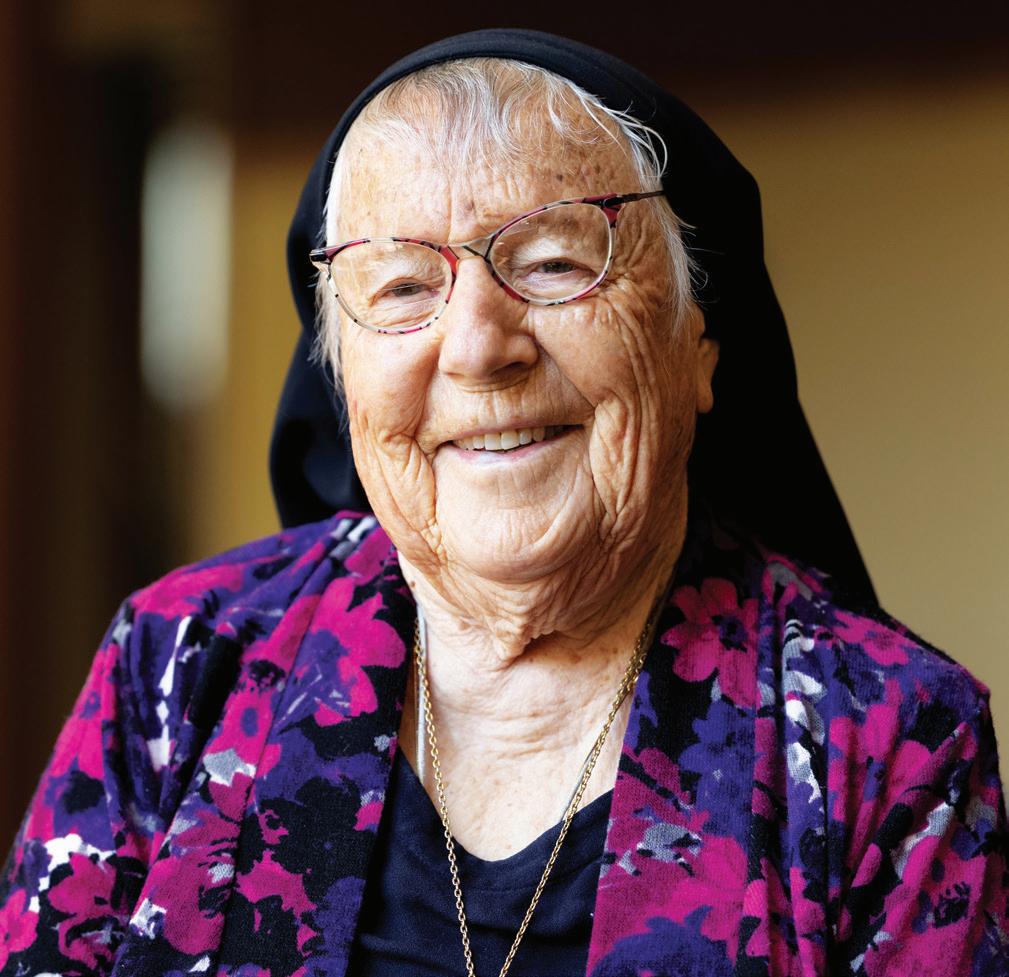
Sister Rosalind Gefre, known lovingly for her massage practice — particularly for fans attending St. Paul Saints games — died June 15 at age 96.
The Sister of St. Joseph of Carondelet always patted people on the back or rubbed their arm “just to let them know there’s someone who cares,” she said in an interview with The Catholic Spirit in 2024.
“I remember one time I hugged a waitress and she broke down sobbing,” Sister Rosalind said. “She’d had a horrible day. In my mind, that is what I want to be: Be Jesus to others. And they are Jesus to me. Whatever I do to them is done to Jesus — that, I have grown to be very aware of.”
For almost two decades, Sister Rosalind gave massages and ministered at Mass during St. Paul Saints baseball games. She received special recognition from the Saints Aug. 10, 2024, with an appreciation night. The first 1,500 fans to attend that game received a bobblehead called “The Massaging Nun.”
Many strangers poured their hearts out to Sister Rosalind at games, which she considered a privilege, but “it’s also
hard, because after the game, you won’t see them again.”
Sister Rosalind grew up in North Dakota during the Great Depression. She had 12 siblings. Her family sold cream and eggs and lived on what little money they made. When she was 10 years old, she told Jesus, “I’m going to be a sister and a saint.”
“That was my desire,” Sister Rosalind said in 2024.
When Sister Rosalind was 19, she asked her boyfriend to take her to the train station. She traveled to a cloistered convent in St. Paul.
“I just felt if I would’ve put it off another day, I probably would not have entered,” Sister Rosalind said. “We usually had a goodnight kiss — a little peck on the cheek. That’s all we did. I feel that if I had given him that kiss that last time, I probably would not have left.”
“I still feel my life is rich. I go to Mass and say my private little prayers as I walk up and down the corridor. I pray a lot — not formal, but just, ‘Jesus, I love you.’ My life is basically praying all day,” she said. “I believe that I am loved tremendously by our heavenly Father and by Jesus.”
Sister Rosalind’s funeral Mass was June 23 at Lumen Christi in St. Paul. Burial was at Resurrection Cemetery in Mendota Heights.
Faith doesn’t retire for small group at St. John Neumann
By Aviana Kasal For The Catholic Spirit
Where two or three are gathered in Jesus’ name, he promises to be among them.
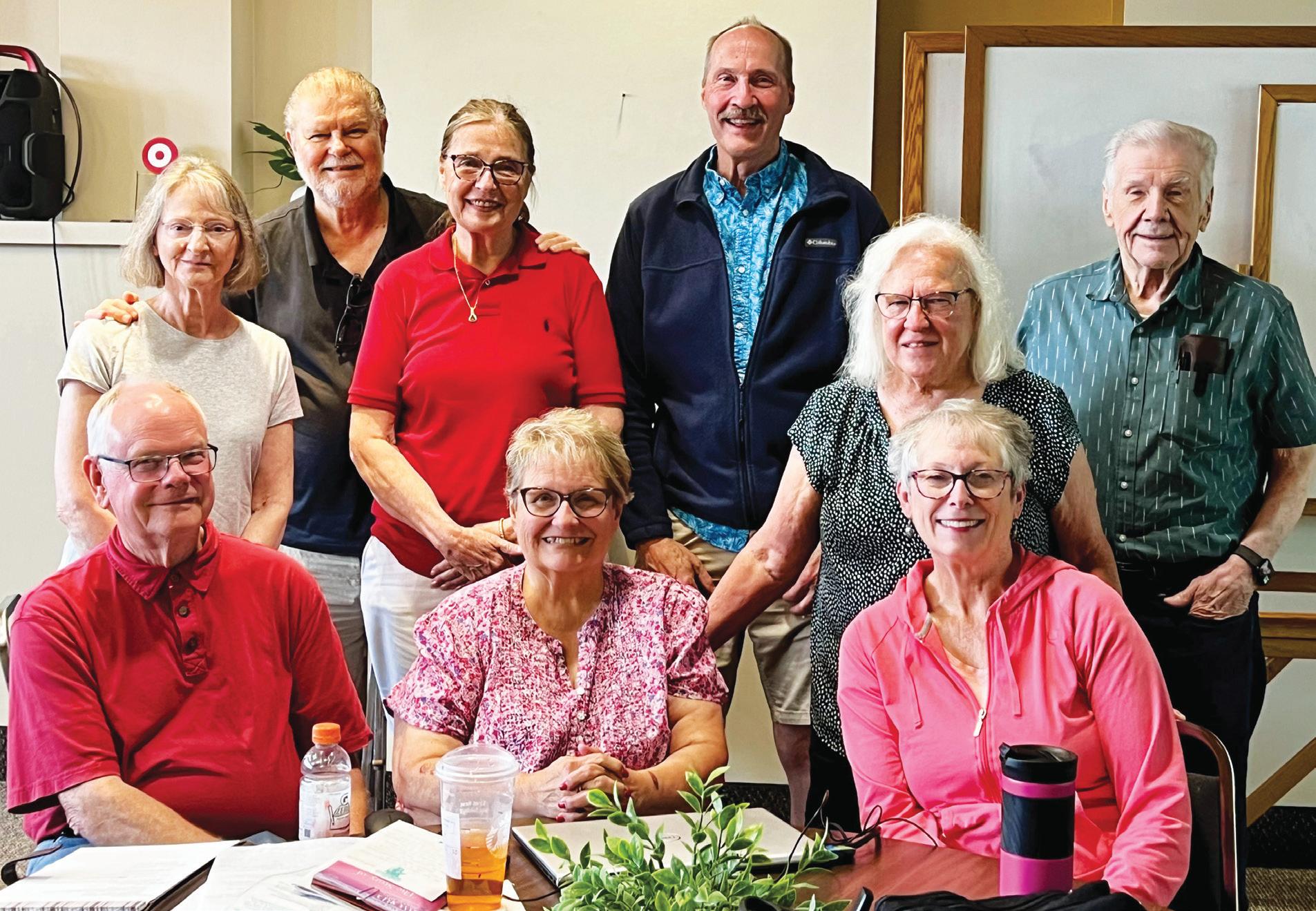
That promise comes to life each Monday afternoon at St. John Neumann in Eagan, where a retirement small group gathers to pray, reflect on the Gospel, share “God moments” and grow together in faith.
The group, which includes about 21 members, began in response to the Archdiocese of St. Paul and Minneapolis’ parishbased small group initiative, following the model of the Parish Evangelization Cells System (PECS). Today, it is a place where faith strengthens, friendships form and members support one another through life’s joys and challenges.
“We look forward to it every Monday,” said Joanne Stadler, who now leads the group alongside co-leader Kathy Coen.
Parish staff members Coen and Joe Keating first organized the group after they recognized a need for retirees to gather during the daytime. While some small groups meet in homes, Coen said that was not practical for everyone.
“For a lot of people, particularly at retirement age, they have downsized and they live in smaller places and can’t necessarily host,” Coen said. “Evenings don’t always work because driving in the dark, especially in the winter or the rain, is not ideal.”
Instead, the parish became a welcome meeting place where members could easily gather each week. Small groups using the PECS model encourage time for praise and worship, sharing ways Christ has been present to group members and ways they have responded, as well as a teaching moment, discussion and prayers of intercession.
Meetings with the retiree group at St. John Neumann begin with a song before members
It’s very important for us to share the God moments and to bring out the amazing things that happen each week.
Candy Rogness
share “God moments” — stories about where they have encountered God throughout the week or at another meaningful point in their lives. The group then discusses the Sunday Gospel, Archbishop Bernard Hebda’s monthly video message or other faith topics before concluding with announcements and prayer intentions.
For Candy Rogness, the God moments are one of the most meaningful parts of every meeting.
“It’s very important for us to share the God moments and to bring out the amazing
things that happen each week,” Rogness said.
Sometimes those moments are found in simple family gatherings.
“When we get together and are able to spend time together, that’s a God moment for me,” Rogness said.
Prayer has also become a defining part of the group’s life collectively. Members pray for one another’s families, friends and the parish community while growing more comfortable praying aloud.
“We don’t know how to do that,” Coen said. “I think that part was really hard
initially for a lot of people. Not that they didn’t want to, but knowing the difference between types of prayers and having comfort praying, and not just asking for prayer, but actually doing it.”
Over time, members have seen those prayers bear fruit. Stadler recalled one member who returned to the group after recovering from a stroke.
“We did a lot of praying while he was gone,” Stadler said. “Our prayers were answered.”
The group’s impact extends beyond its weekly meetings. Members volunteer at parish events, assist with evenings of renewal tied to the liturgical seasons and support ministry to young families.
Those who are unable to volunteer because of health or mobility challenges continue serving through prayer. “Some people can’t come and be present, but they can commit to praying for the events we have for families and other things,” Coen said.
In addition to prayer, the atmosphere members have built together is vital to the group.
“We spend a lot of time laughing. It makes everybody so comfortable and just so close,” Rogness said.
That welcoming spirit has made parishioners eager to join and reluctant to miss group gatherings. Members who have stepped away because of health concerns often look forward to returning.
For Rogness, the group has renewed her faith.
“If I wasn’t in the group, life goes on and you get busy with other things, and you don’t think of the church as much,” she said. “This has really taught me a lot.”
Watching that transformation has been rewarding for Coen, who has accompanied the group since its beginning. “It has been a privilege just to see how things have come together in this group,” she said.
DAVE HRBACEK | THE CATHOLIC SPIRIT
Sister Rosalind Gefre.
COURTESY KATHY COEN
Joanne Stadler, front right, leads a retirement small group at St. John Neumann in Eagan, where members of the group posed for a photo June 29.
Sister Doris reflects on 70 years as Dominican Sister of Sinsinawa
By Josh McGovern
The Catholic Spirit
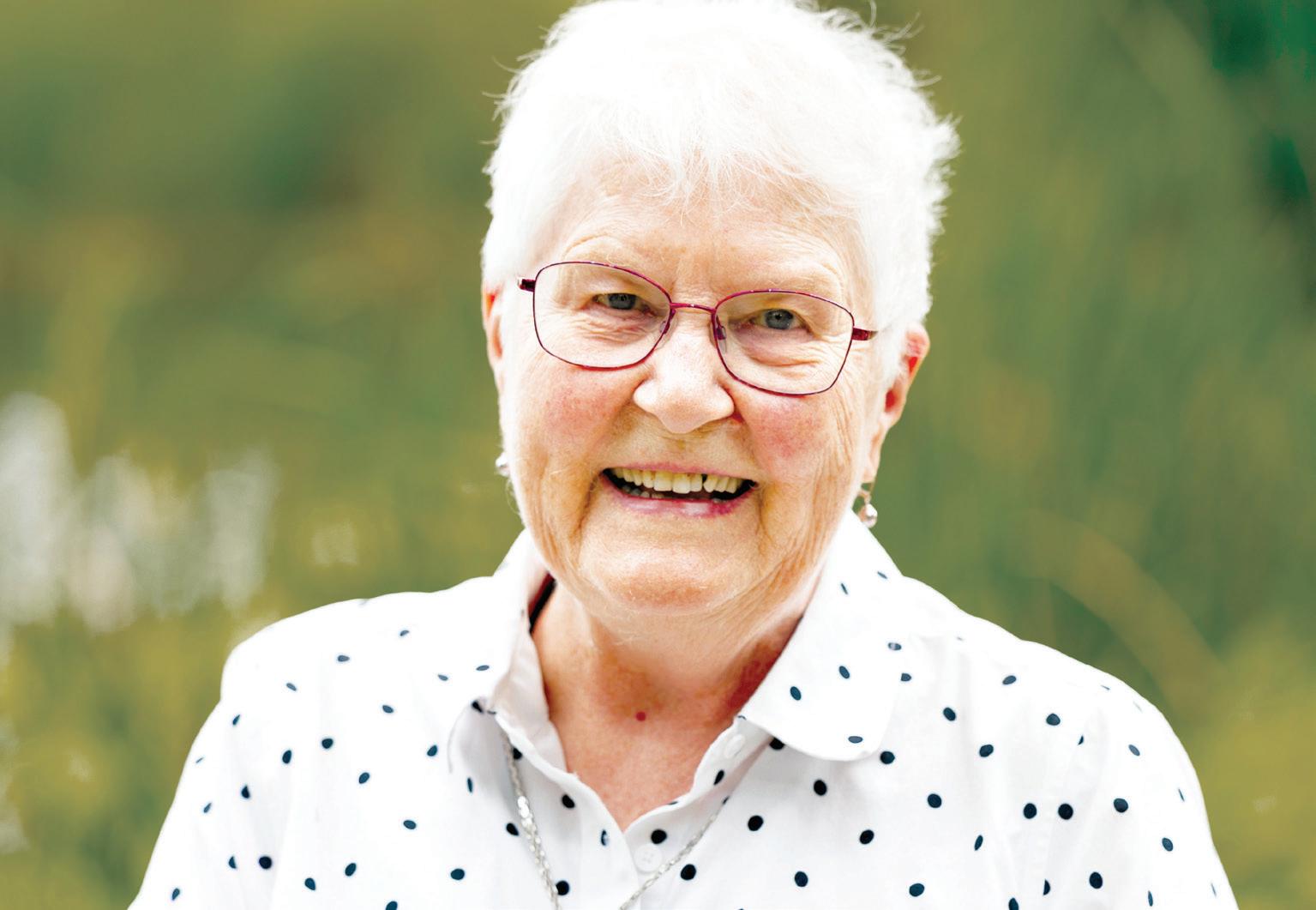
Sister Doris Rauenhorst couldn’t imagine any other life than religious life. She celebrates her 70th jubilee this year as a Dominican Sister of Sinsinawa.
“I love being a sister,” Sister Doris said. “The reason why I wanted to be a religious is because I thought it would be a way to serve God. I was willing to do anything. I didn’t join because I wanted to be a teacher. I joined because I wanted to be a religious. You learn and grow into that life.”
Sister Doris served at St. Albert the Great in Minneapolis on the parish council and as a teacher. She also participated in all works of the parish as a “way of exercising ministry,” she said.
After graduating from then-St. Anthony High School in Minneapolis, Sister Doris joined her order in Sinsinawa, Wisconsin. At the time, the order’s ministry was in education in five Minneapolis elementary schools, one in Faribault and South St. Paul respectively, and many in Wisconsin.
“Lots of sisters left teaching as parishes closed their schools and their convents and became either religious-ed (teachers) in parishes or pastoral ministers or things like that,” Sister Doris said. “A few of us became social workers, two became physicians, doctors, and a couple became lawyers … . I was slated to be a high school teacher, and so after my vows, I got my degree from our college, Dominican University in Chicago, and then was sent to teach high school for two years.”
Sister Doris then studied German abroad in Fribourg, Switzerland. She eventually returned to St. Paul to be vicar for religious with Father Urban Wagner. She gave a report on the religious in the archdiocese. It was “a wonderful challenge,” she said, getting to know the 80 religious communities.
“(I) made a lot of contacts, and responded to questions, or to problems that needed to be addressed, or things that needed some support. It was a time when sisters were beginning to ask for lay salaries, and so I chaired a committee of communities of religious who have mother houses in the diocese, and we worked out our proposal to the diocese. It was accepted and sisters would earn a lay salary for their job rather than a stipend.”
In an article for one of the three publications put out by the Dominican Sisters of Sinsinawa, Sister Doris wrote, “We live, as religious, in a time of sometimes rapidly closing and opening doors — in our Congregation, in our Church, in our world. Each of us would describe or experience those closing and opening doors in a slightly different way,
but we all are called, I believe (and more insistently, perhaps, than ever before) to search out together and to walk with each other toward the opening doors that are the future we hope for ourselves and for our Congregation.”
In the Twin Cities, Sister Doris believed there was a need for a council of religious to act as an advisory board.
“We founded that, and there continues to be some kind of body like that still in existence,” she said.
Sister Doris also advocated for religious anniversaries to be acknowledged by the archdiocese because the same acknowledgement was given to priests. She proposed this to then-Archbishop John Roach.
“The diocese needs to recognize the years that the sisters have served and
acknowledge that, and (Archbishop Roach) said, ‘Well, OK,’ and we had some celebrations of jubilees at the Cathedral (of St. Paul in St. Paul).”
Sister Doris’ brother was a Dominican priest. He eventually left the priesthood to get married. When Sister Doris was discerning religious life, he told her that she needed to be sure that this is what she wanted.
Seventy years later, Sister Doris, in her apartment at The Glenn in Hopkins, said, “It still is what I want to do and what I want to be.”
There have been questions about housing, as well, with many parishes closing their convents to make offices.
“Sometimes we had to scramble to find a place to live,” Sister Doris said. “Sometimes that was difficult. Sometimes it was wonderful. … We didn’t invest in property for our sisters, for the most part.”
Sister Doris lived in a CommonBond high-rise apartment with another sister for seven years. The apartment was in a predominantly Somali immigrant community.
“It was a challenge, but it was great. It was a really good thing for me and my desire to be of service in this world since I wasn’t a professional social worker, or anything like that,” Sister Doris said. “I have lots of good memories of the people that I met in that building.”
Despite challenges and changes with religious life, Sister Doris said she couldn’t imagine life any other way. She continues to serve others at The Glenn — a Catholicbased senior living community in Hopkins open to people all faiths — with prayer and meditation groups.
Though she doesn’t wear her habit, most people in the building know who she is from her nametag, which she insisted still say “Sister Doris Rauenhorst.”
Rural Life Celebration honors faith passed ‘from generation to generation’
The Catholic Spirit
Archbishop Bernard Hebda highlighted the importance of faith being shared through the generations, as part of this year’s Archdiocesan Rural Life Celebration.
In his “Together on the Journey: A Weekly Word” newsletter released June 29, the archbishop wrote, in part, that, “We are so indebted here in Minnesota to the role that our rural families have played in passing on the faith from generation to generation — and from neighbor to neighbor.”
This year’s Rural Life Celebration, held on June 27, took place on Kevin and Carrie Riester’s 47-acre homestead; St. Joseph in Red Wing sponsored the event. Offering Catholics from throughout the archdiocese an opportunity to celebrate the gifts of rural life, agriculture and faith, this year’s event included a 4 p.m. outdoor Mass celebrated by Archbishop Hebda followed by a catered dinner and dessert reception, yard games and activities, and live music.
The Mass included a farewell to Father Brandon Theisen, pastor of St. Joseph, who began a new assignment as pastor of St. Odilia in Shoreview July 1. Archbishop Hebda noted the transition, and parishioners came forward to give Father Theisen gifts, including a photo collage and a new set of vestments.
Special recognition was also given to Dale Hennen, a retired employee of the Archdiocese of St. Paul and Minneapolis who
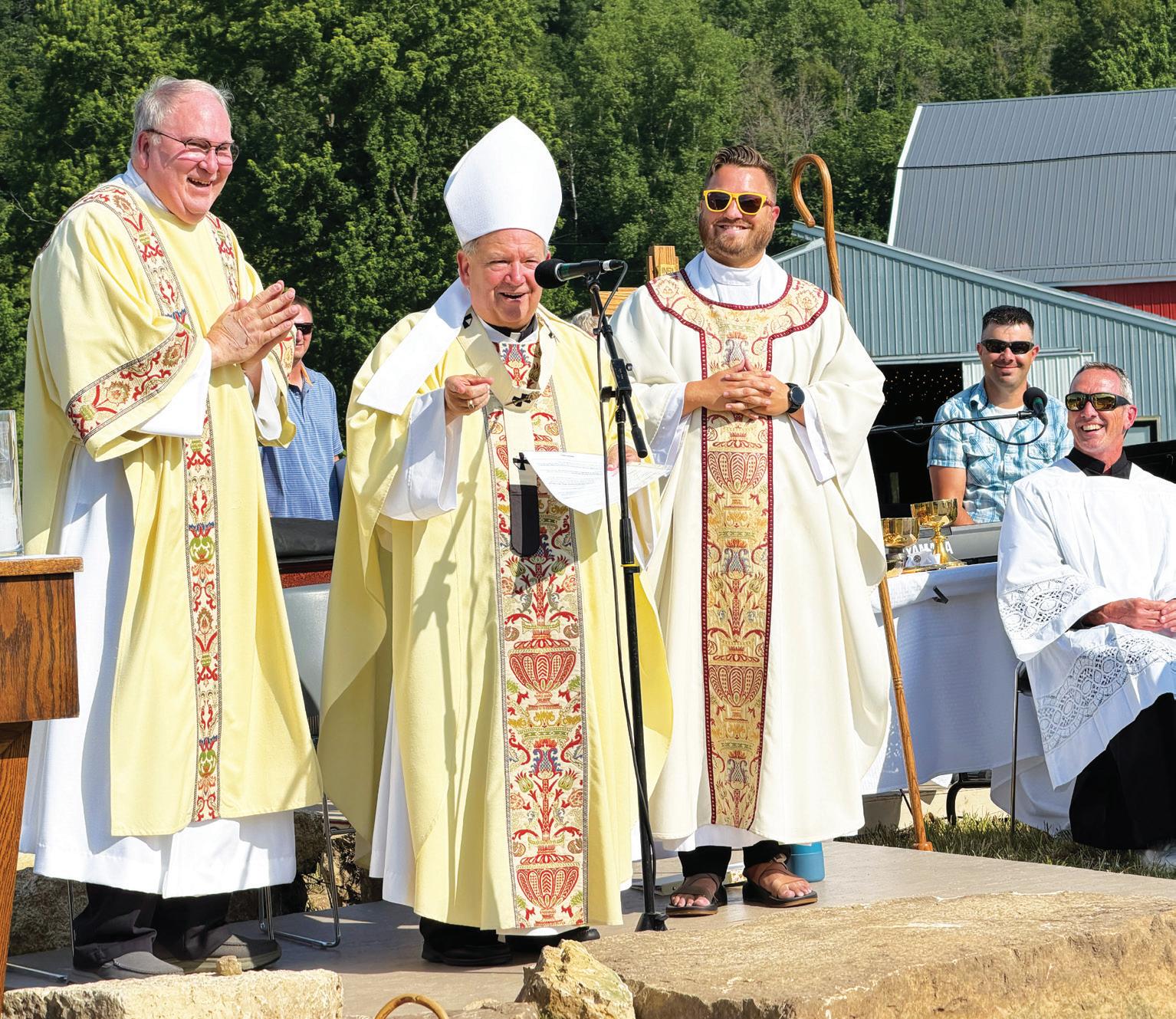
has coordinated the Rural Life Celebration for 38 years. This year’s event was his last, a fact that Archbishop Hebda noted at the end of Mass.
Reflecting on the event held at the “spectacularly beautiful” Riester family property, the archbishop wrote in “Together on the Journey: A Weekly Word,” “It wasn’t so long ago that Catholic farm families came together to start parishes and schools throughout this Archdiocese and we continue to benefit from the foundation that they provided.”
Both Kevin and Carrie Riester grew up in the area, with Kevin growing up on the farm owned by his family. The couple, plus their three children, took on various roles during the Rural Life Celebration, with their daughter, Adeline, serving at the altar. The family farm sits in the middle of beautiful bluffs in the Red Wing area, which Archbishop Hebda noted in his homily during Mass. At the end, he led a prayer for farmers and all those who work to bring food to people’s tables. The archbishop encouraged the hundreds gathered for the Mass to continue praying for farmers, who play such an important role.
Each year, a rural parish is chosen to host the annual rural life celebration and that parish determines who will be the host family.
DAVE HRBACEK | THE CATHOLIC SPIRIT
DAVE HRBACEK | THE CATHOLIC SPIRIT
From left, Deacon Marty Kulak, Archbishop Bernard Hebda and Father Brandon Theisen address those gathered for Mass June 27 at the annual Rural Life Celebration. The congregation honored Father Theisen, who has been pastor of the parish for the last five years and transferred to St. Odilia in Shoreview July 1. At right are St. Joseph parishioners Chris Hnasko, second from right, and Blaine French.
Celebrating Religious Jubilarians
The Catholic Spirit
The Catholic Spirit is honored to highlight members of men’s and women’s religious communities who are celebrating milestone jubilees of 10, 25, 50, 60, 70, 75, 80 and 80-plus years this year, and who are serving or who have served in the Archdiocese of St. Paul and Minneapolis. In addition to Dominican Sister of Sinsinawa Doris Rauenhorst, who is featured, the following men and women are being recognized this year. The religious communities shared the information, which is listed in alphabetical order by state.
ORDER OF ST. BENEDICT Colorado Springs, Colorado
70 years
Sister Anne Madeleine Brost
CHRISTIAN BROTHERS OF THE MIDWEST Burr Ridge, Illinois
50 years
Brother Patrick Conway
CONGREGATION OF THE SONS OF THE IMMACULATE CONCEPTION Bloomington, Minnesota
40 years
Father James Chitteth Mattai
30 years
Father Antony Skaria
CONGREGATION OF THE MOST HOLY REDEEMER Brooklyn Center, Minnesota
60 years
Father Patrick Grile
Father Gary Lauenstein
10 years
Father Aaron Meszaros
ORDER OF ST. BENEDICT Collegeville, Minnesota
55 years
Father Cyprian Weaver Maplewood, Minnesota
70 years
Sister Margaret Kramer
60 years
Sister Mary White
FRANCISCAN SISTERS OF LITTLE FALLS Little Falls, Minnesota
75 years
Sister Annella Henger
Sister Mary Pat Burger
60 years
Sister Caroline Stoltz
SCHOOL SISTERS OF NOTRE DAME
Mankato, Minnesota
70 years
Sister Margaret Buresh
Sister Rita Jirik
Sister Anna Louise Kemen
Sister Rose Marie Krebs
Sister Marilyn McCue
Sister Joann McMahon
Sister Paulette Pass
Sister Helen Marie Plourde
Sister Helen Stejskal
Sister June Marie Tacheny
Sister Mary Jo Welter
60 years
Sister Mary Kay Ash
Sister Mary Susan Berg
Sister Irene Dohmen
Sister Patricia Gehling
Sister Lynore Grimscheid
Sister Janet Heiar
Sister Ann Carol Kaufenberg
Sister Kathleen Storms
Sister Esther Wagner
50 years
Sister Cheryl Marie Wagner
25 years
Sister Kathleen Ravn
Sister Bridget Waldorf
ORDER OF THE VISITATION OF HOLY MARY Minneapolis, Minnesota
60 years
Sister Karen Mohan
SISTERS OF ST. JOSEPH OF CARONDELET ST. PAUL PROVINCE St. Paul, Minnesota
80 years
Sister Agatha Grossman
Sister Jane Hurley
75 years
Sister Kathleen Holmberg
70 years
Sister Agnes Foley
Sister Mary Clare Korb
65 years
Sister Shirley Deutsch
Sister Meg Gillespie
Sister Mary Kraft
Sister Susan Oeffling
Sister Carolyn Puccio
Sister Catherine Mary Rosengren
Sister Kathleen Ryan
SISTERS OF ST. JOSEPH OF CARONDELET
ST. PAUL PROVINCE (CONT.) St. Paul, Minnesota
50 years
Sister Christine Ludwig
45 years
Sister Mary Connelly
PRIESTLY FRATERNITY OF THE MISSIONARIES OF ST. CHARLES BORROMEO
St. Peter, North St. Paul, Minnesota
10 years
Father Stefano Luca Motta
Father Giovanni Fasani
SISTERS OF ST. FRANCIS Rochester, Minnesota
75 years
Sister Mary Margaret Dapporn
60 years
Sister Jan Reisdorf
LITTLE SISTERS OF THE POOR St. Paul, Minnesota
60 years
Sister Paul of St. Elizabeth
25 years
Sister Victoria Mary of the Cross MARYKNOLL SISTERS Maryknoll, New York
70 years
Sister Phyllis O’Toole
50 years
Sister Ann Sherman
CONGREGATION OF THE SISTERS OF ST. JOSEPH Cleveland, Ohio
70 years
Sister Anita Germain
Sister Phyllis Tousignant
60 years
Sister Janine Beniger
SISTERS OF ST. FRANCIS Sylvania, Ohio
75 years
Sister Jeanine Sokolowski
60 years
Sister M. Ann Carmen Barone
Sister M. Faith Cosky
Sister M. Fidelis Rubbo
Sister Janice Marie Peer
Sister M. Magdala Davlin
MISSIONARY OBLATES OF MARY IMMACULATE San Antonio, Texas
25 years
Father Cyprian Czop
LADYSMITH SERVITE SISTERS Ladysmith, Wisconsin
70 years
Sister Rosemary Fandel (formerly Sister Mary Amadeus)
FRANCISCAN SISTERS OF PERPETUAL ADORATION La Crosse, Wisconsin
70 years
Sister Marcella Anibas
DOMINICAN SISTERS OF SINSINAWA Sinsinawa, Wisconsin
70 years
Sister Diane Boutet
Sister Patricia Dillon
Sister Patricia Gallagher
Sister Virginia Geniesse
Sister Margaret Marrin
Sister Doris Rauenhorst
Sister Theresa Thomas
60 years
Sister Carolyn Croft
Sister Kathy Komarek
Sister Gretchen Krueger
Sister Maryann Lucy
Sister Sarah Naughton
50 years
Sister Marcia Holthaus
Sister Sal Stanaway
Leadership, stories, photos, videos highlight 21 awards for archdiocese’s Office of Communications
By Joe Ruff and Rebecca Omastiak
The Catholic Spirit
Among 21 awards received by the Archdiocese of St. Paul and Minneapolis’ Office of Communications at the annual Catholic Media Conference (CMC), The Catholic Spirit received a firstplace award for its special issue covering the Aug. 27 shooting at Annunciation in Minneapolis.
Tom Halden received second place as Communications Director of the Year and Multimedia Communications Coordinator Michael Pytleski with The Catholic Spirit received an honorable mention as Social Media Professional of the Year.
The Catholic Spirit received an honorable mention as the best non-weekly diocesan newspaper, and the Office of Communications won third place for best external e-newsletter for “Together on the Journey” with Archbishop Bernard Hebda’s monthly video, weekly online reflections and links to additional news and events.
The annual conference — this year June 16-19 in Atlantic City, New Jersey — included workshops with Catholic national, international and diocesan news outlets and concluded with the Catholic Media Association (CMA) awards ceremony, recognizing work done in 2025.
Judges remarked on Halden’s leadership in comments included with his award: “One of the clearest measures of a communications operation is its effectiveness during a crisis, and in a year filled with relentless challenges, Tom Halden demonstrated exceptional leadership. Following a horrific
THE CATHOLIC SPIRIT
First place (4)
Best Print Supplement: Print Only OneTime Special Issue: “Tragic Shooting Rocks Annunciation in Minneapolis” (Sept. 11, 2025, edition). Joe Ruff, editor-in-chief and reporter; Rebecca Omastiak, news editor and reporter; Josh McGovern, reporter; Dave Hrbacek, reporter and photographer; Nathan Scatena, graphics and layout coordinator; Michael Pytleski, website manager; Chris Pierskalla, advertising manager; and Madelyn Reichert, publications administrative coordinator. “The striking visuals and excellent original reporting on this urgent breaking news story makes this an excellent example of a special section.”
Best Coverage Disaster or Crises: “Catholic Community Turns to Christ’s Light After Tragic Shooting at Annunciation in Minneapolis.” Rebecca Omastiak, Dave Hrbacek and Josh McGovern. This awarded coverage included the following articles:
• “Catholic community turns to Christ’s light after tragic shooting at Annunciation in Minneapolis” (Sept. 11, 2025, edition). Rebecca Omastiak, writer, and Dave Hrbacek, photographer.
• “‘For such a time as this’: Shooting survivor embraces mission to help bring Jesus, healing to Annunciation youth” (Sept. 11, 2025, edition). Dave Hrbacek, writer and photographer.
• “Coming home: Sophia Forchas, discharged from hospital after Annunciation shooting, greeted with cheers” (Nov. 6, 2025 edition). Josh McGovern and Rebecca Omastiak, writers, and Dave Hrbacek, photographer. “This story is compassionately and beautifully told, covering many aspects of the horrific shooting at Annunciation in Minneapolis, from the initial response to the joyful homecoming of a survivor. The writers were particularly sensitive to the number of children affected and worked with respect and care.”
Best Reporting on a Special Age Group Young Adults (18-40): “Catholic Cousins Develop Co-Living Duplex in St. Paul Centering on Affordability, Sustainability” (Nov. 20, 2025, edition). Rebecca Omastiak, writer, and Dave Hrbacek, photographer. “This is a fascinating
shooting at a diocesan school, he responded with calm, strategic and decisive action. Halden directed communication efforts across multiple platforms, managed extensive media relations, and provided press training to grieving staff and religious leaders. He also coordinated an overwhelming volume of support and public inquiries during an intensely difficult time. Despite these demands, he continued overseeing production of podcasts, videos, social media content, and The Catholic Spirit with professionalism and dedication.”
CMA judges awarded The Catholic Spirit’s Sept. 11 print edition with first place for a one-time special issue, as staff sought to accompany the Annunciation Catholic Church and School community after two students were killed and more than a dozen were injured during an all-school Mass.
The reporting and photography team of Joe Ruff, editorin-chief; Rebecca Omastiak, news editor; Josh McGovern, reporter; Dave Hrbacek, reporter and photographer; and Halden was recognized, as were Nathan Scatena, graphics and layout coordinator; Pytleski, website manager; Chris Pierskalla, advertising manager, and Madelyn Reichert, publications administrative coordinator.
“The striking visuals and excellent original reporting on this urgent breaking news story makes this an excellent example of a special section,” the judges wrote.
Individual stories and photos in the Sept. 11 edition and in following editions received awards. Omastiak, Hrbacek and
PLEASE TURN TO CMA AWARDS ON PAGE 19
CMA AWARDS
story and topic that came to life through high-quality reporting and writing. The interviews, research and sidebar were excellent and helped to provide the reader with deeper context. This article is a winner because it shows how Catholic faith and teaching inspires the good work these young men are doing in the world.”
Best Sports Journalism Sports Feature or Column: “The Legacy of No. 33: A Jersey, a Gym and the Gigantic Heart of a Man Named Jack” (Oct. 23, 2025) Dave Hrbacek, writer and photographer. “This is a deeply moving and masterfully told feature that blends sports, community and faith into a powerful narrative. The story stands out for its rich detail and emotional resonance, from the oversized No. 33 jersey to the enduring symbolism of that number in the renovated gym. The storytelling is layered and memorable, capturing both personal loss and lasting impact in a way that lingers with the reader.”
Second place (6)
Best Sports Journalism Sports Feature or Column: “Life of Light: Bennett Kotok Left a Legacy of Faith and Hope” (Jan. 23, 2025, edition). Josh McGovern, writer. “A moving and beautifully reported story that captures the enduring impact of a young athlete’s life. The vivid details from the packed funeral to the “BK” bracelets and batting cages bring the story to life, while the central theme of faith and legacy is woven throughout with clarity and heart.”
Best Reporting on a Special Age Group Senior Citizens: “Sewing Volunteer’s Approach to Helping: ‘If You Can Do It, You Should’” (Aug. 28, 2025, edition). Rebecca Omastiak, writer, and Dave Hrbacek, photographer. “This piece is excellent very well-written with great quotes and important context. The reporting not only told Karen’s story, which was unique and inspiring, but included interviews that showed the wider impact she has made in the community.”
Best Feature Writing Non-Weekly: “Oschenbauer Family Describes Organ Transplant Journey” (July 10, 2025, edition).
Dave Hrbacek, writer and photographer. “This piece has thorough and mesmerizing storytelling.”
Best Reporting on a Special Age Group Children and Teens: “Senior Shares Special Bond with Sister” (May 22, 2025, edition).
Dave Hrbacek, writer and photographer. “This article about Evie and her family was so well-crafted and written. It is a great use of quotes and excellent storytelling that pulled the reader in.”
THE
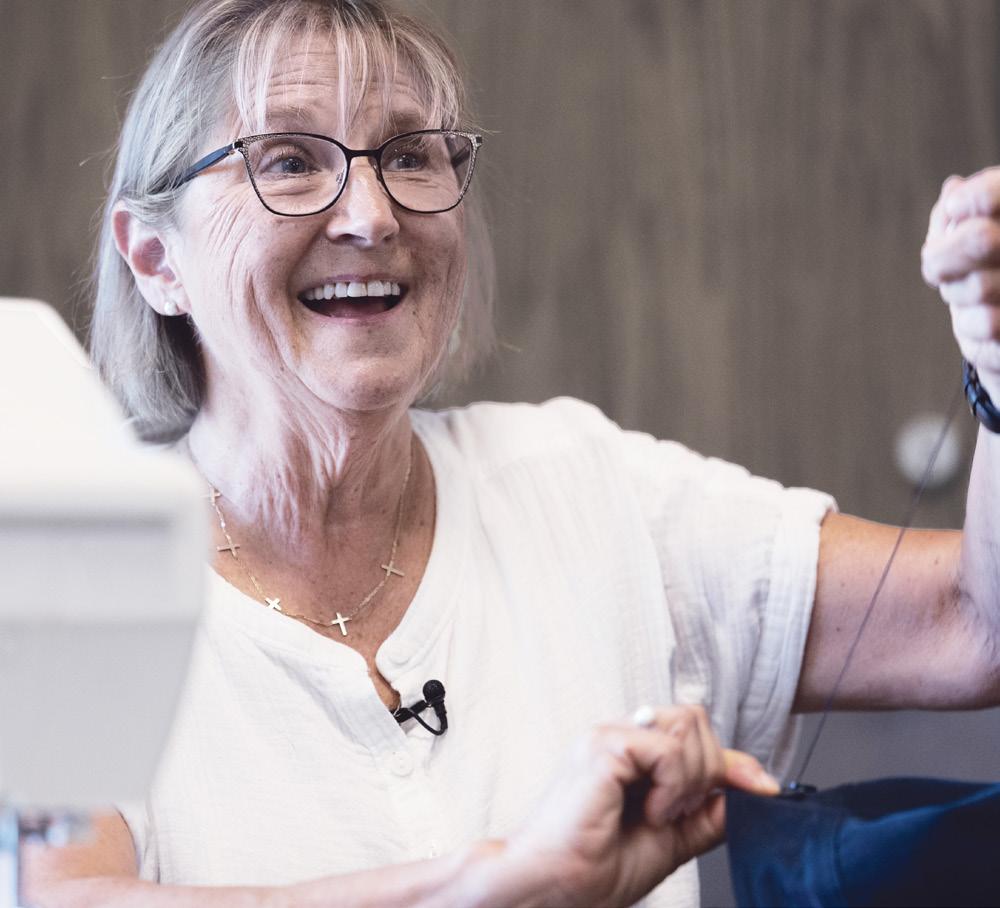
Karen Martodam of St. Joseph the Worker in Plymouth talks with a resident of Catholic Charities’ Higher Ground facility in Minneapolis Aug. 19, 2025, about a sewing repair. For nearly a decade, she volunteered her sewing skills at the center. A story by Rebecca Omastiak about Martodam’s dedication won second place for reporting on a special age group at the Catholic Media Conference in Atlantic City, N.J., June 19.
Best Photograph Portrait: “Shakopee Couple Receives Papal Blessing 4 Days After Getting Married” (March 20, 2025, edition) Dave Hrbacek. “This is excellent work that captures a wonderful moment of emotion and connection.”
Best Photograph Spot News: “Shooting Survivor at Annunciation Prayer Service” (Sept. 11, 2025, edition). Dave Hrbacek. “This is a deeply moving photo of the experience of tragedy grief, disbelief and caring for those who know such extraordinary loss.”
Third place (1)
Best News Writing on a Local Event Nonweekly: “Catholic Community Turns to Christ’s Light After Tragic Shooting at Annunciation in Minneapolis.” Rebecca Omastiak, Dave Hrbacek, Josh McGovern and Tom Halden. This awarded writing included the following articles:
• “Catholic community turns to Christ’s light after tragic shooting at Annunciation in Minneapolis” (Sept. 11, 2025, edition). Rebecca Omastiak, writer, and Dave Hrbacek, photographer.
• “‘For such a time as this’: Shooting survivor embraces mission to help bring Jesus, healing to Annunciation youth” (Sept. 11, 2025, edition). Dave Hrbacek, writer and photographer.
• “Rosary by bonfire: Annunciation reaches 50 days of nightly prayer gathering” (Oct. 23, 2025, edition). Dave Hrbacek, writer and photographer.
• “Brother of girl injured in Annunciation shooting pens letter to Pope Leo XIV, thanking him for prayers” (Nov. 6, 2025, edition). Josh McGovern, writer.
• “Coming home: Sophia Forchas, discharged from hospital after Annunciation shooting, greeted with cheers” (Nov. 6, 2025 edition). Josh McGovern and Rebecca Omastiak, writers, and Dave Hrbacek, photographer.
“A compelling capture of the resilience of the human spirit in the face of horrific violence. Thorough reporting reveals that this resilience extends far beyond family and friends, encompassing an entire community on a shared journey of collective healing and support.”
Honorable mention (5)
Best Newspaper Diocesan Non-Weekly: The Catholic Spirit. The Catholic Spirit staff. Hot Topic Papal Conclave and the Election of Pope Leo XIV: “Pope Leo XIV” special section (May 22, 2025, edition). The Catholic Spirit staff. Best Story and Photo Package By An Individual: “Jack’s Gym: The Legacy of No. 33: A Jersey, a Gym and the Gigantic Heart of a Man Named Jack” (Oct. 23, 2025, edition). Dave Hrbacek.
Best Photograph Spot News: “Annunciation Evacuation” (Sept. 11, 2025, edition). Dave Hrbacek.
Best Photograph General News Photo: “Rosary by Bonfire” (Oct. 23, 2025, edition). Dave Hrbacek.
OFFICE OF COMMUNICATIONS
Second place (1)
Communications Director of the Year: Tom Halden
Third place (1)
Best External E-Newsletter: “Together on the Journey.” Archdiocese of St. Paul and Minneapolis Communications Team. “This welldesigned newsletter stands out for its simplicity: it is short and tightly-curated, avoiding the pitfalls of being a catch-all for content. Its sharp focus and spotlighting of key information should be modeled by others.”
Honorable
mention (3)
Diocesan and National News Organizations
Best Video – Catechesis: “The Connection Between Suffering and Sainthood.” Archdiocese of St. Paul and Minneapolis Communications Team.
Best Video – Social Justice Issues: “A Message of Hope from Our Bishops: The Catholic Church Accompanies Immigrants.” Archdiocese of St. Paul and Minneapolis Communications Team. Social Media Professional of the Year: Michael Pytleski
A full list of awards can be found online: catholicmediaassociation.org/2026-catholic-mediaawards-results.
DAVE HRBACEK |
CATHOLIC SPIRIT
NATION+WORLD
HEADLINES
Bishops express sorrow, warn the faithful and call for prayer after SSPX excommunications. Several U.S. bishops have issued statements expressing sorrow, warning the faithful and urging prayers for unity, following the Vatican’s July 2 excommunication of adherents of the schismatic Society of St. Pius X. The Switzerlandbased SSPX which has for decades wrangled with the Vatican in rejecting the reforms of the Second Vatican Council, incurring both previous excommunications and protracted reconciliation efforts by the Holy See defied papal orders by ordaining four new bishops without authorization at a July 1 liturgy in Switzerland. In its July 2 excommunication decree, the Vatican also explicitly stated that the society cannot validly confer sacraments of penance and matrimony. The same day, the Vatican also outlined steps for SSPX members to be reconciled with the Catholic Church. Among the U.S. bishops weighing in after the announcement were Bishop James Johnston, Jr. of Kansas City-St. Joseph in Missouri; Archbishop Shawn McKnight of Kansas City, Kansas; Bishop Douglas Lucia of Syracuse, New York; Bishop Terry LaValley of Ogdensburg, New York; Bishop Donald Hying of Madison, Wisconsin; and Archbishop Bernard Hebda of St. Paul and Minneapolis (see page 20). Each of their dioceses is home to SSPX communities. The prelates’ respective messages balanced canonical precision, pastoral concern and a prayerful lament for the healing of division within the Church.
The Vatican declares SSPX to be in schism. What does it mean? The Vatican has declared the Society of St. Pius X to be “in schism” after the traditionalist group consecrated four
Who We Are
bishops without papal approval, marking the most serious rupture since Archbishop Marcel Lefebvre’s unauthorized episcopal consecrations in 1988. In a July 2 decree, the Dicastery for the Doctrine of the Faith said Bishops Alfonso de Galarreta and Bernard Fellay, along with the four newly consecrated bishops, incurred automatic excommunication. The Vatican warned that clergy and lay faithful who “formally adhere” to the SSPX are considered schismatic and face the same canonical penalty. The decree states that confessions and marriages celebrated by SSPX priests are invalid; Masses remain valid but illicit.
Cardinals describe candid discussions on war, synodality at Pope Leo’s consistory. Pope Leo XIV’s second consistory gave cardinals from around the world an opportunity to candidly discuss issues ranging from synodality and artificial intelligence to the future of Catholic teaching on war, some participants told Catholic News Service. The June 26-27 meeting brought together 178 cardinals to discuss Pope Leo’s first encyclical, “Magnifica Humanitas,” implementation of the final document on synodality and the Church’s response to modern challenges. Interviews afterward suggested the College of Cardinals had substantive discussions on war, and the pope’s repeated calls for honest dialogue within the Church. One of the most closely watched topics was Pope Leo’s declaration in “Magnifica Humanitas” that the traditional “just war” theory is “now outdated.”
ICE detains a Texas-based religious sister on her way to Mass, then releases her several hours later. A religious sister on her way to Sunday Mass in the border city of McAllen, Texas, was detained by U.S. Customs and Enforcement agents for several hours June 28. Sister Leticia Ugboaja is a member of the Daughters of Mary
At the Catholic Community Foundation of Minnesota (CCF), we help Catholics like you give with faith, purpose, and peace of mind.
Through simple, faith-consistent giving options, we help individuals and families support the parishes, schools, and ministries they love. We make giving easier, offer tax-efficient solutions, and steward each gift in alignment with our Catholic faith.
Contact CCF to learn more. 651.389.0300 ccf-mn.org
Mother of Mercy, a congregation founded in Nigeria. She is a registered nurse who has been working in the area for more than a decade. Sister Leticia, wearing her religious habit, had just emerged from her residence near the church when she was detained by ICE agents, a McAllenbased woman religious who spoke with Sister Leticia after her release told OSV News. Republican Congresswoman Monica De La Cruz, of Texas’ 15th Congressional District, said on Facebook she had spoken directly with Homeland Security Secretary Markwayne Mullin regarding Sister Leticia’s release. The Diocese of Brownsville, Texas, in which the sister is based, released a June 29 statement quoting Bishop Daniel Flores, who described Sister Leticia as “a well-known source of goodness and hope in our community.” Bishop Flores said, “It is clear that Homeland Security enforcement protocols that make it possible for a religious sister, or anyone, to be detained and handcuffed while peacefully walking to Church on a Sunday morning are wildly disturbing and need to be reformed.”
Pope Leo XIV: Sts. Peter and Paul show us how to be “servants of the truth in charity.”
On the feast of Sts. Peter and Paul, Pope Leo XIV personally placed the pallium on the shoulders of 35 metropolitan archbishops, urging them to follow the example of the patron saints of Rome in being “builders of unity” and “servants of the truth in charity.” The new metropolitan archbishops included prelates from Kraków, Calcutta, Cape Town, Cebu, Brisbane and Lahore, along with four Americans. Reflecting on the keys of St. Peter, Pope Leo said, “A key does not break down doors; rather, it opens and closes them by finding the proper levers within,” adding, “Communion within the Church is not built by clinging rigidly to one’s own position, but by seeking, in all hearts, points of encounter in the Truth.” The Mass was attended by
some of the 178 cardinals who gathered in Rome for an extraordinary consistory June 26-27.
Panel: The nation’s 250th anniversary shines a light on work that remains to address racism in the U.S. Juneteenth and the 250th anniversary of the Declaration of Independence provided the context for a June 15 online discussion on the importance of acknowledging the nation’s racial history honestly so the work of justice and equality can continue. The discussion, “250 Years Towards Racial Justice: Progress, Promise, and Challenges,” was sponsored by Georgetown University’s Initiative on Catholic Social Thought and Public Life. Among the panelists was Bishop-designate Robert P. Boxie III, an African American priest appointed by Pope Leo XIV on May 1 as an auxiliary bishop of Washington and scheduled to be ordained July 7. Other panelists included political scientist Melvin Rogers of Brown University and law professor Diann Rust-Tierney of the University of the District of Columbia. The moderator was Kimberly Mazyck, associate director for engagement at the Initiative on Catholic Social Thought and Public Life at Georgetown. Bishop-designate Boxie said Americans must have the courage to tell the “full story” of the nation, ensuring that the contributions of all people are recognized. He argued that an honest accounting of history is essential to understanding the country’s identity and continuing the pursuit of racial justice. The U.S. historical narrative is problematic when the role of African Americans in building the country is not acknowledged, Rust-Tierney said.
CNS and OSV News MORE NATION + WORLD ON PAGE 20
These Sisters’ and Consociates’ anniversaries add up to over 1,600 years of Moving always toward the profound love of God and love of neighbor without distinction
OUR 2026 JUBILARIAN ANNIVERSARIES
SISTERS
80th
Agatha Grossman
Jane Hurley
75th
Kathleen Holmberg
70th
Agnes Foley
Mary Clare Korb
65th
Shirley Deutsch

Meg Gillespie
Mary Kraft
Susan Oeffling
Carolyn Puccio
Catherine Mary Rosengren
Kathleen Ryan 50th
Christine Ludwig 45th
Mary Connelly
CONSOCIATES
40th
Belle Flynn
Mary Reinhardt
30th
Carol Gariano
Jean Stansbury
Christine Treanor
20th
Michael Bayly
Marybeth Boyle
Karen Olson Johnson
Fran Rusciano Murnane
Lou Anne Tighe
Robert Ward
10th
Kit Breshear
Connie Falvey
Herb Frey
Carol Geisler
Cathy Kobbermann
Andrea Pearson Tande

Join the movement csjstpaul.org

Msgr. Welzbacher: Professor, pastor and
By Mark Johnson
For The Catholic Spirit
OnJune 2, 2026, Msgr. George Welzbacher celebrated the 75th anniversary of his ordination as a Catholic priest. June 13 marked his 98th birthday. These milestones make him the longest-serving priest in the history of the Archdiocese of St. Paul and Minneapolis, according to available records. He is currently its oldest living priest.
Yet longevity is just the beginning of the story.
Msgr. Welzbacher was an academic prodigy in his youth — a voracious reader at age 3 and a high school student at 12. He was ordained at the unusually young age of 22 under a special dispensation for that reason from Pope Pius XII.
A local legend as a college teacher of ancient history — and exemplar of the priest-professor model of the priesthood — he counts among his students many current priests in the archdiocese and elsewhere, including six who became bishops.
After retiring from teaching at age 67, he embarked on 27 more years of ministry as a parish priest, bringing to thousands his stentorian speaking voice, capacious love of learning and dedication to his vocation of guiding souls to heaven. In December 2024, he was named a monsignor by Pope Francis, the first such honor given to a priest of the archdiocese in decades.
He has been a unique witness to history — offering a firsthand view into a world many read about only in books. He is one of a handful of priests who not only recalls the days before Vatican II but also served many years of priesthood during that era.
A signature characteristic throughout his priesthood has been his capacity to offer friendship and mentoring to his fellow priests and others, say those who know him. On June 2, 45 priests and two bishops gathered to celebrate a Mass in his honor at the Little Sisters of the Poor Holy Family Residence in St. Paul, his current residence. And on June 13, Archbishop Bernard Hebda celebrated a Mass in his honor at Holy Family in St. Louis Park. Raised in wonder in the shadow of the Cathedral
The story of this important figure in Minnesota’s Catholic life begins with a little boy whose mother, Eileen Hanley, led him to contemplate the wonders around him, yearn for holiness and love learning. Msgr. Welzbacher’s mother was a painter and pianist who wrote and memorized poetry and appreciated great literature. She introduced her son to these riches, despite great personal adversity — her husband fell ill and was incapacitated from the time Msgr. Welzbacher was very young.
“My favorite place to sit at home as a little boy was next to a garden fence covered with an abundance of my mother’s ‘bleeding heart’ flowers,” he recently recalled. “I was struck by her comment that this flower was nature’s way of weeping at the death of Christ.” It was sitting next to that fence at age 4, Msgr. Welzbacher added, that he first thought of devoting his life to Christ.
The greatest wonder Msgr. Welzbacher said he remembers as a young boy was just down the street at the Cathedral of St. Paul in St. Paul. “I thought the solemn high Mass, with its impressive liturgy in the Cathedral’s magnificent setting, was the greatest thing on Earth,” he observed. “It was then, at the age of 6, that I was first drawn to the priesthood.” At age 8, he joined the Cathedral’s men’s and
boys’ sanctuary choir and was awestruck by the sense it gave of being uniquely close to Christ. “Even now,” he added with a smile, “when I go to the Cathedral for a solemn high Mass, I sit in the very same choir seat that I sat in as a choir boy.”
“It’s amazing that Monsignor’s mom, in the midst of her own sorrows and struggles, introduced her little George to the wonders of the world,” remarked Father John Paul Erickson, associate pastor of the Cathedral and adjunct professor of homiletics at The St. Paul Seminary in St. Paul. “I really think that Monsignor is still that little boy — the child raised on wonder, awe for the Church, and a love for literature and art — it all still lives in this 98-year-old.”
An avid reader
Msgr. Welzbacher’s mother began teaching him to read when he was two–and-a-half years old, an age when most children are just learning to speak. “Mother would cut out flash cards from empty cereal boxes,” he recalled. “Empty Wheaties boxes, for example, would provide ‘heat,’ ‘eat,’ ‘at’ and ‘ties.’” By age 3, he was devouring the “Big Little Book” series, with its bold black print and action-packed illustrations. At his mother’s urging, he learned the Latin names of all the flowers in her garden.
Though plagued by illness in his early years, he attests that the rich home environment his mother provided prompted the later flourishing of his academic endeavors. In 1940, he graduated from eighth grade at age 11 and was awarded a scholarship to then-Cretin High School in St. Paul.
A chance meeting after a streetcar ride
The following August, he and his mother were returning on a streetcar from Cretin one evening, having just submitted the measurements for his school uniform.
“We exited the streetcar directly in front of the Cathedral rectory,” recalled Msgr. Welzbacher, “and to our surprise saw none other than Archbishop (John) Murray emerging from the crowded back of the streetcar.”
The two greeted him, and the archbishop asked, “What do you want to be when you grow up, sonny?” Msgr. Welzbacher answered, “Your Excellency, I want to be a priest.” Msgr. Welzbacher’s mother explained that they were coming back from Cretin, having just made the final arrangements for her son to become a freshman there. “Oh, no,” the archbishop exclaimed, “If you want to be a priest, you will go to Nazareth Hall, because you will need deep familiarity with the classics.”
“Tomorrow,” he continued, “you will call Father Connolly, the school’s new rector, and tell him that I told you that you, George, are going to Nazareth Hall.”
“You do not say no to an archbishop,” explained Msgr. Welzbacher with a smile, adding that the archbishop’s command “proved in time to be a great blessing.”
An educational feast at Nazareth Hall
Nazareth Hall, a now-closed Catholic preparatory seminary in Arden Hills, offered four years of high school and two years of college. It provided an education steeped in the classics — six years of Latin, four of Greek, and three years either of French or
German, Msgr. Welzbacher said, while also praising its instruction in history, English, math, physics and chemistry. His yearning for knowledge inclined him to want to study both French and German, Msgr. Welzbacher said. But the two subjects were taught at the same hour, so he was delighted when Father Walter Peters, the German instructor, offered to coach him privately. Every Monday night, he visited Father Peters’ room. “For half an hour, we would listen to Sherlock Holmes on the radio, then Father would talk about the great figures of German literature for another half hour, and finally we would address German grammar for the last half hour,” he recalled. German has remained a love for Msgr. Welzbacher throughout his priestly ministry. While teaching at St. Thomas Academy in Mendota Heights years later, he said, he was awarded a Fulbright Scholarship for summer study in Germany and developed a four-year program in German for the school. At the age of 98, he still reads his breviary in German every night.
A priest since 1951
After graduating from Nazareth Hall at age 17, Msgr. Welzbacher continued his studies at The St. Paul Seminary in St. Paul. There, he earned all A’s, with one exception. “Just a couple of days before the final exam in metaphysics, a new book fell into my hands that I couldn’t put down until I’d read it cover-to-cover,” he explained. The book was Evelyn Waugh’s “Brideshead Revisited,” which remains an icon of Catholic
literature. As a result of this time-devouring distraction, said Msgr. Welzbacher, “I got a B in metaphysics, but I still think I made the right decision.”
He was ordained in 1951.
A poetic gateway to the life of a priest-professor
After his ordination, Msgr. Welzbacher held associate pastor positions at St. Peter in North St. Paul and St. John the Baptist in New Brighton. Then, in 1961, a remarkable door opened for him.
Father James Reidy, now retired and a longtime friend of Msgr. Welzbacher’s, taught English literature at the time at the College of St. Thomas (later the University of St. Thomas in St. Paul). Father Reidy mentioned Msgr. Welzbacher’s capacious knowledge of T.S. Eliot’s poetry to Herbert Slusser, an English professor there. As a result of that conversation, Slusser invited Msgr. Welzbacher to speak about Eliot to his late-afternoon senior seminar class.
Msgr. Welzbacher remembered speaking for about an hour and then observing, “I suspect we’ve run out of time.”
“No, no, talk as long as you want!” exclaimed Slusser. So, Msgr. Welzbacher continued for another hour.
Afterward, recalled Father Reidy, Slusser wrote to Father James Shannon, then the St. Thomas president, asking “Why in the name of God is Father Welzbacher not teaching at our college?”
This letter launched an academic career
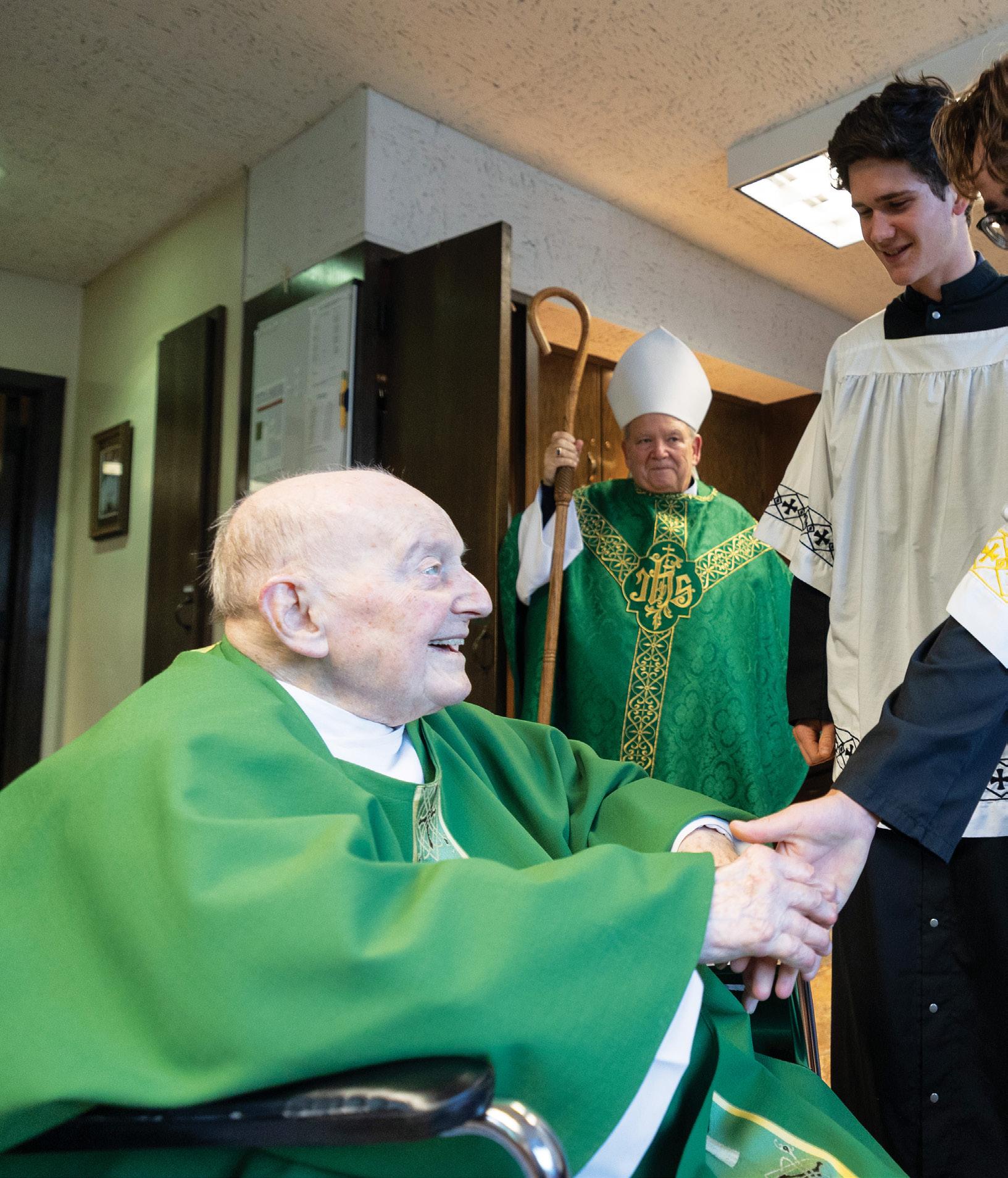
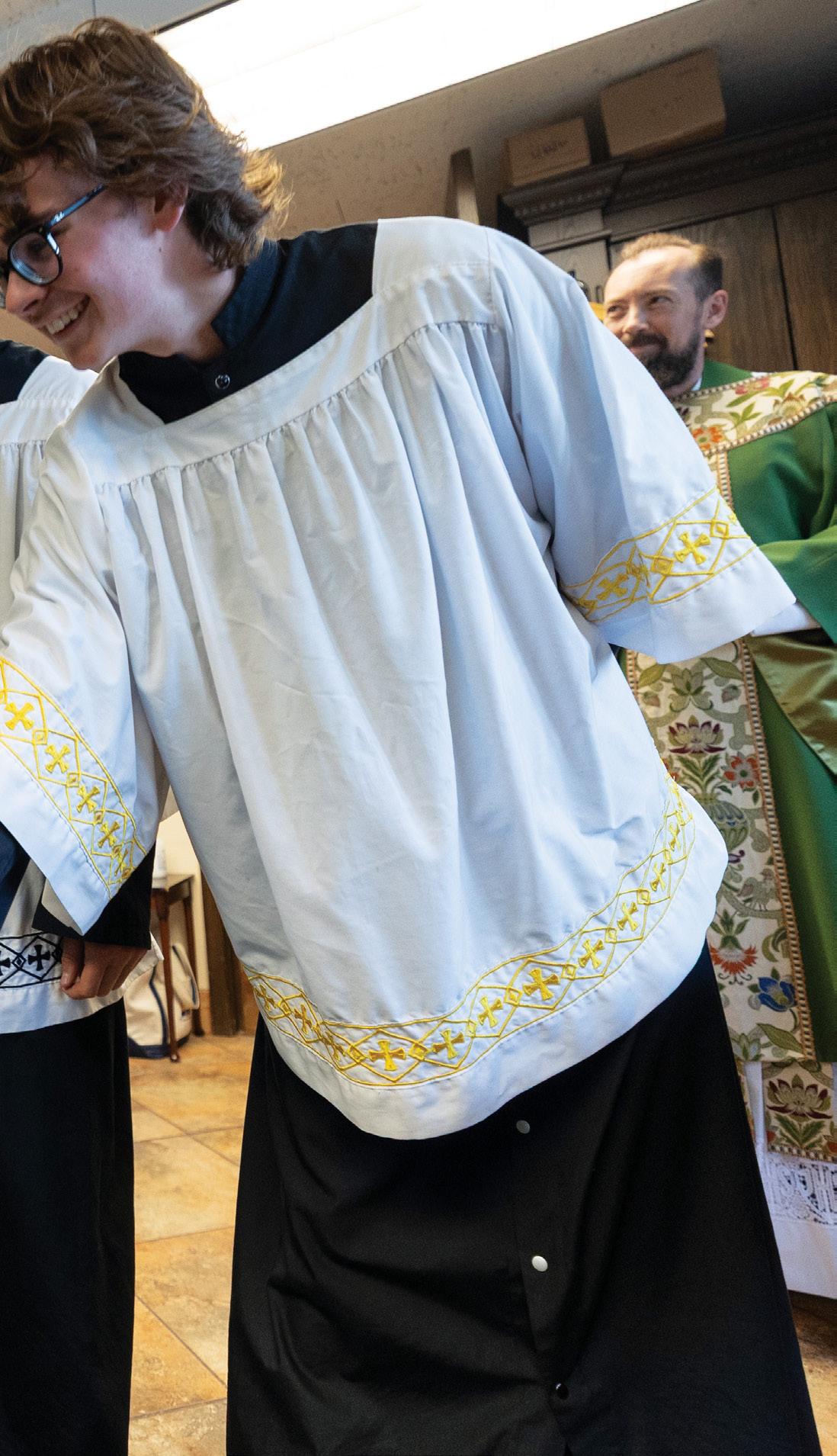
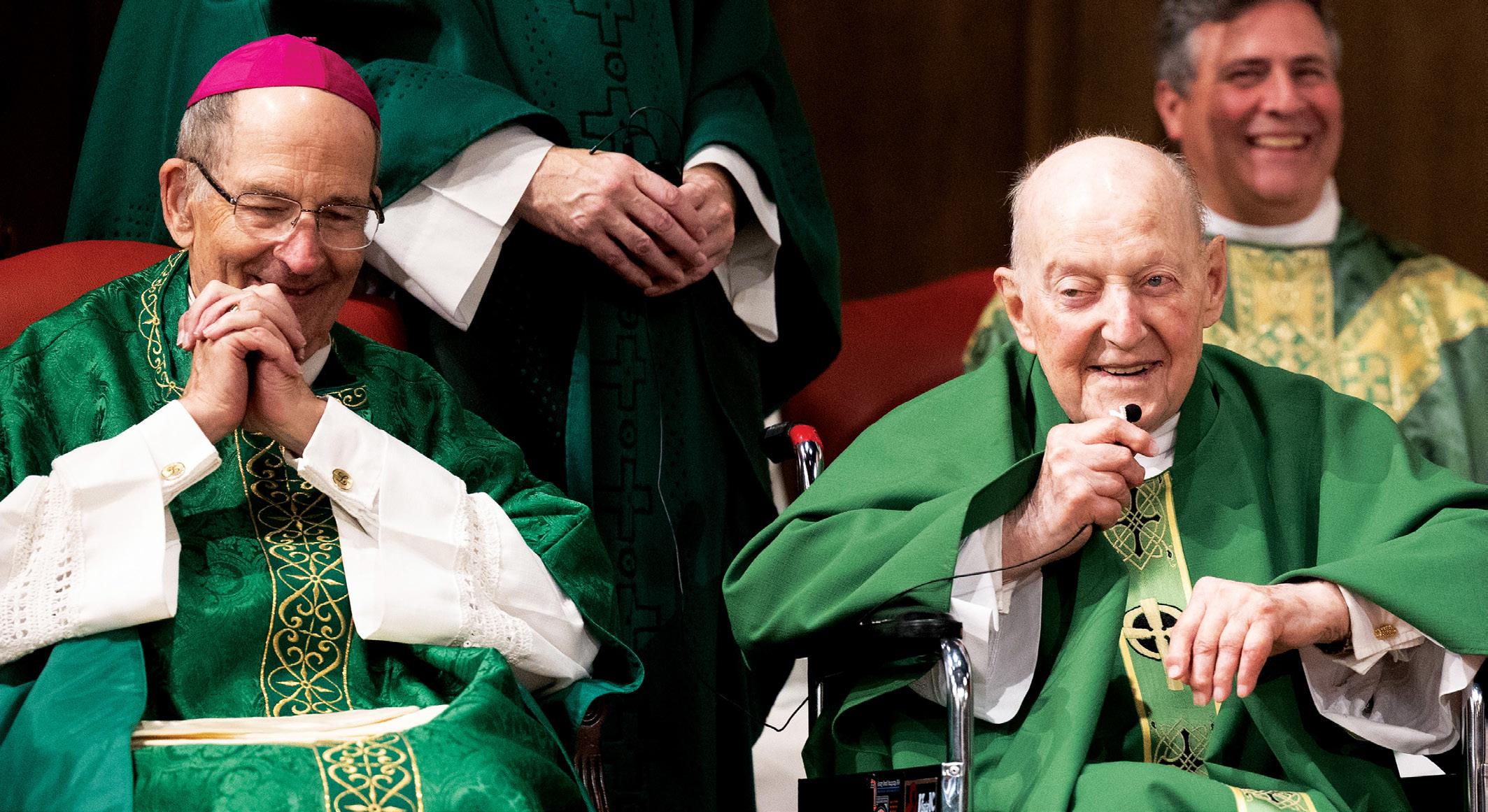
From left, Msgr. George Welzbacher greets altar servers Ryan Cooley and Peter Miller before Mass at Holy Family in his ordination to the priesthood and his 98th birthday. Cooley and Miller recently graduated from Chesterton Academy Bernard Hebda, back left, and Father Brent Bowman, back right, parochial vicar at Holy Family and chaplain at Chesterton
and poet — 75 years of shepherding souls
TEACHER OF FUTURE BISHOPS
Many priests, including six bishops, are among the hundreds of students Msgr. Welzbacher taught during his 21-year career teaching ancient history at the then-College of St. Thomas in St. Paul. These bishops include the following:
Bishop Donald DeGrood, who has served as the bishop of the Diocese of Sioux Falls, South Dakota, since 2019.
Bishop John Doerfler, who has served as the bishop of the Diocese of Marquette, Michigan, since 2014.
Bishop Peter Christensen, who has served as the bishop of the Diocese of Boise, Idaho, since 2014.
Bishop Peter Muhich, who served as the bishop of the Diocese of Rapid City, South Dakota, from 2020 until his death in 2024.
Bishop Paul Sirba, who served as the bishop of the Diocese of Duluth, from 2009 until his death in 2019.
Bishop Lee Piché, who served as an auxiliary bishop of the Archdiocese of St. Paul and Minneapolis and is now the vicar for retired priests in the archdiocese.
spanning more than a third of a century (1961-1995), which included graduate work in Germany and at the University of Chicago. Msgr. Welzbacher first taught religion, German and Latin at St. Thomas Academy (at the time, a sister institution of the College of St. Thomas) and then, for 21 years, ancient history at the college. Through it all, he assisted in parishes on weekends.
A classroom legend and mentor
Steven Geis, one of Msgr. Welzbacher’s former students, recalled the drama of a typical class. Msgr. Welzbacher would enter with no books or papers in hand, begin with the “Memorare” prayer, and then launch from memory into a lecture that picked up precisely where he had ended the previous class. “I remember his majestic, deep-timbred voice and his vivid stories that brought the ancient world to life,” said Geis. “We could actually see Hannibal crossing the Alps with elephants and imagine ourselves in the thick of battles.”
Geis recalled the day when Msgr. Welzbacher lectured on Homer’s “Iliad” and the “Odyssey,” and for 10 minutes used his commanding voice to recite some passages in Greek. “No one knew what he was saying,” noted Geis, “but the mere fact that he knew it and the profundity of his reading left us in awe.”
Geis took every class Msgr. Welzbacher offered, though these were widely considered among the most difficult at the college. “I graduated with a history degree,” he noted, “but like many at St. Thomas, I say I really
majored in Welzbacher.”
Father Michael Miller, pastor of St. Catherine in Spring Lake Township and St. Patrick in Cedar Lake Township, recently sat in the kitchen of his farmhouse paging through a great stack of spiral notebooks that contain all the notes he took in Msgr. Welzbacher’s classes from 1989 through 1992. “On the first day of class,” recalled Father Miller, “he would gaze at the back row of students and say, ‘Every year there is someone without a notebook and wearing a Mona Lisa smile, thinking ‘I’ll remember it all,’ but YOU WON’T! Write it down.’ After that, I took down every word,” he chuckled.
Still, Father Joseph Johnson, rector and pastor of the Cathedral of St. Paul, who took one of Msgr. Welzbacher’s ancient history classes, emphasized that the monsignor was not just a towering intellect. “He was never condescending to his students — never isolated himself in an ivory tower.” Instead, added Father Johnson, “he had a warm regard for each of them and yearned to share the riches of his knowledge.”
Father Miller’s experience with Msgr. Welzbacher had an important consequence that extended beyond the classroom. “He spent hours speaking informally and candidly with me about the priesthood and recent Church history,” he explained. Father Miller entered The St. Paul Seminary after graduating from St. Thomas. “I would never be a priest today without the teaching, guidance and friendship of Msgr. Welzbacher,” he said, “and I’m sure that’s true for many.”
The legacy of the priest-professor
Father Reidy, who taught at the College of St. Thomas for 41 years, described Msgr. Welzbacher and himself as among the last exemplars of the priest-professor model for the priesthood. When the two were in school, he noted, they had priests as teachers in both high school and college in all subjects. “The academic life was once a realistic and highly esteemed option for priests,” commented Father Reidy. “They provided rich examples of the congruence between the intellectual life and that of a priest.” He added that priests could, while teaching, pursue graduate work, as Msgr. Welzbacherr did through German studies on a Fulbright Scholarship and doctoral studies at the University of Chicago.
When he began at St. Thomas in 1958, Father Reidy pointed out, there were 26 priests on campus — four at St. Thomas Academy and the rest teaching a variety of subjects at the college or working in administration. At one point, there was a residence on campus just for priest faculty members. Now, said Father Reidy, there are only a few priests among the faculty, and they tend to teach solely theological subjects.
It’s a different experience for a student to have a priest as a teacher, observed Father Johnson. “We know that priests talk about God, but when Father is teaching biology, literature or history, students begin to see the priest as a real human being with more than one dimension,” Father Johnson said.
“This mirrors the fact that a student’s
life has more than one dimension,” Father Johnson noted, “and that God is involved in the whole, which is what a classical approach to education teaches us.”
First-hand experience with a priestprofessor can also encourage some students to consider embracing the multi-faceted richness of a priestly life, added Father Johnson.
The most important job in the world
Msgr. Welzbacher ended his teaching career in 1995 at the age of 67. But what followed was a vigorous second chapter that spanned 27 more years, including 18 as pastor at three parishes — St. Nicholas in New Market, St. Agnes in St. Paul and at then-St. John in St. Paul, as well as nine more years as a weekend pastor at Holy Family in St. Louis Park.
“It’s astounding to consider that, at an age when most would be retiring, he took on his first assignment as pastor and continued in that role for 19 years,” Father Johnson said. Although priests can retire at 70, Msgr. Welzbacher and two of his classmates were pastors well into their 80s, and he continued as a weekend helper in a parish into his 90s.
James May, former chair of the Classics Department at St. Olaf College in Northfield, was one of Msgr. Welzbacher’s parishioners. Everyone he knew, said May, considered
PLEASE TURN TO MSGR. WELZBACHER
DAVE HRBACEK | THE CATHOLIC SPIRIT St. Louis Park June 13, which was a celebration of the 75th anniversary of Academy in Hopkins. Joining Msgr. Welzbacher in the sacristy are Archbishop Chesterton Academy.
DAVE HRBACEK | THE CATHOLIC SPIRIT
Msgr. Welzbacher, right, addresses the congregation at the end of Mass at Holy Family in St. Louis Park June 13. Behind him at right is Father Mark Moriarty, pastor of Holy Family, and at left is Bishop Emeritus John LeVoir of New Ulm.
MSGR. WELZBACHER CONTINUED
FROM PAGE 11
Msgr. Welzbacher to be a profound homilist. “His stentorian, mahogany-timbred voice — with its dramatic pauses and exclamations — combined with his broad and deep understanding of the faith and history transfixed his congregations,” May said. “Monsignor would often take us back hundreds of years into layers of ancient history and thought on important religious questions of the moment.”
Kathy Rode, who was a parishioner when Mgsr. Welzbacher was a weekend assistant pastor at Holy Family in St. Louis Park, observed that he had an “uncanny ability to bring a strong holiness and gravity to the Mass and the sacraments while simultaneously showing parishioners the shepherd’s warmth and understanding.” Her husband, Mark Rode, said he was astonished at the reception after Msgr. Welzbacher’s June 13 birthday Mass to see him tirelessly greeting more than a hundred former parishioners and other well-wishers. “He looked intently at each person who approached him,” observed Rode, “recognizing most by name, and talking to each one as a great friend.”
Msgr. Welzbacher said he recalls his days as a parish priest very fondly. “When you consider the purpose of the priesthood — blazing pathways to heaven and away from hell — there is really nothing more important and satisfying in this world than parish work,” he emphasized.
Books in the oven
Throughout his work as a parish priest, Msgr. Welzbacher maintained his academic interests, including a tendency to accumulate vast quantities of books.
When he began his assignment at St. Nicholas, for example, May’s wife, Donna, brought him lasagna as a welcome present. “When I opened the rectory oven to heat it up,” she recalled, “I saw with horror that the oven was stuffed full of books.” She remembers telling him sternly, “Someone’s going to come in, turn on that oven, and you are going to go up in flames if you don’t
remove those.”
Was Donna May’s advice taken?
Years later, Father Johnson assisted Msgr. Welzbacher in sorting through his massive book collection at the Leo C. Byrne Residence for retired priests in St. Paul. “The only space in his apartment free of books was a narrow, winding path that led to his reading chair,” recalled Father Johnson. He smiled and added, “It was rumored that sometimes even his oven there was used to house books.”
‘Always the teacher’
In addition to his formal role as a pastor and educator, Msgr. Welzbacher constantly taught and exhibited Christ’s love to those around him.
Geis recalled his mother, Dorothy, dying in Arizona, and Msgr. Welzbacher speaking to her in a 30-minute telephone conversation. “He recited to her in detail all she’d done to care for others,” he explained. “And then he said, ‘Dorothy, you are such a good and faithful servant that you’re being called home, and the Lord is going to be there. He is going to be waiting with a wreath.’”
His mother’s whole demeanor changed, Geis said. “She knew she was dying, and yet she was looking forward to this grand moment.”
“It’s going to be the same way for Monsignor,” Geis concluded. “Our Lord is going to welcome him home for all of the souls he has saved.”
The first marriage Msgr. Welzbacher celebrated after leaving academic life was that of Geis and his wife, Kathleen. Msgr. Welzbacher asked the bride and groom for their complete names — first, middle, and last — explaining that, during the wedding ceremony, it must not be the marriage of “Steve” and “Kathy,” but of Steven Donald Geiss and Kathleen Marie Ruhland. Why? “Because in ancient history,” declared Msgr. Welzbacher, “only slaves were referred to solely by their first names, and you are not slaves.” At that moment, Geis thought to himself, “He’s always the teacher!”
A priest’s priest
On the day of Father Erickson’s ordination, Msgr. Welzbacher introduced himself at the
Cathedral and invited Father Erickson to visit St. Agnes, where Msgr. Welzbacher was serving as pastor. Father Erickson remarked, “I was frankly stunned. He hadn’t known me before that at all, and his warm and sincere welcome initiated me into one of the greatest of gifts that we have been given as priests — an order of brothers.” Father Erickson is convinced that Msgr. Welzbacher’s profound offer of friendship to fellow priests — which extends to informal conversations, dinners and movies — is one of his signature contributions to the priesthood.
Msgr. Welzbacher, as the senior priest in the archdiocese, continues to take special joy in providing guidance to younger priests. He still presides over an annual spring luncheon for seminarians about to be ordained.
Pope Francis’ designation of Father Welzbacher with the honorary title of monsignor in 2024 was a rare event, the first in the archdiocese in many decades. It is rare, explained Father Johnson, “because sometimes the practice of naming monsignors is viewed as anti-egalitarian and can foster jealousy among priests.” But here?
“There was a joyful unanimity that the honor was appropriate for this priest who has done so many remarkably glorious things for the Lord,” Father Johnson said.
A witness to 75 years of Catholicism
Msgr. Welzbacher has witnessed a broad sweep of history in his 98 years. He remembers, for example, reading a newspaper account in 1939 about Germany’s invasion of Poland, and listening avidly to President Franklin Roosevelt’s fireside chats on the radio in the 1940s.
He has also witnessed great changes in the practice of Catholicism over the 75 years of his ministry. He is one of only a handful in the nation to have lived many years as a priest in the Church’s pre-Vatican II world. It was a time, he observed, when Catholicism was thriving, the priestly vocation was revered and priests had a firm sense of purpose. He ministered through the uncertainties and confusion of the 1960s and ’70s.
Before the Second Vatican Council, he noted, “we were bursting at the seams with



new seminarians, but so much was lost overnight.” For example, he points out that in the early 1960s, a large new addition was erected at Nazareth Hall to accommodate exploding enrollment. In 1970, however, the entire campus was closed.
Still, he rejoices in what he views as a strong resurgence of Catholic faithfulness, which he dates especially to the pontificate of St. John Paul II in 1978. “John Paul the Great brought clarity, order and high moral purpose back to the Church,” Msgr. Welzbacher observed, noting, too, St. John Paul’s remarkable personal example of fidelity to Christ. “I remember his first trip to Poland after he became pope, where he spoke to a couple of million people,” the monsignor continued with a smile. “The people were cheering, and he was joking with them. The communist dictator of Poland was standing next to John Paul, and you could see his knees literally knocking.”
Msgr. Welzbacher said he believes this St. John Paul II-inspired reawakening continues to bear fruit. “The young priests I know — and I know quite a few — are top of the line,” he said. “They know exactly for what purpose they have been called to the priesthood. The days of wild confusion are behind us.”
With joy, Msgr. Welzbacher pointed out that young people have been returning to the Church in increasing numbers, and that the number of new entrants into the faith at the Easter Vigil in 2026 was, in many churches across the country, the highest in a very long time.
Final preaching
As his physical capacity to perform priestly functions has waned, Msgr. Welzbacher has intensified his focus on writing poetry, often working until well after midnight. “This is not some peripheral hobby of mine,” he said. “Poetry offers me a final forum for bearing witness to the Word.”
In the seminary and as a young priest, Msgr. Welzbacher often spent his halfhour morning shaving time daydreaming. Inspired by a story that Cardinal John Henry Newman had learned Italian while shaving, he decided to devote this time to memorizing poetry.
His powers of retention proved prodigious. While shaving, he memorized all 433 lines of T.S. Eliot’s “The Wasteland” and long portions of Eliot’s “Four Quartets,” as well as a smattering of other Eliot poems. “To live with poetry every day is to have beauty always close at hand,” Msgr. Welzbacher remarked.
Recently, he informally published a booklet of his poems, including one fivepage poem he has worked on, off and on, for 44 years. The booklet also includes a “Prayer for Priestly Perseverance,” which ends with these words:
“Keep me steadfast in service
Come travail most dire,



Scorned the delusions of whispering pride!
May I walk rather, dear Friend, with You at my side
As my Strength, my Defender, my Guide Till You tell me my work is done! Then, Lord, call me home!”
FAITH+CULTURE
Following in her mom’s footsteps
By Christina Capecchi For The Catholic Spirit
As the ninth of 13 kids, Angie Johnson never could have foreseen that she would one day take over for her mother, Mary Ann Kuharski, as president of Prolife Across America. But looking back, the 45-year-old New Brighton mom can now recognize how God was preparing her to lead the national nonprofit known for its pro-life billboards and outreach.
“In God’s infinite wisdom, he truly had the plan the whole time,” said Johnson, who became president last December. “I didn’t see that it was right there in front of me.”
She and her husband, Adam, have seven children, ages 6 to 20, who attend Catholic schools — St. Charles Borromeo in St. Anthony, and St. Agnes and the University of St. Thomas, both in St. Paul.
Q As a girl, what was it like to watch your mom run Prolife Across America?
A It was inspiring! I saw how hard she worked to raise 13 kids and build a pro-life organization from scratch. I think about the courage it took. Courage and persistence.
Q Was it always the plan that you would assume your mom’s position one day?
A Definitely not! I was in a corporate marketing job for 13 years and wasn’t involved at all. It wasn’t until 2015, when I took a step back — I had five kids at that point and wanted to stay home — that I noticed my mom’s website needed help. That was my expertise, so I said: “I’m only going to do this from home, parttime, while I have kids.” That’s how the creep began! Slowly I started asking for more: “Well, actually, I could help you with branding, I have some experience with that.”
Q Did that gradual process work best for you?
A Yes. One of our board of directors took me out to coffee 15 years ago and asked me to consider the presidency role. I was like, “Oh, no! No, thank you!” It took time. I didn’t see it. But God used all my experience to go do work for him. My mom wanted me to do more, to come into the office more and take on an office manager or associate director role. That began two years prior to my becoming president. It was a transition period of watching my mom closely for those two years.
Q Do you feel the weight of continuing her work?
A I see it as a privilege, not a burden. I can never fill my mom’s shoes — they’re huge shoes. It’s very humbling. When I was going through the transition, I did have a spiritual advisor, this wise priest. I was focusing on making my mom proud and making sure I can do the job as well as she did. He said: “You’re focusing so much on that. This is a vocation, so you need to pray and focus on that. You’re answering God’s call to keep this organization moving forward — you’re not answering this call because you want to be like your mom. This isn’t a job or a 9-to-5 role. It’s a vocation and a mission to do God’s work.” That really helped.
Q In what ways are you like your mom as a leader?
A We both lead with a lot of joy. You have to when this is a dark issue. We both truly have that zeal for the pro-life movement. We both love bargaining and getting a deal, and that really helps with media buying. When we’re
negotiating back and forth with billboard costs, we both have that strategic ability to make sure we’re being good stewards of our dollars, and that requires a lot of negotiation and being creative with proposals and contracts.
Q Are you garage sale hunters?
A For sure! That’s all we do, thrift shop and consignment shop! I’m on Facebook Marketplace a lot. I just love repurposing. And it definitely helps with raising a big family. My mom will come to work and I’ll compliment her outfit, and she tells the story: “It was originally this price and then it was marked down and then I used this coupon and it was only $11!” I’m like: “You’re kidding me!”
Q How do you juggle this demanding job while raising seven kids?
A A lot of flexibility and prayer. There are certain seasons for things. You have to learn to say no to some things, making sure you have your priorities in place. I had a lot of volunteer roles at the school, and I’ve had to give up most of those. We have to give each other a lot of grace. I do ride shares with people. I would not be able to be at all my kids’ activities and pick everybody up at the same time without my sisters living nearby and our parish community. That’s the village I rely on. Adam’s parents are three miles north of us, and my mom is three miles south of us. My sister lives a block from St. Charles, so my kids walk home to her house and they eat all their snacks and she’s super flexible with me about pick-up time.
Q What surprises people to learn about Prolife Across America?
A People are surprised by the cost of billboards. They can range anywhere from $300 up to $8,000 a month. We haven’t spent that much. They’re often surprised by how small our staff is. We’ll get calls: “Do you have a Missouri office?” “Do you have a North Carolina office?” I’m like: “No, we have 11 employees and all are part-time except me.” They’re also surprised that all our babies (depicted on the billboards) are real babies. They’re either donor babies or babies who have been saved from abortion.
Q Do you keep track of each baby?
A We do! That’s how we name each design: This is Heartbeat Bennie; this is Silas; this is Ignatius! Each billboard design is named using the baby’s name and whatever fact their design speaks to.
Q How do your advocates support the organization?
A If you want to do something small or big, there are lots of ways to get involved. You can share our video, invite us to come out and share our message. You can order our yard signs and mini billboards on our website. Church groups have put them up on their property or farmers or landowners who face a street or highway. Youth groups have supported us. Bake sales. This spring St. Charles held a lemonade stand during recess, and they raised $1,000, so they’ll be putting up a billboard in the Twin Cities with that money. We get proceeds from birthday parties, where a kid will send a letter: “Instead of getting gifts, I asked people to donate, and this is the amount I collected for you.” It warms your heart. We also get donations from seniors on fixed income, and they write us the most beautiful note — “This is all we can do” — and it’s four quarters taped to a note.
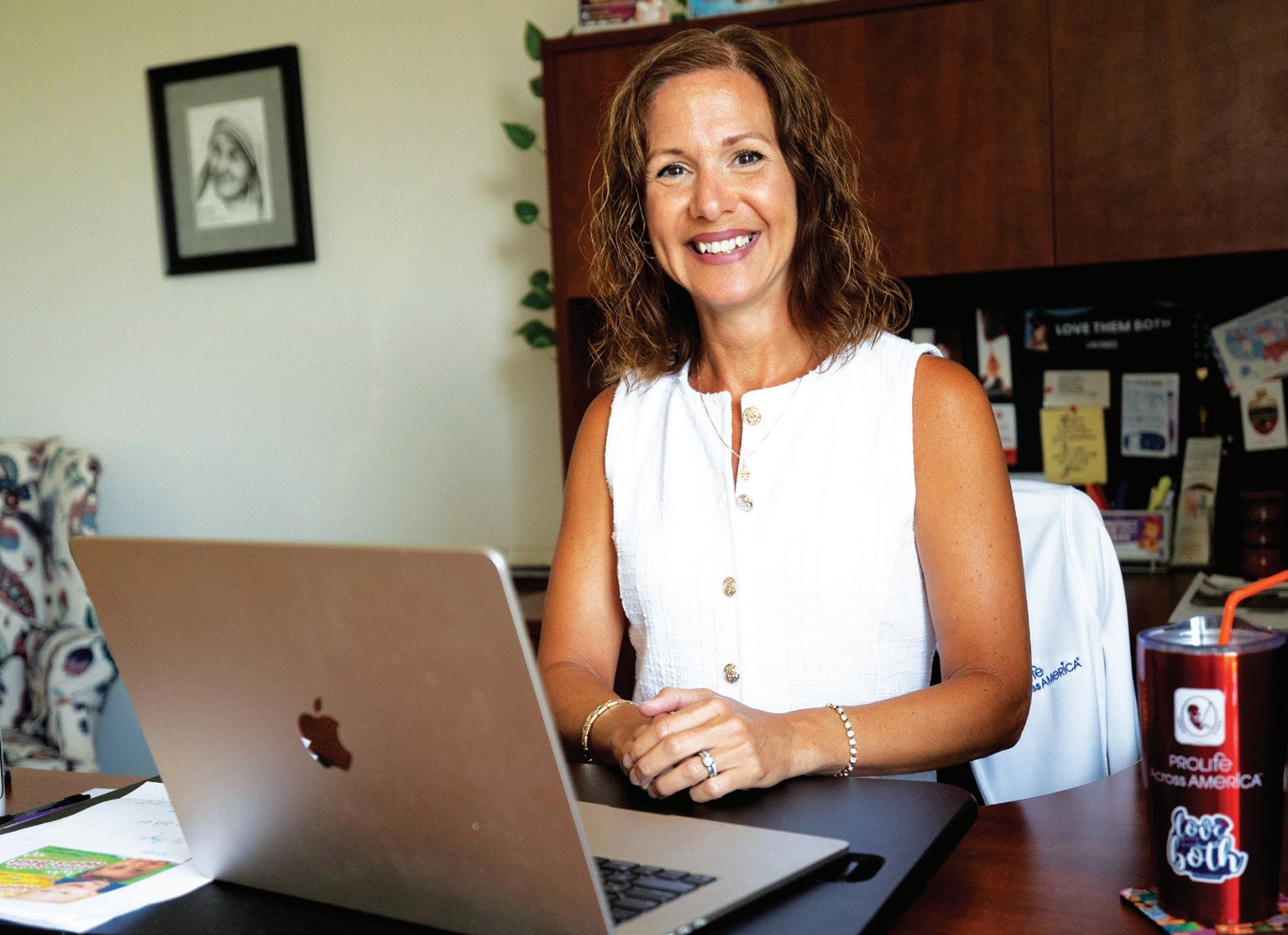
Q Like the widow who gave two coins, or “mites” — that’s true generosity.
A It really is! And those who can’t give, we always say: We’ll take your prayers. Pray for all those people passing those billboards. We don’t know exactly what makes them call our hotline, but we believe it’s prayer. It’s people praying for someone’s heart to be changed when they pass that billboard.
Q Each billboard has a phone number. Do you still answer the hotline?
A I do. My mom still answers the hotline as well. We get a lot of calls — an average of 800 to 850 a month. One change I implemented is a partnership with Option Line so that when our phone rings, if we can’t get to it, it rolls over to Heartbeat International, which has 23 pro-life trained staff who answer. We also have a Spanish-speaking option 24/7. To have each call picked up by a live person makes a huge difference. In the past some would go to a voicemail.
Q Could you tell me about a memorable call?
A Once I had a young woman call who sounded like she was hiding. She said she was in an abusive situation and he was forcing her to have an abortion. She was very afraid. She ended up hanging up on me. Maybe she got scared or he came in the room. But she called back! She wanted more advice, and I just said: “We can help you with everything! We can connect you with housing and financial assistance and
medical support.” I still pray for her and hope she’s out of that situation. We don’t know the answer.
Another one was a man named Stephen. He was really angry when he called and said: “What are you people doing? You’re probably not even providing help!” I very calmly explained the help we provide and then asked about him. He and his wife had had two kids and then she got pregnant with a third when they were in grad school. She felt they couldn’t afford it, and he regretted that he didn’t try to change her mind. After the abortion, the marriage fell apart. He always wondered what that baby could’ve done for their marriage. I directed him to a men’s program. He thanked me and said, “I wish we would’ve passed one of these billboards when we were going through this.”
Q What do you do for fun in the summer?
A We love going to our cabin. I still water-ski. There’s a freedom and a youthfulness in it. You feel like: “OK, I’ve still got this!”
Q What’s your go-to prayer?
A My standby is the Memorare. We say it here as a staff when we get a tough call. My other go-to is: “Jesus, I trust in you.” Anytime I’m worried, I just whisper that.
Q What do you know for sure?
A I know that every human life has inherent dignity and value, and it’s our duty to make sure all unborn lives are protected.
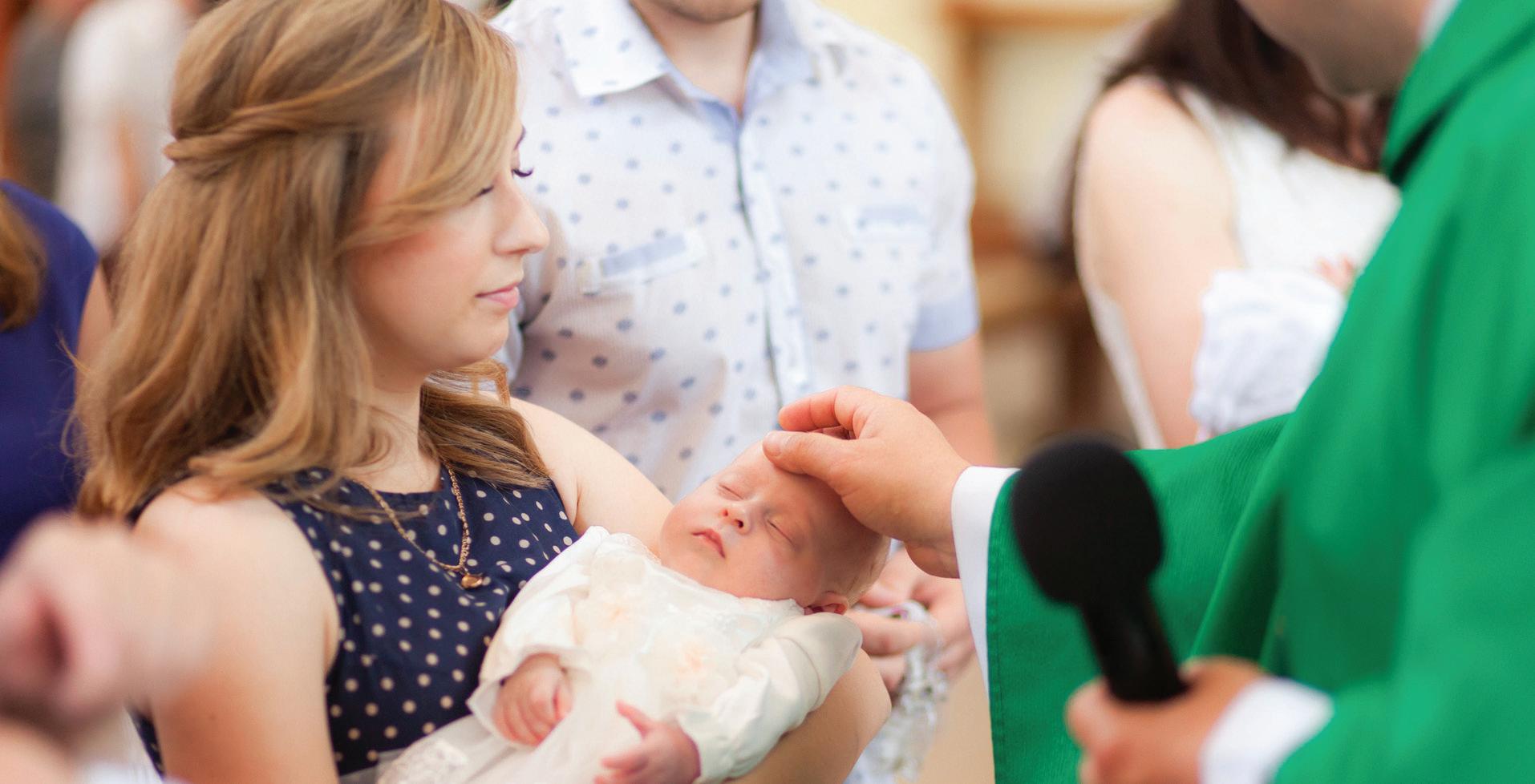
DAVE HRBACEK | THE CATHOLIC SPIRIT
Local Knights of Columbus help celebrate Special Olympics USA Games in Minnesota
By Josh McGovern
The Catholic Spirit
The Knights of Columbus have a unique history of supporting the Special Olympics and this year, Minnesota Knights welcomed athletes arriving at the Minneapolis-St. Paul International Airport and helped them load onto their buses.
The 2026 USA Games took place at the University of Minnesota from June 20-26. According to the Special Olympics website, an estimated 3,000 athletes and 1,500 coaches representing all 50 states participated in the USA Games. Sports include basketball, bocce ball, bowling, powerlifting, soccer and nine others.
As a bronze-level sponsor, the Minnesota Knights donated $100,000 to the event, a “substantial financial commitment from the councils in Minnesota,” Bou Gazley, the Minnesota Knights of Columbus state deputy, wrote in an email. Gazley presented awards for bocce ball and tennis on June 26.
The Minnesota Knights had booths set up at two fan fest locations, one at the National Sports Center in Blaine and the other outside Huntington Bank Stadium in Minneapolis, according to Jeremy Hadash, the Minnesota Knights’ PR chairman.
At these booths, volunteers promoted the Knights of Columbus and offered activities such as bean bag toss and merchandise giveaways. Father Brian Lynch, the Knights’ state chaplain, promoted the Knights of Columbus at Huntington Bank Stadium.
Knights also helped load buses with luggage for athletes bound to the airport as they departed from the Special Olympics.
According to the Knights of Columbus website, the Knights’ partnership with the Special Olympics includes everything from fundraising to feeding athletes. The partnership began at the sporting event’s inception in 1968.
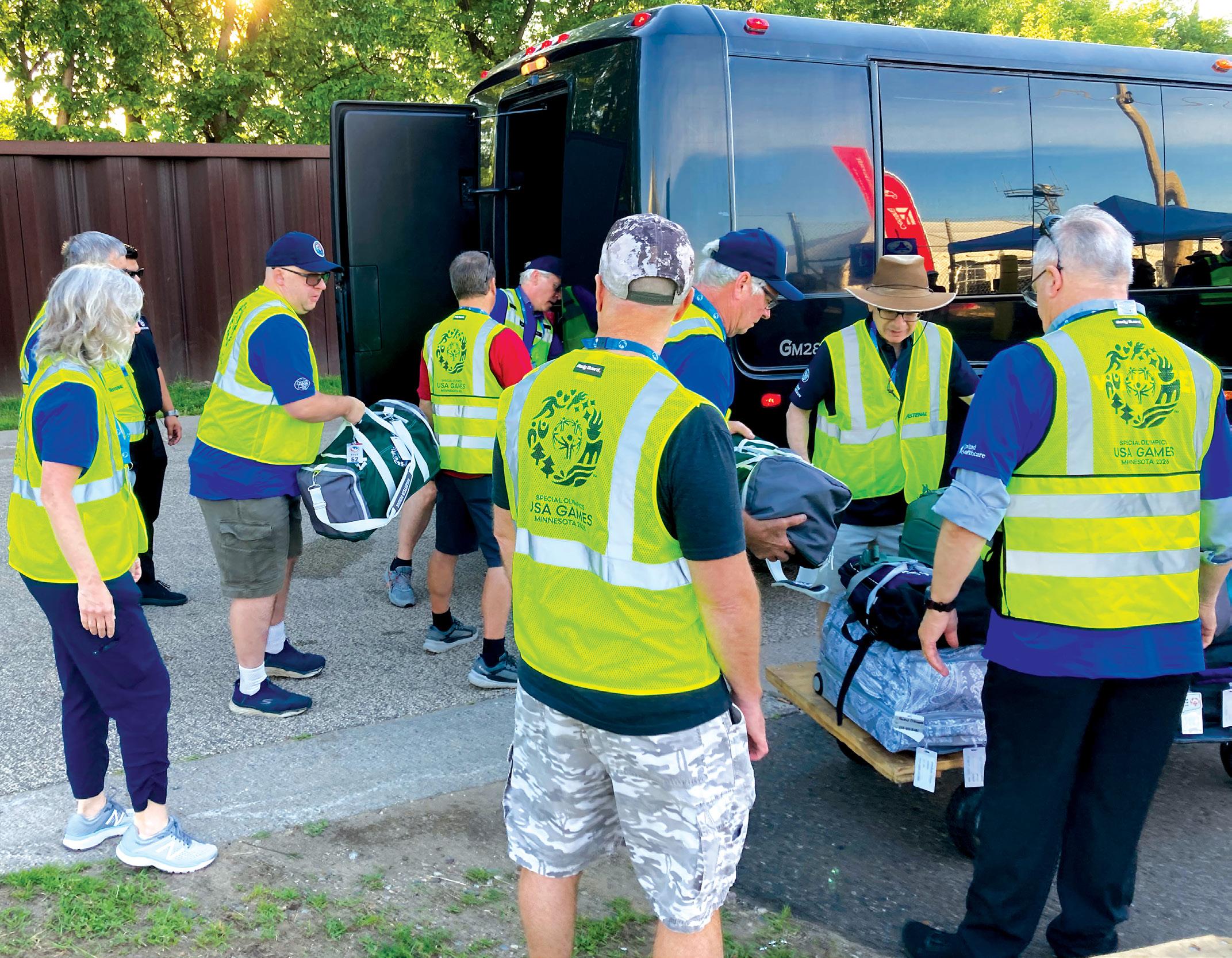



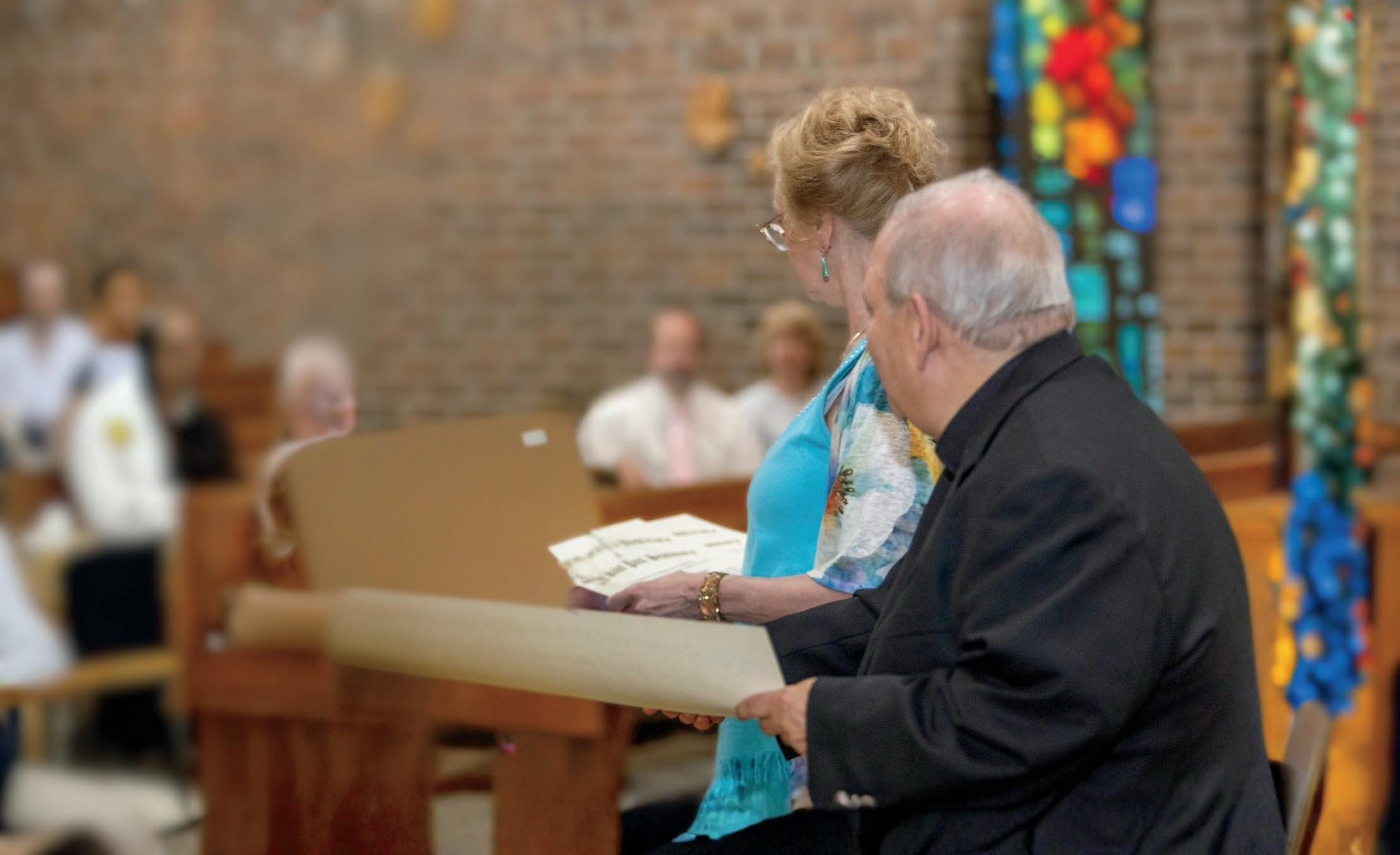
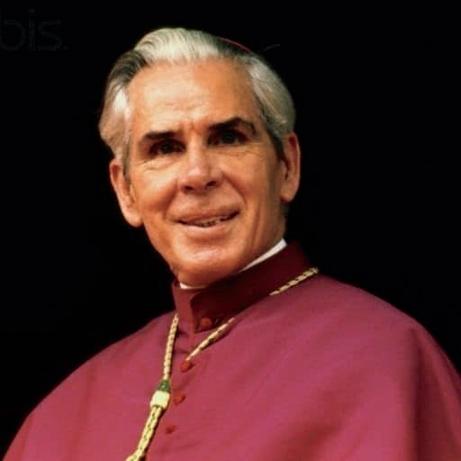




COURTESY KofC
Men in the Knights of Columbus and others load luggage June 27 as they bid farewell to Special Olympics athletes departing Minnesota. The bus brought athletes to the Minneapolis-St. Paul International Airport with the conclusion of the USA Special Olympics Games in Minneapolis.
FOCUSONFAITH
SUNDAY SCRIPTURES | FATHER MICHAEL CREAGAN
Is our spiritual witness bearing fruit?
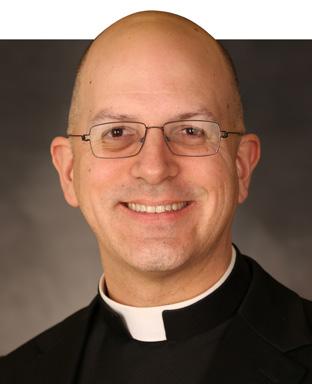
This Sunday we will consider Matthew 13:1-23 and the famous parable of the sower. Hopefully you will get to hear the full version read at Mass and not the shorter option of Matthew 13:1-9! It is a rich Gospel and requires little explanation, as Jesus clarifies in verses 10-23. Most likely those reading this article also participate in Sunday Mass. The seed falling on the hardened path or the shallow soil is not usually a problem. The issue we need to watch for is in the third soil type: “some seed fell among thorns, and the thorns grew up and choked it” (Mt 13:7). In this scenario, the thorns did not kill the seed such as the seed in the first two soil types. Yet the seed in the third example was unfruitful.
This is where we need to be cautious. It can be easy for us to run through the motions of our practice of the faith or simply “check a box” showing up for Mass — but is there evidence of fruitfulness in our lives?
This year, some 1,600 adults entered full communion with the Catholic Church in our archdiocese. St. Michael and St. Mary in Stillwater welcomed 48 adults into full communion with the Catholic Church. Some of those were unbaptized and others came from different denominations. Added to the seven Catholic adults finishing sacraments, we had a record 55 adults received into the
FUNDAMENTALS
How are we cooperating with the Lord to be fruitful and inviting others to Jesus and his Church?
Church this year. I have never seen numbers like this in my almost 30 years of priesthood. It is extraordinary and evidence of the Holy Spirit working. In many of the stories of these new Catholics, I often found the presence of a person who inspired the convert through their example of joy!
This brings us to a great question: How are we cooperating with the Lord to be fruitful and inviting others to Jesus and his Church? Over 175 years ago, Bishop Joseph Cretin received a mandate to share the Gospel in this region of the world. This work continues as Archbishop Bernard Hebda is assisted by the many parishes in our archdiocese to bring that witness to the local level. This duty of witness comes to each one of us. This begs the question: Am I living my life now with my eyes on the eternal? Our joy will be evidence of this life. When others encounter us, they should encounter someone who is shining with the joy of living in Jesus’ presence.
If we live our lives swimming in pessimism, we will be witnesses to that. It is challenging,
as we live in a world with a lot of problems. Undisciplined time spent with smartphones, late-night computer use before bed, and fruitless social media consumption can allow us to spend too much time contemplating evil that robs us of our peace and joy.
It is important for us to be well informed with news. Yet, it is even more important that we allow adequate time daily to nourish our spiritual lives with Jesus. Participating in consistent regular personal prayer, the sacraments, meditation on the Scriptures, praying the rosary, Eucharistic adoration, and the works of mercy are all ways we allow Jesus to enter and fill us with joy.
If we find ourselves marred by the “third type of soil,” this might be a great time to examine our daily spiritual practices. May we let the light of Jesus Christ permeate our daily lives and may we be his witnesses of hope and joy!
Father Creagan is pastor of St. Michael and St. Mary, and is canonical administrator of St. Croix Catholic School, all in Stillwater. He served as a chaplain with the Minnesota Army National Guard for 13 years and was deployed twice.
St. Charles Borromeo, patron saint of bishops
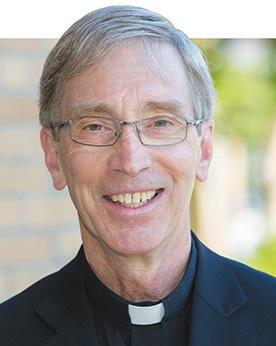
Editor’s note: This is the sixth column in a series on the highest order of ordained ministry in Catholic teaching, that of bishop.
St. Charles Borromeo was an exceptional bishop and a truly holy man. He had a brilliant mind. He was a solid theologian. He was one of the Catholic Church’s greatest leaders during and after the Protestant Reformation. He spearheaded Church reform. He led the Church of Milan as bishop for 18 years. He insisted on the solid formation of new priests and the ongoing formation of ordained priests.
St. Charles died on Nov. 3, 1584, at the age of 46. Because of his reputation as one of the greatest bishops in the history of the Church, he was beatified on May 12, 1602, only 17 years after his death, by Pope Clement VIII; and he was canonized a saint on Nov. 1, 1610, only 25 years after his death, by Pope Paul V. For centuries he has been considered the patron saint of bishops, not by an official declaration, but because of his exceptional holiness. His memorial is celebrated on Nov. 4.
St. Charles has a remarkable story. He was born in Arona, Lombardy, Italy, in 1538. His mother, Margaret de Medici, belonged to one of the most influential families in Italy, and
her brother, Cardinal Gian Angelo de Medici, eventually became Pope Pius IV.
St. Charles was a brilliant student, and by age 21 had earned doctorates in both civil and canon law from the University of Pavia. Pope Pius made his nephew a cardinal in 1560 at age 22, even though he had not yet been ordained a priest, and established him as head of the Milanese church.
It was the time of Luther, Calvin and Zwingli, and the Protestant Reformation was in full swing. The Council of Trent had been convened in 1545, and two sessions had been completed.
St. Charles was summoned to Rome by his uncle for the reopening of the Third Session in 1562, and he served as papal secretary. He helped to write a new catechism, spearheaded reforms in liturgy and music, and emerged as one of the most prominent Catholic Reformation theologians.
St. Charles had a profound conversion experience when his older brother died in 1562. Faced with his own mortality, he decided to commit himself to a much holier life. In 1563 he was ordained a priest, and two months later he was consecrated a bishop.
While in Rome as a bishop, St. Charles was a vocal critic of abuses within the Roman Curia, and many high-ranking bureaucrats angrily denounced him. After Pope Pius IV died in 1565, he returned to Milan where he spent the last 18
years of his life as a fearless reformer. Upon his return, he convened a synod to implement the reforms of Trent within his own diocese. He founded seminaries to better educate future priests. He was a fierce advocate of prayer and insisted that his priests pray in solitude and meditate before and after ministry. He was adamant about integrity and demanded that his priests adhere to the highest moral standards. He challenged his priests to serve with competence and asked them to study diligently before preaching or teaching. He had a great devotion to the Eucharist and founded a group dedicated to adoration. Those unwilling to reform despised him, and there was an unsuccessful assassination attempt against him in 1569. In 1570 and 1576 St. Charles demonstrated exceptional compassion during famines and plagues by organizing relief efforts to feed the hungry and care for the sick.
St. Charles zealously continued his reform agenda, and he made a formal visitation to Switzerland in 1583. Spent by these strenuous tasks, he returned to Milan. Utterly exhausted and in ill health, he died of a fever. In addition to being the patron saint of bishops, St. Charles Borromeo is the patron saint of seminarians and catechists.
Father Van Sloun is the director of clergy personnel for the Archdiocese of St. Paul and Minneapolis.
ST. KATERI TEKAKWITHA (1656-1680) At her canonization in 2012, Pope Benedict XVI prayed, “St. Kateri, protectress of Canada and the first Native American saint, we entrust to you the renewal of the faith in the First Nations and in all of North America!” The daughter of a Mohawk chief and Algonquin woman, St. Kateri was orphaned in a smallpox epidemic that left her partly blind and disfigured. She was baptized by a French missionary visiting her village in New York state. But her faith and refusal to marry caused trouble, and she fled to an Indian community near Montreal, where she was revered by French and Indians alike for her mystical gifts and kindness. The “Lily of the Mohawk” is the patron of Native Americans, refugees and the disabled. Her feast day is July 14. CNS KNOWtheSAINTS
Sunday, July 12
Fifteenth Sunday in Ordinary Time Is 55:10-11
Rom 8:18-23
Mt 13:1-23
Monday, July 13 Is 1:10-17
Mt 10:34—11:1
Tuesday, July 14
St. Kateri Tekakwitha, virgin Is 7:1-9 Mt 11:20-24
Wednesday, July 15
St. Bonaventure, bishop and doctor of the Church Is 10:5-7, 13b-16 Mt 11:25-27
Thursday, July 16 Is 26:7-9, 12, 16-19 Mt 11:28-30
Friday, July 17 Is 38:1-6, 21-22, 7-8 Mt 12:1-8
Saturday, July 18 Mic 2:1-5 Mt 12:14-21
Sunday, July 19
Sixteenth Sunday in Ordinary Time Wis 12:13, 16-19
Rom 8:26-27 Mt 13:24-43
Monday, July 20 Mic 6:1-4, 6-8 Mt 12:38-42
Tuesday, July 21 Mic 7:14-15, 18-20 Mt 12:46-50
Wednesday, July 22
St. Mary Magdalene Sgs 3:1-4b or 2 Cor 5:14-17 Jn 20:1-2, 11-18
Thursday, July 23 Jer 2:1-3, 7-8, 12-13 Mt 13:10-17
Friday, July 24 Jer 3:14-17 Mt 13:18-23
Saturday, July 25 St. James, Apostle 2 Cor 4:7-15 Mt 20:20-28
Sunday, July 26
Seventeenth Sunday in Ordinary Time 1 Kgs 3:5, 7-12 Rom 8:28-30 Mt 13:44-52
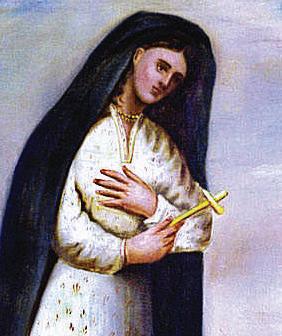
FAITH
| FATHER MICHAEL VAN SLOUN
COMMENTARY
TWENTY
Held in the heart: Learning to carry mystery
No television soundtrack is more deeply embedded in my memory than the opening song for “Little House on the Prairie.” It lilts and skips as the Ingalls girls bound down a prairie hill that feels as wide as childhood itself, the youngest tumbling behind them. When I hear it, I’m 9 again. No streaming services existed. The beloved NBC drama was in syndication, and a rerun seemed to be playing every time you turned on the TV.
More than 40 years after the original series ended, Netflix is introducing “Little House on the Prairie” to a new generation with an adaptation debuting this month. As Americans revisit the Ingalls family, I’ve found myself doing the same.
I’ve begun rewatching the classic TV series. Laura Ingalls still charms — eyes shining, braids swinging. Pa still endears
Remember the future
Anniversaries are made for remembering. Each June I get to celebrate four anniversaries in a span of seven days — my birth, my marriage, my fatherhood and my mission ministry. I call it my personal holy week. What makes it holy for me is the way I get to remember all the people, places and stories that are part of these commitments. I remember what led me to say yes then and say yes again today!
I don’t think anniversaries are meant just to be nostalgic about the past. Rather, they can help us remember again how we got to yes, then move into the future with even more focus and hope. I am reminded of the African proverb called Sankofa which says, “To look back is the first step forward.”
The past six months, I have been remembering the footsteps of St. Paul’s mission in the Bible and the mission of our archdiocese named after St. Paul during our 175th anniversary year to inform our mission today. St. Paul thought it was important for the early Christian communities to remember their baptism as a way to move forward in the world. “Are you unaware that we who were baptized into Christ Jesus
Catholics can make a difference in the upcoming primary elections
While the majority of American media is focused on national and global politics, it is easy to overlook what’s happening in our own backyard. 2026 is a big election year in Minnesota. Every U.S. House seat is up for election, as is one U.S. Senate seat. At the state level, Minnesotans will also elect a new governor, and every seat in the Minnesota House and Senate is on the ballot.
The reality is that some of the most important issues affecting our daily lives are decided right here in St. Paul. That raises an important question: If we are not in contact with our elected officials, how can we expect them to make good decisions?
One way to change this reality is to participate in the primary elections on Aug. 11. Primary elections are the process by which voters choose which candidates will represent their respective parties and appear on the November ballot. Because primaries usually have lower voter turnout, they are a great way for you, as a voter, to help pick the candidates. And because Minnesota is an open primary state, any registered voter can participate in either party’s primary election.
— grinning, fiddle in hand. But there is something — someone — deeper at work here.
Laura is the spark, Pa is the force and Ma is the heart.
In her quiet, steady ways, Ma Ingalls is the emotional center of the show. She is more cautious than her husband, scanning all the risks of frontier life while he dives in headfirst. Many come to fruition: The Ingalls face fire, the Osage Nation, poverty, infant death, typhus.
Ma braves it all. She conveys so much inner strength in small gestures: tucking her chin into the palm of her hand to steel herself, preparing food while she absorbs bad news, lying in bed at night and staring at the ceiling.
You can see her bracing herself — wanting to name her worries, itching to protest — but nodding instead, wordless, eyes welling up, smiling through the doubt. It is like the Blessed Mother’s fiat. A whispered “yes,” both faithful and fearful. “OK, here we go, ready or not.”
My favorite Scripture verse captures this tension. Luke chronicles Jesus at age 12, lost for three agonizing days and then discovered at the temple.
“Son,” Mary cries out, “why have you done this to us? Your father and I have been looking for you with great anxiety.”
Jesus responds: “Did you not know that I must be in my Father’s house?”
Luke makes their bafflement clear: “But they did not understand what he said to them.”
were baptized into his death?” (Rom 6:3). He wanted them to remember the Eucharist as participating in the body and blood of Christ — to be in communion with Christ and each other. He reminded them again of Jesus’ words, “Do this in remembrance of me” (I Cor 11:24).
Remembering baptism and Eucharist is not meant to be an annual celebration. They are available to us every week or even every day. Every time I bless myself with holy water as I enter and leave church is an invitation to remember my baptism. Every time I receive Communion is an opportunity to remember the Lord’s presence in my life and a call to go forth in mission to love and serve the Lord. When we remember baptism and Eucharist, we remember the future of mission. We are baptized into Christ’s mission to the ends of the Earth. We believe the Eucharist is the source and the summit of Christian life and mission. We look back so that we may step forward into God’s future.
On Oct. 18, we will mark the 100th anniversary of World Mission Day — a day each year for all the parishes of the world to remember and renew our missionary call and join in support and solidarity of the missionary Church around the world. It is all the Church for all the world. All parishes join in World Mission Day, which is a great equalizer for all of us to express our Catholic and apostolic faith. We look back and remember together our shared mission so that we can move forward into the future that God is calling us to.
I’m reminded of part of a prayer used as a reflection on
While the official primary election is Aug. 11, early voting started on June 26 and continues through Aug. 10.
First, form your conscience
When voting, it is essential to reflect through the lens of Catholic social teaching. It is often the case that no candidate or political party perfectly embodies the fullness of the Church’s teachings. But by prioritizing issues that most directly affect human dignity and the common good, we can allow Gospel principles to inform our vote.
Catholic social teaching is a valuable resource that offers a framework for building a just society that promotes human flourishing. Grounded in Scripture, the Church’s tradition, and social encyclicals, it is not a set of ready-made policy prescriptions. Rather, it is a mental model for seeing and discerning with the mind of the Church. Understanding this framework can help us move beyond ideological or partyline thinking.
Next, inform yourself
After forming our conscience, it is important to understand the issues at stake and where the candidates seeking your vote stand. This is a chance to talk to candidates and gain a better sense of the values and priorities they hope to bring to the Capitol. You can ask them real questions about their stance on issues such as physician-assisted suicide, whether Minnesota should opt into the Federal Scholarship Tax Credit, or how they will protect the right to life.
Candidates are often surprisingly accessible during the
Despite this confusion, the Holy Family moves forward — reunited, returning home. Luke gives us a mundane summary of events followed by a profound emotional observation: “He went down with them and came to Nazareth and was obedient to them; and his mother kept all these things in her heart.”
This is a mother who will not sleep, who will hold “all these things” up to the moonlight, turning them again and again for new meaning, keeping them in her heart, the only place she can. A mother who will hold on despite uncertainty, who is silent and steady.
There is something holy in this hard, in bearing witness and not having any other recourse than to hold these things in one’s heart. Maybe that’s what we mean, nearly two millennia after Luke wrote his Gospel, when we find ourselves saying, “my heart is heavy.” It is holding “all these things.” There is nothing else to do. Nowhere else to turn. Nothing more to say. It is unsettled, but life must go on, so I’m folding these tender wounds and question marks into my heart.
We may not travel by covered wagon, but none of us can avoid trials. And when they arise, we must trust that God will do something in our stretched out hearts, in our trying to hold it all.
When our hearts are heaviest, God’s hand is upon them. We take the next step.
Capecchi is a freelance writer from Grey Cloud Island.
the anniversary of the martyrdom of St. Oscar Romero. It is a prayer that looks back as the first step forward.
“It helps, now and then, to step back and take the long view. The kingdom is not only beyond our efforts, it is beyond our vision ... . No program accomplishes the Church’s mission. This is what we are about: We plant seeds that one day will grow. We water seeds already planted, knowing that they hold future promise.
We lay foundations that will need further development. We provide yeast that produces effects beyond our capabilities.
We cannot do everything and there is a sense of liberation in realizing that.
This enables us to do something, and to do it well.
It may be incomplete, but it is a beginning, a step along the way, an opportunity for God’s grace to enter and to do the rest. We may never see the end results, but that is the difference between the master builder and the worker. We are workers, not master builders; ministers, not messiahs.
We are prophets of a future not our own. Amen.” Let us remember the future. Let us look back as the next step forward.
Deacon Friesen is director of the Center for Mission, which supports missionary outreach of the Archdiocese of St. Paul and Minneapolis. He can be reached at friesenm@archspm.org.
summer months at parades, coffee gatherings, and town halls, and their positions can usually be found on their websites and social media accounts.
Minnesota Catholic Conference aims to equip you for these conversations. We have prepared a candidate questionnaire, available at mncatholic.org/election2026, with thoughtful questions to ask each candidate in person, by email, or by phone. This resource is designed to help you discern which candidates will earn your vote in both the Aug. 11 primary and the general election in November.
Finally, transform our state by showing up
Last, but not least, show up to vote. Whether you cast your ballot at your local polling station or by mail, participating in the election fulfills an important part of your civic duty. When we form our conscience and inform ourselves about the issues and the candidates, we can cast our ballots with confidence.
Sometimes, it can be easy to fall into a nihilistic mindset, thinking, “My vote doesn’t really matter,” or “Politics is messy, and I’d rather stay out of it.” But as the late Pope Francis so beautifully reminded us, “Politics is one of the highest forms of charity because it seeks the common good.”
For helpful resources on Catholic social teaching, polling locations, and everything else you need to vote in the upcoming primaries and the general election in November, visit mncatholic.org/election2026.
Inside the Capitol is a legislative update from Minnesota Catholic Conference staff.
SOMETHING | CHRISTINA CAPECCHI
BRIDGING FAITH | DEACON MICKEY FRIESEN
Following the voice of the Holy Spirit in our head, heart and soul
My pastor, Father Peter Williams at St. Ambrose in Woodbury, shared in a homily recently a sentence from a book he was reading that stated there are no plotlines in life. Like breadcrumbs in the Grimms’ fairy tale of Hansel and Gretel, we do not have a pre-ordained path we can follow and arrive at our destination, whatever that may be. We must live one day at a time. But where does that bring us if we have no sure plan for our lives?
As I was graduating with my master’s degree in marriage and family therapy, someone said to me, “Wow, you really had a plan for your life.” I thought, “No, there was no plan. I just kept listening to the Holy Spirit’s leading voice in my head, heart and soul (at least I tried to) and I allowed him to bring me to this place. There was no plan.”
But what if we did have the opportunity to make a plan for how we would live our lives, so that we would accomplish the inspired goals we believe God called us to fulfill, through his grace? It seems we would have to begin with a prayer to the Holy Spirit and ask him to speak to us. I used to say to the Spirit, “Have you taken a gander down here lately?
YET | JONATHAN LIEDL
How a German theologian can help us be better Americans
The 250th anniversary of America’s birth has been a fantastic occasion to celebrate great American traditions, from fireworks to hotdog eating contests.
But our nation’s semiquincentennial has also presented opportunities to ask questions about American tradition on a deeper level, especially as Catholics. Namely, what is our role in carrying forward the centuries-old story of our country, when that story itself has included mistakes and missteps along the way? Should we adopt an attitude of categorical rejection? Uncritical acceptance? Or something else?
A German theologian might not be the obvious place to turn for answers on how to be a good American, but Father Ratzinger’s reflections on tradition are worth considering. Writing in the 1980s, the future Pope Benedict XVI observed the paradoxical character of human tradition, which we can define as the handing on of a communal sense of memory and meaning from one generation to the next.
On the one hand, Father Ratzinger writes “whoever destroys tradition destroys man.” This is because, from Father Ratzinger’s view, the human person is a communal creature, who must understand himself as participating in some broader tradition in order to live with a sense of duty and purpose. When man is cut off from tradition, as is the case in a modern era that emphasizes individualism, “he is like a traveler in space who himself destroys the possibility of ground control, of contact with earth.”
We can see this today with a growing number of Americans who view the country’s origins, ideals and entire
Can’t you see how busy I am?” And the Spirit would simply respond, “Katie, you need to quiet down and slow down so you can hear me.” Choosing to spend a precious hour in the adoration chapel is a wonderful place to begin such a journey of listening.
It would seem once we believe we have heard the Spirit’s voice accurately and are pretty clear about what he is asking of us, we have to trust and get started on what we think he wants us to do. No more sitting around and procrastinating. No more doubt or “I’ll start tomorrow.” No more hesitancy or holding back. We would realize we were called, just like the early saints were called, with immediacy and importance of mission. We would realize we have no time to lose and no time to waste. If the Spirit’s intent is to be accomplished on this Earth, it is human beings, acting in accordance with his divine call, who will get it done.
I once found a pamphlet in a cupboard at the school at which I was teaching religion and one sentence stopped me short. It read: “Jesus’ mission has a Church.” We are the Church and it is Jesus’ mission that we are called to fulfill in our lives. It is not our mission, or even the Church’s mission. It is Jesus’ mission and we are all called to do our part to bring it to fruition. This requires belief, trust and acceptance of our part in this mission, even if it is much grander than we ourselves could imagine.
But where does such belief come from? Reading the lives of the saints can empower us to act on what we hear. How do we trust that what we are hearing is accurate and what the Spirit wants of us? We can be sure that it stands the test
history as negatives to be discarded. This attitude cuts off those who bear it from understanding themselves as part of the broader American story and tends to lead to apathy and destruction — ironically in the name of emancipation.
But on the other hand, Father Ratzinger also writes that tradition itself leads to man’s alienation from what is truly human. Why? Because mixed in with any purely human account of meaning and purpose is sin. If a human community is bound to a tradition that allows for no self-correction or inbreaking of something new, then it is trapped in its egotistic tendencies, “which hamper man in his efforts to become himself.”
An Americanism that is unapologetic about (or even prideful of!) national missteps and ignores all critiques is an example of this “self-destructive” side of tradition. Like the approach that rejects continuity with the American tradition, this tendency also appears to be on the rise today, and is just as much of a dead end.
So, if Father Ratzinger is right that “tradition is the precondition for man’s humanness, but it is also its peril,” what are we to do as Americans? Rejecting what our forebearers have handed on to us is a recipe for alienation and existential aimlessness. But so is blindly following it! Is there any way out of this catch-22?
According to Father Ratzinger, the solution is found not in rejecting tradition, but in purifying it. And this, Father Ratzinger says, is exactly what Jesus did. Yes, Jesus critiqued the Pharisees and the Sadducees for their misuse of the Mosaic law and Jewish tradition. But Christ criticized as one who nonetheless piously lived out tradition and thus affirmed it. As Father Ratzinger says, “Traditions were criticized in order that genuine tradition be revealed.”
The “genuine tradition” that Jesus revealed, the most foundational “handing on,” is ultimately found in being in relationship with God. This is what Jesus gives us access to through his fidelity to his mission, protecting us “not only against false tradition, but also against false freedom from tradition.”
ACTION STRATEGIES
• Begin today to ask the Holy Spirit to speak to you and ask for his guidance and grace to trust what you are hearing.
• Commit to acting on what the Holy Spirit says to you. Again, ask for his grace to know where to begin and what steps to take. You will hear his voice in your head, heart and soul and you must trust what he is saying to you.
of time. If he continues to call us, and the deep desire to do whatever it is we are hearing is holy and virtuous, we can trust it is of God. Finally, how do we accept that this is part of the mission of our life’s work? That is where faith comes in. We take a leap of faith and ask for God’s guidance and grace. This is the work of sainthood. It is not for the faint-ofheart and it will require us to step onto the hero’s journey and trust that God will ordain our every step, if we have heard accurately and we are acting boldly and obediently. The passage from Proverbs 3:5-6 will become our mantra: “Trust in the Lord with all your heart, on your own intelligence do not rely; In all your ways be mindful of him, and he will make straight your paths.”
Soucheray is a licensed marriage and family therapist emerita and a member of St. Ambrose in Woodbury.
What is our role in carrying forward the centuriesold story of our country, when that story itself has included mistakes and missteps along the way? Should we adopt an attitude of categorical rejection? Uncritical acceptance? Or something else?
In other words, Jesus affirms man’s need to be a part of a bigger story but also saves us from relying upon inadequate manmade stories that collapse in on themselves. He does this by first inviting us into his story, one of communion with God, which is mediated by the community he established, the Catholic Church. By participating in this most fundamental story, or tradition, we are not only able to more freely take part in other traditions — including our country’s — but we can help elevate them beyond what they can reach on their own.
In fact, America’s history has been replete with just this kind of purification from within; from the abolishment of slavery, to the championing of workers’ rights, to the defense of the unborn. Great American Catholics throughout the generations, such as Orestes Brownson and Minnesota’s own
Msgr. John A. Ryan, have been a part of this legacy, recognizing that only by more fully embracing the truths taught by the Catholic faith can the American tradition be perfected.
In the end, perhaps it is unsurprising that the lesson we can draw from Father Ratzinger is that being a good Catholic helps one be a good American. The solution lies not in uncritical deference to our country’s tradition nor in outright rejection of it, but in greater community with God through his Church, faith, and prayer.
From this posture, we can help America reach its true potential — and even enjoy some hotdogs and fireworks along the way. Liedl lives in South Bend, Indiana, and is senior editor for the National Catholic Register.
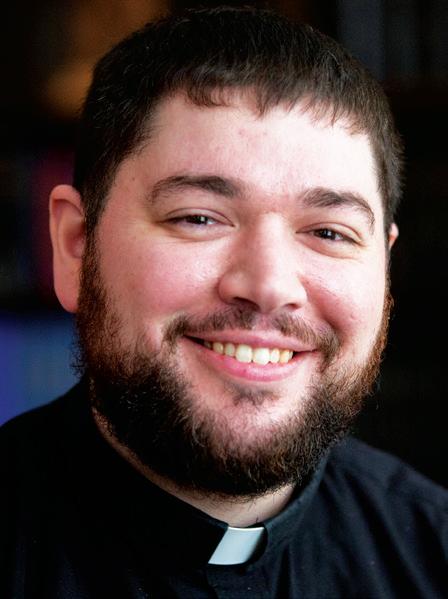
10 YEARS of Priesthood
Thank you for your faithful and loving service to Churches of St. Mary & St. Henry (Le Center), Nativity (Cleveland), and Immaculate Conception (Madison Lake)

Igrew up in the Bible Belt — the southern region of the United States where Evangelical Protestantism reigns supreme and exerts a profound dominance socially and culturally.
I was raised to know and love God, prayed daily and I had a deep desire to enter into his kingdom one day. I grew up with altar calls, Bible studies with my grandma, and loud, fiery Sunday services. Almost everyone I knew was a Christian, and we all held each other accountable for our actions. I felt I was living a life that would get me into heaven.
My high school was in a small town in southwest Oklahoma. The kind of town where everyone knew each other and often attended the same church. Except for that one church across the street. The one with the “idol” of St. Anne with a young St. Mary in front of it. We would never go there. In fact, I could count on one hand the number of people I knew who did. Two of my best friends went to that church. Actually, they were twins, raised in an incredibly devout family that made no excuses for missing Mass. Ever.
In addition, I would often see their family vehicle in the parking lot on days other than Sunday. They were steadfast in faith and practice, and I couldn’t help but admire that. We were in most of our classes together in high school, including AP (advanced placement) government, and it was in this class that seeds were planted in me. It was our junior year, and we had gotten into a debate about the compilation of the Bible.
As Protestants, we believed that the Catholic Church added seven books to the Old Testament. As we were going back and forth about who was right and who was wrong, our teacher, a member of The Cowboy Church (Yes, that’s a real thing) piped up and said, “Martin Luther removed them. That’s a historical fact.”
I’ve always loved history. It’s the story of us; who we are and how we came to be. So, I had no problem accepting the fact that I was wrong. But my classmates, besides the twins and one other Catholic, were up in arms! One even stormed out of the class. It was then that I asked myself, “If we are wrong about this, what else are we wrong about?”
After what felt like a lifetime of reading, research, an invitation to Mass, and a Scott Hahn talk, it turned out we were wrong about a lot of things, and among the things I valued most, objective truth was in the top three. Our hearts were on fire for the Lord, yet we didn’t know our Bible as well as we thought we did. The true presence of Christ in the Eucharist is biblical, confession is biblical, the salvific nature of baptism is biblical, honoring Mary is biblical, holy images are biblical, and sola scriptura is ironically not biblical.
Fast forward two years, after a failed serious relationship and a lapsed round of RCIA (now OCIA, Order of Christian Initiation of Adults), I’m on a date that I never intended to be on with a Catholic who charitably answered many questions for me and later became my RCIA sponsor, husband, and father of my children. And the twins? They’re both godmothers to two of my children. So, why am I Catholic? Because God paved a way for the people I love and the truths I sought and guided me home.
Jantzen, 38, her husband, Tim, and their four children are members of St. Joseph in Waconia. The Jantzens own and operate a youth soccer development franchise and Jessica Jantzen works with an internet infrastructure company founded by a former seminarian that serves Catholic churches and schools across the Twin Cities.
COURTESY JESSICA JANTZEN
CALENDAR SCHOOLS
For all calendar items, please visit thecatholicspirit.com/calendar
PARISH EVENTS
Grandparents Apostolate Feast of Sts. Anne and Joachim Celebration July 24: 9 a.m. at Nativity of Our Lord, 1938 Stanford Ave., St. Paul, Steiner Hall. Come enjoy the 15th anniversary of our apostolate! Presentation by Father Kevin Manthey, refreshments included. For questions, contact Lilee at 651-414-9367.
WORSHIP+RETREATS
Holding On and Letting Go July 11: 9-11 a.m. at St. Paul’s Monastery, 2675 Benet Road, St. Paul. Step away from daily life and step into the labyrinth, an ancient path of contemplation. Enter the quiet rhythm; a single winding path that leads to the center and back out again, reflecting on the theme of “Holding On and Letting Go.” stpaulsmonastery.org/events
BioSpiritual Focusing, Level One July 23: 9 a.m.-3 p.m. at St. Paul’s Monastery, 2675 Benet Road. Come learn more about how gently being with what is real and present within your embodied self can open the door to a deeper story and a greater sense of wholeness. benedictinecenter.secure.retreat.guru/ program/biospiritual-focusing-level-one-2
Summer Social July 15: 5-6:30 p.m. at Nativity of Mary, 9901 E. Bloomington Freeway, Bloomington. Join us for a relaxed evening of food, yard games, playground fun and time to connect with our Nativity community. New and prospective families are invited to tour the school during the event. RSVPs appreciated but not required. school.nativitybloomington.org
SPEAKERS+SEMINARS
Discovering Benedictine Values July 9, 23: 7-8:30 p.m. Zoom event hosted by St. Paul’s Monastery. Parts three and four of an online series, featuring a different speaker each week highlighting a foundational Benedictine subject: deep listening, humility, hospitality, community, stewardship, justice, respect for persons, stability and others. $20 per individual session or $140 for all sessions. stpaulsmonastery.org/event/discovering-benedictinevalues-2/http://stpaulsmonastery.org/events
ONGOING GROUPS
Griefshare Support Group Every Monday: 12:30-2 p.m. at Guardian Angels, 8260 Fourth St. N., Oakdale. Griefshare video and in-person sharing for those who have experienced loss. guardian-angels.org
Widowers Coffee Group Fourth Fridays: 9:30-11 a.m. at Our Lady of Grace, 5071 Eden Ave., Edina. Widowers of Grace is a newly formed Catholic group for men who have lost their wives. Join us as we learn together how to navigate life without our loved one. Contact olgwidowers@gmail.com for more information. olgparish.org
McGovern received first place for best coverage of a disaster or crises, with the judge’s noting: “This story is compassionately and beautifully told, covering many aspects of the horrific shooting at Annunciation in Minneapolis, from the initial response to the joyful homecoming of a survivor. The writers were particularly sensitive to the number of children affected and worked with respect and care.”
Reporting and writing by Omastiak, Hrbacek and McGovern
ACCESSIBILITY SOLUTIONS
STAIR LIFTS – ELEVATORS WHEELCHAIR LIFTS FOR HOMES, CHURCHES & SCHOOLS Arrow Lift (763) 786-2780
ACCOUNTANTS
Rasmussen Accounting 763-792-6630 Individual & Business Tax Return Preparation info@rasmussenaccounting.com SJBG MBR ANTIQUES
TOP CASH PAID For Older Furniture
• Advertising Signs • Beer Items • Old Clothes • Misc. (651) 227-2469 ATTORNEYS
Timothy J. Scott, J.D.
Wills, Trusts, Estate Planning & Probate timothy@tjslawoffice.com 952-521-5950 SJBG MBR
Virginia Ryan, Attorney at Law Trusts, Wills, Probate, Real Estate 600 Inwood Ave. N #130; Oakdale, MN 55128 (651) 631-0616 www.virgielaw.com.
CATHOLIC BUSINESS DIRECTORY
300 Local Catholic Owned Businesses stjosephslist.com SJBG
CATHOLIC BUSINESS GUILD
sjbusinessguild.com 612-363-2905
Connections - Customers - Jobs - Mentors CEILING TEXTURE
Michaels Painting
Cancer Support Group First Thursday: 11 a.m. first Thursdays at Guardian Angels, 8260 N. Fourth St., Oakdale. Contact Terry Quinn at 651-789-3181. guardian-angels.org
Torchlight Readers: Book Study with Lay Dominicans Every other Thursday: 7:30 p.m.-midnight. Virtual meeting. Explore the Christian life through the charism of St. Dominic through a book study. Our first book will be “St. Dominic’s Way of Life: A Path to Knowing and Loving God.” For questions and to get the Google Meet link, contact jordanhazel3@gmail.com.
Catholic in Recovery Every Sunday: 7-8 p.m. at St. Mark, 2001 Dayton Ave., St. Paul. Catholic sacramental recovery and fellowship for those seeking freedom from addictions, compulsions and unhealthy attachments. We overlap Scripture reading, liturgical themes, and 12-step recovery topics. Questions? Call Eileen M. at 612-483-2973. catholicinrecovery.com
Restorative Support for Victims-Survivors Monthly: 6:30-8 p.m. via Zoom. Open to all victims-survivors. Victim-survivor support group for those abused by clergy as adults first Mondays. Support group for relatives or friends of victims of clergy sexual abuse second Mondays. Victimsurvivor support group third Mondays. Survivor Peace Circle third Tuesdays. Support group for men who have been sexually abused by clergy/religious fourth Wednesdays. Support group for present and former employees of faith-based institutions who have experienced abuse in any of its many forms second Thursdays. Visit archspm.org/healing or contact Paula Kaempffer, outreach coordinator for restorative justice and abuse prevention, at kaempfferp@archspm.org or 651-291-4429.
about the tragedy also won third place for best news reporting on a local event among non-weekly diocesan newspapers. “A compelling capture of the resilience of the human spirit in the face of horrific violence,” the judges wrote. “Thorough reporting reveals that this resilience extends far beyond family and friends, encompassing an entire community on a shared journey of collective healing and support.”
Hrbacek’s front page photo in the Sept. 11 edition was awarded second place for best photograph-spot news, with
CEMETERY LOTS FOR SALE
Resurrection Cemetery: 1 lot, 2 graves; Value: $3727/pair; Price: $2227/pair; 218-927-6827
Resurrection Cemetery: 5 graves; Section 13, Block 25, Lots 19, 20. Value: $2635/ea. Price: $1800/ea. 612-710-8697
CHIROPRACTOR
Mind & Body Chiropractic * Dr. Kuznia $80/mo. Indiv. * $120/mo. Family * SJBG mindbodychiropractic.com/ 651-600-3521
COFFEE
Edge Coffee Company 612-504-1954 Fair Trade & Organic - no mycotoxins edgecoffeecompany.com SJBG MBR
COMMUNITY ORGANIZATIONS
CLUES celebrating 45 years. Rooted in Community. Rising together. Help us raise 1 million dollars to support Latinos affected by Operation Metro Surge Clues.org/donate | 651-379-4258
CONDO FOR RENT
Avail. in Cathedral area Sept. 1: https://tinyurl.com/Albans55104 651-224-0222.
COWORKING SPACE
Quarry Catholic Coworking - SJBG quarrycoworking.com 612-363-2905
CALENDAR submissions
DEADLINE: Noon Thursday, 14 days before the anticipated Thursday date of publication. We cannot guarantee a submitted event will appear in the calendar. Priority is given to events occurring before the issue date.
LISTINGS: Accepted are brief notices of upcoming events hosted by Catholic parishes and organizations. If the Catholic connection is not clear, please emphasize it in your submission. Included in our listings are local events submitted by public sources that could be of interest to the larger Catholic community.
ITEMS MUST INCLUDE:
Time and date of event
Full street address of event
Description of event
Contact information in case of questions
The Catholic Spirit prints calendar details as submitted. TheCatholicSpirit.com/ calendarsubmissions
judges describing the picture as “a deeply moving photo of the experience of tragedy — grief, disbelief and caring for those who know such extraordinary loss.” Hrbacek’s photo of people leaving Annunciation Aug. 27 won honorable mention for spot news photography.
Hrbacek’s coverage in October of Annunciation’s nightly rosary after the tragedy included a photo of the prayers being said at a bonfire in front of the church, which won an honorable mention for best photograph in the general news category.
Trojack & Associate Law Office, P.A., located in West St. Paul, MN, is seeking a legal assistant/paralegal. This is a part-time position with responsibilities including drafting correspondence, scheduling appointments, and tracking deadlines. To apply please submit a cover letter and resume to: John.Trojack@TROJACKLAW.COM.
GRAPHIC DESIGN
Graphic Design, Branding & Marketing sophia@mcgoverncreative.me SJBG MBR GOLD & SILVER BULLION
Verify, Exchange, Advise, Educate ⚖ Sølvency Bullion Exchange • SJBG 1128 Grand Ave, Saint Paul, MN 55105 651-404-7712 • https://solvency.trade USE SILVER & GOLD AS MONEY TODAY!
FINANCIAL PLANNERS
Win-A-Key to Unlock Your Retirement Income yourretirementkey.com 763-290-1420 Susan Wieneke, financial advisor SJBG
HARDWOOD FLOORS
MintHardwoodFlooring.com
Installation, Refinishing, Repairs Mark Schroeder: 612-987-5175
Home, Auto, Business, Life, Annuities, 401k Rollovers, Disability, Long-Term Care Luke Bauman baumanfinancial.com 763-972-6198 • SJBG MBR
MORTGAGE LOANS
Residential Mortgage Lending in MN & WI Conventional, FHA and VA NMLS #422758 Christopher.Burr@rcu.org 651-202-1367
NETWORKING

HEALTH CARE THE
THELASTWORD
Archbishop Hebda seeks prayers, unity in the Church in wake of SSPX schism
By Joe Ruff The Catholic Spirit
Archbishop Bernard Hebda expressed “great sadness” July 2 in reading that the Society of St. Pius X (SSPX) had rejected Pope Leo XIV’s plea and consecrated four new bishops in Switzerland without the requisite papal mandate.
The Vatican declared that the July 1 action in Switzerland placed the SSPX in schism with the Catholic Church and resulted in the excommunication of the consecrating bishop, the co-consecrator and the four newly ordained bishops, Archbishop Hebda noted in a statement placed on the Archdiocese of St. Paul and Minneapolis’ website at archspm.org/statement-regardingpriestly-fraternity-of-saint-pius-x/
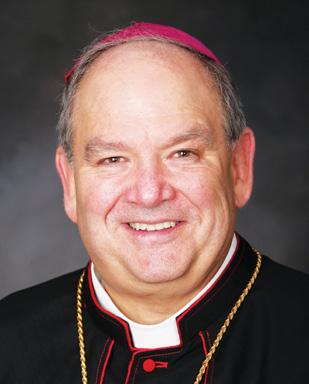
ARCHBISHOP BERNARD HEBDA
“Of particular note to Catholics in this Archdiocese is the clarification from the Holy See that any other clergy and lay faithful who formally adhere to the SSPX’s schism would also automatically incur the penalty of excommunication,” the archbishop wrote. “The clarification that accompanied today’s decree notes, in particular, that the clergy of the SSPX must henceforth be treated as schismatics: the sacraments they celebrate from this day forward are illicit and, most significantly, the confessions that they hear and the weddings that they witness are invalid.”
The archbishop said that in the 10 years he has led the archdiocese he has “met many sincere people who worship regularly or occasionally at the chapels of the SSPX within the territory of our Archdiocese. I have been impressed by the strength of their families and their commitment to traditional Catholic values. I realize that today’s excommunications will affect them in a particular way.
“It is my hope they will not follow the above-mentioned bishops in separating themselves from the Successor of Peter, Pope Leo XIV, and from the Church that
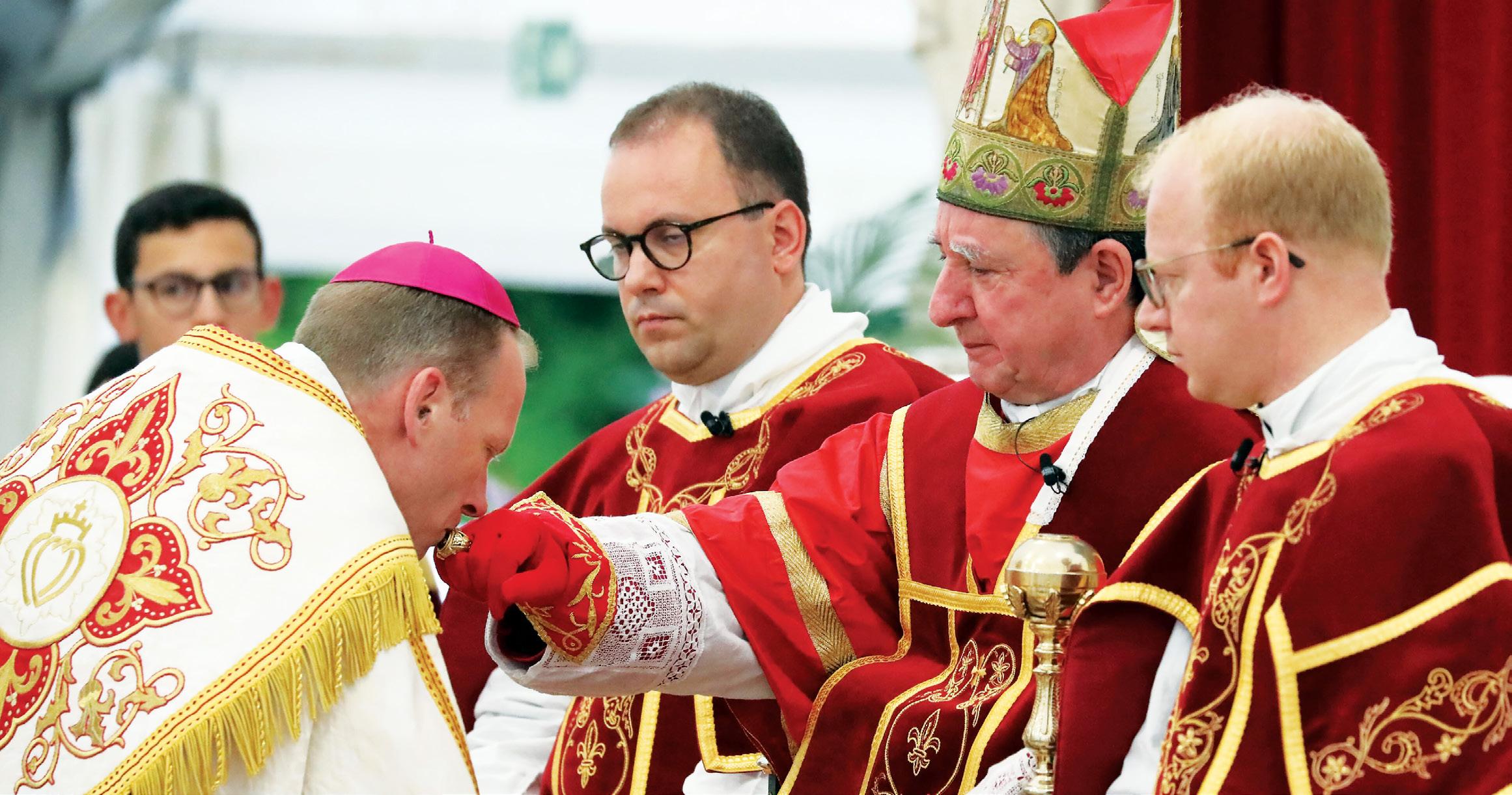
Newly consecrated Society
celebration July 1, 2026, in Econe, Switzerland. The
excommunicated by the Vatican July 2, as the
he humbly leads,” the archbishop wrote. “Throughout the centuries, our Catholic Church has consistently echoed the teaching of St. Ambrose: Ubi Petrus ibi ecclesia (Where there is Peter, there is the Church).”
The archbishop went on to write that, “At this difficult moment, the same traditional Eucharistic liturgy beloved by those who have worshiped with the SSPX in the past continues to be celebrated in six locations throughout the Archdiocese. I am confident that those who prefer the Traditional Latin Mass could find a home here.”
The archbishop urged prayers for the clergy and faithful in Minnesota who have been affiliated with the SSPX, that “Mary, Mother of the Church, guide them at this difficult time and keep them within the Church established by her Son and led by his Vicar.”
The archbishop also urged prayers more
NATION+WORLD
Supreme Court finds Trump executive
order on birthright citizenship unconstitutional
By OSV News
The U.S. Supreme Court on June 30 struck down President Donald Trump’s executive order limiting birthright citizenship, finding it violated the 14th Amendment. A cornerstone of his efforts to restrict immigration, the ruling comes as a loss for Trump, who even attended oral arguments in the case, Trump v. Barbara, in person, marking the first time a sitting president has done so, according to records from the high court and the nonprofit Supreme Court Historical Society. Writing for the majority, Chief Justice John Roberts wrote, “Citizenship, then and now, was the right to have rights— to freely participate in our political community.” Citing comments made by Sen. Lyman Trumbull, a proponent of the Civil Rights Act of 1866, which led to the 14th Amendment, Roberts wrote, “The Framers of the Fourteenth Amendment
extended that promise to ‘every free-born person in this land.’ We keep that promise today.” Previously, the Supreme Court limited the ability of federal judges to issue nationwide injunctions against the order while litigation over it proceeded, but did not directly address the merits of the order itself. The U.S. Conference of Catholic Bishops and CLINIC previously submitted a friend-of-thecourt brief in the case, arguing that ending the practice of birthright citizenship would weaken families and risk leaving children stateless, thereby making them targets for violence, trafficking and exploitation. Anna Gallagher, executive director of CLINIC, said in a statement on the decision, “We are relieved and grateful that the Supreme Court has upheld this right that is so important for our identity as a nation and for safeguarding justice and human dignity.”
broadly for unity in the Church, especially in the archdiocese, and for Pope Leo XIV as “he carries out his solemn duties as the shepherd and unifier of the Church.”
Susan Mulheron, chancellor for canonical affairs in the archdiocese, said there is an SSPX chapel in West St. Paul and one in Oak Grove.
Six sites in the archdiocese offering the Traditional Latin Mass where worshipers from the SSPX chapels might find a home are All Saints in Minneapolis, Holy Trinity in South St. Paul, St. Joseph in Miesville, St. Michael in Pine Island, Sacred Heart in Robbinsdale and St. Agnes in St. Paul, Mulheron said.
Five of those parishes also offer Masses using the current liturgical rubrics, Mulheron said.
Priests ministering at All Saints belong to the Fraternity of St. Peter (FSSP), which broke away from the SSPX prior to the latest illicit consecrations, Mulheron said. They
offer both the Mass and the sacraments only in the pre-Vatican II formula and they remain in union with the Roman Catholic Church, she said.
Like the archbishop, Mulheron noted sadness that accompanies the SSPX schism, and the impact it has on individuals and families affiliated with the SSPX.
“I think for most of (them), it is more than a liturgical preference,” Mulheron said. “It’s their community; it’s their family. It’s what they have known for their entire lives, many of them.”
Trying to leave tight-knit communities to find another church can be very difficult, Mulheron said. “It’s not as simple as just going to the next church down the road,” she said. “It has real consequences — personal consequences — for people. I think that’s the saddest part.”
Supreme Court says Title IX permits Idaho, West Virginia transgender sports bans
By OSV News
The U.S. Supreme Court on June 30 upheld West Virginia and Idaho state laws requiring student athletes to compete on sports teams that correspond to their biological sex rather than their self-identified gender. In a majority opinion, Justice Brett Kavanaugh wrote, “The question before the Court is: Under Title IX and the Equal Protection Clause of the Fourteenth Amendment, may schools maintain women’s and girls’ sports for biological females? In other words, may schools determine eligibility for women’s and girls’ sports based on biological sex? The answer is yes.” Kavanaugh was joined in his opinion by Chief Justice John Roberts, Justices Amy Coney Barrett, Clarence Thomas and Neil Gorsuch. Gorsuch and Thomas also filed concurring opinions. Justice Sonia Sotomayor filed an opinion concurring in part and
dissenting in part, in which Justices Elena Kagan and Ketanji Brown Jackson joined. Jackson also filed an opinion concurring in the judgment in part and dissenting in part. In her opinion concurring in part and dissenting in part, Sotomayor wrote that “This litigation implicates deeply sensitive, contentious, and evolving issues,” and argued the circumstances “demand exercising judicial restraint, not rushing to answer conclusively difficult questions without sufficient evidentiary development.” In an amicus brief filed in the case, the U.S. Conference of Catholic Bishops pointed to “fundamental Catholic teachings regarding the immutable, God-given differences between the sexes” and argued that “if Catholic schools were forced to allow males to compete on or against their female-only teams, they would need to abandon athletics programs or stop accepting federal funding.”
of St. Pius X Bishop Michael Goldade, an American, is seen kissing the ring of Bishop Alfonso de Galarreta during an SSPX liturgical
two bishops, along with Bishop Bernard Fellay of SSPX and three other newly consecrated bishops were
consecration lacked the mandate of the pope and was decreed to be schismatic.