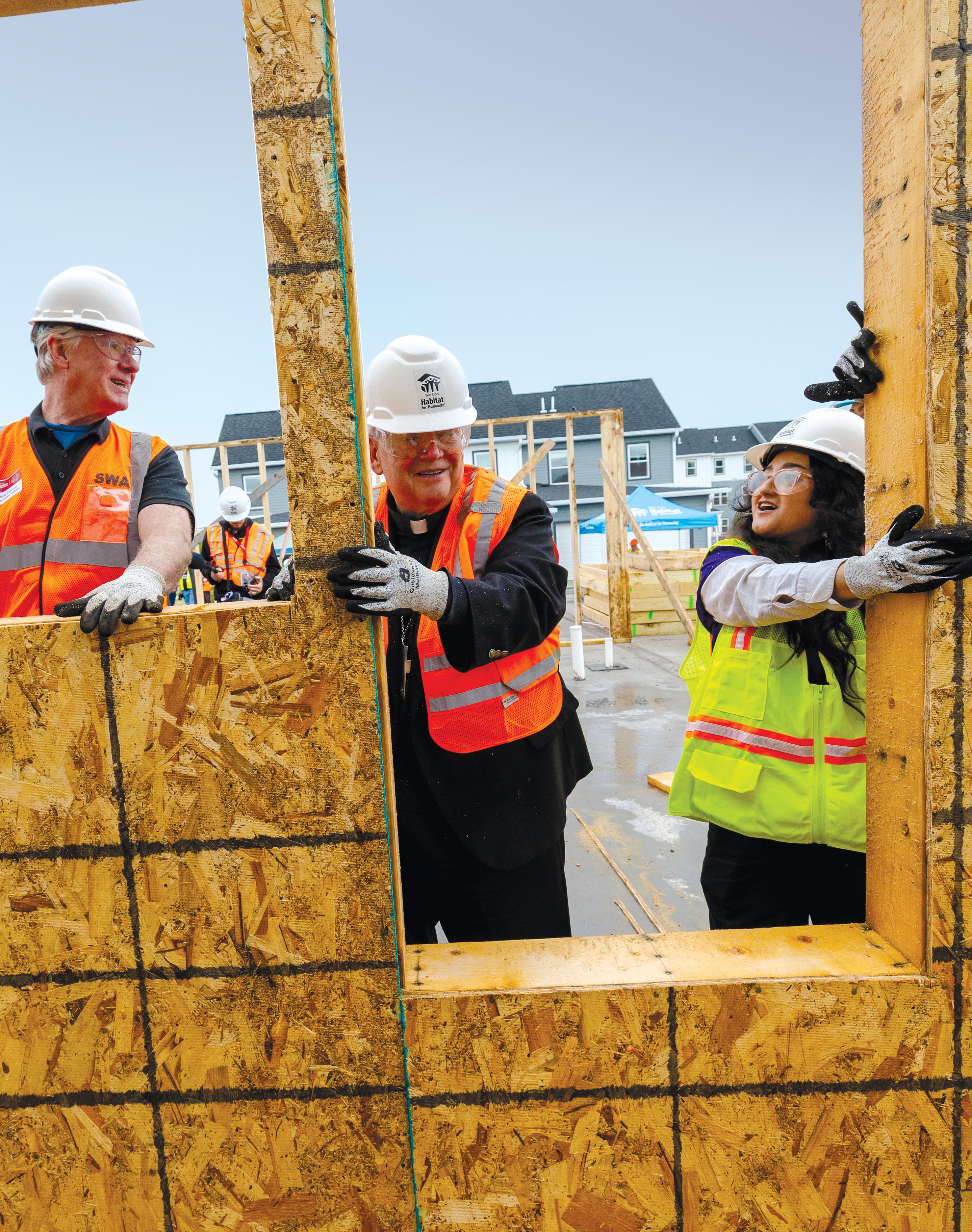
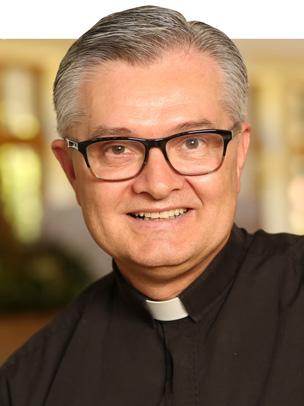
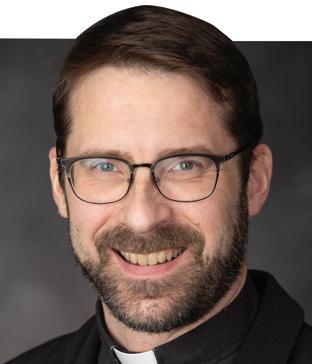
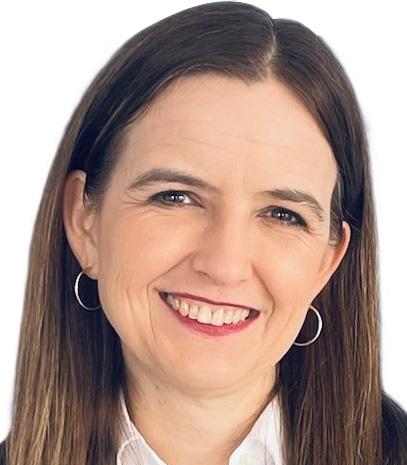
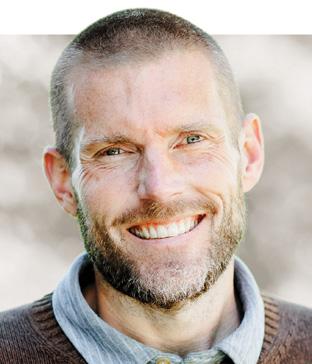
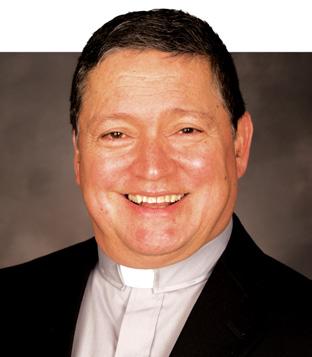
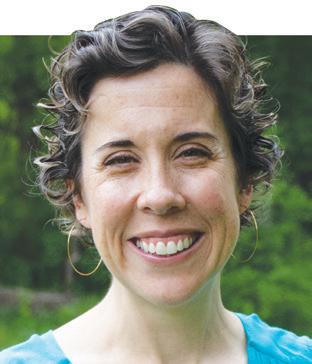
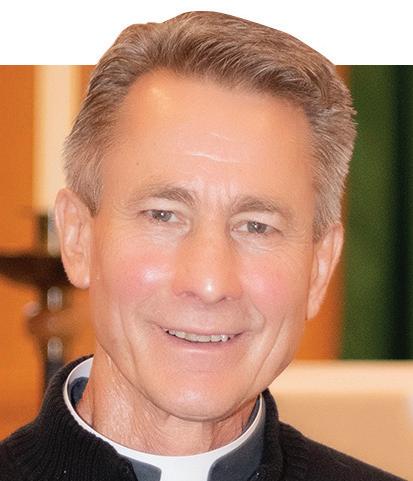
From left, Chris Coleman, president and CEO of Twin Cities Habitat for Humanity, Archbishop Bernard Hebda and Leslie Varela, a student at St. Catherine University in St. Paul, join others at an event July 8 in St. Paul to launch the building of a Habitat home that is part of the Pope Leo Village movement, an interfaith, multi-city housing initiative inspired by Pope Leo XIV. During remarks he gave at the July 8 event, Archbishop Hebda praised “the magnificent work of Habitat for Humanity” and said, “Pope Leo is asking people to work together… to put our resources together in a way that we’re able to build and to help people.”
DAVE HRBACEK | THE CATHOLIC SPIRIT
PAGETWO
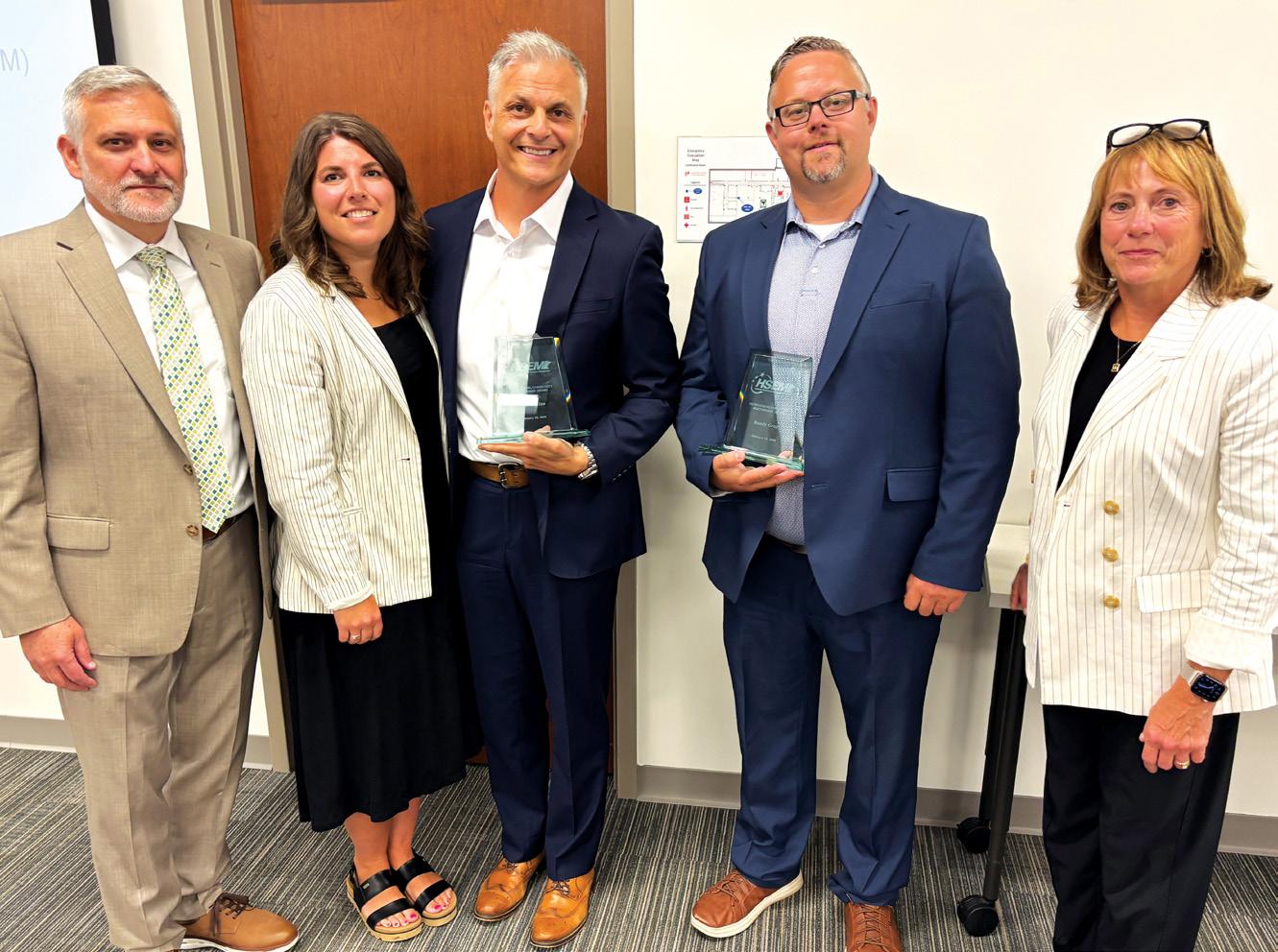
SAFETY PARTNERSHIP Paul Iovino, director of the Archdiocese of St. Paul and Minneapolis’ Office of Ministerial Standards and Safe Environment, third from left, and Randy Gray, (fourth from left) the archdiocese’s director of safety, security and facilities, hold awards July 16 for Outstanding Community Partnership from the Minnesota Department of Public Safety’s Division of Homeland Security and Emergency Management (HSEM). From left, Kevin Reed, HSEM’s deputy director, Kasey Cable, HSEM’s school communications coordinator in its School Safety Center, and Connie Forster, director of the School Safety Center, presented the awards at the Archdiocesan Catholic Center in St. Paul. Iovino, Gray and the archdiocese’s Security Manager’s Information Group (SMIG), were recognized for their work after the Aug. 27, 2025, Annunciation tragedy in Minneapolis and ongoing efforts to promote safety in archdiocesan parishes and schools in partnership with HSEM.
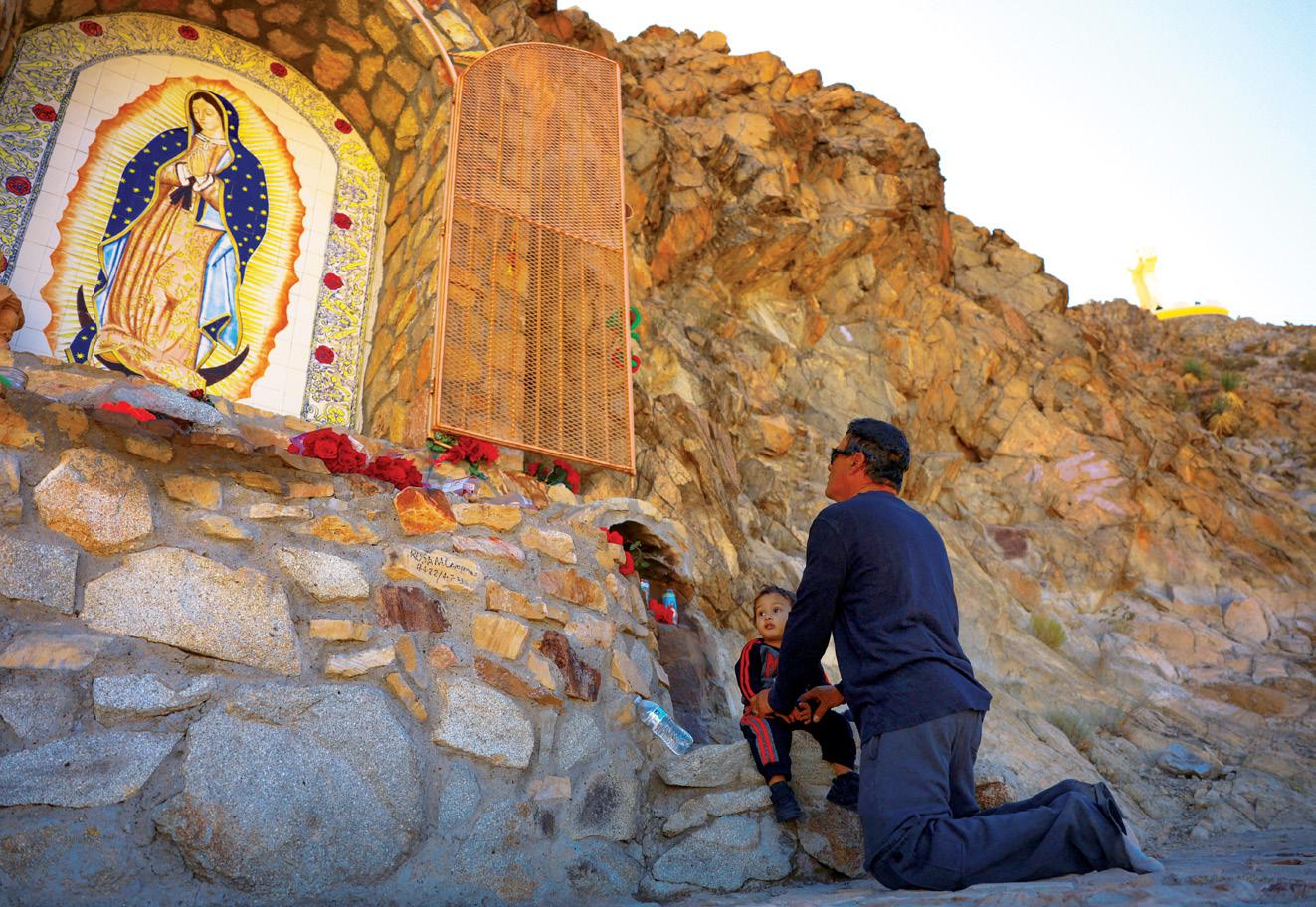
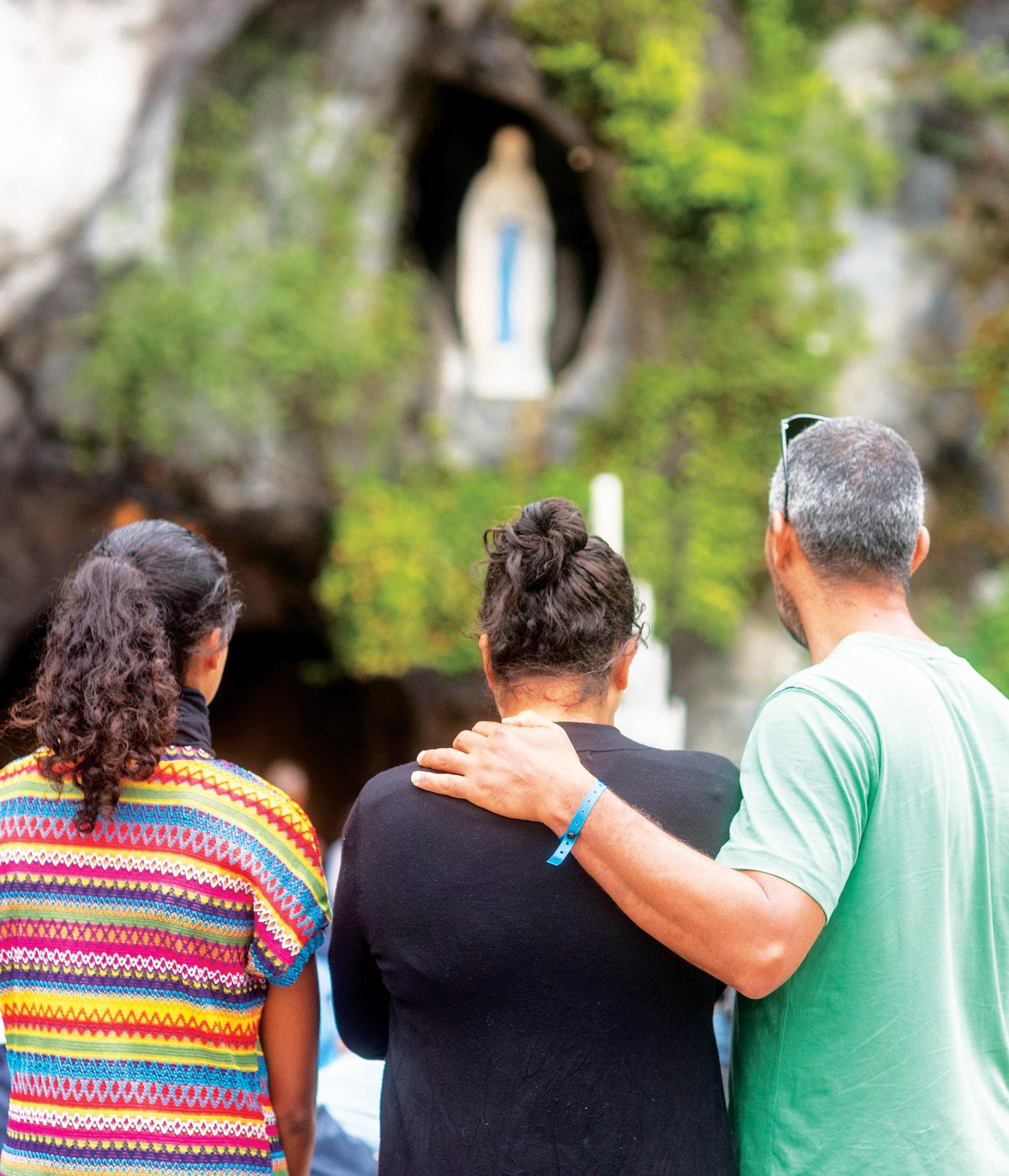
PILGRIMAGE SITE DISPUTE A man prays with a child in front of an image of Our Lady at Mount Cristo Rey in Sunland Park, N.M., during a pilgrimage Nov. 23, 2024, for the feast of Christ the King. The Diocese of Las Cruces is demanding a jury trial in response to the Trump administration’s move under an eminent domain claim to seize land that includes the pilgrimage site for construction of a border wall. The 4,675-foot mountain is topped by a 29-foot limestone statue of Christ the King and has long drawn pilgrims from across the region.
Practicing CATHOLIC
Produced by Relevant Radio and the Archdiocese of St. Paul and Minneapolis, the July 17 “Practicing Catholic” radio show on Relevant Radio 1330 AM included Tim and Helen Healy discussing Trinity Woods Catholic Retreat Center in Trego, Wisconsin, which they founded and which is owned by the nonprofit Minnesota Catholic Youth Partnerships. The program also featured Rob Masloski, the faith formation director at St. Patrick in Oak Grove, in an interview about his journey into Catholic youth ministry. Listen to interviews after they have aired at practicingcatholicshow.com or choose a streaming platform at Spotify for Podcasters.
OVERHEARD
The kingdom of God ‘comes like the smallest of seeds and thus calls for patience in accompanying these processes, so that we can recognize it in the little things of daily life and in the simplicity of ordinary existence.’ Christians sometimes long for God to act dramatically, ‘to intervene from on high, immediately uprooting the weeds of evil,’ but God’s kingdom instead ‘grows invisibly like yeast in flour.’
Pope Leo XIV, addressing Catholics from every inhabited continent gathered in Castel Gandolfo July 19 as the pope led the Angelus prayer from the papal summer palace.
NEWS notes
Archbishop Bernard Hebda closed the Archdiocese of St. Paul and Minneapolis’ year-long celebration of its 175th anniversary July 19 with Mass at the Cathedral of St. Paul in St. Paul and a party in the Cathedral’s courtyard that included food trucks and the second annual Archbishop’s Bean Bag Tournament. Writing in his online Weekly Word newsletter July 20, the archbishop said he led the congregation in a prayer consecrating the archdiocese to the Sacred Heart of Jesus. The archbishop said the prayer tied the local Church to actions undertaken by the U.S. bishops in June in Orlando, Florida, consecrating the country to the Sacred Heart as citizens celebrate the 250th anniversary of the Declaration of Independence. The archbishop also noted that historians cite the archdiocese as the first diocese in the country to be consecrated to the Sacred Heart of Jesus, thanks to the vision of Bishop Thomas Langford Grace, a Dominican who was the second bishop of St. Paul. Bishop Grace wrote a letter to the faithful each September to encourage their devotion to the Sacred Heart.
The Minnesota Catholic Conference (MCC) and Archbishop Bernard Hebda are encouraging the faithful to vote in the Aug. 11 primary elections in what they describe as a big election year in Minnesota. Every seat in the Minnesota Legislature is up for grabs. In addition, the governor, every U.S. House seat and one U.S. Senate seat are on the ballot. The primary elections will decide which candidates will represent their respective political parties and appear on the Nov. 3 general election ballot. In a video available on YouTube and the archdiocese’s website at archspm.org/a-catholic-guideto-the-2026-elections, Archbishop Hebda noted the importance of strong voter turnout in primary elections, and the fact that early voting began June 26. “As you prepare to vote, it is always important for faithful citizens to form their conscience with the right principles of Catholic social teaching, which help you to see and discern with the mind of the Church,” the archbishop said. “But you also must inform yourself about the issues at play and where the candidates stand.” Candidate positions can be found on their websites or social media accounts, and many candidates can be greeted at county fairs, city festivals and other events, the archbishop said. On the MCC website at mncatholic.org/election2026, the conference includes a timeline of election activity through Nov. 3, information about registering to vote, a sample ballot and questions to consider when talking with candidates about such topics as abortion, school scholarship programs, immigration, gun control and gambling.
World Youth Day will be in Seoul, South Korea, next August, and a meeting will be held online from 7-8 p.m. Aug. 19 for people in the Archdiocese of St. Paul and Minneapolis who would like to attend. Pope Leo XIV will participate in the Aug. 3-8, 2027, event, and more than a million young people are expected. The theme will be “Take courage! I have overcome the world” (Jn 16:33). St. John Paul II initiated World Youth Day in 1985 and the international gathering has been held every few years.
Acclaimed chapel choir Cappella at the University of Mary in Bismarck, North Dakota, is a national finalist for The American Prize in Choral Performance, one of the nation’s most prestigious performing arts competitions. Cappella is featured nationally on Relevant Radio, and among its touring stops is a performance each year combined with Catholic high school choirs at the Cathedral of St. Paul in St. Paul. Called Luminosa: Cappella by Candlelight, this year’s concert at the Cathedral is set for Dec. 12. The honor for the chapel choir comes as Capella celebrates the completion of its fifth season of combining musicianship with spiritual expression.
Oliver Jurek, a member of St. Mary of the Lake who graduated this year from Providence Academy, both in Plymouth, was one of 15 students around the country to receive a college scholarship from Catholic Scouting America the new name used publicly by the National Catholic Committee on Scouting for their service in Scouting and the community.
A member of Scouting America Troop 3477 and Venturing Crew 477 in the Northern Star Council, Jurek was awarded the $2,000 Brian and Kristine Girskis Family Scholarship. “As a Catholic, I volunteer because I believe service is one of the most authentic ways to live out my faith,” Jurek said, in part, in a news release. Jurek has been an altar server, religious education aide and youth group member at St. Mary of the Lake, and he earned three of the Catholic Religious Emblems offered by Catholic Scouting America: Parvuli Dei, Ad Altare Dei and Pope Pius XII. He has volunteered with the Missionaries of Charity in Minneapolis to prepare and package food, organize supplies and travel into tent encampments and under bridges to distribute meals. At Providence Academy, he was president of the robotics team and an officer in band and the student council, among other activities. In Scouting, Jurek’s experiences include serving as a senior patrol leader, junior assistant Scoutmaster, bugler and crew president. He is a member of the Order of the Arrow, Scouting America’s honor society.
Jason Adkins, executive director and general counsel of the Minnesota Catholic Conference (MCC), was elected president of the National Association of State Catholic Conference Directors (NASCCD) July 20. The MCC is the public policy voice of the Catholic Church in Minnesota, and the NASCCD is an association of executive directors of 40 state Catholic conferences. Members of the national association meet twice a year to discuss public policy challenges and opportunities in local Churches across the country. NASCCD members also strategize ways to make the Church’s voice effective in the public arena. “The NASCCD is a special group of people who are not just colleagues but also treasured friends. I am honored that they have chosen me to serve in this role and lead the coordination of the group’s activities and put together our invaluable meetings,” Adkins said in a news release. Adkins has been the MCC’s executive director since 2011. He will serve as president of the NASCCD until August 2028.
CATHOLIC SPIRIT
FROMTHEBISHOP
ONLY JESUS | BISHOP KEVIN KENNEY
A season of journeys
We are quickly approaching the time of parish fall festivals! I love the fall festivals, especially when they are at someone else’s parish.
I have a few favorite memories from my parishes’ fall festivals. When I was at Our Lady of Peace in Minneapolis, our festival was called “One Large Party.” One year we had a dunk tank. It was a bit chilly that Saturday, but I braved the bench hoping that no one would dunk me. A few people came through the line and lo and behold, who was next in line — my mother. I didn’t remember seeing her throw a ball in my life, so I thought I was safe. She had three balls in her hand, wound up with the first one and, bam, down I went. I got myself up on the bench, shook off the water and before I knew it, bam, down I went again. Wouldn’t you guess — she was three for three. I never thought I’d ever see that day!
When I was at Divine Mercy in Faribault for Spirit Days in the fall, Molly B was always invited to participate in the polka Mass. After the Mass, Molly B and her band would play at the stage under the tent in the parking lot. At the same time, we had a Mariachi band strolling through the grounds, so I thought, let’s get them to play together for a few songs. What a hoot! It was great! We all danced and moved together. Music does bring people and cultures together.
At Sts. Cyril and Methodius in Minneapolis one year, I surprised everyone by getting into their dunk tank. The line grew long but let me tell you, the older you get, the harder you fall. Another year, I donned my Mariachi suit and danced with Alegres Bailadores, impressing the Ecuadorian community with my Mexican moves. Fall festivals are great fun and serve a variety of great
Una temporada de viajes
¡Nos estamos acercando rápidamente a la época de los festivales parroquiales de otoño! Me encantan los festivales de otoño, especialmente cuando son en la parroquia de otra persona.
Tengo varios recuerdos favoritos de los festivales de otoño en las parroquias donde he servido. Cuando estaba en Nuestra Señora de la Paz, en Minneapolis, nuestro festival se llamaba “Una Gran Fiesta”. Un año tuvimos un tanque para lanzar a alguien al agua. Hacía un poco de frío ese sábado, pero me senté valientemente en el asiento con la esperanza de que nadie lograra tirarme al agua. Varias personas pasaron por la fila y, de pronto, ¿quién era la siguiente? Mi madre. No recordaba haberla visto lanzar una pelota en toda su vida, así que pensé que estaba a salvo. Tenía tres pelotas en la mano, lanzó la primera y ¡zas!, al agua fui. Me subí de nuevo al asiento, me sacudí el agua y, antes de darme cuenta, ¡zas!, otra vez al agua. Y, ¿lo pueden creer? Acertó las tres veces. ¡Jamás pensé que viviría para ver ese día!
Cuando estaba en Divine Mercy, en Faribault, durante los Spirit Days de otoño, siempre invitábamos a Molly B a participar en la Misa con música polka. Después de la Misa, Molly B y su banda tocaban en el escenario bajo la carpa instalada en el estacionamiento. Al mismo tiempo, un grupo de mariachis recorría el recinto. Entonces pensé: “¿Y si los hacemos tocar juntos unas
Investigate well the trips you want to take. Do not hesitate, or you might regret later on in life that you did not fulfill a dream you have. When I was younger, I backpacked through Europe, riding trains, hitching rides and exploring new and out-of-the-way places. As I aged, I began taking bus tours. I realized how enjoyable and less stressful they are. Traveling opens many doors in life as we experience different cultures, meet new people, and again enjoy great food. Where would you like to go next?
food. Hopefully, this year we will all be able to enjoy a few festivals.
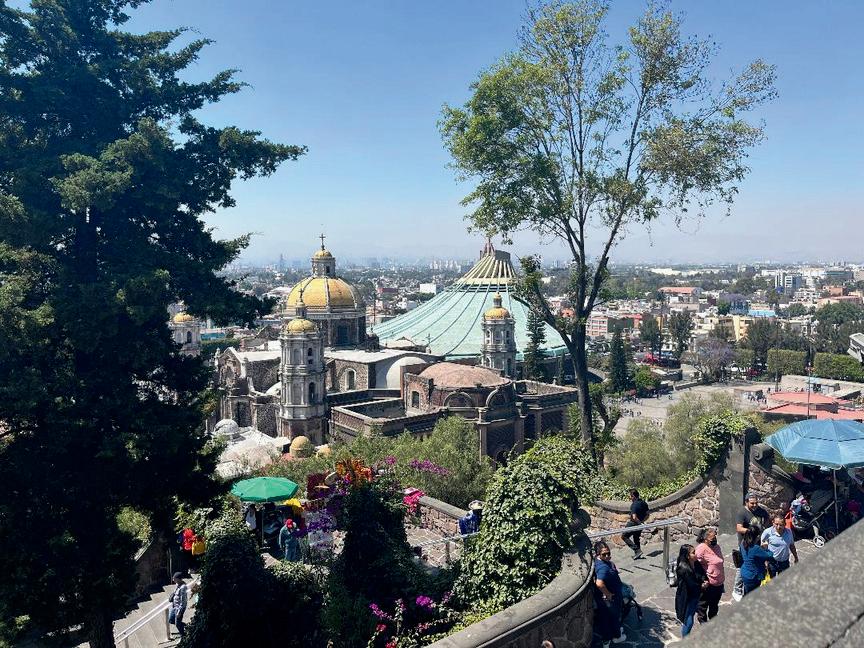
Fall is also a great time to join a Catholic pilgrimage. I have traveled with many groups to the Basilica of Our Lady of Guadalupe in Mexico City, the Shrine of Our Lady of Guadalupe in La Crosse, Wisconsin, and I have traveled on pilgrimages throughout Europe and the Holy Land. I enjoy the many wonderful holy sites, and delicious food. I am about to embark on a pilgrimage to Norway, walking the path of St. Olaf. This is something the parish has talked about for a few years, and now it has come to fruition. I look forward to reporting upon my return. Investigate well the trips you want to take. Do not hesitate, or you might regret later on in life that you did not fulfill a dream you have. When I was younger, I backpacked through Europe, riding trains, hitching rides and exploring new and out-of-the-way places. As I aged, I began taking bus tours. I realized how enjoyable and less stressful they are. Traveling opens many doors in life as we
cuantas canciones?”. ¡Fue divertidísimo! Todos bailamos y disfrutamos juntos. La música realmente une a las personas y a las culturas. Un año, en la parroquia de los Santos Cirilo y Metodio, en Minneapolis, sorprendí a todos al meterme en el tanque de dunk. La fila se hizo larguísima, pero les aseguro que, mientras más años tiene uno, más dura es la caída. Otro año me puse mi traje de mariachi y bailé con Alegres Bailadores, impresionando a la comunidad ecuatoriana con mis pasos mexicanos.
Los festivales de otoño son muy divertidos y ofrecen una gran variedad de deliciosa comida. Ojalá que este año todos podamos disfrutar de algunos de ellos.
El otoño también es una excelente época para unirse a una peregrinación católica. He viajado con muchos grupos a la Basílica de Nuestra Señora de Guadalupe, en la Ciudad de México; al Santuario de Nuestra Señora de Guadalupe, en La Crosse, Wisconsin; y también he participado en peregrinaciones por toda Europa y Tierra Santa. Disfruto muchísimo de los lugares sagrados, así como de la excelente comida. Muy pronto emprenderé una peregrinación a Noruega para recorrer el Camino de San Olaf. Es algo de lo que la parroquia ha hablado durante varios años y que, por fin, se hará realidad. Espero poder compartirles mi experiencia cuando regrese. Infórmense bien sobre los viajes que desean realizar. No duden demasiado, porque más adelante podrían lamentar no haber cumplido un sueño. Cuando era joven, recorrí Europa como mochilero, viajando en tren, pidiendo aventón y explorando lugares nuevos y poco conocidos. Con el paso de los años empecé a participar en viajes organizados en autobús
experience different cultures, meet new people, and again enjoy great food. Where would you like to go next?
Speaking of next, on a new detour of my journey, I want to thank everyone who has reached out to me with prayers, love and support. I have great faith in God, that this time will be for the benefit of many. Now, having journeyed with many on their detours, I appreciate all who are journeying with me. Cancer is a hard word to hear (see story on page 7). When we hear it for ourselves, denial comes very easily. But I have come to terms with this in my life and appreciate all members of the medical teams who have given me advice and compassionately laid out the facts. Deciding on healthcare and procedures can be complex, and each team has told me that I am complex, which is not the first time I’ve heard this. God does not give you something you cannot handle, so I guess complexity is a gift in my life. God bless you all, let us pray for each other, for all who are struggling with an illness, their medical teams, and caretakers, in Jesus’ name.
OFFICIALS
y descubrí lo agradables y menos estresantes que son. Viajar abre muchas puertas en la vida: nos permite conocer diferentes culturas, encontrarnos con nuevas personas y, una vez más, disfrutar de una excelente gastronomía. ¿A dónde les gustaría viajar la próxima vez? Y hablando de lo que viene después, en este nuevo desvío de mi propio camino, quiero agradecer de corazón a todos los que me han hecho llegar sus oraciones, su cariño y su apoyo. Tengo una profunda confianza en Dios y creo que este momento será para el bien de muchas personas. Después de haber acompañado a tantos en los desvíos inesperados de sus vidas, ahora agradezco profundamente a todos los que están recorriendo este camino conmigo. La palabra cáncer es difícil de escuchar (vean la página 7).
Cuando la escuchamos aplicada a nosotros mismos, es muy fácil caer en la negación. Sin embargo, he llegado a aceptar esta realidad en mi vida y agradezco a todos los miembros de los equipos médicos que me han orientado y que, con gran compasión, me han explicado los hechos con claridad. Tomar decisiones sobre tratamientos y procedimientos médicos puede ser muy complejo, y todos los equipos que me han atendido me han dicho que yo también soy una persona compleja, aunque no es la primera vez que escucho eso.
Dios no nos da nada que no podamos sobrellevar; así que supongo que la complejidad también es un don en mi vida.
Que Dios los bendiga a todos. Oremos unos por otros, por todos los que luchan contra alguna enfermedad, por los equipos médicos que los atienden y por quienes los cuidan. En el nombre de Jesús.
Archbishop Bernard Hebda has announced the following appointments in the Archdiocese of Saint Paul and Minneapolis:
Effective
July 6, 2026
Reverend Cyril Whitaker, SJ, assigned as spiritual director for the Saint John Vianney College Seminary in Saint Paul. Father Whitaker is a priest of the USA Midwest Province of the Society of Jesus.
Effective July 14, 2026
Reverend Marcel Okwara, incardinated into the Archdiocese of Saint Paul and Minneapolis. Father Okwara was ordained in 2007 as a priest of the Congregation of the Most Holy Redeemer and has ministered in the Archdiocese since 2019.
Effective July 15, 2026
Deacon Peter Bednarczyk, granted the status of a retired deacon. Deacon Bednarczyk has served the Archdiocese as a deacon since his ordination in 1988, primarily at the Church of Saint Stephen in Anoka.
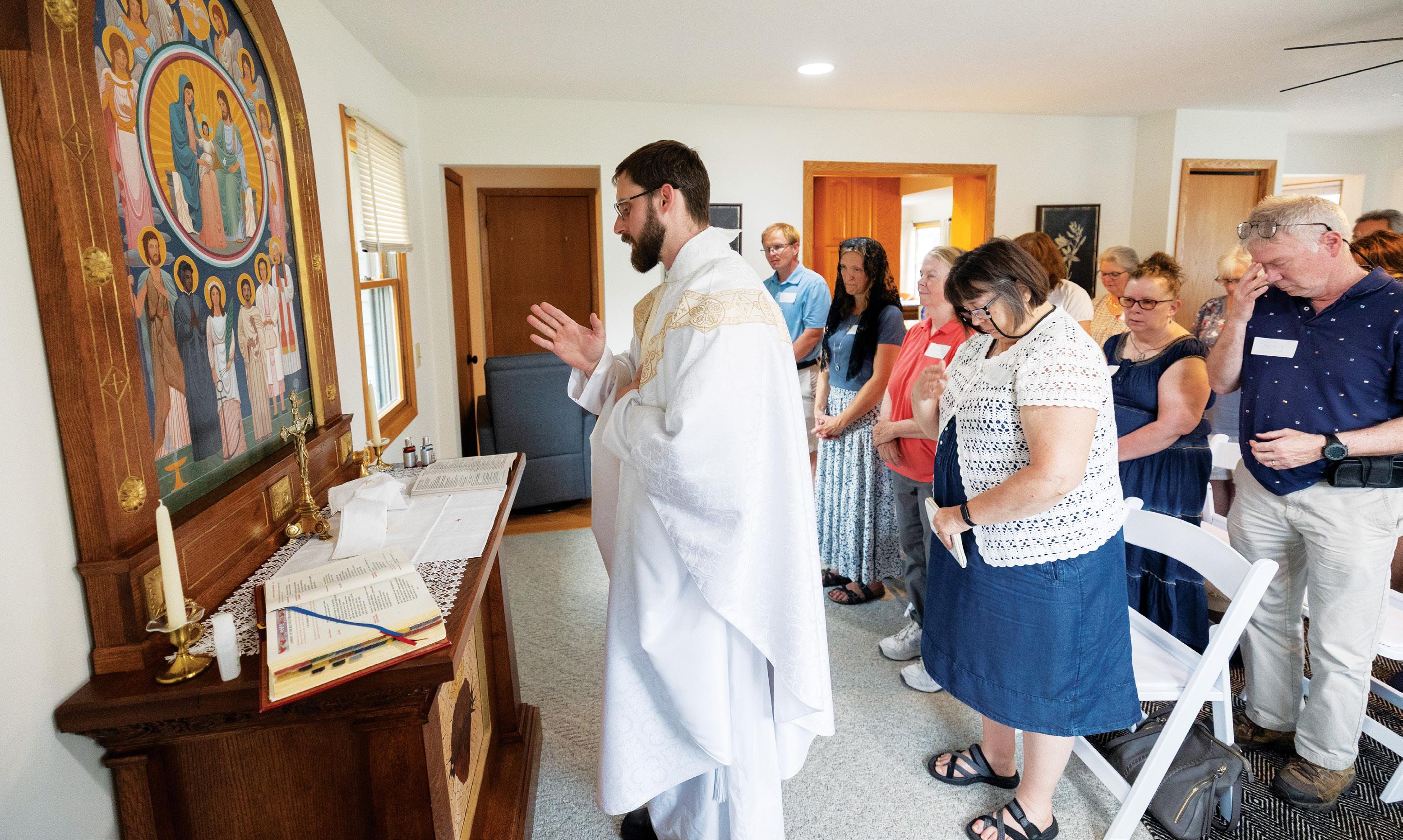
Father Michael Panka, parochial vicar at St. Odilia in Shoreview, blesses a new altar and mural of the Holy Family July 16 that was placed inside Philomena House in Roseville, a home for women who are pregnant and homeless. Attendees included Joyce Nevins, who served as the director when the house first opened in St. Paul in 2014. Mike and Angie Fuith of St. Michael in Stillwater also attended the blessing. Mike Fuith is the current board president and Angie Fuith works at the house part time. The couple first got involved with Philomena House when they adopted the baby of a mother who was living there in 2020. “Philomena House is a big reason why I could become a dad,” said Mike Fuith, who noted that he and his wife were not able to conceive and turned to adoption to start a family. He called the Mass and blessing “just beautiful.” In 2025, a fundraising campaign generated enough revenue to buy a new house, with an anonymous donor later funding the altar. DAVE HRBACEK | THE CATHOLIC SPIRIT
At the Catholic Community Foundation of Minnesota (CCF), we walk alongside Catholic individuals, families, parishes, and schools as they care for the people and ministries they love.
From donor advised funds and designated funds to endowments, CCF offers simple, faith-consistent ways to give now, plan for tomorrow, and build a lasting legacy of generosity. We also partner with parishes and schools to steward financial resources with care.
Contact CCF to learn more. 651.389.0300 ccf-mn.org
– Jesus
IVC members are responding to Christ’s call to love one another — through ser vice, accompaniment, and presence with those most vulnerable.
ivcusa.org/TwinCities
Many emotions from parishioners at St. Boniface transition Mass
By Josh McGovern
The Catholic Spirit
Jim Leitschuch has been a member of St. Boniface in Minneapolis for 81 years, having been baptized in 1945.
“I’ve been here my whole life,” Leitschuch said. Both his father and mother were baptized at St. Boniface. “She grew up ... on 13th Avenue, and he grew up in the family house, which is right on Eighth Avenue. And his father and brothers were members here back in probably the (1800s).”
Leitschuch spoke after a July 11 Mass that marked the beginning of a partnership with St. Maron, a Maronite Rite Catholic church on the same block. Archbishop Bernard Hebda celebrated the Mass with Chorbishop Sharbel Maroun, pastor of St. Maron, and St. Boniface’s former parochial administrator, Father David Ostrowski.
St. Boniface was founded in 1858. The new partnership is a result of changing neighborhood demographics “that necessitate change in the parish and how it functions,” said Father Michael Tix, vicar general for the Archdiocese of St. Paul and Minneapolis.
St. Boniface is making the transition as parishioners age and young people are not joining the parish. St. Maron will continue to provide limited sacramental ministry to St. Boniface parishioners for at least one year and beyond that time if it continues to be possible to maintain and safely use the church.
“We have to have that kind of confidence, my brothers and sisters, that even when we can see that maybe there aren’t as many people here as there once were, we can think about how we might have had difficulties and challenges as a community, we have confidence in knowing that God’s word is always fruit(ful) and always bears fruit,” Archbishop Hebda said in his homily. “We might not necessarily see it, but ... God’s word ... is going to be powerful and have impact.”
Archbishop Hebda urged those in attendance to give thanks when thinking about those who collaborated with Jesus in sowing good seeds from the beginnings of St. Boniface.
“While leadership of the parish is changing, it’s that efficacious, powerful word of God that continues to bear fruit in our midst, and so we hope that Jesus might continue to till the soil in our hearts,” Archbishop Hebda said.
Carol Torborg, 87, said she was saddened by the transition, but Chorbishop Sharbel is a wonderful man.
Torborg’s grandfather, Andrew Renckens, was a founder of the parish. Torborg’s father-in-law was an eighth-grade music teacher at the parish for over 50 years. He also played the organ at the parish. After her husband’s mother died, Torborg and her family moved in with her father-in-law. After he retired, Torborg’s brother-in-law, Gene, took over the choir. She has lived a block away from St. Boniface since 1965, when she got married.
Torborg’s daughter, Laura Peichel, 51, said she is grateful that the doors will remain open and there will be Mass at St. Boniface.
“I don’t know if heartbreaking is the right word, but the transition is tough,” Peichel said. “But I will say, Chorbishop Sharbel has always been so gracious and so kind. That I think is making this transition a little bit easier for us. I wanted to be at this Mass because, for me, I kind of felt like: Is this
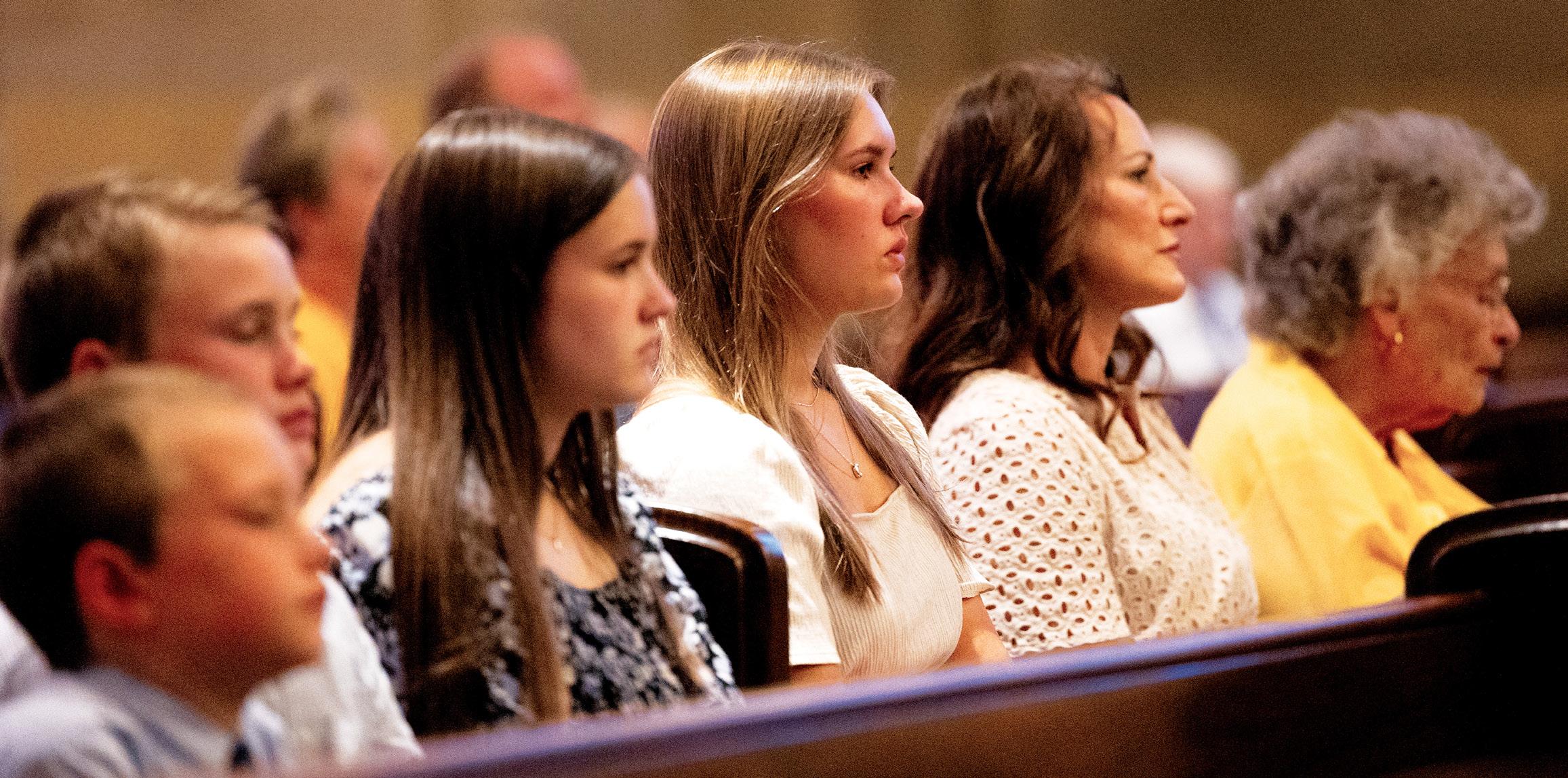
From left, Joseph, Benedict, Charlotte, Carolyn and Laura Peichel listen during Mass at St. Boniface in Minneapolis July 11, joined by Laura Peichel’s mother, Carol Torborg, right. Torborg is still a parishioner and lives only one block from the church. Laura Peichel grew up in the parish and was married there in 2004. She later moved to Andover with her husband and children and they now belong to Epiphany in Coon Rapids.
We have to be men and women of hope and recognizing that there is something so forceful in God’s word, and that he has a plan for all of us. Might we always be faithful collaborators with Jesus as he sows that good seed of his word.
Archbishop Bernard Hebda
the last Mass or is it the first Mass in this new relationship?”
“But it’s (a) very sad and scary transition, and this is where we’re really putting our faith in the Lord and in the leadership of the churches that they will do right by all of the people (and) generations who’ve given so much to St. Boniface,” Peichel said.
Both Peichel and Torborg plan to attend Mass at St. Boniface for as long as they can. Peichel was married at St. Boniface in 2004 and had her reception at St. Maron.
“Two of our children also had the reception there,” Peichel said. “Our first three children were all baptized here. But as our kids got to school age, the commute from Andover to Northeast Minneapolis was just too much. Then Father (Thomas) Duffner came to Epiphany in Coon Rapids at that time, and we just thought that was a really good match for us, and we loved his mission for the church and the school, and so we continued to financially contribute to St. Boniface, but we also joined Epiphany and brought (our) kids there.”
Leitschuch said after the Mass, “All this history — I hope it’s not forgotten.”
Leitschuch said he is nervous about the future of St. Boniface church. “What happens after (one year), I don’t know. And talking to the rest of the people who come here every week, that’s basically what they think, too,” Leitschuch said. “Nobody knows, so we’re just playing it by ear right now. That’s all we can do. I mean, I will continue coming here as long as the doors are open.”
Leitschuch attended the parish school, which closed in the 1970s. This wasn’t uncommon, he said, as many parish schools in Northeast Minneapolis closed around that time. If parishioners wanted to send their children to a Catholic school, they’d have to go elsewhere. Over time, this
pulled parishioners away from parishes like St. Boniface, Leitschuch said.
Leitschuch, 81, is the last member of his family to attend St. Boniface weekly.
“There were eight kids in my father’s family, and so they were all baptized here ... but by the time they were having kids, a lot of them ended up at St. Charles (Borromeo in nearby St. Anthony),” Leitschuch said.
It can be easy to be discouraged in the world, Archbishop Hebda said in his homily, when neighbors and family are not practicing the faith.
“But we have to trust that Jesus indeed has a plan,” Archbishop Hebda said. “This past Easter there were more than 1,700 people who entered the Church here in our archdiocese, which is significant.”
Archbishop Hebda challenged those in attendance to continue their commitment to share the good news of Jesus and give witness to it with their lives.
“Even though we always think about Jesus as being the sower of the seed, we’re blessed that he asks us to collaborate in that work as well,” the archbishop said. “He recognizes that the harvest is great, but the laborers are few. He calls us to step forward and say ‘yes’ when he asks us to go into the vineyard and collaborate.”
Archbishop Hebda said that even as the structure of St. Boniface changes, he prays that the community continues to be receptive to God’s word, that it might continue to take root in hearts “so that we might give that kind of example that would draw others to Jesus as well.”
It was because of St. Boniface Catholic School that Leitschuch was able to speak to Chorbishop Maroun in Lebanese, the chorbishop’s native language.
“St. Maron’s didn’t have a school, so there were Lebanese kids that went to school here,” Leitschuch said. “St. Constantine’s
didn’t have a school, so there were a lot of Ukrainians here. And then of course, St. Clement’s, they used to bus in, started with one, then they would have two buses full of kids that came here every day for grade school.”
In grade school, Leitschuch said, basketball and baseball teams were made up of children from the Northeast parishes.
“We played against each other,” he said. “I got to know people from other parishes by competing against them in sports.”
Before Mass July 11, Leitschuch talked to Chorbishop Maroun about people they both knew. The Mass was encouraging, Leitschuch said.
“Right now, it’s just wait and see,” he said. “Nobody knows what’s going to happen. ... I know that this building needs a lot of work. It’s very costly to maintain, and so I’m just curious as to how long. It’s completely understandable why we ended up merging because ... for the amount of money it costs to run this place every month, there’s no way that we (can) afford it.”
Peichel continues to attend St. Boniface events such as its German dinner and Christmas fair. She still helps when she can, she said. She attended the July 11 Mass because it was important, she said.
“This is our home, and even my children feel like this is their home,” Torborg said. “This is grandpa and grandma’s church. This is a part of our history.”
“We have to be men and women of hope and recognizing that there is something so forceful in God’s word, and that he has a plan for all of us,” Archbishop Hebda said. “Might we always be faithful collaborators with Jesus as he sows that good seed of his word.”
DAVE HRBACEK | THE CATHOLIC SPIRIT
Dave Hrbacek of The Catholic Spirit contributed to this report.
Archbishop Hebda, young adults lend a hand in Pope Leo Village wall raising in St. Paul
By Joe Ruff The Catholic Spirit
Donning a hardhat and work gloves
July 8, Archbishop Bernard Hebda and students from St. Catherine University in St. Paul helped raise a wall of the first duplex being built in the Twin Cities as part of a national Habitat for Humanity initiative called the Pope Leo Village.
Inspired by Pope Leo XIV’s commitment to service and social justice, an anonymous donor to Habitat for Humanity began discussions about the initiative with the Georgia-based nonprofit in 2025, Habitat officials said.
With that donor’s assistance, Twin Cities Habitat for Humanity (TCHH) is the latest of 20 affiliates across the country to join as a partner in Pope Leo Villages, with the chapter building two duplexes and a singlefamily home. The homes will be tucked into a larger affordable housing and light industrial development called The Heights in St. Paul.
TCHH has built 74 single family homes, twin homes, three-plex and four-plex townhomes at The Heights and plans to build 74 more. Twenty homes are now occupied. In addition to St. Catherine University, local partners in Pope Leo Village include Cretin-Derham Hall high school in St. Paul and Tres Iglesias, an association of three neighborhood churches including St. Frances Cabrini and Prospect Park United Methodist, both in Minneapolis, and St. Cecilia in St. Paul.
Nationally, Pope Leo Villages are being built in cities including Chicago (Pope Leo XIV’s hometown and the first Pope Leo Village site), Cleveland, Cincinnati, Detroit, Philadelphia and Portland.
“Today, we’re going to begin building some additional houses here at The Heights, but we’ll also be building a sense of belonging as Twin Cities Habitat joins the national Pope Leo Village campaign,” said Chris Coleman, TCHH president and CEO, at the kickoff gathering of faith leaders and university and other officials.
“Pope Leo Village is an interfaith, multi-city affordable housing initiative inspired by the first U.S.-born pope, and his commitment to service and social justice.
“At its core, this is about faith in action,”
DAVE HRBACEK | THE CATHOLIC SPIRIT
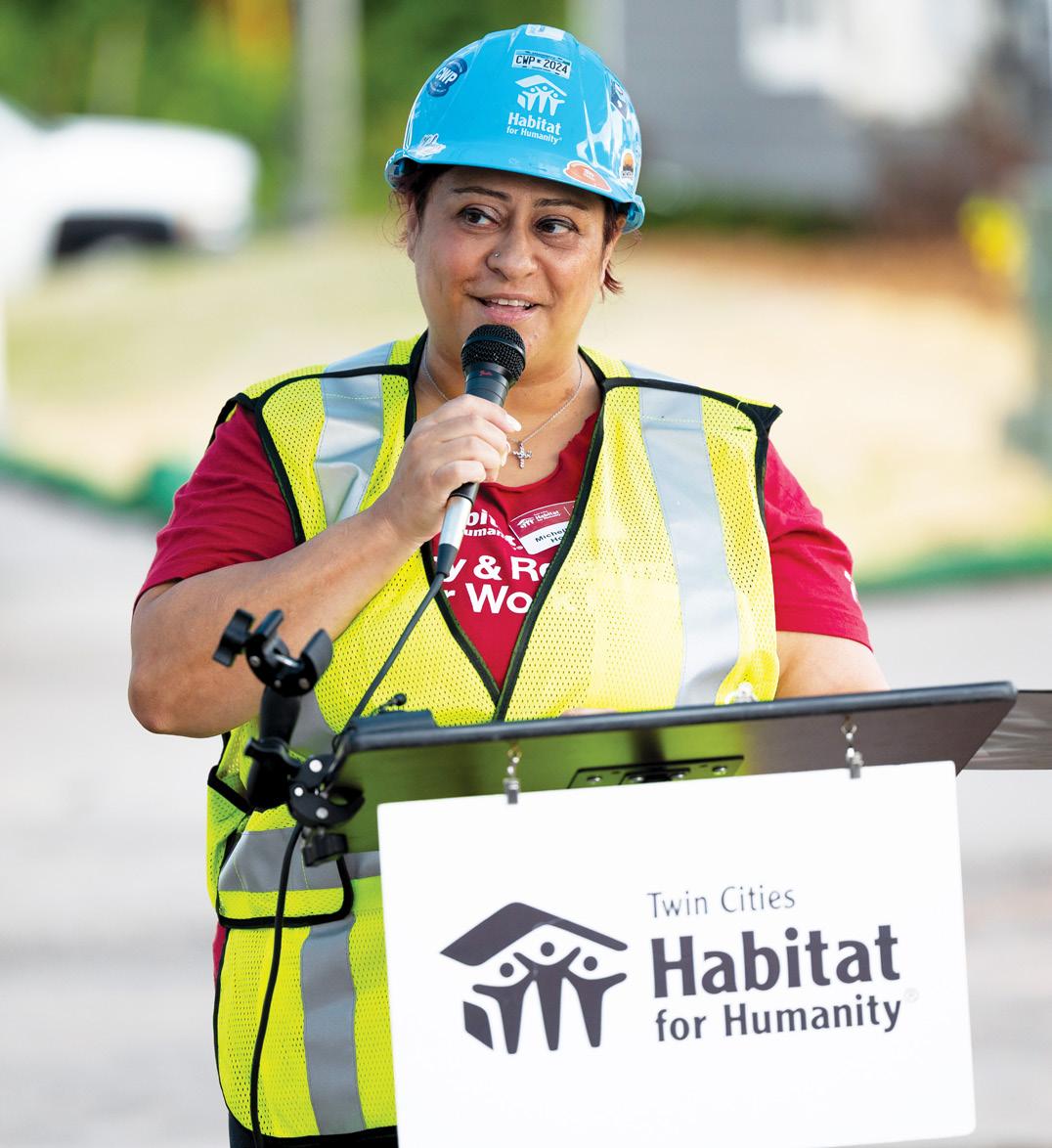
Michelle, a Twin Cities Habitat for Humanity homeowner in Minneapolis, talks about her experience July 8 as she helps launch a Habitat for Humanity initiative in St. Paul called Pope Leo Village, a national, interfaith, multi-city affordable housing effort inspired by Pope Leo XIV.
Coleman said. “Today, we celebrate its launch in the Twin Cities. We’re bringing people together — especially young people — to build homes and in the process to also build a stronger, more connected community.”
Archbishop Hebda said he was invited to the event to “offer a little bit of insight into this wonderful idea of a Pope Leo Village. And why it is that there would be somebody that would step forward with this initiative to fund this.
“I think Pope Leo has been able to catch the attention not only of the Catholic Church, but of men and women of goodwill around the globe,” the archbishop said. The pope listens and speaks from humility, and he has identified a loneliness, especially among many young people, Archbishop Hebda said.
“And when he looks at the controversies, the wars, the conflicts that are around the globe, he recognizes an inability of us to be
Pope Leo Village is an interfaith, multi-city affordable housing initiative inspired by the first U.S.born pope, and his commitment to service and social justice. At its core, this is about faith in action.
Chris Coleman, Twin Cities Habitat for Humanity president and CEO
able to work together, and that needs to be fixed,” the archbishop said.
“Pope Leo is asking people to work together, to put aside their differences, to be able to move beyond conflict, put our resources together in a way that we’re able to build and to help people reflect on the great gifts that we have received and how it is that we might use them for the promotion of the common good,” Archbishop Hebda said.
Seeing so many young people respond to the Pope Leo Village initiative is encouraging, the archbishop said. “We’re able to concretely see that if we work together, we’re able to build something that’s far larger than ourselves and that helps humanity rather than creates that division that has been so destructive in our lives.”
Two students at St. Catherine University, Samantha Schroeder and Leslie Varela, told those gathered that they have been studying the history of housing inequality and racial justice in Minnesota in the classroom and community projects through St. Catherine’s Welcoming the Dear Neighbor initiative.
Schroeder, who will be a senior in the fall studying quantitative economics and public policy, said helping build the homes
in Pope Leo Village will allow her and other St. Catherine students to demonstrate that “housing isn’t just something that we study; it is something that shapes people’s lives and communities.”
Varela said ensuring equal access to housing improves all communities, and Habitat for Humanity’s effort “shows us what choosing to welcome means. People come together not just to build a house, but to build the foundation for a family to become part of a community. When families feel welcome and have the ability to build a future, they make entire neighborhoods stronger.”
“As students, we are just part of this work,” Varela said. “There are thousands of people who are pushing it forward, and I’m hopeful in our generation to continue asking difficult questions, challenging injustice, and building communities where people don’t just buy a home, but they feel at home.”
Marcheta Evans, president of St. Catherine University, said she was grateful to TCHH for its partnership with the university, and to all gathered at the event and helping with the project.
“I hope this effort inspires other colleges and universities, congregations, businesses, nonprofit organizations and civic leaders to ask, ‘How can we be a part of building stronger communities?’” Evans said. “Because the housing challenges before us are too important for one institution to solve alone. But together — together we can create lasting change.”
As much of Minnesota weathered heavy wildfire smoke and intense heat, Catholic Charities Twin Cities distributed masks to those in need.
The Minnesota Pollution Control Agency (MPCA) warned of hazardous air beginning July 15-17 as heavy wildfire smoke entered the state. Air quality was expected to reach the hazardous category, per the MPCA, in a large portion of the state that included the Twin Cities metro area.
“Everyone can be affected by wildfire smoke in these concentrations,” the MPCA reported in its alert. “The general public should avoid all physical activities outdoors. Keep windows closed overnight to prevent smoke from getting indoors.”
Catholic Charities Twin Cities acknowledged that hazardous air is especially harmful to the vulnerable and to those experiencing homelessness who lack consistent access to shelter.
“People experiencing homelessness often have more health comorbidities that make them more vulnerable to effects of poor air quality — and fewer opportunities to be indoors to find respite from the dangerous conditions,” the nonprofit stated in a July 16 news release.
More than 2,000 masks were available at Catholic Charities Twin Cities’ overnight shelters and day services centers across the Twin Cities.
“Hazardous air quality like we are experiencing today can lead to severe health problems for our neighbors in need,” said Elizabeth Heger, Catholic Charities Twin Cities’ associate vice president of emergency services, July 16. “We are distributing masks today at our shelters across the Twin Cities to help keep our clients safe and healthy.”
Earlier that week, Catholic Charities Twin Cities reminded those seeking shelter of its locations’ hours as temperatures in the metro area soared. In Minneapolis, the Mary F. Frey Opportunity Center is open from 8 a.m. to 4 p.m. Monday through Friday and 8 a.m. to 2 p.m. Saturdays, according to the nonprofit. In St. Paul, the Catholic Charities Dorothy Day Place campus is open daily from 9 a.m. to 5:30 p.m. Overnight emergency shelter is also available on the campus.
“Another heat wave in the Twin Cities. If you need a place to cool off, Catholic Charities Twin Cities is here for you,” the nonprofit posted to social media July 13. “Stop by for cold water, hot meals, showers, and a place to relax in the AC. … You don’t have to face the heat alone.”
Learn more about Catholic Charities Twin Cities, including its shelter options, online at cctwincities.org
COURTESY CATHOLIC CHARITIES TWIN CITIES
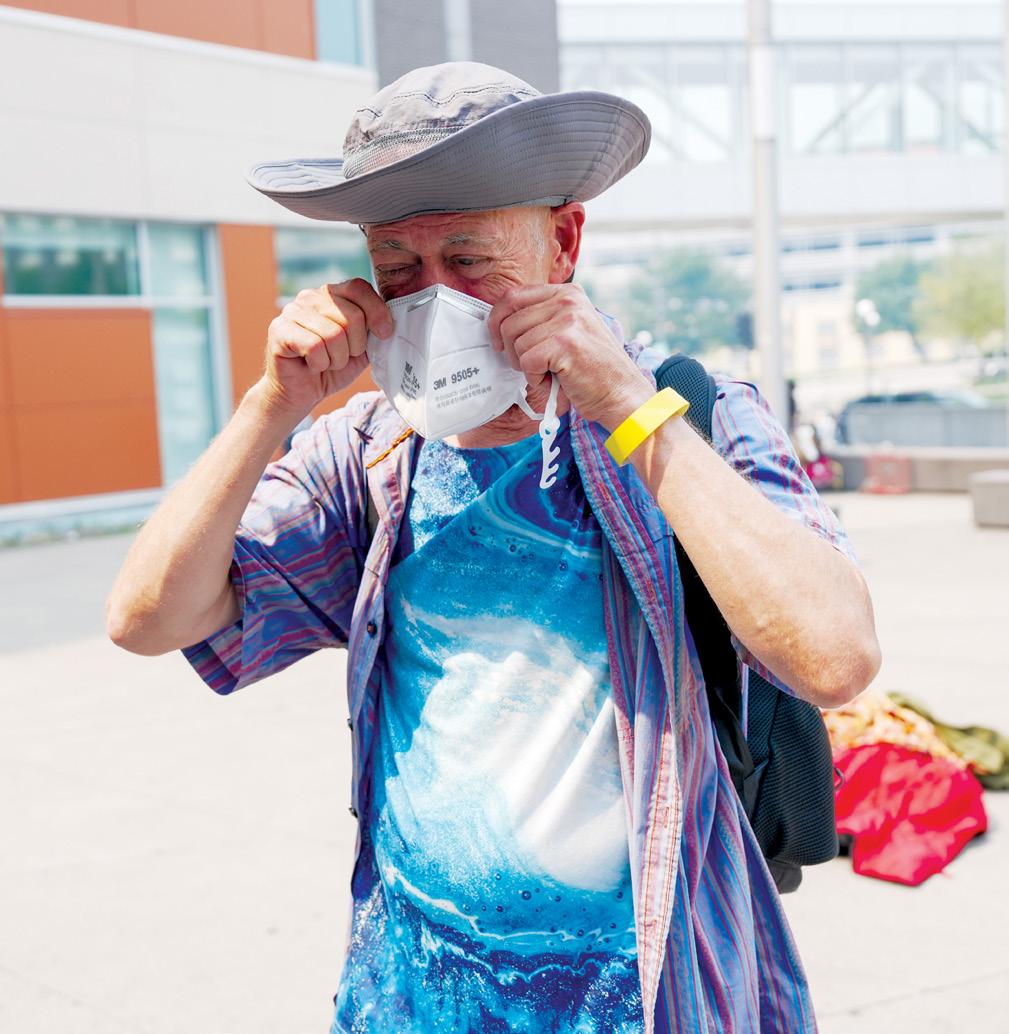
A visitor of the Catholic Charities
Day Place campus in St. Paul puts on a face mask amid an air quality alert July 16.
Bishop Kenney shares lung cancer diagnosis, believes ‘in prayer and God’s will’
By Rebecca Omastiak
The Catholic Spirit
On July 15, Archbishop Bernard Hebda and Auxiliary Bishops Kevin Kenney and Michael Izen issued a video message to the faithful of the Archdiocese of St. Paul and Minneapolis.
“We’re here to share some difficult news with you and to ask for your prayers,” said Archbishop Hebda, joined by Bishops Kenney and Izen.
Bishop Kenney said “a persistent and annoying cough” in recent months drove him to seek medical attention.
“It was discovered that I have lung cancer,” Bishop Kenney said. “I was shocked to hear the news because as a non-smoker and one who has tried to stay healthy, I have felt good.
“This is still a bit hard for me to believe, but after many medical appointments, tests and consultations, with a
talented and caring medical team, I understand the reality and the need to care for myself. A plan is being developed for my treatment, which will begin in early August.”
With the approval of his medical team, Bishop Kenney’s plan remains to go to Norway with a group of St. Olaf parishioners at the end of July. Bishop Kenney is pastor of the Minneapolis church. He will begin his treatments immediately upon his return.
“I come to you today, to ask for additional prayers for me, Archbishop Hebda, Bishop Izen, my medical team, and for all who are stricken with cancer or any other illness and their caretakers,” Bishop Kenney said. “I remain positive and hopeful and believe in prayer and God’s will. I know the process will not be easy, but with your prayers and support, all will be well.”
Archbishop Hebda told the faithful that Bishop Kenney will continue to work as he is able, fulfilling his role as auxiliary bishop and pastor of St. Olaf.
“We’re so grateful, Bishop (Kenney), for your willingness to continue to serve,” Archbishop Hebda said.
“We are thankful for your prayers,” Bishop Izen told the faithful. “I was honored to pray with Bishop Kenney — the two of us asked for the intercession of St. Charbel (Makhlouf), as Bishop Kenney applied some of the saint’s blessed oil to his chest. St. Charbel is a Lebanese saint who has more than 33,000 healing miracles attributed to his intercession — more than any other saint.”
Bishop Izen continued by saying to the faithful: “I humbly ask you to add an intention to your daily prayers, begging St. Charbel to intercede for our dear brother, Bishop Kenney, and all the sick of the archdiocese.”
In addition to serving at St. Olaf, Bishop Kenney is the archdiocesan vicar for Latino Ministry. He was ordained an auxiliary bishop on Oct. 28, 2024, at the Cathedral of St. Paul in St. Paul.
Local agencies obtain federal evidence related to ‘Operation Metro Surge’ shootings
By Rebecca Omastiak
The
Catholic Spirit
County and state officials announced they have obtained evidence from federal officials related to three shootings — two of which were fatal — involving federal agents in Minneapolis in January.
The Hennepin County Attorney’s Office issued a news release July 13 that indicated it was among the offices — the others being the Minnesota Bureau of Criminal Apprehension (BCA) and the Minnesota Attorney General’s Office — to “have obtained hard drives” containing evidence related to the deaths of 37-year-old Renee Good and 37-year-old Alex Pretti, both of Minneapolis, and the Jan. 14 shooting of a man identified by federal and local officials as Julio Sosa-Celis. The attorney’s office also stated related physical evidence had been shared and is now with the BCA.
“After receiving this evidence, we immediately began to analyze it in the context of the evidence we already had in hand,” Hennepin County Attorney Mary Moriarty said in a statement. “This analysis is ongoing. It will be thorough, fair, and complete.”
Meanwhile, BCA Superintendent Drew Evans wrote in a statement posted to the agency’s website that the BCA “has been in discussions with federal authorities and the U.S. Attorney’s Office regarding the three investigations involving federal agents since the incidents occurred.”
“These investigations remain active and ongoing and we cannot comment on specific evidence, but great strides have been made in ensuring both state and
operation.
federal authorities have access to pertinent information to ensure (a) thorough and complete review of these incidents,” Evans stated.
The fatal shootings Jan. 7 and Jan. 24 — that, respectively, left Good and Pretti dead — and the shooting Jan. 14 that injured Sosa-Celis happened amid increased
federal immigration enforcement actions in the Twin Cities metro area. Launched Dec. 1, 2025, the U.S. Department of Homeland Security (DHS)’s “Operation Metro Surge” involved U.S. Immigration and Customs Enforcement (ICE). Agents with U.S. Customs and Border Protection (CBP) were also present.
Archbishop Bernard Hebda had asked for prayers at the time of the shootings, that all people might be “able to rid our hearts of the hatreds and prejudices that prevent us from seeing each other as brothers and sisters created in the image and likeness of God.”
On the evidence-sharing taking place, the archbishop said that he hoped “the collaboration between the federal and local authorities will bring forth healing to our community.”
Feb. 12, U.S. Border Czar Tom Homan announced that Operation Metro Surge was to draw to a close. In June, Minneapolis city officials issued an updated estimate that Operation Metro Surge had a $700 million financial impact in the city from December 2025 into April 2026.
“The impact was felt far beyond those who were directly targeted — we’re talking about businesses that lost customers, workers that lost wages, families that struggled to put food on the table, mental health distress, children that missed meals and were unable to attend school, and then of course people that had delayed medical support,” Minneapolis Mayor Jacob Frey said during a June 10 news conference about the “Updated Assessment and Recovery Needs Overview” report release. Recommendations in the updated report included encouraging service providers in the city to implement “trauma-informed, culturally and linguistically responsive” practices; strengthen “workforce well-being and operational capacity” across affected sectors; expand access to legal assistance; identify state, federal and private funding for long-term recovery; and help workers who experienced wage loss.
OSV NEWS | SETH HERALD, REUTERS
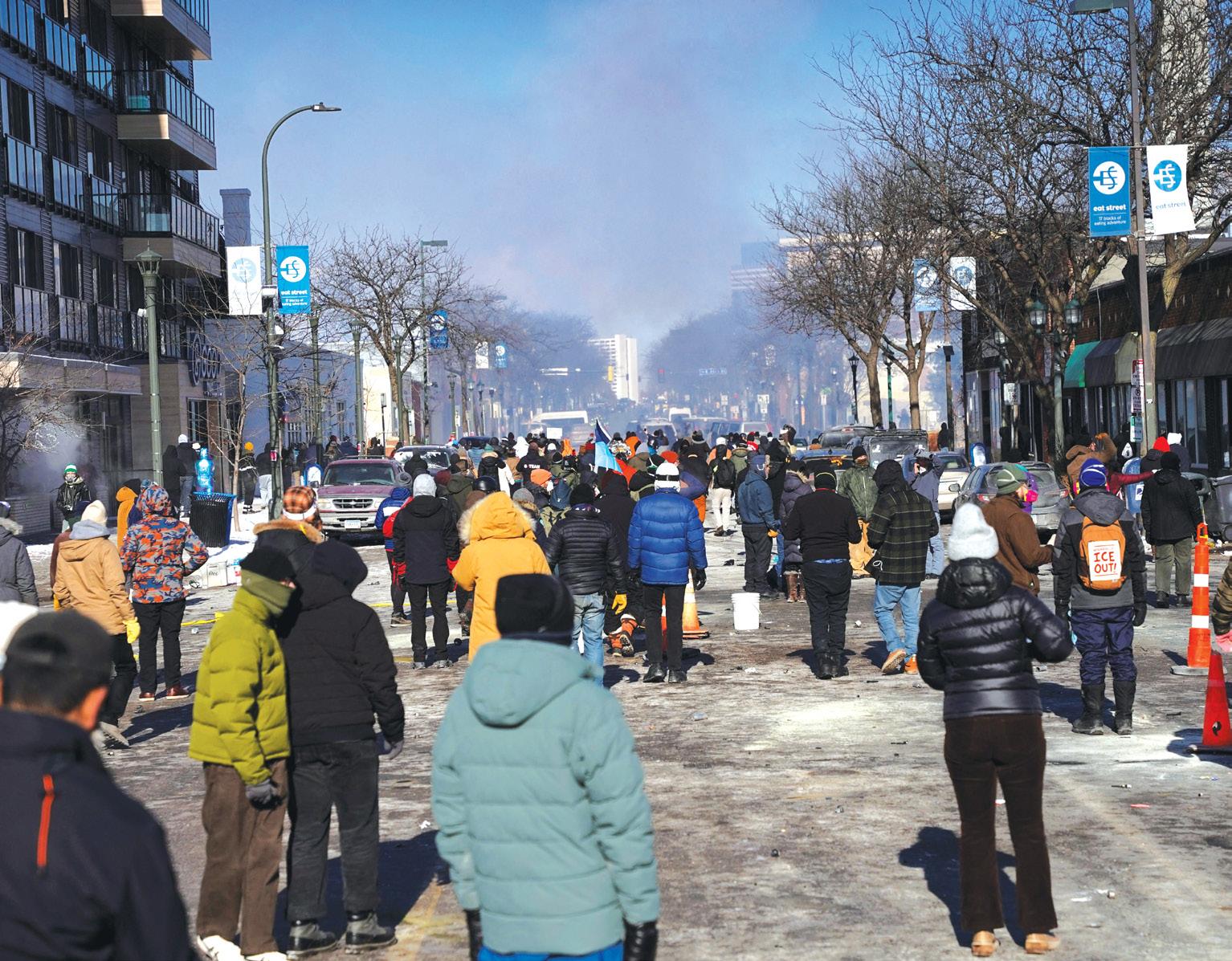
People take part in a demonstration in Minneapolis Jan. 24, the day Alex Pretti, a 37-year-old intensive care unit nurse, was fatally shot by federal agents trying to detain him during an immigration enforcement
NATION+WORLD
USCCB urges Trump administration to ‘advance real solutions’ instead of IVF
By OSV News
The U.S. Conference of Catholic Bishops (USCCB) and other Catholic groups submitted public comments in opposition to a proposed government regulation that would expand insurance coverage for in vitro fertilization (IVF).
IVF is a form of fertility treatment opposed by the Catholic Church because it separates procreation from the marital act and often involves the destruction of human embryos, among other concerns.
The proposed regulation, announced in May by the U.S. Departments of Labor, Health and Human Services, and the U.S. Treasury, aims to help implement President Donald Trump’s February 2025 executive order to expand IVF access, the departments indicated. It would establish a new category of limited excepted benefits, similar to limited-scope dental or vision benefits, the departments said at the time.
In a 17-page public comment dated July 13 and addressed to the Labor Department, the Office of the General Counsel at the USCCB stated that it “appreciates the Departments’ recognition of infertility as a serious matter and their intent to support family formation.”
“The Church affirms the deep desire of spouses to welcome children and supports medical efforts to address infertility. At the same time, public policy should not promote practices that undermine the dignity of human life or sever the connection between procreation and the marital act,” the comment said. “The USCCB therefore evaluates the proposed rule both positively and critically.”
Women
By Kate Scanlon OSV News
The comment was signed by William Quinn, general counsel for the USCCB, and Daniel Balserak, associate general counsel.
After explaining the Church’s objections to IVF, they urged the government to consider promoting instead what they called restorative reproductive medicine.
“RRM approaches generally recognize that infertility is a symptom of an underlying condition, not a disease in and of itself; and they therefore seek to restore normal reproductive function by identifying and treating its root causes,” they wrote. “In contrast to restorative reproductive medicine, in vitro fertilization does not aim to treat the underlying causes of infertility but seeks to bypass them — in a sense, overriding the symptom.”
The USCCB also urged that the final rule “should clarify that no employer, having chosen to offer fertility benefits, must cover any particular service, and should proactively protect the religious liberty and conscience rights of employers and employees.”
The comment was submitted on the final day of the public comment window for the proposed regulation.
“The proposed rule represents a valuable opportunity to advance real solutions to infertility that respect the God-given dignity of parents and of children, born and preborn,” the comment stated. “We urge the Departments to refocus the rule on therapeutic, restorative treatments, and to abandon its inclusion of IVF, which is profoundly flawed both legally and morally.”
The National Catholic Bioethics Center, the Catholic Medical Association and the National Association of Catholic Nurses USA filed a similar public comment. They argued that the proposal lacks sufficient conscience protections, among their other objections to IVF.
religious sue New York over physician-assisted suicide law
Four orders of women religious and Catholic healthcare ministries sued the state of New York July 17 over a new law allowing physicians to aid terminally ill adults in dying by suicide.
In a lawsuit filed by Becket, a religious liberty law firm, the Carmelite Sisters for the Aged and Infirm, the Dominican Sisters of Hawthorne, the Missionary Sisters of St. Benedict and the Little Sisters of the Poor argued the law would require them to facilitate such deaths in violation of their faith.
Mother Mary Rose Heery, prioress general of the Carmelite Sisters for the Aged and Infirm, said in a July 20 statement, “At our homes, we bring Christ’s unbounded love to elderly New Yorkers of every background and walk of life.”
“We strive to bring His compassion to
those entrusted to our care, ensuring that no resident ever has to die alone,” she said. “This law strikes at the heart of that vocation.”
New York Attorney General Letitia James’ office did not immediately respond to a request for comment.
Supporters of physician-assisted suicide argue the practice protects the autonomy of suffering individuals in their final days, but opponents argue the practice disregards the dignity of human life and leaves those who are ill or dying vulnerable to coercion, among other concerns.
The Catechism of the Catholic Church explicitly condemns the practice of euthanasia and physician-assisted suicide as “morally unacceptable” and a violation of the Fifth Commandment, “You shall not kill.”
Gov. Kathy Hochul, D-N.Y., signed the law in February, arguing she had “secured” guardrails during the legislative process
that ensured the “integrity of patient decision and preparedness of medical institutions.” The state’s Catholic bishops were among those who objected to the law.
But Mark Rienzi, president of Becket and the lead attorney for the healthcare ministries, said in a July 20 statement, “New York is forcing sick and dying people to consider suicide at their lowest moment, regardless of whether they ask for it or not.”
“Worse, it’s conscripting the nuns who care for them into its suicide cult on pain of crushing fines and professional ruin,” Rienzi said. “That is both unconscionable and unconstitutional. We’re confident the federal courts will put a stop to it.”
Becket, which is representing the religious orders and Bishop John Barres of Rockville Centre, New York, said the religious ministries plan to seek a preliminary injunction against the law in the coming days.
In a statement, Bishop Barres added,
“We will never submit to New York’s culture of death.”
“Assisted suicide is a grave moral failure that puts the elderly, the disabled, and those suffering from mental and emotional illness at risk of abuse and manipulation,” said the bishop, whose diocese is also a plaintiff. “Christ the Divine Physician calls us to accompany the sick and dying with compassion, not abandon them to death. The court should protect that millenniaold mission.”
The lawsuit is another in a series of lawsuits from Catholic nuns against recent Empire State laws. Earlier this year, the Dominican Sisters of Hawthorne, who operate a 42-bed palliative care program for the dying poor, challenged a law implementing requirements on gender identity accommodations for nursing home residents.
New York is one of 13 states, as well as the District of Columbia, that have legalized assisted suicide.
HEADLINES
Nobel laureates say the pope’s encyclical is a ‘clarion call’ for prevention of AI-driven nuclear warfare. Nobel laureates gathered in Rome July 16 praised Pope Leo XIV’s encyclical “Magnifica Humanitas” as they signed the Rome Declaration on an Unarmed and Disarming Peace in the Age of Artificial Intelligence and Nuclear Weapons. The declaration urges a global treaty banning AI from nuclear launch systems and insists that “meaningful human control” remain over any decision to use nuclear weapons. Nobel laureates described the encyclical as “a document for humanity,” with Maria Ressa calling it “a clarion call for leadership” and James Muller calling its critique of nuclear deterrence “a giant step forward.” The declaration warns that humanity faces “a defining moment” as AI and nuclear weapons converge and concludes, “We appeal as human beings to human beings: remember your humanity, and forget the rest,” adding that “our survival and the survival of future generations are at stake.” Cardinals participating in the summit underlined that life-and-death decisions must never be left to autonomous systems. Father Andrea Ciucci, the president of the Pontifical Academy for Life, said he was proud of the event because “the leaders of the different religions demonstrate that we can work together … in favor of humanity.”
An expert in the subject suggests that a ‘theology of migration’ moves us to ‘communion with God, others.’ A “theology of migration” moves us toward “communion with God and with one another,” said Holy Cross Father Daniel Groody. A member of the Vatican’s Dicastery for the Promotion of Integral Human Development, Father Groody participated in Pope Leo XIV’s July 4 visit to the Italian island of Lampedusa, where tens of thousands of migrants arrive each year, following dangerous and often deadly sea crossings. Father Groody, a scholar and leader at the University of Notre Dame, explained the theology of migration in his 2022 book of the same title. Amid polarizing debates over immigration, Father Groody stressed that “all the world belongs to God, and we’re stewards and not owners.” Moreover, he said Christ is the “primordial migrant the Son of God who left his homeland, came into our sinful and broken territory, and died on a cross to reconcile us to God, to help us migrate back to becoming citizens in God’s kingdom again.” If Christians are to be conformed to Christ, “then we
have no choice but to really reevaluate … the way we relate to one another,” the priest said. “If we don’t see that we are connected to these people who are labeled as different or other, then we’ve deported our soul. And we actually have bigger problems than immigration that we’re dealing with.”
Catholics offer prayers and express solidarity over two ICE shooting deaths in less than a week. Catholic leaders and immigrant advocates called for prayer, accountability and compassion after two fatal shootings involving U.S. Immigration and Customs Enforcement officers in less than a week, incidents that have prompted protests in Maine and Texas. In Maine, 25-year-old Johan Sebastián Durán Guerrero was shot and killed by an ICE officer July 13 while driving to work in Biddeford. According to ICE, Durán attempted to flee in his vehicle, prompting an officer to open fire out of concern for public safety. The Diocese of Portland said its Office of Hispanic Ministry is providing pastoral support to Durán’s family and community, praying that those affected “may experience God’s loving comfort, strength and peace.”
In Houston, Lorenzo Salgado Araujo was shot by an ICE agent July 7 while traveling to a construction site and later died at a hospital. ICE said Salgado used his vehicle to ram a law enforcement vehicle and attempted to strike an officer after ignoring repeated commands. Archbishop Joe Vásquez of HoustonGalveston urged Catholics to pray for Salgado, his family and all those affected by fear and anxiety. Federal investigations are underway in both cases. Anne Gallagher, executive director of the Catholic Legal Immigration Network, mourned the deaths and said immigration enforcement is increasingly creating what she called a fearful and volatile climate that endangers lives and communities.
The death toll in Venezuela nears 5,000 as earthquake recovery intensifies. The death toll from twin earthquakes that struck northern Venezuela on June 24 has reached 4,829, according to government officials. The back-to-back disasters, registering magnitudes of 7.2 and 7.5, were the strongest to hit the country in over a century, leaving more than 16,000 injured and nearly 18,000 homeless. A July 16 UNICEF report warned that over 1,000 aftershocks continue to hamper recovery efforts, creating a severe humanitarian crisis for vulnerable children and families. In response,
Catholic agencies worldwide are mobilizing massive relief efforts. Caritas Venezuela launched the campaign “After the earthquake, love,” distributing over 13,000 metric tons of food, water and hygiene supplies. One of Caritas Venezuela’s partners, Catholic Relief Services the U.S. Conference of Catholic Bishops’ official overseas humanitarian and development agency has workers on the ground helping distribute the aid. Global solidarity is growing, with bishops in Germany and Bolivia rallying the faithful for prayers and financial support. Church leaders emphasized that local partners are critical for delivering immediate aid and long-term psychosocial support. “We must not abandon the victims of the earthquakes and must help now,” the president of the German bishops’ conference said July 16.
A Catholic group helps parishes to share a table with the poor, following the pope’s example. Pope Leo XIV’s recent lunch with people experiencing homelessness and poverty at Castel Gandolfo has highlighted a model one Catholic organization hopes parishes around the world will adopt. Fratello, a French nonprofit founded after the 2016 Jubilee of Mercy, helps dioceses and parishes organize World Day of the Poor celebrations that place people in need at the center of parish life. For the observance’s 10th anniversary this November, Fratello is encouraging communities to host prayer vigils, Masses celebrated with the poor, shared “Friendship Banquets” and a global online prayer gathering. The organization provides logistical support and resources to help parishes participate. Now active in roughly 40 countries, Fratello also coordinates a worldwide pilgrimage of replicas of the Our Lady of Tenderness statue blessed by Pope Francis in 2023. People bearing about 30 replicas of the statue are visiting prisons, elderly care homes, schools and parishes, offering communities a chance to gather in prayer even when a Fratello representative cannot visit in person. Pope Leo’s call to build “a Church that truly knows how to open its doors” reflects the organization’s mission of fostering encounter, prayer and hope with the poor.
Sen. Lindsey Graham dies at age 71; South Carolina governor selects his sister to finish his term. Darline Graham Nordone, the sister of the late Sen. Lindsey Graham, R-S.C., will complete
the remainder of his term in the U.S. Senate, Gov. Henry McMaster, R-S.C., said July 13, and Nordone was sworn into the U.S. Senate July 14 to fill the seat left vacant by her brother’s death, serving until his current term expires in January. Graham, 71, died unexpectedly July 11 after “a brief and sudden illness,” his office said in a statement. Over the course of more than two decades in the upper chamber, Graham became a key player in U.S. foreign policy, confirmation hearings for Supreme Court justices, and immigration policy. Graham was a staunch advocate of the U.S.-Israeli war in Iran that has been criticized by Pope Leo XIV. But he also sought to pass key legislation sought by pro-life groups, notably the Protecting Pain-Capable Unborn Children from Late-Term Abortions Act. His death also leaves a Republican vacancy on the Senate Judiciary Committee, as that committee prepares to consider advancing the nomination of Acting U.S. Attorney General Todd Blanche. It also comes as Sen. Mitch McConnell, R-Ky. remains away from the Senate after a fall and a subsequent treatment for pneumonia. Cause for novelist Sigrid Undset’s canonization is expected to open in the fall. Preparations are underway in Norway to open a canonization cause for the Nobel Prize-winning novelist Sigrid Undset, Bishop Fredrik Hansen of Oslo announced July 8. “She is far more than an author and Nobel Prize laureate. For us, she is a model of Christian faith, of a life lived in virtue, and of the pursuit of holiness,” Bishop Hansen said of Undset during a Mass where he made the announcement. Born in Denmark in 1882 and raised in Norway, Undset is best known for her novel “Kristin Lavransdatter,” a trilogy tracing its protagonist’s life in the Middle Ages. It earned Undset the Nobel Prize for Literature in 1928 “principally for her powerful descriptions of Northern life during the Middle Ages,” according to the Nobel Prize organization. Her research into medieval Catholicism led her to become Catholic in 1924, and in 1928 she became a Third Order Dominican. During World War II, she fled to New York City, where she publicly advocated for Norwegian resistance to Nazism. She returned to Norway after the end of the war in 1945, and she died in 1949 in Lillehammer, Norway. Her sainthood cause will formally open in the fall, Bishop Hansen said.
CNS and OSV News
Experiencepeace,beauty,andprayer.
• Daily & Weekend Masses
• Gift Shop | Café | Guesthouse
• Inspiring Architecture
• Priceless Stained Glass
• Breathtaking Views
• Life - sized Stations of the Cross
World Mission series and Venerable Fulton J. Sheen Rosary groups commit
The Catholic Spirit
The Catholic Spirit and the Center for Mission in the Archdiocese of St. Paul and Minneapolis are collaborating on a series of stories this summer and fall about the experiences of priests and other religious who have come to serve in the United States.
“One in Christ, united in mission” is the theme for World Mission Sunday this year, chosen by Pope Leo XIV. We will explore that theme as it is lived out in the archdiocese, and as the Catholic Church marks the 100th anniversary of World Mission Sunday, which this year will be celebrated Oct. 18. Pope Pius XI established World Mission Sunday in 1926 at the request of the Society for the Propagation of the Faith.
The series begins on these pages with stories of a priest and a religious sister, both from Nigeria, and local and national efforts to make World Mission rosaries for the Sept. 24 beatification in St. Louis of Venerable Fulton J. Sheen. The series will conclude in The Catholic Spirit’s Oct. 8 edition with coverage of the beatification in St. Louis. In addition to his evangelizing ministry on radio and television, Archbishop Sheen was the national director of the U.S. Society for the Propagation of the Faith from 1950 to 1966. Pope Leo XIV has said it is providential that the archbishop will be beatified during the centennial year of World Mission Sunday.
In addition to the stories in this issue and Oct. 8, articles will appear in The Catholic Spirit’s print editions of Aug. 20 and Sept. 24.
An ‘African-Irish’ priest shares his mission in the archdiocese
By Elizabeth Grant For The Catholic Spirit
This year marks the 100th anniversary of World Mission Sunday, which will be celebrated on Oct. 18. The theme, chosen by Pope Leo XIV, is “One in Christ, united in mission.”
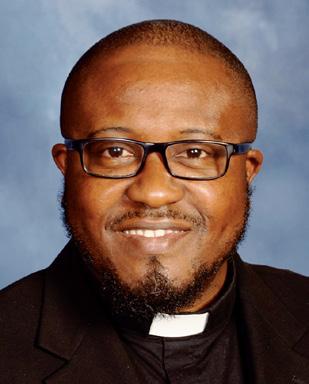
Father Bruno Nwachukwu, pastor of St. Charles in Bayport and a native of Nigeria, said he sees himself as a missionary to the United States, even though he was ordained in the Archdiocese of St. Paul and Minneapolis and has spent the entirety of his priestly ministry in the archdiocese.
“I see myself as a missionary here, even though I was ordained here, because I am a priest in a different country than where I grew up,” he said.
Father Nwachukwu studied philosophy in Nigeria while he discerned a vocation to the priesthood, not imagining that his vocation would take him so far from home.
“My coming here to be a priest is like a mystery,” he joked.
In 2011, Father Nwachukwu was given the opportunity to come to the archdiocese and study for the priesthood at The St. Paul Seminary in St. Paul. He was ordained in 2015. In addition to his current assignment at St. Charles, Father Nwachukwu also serves as the chaplain of Chesterton Academy of the St. Croix Valley in Stillwater, as the spiritual director of the St. Vincent de Paul Society of the Twin Cities, and as the chaplain of the Nigerian Catholic Community of Minnesota at St. Peter Claver in St. Paul.
Father Nwachukwu sees his work in the archdiocese as being connected to the generations of missionaries that came before him.
“The Irish missionaries brought Catholicism to us in West Africa and Nigeria. If they didn’t bring the Catholic faith to us, I would not be here today as a priest,” he said. “I always (say) to my parishioners that I am ‘AfricanIrish,’” he added with a smile.
Father Nwachukwu said his experience as a priest in the United States has grounded his understanding of the Church as “one in Christ.”
“The Church is one, because we have one faith, one baptism, one everything. ... But at the same time, culturally there are differences, and that is what St. John Paul II will call ‘inculturation’ in the liturgy, to help the people to pray well,” he said.
Father Nwachukwu celebrates a Nigerian Mass every fourth Sunday of the month at St. Peter Claver in St. Paul. He explained some of his challenges, such as the
language barrier.
“I try as much as I can to improve my accent. … Back in the seminary, I was able to attend some classes on accent reduction, which helped me a lot,” he said. “If you’re not able to communicate, it’s very difficult.”
Father Nwachukwu also mentioned the challenge presented by Minnesota winters.
“I’m trying to adapt to it. I wouldn’t say I’m getting used to it. … I always say, ‘I’m getting used to it if you are getting used to it,’” he joked. “Even those of you born here are not used to the weather!”
Sharing Christ’s love with the vulnerable in Minneapolis
By Elizabeth Grant For The Catholic Spirit
“To build the body, the mind, and the spirit.”
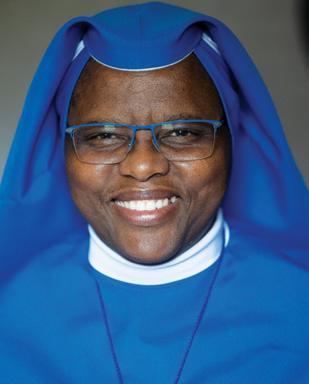
This is the mission of Sister Rose Maura Okongwu, a sister of the Nigerian-based Congregation of the Sisters of the Immaculate Heart of Mary, Mother of Christ, who serves in the Archdiocese of St. Paul and Minneapolis with four of her fellow sisters.
Sister Rose Maura was born and raised in Nigeria, where she entered the Sisters of the Immaculate Heart in 1995. After 12 years of formation and ministry in Nigeria and Ghana, she came to the United States in 2008 to continue her education. She earned degrees in psychology and mental health and came to the archdiocese in 2021 to work at Partners Behavioral Healthcare, a substance use and mental health treatment center in Minneapolis.
For Sister Rose Maura, bringing the word of God to others is being a missionary. “We are all missionaries, wherever we are stationed,” she said about her congregation.
She carries out this mission through her work with individuals struggling with addiction, ministering to them through group and individual therapy. As a religious sister working at a secular facility, she is a representative of Christ to those who might not otherwise encounter him. “When we put on this habit, it is already a mission proclamation,” she said.
She ministers to people of all backgrounds — Christians and non-Christians alike — but has the same goal for each of them: to experience the hope and healing that come with recognizing God’s presence in their lives.
“Some of them call (him) God, some of them say ‘higher power.’ I say, whichever language you want to use for God, the important thing is that you know that there is a being that is greater than you, and unless you anchor on that being, you will keep struggling,” she said. “And believe it or not, most of them that give God the chance to be in their life, they are different.”
Although the mission — to live and preach the word of God — is the same across nations and cultures, the challenges differ. Sister Rose Maura explained that severe poverty and lack of infrastructure in Nigeria can hinder evangelization and ministry efforts. She also noted the challenges of mental health outreach in her home country.
“Here in the United States at least, most people are aware of what mental health is … back home it’s not that way,” she explained. “When people struggle with mental health, they go to prayer houses. Absolutely prayer can help, but then if it is a psychological health (issue), people who know what to do and how to help them should step in. But we don’t have that at home.”
Despite these challenges, Sister Rose Maura’s experience as a foreign-born missionary has aided her work in the archdiocese.
“(In my work) with different populations here in the United States, it is a very good advantage that I came from Africa so I understand diversity,” she said. “We are diverse, but one body. We are one in Christ, there is no discrimination. My job as a religious is to build up the body of Christ.”
By Tim Montgomery For The Catholic Spirit
Before the Sept. 24 beatification of Venerable Fulton J. Sheen in St. Louis, tens of thousands of people are expected to gather to pray the World Mission Rosary.
Archbishop Sheen developed the special rosary as a means of encouraging prayer for the success of the Church’s missionary efforts around the world. It is anticipated that over 75,000 of these iconic multi-colored rosaries will be needed at the event, and a drive is in progress to enlist the help of groups that make rosaries. One group pledged to making the rosaries is the St. Mary of the Lake Rosary Makers in White Bear Lake. Started by Joan Pelzer in 2008 to continue in the devotion of a friend who passed away, the group has been meeting regularly to create rosaries and share in the social and spiritual camaraderie of friends united in a cause. Their cause now is creating 2,000 World Mission rosaries by September.
“Archbishop Sheen designed the World Mission Rosary,” explained Pelzer, who makes rosaries to continue the work of a friend who died from pancreatic cancer. “It’s important that we share the World Mission Rosary with the whole world in his memory.”
Born in El Paso, Illinois, on May 8, 1895, Archbishop Sheen went to high school at Spalding Institute, studied at St. Viator College, and attended The St. Paul Seminary in St. Paul, prior to being ordained a priest on Sept. 20, 1919, in Peoria, Illinois. He taught for 23 years at the Catholic University of America, where he became known for his skills as a scholar, educator and brilliant orator.
In 1934, he was made a monsignor by Pope Pius XI. In 1950, Archbishop Sheen left Catholic University to become national director of the U.S. Society for the Propagation of the Faith, a Pontifical Mission Society that supports missionary work of the Church. In 16 years as director, Archbishop Sheen raised millions of dollars for missionary efforts worldwide. He was consecrated a bishop in 1951, later to be named an archbishop, and he became one of the greatest Catholic evangelists in American history. He won an Emmy Award as Most Outstanding Television Personality while doing his weekly television series “Life is Worth Living” and was featured on the cover of Time magazine. He famously thanked his writers “Matthew, Mark, Luke and John.” Archbishop Sheen preached the Gospel, showing how it applied to personal moral decisions as well as to social issues of the time.
“2026 is the year of everything coming together,” said Kim Williams, operations manager of the Center for Mission in St. Paul, which supports the Archdiocese of St. Paul and Minneapolis’ missionary efforts and is the local office of the U.S. Society for the Propagation of the Faith. She was speaking of the beatification of Archbishop Sheen, the 100th anniversary of World Mission Sunday, and the 75th anniversary of the creation of the World Mission Rosary. Williams’ office is supporting local World Mission efforts at making rosaries and sending them to Peoria to be blessed and prepared for the beatification Mass in St. Louis.
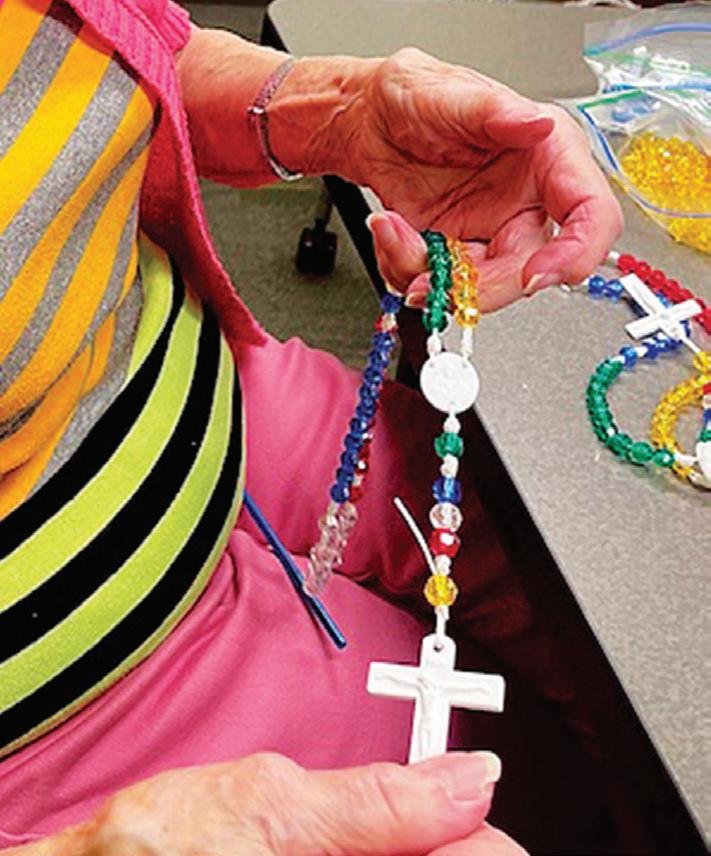
The multi-colored rosary known as the World Mission Rosary was introduced in February 1951 by Archbishop Sheen, who said at the time, “Peace will come only when the hearts of the world have changed. To do this we must pray, and not for ourselves, but for the world.” To this end, he said, he had designed the World Mission Rosary — each of the five decades of a different color to represent the five continents.
Green beads on the World Mission Rosary call to mind the grasslands of Africa. Blue beads are for the oceans of the Pacific Islands. White beads represent Europe and the seat of the Holy Father. Red beads recall the fire of faith that brought missionaries to the Americas, and yellow beads represent the morning light of the East for Asia.
Archbishop Sheen asked that “for the love of our Lord and his Blessed Mother” people of good will make a “tour of the world” in prayer on the World Mission Rosary. He said it would aid the Holy Father and his Society for the Propagation of the Faith by supplying him with practical support, as well as prayers, for mission efforts across the globe.
A devotion to Mary, the Blessed Mother, the rosary is a powerful conduit of group prayer. When people come together to pray the World Mission Rosary, they are united in prayer and in meditation on world unity and the success of the Church’s mission around the world. This creates a sense of shared purpose. The same might be said for making the rosaries.
Making World Mission cord rosaries takes time and is a labor of love. Each bead is individually strung along roughly 64 inches of bonded nylon twine. Each single prayer bead and each decade, or group of 10 of Hail Mary prayer beads, is tied off by hand. It can take a half hour or longer to string and tie off just one rosary.
FATHER BRUNO NWACHUKWU
SISTER ROSE MAURA OKONGWU
commit to labor of love in honor of Venerable Fulton J. Sheen
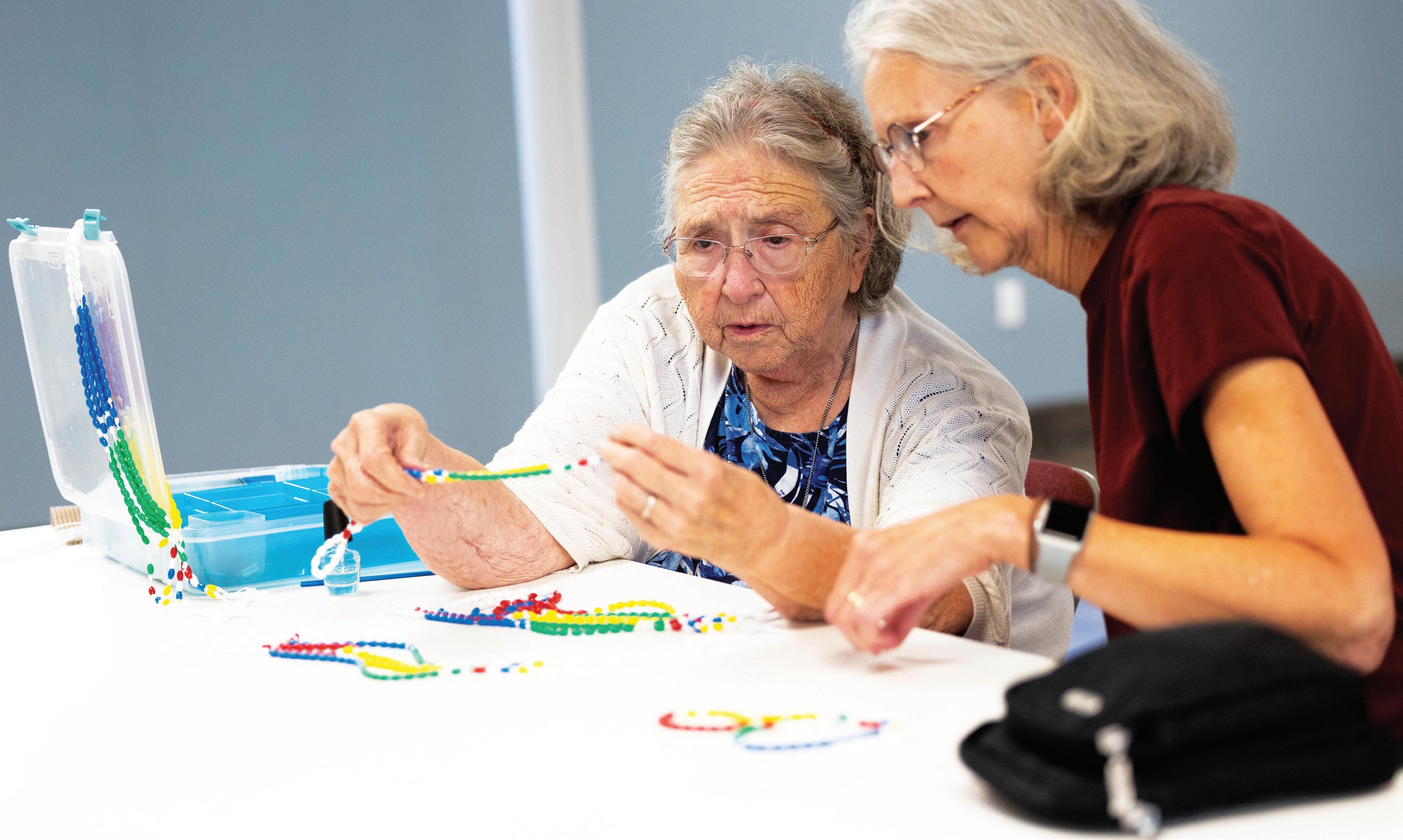
From left, Lois Wilmot helps Jeri Kaczmarek with rosary making during a two-hour session at Immaculate Conception in Watertown. Kaczmarek is new to rosary making; this was only her second time participating in the Thursday afternoon gathering at Immaculate Conception. Both women are parishioners.
Volunteers typically pick up pre-packaged kits with supplies for making up to 200 rosaries each and bring them home to create maybe five rosaries a night, or 10 rosaries a day toward completing their kit.
Volunteers meeting every Thursday in the basement of Immaculate Conception in Watertown are making progress in their goal of producing 10,000 World Mission rosaries by September. They are organized under Spike Ministries, an industrious and committed nonprofit organization that hopes to share its enthusiasm for the rosary with an ambitious goal of involving as many people and parish groups as possible in making and distributing rosaries to missions around the globe. Since Charlie Burns began the group’s work making five rosaries a week in his basement about 12 years ago, the group has reached an ongoing tally of over 225,000 rosaries, according to organizer and Spike Ministries founder Mike Miller.
“When we first started, we produced 150 a week, and now we’re up to 700 a week,” said Miller. “The group has just blossomed in support of the Blessed Mother.”
Miller credits the group’s work to the support of Immaculate Conception pastor Father Peter Hughes and Deacon Patrick Kirsch as well as fundraisers and donations from groups like the Knights of Columbus. He said the current group making World Mission rosaries also includes parishioners from St. Maximillian Kolbe in Delano, Nativity of Mary in Bloomington and St. Joseph in Waconia.
“I think it’s a lot of fun, and I think it’s God’s plan,” said Shirley Stewart, who said she can make 10 rosaries in two hours if she really pushes herself.
Carol Youmans, a retired office manager, was there with her granddaughter Haley who likes to do bead work, but who was experiencing rosary beading for the first time.
“Our hope is to get more youth involved in saying the rosary,” Miller said. To that end, he said he took a group to Bloomington to demonstrate rosary making to seventh and eighth graders in a religion class. The project, he said, generated a lot of enthusiasm.
Lois Wilmot is an Immaculate Conception parishioner who joins the Spike Ministries group in the church basement on Thursdays to make World Mission rosaries. Born in 1933, she remembers a time
when prayer was an integral part of family life, and her grandparents set aside time in the evening to pray the rosary together as a family. She has come to believe in the power of the rosary and said she wished parents would make family time to say the rosary with their children.
Though her father was not overly religious, Wilmot said he always listened to then-Bishop Sheen’s television program “Life is Worth Living.” She recalled how Bishop Sheen used to come on the television set with a flourish of his cape and begin the program with the greeting, “Friends!”
“He taught at our level,” said Wilmot, recalling that Archbishop Sheen famously used a chalkboard to highlight and explain points in his conversation, “and he was always relevant.”
Williams said it is a large undertaking for those involved in making World Mission rosaries for the beatification of Archbishop Sheen, someone they will never meet. It might be considered something short of a miracle to create 70,000 by September. But the work is for a cause that everyone can support — to inspire people to unite in prayer for the whole world, not just for themselves.
“If we look at this effort individually, it seems impossible,” Williams said. “But acting as a group in common prayer and with the support of the Holy Spirit, anything is possible.”
LOCAL ROSARY PILGRIMAGE
As part of celebrating the upcoming 100th anniversary of World Mission Sunday and the beatification of Venerable Fulton J. Sheen, the faithful of the Archdiocese of St. Paul and Minneapolis are invited to World Mission Rosary prayer opportunities at various local churches.
The Center for Mission, which supports the archdiocese’s missionary outreach, is helping to organize the monthly prayer pilgrimage at churches “where there is a larger presence of parishioners representative of one of the five regions of the World Mission rosary,” according to the event webpage at archspm.org/events/world-missionrosary-pilgrimage
“This monthly pilgrimage is a wonderful opportunity for Catholics of all ages to come together in prayer for the needs of the world,” the webpage states. “Families with young children are especially encouraged to participate. Along the way, pilgrims will have the chance to visit parishes throughout the Archdiocese, learn about the global Church and grow in fellowship with fellow Catholics.”
Participants will receive a World Mission Rosary as well as a pamphlet explaining how to pray it, and its history and symbolism.
Archbishop Sheen created the World Mission Rosary, whose multi-colored beads represent the different continents of the world. It is part of his legacy to be recognized during his beatification, set for Sept. 24 in St. Louis. The faithful of the archdiocese interested in more information about a pilgrimage to the beatification can visit archspm.org/events/pilgrimage-fulton-sheen
Rebecca Omastiak, The Catholic Spirit
DAVE HRBACEK | THE CATHOLIC SPIRIT
TIM MONTGOMERY | FOR THE CATHOLIC SPIRIT
A World Mission rosary made by a group at St. Mary of the Lake in White Bear Lake.
Fall Parish Festivals
Planning your late summer and fall weekends?
We did it for you!
Parishes in the Archdiocese of St. Paul and Minneapolis submitted their 2026 fall festivals for this guide, a comprehensive listing of auctions, games, food and fun hosted by our parishes.
Please note: The information represents parish submissions by press time. For updates, find the list online at TheCatholicSpirit.com AUGUST
Nativity, Cleveland Grill and Chill Festival, Aug. 1: 5-7:30 p.m. 200 W. Main St. Live music, cash raffle, silent auction, family yard games and kids’ games. All events will be held outside. Hamburger, hot dogs, cash bar, bloody mary bar and more. Mass: 4 p.m. 507-357-6633. maryschurches.com
Immaculate Conception, Lonsdale AugustFest, Aug. 2: 10 a.m.-5 p.m. 202 Alabama St. SE. Live music, food, kids’ games and inflatables, euchre tournament (pre-registration recommended), bucket drawings, country store, big wheel, bake sale, cash raffle, bingo and more. Pork and dumplings meal, KC grilling station, ice cream, VanDenCookies, koblihy, beer and other beverages. Mass: 10 a.m. 507-744-2829. facebook.com/ICLonsdale
St. John the Baptist, Dayton Parish Festival, Aug. 2: 10 a.m.-4 p.m. 18380 Columbus St. Chicken Dinner served from 11 a.m.-2 p.m., theme basket silent auction, bingo, kids’ games, adult games of chance, flea market, country store and raffles. Hamburgers, hot dogs, brats, chips, soft drinks and beer. 763-428-2828. sjbdayton.org
St. George, Long Lake Corn Days, Aug. 8: 11 a.m.-9 p.m. 133 N. Brown Road. Live music, beer garden, kids’ games, petting zoo, kids’ inflatables, silent auction, bingo, raffle, 5k and kids fun run, parade, wine pull, beer, hot dogs and brats, soft drinks, water, food vendors, ice cream and more. 952-473-1247. corndays.com
St. Joseph of the Lakes, Lino Lakes Summer Festival, Aug. 8-9: 5-10:30 p.m. Aug. 8, 11 a.m.-4 p.m. Aug. 9. 171 Elm St. Live music, raffles, concessions, bingo, games for all ages, car show on Aug. 9, fireworks on Aug. 8, outdoor Mass on Aug. 8 to open our summer festival. Aug. 8: Pork basket, egg rolls, pretzels, hamburgers and hot dogs. Aug. 9: Chicken picnic, corn on the cob, hamburgers, hot dogs, ice cream bars, both days beer, wine coolers, soda and margaritas. Mass: 5 p.m. Aug. 8. 651-784-3015. mystjoes.me
St. Wenceslaus, New Prague St. Wenceslaus Church Festival, Aug. 10: 8:30 a.m.-4 p.m. 215 Main St. E. Polka Mass, live music, cash raffle, bingo, welcome booth, bucket raffle, Split the Pot, kids’ games and maker’s market. Velvet Touch chicken dinner, food trucks, St. Wenc Grill, ice cream stand and beer garden. Mass: 8:30 a.m. 952-758-3225. npcatholic.org
Sts. Cyril and Methodius, Minneapolis Summer Festival 2026, Aug. 14-15: 4-9 p.m., Aug. 14, 9 a.m.-9 p.m., Aug. 15. 1315 Second St. NE. Live music, kids’ games, raffle, soccer and ecuavoley game matches. Ecuadorian and Mexican food options, beer and soft drinks. 612-379-9736. facebook.com/iglesia.san.cirilo
St. Gerard Majella, Brooklyn Park Corn Fest, Aug. 14-15: 5-10 p.m. Aug. 14, 5-10 p.m. Aug. 15. 9600 Regent Ave. N. Live Music: GB Leighton 7-10 p.m. Aug. 14, Don Ho with Hi5 Brothers 7-10 p.m. Aug. 15, inflatables, games, silent auction, bingo, raffle, pull tabs and Wall of Wine. American grill (burgers, fries, etc.), two Asian grills, ice cream, Fresh Sweet Corn, mini doughnuts, sodas and beer tent. 763-424-8770. st-gerard.org/about-us/corn-fest
Blessed Sacrament, St. Paul Annual Fun Fest, Aug. 15-16: 5-9 p.m. Aug. 15, 9:30 a.m.-6:30 p.m. Aug. 16. 2119 Stillwater Ave. E. Aug. 15 events include bingo and concessions with bidding opportunities for a silent auction, Take-A-Chance and 50/50. Aug. 16 events include kids’ games, Loteria, cake walk, plinko, silent auction, Take-A-Chance and book sale. Aug. 15 food includes sloppy joes and hot dogs with basket option available. Aug. 16 food includes burgers, brats, hot dogs with basket options, authentic Mexican food including tacos and street corn, snow cones, cookies and pies. 651-738-0677. blessedsacramentsp.org
Sts. Joachim and Anne, Shakopee JACS JAM, Aug. 15-16: 4-10 p.m. Aug. 15, 10 a.m.-5 p.m. Aug. 16. 15850 Marystown Road. Polka Mass at 4 p.m. on Aug. 15, live music, games for kids and adults, chicken plop, bake sale, raffles, silent auction and quilt booth. Burgers, brats, hot dogs, sides, quesadillas, tacos, elote/corn on the cob, chips
Mike Dombeck, left, of St. George in Long Lake, walks the parish grounds during Corn Days Aug. 9, 2025, where he is known as “Corn Mike.” He is talking with, second from left, Scott Zappa and his wife, Wittne, who are with their three-month-old son, Maverick. Wittne Zappa is the daughter of Mike and Rowanne Dombeck, both of whom work at the parish and play key roles in Corn Days.
and queso, beer, wine, soda, pie, ice cream treats and other snacks. 952-445-1319. ssjacs.org/jacs-jam
Most Holy Trinity, Veseli 59th Annual Ho-Down, Aug. 16: 11 a.m.-6:30 p.m. Aug. 16. 4939 N. Washington St. Polka Mass, continuous music, church tours, prizes and cash drawings, home-baked goods (including many Czech favorites!), silent auction, games for all ages and shuttle service. Grilled pork and dumpling dinner (11 a.m. until sold out), hamburgers, hot dogs, fun food stand and refreshments. 507-744-2823. mhtveseli.com/veseli-ho-down
St. Genevieve, Centerville Annual Parish Festival, Aug. 16: 11 a.m.-3 p.m. Aug. 16. 6995 Centerville Rd. Kids’ games, raffles, silent auction, bingo and country store. Chicken dinner, burgers, french fries, soda and beer. 651-429-7937. stgens.org
St. Thomas the Apostle, Corcoran Turkey Dinner and Festival, Aug. 16: 11:30 a.m.-4 p.m. Aug. 16. 2000 County Road 10. Cash drawing, interactive kids’ area, beer tent, cash bingo, silent auction, craft sale, farmer’s market, bake sale, cake walk, hula hoop contest and much more. Turkey dinner and other concessions available. Mass: 11:30 a.m. 763-420-2385. churchofstthomas.org/parish-festival
St. Mathias, Hampton Fun Fest, Aug. 23: 10 a.m.-3 p.m. Aug. 23. 23315 Northfield Blvd. Kids’ games, silent auction, bingo, country store, raffle and live auction. German potato salad with picnic foods, beer, soft drinks. Mass: 10 a.m. 952-454-0271. stmathias-hampton.com
Divine Mercy, Faribault Spirit Fest, Aug. 29: noon-9:30 p.m. Aug. 29. 139 Mercy Drive. Parade, Live music, kids’ games, bingo, silent auction, mini golf, cornhole tournament, country store and outdoor movie. Formal dinner, outdoor foods, beer garden, soft drinks and movie concessions. Mass: 4 p.m. 507-210-9826. spiritfest.info
SEPTEMBER
St. Bridget of Sweden, Lindstrom Block Party, Sept. 5: 6-10 p.m. Sept. 5. 13060 Lake Blvd. Live music, kids’ games, silent auction and marketplace. Concessions, turkey dinner, popcorn and beer tent. Mass: 6 p.m. 651-257-2474. stbridgetofsweden.org/blockparty
St. Mary, Stillwater Germanfest and Wild Rice Festival, Sept. 11 and Sept. 13: 5-10 p.m. Sept. 11., 11 a.m.-4 p.m. Sept. 13. 423 Fifth St. S. Germanfest events include live polka band and dancing. Germanfest food options include beer, wine and German food. Wild Rice Festival events include bingo, cake walk, kids’ games, country fair, football game on the big screen, grand raffle, inflatables, Lucky 7, money jar, silent auction, secondhand treasures, used books and more. Wild Rice Festival food options include chicken and wild rice dinner, bakery booth, beer tent, cotton candy and snack bar. 651-439-1270. tinyurl.com/86f2n72y
St. Timothy, Blaine St. Tim’s Carnival, Sept. 11-12: 5-10 p.m. Sept. 11., noon-10 p.m., Sept. 12. 707 89th Ave. NE. Live music, kids’
games, bottle blast, country store, chuck a puck to win Twins tickets, pull tabs, cake walk, face painting, inflatables, bouncy house, raffle and silent auction. KC grill with burgers and fries, egg rolls, popcorn, mini donuts, beer, wine, canned cocktails, soda and ice cream. Mass: 5 p.m., Sept. 12. 763-784-1329. churchofsttimothy.com/carnival-2026
St. Odilia, Shoreview Fall Festival, Sept. 11-13: 6-10 p.m. Sept. 11, 3-10 p.m. Sept. 12, noon-4 p.m. Sept. 13. 3495 Victoria St. N. Live music, Latino dancing, kids’ games, bottle blast, bingo, live and silent auctions, Book Nook, inflatables, cash and quilt raffles, puzzle contest and farmer’s market. Food trucks, Latino food, Men’s Club burgers, hot dogs, fries, adult beverages and soft drinks. Mass: 6 p.m., Sept. 13. 651-484-6681. stodilia.org
St. Rita, Cottage Grove Fall Festival, Sept. 11-13: 5-9 p.m. Sept. 11, 4-9 p.m. Sept. 12, 9:30 a.m.-12:30 p.m. Sept. 13. 8694 80th St. S. Silent Auction with online bidding and bingo both Sept. 11 and 12 nights. Pig roast Sept. 12 evening, hot dogs, popcorn, beer, soda and water. Mass: 5 p.m. Sept. 12. 651-459-4596. saintritas.org
Holy Spirit, St. Paul Spirit Fest, Sept. 12: 5:30 p.m. Sept. 12. 515 Albert St. S. Kids’ games and music. Food trucks, beer and wine. Mass: 4:30 p.m. 651-698-3353. holy-spirit.org/spirit-fest
Sacred Heart, Robbinsdale Family Fun Fest, Sept. 12: 5-10:30 p.m. 4087 W. Broadway Ave. N. Purse bingo 2–4 p.m., kids’ games, bottle blast, regular bingo, raffle, and live band 45rpm 7-10 p.m. Pulled pork sandwiches, brats, french fries, mini donuts, Icee machine, beer, wine and soft drinks. 763-537-4561. shrmn.org
St. Bonaventure, Bloomington St. Boni’s Fall Festival, Sept. 12: 8 a.m.-6:30 p.m. Sept. 12. 901 E. 90th St. Car show (1979 and older) at 8 a.m., parade at 10 a.m., live music all day, kids’ games, St. Boni’s train rides, silent auction, craft tent, bingo, pull tabs, raffle and games of chance. Food booths including breakfast burritos, pork chops, walking tacos, Vietnamese egg rolls, state fair corn dogs, main food tent, beer tent and soft drinks. Mass: 7 p.m. 952-854-4733. saintbonaventure.org/fall-festival
St. Jude of the Lake, Mahtomedi Cornfest, Sept. 12: 2-10 p.m. Sept. 12. 700 Mahtomedi Ave. Live music, kid inflatables, bingo, bake sale, raffle, yummy corn and more. Food from local restaurants, beer, wine, margaritas, ice cream and snacks. Mass: 4:30 p.m. 651-426-3245. stjudeofthelake.org/cornfest-2026
Holy Family, St. Louis Park Fall Festival, Sept. 12-13: noon-10 p.m. Sept. 12, 8:30 a.m.-1 p.m. Sept. 13. 5900 W. Lake St. Silent auction, inflatables, carnival games, bake off, bake sale, cornhole tournament, DJ, cash raffle and used book sale. Hot dogs, baked goods, cheese curds, beer and soft drinks. Mass: 5 p.m. Sept. 12, 7:30 a.m., 9 a.m. and 11 a.m. Sept. 13. 952-929-0113. hfcmn.org/fall-festival
DAVE HRBACEK | THE CATHOLIC SPIRIT
FALL FESTIVALS CONTINUED FROM PREVIOUS PAGE
Presentation of the Blessed Virgin Mary, Maplewood Fall Festival, Sept. 12-13: 4-10 p.m. Sept. 12, 9 a.m.-4 p.m. Sept. 13. 1725 Kennard St. Bingo, theme baskets, book booth, games and activities for all ages, raffles, puzzle contest, cake walk and pull tabs. Sept. 12 food options include a roast beef sandwich dinner. Sept. 13 food options include food booths with brats, burgers, fried chicken and egg rolls. Mass: 4 p.m. 651-777-8116. presentationofmary.org St. Edward, Bloomington Gather Fall Festival, Sept. 12-13: 6-8:30 p.m. Sept. 12, 10:30 a.m.-3 p.m. Sept. 13. 9401 Nesbitt Ave. S. Kids’ games, bingo, silent auction, bake sale, 50/50 raffle and pull tabs. Sept. 12 evening is Eddie’s Spaghetti dinner, and Sept. 13 is Gather Festival. Food options Sept. 13 include BBQ and nacho bar, popcorn station, ice cream, alcohol and soft drinks. Mass: 10:30 a.m. Sept. 13. 952-835-7101. stedwardschurch.org/gather-fall-festival
St. Michael, St. Michael Fall Festival, Sept. 12-13: 3-10 p.m. Sept. 12, 10 a.m.-4 p.m. Sept. 13. 11300 Frankfort Parkway NE. Sept. 12 events include pickleball, bingo, bean bags, raffles, live music by Boogie Wonderland and fireworks at 8:30 p.m. Sept. 13 events include bingo, cake walk, kids’ games, market shopping, raffles, silent auction, and a raffle drawing at 4 p.m. Sept. 12 food options include food trucks, burgers, brats, beverages, and beer, bourbon and wine tastings from 4–8 p.m. Sept. 13 food options include food trucks, chicken dinner from 11 a.m.-1 p.m., pie, lunch and drinks. Mass: 5 p.m., Sept. 12. 763-497-2745. stmcatholicchurch.org/fallfestival
St. Patrick, Oak Grove CountryFest, Sept. 12-13: 2-10 p.m. Sept. 12, 10 a.m.-3 p.m. Sept. 13. 19921 Nightingale St. NW. Live music, kids’ games, teen games, classic car show, bingo, pull tabs, raffle, fireworks, silent auction, live quilt auction and rib cooking competition. Food tents, beer, wine, soft drinks, snacks and dessert. Mass: 5 p.m. Sept. 12. 763-753-2011. st-patricks.org/events/countryfest
Immaculate Conception of Marysburg, Madison Lake Marysburg Fall Festival, Sept. 13: 11:30 a.m.-1:30 p.m.
27528 Patrick St. Live music, kids’ games, farmers’ market, bake sale and bucket raffle. Hot dogs, sloppy joes, brats and more. Mass: 10:30 a.m. 507-357-6633. maryschurches.com
St. Bartholomew, Wayzata The Gathering, Sept. 18: 5-9 p.m. 630 Wayzata Blvd. Kids’ inflatables, games, live auction items, raffle, DJ and puppy party. Food, beer, wine and soft drinks. 952-473-6189. stbartsbulldogs.com
Guardian Angels, Oakdale Fall Festival, Sept. 18-19: 5-8:30 p.m. Sept. 18, noon-9:30 p.m. Sept. 19. 8260 Fourth St. N. Sept. 18 events include casino games, silent auction, craft, bake and card sales, raffles and pull tabs. Sept. 19 events include craft, bake and card sales, minigolf, games for kids and adults, silent auction, jigsaw, cornhole and cribbage competitions, pull tabs, Lucky 7s and raffles, live music and fireworks. Hot dogs, hamburgers, nachos, cookies, chips, ice cream, beer, wine, margaritas and bloody marys. Mass: 4:30 p.m. Sept. 19. 651-738-2223. guardian-angels.org/fallfestival
All Saints, Lakeville Fall Festival, Sept. 18 and 20: 6-9:30 p.m. Sept. 18, 11 a.m.-2:00 p.m. Sept. 20. 19795 Holyoke Ave. Sept. 18 events include bingo and pull tabs. Sept. 20 events include a raffle, kids’ games, llamas and inflatables for all ages. Sept. 18 food includes a catered meal by Las Tortillas. Sept. 20 food includes food trucks. Mass: 11 a.m. Sept. 20. 952-469-4481. Allsaintschurch.com/festival Nativity of Our Lord, St. Paul Nativity County Fair, Sept. 18-20: 5-10 p.m. Sept. 18, noon-10 p.m. Sept. 19, 11:30 a.m.-3 p.m. Sept. 20. 1900 Stanford Ave. Live music, entertainment, carnival rides, games, bingo, cake walk, dodgeball, raffle, bake sale and a collectible corner. Food options include burgers, brats, corn on the cob, malts, pizza, beer, wine, soft drinks and more. Mass: 10:30 a.m., Sept. 20. nativitystpaul.org/nativity-county-fair
St. Helena, Minneapolis Autumn Daze Festival, Sept. 18-20: 5-10 p.m. Sept. 18, 10:30 a.m.-10 p.m. Sept. 19, 10:30 a.m.-5 p.m. Sept. 20. 3204 E. 43rd St. Live music, carnival rides, kids’ games, silent auction, quilt and cash bingo, attic treasures, laser light show, parade, games of chance and baskets. Sept. 18 food options include a fish fry. Sept. 19 options include American, Asian and Hispanic food, ice cream, beer, soft drinks, malts, pizza, mini donuts and desserts. Mass: 5 p.m. 612-275-0431. sainthelenampls.org
St. Maron Maronite, Minneapolis Lebanese Festival, Sept. 18-20: 6-9 p.m. Sept. 18, noon-8 p.m. Sept. 19, 11 a.m.-6 p.m. Sept. 20. 602 University Ave. NE. Bingo on Sept. 18 evening. Sept. 19 and Sept. 20 events include kid’s events, live music and entertainment. Food includes a variety of fresh and authentic Lebanese dishes, including both meat and meatless dishes, Abouna ice cream, beer, wine and soft drinks. Mass: 10:10 a.m., Sept. 20. 612-379-2458. StMaron.com Holy Name of Jesus, Wayzata (Medina) Fall Festival, Sept. 19: 4-9 p.m. 155 County Road 24. Live music and dancing, kids’ games and crafts, face painting, cookie decorating, Dragon Train ride, inflatables, outreach ministry, country market and classic car show. Burgers, brats and hot dogs courtesy of the KC, tacos, pizza, popcorn, ice cream and more. Mass: 4 p.m. 763-473-7901. hnoj.org/event/fall-festival
Lumen Christi, St. Paul Lumen Christi Block Party “BlockToberFest,” Sept. 19: 4:30-8:30 p.m. 1668 Montreal Ave. Outdoor Mass, music, food trucks, kids’ games and activities. Food trucks, beer and wine. Mass: 4:30 p.m. 651-698-5581. lumenchristicc.org
St. Mary, Le Center Family Block Party, Sept. 19: 5-7 p.m. Sept. 19. 165 N. Waterville Ave. Music, meat raffle, games and more. Street tacos, food trucks, root beer floats, hot dogs, beer, wine and soft drinks. Mass: 4 p.m. 507-357-6633. stmarysthenry.org
St. Rose of Lima, Roseville Saint Rose Block Party, Sept. 19: 5:30-8:30 p.m. Sept. 19. 2048 Hamline Ave. N. Live music, kids’ games, raffle. Three food trucks, beer and wine. Mass: 4:30 p.m. 651-645-9389. saintroseoflima.net
St. Vincent de Paul, Brooklyn Park Harvest Festival Weekend, Sept. 19-20: 6-11 p.m. Sept. 19, 11 a.m.-5 p.m. Sept. 20. 9100 93rd Ave. N. Sept. 19 events include an adults-only Oktoberfest celebration with live music and a DJ. Sept. 20 events include family fun with a DJ, games for kids and teens, bingo, pull tabs and a raffle ticket drawing to win $10,000. Sept. 19 food options include food trucks, beer, wine, seltzer, soda and water. Sept. 20 food options include pulled pork sandwiches, hot dogs, brats, chips, watermelon, dessert, pizza, popcorn, beer, seltzer, soda and water. Mass: 11 a.m., Sept. 20. 651-324-8322. saintvdp.org
St. Peter, Forest Lake 2026 St. Peter Fall Festival, Sept. 19-20: Noon-9 p.m. Sept. 19, 10:30 a.m.-3:30 p.m. Sept. 20. 1250 South Shore Drive. The Little Blues Traveling Zoo, a twilight outdoor cinema, silent auction, raffle ticket drawings, a visit from Princess Elsa, bingo, and kids’ and adult games. Smoked turkey and pork dinner, beer, soft drinks, hot dogs, hamburgers, french fries, mini donuts and more. Mass: 8:30 a.m., Sept. 20. 651-982-2200. stpeterfl.org
St. Peter, North St. Paul Fall Festival, Sept. 19-20: 5-9 p.m. Sept. 19, 9 a.m.-4 p.m. Sept. 20. 2600 Margaret St. N. Live music, kids’ games, inflatables, craft market, silent auction, bake sale, bingo and cornhole tournament. Live music with the Express Band on Sept. 19, 6-9 p.m. Food options include pancake breakfast the morning of Sept. 19, food trucks, beer garden, burgers, African meat pies and ice cream. 651-777-8304. churchofstpeternsp.org/festival
St. Margaret Mary, Golden Valley Fall Festival, Sept. 20: 10 a.m.-3 p.m. 2323 Zenith Ave. N. Live Music, Kids’ Games, Bingo, Silent Auction-Baskets from Heaven, and Raffle. Traditional Indian dinner and American dinner options, soft drinks and dessert. Mass: 10 a.m. 763-588-9466. smm-gv.org
St. Peter, Mendota Fall Festival, Sept. 20: 11:30 a.m.-3 p.m. 1405 Sibley Memorial Highway. Classic car show, country store, online auction, kids’ games 11:30 a.m.-2 p.m., inflatables, closest to the hole, bingo with cash prizes noon-2 p.m., live music and wine and cash raffle. Pulled pork sandwich, brats, hot dogs, corn dogs, sides, beverages, pie and coffee. Mass: 10:30 a.m. 651-452-4550. stpetersmendota.org
St. Ambrose, Woodbury FallFest, Sept. 25-26: 5:30-10 p.m. Sept. 25, 11 a.m.-10 p.m. Sept. 26. 4125 Woodbury Drive. Carnival rides, kids’ games and activities, live entertainment, talent show, silent auction, bingo, bucket raffle, 5K race and fun run. Food trucks, hamburgers, hot dogs, pulled chicken, pizza, nachos, Culver’s food, beer, wine and soft drinks. Mass: 4 p.m., Sept. 26. 651-768-3030. saintambrosecatholic.org/fallfest
Our Lady of the Lake, Mound The Incredible Festival, Sept. 25-27: 5-11 p.m. Sept. 25, 11 a.m.-11 p.m. Sept. 26, 11 a.m.-4 p.m. Sept. 27. 2385 Commerce Blvd. Live music, silent auction, bingo, carnival rides and games, raffle and an Oktoberfest on Sept. 27. Food trucks, 21-plus beverage tent with beer, seltzer and wine, carnival food, soft drinks, sweets and more. 952-472-8200. incrediblefestival.com
St. John the Baptist, New Brighton St. John’s FallFest, Sept. 25-27: 5-10 p.m. Sept. 25, 2-10 p.m. Sept. 26, 11 a.m.-3 p.m. Sept. 27. 835 Second Ave. NW. Live music, kids’ and adult games, fireworks, fun run, pickleball tournament, bags tournament, raffle, silent auction, car show, Grill the Priests, inflatables, Princess Visit, regular and designer purse bingo, The Baron of Bubble, model train display and Silent Disco. Pig roast, traditional Booya, burgers, pork and chicken sandwiches, ice cream, cotton candy, pork chops, corn on the cob, food trucks, beer, wine, assorted pop and water. Mass: 10:30 a.m. 651-633-8333. stjohnnb.com/fallfest
Good Shepherd, Golden Valley Oktoberfest, Sept. 26: 5 p.m.-end. 145 Jersey Ave. S. Meat raffle and live music. Food, beer, wine and soft drinks.
Mary Queen of Peace, Rogers Fall Festival, Sept. 26-27: 5-7:30 p.m. Sept. 26, 11 a.m.-3 p.m. 21304 Church Ave. Sept. 26 events include polka Mass followed by dinner, music and country store. Sept. 27 events include bingo, country store, petting zoo, face painting, games, classic car show, live music and raffle drawings. Sept. 27 food options include a chicken dinner from 11 a.m.-1 p.m., advance ticket purchase recommended. Mass: 5 p.m. Sept. 26. 763-428-2585 mqpcatholic.org
Our Lady of Lourdes, Minneapolis LourdesFest, Sept. 26: 5-9 p.m. 1 Lourdes Place. Live music, kids’ games, silent auction. Sandwiches, french fries, coleslaw, desserts, coffee, water, soft drinks, wine and beer. 612-379-2259. lourdesmpls.org
St. Hubert, Chanhassen Harvest Festival, Sept. 26: 5-9 p.m. Sept. 26. 8201 Main St. Live music, food, beer and wine, inflatables, bingo, games and raffle. A variety of food options, beer, wine, soft drinks and water. Mass: 4 p.m. 952-934-9106. sthubert.org/event/harvest-festival-2
Assumption, St. Richard and St. Peter, Richfield Tri-Fest, Sept. 26-27: 10 a.m.-9 p.m. Sept. 26, 9 a.m.-4 p.m. Sept. 27. Assumption, 305 E. 77th St. Silent auction, beer tent, coloring and photo contests, scavenger hunt, Project Linus, VEAP food drive, Richfield Police and Fire Department demonstrations, family photo station, bake sale, books etc. sale, country store, crafts and gifts, raffle, pull tabs, bingo, games area and inflatables. Beer tent, 15 food stations with American and Latino food varieties, soft drinks, bar snacks and ice cream. Pancake breakfast on Sept. 27 from 8 a.m.-noon. Mass: 4:30 p.m. bilingual, Sept. 26, and 9 a.m. English and 11 a.m. Spanish, Sept. 27 at Assumption. 612-866-5019. richfieldcatholicparishes.org
Most Holy Redeemer, Montgomery Most Holy Redeemer Fall Festival, Sept. 27: 11 a.m.-2 p.m. 206 Vine Ave. W. Live music by The Bent Highway, kids’ games, obstacle inflatable, Touch A Truck, country store, treat walk, cash raffle, bucket drawings and more. KC food stand, Pizzeria 201 and beer garden. Mass: 10 a.m. mosthr.org
St. Charles, Bayport St. Charles Fall Festival, Sept. 27: 10:30 a.m.-2 p.m. 409 Third St. N. Live music, cake walk, Perro Creek races, kids’ games, inflatable obstacle course and more. Food trucks, bloody marys, beer, wine, soft drinks and more. Mass: 9:30 a.m. 651-439-4511. stcharlesbayport.com
St. Gregory the Great, North Branch 45th Annual Booya and Fall Festival, Sept. 27: 11:30 a.m.-2 p.m. 38725 Forest Blvd. Country store, silent auction, kids’ games, raffle with $1,000 grand prize, 50/50 raffle, bottle booth, wine bottle booth and cookie walk. Hot dogs, chips, homemade bars, water, lemonade and coffee. Booya by the bowl or quarts to-go, available until sold out. Mass: 11:30 a.m. stgregorynb.org
St. John the Baptist, Vermillion Parish Festival, Sept. 27: 10 a.m.-3 p.m. Sept. 27. 108 Main St. W. Kids’ games, silent auction, bingo, country store, raffle, peddle tractor pull and student performance. Pork chop on a stick, various food options, beer and soft drinks. Mass: 10 a.m. 952-454-0271. stjohns-vermillion.com
St. Pascal Baylon, St. Paul Fall Festival, Sept. 27: 11:30 a.m.-3 p.m. 1757 Conway St. Bingo, kids’ games, pies, baskets, jewelry and crafts. Pre-registration required for meal. 651-774-1585. stpascals.org
St. Timothy, Maple Lake 73rd Annual Fall Festival, Sept. 27: 9 a.m.-4 p.m. Sept. 27. 215 Division St. E. Kids’ games, bottle blast, cake walk, basket of chance, bingo, pull tabs, meat raffle, country store and cash raffle. Broasted chicken dinner, KC hamburger stand, beer garden, coffee truck, soda, candy, popcorn, ice cream truck and mini donuts. Mass: 10 a.m. 320-963-3726.
OCTOBER
St. Michael, Pine Island St. Michael Fall Festival, Oct. 2 and 4: 4-7:30 p.m. Oct. 2, 10 a.m.-3 p.m. Oct. 4. 451 Fifth St. SW. Oct. 4 events include country store, silent auction and other events. Oct. 2 night food options include all-you-can-eat fish fry with both baked and fried fish. Oct. 4 food will be available after Mass. Mass: 10:30 a.m. 507-356-4280. stpaulstmichael.com
St. Bartholomew, Wayzata Oktoberfest, Oct. 3: 2-8 p.m. 630 E. Wayzata Blvd. Live music, kids’ games and bingo. Beer and brats for adults, hot dogs and pretzels for kids. Mass: 2 p.m. 952-473-6601. st-barts.org/events/oktoberfest
St. Mary of the Lake, White Bear Lake Parish Festival, Oct. 3: 5-9 p.m. 4690 Bald Eagle Ave., Kohler Hall. Family and kids’ activities, bingo and an Italian-themed Fellowship Dinner. Mass: 4 p.m. 651-429-7771. stmarys-wbl.org/event/parish-festival
St. Joseph, New Hope 22nd Annual Fall Festival, Oct. 10: 3:30-9 p.m. 8701 36th Ave. N. Live music, bingo, raffle, silent auction, Wall of Wine, bake sale and kids’ games. Full turkey dinner, pulled pork dinner, popcorn, candy, pizza, soft drinks and beer. 763-544-3352. stjosephparish.com/fall-festival
Holy Name, Minneapolis Fall Festival, Oct. 11: 10 a.m.-4 p.m. 3637 11th Ave. Bingo, kids’ games, country store, live music, plants, pull tabs, raffle, silent auction, Treasure Cove and wine games. Burgers, brats, hot dogs, pulled pork, taco salad, snacks, desserts, popcorn, ice cream, beer and soft drinks. Mass: 10 a.m. 612-724-5465. churchoftheholyname.org
St. Agnes, St. Paul Fall Festival and Booya, Oct. 18: 10 a.m.-2 p.m. 530 Lafond Ave. Games, country store and raffle. Booya for eat-in and takeout, brats, hot dogs, chips, German potato salad, turkey dinner, baked goods, beer and soda. Mass: 9 a.m. 224-325-5337. churchofsaintagnes.org
Our Lady of Peace, Minneapolis Party at the Patch, Oct. 24 and 30: 10 a.m.-7 p.m. Oct. 24, 3-7 p.m. Oct. 30. 5426 12th Ave. S. Oct. 24 events include pumpkins for sale, petting zoo, scholastic book fair, vendors, face painting, and kids’ scavenger hunt and games. Oct. 30 events include llamas, pumpkin painting, Movie in the Patch and scavenger hunt. Oct. 24 food options include Sizzling Wagon Food Truck and beer from Bruhaven Brewery. Oct. 30 food options include Brick Oven Pizza Truck. Mass: 5 p.m. Oct. 24. 612-824-3455. olpmn.org/pumpkin-patch
FAITH+CULTURE
Strumming guitar, planting flowers, adding beauty
By Christina Capecchi For The Catholic Spirit
Whether he’s in the back of a yard or the front of a worship space, Steve Danielson humbly strives to glorify God. The 62-yearold landscape designer from Maplewood has taught music at Catholic schools, built elaborate theater sets, directed musicals and now lends his musical talents to St. Thomas Aquinas in St. Paul Park, harmonizing alongside his wife, Pauline, the parish’s music director.
He delights in helping beauty emerge — from lumber, from melodies, from bare soil. “If we can make something nicer than it was, that’s meaningful,” Danielson said.
Q Where did you grow up?
A I grew up on a family farm in Cadott, Wisconsin. There were 10 kids. I’m the youngest of the five boys. My five sisters are all adopted from different places in the world, so it’s a very colorful family. My mom’s father was a missionary in Africa, and she spent much of her childhood there. When Mom and Dad got married, they always wanted to do something mission-related, but going away as missionaries wasn’t really an option. After having five boys, they decided to start adopting to get the girls.
Q What did growing up on a farm teach you?
A You learn such a variety of tasks and skills, and every day is different. It’s a wonderful way to grow up. You learn how to do things and how to get along and work with other people, and that has been helpful my whole life.
Q When did theater become part of your life?
A I started while I was teaching at Presentation of Mary in Maplewood. I taught music there for 14 years, and part of my job was directing musical theater. I started that program. I wanted every junior high student to be involved because at that age they all should get a chance to experience it. Then when they get into high school and beyond, they know what they’re deciding to do or not do. Many of them went on to do more theater.
Q You’ve built sets for a variety of theater companies, from middle school to college to community theater. Is there often a breathless moment of: Is this going to work?
A It starts with the vision. What are the physical needs of the stage? Then comes the artistic question: What’s the illusion we’re trying to create? I built the Brooklyn Bridge for “A View from the Bridge.” I built a barn for “Oklahoma!” where the orchestra pit was in the upper loft and the dancers entered from underneath. “The Pirates of Penzance” had a ship that protruded over the first five or six rows of seats. I’ve done rotating sets, tilted stages and sets with many moving parts. One of my favorites was “My Fair Lady.” One scene (depicted) the outside of a city street, and the house was on hinges. It opened up to reveal Henry Higgins’ two-story living room. By moving two walls, the entire house opened up. That drew applause.
Q You’re doing a lot with a little.
A It teaches thinking outside the box. I’m somebody who is always thinking outside the box in all the artistic things I do: landscaping, theater and music.
You teach by demonstrating, by letting people see what you do, talking about how you come up with ideas and brainstorming. You throw out ideas. Some are good and some are not good. That’s what brainstorming is.
There are students who are unsure of themselves or maybe don’t fit into sports. This is something many of them find they’re very good at. They learn skills, working with tools and wood and paint, working together as a team, and then they’re appreciated by other students who maybe didn’t always recognize them.
Q How did you meet Pauline?
A We were in “Fiddler on the Roof” together in a community theater production in my hometown in Wisconsin. I played Fyedka, the Russian who marries the third daughter, and Pauline played Hodel, the second daughter of Tevye.
Q It seems like you could’ve been a John Denver. Was there a point, early in your career, when you dreamt of becoming famous?
A There are times when I think: “Yes, that would be fun to do.” But it was never my intent. I like working behind the scenes, directing, bringing in other musicians, especially youth, and getting them to see their potential.
It’s funny you mentioned John Denver. I have won a number of talent shows singing his music. I love all of his songs. I sang his music at the Minnesota State Fair, and I was a finalist. It’s a style that worked well for my voice and instrument.
Fame wasn’t the driving force. There’s something fun about hearing applause and getting that gratification — not just from winning a competition but from knowing your performance is enjoyed. But I still get that in different ways. When we sing, I love when people come up afterwards and comment — not just that it sounds nice, but they have something specific to say. And when we do get applause, that never hurts.
Q What’s it like leading people in prayer through music?
A When you are leading liturgical music, it’s important to be connected to the people in the congregation. I make eye contact while I’m singing. Whether they’re singing along or listening to a meditative piece, either way we are praying together. That is very satisfying to know that I have that role of worshiping with them.
Q How does it feel to harmonize with your wife?
A Whether we’re rehearsing at home or singing in front of people, when we can hear each other, know where we’re going and get lost in the music, that’s a great feeling. It’s a true connection.
When our daughter joins us, we each add what we can add to the song, and collectively it becomes a wonderful piece of music. We’re really fortunate that at her age she still likes to come to Mass and play with us. Music is one way we’ve been able to keep connections with people of all ages.
Q Have you ever written music?
A When Pauline and I sing together, most of the harmonies we’re singing, I have written. When we find a song we want to do, we have to make it our own. We might write a guitar part if there wasn’t one or a second vocal line.
When our daughter Clara plays flute with us, either she or I will write that part. If we bring in cellos, violins or percussion, we’ll write parts for those instruments, too.
Q What have you learned from running your own landscaping business?
A I work by myself. I’m the one who meets with the client, designs with them and does the work. Every project is customized and personal. All of my business has been word of mouth, so it’s a true honor when someone chooses me to do something as personal as their home. I spend a lot of time listening. What are your hopes and dreams for your yard? How do you want to use it? What do you want it to feel like?
Q In this age of AI, what does working with your hands do for you?
A It’s a human endeavor. You’re creating something. It keeps you grounded. There are some things that stay the same. I grow things not that much differently than when I was a boy living at the farm.
Q Are there parallels between landscaping and music?
A It’s just like music. It’s the harmony of how things go together, what complements each other, what will make the next piece look even better. It creates an atmosphere, which is what we do with music in church. We are creating the atmosphere. The same thing happens in landscaping and theater.
They all create a feeling that people have in that space. Even though they seem like very different careers, I see them as very much the same.
Q How does creating beauty — in a landscape, on a stage or in a church — help you feel connected to God?
A I have a skill and a talent and an opportunity
to do something, and it feels good to take advantage of that. If you don’t do something with your talents, that would be a waste. We always want to leave something better than we started with.
I look at my yard in the middle of winter and think: “Will any of this come back?” And then look at it! Flowers emerge in the spring and miracles happen. It’s such a renewal.
Q What’s been a highlight of your long, impressive career?
A I was fortunate to be the artistic director of the Twin Cities Nativity for a number of years. It was a huge production we put on at the Hennepin Avenue United Methodist church in downtown Minneapolis with a huge cast of families — about 100 people, all volunteers — and live animals. We had the animals right in the church, and it was a musical production. Somebody from that group had seen my Christmas productions and thought I’d be the perfect person because I not only knew what it took to direct a production, I knew how to work with volunteers. What they didn’t know is I also know how to work with animals! It was a real honor. We’d do 30 productions between Thanksgiving and Christmas, and we had a wide variety of people in the audience — some who were familiar with the story, some who were not.
Q What have you learned about getting older?
A It’s going to happen whether I want it to or not. Being as active as I am helps. You just have to use your experience, learn from it, and be open to change.
Q What do you know for sure?
A I know that tomorrow will have new opportunities.
DAVE
CATHOLIC SPIRIT
FOCUSONFAITH
SUNDAY SCRIPTURES | FATHER ALLAN PAUL EILEN
Seeking an understanding heart
“Don’t give up … . Don’t ever give up.” At the March 3, 1993, ESPY Awards, legendary college basketball coach Jim Valvano gave an emotional testimony about the true power of those words barely two months before his death from cancer, grounded in a faith that seeks understanding.
In Sunday’s Gospel, Jesus asks his disciples — regarding the three parables about the buried treasure, the fine pearl and the net with good and bad fish — “Do you understand all these things?” (Mt 13:51)
They answered, “Yes” (Mt 13:51), though they lacked faith to truly understand the depth of his question.
There’s an old saying: You don’t send a boy to do a man’s job. And that’s what’s so remarkable about the 14-year-old Solomon in 1 Kings upon succeeding his father, King David. Instead of asking for all the pleasure, power and popularity that most immature teenagers (and adults) dream of — not for a long life, nor riches, nor
the life of his enemies — he asks for faith and wisdom to “give your servant, therefore, an understanding heart to judge your people and to distinguish right from wrong.” (1 Kgs 3:9)
What parent wouldn’t be greatly pleased — as the Lord was with the youthful Solomon — to hear that their teenaged son (or daughter) acted so maturely by asking for the greater gifts, rather than thinking of themselves.
Such an understanding heart — as Solomon requested — is something we all desire in life. It was just the kind of understanding I yearned for when I struggled to accept that I was being held back in first grade, when I was cut from my ninth-grade basketball team — I was 5 feet tall and weighed 100 pounds — though I had started in seventh grade, and when I was engaged to be married, only to have it break off twice as I labored to discern God’s will and sought an understanding heart to accept his plan for my life.
What does it mean to be given an understanding heart? Besides a heart of compassion and service, it means to be formed in the supernatural virtue of faith that God’s way is always better than our way. For acting on faith
COMMUNION AND MISSION | FATHER JOHN PAUL ERICKSON
Summer of hope
Like many priests this time of the year, I am currently settling into a new parish.
The Cathedral of St. Paul in St. Paul, my new assignment, is very different than Nativity of Our Lord in St. Paul, where I just concluded two wonderful years.
Like all significant change, it requires some adjustment as I learn a new culture, ministry demands and a very different rhythm of life. Don’t misunderstand me — I am thrilled to be again ministering where I first began my priestly life 20 years ago and could not be more grateful to the archbishop for sending me back to a place that has been of inestimable meaning in my life. But I take with me deep gratitude for all that has come before and a gentle yearning for the small comforts to which I just said goodbye.
All human beings must endure change throughout their lives. Some of those changes will be quite dramatic: a change of residence, a change of job, the death of a loved one, marriage and the birth of children. Then there are all the physical changes we go through throughout our lives — all of these are common human experiences. Some of these changes will be challenging while others will be full of excitement and promise. But the Christian has been given special insight into those changes and what alone endures: the love of Christ and our eternal homeland, heaven.
The theological virtue of hope is not optimism. Rather, hope is a yearning for heaven, and an assurance that God will provide all that is necessary to make that final rest possible.
KNOWtheSAINTS
Optimism, on the other hand, can be a natural tendency for some people. It is not always founded upon the facts, but it certainly makes life more pleasant. I think most of us would rather spend time with people who look on the bright side of life than focus on the all-tooobvious negative. Winnie the Pooh is generally more popular than Eeyore.
But being a “glass half full” or “glass half empty” kind of person has little to do with the gift of hope given in baptism. Hope keeps our eyes fixed upon heaven and the promise of the glory to come. It is not possible to do this without God’s grace, particularly when surrounded by difficulties and loss. But with the firmness of heart given by God’s power, we are able to maintain our bearings in the sea of life — the horizon of the world to come is always before us, and despite the waves and storms we pass through, the rays of the eternal dawn beckon us onward to golden shores.
My recent move, a fairly standard one for us roving diocesan priests, has been a small reminder of where my true homeland lies. The small loss of leaving a beloved parish purifies us priests and forces us to lean into the gift of hope that is given in baptism. The little adjustments I must make as I start this new chapter in my life are all reminders to me that only in heaven will I finally find true and lasting rest. I am not made for this world, no Christian is.
Again, my change has been a minor one, all things considered, and the excitement I feel as I begin this new chapter of my life hardly makes the move a personal tragedy. How much more must those who lose a spouse, or surrender physical independence, or experience the loss
informs our reason, which guides our emotions, thereafter moving our will to see the good and choose the good, to see the evil and avoid the evil. For by exercising the gift of faith “we know that all things work for good for those who love God, who are called according to his purpose (Rom 8:28).
Both faith and understanding are gifts of the Holy Spirit, which we recieve via the sacraments of baptism and confirmation. But like any virtue, like any muscle, we have to exercise them, if we hope for them to grow. It’s why I often ask my parishioners: “How many of you know the date of your baptism? And if not, why not? For our baptism is more important than our natural birth.”
Throughout the gift and mystery of the Christian life, whenever God asks if we understand all these things, let’s not fake it till we make it, but let’s profess with conviction the kind of faith, hope and love that seeks understanding. In God’s mysterious plan for your life, remember, “Don’t give up… . Don’t ever give up.”
Father Eilen is pastor of St. Mary of the Lake and moderator of Frassati Catholic Academy, both in White Bear Lake.
Sunday, July 26
Seventeenth Sunday in Ordinary Time 1 Kgs 3:5, 7-12
Rom 8:28-30 Mt 13:44-52
Monday, July 27
Jer 13:1-11
Mt 13:31-35
Tuesday, July 28 Jer 14:17-22 Mt 13:36-43
Wednesday, July 29
Sts. Martha, Mary and Lazarus Jer 15:10, 16-21 Jn 11:19-27 or Lk 10:38-42
Thursday, July 30 Jer 18:1-6 Mt 13:47-53
Friday, July 31
St. Ignatius of Loyola, priest Jer 26:1-9 Mt 13:54-58
Saturday, Aug. 1
St. Alphonsus Liguori, bishop and doctor of the Church Jer 26:11-16, 24 Mt 14:1-12
Sunday, Aug. 2
Eighteenth Sunday in Ordinary Time Is 55:1-3
of a job depend upon the theological virtue of hope? I cannot help but think here of my own beloved father, who was the head of a very busy household for over 50 years and who built a wonderful life with his best friend and beloved, my mom. He is now living life in a small (albeit very comfortable) apartment and is no longer the boss, facing the physical humiliation that age inevitably brings. Most significantly, “Ms. Pat” is now waiting for him on the other side of the veil. Now more than ever, like for many readers who understand much better than me the difficulty of these particular trials, so personally felt and widely experienced, the words “thy kingdom come” ring with hopeful promise for my father.
And here we confront a great mystery — oftentimes it is precisely in suffering and loss that the theological virtues of baptism are best strengthened. It is in the darkness of bewilderment that the light of faith shines most brightly. It is in experiencing betrayal that the virtue of charity comes to full splendor. And it is in loss that the virtue of hope springs up, reminding us that here we have no lasting city, but that the promised land of heaven awaits those who abide in Christ.
Join me in praying for a deeper longing for heaven; that is, an increase in the virtue of hope. Until that day when all things will rest in him, I’ll have to make do with the Cathedral. Not too bad of a waiting room, I’d say.
Father Erickson is parochial vicar of the Cathedral of St. Paul in St. Paul and interim chairman of the Archdiocesan Liturgical Commission.
ST. IGNATIUS OF LOYOLA (1491-1556) Born in his family’s ancestral Basque castle, Inigo Lopez de Loyola was a page in Castile and a soldier wounded in battle before he experienced a personal conversion that has had profound consequences for the Church ever since. While convalescing, he read about Christ and the saints, made a long retreat at Manresa and journeyed to Jerusalem. He studied for 10 years in Barcelona and Paris, where he became Ignatius and was the center of a group of like-minded men. They founded the Society of Jesus, or Jesuits, to be active missionaries and meet the challenges of the Reformation. St. Ignatius, superior general of the new order, also wrote “Spiritual Exercises,” which is still a popular guide. He is the patron saint of retreats and soldiers. His feast day is July 31.
Rom 8:35, 37-39 Mt 14:13-21
Monday, Aug. 3 Jer 28:1-17 Mt 14:22-36
Tuesday, Aug. 4
St. John Vianney, priest Jer 30:1-2, 12-15, 18-22 Mt 14:22-36 or 15:1-2, 10-14
Wednesday, Aug. 5 Jer 31:1-7 Mt 15:21-28
Thursday, Aug. 6 Transfiguration of the Lord Dan 7:9-10, 13-14 2 Pt 1:16-19 Mt 17:1-9
Friday, Aug. 7 Nah 2:1, 3; 3:1-3, 6-7 Mt 16:24-28
Saturday, Aug. 8
St. Dominic, priest Hab 1:12–2:4 Mt 17:14-20
Sunday, Aug. 9
Nineteenth Sunday in Ordinary Time 1 Kgs 19:9a, 11-13a Rom 9:1-5 Mt 14:22-33
COMMENTARY
ABIDE IN HIM | ANGELA JENDRO
The weeds among the wheat
This time of year, it’s hard not to think about weeds. They intrusively obscure the vibrancy of garden flowers and the tidy uniformity provided by fresh mulch and a neatly mowed lawn. Not only do they make for more work, but they also diminish the hard work that has already been accomplished. I’m reminded of Jesus’ parable of the weeds among the wheat (Mt 13:24-30). Like his servants, I say, “Master, did you not sow good seed in your field? Where have the weeds come from?”
Spiritual weeds perniciously emerge in our Christan lives as well, encumbering our labors with the Lord — both from within our own hearts and from without through other people. We experience tension therefore from the competition between aggressive and rooted weeds and the more sensitive and labor-intensive wheat vying for the same ground. We find vice and virtue, sin and grace, love of self and love of God and neighbor intermixed in our personal striving for holiness, as well as in our marriages, families, friendships, places of work, and even in the Church body herself. The difficulty of living in the tension tests our faith and hope but can be purifying. It forces us to put our confidence in God and the power of his grace rather than in our own efforts and virtue alone.
Scripture attests that God works all
JESUS’ REVOLUTION | COLIN MILLER
The difficulty of living in the tension tests our faith and hope but can be purifying. It forces us to put our confidence in God and the power of his grace rather than in our own efforts and virtue alone.
things together for good (Romans 8:28).
The weeds amid the wheat are frustrating, but God uses it all, and in his time, not ours. Despite the workers’ request to pull up the weeds, the master instructs them to wait: “Let them grow together until harvest; then at harvest time I will say to the harvesters, ‘First collect the weeds and tie them in bundles for burning; but gather the wheat into my barn’” (Mt 13:30). Although the weeds were sown by the enemy, God’s divine providence still sets bounds on it, as he did when he allowed Satan to test Job. He also produces unexpected outcomes, as happened with Joseph when his brothers sold him into slavery. “Even though you meant harm to me, God meant it for good, to achieve this present end, the survival of many people” (Gn 50:20).
In his commentary on this passage, St. John Chrysostom identified the weeds as heretics.
The Exodus in Matthew’s Gospel
I ended my June column by lamenting the overly spiritualized interpretation of the Exodus story that makes it simply an allegory of the individual soul’s journey to heaven. Here we’ll begin to see the alternative, which, like the original Exodus, makes it part of the miraculous emergence of a newly liberated autonomous people — the Jesus movement, or, in other words, the Church. We see this interpretation most clearly in the Gospel of Matthew, which presents the life of Jesus as a new Exodus story. Matthew presumes that his audience knows the original Exodus story very well, and he maps the founding of the Church onto its major events to make it clear that the Jesus movement is the new Passover people. Let’s take a
PIVOTAL PECS
“It has let me practice my faith in working for creation in practical ways.”
Ellie Purdes, St. Bridget of Sweden, Lindstrom
Archbishop Bernard Hebda is encouraging the faithful to experience the small-group model Parish Evangelization Cells Systems (PECS) in their parishes. Designed to strengthen parish life through small groups and encourage parishioners to share their faith and hope in Jesus Christ with each other and then the broader community, it is having an impact. At last count, there are about 2,000 small groups and more than 16,000 participants in 138 parishes across the Archdiocese of St. Paul and Minneapolis. See the opportunities to join a small group at archspm.groupvitals.com/groupfinder
look at these parallels.
He reflected that Jesus had sown the good seed of the Gospel, and the devil came after sowing falsehood. The Lord allowed the two to grow alongside each other however, out of hope for their conversions. “So long as they stand by wheat, we must spare them, for it is possible for them even to become wheat.” In God’s time all will be made right, but “The Lord does not delay his promise, as some regard ‘delay,’ but he is patient with you, not wishing that any should perish but that all should come to repentance” (2 Pt 3:9).
Finally, let’s consider the weeds among the wheat within ourselves. We are prone to pride, and our growth in virtue easily becomes entangled with the presumption of the efficacy of our own knowledge and good work. Furthermore, God’s commands are wise; however, we can still find ways to use them in a controlling or self-willed way to achieve our own goals. Without the struggle
The original Exodus story begins with Pharaoh ordering the killing of all Hebrew boys in Egypt, since they were growing too numerous, and he was worried about an insurrection. In Matthew we read how, immediately after the birth of Jesus, Herod the Great — also worried about a possible insurrection forming around this newborn king — ordered the killing of the boys of Bethlehem (Mt 2:16-18). Anyone familiar with the Bible would see the connection between these infanticides, as our own Mass lectionary does on the feast of the Holy Innocents, by assigning both these readings. So right off the bat in Matthew our attention has been drawn to look for parallels between the foundational story of Israel’s history — the Exodus — and what is happening with Jesus.
Matthew goes on: By the time of Herod’s massacre, the Gospel tells us, Joseph has been warned in a dream of Herod’s plot to kill Jesus, and has taken Mary and Jesus — where? To Egypt (2:13-15), the very setting, of course, of the Exodus. So, if we had merely noticed an Exodus connection in the case of the Holy Innocents, here’s a second pointer in that direction.
Next, when the threat to the Holy Family is over — after Herod has died — Matthew tells us, not once but twice (2:20 and 2:21), that Jesus, Mary and Joseph come “up out of Egypt” and into the Holy Land, just as Israel did in the first Exodus. And if that point is not obvious enough, we are told explicitly that this fulfills an Old Testament prophecy about the Exodus: “Out of Egypt I have called my son” (Mt 2:15; see Hos 11:1; the “son,” in the original prophecy is Israel, and this is now applied to Jesus). So, at this point, it’s not hard to see what Matthew is doing. He’s cast the Holy Family as the nucleus of a new-Exodus movement.
Not coincidentally, then, the story moves directly to
of the weeds, which humble us and force us to turn to God and rely on grace, we might be tempted by an oversimplified conclusion that “this is the formula for happiness” and risk reducing God to merely his commands. However, God didn’t give his commands as a formula, but rather as the way to be in a relationship of trust and love with him. Through our struggle we learn to really listen to God and to depend on him.
We grow wheat by living a Christian life and this parable encourages us to persevere in our labor with the Lord and not let the weeds dishearten us. There is still beauty being cultivated and even the intruding deterrents can be transformed by God for the good, in his providential time.
Jendro teaches theology at Providence Academy in Plymouth and is a member of Sts. Peter and Paul in Loretto. She’s also a speaker and writer; her website is taketimeforhim.com.
Jesus’ baptism by John in the Jordan (Mt 3). For Matthew, this is Jesus’ crossing of the Red Sea. Readers have long noted that John went off into the “desert” so that the act of baptism would recall God’s parting of the sea in the desert outside Egypt. Thus, Matthew perceptively places Jesus’ own baptism as participating in John’s own re-dramatized Exodus, with the implication that Jesus’ followers, like the Israelites, are now the Lord’s newly liberated society.
By now, we are expecting the Exodus theme to continue — and it does. Jesus comes out of his baptism, and, again just like Israel, heads off into the desert, not for 40 years like Israel, but for 40 symbolic days, where he is tempted by Satan, as the Lord tested Israel in the desert (Mt 4:1-11).
So far, then, Matthew chapter two (Holy Innocents, call out of Egypt), three (baptism), and four (desert temptation) all follow the Exodus narrative. And then immediately in chapter five we come to a key move for us: Jesus gathers a great multitude of disciples, “goes up on a mountain” (Mt 5:1), and gives his famous Sermon on the Mount. This, of course, is another parallel. Just as the Israelites came to Mount Sinai, where they were given the Torah (law) and made a covenant with Yahweh as the basis of their new life together, so Jesus gives his Torah to his new society.
This, then, is the way the first Christians read the Exodus story — and how they saw themselves in light of it. They were concerned, not so much with the emancipation of souls in their individuality, but with the emergence of a new people, every bit as revolutionary as the slaves who had come out of Egypt, and, as we’ll begin to see next month, every bit as miraculous.
Miller is the director of the Center for Catholic Social Thought at Assumption in St. Paul. He is the author of “We Are Only Saved Together: Living the Revolutionary Vision of Dorothy Day and the Catholic Worker Movement.”
FROM
Holy ground in the valley of tears
Meeting a person is a unique opportunity — perhaps the last one in that person’s life, or in ours. We are limited beings in time and space; that is why the moment takes on a sacred value. It might be the only opportunity we have to truly see, hear and encounter one another.
In 2020, during my time with Catholic Charities at then-St. Joseph’s Home for emergency child protection in Minneapolis and some years before my ordination, I encountered young people bearing profound burdens. One was Geo, a 15-yearold boy whose early life had been marked by deep pain. He had run away from home at age 7, joined a gang, and been shot twice in the back. He spoke little of his parents or siblings, mentioning only his grandfather. He found some joy in flipping houses and collecting guns, yet he trusted almost no one. His bold personality, forged by hardship, often made him difficult to reach.
One day, Geo decided to shave his face, which was covered with pimples. He did so roughly, without water, wiping the hair and blood on his clothes. I watched, holding my breath, as he smiled through the painful ritual. A girl begged him to stop, and a staff member tried to reason with him, but he continued undeterred until he finished and handed over the razor.
The following Saturday, in a human formation class as I studied for the diaconate at The St. Paul Seminary in St. Paul, Paul Ruff — the assistant director of human formation and director of counseling services — helped us understand such actions. “They are trying to show their inner pain on the outside,” he explained. A good friend once taught me that every person we meet is holy ground — a blessed moment that holds both human brokenness and the image of God. As St. Paul reminds us in Romans 10:14, “How can they call on him in whom they have not believed? And how can they believe in him of whom they have not
heard? And how can they hear without someone to preach?”
These encounters impressed upon me the urgent need to affirm the dignity of those who have never been told of their significance.
A similar moment occurred the week before Christmas that same year. Justin, a 15-year-old boy who often declared that life made no sense, sat among the crowd at the talent show. In the back row, a boy of about 10 sat alone on a bench, holding a slice of cake in his trembling hand. He ate slowly as silent tears mixed with every bite. Justin noticed the child’s deep sadness. He stood, crossed the room, and sat beside him in quiet solidarity, offering nothing more than his compassionate presence. Here, a boy carrying his own heavy pain revealed a beautiful, selfless heart. I later affirmed this compassion to Justin, which seemed, at least momentarily, to lighten his own suffering.
These stories of hidden pain, loneliness and the power of simple presence have remained with me. I have come to see that they reflect the stories many adults still carry. Today, as I coordinate evangelization retreats for those who speak Spanish in the archdiocese — particularly the Damascus retreats — it is a profound gift to accompany adults on their journeys of healing and transformation.
The Damascus retreats are open to all Spanish-speakers who desire a deep encounter with Christ. They are available to those seeking renewal, healing and a personal experience of God’s love. It is not only for families or individuals in crisis. All of us have a story to tell. No family is perfect. Every one of us has known moments when fear took control, and we have all, at times, heeded “experts of glass” and “voices of steel” that confuse certainty with truth.
Father Gregory Boyle, who ministers to gang members in California, reminds us of our shared call “to delight in one another.” He writes that we are learning “how to bear the beams of love” and must overcome the lurking suspicion that some lives matter
Justin, a 15-year-old boy who often declared that life made no sense, sat among the crowd at the talent show. In the back row, a boy of about 10 sat alone on a bench, holding a slice of cake in his trembling hand. He ate slowly as silent tears mixed with every bite. Justin noticed the child’s deep sadness. He stood, crossed the room, and sat beside him in quiet solidarity, offering nothing more than his compassionate presence. Here, a boy carrying his own heavy pain revealed a beautiful, selfless heart.
less than others. He further affirms that “God has chosen to live in our messy selves … where we stand, in all our mistakes and imperfections, is holy ground.”
These words initially challenged me, yet their meaning gradually clarified. St. Hippolytus taught that God took on a human body to refashion our fallen nature: “His manhood was of the same clay as our own.” We are all made in God’s image and likeness, blessed with the families we have, however imperfect.
Witnessing the suffering of these children has taught me flexibility and deepened my awareness of our interdependence. Suffering reveals our weaknesses and strengths, our deepest fears and desires, and the sanctity of human love and family life. In our present age, proclaiming the Gospel and bringing the light of Christ to every person is urgent. The Church needs saints — men and women willing to get their hands dirty in the Lord’s vineyard — to transform the world through
concrete actions, beginning in their own neighborhoods.
I have heard the Lord’s voice asking, “Whom shall I send? Who will go for us?” and I have answered, “Send me, Lord.” The invitation from “Les Misérables” still echoes: “Will you join in our crusade? Who will be strong and stand with me? Somewhere beyond the barricade, is there a world you long to see?” I desire to leave behind lesser things. I give you my heart, soul, mind and strength to serve you, King of kings. You are my strength, and I long to walk where your feet have walked.
The next Damascus retreat will be held on two weekends: Oct. 29 to Nov. 1 and Dec 3-6, both in Paynesville. Registration for either retreat will open soon at: archspm.org/events. We encourage you to sign up as soon as it’s available.
Deacon Gracia is the evangelization retreat coordinator in the Office of Latino Ministry. He can be reached at graciaa@archspm.org. This column can be read in Spanish online at TheCatholicSpirit.com
The friendship crisis beneath the loneliness epidemic
A few months ago, I sat across from a young man who seemed to have everything going for him. He had a good job, plenty of social connections and a busy calendar. Yet after a few minutes of conversation, he looked at me and said something that has stayed with me ever since: “Nobody really knows me.”
His words surprised me, not because they were unusual, but because I hear them so often. Across the country, we are talking about the loneliness epidemic. Researchers study it. Mental health professionals warn about it. Families experience it. Yet I wonder if loneliness is not the problem but the symptom.
Perhaps the deeper issue is that we have forgotten how to be friends. Not acquaintances. Not followers. Not networking contacts, but friends. The kind of friend who answers the phone when life is falling apart. The kind who sits with you in grief and defeat. The kind who knows
your shortcomings and loves you anyway. Many of us are surrounded by people, yet deeply unknown. We have hundreds of contacts stored in our phones but very few people we trust with our fears. We know how to stay connected, but we struggle to remain close. We have learned to practice a kind of performative friendship. We gather when life is good, celebrate achievements and share our highlights. But friendship is not tested on the mountaintop. It is tested in the valley. Many of us have people to celebrate with, but very few people to suffer with. Real friendship is not about who shows up when everything is going well. It is about who remains when life becomes difficult.
Perhaps the loneliness crisis is not simply that we lack relationships. It is that we lack friendships deep enough to carry the weight of a real life. We lack the relationship that does not stay on the surface, and makes you feel cared for and walked with.
In the book of Genesis, God says, “It is not good for the man to be alone.” This truth extends beyond marriage. It speaks to the very nature of the human person. We were created for relationships because we were created in the image of God himself. And who is God? Father, Son and Holy Spirit: A community in a communion of love. If God exists eternally in relationship, then it should not surprise us that our hearts long for communion. Friendship is not simply a nice addition to life. It is an essential part of God’s design for humanity. Yet authentic friendship requires something many of us find difficult: vulnerability. Real friendship asks us to stop performing, stop pretending like everything is OK all the time. We need to be reminded that Jesus himself showed us vulnerability, in many moments, but especially in the abandonment of the cross. In a culture that rewards image, achievement and self-promotion, we become experts at
presenting the best version of ourselves. We carefully curate what others see while hiding our struggles, doubts and fears.
Social media did not create this tendency, but it has certainly amplified it. As a result, many people spend their lives being seen without ever being known. You may be surrounded by peers but feeling deeply alone.
This is especially true among young adults. I regularly meet young people who are successful by every external measure, yet feel profoundly isolated. They fear that if others truly knew them, they would not be accepted. So, they continue performing with confidence while carrying loneliness in silence.
The Gospel offers a different path. Jesus did not build relationships through performance. He built them through presence. He walked with people. He
GUEST COLUMN | VICENTE DEL REAL
FAITH AT HOME
| LAURA KELLY FANUCCI
What love teaches us about God
Bless our hearts, when my husband and I had been married all of three months, we signed up to become a team couple with our local Engaged Encounter program. We had enjoyed the retreat that we took as a requirement of our pre-Cana preparation, surprised to find it fun and helpful, not the drudgery we’d expected. In the years before babies started coming and our lives got so full that volunteering for a whole weekend away became impossible, we loved the chance to serve by speaking with other engaged couples.
Later I would come to know the need for both peers and mentors on any vocational journey. We need the companionship of peers walking a few paces ahead on the path and the wisdom of those who know this trail well, having traveled it for years. For this reason, the Engaged Encounter retreats always included a younger couple and an older couple, to offer a variety of experiences and perspectives on marriage.
We were bright-eyed and 25 years young, God bless us, besotted with each other. We must have studied our vows before we spoke them to each other, at least I want
CATHOLIC
to hope we did. But how could we have known at the start what it would mean to stay together in good times and in bad, in sickness and in health, for richer and for poorer, for better and for worse?
Life doled out both sides as life always does. We got heaps of joy and heaps of grief. We lost our way along the way. We needed peers and mentors, old and young, to help us keep going. We needed to remember we were never alone, even (and especially) in the hardest parts.
This is the gift of every sacrament. In good times and in bad, in sickness and in health, for richer and for poorer, for better and for worse, God stays with us. Yes, in our particular marriage, I believe we chose the right partner. Yes, we worked hard to survive what could have broken us. But all along it was grace that held us. The wonder that when two became one, we were always three: the trinity of a marriage made in Love.
WATCHMEN | DEACON GORDON BIRD
Not only as a spouse, but as a parent, sibling, child and friend, I have been able to love most deeply when I remember that God is part of every relationship. The trinity of marriage taught me that every love in families and between friends has God as its creator and sustainer.
the broken parts. God is the grace that surprises us, the laughter through tears, the reconciliation after pain, the awe of discovering someone anew after decades spent by their side.
Twenty years later, I still hesitate to write about marriage. I have walked with friends through separation and divorce. I know there is no simple formula for the life God calls each of us to live. But what marriage has taught me beyond a shadow of a doubt is one simple truth: God loves with us.
Not only as a spouse, but as a parent, sibling, child and friend, I have been able to love most deeply when I remember that God is part of every relationship. The trinity of marriage taught me that every love — in families and between friends —
One of my grandkids is preparing for a week at Extreme Faith Camp. It is her second year in a row attending the Catholic faith-based event. The 12-year-old has been highly anticipating the summer camp ever since she signed up a few months ago. I asked her to give me the top two or three reasons she looks forward to going.
She is excited about 1. the active fun — ziplining, Wibit (an obstacle course on water), rock climbing, nine-square and more; 2. praise and worship — “I love singing with a whole group, and the songs are so fun and meaningful;” and 3. adoration — “It was so beautiful.” Then, she added, “And finally, I just really love being with my friends who all love it and praise Jesus. It was such a fun, fun week, and I really want to do it again, so I’m really happy I got in!”
Investing time in forming faith-based
LONELINESS CONTINUED FROM PAGE 17
From the beginning God has been the third partner in our union, the sacred silent presence moving between us. In hard seasons that threatened to pull us apart, I knew that God was the only thing keeping us going. This is the power of sacraments as a vessel of God’s grace. God is the glue that holds us together, that helps repair friendships is important at all ages, the earlier the better, because the experiences we gain from Christian friendships are foundational and are built to last for life. These friendships help strengthen us in holiness throughout our earthly life — not only through having fun together but also through the “gift of self” offered in learning to be joyful serving others. Kudos to parents whose children are active in faithbased, shared and personal relationships that help form and develop a divine friendship with Jesus.
has God as its creator and sustainer. Whenever the demands of love test our limits, the third partner of any relationship is already waiting to step in and shape whatever comes next. What a relief to accept that we cannot make it on our own. Through marriage, I have come to know God in my love for my children, my parents, my siblings and my friends. The mystery of love is wider than we know, for the Trinity gives the model. We need each other, and we need God most of all.
Fanucci, a member of St. Joseph the Worker in Maple Grove, is an author, speaker, and founder of Mothering Spirit, an online gathering place on parenting and spirituality at motheringspirit.com. Her latest book is “Living Easter: 50 Days to Practice Resurrection.”
Friendship as an essential part of being a Christian
Friendship is an essential part of being a Christian because we are not to go it alone in life. That’s why the Catholic Watchmen in the Archdiocese of St. Paul and Minneapolis supports all Christian Catholic ministry-to-men apostolates and organizations — broad-based or local. Men in big or small groups share a unifying purpose of helping make more disciples of men who love and serve Jesus. Knights of Columbus, Fathers of St. Joseph, That Man is You, The King’s Men, Exodus 90, Always Intentional Man (AIM), HeroicMen.com,
shared meals with them. He listened to them. He allowed them to encounter him not as an idea but as a friend. Before his Passion, he told his disciples, “I no longer call you servants ... I have called you friends.” What a simple and beautiful statement. The Son of God invites us into friendship.
This invitation also teaches us how to relate to one another. Christian friendship is not based on usefulness or convenience. It is rooted in genuine concern for another person. It remains present during moments of joy and moments of suffering. It is a simple call to love one another. Our call is to be a place for communion and community. People do not simply need more programs or more events.
to name just a few groups. “As iron sharpens iron, so one man sharpens another” (Prov 27:17) speaks to what can occur in these relationships. Men united in Christian friendship simply make one another better in discipleship and as spiritual fathers and brothers. “This is my commandment, love one another as I love you” (Jn 15:12). Currently Exodus 90, for example, has a 30-day Holy Friendship Challenge through which I’m trying to focus on how friendship is a precious gift that requires cultivation. Scripture, prayer and various disciplines are structured in a way so men in weekly small groups can reflect on Jesus’ words that “I no longer call you servants ... but ... friends” (Jn 15:15). In Jesus, God became man to save us, but also to draw us into friendship with him. Divine friendship with our Lord teaches us to love one another.
Providing a recognizable and trusted framework for Catholic men — whether new to the faith or long invested — Catholic Watchmen form faith-based friendships. Under its banner, friendships
They need places where they can belong. They need communities where they can tell the truth about their lives without fear of judgment. They need friendships rooted in faith, trust and love.
The first Christians transformed the world not because they had impressive buildings or sophisticated strategies. They changed the world because people looked at them and said, “See how they love one another.” That witness is just as powerful today.
The antidote to loneliness is not merely connection. It is communion. Communion begins when we have the courage to know another person deeply and allow ourselves to be known in return. It grows when we choose presence over performance, honesty over image, and friendship over convenience.
are paramount. Specifically, its anchor discipline instructs Watchmen to “build fraternity and evangelize men in monthly (parish) gatherings.” From these structured fellowship gatherings, weekly small groups often form and establish deep friendships. This helps men lead their families and others with courage and conviction as men of God. The family, our parishes and the culture need courageous men of virtue to help lead in transforming the hearts of others to the goodness, beauty and truth of God’s kingdom. Friendships develop in faith-based environments where missionary discipleship occurs. Ultimately, this manifests into being in divine friendship with our Lord.
Deacon Bird ministers to St. Joseph in Rosemount and All Saints in Lakeville and helps with the archdiocesan Catholic Watchmen movement. See heroicmen.com for tools supported by the archdiocese to enrich parish apostolates for ministry to men. For Watchmen start-up materials or questions contact Deacon Bird at gordonbird@rocketmail.com
The loneliness epidemic is real. But so is the Christian answer. Perhaps what our world needs most right now is not another platform, another app or another strategy. Perhaps what it needs is to dig deeper how we can be in true relationship with each other, and regain the deep joy of not walking alone.
This is scary, even for me as I write this. But I feel the deep call to respond to the call and invite others to remind ourselves that, as Mother Teresa said, we belong to each other.
Del Real is the founder and CEO of Iskali, a Catholic nonprofit dedicated to forming and empowering young Latino leaders. He writes from Chicago, where he leads Iskali’s mission of faith, service and community. This column was written in collaboration with Maria De Leon-Sanchez. It is OSV News’ June “Reaching Immigrant Communities” column.
CALENDAR
PARISH EVENTS
Grandparents Apostolate Feast of Sts. Anne and Joachim Celebration July 24: 9 a.m. at Nativity of Our Lord, 1938 Stanford Ave., St. Paul, Steiner Hall. Come enjoy the 15th anniversary of our apostolate! Presentation by Father Kevin Manthey, refreshments included. For questions, contact Lilee at 651-4149367.
All Saints Garage Sale July 29-Aug. 1: noon-7 p.m. at All Saints, 19795 Holyoke Ave., Lakeville. Thousands of items: antiques/collectibles, clothing for all ages, baby items, household goods, furniture, sports equipment, lawn and garden, electronics and more. tinyurl.com/27235ydm
St. John Vianney Feast Day Aug. 2: 10:30 a.m.-1:30 p.m. at St. John Vianney, 840 19th Ave. N., South St. Paul. Celebrating 80 years, we are hosting a pig roast and sides picnic, with pie from our annual pie baking contest. Everyone is invited to bring a friend, and a side dish to share. Enjoy the fellowship of friends and family. sjvssp.org
St. Victoria Church Rummage Sale
Aug. 5-7: 7 a.m.-7 p.m., Aug. 5-6, 7 a.m.-noon, Aug. 7, at St. Victoria, 8228 Victoria Drive, Victoria. Clothing, books, shoes, decor, furniture, household, garden and much miscellaneous. Aug. 7 is bag day. Cash or checks. stvictoria.net
Used Book Sale Aug. 8-9: 9 a.m.-1 p.m. at St. Jude of the Lake, 600 Mahtomedi Ave., Mahtomedi. Love to read? Visit our book sale for your next collection or a gift for someone. tinyurl.com/4axm8d7k
WORSHIP+RETREATS
BioSpiritual Focusing, Level One July 23: 9 a.m.–3 p.m., 2675 Benet Road, St. Paul’s Monastery. Come learn more about how gently being with what is real and present within your embodied self can open the door to a deeper story and a greater sense of wholeness. tinyurl.com/yye5ff3d
Twin Cities Retrouvaille Weekend for Married Couples July 31-Aug. 2: Located in Eagan. Retrouvaille (pronounced “Retro-Vie,” French for “Rediscovery”) is a community committed to helping marriages. Retrouvaille can help you rebuild your emotional connection, learn healthy communication methods, and manage conflicts effectively. Full address provided on registration. tinyurl.com/3ws5zwmk Silent Retreat for Men and Women Aug. 6: 16385 Saint Francis Lane, Prior Lake. Peace is a given among 60 acres of woods and prairie grass with lovely lakeside sunsets. Serenity beckons you from the cares of daily life to a place of quiet reflection. Offering guided prayer, confession, themed conferences, Mass and adoration. tinyurl.com/3w2ey4v4
Walking the Labyrinth Summer Sessions: Harvesting Aug. 8: 9-11 a.m. at St. Paul’s Monastery, 2675 Benet Road, St. Paul. An introduction to the labyrinth with gentle guidance. Walk the labyrinth at your own pace, pause for reflection at the center, and return, focusing on the theme of “Harvesting.” tinyurl.com/5e2fwyan
CONFERENCES+WORKSHOPS
2026 MN Catholic Land Movement Conference
July 25: 8:30 a.m.-5 p.m. at 1540 100th St. N., Canby. Come enjoy a fun-filled day of inspiring talks on G.K. Chesterton and distributism, practical advice for healthier living and various homesteading workshops. Mass, prayer and a farm-fresh meal are provided. tinyurl.com/542kbtjt
SPEAKERS+SEMINARS
Discovering Benedictine Values July 23, Aug. 6: 7-8:30 p.m. Zoom event hosted by St. Paul’s Monastery. Parts three and four of an online series, featuring a different speaker each week highlighting a foundational Benedictine subject: deep listening, humility, hospitality, community, stewardship, justice, respect for persons, stability and others. $20 per individual session or $140 for all sessions. tinyurl.com/y9jaadba
OTHER EVENTS
Children of the World III July 26: 2-4 p.m. at Sacred Heart, 840 E. 6th St., St. Paul. Concert of music by Bob Hindel, performed by Cantabile vocal/ instrumental ensemble. The concert will benefit Unbound, support of children worldwide. Includes songs from the movie, “Go Down Moses: The Life and Times of Harriet Tubman.” harriettubmansoul.com
ONGOING GROUPS
Faith and Recovery Every Wednesday: 6-7 p.m. at St. John, 835 Second St. NW, New Brighton. We are a Catholic recovery group that meets weekly on Wednesdays after our 5:30 p.m. Mass. We combine classic AA with the sacramental life of our Catholic faith, using two national recovery programs for Catholics: Calix and Catholic in Recovery. stjohnnb.com
Bridge Club Last Saturdays: 7-8:30 p.m. year-round at St. Joseph, 13015 Rockford Road, Plymouth. All levels of players, from veteran to new, are warmly invited. Interested individuals can simply show up. Tables, treats and tallies are provided. For additional information, please contact Mike or Janet Malinowski at 952-525-8708. stjosephparish.com/book-and-card-clubs
Calix Society First and third Sundays: 9-10:30 a.m. First and third Sundays hosted by Cathedral of St. Paul, 239 Selby Ave., St. Paul. In Assembly Hall, Lower Level. It also is a potluck breakfast. Calix is a group of men, women, family and friends supporting the spiritual needs of recovering Catholics with alcohol or other addictions. Daily meetings available at calixsociety.org. For more information call Jim at 612-383-8232 or Steve at 612-327-4370.
Secular Franciscan Meeting of St. Leonard of Port Maurice Fraternity Third Sundays: 2:15-3:45 p.m. at St. Olaf, 215 S. Eighth St., Minneapolis. General membership meeting of Secular Franciscans who belong to the Fraternity of St. Leonard of Port Maurice. We welcome any who are interested in living the Gospel life in the manner of St. Francis and St. Clare to come and see!
Job Transitions and Networking Group
Tuesdays: 7-8:30 a.m. at St. Joseph the Worker, 7180 Hemlock Lane, Maple Grove. Are you unemployed, underemployed, looking to make a job change? Then join us to network, share ideas and learn about the job search process. This faith-based meeting will take place every Tuesday. For questions email Bob at bob.sjtw@ gmail.com sjtw.net/job-transition-networking-group
Natural Family Planning (NFP) Classes teach couples the Church approved methods on how to achieve or postpone pregnancy while embracing the beauty of God’s gift of sexuality. For a complete list of classes offered throughout the archdiocese, visit archspm.org/family or call 651-291-4489.
Quilters for a Cause First Fridays: 9 a.m.-2 p.m. at St. Jerome, 380 East Roselawn, Maplewood. Make
CALENDAR submissions
DEADLINE: Noon Thursday, 14 days before the anticipated Thursday date of publication. We cannot guarantee a submitted event will appear in the calendar. Priority is given to events occurring before the issue date.
LISTINGS: Accepted are brief notices of upcoming events hosted by Catholic parishes and organizations. If the Catholic connection is not clear, please emphasize it in your submission. Included in our listings are local events submitted by public sources that could be of interest to the larger Catholic community.
ITEMS MUST INCLUDE:
Time and date of event
Full street address of event
Description of event
Contact information in case of questions
The Catholic Spirit prints calendar details as submitted.
TheCatholicSpirit.com/ calendarsubmissions
quilts to donate to local charities. Quilting experience is not necessary, but basic machine skills are helpful. 651-771-1209. tinyurl.com/yzn7xsfc
Restorative Support for Victims-Survivors Monthly: 6:30-8 p.m. via Zoom. Open to all victimssurvivors. Victim-survivor support group for those abused by clergy as adults first Mondays. Support group for relatives or friends of victims of clergy sexual abuse second Mondays. Victim-survivor support group third Mondays. Survivor Peace Circle third Tuesdays. Support group for men who have been sexually abused by clergy/religious fourth Wednesdays. Support group for present and former employees of faith-based institutions who have experienced abuse in any of its many forms second Thursdays. Visit archspm. org/healing or contact Paula Kaempffer, outreach coordinator for restorative justice and abuse prevention, at kaempfferp@archspm.org or 651-291-4429.
Trojack & Associate Law Office, P.A., located in West St. Paul, MN, is seeking a legal assistant/paralegal. This is a part-time position with responsibilities including drafting correspondence, scheduling appointments, and tracking deadlines. To apply please submit a cover letter and resume to: John.Trojack@TROJACKLAW.COM.
Verify, Exchange, Advise, Educate ⚖ Sølvency Bullion Exchange • SJBG 1128 Grand Ave, Saint Paul, MN 55105 651-404-7712 • https://solvency.trade USE SILVER & GOLD AS MONEY TODAY! FINANCIAL PLANNERS
Win-A-Key to Unlock Your Retirement Income yourretirementkey.com 763-290-1420 Susan Wieneke, financial advisor SJBG
HARDWOOD FLOORS
MintHardwoodFlooring.com Installation, Refinishing, Repairs Mark Schroeder: 612-987-5175 HEALTH CARE
THE FAMILY CLINIC, LLC
Direct Primary Care • Functional Medicine 651-400-1554 • info@mnfamilyclinic.com
INSURANCE
Home, Auto, Business, Life, Annuities, 401k Rollovers, Disability, Long-Term Care Luke Bauman baumanfinancial.com 763-972-6198 • SJBG MBR
MORTGAGE LOANS
Residential Mortgage Lending in MN & WI Conventional, FHA and VA NMLS #422758 Christopher.Burr@rcu.org 651-202-1367
Home Loans with Honesty & Integrity Matko Lending LLC; NMLS# 2656175 matkolending.com/952-484-1613 (call/text)
NETWORKING ORGANIZATIONS
Business Builders - Faith Based Networking sjbusinessguild.org/builders/ SJBG PAINTING
For painting & all related services. View our website: PAINTINGBYJERRYWIND.COM or call (651) 699-6140. Michaels Painting. Texture and Repair. MichaelsPaintingLLC.com. (763) 757-3187
TOM’S DRYWALL, TAPING, & PAINTING since 1996 cell: 612-840-9307
PRAYERS
NOTICE: Prayers must be submitted in advance. Payment of $8 per line must be received before publication. RELIGIOUS ITEMS FOR SALE www.HolyArt.com Over 50k Religious Items & Church Goods
WEB DESIGN SERVICES
Websites, Redesign, Updates, Hosting, Seo Midwestwebs.com Peter Dubay 763-537-3231
THELASTWORD
What is the point of a pilgrimage?
By Deborah Castellano Lubov OSV News
What is the point of a pilgrimage? Where did this idea come from for Catholics? There is considerable evidence throughout Scripture, which supplies theological significance to the concept. Even today we see many embracing this activity with passion and the commitment of time and resources.
Pilgrimage is a part of many of the great religions of the world, for in religion humanity seeks the answers to life’s core questions. So, pilgrimage is a common human experience in which one seeks to fulfill a ritual obligation; perform an act of devotion to atone their own sins; live an experience of spirituality; or implore a grace, a miracle, a cure, etc.
The idea of a pilgrimage has an incredibly strong foundation in both the Old and New Testaments. The spiritual importance of pilgrimage is manifested often in physical journeys and trials — from Abraham’s journey of faith all the way to the missionary journeys of St. Paul.
The pivotal pilgrimage in Scripture is the Exodus — the story of Moses leading the Israelites out of Egypt — through the desert, trials, temptations and sin, ever journeying toward the Promised Land. This episode has become one of the primary models of the relationship between journeying and the life of conversion and faith.
In the New Testament, we likewise see the importance of pilgrimage, not so much in the sense of a physical journey, but in the idea of living our current, earthly lives in a way that brings us closer to the eternal.
The Infancy Narratives include an account of a pilgrimage taken by the Holy Family: “Each year his parents went to Jerusalem for the feast of Passover, and when he was 12 years old, they went up according to festival custom” (Lk 2:41-42). The 12-year-old Jesus stays behind in the Temple, unbeknownst to his parents, and speaks of his Father with the scholars.
After the inauguration of Jesus’ public life — following his baptism in the Jordan — his entire ministry unfolds as a pilgrimage back to Jerusalem, day after day, along the roads of Palestine.
Christ’s death on the cross has a massive effect on the evolving definition of pilgrimage. His sacrifice introduces the idea of redemption, and the temporary nature of what we experience as we journey toward heaven.
We see this in the Gospels, or in the accounts of the Apostles. They recount to us how Jesus’ death has opened the door to heaven. With this understanding we realize that the struggles we face now — trials, sufferings, temporary worries and problems — can be our sacrifices of praise as we journey toward salvation.
The scriptural motivations for pilgrimage compel people today to experience this for themselves. But additionally in the Christian tradition, the practice of pilgrimage has always been linked to Christ and the saints. The saints are honored in churches and shrines, especially those that preserve their bodies and tombs.
Once Christianity was legalized in A.D. 313, the paths most frequented by pilgrims drew a dense network on the European map. “Egeria’s Travels” was a primitive kind of travel diary by a devout pilgrim, written around the early part of the fifth century, which documents the practice of pilgrimage to the sites associated with Christ’s life. But later, when the Holy Land was conquered by Arabs, other routes were opened in the West.
Rome became an important destination for medieval pilgrims and remains so today. There is also Santiago de Compostela, in northwestern Spain, where pilgrims walk along the famous Camino. It is still a popular destination, where the relics of St. James the Great are venerated. There are many official routes from all over Europe, with specific hostels along the way for pilgrims to rest and meet one another.
With the passing of the centuries, other places of pilgrimage have become important. Around the world, sanctuaries were built in memory of a supernatural apparition, miraculous event, or other spiritual or historical
relevance to the lives of saints. People have traveled to them for a variety of reasons.
The list of all world destinations of pilgrimage is many thousands in number, but here are some that are visited by more than a million pilgrims every year. In addition to Rome, the Holy Land and Santiago de Compostela, it is important to highlight significant Marian shrines: Loreto in Italy, where the Holy House of Nazareth is kept; Lourdes in France, where the Virgin Mary appeared to St. Bernadette Soubirous and many experience physical healing; and Fatima in Portugal, where Mary appeared to three shepherd children.
In the Americas, standing out for fame and number of pilgrims are the sanctuary of Our Lady of Guadalupe in Mexico and the Shrine of Aparecida in Brazil. But every country has its national shrine — in the United States it is the Basilica of the National Shrine of the Immaculate Conception in Washington, or the National Shrine of Our Lady of Champion in Wisconsin, the only approved Marian apparition site in the U.S.
From a religious perspective, a pilgrimage is a trip different than usual. It is not only for admiring masterpieces of art, although many places of pilgrimage are full of history
and beauty. In days gone by, pilgrims could be imagined as ragged and emaciated, willing to forgo any comfort along long roads full of dangers. But a conscientious pilgrim still chooses a certain restraint and intentionality as one chooses accommodation, food and drink, and, of course, places an importance on silence and prayer.
To experience something different from other trips, the pilgrim must be different and live differently in the simplicity of faith. Otherwise, the pilgrimage does not contribute to real change.
The pilgrim moves within the geography of faith, along the path on which are scattered traces of holiness, in places where God’s grace has been shown with particular splendor and produced abundant fruits of conversion and holiness.
One goes on a pilgrimage to ask God for help needed to live more generously one’s own Christian vocation once back in one’s home, explains the Vatican’s Directory on Popular Piety and the Liturgy.
Therefore, the pilgrimage is not, and never should be, just “a journey to a place of religious interest.” Alone or with others, it is a physical component of the path of one’s heart toward God.
CNS
PHOTO | LOLA GOMEZ
Pilgrims pray in front of the Grotto of the Apparitions in the Sanctuary of Our Lady of Lourdes, France, on Aug. 14, 2024.