
Pope Leo stresses peace, care for the poor, works of mercy during Africa trip
Pope Leo XIV visited four countries across 11,000 miles in his April 13-23 apostolic journey in Africa — Algeria, Cameroon, Angola and Equatorial Guinea. The American pope gave speeches in French, English, Portuguese and Spanish.
In one of his most ambitious and longest trips outside of the Vatican since being elected pope May 8, 2025, Pope Leo carried with him themes of peace, care for the poor and for families, interfaith dialogue and works of mercy. He visited a psychiatric hospital and was set to visit prisoners in Equatorial Guinea, after having visited the Little Sisters of the Poor in Algeria, a nursing home in Angola and an orphanage in Cameroon.
Pope Leo, a member of the Augustinian order, visited the modern city of Annaba while in Algeria and the ruins of the Roman city of
Hippo, where St. Augustine was a bishop for more than 30 years. He said that visit was not only “a special blessing for me personally,” but also “symbolically significant” to “offer to the Church and the world a vision that St. Augustine offers us in terms of that search for God and the struggle to build community” and to seek unity and respect among all people despite differences.
Each country the pope visited faces unique difficulties, such as Angola grappling with deep social challenges. Despite robust economic growth fueled by oil and diamond revenues, Angola is among the countries with the lowest life expectancy rates and highest infant mortality rates. Inequality and corruption remain persistent concerns in the country still healing from a decades-long civil war.
The following report by Josephine Peterson of Catholic News Service details one of the pope’s many stops and his message of peace.
“The
That is the fear that defines daily life for many residents of Bamenda, in Cameroon’s troubled Anglophone region.
“You don’t know where they are,” Cajetan Nfor told Catholic News Service April 16. “You don’t know how many of them there are.” A resident of Bamenda since 1964, Nfor has witnessed firsthand the rapid decline of the city he calls home.
What began in 2016 as a political protest movement led by English-speaking teachers and lawyers over claims of professional and political marginalization by Cameroon’s French-speaking majority government quickly escalated into violence. Armed separatist groups emerged in the Anglophone regions, initially with some support from residents.
But as time went on, the movement shifted, and the separatist groups began
terrorizing their own.
Armed groups began abducting civilians, looting businesses and enforcing their control through fear. Today, residents in northwest Cameroon say they live caught between separatist fighters and government forces, both capable of violence. Human Rights Watch estimated in 2024 that more than 6,000 civilians have died at the hands of both sides after a decade of conflict.
Thousands have been kidnapped, many killed, while others have been sexually assaulted, beaten and held for ransom.
Among them was Sister Carine Tangiri Mangu, a Sister of St. Anne, who told Pope Leo XIV during a community meeting April 16 that she and a priest were taken “into the bush” in November 2025 and held for three days.
voices in the bushes.”
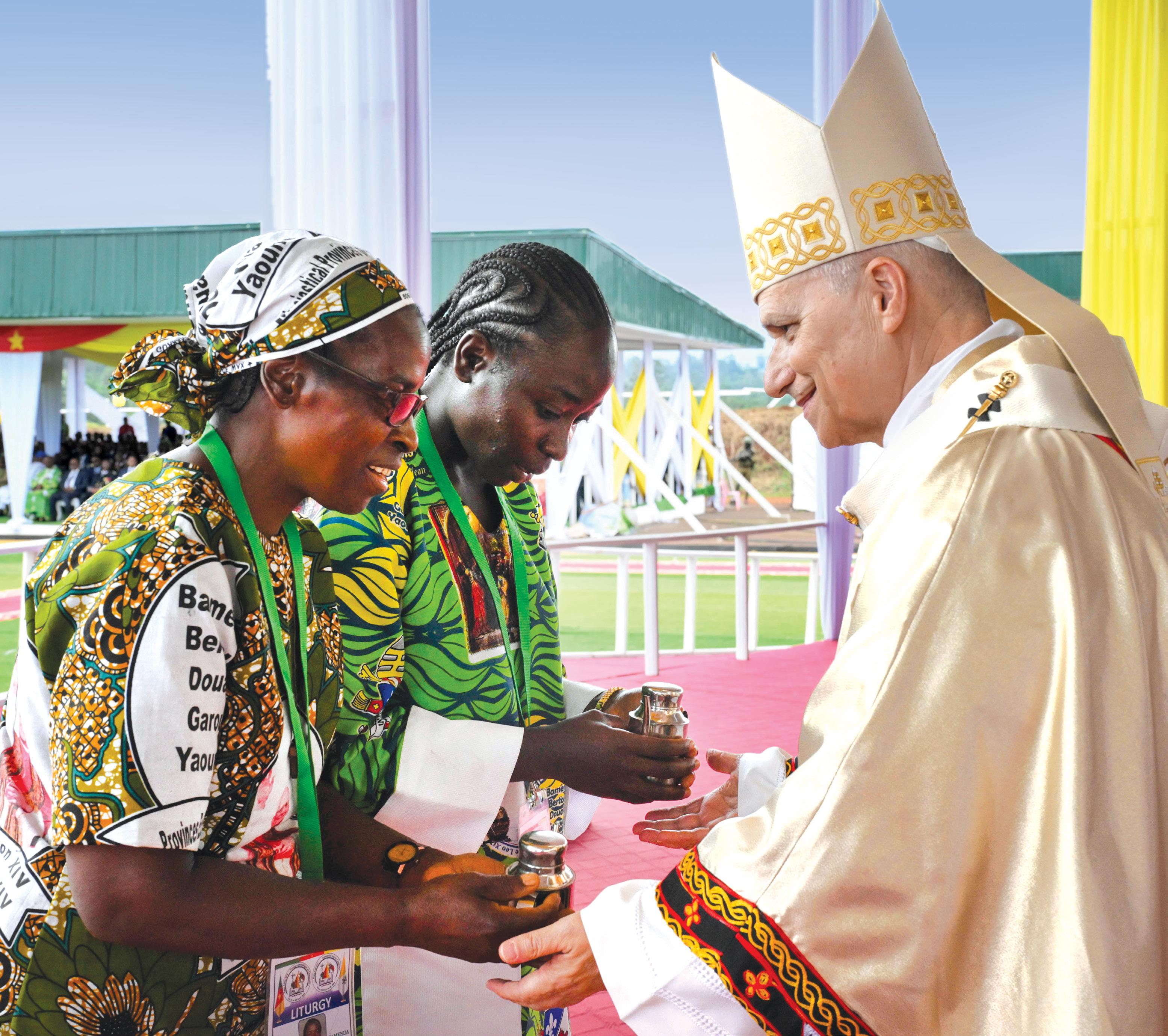
Pope Leo XIV receives the offertory gifts as he celebrates Mass at Bamenda International Airport in Cameroon April 16. OSV NEWS | SIMONE RISOLUTI, VATICAN MEDIA
PAGETWO
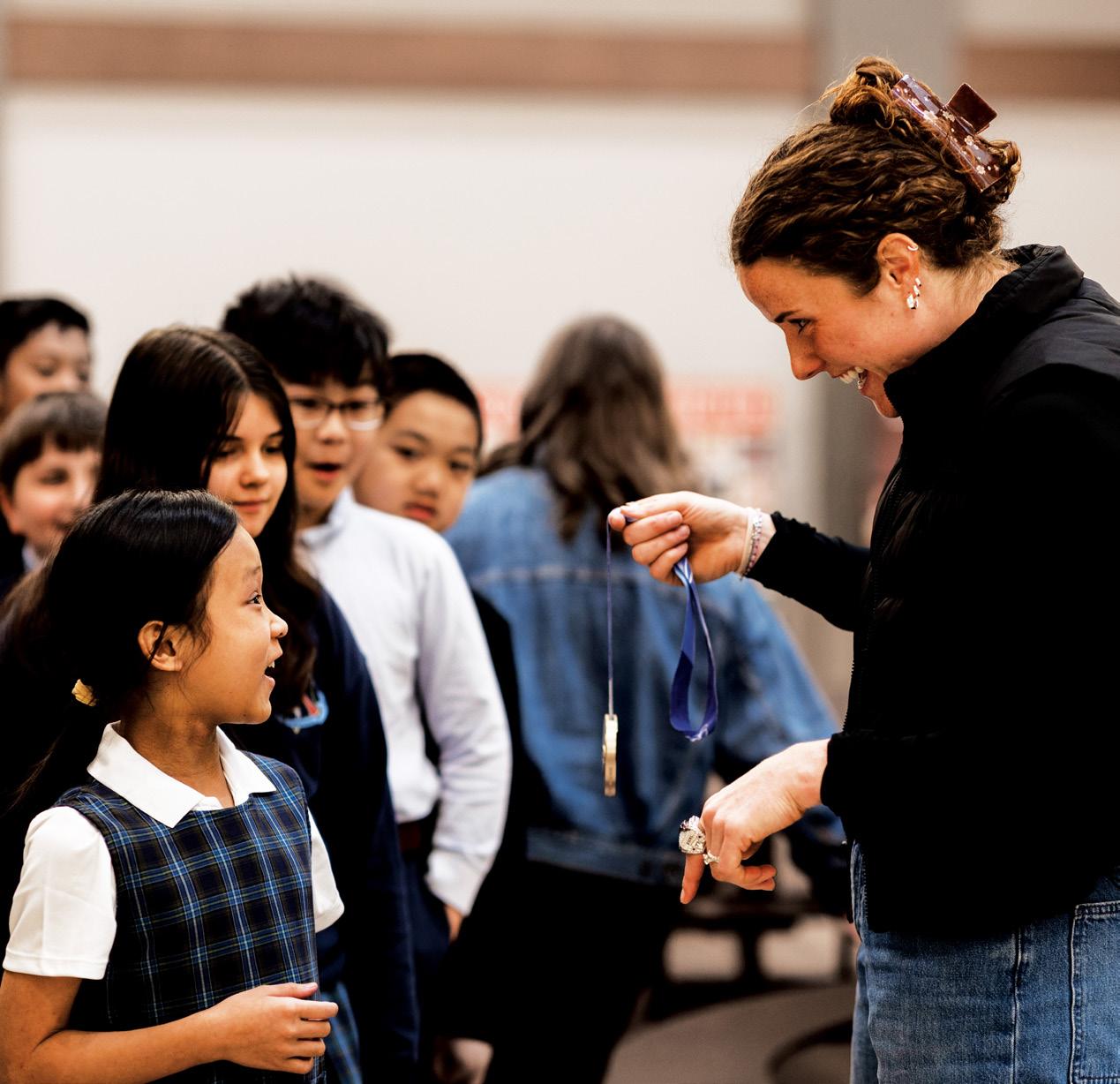
OLYMPIC GOLD Britta Curl-Salemme, right, who played on the U.S. women’s hockey team that won the gold medal at the 2026 Milano-Cortina Winter Olympic Games, shows her gold medal to fifth grader Alisa Duong at St. Agnes School in St. Paul March 26. Curl-Salemme, who was born in Bismarck, North Dakota, is a parishioner of St. Agnes. She spoke to students about the role that her faith plays in her success on and off the ice. She said that true greatness is found not only in personal achievement, but in faith, persistence and the courage to live boldly for Christ. “Whatever virtue you see in me, it comes from Christ in the Eucharist,” she said.
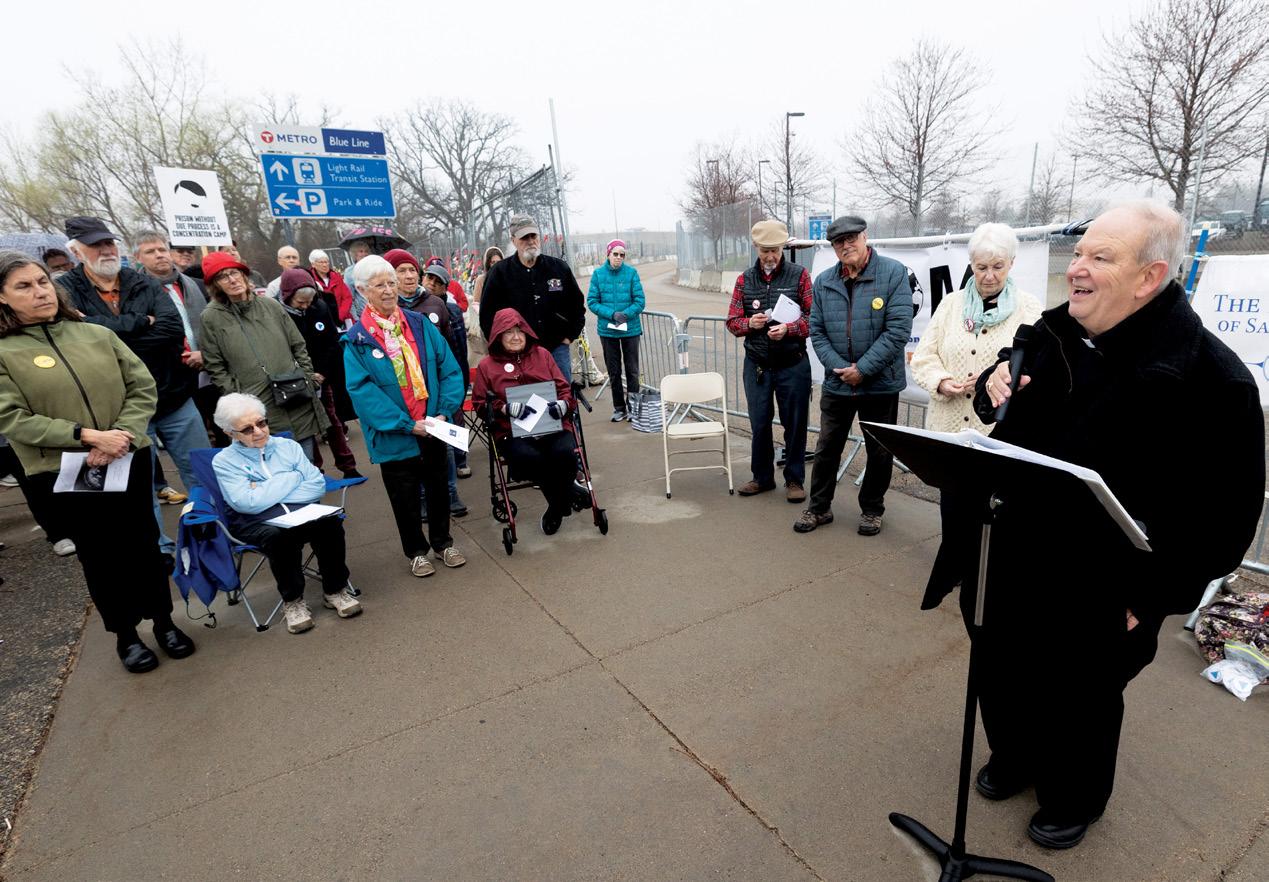
IMMIGRATION PRAYER VIGIL Archbishop Bernard Hebda delivers remarks and leads a prayer April 14 at the monthly prayer vigil by the Minnesota Interfaith Coalition on Immigration (ICOM) at the Bishop Henry Whipple Federal Building in St. Paul. About 50 people gathered, including people from parishes in the Archdiocese of St. Paul and Minneapolis. They sang, prayed and spoke in support of immigrants affected by the more than two-month federal immigration enforcement effort that the Department of Homeland Security called “Operation Metro Surge.” A Stations of the Cross prayer service held during Holy Week for those impacted by the federal enforcement effort drew about 250 people to Washburn Fair Oaks Park in Minneapolis on March 31.
Practicing CATHOLIC
Produced by Relevant Radio and the Archdiocese of St. Paul and Minneapolis, the April 17 “Practicing Catholic” radio show included Archbishop Bernard Hebda in an interview about how the resurrection of Jesus shapes lives. The program also featured Alec Collin, a local artist and worship leader, in an interview about how music can bring people closer to God. Listen to interviews after they have aired at practicingcatholicshow.com or choose a streaming platform at Spotify for Podcasters.
NEWS notes
An 8 a.m. May 2 Mass followed by prayer, fellowship, a meal and a craft activity at Epiphany in Coon Rapids will be held for mothers who have lost children to miscarriage or at any age. A Twin Cities chapter of the national nonprofit Red Bird Ministries founded in February by Matt and Marge Bona of St. Charles Borromeo in St. Anthony is organizing the Bereaved Mother’s Day Brunch. The gathering will be held as the world recognizes International Bereaved Mother’s Day on May 3. The event also recognizes that Mother’s Day celebrated May 10 can be a difficult time for women mourning the loss of a child, whether the death occurred recently or years in the past. The event at Epiphany will include an opportunity for mothers to talk about their deceased children. It will end at about 1 p.m. with music and prayers. People can register for the day at tinyurl.com/y73vajt3. Red Bird Ministries is an associated ministry with the Archdiocese of St. Paul and Minneapolis’ Office of Discipleship and Evangelization. The ministry recently received a $2,500 grant from the St. Paul-based Catholic Community Foundation (CCF) of Minnesota as seed money for its efforts.
Cretin-Derham Hall High School in St. Paul is hosting a boys’ volleyball Jamboree from 2-4:30 p.m. May 9 as it teams up with the Catholic Athletic Association (CAA) to build interest in the sport. Last year, the Minnesota State High School League for the first time approved high school volleyball for boys. Prior to that, high school boys’ volleyball had been played at the club level, and Cretin-Derham Hall is the only Catholic high school in Minnesota to sponsor its own team, said Travelle Evans-Vann, head official and director of rules for the CAA’s volleyball program. The CAA has an established, large and growing volleyball program for boys and girls many of whom go on to play the sport in high school and in clubs, Evans-Vann said in an email. CAA boys’ teams and individual players in fourth through eighth grades are eligible to play in the Jamboree, which will emphasize playing and learning basic skills in a friendly environment. Registration is required through Daniel Willaert at Cretin-Derham Hall at dwillaert@c-dh.org
A team made up of seminarians from The St. Paul Seminary in St. Paul won the annual Priest/Seminarian Basketball Tournament April 17 at Hill-Murray School in Maplewood. After defeating a team of seminarians from St. John Vianney College Seminary in St. Paul, the SPS men defeated a team of priests 51-50 on a last-second shot. The annual tournament began in 2009, with the format consisting of SJV men playing SPS men and the winning team playing the priests for the right to claim the championship trophy. Archbishop Bernard Hebda attended this year’s tournament, as did Hill-Murray President Melissa Dan.
About 250 priests, parish staff and lay leaders from more than 110 parishes across the Archdiocese of St. Paul and Minneapolis gathered at St. John the Baptist in New Brighton for the 2026 Stewardship Conference. With an emphasis on overcoming obstacles and fostering stewardship in parishes, presentations at the April 16 event centered on the four pillars of stewardship hospitality, prayer, formation and service. Representatives of Georgia-based Catholic Stewardship Consultants suggested ways to implement stewardship in parish life and the importance of fostering stewardship and forming disciples in the home. Bishop-elect Godfrey Mullen of Belleville, Illinois, shared from his experience in parish and diocesan leadership, and Father Brian O’Brien, rector of Holy Family Cathedral in Tulsa, Oklahoma, offered ideas for continuing to build momentum once a strong stewardship foundation is in place.
Archbishop Bernard Hebda urged the faithful to pray for peace “whether at home or at your parish” at 11 a.m. April 11, just as Pope Leo XIV prayed for peace along with thousands at St. Peter’s Square at 6 p.m. Rome time. “Our Holy Father, Pope Leo XIV, has asked that all people of goodwill join him to pray for peace tomorrow, Saturday, April 11,” the archbishop said in a statement April 10. Catholic parishes in the Archdiocese of St. Paul and Minneapolis were asked to open their doors for prayer at 11 a.m., he said. “This will be an opportunity for us to unite to ask Jesus, the Prince of Peace, to bring peace to our violent and troubled world, particularly at a time of escalating armed conflict,” Archbishop Hebda said. Parishes and dioceses throughout the country took up the pope’s call to pray for peace, OSV News reported. The pope had announced the initiative April 5 during an Angelus address given moments after celebrating Easter Mass. The plea came as the U.S.-Israel war on Iran, launched Feb. 28, spiraled into a regional conflict with thousands of casualties and extensive repercussions for global relations and markets.
Young adult listening event May 5 with Archbishop Hebda
By Josh McGovern The Catholic Spirit
Archbishop Bernard Hebda is inviting young adults from around the Archdiocese of St. Paul and Minneapolis to a prayer and listening event at the Cathedral of St. Paul in St. Paul to help shape the future of young adult ministry.
The May 5 gathering, to take place in the courtyard, will begin with a social hour and food trucks at 5:30 p.m., followed by music and lectio divina. It will continue with small group conversations and a discussion with Archbishop Hebda in a larger group setting. Men and women in their 20s and 30s are particularly invited.
“Over the past several years, I have been deeply encouraged to see so many young adults growing in faith, joining small groups, forming friendships rooted in Christ, whether it be through Catholic softball events, Hail Mary socials, Cathedral young adult initiatives or other parish-based or grassroots gatherings,” Archbishop Hebda said in a Facebook video. “Your faith, your witness and your presence are a vital part of the life of our Church.”
In 2025, more than 250 young adults came together for an archdiocesan event with Edward Sri at Station 10 Pub House in St. Paul. Sri led a talk about the Mass. Gizella “Gizzy” Miko, the facilitator of small groups for the archdiocese, said the May 5 gathering is meant to keep the momentum of Sri’s talk a year ago.
“We saw how successful that was,” Miko said. “In order to better serve young adults, we first want to hear from them so that we know what direction to build and what needs they have.”
Archbishop Hebda said he was moved by the liveliness “of our young Church” during last year’s young adult event.
“I long to support the ways that the Holy Spirit is guiding you, and it is for this reason I invite you to gather with me for a young adult prayer and listening event,” Archbishop Hebda said. “Your voice is important, and your insights will help guide how the archdiocese continues to support and accompany young adults in the years ahead.”
“I am grateful for the many ways young adults contribute to the life and mission of the Church, and I look forward to praying with you and hearing from you — may the Holy Spirit guide our time together,” Archbishop Hebda said. “I hope to see you there.”
COURTESY ST. AGNES SCHOOL
DAVE HRBACEK | THE CATHOLIC SPIRIT
FROMTHEARCHBISHOP
ONLY JESUS | ARCHBISHOP BERNARD HEBDA
The successors of Peter
As we continue our year-long celebration of the 175th anniversary of the establishment of our archdiocese, we have been mindful of how the Holy Spirit has been so abundantly present here in this local Church. At the same time, we need to be aware of how we are part of a universal Church founded by Jesus himself upon Simon, the Galilean fisherman, who would from that point onward be known as Peter (a name meaning “rock”). “You are Peter,” Jesus said, “and on this rock I will build my Church” (Mt 16:18).
In these first weeks of the Easter season, Peter has figured prominently in our readings at Mass. Despite his earlier denial of Christ, the repentant Peter emerges at Pentecost as a great leader: He preaches the good news convincingly, wins thousands of converts to the Christian way of life, and even works miracles. The man who had once been too afraid to admit to a servant girl that he even knew Jesus would by God’s grace conquer his fears and come to proclaim that “it is impossible for us not to speak about what we have seen and heard” (Acts 4:20). Even after being arrested and scourged, he joined his brothers in stating that “We must obey God rather than men” (Acts 5:29).
For the 13 years that I worked at the Vatican, I could see from our office the spot where Peter was martyred and buried. There has been a basilica on that site from the fourth century, and throughout all those years countless Catholics have traveled there on pilgrimage to pray at Peter’s tomb, to recall his courageous
Los sucesores de Pedro
Mientras continuamos nuestra celebración de un año con motivo del 175 aniversario de la fundación de nuestra arquidiócesis, hemos tenido muy presente cuán abundantemente ha estado presente el Espíritu Santo aquí, en esta Iglesia local. Al mismo tiempo, debemos ser conscientes de que formamos parte de una Iglesia universal, fundada por el propio Jesús sobre Simón — el pescador galileo — quien desde ese momento sería conocido como Pedro (nombre que significa “roca”). “Tú eres Pedro — dijo Jesús — y sobre esta roca edificaré mi Iglesia” (Mt 16:18). En estas primeras semanas del tiempo pascual, Pedro ha ocupado un lugar destacado en nuestras lecturas de la Misa. A pesar de su anterior negación de Cristo, el Pedro arrepentido emerge en Pentecostés como un gran líder: predica la Buena Nueva con convicción, gana miles de conversos para el estilo de vida cristiano e incluso realiza milagros. El hombre que en otro tiempo tuvo demasiado miedo para admitir ante una sirvienta que siquiera conocía a Jesús, vencería — por la gracia de Dios — sus temores y llegaría a proclamar que “nosotros no podemos dejar de hablar de lo que hemos visto
witness, and to seek his intercession for his successors as they have led the Church.
The Catechism of the Catholic Church affirms that the pope, as Peter’s successor, is “the perpetual and visible source and foundation of the unity both of the bishops and of the whole company of the faithful” (CCC 882). It also states that the pope has “full, supreme, and universal power over the whole Church, a power which he can always exercise unhindered.”
We have seen that power exercised in the decision of Blessed Pius IX to establish the Diocese of St. Paul in 1850, in the naming of its first bishop (Bishop Joseph Cretin) and in the direct appointment of all the shepherds since then to lead this local Church.
While the archdiocese has yet to be visited by a reigning pontiff, we’ve clearly been cared for by the successors of Peter. I remember how comforted we were by Pope Francis’ prayers during the turmoil that shook the Twin Cities in the aftermath of the death of George Floyd. I will always recall, moreover, Pope Leo XIV’s expressions of closeness to the Annunciation community and to the whole archdiocese last August, along with his promise of prayers. He’s not some distant figure in Rome but a real shepherd for us. How blessed we are to have a successor of Peter who speaks our language, knows our Midwestern culture, and even lived for a summer in the Twin Cities.
One of the key functions of a pope is to teach. In every age, the Church needs the bold preaching of the successor of Peter. In his voice, we hear the voice of Jesus. If you have ever been to an installation of a pastor, you may recall that he is asked to confirm that he adheres
y oído” (Hch 4:20). Incluso después de haber sido arrestado y flagelado, se unió a sus hermanos para afirmar: “Es necesario obedecer a Dios antes que a los hombres” (Hch 5:29). Durante los trece años que trabajé en el Vaticano, podía ver desde nuestra oficina el lugar donde Pedro fue martirizado y sepultado. En ese sitio ha habido una basílica desde el siglo IV y, a lo largo de todos esos años, incontables católicos han viajado hasta allí en peregrinación para rezar ante la tumba de Pedro, recordar su valeroso testimonio y buscar su intercesión por sus sucesores mientras estos guiaban a la Iglesia.
El Catecismo de la Iglesia Católica afirma que el Papa, como sucesor de Pedro, es “el principio y fundamento perpetuo y visible de la unidad, tanto de los obispos como de toda la multitud de los fieles” (CIC 882). También establece que el Papa posee “potestad plena, suprema y universal sobre toda la Iglesia, potestad que puede ejercer siempre sin impedimento”.
Hemos visto ese poder ejercido en la decisión del Beato Pío IX de establecer la Diócesis de San Pablo en 1850, en el nombramiento de su primer obispo (el obispo Joseph Cretin) y en la designación directa de todos los pastores, desde entonces, para guiar a esta Iglesia local. Si bien la arquidiócesis aún no ha sido visitada por un pontífice
“with religious submission of will and intellect” to the pope’s teaching. That requirement is by no means limited to clerics. As Catholics, we are always called to respect the Holy Father and to open our hearts and minds to his teaching. As Archbishop Paul Coakley, the president of the U.S. Conference of Catholic Bishops, recently noted, the Holy Father speaks not as a politician but as “the Vicar of Christ who speaks from the truth of the Gospel and for the care of souls.”
I am grateful that Pope Leo, like his predecessor, Peter, is committed to preaching the Gospel in its fullness, even when the message might make us uncomfortable. I was encouraged when he recently said that he has “no fear” of “speaking out loudly of the message of the Gospel.” We live in a world that needs a reliable and consistent moral voice, and we are blessed that Christ structured his Church so that Peter and his successors, empowered by the Holy Spirit, could always provide that anchor.
In the midst of the tensions of our day, the Holy Father certainly deserves our prayers. Please join me in praying for him, perhaps using this collect from the Roman Missal:
“O God, who chose your servant Leo in succession to the Apostle Peter as shepherd of the whole flock, look favorably on the supplications of your people and grant that, as Vicar of Christ on earth, he may confirm his brethren and that the whole Church may be in communion with him in the bond of unity, love and peace, so that in you, the shepherd of souls, all may know the truth and attain life eternal.” Amen.
reinante, es evidente que hemos sido cuidados por los sucesores de Pedro. Recuerdo cuánto consuelo nos brindaron las oraciones del Papa Francisco durante la agitación que sacudió las Ciudades Gemelas tras la muerte de George Floyd. Recordaré siempre, además, las expresiones de cercanía del Papa León XIV hacia la comunidad de la Anunciación y hacia toda la arquidiócesis el pasado mes de agosto, junto con su promesa de oraciones. Él no es una figura distante en Roma, sino un verdadero pastor para nosotros. Cuán bendecidos somos al tener un sucesor de Pedro que habla nuestro idioma, conoce nuestra cultura del Medio Oeste e incluso vivió un verano en las Ciudades Gemelas. Una de las funciones clave de un papa es enseñar. En todas las épocas, la Iglesia necesita la predicación audaz del sucesor de Pedro. En su voz, escuchamos la voz de Jesús. Si alguna vez ha asistido a la toma de posesión de un párroco, tal vez recuerde que se le pide confirmar que se adhiere “con sumisión religiosa de voluntad y intelecto” a la enseñanza del Papa. Este requisito no se limita en absoluto a los clérigos. Como católicos, estamos siempre llamados a respetar al Santo Padre y a abrir nuestros corazones y mentes a su enseñanza. Como señaló recientemente el arzobispo Paul Coakley, presidente de la Conferencia de Obispos Católicos de los Estados
OFFICIALS
Archbishop Bernard Hebda has announced the following appointments in the Archdiocese of Saint Paul and Minneapolis:
Effective March 25, 2026
Deacon John Fischer, assigned to exercise the ministry of a permanent deacon at the Church of Saint Thomas More in Saint Paul and the Church of Saint Francis de Sales in Saint Paul. This is a transfer from his previous assignment at the Church of Saint Patrick in Inver Grove Heights.
Effective April 6, 2026
Deacon Michael Nevin, assigned to exercise the ministry of a permanent deacon at the Church of Saint Michael in Saint Michael. This is a transfer from his previous assignment at the Church of Saint John the Baptist in Excelsior.
Deacon John Shearer, assigned to exercise the ministry of a permanent deacon at the Church of Saint Maximilian Kolbe in Delano. This is a transfer from his previous assignment at the Church of the Nativity of the Blessed Virgin in Bloomington.
Effective April 12, 2026
Reverend José Cortes, FSCB, assigned as parochial vicar of the Church of Saint Peter in North Saint Paul. Father Cortes was previously assigned as pastor of the same parish.
Unidos, el Santo Padre no habla como un político, sino como “el Vicario de Cristo que habla desde la verdad del Evangelio y para el cuidado de las almas”.
Agradezco que el Papa León, al igual que su predecesor, Pedro, esté comprometido a predicar el Evangelio en su plenitud, incluso cuando el mensaje pueda resultarnos incómodo. Me sentí alentado cuando recientemente afirmó que no tiene “ningún temor” de “proclamar en voz alta el mensaje del Evangelio”. Vivimos en un mundo que necesita una voz moral fiable y coherente, y somos afortunados de que Cristo haya estructurado su Iglesia de tal modo que Pedro y sus sucesores, fortalecidos por el Espíritu Santo, puedan ofrecer siempre ese anclaje. En medio de las tensiones de nuestros días, el Santo Padre merece ciertamente nuestras oraciones. Por favor, únanse a mí para rezar por él, tal vez utilizando esta oración colecta del Misal Romano: “Oh Dios, que elegiste a tu siervo León, sucesor del apóstol Pedro, como pastor de todo el rebaño: mira con benevolencia las súplicas de tu pueblo y concede que, como Vicario de Cristo en la tierra, confirme a sus hermanos y que toda la Iglesia permanezca en comunión con él en el vínculo de la unidad, del amor y de la paz; para que en ti, Pastor de las almas, todos conozcan la verdad y alcancen la vida eterna”. Amén.
Reverend Pietro Rossotti, FSCB, assigned as pastor of the Church of Saint Peter in North Saint Paul. Father Rossotti was previously serving as parochial vicar of the same parish.
Effective May 1, 2026
Reverend Andrew Jaspers, assigned as chaplain for Regions Hospital in Saint Paul. This is a transfer from his previous assignment as chaplain for North Memorial Health-Robbinsdale Hospital.
Reverend Brian Lynch, assigned as chaplain for North Memorial Health-Robbinsdale Hospital. This is a transfer from his previous assignment as chaplain for Regions Hospital in Saint Paul. Father Lynch is also the pastor of the Church of Saint Agatha in Coates.
Effective June 1, 2026
Deacon Greg Sroder, granted the status of a retired deacon. Deacon Sroder has served as a deacon in the Archdiocese since his ordination in 2001, most recently at the Church of Saint Joseph in West Saint Paul.
Effective June 9, 2026
Deacon Ray Ortman, granted the status of a retired deacon. Deacon Ortman has served as a deacon in the Archdiocese since his ordination in 2002, most recently at the Church of Saint Victoria in Victoria.
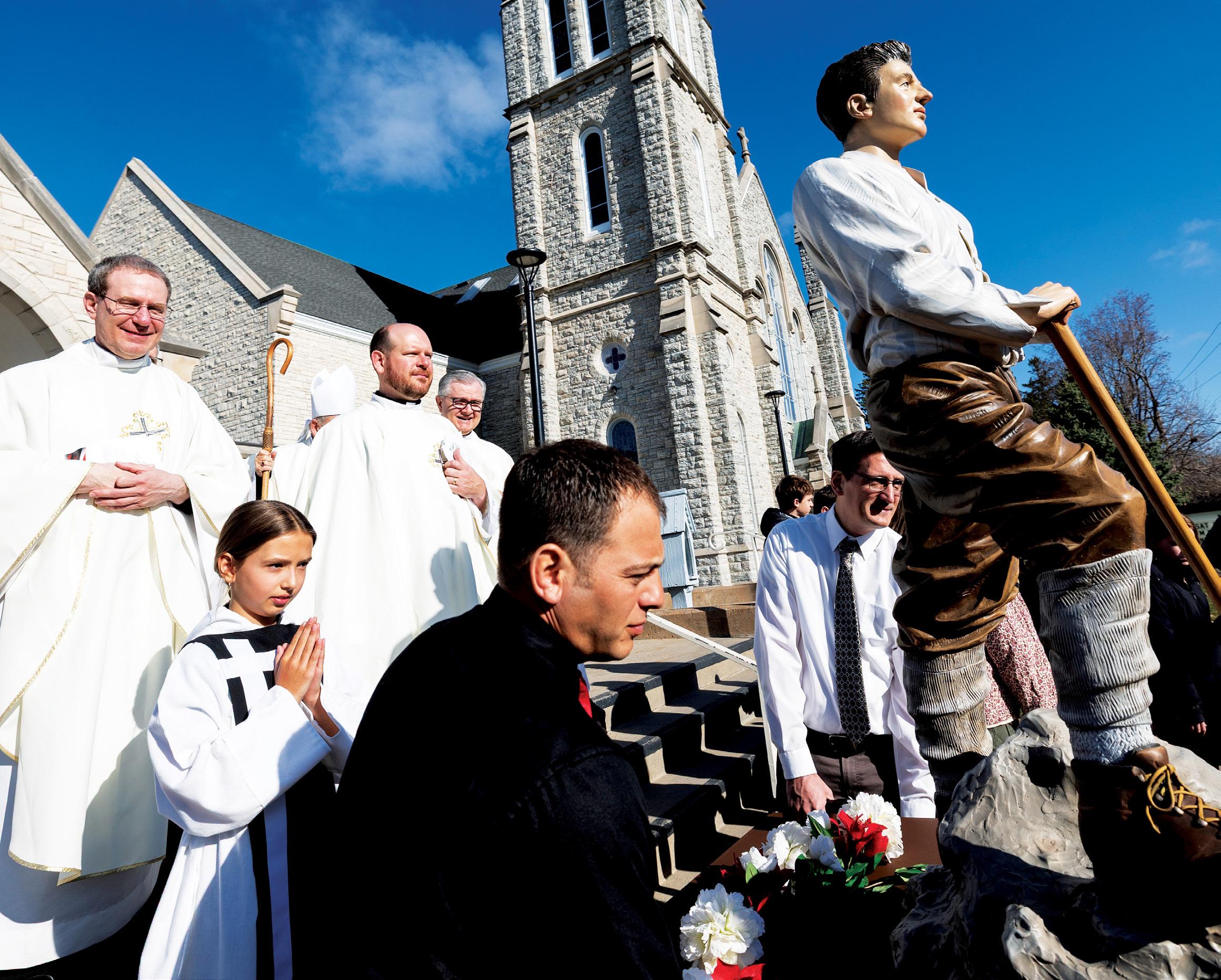
A Frassati adventure
John Shellenberger, foreground, and other volunteers carry a near life-sized statue of St. Pier Giorgio Frassati from St. Mary of the Lake in White Bear Lake one block down the street to Frassati Catholic Academy, which is a regional elementary school for the parishes of St. Mary of the Lake and St. Pius X, also in White Bear Lake. Archbishop Bernard Hebda celebrated a Mass for school students and people in the two parishes, then joined the procession. He blessed the statue after it was installed in a statuary just inside the front entrance of the school. Priests who joined the Mass and procession, are, from back left, Father Joseph Bambenek, former pastor of St. Pius X; Father T.J. McKenzie, pastor of St. Pius X; and Father Allan Paul Eilen, pastor of St. Mary of the Lake. At left in front of Father Bambenek is altar server Sophia Martinez, a fifth grader at Frassati Catholic Academy. P.J. Butler, principal of the pre-K–8 school, said the statue was donated by a parishioner who wishes to remain anonymous. It was made in Italy and shipped to the school. “I just think the person of Pier Giorgio is a beautiful witness for us as a community of learners,” Butler said. “We love this guy. We love who he is, we love the story he’s a part of because it’s our story, and we want to stay close to him and learn from him.”
DAVE HRBACEK | THE CATHOLIC SPIRIT
With an endowment, you can leave a legacy that reflects your Catholic faith and provides lasting support for your beloved parish and its ministries — year after year.
Learn more about the power of endowment. Call 651.389.0300 or visit ccf-mn.org

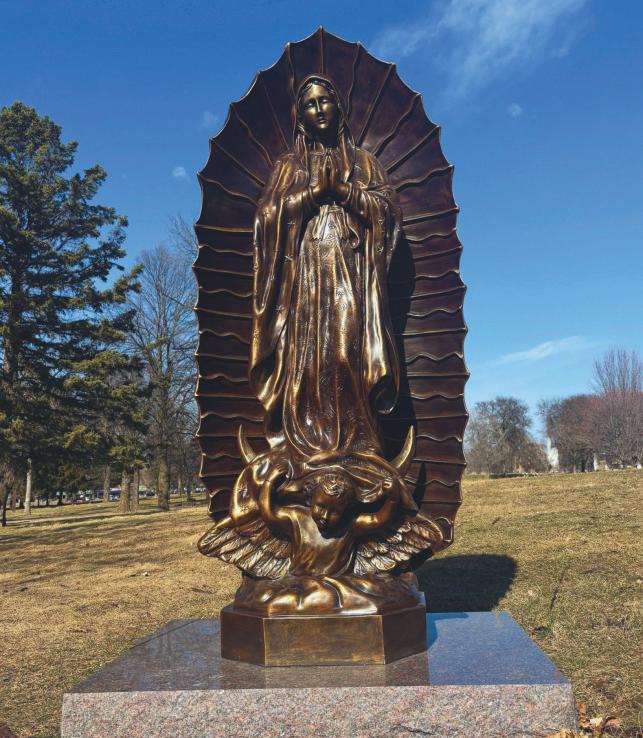
Monday, April 27, 2026 | 10:00 AM
Join us for the blessing of the Our Lady of Guadalupe Statue located in our new section! Archbishop Hebda will preside at the blessing and dedication. All are warmly invited to attend this special occasion!
Answering the call Metro area parishes launch Our Lady’s Table to feed neighbors in need
By Maura Keller For The Catholic Spirit
When a Loaves and Fishes meal site at St. Gabriel the Archangel in Hopkins closed in late 2025, it marked an abrupt end to a familiar source of support for many in the community. For St. Gabriel and Our Lady of Grace (OLG) in Edina, the closure became something more: a moment of discernment and a call to act.
Rather than focusing on what was lost, leaders and volunteers at OLG and St. Gabriel asked how they could continue serving their neighbors in a way that was sustainable and rooted in their identity as a Eucharistic people.
The answer took shape in early 2026 with the launch of Our Lady’s Table, a parish-led ministry offering weekly meals with a renewed sense of dignity, connection and Catholic hospitality. What began as a response to disruption has grown into a collaborative, faith-driven effort that reflects the parishes’ shared mission.
A turning point
For years, OLG and St. Gabriel were active participants in the Minneapolis-based nonprofit Loaves and Fishes network, which was founded in 1982 to provide healthy meals to Minnesotans in areas of greatest need. Starting with one site in Minneapolis and one in St. Paul, Loaves and Fishes has grown to include sites in more than a dozen counties around the Twin Cities and rural Minnesota, according to its website.
St. Gabriel’s commercial-grade kitchen made it an essential host site in the Hopkins area and OLG volunteers regularly served at multiple locations throughout Minneapolis.
“In May 2025, OLG relaunched serving through Loaves and Fishes at St. Gabriel’s,” said Cosette DeCesare, pastoral care and outreach coordinator at Our Lady of Grace. “We served there until November, when Loaves and Fishes abruptly closed the site.”
The closure was part of a broader restructuring effort. “The decision to close some of our sites was not made lightly,” said Mel McCormick, director of operations for Loaves and Fishes. “Rising food costs, increased operational expenses and growing demand have all taken a toll. To ensure longterm sustainability, we had to make strategic adjustments.”
For the parishes, the change created both a gap and an opportunity. Without a thirdparty organization coordinating meals, they were prompted to consider what they could accomplish on their own.
“We decided to pivot and respond so as to fill the void,” DeCesare said. “We started a new program and named it Our Lady’s Table.”
The shift was significant. No longer simply hosting and volunteering in a program, the parishes became its architects — shaping a ministry that reflected their values, resources and vision.
Building something new
At St. Gabriel, pastor Father Paul Haverstock had long considered what a fully parish-led initiative might look like. The closure of the Loaves and Fishes site, though sudden, felt like a moment of clarity.
“It feels good as a Catholic church to serve those who are in need,” he said. “It’s a huge part of the Gospel to meet people’s material needs, just like it is to meet their spiritual needs. While we were always grateful for Loaves and Fishes, there were limitations. I had often thought that if they were ever not here, it would be meaningful to create
something in-house where we could also share the faith more explicitly.”
That opportunity arrived quickly. “They reached out on a Friday and said Monday would be their last day,” he recalled.
Within months, the parishes organized a new model. Launched in February 2026, Our Lady’s Table now serves weekly to-go meals every Tuesday evening from St. Gabriel’s kitchen.
Each week, volunteers prepare between 50 and 75 meals. “Typically, we make a hearty casserole and a side salad,” DeCesare said. “We include soft fruit and a cookie, and we also prepare PB&J (peanut butter and jelly) sandwiches for guests to take with them for the next day.”
Much of the food is sourced through Food To People, a Catholic-run organization dedicated to rescuing high-quality surplus food and redirecting it to those in need. This partnership helps ensure that meals are cost-effective and environmentally responsible. Additional support comes from local Catholic-owned businesses, including a weekly donation of fresh-baked cookies from ChunkChunk Ice Cream in Hopkins.
The operation reflects the two parishes’ shared commitment. Volunteers from OLG and St. Gabriel alternate weeks and sometimes serve side-by-side, creating a rhythm of collaboration that has strengthened relationships across parish lines.
“The prep, package and distribute model is familiar,” DeCesare said. “But the difference is that our parishioners are building and running this from start to finish. There’s a real sense of ownership.”
That sense of local initiative is something McCormick of Loaves and Fishes finds encouraging. “We are incredibly glad to see other organizations move into these spaces,” she said. “The goal has never been ownership — it’s impact.”
More than a meal
While the program emphasizes efficiency and accessibility, its leaders are equally focused on fostering connection.
“Food access isn’t just about calories,”
McCormick said. “It’s about reliability, safety and relationships. Guests build trust with the people serving them.”
That relational dimension is central to Our Lady’s Table. “Even in brief exchanges, there’s an opportunity for connection,” DeCesare said. “It becomes more than distribution — it becomes encounter.”
For Father Kevin Finnegan, pastor of Our Lady of Grace, that encounter is essential to the ministry’s long-term vision.
“We need to find ways for more people to serve together, because that in itself is good for the soul,” he said. Reflecting on the COVID-19 pandemic years, he added, “We got used to distributing food for people to take home and eat alone. That was necessary at the time, but now we want something more. We want people to know one another and share in something together.”
Ultimately, he said, the goal is to draw people out of isolation and into community. “We want to bring people into the family of God.”
A distinctly Catholic effort
While Our Lady’s Table builds on the legacy of past partnerships, it has developed a distinct identity as a Catholic-led initiative. From its sourcing partnerships to its emphasis on hospitality and human dignity, the ministry reflects a holistic understanding of service.
For Father Haverstock, it is a natural expression of the Church’s mission. “The Catholic Church has always met material needs as a way of opening the door to spiritual care,” he said. “It’s about being the presence of Christ in the neighborhood. When we feed the hungry, we are tending to the body of Christ.”
Clarity of purpose has inspired strong support from both parishes. “Volunteer slots are filled months in advance,” DeCesare said. “The response has been immediate and generous.”
The collaboration has also created momentum for future growth. Leaders from both parishes hope to expand the initiative and invite additional parish communities to participate.
Looking ahead
As the ministry continues to develop, its leaders are already imagining what comes next. One priority is moving beyond a strictly to-go model toward opportunities for shared meals and deeper fellowship.
“I’d love to see it grow into something where people can sit down together,” Father Finnegan said. “There’s something powerful about sharing a meal in the same space.”
DeCesare echoed that hope. “We’re working toward offering a regular, in-person community meal alongside the to-go service,” she said.
For Father Haverstock, the long-term vision is even broader. “I’d love to see us serving meals most days of the week,” he said. “A place where people can gather, share food and hear a message of encouragement. That’s what a parish is meant to be — a place where everyone is fed.”
Even in its early months, Our Lady’s Table has made a tangible impact. Volunteers regularly hear from guests who are grateful to see the return of consistent meal service in the area.
“We’ve lost count of how many people have thanked us,” DeCesare said. “And the neighborhood children are especially excited about the cookies.”
Those small moments of gratitude point to something larger: a community responding together to a shared need. “Hunger is a community-wide challenge,” McCormick said. “It requires nonprofits, volunteers, donors, neighbors and faith groups all working together.”
In the case of Our Lady’s Table, that collaboration has taken on a distinctly local and deeply personal form — one rooted in faith, sustained by partnership and focused on encounter.
What began as an unexpected closure has become a new expression of Catholic life in action. As the ministry grows, Father Haverstock said, its guiding principle remains simple and enduring: to ensure that all who come are welcomed, nourished and known.
|
CATHOLIC SPIRIT
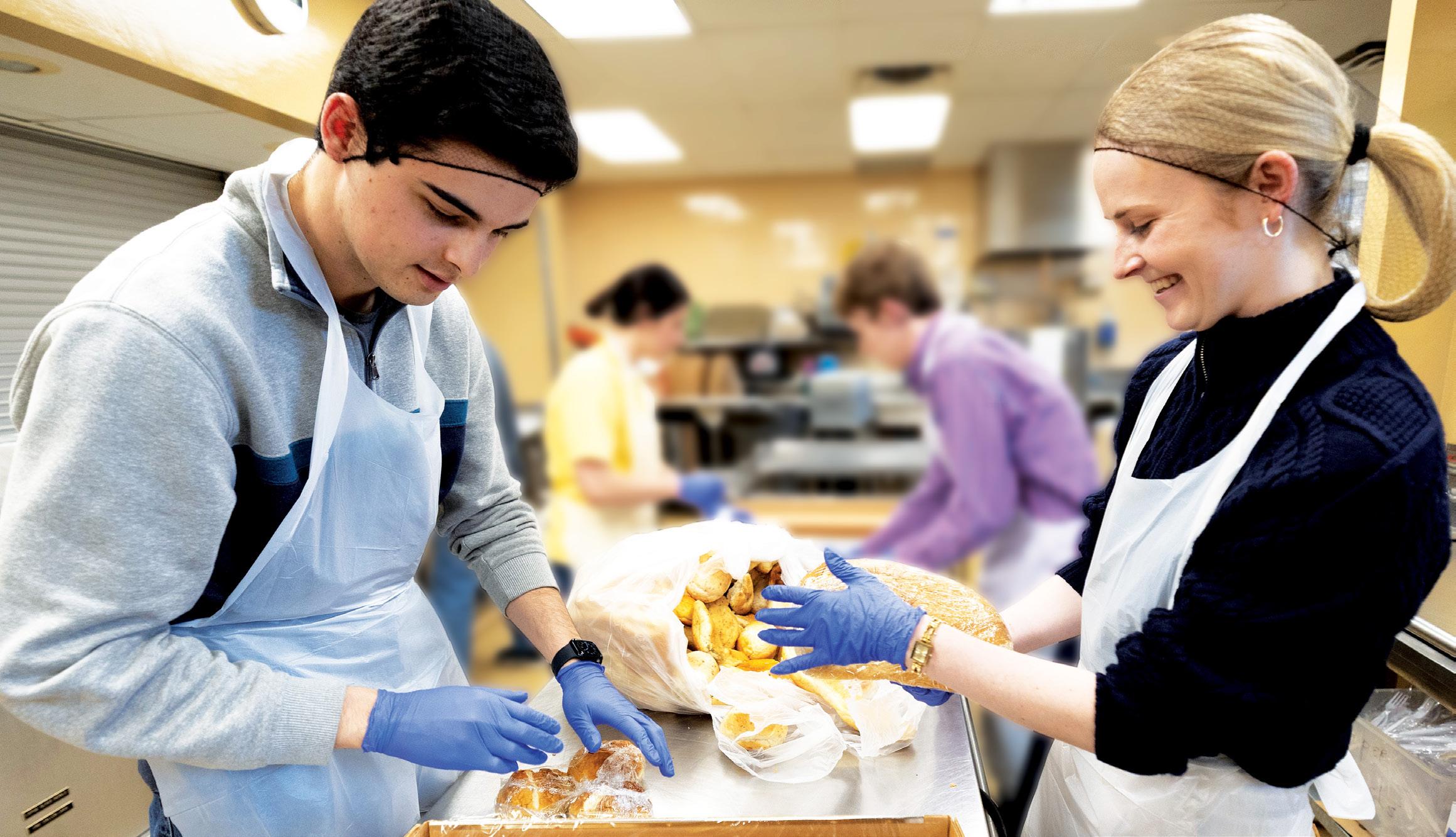
From left, volunteers Derek Prusener and Payton Janish of Our Lady of Grace in Edina package bread April 14 for Our Lady’s Table at St. Gabriel the Archangel in Hopkins. Volunteers of the two parishes work to provide weekly meals to the hungry.
7 young women awarded ACCW Golden Rose Award


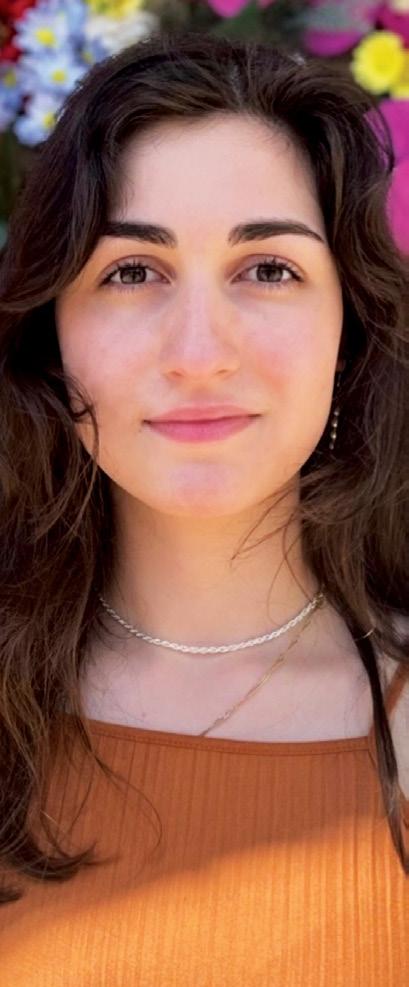
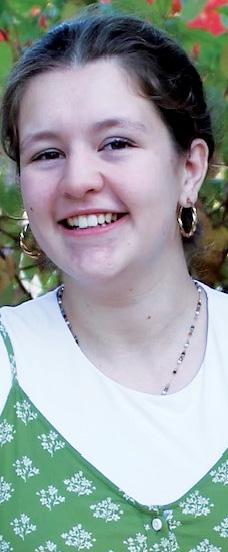
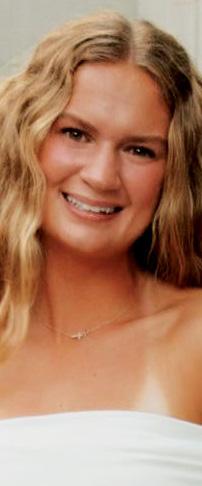


By Josh McGovern The Catholic Spirit
Seven young women will receive the Golden Rose Award May 1 during the Archdiocesan Council of Catholic Women (ACCW)’s 93rd annual convention at St. Elizabeth Ann Seton in Hastings. The award recognizes those who regularly attend Sunday Mass and are active in parish and community activities.
Parishes in the archdiocese were invited in December 2025 to nominate women between the ages of 14 and 21 who demonstrate leadership skills, spirituality and service.
To be honored are Lauren Craig of St. Timothy in Blaine, Anna Croke of Divine Mercy in Faribault and Lydia Haupt of St. Pius X in White Bear Lake, all 18; Angela Reimann of St. Peter in Mendota; Kayla Kallenbach of Our Lady of the Lake in Mound and Helena Wiik of St. Pius X in White Bear Lake, both 21; and Kathryn Roberg of St. Henry in Montecillo.
All are active in their parishes. Reimann and Wiik are Eucharistic ministers during Mass; Croke is a sacristan, and she and Roberg are lectors. Craig sings and plays the trumpet in youth choir and volunteers at parish events such as living Stations of the Cross, parish carnivals, fish fry dinners and retreats.
Haupt is a senior member of St. Pius X’s altar server team, helping mentor young servers during the liturgy.
In college, Kallenbach volunteers with children’s programs at a parish in Fort Myers, Florida. She attends Florida Gulf Coast University as a double major in psychology and forensic science, with the goal of supporting children and families who have experienced trauma and mental health challenges. At the college, Kallenbach founded Letters of Love Chapter, a nonprofit that sends handwritten cards to children hospitalized with serious illnesses. She also participates in Best Buddies International, a nonprofit dedicated to ending social, physical and economic isolation of people

with intellectual and developmental disabilities.
Haupt is in the dental assistant program at Century College in White Bear Lake. She has a deep reverence, knowledge and love for the Church, her nominator wrote. For her Eagle Scout project, Haupt helped build shelves and benches for the Catechesis of the Good Shepherd program at her parish. She participates in summer youth trips and coordinates games during parish events.
Reimann teaches preschool religion classes and is a substitute teacher for middle school faith formation. She volunteers at Vacation Bible School, Pro Ecclesia Sancta events, summer Catholic Family Retreats and other programs. An advocate for pro-life ministries, she also is involved in the Council of Catholic Women’s Caring Hands meal program and parish fundraisers. She co-founded the Dead Theologian Society youth ministry, of which Roberg is a member, and often leads prayer services and fellowship.
Reimann mentors a young girl whose older sister died, providing companionship and spiritual guidance.
Roberg participates in lectio divina, helps organize middle school retreats and is a small group leader at Extreme Faith Camp. She assists with Catechesis of the Good Shepherd and helps prepare students for first Communion and
reconciliation.
Croke helps lead middle school, confirmation and high school faith formation programs and small group Bible studies. A senior at Bethlehem Academy in Faribault, Croke is vice president of Students Against Destructive Decisions, secretary and treasurer of the student council and a varsity basketball captain. She volunteers as a kindergarten teacher’s aide at Divine Mercy Catholic School.
Despite her family moving to Florida, Croke plans to complete her final year at Bethlehem Academy.
Craig’s presence as a small group leader for middle school youth and as a peer minister set her apart at St. Timothy, her nominator wrote, adding that the high school senior and full-time Postsecondary Enrollment Options (PSEO) college student has a genuine concern for others, especially those on the margins.
Wiik is pursuing a nursing degree and is a Certified Nursing Assistant at St. Benedictine Living Community in New Brighton. In parish life, Wiik steps in “wherever she is needed,” her nominator wrote, such as the annual bingo fundraiser or fall festival. She assists at local blood drives, substitutes in the faith formation program at St. Pius X and teaches religion to preschool children during Sunday Mass.
If we don’t build our own economy, others will. Come celebrate—and be strengthened by—the local Catholic businesses in our Archdiocese!
The day includes: Mass, Lunch, Breakout Sessions, Expo and Maker’s Market, Guest Speakers, and our New Pitch Event. $29/Person covers the full day. Learn more online.
www.sjbusinessguild.org/sjf
PATRICK’S CHURCH, EDINA
ANNA CROKE
LAUREN CRAIG
KATHRYN ROBERG
ANGELA REIMANN KAYLA KALLENBACH HELENA WIIK
LYDIA HAUPT
Father Valencia leaves legacy in medical mission trip to Philippines
By Josh McGovern
The Catholic Spirit
The late Father Victor Valencia grew up on the small island of Negros in the Philippines. He came to Minnesota in 2007. It was a dream of his to return to the Philippines on a medical mission trip.
He saw his dream come true in 2025 after five years of planning. A weeklong medical mission trip, sponsored by the sister parishes of St. Ignatius in Annandale and St. Vincent Ferrer in Pacuan, Philippines, brought supplies, medical treatment and care to Pacuan in August of that year. The sister parish relationship was established by Father Valencia and a mission team when he was pastor of St. Ignatius from 2003 to 2014.
The first St. Ignatius mission team traveled to Pacuan in 2009 to establish the sister parish. Since then, seven teams have traveled to Pacuan and two delegates from the small Filipino village traveled to Annandale in 2013.
“Pacuan is a small village in the district of La Libertad,” said Denice Tracy, 63, a St. Ignatius parishioner who helped plan the mission trip. “It’s up in the mountains, and it’s a very, very poor area. … We’ve actually helped them build a church. … The whole idea of a sister parish is a relationship. … We accomplished a lot there.”
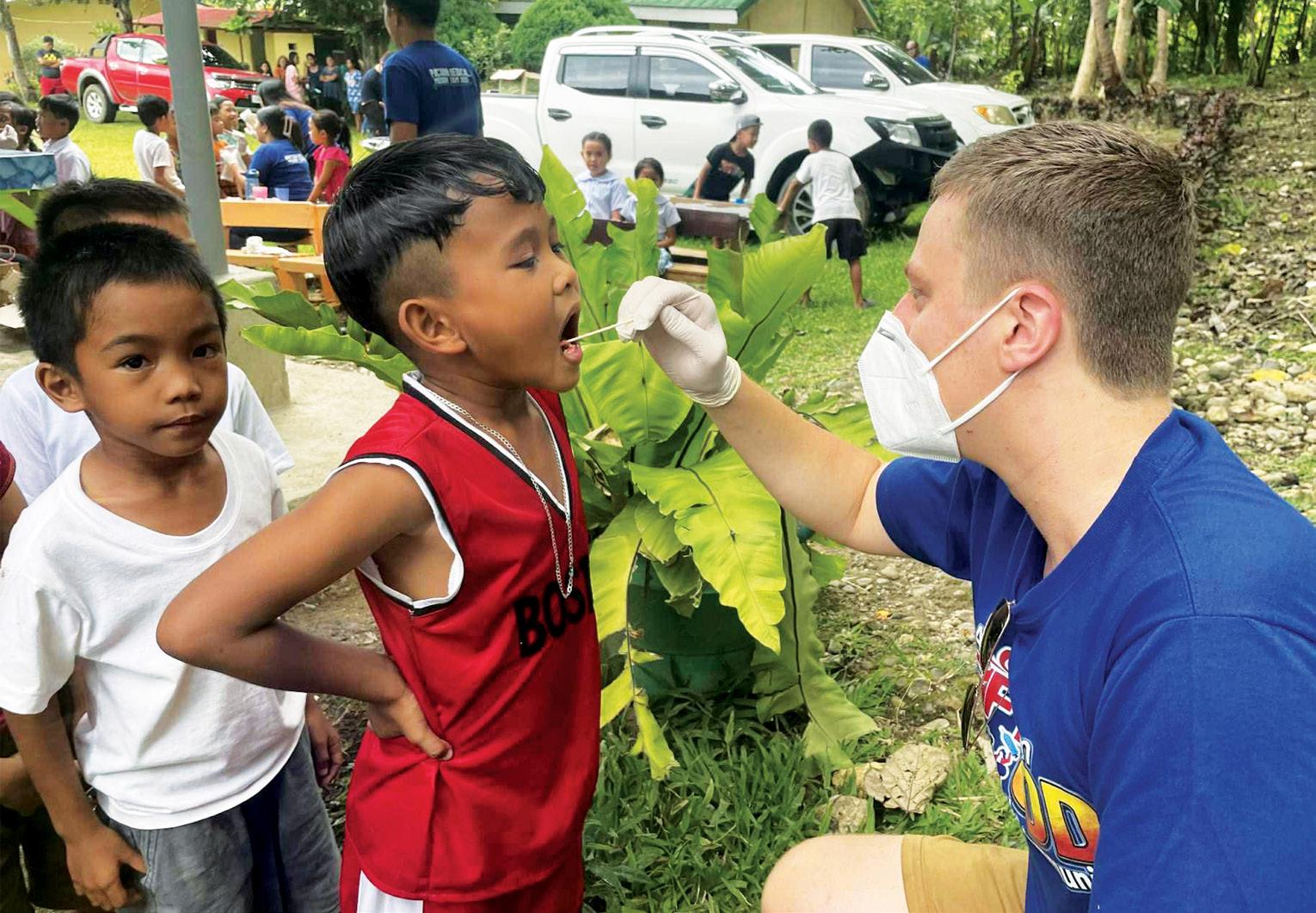
During the medical mission, volunteers established a triage station and provided minor surgery with local anesthesia. They provided dental care, such as fluoride treatments, and eye care with glasses. They also provided dental education, toothbrushes and toothpaste to four elementary schools.
Father Valencia died unexpectedly from heart failure at age 65 during the mission trip. But his desire to bring medical supplies and assistance to the place of his birth will continue through St. Ignatius’ commitment to St. Vincent Ferrer.
In honor of Father Valencia, another medical mission was held from March 2-3 in Bayawan City, Philippines, on Negros island, the same island Father Valencia was from.
“The medical mission itself has always been a dream of Father Victor(’s),” Tracy said. She traveled on the first medical mission trip with her son, Josh, 29, who was talked into going by Father Valencia. Other members of the team were Gary Miller (a former sheriff), Jennifer Filek (a registered nurse) and her daughter, Stephanie (also a registered nurse).
Irene Bulabon, 56, a parishioner of St. Paul in Ham Lake, was working as a nurse in Pacuan Hospital for 20 years before coming to Minnesota in 2016. She found a strong Filipino community in the Twin Cities. One community member was Father Valencia, who she knew from the Philippines. She was from a different village, but she often saw Father Valencia when he traveled to her village to celebrate Mass during major holidays such as Christmas.
“We have a lot of families (from the island of Negros) that are here already in Minnesota,” Bulabon said. “One of the cities in the province was struck by a typhoon. … We had a meeting and then we proposed to help that community. After that meeting, I was thinking to myself, ‘Father Vic, what if we will have a medical mission for the village where we came from — the village that we love so much?’”
“I just remember (Father Valencia)
MAKING A DIFFERENCE
In two days in August 2025, a St. Ignatius sponsored medical mission team conducted over 500 adult consultations and 81 pediatric consultations in Pacuan, a small village in the Philippines. There were 27 minor surgeries, 21 circumcisions, 76 dental procedures, 553 reading glasses and 497 sunglasses provided, and over 1,500 medical prescriptions filled.
“With the dental program, we serviced 1,200 children,” said Denice Tracy, a nurse and member of the mission team. “For people who are getting older and their vision changes and they can’t read, they had no access to any of the eyeglasses. That was truly amazing to see somebody find a pair that fit them and they actually could start reading. You wouldn’t believe how many people actually started crying.”
Josh Tracy, a member of the mission team and Denice Tracy’s son, helped distribute fluoride and glasses.
“It just brings tears and a lot of emotion,” Denice Tracy said. “Knowing how God works through all of this just makes you smile because God is so active in our lives.”
“With all the fundraising, we were able to purchase antibiotics and heart medications, blood pressure medication,” Denice Tracy said. “Just chronic conditions that the Filipinos do not have access (to medication) for.”
The hospital in Pacuan was rudimentary and didn’t have access to common tools and medicines. They did, however, have an ultrasound machine. The machine appeared to be broken. Josh Tracy, a computer engineer, was able to get the machine running in 15 minutes.
“They had the piece of equipment for two or three years and didn’t know how to use it, and they were so excited when Josh got it up and ready for them,” Denice Tracy said. “I know it was God’s work. All of this was God’s work. All of it.”
talking about it for years and years,” Denice Tracy said. “For many years.”
Bulabon oversaw communication with the hospital in Pacuan. She also worked closely with Father Valencia to coordinate the mission trip and plan logistics.
During those five years of planning, Father Valencia worked tirelessly fundraising for the trip. Medical supplies were less expensive in the Philippines but inaccessible for members of the Pacuan village.
Finally arriving in Pacuan in August 2025, Father Valencia’s family in the Philippines — which includes physicians, dentists and other health care providers — helped on the mission trip. Denice Tracy was amazed at how many health care providers are in Father Valencia’s family.
“There’s a fulfillment,” Bulabon said about the mission trip. “Coming here (to) America is an opportunity. It’s like God’s blessing. And we wanted that — what we are experiencing here or what we have, we can share with the people there (in the Philippines).”
Helping others changed his perspective,
Mass was held at St. James the Greater in Tanjay, Philippines, Aug. 29, 2025.
“We went to the hospital immediately and we were there for his last rites,” Denice Tracy said. “We said goodbye. We couldn’t believe this was happening because we were on such a high. And then he passed away right then. We had to fly back without him.”
Through tears, Denice Tracy said, “That was really, really tough.”
“He was a … good man,” Bulabon said. “I cannot describe him. All the good thing(s) that’s in him. … He (wasn’t) thinking of himself. He was thinking of others all the time. … Exceptional. Kindhearted. All these good things, all the good adjectives can describe him.”
Both Denice Tracy and Bulabon believe it may have been God’s timing for Father Valencia.
“It’s his time; he fulfilled his dreams,” Bulabon said. “Good people are the ones that are taken first. We were so devastated, but at the same time, we’re happy for him because he fulfilled his dream.”
“Now that we think about it, we know that that was God’s plan,” Denice Tracy said. “Father Vic’s dream: God made it come true and he said, ‘That’s enough, Father. It’s time to rest. It’s time to call you home.’”
The legacy of Father Valencia’s medical mission trip will live on. Other relationshipbuilding trips have gone on since 2009, with hopes that a group of people from Pacuan would be able to visit the Twin Cities in May this year. However, there have been challenges getting visas.
“Last year, we wanted to bring a team of three over, but the visas were denied,” Denice Tracy said. “We’re going to try again in May of 2026. We would love to bring another team over, and we’re really going to try to do that. But again, we just have not had success at getting the visas approved. … If we don’t have success, probably in 2027, we’ll send another team over to Pacuan. We try to do it every other year, sometimes every year.”
In this parish relationship, Denice Tracy said the people of Pacuan have given so much.
“You wouldn’t believe what they’ve done for us,” Denice Tracy said. “They really taught us a lot about how important family is, how important time is to spend with your family and your friends. They teach us (how to) treat everybody with very high human dignity. … And their faith is just amazing.”
Josh Tracy said.
“(T)he Filipino people are so much less fortunate but have so much more to give in terms of warmth and welcome while they don’t have the physical things like clean water,” he said.
Despite worsening health, Father Valencia poured himself out for others, Josh Tracy said. Father Valencia never focused on himself, and instead consistently asked how they could help the people, Josh Tracy said, “especially the last couple of days when he spent time with his family and with the mission team in Pacuan.”
While in the Philippines, Father Valencia visited his family. Bulabon described him as family oriented.
At the time, those traveling with Father Valencia suspected something was wrong. Josh Tracy said the priest looked pale and was coughing a lot. Nobody, except for Father Valencia himself, knew about his terminal health issues. He had planned to have his body returned home to the Philippines after he died.
Father Valencia did not return to Minnesota with his parishioners. His funeral
Josh Tracy had a son in December 2025. While on the medical mission trip, he talked to Father Valencia about participating, with his girlfriend, in the sacraments of the Catholic Church, such as baptism, confirmation and marriage.
Father Valencia agreed to baptize Josh Tracy’s son and preside at his wedding Dec. 5, 2026. But that plan has changed. Since having his son, Josh Tracy felt his perspective on life change again.
“Priorities have shifted,” he said, which he described as “the best thing that’s ever happened to me.”
Josh Tracy and his fiancée are preparing for marriage at St. Charles Borromeo in St. Anthony. If given the chance, Josh Tracy said, he would make a trip back to the Philippines to help again.
“The world is a little dimmer now that (Father Valencia) is gone,” Josh Tracy said.
“We just lost a very, very dear friend,” Denice Tracy said. “But we will continue to keep our sister parish relationship going. For (Father Valencia’s) legacy to continue, we will definitely keep that relationship going.”
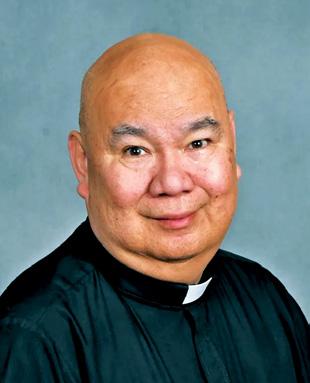
FATHER VICTOR VALENCIA
COURTESY DENICE TRACY
Josh Tracy applies dental fluoride varnish to a child’s teeth during a medical mission trip in Pacuan, Philippines, in August 2025. The mission trip bringing supplies, medical treatment and care was sponsored by the sister parishes of St. Ignatius in Annandale and St. Vincent Ferrer in Pacuan.
Known as ‘a staple’ in Le Sueur County, Father Grafsky dies at 81
By Rebecca Omastiak
The Catholic Spirit
Father George Grafsky, a priest known for his care and his acts of service, died April 11 at the age of 81, after 44 years of ministry within the Archdiocese of St. Paul and Minneapolis.
Father Grafsky, who was ordained as an archdiocesan priest in May 1971, had most recently served as pastor of St. Anne in Le Sueur (2003-2015) prior to his retirement in July 2015. In his retirement, he continued to offer his pastoral and sacramental care to those in the Montgomery and Le Sueur areas in which he lived.
Over the course of his ministry, Father Grafsky had “become kind of a staple in the area,” said Father Chris Shofner, who has been pastor of St. Anne for eight years. After Father Shofner’s ordination, he was assigned in nearby Le Center and would frequently see Father Grafsky at deanery meetings and various parish events.
“I would see him at events when I was pastor in Le Center; we would hold a lot of breakfasts and dinners and festival dinners. ... (I)t seems like he never missed them! He just loved coming to those events and interacting with the people because he knew so many people. ... Somehow, he found a way to know everyone.”
Father Shofner recalled the “joviality of his personality and character,” that Father Grafsky “had a certain expressiveness in his face.”
“(T)here was a great sense of genuine joy when he was with others,” Father Shofner said.
The week of Father Grafsky’s death, Father Timothy Sandquist, pastor of Most Holy Redeemer in Montgomery, encouraged the faithful via social media to pray the rosary for the priest who had “provided so much spiritual care for our community.” Father Grafsky served as pastor of the parish from 1992 to 2003.
In responses to the post, many shared the ways in which Father Grafsky touched their lives.
“Forever grateful for his calling and his unwavering faith,” one person responded, in
By Joe Ruff
The Catholic Spirit
Deeply touched by the healing and hope they’ve seen at Annunciation parish and school in Minneapolis since a deadly shooting during an all-school Mass there in August, a couple is raising money to help all 40 eighth graders attend a Catholic high school of their choice.
Placing children in a Catholic school is like taking out an insurance policy for their academic and spiritual growth, said Dan Kosch, 65, of Pax Christi in Eden Prairie.
“Compound that with what they have been through (at Annunciation), and to think of those students not having that environment, not being able to be together ... . It hit T (his wife, Therese) and me hard to think about that,” Kosch said.
Not every family will choose a Catholic high school, but several families at Annunciation have expressed interest in the scholarships, he said. The goal is to raise $5,000 per student, or $200,000, with an immediate impact goal of $40,000, or $1,000 per eighth grader, Kosch said. That money combined with any aid offered by
part. “His contagious smile and laughter will always remain in my memories.”
“For years we ate lunch together weekly,” said another, in part. “Father George has touched my heart and I’m going to miss him greatly.”
Another said Father Grafsky’s spiritual guidance when she was young “steers my faith yet today.”
“There was a comfortability that Father had with people,” Father Shofner said. Oftentimes, Father Grafsky’s schedule included “morning Mass, and then he would go and be with people, whether it was having breakfast with some parishioners or he would have coffee with staff, he would kind of make rounds. I think even after he retired, I remember hearing in Montgomery how he would still go and be out on the playground with the kids.”
Father Grafsky’s ministry “was all revolving around those relationships with the people. And I think that’s what really helped to endear him in the hearts of the people,” Father Shofner said.
According to an online obituary, Father Grafsky was born in 1945 as the only child of George and Rosemary Grafsky and grew up in West St. Paul. He attended Catholic schools in the area and after high school, he spent two years at the then-Nazareth Hall before continuing his education at The St. Paul Seminary, both in St. Paul. His summer jobs before and during his years as a seminarian included working as a polisher at Union Brass Metal, as a punch press operator at Huot Manufacturing, and stocking the shelves at Security Food Market.
Father Grafsky served as pastor of five parishes over the course of his ministry. In addition to serving at St. Anne and Most Holy Redeemer, he was pastor of St. Michael in Pine Island (1981-1985), St. Patrick in Jordan (1986-1992), and St. Patrick in Shieldsville (1995-1997). From 1993 to 2003, he also served as a chaplain of the Montgomery-area Knights of Columbus; he was a longtime member of the Knights.
Father Grafsky also served as a parochial administrator of three parishes — St. Michael in Kenyon (1981-1985), St. Catherine in Spring Lake (1985-1992) and St. Patrick in Jordan (1985-1986).
He served as an associate pastor of four parishes during his ministry — Maternity of Mary (1972-1975), the Cathedral of St. Paul (1975-1977) and St. Pascal Baylon (1977-1981), all in St. Paul; and St. John the Evangelist in Little Canada (1981). The latter parish was also the place of his first assignment, as an assistant pastor (19711972).
Having a “rootedness in the area among the people” contributed to the way he spoke to the faithful, Father Shofner said. “People talk a lot about his down-to-earth quality when he preached, when he was making things practical, giving them (the faithful) the one little thing they needed to hold onto in the course of a week.”
Alongside his parish ministry, Father Grafsky served as a chaplain with several public safety offices — a role he told The Catholic Spirit in 2012 that he viewed as “a calling,” much like the priesthood. According to the online obituary, from 1992 to 2021, he served in Emergency Management Services and police chaplaincy roles. He was also a fire chaplain in Montgomery, New Prague and St. Paul, and served many years as a chaplain with the Le Sueur County Sheriff’s Office.
As a chaplain, Father Grafsky knew the importance of a “ministry of presence” as he aided families as well as firefighters and law enforcement officers. Father Shofner acknowledged this as well: “There was just this ability that he had to just be present to people.”
This was something Sgt. Dave Struckman personally witnessed, he told The Catholic Spirit in 2012. Struckman was serving with the Le Sueur County Sheriff’s Office at the time. Struckman developed a friendship with the priest, who would call Struckman to check in on him after challenging workdays. Struckman — who described Father Grafsky as being like a “brother” to him — said the priest’s emotional sensibility and sense of humor were gifts to the sheriff’s office.
“We really didn’t have anything for us because we struggle at times on those scenes, too,” Struckman said. “That’s why I got (Father) George involved. It’s not only about the citizens that we protect, it’s about us, too.”
Being a chaplain “was a huge part of his
ministry,” Father Shofner said. “And the folks on those departments just absolutely loved him and respected him greatly.”
Father Grafsky was a longtime member of the Chaplain Corps and the Minnesota Federation of Fire Chaplains; he was honored in 2008 with the International Conference of Police Chaplains’ John R. Price Award — which recognizes exemplary service in law enforcement chaplaincy — according to the online obituary.
Through all aspects of his ministry, Father Grafsky “never made anything about himself,” Father Shofner said. When Father Shofner would ask Father Grafsky how he was doing, including in the month leading up to Father Grafsky’s death, “there was always this sense of ‘Don’t worry about me, it’s not about me, I just want to be there for everyone else,’” Father Shofner said.
“Definitely the people in the area benefited greatly from that stability of having his presence,” Father Shofner said. “And I don’t think people will forget that.”
To commemorate Father Grafsky, an overnight vigil began at 4 p.m. April 19 at Most Holy Redeemer; the Knights of Columbus rosary was prayed as part of the vigil. The vigil concluded with morning prayer at 8:30 a.m. April 20.
A time of prayer and reflection followed, prior to the funeral Mass at 11 a.m., also at Most Holy Redeemer. Ceremonial honors from participating organizations began shortly before Father Grafsky’s funeral Mass. The Montgomery Fire Department was among participating agencies.
Archbishop Bernard Hebda was the principal celebrant of the funeral Mass; concelebrating were Fathers Shofner and Sandquist. The homilist was Father Tom Niehaus, formerly pastor of Most Holy Redeemer, St. Patrick in Shieldsville and St. Canice in Kilkenny who is currently serving in the Crookston Diocese with the Companions of Christ.
As is customary, priests in attendance sang the “Salve Regina” as a procession with Father Grafsky’s casket exited the church after the funeral Mass.
Interment took place at Calvary Cemetery in Montgomery.
high schools
the schools or elsewhere will help students attend the first year of high school, he said.
As of April 13, about $100,000 had been raised for the scholarship fund. In the event more than $200,000 is raised, options include adding years to the scholarships or offering scholarships to the next class of eighth graders at Annunciation, Kosch said.
The fund is being held and administered by St. Paul-based Catholic Community Foundation (CCF) of Minnesota. It was started with the approval of Annunciation, but it is separate from, and not administered by, the parish or school. Money raised will be paid directly to the high school chosen by each student’s family.
Donations can be made at tinyurl.com/AnnunciationGrads or by check made payable to CCF with “Annunciation Catholic HS Fund” in the memo line and mailed to the foundation at Court West Suite 500, 2610 University Ave. W., St. Paul, MN 55114.
The Koschs said they were inspired by next-door neighbors from Annunciation parish and school, Colin and Heather
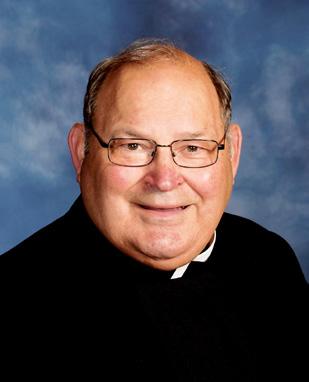
FATHER GEORGE GRAFSKY
COURTESY SARAH KARNAS PHOTOGRAPHY
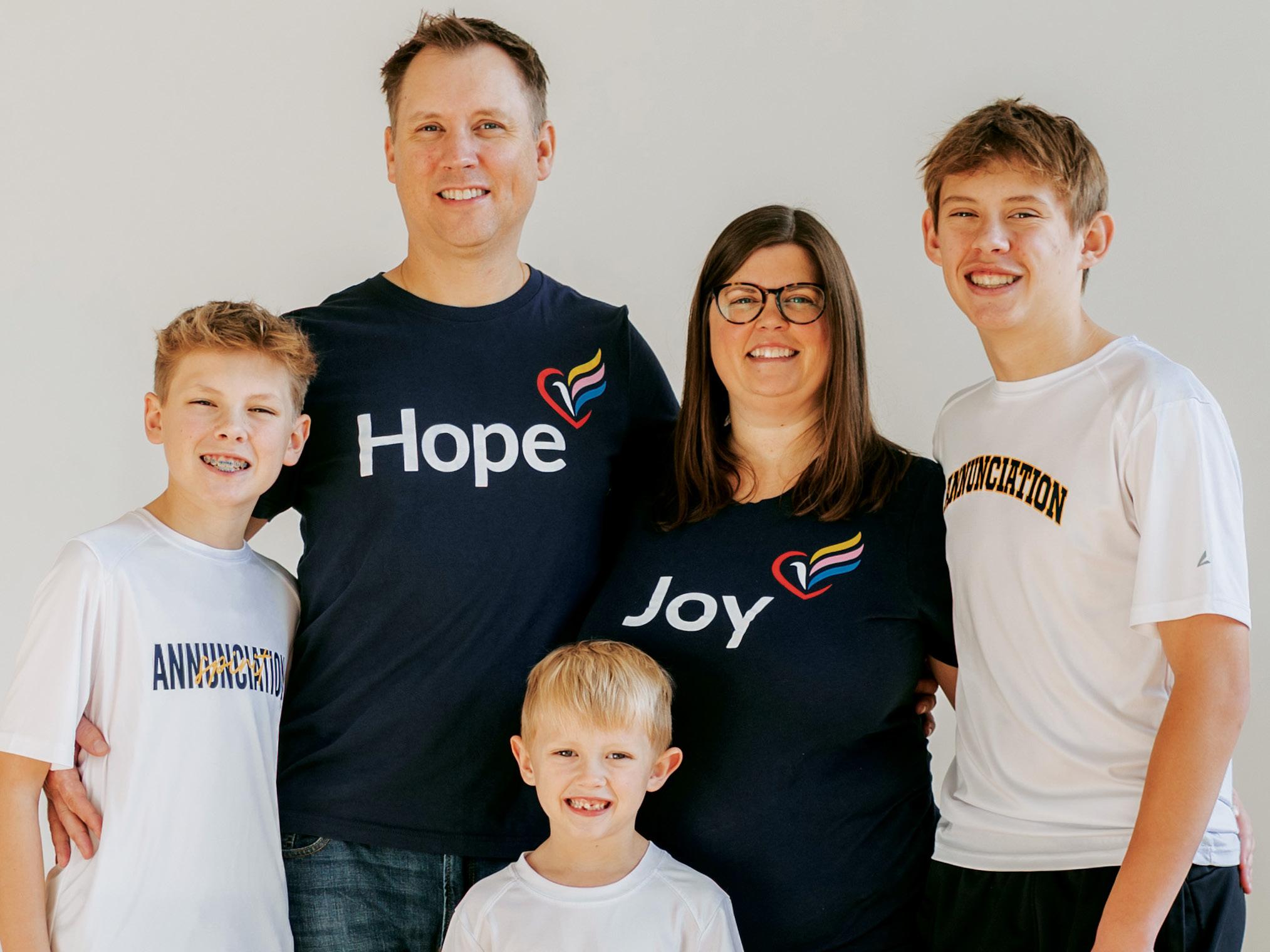
From left, Miles, Colin, Theodore, Heather and Owen Mueller pose for a family photo wearing Annunciation T-shirts.
Business exposition May 1-2 in Edina seeks to help build a ‘Catholic economy’
By Joe Ruff
The Catholic Spirit
With Mass, vendors, breakout sessions, awards and a sales pitch competition, the Twin Cities-based St. Joseph Business Guild is hosting a special effort toward its goal of building a “Catholic economy,” guild founder Roger Vasko said.
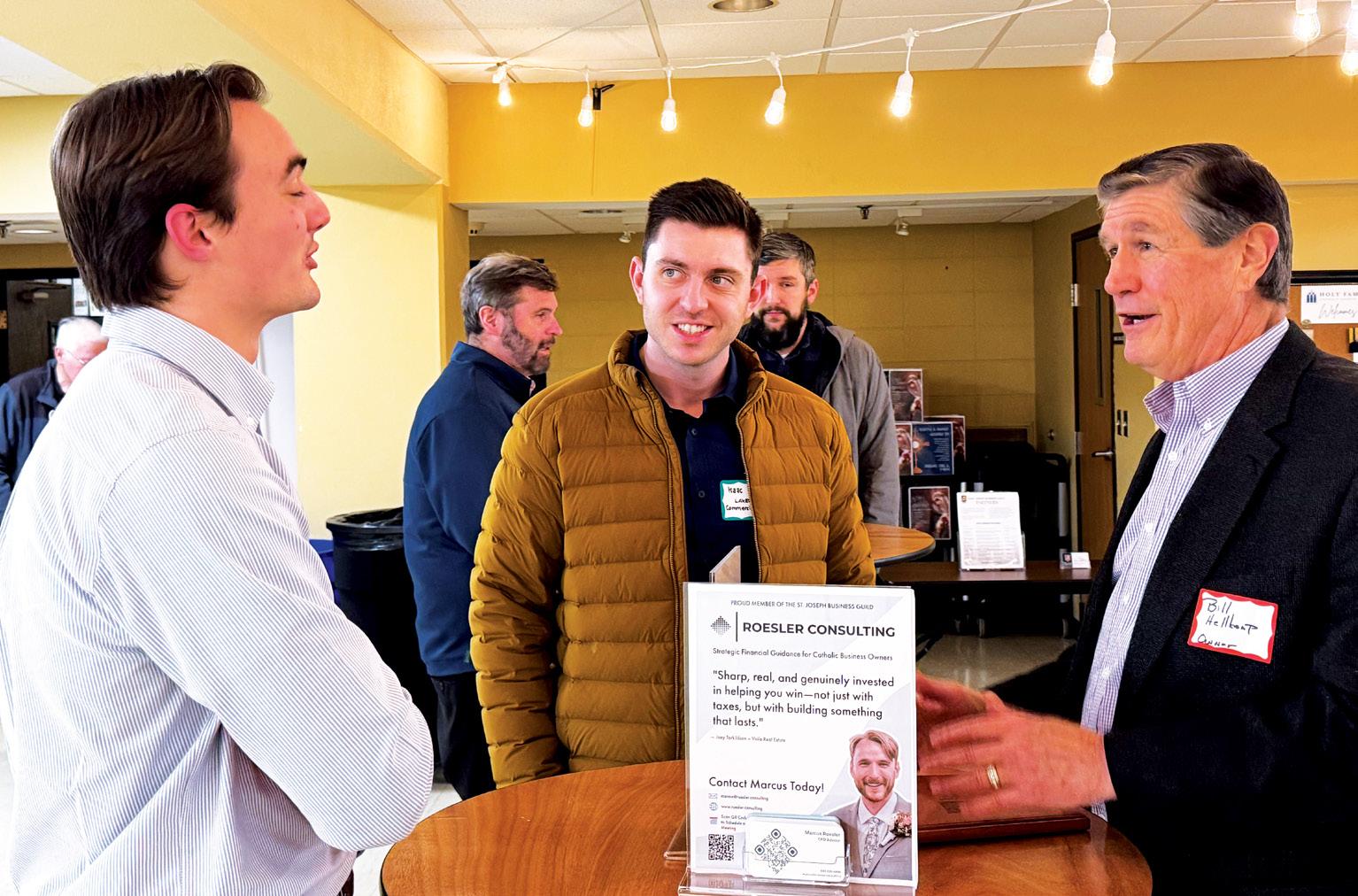
“If we don’t build a Catholic economy, someone will build a different economy for us,” Vasko, 67, said of businesses banding together in the guild to share expertise and find employees, customers and like-minded men and women of faith.
Called St. Joseph’s Fair, the May 1-2 event will be held at St. Patrick in Edina. It will begin with a members-only breakfast May 1, the feast of St. Joseph the Worker, followed by lunch for parish staff and administrators from around the Archdiocese of St. Paul and Minneapolis to discuss how parishes can be part of the Catholic economy. Mass will be celebrated at 5 p.m., followed by a dinner and presentation of Leading with Faith awards recognizing people whose actions bear witness to the faith in the workplace, Vasko said.
The business exposition and makers’ market will begin with 8 a.m. Mass May 2 and run until 3 p.m. The fair will offer breakout sessions on topics including health care, wellness and medicine; businesses to start in the archdiocese; supporting a family on less than two incomes; and discerning whether to start a business.
Speakers will include Charles Marohn,
ANNUNCIATION
CONTINUED FROM PREVIOUS PAGE
Mueller, whose oldest son, Owen, is an eighth grader. The Muellers also have a sixth grader, Miles, and a kindergartner, Theodore.
The Muellers have talked about how essential Annunciation students’ support for one another has been for healing among the families involved, Kosch said. Having that support system continue into high school is important, he said.
“It’s been a really incredible community,” Heather Mueller said of her family’s 11 years as members of Annunciation. Proof came when they moved to Eden Prairie three years ago and Owen boldly asserted that “I’m OK moving, but we’re not changing schools,” she said.
In the hours after the shooting — which took the lives of fifth grader Harper Moyski and third grader Fletcher Merkel and wounded more than a dozen other children and three adults in the church — Heather Mueller said her family was shocked and devastated.
“I was looking at my family in this terrible, hollowed out mode, and I didn’t know what to do — but I knew we had to be with our Annunciation family,” she said. Several families felt the same way. They met at a restaurant that offered games where the children played and the families tried to process, grieve and support each other, she said.
Owen said the community has helped him, and he hopes it continues in high school. “I’ve been holding up really good,” he said. “A big part of it has been my friends
a land use planner and civil engineer who has written books including “Strong Towns: A Bottom-Up Revolution to Rebuild American Prosperity,” and Dale Ahlquist, co-founder of the Chesterton Schools Network, which includes Chesterton Academy in Hopkins, Chesterton Academy of the St. Croix Valley in Stillwater and more than 60 other classical, Catholic high schools in the U.S. and abroad.
The day will end with a Saintly Ventures sales pitch competition designed to spotlight and boost Catholic entrepreneurial efforts that actively support the local Church. Businesses can be start-up, early stage or established and
and the community that surrounds me.”
Heather Mueller said when her family looked at Catholic and public high schools, Owen said he wanted to attend Academy of Holy Angels in Richfield, which is about two miles from Annunciation, because it was where many of his friends planned to be.
She and her husband agreed.
“We need to be in a community that knows, loves and supports our Annunciation family,” Heather Mueller said. “Financially, it will be a stretch for us. But staying connected to our Catholic community is important. Whatever it takes we will find a way to make that happen.”
The Koschs’ scholarship effort is incredibly meaningful to his family and others, Colin Mueller said.
“I’m at a loss for words, to (know) the compassion” that drives the scholarship effort, he said. “It feels odd, to be at the center of attention, and humbling. But knowing there are people who continue to think about and support our community, especially our kids, it’s super moving.”
Brock Safe, whose daughter, Estella, is an eighth grader at Annunciation, said in an email to Dan Kosch that the scholarship program is “a beautiful gift.”
“The only people (who) really get what they are going through are ... classmates and staff members,” Safe wrote. “I love that you and your wife have recognized this bond and the need many of them have, to want to stay together into the Catholic (high school) years. Estella is very close with all the eighth graders, especially the girls, and she is thankful for all her classmates (who) will be going with her to Holy Angels.”
In an interview, Safe said it has been a
looking to grow. Those competing will have an opportunity to pursue crowd funding for their projects and win cash prizes of $5,000 for first place, $2,000 for second and $1,000 for third, Vasko said.
“The fair is part expo, part conference, part festival and it’s about the work being done by and for all the faithful, to foster those labors, and to bring everything to St. Joseph to multiply them,” said Vasko, a member of St. Peter in North St. Paul.
The guild’s website at sjbusinessguild.org includes Saint Joseph’s List, a searchable database for Catholic-owned businesses and services. Among its offerings, the guild holds quarterly meetings at Holy Family in
challenging time for him, his wife, Michelle, Estella and his fifth-grade daughter, Astoria, who had two bullet fragments surgically removed from her head and neck. “A millimeter or two in a different direction, we would have a completely different story,” he said.
The Annunciation community has been vitally important to his family’s recovery, Safe said. “I’ve always been proud of being part of Annunciation (parish and school),” he said. “I’ve never been more proud than now.”
Annie Feste, whose son, Dane, is an eighth grader at Annunciation and daughter, Marie, is in second grade, said her children were doing well, though “some days are harder than others.”
Marie, for example, startled at the sounds of airport construction on a recent family trip, Feste said. Marie also told a cousin — demonstrating that positive reinforcement is taking hold, Feste said — “Did you know my friends and I are the bravest kids in the state of Minnesota?”
“The school is absolutely amazing, and the leadership,” Feste said. “There’s been a lot of light in a dark time. And I think these kids are going to be amazing some day because of this experience.”
It was amazing to receive an email from the Koschs describing their scholarship effort, Feste said, and it will help, as she and her husband, Drew, prepare for Dane to attend Holy Angels.
“Dane was going to look at other options, but he and his friends had this desire to stay together,” she said. Attending a Catholic high school will “not necessarily shelter them, but keep them on the right path,” Feste said.
St. Louis Park and St. John the Baptist in New Brighton, and it has offices on the campus of St. Mark in St. Paul. The quarterly meetings are marked by prayer, meet-and-greet sessions, and business representatives and job searchers sharing their skills and contact information.
Chad Parsons, 49, a certified nurse practitioner specializing in family medicine, founder of The Family Clinic in White Bear Lake and member of St. Joseph in West St. Paul, is among the guild’s nearly 900 members. He meets every Tuesday morning at St. Mark with a group of men and women that includes a graphic artist, two realtors, a construction contractor, plumber, a landscape artist, experts in personal finance and employee benefits for small businesses, and others. They share business contacts and ideas, listen to one another’s sales pitches and pray for each other’s needs, Parsons said. Parsons said his clinic is a pioneer in offering cashbased, comprehensive, direct primary care for adults and children, avoiding some of the costs and complications of health insurance. He also invites patients to text him as they need assistance.
Parsons plans to have a table at St. Joseph’s Fair and be a presenter at the health care breakout session.
“Roger’s vision is — and I caught this, too — the more we can support each other in a Catholic economy, the more we support each other monetarily and in so many other ways: spiritually, mind, body and soul,” he said.
“As Catholics, man is not meant to live alone,” Parsons said. “We really need each other. That is the central piece of everything, and no less for Roger and the guild.”
People can register for the fair at sjbusinessguild.org/sjf
“I think it’s sort of an honor for them to have this scholarship,” she said. “Because these are great kids and they are so deserving.”
Evelyn Gruenzner is among eighth graders at Annunciation who are grateful for the scholarship help, along with her parents, Jennifer and David Gruenzner. Evelyn said she plans to attend school with friends at Holy Angels.
“I think I should continue my Catholic education,” she said. “The community and classes and teachers. I don’t want to give that up because of one thing. Our friends, we hang out and talk about (the tragedy),” she said. “It helps when you’re with your friends.”
Evelyn Gruenzner said she often thinks about Harper, who was teamed up with her last year in a buddy system at Annunciation that pairs older students with younger students. Those memories can be hard, she said.
“Staying with classmates is important,” she said. “We have a mutual understanding, and if it’s a bad day, everybody knows. We don’t need to say much.”
David Gruenzner said the community at Annunciation has grown stronger, and his sixth grader, Savannah, fourth grader, James, and first grader, Gwenyth, will remain at the elementary school. “The price we paid was massive, but through that shared difficulty, the bonds of faith and community within our church have been significantly strengthened,” he said.
His family and others are not wealthy, David Gruenzner said, and the scholarship effort will help. “Anytime there’s a chance to lower the bill, we’ll accept that,” he said.
ROGER VASKO
JOE RUFF | THE CATHOLIC SPIRIT
People meet and greet at St. Joseph Business Guild’s Feb. 5 quarterly meeting at Holy Family in St. Louis Park.
NATION+WORLD
through fear. Today, residents in northwest Cameroon say they live caught between separatist fighters and government forces, both capable of violence. Human Rights Watch estimated in 2024 that more than 6,000 civilians have died at the hands of both sides after a decade of conflict.
Thousands have been kidnapped, many killed, while others have been sexually assaulted, beaten and held for ransom.
Among them was Sister Carine Tangiri Mangu, a Sister of St. Anne, who told Pope Leo XIV during a community meeting April 16 that she and a priest were taken “into the bush” in November 2025 and held for three days.
They were denied food, water and sleep.
“We went on hunger strike and explained to our captors that we were just doing our work for the poor people and had nothing to do with the politics,” she said at the meeting, which included local representatives from different faiths and traditions. “They demanded us to give telephone numbers so that they could collect ransom.”
They prayed the rosary continuously, she said, and were eventually freed after local Christians negotiated their release.
Other residents at the meeting with the pope shared similar accounts with Catholic News Service, describing abductions for ransom and beatings carried out while family members listened over the phone.
Anglophone separatist groups in Cameroon, which began fighting for independence of the country’s Englishspeaking regions, have increasingly turned to criminal activities to finance their rebellion, alongside a rise in violence against civilians.
In the first half of 2024, the northwest region
HEADLINES
Pope Leo donates $100K to a CRS clean water project in El Salvador. Pope Leo XIV has personally donated $100,000 to provide access to clean water in El Salvador, supporting a program launched by the papal nuncio to that nation and by Catholic Relief Services, the official humanitarian and development agency of the U.S. Conference of Catholic Bishops. The gift was announced in an April 20 press release issued by CRS and the apostolic nunciature in El Salvador. The funds will help expand the clean water project “Agua Segura” (“Safe Water”) to four of the eight dioceses in El Salvador Chalatenango, Santa Ana, San Miguel and Sonsonate through the installation of chlorination devices and the construction of water treatment plants. “Clean water is life,” said CRS president and CEO Sean Callahan, noting he and the agency were “deeply honored” by Pope Leo’s donation. An estimated 50,000 people living in rural areas are ultimately expected to benefit from the Agua Segura initiative, with about 7,500 directly impacted by the papal contribution. Archbishop Luigi Roberto Cona, apostolic nuncio to El Salvador, launched Agua Segura in December 2025 with his own $35,000 in seed money, having seen firsthand the devastating effects of water insecurity on human health. Archbishop Cona said that Agua Segura quickly produced results after its launch. Now, more families will benefit, thanks to some significant help from the first U.S. born pope, who spent more than two decades ministering in Peru. “This gift demonstrates the Holy Father’s personal experience with families and communities struggling to keep themselves healthy,” Callahan said.
Pope Leo is named one of Time magazine’s “100 Most Influential People of 2026.” Time magazine has named Pope Leo XIV to its “100 Most Influential People of 2026” list. The accolade was
ranked as the second most dangerous administrative area for civilians in Africa, behind only Al-Jazirah state in central Sudan, according to the Armed Conflict Location and Event Data Project.
In addition to their fear of the separatists, many residents fear suspected reprisals from the military. Twice in the span of a week last month, Nfor said he woke up to gunshots on his street. Both times, he stepped outside to find the corpses of two residents sprawled on the road, roughly 500 meters from his home.
His road, he said, has become a “dumping ground,” where heavy rains can wash the corpses away. He believes those killed were victims of “regular enforcements of law and order.” Human Rights Watch reported in 2024 that the military has been known to target local civilians outright.
Before the crisis, he remembers a very different Bamenda — a vibrant city of 630,000, where this kind of fear did not linger.
“You can imagine a river, just rumbling slowly going, and you are on a boat enjoying the ripples,” Nfor said. “That was the kind of life that was here.”
That life has completely disappeared.
Once one of the country’s most economically active cities, Bamenda has been hollowed out by years of conflict. Business owners have fled after repeated looting and abductions. Farmers struggle to work their land for fear of abduction and killings. Roads are dangerous as separatists have strongholds along major routes, and goods rarely move freely.
Food prices have soared, and access to medical care is limited as the region has become increasingly cut off.
As soon as Pope Leo arrived in war-torn Cameroon April 15, he did not shy away from bringing a message of peace that directly
confronted the suffering the people face every day.
In clear, direct language, the pope spent his time in Cameroon denouncing violence, corruption and exploitation, while calling for reconciliation and credible leadership. He repeatedly framed peace not as an abstract ideal, but as a responsibility shared by political leaders, communities and individuals alike.
When addressing the diplomatic corps in his first stop to Cameroon, he urged leaders to move beyond paralysis and fear.
“We are living at a time when hopelessness is rampant and a sense of powerlessness tends to paralyze the renewal so deeply desired by peoples,” he said in Yaoundé at the presidential palace April 15. “There is such a hunger and thirst for justice! A thirst for getting involved, for a vision, for courageous choices and for peace!”
The pope began his call for peace in the country during an address to the diplomatic corps and 93-year-old President Paul Biya, who has been in power since 1982 and whose long rule has drawn criticism from opposition figures and human rights groups. Quoting his spiritual father, St. Augustine, the pope said the saint believed those who rule should do so to serve the people, and they should rule “not from a love of power, but from a sense of the duty they owe others.”
“From this perspective, serving one’s country means dedicating oneself, with a clear mind and an upright conscience, to the common good of all people in the nation,” he said.
Throughout this leg of his apostolic journey, which covered hundreds of miles and three cities, Pope Leo condemned what he described as a global system that fuels conflict for gain. After residents described fear, loss and exhaustion during the April 16 meeting,
the pope acknowledged both the violence within the country and the forces beyond it that have deepened the crisis.
“The masters of war pretend not to know that it takes only a moment to destroy, yet often a lifetime is not enough to rebuild,” he said during the community meeting in Bamenda. “Those who rob your land of its resources generally invest much of the profit in weapons, thus perpetuating an endless cycle of destabilization and death.”
“Added to these internal problems which are often fueled by hatred and violence, is the damage caused from outside, by those who, in the name of profit, continue to lay their hands on the African continent to exploit and plunder it,” Pope Leo said later April 16 in a homily during Mass at the Bamenda International Airport to an estimated crowd of 20,000.
The depletion of a land rich in resources and marked by suffering was a theme the pope returned to repeatedly.
“It is a world turned upside down, an exploitation of God’s creation that must be denounced and rejected by every honest conscience,” the pope said at the community meeting, describing the exploitation of both people and land. “The world is being ravaged by a handful of tyrants, yet it is held together by a multitude of supportive brothers and sisters!”
That is how he urged Cameroonians not to give in to resignation after years of violence — by working together and serving one another no matter what.
“This is the moment to change, to transform the story of this country,” Pope Leo said in his homily in Bamenda. “The time has come — today and not tomorrow, now and not in the future.”
announced April 15, with the first U.S.-born pope joining a diverse group of individuals some famous, some lesser known distinguished by their contributions as leaders, innovators, icons, artists and pioneers. Each list member was feted on Time’s website with a short reflection from a prominent figure, with filmmaker Martin Scorsese saying in his commentary about Pope Leo that he was “struck by his bravery and his common touch.” He noted that Pope Francis, whom he knew and loved as a friend, “always stressed that the church was not a building or a symbol but the actual teachings of Jesus,” adding, “I believe that Pope Leo shares that view.” Scorsese said that like his predecessor, Pope Leo “seems to be committed to giving the laity a more active role in the leadership of the faith and the practice of charity.” The filmmaker also pointed to Pope Leo’s endorsement of the Christian classic “The Practice of the Presence of God,” which Scorsese said, “offers a model for finding God in daily life, and for taking the church out of buildings, no matter how majestic, and into everyday existence.” He quoted Pope Leo’s introduction to a new edition of the book “All Christian ethics can truly be summed up in this continual calling to mind the fact that God is present: He is here” adding, “I’m encouraged by his words.”
The bishops’ pro-life chair is concerned about the “uneven enforcement” of the FACE Act after a DOJ report. After the Department of Justice released a report alleging the Biden administration “weaponized” a federal law crafted to protect access to both reproductive health facilities and houses of worship, Bishop Daniel Thomas of Toledo, Ohio, chairman of the U.S. Conference of Catholic Bishops’ Committee on Pro-Life Activities expressed concern about that law and its “uneven application.” Bishop
Thomas told OSV News he is “thankful for the DOJ’s investigation into enforcement of the FACE Act.” In its 882-page report released April 14, the DOJ accuses the Biden administration of weaponizing the Freedom of Access to Clinic Entrances Act, or FACE Act, by collaborating with groups that support legal abortion to target pro-life organizations and individuals. It also says that in some criminal cases, there were disproportionate sentences for pro-life defendants and defendants who support abortion. However, some of the communications and actions detailed in the report took place in 2020 and January 2021, the final months of President Donald Trump’s first term. The DOJ report comes as that department faces scrutiny from some pro-life leaders for recent filings asking courts to dismiss or pause state lawsuits to roll back the Biden administration’s eased restrictions on mifepristone, a drug commonly used for first trimester abortion, but which is also used in some miscarriage care protocols.
The Vatican ends the canonization cause for Jesuit Father Walter Ciszek. The canonization cause for Jesuit Father Walter Ciszek a Polish American priest who ministered amid years in Soviet captivity has been terminated, although the Vatican’s decision does not “diminish the enduring spiritual value” of his witness, said a leading advocate for the cause. In an April 9 letter, Msgr. Ronald C. Bocian board president of the former Father Walter Ciszek Prayer League advised fellow league members that the Diocese of Allentown, Pennsylvania, had been informed the cause’s documentation “does not support” advancing the case for beatification or sainthood. Msgr. Bocian’s letter replicated a statement from the diocese, provided to OSV News April 17, saying the prayer league will now become the Father Walter
J. Ciszek Society and “remain committed to honoring his memory, sharing his message, and encouraging devotion to the profound spiritual insights he left to the Church.” In 1963, President John F. Kennedy secured the priest’s release from the Soviet Union, with Father Ciszek recounting his experiences of faith and ministry despite imprisonment in the books “He Leadeth Me” and “With God in Russia,” co-written with fellow Jesuit Father Daniel Flaherty. Until his death in 1984, Father Ciszek worked at the John XXIII Center at Fordham University, which is now the Center for Eastern Christian Studies at the University of Scranton in Pennsylvania.
Gallup: Young men are an “emerging exception” among a “low ebb” of religiosity in the U.S. An increasing number of the nation’s young men say religion is “very important” in their lives, marking a return to levels seen 25 years ago, and edging them ahead of young women on the issue, according to Gallup. In addition, Gallup noted that attendance at religious services has risen by several points since 2022-2023 among young Republican men and women. The data comes as previous polling from Pew Research Center showed a leveling off in a multiyear decline in Christianity in the U.S. although Pew noted there’s no statistical evidence of a religious revival, and Catholics are seeing the greatest net losses of believers compared to other religions. Gallup released its findings April 16, based on data collected as part of its Gallup Poll Social Series, which since 2001 has surveyed respondents monthly on a slate of issues to identify multiyear trends. Each survey polls at least 1,000 U.S. adults in all 50 states and Washington, with respondents participating by either cellphone or landline. The data
HEADLINES CONTINUED FROM PREVIOUS PAGE
is weighted, or statistically adjusted, to represent the nation’s demographics. Gallup found that combined data for 2024-2025 showed 42% of men ages 18-29 ranked religion as “very important,” compared to 29% of their female counterparts. The numbers reversed a 16-point gap between the two cohorts in 2002-2003, when 57% of women ages 18-29 reported religion as “very important” compared to 41% of their male counterparts. Gallup noted that the gap had steadily closed by the mid-2010s, with the two groups “closely aligned through 2022-2023.” But the data from 2024 and 2025 “mark a clear break, with young men now surpassing young women on this measure of religious importance,” said Gallup senior scientist Frank Newport and director of U.S. social research Lydia Saad in their report. They observed that the reversal is “unique” to the specific age bracket, with women age 30 and older remaining “more religious than men.”
Pope Leo XIV sets the stage for a June consistory with a letter to cardinals. In a letter to the College of Cardinals released April 14, Pope Leo XIV thanked the prelates for their participation in the January consistory, and he prepared the conversation for their next gathering June 26-27 right before the solemnity of Sts. Peter and Paul. The pope thanked the cardinals for what he called “free, concrete and spiritually fruitful” discussions. The January meeting focused on synodality and Pope Francis’ apostolic exhortation “Evangelii Gaudium” (“The Joy of the Gospel”). The consistory’s “compiled contributions,” the pope said, “constitute a resource of lasting value, which I hope will be reflected on further, and will mature through ecclesial discernment.” Pope Leo described his predecessor’s exhortation as a “breath of fresh air” for missionary renewal. He emphasized a shift from maintenance to mission, urging Church communities to be welcoming, relational, and centered on proclaiming Christ. Pope Leo also highlighted the need for discernment, warning against bureaucratic excess and calling for bold pastoral leadership. He suggested future reflection on renewing “Evangelii Gaudium” (“The Joy of the Gospel”), improving communication and strengthening Christian formation signaling that missionary identity will remain central in upcoming discussions.
Pro-life groups urge the DOJ to stop opposing state abortion pill lawsuits. A coalition of 78 pro-life groups sent a letter to acting U.S. Attorney General Todd Blanche urging the Department of Justice to stop asking courts to dismiss or pause state lawsuits to roll back the Biden administration’s eased restrictions on mifepristone. The effort comes shortly after President Donald Trump removed Pam Bondi from the role of attorney general, selecting Deputy Attorney General Todd Blanche as acting attorney general. A permanent replacement for the position requires Senate confirmation. Pro-life leaders indicated they hope the leadership change will result in a change in strategy at the Department of Justice on mifepristone. In an April 13 letter to Blanche, the signatories urged him to “use your new position to reverse the DOJ’s harmful stance of siding with the abortion drug industry.” “You have the opportunity instead to stand with pro-life Republican Attorneys General who are suing the Food and Drug Administration (FDA) to protect their citizens from the harms of abortion drugs and to stop FDA policies that undermine our state laws,” the letter said. Previously, the Trump administration asked multiple judges to pause state lawsuits seeking to roll back Biden administration-era eased restrictions on mifepristone, a drug commonly used for first trimester abortion, but that is also used in some miscarriage care protocols. The Trump administration has thus far left that regulation in effect as well as seeking to block challenges to it, arguing the FDA should complete a safety review first, prompting frustration from pro-life advocates.
A Vatican foundation announces global events to honor the late Benedict XVI ahead of the 2027 centenary. The Joseph Ratzinger-Benedict XVI Vatican Foundation has announced a global slate
of events in 2026 to mark the centenary of the birth of Pope Benedict XVI. His 100th birthday is April 16, 2027. According to an April 14 statement, initiatives will span Europe, Asia, Africa and the Americas, featuring lectures, symposiums, exhibitions and concerts exploring the life and thought of Cardinal Joseph Ratzinger. A new international committee of scholars will guide research, publications and outreach efforts, with a strong focus on engaging younger generations. Foundation president Father Roberto Regoli said the goal is not only to revisit Pope Benedict’s theology but to place it in dialogue with today’s cultural and social debates. He highlighted the late pope’s Christ-centered approach and emphasis on the harmony of faith and reason. Placing “everything in the light of the encounter with Christ,” particularly one’s personal experience, he explained, makes his writings and teachings “easily understandable for younger generations,” the priest said. Alongside academic programs, the foundation plans digital and pastoral initiatives to broaden access, with major commemorations continuing into 2027. Dates for the 2027 events will be announced later, the foundation said.
President Trump rebuffs Bishop Barron’s plea and says he will not apologize for Pope Leo tirade. President Donald Trump told reporters at the White House April 13 that he will not apologize
to Pope Leo XIV after the president lashed out at the pontiff on social media and in verbal remarks the previous day, calling him “weak on crime” and “terrible for foreign policy,” as tensions escalate in the Mideast. Pope Leo has been a staunch critic of combat operations generally, including those initiated by the U.S. and Israel against Iran on Feb. 28. He also condemned Trump’s threat to wipe out Iran’s “whole civilization,” which the president later backed down from, citing negotiations with Pakistani mediators. Bishop Robert Barron of Winona-Rochester, a member of the Religious Liberty Commission established by Trump, called the president’s comments “entirely inappropriate and disrespectful” in an April 13 statement. It is the pope’s prerogative to speak on matters of Catholic doctrine, Bishop Barron said, adding that while he thinks there are “many ways that the Trump administration has reached out to Catholics and other people of faith,” he thinks “the President owes the Pope an apology.” Asked about Bishop Barron’s statement, Trump said he would not apologize. “Pope Leo said things that are wrong, he was very much against what I’m doing with regard to Iran, and you could not have a nuclear Iran, Pope Leo would not be happy with the end result,” Trump said. Pope Leo, the first U.S.-born pope, has called for the rejection of nuclear weapons, and there is no
evidence he supports Iran having such weapons. U.S. cardinals speak out against the Iran war and mass deportations in “60 Minutes” appearance. Three American cardinals voiced concern about war, immigration and political culture in an April 12 interview on CBS’s “60 Minutes.” Speaking with Norah O’Donnell, Cardinals Blase Cupich of Chicago, Robert McElroy of Washington and Joseph Tobin of Newark also reflected on Pope Leo XIV. “He’s the pastor of the world,” Cardinal Tobin said. “He’s not a pundit.” The segment highlighted Pope Leo’s calls for peace, including his criticism of threats against Iran as “truly unacceptable,” and his warning that Jesus “does not listen to the prayers of those who wage war.” Cardinal McElroy said the Iran conflict “is not a just war,” adding, “This is a war of choice that we went to.” Cardinal Cupich criticized what he called the “gamification” of war, saying, “We’re dehumanizing the victims of war.” On immigration, Cardinal Tobin defended his criticism of ICE tactics, while Cardinal McElroy said current policy amounts to “a roundup of people throughout the country.” Asked about politics in the pews, Cardinal Cupich said, “I want to preach the Gospel,” while Cardinal McElroy added, “What we’re seeing … is an enormous, profound level of human suffering.”
CNS and OSV News
5 Ways to Support Your Parish Endowment
Each week — or month or year — you give generously to your parish to fuel its vital mission and ministries. And when you make a gift to your parish endowment, you provide these ministries with consistent and reliable financial support forever. That’s because your parish’s permanent endowment is invested to grow and yield annual grants to fund its ministries in perpetuity.
Contribute any amount at any time! Checks should be made payable to your parish, with a note that your gift is for the endowment fund. Or, avoid capital gains tax by making a gift of stock.
A simple way to remember your parish is in your will or estate plan. You may designate a specific dollar amount — or a percentage of the residue of your estate — as a gift to your parish endowment.
It’s easy to name your parish as a beneficiary on your retirement plan, life insurance policy, or other financial account. Be sure to let your parish know of your plans and specify that your gift will support the parish endowment.
A CGA is a gift that pays you guaranteed income for life. The balance of your annuity then becomes a charitable gift to your parish endowment.
Avoid the hassle of selling real estate, a business, or personal property of value — and receive valuable tax benefits. In the case of a primary or vacation home, you can even continue to use it for the rest of your life and dedicate it to your parish in your estate plan.
As the steward of perpetual endowments for most parishes in the Archdiocese of Saint Paul and Minneapolis, the Catholic Community Foundation of Minnesota (CCF) shares your vision for a vibrant and sustainable Catholic community for generations to come. Contact us to learn more about your parish endowment and how the experts at CCF can support your planned giving and charitable goals.
National convention draws nearly 4,000 to Minneapolis
By Josh McGovern
The Catholic Spirit
On April 7, Archbishop Bernard Hebda told nearly 4,000 educators at the National Catholic Educational Association (NCEA) convention that Catholic education continues to form people throughout their lives. He said this while presiding at the opening Mass of the April 7-9 gathering at the Minneapolis Convention Center.
“It’s magnificent that you would always come together ... to not only be with one another, but also to try to improve your skills as teachers and to have a faith encounter that then sends you back energized to spread the Gospel,” Archbishop Hebda said.
In reference to the Gospel readings from that day, in which Mary Magdalene encounters the risen Christ in what Archbishop Hebda described as “the most difficult of situations,” the archbishop said the teachers and administrators he encountered through the years in Catholic schools and parishes are “women and men who consistently find the strength to be present in the most difficult of situations.”
“We saw this here this past year, not only at Annunciation, but also as so many of our families were impacted by (Operation Metro Surge) here in the Twin Cities,” Archbishop Hebda said, referring to a fatal shooting Aug. 27 during an all-school Mass at Annunciation church in Minneapolis, and to more than two months of heightened federal immigration enforcement efforts in Minnesota that began Dec. 1. The immigration efforts impacted schools, churches and businesses and led to thousands of people protesting in the streets. Two people from Minneapolis were shot by federal agents and died.
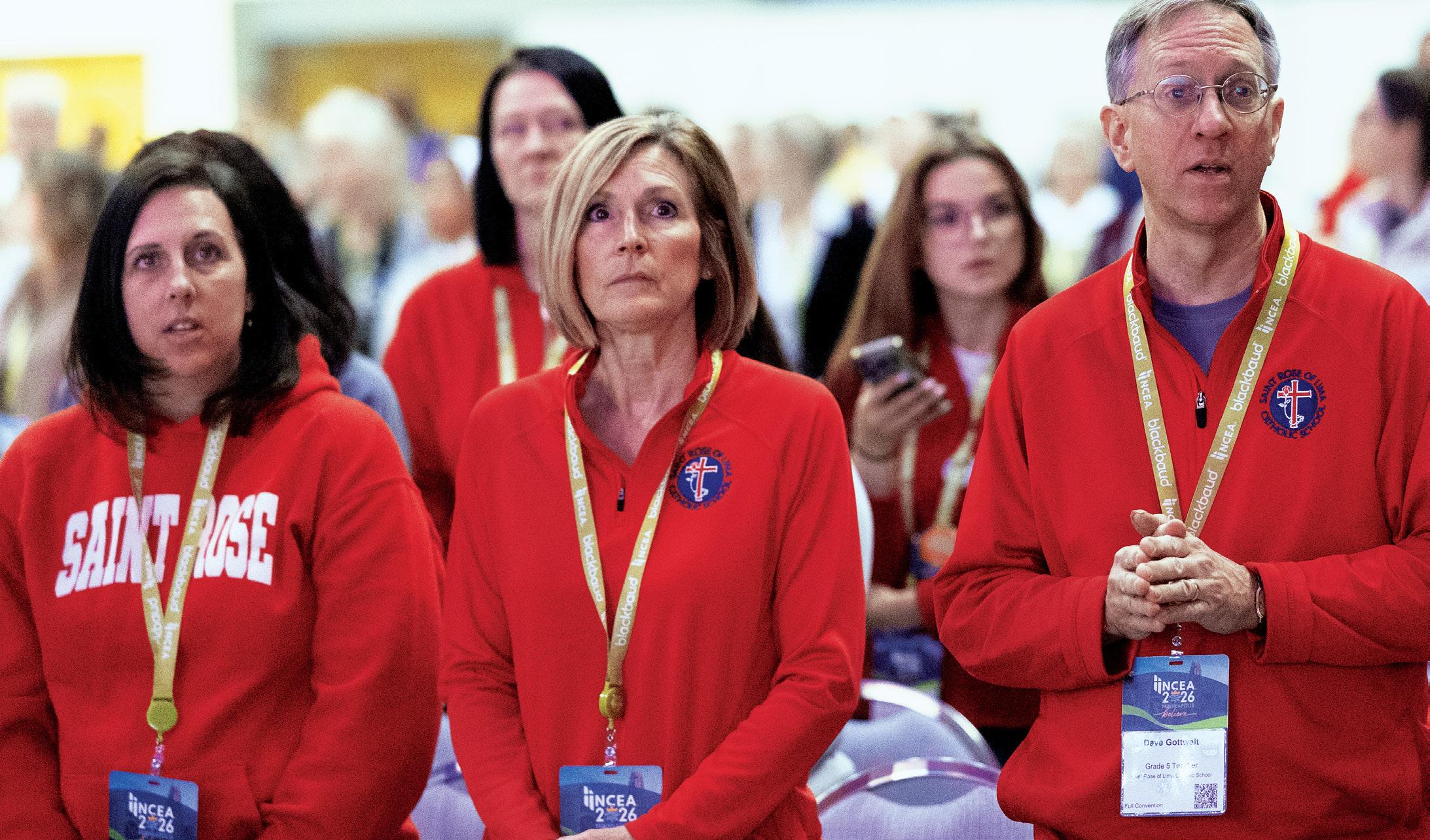

Grateful teachers
“Our teachers were heroic (amid) those difficult times. … I know that you’re only able to do that because of your deep love for Jesus, your intimate relationship with him. It’s that relationship that enables you to recognize him in the most difficult of situations,” the archbishop said.
Catholic educators have the opportunity to touch the hearts of children and their family members, he said. When the risen Christ called Mary Magdalene by name, there was an intimacy, he continued.
“It’s an intimacy that you share with your students and your families,” the archbishop said. “Did you hear what Mary’s first response was when she hasn’t recognized who this gardener is? She says, ‘Teacher, teacher.’ That’s a beautiful response anytime somebody has touched us in such a way that we know that Jesus is present. Each time that your students refer to you as teacher, be reminded of how it is that Jesus was teacher for Mary Magdalene. Jesus is teacher for all of us.”
Increasing numbers of high school students around the United States are entering the Church, Archbishop Hebda said.
“My brothers and sisters, it’s because we are willing to be there, I suspect, with those students and their families, and to speak their name in a way that helps them to understand that they’re seen and loved.”
Sister Mary Grace, a Sister of Life in Toronto, was the closing keynote speaker April 9, the last day of the annual convention. She said that one teacher standing in the front of a classroom with the knowledge of Christ can bring more “hope and joy into this world than the most dynamic and savvy influencers.”
“The children need you; they need your presence,” Sister Mary Grace said. “They need your attentiveness, your goodness, your faith.”
Sister Mary Grace recalled a teacher she knew who got down on one knee each day and attentively listened to a young student talk about a slug she saw every day before class.
“For months, (the student) only had a slug story to tell,” Sister Mary Grace said. The teacher bent down each time and listened.
“It wasn’t until about a year (later) that (the student) came in and said something totally different, and it wasn’t about the slug,” Sister Mary Grace said. She “was now ready to trust her teacher with big news. (The student) was being abused, and she was trying to find a person in her life that she could trust. … After the family home, the classroom is the most formative influence in our lives by far.”
Eileen McGurran attended the convention with other teachers from St. Rose of Lima Catholic School in Roseville. She has taught adults and children for 30 years and has taught at St. Rose of Lima for 21 years. The keynote speakers, Bishop Andrew Cozzens of Crookston on April 7 and Sister Mary Grace, inspired McGurran. Bishop Cozzens stressed that the job of Catholic educators is to invite people to let their hearts be healed by an encounter with the heart of Christ, the one who reveals what it means to be human, the “God who became human to heal our humanity.”
To invite others, Bishop Cozzens said, teachers must know their own hearts in encounters with the Lord.
“As a teacher, the messages of relationships resonated,” McGurran said. “First, I need to have a relationship with Christ. Then I am better capable of being a witness for my students. Sharing personal experiences of God’s love, sharing the Gospel message, and having conversations about God are so important in helping my students to build their relationship with Jesus; to know they are loved!”
Sister Mary Grace said people are hardwired to find meaning in every moment because “deep down, we know that we matter.”
Meaning cannot be manufactured, Sister Mary Grace said, and “God provides even before we can perceive our needs.”
“I think that the issue of our times isn’t so much about doing less or more in our workplaces, but that we’ve attempted to live a subtle agreement to the lie that we’re worthless, that we don’t really matter, that there isn’t really more, that this is as good as it gets. … The opposite of hope isn’t despair; it’s cynicism. … The dark chapter does not have the right to conclude our stories,” she said.
Catholic educators can offer children a safe place and an encounter with divine love first received in the educators’ hearts, Sister Mary Grace said, “giving (the children) the love that they would otherwise be deprived (of).”
“I don’t think there’s ever been more of a need for real teachers, teachers (who) believe, teachers (who) … not only teach but testify to the life of Jesus Christ and the real difference he makes,” she said. “Far greater than the efforts of the finest human progress, incomparable to the proclaimed feats of (artificial intelligence) that are helping us, every single child, every single human heart, needs another person. They need a real person of the world, just like you, in their real world, in their normal life, showing up day after day, who refuse to give up on the goodness in them.”
This is the second NCEA convention McGurran attended. The last time was in 2010, also in Minneapolis.
“It was nice to have it local once again,” she said in an email. “The convention was packed with so many great options that
it was often hard to choose which classes I would take. … The NCEA convention is a wonderful resource for Catholic educators. It brings so many of us together, to learn from each other, make connections, and celebrate the Eucharist each day. Prayer is so powerful. Nearly 4,000 people with a common passion, in one place at the same time really provided a sense of camaraderie.”
She also enjoyed the variety of session topics, especially classes with tangible strategies for teaching virtue and building discipline.
“Academically, it was affirmed that early identification and intervention for students who are experiencing challenges is essential,” McGurran said. “I received information for some reliable assessments to assist in this process.”
David Gottwalt, a teacher at St. Rose of Lima for 33 years, attended with McGurran and other teachers. He admitted that he was skeptical about how meaningful a large gathering like the NCEA convention could be. But “the Holy Spirit works in wondrous ways,” he said.
“I bring with me new ideas for integrating our Catholic faith into each subject,” Gottwalt said about what he took away from the talks and sessions. “I learned how to incorporate the Catholic touchstones such as sacred Scripture, the lives of the saints, and the virtues into activities in science, social studies and other subjects. I also enjoyed learning how I can help my fifth graders to be responsible and critical thinkers in using artificial intelligence (AI) as a tool to strengthen, not hinder, our Catholic faith.”
In his classroom, Gottwalt said, he hopes to include more discussions about the virtues and Scripture passages.
Mary Carlson, a middle school science teacher at St. Joseph in West St. Paul, said the three-day conference helped her realize that being a teacher is a calling more than a career, one that “restores and gives life.”
“God wants to love the world,” Carlson said. “Not only was it super inspiring that we’re teaching heart-to-heart (relationships) but then (also) increasing our skills. At the end of the day, what it is, is an encounter (with Christ).”
Carlson said she felt energized about Catholic education, not just for today or tomorrow, but “as it goes on for weeks, years, just that we have been given this great gift of being able to educate in the whole truth of the whole child.” Her experience at the convention was a “beautiful and authentic witness of life with Christ” as a Catholic school teacher.
“It’s a unique path, and God blesses it abundantly,” she said. “What does it look like to live more vitally? Like at St. Joe’s, we have so much joy. And what I feel at this conference is an invitation to live more deeply.”
Brian Shriver, a teacher at St. Ambrose in Woodbury, said the conference was a perfect blend of education and the
From left, John Ashley, the principal Archbishop Bernard two educators Church, particularly
DAVE HRBACEK | THE CATHOLIC SPIRIT
From left, teachers Susan Stanke, Eileen McGurran and David Gottwalt of St. Rose of Lima Catholic School in Roseville pray during the closing Mass of
the National Catholic Educational Association Convention April 9 at the Minneapolis Convention Center in downtown Minneapolis. Mass was led by
Archbishop Thomas Zinkula of Dubuque, Iowa.
Minneapolis Butter sculptor brings
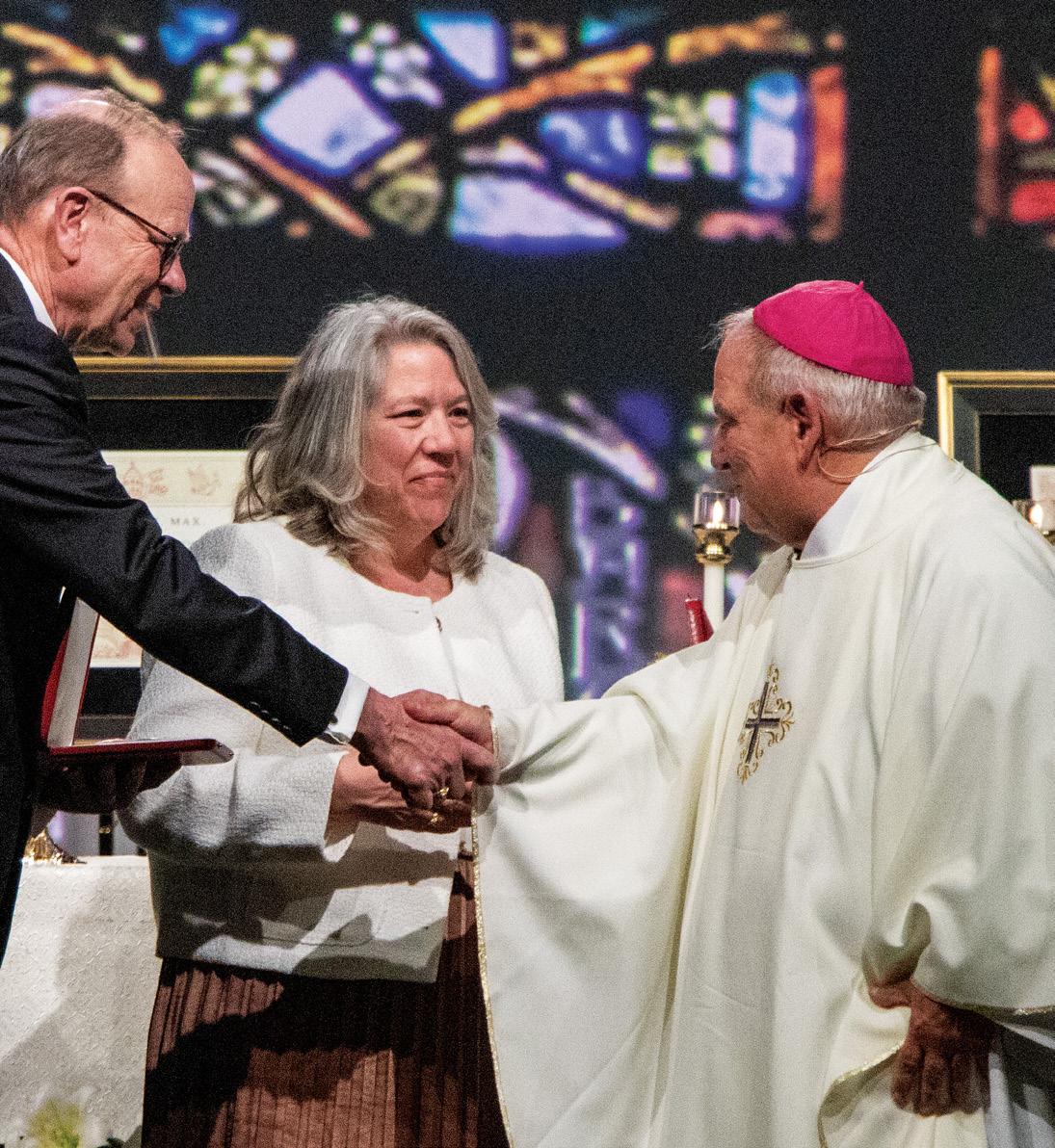
Catholic faith. Particularly, Sister Mary Grace and Bishop Cozzens in their keynote addresses provided useful tips and guidelines that Shriver said he hopes to use in his classroom.
Susan Stanke, a graduate of St. Rose of Lima, has been a Catholic school teacher there for 27 years, and her children have graduated from the school. While this wasn’t her first NCEA convention, attending this year helped her professional development, she said.
In one session called “Beauty, Wonder, and the Catholic Classroom,” Stanke said she loved learning how the relationship between art and beauty can translate to the classroom.
“As we go through our days, as similar as they all might be, we should strive to find the beauty and wonder in our interactions with the children and the overall classroom environment,” Stanke said.
She said that for her, there are two main reasons to attend the NCEA conference. One is professional development through learning sessions, which is “crucial to keeping up with what is important in a Catholic classroom.”
Second, she said, “getting the opportunity to meet and learn from other Catholic school teachers from all around the country is hugely beneficial. One thing I am going to implement in my classroom is to always remind myself that while it is sometimes easy to just default to thinking a student has some kind of learning disability, to instead consider other possibilities that child might be experiencing that are causing their behavior. Hearing that at the conference was just a good reminder.”
Archbishop Hebda said in his homily that it was important work, as a Church, to pass on the faith and assist parents in accepting their responsibility as being the first educators of their children.
“I’m delighted that you’re here,” Archbishop Hebda said. “It’s particularly significant for us because (we’re) celebrating our 175th anniversary as an archdiocese.”
The first bishop of St. Paul had the wisdom to recruit the Sisters of St. Joseph of Carondelet to come to Minnesota and open a school, Archbishop Hebda said.
“It’s 175 years this year, 2026, that we celebrate the anniversary of Catholic education here in this archdiocese,” he said. “We know brothers and sisters that without that work, we wouldn’t be the Church that Jesus is asking us to be. Faith isn’t passed on through our genes. It’s only when people like you are willing to give witness to Jesus, willing to be witnesses like Mary Magdalene and those first disciples.
“When you’re willing to show that Jesus means something to you and affects your worldview, people are going to come to believe the good news that Jesus Christ is risen,” the archbishop said. “He is truly risen.”
a taste of Minnesota to national Catholic education gathering
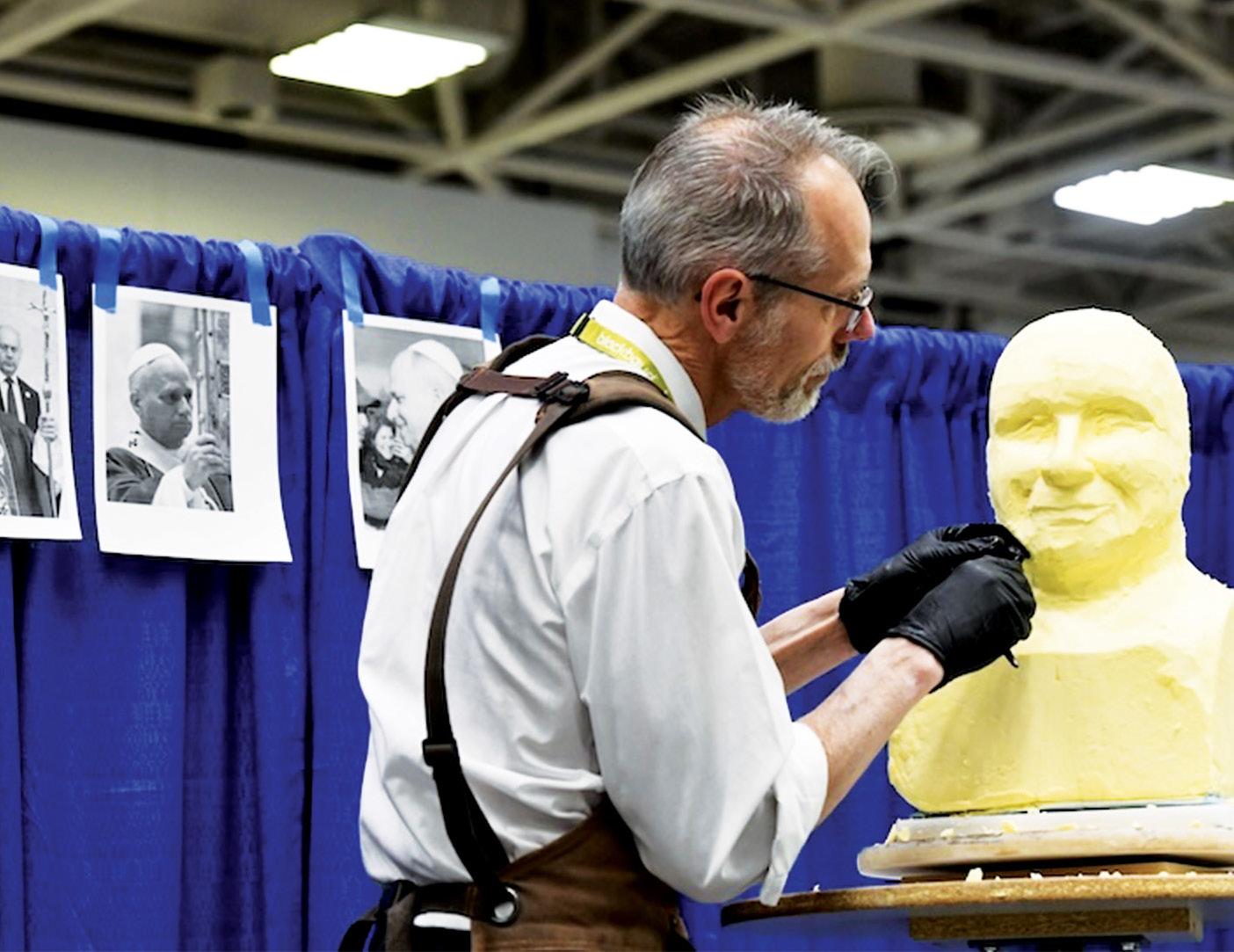
By Dianne Towalski
The Central Minnesota Catholic
What’s more Minnesotan than having your likeness sculpted in butter?
Since 2020, Gerry Kulzer has created the butter sculptures of the Minnesota State Fair dairy princesses that Minnesotans are so familiar with. Hundreds of people line up to watch him create his masterpieces live each year during the fair.
Now, though he probably will never see it, Pope Leo XIV’s likeness has been enshrined in the dairy staple. Kulzer spent the first day of the National Catholic Educational Association (NCEA) convention, which was held at the Minneapolis Convention Center April 7-9, sculpting a bust of the pontiff live among the event’s exhibitors.
“I get some pretty random commission requests, but when the (NCEA) contacted me about doing a live butter sculpture during their conference this year, I was interested,” Kulzer said. “After working out the logistics of keeping the butter cool, they decided they wanted a bust of Pope Leo and another butter block carved into their logo.”
Aside from being able to bring a very Minnesota feel to this year’s conference, Kulzer, who is a teacher himself, was happy to spend time with Catholic educators.
“As a former Catholic school teacher, Catholic education is close to my heart,” he said. “I loved being able to share artwork and my faith with my students at Holy Trinity in Winsted. It was similar at the conference. It was so fun to be surrounded by fellow educators who also were Catholic.”
Kulzer has been an art and industrial tech teacher for more than 30 years and currently teaches grades 7-12 art at Eden Valley-Watkins Schools. He fell in love with ceramics while attending the University of Minnesota Duluth, so he said he’s been sculpting clay even longer than he’s been teaching.
He was blessed to be able to do an internship with master potter Robert Eckels at Eckels Pottery in Bayfield, Wisconsin.
“That experience gave me different clay skills that I could use in sculpting and bring back to my classroom.”
Kulzer, who is a member of St. Philip in Litchfield, part of the Shepherd of Souls Faith Community in the Diocese of New Ulm, said he appreciates that his students are not afraid
to talk about their faith in class, even in a public school.
“Assumption Church (in Eden Valley) has daily Mass at 7 a.m. on Wednesdays and Fridays and I always see students at Mass,” he said. “I counted 16 students one Friday morning.”
As a fellow sculptor and a fair-goer, Kulzer watched Linda Christensen carve Princess Kay busts at the Minnesota State Fair in the 1990s. He contacted Midwest Dairy, hoping they would consider him to replace her when she retired.
“I’m a ‘people watcher’ and love observing faces,” he explained. “Everyone has a different look and it’s fun to try capturing that look in clay — or butter.”
In 2018, he was offered the opportunity to audition for the position, one of five potential replacements.
“I was given a 90-pound block of butter and some pictures of one of the Midwest dairy princesses,” he remembers. “Apparently, they liked the portrait I carved because they called me back the next year to ‘apprentice’ under Linda. She and I worked on a bust together and when it was finished the sculpture looked like one person had done it, not two.”
He was offered the job and in 2020 the plan was to work with Christensen doing a couple of the princesses while she did the others. But then came the COVID-19 pandemic and she couldn’t get to Minnesota from her home in California.
“I had to do them all,” he said. “A trial by fire in a way. But the only audience I had while I worked was the family of the Princess Kay finalist, so at least there wasn’t the pressure of thousands of people watching.”
Kulzer said he hopes people know that one of the reasons they do the butter sculpting at the fair is to promote the work of dairy farmers in Minnesota.
“I hope that my work in butter brings recognition to the hard work that farmers do to produce such yummy foods like butter, cheese and ice cream,” he said. “I grew up on a farm and know that central Minnesota is filled with dairy farms. I always feel honored to be able to do a little something to bring more recognition to the work they do.”
And he was happy to bring his skills to the NCEA convention.
“I could share a little of my faith with participants while I worked and was able to attend Mass both days I was there,” he said. “It was an incredible experience to be with so many like-minded people.”
JOSH MCGOVERN | THE CATHOLIC SPIRIT
John Boyle, a professor at the University of St. Thomas in St. Paul, and Regina principal of Divine Mercy Catholic School in Faribault, shake hands with Bernard Hebda during the opening Mass at the NCEA convention April 9. The received papal honors from Pope Leo XIV for their exceptional service to the particularly in education.
DIANNE TOWALSKI | THE CENTRAL MINNESOTA CATHOLIC
Gerry Kulzer works on a butter sculpture of Pope Leo XIV April 7 at the National Catholic Educational Association convention at the Minneapolis Convention Center in downtown Minneapolis.
FAITH+CULTURE
Journaling her heart out: The journey of a convert
By Christina Capecchi For The Catholic Spirit
Editor’s note: This article refers to attempted suicide. If you or someone you know is in crisis, help is available by calling or texting 988 in the U.S. and Canada or visiting 988lifeline.org
A simple gift at a women’s retreat a 5-by-7-inch journal became a lifeline during Oona Myhre’s sabbatical, a map for her conversion to Catholicism and a book she would eventually publish. It’s a testament to the power of taking the next step, of saying each small yes to God.
Now Myhre, 47, works at Pax Christi in Eden Prairie as its middle- and high-school youth formation minister. She lives nearby with her husband, Mike. Myhre continues to draw on her education background as a consultant (theearliestedge.com). While she excels in her career, she has come to rest in an identity beyond her work.
“You don’t have to earn your worth,” Myhre said, “and you don’t have to have everything figured out.”
Q Let’s start with your name. How do you say it?
A It’s pronounced OH-nuh. I absolutely love it now. But growing up, it felt different in a way that made me a little self-conscious. I was born in Hawaii. My name means number one, unity, or lamb. I was the firstborn. It took a long time to grow into my name, but looking back, it taught me early on how to stand out without trying to.
Q You became Catholic five years ago. What drew you to the Church?
A I was 12 when my parents were divorcing and we moved from Hawaii to Oregon. Church was no longer a focal point in our family. You always feel like something is missing, but you don’t know until something starts creeping in. It was a gradual draw, not one dramatic moment. I was looking for something true, something rooted. A lot of it came out of intellectual curiosity. I was working at St. Hubert’s (Catholic School in Chanhassen). As I spent more time taking my preschool kids to Mass, I was drawn to it. I had a deep spiritual longing, and I embraced the sacramental life. It felt like home. I had a really good friend who I worked with at the time, and she’d been a sponsor for many people. I talked with her, and then I dove in headfirst.
Q A few years later, you were drowning at work. Tell me about that time.
A I was massively overwhelmed in my professional life. I was still producing, but I didn’t know who I was anymore. I’d been working toward this dream job my whole life, and then things started changing. The reason for the job was no longer there. The dynamics shifted. And all these questions started coming up: What am I doing with my life?
Q So you resigned and took a sabbatical.
A It was both freeing and terrifying. I began to realize how much of my identity had been tied up in my work. How useful am I to other people? If all these roles were stripped away, who am I, really? My worth was never meant to rest with external achievements or approval, but that takes time to settle into. I had been moving so fast for so long. I didn’t know what it felt like to stand still. It was hard to adjust to not having a full schedule. I needed to back up, reconnect with myself and with God, and build something different.
Q Because you were on a committee at Pax Christi, your home parish, you heard about their job opening.
A I knew the minute I heard about it: This is what God has been waiting for me to do. It fills my cup. Some of these kids are so faith-filled.
Q You also built a consulting firm, so you continue in the education field on your own terms.
A It’s been meaningful being able to start something that’s my own, that is near and dear to me. It felt natural.
Q One of your services is being a neurodiversity coach. How do you approach that work?
A It’s rooted in looking at the whole child. Children are not problems to solve; they’re people. They need support. They need help to flourish. Being a coach helped me shift the conversation from “How do we make this child fit?” to “How do we better understand this child and then create an environment where they can thrive?”
That connects deeply with my Catholic faith. Every child is created in the image of God with this inherent dignity, this selfworth and purpose. It means, as adults, we’re called to meet children where they’re at, with patience and respect and not shame them.
Q How are you different now, postsabbatical?
A I still like to stay busy. But things have changed. It’s busy in a different way. Before, I felt like I was doing things for other people and not for myself. I had to stop that. It’s been a journey.
Q You hashed it all out in the little journal given to you at a women’s retreat at St. Hubert.
A It was an outlet for me. I started writing when things were heavy. It was free flowing, how I was feeling in the moment. In the subsequent retreats, we’d get new journals. I would rip the covers off and tuck them into the old journal. I needed everything in one spot.
Q Did you plan to keep it private?
A I never intended to share it with anyone, but it was really cathartic to go through. I had accumulated five years of journaling. During my sabbatical, I needed something to do with my time, so I got on my computer and started typing up the stories behind all the feelings I had written by hand in the journal. Looking back on those entries helped me through those times. Had I not done that, it would’ve taken me a lot longer to transition and figure out what I needed and wanted in life.
Q Then you shared a draft with a friend.
A I said, “Hey, can you read through this for me?” Then her daughter attempted suicide. She said, “I’m going to share this with my daughter.” Her daughter ended up opening up more with her mom after reading my journal. A lot of what I’d written connected with her. I’d written about dark times and shame. When you’re young, you don’t realize that other people are feeling the same things you are. You’re not alone. I’d written that you can be transformed by your struggles or feelings of inadequacy. We’re all here for a reason, and we have different gifts to share.
Q Was that a turning point?
A It was a revelation — that my thoughts and feelings could bring comfort to somebody else. I moved past the anxiety of sharing the book. I decided that if I can help one person, it would be worth publishing. I began to understand that my writing had a purpose beyond just helping and serving me.
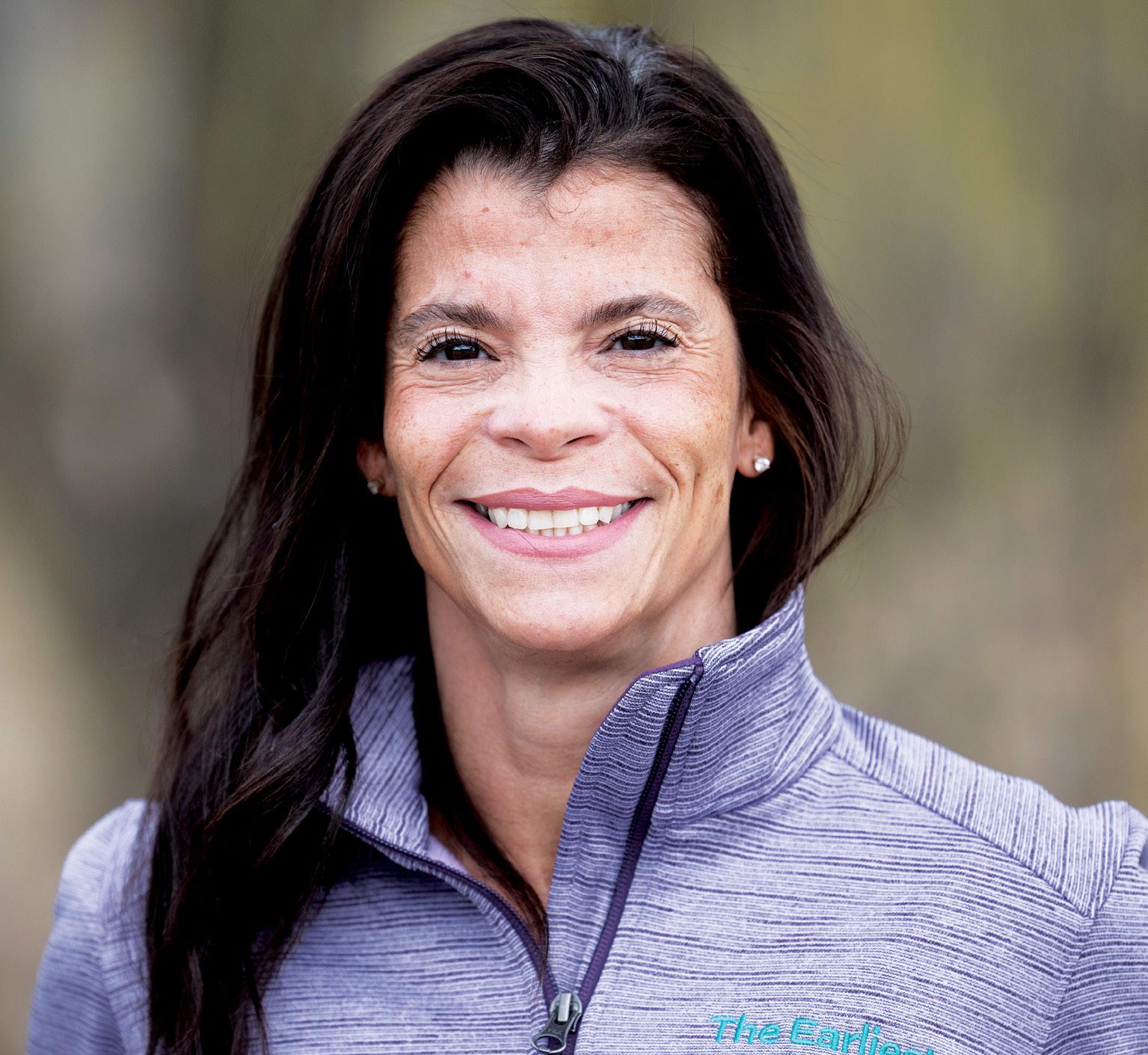
Q Even then, was it scary to put your name on it?
A Everything was so personal, so I said: “I’m not putting my name on it.” But ultimately, I decided I should. The whole point was that I was going to be honest with myself. Why would I shield who I was? It was the final step.
Q What did it cost you?
A The cost of vulnerability — surrendering control over how I would be received and how people would interpret my story. It required me to let people see parts of my inner life I had always kept private, breaking down that illusion that I had shaped for my life outwardly. It was hard but also very freeing. There’s so much disconnect in the world these days. We’ve become so reliant on the one-dimensional piece of technology. We need to connect with others and share from the heart.
Q The book is titled “Echoes of Grace: Finding Purpose in Loss, Light, and Becoming” and came out last year. Why did you self-publish?
A I had (interest from) a couple of different publishers, but it just didn’t feel right. Some of the things they wanted to edit didn’t sit right with me. I didn’t want to compromise on the stories. I wanted them in their original context. Going back and changing them wouldn’t be true to the story.
Q Plus, you didn’t have to make a big marketing push.
A It’s not about the money. It’s about making these stories accessible. I’m grateful the book is accessible on Amazon and other platforms.
Q Connecting with people is a priority for you. How does that play out?
A When somebody comes to mind, I try to reach out immediately because there’s a reason. I’m not texting you to get a response but know that you’re loved.
Q Have you seen ripple effects of that?
A Going through the Caribou line two weeks
ago, the person in front of me paid for my order, so then I took care of the person behind me. I didn’t initiate it, but I kept it going. I got into work smiling. It changed the trajectory of the day.
Q What have you learned about rest?
A Now it’s very intentional. Every two or three months, I go to Florida. I love the beach. It’s my happiest place in the world. It helps me reset. When I’m here, I’m intentional about my time on the weekend. I don’t pull up work email.
Before I thought I had to be on, 24/7. Now I’ll spend my weekend in my pajamas, lying on the couch with my cats, reading a book with the windows open — making time and space for myself. I’m a big napper, and I don’t discriminate on time.
Q That sounds like self-love.
A It’s so freeing. You don’t understand that when you’re younger. I no longer have the desire to prove myself to anybody. I don’t have the time, energy and space to carry that — and those aren’t my burdens to carry. I’m able to walk away and not worry what other people are thinking. I’ve learned to take a breath and trust the process. Things come with time.
Q How does it feel to finally take the kind of care of yourself the way you’ve always taken care of others?
A It feels fantastic! We all have these holes that we’re trying to fill. Some of them are there for a reason and some are not. It’s important to acknowledge them and ask: “What do you need?” Not “what do you think other people think you need?” but “what do you really need?”
Q What do you know for sure?
A I know for sure that God is present, even when it doesn’t feel obvious. I know that the most important growth typically happens quietly. We tend to look for breakthroughs or dramatic moments or visible change, but some of the deepest transformations happen beneath the surface. God doesn’t rush those transformations, so life has taught me not to overlook the quiet work.
5 ways to foster devotion to the Sacred Heart
By Leonard J. DeLorenzo OSV News
Editor’s note: The following is in light of the U.S. bishops’ announcement of the plan to consecrate the United States to the Sacred Heart of Jesus during their June 2026 spring assembly as the nation marks its 250th anniversary this year.
The devotion to the Sacred Heart of Jesus grew from the revelations of the Lord to St. Margaret Mary Alacoque in the 17th century. During the second revelation, the Lord instructed Margaret Mary to receive holy Communion on every first Friday for nine consecutive months, as well as to prostrate herself on the ground before the Blessed Sacrament for one hour during the night between Thursday and Friday each week.
Upon the third revelation, the Lord proclaimed his desire for the institution of a feast to his Most Sacred Heart, which would bring the devotion into the Church’s common and universal practice.
Nearly two centuries later, Pope Pius IX instituted the solemnity of the Sacred Heart of Jesus for the universal Church in 1865, to be observed on the second Friday after Trinity Sunday (which is also the Friday immediately following the feast of the Most Holy Body and Blood of Jesus in the United States).
In 1995, St. John Paul II added the World Day of Prayer for the Sanctification of Priests to the same day so that the priesthood might be protected in the heart of Jesus.
The immense love of the Son of God is the particular object of the devotion to the Sacred Heart. It is with this immense love that the Father gave his Son into our hands, that the Son delivered himself up to death for us, and that the Father gives his Son and the Son gives himself to us in the Blessed Sacrament of the altar. Devotion to the Sacred Heart is nothing less and nothing other than devotion to the love of God poured out for us in Jesus the Son.
The Lord calls his disciples to adore and devote themselves to his Sacred Heart, in a manner like his call to St. Margaret Mary. The motive and fruit of the devotion is, first, for those who observe it to grow in gratitude and thanksgiving for the tender love Jesus Christ has for us, especially as communicated in the Blessed Sacrament. The second motive and fruit is to participate in making reparations for the severe ingratitude and callousness the multitudes have for the love of Jesus poured out for us. The devotion thus brings about pious love and solemn grief, all in response to the love of God in Christ.
The following five practices are among the most common ways of initiating and perpetuating the devotion to the Sacred Heart.
1. Make a morning offering, through the Immaculate Heart of Mary
The first to devote herself to the love of God in Christ was the Blessed Mother. Her heart is always fixed on and nourished by his. Her heart leads to his, and his heart is offered to us through hers. A morning offering like the following one moves us toward Christ’s love through Mary, by little and by little, day by day:
“O Jesus, through the Immaculate Heart of Mary, I offer you my prayers, works, joys and sufferings of this day in union with the Holy Sacrifice of the Mass throughout the world. I offer them for all the intentions of your Sacred Heart: for the salvation of souls, the reparation of sins, the reunion of all Christians. I offer them for the intentions of
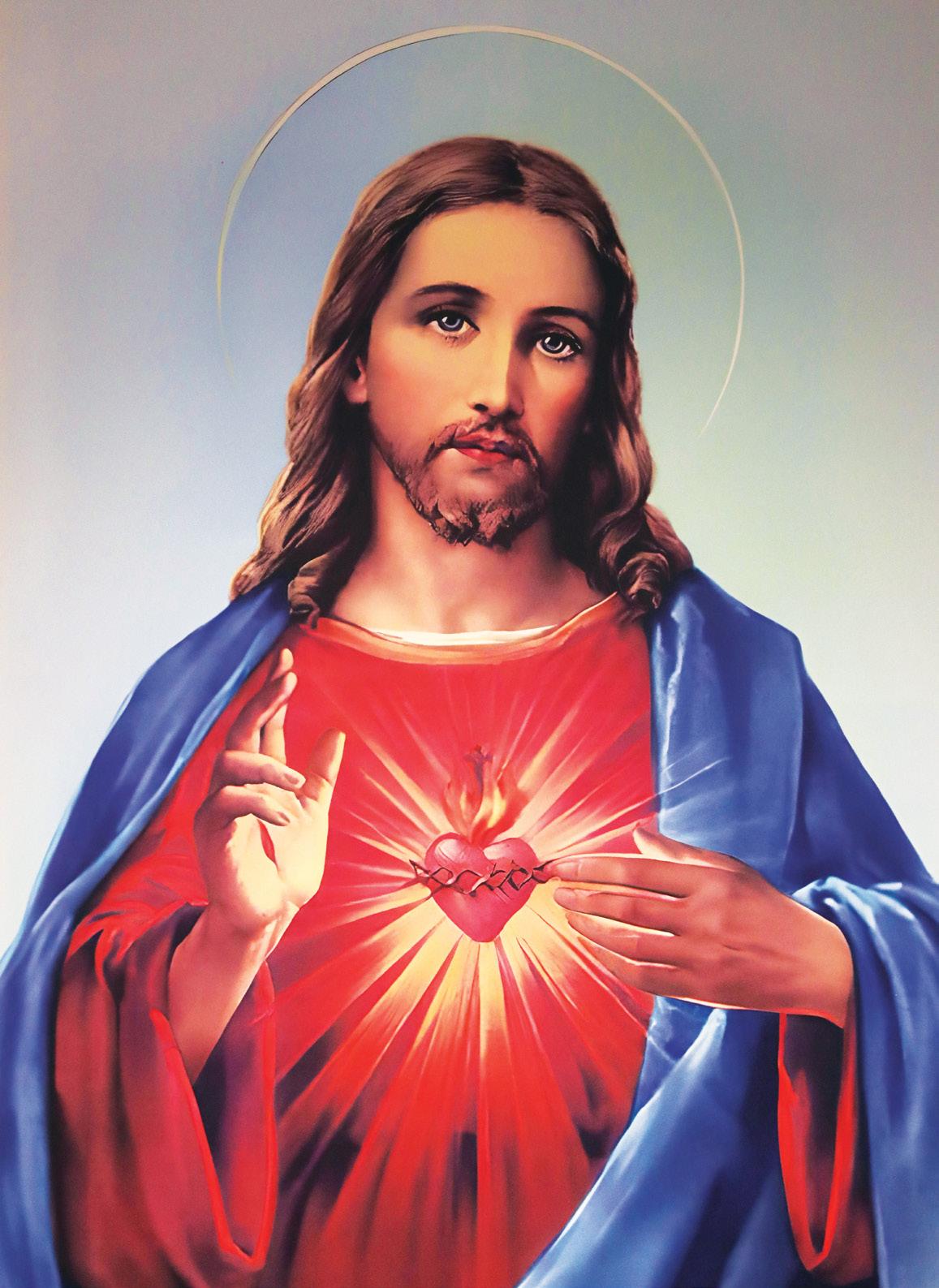
our bishops and all apostles of prayer and in particular for those recommended by our Holy Father this month. Amen.”
2. Make frequent visits to Jesus in the Blessed Sacrament
The devotion to the Blessed Eucharist and the devotion to the Sacred Heart of Jesus are, in the end, one and the same devotion in two moments. The love contained in Christ’s heart is offered to us in the Blessed Sacrament, and the Blessed Sacrament always points to the love of God poured out for the world.
The Lord instructed St. Margaret Mary to devote herself to his Sacred Heart in part by keeping a Holy Hour each week, lying prostrate before the Blessed Sacrament. Keeping this Holy Hour in the night between Thursday and Friday places the devotee even more intentionally into the Garden of Christ’s agony when Christ’s passion began but his disciples abandoned him.
3. Make a First Friday devotion
Jesus revealed to St. Margaret Mary both the warmth of his human heart and the coldness of ingratitude he suffered from many. The regular reception of holy Communion both grants us the warmth of Christ’s love and, at the same time, allows us to express gratitude for the Lord’s gift. The First Friday Devotion is a way for this exchange of love to become habitual and ever more intentional. Attending Mass and receiving holy Communion on the First Friday of each month (or at least for nine consecutive months) is offered for the reparation of sins committed against Jesus’ Sacred Heart and the holy Eucharist.
4. Make an act of consecration to the Sacred Heart
Acts of consecration to the Sacred Heart take various forms. The consecration should be renewed at least once each year on the feast of the Sacred Heart, though it may also be
renewed on each First Friday.
A simple consecration is like this: “Lord Jesus Christ, today I offer/renew my dedication to your Sacred Heart. I remember your love for me. I pledge my love in return, placing you in the center of my heart and my family. I wish to live my life in union with you and to share in your mission of love to all. Lord, accept this dedication and keep me always in your Sacred Heart. Amen.”
A longer and well-known form of this consecration is the one that St. Margaret Mary herself offered to Jesus’ Sacred Heart:
“I consecrate and surrender to the Sacred Heart of our Lord Jesus Christ, my person, my life, my difficulties and my sufferings, that I may henceforth live only for his love and glory. It is my firm and unwavering purpose to be his entirely, to do everything for his love and renounce wholeheartedly everything that could displease his divine heart.
“O Sacred Heart, I choose you as the sole object of my love, the protector of my life, the pledge of my salvation, the support of my weakness and the atoner for all the sins of my whole life. O mild and bountiful Heart, be likewise my refuge at the hour of death, my justification before God, and ward off from me the penalty of his just wrath. O loving Heart, I place my trust entirely in you. While I fear everything from my own malice, I hope everything from your goodness. Destroy in me whatever may displease you or be opposed to you, and let your pure love imprint you so deeply upon my heart that it will be impossible for me ever to forget you or be separated from you.
“O Sacred Heart, by your goodness, I implore you, let my name be deeply engraved in you for in your service and in
your love I will live and die. Amen.”
5. Observe the feast of the Sacred Heart with great preparation and reverence
The feast of the Sacred Heart occurs annually on the second Friday after Trinity Sunday. As a solemn occasion for the universal Church, observing this feast with both preparation and reverence allows each member of Christ’s body to participate in the warming of the Church by the love of Christ and make reparations for the ingratitude of disciples and others for Christ’s great love.
In his book, “The Devotion to the Sacred Heart” published at the end of the 17th century, Jesuit Father John Croiset offers direct guidance for how to practically and spiritually observe this feast with all due reverence:
“We should, if possible, consecrate the whole of the feast day to the honoring of the Sacred Heart of Jesus in the Blessed Sacrament. We should put off to some other time all unnecessary business, and deny ourselves all useless amusement, for the smallest moments of the day are infinitely precious.
“On rising in the morning, we should prostrate ourselves and adore Jesus Christ (in the Blessed Sacrament). Then we should prepare for a very fervent holy Communion, because this Communion is a Communion of reparation, in the first place, for the faults of our own Communions, and then for the sins of others.
“Immediately after holy Communion, compare the excessive love of Jesus Christ with your own extreme ingratitude; prostrate yourself humbly at his feet, humble in mind and with a heart pierced with sorrow at the sight of so many outrages which Jesus receives.
“Then make the Act of Consecration to the Sacred Heart of Jesus and offer yourself without reserve to him.
“The whole day should (then) be spent in good works and especially in making frequent acts of love to Jesus Christ according as each one’s devotion suggests.”
By these five ways, and others besides, the devotion to the Sacred Heart directs our hearts to the love of Jesus’ own heart. We slowly become emissaries of his love and sharers in the work of reconciliation for the body of Christ. In return, Christ offers 12 promises to those who devote themselves to his heart, including all the graces necessary for their state in life and peace in their homes.
DeLorenzo is a professor of the practice in the McGrath Institute for Church Life and concurrent professor in the department of theology at the University of Notre Dame. Find his writing at leonardjdelorenzo.com
OSV NEWS PHOTO | BOB ROLLER
A painting of the Sacred Heart of Jesus is seen during Palm Sunday Mass at Sacred Heart Church in Prescott, Ariz., April 13, 2025.
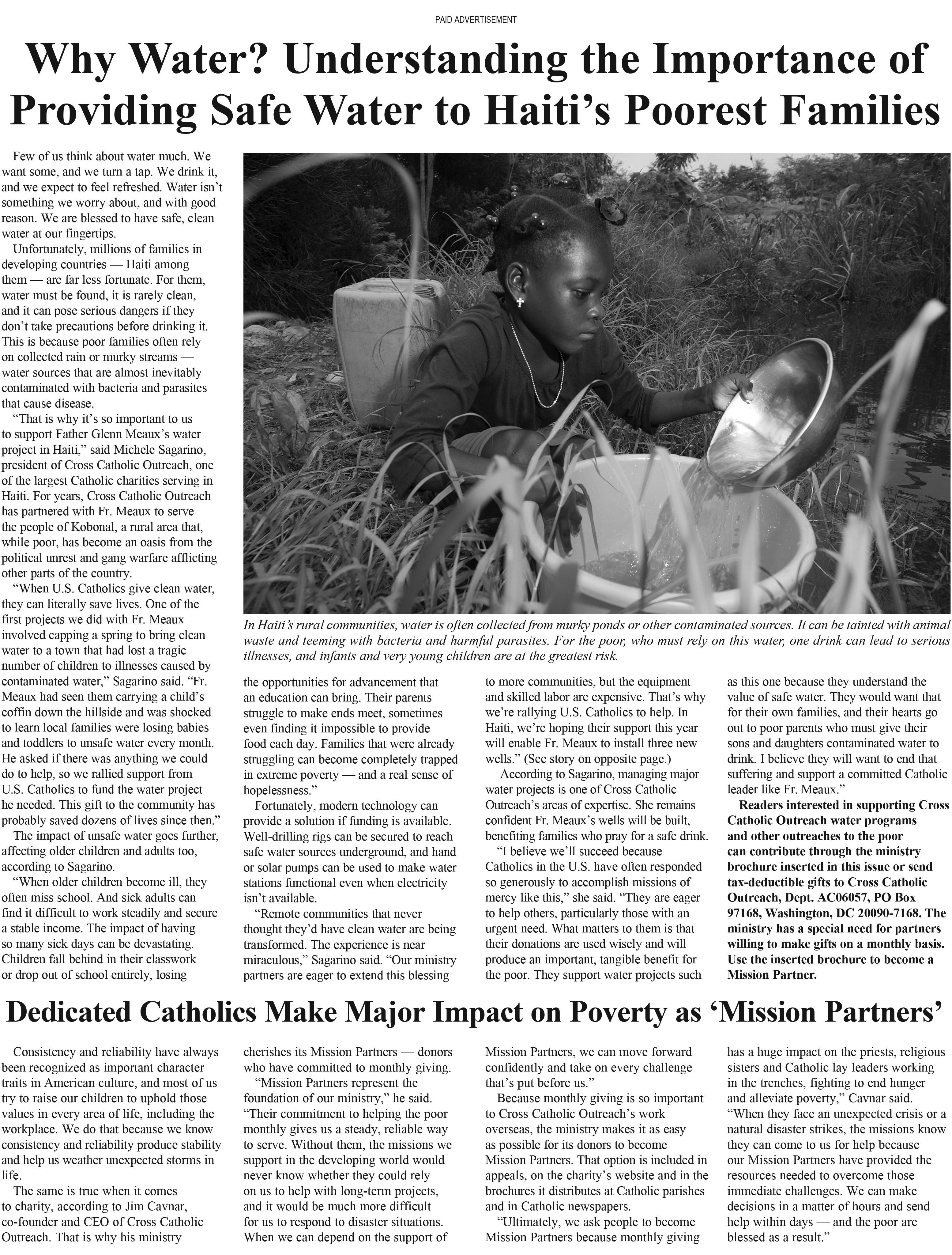
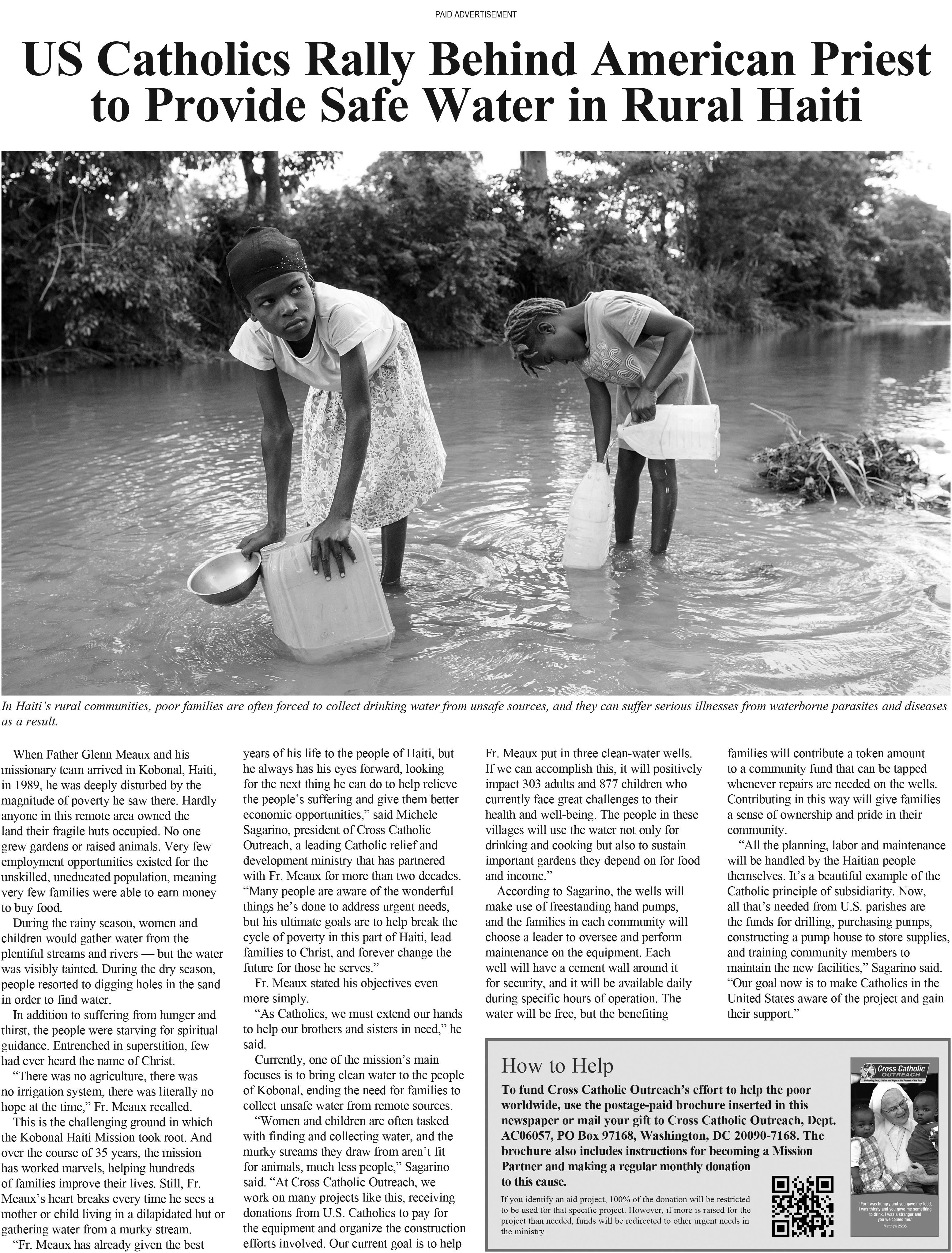
FOCUSONFAITH
SUNDAY SCRIPTURES | FATHER JAMES PERKL
Repent, go forth and share the good news
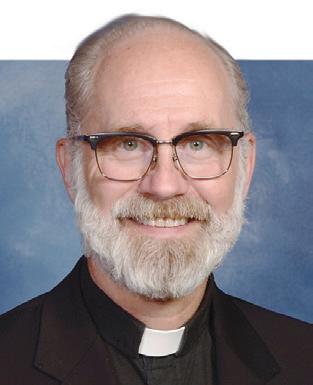
Did you know that the good news has a gate?
The Gospel makes clear that not only is there a gate, but that Jesus, who everyone knows as the good shepherd, is himself the gate: “I am the gate. Whoever enters through me will be saved ... I came so that they might have life and have it more abundantly” (Jn 10:9-10).
Regarding this salvation and abundant life, we witnessed on Holy Saturday the baptism and full initiation of so many around the world. In our own archdiocese, we witnessed 1,736 new members joining the Catholic faith. The number of catechumens was 605 and the number of candidates receiving the sacraments of initiation was 1,131. For these individuals, as in the days of the Acts of the Apostles, the Holy Spirit likely inspired them to ask, “What are we to do?”
For those who may not be able to enumerate seven points of the good news — which give witness to Jesus’ life, death and resurrection — I list them here. The fourth point you might notice is the subject of our first reading for this Fourth Sunday of Easter. It is also the answer to the question, “What are we to do?”
1. God loves you and has a plan for your life.
2. Sin separates us from God.
3. Jesus Christ died to save you.
4. Repent and believe the Gospel, the good news.
5. Be baptized and receive the Holy Spirit.
6. Live a new life in Christ, through his body, the Church.
7. Go forth and make disciples.
As the good news has a gate, Jesus promises that “Whoever enters through me will be saved.”
With those newly initiated this Easter, we are called to live all seven points of the good news and so ultimately, “Go forth and make disciples.”
Lest we think that the good news is something we can do ourselves apart from the Holy Spirit, it might be good for us to remember who the Good Shepherd really is. He is the second person of the Trinity, loving the Father, and the Father loving the Son, with the same Holy Spirit they share. Truly indivisible, and it is awesome to believe that the Son was with the Father as space and time came into being through God’s love! On the Lord’s Day, no wonder we praise God for all the beauty he created. And in our praise of God, we seek to reclaim the Lord’s Day.
COMMUNION AND MISSION | FATHER JOHN PAUL ERICKSON
‘My sacrifice and yours’
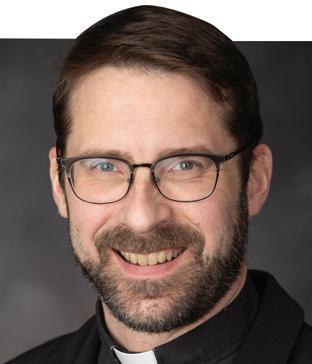
Maybe it’s the fact that I’m writing this column only a few days before taxes are due. But I want to talk this month about money and the role it plays in our relationship with God and our worship of him. Come to think of it, while taxes are indeed very much on my mind (yes, priests have to pay taxes) the fact is that the first reading of Divine Mercy Sunday was probably the real inspiration for this edition of Communion and Mission. A hallmark of the early Church was the radical sharing of property and resources. The first Christians supported their church and their neighbors in seemingly heroic ways, willingly sacrificing their own desires for the needs of others.
In most parishes on Sundays, the preparation of the altar, also known as the Offertory, is accompanied by the collection. This is entirely right and just — most parishes depend upon the generosity of her members and friends to keep the lights on and the heat running. On the purely natural level, Sunday Mass, and all that accompanies it, is a service that the voluntary participants benefit from in some way, and like any other professional service in our lives, we owe the provider some form of compensation. But there’s more to it than that. Money is a kind of sacrament, and its use starkly demonstrates where our priorities lie. I call it a sacrament because sacraments make physically present what is an invisible reality. The invisible reality here is choice. People with money have choices. The poor do not. Perhaps another way of putting this is that money is a sacrament of power. It can be
KNOWtheSAINTS
used for good or for ill, but it is power.
Christ is crystal clear on the dangers of money for the spiritual life. I wish this were not so, as I stand in need of reform in this area as much as anyone. But it seems to me to be unavoidably clear: Money can become, and often becomes, a distraction and an idol. Many commentators spiritualize and relativize these challenging passages, even as they would never think of doing so when the matter of the real presence of the Eucharist is encountered in John 6 or the priority of Peter in the establishment of the Church is found in Matthew 16. My point is simple — we often explain away Scripture passages that challenge us and we often interpret quite strictly those that affirm us.
The widow who gave from her need, not from her surplus, moves Christ himself. In terms of size, her donation was quite small. But the spirit with which it was given moved Jesus so much that her witness will forever be remembered whenever the Gospel is read and proclaimed. Her gift represents her gratitude, her trust and her surrender to the care of the Father. She has no family to care for her, and yet she gives the little she has for the needs of the Temple. She has given her heart to God, and she does not count the cost. Her power is her faith. What about us? Well, I can speak for myself. I wish it was easier for me to give generously to the needs of the Church and the poor. Unconvinced despite years of experience of the providence of the Father, I find it hard to sacrifice money. Many times, I find it easier to give of my time or of my minimal talents. But money? That would involve shutting down other options. I can’t be expected to do that, can I?
Now, to be sure, not everyone is called to give in the same way. Families, especially those
We continue to contemplate this beauty of God’s creation not only in prayer but also through the lenses of the Hubble and the James Webb space telescopes. It is wonderful to see that the observable universe is estimated to be 93 billion light years in diameter — and expanding at speeds that defy comprehension. Not only is what God created big, but it moves fast!
Though the Trinity is beyond space and time, Jesus still allowed himself to be confined in the womb of Mary for nine months. He wore sandals for 33 years. And he allowed nails through those feet to hold him fast to the cross until his death. In the tomb, he was held for three days. On Easter morning, we gave witness that Jesus rose from the dead to refresh the hearts of God’s people.
While the tomb could not hold Jesus, our hearts can. Even more, we can all be held within his heart as surely as he holds us all in the consecrated host. Pope Leo XIV articulates this in his motto, “In the One we are one.” St. John Paul II writing about the Good Shepherd also invites us to believe this: “In that little host is the solution to all the problems of the world.”
Father Perkl is pastor of Mary, Mother of the Church in Burnsville.
Sunday, April 26 Fourth Sunday of Easter Acts 2:14a, 36-41 1 Pt 2:20b-25 Jn 10:1-10
Monday, April 27 Acts 11:1-18 Jn 10:11-18
Tuesday, April 28 Acts 11:19-26 Jn 10:22-30
Wednesday, April 29 St. Catherine of Siena, virgin and doctor of the Church Acts 12:24–13:5a Jn 12:44-50
Thursday, April 30 Acts 13:13-25 Jn 13:16-20
Friday, May 1 Acts 13:26-33 Jn 14:1-6
Saturday, May 2 St. Athanasius, bishop and doctor of the Church Acts 13:44-52 Jn 14:7-14
with children, have an obligation to provide for themselves, and it is entirely laudable to be prudent when one has to consider not just oneself but others. Most believers are not called to embrace poverty in the way that the religious are invited to do. While the attitude of the widow is to be emulated by all Christians, it will look very different depending on our vocation and circumstance.
Furthermore, it is no sin to enjoy the fruits of one’s labor or to live with a reasonable amount of comfort. But we have to be careful and constantly examine our own consciences — is our use of money a compelling sign to others of our belief in God’s care for us and the truth that all good things come from him? Or does our grasping show ourselves to be more like the foolish rich man in the parable of the barns, who builds ever bigger silos to protect his increasing wealth, unaware that his life will be demanded of him long before he can enjoy what he has reaped? Worse still, do our lives remind others of the rich man in the parable of Lazarus, blind to the needs of others and our community while we feast sumptuously. Like the barn story, the latter parable doesn’t end well for the rich man.
The Mass is a sacrifice. One concrete way to pray the Mass with full, active and conscious participation is to give financially from our need and not from our surplus when that basket passes by on Sundays. Ultimately, it’s not about dollars. It’s what those dollars represent — our hearts. Lift them up.
Father Erickson is parochial vicar of Nativity of Our Lord in St. Paul and interim chairman of the Archdiocesan Liturgical Commission.
ST. GIANNA BERETTA MOLLA (1922-1962) Born near Milan, Italy, Gianna was one of 13 children in a deeply Catholic family. She wed Pietro Molla in 1955; they had three children while she continued to work as a physician. When she was pregnant with their fourth child, doctors discovered a large uterine tumor. She insisted that surgeons not remove her entire uterus, which would have aborted the baby, but only what was necessary to allow the baby to reach term. She died seven days after giving birth in 1962. Her husband and three of her children were present in 2004 when St. John Paul II, then the pope, proclaimed her a saint. Her feast day is April 28.
Sunday, May 3 Fifth Sunday of Easter Acts 6:1-7 1 Pt 2:4-9 Jn 14:1-12
Monday, May 4 Acts 14:5-18 Jn 14:21-26
Tuesday, May 5 Acts 14:19-28 Jn 14:27-31a
Wednesday, May 6 Acts 15:1-6 Jn 15:1-8
Thursday, May 7 Acts 15:7-21 Jn 15:9-11
Friday, May 8 Acts 15:22-31 Jn 15:12-17
Saturday, May 9 Acts 16:1-10 Jn 15:18-21
Sunday, May 10 Sixth Sunday of Easter Acts 8:5-8, 14-17 1 Pt 3:15-18 Jn 14:15-21
COMMENTARY
ABIDE IN HIM | ANGELA JENDRO
The heart of our work
Jesus’ last words from the cross were “it is finished” (Jn 19:30); and when he describes our own final judgment, he gives us a similar image of having completed a work — “Well done my good and faithful servant” (Mt 25:23).
What is the work of Christ, and what is the work of a Christian? Jesus was sent from the heart of the Father to seek and to save the lost and to re-create us in grace. By sending his Son, the Father’s very heart went out to us with visible and intense love. The Lord calls us, loves us and cares for us personally. Jesus told Philip, “Whoever has seen me has seen my Father” (Jn 14:9).
God continues to reach out in a personal and visible way by sending us, too — his sons and his daughters by grace, imbued with the Holy Spirit, and incorporated into the mystical body of Christ. The Church beautifully articulated this universal call to holiness in the Second Vatican Council’s “Lumen Gentium,” when it stated: “Finally all Christ’s faithful, whatever be the conditions, duties and circumstances of their lives — and indeed through all these, will daily increase in holiness, if they receive all things with faith from the hand of their heavenly Father and if they cooperate with the divine will. In this temporal service, they will manifest to all men the love with which God loved the world.” By living in a relationship with our Father in heaven,
JESUS’ REVOLUTION | COLIN MILLER
First, we must begin with prayer. Jesus did this every day and so must we. Our work stems not from what we can do per se, but from who we are, and drawing others into this life of grace with us. Thus, the prayer Jesus taught us begins with ‘Our Father,’ rooting us in our identity as his children and in trusting love.
in a disposition of faith, receptivity and obedience, we will be filled with his love and to that extent be his love in the world.
As we are sent to do the Father’s work, we must continually look to Christ as he is both our model and the one to whom we are yoked.
First, we must begin with prayer. Jesus did this every day and so must we. Our work stems not from what we can do per se, but from who we are, and drawing others into this life of grace with us. Thus, the prayer Jesus taught us begins with “Our Father,” rooting us in our identity as his children and in trusting love.
Second, we must surrender our norms to measure success. Jesus could affect incredible power when people were receptive to grace. Lives were changed, elevated and healed. He also met with
hardness of hearts, rejection, ingratitude and sterility when people lacked the humility of faith. Likewise, when we are celebrated, it’s because God is celebrated. We have simply shared our bread with the hungry — the poor in spirit. Where we are rejected, it’s because God is rejected. The prophet Samuel experienced this when the people asked for a king in place of him and his sons as judges. The Lord told Samuel however, “You are not the one they are rejecting. They are rejecting me as their king. They are acting toward you just as they have acted from the day I brought them up from Egypt to this very day, deserting me to serve other gods” (1 Sm 8:7-8). Of his own rejection, Jesus said, “And this is the verdict, that the light came into the world, but people preferred darkness to light, because their works were evil” (Jn 3:19).
Christ told Thomas, “I am the way and the truth and the life. No one comes to the Father except through me” (Jn 14:6). Rooted in him and in his teaching, the Holy Spirit enlightens our minds with the gifts of faith and understanding to see through temptations, rationalizations and errors that lead people astray down the broad road and wide gate that leads to destruction (cf Mt 7:13-14). By following Christ on the narrow road, our lives can illumine the path for others, showing them another way to be and inviting them into a whole other kind of life. Jesus assures us, “Whoever receives you receives me, and whoever receives me receives the one who sent me” (Mt 10:40).
Jendro teaches theology at Providence Academy in Plymouth and is a member of Sts. Peter and Paul in Loretto. She’s also a speaker and writer; her website is taketimeforhim.com.
The Eucharist: The center of the new Temple movement
In recent months we’ve been focusing on how the Church has always had — or rather, always been — a social teaching. We’ve been exploring Jesus’ founding of the Church, and specifically how it in some ways claimed to be an alternative to the Jerusalem Temple. We’ve seen that this was itself a socially and politically charged claim, and now this background will help us understand the heart of the Jesus movement — the Eucharist.
The climax of worship in the Jerusalem Temple was the yearly festival of Passover. This was the great celebration of the Exodus from Egypt when Yahweh liberated Israel from slavery. Yet it was not just a re-telling of history; it was the center of their current national identity. It didn’t so much commemorate a past event as bring Yahweh’s past liberating action forward as a promise of who they still were and what Yahweh would do again: Set them free from their oppressors.
Passover was thus a highly charged socio-political climate, and many of the popular revolutionaries we’ve mentioned made their moves at Passover, precisely because, as a liberation festival, it was the obvious time to throw off the Roman yoke. None of this was lost on the Romans themselves, who always increased security during the feast, especially at the Temple, because the center of this freedom-festival was also an act of worship in the sacrifice of the Passover lambs and the ritual meal. Each extended family ate the sacrifice just as their ancestors had on the night before the Exodus.
Each year, by this meal, they reconstituted themselves as God’s revolutionary people. The historian Josephus estimates that 200,000 lambs were sacrificed at Passover.
That’s a lot of lambs, a lot of blood, and the central symbol of liberation, all focused on the Temple. It’s easy to see, especially in this case, how political this worship was. It was nothing short of a liturgy of liberation.
What, then, if the leader of an alternative Temple movement were to arrive in Jerusalem at Passover with large crowds of followers? Jesus had set his face, after all, toward Jerusalem, where Luke tells us, he was to “accomplish his Exodus” (Lk 9:31). On the face of it, this moment had all the makings of a potentially violent showdown between the revolutionary popular movement and the keepers of the status quo.
Yet it is precisely at this point that we begin to see the radical difference in the communities Jesus was founding. It wasn’t that they weren’t political; they were a kingdom, after all — but a kingdom with a very different political agenda. And in the Eucharist Jesus defines the politics of that kingdom.
Jesus and his disciples make their plans to eat the Passover meal just like everyone else. The Gospel of John, however, suggests that Jesus chose to eat it on Thursday — the day before everyone else would. He thus marked the alternative nature of his Passover by eating the meal on an alternative day in an alternative Temple — his community. And now we come to the central dramatic act of Jesus’ Passover meal: He broke the bread and said, “this is my body,” and took the cup and said, “this is my blood.” The upshot must have been as obvious as it was shocking. In the new Temple, at the new Passover meal, at the climactic moment of Israel’s worship, Jesus had replaced the sacrifice of the Passover lamb with himself.
This, as we know, played out the very next day. On that first Good Friday, at about 3 p.m., while those 200,000 lambs would begin to be slaughtered, Jesus himself would be slaughtered. He was the new Passover lamb, just as he
had dramatized the night before.
We can now appreciate a bit more fully the significance of that first Eucharist. The first and probably obvious point is that it was the crowning event of the founding of the new Temple. For sacrifice was the act of worship at the heart of any Temple. At the Last Supper, Jesus institutes the new sacrificial code — himself — and gathers around him the new priests. This new liturgy is the heart of the community that is the kingdom the prophets had promised and that Jesus preached. The new Temple is now fully operational. Next time, we’ll continue to reflect on the meaning of the Eucharist in this connection.
Miller is the director of the Center for Catholic Social Thought at Assumption in St. Paul. He is the author of “We Are Only Saved Together: Living the Revolutionary Vision of Dorothy Day and the Catholic Worker Movement.”
PIVOTAL PECS
“It is interesting to meet different people, who are different ages at different places in their lives. We share experiences, insights.”
Diana Valentini, St. Michael, Prior Lake
Archbishop Bernard Hebda is encouraging the faithful to experience the small-group model Parish Evangelization Cells Systems (PECS) in their parishes. Designed to strengthen parish life through small groups and encourage parishioners to share their faith and hope in Jesus Christ with each other and then the broader community, it is having an impact. At last count, there are about 2,000 small groups and more than 16,000 participants in 138 parishes across the Archdiocese of St. Paul and Minneapolis. See the opportunities to join a small group at archspm.groupvitals.com/groupfinder.
FAITH AT HOME | LAURA KELLY FANUCCI
What the Easter Scriptures teach us about how to live as family
Family life is hard. In case no one has affirmed that for you lately, let me be the one. Whether you’re in the stage of diapers and bottles, wiping faces and losing sleep, or whether you’re worrying about the children who have grown, the now-adults making their stumbling way through a suffering world, families will always be holy, hard and humbling schools of love.
Sometimes we look to Scripture and ask, “Does anything here speak to my life today?” Especially when biblical times, societies and structures differ sharply from our own, we may be more likely to seek support, advice or models for our daily struggles from more contemporary sources. But the Gospels surrounding Easter offer refreshing, realistic and surprisingly relevant stories for the struggles we face as families.
Take Mary Magdalene, the first to encounter the risen Christ. In the Gospel of John, she stands weeping at the empty tomb — but because she is willing to enter fully into her grief, she alone is there to meet the Lord (Jn 20:1-18). Her witness reminds us that God is always making a way to meet us in grief and loss, even after deep trauma, as Jesus did for Mary whom he freed from seven demons (Lk 8:2).
Or take the story of Peter sitting on the shore with the friend he denied. What searing regret he must have felt — and what a shocking twist for Jesus to offer nothing but mercy, extending the greatest second chance of all time: “Simon, son of John, do you love me?” (Jn 21:15-19). Peter teaches us that forgiveness after deep hurt is the way of the Christian life. Like Jesus, we must keep offering forgiveness. Like Peter, we must keep answering yes to love.
The struggles of families — and the ordinary work that keeps us going — are all over the Easter Gospels. Thomas reminds us how often we feel confused, left out, or misunderstood, even among those who know us best. Sometimes it takes time, humility and a willingness to show up again
Notice where Jesus meets his disciples after his resurrection: in a house in Emmaus, breaking bread over dinner; on the lakeshore, after a long night of fishing; on the road, when his friends were grieving and aimless; in locked rooms, where they huddled together in terror. God will meet us in the same places. Over ordinary meals, in daily work and on the road. Amid grief, loss and fear.
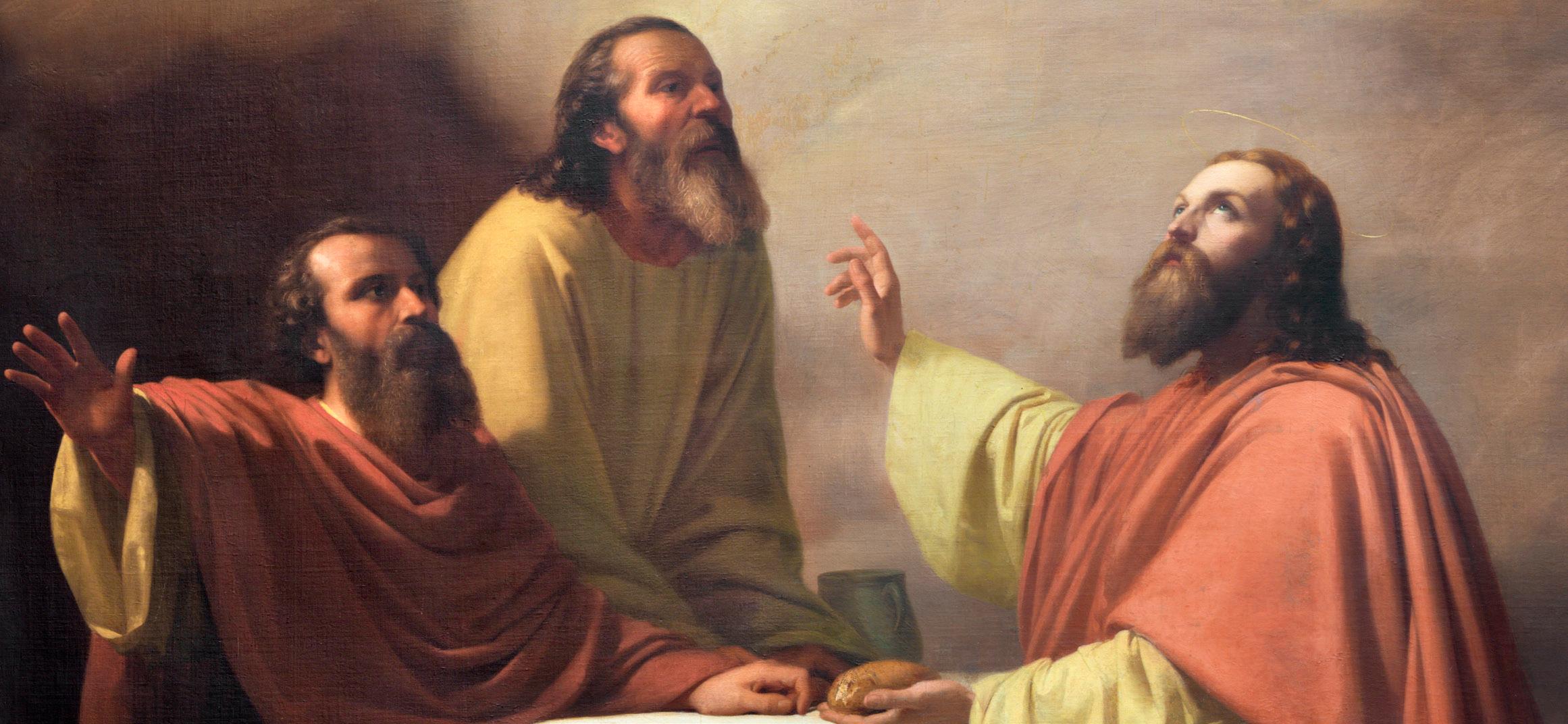
to see the truth before us. The bearers of myrrh (men and women who cared for Jesus’ body after his death) underscore the quiet holiness of tasks of care. Like Nicodemus and Joseph of Arimathea, we can carry our heavy burdens together. Like the women who brought oil and spices to anoint Jesus’ body, we learn how the smallest offerings let us care for Christ in each other.
Notice where Jesus meets his disciples after his resurrection: in a house in Emmaus, breaking bread over dinner; on the lakeshore, after a long night of fishing; on the road, when his friends were grieving and aimless; in locked rooms, where they
huddled together in terror. God will meet us in the same places. Over ordinary meals, in daily work and on the road. Amid grief, loss and fear.
The gritty humanity of the first disciples ranks among the greatest gifts that God gave us. We do not have ancestors in faith who got everything right, whose families always flourished, whose faith never wavered, or whose witness was perfect. Instead, we got sisters and brothers just like us: longing, loving, but losing their way and stumbling back to God, over and over again.
Much like pregnancy, fostering or adoption, Easter takes a long stretch of time, much longer than we might have realized
Christ’s rising defeats the sting of death
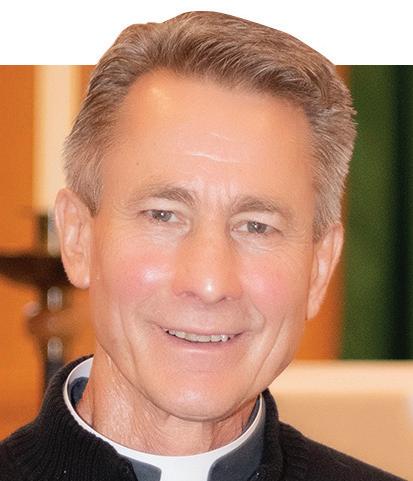
Now is the greatest season in which Christians celebrate the risen Lord!
As the Holy Spirit guides us to proclaim the good news to others, perhaps we do so with the zeal that St. Paul describes: “Death is swallowed up in victory” (1 Cor 15:54).
We are blessed to encounter Jesus in various ways that help us better know, follow and love him each day. The resources are abundant: sacred Scripture; small group fellowship; the Mass; Liturgy of the Hours; the sacraments; Catholic podcasts, apps and writings (e.g., reading The Catholic Spirit!). And not to forget good ol’ works of mercy — just to name a few ways that keep us close to him. We can tell others that Jesus’ rising takes the worry out of what we will all face — in God’s time — on our last days on Earth.
Eastertide is the time for true believers to share that encounter. Through Jesus’ resurrection, we celebrate his defeat of death — giving us hope in our own resurrection to come. “Where, O death, is your victory? Where, O death, is your sting?” (1 Cor 15:55). We want to be on his eternal side, along with our families, friends and those we meet on our walk through the streets of life. We
want to be on the eternal side of the God-man who made us his brothers and sisters through his life, death and resurrection.
Reminding myself to live in the joy of Easter throughout the year takes spiritual and bodily work. What did it take for me to believe and how can I share that? At times, I wake up, look in the mirror of discipleship and ask myself if I’m really doing enough to spread the joy of that Easter message. It’s a message to live and proclaim every day with the courage, passion and zeal of the Apostles of Christ — especially after he rose and ascended into heaven.
We are still in the Easter season, giving me plenty of fresh sensibility to keep that attitude alive. In the Gospel, we learn how Jesus spent 40 days with his disciples postresurrection to help them believe, live and connect to others with the salvific message that he had truly risen. It took a number of visits from our Lord, witnesses from the empty tomb, a road trip to Emmaus, a few rebukes, touching his glorified body, a net full of fish, and eating fish with him, to name a few times our Lord “showed up” so they would believe and hope in the resurrection to eternal life.
His appearances helped his chosen ones connect with, embrace and believe in his bodily resurrection and
when we first set out. Far from a single Sunday, Easter is a gift of 50 days — because the sacred mysteries that we recall and relive during this season are so great that we need plenty of time every year to pray through the Resurrection again.
What goodness of God, to give the gifts we need: extra time, real companions, rich stories and relentless grace. In the family of faith, even in our hardest days, we are never alone on the road.
Fanucci, a member of St. Joseph the Worker in Maple Grove, is an author, speaker, and founder of Mothering Spirit, an online gathering place on parenting and spirituality at motheringspirit.com. Her latest book is “Living Easter: 50 Days to Practice Resurrection.”
multiply his efforts to “make disciples of all nations” (Mt 28:19). Jesus’ efforts included repetition, rebuking, patience and empowerment provided by the Holy Spirit.
Our own Pentecost experiences — come Holy Spirit, come! — empower us to spread the good news. The true advocate and guide helps us while we’re on this Earth, relying on our Lord’s promise to be with us to the end of the age. We are called to go through challenges to help build habits and skills, grow in faith and spread it to others. We can start with our own families and parish life as we seek to transform the culture through our witness to the life, death and resurrection of Jesus.
The man in the mirror tells me to practice what I preach as a Catholic Watchman and encounter Jesus daily through the ways the Holy Spirit moves me. Actively proclaiming the joy of Easter is truly Christian. “But thanks be to God who gives us our victory through our Lord Jesus Christ” (1 Cor 15:57).
Deacon Bird ministers to St. Joseph in Rosemount and All Saints in Lakeville and helps with the archdiocesan Catholic Watchmen movement. See heroicmen.com for tools supported by the archdiocese to enrich parish apostolates for ministry to men. For Watchmen start-up materials or questions contact Deacon Bird at gordonbird@rocketmail.com
iSTOCK
PHOTO |
SEDMAK
CATHOLIC WATCHMEN | DEACON GORDON BIRD
Protecting children from social media addiction
A solution to minors spending too much time on social media without parental guidance is gaining traction at the Capitol. It’s called the Stop the Harms from Addictive Social Media Act (HF4138 and SF4696). This bipartisan legislation would help alleviate the problems surrounding addiction through two key parts. One, it would require verifiable parental consent for child accounts. Two, it would require that social media platforms be less addictive by design for youth under 16. In practice, this means that features such as auto-play video, infinite scroll, targeted advertising and others would be prohibited for youth accounts.
Consumed by social media
When, as a society, did we begin to allow young, impressionable minds to hand over nearly 20 percent of their time to billion-
dollar corporations? Twenty percent of Minnesota high school students spend time online between midnight and 5 a.m. five nights a week. Ninety-seven percent of youth report using their phones during the school day.
Between waking up in the middle of the night to check their feeds and receiving an average of 240 notifications throughout the day, one wonders when children have time for in-person friendships, rest and the mental capacity to retain classroom knowledge.
Nowhere else do we allow minors to enter a contract — not for sports, camps, or school outings. Yet they are allowed to sign over their data to Big Tech, and sometimes without their parents even knowing. Then, the kids become products from which the platforms can profit.
Supporting parents
Although one could argue that parents should just be better parents and limit their kids’ time online if they feel the need, the
reality is that parents need help. Not all parents are in a position to monitor their children as closely as they would like — they might work long hours or be a single parent trying to keep up. Even parents who do their best to protect their children online often find themselves at a loss in an environment of rapidly advancing technology and tech-savvy kids.
Ensuring that the platforms are designed to be less addictive will help all children. If a parent provides consent, he or she can do so knowing that the most addictive features will be unavailable on child accounts. This puts all children on the same playing field while simultaneously stifling the addictive appeal.
Even the children can recognize they face problems with using social media, and some have testified in support of this legislation.
A 2025 Pew Research Study shows that 48 percent of teens say social media has a mostly negative effect on people their age. That’s a 16 percent increase in just three
A mercy that transcends our disappointments
By Ely Segura OSV News
I had wanted to visit Poland for a long time, not least to see the Shrine of the Divine Mercy in Kraków.
In my 20s, I had come across a Catholic website featuring numerous films about saints. Many of those lives had had a positive impact on me, leaving me eager to learn more about Christian spirituality. The life of Sister Faustina Kowalska, to whom God had chosen to reveal himself in a special way, and through whom he wished to reaffirm his mercy and our fervent longing for it, was one of them.
In those years, I began to say that my favorite image of Christ was that of the devotion to Divine Mercy, revealed to Sister Faustina. Its iconographic message, though simple, was quite complete and profound for me. It encompassed what I had already received from him. The rays emanating from his side, a glorious way of seeing the water and blood flowing from the pierced side of Jesus on the cross, were already interpreted as the sacraments of baptism and the Eucharist by the Church Fathers, especially St. John Chrysostom.
And it is those very glorious rays to which I have access and through which I am pierced by his divine mercy every time I take part in Eucharistic adoration. The Venerable Fulton Sheen was very fond of saying that being in this presence is like exposing one’s body to the sun in order to absorb its rays.
My choice of this image of Jesus over others was also influenced by the inscription on it. The phrase that Jesus himself had asked Sister Faustina to write, as recorded in her diary (entry 47): Jezu ufam Tobie, or, Jesus, I trust in You. A constant invitation to reaffirm my reliance on his infinite faithfulness, especially during times of tribulation, when faith falters.
And, finally, I found the devotion of praying the Chaplet of Divine Mercy, also communicated by Jesus to the Polish saint, to be beautiful. Through this prayer, we can mystically unite our sufferings — of every kind, but especially the pain caused by our
sins — with the suffering of Christ during his passion, so that we may accept and share in the redemption obtained by him. And, moreover, receive the many graces that he himself promised to those who pray it.
Almost two decades later, I was invited on a Marian pilgrimage that would include a stop in Poland. Voilà! This was my chance. And Poland was what interested me most about that pilgrimage.
We arrived in Kraków on the fourth day after crossing the Atlantic. And on the fifth day, finally, we went to Lagiewniki, the district of Kraków where the Shrine of Divine Mercy is located.
The most important part of this sanctuary is the convent chapel, where the venerated image of the Merciful Jesus, which I discussed above, is located, along with an urn containing the mortal remains of St. Faustina beneath the altar and some of her first-class relics.
This young Polish woman was canonized by her compatriot St. John Paul II on April 30, 2000, on the second Sunday of Easter, when we celebrate the feast of Divine
Mercy throughout the Church. On that day, the Holy Father conferred upon Sister Faustina the title of “Apostle of Divine Mercy.”
The chapel is beautiful and very simple. There is a profound sense of contemplation there, stemming from the genuine devotion of its visitors. On the high altar stands a statue of Mary under the title of Mother of God of Mercy, who is the patron saint of the congregation revealed to Sister Faustina.
Sadly, our visit there was rather brief. I would be exaggerating if I said we spent two hours there (between the chapel and the souvenir shop). We did not visit the convent, as had also been planned, and we did not go to the basilica or the observation tower. We did not enter Sister Faustina’s House, which is a pastoral and accommodation center as well as a museum.
The day had dawned rainy, not very conducive to doing much, but I was thirsty for more while being there. I had saved up and waited a long time especially for this pilgrimage, and the shrine was one of my greatest motivations. I felt truly miserable.
I had been taught that the term mercy
years. In addition, studies link Instagram use, especially among teen girls, to struggles with body image and self-worth. Instagram also has the highest percentage of adolescent users reporting cyberbullying. Passing HF4138 and its companion bill SF4696 would help curb some of the addictive appeal these platforms present, which should, in turn, help alleviate some of the mental health struggles today’s youth face — all while putting parents back in the driver’s seat.
Teens and parents are looking for a solution. Let’s urge the Legislature to deliver. Contact lawmakers at mncatholic.org/protectkidsonline
In addition, the Minnesota Catholic Conference has packaged this legislation with two other bills in a three-tiered approach to protecting youth from gun violence. You can learn more about that package here: mncatholic.org/protect_ all_kids-parishes
Inside the Capitol is a legislative update from Minnesota Catholic Conference staff.
meant that God took our miseries into his heart and thus had compassion on us. But I also interpret it as the opportunity granted to us by the Father, through the Son, to place our miseries (and in this case, this and all my/our disappointments and contradictions) into his heart.
We know of the devotion to Divine Mercy through the mission entrusted to St. Faustina’s confessor, the now Blessed Michael Sopocko, who, following the saint’s death, took on the task of spreading it and establishing the feast of Divine Mercy. He endured persecution, ridicule and constant rejection, even from within the Church. He died in despair, crushed by his apparent failure.
However, God had other plans. And the rest is history. His mercy extends even to what we had already given up for lost. It transcends space, life and death. It is eternal (Ps 136:1) and truly encompasses all things (Ps 33:5).
Segura is a laywoman and creator of the Teófilo project, an initiative for the faith formation of Hispanic adults in the United States: proyectoteofilo.com
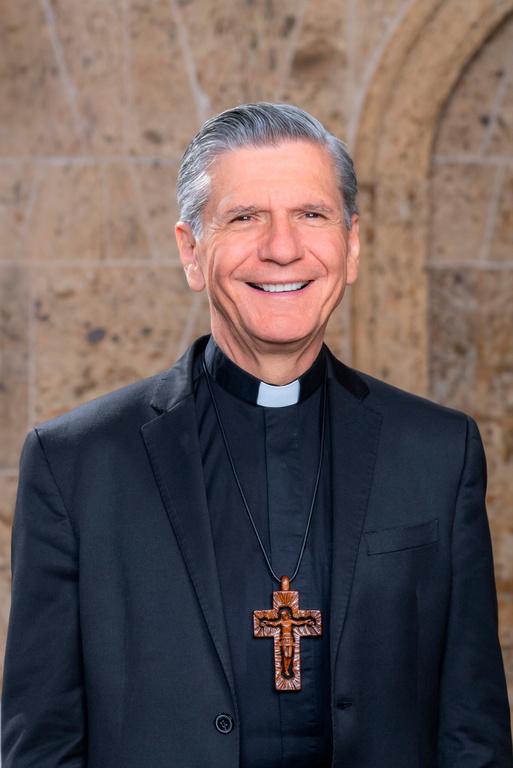
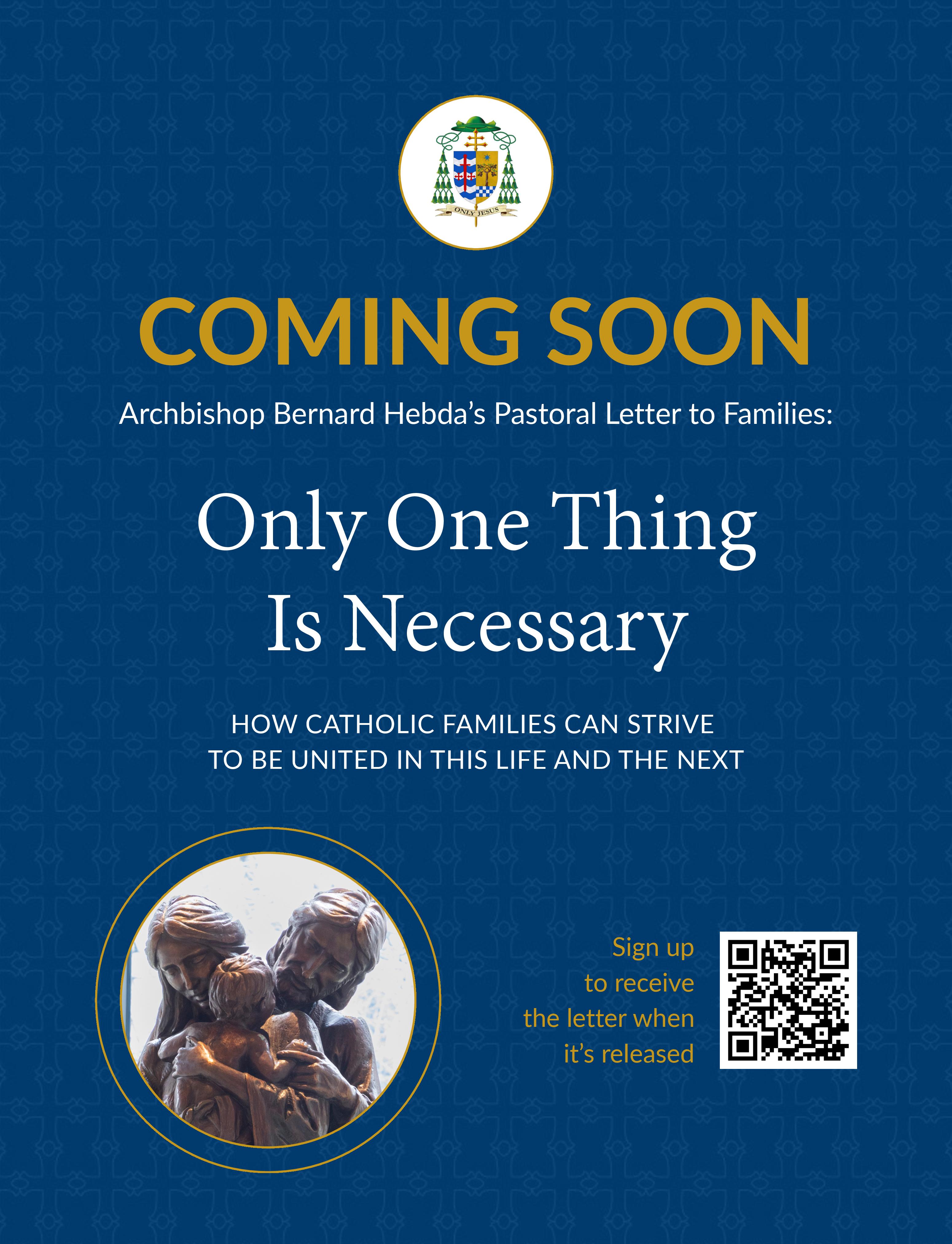
CALENDAR
For all calendar items, please visit thecatholicspirit.com/calendar
PARISH EVENTS
Loretto KofC Pancake Breakfast April 26: 8 a.m.-noon at Sts. Peter and Paul, 150 Railway St. E., Loretto. The Loretto Knights of Columbus #9601 is hosting an all you can eat pancake, French toast and sausage breakfast. Freewill offering. Holy Childhood Women’s Club Rummage Sale April 30-May 1: 9 a.m.-7 p.m., April 30, and 9 a.m.-6 p.m., May 1, at Holy Childhood, 1435 Midway Parkway, St. Paul. Semi-annual sale with a wide selection of clothing, household, kitchen and vintage items, and some small pieces of furniture and miscellaneous items.
Bereaved Mother’s Day Brunch May 2: 9 a.m.-1 p.m. at Epiphany, 1900 111th Ave. NW, Coon Rapids. All mothers who have experienced the loss of a child (from pregnancy through adulthood) are invited to attend the Bereaved Mother’s Day Brunch for the Archdiocese of St. Paul and Minneapolis. This event is an opportunity for mothers to honor the lives and memories of their children who have died. Whether you are new to your grief journey or have been carrying your loss for many years, there is a place for you here. Cost: $25. tinyurl.com/mrxc72ac Polish Constitution Day Concert May 2: 7 p.m. at Holy Cross, 1621 University Ave. NE, Minneapolis. Presented on the eve of the historic constitution of May 3, 1791, the program will feature the Holy Cross Choir and a chamber orchestra performing sacred music by Polish composers spanning more than four centuries. The concert explores Poland’s rich choral tradition from the early Baroque period to the modern era, with several works rarely heard in the United States. Free and open to the public.
St. Mary’s Silver Tea for Women May 3: noon-3 p.m. at Lowell Inn, 102 N. Second St., Stillwater. Enjoy the Lowell Inn High Tea, hosted by St. Mary’s with silent auction, entertainment and female companionship. Invite friends, mothers and sisters! Tickets must be prepaid and guest list reserved by April 24. Call St. Mary’s at 651-439-1270.
44th Annual St. Bonaventure Garage Sale
May 6-9: 5-7:30 p.m., May 6; 9 a.m.–6 p.m., May 7; 9 a.m.-4 p.m., May 8; 9 a.m.–1 p.m., May 9, at St. Bonaventure, 901 E. 90th St., Bloomington. Join us for our Annual Garage Sale where great deals meet community support! Wednesday preview sale for $2 admission, Friday half price day, Saturday $5 bag day. saintbonaventure.org/garage-sale.html
WORSHIP+RETREATS
Retreat for Women Whose Mothers Have Died May 8-9: 6 p.m. May 8-3 p.m. May 9 at St. Paul’s Monastery, 2675 Benet Road, St. Paul. This retreat offers women an opportunity to explore the significance of mother loss. Offered by the Loyola Spirituality Center at the Benedictine Center. Open for up to 11 participants. Registration and payment for this retreat is through Loyola. tinyurl.com/4an82sa4
An Evening with the St. John’s Bible: Wisdom Woman May 11: 6-8 p.m. at St. Paul’s Monastery, 2675 Benet Road, St. Paul. Through guided prayer, visio divina with the sacred image, reflective Scripture, creative expression and meaningful conversation, you will be invited to notice where wisdom is already present in your story, in the women and men who have shaped you. tinyurl.com/bdcu7684
CONFERENCES+WORKSHOPS
St. Joseph’s Fair May 1-2: 8 a.m.-5 p.m. at St. Patrick, 6820 St. Patricks Lane, Edina. All the faithful are invited to come away to strengthen, and be strengthened by, the good works being done in our archdiocese. Discover Catholic businesses and opportunities, celebrate good work being done and launch new good works. sjbusinessguild.org/sjf
SCHOOLS
Drama Performance (Holy Spirit Academy) April 24 and 25: 7-9 p.m. April 24, 2-4 p.m. April 25, at Holy Spirit Academy, 1001 E. Seventh St., Suite 1, Monticello. The HSA Drama Club is excited to invite you to their 2026 performance, “The Maid of Orleans,” a story of St. Joan of Arc. holyspiritacademy.org/drama-club
Superhero Family Blast April 26: 11:30 a.m.1 p.m. at Nativity of Mary, 9901 E. Bloomington Freeway, Bloomington. All preschool and kindergartenage families are invited to join us for a SUPER open house! Snap heroic poses, engage in family activities
and enjoy light refreshments. Enter Door 10 to pick up your superhero gift bag. RSVPs appreciated! tinyurl.com/ykns4nxu
Fit for Life (Holy Spirit Academy) May 9: 10 a.m.-noon at Lake Rebecca Park Reserve, 9831 Rebecca Park Trail, Rockford. Experience faith, fitness and nature on a 5k at Holy Spirit Academy’s annual Fit for Life fundraising event. holyspiritacademy.org/fit-for-life SINGLES
TCC Spring Dating ’26 May 6, 9: 6:45 p.m. at St. Joseph, 8701 36th Ave. N., New Hope. Twin Cities Catholic Singles invites singles 21-49 to join our fourth large-scale, intentional dating event! The two-part event takes place the evenings of May 6 and May 9 at St. Joseph’s in New Hope. Sign up by April 29: tinyurl.com/2jjmtwrn
OTHER EVENTS
Our Lady of Guadalupe: Blessing and Dedication Celebration April 27: 10-11 a.m., Gethsemane Cemetery, 8151 42nd Ave. N., New Hope. The Catholic Cemeteries is having a blessing and dedication celebration for the Our Lady of Guadalupe statue in our new cemetery section. Archbishop Hebda will preside. tinyurl.com/38jv95t7
Franciscan International Award Dinner (FIA) May 7: 6-9 p.m. at The Wilds Golf Club, 3151 Wilds Ridge Court, St. Paul. The Province of Our Lady of Consolation is honored on their 100th anniversary for having built and staffed the Franciscan Retreats Center these past 60 years. Archbishop Hebda will introduce Bishop Stowe. Dinner, live auction, raffles, recognition and award. tinyurl.com/3uec4y3t
Women’s Care Center Luxury Bingo May 7: 6-8:30 p.m. at Rush Creek Golf Club, 7801 County Road 101, Maple Grove. Exquisite food, cocktails, great fun and excellent prizes. Benefiting the moms and babies of our community. For questions, call (715)-222-9530 or contact Coleson@supportwcc.org tinyurl.com/57ra2muz
2026 CSCOE Bash May 9: 6 p.m. at the University of St. Thomas, Lee and Penny Anderson Arena, 2115 Summit Ave., St. Paul. CSCOE’s annual fundraising gala supporting Catholic schools. This joyful evening benefits 151 Catholic schools statewide by enhancing excellence and increasing enrollment. Purchase tickets or sponsorships today. cscoe-mn.org/event/cscoe-bash
CALENDAR submissions
DEADLINE: Noon Thursday, 14 days before the anticipated Thursday date of publication. We cannot guarantee a submitted event will appear in the calendar. Priority is given to events occurring before the issue date.
LISTINGS: Accepted are brief notices of upcoming events hosted by Catholic parishes and organizations. If the Catholic connection is not clear, please emphasize it in your submission. Included in our listings are local events submitted by public sources that could be of interest to the larger Catholic community.
TheCatholicSpirit.com/ calendarsubmissions
ONGOING GROUPS
Restorative Support for Victims-Survivors Monthly: 6:30-8 p.m. via Zoom. Open to all victims-survivors. Victim-survivor support group for those abused by clergy as adults first Mondays. Support group for relatives or friends of victims of clergy sexual abuse second Mondays. Victimsurvivor support group third Mondays. Survivor Peace Circle third Tuesdays. Support group for men who have been sexually abused by clergy/religious fourth Wednesdays. Support group for present and former employees of faith-based institutions who have experienced abuse in any of its many forms second Thursdays. Visit archspm.org/healing or contact Paula Kaempffer, outreach coordinator for restorative justice and abuse prevention, at kaempfferp@archspm.org or 651-291-4429.
Lumen Vero Second Thursdays: 6 p.m. at Concord Lanes, 365 Concord Exchange N., South St. Paul. Bold Catholic men are needed now more than ever. Monthly Lumen Vero meetings feature Catholic leaders who share testimonies and convictions. Be inspired by men on fire for Christ. No cost, just show up. lumenvero.com
ACCESSIBILITY SOLUTIONS
STAIR LIFTS – ELEVATORS WHEELCHAIR LIFTS FOR HOMES, CHURCHES & SCHOOLS Arrow Lift (763) 786-2780
ACCOUNTANTS
Rasmussen Accounting 763-792-6630 Individual & Business Tax Return Preparation info@rasmussenaccounting.com SJBG MBR ANTIQUES
TOP CASH PAID For Older Furniture
• Advertising Signs • Beer Items
• Old Clothes • Misc. (651) 227-2469 ATTORNEYS

Employment Law and Estate Planning Church and Private School Law
www.NelsonLawMN.com | 651-300-1412
Timothy J. Scott, J.D. Wills, Trusts, Estate Planning & Probate timothy@tjslawoffice.com 952-521-5950 SJBG MBR
Virginia Ryan, Attorney at Law Trusts, Wills, Probate, Real Estate
600 Inwood Ave. N #130; Oakdale, MN 55128 (651) 631-0616 www.virgielaw.com.
CATHOLIC BUSINESS DIRECTORY
300 Local Catholic Owned Businesses stjosephslist.com SJBG
CATHOLIC BUSINESS GUILD
sjbusinessguild.com 612-363-2905 Connections - Customers - Jobs - Mentors CEILING TEXTURE
Michaels Painting Popcorn Removal & Knock Down Texture TextureCeilings.com (763) 757-3187
CEMETERY LOTS FOR SALE
Resurrection Cemetery: Double-depth companion crypt in Our Lady of Solace Mausoleum. 402-871-6446 / soster5@aol.com
CHIROPRACTOR
Mind & Body Chiropractic * Dr. Kuznia
$80/mo. Indiv. * $120/mo. Family * SJBG mindbodychiropractic.com/ 651-600-3521 COFFEE
Edge Coffee Company 612-504-1954
Fair Trade & Organic - no mycotoxins edgecoffeecompany.com SJBG MBR
COWORKING SPACE
Quarry Catholic Coworking - SJBG quarrycoworking.com 612-363-2905
EMPLOYMENT OPPORTUNITIES
Client Services Manager - Location: Pregnancy Center in Forest Lake. Hours: 24–30 hours per week. Requirements: Pregnancy center experience preferred. To apply, please send your cover letter and resume to jillking.llcc@gmail.com. For any questions, please contact Jill at 651-464-0262.
EMPLOYMENT OPPORTUNITIES (cont.)
Trojack & Associate Law Office, P.A., located in West St. Paul, MN, is seeking a legal assistant/paralegal. This is a part-time position with responsibilities including drafting correspondence, scheduling appointments, and tracking deadlines. To apply please submit a cover letter and resume to: John.Trojack@TROJACKLAW.COM. GRAPHIC DESIGN
Graphic design, biz photos, marketing serv. sophia@mcgoverncreative.me SJBG MBR
FINANCIAL PLANNERS
Win-A-Key to Unlock Your Retirement Income yourretirementkey.com 763-290-1420 Susan Wieneke, financial advisor SJBG HARDWOOD FLOORS
MintHardwoodFlooring.com
Installation, Refinishing, Repairs Mark Schroeder: 612-987-5175
HEALTH CARE
THE FAMILY CLINIC, LLC
Direct Primary Care • Functional Medicine 651-400-1554 • info@mnfamilyclinic.com
INSURANCE
Home, Auto, Business, Life, Annuities, 401k Rollovers, Disability, Long-Term Care Luke Bauman baumanfinancial.com 763-972-6198
MORTGAGE LOANS
Home Loans with Honesty & Integrity Matko Lending LLC; NMLS# 2656175 matkolending.com/952-484-1613 (call/text)
Residential Mortgage Lending in MN & WI Conventional, FHA and VA NMLS #422758 Christopher.Burr@rcu.org 651-202-1367
NETWORKING ORGANIZATIONS
Business Builders - Faith Based Networking sjbusinessguild.org/builders/ SJBG PAINTING
For painting & all related services. View our website: PAINTINGBYJERRYWIND.COM or call (651) 699-6140. Michaels Painting. Texture and Repair. MichaelsPaintingLLC. com. (763) 757-3187
PRAYERS
NOTICE: Prayers must be submitted in advance. Payment of $8 per line must be received before publication. RELIGIOUS ITEMS FOR SALE www.HolyArt.com Over 50k Religious Items & Church Goods WEB DESIGN SERVICES
Websites, Redesign, Updates, Hosting, Seo Midwestwebs.com Peter Dubay 763-537-3231.
THELASTWORD
St. Vincent de Paul Twin Cities executive director puts faith to work
By Lynda McDonnell For The Catholic Spirit
Wayne Bugg’s day begins at 8 a.m. inside a cement-block warehouse near Franklin Avenue in the Cedar-Riverside neighborhood of Minneapolis.
Inside the dimly lit warehouse, where massive Gaylord boxes of donated goods line the walls, the father of five sits at his computer in a small office. For a few quiet hours before moving on to the busy thrift store near Lake Street, the soft-spoken executive director of the St. Vincent de Paul Society Twin Cities will confer with warehouse workers, answer emails, schedule pickups from donors and delivery of whatever the thrift stores in Minneapolis and St. Paul need for their shelves.
Later, when Bugg moves to the cramped, busy offices at the Lake Street store, he will confront the many tasks involved in running a $1.6 million nonprofit with 38 employees,17 parish chapters (called conferences), two stores, two boards (governing and advisory), one assistant and the ambition to do even more.
“I feel called to do this,” said Bugg, who grew up in poverty in a suburb south of Chicago, as he reflected on taking over as executive director last June. “I feel that all those experiences that God walked me through has led me right here for such a time as this. Somebody who can speak to poverty, who’s experienced it. To be able to reach out to a new generation who are ready to do something to help.”
Pat Kaiser, a board member representing Incarnation in Minneapolis, believes Bugg, 47, is the ideal person for the job.
“He’s authentic. He’s a product of our organization. He wants others to have the success he’s had.”
He’s impressed by Bugg’s early achievements — formalizing management systems, recruiting new parish conferences, reaching out to young people and developing strategies that position St. Vincent for growth. (Bugg’s investiture ceremony was in the fall of 2024, but he took charge only after longtime executive director Ed Koerner retired last June.)
“We are a ministry and a business,” Kaiser said. “Wayne lives it. He shows respect. He listens.” Kaiser, a Catholic, admires Bugg’s dedication to his evangelical Christian faith. “He’s kind of the epitome of the Christian, if you ask me.”
Bugg’s climb to the society’s top job in the Twin Cities has been long and arduous, fueled by hard work and unstinting support from bosses and volunteers. Thirty years ago, as a 17-year-old high school dropout, he started working for St. Vincent, shoveling snow and hauling hide-a-beds at the Lake Street store for $5 an hour.
His first boss, the late Daryl Bach of Incarnation, encouraged him to go to night school to get his GED. When he did, Bach and Koerner pushed him to go on for a two-year degree, then a four-year business degree.
In addition to taking night classes, Bugg advanced at work: cashier, assistant store manager, manager, then assistant director. Five years ago, Koerner offered to train Bugg as his successor.
The help extended to Bugg’s family. Sixteen years ago, when his wife, Kimberly, gave birth to their youngest — twin girls — Vincentian volunteer Margaret Kuznia, a member of St. Bonaventure in
Bloomington, came twice a week for a year to cook and clean.
That support changed his and his family’s lives. “The love they showed me was unconditional,” Bugg said. “It felt like they adopted me.”
He uses that experience to inspire others to volunteer. “There’s these opportunities to live out your life to glorify God and demonstrate your love for others,” he suggested. “It’s one thing to say it, but it’s another thing to do it. It takes some courage. But that God we brag about every Sunday? He’s real and he will assist you.”
His call is producing results. Over the past six months, three parishes — St. Alphonsa in St. Paul, St. Raphael in Crystal and St. John Neumann in Eagan — have launched St. Vincent conferences.
New members express eagerness to participate in home visits, a key part of the St. Vincent model since 1833, when 20-year-old Frederic Ozanam founded the Catholic lay charity to serve the poor in Paris. When someone requests aid, parish volunteers visit them at home to assess their needs and respond with material and spiritual support.
“There’s a hunger to help,” said Julene Maruska, who ran the society’s thrift store in St. Paul for decades before becoming Bugg’s assistant last year. “People are wanting to help their neighbor in need. We offer a vehicle that’s been tried and tested
describes growing up in Harvey City, Illinois, a blue-collar Chicago suburb that suffered as plants closed and residents fled. (Today, one in five residents of Harvey live in poverty.)
Bugg’s mother and stepfather worked, but there was never enough money to raise four children. “How can God save us from hell but not from Earth?” Bugg wondered.
At 14, Bugg worked summers to help pay rent and got involved with gangs and drugs. When he and a friend went to buy marijuana one day, his friend shot the seller, who survived. Bugg fled to an aunt’s home in Gary, Indiana, where his struggles continued. After his cousin was pistolwhipped, his aunt brought the family to Minneapolis, where a neighbor hired him at St. Vincent.
His spiritual conversion came when his cousin was killed during a robbery shortly after Bugg purchased marijuana from him. “I can’t explain the loss of your son,” he told his aunt. “But I will tell you my life will never be the same again. That God spoke to me that day. And I won’t go back to that lifestyle anymore.”
“My testimony is a way to get in the door,” he said of his school visits. “It’s all about St. Vincent de Paul and all about Christ. We want them (the students) to come along in this network of charity, causing the transformation of the world.”
Students have responded. Last December, campus ministry leaders from St. Thomas Academy collected and distributed toys to 300 children in Minneapolis. St. Agnes students in St. Paul have collected and sorted clothes.
Love, not judgment, is the gospel Bugg preaches. “People marvel at the wonder of God in mountains but not when they see people sleeping under bridges,” he proclaimed at his Minneapolis church, Yeshua’s Love Heals. “That has got to be changed. Someone needs to show up and say blessings on them and take their hand.”
for 200 years.”
Maruska, a member of St. Francis de Sales in St. Paul, admires her boss’s ability to be a bridge between disparate people.
“He knows the mayor and he also knows the guy in the street and he doesn’t treat anybody different.”
She also appreciates Bugg’s vision for the society as a place where church volunteers, young activists with no religious background and people struggling with poverty, addictions and illness all feel welcome.
“If we’re going to grow as a group and be there for our members and be there for our neighbors in need, we need someone who sees the big picture, and he’s just good at it,” she said.
Mary Cavanaugh, a retired corporate executive, has spent the past year as an Ignatian Corps volunteer, driving from Edina to Lake Street two or three days a week to help Bugg develop strategic and marketing plans. Her own learning has been profound.
“It’s nothing short of a miracle in terms of my faith development,” she said. “I’ve got to do something. I can’t just talk about it.”
To recruit the next generation of volunteers, Bugg speaks at schools including St. Thomas Academy in Mendota Heights, Academy of Holy Angels in Richfield, DeLaSalle in Minneapolis and The St. Paul Seminary in St. Paul. He
To those who condemn non-Christians, he says, “I am tired, tired, tired of believers looking at nonbelievers as enemies. Enemies! How dare we? How dare we look at a human and declare something else?”
Bugg’s ability to model the “loving encounter,” a key principle of the society’s work, shows in the legacy he built managing the Lake Street store for a decade. As a kid, he watched “Cheers,” the ‘80s sitcom set in a Boston bar “where everyone knows your name.”
As store manager, he worked to create a place where everyone was welcomed, people short of money were helped and shoplifters were offered prayers and second chances.
The “Cheers” ethos continues, and customers notice. When people get disruptive, “they do their best to help,” said Michael Sorum, who shops at the store for clothes and vintage items for his nearby apartment. “You notice the spiritual part of it when they’re thinking about the person, not the circumstances.”
Back at the warehouse, Bugg gazed at the photo on his home screen — Aurarius Rose, his year-old granddaughter — and reflected on the surprising path of his life.
“Growing up, it was like a rite of passage to be shot. To make it to 21 was a miracle. To be a parent was far-fetched. Becoming a grandparent …” He smiled and shook his head at the wonder of it.
DAVE HRBACEK | THE CATHOLIC SPIRIT
Wayne Bugg, executive director of St. Vincent de Paul Society Twin Cities, stands outside the St. Vincent de Paul thrift store in Minneapolis, where he spends a good chunk of his time every day.