FOR NURSING AND RESIDENTIAL CARE HOMES
W W W. T H E C A R E R U K . C O M
WE NOW SUPPLY A WIDE RANGE OF FURNITURE
THECARERUK
THECARERUK
THECARER_UK
Issue 297
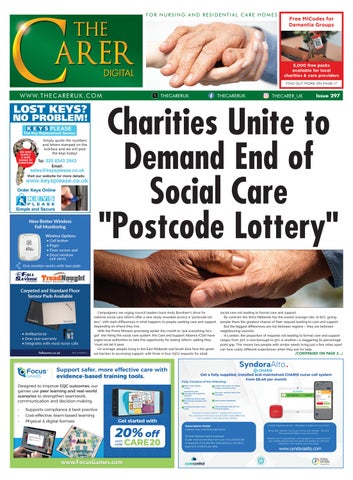
Charities Unite to Demand End of Social Care "Postcode Lottery" Campaigners are urging council leaders back Andy Burnham’s drive for national social care reform after a new study revealed access is “postcode lottery”, with stark differences in what happens to people seeking care and support depending on where they live. With the Prime Minister promising earlier this month to “put everything he’s got” into fixing the social care system, the Care and Support Alliance (CSA) have urged local authorities to take this opportunity for lasting reform, adding they “must not let it pass. On average, people living in the East Midlands and South East face the greatest barriers to accessing support, with three in four (75%) requests for adult
social care not leading to formal care and support. By contrast, the West Midlands has the lowest average rate, at 62%, giving people there the greatest chance of their request leading to care and support. But the biggest differences are not between regions – they are between neighbouring councils. In London, the proportion of requests not leading to formal care and support ranges from 30% in one borough to 91% in another—a staggering 61 percentage point gap. This means two people with similar needs living just a few miles apart can face vastly different experiences when they ask for help.
(CONTINUED ON PAGE 3...)
PAGE 2 | ISSUE 297 | THE CARER DIGITAL
EDITOR'S VIEWPOINT
Welcome to the latest edition of The Carer Digital! COULD SOCIAL CARE REFORM BE ANDY BURNHAM'S LEGACY? I am sure you will all agree that every Prime Minister arrives in office with a long list of competing priorities and a finite pot of taxpayers' money to spread across them. That will never change, whoever is in Number 10. But I do wonder whether, for Andy Burnham, adult social care reform may end up being the issue that defines his legacy more than Editor any other. It is an issue that has been the elephant in the room for successive Prime Ministers and successive Health and Social Care Secretaries for decades — acknowledged in private, promised in manifestos, and then quietly shelved when the political cost of tackling it looked too high. That may finally be changing. The campaign to build a national consensus around social care appears to be gathering real pace, and for the first time in a long while, the issue is firmly in the public eye rather than being managed out of it. As I have written in recent weeks, it began with Baroness Casey's "Big Conversation on Care" — a long overdue exercise in asking people across England what they actually want and expect from a future National Care Service. It is the right approach, and it is welcome. But as I have also said before, that conversation must be honest with the public about their own responsibilities too — to their health, and to the question of who ultimately pays for care in old age or disability. A National Care Service cannot be built on the assumption that the state will simply absorb every cost with no wider public contribution or behavioural change. That conversation needs to happen in the open, not be ducked for the sake of an easier headline. Mr Burnham has never hidden his long-standing passion for this issue, and he has said publicly that he is prepared to spend political capital to get reforming legislation through Parliament. That is a significant statement of intent from a Prime Minister only recently in post, and it is one the sector should hold him to. This week's intervention from the Care and Support Alliance, representing more than fifty of the country's leading charities, adds real weight to the moment. Its analysis of the postcode lottery in adult social care — showing just how dramatically a person's chances of receiving support can vary depending on which local authority they happen to live in — will come as no surprise to anyone working in the sector. We have known for years that need alone does not determine outcome; geography too often does. What is genuinely welcome is the CSA's decision to write directly to council leaders, urging them to unite behind the Prime Minister's call for reform. Councils, more than almost anyone, understand the day-to-day reality of trying to balance rising demand, increasingly complex needs and growing costs against budgets that
Peter Adams
simply have not kept pace. Their voice matters, and their support could prove decisive in building the cross-party, cross-government consensus that any lasting settlement will need. Whether Mr Burnham delivers will be the real test of his resolve as he settles into the job, particularly as competing demands for the public purse inevitably intensify from every direction. But he has set the pace, and he has staked something on this. The sector should take that seriously and keep the pressure on. I also want to flag the intervention from Sue Ryder's Chief Executive, who has rightly urged the Prime Minister and the Health Secretary not to let momentum on palliative and end-of-life care reform stall. There is a real risk that a critical opportunity to overhaul the system gets swallowed up by the broader social care debate, or simply runs out of road. I was privileged recently to attend an event in Norwich at which Sue Ryder was a main partner. It was a genuinely informative day exploring how — and how often how poorly — we prepare for palliative care in this country. The central message that stayed with me was that making palliative care available to everyone requires different ways of working and specific attention to communities who are too often left out of the conversation entirely. A lack of education, awareness and clear pathways means many communities remain marginalised and disenfranchised throughout the Advance Care Planning process. The consequences of that are not abstract — they play out in a person's final months and weeks, in the experience of their death, and in how their loved ones remember it afterwards. Several speakers at the event, some themselves facing end-of-life care, spoke with real courage and candour. Their message was consistent: reform cannot just be about funding. It has to be about how we as a society approach end of life, how we plan for it in advance, and how we engage with health services long before a crisis point is reached.
AND FINALLY, SOME SUMMER SUNSHINE
PUBLISHED BY RBC Publishing Ltd 3 Carlton Mount 2 Cranborne Road Bournemouth Dorset BH2 5BR
TELEPHONE:
01202 552333 EMAIL:
sales@thecareruk.com WEBSITE:
www.thecareruk.com EDITOR Peter Adams editor@thecareruk.com
SALES DIRECTOR David Bartlett
On a lighter note, care homes across the country are clearly making the most of the glorious summer weather. We have been delighted to receive story after story of garden parties, fundraising events, celebrations and even a spot of line dancing. And of course, we are in the middle of Afternoon Tea Week — another great British tradition that care homes up and down the country celebrate with such enthusiasm. Don't forget there's a £50 Marks & Spencer voucher up for grabs for one lucky winner, so please do keep sending in your Afternoon Tea Week celebrations. See page 9 for more information. .I can always be contacted at editor@thecareruk.com
dave@thecareruk.com
PRODUCTION & DESIGN Matthew Noades Published by
The Carer is published by RBC Publishing Ltd, 3 Carlton Mount, 2 Cranborne Road, Bournemouth, Dorset BH2 5BR. Contributions are welcome for consideration, however, no responsibility will be accepted for loss or damage. Views expressed within this publication are not necessarily those of the publisher or the editorial team. Whilst every care is taken when compiling this publication to ensure accuracy, the publisher will assume no responsibility for any effects, errors or omissions therefrom. All rights reserved, reproduction is forbidden unless written permission is obtained. All material is assumed copyright free unless otherwise advised.
Manufactured in the UK
Freephone: 0800 917 7943 www.euroservice-uk.com sales@euroservice-uk.com
PROVIDING PRACTICAL AND STYLISH TROLLEYS TO SUIT YOUR NEEDS Watch your resident's eyes light up when the beautiful tea trolley arrives! Euroservice trolleys can also be used as a vending trolley or to sell personal care products to residents. How about a delicious snack/pastry trolley or even a drinks trolley for that afternoon tipple?
Your lovely trolley could do so much for you and your residents! Euroservice trolleys are an attractive and practical alternative to clinical aluminium trolleys given that antibacterial spray can be used freely to sanitise them.
Get in touch with our friendly, experienced sales team
Visit the website at
www.euroservice-uk.com to see the full range.
THE CARER DIGITAL | ISSUE 297 | PAGE 3
Charities Unite to Demand End of Social Care "Postcode Lottery" (CONTINUED FROM FRONT COVER) Every region in England shows significant variation. Even in the North East, which has the smallest gap between councils, the proportion of requests not leading to formal care and support still ranges from 46% to 76% – a difference of 30 percentage points.
WIDESPREAD PRESSURE The findings also show that pressures on adult social care are widespread across the country. Even in the West Midlands, the bestperforming region overall, almost two in three requests (62%) do not lead to formal care and support. Meanwhile, in the South East, one local authority recorded the highest rate in England, with 93% of requests not leading to formal care and support. The variation reflects years of growing pressure on the social care system. Rising demand, workforce shortages, increasing costs and repeated delays to long-term reform have left councils struggling to meet need. Local factors can widen these differences further. Councils vary in their ability to raise income locally, while the way central government funding is allocated has not kept pace with changes in local populations and levels of need. There will always be some variation between councils, reflecting differences in local communities and patterns of demand. But the scale of the differences revealed by the data raises serious questions about fairness. Whether someone receives the care and support they need should depend on their needs – not on their postcode.
PIVOTAL MOMENT The CSA, which represents more than 50 of the country’s leading charities, has written to local authority leaders across England, sharing data from their own area generated using their Show Us You Care local data dashboard which can be viewed : HERE and asking them to use their influence to help secure a sustainable, long-term settlement for social care. The intervention comes at a pivotal moment for the future of care, following Prime Minister Andy Burnham’s major speech on adult social care, the launch of Baroness Casey’s Big Conversation on Care and the Government’s commitment to work across political parties to build lasting reform. In its letter, the CSA acknowledges the immense pressure councils are under, with rising demand, increasingly complex needs, workforce shortages, growing costs and years of underinvestment leaving local authorities struggling to meet the needs of their communities. But it warns that the consequences are being felt by older people, disabled people and unpaid carers, with people’s experiences of seeking support varying significantly depending on where they live. The CSA says the scale of variation reinforces why individual councils cannot be expected to fix the social care crisis alone.
“CASE FOR CHANGE” Caroline Abrahams, Emily Holzhausen and Jackie O’Sullivan, CoChairs of the Care and Support Alliance said: “Council leaders know
better than most the enormous pressures facing social care. Every day, councils are trying to balance rising demand, increasingly complex needs and growing costs against budgets that simply have not kept pace. “The result is a system in which people’s experiences of seeking care and support can look very different depending on where they live. That cannot be right. “But this is not a problem councils can solve on their own. Local leaders cannot be expected to overcome decades of underinvestment or fix a fundamentally unsustainable system one council at a time. “That is why we are writing to council leaders across England and asking them to join us in making the case for change. The only way to end this unfairness is through national action, backed by sustainable funding that enables every council to provide the care and support its community needs. “The Prime Minister has made clear that lasting reform will only succeed if people and political leaders are prepared to work together. We welcome the launch of the Big Conversation on Care as an opportunity to build consensus about what people should be able to expect from a modern care and support system before decisions are made about how it should be funded. “Council leaders have a vital role to play. They see these challenges every day and have an important voice within local government and across the political spectrum. We hope they will help encourage local people, unpaid carers and community organisations to take part in the Big Conversation, while continuing to make the case for the sustainable national settlement that adult social care has needed for far too long. “The opportunity for lasting reform is here. We must not let it pass.”
UNDERFUNDED The letters sent by the CSA provide local leaders with data about access to care and support in their area and highlight the wider national pressures affecting the system. The CSA argues that while strong local leadership matters, councils are operating within a national system that has been underfunded and unreformed for years. Some councils are better able than others to raise revenue locally, while historic funding allocations do not always reflect the needs of today’s populations. Combined with differences in demand, deprivation, workforce pressures and local care markets, this can contribute to significant variation around the country. The CSA says the Prime Minister’s speech and the launch of the Big Conversation on Care have created a genuine opportunity to build the national consensus needed to deliver lasting reform. In his speech, the Prime Minister committed to making social care an early priority for his Government, accelerating the Casey Commission’s timetable and working across political parties to develop a long-term settlement. He also launched the Big Conversation on Care alongside Baroness Casey, inviting people across the country to help shape the
future of care and support. The CSA is urging council leaders to seize this moment and use their collective voice to demonstrate that there is support across local government – and across political parties – for a sustainable national settlement.
“DIFFICULT DECISIONS” Last month, Mr Burnham, during a visit to a care home, said “difficult, difficult decisions” are needed on tax but insisted fixing the current problems in social care in England could save the NHS billions of pounds a year. The PM said it was a “major dereliction of public duty” that successive governments had failed to address the crisis in social care. Baroness Casey of Blackstock also last month launched The Big Conversation on Care, the most ambitious public conversation in a generation, handing the public a direct role in shaping the future of adult social care in England.
CROSS PARTY CONSENSUS Responding to the announcements, Cllr Eamonn O’Brien, Chair of the Local Government Association, said: “Building the broadest possible cross-party consensus and public support for change will be essential for adult social care reform to get across the line and stand the test of time. “We share the ambition of the Casey Commission to engage the public on its thinking in its process. Councils’ role as convenors of local people and communities can help maximise input into the Commission’s Big Conversation. “Across the political spectrum, councils with cross-party convening powers already agree on many of the key challenges and priorities. Local government is more than a stakeholder in this process; it is a partner and the democratic system through which reform will be led. We are ready to play our part in building consensus. “Councils are uniquely placed to bring together the collective working from every part of England, shaping local markets and commissioning services alongside partners in the NHS and voluntary sector. “We believe the Government should make the case to the public for a national funding solution for adult social care, ensuring any National Care Service strengthens consistency and entitlement, not replaces local democratic leadership. “The focus on improving pay and workforce support in adult social care is important and a vital step towards securing long-term sustainability for the sector. However, proposed funding is notlikely to besufficient to coverthefullcost of aFair Pay Agreement. Local government must be part of decision-makingto avoida scenario wherean FPA jeopardises the supply of careandsustainability of councilfinances. “Success will require a new partnership between national government, local government and the public. It will ultimately be judged by whether people who draw on care and support are better able to remain connected to the people, places and passions that matter most in their lives.”
PAGE 4 | ISSUE 297 | THE CARER DIGITAL
Why Care Providers Must Take A New Approach To Deprivation Of Liberty By Kella Bowers, a Partner and Head of Insurance at Forbes Solicitors (www.forbessolicitors.co.uk) A recent Supreme Court judgement changes the definition of deprivation of liberty, requiring health and social care staff to now take a multifactorial approach.
MOVING AWAY FROM THE ‘ACID TEST’ The Supreme Court has moved away from the ‘acid test’ as the single means of determining whether someone is confined and has their freedom taken away. The ‘acid test’ stated that a person is deprived of their liberty if they are under continuous supervision and control, and not free to leave. It originated from a Supreme Court ruling in 2014 (P v Cheshire West and Chester Council [2014] UKSC 19, known as Cheshire West 2014) and proceeded on the basis that, if someone lacks the mental capacity to consent to their care and living arrangements under the Mental Capacity Act 2005, they cannot give valid consent to their confinement. Practically, care professionals relied on the ‘acid test’ as a basis for applying Deprivation of Liberty Safeguards (DoLS), helping to ensure the removal of an individual’s freedom was lawful and compliant with Article 5 of the European Convention of Human Rights. Care providers had a legal benchmark for identifying potential deprivations of liberty and managing the risks of liability associated with unlawfully restricting a person’s freedom. This process has now changed after the Supreme Court ruled the Cheshire west 2014 judgement was incorrect.
A NEW MULTIFACTORIAL APPROACH On 2 June 2026, the Supreme Court handed down a judgement in a case brought by the Attorney General of Northern Ireland, which changes how deprivation of liberty is assessed. Rather than focusing solely on whether a person is under continuous supervision and control, and not free to leave, deprivation of liberty must now consider multiple factors. The multifactorial approach is in effect and places greater emphasis on an
individual’s particular circumstances, including giving significant weight to their wishes and feelings. This could prove complex for care providers, especially in cases where a person’s cognitive impairment affects their ability to express preferences or wholly understand their situation. Care professionals are best placed undertaking a detailed and formalised evaluation of proposed restrictions, considering their nature, purpose, duration, implementation and overall impact when determining whether a deprivation of liberty exists. When assessing a person’s wishes and feelings, care professionals will need to clearly show how they’ve considered any objections. In some instances, where a person lacks the legal mental capacity to consent to their care and residence under the Mental Health Act 2005, objections may take different forms. For example, a person may make attempts to leave care settings, or they may refuse care treatment. Similarly, an individual may appear discontented or distressed. Care professionals will need to show how a multifactorial assessment has accounted for objections, including alternative options of care and the relative normality of care provision. It may be the case that greater restrictions would be placed on an individual when receiving care in a different environment. An important aspect of the new multifactorial approach is that it acknowledges that not all restrictions associated with care will amount to a deprivation of liberty. For example, it’s unlikely to be considered a deprivation where a person’s liberty is constrained by their own illness, condition and impairment. In many senses, there’s now a greater acceptance that any form of restrictions will be imposed on a person against their will. With this in mind, it’s crucial that care professionals adopt a personalised approach to assessing each person’s circumstances to clearly determine that a deprivation of liberty supports care requirements and provision.
Dorset Care Home Swings into Sparkling 35th Anniversary Celebration More than a third of a century of community care has been celebrated in style at a Dorset nursing and residential home. Residents and staff at Colten Care’s Whitecliffe House in Blandford Forum welcomed families, friends and local contacts for a sparkling afternoon party to mark its 35th anniversary serving the Dorset market town. The fun took place in the courtyard of the home, located in a mews setting off Whitecliff Mill Street close to the town centre, with Frank Sinatra tribute act Swinging Sinatra providing the soundtrack. Two long-standing Whitecliffe House colleagues, Cheryl Jay and Patricia Johnson, were each honoured for more than 21 years’ service, with team members singing a song specially dedicated to them. Among the external guests was Town Mayor Councillor Colin Stevens, plus representatives from both his chosen charity, Nourish Foodbank and Community Larder, and
Blandford Museum. While the museum representatives shared stories, photographs and memorabilia, Nourish Manager Florentyna Taylor was presented with ten boxes of donated food items collected by Whitecliffe House families, friends and staff. A raffle at the event also raised £250 for the charity. Florentyna said: “To find a table full of donations was incredibly touching. We felt so welcomed and truly appreciated for the work we do.” The Mayor, who was accompanied by Mayor Consort Chris Stevens, his wife, said: “It was a really happy event. The entertainment was fantastic, and we were delighted to be invited and to show our support.” Among the Whitecliffe House residents at the party was Stella Symes who said: “I had such a wonderful afternoon. Everyone was chatting and reminiscing and the food was lovely.”
The Audley Foundation Marks 5 Year Milestone with Over £217,000 Donated to Charity The Audley Foundation is marking its fifth anniversary, having donated more than £217,000 to local and national causes since its launch. The charity was established by John Nettleton, Chair of the Audley Foundation and Group Land Director at retirement village provider Audley Group. The Foundation was established in 2022 with a clear purpose – to improve the lives of older people, particularly those facing loneliness and hardship. The milestone comes on the back of a strong 2025, which saw £51,000 distributed to 27 separate charities. Supported causes include national organisations such as The Care Workers’ Charity, Age UK, and MIND, alongside regional projects selected directly by Audley village residents and staff. Alongside grant funding, the Foundation works on practical community initiatives, including installing six ‘Chatty Benches’
near Audley villages to help tackle isolation and encourage everyday conversation among older people. John Nettleton, Chair of the Audley Foundation and Group Land Director at Audley Group, said: “I’m endlessly inspired by the dedication and energy everyone brings to the Foundation. Reaching our five-year anniversary and passing £217,000 in donations is a huge milestone, and it’s a direct result of the incredible commitment from our Trustees, our volunteers, our team members, corporate partners, and, especially, our residents. “The continued backing from Audley Group makes all of this possible. With charities facing tougher conditions than ever, being able to channel £51,000 into 27 fantastic causes over the past year is something we’re immensely proud of. I’m really excited for what we can accomplish together as we look to expand our work even further.”
THE CARER DIGITAL | ISSUE 297 | PAGE 5
Met Office Issues Heat Warning as Temperatures Set to Hit Mid-30s: Care Homes Urged to Prepare for Thursday Peak Care homes across the UK are being urged to activate their heatwave plans as the Met Office warns that temperatures could reach the mid-30s Celsius on Thursday, prompting concern for the wellbeing of older and vulnerable residents. A Met Office warning is in force covering Thursday 13 August, with forecasters cautioning that while the most intense heat will be shorter-lived than in previous heatwaves this summer, the scale of the temperatures still poses a significant risk to health. Met Office Chief Forecaster Chris Bulmer said that although the peak heat would be brief, temperatures widely reaching the mid-30s on Thursday brought the potential for impacts on some people, which is why the warning had been issued. He explained that high pressure was becoming dominant, with temperatures building day by day, and that southerly and south-easterly winds were drawing in hot air from the continent, adding to what has already been a hot and dry summer for much of southern England. The warning flags likely health impacts, along with the potential for water safety incidents, travel disruption, and disruption to heat-sensitive equipment, including the possibility of localised power cuts — a factor care providers may wish to build into contingency planning, particularly where medical equipment, refrigerated medication, or cooling systems rely on a stable power supply. Northern and north-western Scotland, along with parts of Northern Ireland, are expected to see continued showery conditions and are likely to be spared the worst of the heat.
• Checking that cooling equipment, fans, and any temperature-sensitive medical devices are working, with contingency plans in place in case of power disruption William Spencer, climate and first aid expert at the British Red Cross, said that although periods of hot weather had become more familiar in recent years, they could still pose serious risks to health, and following heat safety advice was more important than ever after prolonged dry and warm conditions. He said that simple steps such as wearing sunscreen, drinking plenty of fluids, seeking shade during the hottest parts of the day, and taking regular breaks from the sun could help protect people and those around them. Mr Spencer added that it was important to look out for the signs of heat exhaustion and heatstroke, particularly among those who may be more vulnerable to the effects of extreme heat — a message that will resonate strongly with care staff supporting residents who may be less able to regulate their own temperature or recognise the early warning signs themselves. He also noted that many communities were experiencing drought conditions or were in areas at increased risk of wildfires, and encouraged everyone to follow advice from local authorities.
RECOGNISING HEAT EXHAUSTION AND HEATSTROKE Care staff are reminded to watch residents for early warning signs of heat-related illness, which can include headache, dizziness, confusion, excessive sweating, pale or clammy skin, and a rapid pulse. If a resident’s condition escalates — including a very high temperature, hot dry skin, or loss of consciousness — this may indicate heatstroke, a medical emergency requiring immediate attention.
INCREASED PRESSURE ON HEALTH AND SOCIAL CARE
WHEN WILL THE HEAT EASE?
The UK Health Security Agency (UKHSA), which monitors health impacts in England, has issued Heat Health Alerts, warning that the forecast temperatures are likely to increase demand on health and social care services. For care home managers and staff, this serves as a clear signal to review heatwave protocols, staffing levels, and resident monitoring arrangements ahead of Thursday’s peak. Older people, particularly those with underlying health conditions, reduced mobility, or cognitive impairment, are among those most vulnerable to the effects of extreme heat. Care providers are being encouraged to take proactive steps this week to protect residents, including: • Ensuring residents remain well hydrated throughout the day, with regular fluid offers rather than waiting for residents to ask • Keeping curtains or blinds closed during the hottest parts of the day and opening windows during cooler periods to ventilate rooms • Rescheduling activities, outings, or personal care that require sun exposure to cooler parts of the day, and ensuring shaded areas are available for anyone spending time outdoors • Monitoring residents closely for signs of heat exhaustion and heatstroke, particularly those who may not be able to communicate discomfort themselves • Reviewing medications with GPs or pharmacists where necessary, as some can affect the body’s ability to regulate temperature
Met Office Deputy Chief Forecaster David Oliver said that while Thursday would mark the peak of the heat this week, some warmth would remain in the south and south-east on Friday, before easing more widely on Saturday as cooler air spreads south from the north-west. High pressure is likely to retain some influence over the south of the UK later in the weekend, though this may begin to weaken into the start of next week, potentially allowing showers or longer spells of rain to spread across parts of the country.
FURTHER GUIDANCE Water safety advice is available via the Met Office website, and the Met Office app now includes a dedicated beach forecast featuring tide times, wave heights and sea-surface temperatures, alongside UV and pollen guidance. Further hot weather advice is also available through the Met Office’s WeatherReady campaign. With dry conditions persisting for many parts of the country, wildfire risk remains a concern in the coming week. The Ministry of Housing, Communities and Local Government has published guidance on reducing the risk of wildfires. Care home managers are encouraged to review their organisation’s heatwave plan now, ahead of Thursday’s peak temperatures, and to ensure all staff are briefed on recognising and responding to heatrelated illness in residents.
PAGE 6 | ISSUE 297 | THE CARER DIGITAL
Rising Summer Temperatures and What This Means For Care
By Bethan Evans, CEO of My Choice Healthcare (www.mychoicehealthcare.co.uk)
Cold, wet summers seem to be a thing of the past in the UK, and over the last few years we have consistently seen longer heatwaves and rising temperatures. This might be welcome news for some, but for others there are real risks associated with higher summer temperatures. Statistics from the Met Office show that there were 2,700 excess deaths estimated in England and Wales during the May and June heatwaves of this year alone. And back in July 2022. when temperatures hit 40ºC for the first time in the UK, nursing home deaths increased by 34.1 per cent, while residential care home deaths rose by 13 per cent. Adding to this, of the almost 3,000 heatwave-related deaths that occurred during England throughout this period, over 95 per cent of these individuals were aged 65 and over. The figures paint a clear picture: summer heatwaves are no longer simply an inconvenience, but a serious and growing health risk. As the Met Office notes, a warming climate means the UK is expected to experience higher temperatures and more frequent weather extremes, including heatwaves, by 2050. For older people, these changing conditions are particularly concerning. Age, frailty, underlying health conditions and even the effects of some medications can all make it harder to cope with extreme heat. That means those responsible for their care, especially care homes, need to prepare for warmer days ahead and take proactive steps to keep residents safe.
KEEPING AN EYE ON THE SIGNS The main causes of illness and death during hot weather are generally respiratory and cardiovascular disease, according to Government records, however heat exhaustion and heatstroke are also a risk for vulnerable groups. These are crucial issues care home teams need to keep a close eye on. Heat exhaustion occurs when a person has lost too much water, and leads to symptoms such as tiredness, weakness, feeling faint, muscle cramps, headaches, nausea, heavy sweating and intense thirst. Care home teams must act quickly if a resident is experiencing heat exhaustion, and should take steps to reverse the effects by moving them to a cooler area, encouraging them to drink more fluids, and applying cold water to their skin. If action isn’t taken this can quickly lead to heatstroke, which is far more serious. Heatstroke happens when the body is no longer able to cool down and its core temperature exceeds 40ºC for more than 45 minutes. Common symptoms include an increased heartbeat, shortness of breath,
confusion, a lack of co-ordination and, in the most serious cases, a loss of consciousness. This is a very serious risk for residents in care homes, and it’s vital that care teams monitor them closely for any warning signs of heat related illness or dehydration. Keeping track of their body temperature, pulse rate, blood pressure and fluid intake is non-negotiable in hot weather.
THE IMPORTANCE OF HYDRATION Dehydration is another serious issue for older adults and can contribute to the risk of falls or cause further complications for conditions such as diabetes. Those with cognitive conditions such as dementia – which equates to around 70 per cent of care home residents according to the Alzheimer’s Society – are not necessarily aware of their body’s needs and can easily forget to drink adequate amounts of fluids. Care home teams must ensure every resident is drinking enough throughout the day, and this can be tracked through specific monitoring systems and regular checks. Equally, it’s important to offer multiple hydration options to encourage residents to increase their fluid intake. Some residents don’t enjoy drinking water, so care homes should offer a variety of juices, soft drinks, refreshing fruits and ice lollies as an alternative. Having different options can help encourage those residents who are struggling to meet their hydration targets and will also keep them cool.
MAKING ADJUSTMENTS TO THE HOME Care homes are generally designed to retain heat during the winter to protect against the risks of cold weather, but with summer temperatures rising every year, this has now become an issue. Ultimately, we need wide-scale improvements and adaptations in care homes across the nation to combat the effects of heatwaves, such as high-quality air conditioning to keep rooms cool. But this is not necessarily financially realistic, therefore care teams need to be diligent in ensuring they’re keeping the environment as comfortable as possible. The Government recommends having plans in place ahead of time to prepare for any early heatwaves, ideally before 1st June each year. All fans and air conditioning units should be checked to ensure they’re clean and functional, temporary internal or external shading should be added to any windows that do not have blinds or curtains, and outdoor shading should be maximised where possible.
FACING THE HEAT Dealing with rising temperatures in the summer is something care homes can’t ignore. We’ve seen temperatures continue to increase in recent years, and as the heat claims more lives each summer, it’s a real worry. Staying educated about the symptoms of heat-related illness, how to keep residents cool, and how to adapt care homes where possible are all vital ways care teams can deal with the heat, and providing adequate staff training is vital. It’s likely that temperatures are going to continue to soar each summer, and care homes must be prepared.
The Saffron Club Supports Uttlesford Foodbank The Saffron Day Club, based at Stanley Wilson Lodge Care Home in Saffron Walden, recently welcomed local residents, charities and community organisations for a special Foodbank Awareness and Donation Day in partnership with Uttlesford Foodbank. Organised by Debby, Manager of The Saffron Club, alongside Kendra, Sales & Marketing Business Partner, with support from Lifestyle Coordinators Natalie and Bruna, the event invited the local community to donate food, toiletries and other everyday essentials, while learning more about the support available to those who may need it. Throughout the day, visitors were welcomed with refreshments and the opportunity to meet Des from Uttlesford Foodbank, who hosted a stand packed with useful information about the charity. Des spoke with visitors about the work of the foodbank, how people can access support if they ever find themselves in need, and the many different ways local people can get involved, whether through donating, volunteering or fundraising. One of the highlights of the day was a collaborative session between Des and one of Stanley Wilson Lodge’s talented cooks, who sat together to develop a selection of simple, nutritious and budget-friendly recipes using ingredients commonly found in food parcels. These recipe cards will soon be included in
parcels distributed by Uttlesford Foodbank, providing practical meal ideas to help families make the most of the food they receive. The event was made even more memorable by a surprise visit from The Mayor of Saffron Walden, Councillor Jeanette Curtis, who spent time chatting with members of The Saffron Club, people living at Stanley Wilson Lodge, visitors and team members. Her visit was warmly received and demonstrated the importance of local organisations working together. Also joining the event was Laura from Action for Family Carers. During the day, Laura and Kendra discussed opportunities to work together in the future, exploring ways The Saffron Club and Stanley Wilson Lodge could support unpaid carers through future community initiatives and partnerships. These conversations have already opened the door to exciting opportunities that will benefit local people. Debby Jack, Manager of The Saffron Club, added: “Members absolutely loved welcoming so many people into The Saffron Club and seeing the community come together for such an important cause. Days like this show that we’re much more than a day club – we’re a place where friendships are made, connections are built and everyone is welcome. We can’t wait to host more events like this in the future.”
Care Home Resident Enjoys Dream Night with Alfie Boe The Chase, a luxury care home in Huntingdon, recently helped make a resident’s dream come true after taking Doreen Cousins (88-years-old) to see her favourite singer, Alfie Boe, perform live at the grand Cambridge Corn Exchange theatre on Wheeler Street. Doreen has spoken for years about her love of Alfie’s music and how wonderful it would be to experience it in person. Her daughter was concerned that travelling a long distance might be too much for Doreen, however the team soon discovered that Alfie would be performing just 30 minutes from the home as part of his 2026 tour. They contacted the venue directly and managed to secure an accessible ticket with an excellent view of the stage. The concert was kept as a complete surprise for Doreen, who was told simply to get ready to go out for a drink with her daughter. In preparation, she enjoyed a relaxing bubble bath, spent time choosing an outfit, and enjoyed a full makeover from The Chase’s on-site beautician, Natalie. Only as she was about to leave was Doreen presented with the concert tickets, prompting plenty of excitement and happy tears. Karina, Senior Carer at The Chase who helped Doreen and her daughter travel to the concert, comments: “I just loved being part of such a special evening. Doreen has talked often about how much she adores Alfie Boe, and seeing the excitement on her face when she realised she
was finally going was wonderful to see. For me, that’s one of the most rewarding parts of working in care: helping people do things they have always wanted to but may have thought were no longer possible”. Reflecting on the concert afterwards, Doreen said: “I had the best time, so much fun,” while her daughter added: “Wow, oh my goodness, I can’t believe it. It was great – she loved it.” The concert was much more than a night out. For Doreen and her daughter, it was a chance to share a special experience together and to create lasting new memories around music that has long meant so much to Doreen for many years. Lauren Mair, General Manager at The Chase, comments: “Music can play a hugely important role in later life, helping people reconnect with memories, emotions and the things they love most. When we saw how much Alfie Boe’s music meant to Doreen, the team was determined to do everything we could to help her see him perform live. It was especially wonderful that the team were able to keep the whole experience a surprise until the very last minute. I’m incredibly proud of the staff for going the extra mile to make such a special memory possible.”
THE CARER DIGITAL | ISSUE 297 | PAGE 7
New Report Explores How Technology Could Help Unlock Dementia Prevention A new report examining the role of technology in supporting brain health has found that while public awareness of dementia prevention is rising, many people still lack the confidence and tools to act on it. The report, Unlocking Dementia Prevention: The Role of Technology in Supporting Brain Health, was produced by Alzheimer’s Society in collaboration with the Centre for Aging + Brain Health Innovation (CABHI), Toronto Metropolitan University’s National Institute on Ageing, and the Toronto Dementia Research Alliance. Drawing on insights from 2,090 adults aged 40 and over across the UK and Canada, the study explored what people understand about dementia prevention, the barriers preventing them from adopting brain-healthy behaviours, and how technology could help close the gap between awareness and action. The research arrives amid growing evidence that up to 45% of dementia cases may be linked to modifiable risk factors, underlining the importance of helping people make and sustain healthy lifestyle changes.
A “KNOWLEDGE-TO-ACTION GAP” The findings point to a clear disconnect between what people believe and what they feel able to do. While 68% of respondents agreed that dementia risk can be reduced, and 72% believed that action taken in midlife or earlier has the greatest impact, only 43% felt informed about how to reduce their own risk. Just
17% said they felt more than moderately confident in their ability to do so. The report describes this disparity as a “knowledge-to-action gap,” in which awareness of prevention is not being consistently translated into meaningful, lasting behaviour change.
WHERE TECHNOLOGY COULD HELP The study found that the barriers standing in people’s way vary widely, from difficulties with motivation and disrupting established routines to more practical challenges around cost, access to services, and finding trustworthy guidance. Rather than pointing to a single fix, the report suggests there is room for a broad range of innovations to support brain health, including digital tools, wearable technology and online platforms. Respondents identified potential for such tools to: • Encourage physical activity and social engagement • Support the management of chronic health conditions, such as high blood pressure • Provide access to trusted information and guidance • Help people track progress and build sustainable habits With 95% of respondents already using digital technology in their daily lives, the report argues there is significant scope for innovation to support dementia prevention at scale.
Stanley with the Fruits of His Labour A resident at Kilburn Care Home in Belper has been enjoying the rewards of a much-loved hobby after helping to grow a selection of fresh fruit and vegetables. Stanley Wright who has always had a passion for gardening, has been supported by the team at the Aurem Care home to spend time outdoors tending to the garden. His dedication paid off with a healthy harvest of tomatoes, strawberries, cucumbers and salad vegetables. One of the highlights was seeing Stanley proudly holding freshly picked strawberries and a cucumber before some of the homegrown produce was prepared and enjoyed as part of a fresh salad enjoyed by fellow residents. As well as providing delicious ingredients, the gardening project has brought a range of wellbeing benefits. Spending time outdoors, taking part in gentle physical activity and nurturing the plants has given Stanley a real sense of purpose and
H.W. PICKRELL NEW & USED ACCESSIBLE TRANSPORT AT AFFORDABLE PRICES • We specialise in the sale and purchase of quality used wheelchair accessible vehicles and ambulances. • They can be bought as seen or refurbished and sign-written to your own requirements. • Fully serviced, new mot & warranty • Engineers inspection supplied if required.
• Free delivery service available • All buses comply with new legislation • Lease hire and purchase available • Always large stock of accessible vehicles
Tel: 01268 521033 Mobile: 07860 894331 Email: sales@hwpickrell.co.uk Gardiners Lane North, Crays Hills, Billericay, Essex CM11 2XE All current stock available to view at www.hwpickrell.co.uk
achievement while allowing him to continue his lifelong interest. The home plans to continue involving Stanley and other residents in planting, caring for and harvesting produce throughout the seasons, helping more people experience the therapeutic benefits of gardening. Kat Townsend, home manager at Kilburn Care Home, said: "It was wonderful to see Stanley enjoying something he loves and taking such pride in what had been grown. The garden has brought real smiles and a lovely sense of achievement. It's been fantastic to watch his confidence and enjoyment grow alongside the fruit and vegetables, and we're looking forward to involving even more residents in future gardening projects." Stanley said: "I love gardening. It was lovely to see everything we had grown and to enjoy the fresh produce.”
PAGE 8 | ISSUE 297 | THE CARER DIGITAL
The Admin Hour: Where AI Actually Helps In A Care Home Office
By David Bevan, founder of HoursBack, AI workflow assessments for UK small businesses (www.hoursback.co.uk)
The first question is nearly always about care notes. Could AI write the daily entries, or draft the care plan review? It is an understandable place to look and, in our experience, usually the wrong one. Owners tend to point at the biggest pile of writing in the building, which is rarely the same thing as the most repetitive work. In care it also happens to be the one place where the difference between a draft and a record genuinely matters. The quieter savings sit somewhere less impressive: the rota, the supplier and billing admin, and the correspondence with families. Nobody puts that in a brochure. It does repeat every single week, which is why it is worth looking at first.
WHERE AI GENUINELY SHORTENS THE WEEK Building a rota once is manageable. Rebuilding it at half seven on a Tuesday because two people have called in sick is what eats a coordinator's morning, and most of that time goes on the writing rather than the thinking. Somebody has to compose the same cover request to eleven bank staff and then keep track of who has answered. AI does that drafting quickly and keeps the running tally, which is a real saving on a bad week. Deciding who actually covers the shift is a different job entirely. It turns on skill, on who the resident responds to, and on whether the person you are about to ring has already worked four nights. From the outside a rota looks like a matching problem. It has never once behaved like one. Supplier and billing admin has the same shape without the emotional weight. Someone compares what was delivered against what was ordered, then pulls out the few invoices that do not match the agreed
rate so a human can chase them. Comparing two lists is exactly the sort of work to hand over. Family correspondence gets overlooked because it does not feel like admin the way a spreadsheet does, and it is probably the biggest single win available. AI will get a routine weekly update to a decent first draft in seconds. It will not add the line about the resident having a good afternoon in the garden, which is the part the family will actually read twice. The manager writes that bit, and still presses send.
WHERE REGULATION KEEPS IT HUMAN Care records are different, and the reason is worth stating plainly, because it is not nervousness about the technology. Regulation 17 of the Health and Social Care Act 2008 (Regulated Activities) Regulations 2014 requires providers to maintain "an accurate,
complete and contemporaneous record" for each service user, covering the care and treatment given and the decisions taken about it. The Care Quality Commission's guidance on Regulation 17 sets out what that looks like in practice, and the whole requirement is built around traceability. AI can produce a readable first draft of a shift note or a care plan review, and that does save real time. It cannot stand in for the person who was there. An inspector reading a record has to be able to trace it back to somebody who witnessed the care, understood what was happening, and can answer for what is written down. The draft becomes a record only once a registered person has read it, corrected it and put their name to it. That step stays human however good the drafting gets. The rest of the economy has landed in much the same place without being told to. The government's own AI Adoption Research found that around two-thirds of UK businesses already using AI keep a person checking the output before it goes anywhere. Care has the same instinct written into regulation.
THE PRACTICAL ORDER If you have an afternoon to spend on this, spend it on where the hours actually go rather than on what sounds impressive. Rota cover, supplier reconciliation and family correspondence are the ones to hand the drafting of, because the repetition is heavy and the judgement calls inside each one are small. Care notes stay a drafting aid. A manager reviews the draft, corrects it and puts their name to it, as Regulation 17 requires.
Bowbridge Court Residents Bring a Taste of Hawaii to Newark Residents at Bowbridge Court Care Home in Newark brought a touch of tropical sunshine to their community this week with a Hawaiian-themed coffee morning. The summer celebration saw residents, relatives and staff come together for a fun-filled Hawaiian luau, complete with colourful decorations, tropical treats, mocktails and plenty of dressing up. The idea came after residents enjoyed the home’s Mad Hatter-themed party in July so much that they asked for more themed events and the team was more than happy to deliver. Guests arriving at the coffee morning were greeted by palm trees, parrots and a colourful Tiki bar stocked with refreshing fruit mocktails and sweet treats. The home’s kitchen team also prepared brightly decorated cupcakes alongside a delicious pineapple upside-down cake. Residents had been busy in the run-up to the event, helping
to decorate Tiki statues and make colourful leis to add to the tropical atmosphere. Staff, residents and family members all embraced the theme by dressing up, helping to create a relaxed and joyful morning filled with laughter, conversation and shared memories. The wellbeing team also used AI to create fun images of residents enjoying a Hawaiian beach, giving them a unique keepsake to remember the occasion. Emma Priestley, Front of House Manager at Bowbridge Court Care Home, said: “We love to see family and friends get behind the activities in the home. They really do make all of the hard work worthwhile. “Residents have been busy all week decorating Tiki statues and making leis, and everyone’s day was brightened by the staff dressing up and being silly! We made lots of great memories.”
Line Dancers Honour Retired Teacher With Major Fundraising Event An 82-year-old retired dance teacher who lives at St Benedicts Nursing Home in Glastonbury has been honoured with a fundraising line dance event that raised £1700 to help buy specialist equipment for use by residents. Pat Palmer, who has lived in Wells since the late 1950s, grew up dancing and even performed on stage in London in her youth. She started teaching aerobics at the leisure centre in Wells, and in the 1990s started up the Great Western Dance Group, later renamed Step In Time Line Dancing, which she ran in the town halls of Wells and Glastonbury. When Pat retired in 2018, Dawn Wall – Pat’s niece by marriage – and Dawn’s dance partner Paula Welch, took over Pat’s classes and have been running them ever since. Dawn Wall said: “Pat’s daughter Teresa told me that St Benedicts Nursing Home wants to raise money for a special tablet for use by their residents, and she asked if Paula and I might do a fundraising social to help. “Our friend and fellow dance teacher Sally Earle, who is also a good friend of Pat’s, generously invited us to fundraise with her at her big annual charity afternoon. “Sally, who runs Krazy Angels, has a much larger catchment area for people attending so this was a huge advantage. “Over the years Pat herself has raised lots of money through numerous raffles, class socials and other
fundraising events – benefitting various local charities including the Air Ambulance, mental health charity Heads Up, and to support a local family with a son with special needs – with every penny of the income proudly donated to charity to help others. “Pat is such a wonderful woman. She’s my husband’s aunt and has been my friend for nearly 50 years. “When my children were young we all attended her classes, and when Pat’s memory started to fail a few years ago and she finally had to give up dancing and teaching she handed the teaching over to myself and Paula, and together we still run those classes which are now based in Croxley Memorial Hall.” St Benedicts manager Ann Barclay said: “We very much appreciate all the time and effort that went into raising this incredible donation for our residents, and send our heartfelt thanks to all involved. It’s a fantastic amount that has been raised for the residents fund. “The tablet’s big screen will mean residents can see words and images clearly, and they’ll be able to enjoy games and puzzles that suit their individual preferences. “We’ll also be able to support them to use it for video calls with friends and family, and to access websites allowing involvement in the community or to enable them to look at engaging online content relating to hobbies and interests both old and new.
THE CARER DIGITAL | ISSUE 297 | PAGE 9
A Toast to Tradition: Celebrating Afternoon Tea Week in Care Homes Across the UK genuine challenge, with dehydration a common and serious risk in later life. A tea party, with its focus on encouraging "just one more cup", offers a gentle and enjoyable way to support residents' hydration needs without it ever feeling like a chore or a health directive. Value to the care sector. Beyond the individual benefits to residents, events such as this offer real value to care providers themselves. They provide an opportunity to showcase the quality of catering and activities on offer, to involve families and the wider community, and to demonstrate the person-centred approach that lies at the heart of good care. Many homes use the week to raise funds for charity, to welcome local schools and community groups, or simply to say thank you to the staff and volunteers who make such moments possible.
A Week Loved by Residents and Staff Alike Care homes have long embraced Afternoon Tea Week with real creativity — vintage-themed tea parties, garden fetes, "bake-offs" between residents and staff, visits from local musicians, and even 1940s and 1950s dress-up days to accompany the sandwiches and scones. It is not uncommon to see homes go all out with bunting, live music, and themed menus that reflect the tastes and memories of their residents. For staff, it is also a wonderful opportunity to slow down, sit with residents, and share in the occasion — a reminder that care is not just about tasks and routines, but about relationships, warmth, and shared humanity.
Share Your Celebrations With Us From 10th to 16th August 2026, care homes up and down the country will once again be reaching for their finest china, plumping up their scones, and polishing their teapots in celebration of Afternoon Tea Week — one of the most delightfully British traditions in the residential and nursing care calendar. For many, Afternoon Tea Week is simply an excuse for cucumber sandwiches and a slice of Victoria sponge. But for the care sector, it has become something far more meaningful: a week dedicated to connection, comfort, and the simple joys that make such a difference to the lives of residents.
ter, and cake be brought to her room each afternoon. The idea soon caught on among her social circle, and before long, afternoon tea had become a cherished ritual of English high society — complete with dainty sandwiches, delicate pastries, and, of course, a proper pot of tea. Afternoon Tea Week itself is a more recent invention, established to celebrate this enduring institution and encourage people across the country to enjoy the ritual together, whether at home, in tearooms, or in care settings. Over the years, it has become a firm favourite in the care sector calendar, with many homes marking the occasion with as much enthusiasm — if not more — than the tearooms of London and Bath.
A Tradition Steeped in History
Why It Matters So Much in Care Settings
Afternoon tea itself dates back to the 1840s, when Anna, the 7th Duchess of Bedford, is widely credited with popularising the custom. Feeling the pangs of hunger in the long gap between lunch and a fashionably late dinner, she began requesting a tray of tea, bread and but-
It is easy to underestimate the value of a cup of tea and a slice of cake. But within care homes, Afternoon Tea Week taps into something far deeper than nostalgia for a bygone era. Celebration and joy. A beautifully laid table, fine china, and a spread of sandwiches and cakes transform an ordinary afternoon into an occasion. For residents, particularly those living with dementia, such sensory and visual cues can spark cherished memories and conversation, offering moments of genuine delight in the day-to-day rhythm of care home life. Well-being. Food has long been recognised as more than mere sustenance — it is comfort, familiarity, and pleasure. A well-planned afternoon tea can lift spirits, provide something to look forward to, and offer residents a sense of normality and dignity that goes beyond clinical care. Socialising. Loneliness and isolation remain among the most pressing concerns in elderly care, and events like Afternoon Tea Week provide a natural, low-pressure setting for residents, staff, and visiting families to come together. Sharing a table over tea encourages conversation, laughter, and connection — vital ingredients for emotional and mental well-being. Hydration. Encouraging older adults to drink enough fluids can be a
Here at THE CARER, we know just how much thought, love, and effort goes into these celebrations across the country, and we want to celebrate it with you. We are inviting care homes around the UK to share photographs and stories of their Afternoon Tea Week festivities — whether it's a grand garden party, a themed dress-up day, or simply a beautifully laid table shared between residents and staff. Whatever form your celebrations take, we would love to hear from you and share your stories with our readers, helping to showcase the wonderful work happening in care homes up and down the country.
So, as the kettle boils and the cake stands are dusted off this August, we raise a cup to all those preparing to mark Afternoon Tea Week 2026 — and we can't wait to hear all about it. Get in touch with THE CARER to share your Afternoon Tea Week celebrations.
AFTERNOON TEA WEEK IS HERE!
Your Chance to win a £50 Marks & Spencer Voucher with THE CARER
☕ How will your care home be celebrating Afternoon Tea Week this year? 🍰 Whether it's a Fancy Dress afternoon, an elegant Garden Party, a mouth-watering Cake Competition, or something wonderfully unique of your own, we want to know about it!
Share your photos and stories with us and you could win a £50 Marks & Spencer voucher for your care home!
Get in touch today and let's celebrate Afternoon Tea Week together! - Email nominate@thecareruk.com
PAGE 10 | ISSUE 297 | THE CARER DIGITAL
Energy Efficiency Starts with a Joined-Up Approach By Lukas Fabricius, Ventilation Product Manager, SAV Systems (www.sav-systems.com) Energy has become one of the biggest operational challenges facing care home providers. Rising utility costs continue to put pressure on already stretched budgets, while expectations around sustainability and decarbonisation continue to grow. Yet unlike commercial buildings, care homes cannot just turn down the heating or reduce ventilation to save money. Residents are often elderly, medically vulnerable and spend most of their time indoors, making stable temperatures and good indoor air quality essential to their health and wellbeing.
START WITH REDUCING ENERGY DEMAND Much of the conversation around improving energy efficiency has focused on technologies such as heat pumps, solar panels and insulation. These all have an important role to play, but the biggest long-term savings come from taking a whole-building approach, where heating, ventilation and the building fabric work together rather than as separate systems. The first priority should always be reducing energy demand. Historically, buildings were designed around relatively cheap fossil fuels, meaning heating systems were often oversized because the cost of doing so was relatively low. Today, every additional kilowatt of heating capacity requires greater electrical infrastructure and higher running costs. By reducing the amount of energy a building needs in the first place, operators can lower operational costs while reducing the size and cost of heating systems required. Insulation is a key part of this, as better insulated buildings lose less heat, reducing the energy needed to maintain comfortable indoor temperatures. But insulation alone cannot make a building efficient.
VENTILATION IS PART OF THE ENERGY EQUATION As buildings become more airtight, ventilation becomes increasingly important. Fresh air is essential for maintaining a healthy environment for residents and staff by helping to manage carbon dioxide, humidity and airborne pollutants. Care homes should pay particular attention to air quality. Not only are residents more vulnerable, but the buildings themselves often have high humidity from bathing, laundry and cooking, and many tend to oper-
ate in converted Victorian or Edwardian buildings. On site cooking can increase indoor pollution, and the homes are inhabited constantly around the clock. Some ground-floor rooms only have patio doors, locked to prevent residents going into the garden alone, which means no fresh air. Others may have windows that only open a crack for safety. In particular, areas where people congregate (dining rooms, activity spaces) should be carefully monitored for air quality. Ventilation is one of the largest sources of heat loss if it is not carefully considered, presenting an additional challenge for energy use in care homes. Too often, heating and ventilation are treated as separate systems, with one working to warm the building while the other unintentionally allows heat to escape. Mechanical ventilation with heat recovery (MVHR) addresses this challenge by recovering heat from outgoing air and transferring it to incoming fresh air. Rather than losing heat that has already been paid for, buildings retain much more of that energy while continuing to provide a constant supply of fresh, filtered air. This reduces heating demand without sacrificing comfort or indoor air quality.
JOINING UP BUILDING SERVICES Considering ventilation alongside insulation also ensures that improvements to one part of the building do not undermine another. A well-insulated building that relies on uncontrolled ventilation can still lose significant amounts of heat, increasing both energy use and long-term operating costs. Taking a joined-up approach helps ensure investments in building improvements deliver their full value. This thinking becomes even more important as care homes invest in low-carbon heating technologies. Heat pumps, for example, are highly efficient, but they perform best when unnecessary heat losses have already been reduced. Improving building performance first means heating systems do not have to work as hard, reducing energy consumption while helping operators avoid installing larger systems than they need. Lower energy demand means lower operating costs. When combined with recovering heat that would otherwise be wasted, care homes can reduce carbon emissions and energy bills, while maintaining the warm, well-ventilated environments needed to keep residents healthy.
A LONG-TERM INVESTMENT Building services are long-term investments, and decisions made during refurbishment or new-build projects will influence energy performance for decades. Looking at heating, ventilation and insulation together helps avoid locking operators into higher lifetime costs while creating buildings that are more resilient and efficient. As financial pressures continue across the care sector, reducing energy costs will remain a priority. The most effective strategies will depend on understanding how every part of a building contributes to overall energy demand. By integrating heating, ventilation and insulation into a single strategy, care homes can reduce running costs, support decarbonisation goals and, most importantly, continue providing safe, comfortable environments for their residents.
The Greatest Show: Homecare’s Got Talent Crowns Its 2026 Champion A showstopping rendition of “Never Enough” from The Greatest Showman saw Macey Shaw crowned Homecare’s Got Talent (HCGT) 2026 champion at The Crescent Theatre in Birmingham on Friday 7th August, taking home the £1,000 top prize and a holiday for two. Macey, who works for Caremark Mansfield & Ashfield, stood out among 12 finalists from across the UK. Having reached the grand final in 2025, she returned to the competition for a second year and went one better – wowing the celebrity judging panel and live audience to take the top spot. Her HCGT journey has already taken her beyond the competition stage. Following last year’s final, Macey was selected to join the Homecare’s Got Talent Choir, recording a charity version of Robbie Williams’ “Angels” at Abbey Road Studios alongside fellow care workers. Having worked in care since she was 17 while pursuing her passion for musical theatre, Macey hopes her success will encourage others across the sector to continue pursuing their own ambitions alongside their careers in care. Macey said: “I feel incredibly grateful. I honestly don’t have the words to express just how much this means to me. “It’s really lovely to be able to celebrate with so many wonderful people and to have the opportunity to share the incredible work that care workers do. To be recognised and celebrated in this way is really special and to come back to the final and win this year is something I’ll never forget.” From powerhouse vocals and acoustic performances to dance and drag, the grand final showcased a diverse line-up of talent from across the homecare sector. The finalists performed in front of a judging panel featuring Kuill, known for appearing on The Voice UK,
BBC Radio presenter Becky Measures, Jay Aston of Bucks Fizz and acclaimed guitarist Dave Colquhoun, who faced the difficult task of selecting this year’s winner. Jay Aston said: “The final was brilliant this year, with so much talent on show and some very compelling back stories. I remember Macey from last year and you could tell she had come back to win. “It’s such a great cause and I wish everyone who took part the very best. I hope they all come back next year because there were potential winners across the board.” Dan Archer, UK CEO of Visiting Angels and founder of HCGT, said: “Seeing Macey’s reaction when her name was announced was a brilliant moment and a fitting end to a fantastic night. She should be incredibly proud of what she has achieved and we’re delighted to crown her our 2026 champion. “For me, one of the most special things about HCGT is seeing people from across homecare come together in a completely different setting. There’s a real sense of support and camaraderie in the room, regardless of which organisation someone represents or who ultimately takes home the title. “People working in care spend so much of their time supporting others, so this is our opportunity to put them at the heart of the celebration. That’s what we set out to achieve with HCGT and this year’s final captured that perfectly.” Created to showcase the personalities and talents of people working throughout homecare, HCGT gives care professionals from across the UK the opportunity to step outside their day-to-day roles and take centre stage. For more information about Homecare’s Got Talent, visit www.homecaresgottalent.co.uk
THE CARER DIGITAL | ISSUE 297 | PAGE 11
Major Expansion of Community Mental Health Support Across England People struggling with their mental health will get help earlier and closer to home, with 159 new NHS mental health facilities opening across England. Backed by £343 million, the rollout is the biggest redesign of mental health services in a generation. It includes: • 100 new community mental health centres, offering walk-in support without a referral and without a months-long wait • 59 dedicated mental health emergency departments giving people in crisis specialist care in a place designed for them Demand for mental health services has risen sharply, particularly among children and young people, with around 1 in 5 people experiencing a common mental health condition each year. Too often, people only receive support once they reach crisis point, leaving families without the help they need and placing greater pressure on NHS services. The new centres will make it far easier for people to get the right help the first time they ask for it, by bringing mental health and specialist teams together under one roof – working alongside GPs, councils, the voluntary sector and families, with direct links into housing and employment support. The first sites open from autumn this year, with further facilities following from March 2027. Prime Minister Andy Burnham said: “Nobody should be left to struggle with their mental health alone. But every day, thousands of people are waiting months for help, then finding the only door open to them is a busy A&E.
“These new centres will be a lifeline for so many. They will bring NHS services closer to home, making it easier to get support before problems get worse, and ensuring those in crisis get the right care in the right place. “On the steps of Downing Street, I said we would build a country that acts sooner when people need help. Today is just the start of making that a reality. “The announcement comes as the Health and Social Care Secretary visits a community mental health centre in Sheffield, one of 6 already operating in England.” “Health and Social Care Secretary Yvette Cooper said: “Too many people are only getting mental health support when they reach crisis point, after struggling for far too long to get the help they need.” These new community mental health centres will help people get support earlier and closer to home, making it easier to get the right care before problems escalate. And when someone does need urgent help, new mental health emergency departments will be able to make sure they are seen quickly by specialist teams in the right setting. This is how we can turn the tide on mental ill health – preventing more people from reaching crisis, cutting waits for care and building an NHS which is there for everyone when they need it. Some of the community hubs will be newly built facilities, while others will be in libraries, banks and other community or high-street locations to move care closer to where people live, improving access. They will all be in the heart of the neighbourhoods they serve and
designed as welcoming settings with a non-clinical appearance. Alongside this, 59 new mental health emergency departments will provide fast, same-day specialist support for people experiencing a crisis who are medically fit and do not need treatment in A&E. Located with emergency departments and working closely with ambulance and police services, they will provide a calm, therapeutic environment where people can be assessed quickly and connected to the right ongoing care, whether that’s inpatient treatment, support at home or community services. The rollout will more than double the number of dedicated emergency departments in England, taking the total to 82. This is the first phase of a wider rollout set out in the 10 Year Health Plan, backed by £343 million in mental health facilities. Dr Nick Broughton, National Priority Programme Director for Mental Health, Learning Disability and Neurodevelopmental Conditions, said: “Across the country, NHS teams are already working to provide mental health support closer to where people live, alongside specialist care for those who need more urgent help. “The rollout of more community mental health centres and dedicated mental health emergency departments will build on this work, strengthening both early support in the community and care for people in crisis, while helping services work together more effectively around people’s needs.”
General Manager Achieves Victory in Fundraising Challenge, Raising Over £1,000 for Charity Mill Court care home in Shalford, Surrey is celebrating the wonderful achieve-
Crossroads Care Surrey provides care services designed to support those who
ment of their General Manager, who has been crowned the overall winner of a
care for loved ones of all ages and conditions, offering essential breaks to carers,
recent fundraising challenge in support of Crossroads Care Surrey.
safeguarding their well-being and helping to keep families united.
Showing commitment and determination, she not only successfully completed
Nicola Woods, General Manager of Mill Court care home said: “I am absolutely
the challenge but also came out as the overall winner against her fellow partici-
thrilled by this achievement. To not only take part but to win the challenge overall
pants. Her efforts were matched by some impressive fundraising, raising £1,026.50
is a great accomplishment. We are so proud to have raised £1,026.50 for
for Crossroads Care Surrey.
Crossroads Care Surrey and to support the incredible work they do.”
PAGE 12 | ISSUE 297 | THE CARER DIGITAL
7 In 10 Bereaved People Say Time In Nature Helps To Process Grief A new poll by end of life charity Marie Curie has revealed the important role of gardens and outdoor spaces when coping with difficult life moments, with 7 in 10 (70%) people who have been bereaved stating that spending time in nature helps them to process their grief and remember someone that has died. Almost 4 in 5 UK adults agreed that spending time in nature clears their mind during stressful times (78%) and provides an ‘escape’ from daily pressures (79%). Nearly half (47%) say it helps them navigate difficult life moments more than listening to music or podcasts (35%), exercise or physical activity (29%) or watching TV (24%). Despite this, a quarter (25%) of people say they don’t have adequate access to gardens or green spaces where they live. In response to the poll, Marie Curie and actor Jim Carter are encouraging people to visit the wide range of gardens open to the public through The National Garden Scheme this summer. This comes as the charity celebrates 30 years of partnership with the organisation. Jane Murray, Bereavement Counsellor at Marie Curie, said: “I’ve seen firsthand the restorative power spending time in nature can have for people at the end of life and their family and friends who may be experiencing overwhelming emotions. Gardens can be a powerful healing space, offering a quiet sanctuary for people to process their feelings after a terminal diagnosis or bereavement and escape from the pressures of daily life. For people who have been bereaved, nature reminds them life goes on – new beginnings emerge in time and grow into something beautiful.” Marie Curie ambassador Jim Carter said: “I’m a passionate gardener. I love my garden and have always understood how lucky I am to have instant access to my own little oasis. “A recent event in my private life has showed just how important it is to have access to outdoor spaces. A friend of mine has Alzheimer’s disease and is finding communication more stressful. I find the easiest way to be with her is to sit side by side in the rose garden of our local park and just absorb the sights, sounds and
smells of nature. I can feel relaxation washing over her and can see nature working its magic. “The same magic works for the bereaved and the grief stricken. Everyone deserves easy access to green spaces, especially in tough moments.” In the poll, gardens and green spaces were identified as having a soothing effect, with people stating they feel peaceful (62%), calm (57%), comforted (35%) and reflective (34%) when they spend time in nature. For people who have been bereaved, nature and outdoor spaces are shown to be especially impactful, with over 2 in 5 (46%) revealing they have visited outdoor spaces to reflect on loved ones during moments of grief, and 68% stating that spending time outside significantly helps them cope. Wendy, who received support from a Marie Curie Companion Volunteer when her husband Sam was dying, commented: “Nature has been so valuable to me since Sam’s death, as I’ve been putting pieces of my life back together and navigating my grief. When I’m meditating outdoors in the forest or pruning and tending to my plants in the garden, I feel very grounded. I have my favourite tree that I sit under and that’s where I’m at peace.” The poll also reveals how the outdoors helps those living with a terminal illness, with over half (55%) of bereaved respondents noting that spending time in nature helped their family member or friend while dealing with their diagnosis. 54% also said it helped their loved one process their emotions in their final weeks of life. The National Garden Scheme gives visitors unique access to over 3,300 private gardens in England, Wales, Northern Ireland and the Channel Islands. The organisation raises funds for nursing and health charities through admissions, teas and cake, with over £77.8 million donated to date. Marie Curie’s partnership with the National Garden Scheme has raised more than £12 million since 1996, helping to support thousands of people at the end of life. Dr Richard Claxton, Chief Executive of the National Garden Scheme, said: “We’re passionate about the physical and mental health benefits gardens and outdoor spaces can bring, and it’s especially moving to hear how important they are to people at the end of life and those close to them. We’re proud to have been supporting Marie Curie for 30 years, donating over £12 million in that time to fund vital end-of-life and palliative care. The longevity of the partnership is testament to the generosity of our garden owners and enduring love of gardens and garden visiting across the UK.” To find open gardens (including Marie Curie hospice gardens) near you or open your own garden to raise vital charity funds, visit: ngs.org.uk. If you’re living with a terminal illness or have been affected by dying, death or bereavement, Marie Curie can help. Visit mariecurie.org.uk or call the free Marie Curie Support Line on 0800 090 2309.
Care Home’s Open Garden Afternoon Blooms With £550 Charity Boost An open garden afternoon at a Salisbury care home has raised more than £550 for the city’s hospice charity. Residents at Colten Care’s Braemar Lodge became ‘garden ambassadors’, wearing name badges for identification and informing visitors about the flowers and plants on display. Around 80 people, plus residents and staff, attended the family-friendly event in grounds that have been transformed under a recent refurbishment and extension of the Stratford Road home. As they toured round and sampled homemade cakes and refreshments, visitors enjoyed live music from the Camerata string quartet, featuring four professional players who perform with the Bournemouth Symphony Orchestra. A raffle of prizes held on the day contributed towards the funds raised for Salisbury Hospice Charity.
Among the resident ambassadors was Anton Prantl, who said: “The event was well organised and it was lovely to see our gardens being enjoyed by so many visitors and families.” Fellow resident and ambassador Shirley Wyre said: “Visitors told us the gardens were a joy to behold and such beautiful surroundings.” The event was held as part of this year’s Salisbury Hospice Open Gardens campaign which has Colten Care as headline sponsor. Braemar Lodge Home Manager Jackie Cash said: “Our open garden afternoon enabled residents to get involved in what was a very positive and uplifting day all round.” The open garden afternoon came just a few weeks after a summer garden party at Braemar Lodge raised more than £1,500 for city homelessness charity Alabaré.
TauRx Welcomes Summit with UK’s Top Patient Advocacy Groups Leading Scottish life sciences firm TauRx Therapeutics Management Ltd. has hailed the influence of patient advocacy groups on the Alzheimer’s disease community after bringing together top organisations from across the UK and beyond at a summit in London. The meeting, which outlined the impact TauRx’s potential oral treatment for Alzheimer’s disease could have, helped agree shared priorities for improving outcomes for those living with Alzheimer's, as well as patient access and the challenge of ensuring innovation reaches those who could benefit. The Aberdeen-based company is currently awaiting the outcome of a marketing authorisation application to the UK’s Medicines and Healthcare products Regulatory Agency (MHRA) in relation to its lead drug, an oral tablet which could target early Alzheimer’s disease. Senior figures from TauRx welcomed representatives from groups including Alzheimer Europe, Alzheimer Scotland and Alzheimer's Disease International to Scotland House in London to discuss the Alzheimer’s treatment landscape. Professor Claude Wischik, TauRx CoFounder and Chairman, said: “We are grateful for everyone sharing their time to discuss this important topic. The opportunity to gather leading patient advocacy groups in one place is rare, and it is an excellent illustration of the dedication that exists in trying to solve the global healthcare crisis that is Alzheimer’s disease. “The conversation around our potential oral treatment was robust, as it should be, given the potential impact we believe it could have. Everyone present is working towards fulfilling the hope of slowing the decline of those impacted by Alzheimer’s.” The groups present at the event represent the interests of people
affected by Alzheimer’s and other dementias and serve as key bridge between patients, caregivers, healthcare providers, researchers, policymakers and industry. Dr Glenn Corr, TauRx’s Chief Operations Officer and Chief Business Officer, added: “Improving outcomes for people living with Alzheimer's will require collaboration across all sectors. This excellent meeting was a real opportunity for us to do just that, and we are committed to continuing to work with all stakeholders. “The importance of patient advocacy groups like those who joined us in London cannot be understated. For many people affected by dementia, these groups are the first place they turn to for guidance, and they do a wonderful and compassionate job assisting those who seek their help. “We are committed to facilitating ongoing dialogue across the Alzheimer's community to help shape a future where scientific progress can be translated into real-world patient benefit.” Peer-reviewed publications report that TauRx’s existing drug targeting the tau protein – a key hallmark of Alzheimer’s disease – halted progression of neurodegeneration, and that participants with Mild Cognitive Impairment (MCI) who received 16 mg/day experienced statistically significant cognitive improvement over 18 months. Participants also displayed no evidence of statistically significant cognitive or functional decline over a period of two years. Trials also confirmed the drug has a benign safety profile, with headache (1.5%) and diarrhoea (1.2%) reported as the most frequent adverse effects at the 16 mg/day dose. A decision on the company’s MHRA application is expected this year. For more information, visit www.taurx.com
THE CARER DIGITAL | ISSUE 297 | PAGE 13
Scotland’s Displaced Care Worker Scheme Reopens A displaced worker scheme has reopened to new applications in Scotland to help grow the number of care employees and will be boosted to deliver up to 45,000 extra hours of care every month through ongoing investment, increasing the sector’s resilience and capacity to deliver additional care each month. The initiative, which helps social care employers to recruit international workers who are already in the UK but are without sponsored employment through no fault of their own, has already helped 37 employers recruit 120 workers. First Minister John Swinney said “meaningful reform requires a workforce to deliver it” as he pressed the UK Government to ensure that international recruitment into the sector can resume. Ahead of a visit to The Bughties care home in Dundee, where he will meet workers recruited through the scheme, Mr Swinney added: “We are all too familiar with the challenges facing our adult social care sector, especially given our ageing population, and it’s why we must ensure services meet our growing demand
for care. I committed to provide an extra 45,000 hours of care each month and we have begun to deliver that increase within the first 100 days of the new government. “UK Government decisions on immigration have inflicted pain on our social care sector at a time when demand for care is increasing and its choices on tax have heaped an £84 million bill on the sector by increasing Employers’ National Insurance contributions. The Prime Minister has spoken about reforming social care services, but meaningful reform requires a workforce to deliver it. I urge him to reconsider and to reverse the harm done by the UK Government over the past two years. “I am grateful to have the opportunity to hear first-hand the positive impact our scheme has had and how we can – and must – explore every option available to ensure we continue to make a Credit: Scottish Government (www.flickr.com/photos/scottishgovernment/55138073635) via CC BY 4.0
positive difference to people’s lives and to a service which we all may one day need.”
US Care Home Investor CareTrust Deepens UK Footprint with £167m Care Home Portfolio Acquisition CareTrust REIT, the US-listed real estate investment trust, has significantly expanded its presence in the UK care sector after completing the acquisition of a 16-strong portfolio of care homes across England and Scotland, in a deal worth approximately $226 million (around £167 million). The transaction, confirmed in early August, forms part of a wider $291 million round of investments announced by the Californiabased company, which also included the acquisition of two senior housing communities in Utah, USA. The UK care home portfolio has been acquired subject to a longterm lease and will continue to be run by an experienced operator with an established track record in the sector, ensuring continuity of care for residents while bringing new institutional investment into the properties. James Callister, CareTrust’s Chief Investment Officer, said the acquisition reflected the strength of the company’s growing commitment to the UK market. “This was a complicated deal to get across the line, and closing it speaks to the discipline and solutions-oriented approach of our team,” he said. “It further expands our rapidly growing UK footprint and reflects how we’re sourcing and executing quality opportunities in the region.” The deal follows CareTrust’s strategic move into the UK care home market last year, a decision the company’s Chief Executive, Dave Sedgwick, described as transformative for the business. “The two trans-
actions highlighted here showcase why our strategic expansion last year into the UK care home market and adding a SHOP platform were so transformative for CareTrust,” Sedgwick said. “With approximately $1.5 billion invested year to date and a reloaded pipeline of approximately $540 million, we’re excited to see momentum building across all three engines of growth.” Alongside the 16-home portfolio, CareTrust confirmed it has also completed the acquisition of a further triple-net leased care home in the UK during the current quarter, continuing to build out its presence in the market. Looking ahead, the company said its investment pipeline now stands at approximately $540 million of near-term, actionable opportunities. While the majority of this pipeline is weighted towards skilled nursing acquisitions in the US, a meaningful proportion is earmarked for further UK care home purchases and strategic loans secured against skilled nursing facilities, suggesting further UK acquisitions are likely in the coming months. The UK deals form part of a broader $1.5 billion of investment activity by CareTrust so far in 2026, at a blended stabilised yield of approximately 8.7% across all transactions. The company’s third-quarter investments alone, including the UK portfolio, total around $308 million at a blended stabilised yield of approximately 7.8%.
PAGE 14 | ISSUE 297 | THE CARER DIGITAL
Mental Health Trusts Back New NHS Waiting Time Targets to Improve Patient Access Leaders of England’s mental health trusts have signed up to a fresh set of performance and waiting time goals agreed with NHS England, in a move intended to speed up patient access and give the sector firmer footing when arguing for funding and priority in future. The deal, confirmed this week and referred to across the sector as a set of “stretch targets,” is being seen as a bid by mental health leaders to win the same level of scrutiny and public accountability that has long applied to acute and elective hospital care. The new measures come as demand for mental health support continues to grow. More than 1.7 million people are currently waiting to access mental health services in England, with many patients facing lengthy delays before receiving treatment. Children and young people remain among those most affected. Recent NHS data shows that around 70% wait longer than four weeks to begin receiving support, while more than 90,000 under18s have been waiting for over two years from referral before their first meaningful contact with specialist community mental health services. Unlike many physical health services, mental health care has historically operated without comprehensive national waiting time standards. Although proposals for national standards covering children’s community mental health services were consulted on several years ago and received broad support, they have yet to be introduced. Under the new agreement, trusts will work towards delivering faster access to care, with reducing waiting times for children and young people identified as one of the highest priorities. NHS England will monitor performance against the agreed measures, introducing a level of accountability more closely aligned with that used for elective care and cancer services. Mental health leaders have welcomed the development, describing it as an important opportunity to improve consistency across the country while providing greater transparency for patients and families. Jinjer Kandola said the introduction of the targets was a positive step and expressed hope that patients and their families would experience tangible improvements in the quality and timeliness of care. Similarly, Andy Bell said the move was encouraging but argued that access and waiting time standards should become a routine expectation across both children’s and adult mental health services, bringing men-
tal health closer to parity with physical healthcare. The reforms also arrive at a time when NHS organisations are under increasing pressure to demonstrate improvements in patient outcomes alongside growing investment. Mental health spending is expected to reach approximately £16.1 billion during the current financial year, yet providers have frequently argued that the sector has lacked the same visibility afforded to hospital waiting lists and other headline NHS performance measures. Despite the optimism surrounding the agreement, trust leaders acknowledge that achieving the new targets will be challenging. Workforce shortages continue to affect both community and inpatient mental health services, while recruitment and retention difficulties remain significant barriers to expanding capacity. Reducing the use of out-of-area placements, where patients receive treatment away from their local communities because of limited bed availability, also remains a major priority. Progress in this area has proved difficult despite longstanding national ambitions to minimise their use. Assistant director of the NHS Alliance’s mental health network, Alex Stewart, said: “This is great news, and we know our members have been closely engaged in this improvement work. “We have been working closely with them to make the case for mental health to have the same accountability and visibility for waiting times as the hospital sector. “The agreement of new mental health “stretch targets” is a significant step in the right direction and shows the dedication of the mental health sector to reduce variation and improve services, in a context of rising demand and severe financial pressures.” “A focus on access for children and young people’s mental health support within four weeks is very welcome. Some members are already hitting 100% on this – we know it can be done. “It is also good to see the additional focus on out of area placements and 12-hour breaches in emergency departments.” The introduction of the new performance framework is widely seen as an important milestone in the ongoing effort to achieve parity between mental and physical healthcare. However, many within the sector caution that lasting improvements will depend not only on clear performance expectations but also on sustained investment in staffing, infrastructure and community services capable of meeting rising demand.
FOR ALL THE LATEST CARE SECTOR NEWS VISIT WWW.THECARERUK.COM
End of Life Care: Guidance for Supporting Someone to Die Well By Hannah Kelly, Dom Care Specialist, QCS (www.qcs.co.uk) Supporting someone to die well is, for some of us working in the industry, a part of the work to which we must become well accustomed. Death is an expected, and at times, anticipated part of life. It is a sensitive topic and one that is not always easy to cope with. The experiences that people have with death are completely individual, and coping strategies will present differently for everyone. Someone who is aware that they are dying is likely to experience various emotions and sometimes worries about the process. As potential providers of support, there are ways that we can offer both physical and emotional support to the individual, their loved ones and our own staff. At QCS we have compiled some guidance to support someone to die well and to also support the staff providing their care or support during this time.
TRAIN STAFF IN END OF LIFE CARE Providing staff with specific end of life care training will give them the knowledge and confidence to care for someone well at the end of their life. Check out your local hospice as sometimes they offer courses on the topic. An in-person training session in this area is far more valuable than e-learning (where this is possible). Staff training goes beyond the classroom. Supporting staff by ensuring that they work alongside an experienced staff member in the area will build assurance and give them faith in their abilities.
• Sufficient pain relief • The correct number of staff and equipment for what is required • To ensure the person’s comfort and making sure they appear in a comfortable position • Regular turning to relieve areas of pressure • Signs that someone may no longer eat or drink • Oral care • Creating a soothing environment, soothing music, window ajar for example • Consider using calming scents; aromatherapy is known for its therapeutic qualities • The importance of collaborating effectively with other professionals to ensure well organised and efficient care and support • Some people may enjoy meditation and visualisation techniques
ADVANCE CARE PLANNING The importance of advance care planning, liaising, and coproducing with the service user and their family where desired to discuss these elements of care provision prior to the event are paramount.
Some aspects to be mindful of are: The individual may be reluctant to discuss an advance care plan; they may be experiencing overwhelming feelings relating to the situation that they need time to process. These could include feelings of: • Shock • Worry • Guilt • Disbelief • Anxiety • Any financial burden they could leave behind
Good training for staff in end of life care should cover:
There are many thoughts and emotions that could be circling inside.
• Having a gentle touch • Being respectful • Continuing to explain to the person what is happening even if you do not receive a verbal response
• If this is the case, respect their wishes – it does not have to be completed today • If appropriate, you can gently explain that without the advance care plan they may not receive the support or care in their preferred way
and perhaps if they feel they wish to, they could reschedule More people are opting to use a Death Doula (someone who supports people at the end of their life), particularly those who wish to die in their own home. Consider if this is an option that you could highlight to the individual and their family that you are supporting. Remember, advance care planning should include information that relates to what the person perceives as a good environment. Discuss music, aromatherapy, whether they like the feeling of breeze on their face. These are some of the elements that can contribute to a calm, relaxing space.
WORKING IN PARTNERSHIP Working as part of a multidisciplinary team is essential in providing high-quality, person-centred end of life care. Above all, the most central factor to consider is good communication and especially listening. The ability to listen patiently, considerately and without judgement to the individual being supported is key. Someone’s wishes, needs, and wants may completely change during the dying process and this is ok. Having a caring, supportive, respectful team listening to them is crucial to a positive dying experience. As a provider, by following this guidance, you will save both time and effort, as guidance for staff will be clear and easy to follow.
PAGE 16 | ISSUE 297 | THE CARER DIGITAL
MiCode Launches Free Dementia Programme for Overlooked Local Organisations The health-tech company, MiCode, is giving 5,000 free emergency information codes to small dementia charities, care providers, and community organisations across the UK. One hundred organisations will each receive 50 MiCodes to distribute to people living with dementia and their families, together with posters and leaflets explaining how the system works. The programme is deliberately focused on smaller, local organisations that are often overlooked. They know their communities, understand local needs and provide the everyday help that enables people to remain independent and connected. Professor James Ohene-Djan, founder of MiCode, said: “Small local organisations often do extraordinary work with very limited resources. They are frequently the first place families turn to, yet they can easily be missed when funding, new technology and national campaigns are distributed. “We want this programme to recognise their importance and give them something practical to offer directly to their communities.” The initiative builds on successful work with Dementia Jersey and trials involving NHS services, where accessible information proved valuable when people became confused, distressed or unwell.
WHAT IS MICODE? MiCode is a QR code carried on a keyring, wallet card, wristband, badge, pendant or sticker. It can be scanned using any ordinary smartphone, with no app to download and no special equipment required. When scanned, the code opens an information page containing details selected by the person, their family or carer. This can include emergency contacts, medical conditions, allergies, medication, communication preferences and advice about how best to offer reassurance. For someone living with dementia, the information might explain that they need more time to answer questions, become anxious in unfamiliar surroundings or respond well to a particular form of reassurance. It can also identify who should be contacted and help others understand the person’s needs.
“MiCode may reduce one fear,” Professor Ohene-Djan said: “that the person you care about will become lost, confused or unwell and nobody will know who they are, what they need or who should be called.”
WHY I CREATED MICODE
Information can be updated when circumstances change and displayed in different languages. “MiCode is not designed to replace professional care or human judgement,” Professor Ohene-Djan said. “It is simply a way of making the right information available at the right time.”
MORE THAN EMERGENCY INFORMATION Each free MiCode will also be pre-loaded with useful advice about living with dementia and supporting someone with the condition. This may include guidance for families and carers, communication advice and links to relevant sources of help. Participating organisations will be able to include details of their own services and other support available locally. MiCode can therefore act not only as an emergency information tool, but also as a gateway to ongoing support. A person or family scanning the code may be directed towards a local dementia café, carers’ group, advice service, helpline or community organisation. “People often do not know what support is available until they reach a crisis,” Professor Ohene-Djan said. “By including dementia advice and links to local services, MiCode can help people find support earlier.”
SUPPORTING FAMILIES AND CARERS Much of the knowledge needed to support a person living with dementia is held by those closest to them. But carers cannot always be present. MiCode allows some of that knowledge to travel with the person.
The idea for MiCode grew from Professor Ohene-Djan’s experience of supporting his brother Anthony, who lived with multiple sclerosis. “My brother was never simply an MS patient to me,” he said. “He was my brother, with his own personality, humour, frustrations and hopes. But there was always a quiet worry about what might happen if he became unwell when we were not there.” Professor Ohene-Djan’s own experience of cancer also shaped MiCode. “When you are well, a medication list or emergency contact number can feel like paperwork,” he said. “When you are ill, those details become part of your safety.”
APPLYING FOR A FREE PACK Dementia charities, local community groups and care providers can now get in touch to receive 50 free MiCodes pre-loaded with dementia information and advice. With 100 local groups being supported across the UK, we are giving away 5,000 free codes in total, complete with printed posters and leaflets. MiCode is particularly keen to hear from small and locally based organisations that are often overlooked by larger initiatives. To apply, visit www.micode.uk/dementia or email dementia@micode.uk “This programme is about helping people living with dementia remain safer, better understood and more connected to the support around them,” Professor Ohene-Djan said. “It is also about recognising the small local organisations that quietly hold communities together and making sure they are not left behind.”
Professor James Ohene-Djan is Professor of Computer Science at Goldsmiths, University of London, and founder of MiCode.
Collaborative Community Music Therapy Sessions Prove to Be a Hit in Taunton MHA Communities South Somerset initially set up music therapy sessions at the Lisieux Way Methodist Church, but after a conversation between the church and the scheme manager for Tennyson Court, who expressed a desire in creating some sort of activities to get residents engaged, the session on 13th July was held at Tennyson Court, who opened their space to MHA Communities South Somerset. The session proved to be very successful with 43 people attending. The sessions have been held weekly at Tennyson Court ever since, with 30 people attending each time and some people getting up to dance. The next session will be held on the 24th August from 2pm to 3pm and just like the other sessions it’s open to the members of the community. The sessions are led by James Tucker, who works as a music therapist for MHA. Tara Evans, communities manager for MHA Communities South Somerset said: “We have had some great engagement from the sessions so far and we hope that is the case moving forward. “Music is so incredibly powerful, and you can see people’s eyes light up when they recognise the songs. “We recorded some feedback where we asked members how they felt before and after the session and the results were consistently positive. “Currently our sessions are funded by the Fairfield Charitable Trust and thanks to their support we have been able to run a pilot of music therapy sessions in the community with just one more session remaining, which is on the 24th of August. “Our plan is to continue and offer more of these sessions and are hoping we can get organisations on board to support us financially. These sessions would not be possible without funding and should be available to people in the community where
many would never experience them due to cost. “The church has been brilliant in offering us the space and support to start the pilot sessions and Michelle, who is the treasurer and lettings secretary, really went above and beyond to support the initiative. “Working in conjunction with Tennyson Court is great as it helps us to create those community links and reach out to people who need support and I am confident that will continue to happen.” Michelle Noble, treasurer and lettings secretary for Lisieux Way Methodist Church said: “It has always been the church’s aim to reach out and listen to our community’s needs. “Networking with MHA Music Therapy has been a joy in which to be involved and to see the impact it makes to individuals’ wellbeing.” Kelly Pike, scheme manager at Tennyson Court added: “”We are proud to see the significant positive impact Musical Therapy is having on older people. By reducing isolation, promoting independence, and creating opportunities for meaningful social engagement, we are helping residents live happier, healthier, and more fulfilling lives. The feedback from those we support has been overwhelmingly positive, reinforcing the importance of providing services that enable people to age with dignity, confidence, a strong sense of belonging and keeping connections within the community”
PAGE 18 | ISSUE 297 | THE CARER DIGITAL
When Care Ratings Fall Behind Reality By Kevin Groombridge – Chief Executive, Care Inspections UK (www.careinspections.co.uk) A credible regulator must identify poor care quickly and recognise improvement promptly. When either function slows, the consequences extend beyond the regulatory process. They affect residents, families, staff, commissioners and the viability of care services. The Care Quality Commission has acknowledged operational difficulties following changes to its assessment approach, technology and structure. Its 2024/25 annual report records 3,825 published assessment reports, compared with 6,230 in 2023/24 and 10,356 in 2022/23. CQC attributed the reduction to technology problems, framework changes and restructuring. These figures matter because a published rating has practical force. Families use it when choosing a service. Commissioners consider it when making placements. Banks, investors, insurers and purchasers may rely on it when judging risk. Where a service has improved but has not been reassessed, the public record may no longer describe the care being delivered. For a care home carrying a Requires Improvement or Inadequate rating, delayed reassessment can be damaging. Enquiries may fall, admissions may reduce, and occupancy may decline. Local authorities and Integrated Care Boards may restrict placements or require additional assurance. The provider can remain under pressure after corrective work.
HIGH FIXED COSTS Care homes have high fixed costs, including buildings, leadership, core staffing, insurance and clinical oversight. These do not fall in direct proportion to occupancy. Reduced income may constrain investment in staff, premises and equipment, weakening the resources needed to sustain improvement. Staff can also be affected. Teams may have strengthened practice and completed a demanding improvement programme, yet the public
rating remains unchanged. This can damage morale, complicate recruitment and contribute to turnover. Managers may focus on historic failings rather than further development. Most importantly, delay can affect residents. Slow regulatory responsiveness creates risk in two directions. Services that remain poor may not receive timely scrutiny, while services that have genuinely improved may continue to experience restrictions and financial pressure. Neither outcome supports safe, stable and person-centred care. The answer is not to reduce regulatory expectations. Nor should independent assurance replace statutory regulation. CQC has unique legal powers, national oversight and responsibility for public ratings. However, the current difficulties show that quality assurance cannot depend entirely on periodic regulatory inspection. A stronger model begins with providers accepting direct responsibility for understanding and improving quality. This is not self-certification. It requires boards and senior leaders to maintain reliable evidence, listen to residents and staff, monitor outcomes, test systems and commission independent challenge where appropriate.
INTERNATIONAL PRACTICE International practice illustrates this approach. In the Netherlands, care providers measure outcomes against agreed quality standards, with specified information made publicly transparent. The emphasis is on continuously understanding quality, involving people who use services, and using evidence to improve care. Australia has similarly placed responsibility on providers and governing bodies. Its aged care quality framework expects leaders to monitor improvement using feedback, incident and complaint data, quality indicators and other performance information. Providers are expected to operate quality systems that support continuous improvement. These systems differ from the English context. Their central principle is nevertheless valuable. Regulation works best when it sits above a mature provider-led assurance system, rather than attempting to function as the provider’s quality department.
PROVIDER-LED ASSURANCE Provider-led assurance can improve care by identifying risks closer to the point of delivery. Trends in falls, medication errors, pressure damage, infections, safeguarding, weight loss, complaints, staff turnover and hospital admissions can be reviewed as they emerge. Resident and relative experience can be considered alongside operational and clinical evidence, allowing leaders to intervene before isolated concerns become established failures. This approach also enables continuous performance management. A regulatory inspection provides an important external judgement, but it remains a snapshot. Boards need a moving picture. They must know whether improvements are sustained, whether a service is becoming
an outlier and whether actions have achieved the intended result. There is also a direct relationship between quality assurance and commercial robustness. Reliable information supports better investment decisions, stronger workforce planning and earlier management of operational risk. It can provide credible assurance to commissioners, lenders and purchasers. Quality, reputation, occupancy and workforce stability are closely connected, so organisations that understand performance are generally more resilient. Independent inspection can strengthen this provider-led model, provided it is rigorous. A useful inspection should examine care practice, medicines, safeguarding, staffing, governance, safety, infection prevention, resident experience and measurable outcomes. Evidence should be triangulated across observation, documentation, interviews and data. Conclusions should be explainable and defensible.
ACCREDITATION MATTERS Accreditation matters. Inspection bodies accredited to ISO/IEC 17020 are independently assessed for competence, impartiality, consistency and the operation of their inspection processes. Accreditation does not confer statutory powers or permit an organisation to alter a CQC rating. It does provide external assurance absent from many unaccredited mock inspections. UKAS assesses and accredits organisations that provide inspection and other conformity assessment services. Mock inspections are inconsistent; their methods and depth vary considerably. Some amount to a brief rehearsal of likely regulatory questions and depend heavily on the judgement of one consultant. Where missed risk can lead to resident harm, placement restrictions, lost income or closure, providers need more than a prediction of how they might perform during a future visit. ISO 25557:2026, the international standard on care quality for older persons at home and in care facilities, reinforces this direction. It brings individual needs, participation, safety, service quality and organisational responsibility within a coherent framework applicable across different care settings and funding models. The future should combine effective statutory regulation with continuous provider governance, transparent quality data, commissioner oversight and competent independent inspection. Each has a role. Together, they can provide a more current and reliable picture of quality than any single mechanism can achieve on its own. The purpose of inspection is not simply to produce a rating. It is to protect people, identify risks, recognise opportunities for improvement and promote better care and care outcomes. When regulatory delays mean a rating no longer reflects reality, providers must demonstrate current performance with robust evidence. Residents deserve protection from poor care, but they also deserve stable, improving services whose progress can be recognised with confidence.
“We Wanted Children Not to be Scared” – How One Couple Helped Shape a Kids Podcast to Help Families Understand Parkinson’s When Bill and Michelle heard about an opportunity to help shape a kids podcast with Made By Mortals CIC and Parkinson’s UK, they immediately wanted to get involved. Like many families living with Parkinson’s, they wanted the children in their lives – including their own great-nephew – to understand the condition without being frightened by it. Michelle said: “We wanted our great-nephew and other people’s grandchildren to understand what was going on and that they didn’t need to worry. I was intrigued about how we could do this with a podcast!” Neither had ever made a podcast before. Instead, they joined fellow members of their local Parkinson’s UK support group in Tameside, Greater Manchester, working alongside children, artists and the Made By Mortals team to co-create A Planet Exercise Adventure! – a special four-part episode of the Armchair Adventures podcast series. Armchair Adventures is Made By Mortals’ award-winning join-in podcast for children, where every adventure begins with real people and real stories. Through a creative co-production process, children, artists, experts and people with lived experience work together to transform real conversations into joyful adventures that help families explore subjects that can otherwise feel difficult to talk about. Across a series of workshops, Bill and Michelle laughed, shared stories, explored movement, talked about good days and bad days, and opened up about what living with Parkinson’s is really like. Those conversations would go on to inspire the characters, songs and
scenes children now hear in A Planet Exercise Adventure!. Michelle admits she wasn’t quite sure what to expect. “It was not anything we had done before and at the first session I couldn’t get my head around what was happening to start with. “But the enthusiasm of the rest of the group and the Made By Mortals team helped draw us in and drop our guard. Very quickly it felt like a safe space where we could be ourselves rather than pretend.” As the weeks went on, the project became about far more than helping create a podcast. “It allowed me to be me. Rather than being Bill’s carer, I was Michelle. “Being creative together makes you open up, gets everyone going and makes people smile. Smiles and laughter take away the blandness of health conditions.” Listening to the finished Armchair Adventures episodes was an emotional moment. “It has been one of the best experiences of my life. Seriously. “Because it allowed me to be me, it made me realise I can be me. “I learned a lot about Bill, about me and about where our journey is going. I understand more about Bill’s condition and I wish more people had the opportunity to experience the Armchair Adventures cocreation workshops. It is such a lovely environment.” The finished A Planet Exercise Adventure! episodes follows Chief Adventurer Connie and her Nanna Debs as they journey to Planet Exercise, discovering that movement looks different for everyone, that Parkinson’s affects people in different ways, and that life doesn’t stop because of a diagnosis. For Michelle, hearing those real experiences reflected back through the story was incredibly powerful. “What I hope children get from the podcast is that if they have a family member with Parkinson’s, they won’t be scared. “I think the story absolutely nails what Parkinson’s is. Connie reacts over the top at the start, which feels true, but then she learns that Nanna Debs can still have fun and still wants to dance. “People don’t need to be sorry. It’s not a death sentence. You can still have a zest for life. Life can get tougher, but underneath all that
you’re still the same person. There is sadness in what you lose, but you find other things – and your humour is still in there.” Andy Smith, Artistic Director at Made By Mortals, said: “Every Armchair Adventure starts with people, not scripts. Bill, Michelle and everyone involved didn’t simply inspire this series – they helped create it. “At Made By Mortals we believe the people living a story are the best people to tell it. Armchair Adventures gives children the chance to learn directly from those lived experiences, helping families have conversations that might otherwise feel difficult. “When people like Bill and Michelle trust us with their stories, our job is to honour them with creativity, care and joy. That’s what this Armchair Adventure is all about.” Jed Parsons, Physical Activity Delivery Manager at Parkinson’s UK, said: “It’s been great to partner with Made By Mortals to deliver the new episodes of Armchair Adventures. “Hearing the impact that the podcasts have made for the participants is truly inspiring and I’m delighted that we have been able to share the positive messages of people living with Parkinson’s to a younger audience.” “Being active and living well with any long term health condition is all about finding an activity that works and brings enjoyment for you. I’m incredibly grateful to everyone who shared their personal stories and experiences to help inspire others “Finally, I would like to thank everyone involved with the delivery and production of the new Armchair Adventures episodes. Their creativity and passion have made this project a real success and I hope the episodes continue to inspire listeners of all ages.” The complete A Planet Exercise Adventure! episodes are now available, with the Armchair Adventures: Unpacked companion episode launching on 13 August. Together, the episodes provide a lasting resource to help families, schools and communities understand Parkinson’s through the voices and experiences of people living with the condition. For more information about Made By Mortals and Armchair Adventures, visit www.madebymortals.org/armchair-adventures.
PAGE 20 | ISSUE 297 | THE CARER DIGITAL
Healthy Midlife Habits Linked to Up to 13 More Years Without Dementia Keeping blood pressure under control, avoiding diabetes and not smoking during midlife could be associated with substantially more years of life free from dementia, according to new research involving more than 12,000 US adults. Researchers found that people who had none of three major vascular risk factors at around the age of 55 were estimated to live an average of 30.1 further years without dementia. By comparison, those who had all three risk factors – hypertension, diabetes and current smoking – were estimated to experience just 17.5 years of dementia-free life from age 55. The difference amounts to almost 13 years and highlights the potential importance of cardiovascular and vascular health during midlife in supporting healthy brain ageing. The study, published in Alzheimer’s & Dementia, analysed data from 12,409 participants in the long-running Atherosclerosis Risk in Communities (ARIC) study. Participants had an average age of 56 at the beginning of the analysis, with women accounting for 56% of the cohort. The ARIC study began in 1986 and was designed to investigate cardiovascular and other health factors that influence health outcomes later in life. Researchers examined the combined impact of three vascular risk factors – hypertension, diabetes and current smoking – and followed participants for a median of 26.3 years. During that period, 3,008 cases of dementia were recorded, alongside 5,238 deaths among people who had not received a dementia diagnosis. The researchers found a clear relationship between the number of midlife vascular risk factors and dementia-free life expectancy. Participants with no identified risk factors had the longest expected period of life without dementia, while those with all three had the shortest. However, the findings also underline an important distinction. The study found that people with a greater
burden of vascular risk factors were more likely to die before developing a recorded dementia diagnosis. In fact, the estimated lifetime risk of dementia was lower among participants with all three risk factors than among those without any of them. Researchers attributed this apparently counter-intuitive finding to the substantially higher mortality associated with the vascular risk factors. Among participants who did develop dementia, those without any of the three risk factors lived an estimated 4.1 years with dementia, compared with around three years among those with all three risk factors. The study also identified differences between population groups. Women generally experienced longer periods of life without dementia than men, while Black participants had fewer dementia-free years than White participants. Participants carrying the APOE 4 genetic variant, which is associated with increased Alzheimer’s disease risk, also had shorter dementia-free survival than non-carriers. The researchers suggest that several biological mechanisms could help explain the association between vascular health and cognitive ageing. High blood pressure and diabetes can contribute to damage affecting blood vessels and the brain, while smoking is associated with oxidative stress and vascular damage. Together, these processes may contribute to stroke risk, damage to small blood vessels in the brain and changes associated with neurodegenerative disease. The authors said their findings add a different perspective to previous research by considering not simply the probability of developing dementia, but the number of years people can expect to live without the condition. They emphasised that improving vascular health in midlife could therefore be an important component of strategies aimed at delaying dementia and supporting healthier ageing.
35% Increase in Care Sector Degree Apprenticeships at UK’s Top Universities Despite Funding Cuts A new study today reveals a 35% uplift in care sector degree Dr Mandy Crawford-Lee, chief executive of UVAC, said: apprenticeships at the UK’s Top 100 universities in the last two “Although these findings provide no comfort to both the thouyears, despite government funding cuts earlier this year leaving sands of care employers or apprentices aged 22 and older who thousands of employers facing an estimated £214 million increase were greatly impacted by the Level 7 government funding cuts in training costs. earlier this year, it’s clear from our research that the UK’s top uniThe research by the University Vocational Awards Council versities continue to back degree apprenticeships in large num(UVAC), the higher and degree apprenticeship voice for over 80 bers. universities, comes just months after levy funding was withdrawn “What’s particularly encouraging is that universities aren’t simfor most Level 7 apprentices aged over 21, leaving care employers ply maintaining provision, they’re evolving it. Degree apprenticewith a financial and skills shortage headache. ship growth in sector areas such as care services demonstrates In a further boost to businesses, 69% of the UK’s Top 100 unitheir commitment to helping tackle where the UK’s biggest workversities will continue to offer Level 7 apprenticeships in force challenges exist, and where higher-level skills can have the September despite the funding shortfall. greatest economic impact. In the care sector, 53% of the degree apprenticeships available Dr Mandy Crawford-Lee added: “Demand for care sector-led at leading universities this autumn will be available at Level 6, degree apprenticeships amongst young people has never been Image credit: University Vocational Awards Council whilst 47% can be completed at Level 7. higher. Our focus is now on helping universities ensure their proThere has been a 6% increase in top universities providing vision across more regions, sectors and apprentices from underdegree apprenticeships in the last two years, reflecting sustained employer and apprentice demand for served communities so that social mobility is not compromised. both Level 6 and 7. Degree apprenticeship provision overall across sectors ranging from construction to “Degree apprenticeships remain the cornerstone to a successful economy and our latest findings are law has also increased by 73% over the same period. certainly a significant step in the right direction.”
OakNorth Provides £4.7m Loan to Strengthen Close Care Facilities at Lavender Fields Care Village OakNorth, the digital bank for entrepreneurs, by entrepreneurs, has provided a £4.7m loan to Spring House Farm Developments Ltd, to support the development of 19 new close care bungalows at Lavender Fields Care Village near Pocklington, East Yorkshire The homes will be purpose-built for people living with care needs due to age or incapacity, and will form the latest phase of Lavender Fields Care Village a 10-acre integrated retirement and care community created by Chris Mitchell. The village already comprises a 72-bed specialist care home, 29 close care bungalows delivered across two earlier phases, together with a café, fully licensed pub, hydrotherapy suite, hair and beauty salon, village shop and consulting rooms for visiting healthcare professionals, all to enable sustainable living catering for every need within the site. Dementia Forward, Yorkshire’s largest dementia charity, whom Chris has worked with for over 10 years, have also based their East Riding of Yorkshire HQ on site at Lavender Fields. Chris Mitchell has spent more than 30 years in the care sector and has developed Lavender Fields into one of the UK's most distinctive integrated retirement living and dementia care communities. Previous phases of the development sold well ahead of schedule, with strong demand continuing for the village's close care bungalows. The latest phase has already attracted significant early interest and will further expand the community's offering.
Chris Mitchell, Owner of Lavender Fields Care Village, commented on the transaction: "We're delighted to once again be working with OakNorth as we continue to grow Lavender Fields. The team has consistently demonstrated a deep understanding of both the real estate and healthcare sectors, which has been invaluable in supporting our vision. James Espley and the wider team have been particularly impressive - combining expertise with speed, clarity and transparency throughout the process. We've now partnered with OakNorth on several projects because they understand what we're building here and consistently deliver. This latest phase will allow us to meet growing demand for high-quality close care housing while continuing to enhance the wider Lavender Fields community. A ‘one stop shop’ from the onset of care right through to the final days. A forever home!" James Espley, Senior Director of Property Finance at OakNorth, added: “Chris has built something truly distinctive at Lavender Fields. Having supported multiple phases of the development over several years, we've seen first-hand the strength of demand for this integrated model of retirement living, close care and specialist dementia care. Earlier phases sold ahead of schedule and the wider village has continued to evolve into a genuine destination community. We're delighted to continue supporting Chris and the team as they deliver the next phase of a scheme that is helping meet growing demand for high-quality close care accommodation."
PAGE 22 | ISSUE 297 | THE CARER DIGITAL
RCN Calls for End to Exploitation of Migrant Nursing Staff An RCN report has exposed how some employers are exploiting migrant nursing staff in social care by taking advantage of their vulnerable visa status. It comes a week after Prime Minister Andy Burnham announced plans for a National Care Service and praised the migrant workers who cared for his father. International nursing staff make up a large percentage of the social care workforce. While social care policy is devolved, immigration rules apply UK-wide. We’re therefore calling on the UK government to change its immigration rules to help to stabilise the sector in all four nations. This includes ending the control of employers over visa sponsorship, stopping them from using immigration status as leverage. In the report, we’ve analysed almost 400 cases of health and care staff in adult social care who sought RCN support as victims of exploitation and extortion between 2023 and 2025. This is likely to be only a small fraction of the numbers facing exploitation due to low union membership among migrant workers and widespread fear of speaking up. Most of those represented by the RCN in these cases are registered nurses, while the remainder are nursing staff, including nursing support workers. Employees’ precarious immigration status was a way for some employers to demand huge repayments, underpay, rewrite contracts to alter their pay and conditions, as well as fail to address dangerous substandard working practices. We believe the issue is down to a huge “power imbalance” in the visa system, which ties international nursing staff’s ability to live and work in the UK to their specific employer. As a result, some employers have been able to ignore concerns or exploit staff, often under threat of removal of their visa sponsorship and potential deportation. Professor Nicola Ranger, RCN Chief Executive and General Secretary, said: “This report exposes the scale of grotesque exploitation taking place in the sector. A National Care Service meeting the needs of an ageing population with complex conditions will need to be registered nurse-led. We’re the ones with the skill and expertise to make it work, but that cannot happen while so many of our migrant colleagues are being exploited. “One of the major causes is a visa sponsorship system which creates a dangerous power imbalance, allowing some unscrupulous employers to use withdrawal of sponsorship as leverage to extort money, alter contracts, reduce pay or bully and harass with impunity. It’s a shocking scenario which hands individual employers all the power. It has no place in a National Care Service.” Key findings include. More than half of all those seeking support from the RCN involved employers using repayment clauses
to recover costs from staff wishing to leave employment before the end of their contract. The majority of these cases involved demands from employers above the maximum £3,000 recommended by NHS Employers, with one case as high as £25,000. One in five of the cases analysed raised issues of pay. The most common complaint was that they were being paid less than their agreed contractual hourly wage. More than half of respondents reported rampant substandard workplace practices, with a third of these cases involving severe bullying and harassment, including some cases of discrimination based on race. The report calls for stronger protections, effective enforcement, and systemic reform to safeguard migrant nursing staff and raise standards in the sector, including: visas to be administered by an umbrella organisation or industry body so staff can move more easily between employers without facing threats of deportation for the new Fair Work Agency to properly monitor employment practices, go after unethical employers and deliver on the promised investigation by government into the sector an extension to the time staff have to find a new employer from 60 to 180 days, to eliminate the risk of deportation when needing to move jobs. “Migrant workers are routinely intimidated and left fearful of speaking out. The prime minister has spoken movingly about the contribution of migrant nursing staff, now they need his full backing,” Nicola added. Dr Jane Townson OBE, Chief Executive of the Homecare Association, said: “Exploitation of social care nurses and care workers is indefensible, in any form. The practices this report describes, including unlawful fees, excessive repayment clauses, coercion and harassment, have no place in homecare or anywhere else. Every provider is accountable for the way it treats its workers, and system pressures are never an excuse for mistreating people. “Many providers operate responsibly and support their staff well. A minority do not, and they betray both their workers and a sector that millions of people rely on. We support firm and effective enforcement to remove exploitative operators, and we back reform of a visa system that hands too much power to a single employer.“Enforcement alone, however, will not build a fair system. We need improvements in commissioning and market shaping, a fair price for care through a national contract, fair pay and secure income for workers, and fair regulation that roots out exploitation. “The Prime Minister’s vision for a National Care Service is the moment to get this right. Immigration policy, employment rights, regulation and the way care is commissioned and purchased must be aligned, with the person receiving care and the people who provide it at the centre.”
Bloomin’ Marvellous! Care Home Celebrates Gardening Success Residents and colleagues at a Black Isle care home are celebrating after winning dozens of prizes and two coveted trophies at two of the region’s leading summer shows. Residents at Eilean Dubh in Fortrose spent months growing plants and flowers and creating entries for the Black Isle Show and Black Isle Horticultural Society show. Their hard work paid off at the Black Isle Show, where Eilean Dubh secured four first places, five seconds and two thirds. Residents were also celebrating after achieving five first places, 12 seconds and 10 thirds at the Black Isle Horticultural Society show. The home also came away with two pieces of silverware, winning the RAC Cup Challenge and the Quincentennial Cup. Fiona Stoddart, wellbeing coordinator at Eilean Dubh, said: “We honestly couldn’t believe the results, and we’re incredibly proud of what our residents have achieved. They put so much time and effort into preparing their entries, with wonderful support from their families and our colleagues, and it was fantastic to see all that hard work recognised with so many prizes.”
Colleagues at Hastings Home Mark Combined Work Service of 25 Years
Three colleagues working at a Hastings home were recognised for their long service combining to a total of 25 years. Debbie Cairns (10 years), Mariana Lunganu (10 years) and Aurelia Vorniceanu (5 years) all work at MHA Lauriston and were recognised for their long service. The trio received a certificate as well as some flowers to mark the occasion from the management team at the home. MHA Lauriston provides residential, nursing and residential dementia care for 60 residents. Speaking after the celebrations, Debbie who works as a domestic assistant said: “My daughter and son in law worked here at MHA Lauriston and they told me about the vacancy for a domestic assistant, and I applied for the role. “When I joined I didn't think I would be here 10 years later, but I love my job and the home is a great place to work. “I enjoy making the residents' rooms and we all work here as a team to make sure our residents are well looked after. “For me MHA Lauriston is like my second home, and I will continue to work here until I am unable to.” Mariana, who is a care assistant added: “I have over 35 years of experience of working in care, and prior to moving to the UK, I worked in the care sector in Romania for 25 years.
“I love my job and really enjoy spending time with the residents, getting to know them and assisting them with their needs. “I see myself as a very dedicated person, and working in care is a very fulfilling role for me. “There is a lot of good support around me, we are like one big family, and I am proud to work for MHA and MHA Lauriston. Aurelia, who also works as a care assistant said: “ After 5 years of working here I feel happy and have learnt so much and I did not think I would be here after 5 years. “The long service was a total surprise, I was called to the manager's office and was surprised with a beautiful bunch of flowers and a certificate, I felt extremely happy and proud of myself “I am very happy at my workplace, the home is lovely and I feel proud to work here. “We have so much fun at times like Christmas and on our open days when we can dress up which makes it a fun place to work. “My advice to someone thinking of joining the home would be to come and apply. “We have a lovely team, and you will love it at MHA Lauriston.”
THE CARER DIGITAL | ISSUE 297 | PAGE 23
Minister Writes To Councils Urging Faster Access To Care For People With Motor Neurone Disease The Minister for Social Care, Alison McGovern MP, has written to empowered to prioritise cases early, carry out forward-looking local authorities across England urging them to fast-track access assessments and make proportionate, risk-based decisions to to care and support for people living with Motor Neurone Disease expedite support in line with National Institute for Health and Care (MND), as part of the government’s ongoing programme of adult Excellence (NICE) guidelines. social care reform. Councils are also urged to ensure streamlined multi-profesThe letter follows a recommendation made by Baroness Casey sional team working is in place, with adult social care and home in March this year during a speech to the Nuffield Trust, in which adaptation functions properly represented and actively involved she called for immediate action to speed up access to care for where such arrangements already exist. The letter suggests this people with MND while her wider independent commission into will help lay the groundwork for future integrated neighbourhood adult social care continues its work reporting to the Prime Minister. teams, enabling earlier identification of need and more joined-up, Describing MND as a “severe, progressive and terminal condipersonalised care. The Motor Neurone Disease Association has tion” that requires rapid, responsive care as needs evolve, the letproduced a toolkit offering practical guidance on establishing ter notes that Baroness Casey heard directly from people with effective multi-disciplinary team working. lived experience of the disease about delays in accessing approIn addition, the letter calls on local authorities to review and priate care and support. It warns that such delays can lead to update housing assistance policies to ensure home adaptations avoidable crises, unnecessary hospital admissions, and a loss of can be delivered without unnecessary delay, and to consider Alison McGovern ©House of Commons independence and dignity for those affected. waiving the means test for the Disabled Facilities Grant. It notes According to the letter, the Department of Health and Social that many people with MND wish to continue working following Care is already working at pace with the Motor Neurone Disease Association, local government representadiagnosis, which can render them ineligible for grant funding under the current means test — yet by the tives, the NHS and wider sector partners to develop both immediate improvements and longer-term reform. time they are no longer able to work, an unadapted home can significantly hinder daily life. In the meantime, it says there is “immediate scope” for many areas to improve support within existing frameThe letter concludes by encouraging councils to consider applying these approaches more broadly to works and partnerships. other conditions involving similarly rapid deterioration, beyond MND alone. Local authorities are being encouraged to take several immediate steps. These include fast-tracking The intervention forms part of a broader push by the government to accelerate improvements to adult access to care and support so that services respond quickly following diagnosis, with front-line practitioners social care ahead of fuller reforms recommended by the Casey Commission.
Given Weeks To Live, Surrey Care Home Resident Rediscovers Life-Changing Art Talent At 93 A Surrey care home resident who entered end-of-life care last autumn has defied all expectations by rediscovering an extraordinary artistic talent, culminating in his debut solo exhibition of 34 original artworks. Patrick Murphy, 93, a former Banstead local, arrived at Chegworth Nursing Home in Cheam last October under palliative care. Having not drawn or painted in years, Patrick picked up a paintbrush in January as a daily activity. What began as a simple pastime quickly revealed a natural gift, resulting in a collection of 34 unique pieces ranging from detailed sketches to vibrant landscapes created in just seven months. To celebrate, Chegworth Nursing Home transformed Patrick’s room into a gallery space, hosting a special summer exhibition attended by family, art lovers and local dignitaries, including Deputy Mayor Cryss Mennaceur. Guests gathered to view the
exhibition before enjoying traditional afternoon tea in the home’s gardens. Patrick chose to gift his framed original pieces to close friends, family and the dedicated care team at Chegworth as a heartfelt thank you for their support. Rekha Govindan, Manager at Chegworth Nursing Home, said: “Seeing Patrick rediscover such a remarkable gift has been an absolute joy for everyone at Chegworth. Finding his passion again for art has truly given him a new lease on life and in just seven months, his 34 original pieces have brought so much light and colour to our home. We are immensely proud of his achievements and hosting this exhibition was our way of celebrating his incredible talent while bringing the local community together.” Selected artworks will remain on display in the care home gallery over the coming weeks for visitors and residents to enjoy.
Heanton Nursing Home Team Skydives to Raise for Dementia UK A team of colleagues from Heanton Nursing Home have raised an incredible £4,502 for Dementia UK after taking on a charity skydive. Months of planning, fundraising and community support led to the unforgettable challenge, which saw 11 participants jump from 15,000 feet, around 2.3 miles above the ground, freefalling at speeds of approximately 125mph before descending under parachute to the ground. Representing Heanton was, care assistants Helen Barr, Shaju Manikuzil, Nihal Kadannalott, Anitha Ramannagari and Harpreet Bansal. Care practitioner Ella O’Connor and house lead Sivi Vargheese, who were joined by family and friends to complete the skydive. For Helen Barr, who organised the fundraiser, the challenge carried an especially personal meaning as it was completed in memory of her father, who lived with vascular dementia. Helen said: “This was about so much more than doing a skydive. I wanted to raise money for Dementia UK, but we also wanted to do something in memory of my dad. It was an emotional day, and during the jump I felt especially close to him. Watching everyone overcome their fears and achieve something they never thought possible, made me incredibly proud. There were so many hugs, happy tears and so much team spirit when we were all safely back on the ground.” Among those taking part was Paul Mantle, a close family friend of Helen’s who has partial sight in one eye.
Determined to complete the challenge, Paul raised more than £1,000 with the support of The Castle Inn in Landkey, which organised a quiz night and received fantastic backing from its customers and the local community. The fundraising effort extended far beyond those making the jump. Relatives of family members living at, or who had previously lived at the home gave generously in support of the fundraiser. For the team, those donations were especially meaningful. The continued support from families whose loved ones remain part of daily life at Heanton alongside those who continue to feel connected to the home after their loved one has sadly passed away, reflects the lasting relationships built between the home, its team and the families it supports. The team also received a donation from Evolve Care Group, the family-owned care group that includes Heanton Nursing Home, helping the group reach its final fundraising total. Helen said the generosity shown throughout the campaign had been overwhelming. “It took a lot of planning to make this happen, but every donation, every message of encouragement and everyone who supported us made it all worthwhile. One in nine people will develop dementia, so raising money for Dementia UK is something that means a great deal to us. To be able to do that alongside such an amazing group of colleagues, family and friends, is something I’ll never forget.”
PAGE 24 | ISSUE 297 | THE CARER DIGITAL
The Role of Colour and Finish in Creating Calmer Care Home Interiors By Kathryn Lloyd, Colour Specialist, Crown Paints (www.crownpaintsprofessional.com ) corridors, lounges and dining spaces can support a clearer sense of place. Carefully chosen contrast can make key destinations easier to recognise. This can be particularly valuable in dementia-friendly design, where residents may benefit from clear, consistent visual cues. Bedroom doors, bathroom entrances or dining room doorways can be picked out in a shade that contrasts with surrounding walls, helping residents identify the spaces they use most often. The key is to use colour with purpose: avoiding overly busy schemes but still providing familiar cues that support confidence and independence. Bedrooms need particular care. These are personal spaces, so palettes should feel restful rather than overly stimulating, especially when paired with familiar furnishings and good natural light.
SUPPORTING STAFF AND VISITORS TOO
Care home design is about more than how a space looks. Interiors need to feel familiar for residents, reassuring for families and practical for the staff using them every day. Colour plays a key role in setting that tone, helping spaces feel welcoming, homely and considered. In busy nursing and residential settings, the finish matters just as much. The right paint specification ensures carefully-chosen schemes can withstand daily use, regular cleaning and ongoing maintenance. Moving away from clinical spaces Care homes are working environments, but they are also people’s homes. A considered colour scheme can soften spaces that might otherwise feel clinical or institutional. Soft off-whites, gentle greens, muted blues and earthy shades can all bring a more domestic feel to bedrooms, lounges and communal dining areas. Crown Paints’ Victoria White, for example, offers a gentler alternative to stark white, and [insert warm, earthy shade] could add depth without making a space feel heavy. The aim is not to make every room look the same. A successful scheme should feel connected, with enough variation to give each area its own purpose and identity.
DESIGNING WITH RESIDENTS IN MIND In care environments, colour choices should be shaped around the people using the space. Light, contrast and familiarity all influence how a room feels and how easily residents can navigate it. Very bright whites can feel harsh, particularly under strong artificial lighting. Softer tinted whites and muted tones can still look clean and fresh but create a gentler backdrop for daily life. Colour can also help define different areas. A shift in tone between
A well-designed care home must work for everyone. Staff spend long shifts in these environments, and families or visitors may arrive feeling anxious or emotional. Reception areas, family rooms and quiet lounges can benefit from composed palettes that make the building feel approachable from the moment someone enters. Muted greens such as Crown Paints’ Glass Green can bring a grounded, restorative feel. A gentle yellow such as Narrative can create a more uplifting atmosphere in spaces that need a little warmth or energy. Staff areas should not be overlooked. A well-finished break area can provide a welcome contrast to busy operational spaces, using warmer shades or deeper accents to create a clearer sense of separation from high-traffic areas.
BALANCING APPEARANCE WITH PERFORMANCE In care homes, a successful scheme is not just about choosing the right colours. It is about choosing products that can keep those spaces looking good. Corridors, lounges, dining rooms and bedrooms all experience regular wear, from knocks and scuffs to frequent cleaning. Durable, washable finishes can help maintain a fresh appearance for longer and support the maintenance programme. Crown Trade Clean Extreme Scrubbable Matt is designed for demanding interiors where walls need to withstand repeated cleaning and retain a high-quality matt finish. It is well suited to busy communal areas where durability and appearance both matters. In bathrooms, ensuites, kitchens and laundry areas, moisture and humidity also need to be considered. Crown Trade Clean Extreme Mould Inhibiting Scrubbable Matt combines a durable, washable finish with mould-inhibiting properties, making it a practical option for these more challenging spaces. Woodwork and trim are just as important. Door frames, skirting
boards, handrails and other high-contact surfaces need a finish that can cope with everyday use. Crown Trade Fastflow Quick Dry Satin and Crown Trade Fastflow Quick Dry Gloss provide durable options for interior woodwork. Their quick-drying formulations can also help reduce disruption during refurbishment works. For areas where hygiene is a particular priority, such as treatment rooms or specialist spaces, Crown Trade Steracryl Anti-Bacterial Scrubbable Matt may also form part of the specification.
A CONSIDERED APPROACH The same principles apply across many care and healthcare environments: people respond better to spaces that feel human, considered and easy to spend time in. That does not mean making interiors overly decorative, but it does mean moving away from finishes and palettes that feel cold, clinical or impersonal. Crown Trade’s work with Cygnet Kenney House in Oldham, a mental health hospital for women, reflects this approach. Colour was used as part of the wider design to create a more therapeutic, welcoming and non-clinical environment. The specification also needed to meet the practical demands of a busy healthcare setting. For care homes, the lesson is clear. Colour, finish and durability should be considered together from the outset, so spaces not only look calmer and more inviting on day one but continue to feel well cared for over time. When chosen carefully, tested in the space and paired with the right Crown Trade product specification, colour can help shape how a care home feels, functions and performs – supporting residents, reassuring visitors and making everyday maintenance easier for staff. For more information about Crown Trade’s colour and specification support, visit: www.crownpaintsprofessional.com
Pioneering Heat Pump Installation Helps UK Hospice Cut Energy Costs by up to 40% and Carbon Emissions by 77% A large-scale renewable heating project at The Myton Hospices in Coventry is delivering significant benefits - and offering a replicable model for hospices across the UK. When The Myton Hospices began exploring ways to reduce their energy costs and carbon footprint, the scale of what needed to be achieved was immense. The result of that project is now being hailed as a UK first: a ten-unit air source heat pump cascade installation in an adult hospice setting, delivered by renewable heating specialists Go Geothermal in partnership with Neutral Hospice Network. The project, completed in October 2025 at The Myton Hospice's distinctive triangular building in Coventry, has already produced results that exceed expectations. Since implementation, gas consumption has been reduced by 86%, carbon savings against the previous system stand at 77%, and target cost savings of 40% have been recorded. For a charity that receives less than 20% of its funding from the NHS and must raise more than £12 million each year through voluntary income, those figures are impressive and inspire hope for the sector.
THE CHALLENGE Built in 2009 Coventry Myton Hospice presented a complex brief. With 190 rooms to heat and patients requiring uninterrupted comfort and tranquillity, any heating solution had to be robust, reliable and quiet in operation. At the same time, the organisation faced the financial pressures familiar to hospices nationwide: rising operational costs, increased demand for services and a funding model heavily dependent on charitable income. Ruth Freeman, CEO of The Myton Hospices, explains the stakes clearly: "The reduction in our energy costs so far has been incredible. As a
charity, with less than 20% of our funding coming from the NHS, we rely heavily on the support of our local community to ensure people can access our specialist end of life care when they need it most. It costs more than £15 million each year to provide our services free of charge to patients and their families, and over £12 million of that must be raised through voluntary income. We have a responsibility to make every pound count, and this project focuses on our long-term sustainability. At a time when many hospices are facing difficult decisions and having to reduce services and cut staff, this investment is helping us to protect patient care and ensure we can continue to be here for people living with life-limiting illnesses and their families now and in the future. We are incredibly proud to be the first hospice in the UK to implement this on such a scale."
THE TECHNOLOGY Neutral Hospice Network approached Go Geothermal in 2024 seeking expertise in large-scale renewable heating. Following detailed consultation and system design, the team specified ten CTC EcoAir 720m air source heat pumps operating in a cascade configuration: a system that intelligently distributes heating demand across multiple units, providing built-in redundancy, extended equipment lifespan and precise capacity matching to the building's requirements. The CTC EcoAir 720m units, part of CTC's powerful 700 series, were selected for their high output capacity, low noise operation and advanced inverter technology, which maintains high coefficients of performance even in larger installations. Swedish-engineered and purpose-designed for multi-unit configurations, they proved well suited to the demanding requirements of a healthcare environment. The installation, which also involved Hinckley Plumbing and Heating, Rob Berridge Heating Design Consultants and London Electrical, was completed with minimal disruption to hospice operations. The system now provides both heating and domestic hot water across the full 190-room building, maintaining average room temperatures of 23 degrees Celsius and delivering an average coefficient of performance of 4.86 against the 2022/23 baseline year.
SUPPORTING THE FUNDRAISING CASE Beyond the immediate operational savings, the project is also strengthening The Myton Hospices' position with trusts and grant funders. Across the sector, sustainability credentials are becoming an increasingly important factor in funding decisions, and the measurable performance data generated by the installation provides concrete evidence of responsible stewardship. Jason Levy, Director of Fundraising and Supporter Development, The Myton Hospices, adds further insights: "We are increasingly seeing trusts and grant funders prioritise organisations that can demonstrate a genuine commitment to sustainability. Projects like this not only reduce our carbon footprint and operating costs, but also show funders that we are taking a proactive approach to securing Myton's future. As a result, trusts and grant funders may be more inclined to support Myton, knowing their investment will be used responsibly and deliver long-term benefits for both the charity and the communities we serve. By becoming more sustainable and efficient, we can focus even more on providing the best possible care for our patients and their families who rely on us."
A MODEL FOR THE SECTOR Go Geothermal, which has been working across commercial and domestic renewable heating installations for two decades, believes The Myton Hospices project establishes a new benchmark for the sector. The combination of a pioneering cascade configuration, measurable performance outcomes and the particular context of a hospice charity makes this installation a compelling case study for any similar organisation weighing up the transition to low-carbon heating. Total energy consumption at the site has fallen by 50% compared to the 2022/23 baseline. As the system moves through its first full year of operation, ongoing performance monitoring will continue to build the evidence base for large-scale air source heat pump adoption in healthcare environments. For more information about large-scale heat pump installations, contact Go Geothermal on 01388 720228 or sales@gogeothermal.co.uk
THE CARER DIGITAL | ISSUE 297 | PAGE 25
Sue Ryder Warns Government Must Not Miss “Opportunity” to Transform End-of-Life Care Sue Ryder’s Chief Executive has urged the new Prime Minister and Health Secretary not to let momentum on palliative and endof-life care reform stall, warning that a critical opportunity to overhaul the system could otherwise be lost. Writing in a blog for the charity, James Sanderson said that despite six years of growing attention on the challenges facing palliative and end-of-life care, too many people were still being denied the support they deserved in their final months and weeks of life. With a new Prime Minister and Health Secretary now in post, he said, that momentum “must not stop.” According to figures cited by Sue Ryder, almost one in three people do not receive the care they need at the end of life, with clear inequalities in access. Ethnic minority groups, patients without a cancer diagnosis, the “oldest old” aged over 85, and people living in rural or deprived areas are all less likely to receive palliative care, the charity said. The blog also highlighted the continued reliance on hospital care at the end of life, noting that more than 40 per cent of deaths in England currently occur in hospital, despite most people saying they would prefer to die at home. Sue Ryder argued that frequent A&E visits and hospital admissions in the final weeks and months of life are often avoidable with the right support delivered earlier, and that this pattern places unnecessary strain on an already stretched NHS. While acknowledging recent media focus on the need for greater hospice funding, Mr Sanderson cautioned that funding alone would not be enough. “Simply increasing funding to sustain existing models of care is unlikely to deliver the transformation that is so desperately needed,” he said, calling instead for broader reform of the system that reflects a growing preference among patients to be cared for at home.
To support this, Sue Ryder has proposed a new “ecosystem” for the future of palliative and end-of-life care, designed to strengthen support both in hospitals and closer to home. The proposals include: • Embedding palliative and end-of-life care professionals within NHS hospitals • Expanding community-based care through partnership working, round-the-clock telephone support, and increased hospiceat-home services • Integrating palliative and end-of-life care more closely with neighbourhood health services The charity said working with government along these lines could help reduce corridor care and emergency hospital admissions, ensure 24/7 support for patients and professionals, increase the number of patients cared for in the community, and reduce inequity in access to high-quality care. Looking ahead, Sue Ryder pointed to the Government’s forthcoming Modern Service Framework (MSF) for palliative and end-of-life care, due to be published in the autumn, which is expected to set out national standards and goals aimed at improving consistency of care across the country. Mr Sanderson said the framework “could be transformational” for people with terminal illness, both now and for decades to come, but warned that if the new Prime Minister and Health Secretary allowed the process to slip, the opportunity to fix palliative care provision would be missed. As a first step, he said, the Government must publish the MSF on time. He added that government must work closely with the palliative care sector to develop new, sustainable models of care that reach more people with the right service, in the right place, and at the right time.
Care Home Colleagues and Residents Raise Thousands for Age Scotland Colleagues and residents from a Scottish provider of elderly and specialist care have collectively raised over £8,000 for Age Scotland after eight months of innovative fundraising activities. The Meallmore charity fund was boosted by a World Cup inspired summer activity, which brought together over 1500 residents and colleagues from all 27 Meallmore care homes across Scotland to take part in 90 minutes of movement with the Meallmore Match Ball. Accompanied by the Meallmore Big Kick Off mascot, ‘Roary’, the ‘match ball’ travelled from home to home across Scotland. Starting at Greenan Manor Care Home in Ayr and finishing at Redwoods Care Home in Alness, the ball travelled the length and breadth of Scotland. Residents, colleagues, families and local communities joined in the fun to rack up 2,430 minutes of movement across Meallmore for the ‘Big Meallmore Kick-Off’, raising £2482 for Age Scotland – beating their target of achieving one pound per minute, per care home. Participant ages ranged from two to an incredible 103, and every movement counted towards the 90 minutes, from walking, dancing, stretching, singing and passing a ball to cheering on others and waving a flag. Activities varied at each home, as they were tailored to the needs and interests of the residents. More unusual activities included fun at the park and bouncing on a bouncy castle! The team took on the challenge to raise vital funds for Age Scotland, a charity dedicated to supporting older people across Scotland. Their work helps older people feel valued, connected and supported, including through their helpline, friendship calls, community groups, wellbeing programmes and campaigning work.
The £2482 raised during the Big Kick Off added to funds raised by other activities during 2026, including colleagues taking part in The Kelpies Experience at Helix Park in Falkirk and a Christmas donation. As well as supporting the charity, the activity brought many additional benefits to residents, including strengthened wellbeing and connection; fun, meaningful activities; movement, inclusion and team spirit. It also brought the homes together for a united goal. Cillian Hennessey, CEO of Meallmore, said: “This is an incredible result from our colleagues and residents; going the extra mile, as always. Using the huge event of Scotland making it to the World Cup for the first time in 28 years as our inspiration, the Meallmore Big Kick Off did more than raise money for an important cause, it promoted connection, laughter, wellbeing, inclusion and created moments that residents, colleagues and the local communities could enjoy together. “A huge well done to all those who contributed to the 90 minutes in any way possible, and a special thank you to everyone who supported and donated.” Katherine Crawford, Chief Executive at Age Scotland said: “This is wonderful. We are genuinely in awe of the dedication, commitment and creativity that staff, residents and their families have shown in raising such a large amount of money for Age Scotland. “Their generosity will help us continue supporting older people who turn to us for advice, information, friendship and practical help. We are incredibly grateful to everyone at Meallmore for standing alongside us and helping to ensure people in Scotland are not left to face the challenges of older age alone.”
WWII Soldier Celebrates 100th Birthday at Worthing Care Home George Gaterell enjoyed a live concert at Care for Veterans – a Royal Star & Garter Home, on Friday 7 August. He also received a special 100th birthday card from Their Majesties The King and Queen. The WWII veteran was joined by his son Richard, grandchildren and great grandchildren at the Home, which laid on a party for him. The centenarian has lived at Care for Veterans since 2025. The charity provides long-term nursing, rehabilitation, respite and end-of-life care to veterans and their families who live with disabilities, including acquired brain injury and degenerative neurological conditions. It is now part of the Royal Star & Garter group, following a merger with the charity in April 2025. George was born in Brighton on 7 August 1926 and grew up with his two brothers and a sister. In 1944, aged 18, he was called up to the Army. He joined a training regiment with the Highland Light Infantry in Glasgow for nine weeks before being posted to the Royal
Armoured Corps. There he learned to drive tanks and other armoured vehicles. During his service he was posted to Egypt and Palestine. After leaving the Army in 1947, George worked as a bus driver for Southdown Buses before moving into furniture removals. He later became an Assistant Mechanic for BT in Portslade and finished his career as a chauffeur for BT’s Regional Director. George met Pat when he was 17 before he joined the Army. The couple married in 1951 and remained together until Pat’s death in 2020. George moved to Care for Veterans after a stroke. He enjoys spending time in the Home’s Wellbeing Hub and taking part in the wide range of activities available. Asked if there was a secret to his long life, George said: “To stay as happy as you can, for as long as you can.” Son Richard said: “George and his family would like to thank all the staff at Care for Veterans for making his 100th birthday celebration so amazing. All the staff are always so friendly whenever we visit the Home.”
PRODUCTS AND SERVICES
Waste Management Specialist Appointed To Help Care Homes Save Thousands Of Pounds A Year Anenta, the leading independent healthcare waste management specialist, has appointed waste expert Jonathan Sandford as Business Development Manager dedicated to the care home sector. Brought on board to boost Anenta’s growing care home client base, Jonathan brings more than 35 years of waste industry experience – from running his own document shredding business to leading nationwide sales teams at a plc level. His appointment comes as Anenta accelerates its mission to help care homes eliminate unnecessary costs that can run into thousands of pounds a year. In his new role, Jonathan will oversee the management of Anenta’s existing waste contracts, ensuring that care home waste logistics, service delivery, and waste disposal performance levels are industry leading. He will also be responsible for delivering bespoke, affordable and professional end-to-end waste management solutions to the care and nursing home sector. Commenting on his new role, Jonathan said: “Our research shows that individual care homes are wasting up to £8,000 a year through poor waste management process and procurement. Across multiple sites, that adds up fast — and it's largely avoidable. “My role is to help care homes put a stop to that by changing poor waste disposal habits and practices, so that we can deliver a better service that saves them time and money. “I’ll be working with care homes to identify overbilling, reform waste disposal habits, deliver better staff training, and provide guidance on conducting complex pre-acceptance audits – all designed to take the
CareZips Classic Adaptive Pants ®
CareZips® Classic are patented, easy dressing unisex adaptive pants designed for older and disabled people suffering with problems associated with continence, mobility, mental function and cognition. Suitable for persons living in care institutions, receiving care at home or living independently at home, CareZips® Classic enable people to dress themselves or with assistance from carers. CareZips® Classic feature patented 3-zipper system, which opens the front of the pants from the waist to the knees for quicker access during toileting, continence pads changes and personal hygiene. The forward positioning of the two side zippers lessens pressure on sensitive hip areas, helping to eliminate discomfort. The third zipper facilitates simple full frontal opening for faster more dignified diaper changes, catheter adjustments, personal cleansing and hygiene routines. CareZips® Classic have many benefits for the older and disabled users and their carers: • People dressing themselves enjoy the practical functionality and versatility of the CareZips® Classic, all day comfort and easy garment care.
administrative burden off care home teams so they can focus on what matters: resident care.” Using Anenta's real-time smart technology, care homes, their waste collection providers, and other stakeholders are brought together onto a single, unified management platform that provides full transparency. This allows efficiencies to be identified, implemented and measured, delivering significant and meaningful cost savings year after year. Commenting on Jonathan’s appointment, Graham Flynn, Managing Director of Anenta, said: "Jonathan has the perfect combination of sector knowledge, commercial expertise, and an unwavering commitment to delivering added value to our customers. “Alongside his expertise in waste management, Jonathan is perfectly placed to help care homes streamline their processes saving time, hassle and money." As part of its service, Anenta offers care homes a free healthcare waste audit designed to identify areas for improvement that could save care home groups many thousands of pounds a year. These can be booked by calling 0330 122 2143. Anenta supports customers across more than 20,000 locations nationwide, including individual care homes and large care home groups. Over the past five years, the company has saved its clients more than £13 million through smarter, more efficient waste management. For more information about Anenta, visit www.anentawaste.com or call 030 122 2143. • People dependent on assisted dressing appreciate quick easy dressing process with less stress, embarrassment and greater dignity offered by CareZips® Classic. • CareZips® Classic offer practical gains to the carers, helping them to provide better care, whilst reducing physical efforts and saving valuable time. CareZips® Classic are unisex, available in 6 sizes and 3 practical colours (i.e. black, charcoal and navy). Tapered fit at the ankles gives a tidy appearance. Made from breathable moisture-wicking 4-way stretchy crease-free and easy-care durable fabric, CareZips® Classic are comfortable, practical and conveniently functional. For more information, contact Win Health Medical Ltd - 01835 864866 www.win-health.com See the advert on page 3 for further information on Win Health’s product range.
Serve in Style with Euroservice Trolleys Watch your resident's eyes light up when the trolley arrives! Euroservice trolleys can also be used as a vending trolley or to sell personal care products to residents. How about a delicious snack/pastry trolley or even a drinks trolley for that afternoon tipple? Your lovely trolley could do so much for you and your residents! Visit the website at www.euroservice-uk.com to see the full range. See the advert on page 9 for further information.
Dinan Way - Professional Laundry and Linen Support for Care Homes and Local Businesses Laundry and linen management are essential parts of running a professional care setting or hospitality business. From fresh bed linen and towels to uniforms and regular textile care, standards must be maintained every day. Dinan Way offers a dependable laundry and linen service designed to support organisations that need consistency, quality and a practical approach. Based in Exmouth, Dinan Way operates from a location that has been associated with laundry services for more than 20 years. This local background is matched by a service that continues to grow as more businesses look for reliable support with their laundry and linen needs. The company provides commercial laundry services, linen care, towel laundry, uniform washing, textile support and linen rental. Its linen rental service is particularly useful for care homes, nursing homes, guest accommodation, serviced apartments, hotels, restaurants, cafés, salons and gyms, helping them accessfresh, well-presented linen without the need to purchase, store or manage large quanti-
ties themselves. For nursing homes and care homes, reliable laundry support is especially important. Clean linen, fresh towels and well-maintained textiles help protect hygiene standards, support resident comfort and make day-to-day operations easier for staff. Dinan Way understands that these services are not just about presentation; they are part of the smooth running of a professional environment. Collection and return are also available, making the process straightforward for organisations with regular requirements. By taking care of linen and laundry needs, Dinan Way helps businesses save time, reduce pressure on staff and maintain the standards their customers, residents and clients expect. Although its main focus is commercial laundry and linen support, Dinan Way also assists private customers with household laundry, bedding, towels and everyday clothing. More information can be found at www.dinanway.com See the advert on page 9.
Angloplas Dispensers Help Reduce the Risk of Cross Infection Angloplas are a UK manufacturer who specialise in producing dispensers for the health and hygiene industry. Although these are designed to keep the workplace tidy and uncluttered they are, more importantly, built knowing the control of healthcare-associated infections (HCAIs) are a priority for healthcare providers, and who are employing a combination of infection prevention and control strategies, including hand hygiene, cleaning, training and the adoption of new technologies, to tackle the problem. As a result, a wide range of infection control products and technologies are emerging on the market, including antimicrobial technology. Angloplas’ range of dispensers are produced in the world’s first proven Antimicrobial PVC with silver ion technology and which is exclusive to Angloplas. This helps reduce the risk of cross infection by stopping the growth of bacteria and mould and works continuously for the lifetime of the product, reducing levels of bacteria such as MRSA, E Coli, Legionella, Salmonella and mould by up to 99.99%. For non-clinical environments Angloplas has recently launched its new Budget Range of products which are made to the same exacting standards as the antimicrobial protected ones but with lower price tags. You can order Angloplas products directly from its website at www.angloplas.co.uk See the advert on page 6.
THE CARER DIGITAL | ISSUE 297 | PAGE 27
HYDRATION AND NUTRITION
One Plate Fits All? Why Specialist Menus Are So Important In Care Settings By Abi Brumpton, Nutritionist at AVE (www.a-v-e.com) Each meal time in a residential care setting, the catering team have around 30 people who require food preparing, cooking and serving for them. With an average of three staff members to do all of this, and three meals needed every single day, the simplest solution would be to offer a set menu for everyone. But in reality, mealtimes are about so much more than putting something on a plate. Individualised diets are, in fact, so crucial to the health and wellbeing of those living in the setting that the additional time and effort should be factored in to ensure everyone has something to eat and drink which suits their exact requirements. There are many reasons why – but let’s look at five key considerations:
1. TEXTURE REQUIREMENTS A review of research into the prevalence of dysphagia among the care home population in 2024 found approximately 60% of residents had some degree of difficulty swallowing. The IDSSI framework sets out eight texture stages for food and drink, meaning careful consideration – in partnership with nutritionists and speech and language therapists – must be given to each person’s needs, with ongoing reviews given the likelihood of changes over time. People with a range of conditions from Parkinson’s to dementia, as well as those who have experienced a stroke, are most likely to be impacted; and the consequences if their food is not appropriately prepared can be severe: malnutrition, dehydration and weight loss can all occur if they are unable to ingest meals, while aspiration pneumonia (which has a mortality rate of up to 70%) can occur if food and drink enters the lungs.
2. ALLERGEN RISKS Around 6% of adults have a diagnosed food allergy, as reported by Anaphylaxis UK, with Imperial College London finding rates rose from a 0.4% prevalence to 1.1% in the decade between 2008 and 2018. This increase can be attributed to a number of factors, such as better diagnosis rates, as well as environmental factors, lifestyle and stress. With catering teams likely therefore to have at least one resident in their care with an allergy – not forgetting those who have intolerances to certain ingredients – it is essential to personalise meals. Not only should staff ensure menus are tailored to avoid allergens, but cross contamination is also an important consideration. This is especially true in the case of severe allergies where anaphylaxis can be triggered through a very small amount being ingested, or where symptoms also occur through touching the allergen.
3. CULTURAL SENSITIVITY While not everyone strictly follows the dietary requirements associated with their religion, there are a significant proportion of people within the UK for whom avoiding certain foods is an integral part of their culture. With 3.9 million people identifying as Muslim and one million as Hindu in the last Census, every care setting must take into consideration the religious rules that individuals follow – such as the halal diet of Muslims, who avoid pork and alcohol, and the avoidance of beef for Hindus, many of whom are vegetarians. Even where faith is not a factor, there are other cultural considerations to bear in mind: those from different ethnic backgrounds may have grown up eating specific diets, so offering meals they are familiar helps encourage residents to eat enough. Particularly for those with dementia, serving favourite foods can help support their wellbeing by evoking happy memories of mealtimes from their past.
4. VEGANS AND VEGETARIANS The number of people who follow vegan or vegetarian diets has skyrocketed in recent years, meaning care home staff must be more cognisant of offering plant-based and meat-free alternatives than ever. The Vegetarian Society estimates there are now 3 million UK residents who follow either a meat-free or animalproduct free diet. Others may choose to limit the amount of meat and animal produce they eat, meaning a selection of options should be available to cater for everyone’s preferences. With the market responding to the sharp rise in numbers, the variety of ingredients now on offer makes ensuring vegan and vegetarian diets are varied, appetising and high-quality easier than ever.
5. EMPOWERING CHOICE Particularly for care home residents who have previously lived independently, the move into a residential setting represents the stripping away of many of their choices. Becoming reliant on others around the clock and adapting to a new, unfamiliar routine can be unsettling –particularly for those with dementia, adding to the confusion they may feel about their surroundings and circumstances. So, empowering individuals to choose their meals where feasible, or at least offering them food and drink which replicates what they would have chosen for themselves, is vital in many ways. Eating familiar foods or following ‘normal’ routines can support that transition into care home living, and mealtimes can be promoted as a time for socialising, reminiscing, and positivity – all of which not only boosts wellbeing, but helps encourage people to eat what’s on their plates. Food heavily influences our health and wellbeing, meaning the link between individual meal plans and resident outcomes is undeniable in care settings. Offering familiar, culturally appropriate, allergen-free meals which align with the person’s preferences and health needs is truly a measure of a care home providing the very highest standards of support for its residents. It’s about seeing mealtimes as so much more than a simple ‘one plate fits all’ affair, instead as an opportunity to boost the quality of life for everyone in the setting.
A Tale From The Manor The beginnings of Tea From The Manor is a delightfully simple story. The proprietor, James Green was in the 3rd Royal Horse Artillery in the Army where he spent many years in active service. Spending time in Northern Ireland, Cyprus and Hong Kong. It was while in Hong Kong, stationed with the Ghurkhas, he learnt all about tea. A passion that has stayed with him for many years. James began Tea From The Manor in 2011 when, along with his daughter Charlotte, they took a few different flavoured teas to a farmer's market. Over a decade later we have grown as a company, bringing you the finest full leaf teas from the best tea gardens around the world. We provide loose leaf, tea bags and tea envelopes along with accessories such as tea presentation boxes and tea pots. We supply the finest restaurants, cafes, garden centres and care homes all across the UK. Recently Tea From The Manor was awarded the Best Initiative in Care Award at the 2025 Caring UK Awards for its development of tea specially created for people who have dysphagia.
Four different flavours have been produced to provide a wide range of flavours for residents with dysphagia. Green Tea and Mint, Red Berry, English Breakfast and Earl Grey are all on the menu, giving residents of care homes a diverse selection. With the herbal and fruit tea options being decaffeinated, this further adds to a varied choice for residents. Although making a drink which would be safe and nutritious for residents with dysphagia was vital, making sure that it tasted nice and would be a drink that could be enjoyed was of equal importance. With decades of experience in tasting and developing the finest teas, James was able to bring his knowledge and passion to the process. "I was particularly excited by this project in terms of finding flavours that would work well with the thickening agents used in drinks. We tried a lot of combinations to get every blend just right. Residents each have their own taste memory so we wanted to make sure we could represent as many of them as we could." We are a proud family run business that cares for our customers and our environment, all of our silky tea bags are biodegradable. We are Green by name and Green by nature. Call 01477 771 811 or visit www.teafromthemanor.co.uk for more information.
Serve in Style with Euroservice Trolleys Watch your residents' eyes light up when the trolley arrives! Whether it's a freshly brewed cup of tea, an afternoon treat or a favourite drink, an attractive service trolley can transform everyday refreshments into a memorable part of the day. Euroservice's British-made trolleys combine style with practicality, offering a durable alternative to traditional metal trolleys while being suitable for cleaning with antibacterial sprays. Beyond food and drink service, Euroservice trolleys provide care homes with a versatile solution that can enhance both resident wellbeing and operational efficiency. When not being used for meal or beverage service, they can be quickly repurposed as mobile vending stations offering toiletries and personal care products, or as snack and pastry trolleys for residents and visitors. Their elegant appearance helps create a
more welcoming, homely environment while supporting person-centred care through flexible, accessible service. With more than 40 years' experience manufacturing high-quality trolleys in the UK, Euroservice offers an extensive range for the care sector, including tea, drinks, dessert, chilled and clearing trolleys, alongside bespoke options tailored to individual care home requirements. Combining robust construction with attractive design, they are built to enhance daily service while complementing the surroundings of modern residential and nursing homes. Visit the website at www.euroservice-uk.com to see the full range. See the advert on page 9 for further information.
PAGE 28 | ISSUE 297 | THE CARER DIGITAL
NURSE CALL AND FALLS MONITORING From Analogue to Action: Rethinking Digital Nurse Call for Better Care By Stuart Barclay, healthcare technology specialist at Syndora Alto (https://syndoraalto.com) The analogue-to-digital transition in health and social care is not simply a technology refresh. It is a chance to rethink how help is requested, how staff respond, and how care is coordinated across a home. Too often, procurement still begins with a like-for-like mindset: replace the old panel, keep the old workflow, and hope for a better result. But digital nurse call should not be bought as a newer version of an old problem. It should be purchased as part of a wider care model that improves visibility, response, accountability, and resident experience.
START WITH THE OUTCOME Before comparing systems, providers should define the problem they are trying to solve. Is the issue slow response times, poor escalation, noisy environments, duplicated paperwork, or a lack of oversight? The right solution should be judged against those outcomes, not against a checklist of features. This matters because modern nurse call is no longer just about a resident pressing a button and a sounder going off. In better-designed systems, alerts can be routed directly to staff mobile devices, calls can be prioritised, and managers can see patterns in demand and response. That creates a more responsive and less fragmented way of working.
TEST IT IN REAL LIFE A presentation is not a demonstration. A brochure cannot show how a system behaves during a busy morning shift, when several alerts happen at once and staff are moving across different parts of the home. That is why live testing in a real care environment is essential. Staff should be able to use the system, question it, and pressure-test it before any decision is made. If the workflow is clunky in practice, the promise of digital efficiency disappears very quickly.
INTEGRATION IS THE REAL VALUE One of the biggest mistakes in purchasing technology is treating integration as a nice-to-have. In reality, it is central to whether the system adds value. When nurse call works alongside care records, mobility devices, alarm management, and internal communi-
cation tools, the result is less duplication and faster decision-making. When systems do not connect, staff are left repeating tasks, chasing information, and working around the technology rather than with it. For care providers, that means the question should not be, “What does this system do on its own?” The better question is, “How well does it fit into everything else we already use?”
BUY SUPPORT, NOT JUST HARDWARE Digital systems do not end at installation. They begin there. Any provider selecting a nurse call platform should think carefully about what happens after go-live: training, maintenance, updates, fault resolution, and ongoing optimisation. Care homes need suppliers who understand the realities of the sector, not just the technology. A strong supplier relationship should include responsive support, practical training, and a willingness to adapt as the home’s needs change. In digital care, support is not an extra service; it is part of the product.
CHOOSE FLEXIBILITY OVER LOCK-IN The biggest risk in this transition is buying something that cannot evolve. Care homes are operating in a fastchanging environment, and technology that cannot scale or adapt soon becomes a constraint rather than an asset. Future-ready systems should be designed to expand, integrate, and respond to changing needs without requiring a complete replacement every few years. That flexibility is especially important in a sector facing pressure to modernise ahead of the 2027 digital switchover.
A BETTER QUESTION TO ASK The analogue era encouraged a narrow question: does the system work? The digital era demands a better one: does the system help us deliver safer, smarter, more person-centred care? That shift in mindset changes everything. It moves procurement away from hardware replacement and towards care improvement. It encourages providers to look for visibility, integration, responsiveness, and longterm support rather than simply ticking a technical box. The homes that get this right will not just be compliant with the digital transition. They will be better equipped to use technology as part of everyday care, supporting staff and improving the experience of residents.
Fall Savers - Affordable Fall Monitoring Solutions Fall Savers®, are an experienced market leading healthcare provider of resident safety solutions for over 15 years.
FALL SAVERS ® WIRELESS MONITOR
Eliminate all cables with our new generation falls management solutions! Upgrade your falls programme with the latest technology from Fall Savers®. The NEW Fall Savers® Wireless eliminates the cord between the monitor and sensor pad. This results in less work for nursing staff, improved safety for patients and reduced wear and tear on sensor pads. Wireless advantages include the ability to use one monitor with two sensor pads simultaneously and support for many new wireless devices. BENEFITS INCLUDE:
Safer for patients; less work for staff Bed and chair pads available One monitor works with two sensor pads Integrates with most nurse call systems A variety of options, including: Call button Pager Floor sensor mat Wireless door/window exit alerts
TREADNOUGHT ®FLOOR SENSOR PAD The TreadNought® Floor Sensor Pad is built to last with a durable con-
struction that far out lasts the competition. Our anti-bacterial floor sensor pad is compatible with most nurse call systems or can be used with a portable pager to sound an alert when a person steps on to the sensor pad. Caregivers typically place the sensor pad at the bedside, in a doorway or other locations to monitor persons at risk for falls or wandering. An optional anti-slip mesh reduces the potential for slippage on hard surface floors. FEATURES INCLUDE: Connects directly to most nurse call systems High Quality anti-bacterial Floor Sensor Pad Large Size Pad: Measures (L) 91cm x (H) 61cm Options (sold separately): Anti-slip mesh for hard surface floors See the advert on this page for further details or visit www.fallsavers.co.uk.
THE CARER DIGITAL | ISSUE 297 | PAGE 29
NURSE CALL AND FALLS MONITORING
Courtney Thorne Leads the Way in Wireless Nurse Call Technology for UK Care Homes In today’s complex care environment, we understand that choosing the right technology is about far more than functionality alone. For care providers, reliability, sustainability, and supply chain resilience are critical factors—especially when it comes to nurse call systems that play such a vital role in resident safety and day-to-day operations. At Courtney Thorne, we are proud to champion the “Made in Britain” mark. For us, this is not simply about where our systems are manufactured; it reflects our commitment to quality, accountability, and supporting the UK care sector. By designing and building our nurse call systems here in Britain, we can ensure they are developed with a deep understanding of the real challenges faced by care homes, resulting in solutions that are practical, reliable, and easy to use. Manufacturing in the UK also allows us to maintain close control over our supply chain—something that has become increasingly important in recent years. Global disruptions have highlighted the risks of relying on complex, overseas supply networks. By keeping our production local, we are able to offer greater consistency, shorter lead times, and improved access to parts and upgrades. This means our customers can rely on continuity, even in uncertain times, with minimal risk of disruption to their services.
Sustainability is another area where we believe local manufacturing makes a meaningful difference. By reducing the need for long-distance transportation and focusing on robust, long-lasting system design, we help care providers lower their environmental impact. We are committed to creating solutions that not only meet today’s needs but are built to last—reducing waste and supporting more sustainable care environments over the long term. Of course, delivering high-quality technology is only part of the picture. We know that ongoing support is essential. That’s why our UK-based technical team is on hand to provide expert assistance, from installation and training through to maintenance and rapid response when it matters most. Our proximity allows us to respond quickly and effectively, giving our customers the confidence that support is always within reach. At Courtney Thorne, we believe that care homes deserve technology they can depend on—both now and in the future. By combining British manufacturing, sustainable practices, a resilient supply chain, and dedicated local support, we are proud to deliver nurse call systems that underpin safe, effective, and reliable care every day. For more information or to book a free demo, visit www.c-t.co.uk or contact info@c-t.co.uk.
Innovative Fall Prevention Solutions by Medpage: A Comprehensive Look Falls are a significant concern for vulnerable individuals, especially seniors and patients at risk. Medpage, a leader in assistive technology, offers a range of cutting-edge products designed to enhance safety and provide peace of mind for caregivers and families. Here’s an in-depth look at some of their standout solutions:
MPRCG1 (2023) BED LEAVING DETECTION ALARM WITH CAREGIVER RADIO PAGER The MPRCG1 is a comprehensive system tailored for fall prevention in domestic, commercial, and NHS care settings. This all-inclusive kit includes a bed pressure mat sensor, a BTX21-MP alarm sensor transmitter, and an MP-PAG31 radio pager. The system is designed to alert caregivers when a patient leaves their bed, reducing the risk of falls.
HDKMB2 HOSPITAL DISCHARGE KIT FOR FALLS RISK PATIENTS The HDKMB2 is a thoughtfully curated kit aimed at supporting patients transitioning from hospital to home care. It includes essential tools to mitigate fall risks and promote recovery. This kit is ideal for caregivers seeking a comprehensive solution to enhance patient safety during the critical post-discharge period.
CMEX-21 MULTI-PORT WIRELESS SENSOR INPUT EXPANDER FOR NURSE CALL CONNECTION The CMEX-21 is Medpage’s latest innovation, designed to integrate seamlessly with existing nurse call systems. This multi-port expander allows for the connection of multiple wireless sensors, enhancing the monitoring capabilities of healthcare facilities. Its versatility makes it a valuable addition to any care environment, ensuring timely responses to patient needs.
RON-WC2 WATERPROOF DISABLED PULL CORD ALARM TRANSMITTER WITH WIRELESS ALARM RECEIVER The RON-WC2 is a robust solution for disabled individuals requiring immediate assistance. This waterproof pull cord alarm is ideal for use in bathrooms and other high-risk areas. Paired with a wireless alarm receiver, it ensures that help is just a pull away. For more information, visit Medpage’s official website or contact their team to explore these products further. Safety starts with the right tools, and Medpage delivers just that. www.easylinkuk.co.uk or T: 01536 264 869 See the advert on page 2 for more information.
PAGE 30 | ISSUE 297 | THE CARER DIGITAL
TECHNOLOGY AND SOFTWARE
The Changing Face of Telephony in the UK: A Survival Guide for Care Providers
By Eric Toll, MD, 123Telecom Limited (www.123telecom.co.uk)
Almost 10 years ago, Openreach announced a definitive shift: the UK telecoms industry would transition entirely to digital VoIP (Voice over Internet Protocol) telephony. This is not merely an upgrade; it is a total replacement of all traditional analogue and ISDN lines. With the official "switch-off" of traditional telephony planned for January 2027, every business in the UK— especially those in the care sector—must now treat digital transformation as an immediate operational priority. For care homes, this is not just about technology; it is about resilience, safety, and continuity.
daily investment to ensure your home remains connected. 3.Redundancy is Key: Avoid providers offering "dual FTTP" services, as they usually share the same fibre route back to the exchange. If that optic fails, both lines go down simultaneously. Instead, combine FTTP with a secondary technology, like a 4G/5G mobile SIM backup or StarLink satellite service. 4.Hardware Matters: Consider Resilience VoIP handsets with integral SIM cards. These devices can be switched to mobile data if the wired internet drops. Furthermore, install mini-UPS (Uninterruptible Power Supply) on all critical desk phones and Internet equipment to ensure your phones remain operational in the event of a power outage.
UNDERSTANDING VOIP: MORE THAN JUST INTERNET CALLS At its core, VoIP is simple: your voice is converted into digital data packets and sent across the internet to your provider, who then routes it to the receiver. It is efficient, cost-effective, and flexible. However, unlike traditional landlines that draw power from the exchange, VoIP relies entirely on your local internet connection. When you disconnect from the old copper network, you disconnect from the traditional safety net of "always-on" power. This is where resilience planning moves from an IT concern to a safeguarding necessity.
RESILIENCE PLANNING: SAFEGUARDING YOUR HOME Reliable communication is the heartbeat of a care home. If your internet fails, your phones should continue to work. When planning for this transition to VoIP, you must prepare for the unexpected: total loss of your main Internet connection, power outages and maybe even router or switch failures. 1. Prioritise Physical Stability: Avoid relying on Wi-Fi for your desk phones. Wi-Fi can introduce unnecessary problems and failure points. Use physical Ethernet cabling to connect handsets directly to your network. 2.The Gold Standard of Internet Connectivity: Ideally, you should secure a dedicated "Leased Line" with auto failover to Fibre-To-The-Premises (FTTP) backup. While Leased Lines are a premium service, consider the cost against the daily operational risk—it often amounts to a modest
they are reachable whether they are at the nurses' station, in the garden, or on the move. On-Premises systems can carry heavy upfront equipment and setup costs, ongoing support fees, and rigid licensing. Conversely, Cloud solutions operate on a simple "per-user" model, typically including unlimited calls, analytics, and CRM integration. Because the "system" lives in the cloud, it is inherently easier to update and maintain. Your telephony system should work wherever you have an internet connection, allowing you to manage communications across an entire care group from a single dashboard.
BUYER BEWARE: NAVIGATING THE MARKET As the 2027 deadline approaches, you may encounter aggressive sales tactics. Here are a few golden rules to protect your business: • Avoid Long Contracts: There is no industry justification for a five-year or seven-year contract. Two or three years is becoming the new standard. Be wary of providers using high-pressure tactics or offering "extra discounts" to sign immediately on the spot. • Clarify Ownership: Ensure the contract explicitly states who owns the equipment. Avoid lease contracts if possible; if the suåpplier stops trading, the lease company will still expect payment in full. Ideally, buy the equipment outright or arrange credit terms with a defined ownership outcome. • Look for All-In Packages: Avoid hidden management fees or extra costs for features like call recording or analytics, as many providers offer them included within a transparent, inclusive price. • Do Your Due Diligence: Always check the provider’s reputation on independent sites like Google Reviews and consult the Ofcom website to ensure you are dealing with a regulated, reputable entity.
CONCLUSION CLOUD VS. ON-PREMISES: THE GREAT SHIFT The last decade has seen a seismic movement away from traditional On-Premises PABX systems. With industry giants like Panasonic, Samsung, and NEC exiting the marketplace, these outdated systems are becoming increasingly unsupported and difficult to maintain. For the vast majority of care providers, Cloud Telephony is now regarded as the superior solution. It offers seamless integration across any number of locations—perfect for care groups managing several homes—and allows staff to use mobile Apps as extensions, ensuring
The transition to digital telephony is inevitable, but it does not have to be painful. By treating this transition as a strategic opportunity to build resilience and improve mobile working, care providers can ensure their homes are better connected and safer than ever before. Take the time to audit your infrastructure now, avoid long-term traps, and ensure that your care home remains the reliable, communicative environment your residents and their families depend on. Find a service provider who offers both phones and connectivity with an established reputation in the industry. See the advert on page 11.
Smarter Workforce Management: Supporting Better Care Every Day Care providers across the UK and Ireland are facing increasing pressure. Rising costs, recruitment challenges, changing workforce expectations and growing compliance requirements all make it harder to deliver high quality care while maintaining efficient day to day operations. As these challenges continue, more organisations are investing in workforce management technology to reduce manual administration, improve workforce visibility and give managers the tools they need to make informed decisions. Today’s workforce management solutions do far more than record hours worked. They help care providers simplify scheduling, manage absence, support compliance and improve communication across the organisation, freeing up valuable time for managers to focus on their people and residents.
SMARTER SCHEDULING Creating and maintaining rotas is one of the most time consuming responsibilities for care managers. Balancing staffing levels, employee availability, skills and compliance while responding to last minute changes can quickly become a daily challenge. Modern workforce management systems simplify the process through intelligent scheduling, automated rostering and real time visibility of staffing levels. Employee self service also allows staff to view their schedules, request leave and swap shifts, reducing the administrative burden on managers while giving employees greater flexibility.
BETTER VISIBILITY OF YOUR WORKFORCE Managing absence is about more than filling shifts. Without clear insight into workforce trends, organisations often find themselves reacting to issues rather than preventing them.
With accurate workforce data and reporting, managers can monitor absence patterns, identify recurring issues and make better workforce planning decisions. This proactive approach helps reduce disruption, control costs and support continuity of care.
LESS ADMINISTRATION, MORE TIME FOR CARE Administrative tasks are an essential part of running a care organisation, but they shouldn’t take time away from supporting staff and residents. By bringing time and attendance, scheduling, leave management and workforce reporting together in one system, providers can reduce manual processes, improve payroll accuracy and maintain the records needed for compliance with confidence. The result is a more efficient operation where managers spend less time on paperwork and more time supporting their teams.
TECHNOLOGY THAT SUPPORTS PEOPLE Technology will never replace the people who deliver care. Its role is to remove unnecessary administration, provide better visibility and make everyday workforce management simpler. As the care sector continues to evolve, organisations need solutions that are flexible enough to adapt to changing demands while helping them maintain the highest standards of care. For more than 35 years, Softworks has worked with organisations across the UK and Ireland to simplify workforce management, improve operational efficiency and support better outcomes for employees, managers and the people they care for. To find out how Softworks can support your organisation, visit www.softworks.com, email hello@softworks.com or speak to our team on +44 (0)1527 888 060.
PAGE 32 | ISSUE 297 | THE CARER DIGITAL
TRAINING AND PROFESSIONAL
Cyber Security In Social Care: Progress Is Real, But So Is The Threat
By Daniel O’Shaughnessy, Head of Programme Delivery, Digital Care Hub (www.digitalcarehub.co.uk)
REAL PROGRESS, RISING RISK
WHY THE SUPPLY CHAIN MATTERS
There is a positive story to tell about cyber security in adult social care. Across England, more providers than ever are engaging with data protection and cyber resilience. By the 30 June 2026 deadline, almost 76.5% of CQC-registered adult social care services had an up-to-date Data Security and Protection Toolkit (DSPT) in place. That includes 22,429 services, with almost 14,500 publishing for at least three years in a row. At Digital Care Hub, we believe that record completion rate reflects genuine awareness and engagement. More providers are reviewing policies, training staff and improving systems. But the DSPT is a foundation, not a finish line. Cyber security depends on everyday habits: spotting suspicious emails, removing old accounts, installing updates, checking backups and reporting problems quickly.
Supply chain risk is particularly important in social care. Providers increasingly rely on digital care records, eMAR systems, rostering tools, finance platforms, NHSmail, shared care records and data sharing with NHS and local authority partners. These links support safer, faster and more joined-up care, but they also make providers part of a much larger digital network. You may not be the target, but you may still be the victim. If a supplier, shared system or partner organisation is compromised, your service may be disrupted. Providers need to know who they rely on, what access those organisations have, what data they hold and how quickly they would notify you if something went wrong.
INCIDENTS ARE CHANGING The threat is changing too. Not every cyber incident is a deliberate attack. Many begin with an ordinary mistake, such as information being sent to the wrong person, a weak password, a lost device or access left open after someone changes role. At the same time, criminal attacks are becoming more convincing. The UK Government’s Cyber Security Breaches Survey 2025/2026 found that 43% of UK businesses had experienced a cyber breach or attack in the previous 12 months, with phishing still the most common type. AI is accelerating the problem. Scam emails, fake invoices, cloned voices and impersonation attempts are becoming easier to produce and harder to spot. We recently warned care providers about a fake Home Office email designed to steal login details for the UK Visas and Immigration Sponsor Management System. It looked official, used urgent compliance language and directed providers to log in. In some cases, a provider’s certificates were assigned to workers in return for large payments. The consequences can be serious: disrupted care, exposed confidential information, financial loss, identity fraud and problems with staffing or sponsorship. A ransomware attack can also block access to care plans, medication records or rotas when staff need them most.
BUILD CYBER SECURITY INTO EVERYDAY CARE Good cyber security protects people’s privacy and dignity, supports safer care and reduces disruption. It also builds confidence with families, commissioners, regulators and NHS partners. The basics need to become routine. Keep the DSPT up to date. Train staff regularly. Use strong passwords and multi-factor authentication. Remove access when people leave. Update devices and software. Back up important information and test that it can be restored. Access to digital data must also be part of every business continuity plan. If care planning, medication records, rotas, payroll, email or the internet went down, how would you continue safely? Where are emergency contacts kept? How would staff access the information they need? Some risks are easy to overlook. Shared tablets, old accounts, personal devices, printer trays, paper files and supplier remote access can all create weaknesses. Managers do not need to become technical experts, but they do need to ask practical questions and make it easy for staff to report mistakes quickly.
FREE SUPPORT FOR PROVIDERS We are expanding our free support through Digital Health Checks, helping adult social care providers test whether their data protection and cyber security arrangements are working in practice. After a successful pilot in early 2026, the service is being rolled out across England through 32 local support organisations. The checks are practical and judgement-free, with clear recommendations to help providers improve. Record DSPT completion is a brilliant achievement, but the next step is turning those commitments into everyday practice. Cyber security is strongest when it becomes part of how care services work every day – protecting people, supporting staff and building trust. The sector should be proud of its progress. The next challenge is consistency: making sure safe habits are built into every service, every supplier relationship and every continuity plan. Visit www.digitalcarehub.co.uk/cybersecurity
Employment Law and Settling Disputes In The Care Sector
By Edward Pearce, Senior Associate at Markel Law LLP (https://uk.markel.com/law)
As a solicitor advising the care sector, I see every day the challenges employers have in managing their employment procedures. The main procedure which regulates conduct and performance is that related to disciplinary. The focus of any employer’s disciplinary procedure is to encourage improvement within a formal framework, but it can also be used to dismiss employees in serious cases. Often the same tricky themes relating to the disciplinary procedure can arise: 1. Finding suitable staff can be challenging so applying the procedure pragmatically can help retain staff. However, this approach risks inconsistency and the potential undermining of a zero-tolerance approach. For example, the same accusation might be levelled at two employees, but you choose to keep one (because they do a good job will be difficult to replace) and dismiss the other another. 2. Demonstrating good care practice may involve staff accountability for mistakes but it is often hard to evidence what has happened and demonstrate that accountability. For example, if staff work overnight or at weekends there may not be a manager or other relevant witness present to evidence what went wrong. Without witness evidence it is difficult to conduct a fair disciplinary procedure, but even in this situation the gravity of the mistake may still demand accountability. 3. A manager or carer who is good at the day-to-day aspects of their work won’t necessarily be able to manage a robust disciplinary procedure. This means the procedure may be followed without the rigour required to make it strong and reliable. 4. The care environment is continuous. It involves many complex procedures such as safeguarding, hoisting residents, managing medication, private care needs and food safety. In such a procedure-driven environ-
ment, failures can often occur leading to serious issues that need to be managed. 5. In an environment where employees have to work together for long shifts, personality clashes or inappropriate comments between colleagues are common.
IMPACT OF THE EMPLOYMENT RIGHTS BILL The introduction of the Employment Rights Bill will make these issues more challenging. In particular from January 2027, employees will only need six months continuous employment service to claim unfair dismissal rights. This means dismissing employees with six months to two years continuous employment service will become more complicated as there will need to be a fair reason for any dismissal and a procedure will need to be followed.
HOW EMPLOYMENT CONTRACTS INTERACT WITH THE DISCIPLINARY PROCEDURE If employees do not have a contract of employment, then common law duties will apply and regulate what happens. However, common law may make it harder for the employer because it doesn’t account for the complexities of the care sector. Specific contracts of employment and procedures adapted for care sector work are therefore important. If a disciplinary procedure sets out that abuse of a resident is a zero-tolerance dismissal offence, then it will be easier to be robust on this issue. Additional contractual clauses such as not being allowed a mobile phone on shift or not leaving the shift until the handover employee arrives can also be useful in enforcing certain behaviours. Contract restrictions for senior employees can stop them leaving and going to a nearby establishment and potentially taking staff with them.
THE IMPORTANCE OF INDUCTIONS, PROBATIONARY PERIODS AND TRAINING Having a well organised induction, probationary period and training is essential for meeting health and safety requirements and encouraging a constructive employment experience. If employees feel safe and positive about the terms of their engagement and duties, it helps to create a settled environment and retention. Giving staff training opportunities will provide extra skills. If the training is external and involves a fee, this can be reflected in an upfront training undertaking, such that they will need to pay back the cost of the training if they leave within, say, a 12-month period on the terms agreed. This encourages more skills and retention whilst reducing risk for the employer. These are some of the ingredients needed to create stable employers in a volatile sector.
THE CARER DIGITAL | ISSUE 297 | PAGE 33
TRAINING AND PROFESSIONAL Why Care Home Training Needs to Move Beyond Tick-Box Learning Care home staff today face increasingly complex responsibilities. Supporting residents with dementia, autism, frailty, safeguarding concerns, and communication difficulties requires far more than theoretical knowledge. Staff need confidence, judgement, teamwork, and the ability to respond compassionately in challenging situations. However, much care home training still relies heavily on passive e-learning and compliance-focused approaches. While online modules may meet mandatory requirements, they often do little to improve reflective practice, communication, or real-world decision-making. Care home managers are increasingly recognising the need for more engaging and practical approaches to workforce development. Gamification, game-based learning, and facilitated group activities offer an important opportunity to improve staff learning and engagement. Instead of simply completing quizzes or reading policies, staff work together through realistic scenarios, discussion exercises, and collaborative problem-solving activities. This encourages active participation and helps teams apply learning directly to everyday care situations. Research increasingly supports these methods. Studies examining simulation-based learning in nursing homes have shown improvements in staff confidence, communication skills, leadership, and reflective practice. Dementia care simulations, for example, have helped staff develop more person-centred approaches
and greater confidence in responding to distressed behaviours. These approaches also strengthen teamwork and workplace culture. Much mandatory training is completed individually, often in isolation. Group-based learning encourages discussion, peer learning, and shared reflection, helping teams develop more consistent approaches to care. This aligns closely with the growing emphasis from the Care Quality Commission on learning cultures, staff understanding, and continuous improvement. Importantly, game-based learning is not about replacing professional standards or mandatory training. It is about making learning more meaningful, memorable, and practical. As pressures on the care sector continue to grow, providers need training approaches that build confidence, communication, and real-world capability — not simply certificate completion. To explore practical, evidence-based training tools designed specifically for care teams, see the Focus Games advertisement on the front page of this issue, including a special reader discount offer for physical and digital team-learning resources that support communication, teamwork, decision-making, and improved CQC outcomes. See the advert on the front cover or visit www.FocusGames.com
Coproducing Digital Change: Start With People, Not Products Transforming your care home’s digital technology? Before you choose a system, listen to the people who will live with it every day: residents, families and care workers. Digital transformation can sound like it starts with a supplier demo, a new system or a cyber security policy. In reality, the most useful starting point is simpler: what are people trying to do, what gets in the way, and what would make life easier?
ASK BEFORE YOU BUY Before investing in a digital care record, monitoring technology or AI tool, ask what problem you are trying to solve. Are staff recording information twice? Are relatives unsure how updates are shared? Are residents worried about who can see their information? The people who live and work in your service know where systems feel helpful, confusing or intrusive. Care workers can spot what fits into a busy shift. Residents and families can explain what helps them feel informed and in control.
START WITH A BLANK PAGE Paula Sardinha, from the National Co-production Advisory Group, gave a simple starting point: “If you want to co-produce properly, then start with what is going to work for us, what is going to work for the individual. Start with that blank piece of paper.” That means asking people what they need before choosing the product, process or supplier. Amanda Jayne, from the Care Workers’ Charity, made the same point from a frontline perspective: “Bringing frontline workers into the procedure before they start having short systems and also not being afraid to say, this one isn’t for us.”
MAKE INVOLVEMENT PRACTICAL
Co-production does not have to start with a large project. Try: • setting up a small working group with residents, relatives and staff • asking people to describe the problem before discussing products • inviting residents or care workers onto supplier panels • testing ideas during handover, resident meetings or family updates • showing people how digital tech will be used. Jo-Anne Wilson, registered manager at Royal British Legion’s Galanos House, showed how residents can co-produce technology around their own interests. “A lot of our residents had lived abroad, they’d served abroad… and they started to think actually, the world is a much smaller place now. We’ve got all this technology. We can go and explore places.” Residents used iPads, Google Earth and cycling technology to revisit places they had lived, worked or served, including virtual trips to battlefields in France. They also researched ideas for meetings and are moving resident-led dining audits from paper to tablets, using larger text, smiley-face feedback and simple graphs. For care homes, the aim is better choices: fewer workarounds, clearer records, safer data practice, more confident staff and technology that genuinely supports care. Find out more about Digital Care in Focus: https://www.digitalcarehub.co.uk/digital-care-in-focus/coproduction-data-and-digital-tech/
PAGE 34 | ISSUE 297 | THE CARER DIGITAL
TRAINING AND PROFESSIONAL
Making A Difference Through Partnership, Not Provision The UK adult social care sector is facing a severe workforce development crisis driven by outdated, ‘transactional’ training models, a national sector specialist has warned. Speaking at the Care Management Show in Birmingham, Lesley O’Connor, Head of Strategic Development for Health and Social Care at training provider Realise, said that treating staff development as an administrative, box-ticking exercise is directly damaging staff retention and leaving workers unprepared for increasingly complex care demands. She said: “A lot of training is still transactional: standard programmes, short-term focus, and limited alignment to actual job roles. And despite completely different workforce demands, we’re still seeing exactly the same training delivered across residential care, domiciliary care, mental health services and community-based care.” Lesley revealed that a demographic cliff-edge is compounding the problem, with 50% of adult social care registered managers now aged 50 or older. With 31% to 32% of these leaders projected to retire within the next 10 to 15 years, she issued a stark warning that providers expose themselves to ‘massive succession risks’ unless standard, off-the-shelf training provision is abandoned in favour of deep, co-designed employer partnerships The major flaw in the current system, she pointed out, is the systemic failure to connect educational delivery with actual workplace performance. She said: “Training is still treated as a process, something that is merely delivered and evidenced. But if that training doesn’t change outcomes in the workplace, then it doesn’t add any real value. “Are we really developing the health and social care workforce of the future, or are we merely getting better at delivering training?” While the industry frequently attributes its operational stress to external market pressures, the internal
strategy requires immediate scrutiny. “We all recognise the pressures of hard to fill vacancies and staff retention, with the added factor of increasingly complex care needs,” Lesley added “But what we’re hearing from the employers we work with is that this isn’t just a recruitment crisis, it’s a workforce development crisis.” To break the cycle of high turnover, Realise - which works nationally supporting workforce development across the adult social care sector - advocates for a structural pivot away from generic ‘programme delivery’ towards deep operational collaboration. In practice, this means giving staff a visible, clear future which in turn can transform retention. “Because,” says Lesley, “when care workers see an explicit pathway for career progression, their likelihood of remaining with an employer increases dramatically.” The sector can no longer afford to rely on incremental changes. “If we continue to treat training as provision, we will continue to see the exact same challenges,” said Lesley. “But if we move to true partnership, where providers and employers work together to build workforces rather than just deliver programmes, we have an opportunity to significantly change the future approach to workforce. Not incrementally, but meaningfully.” The Care Management Show, held at the NEC, is the largest event for care management and senior leadership and featured more than 60 sector experts including CEOs, directors and managers across residential care, home care and complex. Realise is a leading national training provider in UK, delivering specialised workforce development, accredited diplomas and apprenticeships across the health and social care sectors. For more information, visit www.realisetraining.com
Westgate Healthcare Qualified to Deliver Specialist Dementia Dining Training Westgate Healthcare has strengthened its dementia care training programme after becoming one of only three UK care providers authorised to deliver Dining Immersive Experiential Training (DIET) in-house. The milestone follows the qualification of Westgate Healthcare’s Group Training Manager, Maria Fagen, as a facilitator for the DIET programme, developed by Training2Care. The training helps care teams better understand the challenges people living with dementia can experience during mealtimes, including changes in perception, sensory processing, coordination and cognition. Using specialist sensory equipment, colleagues are guided through a simulated dining experience to help them experience first-hand how eating and drinking can become confusing, frustrating or overwhelming for residents living with dementia. Westgate Healthcare has now embedded DIET training into its threeday induction programme, alongside the Virtual Dementia Experience, another immersive Training2Care programme completed by Maria earlier
this year. Maria said: “Delivering outstanding dementia care starts with understanding the person behind the diagnosis. By introducing this training into our programme, every colleague begins their journey with greater empathy, confidence and understanding. “I’m incredibly proud that Westgate Healthcare is one of only three organisations able to deliver this training internally, allowing us to continually develop our teams and ultimately improve the lives of our residents.” Maintaining good nutrition and hydration can be one of the greatest challenges for people living with dementia. Westgate Healthcare says the training is designed to help colleagues make meaningful changes to mealtime support, with the aim of improving residents’ nutritional intake, wellbeing and overall quality of care. Tel: 0208 953 7600 Email: info@westgatehc.co.uk Website: www.westgatehealthcare.co.uk
External Compliance Audits – Are They Worth It? Working in social care is demanding. It is one of the most heavily regulated yet underfunded sectors, with providers expected to comply with regulations, meet Quality Statements, follow good practice guidance, respond to local authority monitoring, and operate under constant scrutiny. Regulation itself isn’t the problem — it protects people and improves standards. The challenge is capacity. Larger organisations may have in-house quality assurance teams, but smaller providers rarely have the time or budget to review compliance in depth. Many owners and managers tell us they feel overwhelmed and unsure how well their service is really performing, especially since the introduction of the Single Assessment Framework. For many, confidence in compliance is the number one concern — not because standards are poor, but because there simply isn’t time to step back and take a full, objective view. CAN AN EXTERNAL AUDIT HELP? In short, yes — when it’s done properly. A high-quality external audit provides: • A clear snapshot of current performance • Identification of good practice and priority risks • Practical advice on how to improve
• Evidence to support action plans and improvement journeys • Demonstration of good governance and continuous improvement — a key CQC focus • Reassurance for owners, directors, and managers HOW W&P CAN HELP W&P have supported health and social care providers for nearly 25 years, completing hundreds of audits across a wide range of services. This experience gives us deep insight into what regulators look for — and what genuinely improves outcomes. Our audits are supportive, non-judgmental, and practical. They typically include around six hours on-site, followed by a detailed report that links evidence to regulations and Quality Statements. Reports also include clear guidance, tips, and sources to help you respond confidently. Every audit is tailored to your needs — whether that’s safeguarding, medication management, or overall governance — ensuring it is truly fit for purpose. If you would like to know more, then please contact us on audits@wandptrainng.co.uk or call 01305 767104 for a no-obligation chat on how our audits can help you. See the advert on page 5.
PAGE 36 | ISSUE 297 | THE CARER DIGITAL
TRAINING AND PROFESSIONAL
Advance Care Planning Advance Care Planning is a very simple process. However, the term Advance Care Planning itself can often be misunderstood. Recently, the phrase “What Matters to You?” has become more commonly used and is certainly the way we, at The Gold Standards Framework (GSF), encourage health and social care teams to open conversations about the future wishes and preferences of every individual they care for. Truly getting to the heart of what is most important to people helps us deliver the best care possible. This ensures that when people reach the end of their own journey, their experience reflects what was important to them, and as care professionals, we get to experience what we term to be “a good death”. For us, a good death is a good outcome. Starting the conversation and giving people the time and a safe space to explore what is important to them is the first step. For care staff, engaging in conversations about the future and the prospect of dying may seem a daunting undertaking. However, you may be surprised by the reception you receive. It is important to recognise that some people will not want to discuss the future or openly talk about death, and this must be respected. Advance Care Planning is a voluntary process that we cannot impose upon people. However, we do need to initiate these difficult conversations and document that this has been done. It is then essential that we continue to seek opportunities for engagement so that everyone involved in supporting the individual’s care journey is aware of their wishes and can work towards ensuring their needs, preferences, and priorities are met. As health needs change, people often become more receptive to Advance Care Planning discussions, and care staff should seize any opportunity to encourage individuals to participate in these significant conversations. There are others who will openly engage in the process and freely discuss their funeral plans, including their chosen funeral director, where important documents are kept, whether the funeral has been paid for in
advance, and whether they wish to be buried or cremated. The initial focus is often on care after death. The peace of mind that comes from knowing these arrangements have been made, and that they will not create a personal or financial burden for their family, enables many people to speak candidly about these aspects associated with their death. However, the actual dying phase often gets overlooked, and that is what is most important. In the final weeks, days, and hours of our lives, individuals need to consider what matters most to them. They may have a fear of dying or of being alone at the time of death, and simple reassurance from care staff can help alleviate these fears and concerns. Some people have complex family dynamics and wish to reconnect with relatives they have not spoken to for many years. Others may simply want to be read to from a favourite book, spend time outdoors, listen to treasured pieces of music, or have a beloved pet by their side to provide a sense of peace and comfort. Whatever the wishes of the individual, ensuring that these are documented in an Advance Care Plan helps make certain that their values, preferences, and priorities are understood and respected. This supports personalised, coordinated care and leads to better outcomes for the individual, their loved ones, and those providing their care.
SUPPORTING BETTER ADVANCE CARE PLANNING The Gold Standards Framework (GSF) offers a range of free Advance Care Planning resources to help health and social care providers build confidence in having meaningful conversations, support person-centred care, and improve the recording and sharing of people’s wishes and preferences. Explore the free resources and tools available to support your organisation and the people you care for: www.goldstandardsframework.org.uk/training-accreditation/free-resources-professionals/
Eden Alternative - It’s Time to Change the Way We Care 23 years, operating 4 Devon Nursing homes, has been pretty tough, as anyone in social care, knows, only too well. And if it was hard already, after 2024 budget, it's just got harder. Anyway, at heart, I am just customer of Eden Alternative, and it was a stroke of luck to come across this whilst on holiday in New Zealand in 2009. It started in USA in 1994 and now runs in 22 countries. The fact that I am now involved with this not-for-profit organisation (in the UK area) came about when one of the 2 main UK directors died suddenly just before Covid. But it's something I have run with for 11 years to help make 'vision' a reality, not a struggle. So, being both a customer and helping the admin seems quite natural. It is a modern philosophy of care, but moreover, it's a programme that is straight
forward, tried and tested for 30 years and really works. Its member care organisations generally become trainers for their own teams, and run it themselves. The programme is run in person over 2-3 days or online 1 hr a wk for 7 weeks. You choose. It addresses loneliness, helplessness and boredom and operates through 10 principles to underpin 7 critical domains of wellbeing. Moreover, it's effective, transformational and really works. As residents, and team members wellbeing, matter so much , it's a must, in my opinion. Geoffrey Cox Southernhealthcare.co.uk eden-alternative.co.uk
PLEASE MENTION THE CARER WHEN RESPONDING TO ADVERTISING
THE CARER DIGITAL | ISSUE 297 | PAGE 37
TRAINING AND PROFESSIONAL
How to Help Your Health and Care Business Grow in 2026
Health and care businesses are critical to support UK communities. They help provide a safe place for some of the most vulnerable people in society. But this safety relies heavily on the cash in the bank, as without this, there would be no way to provide this vital support.
WHAT STEPS SHOULD HEALTH AND CARE BUSINESSES TAKE TO ENSURE THEIR BUSINESS GROWTH? Health and care businesses face constant cash flow pressures, whether it’s staffing requirements, rising costs or complying with regulatory requirements, they all put pressure on the books. But don’t worry, there are practical methods you can manage these risks, while building a stronger, more resilient business. There are 5 key things you should identify and action to build a resilient health and care business: 1. Know where the growth will come from – look at your current operation and assess where investment or improvement will help increase profits 2.Strengthen cash flow before you need it – it’s a well-known fact that growth consumes cash, that’s why it’s important to have access to working capital or speedy funding so you can jump on these growth opportunities 3.Invest in areas that create competitive advantage – There are many ways to invest in a business, but the ones that make you stand out are where you should invest first 4.Build resilience into the business – the strongest businesses aren’t the ones with the highest growth, they’re the ones who can make it through tough economic climates 5.Make sure the funding supports the strategy – having a good strategy is key, but without the funding to support it, it’s useless
HOW CAN HEALTH AND CARE BUSINESSES IDENTIFY THE OPPORTUNITIES? The above information may be insightful to you, but without practical step-by-step advice , it’s hard to
take actionable steps to implement this into your business. That’s where Capify’s Health & Care Growth Blueprint 2026 comes in. It’s full of practical and actionable information and advice for small and medium health and care businesses across the UK. What’s even better is it’s completely free! All you need to do is pop in your email and a copy will be sent straight to your inbox. Download the Growth Blueprint.
HOW CAN HEALTH AND CARE BUSINESSES ACCESS THE FUNDING THEY NEED TO SUPPORT THEIR GROWTH? The most obvious and cost-effective way to access funding is by utilising the working capital you already have, but if you’re struggling with cash flow, this may no longer be possible. The next best thing is looking for a business loan, but who do you choose as the provider? This depends on your personal circumstances; things such as speed, credit score, trading history, and turnover can all affect which provider will be best for you. If you have an immediate need for cash, or your credit score is less than perfect, then the traditional banking route may not be for you. But don’t worry, alternative finance providers such as Capify are here to provide funding at the speed the growth demands. Since 2008, Capify has been supporting health and care businesses across the UK access the funding they need to grow. We understand the day-to-day pressures of running a business and know that a poor credit score does not mean you have a poor business. We are proud to have a human-led underwriting process, and we look at more than just the numbers to give you the funding that is best suited to your business needs. If you would like to see if you could unlock up to £3M in funding, all you need to do is take 30 seconds out of your day to complete Capify’s Eligibility Check at https://tinyurl.com/navpx9mu or see the advert on the back cover.
Care Home Finance from Global Business Finance Global assists clients throughout the U.K. who specialise in the healthcare sector to achieve their objectives of purchase, development and refinance. We have organised over £1.8bn for clients in the past 30 years, providing clients with competitively priced funding to refinance existing debt, ease cashflow and develop businesses further.
From helping clients make their first purchase through to allowing groups to grow significantly in size we assist at every stage of your business expansion. Every proposal is individual and deserves to be treated that way, so we hope you will allow us to be of assistance to you and call us to chat through your plans and requirements, I am sure we will be able to tailor a facility to your requirements. Call us on 01242 227172 or e-mail us at enquiries@globalbusinessfinance.net