








Councils across the country recorded an overspend of £715 million on adult social care last year, according to the latest annual survey from the Association of Directors of Adult Social Services (ADASS), as the number of people approaching their local authority for support rose once again and care costs increased for the fourth consecutive year.
The findings come amid speculation over a potential change of Prime Minister, with councils likely to be watching closely whether Andy Burnham — should he take office — follows through on his public commitment to reforming adult
social care, a sector now grappling with the highest levels of need and cost it has ever faced.
Published today, the survey shows councils are supporting an increasing number of adults who have complex care needs. This includes people with healthrelated needs whose care has previously been the responsibility of NHS Continuing Healthcare. There has been a significant increase in safeguarding concerns. There are also growing pressures supporting young people entering adulthood with mental health needs.
(CONTINUED ON PAGE 3...)

This week's ADASS Spring Survey makes for hugely concerning reading, and its implications for the adult social care sector are, frankly, devastating.
A £715 million overspend on adult social care is the clearest possible signal that councils are being asked to do the impossible with resources that were never designed to stretch this far.
Break the figures down and a troubling picture emerges. Councils are seeing an influx of younger adults presenting with mental health needs, at the same time as older adults arrive with ever more severe and complex conditions.
The result is a marked rise in intensive, "double-handed" care — cases requiring two or more care workers simultaneously — and this level of provision is simply unsustainable at current funding and workforce levels.
Anyone working on the front line of residential and nursing care will recognise this pattern immediately: it is no longer the exception, it is becoming the norm.
Compounding the problem, as the LGA rightly points out, is where the money is going.
Because such a vast proportion of budgets is consumed by crisis management and urgent hospital discharges, councils are left with next to nothing to invest in the preventative, community-based services that might stop people reaching crisis point in the first place.
This creates a vicious cycle: needs go unmet, needs escalate, and the eventual cost of care climbs ever higher. We are, in effect, paying more to achieve worse outcomes.
Perhaps the most alarming statistic in the whole survey, though, is one that challenges how many of us instinctively think about this sector.
are right to note that previous structural reforms in this space were abandoned precisely because they lacked clear fiscal backing.

Social care is traditionally seen as an older person's issue — and yes, we are first and foremost an adult social care publication with older people's care at our core.
But nearly half of demographic cost pressures are now being driven by working-age and lifelong disabled adults. The very demographic a nation relies upon to work, to pay in, and ultimately to provide care for others, now accounts for up to half of the care required. Again, the maths simply doesn't add up.
Temporary fixes will no longer do. Sticking plasters, as Baroness Casey herself has warned, are no longer a viable response to a structural problem of this scale. It is little surprise that local government leaders are now leveraging this data to apply real pressure — both on the new Prime Minister, (Andy Burnham), and on the ongoing Casey Commission — to deliver an urgently needed National Care Service, built on sustainable, long-term funding.
And that, of course, is where the real difficulty lies: where does that funding actually come from?
Social care for older people in England runs on a financing model that was never built for the demand now bearing down on it. The number of people aged 85 and over — the group most likely to need intensive care and support — is projected to double within twenty years.
The OBR itself projects that simply maintaining today's system will require real-terms growth in public social care spending of 3.1 per cent a year over the next decade, against an average of just 0.7 per cent delivered between 2009/10 and 2022/23. That gap should concentrate minds.
The call for a National Care Service is an admirable one, but it is not without serious complications — chief among them, funding.
Realistically, the options are increased taxation or National Insurance, a compulsory social insurance model along the lines seen in other countries, or personal contributions, capped or otherwise.
Whichever route is chosen, a national service of this ambition demands massive tax-funded capital, and critics
responsibility for any effects, errors or omissions therefrom. All rights reserved,

On this point I find myself agreeing once again with Baroness Casey: the public must be consulted.
However pressing the case for reform, we cannot move forward without that consultation — the benefits of change do not, on their own, justify bypassing it.
On a related note, we report that patients nearing the end of life are being failed by poor and unclear communication, compromising care and compounding grief for families, according to a new report from England's Health Ombudsman.
I recently attended a dedicated end-of-life event where exactly this issue — our collective reluctance to plan and prepare for death — was discussed at length.
We all hold different views and take different approaches to end of life, but its inevitability was the one point of universal agreement, and the consensus in the room was clear: we must plan for it.
Advance care planning ensures a person retains control over their medical treatment and personal wishes should they become too unwell to speak for themselves.
Thinking about, and planning for, death can feel deeply uncomfortable — but it offers real practical and emotional benefits for both individuals and the loved ones they leave decisions to.
Personal autonomy and control was the overriding message from the day, and we hope to bring you more on this in the coming weeks, so please do look out for it.
And on a lighter note to finish — Afternoon Tea Week is fast approaching, running from 10–16 August. As ever, we would love to see how you and your homes are celebrating, so please do share your photos and stories with us, as so many of you have so generously done in recent years.
.I can always be contacted at editor@thecareruk.com
I would also encourage our readers to sign up for our bi-weekly digital newsletter at www.thecareruk.com and follow us on social media for all the latest news.




Owing to this growing complexity, the overall council overspend on adult social care budgets last year was three-quarters of a billion pounds.
Phil Holmes, President of ADASS, said: “ADASS’ latest survey highlights the disconnect between government ambitions for adult social care and the funding provided to deliver them. Councils continue to be placed under huge financial pressure, with no signs of this abating. Behind every number there is person needing support, a family struggling or an unpaid carer taking on huge responsibility.
“There are areas that need particularly urgent attention. The ongoing reduction in the number of people receiving NHS Continuing Healthcare flies in the face of our ageing population. Increasingly frequent funding disputes are leaving people and families facing uncertainty about whether they will get the care they need, or whether their existing care will continue to be possible. This year’s ADASS survey provides even more evidence that NHS Continuing Healthcare urgently needs national reform.
“This must be just the start. A new Prime Minister is about to take the helm and Baroness Casey is saying that adult social care needs fundamental reform and sustainable investment with no more ‘sticking plasters’. We must make sure that our government uses this momentum so that next year’s ADASS national survey signals positive change rather than more of the same”.
Other key findings from the report include:
• Continuing Healthcare: Directors are concerned that increasing numbers of people, often with the most complex needs, whose care and support was previously covered by the NHS Continuing Healthcare (CHC), are now having to seek support from their local council or pay for it themselves. Three-quarters of Directors report an increase in the number people presenting to adult social care who were or would have previously been eligible for CHC. The focus on which organisation is responsible for paying distracts from focusing on the person and care they need.
• Integrated Care Boards (ICBs): Despite growing needs, councils are reporting that ICBs are failing to invest in services vital for supporting people in the community, including CHC, section 117 funding for mental health (S117) and joint funding packages.
• Mental health needs increasing: Some 86% of Directors reported an increase in mental health needs in their local areas from 2025 to 2026. Despite growing need, shortfalls in NHS funding are impacting councils’ ability to meet that need, whereas mental health services and supporting should be planned and funded in a joined-up way. And 77% of Directors reported either an increase or a significant increase in younger people presenting with mental health needs from the community.
• Young people costs: The number of young people (18-24) that adult social care supports is increasing. Their needs are more complex –such as complex mental health issues like acute trauma, and profound physical or learning disabilities – meaning their care packages can be
high cost. Many of these young people have SEND (Special Educational Needs and Disabilities) as children or are previously cared for, which represents a challenge whereby children’s services and adult’s services need thorough, integrated planning to ensure a smooth transition when those young people turn 18.
• Waiting times: More than 400,000 people are waiting for an assessment, care and support, a direct payment, or a review. Each person waiting could have an unmet, under met or wrongly met need, potentially impacting their independence and wellbeing.
• Safeguarding impact: Over half of Directors have only partial or no confidence in meeting their legal duties for safeguarding. Safeguarding is multi-agency, and while we welcome the National Safeguarding Board being established, we are concerned that most key partners (councils, ICBs, police forces) are undergoing re-organisation, which may disrupt relationships and systems leading to people falling between the gaps.
• Carers: For the second year running, the proportion of councils positively investing a rising proportion of their budget in unpaid carers has fallen. Some 39% of councils had a positive investment strategy in 2025/26, while only 35% are looking to spend more in this area in 2026/27. This is even though 73% of Directors report an increase in the number of unpaid carers needing support, and the number of people waiting for a carers assessment (including young carers and parent carers) has increased significantly.
FINANCIALLY UNSUSTAINABLE
Sarah Woolnough, Chief Executive of The King's Fund, said: 'The ADASS survey predictably adds to the never-ending drumbeat of evidence that the social care system is fundamentally unfit and financially unsustainable. It aligns with our own analysis earlier this year which found councils are raiding their financial reserves and falling deeper into debt to fund the costs of increasing social care support. We have already seen several councils bankrupted and if these budgetary issues continue it is not unreasonable to expect several more.
'It is not just the financial pressures that should be ringing alarm bells across the sector. The report notes that waiting lists for care are rising once again. This is a cause of real concern and is having an immediate impact on thousands of people and their loved ones, who are left without the care or dignity they deserve.
'Far too many people are being left stranded in a system that feels impossible to navigate, creates unfair regional disparities, and at its core leaves too many without the financial support they need to access the care they should receive.
“ALARMED”
Cllr Dr Wendy Taylor MBE Chair of the Local Government Association’s Health and Wellbeing Committee said: ‘This should be a spur for national action and a long-term plan for social care that gives councils the funding and workforce they need, alongside a more consistent system for assessing people’s needs, so that access to care depends less on where someone lives and more on what support they require. If Andy Burnham becomes Prime Minister, he will inherit a packed in-tray. Tackling the problems endemic in adult social care, and tackling them quickly, must be near the top of that list.'
“We are alarmed that 58 per cent of Integrated Care Boards are reducing their spending on Continuing Health Care, potentially excluding people from the support they should receive and shifting costs onto social care budgets, exacerbating the risk of council overspend.
“Provider closures, cessations and contract hand-backs remain a risk to continuity of care in the market. Councils continue to manage this risk in the face of these pressures.
“We continue to call for sustained and predictable funding and infrastructure, as set out in our Care Where We Live report, which presents our vision for reform and addresses many of the findings of this important ADASS survey.”
Cllr Glen Sanderson, Adult Social Care Spokesperson for the County Councils Network, said: “The ADASS Spring Survey highlights the growing and urgent challenges facing councils as they work to ensure people get the care they need. As ADASS demonstrate, and as Baroness Casey set out last week, social care reform is an issue for all of us, and one that extends beyond care for older adults and questions of who should pay.
“With around half of councils’ typical adult social care expenditure now spent on working-age and lifelong disabled adults, we must get reform right for these individuals as well as families and carers, and for the many people who work in adult social care.
“We ask the government to continue backing the Casey Commission and its commitment to cross-party working, and to ensure there is enough funding for councils to meet the growing demand for care and cover rising costs for employers in the meantime.”
Professor Martin Green OBE, Chief Executive of Care England, said:
“The findings of these reports will come as no surprise to anyone experiencing publicly funded care in this country. When commissioners are forced to constantly worry about who is paying and how much, it’s the people who they are required to support that are missing out. From unpaid carers left unsupported or seeing the support programmes in their areas cut, to care providers and local authorities constantly having to fight for the funding to deliver or commission care safely and to a high standard, this report only adds to countless warning signs showing the social care sector is in crisis.”
“This report isn’t simply an indicator of things going wrong. It does positively provide examples of what good commissioning looks like, and we hope that local authorities will take these examples more seriously when they come from the regulator, and not just the care providers, where I also note the CQC identified poor engagement with providers as a contributing factor to poor commissioning too.
"I think the pictures it paints of truly personalised care, commissioned to meet the needs of individuals, not to balance books or competing priorities, should inspire local authorities that better is possible, even within current constraints. I know that Care England and care providers continue to be ready to support councils to improve in these areas, and I encourage them to speak to those providing these vital services to better understand what’s needed to support people who need it most.”

By Edward Pearce, Senior Associate at Markel Law

As a solicitor advising the care sector, I see every day the challenges employers have in managing their employment procedures. The main procedure which regulates conduct and performance is that related to disciplinary.
The focus of any employer’s disciplinary procedure is to encourage improvement within a formal framework, but it can also be used to dismiss employees in serious cases.
Often the same tricky themes relating to the disciplinary procedure can arise:
1. Finding suitable staff can be challenging so applying the procedure pragmatically can help retain staff. However, this approach risks inconsistency and the potential undermining of a zero-tolerance approach. For example, the same accusation might be levelled at two employees, but you choose to keep one (because they do a good job will be difficult to replace) and dismiss the other another.
2. Demonstrating good care practice may involve staff accountability for mistakes but it is often hard to evidence what has happened and demonstrate that accountability. For example, if staff work overnight or at weekends there may not be a manager or other relevant witness present to evidence what went wrong. Without witness evidence it is difficult to conduct a fair disciplinary procedure, but even in this situation the gravity of the mistake may still demand accountability.
3. A manager or carer who is good at the day-to-day aspects of their work won’t necessarily be able to manage a robust disciplinary procedure. This means the procedure may be followed without the rigour required to make it strong and reliable.
4. The care environment is continuous. It involves many complex procedures such as safeguarding, hoisting


• We specialise in the sale and purchase of quality used wheelchair accessible vehicles and ambulances.
• They can be bought as seen or refurbished and sign-written to your own requirements.
• Fully serviced, new mot & warranty
• Engineers inspection supplied if required.
• Free delivery service available
• All buses comply with new legislation
• Lease hire and purchase available
• Always large stock of accessible vehicles


residents, managing medication, private care needs and food safety. In such a procedure-driven environment, failures can often occur leading to serious issues that need to be managed.
5. In an environment where employees have to work together for long shifts, personality clashes or inappropriate comments between colleagues are common.
The introduction of the Employment Rights Bill will make these issues more challenging. In particular from January 2027, employees will only need six months continuous employment service to claim unfair dismissal rights. This means dismissing employees with six months to two years continuous employment service will become more complicated as there will need to be a fair reason for any dismissal and a procedure will need to be followed.
HOW EMPLOYMENT CONTRACTS INTERACT WITH THE DISCIPLINARY PROCEDURE
If employees do not have a contract of employment, then common law duties will apply and regulate what happens. However, common law may make it harder for the employer because it doesn’t account for the complexities of the care sector.
Specific contracts of employment and procedures adapted for care sector work are therefore important. If a disciplinary procedure sets out that abuse of a resident is a zero-tolerance dismissal offence, then it will be easier to be robust on this issue. Additional contractual clauses such as not being allowed a mobile phone on shift or not leaving the shift until the handover employee arrives can also be useful in enforcing certain behaviours. Contract restrictions for senior employees can stop them leaving and going to a nearby establishment and potentially taking staff with them.
THE IMPORTANCE OF INDUCTIONS, PROBATIONARY PERIODS AND TRAINING
Having a well organised induction, probationary period and training is essential for meeting health and safety requirements and encouraging a constructive employment experience. If employees feel safe and positive about the terms of their engagement and duties, it helps to create a settled environment and retention.
Giving staff training opportunities will provide extra skills. If the training is external and involves a fee, this can be reflected in an upfront training undertaking, such that they will need to pay back the cost of the training if they leave within, say, a 12-month period on the terms agreed. This encourages more skills and retention whilst reducing risk for the employer.
These are some of the ingredients needed to create stable employers in a volatile sector.
Adult social care providers and local authorities should not wait for the outcome of the Casey Commission or for long-term funding reform before acting to address the sector’s deepening workforce crisis, according to a new report from the think tank Re:State.
The report, Care to Stay: A Practical, Place-Based Strategy for the Adult Social Care Workforce, warns that the sector is in the grip of a worsening crisis driven by demanding roles, heavy workloads and a lack of recognition for care staff. It notes that domestic recruitment into the sector has declined even as demand for care services is expected to rise sharply in the coming years.
While chronic underfunding is widely blamed for persistently high vacancy and turnover rates, the report argues this is only part of the picture. It calls instead for a locally-led, place-based approach that can be put into action now, with local authorities, care providers, the NHS and central government all playing a part.
CROSS-CUTTING WORKFORCE STRATEGIES
Central to the report’s recommendations is a call for local authorities to develop cross-cutting, place-based workforce strategies for adult social care, developed jointly with local partners. These strategies would focus on interventions that are free, low-cost, or capable of paying for themselves through savings elsewhere, spanning four areas: raising productivity, improving workforce health and wellbeing,
strengthening commissioning practices, and improving public perceptions of care work.
Given the potential knock-on savings for the NHS, the report recommends that the Better Care Fund should be used to finance the creation and rollout of these local strategies.
DIGITAL
The report also calls for an expansion of the Digitising Social Care Programme, proposing the creation of an “Evaluated Solutions List” setting out technologies likely to offer the best return on investment across the sector. This would sit alongside assured supplier lists, with assurance standards scaled to the type of technology involved, allowing providers and local authorities to move directly from an evaluated technology type to a vetted supplier.
WORKFORCE HEALTH AND WELLBEING
The report highlights the toll the job takes on staff, noting that the impact of the role on workers’ health and wellbeing is among the most commonly cited reasons for wanting to leave the sector.
To address this, it recommends that the Department of Health and Social Care (DHSC) compile a list of the physical health conditions most prevalent among the social care workforce, alongside evidence-based support options, to be implemented locally by providers working with NHS partners. It also calls for local authorities, NHS bodies and
providers to jointly offer digital mental health support where this could deliver wider benefits across the system.
Separately, the report suggests DHSC adapt the NHS Culture and Leadership Programme for use in social care settings, with the Care Quality Commission (CQC) mandating its use in providers found to be underperforming or lacking a positive, inclusive workplace culture.
The report also proposes a light-touch, voluntary register for frontline care workers, aimed at addressing public safety concerns linked to instances of abuse and neglect, which it says damage public trust in the sector and leave many care workers feeling undervalued.
Under the proposal, the register would record workers’ basic details, endorsements from people who draw on care and from employers, any disciplinary history, and results of an enhanced DBS check. To encourage take-up, the report suggests incentives or information on employment rights and entitlements, rather than making registration dependent on formal qualifications.
Multiple routes onto the register would be available, including endorsement from an employer within six months of a worker starting their role.
Over £3,000 has been raised for a Worthing veterans’ care home after it threw open its doors to the public for its Summer Fayre.
Care for Veterans – a Royal Star & Garter Home held its popular annual event on Boundary Road on 4 July.
People of all ages joined residents and staff at the Home and helped raise £3,230. All proceeds will go towards the care and rehabilitation of veterans and their families.
The Fayre included performances from school, community and British Sign Language signing choirs, plus Rochester Pipes and Drums marching band. Worthing Fire Station’s Red Watch was present with their fire engine and there was also a kung fu demonstration. Delicious food and drinks and a variety of market and craft stalls were available, as were traditional games such as

hook-a-duck, spin the wheel, tombolas, Play Your Cards Right and bottle hoopla, which kept all the family entertained. VIPs attending included Worthing West MP Dr Beccy Cooper, West Sussex High Sheriff Gary Shipton, Worthing Mayor Lysanne Skinner and Worthing town crier Bob Smitherton.
Vicky Strange is Home Manager at Care for Veterans. She said:
“We are incredibly grateful to everyone who joined us for our Summer Fayre and helped make it such a wonderful success. The generosity, enthusiasm and support shown by those who attended is truly heartwarming, and every penny raised will go towards supporting the care and rehabilitation of our residents. We are so proud to be part of such a kind, caring and welcoming community, and it was a pleasure to open our doors and bring people together for a day of fun and friendship.”

The loss of a relative or beloved friend can be one of the hardest moments in anyone’s life, yet every year too many people are left to navigate grief without any support. Good end of life care is not only vital for those in their final months or days - it must also include helping those left behind.
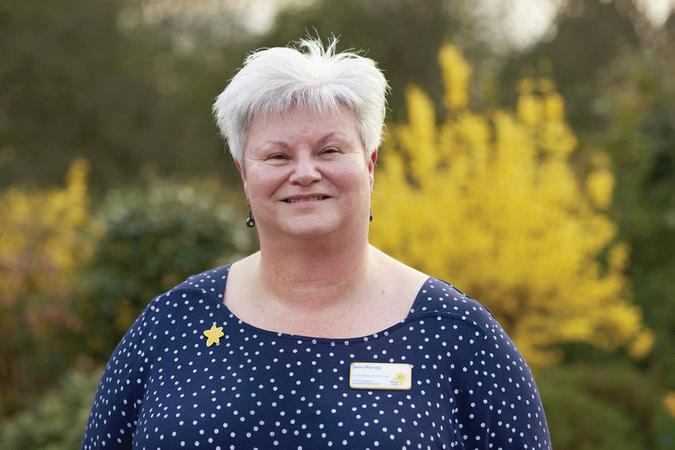
As a bereavement counsellor at end-of-life charity Marie Curie, with more than 35 years of experience, I still feel privileged that people entrust me with their grief, one of the most painful and personal experiences a person can endure. Bereavement counselling cannot simply wave away the pain of losing someone, but it can transform the lives of people who are grieving. It offers a safe place to speak openly about the person who has died and the often complicated emotions that follow.
Grief is rarely linear. It ebbs and flows, and while there may be common responses to death, no two people live through loss in quite the same way. Some people cry often, while others may feel a sense of numbness. Some want to talk, while others need silence. Some feel relief after a long illness, especially if the person they loved had been in pain. Many come to counselling unable to imagine life without the person they have lost, and over time I see them slowly reconnect with life again.
By Jane Murray,
Sometimes it feels almost bearable, before returning with force at a birthday, an anniversary, or in an ordinary moment no one else would notice. I often hear how difficult it is, in a new year, to say someone died “last year” rather than “this year”. People can fear they are going backwards, when in fact this uncertainty is a very common part of grief.
For many people, grief begins before death itself. From the moment someone is told their illness is incurable, families and carers can experience anticipatory grief, looking ahead with bewilderment as the future they had imagined changes beyond their control. One thing I have learned from patients living with terminal diagnoses is that their greatest fears are often not for themselves: many are emotionally prepared for death, but deeply worried about those they will leave behind.
This is why high-quality care before and after a death is so important. Across Marie Curie’s services, including our hospices, we care for both the person who is dying and those close to them. As a trained nurse, I know that pain relief, medication and help with practical or financial worries are essential to good end of life care. But I also know that compassion and emotional support are vital for people facing bereave-
ment. Helping a dying patient to understand that their family will not be abandoned after their death can bring real peace, easing worries as they die.
There are also simple things that can help people who are grieving. Be gentle with yourself. Accept practical help if it is offered. And if someone you know is bereaved, do not worry about finding the perfect words. A simple “I’m sorry” or “I’m thinking of you” can make a real difference. Keep checking in after the funeral, when others may have returned to their everyday lives, but grief is still very present.
At our West Midlands hospice, where I work, we offer a range of services including family groups, men-only and women-only groups, and coffee mornings. I only wish such that the UK Government could guarantee access to this kind of bereavement support for anyone who needs it, because grief support should not be a postcode lottery.
My professional experience has made it clear to me that politicians and healthcare leaders must also address the wider problems in endof-life care. Recent research funded by Marie Curie found that nearly one in three people in the UK die without the care and support they need – around 200,000 people every year.
Behind these figures are families struggling to get help at 3am or watching someone they love experience pain that could have been avoided with timely care and consistent access to medication. That is why compassionate support, before death and afterwards, is so important. I have seen and heard how, when palliative care is not available, the effects can last long after a death. Families can be left with guilt, and with the feeling that someone’s final days should have been more peaceful and dignified. That is why I strongly support Marie Curie’s Fix End of Life Care campaign, which is calling for urgent action so everyone can get the care they need, wherever they live, backed by proper government funding.
Grief is a normal part of loving someone. But no one should have to face it unsupported. With proper bereavement support, and with compassionate, well-funded palliative care, we can make a lasting difference - both to how people die, and to how those who love them find their way back to life.
Marie Curie’s free support line (0800 090 2309) and online resources are available to anyone across the county requiring information and support relating to terminal illness, dying, death and bereavement. For more information, visit: https://www.mariecurie.org.uk/services
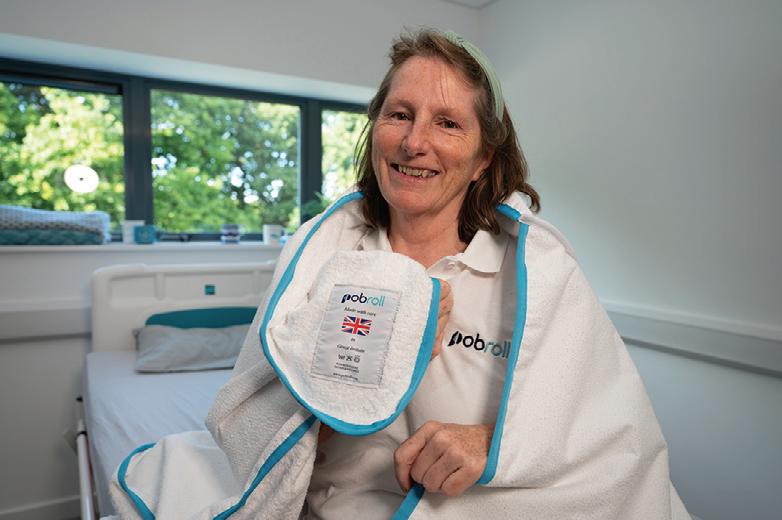
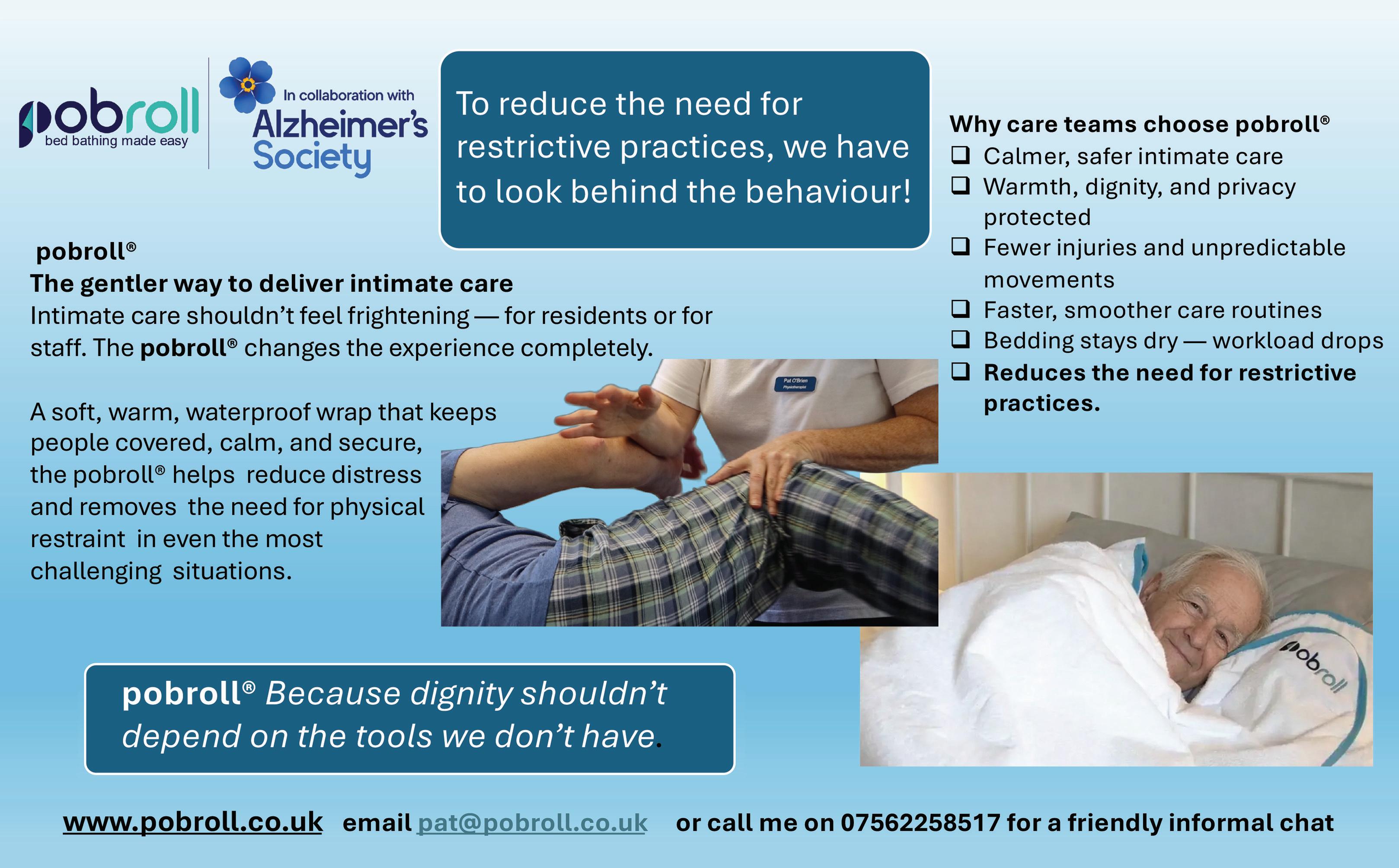
In April 2025, the Supporting the Provider Market (STPM) team in County Durham published a new report evaluating the use of pobroll® — a waterproof bed-bathing wrap designed to improve dignity, comfort, and ease during personal care.
This evaluation was carried out across 10 care homes with high numbers of residents living with dementia. Each setting was given one or more pobroll® units and invited to share feedback through a structured survey. The findings reveal how even simple tools can make a significant difference in everyday care.
How was pobroll® used?
Most care homes used pobroll® daily or several times per week, showing it quickly became part of regular practice. Staff noted that one of the biggest challenges was not having enough units — all homes requested additional stock after the trial, highlighting a clear appetite for wider adoption.
What did care teams think?
Feedback from the care homes showed strong support for the tool:
Ease of use was rated highly, with an average score of 4.4 out of 5. Staff found pobroll® straightforward to incorporate into care routines.
Training was rated slightly lower, at 3.8 out of 5, suggesting that while the wrap is easy to use, additional training resources could improve onboarding for new users.
Resident response was positive. Three in ten care homes reported improved mood or behaviour during bed bathing for dementia patients.
• Key benefits included greater warmth, coverage, and dignity for residents, especially those who might find conventional methods distressing. Some teams also found it particularly useful for end-of-life care Would they recommend pobroll® for bed bathing for dementia patients?
Written by Pat O’Brien of pobroll
Absolutely. Homes rated their likelihood to recommend pobroll® at 4.3 out of 5, with half of respondents giving it a full 5 out of 5. The overall feedback was clear: this is a valued, meaningful addition to personal care.
Would they recommend pobroll® for bed bathing for dementia patients?
The results of this trial reinforce what many professionals already believe — that small, thoughtful design changes can significantly improve care. For residents who are bedbound or living with dementia, personal care can often be a distressing experience. But with the right tools, it doesn’t have to be.
The pobroll® isn’t a complex device. It’s a simple, dual-layered cotton towelling wrap. But its thoughtful design — offering full coverage, comfort, and support — makes a real difference where it matters most.
If you’re part of a care home, hospice, or hospital and would like to explore how pobroll® could benefit your residents or service users, get in touch. We’re here to support compassionate, dignified care — one small change at a time.
See the advert on the facing page for details, or visit www.pobroll.co.uk
A new CAA report proposes pooling the financial risk of an ageing population nationally, rather than leaving it with 153 individual councils.
The core of the model: ring-fenced national funding shared on a needs-based formula, a national tariff for care, and an independent body to keep it honest.
Individuals keep a means-tested contribution, but with a lifetime cap and a raised capital threshold, so no one faces unlimited costs or has to sell their home.
Councils keep assessment, planning, safeguarding and oversight, but are relieved of carrying a national demographic risk on a local budget.
Backed by the Rt Hon Damian Green, Chair of the Social Care Foundation and former Deputy Prime Minister responsible for social care policy.
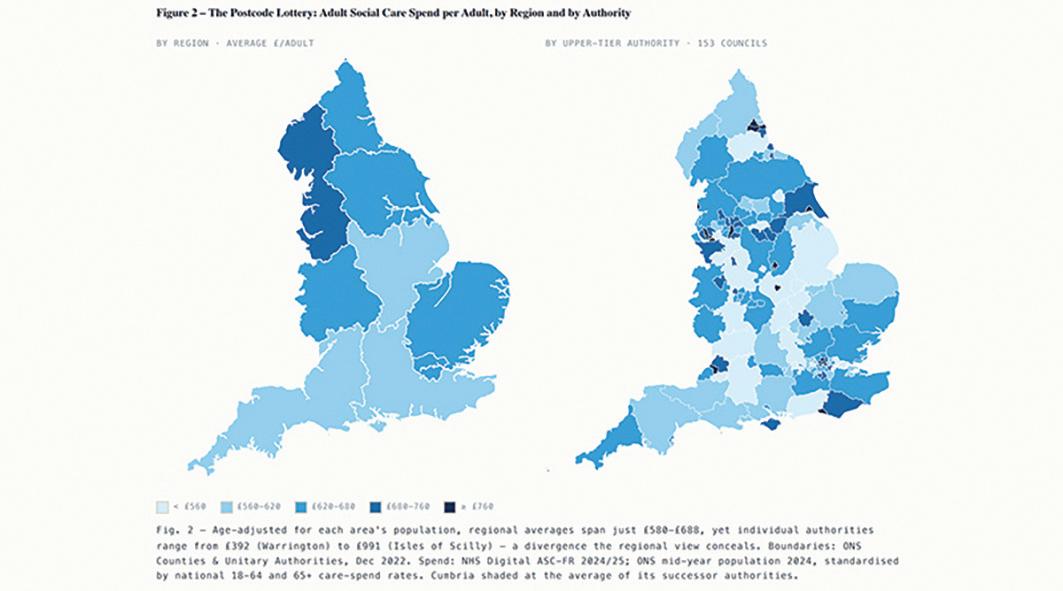
The Care Association Alliance (CAA) has published a proposal for how England should fund adult social care for older people. Its report, Adult Social Care Funding Reform, describes a national funding settlement built on a straightforward idea: the cost of growing old and needing care is a national risk, and it should be met nationally, while care itself continues to be arranged and delivered locally.
At present, primary responsibility for adult social care sits with 153 local authorities under the Care Act 2014. They assess need, commission services and manage local provider markets. They also carry the full financial weight of demographic change, a pressure that is national in scale and rising quickly.
The number of people aged 85 and over is projected to double within twenty years, and the Office for Budget Responsibility estimates that simply maintaining today’s system will require public spending on social care to grow by 3.1 per cent a year over the next decade, compared with the 0.7 per cent average delivered between 2009/10 and 2022/23.
That pressure shows up directly in the price of care. On average, councils pay £24.10 an hour for home care, while the Homecare Association puts the minimum sustainable rate at £32.14.
The National Audit Office found in 2021 that authorities were commissioning care at below the sustainable cost of care, and the King’s Fund reports that in 2025/26, council fee increases of around 5 per cent were outpaced by provider cost increases of 8 to 10 per cent.
This is not a matter of councils choosing to underpay. It is what happens when local budgets are asked to absorb a national cost. Providers take the strain through thinner margins and deferred investment, and families often meet it through the higher fees paid by those who fund their own care, on average 41 per cent more than the council-funded rate.
The CAA argues that these are symptoms of a single structural mismatch, and that they need to be fixed together. Its proposed national funding settlement rests on three principles: pooling the financial risk of demographic change nationally, a statutory entitlement to support triggered by assessed need, and continued local delivery within a national framework.
In practice, the settlement has five main components:
• A ring-fenced national care grant, distributed to councils on a needsadjusted formula, so that funding follows need rather than local fiscal capacity.
• A reformed means test, with a raised capital threshold, frozen at £23,250 since 2010/11, and a lifetime cap on what any individual can be asked to pay.
• A national tariff for residential and home care, set at the independently assessed cost of sustainable provision, which councils commission at or above.
• A bundled funding model for residential care, with assessed packages that are portable when people move.
• A reformed Deferred Payment Agreement scheme, so that no one is required to sell their home to pay for residential care.
Underpinning the settlement is an independent National Care Assessment Body, sitting outside both the NHS and local government, which would verify the cost evidence, review the tariff and report where provision falls short.
Local authorities retain their role as commissioners and delivery leaders, close to their communities and provider markets, but are relieved of being the sole bearer of national financial risk.
The report is explicit about what it does not propose. This is not a free care service on the model of the NHS, and it does not absorb social care into the health service.
Individuals who can contribute to the cost of their care will continue to do so, within a reformed means test and a lifetime cap. The word national describes the funding architecture, not the way care is provided.
The proposal is offered as a contribution to the Casey Commission, which is beginning to test public views on who should receive care, what the state should guarantee and what individuals should contribute. The CAA says funding reform is the necessary first step, and Adult Social Care Funding Reform is the first in a programme of papers it will publish over the coming months.
Melanie Weatherley MBE, Co-Chair of the Care Association Alliance, said:
“No family should receive worse care because of where they happen to live, and no provider should have to choose between keeping a contract and delivering care safely. These are not failings of the people running the system. They are what happens when a national risk is carried on local budgets.
If we fund care nationally, price it honestly through a national tariff, and ask an independent body to keep it that way, we can give families certainty, providers stability, and councils the resources to do the job they are asked to do.
“This paper is not a criticism of local authorities, who are doing a demanding job under real pressure. It is a practical plan to put the whole system on a sustainable footing, and we hope it is useful to Baroness Casey’s commission as it begins its work.”
The Rt Hon Damian Green, Chair of the Social Care Foundation and former Deputy Prime Minister responsible for social care, said: “The case for reform is widely accepted. What has been missing is a workable, affordable plan that a government of any colour could adopt. This paper offers exactly that, and a crossparty route to deliver it.”
By Khatega Bee, CEO, RoseCare Community Services

I have spent years in social care, watching adults with learning disabilities, dementia, and mental health conditions discharged into a system that wasn’t built for them, placed in settings that couldn’t meet their complex needs, and often lost to the community they came from.
That experience is why I am proud to lead RoseCare Community Services, providing personalised supported living and domiciliary care for individuals with diverse care needs, with independence, choice, and dignity at its heart.
What I was less prepared for was the scale of the challenge to become a regulated care provider, even with a team of experts who know the system inside out.
New figures from the Department of Health and Social Care and CQC show just how hard it is to become a registered provider.
Over the past five years, more than 22,000 care provider applications were rejected by the CQC because the information they submitted was incomplete. That's more than a dozen would-be providers turned away every day, for five years, mostly on paperwork. A further 1,385 were refused outright, and that number has climbed every year, from 141 in 2021 to 421 in 2025 (link).
The sector cannot afford to turn high-quality care providers away. More than 850,000 people rely on long-term adult social care each year, and nearly three-quarters of the public are already worried about needing to depend on it in future (link).
Demand for social care support is also growing year on year. The CQC's own figures show an 8% rise in people requesting adult social care support since 2019.
For somebody setting up a new provider, it takes months' worth of time, years of experience, and tens of thousands of pounds, with no reassurance that their application will succeed.
This is, of course, the right approach. Care providers are trusted to deliver some of the most complex support in society, and the regulator needs to be satisfied they meet the highest standards.
But as demand for care goes up, experts setting up new care providers need to change how they work so we are no longer in a position where thousands of good, qualified people are being rejected every year. Having gone through this process recently and worked for years in the sector, there are three areas that have to improve.
First, one of the single biggest areas where new care providers fail is when it comes to policies and procedures. A care provider needs well over 100 of these documents to become registered, and they need to be accurate, up to date, and evidenced. This is a monumental undertaking, and many resort to paying thousands of pounds to outsourcing companies who don’t understand what they do or how they work. The CQC’s data makes clear that they see right through this and will decline your registration.
This needs to end, and a community of experts across the sector are volunteering their time to make this possible. When we were setting up, we took a different approach, and used the OpenDoc library of free policies and procedures, built by former CQC inspectors and senior care professionals (link). A platform like this gave me a foundation to work from that the sector should have had years ago.
Second, technology needs to be used far better by everyone in the care sector. Too many care providers still build their systems on paper records, and filing cabinets of documents. As we were setting up, it was essential that we had a digital system to manage work across the whole organisation. This meant that we didn’t just log patient information clearly, but the system we use also proactively flags concerns about our residents so our staff are as prepared as possible, not drowning in paperwork.
Third, the regulator needs to speed up the time it takes to assess new providers. The CQC’s approach is rightly rigorous, but with providers embedding new technologies every month, it's right that our regulator does too. It needs to harness the power of AI to analyse and assess applications from new providers so that they get processing and feedback more quickly, and can then respond and update their applications as soon as possible.
Setting up as a care provider is hard. And it should be hard. But having gone through the system, there is so much work to be done to make sure that from home care to residential care homes, we get the best new care providers entering the market. If we don’t act, the challenges facing social care will only get worse at exactly the moment we need as many people rolling up their sleeves as possible to provide support to families. The people I’ve watched get lost in the system aren't waiting for the sector to fix its paperwork. Every good provider we turn away on a technicality, is turning away support to someone in need.
BBC Radio 2 and Greatest Hits Radio presenter Paul Gambaccini, 77, has issued the following statement confirming his diagnosis of Alzheimer’s disease.
“As Freddie Mercury once sang, you can’t turn back the clock, you can’t turn back the tide.Ain’t that a shame.
“In early 2025I was diagnosed with Alzheimer’s disease. There’s no denying it’s a serious condition with an uncertain future, but for now life goes on as normal and I continue to broadcast The Paul Gambaccini Collection on BBC Radio 2from 8-10pmon Sundays and my shows on Greatest Hits Radio
“I’m grateful for the kindness and support I’ve already received. I will be as open as I can as things progress. For now, I wish to be given the space to keep on broadcasting the music I love to the listeners I love

even more. These are the days of our lives.
Since his diagnosis, Paul and his husband Christopher Sherwood have been receiving support from Alzheimer’s Society. The charity’s CEO, Michelle Dyson CB, said: “Paul’s experience shows that there can be life after a dementia diagnosis – his fans will be delighted at his decision to carry on hosting his shows.
“Receiving a dementia diagnosis can be frightening but it can also open the door to receiving treatment and support. We hope that by sharing his diagnosis, Paul will encourage others to spot the symptoms and reach out if they are worried about themselves or a loved one. The earlier someone is diagnosed, the better the chances are that they can continue doing the things they love and live independently for longer, and plan for the future.”
Residents from across the Midlands recently traded their usual lunch routines for scoring cards, participating in an overarching two-week ‘Come Dine With Me’style competition.
Inspired by the hit TV show, two dedicated resident representatives from four regional Cinnamon Care Collection homes travelled across the Midlands to experience, critique and score three-course menus hosted in their sister homes' private dining rooms.
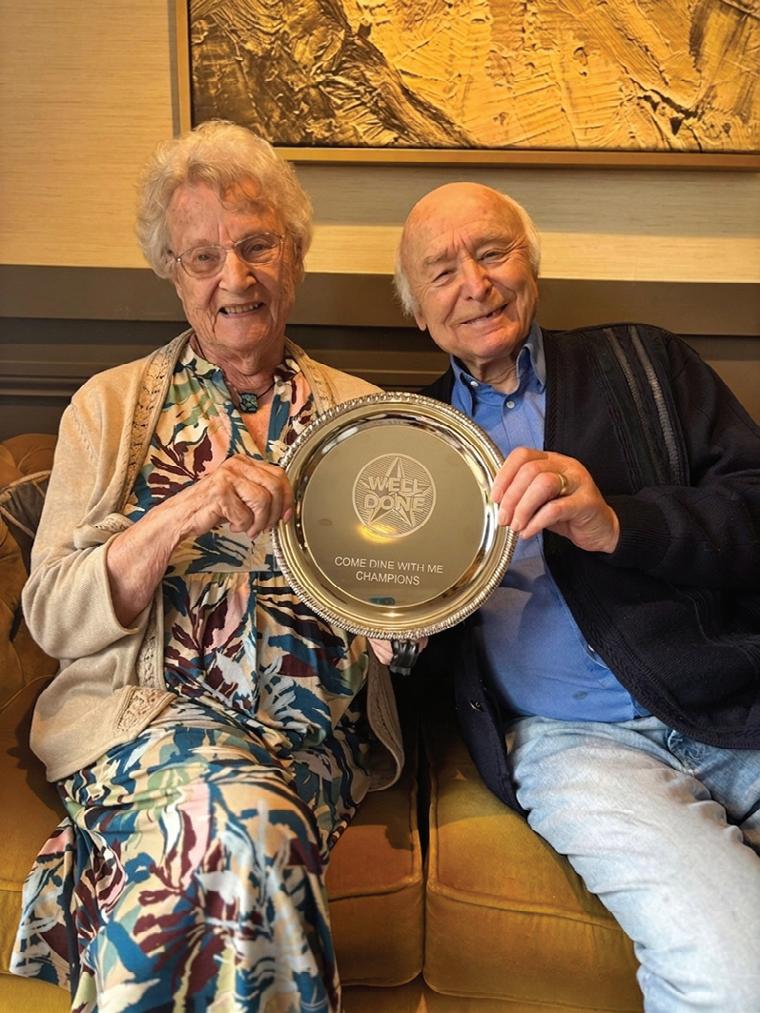
The road trip culminated in a grand finale lunch at Sutton Park Grange, where The Gables Care Home, represented by residents Brian Roberts, 89, Gigi Salmon, 92, and Head Chef Dwight Clayton, was officially crowned the competition winner. The home secured the top spot with an impressive score of twenty-six out of a possible thirty points.
Residents were actively involved in creating the menus, ensuring their local tastes and home favourites were proudly showcased. Each home’s catering team prepared a bespoke three-course menu shared in advance, reflecting the unique tastes and daily high standards of their specific residents. The tour kicked off at Eastcote Park Retirement Village in Solihull, followed by a trip to The Gables Care Home in Hagley, a visit to Parkfield Grange Care Home in Stourbridge and the grand finale at Sutton Park Grange Care Home in Solihull.
Beyond the kitchen, the true success of the initiative was the social connections built between the homes. Peter Ronan, a resident at Sutton Park Grange, noted ahead of the event how much he was looking forward to sharing experi-
ences and meeting peers from other communities.
Su Edmonds, General Manager at Sutton Park Grange, said: “This is a fun and engaging way for our residents to meet others from across Cinnamon Care Collection, building new friendships while also enjoying the wonderful meals prepared by all our talented chefs.”
To capture the fun, a mini video series was created across social media, mirroring the TV episodes. The residents have been excited to rewatch these clips and share the videos with others in their homes.
The excitement peaked during the announcement at the final ceremony, as Olivia Cameron, Head of Customer Experience, presented the winners with a commemorative plate to take back to The Gables Care Home. Head Chef Dwight Clayton, surprised by the news of his home's big win, joined the celebrations via a FaceTime call.
Dwight commented: “It was great to do something a little different and showcase our food to residents from other homes. I really enjoyed working with our own residents to create a menu that truly reflected their tastes and choices here at The Gables. I thought the highlight would be showing what we can achieve in carehome dining, but honestly, the real cherry on the cake was helping The Gables secure the win!”
Plans are already being discussed for the next cross-home culinary showcase, as residents across the region look forward to keeping their newfound friendships alive.
The Care Quality Commission (CQC) has published a report titled Local Authority Assessments 2023–2026: Emerging Themes and Findings drawing together findings from the first-ever national programme of assessments of local authorities in England.
The programme, which began in December 2023, assessed how local authorities are delivering their adult social care duties under Part 1 of the Care Act. The report provides the most comprehensive picture of how local authorities are managing the needs of people who use adult social care services across England.
The report, based on 143 of local authority assessments already published, finds that local authorities are broadly performing well in the face of significant challenges, with 60% rated as good, 35% rated as requires improvement, 3% rated as outstanding and 2% rated as inadequate.

However, CQC cautions that many authorities rated as good sit at the lower end of that threshold, suggesting there is room for improvement and within those rated as requires improvement some local authorities are on the cusp of good, while others are closer to inadequate.
The report identifies a number of key themes:
• Strong leadership within a local authority is the single most important factor when it comes to determining the quality someone’s experience of care, from first contact to receiving help or using a service.
• We found some examples of systemic weaknesses in governance, oversight and assurance of safeguarding.
• Prevention and supporting people to maintain their health, wellbeing and independence, has emerged as critical. In authorities without an effective prevention strategy the gaps show up everywhere.
• Assessing needs was found to be a significant area of weakness in some areas, with delays in care assessments and reviews affecting both people using services and their unpaid carers.
• Local authorities that were managing equalities well, understood their communities and had well-resourced co-produced strategies and action plans on how they could tackle inequality.
• Uneven identification of carers, and inconsistent access to support emerged as a persistent and systemic issue. Identification was highlighted as the biggest issue, as carers are often only seen in crisis.
• Transitions from children’s to adult services were identified as one of the most persistent areas of risk, with unwarranted variation in people’s experience during this period.
• We saw stark variation in co-production and commissioning and a lack of nationally consistent standards.
• Co-production was most effective when people with lived experience clearly inform what is commissioned, how resources are allocated and how services are delivered.
• There is no statistically significant relationship between the average Index of Multiple Deprivation scores for local authorities and their overall ratings.
Chris Badger, Chief Inspector of Adult Social Care and Integrated Care, CQC said:
“This report represents a significant milestone – for the first time, we have a comprehensive national picture of how local authorities are delivering adult social care across England.
“What we’ve found is that, overall, local authorities are rising to meet some very real and very complex challenges, and there is much to celebrate in the commitment and skill we’ve seen from staff and leaders across the country. However, we found too much variation in the delivery of the key foundations of adult social care provision, highlighting a gap in national standards about what people, providers and partners can expect.
“One of the more striking findings is that we did not find a statistically significant relationship between deprivation and performance. That doesn’t mean deprivation doesn’t matter – it absolutely does. But it tells us that strong leadership, effective commissioning and prevention strategies, as well as a genuine commitment to co-production can make a real difference regardless of local circumstances, and that good outcomes are possible in every context.
“Prevention also stood out as a critical theme. Where it’s working well it runs through everything – from how carers are identified, to how transitions are managed, to how safeguarding concerns are picked up early. The authorities that get prevention right tend to get a lot of other things right too.”
“The findings in this report are not just a measure of where the sector is today – they are a roadmap for where it needs to go. We hope local authorities, their partners and national decision-makers will use these insights to drive the improvements that people relying on adult social care so urgently need.”
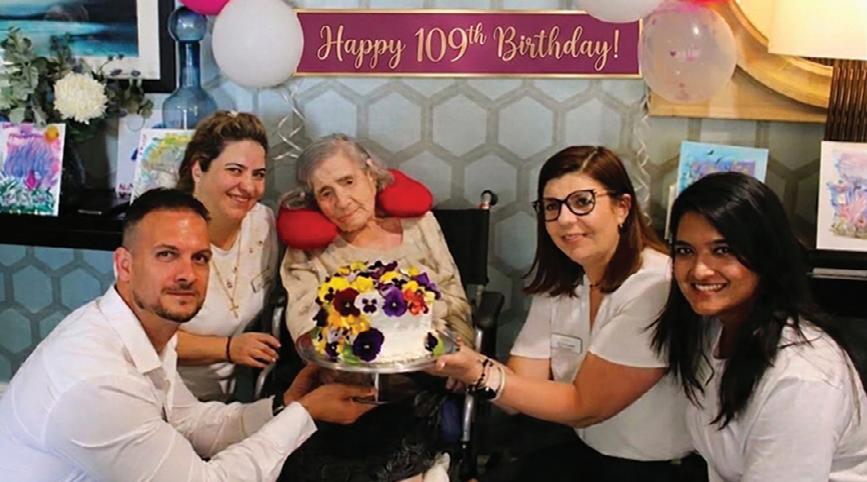
Celebrations were in full swing at Kingswood Court Care Home as resident Joyce marked her incredible 109th birthday.
In keeping with Joyce’s wishes, this year’s celebrations were a small private gathering at the home, where she was joined by fellow residents, family, friends and staff. Guests enjoyed a special birthday cake created by the home’s chef, Lee, while Joyce also received hundreds of birthday cards, including a congratulatory card from The King and Queen in recognition of her remarkable milestone.
Born in Somerset in 1917, Joyce began her working life in a glove factory, where she met her husband, Stan. She later worked as an accountant at
Babycham and was among the first people to use a Comptometer, one of the world’s earliest mechanical calculators.
Speaking about her special day, Joyce said: “I don’t feel 109. I’m so glad so many people have celebrated with me.” she also said to the younger generation, ‘’never stop living your life’’.
Attila Lengyel, General Manager of Barchester Kingswood Court added: “We’re delighted to be celebrating a truly remarkable woman as she reaches this amazing milestone. Joyce is such a popular resident who always has an interesting tale to tell, and we look forward to hearing many more as she breaks into her next century.”

LaingBuisson has published the 7th edition of its respected Homecare and Supported Living UK Market Report. The report reveals the market is now worth over £15 billion a year and serves an estimated 915,000 adults in England alone.
An estimated 915,000 adults in England were in receipt of homecare or supported living services at the end of financial year 2024/25, representing 13 per 1,000 of the adult population. This is approximately double the proportion living in care homes (6.6 per 1,000).
Having partly recovered from the austerity-driven contraction of the 2010s, growth has been most pronounced in supported living for younger adults, driven by demographic change and a strong public preference to receive care at home. However, LaingBuisson concludes that this growth phase is set to slow over the coming decade with public funding constraints, persistent productivity shortfalls, and diminishing returns from the shift of younger adults out of residential care. This all points to a more challenging environment ahead.

Over 95% of homecare and supported living is now supplied by the independent sector, with local authorities having almost entirely withdrawn from direct provision. This shift is effectively irreversible given the
prohibitive cost of any reversal for cash-strapped councils.
The market remains the most fragmented in UK health and social care, with the four largest operators controlling just 8.1% of addressable market value. This dispersal of providers is a consequence of councils’ reluctance to award volume contracts, which continues to sustain large numbers of low-overhead micro-providers operating on spot rates.
Report author, and Founder and Executive Chairman of LaingBuisson, William Laing, says:
“The homecare and supported living market has demonstrated real resilience, bouncing back from the austerity years to serve nearly one million adults in England. A figure that is roughly double the number living in care homes and a clear reflection of where people want to receive their care. Yet the sector faces structural headwinds. Public funding will not grow at the pace of recent years, and the fragmented supply side, shaped by councils’ reluctance to commit to volume contracts, makes it difficult for providers to achieve the scale needed to invest meaningfully in workforce and technology. The profitability data shows a wide spread of outcomes, and those who choose their operating localities carefully can make reasonable returns — but the model leaves little room for error.”
Connell Court Care Home in Southport, one of the UK’s oldest purposebuilt residential care homes, has celebrated its 50th anniversary with a Summer Garden Party bringing together residents, families, staff and friends.
The special event at the Weld Road home featured live music, games, stalls, homemade cakes and a fish and chip van, creating a memorable day of celebration. Special guests included Merseyside Deputy Lieutenant Billy Hui BEM and his consort Kerry, along with Dr Garth Dallas, Chair of the Liverpool Commonwealth Association.
The celebrations also raised £768.28 through a raffle and fundraising
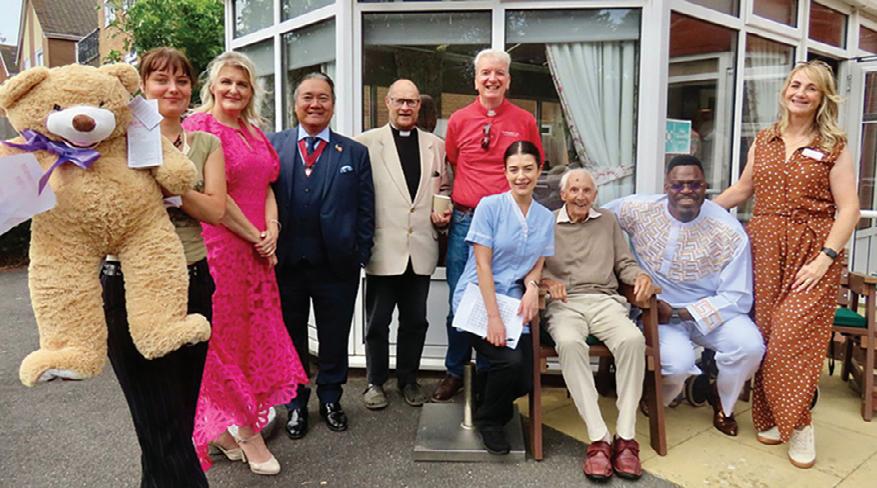

stalls, with proceeds helping to support future resident activities. Adding to the celebrations, Connell Court has also been named one of the Top 20 Care Homes in the North West in the carehome.co.uk Top 20 Care Home Awards. Based on reviews from residents and their families, the award recognises the home’s commitment to delivering exceptional, person-centred care.
The anniversary was also an opportunity to thank the dedicated team, past and present, whose compassion and commitment have helped make Connell Court a valued part of the Southport community for the past 50 years.
Welcome to Blue Rain - our activity store is built on over 14 years experience supplying products that bring joy, inspire motivation, and enrich the lives of those who need a little extra support, or simply want to have fun, whatever the weather.
Come find your next reason to smile.
By Katie Mayes, Senior Associate in the Court of Protection team at Birketts

Deprivation of Liberty Safeguards (DoLS) is a legal framework set out under the Mental Capacity Act 2005, designed to protect individuals who lack mental capacity to make decisions about their care, and who are receiving care in a place where they are not free to leave and are under constant supervision. Where it is concluded that an incapacitous individual is being deprived of their liberty, then a DoLS assessment must be completed to ascertain whether the deprivation is lawful and justified.
Previously under the test set out in the case of P v Cheshire West and Chester Council [2014], the Supreme Court created a simple rule commonly referred to as the ‘acid test’, which was used to establish whether an individual was being deprived of their liberty. The ‘acid test’ set out a clear framework, confirming that a person is deprived of their liberty if: • they are under continuous supervision and control
they are not free to leave they lack the requisite mental capacity to consent to the arrangements.
THE NEW MULTIFACTORIAL TEST
Following a referral made by the Attorney General of Northern Ireland, the Supreme Court has overturned the test set out in the case of Cheshire West and has established a new multifactorial assessment. No single factor is now determinative in DoLS assessments. Following the judgment on 2 June 2026, this dismantling of the universal ‘acid test’ created by Cheshire West is likely to have a substantial impact on the health and social care sector, further to what amounts to a major legal shift from a simple rule to a complex judgment.
The Supreme Court has confirmed that the Cheshire West judgment incorrectly assumed that if an individual is not capacitous to consent to arrangements by reference to the Mental Capacity Act 2005, they cannot give valid consent. It is now clear by the 2026 judgment that a person’s expression of their thoughts, wishes and feelings relating to the arrangements, is significant. By the new judgment, a person is now able to express valid consent to care arrangements, if they are aware of their environment, have a basic level of understanding and are able to express with sufficient clarity to confirm their position. The government has, however, commented that no conclusion of valid consent should be proceeded upon in cases of serious doubt.
The new multifactorial assessment is the starting point in completing the assessment. It directs that you must look at the whole situation and weigh multiple factors. The new assessment considers the type of restrictions in place and the duration of those restrictions, the effects of the restrictions on the person in care, and the manner of implementation of the restrictions and whether the person objects. In addition, consideration should be given to how different the detention is from being detained in a prison cell, the relative normality of the arrangements and the purpose of the arrangements in place.
WHAT DOES THIS MEAN FOR THE CARE SECTOR?
The changes to the definition of what constitutes a deprivation of liberty apply with immediate effect to:
• deprivation of liberty in hospitals and cares home for people 18 years and over and where the DoLs process applies
• deprivation of liberty in the community for people aged 18 and over, and for children where it is authorised through the Court of Protection or the High Court’s inherent jurisdiction.
In the short term, it is likely that fewer people will be considered as being deprived of their liberty under the new assessment model and that many current DoLS authorisations may no longer be needed. It will be necessary to review all existing cases with a standard authorisation already in place. For registered care home providers or managers and supervisory bodies, they should look to share the details of the 2026 ruling throughout their organisation as soon as possible. Clearly, there will be additional tasks centred around the change in the assessment model, including the need to actively evidence a resident’s wishes and feelings regarding their care placement, and whether they object or comply. A clear record will also need to be kept in respect of any restrictions in place, why they are necessary and the degree of the restrictions in practice.
While the Supreme Court’s objective was to reduce the number of DoLS assessments and to move towards a more flexible, contextbased approach, the new framework fails to highlight a standout rule as was previously the case. The legal uncertainty that is likely to follow because of this, may well result in an increase in the need for professional judgement in DoLS assessments, which in turn will likely result in the need for decisions to be litigated at the Court of Protection. In practical terms practitioners/managers will need to be alert to hidden coercion and vulnerability where a resident is particularly compliant, or unable to express objection clearly. In the months to follow, existing DoLS cases will need to be reviewed, as well as policies, assessment templates and training in care organisations.
The Salvation Army has completed the exit of its 11 residential care homes to other owners and operators.
Seven of the homes have continued trading and have been successfully transferred to care operators that share The Salvation Army’s values and ethos. Four homes have closed, with some sites earmarked for redevelopment to provide modern care facilities.
The trading homes have been transferred to five care operators across England, Scotland and Northern Ireland. The closed homes are being transitioned individually to private purchasers.
In June 2025, The Salvation Army announced its intention to transition away from the provision of residential care for older people in order to grow its community based support model, with Savills instructed to identify new owners for the homes.
Savills worked closely with The Salvation Army to develop a bespoke selection framework, using a multi-stage interview pro-

cess to ensure prospective operators aligned with its values, mission, and ethos. This rigorous approach prioritised providers with both strong operational capability and a long-term commitment to the organisation’s spiritual and cultural standards, safeguarding its mission-led care and heritage.
Craig Woollam, Head of Healthcare at Savills, says, “We have been pleased to help The Salvation Army transition these homes, enabling it to focus on its community based support model. The process has ensured the continuation of care provision for residents and staff. A key achievement was the transfer of additional homes to alternative care providers that had originally been earmarked for closure. The extremely high level of interest received demonstrates the continued attractiveness of the UK care market, which has gone from strength to strength over the past 18 months.”
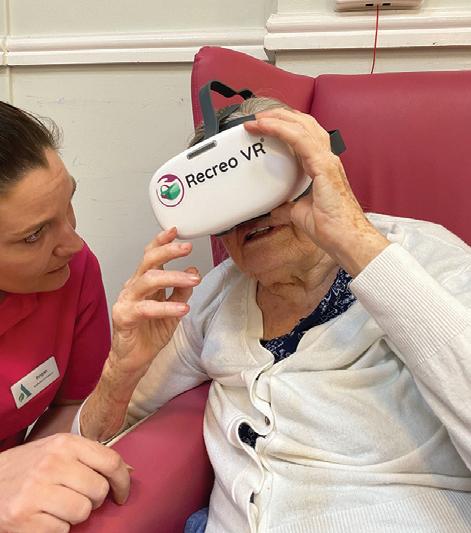
At Broomy Hill Nursing Home, innovation and compassion come together in the most inspiring way. Residents at the home are stepping into a whole new world with the introduction of virtual reality headsets. It is an exciting innovation with the power to create uplifting and meaningful moments for the residents under our care.
Virtual reality is becoming an exciting innovation in care homes and at Broomy Hill Nursing Home it is making a meaningful impact. VR is more than just a tool; it allows residents to relive cherished memories and experience activities they may no longer be physically able to do.
For residents with dementia or complex mental health needs, VR stimulates memories, sparks conversations, and provides relaxation through immersive experiences. Using headsets to create digital 3D environments, VR acts as a tool for cognitive stimulation, pain relief, and wellbeing, enabling individuals to safely revisit familiar places or explore new worlds.
We were thrilled at the opportunity to be a part of the Recreo VR experience. It was something new for the residents and us. However, it is not only something new; it is a learning experience for the entire staff at the home.
Our Wellbeing Lead, Lauren, is currently working on a list of available experiences that our residents can
choose from to do something different each time they use the headset. This way, our residents will have something new to look forward to each time they use the headset, as new content is added every eight weeks.
One of the new experiences that our residents will enjoy in the near future is a seated safari, where they will have the opportunity to come face to face with a rhino from the comfort of their chair.
Recently, our residents travelled through time to the 1950s, where they had a virtual visit to a traditional house, cinema, and a high street. In the house, our residents travelled from room to room, exploring the food pantry and admiring the decorations of the house. In the cinema, our residents explored the ticket office, the reel room, and the cinema itself. In the high street, our residents visited an electronics shop, a record shop, and a toy shop, enjoying the experience of each of these different stores.
Many of our residents commented on how real the experience felt, almost like stepping into a memory. Some were actually looking at their hands to get used to the virtual world. As the shops, toys, and songs from the period were brought up, the experience naturally evolved into memories and stories. The dialogue was effortless as the resident's shared memories from their own lives to each other and staff.
Virtual reality is more than just an activity at Broomy Hill. It is another meaningful way we promote wellbeing and engagement for our residents. By using Recreo VR, we encourage conversation and reflection, while continuing to look for ways to enhance quality of life within our home.
For further information visit www.recreovr.co.uk
Care home operators are the second largest sector after the creative industries with the largest proportion of ‘mission-led’ organisations across the UK, according to new analysis of Companies House data.
Allia Impact and Beauhurst Insights reveal ground-breaking data mapping the UK’s mission-led business landscape, offering vital insights to help practitioners, investors and policymakers scale the impact economy.
‘The Impact Business Tipping Point: A Data-Driven Census of the UK’s Mission-Led Business Landscape’, reveals that more than 150,000 mission-led businesses are now operating across the UK, contributing at least £37 billion in annual turnover and growing faster than the wider UK business landscape.
This challenges the long-held assumption that purpose-driven businesses must sacrifice growth for impact, instead signalling their growing importance in the UK economy and their significant potential to channel capital towards social and environmental outcomes.

Until now, there hasn’t been a clear picture of precisely how many mission-led businesses exist in the UK. Previous attempts have relied on surveys and estimates, making it difficult to understand the full scale of the opportunity.
However, using Beauhurst Insights’ database of every company registered at Companies House, the census adopts an AI-assisted, signals-driven methodology to examine publicly available information of the entire eligible business landscape rather than a sample, providing a more robust picture of the impact sector.
Key findings include:
Mission-led businesses are growing faster than the wider UK business population: More than 150,000 mission-led businesses, generating an annual reported turnover of around £37 billion in May 2026 and 1.12 million jobs, have grown by approximately 61% since 2016, whereas the wider UK business population has grown by 42%.
Mission-led businesses are more resilient than the wider UK business population: The five-year survival rate of mission-led businesses reaches nearly 70% compared to the five-year survival rate of the wider UK business population, which is only 45-48%.
Mission-led businesses have reportedly raised over £30bn in external funding since 2011: However, there is a significant funding gap between mission-led businesses rooted in community-based services (e.g. care, education) and those concentrated in technology, clean tech and innovation-driven sectors, with the former receiving significantly less.
Higher female-led representation among mission-led businesses: About 57.7% of mission-led business-
es have at least one female director, and 31.4% have a majority female board – higher than the wider UK business population average of 37.8% and 18.2% respectively.
The report outlines priority actions targeted at key actors shaping the impact business landscape, some key findings include:
Formal recognition of hybrid structures: Mission led businesses that have their impact goals embedded in their governance, like Community Interest Companies (CICs), are unable to access growth capital due to asset locks and dividend caps. A formal recognition of hybrid legal structures by the UK government can help preserve mission while enabling access to flexible capital.
Support practice-based innovation: Current research and development grant funding only funds technology-based innovations, while many social and service delivery innovations are overlooked. Policymakers and funders should develop new ways to measure and support innovation in mission-led businesses, recognising their role as key drivers of service delivery innovation.
Strengthen place-based ecosystems: Although most support for mission-led businesses is concentrated in London, these businesses have a stronger regional presence beyond the capital. Policymakers should deploy small, locally embedded teams to connect mission-led businesses, invest in regional champions as ecosystem anchors, and use data to target place-based philanthropy.
Martin Clark, CEO at Allia Impact, said: “For too long, the data on mission-led businesses has been inconsistent and hard to compare over time, despite the real economic and social value they deliver across the UK. This census changes that through a transparent and repeatable methodology, revealing a sector that is growing faster, and surviving longer than the wider UK business population. This challenges the misconception that prioritising impact comes at the expense of business growth.
“However, mission-led businesses continue to face structural barriers that generic support cannot address. But with the right action, the UK can move from measuring the impact economy to building it, reaching the tipping point where mission-led business becomes the norm, not the exception.”
Callum Newton, Public Sector Lead at Beauhurst Insights, said: “This report shines a light on a part of the UK economy that has too often been overlooked and hard to define. It shows that mission-led businesses are already delivering real value to UK plc, and with the right support, could play an increasingly important role in fuelling economic growth across the country.”
The census highlights a sector that is growing rapidly, making a major contribution to the UK economy, and playing a central role in delivering social and environmental impact. With clearer data now in place, capital and support can be directed more effectively to mission-led businesses, paving the way for the UK to become a global leader in impact and innovation.


A large-scale renewable heating project at The Myton Hospices in Coventry is delivering significant benefits - and offering a replicable model for hospices across the UK.
When The Myton Hospices began exploring ways to reduce their energy costs and carbon footprint, the scale of what needed to be achieved was immense. The result of that project is now being hailed as a UK first: a ten-unit air source heat pump cascade installation in an adult hospice setting, delivered by renewable heating specialists Go Geothermal in partnership with Neutral Hospice Network.
The project, completed in October 2025 at The Myton Hospice's distinctive triangular building in Coventry, has already produced results that exceed expectations. Since implementation, gas consumption has been reduced by 86%, carbon savings against the previous system stand at 77%, and target cost savings of 40% have been recorded. For a charity that receives less than 20% of its funding from the NHS and must raise more than £12 million each year through voluntary income, those figures are impressive and inspire hope for the sector.
THE CHALLENGE
Built in 2009 Coventry Myton Hospice presented a complex brief. With 190 rooms to heat and patients requiring uninterrupted comfort and tranquillity, any heating solution had to be robust, reliable and quiet in operation. At the same time, the organisation faced the financial pressures familiar to hospices nationwide: rising operational costs, increased demand for services and a funding model heavily dependent on charitable income.
Hospices in the UK currently receive on average just a third of their funding from statutory sources, and in Myton’s case less than 20%.The remaining must be generated through fundraising, community support and grant income. In that context, reducing operational expenditure is not simply a matter of environmental responsibility; it is an act of financial stewardship that directly protects the quality of care delivered to patients and families.
Ruth Freeman, CEO of The Myton Hospices, explains the stakes clearly:
"The reduction in our energy costs so far has been incredible. As a charity, with less than 20% of our funding coming from the NHS, we rely heavily on the support of our local community to ensure people can access our specialist end of life care when they need it most. It costs more than £15 million each year to provide our services free of charge to patients and their families, and over £12 million of that must
be raised through voluntary income. We have a responsibility to make every pound count, and this project focuses on our long-term sustainability. At a time when many hospices are facing difficult decisions and having to reduce services and cut staff, this investment is helping us to protect patient care and ensure we can continue to be here for people living with life-limiting illnesses and their families now and in the future. We are incredibly proud to be the first hospice in the UK to implement this on such a scale."
Neutral Hospice Network approached Go Geothermal in 2024 seeking expertise in large-scale renewable heating. Following detailed consultation and system design, the team specified ten CTC EcoAir 720m air source heat pumps operating in a cascade configuration: a system that intelligently distributes heating demand across multiple units, providing built-in redundancy, extended equipment lifespan and precise capacity matching to the building's requirements.

costs, lower carbon emissions and ultimately help direct more resources towards patient care."
SUPPORTING THE FUNDRAISING CASE
Beyond the immediate operational savings, the project is also strengthening The Myton Hospices' position with trusts and grant funders. Across the sector, sustainability credentials are becoming an increasingly important factor in funding decisions, and the measurable performance data generated by the installation provides concrete evidence of responsible stewardship.
Jason Levy, Director of Fundraising and Supporter Development, The Myton Hospices, adds further insights:
The CTC EcoAir 720m units, part of CTC's powerful 700 series, were selected for their high output capacity, low noise operation and advanced inverter technology, which maintains high coefficients of performance even in larger installations. Swedish-engineered and purpose-designed for multi-unit configurations, they proved well suited to the demanding requirements of a healthcare environment.
The installation, which also involved Hinckley Plumbing and Heating, Rob Berridge Heating Design Consultants and London Electrical, was completed with minimal disruption to hospice operations. The system now provides both heating and domestic hot water across the full 190room building, maintaining average room temperatures of 23 degrees Celsius and delivering an average coefficient of performance of 4.86 against the 2022/23 baseline year.
Marco Bandeira, Head of Facilities at The Myton Hospices, describes how the decision to proceed was reached:
"We had confidence in this project following the initial work we completed with Neutral Home, which involved mechanical improvements to our existing infrastructure and delivered an excellent return on investment. Researching air source heat pump technology and visiting the Go-Geothermal site gave us valuable insight into what the technology could achieve for Myton. Seeing the systems in action helped us understand both the environmental benefits and the significant cost savings they could deliver. If the positive results continue, we would certainly look at opportunities to introduce similar technology at our other hospice sites. By sharing our experiences and the benefits we've achieved, we hope other hospices will feel encouraged to explore similar initiatives and see how sustainable investments like this can reduce
"We are increasingly seeing trusts and grant funders prioritise organisations that can demonstrate a genuine commitment to sustainability. Projects like this not only reduce our carbon footprint and operating costs, but also show funders that we are taking a proactive approach to securing Myton's future. As a result, trusts and grant funders may be more inclined to support Myton, knowing their investment will be used responsibly and deliver long-term benefits for both the charity and the communities we serve. By becoming more sustainable and efficient, we can focus even more on providing the best possible care for our patients and their families who rely on us."
Go Geothermal, which has been working across commercial and domestic renewable heating installations for two decades, believes The Myton Hospices project establishes a new benchmark for the sector. The combination of a pioneering cascade configuration, measurable performance outcomes and the particular context of a hospice charity makes this installation a compelling case study for any similar organisation weighing up the transition to low-carbon heating.
Total energy consumption at the site has fallen by 50% compared to the 2022/23 baseline. As the system moves through its first full year of operation, ongoing performance monitoring will continue to build the evidence base for large-scale air source heat pump adoption in healthcare environments.
For hospice managers, trustees and facilities teams navigating the same pressures of rising costs, net zero commitments and stretched charitable budgets, the message from Coventry is straightforward: ambitious sustainability goals and the practical demands of frontline patient care are not in conflict. With the right expertise and the right technology, both can be achieved at the same time.
For more information about large-scale heat pump installations, contact Go Geothermal on 01388 720228 or sales@gogeothermal.co.uk

Geraldine McMurdie, Dementia Specialist at Quality Compliance Systems (QCS), discusses the links between dementia and falls and the ways in which these can have an impact on those living with a dementia.
Those living with a dementia are at a significantly higher risk of falling, with studies indicating that one in three adults over the age of 65, and half of people over 80, will experience at least one fall a year. People living with a dementia are also 5 times more likely to be admitted to long-term care after a fall.
Falls can significantly impact the confidence, health, and wellbeing of individuals living with dementia. They can also heighten the stress experienced by caregivers and place additional strain on the healthcare system.
DEMENTIA AND FALLS
As a dementia progresses over time effecting the brain and how it works, this can often lead to significant effects on a person’s mobility
and safety awareness, leading to challenges such as reduced balance, difficulty managing dual tasks, spatial navigation issues, increased frailty, and medication side effects. These factors contribute to those living with a form of dementia experiencing falls.
KEY STATISTICS:
Injury and hospitalisation – around 31% of people with dementia experience a fall leading to hospitalisation over a 2.5 year period
Fracture risk – 18% of those with dementia will experience a fracture, often following a fall
Mortality risk – falls can be a major cause of death, with higher injury-related mortality risks in those living with dementia
Often when someone living with dementia experiences a fall an ambulance is called as the individual may not be able to convey how much pain they are experiencing or how serious the injury is. This can lead to distress and poor health outcomes if care staff do not know how to respond to the situation in a prompt, caring and appropriate manner.
DEALING WITH FALLS
Understandably falls can happen very quickly and without warning and are often a distressing time for both the individual who has fallen and the care provider who is looking after them. It is a time where decisions will need to be made quickly in order to provide the best possible care and support at the time it’s needed most. It is also
important that these decisions are made in line with the individual’s care plan and the policies in place for best practice.
With Lyra Multi, QCS’s latest stage of AI technology, care providers can access all of their policies and compliance documents within seconds, helping them to make those quick decisions in a compliant and safe way. Lyra Multi connects all relevant policies, interprets them in context and converts complexity into clear, relevant and practical guidance exactly when teams need it, turning policy storage into real decision support.
At any given time, users can ask a question and get instant, tailored answers along with clear summaries and key insights. For example, if a resident with a dementia has fallen over and the care provider wants to check how support them with safe and appropriate care, they can type the message into Lyra and have all the relevant information from all of their policies provided to them in a succinct and understandable way within seconds.
Ensuring decisions are made both quickly and in a way that is compliant with regulations and policies will provide the best possible care for the individual who has fallen as well as give the care provider the confidence that they have acted in the most suitable way.
Find out more about Lyra Multi at www.qcs.co.uk/lyra
See the advert on page 15.

By Professor James Francis Kwame Fah Ohene-Djan PhD, FHEA

My brother Anthony lived with multiple sclerosis. He was not “an MS patient” to me. He was my brother. He had his own personality, humour, frustrations, hopes and ordinary routines. Like anyone living with a long-term condition, he wanted to get on with life and not be defined by illness.
But when someone you love has a serious condition, there is a quiet fear that sits in the background. You may not speak about it every day, but it is there.
What happens if they become unwell when you are not with them? What happens if they fall, get confused, cannot explain their condition, or need help from someone who knows nothing about them? Would that person know who to contact? Would they know about medication, allergies, communication needs, or the small but vital details that make care safe and personal?
After Anthony died, those questions stayed with me.
I also had cancer myself, and that changed how I thought about medical information. When you are well, a list of medication or an emergency contact number can seem like admin. When you are ill, those details become something else entirely. They become part of your safety. They become part of how quickly someone can understand you, support you and contact the people who matter. That is why I created MiCode.
MiCode is a QR code designed to store and manage your medical information and emergency contacts. It can be carried on a card, keyring, sticker, bracelet, pendant or phone. If someone needs help, the code can be scanned instantly using any smartphone. No app is needed.
The person with the MiCode remains in control of what information is stored and what is shown. It can include medical conditions, medication, allergies, emergency contacts, communication needs, care instructions, documents, or anything else that may be important in an emergency. It can also work in different lan-
guages, which matters in a country as diverse as ours, and for people who travel.
For people with disabilities, long-term conditions, dementia, autism, epilepsy, diabetes, cancer, heart conditions, MS, learning disabilities, sensory impairments or mental health conditions, MiCode can be incredibly useful. In a crisis, people are often expected to explain themselves quickly and clearly. But those are exactly the moments when pain, fear, confusion, shock or illness can make that impossible.
MiCode gives people a voice when they may not be able to speak for themselves.
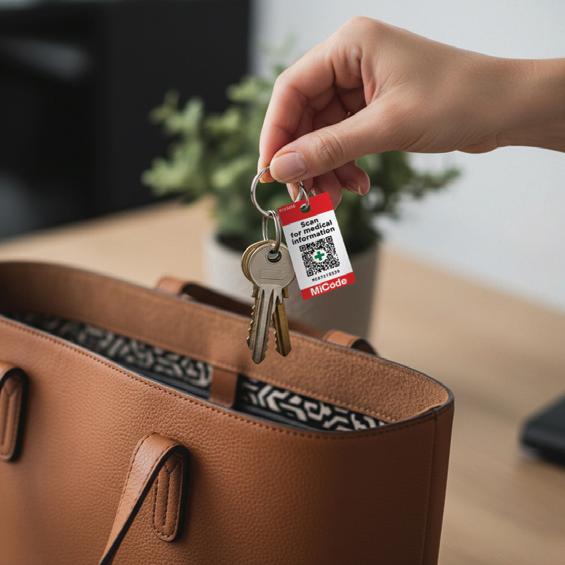
It is also very useful for people who are being cared for. So much care depends on knowledge held by other people: a daughter who knows the medication, a husband who knows the hospital consultant, a carer who understands the routine, a support worker who knows how best to communicate. But carers cannot be everywhere all the time.
MiCode helps that essential information travel with the person.
For families and carers, this can bring real peace of mind. It does not remove worry — nothing does — but it can reduce one of the biggest fears: that the person you care for will need help and nobody will know who they are, what they need, or who should be called.
I also wanted MiCode to be affordable. Safety should not be a luxury product. MiCode starts from £20, which I believe is an amazing price for something that can carry such important information and provide such reassurance.
People can get MiCode directly from www.micode.uk. And if anyone has questions, they can always email me personally at james@micode.uk.
MiCode began with Anthony. It also came from my own experience of illness. But it is for anyone who wants to feel safer, more independent and better understood in an emergency. It is a small piece of technology with a very human purpose: helping people be known, protected and cared for when it matters most.
A Penarth home held their annual summer fayre and managed to raise thousands in the process.
MHA Morel Court invited the local community into the home and raised a whooping £2177.00.
The day was packed full of activities, refreshments and stalls including a book, sweets, and
Throughout
The funds raised will go towards homes amenities fund, and they are already planning a day trip to Barry Island for all residents and staff.
Mandy Jenkins, administration manager said: “The summer fayre was very successful, and we are very proud of the support shown to us by the community.

“We had plenty of family members of our residents who came and supported us along with staff and volunteers.
“It was a great event, the weather was lovely which is always a bonus, and everyone had a great time.
“To raise the amount, we did in just over five hours is very special and we can’t thank everyone enough.
“We received some amazing feedback from visitors who appreciated the hard work that had gone into making the fayre a success.
“The funds raised will go towards a day trip to Barry Island on the 15th of July and we are all looking forward to that trip.
“On behalf of everyone at the home, I want to thank each and every one who supported the fayre and we genuinely appreciate it.”
Anenta, the leading independent healthcare waste management specialist, has appointed waste expert Jonathan Sandford as Business Development Manager dedicated to the care home sector.
Brought on board to boost Anenta’s growing care home client base, Jonathan brings more than 35 years of waste industry experience – from running his own document shredding business to leading nationwide sales teams at a plc level. His appointment comes as Anenta accelerates its mission to help care homes eliminate unnecessary costs that can run into thousands of pounds a year.
In his new role, Jonathan will oversee the management of Anenta’s existing waste contracts, ensuring that care home waste logistics, service delivery, and waste disposal performance levels are industry leading. He will also be responsible for delivering bespoke, affordable and professional end-to-end waste management solutions to the care and nursing home sector.
Commenting on his new role, Jonathan said: “Our research shows that individual care homes are wasting up to £8,000 a year through poor waste management process and procurement. Across multiple sites, that adds up fast — and it's largely avoidable.

“My role is to help care homes put a stop to that by changing poor waste disposal habits and practices, so that we can deliver a better service that saves them time and money.
“I’ll be working with care homes to identify overbilling, reform waste disposal habits, deliver better staff training, and provide guidance on conducting complex pre-acceptance audits – all designed to take the
administrative burden off care home teams so they can focus on what matters: resident care.”
Using Anenta's real-time smart technology, care homes, their waste collection providers, and other stakeholders are brought together onto a single, unified management platform that provides full transparency. This allows efficiencies to be identified, implemented and measured, delivering significant and meaningful cost savings year after year.
Commenting on Jonathan’s appointment, Graham Flynn, Managing Director of Anenta, said: "Jonathan has the perfect combination of sector knowledge, commercial expertise, and an unwavering

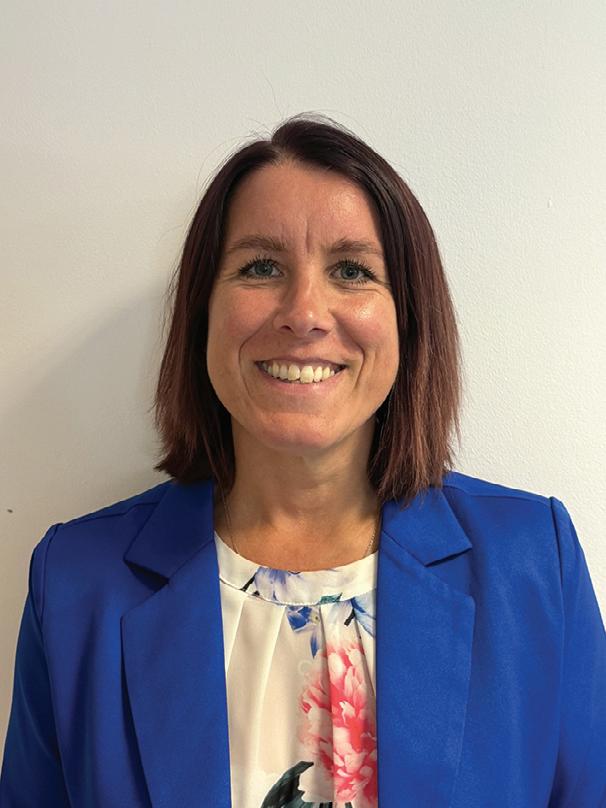
Norwich-based Black Swan Care Group has extended its Regional Management team with the appointment of Laura Campbell. Ms Campbell has stepped up from her Operational Support Officer role at the Group and will support 3 homes in the Group: Chiswick House, Laurel Lodge and The Beeches, providing guidance, oversight and corporate level management. Her role is essential for providing support to the homes' registered managers and staff teams.
In an interview for the home’s website, she answered questions about her career to date and her new role:
HOW LONG HAVE YOU WORKED IN CARE?
I have been working in care for over 25 years, dipping my toes in all sorts of care, including managing domiciliary services and live in care services. I have also spent time in recruitment and delivered training to new candidates. I’ve been with Black Swan for 3 and a half years, starting as the Operations Support Officer, working alongside the Regional Managers, covering their homes in their absence and supporting the Operations Director.
WHY DO YOU LOVE WORKING IN CARE?
I find it rewarding to support people, making a positive difference in their daily lives.
I like building relationships with those we care for and helping them maintain their independence, dignity and wellbeing. Knowing that my work can contribute to brightening someone's day or provide comfort during difficult times gives me a real sense of purpose. I also enjoy the variety the role offers and the opportunity to keep learning and developing my skills while working as part of a caring team.
IF YOU'RE NOT WORKING, WHAT DO YOU LIKE TO DO?
I enjoy listening to live music, whether it be an intimate gig in a small venue or a stadium visit or festival. I have 2 beautiful children, who also enjoy live music. We venture outside as much as we can and enjoy swimming.
WHAT ADVICE WOULD YOU GIVE TO SOMEONE WORKING IN CARE?
I would advise them to always treat people with kindness, dignity and respect, and to take the time to listen to their needs and preferences. It's important to communicate clearly, follow care plans and safety procedures and never be afraid to ask for help or guidance when unsure. I would also encourage them to keep learning, work well as part of a team, and look after their own wellbeing, because providing good care is easier when you're healthy and supported yourself.
Care providers are being urged to help tackle the growing youth unemployment challenge by pledging to take on a new admin apprentice.
Leading training provider Realise is working to tackle the growing youth unemployment challenge by searching for in excess of 500 organisations to become a ‘Future Talent Employer’ by committing to hiring at least one Level 2 Administration Support apprentice over the next year.
For many employers, the apprenticeship will be 100% government funded so be of no cost, while SMEs can also benefit from up to £6,000 in cash incentives.
Participating businesses will receive a place on Realise’s Roll of Honour as well as end-to-end support to ensure the apprentice has the best possible experience.
Builders’ merchant Selco Builders Warehouse has become the first business to take the pledge.
Other companies can sign up by visiting https://realisetraining.com/futuretalent-employer-pledge
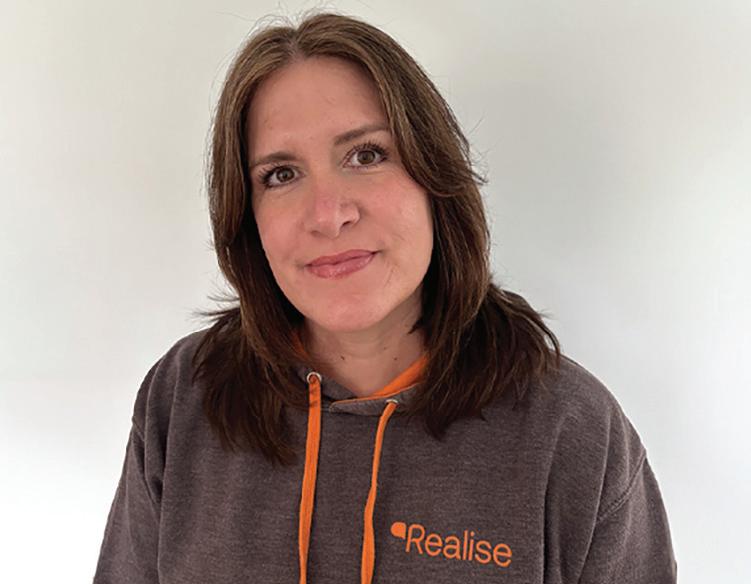
The administration apprenticeship is a new qualification designed to give young people a gateway into the workplace, acting as a stepping stone into numerous positions and roles.
The latest official figures show more than a million young people are NEET – not in employment, education or training – the highest level in more than 12 years and equating to roughly one in eight young people.
Karen Matthews, Director of Business Skills Solutions at Realise, said: “Entry level job and career opportunities are shrinking for young people. The recent review by Alan Milburn predicted that one in six are set to be out of work, education or training in five years.
“For the good of our young people, and the country’s economy as a whole, that simply cannot be allowed to happen.
“Meanwhile, a recent study found that small businesses are spending an average of 16 hours a week on administrative tasks.
“This new apprenticeship, which is only open for 16 to 24-year-olds, seeks to find a solution for those two problems, offering young people a realistic pathway into the workplace while providing businesses with all the benefits of bringing young people on board, including fresh perspectives and native digital skills.
“These apprenticeships need the support of employers – and that’s why we have launched our pledge
campaign. We want as many businesses as possible to demonstrate their commitment to the next generation by becoming a Future Talent Employer.”
Those who take the pledge will receive numerous benefits, including a ready-to-use promotional pack and Corporate Social Responsibility (CSR) advantages.
The Level 2 Administration Support apprenticeship is set to prove popular with employers of all sizes and in a range of sectors, including care providers, recruitment agencies, accountants, legal firms, logistics companies and small manufacturers.
Selco Builders Warehouse, which has 75 branches, sees huge benefits in apprenticeships and developing talent from within.
Sally Kerr, HR Director for Selco, said: “We have worked with Realise on our extensive apprenticeship programmes for a number of years and they have been transformative for our business, providing excellent opportunities for developing skills and knowledge, as well as career progression for our colleagues.
“The Realise team has a fantastic reputation for delivering outstanding training provision and we are proud to support the pledge for the Future Talent Campaign.
“It’s an important initiative which will not only drive talented youngsters into the workplace but also help address the growing issue around a lack of employment and training opportunities.”
As well as being suitable for large employers, SMEs will also significantly benefit from the Level 2 Administration Support opportunity by bringing in new faces to support with administration and help to grow the business further, with all apprentices receiving pre-employment sessions to ensure they are ready to meet workplace expectations.
The apprenticeship is aimed predominantly at 16 to 24-year-olds starting out in their career and takes just 12 months to complete – shorter than previous administrative programmes.
The apprenticeship covers a wide spectrum of topics, including processing data, using software packages, communication information, planning tasks, maintaining professional relationships and handling feedback.
Successful learners can then progress onto a Level 3 apprenticeship, in disciplines such as Administration Specialist, HR Support, Customer Service Specialist.
For more information visit www.realisetraining.com and search for Future Talent Pledge.

The adult social care sector depends upon effective regulation, timely oversight and credible assurance to protect some of the most vulnerable people in society. However, new analysis by Care Inspections UK (CIUK) has highlighted growing concerns about the current inspection backlog within the Care Quality Commission (CQC) system and the wider implications for public confidence, provider accountability and quality improvement across England.
Data analysed by CIUK from the CQC show that, as of March 2026, more than 5,400 care homes in England had not received a full inspection in over five years. This represents more than 40 per cent of all care homes registered before March 2021. In some local authority areas, more than 70 per cent of services had not received a full inspection during that period.
Whilst many providers continue to deliver safe and compassionate care despite immense operational pressures, the scale of the backlog raises serious questions about whether the current inspection system can deliver timely and effective regulatory oversight.
Inspection delays matter. Families, residents, commissioners, lenders and insurers rely heavily upon inspection findings to assess risk, quality and compliance. When inspections are not conducted regularly or when reports take many months to be published, confidence in the regulatory system inevitably weakens.
At the same time, providers themselves often express frustration regarding inconsistency in inspection methodology, perceived subjectivity in judgements and the lack of practical support following inspection activity. Many operators report that inspection outcomes can feel overly dependent upon individual inspec-
By Kevin Groombridge – Chief Executive, Care Inspections UK
tor interpretation rather than robust triangulated evidence and measurable quality indicators.
This is where independent inspection and assurance bodies play an increasingly important role.
As the UK’s only UKAS-accredited independent inspection body for adult social care operating to ISO/IEC 17020 standards, CIUK provides a credible alternative source of inspection, assurance and quality improvement support for the sector. Unlike consultancy-led “mock inspections”, CIUK undertakes structured, evidence-based inspections using defined methodologies, extensive document review, stakeholder engagement, direct observation and objective assessment frameworks.
Importantly, CIUK inspections are designed not simply to identify failings, but to support improvement. Detailed inspection reports and action plans provide providers with clear, practical and prioritised recommendations to strengthen governance, compliance, safety and care quality.
In an environment where CQC capacity challenges continue to affect inspection frequency, many providers are increasingly recognising the value of independent inspection as part of their wider governance and assurance arrangements. CIUK can quickly and efficiently inspect services across residential care, nursing care, supported living and domiciliary care, providing organisations with timely insight into operational performance and regulatory risk.
The sector also faces increasing complexity. Workforce shortages, rising acuity, financial pressures and growing regulatory expectations mean providers require more sophisticated governance and assurance systems than ever before. Independent inspection can help bridge this gap by identifying concerns early, validating good practice and supporting continuous improvement between regulatory inspections.
The future of adult social care regulation cannot rely solely upon periodic state inspection. The sector requires a broader ecosystem of evidence-based assurance, transparent quality measurement and continuous improvement support. Independent accredited inspection bodies are well placed to become an essential part of that future.
Ultimately, inspection should not be about judgement alone. It should be about protecting people, improving care and giving the public confidence that services are safe, effective and well-led.
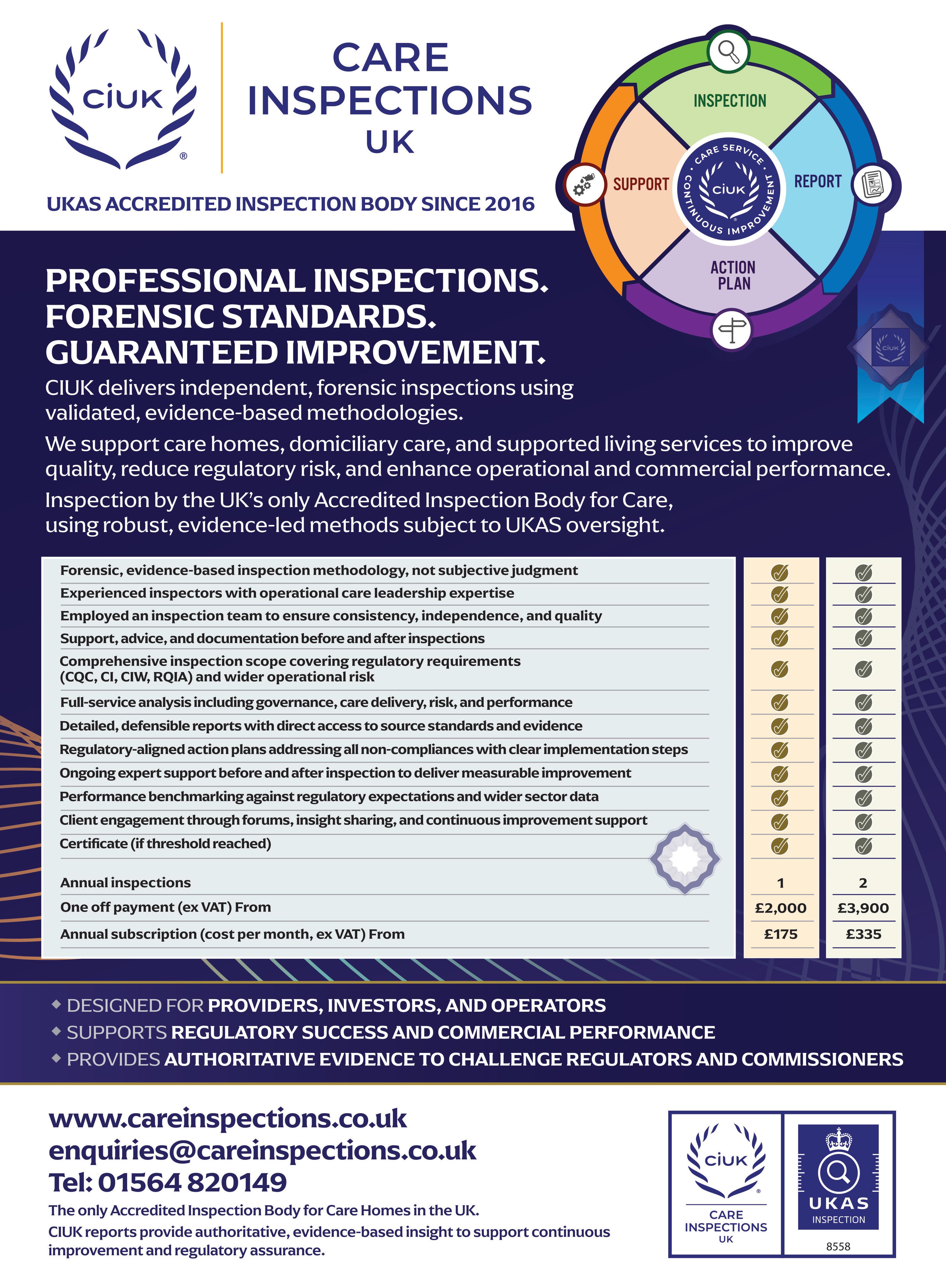
The UK adult social care sector is facing a severe workforce development crisis driven by outdated, ‘transactional’ training models, a national sector specialist has warned.
Speaking at the Care Management Show in Birmingham, Lesley O’Connor, Head of Strategic Development for Health and Social Care at training provider Realise, said that treating staff development as an administrative, box-ticking exercise is directly damaging staff retention and leaving workers unprepared for increasingly complex care demands.
She said: “A lot of training is still transactional: standard programmes, short-term focus, and limited alignment to actual job roles. And despite completely different workforce demands, we’re still seeing exactly the same training delivered across residential care, domiciliary care, mental health services and community-based care.”
Lesley revealed that a demographic cliff-edge is compounding the problem, with 50% of adult social care registered managers now aged 50 or older.
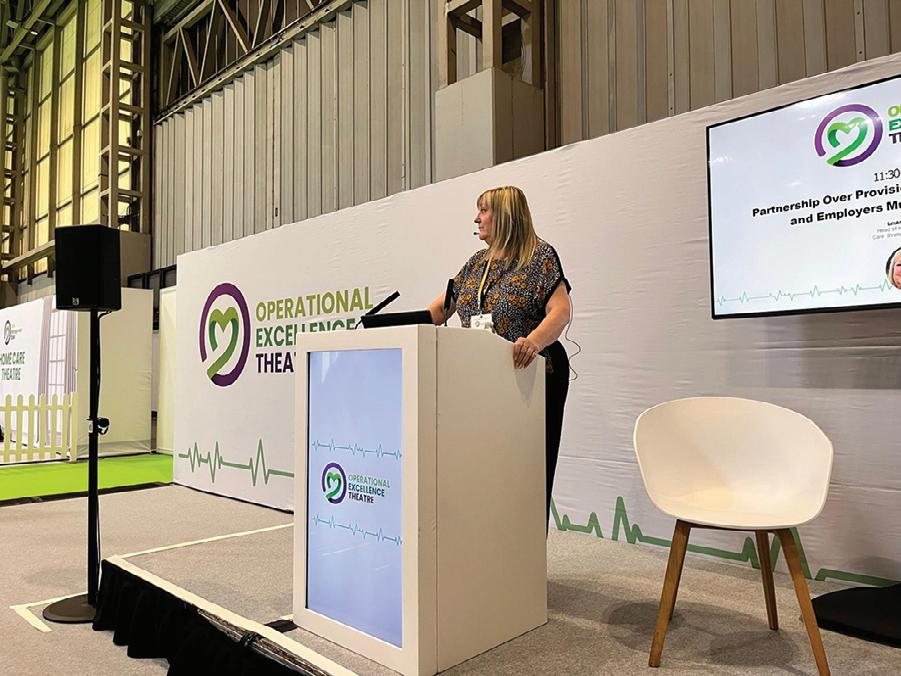
With 31% to 32% of these leaders projected to retire within the next 10 to 15 years, she issued a stark warning that providers expose themselves to ‘massive succession risks’ unless standard, off-the-shelf training provision is abandoned in favour of deep, co-designed employer partnerships
The major flaw in the current system, she pointed out, is the systemic failure to connect educational delivery with actual workplace performance.
She said: “Training is still treated as a process, something that is merely delivered and evidenced. But if that training doesn’t change outcomes in the workplace, then it doesn’t add any real value. “Are we really developing the health and social care workforce of the future, or are we merely getting better at delivering training?”
While the industry frequently attributes its operational stress to external market pressures, the internal
strategy requires immediate scrutiny.
“We all recognise the pressures of hard to fill vacancies and staff retention, with the added factor of increasingly complex care needs,” Lesley added
“But what we’re hearing from the employers we work with is that this isn’t just a recruitment crisis, it’s a workforce development crisis.”
To break the cycle of high turnover, Realise - which works nationally supporting workforce development across the adult social care sector - advocates for a structural pivot away from generic ‘programme delivery’ towards deep operational collaboration.
In practice, this means giving staff a visible, clear future which in turn can transform retention.
“Because,” says Lesley, “when care workers see an explicit pathway for career progression, their likelihood of remaining with an employer increases dramatically.”
The sector can no longer afford to rely on incremental changes.
“If we continue to treat training as provision, we will continue to see the exact same challenges,” said Lesley.
“But if we move to true partnership, where providers and employers work together to build workforces rather than just deliver programmes, we have an opportunity to significantly change the future approach to workforce. Not incrementally, but meaningfully.”
The Care Management Show, held at the NEC, is the largest event for care management and senior leadership and featured more than 60 sector experts including CEOs, directors and managers across residential care, home care and complex.
Realise is a leading national training provider in UK, delivering specialised workforce development, accredited diplomas and apprenticeships across the health and social care sectors.
For more information, visit www.realisetraining.com
Myriad Group, which owns Caring Homes has acquired Parklands Care Homes, one of the largest independent care providers in the north of Scotland with 13 care homes across the Highlands, Moray and Aberdeenshire.
Newmark and DC Advisory acted as advisors to Parklands on its sale to Myriad Group.
Myriad Group CEO, Peter Hill said: “This is the beginning of an exciting new chapter for Myriad Group. Parklands Care Homes is an independent care home provider that, like Caring Homes, has been family-owned for over 30 years and importantly, shares our commitment to delivering high-quality, person-centred care.
“The values and culture at Parklands are strongly aligned with our own, with residents, families and colleagues at the heart of everything they do, and this was an essential factor for us. In Parklands, Ron and Elaine Taylor have built a care home group that is not only recognised for its commitment to care quality, but also as a good employer and neighbour. It’s a fantastic legacy and a key foundation for the future”. Alongside the change of ownership, Parklands has completed a planned leadership transition with

founder and Managing Director, Ron Taylor, and Operations Director, Elaine Taylor, both stepping down. Susie Mackenzie, who joined Parklands in 2023 as Finance Director, has been appointed Managing Director and will take on responsibility for day to day operations. Ron will continue to support the business in an advisory capacity. Parklands will continue to operate as a standalone business, led by its current management team and supported by the wider Myriad Group.
Parklands Managing Director, Susie Mackenzie, said: “Like Parklands, Caring Homes is a values-led care provider and a good fit for us. I look forward to working with the Myriad board as we begin this new chapter for Parklands”.
Peter Hill added, “The acquisition of Parklands is a wonderful opportunity for two fantastic companies who complement each other to come together. Parklands is trusted and respected by families and communities throughout the north and north east of Scotland, and this is an exciting milestone in Myriad Group’s continued growth and development strategy.”
Cake4Kindness Day will return on Thursday 19 November 2026, bringing together communities across the UK with one simple mission: to tackle loneliness and social isolation experienced by people facing homelessness and other vulnerable groups through the simple act of baking and sharing cakes.
Now entering its fourth year, Cake4Kindness Day encourages schools, businesses, care homes, community groups, families and friends to bake together before donating their cakes to local homelessness charities, food banks and community organisations. The initiative creates opportunities for people to connect, volunteer and demonstrate kindness while supporting some of the most isolated members of society.
Ahead of this year’s campaign, Cake4Kindness Day Founder Neel Radia is delighted to announce Paralympic Gold Medalist Aaron Phipps MBE as the movement’s official Ambassador.
Aaron, who represented Paralympics GB and won gold in Tokyo 2020, joined last year’s celebrations at Country Court Care Home where residents baked and decorated cupcakes before donating them to a local homelessness charity.
Inspired by the experience and the impact it had on everyone involved, Aaron has chosen to support the campaign as it continues to grow nationally.
Speaking about becoming an Ambassador, Aaron said: “I joined Neel last year for Cake4Kindness Day at Country Court Care Home and saw firsthand the positive difference this project makes, not just for those baking and decorating the cakes, but also for the people experiencing homelessness who receive them.
“The atmosphere in the care home was wonderful, full of laughter, smiles and meaningful conversations. It was clear how much the residents enjoyed getting involved and spending time together.
“Decorating the cakes was great fun! I even learned a new skill along the way. I wouldn’t call myself a professional baker, but I fully embraced the creative process. The focus was on having fun rather than perfection, which made the experience even more enjoyable. Knowing the cakes would be donated to people
experiencing homelessness made my involvement feel truly meaningful.
“I love initiatives like this. They bring people together, spread kindness and show how even a small, shared activity can make a real difference. I’m proud to be supporting Cake4Kindness Day 2026 and hope even more people will get involved.”
The impact of Cake4Kindness Day continues to grow year on year. In 2025, more than 146 organisations took part, including businesses, schools, care homes and the campaign’s first participating hotel, Holiday Inn Express London Stratford. Together they baked and donated more than 8,000 cupcakes, supporting over 100 homelessness charities and community organisations across the UK.
Neel Radia said: “People experiencing homelessness face some of the highest levels of loneliness and social isolation in our communities. Many lack the companionship and everyday conversations that so many of us take for granted.
“Cake4Kindness is about bringing people together through baking and encouraging conscious acts of giving. It’s incredible to see how something as simple as a cupcake or slice of cake can spark conversations, bring smiles and help people feel seen and valued.
“Cake4Kindness Day was created so that anyone, anywhere, can support charities in their own community. Together we can create more connections, inspire more kindness and build stronger, more inclusive communities.
“We are absolutely delighted to welcome Aaron Phipps MBE as our Ambassador. His passion for inclusion, resilience and community perfectly reflects what Cake4Kindness stands for, and we’re excited to have him helping us inspire even more people to take part.”
Cake4Kindness Day has also attracted growing support from leading organisations across the food, hospitality and care sectors. Industry partners for the 2026 campaign include Dr. Oetker, Jim Jams, Miele Professional, Procurement for Care, Raj Foods, Signature Dining, and TLC Care Group.
The UK’s residential and nursing care sector has continued to demonstrate resilience through the first half of 2026, despite mounting cost pressures, ongoing workforce challenges and a shifting regulatory landscape, according to the latest Sector Pulse Report from specialist lender OakNorth.
The report, published this month, finds that demand for care remains structurally strong, driven by the UK’s ageing population, rising clinical acuity among residents and continued pressure on NHS services. Occupancy levels across elderly care homes are said to be broadly in line with, or slightly above, pre-pandemic levels, with demand increasingly weighted towards nursing, dementia and complex-care provision.
According to figures from the Association of Directors of Adult Social Services (ADASS) cited in the report, 94% of directors say NHS pressures are causing adult social care to take on responsibilities previously delivered by the health service, underlining the growing importance of higher-acuity care. Funded Nursing Care rates rose by 5.4% for 2026/27, offering some relief to providers, though operators with significant local authority exposure continue to face pressure where fee uplifts fail to keep pace with cost inflation.
Supply remains the sector’s biggest challenge
The report highlights that supply continues to lag far behind demand. UK care-home bed numbers have grown by just 2.4% over the past decade, well short of growth in the older population. Around 79% of homes are now more than 20 years old, 38% are converted properties, and almost a third of beds still lack en-suite facilities — a gap the report says is widening the performance divide between modern, purpose-built homes and older stock in need of significant investment.
Planning constraints, high construction costs and regulatory complexity continue to restrict new development, reinforcing the value of modern, purpose-built care homes for both operators and investors.
WORKFORCE COSTS CONTINUE TO BITE
Labour remains providers’ largest operating cost. The National Living Wage rose to £12.71 per hour from April 2026, while higher employer National Insurance contributions continue to weigh on margins. Vacancy rates have improved to around 7.0%, but tighter immigration rules have significantly reduced international recruitment, shifting the focus firmly onto domestic recruitment, staff retention and productivity rather than simply filling posts.
DIGITAL ADOPTION ACCELERATES
The report points to rapid progress on digital transformation, with Digital Social Care Records now in use
across 83.7% of CQC-registered provider locations, covering 92% of people receiving care. Beyond improving day-to-day efficiency, digital tools are said to be strengthening medicines management, audit trails and inspection readiness, with providers also investing in telecare and remote monitoring ahead of the UK’s analogue telephone network switch-off in January 2027.
RETIREMENT LIVING ON THE RISE
Demand for retirement living and Integrated Retirement Communities is also gaining momentum, the report notes, as more older people seek housing that supports independent living for longer. Operators are increasingly exploring rental and mixed-tenure models to widen access, and institutional investors continue to be drawn to the sub-sector’s long-term demographic fundamentals, even as planning constraints and development costs limit new supply.
The report also details several recent OakNorth financing deals supporting expansion across the sector, including a £28.5m loan to D2 PropCo to grow its supportive housing portfolio across Wales and England, a £15m loan to developer Aspire LPP for a new 74-bed care home in Surrey, a £10.8m loan to Chatham Waters Care Home Limited to open a 75-bed home in Kent, and an £8.3m loan to Chrysalis Homes for a retirement development in Renfrewshire, Scotland.
The report’s outlook for the next six months points to continued long-term demand growth, with the UK’s pensionable-age population projected to rise from 12.4 million to 15.3 million by mid-2049, and the over-85 population expected to more than double over the same period. Fee recovery is expected to remain the key profitability challenge for operators with heavy local authority exposure, while larger M&A transactions are likely to face closer scrutiny following recent Competition and Markets Authority reviews.
Workforce reform, including the proposed Fair Pay Agreement, is also expected to remain a major focus for providers as they weigh up its long-term implications for recruitment, retention and operating costs.
Commenting on the findings, Ben Barbanel, Chief Lending Officer at OakNorth, said the sector’s long-term fundamentals “have rarely been stronger,” adding that demand continues to outpace supply and is creating significant opportunities for operators investing in modern facilities, specialist care and operational excellence.
He said OakNorth remained committed to backing experienced management teams investing in new care homes, retirement communities and specialist accommodation, and confirmed the lender’s continued confidence in the sector’s long-term outlook.
Springfield Vale, an Exemplar Health Care home in Barnsley, has achieved a Gold Design Award from the Dementia Services Development Centre (DSDC) at the University of Stirling, recognising how its purpose-built environment supports people living with complex dementia to maintain their independence, confidence and day-to-day routines.
Following an independent assessment using the DSDC's Environments for Ageing and Dementia Design Assessment Tool, the home achieved an overall score of 93%, placing it among just 14 care homes across the UK to hold the organisation's highest level of accreditation.
The award emphasises the importance of the physical design of care settings and how this complements expert nurse-led care to improve everyday experiences for people living with dementia.

Springfield Vale was designed to support adults living with complex dementia, including people with high acuity needs, secondary diagnoses and co-morbidities, as well as those who have experienced previous placement breakdowns in less well adapted care settings. The home enables people to receive expert nursing care in a community-based home, close to family and loved ones.
The assessment highlighted a range of environmental features that help people navigate their surroundings more confidently and maintain independence, including strong colour contrast, clear visual cues, vision panels that allow people to identify rooms before entering, and circadian lighting that mirrors natural daylight patterns.
Assessors also recognised the home's accessible sensory garden, welcoming communal spaces and
Advance Care Planning is a very simple process. However, the term Advance Care Planning itself can often be misunderstood. Recently, the phrase “What Matters to You?” has become more commonly used and is certainly the way we, at The Gold Standards Framework (GSF), encourage health and social care teams to open conversations about the future wishes and preferences of every individual they care for. Truly getting to the heart of what is most important to people helps us deliver the best care possible. This ensures that when people reach the end of their own journey, their experience reflects what was important to them, and as care professionals, we get to experience what we term to be “a good death”. For us, a good death is a good outcome.
Starting the conversation and giving people the time and a safe space to explore what is important to them is the first step. For care staff, engaging in conversations about the future and the prospect of dying may seem a daunting undertaking. However, you may be surprised by the reception you receive.
It is important to recognise that some people will not want to discuss the future or openly talk about death, and this must be respected. Advance Care Planning is a voluntary process that we cannot impose upon people. However, we do need to initiate these difficult conversations and document that this has been done. It is then essential that we continue to seek opportunities for engagement so that everyone involved in supporting the individual’s care journey is aware of their wishes and can work towards ensuring their needs, preferences, and priorities are met. As health needs change, people often become more receptive to Advance Care Planning discussions, and care staff should seize any opportunity to encourage individuals to participate in these significant conversations.
There are others who will openly engage in the process and freely discuss their funeral plans, including
use of technology to support people's daily routines.
Charlotte Lloyd, Commissioning and Operations Developments Director at Exemplar Health Care, said:
"Receiving this accreditation is recognition of the careful thought that has gone into creating an environment where people living with complex dementia can feel confident, comfortable and in control of their everyday lives.
"The physical environment is an important part of good dementia care. When design works alongside expert nurse-led care, it can help reduce avoidable confusion, support independence and enable people to continue doing the everyday things that matter to them.
"This award reflects the collaboration between our development, operational and clinical teams to create a home that genuinely supports better outcomes for the people we care for."
Alongside its dementia-friendly design, Springfield Vale includes dedicated clinical consultation space, allowing sensitive conversations to take place away from people's bedrooms, helping those spaces remain personal and homely. Accessible outdoor areas include sensory planting, walking routes and social spaces that encourage people to spend time outdoors, stay connected with others and enjoy meaningful everyday experiences.
As more people live with increasingly complex dementia, the accreditation highlights the role that thoughtfully designed environments can play alongside expert nurse-led care in supporting independence, reducing avoidable distress and helping people continue living meaningful lives."
their chosen funeral director, where important documents are kept, whether the funeral has been paid for in advance, and whether they wish to be buried or cremated. The initial focus is often on care after death. The peace of mind that comes from knowing these arrangements have been made, and that they will not create a personal or financial burden for their family, enables many people to speak candidly about these aspects associated with their death.
However, the actual dying phase often gets overlooked, and that is what is most important. In the final weeks, days, and hours of our lives, individuals need to consider what matters most to them. They may have a fear of dying or of being alone at the time of death, and simple reassurance from care staff can help alleviate these fears and concerns. Some people have complex family dynamics and wish to reconnect with relatives they have not spoken to for many years. Others may simply want to be read to from a favourite book, spend time outdoors, listen to treasured pieces of music, or have a beloved pet by their side to provide a sense of peace and comfort.
Whatever the wishes of the individual, ensuring that these are documented in an Advance Care Plan helps make certain that their values, preferences, and priorities are understood and respected. This supports personalised, coordinated care and leads to better outcomes for the individual, their loved ones, and those providing their care.
SUPPORTING BETTER ADVANCE CARE PLANNING
The Gold Standards Framework (GSF) offers a range of free Advance Care Planning resources to help health and social care providers build confidence in having meaningful conversations, support person-centred care, and improve the recording and sharing of people’s wishes and preferences. Explore the free resources and tools available to support your organisation and the people you care for: www.goldstandardsframework.org.uk/training-accreditation/free-resources-professionals/

A damning report from the UK Covid-19 Inquiry has revealed that nearly £10 billion of public money was squandered on personal protective equipment during the pandemic, with care homes among the frontline services left to source their own supplies during the worst of the crisis.
Inquiry chair Baroness Hallett found that of the £14.9 billion spent by the UK and devolved governments on PPE, some £9.9 billion – almost two-thirds – ultimately went to waste. Once the cost of testing kits, ventilators and other equipment is factored in, total government spending between January 2020 and June 2022 topped £42 billion.
For care providers, the report’s findings will resonate deeply.
Baroness Hallett’s team concluded that care homes, alongside GP surgeries and pharmacies, were effectively left to fend for themselves, expected to secure their own masks, gowns and gloves at the height of the emergency. The report brands this a serious planning failure – one that will be painfully familiar to operators who remember scouring for suppliers, paying inflated prices, or going without.

That failure was compounded by the state of the national stockpile itself. England entered the pandemic with reserves in what the inquiry called a precarious condition, and by the end of March 2020, as hospital demand surged, the emergency supply was already running dry. Investigators found that only a third of the masks held in England’s stockpile were fit for use, while Scotland had no high-grade respiratory masks in reserve at all.
The inquiry’s financial findings paint a picture of a system built in a panic. Across the UK, £9.9 billion of PPE bought during the pandemic was written off as unused or out of date, while a further £157 million was lost on healthcare equipment that was never deployed. A separate scheme to fast-track ventilator production, launched when hospitals feared being overwhelmed, cost taxpayers an additional £143 million for designs that never reached patients.
The devolved nations recorded their own losses: Scotland wrote off around £8 million in healthcare equipment, Wales spent £18 million on PPE that went unused, and Northern Ireland faced £43 million of masks, gowns and gloves at risk of expiring before they could be issued.
Baroness Hallett acknowledged that buying too much protective equipment was preferable to buying too little in the midst of a public health emergency, but she stressed that supply should have been far better
matched to actual need. Sound planning, she said, would have delivered a procurement system that was fairer, quicker and considerably cheaper – rather than one built on improvisation because contingency plans had never been properly tested. THE VIP LANE CONTROVERSY
Much of the political fallout from the inquiry centres on the so-called VIP lane, a fast-track route introduced in April 2020 that gave priority to PPE offers referred by ministers, MPs, peers or senior officials. Ministers at the time defended the scheme as a necessary response to an urgent shortage of protective kit for health and care staff.
The inquiry took a starkly different view, describing the lane as a flawed prioritisation model that built unfairness into the emergency buying process. Some firms benefited from their political connections in ways that damaged public confidence in government at a time when trust mattered most, the report found, and it recommended that no such scheme should ever be revived.
Importantly, Baroness Hallett stated she had found no evidence of cronyism or corruption on the part of ministers or civil servants in the final awarding of contracts.
WHAT THE INQUIRY
Looking ahead, the inquiry has called for a fundamental overhaul of how emergency PPE is bought and distributed in any future pandemic, alongside a national industry strategy that treats essential healthcare equipment as a strategic asset rather than an afterthought. It has also urged improvements to the physical stockpile itself, currently held in a warehouse on Merseyside.
A spokeswoman for the Prime Minister said the findings made for difficult reading and confirmed the Government was committed to learning the lessons of the pandemic to ensure the country is better prepared in future. Ministers, she said, would consider the inquiry’s recommendations carefully and respond in due course.
The Taxpayers Alliance commented: “Taxpayers will be sickened to learn that the government has wasted £10bn on PPE while failing to protect healthcare staff.
“This is the inevitable result of a bloated public sector that refuses to stress-test its own plans, only to then panic and raid the pockets of hard-working Brits.
“There must be a radical overhaul of emergency procurement systems, and ministers must claw back cash wherever possible.”
Care home design is about more than how a space looks. Interiors need to feel familiar for residents, reassuring for families and practical for the staff using them every day.
Colour plays a key role in setting that tone, helping spaces feel welcoming, homely and considered. In busy nursing and residential settings, the finish matters just as much. The right paint specification ensures carefully-chosen schemes can withstand daily use, regular cleaning and ongoing maintenance.
Moving away from clinical spaces
Care homes are working environments, but they are also people’s homes. A considered colour scheme can soften spaces that might otherwise feel clinical or institutional.
Soft off-whites, gentle greens, muted blues and earthy shades can all bring a more domestic feel to bedrooms, lounges and communal dining areas. Crown Paints’ Victoria White, for example, offers a gentler alternative to stark white, and [insert warm, earthy shade] could add depth without making a space feel heavy.
The aim is not to make every room look the same. A successful scheme should feel connected, with enough variation to give each area its own purpose and identity.
DESIGNING WITH RESIDENTS IN MIND
In care environments, colour choices should be shaped around the people using the space. Light, contrast and familiarity all influence how a room feels and how easily residents can navigate it.
Very bright whites can feel harsh, particularly under strong artificial lighting. Softer tinted whites and muted tones can still look clean and fresh but create a gentler backdrop for daily life.
Colour can also help define different areas. A shift in tone between corridors, lounges and dining spaces can support a clearer sense of place. Carefully chosen contrast can make key destinations easier to recognise.
This can be particularly valuable in dementia-friendly design, where residents may benefit from clear, consistent visual cues. Bedroom doors, bathroom entrances or dining room doorways can be picked out

By Kathryn Lloyd, Colour Specialist, Crown Paints

in a shade that contrasts with surrounding walls, helping residents identify the spaces they use most often. The key is to use colour with purpose: avoiding overly busy schemes but still providing familiar cues that support confidence and independence.
Bedrooms need particular care. These are personal spaces, so palettes should feel restful rather than overly stimulating, especially when paired with familiar furnishings and good natural light.
SUPPORTING STAFF AND VISITORS TOO
A well-designed care home must work for everyone. Staff spend long shifts in these environments, and families or visitors may arrive feeling anxious or emotional.
Reception areas, family rooms and quiet lounges can benefit from composed palettes that make the building feel approachable from the moment someone enters. Muted greens such as Crown Paints’ Glass Green can bring a grounded, restorative feel. A gentle yellow such as Narrative can create a more uplifting atmosphere in spaces that need a little warmth or energy.
Staff areas should not be overlooked. A well-finished break area can provide a welcome contrast to busy operational spaces, using warmer shades or deeper accents to create a clearer sense of separation from high-traffic areas.
BALANCING APPEARANCE WITH PERFORMANCE
In care homes, a successful scheme is not just about choosing the right colours. It is about choosing products that can keep those spaces looking good.
Corridors, lounges, dining rooms and bedrooms all experience regular wear, from knocks and scuffs to frequent cleaning. Durable, washable finishes can help maintain a fresh appearance for longer and support the maintenance programme.
Crown Trade Clean Extreme Scrubbable Matt is designed for demanding interiors where walls need to withstand repeated cleaning and retain a high-quality matt finish. It is well suited to busy communal areas where durability and appearance both matters.
In bathrooms, ensuites, kitchens and laundry areas, moisture and
humidity also need to be considered. Crown Trade Clean Extreme Mould Inhibiting Scrubbable Matt combines a durable, washable finish with mould-inhibiting properties, making it a practical option for these more challenging spaces.
Woodwork and trim are just as important. Door frames, skirting boards, handrails and other high-contact surfaces need a finish that can cope with everyday use. Crown Trade Fastflow Quick Dry Satin and Crown Trade Fastflow Quick Dry Gloss provide durable options for interior woodwork. Their quick-drying formulations can also help reduce disruption during refurbishment works.
For areas where hygiene is a particular priority, such as treatment rooms or specialist spaces, Crown Trade Steracryl Anti-Bacterial Scrubbable Matt may also form part of the specification.
The same principles apply across many care and healthcare environments: people respond better to spaces that feel human, considered and easy to spend time in. That does not mean making interiors overly decorative, but it does mean moving away from finishes and palettes that feel cold, clinical or impersonal.
Crown Trade’s work with Cygnet Kenney House in Oldham, a mental health hospital for women, reflects this approach. Colour was used as part of the wider design to create a more therapeutic, welcoming and non-clinical environment. The specification also needed to meet the practical demands of a busy healthcare setting.
For care homes, the lesson is clear. Colour, finish and durability should be considered together from the outset, so spaces not only look calmer and more inviting on day one but continue to feel well cared for over time.
When chosen carefully, tested in the space and paired with the right Crown Trade product specification, colour can help shape how a care home feels, functions and performs – supporting residents, reassuring visitors and making everyday maintenance easier for staff.
For more information about Crown Trade’s colour and specification support, visit: www.crownpaintsprofessional.com

An Edinburgh care home has been praised by residents for its efforts to combat social isolation.
Glencairn, a private residential home operated by Renaissance Care, launched the project last year amid recognition that even in care, older people can feel isolated with potentially harmful impacts on their mental and physical health.
Among the initiatives introduced by Glencairn to help residents build social connections and increase community engagement are weekly supper and coffee clubs, walking activities and language lessons.
A dedicated focus group to explore the experiences and needs of residents has been established and a staff matching system has been developed to ensure residents are paired with care assistants who are best suited to their needs and personalities, fostering deeper connections and trust.

Wellbeing Companions have been added to the care team to help create meaningful one-on-one interactions, offering personalised support to residents and facilitating better social engagement
Olive McCroan, 91, has been appointed the resident ambassador and said she is “loving” the role. She added: “It has given me a focus and sense of purpose. It is important in this environment to have friends and that’s what we all are.”
Caroline McDonald, 95, said: “I enjoy getting together with everyone, particularly at the coffee club where my family join, too”.
Graham Croan-Bee, 78, added: “It’s great, I am having a really nice time. There is lots to do and I don’t feel lonely as I can join in when I wish.”
Outdoor walking activities are an integral part of daily life and Glencairn has partnered with several external organisations, such as reflexologists, volunteers, and activity service providers, to enhance the range of activities and therapeutic options available to residents.
The continuation of Lingo Flamingo, a language learning program designed for older adults, has helped residents engage in intellectual and social activities, boosting their cognitive function while encouraging social interaction with fellow learners. Residents are on their way to achieving an SVQ qualification through the Lingo Flamingo language course, showing the success of educational and social programs in empowering older adults.
Jozi Stables, Glencairn’s manager, said the project is transforming daily life for residents, with increased engagement in activities, improved mobility and a noticeable reduction in stress and distress.
Ms Stables said a decreased use of analgesia and antipsychotic medications points to the positive impact of social interaction and mental stimulation and that families have also provided positive feedback, noting improvements in their loved ones’ emotional well-being and overall engagement in life at the care home.
“Social isolation and loneliness are issues that significantly affect the mental and physical health of individuals and it’s a topic very close to my heart,” said Ms Stables.
“Even in care homes when people are surrounded by others, we face the issue where social networks shrink and opportunities for meaningful connections decrease inevitably leaving people feeling disconnected from their communities.
“At Glencairn we recognise the impact this can have on people, and this is why we wanted to launch this project. Our aim is to combat loneliness by fostering community support, encouraging social engagement, and providing accessible resources which are crucial in helping our people to maintain meaningful connections and a sense of purpose, ultimately improving their quality of life and overall health.
“By developing individual care plans focused on each resident’s unique needs and goals, Glencairn ensures that every resident receives care that supports their well-being, both physically and emotionally and supported people to achieve their dreams.”
By Jayne Connery, Founder of Care Campaign for the Vulnerable
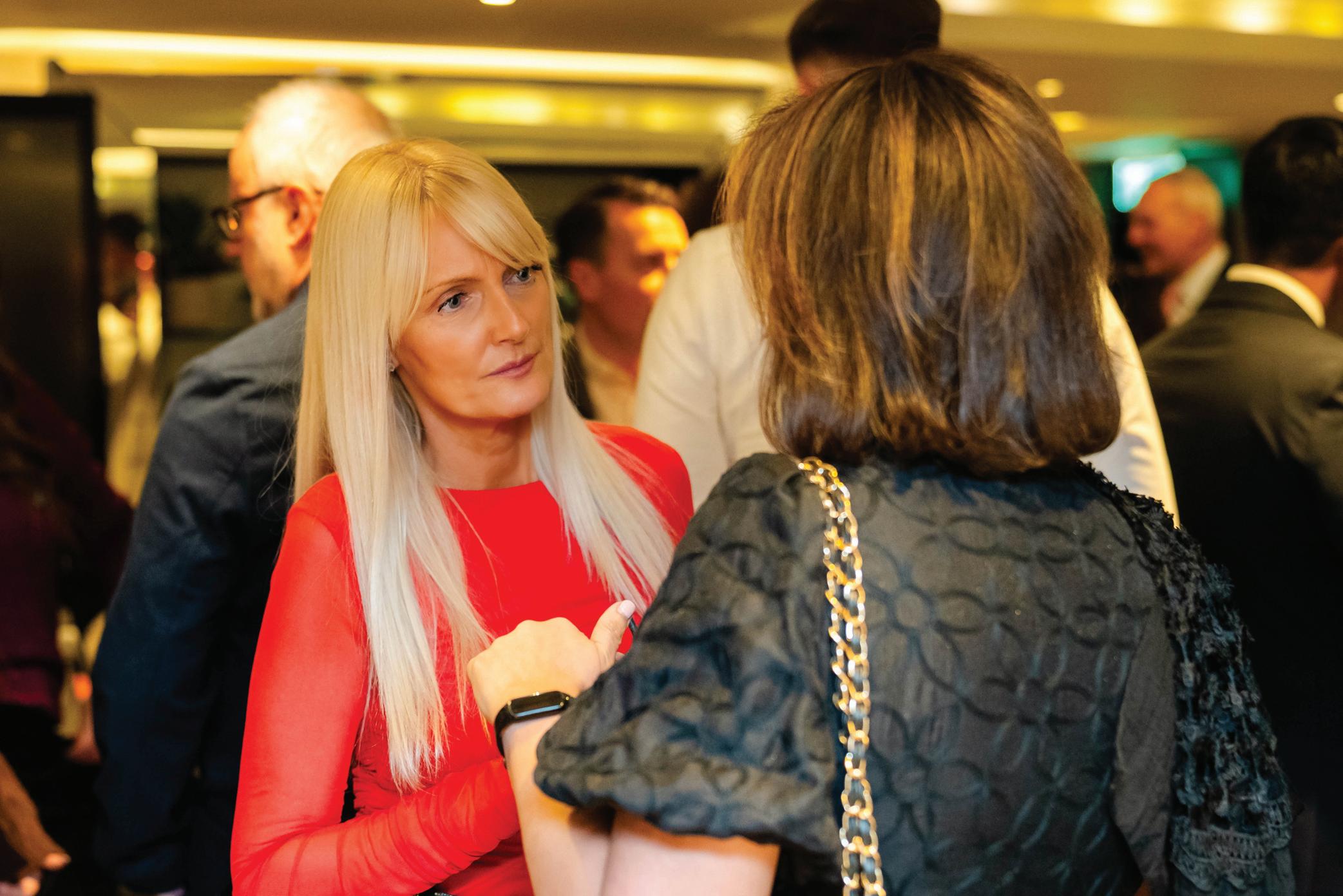
Over the years, through my work with families, care providers, carers, and people living with dementia, one issue continues to stand out above almost all others — the lack of understanding around complex behaviour in dementia care.
At Care Campaign for the Vulnerable (CCFTV), we believe it is one of the greatest challenges facing the care sector today, and also one of the areas where meaningful change is urgently needed.
Families regularly contact us feeling frightened, exhausted, and heartbroken. Many describe loved ones who were once calm and gentle becoming distressed, fearful, aggressive, withdrawn, or resistant to care. Often, they are told their relative is “challenging”, “difficult”, or “non-compliant”.
But behind every behaviour is a reason.
People living with dementia are not intentionally trying to cause problems. Behaviour is communication. It may reflect pain, fear, overstimulation, confusion, loneliness, trauma, frustration, or unmet emotional and physical needs.
Too often, care environments still focus on managing behaviour rather than understanding it and that has to change. My own mother, Ellen, lived with vascular dementia, and I witnessed firsthand how dramatically environment and communication affected her wellbeing. In the right setting, around people who showed patience, empathy, humour, and reassurance, her personality
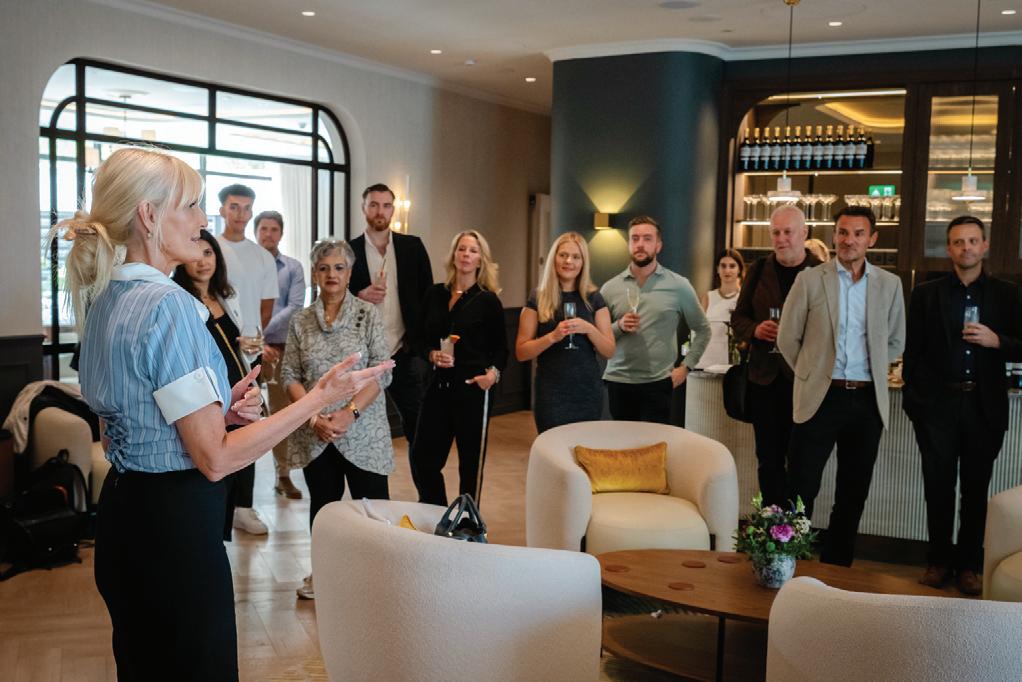
remained very much alive. But in environments where she felt frightened, rushed, or misunderstood, her anxiety escalated and her behaviour changed completely.
What I learned through my mum’s journey shaped the entire direction of my work.
Complex dementia care requires far more than basic awareness training. It requires emotional intelligence, confidence, consistency, observation, patience, and genuine understanding of the individual behind the diagnosis.
Sadly, carers are often placed into highly demanding situations without the level of specialist training or support they truly need. We hear repeatedly from frontline staff who admit they feel overwhelmed managing distressed behaviours, particularly when staffing levels are stretched or when residents have advanced dementia combined with other complex health needs. This is not about blaming carers.
Many carers are working under immense pressure and doing extraordinary work in very difficult circumstances. But as a sector, we must be honest enough to recognise that the needs of people living with dementia have become increasingly complex.
The reality is that some people entering care homes today would previously have been supported within specialist nursing or hospital environments. Providers are caring for residents with significant cognitive impairment, distressed behaviours, trauma responses, mobility issues, communication difficulties, and multiple health conditions — often all at once. And yet dementia training can still vary hugely across the sector.
At CCFTV, we want to see greater investment in meaningful dementia education that goes beyond textbooks and compliance exercises. Training must help carers understand why behaviours happen, how environments influence distress, and how communication styles can either calm or escalate situations.
Simple things matter more than people realise.
Tone of voice. Body language. Noise levels. Lighting. Routine. Familiarity. Feeling ignored. Feeling frightened. Being approached
too quickly. Being unable to express pain or discomfort All these things can completely change how a person living with dementia responds.
We also believe there needs to be more honest conversation around the emotional toll complex dementia care can have on care staff themselves. Supporting someone who is frightened, distressed, aggressive, or emotionally dysregulated every day can be emotionally draining. Staff need support, mentoring, and safe spaces to reflect without fear of judgement.
Good dementia care is not simply task-based care - it is relationship-based care.
The providers who stand out to us are rarely those focused purely on appearance or marketing. They are the providers investing in culture, leadership, staff wellbeing, communication, and specialist understanding. They create environments where carers feel confident asking for help, where families are listened to, and where behaviours are approached with curiosity rather than frustration.
Importantly, we also want to see a move away from overreliance on restrictive approaches wherever possible. Families frequently raise concerns with us around sedation, isolation, lack of stimulation, or individuals being labelled too quickly without enough exploration of underlying causes. Every behaviour should prompt a question: what is this person trying to communicate?
Sometimes the answer may be physical pain. Sometimes trauma. Sometimes fear. Sometimes boredom. Sometimes grief. Sometimes simply an environment that no longer feels safe or familiar.
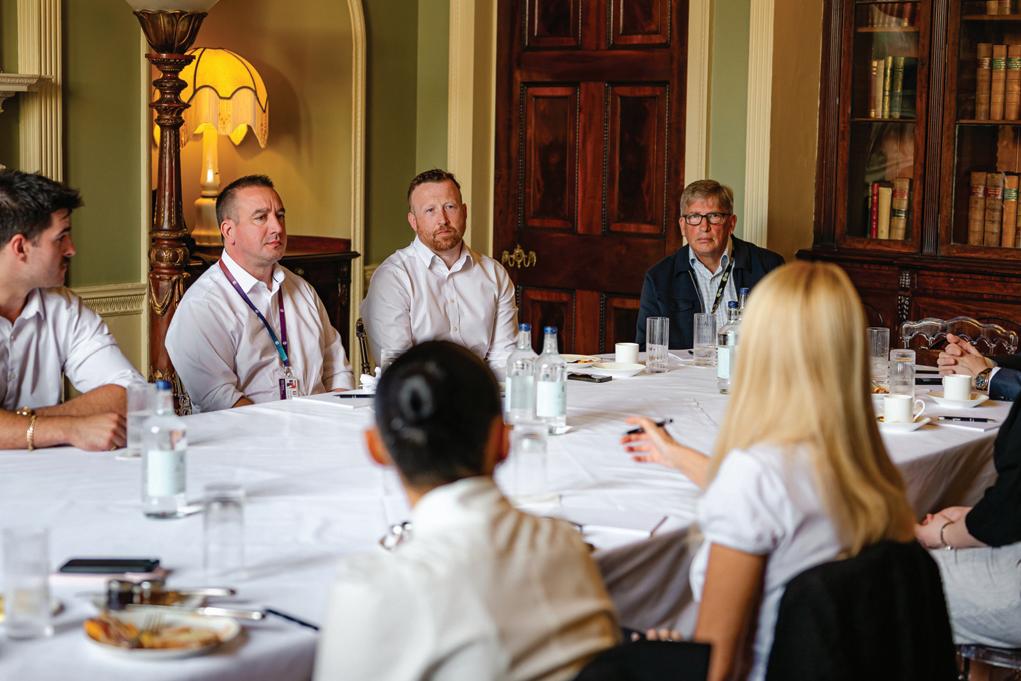
At CCFTV, we believe dementia care must become more individualised, more compassionate, and more psychologically informed. We also believe families should be viewed as part of the care team, not outsiders. Relatives often hold the key to understanding triggers, routines, comfort strategies, and lifelong personality traits that can help staff deliver far better care.
There are many outstanding carers and providers already leading the way. We see extraordinary examples across the sector every week. But we also know there is inconsistency, and too many families still feel unsupported when behaviours become complex.
Change is possible. But it requires openness, investment, stronger dementia education, honest conversations, and a willingness to move beyond outdated models of care. Because people living with dementia deserve more than simply being managed, they deserve the right care.
The regulatory landscape is evolving — here's what your care home needs to know
Trust is the foundation of every great care home. For residents and their families, choosing residential care is rarely a simple decision. It carries emotional weight, financial significance, and an enormous leap of faith. That's why transparency, fairness, and legal compliance aren't just operational tickboxes — they're central to the care you provide.
The Digital Markets, Competition and Consumers Act 2024 (DMCCA) has introduced some of the most significant changes to consumer law in more than a decade, and care homes are firmly within its scope. Understanding what those changes mean in practice is essential — and that's exactly where the Business Companion Care Homes Guidance comes in.

the very first conversation.
Authentic reviews and endorsements. Fabricated or manipulated reviews are now explicitly prohibited. As online reputation plays an increasingly important role in how families choose care homes, authenticity isn't just ethical — it's a legal requirement.
Developed by legal experts and completely free to access, this practical guide breaks down your obligations under the new legislation in plain, straightforward language. Whether you're reviewing contracts, updating your pricing structures, or looking at how you communicate with prospective residents, it's an indispensable resource.
WHAT
DMCCA
The DMCCA replaces the previous Consumer Protection from Unfair Trading Regulations, raising the bar across almost every consumer-facing sector. For care homes, the key implications include: Full pricing transparency. The Act outlaws "drip pricing" — the practice of introducing unavoidable fees late in the customer journey. All mandatory charges must now be presented clearly and upfront, from
Tougher enforcement. The Competition and Markets Authority (CMA) now holds significantly strengthened powers, with the ability to issue fines of up to £300,000, or 10% of global turnover, for non-compliance. The message is clear: getting this right matters.
These are just some of the areas covered in detail within the Business Companion Care Homes Guidance, which offers practical, step-by-step advice to help your home stay on the right side of the law.
SUPPORTING VULNERABLE RESIDENTS
Working in care means working with vulnerability every day. Whether driven by age, ill health, bereavement, financial pressure, or a combination of factors, vulnerability can affect a resident's ability to
make informed decisions or communicate their needs clearly.
Recognising and responding to this is both a legal duty and a moral one. The Business Companion Consumer Vulnerability Guide provides checklists and actionable advice to help your team identify and appropriately support vulnerable individuals — ensuring your home delivers compassion and compliance in equal measure.
A WIDER RESOURCE FOR YOUR BUSINESS
Business Companion extends well beyond care home guidance. The platform covers a broad range of sectors and topics — from online selling and complaints handling to delivery charges and net zero planning — all presented in clear, accessible language. Backed by the Chartered Trading Standards Institute and the Department for Business & Trade, it's a free, authoritative, and regularly updated resource you can rely on.
DON'T WAIT — ACT NOW
The DMCCA is already in force and enforcement is live. Now is the time to review your contracts, pricing communications, and marketing materials — before a compliance issue forces your hand.
In a sector built on trust, staying informed isn't just good practice. It's everything. Visit Business Companion’s Care Homes Guidance today In a sector built on trust, staying informed isn’t just smart - it’s essential. To find out more, visit: www.businesscompanion.info
Local businesses and community organisations came together for an unforgettable evening of food, friendship and inspiration as Parley Place Care Home, in partnership with its sister home Kings Park Care Home, welcomed renowned celebrity chef Lesley Waters for a special live cooking demonstration. The event brought together members of the local community for an interactive culinary experience, where Lesley prepared eight delicious dishes, sharing expert cooking tips, ingredient advise and telling stories along the way. She was joined by her sous chef Steve who helped, assisted and gave his own hints and tips. After the demonstration everyone was able to taste everything that had been made which was all totally delicious. The evening was filled with laughter, conversation and the opportunity to connect with neighbours, local organisations and businesses in a relaxed and welcoming setting. Representatives from community groups including BCP Business Network,
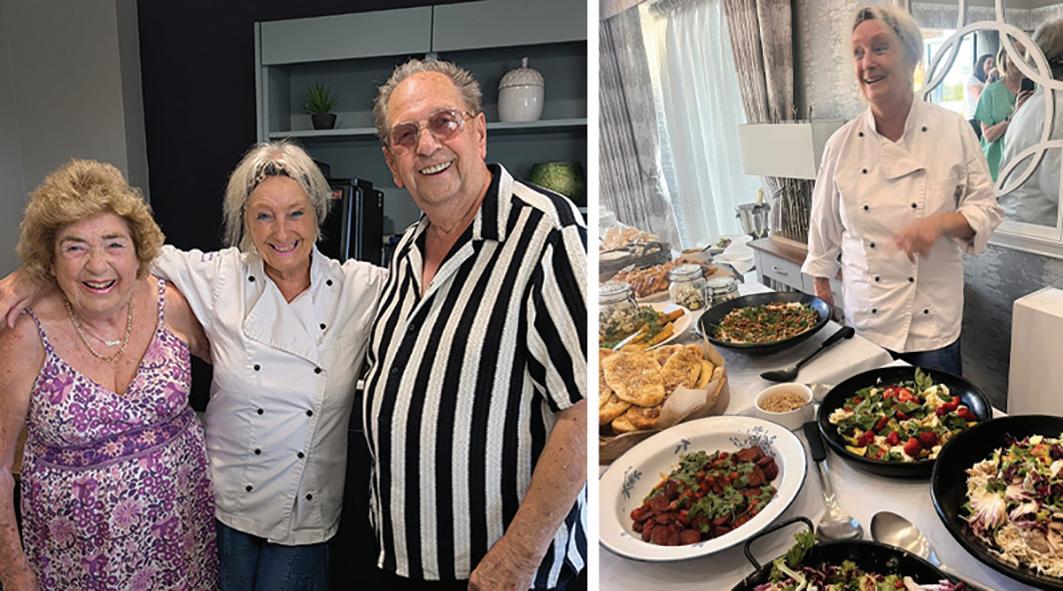
Ferndown & Parley Rotary, West Parley Parish Council, University Hospitals Dorset NHS Charity, Cherry Tree Nursery, Coastal Event Styling, Douch Family Funeral Directors, West Parley Memorial Hall and Tesco’s Ferndown in the Community were among those who attended. Gina Smith and Jenna May, General managers for Barchester Healthcare were in attendance and said “We were delighted to welcome Lesley Waters and so many members of our local community for what proved to be a truly memorable evening. Events like these highlight the importance of bringing people together, creating meaningful connections and celebrating the vibrant community we are proud to be part of. We are incredibly grateful to Lesley and Steve for delivering such an entertaining and inspiring event, and to everyone who joined us and helped make the evening such a success.”
Community Integrated Care Ambassador and Leeds United midfielder Ilia Gruev helped deliver an inspiring mentoring session for people supported by the charity at Leeds United’s training ground, inspiring them to follow their dreams.
The special event offered innovative mentoring to eight people who have learning disabilities from across the Leeds and Yorkshire region, who were identified as having great potential to achieve new ambitions. The session twinned innovative and accessible personal development techniques led by specialists in the charity with the life lessons of the Premier League star. It gave participants the opportunity to explore their hopes for the future, identify personal dreams, and create practical plans to achieve them.
During the session, participants identified a range of personal ambitions that reflected the diversity of their interests, passions and aspirations. These included securing a part-time job, taking a first holiday abroad to Ibiza, finding opportunities for public speaking, speaking at the Houses of Parliament, attending a Leeds United match with a family member and experiencing the excitement of a Formula 1 race. Working alongside Ilia and the charity’s specialists, participants explored practical steps they could take to help turn these ambitions into reality.

The visit also included a tour of Leeds United’s training ground, offering a rare opportunity to experience the environment where players prepare, train and pursue their own ambitions.
Ilia has been a passionate Ambassador for Community Integrated Care, creating dream experiences for many people supported by the charity through surprise visits, matchday opportunities and powerful personal moments of connection. To recognise this, Luke Parry, the Charity’s Senior Programme and Partnerships Design Manager, and participants, presented Ilia with Community Integrated Care’s Special Recognition commendation – which is given to supporters who make a profound impact on the charity and the people it supports.
Ilia’s commitment to using football as a force for good with the charity and Leeds United was recently
recognised with the Professional Footballers’ Association Community Champion Award.
The mentoring session reflects Community Integrated Care’s Best Lives Possible mission, supporting people to recognise their potential, build confidence and have the right support to achieve the outcomes they want in their life.
Ilia Gruev said: “It’s been amazing working with Community Integrated Care to help people identify their dreams and goals. No matter how big the dreams are, they will make a huge difference for each person. In my career I am always trying to get a bit better at what I do and who I am as a person and it’s important that this community has the same opportunity to do this.”
Jenny Robinson, Inspiration Session participant, said: “Community Integrated Care and Ilia inviting us all down here was an amazing opportunity, a once-in-a-lifetime thing, because people like us don’t always get a chance to do things like this. It’s helped me to identify a big dream which is to speak at the Houses of Parliament about how people with disabilities deserve the same opportunities in life as everyone else, and to put the first steps in place towards achieving this.”
John Hughes, Director of Partnerships and Communities at Community Integrated Care, said: “Ilia has an incredible ability to connect with people and make them feel valued, inspired and believed in. He was the perfect guest for our special mentoring format that helps people to discover their ambitions, creating actionable plans for the future, and overcome barriers and achieve their dreams.
“Everyone really connected with the format and with Ilia, who brought to life the importance of setting goals and working towards your aspirations. This session has the potential to empower lasting change in our participants lives, inspiring them to find a path to achieving their own personal best life possible.
“We are incredibly grateful to Ilia for his unwavering support of Community Integrated Care. It was an honour to present him with our Special Recognition commendation, thanking him for the incredible impact that he has made on many lives. We also thank Leeds United for their opening up such an inspiring venue.”
Recent changes to payment levels, eligibility and assessments for disabled people were brought in from April this year. Christine Grey, researcher and primary care writer at Croner, describes why a combination of the Universal Credit Act 2025, the Right to Try regulations and operational changes in the welfare system will affect many people with disabilities, and create two tiers of Universal Credit (UC) payments that leave thousands of disabled people losing out financially, despite protecting existing claimants and future claims for people with severe and lifelong conditions and disabilities.
Citizens Advice estimated that 730,000 disabled people will suffer financially under the reformed UC system, with “no clear rationale” for why those affected are entitled to less support, other than because their claim was made after April 2026.
The pending Timms Review of Personal Independence Payments (PIP) is engaging with disabled people, including people with learning disabilities and autistic people, carers and practitioners with the aim of making PIP support fairer. But against the backdrop of reforms that work towards cutting the Government’s overall welfare bill and incentivising work for those who are able to try, the changes will still negatively affect many thousands of disabled people before this review reports in the autumn.
Universal Credit reforms from 6 April 2026
UC claims are made up of different elements, such as the standard allowance, housing and child elements. Disabled people can apply for the Limited Capability for Work and Work-related Activity (LCWRA) element, now called the “health element” of UC.
The Department for Work and Pensions (DWP) is increasing the UC standard allowance for living costs above inflation until 2029/30 and believes that, together with decreasing the value of the health element of UC for some, many disabled people will be incentivised to work rather than be left to prove a limited capability for work in order to receive more financial support.
The additional LCWRA element of UC was changed by the Universal Credit Act 2025. This does not affect people who are currently receiving LCWRA and have been doing so since before 6 April 2026. But the change means the “health element” of UC is now split into a higher and a lower rate of payment, replacing just one LCWRA rate, and this depends on:
• when a person declared their health condition or disability
• whether they have a severe, lifelong health condition or disability
• if they are nearing the end of life.
The higher health element will only apply if any of the following are true.
• A health condition or a disability was notified before 6 April 2026, regardless of the date of the LCWRA decision.
• The person was already getting LCWRA before 6 April 2026.
• They had the “support group” component of income-related ESA before 6 April 2026 and continue to get it until they claim UC. However, for most people who claim after 6 April 2026, the health element payments will be cut from £423.26 to £217.26 a month and this will be frozen until 2029.
SAFEGUARDS FOR SEVERE AND LIFELONG CONDITIONS AND DISABILITIES CLAIMANTS
As a safeguard for people with severe and lifelong conditions and disabilities, who are assessed as part of a Work Capability Assessment (WCA), their eligibility criteria won’t change regardless of when they start a claim. And it’s possible a person may not need to be assessed again if the health condition or disability means they cannot work, the condition will last their whole life, it won’t get better and they are officially diagnosed by a health professional. New claimants who meet these criteria will be protected from the cuts and freeze in payments. Importantly, a WCA won’t be needed at all if a person is nearing the end of life.
Disability Minister Sir Stephen Timms reassured MPs when debating the Bill that eligibility criteria will take account of Parkinson’s and MS, giving firm assurances to those who are concerned about how the severe conditions criteria will work for those on fluctuating conditions. Who will lose out?
The uplift to the UC standard allowance will not be enough to offset

other cuts for disabled people, and if the DWP moves towards scrapping WCA in favour of using PIP assessment for disability, it may become harder to qualify for any disability benefit at all.
The group of people that fails to meet the more restrictive “severe conditions” criteria will lose out the most, including people who became disabled after 6 April 2026, those whose condition gets worse over time or who lose the health element of UC then reapply, and disabled children who become adults. The reforms are therefore seen by Citizens Advice as being “designed around savings targets rather than meaningful reform intended to better support disabled people.”
Operational changes to PIP, announced by the DWP in December 2025, also took effect from April, alongside the UC Act reforms. The purpose of these changes was not only to reduce the backlog of people waiting to have their WCA but also to reduce welfare spending by £1.9 billion by the end of 2030/31. The changes comprise:
• establishing minimum review periods for PIP claims to reduce the frequency of reassessments for many claimants
• a minimum review period of three years for new PIP claims, extending to five years at their next review if entitlement remains unchanged
• an increase in face-to-face PIP assessments from 6% to 30% of all assessments.
These new rules should reduce the uncertainty and worry that frequent reviews can cause disabled people and free up capacity for health professionals to tackle an existing assessment backlog.
But an increase in face-to-face PIP assessments, which were dramatically reduced on account of the Covid-19 pandemic, may result in a reduction in the number of successful claims. Comparing the success rate for face-to-face PIP assessments in 2024, at 44%, with telephone assessments, at 57%, it is clear that this part of the policy may align more with the Government’s plan to cut welfare spending.
Disability Rights UK expressed concern about more of these assessments, highlighting the potential emotional and physical challenges for sick and disabled people. But the DWP confirmed that it will continue to ensure there are always adjustments for people who are unable to get to appointments as a result of their disability or health condition, so home visits or other alternatives can be arranged where appropriate.
NEW “RIGHT TO TRY” WORK REGULATIONS
The DWP acknowledged that cutting benefits alone will not incentivise more disabled people to try out work. So the Universal Credit, Personal Independence Payment and Employment and Support Allowance (Amendment) Regulations 2026 brought in the “Right to Try" rules from 30 April 2026.
To reassure claimants who often worry that working could trigger a WCA assessment or PIP award review, which in turn may determine the amount of benefits they get, the change allows claimants to test their ability to work in a "safe and predictable” way for six months. The regulations apply to people who receive:
• PIP
• UC, who have been assessed as having Limited Capability for Work (LCW) or LCWRA
•New Style Employment and Support Allowance (New Style ESA) who
Article supplied by Croner (https://app.croneri.co.uk)
have been placed in the Work Related Activity Group or the Support Group.
These rules don’t, however, stop reassessments for other reasons. It is made clear that starting work or volunteering does not prevent a reassessment from taking place; any reassessment already planned will still go ahead; a reassessment may also be arranged as part of the normal review process; and a reassessment may still take place if there is a change in condition, clear improvement in functional ability, or suspected fraud.
Backed by a £3.5 billion in employment support by the end of the decade, this change hopes to enable disabled claimants to try work “without fear” of an immediate benefit reassessment if a job does not work out. However, as claimants can still be called for reassessment for other reasons while working, and evidence about the sort of work they are doing can still be used to support a reassessment, these regulations may not offer as much reassurance for disabled people as the new law intends.
When the Universal Credit Bill was initially debated, it included new restrictions to the eligibility criteria for the non-means tested PIP. But these proposals were taken out of the Bill, to be dealt with by in a review of PIP assessments by Social Security and Disability Minister Sir Stephen Timms, and his steering group of mostly of disabled people. This was launched on 30 October 2025 and is anticipated to report in the Autumn.
Claimed by 3.9 million people, PIP supports the independence, dignity, choices and ability to manage the extra costs of a serious health condition or disability, including learning disability, autism and Down’s Syndrome. The remit of the review is to ensure the system supports this group to “achieve better health, higher living standards and greater independence”.
The DWP said it is committed to protecting PIP as non-means-tested payment and is not “framing" the Review as a way to make cuts. However, Disabled People’s Organisations (DPOs) have said this must be seen in the context of a wider agenda that is about cuts and plans to remove the WCA and, instead, use PIP assessments as the gateway to determine whether a person can get extra disability support, such as the health element of UC.
The Pathways to Work Green Paper suggested that a claimant’s eligibility for the health element may in future be determined by whether or not they receive the daily living component of PIP. The majority of claimants of this component are in the category of “learning difficulties”.
TIMMS REVIEW CALL FOR EVIDENCE
The Timms Review announced a programme of evidence-gathering and public engagement, with a call for evidence running from 30 April to 28 May 2026 to gather evidence and views from people with experience. Although the timeframe is short, it’s an opportunity to show how and why PIP needs to be fairer and what needs to change. Questions cover the role and purpose of PIP; eligibility, fairness and equity in PIP awards; experiences of the claims process; and impacts of changing contexts on PIP.
National disability charity Sense Director of Influencing Harriet Edwards said: "Sense research found over half of disabled PIP claimants with complex needs felt humiliated during their assessment; clearly this process needs to urgently change. It's vital that the Timms Review continues to work with disabled people to make the application process for PIP fairer and less distressing.”
In Scotland, people can respond to this call for evidence despite PIP having been replaced by the the Adult Disability Payment (ADP) in this part of the UK.
Further information
• Legislation: Universal Credit, Personal Independence Payment and Employment and Support Allowance (Amendment) Regulations 2026 and UC Act 2025 Explanatory Memorandum
• Press Release: Reforms to Welfare System set to Save £1.9 Billion by the End of 2031/31, Department for Work and Pensions
• The Timms Review, Department for Work and Pensions
Source URL: https://app.croneri.co.uk/feature-articles/how-aprils-welfare-reforms-will-affect-disabled-people
A woman who helped break new ground for women in banking during the Second World War has celebrated her 100th birthday in style.
Joyce Gordon, who lives at Wakefield House Care Home in Cullen, was among the first generation of young women to take up professional roles traditionally held by men.
Joyce marked her milestone birthday with two days of celebrations, taking to the dancefloor as the Portsoy 75 Club Choir entertained guests at Wakefield House. Among those joining the celebrations were the Lord-Lieutenant of Banffshire, Andrew Simpson, and local councillor Donald Gatt.
The festivities continued the following day with afternoon tea at the Seafield Arms Hotel in Cullen, alongside close family and friends.
Joyce's love of dancing stretches back to her teenage years in Edinburgh, when Saturday nights were spent on the dancefloor. “Performing at school concerts with some of her close friends, mum soon developed a flair for dancing and during her teenage years spent Saturday nights at the Plazza, on the dancefloor for every dance,” recalls her son Ronald.
Born in the capital in 1926, Joyce came of age during the Second World War. With many men away serving in the armed forces, women began entering professions
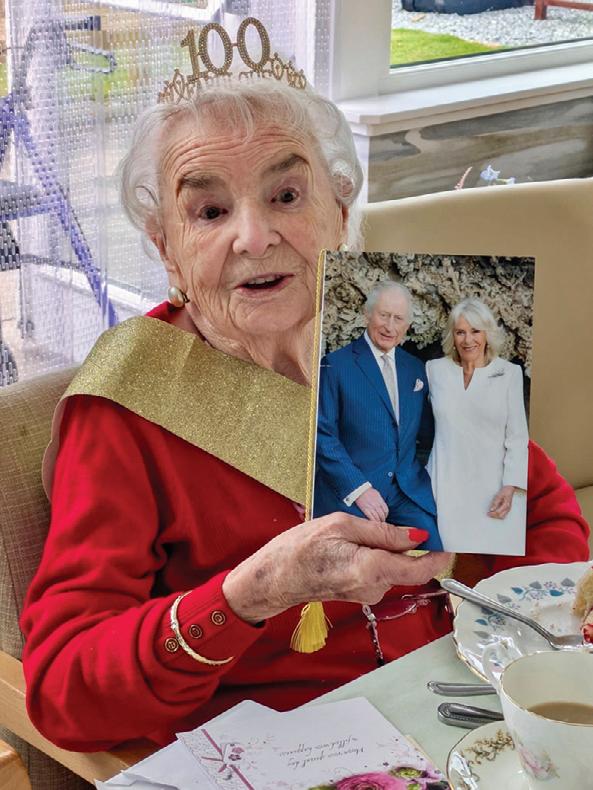
that had traditionally been male dominated. Joyce joined a leading clearing bank in Edinburgh as a trainee banker and went on to pass the Banking Institute's associate examinations, paving the way for what could have been a management career. However, a trip to Moray to help with the potato harvest changed the course of her life when she met her future husband, Willis. The couple married in 1952 and moved between Edinburgh and Moray for several years, eventually taking over the family grocery business in Fochabers in 1964 until retiring in 1986.
In retirement, Joyce became a champion indoor bowler, winning numerous club and open competitions and becoming the first woman to win the Keith Open Pairs. She remained active in the community throughout her retirement, serving as treasurer for local organisations and travelling widely, including a transatlantic cruise at the age of 96.
Anne Smith, Wellbeing Coordinator at Wakefield House, said: "What an emotional afternoon we had celebrating Joyce's 100th birthday. She showed everyone up as she danced along with her sons by her side. There wasn't a dry eye in the house. Joyce is an amazing lady, and we are blessed to have her with us at Wakefield House."
Joyce has two sons, Alan and Ronald, two grandchildren, Graeme and Emma, and two great-grandchildren, Fraser and Alistair.
A new AI triage tool in the NHS App that helps direct patients to the most appropriate NHS service, as well as widespread access to AI notetaking tools to reduce admin for NHS staff, are among the improvements being prioritised across England.
The NHS is currently setting out how £10 billion of funding over the next three years, allocated by the government last year, will be used for a major overhaul of the health service’s technology, digital and data systems.
The improvements are expected to deliver around half of the commitments in the government’s 10 Year Health Plan and generate £41 billion in total benefits over the next decade.
The NHS App’s new AI triage tool is being rolled out following a successful trial. It is due to reach more than 200,000 patients within the next 12 months and be available to all NHS App users by April 2028.

The tool makes sure patients are directed to the right care, first time – whether that’s a GP appointment, pharmacy, A&E, community service or self-care advice – by adapting questions depending on responses to get a more detailed view of a patient’s condition.
It then either directs them to the most appropriate service or provides clinicians with the information they need to prioritise care.
Patients will continue to have the option of using traditional methods to contact their GP practice alongside the new AI triage tool in the NHS App.
NHS England will also support a national rollout of AI tools which record conversations between patients and NHS staff to generate real-time transcriptions and clinical summaries.
The rollout will start with hospital appointments not requiring an overnight stay where their use has been proven to significantly reduce the amount of time clinicians spent on admin.
A major NHS study published last year found that AI notetaking tools, known as ambient voice technology, free up clinicians to spend nearly a quarter more of their time with patients.
The study, led by Great Ormond Street Hospital, found that scaling the technology nationally to over 11,000 A&E clinicians in England could create space for over 9,000 extra A&E consultations each day.
Tens of thousands of NHS staff across south-west London will become the latest to benefit from the tech which is being rolled out across four NHS trusts – St George’s, Epsom and St Helier, Croydon, and Kingston and Richmond.
A pilot in the emergency department at St George’s Hospital in Tooting found that it saved clinicians an
average of 47 minutes per shift – allowing each member of staff to see an additional patient every shift.
Alder Hey Children’s NHS Foundation Trust and Manchester University NHS Foundation Trust are also expanding their AI notetaking programmes to more than 3,000 clinicians following successful pilots.
Other plans that are part of the £10 billion technology, digital and data investment include NHS App users being able join online appointments with expert clinicians across England using the NHS’s new virtual hospital service – NHS Online.
Patients will also be able to use the NHS App to request follow-up appointments after treatment, and NHS-approved digital tools will help them manage exercise and rehabilitation for common lung and heart conditions – giving patients more control of their healthcare.
The NHS will also introduce a Single Patient Record to provide specialists across the NHS with a full picture of a patient’s medical history, roll out new digital tools to help staff manage urgent and planned patient care more effectively, and enhance cyber security to protect patient data and NHS systems.
More than 500,000 NHS staff are also being given access to Microsoft Copilot after a trial led to workers cutting the amount of time they spent on admin by an average of two days every month.
The AI personal assistant helps staff to draft documents and analyse data more efficiently, freeing up more time for patient care.
Sir Jim Mackey, Chief Executive of NHS England, said: “The major overhaul of tech we’re making over the next few years will transform services.
“The new AI tool in the NHS App will help get patients to the best service for their needs first time –whether that’s a GP appointment, trip to a pharmacy or advice on caring for themselves at home – so that clinicians can make sure those most in need of a GP appointment can get one sooner.
“We’re also seeing huge benefits from the introduction of AI notetaking tools, with clinicians finding they’re able to spend up to a quarter more of their time with patients, so we’re rolling out the tools as quickly as possible across the NHS.
“We’re prioritising the improvements that will make the biggest difference and supporting local leaders to adopt them to drive change in their services – helping to cut waiting lists and improve care for millions of patients so that the NHS is fit for the future.”

Patients nearing end of life are being failed by poor, unclear communication that compromises care and compounds grief, according to a new report by England’s Health Ombudsman.
The Parliamentary and Health Service Ombudsman (PHSO) is urging the Government to prioritise improvements to end of life care as part of its NHS reforms.
The report, Conversations that matter most: improving communication in end of life care, highlights widespread failings in the way professionals working in NHS end of life care communicate with patients, families and carers, and between teams and care settings.
In one case, a Trust failed to clearly and promptly inform a man that his cancer had spread and was terminal. He found out by accident from his GP.

The Ombudsman’s newly published five-year strategy has committed to improving communication in public services as a way of rebuilding trust between the citizen and state. Too often, patients and families are not listened to or communicated with clearly. When the patient voice is not heard, opportunities to resolve issues early are lost, avoidable harm can be repeated, and complaints become harder to resolve and learn from.
Ombudsman Paula Sussex CBE said, “For more than a decade, we have highlighted problems with end of life communication. But disturbingly, too many people are still being let down. At their most vulnerable moments, patients and families should be able to rely on care that is clinically effective, compassionate and honest.
“However, our report shows poor communication is causing avoidable distress for those receiving care, their loved ones and the professionals caring for them. Listening to its patients is one of the most powerful tools the NHS has to prevent harm. Patient voice must be at the heart of improvement.
“There needs to be better information-sharing, record-keeping, and training that gives staff the confidence and support to have timely, honest conversations about prognosis and people’s wishes. As the Government pushes forward with its plans to develop a Single Patient Record across the NHS, we urge them to prioritise end of life care as an area for roll out.
“Compassionate communication should be a fundamental part of quality care and it needs to be led by the profession themselves. Patients and families deserve care that is clear, coordinated and empathetic, while professionals working deserve systems that support them to deliver it.”
Communication failures remain the most recurring theme in Ombudsman investigations, and they have
repeatedly raised concerns about communication in end of life care, including in its 2015 report, Dying without dignity, and its 2024 report on DNACPR (Do Not Attempt Cardiopulmonary Resuscitation) decisions.
Casework analysed for this new report shows patients, and their families are often left ill-informed about their prognosis, with poor discussions about treatment, care preferences, where they wish to die and who they want involved in decisions about their care.
Families are often not told clearly or early enough that their loved one is deteriorating or approaching the end of life, further adding to their grief after their relative has died.
End of life care can be complex and involve multiple teams and settings such as wards, hospices and care homes. Poor communication between these teams affects continuity of care, delays decision-making and leaves patients and families constantly having to chase for updates.
The Ombudsman spoke to clinicians to understand more about the barriers to good communication. Many described the emotional burden of difficult end of life conversations and the challenges of communicating effectively when faced with time pressures, limited support and access to the right information.
Dr Sarah Holmes, Chief Medical Officer at Marie Curie and consultant in palliative medicine, said: “Deeply troubling but not surprising, this report shows why too many families are left haunted by a loved one’s death. It highlights fragmented care, overstretched staff, and missed chances to recognise — or tell someone — they are dying.
“That is why Marie Curie is partnering with the NHS to embed teams in emergency departments and GP practices — identifying people earlier, supporting staff, and helping families get care plans and conversations sooner.
“These services must be rolled out nationwide. The UK Government’s Palliative and End of Life Care Modern Service Framework could help fix a broken system — but only with a transformation fund to drive joined-up care.
“Change is long overdue. Families saying goodbye do not get a second chance — and successive governments have had too many.”
The Local Government and Social Care Ombudsman will shortly publish a report examining end of life care in the social care sector, highlighting the importance of person-centred care, joined up services and clear, compassionate communication.
Waterhaven Place, a luxury care home in Chichester, recently arranged a special visit to Goodwood Motor Circuit for resident Keith (83) and a group of fellow motoring enthusiasts. The trip helped him reconnect with his passion for cars by taking part in the Supercar Track Day organised by My University Hospitals Sussex.
As well as admiring the remarkable collection of supercars on display, Keith was invited to ride shotgun in a gorgeous Porsche 911 as it raced at 157 mph around the famous circuit. For Keith, who has owned and restored several Bentleys over the years, the experience brought back the thrill, speed and excitement of high-speed cars. Indeed, Keith’s own claim to motoring fame is having once restored a Bentley owned by Kind Edward VIII, which is now proudly on display in a museum in Germany. After hearing Keith’s story and discovering just how many other car enthusiasts were living at Waterhaven Place, the team knew they had to arrange something special.

Cheryl Tyson, Customer Relationship Manager at Waterhaven Place, who organised the trip, comments:
“We believe every resident’s passion and life stories should be celebrated, and so when we discovered we had so many genuine motorheads in our midst, we knew we had to arrange a visit to Goodwood Motor Circuit. Amongst the group, Keith really stood out because of his own remarkable connection to cars. Watching him zip around the track in a Porsche 911 gave us butterflies even just standing on the sidelines, but it was truly heartening to see such a huge smile on his face as he climbed out of the car.”
The rest of the group also had a chance to join in the fun by taking part in the parade of supercars on the famous Goodwood track. In the home’s dedicated minibus, they cruised around the circuit at a much more modest 30 mph – allowing the group to soak up the atmosphere and marvel at the incredible machinery on display.
The residents were treated to a remarkable line-up of supercars, from rare Ferraris and McLarens to high-performance Porsches and Lamborghinis. Among the highlights were a striking yellow Ferrari SF90 XX Stradale, a bright blue McLaren 720S, and a grey Porsche 718 Cayman GT4 RS with its trademark towering rear wing.
For the team at Waterhaven Place, the outing reflected the home’s commitment to person-centred care by celebrating each resident’s unique passions and interests. The team calls this approach “positive risk” – carefully planning memorable experiences that allow residents to get out of their comfort zone and experience a genuine sense of adventure and growth.
Cheryl Tyson explains this approach:
“For us, these kinds of activities are all about creating positive risk in the right way. While every precaution and safety assessment is taken beforehand, we believe that residents choosing to engage in thrilling activities like this can do wonders for their confidence and sense of joy. Keith’s bravery goes to show that, whatever age you are, it’s never too late to step outside your comfort zone and have a genuine adventure.”
The home regularly organises bespoke outings and experiences that reflect residents’ lifelong interests. Earlier this year, the team arranged a special birthday surprise for resident Pam at Hunters Lodge Riding Centre, where she enjoyed a gentle horse-grooming session after spending much of her life caring for horses.
The home also recently hosted a Royal Ascot celebration, with residents and relatives donning decorative hats, watching the Royal Procession, and enjoying a traditional cream tea before cheering on the Gold Cup together.
Chefs from across Aurem Care have completed specialist training designed to further enhance the quality, safety and presentation of meals for residents with swallowing difficulties.
The training focused on the International Dysphagia Diet Standardisation Initiative (IDDSI) framework, which provides globally recognised guidance on the preparation and testing of texture-modified foods and thickened liquids for people living with dysphagia.
Delivered through Aurem Care's partnership with Oak House Kitchen (OHK) and foodservice supplier CREED, the refresher programme equipped chefs with the latest techniques to safely prepare meals that are both nutritious and appealing while meeting the specific dietary needs of residents.
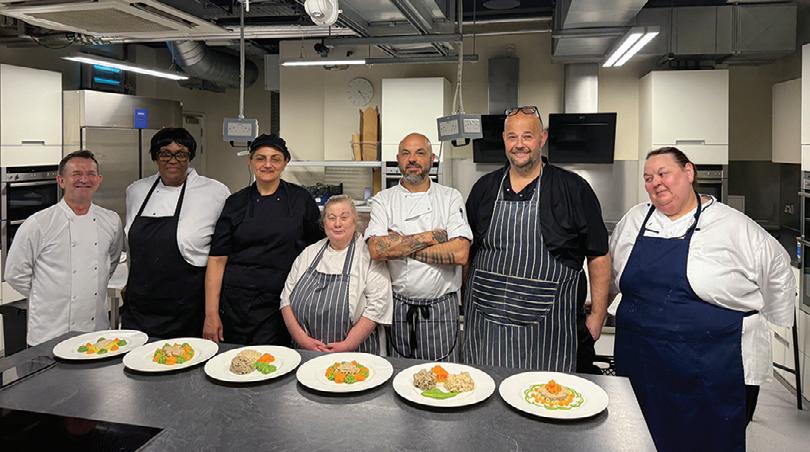
OHK has developed the innovative Molila system, a comprehensive set of practices and techniques that supports chefs in creating texture-modified meals safely and consistently. The system includes detailed recipes that address each individual component of a dish, ensuring foods are prepared using the correct techniques to achieve the appropriate consistency while adhering to the IDDSI framework.
During the training, chefs demonstrated their skills by creating a range of dishes adapted across multiple IDDSI levels. One standout example was mushroom pasta with chicken in a white wine sauce, served with peas and butternut squash, carefully prepared across Levels 6, 5 and 4.
The quality of the meals produced was praised by trainers, with participants showing enthusiasm, commitment and a willingness to further develop their expertise.
By using the Molila system and IDDSI framework, Aurem Care's chefs are able to create meals that not only comply with the required safety standards but also look appetising and deliver a positive dining experience for residents.
Chelsea Jeffrey, head of food experience at Aurem Care, said: "With the continued support of specialist teams like OHK, our chefs have gained the knowledge and guidance to be able to confidently produce fantastic meal options for residents on modified meals, allowing them to experience mealtimes like any other resident.
"I am proud to be part of the ever-growing improvement of textured modified meals and how we deliver them to our residents."
MPs have urged the government to cut ties with Palantir and the Federated Data Platform (FDP), and to begin looking for an alternative.
A letter from the Health and Social Care Committee to Health Innovation Minister, Preet Kaur Gill, cites public concern about data security, doubts about the FDP’s efficacy, and the availability of alternative solutions.
After a recent deep-dive evidence session, the cross-party Committee recommends dropping the product when a break clause in the contract comes up in February 2027.
The letter says “serious mistrust” amongst the general public towards Palantir has the potential to deter patients from sharing their medical data with the NHS. This could detract from the health service being able to realise the benefits of the shift to digital more broadly. The NHS’s website had published claims that there was proof of performance improvements since the FDP was introduced, such as waiting lists being cut and an uptick in procedures carried out. But NHS England has since clarified that it cannot say conclusively that the FDP was the cause of those changes, as other variables had not been controlled for. “We cannot therefore

draw conclusions about cause and effect as other variables have not been controlled for,” it now says.
The Government accepts that some trusts have capabilities that exceeds what the FDP offers, indicating that alternative products could be rolled out across the NHS.
Further requests include asking what advice the Department of Health and Social Care has had about the feasibility of getting a new contractor in place by March 2027, and for it to provide the Committee with information about the assessment it will conduct before making its decision on whether to stick with Palantir and the FDP.
Health and Social Care Committee Chair Layla Moran MP said: “Little by little, the government’s arguments for sticking with the FDP has unravelled. So in the interest of public confidence in the NHS and the security of their medical information, we believe it is time to crack on with preparations to find an alternative in time for spring 2027. The FDP may have had some advantages, but there are also downsides and it is evidently not the only show in town.”
End of life Marie Curie has today announced that it raised over £2.3 million as the 2026 TCS London Marathon’s Official Charity of the Year – surpassing its 2025 fundraising total of £450,000.
The grand total exceeds the charity’s 2026 fundraising goal to raise £2 million – driven by the 744 people who ran for Marie Curie, and the generosity of supporters.
The £2.3 million raised is the equivalent of 100,000 hours of nursing care or enough to fund the Support Line for over six years.
Matthew Reed, Chief Executive at Marie Curie, said: “It was a huge honour for Marie Curie to be Charity of the Year for the 2026 TCS London Marathon and we’re so grateful to all our runners and supporters for helping us raise this remarkable sum of money.
“Every three minutes, someone dies without proper support, that’s nearly 200,000 people each year. The funds raised will make a significant difference. It will help us ensure that more people at end of life and those close to them, receive the vital care and support they need at the right time, wherever they are. This will help bring us closer to achieving our mission of better end of life for all.”

Marie Curie delivered memorable moments as the official Charity of the Year in the lead up to the 2026
TCS London Marathon, to engage supporters, raise awareness and generate funds. Highlights include hosting a series of Grief Run Clubs in collaboration with running community Run Your Mind, and unveiling ‘The Daffodil Runner’ at Tower Bridge – an art piece featuring 557 steel daffodils to represent the number of people that die each day in the UK without the end of life care that they need.
On the event day, a dedicated group of Marie Curie nurses and healthcare assistants named the ‘To The End Team’ walked the 26.2mile course of the TCS London Marathon route. With every step, they helped to raise awareness of the incredible care Marie Curie provides to people at end of life and be a visual symbol of the charity’s pledge to be ‘With You to the End’. Over 300 volunteers showed up to support Team Marie Curie across six cheer stations along the London Marathon route. Ballroom dancer and TV personality AJ Pritchard, who ran the 2026 TCS London Marathon for Marie Curie, said: “I was so proud to support Marie Curie’s vital work by running in this year’s TCS London Marathon. Being part of Team Marie Curie was a physically challenging but an incredible experience. I hope the fundraising efforts of all the runners ensure more people receive the care and comfort they deserve at end of life.”
Incontinence is common in care and nursing homes, but the impact on dignity, comfort and skin health is deeply personal. Levabo’s allDRY® range of reusable incontinence underwear is a Class I Medical device, designed to support residents and caregivers alike by combining discreet protection with a comfortable, everyday feel that looks like normal underwear, not a clinical product. allDRY® underwear provides reliable protection for men and women experiencing bladder leakage.

Who are Levabo?
Levabo are a Danish medical device company specialising in innovative, user-friendly solutions for continence care and pressure ulcer prevention. Our focus is on practical products that support dignity, comfort and safety, while fitting seamlessly into the realities of care and nursing home practice.
Designed for dignity
allDRY® aims to remove the stigma often associated with incontinence products. The underwear is soft, discreet and modern in appearance, helping residents feel more like themselves and less like patients. The garments combine advanced absorbent technology with breathable materials to help keep skin dry and comfortable throughout the day.
For many people, that small shift can make a big difference to confidence, engagement in daily activities and overall wellbeing.
Key benefits for residents:
3 Soft, underwear-like fit for everyday comfort
3 Breathable, skin-friendly materials
3 Secure 6-layer absorbency for protection and confidence
3 Discreet profile under clothing to support dignity
3 Natural odour control
Practical support for busy care teams
Care and nursing home staff need products that are easy to use, reliable and support efficient routines. allDRY® has been developed
with frontline care in mind, from dressing and toileting to night-time protection and manual handling.
Key benefits for staff and services:
3 Clear sizing and fit to simplify product selection
3 Easy to apply and remove, helping with time-pressured care routines
3 Reliable protection to support continence care plans and reduce unplanned linen changes
3 A versatile solution suitable for residents with different levels of dependency
3 Machine washable at 60 degrees Celsius
3 Tumble dry safe
3 Comfort and dignity focused
Supporting skin health and overall care
Continence care is closely linked to skin integrity, comfort and quality of life.
Prolonged exposure to urine and faeces can lead to incontinence-associated dermatitis (IAD), causing redness, pain, skin breakdown and an increased risk of infection. For residents, this can mean significant discomfort, distress and reduced mobility; for caregivers, it adds to workload, complexity of care and emotional strain when preventable skin damage occurs.
When protection is effective, secure and comfortable, there is less risk of leakage, moisture-related skin damage and associated distress for residents and carers. allDRY® is designed to:
3 Help keep skin drier for longer, supporting good skin care practices
3 Complement pressure area care and repositioning routines
3 Integrate smoothly into existing continence and care pathways
A flexible range for your residents
The allDRY® range offers options to suit different needs and levels of support, making it easier for homes to match the right product to the right person. This helps reduce waste, improve comfort and ensure residents receive care that feels truly individual. allDRY® is available in a range of briefs and boxers and different levels of absorbency. In addition to the underwear, there is an optional inlay which can be added to increase the absorbency by 50ml. This inlay is machine washable with the underwear.
To find out more about allDRY® incontinence underwear, or any of the Levabo product portfolio that could support your residents and care teams, request samples or discuss how the range could support your home:
Email: bm@levabo.com
Web: www.levabo.com


Levabo’s product range is built around a clear objective: making pressure ulcer prevention easier, more effective, and achievable across all care settings. Designed with both caregivers and residents in mind, the range offers practical positioning solutions that integrate seamlessly into everyday care routines.
At the core of the range are Levabo’s specialist positioning cushions, developed to support safe and consistent repositioning. Whether used in bed, in chairs, or during transfer and repositioning, these products help reduce pressure on vulnerable areas of the body. Their versatility makes them suitable for a wide spectrum of care environments, from hospitals and nursing homes to community and home care.

A key differentiator across the range is Levabo’s unique “Fluffy Air” technology. This ensures that each product remains soft and adaptable, gently moulding to the individual’s body shape. The result is improved pressure distribution and a high level of comfort, both essential for individuals who may be immobile or spending long periods in one position.
Pet therapy has become a part of the everyday routine in many care homes in the UK. The positive impact animals can have on the well-being of residents is well documented. But bringing animals into a care setting brings its own problems. It can be expensive and disruptive, they can be temperamental, and even the cleanest pets raise hygiene issues.
V-Thera virtual pets allow you to offer all the fun and engagement of a real pet, but in a clean, predictable and flexible way that fits in perfectly with your care home routine.
VIRTUAL PETS, REAL BENEFITS
From the moment the resident first puts the headset on, they are engaged and delighted as the pet sits, lies down, rolls over and feeds on command. They can even throw a ball for the pet to fetch. The experience is involving, relaxing and stimulating, enhancing a positive mood while encouraging movement and communication.
The pets themselves are wonderfully realistic, not just in the way they look, but in how they act. There are four dogs to choose from, and there’s even a moggie for cat lovers. They respond to voice or hand commands, or to big buttons on the screen. It’s ideal for previous pet owners, but also people nervous of animals.
V-Thera uses the latest Japanese mixed reality technology, meaning the virtual pet appears in the realworld, viewed through the headset. Seeing the familiar surroundings of their care home lounge reduces any sense of anxiety or disorientation for residents. The app can also be used lying down, so it can be used in bedrooms.
The technology itself is completely intuitive, designed for people with no experience of gaming. The
CareZips® Classic are patented, easy dressing unisex adaptive pants designed for older and disabled people suffering with problems associated with continence, mobility, mental function and cognition. Suitable for persons living in care institutions, receiving care at home or living independently at home, CareZips® Classic enable people to dress themselves or with assistance from carers.
CareZips® Classic feature patented 3-zipper system, which opens the front of the pants from the waist to the knees for quicker access during toileting, continence pads changes and personal hygiene. The forward positioning of the two side zippers lessens pressure on sensitive hip areas, helping to eliminate discomfort. The third zipper facilitates simple full frontal opening for faster more dignified diaper changes, catheter adjustments, personal cleansing and hygiene routines.

cal functionality and versatility of the CareZips® Classic, all day comfort and easy garment care.
• People dependent on assisted dressing appreciate quick easy dressing process with less stress, embarrassment and greater dignity offered by CareZips® Classic.
• CareZips® Classic offer practical gains to the carers, helping them to provide better care, whilst reducing physical efforts and saving valuable time.
CareZips® Classic are unisex, available in 6 sizes and 3 practical colours (i.e. black, charcoal and navy). Tapered fit at the ankles gives a tidy appearance. Made from breathable moisture-wicking 4-way stretchy crease-free and easy-care durable fabric, CareZips® Classic are comfortable, practical and conveniently functional.
For more information, contact Win Health Medical Ltd - 01835 864866www.win-health.com
CareZips® Classic have many benefits for the older and disabled users and their carers:
• People dressing themselves enjoy the practi-
Importantly, the range has been developed in collaboration with healthcare professionals, ensuring that each product addresses real-world challenges faced by care teams. From ease of handling to durability and hygiene, every detail is designed to support efficient care delivery without adding complexity.
Levabo’s products are also protected by international patents and have received global recognition, with the company being named the world’s leading positioning cushion manufacturer for four consecutive years. This reflects both the quality of the range and its growing impact across the sector. For care providers, the message is clear: investing in the right positioning solutions is not only a clinical decision but a practical and economic one. With prevention proven to be significantly more cost-effective than treatment, Levabo’s range offers a smart, scalable way to improve outcomes while supporting high standards of care. Simple solutions. Big impact. For more information see page 25 or please email bm@levabo.com or visit www.levabo.com
headset reads hand movements, so there is no need for hand controls after set-up. Setting the app up is easy and quick for staff, with no training required. It comes preloaded onto the latest Quest 3s headset, so it’s a simple matter of staff switching the headset on, selecting the V-Thera icon, selecting the dog – which you can name – then transferring the headset to the resident. They are immediately immersed in playing with the dog or cat.
The makers recommend sessions of up to ten minutes at a time, it’s very easy to accommodate the technology into the life of the home, and for staff it can create an excellent opportunity to bond with residents. A sharing function even means the sessions can be cast to other screens so all residents can share the experience.
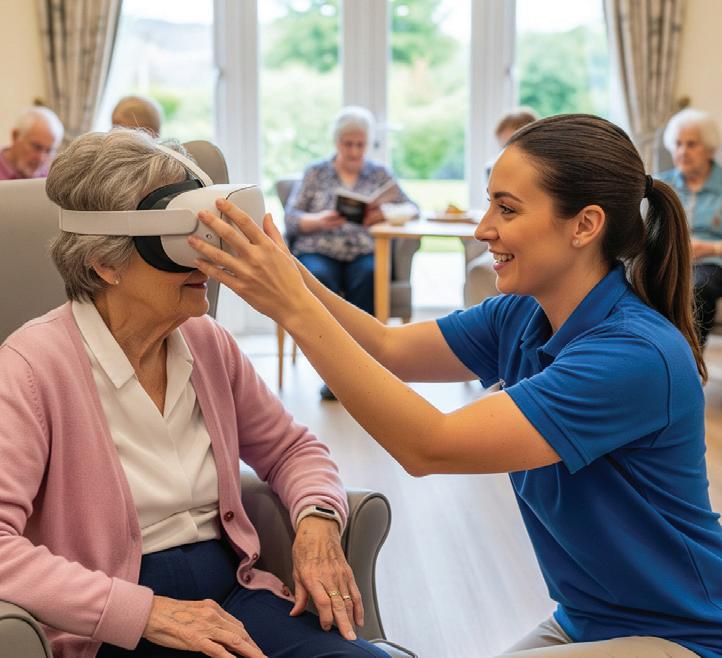
The potential of new technologies like V-Thera for engaging with residents in a positive way points to an exciting future. The combination of advanced Mixed Reality with intuitive and thoughtful design means care homes can adopt the latest technology without disrupting the care routines already in place.
V-Thera was created in Japan by Remedy & Co and is available now in the UK through Care Activity Ltd. Managing Director Alison Lang says, “The minute we saw V-Thera, it was clear to us that this was an exciting innovation, a new way to offer something genuinely engaging to care home residents. The pets are fun, realistic and always ready to play. It is technology that brings care to life.”
Contact alison@careactivityxr.com www.careactivityxr.com


See the advert on page 3 for further information on Win Health’s product range.

By Chelsea Jeffrey, Head of Food Experience, Aurem Care (www,aurem-care.com)
When people think about food in care homes, nutrition is often the first thing that comes to mind. Of course, ensuring residents receive balanced, nutritious meals is incredibly important. However, food and dining in a care home environment are about so much more than calories, vitamins and dietary requirements.
I have always believed that mealtimes are pivotal to a resident's mood and to the overall atmosphere within a care home. Food is about far more than nutrition; it is comfort, choice, dignity and joy. It can spark memories, create opportunities for social interaction and provide moments of genuine pleasure throughout the day.
For many residents, mealtimes become key milestones in their daily routine. A well-prepared meal served in a welcoming environment can encourage conversation, reduce feelings of isolation and help create a sense of community. Equally, a poor dining experience can negatively affect appetite, wellbeing and overall quality of life.
This is why listening is such an important part of our approach. To get food right, chefs and care teams must take the time to speak to residents and their relatives, understand what they want from their meals and recognise the diversity that exists within every home. Food preferences are deeply personal and are often shaped by culture, family traditions, faith and life experiences.
A resident who has spent decades enjoying traditional home-cooked British meals may have very different expectations from someone who grew up with Mediterranean, Caribbean or South Asian cuisine. Neither is right nor wrong. Our role is to celebrate that diversity and ensure residents continue to enjoy foods that are familiar, meaningful and enjoyable to them.
Choice is equally important. Moving into a care home should never mean losing control over everyday
decisions. Offering meaningful choices at mealtimes helps preserve independence and dignity. Something as simple as choosing between two main courses, selecting favourite desserts or having input into seasonal menus can make a significant difference to how residents feel.
Another key consideration is ensuring that dietary requirements never become a barrier to enjoying food. Many residents require fortified diets to support weight maintenance and nutritional intake. Others may need meals adapted due to allergies, medical conditions or personal preferences. These adjustments must be made without compromising taste, presentation or enjoyment.
Texture-modified diets are a particularly important area. Residents living with dementia, arthritis, Parkinson's disease or swallowing difficulties often require food that is easier and safer to eat. Historically, modified-texture meals have sometimes carried an unfair reputation for being bland or unappealing. Fortunately, standards and understanding have improved significantly.
With the right skills and creativity, chefs can produce texture-modified meals that are colourful, flavourful and visually appealing. Residents should still be able to recognise the food on their plate and experience the same enjoyment as everyone else. Nobody should feel excluded from the dining experience because their food has been adapted to meet their needs.
For people living with dementia, the dining environment itself can also play an important role. Clear table settings, familiar foods, appropriate portion sizes and a calm atmosphere can all help encourage eating and reduce anxiety. Small details often make the biggest difference.
Ultimately, food is one of the most powerful ways we can demonstrate care. It brings people together, supports physical health, promotes emotional wellbeing and helps residents maintain their identity and sense of self.
As the care sector continues to evolve, I believe we should challenge ourselves to think beyond nutrition alone. Good food is essential, but great dining experiences can transform lives. When we focus on comfort, choice, dignity and joy alongside nutritional excellence, we create environments where residents can truly thrive.
Because in care homes, food is never just food. It is an experience, a connection and often one of the highlights of the day.
A dedicated Chef Development Day, hosted at Keymer Care Home in May, brought the culinary teams across Boutique Care Homes together for a day of learning, live cooking and shared ambition around the belief that great food is at the heart of great care.
Boutique Care Homes gathered its chefs from across the group in May for a Chef Development Day focused on elevating the food, dining and hospitality experience for residents. Held at Keymer Care Home, the day centred on a conviction the group holds deeply: that dining is not simply one part of what a care home does. It is one of the most visible, daily expressions of who Boutique Care Homes is as a care provider.
The event featured a guest session from Andrew Turvil, described by The Independent as one of the UK's "arbiters of taste". Turvil is the former editor of The Good Food Guide, the AA Restaurant Guide and the Which? Pub Guide, and has spent his career as a freelance restaurant critic, writer and editor. His first book, Blood, Sweat & Asparagus Spears, was published in September 2025. Drawing on a career at the top of the UK food industry, he shared insights and experiences with the gathered chefs, bringing a level of external expertise rarely seen in the care sector.
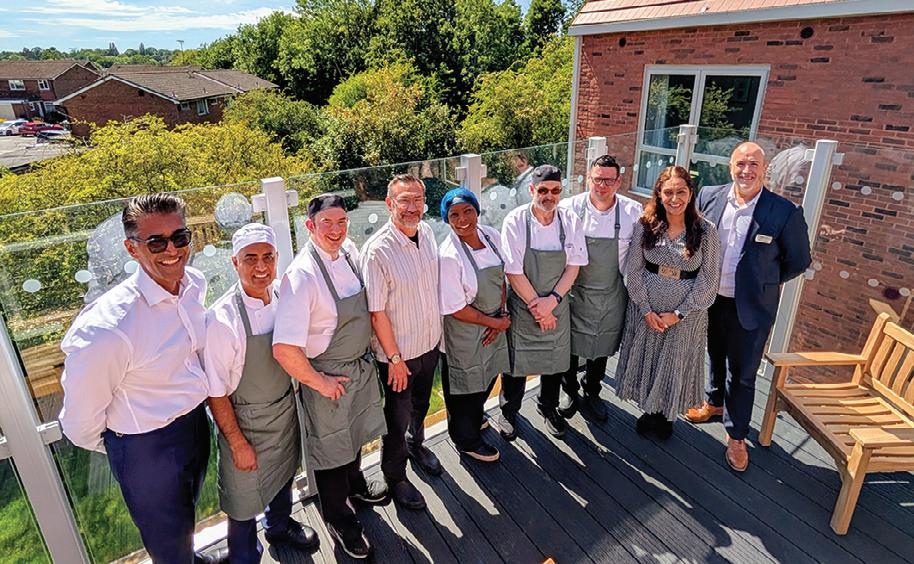
"It was wonderful to meet such dedicated chefs and to see how much passion, care and attention to detail is being put into the food by the team at Boutique Care Homes," Turvil said.
Beyond the guest session, the day brought together culinary teams for a full programme of presentations, hands-on sessions and open discussion. A live culinary showcase formed the centrepiece of the afternoon, with chefs from all five homes taking to the pass to present dishes from the new summer menus. The Burlington served a spinach, roasted pepper and feta roulade with fresh rocket, followed by

sweet potato and roasted beetroot with chickpea puree. Martello Manor presented a chickpea and halloumi korma with watermelon rice. Chartwell House unveiled a mini beef wellington with red pepper jam and stuffed jacket potatoes with caramelised onion chutney. Keymer Hall presented a chicken ballotine stuffed with sage and chestnut mousse, with tarragon velouté, asparagus and fondant potato, rounded off with their take on a classic Tunnock's tea cake with raspberry compote. Brampton Manor showcased the group's commitment to dining without compromise for every resident, presenting a salmon en croûte with hollandaise sauce prepared to a texture modified standard, proving that elegance and clinical need are never in conflict at Boutique Care Homes.
The programme also included dedicated sessions on bedroom dining, exploring how the same warmth, quality and care given to communal dining is carried through to every tray delivered to a resident in their room.
The group's standard is unambiguous: no resident receives anything less than the full Boutique Care Homes experience, regardless of where or how they are dining.
Priya Bhayani, Director at Boutique Care Homes, described the day as a tremendous success. "Bringing our team together around a shared vision of continually elevating our food, dining and hospitality offering is exactly what days like this are for. It was a real privilege to welcome Andrew Turvil, who shared invaluable insights from throughout his distinguished career."
The live culinary showcase gave Bhayani particular cause for pride. "Every dish was beautifully presented and absolutely delicious. A huge well done to the entire team for your creativity, passion and hard work. Our residents are truly in for a treat."
As care providers face mounting pressure from food inflation, workforce shortages and increasing regulatory demands, award-winning food procurement specialist allmanhall have strengthened their care sector expertise with the appointment of experienced industry professional Jamie Clews as Development Manager.
Jamie joins allmanhall with extensive experience helping care organisations reduce waste, improve operational efficiency, and maximise the value of catering budgets, while maintaining the high standards residents deserve.
His appointment follows allmanhall's recognition as Best in Catering and Nutrition at the Care Sector Supplier Awards 2025 and Best in Nutrition, Food and Dining at the 2026 Care Home Awards, reinforcing the company's commitment to supporting care providers through an increasingly challenging operating environment.
Jamie has built a reputation for helping care providers take a more strategic approach to catering operations, identifying opportunities to reduce waste, improve processes and make budgets work harder. His values closely align with allmanhall's commitment to delivering practical, sustainable improvements that support both financial performance and resident wellbeing.
As experts in food procurement and foodservice consultancy, allmanhall combine procurement expertise, market insight and award-winning client support to help care organisations gain greater control and visibility over their catering spend, reduce waste, and improve operational performance.
Commenting on his new role, Jamie Clews said:
"Care providers need more than lower prices. They need a partner who understands their challenges and helps them make informed decisions with confidence. I'm excited to be joining allmanhall and helping clients unlock even greater value from their catering operations."
Jo Hall, co-owner and Managing Director of allmanhall said:
"Jamie brings a wealth of experience and a deep understanding of the care sector. His appointment reflects our ongoing commitment to investing in the expertise and support that help our clients succeed. His knowledge further strengthens our ability to help care providers balance financial control with exceptional resident care."
For more information about allmanhall's support for care providers, visit www.allmanhall.co.uk/care-homes.
Nearly half of patient-facing NHS staff (44%) say patients bring them inaccurate or misleading nutrition or supplement information at least once a week, according to new analysis from World Cancer Research Fund.
The charity’s research also reveals a growing mismatch between confidence and understanding among the public, with people who rely on social media for news more likely to feel confident about finding trustworthy nutrition information online, while also being more likely overall to believe misleading claims about diet, supplements and cancer prevention.
World Cancer Research Fund says the findings highlight the current pressure on healthcare professionals, while confusion online is making it harder for people to make informed choices about their health.
In response, the charity is calling on the UK Government to use the NHS Workforce Plan to strengthen support for evidence-based advice on cancer prevention, nutrition and physical activity. It is also launching a simple new TRUST Test to help the public and healthcare professionals spot health misinformation online.
Despite healthcare professionals being the public’s most trusted source of nutrition advice, World Cancer Research Fund’s analysis shows many staff are under strain from the volume and complexity of misinformation:
44% of patient-facing NHS staff say patients raise inaccurate or misleading nutrition or supplement information at least once a week, including 6% who say this happens daily or almost daily
40% say they are not confident that nutritional advice they see online is correct
37% of healthcare professionals say they are not confident about where to find reliable, evidence-based information on supplements
World Cancer Research Fund is already working to support healthcare professionals and the public through its Cancer and Nutrition Helpline, webinars, workshops, cooking through cancer classes and practical resources designed to improve understanding of nutrition and cancer prevention. However, the charity warns that while these initiatives are helping, they cannot keep pace with the scale of misinformation people are encountering online.
The charity’s wider public polling also highlights a growing confidence gap in how people navigate health information.
While 62% of UK adults say they feel confident they can find trustworthy nutrition information online, this rises to 72% among those whose main news source is social network websites.
This same group is more likely to hold inaccurate beliefs about cancer prevention and nutrition. Compared with those whose main news source is not social media, they are:
• less likely to identify eating plenty of fibre as something that can reduce cancer risk (48% vs 55%)
• more likely to think certain supplements can reduce cancer risk (15% vs 11%)
• more likely to think certain foods or diets can “starve” cancer (13% vs 7%)
• More broadly, misleading nutrition narratives appear to be shaping everyday health beliefs:
• 1 in 5 people (20%) say detoxes or “cleanses” are good for health
• 11% of 18-34s wrongly think eating the same ‘superfood’ most days can reduce cancer risk,
• more than 1 in 5 (21%) spend over £10 a month on dietary supplements
World Cancer Research Fund warns this matters because misleading information can divert people away from the everyday habits known to reduce cancer risk - at a time when around 4 in 10 cancer cases in the UK are preventable.
Previous UK research had found that in the UK more than 70% of medical students and doctors surveyed reported receiving fewer than two hours of nutrition training at medical school**.
The charity says more can be done to support the next generation of healthcare professionals. It is already working with medical schools at the Universities of Lincoln and Southampton to create practical teaching resources for tomorrow’s doctors on diet, weight and cancer risk, while its pilot scheme with NHS Greater Glasgow and Clyde makes the charity's Cancer and Nutrition Helpline part of many patient’s cancer care pathways.
Launching Cancer Prevention Action Week’s Science Not Fiction 3year Campaign (15–21 June), World Cancer Research Fund says the NHS Workforce Plan presents a critical opportunity to better equip healthcare professionals. This includes improving access to training on nutrition, physical activity and reducing alcohol consumption in relation to cancer prevention and survivorship, alongside high-quality, evidence-based resources developed with cancer charities.
This is not about expecting healthcare staff to act as dietitians or become misinformation experts but to have clear, trusted information to support them in these circumstances, to help them respond confidently when patients raise questions about claims they've seen online.
World Cancer Research Fund’s UK Director, Steven Greenberg, said:
“Misinformation about diet and cancer isn’t just confusing, it’s putting people’s health at risk. The danger isn’t just false claims, it’s advice that’s distorted, taken out of context, or presented in a way that hides the risks.
“We know people are acting on this information, particularly when it comes from social media, and that can have real consequences for their health.”
TRUST TEST
World Cancer Research Fund has developed a simple, sciencebased memory tool to help both the public and healthcare professionals navigate misinformation, which the charity hopes will help reduce time spent tackling misleading claims in consultations so healthcare professionals can focus on core patient needs:
T
— Too good to be true?
Does it promise unrealistic results or quick fixes?
R — Research-backed?
Does it trace back to scientific evidence rather than personal stories or opinions?
— Understood?
U
Has the person sharing the information understood the dangers and risks, or have they downplayed the harms and promoted unproven remedies over appropriate medical care?
S — Source quality?
Does it come from a trusted organisation or scientific source? What do other experts say?
T — Think before you share
If it doesn’t pass the TRUST Test, don’t pass it on
The TRUST Test incorporates misinformation detection indicators tested and validated by researchers at University College London (UCL), with refinement from Alex Ruani, Doctoral Researcher in healthdiet misinformation at University College London. In YouGov’s qualitative testing for WCRF, participants described the TRUST Test as clear, memorable and practical. It can be seen at https://www.wcrf.org/trust-test
World Cancer Research Fund’s Chief Executive, Rachael Hutson, said:
“Too many people are trying to make important health decisions in a fog of online misinformation.
“When advice is confusing or misleading, it can take people away from the everyday habits we know help reduce cancer risk and towards claims that are exaggerated, distorted or simply untrue.
“Our TRUST Test is there to help people feel more confident about what they see online because when it comes to cancer prevention, it should be based on science, not fiction.”
Alex Ruani, who has been advising World Cancer Research Fund on their misinformation campaign, said:
“We now have strong evidence that nutrition misinformation is not just misleading - it can be actively harmful. UCL research shows that inaccurate or incomplete health advice can influence real-world decisions, from dangerous dieting and supplement misuse to delaying or abandoning effective treatment.
“What makes this particularly concerning is that misinformation often presents itself with confidence and simplicity, while leaving out crucial context, risks or uncertainty. That combination makes it more persuasive, especially on social media where engagement is driven by emotionally compelling claims rather than careful evidence.
“If we want to reduce harm, we need to start treating exposure to misleading health information as a public health risk in its own rightsomething we can measure, prioritise and act on. Tools like the TRUST Test are important because they help people recognise these patterns and make decisions based on verifiable evidence, not just what sounds convincing.”
Former breast surgeon, three-time breast cancer patient, keynote speaker and author Liz O’Riordan, who is supporting World Cancer Research Fund’s campaign, said:
“As a breast surgeon and breast cancer patient, I know how overwhelming it can be trying to make sense of all the information out there.
“When something sounds hopeful, it’s very easy to think ‘why not try it too?’ even if it’s not based on solid evidence. A lot of this information sounds convincing, but it doesn’t always tell the full story - and that can make an already difficult situation even harder and at times dangerous.”
Chefs from across Aurem Care have completed specialist training designed to further enhance the quality, safety and presentation of meals for residents with swallowing difficulties.
The training focused on the International Dysphagia Diet Standardisation Initiative (IDDSI) framework, which provides globally recognised guidance on the preparation and testing of texture-modified foods and thickened liquids for people living with dysphagia.
Delivered through Aurem Care's partnership with Oak House Kitchen (OHK) and foodservice supplier CREED, the refresher programme equipped chefs with the latest techniques to safely prepare meals that are both nutritious and appealing while meeting the specific dietary needs of residents. OHK has developed the innovative Molila system, a comprehensive set of practices and techniques that supports chefs in creating texture-modified meals safely and consistently. The system includes detailed recipes that address each individual component of a dish, ensuring foods are prepared using the correct techniques to achieve the appropriate consistency while adhering
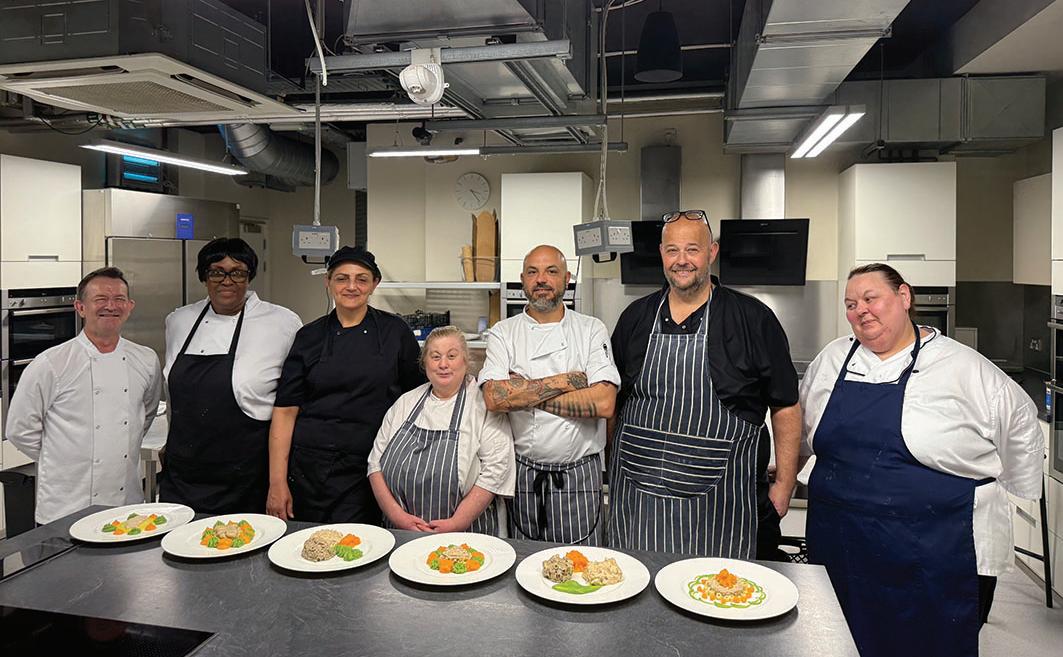
to the IDDSI framework.
During the training, chefs demonstrated their skills by creating a range of dishes adapted across multiple IDDSI levels. One standout example was mushroom pasta with chicken in a white wine sauce, served with peas and butternut squash, carefully prepared across Levels 6, 5 and 4.
The quality of the meals produced was praised by trainers, with participants showing enthusiasm, commitment and a willingness to further develop their expertise.
By using the Molila system and IDDSI framework, Aurem Care's chefs are able to create meals that not only comply with the required safety standards but also look appetising and deliver a positive dining experience for residents.
Chelsea Jeffrey, head of food experience at Aurem Care, said: "With the continued support of specialist teams like OHK, our chefs have gained the knowledge and guidance to be able to confidently produce fantastic meal options for residents on modified meals, allowing them to experience mealtimes like any other resident.
"I am proud to be part of the ever-growing improvement of textured modified meals and how we deliver them to our residents."

Malnutrition remains one of the most persistent - and often under-recognised - challenges facing the care sector today.
Despite significant progress in person-centred care and nutritional screening, many older residents continue to struggle with maintaining adequate nutritional intake due to reduced appetite, frailty, dementia, swallowing difficulties, medication side effects and illness-related fatigue.
According to UK nutrition guidance, people living in care homes are at significantly increased risk of malnutrition, with estimates suggesting that between 30–42% of residents admitted to care homes may already be affected or at risk. At the same time, healthcare organisations including Age UK and the Malnutrition Task Force continue to warn that undernutrition among older people remains widely underdiagnosed.
Importantly, malnutrition is no longer being viewed simply as an unavoidable consequence of ageing.
Across both health and social care, there is increasing recognition that early intervention and preventative nutritional support can play a major role in improving outcomes for older adults, helping to maintain strength, reduce frailty and potentially prevent avoidable hospital admissions.
Updated NHS guidance around nutrition in care homes increasingly promotes a “food-first” approach, encouraging providers to focus on fortified meals, nutrient-dense snacks, hydration and personalised eating support as part of everyday care delivery.
However, for many care teams, the challenge is not simply identifying residents who may be nutritionally vulnerable - it is finding solutions residents will consistently consume and enjoy.
MOVING BEYOND TRADITIONAL SUPPLEMENT APPROACHES
Oral nutritional supplements continue to play an important role within many care settings, particularly where residents are experiencing clinically significant weight loss or recovering from illness.
Yet in practice, compliance can sometimes become difficult over time. Reduced appetite, taste fatigue, sensory changes and swallowing difficulties can all impact whether residents continue consuming traditional supplement drinks consistently.
As a result, there is growing discussion across the nutrition and care sectors around the role of more enjoyable fortified foods that support intake while feeling less clinical and more familiar to residents.
This conversation has also been influenced by the wider international rise of “Food as Medicine” - an approach increasingly recognising the role nutrition can play in supporting recovery, resilience and wellbeing during illness and later life.
For care homes, this may include:
• fortified desserts and snacks
• protein-enriched meals
• smaller nutrient-dense portions
• hydration-supportive foods
• texture-adapted options
• socially enjoyable dining experiences
The emphasis is increasingly shifting towards nutritional quality alongside resident enjoyment, dignity and quality of life.
WHY FAMILIAR FOODS MATTER
Care professionals understand that nutritional support is rarely one-size-fits-all.
For some residents, particularly those with reduced appetite or illness-related nausea, cold foods can often feel more manageable than hot meals or milkshake-style supplements. Familiar foods may also encourage better engagement with eating among residents who are reluctant to consume more medicalised nutritional products.

This is one reason why fortified desserts and ice cream-based nutritional products are beginning to attract greater interest within healthcare nutrition conversations.
One example is Nutri-Ice®, developed by My Doctor’s Recipe (https://mydoctorsrecipe.com/collections/the-nutri-ice®), a healthcare-focused nutrition company founded by London oncologist Dr Jon Krell
Originally designed to support patients struggling to maintain nutritional intake during illness and treatment, Nutri-Ice® combines calories, protein and added vitamins in a format intended to feel more like a familiar food experience than a traditional supplement.
Each serving contains over 300 calories and more than 10g of protein, alongside added vitamins and minerals via the company’s DJK+® nutritional blend.
While products such as these are not intended to replace clinical nutritional interventions where required, they may represent part of a broader shift towards more resident-friendly approaches to nutritional careparticularly where maintaining appetite and encouraging consistent intake are ongoing concerns.
SUPPORTING NUTRITION THROUGH DIGNITY AND ENJOYMENT
Nutrition in care settings is about far more than calorie intake alone.
Eating and drinking remain closely connected to comfort, independence, routine and social interaction. As the sector continues to prioritise person-centred care, there is increasing recognition that nutritional strategies should support emotional wellbeing and dignity alongside physical health.
For residents living with dementia, for example, familiar foods and positive mealtime experiences can help reduce anxiety around eating. For frailer residents or those recovering from illness, smaller enjoyable foods may sometimes feel less overwhelming than larger meals.
As NHS and community healthcare systems continue focusing on prevention and reducing avoidable admissions, nutrition is likely to remain high on the care agenda throughout 2026 and beyond.
For many providers, the future may lie not only in identifying malnutrition earlier, but also in rethinking how nutritional support is delivered in ways residents genuinely want to engage with.
Ultimately, improving nutrition in care homes may depend not simply on adding more calories, but on creating nutritional approaches that residents can tolerate, enjoy and sustain over time.
A new report from leading dairy co-operative Lakeland Dairies, supported by Consultant Dietitian Rachael Masters (MSc, BSc), reveals the care sector at a tipping point, with nearly three quarters (74%) of operators concerned about their ability to meet residents’ nutrition and hydration needs over the next five years. Care kitchens are under growing pressure as residents’ needs grow more complex, resources stay tight, and smaller portions mean every mouthful must be nutrient-dense.
The report, The Care Kitchen Reset: The Future of Care Catering, sets out a shift towards enriched cooking and stronger base ingredients that make everyday dishes work harder. It calls for care operators to protect quality nutrition under mounting pressure not by adding complexity, but by strengthening core ingredients from the outset to improve calorie and protein density without increasing portion size.

It launches as part of Nutrition & Hydration Week (16–22 March), which shines a spotlight on the UK care home sector and the critical role food and drink play in supporting resident health and wellbeing.
CARE SECTOR UNDER MOUNTING NUTRITIONAL PRESSURE
The findings reveal rising clinical complexity is a key driver, with almost half (43%) reporting an increase in nutritional needs over the past five years. At the same time, 71% say rising ingredient costs are making it harder to maintain food quality despite 90% refusing to compromise on standards.
For operators, the stakes are both clinical and commercial. Nine in ten resident respondents (90%) cite food as a key factor when choosing a care home, while 87% of residents say mealtimes are the most important part of their day.
Dairy-based ingredients play a central role: over nine in ten operators say products such as cream and milk powder enhance food and drink experiences for residents with smaller appetites or specialist diets, while 88% believe they effectively support resident nutrition. This underlines the value of enriched cooking approaches that boost nutrition in the foods residents already enjoy, without relying on bigger portions.
INGREDIENT STRATEGY OFFERS PRACTICAL SOLUTION
Responding to these pressures, the report highlights that one of the most practical, operationally efficient levers is ingredient strategy. Rather than layering on additional processes, the report argues the solution lies not in short-term cost cutting alone but in strengthening menu foundations. By embedding fortified nutrition into everyday base ingredients, kitchens can improve calorie and protein density without increasing portion size, labour or waste – safeguarding the sector’s future. Rachael Masters, Consultant Dietitian and contributor to the report said: “With an ageing population
driving increased demand for care home places, and residents presenting with more complex health and nutritional needs, care catering teams are being asked to deliver not just meals, but meaningful nutritional support in increasingly complex environments.”
“The solution doesn’t lie in adding more processes, but in making smarter use of core ingredients to maximise nutritional value. By fortifying everyday dishes, kitchens can enhance protein, energy and key nutrients in ways that are practical, cost-aware and, most importantly, enjoyable for residents. Dairy-based ingredients offer a particularly effective and versatile way to achieve this.”
“This report explores these growing pressures and highlights practical, nutrition-led approaches that support both care teams and residents –helping deliver better operational efficiency while improving health, wellbeing and dining satisfaction.”
The research also highlights opportunities to refine delivery. While 90% of residents rate meals positively overall, 77% report struggling to finish meals due to taste or presentation challenges, and 38% say higher quality ingredients would improve their experience. This reinforces the case for ingredient optimisation over short-term cost cutting.
Paul Jennings, Head of Food UK & International at Lakeland Dairies, adds: “Care operators are under pressure to do more with less – more nutrition, more quality and more resilience – while also meeting rising expectations from residents around mealtimes. This creates a real tension in care kitchens, where teams are balancing increasingly complex needs with limited time, staff and budgets.
Ingredient strategy is a practical way forward. By using hard-working bases such as Millac Gold Double and Lakeland Dairies Skimmed Milk Powder, kitchens can build richness, consistency and added nutrition into everyday dishes without adding complexity.
In a sector balancing tight budgets and staffing pressures, this timely report explores immediate solutions to support care kitchens.”
The report draws on a survey of care operators, residents and their families, alongside insight from Consultant Dietitian Rachael Masters, founder of Focus on Undernutrition, which provides specialist special diet training to care homes.
Lakeland Dairies is committed to supporting the sector through menu guidance, product innovation and training designed to help kitchens build resilience through stronger foundations and long-term supplier partnerships.
The full report is available: https://eu1.hubs.ly/H0sP61V0
ROLE CLARIFICATION: KNOWING WHO DOES WHAT — AND WHY IT MATTERS
Walk into any busy care home during a morning shift and you will encounter a diverse range of professionals: registered nurses, senior carers, care assistants, activity coordinators, housekeeping staff, kitchen teams, and visiting healthcare professionals. For residents — many of whom may be living with dementia, cognitive decline, or sensory impairment — being able to quickly and clearly identify who someone is can be genuinely reassuring and, in some cases, clinically important.
A well-considered colour-coded uniform system allows residents to distinguish between their care team and, for example, domestic or catering staff. This is not merely an administrative convenience. Research in dementia care has consistently highlighted that visual cues — including consistent clothing and recognisable appearance — help anchor individuals in their environment and reduce episodes of confusion or distress.
For family members and visiting professionals, clear role identification also inspires confidence. When a relative can immediately see that the person administering medication is a registered nurse, or that the individual assisting their parent at mealtimes is a trained care assistant, it reinforces the professionalism of the entire operation.
TRUST, AND REPUTATION
The care sector has, over many years, worked hard to establish itself as a skilled profession deserving of public trust and respect. Uniforms are an important visible component of that professional identity. Just as we recognise a nurse by their uniform in a hospital, or a police officer by their livery on the street, care staff in recognisable workwear signal to the world — and to those they support — that they belong to a trained, regulated, and accountable workforce.
INFECTION CONTROL: A NON-NEGOTIABLE PRIORITY
Perhaps the most clinically pressing argument for workwear in care settings is infection control. Residents in nursing and residential care homes are among the most vulnerable members of society — often elderly, immunocompromised, and living with multiple complex health conditions. The COVID-19 pandemic threw into sharp relief just how catastrophic the spread of infection can be in these settings, and it reinforced what Infection Prevention and Control (IPC) specialists had long advocated: what care staff wear is a critical component of safe care delivery.
Current guidance from NHS England, the UK Health Security Agency (UKHSA), and professional bodies such as the Royal College of Nursing recommends that care staff working in clinical or personal care roles wear a clean, short-sleeved uniform to minimise the risk of contamination. The 'bare below the elbows' principle — which advocates removing watches, rings, and long sleeves during personal care — is now widely accepted as best practice in care home settings, mirroring NHS clinical standards.
Dedicated workwear also creates an important psychological and physical barrier between home and work environments. When staff change into a uniform on arrival and change out of it before leaving the
building, the risk of transporting pathogens in either direction is meaningfully reduced. This is particularly important in the management of outbreaks of norovirus, influenza, and MRSA — all of which remain persistent concerns in communal care settings.
Fabric choice matters too. Modern healthcare workwear is increasingly manufactured from antimicrobial or fluid-resistant materials designed to withstand industrial washing at temperatures sufficient to eliminate bacterial contamination. Everyday clothing — particularly natural fibres laundered at lower domestic temperatures — cannot offer equivalent protection.
SAFEGUARDING:
The safeguarding of residents in adult social care is a paramount concern, and uniform policy has an often-underappreciated role to play in this area. Clear, consistent identification of care staff serves as a deterrent to, and means of detecting, unauthorised individuals within a care home. If every member of the care team is readily identifiable by their uniform, any person present without one immediately stands out — an important consideration for both physical security and the prevention of financial or emotional abuse.
Name badges and lanyards — ideally colour-coded and bearing the individual's name, role, and photograph — complement uniforms in this regard. They allow residents, particularly those with cognitive impairment, to verify who is attending to them, and give families visible reassurance that staff have been identified and vetted. They also support compliance with Disclosure and Barring Service (DBS) checks by making it easier for managers to verify that only cleared individuals are working in direct contact with residents.
In cases of safeguarding investigations or incidents, clear records of which uniformed member of staff was on duty, in which area of the home, at which time, become vital. A consistent and documented uniform policy supports the audit trail that such investigations depend upon.
RESIDENT SUPPORT AND ANXIETY REDUCTION
The environment in which a person lives profoundly affects their emotional wellbeing, and for residents of care homes — many of whom may have been admitted following significant loss, health deterioration, or a change in personal circumstances — familiarity and visual consistency are powerful sources of comfort.
Consistency in staff appearance can be a meaningful anchor for residents living with dementia. Where an individual may no longer reliably remember names or faces, recognising 'someone in the blue uniform who helps me get dressed' provides a form of cognitive continuity that supports orientation and reduces anxiety. This aligns with established principles of person-centred dementia care, including those embedded in the National Institute for Health and Care Excellence (NICE) guidelines on dementia support.
Soft colours, contemporary cuts, and co-ordinated rather than institutional palettes can all help workwear feel warmer and less clinical, whilst retaining its functional and identifying benefits.
Design and Functionality: Getting the Details Right
When specifying workwear, care managers should consider several
practical factors. Durability and washability are essential: uniforms must withstand repeated industrial laundering without shrinking, fading, or losing their shape. Comfort across long shifts matters greatly for staff welfare — breathable fabrics, well-placed pockets, and freedom of movement should be prioritised over appearance alone. Inclusive sizing, encompassing a full range of body types, is both a legal obligation under the Equality Act 2010 and an expression of the values care homes should embody.
Pockets deserve a particular mention. Care staff frequently need to carry small equipment — pens, hand sanitiser, a fob watch, a small notebook. Uniforms without adequate pocketing lead to the use of personal clothing layers or improvised solutions, undermining the consistency and IPC benefits the uniform is intended to provide.
Colour psychology, too, is worth considering. Deep blues and teals convey trust and calm; greens are associated with care and healing; warm purples can feel both professional and approachable. Harsh institutional greens or stark whites, by contrast, can heighten anxiety in individuals with clinical associations or past traumatic healthcare experiences. Getting the colour palette right is not a trivial aesthetic decision — it is a component of person-centred care.
SUSTAINABILITY: AN EMERGING PRIORITY
The social care sector, like all areas of public and commercial life, is increasingly alert to its environmental responsibilities. Workwear procurement is a meaningful area in which care home operators can demonstrate their commitment to sustainability. Choosing suppliers who use ethically sourced, recycled, or organic materials; selecting garments with extended lifespans; establishing laundering protocols that minimise water and energy use; and implementing responsible end-of-life disposal or recycling schemes are all practical steps that align workforce needs with environmental values.
Some larger care groups have begun working directly with workwear manufacturers to develop own-branded uniforms that meet both their operational requirements and their sustainability commitments — an approach that also strengthens brand identity and staff pride.
CONCLUSION: DRESSING THE PART IS PART OF CARING
The question of uniforms and workwear in adult social care is, at its heart, a question about values. What kind of environment do we want to create? What standards do we expect of our workforce? How do we balance clinical safety with emotional warmth? How do we protect the vulnerable people in our care whilst honouring their dignity and individuality?
A thoughtful, well-implemented workwear policy does not answer all of these questions alone — but it is a tangible, daily expression of how a care home answers them. Whether through a colour-coded uniform system that helps a resident with dementia recognise their carer, a fabric specification that reduces infection transmission, or a contemporary design that gives staff genuine pride in their professional identity, what care workers wear is far more than a matter of dress.
It is a statement of who you are, what you stand for, and how much you care — for the people you support, for the colleagues you work alongside, and for the standards the sector must continue to uphold.
For nearly 120 years, Grahame Gardner Ltd has been one of the UK’s leading suppliers of healthcare uniforms, supporting care homes, hospices, NHS organisations and healthcare professionals nationwide. Built on a strong reputation for quality, reliability and customer service, Grahame Gardner understands the evolving needs of the care sector and the important role uniforms play in professional healthcare environments.
Grahame Gardner offers an extensive range of healthcare workwear and accessories, including traditional tunics and trousers alongside a vast selection of modern scrubs designed to suit all budgets, colour preferences and fit options. From classic healthcare styles to contemporary uniforms that combine comfort with professional style, Grahame Gardner continues to help organisations create practical and cohesive uniform solutions tailored to their teams.
In today’s care sector, uniforms are about far more than appearance alone. Staff want to look and feel good in the workplace, but a uniform can offer so much more to both the wearer and the organisation that employs them.
One of the most important functions of a uniform is identification. Within busy care homes, hospitals and community healthcare settings, uniforms allow staff to be easily recognised according to their role, department or level of responsibility. Clear identification supports communication, efficiency and reassurance for residents and visitors alike. Families want to know immediately who they can approach for support, and coordinated uniforms help create clarity in fast paced environments. Uniforms also contribute to security within healthcare settings. Professional garments should only be issued to individuals authorised to wear them, helping to maintain controlled and secure working environments. In care settings where safeguarding and trust are critical, uniforms provide an additional level of reassurance for both residents and staff.

ism, consistency and accountability. In the care sector especially, appearance can strongly influence perception. A clean, professional uniform reinforces the idea that residents are being cared for by trained and trusted professionals. This confidence is invaluable in environments built on compassion, dignity and trust.
Uniforms can also support enhanced wearer performance. When carers feel comfortable, professional and proud of their appearance, it can positively influence morale and confidence throughout the working day. High quality healthcare uniforms are designed to support the demands of physically active roles, whilst helping staff feel part of a professional team. Grahame Gardner understands this balance and offers garments specifically created for healthcare professionals who require durability, flexibility and comfort during long shifts.
Modern healthcare uniforms must also function as effective protective garments. Care professionals work in environments where hygiene, infection control and workplace safety remain top priorities. Durable fabrics, practical designs and garments suitable for rigorous laundering processes all help to support protection against workplace hazards, while maintaining comfort and professionalism.
Finally, uniforms are an important reflection of brand identity. Through colour coordination, embroidery and personalised branding services, Grahame Gardner helps care providers create a professional and consistent corporate appearance across their teams.
Uniforms remain one of the simplest yet most powerful ways to support staff, reassure families, residents and patients and strengthen organisational identity.
To find out more about Grahame Gardner’s uniform range, personalised workwear services and extensive scrub collections, visit: grahamegardner.co.uk.
Naturally, this visibility and structure help strengthen public confidence. Uniforms project professional-
To discuss branding options and pricing, contact the team on 0116 255 6326 or email sales@grahamegardner.co.uk
Laundry may not command the same attention as clinical care protocols or medication management, but in a residential or nursing care home it represents one of the most significant infection control risks on the premises. Done well, it protects residents, staff and visitors. Done poorly, it can spread pathogens, compromise dignity and expose a provider to serious regulatory consequences.
Here we examine the key frameworks, practical obligations and emerging best practice that every care home manager and nominated individual should understand.
INFECTION CONTROL AND THE RISK OF CROSSCONTAMINATION
HTM 01-04 establishes a clear hierarchy of linen categories: used (soiled but not infectious), infected (from residents with known or suspected infectious conditions), and heat-labile (items that cannot withstand high-temperature washing). Each category must follow a distinct processing pathway.
The cardinal rule is the strict separation of dirty and clean linen at every stage — collection, transport, storage and processing. Soiled items should be placed directly into appropriate colour-coded bags at the point of care, never sorted on floors or in communal areas. Red alginate or water-soluble bags are used for infected linen, allowing the bag itself to be placed directly into the machine without manual handling of the contents.
Washing temperatures are a critical control. A minimum thermal dis-
infection cycle of 65°C for ten minutes or 71°C for three minutes is required. Where chemical disinfection is used — for example, with heat-sensitive items — validated low-temperature systems with appropriate detergents must achieve equivalent log reduction in microbial load. Informal domestic machines, even in small residential settings, frequently fail to sustain these temperatures and present an unacceptable infection risk.
Cross-contamination between residents' personal clothing remains a common and often underreported problem. Robust labelling — ideally heat-transfer or embroidered name labels — and individualised laundry records reduce the risk of items being lost, mixed or returned to the wrong resident, an issue that carries both infection and dignity implications.
STAFF SAFETY AND DIGNITY CONSIDERATIONS
Personal Protective Equipment (PPE) is mandatory when handling soiled or infected linen. As a minimum, staff should wear disposable gloves and aprons; fluid-resistant masks are advisable when handling heavily contaminated items. Hand hygiene must follow the removal of PPE — this step is frequently omitted and should be an explicit part of laundry standard operating procedures.
Manual handling risks in laundry are frequently overlooked. Wet linen is heavy, laundry rooms are often cramped, and repetitive loading and unloading of machines contributes to musculoskeletal injury.
Ergonomic assessments of laundry workflows, appropriate trolley
heights and staff training are all employer obligations under the Manual Handling Operations Regulations 1992.
For residents, the laundry process is deeply personal. Clothing represents identity, self-expression and comfort. Shrinkage, damage or the loss of treasured garments causes genuine distress. Care plans should document fabric care requirements for individual residents, and staff should understand — and follow — care label instructions.
EFFICIENCY,
Operational efficiency and environmental responsibility are increasingly inseparable. Modern commercial washer-extractors offer programmable cycles, water recycling, and energy consumption data that support both cost management and sustainability reporting — the latter becoming relevant as the care sector faces growing ESG scrutiny from commissioners and investors.
Outsourced laundry contracts with commercial providers offer scale and validated thermal disinfection, but require robust service level agreements, audit rights and clear protocols for infected linen. On-site solutions give greater control but demand proper equipment maintenance, documented machine validation, and staff competency checks.
Whichever model is adopted, documented evidence is essential.
HTM 01-04 and CQC both expect providers to demonstrate — not merely assert — compliance. Temperature monitoring logs, machine service records, staff training certificates and outbreak response procedures should all be readily available for inspection.
Lavamac has built a reputation as a trusted name in industrial and commercial laundry technology. Recognized across global markets for its commitment to durability, innovation, and operational efficiency, the company continues to deliver advanced laundry solutions tailored to the evolving demands of healthcare, commercial laundries, and institutional facilities. With a product philosophy centered on reliability and performance, Lavamac has become synonymous with high-quality engineering and longterm value.
Innovation remains a defining characteristic of the Lavamac brand. The company continues to invest heavily in research, engineering, and modern control systems that improve ease of use and machine efficiency. Lavamac’s commitment to sustainability is equally impressive. Its machines are engineered to meet stringent environmental standards while supporting lower water and energy usage. Advanced airflow systems in the dryers and optimized water management technologies in the washers contribute to reduced utility costs and greener operations. This meant that Lavamac was award-
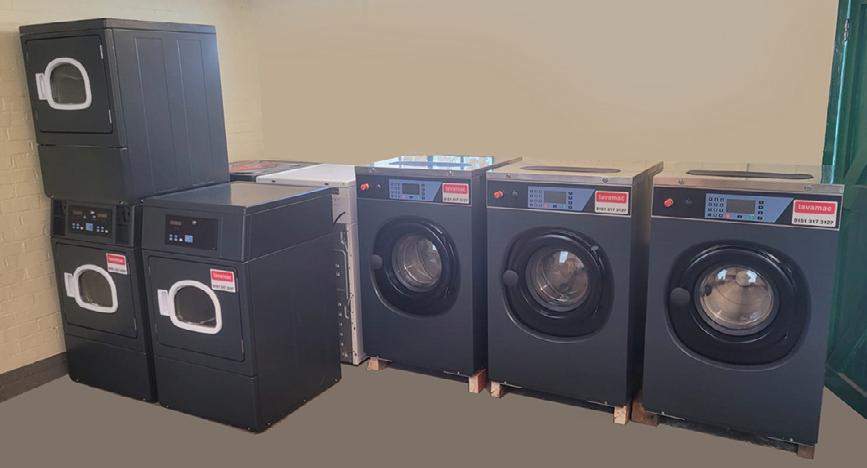
ed a bronze award in sustainability by the Groundworks Trust, affirming their commitment to the sustainability industry Lavamac's refurbishment programme in their specialist facility includes stripping down the machines, and giving them a check-over, to see which parts, if any, can be carried over the refurbishment. Lavamac will only carry over the highest-quality parts from the machine from pre to post refurbishment. The machine then undergoes an extensive refurbishment, with almost all the parts being replaced, with the refurbished machines being given specialist parts based on the model type.
The company offers a complete service-oriented approach that includes laundry design consultation, project management, technical expertise, installation support, and after-sales service. Supported by experienced engineers and factory-trained technicians, Lavamac works closely with customers to develop customized laundry solutions that meet operational goals and space requirements.
or visit www.lavamac.eu
In today’s care environment, operators are facing unprecedented financial pressure. Rising utility costs, staffing shortages and increasing regulatory demands are forcing care homes to scrutinise every aspect of operational efficiency - without compromising resident wellbeing or compliance standards.
Laundry provision is one area where care providers can make meaningful operational and financial gains.
At Forbes Professional, our Complete Care Laundry Solution has been developed specifically to support the evolving needs of the care industry. As proud national partners of Miele Professional commercial laundry equipment, we combine premium technology with local expertise and nationwide service support, giving care homes complete confidence in their laundry operations.
For many operators, purchasing commercial laundry equipment outright is no longer the most practical or cost-effective route. Renting provides access to high-performance, WRAS-approved equipment that meets stringent infection control and industry requirements, without the burden of significant upfront capital expenditure.

Equally important is the reassurance of rapid support. Our local-based engineering network delivers
same-day or next-day response nationwide, helping minimise downtime and maintaining continuity of care operations.
Beyond equipment and service, Forbes Professional works consultatively with care providers to design compliant, efficient laundry solutions tailored to individual operational needs, budgets and laundry room configurations. Our expert advisors guide customers through current industry guidelines to help ensure fully compliant solutions aligned with both CQC and WRAS standards.
Kevin Herring, CEO of Forbes Professional, comments:
“Care homes need reliability, compliance and long-term value. Our engineering infrastructure and national support capability give operators peace of mind that help is always close at hand. By renting premium commercial laundry equipment, care providers can protect cash flow, reduce unexpected repair costs and gain access to industry-leading technology that supports both efficiency and resident care.”
As pressures on the care sector continue, operators are increasingly seeking partners who can deliver not only equipment, but expertise, responsiveness and genuine operational support. Forbes Professional’s Complete Care Laundry Solution is designed to do exactly that.
Trusted by thousands of care homes across the UK, MAG Laundry Equipment is an award-winning supplier of commercial washing machines and tumble dryers. Reliable laundry machines that meet the highest hygiene standards are essential for care homes, hospices, nursing homes, hospitals, and other healthcare organisations. MAG provides support to the care sector for all makes, models, and brands of laundry machines. Whether you require free technical assistance, maintenance, repairs or installation, the professional team of experts at MAG will be happy to answer any questions.
MAG’s product range includes commercial washing machines, tumble dryers, ironers, presses, and detergents, all supported by a nationwide network of accredited engineers. Built since 1922, their commercial laundry equipment has a 5-star reputation for being reliable, energy-efficient, and
cost-effective. Care homes benefit from complete peace of mind knowing their commercial laundry machines can be professionally supplied, installed, maintained, and repaired throughout England, Scotland, and Wales.
Thermal disinfection comes as standard on MAG washing machines designed for care home and healthcare applications, helping businesses maintain the highest hygiene standards and regulations. For organisations seeking exceptional wash performance and effective stain removal, MAG Laundry Equipment also supplies high-quality commercial laundry detergents.
To find out more about how MAG Laundry Equipment can support your care home, visit www.maglaundryequipment.co.uk or phone 01353 883025. See the advert on the back cover.
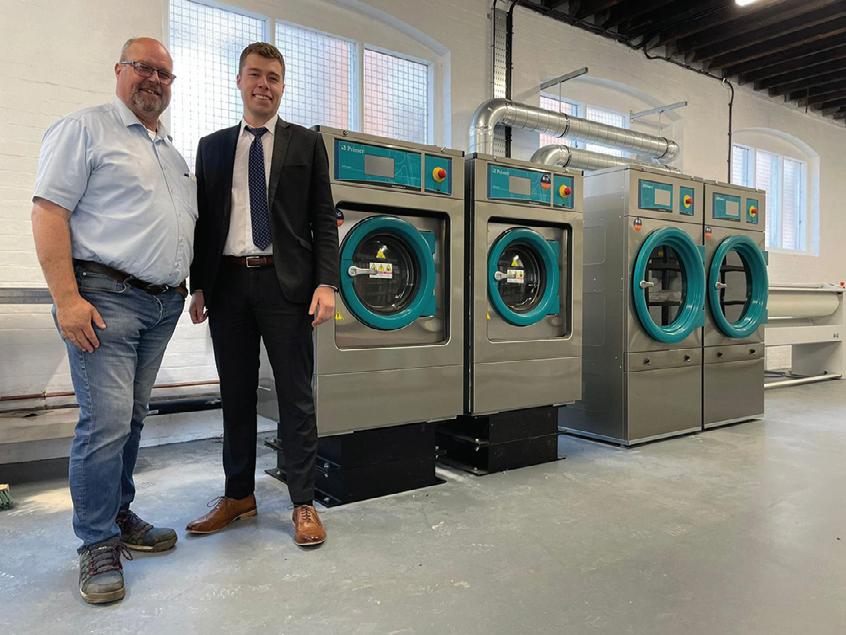

Falls are a significant concern for vulnerable individuals, especially seniors and patients at risk. Medpage, a leader in assistive technology, offers a range of cutting-edge products designed to enhance safety and provide peace of mind for caregivers and families. Here’s an in-depth look at some of their standout solutions:
MPRCG1 (2023) BED LEAVING DETECTION ALARM WITH CAREGIVER RADIO PAGER
The MPRCG1 is a comprehensive system tailored for fall prevention in domestic, commercial, and NHS care settings. This all-inclusive kit includes a bed pressure mat sensor, a BTX21-MP alarm sensor transmitter, and an MP-PAG31 radio pager. The system is designed to alert caregivers when a patient leaves their bed, reducing the risk of falls.
HDKMB2 HOSPITAL DISCHARGE KIT FOR FALLS RISK PATIENTS
The HDKMB2 is a thoughtfully curated kit aimed at supporting patients transitioning from hospital to home care. It includes essential tools to mitigate fall risks and promote recovery. This kit is ideal for caregivers seeking a comprehensive solution to enhance patient safety during the critical post-discharge period.
CMEX-21 MULTI-PORT WIRELESS SENSOR INPUT EXPANDER FOR NURSE CALL CONNECTION
The CMEX-21 is Medpage’s latest innovation, designed to integrate seamlessly with existing nurse call systems. This multi-port expander allows for the connection of multiple wireless sensors, enhancing
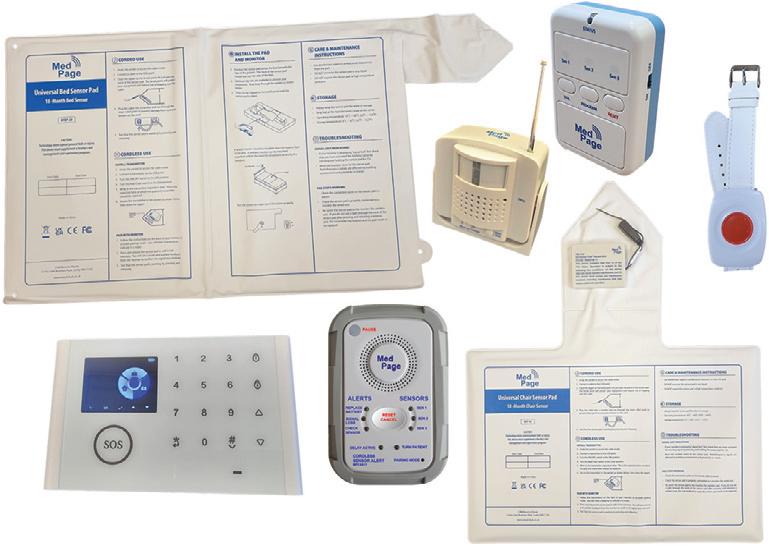
the monitoring capabilities of healthcare facilities. Its versatility makes it a valuable addition to any care environment, ensuring timely responses to patient needs.
RON-WC2 WATERPROOF DISABLED PULL CORD ALARM TRANSMITTER WITH WIRELESS ALARM RECEIVER
The RON-WC2 is a robust solution for disabled individuals requiring immediate assistance. This waterproof pull cord alarm is ideal for use in bathrooms and other high-risk areas. Paired with a wireless alarm receiver, it ensures that help is just a pull away.
For more information, visit Medpage’s official website or contact their team to explore these products further. Safety starts with the right tools, and Medpage delivers just that. www.easylinkuk.co.uk or T: 01536 264 869

The wireless ARM Nurse Call system has been developed over 30 years with both the client and user in mind.
It enables staff to efficiently answer calls, making the management of resources more flexible and provides the functionality you would expect of any nurse call system.
The system is quick and easy to install and works wirelessly, using radio communication between both the call points and the system infrastructure.
The all-new call logging software from ARM enhances the functionality of your care call system dramatically.
• It can help you track the quality of your service to your residents.
• It can help you demonstrate compliance with your aims and best practices, both to relatives and to authorities.
• It can help you find bottlenecks in service provision, track staffing requirements, and allow you to ensure staff are meeting expectations.
• Most importantly, it provides assurance that you know and can demonstrate what is happening in your care home.
Call messages can be sent direct to staff to speed up response times and can also be integrated to work with smart phones & messaging.
In today’s complex care environment, we understand that choosing the right technology is about far more than functionality alone. For care providers, reliability, sustainability, and supply chain resilience are critical factors—especially when it comes to nurse call systems that play such a vital role in resident safety and day-to-day operations.
At Courtney Thorne, we are proud to champion the “Made in Britain” mark. For us, this is not simply about where our systems are manufactured; it reflects our commitment to quality, accountability, and supporting the UK care sector. By designing and building our nurse call systems here in Britain, we can ensure they are developed with a deep understanding of the real challenges faced by care homes, resulting in solutions that are practical, reliable, and easy to use.
Manufacturing in the UK also allows us to maintain close control over our supply chain—something that has become increasingly important in recent years. Global disruptions have highlighted the risks of relying on complex, overseas supply networks. By keeping our production local, we are able to offer greater consistency, shorter lead times, and improved access to parts and upgrades. This means our customers can rely on continuity, even in uncertain times, with minimal risk of disruption to their services.
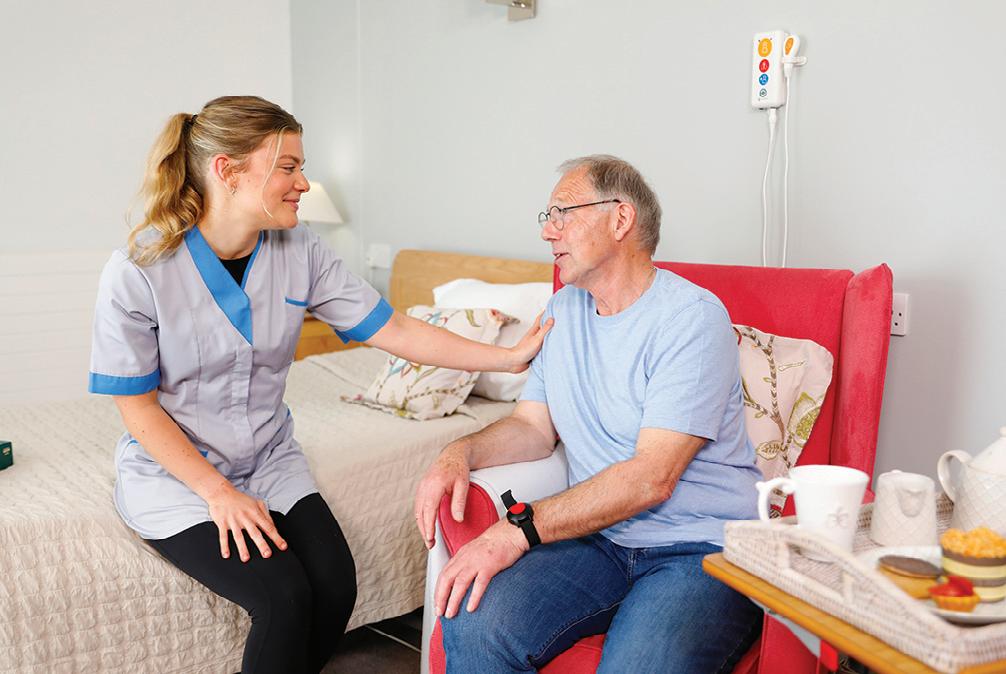
Sustainability is another area where we believe local manufacturing makes a meaningful difference. By reducing the need for long-distance transportation and focusing on robust, long-lasting system design, we help care providers lower their environmental impact. We are committed to creating solutions that not only meet today’s needs but are built to last—reducing waste and supporting more sustainable care environments over the long term.
Of course, delivering high-quality technology is only part of the picture. We know that ongoing support is essential. That’s why our UK-based technical team is on hand to provide expert assistance, from installation and training through to maintenance and rapid response when it matters most. Our proximity allows us to respond quickly and effectively, giving our customers the confidence that support is always within reach.
At Courtney Thorne, we believe that care homes deserve technology they can depend on—both now and in the future. By combining British manufacturing, sustainable practices, a resilient supply chain, and dedicated local support, we are proud to deliver nurse call systems that underpin safe, effective, and reliable care every day. For more information or to
or contact info@c-t.co.uk.
Alarm Radio Monitoring is the market leader in the design, manufacture and installation of bespoke, end-to-end, wireless alarm systems and solutions for the healthcare, leisure, custodial and education industries.
We have been providing wireless alarm and nurse call systems for over 30 years. Supplying care homes and hospitals with an essential lifeline that supports the delivery of outstanding care.
We believe in excellence which translates into:
Advanced Technology
Industry-leading wireless alarm technologies and software
Bespoke Solutions
We design systems to your needs rather than your team having to work around the system

Innovative Design
Pushing boundaries with the reliability that comes from decades in the industry
Flexible Finance Options
Ensuring organisations of any size can provide safety for their staff and clients
24 Hours a Day, 365 Days a Year Service
Your ARM service team is on hand, on the phone, on-site or return to base, whether you have a service contract or not
For further information, see the advert on the facing page or visit www.arm.uk.com

The analogue-to-digital transition in health and social care is not simply a technology refresh. It is a chance to rethink how help is requested, how staff respond, and how care is coordinated across a home.
Too often, procurement still begins with a like-for-like mindset: replace the old panel, keep the old workflow, and hope for a better result. But digital nurse call should not be bought as a newer version of an old problem. It should be purchased as part of a wider care model that improves visibility, response, accountability, and resident experience.
Before comparing systems, providers should define the problem they are trying to solve. Is the issue slow response times, poor escalation, noisy environments, duplicated paperwork, or a lack of oversight? The right solution should be judged against those outcomes, not against a checklist of features.
This matters because modern nurse call is no longer just about a resident pressing a button and a sounder going off. In better-designed systems, alerts can be routed directly to staff mobile devices, calls can be prioritised, and managers can see patterns in demand and response. That creates a more responsive and less fragmented way of working.
A presentation is not a demonstration. A brochure cannot show how a system behaves during a busy morning shift, when several alerts happen at once and staff are moving across different parts of the home. That is why live testing in a real care environment is essential. Staff should be able to use the system, question it, and pressure-test it before any decision is made. If the workflow is clunky in practice, the promise of digital efficiency disappears very quickly.
One of the biggest mistakes in purchasing technology is treating integration as a nice-to-have. In reality, it is central to whether the system adds value.
When nurse call works alongside care records, mobility devices, alarm management, and internal communi-
By Stuart Barclay, healthcare technology specialist at Syndora Alto
cation tools, the result is less duplication and faster decision-making. When systems do not connect, staff are left repeating tasks, chasing information, and working around the technology rather than with it.
For care providers, that means the question should not be, “What does this system do on its own?” The better question is, “How well does it fit into everything else we already use?”
Digital systems do not end at installation. They begin there. Any provider selecting a nurse call platform should think carefully about what happens after go-live: training, maintenance, updates, fault resolution, and ongoing optimisation.
Care homes need suppliers who understand the realities of the sector, not just the technology. A strong supplier relationship should include responsive support, practical training, and a willingness to adapt as the home’s needs change. In digital care, support is not an extra service; it is part of the product.
The biggest risk in this transition is buying something that cannot evolve. Care homes are operating in a fastchanging environment, and technology that cannot scale or adapt soon becomes a constraint rather than an asset.
Future-ready systems should be designed to expand, integrate, and respond to changing needs without requiring a complete replacement every few years. That flexibility is especially important in a sector facing pressure to modernise ahead of the 2027 digital switchover.
A BETTER QUESTION TO ASK
The analogue era encouraged a narrow question: does the system work?
The digital era demands a better one: does the system help us deliver safer, smarter, more person-centred care?
That shift in mindset changes everything. It moves procurement away from hardware replacement and towards care improvement. It encourages providers to look for visibility, integration, responsiveness, and longterm support rather than simply ticking a technical box.
The homes that get this right will not just be compliant with the digital transition. They will be better equipped to use technology as part of everyday care, supporting staff and improving the experience of residents.
Fall Savers®, are an experienced market leading healthcare provider of resident safety solutions for over 15 years.
FALL SAVERS ® WIRELESS MONITOR
Eliminate all cables with our new generation falls management solutions!
Upgrade your falls programme with the latest technology from Fall Savers®. The NEW Fall Savers® Wireless eliminates the cord between the monitor and sensor pad. This results in less work for nursing staff, improved safety for patients and reduced wear and tear on sensor pads. Wireless advantages include the ability to use one monitor with two sensor pads simultaneously and support for many new wireless devices.
BENEFITS INCLUDE:
Safer for patients; less work for staff
Bed and chair pads available
One monitor works with two sensor pads
Integrates with most nurse call systems
A variety of options, including: Call button
Pager Floor sensor mat
Wireless door/window exit alerts
TREADNOUGHT ®FLOOR SENSOR PAD

The TreadNought® Floor Sensor Pad is built to last with a durable con-
struction that far out lasts the competition. Our anti-bacterial floor sensor pad is compatible with most nurse call systems or can be used with a portable pager to sound an alert when a person steps on to the sensor pad. Caregivers typically place the sensor pad at the bedside, in a doorway or other locations to monitor persons at risk for falls or wandering. An optional anti-slip mesh reduces the potential for slippage on hard surface floors.
FEATURES INCLUDE:
Connects directly to most nurse call systems
High Quality anti-bacterial Floor Sensor Pad
Large Size Pad: Measures (L) 91cm x (H) 61cm
Options (sold separately):
Anti-slip mesh for hard surface floors
See the advert on this page for further details or visit www.fallsavers.co.uk.

Care home managers and staff already know that sharing information is critical to good care. What is changing is the scale and speed at which technology can now collect, analyse and share data, often almost in real time.
There is also much more focus on joined-up care, neighbourhood health services, and better information sharing between organisations. Care homes are expected to work closely with GP practices, hospitals, community services and local authorities, sharing information safely to support more coordinated care.

Done well, this brings real benefits. But it also brings risks. Cyber incidents, scams, human error and system failures can disrupt care services and put sensitive personal information at risk. As more information is shared digitally, providers are increasingly being asked to demonstrate that they have strong data protection and cyber security arrangements in place.
This matters when accessing NHS systems or shared records, responding to commissioner requirements, or demonstrating assurance to regulators and partners. It is no longer enough simply to say that policies exist. Organisations need to show that staff are trained, risks are managed, systems are protected, and clear processes are in place for handling personal information safely.
The Data Security and Protection Toolkit (DSPT) helps care providers do exactly this.
Running a care service means constantly juggling ever-changing regulations alongside the daily needs of the people you serve.
Compliance isn't just about ticking boxes; it’s about the safety of your residents and the protection of your staff. Here is what every manager should have in place:
• Policies aligned with the latest CQC, CIW, and CIS standards.
• Secure, digital storage for staff management files.
• 24/7 access to professional HR and safety advice.
The DSPT is much more than a tick box or a compliance exercise. The toolkit acts as a framework and checklist to help providers strengthen day-to-day data protection and cyber security. It helps organisations review what they already have in place, identify gaps, and improve policies, training and working practices over time.
For many providers, the DSPT helps avoid starting from scratch. It supports practical improvements such as strengthening passwords, reviewing access to information, improving business continuity planning, and helping staff recognise scams and cyber risks.
Crucially, it also helps providers demonstrate good practice and prove they are safe to share information appropriately with partners. In a health and care system increasingly focused on integrated working and digital information sharing, that reassurance matters.
The deadline for the 2025/26 DSPT is 30 June. Previous submissions expire after this date and can no longer be used as evidence.
Digital Care Hub provides free support for adult social care providers, including guidance, webinars, elearning and direct help from 32 local support organisations.
Don’t let your DSPT expire on 30 June. Get free support and guidance at www.digitalcarehub.co.uk/dspt
If your current system feels like ""guesswork,"" it’s time for a more comprehensive solution.
Croner Care Pro provides everything you need to manage the regulatory side of your business in one place.
From practical, ready to use resources collated by industry experts and in line with the latest CQC (Care Quality Commission), CIW (Care Inspectorate Wales) and CIS (Care Inspectorate Scotland) regulations and standards, software to record and store important policies, procedures and staff management files to practical, 24/7 telephone based advice for any challenges you may be facing.

Included is Croner BrightHR Employee Management Software and Croner BrightSafe management software which includes policies, handbooks, and access to your documentation
To learn more about how we can match your service to your specific needs, contact our expert team for free advice today on 01455 858 132.
See the advert on page 9 for further information.

The social care sector continues to face growing pressure from every angle. Providers are balancing rising operational costs, recruitment challenges, complex compliance requirements and increasing expectations from residents, families and regulators alike. At the centre of all of this is one key priority: supporting staff so they can continue delivering high-quality care.
For many care organisations, workforce management technology is becoming an essential part of achieving this!
Across the UK and Ireland, care homes are moving away from manual processes, paper rotas and disconnected systems in favour of integrated workforce management solutions that provide greater visibility, flexibility and control. The result is not only improved operational efficiency, but also a better experience for employees and residents.
Technology is no longer simply about digitising paperwork. It is about giving care providers the tools they need to make informed decisions, manage staffing levels effectively and respond quickly to changing demands.
One area where this is particularly important is employee scheduling and rostering. Care providers often operate around the clock, managing complex shift patterns while ensuring the right staff are available at the right time. Manual scheduling can be time-consuming and leaves little room for flexibility when absences or last-minute changes occur.
Modern workforce management systems help simplify this process by automating rotas, improving visibility across teams and enabling organisations to manage staffing requirements more effectively. Features such as auto-rostering and employee self-service also empower staff by giving them more control over their schedules, shift swaps and holiday requests. This level of flexibility is becoming increasingly important in attracting and retaining employees within the care sector.
Another growing focus for care organisations is absence management. Unplanned absences can place significant pressure on teams and increase costs through overtime or agency cover. Having better visibility
of absence trends allows organisations to take a more proactive approach.
AI-powered tools are now helping providers identify patterns, predict potential absence issues and support more informed workforce planning. These insights can help managers address challenges before they escalate while maintaining continuity of care.
Importantly, workforce management technology is also supporting compliance and reporting requirements. Care providers must ensure accurate records are maintained for working hours, attendance and employee data. Digital systems help reduce manual errors, improve accountability and provide clear audit trails when needed.
When managers spend less time dealing with administration, they have more time to focus on people. When employees have greater flexibility and visibility of their schedules, engagement often improves. When staffing levels are managed effectively, residents benefit from greater continuity and consistency of care.
Technology should never replace the human side of care. Instead, it should support the people delivering it!
As the sector continues to evolve, care providers are increasingly looking for solutions that combine reliability, flexibility and innovation. Integrated workforce management platforms are helping organisations build more resilient operations while continuing to deliver the high standards of care that residents depend on every day.
If you are currently facing workforce management challenges such as staff shortages, inefficient rostering, absence management issues or time-consuming manual processes, we can help. To learn more about how our workforce management solutions support care providers across the UK and Ireland, contact us at hello@softworks.com, call our UK team on +44 1527 888 060 or our Irish team on +353 1 286 6126. You can also visit www.softworks.com for more information.

When a family begins searching for a care home, two things are almost always true. They are under enormous emotional strain, and they have very little idea of what they are actually looking for. Most are doing this for the first time in their lives, often in the middle of a crisis: a hospital discharge, a fall, a sudden change in a parent's condition. They are unclear on funding, what to look for, or what questions to ask.
And what does the sector currently offer them at that crucial first moment? A postcode search.
Most online care directories function as little more than a digital phonebook, a long, undifferentiated list of names and addresses that families are expected to trawl through alone. A handful offer a "concierge" service, but that typically means a phone call back, during office hours, after the family has already filled in a form. The first point of contact, the moment when families most need guidance, is precisely the moment they are left to fend for themselves.
Caretopia World was built to change that.
The UK's first AI-powered care navigation website, Caretopia replaces the postcode-and-pray model with a guided conversation. At the heart of the site is Fliss, an AI agent who talks with families and carers, asks the right questions, and helps them work out what they actually need before showing them anything at all. Fliss signposts information on common conditions, explains funding options in plain language, and –crucially – checks in on how the person searching is coping. It is a small touch, but it acknowledges what the rest of the sector tends to ignore: that the people doing the searching are often exhausted, frightened, and grieving a loss of independence on behalf of someone they love.
Only once Fliss has built a real picture of the family's situation does the site present a shortlist of providers. Families can then select up to three homes to compare side by side and share that shortlist with siblings, partners, or other decision-makers. The result is a process that feels less like online shopping and more like having a knowledgeable friend in the room.
"Postcode searches are simply inadequate for the people who use them," says founder Nathan Davies-
Pugh. "Most families are doing this for the first time, and they don't yet know what good looks like. Fliss helps them arrive at a realistic set of considerations – and then matches them with homes that genuinely fit."
For care home managers, the proposition is just as straightforward.
Providers can build a profile using Caretopia's bespoke page builder in under ten minutes, with all the information families actually want to see: photos, fees, specialisms, room availability, and a clear sense of the home's character. Because Fliss has already done the qualifying work, the enquiries that come through tend to be warmer, better-informed, and a closer match to what the home offers, sparing managers the time-sink of fielding calls from families whose needs they cannot meet.
Pricing has been kept deliberately modest. "We are acutely aware of the pressure the care sector is under," Davies-Pugh explains. "The first month is always free, and our discount code for the first year means a home effectively gets unlimited job ad placements thrown in for nothing. There is no contract, no minimum term, and providers can cancel at any time.”
The wider point is that AI, used thoughtfully, has a real role to play in one of the most human moments a family will ever face. Not as a gimmick, and not as a replacement for the warmth and skill of care staff, but as a way of taking the chaos out of that first conversation so that by the time a family picks up the phone to a home, they already know why they are calling.
"We always say that care should start before the care journey begins," Davies-Pugh concludes. "That is what our AI is designed to do. And honestly, we are only just getting started. Watch this space."
Find out more at www.caretopiaworld.co.uk
Care home staff today face increasingly complex responsibilities. Supporting residents with dementia, autism, frailty, safeguarding concerns, and communication difficulties requires far more than theoretical knowledge. Staff need confidence, judgement, teamwork, and the ability to respond compassionately in challenging situations.
However, much care home training still relies heavily on passive e-learning and compliance-focused approaches. While online modules may meet mandatory requirements, they often do little to improve reflective practice, communication, or real-world decision-making. Care home managers are increasingly recognising the need for more engaging and practical approaches to workforce development.
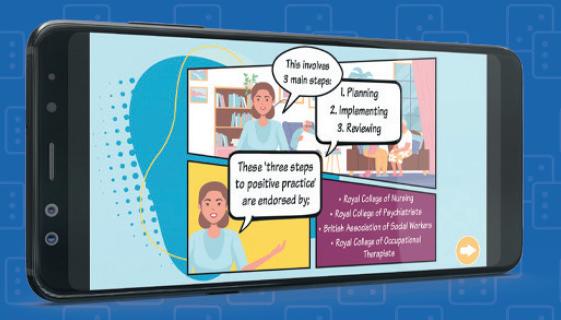
Gamification, game-based learning, and facilitated group activities offer an important opportunity to improve staff learning and engagement. Instead of simply completing quizzes or reading policies, staff work together through realistic scenarios, discussion exercises, and collaborative problem-solving activities. This encourages active participation and helps teams apply learning directly to everyday care situations.
Research increasingly supports these methods. Studies examining simulation-based learning in nursing homes have shown improvements in staff confidence, communication skills, leadership, and reflective prac-
tice. Dementia care simulations, for example, have helped staff develop more personcentred approaches and greater confidence in responding to distressed behaviours. These approaches also strengthen teamwork and workplace culture. Much mandatory training is completed individually, often in isolation. Group-based learning encourages discussion, peer learning, and shared reflection, helping teams develop more consistent approaches to care. This aligns closely with the growing emphasis from the Care Quality Commission on learning cultures, staff understanding, and continuous improvement. Importantly, game-based learning is not about replacing professional standards or mandatory training. It is about making learning more meaningful, memorable, and practical.
As pressures on the care sector continue to grow, providers need training approaches that build confidence, communication, and real-world capability — not simply certificate completion.
To explore practical, evidence-based training tools designed specifically for care teams, see the Focus Games advertisement on the front page of this issue, including a special reader discount offer for physical and digital team-learning resources that support communication, teamwork, decision-making, and improved CQC outcomes.
See the advert on the front cover or visit www.FocusGames.com
Global assists clients throughout the U.K. who specialise in the healthcare sector to achieve their objectives of purchase, development and refinance. We have organised over £1.8bn for clients in the past 30 years, providing clients with competitively priced funding to refinance existing debt, ease cashflow and develop businesses further.
From helping clients make their


23 years, operating 4 Devon Nursing homes, has been pretty tough, as anyone in social care, knows, only too well. And if it was hard already, after 2024 budget, it's just got harder.
Anyway, at heart, I am just customer of Eden Alternative, and it was a stroke of luck to come across this whilst on holiday in New Zealand in 2009. It started in USA in 1994 and
now runs in 22 countries.
The fact that I am now involved with this not-for-profit organisation (in the UK area) came about when one of the 2 main UK directors died suddenly just before Covid. But it's something I have run with for 11 years to help make 'vision' a reality, not a struggle. So, being both a customer and helping the admin seems quite natural.
It is a modern philosophy of care, but moreover, it's a programme that is straight forward, tried and tested for 30 years and really works. Its member care organisations generally become trainers for their own teams, and run it themselves.

The programme is run in person over 2-3 days or online 1 hr a wk for 7 weeks. You choose.
It addresses loneliness, helplessness and boredom and operates through 10 principles to underpin 7 critical domains of wellbeing. Moreover, it's effective, transformational and really works. As residents, and team members wellbeing, matter so much , it's a must, in my opinion.
Geoffrey Cox Southernhealthcare.co.uk eden-alternative.co.uk

By Lucy Carpenter, leader of the Compassionate Employers Programme

Managers today are being asked to support their teams through some of life’s most difficult moments. From grief and serious illness to financial pressures and burnout, the emotional load on employees is growing.
Alongside this, more and more people are quietly taking on unpaid caring responsibilities. Supporting a parent, a partner, a child, or a friend, often without ever using the word “carer” to describe themselves.
That’s why it’s more important than ever to ask: what more can we do to support both carers and the managers supporting them?
Census data shows that nearly 3 million carers aged 16 and over in the UK are in paid employment. Within this, an estimated 1.4 million are “sandwich carers”.
A sandwich carer is someone who provides unpaid care for both dependent children and older relatives, often their own parents or grandparents. They are balancing the needs of two different generations, alongside their own work and personal lives.
This group spans a wide age range, from late teens through to mid-60s. Yet despite their numbers, and the vital role they play, many people don’t recognise themselves as carers at all.
More broadly, unpaid carers contribute the equivalent of around four million paid care workers to the social care system. Without them, the system would simply collapse.
The economic impact is significant too, a major study by Carers Trust found that the contribution of working-age carers is worth up to £47.7 billion a year.
Carers are not a small or niche group in our workforce. They are our colleagues, our teams, and in many cases, our managers.
For many carers, work is more than a job. It can be a source of identity, financial stability, connection, and routine.
But without the right support, balancing work and caring responsibilities can quickly become overwhelming. Many carers reduce their hours, turn down progression opportunities, or leave work altogether because it simply isn’t sustainable.
That’s why creating compassionate, supportive workplace cultures isn’t just the right thing to do, it’s essential for retaining talent, supporting wellbeing, and keeping people in work. WHAT CAN ORGANISATIONS DO?
The good news is that small, practical changes can make a big difference. It starts with creating an environment where carers feel seen, supported, and safe to speak up.
Here are four simple ways to get started:
Ask - One of the easiest ways to support carers is to make space for the conversation. Build caring into the everyday conversations you’re already having, during onboarding, regular check-ins, supervision, and
Working in social care is demanding. It is one of the most heavily regulated yet underfunded sectors, with providers expected to comply with regulations, meet Quality Statements, follow good practice guidance, respond to local authority monitoring, and operate under constant scrutiny.

Regulation itself isn’t the problem — it protects people and improves standards. The challenge is capacity. Larger organisations may have in-house quality assurance teams, but smaller providers rarely have the time or budget to review compliance in depth. Many owners and managers tell us they feel overwhelmed and unsure how well their service is really performing, especially since the introduction of the Single Assessment Framework.
For many, confidence in compliance is the number one concern — not because standards are poor, but because there simply isn’t time to step back and take a full, objective view.
CAN AN EXTERNAL AUDIT HELP?
In short, yes — when it’s done properly. A highquality external audit provides:
• A clear snapshot of current performance
• Identification of good practice and priority risks
• Practical advice on how to improve
• Evidence to support action plans and improvement journeys
• Demonstration of good governance and continuous improvement — a key CQC focus
• Reassurance for owners, directors, and managers HOW W&P CAN HELP W&P have supported health and social care providers for nearly 25 years, completing hundreds of audits across a wide range of services. This experience gives us deep insight into what regulators look for — and what genuinely improves outcomes.
Our audits are supportive, non-judgmental, and practical. They typically include around six hours on-site, followed by a detailed report that links evidence to regulations and Quality Statements. Reports also include clear guidance, tips, and sources to help you respond confidently. Every audit is tailored to your needs — whether that’s safeguarding, medication management, or overall governance — ensuring it is truly fit for purpose.
If you would like to know more, then please contact us on audits@wandptrainng.co.uk or call 01305 767104 for a no-obligation chat on how our audits can help you. See the advert on page 5.
annual reviews.
Taking the time to understand what’s happening in someone’s life outside of work helps you see the full picture and the load they may be carrying. Many carers won’t volunteer this information unless they feel asked in a safe and supportive way. Simple, open questions can make all the difference.
Talk - Visibility changes everything, talk openly about caring within your organisation. Share stories, signpost support, and make it clear that people with caring responsibilities are valued and supported.
Many carers stay quiet because they worry they’ll be seen as less committed, particularly during times of organisational change or uncertainty.
Creating a culture where caring isn’t something to hide helps people feel able to speak up earlier, before they reach crisis point.
Educate - Managers play a crucial role in shaping how supported someone feels at work. People are much more likely to open up when they feel psychologically safe, and that comes from trust, empathy, and understanding. Sometimes these conversations can feel difficult, managers may worry about saying the wrong thing or not knowing how to help. That’s where training matters, giving managers the confidence and skills to have compassionate conversations can transform how support is experienced day to day.
Formalise - Informal support is important, but it needs to be backed up by clear policies. Make sure your policies are up to date, easy to find, and regularly communicated. Employees need to understand their rights, including legal protections:
• Five days’ unpaid carer’s leave
Time off for dependants in emergencies
Parental leave
Protection from discrimination
The right to request flexible working
Alongside policies, practical guidance and real-life examples can help bring them to life. Case studies can show both managers and employees what good support looks like in practice.
Ultimately, supporting carers is about more than policies or processes. It’s about culture. It’s about recognising that people don’t leave their lives at the door when they come to work, it’s about understanding that, at some point, many of us will become carers ourselves.
By creating workplaces where people feel seen, understood, and supported, we not only help individuals through challenging times, but we also build stronger, more compassionate organisations for everyone.