




sure on services.


I am on holiday at present but thanks to modern technology I have been able to witness the last rather politically turbulent few days. We all saw this coming of course, no surprise we have had a revolving door of Prime Ministers in recent years and as always, the political landscape is shifting rapidly. (And set to shift much more I suspect).
Former Manchester mayor Andy Burnham has emerged as the overwhelming favourite to become the next Prime Minister of the United Kingdom. Whether that transition happens in the coming weeks or months, one issue has already been placed firmly at the centre of his agenda: social care.
For those of us working in or involved in residential and nursing care, that alone represents a significant change.
For decades, successive governments of every political colour have acknowledged that England's social care system requires fundamental reform.
Yet despite numerous commissions, white papers, consultations and reviews, the sector continues to grapple with the same challenges: chronic underfunding, workforce shortages, rising demand, increasing complexity of care needs, and a widening disconnect between health and social care services.
Recent assessments of the system have painted a stark picture. Baroness Casey's independent review described social care as being held together by "workarounds" and temporary fixes rather than long-term solutions, warning that the nation faces a reckoning as an ageing population and growing prevalence of dementia and other long-term conditions place ever greater pres-
Against that backdrop, Burnham's decision to elevate social care from a policy footnote to a headline political priority deserves attention.
The former Health Secretary has long argued that social care should not be viewed separately from healthcare.
Throughout his political career he has advocated closer integration between the NHS and care services, believing that fragmented provision leads to poorer outcomes for individuals and greater costs for the public purse.
For providers across the care sector, the attraction of this approach is obvious.
Every day, care homes witness the consequences of delayed hospital discharges, inadequate support, fragmented assessments and inconsistent funding arrangements. The boundaries between healthcare and social care may exist within government structures, but they are largely invisible to the people who depend on both systems. Residents, families and frontline staff experience care as a continuum, not as separate bureaucratic systems operating in isolation.
The workforce challenge is equally pressing.
England's care sector continues to face substantial recruitment and retention difficulties, with vacancy levels remaining a major concern.
Government proposals to introduce fair pay agreements are intended to improve wages, employment conditions and career progression, but many within the sector remain concerned that funding commitments may not fully cover the true cost of implementation.
Add to that the governments clampdown on overseas workers which has contributed massively to the sectors staffing challenges.
This is where. I believe, any future Prime Minister will face the central dilemma of social care reform.
Everyone agrees the system requires improvement. Most agree care workers deserve better pay, stronger career pathways and greater professional recognition.
There is broad acceptance that demographic trends will continue to increase demand. Yet meaningful reform inevitably raises difficult questions about funding, taxation and public spending priorities.
Carer is published by RBC Publishing Ltd, 3 Carlton Mount, 2 Cranborne Road, Bournemouth, Dorset BH2
damage. Views expressed within this publication are not necessarily those
responsibility for any effects, errors or omissions therefrom. All rights reserved,
or
History provides a cautionary lesson. Successive attempts to establish long-term funding solutions have faltered amid political disagreement and public concern over how reforms would be financed. Proposals have repeatedly been delayed, diluted or abandoned altogether.
I have often commented on a former “Chair of the Health & Social Care Committee” saying in 2020 publicly that the annual social care budget needed to increase by £7 billion a year by the end of parliament and that he said was just “a starting point”.
He then went on to be chancellor and of course his previous comments led to nothing.
The question now is whether the political conditions finally exist for change.
Burnham has suggested that governments have too often "flinched" when confronted with the scale of the challenge and has argued that social care reform can no longer be postponed, very true indeed.
From the perspective of care providers, that sentiment will resonate strongly.
The sector has heard countless promises over the years. What providers, residents and families are looking for now is not another review, commission or consultation. They are looking for certainty. They need sustainable funding, workforce stability, meaningful integration with health services, and a long-term national strategy capable of surviving beyond a single parliamentary term.
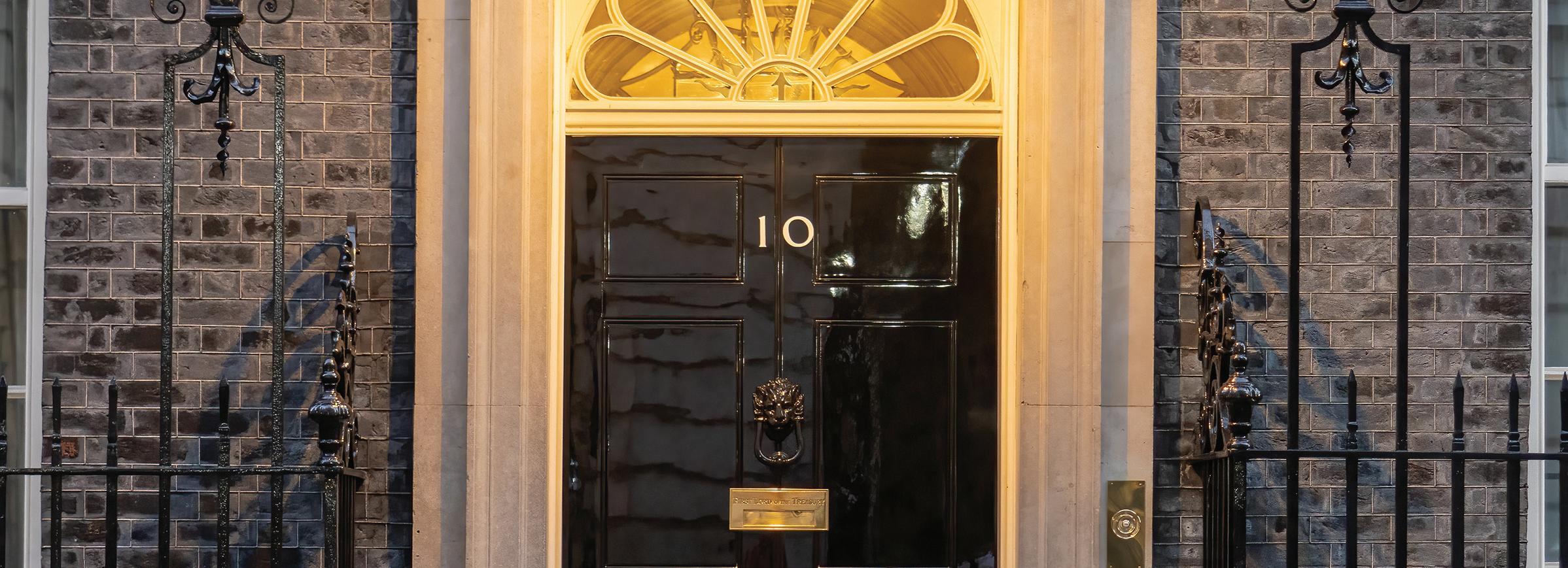
Whoever occupies Number 10 in the months ahead will inherit enormous economic and political pressures. Yet few challenges are more fundamental than ensuring older people, vulnerable adults and those living with complex conditions receive the care, dignity and support they deserve.
For too long, social care has been treated as the issue Westminster discusses tomorrow.
The care sector knows that tomorrow arrived a long time ago.
The real test for any incoming government will not be whether social care remains a political priority during leadership campaigns and policy speeches. It will be whether, this time, reform finally becomes reality
.I can always be contacted at editor@thecareruk.com





(CONTINUED
Earlier this month Burnham signalled he would overhaul England’s social care system this year if he became Prime Minister, and while work is already under way on updating the social care system under outgoing Prime Minister Keir Starmer Burnham has suggested he would seek more radical and urgent change.
Responding to the political transition, health and care organisations called on the next Prime Minister to grasp what they describe as a “once-in-a-generation” opportunity to improve the nation’s health, strengthen prevention strategies and finally address the longstanding challenges facing adult social care.
SIGNIFICANT OPPORTUNITIES
Sarah Woolnough, Chief Executive of the health policy think tank The King’s Fund, said the incoming leader would inherit both significant opportunities and major challenges.
“The next leader of the Labour Party has the chance to define how the next generation experiences health and care. In their in-tray will be a colossal set of both opportunities and risks.
“At the heart of these opportunities is both the chance to reverse our declining national healthy life expectancy and revamp an approach that champions good health in all policies, as well as to finally deliver on the reform of adult social care. These reforms remain the biggest unresolved policy question of the past 25 years, and has left too many people living with unmet needs, unable to access the care they deserve. Whether it is through accelerating the timetable for the Casey Commission or proposing a concrete model for reform, the test of the next prime minister will be if they can deliver reforms where so many have previously failed.
“Another clear opportunity is in seeing through the work to establish a Single Patient Record, which is part of the Health Bill currently working its way through parliament. The opportunity to link disparate sets of health data and deliver care that is less fragmented and more tailored to our individual health needs is to too large to squander.
“Just days before his resignation, Prime Minister Starmer used one of his last major addresses to the nation to announce plans to restrict access to social media for younger people. This has kick-started an approach to understand how a social media ban could be implemented to deliver better wellbeing and mental health for children in this country. Together with the smoking ban first proposed under Prime Minister Sunak, this is the type of bold action on prevention that any future government should be thinking about to deliver a healthier
nation.”
IMMEDIATE PRIORITY
Care Association Alliance (CAA), the national voice of local care provision in England, has called on whoever forms the next government to make the reform of adult social care funding an immediate priority. It has also called on Andy Burnham to honour the commitments he has made to the sector.
Melanie Weatherley MBE, co-chair of the Care Association Alliance, said:“Social care has been left on the ‘too difficult’ pile by successive governments for far too long. A change of leadership cannot become another excuse for delay. It must be the moment the country finally grips this.
“Andy Burnham has made clear that social care reform cannot wait. We welcome that, and today we ask him to stand by it. That means refusing to let the people who need care wait until 2028 for answers, bringing forward the work of the Casey Commission, and committing now to the reform that everything else depends on: a sustainable, national settlement for how care is funded.
“We have set out, paper by paper, what a genuine National Care Service should look like in practice. The case for a national funding settlement is the foundation. Whoever leads the next government, the frontline providers we represent stand ready to help build it. But the time for reviews and timetables stretching into the next decade is over. The time to act is now.”
ONCE-IN-A-LIFETIME OPPORTUNITY
Commenting on the change in Labour's leadership, ICG Honorary President Mike Padgham said: "The change at the top of Government presents a once-in-a-generation opportunity to do what no Prime Minister has managed to achieve over the last three decades – put social care on a sustainable footing for the future. "Whether it is Andy Burnham or another candidate who ultimately becomes Prime Minister, we simply ask them to be brave, be ambitious and be remembered as the leader who finally fixed social care."
PUBLIC INVESTMENT
UNISON general secretary Andrea Egan said: “The next prime minister has an opportunity to break with tinkering-around-the-edges and deliver a complete transformation of this country, permanently shifting wealth and power to working class people.
“That means full implementation of the plan to Make Work Pay, a massive programme of public investment and insourcing to repair our public services, and national public ownership of utilities.
“Schools, hospitals, councils and transport – and the public service
heroes working in them, keeping our country running – must be the fiscal priority, not the military and foreign wars.
“Breaking with the failed approach of the current Labour government also requires standing up to the migrant-bashing of the far-right rather than imitating it.”
FAIR PAY AGREEMENT
Karolina Gerlich, Chief Executive of The Care Workers’ Charity, said: “We are looking forward to working with the next Prime Minister upon their appointment. Care workers have heard ambition before, and they have welcomed it. What they need now is delivery, and the political consistency to see it through.
“The Fair Pay Agreement, the funding behind it and the work on Delegated Healthcare Activities are the foundations to build on, not the finish line. We ask the next leader to act on the recommendations coming out of Baroness Casey’s Commission now, not in 2028, and to bring the Fair Pay Agreement forward so that care workers feel the difference. We invite the successful candidate to meet us and to hear directly from care workers through our Advisory Board, so that the reform that comes next is built with them, not around them.”
In a statement the charity stated: “Labour set out the framework for the first Fair Pay Agreement, committed £500 million to support it, and continued the work on Delegated Healthcare Activities. These were important steps, and they gave the sector a foundation to build on. Adult social care is not a sectoral concern. It is something every person in this country will rely on at some point in their lives, whether for themselves, for a parent, for a partner or for a child. Whoever takes on the role inherits work that is far from finished, and the charity stands ready to support the successful candidate in carrying it forward.”
The Care Workers’ Charity is calling on the next leader to:
• Name adult social care as a first order national priority, with implementation set out within the first 100 days of taking office.
• Act on the recommendations emerging from Baroness Casey’s Commission, in parallel with and not dependent on its final report.
• Bring the Fair Pay Agreement forward, backed by the legislation and sustained funding needed to deliver a unified sector, with interim support for pay and conditions ahead of 2028.
Co-produce reform with care workers themselves, including through bodies such as the Care Worker Advisory Board.


When the shrill of a fire alarm sounds in an office, the process is usually straightforward. Vacate the building and stand outside until the all-clear is given to return. In a care home, where residents may be frail, have limited mobility or be living with dementia, evacuation is far more complex.
That reality means fire safety in care homes extends beyond alarms and escape routes. It requires careful planning, constant vigilance and the ability to identify risks before they become serious incidents or, in the worst cases, tragedies.
WHY
For years, fire safety compliance has relied on periodic checks, paper trails and the assumption that if nothing was reported, everything was under control. That’s now changing. While care homes are generally excluded from the in-occupation higherrisk building regime when the whole building is used as a care home, the wider direction of travel is clear.
Operators are increasingly expected to maintain better information, stronger evidence and greater transparency.
Recent Residential PEEPs requirements have tightened evacuation planning rules for vulnerable residents in higher-risk residential buildings, while all new care homes must now be fitted with sprinklers. The Building Safety Regulator has warned that fire safety guidance has failed to keep pace with modern care homes and specialist housing, leaving important gaps in areas such as evacuation planning. Together, this all points towards a more resident-focused approach to fire safety and a greater emphasis on understanding risks and demonstrating how they’re managed. Many providers still rely on spreadsheets and manual checks, but there’s growing demand for digital systems that make information easier to access and produce evidence when required.
MEETING
The legal duty is clear. Under the Regulatory Reform (Fire Safety) Order 2005, care home operators must assess fire risks, maintain appropriate fire safety measures and ensure emergency procedures are suitable for the people in their care. In practice, that means planning for residents who may not be able to evacuate


• We specialise in the sale and purchase of quality used wheelchair accessible vehicles and ambulances.
• They can be bought as seen or refurbished and sign-written to your own requirements.
• Fully serviced, new mot & warranty
• Engineers inspection supplied if required.
• Free delivery service available
• All buses comply with new legislation
• Lease hire and purchase available
• Always large stock of accessible vehicles


By David Simpson, Director at fire safety platform Drax
without assistance.
The Fire Safety Act 2021 has also reinforced the importance of robust fire risk assessments. Even where a care home does not fall within the higher-risk building regime, the expectation is that operators can demonstrate that risks are understood and being actively managed.
This is reinforced by CQC expectations. Care providers must be able to show they have identified those most at risk, put Personal Emergency Evacuation Plans (PEEPs) in place, tested alarm systems, trained staff and rehearsed emergency procedures. In practice, that means having information and evidence readily available to show fire safety risks are being actively managed.
Last year, there were 497 fires in care homes. Although low by historic standards, every incident has the potential to cause disruption and distress for vulnerable residents. Cooking appliances accounted for 216 of those incidents, making them one of the most significant sources of ignition in care home settings. With accurate, up-to-date information in one place, operators can see where risks are recurring such as those linked to kitchen appliances and identify where additional training, maintenance or intervention may be needed.
False alarms present another challenge. An alarm can distress residents, particularly those with dementia. It can interrupt care routines, place pressure on staff and create unnecessary disruption.
By analysing alarm activations alongside maintenance records, fault history, and response activity, care home operators can begin to understand what’s driving repeat alarms. They can identify recurring issues, problem locations and patterns linked to specific activities.
Over time, AI can help analyse this information at a scale that would be difficult for any individual manager to achieve. However, AI is only as useful as the data behind it. If the information is incomplete, inaccurate or out of date, the insights will be too.
AI should never replace professional judgement, competent fire risk assessments or local knowledge. Its value lies in helping organisations identify trends, detect potential issues earlier, and make more informed decisions.
The future of fire safety in care homes is moving beyond simply proving that checks have been completed. Providers increasingly need confidence that systems are working properly and that problems are being addressed before they escalate.
Technology can help. Having a real-time view of alarms, faults, tests and response activity makes it easier to spot recurring issues, reduce disruption and understand where attention is needed. This provides better insight, enabling faster responses, better decision-making, and ultimately a safer environment for residents.
The vacancy rate in England’s adult social care sector has fallen to its lowest level in a decade, according to new data published by Skills for Care – the national charity that works to strengthen England’s adult social care workforce.
The latest Size and structure of the adult social care sector and workforce in England report shows that the workforce continued to grow in 2025/26, marking the fourth consecutive year of expansion. There were 22,000 more filled posts than the previous year- an increase of 1.4% although this is the slowest growth rate in four years.
The report also highlights a significant drop in vacancies. The vacancy rate fell to 6.2% in 2025/26, the lowest since 2015/16. This equates to around 96,000 vacancies on any given day, down 10.5% on the previous year.
Despite this progress, vacancy levels in adult social care remain around three times higher than the wider economy, underlining the continued challenge of recruitment and retention within the sector.
The number of posts filled by people with a British nationality fell by 40,000 over the past year and by 130,000 since 2020/21.
While the number of non-British workers has increased, the removal of a dedicated international visa route means that the number of new international recruits recruited directly from abroad fell to 30,000 in 2025/26, the lowest level in four years.
Looking ahead, the data point to ongoing long-term challenges. To meet the needs of an ageing population, the sector is projected to require a further 410,000 posts by 2040.
Oonagh Smyth, CEO of Skills for Care, said:
“It’s encouraging to see vacancies fall to their lowest level in 10 years and the workforce continuing to grow. This reflects the hard work and commitment of employers across the sector to attract and retain staff in a challenging environment.
“However, the longer-term picture remains difficult. Vacancy rates are still significantly higher than the wider economy, domestic workforce numbers are falling and there is no dedicated visa route for international recruitment – all of which highlight the scale of the challenge ahead.
“We need a long-term, collective approach. Skills for Care is bringing partners together to develop a 10-year plan to attract more people into adult social care and support them to build rewarding careers. This work is central to delivering the Workforce Strategy for Adult Social Care in England and ensuring the sector has the workforce it needs for the future.”
The findings are based on data from Skills for Care’s Adult Social Care Workforce Data Set (ASCWDS), which contains information on more than 750,000 people across over 21,000 care-providing locations.
This data helps build a detailed national picture of the workforce and supports planning, policy development and decision-making across the sector.
The full Size and structure of the adult social care sector and workforce in England report is available now on the Skills for Care website: www.skillsforcare.org.uk/sizeandstructure
Sector leaders have broadly welcomed the report.
The Social Care Institute for Excellence (SCIE) said the figures provide welcome evidence that the sector has become more stable following the significant workforce pressures experienced in recent years. Fewer vacancies and continued growth in filled posts are positive signs for providers, the workforce, and people who draw on care and support.
However, SCIE has warned that these improvements should be viewed in the context of longer-term workforce challenges that remain unresolved.
Gerard Crofton-Martin, Interim Chief Executive at SCIE, said:
“The latest data gives grounds for cautious optimism. It is encouraging to see vacancy rates return to the lowest levels in a decade and the workforce continue to grow.
“But one of the key drivers of workforce growth in recent years has been international recruitment. International colleagues have made an invaluable contribution to social care. However, changes to the migration system mean that international recruitment alone cannot provide a sustainable long-term answer to the sector’s workforce challenges. This is against a backdrop of a reduction in British nationals joining the workforce. Together, these trends expose the fragility of the sector’s workforce pipeline.
“The progress shown in this year’s figures is welcome, but sustaining it will require long-term workforce planning and investment. Social care must be seen as a valued career with clear progression opportunities, competitive pay, and access to high-quality learning and development. Building a strong domestic workforce is essential if we are to create a resilient social care sector capable of meeting growing demand in the years ahead.”
Lucinda Allen, Senior Policy Fellow at the Health Foundation, said:
‘Today’s report is a tale of two halves. The social care vacancy rate has fallen to the lowest level in a decade. But workforce growth is slowing as numbers of both British staff and new international recruits fall. These trends highlight the long-term fragility of the care sector.
‘Care work is rewarding but has long been underpaid and undervalued. The government’s plan for new fair pay agreements to improve pay, terms and conditions in social care has the potential to be transformative. Success relies on funding to fuel the system and incentives,
including for providers to comply with new rules and for staff to stay and progress in the sector. International evidence suggests pay policies work better as part of a comprehensive strategy for recruiting and retaining enough staff to care for older people and disabled people.
‘Alongside a workforce strategy, social care needs wider reform and investment, including to improve people’s care and protect against high care costs. Whoever becomes the new Labour leader must make this an early priority, accelerating the work of the Casey Commission. The problems in social care are well known – as are options for funding reform. Currently, many people go without the care they need, and reliance on unpaid carers is high. After decades of political failure, the next prime minister has an opportunity to show decisive leadership and finally deliver the reforms needed to improve millions of people’s lives.’
The chief executive of The NHS Alliance, Sir Ciarán Devane, said: “A strong social care sector is crucial to solving the challenges facing the NHS and achieving the government’s ambitions – including preventing ill health, moving care closer to people’s homes and getting healthy patients out of hospital more quickly.
“Perceptions of low pay and long hours have led to huge gaps in social care staffing, so it is encouraging now to see vacancy rates in social care falling.
“However, the figures also show there could be further trouble ahead with falling numbers of UK-trained staff and a sharp decline in new international recruits.
“We hope that the Casey Review of social care will build on the recent progress to tackle recruitment and retention challenges, and we urge the government to accelerate the review and move quickly to implement any recommendations.”
Karolina Gerlich, Chief Executive of The Care Workers’ Charity, said:
“This report is good news, and we should say so. A vacancy rate at its lowest in a decade is the result of hundreds of thousands of people choosing this work, often for far less than it is worth. But Skills for Care are right to be honest about what holds that progress up. We have grown the workforce from overseas while the number of British care workers has fallen by 130,000 in five years, and the visa route that made that possible has now closed. At the same time, we are asking the international care workers already here to wait 15 years for indefinite leave to remain, which is a long time to ask someone to hold their life in place. The way to build a stable workforce is to make care a job people can afford to do, and to give the people already doing it a fair route to settle. We are ready to work with Government, employers and commissioners to turn this progress into something that lasts, and to bring care workers into shaping the plan that does it, through our Care Worker Advisory Board.”

The next phase of AI won’t be defined by intelligence. It will be defined by whether it gives time back

Health and social care has become used to operating under pressure.
Demand continues to grow. Workforce shortages remain. Expectations rise. Yet despite years of investment and innovation, one of the most valuable resources across the sector still feels scarce: time.
That’s why the latest Phillips’ Future Health Index findings are interesting.
Over 22,000 care professionals surveyed reported that AI-enabled tools saved meaningful time each year. Many said that time translated into more time delivering care, less overtime and reduced stress. Most also believed that AI has the potential to improve outcomes and experience across care delivery.
Those findings are very promising, but they also expose an even bigger challenge. Health and social care don’t lack ideas or innovation. They lack capacity. And capacity isn’t created by asking clinicians to work harder or longer hours. It’s created by removing the friction around care planning and delivery.
HEALTH AND SOCIAL CARE HAS AN ADMIN CHALLENGE, NOT AN INTELLIGENCE CHALLENGE
The conversation around AI often starts in the wrong place. We talk about models, automation and insight. But for most health and care professionals, the reality looks rather different. Work still gets delayed by manual-heavy administration.
Teams still move between siloed systems to complete simple tasks. Notes are duplicated. The data is not up-to-date. Schedules are adjusted manually and daily. Information sits in different places across different tools. Staff spend time searching for context before they can act.
None of that improves care or employee wellbeing. Yet all of it drains clinical and operational capacity. That’s why AI’s biggest opportunity may not be prediction or diagnosis. It may simply be reducing that friction.
Not replacing judgment.
Not removing people.
Just helping work flow more easily.
TIME SAVED IS MORE THAN EFFICIENCY
There’s a tendency to talk about time savings as though they’re an operational metric, when in reality, they’re not. In health and social care, time becomes capacity. Capacity changes decisions. And decisions shape outcomes.
Across organisations we work with, the strongest examples of AI and intelligent automation are rarely the most visible.
They improve scheduling, support care coordination, help teams allocate resources more dynamically,
By Ricky Moore, MD of Public Sector at Totalmobile
and reduce time spent moving information between systems.
That difference compounds quickly.
In one example, improved scheduling and more adaptive workforce coordination increased service capacity by 35%, effectively giving each care provider back a day and a half per week.
Another organisation reduced missed visits by 50% and now supports an average of 22,000 visits each week.
Those outcomes weren’t achieved by moving faster.
They came from removing unnecessary effort.
AI SHOULD DISAPPEAR INTO THE WORKFLOW
One of the biggest risks in health and social care AI is assuming that adding technology automatically creates value. It doesn’t.
Care teams don’t need another tool to log into or another dashboard to maintain. Too often, technology creates new administrative layers rather than removing existing ones.
That’s especially difficult in environments where multiple systems already support scheduling, case management, reporting and service delivery.
The most effective AI doesn’t announce itself. It runs quietly in the background, automatically capturing information, summarising activity, supporting workforce decisions and reducing the number of steps between action and delivery.
That shift matters even more as health and social care continue moving towards more connected, neighbourhood-based models of care. Because fragmented delivery cannot be solved with fragmented technology.
BETTER INFORMATION BUILDS BETTER DECISIONS
There’s another assumption in health and social care that better information automatically leads to better outcomes. In reality, information only creates value when teams can act on it, because:
Visibility creates confidence.
Confidence improves coordination.
Coordination creates better care.
THE REAL TEST COMES NEXT
Health and social care have adopted plenty of technology over the years, and AI shouldn’t be measured by how many tools are deployed. It should be measured by whether people feel less burdened by work.
Do care professionals spend more time with service-users? Are services more flexible? Can teams respond earlier? Does care feel easier to coordinate?
If the answer is yes, then AI is doing what it should.
Health and social care don’t need more intelligence; they need less friction around care. That’s where the next gains in productivity, capacity and service-user outcomes will come from.
In April 2025, the Supporting the Provider Market (STPM) team in County Durham published a new report evaluating the use of pobroll® — a waterproof bed-bathing wrap designed to improve dignity, comfort, and ease during personal care.
This evaluation was carried out across 10 care homes with high numbers of residents living with dementia. Each setting was given one or more pobroll® units and invited to share feedback through a structured survey. The findings reveal how even simple tools can make a significant difference in everyday care.
How was pobroll® used?
Most care homes used pobroll® daily or several times per week, showing it quickly became part of regular practice. Staff noted that one of the biggest challenges was not having enough units — all homes requested additional stock after the trial, highlighting a clear appetite for wider adoption.
What did care teams think?
Feedback from the care homes showed strong support for the tool:
Ease of use was rated highly, with an average score of 4.4 out of 5. Staff found pobroll® straightforward to incorporate into care routines.
Training was rated slightly lower, at 3.8 out of 5, suggesting that while the wrap is easy to use, additional training resources could improve onboarding for new users.
Resident response was positive. Three in ten care homes reported improved mood or behaviour during bed bathing for dementia patients.
• Key benefits included greater warmth, coverage, and dignity for residents, especially those who might find conventional methods distressing. Some teams also found it particularly useful for end-of-life care Would they recommend pobroll® for bed bathing for dementia patients?
Written by Pat O’Brien of pobroll
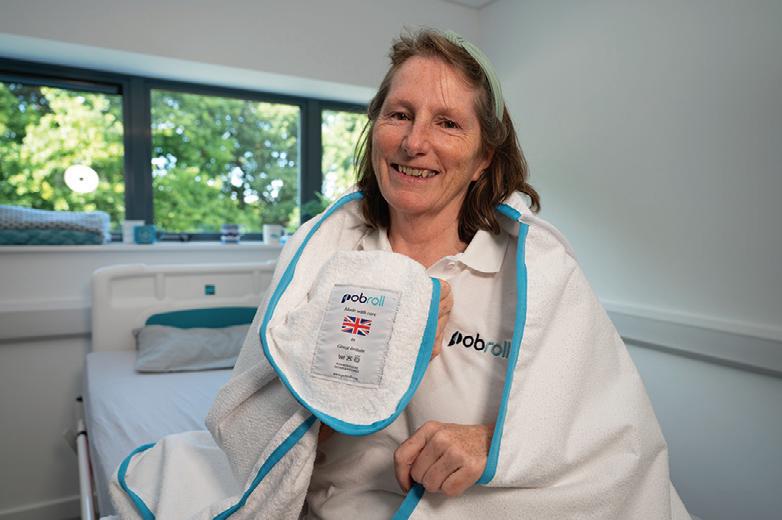
Absolutely. Homes rated their likelihood to recommend pobroll® at 4.3 out of 5, with half of respondents giving it a full 5 out of 5. The overall feedback was clear: this is a valued, meaningful addition to personal care.
Would they recommend pobroll® for bed bathing for dementia patients?
The results of this trial reinforce what many professionals already believe — that small, thoughtful design changes can significantly improve care. For residents who are bedbound or living with dementia, personal care can often be a distressing experience. But with the right tools, it doesn’t have to be.
The pobroll® isn’t a complex device. It’s a simple, dual-layered cotton towelling wrap. But its thoughtful design — offering full coverage, comfort, and support — makes a real difference where it matters most.
If you’re part of a care home, hospice, or hospital and would like to explore how pobroll® could benefit your residents or service users, get in touch. We’re here to support compassionate, dignified care — one small change at a time.
See the advert on the facing page for details, or visit www.pobroll.co.uk
The Government has outlined a series of measures aimed at strengthening adult social care in England, following recommendations made by the Independent Commission on Adult Social Care led by Baroness Louise Casey. In a letter published by the Department of Health and Social Care, ministers detailed progress in three key areas: safeguarding, dementia care and support for people living with motor neurone disease (MND).
NEW NATIONAL ADULT SAFEGUARDING BOARD ESTABLISHED
A major development is the creation of a new national adult safeguarding board, designed to provide stronger oversight and scrutiny of safeguarding arrangements across the country. The board will be chaired by Chief Social Worker Sarah McClinton and will report directly to Care Minister Stephen Kinnock.

According to the Government, the board’s initial priorities will include updating statutory safeguarding guidance under the Care Act, reviewing the legal framework for safeguarding adults, strengthening national oversight of local Safeguarding Adults Boards and improving safeguarding practice nationwide. Particular attention will be given to issues such as homelessness, substance misuse and transitional safeguarding.
For care providers, the reforms signal an increased national focus on safeguarding standards, accountability and consistency across services.
NEW DEMENTIA FRAMEWORK AND ‘DEMENTIA TSAR’
The Government has also announced plans for a new modern service framework for dementia and frailty, due to be published before the end of 2026. The framework is intended to improve access to diagnosis, treatment and community-based support while preparing services for emerging innovations in dementia care.
In addition, ministers confirmed plans to appoint a national “dementia tsar” to help drive progress across health and care systems. Recruitment is expected to begin shortly.
The Government has accepted a recommendation to increase participation in UK dementia clinical trials to 2,000 people over the next five years, compared with 377 participants in 2025–26. Officials said the move is intended both to support research and to prepare the NHS and care system for future treatments and innovations.
Further investment is planned in diagnostic research, dementia trial infrastructure and the Dementia Trials Accelerator programme. Ministers are also considering future access arrangements for the Alzheimer’s treatments lecanemab and donanemab, pending further evaluation by the National Institute for Health and Care Excellence (NICE).
For residential and nursing care providers, the announcements indicate a growing emphasis on earlier diagnosis, research participation and improved pathways for people living with dementia.
FASTER SUPPORT FOR
WITH MOTOR NEURONE DISEASE
The Government has also pledged to improve access to care and support for people living with motor neurone disease, describing the condition as severe, progressive and terminal.
Local authorities have been asked to introduce faster approaches to accessing care and support, improve coordination between services, anticipate future care needs and review housing assistance arrangements. Authorities have also been encouraged to consider waiving Disabled Facilities Grant means testing in appropriate cases.
Alongside these measures, officials are developing a prototype fast-track pathway for people with MND. The pathway is being designed with input from local authorities, the NHS, housing providers and the MND Association, with the aim of delivering quicker and more coordinated support.
The update forms part of the Government’s response to the Independent Commission on Adult Social Care and precedes the commission’s first formal report later this year. Ministers said the measures are intended to address longstanding challenges in social care and support the development of a future National Care Service.
Deputy Manager at Boroughbridge Manor in Boroughbridge has taken part in a 12 mile walk to raise money for St. Leonard’s Hospice, York.
The walk took place over the Yorkshire Wolds, and to support the fundraising 2 bake sales were held. The home held one bake sale whilst a second one was held in the village where Lynnette grew up.
This is an event that Lynnette takes part in every year in memory of her father who was cared for at the hospice in 2019.
Residents, their relatives and staff were all very supportive and enjoyed getting

involved in the selling and eating of the cakes!
Susan Carter, General Manager at Boroughbridge Manor Care Home, said: “Taking part in this challenge has been a huge amount of fun and everyone at the home has been behind Lynnette all the way. It’s for such an important cause. I’m very glad to be able to do my bit to raise further awareness and money for the charity.”
Lynnette raised a grand total of £1701.25 by completing the challenge, which will be donated to St. Leonard’s Hospice.
The British summer is here, and with temperatures forecast to stay above 25 degrees, and even climb up to 35 in the coming weeks, many of us are eager to soak up the sun.
While the sunshine provides the perfect excuse to get out in the garden or enjoy time with family, it’s essential to take some sensible precautions for staying safe in the sun, especially for the elderly.
As we get older, skin becomes thinner, and the cardiovascular system has to work harder to keep the body cool. To support seniors and their families through the warmer months ahead, LifeCare Residences has shared five essential age-specific tips for sun safety.
Alex Albu, Head of Care at Battersea Place, one of LifeCare Residences’ luxury retirement villages, advises the following sun safety advice for the elderly:
AVOID THE HOTTEST TIME OF DAY
Older bodies take longer to cool down once it overheats. Therefore, it’s best to avoid being in direct sunlight between the hours of 11 am and 3 pm, when UV rays are at their strongest.
When you do step outside, seek shade as much as you can and wear a wide-brimmed hat to protect your face. Plan slow walks, gardening, and activities in the early morning or late afternoon. This way, you can still enjoy some sun while avoiding exhaustion.
It is also important to wear eye protection, ensuring your sunglasses have a CE mark and UV400 label to protect against the sun’s rays.
By Alex Albu, Head of Care at Battersea Place, LifeCare Residences
(www.lifecareresidences.co.uk)

As we get older, our skin becomes thinner and more susceptible to painful sunburns and long-term UV damage. Even if it looks cloudy and overcast, the British weather often offers a false sense of security, and you can still get sun damage.
Apply SPF 30-50 daily on exposed areas like the face, neck and
hands, reapply every 2 hours. In addition to sunscreen, wearing lightweight, loose-fitting clothing that covers the skin provides an essential extra layer of protection against UV rays.
DON’T RELY ON THIRST ALONE
One of the most significant risks for older adults is that the body’s natural "thirst alarm" becomes much quieter with age, meaning dehydration can set in well before they feel thirsty. This can make elderly people more at risk of heat exhaustion and sun-related illnesses.
People over the age of 60 should increase their water intake during the summer months, consider setting themselves a digital notification reminder to drink water at key points in the day, or set a water jug out at the start of the day to continue to drink from.
CHECK MEDICATIONS
Many common prescriptions taken by older adults can affect how the body responds to heat. Take some time to check in with your GP or local pharmacist about potential sun-sensitivity side effects that your specific medications may cause.
RECOGNISE THE SIGNS OF HEAT-RELATED ILLNESS
Be vigilant for signs of heat exhaustion or heatstroke, which can include dizziness, confusion, nausea, or a rapid pulse. If you or someone you are with experiences these symptoms, it is crucial to move to a cooler area immediately, rest, and drink water. If symptoms persist, seek medical advice promptly.
Residents at Lake View Lodge care home in Halling enjoyed traditional Cockney fun when they welcomed Susan Golding, the Pearly Queen of Silvertown, as part of this year’s Care Home Open Week celebrations.
Care Home Open Week, organised by Championing Social Care, encourages care homes across the UK to connect with people in their areas.
Susan entertained residents with a lively “Good Old Knees Up,” performing much-loved traditional Cockney songs that had everyone singing along. The celebration began with a classic fish and chips lunch, after which residents donned bowler hats, waved flags, and joined in the festive atmosphere.
The third generation of Pearly royalty in her family, Susan’s connection to entertaining began at a remarkably young age. At just 22 months old, she performed as a dancer during the war alongside her grandfather,
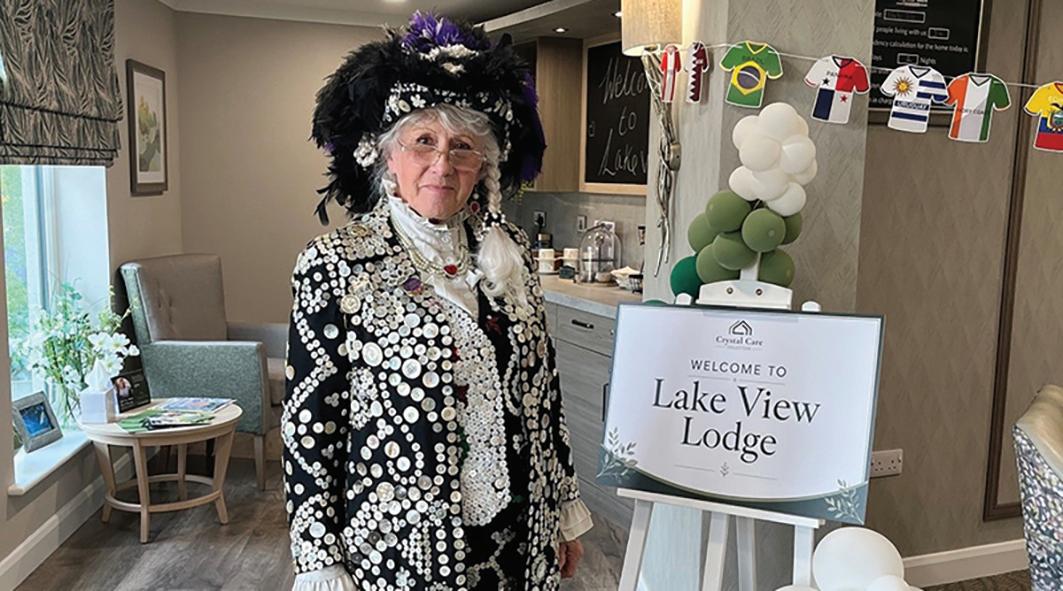
beginning a lifelong passion for preserving and sharing the Pearly heritage and traditions.
Resident Margaret Howe (88) said, “I thoroughly enjoyed the performance, and it brought back a lot of memories too. Everyone had a good time!”
Sally Taylor, the Customer Relations Manager at Lake View Lodge added,
“It was an absolute pleasure to welcome Pearly Queen Susan to our home. Her energy and passion for Cockney traditions created a memorable afternoon for our residents. Seeing everyone singing together, wearing their bowler hats, and enjoying the occasion was wonderful.
“Events like these are what Care Home Open Week is all about –bringing people together and creating special moments.”
£35
Royal London Asset Management has committed to forward-fund two purpose-built elderly care homes in the South East of England, comprising a total of 146 beds, as part of its expanding investment in UK healthcare infrastructure.
The homes, located across Kent in Coxheath and Canterbury, will each provide 73 beds, complete with strong sustainability features and high-quality staff and resident facilities. Developed by Aspire LPP, a specialist care home developer, the homes are designed to deliver future-proofed residential and dementia care in locations with a lack of supply and a strong long-term demand for modern care provision.
These acquisitions form part of Royal London Asset Management’s wider healthcare strategy, which has now committed £450 m to the sector. The strategy focuses on investing in purpose-built healthcare assets that support essential social infrastructure while offering longterm, resilient income and aligns with Royal London Asset Management’s ambition to scale its healthcare exposure.

The care homes will be operated by Dunham Care, a care home operator backed by the McGoff Group, which has a long-standing presence in the development and operation of care homes in the UK. Nick Short, Fund Manager at Royal London Asset Management, said: “These investments reflect our continued confidence in the long-term fundamentals of the healthcare sector. By investing in and partnering with experienced developers and operators to deliver high-quality, purpose-built care homes in well-chosen locations, we are supporting the provision of essential care infrastructure while generating sustainable, longterm outcomes for our investors.”
Freddie Richards, Head of Healthcare Transactions & Asset Management at Royal London Asset Management, said: “The Royal London Asset Management Healthcare Fund is focused on partnering with the very best developers and operators in the market. It is particularly positive to be working once again with Aspire and the management team at Dunham Care, where our longstanding relationships mean we have seen firsthand their expertise and commitment to quality. That depth of partnership is central to our ability to deliver highquality, purposebuilt care homes in locations where longterm demand is strongest.”
Michael Lucas, Managing Director at Aspire LPP, commented: “These two developments reflect our continued focus on delivering highquality, purposebuilt care homes in locations where there is both a clear undersupply and longterm need. Working with Royal London Asset Management and Dunham Care allows us to bring forward schemes that are designed to the highest standards, with sustainability, operational efficiency and resident wellbeing at their core. We are pleased to see these projects progress and to play a role in supporting the provision of modern care infrastructure across the South East.” Chris McGoff, Chief Executive Officer at Dunham Care, said: “Coxheath and Canterbury will add two welldesigned, modern homes to our portfolio, enabling us to deliver highquality residential and dementia care in areas with growing demand. We look forward to operating these homes in partnership with Royal London Asset Management and Aspire LPP, creating environments that support residents, families and staff, while contributing positively to the local communities they serve.”
Scientists in the United States have proposed a new theory that could reshape understanding of how Alzheimer’s disease develops, offering potential new directions for future treatments and research.
Researchers at the University of California, Riverside suggest that Alzheimer’s may begin not with the formation of the amyloid plaques that have long been considered a hallmark of the disease, but with a disruption occurring inside brain cells when two proteins compete for the same role.
For decades, Alzheimer’s research has focused heavily on amyloid beta, a protein that accumulates in the brains of people living with the condition. However, despite significant investment in therapies designed to remove amyloid deposits, many treatments have shown only limited success in slowing or reversing disease progression.

The new study highlights a possible interaction between amyloid beta and another protein, tau, which plays a crucial role in maintaining the internal transport system of nerve cells. Tau normally helps stabilise microtubules – tiny structures that act as transport pathways, carrying essential materials throughout neurons.
According to the researchers, amyloid beta may be capable of attaching to these same microtubules. Laboratory experiments found that the two proteins bind to microtubules with similar strength, raising the possibility that increasing levels of amyloid beta could displace tau from its normal position.
If this occurs, the consequences could be significant. The disruption of microtubules may impair the ability of neurons to transport nutrients and other vital materials. At the same time, tau may begin to accumulate
abnormally and move into areas of the cell where it would not normally be found, contributing to the changes associated with Alzheimer’s disease.
The researchers believe this mechanism could explain why both amyloid beta and tau build up in the brain, while also helping to account for the limited success of treatments that focus solely on removing amyloid plaques. Under this model, the visible plaques and tangles associated with Alzheimer’s may be consequences of deeper cellular dysfunction rather than the original trigger of the disease.
The theory also aligns with evidence showing that the brain’s natural waste-removal process, known as autophagy, becomes less effective with age. As this cellular “housekeeping” system slows, amyloid beta may accumulate inside neurons, increasing the likelihood of interference with tau and microtubule function.
Researchers noted that previous studies linking lithium use with a reduced risk of Alzheimer’s may also support the hypothesis, as lithium has been shown to help stabilise microtubules. While further research is needed, this observation suggests that protecting the cell’s transport network could become a future therapeutic target.
For the care sector, the findings underline the complexity of Alzheimer’s disease and the continuing importance of research into its underlying causes. Although the study does not immediately change clinical practice, it may eventually help guide the development of treatments aimed at preventing cellular damage before the characteristic symptoms of dementia emerge.
A community food store in Dorset that feeds dozens of people in need each week has thanked residents, families, friends and staff at a nearby care home for raising more than £4,400 to help its work.
Bourne Community Hub in Poole staged a celebration tea party for visitors from Colten Care’s Bourne View who made it their main charity to support last year.
Funds were raised through events at the home such as fairs, fetes, raffles, ‘tea and togetherness’ sessions and business breakfasts.
The thank-you afternoon featured live music from ukulele group Pups and songs performed by Year 6 pupils at St Joseph’s Primary School in Poole.
Team members attending from Bourne View were Home Manager
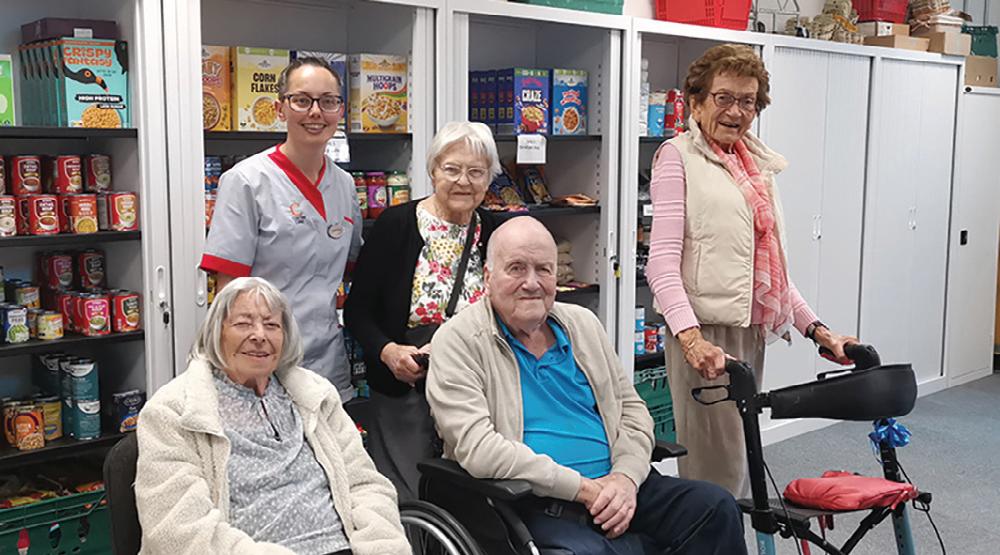
Stuart King, Companionship Team Leader Natasha Dancy, Customer Support Advisor Juliet Brett and Minibus Driver Paul Hilliam. Stuart said: “We’re so privileged and pleased to know that our efforts are supporting the hub’s much-valued food cupboard scheme, which allows community members to access essential food items at a minimal cost. Residents were really touched by the effort made to thank them and to learn just how much of a difference their fundraising had made. We’re also proud to continue supporting this initiative through regular monthly food donations.”
Hub spokeswoman Donna Crutcher said: “We are eternally grateful. It’s an amazing amount of money.”

Employers need to act now to make sure their workers are protected during the current heatwave. That’s the message from the Health and Safety Executive (HSE), the country’s workplace regulator, as summer arrives in the UK.
The regulator sees a surge in people seeking advice in periods of hot weather and, following the UK Health Security Agency (UKHSA) issuing the alert, is calling on employers to plan for and support those working in extreme heat. The regulator says doing so will keep workers healthy and safe while also maintaining productivity.
Employers must assess risks to the health and safety of their workers by law, including risks from extreme weather such as heatwaves. While there is no legal maximum temperature for workplaces, heat is classed as a hazard and should be treated like other hazards.
HSE says everyone – whether working indoors or outdoors – is at risk and employers should discuss with workers changes to manage the risk.
John Rowe, Deputy Director for Technical Support and Engagement for the Health and Safety Executive, said: “Last summer should have been a wake-up call for all employers. If we continue to experience hotter summers this could have a big impact on the workforce of this country, affecting everything from health of workers to productivity on construction sites.
“The risks to workers from extreme heat must be properly assessed. Practical steps can include providing
adequate ventilation and shade and allowing enough breaks for workers to cool down. We provide detailed guidance on our website hse.gov.uk.
“We know all employers are under pressure and we don’t want to add to their burden but it’s vital they think hard now about simple and cheap measures they can put in place to support workers should we see extreme heat again this summer.”
Simple measures to consider include:
• Making sure workplace windows can be opened or closed to prevent hot air from circulating or building up.
• Using blinds or reflective film on workplace windows to shade workers from the sun.
• Placing workstations away from direct sunlight and heat sources.
• Putting insulation around hot pipes and machinery.
• Offering flexible working patterns so workers can work at cooler times of the day.
• Providing free access to drinking water.
• Relaxing dress codes if possible.
• Providing weather-appropriate personal protective equipment.
• Encouraging workers to remove personal protective equipment when resting (ideally in shaded areas) to cool off.
• Sharing information about the symptoms of heat stress and what to do if someone is affected.
A resident at a Penarth home was able to complete her wish of walking down a disused railway line as part of her Seize the Day initiative.
Shirley Power has been living at MHA Morel Court for almost a year and expressed a desire in walking down the Cosmeston Railway Path after hearing activity coordinator Dawn Parsons talking about it.
Dawn then had a conversation with Shirley and once the weather improved, made the decision to take her down there.
The duo walked there and back, with Shirley walking a chunk of the duration before using her wheelchair.
The Seize the Day initiative encourages residents to re-experience activities or events from the past or to do something they would like to do for the first time.
MHA Morel Court provides residential care for 36 residents.
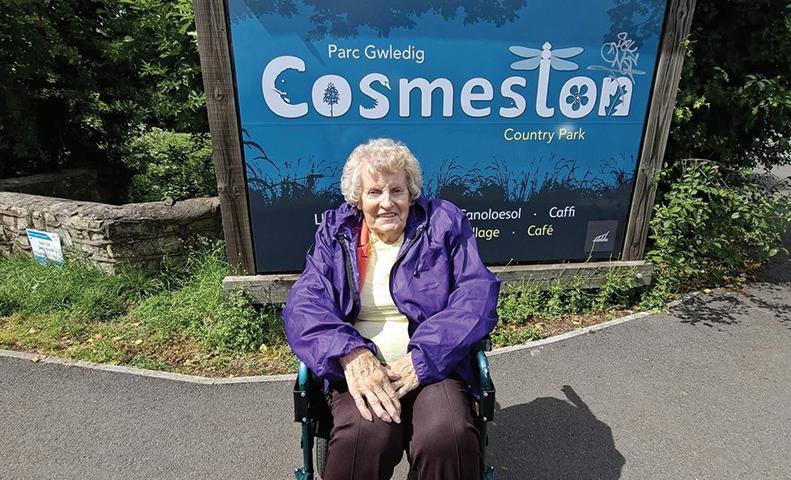

Speaking after the trip Dawn said: “ Shirley and myself had a great time exploring the Cosmeston Railway Path and the Country Park.
“The journey there was around a mile so we had a great time and thankfully the weather was nice.
“I wasn't aware of the disused railway path, so it was a new experience for me and Shirley was telling me all about it.
“Shirley wanted to walk as much of the Old Railway Path as she could on her way to Cosmeston, taking in the beautiful sights and sounds of nature along the route.
“She especially enjoyed seeing one of the lakes and spending time outdoors in the fresh air.
“We ended the trip with a pot of tea, and it was a lovely afternoon.”
Welcome to Blue Rain - our activity store is built on over 14 years experience supplying products that bring joy, inspire motivation, and enrich the lives of those who need a little extra support, or simply want to have fun, whatever the weather.
Come find your next reason to smile. Scan me
Prior to the early 2000’s, the only definitive way to determine if someone had Alzheimer’s, or another form of dementia, was through an examination of the brain during an autopsy. Across the UK and around the world are hundreds of clinical trials happening to help diagnose and treat dementia but also improve the lives of those diagnosed. Maria Blackwell, care specialist technical writer, explores the advances in dementia research.
Alzheimer’s and dementia have topped the table as the leading cause of death in England and Wales, according to the Office for National Statistics (ONS) for 2024, since 2021. With this being the leading cause of death for four years running, it highlights how vital research and development of diagnostic tools and treatments in this area is.
What happens in the brain that causes a dementia Alzheimer’s disease is caused by a buildup of two types of protein that naturally occur in the brain.
• The Amyloid-beta protein — sticks together in plaques outside of the brain cells.
• The tau protein — tangles inside of the brain cells themselves. This buildup causes the connections between cells to be lost and cells can die off. These proteins spread through parts of the brain, especially the tau protein, which is a long slow process and normally starts approximately 20 years prior to symptoms showing in an individual.
The most common forms of dementia include:
• Alzheimer's disease
• vascular dementia
• Lewy body
• frontotemporal dementia
• mixed dementia
• young-onset dementia.
Researchers have discovered a new protein in the brain which is linked to frontotemporal dementia. This type of dementia is more common in younger people between 45-65 years old and affects the frontal and temporal lobes, which are the control centres for behaviour, personality and language. This new protein discovery opens doors for new diagnostics and treatments to be developed.
Although those proteins naturally occur in the brain, there are also other risk factors that are linked to the development of Alzheimer’s and dementia identified by the Lancet Commission.
“Excessive alcohol consumption, traumatic brain injury, air pollution, hypertension, obesity, smoking, physical inactivity, diabetes, depression, lack of education in early life, hearing loss, low social contact.” LATE TYPE OF DEMENTIA
In April 2019, a new type of brain disorder that causes dementia was formally identified and named by researchers. Limbic-predominant age-related TDP-43 encephalopathy (LATE) is caused by a buildup of a different protein, TDP-43, whereas Alzheimer’s is caused by a buildup of amyloid and tau proteins. LATE causes similar cognitive decline symptoms and therefore is often misdiagnosed as Alzheimer’s. Researchers have found that the protein TDP-43 appears in nearly onethird of people over the age of 85, and can often also occur alongside Alzheimer’s disease.
ADVANCES IN RESEARCH
Research about Alzheimer’s and dementia has been advancing at pace. The Government announced £49.9 million of new funding in 2024. This was for co-ordinated dementia trial sites across the country. Between government funding and charity fundraising, the amount gone into this research over the last several years is in the billions. Medication (new and existing)
Medications to treat the symptoms and slow the progression of the disease are already available on the NHS. The medications currently licensed in the UK are donepezil, rivastigmine, galantamine and

memantine. These medications are effective for Alzheimer’s and Lewy body dementia. The DOMINO study in 2014, which was supported by the
National Institute of Health Research (NIHR) showed that these medications can slow the progress of Alzheimer’s, including in the later stages of the disease. However, research into the medications showed the differences in how they work and that combinations of them potentially could be more effective than taking one alone.
Two medications are approved for use in the UK but not are available on the NHS as the National Institute for Health and Care Excellence (NICE) did not approve them following a cost-benefit analysis.
• Lecanemab — this is an immunotherapy that targets the amyloid protein and removes it. Lecanemab is currently being offered intravenously and would have to be administered every couple of weeks. The US have approved the use of it in an injectable form, but this has not been approved in the UK yet.
• Donanemab — this works very similarly to Lecanemab, in that, it targets the proteins in the brain that causes buildup. It is also offered intravenously but this is given every four weeks.
Although the trials have shown that people get an extra five months on average of better cognition, there are risks and long-term side effects have not yet been studied. There is evidence to show that Lecanemab and Donanemab can have a negative effect on the blood vessels as it removes the plaque. They also have the risk of causing a bleed in the brain which can lead to potential death. Both medications are also only tested on those with Alzheimer’s disease, and therefore only a small population of those with a diagnosis would potentially benefit.
If the medication did become available on the NHS, the chances of the NHS delivering this treatment widely is not very high. There would have to be robust systems in place and an upskill of teams, which would take a lot of time and money from the already stretched NHS BLOOD TESTING
Blood tests to detect Alzheimer’s do exist and have been tested extensively to prove that they are accurate and can distinguish Alzheimer’s from other types of dementia. However, they are not currently available on the NHS as they have not been tested on a wide enough range of people.
It is estimated that a third of people with dementia are undiagnosed and therefore having a non-invasive test that can get a diagnosis. Therefore, providing support to someone is vital. Alzheimer’s Research UK and NIHR have collaborated on a project called the Blood Biomarker Challenge. This is a £5 million funded project that uses an individual’s own biomarkers, which are specific proteins, molecules or bodily process, that can inform healthcare professionals about someone’s current health and their risk of developing Alzheimer’s. This collaboration has stated that:
“it’s hoped the tests will be able to diagnose different forms of
dementia, such as Alzheimer’s disease, earlier and more accurately than current methods”.
Due to the current blood tests, some people may end up being diagnosed with a subtype of Alzheimer’s when they have Alzheimer’s disease itself. This can lead to incorrect or less effective medication and alternative treatments. The Blood Biomarker research and other blood tests must reach the same level of effectiveness as current tests available in specific diagnosis for this to be successful.
ARTIFICIAL INTELLIGENCE
The use of artificial intelligence (AI) in the world of adult social care is quickly advancing, including in dementia diagnosis and research. Currently, one of the ways to diagnose a person with dementia is using a magnetic resonance imaging (MRI) scan to detect the changes within the brain. These scans can take between 45–60 minutes, and an MRI scan can be quite claustrophobic and distressing for some.
With the advances in AI, scientists have been able to provide people with a wearable device, similar to a watch, which detects changes in brain activity. By using this data and an MRI scan, it analyses the data with a complex algorithm, which can reduce the scanning time by almost two thirds. These algorithms are also being used to detect changes in the brain that a human eye cannot see, such as changes in the energy usage, chemical balances and physical structure. This can be extremely beneficial to the person to reduce any distress or anxiety around the scan and allow more people to access MRI scans with shorter wait times. However, this is still in the earlier days of testing and has not yet been widely rolled out to be utilised by the NHS.
AI is also being used to analyse data to allow for an insight into genetic profiles that may be at higher risk of developing Alzheimer’s and the genes which cause it. This can be of huge benefit to the wider population as although there is no cure currently, it can allow for people to plan for the future more effectively. For example, they can then set aside money for care and treatment if they are informed that they are likely to develop this. The use of this type of data as well can help develop clinical trials that are more targeted and provide more effective results.
AI and computer programming can also allow for researchers to analyse and understand large volumes of data more efficiently to inform developments in new medication and trials for these. Alongside this, AI can also help researchers to predict how Alzheimer’s and dementia will affect the brain and how the symptoms can change and develop over time. This can inform further treatments but also inform non-clinical treatments to be more targeted and effective for the individual to live a more fulfilled life.
Other research also includes scientists looking into medicines that manage blood pressure issues, as there are some early signs that these may benefit people with Alzheimer’s and reduce the risk of dementia.
Alongside this, UK Research and Innovation has reported that another protein, TAF15, is in the brain of those with frontotemporal dementia has been discovered. TAF15 forms toxic tangles in the brain of around 10% of people with frontotemporal dementia and scientists can use this protein to target treatments and further research.
Research around Alzheimer’s and dementia is advancing quickly and has the impact to change the lives positively for a large number of people. However, it is likely to still be a while before medications, testing and other innovations are widely available for the general public due to cost and the need to upskill staff and put systems in place to provide them. With the advances in science and technology, it gives hope for the future for better and more effective treatment and care for those living with Alzheimer’s and dementia.
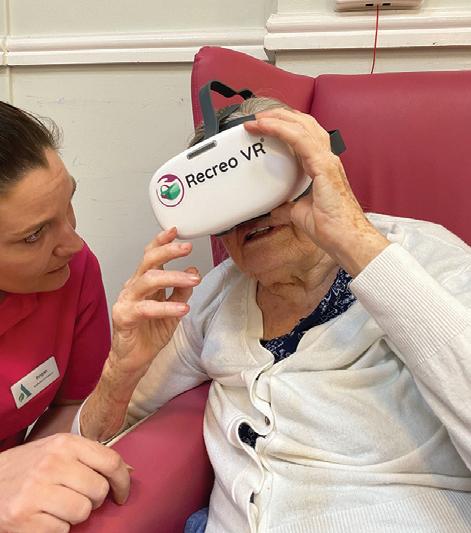
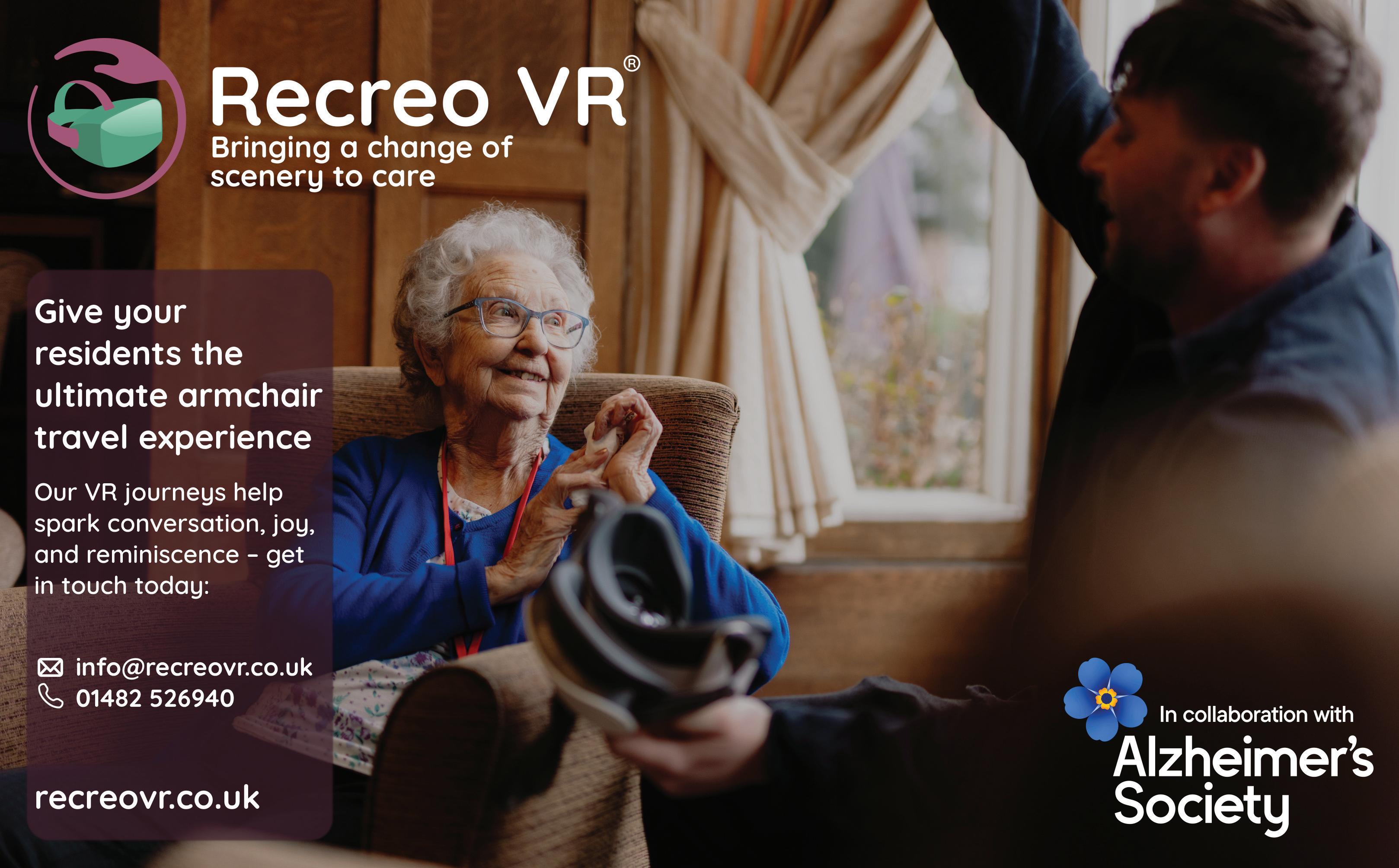
At Broomy Hill Nursing Home, innovation and compassion come together in the most inspiring way. Residents at the home are stepping into a whole new world with the introduction of virtual reality headsets. It is an exciting innovation with the power to create uplifting and meaningful moments for the residents under our care.
Virtual reality is becoming an exciting innovation in care homes and at Broomy Hill Nursing Home it is making a meaningful impact. VR is more than just a tool; it allows residents to relive cherished memories and experience activities they may no longer be physically able to do.
For residents with dementia or complex mental health needs, VR stimulates memories, sparks conversations, and provides relaxation through immersive experiences. Using headsets to create digital 3D environments, VR acts as a tool for cognitive stimulation, pain relief, and wellbeing, enabling individuals to safely revisit familiar places or explore new worlds.
We were thrilled at the opportunity to be a part of the Recreo VR experience. It was something new for the residents and us. However, it is not only something new; it is a learning experience for the entire staff at the home.
Our Wellbeing Lead, Lauren, is currently working on a list of available experiences that our residents can
choose from to do something different each time they use the headset. This way, our residents will have something new to look forward to each time they use the headset, as new content is added every eight weeks.
One of the new experiences that our residents will enjoy in the near future is a seated safari, where they will have the opportunity to come face to face with a rhino from the comfort of their chair.
Recently, our residents travelled through time to the 1950s, where they had a virtual visit to a traditional house, cinema, and a high street. In the house, our residents travelled from room to room, exploring the food pantry and admiring the decorations of the house. In the cinema, our residents explored the ticket office, the reel room, and the cinema itself. In the high street, our residents visited an electronics shop, a record shop, and a toy shop, enjoying the experience of each of these different stores.
Many of our residents commented on how real the experience felt, almost like stepping into a memory. Some were actually looking at their hands to get used to the virtual world. As the shops, toys, and songs from the period were brought up, the experience naturally evolved into memories and stories. The dialogue was effortless as the resident's shared memories from their own lives to each other and staff.
Virtual reality is more than just an activity at Broomy Hill. It is another meaningful way we promote wellbeing and engagement for our residents. By using Recreo VR, we encourage conversation and reflection, while continuing to look for ways to enhance quality of life within our home.
For further information visit www.recreovr.co.uk
ozens of MPs across the political spectrum have signed a House of Commons Early Day Motion recognising the contribution of Emergency Medicine professionals – and calling for action against the rising tide of violence and aggression they face.
Led by the MP for Bath Wera Hobhouse, the motion was tabled on 2 June, following Emergency Medicine Day 2026, which took place on 27 May.
The EDM recognises the challenges faced by staff working in Emergency Departments across the UK, their valuable contributions to the health service, and the resilience they demonstrate at work.
The motion also noted the increasing levels of violence, aggression and abuse that healthcare staff are facing. This is often in the context of crowded conditions in Emergency Departments.
It recognised the impact of unsafe working conditions on staff wellbeing, workforce retention and patient care.
Further, it called for the enforcement of a zero-tolerance approach to violence and abuse against healthcare staff.
As of 16 June, a total of 37 MPs have backed the motion, with signatories from the Liberal Democrats, Labour, Plaid Cymru, the Democratic Unionist Party, the Social Democratic and Labour Party, Traditional Unionist Voice, and an independent.
The Royal College of Emergency Medicine encourages all MPs, regardless of political affiliation, to add their signatures and show their support for Emergency Medicine professionals throughout the UK.
Dr Ian Higginson, President of the Royal College of Emergency Medicine, said: “Every day in this country, staff in Emergency Departments are on the receiving end of utterly vile abuse, intimidation and – all too often – physical violence.
“These are people who dedicate their working lives to helping others. They have arrived at work to save lives, yet their own wellbeing is
put at risk.
“It is unacceptable and I give my heartfelt thanks to all MPs who have, to date, signed this Early Day Motion recognising this as the important issue it is.
“We need to reset our tolerance towards violence and aggression towards healthcare staff – and we need to back that up with enforcement action where appropriate.
“Too many of our members feel that employers and the authorities do not take the problem seriously. It feels as though the attitude from some is that this is just part of the job. This is a view I hear too frequently, and which I utterly reject.
“I call on all politicians to sign this motion, and to put their full weight behind measures to tackle violence and aggression towards healthcare staff.”
Healthcare real estate transactions in the UK reached a record £11.3 billion in 2025, according to global property adviser Knight Frank, approximately four and a half times the historic five-year average and the highest annual volume recorded since 2012.
Building on the strong momentum established in 2024, the sector experienced a wave of large platform acquisitions and portfolio transactions, with portfolio deals accounting for 89% of total activity during the year. Significant transactions included Welltower’s acquisitions of Barchester and HC-One, PHP’s merger with Assura, and Omega Healthcare’s purchase of Four Seasons Health Care assets, accounting for a combined c. £8.5 billion of activity.
Investor demand remained concentrated in elderly care assets, which accounted for 80% of total transaction volume, compared with a five-year average of 77%. Primary care represented a further 16% of activity, reflecting continued investor conviction in sectors supported by long-term demographic trends and resilient income characteristics.
The UK market also saw a substantial increase in overseas invest-
£11.3bn in 2025
ment, with international capital accounting for 74% of transaction volume. North American investors were particularly active, reflecting growing global recognition of the UK’s healthcare real estate market and the attractive demographically-driven opportunities presented by an ageing population, constrained supply and inflation-linked income streams.
Healthcare REITs with a UK footprint now account for a combined £118 billion of global assets under management, up from £94.2 billion a year earlier, underlining the scale of consolidation and capital deployment taking place across the sector.
Despite continued geopolitical uncertainty and a higher-for-longer interest rate environment, healthcare assets continued to deliver stable performance. Average annualised returns reached 7.7% at the end of 2025, up from 5.8% in the previous period, reinforcing the sector’s reputation as a resilient long-term investment.
Julian Evans, Global Head of Healthcare at Knight Frank, said: “2025 was a landmark year for healthcare real estate investment, driven by a
combination of demographic fundamentals, strong operator performance and growing institutional interest in the sector.
“Much of the activity was concentrated in large portfolio and platform transactions, reflecting an increasingly mature and institutionalised market, with Knight Frank advising on £7.5 billion of such deals. We expect healthcare to remain firmly on investors’ radars throughout 2026, supported by long-term demand drivers, attractive income characteristics and continued interest from both domestic and international capital.”
Ryan Richards, Associate at Knight Frank, added: “In a market where consistency is increasingly hard to come by, the healthcare sector has continued to demonstrate genuine resilience. As M&A activity shows little sign of abating, volume will likely continue to be driven by portfolio and platform deals as established operators look to expand and new capital seeks market entry opportunities, drawn by the sector’s clear appeal.”
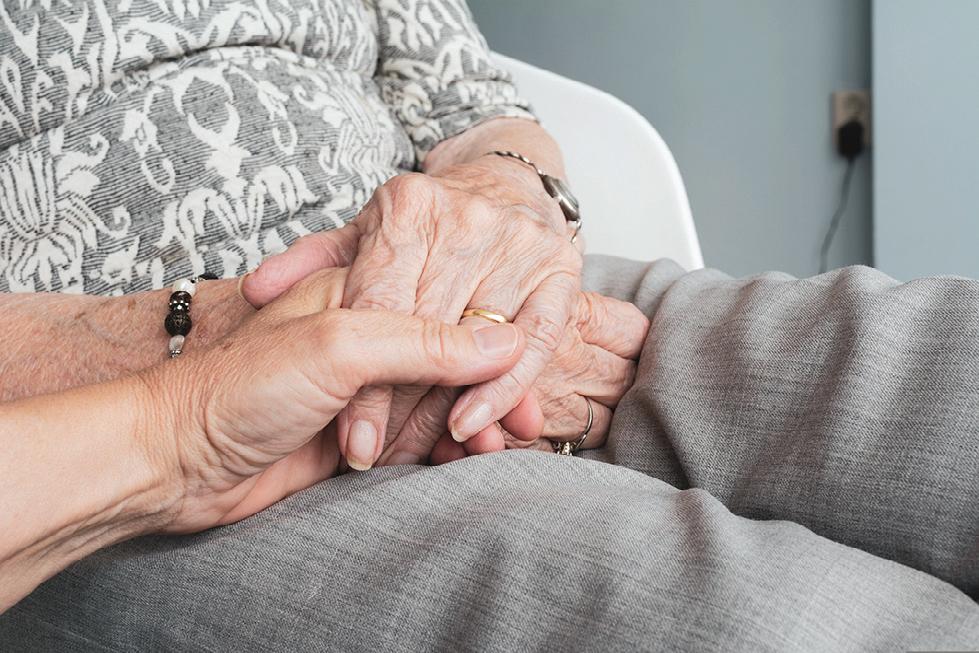
The Met Office has issued a rare red weather warning in the UK for high humidity and ‘Tropical Nights’, with temperatures remaining above 20°C overnight. As a result, families are being urged to check in on elderly relatives, who may be at greater risk during the extreme heat.
For older individuals, the heat can quickly become dangerous. This is because many are less able to regulate body temperature yet more likely to become dehydrated, meaning they may struggle to recover after hot, restless nights. With sleep disruption leaving people tired, weak and less able to cope the following day, simple check-ins from family, friends and neighbours could make a real difference.
Leighton Roberts, Managing Director at Grosvenor Mobility (www.grosvenormobility.co.uk), says: “Hot weather can feel especially draining for older people, while disturbed sleep can make the effects harder to manage. Simple steps like regularly hydrating, resting during the hottest parts of the day and keeping curtains closed when the sun is strongest can make a real difference. This will additionally help to keep your bedroom cooler overnight.
We would also encourage families, friends and neighbours to check in on older loved ones, especially
those who live alone or struggle with day-to-day mobility. A quick phone call or visit can help make sure they are coping comfortably with the warmer weather.”
Placing water within reach overnight, utilising lightweight bedding and opening windows for airflow (where safe to do so) may also help support better sleep during warm nights.
Heat can quickly affect comfort, energy levels and rest, which may leave older people feeling less able to cope during spells of high temperatures. A restful home setup can help them feel safer, more comfortable and independent as warmer weather approaches.
Leighton adds, “Supportive furniture, such as riser recliner chairs and adjustable beds, can make rest more comfortable during hotter weather, particularly for those who need to elevate their legs, change position with ease or settle into a more supportive posture when relaxing at home.”
Preparing the home for warmer days ahead can help support overall
comfort and well-being. Grosvenor Mobility offers mobility-friendly furniture designed to help customers rest more comfortably

Geraldine McMurdie, Dementia Specialist at Quality Compliance Systems (QCS), discusses the links between dementia and falls and the ways in which these can have an impact on those living with a dementia.
Those living with a dementia are at a significantly higher risk of falling, with studies indicating that one in three adults over the age of 65, and half of people over 80, will experience at least one fall a year. People living with a dementia are also 5 times more likely to be admitted to long-term care after a fall.
Falls can significantly impact the confidence, health, and wellbeing of individuals living with dementia. They can also heighten the stress experienced by caregivers and place additional strain on the healthcare system.
DEMENTIA AND FALLS
As a dementia progresses over time effecting the brain and how it works, this can often lead to significant effects on a person’s mobility and safety awareness, leading to challenges such as reduced balance, difficulty managing dual tasks, spatial navigation issues, increased frailty, and medication side effects. These factors contribute to those living with a form of dementia experiencing falls.
KEY STATISTICS:
Injury and hospitalisation – around 31% of people with dementia experience a fall leading to hospitalisation over a 2.5 year period
Fracture risk – 18% of those with dementia will experience a fracture, often following a fall
Mortality risk – falls can be a major cause of death, with higher injury-related mortality risks in those living with dementia
Often when someone living with dementia experiences a fall an ambulance is called as the individual may not be able to convey how much pain they are experiencing or how serious the injury is. This can lead to distress and poor health outcomes if care staff do not know how to respond to the situation in a prompt, caring and appropriate manner.
DEALING WITH FALLS
Understandably falls can happen very quickly and without warning and are often a distressing time for both the individual who has fallen and the care provider who is looking after them. It is a time where decisions will need to be made quickly in order to provide the best possible care and support at the time it’s needed most. It is also important that these decisions are made in line with the individual’s care plan and the policies in place for best practice.
With Lyra Multi, QCS’s latest stage of AI technology, care providers can access all of their policies and compliance documents within seconds, helping them to make those quick decisions in a compliant and safe way. Lyra Multi connects all relevant policies, interprets them in context and converts complexity into clear, relevant and practical guidance exactly when teams need it, turning policy storage into real decision support.
At any given time, users can ask a question and get instant, tailored answers along with clear summaries and key insights. For example, if a resident with a dementia has fallen over and the care provider wants to check how support them with safe and appropriate care, they can type the message into Lyra and have all the relevant information from all of their policies provided to them in a succinct and understandable way within seconds.
Ensuring decisions are made both quickly and in a way that is compliant with regulations and policies will provide the best possible care for the individual who has fallen as well as give the care provider the confidence that they have acted in the most suitable way.
Find out more about Lyra Multi at www.qcs.co.uk/lyra
See the advert on page 15.
Residents and staff at Hugh Myddelton House Care Home in Southgate have once again come together to support their inspiring Resident Ambassador, Rosa Bertolino, in a successful fundraising effort for the MS Society.
On Saturday, 6 June, residents, staff, family members and supporters took part in a fundraising walk to raise awareness of Multiple Sclerosis and generate vital funds for the charity. The event proved to be a tremendous success, raising an impressive £1,410. The group enjoyed a fantastic day filled with laughter, goodwill and community spirit. Participants also helped spread awareness by handing out information leaflets throughout the walk, engaging with members of the public and highlighting the important work of the MS Society. The camaraderie among everyone involved was truly remarkable, with

participants supporting one another every step of the way and creating a memorable experience for all.
Resident Ambassador Rosa Bertolino said:
“I would like to thank everyone for their continual support. I would also like to mention Barchester Healthcare, who have been instrumental with their support. The day was a wonderful success, and I am incredibly grateful to everyone who helped us raise awareness and funds for the MS Society.”
The team at Hugh Myddelton House is immensely proud of Rosa’s dedication and determination in supporting such an important cause. The home would like to thank all those who participated, donated and contributed to making the event such a successful and enjoyable occasion.

By Professor James Francis Kwame Fah Ohene-Djan PhD, FHEA

My brother Anthony lived with multiple sclerosis. He was not “an MS patient” to me. He was my brother. He had his own personality, humour, frustrations, hopes and ordinary routines. Like anyone living with a long-term condition, he wanted to get on with life and not be defined by illness.
But when someone you love has a serious condition, there is a quiet fear that sits in the background. You may not speak about it every day, but it is there.
What happens if they become unwell when you are not with them? What happens if they fall, get confused, cannot explain their condition, or need help from someone who knows nothing about them? Would that person know who to contact? Would they know about medication, allergies, communication needs, or the small but vital details that make care safe and personal?
After Anthony died, those questions stayed with me.
I also had cancer myself, and that changed how I thought about medical information. When you are well, a list of medication or an emergency contact number can seem like admin. When you are ill, those details become something else entirely. They become part of your safety. They become part of how quickly someone can understand you, support you and contact the people who matter. That is why I created MiCode.
MiCode is a QR code designed to store and manage your medical information and emergency contacts. It can be carried on a card, keyring, sticker, bracelet, pendant or phone. If someone needs help, the code can be scanned instantly using any smartphone. No app is needed.
The person with the MiCode remains in control of what information is stored and what is shown. It can include medical conditions, medication, allergies, emergency contacts, communication needs, care instructions, documents, or anything else that may be important in an emergency. It can also work in different lan-
guages, which matters in a country as diverse as ours, and for people who travel.
For people with disabilities, long-term conditions, dementia, autism, epilepsy, diabetes, cancer, heart conditions, MS, learning disabilities, sensory impairments or mental health conditions, MiCode can be incredibly useful. In a crisis, people are often expected to explain themselves quickly and clearly. But those are exactly the moments when pain, fear, confusion, shock or illness can make that impossible.
MiCode gives people a voice when they may not be able to speak for themselves.
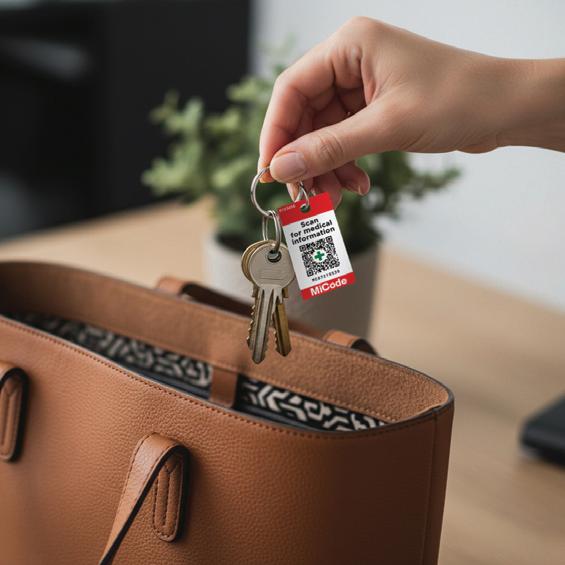
It is also very useful for people who are being cared for. So much care depends on knowledge held by other people: a daughter who knows the medication, a husband who knows the hospital consultant, a carer who understands the routine, a support worker who knows how best to communicate. But carers cannot be everywhere all the time.
MiCode helps that essential information travel with the person.
For families and carers, this can bring real peace of mind. It does not remove worry — nothing does — but it can reduce one of the biggest fears: that the person you care for will need help and nobody will know who they are, what they need, or who should be called.
I also wanted MiCode to be affordable. Safety should not be a luxury product. MiCode starts from £20, which I believe is an amazing price for something that can carry such important information and provide such reassurance.
People can get MiCode directly from www.micode.uk. And if anyone has questions, they can always email me personally at james@micode.uk.
MiCode began with Anthony. It also came from my own experience of illness. But it is for anyone who wants to feel safer, more independent and better understood in an emergency. It is a small piece of technology with a very human purpose: helping people be known, protected and cared for when it matters most.
Karuna Manor Care Home celebrated its 11th Anniversary on Friday, 5 June 2026, with a joyful Hawaiian-themed event that brought together residents, families, staff, healthcare professionals, community members and special guests for an afternoon filled with celebration, gratitude and togetherness.
The milestone event recognised over a decade of delivering compassionate, person-centred care and highlighted the strong relationships that have made Karuna Manor Care Home a trusted part of the Harrow community.
A special highlight of the celebration was the attendance of the Mayor of Harrow, Councillor Yogesh Teli, who joined residents and guests to commemorate the occasion. The Mayor spent time meeting residents, speaking with team members and families, and congratulated the entire team for their unwavering commitment to providing exceptional care and enhancing the quality of life for older people.

The care home was transformed into a tropical paradise, complete with colourful Hawaiian decorations, vibrant floral displays and festive entertainment. Residents and guests enjoyed an afternoon of live music, delicious refreshments, games and activities, creating an atmosphere of warmth, laughter and community
spirit. The event provided families with the opportunity to spend quality time with their loved ones while celebrating an important milestone in the home’s history.
Speaking during the event, home manager of Karuna Manor Care Home said:
“Our 11th anniversary is a celebration of much more than the passing of time. It represents eleven years of compassion, dedication and meaningful relationships. Every resident has a unique story, and it is a privilege to be part of their lives. We are incredibly grateful to our residents, their families, our hardworking staff and everyone who has supported us throughout this wonderful journey. We are especially honoured that the Mayor of Harrow, Councillor Yogesh Teli, joined us to celebrate this important milestone.”
“The anniversary celebration also served as an opportunity to recognise the dedication of the care team, whose compassion, professionalism and commitment continue to make a positive difference to the lives of residents and their families. Their tireless efforts have helped create a caring community where residents feel valued, respected and supported every day.”
Anenta, the leading independent healthcare waste management specialist, has appointed waste expert Jonathan Sandford as Business Development Manager dedicated to the care home sector.
Brought on board to boost Anenta’s growing care home client base, Jonathan brings more than 35 years of waste industry experience – from running his own document shredding business to leading nationwide sales teams at a plc level. His appointment comes as Anenta accelerates its mission to help care homes eliminate unnecessary costs that can run into thousands of pounds a year.
In his new role, Jonathan will oversee the management of Anenta’s existing waste contracts, ensuring that care home waste logistics, service delivery, and waste disposal performance levels are industry leading. He will also be responsible for delivering bespoke, affordable and professional end-to-end waste management solutions to the care and nursing home sector.
Commenting on his new role, Jonathan said: “Our research shows that individual care homes are wasting up to £8,000 a year through poor waste management process and procurement. Across multiple sites, that adds up fast — and it's largely avoidable.

“My role is to help care homes put a stop to that by changing poor waste disposal habits and practices, so that we can deliver a better service that saves them time and money.
“I’ll be working with care homes to identify overbilling, reform waste disposal habits, deliver better staff training, and provide guidance on conducting complex pre-acceptance audits – all designed to take the
administrative burden off care home teams so they can focus on what matters: resident care.”
Using Anenta's real-time smart technology, care homes, their waste collection providers, and other stakeholders are brought together onto a single, unified management platform that provides full transparency. This allows efficiencies to be identified, implemented and measured, delivering significant and meaningful cost savings year after year.
Commenting on Jonathan’s appointment, Graham Flynn, Managing Director of Anenta, said: "Jonathan has the perfect combination of sector knowledge, commercial expertise, and an unwavering commitment to delivering added value to our customers.
“Alongside his expertise in waste management, Jonathan is perfectly placed to help care homes streamline their processes saving time, hassle and money."
As part of its service, Anenta offers care homes a free healthcare waste audit designed to identify areas for improvement that could
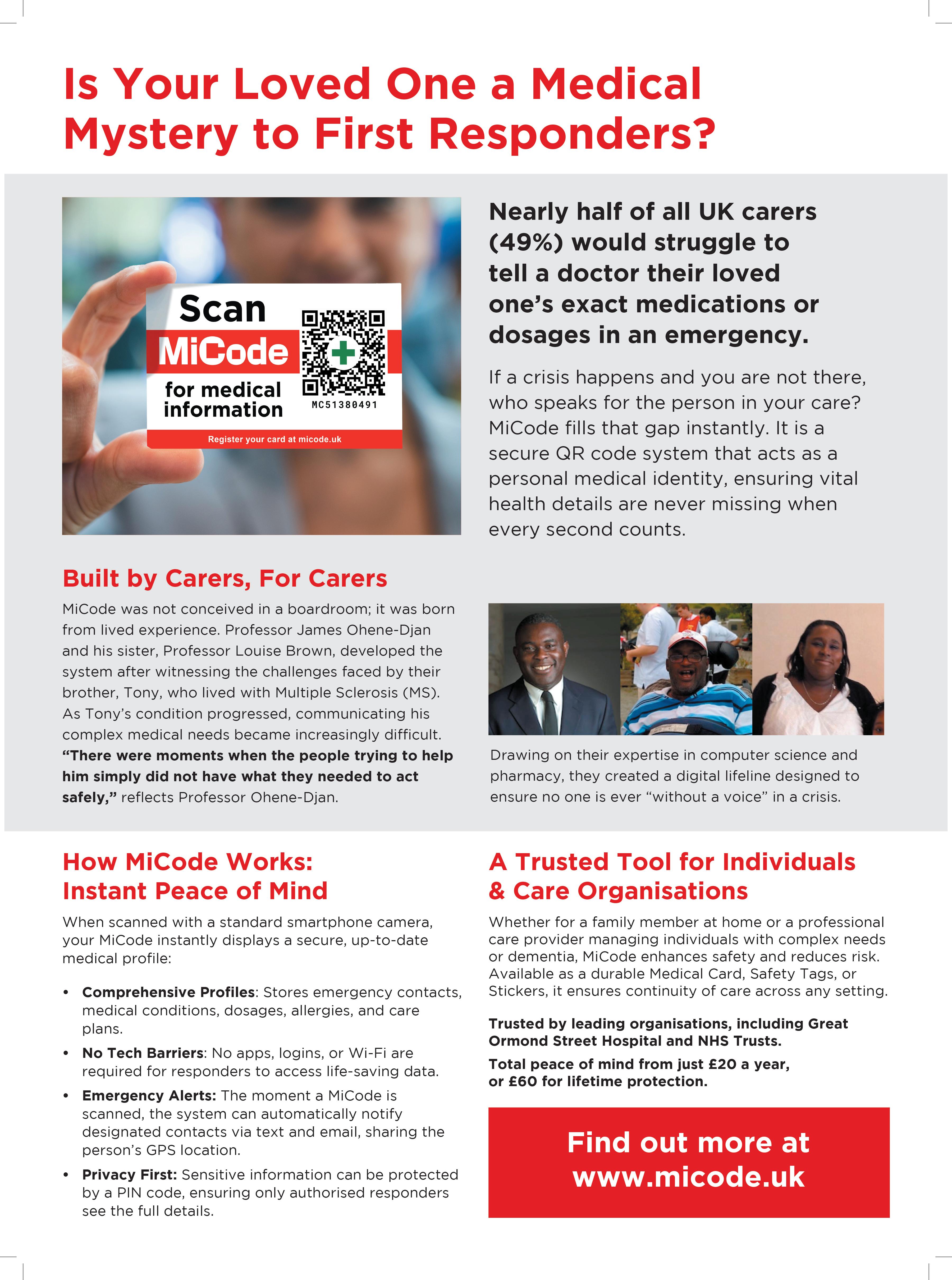

The Independent Care Group (ICG) has urged whoever succeeds Sir Keir Starmer as Prime Minister to be bold, honour Labour's commitments and finally tackle the social care crisis that successive governments have failed to solve.
Commenting on the change in Labour's leadership, ICG Honorary President Mike Padgham said:
"The change at the top of Government presents a once-in-a-generation opportunity to do what no Prime Minister has managed to achieve over the last three decades – put social care on a sustainable footing for the future.
"Whether it is Andy Burnham or another candidate who ultimately becomes Prime Minister, we simply ask them to be brave, be ambitious and be remembered as the leader who finally fixed social care."
The ICG says the new Prime Minister should immediately commit to delivering Labour's manifesto pledge to establish a National Care Service.
"The commitment was made to the country and should now be honoured. We have long argued that the answer lies in a National Care Service with one vision, one funding stream and one set of national priorities, sitting alongside the NHS as an equal partner."
The ICG is also urging the incoming Prime Minister to ask Baroness Casey to bring forward her review and publish recommendations during 2026, with implementation beginning immediately thereafter and no later than the end of 2026.
"People receiving care, their families and the workforce cannot wait until 2028 for change. The sector is
fragile, providers are struggling, staff remain undervalued and unpaid carers continue to carry an enormous burden. We need urgency, not further delay.
"The next Prime Minister should make social care an early priority and invite Baroness Casey to report this year so that meaningful reform can begin without further procrastination. The challenges facing social care are well known; what has been lacking is the political will to act decisively."
Mr Padgham added:
"I have campaigned for social care reform for more than 30 years. We know many of the answers already. Providers, people who draw upon care, families and staff possess a wealth of practical expertise and solutions. The independent sector stands ready to work alongside ministers and officials to help this Government succeed where successive administrations of all political colours have failed."
"The Independent Care Group and those working across the independent social care sector would be delighted to meet with the new Prime Minister at the earliest opportunity. We stand ready to share our experience, practical solutions and ideas to help them be bold, make a success of their premiership and, at long last, solve the social care challenge that has defeated governments of all political persuasions for far too long."
"We are not short of answers in social care. What we have lacked is the political determination to act. We would welcome the chance to work alongside the Prime Minister and ministers to ensure this Government succeeds where others have not, creating a lasting legacy for generations to come."
"Social care should no longer be the poor relation to the NHS. You cannot fix the NHS without fixing social care. The public deserves a modern, sustainable care system that values older and disabled people, supports families, rewards staff fairly and gives providers the confidence to invest for the future."
"The next Prime Minister has the chance to achieve something truly historic – to create a National Care Service, honour Labour's manifesto commitment, and finally give social care the status, investment and attention it deserves. We urge them to seize that opportunity."
Scottish care provider Meallmore has scaled new heights to raise over £2,500 for charity.
Eight brave members of the Meallmore Central East teams took part in The Kelpies Experience at Helix Park in Falkirk to raise funds for Age Scotland.
Karen MacDonald, Jodi Gleeson, Mark Kelly, Cameron King, Steven Welch, Charles Simpson, Lisa Calley and Improvement Jeche from across the Meallmore Group put on their helmets and embarked on an aerial adventure inside one of Scotland’s most iconic landmarks.
The challenge includes climbing through a series of aerial obstacles inside the sculptures, before reaching the horse’s mouth and making their way back down by abseil or Quick Flight descent.
The team took on the challenge to raise vital funds for Age Scotland, a charity dedicated to supporting older people across Scotland. Their work helps older people feel valued, connected and supported, including through their helpline, friendship calls, community groups, wellbeing programmes and campaigning work.
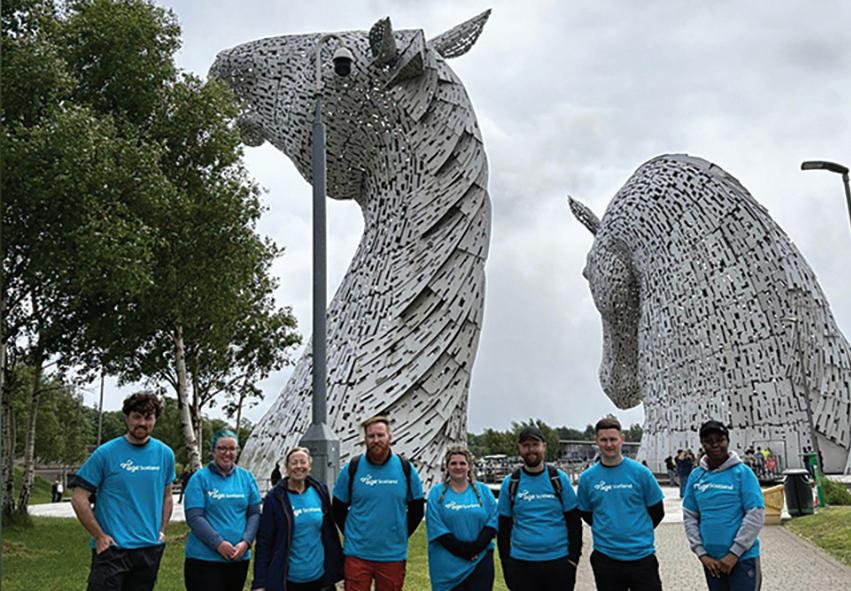
Karen MacDonald, HR Business Partner at Meallmore said: “I was absolutely terrified before taking on The Kelpies Experience. It really pushed me out of my comfort zone, but I’m so glad I did it. There was a real moment of having to talk myself into it, take a deep breath and just go for it – and once I did, it was
amazing.
“Conquering that fear alongside Meallmore colleagues made the experience even more special. That’s what makes Meallmore such a brilliant place to be part of. We support each other, we encourage each other, and every so often we find ourselves doing something completely out of the ordinary for a really important cause. To share that experience with colleagues, have such a laugh, and raise an incredible amount of money for Age Scotland made it a day I’ll never forget. I’m really proud to have been part of it.”
Cillian Hennessey, CEO of Meallmore, said: “At Meallmore, supporting older people is at the heart of what we do every day, so Age Scotland is a cause we’re always keen to champion and support wherever we can. This was a brilliant effort by our eight brave colleagues to raise awareness and funds to help Age Scotland continue making a meaningful difference to older people’s lives. Well done to all of them for taking on the challenge. They made us very proud with every step, climb and abseil!” Katherine Crawford, CEO of Age Scotland said: “We’re incredibly grateful to the adventurous fundraisers from Meallmore who braved the Kelpies for older people in Scotland. The climb and drop to the bottom is no mean feat! Their dedication to raising such an impressive amount of money is really impressive and it will go a long way to helping us meet the demand for our services. We’re proud to work together and have their support.”

The adult social care sector depends upon effective regulation, timely oversight and credible assurance to protect some of the most vulnerable people in society. However, new analysis by Care Inspections UK (CIUK) has highlighted growing concerns about the current inspection backlog within the Care Quality Commission (CQC) system and the wider implications for public confidence, provider accountability and quality improvement across England.
Data analysed by CIUK from the CQC show that, as of March 2026, more than 5,400 care homes in England had not received a full inspection in over five years. This represents more than 40 per cent of all care homes registered before March 2021. In some local authority areas, more than 70 per cent of services had not received a full inspection during that period.
Whilst many providers continue to deliver safe and compassionate care despite immense operational pressures, the scale of the backlog raises serious questions about whether the current inspection system can deliver timely and effective regulatory oversight.
Inspection delays matter. Families, residents, commissioners, lenders and insurers rely heavily upon inspection findings to assess risk, quality and compliance. When inspections are not conducted regularly or when reports take many months to be published, confidence in the regulatory system inevitably weakens.
At the same time, providers themselves often express frustration regarding inconsistency in inspection methodology, perceived subjectivity in judgements and the lack of practical support following inspection activity. Many operators report that inspection outcomes can feel overly dependent upon individual inspec-
By Kevin Groombridge – Chief Executive, Care Inspections UK
tor interpretation rather than robust triangulated evidence and measurable quality indicators.
This is where independent inspection and assurance bodies play an increasingly important role.
As the UK’s only UKAS-accredited independent inspection body for adult social care operating to ISO/IEC 17020 standards, CIUK provides a credible alternative source of inspection, assurance and quality improvement support for the sector. Unlike consultancy-led “mock inspections”, CIUK undertakes structured, evidence-based inspections using defined methodologies, extensive document review, stakeholder engagement, direct observation and objective assessment frameworks.
Importantly, CIUK inspections are designed not simply to identify failings, but to support improvement. Detailed inspection reports and action plans provide providers with clear, practical and prioritised recommendations to strengthen governance, compliance, safety and care quality.
In an environment where CQC capacity challenges continue to affect inspection frequency, many providers are increasingly recognising the value of independent inspection as part of their wider governance and assurance arrangements. CIUK can quickly and efficiently inspect services across residential care, nursing care, supported living and domiciliary care, providing organisations with timely insight into operational performance and regulatory risk.
The sector also faces increasing complexity. Workforce shortages, rising acuity, financial pressures and growing regulatory expectations mean providers require more sophisticated governance and assurance systems than ever before. Independent inspection can help bridge this gap by identifying concerns early, validating good practice and supporting continuous improvement between regulatory inspections.
The future of adult social care regulation cannot rely solely upon periodic state inspection. The sector requires a broader ecosystem of evidence-based assurance, transparent quality measurement and continuous improvement support. Independent accredited inspection bodies are well placed to become an essential part of that future.
Ultimately, inspection should not be about judgement alone. It should be about protecting people, improving care and giving the public confidence that services are safe, effective and well-led.
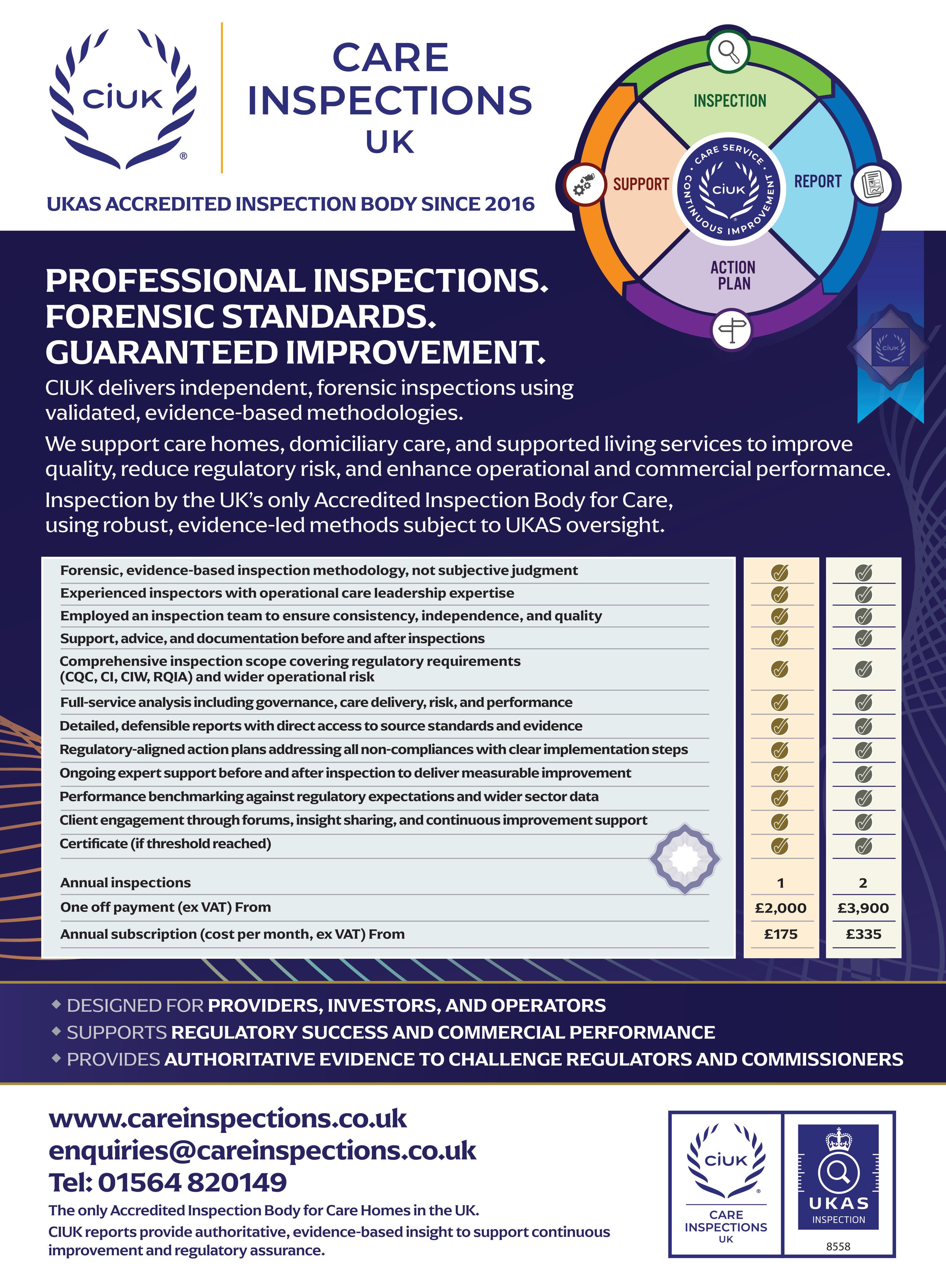
The events and communities of tennis are becoming more inclusive and impactful than ever through the groundbreaking partnership between Community Integrated Care, the LTA and the LTA Tennis Foundation.
'Serving Inclusion' powerfully unites the LTA’s ‘Tennis Opened Up’ strategy and Community Integrated Care’s mission for people to live their Best Life Possible through delivering exceptional support and tackling health, social and economic inequalities.
Responding to the lived experiences and ambitions of people who draw on care and support to transform access, empower dreams, and create belonging through the game, this reflects one of world sport’s most ambitious social change programmes. It has been generously funded by the LTA Tennis Foundation.
The LTA’s grass court events are at the heart of this change – shaping more accessible experiences, while inspiring people to develop lasting skills, confidence, and independence for their long-term futures.
The LTA’s tournaments are pioneering new approaches for accessibility and inclusion through engaging with Community Integrated Care's Beyond Barrier's development solution - which blends experiential learning techniques and support from technical experts in the charity and their lived experience experts, the Support Squad - to inspire and develop stronger accessibility and inclusion processes throughout the customer journey. With both strategic leaders and frontline teams in the LTA engaging in this collaboration, it is helping to empower cross functional skills and practice for inclusion.
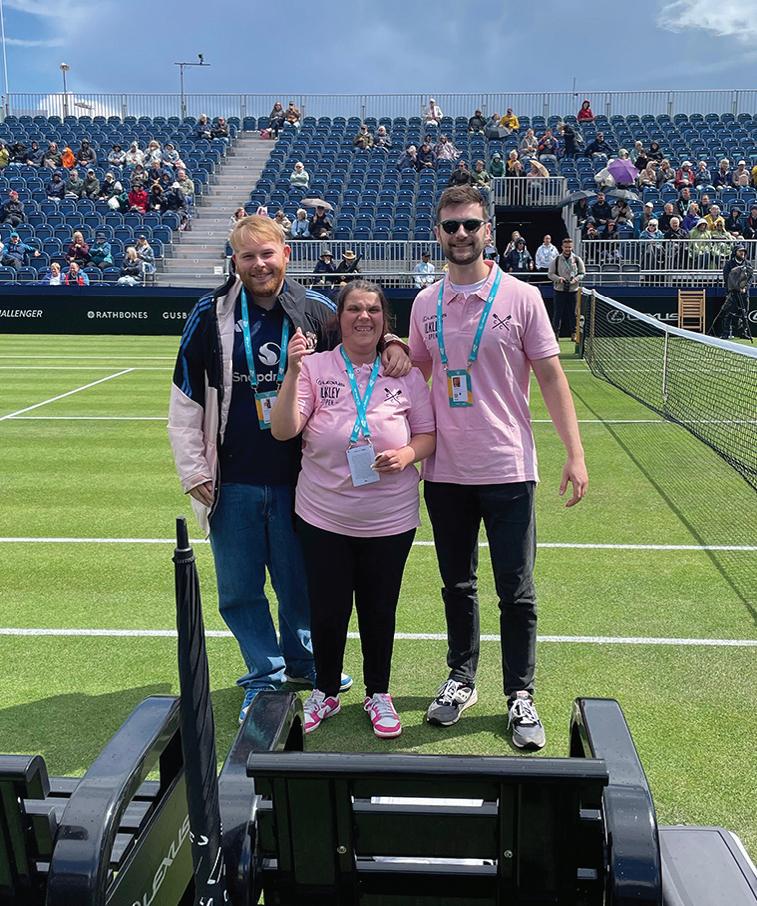
The Support Squad is a diverse team of people with lived experience of disability, who work with events and organisations to develop solutions and cultures that champion greater accessibility and inclusionensuring the everyone can enjoy equal independence. The group has been awarded The People’s Award at the National Learning Disability and Autism Awards, and recognised in the Innovation category at the Sports Business Awards.
Their work, alongside input from specialist teams across the charity, has influenced a range of improvements and innovations – including the HSBC Championships at Queen’s becoming the world’s first major tennis tournament to provide an easy read guide to fans who have learning difficulties (click here to read)empowering them to discover and enjoy the tournament at home or in person. Wider improvements include the development of enhanced sensory rooms and support packs across all events, and strengthened accessibility communications - with thousands of hours of lived experience insight shaping multiple areas of event delivery and strengthening the LTA’s commitment to equality, diversity and inclusion.
With ten people who draw on social care securing paid roles to support the LTA as members of the Support Squad, this work is transforming both lives and the spectator experience.
This impact is being extended further through Community Integrated Care’s Inclusive Volunteering model being delivered at the Ilkley and Nottingham Open tournaments - supporting more than 40 people. By developing a dedicated independence-building pathway, inspired by tennis and the LTA’s athletes, the model is transforming confidence, aspirations and skills. Alongside this, a sensory support pathway for people with complex needs has been shaped - ensuring they can enjoy therapeutic experiences inspired by tennis, whilst developing skills in their families and support teams. Together, these approaches are leveraging LTA events to enable people to discover their Best Life Possible and actively contribute to the sportwhilst also supporting fan and athlete experiences at events.
The charity is bringing tennis to life, both in person and online. Its delivery of a range of adapted tennis programmes and experiences across the nation is furthered by it curating live events on www.What-ToDo.co.uk – the charity’s hub for free, learning disability-accessible live experiences. In doing so, tennis is being shaped in new and innovative ways - connecting with those who have the biggest barriers to enjoying
the traditional game.
These specially designed online experiences are enabling people to discover tennis for the first time. More than 60 care services across the country have already taken part in experiences including an adapted wheelchair exercise session and introduction to wheelchair tennis, inspired by the Lexus British Open, delivered by the charity with support from Louise Hunt Skelly, former world number ten and Paralympic athlete.
Future online experiences on www.What-To-Do.co.uk include a creative storybased accessible movement experience inspired by British women’s tennis, coinciding with Women’s Week at Queen’s; a Wimbledon discovery experience that brings together games, challenges from tennis stars and learning with members of the LTA; and a strawberry and cream-themed afternoon tea cook-along in partnership with Great British Bake Off star Nicky Laceby.
The geographic spread and innovation of the Serving Inclusion programme is vast - already touching hundreds of lives, from the Highlands of Scotland to Eastbourne, England. From developing a sensory soap-making programme for people supported by the charity’s Inspire...By service in Aberdeen, creating strawberry and cream scented products for major events, to its partnership with the Age Exchange charity in London delivering reminiscence arts sessions for people living with dementia that explore memories of the game - the programme is empowering new futures while creating the most joyful memories.
Community Integraed Care is one of the UK’s biggest charities - delivering 8 million hours of specialist care and support to people who have learning disabilities, autism, mental health challenges and complex care needs, including dementia - empowering them to live the Best Life Possible. It has been awarded the Sports Equality, Diversity and Inclusion award at the Sports Business Awards for its work to support systemic change in sport for disabled people who draw on support , as well as named Care Innovators or the Year and creating sport’s Best Community Scheme.
John Hughes, Director of Partnerships and Communities at Community Integrated Care, says: “Serving Inclusion is possibly the most ambitious and expansive partnership of our charity’s 38 year history. People who draw on care and support face deep health, social and economic inequalities in society - and real exclusion that challenges them discovering and belonging in many areas of life that so many other people can enjoy."
"Serving Inclusion is shaping a future where people who draw on care and support can discover, watch, support, play, learn and volunteer in tennis - and be part of thriving community. It is transforming lives, strengthening social care delivery and empowering the LTA to be at the forefront of social change. It's driven by lived experience and a commitment to directly providing opportunity and support to those who fare the deepest barriers and inequalities."
"The support from the LTA and LTA Tennis Foundation has been inspiring and vital, beyond words. Their leadership and passion for opening up every dimension of their sport, so that people who draw on care and support can enjoy tennis with equal independence and belonging, is unprecedented. We admire their passion and dedication to creating lasting change and look forward to building upon this impact over the years ahead.”
Jon Hughes, Director of Equity, Diversity and Inclusion at the LTA, says: "We’re incredibly proud to be part of this groundbreaking partnership with Community Integrated Care and the LTA Tennis Foundation. Through Serving Inclusion, we are opening up tennis in powerful new ways - making our events, playing opportunities and wider tennis communities more inclusive, welcoming and impactful than ever before. By listening to lived experience and working together to remove barriers, this project is helping us to continue to turn our Tennis Opened Up ambition into meaningful action and lasting change."
Residents and team members across Nellsar Care Homes have celebrated creativity and community spirit through a group-wide ‘Love to Care’ Art Competition.
Launched in May ahead of Love to Care Week at Nellsar, which ran from 1–7 June 2026, the competition invited every Home to create an inspirational piece of artwork featuring the words ‘Love to Care’.
Across Nellsar’s 13 Care Homes, residents worked alongside team members to design colourful paintings and collages, each reflecting the unique spirit of their Homes.
Inspired by kindness, one of the key values at the heart of the Nellsar philosophy, the competition encouraged residents and team members to celebrate the care and appreciation shared every day within their Homes.
Every Nellsar Home took part, with residents contributing ideas and personal touches to their entries. The result was a collection of artwork filled with imagination and heartfelt messages of care and community spirit.
At Hengist Field Care Home in Sittingbourne, which was named one of the top prize winners, residents, relatives and team members came together to create a tree made from fingerprints. Each colour used represented a different part of the Hengist Field family, symbolising unity and togetherness.

The artwork was inspired by residents themselves, with the roots of the tree symbolising the foundations of care – compassion, respect and connection. Red and pink hearts, created by residents, formed the roots of the tree to reflect the strength and love that ground the Home’s community. Purple hearts
represented relatives, while green, gold and brown fingerprints were added by team members to show how they stand alongside residents and families.
Residents also shared what ‘Love to Care’ means to them, with June saying “loving and always making her feel better”, David describing it as “giving him something to live for” and Nigel saying it makes him feel “safe, warmth and happiness”.
St Winifreds Care Home in Deal, another of the competition’s top prize winners, brought everyone together through a piece of artwork that used handprints to represent hands that are always ready to help. A collage of black and white photographs captured moments when residents had felt truly cared for, while hearts represented love, and quotes from residents, families and team members showed how people feel cared for, and how team members love to care.
Director of Operations, Glenda Osmotherly, who had the difficult task of selecting the winners said: “The residents, team members and creativity shone through in every single submission. It made judging impossible in the best possible way! Every entry captured the warmth and dedication that makes Nellsar such a caring community, and I could not be prouder of what everyone created together.”
After reviewing all the entries, six Homes were selected to receive the top prize of £200, with seven runners-up each receiving £100.
The competition has been a reminder of the powerful relationships built between residents and team members, as well as the strong sense of family and community shared across Nellsar’s Homes.
By Jayne Connery, Founder of Care Campaign for the Vulnerable
Over the years, through my work with families, care providers, carers, and people living with dementia, one issue continues to stand out above almost all others — the lack of understanding around complex behaviour in dementia care.
At Care Campaign for the Vulnerable (CCFTV), we believe it is one of the greatest challenges facing the care sector today, and also one of the areas where meaningful change is urgently needed.
Families regularly contact us feeling frightened, exhausted, and heartbroken. Many describe loved ones who were once calm and gentle becoming distressed, fearful, aggressive, withdrawn, or resistant to care. Often, they are told their relative is “challenging”, “difficult”, or “non-compliant”.
But behind every behaviour is a reason.
People living with dementia are not intentionally trying to cause problems. Behaviour is communication. It may reflect pain, fear, overstimulation, confusion, loneliness, trauma, frustration, or unmet emotional and physical needs.
Too often, care environments still focus on managing behaviour rather than understanding it and that has to change. My own mother, Ellen, lived with vascular dementia, and I witnessed firsthand how dramatically environment and communication affected her wellbeing. In the right setting, around people who showed patience, empathy, humour, and reassurance, her personality
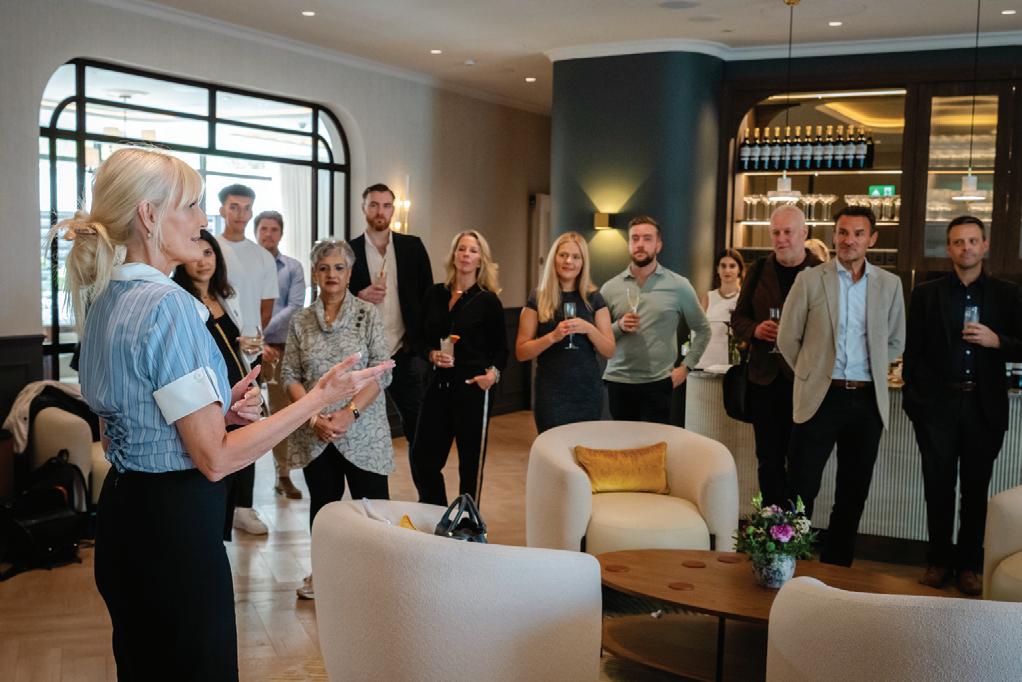
remained very much alive. But in environments where she felt frightened, rushed, or misunderstood, her anxiety escalated and her behaviour changed completely.
What I learned through my mum’s journey shaped the entire direction of my work.
Complex dementia care requires far more than basic awareness training. It requires emotional intelligence, confidence, consistency, observation, patience, and genuine understanding of the individual behind the diagnosis.
Sadly, carers are often placed into highly demanding situations without the level of specialist training or support they truly need. We hear repeatedly from frontline staff who admit they feel overwhelmed managing distressed behaviours, particularly when staffing levels are stretched or when residents have advanced dementia combined with other complex health needs. This is not about blaming carers.
Many carers are working under immense pressure and doing extraordinary work in very difficult circumstances. But as a sector, we must be honest enough to recognise that the needs of people living with dementia have become increasingly complex.
The reality is that some people entering care homes today would previously have been supported within specialist nursing or hospital environments. Providers are caring for residents with significant cognitive impairment, distressed behaviours, trauma responses, mobility issues, communication difficulties, and multiple health conditions — often all at once. And yet dementia training can still vary hugely across the sector.
At CCFTV, we want to see greater investment in meaningful dementia education that goes beyond textbooks and compliance exercises. Training must help carers understand why behaviours happen, how environments influence distress, and how communication styles can either calm or escalate situations.
Simple things matter more than people realise.
Tone of voice. Body language. Noise levels. Lighting. Routine. Familiarity. Feeling ignored. Feeling frightened. Being approached
too quickly. Being unable to express pain or discomfort All these things can completely change how a person living with dementia responds.
We also believe there needs to be more honest conversation around the emotional toll complex dementia care can have on care staff themselves. Supporting someone who is frightened, distressed, aggressive, or emotionally dysregulated every day can be emotionally draining. Staff need support, mentoring, and safe spaces to reflect without fear of judgement.
Good dementia care is not simply task-based care - it is relationship-based care.
The providers who stand out to us are rarely those focused purely on appearance or marketing. They are the providers investing in culture, leadership, staff wellbeing, communication, and specialist understanding. They create environments where carers feel confident asking for help, where families are listened to, and where behaviours are approached with curiosity rather than frustration.
Importantly, we also want to see a move away from overreliance on restrictive approaches wherever possible. Families frequently raise concerns with us around sedation, isolation, lack of stimulation, or individuals being labelled too quickly without enough exploration of underlying causes. Every behaviour should prompt a question: what is this person trying to communicate?
Sometimes the answer may be physical pain. Sometimes trauma. Sometimes fear. Sometimes boredom. Sometimes grief. Sometimes simply an environment that no longer feels safe or familiar.
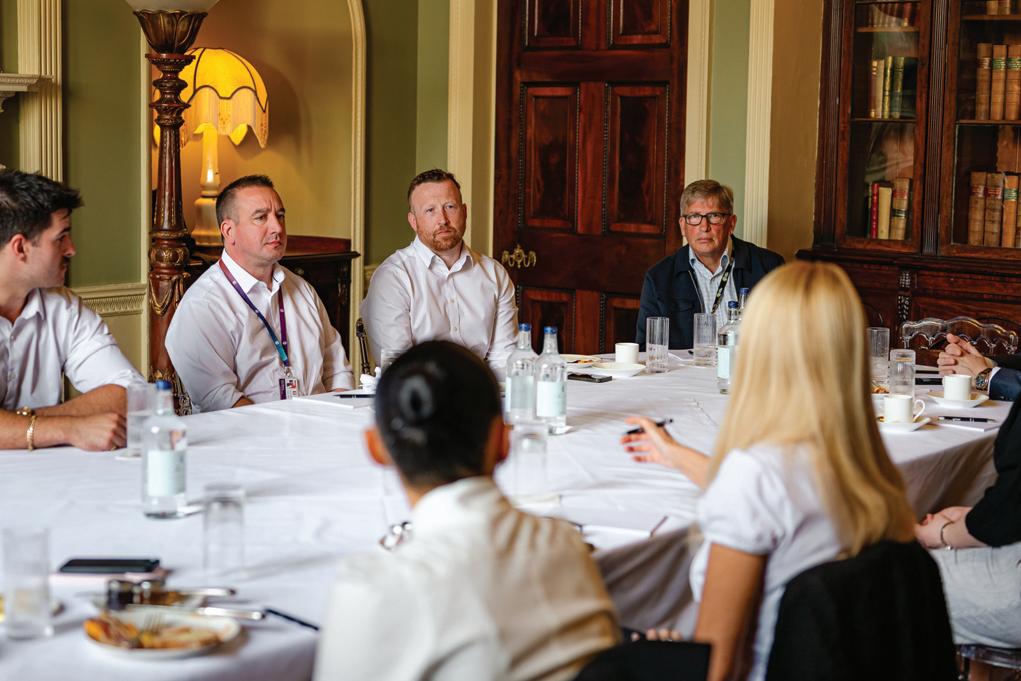
At CCFTV, we believe dementia care must become more individualised, more compassionate, and more psychologically informed. We also believe families should be viewed as part of the care team, not outsiders. Relatives often hold the key to understanding triggers, routines, comfort strategies, and lifelong personality traits that can help staff deliver far better care.
There are many outstanding carers and providers already leading the way. We see extraordinary examples across the sector every week. But we also know there is inconsistency, and too many families still feel unsupported when behaviours become complex.
Change is possible. But it requires openness, investment, stronger dementia education, honest conversations, and a willingness to move beyond outdated models of care. Because people living with dementia deserve more than simply being managed, they deserve the right care.
The regulatory landscape is evolving — here's what your care home needs to know
Trust is the foundation of every great care home. For residents and their families, choosing residential care is rarely a simple decision. It carries emotional weight, financial significance, and an enormous leap of faith. That's why transparency, fairness, and legal compliance aren't just operational tickboxes — they're central to the care you provide.
The Digital Markets, Competition and Consumers Act 2024 (DMCCA) has introduced some of the most significant changes to consumer law in more than a decade, and care homes are firmly within its scope. Understanding what those changes mean in practice is essential — and that's exactly where the Business Companion Care Homes Guidance comes in.

the very first conversation.
Authentic reviews and endorsements. Fabricated or manipulated reviews are now explicitly prohibited. As online reputation plays an increasingly important role in how families choose care homes, authenticity isn't just ethical — it's a legal requirement.
Developed by legal experts and completely free to access, this practical guide breaks down your obligations under the new legislation in plain, straightforward language. Whether you're reviewing contracts, updating your pricing structures, or looking at how you communicate with prospective residents, it's an indispensable resource.
WHAT
DMCCA
The DMCCA replaces the previous Consumer Protection from Unfair Trading Regulations, raising the bar across almost every consumer-facing sector. For care homes, the key implications include: Full pricing transparency. The Act outlaws "drip pricing" — the practice of introducing unavoidable fees late in the customer journey. All mandatory charges must now be presented clearly and upfront, from
Tougher enforcement. The Competition and Markets Authority (CMA) now holds significantly strengthened powers, with the ability to issue fines of up to £300,000, or 10% of global turnover, for non-compliance. The message is clear: getting this right matters.
These are just some of the areas covered in detail within the Business Companion Care Homes Guidance, which offers practical, step-by-step advice to help your home stay on the right side of the law.
SUPPORTING VULNERABLE RESIDENTS
Working in care means working with vulnerability every day. Whether driven by age, ill health, bereavement, financial pressure, or a combination of factors, vulnerability can affect a resident's ability to
make informed decisions or communicate their needs clearly.
Recognising and responding to this is both a legal duty and a moral one. The Business Companion Consumer Vulnerability Guide provides checklists and actionable advice to help your team identify and appropriately support vulnerable individuals — ensuring your home delivers compassion and compliance in equal measure.
A WIDER RESOURCE FOR YOUR BUSINESS
Business Companion extends well beyond care home guidance. The platform covers a broad range of sectors and topics — from online selling and complaints handling to delivery charges and net zero planning — all presented in clear, accessible language. Backed by the Chartered Trading Standards Institute and the Department for Business & Trade, it's a free, authoritative, and regularly updated resource you can rely on.
DON'T WAIT — ACT NOW
The DMCCA is already in force and enforcement is live. Now is the time to review your contracts, pricing communications, and marketing materials — before a compliance issue forces your hand.
In a sector built on trust, staying informed isn't just good practice. It's everything. Visit Business Companion’s Care Homes Guidance today In a sector built on trust, staying informed isn’t just smart - it’s essential. To find out more, visit: www.businesscompanion.info
A Derbyshire care home has launched its summer activity programme in a wonderfully quirky fashion, with residents rolling Babybel cheeses down a homemade hill, browsing their very own in-house clothing shop and tucking into a Monopoly-themed dinner.
Coxbench Hall Residential Care Home, a family-run home now in its 42nd year, has kicked off its summer calendar with a string of joyful, resident-led activities designed to bring laughter into everyday life.
The first event saw residents take part in the home’s own version of cheese rolling, swapping Gloucestershire’s famous hill for a Coxbench Hall course and full-sized wheels of cheese for mini Babybels.
The home also hosted a special pop-up clothing shop, giving residents the chance to browse, choose and buy items for themselves without needing to leave the building. Purchases were made through residents’ personal pocket money accounts, supporting independence and helping residents enjoy the simple pleasure of a shopping trip.
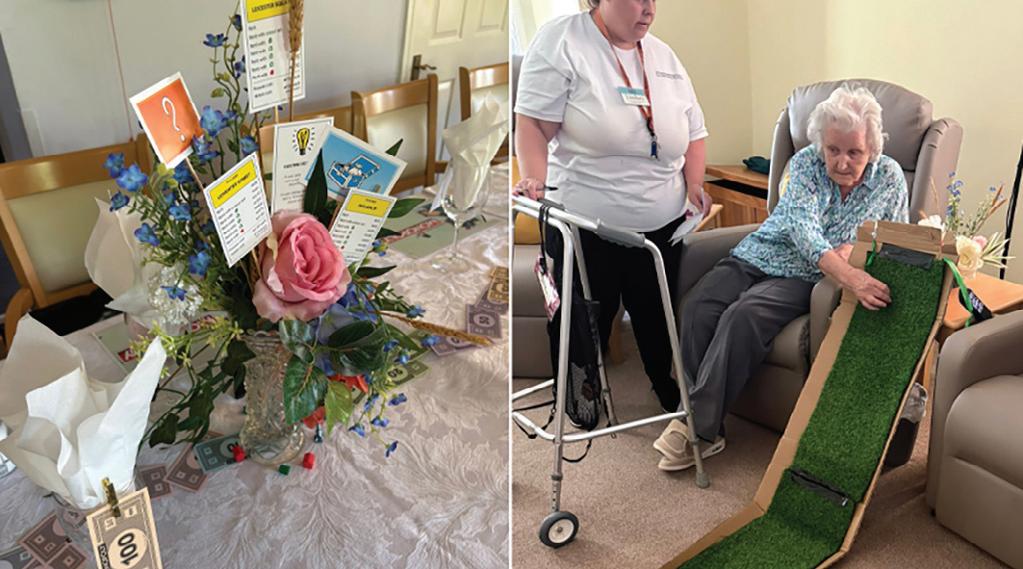
A Monopoly-themed dinner recently took place, where the classic board game was brought to the table for a playful and interactive mealtime experience.
Residents also enjoyed a trip on an accessible canal boat, which gave them the opportunity to spend a couple of hours on the water, enjoying a change of scenery and the fresh summer air.
Alongside the more quirky activities, Coxbench Hall’s summer programme has also included a strong focus on wellbeing and community. Residents marked D-Day with an afternoon of poetry reading and a sing-along.
The home also marked Mental Health Awareness Week with a ‘Wear It Green Day’, encouraging conversations around mental wellbeing among residents and staff. The team took part in Time for a Cuppa week, hosting a community coffee morning to raise funds and awareness for Dementia UK.
Coxbench Hall’s popular intergenerational programme also continued with a baby and toddler morning, giving residents the opportunity to spend time with local young families.
Claire Richardson, Director at Coxbench Hall, said: “Life in a care home should be full of personality, laughter and moments that feel meaningful. Whether it’s rolling Babybels down a hill, enjoying a themed dinner, choosing a new outfit or spending time with little ones from the local community, our activities are all about helping residents stay connected and happy. We’re very proud of the atmosphere at Coxbench Hall. It’s a place where people are cared for, but also where they can continue to enjoy life.”
Spellman Care has officially announced the launch of its brand-new staff recognition initiative, the EMAs (Extra Mile Awards). Replacing the previous Star Awards, which ran successfully for over three years, this exciting new scheme significantly elevates how the group celebrates excellence, ensuring their team recognition remains truly unique and special within the local care sector.
The core driver behind creating this new initiative was to deeply embed the principles of Person-Led Care into the awards themselves. Moving beyond traditional “person-centred” models where care is merely tailored around an individual, Person-Led Care completely flips the script—putting residents firmly in the driving seat of their own lives and daily choices, with staff following their lead. This is an innovative, cutting-edge way of working within the UK care sector, and Spellman Care is proud to be one of the very first care home groups in the country to fully embrace and engage with this forward-thinking philosophy.
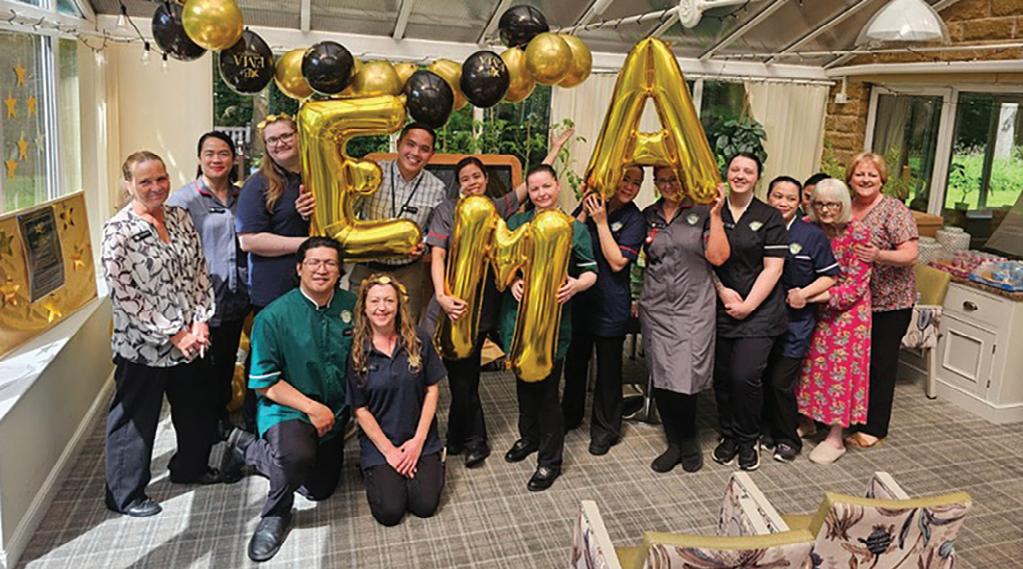
To mark the grand unveiling, all four of Spellman Care’s homes hosted simultaneous celebration events. Colleagues gathered to enjoy EMA-themed cakes, learn about the new process, and view an introductory video from each of the judges, who outlined the criteria and explained what they will be looking for in the upcoming entries.
To help everyone get into the right mindset for future nominations, staff were encouraged to interact with a dedicated EMA board by adding a star detailing a specific reason why a colleague had gone the extra mile recently. For taking part, staff members received a raffle ticket with a twist: the winning prize would be entirely bespoke and decided on just for them, further embedding the person led mindset of personalisation.
The launch has already generated a wave of enthusiastic support from residents’ families online. Following the announcement on social media, relatives flooded the comments sections to praise the teams, with remarks including “in my opinion all the staff go that extra mile” and “all the staff at Steeton Court
Nursing Home are amazing.” Another heartfelt comment read, “You are all amazing. Most importantly Mum loves you all too,” while many others simply added, “Well done everyone.”
The core philosophy behind the EMAs is to capture and celebrate the specific, deeply personalised moments where staff go above and beyond for residents. The awards aim to shine a spotlight on these unique gestures of outstanding care—whether that is organising a special, tailored day trip for a resident, or taking the time to ensure their absolute favourite flowers are planted in the home’s garden.
Philippa Young, EMA Judge and Group Operations Manager at Spellman Care, said:
“We wanted to create a recognition scheme that truly mirrors our commitment to Person-Led Care. Our teams do incredible work every day, but the EMAs are about celebrating those deeply personal, thoughtful details that show our staff truly know and care for our residents as individuals. By making the prize even bigger and focusing the judging on the depth of that positive impact, we are making sure our staff feel uniquely valued for the extraordinary difference they make.”
The Extra Mile Awards represent a significant shift in how excellence is rewarded, making the scheme bigger and better than before. While the previous initiative crowned a monthly winner for each individual home, the EMAs will now see just one overall winner selected from across the entire Spellman Care group each month. Because the competition will be much tougher, the prize on offer is even bigger for each recipient.
The panel of judges will review each entry, and the award will be given based on which staff member has made the biggest and most meaningful difference to a resident.
Nominations are officially open, and Spellman Care is inviting residents, family members and staff to get involved. Nominations can be submitted physically using the dedicated ballot boxes located in each home’s reception area, or digitally via an online submission form.
A new King’s Fund report has said that addressing the ‘dementia data gap’ is key to delivering on the future recommendations of the Casey Commission and Modern Service Framework for Frailty and Dementia.
The work, titled ‘Delivering care for people with dementia – why data matters’, examines the available data on dementia care and finds that there were significant gaps leading to ‘a patchwork of incomplete insights [rather] than a meaningful picture of care’. This causes significant issues for policymakers and practitioners as without good data they cannot effectively manage the health of the population or measure the impact and implementation of any changes to treatment and care.
It comes as Baroness Casey is set to appear in front of the Health and Social Care Select Committee on Wednesday [24th June] to discuss the progress of her Commission. Care Minister Stephen Kinnock will also appear to answer questions on social care.
The King’s Fund looked at data from across health and social care including prevalence, the health and social care interface, the dementia care pathway, experiences of care and workforce finding areas that could be improved upon in all these important areas. Key performance measures such as waiting times to assessment and diagnosis, non-medication related interventions and care and treatment outcomes are notably absent.
To improve the situation, the King’s Fund works points to the recommendations of the Sudlow Review, which looked at the health data landscape in the UK, to provide a template for change by recognising health and social care data as part of critical national infrastructure, providing leadership and accountability for data, and maximising the utility of data by establishing a single, national, health data access system.
The work highlights opportunities for the Casey Review and MSF to address the data available, including addressing key gaps in data to ensure recommendations lead to meaningful change for people with dementia.
Helen Gilburt, Fellow at The King’s Fund and author of the long read, said:
‘Addressing the dementia data gap will be key to successfully implementing the recommendations that emerge from both the Casey Commission and the Modern Service Framework for Frailty and Dementia.
‘As this analysis finds, there are fundamental gaps in the data that mean our understanding of dementia care resembles a patchwork of insights rather than a clear picture.
Lessons should be taken from the Sudlow Review to rectify this alongside addressing the disparity in health and social care data.

‘Without it, policymakers and practitioners will struggle to fully understand if the changes they are implementing are having the desired effects and failing to deliver promised improvements in diagnosis and treatment for people living with dementia, their families and carers.’
The UK’s National Advance Care Planning Day highlights the importance of Advance Care Planning, Advance Care Plans and sensitive conversations. This year’s theme is Supporting people and communities who are marginalised.
On this a day of awareness and action, care professionals will be hosting their own Advance Care Planning events and interventions across the country. Care organisations are encouraged to add their own events on the ACP Day website where they will be promoted and shared.
A national conference will take place in Norfolk. It will be live streamed and available for care organisations for free. ‘Watch parties’ at care organistions is encouraged and the speakers include
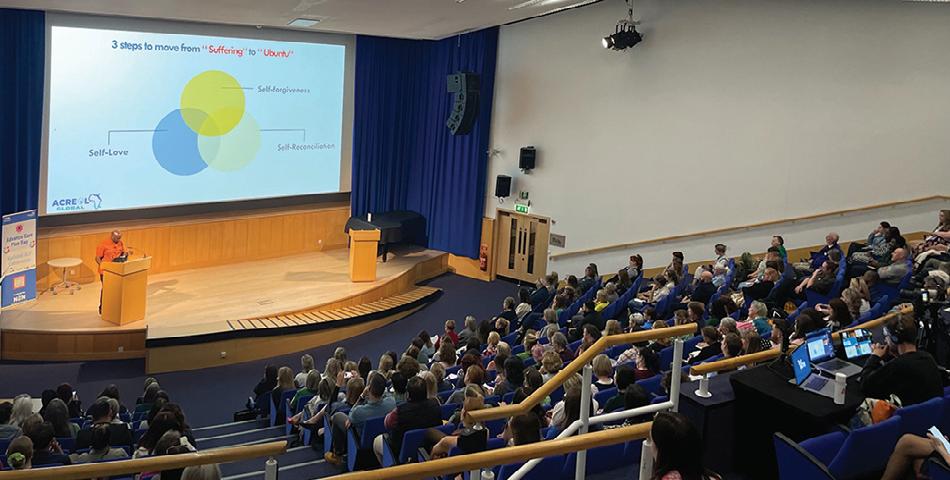
Speakers this year include Dr Kathryn Mannix (author), Dr Jed Jerwood (No Barriers Here) and Professor Irene Tuffrey-Wijne (The Victoria & Stuart Project), James Norris (The Digital Legacy Association). Videos from 2025’s conference can be watched at
www.advancecareplanday.org/national-conference-2025
When Universal Advance Care Planning is a goal, we must adapt service delivery to various marginalised and disenfranchised people and communities.
ACP Day are inviting inclusive charities, not for profit and other organisations who believe in this year’s theme to engage, collaborate and empower.
There are lots of different ideas and ways in which you might want to empower others in areas relating to Advance Care Planning and the benefits it provides to the person and their loved ones.
ACP Day 2026 and the national conference is organised by Norfolk & Norwich Hospitals Charity, MyWishes Care, Speak for Me LPA and Norfolk and Norwich University Hospitals. This year the campain is being supported by Sue Ryder. Visit www.advancecareplanday.org
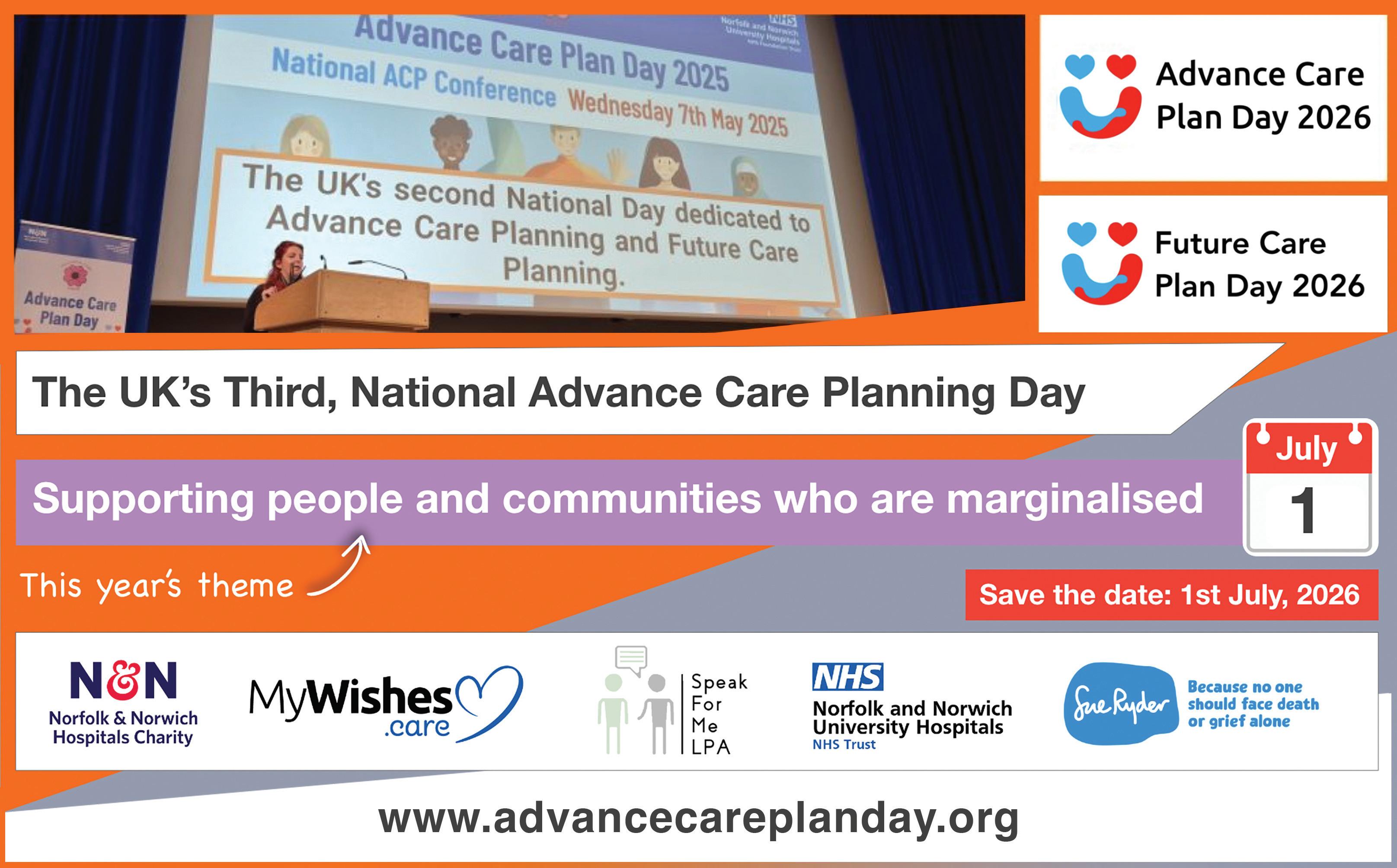
The Government has promised to set legal minimum standards for children’s and young people’s palliative care.
The update comes in ministers’ response to the Health and Social Care Committee’s recent report on strengthening England’s palliative care services.
In advance of the Government publishing a Modern Service Framework (MSF) to improve these services later this year, the response also pledges new legal guidance for improving 24/7 access to palliative care, which is badly lacking in some parts of the country. There are also positive responses to the cross-party Committee’s recommendations to improve accountability and to guarantee access to the forthcoming Single Patient Record.
A summary of the response, provided by the Department of Health and Social Care (DHSC), is below.
Health and Social Care Committee Chair Layla Moran MP said:

“A sentiment shared by MPs across the political divides is that, shockingly, palliative and end of life care services fail too many people, right at the point when patients’ physical and emotional pain can be at their most acute. This is particularly true of services for children and young people – they and their families deserve the best of the NHS in their time of need.
“The Government has set a lot of store on its upcoming Modern Service Framework, and it has now has a lot to deliver on, but we welcome many of the responses DHSC has provided. Stronger accountability for failure to provide effective and compassionate palliative care will need to be addressed and we shouldn’t tolerate a system where going to A&E is the default substitute for a lack of 24/7 services.”
CHILDREN AND YOUNG PEOPLE’S PALLIATIVE CARE
The Committee strongly recommend that the Department include specific standards within the MSF for children and young people’s palliative care services, and for the transition between child and adult services. MPs said pan-ICB commissioning guidance should contain specific information on how to commission these services effectively.
Response: the Government said it will provide these specific standards via updated statutory guidance which will be refreshed later this year.
EVERY AREA SHOULD HAVE 24/7 END OF LIFE SERVICES
MPs said the forthcoming MSF should include specific guidelines and requirements for ICBs to enable access to 24/7 end of life services. DHSC should also provide an assessment of the workforce this would need and of the savings this could deliver through reduced visits to A&E.
Response: Statutory guidance on providing 24/7 services already exists, but providing these services isn’t mandatory. It adds that guidance will be refreshed “later this year” and that it is “committed” to improving access to 24/7 services throughout the country. This will be supported by the forthcoming MSF and workforce plan.
Consequences if standards aren’t met
The Committee said the MSF must set national standards for palliative care services that are backed by consequences if those standards are not met. Equally, DHSC should ensure ICBs have the support and resources they need to deliver them.
Response: DHSC will “drive and sustain the required changes in practice and behaviour across the system”. It adds: “Areas of action have been identified for those commissioning and delivering services with associated performance and outcome metrics to support system accountability.”
The Government agrees with the Committee’s recommendation that social care and contracted third sector organisations should have access to the Single Patient Record, technology that is intended to make it easier to share patient information between service providers and the NHS app and improve efficiency. Elsewhere in the response, the Government declines to directly answer the recommendation that palliative care training should be given to all generalist medical staff, and rejects calls to set a target for 90% of individuals in their last year of life to be included in the Palliative Care Register.

Several NIHR researchers have received awards in the 2026 King’s Birthday Honours, recognising their significant contributions to health and social care.
The King’s Honours List celebrates individuals across the UK who have made a profound impact on their communities.
Professor Lucy Chappell, Chief Executive Officer of the NIHR and Chief Scientific Adviser at the Department of Health and Social Care said: “We take immense pride in our scientists, researchers and colleagues honoured in this year’s list. Their dedication spans numerous fields, and this well-deserved recognition highlights the groundbreaking, NIHR-supported research and innovation that transforms and improves lives every day.”
PROFESSOR MELANIE DAVIES
Professor Melanie Davies CBE has become a Dame Commander of the Order of the British Empire (DBE), owing to her services to global diabetes, research, policy and care management, nationally and internationally.
Professor Davies was awarded a CBE for her work in diabetes research in 2016. Since then she has become one of a few women to ever direct an NIHR Biomedical Research Centre (BRC), and 1 of only 2 who has ever been appointed to lead 2 BRCs and a Biomedical Research Unit. She is the Director of the Commercial Research Delivery Centre UK Network.
PROFESSOR GARETH EVANS
Pioneering Manchester cancer researcher Professor Gareth Evans has been awarded an MBE, in recognition of more than 35 years of outstanding contributions to cancer genetics.
Professor Evans is an Emeritus Professor of Medical Genetics at The University of Manchester and Consultant in Medical Genetics at Manchester University NHS Foundation Trust (MFT). He led the Cancer Prevention and Early Detection Theme at the

NIHR Biomedical Research Centre: Manchester from its inception in 2017 to when he retired in 2025.
With a national and international reputation in clinical and research aspects of cancer genetics, his work has made a significant contribution to advancing understanding, diagnosis and care in inherited cancer, benefiting patients and families in the UK and beyond.
PROFESSOR ANDRE NG
Professor Andre Ng is Professor of Cardiac Electrophysiology and former head of the Department of Cardiovascular Sciences at the University of Leicester, and also a Consultant Cardiologist at University Hospitals of Leicester NHS Trust. He is a leading cardiologist from the NIHR BRC: Leicester and has been awarded an MBE for his services to medical research and healthcare as part of the King’s Birthday Honours.
Professor Ng’s research spans clinical research, engineering and AI, to clinical trials focusing on important areas in heart rhythm management.
Professor Ng was also named an NIHR Senior Investigator earlier this year. Senior Investigators are among the most outstanding and influential researchers funded by NIHR. They help mentor the next generation, strengthen research culture and embed inclusion.
PROFESSOR TIM ORCHARD
Professor Tim Orchard, Chief Executive of Imperial College Healthcare NHS Trust since 2018 and now Group Chief Executive for the whole of the North West London Acute Provider Group, has been awarded a CBE for services to the NHS and healthcare research and innovation.
Under his leadership, Imperial College Healthcare NHS Trust has extended its long-standing reputation for excellence in research, safety and outcomes.
Alongside this work, Professor Orchard continues to practise as a consultant gastroenterologist and as Professor of Gastroenterology in Imperial’s Department of Metabolism, Digestion and Reproduction. As well as progressing research and teaching in his specialist field of inflammatory bowel disease, he has further developed the relationship between Imperial and the Trust, which includes hosting the largest NIHR BRC in the UK.
PROFESSOR SARAH TABRIZI
Professor Sarah Tabrizi, Director of the UCL Huntington’s Disease Centre, has been appointed CBE for services to people with Huntington’s disease.
Professor Tabrizi’s multidisciplinary research provided transformational insights into the biology of Huntington’s disease, a neurodegenerative disorder.
Her work balances the investigation of fundamental mechanistic science combined with human clinical research in patients, and she has redefined the lifelong trajectory of this fatal disease, making it one that is now therapeutically tractable.
A care worker who has dedicated 23 years to supporting residents at Iden Manor Nursing Home is celebrating a remarkable long-service milestone.
Miranda, one of the home's longest-serving team members, was recognised by colleagues and management for her contribution to the nursing home in Staplehurst, where she has spent nearly a quarter of a century caring for people, supporting families and helping to maintain the home's strong reputation for compassionate care.
The milestone was marked by colleagues who wanted to recognise not only the length of Miranda's service but also the difference she has made to the lives of others throughout her career. Her commitment, compassion and positive outlook have left a lasting impact on everyone who has had the pleasure of knowing and working alongside her.
For Managing Director Umbreen David, the occasion was particularly meaningful. Reflecting on Miranda's contribution, she said: "Some people leave a lasting impression wherever they go. For the past 23 years, Miranda has done exactly that at Iden Manor. Over the years, she has supported people through both difficult and joyful moments and been a trusted colleague to generations of team members.
“Her kindness, patience and unwavering commitment has helped shape the warm, supportive culture that defines Iden Manor today. We are incredibly grateful for everything she has given over the last 23 years and feel privileged that she
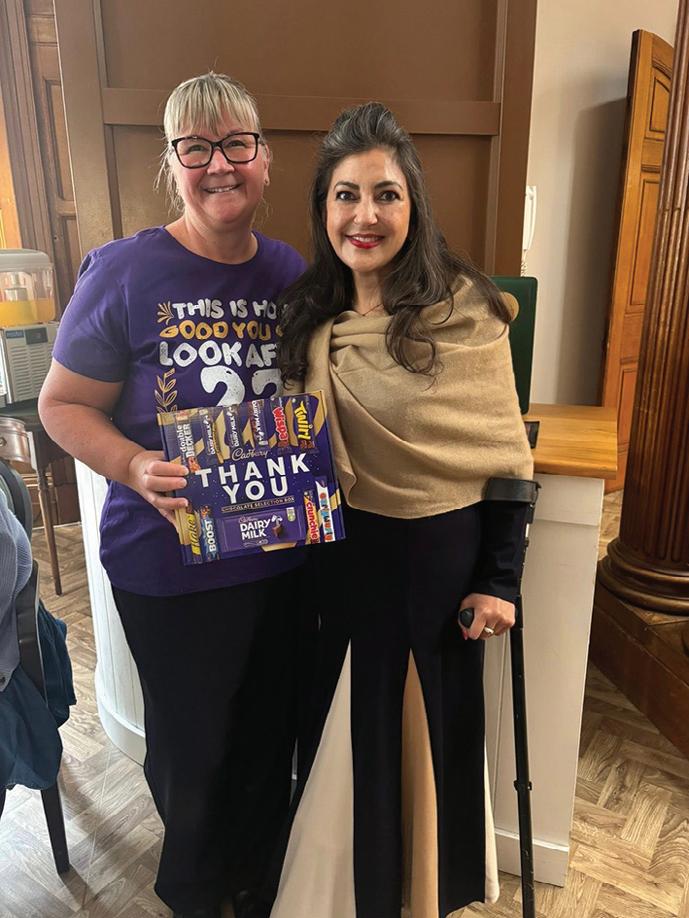
has been part of our journey for so long. Congratulations, Miranda, on an exceptional milestone and thank you for your dedication, kindness and unwavering commitment to the people who call Iden Manor home."
Long service milestones are becoming increasingly rare across many sectors, making Miranda's achievement particularly special. Her dedication reflects not only her personal commitment to care but also the strong relationships that develop within close-knit care home communities. Miranda’s career serves as a powerful example of how a rewarding and impactful career can be found in the social care sector.
At Iden Manor, continuity of care is highly valued. Long-serving team members help provide familiarity, reassurance and consistency for residents and their families, while also mentoring newer colleagues and preserving the culture and values that underpin high-quality care.
The celebration also provided an opportunity to recognise the wider contribution of care professionals who dedicate their careers to supporting others. Behind every care service are individuals whose commitment often spans years or even decades, quietly making a difference to the lives of hundreds of people along the way. As Iden Manor celebrates Miranda's remarkable achievement, there is a shared sense of gratitude for everything she has contributed over the past 23 years.
Students from Telford College have been praised for their kindness, enthusiasm and professionalism after completing a successful placement at the town’s Telford Hall Care Home.
The students spent time working alongside residents and colleagues at the Sandstone Care Group home, building meaningful relationships and supporting a range of activities.
Throughout their placement, the students immersed themselves in life at the home, and their warm and friendly approach proved popular with residents, many of whom enjoyed sharing stories, experiences and laughter with the visitors.
The students supported a variety of activities, helping to encourage participation and ensuring everyone felt included, with a highlight being a nature trail walk. Their positive energy and willingness to get involved contributed to a vibrant atmosphere throughout the week.
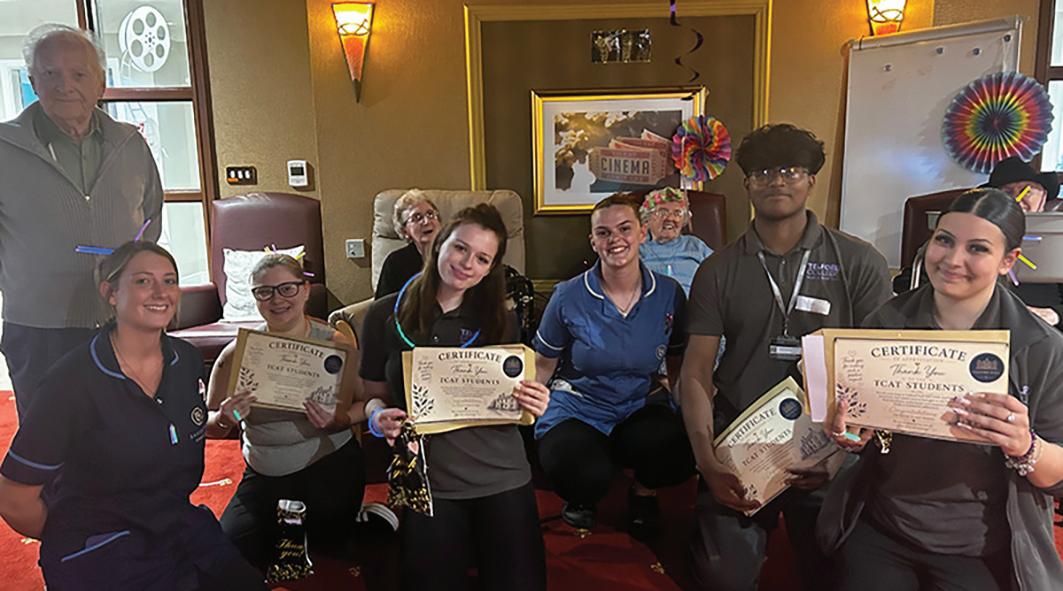
To mark the end of the placement, a special celebration party was held to thank the students for their contribution featuring music, laughter and refreshments, with certificates of appreciation presented in recog-
nition of the student’s positive impact.
Porsche Grillo, manager at Telford Hall Care Home, said: “It has been an absolute pleasure to welcome the students from Telford College. They demonstrated outstanding kindness, compassion and professionalism throughout their placement and quickly became valued members of our home community.
“Our residents thoroughly enjoyed spending time with them and formed some wonderful connections. The students brought enthusiasm and positivity to every activity they took part in, and it was heartwarming to see the genuine relationships that developed over the course of the week.
“The nature trail walk was a particular highlight, providing a fantastic opportunity for residents and students to enjoy the outdoors together while creating lasting memories. We are incredibly grateful for everything the students contributed during their placement and wish them every success in their future studies and careers.”
Over half of dementia carers find themselves navigating continence care. For many, this marks the moment caring changes fundamentally –becoming more demanding, more exhausting, and, ultimately, more difficult to sustain.
Helen Pyper, Head of Policy and Campaigns, Dementia Carers Count said: “Continence rarely features in public discussions about dementia. We talk about diagnosis rates, waiting lists, new treatments, and pressures on social care. Yet behind closed doors, families are grappling with a challenge that can affect almost every aspect of daily life.”
Our annual survey of dementia carers paints a vivid picture of the challenges of navigating continence care when you are looking after someone with dementia. Carers describe sleepless nights interrupted by repeated trips to the bathroom, accidents that mean changing bedding
and clothing in the early hours, and the constant anxiety of trying to prevent distress for a loved one. Some carers link the onset of continence problems directly to a decline in their own physical and emotional wellbeing. Others describe it as the moment when caring shifted from challenging to overwhelming, prompting them to question whether they could continue supporting their loved one at home.
What emerges is not simply a story about practical challenges – it is about emotional strain. Carers speak about guilt and exhaustion. They describe the difficulty of providing intimate personal care to a spouse, parent, or partner. Many worry constantly about getting things wrong. Alongside the physical demands comes the emotional burden of seeing someone you love experience distress, embarrassment, and a loss of dignity.

Incontinence can limit social activities, undermine confidence, and increase feelings of isolation. Families who once enjoyed days out, visits with friends, or simple trips to the shops can find themselves organising their lives around access to toilets, spare clothing, and the possibility of accidents. The world gradually becomes smaller.
Helen Pyper, Head of Policy and Campaigns, Dementia Carers Count said: “These findings should prompt a wider conversation about an aspect of dementia care that remains largely hidden from public view. Not because continence is the most important challenge associated with dementia, but because carers themselves are telling us that it is one of the issues most likely to push families towards crisis.”
A Shared Lives Plus ambassador from Northampton has won a national award recognising people who are helping create more inclusive communities and improving lives through their work and advocacy.
Vicky, who is supported by Shared Lives West Northamptonshire, was named winner of the Making a Difference Award at the National Learning Disabilities & Autism Awards 2026, held at the ICC in Birmingham on 19 June.
The award recognises people who work creatively and passionately to promote inclusion, belonging and equal access within their local area, helping make positive change happen in people’s lives.
As an ambassador for the Shared Lives for Young People Leaving Care programme, Vicky helps raise awareness of Shared Lives and speaks up about the importance of relationships, inclusion and belonging for young people moving into adulthood.
The programme supports care-experienced young people with a learning disability, autism or mental health challenges by matching them with approved Shared Lives carers who offer stable, supportive homes and long-term relationships.
Vicky represents Shared Lives nationally and has contributed to recruitment

panels and interviews, helping social workers and carers improve support for young people. She also co-delivers Oliver McGowan training for two local organisations and supports Shared Lives West Northamptonshire by sitting on approval panels for new Shared Lives carers and helping run awareness events to promote the scheme.
Vicky also featured in a short film released by Shared Lives Plus alongside other ambassadors, sharing how Shared Lives has supported her to build independence, confidence and identity.
Outside her ambassador role, Vicky is a stage technician at the Royal & Derngate Theatre in Northampton and a Rainbows Leader with Girlguiding.
The National Learning Disabilities & Autism Awards celebrate excellence across the care and support sector and recognise individuals and organisations making a real difference for people with a learning disability and autistic people.
Caroline Ritchie, Scheme Manager at Shared Lives West Northamptonshire said:
“We recognise Vicky’s amazing achievements and are very proud of her. We are also proud of the support from her Shared Lives carer, Jane, who has been there every step of the way for Vicky. Well done, Vicky, on your nomination and keep being a credit to the Shared Lives West Northamptonshire scheme.”
Incontinence is common in care and nursing homes, but the impact on dignity, comfort and skin health is deeply personal. Levabo’s allDRY® range of reusable incontinence underwear is a Class I Medical device, designed to support residents and caregivers alike by combining discreet protection with a comfortable, everyday feel that looks like normal underwear, not a clinical product. allDRY® underwear provides reliable protection for men and women experiencing bladder leakage.

Who are Levabo?
Levabo are a Danish medical device company specialising in innovative, user-friendly solutions for continence care and pressure ulcer prevention. Our focus is on practical products that support dignity, comfort and safety, while fitting seamlessly into the realities of care and nursing home practice.
Designed for dignity
allDRY® aims to remove the stigma often associated with incontinence products. The underwear is soft, discreet and modern in appearance, helping residents feel more like themselves and less like patients. The garments combine advanced absorbent technology with breathable materials to help keep skin dry and comfortable throughout the day.
For many people, that small shift can make a big difference to confidence, engagement in daily activities and overall wellbeing.
Key benefits for residents:
3 Soft, underwear-like fit for everyday comfort
3 Breathable, skin-friendly materials
3 Secure 6-layer absorbency for protection and confidence
3 Discreet profile under clothing to support dignity
3 Natural odour control
Practical support for busy care teams
Care and nursing home staff need products that are easy to use, reliable and support efficient routines. allDRY® has been developed
with frontline care in mind, from dressing and toileting to night-time protection and manual handling.
Key benefits for staff and services:
3 Clear sizing and fit to simplify product selection
3 Easy to apply and remove, helping with time-pressured care routines
3 Reliable protection to support continence care plans and reduce unplanned linen changes
3 A versatile solution suitable for residents with different levels of dependency
3 Machine washable at 60 degrees Celsius
3 Tumble dry safe
3 Comfort and dignity focused
Supporting skin health and overall care
Continence care is closely linked to skin integrity, comfort and quality of life.
Prolonged exposure to urine and faeces can lead to incontinence-associated dermatitis (IAD), causing redness, pain, skin breakdown and an increased risk of infection. For residents, this can mean significant discomfort, distress and reduced mobility; for caregivers, it adds to workload, complexity of care and emotional strain when preventable skin damage occurs.
When protection is effective, secure and comfortable, there is less risk of leakage, moisture-related skin damage and associated distress for residents and carers. allDRY® is designed to:
3 Help keep skin drier for longer, supporting good skin care practices
3 Complement pressure area care and repositioning routines
3 Integrate smoothly into existing continence and care pathways
A flexible range for your residents
The allDRY® range offers options to suit different needs and levels of support, making it easier for homes to match the right product to the right person. This helps reduce waste, improve comfort and ensure residents receive care that feels truly individual. allDRY® is available in a range of briefs and boxers and different levels of absorbency. In addition to the underwear, there is an optional inlay which can be added to increase the absorbency by 50ml. This inlay is machine washable with the underwear.
To find out more about allDRY® incontinence underwear, or any of the Levabo product portfolio that could support your residents and care teams, request samples or discuss how the range could support your home:
Email: bm@levabo.com
Web: www.levabo.com


Levabo’s product range is built around a clear objective: making pressure ulcer prevention easier, more effective, and achievable across all care settings. Designed with both caregivers and residents in mind, the range offers practical positioning solutions that integrate seamlessly into everyday care routines.
At the core of the range are Levabo’s specialist positioning cushions, developed to support safe and consistent repositioning. Whether used in bed, in chairs, or during transfer and repositioning, these products help reduce pressure on vulnerable areas of the body. Their versatility makes them suitable for a wide spectrum of care environments, from hospitals and nursing homes to community and home care.
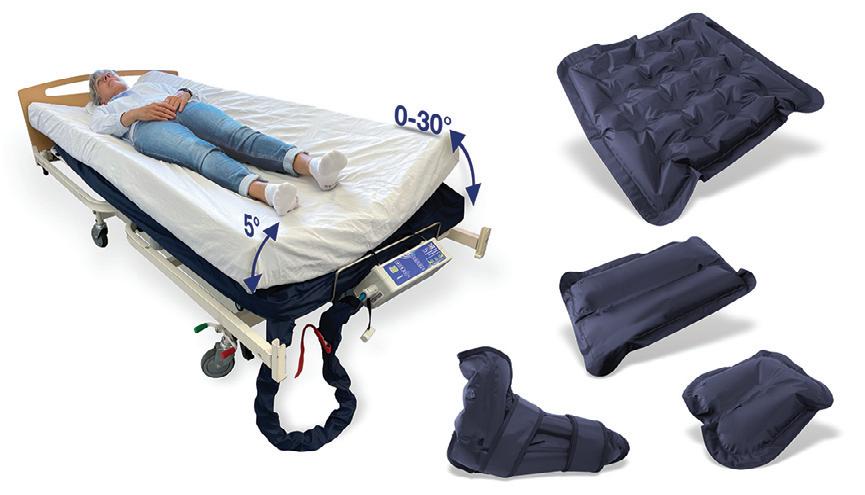
A key differentiator across the range is Levabo’s unique “Fluffy Air” technology. This ensures that each product remains soft and adaptable, gently moulding to the individual’s body shape. The result is improved pressure distribution and a high level of comfort, both essential for individuals who may be immobile or spending long periods in one position.
Pet therapy has become a part of the everyday routine in many care homes in the UK. The positive impact animals can have on the well-being of residents is well documented. But bringing animals into a care setting brings its own problems. It can be expensive and disruptive, they can be temperamental, and even the cleanest pets raise hygiene issues.
V-Thera virtual pets allow you to offer all the fun and engagement of a real pet, but in a clean, predictable and flexible way that fits in perfectly with your care home routine.
VIRTUAL PETS, REAL BENEFITS
From the moment the resident first puts the headset on, they are engaged and delighted as the pet sits, lies down, rolls over and feeds on command. They can even throw a ball for the pet to fetch. The experience is involving, relaxing and stimulating, enhancing a positive mood while encouraging movement and communication.
The pets themselves are wonderfully realistic, not just in the way they look, but in how they act. There are four dogs to choose from, and there’s even a moggie for cat lovers. They respond to voice or hand commands, or to big buttons on the screen. It’s ideal for previous pet owners, but also people nervous of animals.
V-Thera uses the latest Japanese mixed reality technology, meaning the virtual pet appears in the realworld, viewed through the headset. Seeing the familiar surroundings of their care home lounge reduces any sense of anxiety or disorientation for residents. The app can also be used lying down, so it can be used in bedrooms.
The technology itself is completely intuitive, designed for people with no experience of gaming. The
CareZips® Classic are patented, easy dressing unisex adaptive pants designed for older and disabled people suffering with problems associated with continence, mobility, mental function and cognition. Suitable for persons living in care institutions, receiving care at home or living independently at home, CareZips® Classic enable people to dress themselves or with assistance from carers.
CareZips® Classic feature patented 3-zipper system, which opens the front of the pants from the waist to the knees for quicker access during toileting, continence pads changes and personal hygiene. The forward positioning of the two side zippers lessens pressure on sensitive hip areas, helping to eliminate discomfort. The third zipper facilitates simple full frontal opening for faster more dignified diaper changes, catheter adjustments, personal cleansing and hygiene routines.

cal functionality and versatility of the CareZips® Classic, all day comfort and easy garment care.
• People dependent on assisted dressing appreciate quick easy dressing process with less stress, embarrassment and greater dignity offered by CareZips® Classic.
• CareZips® Classic offer practical gains to the carers, helping them to provide better care, whilst reducing physical efforts and saving valuable time.
CareZips® Classic are unisex, available in 6 sizes and 3 practical colours (i.e. black, charcoal and navy). Tapered fit at the ankles gives a tidy appearance. Made from breathable moisture-wicking 4-way stretchy crease-free and easy-care durable fabric, CareZips® Classic are comfortable, practical and conveniently functional.
For more information, contact Win Health Medical Ltd - 01835 864866www.win-health.com
CareZips® Classic have many benefits for the older and disabled users and their carers:
• People dressing themselves enjoy the practi-
Importantly, the range has been developed in collaboration with healthcare professionals, ensuring that each product addresses real-world challenges faced by care teams. From ease of handling to durability and hygiene, every detail is designed to support efficient care delivery without adding complexity.
Levabo’s products are also protected by international patents and have received global recognition, with the company being named the world’s leading positioning cushion manufacturer for four consecutive years. This reflects both the quality of the range and its growing impact across the sector. For care providers, the message is clear: investing in the right positioning solutions is not only a clinical decision but a practical and economic one. With prevention proven to be significantly more cost-effective than treatment, Levabo’s range offers a smart, scalable way to improve outcomes while supporting high standards of care. Simple solutions. Big impact. For more information see page 25 or please email bm@levabo.com or visit www.levabo.com
headset reads hand movements, so there is no need for hand controls after set-up. Setting the app up is easy and quick for staff, with no training required. It comes preloaded onto the latest Quest 3s headset, so it’s a simple matter of staff switching the headset on, selecting the V-Thera icon, selecting the dog – which you can name – then transferring the headset to the resident. They are immediately immersed in playing with the dog or cat.
The makers recommend sessions of up to ten minutes at a time, it’s very easy to accommodate the technology into the life of the home, and for staff it can create an excellent opportunity to bond with residents. A sharing function even means the sessions can be cast to other screens so all residents can share the experience.
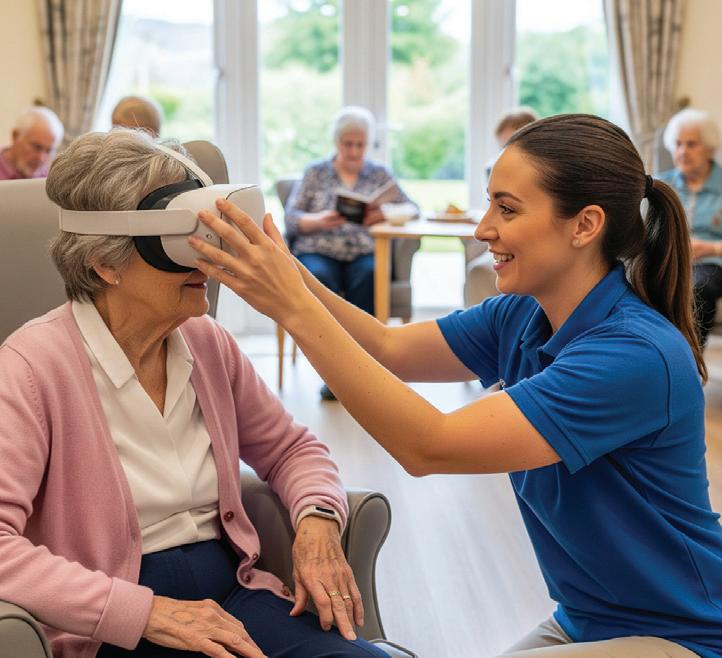
The potential of new technologies like V-Thera for engaging with residents in a positive way points to an exciting future. The combination of advanced Mixed Reality with intuitive and thoughtful design means care homes can adopt the latest technology without disrupting the care routines already in place.
V-Thera was created in Japan by Remedy & Co and is available now in the UK through Care Activity Ltd. Managing Director Alison Lang says, “The minute we saw V-Thera, it was clear to us that this was an exciting innovation, a new way to offer something genuinely engaging to care home residents. The pets are fun, realistic and always ready to play. It is technology that brings care to life.”
Contact alison@careactivityxr.com www.careactivityxr.com
See the advert on page 3 for further information on Win Health’s product range.

By Chelsea Jeffrey, Head of Food Experience, Aurem Care (www,aurem-care.com)
When people think about food in care homes, nutrition is often the first thing that comes to mind. Of course, ensuring residents receive balanced, nutritious meals is incredibly important. However, food and dining in a care home environment are about so much more than calories, vitamins and dietary requirements.
I have always believed that mealtimes are pivotal to a resident's mood and to the overall atmosphere within a care home. Food is about far more than nutrition; it is comfort, choice, dignity and joy. It can spark memories, create opportunities for social interaction and provide moments of genuine pleasure throughout the day.
For many residents, mealtimes become key milestones in their daily routine. A well-prepared meal served in a welcoming environment can encourage conversation, reduce feelings of isolation and help create a sense of community. Equally, a poor dining experience can negatively affect appetite, wellbeing and overall quality of life.
This is why listening is such an important part of our approach. To get food right, chefs and care teams must take the time to speak to residents and their relatives, understand what they want from their meals and recognise the diversity that exists within every home. Food preferences are deeply personal and are often shaped by culture, family traditions, faith and life experiences.
A resident who has spent decades enjoying traditional home-cooked British meals may have very different expectations from someone who grew up with Mediterranean, Caribbean or South Asian cuisine. Neither is right nor wrong. Our role is to celebrate that diversity and ensure residents continue to enjoy foods that are familiar, meaningful and enjoyable to them.
Choice is equally important. Moving into a care home should never mean losing control over everyday
decisions. Offering meaningful choices at mealtimes helps preserve independence and dignity. Something as simple as choosing between two main courses, selecting favourite desserts or having input into seasonal menus can make a significant difference to how residents feel.
Another key consideration is ensuring that dietary requirements never become a barrier to enjoying food. Many residents require fortified diets to support weight maintenance and nutritional intake. Others may need meals adapted due to allergies, medical conditions or personal preferences. These adjustments must be made without compromising taste, presentation or enjoyment.
Texture-modified diets are a particularly important area. Residents living with dementia, arthritis, Parkinson's disease or swallowing difficulties often require food that is easier and safer to eat. Historically, modified-texture meals have sometimes carried an unfair reputation for being bland or unappealing. Fortunately, standards and understanding have improved significantly.
With the right skills and creativity, chefs can produce texture-modified meals that are colourful, flavourful and visually appealing. Residents should still be able to recognise the food on their plate and experience the same enjoyment as everyone else. Nobody should feel excluded from the dining experience because their food has been adapted to meet their needs.
For people living with dementia, the dining environment itself can also play an important role. Clear table settings, familiar foods, appropriate portion sizes and a calm atmosphere can all help encourage eating and reduce anxiety. Small details often make the biggest difference.
Ultimately, food is one of the most powerful ways we can demonstrate care. It brings people together, supports physical health, promotes emotional wellbeing and helps residents maintain their identity and sense of self.
As the care sector continues to evolve, I believe we should challenge ourselves to think beyond nutrition alone. Good food is essential, but great dining experiences can transform lives. When we focus on comfort, choice, dignity and joy alongside nutritional excellence, we create environments where residents can truly thrive.
Because in care homes, food is never just food. It is an experience, a connection and often one of the highlights of the day.
A dedicated Chef Development Day, hosted at Keymer Care Home in May, brought the culinary teams across Boutique Care Homes together for a day of learning, live cooking and shared ambition around the belief that great food is at the heart of great care.
Boutique Care Homes gathered its chefs from across the group in May for a Chef Development Day focused on elevating the food, dining and hospitality experience for residents. Held at Keymer Care Home, the day centred on a conviction the group holds deeply: that dining is not simply one part of what a care home does. It is one of the most visible, daily expressions of who Boutique Care Homes is as a care provider.
The event featured a guest session from Andrew Turvil, described by The Independent as one of the UK's "arbiters of taste". Turvil is the former editor of The Good Food Guide, the AA Restaurant Guide and the Which? Pub Guide, and has spent his career as a freelance restaurant critic, writer and editor. His first book, Blood, Sweat & Asparagus Spears, was published in September 2025. Drawing on a career at the top of the UK food industry, he shared insights and experiences with the gathered chefs, bringing a level of external expertise rarely seen in the care sector.
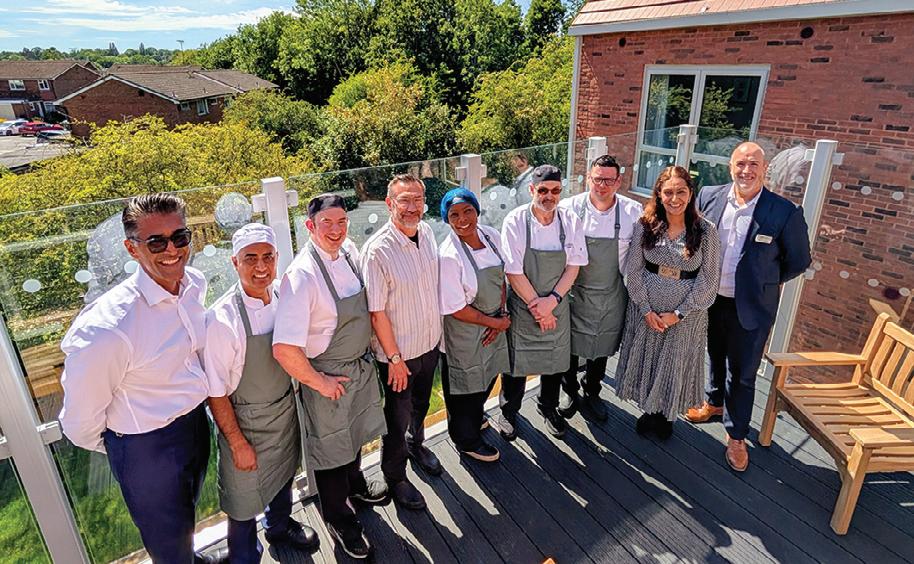
"It was wonderful to meet such dedicated chefs and to see how much passion, care and attention to detail is being put into the food by the team at Boutique Care Homes," Turvil said.
Beyond the guest session, the day brought together culinary teams for a full programme of presentations, hands-on sessions and open discussion. A live culinary showcase formed the centrepiece of the afternoon, with chefs from all five homes taking to the pass to present dishes from the new summer menus. The Burlington served a spinach, roasted pepper and feta roulade with fresh rocket, followed by

sweet potato and roasted beetroot with chickpea puree. Martello Manor presented a chickpea and halloumi korma with watermelon rice. Chartwell House unveiled a mini beef wellington with red pepper jam and stuffed jacket potatoes with caramelised onion chutney. Keymer Hall presented a chicken ballotine stuffed with sage and chestnut mousse, with tarragon velouté, asparagus and fondant potato, rounded off with their take on a classic Tunnock's tea cake with raspberry compote. Brampton Manor showcased the group's commitment to dining without compromise for every resident, presenting a salmon en croûte with hollandaise sauce prepared to a texture modified standard, proving that elegance and clinical need are never in conflict at Boutique Care Homes.
The programme also included dedicated sessions on bedroom dining, exploring how the same warmth, quality and care given to communal dining is carried through to every tray delivered to a resident in their room.
The group's standard is unambiguous: no resident receives anything less than the full Boutique Care Homes experience, regardless of where or how they are dining.
Priya Bhayani, Director at Boutique Care Homes, described the day as a tremendous success. "Bringing our team together around a shared vision of continually elevating our food, dining and hospitality offering is exactly what days like this are for. It was a real privilege to welcome Andrew Turvil, who shared invaluable insights from throughout his distinguished career."
The live culinary showcase gave Bhayani particular cause for pride. "Every dish was beautifully presented and absolutely delicious. A huge well done to the entire team for your creativity, passion and hard work. Our residents are truly in for a treat."
As care providers face mounting pressure from food inflation, workforce shortages and increasing regulatory demands, award-winning food procurement specialist allmanhall have strengthened their care sector expertise with the appointment of experienced industry professional Jamie Clews as Development Manager.
Jamie joins allmanhall with extensive experience helping care organisations reduce waste, improve operational efficiency, and maximise the value of catering budgets, while maintaining the high standards residents deserve.
His appointment follows allmanhall's recognition as Best in Catering and Nutrition at the Care Sector Supplier Awards 2025 and Best in Nutrition, Food and Dining at the 2026 Care Home Awards, reinforcing the company's commitment to supporting care providers through an increasingly challenging operating environment.
Jamie has built a reputation for helping care providers take a more strategic approach to catering operations, identifying opportunities to reduce waste, improve processes and make budgets work harder. His values closely align with allmanhall's commitment to delivering practical, sustainable improvements that support both financial performance and resident wellbeing.
As experts in food procurement and foodservice consultancy, allmanhall combine procurement expertise, market insight and award-winning client support to help care organisations gain greater control and visibility over their catering spend, reduce waste, and improve operational performance.
Commenting on his new role, Jamie Clews said:
"Care providers need more than lower prices. They need a partner who understands their challenges and helps them make informed decisions with confidence. I'm excited to be joining allmanhall and helping clients unlock even greater value from their catering operations."
Jo Hall, co-owner and Managing Director of allmanhall said:
"Jamie brings a wealth of experience and a deep understanding of the care sector. His appointment reflects our ongoing commitment to investing in the expertise and support that help our clients succeed. His knowledge further strengthens our ability to help care providers balance financial control with exceptional resident care."
For more information about allmanhall's support for care providers, visit www.allmanhall.co.uk/care-homes.
Nearly half of patient-facing NHS staff (44%) say patients bring them inaccurate or misleading nutrition or supplement information at least once a week, according to new analysis from World Cancer Research Fund.
The charity’s research also reveals a growing mismatch between confidence and understanding among the public, with people who rely on social media for news more likely to feel confident about finding trustworthy nutrition information online, while also being more likely overall to believe misleading claims about diet, supplements and cancer prevention.
World Cancer Research Fund says the findings highlight the current pressure on healthcare professionals, while confusion online is making it harder for people to make informed choices about their health.
In response, the charity is calling on the UK Government to use the NHS Workforce Plan to strengthen support for evidence-based advice on cancer prevention, nutrition and physical activity. It is also launching a simple new TRUST Test to help the public and healthcare professionals spot health misinformation online.
Despite healthcare professionals being the public’s most trusted source of nutrition advice, World Cancer Research Fund’s analysis shows many staff are under strain from the volume and complexity of misinformation:
44% of patient-facing NHS staff say patients raise inaccurate or misleading nutrition or supplement information at least once a week, including 6% who say this happens daily or almost daily
40% say they are not confident that nutritional advice they see online is correct
37% of healthcare professionals say they are not confident about where to find reliable, evidence-based information on supplements
World Cancer Research Fund is already working to support healthcare professionals and the public through its Cancer and Nutrition Helpline, webinars, workshops, cooking through cancer classes and practical resources designed to improve understanding of nutrition and cancer prevention. However, the charity warns that while these initiatives are helping, they cannot keep pace with the scale of misinformation people are encountering online.
The charity’s wider public polling also highlights a growing confidence gap in how people navigate health information.
While 62% of UK adults say they feel confident they can find trustworthy nutrition information online, this rises to 72% among those whose main news source is social network websites.
This same group is more likely to hold inaccurate beliefs about cancer prevention and nutrition. Compared with those whose main news source is not social media, they are:
• less likely to identify eating plenty of fibre as something that can reduce cancer risk (48% vs 55%)
• more likely to think certain supplements can reduce cancer risk (15% vs 11%)
• more likely to think certain foods or diets can “starve” cancer (13% vs 7%)
• More broadly, misleading nutrition narratives appear to be shaping everyday health beliefs:
• 1 in 5 people (20%) say detoxes or “cleanses” are good for health
• 11% of 18-34s wrongly think eating the same ‘superfood’ most days can reduce cancer risk,
• more than 1 in 5 (21%) spend over £10 a month on dietary supplements
World Cancer Research Fund warns this matters because misleading information can divert people away from the everyday habits known to reduce cancer risk - at a time when around 4 in 10 cancer cases in the UK are preventable.
Previous UK research had found that in the UK more than 70% of medical students and doctors surveyed reported receiving fewer than two hours of nutrition training at medical school**.
The charity says more can be done to support the next generation of healthcare professionals. It is already working with medical schools at the Universities of Lincoln and Southampton to create practical teaching resources for tomorrow’s doctors on diet, weight and cancer risk, while its pilot scheme with NHS Greater Glasgow and Clyde makes the charity's Cancer and Nutrition Helpline part of many patient’s cancer care pathways.
Launching Cancer Prevention Action Week’s Science Not Fiction 3year Campaign (15–21 June), World Cancer Research Fund says the NHS Workforce Plan presents a critical opportunity to better equip healthcare professionals. This includes improving access to training on nutrition, physical activity and reducing alcohol consumption in relation to cancer prevention and survivorship, alongside high-quality, evidence-based resources developed with cancer charities.
This is not about expecting healthcare staff to act as dietitians or become misinformation experts but to have clear, trusted information to support them in these circumstances, to help them respond confidently when patients raise questions about claims they've seen online.
World Cancer Research Fund’s UK Director, Steven Greenberg, said:
“Misinformation about diet and cancer isn’t just confusing, it’s putting people’s health at risk. The danger isn’t just false claims, it’s advice that’s distorted, taken out of context, or presented in a way that hides the risks.
“We know people are acting on this information, particularly when it comes from social media, and that can have real consequences for their health.”
TRUST TEST
World Cancer Research Fund has developed a simple, sciencebased memory tool to help both the public and healthcare professionals navigate misinformation, which the charity hopes will help reduce time spent tackling misleading claims in consultations so healthcare professionals can focus on core patient needs:
T
— Too good to be true?
Does it promise unrealistic results or quick fixes?
R — Research-backed?
Does it trace back to scientific evidence rather than personal stories or opinions?
U — Understood?
Has the person sharing the information understood the dangers and risks, or have they downplayed the harms and promoted unproven remedies over appropriate medical care?
S — Source quality?
Does it come from a trusted organisation or scientific source? What do other experts say?
T — Think before you share
If it doesn’t pass the TRUST Test, don’t pass it on
The TRUST Test incorporates misinformation detection indicators tested and validated by researchers at University College London (UCL), with refinement from Alex Ruani, Doctoral Researcher in healthdiet misinformation at University College London. In YouGov’s qualitative testing for WCRF, participants described the TRUST Test as clear, memorable and practical. It can be seen at https://www.wcrf.org/trust-test
World Cancer Research Fund’s Chief Executive, Rachael Hutson, said:
“Too many people are trying to make important health decisions in a fog of online misinformation.
“When advice is confusing or misleading, it can take people away from the everyday habits we know help reduce cancer risk and towards claims that are exaggerated, distorted or simply untrue.
“Our TRUST Test is there to help people feel more confident about what they see online because when it comes to cancer prevention, it should be based on science, not fiction.”
Alex Ruani, who has been advising World Cancer Research Fund on their misinformation campaign, said:
“We now have strong evidence that nutrition misinformation is not just misleading - it can be actively harmful. UCL research shows that inaccurate or incomplete health advice can influence real-world decisions, from dangerous dieting and supplement misuse to delaying or abandoning effective treatment.
“What makes this particularly concerning is that misinformation often presents itself with confidence and simplicity, while leaving out crucial context, risks or uncertainty. That combination makes it more persuasive, especially on social media where engagement is driven by emotionally compelling claims rather than careful evidence.
“If we want to reduce harm, we need to start treating exposure to misleading health information as a public health risk in its own rightsomething we can measure, prioritise and act on. Tools like the TRUST Test are important because they help people recognise these patterns and make decisions based on verifiable evidence, not just what sounds convincing.”
Former breast surgeon, three-time breast cancer patient, keynote speaker and author Liz O’Riordan, who is supporting World Cancer Research Fund’s campaign, said:
“As a breast surgeon and breast cancer patient, I know how overwhelming it can be trying to make sense of all the information out there.
“When something sounds hopeful, it’s very easy to think ‘why not try it too?’ even if it’s not based on solid evidence. A lot of this information sounds convincing, but it doesn’t always tell the full story - and that can make an already difficult situation even harder and at times dangerous.”

Malnutrition remains one of the most persistent - and often under-recognised - challenges facing the care sector today.
Despite significant progress in person-centred care and nutritional screening, many older residents continue to struggle with maintaining adequate nutritional intake due to reduced appetite, frailty, dementia, swallowing difficulties, medication side effects and illness-related fatigue.
According to UK nutrition guidance, people living in care homes are at significantly increased risk of malnutrition, with estimates suggesting that between 30–42% of residents admitted to care homes may already be affected or at risk. At the same time, healthcare organisations including Age UK and the Malnutrition Task Force continue to warn that undernutrition among older people remains widely underdiagnosed.
Importantly, malnutrition is no longer being viewed simply as an unavoidable consequence of ageing.
Across both health and social care, there is increasing recognition that early intervention and preventative nutritional support can play a major role in improving outcomes for older adults, helping to maintain strength, reduce frailty and potentially prevent avoidable hospital admissions.
Updated NHS guidance around nutrition in care homes increasingly promotes a “food-first” approach, encouraging providers to focus on fortified meals, nutrient-dense snacks, hydration and personalised eating support as part of everyday care delivery.
However, for many care teams, the challenge is not simply identifying residents who may be nutritionally vulnerable - it is finding solutions residents will consistently consume and enjoy.
MOVING BEYOND TRADITIONAL SUPPLEMENT APPROACHES
Oral nutritional supplements continue to play an important role within many care settings, particularly where residents are experiencing clinically significant weight loss or recovering from illness.
Yet in practice, compliance can sometimes become difficult over time. Reduced appetite, taste fatigue, sensory changes and swallowing difficulties can all impact whether residents continue consuming traditional supplement drinks consistently.
As a result, there is growing discussion across the nutrition and care sectors around the role of more enjoyable fortified foods that support intake while feeling less clinical and more familiar to residents.
This conversation has also been influenced by the wider international rise of “Food as Medicine” - an approach increasingly recognising the role nutrition can play in supporting recovery, resilience and wellbeing during illness and later life.
For care homes, this may include:
• fortified desserts and snacks
• protein-enriched meals
• smaller nutrient-dense portions
• hydration-supportive foods
• texture-adapted options
• socially enjoyable dining experiences
The emphasis is increasingly shifting towards nutritional quality alongside resident enjoyment, dignity and quality of life.
WHY FAMILIAR FOODS MATTER
Care professionals understand that nutritional support is rarely one-size-fits-all.
For some residents, particularly those with reduced appetite or illness-related nausea, cold foods can often feel more manageable than hot meals or milkshake-style supplements. Familiar foods may also encourage better engagement with eating among residents who are reluctant to consume more medicalised nutritional products.

This is one reason why fortified desserts and ice cream-based nutritional products are beginning to attract greater interest within healthcare nutrition conversations.
One example is Nutri-Ice®, developed by My Doctor’s Recipe (https://mydoctorsrecipe.com/collections/the-nutri-ice®), a healthcare-focused nutrition company founded by London oncologist Dr Jon Krell
Originally designed to support patients struggling to maintain nutritional intake during illness and treatment, Nutri-Ice® combines calories, protein and added vitamins in a format intended to feel more like a familiar food experience than a traditional supplement.
Each serving contains over 300 calories and more than 10g of protein, alongside added vitamins and minerals via the company’s DJK+® nutritional blend.
While products such as these are not intended to replace clinical nutritional interventions where required, they may represent part of a broader shift towards more resident-friendly approaches to nutritional careparticularly where maintaining appetite and encouraging consistent intake are ongoing concerns.
SUPPORTING NUTRITION THROUGH DIGNITY AND ENJOYMENT
Nutrition in care settings is about far more than calorie intake alone.
Eating and drinking remain closely connected to comfort, independence, routine and social interaction. As the sector continues to prioritise person-centred care, there is increasing recognition that nutritional strategies should support emotional wellbeing and dignity alongside physical health.
For residents living with dementia, for example, familiar foods and positive mealtime experiences can help reduce anxiety around eating. For frailer residents or those recovering from illness, smaller enjoyable foods may sometimes feel less overwhelming than larger meals.
As NHS and community healthcare systems continue focusing on prevention and reducing avoidable admissions, nutrition is likely to remain high on the care agenda throughout 2026 and beyond.
For many providers, the future may lie not only in identifying malnutrition earlier, but also in rethinking how nutritional support is delivered in ways residents genuinely want to engage with.
Ultimately, improving nutrition in care homes may depend not simply on adding more calories, but on creating nutritional approaches that residents can tolerate, enjoy and sustain over time.
A new report from leading dairy co-operative Lakeland Dairies, supported by Consultant Dietitian Rachael Masters (MSc, BSc), reveals the care sector at a tipping point, with nearly three quarters (74%) of operators concerned about their ability to meet residents’ nutrition and hydration needs over the next five years. Care kitchens are under growing pressure as residents’ needs grow more complex, resources stay tight, and smaller portions mean every mouthful must be nutrient-dense.
The report, The Care Kitchen Reset: The Future of Care Catering, sets out a shift towards enriched cooking and stronger base ingredients that make everyday dishes work harder. It calls for care operators to protect quality nutrition under mounting pressure not by adding complexity, but by strengthening core ingredients from the outset to improve calorie and protein density without increasing portion size.

It launches as part of Nutrition & Hydration Week (16–22 March), which shines a spotlight on the UK care home sector and the critical role food and drink play in supporting resident health and wellbeing.
CARE SECTOR UNDER MOUNTING NUTRITIONAL PRESSURE
The findings reveal rising clinical complexity is a key driver, with almost half (43%) reporting an increase in nutritional needs over the past five years. At the same time, 71% say rising ingredient costs are making it harder to maintain food quality despite 90% refusing to compromise on standards.
For operators, the stakes are both clinical and commercial. Nine in ten resident respondents (90%) cite food as a key factor when choosing a care home, while 87% of residents say mealtimes are the most important part of their day.
Dairy-based ingredients play a central role: over nine in ten operators say products such as cream and milk powder enhance food and drink experiences for residents with smaller appetites or specialist diets, while 88% believe they effectively support resident nutrition. This underlines the value of enriched cooking approaches that boost nutrition in the foods residents already enjoy, without relying on bigger portions.
INGREDIENT STRATEGY OFFERS PRACTICAL SOLUTION
Responding to these pressures, the report highlights that one of the most practical, operationally efficient levers is ingredient strategy. Rather than layering on additional processes, the report argues the solution lies not in short-term cost cutting alone but in strengthening menu foundations. By embedding fortified nutrition into everyday base ingredients, kitchens can improve calorie and protein density without increasing portion size, labour or waste – safeguarding the sector’s future. Rachael Masters, Consultant Dietitian and contributor to the report said: “With an ageing population
driving increased demand for care home places, and residents presenting with more complex health and nutritional needs, care catering teams are being asked to deliver not just meals, but meaningful nutritional support in increasingly complex environments.”
“The solution doesn’t lie in adding more processes, but in making smarter use of core ingredients to maximise nutritional value. By fortifying everyday dishes, kitchens can enhance protein, energy and key nutrients in ways that are practical, cost-aware and, most importantly, enjoyable for residents. Dairy-based ingredients offer a particularly effective and versatile way to achieve this.”
“This report explores these growing pressures and highlights practical, nutrition-led approaches that support both care teams and residents –helping deliver better operational efficiency while improving health, wellbeing and dining satisfaction.”
The research also highlights opportunities to refine delivery. While 90% of residents rate meals positively overall, 77% report struggling to finish meals due to taste or presentation challenges, and 38% say higher quality ingredients would improve their experience. This reinforces the case for ingredient optimisation over short-term cost cutting.
Paul Jennings, Head of Food UK & International at Lakeland Dairies, adds: “Care operators are under pressure to do more with less – more nutrition, more quality and more resilience – while also meeting rising expectations from residents around mealtimes. This creates a real tension in care kitchens, where teams are balancing increasingly complex needs with limited time, staff and budgets.
Ingredient strategy is a practical way forward. By using hard-working bases such as Millac Gold Double and Lakeland Dairies Skimmed Milk Powder, kitchens can build richness, consistency and added nutrition into everyday dishes without adding complexity.
In a sector balancing tight budgets and staffing pressures, this timely report explores immediate solutions to support care kitchens.”
The report draws on a survey of care operators, residents and their families, alongside insight from Consultant Dietitian Rachael Masters, founder of Focus on Undernutrition, which provides specialist special diet training to care homes.
Lakeland Dairies is committed to supporting the sector through menu guidance, product innovation and training designed to help kitchens build resilience through stronger foundations and long-term supplier partnerships.
The full report is available: https://eu1.hubs.ly/H0sP61V0
ROLE CLARIFICATION: KNOWING WHO DOES WHAT — AND WHY IT MATTERS
Walk into any busy care home during a morning shift and you will encounter a diverse range of professionals: registered nurses, senior carers, care assistants, activity coordinators, housekeeping staff, kitchen teams, and visiting healthcare professionals. For residents — many of whom may be living with dementia, cognitive decline, or sensory impairment — being able to quickly and clearly identify who someone is can be genuinely reassuring and, in some cases, clinically important.
A well-considered colour-coded uniform system allows residents to distinguish between their care team and, for example, domestic or catering staff. This is not merely an administrative convenience. Research in dementia care has consistently highlighted that visual cues — including consistent clothing and recognisable appearance — help anchor individuals in their environment and reduce episodes of confusion or distress.
For family members and visiting professionals, clear role identification also inspires confidence. When a relative can immediately see that the person administering medication is a registered nurse, or that the individual assisting their parent at mealtimes is a trained care assistant, it reinforces the professionalism of the entire operation.
TRUST, AND REPUTATION
The care sector has, over many years, worked hard to establish itself as a skilled profession deserving of public trust and respect. Uniforms are an important visible component of that professional identity. Just as we recognise a nurse by their uniform in a hospital, or a police officer by their livery on the street, care staff in recognisable workwear signal to the world — and to those they support — that they belong to a trained, regulated, and accountable workforce.
INFECTION CONTROL: A NON-NEGOTIABLE PRIORITY
Perhaps the most clinically pressing argument for workwear in care settings is infection control. Residents in nursing and residential care homes are among the most vulnerable members of society — often elderly, immunocompromised, and living with multiple complex health conditions. The COVID-19 pandemic threw into sharp relief just how catastrophic the spread of infection can be in these settings, and it reinforced what Infection Prevention and Control (IPC) specialists had long advocated: what care staff wear is a critical component of safe care delivery.
Current guidance from NHS England, the UK Health Security Agency (UKHSA), and professional bodies such as the Royal College of Nursing recommends that care staff working in clinical or personal care roles wear a clean, short-sleeved uniform to minimise the risk of contamination. The 'bare below the elbows' principle — which advocates removing watches, rings, and long sleeves during personal care — is now widely accepted as best practice in care home settings, mirroring NHS clinical standards.
Dedicated workwear also creates an important psychological and physical barrier between home and work environments. When staff change into a uniform on arrival and change out of it before leaving the
building, the risk of transporting pathogens in either direction is meaningfully reduced. This is particularly important in the management of outbreaks of norovirus, influenza, and MRSA — all of which remain persistent concerns in communal care settings.
Fabric choice matters too. Modern healthcare workwear is increasingly manufactured from antimicrobial or fluid-resistant materials designed to withstand industrial washing at temperatures sufficient to eliminate bacterial contamination. Everyday clothing — particularly natural fibres laundered at lower domestic temperatures — cannot offer equivalent protection.
SAFEGUARDING:
The safeguarding of residents in adult social care is a paramount concern, and uniform policy has an often-underappreciated role to play in this area. Clear, consistent identification of care staff serves as a deterrent to, and means of detecting, unauthorised individuals within a care home. If every member of the care team is readily identifiable by their uniform, any person present without one immediately stands out — an important consideration for both physical security and the prevention of financial or emotional abuse.
Name badges and lanyards — ideally colour-coded and bearing the individual's name, role, and photograph — complement uniforms in this regard. They allow residents, particularly those with cognitive impairment, to verify who is attending to them, and give families visible reassurance that staff have been identified and vetted. They also support compliance with Disclosure and Barring Service (DBS) checks by making it easier for managers to verify that only cleared individuals are working in direct contact with residents.
In cases of safeguarding investigations or incidents, clear records of which uniformed member of staff was on duty, in which area of the home, at which time, become vital. A consistent and documented uniform policy supports the audit trail that such investigations depend upon.
RESIDENT SUPPORT AND ANXIETY REDUCTION
The environment in which a person lives profoundly affects their emotional wellbeing, and for residents of care homes — many of whom may have been admitted following significant loss, health deterioration, or a change in personal circumstances — familiarity and visual consistency are powerful sources of comfort.
Consistency in staff appearance can be a meaningful anchor for residents living with dementia. Where an individual may no longer reliably remember names or faces, recognising 'someone in the blue uniform who helps me get dressed' provides a form of cognitive continuity that supports orientation and reduces anxiety. This aligns with established principles of person-centred dementia care, including those embedded in the National Institute for Health and Care Excellence (NICE) guidelines on dementia support.
Soft colours, contemporary cuts, and co-ordinated rather than institutional palettes can all help workwear feel warmer and less clinical, whilst retaining its functional and identifying benefits.
Design and Functionality: Getting the Details Right
When specifying workwear, care managers should consider several
practical factors. Durability and washability are essential: uniforms must withstand repeated industrial laundering without shrinking, fading, or losing their shape. Comfort across long shifts matters greatly for staff welfare — breathable fabrics, well-placed pockets, and freedom of movement should be prioritised over appearance alone. Inclusive sizing, encompassing a full range of body types, is both a legal obligation under the Equality Act 2010 and an expression of the values care homes should embody.
Pockets deserve a particular mention. Care staff frequently need to carry small equipment — pens, hand sanitiser, a fob watch, a small notebook. Uniforms without adequate pocketing lead to the use of personal clothing layers or improvised solutions, undermining the consistency and IPC benefits the uniform is intended to provide.
Colour psychology, too, is worth considering. Deep blues and teals convey trust and calm; greens are associated with care and healing; warm purples can feel both professional and approachable. Harsh institutional greens or stark whites, by contrast, can heighten anxiety in individuals with clinical associations or past traumatic healthcare experiences. Getting the colour palette right is not a trivial aesthetic decision — it is a component of person-centred care.
SUSTAINABILITY: AN EMERGING PRIORITY
The social care sector, like all areas of public and commercial life, is increasingly alert to its environmental responsibilities. Workwear procurement is a meaningful area in which care home operators can demonstrate their commitment to sustainability. Choosing suppliers who use ethically sourced, recycled, or organic materials; selecting garments with extended lifespans; establishing laundering protocols that minimise water and energy use; and implementing responsible end-of-life disposal or recycling schemes are all practical steps that align workforce needs with environmental values.
Some larger care groups have begun working directly with workwear manufacturers to develop own-branded uniforms that meet both their operational requirements and their sustainability commitments — an approach that also strengthens brand identity and staff pride.
CONCLUSION: DRESSING THE PART IS PART OF CARING
The question of uniforms and workwear in adult social care is, at its heart, a question about values. What kind of environment do we want to create? What standards do we expect of our workforce? How do we balance clinical safety with emotional warmth? How do we protect the vulnerable people in our care whilst honouring their dignity and individuality?
A thoughtful, well-implemented workwear policy does not answer all of these questions alone — but it is a tangible, daily expression of how a care home answers them. Whether through a colour-coded uniform system that helps a resident with dementia recognise their carer, a fabric specification that reduces infection transmission, or a contemporary design that gives staff genuine pride in their professional identity, what care workers wear is far more than a matter of dress.
It is a statement of who you are, what you stand for, and how much you care — for the people you support, for the colleagues you work alongside, and for the standards the sector must continue to uphold.
For nearly 120 years, Grahame Gardner Ltd has been one of the UK’s leading suppliers of healthcare uniforms, supporting care homes, hospices, NHS organisations and healthcare professionals nationwide. Built on a strong reputation for quality, reliability and customer service, Grahame Gardner understands the evolving needs of the care sector and the important role uniforms play in professional healthcare environments.
Grahame Gardner offers an extensive range of healthcare workwear and accessories, including traditional tunics and trousers alongside a vast selection of modern scrubs designed to suit all budgets, colour preferences and fit options. From classic healthcare styles to contemporary uniforms that combine comfort with professional style, Grahame Gardner continues to help organisations create practical and cohesive uniform solutions tailored to their teams.
In today’s care sector, uniforms are about far more than appearance alone. Staff want to look and feel good in the workplace, but a uniform can offer so much more to both the wearer and the organisation that employs them.
One of the most important functions of a uniform is identification. Within busy care homes, hospitals and community healthcare settings, uniforms allow staff to be easily recognised according to their role, department or level of responsibility. Clear identification supports communication, efficiency and reassurance for residents and visitors alike. Families want to know immediately who they can approach for support, and coordinated uniforms help create clarity in fast paced environments. Uniforms also contribute to security within healthcare settings. Professional garments should only be issued to individuals authorised to wear them, helping to maintain controlled and secure working environments. In care settings where safeguarding and trust are critical, uniforms provide an additional level of reassurance for both residents and staff.

ism, consistency and accountability. In the care sector especially, appearance can strongly influence perception. A clean, professional uniform reinforces the idea that residents are being cared for by trained and trusted professionals. This confidence is invaluable in environments built on compassion, dignity and trust.
Uniforms can also support enhanced wearer performance. When carers feel comfortable, professional and proud of their appearance, it can positively influence morale and confidence throughout the working day. High quality healthcare uniforms are designed to support the demands of physically active roles, whilst helping staff feel part of a professional team. Grahame Gardner understands this balance and offers garments specifically created for healthcare professionals who require durability, flexibility and comfort during long shifts.
Modern healthcare uniforms must also function as effective protective garments. Care professionals work in environments where hygiene, infection control and workplace safety remain top priorities. Durable fabrics, practical designs and garments suitable for rigorous laundering processes all help to support protection against workplace hazards, while maintaining comfort and professionalism.
Finally, uniforms are an important reflection of brand identity. Through colour coordination, embroidery and personalised branding services, Grahame Gardner helps care providers create a professional and consistent corporate appearance across their teams.
Uniforms remain one of the simplest yet most powerful ways to support staff, reassure families, residents and patients and strengthen organisational identity.
To find out more about Grahame Gardner’s uniform range, personalised workwear services and extensive scrub collections, visit: grahamegardner.co.uk.
Naturally, this visibility and structure help strengthen public confidence. Uniforms project professional-
To discuss branding options and pricing, contact the team on 0116 255 6326 or email sales@grahamegardner.co.uk
Laundry may not command the same attention as clinical care protocols or medication management, but in a residential or nursing care home it represents one of the most significant infection control risks on the premises. Done well, it protects residents, staff and visitors. Done poorly, it can spread pathogens, compromise dignity and expose a provider to serious regulatory consequences.
Here we examine the key frameworks, practical obligations and emerging best practice that every care home manager and nominated individual should understand.
INFECTION CONTROL AND THE RISK OF CROSSCONTAMINATION
HTM 01-04 establishes a clear hierarchy of linen categories: used (soiled but not infectious), infected (from residents with known or suspected infectious conditions), and heat-labile (items that cannot withstand high-temperature washing). Each category must follow a distinct processing pathway.
The cardinal rule is the strict separation of dirty and clean linen at every stage — collection, transport, storage and processing. Soiled items should be placed directly into appropriate colour-coded bags at the point of care, never sorted on floors or in communal areas. Red alginate or water-soluble bags are used for infected linen, allowing the bag itself to be placed directly into the machine without manual handling of the contents.
Washing temperatures are a critical control. A minimum thermal dis-
infection cycle of 65°C for ten minutes or 71°C for three minutes is required. Where chemical disinfection is used — for example, with heat-sensitive items — validated low-temperature systems with appropriate detergents must achieve equivalent log reduction in microbial load. Informal domestic machines, even in small residential settings, frequently fail to sustain these temperatures and present an unacceptable infection risk.
Cross-contamination between residents' personal clothing remains a common and often underreported problem. Robust labelling — ideally heat-transfer or embroidered name labels — and individualised laundry records reduce the risk of items being lost, mixed or returned to the wrong resident, an issue that carries both infection and dignity implications.
STAFF SAFETY AND DIGNITY CONSIDERATIONS
Personal Protective Equipment (PPE) is mandatory when handling soiled or infected linen. As a minimum, staff should wear disposable gloves and aprons; fluid-resistant masks are advisable when handling heavily contaminated items. Hand hygiene must follow the removal of PPE — this step is frequently omitted and should be an explicit part of laundry standard operating procedures.
Manual handling risks in laundry are frequently overlooked. Wet linen is heavy, laundry rooms are often cramped, and repetitive loading and unloading of machines contributes to musculoskeletal injury.
Ergonomic assessments of laundry workflows, appropriate trolley
heights and staff training are all employer obligations under the Manual Handling Operations Regulations 1992.
For residents, the laundry process is deeply personal. Clothing represents identity, self-expression and comfort. Shrinkage, damage or the loss of treasured garments causes genuine distress. Care plans should document fabric care requirements for individual residents, and staff should understand — and follow — care label instructions.
EFFICIENCY,
Operational efficiency and environmental responsibility are increasingly inseparable. Modern commercial washer-extractors offer programmable cycles, water recycling, and energy consumption data that support both cost management and sustainability reporting — the latter becoming relevant as the care sector faces growing ESG scrutiny from commissioners and investors.
Outsourced laundry contracts with commercial providers offer scale and validated thermal disinfection, but require robust service level agreements, audit rights and clear protocols for infected linen. On-site solutions give greater control but demand proper equipment maintenance, documented machine validation, and staff competency checks.
Whichever model is adopted, documented evidence is essential.
HTM 01-04 and CQC both expect providers to demonstrate — not merely assert — compliance. Temperature monitoring logs, machine service records, staff training certificates and outbreak response procedures should all be readily available for inspection.
Lavamac has built a reputation as a trusted name in industrial and commercial laundry technology. Recognized across global markets for its commitment to durability, innovation, and operational efficiency, the company continues to deliver advanced laundry solutions tailored to the evolving demands of healthcare, commercial laundries, and institutional facilities. With a product philosophy centered on reliability and performance, Lavamac has become synonymous with high-quality engineering and longterm value.
Innovation remains a defining characteristic of the Lavamac brand. The company continues to invest heavily in research, engineering, and modern control systems that improve ease of use and machine efficiency. Lavamac’s commitment to sustainability is equally impressive. Its machines are engineered to meet stringent environmental standards while supporting lower water and energy usage. Advanced airflow systems in the dryers and optimized water management technologies in the washers contribute to reduced utility costs and greener operations. This meant that Lavamac was award-
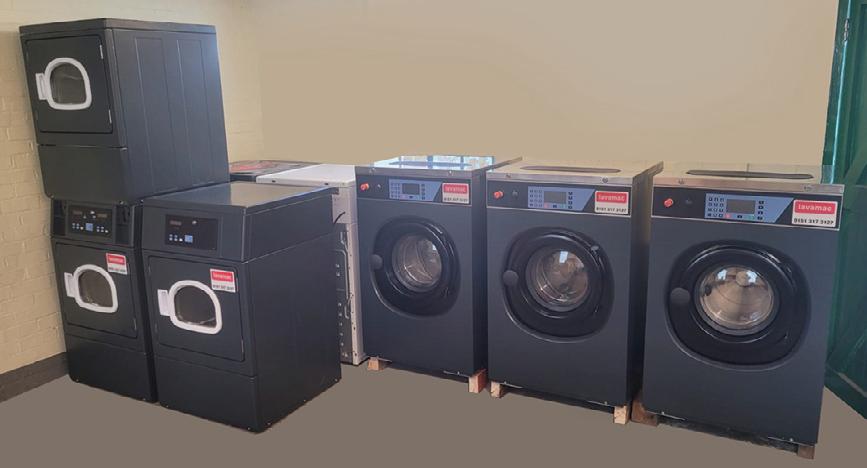
ed a bronze award in sustainability by the Groundworks Trust, affirming their commitment to the sustainability industry Lavamac's refurbishment programme in their specialist facility includes stripping down the machines, and giving them a check-over, to see which parts, if any, can be carried over the refurbishment. Lavamac will only carry over the highest-quality parts from the machine from pre to post refurbishment. The machine then undergoes an extensive refurbishment, with almost all the parts being replaced, with the refurbished machines being given specialist parts based on the model type.
The company offers a complete service-oriented approach that includes laundry design consultation, project management, technical expertise, installation support, and after-sales service. Supported by experienced engineers and factory-trained technicians, Lavamac works closely with customers to develop customized laundry solutions that meet operational goals and space requirements.
or visit www.lavamac.eu
In today’s care environment, operators are facing unprecedented financial pressure. Rising utility costs, staffing shortages and increasing regulatory demands are forcing care homes to scrutinise every aspect of operational efficiency - without compromising resident wellbeing or compliance standards.
Laundry provision is one area where care providers can make meaningful operational and financial gains.
At Forbes Professional, our Complete Care Laundry Solution has been developed specifically to support the evolving needs of the care industry. As proud national partners of Miele Professional commercial laundry equipment, we combine premium technology with local expertise and nationwide service support, giving care homes complete confidence in their laundry operations.
For many operators, purchasing commercial laundry equipment outright is no longer the most practical or cost-effective route. Renting provides access to high-performance, WRAS-approved equipment that meets stringent infection control and industry requirements, without the burden of significant upfront capital expenditure.

Equally important is the reassurance of rapid support. Our local-based engineering network delivers
same-day or next-day response nationwide, helping minimise downtime and maintaining continuity of care operations.
Beyond equipment and service, Forbes Professional works consultatively with care providers to design compliant, efficient laundry solutions tailored to individual operational needs, budgets and laundry room configurations. Our expert advisors guide customers through current industry guidelines to help ensure fully compliant solutions aligned with both CQC and WRAS standards.
Kevin Herring, CEO of Forbes Professional, comments:
“Care homes need reliability, compliance and long-term value. Our engineering infrastructure and national support capability give operators peace of mind that help is always close at hand. By renting premium commercial laundry equipment, care providers can protect cash flow, reduce unexpected repair costs and gain access to industry-leading technology that supports both efficiency and resident care.”
As pressures on the care sector continue, operators are increasingly seeking partners who can deliver not only equipment, but expertise, responsiveness and genuine operational support. Forbes Professional’s Complete Care Laundry Solution is designed to do exactly that.
Trusted by thousands of care homes across the UK, MAG Laundry Equipment is an award-winning supplier of commercial washing machines and tumble dryers. Reliable laundry machines that meet the highest hygiene standards are essential for care homes, hospices, nursing homes, hospitals, and other healthcare organisations. MAG provides support to the care sector for all makes, models, and brands of laundry machines. Whether you require free technical assistance, maintenance, repairs or installation, the professional team of experts at MAG will be happy to answer any questions.
MAG’s product range includes commercial washing machines, tumble dryers, ironers, presses, and detergents, all supported by a nationwide network of accredited engineers. Built since 1922, their commercial laundry equipment has a 5-star reputation for being reliable, energy-efficient, and
cost-effective. Care homes benefit from complete peace of mind knowing their commercial laundry machines can be professionally supplied, installed, maintained, and repaired throughout England, Scotland, and Wales.
Thermal disinfection comes as standard on MAG washing machines designed for care home and healthcare applications, helping businesses maintain the highest hygiene standards and regulations. For organisations seeking exceptional wash performance and effective stain removal, MAG Laundry Equipment also supplies high-quality commercial laundry detergents.
To find out more about how MAG Laundry Equipment can support your care home, visit www.maglaundryequipment.co.uk or phone 01353 883025. See the advert on the back cover.
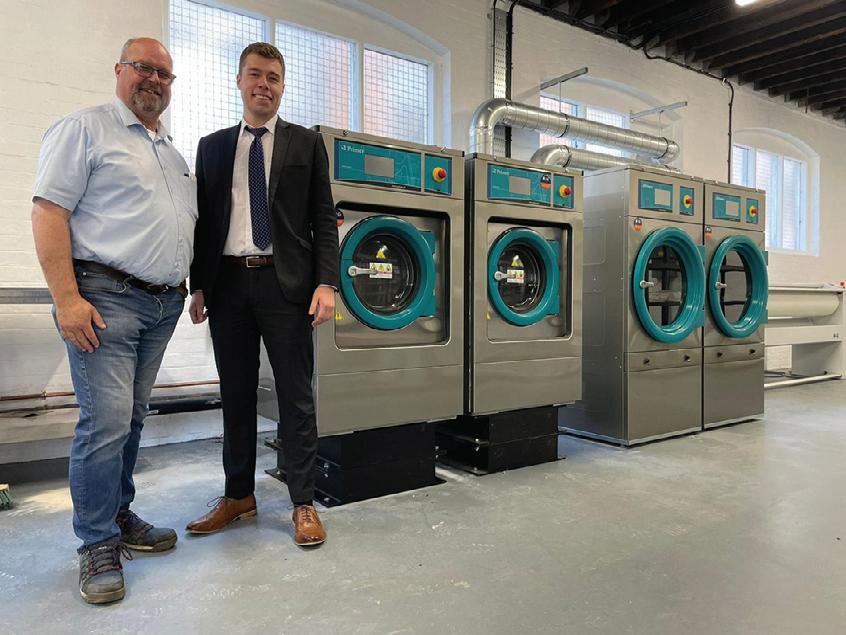

Falls are a significant concern for vulnerable individuals, especially seniors and patients at risk. Medpage, a leader in assistive technology, offers a range of cutting-edge products designed to enhance safety and provide peace of mind for caregivers and families. Here’s an in-depth look at some of their standout solutions:
MPRCG1 (2023) BED LEAVING DETECTION ALARM WITH CAREGIVER RADIO PAGER
The MPRCG1 is a comprehensive system tailored for fall prevention in domestic, commercial, and NHS care settings. This all-inclusive kit includes a bed pressure mat sensor, a BTX21-MP alarm sensor transmitter, and an MP-PAG31 radio pager. The system is designed to alert caregivers when a patient leaves their bed, reducing the risk of falls.
HDKMB2 HOSPITAL DISCHARGE KIT FOR FALLS RISK PATIENTS
The HDKMB2 is a thoughtfully curated kit aimed at supporting patients transitioning from hospital to home care. It includes essential tools to mitigate fall risks and promote recovery. This kit is ideal for caregivers seeking a comprehensive solution to enhance patient safety during the critical post-discharge period.
CMEX-21 MULTI-PORT WIRELESS SENSOR INPUT EXPANDER FOR NURSE CALL CONNECTION
The CMEX-21 is Medpage’s latest innovation, designed to integrate seamlessly with existing nurse call systems. This multi-port expander allows for the connection of multiple wireless sensors, enhancing
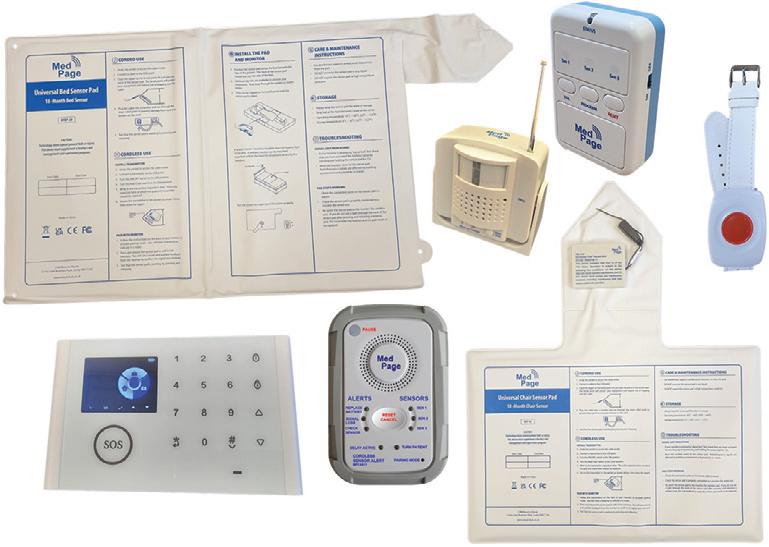
the monitoring capabilities of healthcare facilities. Its versatility makes it a valuable addition to any care environment, ensuring timely responses to patient needs.
RON-WC2 WATERPROOF DISABLED PULL CORD ALARM TRANSMITTER WITH WIRELESS ALARM RECEIVER
The RON-WC2 is a robust solution for disabled individuals requiring immediate assistance. This waterproof pull cord alarm is ideal for use in bathrooms and other high-risk areas. Paired with a wireless alarm receiver, it ensures that help is just a pull away.
For more information, visit Medpage’s official website or contact their team to explore these products further. Safety starts with the right tools, and Medpage delivers just that. www.easylinkuk.co.uk or T: 01536 264 869
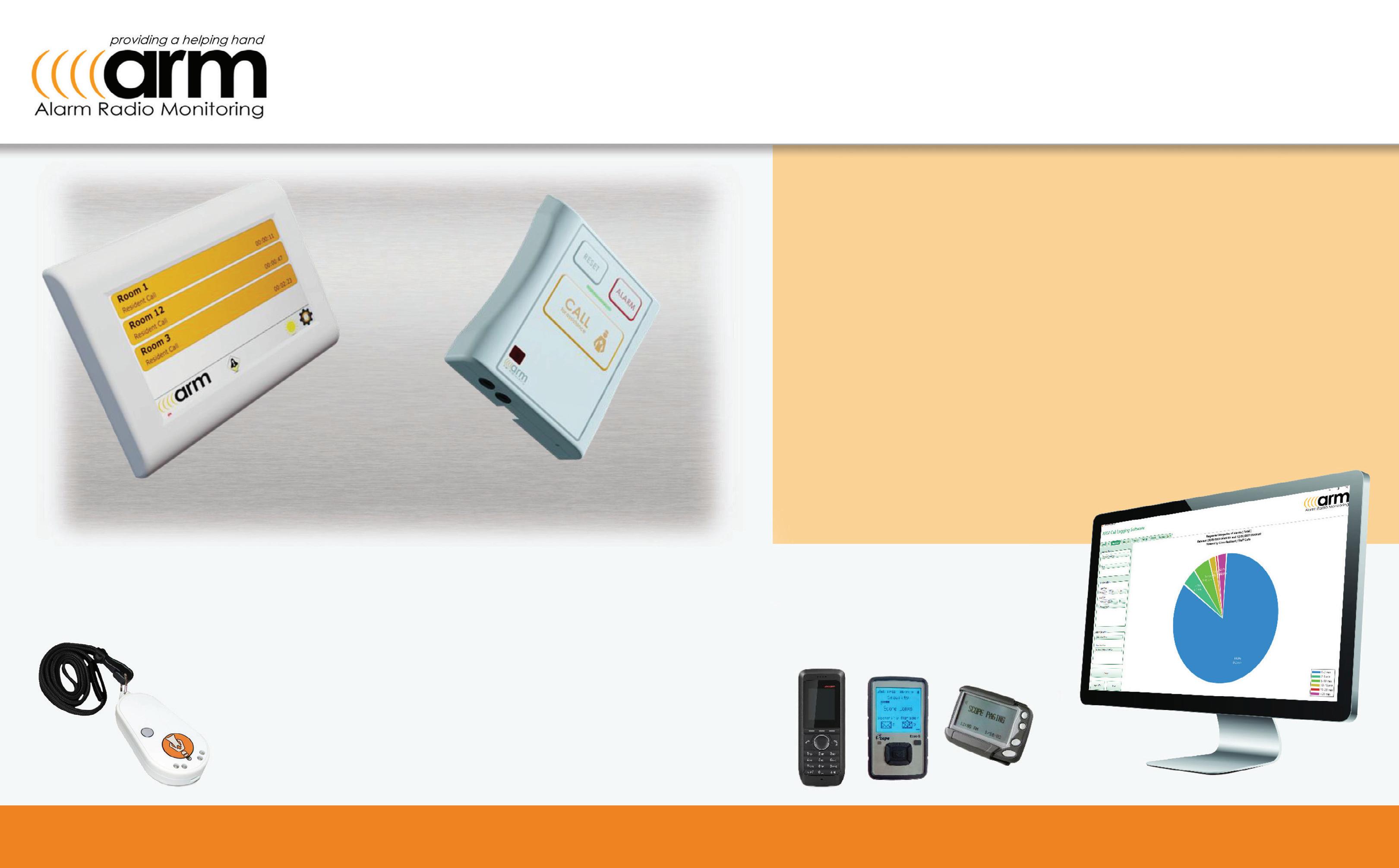
The wireless ARM Nurse Call system has been developed over 30 years with both the client and user in mind.
It enables staff to efficiently answer calls, making the management of resources more flexible and provides the functionality you would expect of any nurse call system.
The system is quick and easy to install and works wirelessly, using radio communication between both the call points and the system infrastructure.
The all-new call logging software from ARM enhances the functionality of your care call system dramatically.
• It can help you track the quality of your service to your residents.
• It can help you demonstrate compliance with your aims and best practices, both to relatives and to authorities.
• It can help you find bottlenecks in service provision, track staffing requirements, and allow you to ensure staff are meeting expectations.
• Most importantly, it provides assurance that you know and can demonstrate what is happening in your care home.
Call messages can be sent direct to staff to speed up response times and can also be integrated to work with smart phones & messaging.
In today’s complex care environment, we understand that choosing the right technology is about far more than functionality alone. For care providers, reliability, sustainability, and supply chain resilience are critical factors—especially when it comes to nurse call systems that play such a vital role in resident safety and day-to-day operations.
At Courtney Thorne, we are proud to champion the “Made in Britain” mark. For us, this is not simply about where our systems are manufactured; it reflects our commitment to quality, accountability, and supporting the UK care sector. By designing and building our nurse call systems here in Britain, we can ensure they are developed with a deep understanding of the real challenges faced by care homes, resulting in solutions that are practical, reliable, and easy to use.
Manufacturing in the UK also allows us to maintain close control over our supply chain—something that has become increasingly important in recent years. Global disruptions have highlighted the risks of relying on complex, overseas supply networks. By keeping our production local, we are able to offer greater consistency, shorter lead times, and improved access to parts and upgrades. This means our customers can rely on continuity, even in uncertain times, with minimal risk of disruption to their services.
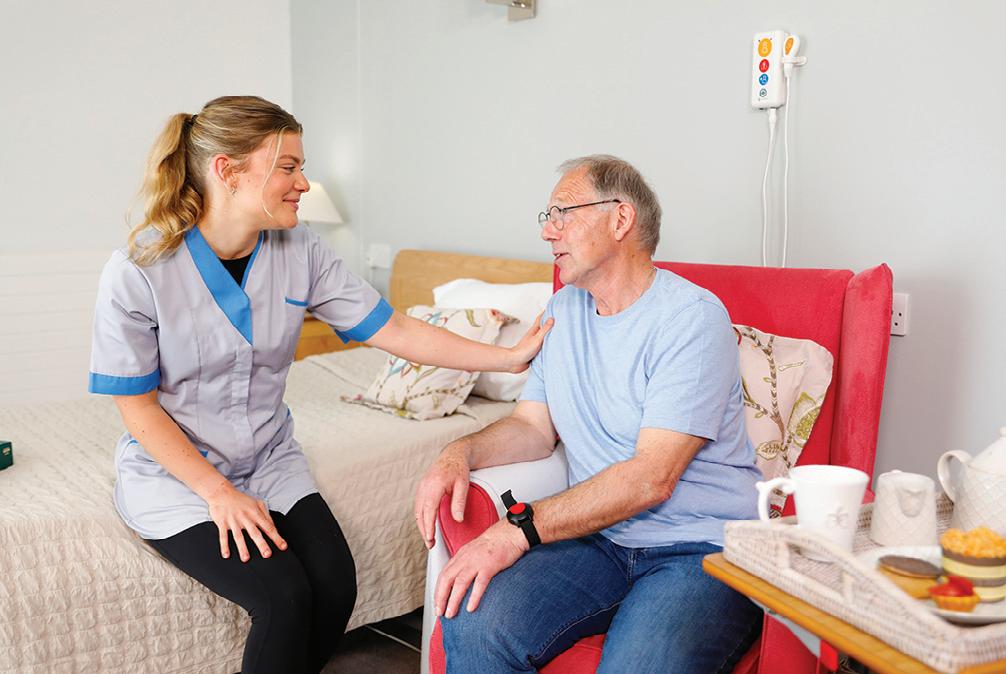
Sustainability is another area where we believe local manufacturing makes a meaningful difference. By reducing the need for long-distance transportation and focusing on robust, long-lasting system design, we help care providers lower their environmental impact. We are committed to creating solutions that not only meet today’s needs but are built to last—reducing waste and supporting more sustainable care environments over the long term.
Of course, delivering high-quality technology is only part of the picture. We know that ongoing support is essential. That’s why our UK-based technical team is on hand to provide expert assistance, from installation and training through to maintenance and rapid response when it matters most. Our proximity allows us to respond quickly and effectively, giving our customers the confidence that support is always within reach.
At Courtney Thorne, we believe that care homes deserve technology they can depend on—both now and in the future. By combining British manufacturing, sustainable practices, a resilient supply chain, and dedicated local support, we are proud to deliver nurse call systems that underpin safe, effective, and reliable care every day. For more information or to
or contact info@c-t.co.uk.
Alarm Radio Monitoring is the market leader in the design, manufacture and installation of bespoke, end-to-end, wireless alarm systems and solutions for the healthcare, leisure, custodial and education industries.
We have been providing wireless alarm and nurse call systems for over 30 years. Supplying care homes and hospitals with an essential lifeline that supports the delivery of outstanding care.
We believe in excellence which translates into:
Advanced Technology
Industry-leading wireless alarm technologies and software
Bespoke Solutions
We design systems to your needs rather than your team having to work around the system

Innovative Design
Pushing boundaries with the reliability that comes from decades in the industry
Flexible Finance Options
Ensuring organisations of any size can provide safety for their staff and clients
24 Hours a Day, 365 Days a Year Service
Your ARM service team is on hand, on the phone, on-site or return to base, whether you have a service contract or not
For further information, see the advert on the facing page or visit www.arm.uk.com

The analogue-to-digital transition in health and social care is not simply a technology refresh. It is a chance to rethink how help is requested, how staff respond, and how care is coordinated across a home.
Too often, procurement still begins with a like-for-like mindset: replace the old panel, keep the old workflow, and hope for a better result. But digital nurse call should not be bought as a newer version of an old problem. It should be purchased as part of a wider care model that improves visibility, response, accountability, and resident experience.
Before comparing systems, providers should define the problem they are trying to solve. Is the issue slow response times, poor escalation, noisy environments, duplicated paperwork, or a lack of oversight? The right solution should be judged against those outcomes, not against a checklist of features.
This matters because modern nurse call is no longer just about a resident pressing a button and a sounder going off. In better-designed systems, alerts can be routed directly to staff mobile devices, calls can be prioritised, and managers can see patterns in demand and response. That creates a more responsive and less fragmented way of working.
A presentation is not a demonstration. A brochure cannot show how a system behaves during a busy morning shift, when several alerts happen at once and staff are moving across different parts of the home. That is why live testing in a real care environment is essential. Staff should be able to use the system, question it, and pressure-test it before any decision is made. If the workflow is clunky in practice, the promise of digital efficiency disappears very quickly.
One of the biggest mistakes in purchasing technology is treating integration as a nice-to-have. In reality, it is central to whether the system adds value.
When nurse call works alongside care records, mobility devices, alarm management, and internal communi-
By Stuart Barclay, healthcare technology specialist at Syndora Alto
cation tools, the result is less duplication and faster decision-making. When systems do not connect, staff are left repeating tasks, chasing information, and working around the technology rather than with it.
For care providers, that means the question should not be, “What does this system do on its own?” The better question is, “How well does it fit into everything else we already use?”
Digital systems do not end at installation. They begin there. Any provider selecting a nurse call platform should think carefully about what happens after go-live: training, maintenance, updates, fault resolution, and ongoing optimisation.
Care homes need suppliers who understand the realities of the sector, not just the technology. A strong supplier relationship should include responsive support, practical training, and a willingness to adapt as the home’s needs change. In digital care, support is not an extra service; it is part of the product.
The biggest risk in this transition is buying something that cannot evolve. Care homes are operating in a fastchanging environment, and technology that cannot scale or adapt soon becomes a constraint rather than an asset.
Future-ready systems should be designed to expand, integrate, and respond to changing needs without requiring a complete replacement every few years. That flexibility is especially important in a sector facing pressure to modernise ahead of the 2027 digital switchover.
A BETTER QUESTION TO ASK
The analogue era encouraged a narrow question: does the system work?
The digital era demands a better one: does the system help us deliver safer, smarter, more person-centred care?
That shift in mindset changes everything. It moves procurement away from hardware replacement and towards care improvement. It encourages providers to look for visibility, integration, responsiveness, and longterm support rather than simply ticking a technical box.
The homes that get this right will not just be compliant with the digital transition. They will be better equipped to use technology as part of everyday care, supporting staff and improving the experience of residents.
Fall Savers®, are an experienced market leading healthcare provider of resident safety solutions for over 15 years.
FALL SAVERS ® WIRELESS MONITOR
Eliminate all cables with our new generation falls management solutions!
Upgrade your falls programme with the latest technology from Fall Savers®. The NEW Fall Savers® Wireless eliminates the cord between the monitor and sensor pad. This results in less work for nursing staff, improved safety for patients and reduced wear and tear on sensor pads. Wireless advantages include the ability to use one monitor with two sensor pads simultaneously and support for many new wireless devices.
BENEFITS INCLUDE:
Safer for patients; less work for staff
Bed and chair pads available
One monitor works with two sensor pads
Integrates with most nurse call systems
A variety of options, including: Call button
Pager Floor sensor mat
Wireless door/window exit alerts
TREADNOUGHT ®FLOOR SENSOR PAD

The TreadNought® Floor Sensor Pad is built to last with a durable con-
struction that far out lasts the competition. Our anti-bacterial floor sensor pad is compatible with most nurse call systems or can be used with a portable pager to sound an alert when a person steps on to the sensor pad. Caregivers typically place the sensor pad at the bedside, in a doorway or other locations to monitor persons at risk for falls or wandering. An optional anti-slip mesh reduces the potential for slippage on hard surface floors.
FEATURES INCLUDE:
Connects directly to most nurse call systems
High Quality anti-bacterial Floor Sensor Pad
Large Size Pad: Measures (L) 91cm x (H) 61cm
Options (sold separately):
Anti-slip mesh for hard surface floors
See the advert on this page for further details or visit www.fallsavers.co.uk.

Care home managers and staff already know that sharing information is critical to good care. What is changing is the scale and speed at which technology can now collect, analyse and share data, often almost in real time.
There is also much more focus on joined-up care, neighbourhood health services, and better information sharing between organisations. Care homes are expected to work closely with GP practices, hospitals, community services and local authorities, sharing information safely to support more coordinated care.

Done well, this brings real benefits. But it also brings risks. Cyber incidents, scams, human error and system failures can disrupt care services and put sensitive personal information at risk. As more information is shared digitally, providers are increasingly being asked to demonstrate that they have strong data protection and cyber security arrangements in place.
This matters when accessing NHS systems or shared records, responding to commissioner requirements, or demonstrating assurance to regulators and partners. It is no longer enough simply to say that policies exist. Organisations need to show that staff are trained, risks are managed, systems are protected, and clear processes are in place for handling personal information safely.
The Data Security and Protection Toolkit (DSPT) helps care providers do exactly this.
Running a care service means constantly juggling ever-changing regulations alongside the daily needs of the people you serve.
Compliance isn't just about ticking boxes; it’s about the safety of your residents and the protection of your staff. Here is what every manager should have in place:
• Policies aligned with the latest CQC, CIW, and CIS standards.
• Secure, digital storage for staff management files.
• 24/7 access to professional HR and safety advice.
The DSPT is much more than a tick box or a compliance exercise. The toolkit acts as a framework and checklist to help providers strengthen day-to-day data protection and cyber security. It helps organisations review what they already have in place, identify gaps, and improve policies, training and working practices over time.
For many providers, the DSPT helps avoid starting from scratch. It supports practical improvements such as strengthening passwords, reviewing access to information, improving business continuity planning, and helping staff recognise scams and cyber risks.
Crucially, it also helps providers demonstrate good practice and prove they are safe to share information appropriately with partners. In a health and care system increasingly focused on integrated working and digital information sharing, that reassurance matters.
The deadline for the 2025/26 DSPT is 30 June. Previous submissions expire after this date and can no longer be used as evidence.
Digital Care Hub provides free support for adult social care providers, including guidance, webinars, elearning and direct help from 32 local support organisations.
Don’t let your DSPT expire on 30 June. Get free support and guidance at www.digitalcarehub.co.uk/dspt
If your current system feels like ""guesswork,"" it’s time for a more comprehensive solution.
Croner Care Pro provides everything you need to manage the regulatory side of your business in one place.
From practical, ready to use resources collated by industry experts and in line with the latest CQC (Care Quality Commission), CIW (Care Inspectorate Wales) and CIS (Care Inspectorate Scotland) regulations and standards, software to record and store important policies, procedures and staff management files to practical, 24/7 telephone based advice for any challenges you may be facing.

Included is Croner BrightHR Employee Management Software and Croner BrightSafe management software which includes policies, handbooks, and access to your documentation
To learn more about how we can match your service to your specific needs, contact our expert team for free advice today on 01455 858 132.
See the advert on page 9 for further information.

The social care sector continues to face growing pressure from every angle. Providers are balancing rising operational costs, recruitment challenges, complex compliance requirements and increasing expectations from residents, families and regulators alike. At the centre of all of this is one key priority: supporting staff so they can continue delivering high-quality care.
For many care organisations, workforce management technology is becoming an essential part of achieving this!
Across the UK and Ireland, care homes are moving away from manual processes, paper rotas and disconnected systems in favour of integrated workforce management solutions that provide greater visibility, flexibility and control. The result is not only improved operational efficiency, but also a better experience for employees and residents.
Technology is no longer simply about digitising paperwork. It is about giving care providers the tools they need to make informed decisions, manage staffing levels effectively and respond quickly to changing demands.
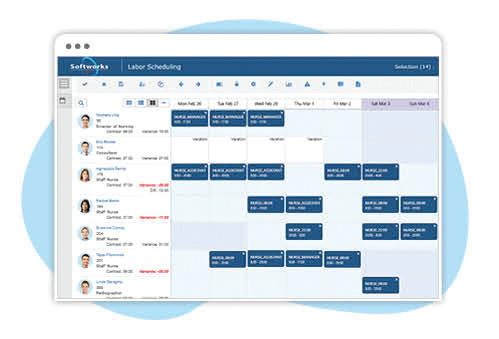
One area where this is particularly important is employee scheduling and rostering. Care providers often operate around the clock, managing complex shift patterns while ensuring the right staff are available at the right time. Manual scheduling can be time-consuming and leaves little room for flexibility when absences or last-minute changes occur.
Modern workforce management systems help simplify this process by automating rotas, improving visibility across teams and enabling organisations to manage staffing requirements more effectively. Features such as auto-rostering and employee self-service also empower staff by giving them more control over their schedules, shift swaps and holiday requests. This level of flexibility is becoming increasingly important in attracting and retaining employees within the care sector.
Another growing focus for care organisations is absence management. Unplanned absences can place significant pressure on teams and increase costs through overtime or agency cover. Having better visibility
of absence trends allows organisations to take a more proactive approach.
AI-powered tools are now helping providers identify patterns, predict potential absence issues and support more informed workforce planning. These insights can help managers address challenges before they escalate while maintaining continuity of care.
Importantly, workforce management technology is also supporting compliance and reporting requirements. Care providers must ensure accurate records are maintained for working hours, attendance and employee data. Digital systems help reduce manual errors, improve accountability and provide clear audit trails when needed.
When managers spend less time dealing with administration, they have more time to focus on people. When employees have greater flexibility and visibility of their schedules, engagement often improves. When staffing levels are managed effectively, residents benefit from greater continuity and consistency of care.
Technology should never replace the human side of care. Instead, it should support the people delivering it!
As the sector continues to evolve, care providers are increasingly looking for solutions that combine reliability, flexibility and innovation. Integrated workforce management platforms are helping organisations build more resilient operations while continuing to deliver the high standards of care that residents depend on every day.
If you are currently facing workforce management challenges such as staff shortages, inefficient rostering, absence management issues or time-consuming manual processes, we can help. To learn more about how our workforce management solutions support care providers across the UK and Ireland, contact us at hello@softworks.com, call our UK team on +44 1527 888 060 or our Irish team on +353 1 286 6126. You can also visit www.softworks.com for more information.

When a family begins searching for a care home, two things are almost always true. They are under enormous emotional strain, and they have very little idea of what they are actually looking for. Most are doing this for the first time in their lives, often in the middle of a crisis: a hospital discharge, a fall, a sudden change in a parent's condition. They are unclear on funding, what to look for, or what questions to ask.
And what does the sector currently offer them at that crucial first moment? A postcode search.
Most online care directories function as little more than a digital phonebook, a long, undifferentiated list of names and addresses that families are expected to trawl through alone. A handful offer a "concierge" service, but that typically means a phone call back, during office hours, after the family has already filled in a form. The first point of contact, the moment when families most need guidance, is precisely the moment they are left to fend for themselves.
Caretopia World was built to change that.
The UK's first AI-powered care navigation website, Caretopia replaces the postcode-and-pray model with a guided conversation. At the heart of the site is Fliss, an AI agent who talks with families and carers, asks the right questions, and helps them work out what they actually need before showing them anything at all. Fliss signposts information on common conditions, explains funding options in plain language, and –crucially – checks in on how the person searching is coping. It is a small touch, but it acknowledges what the rest of the sector tends to ignore: that the people doing the searching are often exhausted, frightened, and grieving a loss of independence on behalf of someone they love.
Only once Fliss has built a real picture of the family's situation does the site present a shortlist of providers. Families can then select up to three homes to compare side by side and share that shortlist with siblings, partners, or other decision-makers. The result is a process that feels less like online shopping and more like having a knowledgeable friend in the room.
"Postcode searches are simply inadequate for the people who use them," says founder Nathan Davies-
Pugh. "Most families are doing this for the first time, and they don't yet know what good looks like. Fliss helps them arrive at a realistic set of considerations – and then matches them with homes that genuinely fit."
For care home managers, the proposition is just as straightforward.
Providers can build a profile using Caretopia's bespoke page builder in under ten minutes, with all the information families actually want to see: photos, fees, specialisms, room availability, and a clear sense of the home's character. Because Fliss has already done the qualifying work, the enquiries that come through tend to be warmer, better-informed, and a closer match to what the home offers, sparing managers the time-sink of fielding calls from families whose needs they cannot meet.
Pricing has been kept deliberately modest. "We are acutely aware of the pressure the care sector is under," Davies-Pugh explains. "The first month is always free, and our discount code for the first year means a home effectively gets unlimited job ad placements thrown in for nothing. There is no contract, no minimum term, and providers can cancel at any time.”
The wider point is that AI, used thoughtfully, has a real role to play in one of the most human moments a family will ever face. Not as a gimmick, and not as a replacement for the warmth and skill of care staff, but as a way of taking the chaos out of that first conversation so that by the time a family picks up the phone to a home, they already know why they are calling.
"We always say that care should start before the care journey begins," Davies-Pugh concludes. "That is what our AI is designed to do. And honestly, we are only just getting started. Watch this space."
Find out more at www.caretopiaworld.co.uk
Care home staff today face increasingly complex responsibilities. Supporting residents with dementia, autism, frailty, safeguarding concerns, and communication difficulties requires far more than theoretical knowledge. Staff need confidence, judgement, teamwork, and the ability to respond compassionately in challenging situations.
However, much care home training still relies heavily on passive e-learning and compliance-focused approaches. While online modules may meet mandatory requirements, they often do little to improve reflective practice, communication, or real-world decision-making. Care home managers are increasingly recognising the need for more engaging and practical approaches to workforce development.
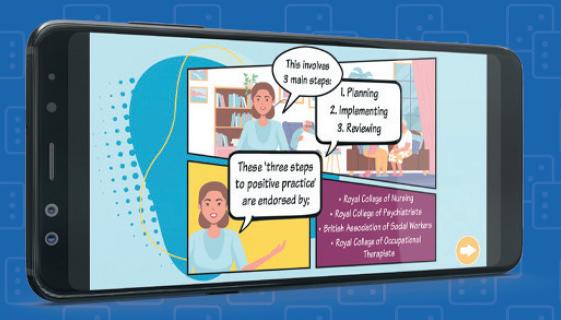
Gamification, game-based learning, and facilitated group activities offer an important opportunity to improve staff learning and engagement. Instead of simply completing quizzes or reading policies, staff work together through realistic scenarios, discussion exercises, and collaborative problem-solving activities. This encourages active participation and helps teams apply learning directly to everyday care situations.
Research increasingly supports these methods. Studies examining simulation-based learning in nursing homes have shown improvements in staff confidence, communication skills, leadership, and reflective prac-
tice. Dementia care simulations, for example, have helped staff develop more personcentred approaches and greater confidence in responding to distressed behaviours. These approaches also strengthen teamwork and workplace culture. Much mandatory training is completed individually, often in isolation. Group-based learning encourages discussion, peer learning, and shared reflection, helping teams develop more consistent approaches to care. This aligns closely with the growing emphasis from the Care Quality Commission on learning cultures, staff understanding, and continuous improvement. Importantly, game-based learning is not about replacing professional standards or mandatory training. It is about making learning more meaningful, memorable, and practical.
As pressures on the care sector continue to grow, providers need training approaches that build confidence, communication, and real-world capability — not simply certificate completion.
To explore practical, evidence-based training tools designed specifically for care teams, see the Focus Games advertisement on the front page of this issue, including a special reader discount offer for physical and digital team-learning resources that support communication, teamwork, decision-making, and improved CQC outcomes.
See the advert on the front cover or visit www.FocusGames.com
Global assists clients throughout the U.K. who specialise in the healthcare sector to achieve their objectives of purchase, development and refinance. We have organised over £1.8bn for clients in the past 30 years, providing clients with competitively priced funding to refinance existing debt, ease cashflow and develop businesses further.
From helping clients make their


23 years, operating 4 Devon Nursing homes, has been pretty tough, as anyone in social care, knows, only too well. And if it was hard already, after 2024 budget, it's just got harder.
Anyway, at heart, I am just customer of Eden Alternative, and it was a stroke of luck to come across this whilst on holiday in New Zealand in 2009. It started in USA in 1994 and
now runs in 22 countries.
The fact that I am now involved with this not-for-profit organisation (in the UK area) came about when one of the 2 main UK directors died suddenly just before Covid. But it's something I have run with for 11 years to help make 'vision' a reality, not a struggle. So, being both a customer and helping the admin seems quite natural.
It is a modern philosophy of care, but moreover, it's a programme that is straight forward, tried and tested for 30 years and really works. Its member care organisations generally become trainers for their own teams, and run it themselves.

The programme is run in person over 2-3 days or online 1 hr a wk for 7 weeks. You choose.
It addresses loneliness, helplessness and boredom and operates through 10 principles to underpin 7 critical domains of wellbeing. Moreover, it's effective, transformational and really works. As residents, and team members wellbeing, matter so much , it's a must, in my opinion.
Geoffrey Cox Southernhealthcare.co.uk eden-alternative.co.uk

By Lucy Carpenter, leader of the Compassionate Employers Programme

Managers today are being asked to support their teams through some of life’s most difficult moments. From grief and serious illness to financial pressures and burnout, the emotional load on employees is growing.
Alongside this, more and more people are quietly taking on unpaid caring responsibilities. Supporting a parent, a partner, a child, or a friend, often without ever using the word “carer” to describe themselves.
That’s why it’s more important than ever to ask: what more can we do to support both carers and the managers supporting them?
Census data shows that nearly 3 million carers aged 16 and over in the UK are in paid employment. Within this, an estimated 1.4 million are “sandwich carers”.
A sandwich carer is someone who provides unpaid care for both dependent children and older relatives, often their own parents or grandparents. They are balancing the needs of two different generations, alongside their own work and personal lives.
This group spans a wide age range, from late teens through to mid-60s. Yet despite their numbers, and the vital role they play, many people don’t recognise themselves as carers at all.
More broadly, unpaid carers contribute the equivalent of around four million paid care workers to the social care system. Without them, the system would simply collapse.
The economic impact is significant too, a major study by Carers Trust found that the contribution of working-age carers is worth up to £47.7 billion a year.
Carers are not a small or niche group in our workforce. They are our colleagues, our teams, and in many cases, our managers.
For many carers, work is more than a job. It can be a source of identity, financial stability, connection, and routine.
But without the right support, balancing work and caring responsibilities can quickly become overwhelming. Many carers reduce their hours, turn down progression opportunities, or leave work altogether because it simply isn’t sustainable.
That’s why creating compassionate, supportive workplace cultures isn’t just the right thing to do, it’s essential for retaining talent, supporting wellbeing, and keeping people in work. WHAT CAN ORGANISATIONS DO?
The good news is that small, practical changes can make a big difference. It starts with creating an environment where carers feel seen, supported, and safe to speak up.
Here are four simple ways to get started:
Ask - One of the easiest ways to support carers is to make space for the conversation. Build caring into the everyday conversations you’re already having, during onboarding, regular check-ins, supervision, and
Working in social care is demanding. It is one of the most heavily regulated yet underfunded sectors, with providers expected to comply with regulations, meet Quality Statements, follow good practice guidance, respond to local authority monitoring, and operate under constant scrutiny.

Regulation itself isn’t the problem — it protects people and improves standards. The challenge is capacity. Larger organisations may have in-house quality assurance teams, but smaller providers rarely have the time or budget to review compliance in depth. Many owners and managers tell us they feel overwhelmed and unsure how well their service is really performing, especially since the introduction of the Single Assessment Framework.
For many, confidence in compliance is the number one concern — not because standards are poor, but because there simply isn’t time to step back and take a full, objective view.
CAN AN EXTERNAL AUDIT HELP?
In short, yes — when it’s done properly. A highquality external audit provides:
• A clear snapshot of current performance
• Identification of good practice and priority risks
• Practical advice on how to improve
• Evidence to support action plans and improvement journeys
• Demonstration of good governance and continuous improvement — a key CQC focus
• Reassurance for owners, directors, and managers HOW W&P CAN HELP W&P have supported health and social care providers for nearly 25 years, completing hundreds of audits across a wide range of services. This experience gives us deep insight into what regulators look for — and what genuinely improves outcomes.
Our audits are supportive, non-judgmental, and practical. They typically include around six hours on-site, followed by a detailed report that links evidence to regulations and Quality Statements. Reports also include clear guidance, tips, and sources to help you respond confidently. Every audit is tailored to your needs — whether that’s safeguarding, medication management, or overall governance — ensuring it is truly fit for purpose.
If you would like to know more, then please contact us on audits@wandptrainng.co.uk or call 01305 767104 for a no-obligation chat on how our audits can help you. See the advert on page 5.
annual reviews.
Taking the time to understand what’s happening in someone’s life outside of work helps you see the full picture and the load they may be carrying. Many carers won’t volunteer this information unless they feel asked in a safe and supportive way. Simple, open questions can make all the difference.
Talk - Visibility changes everything, talk openly about caring within your organisation. Share stories, signpost support, and make it clear that people with caring responsibilities are valued and supported.
Many carers stay quiet because they worry they’ll be seen as less committed, particularly during times of organisational change or uncertainty.
Creating a culture where caring isn’t something to hide helps people feel able to speak up earlier, before they reach crisis point.
Educate - Managers play a crucial role in shaping how supported someone feels at work. People are much more likely to open up when they feel psychologically safe, and that comes from trust, empathy, and understanding. Sometimes these conversations can feel difficult, managers may worry about saying the wrong thing or not knowing how to help. That’s where training matters, giving managers the confidence and skills to have compassionate conversations can transform how support is experienced day to day.
Formalise - Informal support is important, but it needs to be backed up by clear policies. Make sure your policies are up to date, easy to find, and regularly communicated. Employees need to understand their rights, including legal protections:
• Five days’ unpaid carer’s leave
Time off for dependants in emergencies
Parental leave
Protection from discrimination
The right to request flexible working
Alongside policies, practical guidance and real-life examples can help bring them to life. Case studies can show both managers and employees what good support looks like in practice.
Ultimately, supporting carers is about more than policies or processes. It’s about culture. It’s about recognising that people don’t leave their lives at the door when they come to work, it’s about understanding that, at some point, many of us will become carers ourselves.
By creating workplaces where people feel seen, understood, and supported, we not only help individuals through challenging times, but we also build stronger, more compassionate organisations for everyone.