








“Treat social care as essential national infrastructure or face collapse” is not just a headline-grabbing warning from sector leaders — it is increasingly the consensus view from across the adult social care landscape.
In the wake of last Thursday’s election result, which saw the government take what many have described as “a bit of a drubbing”, it would be tempting to draw a direct line between the outcome and dissatisfaction with social care.
In reality, however, the result reflects much wider and more complex issues across society, from economic pressures to local service delivery, and cannot be attributed to any single policy area.
Nevertheless, the stark warnings from the sector were already clear long before voters went to the polls, and the call for urgent action remains undiminished.
As I noted last week, this was a theme that came up repeatedly during conversations at the recent Care Show at London’s ExCeL — particularly the twin pressures of the funding crisis and the staffing crisis.
Providers continue to describe a system under sustained strain, where demand rises year on year while the resources required to meet that demand consistently lag behind.
The latest report from Care England, produced in partnership with PLMR, sets this out in unambiguous terms. It highlights that adult social care is being expected to do more every year while resources continue to fall behind need — a gap that is no longer sustainable without meaningful intervention.
Crucially, the report also underscores the scale and economic significance of the sector.
Adult social care supports more than 800,000 individuals across England, employs a workforce of 1.6 million people, and contributes an estimated £78 billion annually to the UK economy.
These are not marginal figures — they place social care firmly within the category of essential national infrastructure, underpinning not only the NHS, but the wider functioning of society and the economy.
As such, the sector quite rightly deserves both the recognition and the sustained investment that leaders have long been calling for.
At THE CARER, we are proud each and every week to showcase the extraordinary contribution made by the sector — contributions that too often go unrecognised beyond those working within it.
The dedication, hard work and personal sacrifices made by care workers and operators continue to be one of the most important, and least publicly acknowledged, pillars of our society.
This week is a particularly strong example of that spirit in action. We invited care homes to share their VE Day commemorations with us, and I would encourage readers to turn to pages 16-19, where you will find a collection of uplifting and deeply human stories.
These are the kinds of moments that not only honour history, but actively enrich the daily lives of residents and care teams alike.
As sector leaders emphasise in our lead story, the government has now been presented with a clear opportunity — one to finally, after years of inaction by successive administrations, make a lasting and meaningful difference to social care.
That opportunity must not be missed.
I would also like to take this opportunity to congratulate the National Association of Care Catering (NACC) (see page 35), who were invited by His Majesty The King to attend the first Buckingham Palace Garden Party of the year in recognition of their voluntary services supporting older people in care.
Representing the Association at this prestigious occasion were Andy Cullum, NACC Midlands Deputy Chair; Sophie Murray, NACC Training Academy Officer; Joyce Frankish, NACC Scottish Deputy; and NACC National Chairman Neel Radia.
We at THE CARER are longstanding supporters of the NACC.
I was honoured to serve as a judge at a previous Care Chef of the Year competition, and it was a pleasure to reconnect with Neel Radia during the recent Care Show.
It is also worth noting that the NACC will be contributing an in-depth feature on dysphagia in our next print edition — a piece that will undoubtedly be of great value to providers and practitioners alike, so do watch this space.
I would encourage our readers to sign up for our bi-weekly digital newsletter at www.thecareruk.com and follow us on social media for all the latest news.
I can always be contacted at editor@thecareruk.com






Care England, in partnership with communications consultancy PLMR, also unveiled its landmark report, The Power of Care: The System Behind Our Society, at a parliamentary reception coinciding with local election day.
The report sets out the considerable scale and economic weight of the adult social care sector, highlighting that it supports more than 800,000 individuals across England, employs a workforce of 1.6 million people, and generates an estimated £78 billion in annual contributions to the UK economy.
The report argues that adult social care is far more than a crisisresponse service, describing it as the foundation that enables people to live independently, families to remain in work, communities to function and hospitals to discharge patients safely.
However, despite examples of high-quality care being delivered nationwide, the organisations warned that the wider system remains “fragile, fragmented and short-term”.
Professor Martin Green, Chief Executive of Care England, said social care was being expected to do more every year while resources continued to lag behind demand.
“Social care is being asked to do more than ever, with less and less funding to meet the demand – supporting prevention, enabling hospital discharge, reducing pressure on the NHS, strengthening neighbourhood health models, supporting unpaid carers and contributing to local economic growth,” he said.
“The strongest examples of good care already exist across the country. What is missing is not ambition from providers or commitment from the workforce, but a system that enables good care to become the norm rather than the exception.”
The report calls for immediate reforms including multi-year funding settlements, cost-reflective fee rates, improved NHS integration, reduced duplication in regulation and long-term investment in care infrastructure, digital systems and community provision.
It also highlights ongoing concerns around workforce recruitment and retention, particularly as international recruitment policies continue to evolve.
At the same time, the Independent Care Group warned that political leaders must stop relying on “short-term fixes” and repeated promises that fail to deliver meaningful reform.
Nathan Hollow, Board Director and Head of Health and Social Care at PLMR, said: “This report comes at a critical moment for the future of adult social care. The national conversation too often focuses on pressure, crisis and cost – but social care has an incredibly powerful story to tell about its value to society, its economic contribution, and the opportunity it presents to transform the nation.
“If policy makers are serious about prevention, neighbourhood health, NHS recovery, economic growth and building stronger, more equal communities, then social care must be treated as central to the national agenda. It is one of the most powerful tools we have to deliver all these goals, while transforming the lives of millions of people.
“The opportunity now is to build on the outstanding care already happening every day across the country, and to use this to demonstrate the importance and value of social care to the public and politicians – this is how we can create the conditions needed to deliver the political attention social care needs to make great care and great careers the standard.”
“KICKED
Mike Padgham, Honorary President of the ICG, said the election represented a crucial opportunity for the public to demand greater accountability from politicians on social care policy.
“If the Prime Minister truly wants to deliver lasting change and create a legacy his government can be proud of, then social care reform must be at the very heart of it”.
“For too long, governments of all colours have avoided dealing with the crisis in social care. The problems have been kicked down the road decade after decade whilst older and vulnerable people, unpaid carers and care providers have struggled to cope.”
“This government now has the opportunity to be the one that finally grasps the nettle and delivers the reform the country desperately needs.”
“Social care reform is not just overdue – it is urgent. Every day we delay, more people are left without the support they need, more unpaid carers are pushed to breaking point and more pressure is piled
onto the NHS.”
“If ministers are serious about change, they should bring reforms forward much earlier and stop waiting years for action. People need help now, not in another Parliament.”
“Done properly, reform could transform lives, improve dignity and independence for millions of people and give families the quality of life they deserve.”
“It would also give this Labour Government something genuinely historic to be proud of – finally fixing one of the biggest unresolved challenges facing our society.”
Reacting to the election results which saw the government suffer heavy losses at the expense of Reform and The Green Party, Professor Martin Green OBE, Chief Executive of Care England, said: “This election has brought seismic change to local government across England. New councillors are taking their seats, new administrations are forming, and in many areas, parties are holding power for the first time in years, or ever.
“That is a significant moment, and it brings with it significant responsibility. Adult social care is one of the largest and most complex responsibilities a council holds and, frankly, one of the least understood. Councils with social care responsibilities spend around twothirds of their entire budgets on adult and children’s social care combined.
“These are not discretionary choices; they are statutory duties under the Care Act 2014, obligations that exist regardless of who is in power and that carry real consequences for real people if they are not met. For every new councillor taking their seat this week, I would ask one thing: take the time to understand social care, not just as a budget line, but as a lifeline.
“The older people, disabled adults, and families who depend on these services need councillors who are informed, engaged, and ready to act. Care England is committed to working constructively with every new and returning council.
“We want to support councillors in understanding the sector, engaging with local providers, and making decisions that will genuinely improve lives. If we get this right together, the benefits will be felt across every community in England.”.”

By Gareth Reichers, Director of Growth and Partnerships

With new government support set to open up more routes into health and social care for young people, tend®, a specialist health and social care training provider within Impact Futures Group, says the sector must focus on career progression, confidence, flexibility and meaningful training if it wants Gen Z to stay.
The government’s latest investment in training and workplace opportunities for young people could be a significant moment for the care sector, but only if it is approached in the right way.
For too long, care has been perceived by some young people as a short-term role, a job to do before moving on, rather than a skilled, rewarding and long-term career. If we want Generation Z to see adult social care differently, the sector cannot rely on government pressure alone. It has to show young people that care offers purpose, progression, stability, variety and the opportunity to build a meaningful career.
CHANGING THE PERCEPTION OF CARE
Many young people want work that aligns with their values, but they also want to know that their employer will invest in them, support their wellbeing and give them a clear route to develop. Care has all of those elements, but the sector needs to be better at communicating them.
A young person entering care should be able to see what their first year could look like, what qualifications they could achieve, what role they could move into next and how their skills could develop over time. That is where structured training, apprenticeships and career-long learning become so important.
Adult care apprenticeships can provide a practical, supported route into the sector, allowing young people to earn while they learn, build confidence in real care environments and work towards recognised qualifications. tend® adult care apprenticeships are designed to support both those entering the sector for the first time and those already working in care who are ready to develop their skills further.
Over the past year, the group has enrolled around 6,500 apprentices and worked with 3,600 employer partners, delivering flexible apprenticeship programmes from Level 2 through to degree level across key skills sectors, including health and social care.
SHOWING CLEAR CAREER PATHWAYS
This is vital because Gen Z does not simply want a job title. They want to understand the journey. Entrylevel care roles can lead to senior care worker, team leader, deputy manager, care manager, specialist dementia care, mental health support, supported living, learning disabilities support, community health and wellbeing, healthcare support and leadership pathways. The more clearly these routes are shown, the easier it becomes for young people to see care as a long-term career rather than a temporary role.
To motivate young people, employers also need to recognise what this generation is looking for from work. Work-life balance matters. Support matters. Flexibility matters. So does variety. Care can offer all of this, but only when employers are intentional about how roles are designed, how rotas are managed and how training is delivered around real working patterns.
BUILDING CONFIDENCE THROUGH TRAINING

Blended learning has an important role to play here. Young people are used to digital tools, but care is also a deeply human profession. The most effective training combines accessible online learning, practical workplace experience, coaching, reflection and one-to-one support. This helps learners build not only knowledge, but confidence, judgement and professional behaviours.
Wraparound support is also key. Young people entering care may be navigating their first full-time role, their first regulated workplace or their first experience of supporting people with complex needs. They need to understand safeguarding, communication, duty of care, health and safety, person-centred practice and professional boundaries.
There is also an opportunity for providers to go beyond the minimum. Through tend®, learners can access additional support designed to help them build confidence in the workplace, while added-value training through sister company First Response First Aid helps strengthen practical skills in areas such as first aid. Support through safeguarding training, learner guidance and the Association of Apprentices can also help young people feel connected, informed and part of a wider professional community.
Belonging also matters. If a young person feels isolated, unsupported or unclear about where their job is taking them, they are less likely to stay. Employers should be honest that care is not always easy work, but also clear that it is skilled, human, varied and valuable. A career in care can involve supporting independence in someone’s own home, working in residential care, specialising in dementia, supporting adults with mental ill health, working in learning disability services, moving into community health, or developing into leadership and management roles.
To help more young people see care as a long-term career, employers should show clear progression routes from day one, talk openly about qualifications, apprenticeships and funded training routes, and build learning around real working patterns.
They should also invest in confidence-building, including safeguarding, first aid, communication and person-centred care, while creating a culture where young people feel supported, listened to and part of a wider professional community.
The government’s funding package may help bring more young people to the door, but retention will depend on what happens next. If the sector treats young people as a short-term workforce solution, it will continue to struggle. If it treats them as future professionals, leaders and specialists, it has a much stronger chance of building the workforce adult social care needs.
Government schemes can create opportunities, but it is employers and training partners who will turn those opportunities into careers.
Gareth Reichers, Director of Growth and Partnerships at Impact Futures Group, said: “Government investment can help open the door to care for more young people, but it will not be enough on its own. If we want Generation Z to choose care and stay in care, we have to show them that this is a skilled, progressive and meaningful career.”
“Young people want purpose, but they also want structure, support and a clear sense of what comes next. That means giving them access to recognised qualifications, practical workplace experience, strong coaching, safeguarding knowledge, first aid confidence and clear progression routes.”
“Care should never be positioned as a stopgap. With the right training and employer support, it can be the start of a long-term career where people grow from entry-level roles into senior, specialist and leadership positions, while making a real difference to people’s lives every day.”


• We specialise in the sale and purchase of quality used wheelchair accessible vehicles and ambulances.
• They can be bought as seen or refurbished and sign-written to your own requirements.
• Fully serviced, new mot & warranty
• Engineers inspection supplied if required.
• Free delivery service available
• All buses comply with new legislation
•
• Lease hire and purchase


Rising fuel costs are being felt across the country. For adult social care workers, a workforce of nearly two million people already among the lowest paid in the UK, that pressure does not land equally.
It lands on a workforce already navigating chronically low wages, high vacancy rates, and growing clinical responsibilities that are rarely matched by pay or recognition.
The Care Workers’ Charity has spent years documenting the compounding pressures on this workforce. Today, they are adding fuel costs to that picture, because the people delivering care to some of the most vulnerable people in the UK are, in many cases, spending money they do not have simply to get to work.

Their report, based on survey responses from 136 paid adult social care workers, sets out what that means in practice.
80.88% use their personal vehicles every day. These are not workers who can work from home or switch to public transport. They are in people’s homes, covering the distances that keep our care system functioning. 99.26% noticed an increase in fuel costs. This is not a workforce unaware of the pressures bearing on them, they are living with them.
The impact on their ability to deliver care is direct and measurable. 52.94% said rising fuel costs are significantly impacting their ability to carry out their role. A further 30.88% said they are affected to some degree. Only 2.94% said they were not affected at all.
The financial consequences reach well beyond the forecourt. 72.06% of respondents reported a significant impact on their personal finances. Our own 2025 Care Worker Wellbeing Survey, completed by over 2,000 care workers, already found that 72.1% do not feel financially secure despite the majority being on fulltime contracts.
Fuel costs are not the origin of that insecurity; they are accelerating it.
Care workers have expressed what they experience day to day:
“I’m putting fuel on credit cards as I can’t afford it now.”
“I had to cut my days and couldn’t afford to work full-time due to petrol costs. The stress of this has affected my health.”
Employer reimbursement is not filling the gap. Nearly a third of respondents, 30.88%, receive no reimbursement at all. Of those who do receive it, not one respondent said it adequately covers what they spend.
The workforce consequence is one the sector cannot absorb. 53.68% of respondents said rising fuel costs had already influenced decisions about their working patterns, including reducing shifts, changing roles, or considering leaving the sector. Every person who reduces their hours or leaves because they cannot afford to stay is a loss the sector will feel.
Care workers responding to the survey are clear about what would help. They are asking for higher mileage reimbursement, more stable and localised rotas, and better access to alternative transport options. These are not complex demands. They are the minimum conditions that would allow skilled, committed professionals to continue doing their jobs without subsidising the system from their own pockets.
Karolina Gerlich, CEO of The Care Workers’ Charity, said: “Care workers are among the lowest paid workers in the country. They are taking on increasingly complex responsibilities. And now, many are spending money they do not have on fuel just to reach the people they support, often with no reimbursement and no acknowledgement that this is happening.
“The Care Workers’ Charity is calling on employers to review mileage reimbursement rates as an immediate priority, and on commissioners and Government to recognise that workforce retention cannot be achieved while the basic costs of doing this job continue to fall on the workers themselves. Care workers deserve to be supported, not subsidised into staying.”
The full report, The Impact of Fuel Costs on Care Workers, is available at The Care Workers’ Charity The Impact of Fuel Costs on Care Workers Survey Report
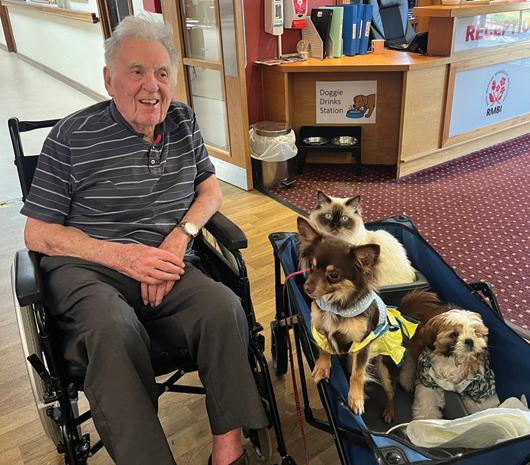
While dogs and cats are the most common therapy pets, other small animals like rabbits, hamsters and guinea pigs can also be employed for their amazing calming and therapeutic effects. These animals can positively support older people’s physical and mental well-being, making them great companions.
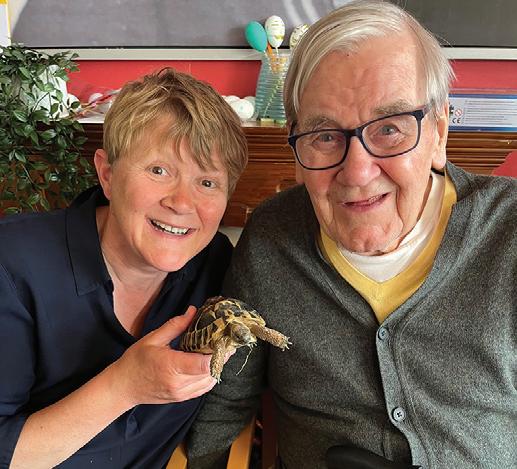
Residents at RMBI Care Co. Home Prince George Duke of Kent Court, in Chislehurst have recently enjoyed a friendly visit from a wide range of friendly creatures, including Diego the dancing Chihuahua, a puppy, a rag doll cat, guinea pigs, rabbit, a Syrian hamster, a tortoise, and Jeff, a cockerel.
The residents were astonished and delighted to meet the animals, who were brought in by Michelle, owner of Michelle’s Animal Therapy and Petting Party.
Taking part in this activity, resident John was bemused when he held a tortoise for the first time. He commented: “He was so friendly and gentle. His shell had interesting patterns and felt very cool when I stroked him.”
Resident Gill was delighted to meet Jeff, the friendliest cockerel. She said: “Jeff was so happy to perch himself on my walker, and to be stroked by everyone.”

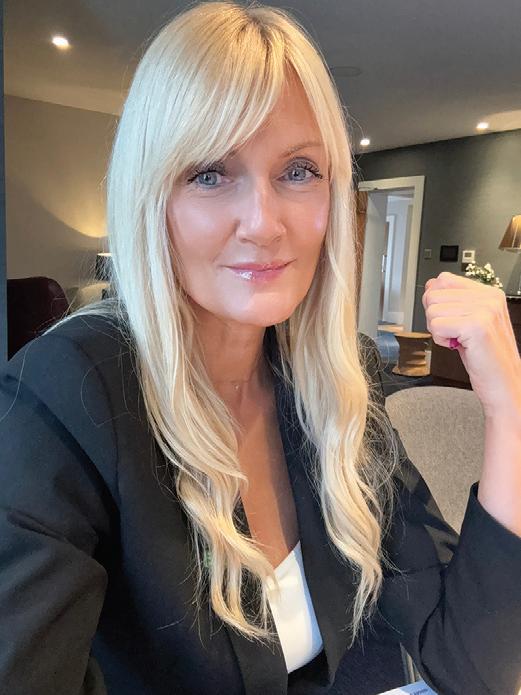
When I founded Care Campaign for the Vulnerable over a decade ago, it came from a very personal place. Like so many families, I found myself navigating the care system while supporting my own mother who was living with vascular dementia. What I witnessed during those years changed me profoundly, not only as a daughter, but as a person. At the time, conversations around transparency in care were often uncomfortable and heavily resisted. Families raising concerns were sometimes viewed as difficult rather than distressed, and there was very little discussion around how technology and independent safety monitoring could support both vulnerable residents and the many good carers working tirelessly within the sector.
What started as one family’s experience has since grown into a national organisation supporting families, carers, providers and partner organisations across the UK, with a strong focus on safety, dignity, transparency and improving culture in care.
Over the years, I have spoken to thousands of families and frontline care staff, attended safeguarding meetings, NHS Continuing Healthcare assessments, coroners’ courts and best-interest meetings, and one thing has become very clear to me — the majority of carers genuinely want to provide good care. Many are working under enormous emotional and physical pressure while supporting people with highly complex needs, particularly those living with advanced dementia. What is often not spoken about enough is the emotional toll this can take on carers themselves.
Through our work, carers regularly tell us they feel overwhelmed
By Jayne Connery, Founder and Director of
Care
managing behaviours associated with complex dementia, particularly when residents are distressed, frightened, resistant to personal care or experiencing severe confusion. Many staff are dealing with aggression, verbal abuse, wandering, falls risk, continence issues and emotional distress on a daily basis, often while trying to support multiple residents at once.
In some settings, carers are expected to manage these incredibly complex situations with very limited specialist dementia training and little emotional support for themselves. Families sometimes assume poor care automatically comes from a lack of compassion, but in reality, some carers are simply struggling within systems that are stretched beyond capacity.
This is particularly important because dementia care is not taskbased care. It requires patience, emotional intelligence, consistency, communication skills and a deep understanding of how environment, tone, routine and approach can directly affect a person living with dementia.
I saw this myself with my own mother.
There were times when her environment increased her anxiety and distress to the point where staff viewed her as “challenging”, yet when she felt safe, understood and emotionally settled, her personality returned. That experience shaped my understanding of dementia care forever because it taught me that behaviours are often a form of communication rather than simply something to control.
This is why we believe the conversation around care must become more balanced and honest.
Families need to feel listened to and protected, but carers also need better support, training and leadership if we truly want to improve care outcomes nationally. We cannot continue expecting frontline staff to manage highly complex dementia behaviours without giving them the tools, time and emotional support to do so properly.
At Care Campaign for the Vulnerable, we also continue to advocate for ethical, consent-based safety monitoring within care settings because we believe transparency protects everyone involved — resi-
dents, families and carers alike.
Unfortunately, safety monitoring has too often been framed negatively, when in reality many carers tell us they actually feel reassured by transparent environments. Good carers should never fear accountability because transparency also protects staff from false allegations, improves oversight and can help identify gaps in training, communication or practice before situations escalate.
Importantly, our work has never been about creating a culture of blame. It has always been about creating safer and more open cultures where concerns can be discussed honestly and improvements can happen collaboratively.
We now work alongside a growing number of providers and organisations who share that vision and who understand that trust in care is built through openness rather than defensiveness. Some of the best providers I have visited are not those with the most luxurious surroundings, but those where leadership is visible, staff feel supported and families feel genuinely welcomed into conversations around care.
The reality is that social care is under immense pressure nationally. Staffing shortages, recruitment difficulties and increasing complexity of need are affecting every part of the sector. Yet despite these challenges, there are still extraordinary carers showing kindness, patience and compassion every single day, often without the recognition they deserve.
As a sector, we must move away from viewing families and providers as being on opposite sides. Both want the same thing — safe, dignified and compassionate care for vulnerable people.
That can only happen through stronger communication, better training, ethical transparency and a willingness to listen to one another honestly.
Transparency should never be feared in care because when introduced compassionately and ethically, it protects vulnerable people, supports good carers and helps rebuild trust at a time when reassurance has never mattered more.
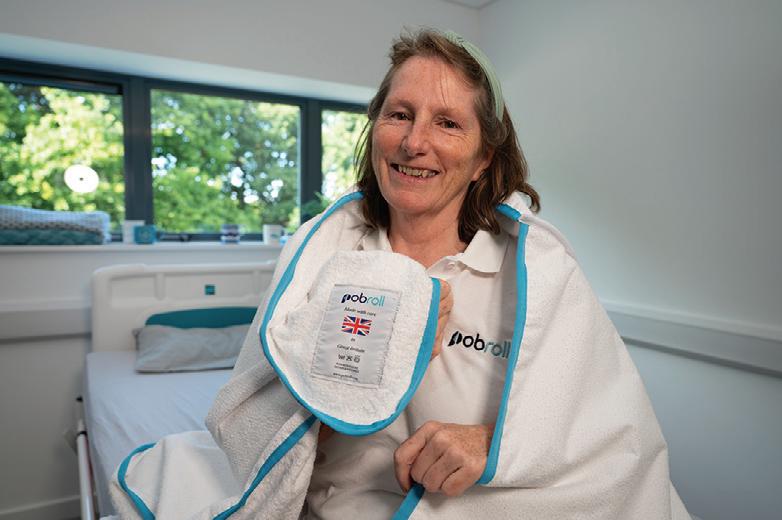
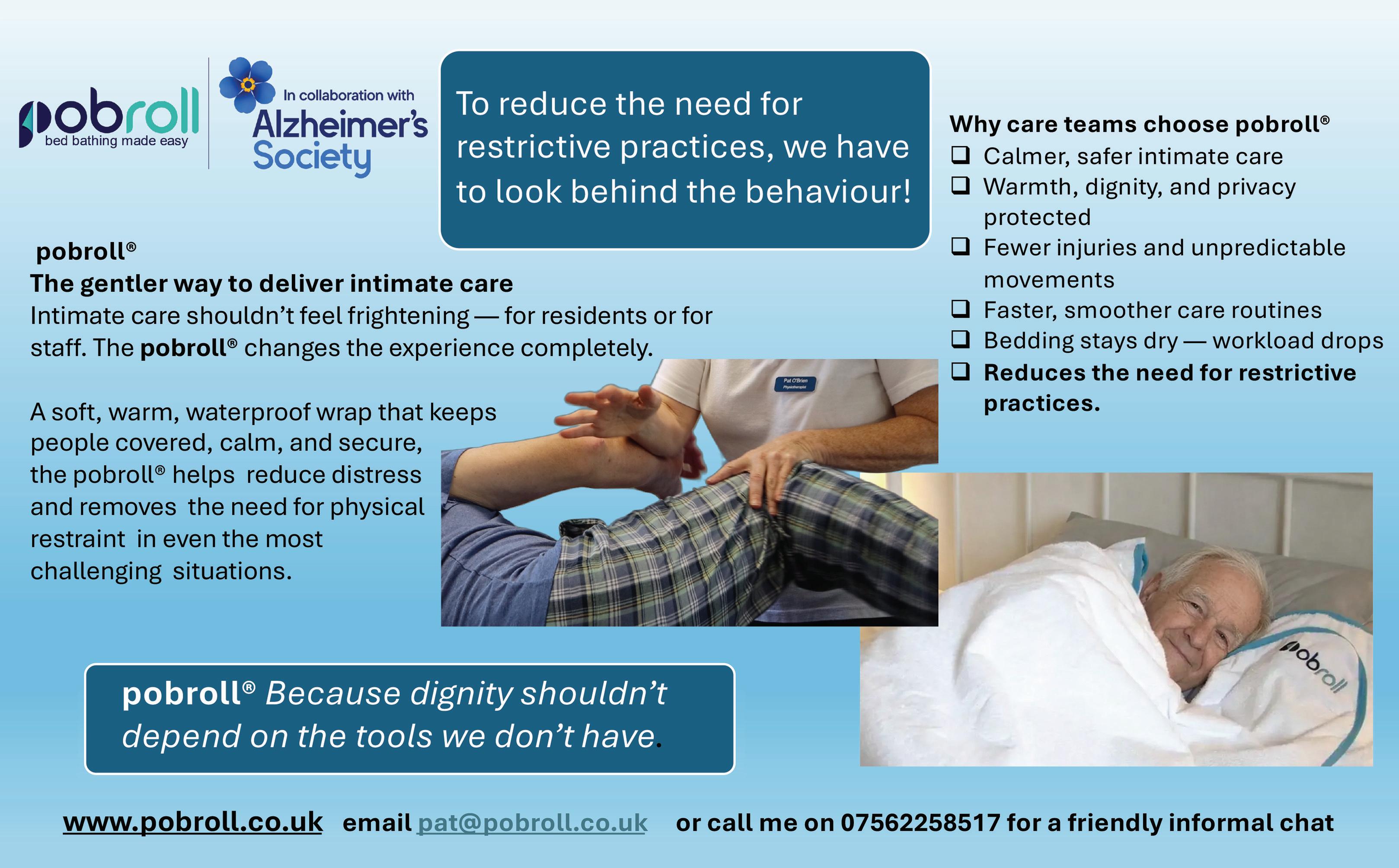
In April 2025, the Supporting the Provider Market (STPM) team in County Durham published a new report evaluating the use of pobroll® — a waterproof bed-bathing wrap designed to improve dignity, comfort, and ease during personal care.
This evaluation was carried out across 10 care homes with high numbers of residents living with dementia. Each setting was given one or more pobroll® units and invited to share feedback through a structured survey. The findings reveal how even simple tools can make a significant difference in everyday care.
How was pobroll® used?
Most care homes used pobroll® daily or several times per week, showing it quickly became part of regular practice. Staff noted that one of the biggest challenges was not having enough units — all homes requested additional stock after the trial, highlighting a clear appetite for wider adoption.
What did care teams think?
Feedback from the care homes showed strong support for the tool:
Ease of use was rated highly, with an average score of 4.4 out of 5. Staff found pobroll® straightforward to incorporate into care routines.
• Training was rated slightly lower, at 3.8 out of 5, suggesting that while the wrap is easy to use, additional training resources could improve onboarding for new users.
Resident response was positive. Three in ten care homes reported improved mood or behaviour during bed bathing for dementia patients.
• Key benefits included greater warmth, coverage, and dignity for residents, especially those who might find conventional methods distressing. Some teams also found it particularly useful for end-oflife care
Would they recommend pobroll® for bed bathing for dementia patients?
Written by Pat O’Brien of pobroll
Absolutely. Homes rated their likelihood to recommend pobroll® at 4.3 out of 5, with half of respondents giving it a full 5 out of 5. The overall feedback was clear: this is a valued, meaningful addition to personal care.
Would they recommend pobroll® for bed bathing for dementia patients?
The results of this trial reinforce what many professionals already believe — that small, thoughtful design changes can significantly improve care. For residents who are bedbound or living with dementia, personal care can often be a distressing experience. But with the right tools, it doesn’t have to be. The pobroll® isn’t a complex device. It’s a simple, dual-layered cotton towelling wrap. But its thoughtful design — offering full coverage, comfort, and support — makes a real difference where it matters most.
If you’re part of a care home, hospice, or hospital and would like to explore how pobroll® could benefit your residents or service users, get in touch. We’re here to support compassionate, dignified care — one small change at a time.
See the advert on the facing page for details, or visit www.pobroll.co.uk
A major milestone has been reached in the fight against dementia, with 100,000 people across the UK now signed up to participate in dementia research studies through Join Dementia Research.
The achievement highlights growing public support for dementia research and the increasing willingness of people to contribute towards improving future diagnosis, treatment and care for those affected by the condition.
The service, run by the NHS in partnership with organisations including Alzheimer’s Research UK, connects volunteers with researchers seeking participants for studies into dementia and related conditions such as Alzheimer’s disease.
Researchers say the milestone represents an important step forward, but stress that significantly more volunteers are still needed if the UK is to remain competitive in global dementia research and accelerate progress towards new treatments and preventative approaches.

Unlike common perceptions, dementia research extends far beyond drug trials. Current studies include memory and thinking assessments, interviews, lifestyle surveys, investigations into care and support services, and research exploring how daily life impacts cognitive health.
Participation is open to anyone in the UK aged over 18, including people living with dementia, carers, healthcare professionals and members of the public with no direct connection to the condition.
Experts emphasise that wide participation from people of different ages, ethnicities and backgrounds is essential to ensure future treatments, diagnostic tools and preventative strategies are effective for the whole population.
Signing up to the service is free and does not commit volunteers to taking part in any specific study. Instead, registered participants may be contacted if they are considered suitable for relevant research pro-
jects.
Over the past decade, Join Dementia Research has supported recruitment for more than 770 studies, helping researchers gather vital information about how dementia develops and how risk factors may be reduced.
One of the largest ongoing projects is the PROTECT Study, an online research programme examining how the brain changes with age and whether lifestyle factors during mid-life influence dementia risk later on.
Participants in the study complete annual memory and thinking exercises alongside lifestyle questionnaires, enabling researchers to monitor longterm changes and identify patterns linked to cognitive decline or resilience.
Researchers believe this type of long-term data could help explain why some individuals develop dementia while others do not, potentially leading to improved prevention strategies in the future.
Despite increasing public interest in research participation, concerns remain that the UK risks falling behind internationally in dementia studies. Research cited by Alzheimer’s Research UK suggests that 64% of people in the UK would consider taking part in dementia clinical trials — equivalent to around 42 million people — yet many potential volunteers are never given the opportunity to participate.
Care sector leaders and researchers continue to encourage greater involvement from care home residents, families, carers and staff, noting that participation in research can also provide personal benefits, including health monitoring, increased understanding of dementia and access to expert support and information.
The growing number of volunteers is being viewed as a positive sign for the future of dementia research, with campaigners stating that every participant helps move science closer to better diagnosis, improved treatments and ultimately the prevention of dementia for future generations.
MHA The Willows marked its 31st birthday by decking the dining room with bunting, balloons and birthday banners.
The home receives generous donations of delicious treats courtesy of Mobberley Village Bakery, Gails Bakery and the supermarket Booths.
More than 40 people were in attendance including Cllr Bryan Hartley, the Mayor of Knutsford along with his predecessor Cllr Colin Banks
Vicky Turner, who works as a music therapist led the music therapy session which went down a treat with everyone.
Amanda Drayton, activities coordinator said: “The celebrations were very relaxed, and everyone had a great time.
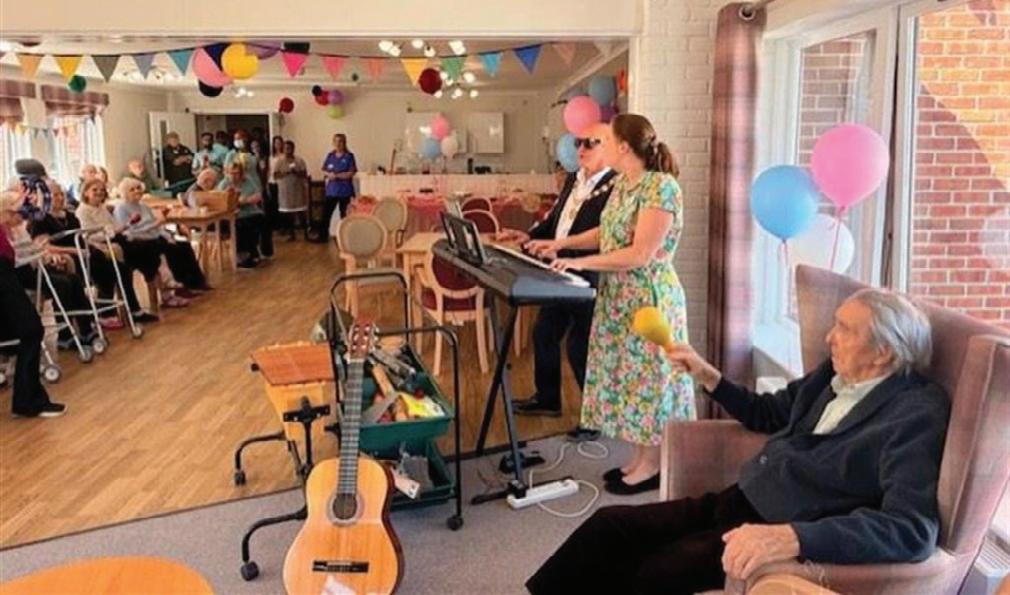
“The celebrations opened with a lovely speech from the Mayor, who had some lovely words to say about MHA The Willows.
“The weather was nice, the residents really enjoyed the sweet treats, and we received some lovely feedback on how the day went.
“The music therapy session was wonderful, Vicky gave out instruments to all the residents and staff, and both Bryan and Colin really got stuck in.”
Steph Nixon, who also works as an activity coordinator added: “It was nice to celebrate the achievements of the home, and it was a lovely atmosphere.
“I have only been here for a few months, but the home is a great place to work and to be part of the celebrations was amazing.
“Working in a home that has been open for 31 years does give you a lot of pride and we look forward to celebrating the next milestone.”
By Chris Thornhil, co-founder of Growth Animals (https://growthanimals.com) and a trustee for Dementia Support
that families remember.

Walk past five care homes in the same town, and you’ll likely see the same words repeated… caring, compassionate, trusted, home from home.
All important. All true. And yet, to a family making one of the most emotional decisions of their lives, they can feel… indistinguishable.
Where trust is everything in the care industry, sameness is a risk. When organisations appear interchangeable, decisions are often reduced to price, availability, or location, not connection.
So how do care providers move from invisible to irreplaceable?
The answer lies in something often overlooked: brand personality, and the people who bring it to life every day.
Why care homes feel interchangeable
Most providers don’t set out to blend in. But over time, regulatory language, sector norms, and a desire to “say the right thing” lead to safe, familiar messaging.
The result? A sea of similar promises, with little emotional distinction. Families aren’t just choosing services, though. Rather, they are choosing environments, people, and a future for someone they care deeply about. They are asking:
• Will Mum feel like herself here?
• Will Dad be understood, not just cared for?
• Will we feel welcomed, not judged?
These are emotional questions, and they require emotional answers. This is where your Emotional Selling Point comes in; the feeling people get from you that they can’t quite put into words, but instinctively trust.
Alongside this sit your Superpowers — the strengths you consistently deliver at your best, and your X Factor — the number one reason someone chooses you over another provider.
They are different, but deeply connected. Together, they give people both a reason to believe in you and a reason to choose you.
Crucially, this isn’t created by marketing alone. It’s experienced through your team, in conversations, gestures, and everyday moments
WHAT IS BRAND PERSONALITY (AND WHY IT MATTERS)?
Brand personality is the human set of traits that defines how your organisation shows up. It’s not just what you do, but how you feel to others.
Are you warm and nurturing? Progressive and innovative? Calm and reassuring? Vibrant and community-driven?
When this personality is clear and consistent, it becomes a powerful trust signal. It helps families recognise themselves in your brand, and gives them confidence in their decision.
It also plays a critical role internally. The right personality attracts people who align with your values and approach, and gives your team clarity on how to show up at their best.
FINDING YOUR PERSONALITY… START WITH SELF-AWARENESS
A useful starting point are frameworks like Carl Jung’s personality theory, which explores different human personality types and behavioural preferences.
Tools such as Growth Animals’ Animal Instincts™ Quiz bring this to life in a practical way. In just a few minutes, you can discover which animal, and more importantly, the personality strengths and attributes behind it, best reflect you.
Repeating the exercise as if your organisation were a person helps uncover how it shows up, how to make the most of those traits, and which superpowers could define it.
Used well, it becomes less about labels and more about language, giving teams a shared way to describe how they operate at their best.
But insight also comes from within. Ask:
• What do families consistently thank us for?
• What do our team members say makes us different?
• What would residents say if we weren’t in the room?
The answers often point directly to your Emotional Selling Point, and the beginnings of your X Factor.
FROM PERSONALITY TO PRACTICE
Defining your personality is only the first step. The real value comes from translating it into everyday actions across both your brand and your people.
1. Language and tone of voice
The words you choose matter. “Institutional” language can create distance. A more human, personality-led tone helps people feel something, not just understand something.
2. Environment and experience
Your brand is experienced in signage, uniforms, décor, and interactions. Does it reflect your superpowers, or does it default to what a care home “should” look like?
3. People and behaviours
Your team is your brand in action. The way they communicate and support residents either reinforces your personality or undermines it.
The most trusted providers embed their brand into hiring, onboarding, and everyday behaviours, so it is consistently lived, not just described.
A REAL-WORLD EXAMPLE… BRINGING PERSONALITY TO LIFE
When Sussex-based Abbeyfield Ferring rebranded to Beehive Care, the goal was not simply to refresh the name, but to articulate what made them genuinely different.
Through conversations with staff, residents, and the wider community, a clear picture emerged. This was not just a care provider, but a thriving, intergenerational community.
That insight became their Emotional Selling Point, a sense of belonging that families could feel, not just read about.
The name “Beehive” reflected community spirit. The language shifted towards helping people flourish, reflected in the new strapline “Thrive with us”. The environment and communications became warmer and more inclusive.
Just as importantly, the brand gave staff clarity on how they show up and the role they play in creating that experience.
In doing so, Beehive Care clarified its superpowers and its X Factor, beyond providing care. Instead, creating a place where people genuinely feel they belong. Something competitors cannot easily replicate.
DIFFERENTIATION BEYOND SERVICES
Where services are broadly similar in this industry, true differentiation rarely comes from what you offer, but from how you offer it. Services can be replicated. Facilities can be upgraded. But a team aligned around a shared personality and purpose is far harder to imitate.
That difference matters to the right families and the right staff. THE LONG-TERM IMPACT… TRUST THAT BUILDS
Trust is not built in a single interaction. It is built through consistent signals over time.
When your personality is clear, your Emotional Selling Point is felt, and your people bring it to life, something powerful happens. People stop comparing.
They choose you because you feel right. That is the X Factor in action!
And where many providers look the same, it is what makes you unmistakably different, turning consideration into confidence, and trust into choice.
More Than £3,000 for St Christopher’s
A trustee of palliative care provider St Christopher's Hospice has completed a gruelling 300-mile cycle ride in memory of a patient whose final months she describes as a masterclass in dignity — raising £3,000 for the south London hospice in the process.
Ann took to the saddle in honour of Marieke, a 66-year-old Southwark mother and grandmother who died surrounded by her husband, five children and six grandchildren after a seven-year battle with breast cancer. Having undergone two mastectomies, Marieke saw her cancer return in 2022 following a period of remission, and made the courageous decision last year to discontinue treatment.
As her needs grew more complex, St Christopher's stepped in — providing around six months of care that Ann describes as flexible, respectful and shaped entirely around what mattered most to Marieke herself.
"Every mile was a tribute to a woman who lived with extraordinary spirit," said Ann, whose long and often emotional journey on the road reflected the profound impression Marieke left on all who cared for her.

Ann and Marieke met about twelve years ago when Marieke moved in round the corner. But the connection was instant. They shared a love of long walks, coldwater swimming at Brockwell Lido and knitting, and soon became part of a close group of friends who still walk together today. The name of the WhatsApp group was changed last year from “London Walkers” to “Marieke’s Walkers” in her memory. Ann said: “Meeting someone you have such a close bond with at this age is very special. I count myself so lucky to have known her.”
It was this friendship that carried Ann through the toughest moments of the ride. By Day Five, she and her husband Mark had reached Richmond at 6:30pm, having already cycled more than 300 miles from Cornwall. “I was exhausted. My legs ached, my gears were misbehaving, and I was ready to stop,” she recalls. At a traffic light, she turned to Mark and said, halfseriously: “We told people we were cycling from Cornwall to London… and we’re in London. Could we just get the train back to Camberwell?”
They had set out to cycle from Lover’s Walk in Crackington Haven to their home in Love Walk, Camberwell, and he reminded her of the promise they had made. And, as Ann says, “Marieke, in her feisty Irish accent, would have told us to get on with it.” Mark took her pannier to lighten the load, and that small act of kindness made all the difference for the final ten miles.
The journey itself was far from straightforward. They had mapped the route themselves, aiming for around 60 miles a day over five days and staying with friends along the way. Cycling apps sent them down rough, ancient tracks and chalky paths across the Downs. Devon and Somerset were relentless, with steep climbs and deep valleys that pushed them to their limits.
Over the five days, they climbed nearly 7,000 metres, roughly the equivalent of cycling 80% of Mount Everest. They battled headwinds, rain and even hail, and endured a 20mile stretch of rough gravel along the Kennet and Avon Canal that left them wishing for far more padding than they had.
Throughout it all, she kept thinking of Marieke. Even as her illness progressed, Marieke continued to live fully, swimming in cold water, walking with friends, knitting beautiful creations for those she loved. When her pain became more complex, St Christopher’s offered her a stay at the hospice to assess pain management options, but she gently said she wanted to remain at home. The team adapted immediately, ensuring she could stay where she felt most comfortable. “That compassion, that flexibility, that respect for what matters most, that is what we were riding for,” Ann says.
A mutual friend captured Marieke’s spirit perfectly: “I see not a dying friend, but one who is living until the end.”
When Ann and Mark finally arrived home in Camberwell, the sense of joy was overwhelming, not only for completing the journey, but for honouring Marieke and supporting the hospice that had cared for her with such dignity and humanity. “It was gruelling, beautiful, emotional and unforgettable,” Ann reflects.
“And I know Marieke would have been cheering us on.”
The National Institute for Health and Care Research (NIHR) has awarded over £5 million to nine research projects that aim to transform social care through the use of cutting-edge digital technology.
The funding – £5,444,562 million in total – has been awarded to institutions in England, Scotland and Wales through the NIHR’s Research Programme for Social Care (RPSC). The projects are expected to run for between 18 months and two years.
The NIHR invited collaborative UK research proposals exploring innovative uses of digital technology in social care, with a focus on artificial intelligence, digital devices, and new approaches to improve outcomes for adults and children.
There was particular interest in exploratory and applied studies that will investigate barriers to adoption, tackle inequalities in access and test new applications in under used settings.
Professor Mike Lewis, NIHR Scientific Director for Innovation, said: “The NIHR is fully committed to using digital innovations to improve the delivery of social care in the UK. This funding – which is aligned with the Government’s People at the Heart of Care vision, as well as its mission to move provision of care out of hospitals and into the community – will help us build evidence on how digital tools can transform social care and improve lives.
“It reflects the NIHR’s commitment to building capacity in social care research and ensuring technology is harnessed to support independence, enhance quality of life and strengthen the effectiveness of care for adults, children and carers across the UK.”
The nine funded projects will cover a range of approaches and interventions, including:
• virtual reality communication training for carers of people with severe mental illness
• whether cheap, everyday smart-home gadgets can help people with dementia stay safely connected to friends and family
• how councils use smart devices to help older people leave the hospital faster and stay safe once they get back home
• whether commonly used gadgets – like Alexa or video doorbells – can give disabled adults more freedom
and control over their own homes
• a practical toolkit to help care home staff and residents feel more confident when using digital technology, like tablets
The full list of funded projects is:
• Embedding TEchnology in Care Homes (ETECH) – University of Glasgow
• Socially connected SmartCare at home: enhancing independent living for people living with dementia through low-cost technology – Cardiff University
• Using Artificial Intelligence to improve the use of evidence in social work practice – Cardiff University
• A realist synthesis and evaluation of how mainstream smart home technologies can support independent living for disabled people: understanding what works for whom, in what circumstances, and why – Cardiff University
• Turn down the noise: reducing noise and supporting people with dementia and hearing loss in social care settings – University of Worcester
• Building effective digital post-hospital discharge and reablement services for older adults in social care –University of Stirling
• Virtual reality assisted communication training for carers in severe mental illness – King’s College London
• Co-evolving proactive telecare in practice – University of Oxford
• Leveraging generative AI to support people with learning disabilities in their daily lives – Manchester
Metropolitan University
Professor Martin Knapp, Director of NIHR Research Programme for Social Care, said: “This is really exciting, important funding from the NIHR, which will look to transform social care through some truly innovative solutions. By utilising the power of AI, virtual reality, smart home technologies and other tech, these projects offer real hope for supporting independent living and autonomy, and improving people’s lives by raising standards of care and support within their communities.”
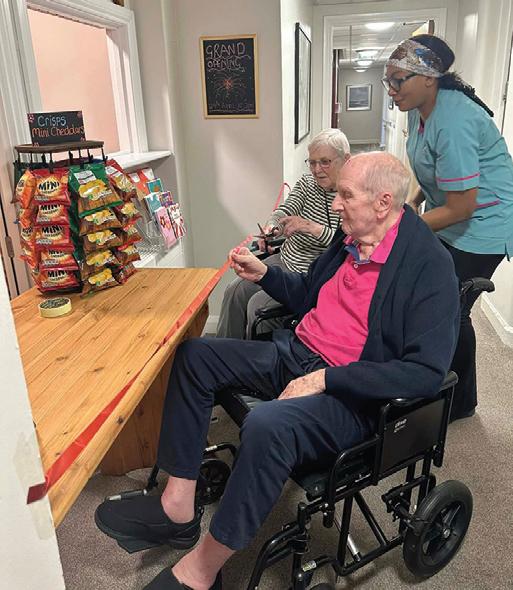
An Ilkley home has opened up a shop on one of the floors in the home for residents to purchase essentials.
MHA Glen Rosa opened the Glen Rosa Shop last week following a suggestion from residents.
The shop is located on the home's first floor and will contain plenty of treats as well as everyday essentials like tissues and toiletries.
The shop is set to open every day, with the home selling items at cost price.
MHA Glen Rosa provides residential and residential dementia care for 47 residents.
Emma Smith, activity coordinator said: “The purpose of our shop is to enhance the experience of our residents.
“Previously we have had a mobile shop but following a suggestion from our residents who wanted a shop with a base, we spoke with the management team and that's how the idea started.
“It took around two months for the shop to open, and we have it fully stocked with confectionary, toiletries and snacks
“It’s still early days, but we have received some lovely feedback from our residents and their loved ones."


Carers UK has published a major new report, The ‘tipping point’: when unpaid carers can no longer combine caring with paid employment.
The report, supported by Standard Life, provides a rich picture of the intersecting pressures that can push carers out of the labour market and explores the practical support that can prevent carers from giving up work to care.
Drawing on responses from over 10,500 carers to the State of Caring 2025 survey, and in-depth interviews with carers, the research shows how people are being pushed to a breaking point where continuing to work is simply no longer possible. Concerningly, it finds that nearly half of working carers (47%) are considering reducing their hours or leaving work altogether.
Carers spoke about the combined pressures forcing them out of employment including workplaces that aren’t flexible, the stress and exhaustion from trying to juggle care with work, and the lack of affordable, reliable social care.
Carers UK said that “urgent action” is needed across to stop carers’ finances, pensions, health and wellbeing being put at risk by being forced out of paid work.
Preventing carers from reaching this tipping point requires coordinated action across Government, employers, and public services, including the NHS and social care they added.
Carers UK is calling for:
• A strategic approach to supporting carers through a fully funded, cross-Government Carers Action Plan
• A statutory right to paid Carer’s Leave
• Strengthened employer support
• Investment in social care and NHS support
Gerard Crofton-Martin, Interim Chief Executive at the Social Care Institute for Excellence (SCIE) said:
“Unpaid carers are the backbone of our health and care system, yet too many are being pushed to breaking point by a lack of reliable, accessible support.
“At SCIE, we’ve seen some promising innovations tailored to support carers. Examples include the use of digital apps to support carers’ information needs; other projects connect carers with different types of community support, including local provision of Shared Lives services and short breaks; and a digital selfassessment tool, enabling carers to identify their needs and connect to support at their own pace.
“Our work with local authorities has shown that these scalable solutions need leadership, long-term investment, and supportive policy to become business as usual.
“The strongest projects demonstrated that earlier intervention through preventive models of communitybased care, joined-up working across social care, health, housing, education and the voluntary and community sectors, and flexible, accessible information can reduce pressure before people are pushed to breaking point.”
A popular event which sees the beautiful gardens at St Peter’s Hospice open to the public, is returning this June.
The annual Open Gardens Day, which last year sold out, is taking place on Sunday 7 June where guests can enjoy the impressive and much-loved Hospice gardens in bloom.
As well as having the opportunity to spend time in the beautiful and welcoming outdoor space, there will be relaxing and creative workshops, local performers, live music, handmade crafts to purchase and interesting tours from head gardener Anneke van Eijkern.
Refreshments will also be available including homemade cream teas.
Anneke, who joined the St Peter’s Hospice team in 2023 having previously worked at the Royal Gardens at Highgrove, said: “Our gardens are created by our community, for our community. Volunteers, staff and supporters make them a welcoming, therapeutic space for patients and visitors.
“Through our Open Gardens Day, we aim to build and strengthen con-

Welcome to Blue Rain - our activity store is built on over 14 years experience supplying products that bring joy, inspire motivation, and enrich the lives of those who need a little extra support, or simply want to have fun, whatever the weather.
Come find your next reason to smile.
Scan me
nections with members of our local community, everyone is welcome. It’s a great opportunity to relax with loved ones and learn more about what we do.
“Every ticket purchased and every donation made helps local patients and their families get the care they deserve. It’s so important for patients and visitors to look out and see a beautiful environment, or to be able to come outside for some peaceful reflection. Events such as this make all the difference in helping us to provide that.”
St Peter’s Hospice is Bristol’s only adult hospice providing in-patient care as well as well as community support to those with life-limiting illnesses.
The event will take place at the Hospice from 10am-4pm on Sunday 7 June. Open to all ages, tickets cost £8 for adults and £2 for ages 18 months-17 years.
For more information or to book tickets visit https://tinyurl.com/25paz52d
Care providers may receive a rating of “requires improvement” or “inadequate” for several reasons, however it is vital to take this as an opportunity to learn and grow as a provider and organisation. Understanding where things have gone wrong and being willing to make improvements is the first step to positively turn around your service. Maria Blackwell, Care Specialist Technical Writer, explores ways in which a service can effectively make those changes and strive to achieve a higher rating.
Running a care provision has the possibility to be one of the most rewarding things you can do. However, it can also prove to be highly challenging due to several factors, both, internally and externally from the service. There are many reasons why a care service declines, including lack of leadership, poor management, lack of safeguarding people, poor environment, etc.
Funding and financial strain also plays a big role in why providers are struggling to keep up with improvements and demands. Councils have restricted budgets and providers have rising costs which they are struggling to cover with the fees the council can pay. This results in an inability to keep up with the demand of those needing care and support. The social care market is facing a time of instability and parliament recognises that “the care provider market is in distress, struggling to cover existing costs via fees and facing underfunding”.
Cost-of-living problems also play a part in issues for care providers. With rising cost of utilities, running costs for providers have significantly increased. Alongside this, the changes coming into force with the Employment Rights Act 2025, which include fair pay agreement and increased rights for workers, are likely to increase the amount of employment tribunal claims. There are also changes with Statuatory Sick Pay (SSP) rights, which means more workers will be eligible for this and can increase costs to businesses.
The cost-of-living crisis has also had significant impacts on individuals themselves, as their day-to-day spending has increased, which means potentially less money is left for their care, if needed in the future. Therefore, people may become more reliant on care funded by the local authority which in turn puts increasing pressure on local authorities financially. Additionally, it also puts pressure on providers to be able to potentially take individuals into their service for less money per week.
8 TOP TIPS FOR TRANSFORMING ADULT SOCIAL CARE SERVICES
With inspectorates running behind with inspections, it can cause some providers to go without an updated inspection for many years. In this time, they could have either improved or declined in their standards and it would not be recorded nor monitored externally. However, it is important to ensure that you always remain inspection-ready, as the inspectorates, especially the CQC, have started to clear the backlog of missed and overdue inspections. Implementation of the top tips below can help a care provider remain inspection ready, which can also lessen the stress that can often come with when inspectors turn up.
1. STRIVE FOR PERSON-CENTRED CARE AND INCLUSION

In all social care settings, the people receiving care should be at the heart of all decisions being made, as every decision made will have an impact on them, directly or indirectly. If something is directly related to the care of an individual, they should always be involved in these decisions, if appropriate. If this is not possible due to cognitive decline, for example, then their families and/or multidisciplinary team should be involved on their behalf.
2. GET TO KNOW THE PEOPLE RECEIVING CARE
This sounds simple, however this is not something that is embedded into every care provision. Train the staff on the importance of getting to know the individuals they care for, their likes and dislikes, their histories, who is important in their lives, down to the small details of how they like their tea or coffee. By placing the people at the centre of the service, it empowers them to have control over their lives and the care they receive. Encourage people to provide feedback about their care service and adopt an active listening approach to this, ensuring all feedback is responded to in a timely manner and an achievable action plan put in place.
3. MEETING CULTURAL AND RELIGIOUS NEEDS
It is also vital to adopt a person-centred approach to ensure that people are included and their cultural, religious and other needs are met. This fosters the sense of inclusion and belonging, and promotes a respectful culture within the care service. By understanding someone’s cultural and religious needs, it can also inform activities that can be tailored around this (such as Christmas, Easter, Eid, Diwali, etc).
4. ACTIONABLE PLANS FOR ORGANISATIONAL CHANGES AND IMPROVEMENTS
As an organisation, making changes and improvements should be a continual process that is monitored. To be able to make any changes, the root cause of any issue need to be identified, investigated and appropriate action taken.
Next, a workable action plan with realistic targets should be developed which can also be used as evidence to inspectorates that you are aware of any issues and what actions are being taken. This plan should be collaborative and aimed to achieve a strong foundation for the service. Along with the action plan, there should also be realistic and actionable contingency plans in place.
5. STRENGTHENING QUALITY ASSURANCE PROCESSES
Strengthening quality assurance processes are also a very useful way in that a service can keep track of issues and improvements on a more regular basis. It is best practice to follow an audit schedule, by focusing on one area of the business per week, such as infection prevention and control or medication. Utilise the audits that are already within the service and identify areas in which these audits can be improved to best capture what it is intended to.
6.
Appropriate training for the service is vital to be able to provide highquality and person-centred care. For example, if the service takes people who need palliative care and approaching end of life, you must ensure that there is training in place for this. People should not be admitted into the care service if they have needs in which the care staff and management do not have training to manage, or if they fall outside the registered activities with the regulator. All training should have robust records and should be monitored to identify when someone’s training is going to expire and should be given refresher training prior to this.
7. USING A COLLABORATIVE AND COMMUNITY APPROACH
Creating strong collaborative relationships between all people involved in the service, both internally and externally, is vital. To be able to improve a service, hold consultations with the staff and other stakeholders, actively listen to their feedback and have open discussions about how best to act on feedback for immediate and continual improvement. All care services will work closely with local authorities, NHS, local communities and other professional services. Hence, the relationship with these can not only improve the quality of care provided, but local reputation as well.
8. RESEARCH YOUR LOCAL COMMUNITY
Conduct research about what the needs of your local community is and focus on this, rather than the “postcode lottery” that is often spoken about in adult social care. This also shows the local community and authorities that the care service has a better idea of what is needed and will tailor to that (within reason). In turn, this can also help improve any reputational damage or preconceptions that may have been caused previously.
FINAL THOUGHTS
Turning around an adult care service in crisis is a task that can be stressful and challenging, but highly rewarding to see improvements being made and the service thriving. It is vital to remember to use any resources sustainably to avoid financial strain being caused unnecessarily. Recognise and reward quality across the staff team and take a proactive approach to the service, rather than reactive. Remember that with any improvements made to turn a service around, the wellbeing and impact on the people receiving care is of upmost priority and should be at the forefront of decision making.
Further reading
• Quality Assurance and Improvement, Navigate-Care
• Service turnaround and improvement toolkit
Source URL: https://app.croneri.co.uk/feature-articles/crisis-quality-8-top-tips-transforming-adult-socialcare-services-within Copyright © 2026 Croner Ltd and/or its affiliates. All rights reserved.
At Broomy Hill Nursing Home, innovation and compassion come together in the most inspiring way. Residents at the home are stepping into a whole new world with the introduction of virtual reality headsets. It is an exciting innovation with the power to create uplifting and meaningful moments for the residents under our care. Virtual reality is becoming an exciting innovation in care homes and at Broomy Hill Nursing Home it is making a meaningful impact. VR is more than just a tool; it allows residents to relive cherished memories and experience activities they may no longer be physically able to do.
For residents with dementia or complex mental health needs, VR stimulates memories, sparks conversations, and provides relaxation through immersive experiences. Using headsets to create digital 3D environments, VR acts as a tool for cognitive stimulation, pain relief, and wellbeing, enabling individuals to safely revisit familiar places or explore new worlds.
We were thrilled at the opportunity to be a part of the Recreo VR experience. It was something new for the residents and us. However, it is not only something new; it is a learning experience for the entire staff at the home.
Our Wellbeing Lead, Lauren, is currently working on a list of available experiences that our residents can choose from to do something different each time they use the headset. This way, our residents will have something new to look forward to each time they use the headset, as new content is added every eight weeks.
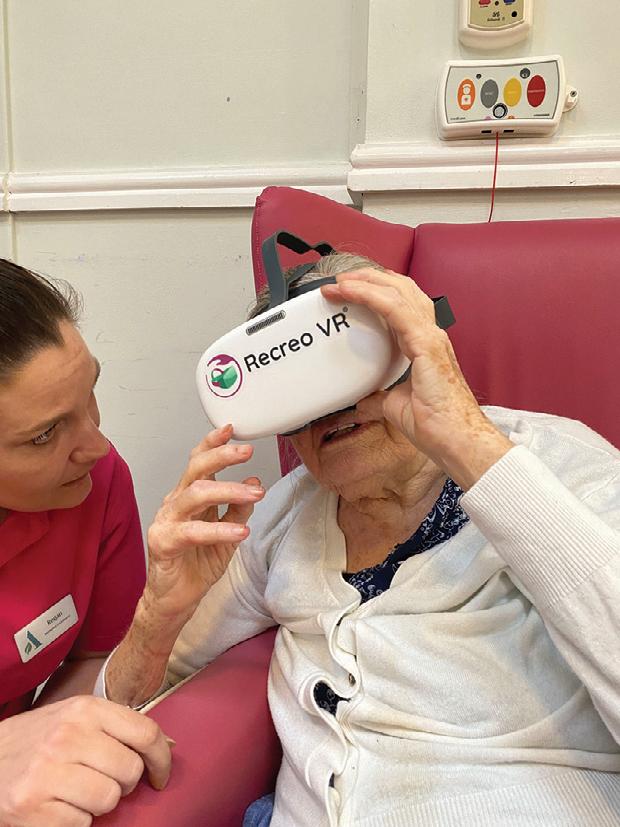
One of the new experiences that our residents will enjoy in the near future is a seated safari, where they will have the opportunity to come face to face with a rhino from the comfort of their chair.
Recently, our residents travelled through time to the 1950s, where they had a virtual visit to a traditional house, cinema, and a high street. In the house, our residents travelled from room to room, exploring the food pantry and admiring the decorations of the house. In the cinema, our residents explored the ticket office, the reel room, and the cinema itself. In the high street, our residents visited an electronics shop, a record shop, and a toy shop, enjoying the experience of each of these different stores.
Many of our residents commented on how real the experience felt, almost like stepping into a memory. Some were actually looking at their hands to get used to the virtual world. As the shops, toys, and songs from the period were brought up, the experience naturally evolved into memories and stories. The dialogue was effortless as the resident's shared memories from their own lives to each other and staff. Virtual reality is more than just an activity at Broomy Hill. It is another meaningful way we promote wellbeing and engagement for our residents. By using Recreo VR, we encourage conversation and reflection, while continuing to look for ways to enhance quality of life within our home.
For further information visit www.recreovr.co.uk
The Competition and Markets Authority (CMA) has published phase one of its investigation into four completed acquisitions of care home operators by Welltower Inc.
The regulator’s inquiry relates to more than 600 properties combined managed by Barchester Healthcare, HC-One, Aria Care (including Asprey) and Danforth Care.
It concludes that the transactions raise a “realistic prospect” of a substantial lessening of competition in a number of local markets and indicated the deals will move to an in-depth phase two investigation unless acceptable remedies are offered.
Vicky Tomlinson, Partner and corporate health lead at UK and Ireland law firm Browne Jacobson, said: “The CMA’s latest decision on Welltower marks a significant moment for the UK adult social care sector.

“What is particularly notable is the CMA’s focus not only on care operators themselves, but on the influence that institutional investors and property owners can exert over operational strategy, pricing, investment decisions and competitive dynamics. This reflects a wider shift in regulatory thinking.
“The independent health and care sector has become increasingly important to institutional capital, infrastructure investors and global real estate funds. With that importance comes greater scrutiny with the UK regulator. Regulators are looking more closely at how ownership structures, operational alignment and market concentration may affect competition, resident choice and quality of care at a local level.
“For providers, investors and lenders alike, this is about more than one transaction and signals the CMA’s ability to intervene and investigate in consolidation across health and care markets at a local level. It signals a more interventionist approach from the CMA towards consolidation across health and care markets.
“At the same time, the sector continues to need significant investment, innovation and modernisation to meet rising demand and increasing complexity of care needs. The challenge will be ensuring appropriate regulatory oversight without creating unintended barriers to the capital the sector needs to grow and evolve sustainably.
“This is an important development for everyone involved in health and care transactions — and one the sector will be watching closely over the coming months.”
The award recognises Rachel’s truly exceptional leadership, longstanding commitment, and profound contribution to improving dementia care across England. The Leadership in Dementia Award celebrates individuals who inspire excellence, drive positive change, and uplift others in the pursuit of better outcomes for people living with dementia, their families, carers and the wider adult social care workforce. Rachel has worked across multiple sectors and organisations throughout her career, drawing on deep knowledge of dementia best practice. Most recently in her role at Skills for Care she has co-produced the development of a national suite of dementia resources which have are being used across the adult social care sector, supporting home care workers, care homes, community teams and family carers. These resources have been widely praised for being practical, inclusive and rooted in lived experience.
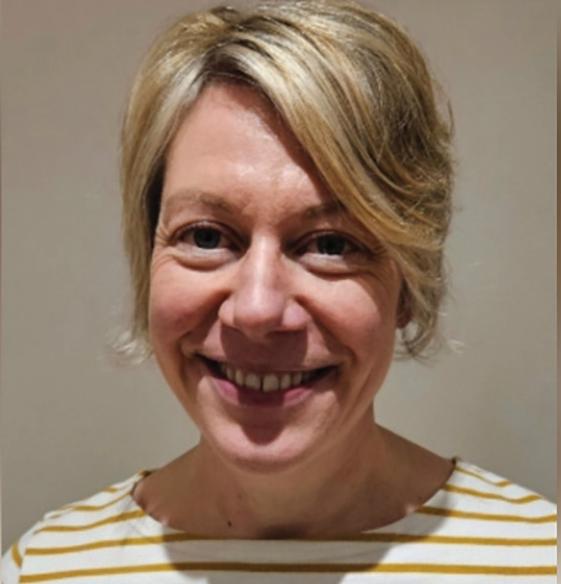
Alongside her national work, Rachel is also Chair of Trustees at Beacon Dementia and Wellbeing. The
organisation was also recognised on the night, winning the Independent Small Provider Award.
Speaking about receiving the award, Rachel said: “Thank you to Marie Lovell for the nomination, my wonderful Skills for Care colleagues and everyone I’ve had the privilege to work with – it truly means the world. This recognition reflects the collective efforts of so many passionate people committed to improving the lives of those affected by dementia. Being guided by lived experience and championing personled, compassionate care will always be at the heart of my work.”
The judges praised Rachel’s impact in glowing terms, saying: “A truly exceptional, passionate and inspirational leader, who has worked across multiple sectors and organisations and drives demonstrable improvements in dementia care. In the roles she has undertaken, she’s drawn on her deep knowledge of best practice in dementia care, to co-produce, develop and deploy a range of high-quality dementia care support resources. Her work has had profound, nationwide, far-reaching impact on people living with dementia, their families and carers, as well as the wider adult social care workforce.
Nursing is often spoken about as one profession, but the day-to-day reality can look very different depending on where a nurse works, who they support and the kind of care being given. While some nurses work in fast-paced hospital environments focused mainly on treatment and recovery, nursing within social care can offer more opportunity to build long-term relationships and support people not just physically, but emotionally and socially too.
As part of International Nurses Week, we spoke to Lucy Hernaman, a social care nurse at Heanton Nursing Home in North Devon
Reflecting on her experiences supporting people living with dementia and complex needs, Lucy shared how working in social care changed her understanding of compassionate nursing and the importance of truly knowing the people you care for.
PUTTING AN END TO INSTITUTIONALISED CARE
Lucy spoke about the differences she had seen between social care nursing and more traditional healthcare settings. She shared that she wished more nurses had the opportunity to experience placements within care homes like Heanton during their training.

“What an education it would be, that they could take forwards into their careers with them. I know I wish I had been offered a placement like Heanton when I trained 15 years ago. I did have a caring background, but it was in a home located locally to me that was very institutionalised. Heanton is about as far from institutionalised as it could possibly be.”
The Importance of Meeting Emotional and Social Needs in Dementia Care
Lucy joined Heanton Nursing Home in 2021 and has now worked within the home for over five years. Lucy spoke about the importance of understanding the emotional and social needs behind a person’s behaviour, rather than only responding to the behaviour itself.
“When I first started at Heanton I had very little Dementia knowledge. I had worked in a home which had dementia floors, but I had not been taught to really stop and consider the person. This is why the right education is so important in social care.
As a nurse at Heanton, I have been given so much more time to observe people and their behaviours. I soon found here that a person behaved a certain way for so many reasons, and that it was important to identify those reasons as people often don’t have the capacity to tell us themselves. This in turn has led to our residents, who we call family members, being able to live fulfilling lives without judgement or ridicule. “
Lucy also spoke about the importance of flexibility and individuality within social care, and how this differed from some other settings she had previously worked in. “In some homes I had worked in, people were expected to fall into the home’s schedule,” she said. “At Heanton, family members are supported to live their lives as they wish. There is no strict routine here and people aren’t made to fit into a mould.”
Lucy explained that Heantons willingness to challenge more traditional approaches to care was something that stood out to her. “Not everyone fits into the normal care home narrative,” she said. “If the team have a reason for going against the grain and can show why and how, then with the right risk assessments, Heanton will support it.”
Lucy also spoke about Heantons approach to supporting people living with Dementia without defaulting to sedation or restrictive practices. She explained that, in her experience, some people can quickly be labelled as “difficult” or “aggressive” within healthcare settings without enough understanding of the reasons behind their distress or behaviour.
“I love Heanton’s stance towards medication and that it is always used as a last resort,” she said. “Our ethos is to understand why an expression of behaviour has happened and try to minimise the chances of it escalating, rather than only reacting once it already has.” Lucy described the importance of teams having the time to truly know the people they support, recognising early signs of distress and responding in ways that help avoid situations escalating further. “Far more work and skill goes into meeting a person’s needs than simply managing the after-effects of an incident,”
“The thing I most love about my job is that I am allowed to love the family members as if they were my own family,” she said. “Every job I have ever had has always called those we look after ‘residents’, ‘service users’ or ‘patients. Such impersonal titles. It’s also often seen as taboo to hug or show affection and to ‘keep it professional’, but sometimes that human connection is what makes a person’s day. The people we look after are our equals and this is how we should care for them.”
Lucy explained that what stood out most to her about Heanton’s approach was its focus on emotional understanding and connection, not simply physical care needs alone. “Every day I go home feeling as though my job and my life has been worth it because I have made someone feel loved and cared for, not just on a social care level, but on a psychological and emotional level.”
A resident at Brownscombe Care Residences in Haslemere, part of CHD Living, enjoyed a very special return to one of his favourite places after being supported to watch Aldershot play at the weekend.
George Roe, 89, who lives at the care home, has followed Aldershot since he was young. After passing his driving test at the age of 22, attending matches became a much loved part of his life, often going along with a friend who lived nearby.
For George, matchdays were never just about the football. They were about routine, friendship, anticipation and the feeling of being part of something familiar. It was a tradition he continued for many years, right up until he moved into Brownscombe Care Residences.
The recent visit gave George the chance to enjoy that matchday feeling once again.
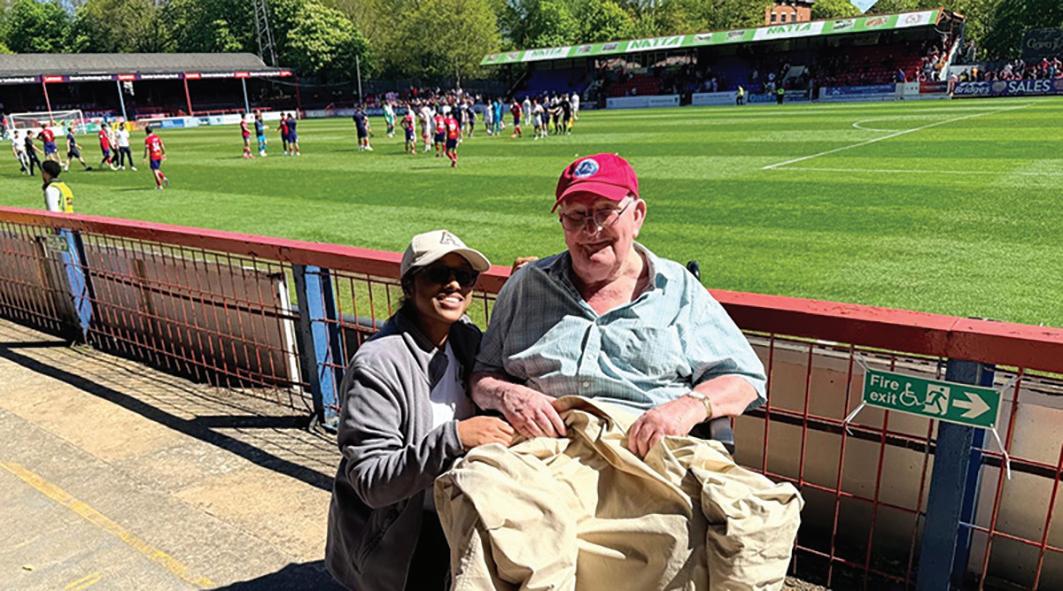
With the sun shining, he attended the game with Carer Anna Angel and Maintenance Manager Prince, wearing his trusted Aldershot hat and enjoying food from the stands as part of the full experience. For George, the outing brought back the sights, sounds and atmosphere that have meant so much to him over the years.
Although George joked that the team may not have been quite as strong as he remembered, he enjoyed every minute of the day. The trip was organised as part of Brownscombe Care Residences’ commitment to creating personalised experiences that reflect each resident’s life, interests and identity.
Molly McWilliams, Wellbeing Coordinator at Brownscombe Care Residences, said:
“George’s face said everything. This was not just a trip to watch football. It was about helping him return to something that has been part of his life for so many years.
“At Brownscombe Care Residences, we always try to understand what matters to each person, not just what they need from us day to day. For George, Aldershot has always been special, so being able to support him to go back, enjoy the atmosphere, have something to eat from the stands and wear his Aldershot hat with pride was wonderful to see.
“These are the moments that really matter. They remind us that care is also about identity, joy and keeping people connected to the things that have shaped their lives.”
The founders of one Advinia Healthcare joined forces with children at a Middlesex Primary School to discuss their sustainable business ideas.
Dr Sanjeev Kanoria and his wife Sangita visited Dormers Wells Primary School in Southall to see the incredible work the children were doing as part of the 8Billionideas programme.
The couple, who donate to a variety of schools and orphanages as part of their charity outreach, were deeply impressed by the ideas shared by the pupils and their passion for sustainability.
Dr Kanoria said: “It was fantastic to spend time with the children at Dormers Wells and to see first-hand the incredible work they are doing for this project.
“Supporting children and educational initiatives is very important to us, and it was wonderful to see the intelligence, creativity and teamwork in the class.

“Young people are the future, so it’s inspiring to see young minds thinking innovatively about sustainability and business ideas for the future.”
During the visit, Sanjeev and Sangita spent time with small groups of children working on team ideas together. At the end, they presented every child with a goody bag that included stationery supplies to sup-
port their creativity, learning, and future ideas.
Dormers Wells is one of the schools supported by charity Akshaya Patra UK, to which the Kanorias regularly donate. The charity helps disadvantaged children stay in school and funds free school meals during their ‘Empower Hour’ initiative, which provides hot vegetarian meals and extra learning opportunities.
Radhika Iyer, Akshaya Patra UK’s Director, Communications & Supporter Engagement, said: “It was such a pleasure to join Sanjeev and Sangita at Dormers Wells School and to see them spend meaningful time with the children. I was truly touched by the genuine love, care and compassion they showed. It is always so important for us to bring our donors as close as possible to the children they help uplift, and the Kanorias are wonderful examples of that. It is rare to see such commitment, and we are deeply grateful.
“What stood out most was the real impact of our Empower Hour programme – how something as simple as a nutritious meal and an extra hour of support can transform a child’s confidence, focus, and opportunity to learn. With demand growing rapidly across schools, it’s clear that programmes like this need greater support to reach the many more children who stand to benefit.”

We at The Carer are delighted to share VE Day commemorations sent in from care enviroments all around the country.
Across the UK, care homes, nursing homes and adult social care providers came together to mark the anniversary of VE Day with moving tributes, community celebrations and acts of remembrance. From themed parties and afternoon teas to musical performances, shared memories and intergenerational events, residents, families and care teams have honoured the courage and sacrifice of the wartime generation while reflecting on the enduring spirit of resilience and togetherness that continues to inspire communities..
This special feature highlights the many ways the social care sector has commemorated this important national occasion. Providers, carers and residents have shared stories of remembrance, personal family histories, wartime recollections and joyful celebrations that have brought people together across generations. These events have not only recognised a defining moment in British history, but also celebrated the lives,

experiences and contributions of older people living in care settings throughout the country.
We would like to extend our sincere thanks to all of our readers, care providers and organisations who have taken the time to send in photographs, memories and stories to be included in this feature. The response from across the sector has been extraordinary and reflects the compassion, pride and community spirit that are at the heart of adult social care. Your contributions have helped create a lasting tribute to those who lived through the war years and to the dedicated care teams supporting them today.
As we commemorate the anniversary of VE Day, we also pause to remember the millions of people who lost their lives during the Second World War. Their sacrifice will never be forgotten. Through remembrance, reflection and celebration, the care and nursing home sector continues to ensure that the stories and experiences of that generation are preserved and shared with future generations, reminding us all of the importance of unity, compassion and peace.
Hatherleigh Nursing Home near Okehampton marked the 81st Anniversary of VE Day with their own street party, celebrated in the home’s large Belvedere Household dining area for friends, relatives and family members (residents).
Administrator Tamsin and Sandra, a relative of the home, decorated the space with Union Jack bunting and flags, while tables were set and laid in a red, white and blue colour scheme, topped with themed plates and fanned napkins. The bright colours, decorations and flags to hold and wave gave plenty to look at, touch and interact with as everyone immersed themselves in the celebration.
Kitchen team members Faye, Gurjeet and Sophie prepared a buffet-style spread with an array of party food and “nibbly bits” in true English fashion, which wouldn’t be complete without a selection of cream cakes and scones.

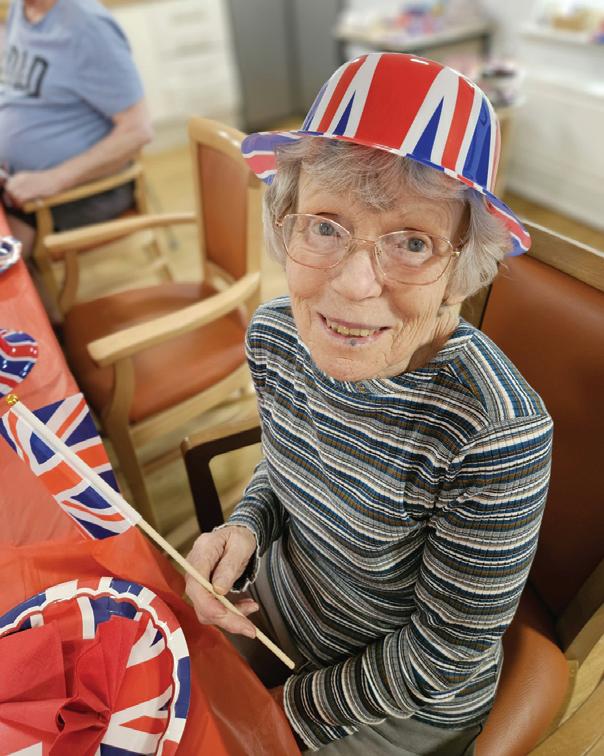
Family members and loved ones also enjoyed a live performance from the home’s regular musical entertainer, Ben Mackenzie, with many singing along to old favourite songs and joining in throughout the afternoon.
Hatherleigh Nursing Home’s VE Day celebration was also the final event held in the Belvedere Lounge before the space undergoes a refurbishment. Speaking about the decorations, the team joked: “We’re having a refurb now, so it meant we could cello tape as much to the walls and ceilings as possible before our new dining room!”
The event was held in recognition of both past and present veterans connected to Hatherleigh Nursing Home, while bringing people together to reflect, reminisce and enjoy British traditions associated with VE Day together.
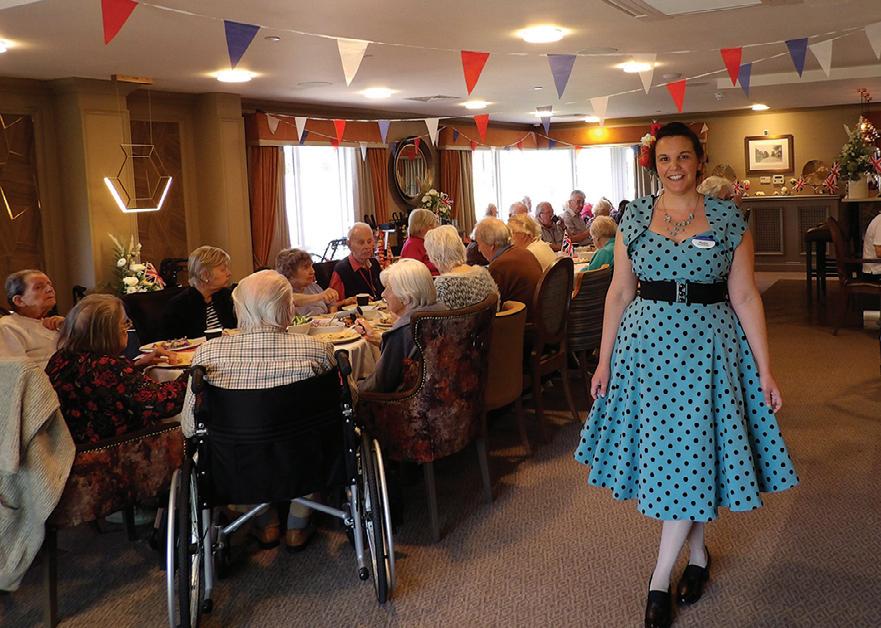
A Ferndown care home is celebrating the 81st anniversary of VE Day after hosting an indoor and outdoor street party for residents, families and the local community.
Heathland House, part of the Cinnamon Care Collection, welcomed over 50 residents to the commemorations on Friday, 8th May.
The event was particularly significant for the home as it houses several veterans who frequently share memories of their service careers. These personal histories led to the creation of the ‘NAAFI Break,’ a community interest group that meets once or twice a month at the home, allowing residents to socialise with visitors from the RAF Association and the Royal British Legion.
Greenmaidan, General Manager at Heathland House, commented: “We are proud to honour and support our veterans, recognising the sacrifices they have made. As we all rejoiced in the joy of Victory in
Europe Day, the celebration was about more than remembrance; it was about enhancing the lives of our residents, bringing people together, creating joyful memories, and ensuring those who served feel valued, respected, and celebrated.”
The street party captured the spirit of 1945 with live music and a display of historical memorabilia, including genuine local ration books, wartime recipe books and photographs from the original Victory in Europe celebrations.
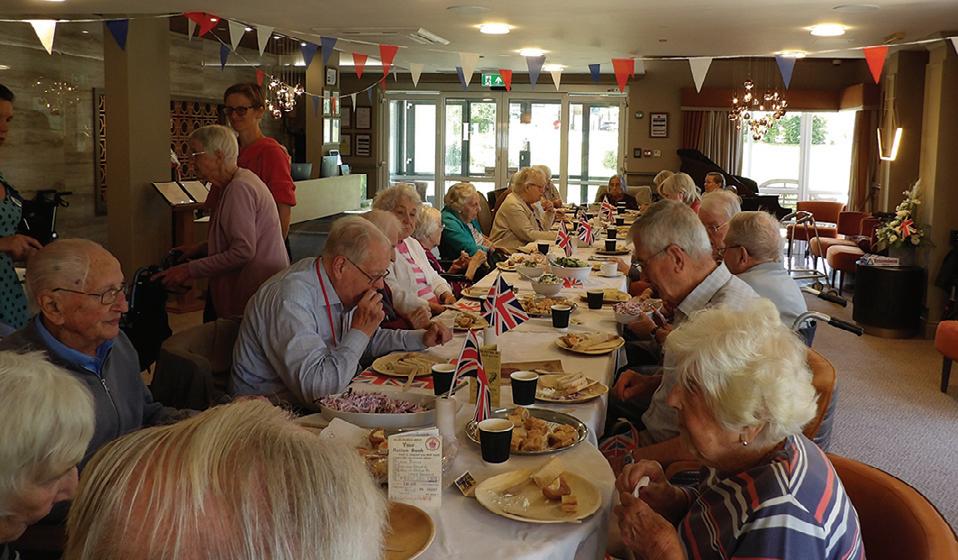
The day was filled with emotional storytelling. One resident moved attendees by recalling his childhood experience of hearing sirens and retreating to a garden bunker. He vividly remembered the sound of his mother’s knitting needles tapping together; as enemy planes flew closer, the tapping grew faster and faster in her anxiety, only returning to a normal rhythm once the planes had passed.
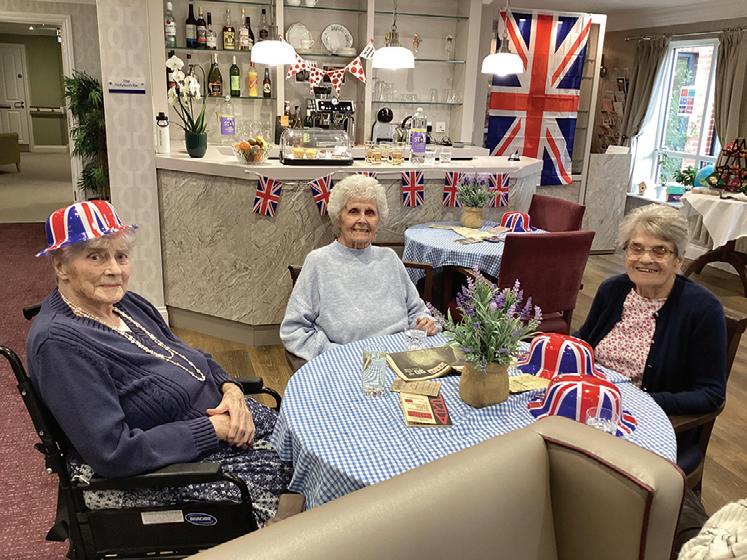
Residents and colleagues at Anchor’s Skelton Court care home in Skelton-in-Cleveland have come together in celebration to mark the 81st anniversary of Victory in Europe (VE) Day honouring the courage, resilience, and stories of those who lived through the Second World War.
To commemorate the occasion, the home has hosted a series of events for both residents and colleagues to enjoy together. In the week leading up to VE Day, they baked up a storm, including making a delicious date and walnut slice using a wartime recipe. On the day itself, they celebrated with 1940s music and memorabilia, giving residents the opportunity to share their recollections of such an important period of our history and honour those who served. The home welcomed entertainer Janie St John who dressed up in her service outfit and sang wartime classic songs that kept Britian moving including Dame Vera Lynn’s, We’ll
Meet Again and White Cliffs of Dover. As a Veteran Friendly Framework (VFF) accredited home, in recognition of its commitment to supporting the wellbeing of residents who have served in the armed forces, these celebrations are incredibly important to those at Skelton Court. As well as ensuring veterans’ experiences and needs are thoroughly reflected in their care and support plans day-in-day-out, later in the year, Skelton Court will be running events in honour of Armed Forces Day and the anniversary of D-Day. Antony Griffiths, Home Manager at Skelton Court care home, said: “Many Anchor homes across the country have veteran residents, and it’s been a privilege to get to know those living here at Skelton Court. I’m very honoured to get the opportunity to celebrate our veterans and to help support them in later life.”
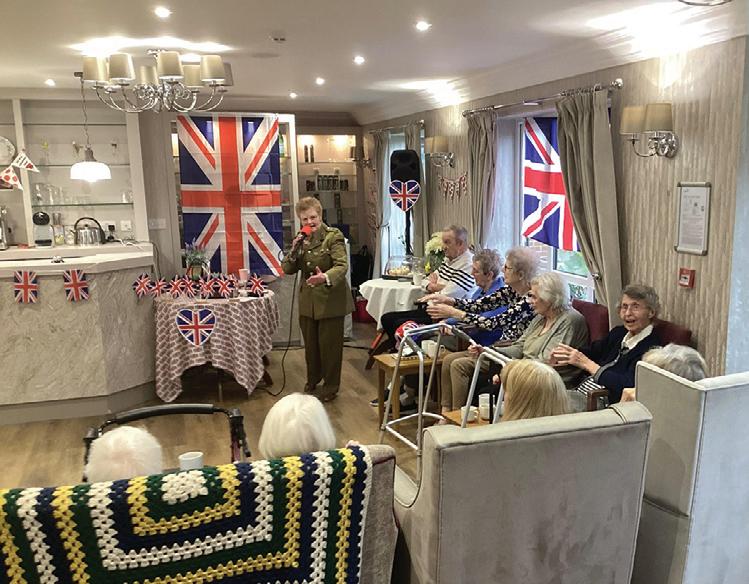

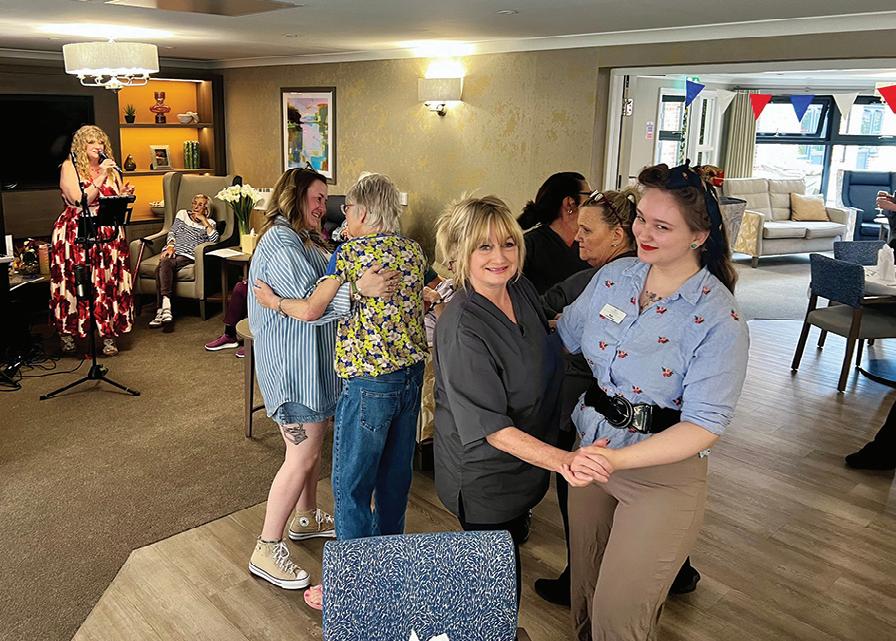
Residents and families at Merceode Lodge care home in Marchwood held a lively VE Day celebration at the weekend, complete with sing-a-longs, classic treat, and a lot of dancing.
Gathering in the care home’s lounge, residents and guests enjoyed live music from Lady Natalie, a homemade afternoon tea with classic Victoria sponges and scones, a glass of fizz, and lots of games for all ages.
For 96-year-old resident, Doreen Lupton, the celebration was a trip down memory lane. Doreen said,
“I remember 8th May 1945 very well. There was such joy and celebration, and the street parties would go on into the early hours of the morning.”
Helen Chapman, the General Manager at Merceode Lodge added, “It was incredibly special to bring everyone together to mark such an important occasion in our nation’s history.
“Seeing residents sharing their memories with younger generations, singing along to wartime favourites and enjoying the celebrations with family and friends created a wonderful atmosphere throughout the home.”
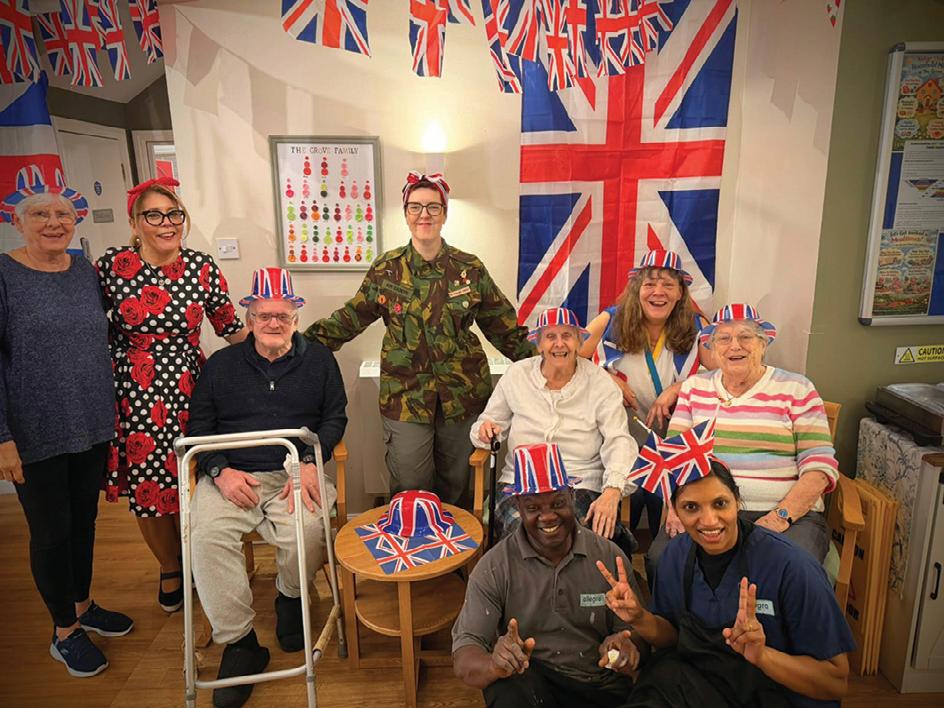
Residents and staff at The Grove Residential Home in Winterbourne came together in patriotic spirit to mark the 81st anniversary of Victory in Europe Day.
The care home, part of Allegra Care, joined communities across the country in commemorating the end of the Second World War in Europe with a day of celebration, remembrance, and reflection.
In the lead-up to the event, residents helped decorate The Grove with bunting both inside and outside the home, creating a festive atmosphere ahead of the big day. On VE Day itself,
staff embraced the occasion by dressing up and organising a lively celebration for residents.
The event featured singing, dancing, and the sharing of wartime memories, bringing together residents and team members for what organisers described as a truly special occasion. Alongside the celebrations, everyone also paused to remember the fallen soldiers who sacrificed so much for the nation’s freedom.
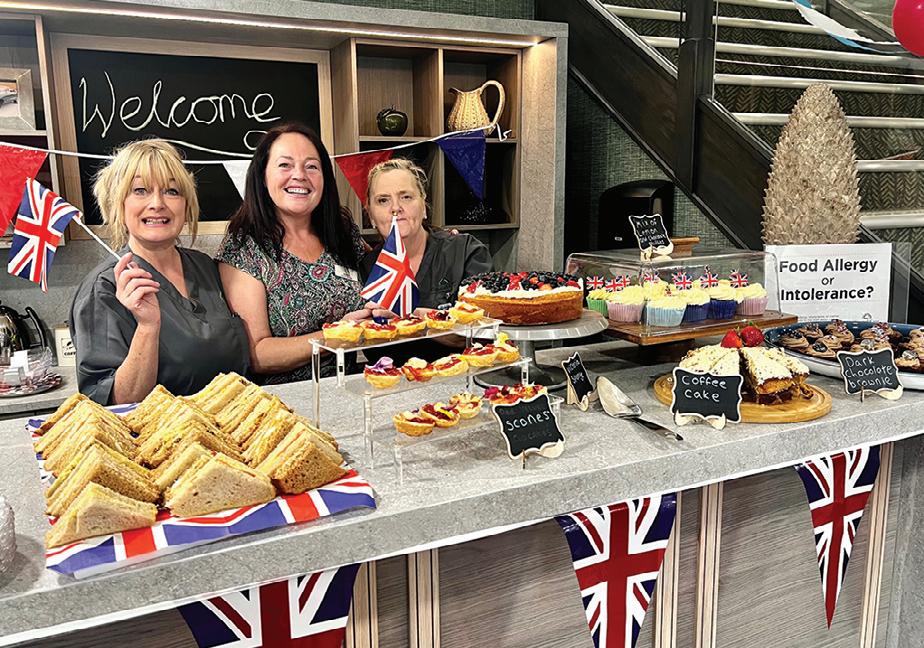
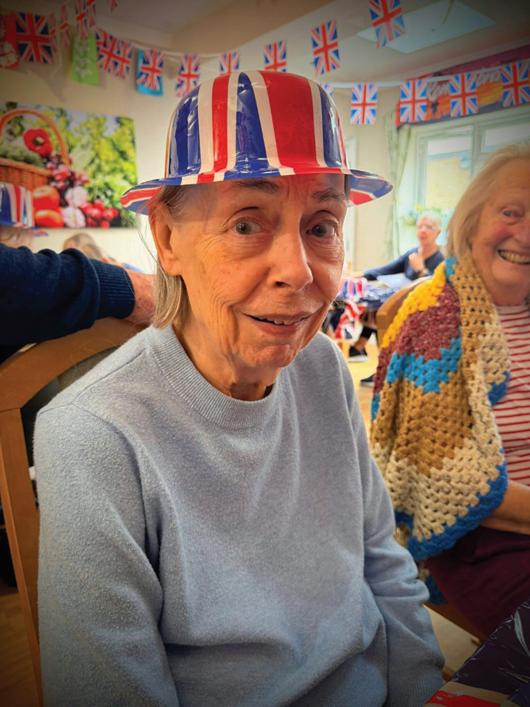
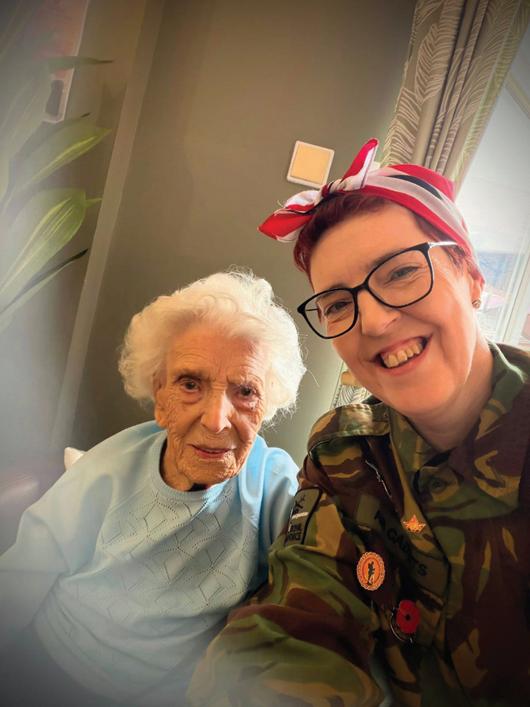
Catherine Crawshaw, Regional Resident Liaison Manager for Allegra Care’s Western Region, praised both residents and staff for making the day so memorable.
“A huge thank you to the amazing staff for their effort and for putting their heart into the day, along with The Grove’s residents, who made it such a memorable celebration,” she said.
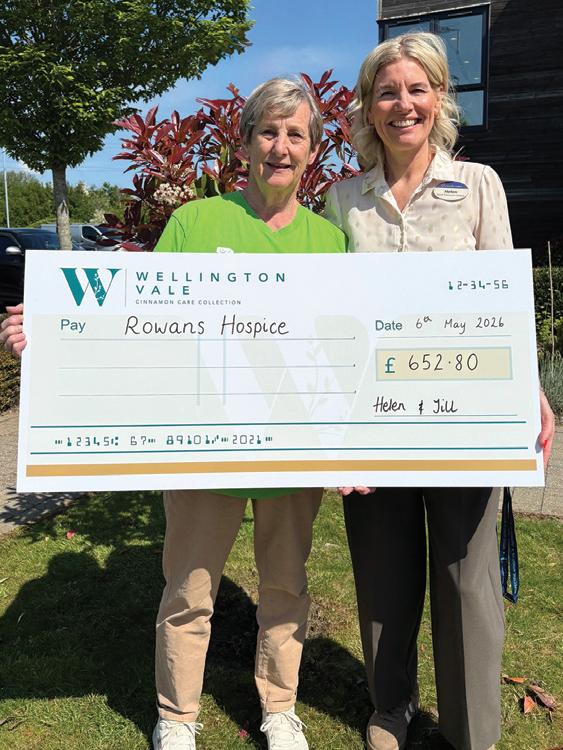
A Waterlooville care home celebrated the 81st anniversary of VE Day after hosting a vibrant community fundraiser in collaboration with Rowan’s Hospice fundraising support group.
Wellington Vale, part of Cinnamon Care Collection, welcomed residents, families, team members and visitors from the local community to the commemorations on Saturday, 9th May. The event successfully raised £652.80 to support the vital work of Rowan’s Hospice.
The celebration captured the festive spirit of 1945 with a traditional BBQ and live entertainment. Guests were treated to performances by Lindy Hop dancers and a singer known as ‘Lyndsey,’ who performed a repertoire of classic wartime songs. The afternoon also featured
a raffle and giant garden games, providing entertainment for all generations in attendance.
A highlight of the day was a showstopper cake, specially baked and decorated for the occasion.
James Greene, Interim General Manager at Wellington Vale, commented: “We are delighted to have brought the community together to honour this important anniversary while supporting such a worthy local cause. Our VE Day celebration was about more than just looking back; it was about fostering a sense of purpose and joy for our residents. Seeing everyone, from our team to local visitors, enjoying the Lindy Hop and wartime music while raising significant funds for Rowan’s Hospice was truly special.”
Elm Bank care home in Kettering marked Victory in Europe Day in style by throwing a 1940s afternoon of musical entertainment by the D-Dollies from Mini Concerts. The home was alive with songs from the past, residents reminisced, and flags were flown, it was an emotional day and for some tears were shed. It was a day that meant so much to so many, with the music came all the shared memories and stories from the past. Residents and staff enjoyed the afternoon and one resident in particular recalled her memories of being just 18 years of age on the day itself and watching everything unfold on the day. The resident recalled climbing on to
lamppost and watching the street events happening. It was an emotional afternoon and tears were shed as the memories
flooding back during the afternoon celebrations. Many stories of the day itself were shared amongst all. Tina, Activities Co-ordinator said, “This truly was a wonderful afternoon for all and to hear the heartfelt stories from the residents that remembered the day were beautiful. The afternoon concert performed by the D-Day Dollies from mini concerts was just amazing, it was just very fitting for the day itself and the girls were loved by all the residents.”
Larisa Bledea, General Manager at Elm Bank said: “It is lovely to see everyone together, and celebrating Victory in Europe Day in style it was important here at the home, and to have the D-Day Dollies
to perform for such an occasion was simply beautiful. The memories shared by the residents and the stories told really show us how much these events celebrated at
A year to the day after hosting its VE Day 80 commemoration at Castle View Retirement Living in Windsor, the Homeowners behind the event will publish a very special permanent record, The Castle View VE Day 80 book.
The Castle View VE Day 80 commemoration book as being presented to His Majesty The King.
Copies of the book are being sent to His Majesty The King, Their Royal Highnesses The Prince and Princess of Wales and to the Prime Minister. Presentation copies have been given to The Imperial War Museum and the British Library, and locally to Windsor’s MP, Jack Rankin, The Mayor of the Royal Borough of Windsor & Maidenhead, Councillor Mandy Brar and to Windsor & Royal Borough Museum and Windsor Library.
The VE 80 event was a full day of remembrance and celebration, devised and led by a group of seven Homeowners at Castle View. As friends and neighbours, they wanted to honour those who had gone before them, many at huge personal sacrifice, and to protect the living memories of the Second World War.
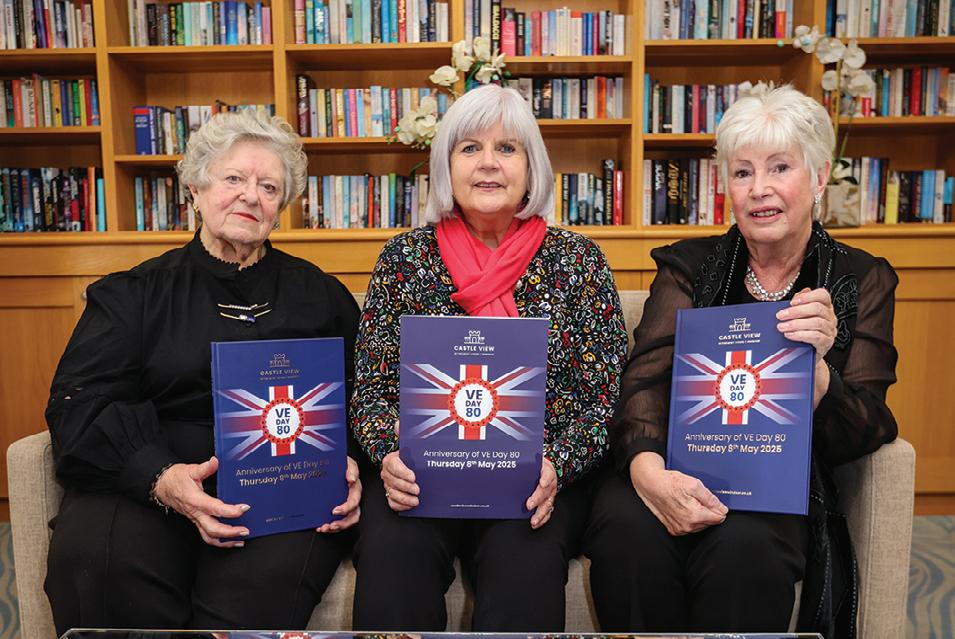
The day itself comprised a detailed programme of morning and evening events, extensive decorations and a major memorabilia display, all of which inspired the idea of creating a permanent record. The programme included a balance of commemoration and celebration, the official Proclamation, Tribute, war-time songs, a Victory Dinner and symbolic acts such as Lighting a Lamp for Peace and observing a reflective Minute’s Silence. A sizeable collection of war-time memorabilia and personal accounts from fellow Homeowners was amassed, including letters, photographs, ration books, poems and childhood and family memories of life on the Home Front in Windsor and elsewhere.
It soon became evident that this material was too rich and too important to be left, and the idea of a dedicated book was born. Steered by Homeowners Beverley Edwards, Patricia Powell and Kate Rayner, it was fully supported and published by LMS Retirement Living.
The beautifully produced book weaves together eyewitness stories, images, historical context, programme details from the VE Day 80 commemorations at Castle View, and preserves memories of those living for future generations, and to ensure that the courage, sacrifice and resilience of wartime civilians and service personnel are never forgotten.

Capturing a wide range of perspectives, childhood and family recollections of bombing raids, evacuation and rationing, there are insights into life in Windsor and elsewhere during the war, and reflections on how VE Day itself was experienced in Britain and abroad.
And reflecting Castle View’s ongoing tradition of Homeownerled charitable activity, the VE Day 80 programme and resulting book have helped raise funds for Alzheimer’s Dementia Support and generated donations of food and other items for Windsor Foodshare.
Said Patricia Powell, colead of the group responsible for compiling the book: “The concept for the book grew from a shared feeling that these memories should not just fade away. It provides a permanent record, not only of our efforts but of heartfelt gratitude to those who served and sacrificed. It is very pleasing that it has been received as a local and national historical contribution.”
Added Kate Rayner, also responsible for its creation: “When the group first came together to plan our commemorations, the focus was simple: to mark the 80th anniversary with dignity, warmth and authenticity. We were determined to do justice to the occasion.
“We organised the day’s programme, decorations, menus, music, ration books, war-time themed refreshments, costumes and, most importantly, the memorabilia and personal reflections of our Homeowner friends.”
Karl Hallows, managing director of Castle View said, “I am immensely proud of what our Homeowners have created with this VE Day 80 book. What began as a day of commemoration, led entirely by a small group of residents, has become a permanent record of their memories, experiences and gratitude. This was never a commercial project but about doing the right thing - honouring those who went before and preserving stories that might otherwise be lost, for the benefit of our community and for future generations.”
“Our Homeowners gave their time, their family archives and their hearts to this project. To see their work now in the hands of every resident here at Castle View, lodged safely with the British Library and shared with national leaders is incredibly special. It speaks to the strength, generosity and ongoing contribution of older people in our society.”
Residents, veterans, families and members of the local community came together at Deangate Care Home in Mapplewell, Barnsley, to celebrate VE Day in true 1945 style.
The event was organised by Activity Coordinator and Veteran Champion Rachael Addy, who has helped build a strong veteran community within the home as part of its veteran-friendly status.
Deangate Care Home regularly marks important military anniversaries and occasions, while also hosting its own veteran society for residents. The VE Day celebration was described as a heartfelt opportunity to honour those who served and remember those who sacrificed so much during wartime.
In the lead-up to the event, residents were invited to share their memories of the very first VE Day celebrations in 1945. Frances, Norma and Margaret recalled touching childhood memories from the historic day, helping to bring history to life for everyone involved.
The afternoon celebration welcomed Deangate’s resident veterans, veterans from the local community and the Mayor of Barnsley, who is also a veteran. Families of veterans who had sadly passed away during the year were also invited to attend, with a moving two-minute silence held in their honour.
Guests enjoyed an emotional afternoon filled with flag waving, music, smiles and tears as memories and stories were shared together.
Entertainment was provided by singer Hillary, who dressed for the occasion and helped recreate the spirit of the 1940s.
The home was decorated with a large sensory display featuring wartime memorabilia and photographs
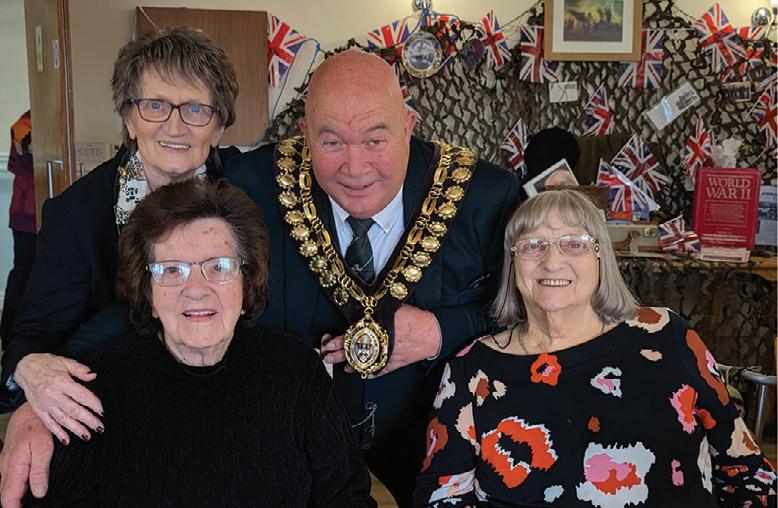
of veterans living at Deangate,
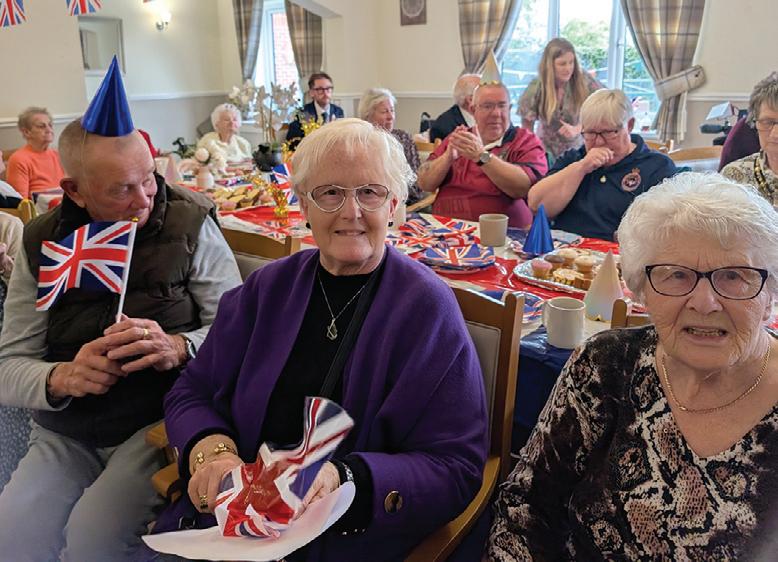
a powerful tribute
residents and their
Speaking about the event, Rachael said the celebration was about showing gratitude and ensuring veterans feel recognised and appreciated.
“We are so proud of our veterans and what better way to say thank you than by throwing a party — not just to honour them, but all those who fought for us,” she said.
Hickathrift House Care Home in Marshland
St James, Wisbech marked the 81st anniversary of Victory in Europe Day in style by welcoming the Royal British Legion, Wisbech for their VE Day service and celebration.
Led by the Vice Chair of the Royal British Legion, Wisbech Branch, Andrew Sharp, the company led the community commemoration with the lowering of the standard and the bugle, before Betty, a resident at
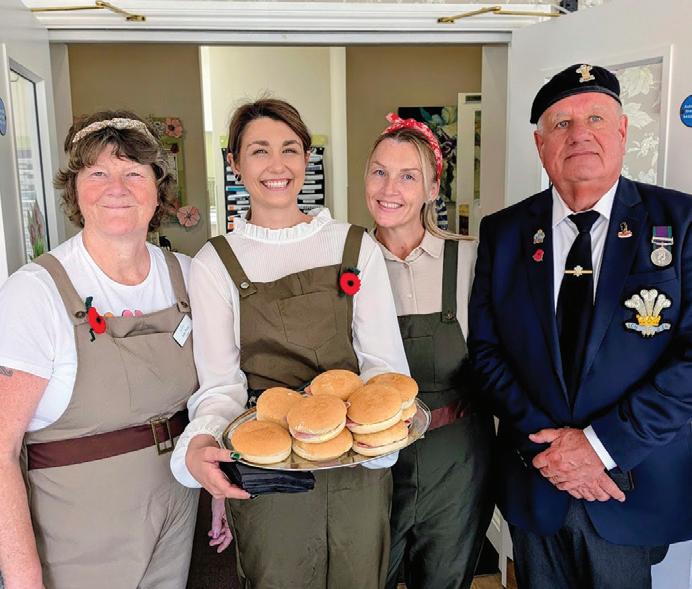
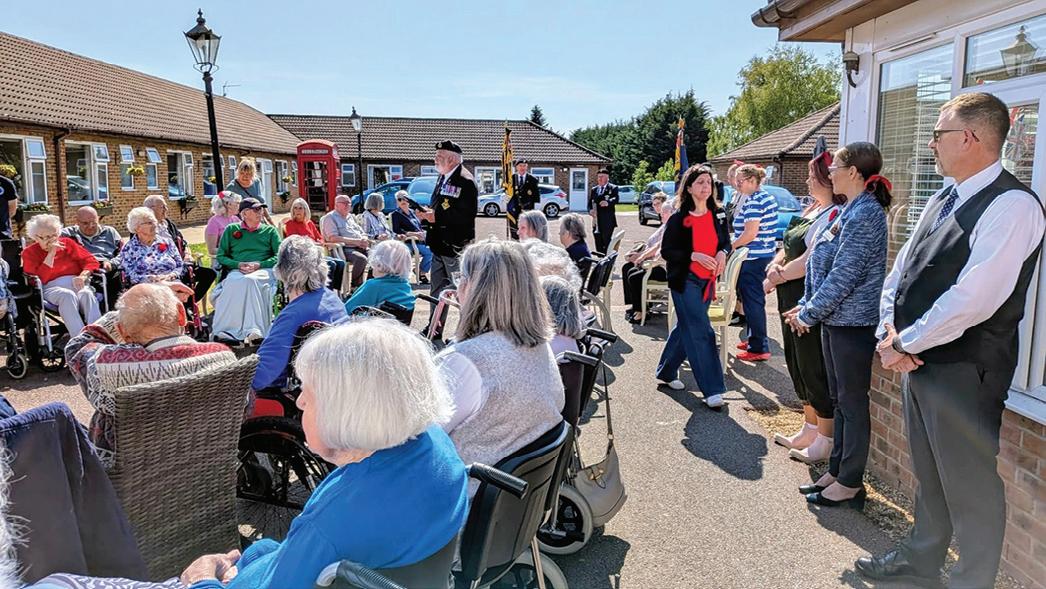
Residents and colleagues at Anchor’s Wetherby Manor care home came together in celebration to mark the 81stanniversary of Victory in Europe Day honouring the courage, resilience, and stories of those who lived through the Second World War.
Wetherby Manor is home to more than one inspirational veteran, each with a remarkable story to tell.
Among them is 101-year-old resident Ivy May Farrell, who volunteered to serve during the war. Although initially turned away due to her height, she refused to give up and instead joined the Army where she was welcomed with the light-hearted promise they would “stretch her” to fit. Ivy went on to train as a military driver, standing out as one of just 30 women among 600 men. She looks back on her service with pride, not only for her contribution but also for the lifelong friendships she formed and for meeting her husband, William, whom she married in 1944.
Another veteran in the home, Peter Evans, lived a life of adventure in the RAF. After graduating from Cranwell, he honed his flying skills in Wales and learned to fly The Vampire, The Meteor, and The Venom jet fighters in Singapore. Peter holds especially fond memories of his later RAF career as a pilot with the Red Arrows. Even outside the cockpit, his appetite for excitement never waned, as he raced motorcycles on the weekend and even picked up a couple of trophies in the Isle of Man TT.
Also joining the commemorations was 103-year-old Daphne Turner, who served in the Women's Royal Naval Service (Wrens) as a teleprinter operator stationed in Portsmouth during the war. "I remember the
night before VE Day so clearly. I was working the teleprinter night shift when suddenly the busy communication lines fell strangely quiet. That silence was actually the first sign of peace, though we didn't realise it then.
“For us at Wetherby Manor who lived through those times, these aren’t just moments from history - they're our memories. It's wonderful to celebrate this 81st anniversary together with friends, family and a community who understand what that day truly meant to us all."
Wetherby Manor was awarded the Veteran Friendly Framework (VFF) accreditation in recognition of its commitment to supporting the wellbeing of residents who have served in the Armed Forces. This includes ensuring that veterans’ experiences and needs are thoughtfully reflected in their care and support plans.
Veteran resident Bob Robinson, said: “My time with the armed forces were very precious years to me. It means a lot that 81 years later, we are still marking the day and taking time to reflect and remember those who gave their lives fighting for our country. It’s incredibly important that we keep sharing stories and learning from the past to protect the future.”
Caroline Byron, Home Manager at Wetherby Manor care home, said: “As with a lot of Anchor care homes across the country, Wetherby Manor is home to some truly inspirational veterans. Hearing their stories of service will make anyone grow with admiration and appreciation for those in the armed services, and to support our veterans in their later years is nothing short of a privilege and an honour.”
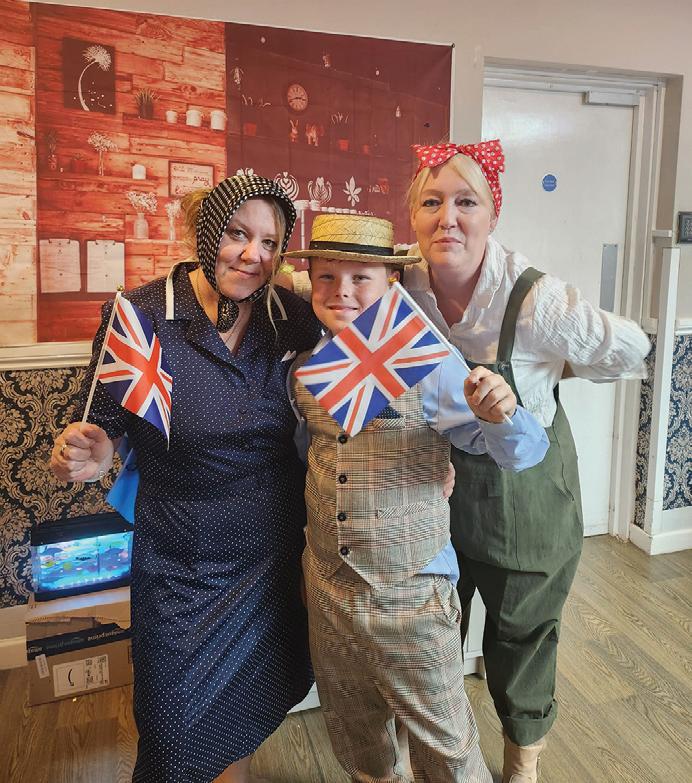
To mark the 81st anniversary of Victory in Europe Day (VE Day), students from Ilfracombe Junior School visited Edenmore Nursing Home to share their World War II projects with family members (residents) living at the home.
The children spent time with different family members, showing them the workbooks they had created as part of their World War II projects, and offering them to family members who wanted to have a closer look through them themselves. The work included historical photographs from the wartime period alongside written sections exploring different aspects of the war.
There were some very special moments throughout the visit. Ann, a family member, was left laughing and smiling when one student shared that the best part about dressing up as an evacuee was not having to wear a school uniform!
Another child proudly told his teacher, ‘I think I’ve made that lady’s day,’ after spending time with Susan, another family member at the home. As the children were leaving, he made sure to say goodbye to Susan and give her a cuddle, something his teacher described as an especially touching moment, as showing affection and interacting so openly with others does not always come easily for him.
The home also hosted a special VE Day themed party later in the afternoon, with Union Jack decorations, themed cakes, hats and tableware, while members of the team dressed in utility-style clothing and kerchiefs for the occasion. A reminiscence area was created using wartime books, a rotary phone and a typewriter, giving family members the opportunity to look at, touch and interact with recognisable objects
‘It’s Over!’

from the past which may evoke a sense of connection or recognition.
Isaac, who is ten years old and the grandson of Home Manager Gayle, also spent time at the home speaking with family members about their experiences of the war. Peter, a family member at the home, enjoyed talking to Isaac about rationing during the war, including sugar, meat, butter and clothing, helping him understand what life was like then.
Isaac has been visiting the home since he was just a few months old and continues to enjoy spending time with family members there!
Intergenerational visits like these can be meaningful for both older and younger generations. For older generations, spending time with children can encourage moments of conversation and connection. Talking about things like wartime memories, may help support reminiscence and reinforce a sense of identity and personal history.
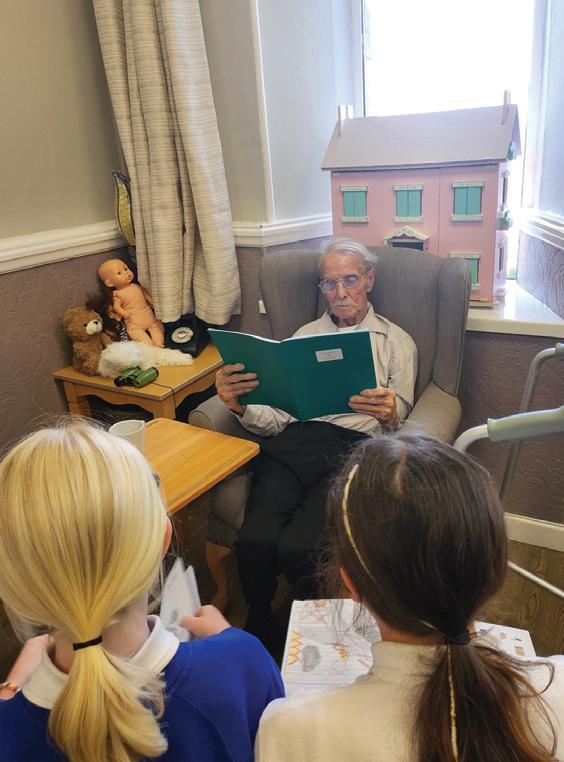
For children, visits to care homes can help build understanding of ageing and living with Dementia in a more personal and compassionate way. And rather than learning about history only through books, they are able to hear from people who lived through significant moments in time, helping bring those experiences to life while also encouraging empathy and confidence connecting with older generations.
Bringing children into the home can also help family members feel part of the wider community and younger generations, while creating opportunities for shared experiences, conversation and connection.
Home Manager Gayle shared about the day, ‘It was just amazing. Seeing everyone’s happy faces. Everybody just loved it.’
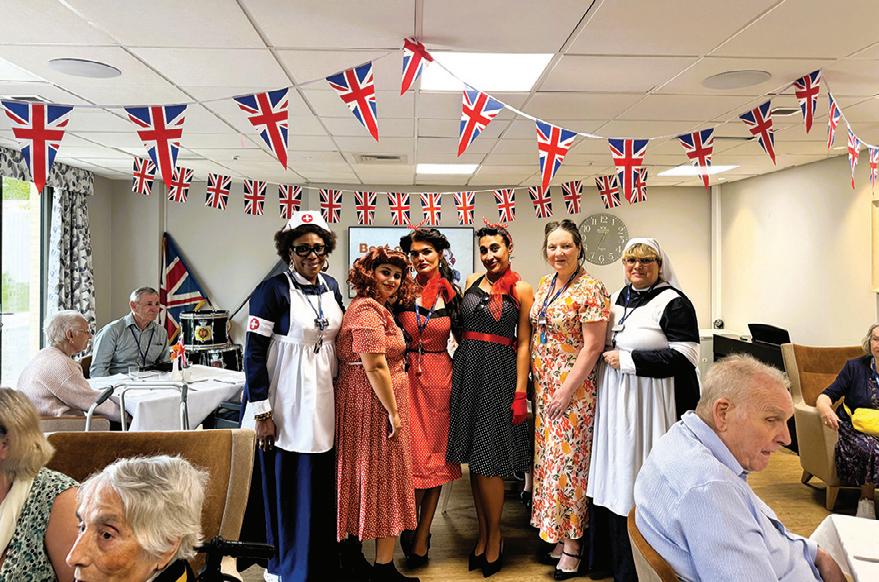
Residents who remembered the end of the Second World War first-hand were among those taking part in VE Day celebrations at Broughton House Veteran Care Village.
The Veterans’ Mess at the Salford care home was decked out in bunting as residents tucked into a fish and chips lunch, rounded off with Arctic Roll.
Staff dressed in 1940s outfits while music from the era filled the room.
Carer Donna Leigh even handmade personalised hats for the veterans, using adverts and images inspired by residents’ favourite memories from the time, including one decorated with vintage chocolate brands for sweettoothed resident Renee Briggs.
Jane Green, director of care at Broughton House, said: “VE Day is always an important occasion for us at Broughton House.
“Our team did a wonderful job creating such a special atmosphere for our residents. A lot of care, effort and thought went into the celebrations, and everyone had a lovely day filled with good food, good company and plenty of reminiscing.
“Donna really went out of her way to make the hats, and deserves special recognition for her creativity
and dedication.”
Resident Babs Stagg, aged 90, was 10 years old on VE Day in May 1945 and remembers it well.
She said: “The previous evening, my sister and I had gone to bed together, taking our protection suits with us in case of an air raid.
“We woke to the sound of sirens and people shouting: ‘It’s over! It’s over! It’s over!’
“We thought there were planes overhead and rushed to put on the suits, but then realised everyone was so happy. Our mum in particular was celebrating, saying: ‘My boys are coming home’.
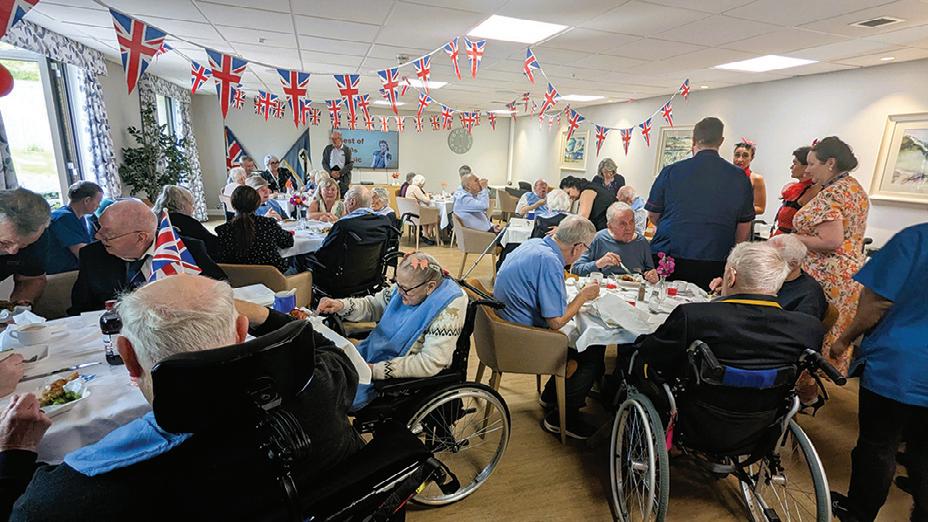
“At the time, three brothers were in the Royal Navy and one was in the Merchant Navy. Everyone was elated.”
Broughton House has cared for more than 8,000 veterans since it opened its doors to the ex-service community in 1916. It is the only home offering veteran-specific residential, nursing, specialist dementia and respite care in the north west.
Following redevelopment, it is now a 64-bed care home, with two 16-bed
New research from Log my Care, in partnership with Care England, reveals how families navigate the early stages of choosing care, and why trust is often built, or lost, before a provider is even contacted.
The study, conducted by Sapio Research, surveyed 1,000 people responsible for arranging care for a family member across older people’s services, and working age adult support and home care.
The findings paint a clear picture of a system experienced by families when they’re under pressure. Nearly half (47 percent) of families began searching due to increased need, compared with 21 percent citing caregiver stress, suggesting decisions are more often reactive than planned.
Uncertainty is a defining feature of the process. Almost all respondents (97 percent) said they found arranging care difficult, with two thirds starting the search without clarity about the type of care required. Over half reported feeling overwhelmed, anxious or unsure where to begin.
The research also challenges assumptions about how families assess quality, with only 19 percent of families stating that they used inspection reports such as CQC ratings during their research. Instead, families rely more heavily on signals they feel they can trust like reputation, personal recommendation and clear, accessible information, choosing:
• Directories (55 percent)
• Online search (40 percent)
• Word-of-mouth recommendations (38 percent)
This dynamic is particularly pronounced in home care, where physical locations cannot be visited to get a sense of the care provided. Without the ability to observe care directly, families place greater emphasis on credibility and communication from the earliest interaction. Once care is in place, technology can help with
this uncertainty, reassuring family members through daily interaction and updates.
When it comes to final decision-making, trust-led factors dominate. Reputation (30 percent) and safety and safeguarding (29 percent) rank highest, followed by cost (25 percent) and staff experience (24 percent). Inspection reports are cited by just 11 percent of respondents as a key factor.
Together, these findings suggest a disconnect between how quality is formally presented and how families make decisions in practice, highlighting the need for the system to better align with real-world behaviour.
Sam Hussain, CEO, Log my Care said: “Families are forming views about care providers long before making contact, and too often they are doing so without clear, consistent signals of what good looks like.
This research shows that trust is built early, through reputation, clarity and communication, not just through formal indicators of quality such as inspection reports.
We’re seeing more frequently that technology creates a clear opportunity to strengthen the support for families earlier and build confidence from the very start.”
Professor Martin Green OBE, Chief Executive, Care England said: “This report highlights the reality families face when entering the care system, often under pressure and with limited information, and making decisions more quickly than we might expect.
“It also points to a growing disconnect between how quality is formally defined and how families actually choose care in practice.
There is a clear opportunity to rethink how we present and communicate quality, ensuring that it is accessible, meaningful, and aligned with real-world behaviour, so families can make informed decisions with con-
A dementia care home singalong has grown into a hit community project now touring Gwynedd.
Music sessions designed to unlock memories among residents of Pendine Park’s Bryn Seiont Newydd care home in Caernarfon are now reaching people far beyond its walls.
The initiative, created by actor and singer Emyr Gibson, uses classic songs from the 1950s and 60s to spark recollections, lift the mood and get people singing along and dancing.
Backed by growing evidence that familiar music can reduce anxiety and trigger memories in people with dementia, the sessions have become a powerful tool in daily life at Bryn Seiont where Emyr works as a creative practitioner.
Now, after proving a hit with residents, the Atgofion Jiwcbocs (Jukebox Memories) sessions have been taken on the road, drawing crowds into libraries across Gwynedd where even passers-by are stopping in.
Emyr said: “Residents at Bryn Seiont Newydd enjoy a sing-song and they are held regularly and are very effective in boosting their mood.
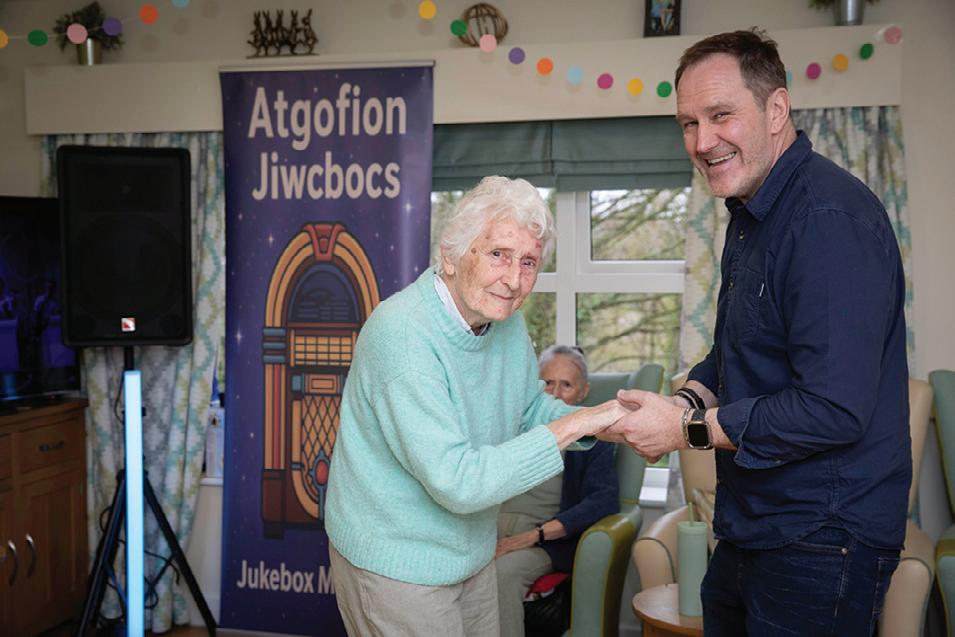
“Hearing a song from the past often sparks a memory and the stories the residents recall are wonderful to hear.
“Many recall the words to the songs and join in the singing and very often their feet are tapping to the music and some will even get up and have a dance.”
Knowing Valerie Kressman, from the Llanberis area, was a fan of Cilla Black, Emyr found a video of the Liverpool-born singer singing her 1964 hit, Anyone who had a Heart, and it wasn’t long before the 73-yearold was singing along.
“I know the words to all of Cilla’s songs,” she said.
Another resident, Peter Brierly, asked Emyr to play Mel Torme’s version of “Blue Moon”. Peter, from Criccieth but originally from Manchester, said: “This was the song that was always the last to be played or sung at the dances I used to go to when I was younger after the (Second World) war. It’s a great song,” he said.
The music spurred Pamela Barker to get up and enjoy a quick dance with Emyr while an Elvis Presley video played on the screen.
“I enjoyed that,” she said.
Addressing postural care should be a pre-requisite of occupational therapy yet is a postcode lottery, says RCOT(1).
The problem is further complicated by lack of awareness among professionals, the breadth of issues posture management affects resulting in multiple disciplines being involved, and the diversity of equipment required to achieve round-the-clock support and correction and thus funding streams.
AAT is aiming to simplify the process.
Its Grande vacuum posture cushion delivers almost all sedentary and supine positioning support required day or night.
So just one health professional need prescribe.
Caregivers can precisely mould and fix the mattress-sized cushion to correctly support whether sitting or lying in the day or sleeping at night. Grande can be used as a mattress for resting, sleeping or physiotherapy, or folded to create a seat- stand-alone, on a chair, on a sofa.
Its construction also means it is tactile and easily transmits sound waves, so it can double as a conductor for sensory stimulation.
The technology Grande uses is based round the principles of a bean bag, giving the precise shaping inherent in the concept. The beans contour precisely to the required body shape. By
According to Emyr, musical memories are deeply embedded in the brain and often stay with people who have dementia even when other memories fade, as the areas involved are affected later in the disease. “Singing familiar songs can improve mood, encourage communication, and foster social connections for those with dementia and their caregivers.
“I’m delighted that Atgofion Jiwcbocs has been so well received. I play a selection of old songs and videos which encourage everyone to join in. It is a lot of fun and enables those with dementia to recall many happy times.”
Emyr has been a professional actor for more than 20 years and is probably best known for playing Meical in the popular Welsh soap opera ‘Rownd a Rownd’ on S4C.
But he has also appeared in many other popular drama programmes on television channels in Wales.
He joined the staff of Bryn Seiont Newydd four years ago and has been nominated for a top honour at the Wales Care Awards.
Sandra Evans, manager of Bryn Seiont Newydd, said: “It’s wonderful to see the Jukebox Memories project making such a positive difference, not only to our residents but now to the wider community across Gwynedd.
“Music has a unique ability to unlock memories and bring people together, and that’s exactly what we see every day here.
“The sessions fit perfectly with the ethos of Bryn Seiont Newydd and, more widely, Pendine Park, where music and the arts provide a golden thread running through daily life.
“Initiatives like this enrich wellbeing, spark joy and create meaningful moments for everyone involved. We’re incredibly proud of the impact it’s having.”
Emyr added: “The Gwynedd Library Service heard of the sessions and along with Dementia Actif Gwynedd asked me if I could hold some sessions at libraries.
“We started off in Caernarfon and Porthmadog and the sessions went very well and have since been held in libraries at Nefyn, Blaenau Ffestiniog and Tywyn.
“The library in Pwllheli is on one of the main streets and people heard the music and came in to see what was going on and joined in.”
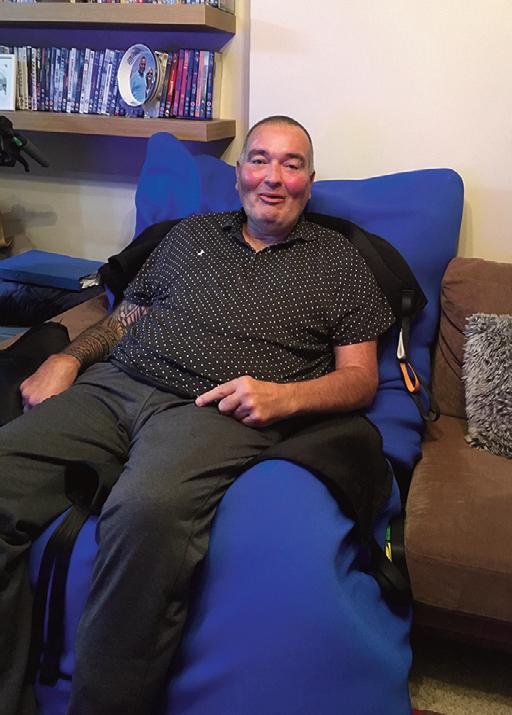
attaching a pump, the air between the beans is extracted, fixing that shape with the preferred degree of firmness.
The shaping can be as detailed as required, providing correct stabilisation with minimal pressure and even allowing for pommels, wedges, hollows for feeding tubes. There is no need for restraint, even during dystonic episodes or hyperactivity.
Frequent re-plumping/ positioning of conventional cushion-type posture systems becomes a thing of the past.
To re-shape, simply allow air back into the Grande and mould as necessary, be it a simple adjustment for body position and comfort or a complete reconfiguration.
“The role postural care plays in the health and wellbeing of disabled people and their carers is acknowledged, but the way our health service is structured, delivery is fragmented. Yet addressing it would have a huge impact not only on the people who need it, but on the demand for associated NHS services,” says Peter Wingrave, AAT Director.
“If just one healthcare professional thinks outside the box and looks at something like Grande, that answers the specific issue they have for a client but simultaneously could answer other issues for that client, surely it must be considered?”
More details about Grande and its role in 24-hour postural management can be found @ www.aatgb.com/grande/.
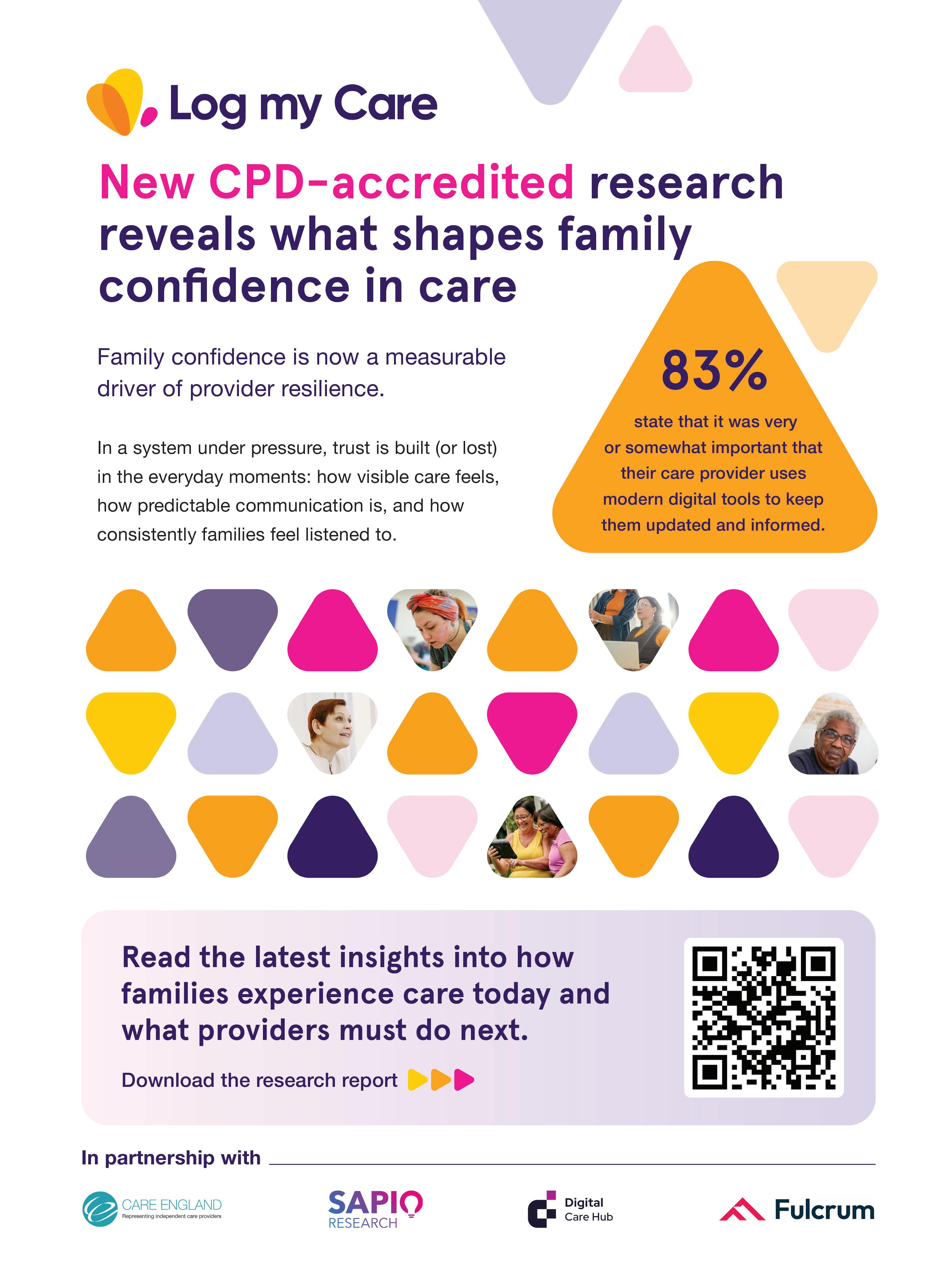
Neemat Sadiq, CEO of Langdale Care Homes, reflects on the tension between compassion and compliance, and how technology can restore time to care.
One of the greatest challenges in care today is not a lack of compassion. It is the constant tension between being present with people and being pulled into process.
I know this not as a CEO, but as someone who began as a carer.
I have walked those corridors. I have sat beside residents. I have felt the quiet conflict of wanting to give just a little more time, while knowing there is documentation waiting, charts to complete, records to update. That tension never really leaves you.
When I founded Langdale Care Homes, I believed I would be creating more space for care. In many ways I did, but like many business owners, I also found myself pulled further away from the very thing I loved most.
If you run a business, you will understand this. The work you once felt so connected to slowly becomes replaced with responsibility, compliance, and oversight.
In care, that shift comes at a cost.
For years, our teams were spending valuable time documenting care instead of delivering it. Not because they wanted to, but because they had to. Compliance demands it. Regulation requires it. And rightly so. But somewhere along the way, the balance tipped too far.
Care began to feel like it was being recorded more than it was being experienced.
“Care began to feel like it was being recorded more than it was being experienced.”
That never sat right with me.
For over two decades, I have listened to carers, nurses, and managers. I have seen the fatigue that does not come from caring, but from the weight of administration that surrounds it. That kind of exhaustion does not serve our staff, and it certainly does not serve our residents.
There had to be a better way.
Empathika was born from that belief.
Not as a system, but as a response.
A response to the frustration of paperwork.
A response to the risk of human error.
A response to the quiet reality that too much time was being taken away from people.
We wanted to create something that worked with carers, not against them. Something that allowed documentation to happen naturally, in real time, without breaking the flow of care.
Today, with Empathika, information is recorded as care happens. Medication is managed more safely. Risks are identified earlier. And most importantly, our teams are given something incredibly valuable back.
Time.
And with time comes presence. With presence comes connection. And with connection comes better care.
“Technology is not here to replace care. It is here to protect it.”
But we must be clear about something.
Technology is not here to replace care. It is here to protect it.
This will always be a people first industry. No system can replace a reassuring voice, a held hand, or a moment of understanding. No app can comfort a family or respond to a resident calling out in the night.
What technology can do is remove the noise.
It can take away the repetitive, the time consuming, the burdens that sit around care and quietly drain those delivering it.
And when that happens, something shifts.
We have seen it in our own homes. Staff are more present, more energised, and more connected to why they came into care in the first place.
And when our teams feel better, our residents feel it too.
For me as a provider, it has also transformed compliance. What once took hours now takes minutes. Information is no longer chased. It is already there. That sense of readiness brings calm, confidence, and clarity across the organisation.
“This is not a loud transformation. It is a quiet revolution.”
This is not a loud transformation. It is not disruptive in the way people often expect.
It is a quiet revolution.
One that restores balance.
To those working in care, I would simply say this.
If you are exploring technology, do it with intention.
Not to monitor more.
Not to control more.
But to give back more.
Give back time.
Give back energy.
Give back the ability to be fully present.
Because at its heart, care has never been about systems.
It has always been about people.
And it always will be.
Orchard Healthcare Group has announced the launch of a new Mental Health First Responder initiative as part of Mental Health Awareness Week 2026, reinforcing its commitment to colleague wellbeing and creating a healthy, supportive workplace culture across its group.
Launching during Mental Health Awareness Week beginning 11 May, this year’s theme, ‘Take Action,’ closely reflects the organisation’s commitment to creating visible, practical support systems that empower colleagues to support one another in meaningful and sustainable ways.
The Mental Health First Responder project has been developed internally to bridge the gap between mental health awareness and practical action in the workplace. The initiative combines structured responder training with wider organisational wellbeing strategies aimed at embedding support into everyday working life.
The programme will establish a network of trained colleagues across Orchard’s services who can offer supportive, early conversations when someone may be struggling, while also helping guide colleagues towards appropriate support pathways where needed.
The role is not designed to replace professional mental health services or create clinical responsibility. Instead, it equips colleagues with the confidence, communication skills, and professional boundaries needed to respond appropriately and compassionately within the realities of care environments. Alongside the responder training, Orchard is introducing a broader package of wellbeing initiatives across the group, including:
• Wellbeing check-ins
• Peer support and buddy systems
• Structured support following difficult incidents or bereavements
• Promotion of protected break culture
• More visible and consistent wellbeing practices within teams
The training itself will be delivered through a structured, modular programme over several weeks and focuses on practical, real-world skills such as active listening, responding to disclosures, maintaining boundaries, and signposting colleagues towards additional support.
Speaking about the initiative, Amelia Greenwood, Head of Specialist Services at Orchard Healthcare Group, said: ‘This project came from recognising a gap between awareness and action. We talk a lot about mental health, but colleagues do not always feel confident in what to actually do in the moment when someone is struggling.’
‘The Mental Health First Responder initiative is about creating a safe, approachable, and practical framework for support. It is not simply a training programme, it is part of a wider cultural approach that makes wellbeing conversations more normal, visible, and accessible across our services.’
‘We know that supporting mental health in care settings cannot sit with one individual alone. That is why this initiative combines training with wider organisational action, ensuring responders themselves are properly supported while creating environments where colleagues feel psychologically safe to speak openly and seek support early.’
Angloplas are a UK manufacturer who specialise in producing dispensers for the health and hygiene industry. Although these are designed to keep the workplace tidy and uncluttered they are, more importantly, built knowing the control of healthcare-associated infections (HCAIs) are a priority for healthcare providers, and who are employing a combination of infection prevention and control strategies, including hand hygiene, cleaning, training and the adoption of new technologies, to tackle the problem. As a result, a wide range of infection control products and technologies are emerging on the market, including antimicrobial technology. Angloplas’ range of dispensers are produced in the world’s first proven Antimicrobial PVC with silver ion technology and which is exclusive to Angloplas. This helps reduce the risk of cross infection by stopping the growth of bacteria and mould and works continuously for the lifetime of the product, reducing levels of bacteria such as MRSA, E Coli, Legionella, Salmonella and mould by up to 99.99%.
For non-clinical environments Angloplas has recently launched its new Budget Range of products which are made to the same exacting standards as the antimicrobial protected ones but with lower price tags.
You can order Angloplas products directly from its website at www.angloplas.co.uk
See the advert on page 6.

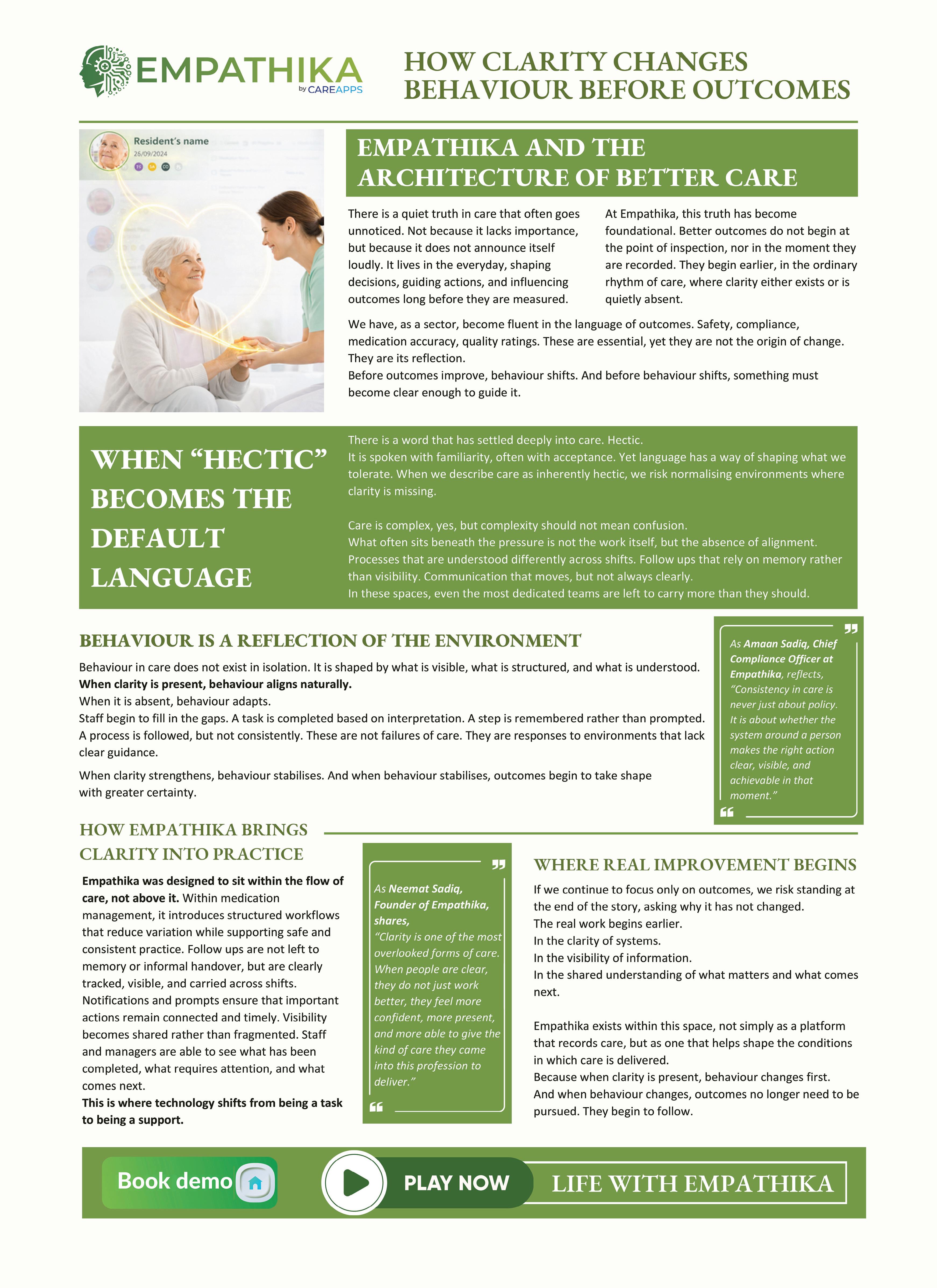
Residents at a Hendon care home are celebrating creativity, independence and wellbeing as part of a growing focus on helping older people stay active, inspired and socially connected.
Signature at Hendon Hall, located within the Grade IIlisted 18thcentury Hendon Manor in Barnet, supports residents to continue lifelong interests and explore new creative pursuits within a welcoming community.
The home offers a wide range of activities and amenities, including a dedicated art studio, cinema and landscaped gardens. Alongside regular activities and onetoone sessions, residents also take part in trips to local art and pottery studios, giving them opportunities to try something new and meet others with shared interests.
One resident, Gerald, a former mechanical and aeronautical engineer, has pursued a love of art since his teenage years. Since moving to Hendon Hall, he has continued exploring portrait painting, sculpture, pottery and life drawing. He regularly uses the home’s art studio and has become known for drawing portraits of fellow residents, staff members and visiting family.
Another resident, Zena, has balanced her passion for art alongside a career as a medical doctor and health education professional. Largely selftaught, she developed her artistic skills through evening classes and personal exploration. Today, her artwork is displayed throughout the home, including in a sculpture garden, where it is enjoyed by residents and visitors alike. She has also encouraged others to explore their own
creativity.
Residents are also supported to discover new talents together through group visits to local studios, where pottery and ceramics classes often provide firsttime experiences. These sessions help build confidence, spark creativity and strengthen friendships within the community.
For Mary, another resident, enjoyment is found outdoors. Passionate about gardening and golf, she plays an active role in maintaining the gardens, planting flowers and spending time with others in the fresh air.
Speaking about the gardens, Mary said:
“We’re so lucky to have such a lovely garden here. I’ve always enjoyed being outdoors, and although I’m not an expert gardener, I really enjoy it. It’s a lovely place for everyone to come together.”
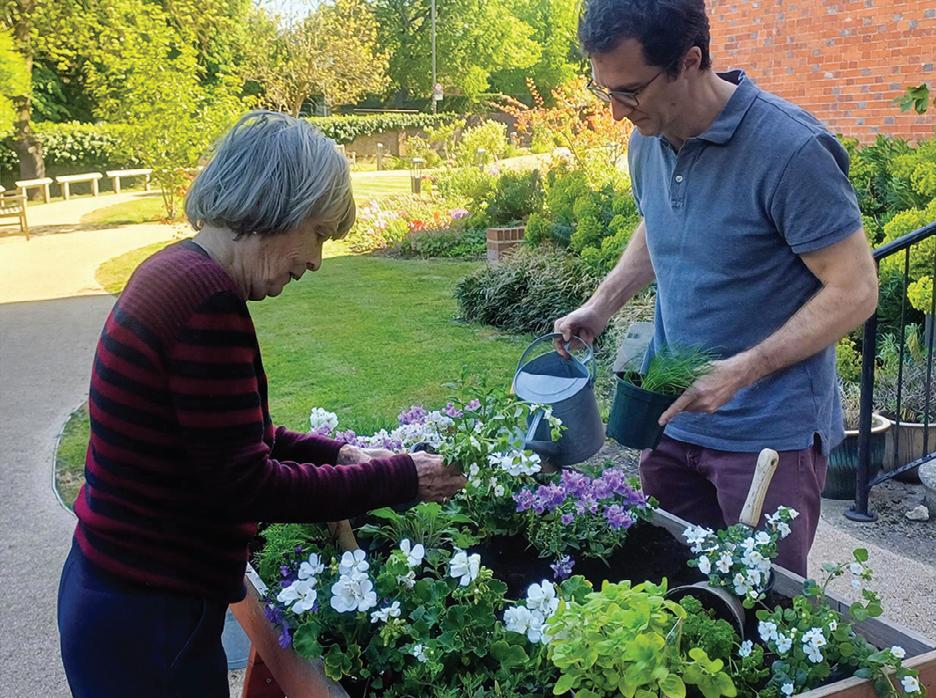
Orla, General Manager at Signature at Hendon Hall, said:
“It’s wonderful to see residents continuing to enjoy the activities and interests that are important to them. We focus on really getting to know each person so we can offer support that’s tailored to their individual interests and preferences.”
Staff at the home say creativity and personal fulfilment play an important role in residents’ wellbeing, helping them stay connected, confident and engaged in later life.
Join us at the Care Forum – a unique event designed for senior professionals responsible for purchasing care home facilities, alongside providers of the latest innovative products and services within the healthcare sector.
The event follows our award-winning format, offering the opportunity to meet 1-2-1 with suppliers through a personalised itinerary of meetings in a relaxed and intimate setting.
8th & 9th June 2026
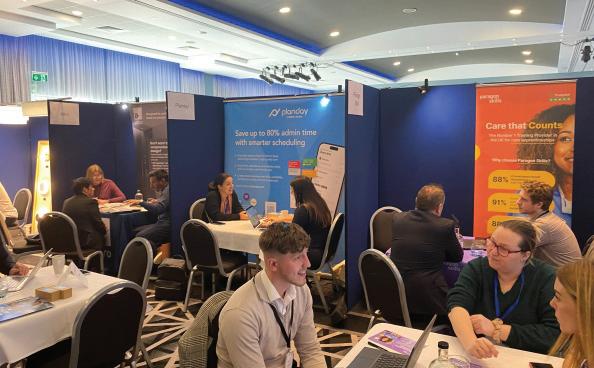
Radisson Hotel & Conference Centre, London Heathrow BUYERS TO THE INDUSTRY
Attendance is entirely free for buyers. Your pass includes a personalised itinerary of relaxed 1-2-1 meetings with budget-saving suppliers who match your needs, access to insightful and educational seminar sessions led by industry thought leaders, valuable networking opportunities, breakfast, lunch and refreshments throughout,
overnight accommodation at the venue, and attendance at our gala dinner with entertainment.
Confirmed speakers include Sultana Pasha, Quality & Compliance Director at KYN presenting “In My Experience: How to stay compliant with CQC” and Lauri SmithFounder & CEO at The Civility Gap presenting “Breaking silos between health, social care, community services”. Additional sessions will be announced soon.
Buyers can register via our booking form at https://thecareforum.co.uk/delegates-booking-form/ SUPPLIERS
The Forum connects you with healthcare professionals who have specifically requested to meet you and are actively seeking solutions. Benefits include a personalised meeting itinerary, access to senior decision makers, branding exposure, full catering, a pre-built meeting stand, overnight accommodation, and a gala dinner.
The Forum offers an unparalleled opportunity to promote your solutions to engaged decision-makers reviewing their suppliers.
For more information, please contact j.healy@forumevents.co.uk
By Kevin Groombridge

Inspection, as commonly practised, is often episodic and judgement-led. CIUK’s process takes a different approach. By integrating detailed, evidence-based inspection with targeted action planning and sustained implementation support, it reframes inspection as a continuous improvement system rather than a periodic verdict.
Supported by UKAS accreditation since 2016, the model is designed to produce findings that are not only credible but also operationally useful and capable of driving measurable change.
Health and social care providers operate under sustained scrutiny, yet the relationship between inspection and meaningful improvement remains inconsistent. Compliance is assessed and ratings are published, but whether inspections reliably drive safer care, better outcomes, or stronger organisations is open to question.
Inspection systems in the UK remain heavily judgement-led. While professional judgement plays a role, over-reliance introduces variability, subjectivity, and inconsistent outcomes.
Providers frequently encounter divergent findings for similar levels of performance. This reflects a structural issue in which conclusions are shaped by individual perspective rather than a consistently applied evidence base.
The risk is twofold. First, organisations may be incorrectly assessed, undermining confidence in the system. Second, judgement-led inspection often fails to produce operationally useful insight. It describes performance but does not reliably explain causation or provide a clear route to improvement.
Inspection, in this form, risks becoming an exercise in classification rather than a tool for change.
ARE REGULATORS EFFECTIVE INSPECTORS?
Regulators perform an essential role in setting standards and enforcing compliance. However, there is a legitimate question about whether they are structurally well-positioned to serve as high-quality inspectors.
Regulatory bodies are simultaneously rule-setters, assessors, and enforcers. This creates a model that can be reactive, episodic, and riskaverse, with inspection often focused on identifying failure rather than understanding system performance.
In practice, this can lead to inspections that are:
Event-driven, triggered by concerns rather than embedded in continuous assurance
Compliance-focused, prioritising adherence over operational effectiveness
Inconsistent, due to reliance on individual judgement
This is not a criticism of intent, but of structure. Regulation and inspection are related functions, but they are not the same discipline.
A MORE FORENSIC
CIUK’s work is structured around three core components. First, a forensic, evidence-based inspection that examines not only compliance, but how care, governance, and operational systems function in practice. This is followed by a targeted action plan that translates findings into specific, prioritised interventions that address root causes rather than symptoms. Crucially, inspection is not treated as a standalone event. CIUK provides ongoing support, working alongside providers to implement changes, monitor progress, and stabilise performance over time.
This model incorporates:
Systematic risk analysis - identifying latent risks before they manifest
Operational diagnostics - examining how care, staffing, and governance function in practice
• Commercial impact awareness - recognising the link between quality and sustainability
Inspection is therefore treated as a diagnostic process, focused on causation and designed to produce actionable findings.
INTERNATIONAL PERSPECTIVES
Other countries have adopted models that place greater emphasis on independent, provider-engaged assurance.
In the Netherlands, inspection is complemented by strong provider accountability and transparency. In Australia, accreditation-based systems require providers to demonstrate ongoing compliance, supported by external verification. Similar approaches are evident in parts of Canada and the Nordic countries, where inspection is more clearly separated from enforcement.
These models are not without challenge, but they demonstrate a consistent principle: inspection is most effective when it is independent, evidence-driven, and embedded in continuous improvement, rather than positioned solely as a regulatory checkpoint.
A persistent weakness in inspection systems is the prioritisation of judgement over utility. Ratings may signal performance, but they rarely enable change.
CIUK places greater emphasis on structured improvement pathways. Weaknesses are translated into specific actions, while strengths are used to stabilise and improve performance.
This reframes inspection as a forward-looking mechanism for risk reduction and quality improvement, rather than a retrospective assessment.
The sector does not lack inspection; it lacks inspection that is sufficiently consistent, evidence-led, and operationally useful to drive sustained improvement.
CIUK’s approach, underpinned by UKAS accreditation since 2016, does not replace regulation, but it challenges the assumption that regulatory inspection alone is sufficient.
If inspection is to have real value, it must move beyond periodic judgement and towards continuous, evidence-based assurance that organisations can act on with confidence.
Friendship is important at all stages of life, but even more so as you age and move into the later phases of life. Care experts at Elmfield care group share how important intergenerational friendships are, and the benefits they bring to all involved.
Michael Berkley Blezard, General Manager of Old Sarum Manor care home, comments on the connection he sees forming between residents and staff: “Increasingly, we are seeing residents bonding with the care staff on a level that goes deeper than just acquaintances. It is really special to see these connections grow as they bond over shared experiences or show each other a unique perspective.
“For older adults, connecting with younger generations can help them feel more youthful and for the younger adults, they gain a wider perspective on life that might be able to support them as they navigate the world.”
Esther Cambridge, General Manager of Flowers Manor care home, highlights the emotional impact these friendships can have: “The most significant benefit for our residents is improved emotional wellbeing. Strong connections within the home make them far less susceptible to loneliness and social isolation. This then has a knock-on effect, helping to lower stress and fostering a sense of self-worth for both the resident and the member of staff.
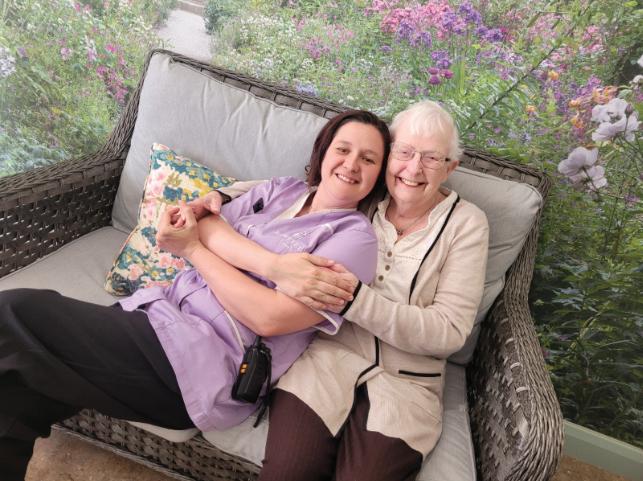
“Another benefit we see in the home, especially among the care staff, is increased empathy. When staff form bonds with residents outside of their typical social circles, they can develop a more inclusive worldview. At the same time, our residents are reminded that they still have so much to offer.”
Naomi Griffith, General Manager of Nodens Manor care home, explains how the home actively creates the conditions for these friendships to flourish: “These friendships don’t happen by accident. In our homes, we create the environment for them through structured activities and more relaxed, informal socialisation time.
“Our care staff are encouraged to be genuinely curious about residents, asking questions about their lives and passions to get to know them better. When residents feel heard, this helps them open up and allows conversations to become more free-flowing, which is where the real friendships begin.”
One example of a special friendship at Elmfield care group comes from Nodens Manor:
When Pam Ruck, 90, joined the Noden Manor community roughly twoand-a -half years ago, her journey has been defined by connection. She quickly formed a friendship with fellow residents, but it was with care team member Aimee Bowden, 32, that she found a truly unique bond. The pair instantly connected over their shared passions, a love for nature and gardening, and their mutual love for children gave them a foundation for endless conversation.
Whether the sun is shining or there’s a morning chill, Aimee and Pam have a cherished daily ritual. Every shift begins with a warm hug, followed by ten minutes of coffee and a gentle stroll through the Nodens Manor gardens. These quiet moments have paved the way for a friendship so deep that Pam often describes Aimee as being ‘like a daughter to her’.
Richard Ayres, social care advisor at Care England, was honoured with the Chief Nurse Adult Social Care Award at last week’s Parliamentary Reception, presented by Deborah Sturdy, Chief Nurse for Adult Social Care.
The award recognises individuals who have made an outstanding and lasting contribution to adult social care. We couldn’t be prouder.
Reflecting on the award, Richard said: “I am privileged to have been awarded the Gold Award for Nursing and Adult Social Care Excellence by Deborah Sturdy, the Chief Nursing Officer for Adult Social Care, someone I hold in the highest regard and wholeheartedly respect for her work.
“I work as part of an amazing team at Care England, having worked for them for five years and alongside them since 2014, when I left Procurement to move into adult social care for homecare and care homes. I’ve had the privilege of working with incredible individuals at Care England, along with colleagues across social care.

“I’ve been inspired by them and by key leaders, care workers, my Registered Manager sister who got
me into Adult Social Care in the first place (thanks Emma!), and those who have had such influence across the sector, like Ruth French and Nuno Lopes, who have both inspired and motivated me to do all I can to support our sector and enhance care provision, and who kindly nominated and supported my nomination for this award.
Professor Martin Green OBE added: “I am genuinely delighted that Richard has been honoured in this way, it is richly deserved. I am proud to lead an organisation that fights every day for a sector that too often goes unrecognised, and I am grateful beyond words to the colleagues, care workers, and providers who inspire everything we do.
“We still have much to accomplish, but moments like this remind us that our work matters. What makes this recognition especially meaningful is that Richard was nominated by our own members and key stakeholders, and that speaks volumes. It tells us that the wider sector sees him exactly as we do: a powerful and trusted colleague, and a compelling voice for social care across our membership and far beyond.”
The law is changing for care homes, but understanding your obligations has never been easier
Providing both comfort and dignity to those in your care is at the core of the Care homes profession, but when it comes to both residents and their families, one of the most important things you can offer is trust.
Moving to a care home can be an emotional time for some and transparency and fairness are key in reassuring prospective residents and their families that they will be cared for with compassion and respect - This, and compliance with the law.
Earlier this year we saw the introduction of the Digital Markets, Competition and Consumers Act 2024 (DMCCA) - a landmark piece of legislation that affects business and how they are required by law to safeguard their customer with fair trading practices. These changes may sound like legal jargon, but they directly impact how care homes operate, communicate, and contract with residents.
Compliance can be complex and that’s why the Business Companion Care Homes Guidance is essential reading for anyone working in the Care Homes sector. Written by legal experts this free and easy-to-read guide will walk you through all the steps to ensure you are safeguarding your customers and operating within the law.
WHAT’S CHANGED UNDER THE DMCCA?
The introduction of the DMCCA represents one of the biggest shifts in consumer law in over a decade. It replaces the old Consumer Protection from Unfair Trading Regulations and introduces stricter rules to protect consumers from misleading or unfair practices across almost

all sectors. For care homes, this means:
Clearer Pricing and Transparency: The Act bans “drip pricing” which is when unavoidable fees are hidden until late in the process. Care homes must now present the full cost of services upfront, including any mandatory charges.
• Fake Reviews and Misleading Endorsements: The DMCCA prohibits the use of fabricated or manipulated reviews. With care homes increasingly relying on their online reputation, ensuring authenticity is now a legal obligation.
Stronger Enforcement Powers: The Competition and Markets Authority (CMA) can now impose fines of up to £300,000 - or 10% of global turnover - for breaches. Compliance isn’t optional; it’s critical.
• and much more!
These changes underline the importance of reviewing your policies, contracts, and marketing materials. The Care Homes Guidance on Business Companion provides practical steps to help you stay compliant and avoid costly mistakes.
KEEPING CONSUMER VULNERABILITY IN MIND
Vulnerability can arise from a number of different situations and factors throughout a person’s life, such as age, health, bereavement, or financial stress. As someone working in the Care homes sector, you’re
dealing with vulnerable individuals on a daily basis and recognising these factors isn’t just good practice; it’s a legal and ethical responsibility.
The Business Companion Consumer Vulnerability Guide offers checklists and practical advice to help you identify and support your residents who may be vulnerable when it comes to things like decision making and communication, ensuring your care home delivers not only compliance but compassion.
YOUR GO-TO
Business Companion is more than just a care home resource - it’s a comprehensive hub for businesses across a broad range of sectors. From selling online to handling complaints, delivery charges, and even net zero strategies, the platform covers hundreds of topics delivered to you through clear, easy-to-read guidance. Backed by the Chartered Trading Standards Institute and the Department for Business & Trade, Business Companion is free, authoritative, and regularly updated by legal experts.
ACT NOW
The DMCCA is already in force, and enforcement powers are live. Don’t wait for a compliance issue to arise - visit Business Companion’s Care Homes Guidance today. Review your contracts, pricing structures, and communication strategies and explore the wider resources available to future-proof your business against legal pitfalls.
In a sector built on trust, staying informed isn’t just smart - it’s essential.
To find out more, visit: www.businesscompanion.info

Residents at a care home in Derby are marking Mental Health Awareness Month by proving that happiness does not always have to be complicated; sometimes it can be found in a bowl of porridge, a sunny day, or a familiar face popping in to say hello.
From family visits and countryside views to knitting, games and the sight of fellow residents smiling, residents at Coxbench Hall have been reflecting on the simple joys that support positive wellbeing in later life.
Resident Bruce said one thing that makes him smile is “seeing Elizabeth on tour checking on the other residents”, adding that he also enjoys Tony’s 7am morning call and seeing carers smiling.
For Pat L, happiness comes from “spending time with family, knitting, reading and playing games”, while Kath said simply: “Porridge makes me smile.” Other residents spoke warmly about family. Margaret W said she feels happiest “when my sons come to see me at the weekend”, Freda said she is happy “when I see my family happy”, and Elizabeth said seeing her “children, grandchildren and great grandchildren” brings her joy.
Nature and community were also common themes. Andrew said “a nice sunny day” makes him happy, while Margaret C chose “a lovely day and beautiful countryside”. Joan J added: “When others are happy, it makes me happy.” At Coxbench Hall, those moments are encouraged every day through a varied
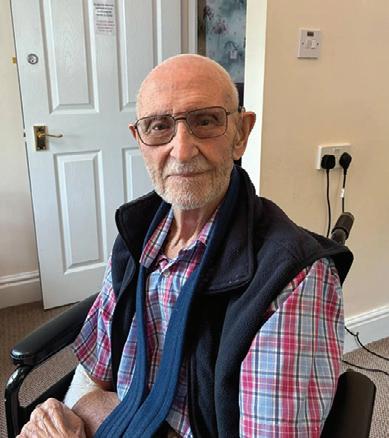
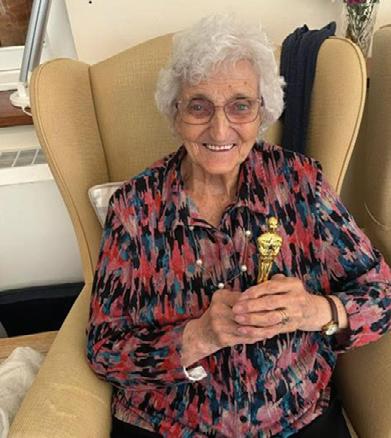
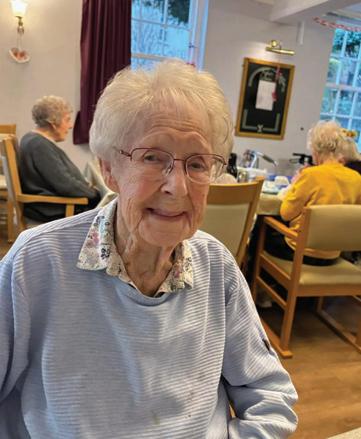
programme of activities, from seated exercise, craft groups, games and reading to weekly minibus outings, seasonal events and time spent in the gardens. The home also welcomes local toddler groups, helping to create intergenerational connections.
Claire Richardson, Director at Coxbench Hall, said: “Mental Health Awareness Month is an important reminder that emotional wellbeing matters at every age. In later life, people can experience big changes, from moving home and adjusting to new routines to missing loved ones or feeling less independent, so the small things really do matter.
“At Coxbench Hall, we know wellbeing is not always about grand gestures. It can be Tony’s 7am morning call, a carer’s smile, a walk in the garden, a visit from family, or, as Kath quite rightly reminded us, a good bowl of porridge. Our role is to create a home where residents feel known, connected and involved, because confidence, companionship and purpose are just as important as physical care.”
The home, which is an independent, family-run care home now in its 42nd year, places a strong emphasis on continuity, familiarity and meaningful relationships. Its long-serving team helps create a warm and reassuring environment where residents are known as individuals, with their routines, interests and personal preferences built into everyday life.
Poor waste management practices are costing care homes thousands of pounds every year -and the problem is more widespread than many operators realise.
Analysis by leading independent healthcare waste management company Anenta reveals that care homes are wasting an average of £8,000 annually as a direct result of inadequate waste segregation and management processes. The root cause is largely the same across the sector: waste is consistently being placed in the wrong channels, triggering unnecessarily high disposal costs.
Detailed compositional audits undertaken both by Anenta, and separately by the Environment Agency (EA) have found that 70% of care home waste ends up in the wrong waste stream. The figures are particularly stark for clinical waste, where 90% is incorrectly categorised, and for offensive waste, where 35% is regularly contaminated with recyclable materials. The financial impact is significant. Low-risk items that should be disposed of as offensive waste — at a cost of £300–£500 per tonne — are routinely being discarded as infectious waste, which costs upwards of £800 per tonne. For a care home producing moderate volumes of waste, these avoidable costs quickly accumulate.
THE ROOT CAUSE: A TRAINING GAP

E-LEARNING: AN IMPORTANT PART OF THE SOLUTION
A free e-learning module on healthcare waste - developed in association with Anenta by NHS England alongside IPC leads, Local Commissioners, and industry experts - is available through the Health Education England online portal and plays an important role in addressing these issues.
The 30–45 minute module - available here - outlines what waste should go into which stream, explains correct segregation practices, and provides practical guidance to help staff build better habits from the ground up. Crucially, it is free to access — removing the cost barrier that might otherwise prevent smaller care homes from investing in staff training.
Flynn added: "The adoption of the training and correct segregation is critical if the care home sector is to cut costs and achieve Net Zero targets. The course is accessible to all and includes a risk assessment that care homes can use to directly inform the way in which their waste is segregated.
COMPLIANCE RISKS ADDING FURTHER PRESSURE
Beyond the direct financial costs, poor waste management also exposes care homes to compliance risks that can have serious operational consequences.
Analysis of over 2,500 primary care Duty of Care audits by Anenta has revealed that 58% of healthcare professionals responsible for waste management are unfamiliar with the Healthcare Technical Memorandum — the key regulatory guidance governing healthcare waste, the latest iteration of which was published in March 2023.
This knowledge gap has led to inadequate training, weak waste management policies, and ingrained bad habits that are proving costly. Without a clear understanding of what goes where, incorrect disposal becomes the norm rather than the exception.
Graham Flynn, Director at Anenta, said: "On average, care homes are wasting £8,000 every year through poor waste management process and procurement. Changing waste disposal habits and practices prevents the unnecessary and expensive disposal of waste via inappropriate and environmentally damaging waste streams, such as incineration — instead ensuring that the majority of clinical waste is disposed of using either alternative treatments or energy-from-waste processes."
Where waste contractors identify non-compliant waste streams, they are entitled to refuse collections entirely - a scenario that can put care services at significant risk of disruption. This risk is managed through the correct completion of a Pre-Acceptance Audit (PAA), which most care homes are required to undertake every five years, or annually where a site produces more than five tonnes of clinical waste per year. The e-learning module supports care homes in preparing for and completing their PAA — a practical benefit that sits alongside the direct cost savings that come with better segregation.
Flynn said: "The training will play a big part in cutting costs by improving waste management among staff. Importantly, it will also help care homes with their PAA audit, without which their healthcare waste cannot be collected — potentially resulting in enforcement action by the Environment Agency."
For more information about Anenta and its care home audit app — which enables care homes to conduct compulsory clinical waste pre-acceptance and duty of care audits in just 40 minutes, without the need for third-party on-site visits — visit www.anentawaste.com or call 033 0122 214.
Bed bugs are one of the most disruptive challenges a care home can face. For managers responsible for the comfort, dignity, and wellbeing of vulnerable residents, even a single confirmed case can trigger anxiety among families, disrupt daily routines, and place enormous pressure on staff. Yet with the right approach, bed bug management doesn't have to mean toxic chemicals, lengthy room closures, or upheaval for the people in your care.
The Misconception Around Bed Bugs
It's important to understand that bed bugs are not a hygiene issue — they are a management issue. These insects are indiscriminate, equally at home in a five-star hotel as a care facility. They travel in luggage, clothing, and belongings, and can be introduced by visitors, new residents, or staff without anyone realising. The question isn't whether your home could be affected; it's whether you have the right systems in place to detect and respond quickly if it is.
The Power of Canine Detection
Early detection is everything. Bed bugs are expert hiders, concealing themselves behind skirting boards, within wall cavities, and deep beneath floorboards — places a visual inspection simply cannot reach. This is where bed bug detection dogs prove invaluable. With a sense of smell far beyond any technology currently available, trained canines can identify individual live bed bugs at the earliest possible stage, before a minor issue becomes a full-scale infestation.

Merlin Environmental's specialist canine detection teams work with care homes across the country, offering proactive screening programmes that allow managers to stay ahead of any potential problem. The non-
invasive nature of this approach is particularly important in a care setting — rooms can be assessed quickly and discreetly, with minimal disturbance to residents, preserving dignity and maintaining the calm environment your residents deserve.
Effective Treatment Without Compromise
When treatment is required, Merlin Environmental's heat treatment process offers a genuinely superior alternative to traditional chemical methods. By raising room temperatures to a lethal threshold, every bed bug — including eggs, which chemical treatments cannot penetrate — is eliminated in a single application. There are no pesticide residues, no chemical odours, and no risk to residents or staff.
Critically for care home operations, rooms are available for use again the same day, once cooled. No lengthy preparation, no multiple follow-up visits, and no disruption to the routines that matter so much to your residents.
A Proactive Partnership
Merlin Environmental works with care homes as a trusted long-term partner, combining expertise, accreditation, and a genuine commitment to the safety of those in your care — because your residents deserve nothing less.
To find out more about proactive bed bug screening and heat treatment for your care home, contact Merlin Environmental.


For many, moving into a care home comes at a time when so much is already changing. It’s rarely a choice in the way people would want it to be, more a necessary step when staying at home is sadly no longer possible. It can feel daunting and unfamiliar, and worried thoughts turn to what it will mean for independence, routines, and choice in how you’ve lived your life day to day.
For Warren, a family member (resident) at Gibraltar Nursing Home, that experience was a little different.
His connection to Gibraltar Nursing Home didn’t begin when he moved in – it started years earlier through his work as a nurse in the same home he now lives in. Warren had spent much of his working life in nursing roles across the UK, including time at Gibraltar. For him, it was a home that already had his trust and felt familiar, and when the time came, Gibraltar felt like the right place for him to return to.
HUMBLE BEGINNINGS
Warren was born in 1953 in Monmouthshire. Brought up in Llanellen on a family farm, he worked alongside his father with sheep and cattle. It was a rural, outdoor upbringing, and he later took on work at a nearby turkey farm. Farming wasn’t just work; it was part of who he was. He shares about this time, ‘I was a real country boy and farmer’s son.’
At 16, he joined the Royal Regiment of Wales, common for young men at the time, spending around 12 months with the regiment and travelling across the UK. The army life wasn’t for him however, and he left to return home.
A NEW PATHWAY
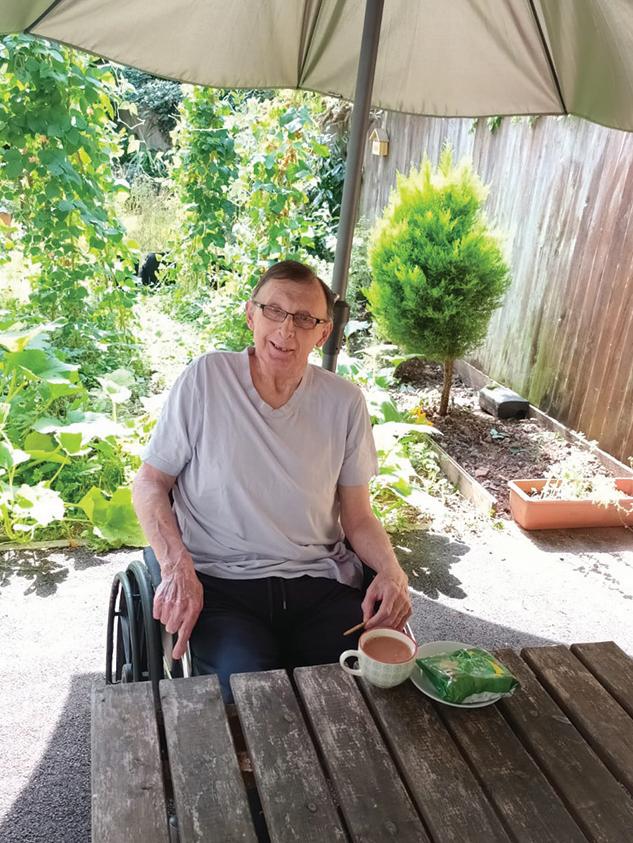
Not long after, a different path opened up closer to home. An advert in the local Abergavenny Chronicle for nursing roles in mental health caught his mother’s attention. Having worked as a nurse herself, she encouraged him to apply, saying, ‘go along, give it a go.’ He was successful and got a post, marking the early beginnings of what would become a long career in nursing.
Warren began his training at Pen-y-Fal Hospital in Abergavenny, a well-known mental health hospital at the time. He later continued his training at Prince Charles Hospital, becoming a Registered General Nurse (RGN) and Registered Nurse for Mental Handicap (RNMH).
Reflecting on his work, he spoke about how much it meant to get things right for someone. Seeing a person supported and cared for in the way they deserved, and the difference that made to their life, was the part of the role he found most rewarding.
Over the years, his career took him further afield. He relocated to Hampshire, where he took on an additional role as an inspector. One inspection in particular stayed with him. Asked to review a home, he found serious failings, including medication being stored on the floor rather than safely organised. It was challenging work, but necessary, and he was recognised for handling it properly by the head inspector at the time,
Nick Skinner. He also lived in Surrey for a time, working in a large nursing home, before eventually returning to Monmouth.
RETURNING TO MONMOUTHSHIRE
Back in familiar surroundings, Warren took on agency work, enjoying the variation and the chance to work across different settings. It was shortly after this that he worked as a senior nurse at Gibraltar.
During that time, he met and worked closely with Mike Cuff, a clinical lead who was new to his role at the home. Mike is still part of the team today as a clinical lead and a member of the clinical governance team and will celebrate 15 years at Gibraltar this October.
Reflecting on their time working together, Mike shared, ‘Warren just took things in his stride. He was calm and steady, and nothing seemed to faze him. The family members really liked him, and he got on well with everyone. That was just who he was.’
Towards the end of his working life, Warren wanted a change and a returned to his farming roots. Although years had passed, the routine and familiarity of farm work hadn’t left him. Farming had always been part of his life, something he had continued alongside his nursing career whenever he could.
When his health later began to change, the decision about where to live was clear to him. Gibraltar was close to home, just down the road, and more importantly, it was somewhere he already understood. He knew people that worked there, the environment, and what life looked like. So, he moved into the home in 2023.
Mike shared of Warren’s decision, ‘He said, the only place I’m going is Gibraltar. They’ll look after me and Mike is there.’
Today, Warren prefers a quieter routine. He is a private man, most comfortable in his own space, often spending time in his bedroom. A choice understood and respected by those around him.
The culture at Gibraltar Nursing Home means that the door is always open. It’s a place where relationships are built over time, between the team, the people who live here and those who visit. Familiar faces come and go, often stopping by for a chat or a cup of tea, always met with the same warm welcome. There’s a shared understanding that this is more than a place to stay, it’s a home, and once you’ve been part of it, that feeling of home doesn’t go away.
THANK YOU
Gibraltar Nursing Home would like to thank Warren for the years he spent working in nursing, both within the home and beyond. His career reflects the kind of steady, consistent work that often goes unnoticed, but makes a lasting difference to the people it has supported along the way.
A receptionist from Bristol has won Gold at the 2026 Cheerleading and Dance Worlds in Florida as part of Angels Dance Academy based in Hartcliffe.
Courtney Baldwin, 22, attended the Cheerleading and Dance Worlds in Orlando from 24th to 27th April, where she competed in the Co-ed Hip Hop for team Ada Genesis and All-Female Hip Hop for team Ada Dominion, securing a Gold and Bronze medal. Courtney, who began dancing at the age of seven, is now a fourtime World Champion. Outside of competition, she works as a receptionist at Avon Valley Care Home, part of Avery Healthcare. Her employer supported her journey to the competition by contributing to her competition fees and costumes.
Widely regarded as one of the most prestigious events in competitive dance and cheerleading, The Cheerleading & Dance Worlds, hosted by the International Allstar Federation, brings

together elite teams from 25 countries to compete across a range of disciplines, including Hip Hop, Jazz, Pom, Contemporary and Lyrical.
Courtney represented Angels Dance Academy, a Bristol-based academy. Each year, the academy holds highly competitive auditions that attract dancers from across the UK, with only 18 places available on each team.
Speaking about the experience, Courtney said, “I am honoured to be given the chance to dance another year against the best of the best and am forever grateful to Avery Healthcare for helping make this possible by kindly offering sponsorship this season. I have been working at Avon Valley Care Home since the age of 16 and, six years on, my colleagues are some of my biggest supporters. It is such a lovely place to work and I’m thankful for their support.”
Barchester Healthcare’s Chief Financial Officer, Alison Glover, has just celebrated completing 10 years with the company. Barchester’s CEO, Dr Pete Calveley and Alison’s team surprised her with a beautiful cake to mark her 10 years long service milestone.
Originally from Haydock, St Helen’s, Alison’s first role was with Mersey Internal Audit Agency. She did her professional studies with Kaplan in Liverpool while working for Bentley Jennison before moving to BDO. She worked her way up the ladder from Senior Internal Auditor to Internal Audit Manager and then Senior Internal Audit Manager, however she realised that she wanted to make a difference to people’s lives and so looked for a job in the care sector.
Alison joined Barchester in 2016 as Head of Internal Audit before becoming Director of Finance and then being promoted to Chief Financial Officer last year.
Commenting on her 10 year anniversary, Alison said: “I can honestly say
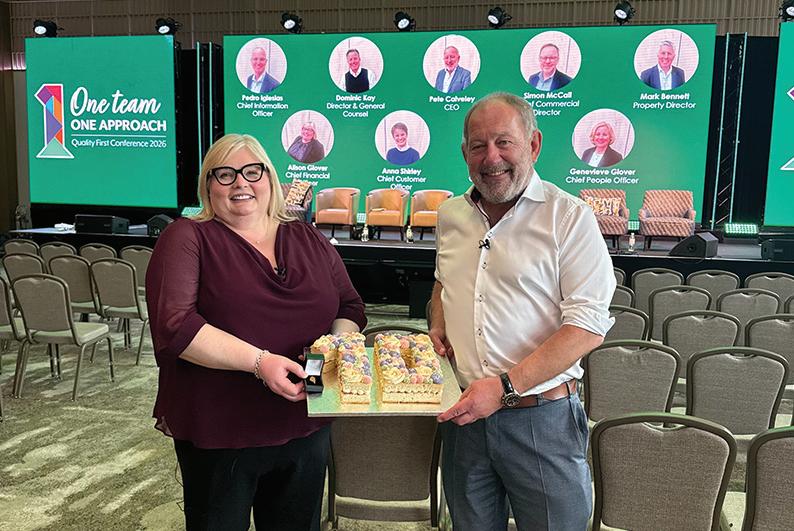
that it does not feel as though I have been with Barchester for 10 years, it has flown by and I think that’s when you know you made the right decision. I love my job because I know we are making a difference to our residents’ and patients’ lives and that is hugely motivating. No two days are the same, I love the variety of projects that I am involved in and all the different teams I work with. Working for Barchester has been the best working experience of my career, so many people all pulling in the same direction to make life better for our residents. Together we accomplish so much every single day.”
CEO of Barchester Healthcare, Dr Pete Calveley, added: “Alison is an absolute tour de force, she is incredibly good at her job and, despite the size of the company, she is very much into the detail of all the different parts of our business. I am delighted that Alison is being recognised for her 10 years loyal service, I look forward to many more years working alongside her.”
Award-winning actor and Alzheimer’s Society Ambassador AnneMarie Duff joined more than 1,000 fundraisers for the charity’s Trek26 London event on Saturday 9 May, completing a 26-mile walk through the capital in memory of her brother, Eddie, who died earlier this year after living with young-onset dementia.
The annual fundraising challenge, organised by Alzheimer’s Society, saw participants take on either 13- or 26-mile routes past some of London’s best-known landmarks, including the Tower of London, St Paul’s Cathedral and Big Ben.
Duff said the event held deep personal significance following her family’s experience of caring for her brother during his illness.
Speaking ahead of the trek, she said: “I’m feeling very excited and proud to be taking part in Trek26 London.
“I’ve had the great privilege of working with Alzheimer’s Society for several years whilst my family and I have been loving and caring for my brother Eddie, as he was walking through his own experience of very early onset dementia. Sadly he passed away earlier this year so I’m choosing to celebrate his life and the lives of other dementia heroes on this trek.”
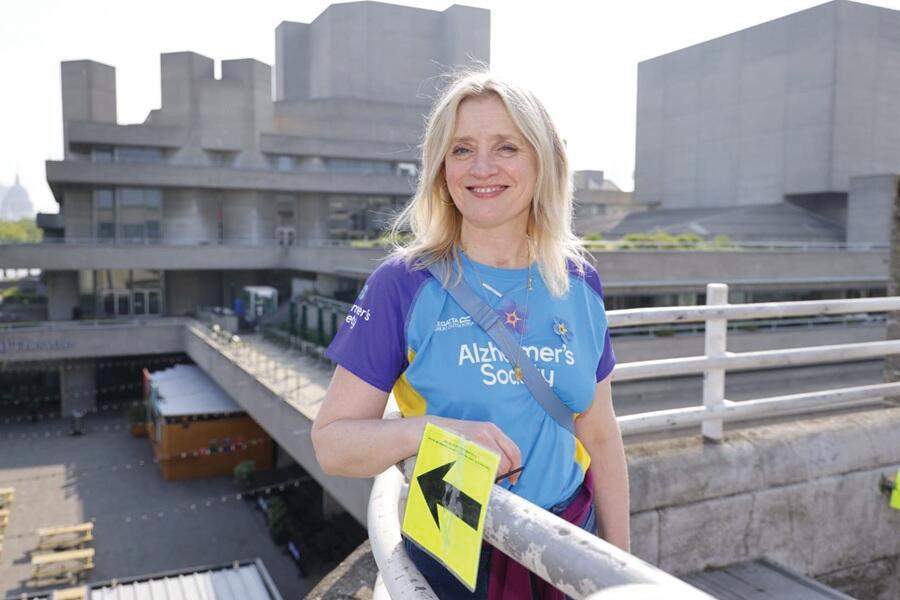
Duff also highlighted the importance of community support for people affected by dementia, describing
the event as “a beautiful symbol” of togetherness for carers and people living with the condition.
The Trek26 series takes place across 13 locations in England, Wales and Northern Ireland and forms part of Alzheimer’s Society’s wider fundraising efforts to improve dementia support, care and research.
The charity said the event comes ahead of its annual Forget Me Not Appeal, which launches in June and aims to raise funds and awareness to ensure people affected by dementia receive better support.
According to Alzheimer’s Society, dementia remains the UK’s biggest killer, with around one million people currently living with the condition nationwide.
Michelle Dyson, Chief Executive of Alzheimer’s Society, praised Duff for speaking publicly about her family’s experience.
She said: “We are incredibly grateful to Anne-Marie, particularly for her courage in sharing her story, which sadly will resonate with so many people across the country.
“Dementia is the UK’s biggest killer, and too many people are facing its devastating impact without the support they need.”
Local Meallmore care homes threw open their doors and their hearts on 30 April, joining thousands of businesses and communities across the UK in supporting Cash for Kids Day and helping to set a new GUINNESS WORLD RECORDS™ title.
Colleagues, residents and family members at care homes across the group rolled up their sleeves and embraced the spirit of the day with enthusiasm, organising a range of fun and creative activities to raise as much money as possible for Cash for Kids, a national fundraising initiative dedicated to improving the lives of children living in poverty.
From silent discos and afternoon tea events to themed fancy dress competitions and raffle draws, the homes buzzed with laughter, community spirit, and generosity, raising over £700 for the cause in the Central West region.
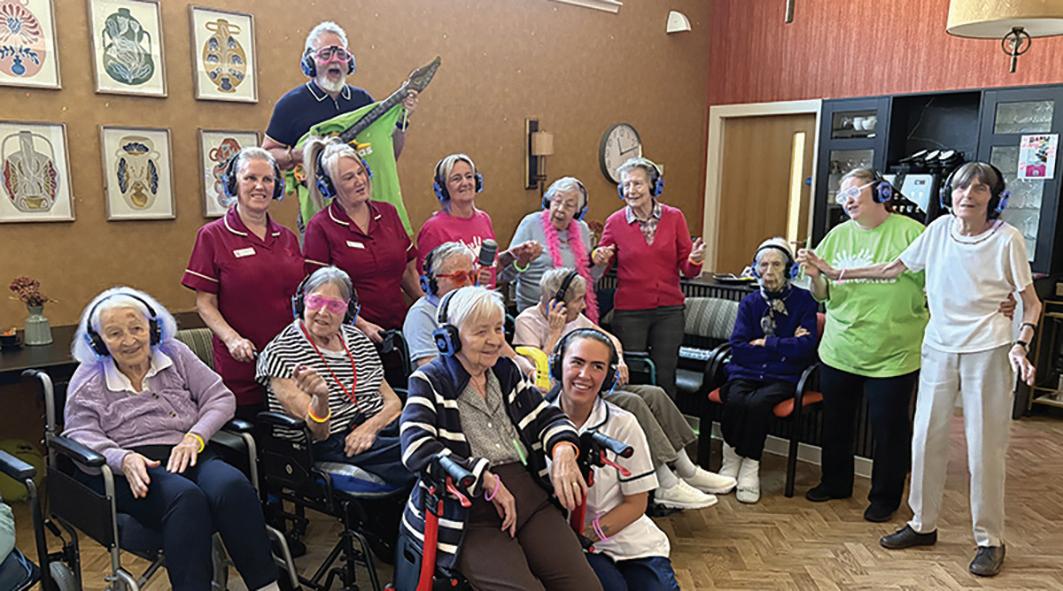
As this year’s Cash for Kids Day centred on The World’s Biggest Music Quiz, an official GUINNESS WORLD RECORDS™ bid for the largest online quiz ever held, residents and colleagues joined in the quiz in the afternoon, while enjoying special themed activities throughout the day.
Every pound raised by Cash for Kids stays local, funding practical grants for community groups, schools and families who need it most. All funds raised from this event will go towards supporting local children who may be at risk over the long summer break, helping to provide meals and safe, engaging activities
when they need it most.
Paula Ritchie, Care Home Manager at Kelvinside Manor Care Home said: “We’re regular supporters of Cash for Kids as it’s such a worthy cause with every penny raised going directly to children who need it most in our local area. Earlier this year some of our residents went along to present the team with a cheque following a Christmas fundraiser – and to give a wave to lovely George while the breakfast show was live on air!
“So, when we heard about the activity day and the world record attempt, we just had to get involved. It was a fantastic day with plenty of singing and dancing – we couldn’t be prouder of everyone who took part.”
Ciara Robertson, Charity Manager at Cash for Kids said: “We are so grateful to Meallmore for their continued support, throughout Mission Christmas and now for our Cash for Kids Day campaign. Six care homes across the West of Scotland took part in fundraising activities, including a silent disco at Kelvinside Manor which we were proud to visit.
“This kind of fundraising is so valuable to us, and with every pound raised local staying local, Meallmore is helping to fight child poverty within their own communities. This funding will go directly to supporting disadvantaged children to receive food and activities during the Summer Holidays, which they otherwise would not have access to.”
Two residents have celebrated milestone birthdays at Royal Star & Garter.
WWII veteran Joyce Greathead marked her 105th birthday at the charity’s Surbiton Home on Wednesday 6 May, and the following day (7 May) Barbara Bale turned 100 in Solihull.
Both spent their special days with family and friends at the Homes.
Royal Star & Garter is a charity which provides loving, compassionate care and support to veterans and their families living with disability or dementia, from Homes in Solihull, Surbiton, High Wycombe and Worthing. It also has services reaching out into the community, including Lunch Club, Day Care and national Telephone Friendship Service.
Joyce was born in London in 1921 and at the age of 21 joined the Women’s Auxiliary Air Force (WAAF), where she trained as a Wireless Operator. She served for three years until 1946 at bases including RAF Westcott and Hinton-in-the-Hedges. Now a great-grandmother, she recalls: “I was sometimes stationed in the Tower Control where the operator kept in touch with the pilots while they were training – they were learning how to map-read and fly across the country. At other times I was working in wireless headquarters.”
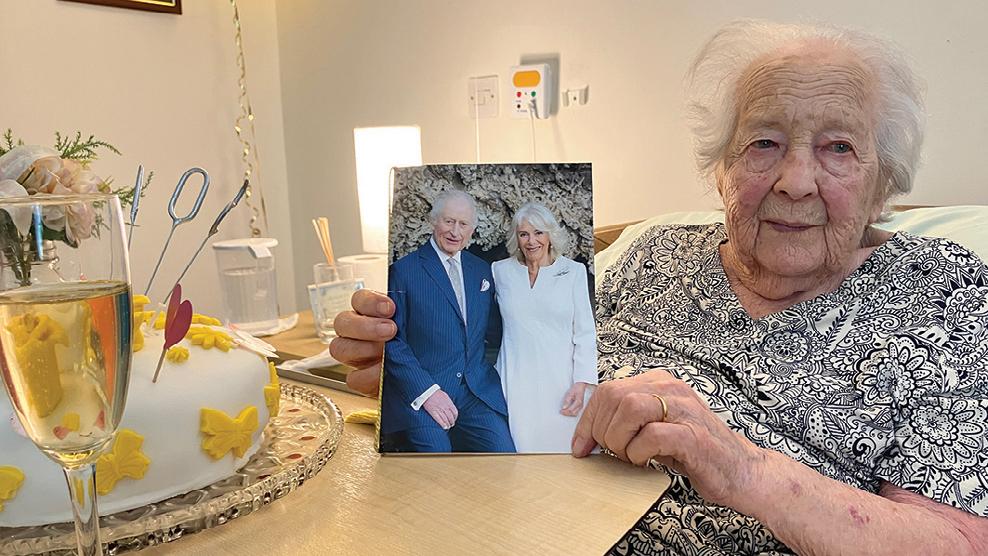
Joyce demobbed in 1946 and worked in a bank. It was there that she met John, and the couple married in 1952. She moved to Royal Star & Garter in 2025.
She spent her birthday with family and friends, including her son Richard and daughter Jill, at the Home.
In Solihull, Barbara was treated to a live concert and tea party with cake, arranged by staff at the Home. Among the guests were Barbara’s family and close friends, RAF and Army Nurses and Healthcare Assistants from the Royal Centre for Defence Medicine (RCDM) at Queen Elizabeth Hospital and Solihull Mayor Annette Mackenzie.
Barbara was born in Yardley, Birmingham in 1926, and was 13 when war broke out. She recalls on one occasion the windows of her home being shattered during a German air raid while the family sought safety in an Anderson shelter in the rear garden.
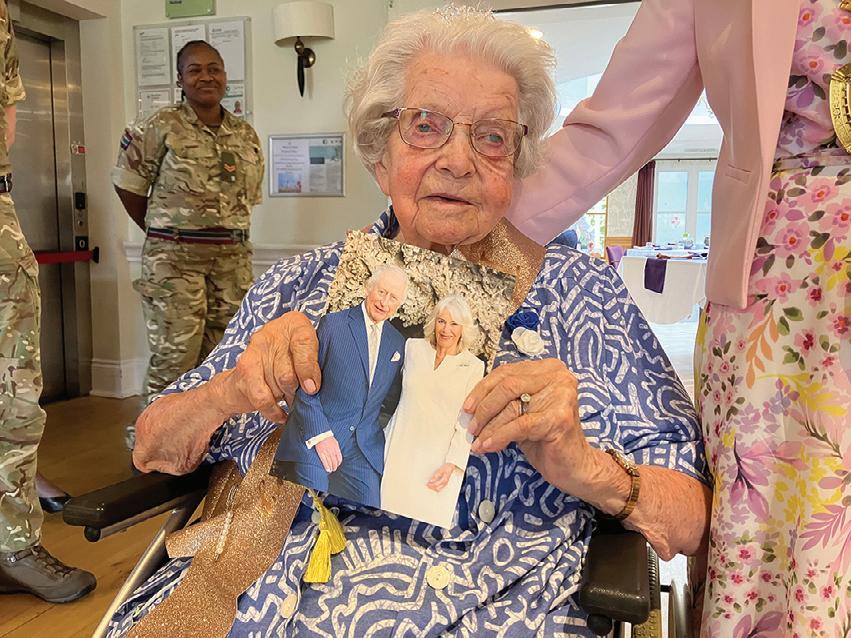
During WWII, Barbara had met Bill, who was a pilot in the Royal Navy Fleet Air Arm, and the couple married in 1950. Sadly, Bill, who was a teacher at Solihull School, died suddenly in 1969 while on a trip with pupils to Naples.
Later in life, Barbara spent a lot of time volunteering - at the visitors’ shop at the National Trust’s Packwood House and at the Age Concern shop in Solihull. She also volunteered with Meals on Wheels and at nursing homes.
Barbara first came to Royal Star & Garter as a Day Care guest before becoming a long-term resident in 2020.
Armed Forces Nurses and Healthcare Assistants from the RCDM are
A talented pastry chef who swapped working at a Michelin starred restaurants for a care organisation has been serving up musical treats to the residents.
Dave Quinn, who has worked at some of Europe’s best known eateries, creates delightful desserts for residents at Pendine Park in Wrexham.
And he has also been sharing his lifelong passion for Irish music with live performances there.
The dad-of-two’s love of music began in childhood in County Meath where he would accompany his singer father Peter during pub sessions.
Now Dave, 56, entertains residents with traditional Celtic music played on a wide range of instruments including banjo, mandolin, flute, tin whistle and the notoriously difficult Uilleann pipes.
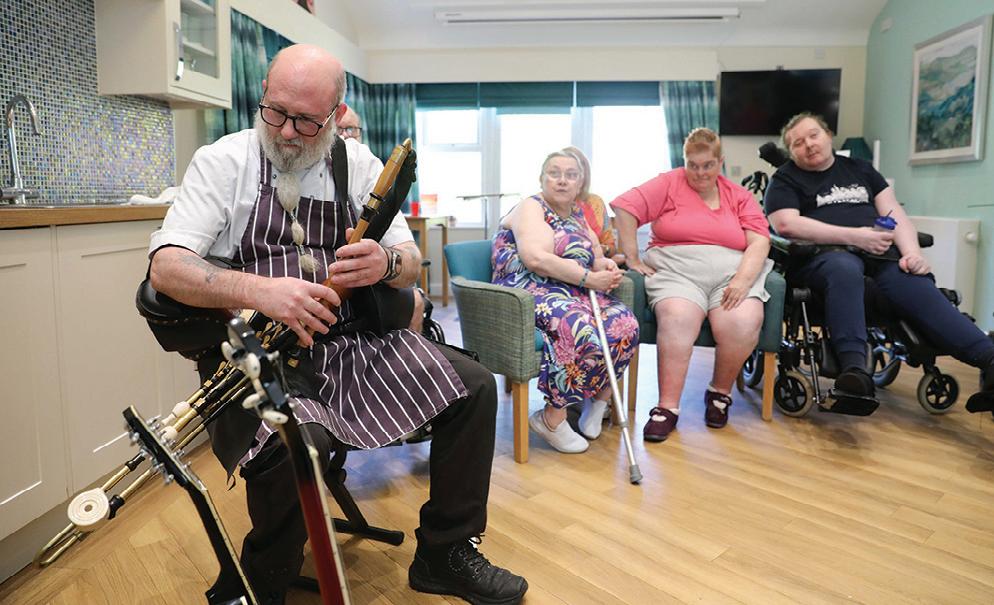
His performances at Pendine Park’s care homes are part of the organisation’s innovative enrichment programme, using music and art to bring enjoyment and enrichment to the lives of all the residents within the group.
Dave joined Pendine Park three years ago having worked in illustrious venues including as head pastry chef at the famous K Club hotel and golf resort in County Kildare, as well as the former Michelin-starred Oak Room in London’s Piccadilly, The Chester Grosvenor and Carden Park Hotel in Cheshire.
He said: “When I was seven, I got guitar lessons, and when I was nine I got my first tin whistle, I still have it.
“I am self-taught on the banjo and the flutes and I also play the fiddle, but very badly.
“I used to play the drums and various traditional Irish instruments like the bodhran, and I play bass guitar and the keyboards to a degree.”
As he got older, Dave would accompany his father to sessions in pubs.
He said: “Generally, after a few drinks, my dad would get up and sing and I would play along with him.
“Then like other boys at the time I discovered electric guitars and there was an Irish rock band called Horslips, a 70s rock band, that I liked.
“I then became a chef and trained in Dublin and I kind of put the music aside for the simple reason that I was then working in London at Michelin-starred places, five star hotels.”
He then worked as a chef in Belgium and on a Cunard cruise ship where he met his wife Jayne, a hairdresser from Wrexham, and the couple moved to the city.
Dave, who only plays for his own enjoyment and doesn’t play in a band or at sessions in pubs, added the Uilleann pipes are hugely challenging to master.
He said: “The Uilleann pipes really are difficult to learn, and a lot of it is self-taught.
“The best way to describe it is like wrestling two greased-up pigs while you’re trying to crochet.
“When I was very young I saw a guy called Johnny Murray play the Uilleann pipes, that was the first time I saw them and I was always interested in them.
“I got my first set in 2018, and they are savage to learn.
“They say it takes 21 years to become a fully-fledged piper, and I have been doing it on and off for the last eight years.
“The only way to learn is to practice, by doing it.
“Even the instrument itself is difficult to get a hold of.
“You can buy cheap ones online, but if you want to go through the proper channels and get a set from proper master craftsmen, you have to be prepared to wait for them.
“Mine are from Northern Ireland, you can wait for about two years just to get pieces made for your pipes, they are not something that are made and are hanging around.
“It is a process that takes time and master craftsmen don’t rush their craft.”
And he revealed his preferred taste in music was a lot heavier than the mystical sounds of traditional Irish airs.
He said: “I am actually a huge Ozzy Osbourne and Black Sabbath fan, and I am also a Thin Lizzy fan.
“In the 80s I also discovered Iron Maiden and Motorhead, and just recently a trash metal band called Slayer reformed, and for me they are just phenomenal.”
Group catering manager Christine Tracey said it was a delight to have Dave entertaining the residents and sharing his passion for music.
She said: “Dave is just brilliant at music, he has a real talent and can play so many instruments.
“He will go out for his lunch and he will be in his camper van which he drives to work and he will be in there strumming away or blowing on his flute and whistles.
“Dave’s performances are part of our enrichment programme here at Pendine Park.
“Twice a month one of the chefs will go out and do a demonstration of cooking to the residents.
“When it was Dave’s turn, he said ‘do you mind if I do my music’.
“I said ‘I’m sure they will love it’ and they did, it went down a storm.
“He spoke about the music and the instruments and then played them.
“The enrichment programme is so important to us here, it enlightens everything, and the residents love the music and everything we put on.
“We incorporate new menu ideas in our cooking demonstrations.
“When we create new dishes, the residents have a taster day and we get the feedback from them on what they think.”
Pen-y-Bryn resident Lynn Kelly said she loved hearing about Dave’s passion for the music of his homeland and enjoyed the performances.
She said: “It was very good, I enjoyed every minute.
“It is lovely to have a chef here who can also play music so well.
“I like all sorts of music, it is lovely to hear it played live.”
A specialist day service in Basford, Nottingham, welcomed the Sheriff of Nottingham, Councillor Zafran Khan, to officially open its brand-new sensory room designed to enhance wellbeing, development and meaningful engagement for people with complex needs.
The Ark, part of Salutem Care and Education, has invested in a purpose-built sensory environment tailored to the individual needs of the people it supports. The Ark supports children and younger adults with learning disabilities, autistic people, and individuals with physical or sensory needs.
The new sensory room features an interactive infinity mirror, liquid floor tiles, an LED projector, rainbow wall mirrors, a honeycomb tactile panel, rainbow vibrating bumpers, a mounted bubble tube and a laser star projector. A cosy beanbag seating area allows individuals to relax and fully immerse themselves in the calming lights and effects.
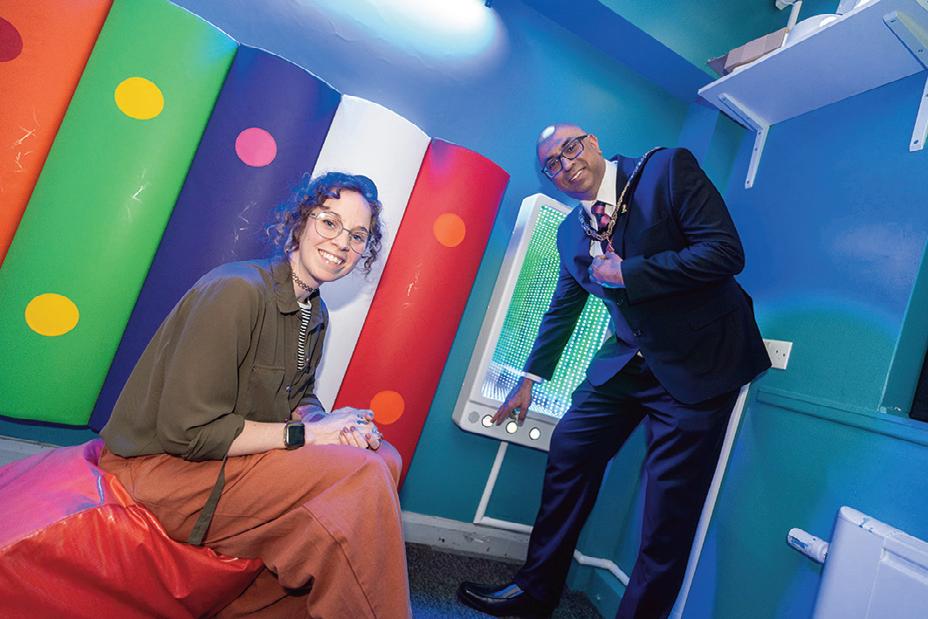
The equipment has been carefully selected to suit the sensory needs of the people supported at The Ark, many of whom live with complex physical and intellectual disabilities, as well as sensory processing disorders. Installation was carried out by a specialist company with expertise
in creating therapeutic sensory environments.
The new facility is expected to deliver a wide range of benefits, from stress reduction and emotional regulation to improvements in coordination, fine motor skills, cognitive development and sensory integration. As well as enhancing therapeutic outcomes, the room provides a welcoming and stimulating space that reflects the high-quality, specialist service delivered at The Ark.
Grace Radford, service manager at The Ark, said: “We are absolutely delighted to open our new sensory room. Every piece of equipment has been thoughtfully chosen to meet the individual sensory needs of the people we support. For many of them, sensory experiences are an essential part of how they explore, understand and interact with the world around them.
“This space not only gives our service a real lift in terms of environment and expectations, but more importantly, it enables the people we support to enjoy new forms of sensory stimulation in a safe, engaging and therapeutic way. Whether it’s relaxation, developing coordination or simply experiencing joy through light and movement, this room will make a meaningful difference to daily life at The Ark.”
A Saltburn care home has been “Highly Commended” in a global intergenerational competition after a multicultural activity with school pupils.
Hazelgrove Court Care Home, on Randolph Street, received the accolade from charity National Activity Providers Association (NAPA) for their generation bridging initiative.
Elderly residents teamed up with secondary pupils from Huntcliff School, on Marske Mill Lane, for a series of country-inspired activities, from tongue twisters to party games.
First, the groups were challenged to pronounce the Welsh village of Llanfairpwllgwyngyllgogerychwyrndrobwllllantysiliogogogoch (also known in a short form as Llanfairpwllgwyngyll or Llanfair PG). Then pupils demonstrated their language skills, saying tongue twisters they had been learning in German and Spanish classes at school.
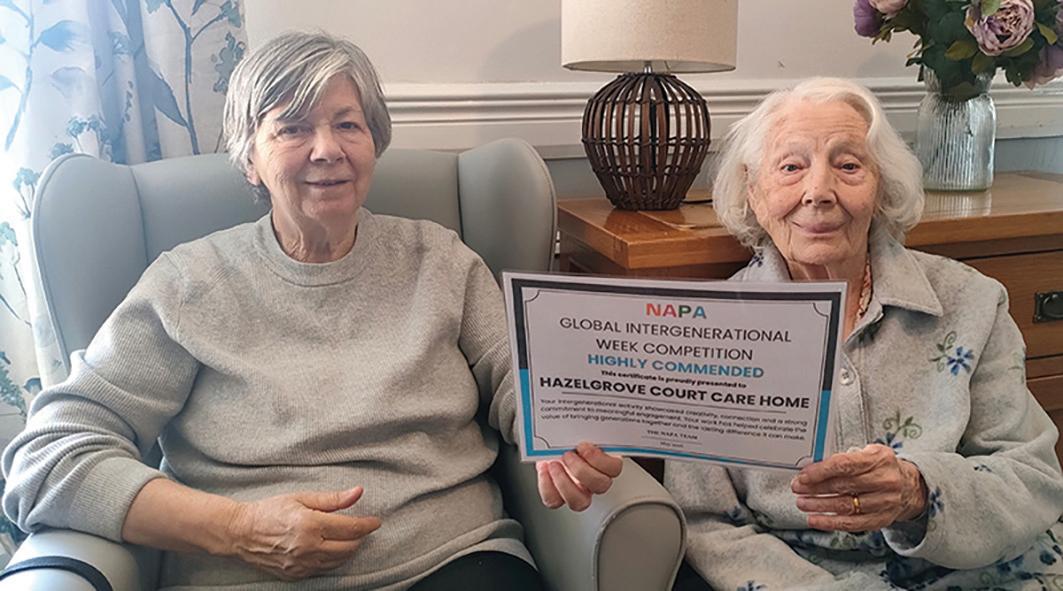
Afterwards it was residents versus pupils in a multicultural quiz, with the school team winning by a small margin. Then a Mardis Gras party game was won by resident Joan Johnson, 93. Fellow resident and globetrotter Anne Thompson, 88, demonstrated her mastery of chopsticks during a
game of pick up the marshmallows and showed pupils a map of all the countries she has visited during her lifetime.
Resident Ellen Else, 95, a former headmistress, said: “How wonderful it is to have the children in. It always brings back wonderful memories.”
NAPA’s Global Intergernational Week Competition challenged their care sector members to run activities that connect the younger and older generations.
Taking on that challenge at Hazelgrove Court Care Home was activities coordinator Sharon Lewis, who devised the multicultural activities for residents to participate in with the school pupils.
She said: “NAPA challenged us to run an activity that connects people of different ages, so we immediately thought of the pupils at nearby Huntcliff School, who were only too happy to visit.
“We were delighted to get a “Highly Commended” certificate from NAPA for our activities, which everyone who took part thoroughly enjoyed.
“It was great to hear the residents and children laugh together throughout the day – especially when trying to saying the Welsh village name.”
The National Association of Care Catering (NACC) was invited by His Majesty The King to attend the first Buckingham Palace Garden Party of the year in recognition of its voluntary services supporting older people in care.
Representing the Association at the prestigious royal occasion were Andy Cullum, NACC Midlands Deputy Chair; Sophie Murray, NACC Training Academy Officer; Joyce Frankish, NACC Scottish Deputy; and NACC National Chairman, Neel Radia.
As part of the celebrations, the group was invited to enjoy a unique experience in the Royal Tea Tent, joining fewer than 100 guests from charitable organisations for tea, cake and conversation with Their Majesties The King and Queen, as well as other members of the Royal Family including Princess Anne, Prince Edward and the Duchess of Edinburgh.
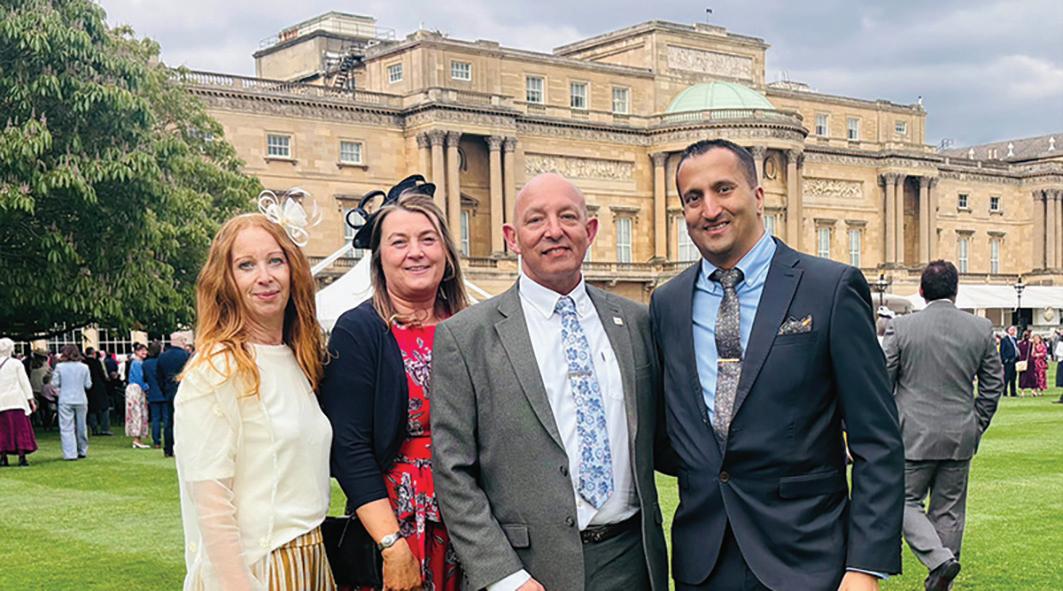
Neel Radia, NACC National Chairman, said: “We were very honoured to have been given the opportunity to speak and enjoy tea directly with Their Majesties. We spoke about the progress the Association is making towards raising standards in care catering, and the importance of good
nutrition and hydration. It has been incredible for the NACC to be recognised again this year by Their Majesties for the work our members do for those in our care.”
Reflecting on the occasion, Sophie Murray, NACC Training Academy Officer, commented: “This was a memory to last a lifetime. I felt honoured, proud and utterly exhilarated to stand in the grounds of Buckingham Palace chatting to our King and Queen in the Royal Tent, surrounded by other volunteers being thanked for their contributions. I am so grateful and will never forget today or why I volunteer.”
Andy Cullum, NACC Midlands Deputy Chair, added: “It was wonderful and a privilege to be invited to the Palace. The King and Queen were amazing, and being welcomed into the Royal Tea Tent was an overwhelming and truly special experience. Being a member of the NACC is both a privilege and an honour, and I am proud to represent the Midlands and the important work we do. Thank you to the NACC for nominating me to attend this event.”
A Midlands-based care provider has continued its expansion with the opening of a new 72-bed care home in Shirley, strengthening its presence across the region and adding much-needed capacity for specialist elderly care.
Heathview Rose, part of the Macc Care Group, will provide residential, nursing, dementia and respite care within a purpose-built, state-of-the-art environment. The opening marks Macc Care’s 18th home, with a further site in Codsall set to launch later this year as part of its ongoing growth strategy.
The new service has been designed to meet increasing demand for high-quality, person-centred care in the West Midlands, offering en-suite accommodation alongside a range of communal and therapeutic spaces to support residents with varying and complex needs.
The launch forms part of a sustained period of growth for Macc

Care, which has expanded its portfolio significantly in recent years while continuing to invest in workforce development, clinical outcomes and operational infrastructure.
Bhav Amlani, Director at Macc Care, said: “Heathview Rose represents another important milestone in our growth as a provider. As demand for high-quality care continues to rise, it is vital that we continue to invest in new services that not only increase capacity, but also deliver the standards of care that individuals and families expect. Our focus remains on sustainable growth – ensuring that each new home reflects our commitment to person-centred care, strong clinical governance and a supported workforce.”
To mark the opening, the group will host an open day on Friday 15th May, providing local stakeholders and community members with the opportunity to tour the home and meet the team.
Priory chief executive Rebekah Cresswell has welcomed Care England’s new report, ‘The Power of Care: The system behind our society’, which calls for a fundamental shift in how adult social care is understood, funded and supported.
It states adult social care must be viewed as “essential national infrastructure” and not as a “peripheral or residual service” associated only with crisis, decline or a small section of the population.
Cresswell – who is a founder member of Care England’s Working Age Adult Policy Board, which aims to ensure the needs of working-age adults in social care settings remain a priority at the highest levels of decision-making – attended the report’s launch in Parliament on Thursday (7 May).
“This report is essential reading and the case is clear and compelling,” she said. “Adult social care is fiercely proud of the services it delivers. It is not here just to underpin healthcare services, but is a vibrant contributor to this nation in its own right. It bolsters our economy, our communities, our workforce and our societal wellbeing.”
The report positions social care as an essential enabler of independence, prevention and economic productivity rather than simply a cost pressure – adding it is an “economic powerhouse”, with the sector contributing £78 billion a year to the UK. It outlines how underinvestment in social care creates significantly greater costs
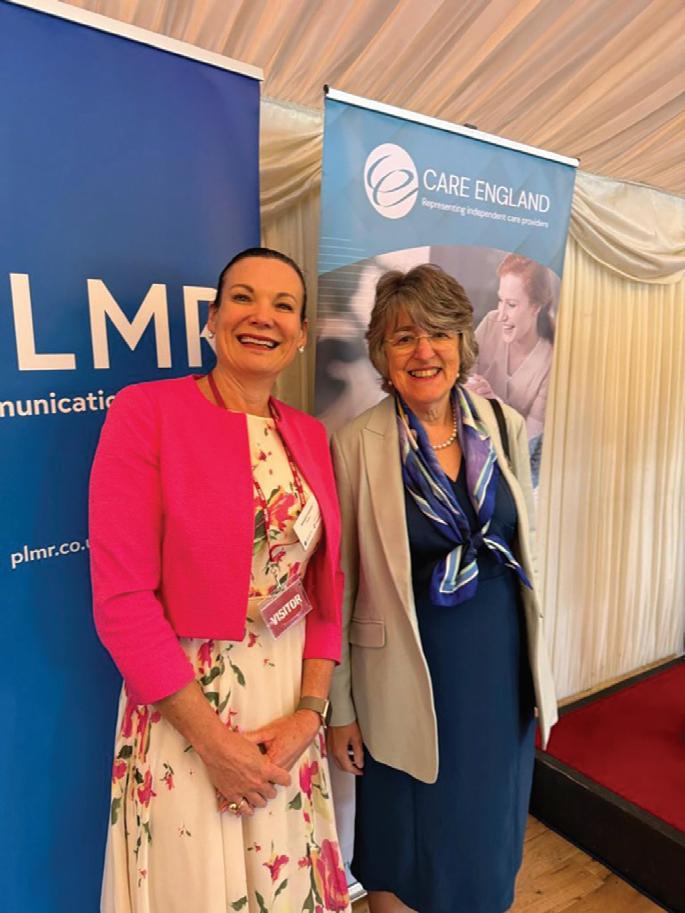
elsewhere in the system – particularly for hospitals, emergency care and local government.
Cresswell said: “At Priory, we see every day how important working-age adult social care services are to the people we support, to their families and loved ones, and to the wider communities they serve.
“It is our privilege to support people to remain independent, to live their lives, to achieve dreams they never thought they would and to thrive.”
Cresswell added: “As this report explains, social care needs to be viewed as fundamental to our British infrastructure and valued for the millions of people it cares for, supports and employs. My years in social care have been some of the most fulfilling of my life.”
Professor Martin Green OBE, Chief Executive of Care England, who presented the report alongside Baroness Finlay of Llandaff, said: “Social care is about living, not just surviving. It gives people confidence, dignity, independence and connection. It allows families to be families, workers to remain in work, and communities to stay resilient.
“If we are serious about building a healthier, fairer and more productive country, we must be serious about social care. That means moving beyond short-term fixes and recognising the sector for what it is, the system behind our society.”
Nature-based group activities held just once a week over nine weeks can significantly reduce loneliness among care home residents — while also improving their sleep, memory and sense of connection to the natural world, new research has found.
The study, which centred on outdoor excursions and regular contact with nature, harnessed the combined power of peer support and structured activity to boost residents’ wellbeing and health. Its authors say the findings point to a pressing need for older adults in residential and nursing care to spend more time outside.
“Group activities once a week over just a nine-week period can already reduce loneliness in research subjects and improve their sleep and memory, as well as their sense of connection to nature,” said Professor Kaisu Pitkälä, Director of the Department of General Practice and Primary Health Care at the University of Helsinki. “Our study also highlighted the need for older adults in care homes to visit outdoor environments and nature more often.”
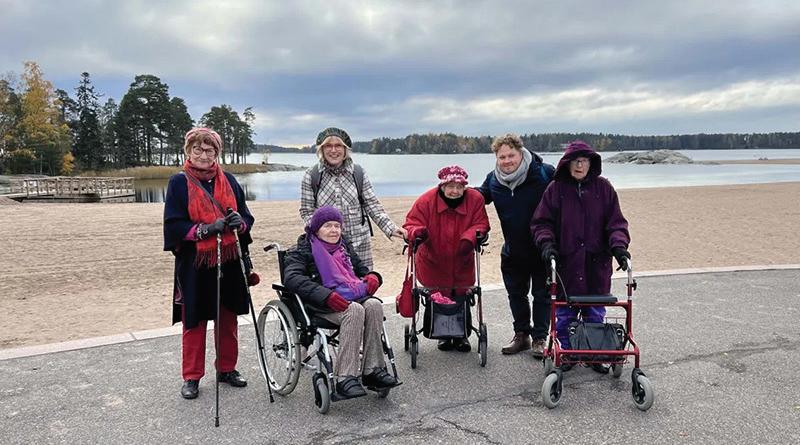
Credit: Recetas-project
The researchers were surprised by the good results despite that the subjects had multiple diseases and that the conditions for nature-based activities were sometimes challenging, in terms of both weather and transport, as all subjects travelled to the excursions in wheelchairs and by accessible taxis. According to Pitkälä, activities over a longer duration would only have bolstered the outcome.
The researchers trained 52 group instructors in Helsinki-based care homes, which have subsequently disseminated the naturebased practices.
“Frail older adults have a great deal of resources, and by boosting those we support their wellbeing and health. More than half of care home residents experience loneliness, a risk factor comparable with tobacco and obesity for health and memory. Loneliness is not something you can see on the outside, you have to ask older adults about it,” Pitkälä notes.
The Circle of Friends scheme of the Finnish Association for the Welfare of Older People has attracted over 13,000 adults to group activities in more than 100 municipalities. After official activities have ended, 65% of the groups have continued independently.
“The study is an important step in drugless therapies, relatively few studies on which have been conducted in frail older adults with impaired memory who are in 24-hour care,” Pitkälä sums up.
The study involved 319 older adults living in care homes who experienced loneliness, with an average age of 83 years. A little over half of the participants had memory disorders. They were randomised into two groups, one of which took part in the nature-based group activities.
A chaplain at a Southampton home has launched a pub club aimed at both male and female residents.
David Featch works as a chaplain at MHA Hampton Lodge and started a pub club after having a conversation with a resident, who expressed a desire in waiting to go for a pint at a pub.
The pub club usually takes place every Wednesday, however David found himself making two trips recently due to the demand of the club.
Speaking of the club David said: “The pub club started off with just one resident who expressed a desire to go out in the community and spend time socialising in a pub.
“This then turned into a weekly trip to different pubs in Southampton and included five different residents.
“The club started around a month ago and it’s something that I can see becoming very popular with our residents at MHA Hampton Lodge.
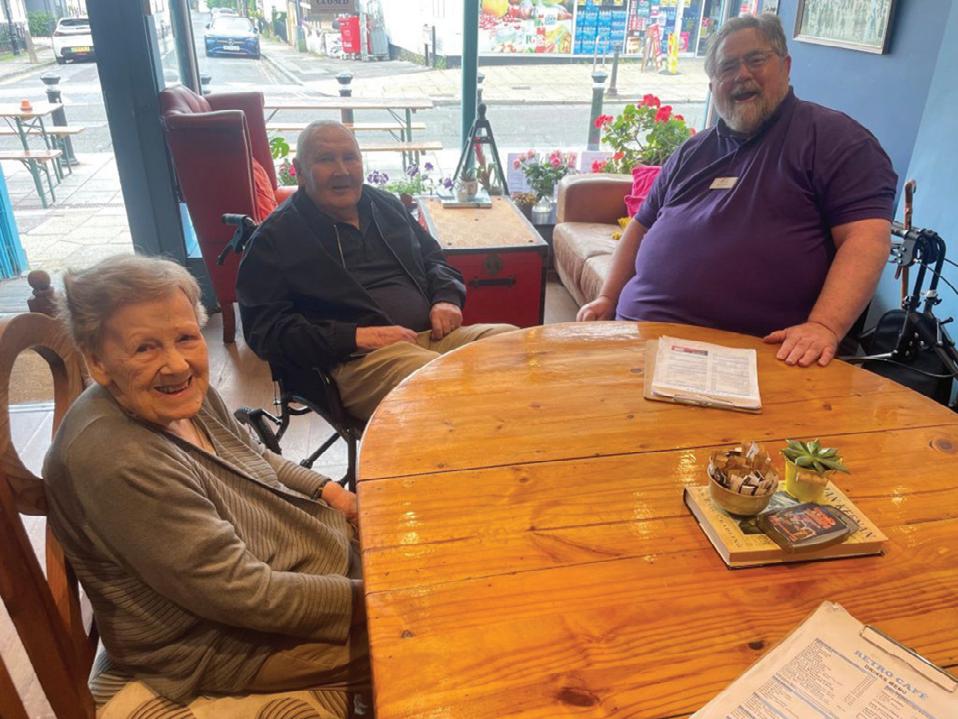
“It continues to grow and is one of my biggest achievements and something I’m very proud of.
“The club gives residents the chance to have a drink with people from the community and an opportunity to feel a part of a group outside the care home.
“Last Friday I went to two different pubs as the demand was so high and I will continue to support anyone that wants to come with me for a drink
“The aim of the club is for our residents to feel inclusive, part of the community and to give them the opportunity to explore the area.
“We spend around an hour at the pub before making the journey back to the home, which is around a 5-to-10-minute walk.
“I wanted to make sure it was available to all our residents, and I feel that decision will go a long way in making the club gain more numbers.”
Next week, Monday 18th May – Friday 24th May, marks Dementia Action Week. This year, Brunelcare, a leading providing of dementia care and support across the South West, is getting more involved than ever.
Following the success of last year’s programme of events, the charity is once again hosting a series of activities, presentations and Q&A sessions throughout the week, offering insight into how Brunelcare supports people living with dementia and their families across the charity’s six care homes.
Dementia Action Week is a national awareness campaign led by the Alzheimer’s Society. Each year, the campaign brings together individuals and organisations across the UK to encourage people to take action on dementia.
Throughout the week, Brunelcare colleagues will lead a range of free sessions for family, friends and the wider community to attend. Activities include singing sessions cream tea afternoons, Namaste sessions, a dementia walk, pebble painting, introduction to Dementia sessions, gardening activities, a Dementia Coffee Morning and the opportunity to experience the Empathy Suit, designed to help people better understand what it can feel like to live with conditions such as dementia. Sessions will take place across Brunelcare’s six care homes and reablement centre.
Brunelcare’s Dementia Lead, Stuart Wright said: “After the success of last year, we are delighted to once again be opening our doors and welcoming people into our homes during Dementia Action Week. Raising awareness and understanding of dementia is incredibly important, as it is still a condition that is often misunderstood. While many people associate dementia purely with memory loss, it can also affect a person’s communication, behaviour, emotions, confidence and ability to carry out everyday tasks.
“By helping people better understand the realities of living with dementia, we can create communities
and environments that are more empathetic, supportive and inclusive. It is also an opportunity to shine a light on the compassion, skill and dedication shown by care teams every single day in supporting people to live fulfilling lives with dignity and independence.
“We are really looking forward to this year’s sessions and activities, and we hope to welcome lots of new faces alongside families and friends who joined us last year.”
Brunelcare launched FITS into Practice (Focused Intervention Training and Support forum) four years ago, a training programme designed to equip care home staff with the knowledge and skills needed to deliver person-centred care to people living with dementia, particularly those experiencing distress or behaviours that may negatively impact their wellbeing.
The charity’s FITS leaders have also delivered presentations and shared new initiatives at the annual Dementia Congress, helping to showcase Brunelcare’s ongoing commitment to improving dementia care and support.
A key outcome of the programme has been the development of Dementia Coaches within Brunelcare’s care homes. These specially trained staff members act as champions for high-quality dementia care, supporting colleagues, modelling best practice and embedding person-centred approaches into everyday care routines. Dementia Coaches also work to reduce the use of antipsychotic medications by promoting alternative approaches to supporting people experiencing distress.
By investing in Dementia Coaches, implementing FITS into Practice and delivering activities during Dementia Action Week, Brunelcare continues to create supportive and compassionate environments for the people it cares for, while also increasing knowledge, confidence and understanding among colleagues, families and local communities.
Keymer Hall, part of Boutique Care Homes, has been awarded Highly Commended in the NAPA Global Intergenerational Week Competition 2026, a national recognition of outstanding intergenerational practice in care settings across the UK and beyond.
NAPA, the National Activity Providers Association and the leading professional body for activity and engagement in health and social care, praised Keymer Hall’s entry for showing “creativity, inclusion and the lasting value of intergenerational practice”, with the organisation noting that the home’s “commitment to meaningful engagement and bringing generations together has been wonderful to see.”
Intergenerational connection sits at the heart of how Keymer Hall approaches care. Since opening, the home has built relationships with a wide range of local community groups and young people: Brownies visit regularly to spend time and do activities with residents; a local pre-school has joined the home for events including the RSPB Big Garden Birdwatch and World Book Day; and Freddie, the home’s four-year-old ‘youth ambassador’, has been a regular presence since opening, delighting residents and the team in equal measure.
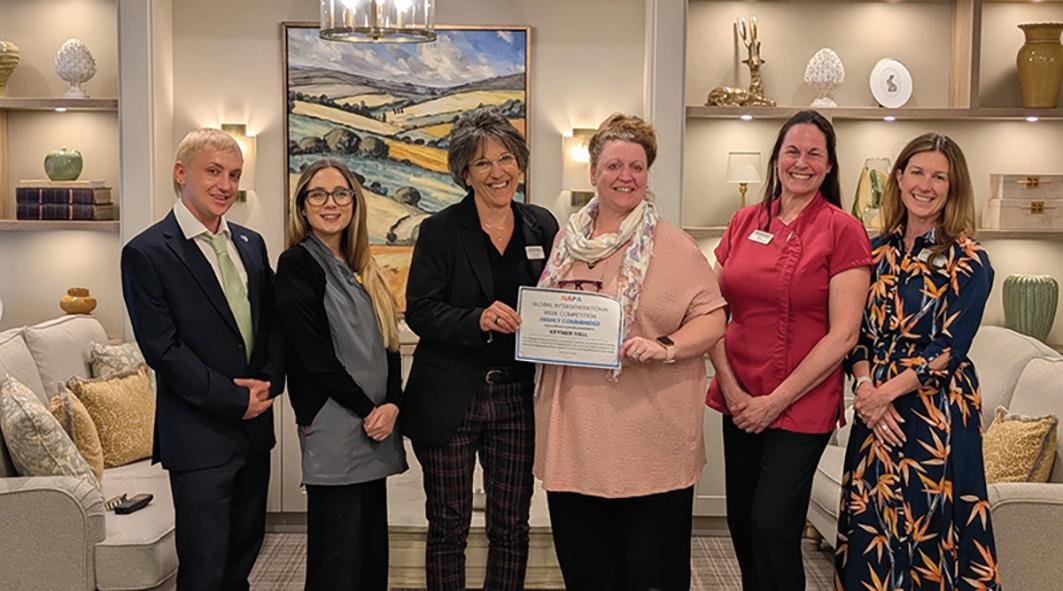
The home’s approach was brought to life most visibly through its ‘Spring Fling’ community event on 25th April 2026, which drew together residents, families and the wider Burgess Hill community. Local Scouts ran a free BBQ and entertainment ranged from a local girls’ school choir and classical soprano. Teenagers volunteered, a young aspiring entertainer made balloon animals, circus skills workshops ran in the garden
alongside baby and toddler music groups, and traditional stalls were run by local schools and pre-schools.
Dame Vera Lynn’s daughter officially opened the home, with Freddie by her side. Every penny raised went to Chailey Heritage Foundation, a charity supporting some of the most severely disabled children in the country, chosen by the residents themselves.
Christine Bunce, Home Manager at Keymer Hall, said: “I couldn’t be prouder of what this team has created. Bringing generations together isn’t a nice extra, it’s central to what great care looks like. When you see the genuine joy it brings, for residents, for the children and young people involved, and for our team, you understand why it matters so much. To have that recognised by NAPA, in our very first year, means a great deal to everyone here.”
Helen Lewis, Head of Lifestyle and Wellbeing at Keymer Hall, added:
“Since we opened in December, building intergenerational connections has been a real priority for us. The response from residents has been incredible, these connections bring a sense of life and energy that you simply can’t replicate any other way. We have so much more planned, and this recognition gives the whole team a real lift to keep going.”
Looking ahead, Keymer Hall has plans in place for an ongoing horticultural project with a local SEND college, a partnership with a ‘pay it forward’ charity supporting children with life-limiting illnesses, and a regular volunteering programme with a local Catholic school.
From tiny pre-schoolers to almost-adults, the home is committed to involving every generation.
A care home in Lincolnshire has struck a chord with its residents thanks to a surprise visit from the local biking community. Meadows Park care home in Louth welcomed a group of bikers to its grounds, after staff discovered that many residents either had a love of motorcycles, or fond memories of life on the road. Thanks to staff at the home who arranged the activity, residents were invited to get up close, sit on the motorcycles and chat with the bikers, sparking vivid memories and, in some cases, creating brand new ones.
For 92-year-old Mike Stones, the visit brought back motoring memories of his youth. He recalled riding his 1949 BSA 250 to and from his apprenticeship, as well as owning a 1950 Royal Enfield, both bought by his father. Mike said, “The familiar smells of the bikes instantly took me back.”
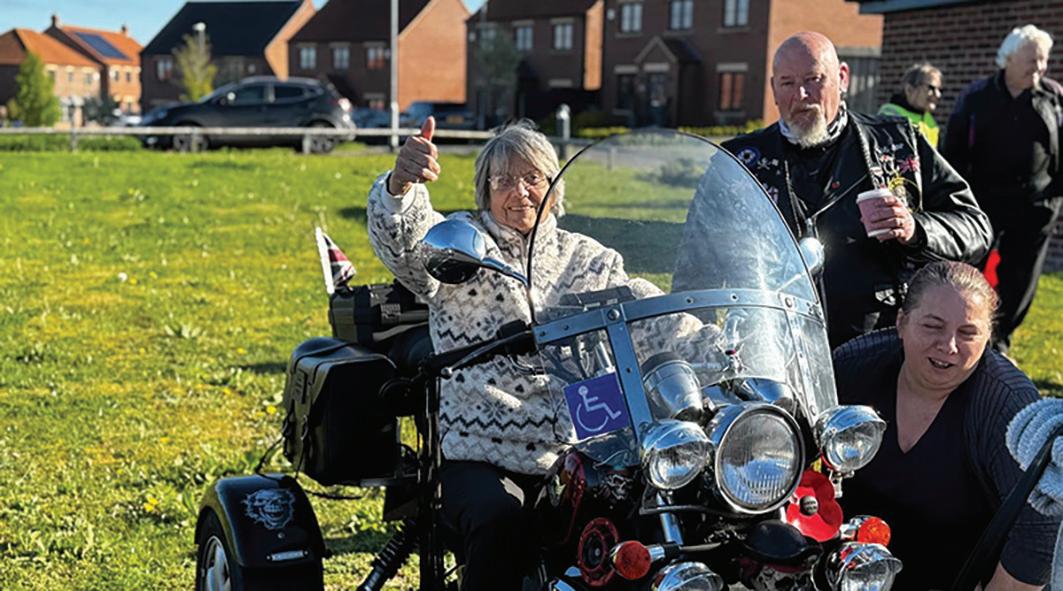
Whilst 78-year-old resident, June Parish had never sat on a bike before, that didn’t stop her, saying, “Come on, get on, let’s go!” 84-year-old, Hilda Bell, shared how her love story began on two wheels, with her boyfriend and later her husband who would regularly pick her up from work on his motorcycle. She remembered how they were
also regulars at Cadwell Park, where they spent weekends watching the races as devoted fans.
Being surrounded by bikes throughout her adult life, 81-year-old, Sue Smith said, “My very first boyfriend rode a Royal Enfield with drop handlebars.”
“Then I met my husband who was a lifelong fan of classic bikes. He would head out in a group of eight to Cadwell and Silverstone to watch the racing.”
91-year-old Iris Todd recalled travelling in her husband’s sidecar in the 1950s, making trips from Liverpool to Nottingham to visit family. Wearing a leather helmet, she laughed as she remembered feeling “very silly” at the time.
Commenting on the visit, home manager, Kelly Coulthard, said, “It was incredible to see the smiles on everyone’s faces. The energy was electric and really reflected the personality of our home and residents. The residents loved exploring the bikes, sitting on them and chatting with the bikers.
“It took many of them straight back to their younger years. There was so much laughter and joy throughout the day – it wouldn’t have been possible if it wasn’t for our fabulous team who arranged the event – it’s something we’ll all remember for a long time and definitely do again.
Care home provider, Oakland Care, has been honoured with a prestigious King’s Award for Enterprise in Sustainable Development, recognising its pioneering approach to environmental responsibility across its portfolio of homes in London and the South East.
Oakland Care has been recognised for its long-standing commitment to sustainability, with environmentally responsible practices embedded across all aspects of its operations, from energy use and waste reduction to sustainable building design and biodiversity initiatives.
In recent years, the provider has introduced a wide range of initiatives to reduce its environmental impact. This has included becoming the first and only UK care home group to achieve carbon neutral certification back in 2021, a status they have retained for six consecutive years, planting more than 1,500 trees annually, and contributing over 2,000 hours of team time each year to local sustainability projects as part of community programmes.
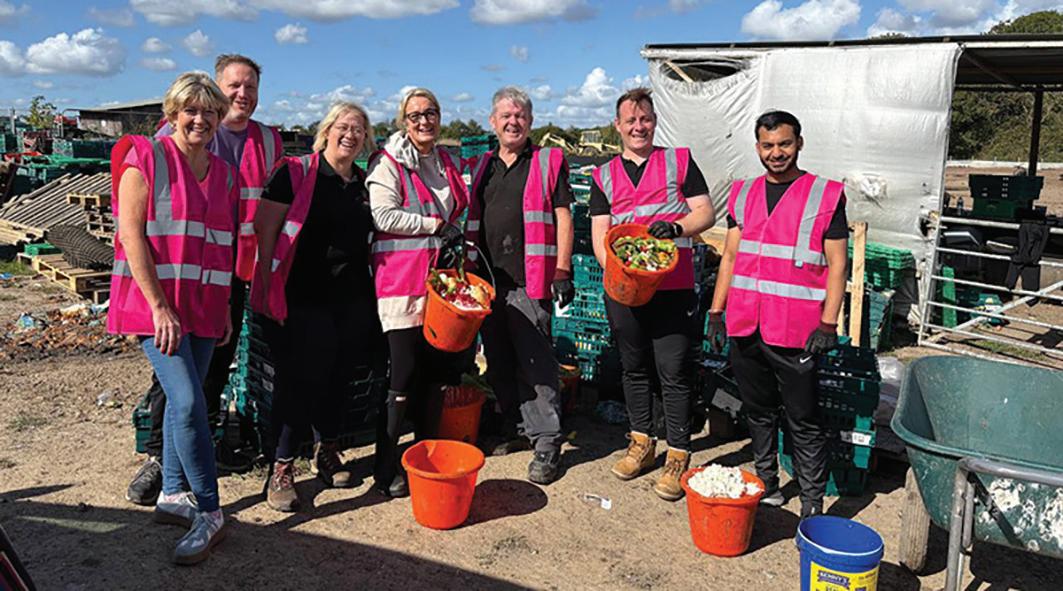
Together, these efforts form part of a wider comprehensive strategy focused on delivering measurable change across its care homes, while maintaining the highest standards of care for residents.
The award reflects the organisation’s continued investment in sustainable development, as well as its commitment to equipping team members with the knowledge and tools needed to drive environmentally responsible practices in their roles.
It also reinforces Oakland Care’s forward-thinking approach to sustainability and a clear ambition to set new standards for environmentally conscious care provision – with the recent opening of Harpenden Springs, the businesses ‘greenest’ development to date, and one of the UK’s most environmentally friendly care homes, evidence of this.
To mark this accomplishment, a representative from Oakland Care will attend a Royal reception at St James Palace later this year, where award recipients will be formally celebrated.
Joanne Balmer, Chief Executive Officer at Oakland Care, said:
“We are incredibly proud to receive the King’s Award for Enterprise in Sustainable Development. This recognition is a testament to the dedication of our teams, who work tirelessly to embed sustainable practices across our homes and have been wholly committed to supporting our bold ambitions in this space.
“Our approach has always been about more than meeting targets. It’s about creating a lasting, positive impact for our residents, our communities and the environment, while also serving as trailblazers within the industry, helping to inspire and support others on their journey.
“We will continue to invest in innovation and our people as we build on this achievement and further strengthen our commitment to sustainability across the organisation.”
Fourteen million people in the UK live with incontinence. For many in residential and nursing care, the consequences of inadequate support are severe — from infection and skin breakdown to isolation and loss of dignity. Yet as the Baroness Casey review gets under way, campaigners warn that continence care remains almost entirely absent from the national reform conversation.
Walk into almost any residential or nursing care home in England and you will find dedicated staff managing one of the most intimate — and most underfunded — aspects of personal care. Continence support, once dismissed as an awkward administrative footnote, is increasingly being recognised for what it truly is: a barometer of the entire social care system's commitment to dignity. The scale of the challenge is significant. Incontinence affects an estimated 14 million people across the UK, cutting across age, disability and long-term illness. As the population ages, demand for continence support is projected to rise sharply — placing further strain on a sector that is, by almost every measure, already struggling to keep pace.

frontline of indignity" and called on the review to place dignity at its heart, with explicit recognition that access to proper assessment, specialist support and appropriate products should be determined by individual need — not by postcode.
"People should not have their independence determined by a postcode lottery. Too many are denied appropriate continence support because of arbitrary caps and under-resourced services."
— Nik Hartley, Chief Executive, Spinal Injuries Association RATIONING BY BUDGET, NOT BY NEED
For care home managers and nursing staff, the consequences of inadequate continence support are depressingly familiar. Poor care in this area can cause urinary tract infections, serious skin breakdown and pressure damage, and profound emotional distress. Residents who lack reliable access to appropriate products may withdraw from communal activities, refuse visitors, or experience significant deterioration in their mental wellbeing.
Earlier this year, a coalition of health and disability charities — led by the Spinal Injuries Association and supported by organisations including Bladder and Bowel UK, Dementia Carers Count, Disabled Living, The Neurological Alliance, Pain UK and Shine — wrote to Baroness Casey of Blackstock as she began her independent review of adult social care. Their message was stark.
Joined by senior parliamentarians Dame Caroline Dinenage MP, Mohammad Yasin MP, Baroness Ritchie of Downpatrick and Baroness Grey-Thompson, the signatories argued that continence care remains one of the most neglected and taboo areas of adult social care — largely absent from national reform debates, despite its profound impact on health, independence and quality of life. They described it as a "hidden
A June 2025 survey of 500 healthcare professionals found that substandard incontinence products were actively delaying hospital discharges and contributing to avoidable admissions — a finding with direct implications for care homes managing complex transitions between hospital and residential settings.
An investigation by the i Paper further exposed the depth of the problem across NHS continuing care settings. Freedom of Information data revealed that more than half of the trusts questioned cap continence products at just three or four pads per day — regardless of individual clinical need. The investigation also found that nearly a third of trusts providing budget data had collectively overspent by more than £4 million, fuelling serious concern that financial pressure is driving rationing and leaving residents, families and care providers to absorb the shortfall themselves.
(CONTINUED ON FOLLOWING PAGE)
Incontinence is common in care and nursing homes, but the impact on dignity, comfort and skin health is deeply personal.
Levabo’s allDRY® range of reusable incontinence underwear is a Class I Medical device, designed to support residents and caregivers alike by combining discreet protection with a comfortable, everyday feel that looks like normal underwear, not a clinical product. allDRY® underwear provides reliable protection for men and women experiencing bladder leakage.

Who are Levabo?
Levabo are a Danish medical device company specialising in innovative, user-friendly solutions for continence care and pressure ulcer prevention. Our focus is on practical products that support dignity, comfort and safety, while fitting seamlessly into the realities of care and nursing home practice.
Designed for dignity
allDRY® aims to remove the stigma often associated with incontinence products. The underwear is soft, discreet and modern in appearance, helping residents feel more like themselves and less like patients. The garments combine advanced absorbent technology with breathable materials to help keep skin dry and comfortable throughout the day.
For many people, that small shift can make a big difference to confidence, engagement in daily activities and overall wellbeing.
Key benefits for residents:
3 Soft, underwear-like fit for everyday comfort
3 Breathable, skin-friendly materials
3 Secure 6-layer absorbency for protection and confidence
3 Discreet profile under clothing to support dignity
3 Natural odour control
Practical support for busy care teams
Care and nursing home staff need products that are easy to use, reliable and support efficient routines. allDRY® has been developed
with frontline care in mind, from dressing and toileting to night-time protection and manual handling.
Key benefits for staff and services:
3 Clear sizing and fit to simplify product selection
3 Easy to apply and remove, helping with time-pressured care routines
3 Reliable protection to support continence care plans and reduce unplanned linen changes
3 A versatile solution suitable for residents with different levels of dependency
3 Machine washable at 60 degrees Celsius
3 Tumble dry safe
3 Comfort and dignity focused
Supporting skin health and overall care
Continence care is closely linked to skin integrity, comfort and quality of life.
Prolonged exposure to urine and faeces can lead to incontinence-associated dermatitis (IAD), causing redness, pain, skin breakdown and an increased risk of infection. For residents, this can mean significant discomfort, distress and reduced mobility; for caregivers, it adds to workload, complexity of care and emotional strain when preventable skin damage occurs.
When protection is effective, secure and comfortable, there is less risk of leakage, moisture-related skin damage and associated distress for residents and carers. allDRY® is designed to:
3 Help keep skin drier for longer, supporting good skin care practices
3 Complement pressure area care and repositioning routines
3 Integrate smoothly into existing continence and care pathways
A flexible range for your residents
The allDRY® range offers options to suit different needs and levels of support, making it easier for homes to match the right product to the right person. This helps reduce waste, improve comfort and ensure residents receive care that feels truly individual. allDRY® is available in a range of briefs and boxers and different levels of absorbency. In addition to the underwear, there is an optional inlay which can be added to increase the absorbency by 50ml. This inlay is machine washable with the underwear.
To find out more about allDRY® incontinence underwear, or any of the Levabo product portfolio that could support your residents and care teams, request samples or discuss how the range could support your home:
Email: bm@levabo.com
Web: www.levabo.com


(CONTINUED FROM PREVIOUS PAGE)
THE FALSE ECONOMY OF CUTTING CORNERS
For care home operators under sustained financial pressure, there is a familiar temptation to manage continence care costs by selecting lower-cost products. Evidence increasingly suggests this approach is counterproductive. An NHS pilot scheme examining procurement decisions in formal care settings found that opting for cheaper continence products created a false economy: more frequent product changes increased demands on staff time, raised laundry and linen costs, and contributed to higher rates of skinrelated complications.
The pilot found that better-matched, higher-quality products significantly reduced leakage incidents, improved workflow efficiency for carers and ultimately lowered total care costs. It is a finding that should give pause to commissioners and care home owners alike: false savings in continence procurement can generate very real costs elsewhere in the care pathway. THE IMPACT ON FAMILIES — AND ON STAFF
Campaigners are also highlighting the ripple effects of inadequate continence provision on families. When formal care falls short, it is frequently relatives who step in — purchasing products out of their own pockets, making additional care visits, or taking on tasks that care home staff are unable to complete within existing resource constraints. This informal subsidy of an underfunded system rarely features in official cost assessments, but it is deeply felt by the thousands of families across the country navigating the care system.
For frontline care staff, the challenge is equally acute. Inadequate products mean more frequent changes, greater exposure to manual handling risks, increased time pressure and — critically — reduced capacity to deliver the person-centred care that good residential and nursing homes aspire to provide. Continence care is never a background task; it sits at the heart of the relationship between carer and resident.
"Continence care requires the recognition it deserves, which is long overdue. We need to drive evidencebased practice, putting the patient at the centre of their care."
— Tracy Whitehouse, Service Manager and Adult Specialist Nurse, Bladder and Bowel UK WHAT THE CASEY REVIEW MUST ADDRESS
The timing of the charities' intervention is significant. Baroness Casey's commission — commissioned by Prime Minister Keir Starmer and Health Secretary Wes Streeting — is expected to publish an initial report in 2026 setting out problems facing the sector and ideas for medium-term improvement, ahead of a final report in 2028. Critics, including Sir Andrew Dilnot who led a previous government review on care funding, have argued that waiting until 2028 for substantive recommendations is simply too long for people who need support now.
The coalition of charities has set out clear asks for the commission: explicit recognition of continence care as a core component of dignity in adult social care; recommendations that ensure consistent access to specialist assessment and support; and a commitment that product provision be determined by individual clinical need rather than local budget pressures or geographic lottery.
For care home providers, the message is both an external call to action and an internal prompt for reflection. Best practice in continence care is achievable — but it requires investment in training, in individualised assessment, and in product procurement that is driven by clinical outcome rather than unit cost. It also requires the sector to speak loudly and clearly to policymakers about the reality of what continence care involves and what it costs to get it right.
Adult social care reform has been promised, delayed and deferred across numerous governments and countless reviews. Baroness Casey herself has acknowledged that the system relies on what she has described as cobbled-together, underfunded services — with low-paid care workers bearing an outsized share of the burden, and a deep and damaging divide between health and social care persisting for decades.
Those working in residential and nursing care know that continence care is not a peripheral issue. It is, in many ways, the most honest test of whether a care setting truly upholds dignity. Getting it right requires proper products, properly trained staff and properly resourced services. Getting it wrong — as too many people's experience attests — can strip away independence, confidence and quality of life with alarming speed.
As Baroness Casey's commission begins to take evidence and build its case for reform, the care sector would do well to ensure that continence care — for so long a "hidden frontline" — is finally brought into the light.
Ontex Group a leading international developer and producer of personal care solutions, is launching a new adult incontinence range designed to deliver strong protection while caring for sensitive skin. The first products—Sensitive Pants, Sensitive Slip and Sensitive Form—will be introduced gradually to healthcare institutions across Europe.
New European research by Ontex, involving more than 2,500 people living with incontinence, shows that dermatitis and skin irritation remain common and have a real impact on daily life. Nearly half of respondents reported irritation in the intimate area. Yet “around 80%
of caregivers are not trained to recognize dermatitis. Education and better product design are key to preventing complications,” says Dr. Maria Panourgia, Geriatrician at Milton Keynes University Hospital (UK).
The Sensitive range was developed in direct response to these needs, combining trusted absorbency with dermatological care to help prevent irritation and support healthier skin.
To strengthen caregiver knowledge, the range is supported by expert guidance on recognizing, preventing and managing incontinence related dermatitis—available through Ontex’s nurse advisor
network and the online Ontex Academy.
Sensitive range: powerful protection that respects the skin
Sensitive Pants offer:
Topsheet enriched to help prevent irritation
• Hypoallergenic design for fragile skin
Odour control technology for lasting freshness and confidence
For more information please about ID please visit: www.id-direct.com/ukb2c/en/index.html


By Lisa Jones, Catering Manager at Park View Care Home, Gloucestershire
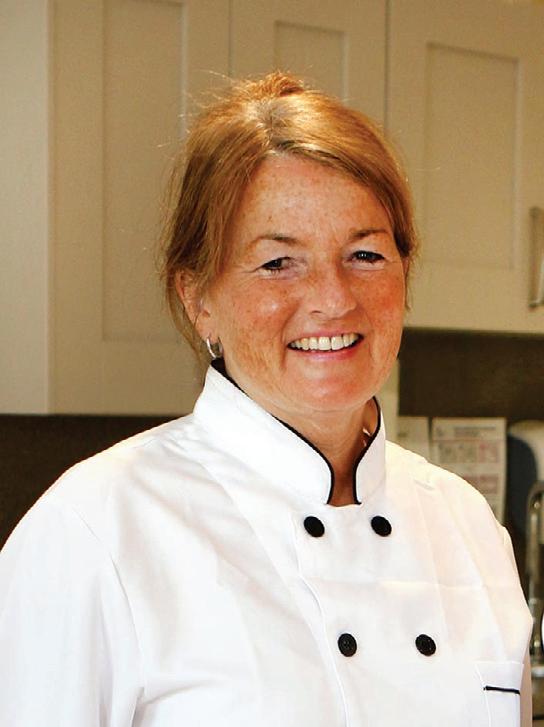
Imagine it is your 85th birthday. You are surrounded by family, the room is filled with song, and a cake is brought out. But because you live with dysphagia, a swallowing difficulty affecting individuals with moderate-to-severe dementia, your slice of cake arrives as a beige, featureless scoop of mush.
At Park View in Gloucester, we believe that a diagnosis of dementia should never mean the end of the joy of eating. As we mark Nutrition and Hydration Week, it is time for the care sector to move beyond the blender. Providing nutrition and hydration is a clinical necessity, but providing dignity is a culinary one.
My journey to the Park View kitchen wasn't a traditional path into care. I trained at Cheltenham Catering College and spent years in the high-pressure environments of pubs and restaurants across Wales, from Cardiff to Ross-on-Wye. Later, I spent 18 years at Unilever Foods as a Catering Manager, overseeing a 24/7 service for 1,500 staff, ranging from daily canteen service to high-end executive fine dining.
When I joined Park View in 2016, we had only a handful of residents. Today, we support a community of 90 residents and their families, and over 100 staff. My background taught me that whether you are cooking for a corporate executive or a resident with advanced dementia, the standard of presentation should not waver. In care, we aren't just feeding people; we are using our skills in food safety and texture science to protect their quality of life.
One of the greatest hurdles in dementia care is maintaining hydration. For someone with cognitive decline or reduced visual perception, a clear glass of water can appear "invisible" or confusing. Even orange squash can sometimes disappear into the background due to haze in a resident's vision.
We treat hydration as a fun, social activity rather than a medical box to tick. We set up hydration stations
Mobile Kitchens Ltd specialises in the hire or sale of temporary catering facilities and foodservice equipment.
Ideal for events or to provide temporary catering facilities during your kitchen refurbishment, our versatile units and equipment offer an efficient and economic solution to the caterers’ needs.
Production Kitchens, Preparation Kitchens, Ware-washing Units, Dry Store Units, Cold Rooms and Restaurant Units are available as individual units in their own right or they can be linked together on site to form a complete complex.
Alternatively, we can offer modular, open-plan facilities, usually for larger, longer-term hires.
We offer a free design service, and project management from concept through to delivery and installation on site, plus full technical support throughout the hire period.
throughout the building, offering vibrant and unusual juices, cranberry, pineapple and grapefruit. The bright colours also make the drinks visually accessible.
We also lean into "drinking foods." For residents who struggle to sit and drink a full glass, we serve melon and jelly drops, foods with exceptionally high water content that act as finger-food hydration. By offering variety, like milkshakes or fortified juices, we also tap into the fact that milk hydrates more effectively than water because it digests more slowly. It’s about meeting the resident where they are, whether that’s at a 10am mocktail hour or a 2pm "hydration moment."
For the 20 or so residents at Park View who require bite-sized or modified diets, the presentation is where science meets art. The old-school approach to pureed food, indistinguishable scoops of brown and green, is a thing of the past.
We use specialised moulds to ensure that pureed chicken and peas look exactly like the original dish. If we are serving pizza, hot dogs, or even a birthday cake, we puree and reshape them so the person can recognise what they are eating. I personally taste-test these foods daily. If a texture is too sticky or too firm, it isn't just a culinary failure; it’s a safety risk.
When plating bite-sized meals, we use gravy to support swallowing and decorative swirls to maintain an attractive presentation. The goal is that a visitor walking into our dining room shouldn't be able to easily distinguish who is on a modified diet and who isn't.
As motor skills decline, the frustration of struggling with a knife and fork can lead to residents skipping meals entirely. Finger foods can be a vital tool for independence. Because hands often provide more precise coordination than utensils and because they fall more easily into a resident’s narrowing peripheral vision, finger foods allow people to feed themselves.
As a resident's internal dementia clock shifts, their nutritional needs don't stop at 5pm. We ensure that nutritious options, from healthy sandwiches to satsumas, are available 24 hours a day.
Leading a team of 15 at Park View, I’ve seen how transformative a thoughtful dining experience can be. We have moved away from the idea that care home food is institutional. Nutrition and hydration are the foundations of health, but the joy of a meal is the foundation of a life well-lived.
The standard specification of our smallest Production Kitchen unit includes a six burner oven range, salamander grill, twin basket fryer, upright fridge, hot cupboard, single bowl sink unit with integral hand wash basin, plus ample power points to plug in Microwaves, Food Processors, Toasters etc. Internal equipment can be interchanged and clients can effectively specify their preferred layout. We have many tried and tested design layouts and would be pleased to put forward our recommendations for your project.
So if you’re planning a refurbishment or need to cater for an event then why not give us a call and we’ll be happy to provide advice and put forward a competitive proposal.
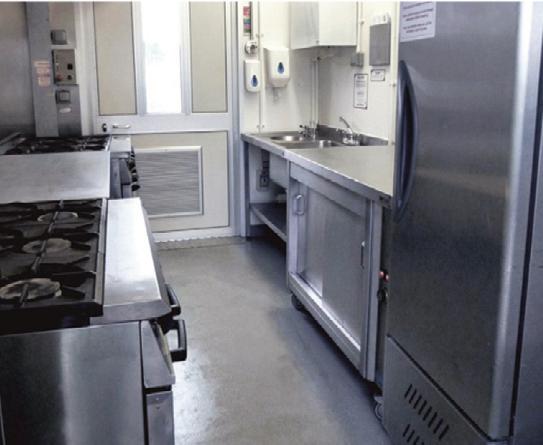
For further information or to arrange a site visit, email: sales@mk-hire.co.uk or call us on
or visit our website: www.mk-hire.co.uk
A new report from leading dairy co-operative Lakeland Dairies, supported by Consultant Dietitian Rachael Masters (MSc, BSc), reveals the care sector at a tipping point, with nearly three quarters (74%) of operators concerned about their ability to meet residents’ nutrition and hydration needs over the next five years. Care kitchens are under growing pressure as residents’ needs grow more complex, resources stay tight, and smaller portions mean every mouthful must be nutrient-dense.
The report, The Care Kitchen Reset: The Future of Care Catering, sets out a shift towards enriched cooking and stronger base ingredients that make everyday dishes work harder. It calls for care operators to protect quality nutrition under mounting pressure not by adding complexity, but by strengthening core ingredients from the outset to improve calorie and protein density without increasing portion size.

It launches as part of Nutrition & Hydration Week (16–22 March), which shines a spotlight on the UK care home sector and the critical role food and drink play in supporting resident health and wellbeing.
CARE SECTOR UNDER MOUNTING NUTRITIONAL PRESSURE
The findings reveal rising clinical complexity is a key driver, with almost half (43%) reporting an increase in nutritional needs over the past five years. At the same time, 71% say rising ingredient costs are making it harder to maintain food quality despite 90% refusing to compromise on standards. For operators, the stakes are both clinical and commercial. Nine in ten resident respondents (90%) cite food as a key factor when choosing a care home, while 87% of residents say mealtimes are the most important part of their day.
Dairy-based ingredients play a central role: over nine in ten operators say products such as cream and milk powder enhance food and drink experiences for residents with smaller appetites or specialist diets, while 88% believe they effectively support resident nutrition. This underlines the value of enriched cooking approaches that boost nutrition in the foods residents already enjoy, without relying on bigger portions.
INGREDIENT STRATEGY OFFERS PRACTICAL SOLUTION
Responding to these pressures, the report highlights that one of the most practical, operationally efficient levers is ingredient strategy. Rather than layering on additional processes, the report argues the solution lies not in short-term cost cutting alone but in strengthening menu foundations. By embedding fortified nutrition into everyday base ingredients, kitchens can improve calorie and protein density without increasing portion size, labour or waste – safeguarding the sector’s future.
Rachael Masters, Consultant Dietitian and contributor to the report said: “With an ageing population driv-
ing increased demand for care home places, and residents presenting with more complex health and nutritional needs, care catering teams are being asked to deliver not just meals, but meaningful nutritional support in increasingly complex environments.”
“The solution doesn’t lie in adding more processes, but in making smarter use of core ingredients to maximise nutritional value. By fortifying everyday dishes, kitchens can enhance protein, energy and key nutrients in ways that are practical, cost-aware and, most importantly, enjoyable for residents. Dairy-based ingredients offer a particularly effective and versatile way to achieve this.”
“This report explores these growing pressures and highlights practical, nutrition-led approaches that support both care teams and residents – helping deliver better operational efficiency while improving health, wellbeing and dining satisfaction.”
The research also highlights opportunities to refine delivery. While 90% of residents rate meals positively overall, 77% report struggling to finish meals due to taste or presentation challenges, and 38% say higher quality ingredients would improve their experience. This reinforces the case for ingredient optimisation over short-term cost cutting.
Paul Jennings, Head of Food UK & International at Lakeland Dairies, adds: “Care operators are under pressure to do more with less – more nutrition, more quality and more resilience – while also meeting rising expectations from residents around mealtimes. This creates a real tension in care kitchens, where teams are balancing increasingly complex needs with limited time, staff and budgets.
Ingredient strategy is a practical way forward. By using hard-working bases such as Millac Gold Double and Lakeland Dairies Skimmed Milk Powder, kitchens can build richness, consistency and added nutrition into everyday dishes without adding complexity.
In a sector balancing tight budgets and staffing pressures, this timely report explores immediate solutions to support care kitchens.”
The report draws on a survey of care operators, residents and their families, alongside insight from Consultant Dietitian Rachael Masters, founder of Focus on Undernutrition, which provides specialist special diet training to care homes.
Lakeland Dairies is committed to supporting the sector through menu guidance, product innovation and training designed to help kitchens build resilience through stronger foundations and long-term supplier partnerships.
The full report is available: https://eu1.hubs.ly/H0sP61V0
Harrison Carr is a national provider of commercial catering equipment, design, installation, and fabrication services and HVAC. Based in the Midlands, we support care homes, local authorities, charities, and specialist care providers with both day-to-day operational requirements and larger project-based developments.

A key advantage of working with us is our independence. We are not tied to any single manufacturer, enabling us to source the most suitable, reliable, and cost-effective equipment for each care environment. This ensures solutions that prioritise safety, energy efficiency, long-term value, and consistent performance.
Our team includes experienced designers, project managers, ventilation specialists, installation engineers, and in-house fabrication experts all working under one roof. This ensures we can deliver a genuine end-to-end service: from concept and planning through to supply, installation, and ongoing support.
CATERING EQUIPMENT SUPPLY & TRAINING
• Access to all major catering equipment brands
• Energy-efficient, sustainability-focused solutions compliant with care-sector standards
• Fast delivery from our own on-site stock
• Competitive pricing and comparison quotes to support budget decisions FULL KITCHEN DESIGN & INSTALLATION
• Complete kitchen and servery redesigns
• Workflow optimisation to support safe, efficient meal production
• CAD layouts and 3D visuals
• Compliance-led ventilation and extraction solutions
BESPOKE FABRICATION
• Custom counters, serveries, prep areas, and storage
• Bespoke servery and hydration stations for care settings
REACTIVE & PLANNED SUPPORT
• 24/7 support with rapid turnaround for urgent equipment needs
• Standby and loan equipment for emergencies
• Assistance with refurbishments and operational upgrades
CAFÉ, SOCIAL & RESIDENT-FACING SPACES
• Coffee areas for staff and visitors
• Hydration and snack counters
• Modular and mobile units suitable for multi-use care environments
Our approach is always centred around understanding each site’s workflow, resident needs, staffing pressures, and long-term operational goals ensuring the solutions we deliver enhance quality of service, safety, and overall dining experience.
Visit our website www.harrison-carr.co.uk contact by phone on 0116 602222 or email at office@harrison-carr.co.uk


Care providers are currently facing one of the most complex operating environments in recent memory. Rising labour costs, stricter compliance requirements, and ongoing food inflation are placing significant pressure on already stretched budgets across the care sector.
Food costs remain a major concern. While inflation has eased slightly from recent peaks, food prices are still rising faster than general inflation. In February 2026, food inflation stood at 3.6%, with forecasts suggesting an average of 3.8% across the year.
For care home operators managing tight margins, this means financial pressure will continue. Rather than a return to ‘normal’, the sector is entering a period of persistent underlying inflation where costs continue to rise gradually. Procurement specialists allmanhall are advising catering teams to budget for around 4% annual food inflation in the year ahead.
Structural cost increases across the supply chain are also feeding into food pricing. Higher National Living Wage levels, increased National Insurance contributions, and new employment obligations are pushing up costs for producers, manufacturers, and distributors - many of which are now being passed through to care and healthcare settings.

For care home groups already balancing staffing pressures and regulatory compliance, sustained food inflation adds another layer of financial strain. Catering teams must continue delivering nutritious, high-quality meals while managing special diets and strict nutritional standards.
Adding further uncertainty to the outlook is the geopolitical situation in the Middle East. Global food supply
chains are closely linked to energy markets, meaning instability in oil-producing regions can quickly impact food costs.
Recent tensions involving Iran, Israel, and the United States have already triggered volatility in global energy markets. Oil prices have exceeded $100 per barrel for the first time since the start of the Ukraine conflict, increasing fuel, transport, and logistics costs across the food supply chain.
In this challenging environment, specialist procurement support is becoming increasingly important. This is where food procurement experts allmanhall are helping care organisations regain control of their catering costs.
By combining collective buying power with deep market insight, allmanhall support care operators in managing food cost volatility while improving ingredient quality and strengthening supply chain resilience. Through detailed procurement reviews, benchmarking, and category insights, care groups gain greater visibility over spend and identify opportunities to protect budgets without compromising on quality.
Beyond procurement, allmanhall’s award-winning support team works closely with care clients to strengthen compliance, support nutritional standards, and provide practical menu guidance aligned with resident wellbeing.
At a time when care providers must balance cost control with quality and compliance, having the right procurement partner can make all the difference.
www.allmanhall.co.uk
Disease-related malnutrition remains one of the most persistent challenges in UK residential and nursing care. It affects millions, increases vulnerability to illness, slows recovery, drives hospital admissions, and places strain on already stretched care teams. Yet despite the scale of the problem, the tools available to homes have not kept pace with the needs of increasingly complex residents.
Hiquid Food, a Norwegian medical nutrition company, is entering the UK market with a clear mission: to make effective nutritional support simpler, more acceptable for residents, and easier for staff to deliver.
Simple, seamless meal enrichment
Many residents struggle to consume enough calories and protein, even with carefully prepared meals. Hiquid Food’s freeze-dried powders, made from organic whole foods, allow caregivers to enrich everyday dishes like porridge, soups, puddings, purees, and drinks. This discreet approach reduces refusals and preserves dignity, helping residents receive the nutrition they need through meals they already enjoy.
ORAL NUTRITIONAL SUPPLEMENTS WITH HIGH ACCEPTANCE
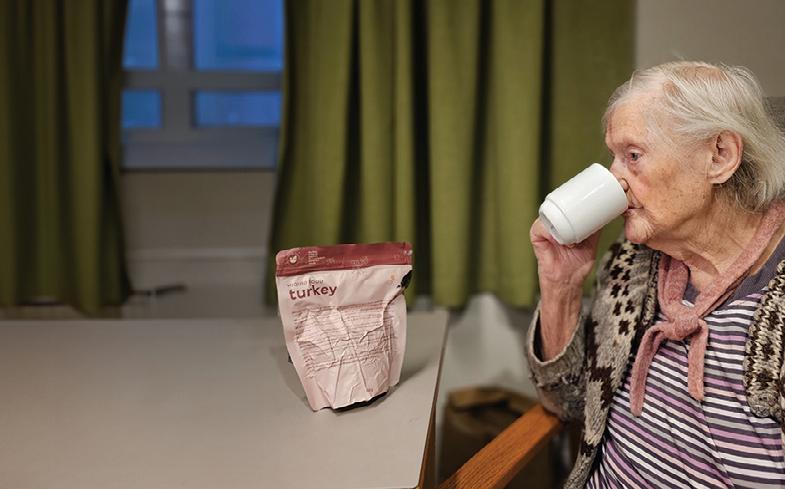
For individuals at greater nutritional risk, Hiquid Food offers compact, nutrient-dense oral nutritional supple-
ments designed for those with low appetite or increased medical demands. They are easy to consume, well tolerated, and provide balanced support in small volumes.
WHOLE FOOD GASTROSTOMY NUTRITION
For residents requiring enteral feeding, Hiquid Food’s whole-food gastrostomy products offer a gentle, reliable option created with a focus on tolerance, safety, and long-term stability.
Better outcomes and operational efficiency
Care providers face rising acuity and workforce pressure. Hiquid Food products reduce complexity through easy mixing, no additives, and no large volumes while supporting improved resident strength, immunity, and recovery. Better nutritional status means improved wellbeing and lower overall care costs. With long shelflife, low weight, and high versatility, the products are also environmentally responsible and easily integrated into a wide variety of meals.
As Hiquid Food launches in the UK through Food Untethered, they look forward to working closely with care homes, clinicians, and NHS commissioners to strengthen nutritional care in a practical, resident-centred way. For more information: contact@fooduntethered.com or see the advert below.
Fall Savers®, are an experienced market leading healthcare provider of resident safety solutions for over 15 years.
FALL SAVERS ® WIRELESS MONITOR
Eliminate all cables with our new generation falls management solutions!
Upgrade your falls programme with the latest technology from Fall Savers®. The NEW Fall Savers® Wireless eliminates the cord between the monitor and sensor pad. This results in less work for nursing staff, improved safety for patients and reduced wear and tear on sensor pads. Wireless advantages include the ability to use one monitor with two sensor pads simultaneously and support for many new wireless devices.
BENEFITS INCLUDE:
Safer for patients; less work for staff Bed and chair pads available

One monitor works with two sensor pads
Integrates with most nurse call systems A variety of options, including: Call button

NurseCall is definitely not a 'one size fits all' solution. If, like many Care Groups and Hospitals-both NHS and private-you utilise various NurseCall systems, you might find managing multiple systems a challenge. Many of our clients have voiced concerns about the increased time & costs associated with juggling different points of contact and contractors.
STREAMLINING MAINTENANCE FOR GREATER EFFICIENCY
Since our inception in 1984, we've committed to providing expert support across multiple NurseCall systems. Our engineers are thoroughly trained to handle diverse systems, ensuring you receive swift and comprehensive service, no matter the manufacturer.
EXTENSIVE INVENTORY AND INTEGRATION SOLUTIONS
We stock an extensive range of products from leading manufacturers and offer adaptable solutions

that integrate seamlessly with your existing frameworks. This approach not only simplifies maintenance but also enhances operational efficiency. YOUR PARTNER IN EFFECTIVE CARE
Your NurseCall system is vital, and we believe the challenges of maintaining it shouldn't hinder your operations. Our multi-manufacturer strategy streamlines complexities, benefiting both your team and the patients in your care.
Choose us to ensure smooth operations and peace of mind. Let's enhance the way you connect care with technology.
info@edisontelecom.co.uk www.edisontelecom.co.uk 01252 330220

In today’s complex care environment, we understand that choosing the right technology is about far more than functionality alone. For care providers, reliability, sustainability, and supply chain resilience are critical factors—especially when it comes to nurse call systems that play such a vital role in resident safety and day-to-day operations.
At Courtney Thorne, we are proud to champion the “Made in Britain” mark. For us, this is not simply about where our systems are manufactured; it reflects our commitment to quality, accountability, and supporting the UK care sector. By designing and building our nurse call systems here in Britain, we can ensure they are developed with a deep understanding of the real challenges faced by care homes, resulting in solutions that are practical, reliable, and easy to use.
Manufacturing in the UK also allows us to maintain close control over our supply chain—something that has become increasingly important in recent years. Global disruptions have highlighted the risks of relying on complex, overseas supply networks. By keeping our production local, we are able to offer greater consistency, shorter lead times, and improved access to parts and upgrades. This means our customers can rely on continuity, even in uncertain times, with minimal risk of disruption to their services.
Sustainability is another area where we believe local manufacturing makes a meaningful difference. By reducing the need for long-distance transportation and focusing on robust, long-lasting system design, we help care providers lower their environmental impact. We are committed to creating solutions that not only meet today’s needs but are built to last—reducing waste and supporting more sustainable care environments over the long term.
Of course, delivering high-quality technology is only part of the picture. We know that ongoing support is essential. That’s why our UK-based technical team is on hand to provide expert assistance, from installation and training through to maintenance and rapid response when it matters most. Our proximity allows us to respond quickly and effectively, giving our customers the confidence that support is always within reach.
At Courtney Thorne, we believe that care homes deserve technology they can depend on—both now and in the future. By combining British manufacturing, sustainable practices, a resilient supply chain, and dedicated local support, we are proud to deliver nurse call systems that underpin safe, effective, and reliable care every day.
For more information or to book a free demo, visit www.c-t.co.uk or contact info@c-t.co.uk.
Falls are a significant concern for vulnerable individuals, especially seniors and patients at risk. Medpage, a leader in assistive technology, offers a range of cutting-edge products designed to enhance safety and provide peace of mind for caregivers and families. Here’s an in-depth look at some of their standout solutions: MPRCG1 (2023) BED LEAVING DETECTION ALARM WITH CAREGIVER RADIO PAGER
The MPRCG1 is a comprehensive system tailored for fall prevention in domestic, commercial, and NHS care settings. This all-inclusive kit includes a bed pressure mat sensor, a BTX21-MP alarm sensor transmitter, and an MP-PAG31 radio pager. The system is designed to alert caregivers when a patient leaves their bed, reducing the risk of falls.
HDKMB2 HOSPITAL DISCHARGE KIT FOR FALLS RISK PATIENTS
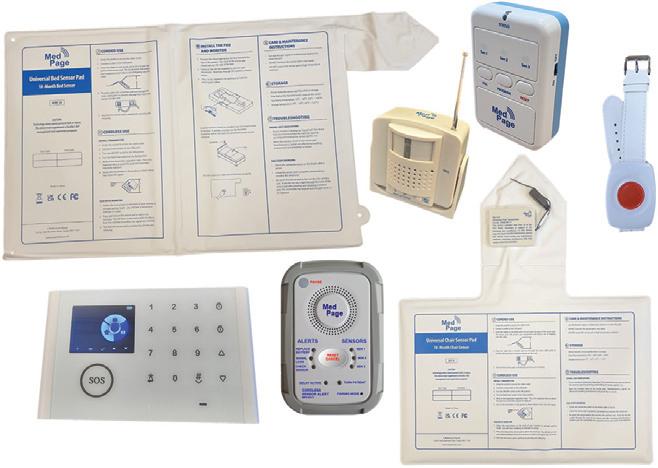
The HDKMB2 is a thoughtfully curated kit aimed at supporting patients transitioning from hospital to home care. It includes essential tools to mitigate fall risks and promote recovery. This kit is ideal for caregivers seeking a comprehensive solution to enhance patient safety during the critical post-discharge period.
CMEX-21 MULTI-PORT WIRELESS SENSOR INPUT EXPANDER FOR NURSE CALL CONNECTION
The CMEX-21 is Medpage’s latest innovation, designed to integrate seamlessly with existing nurse call systems. This multi-port expander allows for the connection of multiple wireless sensors, enhancing the monitoring capabilities of healthcare facilities. Its versatility makes it a valuable addition to any care environment, ensuring timely responses to patient needs.
RON-WC2 WATERPROOF DISABLED PULL CORD ALARM TRANSMITTER WITH WIRELESS ALARM RECEIVER
The RON-WC2 is a robust solution for disabled individuals requiring immediate assistance. This waterproof pull cord alarm is ideal for use in bathrooms and other high-risk areas. Paired with a wireless alarm receiver, it ensures that help is just a pull away. For more information, visit Medpage’s official website or contact their team to explore these products further. Safety starts with the right tools, and Medpage delivers just that. www.easylinkuk.co.uk or T: 01536 264 869 See the advert on page 15 for more information.
By Ashleigh Dueker, Programme Director, Care Intelligence,

As we welcome longer days and the promise of spring, it’s tempting to assume that pressures on the NHS will naturally ease - that warmer weather, seasonal reprieve and the slow thaw after winter will allow waiting lists to shrink and give A&E services the opportunity to breathe again.
But the real challenge facing the NHS isn’t seasonal. It’s systemic. Every year, the health service finds itself managing queues: queues in A&E, queues for treatment, queues for beds. Much of the conversation quite rightly focuses on how to move people through the system fasterimproving discharge processes, increasing capacity or accelerating clinical decision-making.
But there is also a crucial opportunity further upstream. If we want to relieve pressure on the NHS in a lasting way, we need to look beyond how the system manages queues and start asking how those queues form in the first place. And often, the earliest chances to prevent pressure on hospitals lie within social care itself.
Too often, social care is on the back foot. Care homes and community services have historically recorded what happened rather than what might happen. Paper records, fragmented systems and siloed insight mean risks are spotted only after they materialise - a fall, an infection, a deterioration
in hydration or mobility. For older people, these events don’t just reduce quality of life - they are among the leading causes of emergency hospital admissions.
It doesn’t have to be this way. We are entering a new era in which intelligence - not just data - becomes the engine of care delivery. At Person Centred Software (PCS), our Connected Care ecosystem has long digitised core care workflows, from planning to medication management. Every one of these interactions feeds into a unified data layer. On its own, it’s a record. But when we harness that data into intelligence - especially predictive intelligence - it becomes forethought rather than hindsight.
Spring relief won’t fix the NHS queue - intelligence will
That’s the purpose of IQ, our care intelligence platform now available to care homes across the UK. With the largest structured social care dataset in the country, IQ doesn’t just show what has happened, it reveals what’s likely to happen next.
This isn’t futuristic conjecture. IQ already enables anonymised benchmarking, so managers can see how their home compares with similar services on key indicators such as falls, hydration, wounds, happiness levels and more. This sector-wide perspective moves homes from isolated decision-making to shared learning, and from reactive fixes to strategic improvement.
More importantly, the next stage of IQ is predictive: using patterns drawn from billions of data points to flag when risk is rising - often days or even weeks before an incident occurs. Whether it’s an unusual shift in weight, subtle changes in mobility or early markers of dehydration, predictive insight turns these signals into actionable alerts for care teams.
For the NHS, this approach matters. Predictive insight gives social care teams the tools to intervene early, reduce avoidable hospital admissions and also creates greater confidence in safe discharge pathways.
Evidence from pilot work across the health and care landscape shows that digital technology does indeed reduce unplanned acute care usage and costs when used effectively. Integrated data and communication between care homes and NHS community services contribute to earlier detection of deterioration, better joint decision-making and fewer emergency department attendances.
But this isn’t just about efficiency. It’s about dignity, safety and quality of life for older people and their families - the very outcomes at the heart of our healthcare and social care system.
A SEASONAL OPPORTUNITY - NOT A SEASONAL FIX
Spring should be more than a symbolic break in demand. It should be a catalyst for lasting change: an opportunity to invest in the intelligence that supports both social care and the NHS. We cannot afford to wait until next winter to ask the same questions and confront the same problems.
If we harness predictive insight now - to anticipate risk, prevent harm and reduce avoidable admissions - we not only ease seasonal pressures but transform the fabric of care delivery itself.
In the end, the real queue isn’t a list of people in beds. It’s the queue of untapped intelligence waiting to unlock a safer, smarter and more humane approach to care - one that works for receivers of care, care teams and for the NHS alike.
Running a care home today means balancing highquality care with the smooth operation of a wide range of essential systems. From laundry and dishwashing to television services, WiFi and connectivity,
these functions play a critical role in compliance as well as resident wellbeing. They also underpin the day-to-day experience of both residents and staff.
In many homes, these systems are supplied and maintained by multiple providers. Whilst this is often the norm, it can create unnecessary complexity. When issues arise, dealing with different service teams, contracts and response times can slow resolution and increase pressure on staff.
Forbes Professional works with care homes to simplify this.
By delivering commercial laundry, dishwashing, IPTV, healthcare TV and networking infrastructure as a single, connected solution, providers benefit from one point of contact, streamlined servicing and clear accountability. This reduces operational friction and allows teams to focus on delivering care rather than managing suppliers.
In any care environment, reliability is critical. Equipment must support strict hygiene and safety standards, with oversight from the Care Quality Commission and requirements such as WRAS. Professionally specified and maintained systems help ensure consistent infection control processes and minimise the risk of downtime.
At the same time, expectations around technology continue to grow. Residents increasingly value the ability to stay connected, access information and

enjoy entertainment through modern TV systems, signage solutions and reliable WiFi. For staff, dependable infrastructure supports smoother day-to-day operations.
Bringing these systems together creates a more stable, efficient environment. Instead of managing multiple suppliers, care homes can take a more integrated approach; improving performance, maintaining compliance and enhancing the overall experience.
Forbes Professional provides a practical, joined-up solution for care homes looking to simplify operations without compromising on quality.
Visit www.forbespro.co.uk or see the advert on page 11.
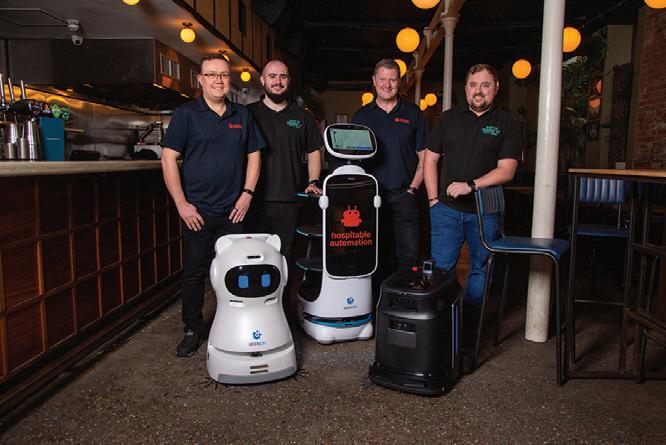

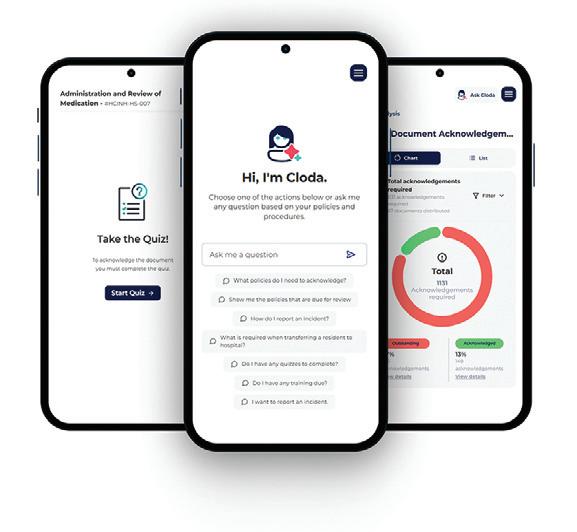
Care staff often need the right guidance immediately. Whether responding to a safeguarding concern, managing a medication issue, or dealing with a clinical incident, the ability to access the correct procedure quickly can be critical to both resident safety and staff confidence.
Cloda is an AI assistant providing care staff with the answers they need from their organisation’s policies and procedures. Staff simply ask a question — for example, “There has been a safeguarding concern, what should I do?” — and Cloda immediately provides the relevant guidance from the organisation’s own approved policies.
By making procedures accessible in seconds, Cloda helps ensure that policies are not simply documents stored on a system, but practical guidance that staff can use in real situations. This supports organisations in
embedding policies into everyday practice while strengthening compliance with Care Quality Commission (CQC) standards.
CQC inspections increasingly focus not only on whether policies exist, but whether staff understand them and apply them consistently in practice. Providing staff with immediate access to the correct guidance helps reinforce safe decision-making and supports organisations in demonstrating that policies are actively used across the service.
One of the most notable insights from Cloda deployments across social care services is the level of engagement from frontline staff. In many services, user adoption exceeds 80%, reflecting the fact that staff find the system simple and genuinely helpful in their day-to-day work. Cloda is like an additional team member, a reliable source of guidance that is always up to date, and available at the point of care.
Soon, Cloda will expand into a fully AI-enhanced Quality Management System with functionality for training, incident management, risk management, internal audit and compliance insights. By bringing these functions together in one system — and enhancing them with AI — providers can streamline quality management processes while improving visibility across their services.
The platform has been developed by HCI, an organisation with more
than 20 years’ experience supporting international health and social care providers with quality, governance and compliance solutions. Over the past two decades, HCI has worked with healthcare organisations across multiple jurisdictions to strengthen regulatory readiness and improve the management of quality and safety processes.
This experience has shaped the design of Cloda and its wider quality management framework, ensuring that the technology supports the realities of frontline care while also providing the governance tools organisations need to maintain compliance.
As care providers continue to face increasing regulatory expectations, workforce pressures and rising complexity in care delivery, digital tools that support both frontline staff and organisational governance are becoming increasingly important.
By combining instant access to guidance for staff with AI-enhanced quality management tools for organisations, Cloda helps care providers embed policies into practice, strengthen CQC compliance and ultimately support safer, more consistent care.
Cloda will be exhibiting at Care Show London — visit us at Stand H47 to see how Cloda works in practice. Learn more about Cloda at www.cloda.ai or contact info@cloda.ai.

Technology is becoming a routine part of residential care.
From sensors and monitoring systems to digital care records, these tools can support safer and more responsive care. At the same time, they raise questions about consent, privacy and how care is experienced by both residents and staff.
These themes were reflected in recent discussions hosted by the Digital Care Hub, which explored how technology is being used in practice across the sector.
Understanding and explaining technology
One of the challenges raised was how well people understand the technology around them. In some cases, particularly for people living with dementia or cognitive impairment, this understanding may be limited.
As one frontline care worker described, a person drawing on care believed systems were there so others could “spy on him”.
This highlights the importance of how technology is introduced and discussed. Understanding may change over time, and people’s responses are not always predictable.
Consent, not duress
Consent was a central theme. The discussions pointed to the importance of consent, not duress, particularly in a system under pressure. As one speaker highlighted: “Choice is meaningful only if a person can say no without losing their right to basic care.”
This raises questions about how real choice is experienced in practice. Where options are limited, or technology becomes part of a default offer, consent may be more complex than it first appears.
Impact on staff and culture
The use of monitoring also has implications for staff. In residential settings, oversight is familiar, but increased monitoring can change how care workers experience their role.
Some described feeling observed or questioned on small aspects of their work, particularly where families can see detailed records. This can influence how care is recorded and how relationships develop between staff, families and residents.
Supporting independence without replacing care
Technology was also discussed as a way of supporting independence. In some situations, monitoring can reduce the need for constant supervision and allow people more flexibility.
At the same time, there were concerns about how technology is used in a stretched system. One speaker highlighted the risk of pressure to “put more tech in to replace the shortage of carers”.
Robots vs Carers
Digital Care Hub’s next webinar is on Robots Vs Carers: are we really replacing care workers? 31 March 2026
Find out more at www.digitalcarehub.co.uk/digital-care-in-focus/ difficult-conversations-about-data-and-tech/
Ready-to-use activity products designed to support meaningful engagement in everyday life.
Everything you need to inspire connection, stimulation and wellbeing
CREATIVE & SENSORY ACTIVITIES
Art, craft and sensory products designed to engage, calm and inspire. COGNITIVE & REMINISCENCE
Memory-based activities and conversation starters that encourage connection. GAMES & GROUP ACTIVITIES
Inclusive games and group activities suitable for a wide range of abilities. ONE-TO-ONE & MEANINGFUL ENGAGEMENT
Personalised activity products that support wellbeing and individual needs. Thoughtfully selected to be accessible, inclusive and easy to use in busy care environments.
Explore our full activity range -
CareZips® Classic are patented, easy dressing unisex adaptive pants designed for older and disabled people suffering with problems associated with continence, mobility, mental function and cognition. Suitable for persons living in care institutions, receiving care at home or living independently at home, CareZips® Classic enable people to dress themselves or with assistance from carers.
CareZips® Classic feature patented 3-zipper system, which opens the front of the pants from the waist to the knees for quicker access during toileting, continence pads changes and personal hygiene. The forward positioning of the two side zippers lessens pressure on sensitive hip areas, helping to eliminate discomfort. The third zipper facilitates simple full frontal opening for faster more dignified diaper changes, catheter adjustments, personal cleansing and hygiene routines.

cal functionality and versatility of the CareZips® Classic, all day comfort and easy garment care.
• People dependent on assisted dressing appreciate quick easy dressing process with less stress, embarrassment and greater dignity offered by CareZips® Classic.
• CareZips® Classic offer practical gains to the carers, helping them to provide better care, whilst reducing physical efforts and saving valuable time.
CareZips® Classic are unisex, available in 6 sizes and 3 practical colours (i.e. black, charcoal and navy). Tapered fit at the ankles gives a tidy appearance. Made from breathable moisture-wicking 4-way stretchy crease-free and easy-care durable fabric, CareZips® Classic are comfortable, practical and conveniently functional.
For more information, contact Win Health Medical Ltd - 01835 864866www.win-health.com
CareZips® Classic have many benefits for the older and disabled users and their carers:
• People dressing themselves enjoy the practi-
See the advert on page 3 for further information on Win Health’s product range.

the well-being of patients and
EDGE Services is one of the leading providers of people handling training in the UK today.
EDGE will train you to deliver moving and handling, dementia care, and challenging behaviour courses to your colleagues, providing you with the resources, techniques, and skills to make a real difference to the health and safety of both your colleagues and your clients. Our courses:

People Handling and Risk Assessment Key Trainer's certificate (4 consecutive days, includes a written assignment)
Children Handling and Risk Assessment Key Trainer's certificate (4 consecutive days, includes a written assignment)
People Handling and Risk Assessment Key Trainer's certificate Refresher/Update (2 consecutive days)
• Children Handling and Risk Assessment Key Trainer's certificate Refresher/Update (2 consecutive days) Understanding and Managing Behaviour that Challenges Key Trainer's certificate (2 consecutive days)
Dementia Care Key Trainer's certificate (2 consecutive days)
Our Key Trainer's certificate lasts for 2 years. Delegates are then given a 3-month grace period to renew their training though we don’t recommend they deliver any training during this interim period.
EDGE understands that the continued success of the company is down to us consistently providing highquality training that is received well by those attending the event and by those procuring it. We are committed to ensuring this success continues.
There’s a lot that makes EDGE different from your average training provider:
Healthcare Professionals: All EDGE trainers are nurses, occupational therapists or physiotherapists with over ten years’ clinical experience.
Fully Accredited: All our’ People/Children Handling and Risk Assessment Key Trainer’s Certificate’ courses are accredited by RoSPA Qualifications to Level 4 or Advanced Level 4. They are recognised for providing continuous professional development by the CPD Certification Service.
Compliance with Professional Training Standards: All EDGE Manual Handling ‘Key Trainer’ events comply with the National Back Exchange Training Standards (2010); The All Wales NHS Manual Handling Training Passport and Information Scheme (2010); and The Scottish Manual Handling Passport Scheme (2014).
• Invaluable Training Resources: All delegates are given a fully illustrated and comprehensive textbook; professionally printed and produced by EDGE. Plus, proposed documents to assist and support in onward training delivery. These include course agendas, hand-outs, Power-Point slides, filmed practical techniques and tips for staff training and assessing.
Online Resources Library and E-Learning: Our Manual Handling ‘Key Trainer’ training is supported by an extensive, informative online resources library offering use of an exclusive e-learning module plus additional training tips and tools to develop and enhance onward training.
EDGE offers both public courses and in-house courses, the dates for which can be found on our website: https://edgeservices.co.uk
Alternatively, call: 01904 677853 or e-mail: enquiries@edgeservices.co.uk to see how EDGE Services can help you.
Care homes today face increasing pressure to deliver high-quality, safe and effective care—while managing limited time, budgets and workforce capacity. Traditional training methods often struggle to engage staff or translate learning into everyday practice.
Serious games are changing that.
By combining evidence-based learning with interactive, scenario-driven gameplay, serious games enable staff to learn by doing. Teams work together to solve realistic challenges, strengthening communication, decision-making and confidence in a safe environment. This directly supports key CQC priorities across Safe, Effective and Well-led domains.
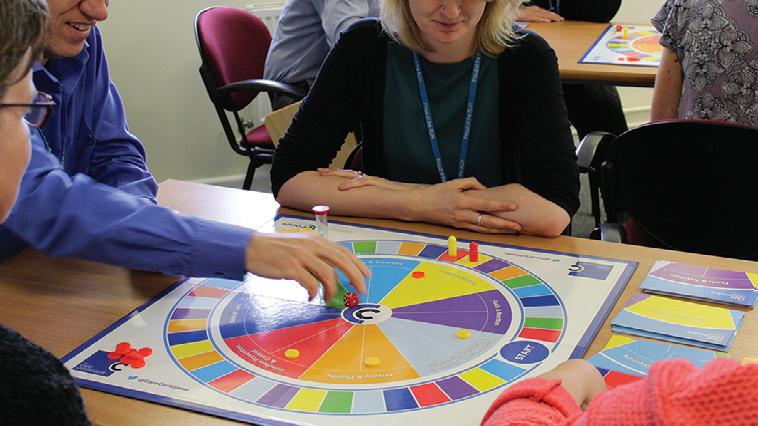
Research shows that simulation and game-based learning improves knowledge retention, teamwork and patient safety outcomes (Aggarwal et al., 2010; Health Education England, 2016). Crucially, it also promotes peer learning and reflection—helping teams share experiences and embed best practice across the service.
Focus Games has been at the forefront of this approach, offering a wide range of care home–focused
board games, card games and digital learning via the ZeST platform. Covering topics such as infection prevention, nutrition, safeguarding and communication, these resources are designed specifically for health and social care settings.
✔ Engage staff through interactive, team-based learning
✔ Reinforce real-world skills through practical scenarios
✔ Deliver cost-effective training at scale
✔ Support inspection readiness and continuous improvement
Flexible and easy to facilitate, Focus Games’ resources can be used across induction, mandatory training and ongoing CPD, either face-to-face or digitally. At a time when care providers must do more with less, serious games offer a proven, practical and engaging solution—turning training into meaningful improvements in care delivery.
Ready to get started? Take the first step with
Working in social care is demanding. It is one of the most heavily regulated yet underfunded sectors, with providers expected to comply with regulations, meet Quality Statements, follow good practice guidance, respond to local authority monitoring, and operate under constant scrutiny.
Regulation itself isn’t the problem — it protects people and improves standards. The challenge is capacity. Larger organisations may have in-house quality assurance teams, but smaller providers rarely have the time or budget to review compliance in depth. Many owners and managers tell us they feel overwhelmed and unsure how well their service is really performing, especially since the introduction of the Single Assessment Framework.
For many, confidence in compliance is the number one concern — not because standards are poor, but because there simply isn’t time to step back and take a full, objective view.
CAN AN EXTERNAL AUDIT HELP?
In short, yes — when it’s done properly. A high-quality external audit provides:
• A clear snapshot of current performance
• Identification of good practice and priority risks


• Evidence to support action plans and improvement journeys
• Demonstration of good governance and continuous improvement — a key CQC
• Reassurance for owners, directors, and managers
W&P have supported health and social care providers for nearly 25 years, completing hundreds of audits across a wide range of services. This experience gives us deep insight into what regulators look for — and what genuinely improves outcomes. Our audits are supportive, non-judgmental, and practical. They typically include around six hours on-site, followed by a detailed report that links evidence to regulations and Quality Statements. Reports also include clear guidance, tips, and sources to help you respond confidently.
Every audit is tailored to your needs — whether that’s safeguarding, medication management, or overall governance — ensuring it is truly fit for purpose.
If you would like to know more, then please contact us on audits@wandptrainng.co.uk or call 01305
767104 for a no-obligation chat on how our audits can help you. See the advert on page 2 for details.
A nationwide charity that helps people rebuild their lives has appointed leading training provider Realise to develop new team leaders through apprenticeships.
Book Now for 2026
Change Grow Live, which provides free treatment, support and information about drug and alcohol use, homelessness, justice and probation and employment, will offer a progression route through Health and Social Care apprenticeships with Realise.

There will be 200 learners supported through their first programme initially, with scope for this to grow much further as more apprenticeship courses are introduced to the partnership.
Alexandra Bode-Tunji, Chief People Officer at Change Grow Live, said the charity had partnered with Realise to allow colleagues to grow both professionally and personally.
“This marks the beginning of an important chapter where our people will have the opportunity to develop the skills and knowledge needed to succeed in their roles and beyond,” said Alexandra.
“Our people are at the heart of the impact we create. When we invest in training and development, we’re investing in safer services, better outcomes, higher quality interactions and greater stability across our workforce.”
Alexandra said Change Grow Live had appointed Realise as the provider had taken the time to understand the charity’s mission and values.


She added: “Their approach wasn’t about offering a generic solution, it was about designing something that responded directly to our needs, whether that’s supporting Recovery Workers or creating progression routes that strengthen our future talent.”
Angela Kaine, Director of Health & Social Care at Realise, said the partnership would help build new employment and career pathways and make Change Grow Live a place where people can thrive.
She said: “Change Grow Live does fantastic work to help people in a variety of different circumstances and has grown into a huge operation with more than 5,000 employees and 150 services.
“We understand the complexity of their organisation and have formulated a bespoke plan which will help build clear pathways, strengthening their ability to attract, grow and retain great people.
“We look forward to working with Change Grow Live and building a long-term collaboration, adapting to the needs of their services and supporting their people throughout.”
Realise works with many large care operators and social care providers, offering an array of apprenticeships, including the Level 3 Senior Healthcare Support Work Apprenticeship and the Level 5 Leader in Adult care Apprenticeship.
For more information, visit www.realisetraining.com

By Martin Lowthian, Risk, Quality and

Ask most care providers what their risk register is for, and the answer will be some version of the same thing: staying compliant, preparing for inspection, avoiding regulatory action. Those are all valid reasons. But if that is all your risk register is doing, you are leaving significant value on the table.
Good risk management is not a defensive exercise. Done properly, it is one of the most powerful tools a care business has for sustainable growth. Providers who understand this are not just better protected, they are better positioned to win contracts, scale their services, and attract staff.
Operational risk gets most of the attention. Safe recruitment, medication management, care delivery and safeguarding are all are critical areas, and they absolutely belong in your register. But there is another category that rarely gets the same rigour: opportunity risk.
Consider how many providers miss a tender because their evidence is not in order. Enquiries that are not converted, clients who choose a competitor, care workers with specialist skills you cannot recruit because your onboarding process is not fit for purpose. Each of these is a risk with a measurable impact on your business. Your risk register should capture all of it.
One of the most common patterns in care organisations is a business that has grown quickly but has not
grown its infrastructure at the same pace. Ask yourself: if you disappeared for two weeks, what would happen? If the answer involves significant disruption, that is a risk worth documenting and addressing now.
Many providers manage their risk registers in spreadsheets, but as organisations grow, paper-based processes create real problems. Controls that were accurate six months ago are presented as current assurance. Actions that were never completed sit on the register without anyone being held to account. This is not risk management; it is risk documentation.
Digital tools designed specifically for care governance, such as Access Care Compliance, allow providers to track risks, controls, and actions in one place, map them against regulatory frameworks, and evidence progress in real time.
There is also a direct commercial argument. Insurers respond well to providers who can demonstrate a structured, evidenced risk management framework, and in my experience, it can reduce your premiums. Commissioners are increasingly sophisticated in evaluating tender responses. A provider who can point to documented controls and clear accountability stands out.
Honest risk management requires a particular mindset. Approach your register as if you are looking for problems, not confirming that everything is fine. Providers who get the most value from their risk registers use them as a genuine growth tool, asking uncomfortable questions about where the gaps are.
Risk management, done properly, is not an add-on. It is how well-run, high-quality care businesses grow and thrive.
For more information about risk management or Access Care Compliance, please contact Martin at martin.lowthian@theaccessgroup.com

23 years, operating 4 Devon Nursing homes, has been pretty tough, as anyone in social care, knows, only too well. And if it was hard already, after 2024 budget, it's just got harder.
Anyway, at heart, I am just customer of Eden Alternative, and it was a stroke of luck to come across this whilst on holiday in New Zealand in 2009. It started in USA in 1994 and now runs in 22 countries.
The fact that I am now involved with this not-for-profit organisation (in the UK area) came about when one of the 2 main UK directors died suddenly just before Covid. But it's something I have run with for 11 years to help make 'vision' a reality, not a struggle. So, being both a customer and helping the admin seems quite natural.
It is a modern philosophy of care, but moreover, it's a programme that is straight forward, tried and tested for 30 years and really works. Its member care organisations generally become trainers for their own teams, and run it themselves.
The programme is run in person over 2-3 days or online 1 hr a wk

for 7 weeks. You choose.
It addresses loneliness, helplessness and boredom and operates through 10 principles to underpin 7 critical domains of wellbeing. Moreover, it's effective, transformational and really works. As residents, and team members wellbeing, matter so much , it's a must, in my opinion.
Geoffrey Cox Southernhealthcare.co.uk eden-alternative.co.uk

By Sara-Michelle Colvin, Senior Associate

The UK care sector is currently facing one of the toughest periods of immigration related enforcement it has ever experienced. Recent Home Office figures reveal the scale of the shift: from July 2024 to June 2025, 1,948 sponsor licences were revoked – more than double the 937 revoked the year before, and dramatically higher than the 261 and 247 revocations issued in 2021–22 and 2022–23.
The Home Office continues to identify recurring weaknesses across parts of the sector, including:
• underpayment of sponsored workers mismatches between the job roles listed on Certificates of Sponsorship and the duties carried out attempts to use sponsorship as a means of bypassing immigration controls roles that do not constitute genuine vacancies the increased vulnerability of migrant workers who are tied to their sponsoring employer.
Given the sector’s reliance on overseas recruitment and long standing staffing challenges, adult social care remains a central focus for enforcement activity.
A move toward digital, intelligence led monitoring
As part of this intensified scrutiny, the Home Office has largely replaced onsite compliance visits with a more sophisticated, data driven approach. Increasing integration of HMRC/PAYE information, Sponsorship Management System activity and other government intelligence allows caseworkers to highlight concerns quickly and with
greater accuracy.
This desk based model is supported by enhanced analytical tools –including AI – which provide faster processing and more reliable detection of anomalies or patterns of non compliance.
The government has also adopted a far more uncompromising approach to compliance failings. Issues previously regarded as technical or low level – late sponsor notifications, incomplete HR files, inconsistent Right to Work checks, or weak absence management – can now lead to immediate suspension or even revocation.
These stricter consequences sit alongside wider efforts to combat illegal working. Civil penalties now reach £45,000 for a first breach and £60,000 for subsequent breaches, and enforcement activity increased sharply in 2025 thanks to expanded capacity and automated systems.
In recent months, many care providers have been contacted unexpectedly by the Home Office seeking additional information, typically regarding pay. This stems from increased data sharing between HMRC and the Home Office, which is surfacing discrepancies that may point to reporting failures.
REQUESTS
When the Home Office issues a Request for Information, sponsors usually have 10 working days to respond. The volume of evidence required can be substantial, often needing input from multiple departments. A long standing concern among organisations is the need to send sensitive employee information without encryption, as the Home Office’s current systems are limited to email attachments and do not support secure alternatives.
SUSPENSION AND REVOCATION
Where the Home Office identifies breaches, it may take one of the following actions:
SUSPENSION
The licence may be suspended and the sponsor placed on an Action Plan.
A fee must be paid within 10 working days to accept the Action Plan.
• The Action Plan can run for up to three months, during which the sponsor must demonstrate significant improvement to regain full compliance.
• Failure to meet the required standard typically results in revocation. REVOCATION
In serious cases, the Home Office may bypass suspension and move directly to revocation – something officials have indicated is increasingly common.
• Before revoking, the Home Office issues a notice of intention, giving the sponsor 20 working days to make representations. Although the Home Office is expected to respond within a further 20 working days, delays are frequent.
In most cases, the outcome is ultimately revocation.
If revocation occurs, sponsored employees may continue working for 60 days from the date of their cancellation letter (or until their visa expiry date, if earlier). During this period, they must find a new sponsor or switch to another immigration route to remain lawfully in the UK. Revocation takes effect immediately for the organisation: it loses the ability to sponsor workers or assign Certificates of Sponsorship and cannot apply for a new licence for at least 12 months, a period that can be extended where civil penalties or criminal matters are involved. Legal challenges within the sector have centred on arguments relating to:
• risks to continuity of care for service users the impact on a business’s ability to operate and the effect on its domestic workforce the Home Office’s alleged failure to apply discretion or consider lesser sanctions.
STRENGTHENING COMPLIANCE IN A HIGH RISK ENVIRONMENT
In this climate, it is vital for care sector sponsors to adopt a proactive and rigorous compliance strategy. The rise in licence revocations, coupled with more sophisticated data monitoring and severe penalties for even minor breaches, demonstrates the Home Office’s determination to drive structural reform.
Organisations relying on sponsored workers must therefore ensure their HR systems, reporting procedures and governance arrangements are robust, transparent and consistently applied. Some groups are also exploring multi licence structures to spread risk across subsidiaries. Although revocation does not stop a business from trading, the operational disruption, staffing challenges and 12 month bar on reapplying can be highly damaging. Strong compliance is no longer a matter of good practice – it is essential for ensuring continuity of care, protecting vulnerable workers, and maintaining future access to skilled international labour.
Global assists clients throughout the U.K. who specialise in the healthcare sector to achieve their objectives of purchase, development and refinance.
We have organised over £1.8bn for clients in the past 30 years, providing clients with competitively priced funding to refinance existing debt, ease cashflow and develop businesses further.

From helping clients make their first purchase through to allowing groups to grow significantly in size
we assist at every stage of your business expansion. Every proposal is individual and deserves to be treated that way, so we hope you will allow us to be of assistance to you and call us to chat through your plans and requirements, I am sure we will be able to tailor a facility to your requirements. Call us on 01242 227172 or e-mail us at enquiries@globalbusinessfinance.net
By Becky Mundie, RotaCloud (https://rotacloud.com)
How much time do you spend on admin?
How long are you locked away in your office to make the rota, only having to go back again and again for amends? How often have you realised you’re understaffed, resulting in overspending on agency staff? How frequently do payroll errors, messy audit trails, and chasing staff who missed a shift update occur?
It’s constant, the stress of it all. It’s enough to carry the care of your service users on your shoulders without being overwhelmed every day by repetitive admin and errors. You never thought you’d be spending more time amending schedules, chasing for cover, and correcting issues than your actual job.
But those inefficiencies — staff shortages, payroll errors, missed shift updates, and multiple spreadsheets you juggle — cost you money, time, staff retention, and, in some cases, compliance.
It’s easy to suggest investing in budgeting tools or certain tech to help you understand spending before it happens and to automate certain processes. Budgets are tight in care, after all. But there are simple fixes to cut your operating costs without cutting back on care if you can’t yet turn to digital systems.
Cutting costs doesn’t just mean spending less. It’s about making smarter decisions – reacting to and fixing the cause of the problem, not the effect. And it all starts with your rota.
There are ways to take better care of your rota, which will, in turn, improve efficiency and staff morale. One main way: putting your staff first.
First, give your team more say in when they work by allowing them to submit their availability. Try making a rolling rota with a mix of most and least preferred shifts so everyone gets a fair share of them. It means far less admin for you when the rota repeats, far fewer last-minute amends, a more accurate payroll, an easier audit trail, and no more miscommunications on when everyone’s working.
Second. Share rotas at least two weeks in advance. Doing so allows enough time to make amends and for everyone affected to be updated. Sticking to this process is more efficient, which means less admin – which means more time to focus on service users.
Third. Put in a more seamless process for holiday requests. Whether a submitted form or limiting to one means of messaging, sticking to one process means fewer lost or forgotten requests and much less paperwork. Plus, allow staff to arrange shift swaps themselves, leaving managers to simply approve or deny. Again, less time on admin means more time for service users.
All in all, your saviour is flexibility. Flexibility in rotas means less admin for managers, more efficient teams and safe staffing levels, happier staff (and higher retention rates), and, in return, happier service users – all saving costs in the process. After all, when you aren’t making last-minute changes or relying on agency staff to cover no-shows, you stick to the staffing levels and labour budgets you’ve forecast. So long, overspending, lost time, and inefficient processes.
See the back cover of this issue for more information on Rotacloud.