







Last week’s Care Show at London’s ExCeL once again proved why it remains one of the key dates in the adult social care calendar.
It was a fantastic and exceptionally busy event. We would like to extend a sincere thank you to everyone who took the time to visit our stand.
As always, the opportunity to engage directly with those working at the very “coalface” of care is invaluable.
The conversations we had were insightful, candid, and, I’m pleased to say, overwhelmingly positive about The Carer.
In fact, several visitors told us they had made a special trip to the show specifically to see us—something we never take for granted. Your feedback, ideas, and encouragement continue to shape what we do.
There was undoubtedly a vibrant buzz throughout the halls—energy, innovation, and a clear commitment to improving care delivery.
However, beneath that positivity, there remained a very real undercurrent of concern.
The familiar pressures continue to dominate discussions: funding constraints, rising operational costs, and ongoing staffing challenges.
In particular, the potential impact of the Government’s visa changes on workforce availability was a recurring theme, raising understandable anxiety across the sector.
These are not new issues—but they are becoming more acute.
That’s why, over the coming weeks, we are bringing you a series of articles from some of the sector’s leading voices, offering their perspectives, analysis, and potential solutions.
Turning to today’s lead story, the issue of care sector pay and remuneration was, unsurprisingly, one of the most widely debated topics at last week’s show.
While other industries—most notably hospitality—have been vocal about the impact of rising staffing costs not matched by increased revenue, leading to closures and job losses, social care operates under fundamentally different constraints.
Care providers cannot simply reduce staff numbers without directly affecting the quality and safety of care.
This is where the sector faces a uniquely difficult position.
Community Integrated Care Managing Director, Ms Brennan, articulates the challenge clearly:

“Our cost pressures have increased by nine percent this last year. Some of that's national insurance, some cost of living.
There's an average of four or five percent in some local authorities. We've seen as low as two percent.”
Quite simply, the maths do not add up.
While it is, of course, commendable that the Government recognises the importance of improving pay within the sector, increasing staffing costs without providing the necessary funding to underpin those rises is having a very real and immediate impact.
Providers are being squeezed from all sides, expected to deliver more, pay more, and maintain standards—without the financial framework required to do so sustainably.
The result is a growing imbalance that cannot continue indefinitely.
If we are serious about supporting the social care sector—and the millions who rely on it—then funding must align with policy ambition. Anything less risks placing further strain on a system already under immense pressure.
As always, we will continue to report, challenge, and give voice to those on the frontline.
I would encourage our readers to sign up for our bi-weekly digital newsletter at www.thecareruk.com and follow us on social media for all the latest news.
I can always be contacted at editor@thecareruk.com






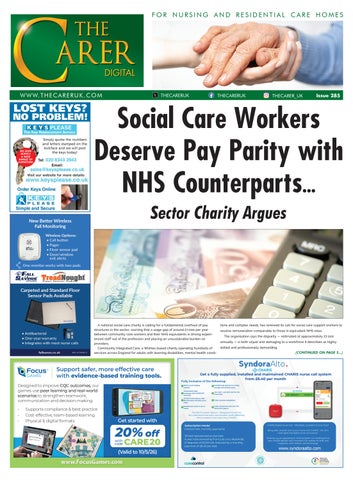
The charity first launched its “Unfair to Care” campaign in 2021, but the issue has gained renewed urgency amid mounting financial pressures, reporting that its operating costs increased by nine per cent in the past year, driven by national insurance changes and the rising cost of living. “SIGNS OF CHANGE”
Earlier this year, Community Integrated Care’s Unfair To Care 2026 – ‘Signs of Change’ report revealed a 28.6% take-home pay gap between adult social care support workers and equivalent NHS Band 3 staff - virtually unchanged from last year - as providers face a 9% rise in operating costs and the sector awaits the impact of a planned Fair Pay Agreement.
Key findings included:
28.6% - the take-home pay gap between social care support workers and NHS Band 3 staff in 2025/26
• £7,048 - the annual pay rise a social care support worker would need to achieve take-home pay parity with an NHS Band 3 equivalent
43.3% - the total reward gap when NHS pension and benefits entitlements are included, representing a £10,990 annual difference
9% - the average rise in operating costs for care providers in 2025/26, driven by unfunded increases in Employer National Insurance and the National Living Wage
• 7% - the overall adult social care vacancy rate, three times the UK-wide rate of 2.3%
Yet some local authorities — whose funding agreements underpin the charity’s ability to pay staff — have offered fee uplifts of only two to four per cent, with an average of four or five per cent across many councils.
UNFAIR-UNJUST
Samantha Brennan, the charity’s managing director, described the wage gap as straightforwardly unjust. “The pay gap between NHS colleagues and social care colleagues is about £7,000 on average a year,” she said. “That’s quite a significant disparity for such a skilled role. It absolutely isn’t fair.”
“Social care touches each and every one of us in our lives at some point. Our workforce needs to be recognised for the incredible skills they have and the vital roles they play in our communities. To keep delivering brilliant support, we need the funding to match that reality.”
Ms Brennan acknowledged the difficult position facing local authorities, noting that their own budgets are directly shaped by central government allocations. The government has committed an additional £4.6 billion for adult social care in England by 2028/29.
“DROP IN THE OCEAN”
However, sector leaders warn that this figure needs to be weighed against the scale of existing demand: English councils spent £29.4 billion on adult social care in 2024/25 alone, a rise of £2.3 billion on the prior year. At that rate of increase, the promised uplift could be absorbed in cost pressures before delivering meaningful improvements.
“The money will help, but it is a drop in the ocean,” Ms Brennan said. “Social care touches each and every one of us at some point in our lives. Our workforce needs to be recognised for the skills they have and the vital roles they play in our communities. To sustain that, we need the funding.”
The debate over pay takes on particular resonance at facilities such as a supported living complex in St Helens — one of many services Community Integrated Care operates nationwide.
Opened in 2019, the development was designed specifically for adults whose ageing parents or family carers were no longer able to support them at home.
Its nine residents each have their own self-contained flat, combined with access to shared dining and communal areas, striking a balance between personal independence and professional support.
The support workers employed there carry wide-ranging responsibilities. In addition to assisting residents with daily activities — from tending gardens to maintaining social connections — staff are required to be trained in psychological support, safeguarding procedures, medical monitoring and individualised care planning. The role, as many practitioners describe it, does not end at the close of a shift.
One support worker at the complex highlighted colleagues undertaking comparable roles within NHS settings earning considerably more, witnessing a number of experienced co-workers leave for better-remunerated positions elsewhere.
“It can be quite challenging at times,” she said. “It’s about supporting people to live the best lives possible — going out, meeting people, building friendships, joining in activities. I love my job and I wouldn’t want to work anywhere else. But we do need the pay to reflect what the role actually involves.”
Community Integrated Care, as a charitable provider is reliant on local authority commissioning, with its ability to raise pay directly constrained by the fee rates councils are able to offer.
Ms Brennan added: "Our cost pressures have increased by nine percent this last year. Some of that's national insurance, some cost of living."
"There's an average of four or five percent in some local authorities. We've seen as low as two percent. "I do understand and I do sympathise with local authorities because their budget comes from central government."
With cost pressures outpacing funding increases by a significant margin, the charity argues that structural change at a government level is the only workable solution.
A Department of Health and Social Care spokesperson said: "We are addressing the adult social care sector's urgent need for support by providing a funding boost of over £4.6bn, introducing a new fair pay agreement for care workers, and increasing the carer's allowance earning limit by more than £2,750 in two years.
"To address the long-term, structural issues we inherited, we have commissioned an independent review into adult social care."

By Rebecca Hughes, Associate Solicitor, employment team, Birketts

The Employment Rights Act received Royal Assent on 18 December 2025. The Act introduces a broad range of important reforms which will take effect throughout 2026 and 2027.
For care homes and adult social care providers, these reforms are likely to have a significant operational and financial impact, particularly given the sector’s reliance on flexible staffing models, large workforces and increasing workforce relations issues.
Early preparation for the reforms will be essential to manage risk, control costs and maintain workforce stability. The rights are being introduced in stages, starting in April and October 2026. This phased approach gives care providers a valuable opportunity to review current practices, update policies and train managers ahead of each change taking effect.
The Act introduces a number of enhanced rights, with several areas particularly relevant to care providers, including: restrictions on the use of zero hours and low hours contracts new rights regarding guaranteed hours and predictable working patterns stronger flexible working rights by introducing a new reasonableness element
• expanded family friendly and sick pay entitlements enhanced protection against unfair dismissal
• strengthened trade union and collective rights the creation of an Adult Social Care Negotiating Body to agree a Fair Pay Agreement for the sector increased enforcement through a new Fair Work Agency.
Many of these changes will be introduced via secondary legislation, meaning some of the details are still being developed.
UNFAIR DISMISSAL: EARLIER PROTECTION AND UNCAPPED COMPENSATION
One of the most significant changes for care employers concerns the right to claim unfair dismissal. During the Bill’s passage through Parliament, the original proposal to introduce day one unfair dismissal rights, with no minimum period of employment, was removed. Instead, the Act reduces the qualifying period from two years to six months, with effect from 1 January 2027.
At the same time, the Act will remove the statutory compensation cap for unfair dismissal claims, abolishing both the current maximum award and the 52 week pay limit. This means that compensation for successful claims of unfair dismissal will be unlimited, as is currently the case for discrimination and whistleblowing claims.
For care homes, this represents a material increase in risk. Dismissals after six months of employment will require a cautious approach, and strong probationary processes will be important to reduce potential claims.
With these changes, care providers should be: reviewing probationary policies and practices ensuring managers are trained to address performance and conduct issues promptly and fairly, particularly during the first six months • improving documentation and consistency in early employment decisions.
ZERO HOURS CONTRACTS AND PREDICTABLE WORKING PATTERNS
The Act also introduces measures aimed at limiting “one sided flexibility”, including new rights for workers on zero hours or low hours contracts to seek guaranteed hours reflecting their actual working patterns. This is due to take effect in 2027 – the exact date is not yet confirmed. Employers will also be subject to requirements around reasonable notice of shifts and compensation for late cancellations. These changes will be introduced through secondary legislation, but they are likely to be particularly significant for the care sector, where variable hours and short notice rota changes are common. The changes will also apply to agency workers, which is likely to increase the impact on care employers given the sector’s high reliance on agency staff.
For care employers, where variable hours are often driven by com-

mercial arrangements and fluctuating demand, this will require careful workforce planning. Care employers should:
audit current use of zero hours and agency staff analyse actual working patterns over time • review whether contracts genuinely reflect operational need prepare for increased cost exposure where hours become guaranteed.
Taking these steps now will place providers in a stronger position once further detail emerges on how “low hours” contracts will be defined and what exceptions may apply.
A major care sector specific development is the legislative framework enabling the creation of an Adult Social Care Negotiating Body, with power to agree a legally binding Fair Pay Agreement.
While further regulations will set out the detail, the intention is to establish minimum pay and potentially other terms and conditions across the sector, preventing providers from competing on labour costs alone.
This has potentially far reaching implications for care homes, including cost modelling, recruitment and retention strategies, and discussions with commissioners.
Flexible working rights are strengthened under the Act, reinforcing the government’s expectation that flexibility should be accommodated where reasonably practicable. From 2027, care employers will be expected to demonstrate that they have acted reasonably when relying on the statutory grounds to refuse a flexible working request.
In a sector already facing ongoing recruitment and retention challenges, care providers should expect an increase in flexible working requests, including requests for alternative shift patterns and more predictable hours.
Care providers should therefore review their flexible working policies and ensure that managers understand how to assess requests, reach decisions, and clearly explain, within flexible working outcome letters, the reasons for the decision taken, including why it was reasonable to refuse a request where applicable.
For care homes, careful planning will be essential to the successful implementation of these changes: managing risk and maintaining compliance while continuing to deliver high quality care.


• We specialise in the sale and purchase of quality used wheelchair accessible vehicles and ambulances.
• They can be bought as seen or refurbished and sign-written to your own requirements.
• Fully serviced, new mot & warranty
• Engineers inspection supplied if required.
• Free delivery service
•


A leading dementia research charity has called on the UK Government to introduce a nationwide public health campaign aimed at reducing the risk of dementia, warning that too many people remain unaware that lifestyle changes can help protect brain health.
According to new findings from Alzheimer’s Research UK, there is a significant gap in public understanding about dementia prevention. While scientific efforts to find a cure continue, the charity stresses that everyday actions—such as staying physically active, maintaining a balanced diet and managing cardiovascular health—can play a meaningful role in lowering risk.
However, awareness of these preventative steps remains low. The charity’s report, Closing the Dementia Awareness Gap, reveals that only 30% of people surveyed recall seeing or hearing information about how to reduce their risk. Even more strikingly, just 39% believe that dementia risk can be reduced at all.
The findings are based on a nationwide poll of more than 5,000 adults, alongside a series of focus groups exploring public attitudes. For many respondents, dementia is still associated with inevitability and fear, rather than prevention or proactive health management.
The report highlights widespread public support for a government-backed awareness campaign, particularly one delivered through the NHS. Trust in healthcare professionals remains high, with more than four in five respondents identifying the NHS and GPs as their most reliable sources of health information.
This trust appears to translate into a desire for more structured guidance. Nearly 60% of respondents said they would like to receive advice on dementia risk reduction during NHS Health Checks. Yet, only 2% of those who had attended such checks reported any discussion of dementia prevention.
Many respondents reported knowing little or nothing about preventative measures, with perceptions of dementia often shaped by fear and the belief that it is an unavoidable part of ageing.
The charity argues that this represents a missed opportunity—particularly for people aged 45 to 64, when
interventions to reduce long-term risk are likely to be most effective.
Nearly two-thirds (60%) of those surveyed said they would welcome advice on reducing dementia risk as part of their NHS Health Check. Despite this, only 2% of people who had attended a Health Check recalled dementia being discussed.
More than four in five respondents said they trust NHS professionals and GPs above all other sources, particularly among those aged 45 to 64—a key group for preventative action.
Respondents consistently favoured clear, positive messaging focused on practical, everyday steps. Rather than alarmist or overly clinical language, people expressed a preference for straightforward advice delivered through accessible formats such as checklists and repeated messaging.
To maximise reach, the report recommends a multi-channel approach. Younger adults are more likely to engage with content on social media, while older groups and those less confident online tend to prefer television and in-person communication. GP surgeries, community groups, and faith settings were also highlighted as trusted environments for sharing information.
Importantly, the campaign should not operate in isolation. Instead, it should be integrated into broader public health strategies, reinforcing messages about heart health, physical activity, and overall wellbeing.
Alzheimer’s Research UK believes that a coordinated national campaign could significantly improve understanding and empower individuals to take action. By clearly communicating that dementia is not an inevitable part of ageing, such an initiative could help shift public perception and encourage earlier lifestyle changes.
The charity is also calling for ongoing evaluation to ensure the campaign reaches diverse communities and delivers measurable impact. Regular monitoring would allow for adjustments to improve effectiveness and ensure equitable access to information.
Orchard Care Homes has rebranded to Orchard Healthcare Group bringing its residential, nursing and specialist services under one clear, modern brand identity
The organisation said the evolution reflects the breadth of support it delivers today, including person-led care across residential, respite and nursing services, alongside specialist dementia and mental health care through its Reconnect communities.
Orchard supports up to 1,260 people across 23 care homes in the North of England and the Midlands, including people living with advanced dementia, mental health conditions and complex nursing needs. The rebrand also sharpens focus on Reconnect – Orchard’s specialist services provision for people whose needs may be too complex for traditional care settings.

The group’s Reconnect Dementia and Reconnect Mental Health communities provide tailored, therapeutic support that protects dignity, builds independence and improves day-to-day wellbe-
ing, delivered by multi-disciplinary teams. Support is tailored around each person’s own story, strengths and routines, in calm, homely spaces designed for meaningful activity.
Hayden Knight, CEO, said: ‘This is a defining moment for our organisation and an important step forward as we continue to grow. Rebranding to Orchard Healthcare Group reflects both how far we’ve come and the direction we’re heading in.’
‘We’re proud to combine compassionate support with strong clinical practice and truly personalised care, from specialist dementia and mental health services to nursing and residential care. Importantly, while our name is changing, what matters most stays the same.
“Residents will continue to receive the same high-quality care from the teams they know and trust, in the homes they know as their own. Our new identity simply gives a clearer picture of the breadth of what we do and our commitment to helping people live meaningful, fulfilling lives.’

Care homes are at the very heart of our communities, providing essential support, comfort and dignity to some of society’s most vulnerable individuals. Yet, as the digitalisation of social care accelerates, many residential and nursing care providers are unknowingly operating with unseen cyber security risks in their midst.
Incidents in recent times – such as Leicester City Council’s 2024 cyber breach – highlight the devastating consequences of a cyber attack. From payroll delays to safeguarding backlogs, these disruptions go far beyond systems, impacting residents, families and frontline staff. Unlike large hospitals or NHS trusts, many independent providers operate with smaller budgets, legacy systems and limited in-house IT expertise. This makes them prime targets for cyber criminals seeking easy access to valuable personal and financial data. Added to this, care homes are becoming increasingly connected to NHS systems and other third-party platforms. National initiatives such as the What Good Looks Like framework, combined with regional strategies, are pushing for improved interoperability, shared care records and digital maturity across all settings. But while this integration between care homes and wider health and social care systems brings opportunities, it also expands the potential for digital attack.
According to the Understanding the State of Cyber Security in Adult Social Care report (March 2025), only 14% of care providers report having dedicated cyber security staff, and fewer than half have tested their incident response plans in the past year. Worse still, barely one quarter (24%) of adult social care providers have full confidence in their ability to respond to a cyber incident .
For an industry that manages medical records, care plans and payment systems, this represents a significant risk; and one that could lead to data breaches, regulatory penalties and reputational damage.
Beyond system issues, cyber attacks can also interrupt care. A ransomware attack could block access to digital medication records,

delay incident reporting or take payroll offline. In a setting where daily routines are meticulously managed, even minor IT downtime can have ripple effects across resident safety, wellbeing and regulatory compliance.
And with the government proposing a ban on ransom payments across public services, the question arises: should this apply to private care homes too? While currently outside that scope, any such extension could place independent providers in a dangerous limbo… unable to pay a ransom and without the means to recover quickly. Prevention, therefore, is critical, let alone best practice.
Endpoints and digital exclusion explained
Endpoints represent one of the biggest vulnerabilities. These are any devices which connect to a network, such as tablets used for care planning, or smartphones for emergency alerts. If left unprotected, these access points can become an open door for malicious incidents. Care homes must ensure endpoint protection is robust, regularly
updated, and monitored as part of a wider network resilience strategy. That includes secure Wi-Fi, firewalls, regular vulnerability scanning, and staff access controls.
Compliance also plays a key role. The Data Security and Protection Toolkit (DSPT) is now mandatory for CQC-registered care providers, but many homes still struggle to meet its standards. But support exists, with providers encouraged to align with national programmes such as the Better Security, Better Care initiative.
Digital exclusion can equally leave care homes vulnerable in more ways than one. Homes without proper digital tools can’t benefit from new care technologies like remote monitoring or electronic care plans. They’re also less able to protect themselves, lacking backup solutions, remote access tools, or even secure email.
The cost of inaction includes missed opportunities, rising admin burdens and risk to residents. Fortunately, becoming cyber-resilient doesn’t require excessive budgets. We recommend the following five steps, tailored for the care sector:
1. Secure your endpoints ensure every connected device is protected with up-to-date anti-malware and encryption.
2. Implement managed detection and response (MDR): round-the-clock monitoring helps detect threats before they escalate.
3. Train your staff: human error is the number one cause of breaches. Regular cyber awareness training is essential for every team member.
4.Review your backup strategy: ensure systems and data can be restored quickly, without paying a ransom.
5. Test your response plans: simulate cyber incidents to ensure you’re prepared.
In care, every moment matters. This is why your technology and cyber defences must work in harmony – protecting your residents, supporting your team, and preserving the trust placed in your care home.
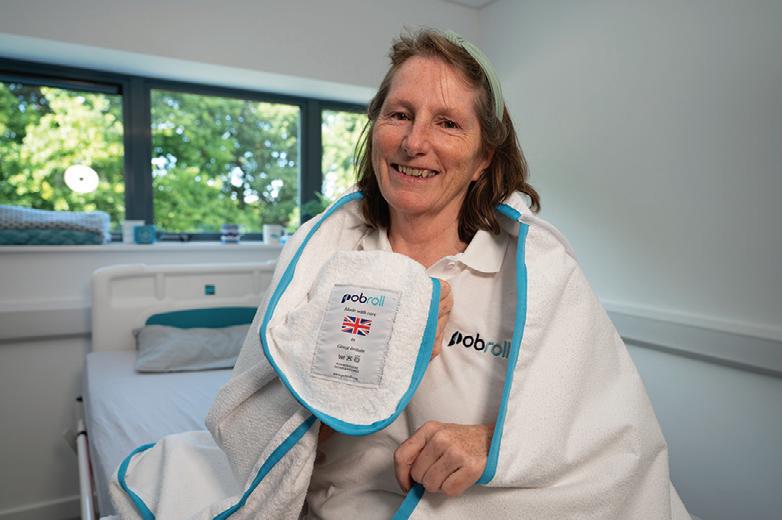
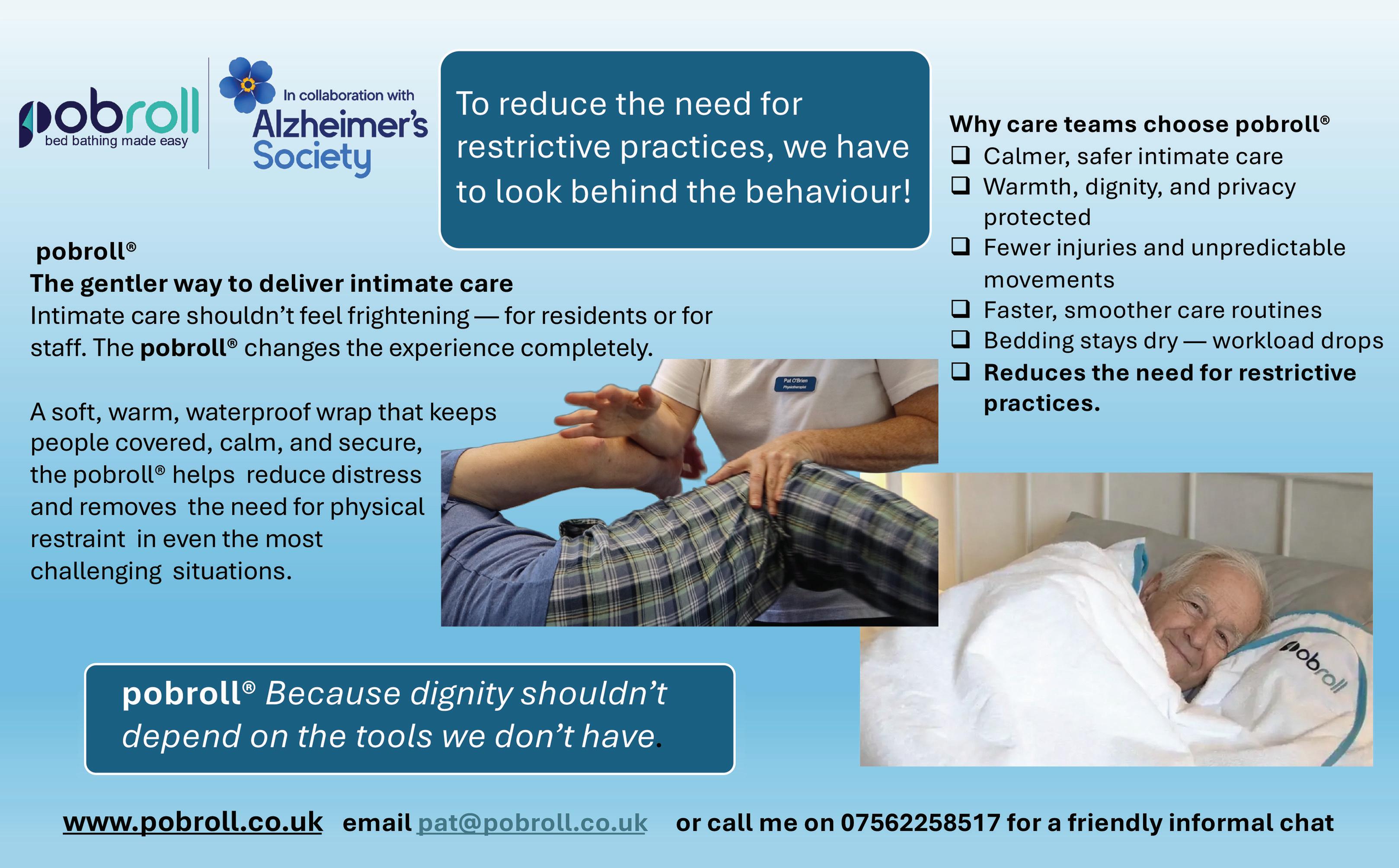
In April 2025, the Supporting the Provider Market (STPM) team in County Durham published a new report evaluating the use of pobroll® — a waterproof bed-bathing wrap designed to improve dignity, comfort, and ease during personal care.
This evaluation was carried out across 10 care homes with high numbers of residents living with dementia. Each setting was given one or more pobroll® units and invited to share feedback through a structured survey. The findings reveal how even simple tools can make a significant difference in everyday care.
How was pobroll® used?
Most care homes used pobroll® daily or several times per week, showing it quickly became part of regular practice. Staff noted that one of the biggest challenges was not having enough units — all homes requested additional stock after the trial, highlighting a clear appetite for wider adoption.
What did care teams think?
Feedback from the care homes showed strong support for the tool:
Ease of use was rated highly, with an average score of 4.4 out of 5. Staff found pobroll® straightforward to incorporate into care routines.
• Training was rated slightly lower, at 3.8 out of 5, suggesting that while the wrap is easy to use, additional training resources could improve onboarding for new users.
Resident response was positive. Three in ten care homes reported improved mood or behaviour during bed bathing for dementia patients.
• Key benefits included greater warmth, coverage, and dignity for residents, especially those who might find conventional methods distressing. Some teams also found it particularly useful for end-oflife care
Would they recommend pobroll® for bed bathing for dementia patients?
Written by Pat O’Brien
Absolutely. Homes rated their likelihood to recommend pobroll® at 4.3 out of 5, with half of respondents giving it a full 5 out of 5. The overall feedback was clear: this is a valued, meaningful addition to personal care.
Would they recommend pobroll® for bed bathing for dementia patients?
The results of this trial reinforce what many professionals already believe — that small, thoughtful design changes can significantly improve care. For residents who are bedbound or living with dementia, personal care can often be a distressing experience. But with the right tools, it doesn’t have to be. The pobroll® isn’t a complex device. It’s a simple, dual-layered cotton towelling wrap. But its thoughtful design — offering full coverage, comfort, and support — makes a real difference where it matters most.
If you’re part of a care home, hospice, or hospital and would like to explore how pobroll® could benefit your residents or service users, get in touch. We’re here to support compassionate, dignified care — one small change at a time.
See the advert on the facing page for details, or visit www.pobroll.co.uk
Phil Holmes, the newly appointed President of the Association of Directors of Adult Social Services (ADASS) has used his keynote address at the organisation’s annual Spring Seminar to place social justice firmly at the centre of the adult social care reform agenda, warning that progress without it will feel “meaningless and hollow”.
Speaking to an audience of adult social care leaders — including people drawing on care and support, council representatives from across the country, and senior figures from national partner organisations — the President opened by reflecting on ADASS’s work from the previous year, entitled Leading in Troubled Times.
That work, he explained, had been developed in response to narratives that appeared to pit disenfranchised groups against one another, as though wellbeing and success were a zero-sum game.
Delegates at the Seminar made clear that while they care deeply about adult social care, the Casey Commission, and neighbourhood health, it is social justice that matters to them most — and colleagues expressed that view with considerable force.

The President’s address took on added gravity in the wake of the recent attack in Golders Green, which he described as barbaric. He was unequivocal in stating that such incidents are not “senseless” but are, rather, the logical consequence of emboldened prejudice. Calling antisemitism racism plain and simple, he stressed that no anti-racism approach can be considered complete without a specific
and determined focus on eradicating it.
He was equally clear, however, that the pursuit of social justice is not a competition between causes. Courageous leadership, he argued, must address antisemitism, Islamophobia, all forms of racism and religious persecution, the prejudice faced by trans people, the discrimination routinely experienced by older and disabled people, and the casual sexism — and worse — that women both working in and drawing on adult social care have long been expected to simply rise above.
The President acknowledged that the starting point for many is rage — in response to atrocity and intolerance — but argued that lasting change will only come through love, empathy, and a shared commitment to creating local, regional and national spaces where people can listen and act together.
He was candid about the limitations of statements alone, noting that declarations risk becoming little more than tick-box platitudes if they are not backed by meaningful action.
To that end, he outlined a minimum of three commitments ADASS intends to honour: clearly articulating the organisation’s position on social justice in its capacity as an independent charity; convening spaces for members to come together, share learning, and support one another — with forthcoming local council elections likely to provide further impetus; and remaining open to learning from the acts of courageous and inclusive leadership demonstrated by those working across the sector.
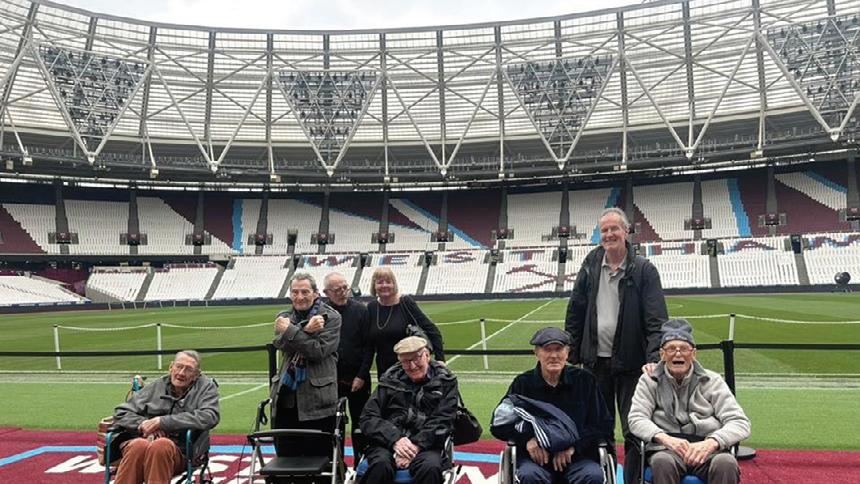
Residents of Rosedale Court Care Home, part of the Runwood Homes Group, experienced a special day out on 15 April 2026, as they embarked on a private behind-the-scenes tour of the iconic West Ham United stadium.
The special outing gave residents and their relatives the unique opportunity to explore the stadium both inside and out. The group enjoyed exclusive access to areas rarely seen by the public, including behind-the-scenes spaces and the chance to stand pitch side.
The visit was made even more meaningful through the warm welcome extended by staff and the wider community at the stadium. Residents were
accompanied by their loved ones and Rosedale Court team members, ensuring a supportive and enjoyable experience throughout the day.
Both residents and members of the community shared positive feedback, highlighting the sense of connection and excitement that the trip inspired. The atmosphere throughout the visit was vibrant and uplifting, filled with smiles, laughter, and shared reminiscing about football memories.
A standout moment of the day was stepping pitch side, where residents were able to take in the impressive scale of the stadium and capture photographs with their loved ones, an experience many described as a “once-ina-lifetime” opportunity.
Ahead of their annual Time for a Cuppa fundraiser in May, specialist dementia nursing charity, Dementia UK, shares advice on meaningful activities that can help people living with dementia to connect with loved ones.
Taking part in meaningful activities with a loved one living with dementia can allow them to continue to enjoy socialisation at a pace which is most comfortable for them. Living with dementia can be exhausting and overwhelming. Following a diagnosis, it may be more difficult for the person to continue to enjoy everyday activities, hobbies, and social interactions due to changes in behaviour and symptoms. This can lead to feelings of isolation, both for the person with diagnosis and those that care for them.
Meaningful activities, like listening to music or looking through old photos, can help people living with dementia to maintain skills, boost confidence and strengthen connections with loved ones.
Strengths and abilities will vary depending on what stage of dementia the person is at. As such, activities may need to be adapted over time to suit the person’s needs and to reflect their hobbies and life experiences.
To help families get started, Dementia UK has shared some practical tips:
• Make time for a cup of tea together – taking a few minutes to sit down and share a cup of tea can be a simple but meaningful way to connect with someone living with dementia. A relaxed tea break can create a calm moment to chat and enjoy each other’s company
• Focus on familiar hobbies and interests – activities that connect with what the person has always enjoyed, such as gardening, music or crafts can feel reassuring and meaningful. Familiar activities often draw on long-held skills and memories, helping the person stay

engaged and maintain a sense of identity and purpose
• Encourage physical activity – light activities like gardening, dancing to favourite music or simple household chores can help keep the body active and improve mood. Physical movement can support balance, strength and confidence, and may also help maintain independence for longer
• Use creative activities – painting, drawing or listening to music can help people express themselves. Creative activities can stimulate the brain and may be especially helpful if communication becomes more difficult
• Reminisce to spark conversation – looking through photo albums or listening to music from the past can help trigger memories and meaningful discussion. Reminiscence can help improve wellbeing by focusing
on positive experiences and feeling connected with the person
• Try simple games or puzzles – word games, number puzzles or chatting about shared memories can help stimulate thinking and keep the mind active. Regular mental activities can support memory, attention and problem-solving, while also providing enjoyable ways to interact together
This May, Dementia UK is running its 17th annual ‘Time for a Cuppa’ event, encouraging people to get involved, to help raise vital funds for families affected by dementia. Every cuppa poured will help Dementia UK fund more specialist Admiral Nurses so more families can get the support they need.
Sarah Priestley, Clinics Programme Deputy Lead, said:
“Hosting dementia-inclusive events can be a great way to bring together people of all ages.
“If you’re planning on hosting a Time for a Cuppa event, try to incorporate some activities that everyone can enjoy whilst sitting down and having a cup of tea, for example arts and crafts or a board game like Snakes and Ladders.
“It’s important that the person living with dementia feels included in the fun, so it can help to focus on activities they can do and enjoy, rather than what they can’t.”
This year’s Time for a Cuppa is proudly sponsored by Nationwide Building Society. The sponsorship forms part of Nationwide’s social impact strategy, Fairer Futures, which seeks to address four of the UK’s biggest social issues through charity partnerships – dementia (Dementia UK), youth homelessness (Centrepoint), family poverty (Action for Children) and cancer (The Royal Marsden Cancer Charity).
You can find out more about Time for a Cuppa at www.dementiauk.org/timeforacuppa
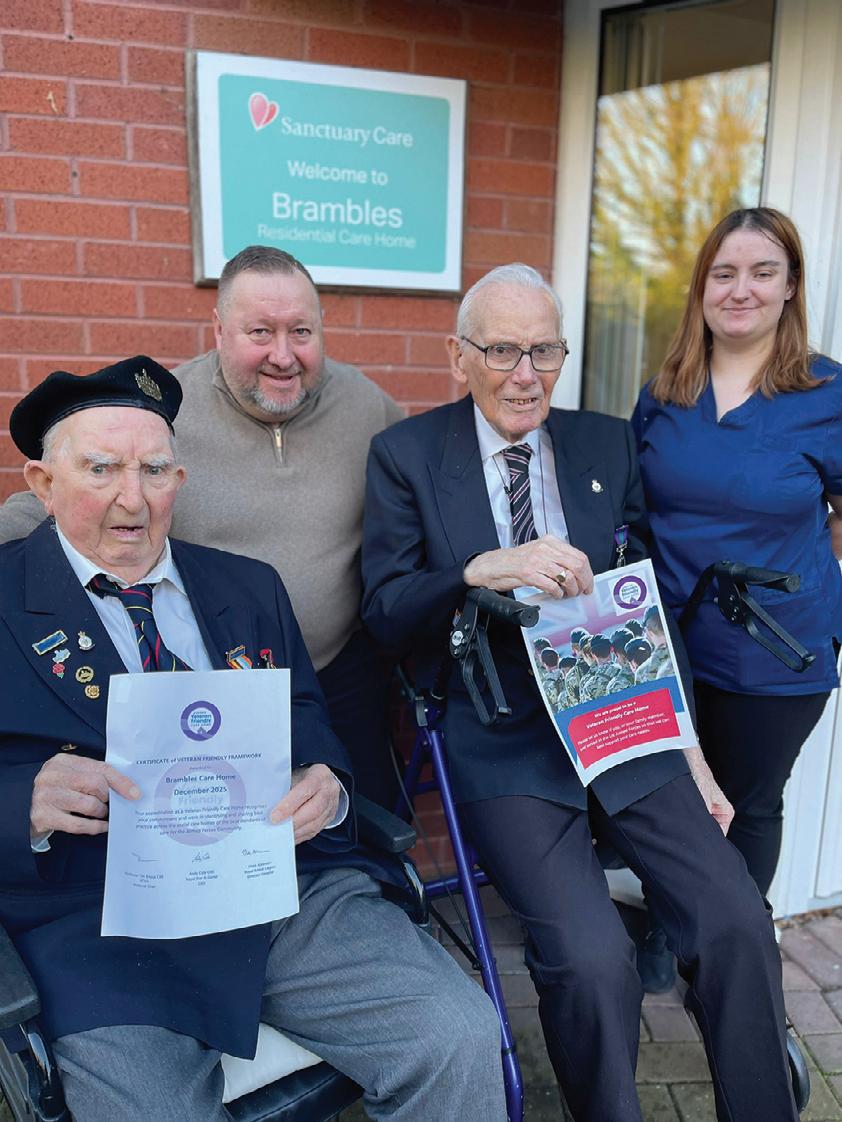
As we approach VE Day, team and residents at Sanctuary Care’s Brambles Residential Care Home in Redditch are celebrating after the home proudly achieved Veteran Friendly Framework (VFF) status.
This prestigious accreditation recognises the not-for-profit home’s unwavering commitment to honouring the unique experiences of veterans in our community, supporting their practical, emotional and social needs.
As part of this commitment the team, which currently cares for 10 veterans, has forged strong connections with local community groups like the Royal British Legion, with the home’s veterans attending its local breakfast clubs, a place they can meet fellow veterans and those connected to the armed forces community.
Poppies are discreetly place on residents’ bedroom doors, to remind staff and visiting healthcare professionals of their service history.
The Sanctuary Care home also has dedicated Veteran Champions - team
members who have completed specialist training and now share their knowledge with colleagues to ensure the highest standards of care for veterans and their families.
One of those is home manager Andrew Green, himself a veteran, having served with the Royal Corps of Transport in Northern Ireland at the height of the troubles there. Andrew explained his passion for supporting veterans in our community.
“I know only too well the difficulty of transitioning from the Army to civilian life. The Armed Forces is one big family and I believe the older you become, you reminisce and crave the old feelings of belonging and camaraderie even more.
“That is why in my position as the home’s manager, I feel passionate about creating a place where our veterans - and of course all our residents, feel safe and loved, with a great sense of belonging to our community.”
Relations between older residents and school pupils in south Manchester have been flourishing this spring as the result of a special crafting get together for Global Intergenerational Week (GIW), championing meaningful connections between ages.
Didsbury-based dementia specialist, Belong Morris Feinmann has welcomed a cohort of new friends from nearby Beaver Road Primary School for a fun session creating Mexican hanging hearts.
Facilitated by volunteers, Linda Price and Lesley Sher, participants exercised their artistic flair cutting, sticking and sewing the hearts into shape, before helping one another out tying tassels and adding gems. Set to add a splash of colour to the village’s reception area, the keepsakes serve as a symbol of the newly forged companionships, taking inspiration from traditional Latin American values of love and community.
Comments from the pupils included: “I really enjoyed this.” –Amira; “That lady is my friend!” – Hugo; “I want to go back soon!” –Hanna.
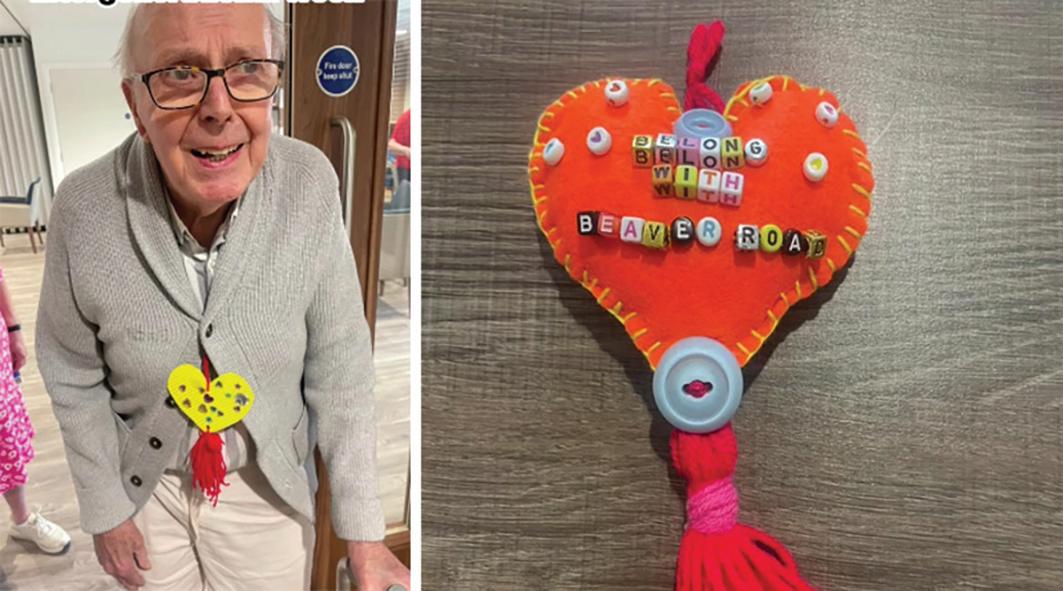
Emma Holmes, head of nursery at Beaver Road Primary School, said: “What a feeling of warmth and welcome in this beautiful place – we were thrilled to be at Belong Morris Feinmann. Intergenerational mixing is really important to us and within five minutes everyone was working together, all natural, nothing curated, it is wonderful to see.”
In recent times, intergenerational experiences have become increasingly prevalent in leading care facilities, with operators promoting the fostering of emotional bonds, a mutual sense of purpose, and joy for both age groups. Additionally, it serves to help reduce loneliness in older people, particularly those without family close by.
Angela Luckett, experience and cultural coordinator at Belong Morris Feinmann, added: “Our wonderful friendship with Beaver Road marks the latest with a local school and our customers have delighted in interacting with the children – they keep on asking when the next meet-up will be! Intergenerational relationships play a vital role in society, and so we have enshrined them within our approach to dementia care.”
Innovation zones should be built through a 'coalition of the willing' who can agree priorities, pool budgets and resources, and share implementation support to improve health care, new analysis published today by The King's Fund on medtech innovation in the NHS, finds.
The King’s Fund brought together patient representatives, NHS and medtech representatives to look at how innovation can improve patient care and boost economic growth. It comes after multiple strategies published in 2025 linked the NHS, life sciences and economic growth together more explicitly as part of the government’s agenda.
The 10 Year Health Plan proposed health innovation zones, but to date there has been little to no updates on how these are being established. The zones envisioned by the government would experiment, test, and generate evidence on implementing innovation. One of the key findings from this new analysis is to build a 'coalition of the willing' when establishing these innovation zones.
This approach would bring together a collaborative group of providers across a geography that agree priorities, pool budgets and resources, and share implementation support. The innovation zones could use mechanisms like corporate social responsibility contributions to cluster innovation and research capability and deliver increasing gains over time.
The report also said that these innovation zones should be given 'permission' to become forerunners in developing and testing neces-
sary changes to regulation needed for novel innovation. This could deliver benefits for patients in the UK and create more international opportunities for UK-based innovators.
The research also found that innovation cannot be considered a 'nice to have' for the NHS. The most capable NHS organisations could in future become Integrated Health Organisations (IHOs) that hold a budget for their whole local population. Making this status conditional, in part, on their capability to develop and implement novel innovations successfully would send a powerful message that the NHS is taking innovation seriously. Over time, this could help create a visible group of organisations that are set up to create groundbreaking innovations with industry, adopt them and scale up what works so more patients can benefit.
The recommendations in the report included:
• Deliver Innovation Zones that speed up proven medtech concepts into routine care delivery - through a ‘coalition of the willing’ that shares priorities, budgets and implementation support
• Prioritise a small number of innovations for rapid national scale (and be explicit about trade-offs)
• Create and expand NHS venture funds to back innovations that measurably improve outcomes, safety and patient experience - and help scale what works across the NHS
• Reward organisations that have the capability to adopt, evaluate and
scale innovations - so more patients benefit, not just those in pilot sites
• Stop ‘pilot purgatory’: design tests around adoption and patient impact, with clear pathways to spread and standardise
Pool innovation budgets across local partners to tackle shared patient needs and population challenges - reducing unwarranted variation in access, outcomes and experience
Fund clinical, organisational and patient leadership so services codesign change and build demand for innovations that improve care
Pritesh Mistry, author of the research and Fellow for Digital Technology at The King's Fund, said: ‘Innovation is essential to improving patient care, safety and quality. The NHS has distinctive strengths: credibility with patients and industry, a diverse population who could benefit from more innovative care, and the potential for strong realworld evaluation to ensure these innovations are improving the nation’s health. But these strengths are suppressed and underused. The current challenge is less about inventing new ideas and more about building the practical conditions for adoption and scale of existing innovations.
‘If national strategies are to translate into better care and economic growth, the NHS will need simpler routes to implementation, stronger collaboration, clearer investment mechanisms and sustained clinical and patient leadership. Above all, it will need to move from a culture of pilots to a culture of delivery.’
Residents, families and staff at Sanctuary Care’s Iffley Residential and Nursing Home enjoyed a night to remember last week as the home hosted a lively, charity quiz with a very special guest at the centre.
The Oxfordshire based care home welcomed friends and family for a fun filled games night inspired by the classic TV show The Chase. Organised by Iffley’s new Activities Coordinator, Sarah Sherriff, the evening brought the community together for a lively test of general knowledge, laughter and intergenerational fun.
The highlight of the night came with a surprise guest appearance from The Chase star Darragh Ennis, who delighted guests by hosting the quiz himself. His humour and charisma quickly had the room buzzing, with teams eagerly partaking in the questions.
Family members were full of praise for the occasion, with one guest saying Darragh’s presence made the evening “truly special, and all for a great cause”.
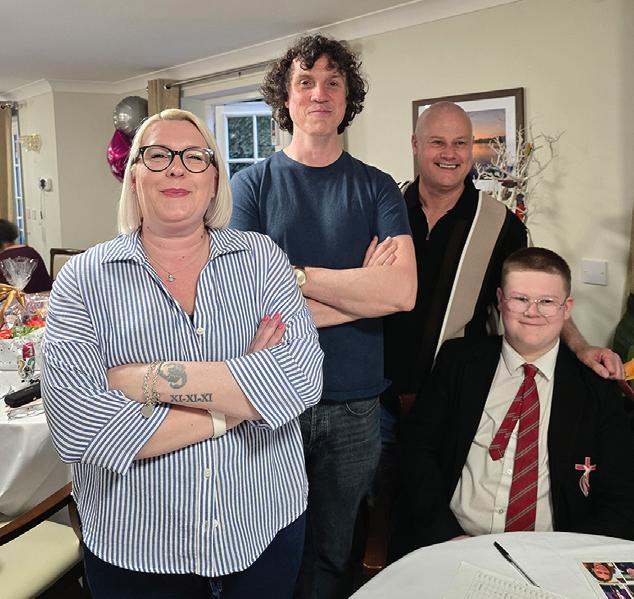
Residents were equally thrilled, enjoying the chance to chat with the TV personality, pose for photographs and share stories. One resident described him as a “down to earth guy who was so friendly to talk to”.
Beyond the entertainment, the evening had an important purpose. The event raised £200 for the NSPCC, Sanctuary’s charity of the year. Staff and residents alike were proud to see the community come together to make a meaningful difference. Activities Coordinator at the not-for-profit care home, Sarah was delighted with the evening, sharing “coming together as a home to create these memorable experiences is at the core of what we do here, it’s so rewarding to see the residents having so much fun!” The success of the quiz night truly reflects Iffley’s commitment to creating engaging experiences that enrich residents’ lives and strengthen connections with their wider community.


People across England will benefit from faster and better mental health support with 8,500 additional mental health workers recruited since the end of June 2024, meeting a key government target 3 years ahead of schedule, the government has announced.
Around 1 in 5 adults in England (an estimated 9.4 million) are now affected by a common mental health condition, but high demand and subsequent long waits has historically been a significant barrier to people getting the support they need.
The milestone means thousands more people will be able to access mental health services sooner and closer to home, cutting waiting times, shifting more care to the community and helping people access mental health support before they reach crisis point.
The new workers – including therapists, psychiatrists, mental health nurses and support staff – are now in post across NHS trusts and community health services in England, providing care to children, young people and adults.

Health and Social Care Secretary, Wes Streeting, said in a speech to the Royal College of Emergency Medicine: “This government promised to recruit 8,500 more mental health workers by the end of the Parliament. We can announce that we have kept our promise, 3 years early.
The Mental Health
“We have recruited 8,500 more therapists, psychiatrists and mental health nurses. They are delivering more care, earlier and closer to people’s homes.
“We also promised to put mental health support in every school, and up to 900,000 more children can today access that support compared to this time last year. Promises made, promises kept.”
Improving mental health care to make it fit for the future is a priority in the government’s 10 Year Health Plan. This year, NHS mental health spending is forecast to increase to a record £16.1 billion, a real-terms increase of around £140 million compared to last year.
On top of this, the government is investing an additional £473 million in mental health infrastructureby 2030 to modernise facilities,expand community mental health services and increase crisis care capacity.
Royal Assent at the end of last year, another key government commit-
people
severe mental health conditions receive better, more personalised treatment.
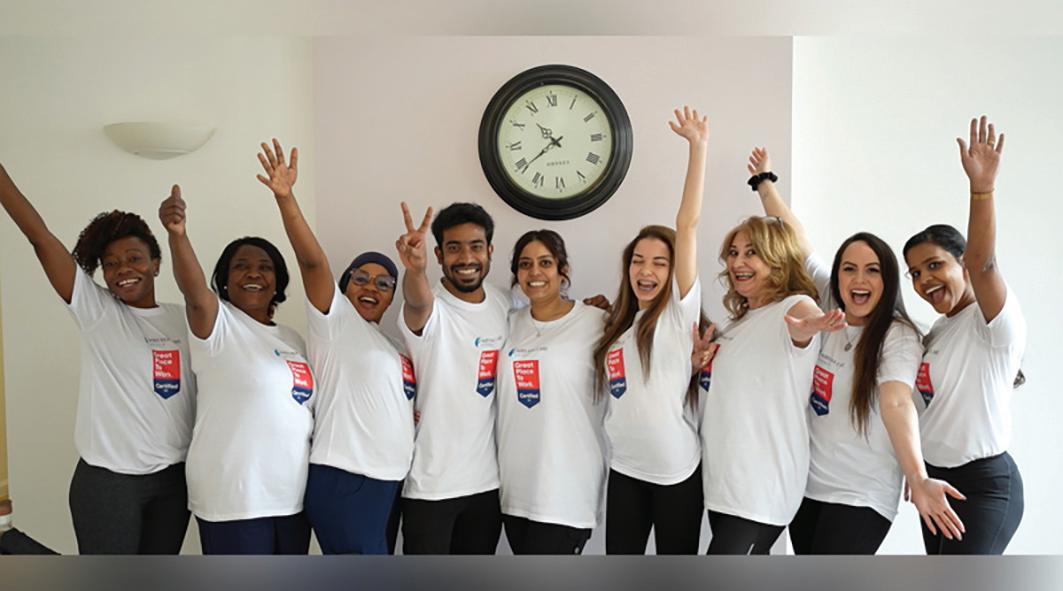
Linden House has proudly marked its achievement of the prestigious Great Place to Work® accreditation, recognising the organisation’s strong commitment to staff wellbeing, inclusivity, and high-quality care.
To celebrate the milestone, the home hosted a special wellness morning for staff, residents, and their relatives. The event brought the community together in a relaxed and uplifting setting, featuring a variety of activities centred on wellbeing and connection. Guests enjoyed wellness-inspired refreshments, and the occasion was met with enthusiastic feedback from all who attended.
Manager Reshma expressed her pride in the recognition, highlighting the importance of supporting those who work in the care sector.
“It’s an incredible feeling to be recognised as a great place to work,” she said.
Welcome to Blue Rain - our activity store is built on over 14 years experience supplying products that bring joy, inspire motivation, and enrich the lives of those who need a little extra support, or simply want to have fun, whatever the weather. Come find your next reason to smile.
Scan me
“The care sector is often one of the most underappreciated, so to know that our staff are genuinely happy means a great deal to me. I firmly believe that people can only give their best when they feel motivated and supported, and that’s something we prioritise at Linden House. Because of this, I’m confident that our team is delivering consistently high-quality care.”
The accreditation process involved employees participating in anonymous surveys and interviews, ensuring that the award genuinely reflects the experiences of the workforce. Reshma noted that this made the achievement particularly meaningful.
“I’m especially proud that the results reflect not only high levels of staff satisfaction, but also highlight our inclusive and diverse workforce,” she added.
This recognition reinforces Linden House’s dedication to fostering a positive working environment—one that ultimately benefits both staff and residents alike.
WHAT DOES “AUTISM ACCEPTANCE” LOOK LIKE IN DAYTO-DAY SOCIAL CARE PRACTICE, AND HOW IS IT DIFFERENT FROM JUST “MANAGING NEEDS”?
Autism spectrum disorder (ASD) is a neurodevelopmental condition which is commonly characterised by difficulties in social interaction, communication and behaviours. The spectrum encompasses different conditions that are formerly known as Asperger’s and pervasive developmental disorder. The spectrum is vast and everyone who has a diagnosis is different with varying challenges, signs and levels of support needed. With ASD being one of the most common neurological disorders that starts from childhood and now estimated to affect between 1–2% of adults, it is vital to understand how to support those with a diagnosis.
The NHS describes the main signs of ASD as:
• struggling to understand other people’s thoughts and emotions difficulties making friends

• challenges with expressing emotions taking things very literally preferring routine and becoming anxious if it changes. Someone who has a diagnosis may also have sensory sensitivities and intense interests in specific topics or activities.
It is important to shift practice and understanding from a deficit-based model of care (what a person cannot do) to a strengths-based model (what a person can do). Despite the challenges an individual with ASD may face, it is important to recognise that they are very capable and a robust assessment to identify their interests, strengths, talents and skills is vital. Alongside this, social care providers must now ensure that their staff have undergone Oliver McGowan (or equivalent) training. It is best practice to invest time yo carry out
more in-depth ASD training for the staff teams. This ASD training would focus on understanding autism through the eyes of someone who is autistic as this perspective can further help the understanding of the staff team to best support people. This training also focuses on a preventative approach which uses regular check-ins to prevent crisis occurring. Also, by adjusting the physical environment to prevent sensory overload could be a way in which providers can help accept the differences a person may face. By creating a safe environment where they are accepted will reduce the need for someone to feel like they can mask their differences.
It is important to note that people who have a diagnosis of ASD often have difficulties in processing time, meaning they take longer to process a conversation or understand what is being asked of them. Studies have suggested that allowing a six to eight-second pause, to allow processing time, before they respond to anything you have said. This allows them to process what has been said or asked of them, think more clearly and calm any anxieties, along with making them feel more in control and confident. By adopting this practice, it can avoid frustration or escalation of emotions or potential behaviours. It also helps them build overall skills around communication and social interaction by adopting this process. People diagnosed with ASD are capable of achieving a lot in life and if they are receiving care, it is up to the provider and the staff to identify and encourage their skills and interests. By focusing on their abilities rather than their disabilities, care provisions have the power to positively influence and enrich the lives of those with ASD.
Source URL: https://app.croneri.co.uk/questions-and-answers/autism-acceptance-social-care
Copyright © 2026 Croner Ltd and/or its affiliates. All rights reserved.
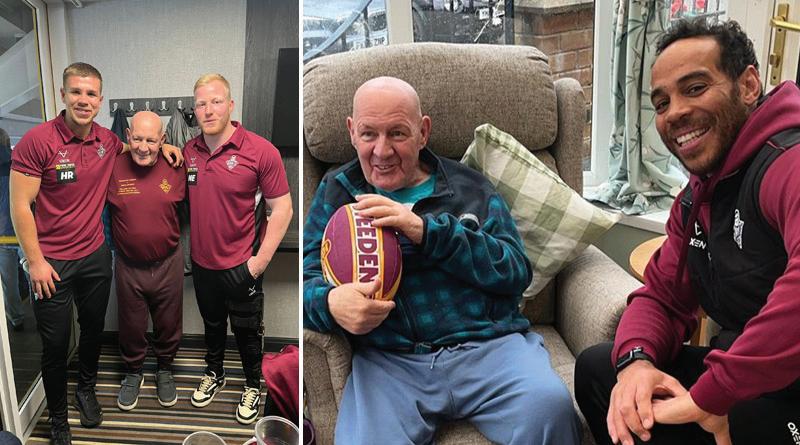
Two first team players, prop Thomas Burgess and forward Harry Rushton, made the visit to see Albert “Bert” Mackay, 78, who lives at Aden View Care Home, on Perseverance Street, Primrose Hill.
In a separate visit, Giants assistant coach Leroy Cudjoe also dropped in to see Bert, as they have known each other for many years.
Bert trained Leroy at the start of his playing career, during his time with the Huddersfield district representative side. He is one of many players coached by Bert throughout his rugby career, having also worked with future Giants legend Michael Lawrence when he first started playing rugby at Newsome Panthers.
Bert began playing the sport himself at 16, when he joined the Army, and continued even while serving overseas, in Germany, as part of the second British Army of the Rhine.
After leaving the armed forces in his early twenties, he played amateur level rugby at Huddersfield RLFC’s former Fartown ground, as well as for Britannia Works and Paddock rugby clubs, until he was 59, when he switched focus to coaching.
Despite dementia and many years passing since coaching Leroy, Bert immediately recognised him when he entered Aden View Care Home.
Bert’s wife, Hazel, said: “He said, “oh it’s Leroy,” as soon as he walked in the room.” Leroy talked to Bert about those he coached over the years, while players Thomas Burgess and Harry Rushton threw passes to him with a gifted ball during their visit.
In addition to the visits, The Huddersfield Giants Community Trust also arranged for Bert to attend the
club’s recent match against York City Knights – which the Giants won 34-14.
He was given VIP treatment throughout the afternoon, including watching from a box and a visit to the players’ lounge, where he met several members of the team.
He was joined at the match by his wife, Hazel, and fellow Giants supporter and Aden View Care Home care assistant, Anthony Blair. Hazel said: “It’s amazing what the staff do for the residents at Aden View Care Home. This was really special for Albert. Thank you to Aden View and the Huddersfield Giants for making a really special day.”
Leroy said: “I’ve known Bert for a long time. He coached Michael Lawrence’s team at Newsome Panthers, a year or two below me, and also coached me during my time with the Huddersfield district representative side.
“So, when his wife Hazel reached out, I was more than happy to go and visit him at Aden View Care Home. It was a great opportunity to reconnect with Bert and, hopefully, I put a smile on his face.
Kim Mckay, home manager at Aden View Care Home, said: “It was such a great day, all provided by the Huddersfield Giants.
“Listening to Bert’s wife, Hazel, and watching her talk about how special this has been for Bert makes everything worthwhile. You could see in her expressions how thrilled she was that Bert experienced this.
“Making memories that will be cherished forever should not stop when someone comes to live at a care home. Even small things can mean the whole world to others. This experience with the Giants was no small thing for Bert and Hazel and it was amazing to be part of it.”
At Broomy Hill Nursing Home, innovation and compassion come together in the most inspiring way. Residents at the home are stepping into a whole new world with the introduction of virtual reality headsets. It is an exciting innovation with the power to create uplifting and meaningful moments for the residents under our care. Virtual reality is becoming an exciting innovation in care homes and at Broomy Hill Nursing Home it is making a meaningful impact. VR is more than just a tool; it allows residents to relive cherished memories and experience activities they may no longer be physically able to do.
For residents with dementia or complex mental health needs, VR stimulates memories, sparks conversations, and provides relaxation through immersive experiences. Using headsets to create digital 3D environments, VR acts as a tool for cognitive stimulation, pain relief, and wellbeing, enabling individuals to safely revisit familiar places or explore new worlds.
We were thrilled at the opportunity to be a part of the Recreo VR experience. It was something new for the residents and us. However, it is not only something new; it is a learning experience for the entire staff at the home.
Our Wellbeing Lead, Lauren, is currently working on a list of available experiences that our residents can choose from to do something different each time they use the headset. This way, our residents will have something new to look forward to each time they use the headset, as new content is added every eight weeks.
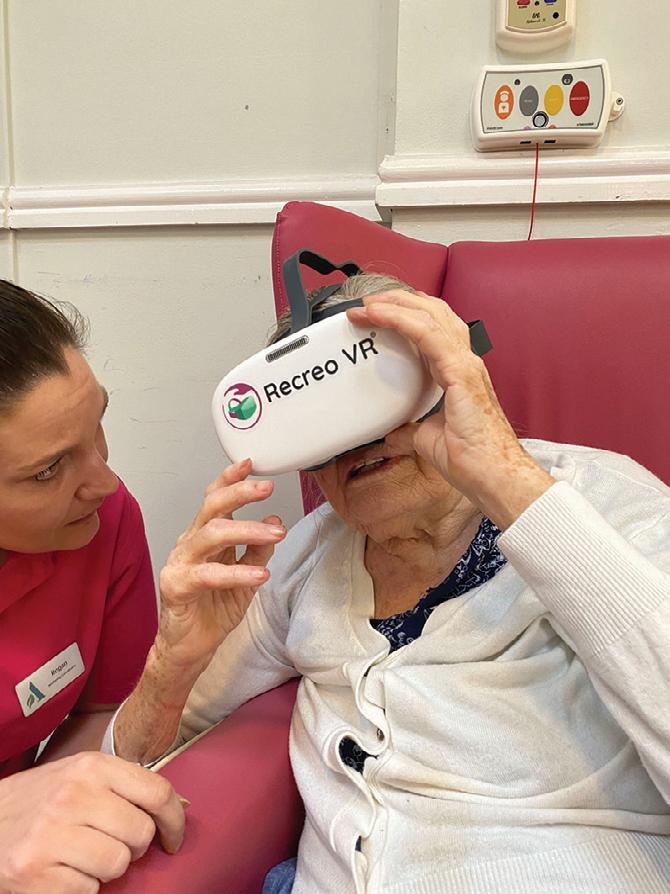
One of the new experiences that our residents will enjoy in the near future is a seated safari, where they will have the opportunity to come face to face with a rhino from the comfort of their chair.
Recently, our residents travelled through time to the 1950s, where they had a virtual visit to a traditional house, cinema, and a high street. In the house, our residents travelled from room to room, exploring the food pantry and admiring the decorations of the house. In the cinema, our residents explored the ticket office, the reel room, and the cinema itself. In the high street, our residents visited an electronics shop, a record shop, and a toy shop, enjoying the experience of each of these different stores.
Many of our residents commented on how real the experience felt, almost like stepping into a memory. Some were actually looking at their hands to get used to the virtual world. As the shops, toys, and songs from the period were brought up, the experience naturally evolved into memories and stories. The dialogue was effortless as the resident's shared memories from their own lives to each other and staff. Virtual reality is more than just an activity at Broomy Hill. It is another meaningful way we promote wellbeing and engagement for our residents. By using Recreo VR, we encourage conversation and reflection, while continuing to look for ways to enhance quality of life within our home. For further information visit www.recreovr.co.uk
A finger prick blood test combined with online brain testing – all done from home – could one day effectively identify people’s risk of developing dementia, according to a new study.
Led by the University of Exeter and published in Nature Communications, the study found that the level of proteins linked to dementia which were measured in the postal blood test were linked to performance on a series of brain tests.
Funded by the National Institute for Health and Care Research (NIHR) Exeter Biomedical Research Centre, the research concludes that at-home testing could be a way to identify people at highest risk of dementia, who could then be prioritised for further testing, treatment and support. It could also identify people at low risk who could be given assurance, as well as those with moderate risk who may benefit from monitoring and guidance on reducing their risk in future.

Professor Anne Corbett, of the University of Exeter Medical School, led the research, and said: “Our previous research has shown that a finger-prick blood test can effectively be taken at home and posted to labs, and that we can identify the biomarkers in blood linked to dementia. This new study builds on that to show that we can link these biomarkers with performance on brain tests, giving us a potential way to predict risk of dementia.
“This work raises the potential for screening people for their risk without the need for clinic visits or complex clinical assessments. It would ensure the people at highest risk could be prioritised for monitoring and diagnosis, unlocking the best support and treatment for those that need it most.”
The research was conducted in the online PROTECT study, in which more than 30,000 UK participants aged over 40 take regular cognitive tests to measure memory, attention and executive function, or decisionmaking skills.
The research included 174 PROTECT participants who were sent the athome tests and administered it themselves, posting it back to the team. The researchers measured two proteins – Ptau 217, which is linked to Alzheimer’s disease, and Gfap, linked to broader brain decline. They found that performance on the brain tests correlated with the presence of the proteins, with tau emerging with the strongest links. This enabled the team to categorise people at low, medium and high risk.
Professor Clive Ballard, of the University of Exeter Medical School, was involved in the research. He said: “Almost a million people in the UK are estimated to have dementia, yet at the moment, only one in a thousand people with the earliest signs of brain decline receives a specialist evaluation. Our approach of combining our robust cognitive testing with measuring proteins via a postal blood test could provide a straightforward, efficient and cost-effective method to reach large numbers of people in the community who would not otherwise be prioritised for the next steps of diagnosis or support and to optimise the clinical pathway to enable early detection of those at highest risk.
“We need further research to validate this approach, and I’d encourage anyone aged 40 or over to join us by signing up to PROTECT.”
Professor Marian Knight, NIHR Scientific Director for NIHR Infrastructure, said: “The potential of this combination of cognitive and blood tests – both of which can be done at home – is really exciting. Not only could it reduce the burden on the NHS by screening people in their own homes rather than in hospitals or clinics, but it also might mean we can identify people with dementia earlier, tailor treatments more effectively, and improve outcomes for patients. This is a fantastic example of research teams in NIHR infrastructure working together to deliver real change for the public and the NHS, in line with government priorities.”
Frome Nursing Home Manager Sherin Anup visited Frome Community College recently alongside Care Practitioner Kat Wilcox, to open up a conversation to the young audience about a career in care, a path that isn’t always the first one people think of when leaving school.
They talked through fair pay across all ages, explaining that rates are the same whether someone is 16 or 21 and above.
The conversation also covered the different roles within the home, not just care, but activities, domestic, administration, maintenance and catering roles, giving a clearer picture of how many different paths there are in care.
Kat shared during the presentation, “There is a role for everyone, many
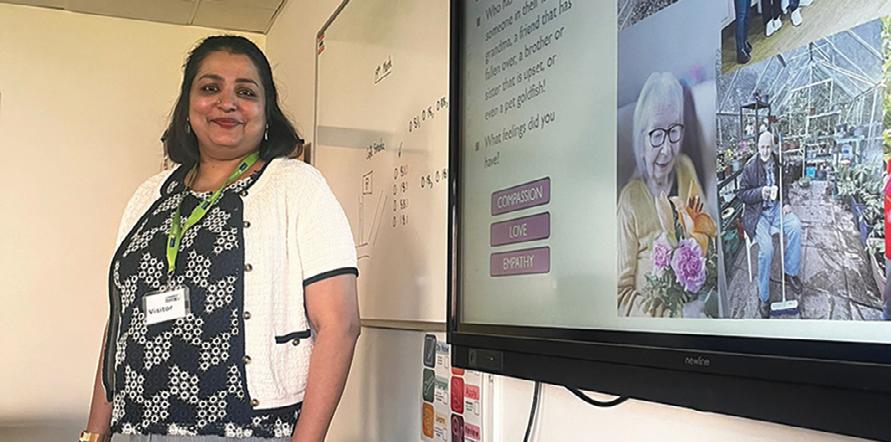
people think that working in a care home is just one role, but there are so many different career pathways at Frome Nursing Home.”
At the end of the 2 hour talk, students were given pens with the home’s name on, and one teacher shared that a former student had volunteered in a care home and came away feeling appreciated for simply being himself. He is since considering a career in care!
This visit to the local community college was a way of showing that these kinds of roles exist locally, and that a career in care is something they can explore within their own community.


The latest government survey on technology in adult social care gives us a mixed picture. On the one hand, the sector has made huge strides in digitisation over the past few years.
On the other, the divide between large and small providers is now so clear that it risks slowing the whole system down.
There is a lot to celebrate. There is also a lot to worry about.
A sector that is moving forward, but not at the same pace
The rise in Digital Social Care Records is impressive. In 2021, fewer than half of providers used them. By July 2025, that figure had reached 80 per cent. DSCRs are becoming the norm, and they are transforming how information is recorded and shared.
Other tools are also becoming part of everyday practice. Digital rostering, eMAR, video calls, accounting software and HR systems are all widely used. These are the sorts of tools that reduce paperwork and free up staff time, which is something every provider needs.
But the headline figures hide a serious imbalance. Large providers are adopting technology at a much faster rate than microproviders. The contrast is stark:
88 per cent of large providers use DSCRs, compared with 57 per cent of microproviders
40 per cent of microproviders use no care technology at all, compared with 11 per cent of large providers
This is not a small gap. It is a structural divide that will not close on its own.
Care delivery technology is growing, but unevenly
By Barry Price, Content Operations and Delivery Manager
Sensorbased monitoring is now the most common care delivery technology, used by 43 per cent of providers. These tools can make a real difference to safety and quality of life, especially in residential settings.
But again, size matters. Personal alarms are used by nearly two thirds of large providers, but fewer than one in five microproviders. Health and wellbeing apps are one of the few technologies with consistent uptake across the sector, but more advanced tools like virtual reality and smartwatches remain niche.
The pattern is clear. The more expensive or complex the technology, the more likely it is to be used by larger organisations.
Connectivity is becoming a major pressure point
Digital care relies on strong, reliable internet access. Yet a third of large residential providers say they do not have fullsite connectivity. That is a serious problem when so many digital tools depend on stable WiFi.
Broadband needs are rising quickly. Today, around a quarter of providers need superfast or ultrafast broadband. In three years, the number needing gigabitspeed connections is expected to quadruple.
Perhaps the most telling figure is that 44 per cent of providers are unsure what connectivity they will need in the future. That uncertainty alone is a barrier.
There is also an equity issue. Most residential providers include WiFi in the care plan, but in domiciliary care, most people pay for their own. That creates a risk that access to digital care becomes dependent on personal finances.
Funding is the biggest barrier by a long way
The survey confirms what the sector has been saying for years. The main obstacle to adopting technology is cost.
73 per cent cite setup costs
• 70 per cent cite ongoing licence fees
82 per cent want support with ongoing costs
67 per cent need help with upfront investment
These are not small numbers. They reflect a sector that is stretched financially and cannot absorb additional costs without support.
Other barriers add to the challenge. Staff training and turnover, cybersecurity costs, connectivity issues and reluctance from some service users all play a part. But none of these come close to the financial pressures providers face.
A clear message for the years ahead
The government wants every CQCregistered provider to be fully digitised by 2029. The progress so far shows that this is possible, but only if the smallest providers are supported properly.
If microproviders continue to fall behind, the sector will end up with a twotier digital landscape. That would undermine the benefits of digitisation and risk widening inequalities in care.
To avoid that, the sector needs:
• Longterm funding for both setup and ongoing costs
Targeted support for microproviders
• Clear guidance on future connectivity requirements
Investment in staff training and digital confidence
• Practical reassurance about safety, data protection and the value of technology
Digitisation should help everyone, not just those who can afford it. The survey shows how far the sector has come, but it also shows where the focus needs to be if the next stage of progress is going to be fair and sustainable.
How QCS supports providers on this journey
For providers trying to navigate this fastmoving landscape, QCS offers the practical support that makes digital change feel manageable rather than overwhelming. With uptodate guidance, easytouse tools and expert insight, QCS helps organisations of every size build confidence, strengthen compliance and make informed decisions about technology. Whether a provider is just starting out with digital records
A 14-year-old from Buckingham is spending his free time at a local care home, where a shared love of chess has helped forge a friendship across generations.
Jake Barnes, a student at Buckingham School, visits Lace Hill Manor for two hours every week – a routine that began as the volunteering element of his Duke of Edinburgh Award but has since become a regular commitment.
GCSE student Jake’s weekly game of chess with Neil, 78, has become a familiar sight at the home, bringing two generations together over the chessboard.
“I come alive when we sit down to play chess,” is how Neil, who has enjoyed chess all his life, describes the visits.
He adds:
“I really look forward to Jake coming every Tuesday. Being in a care home, you can feel as if it’s your last stop. Through inactivity, that becomes a reality, but if you have something to look forward to, your life still has a purpose.” For Jake, the visits are also something to look forward to. He explains:
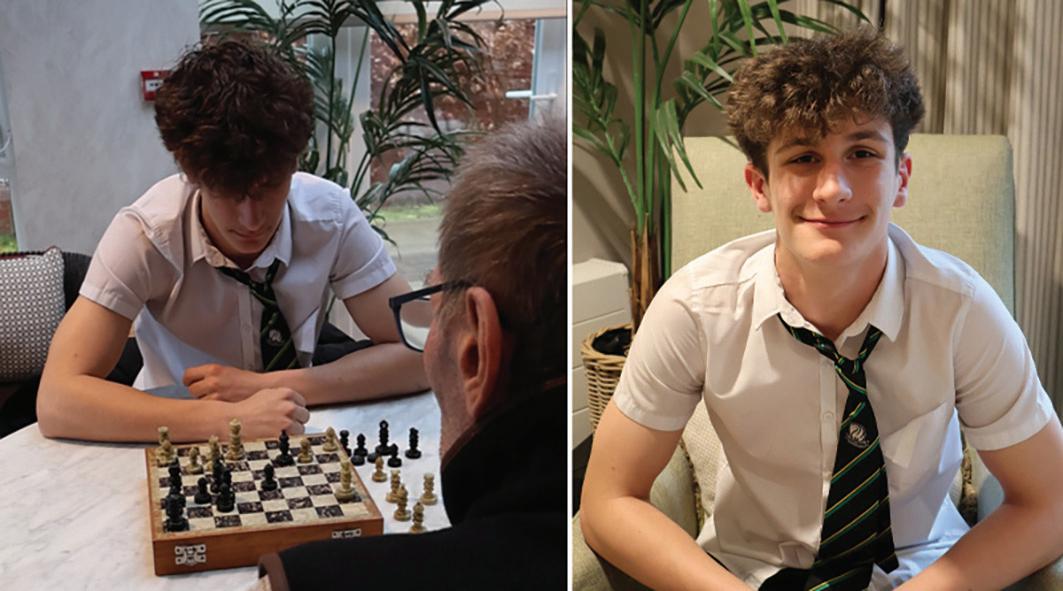
“I started coming to Lace Hill as part of my Duke of Edinburgh, but I enjoyed it so much that I’ve carried on.
“I really like playing chess with Neil, and I enjoy seeing everyone having a good time. It feels good to give something back, and my family are really proud of me.”
At a time when many teenagers might fill their spare hours with screens or socialising, Jake has chosen to continue volunteering beyond the requirements of his Duke of Edinburgh award, returning week after week and making a difference to life for those in the home.
Staff say his visits have had a noticeable impact. Lizz Dewhurst, Lifestyle Coordinator at Lace Hill Manor, says:
“We are absolutely delighted to have Jake visiting every week to spend time with us – he is a lovely, genuine chap and brings a wonderful energy to the home. People tend to think of teenagers in a certain way, but Jake is testament to all the best qualities our young people have.
“It is truly heartening to see the pair, generations apart in age and experience, connect over a timeless game – it proves age is no barrier to friendship.
“We’re so glad to welcome Jake and to have such a great relationship with our amazing local community.”
Grove Court in Woodbridge, Suffolk, has two big reasons to celebrate!
It has achieved a perfect 10 on Carehome.co.uk, the highest achievable review score and has also retained its Outstanding status with the Care Quality Commission, CQC.
Only a limited number of care homes in the UK hold this rare combination of holding both top accolades simultaneously. Carehome.co.uk scores are based on quantity and quality of recent reviews from residents and relatives, showing that positive experiences are consistently delivered day after day. The reviews do not just reflect the high standard of clinical care but also the lifestyle enjoyed by all at Grove Court. A CQC “Outstanding”
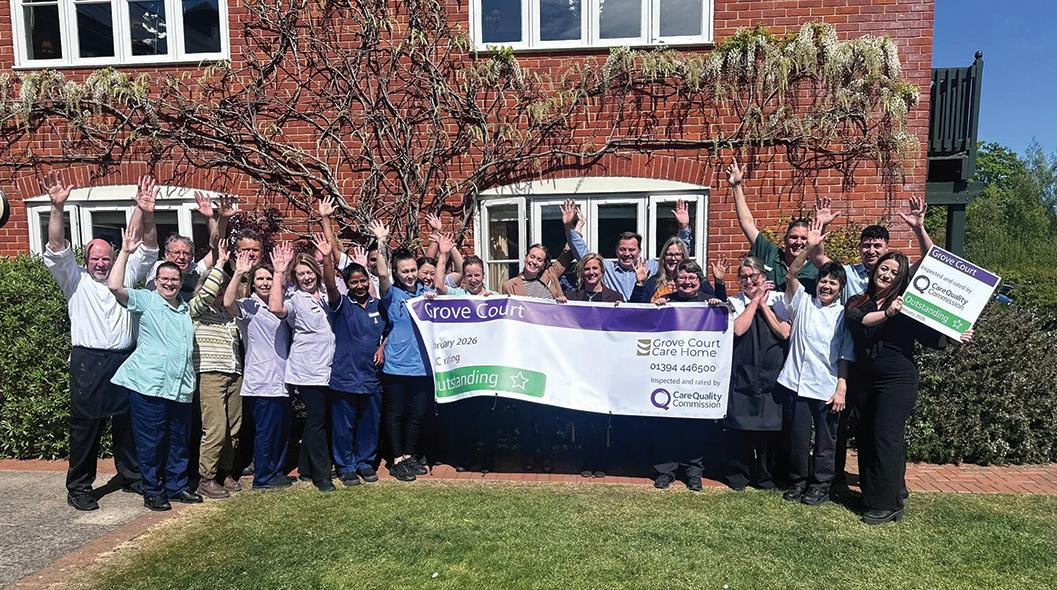
which looks at areas such as person-centred care, leadership, culture and continuous improvement.
Hazel Roberts, CQC Deputy Director of adult social care in the east of England, said: “When we inspected Grove Court, we found a service that had not only maintained the high standards seen at its previous inspection but had continued to build on them. This reflects the dedication and consistency of the leaders and staff team.
“What stood out most was how deeply staff knew the people in their care. Other services should look at this report as an example of outstanding practice, supporting people to lead their best lives.”
“We are absolutely delighted and so proud to have achieved these two amazing accreditations, stated Kelly Lockwood, Grove Court Manager. “They reflect the dedication, compassion and commitment our team bring to their roles every day. We are absolutely focused on creating the best quality of life for each of our residents, where person-centred care is at the heart of all we do.”

By Sam Hussain, CEO and co-founder of Log my Care

For many home care managers, the morning starts the same way: ringing around to piece together what happened yesterday. Costs are rising, margins are tightening, and workforce pressures continue to stretch already busy teams. In this environment, one thing becomes clear very quickly: when the rota slips, everything else follows. Missed visits, late carers, frustrated teams and anxious families are not isolated issues, they are symptoms of a system under strain.
For many providers, the challenge is not a lack of effort or commitment. It is a lack of visibility. Care is delivered across dispersed teams, across multiple locations, often by carers working alone. Critical information sits across folders, spreadsheets, phone calls and WhatsApp messages. Managers are left chasing updates, piecing together information and reacting after issues have already escalated.
At the same time, families are experiencing care at a distance. When care isn’t clearly visible or consistently communicated, even good care can feel uncertain. This often leads to increased queries, escalation and avoidable pressure on already stretched teams.
At Log my Care, we see this challenge every day. The reality is that home care services don’t fail because people don’t care, they struggle because information doesn’t flow.
That’s why the sector is shifting. Care management is moving away from reactive oversight: incidents, audits and after-the-fact reporting; towards continuous, real-time visibility of care delivery. Because in home care, quality isn’t just about what happens in a single visit. It’s about whether care stays joined up across people, time and place.
At Log my Care, our platform is designed to support exactly that.
We bring care planning, rostering and real-time visit data into one connected system, giving providers a single, shared view of their service. Managers can see what’s happening as it happens, without chasing carers or relying on second-hand updates. Carers receive real-time changes directly in the app, ensuring they always have the most up-to-date context for the visit ahead.
This becomes particularly powerful when managing the rota.
When visits are at risk of going off plan, our system surfaces warnings early — giving managers time to act before issues escalate. If plans change, teams are notified immediately, even out of hours, so adjustments can be made before they become emergencies. Every visit is recorded, time-stamped and GPS-verified, providing a clear and accurate record of delivery. That same audit trail matters at inspection time. Providers using Log my Care go into CQC reviews with one consistent, auditable record of care — visit by visit, incident by incident — rather than piecing together paper notes after the fact.
But resilience isn’t just about reacting quickly. It’s about seeing what’s building over time.
At Log my Care, we help providers move beyond isolated notes and into connected insight. Patterns across visits, changes in behaviour, or early signs of risk become visible — enabling earlier intervention, better decision-making and fewer incidents.
For providers, the impact is immediate. Less time spent chasing updates and checking delivery. More confidence that care is being delivered as planned. Greater control without the need to micromanage. For families, the impact is just as important. When care is visible, consistent and clearly recorded, trust builds and communication improves. The need for reactive contact reduces.
No system can prevent every disruption. But providers should have the tools to stay ahead of them — and in today's home care environment, a resilient rota isn't just operational. It's fundamental to delivering safe, consistent care that families can trust.
Scottish care home providers, BCG, is celebrating one of its very special nurses, after she has been recognised as the very best in the country – winning the Royal College of Nursing (RCN), Care Home Nurse of the Year Award, for the exceptional care she gives to her residents.
Lori Fisher, Service Quality Manager and Registered General Nurse (RGN) who consistently makes a significant impact across BCG’s care homes, has been honoured with the sector’s top award. Having devoted her career to the care sector since the age of 16, Lori’s dedication and leadership have been widely recognised at a national level. Lori’s win marks the second time a BCG nurse has taken home the coveted prize in the last three awards.
The awards, given in recognition of excellence in Scottish nursing, are regarded as a benchmark to celebrate the dedication, professionalism, and outstanding care delivered by teams and individuals throughout the country.
Lori, who hails from Arbroath, was one of three finalists in the Care Home Nurse of the Year category – shortlisted from 100s of applicants – which celebrates the impact and importance of nursing in social care and spotlights those who have made an exceptional contribution to the wellbeing and quality of life of care home residents.
Lori was inspired to study nursing after joining BCG at the age of 17. Throughout this time, she has thrived within the profession, rising through a series of increasingly senior clinical and managerial positions. Her upward career trajectory reflects both her exceptional ability and her unwavering determination to deliver outstanding care, and how she unwaveringly underscores BCG’s mission to champion and safeguard resident health.
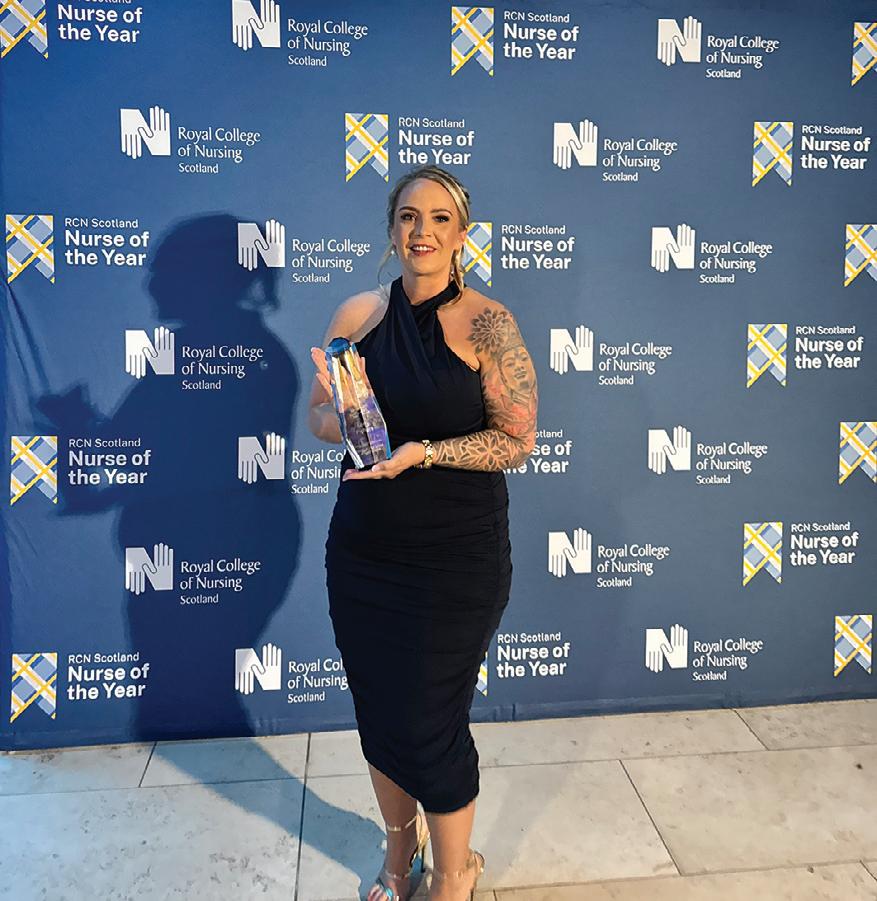
Latterly, Lori took on the wider organisational role of Operations Support Manager, before stepping into her current position as Service Quality Manager, where she now influences standards across 24 homes in six regions of Scotland.
A passionate advocate for preventative health measures, Lori pioneered BCG’s participation in the national Stop the Pressure campaign, an initiative designed to reduce and prevent pressure ulcers, as part
of BCG’s wider, proactive commitment to resident safety and comfort. Her leadership developed cross sector collaboration, bringing together NHS multidisciplinary teams, wound care partners, and equipment specialists to exchange insights and boost awareness, and champion education and best practice across the sector.
Reflecting on the moment, Lori said: “This means so much more to me than just an award. It represents recognition of care home nurses everywhere, especially my incredible colleagues who give so much every day.
“Working in an underrepresented area of nursing comes with challenges, but it also brings purpose. I’m passionate about helping change perceptions and encouraging both newly qualified and experienced nurses to consider this truly rewarding profession.
“Most importantly, it’s about ensuring they are recognised for how inspiring they are, the depth of knowledge they bring, and the dedication and hard work they show every single day!”
Commending Lori’s efforts, Karen Johnson, Managing Director at BCG, said: “We couldn’t be prouder of Lori for bringing home this important award and so delighted to see her recognised and celebrated in this way. She really does give this job everything and is highly-respected across every one of our homes.
“We’re privileged to have so many outstanding nurses supporting residents with highly complex clinical needs. Lori is a superb ambassador for every BCG nurse, and for care home nurses across the country, who deliver exceptional care every day. Huge congratulations!”
Congratulating Lori on her win, Colin Poolman, RCN Scotland Executive Director, said: “Often overlooked, nursing in care homes is a vital area of practice, looking after some of the most vulnerable in our society. Lori is a clear advocate for care home nursing and an amazing showcase of the expert skills and knowledge nurses have. She’s a truly deserving winner.”
Addressing postural care should be a pre-requisite of occupational therapy yet is a postcode lottery, says RCOT(1).
The problem is further complicated by lack of awareness among professionals, the breadth of issues posture management affects resulting in multiple disciplines being involved, and the diversity of equipment required to achieve round-the-clock support and correction and thus funding streams.
AAT is aiming to simplify the process.
Its Grande vacuum posture cushion delivers almost all sedentary and supine positioning support required day or night.
So just one health professional need prescribe.
Caregivers can precisely mould and fix the mattress-sized cushion to correctly support whether sitting or lying in the day or sleeping at night. Grande can be used as a mattress for resting, sleeping or physiotherapy, or folded to create a seat- stand-alone, on a chair, on a sofa.
Its construction also means it is tactile and easily transmits sound waves, so it can double as a conductor for sensory stimulation.
The technology Grande uses is based round the principles of a bean bag, giving the precise shaping inherent in the concept. The beans contour precisely to the required body shape. By
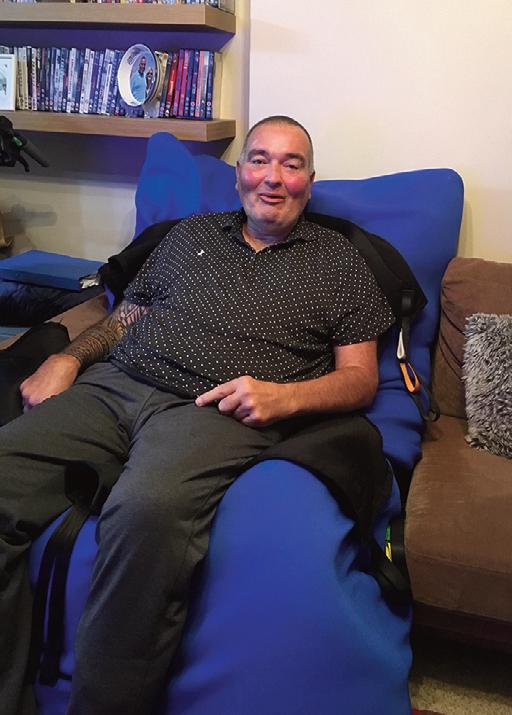
attaching a pump, the air between the beans is extracted, fixing that shape with the preferred degree of firmness.
The shaping can be as detailed as required, providing correct stabilisation with minimal pressure and even allowing for pommels, wedges, hollows for feeding tubes. There is no need for restraint, even during dystonic episodes or hyperactivity.
Frequent re-plumping/ positioning of conventional cushion-type posture systems becomes a thing of the past.
To re-shape, simply allow air back into the Grande and mould as necessary, be it a simple adjustment for body position and comfort or a complete reconfiguration.
“The role postural care plays in the health and wellbeing of disabled people and their carers is acknowledged, but the way our health service is structured, delivery is fragmented. Yet addressing it would have a huge impact not only on the people who need it, but on the demand for associated NHS services,” says Peter Wingrave, AAT Director.
“If just one healthcare professional thinks outside the box and looks at something like Grande, that answers the specific issue they have for a client but simultaneously could answer other issues for that client, surely it must be considered?”
More details about Grande and its role in 24-hour postural management can be found @ www.aatgb.com/grande/.
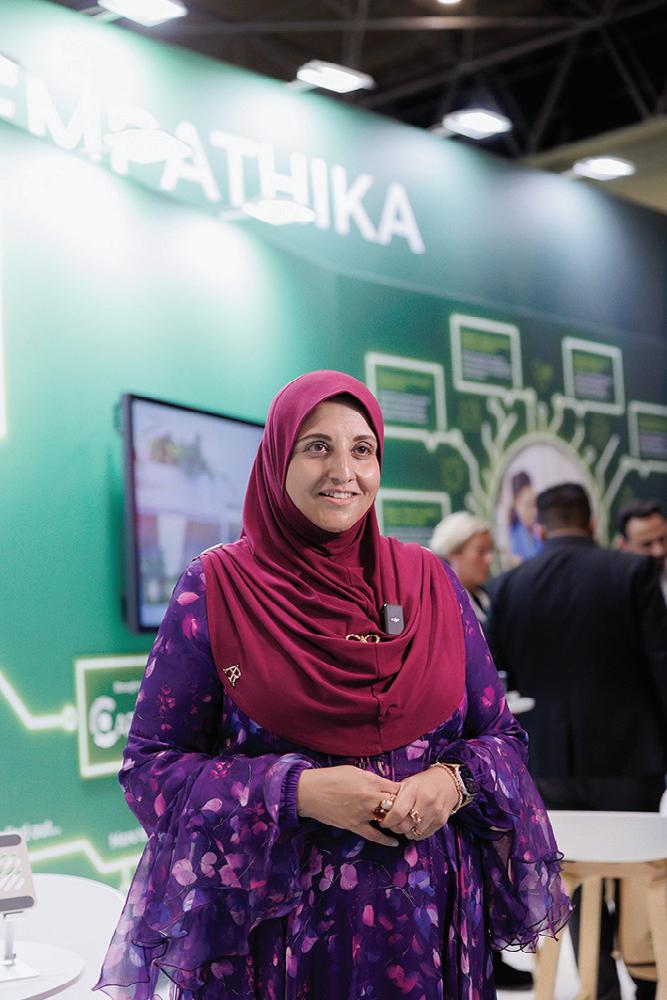
Neemat Sadiq, CEO of Langdale Care Homes, reflects on the tension between compassion and compliance, and how technology can restore time to care.
One of the greatest challenges in care today is not a lack of compassion. It is the constant tension between being present with people and being pulled into process.
I know this not as a CEO, but as someone who began as a carer.
I have walked those corridors. I have sat beside residents. I have felt the quiet conflict of wanting to give just a little more time, while knowing there is documentation waiting, charts to complete, records to update. That tension never really leaves you.
When I founded Langdale Care Homes, I believed I would be creating more space for care. In many ways I did, but like many business owners, I also found myself pulled further away from the very thing I loved most.
If you run a business, you will understand this. The work you once felt so connected to slowly becomes replaced with responsibility, compliance, and oversight.
In care, that shift comes at a cost.
For years, our teams were spending valuable time documenting care instead of delivering it. Not because they wanted to, but because they had to. Compliance demands it. Regulation requires it. And rightly so.
But somewhere along the way, the balance tipped too far.
Care began to feel like it was being recorded more than it was being experienced.
“Care began to feel like it was being recorded more than it was being experienced.”
That never sat right with me.
For over two decades, I have listened to carers, nurses, and managers. I have seen the fatigue that does not come from caring, but from the weight of administration that surrounds it. That kind of exhaustion does not serve our staff, and it certainly does not serve our residents.
There had to be a better way.
Empathika was born from that belief.
Not as a system, but as a response.
A response to the frustration of paperwork.
A response to the risk of human error.
A response to the quiet reality that too much time was being taken away from people.
We wanted to create something that worked with carers, not against them. Something that allowed documentation to happen naturally, in real time, without breaking the flow of care.
Today, with Empathika, information is recorded as care happens. Medication is managed more safely. Risks are identified earlier. And most importantly, our teams are given something incredibly valuable back.
Time.
And with time comes presence. With presence comes connection. And with connection comes better care.
“Technology is not here to replace care. It is here to protect it.”
But we must be clear about something.
Technology is not here to replace care. It is here to protect it.
This will always be a people first industry. No system can replace a reassuring voice, a held hand, or a moment of understanding. No app can comfort a family or respond to a resident calling out in the night.
What technology can do is remove the noise.
It can take away the repetitive, the time consuming, the burdens that sit around care and quietly drain those delivering it.
And when that happens, something shifts.
We have seen it in our own homes. Staff are more present, more energised, and more connected to why they came into care in the first place.
And when our teams feel better, our residents feel it too.
For me as a provider, it has also transformed compliance. What once took hours now takes minutes. Information is no longer chased. It is already there. That sense of readiness brings calm, confidence, and clarity across the organisation.
“This is not a loud transformation. It is a quiet revolution.”
This is not a loud transformation. It is not disruptive in the way people often expect.
It is a quiet revolution.
One that restores balance.
To those working in care, I would simply say this.
If you are exploring technology, do it with intention.
Not to monitor more.
Not to control more.
But to give back more.
Give back time.
Give back energy.
Give back the ability to be fully present.
Because at its heart, care has never been about systems.
It has always been about people.
And it always will be.
A story that began with a chance encounter in February has reached a moving crescendo at Ghyll Royd Care Home, as a resident has been supported to rediscover her lifelong talent and identity as a piano teacher.
The journey started earlier this year when a local pianist, Mary, arrived at the home to perform for the residents. In a stunning coincidence, Mary looked into the audience and recognised one of the residents as the very woman who had taught her to play decades ago. The reunion was instantaneous; the resident, who is living with dementia, joined Mary at the piano, and together they filled the room with music. The moment was so powerful that it did more than just stir emotions—it acted as a cognitive “key” for the resident, unlocking a skill and a passion that many feared had been lost to the progression of her condition.
Since that afternoon, the team at Ghyll Royd has been dedicated to nurturing this spark. Witnessing the profound impact that playing had on the resident’s wellbeing, her family stepped forward to kindly donate a piano to the home, ensuring she could play whenever the mood struck. With the daily encouragement and support of the care team, she is now playing regularly again, performing her favourite tunes with the same grace and skill she possessed years ago.
The resident’s ability to transition from listener to performer so seamlessly is a testament to the unique way music interacts with the brain, particularly for those living with memory loss.
Philippa Young, Group Operations Manager at Spellman Care, explains:
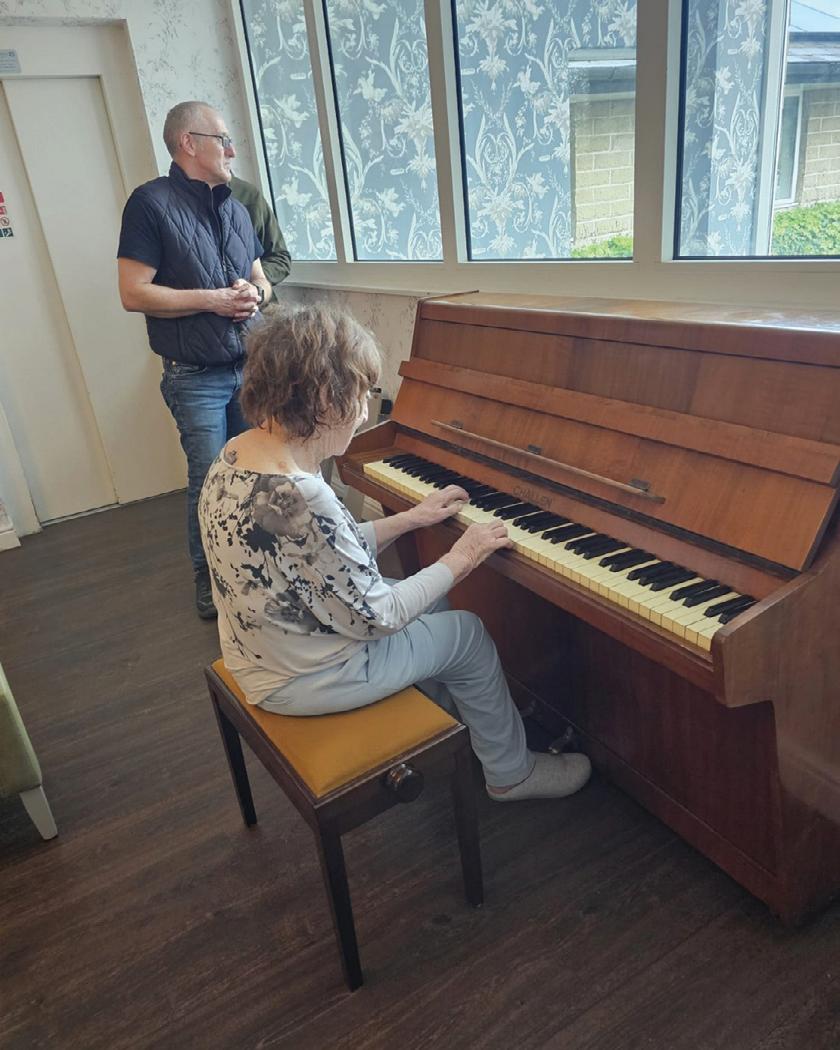
“Music taps into a part of the brain that remains vibrant even as other memories fade. To see our resident regain the ability to play the piano again—and with such skill—is nothing short of amazing. It acts as a bridge back to her identity, providing a sense of purpose and joy that is truly transformative. It proves that the ‘self’ is still very much there, waiting for the right spark to bring it forward.”
This story highlights a significant philosophy at Ghyll Royd: the shift from Person-Centred Care to Person-Led Care. While traditional ‘Person Centred Care’ focuses on meeting an individual’s established needs, Person-Led Care empowers the resident to show the team what they want their life to look like, with staff acting as facilitators to make those moments happen.
Robee Gelido, Home Manager, says:
“This is a prime example of Person-Led Care in action. Our resident showed us exactly what she wanted during that first performance with Mary; she didn’t need to tell us in words, she showed us through her actions. We didn’t decide what was best for her; she led the way, and we followed. With the incredible support of her family and our staff, she has re-discovered her love for music. It is a testament to what can be achieved when we truly listen to our residents and support their individual passions.”
What began as a nostalgic afternoon in February has now become a daily celebration of a life’s work. The resident continues to play her piano daily, filling the corridors of Ghyll Royd with music and proving that for some passions, there is no such thing as a final note.
Angloplas are a UK manufacturer who specialise in producing dispensers for the health and hygiene industry. Although these are designed to keep the workplace tidy and uncluttered they are, more importantly, built knowing the control of healthcare-associated infections (HCAIs) are a priority for healthcare providers, and who are employing a combination of infection prevention and control strategies, including hand hygiene, cleaning, training and the adoption of new technologies, to tackle the problem. As a result, a wide range of infection control products and technologies are emerging on the market, including antimicrobial technology. Angloplas’ range of dispensers are produced in the world’s first proven Antimicrobial PVC with silver ion technology and which is exclusive to Angloplas. This helps reduce the risk of cross infection by stopping the growth of bacteria and mould and works continuously for the lifetime of the product, reducing levels of bacteria such as MRSA, E Coli, Legionella, Salmonella and mould by up to 99.99%. For non-clinical environments Angloplas has recently launched its new Budget Range of products which are made to the same exacting standards as the antimicrobial protected ones but with lower price tags.
You can order Angloplas products directly from its website at www.angloplas.co.uk
See the advert on page 6.

The National Association of Care Catering (NACC) has launched the NACC National Awards 2026, inviting nominations from across the care catering sector for teams and individuals who are recognised by their colleagues for going above and beyond.
Every year the NACC National Awards celebrate the skills, innovation and dedication the Association’s members demonstrate daily, whether they work in residential care homes, Meals on Wheels services, lunch clubs and day centres, or other community services. This year these prestigious Awards have been further strengthened by the addition of a new category – the Innovation Award.
The deadline for nominations in the NACC National Awards 2026 is Friday 26th June 2026. The judges will be looking for examples of outstanding performance in delivering the highest standards of nutrition and hydration care to create tangible benefits for residents and other service users in the following categories:
• Care Establishment of the Year Award, sponsored by allmanhall
• Meals on Wheels Award, sponsored by apetito
• Catering Team of the Year Award, sponsored by Rational UK

• Catering Manager of the Year Award, sponsored by Unilever Food Solutions
• Our Care Catering Hero Award, sponsored by Miele
• Region of the Year Award, sponsored by Meiko UK
• The Bev Puxley Award, sponsored by The Worshipful Company of Cooks London
• Innovation Award
The shortlist of finalists will be announced in August, with the winners in each category being announced
at a Gala Dinner at the NACC Training & Development Forum* on October 15th, when the recipients of the Pam Rhodes Outstanding Achievement Award, sponsored by Winterhalter, and the National Chair’s Award will also be revealed.
Says Neel Radia, National Chair of the NACC: “We are excited to announce the new Innovation Award this year. Our annual Awards are always about recognising excellence within the care sector and this often goes hand-in-hand with innovative ideas that push the boundaries of great nutritional support just that little bit further. This new accolade is designed to recognise and commend those members who are leading the way in improving care catering with cutting edge innovations.
“The NACC continues to shine a light on a sector that is often undervalued and misunderstood. These Awards not only celebrate the wide range of skills our members have, but also recognise the vital role members play in ensuring the vulnerable individuals they serve eat safely, remain hydrated and enjoy every dining experience.
“I would encourage everyone to enter their colleagues in the NACC Awards 2026 to ensure the hard work and talent of their teams does not go unrecognised, and I look forward to announcing the winners in October.”
Entry to the NACC National Awards is open to all members of the NACC. The 2026 nomination brochure with full category details and entry requirements can be downloaded at https://bit.ly/NACCAwards26
For more information about how to become a member visit www.thenacc.co.uk
The annual Training & Development Forum takes place on 14th-15th October 2026 at its new venue, Hilton at St George’s Park, Burton-on-Trent
Join us at the Care Forum – a unique event designed for senior professionals responsible for purchasing care home facilities, alongside providers of the latest innovative products and services within the healthcare sector.
The event follows our award-winning format, offering the opportunity to meet 1-2-1 with suppliers through a personalised itinerary of meetings in a relaxed and intimate setting.
8th & 9th June 2026
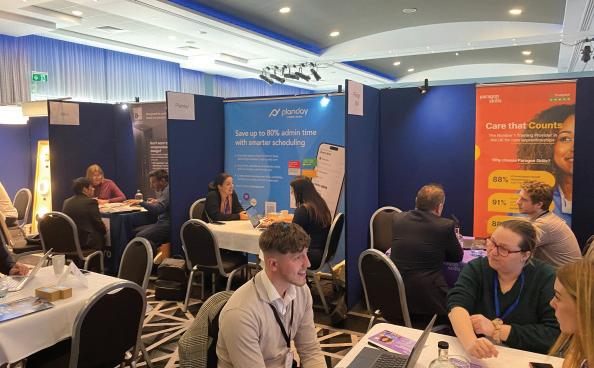
Radisson Hotel & Conference Centre, London Heathrow BUYERS TO THE INDUSTRY
Attendance is entirely free for buyers. Your pass includes a personalised itinerary of relaxed 1-2-1 meetings with budget-saving suppliers who match your needs, access to insightful and educational seminar sessions led by industry thought leaders, valuable networking opportunities, breakfast, lunch and refreshments throughout,
overnight accommodation at the venue, and attendance at our gala dinner with entertainment.
Confirmed speakers include Sultana Pasha, Quality & Compliance Director at KYN presenting “In My Experience: How to stay compliant with CQC” and Lauri SmithFounder & CEO at The Civility Gap presenting “Breaking silos between health, social care, community services”. Additional sessions will be announced soon.
Buyers can register via our booking form at https://thecareforum.co.uk/delegates-booking-form/ SUPPLIERS
The Forum connects you with healthcare professionals who have specifically requested to meet you and are actively seeking solutions. Benefits include a personalised meeting itinerary, access to senior decision makers, branding exposure, full catering, a pre-built meeting stand, overnight accommodation, and a gala dinner.
The Forum offers an unparalleled opportunity to promote your solutions to engaged decision-makers reviewing their suppliers. For more information, please contact j.healy@forumevents.co.uk
By Kevin Groombridge

Inspection, as commonly practised, is often episodic and judgement-led. CIUK’s process takes a different approach. By integrating detailed, evidence-based inspection with targeted action planning and sustained implementation support, it reframes inspection as a continuous improvement system rather than a periodic verdict.
Supported by UKAS accreditation since 2016, the model is designed to produce findings that are not only credible but also operationally useful and capable of driving measurable change.
Health and social care providers operate under sustained scrutiny, yet the relationship between inspection and meaningful improvement remains inconsistent. Compliance is assessed and ratings are published, but whether inspections reliably drive safer care, better outcomes, or stronger organisations is open to question.
Inspection systems in the UK remain heavily judgement-led. While professional judgement plays a role, over-reliance introduces variability, subjectivity, and inconsistent outcomes.
Providers frequently encounter divergent findings for similar levels of performance. This reflects a structural issue in which conclusions are shaped by individual perspective rather than a consistently applied evidence base.
The risk is twofold. First, organisations may be incorrectly assessed, undermining confidence in the system. Second, judgement-led inspection often fails to produce operationally useful insight. It describes performance but does not reliably explain causation or provide a clear route to improvement.
Inspection, in this form, risks becoming an exercise in classification rather than a tool for change.
ARE REGULATORS EFFECTIVE INSPECTORS?
Regulators perform an essential role in setting standards and enforcing compliance. However, there is a legitimate question about whether they are structurally well-positioned to serve as high-quality inspectors.
Regulatory bodies are simultaneously rule-setters, assessors, and enforcers. This creates a model that can be reactive, episodic, and riskaverse, with inspection often focused on identifying failure rather than understanding system performance.
In practice, this can lead to inspections that are:
Event-driven, triggered by concerns rather than embedded in continuous assurance
Compliance-focused, prioritising adherence over operational effectiveness
Inconsistent, due to reliance on individual judgement
This is not a criticism of intent, but of structure. Regulation and inspection are related functions, but they are not the same discipline.
CIUK’s work is structured around three core components. First, a forensic, evidence-based inspection that examines not only compliance, but how care, governance, and operational systems function in practice. This is followed by a targeted action plan that translates findings into specific, prioritised interventions that address root causes rather than symptoms. Crucially, inspection is not treated as a standalone event. CIUK provides ongoing support, working alongside providers to implement changes, monitor progress, and stabilise performance over time.
This model incorporates:
Systematic risk analysis - identifying latent risks before they manifest
Operational diagnostics - examining how care, staffing, and governance function in practice
• Commercial impact awareness - recognising the link between quality and sustainability
Inspection is therefore treated as a diagnostic process, focused on causation and designed to produce actionable findings.
INTERNATIONAL PERSPECTIVES
Other countries have adopted models that place greater emphasis on independent, provider-engaged assurance.
In the Netherlands, inspection is complemented by strong provider accountability and transparency. In Australia, accreditation-based systems require providers to demonstrate ongoing compliance, supported by external verification. Similar approaches are evident in parts of Canada and the Nordic countries, where inspection is more clearly separated from enforcement.
These models are not without challenge, but they demonstrate a consistent principle: inspection is most effective when it is independent, evidence-driven, and embedded in continuous improvement, rather than positioned solely as a regulatory checkpoint.
A persistent weakness in inspection systems is the prioritisation of judgement over utility. Ratings may signal performance, but they rarely enable change.
CIUK places greater emphasis on structured improvement pathways. Weaknesses are translated into specific actions, while strengths are used to stabilise and improve performance.
This reframes inspection as a forward-looking mechanism for risk reduction and quality improvement, rather than a retrospective assessment.
The sector does not lack inspection; it lacks inspection that is sufficiently consistent, evidence-led, and operationally useful to drive sustained improvement.
CIUK’s approach, underpinned by UKAS accreditation since 2016, does not replace regulation, but it challenges the assumption that regulatory inspection alone is sufficient.
If inspection is to have real value, it must move beyond periodic judgement and towards continuous, evidence-based assurance that organisations can act on with confidence.
Nursing absence rates in Scotland’s NHS are hitting critical levels and current workforce planning provisions are increasingly inadequate to deal with the gaps in the workforce.
According to a Freedom of Information (FOI) request made by the Royal College of Nursing (RCN) Scotland to health boards, rates in many boards are significantly and recurrently above the planned for sickness absence rate of 4% which is included in the predicted absence calculations for staffing plans.
The absence rate average for nursing staff across the NHS boards in 2024-25 was 7.5% and reached 8.3% for April to December 2025. That’s more than double the rate included in the predicted absence rate for workforce planning. Three NHS boards reported nursing absence rates over 10%.
Between 2022 and 2026 only one health board had a sickness absence rate below 4%.

Staff sickness due to stress, anxiety and depression continue to be the most frequently recorded reason for working time lost among NHS nursing staff.
These findings further emphasise the need to update the predicated absence allowance which is used as part of the process to calculate how many nursing staff are needed to staff wards and services to meet demand – known as nursing establishments.
Current calculations are based on having 22.5% of staff absent at any one time, this includes 4% for sickness absence and other planned absences such as annual leave and maternity leave. To have enough staff to ensure safe care, the predicted absence allowance must be increased. The Royal College of Nursing is calling for a minimum of 27% absence to be included in the calculations to reflect the realities of working in today’s NHS. Anything less is leaving nursing teams critically understaffed on a daily basis.
Commenting on the figures, Colin Poolman, RCN Scotland Executive Director, said:
“Nursing staff are being ground down by a vicious cycle of increasing workload pressures and more and more gaps in the workforce. Not getting breaks, excessive workloads and high vacancy rates are major factors in absence rates amongst nursing staff. Increasing sickness absence rates compound the negative effects of a stubborn vacancy rate.
“With sickness absence rates increasing apparently unchecked, nursing staff are trapped in this cycle. The more often they work on a day with colleagues missing from the shift, the greater the danger of burnout. The NMC has reported that 27% of nurses working in Scotland are at high risk of burnout, and 29.8% are struggling to cope with workload.
“Gaps in the workforce and the adverse effect on staff wellbeing also undermines safe and effective care. Safe nurse staffing saves lives, protects exhausted staff and strengthens health and care services. Safe staffing is also vital for improving retention of experienced nurses and attracting new individuals into the profession. Both are key for securing a sustainable nursing workforce able to meet the increasing needs of Scotland’s ageing population.
“That’s why in this election we’re calling for the next Scottish government to invest in and value nursing. The costs of not investing in nursing are significant both in terms of the long-term impact on service delivery, and the very real risk of harm to patients and residents being cared for today, as well as to nursing staff. We’re calling for nursing to be recognised as an asset, rather than viewed as a cost. It’s time to value nursing properly, because Scotland’s health depends on it.”
Maria Mallaband Care Group (MMCG) has announced a
£100,000 annual investment in a new partnership with tour provider Myley to provide more adventurous excursions for those in their homes.
The 24-month agreement with Myley, which runs accessible tours for older adults living in care settings across the UK, will be rolled out for 53 homes across the group initially. Almost 1,600 individuals will enjoy more than 300 organised trips over the coming 12 months, with experiences tailored to the interests and preferences of those living in each home.
By drawing on the support of Myley’s experienced schedulers and tour leaders who are familiar with destinations and specialise in care outings, MMCG will open the door to a wider range of experiences and excursions, says Paul McPartlan, Chief Operating Officer at Maria Mallaband Care Group: “This partnership opens up some really exciting opportunities for the people living in our homes, from discovering new places to revisiting ones that hold special memories.

“Just as importantly, it makes a real difference for our teams. Planning and delivering trips, even driving
a minibus, can be a big responsibility – one our staff have been handling well – but having that expert support means colleagues can be more ambitious and expansive when thinking about where to go and what those living with them would like to do.
“With Myley taking the lead on the planning and logistics, our colleagues will be able to focus purely on those in their care, ensuring they’re enjoying the experience – and sharing in that enjoyment alongside them too.”
The new 24-month contract comes after a successful sixmonth pilot project with Myley providing tours for nine MMCG homes around Leeds, as well as homes in Scotland and the Northwest. The visits included trip to farms, country parks, museums and zoos, and a tour of Old Trafford Stadium
The wider roll-out opens up opportunities for more varied and ambitious days out across the group. Last year Myley, which works with several UK care home providers, delivered more than 3,300 trips around the UK. With the motto ‘Adventures never retire’ the company creates experiences from bowling to beach trips, riding steam railways to touring historic homes.
The law is changing for care homes, but understanding your obligations has never been easier
Providing both comfort and dignity to those in your care is at the core of the Care homes profession, but when it comes to both residents and their families, one of the most important things you can offer is trust.
Moving to a care home can be an emotional time for some and transparency and fairness are key in reassuring prospective residents and their families that they will be cared for with compassion and respect - This, and compliance with the law.
Earlier this year we saw the introduction of the Digital Markets, Competition and Consumers Act 2024 (DMCCA) - a landmark piece of legislation that affects business and how they are required by law to safeguard their customer with fair trading practices. These changes may sound like legal jargon, but they directly impact how care homes operate, communicate, and contract with residents.
Compliance can be complex and that’s why the Business Companion Care Homes Guidance is essential reading for anyone working in the Care Homes sector. Written by legal experts this free and easy-to-read guide will walk you through all the steps to ensure you are safeguarding your customers and operating within the law.
WHAT’S CHANGED UNDER THE DMCCA?
The introduction of the DMCCA represents one of the biggest shifts in consumer law in over a decade. It replaces the old Consumer Protection from Unfair Trading Regulations and introduces stricter rules to protect consumers from misleading or unfair practices across almost

all sectors. For care homes, this means:
Clearer Pricing and Transparency: The Act bans “drip pricing” which is when unavoidable fees are hidden until late in the process. Care homes must now present the full cost of services upfront, including any mandatory charges.
• Fake Reviews and Misleading Endorsements: The DMCCA prohibits the use of fabricated or manipulated reviews. With care homes increasingly relying on their online reputation, ensuring authenticity is now a legal obligation.
Stronger Enforcement Powers: The Competition and Markets Authority (CMA) can now impose fines of up to £300,000 - or 10% of global turnover - for breaches. Compliance isn’t optional; it’s critical.
• and much more!
These changes underline the importance of reviewing your policies, contracts, and marketing materials. The Care Homes Guidance on Business Companion provides practical steps to help you stay compliant and avoid costly mistakes.
KEEPING CONSUMER VULNERABILITY IN MIND
Vulnerability can arise from a number of different situations and factors throughout a person’s life, such as age, health, bereavement, or financial stress. As someone working in the Care homes sector, you’re
dealing with vulnerable individuals on a daily basis and recognising these factors isn’t just good practice; it’s a legal and ethical responsibility.
The Business Companion Consumer Vulnerability Guide offers checklists and practical advice to help you identify and support your residents who may be vulnerable when it comes to things like decision making and communication, ensuring your care home delivers not only compliance but compassion.
YOUR
Business Companion is more than just a care home resource - it’s a comprehensive hub for businesses across a broad range of sectors. From selling online to handling complaints, delivery charges, and even net zero strategies, the platform covers hundreds of topics delivered to you through clear, easy-to-read guidance. Backed by the Chartered Trading Standards Institute and the Department for Business & Trade, Business Companion is free, authoritative, and regularly updated by legal experts.
ACT NOW
The DMCCA is already in force, and enforcement powers are live. Don’t wait for a compliance issue to arise - visit Business Companion’s Care Homes Guidance today. Review your contracts, pricing structures, and communication strategies and explore the wider resources available to future-proof your business against legal pitfalls.
In a sector built on trust, staying informed isn’t just smart - it’s essential.
To find out more, visit: www.businesscompanion.info

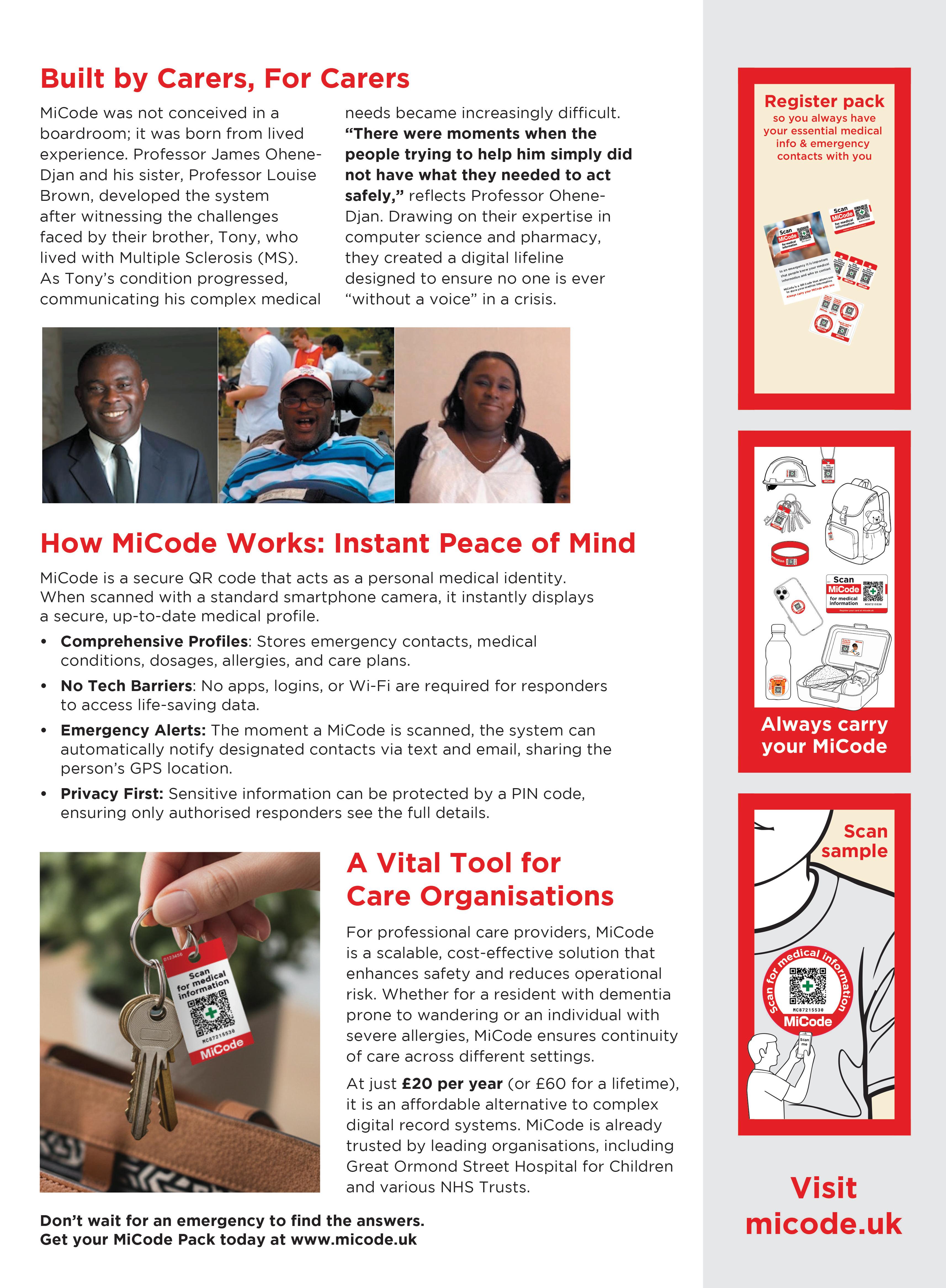
Staff at Oakland Care’s home in Hastings are celebrating more than 150 years of caring for the town’s residents. 17 members of the team at Hastings Court on The Ridge make up the total, with four of them having worked at the home since 2015. Among them is George Postolache who started his career as a housekeeper at Hastings Court. He said he was proud to have cleaned toilets and done laundry.
“I was just 19, it was my first proper job,” he remembered. “I didn’t have much English, but Hastings Court gave me an opportunity. As my language skills developed, I started to work with the residents and then I became part of the maintenance team.”
George was appointed maintenance manager in 2023 and said he’s grown with the home.
“I love working with the residents and hearing their stories of when they were younger, we get on so well. I was a different person when I started here and me and Hastings Court have developed together. They’ve invested in me and I’ve given back with hard work and a good attitude.”
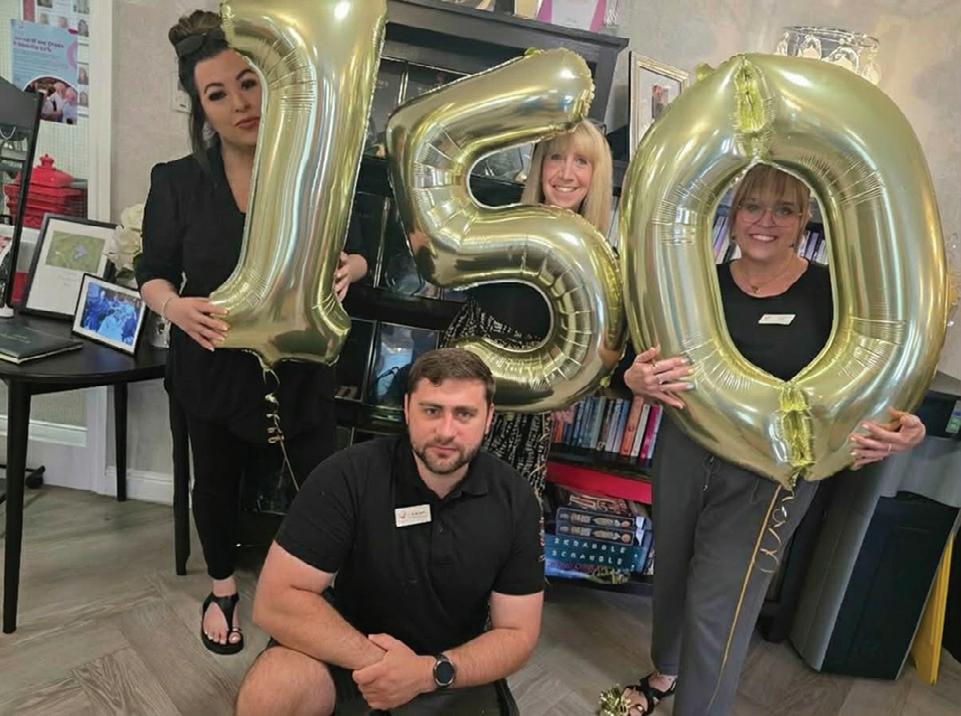
Hastings Court is a purpose-built care home offering residential, nursing, memory and respite care for up to 80 residents. Its manager, Kaye Giles, is another of the staff who’ve been there since the doors opened. She’s worked her way to the top having started as a part-time receptionist.
“I’d worked in care before, so even after spending a number of years in a different career, I was able to progress here to Client Relationship Manager and then Deputy Manager. I’ve been the home manager for
four years now. The welfare of our residents is always put first; you do whatever is needed. Even after 10 years, when I walk into Hastings Court it’s just a bit magical.”
Unit Manager Bertie Bragg has served nine years at the home. She puts the longevity of her career with Hastings Court down to the flexible working she was offered when her children were young and her love of making a difference.
“I love to care, I want to do nice things for people,” she said. “All of our residents are so different. We see them more than our own families, so you genuinely care about them and have affection for them. We even had a visit from a relative in California whose mum we had cared for. He came to visit on the anniversary of her passing and brought gifts for us which said so much about the relationship we had.”
The home’s deputy manager, Samantha Westlake, has also marked 10 years’ service at the home, alongside unit manager Kim Whiffen and assistant practitioner, Claire McDade. Long service also features in Hastings Court’s sister home in Loughton, Woodland Grove, where four team members have cared for residents since its opening a decade ago.
Joanne Balmer is CEO of Oakland Care. She said; “I’m so proud of the dedication shown by the team at Hastings Court. Consistency of care and seeing the same faces every day is hugely reassuring for residents and their families. Care is such a rewarding career. It offers so many different career pathways and opportunities to develop. The team here are testament to that.”
Poor waste management practices are costing care homes thousands of pounds every year -and the problem is more widespread than many operators realise.
Analysis by leading independent healthcare waste management company Anenta reveals that care homes are wasting an average of £8,000 annually as a direct result of inadequate waste segregation and management processes. The root cause is largely the same across the sector: waste is consistently being placed in the wrong channels, triggering unnecessarily high disposal costs.
Detailed compositional audits undertaken both by Anenta, and separately by the Environment Agency (EA) have found that 70% of care home waste ends up in the wrong waste stream. The figures are particularly stark for clinical waste, where 90% is incorrectly categorised, and for offensive waste, where 35% is regularly contaminated with recyclable materials. The financial impact is significant. Low-risk items that should be disposed of as offensive waste — at a cost of £300–£500 per tonne — are routinely being discarded as infectious waste, which costs upwards of £800 per tonne. For a care home producing moderate volumes of waste, these avoidable costs quickly accumulate.
THE ROOT CAUSE: A TRAINING GAP

E-LEARNING: AN IMPORTANT PART OF THE SOLUTION
A free e-learning module on healthcare waste - developed in association with Anenta by NHS England alongside IPC leads, Local Commissioners, and industry experts - is available through the Health Education England online portal and plays an important role in addressing these issues.
The 30–45 minute module - available here - outlines what waste should go into which stream, explains correct segregation practices, and provides practical guidance to help staff build better habits from the ground up. Crucially, it is free to access — removing the cost barrier that might otherwise prevent smaller care homes from investing in staff training.
Flynn added: "The adoption of the training and correct segregation is critical if the care home sector is to cut costs and achieve Net Zero targets. The course is accessible to all and includes a risk assessment that care homes can use to directly inform the way in which their waste is segregated.
COMPLIANCE RISKS ADDING FURTHER PRESSURE
Beyond the direct financial costs, poor waste management also exposes care homes to compliance risks that can have serious operational consequences.
Analysis of over 2,500 primary care Duty of Care audits by Anenta has revealed that 58% of healthcare professionals responsible for waste management are unfamiliar with the Healthcare Technical Memorandum — the key regulatory guidance governing healthcare waste, the latest iteration of which was published in March 2023.
This knowledge gap has led to inadequate training, weak waste management policies, and ingrained bad habits that are proving costly. Without a clear understanding of what goes where, incorrect disposal becomes the norm rather than the exception.
Graham Flynn, Director at Anenta, said: "On average, care homes are wasting £8,000 every year through poor waste management process and procurement. Changing waste disposal habits and practices prevents the unnecessary and expensive disposal of waste via inappropriate and environmentally damaging waste streams, such as incineration — instead ensuring that the majority of clinical waste is disposed of using either alternative treatments or energy-from-waste processes."
Where waste contractors identify non-compliant waste streams, they are entitled to refuse collections entirely - a scenario that can put care services at significant risk of disruption. This risk is managed through the correct completion of a Pre-Acceptance Audit (PAA), which most care homes are required to undertake every five years, or annually where a site produces more than five tonnes of clinical waste per year. The e-learning module supports care homes in preparing for and completing their PAA — a practical benefit that sits alongside the direct cost savings that come with better segregation.
Flynn said: "The training will play a big part in cutting costs by improving waste management among staff. Importantly, it will also help care homes with their PAA audit, without which their healthcare waste cannot be collected — potentially resulting in enforcement action by the Environment Agency."
For more information about Anenta and its care home audit app — which enables care homes to conduct compulsory clinical waste pre-acceptance and duty of care audits in just 40 minutes, without the need for third-party on-site visits — visit www.anentawaste.com or call 033 0122 214.
Bed bugs are one of the most disruptive challenges a care home can face. For managers responsible for the comfort, dignity, and wellbeing of vulnerable residents, even a single confirmed case can trigger anxiety among families, disrupt daily routines, and place enormous pressure on staff. Yet with the right approach, bed bug management doesn't have to mean toxic chemicals, lengthy room closures, or upheaval for the people in your care.
The Misconception Around Bed Bugs
It's important to understand that bed bugs are not a hygiene issue — they are a management issue. These insects are indiscriminate, equally at home in a five-star hotel as a care facility. They travel in luggage, clothing, and belongings, and can be introduced by visitors, new residents, or staff without anyone realising. The question isn't whether your home could be affected; it's whether you have the right systems in place to detect and respond quickly if it is.
The Power of Canine Detection
Early detection is everything. Bed bugs are expert hiders, concealing themselves behind skirting boards, within wall cavities, and deep beneath floorboards — places a visual inspection simply cannot reach. This is where bed bug detection dogs prove invaluable. With a sense of smell far beyond any technology currently available, trained canines can identify individual live bed bugs at the earliest possible stage, before a minor issue becomes a full-scale infestation.

Merlin Environmental's specialist canine detection teams work with care homes across the country, offering proactive screening programmes that allow managers to stay ahead of any potential problem. The non-
invasive nature of this approach is particularly important in a care setting — rooms can be assessed quickly and discreetly, with minimal disturbance to residents, preserving dignity and maintaining the calm environment your residents deserve.
Effective Treatment Without Compromise
When treatment is required, Merlin Environmental's heat treatment process offers a genuinely superior alternative to traditional chemical methods. By raising room temperatures to a lethal threshold, every bed bug — including eggs, which chemical treatments cannot penetrate — is eliminated in a single application. There are no pesticide residues, no chemical odours, and no risk to residents or staff.
Critically for care home operations, rooms are available for use again the same day, once cooled. No lengthy preparation, no multiple follow-up visits, and no disruption to the routines that matter so much to your residents.
A Proactive Partnership
Merlin Environmental works with care homes as a trusted long-term partner, combining expertise, accreditation, and a genuine commitment to the safety of those in your care — because your residents deserve nothing less.
To find out more about proactive bed bug screening and heat treatment for your care home, contact Merlin Environmental.


The increasing number and intensity of heatwaves in recent years has significantly impacted the health of care and nursing home residents in England, according to a new study.
The frequency and intensity of projected heatwaves caused by climate change is increasingly recognised as a risk to health and social care delivery.
The health dangers associated with hot weather are of particular concern among older age groups.
Care homes in the UK are generally designed to retain heat during winter to protect against cold risks but these measures may increase the risk of summertime overheating if appropriate cooling strategies are not available.
The study, led by researchers from the London School of Hygiene & Tropical Medicine, compared mortality records from England between 2022–24 from the Office for National Statistics, with daily average temperatures.

Data showed that between 2022-24, the risk of death for nursing home residents, where a high level of round-the-clock medical care is needed, doubled (200% increase) on days where external temperatures hit 25°C compared to days of 16°C.
For residents living in residential care homes, where the level of care can be lower and residents are often more mobile, the risk of death still increased by 50% over the same time period.
Nursing home deaths increased by 34.1% and residential care home deaths by 13% during the July 2022 heatwave when temperatures exceeded 40°C for the first time in the UK.
Heat risk was progressively higher in care homes rated successfully poorer by the Care Quality Commission, the independent regulator of care homes in the country.
The full paper is published in the British Geriatrics Society’s Age and Ageing journal.
Dr Shakoor Hajat, Professor of Global Environmental Health at LSHTM and lead author of the study, said: “With temperatures in the UK continuing to rise and the population ageing, we urgently need to understand the health impacts of heat in care homes.
“Our results show that heat risk in England’s care homes has increased in recent years, suggesting the sector needs more support to adapt to our rapidly changing climate. Our results indicate those care homes that would benefit most from focused heat adaptation measures.
“Even at moderately high temperatures experienced in England most summers, the risk of poorer health for residents within nursing or residential care homes is elevated. It’s likely this risk will increase as heatwaves and high summer temperatures become more frequent.
“Typically when we think about cooling buildings, our first thought is to consider air-conditioning. Most buildings in the UK traditionally have no airconditioning installed because it hasn’t been regularly needed. Air-conditioning units can also be expensive to install and run, contribute to emissions and can cool a room too quickly, so are not always the right solution.
“Passive cooling solutions such as increasing shading around buildings, ensuring there is secure nighttime ventilation and using building materials known to reflect sunlight are all easier and more sustainable alternatives. Air-to-air heat pumps are also an efficient way to heat and cool the air inside a building.
“When an extreme heat event is forecast, the UK Health Security Agency (UKHSA) provides guidance to all social care providers in England on how to help minimise the impact for staff and patients. While overheating is not likely to be a problem across all care facilities, we should be making every effort to prepare for a hotter future, to protect the health of our loved ones and those who care for them.”
The authors say that ideally, temperature exposure would have been characterised using indoor measurements rather than outdoor values used in the study. However, only external temperature readings are currently widely accessible. The next step will be to understand which interventions may be the most helpful in reducing the impacts of heat stress.
Care home providers, We Care and Summit Care Group, have recognised the dedication, compassion, and excellence of their team members via their third annual Shining Star Awards.
The event, which took place at the iconic Kimpton Clock Tower in Manchester, brought together more than 400 colleagues to recognise the exceptional individuals and services that make an impactful and meaningful difference to the lives of its residents.
This year’s ‘showtime’ themed ceremony recognised excellence across 13 categories, celebrating outstanding individuals and teams from across the organisation.
Winners included Santosh Shahi from Banksfield, Harshani Daniel from Barnston Court, Mia Evans from Ashbourne, Grace Winstanley from Douglas Bank, Rachael Harrison from Swansea Terrace, Alan Potter from Beechcroft, Chitra Jose from Tudor Bank, Kosala Ranasinghe from Head Office, Jayne Hughes from Woolton Grange, and Darren Wilkinson from Knowles Court. A Special Recognition Award was presented to Zamry Ashik from Head Office, while Sowerby House Care Home was named Care Home of the Year.

Speaking about the event, Jacqui Ritchie, Chief Operating Officer said: “ It is an absolute honour and privilege to be able to acknowledge the efforts of everyone involved in delivering great care to our residents and their families.”
Bernie Suresparan, CEO of We Care Group and Summit Care Group added: “We are incredibly proud to celebrate the dedication, compassion and professionalism of our teams.
“Their commitment ensures that we consistently maintain the highest standards of care for our residents. By celebrating these achievements together, we reinforce the shared values that underpin excellence across both groups.”
We Care Group and Summit Care Group are award-winning specialist care providers with a long-standing reputation for providing outstanding person-centred care to residents across the North and Northwest of England.
Helping residents to live with dignity, choice and independence, the groups offer nursing, residential, palliative, end of life, young mental health, and dementia care, all rooted in the values of family, honesty and respect.
for
A resident supported by Hesley Group has raised more than £3,100 for Great Ormond Street Hospital after completing multiple 5K runs with the encouragement of his care team.
Jack, who lives at Meadow View, one of Hesley Group’s specialist residential services, has always enjoyed physical activity. When staff spotted a local 5K run in the community, they suggested the challenge to Jack, and he immediately said yes.
With the support of his care team, Jack began training and gradually built up his stamina and confidence. In 2024, he proudly completed his first ever 5K race. Inspired by the experience, he soon set himself a new goal, to run again while raising money for the hospital that helped change his life.
As a child and teenager, Jack lived with an undiagnosed inflammatory bowel disease that caused significant pain and uncertainty. After years of searching for answers, specialists at Great Ormond Street Hospital helped diagnose and treat his condition, dramatically improving his health and wellbeing. Wanting to give something back, Jack and his family decided to dedicate his fundraising efforts to the hospital.
In 2025, Jack completed two further 5K races. The

sonal best of around 28 minutes. By the end of the challenge, Jack had raised an impressive £3,117 for Great Ormond Street Hospital.
Jack’s parents said: “We are so incredibly proud of Jack and what he has achieved despite the significant challenges he faces. His ongoing development and quality of life have benefited so much from the dayto-day care he receives as a resident with the Hesley Group. The staff are supportive, caring, and encourage him to fulfil his potential in so many ways – he couldn’t be living in a better place.”
Virginia Perkins, CEO of Hesley Group, said: “Jack’s achievement is a fantastic example of what can be possible with the right support and encouragement. Our colleagues at Meadow View have played an important role in helping him build the confidence, skills and resilience needed to take on this challenge, and it’s been wonderful to see his development.
“We are incredibly proud of everything Jack has accomplished, not only in completing these runs but in raising such an impressive amount for a cause that means so much to him. We’re excited to see what he takes on next.”
Jack’s fundraising formed part of Hesley Group’s “£50k for 50 Years” campaign, which raised £50,630 for charities and causes important to the people it supports to mark the organisations 50th anniversary. Jack is already looking ahead to his next challenge – with plans to take part in another 5K at Yorkshire Wildlife Park and possibly even a 10K in the future.
More than 1,000 NHS staff across England have used Martha’s Rule helplines to help identify rapid deterioration of a patient’s condition in the first 18 months of the scheme, new figures show.
Latest NHS England data shows that between September 2024 and February 2026, 1,781 calls were made by hospital staff to Martha’s Rule helplines at their trusts to trigger a rapid review of care, as the health service continues to transform its culture to improve safety.
Of these calls from staff, 1,080 (61%) helped identify acute deterioration of a patient’s condition.
The NHS is continuing to expand the lifesaving initiative to all acute adult and paediatric inpatient services in England, and hundreds of staff have now attended dedicated webinars by NHS England to help them roll out Martha’s Rule at their hospitals and ensure the scheme is accessible to everyone in their local communities.

Hospitals have rolled out communications campaigns, including dedicated posters around their wards and buildings, to help raise awareness and ensure the programme is easy to understand and that its use is normalised for patients, families and staff.
New NHS data also shows that, of the calls found to relate to acute deterioration, the greatest proportion were regarding patients belonging to the most deprived groups (26.1%), with the lowest number of calls (14.5%) regarding patients belonging to the least deprived groups.
Meanwhile a new report published today suggests that around 1 in 3 (32%) of the public are already aware of the vital initiative, thanks to the campaigning of Martha’s parents, Merope Mills and Paul Laity.
The interim evaluation report – published and funded through the National Institute for Health and Care Research (NIHR) Policy Research Unit in Quality, Safety and Outcomes for Health and Social Care – looked in-depth at 3 early-adopting hospital sites between November 2024 and February 2026.
The evaluation found that patients, families and staff felt that Martha’s Rule amplified their voices when they had a concern about deterioration and promoted collaborative care in hospital settings.
The evaluation also identified how the NHS could address some of the challenges around awareness and future take up of the scheme as it is rolled out across all hospitals.
The research highlighted a number of considerations, including how patient wellness questionnaires could be used more consistently across trusts, and the need for better communication to patients about what action has been taken after they have triggered Martha’s Rule.
It also highlighted the need to address barriers in access for some groups who may be most in need of Martha’s Rule – such as people who are isolated, young people without a guardian, older adults, people with cognitive impairments, disabilities or poor literacy and people from lower socio-economic groups. Barriers were also identified in people who experience language challenges and in people from ethnic minority groups.
As part of the evaluation, and in collaboration with Picker and YouGov, the research team conducted a public awareness survey of 2,047 people in September 2025. They found that 32% were aware of Martha’s Rule, with the majority of those (83%) having heard about it through the news. People with a higher education were 4 times more likely to be aware of the scheme and awareness was 40% higher in upper income groups.
The interim evaluation report will inform the ongoing roll out of Martha’s Rule across all hospitals, following the roll out to 143 pilot sites which began in May 2024.
Building on this, the NIHR will be funding a further comprehensive national evaluation, analysing outcomes, staffing and resources, and studying how Martha’s Rule works in practice to identify the most effective ways to ensure patients get the care they need.
The latest NHS England figures revealed that in total, more than
12,000 (12,301) calls were made to Martha’s Rule helplines in the first 18 months of the scheme by staff, patients and families. 4,047 of these calls helped identify acute deterioration, which led to 2,310 patients receiving changes in treatment, and this includes 524 potentially life-saving interventions to transfer them to enhanced levels of care.
Where calls were not categorised as being related to acute deterioration, they are still supporting staff to provide better care for patients and address concerns. For example, 2,951 calls led to clinical concerns such as medication or investigation delays being addressed. A further 3,054 calls helped to resolve communication and discharge planning issues.
Professor Aidan Fowler, National Director of Patient Safety at NHS England, said: “It’s really encouraging that more than 1000 staff have used Martha’s Rule to help flag rapid deterioration in patents as we continue to roll out this lifesaving scheme.
“And today’s independent evaluation shows that even in the early days of Martha’s Rule, 1 in 3 people already knew about it, but there is more to do to ensure Martha’s Rule is helping every patient and family it could be.
“We know that when concerns are raised, hospital teams are ready to respond, so it’s important that as many people as possible are aware of Martha’s Rule, and hospitals are making it clear and straightforward for patients and families to seek a potentially lifesaving review of care”.
Health and Social Care Secretary Wes Streeting said: “Martha’s Rule is already having a lifesaving impact, and these figures show the real difference it is making to NHS staff, patients and families across the country.
“But this early research also shows there is more to do to ensure that this crucial initiative can be accessed by everyone who needs it.
“I want a health service that listens – to patients, to families, and to the staff who care for them. Work to roll out Martha’s Rule is a crucial part of this as we build a health service fit for the future”.
Maria Mallaband Care Group (MMCG) has announced a £100,000 annual investment in a new partnership with tour provider Myley to provide more adventurous excursions for those in their homes.
The 24-month agreement with Myley, which runs accessible tours for older adults living in care settings across the UK, will be rolled out for 53 homes across the group initially. Almost 1,600 individuals will enjoy more than 300 organised trips over the coming 12 months, with experiences tailored to the interests and preferences of those living in each home.
By drawing on the support of Myley’s experienced schedulers and tour leaders who are familiar with destinations and specialise in care outings, MMCG will open the door to a wider range of experiences and excursions, says Paul McPartlan, Chief Operating Officer at Maria Mallaband Care Group:
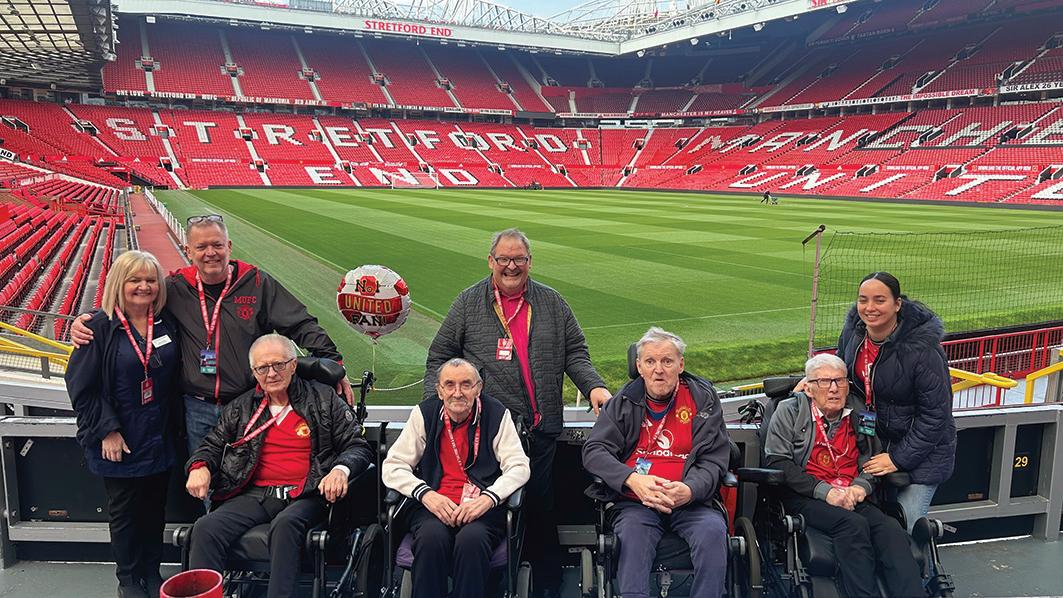
“This partnership opens up some really exciting opportunities for the people living in our homes, from discovering new places to revisiting ones that hold special memories.
“With Myley taking the lead on the planning and logistics, our colleagues will be able to focus purely on those in their care, ensuring they’re enjoying the experience – and sharing in that enjoyment alongside them too.”
The new 24-month contract comes after a successful sixmonth pilot project with Myley providing tours for nine MMCG homes around Leeds, as well as homes in Scotland and the Northwest. The visits included trip to farms, country parks, museums and zoos, and a tour of Old Trafford Stadium
The wider roll-out opens up opportunities for more varied and ambitious days out across the group. Last year Myley, which works with several UK care home providers, delivered more than 3,300 trips around the UK. With the motto ‘Adventures never retire’ the company creates experiences from bowling to beach trips, riding steam railways to touring historic homes.
“Just as importantly, it makes a real difference for our teams. Planning and delivering trips, even driving a minibus, can be a big responsibility – one our staff have been handling well – but having that expert support means colleagues can be more ambitious and expansive when thinking about where to go and what those living with them would like to do.
Residents at Elizabeth House Care Home, part of the Runwood Homes Group, enjoyed a wonderful and meaningful day out on 19 April 2026 with a special visit to the Grays Fire Station Museum, followed by a relaxing lunch together at The Treacle Mine Pub. Residents, alongside staff, had the opportunity to view historic firefighting equipment, old uniforms, and fascinating memorabilia from years gone by, creating plenty of conversation and shared memories. The visit also included tea and biscuits before the group were invited to sit inside a modern fire engine, which proved to be a real highlight of the day. After the museum visit, the residents enjoyed a lovely lunch together at The Treacle Mine Pub, rounding off a very successful outing.
Anthony said: “What a fantastic day, I want to do it all again.”

Danielle, Receptionist at Elizabeth House, said: “It’s important for dementia residents to look at things from history because it helps them reconnect with long-term memories that are often better preserved, especially in conditions like Dementia. Familiar images & objects from the past can spark recognition, improve mood, and reduce confusion. Activities based on reminiscence therapy also encourage conversation and help residents maintain a sense of identity by linking them back to their personal life experiences.”
The visit was arranged after Grays Fire Station Museum kindly invited the home for the day, with Lifestyle Coordinator Karen organising the trip to ensure residents could enjoy this valuable experience.
Strong, black, properly brewed and best enjoyed first thing in the morning – that’s the verdict from 1,001 care residents across the Midlands, who have shared their tea-drinking wisdom ahead of Time for a Cuppa Week (1st-8th May).
Residents from across Macc Care Group’s 17 care homes, including homes in Birmingham, Solihull, Stafford, Walsall and Wolverhampton, were asked to draw on decades of experience to answer two of Britain’s most hotly debated questions: what makes the perfect cup of tea, and when is the best time to drink it?
Their answer was clear. The perfect cuppa should be properly brewed, strong, black and enjoyed first thing in the morning, when a comforting brew can help set the tone for the day. Earl Grey also emerged as the standout favourite blend among residents, while traditional black teas and builders’ tea received strong backing.
But while the survey set out to settle the age-old debate around Britain’s best brew, the answers also highlighted something deeper: the role tea continues to play in bringing comfort, routine, conversation and connection into everyday life.
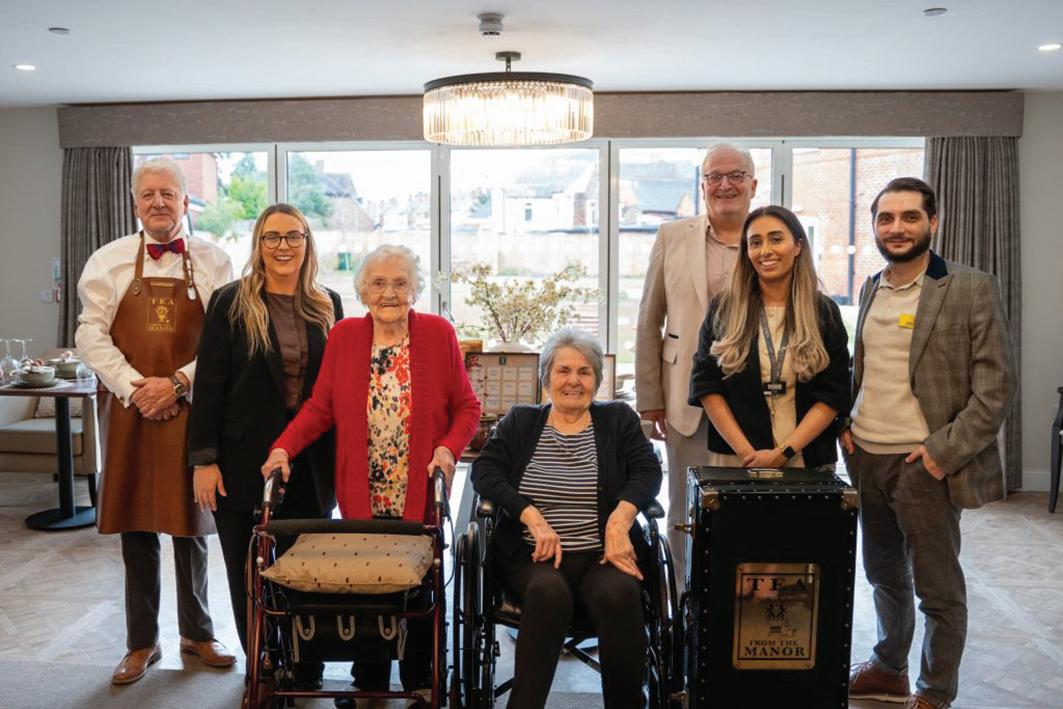
The findings have been released to mark Time for a Cuppa Week, which encourages people to come together over tea and cake in support of families affected by dementia.
Among those taking part was 92-year-old Ethel Bonehill, who said tea had been part of her life for as long as she could remember. She said: “I’ve drunk it all my life. So have my family.”
Sandra Christine Bough, 82, summed up the comfort of a morning brew, saying her perfect cup of tea would be: “First thing in the morning, after having a rough night. And somebody else to make it!”
Sandra Christine Bough, 82, said: “First thing in the morning, after having a rough night. And somebody else to make it!”
Joan Harris, 89, reflected on the importance of tea with loved ones, stating: “Tea helps us to start and prepare for the day ahead. I enjoy my daily cups of tea, and more so when my family visit me. Enjoying a brew with my loved ones means more to me as I enjoy their company and conversations.”
Slyvia Pugh 79, shared how tea makes her feel nostalgic: “Making a cup of tea always takes me back, the smell alone brings all those old, gentle memories drifting in like they were only yesterday.”
The resident survey was brought to life during a special tea tasting session at Wyrley Rose in Great Wyrley, led by tea specialist James Green, founder of Tea From The Manor, which supplies high-quality, ethically sourced loose-leaf tea and tea bags to hospitality venues and care homes.
Tea Expert, James Green, said: “A cup of tea might seem simple, but it can start conversations, bring back memories and give people a moment that feels personal to them.”
The tasting gave residents the chance to share personal rituals, discuss their favourite flavours and reflect on the small details that make a cup of tea feel special – from brewing strength and timing to who makes it.
James, whose own journey into tea began during his military career after being introduced to “real tea” by Gurkhas serving in the British Army, said the event showed how something as simple as a cuppa can become a meaningful moment of choice and connection: “What stood out to me was how much personality came through in every resident’s answer. Everyone had their own ritual, whether that was a strong black tea first thing in the morning, an
Earl Grey, a builders’ tea or something completely different.
“In some care homes, people might simply be asked whether they want a cup of tea. But this is their home, and they should be able to enjoy the same choice, quality and sense of occasion they would anywhere else. That is why experiences like this matter. A cup of tea might seem simple, but it can start conversations, bring back memories and give people a moment that feels personal to them.”
Bhav Amlani, Director at Macc Care, said: “Tea is one of those simple rituals that means far more than the drink itself. For many of our residents, a good cup of tea is tied to comfort and routine, as well as conversation and memories of home, family and friendship.
He added: “That feels especially fitting for Time for a Cuppa Week, which is all about bringing people together over tea. By asking more than 1,000 residents for their views, we wanted to celebrate the small daily moments that continue to matter deeply in later life. What came through clearly was that everyone has their own idea of the perfect brew, but the meaning behind it is often the same. It is about taking a moment, sharing time with others and enjoying something familiar, comforting and made with care.”
Residents from across a Nottinghamshire care group came together for a special event celebrating the power of music in dementia care, with a visit from Vicky McClure’s Dementia Choir.
Hosted at Church Farm Care’s Rusticus home, the event welcomed residents from across the group’s five homes, creating a vibrant and inclusive atmosphere filled with singing and joy.
The room was brought to life with a series of much-loved classics, including ‘Sweet Caroline’, ‘Daisy Bell’, ‘Pack Up Your Troubles in Your Old Kit Bag’, ‘Oh, What a Beautiful Morning’ and ‘The White Cliffs of Dover’. The familiar songs sparked moments of nostalgia and connection, with residents enthusiastically joining in – including those living with advanced dementia.
With around one million people currently living with dementia in the UK, according to Alzheimer’s Society, initiatives such as this play an important role in supporting wellbeing and quality of life.
The Dementia Choir was originally formed by Nottingham-born actress Vicky McClure as part of the “Our Dementia Choir” documentary for BBC One in 2018. Inspired by her personal experience of caring for her grandmother, Vicky set out to explore the transformative power of music for people living with dementia. What began as a television project, the choir, made up of people living with dementia, went on to take part in pioneering scientific research, working alongside leading experts to measure the emotional and
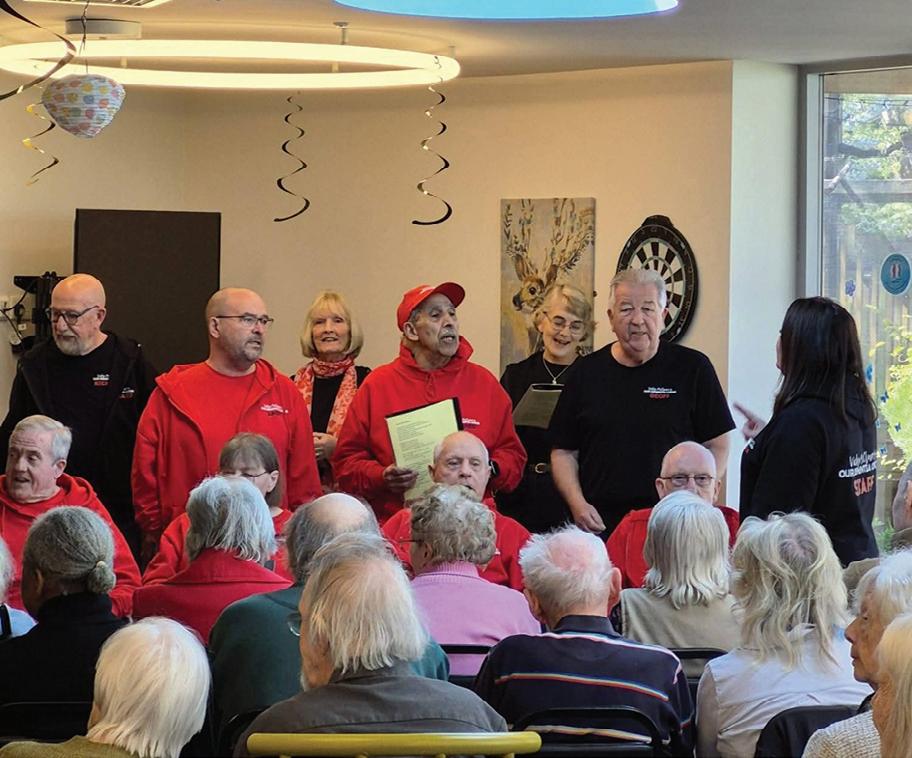
physical benefits of regular singing sessions. The results demonstrated that music can have a meaningful and measurable impact, reinforcing its role as a powerful therapeutic tool.
Since then, the choir has continued to meet and perform, bringing joy and connection to communities across the country.
For residents at Church Farm Care, the visit provided not only entertainment but a valuable opportunity for expression and social connection. Events like these form an important part of a wider, person-centred approach to care, where emotional wellbeing is prioritised alongside clinical support.
Norman Lord, an 80-year-old resident at Church Farm Nursing Home, visited Rusticus for the event. Clapping and singing along to the music, he stated that it was “absolutely fantastic”, while fellow resident, Madeline Mear, aged 88, said: “It has been great to get out as a group and have everyone enjoy a bit of singing. The cakes were great, too!”
Lucy Atkinson, co-owner of Church Farm Care, said: “Welcoming Vicky McClure’s Dementia Choir has been a real highlight of the year for our residents. Music is an incredibly powerful tool in dementia care, and seeing our residents singing along and engaging so confidently was a proud and emotional moment for everyone involved. We look forward to welcoming the choir back as part of our ongoing commitment to delivering holistic, person-centred care.”
Two local women who spend every day caring for their husbands, both living with dementia, were treated to a sun-filled afternoon of lunch, flowers, and spa vouchers this month, thanks to a new community initiative from Martello Manor by Boutique Care Homes.
The “Gift of a Wish” programme, which launches as a recurring monthly project, brought together local businesses and community partners to give something back to carers who rarely get the chance to stop. This month’s recipients, Julia and Jane, were taken to lunch at Maxwells Bistro & Bar in Hythe, gifted spa vouchers by Folkestone College’s Beauticians Department, and presented with beautiful bouquets courtesy of Sainsbury’s Hythe.
The moment the team arrived to surprise them tells the story better than anything else could.
Jude and Marlene, Manager of Martello Manor, found the two women sitting in the garden in the sun, holding hands. When they reported the scene back to Tracy, Chairman of the Hythe Dementia Awareness Forum, it brought a tear to her eye. “I’m very fond of both of them,” she said. “Even though they provide care 24/7, they are always so positive.”
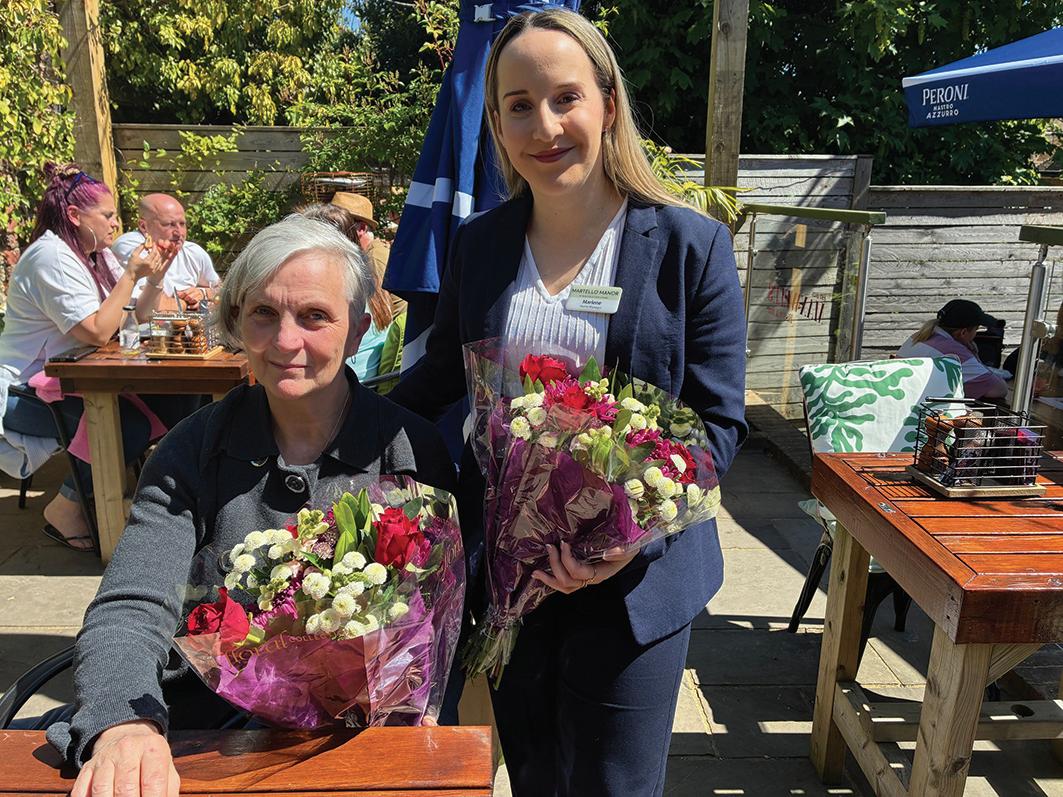
The initiative was made possible through a partnership with the Hythe Dementia Awareness Forum (HDAF), alongside Maxwells Bistro & Bar, Folkestone College, and Sainsbury’s Hythe. Jude, who led the project at Martello Manor, was clear about the thinking behind it: “You cannot underestimate the positive wellbeing impact of letting a full-time carer know that there is recognition and gratitude for all the unconditional love they show every day. Seeing the ladies relaxed, albeit emotional, and in a position to support one another and feel able to take some time out to focus on themselves, was powerfully emotional. It was an honour to work with the community to make the gift of time, space and indulgence for these ladies.”
Unpaid carers – many of them spouses and family members of people living with dementia – provide round-the-clock support that often goes unseen. Gift of a Wish is Martello Manor’s way of changing that, one nomination at a time.
Julia was happy for her story to be shared, hoping it would shine a light on carers in the community. She received a handwritten card from the Martello Manor team alongside her flowers. For the staff, the afternoon was as meaningful as it was for the recipients.
Newly released figures indicate that a growing share of Newcastle City Council’s budget is being directed towards adult social care ahead of next week’s local elections.
Statistics from the Ministry of Housing, Communities and Local Government (MHCLG) show that spending on adult social care in the city has risen significantly, increasing from £96.6 million in 2018–19 to £161 million in 2024–25. This marks one of the sharpest increases in England when compared with overall council expenditure.
Over the same period, adult social care has taken up a larger proportion of Newcastle’s service spending. In 2018–19, it accounted for 36% of expenditure (excluding education), rising to 45% by 2024–25. This represents the second largest proportional increase nationally, with only Hammersmith and Fulham recording a greater rise.
Local elections in Newcastle are due to take place on 7 May, with political parties outlining their approaches to managing social care services.

The Labour administration, which currently controls the council, says it has already begun reforming provision across the city. Measures include the introduction of community-based teams, alongside national increases to carer’s allowance. A party spokesperson told the BBC, which first reported the figures, that Social CarePoint teams have helped reduce hospital and care home admissions by supporting individuals to remain independent in their own homes.
The spokesperson added that further plans include closer integration with children’s services to support smoother transitions, as well as participation in the Connect to Work programme aimed at helping adults access employment.
Meanwhile, Conservative candidate Connor Shotton, standing in Kingston Park and Dinnington, said his party would seek to reduce costs by combining council departments with overlapping responsibilities. He suggested that streamlining back-office functions could free up resources for frontline services, with areas such as energy, communications and human resources identified as potential candidates for consolidation.
The Green Party has highlighted the need for what it describes as fairer taxation to ensure sustainable funding for social care. A spokesperson said their approach would prioritise early intervention to prevent crises, improve pay and job security for care workers, and strengthen collaboration between social care services, the NHS and community organisations.
Across the wider North East, similar trends are evident. In Sunderland, the proportion of council spending allocated to adult social care increased from 33% to 40% over the same period. Hartlepool and Redcar and Cleveland councils also recorded notable rises in the share of their budgets devoted to children’s social care, climbing from 24% to 34% and from 25% to 35% respectively between 2018–19 and 2024–25.
Redbond Lodge Care Home, part of the Runwood Homes Group, is delighted to announce an exciting and adventurous fundraising initiative led by Karen, Lifestyle Coordinator, who has participated in this year’s renowned Maldon Mud Race to raise money for the residents’ amenities fund.
Taking place on 26 April 2026, the Maldon Mud Race is famous for its gruelling and messy course across the River Blackwater estuary. Despite previously declaring last year’s participation a “one-off,” Karen has decided to return to the challenge, this time with an extra splash of fun by donning a “Crazy Frog” costume.
Speaking about her decision, Karen said:
“Oh, my word! I said last year was a one-off, but I will be taking part in this year’s Maldon Mud Race raising money for our residents’ amenity funds. This is no easy event. It’s smelly and dirty. It’s gruelling. Running a marathon is easier than this, but I’m a bit crazy. So I’m wearing a frog costume—the Crazy Frog… it just has to be done!”

The fundraiser highlights Redbond Lodge’s ongoing commitment to enhancing the quality of life for its residents. Funds raised will support additional activities, experiences, and resources that bring joy and enrichment to daily life within the home.
Karen added:
“Our residents are important to us, so why not try and raise some extra money for them. You never know what I will come up with!”
Although the event is known for its physical challenges—participants often find themselves knee-deep in mud and relying on the help of others—Karen emphasised the camaraderie that makes the experience so special.
With the arrival of spring, the appearance of the “Crazy Frog” brought smiles to residents, families, and supporters alike. Redbond Lodge were proud to support Karen during this worthwhile cause.
Engelberg Care Home marked its 60th anniversary with a special celebration bringing together residents, staff, families, and members of the local community to honour six decades of compassionate care. Originally opened in 1966, Engelberg was founded through a generous donation from local businessman John Bates, in memory of his late wife, Blanche. Named after the Swiss village where they spent many happy times together, Engelberg – meaning Angel Mountain –was created with a clear vision: to be not just a place of care, but a true home filled with joy, hope, and happiness.
To commemorate this milestone, guests gathered outside the home to recreate a historic photograph taken on the day Engelberg first opened. Sixty years on, residents and team members stood in the same spot, reflecting on the home’s enduring legacy. The Mayor of Wolverhampton attended the event and officially unveiled the recreated photograph, marking a poignant moment that connected past and present.
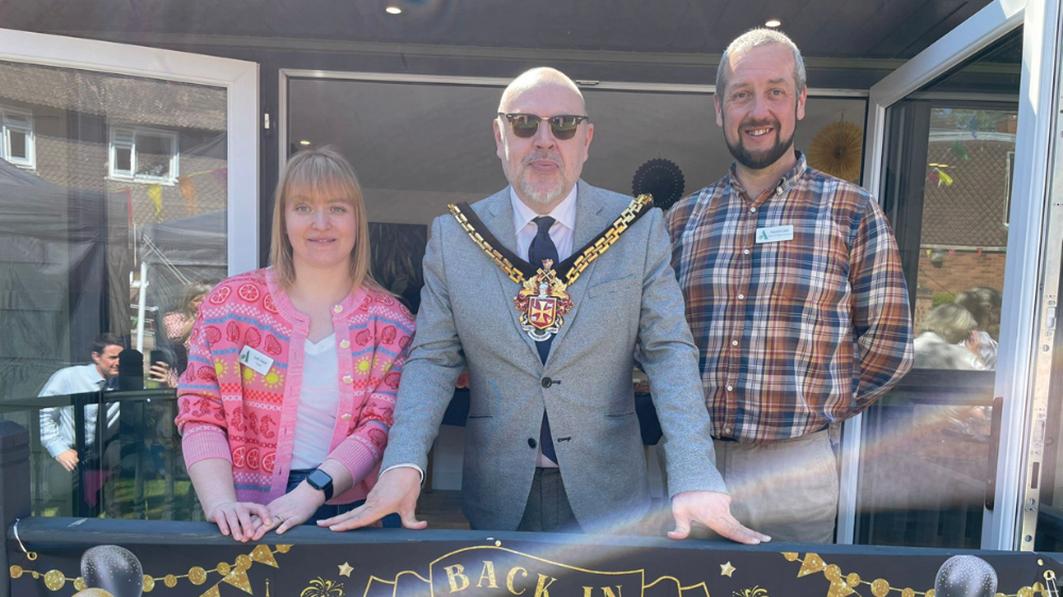
The celebration featured a lively afternoon of entertainment, including live music, raffle stalls, and a delicious selection of food prepared by the home’s chef, Hannah Austin. With sunshine throughout the day and
a fantastic turnout, the event captured the strong sense of community that has defined Engelberg for generations.
Sally Lloyd, Home Manager at Engelberg Care Home, said: “Celebrating 60 years of Engelberg is incredibly special. It’s a testament to the generations of staff who have dedicated their care and compassion to making this a true home. Recreating the original photograph was such a meaningful moment for everyone involved.”
Dan Cash, Regional Director of Operations at Ashberry Healthcare and former Manager of Engelberg, added: “Engelberg holds a very special place in my heart. Its history is unique, and its values have remained constant over the years. To see it reach this milestone and continue to embody its original vision is truly inspiring.”
Claire Fry, Operations Director at Ashberry Healthcare, commented: “Reaching 60 years is an incredible achievement. Engelberg has been part of the Wolverhampton community for decades, and this celebration reflects the strong relationships built over time. We’re proud to continue that legacy for years to come.”
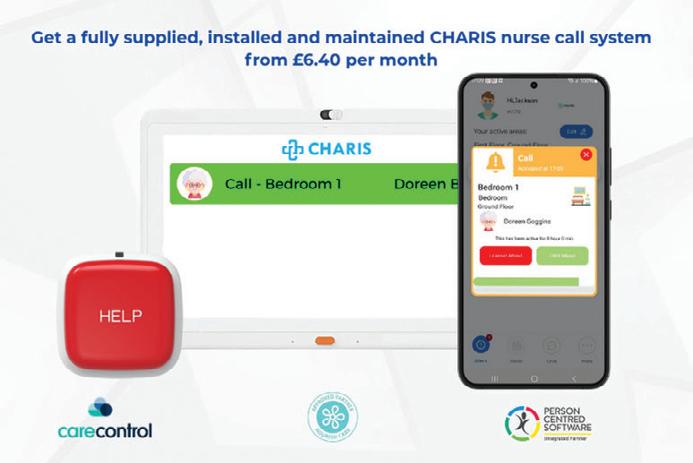
Fourteen million people in the UK live with incontinence. For many in residential and nursing care, the consequences of inadequate support are severe — from infection and skin breakdown to isolation and loss of dignity. Yet as the Baroness Casey review gets under way, campaigners warn that continence care remains almost entirely absent from the national reform conversation.
Walk into almost any residential or nursing care home in England and you will find dedicated staff managing one of the most intimate — and most underfunded — aspects of personal care. Continence support, once dismissed as an awkward administrative footnote, is increasingly being recognised for what it truly is: a barometer of the entire social care system's commitment to dignity. The scale of the challenge is significant. Incontinence affects an estimated 14 million people across the UK, cutting across age, disability and long-term illness. As the population ages, demand for continence support is projected to rise sharply — placing further strain on a sector that is, by almost every measure, already struggling to keep pace.

frontline of indignity" and called on the review to place dignity at its heart, with explicit recognition that access to proper assessment, specialist support and appropriate products should be determined by individual need — not by postcode.
"People should not have their independence determined by a postcode lottery. Too many are denied appropriate continence support because of arbitrary caps and under-resourced services."
— Nik Hartley, Chief Executive, Spinal Injuries Association RATIONING BY BUDGET, NOT BY NEED
For care home managers and nursing staff, the consequences of inadequate continence support are depressingly familiar. Poor care in this area can cause urinary tract infections, serious skin breakdown and pressure damage, and profound emotional distress. Residents who lack reliable access to appropriate products may withdraw from communal activities, refuse visitors, or experience significant deterioration in their mental wellbeing.
Earlier this year, a coalition of health and disability charities — led by the Spinal Injuries Association and supported by organisations including Bladder and Bowel UK, Dementia Carers Count, Disabled Living, The Neurological Alliance, Pain UK and Shine — wrote to Baroness Casey of Blackstock as she began her independent review of adult social care. Their message was stark.
Joined by senior parliamentarians Dame Caroline Dinenage MP, Mohammad Yasin MP, Baroness Ritchie of Downpatrick and Baroness Grey-Thompson, the signatories argued that continence care remains one of the most neglected and taboo areas of adult social care — largely absent from national reform debates, despite its profound impact on health, independence and quality of life. They described it as a "hidden
A June 2025 survey of 500 healthcare professionals found that substandard incontinence products were actively delaying hospital discharges and contributing to avoidable admissions — a finding with direct implications for care homes managing complex transitions between hospital and residential settings.
An investigation by the i Paper further exposed the depth of the problem across NHS continuing care settings. Freedom of Information data revealed that more than half of the trusts questioned cap continence products at just three or four pads per day — regardless of individual clinical need. The investigation also found that nearly a third of trusts providing budget data had collectively overspent by more than £4 million, fuelling serious concern that financial pressure is driving rationing and leaving residents, families and care providers to absorb the shortfall themselves.
(CONTINUED ON FOLLOWING PAGE)
Incontinence is common in care and nursing homes, but the impact on dignity, comfort and skin health is deeply personal.
Levabo’s allDRY® range of reusable incontinence underwear is a Class I Medical device, designed to support residents and caregivers alike by combining discreet protection with a comfortable, everyday feel that looks like normal underwear, not a clinical product. allDRY® underwear provides reliable protection for men and women experiencing bladder leakage.

Who are Levabo?
Levabo are a Danish medical device company specialising in innovative, user-friendly solutions for continence care and pressure ulcer prevention. Our focus is on practical products that support dignity, comfort and safety, while fitting seamlessly into the realities of care and nursing home practice.
Designed for dignity
allDRY® aims to remove the stigma often associated with incontinence products. The underwear is soft, discreet and modern in appearance, helping residents feel more like themselves and less like patients. The garments combine advanced absorbent technology with breathable materials to help keep skin dry and comfortable throughout the day.
For many people, that small shift can make a big difference to confidence, engagement in daily activities and overall wellbeing.
Key benefits for residents:
3 Soft, underwear-like fit for everyday comfort
3 Breathable, skin-friendly materials
3 Secure 6-layer absorbency for protection and confidence
3 Discreet profile under clothing to support dignity
3 Natural odour control
Practical support for busy care teams
Care and nursing home staff need products that are easy to use, reliable and support efficient routines. allDRY® has been developed
with frontline care in mind, from dressing and toileting to night-time protection and manual handling.
Key benefits for staff and services:
3 Clear sizing and fit to simplify product selection
3 Easy to apply and remove, helping with time-pressured care routines
3 Reliable protection to support continence care plans and reduce unplanned linen changes
3 A versatile solution suitable for residents with different levels of dependency
3 Machine washable at 60 degrees Celsius
3 Tumble dry safe
3 Comfort and dignity focused
Supporting skin health and overall care
Continence care is closely linked to skin integrity, comfort and quality of life.
Prolonged exposure to urine and faeces can lead to incontinence-associated dermatitis (IAD), causing redness, pain, skin breakdown and an increased risk of infection. For residents, this can mean significant discomfort, distress and reduced mobility; for caregivers, it adds to workload, complexity of care and emotional strain when preventable skin damage occurs.
When protection is effective, secure and comfortable, there is less risk of leakage, moisture-related skin damage and associated distress for residents and carers. allDRY® is designed to:
3 Help keep skin drier for longer, supporting good skin care practices
3 Complement pressure area care and repositioning routines
3 Integrate smoothly into existing continence and care pathways
A flexible range for your residents
The allDRY® range offers options to suit different needs and levels of support, making it easier for homes to match the right product to the right person. This helps reduce waste, improve comfort and ensure residents receive care that feels truly individual. allDRY® is available in a range of briefs and boxers and different levels of absorbency. In addition to the underwear, there is an optional inlay which can be added to increase the absorbency by 50ml. This inlay is machine washable with the underwear.
To find out more about allDRY® incontinence underwear, or any of the Levabo product portfolio that could support your residents and care teams, request samples or discuss how the range could support your home:
Email: bm@levabo.com
Web: www.levabo.com


(CONTINUED FROM PREVIOUS PAGE)
THE FALSE ECONOMY OF CUTTING CORNERS
For care home operators under sustained financial pressure, there is a familiar temptation to manage continence care costs by selecting lower-cost products. Evidence increasingly suggests this approach is counterproductive. An NHS pilot scheme examining procurement decisions in formal care settings found that opting for cheaper continence products created a false economy: more frequent product changes increased demands on staff time, raised laundry and linen costs, and contributed to higher rates of skinrelated complications.
The pilot found that better-matched, higher-quality products significantly reduced leakage incidents, improved workflow efficiency for carers and ultimately lowered total care costs. It is a finding that should give pause to commissioners and care home owners alike: false savings in continence procurement can generate very real costs elsewhere in the care pathway. THE IMPACT ON FAMILIES — AND ON STAFF
Campaigners are also highlighting the ripple effects of inadequate continence provision on families. When formal care falls short, it is frequently relatives who step in — purchasing products out of their own pockets, making additional care visits, or taking on tasks that care home staff are unable to complete within existing resource constraints. This informal subsidy of an underfunded system rarely features in official cost assessments, but it is deeply felt by the thousands of families across the country navigating the care system.
For frontline care staff, the challenge is equally acute. Inadequate products mean more frequent changes, greater exposure to manual handling risks, increased time pressure and — critically — reduced capacity to deliver the person-centred care that good residential and nursing homes aspire to provide. Continence care is never a background task; it sits at the heart of the relationship between carer and resident.
"Continence care requires the recognition it deserves, which is long overdue. We need to drive evidencebased practice, putting the patient at the centre of their care."
— Tracy Whitehouse, Service Manager and Adult Specialist Nurse, Bladder and Bowel UK WHAT THE CASEY REVIEW MUST ADDRESS
The timing of the charities' intervention is significant. Baroness Casey's commission — commissioned by Prime Minister Keir Starmer and Health Secretary Wes Streeting — is expected to publish an initial report in 2026 setting out problems facing the sector and ideas for medium-term improvement, ahead of a final report in 2028. Critics, including Sir Andrew Dilnot who led a previous government review on care funding, have argued that waiting until 2028 for substantive recommendations is simply too long for people who need support now.
The coalition of charities has set out clear asks for the commission: explicit recognition of continence care as a core component of dignity in adult social care; recommendations that ensure consistent access to specialist assessment and support; and a commitment that product provision be determined by individual clinical need rather than local budget pressures or geographic lottery.
For care home providers, the message is both an external call to action and an internal prompt for reflection. Best practice in continence care is achievable — but it requires investment in training, in individualised assessment, and in product procurement that is driven by clinical outcome rather than unit cost. It also requires the sector to speak loudly and clearly to policymakers about the reality of what continence care involves and what it costs to get it right.
Adult social care reform has been promised, delayed and deferred across numerous governments and countless reviews. Baroness Casey herself has acknowledged that the system relies on what she has described as cobbled-together, underfunded services — with low-paid care workers bearing an outsized share of the burden, and a deep and damaging divide between health and social care persisting for decades.
Those working in residential and nursing care know that continence care is not a peripheral issue. It is, in many ways, the most honest test of whether a care setting truly upholds dignity. Getting it right requires proper products, properly trained staff and properly resourced services. Getting it wrong — as too many people's experience attests — can strip away independence, confidence and quality of life with alarming speed.
As Baroness Casey's commission begins to take evidence and build its case for reform, the care sector would do well to ensure that continence care — for so long a "hidden frontline" — is finally brought into the light.
Ontex Group a leading international developer and producer of personal care solutions, is launching a new adult incontinence range designed to deliver strong protection while caring for sensitive skin. The first products—Sensitive Pants, Sensitive Slip and Sensitive Form—will be introduced gradually to healthcare institutions across Europe.
New European research by Ontex, involving more than 2,500 people living with incontinence, shows that dermatitis and skin irritation remain common and have a real impact on daily life. Nearly half of respondents reported irritation in the intimate area. Yet “around 80%
of caregivers are not trained to recognize dermatitis. Education and better product design are key to preventing complications,” says Dr. Maria Panourgia, Geriatrician at Milton Keynes University Hospital (UK).
The Sensitive range was developed in direct response to these needs, combining trusted absorbency with dermatological care to help prevent irritation and support healthier skin.
To strengthen caregiver knowledge, the range is supported by expert guidance on recognizing, preventing and managing incontinence related dermatitis—available through Ontex’s nurse advisor
network and the online Ontex Academy.
Sensitive range: powerful protection that respects the skin
Sensitive Pants offer:
Topsheet enriched to help prevent irritation
• Hypoallergenic design for fragile skin
Odour control technology for lasting freshness and confidence
For more information please about ID please visit: www.id-direct.com/ukb2c/en/index.html


By Lisa Jones, Catering Manager at Park View Care Home, Gloucestershire
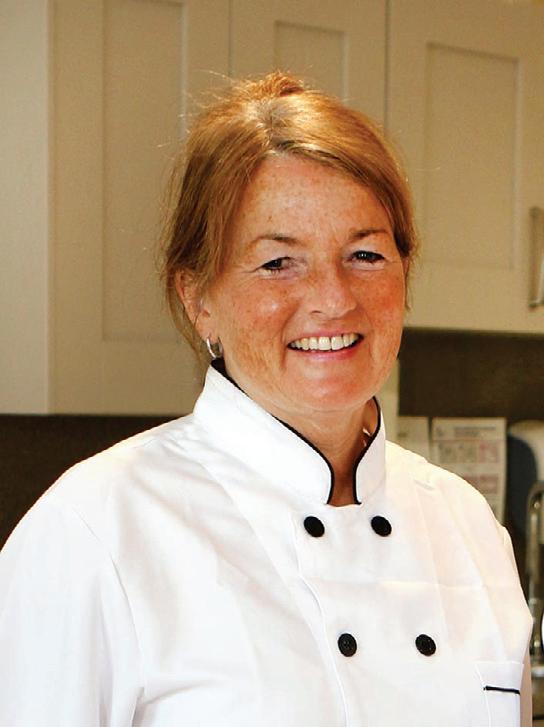
Imagine it is your 85th birthday. You are surrounded by family, the room is filled with song, and a cake is brought out. But because you live with dysphagia, a swallowing difficulty affecting individuals with moderate-to-severe dementia, your slice of cake arrives as a beige, featureless scoop of mush.
At Park View in Gloucester, we believe that a diagnosis of dementia should never mean the end of the joy of eating. As we mark Nutrition and Hydration Week, it is time for the care sector to move beyond the blender. Providing nutrition and hydration is a clinical necessity, but providing dignity is a culinary one.
My journey to the Park View kitchen wasn't a traditional path into care. I trained at Cheltenham Catering College and spent years in the high-pressure environments of pubs and restaurants across Wales, from Cardiff to Ross-on-Wye. Later, I spent 18 years at Unilever Foods as a Catering Manager, overseeing a 24/7 service for 1,500 staff, ranging from daily canteen service to high-end executive fine dining.
When I joined Park View in 2016, we had only a handful of residents. Today, we support a community of 90 residents and their families, and over 100 staff. My background taught me that whether you are cooking for a corporate executive or a resident with advanced dementia, the standard of presentation should not waver. In care, we aren't just feeding people; we are using our skills in food safety and texture science to protect their quality of life.
One of the greatest hurdles in dementia care is maintaining hydration. For someone with cognitive decline or reduced visual perception, a clear glass of water can appear "invisible" or confusing. Even orange squash can sometimes disappear into the background due to haze in a resident's vision.
We treat hydration as a fun, social activity rather than a medical box to tick. We set up hydration stations
Mobile Kitchens Ltd specialises in the hire or sale of temporary catering facilities and foodservice equipment.
Ideal for events or to provide temporary catering facilities during your kitchen refurbishment, our versatile units and equipment offer an efficient and economic solution to the caterers’ needs.
Production Kitchens, Preparation Kitchens, Ware-washing Units, Dry Store Units, Cold Rooms and Restaurant Units are available as individual units in their own right or they can be linked together on site to form a complete complex.
Alternatively, we can offer modular, open-plan facilities, usually for larger, longer-term hires.
We offer a free design service, and project management from concept through to delivery and installation on site, plus full technical support throughout the hire period.
throughout the building, offering vibrant and unusual juices, cranberry, pineapple and grapefruit. The bright colours also make the drinks visually accessible.
We also lean into "drinking foods." For residents who struggle to sit and drink a full glass, we serve melon and jelly drops, foods with exceptionally high water content that act as finger-food hydration. By offering variety, like milkshakes or fortified juices, we also tap into the fact that milk hydrates more effectively than water because it digests more slowly. It’s about meeting the resident where they are, whether that’s at a 10am mocktail hour or a 2pm "hydration moment."
For the 20 or so residents at Park View who require bite-sized or modified diets, the presentation is where science meets art. The old-school approach to pureed food, indistinguishable scoops of brown and green, is a thing of the past.
We use specialised moulds to ensure that pureed chicken and peas look exactly like the original dish. If we are serving pizza, hot dogs, or even a birthday cake, we puree and reshape them so the person can recognise what they are eating. I personally taste-test these foods daily. If a texture is too sticky or too firm, it isn't just a culinary failure; it’s a safety risk.
When plating bite-sized meals, we use gravy to support swallowing and decorative swirls to maintain an attractive presentation. The goal is that a visitor walking into our dining room shouldn't be able to easily distinguish who is on a modified diet and who isn't.
As motor skills decline, the frustration of struggling with a knife and fork can lead to residents skipping meals entirely. Finger foods can be a vital tool for independence. Because hands often provide more precise coordination than utensils and because they fall more easily into a resident’s narrowing peripheral vision, finger foods allow people to feed themselves.
As a resident's internal dementia clock shifts, their nutritional needs don't stop at 5pm. We ensure that nutritious options, from healthy sandwiches to satsumas, are available 24 hours a day.
Leading a team of 15 at Park View, I’ve seen how transformative a thoughtful dining experience can be. We have moved away from the idea that care home food is institutional. Nutrition and hydration are the foundations of health, but the joy of a meal is the foundation of a life well-lived.
The standard specification of our smallest Production Kitchen unit includes a six burner oven range, salamander grill, twin basket fryer, upright fridge, hot cupboard, single bowl sink unit with integral hand wash basin, plus ample power points to plug in Microwaves, Food Processors, Toasters etc. Internal equipment can be interchanged and clients can effectively specify their preferred layout. We have many tried and tested design layouts and would be pleased to put forward our recommendations for your project.
So if you’re planning a refurbishment or need to cater for an event then why not give us a call and we’ll be happy to provide advice and put forward a competitive proposal.
For further information or to arrange a site visit, email: sales@mk-hire.co.uk or call us on
or visit our website: www.mk-hire.co.uk
A new report from leading dairy co-operative Lakeland Dairies, supported by Consultant Dietitian Rachael Masters (MSc, BSc), reveals the care sector at a tipping point, with nearly three quarters (74%) of operators concerned about their ability to meet residents’ nutrition and hydration needs over the next five years. Care kitchens are under growing pressure as residents’ needs grow more complex, resources stay tight, and smaller portions mean every mouthful must be nutrient-dense.
The report, The Care Kitchen Reset: The Future of Care Catering, sets out a shift towards enriched cooking and stronger base ingredients that make everyday dishes work harder. It calls for care operators to protect quality nutrition under mounting pressure not by adding complexity, but by strengthening core ingredients from the outset to improve calorie and protein density without increasing portion size.

It launches as part of Nutrition & Hydration Week (16–22 March), which shines a spotlight on the UK care home sector and the critical role food and drink play in supporting resident health and wellbeing.
CARE SECTOR UNDER MOUNTING NUTRITIONAL PRESSURE
The findings reveal rising clinical complexity is a key driver, with almost half (43%) reporting an increase in nutritional needs over the past five years. At the same time, 71% say rising ingredient costs are making it harder to maintain food quality despite 90% refusing to compromise on standards. For operators, the stakes are both clinical and commercial. Nine in ten resident respondents (90%) cite food as a key factor when choosing a care home, while 87% of residents say mealtimes are the most important part of their day.
Dairy-based ingredients play a central role: over nine in ten operators say products such as cream and milk powder enhance food and drink experiences for residents with smaller appetites or specialist diets, while 88% believe they effectively support resident nutrition. This underlines the value of enriched cooking approaches that boost nutrition in the foods residents already enjoy, without relying on bigger portions.
INGREDIENT STRATEGY OFFERS PRACTICAL SOLUTION
Responding to these pressures, the report highlights that one of the most practical, operationally efficient levers is ingredient strategy. Rather than layering on additional processes, the report argues the solution lies not in short-term cost cutting alone but in strengthening menu foundations. By embedding fortified nutrition into everyday base ingredients, kitchens can improve calorie and protein density without increasing portion size, labour or waste – safeguarding the sector’s future.
Rachael Masters, Consultant Dietitian and contributor to the report said: “With an ageing population driv-
ing increased demand for care home places, and residents presenting with more complex health and nutritional needs, care catering teams are being asked to deliver not just meals, but meaningful nutritional support in increasingly complex environments.”
“The solution doesn’t lie in adding more processes, but in making smarter use of core ingredients to maximise nutritional value. By fortifying everyday dishes, kitchens can enhance protein, energy and key nutrients in ways that are practical, cost-aware and, most importantly, enjoyable for residents. Dairy-based ingredients offer a particularly effective and versatile way to achieve this.”
“This report explores these growing pressures and highlights practical, nutrition-led approaches that support both care teams and residents – helping deliver better operational efficiency while improving health, wellbeing and dining satisfaction.”
The research also highlights opportunities to refine delivery. While 90% of residents rate meals positively overall, 77% report struggling to finish meals due to taste or presentation challenges, and 38% say higher quality ingredients would improve their experience. This reinforces the case for ingredient optimisation over short-term cost cutting.
Paul Jennings, Head of Food UK & International at Lakeland Dairies, adds: “Care operators are under pressure to do more with less – more nutrition, more quality and more resilience – while also meeting rising expectations from residents around mealtimes. This creates a real tension in care kitchens, where teams are balancing increasingly complex needs with limited time, staff and budgets.
Ingredient strategy is a practical way forward. By using hard-working bases such as Millac Gold Double and Lakeland Dairies Skimmed Milk Powder, kitchens can build richness, consistency and added nutrition into everyday dishes without adding complexity.
In a sector balancing tight budgets and staffing pressures, this timely report explores immediate solutions to support care kitchens.”
The report draws on a survey of care operators, residents and their families, alongside insight from Consultant Dietitian Rachael Masters, founder of Focus on Undernutrition, which provides specialist special diet training to care homes.
Lakeland Dairies is committed to supporting the sector through menu guidance, product innovation and training designed to help kitchens build resilience through stronger foundations and long-term supplier partnerships.
The full report is available: https://eu1.hubs.ly/H0sP61V0
Harrison Carr is a national provider of commercial catering equipment, design, installation, and fabrication services and HVAC. Based in the Midlands, we support care homes, local authorities, charities, and specialist care providers with both day-to-day operational requirements and larger project-based developments.

A key advantage of working with us is our independence. We are not tied to any single manufacturer, enabling us to source the most suitable, reliable, and cost-effective equipment for each care environment. This ensures solutions that prioritise safety, energy efficiency, long-term value, and consistent performance.
Our team includes experienced designers, project managers, ventilation specialists, installation engineers, and in-house fabrication experts all working under one roof. This ensures we can deliver a genuine end-to-end service: from concept and planning through to supply, installation, and ongoing support.
CATERING EQUIPMENT SUPPLY & TRAINING
• Access to all major catering equipment brands
• Energy-efficient, sustainability-focused solutions compliant with care-sector standards
• Fast delivery from our own on-site stock
• Competitive pricing and comparison quotes to support budget decisions FULL KITCHEN DESIGN & INSTALLATION
• Complete kitchen and servery redesigns
• Workflow optimisation to support safe, efficient meal production
• CAD layouts and 3D visuals
• Compliance-led ventilation and extraction solutions
BESPOKE FABRICATION
• Custom counters, serveries, prep areas, and storage
• Bespoke servery and hydration stations for care settings
REACTIVE & PLANNED SUPPORT
• 24/7 support with rapid turnaround for urgent equipment needs
• Standby and loan equipment for emergencies
• Assistance with refurbishments and operational upgrades
CAFÉ, SOCIAL & RESIDENT-FACING SPACES
• Coffee areas for staff and visitors
• Hydration and snack counters
• Modular and mobile units suitable for multi-use care environments
Our approach is always centred around understanding each site’s workflow, resident needs, staffing pressures, and long-term operational goals ensuring the solutions we deliver enhance quality of service, safety, and overall dining experience.
Visit our website www.harrison-carr.co.uk contact by phone on 0116 602222 or email at office@harrison-carr.co.uk


Care providers are currently facing one of the most complex operating environments in recent memory. Rising labour costs, stricter compliance requirements, and ongoing food inflation are placing significant pressure on already stretched budgets across the care sector.
Food costs remain a major concern. While inflation has eased slightly from recent peaks, food prices are still rising faster than general inflation. In February 2026, food inflation stood at 3.6%, with forecasts suggesting an average of 3.8% across the year.
For care home operators managing tight margins, this means financial pressure will continue. Rather than a return to ‘normal’, the sector is entering a period of persistent underlying inflation where costs continue to rise gradually. Procurement specialists allmanhall are advising catering teams to budget for around 4% annual food inflation in the year ahead.
Structural cost increases across the supply chain are also feeding into food pricing. Higher National Living Wage levels, increased National Insurance contributions, and new employment obligations are pushing up costs for producers, manufacturers, and distributors - many of which are now being passed through to care and healthcare settings.

For care home groups already balancing staffing pressures and regulatory compliance, sustained food inflation adds another layer of financial strain. Catering teams must continue delivering nutritious, high-quality meals while managing special diets and strict nutritional standards.
Adding further uncertainty to the outlook is the geopolitical situation in the Middle East. Global food supply
chains are closely linked to energy markets, meaning instability in oil-producing regions can quickly impact food costs.
Recent tensions involving Iran, Israel, and the United States have already triggered volatility in global energy markets. Oil prices have exceeded $100 per barrel for the first time since the start of the Ukraine conflict, increasing fuel, transport, and logistics costs across the food supply chain.
In this challenging environment, specialist procurement support is becoming increasingly important. This is where food procurement experts allmanhall are helping care organisations regain control of their catering costs.
By combining collective buying power with deep market insight, allmanhall support care operators in managing food cost volatility while improving ingredient quality and strengthening supply chain resilience. Through detailed procurement reviews, benchmarking, and category insights, care groups gain greater visibility over spend and identify opportunities to protect budgets without compromising on quality.
Beyond procurement, allmanhall’s award-winning support team works closely with care clients to strengthen compliance, support nutritional standards, and provide practical menu guidance aligned with resident wellbeing.
At a time when care providers must balance cost control with quality and compliance, having the right procurement partner can make all the difference.
www.allmanhall.co.uk
Disease-related malnutrition remains one of the most persistent challenges in UK residential and nursing care. It affects millions, increases vulnerability to illness, slows recovery, drives hospital admissions, and places strain on already stretched care teams. Yet despite the scale of the problem, the tools available to homes have not kept pace with the needs of increasingly complex residents.
Hiquid Food, a Norwegian medical nutrition company, is entering the UK market with a clear mission: to make effective nutritional support simpler, more acceptable for residents, and easier for staff to deliver.
Simple, seamless meal enrichment
Many residents struggle to consume enough calories and protein, even with carefully prepared meals. Hiquid Food’s freeze-dried powders, made from organic whole foods, allow caregivers to enrich everyday dishes like porridge, soups, puddings, purees, and drinks. This discreet approach reduces refusals and preserves dignity, helping residents receive the nutrition they need through meals they already enjoy.
ORAL NUTRITIONAL SUPPLEMENTS WITH HIGH ACCEPTANCE
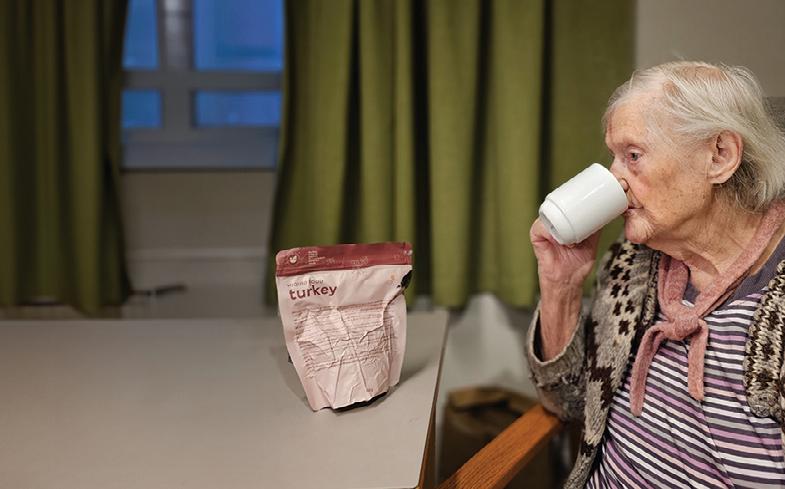
For individuals at greater nutritional risk, Hiquid Food offers compact, nutrient-dense oral nutritional supple-
ments designed for those with low appetite or increased medical demands. They are easy to consume, well tolerated, and provide balanced support in small volumes.
WHOLE FOOD GASTROSTOMY NUTRITION
For residents requiring enteral feeding, Hiquid Food’s whole-food gastrostomy products offer a gentle, reliable option created with a focus on tolerance, safety, and long-term stability.
Better outcomes and operational efficiency
Care providers face rising acuity and workforce pressure. Hiquid Food products reduce complexity through easy mixing, no additives, and no large volumes while supporting improved resident strength, immunity, and recovery. Better nutritional status means improved wellbeing and lower overall care costs. With long shelflife, low weight, and high versatility, the products are also environmentally responsible and easily integrated into a wide variety of meals.
As Hiquid Food launches in the UK through Food Untethered, they look forward to working closely with care homes, clinicians, and NHS commissioners to strengthen nutritional care in a practical, resident-centred way. For more information: contact@fooduntethered.com or see the advert below.
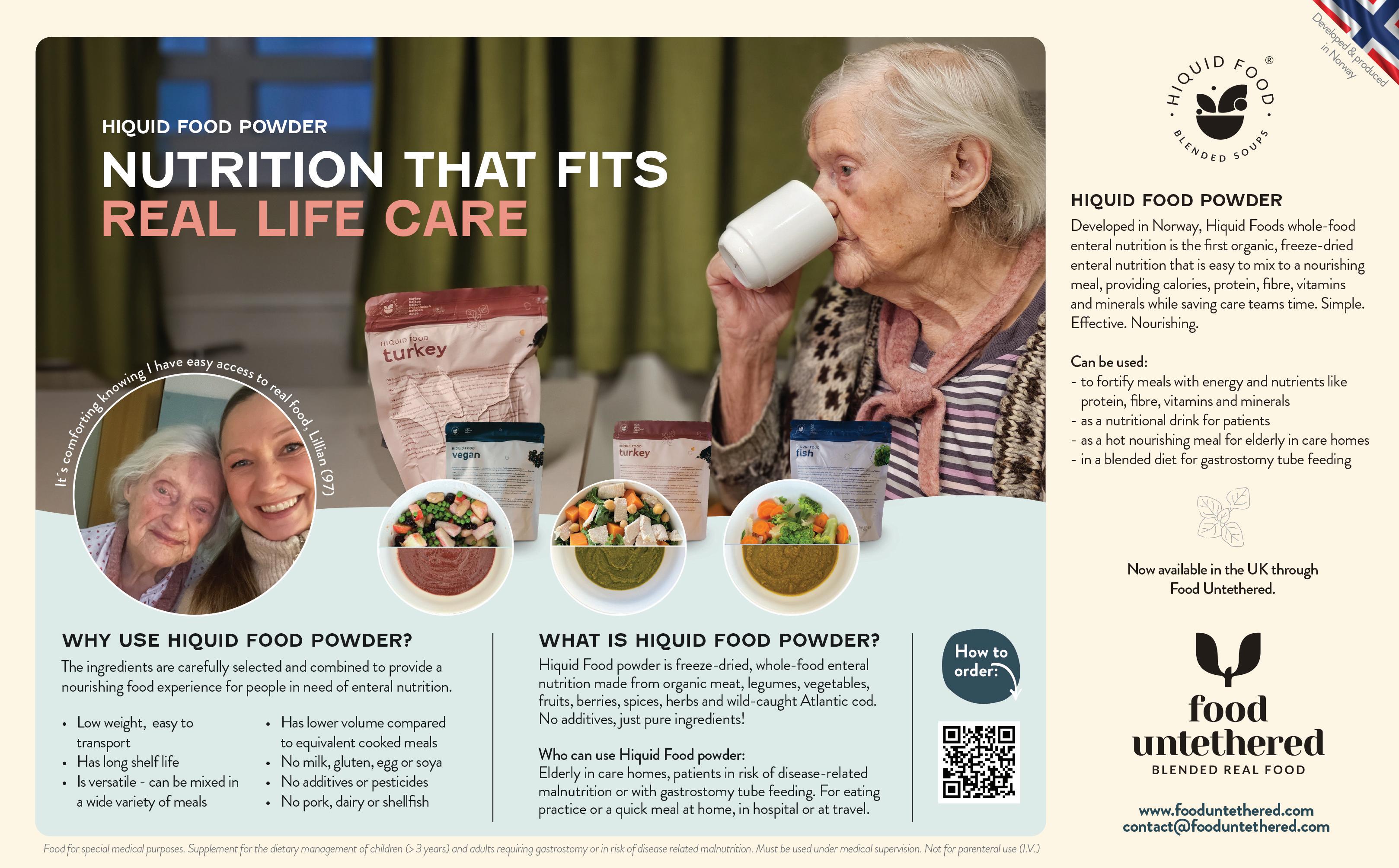
Fall Savers®, are an experienced market leading healthcare provider of resident safety solutions for over 15 years.
FALL SAVERS ® WIRELESS MONITOR
Eliminate all cables with our new generation falls management solutions!
Upgrade your falls programme with the latest technology from Fall Savers®. The NEW Fall Savers® Wireless eliminates the cord between the monitor and sensor pad. This results in less work for nursing staff, improved safety for patients and reduced wear and tear on sensor pads. Wireless advantages include the ability to use one monitor with two sensor pads simultaneously and support for many new wireless devices.
BENEFITS INCLUDE:
Safer for patients; less work for staff Bed and chair pads available
One monitor works with two sensor pads
Integrates with most nurse call systems A variety of options, including: Call button

NurseCall is definitely not a 'one size fits all' solution. If, like many Care Groups and Hospitals-both NHS and private-you utilise various NurseCall systems, you might find managing multiple systems a challenge. Many of our clients have voiced concerns about the increased time & costs associated with juggling different points of contact and contractors.
STREAMLINING MAINTENANCE FOR GREATER EFFICIENCY
Since our inception in 1984, we've committed to providing expert support across multiple NurseCall systems. Our engineers are thoroughly trained to handle diverse systems, ensuring you receive swift and comprehensive service, no matter the manufacturer.
EXTENSIVE INVENTORY AND INTEGRATION SOLUTIONS
We stock an extensive range of products from leading manufacturers and offer adaptable solutions

that integrate seamlessly with your existing frameworks. This approach not only simplifies maintenance but also enhances operational efficiency. YOUR PARTNER IN EFFECTIVE CARE
Your NurseCall system is vital, and we believe the challenges of maintaining it shouldn't hinder your operations. Our multi-manufacturer strategy streamlines complexities, benefiting both your team and the patients in your care.
Choose us to ensure smooth operations and peace of mind. Let's enhance the way you connect care with technology.
info@edisontelecom.co.uk www.edisontelecom.co.uk 01252 330220

In today’s complex care environment, we understand that choosing the right technology is about far more than functionality alone. For care providers, reliability, sustainability, and supply chain resilience are critical factors—especially when it comes to nurse call systems that play such a vital role in resident safety and day-to-day operations.
At Courtney Thorne, we are proud to champion the “Made in Britain” mark. For us, this is not simply about where our systems are manufactured; it reflects our commitment to quality, accountability, and supporting the UK care sector. By designing and building our nurse call systems here in Britain, we can ensure they are developed with a deep understanding of the real challenges faced by care homes, resulting in solutions that are practical, reliable, and easy to use.
Manufacturing in the UK also allows us to maintain close control over our supply chain—something that has become increasingly important in recent years. Global disruptions have highlighted the risks of relying on complex, overseas supply networks. By keeping our production local, we are able to offer greater consistency, shorter lead times, and improved access to parts and upgrades. This means our customers can rely on continuity, even in uncertain times, with minimal risk of disruption to their services.
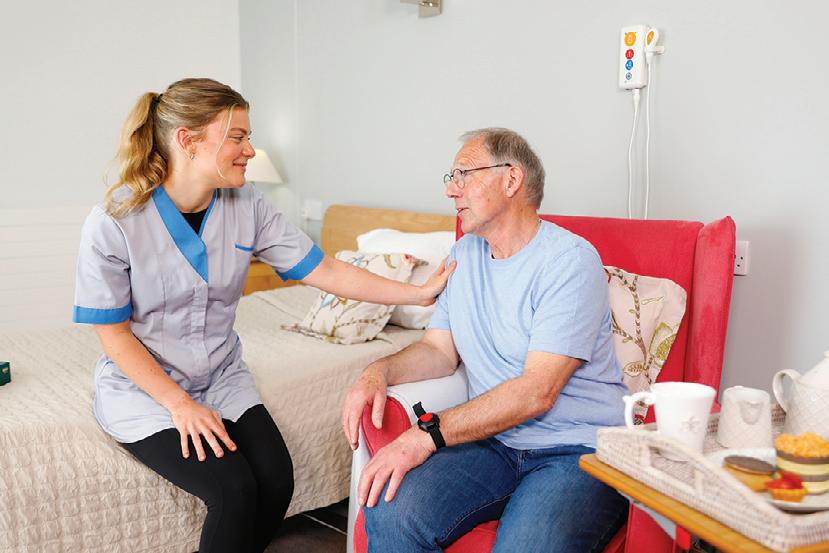
Sustainability is another area where we believe local manufacturing makes a meaningful difference. By reducing the need for long-distance transportation and focusing on robust, long-lasting system design, we help care providers lower their environmental impact. We are committed to creating solutions that not only meet today’s needs but are built to last—reducing waste and supporting more sustainable care environments over the long term.
Of course, delivering high-quality technology is only part of the picture. We know that ongoing support is essential. That’s why our UK-based technical team is on hand to provide expert assistance, from installation and training through to maintenance and rapid response when it matters most. Our proximity allows us to respond quickly and effectively, giving our customers the confidence that support is always within reach.
At Courtney Thorne, we believe that care homes deserve technology they can depend on—both now and in the future. By combining British manufacturing, sustainable practices, a resilient supply chain, and dedicated local support, we are proud to deliver nurse call systems that underpin safe, effective, and reliable care every day.
For more information or to book a free demo, visit www.c-t.co.uk or contact info@c-t.co.uk.
Falls are a significant concern for vulnerable individuals, especially seniors and patients at risk. Medpage, a leader in assistive technology, offers a range of cutting-edge products designed to enhance safety and provide peace of mind for caregivers and families. Here’s an in-depth look at some of their standout solutions: MPRCG1 (2023) BED LEAVING DETECTION ALARM WITH CAREGIVER RADIO PAGER
The MPRCG1 is a comprehensive system tailored for fall prevention in domestic, commercial, and NHS care settings. This all-inclusive kit includes a bed pressure mat sensor, a BTX21-MP alarm sensor transmitter, and an MP-PAG31 radio pager. The system is designed to alert caregivers when a patient leaves their bed, reducing the risk of falls.
HDKMB2 HOSPITAL DISCHARGE KIT FOR FALLS RISK PATIENTS
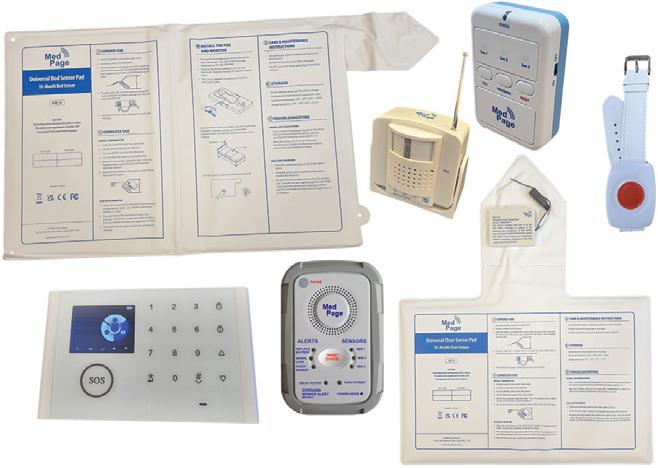
The HDKMB2 is a thoughtfully curated kit aimed at supporting patients transitioning from hospital to home care. It includes essential tools to mitigate fall risks and promote recovery. This kit is ideal for caregivers seeking a comprehensive solution to enhance patient safety during the critical post-discharge period.
CMEX-21 MULTI-PORT WIRELESS SENSOR INPUT EXPANDER FOR NURSE CALL CONNECTION
The CMEX-21 is Medpage’s latest innovation, designed to integrate seamlessly with existing nurse call systems. This multi-port expander allows for the connection of multiple wireless sensors, enhancing the monitoring capabilities of healthcare facilities. Its versatility makes it a valuable addition to any care environment, ensuring timely responses to patient needs.
RON-WC2 WATERPROOF DISABLED PULL CORD ALARM TRANSMITTER WITH WIRELESS ALARM RECEIVER
The RON-WC2 is a robust solution for disabled individuals requiring immediate assistance. This waterproof pull cord alarm is ideal for use in bathrooms and other high-risk areas. Paired with a wireless alarm receiver, it ensures that help is just a pull away. For more information, visit Medpage’s official website or contact their team to explore these products further. Safety starts with the right tools, and Medpage delivers just that. www.easylinkuk.co.uk or T: 01536 264 869 See the advert on page 15 for more information.
By Ashleigh Dueker, Programme Director, Care Intelligence,

As we welcome longer days and the promise of spring, it’s tempting to assume that pressures on the NHS will naturally ease - that warmer weather, seasonal reprieve and the slow thaw after winter will allow waiting lists to shrink and give A&E services the opportunity to breathe again.
But the real challenge facing the NHS isn’t seasonal. It’s systemic. Every year, the health service finds itself managing queues: queues in A&E, queues for treatment, queues for beds. Much of the conversation quite rightly focuses on how to move people through the system fasterimproving discharge processes, increasing capacity or accelerating clinical decision-making.
But there is also a crucial opportunity further upstream. If we want to relieve pressure on the NHS in a lasting way, we need to look beyond how the system manages queues and start asking how those queues form in the first place. And often, the earliest chances to prevent pressure on hospitals lie within social care itself.
Too often, social care is on the back foot. Care homes and community services have historically recorded what happened rather than what might happen. Paper records, fragmented systems and siloed insight mean risks are spotted only after they materialise - a fall, an infection, a deterioration
in hydration or mobility. For older people, these events don’t just reduce quality of life - they are among the leading causes of emergency hospital admissions.
It doesn’t have to be this way. We are entering a new era in which intelligence - not just data - becomes the engine of care delivery. At Person Centred Software (PCS), our Connected Care ecosystem has long digitised core care workflows, from planning to medication management. Every one of these interactions feeds into a unified data layer. On its own, it’s a record. But when we harness that data into intelligence - especially predictive intelligence - it becomes forethought rather than hindsight.
Spring relief won’t fix the NHS queue - intelligence will
That’s the purpose of IQ, our care intelligence platform now available to care homes across the UK. With the largest structured social care dataset in the country, IQ doesn’t just show what has happened, it reveals what’s likely to happen next.
This isn’t futuristic conjecture. IQ already enables anonymised benchmarking, so managers can see how their home compares with similar services on key indicators such as falls, hydration, wounds, happiness levels and more. This sector-wide perspective moves homes from isolated decision-making to shared learning, and from reactive fixes to strategic improvement.
More importantly, the next stage of IQ is predictive: using patterns drawn from billions of data points to flag when risk is rising - often days or even weeks before an incident occurs. Whether it’s an unusual shift in weight, subtle changes in mobility or early markers of dehydration, predictive insight turns these signals into actionable alerts for care teams.
For the NHS, this approach matters. Predictive insight gives social care teams the tools to intervene early, reduce avoidable hospital admissions and also creates greater confidence in safe discharge pathways.
Evidence from pilot work across the health and care landscape shows that digital technology does indeed reduce unplanned acute care usage and costs when used effectively. Integrated data and communication between care homes and NHS community services contribute to earlier detection of deterioration, better joint decision-making and fewer emergency department attendances.
But this isn’t just about efficiency. It’s about dignity, safety and quality of life for older people and their families - the very outcomes at the heart of our healthcare and social care system.
A SEASONAL OPPORTUNITY - NOT A SEASONAL FIX
Spring should be more than a symbolic break in demand. It should be a catalyst for lasting change: an opportunity to invest in the intelligence that supports both social care and the NHS. We cannot afford to wait until next winter to ask the same questions and confront the same problems.
If we harness predictive insight now - to anticipate risk, prevent harm and reduce avoidable admissions - we not only ease seasonal pressures but transform the fabric of care delivery itself.
In the end, the real queue isn’t a list of people in beds. It’s the queue of untapped intelligence waiting to unlock a safer, smarter and more humane approach to care - one that works for receivers of care, care teams and for the NHS alike.
Running a care home today means balancing highquality care with the smooth operation of a wide range of essential systems. From laundry and dishwashing to television services, WiFi and connectivity,
these functions play a critical role in compliance as well as resident wellbeing. They also underpin the day-to-day experience of both residents and staff.
In many homes, these systems are supplied and maintained by multiple providers. Whilst this is often the norm, it can create unnecessary complexity. When issues arise, dealing with different service teams, contracts and response times can slow resolution and increase pressure on staff.
Forbes Professional works with care homes to simplify this.
By delivering commercial laundry, dishwashing, IPTV, healthcare TV and networking infrastructure as a single, connected solution, providers benefit from one point of contact, streamlined servicing and clear accountability. This reduces operational friction and allows teams to focus on delivering care rather than managing suppliers.
In any care environment, reliability is critical. Equipment must support strict hygiene and safety standards, with oversight from the Care Quality Commission and requirements such as WRAS. Professionally specified and maintained systems help ensure consistent infection control processes and minimise the risk of downtime.
At the same time, expectations around technology continue to grow. Residents increasingly value the ability to stay connected, access information and

enjoy entertainment through modern TV systems, signage solutions and reliable WiFi. For staff, dependable infrastructure supports smoother day-to-day operations.
Bringing these systems together creates a more stable, efficient environment. Instead of managing multiple suppliers, care homes can take a more integrated approach; improving performance, maintaining compliance and enhancing the overall experience.
Forbes Professional provides a practical, joined-up solution for care homes looking to simplify operations without compromising on quality.
Visit www.forbespro.co.uk or see the advert on page 11.
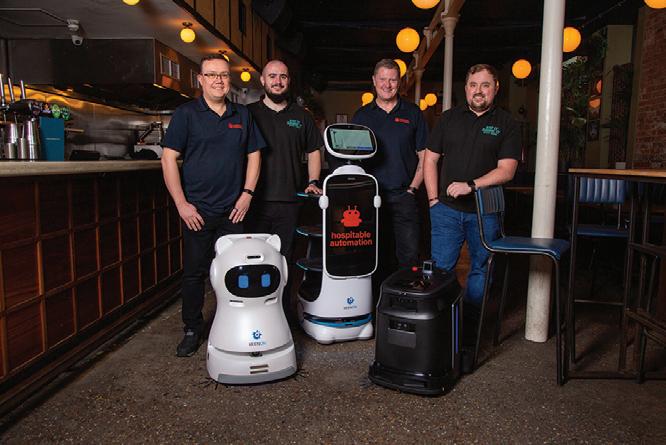

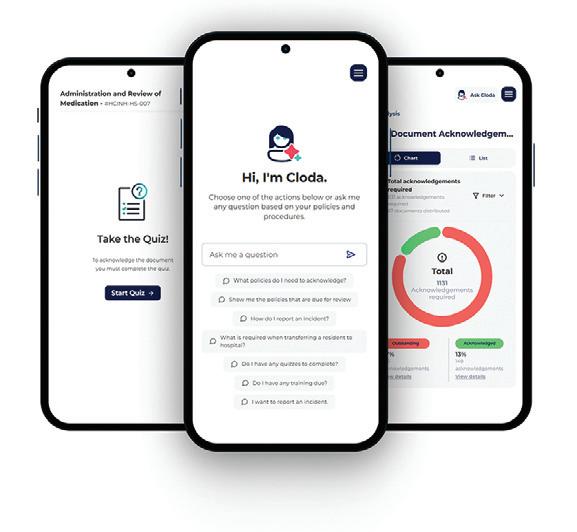
Care staff often need the right guidance immediately. Whether responding to a safeguarding concern, managing a medication issue, or dealing with a clinical incident, the ability to access the correct procedure quickly can be critical to both resident safety and staff confidence.
Cloda is an AI assistant providing care staff with the answers they need from their organisation’s policies and procedures. Staff simply ask a question — for example, “There has been a safeguarding concern, what should I do?” — and Cloda immediately provides the relevant guidance from the organisation’s own approved policies.
By making procedures accessible in seconds, Cloda helps ensure that policies are not simply documents stored on a system, but practical guidance that staff can use in real situations. This supports organisations in
embedding policies into everyday practice while strengthening compliance with Care Quality Commission (CQC) standards.
CQC inspections increasingly focus not only on whether policies exist, but whether staff understand them and apply them consistently in practice. Providing staff with immediate access to the correct guidance helps reinforce safe decision-making and supports organisations in demonstrating that policies are actively used across the service.
One of the most notable insights from Cloda deployments across social care services is the level of engagement from frontline staff. In many services, user adoption exceeds 80%, reflecting the fact that staff find the system simple and genuinely helpful in their day-to-day work. Cloda is like an additional team member, a reliable source of guidance that is always up to date, and available at the point of care.
Soon, Cloda will expand into a fully AI-enhanced Quality Management System with functionality for training, incident management, risk management, internal audit and compliance insights. By bringing these functions together in one system — and enhancing them with AI — providers can streamline quality management processes while improving visibility across their services.
The platform has been developed by HCI, an organisation with more
than 20 years’ experience supporting international health and social care providers with quality, governance and compliance solutions. Over the past two decades, HCI has worked with healthcare organisations across multiple jurisdictions to strengthen regulatory readiness and improve the management of quality and safety processes.
This experience has shaped the design of Cloda and its wider quality management framework, ensuring that the technology supports the realities of frontline care while also providing the governance tools organisations need to maintain compliance.
As care providers continue to face increasing regulatory expectations, workforce pressures and rising complexity in care delivery, digital tools that support both frontline staff and organisational governance are becoming increasingly important.
By combining instant access to guidance for staff with AI-enhanced quality management tools for organisations, Cloda helps care providers embed policies into practice, strengthen CQC compliance and ultimately support safer, more consistent care.
Cloda will be exhibiting at Care Show London — visit us at Stand H47 to see how Cloda works in practice. Learn more about Cloda at www.cloda.ai or contact info@cloda.ai.

Technology is becoming a routine part of residential care.
From sensors and monitoring systems to digital care records, these tools can support safer and more responsive care. At the same time, they raise questions about consent, privacy and how care is experienced by both residents and staff.
These themes were reflected in recent discussions hosted by the Digital Care Hub, which explored how technology is being used in practice across the sector.
Understanding and explaining technology
One of the challenges raised was how well people understand the technology around them. In some cases, particularly for people living with dementia or cognitive impairment, this understanding may be limited.
As one frontline care worker described, a person drawing on care believed systems were there so others could “spy on him”.
This highlights the importance of how technology is introduced and discussed. Understanding may change over time, and people’s responses are not always predictable.
Consent, not duress
Consent was a central theme. The discussions pointed to the importance of consent, not duress, particularly in a system under pressure. As one speaker highlighted: “Choice is meaningful only if a person can say no without losing their right to basic care.”
This raises questions about how real choice is experienced in practice. Where options are limited, or technology becomes part of a default offer, consent may be more complex than it first appears.
Impact on staff and culture
The use of monitoring also has implications for staff. In residential settings, oversight is familiar, but increased monitoring can change how care workers experience their role.
Some described feeling observed or questioned on small aspects of their work, particularly where families can see detailed records. This can influence how care is recorded and how relationships develop between staff, families and residents.
Supporting independence without replacing care
Technology was also discussed as a way of supporting independence. In some situations, monitoring can reduce the need for constant supervision and allow people more flexibility.
At the same time, there were concerns about how technology is used in a stretched system. One speaker highlighted the risk of pressure to “put more tech in to replace the shortage of carers”.
Robots vs Carers
Digital Care Hub’s next webinar is on Robots Vs Carers: are we really replacing care workers? 31 March 2026
Find out more at www.digitalcarehub.co.uk/digital-care-in-focus/ difficult-conversations-about-data-and-tech/
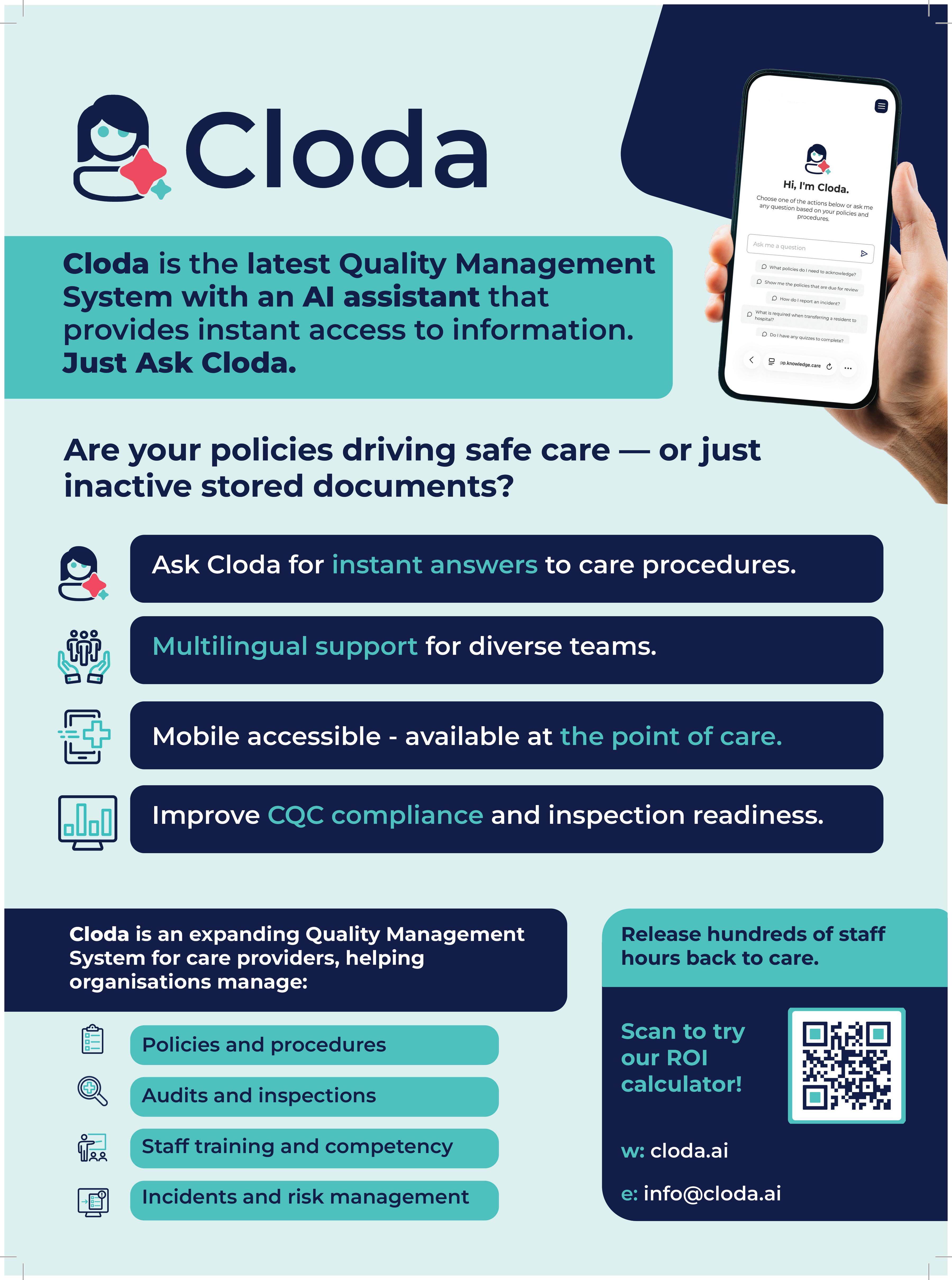
Ready-to-use activity products designed to support meaningful engagement in everyday life.
Everything you need to inspire connection, stimulation and wellbeing
CREATIVE & SENSORY ACTIVITIES
Art, craft and sensory products designed to engage, calm and inspire. COGNITIVE & REMINISCENCE
Memory-based activities and conversation starters that encourage connection. GAMES & GROUP ACTIVITIES
Inclusive games and group activities suitable for a wide range of abilities. ONE-TO-ONE & MEANINGFUL ENGAGEMENT
Personalised activity products that support wellbeing and individual needs. Thoughtfully selected to be accessible, inclusive and easy to use in busy care environments.
Explore our full activity range -
CareZips® Classic are patented, easy dressing unisex adaptive pants designed for older and disabled people suffering with problems associated with continence, mobility, mental function and cognition. Suitable for persons living in care institutions, receiving care at home or living independently at home, CareZips® Classic enable people to dress themselves or with assistance from carers.
CareZips® Classic feature patented 3-zipper system, which opens the front of the pants from the waist to the knees for quicker access during toileting, continence pads changes and personal hygiene. The forward positioning of the two side zippers lessens pressure on sensitive hip areas, helping to eliminate discomfort. The third zipper facilitates simple full frontal opening for faster more dignified diaper changes, catheter adjustments, personal cleansing and hygiene routines.

cal functionality and versatility of the CareZips® Classic, all day comfort and easy garment care.
• People dependent on assisted dressing appreciate quick easy dressing process with less stress, embarrassment and greater dignity offered by CareZips® Classic.
• CareZips® Classic offer practical gains to the carers, helping them to provide better care, whilst reducing physical efforts and saving valuable time.
CareZips® Classic are unisex, available in 6 sizes and 3 practical colours (i.e. black, charcoal and navy). Tapered fit at the ankles gives a tidy appearance. Made from breathable moisture-wicking 4-way stretchy crease-free and easy-care durable fabric, CareZips® Classic are comfortable, practical and conveniently functional.
For more information, contact Win Health Medical Ltd - 01835 864866www.win-health.com
CareZips® Classic have many benefits for the older and disabled users and their carers:
• People dressing themselves enjoy the practi-
See the advert on page 3 for further information on Win Health’s product range.


the well-being of patients and
EDGE Services is one of the leading providers of people handling training in the UK today.
EDGE will train you to deliver moving and handling, dementia care, and challenging behaviour courses to your colleagues, providing you with the resources, techniques, and skills to make a real difference to the health and safety of both your colleagues and your clients. Our courses:

People Handling and Risk Assessment Key Trainer's certificate (4 consecutive days, includes a written assignment)
Children Handling and Risk Assessment Key Trainer's certificate (4 consecutive days, includes a written assignment)
People Handling and Risk Assessment Key Trainer's certificate Refresher/Update (2 consecutive days)
• Children Handling and Risk Assessment Key Trainer's certificate Refresher/Update (2 consecutive days) Understanding and Managing Behaviour that Challenges Key Trainer's certificate (2 consecutive days)
Dementia Care Key Trainer's certificate (2 consecutive days)
Our Key Trainer's certificate lasts for 2 years. Delegates are then given a 3-month grace period to renew their training though we don’t recommend they deliver any training during this interim period.
EDGE understands that the continued success of the company is down to us consistently providing highquality training that is received well by those attending the event and by those procuring it. We are committed to ensuring this success continues.
There’s a lot that makes EDGE different from your average training provider:
Healthcare Professionals: All EDGE trainers are nurses, occupational therapists or physiotherapists with over ten years’ clinical experience.
Fully Accredited: All our’ People/Children Handling and Risk Assessment Key Trainer’s Certificate’ courses are accredited by RoSPA Qualifications to Level 4 or Advanced Level 4. They are recognised for providing continuous professional development by the CPD Certification Service.
Compliance with Professional Training Standards: All EDGE Manual Handling ‘Key Trainer’ events comply with the National Back Exchange Training Standards (2010); The All Wales NHS Manual Handling Training Passport and Information Scheme (2010); and The Scottish Manual Handling Passport Scheme (2014).
• Invaluable Training Resources: All delegates are given a fully illustrated and comprehensive textbook; professionally printed and produced by EDGE. Plus, proposed documents to assist and support in onward training delivery. These include course agendas, hand-outs, Power-Point slides, filmed practical techniques and tips for staff training and assessing.
Online Resources Library and E-Learning: Our Manual Handling ‘Key Trainer’ training is supported by an extensive, informative online resources library offering use of an exclusive e-learning module plus additional training tips and tools to develop and enhance onward training.
EDGE offers both public courses and in-house courses, the dates for which can be found on our website: https://edgeservices.co.uk
Alternatively, call: 01904 677853 or e-mail: enquiries@edgeservices.co.uk to see how EDGE Services can help you.
Care homes today face increasing pressure to deliver high-quality, safe and effective care—while managing limited time, budgets and workforce capacity. Traditional training methods often struggle to engage staff or translate learning into everyday practice.
Serious games are changing that.
By combining evidence-based learning with interactive, scenario-driven gameplay, serious games enable staff to learn by doing. Teams work together to solve realistic challenges, strengthening communication, decision-making and confidence in a safe environment. This directly supports key CQC priorities across Safe, Effective and Well-led domains.
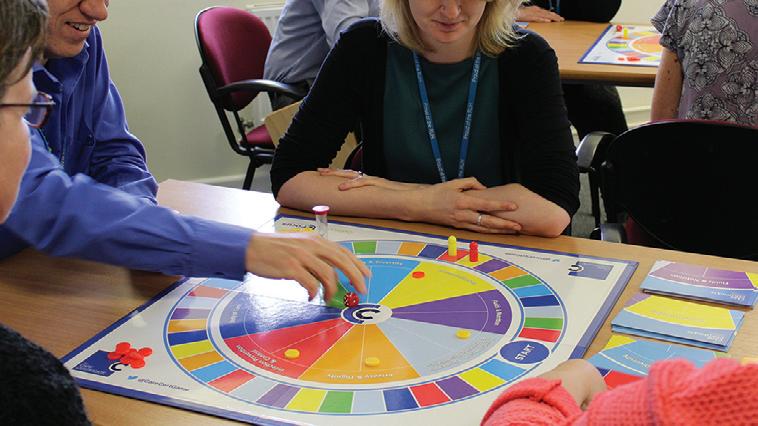
Research shows that simulation and game-based learning improves knowledge retention, teamwork and patient safety outcomes (Aggarwal et al., 2010; Health Education England, 2016). Crucially, it also promotes peer learning and reflection—helping teams share experiences and embed best practice across the service.
Focus Games has been at the forefront of this approach, offering a wide range of care home–focused
board games, card games and digital learning via the ZeST platform. Covering topics such as infection prevention, nutrition, safeguarding and communication, these resources are designed specifically for health and social care settings.
✔ Engage staff through interactive, team-based learning
✔ Reinforce real-world skills through practical scenarios
✔ Deliver cost-effective training at scale
✔ Support inspection readiness and continuous improvement
Flexible and easy to facilitate, Focus Games’ resources can be used across induction, mandatory training and ongoing CPD, either face-to-face or digitally. At a time when care providers must do more with less, serious games offer a proven, practical and engaging solution—turning training into meaningful improvements in care delivery.
Ready to get started? Take the first step with
Working in social care is demanding. It is one of the most heavily regulated yet underfunded sectors, with providers expected to comply with regulations, meet Quality Statements, follow good practice guidance, respond to local authority monitoring, and operate under constant scrutiny.
Regulation itself isn’t the problem — it protects people and improves standards. The challenge is capacity. Larger organisations may have in-house quality assurance teams, but smaller providers rarely have the time or budget to review compliance in depth. Many owners and managers tell us they feel overwhelmed and unsure how well their service is really performing, especially since the introduction of the Single Assessment Framework.
For many, confidence in compliance is the number one concern — not because standards are poor, but because there simply isn’t time to step back and take a full, objective view.
CAN AN EXTERNAL AUDIT HELP?
In short, yes — when it’s done properly. A high-quality external audit provides:
• A clear snapshot of current performance
• Identification of good practice and priority risks


• Evidence to support action plans and improvement journeys
• Demonstration of good governance and continuous improvement — a key CQC
• Reassurance for owners, directors, and managers
W&P have supported health and social care providers for nearly 25 years, completing hundreds of audits across a wide range of services. This experience gives us deep insight into what regulators look for — and what genuinely improves outcomes. Our audits are supportive, non-judgmental, and practical. They typically include around six hours on-site, followed by a detailed report that links evidence to regulations and Quality Statements. Reports also include clear guidance, tips, and sources to help you respond confidently.
Every audit is tailored to your needs — whether that’s safeguarding, medication management, or overall governance — ensuring it is truly fit for purpose.
If you would like to know more, then please contact us on audits@wandptrainng.co.uk or call 01305
767104 for a no-obligation chat on how our audits can help you. See the advert on page 2 for details.
A nationwide charity that helps people rebuild their lives has appointed leading training provider Realise to develop new team leaders through apprenticeships.
Book Now for 2026
Change Grow Live, which provides free treatment, support and information about drug and alcohol use, homelessness, justice and probation and employment, will offer a progression route through Health and Social Care apprenticeships with Realise.

There will be 200 learners supported through their first programme initially, with scope for this to grow much further as more apprenticeship courses are introduced to the partnership.
Alexandra Bode-Tunji, Chief People Officer at Change Grow Live, said the charity had partnered with Realise to allow colleagues to grow both professionally and personally.
“This marks the beginning of an important chapter where our people will have the opportunity to develop the skills and knowledge needed to succeed in their roles and beyond,” said Alexandra.
“Our people are at the heart of the impact we create. When we invest in training and development, we’re investing in safer services, better outcomes, higher quality interactions and greater stability across our workforce.”
Alexandra said Change Grow Live had appointed Realise as the provider had taken the time to understand the charity’s mission and values.


She added: “Their approach wasn’t about offering a generic solution, it was about designing something that responded directly to our needs, whether that’s supporting Recovery Workers or creating progression routes that strengthen our future talent.”
Angela Kaine, Director of Health & Social Care at Realise, said the partnership would help build new employment and career pathways and make Change Grow Live a place where people can thrive.
She said: “Change Grow Live does fantastic work to help people in a variety of different circumstances and has grown into a huge operation with more than 5,000 employees and 150 services.
“We understand the complexity of their organisation and have formulated a bespoke plan which will help build clear pathways, strengthening their ability to attract, grow and retain great people.
“We look forward to working with Change Grow Live and building a long-term collaboration, adapting to the needs of their services and supporting their people throughout.”
Realise works with many large care operators and social care providers, offering an array of apprenticeships, including the Level 3 Senior Healthcare Support Work Apprenticeship and the Level 5 Leader in Adult care Apprenticeship.
For more information, visit www.realisetraining.com

By Martin Lowthian, Risk, Quality and

Ask most care providers what their risk register is for, and the answer will be some version of the same thing: staying compliant, preparing for inspection, avoiding regulatory action. Those are all valid reasons. But if that is all your risk register is doing, you are leaving significant value on the table.
Good risk management is not a defensive exercise. Done properly, it is one of the most powerful tools a care business has for sustainable growth. Providers who understand this are not just better protected, they are better positioned to win contracts, scale their services, and attract staff.
Operational risk gets most of the attention. Safe recruitment, medication management, care delivery and safeguarding are all are critical areas, and they absolutely belong in your register. But there is another category that rarely gets the same rigour: opportunity risk.
Consider how many providers miss a tender because their evidence is not in order. Enquiries that are not converted, clients who choose a competitor, care workers with specialist skills you cannot recruit because your onboarding process is not fit for purpose. Each of these is a risk with a measurable impact on your business. Your risk register should capture all of it.
One of the most common patterns in care organisations is a business that has grown quickly but has not
grown its infrastructure at the same pace. Ask yourself: if you disappeared for two weeks, what would happen? If the answer involves significant disruption, that is a risk worth documenting and addressing now.
Many providers manage their risk registers in spreadsheets, but as organisations grow, paper-based processes create real problems. Controls that were accurate six months ago are presented as current assurance. Actions that were never completed sit on the register without anyone being held to account. This is not risk management; it is risk documentation.
Digital tools designed specifically for care governance, such as Access Care Compliance, allow providers to track risks, controls, and actions in one place, map them against regulatory frameworks, and evidence progress in real time.
There is also a direct commercial argument. Insurers respond well to providers who can demonstrate a structured, evidenced risk management framework, and in my experience, it can reduce your premiums. Commissioners are increasingly sophisticated in evaluating tender responses. A provider who can point to documented controls and clear accountability stands out.
Honest risk management requires a particular mindset. Approach your register as if you are looking for problems, not confirming that everything is fine. Providers who get the most value from their risk registers use them as a genuine growth tool, asking uncomfortable questions about where the gaps are.
Risk management, done properly, is not an add-on. It is how well-run, high-quality care businesses grow and thrive.
For more information about risk management or Access Care Compliance, please contact Martin at martin.lowthian@theaccessgroup.com

23 years, operating 4 Devon Nursing homes, has been pretty tough, as anyone in social care, knows, only too well. And if it was hard already, after 2024 budget, it's just got harder.
Anyway, at heart, I am just customer of Eden Alternative, and it was a stroke of luck to come across this whilst on holiday in New Zealand in 2009. It started in USA in 1994 and now runs in 22 countries.
The fact that I am now involved with this not-for-profit organisation (in the UK area) came about when one of the 2 main UK directors died suddenly just before Covid. But it's something I have run with for 11 years to help make 'vision' a reality, not a struggle. So, being both a customer and helping the admin seems quite natural.
It is a modern philosophy of care, but moreover, it's a programme that is straight forward, tried and tested for 30 years and really works. Its member care organisations generally become trainers for their own teams, and run it themselves.
The programme is run in person over 2-3 days or online 1 hr a wk

for 7 weeks. You choose.
It addresses loneliness, helplessness and boredom and operates through 10 principles to underpin 7 critical domains of wellbeing. Moreover, it's effective, transformational and really works. As residents, and team members wellbeing, matter so much , it's a must, in my opinion.
Geoffrey Cox Southernhealthcare.co.uk eden-alternative.co.uk

By Sara-Michelle Colvin, Senior Associate

The UK care sector is currently facing one of the toughest periods of immigration related enforcement it has ever experienced. Recent Home Office figures reveal the scale of the shift: from July 2024 to June 2025, 1,948 sponsor licences were revoked – more than double the 937 revoked the year before, and dramatically higher than the 261 and 247 revocations issued in 2021–22 and 2022–23.
The Home Office continues to identify recurring weaknesses across parts of the sector, including:
• underpayment of sponsored workers mismatches between the job roles listed on Certificates of Sponsorship and the duties carried out attempts to use sponsorship as a means of bypassing immigration controls roles that do not constitute genuine vacancies the increased vulnerability of migrant workers who are tied to their sponsoring employer.
Given the sector’s reliance on overseas recruitment and long standing staffing challenges, adult social care remains a central focus for enforcement activity.
A move toward digital, intelligence led monitoring
As part of this intensified scrutiny, the Home Office has largely replaced onsite compliance visits with a more sophisticated, data driven approach. Increasing integration of HMRC/PAYE information, Sponsorship Management System activity and other government intelligence allows caseworkers to highlight concerns quickly and with
greater accuracy.
This desk based model is supported by enhanced analytical tools –including AI – which provide faster processing and more reliable detection of anomalies or patterns of non compliance.
The government has also adopted a far more uncompromising approach to compliance failings. Issues previously regarded as technical or low level – late sponsor notifications, incomplete HR files, inconsistent Right to Work checks, or weak absence management – can now lead to immediate suspension or even revocation.
These stricter consequences sit alongside wider efforts to combat illegal working. Civil penalties now reach £45,000 for a first breach and £60,000 for subsequent breaches, and enforcement activity increased sharply in 2025 thanks to expanded capacity and automated systems.
In recent months, many care providers have been contacted unexpectedly by the Home Office seeking additional information, typically regarding pay. This stems from increased data sharing between HMRC and the Home Office, which is surfacing discrepancies that may point to reporting failures.
REQUESTS
When the Home Office issues a Request for Information, sponsors usually have 10 working days to respond. The volume of evidence required can be substantial, often needing input from multiple departments. A long standing concern among organisations is the need to send sensitive employee information without encryption, as the Home Office’s current systems are limited to email attachments and do not support secure alternatives.
SUSPENSION AND REVOCATION
Where the Home Office identifies breaches, it may take one of the following actions:
SUSPENSION
The licence may be suspended and the sponsor placed on an Action Plan.
A fee must be paid within 10 working days to accept the Action Plan.
• The Action Plan can run for up to three months, during which the sponsor must demonstrate significant improvement to regain full compliance.
• Failure to meet the required standard typically results in revocation. REVOCATION
In serious cases, the Home Office may bypass suspension and move directly to revocation – something officials have indicated is increasingly common.
• Before revoking, the Home Office issues a notice of intention, giving the sponsor 20 working days to make representations. Although the Home Office is expected to respond within a further 20 working days, delays are frequent.
In most cases, the outcome is ultimately revocation.
If revocation occurs, sponsored employees may continue working for 60 days from the date of their cancellation letter (or until their visa expiry date, if earlier). During this period, they must find a new sponsor or switch to another immigration route to remain lawfully in the UK. Revocation takes effect immediately for the organisation: it loses the ability to sponsor workers or assign Certificates of Sponsorship and cannot apply for a new licence for at least 12 months, a period that can be extended where civil penalties or criminal matters are involved. Legal challenges within the sector have centred on arguments relating to:
• risks to continuity of care for service users the impact on a business’s ability to operate and the effect on its domestic workforce the Home Office’s alleged failure to apply discretion or consider lesser sanctions.
STRENGTHENING COMPLIANCE IN A HIGH RISK ENVIRONMENT
In this climate, it is vital for care sector sponsors to adopt a proactive and rigorous compliance strategy. The rise in licence revocations, coupled with more sophisticated data monitoring and severe penalties for even minor breaches, demonstrates the Home Office’s determination to drive structural reform.
Organisations relying on sponsored workers must therefore ensure their HR systems, reporting procedures and governance arrangements are robust, transparent and consistently applied. Some groups are also exploring multi licence structures to spread risk across subsidiaries. Although revocation does not stop a business from trading, the operational disruption, staffing challenges and 12 month bar on reapplying can be highly damaging. Strong compliance is no longer a matter of good practice – it is essential for ensuring continuity of care, protecting vulnerable workers, and maintaining future access to skilled international labour.
Global assists clients throughout the U.K. who specialise in the healthcare sector to achieve their objectives of purchase, development and refinance.
We have organised over £1.8bn for clients in the past 30 years, providing clients with competitively priced funding to refinance existing debt, ease cashflow and develop businesses further.

From helping clients make their first purchase through to allowing groups to grow significantly in size
we assist at every stage of your business expansion. Every proposal is individual and deserves to be treated that way, so we hope you will allow us to be of assistance to you and call us to chat through your plans and requirements, I am sure we will be able to tailor a facility to your requirements. Call us on 01242 227172 or e-mail us at enquiries@globalbusinessfinance.net
By Becky Mundie, RotaCloud (https://rotacloud.com)

How much time do you spend on admin?
How long are you locked away in your office to make the rota, only having to go back again and again for amends? How often have you realised you’re understaffed, resulting in overspending on agency staff? How frequently do payroll errors, messy audit trails, and chasing staff who missed a shift update occur?
It’s constant, the stress of it all. It’s enough to carry the care of your service users on your shoulders without being overwhelmed every day by repetitive admin and errors. You never thought you’d be spending more time amending schedules, chasing for cover, and correcting issues than your actual job.
But those inefficiencies — staff shortages, payroll errors, missed shift updates, and multiple spreadsheets you juggle — cost you money, time, staff retention, and, in some cases, compliance.
It’s easy to suggest investing in budgeting tools or certain tech to help you understand spending before it happens and to automate certain processes. Budgets are tight in care, after all. But there are simple fixes to cut your operating costs without cutting back on care if you can’t yet turn to digital systems.
Cutting costs doesn’t just mean spending less. It’s about making smarter decisions – reacting to and fixing the cause of the problem, not the effect. And it all starts with your rota.
There are ways to take better care of your rota, which will, in turn, improve efficiency and staff morale. One main way: putting your staff first.
First, give your team more say in when they work by allowing them to submit their availability. Try making a rolling rota with a mix of most and least preferred shifts so everyone gets a fair share of them. It means far less admin for you when the rota repeats, far fewer last-minute amends, a more accurate payroll, an easier audit trail, and no more miscommunications on when everyone’s working.
Second. Share rotas at least two weeks in advance. Doing so allows enough time to make amends and for everyone affected to be updated. Sticking to this process is more efficient, which means less admin – which means more time to focus on service users.
Third. Put in a more seamless process for holiday requests. Whether a submitted form or limiting to one means of messaging, sticking to one process means fewer lost or forgotten requests and much less paperwork. Plus, allow staff to arrange shift swaps themselves, leaving managers to simply approve or deny. Again, less time on admin means more time for service users.
All in all, your saviour is flexibility. Flexibility in rotas means less admin for managers, more efficient teams and safe staffing levels, happier staff (and higher retention rates), and, in return, happier service users – all saving costs in the process. After all, when you aren’t making last-minute changes or relying on agency staff to cover no-shows, you stick to the staffing levels and labour budgets you’ve forecast. So long, overspending, lost time, and inefficient processes.
See the back cover of this issue for more information on Rotacloud.