







Editor Peter Adams
A slightly shorter comment from me this week, as I am writing from the show floor at the Care Show London at the ExCeL, taking place today and tomorrow (29–30 April).
I’m pleased to say it’s already proving to be a busy and positive event. It’s always valuable to meet face-to-face with our advertisers, but equally important — and enjoyable — to spend time with operators and frontline carers, hearing directly about the challenges and opportunities across the sector.
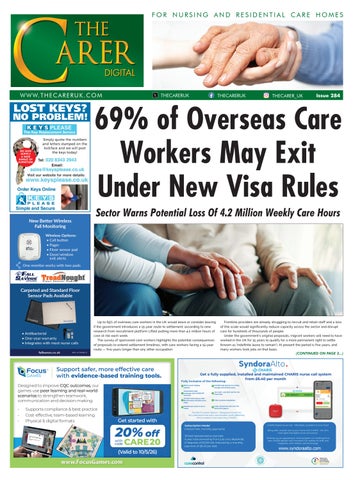
Those conversations naturally bring me to our lead story this week, highlighting research suggesting that 69% of overseas care workers may leave the UK under proposed new visa rules, putting more than 4.2 million hours of care at risk each week. For many providers, this will come as no surprise.
The sector has consistently warned about the risks of restricting overseas recruitment in a workforce that continues to face significant recruitment and retention challenges.
I understand the policy intention of developing and supporting “home-grown” talent. With unemployment rising, encouraging domestic recruitment is a logical objective.
However, there is a real concern that we may have thrown the baby out with the bathwater by tightening the door to overseas workers while the sector continues to experience a shortage of skilled and experienced staff.
Social care providers need stability and capacity now, not at some undefined point in the future when domestic pipelines may — or may not — deliver.
The government has faced criticism for U-turns in recent months, but this is one instance where reconsideration would make practical sense.
The reality remains that international staff play a critical role in maintaining safe, consistent care across residential and nursing settings.
Removing or discouraging that workforce before viable alternatives are in place risks further destabilising an already stretched system.
Finally, if you are attending the Care Show, we would be delighted to see you. We are on Stand G77 so please do stop by to say hello.
I would encourage all our readers to sign up for our regular enewletters, bringing you all the latest developments from the sector, at www.thecareruk.com
I can also be contacted at editor@thecareruk.com






(CONTINUED FROM FRONT COVER)
International recruits now deliver around 40% of care in England, meaning any large-scale exit would have immediate consequences for services already under strain.
BREACH OF TRUST
If reflected across the wider workforce of approximately 153,000 sponsored care workers, this could mean over 100,000 workers exiting the sector over time — affecting care for an estimated 250,000–280,000 people, with knock-on effects for families and increased strain on NHS services.
Many respondents described the proposals as a breach of trust, having moved to the UK on the understanding of a five-year pathway to settlement. The most common reasons for considering leaving included rising visa and family costs, and uncertainty about long-term security.
Miranda, a care worker from Uganda, who has lived in the UK for nearly four years, said: “It feels like the goalposts have been moved. I came here, built a life, and kept my side of the bargain — now I’m being told that’s not enough. If this goes ahead, I would seriously consider leaving. Many others feel the same.
“I also really worry about the people we care for. Some of them can’t get out of bed, eat, or wash without support. Decisions like this will hurt them.”
The proposed changes would create a three-tier settlement system, with nurses remaining on a five-year route, most workers moving to 10 years, and care workers alone facing a 15-year pathway.
DEEPLY WORRYING
Gavin Preston, Managing Director of Right at Home, a care provider in Liverpool, said: “These proposals are deeply worrying. We rely on sponsored care workers to deliver safe, timely care — without them, services like ours simply couldn’t operate. If large numbers leave, as this research suggests, thousands of vulnerable people will go without essential, often life-critical support.
“These roles are very unlikely to be filled domestically. In our experience, there simply isn’t sufficient interest from the local workforce, which is why we rely so heavily on overseas staff.”
Rachael Crook, CEO of Lifted, said: “Extending the settlement route for care workers to 15 years risks driving experienced staff out of a system that already cannot function without them. If the government’s goal is stability in health and social care, this policy moves in the opposite direction. It sends a clear message: that care work is not valued, and that the people who left everything behind to care for our citizens are not welcome.”
Lifted has called on the government to remove the 15-year provision and apply the same settlement route as other occupations, while protecting those already in the UK under the existing five-year pathway. STARK FACTS
Nadra Ahmed CBE, Executive Co-Chairman at National Care Association said: “This report lays out the stark facts from those delivering care every day. At a time when vacancies remain above 110,000, the sector cannot afford to lose experienced staff. There has to be a realisation amongst decision-makers that the safe delivery of care is the bedrock of an efficient healthcare system. Only social care can begin the journey to reinstate the system that was once the envy of the world. Keeping those we support at the heart of everything we do needs a strong, resilient workforce who are valued and rewarded.”
The warning comes amid growing opposition to the proposed immigration changes. In a recent campaign, frontline care workers distributed 20,000 leaflets in the Birmingham Ladywood constituency of Home Secretary Shabana Mahmood, urging residents to contact their MP over concerns the reforms could damage an already stretched workforce.
UNISON has called for the visa proposals to be scrapped, arguing that without urgent action millions of vulnerable people could be left without support. The union says international staff make up almost 30% of the care workforce, while recruitment of migrant workers has already fallen by more than 80% according to the latest figures
Moving the goalposts is morally wrong, says UNISON, but will also deepen the staffing crisis in social care and leave workers more vulnerable to exploitation.
International staff make up almost 30% of the care workforce but recruitment of migrant staff is down more than 80% according to latest figures.
UNISON says the government’s wider plans to improve pay and standards in social care risk being undermined if migrant workers are forced into prolonged insecurity.
In addition to dropping the 15-year qualifying period, the union is urging the government to introduce measures to enable workers to move between employers more easily to reduce exploitation through a sector-wide visa, and speed up the new fair pay agreement to improve wages.
UNISON general secretary Andrea Egan said: “Social care is already under immense strain, with tens of thousands of vacancies. The sector’s been reliant on overseas staff willing to do this essential work, but the home secretary is closing the door on them.
“Extending the qualifying period risks driving experienced, committed staff out of the sector altogether.
“If the government’s serious about fixing social care, it must match its ambitions on pay and standards with fair treatment for the workforce. But the best way to start is by scrapping these cruel, unnecessary proposals.”


The stakes in the care sector between doing the right thing and the wrong thing can, on occasion, be a matter of life and death, especially when it comes to those who are extremely vulnerable due to their condition or age. As such, whistleblowing within the sector can, when done properly and in the public interest, have a positive outcome for patients, their families, carers and employers.
WHAT IS WHISTLEBLOWING?
Put simply, whistleblowing is the action someone (typically an employee or ex-employee) takes to report wrongdoing in the workplace that falls under one of the types of failure, wrongdoing or malpractice listed in the Employment Rights Act 1996. The act of reporting any such wrongdoing to a prescribed person is known as making a ‘protected disclosure’.
HOW
As a starting point, any disclosure made needs to be a ‘qualifying’ disclosure, meaning that the individual making the disclosure has a ‘reasonable belief’ that the information they’re disclosing relates to one or more of the types of wrongdoing and that it’s in the public interest to make the disclosure. Relevant issues that may be found within the care sector could include:
Danger to the health and safety of an individual - whether that be a patient, member of staff, visitor, etc.typically related to the quality of service provided or conditions
• A criminal offence - for example, money or possessions being taken from vulnerable patients
Breach of a legal obligation – for example, a breach of a legal duty of care owed to a patient, or a breach of a legal obligation to staff
Miscarriage of justice, such as wrongful accusations made against a particular member of staff or a patient. WHAT PROCESS SHOULD BE FOLLOWED TO ‘BLOW THE WHISTLE’?
An employee looking to make a protected disclosure should refer to their employers’ whistleblowing policy to see what steps need to be taken. Typically, a whistleblowing policy will confirm a specific point of contact with whom a disclosure can be made. This will usually be an HR representative, a compliance officer, or a line manager if there is no one in the aforementioned positions.
If there is no whistleblowing policy, an employee looking to make a disclosure would be advised to speak to their HR team or line manager about how to proceed. However, if their HR team or line manager is the subject matter of the issue, employees should approach someone else in a senior position to ask for advice.

By Chris Kisby, employment partner at Gateley Legal
There are two levels of protection for whistleblowers under the Employment Rights Act 1996: The dismissal of an employee will be automatically unfair if the reason, or principal reason, for their dismissal is that they have made a protected disclosure. Workers are also protected from being subjected to any detriment on the ground that they have made a protected disclosure. Such detrimental treatment would include, for instance, the whistleblower experiencing bullying, demotion, or being excluded from meetings, etc.
There is no financial cap on compensation in whistleblowing claims and no requirement for a minimum period of service. However, if an employment tribunal believes that a disclosure was made in bad faith (ie, based on untruths or with the intention of causing malice), it could reduce any compensation award by up to 25%.
Blowing the whistle can be a daunting and lonely process for those who make a disclosure. Where there is a ‘protected disclosure’, employers should assume that the disclosure is being made in good faith, and often for the benefit of the business. As such, they should look to support the employee. This could include, for example, offering them access to confidential and impartial counselling to help them through what can be a stressful and emotional experience of whistleblowing.
• Have a good whistleblowing policy and ensure employees know about its existence.
• Make sure a nominated whistleblowing officer/s are trained on what their role requires.
Treat all potential disclosures seriously and investigate as appropriate.
Make sure that lessons are taken from all disclosures to ensure things improve.
Do not seek to identify the whistleblower in cases where the disclosure is anonymous.
Do not exclude or alienate the whistleblower.
Do not assume the relationship between the business and the whistleblower is irreparable in cases where the disclosure causes conflict.
Top tips for employees
Take time to read and digest the company whistleblowing policy.
Raise concerns at the earliest opportunity, in order to potentially limit the issue from becoming more serious. Seek advice, whether that be from an internal whistleblowing officer or someone externally, before proceeding with the disclosure.
Be prepared to be challenged on your claims.
• Do not rely on memory to recall events or previous meetings; it’s important to keep notes of dates, conversations and outcomes.


• We specialise in the sale and purchase of quality used wheelchair accessible vehicles and ambulances.
• They can be bought as seen or refurbished and sign-written to your own requirements.
• Fully serviced, new mot & warranty
• Engineers inspection supplied if required.
• Free delivery service available
• All buses comply with new legislation
• Lease hire and purchase available
• Always large stock of accessible vehicles


A major new campaign launches today calling on Government to recognise that social care is an essential part of our economy as well as our society — and to back the sector with the investment, recognition and political will it needs to deliver for people who need support.
Care About Care brings together care providers, care workers, families and the public behind a simple argument: social care is not a safety net for the few. It is one of the largest and most important sectors that every family will rely on at some point. It is an essential public service, a major contributor to the economy, and a sector that has been overlooked, undervalued and underfunded for more than two decades.
Campaigners are encouraging people using care services, care workers, and the wider public to back the campaign through the 30-second “email your MP” toolkit on https://careaboutcare.org/.
Social care contributes £77.8 billion to the economy each year — more than tourism, telecoms, and entertainment – with economic impact spread across every town and community in the country. It employs 1.6 million people, more than the NHS, and by 2040, Britain will need a further 470,000 care workers to meet growing demand for care. One in four people over 65 already need help with everyday tasks, and three in five of us will care for someone we love during our lifetime.
Yet despite its scale and importance, social care has been consistently overlooked by political parties of all colours. With major Council elections currently underway, and social care spending making up around 75% of all Council expenditure, social care has so far been absent from the campaign trail – despite being essential to people using care services, people working in care, Council finances, and the local economies of every town.
Care About Care is calling for that to change, seeking to reframe the debate around social care funding to so that it is seen as an essential investment in our nation and economy, rather than an insurmountable challenge to be ignored.
The campaign has three demands: an immediate tax cut on care work to deliver an immediate pay rise for care workers; fair funding for care services based on an independently calculated cost of care; and a new British Care Fund to back small, local care providers.
Care About Care is calling for immediate action to enable the sector to survive and thrive, whilst longer term plans for a National Care Service are developed and implemented over the next decade.
Nadra Ahmed CBE, Executive Co-Chair at the National Care Association said:
“Social care remains one of the most important public services which supports some of the most vulnerable members of our society, yet it continues to be chronically underfunded. Providers are being asked to deliver more complex care with fewer resources, putting a greater strain on individuals and their families both personally and financially.
“We believe is imperative that policymakers wake up to the importance of the sector and the challenges that confront it. We cannot and must not allow policymakers to continue to ignore that social care delivery is a key part of the health and wellbeing of our nation – as well as an essential part of our economy.”
Kat Hall, founder, Providers Unite, said:

“For too long, social care has been taken for granted. Successive governments have left providers and local authorities to deliver vital services on shoestring budgets, and the resilience of the sector has masked the scale of the problem. Resilience alone is not enough. It’s time for political change — for Government to step up, recognise what care contributes to the country, and back the sector that holds so much of British life together. Care About Care exists to drive that change.”
The campaign is urging the public to get involved by visiting www.carefuture.co.uk and writing to their MP.
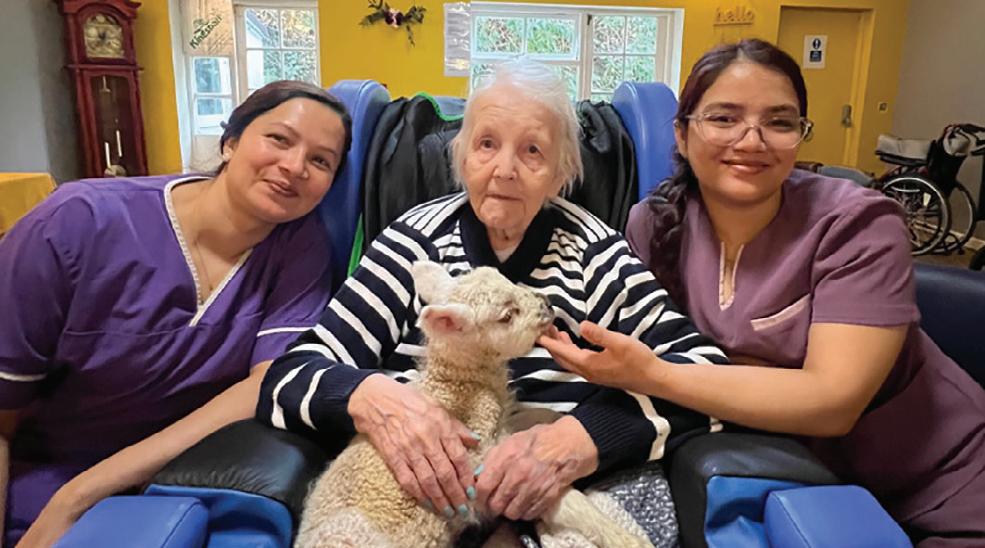
Residents at Cerrig yr Afon care home on the outskirts of Y Felinheli, near Bangor, were treated to a memorable day as a host of animals paid a special visit.
The home welcomed Animal Encounters, bringing with them a variety of creatures including snakes, an owl, lambs, lizards and rabbits, giving residents the chance to get up close and interact with the animals.
The visit proved a big hit, with smiles all round as residents stroked the animals, asked questions and shared stories. For many, it was a chance to reconnect with nature and relive fond memories of animals they had known earlier in life.
Staff at the home said the experience offered not only entertainment but also valuable sensory engagement, sparking conversation and encouraging interaction among residents.
Andreea Roberts, home manager at Cerrig yr Afon, said: “It was a truly wonderful day for everyone here. Seeing the residents’ faces light up as they met the animals was incredibly special.
“Activities like this are so important in bringing joy, stimulating memories and creating meaningful moments. The team from Animal Encounters were fantastic, making sure everyone felt comfortable and involved. We can’t wait to welcome them back in June.”

By Sunny Sandhu, Legal Operations Team Leader and Senior Immigration Associate, A Y

For years, overseas recruitment quietly propped up the UK’s care sector. In many care homes, international staff are not just part of the workforce, they are the workforce. But since the closure of the overseas care worker visa route in 2025, something fundamental has shifted.
Sponsorship is no longer about bringing people in. It is about holding on to the people you already have. That makes compliance with sponsor licence duties more important and more consequential than ever before.
At the same time, the Home Office has tightened its focus on the sector. Care is now treated as a high-risk industry for sponsorship compliance, which in practice means more inspections, more scrutiny and far less room for error. What used to be viewed as an administrative responsibility has evolved into something much broader, touching everything from HR systems to payroll and day-to-day operations.
Perhaps the starkest reality is what happens when things go wrong.
If a sponsor licence is revoked, it does not come with a long lead time or a gradual adjustment period. The impact is immediate. The provider loses the right to sponsor workers overnight, and the visas of existing sponsored staff are typically curtailed to 60 days. In practical terms, that means those workers must either secure a new sponsor very quickly or leave the UK.
For a care provider, the consequences can be profound. Rotas that were already stretched begin to unravel. Staffing ratios come under pressure. Agency costs rise sharply as managers scramble to plug gaps. In some cases, services face difficult decisions about whether they can continue to operate safely.
Even where a licence is suspended rather than revoked, the effects are still deeply felt. Recruitment is effectively frozen and existing staff may be unable to extend their visas, creating a slow but steady erosion
of capacity.
What makes the situation particularly challenging is that breaches are not always the result of deliberate wrongdoing. Increasingly, they arise from everyday operational realities.
Take payroll, for example. Salary thresholds must now be met consistently in every pay period. A simple error such as an underpayment that is corrected the following month can still trigger concern. The Home Office is making greater use of data, cross-checking PAYE information in a way that leaves very little margin for inconsistency.
Or consider the nature of care work itself. In a busy home, staff often step outside strict job descriptions to support residents where needed. But if a worker’s day-to-day duties begin to drift too far from the role stated on their Certificate of Sponsorship, this can be interpreted as a compliance breach.
There is also a growing expectation that providers actively demonstrate they are looking after the wellbeing of their sponsored staff. This includes ensuring workers understand their rights, from pay and holiday entitlement to working hours. Crucially, employers must be able to evidence that this information has been clearly provided and recorded.
Alongside the operational risks sit the financial ones. Civil penalties for illegal working have increased significantly, with fines reaching up to £60,000 per worker in serious cases.
Providers must also tread carefully when it comes to costs associated with sponsorship. Attempting to recover fees from workers, even indirectly, can itself lead to enforcement action.
All of this is playing out against a backdrop where the option to recruit from overseas has largely disappeared. While limited in-country routes remain, the steady flow of new international staff has slowed to a trickle. The workers already sponsored by providers have, in effect, become a fixed and valuable resource.
That changes the stakes entirely.
Losing a sponsor licence today is not simply a regulatory issue or a temporary setback. It can mean losing access to a workforce that cannot easily be replaced, at a time when recruitment across the sector remains challenging.
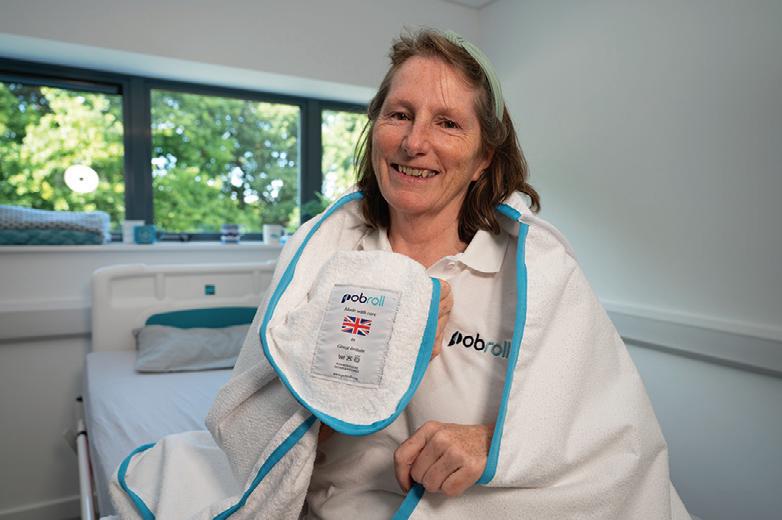
In April 2025, the Supporting the Provider Market (STPM) team in County Durham published a new report evaluating the use of pobroll® — a waterproof bed-bathing wrap designed to improve dignity, comfort, and ease during personal care.
This evaluation was carried out across 10 care homes with high numbers of residents living with dementia. Each setting was given one or more pobroll® units and invited to share feedback through a structured survey. The findings reveal how even simple tools can make a significant difference in everyday care.
How was pobroll® used?
Most care homes used pobroll® daily or several times per week, showing it quickly became part of regular practice. Staff noted that one of the biggest challenges was not having enough units — all homes requested additional stock after the trial, highlighting a clear appetite for wider adoption.
What did care teams think?
Feedback from the care homes showed strong support for the tool:
Ease of use was rated highly, with an average score of 4.4 out of 5. Staff found pobroll® straightforward to incorporate into care routines.
• Training was rated slightly lower, at 3.8 out of 5, suggesting that while the wrap is easy to use, additional training resources could improve onboarding for new users.
Resident response was positive. Three in ten care homes reported improved mood or behaviour during bed bathing for dementia patients.
• Key benefits included greater warmth, coverage, and dignity for residents, especially those who might find conventional methods distressing. Some teams also found it particularly useful for end-oflife care
Would they recommend pobroll® for bed bathing for dementia patients?
Written by Pat O’Brien of pobroll
Absolutely. Homes rated their likelihood to recommend pobroll® at 4.3 out of 5, with half of respondents giving it a full 5 out of 5. The overall feedback was clear: this is a valued, meaningful addition to personal care.
Would they recommend pobroll® for bed bathing for dementia patients?
The results of this trial reinforce what many professionals already believe — that small, thoughtful design changes can significantly improve care. For residents who are bedbound or living with dementia, personal care can often be a distressing experience. But with the right tools, it doesn’t have to be. The pobroll® isn’t a complex device. It’s a simple, dual-layered cotton towelling wrap. But its thoughtful design — offering full coverage, comfort, and support — makes a real difference where it matters most.
If you’re part of a care home, hospice, or hospital and would like to explore how pobroll® could benefit your residents or service users, get in touch. We’re here to support compassionate, dignified care — one small change at a time.
See the advert on the facing page for details, or visit www.pobroll.co.uk
More than half (52 per cent) of adult social workers experience increased severity and complexity of need in their caseloads, while capacity and resources do not keep pace with the demand, a new survey by the Local Government Association (LGA) reveals.
The LGA is calling for social work funding support models to be aligned with nursing, allied health, and teaching to secure the future of the workforce.
In its submission to the Department of Health and Social Care’s consultation on proposed reforms to the Social Work Bursary (SWB) and the Education Support Grant (ESG), the LGA highlights that high vacancy rates, retention challenges and placement shortages mean financial support available for social work students must be strengthened.

In 2025, there were more than 56,000 children’s and adult social workers employed by local councils in England, providing statutory services that support and safeguard children, families, and vulnerable adults.
Findings from the LGA’s 2026 Adult Social Care Employer Standards Health Check survey indicate overall Employer Standards continue to improve but show widespread and persistent challenges across local authorities, including workload pressures, stress, limited placement capacity, and difficulties maintaining the required staffing levels to deliver safe and effective services.
It suggests that current funding is insufficient to run safe and high-quality placements while 48 per cent of non-registered social care workers surveyed also often experience excessive pressure in their work.
To improve access and remove financial and practical barriers, the LGA, which represents councils across
England, is calling for targeted financial support for disabled students, lowincome, and those with caring responsibilities. It supports the use of a Social Work Hardship fund open to all student groups, and a needs-based approach to ESG allocation to bring social workers in line with comparable public service professions, including nursing, allied health professionals, and teaching.
The LGA emphasises that the SWB and ESG schemes are equally essential. Training routes for both undergraduate and postgraduate are vital, and increasing support for one must not come at the expense of the other. Any reform to the schemes should widen participation for care-experienced, disabled, low-income and mature students; improve travel reimbursement; support return to practice routes, and enhance the quality of practice placements.
Cllr Pete Marland, Chair of the LGA’s Local Government Resource’s Committee, said: “We must protect overall investment in our future social workers to secure a stable pipeline of talent for the sector.
“Councils and higher education providers need stable, predictable funding that enables effective planning and supports students to choose social work, and stay in the profession, so we can continue delivering vital services for local people.
“Social workers deliver an essential public service in every community – safeguarding our children, ensuring delivery of good care for disabled and older adults, and supporting community wellbeing. The financial backing for this workforce should recognise that contribution and align social work support models with equivalent public service professions.”
Residents at RMBI Care Co. Home Prince Edward Duke of Kent Court, in Braintree, recently set off on a unique and joyful outing, transforming a trip around the grounds into a safari-style adventure.
With support from staff members Maxine and Clare, and using a golf buggy fondly renamed the “Safari Shuttle”, residents travelled across the Home’s beautiful outdoor spaces, where they came face to face with a range of lifelike animal sculptures. From a towering giraffe to a striking gorilla, each discovery sparked conversation, laughter and a sense of wonder.
Resident Pat says: “I had such a brilliant time. Seeing the animals made me feel like a child again. It was wonderful to get out in the fresh air and have a good laugh with everyone!”
The experience continued beyond the grounds, with residents enjoying a gentle journey around All Saints’ Church. Surrounded by the sights and sounds of spring, they took in the fresh air, seasonal blooms and peaceful atmosphere.
Michelle Sims, Home Manager at Prince Edward Duke of Kent Court, says: “It was wonderful to see so many smiling faces as they returned from their trip. Activities like this are so important as they give residents the chance to enjoy the outdoors, stay active and create happy memories together. The team regularly organises trips like these, giving residents the opportunity to take part whenever they wish.”

By Dr Matthew Ford, Senior Research Analyst, SCIE

Across the sector, inequities are well recognised, through both published evidence and lived experience. People experience different levels of access, different standards of care, and different outcomes depending on where they live and who they are.
We know about some of these issues. But there are also significant gaps in the evidence, particularly for some groups and local contexts.
The question is not just ‘what do we know?’. It’s also ‘how do we use what we know’, and ‘where do we still need to know more?’. Most important, the central challenge is ‘how do we use the evidence to tackle inequities and improve people’s care and support?’.
That is the focus of SCIE’s new Care Equity Evidence Hub, which we launched earlier this week. It brings together research, data and practice evidence in one place to support more informed policymaking, commissioning and practice decisions.
THE PROBLEM: EVIDENCE ABOUT CARE EQUITY EXISTS, BUT IT IS HARD TO FIND AND USE
People working in policy, commissioning and practice are making decisions about care every day. In October 2024, SCIE convened three roundtables involving policymakers, commissioners, providers, researchers, voluntary and community sector organisations, people who draw on care and support, and unpaid carers.
We heard through these roundtables that the evidence they need is often:
• hard to find
• hard to understand and spread across multiple sources
• written in ways that are not easy to apply
So decisions are often made without a clear, consistent view of what the evidence says.
It is important to highlight the fact that this is a structural issue. There exists a considerable body of literature on social care and equity. But it is fragmented and difficult for decision makers to access and apply. And when evidence is fragmented, action is too.
By bringing together evidence that is often scattered across reports, research papers and policy documents, the Care Equity Evidence Hub aims to make social care evidence easier to find and apply in realworld decision-making. This means no long lists of search results, no need to interpret complex academic papers, and no time lost trying to piece information together.
Instead, the Care Equity Evidence Hub gives you:
• clear summaries of key evidence
• the main messages, up front
• content organised around real-world priorities
• examples of how evidence is used in practice
The aim is straightforward. Better access to evidence means more informed decisions, which means action on inequities.
Through this, we also have clearer visibility of gaps, and that helps target future evidence more effectively. Both access to information and understandings of gaps are needed to address inequities.
SCIE’s new Care Equity Evidence Hub has not been developed in isolation. It has been co-produced with the sector from the start.
That includes:
• policymakers and commissioners
• providers and practitioners
• researchers and voluntary organisations
• people who draw on care and support
• unpaid carers
They were clear about what was needed. Not necessarily more evidence in all areas, but better access, clearer summaries, and stronger links to practice. There was also a consistent message that gaps in the evidence are not always visible or well understood in decision-making.
That input shaped the Evidence Hub’s structure, content and priorities.
A project advisory group, including people with lived experience, continues to guide the work, as have several rounds of stakeholder engagement.
At SCIE, we feel this is essential. Because if the Evidence Hub is going to support action on inequities, it has to reflect the reality of how decisions are made in practice, and the people they affect.
Inequities in social care are not new. Differences in access, experience and outcomes are known to be shaped by geography, deprivation, ethnicity, disability, the availability of services, and much more.
What is new is the opportunity to bring the evidence together in a way that supports action.
With growing focus on social care reform, including work led by the Casey Commission, there is increased attention on how the system delivers for different groups and communities.
The Care Equity Evidence Hub helps you:
• see where inequities exist
• understand how they affect different groups
• identify what the evidence says might help address them
This shifts the focus from recognising inequities exist to acting on them with evidence.
The Care Equity Evidence Hub will continue to grow with more themes and additional content. This is not a ‘snapshot in time’ resource. It will evolve based on what people need, what evidence emerges, and where the gaps are. Organisations and individuals across the sector are part of that process. We will be seeking regular feedback from the hub’s users.
This ongoing engagement will help ensure that the hub remains relevant to the needs of the social care sector.
The Evidence Hub is built on a simple idea. If people can access and use evidence more easily, they can make better decisions. And if gaps in the evidence are clearer, future work can be better targeted. Both matter. Because better decisions, supported by the right evidence, are how inequities in social care are addressed.
Not in theory, but in practice.
To explore the Evidence Hub, click here
A proposed law to legalise assisted dying in England and Wales has failed to progress after running out of parliamentary time, bringing an end to its passage nearly 17 months after it first secured backing from MPs.
The legislation sought to allow terminally ill adults aged over 18, who are believed to be in the final six months of life, to request medical assistance to end their life. The proposal included a series of safeguards, though these remained a point of contention throughout its scrutiny.
The bill initially gained support in the House of Commons in November 2024, when MPs voted in favour of the principle by a majority of 55. It later cleared its Commons stages in June 2025, albeit with a reduced majority of 23.

However, its progress stalled in the House of Lords, where peers subjected the legislation to extensive examination. More than 1,200 amendments were tabled during its passage—thought to be a record number for a bill introduced by a backbench MP—reflecting the depth of debate and division surrounding the issue.
Despite reaching the committee stage in the Lords, where detailed, line-by-line scrutiny takes place, the bill did not complete all required stages before time expired. The final day of committee consideration marked the end of its journey in the current parliamentary session.
Supporters of the proposed law have expressed disappointment but remain determined to reintroduce the legislation in the next session of Parliament, due to begin on 13 May. Some have criticised what they describe as procedural delays in the Lords, arguing that these hindered progress.
Opponents, however, maintain that the bill raised significant concerns, particularly around the adequacy of safeguards to protect vulnerable individuals, including older people and those receiving end-of-life care.
Toby Porter, CEO of Hospice UK, said: “Today (April 24), we know for certain that Assisted Dying will not
become legal in England and Wales at this attempt. The Terminally Ill Adults (End of Life) Bill introduced by Kim Leadbeater MP and sponsored by Lord Falconer has not passed the Committee stage in the House of Lords and therefore fails at the end of today’s session.
“We must not lose focus on what makes a good death and what needs to be done to make sure everyone gets one. Opponents and supporters of the assisted dying Bill alike must now channel their energy and passion into ensuring high-quality palliative and end of life care is available to everyone who needs it, and calling for hospices to be properly funded, to be there for everyone who needs them.
“The measure of the skill and values of the Government, politicians, as well as our institutions like the NHS, will be the extent to which the momentum and passion from the assisted dying Bill debate is used to transform access to palliative care for the whole UK population, especially those vulnerable and excluded groups.
“We surely want to be a country where everyone gets the care they need at the end of their life, including the death they choose. Good palliative and end of life care offers people “enormous choice at the end of their lives, as well as dignity, comfort, and essential support for their loved ones. We cannot let it be cut back further and further.
“Over the next 15 years more people will die in the UK than ever before. Securing the future of end of life care could not be more important. But the way hospices are funded is not fit for purpose. The combination of rising costs and stagnating funding is leaving many with no choice but to cut essential services and make valued staff redundant. Ultimately it is patients who pay the price.
“We’re calling on the Government to urgently implement our four-point plan for fair hospice funding, so hospices can finally begin to plan and provide their essential care free from financial worry.”
The Government has ruled out developing a new national vaccinations strategy, despite the Committee urging Ministers to brand the current one a failure as vaccination rates have fallen over a number of years. Department of Health and Social Care’s (DHSC’s) verdict was given this week in its response to the Committee’s report, The First 1,000 Days, which also recommended boosting the workforce of health visitors, opening Family Hubs in every community and improving support for perinatal mental health.
The Committee said DHSC must produce a specific plan to rebuild the health visitor workforce by recruiting at 1,000 new personnel, and set future recruitment levels against benchmarks that ensure manageable caseloads.
Ministers say only that the workforce will be strengthened and that further updates will come in the forthcoming 10 Year Workforce Plan, which DHSC has previously said is due this spring. They also say that safe staffing tools will be developed “over the next few years”.
The response does not directly respond to the recommendation for families to receive a minimum of six health visitor appointments rather than the current five. The Department will “consider how we can continue to improve the service as we deliver the 10 Year Health Plan’s shifts to community and prevention”.
The Committee said the Government set out plans to make Family Hubs available in every community in England. The response says that, as of April 2026, over 200 new Best Start Family Hubs will open in previously unfunded local authorities. It adds that by the end of 2028 “it will create up to 1,000” Family Hubs and “2,000 network sites” to extend the reach of Hubs in local communities.
The Committee said the forthcoming 10 year workforce plan should contain specific targets for recruitment to all disciplines that deliver care in the first 1,000 days of life. Those targets should ensure safe staffing ratios are delivered in all settings.
The Department restates that updates will come in the forthcoming plan. It says growth of the workforce “must slow to ensure the NHS workforce is on a sustainable footing”. It has previously said that by 2035, there will be fewer staff than was projected in the 2023 Long-Term Workforce Plan.
MPs said DHSC should set out actions to improve access to perinatal mental health care within Family Hubs, supported by specific targets to improve access for women from ethnic minority backgrounds. One in four women experience mental health problems such as depression or anxiety during pregnancy or in the two years after childbirth.
The Government says it is investing £109 million in preventative work, “with a particular focus on parentinfant relationships, support for mild-to-moderate perinatal mental health difficulties, perinatal mental health support for fathers and co-parents.”
Health and Social Care Committee spokesperson Paulette Hamilton MP said: “We support the Government’s ambitious plans to open Family Hubs in hundreds of communities. We believe this will make a real, tangible difference to families, especially in the country’s most deprived areas, by improving access to advice and support with infant care and parent’s own wellbeing.
“But Family Hubs are only one piece of the jigsaw. We remain unconvinced that the Government’s rhetoric about vaccinations being a priority is matched by its actions. A new strategy is needed as the current approach is simply failing to deliver improved vaccination rates and is costing young children their lives.
“Flicking through the response, a sound that rings from the pages is that of a can being kicked down the road. We are not given confidence that Ministers are acting quickly enough to support health visitors, or that there is any intention to scale up the workforce to a level that will even touch the sides of what’s needed. However, we are glad to see that pilots for health visitors to deliver vaccinations are making progress”
A Banbury resident credits her long life to her love of vegetables, being active and most importantly maintaining a sense of fun and laughter.
Edwina Fran Stokes, known as Judy, celebrated her 101st birthday surrounded by friends, family and staff at Featherton House care home in Banbury.
Judy was born in Pembrokeshire, on 8 April 1925. After losing her father at a young age, she moved with her mother to Manchester before the family later settled in Fareham, Hampshire.
At just 16, Judy began volunteering with the British Red Cross, working at Gosport War Memorial Hospital in a care support role.
By the age of 19, she had become a full-time volunteer aid detachment member and worked alongside pioneering plastic surgeon Sir Harold Gillies, supporting the care of servicemen
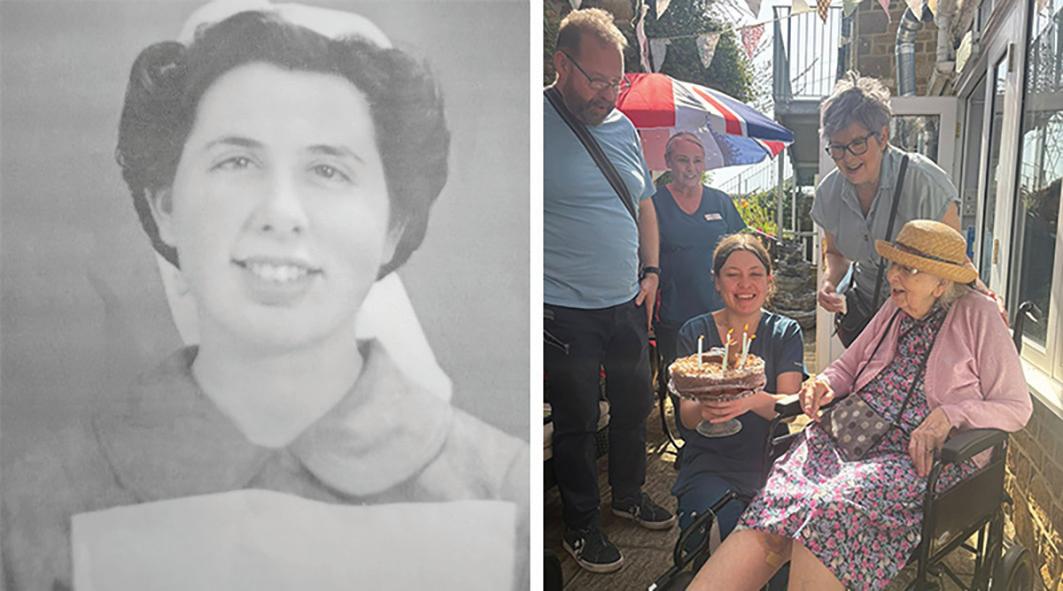
injured during the Second World War.
She remained committed to volunteering, dedicating 65 years to the British Red Cross.
Her roles included teaching first aid in schools, supporting blood donor sessions, assisting at Farnborough Air Show and volunteering at the Red Cross Museum in Winchester.
Her service was recognised with the award of the Red Cross Badge of Honour.
Hilda Sanyika, registered manager at Featherton House said:
“Judy has lived an incredible life and has given so much to others through her work and volunteering.
“She is always full of warmth and humour, and it is a privilege for everyone here to be part of her story.
“We were delighted to celebrate her 101st birthday with her and her family.”


The National Care Forum (NCF) – recently convened a roundtable discussion between a cross-section of its not-for-profit members and senior officials from the Department of Health and Social Care including Director General, Sally Warren.
The discussions were held at a specialist residential home for people with acquired brain injuries operated by NCF member, Brainkind in Aylesbury and also included an opportunity for discussions with people living there and staff who deliver support.
The roundtable acted as a very valuable exchange highlighting the vital role of not-for-profit care and support in areas such as the shaping of a National Care Service and associated standards, Neighbourhood Health Services, pay, terms and conditions of the care workforce and the importance of housing in the shaping of current and future health and care policy.
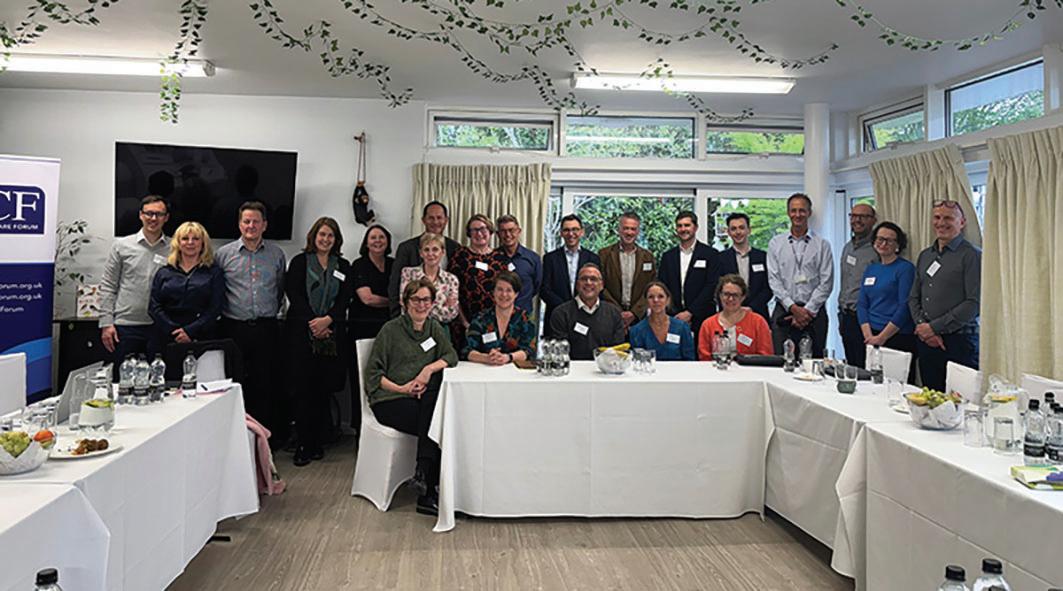
The roundtable was designed to give members the chance to have future-focused conversations which explored the sort of care and support they want and need to provide in their communities. Critically, whilst current issues such as commissioning and funding challenges, and the lack of cohesion between the housing, health and care systems featured prominently in the conversations, the future needs of people and their communities were at the heart of the dialogue.
Vic Rayner OBE, CEO of National Care Forum commented: “Members across the NCF helped us shape a
day for senior DHSC officials that enabled both the operational and strategic realities of care to be on the agenda. We wanted to start off with the voices of the workforce and those drawing on care and support, to ensure these were front and centre of the discussions. Dialogue like this is critical in helping officials fully understand the essential role that social care plays in our communities and the difference it makes to people’s lives.
“We were then able to bring together in one room a truly diverse mix of not-for-profit providers, who between them represent every area of adult social care, for some focussed discussion. The day-to-day reality of delivering care framed a positive focus on solutions, exploring how things could be done differently, particularly in relation to the vital role of housing with care, as well as different models of delivery including Local Authority Trading Companies (LATCos), the role of technology and how critical it is for there to be a clear strategic direction from the centre.
“We’re very grateful for the hospitality extended by everyone at Brainkind and to all the providers, staff and people who shared their lived experience for taking the time to join the discussions. We also extend our thanks to Sally Warren and DHSC colleagues for joining us. Combining this kind of collaborative thinking with the ambitions of the Casey Commission we can start to envisage a dynamic care and support system that is fairer, more sustainable, easier to access and ready for the challenges and opportunities the future holds.”
A team from Hamberley Care Homes stepped beyond their dayto-day roles to support a major charity football event, highlighting how care staff are extending their impact into the wider community.
Staff from Newton House Care Home, North Greenlaw Way, were part of the behind-the-scenes effort at Broadwood Stadium during the Alzheimer Scotland Shooting Stars match, helping to support volunteers who made the fundraising event possible. Rather than focusing on the action on the pitch, the team’s contribution centred on care, coordination and ensuring those giving their time were looked after.
Led by Home Ambassador Megan Spicer, the group organised freshly baked goodies for volunteers working throughout the day. Megan said she was delighted to support the event. She added: “It was an amazing atmosphere, and everyone was determined to support the event with lots of cheering and big smiles.”

As part of their contribution, the Hamberley Care Home gift bags containing home baking, chocolates
Welcome to Blue Rain - our activity store is built on over 14 years experience supplying products that bring joy, inspire motivation, and enrich the lives of those who need a little extra support, or simply want to have fun, whatever the weather.
Come find your next reason to smile. Scan me
and treats aimed at recognising the efforts of volunteers. The bags showcased Newton House Care Home, Newton Mearns as well as Milngavie Manor Care Home, Milngavie.
The event brought together former footballers including Charlie Adam, Lee McCulloch and Nacho Novo, alongside celebrities such as Sanjeev Kohli and Stephen Purdon. The Scotland team was managed by former international boss Alex McLeish.
While the match drew crowds for its star names, the involvement of care staff offered a quieter but significant reminder of the wider community effort behind such events – particularly those supporting causes like Alzheimer Scotland.
Megan added: “It’s wonderful to be able to contribute to an event like this and make sure the people behind the scenes get credit and a big thank you – if it was not for volunteers, events like this simply would not happen.”

When communication breaks down in adult social care, the consequences go far beyond a difficult conversation. They affect staff retention, service quality, regulatory risk and, ultimately, the wellbeing of the people receiving care.
In a sector already facing chronic staff shortages, high turnover and increasing demand, communication problems can quietly amplify pressure on teams that are already stretched.
Ask any frontline social care worker what makes their job harder than it needs to be, and very few will say it is the care itself. More often they describe unclear instructions, last-minute changes, difficult conversations with families, or handovers that leave them without the information they need to keep someone safe.
These are not minor frustrations. They are early warning signs of a system under strain.
Poor communication in adult social care is not simply a management issue or a personality clash. It carries real organisational costs that often remain invisible until something goes wrong.
The impact of poor communication tends to fall into three areas: operational pressure, workforce stress and financial cost.
Operationally, communication failures create duplication, delay and risk. Inadequate handovers can result in missed medications, overlooked changes in care routines or risk information not reaching the right person at the right time. These are not rare events — they appear repeatedly in safeguarding reviews and inspection findings.
In a sector where staffing levels are already tight, even small misunderstandings can create extra work for colleagues who are already
By Lynsey Flanagan, Mediator | Dispute Resolution, Conflict Management & Early Intervention
covering gaps.
There is also a clear workforce impact. Social care staff frequently report that what drives them away is not the care itself but the working environment around it. Feeling unheard, unsupported or unclear about expectations contributes directly to stress and burnout.
When experienced staff leave, the effects ripple across the whole service. Remaining workers often carry additional responsibilities while new staff are recruited and trained. In a sector that increasingly relies on the knowledge and commitment of long-serving team members, this creates a difficult cycle.
Financially, the cost of turnover is significant. Research from Skills for Care estimates that replacing a single care worker can cost between £3,000 and £5,000 once recruitment, training and reduced productivity are considered. When staff leave because communication and management support have broken down, that becomes a preventable cost.
Communication pressures tend to appear in predictable places within care services.
Handovers and shift transitions are a common point of difficulty, particularly when teams are short-staffed and time is limited. Important details can be lost when information is rushed or inconsistently recorded.
Manager-to-staff communication can also become strained, particularly during periods of change. Staffing pressures, new policies or regulatory updates all require clear explanation. When information is incomplete or arrives too late, uncertainty grows.
Relationships with families can also be affected. When expectations are unclear or concerns are not addressed early, misunderstandings can escalate quickly, placing additional emotional pressure on staff.
Multi-agency work adds another layer of complexity. Differences in language, priorities and procedures between organisations can easily create confusion if communication is not handled carefully.
None of these challenges are new. But with services under increasing pressure, the margin for error is smaller than it once was.
Improving communication does not require expensive systems or complex frameworks. Often it is the small, consistent practices that make the greatest difference.
1. Keep handovers structured and simple
A clear handover does not need to be lengthy. A short, consistent structure covering key changes, current needs and potential risks can prevent vital information being missed, especially when staff are tired or covering additional shifts.
2. Create regular opportunities for staff to speak up
Psychological safety — the confidence that concerns can be raised without blame — develops through everyday interactions. Regular team check-ins, open one-to-one conversations and a calm response to feedback all help staff feel heard.
3. Address concerns early
Small tensions between colleagues or with families can quickly grow if they are ignored. Addressing issues early and respectfully can prevent them becoming formal complaints or safeguarding concerns later.
4. Communicate change clearly
In a workforce already under pressure, unclear messages about staffing, policies or inspections can quickly undermine trust. Even when information is incomplete, sharing what is known — and what is still uncertain — helps reduce anxiety.
Social care services operate in an environment where time, staff and resources are often in short supply. In that context, communication can easily be treated as a secondary issue.
In reality, it is part of the infrastructure that keeps services functioning.
When communication works well, experienced staff are better supported, teams collaborate more effectively and potential problems are identified earlier. For a sector navigating workforce shortages and increasing demand, strengthening everyday communication may be one of the most practical ways to support both staff wellbeing and quality of care.
Residents and staff at a Colwyn Bay home made a short journey to the beach to see the new Terry Jones statue.
Four residents were accompanied by four staff members from MHA Coed Craig as they made the most of the lovely weather and decided to spend some time at the beach.
The statue was unveiled last week and had generated a lot of interest, with people queuing for hours to see it and take a picture.
Terry Jones, best known for his part in the British comedy troupe Monty Python, was born in Colwyn Bay.
His family backed a fundraising campaign to have him immortalised in bronze as the nude organist, a recurring character played by him in Monty Python’s Flying Circus.
The team enjoyed the lovely weather and rounded off the visit with an ice cream to cool them down.
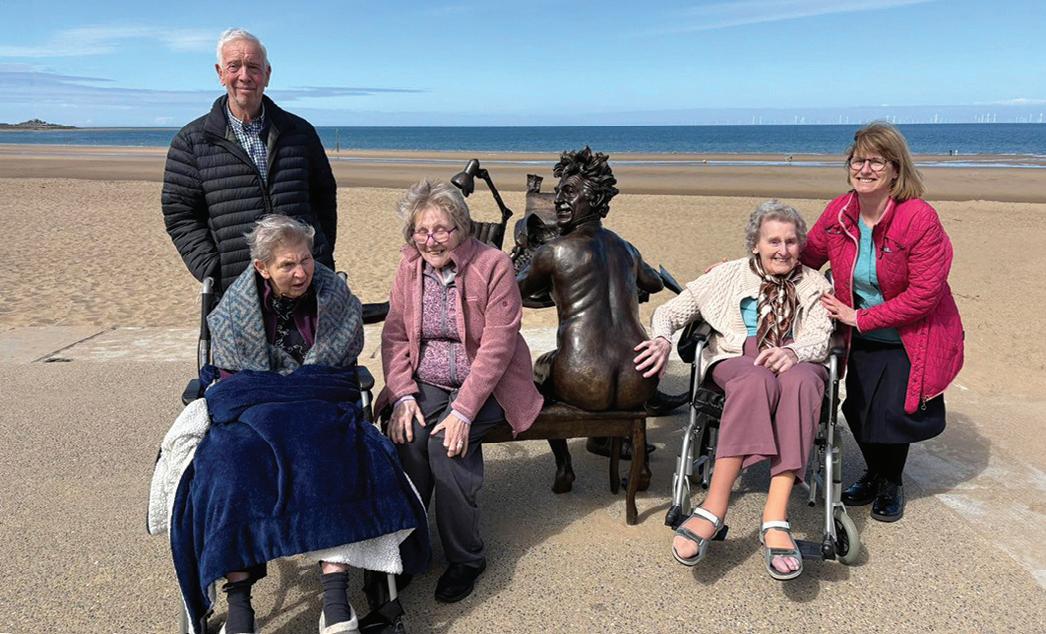
MHA Coed Craig provides residential and residential dementia care for 45 people.
Speaking after the visit Hayley Williams, activity coordinator said: “It was a spontaneous trip to Colwyn Bay beach but one that we all really enjoyed.
“I was aware of the new statue and decided to make that part of the visit.
“The beach is around a 10-minute walk from MHA Coed Craig, and with the weather being so nice it turned into a lovely trip.
“Our residents loved it and were very impressed with the statue.
“The beach was really busy, and we had to queue to see the statue, but once we got to see it was worth it.
“We are quite lucky to be so close to the beach and the statue, so the plan is to arrange more visits with other residents.”
At Broomy Hill Nursing Home, innovation and compassion come together in the most inspiring way. Residents at the home are stepping into a whole new world with the introduction of virtual reality headsets. It is an exciting innovation with the power to create uplifting and meaningful moments for the residents under our care.
Virtual reality is becoming an exciting innovation in care homes and at Broomy Hill Nursing Home it is making a meaningful impact. VR is more than just a tool; it allows residents to relive cherished memories and experience activities they may no longer be physically able to do.
For residents with dementia or complex mental health needs, VR stimulates memories, sparks conversations, and provides relaxation through immersive experiences. Using headsets to create digital 3D environments, VR acts as a tool for cognitive stimulation, pain relief, and wellbeing, enabling individuals to safely revisit familiar places or explore new worlds.
We were thrilled at the opportunity to be a part of the Recreo VR experience. It was something new for the residents and us. However, it is not only something new; it is a learning experience for the entire staff at the home.
Our Wellbeing Lead, Lauren, is currently working on a list of available experiences that our residents can choose from to do something different each time they use the headset. This way, our residents will have something new to look forward to each time they use the headset, as new content is added every eight weeks.
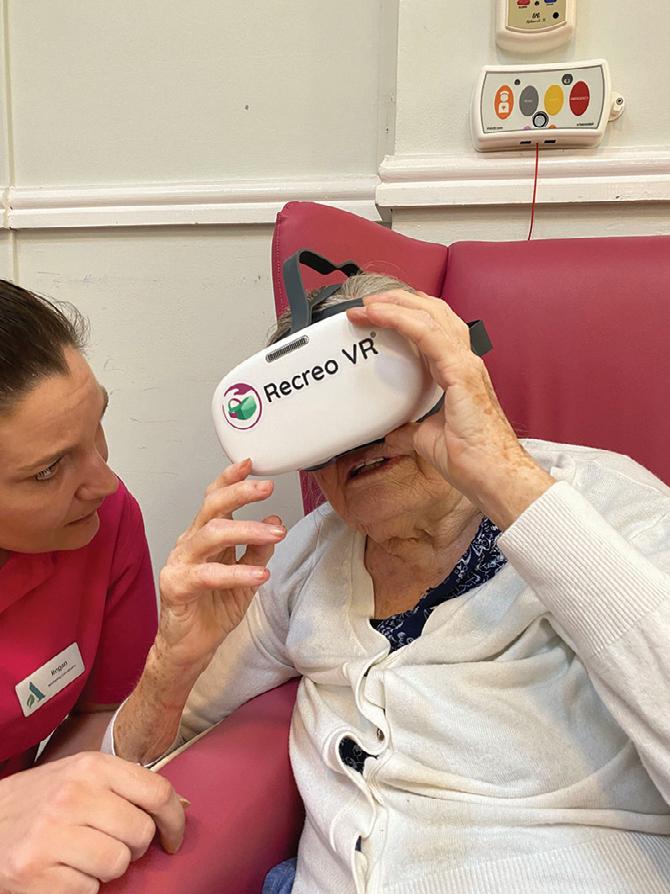
One of the new experiences that our residents will enjoy in the near future is a seated safari, where they will have the opportunity to come face to face with a rhino from the comfort of their chair.
Recently, our residents travelled through time to the 1950s, where they had a virtual visit to a traditional house, cinema, and a high street. In the house, our residents travelled from room to room, exploring the food pantry and admiring the decorations of the house. In the cinema, our residents explored the ticket office, the reel room, and the cinema itself. In the high street, our residents visited an electronics shop, a record shop, and a toy shop, enjoying the experience of each of these different stores.
Many of our residents commented on how real the experience felt, almost like stepping into a memory. Some were actually looking at their hands to get used to the virtual world. As the shops, toys, and songs from the period were brought up, the experience naturally evolved into memories and stories. The dialogue was effortless as the resident's shared memories from their own lives to each other and staff. Virtual reality is more than just an activity at Broomy Hill. It is another meaningful way we promote wellbeing and engagement for our residents. By using Recreo VR, we encourage conversation and reflection, while continuing to look for ways to enhance quality of life within our home.
For further information visit www.recreovr.co.uk
Friends of the Elderly, is thanking its donors for their kindness and generosity after its annual Winter Appeal raised £17,261 for its Grants Programme, helping 324 vulnerable older people through the cold winter months.
“Our Grants Programme supports older people on low incomes across England and Wales, helping them afford the basics and stay safe and well. With 1.9 million pensioners living in relative poverty in 2023/24, and this forecast to rise to 3.9 million in the coming years, our Winter Appeal is more important than ever,” said Rachel Hill, the charity’s Chief Executive Officer.
One of those the Grants Programme supported is Helen*, who received a grant through the Winter Appeal.
“The grant has made a huge difference,” said Helen. “I lost over three stone due to medical conditions, none of my clothes fit and I had no money to buy new clothes. Energy bills are so high, I am struggling. I was trying to layer up at home, but I didn’t even have a warm coat.
“Thanks to Friends of the Elderly, I was able to buy a lovely warm winter coat that zips all the way to the top. If I hadn’t received the grant, I probably wouldn’t have been able to go out much, as I didn’t have a warm coat. I feel so much happier and confident. “I volunteer for the visually impaired; one day you are helping people and suddenly you are the one that needs help. Things can change very quickly.

“Receiving the grant has made me feel like I am not on my own. You feel worried about getting help but it’s so wonderful to know someone out there cares and can help. It makes you realise how much it is needed and the difference it makes to people’s lives. It’s like being hugged.”
Sadly, Helen’s experience is far from unique.
“In 2023/24, 1.3 million older people were unable to afford basic essentials, and that number grew by 300,000 in the past year alone,” added Rachel.
“It is thanks to the overwhelming support of all those who donated to the Winter Appeal that Friends of the Elderly has been able to help so many older people through the cold, and sometimes unforgiving, winter months,” continued Rachel.
“Supporting older people like Helen is at the heart of Friends of the Elderly’s Winter Appeal. We see every day how even modest amounts of support can make a meaningful difference to people’s lives. …3
“The wide-ranging eligibility criteria of our grants mean we are a lifeline to the most vulnerable people in our communities, and it is clear the impact is real, with 80% of recipients reporting they feel happier after receiving support.”
“The Winter Appeal plays a vital role in helping us support older people who have nowhere else to turn. We are incredibly grateful to everyone who donated, particularly at a time when many people are facing challenges themselves,” concluded Rachel.
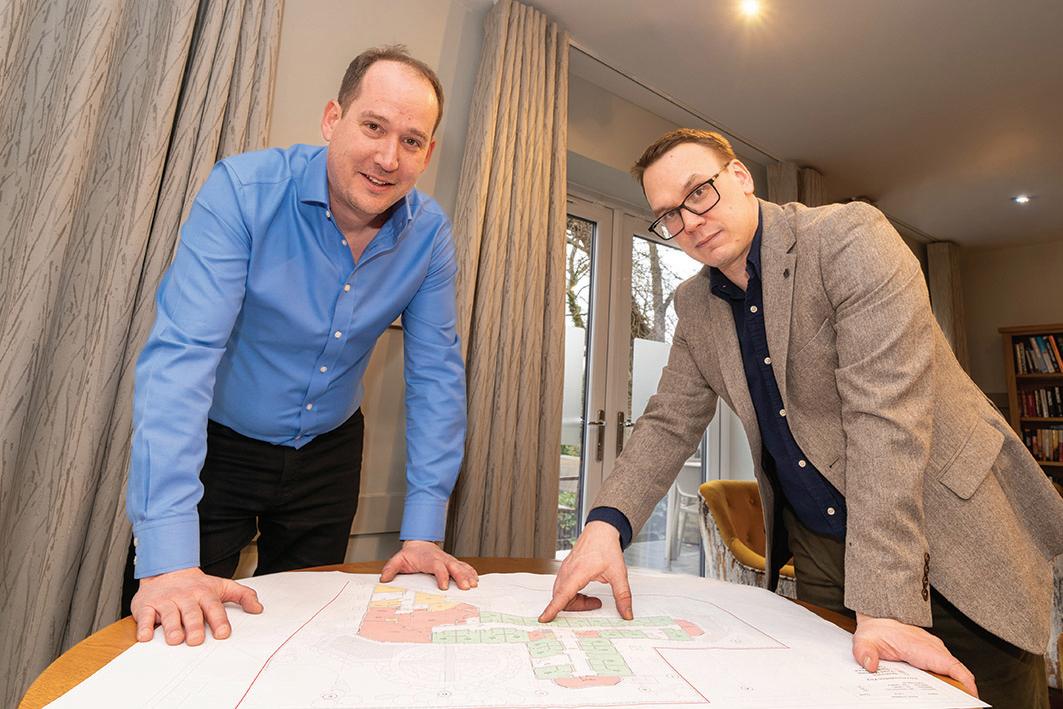
Bradford Hall Care Home, a new purpose-built care home, is preparing to open in Bradford this summer, bringing 72 bedrooms, a range of communal facilities to the area.
The home, on Kimberwicke Walk, Eccleshill is due to open in summer 2026 on a site adjacent to the former Union Mills. The home is owned by Burghley Care and led by a team with more than 20 years’ experience in the care sector.
The new home has been designed to provide residential care, dementia care, respite care and end of life care in a modern setting focused on comfort, dignity and wellbeing.
Chris Lane, chairman of Burghley Care, said: “We are pleased to be bringing Bradford Hall forward as our latest care home and to be expanding our presence in West Yorkshire.
“Our aim is always to create homes that deliver high-quality care in an environment where people feel comfortable, respected and part of a community.
“I have worked in the care sector for more than 20 years and
throughout that time the focus has remained the same, which is making sure residents are well cared for, treated with dignity and able to enjoy life as independently as possible in a setting that feels genuinely welcoming and homely.
“Bradford Hall has been designed to offer excellent facilities, but just as importantly it will be a place with warmth, dignity and a real sense of home for the people who live there. As we move closer to opening, we are looking forward to building a strong team and becoming part of the local community.”
Ian Ward, managing director of Torsion Care, said: “Bradford Hall represents another important step in delivering a modern care environment that is purpose-built around the needs of residents, families and staff.
“The scheme has been designed to combine high-quality accommodation with welcoming shared spaces and facilities that support wellbeing and social interaction. We are very pleased to see it moving closer to opening.”


The latest government survey on technology in adult social care gives us a mixed picture. On the one hand, the sector has made huge strides in digitisation over the past few years.
On the other, the divide between large and small providers is now so clear that it risks slowing the whole system down.
There is a lot to celebrate. There is also a lot to worry about.
A sector that is moving forward, but not at the same pace
The rise in Digital Social Care Records is impressive. In 2021, fewer than half of providers used them. By July 2025, that figure had reached 80 per cent. DSCRs are becoming the norm, and they are transforming how information is recorded and shared.
Other tools are also becoming part of everyday practice. Digital rostering, eMAR, video calls, accounting software and HR systems are all widely used. These are the sorts of tools that reduce paperwork and free up staff time, which is something every provider needs.
But the headline figures hide a serious imbalance. Large providers are adopting technology at a much faster rate than microproviders. The contrast is stark:
88 per cent of large providers use DSCRs, compared with 57 per cent of microproviders
40 per cent of microproviders use no care technology at all, compared with 11 per cent of large providers
This is not a small gap. It is a structural divide that will not close on its own.
Care delivery technology is growing, but unevenly
By Barry Price, Content Operations and Delivery Manager
Sensorbased monitoring is now the most common care delivery technology, used by 43 per cent of providers. These tools can make a real difference to safety and quality of life, especially in residential settings.
But again, size matters. Personal alarms are used by nearly two thirds of large providers, but fewer than one in five microproviders. Health and wellbeing apps are one of the few technologies with consistent uptake across the sector, but more advanced tools like virtual reality and smartwatches remain niche.
The pattern is clear. The more expensive or complex the technology, the more likely it is to be used by larger organisations.
Connectivity is becoming a major pressure point
Digital care relies on strong, reliable internet access. Yet a third of large residential providers say they do not have fullsite connectivity. That is a serious problem when so many digital tools depend on stable WiFi.
Broadband needs are rising quickly. Today, around a quarter of providers need superfast or ultrafast broadband. In three years, the number needing gigabitspeed connections is expected to quadruple.
Perhaps the most telling figure is that 44 per cent of providers are unsure what connectivity they will need in the future. That uncertainty alone is a barrier.
There is also an equity issue. Most residential providers include WiFi in the care plan, but in domiciliary care, most people pay for their own. That creates a risk that access to digital care becomes dependent on personal finances.
Funding is the biggest barrier by a long way
The survey confirms what the sector has been saying for years. The main obstacle to adopting technology is cost.
73 per cent cite setup costs
• 70 per cent cite ongoing licence fees
82 per cent want support with ongoing costs
67 per cent need help with upfront investment
These are not small numbers. They reflect a sector that is stretched financially and cannot absorb additional costs without support.
Other barriers add to the challenge. Staff training and turnover, cybersecurity costs, connectivity issues and reluctance from some service users all play a part. But none of these come close to the financial pressures providers face.
A clear message for the years ahead
The government wants every CQCregistered provider to be fully digitised by 2029. The progress so far shows that this is possible, but only if the smallest providers are supported properly.
If microproviders continue to fall behind, the sector will end up with a twotier digital landscape. That would undermine the benefits of digitisation and risk widening inequalities in care.
To avoid that, the sector needs:
• Longterm funding for both setup and ongoing costs
Targeted support for microproviders
• Clear guidance on future connectivity requirements
Investment in staff training and digital confidence
• Practical reassurance about safety, data protection and the value of technology
Digitisation should help everyone, not just those who can afford it. The survey shows how far the sector has come, but it also shows where the focus needs to be if the next stage of progress is going to be fair and sustainable.
How QCS supports providers on this journey
For providers trying to navigate this fastmoving landscape, QCS offers the practical support that makes digital change feel manageable rather than overwhelming. With uptodate guidance, easytouse tools and expert insight, QCS helps organisations of every size build confidence, strengthen compliance and make informed decisions about technology. Whether a provider is just starting out with digital records
Colleagues from across Care UK have congratulated Hotel Services Manager Dan Phillpott after his successful award win last week, garnering national recognition for his work.
Dan was presented with the Training and Apprenticeship Award last Thursday at the Public Sector Catering Awards ceremony.
Jon Bicknell, Director of Food and Hotel Services, said: “This award is a celebration of Dan’s hard work and passion for developing the skills and abilities of others. He has worked as a chef for Care UK and embodies the opportunities that great training provides. We are incredibly proud of his involvement in Care UK’s Chef Academy apprenticeship scheme and look forward to seeing what comes next.”
The Chef Academy was created in 2020, as the Hotel Services team believed, despite restrictions, that it was still important to continue delivering apprenticeships and working with colleagues to develop their careers.

Dan worked closely with the training provider Lifetime Training to come up with an online version of the apprenticeship programme, aimed at kitchen assistants or trainee chefs, which would allow them to perfect their food preparation skills and cookery methods virtually.
Care UK was one of the first care organisations to work with a training provider to launch a Chef
Academy. There are now over 50 colleagues currently on programme, and a over 45 colleagues who have previously gained their Production Chef Level 2 or Senior Production Chef Level 3 qualifications.
The course was adapted again after lockdown to create a mix between online learning and in-person masterclasses across the country. Dan was a huge part of these further developments, which has made the Chef Academy what it is today.
Dan is familiar with helping others learn and grow, as before joining Care UK, he worked as an NVQ trainer and assessor, giving him a unique understanding of the apprenticeship process.
Prior to this, he also worked for a local charity doing volunteer work at youth clubs, supporting young people who were experiencing homelessness or had family trouble to learn vital cooking skills.
Dan delivered cooking courses, teaching young people how to cook everything from an omelette to fresh burgers and cake on a budget. He found this experience rewarding, and it undoubtedly informed his career trajectory.
Since receiving the award, Dan said: “I feel incredibly proud to receive an industry recognised award. It has made me feel like the work and support I put in is really valued.”
Karuna Manor Care Home recently hosted a highly successful Open Day, welcoming residents, families, and members of the local community to experience a day filled with warmth, engagement, and celebration.
The event highlighted the home’s commitment to fostering meaningful connections, promoting wellbeing, and creating enriching experiences for its residents.
The day began with a standout attraction a Vintage Car Show in collaboration with Harrow Car Club. A total of 11 beautifully preserved classic cars were displayed, offering residents and visitors a unique opportunity to admire automotive history up close. The showcase sparked a sense of nostalgia among residents, many of whom fondly reminisced about earlier times, sharing personal stories and memories inspired by the vehicles. The presence of the cars created a lively and interactive atmosphere, encouraging conversation and connection among attendees.

A particularly heartwarming aspect of the day was the visit from children of Ghanshyam Nursery. The
young visitors began their time at Karuna Manor with a visit to the on-site temple, where they engaged in a moment of quiet reflection and cultural appreciation. Following this, the children joined residents to explore the vintage car display, bringing a sense of curiosity, excitement, and joy.
The interaction between residents and the children created an intergenerational experience, reflecting the importance of bridging generations and fostering a sense of belonging and community.
As the day progressed, the celebrations continued into a lively musical evening. Residents and team members gathered to enjoy music, singing, and shared entertainment. The atmosphere was filled with positivity and enthusiasm, as participants engaged in the performances and celebrated together.
The musical evening provided a perfect conclusion to the day, reinforcing a strong sense of togetherness and community spirit within the home.


For many home care managers, the morning starts the same way: ringing around to piece together what happened yesterday. Costs are rising, margins are tightening, and workforce pressures continue to stretch already busy teams. In this environment, one thing becomes clear very quickly: when the rota slips, everything else follows. Missed visits, late carers, frustrated teams and anxious families are not isolated issues, they are symptoms of a system under strain.
For many providers, the challenge is not a lack of effort or commitment. It is a lack of visibility. Care is delivered across dispersed teams, across multiple locations, often by carers working alone. Critical information sits across folders, spreadsheets, phone calls and WhatsApp messages. Managers are left chasing updates, piecing together information and reacting after issues have already escalated.
At the same time, families are experiencing care at a distance. When care isn’t clearly visible or consistently communicated, even good care can feel uncertain. This often leads to increased queries, escalation and avoidable pressure on already stretched teams.
At Log my Care, we see this challenge every day. The reality is that home care services don’t fail because people don’t care, they struggle because information doesn’t flow.
That’s why the sector is shifting. Care management is moving away from reactive oversight: incidents, audits and after-the-fact reporting; towards continuous, real-time visibility of care delivery. Because in home care, quality isn’t just about what happens in a single visit. It’s about whether care stays joined up across
people, time and place.
By Sam Hussain, CEO and co-founder of Log my Care
At Log my Care, our platform is designed to support exactly that.
We bring care planning, rostering and real-time visit data into one connected system, giving providers a single, shared view of their service. Managers can see what’s happening as it happens, without chasing carers or relying on second-hand updates. Carers receive real-time changes directly in the app, ensuring they always have the most up-to-date context for the visit ahead.
This becomes particularly powerful when managing the rota.
When visits are at risk of going off plan, our system surfaces warnings early — giving managers time to act before issues escalate. If plans change, teams are notified immediately, even out of hours, so adjustments can be made before they become emergencies. Every visit is recorded, time-stamped and GPS-verified, providing a clear and accurate record of delivery. That same audit trail matters at inspection time. Providers using Log my Care go into CQC reviews with one consistent, auditable record of care — visit by visit, incident by incident — rather than piecing together paper notes after the fact.
But resilience isn’t just about reacting quickly. It’s about seeing what’s building over time.
At Log my Care, we help providers move beyond isolated notes and into connected insight. Patterns across visits, changes in behaviour, or early signs of risk become visible — enabling earlier intervention, better decision-making and fewer incidents.
For providers, the impact is immediate. Less time spent chasing updates and checking delivery. More confidence that care is being delivered as planned. Greater control without the need to micromanage. For families, the impact is just as important. When care is visible, consistent and clearly recorded, trust builds and communication improves. The need for reactive contact reduces.
No system can prevent every disruption. But providers should have the tools to stay ahead of them — and in today's home care environment, a resilient rota isn't just operational. It's fundamental to delivering safe, consistent care that families can trust.
Pauline Quirke’s son Charlie and his team were among around 400 runners who ran the London Marathon this year for dementia research charity Alzheimer’s Research UK. Overall, the runners have raised around £1million for research to help revolutionise the way dementia is treated, diagnosed and prevented.
Charlie and his family were inspired to support Alzheimer’s Research UK after announcing in January 2025 that Birds of a Feather actress Pauline is living with dementia and had stepped back from her career.
Heartbroken by the realisation that there is currently no cure for dementia, the family pledged their support for research and became Ambassadors of the charity.
Running the London Marathon was Charlie’s second major fundraising challenge following his epic Trek For A Cure in December. He walked 140km across five counties over five days visiting places of special meaning for Pauline and the family. The trek raised over £315,000.
Charlie said: “It was an incredible experience to run the London Marathon for Alzheimer’s Research UK.

“It was far harder than I ever imagined it would be. But the love and support from everyone on the day and before the race was what got me over the line.
“The outpouring of love there has been for my mum from when we announced her diagnosis was something I thought about during the race to keep me going.
“Having Chloe and my close friends with me in the race was so important. Everyone was inspired by my
mum to support dementia research and help drive progress towards a cure.
“I know my mum was watching the race on TV with Dad and will be so proud of what we have achieved.”
Alzheimer’s Research UK Chief Executive Hilary Evans-Newton also ran the marathon.
She said: “I am incredibly grateful to Charlie and his brilliant team of runners for raising vital funds to help fuel the research that is driving progress towards a cure for dementia.
“Running alongside around 400 runners today representing Alzheimer’s Research UK and feeling the shared determination, has been truly energising.
“Almost one million people are living with dementia in the UK, and over half of us know someone affected by it. But with support like this on our side, we will get to a cure – and get there faster.”
Hilary was joined in the race by Alzheimer’s Research UK Ambassador Professor Selina Wray. Selina, who is Professor of Molecular Neuroscience at UCL Queen Square Institute of Neurology, completed the London Marathon for the fourth time.
Another Alzheimer’s Research UK Ambassador in the race was the incredible Sue Strachan. Sue, who is living with vascular dementia, was running the race for a second time after first completing it in 2018.
Having turned 70 this year, Sue achieved her target of taking her overall fundraising total for Alzheimer’s Research UK past £70,000.
Addressing postural care should be a pre-requisite of occupational therapy yet is a postcode lottery, says RCOT(1).
The problem is further complicated by lack of awareness among professionals, the breadth of issues posture management affects resulting in multiple disciplines being involved, and the diversity of equipment required to achieve round-the-clock support and correction and thus funding streams.
AAT is aiming to simplify the process.
Its Grande vacuum posture cushion delivers almost all sedentary and supine positioning support required day or night.
So just one health professional need prescribe.
Caregivers can precisely mould and fix the mattress-sized cushion to correctly support whether sitting or lying in the day or sleeping at night. Grande can be used as a mattress for resting, sleeping or physiotherapy, or folded to create a seat- stand-alone, on a chair, on a sofa.
Its construction also means it is tactile and easily transmits sound waves, so it can double as a conductor for sensory stimulation.
The technology Grande uses is based round the principles of a bean bag, giving the precise shaping inherent in the concept. The beans contour precisely to the required body shape. By
attaching a pump, the air between the beans is extracted, fixing that shape with the preferred degree of firmness.
The shaping can be as detailed as required, providing correct stabilisation with minimal pressure and even allowing for pommels, wedges, hollows for feeding tubes. There is no need for restraint, even during dystonic episodes or hyperactivity.
Frequent re-plumping/ positioning of conventional cushion-type posture systems becomes a thing of the past.
To re-shape, simply allow air back into the Grande and mould as necessary, be it a simple adjustment for body position and comfort or a complete reconfiguration.
“The role postural care plays in the health and wellbeing of disabled people and their carers is acknowledged, but the way our health service is structured, delivery is fragmented. Yet addressing it would have a huge impact not only on the people who need it, but on the demand for associated NHS services,” says Peter Wingrave, AAT Director.
“If just one healthcare professional thinks outside the box and looks at something like Grande, that answers the specific issue they have for a client but simultaneously could answer other issues for that client, surely it must be considered?”
More details about Grande and its role in 24-hour postural management can be found @ www.aatgb.com/grande/.
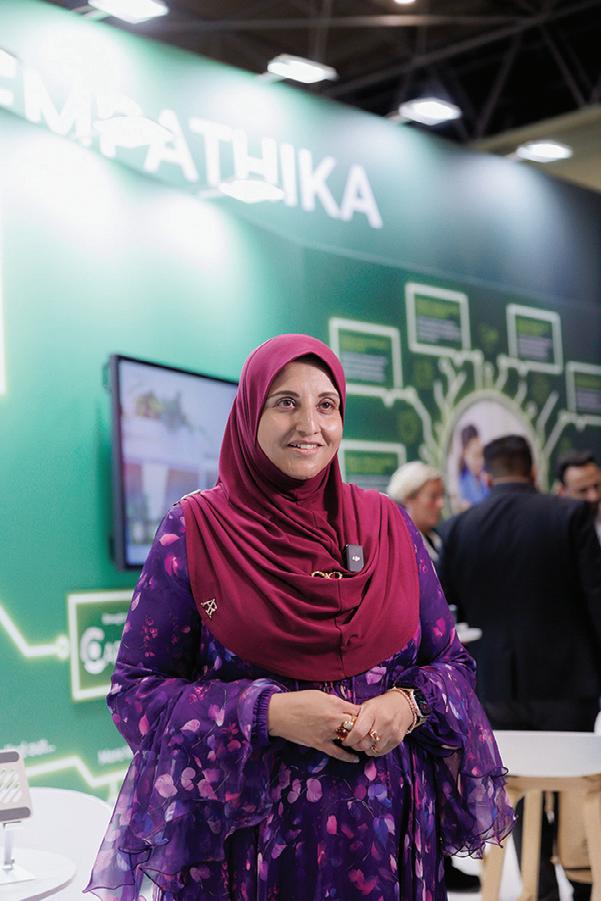
Neemat Sadiq, CEO of Langdale Care Homes, reflects on the tension between compassion and compliance, and how technology can restore time to care.
One of the greatest challenges in care today is not a lack of compassion. It is the constant tension between being present with people and being pulled into process.
I know this not as a CEO, but as someone who began as a carer.
I have walked those corridors. I have sat beside residents. I have felt the quiet conflict of wanting to give just a little more time, while knowing there is documentation waiting, charts to complete, records to update. That tension never really leaves you.
When I founded Langdale Care Homes, I believed I would be creating more space for care. In many ways I did, but like many business owners, I also found myself pulled further away from the very thing I loved most.
If you run a business, you will understand this. The work you once felt so connected to slowly becomes replaced with responsibility, compliance, and oversight.
In care, that shift comes at a cost.
For years, our teams were spending valuable time documenting care instead of delivering it. Not because they wanted to, but because they had to. Compliance demands it. Regulation requires it. And rightly so. But somewhere along the way, the balance tipped too far.
Care began to feel like it was being recorded more than it was being experienced.
“Care began to feel like it was being recorded more than it was being experienced.”
That never sat right with me.
For over two decades, I have listened to carers, nurses, and managers. I have seen the fatigue that does not come from caring, but from the weight of administration that surrounds it. That kind of exhaustion does not serve our staff, and it certainly does not serve our residents.
There had to be a better way.
Empathika was born from that belief.
Not as a system, but as a response.
A response to the frustration of paperwork.
A response to the risk of human error.
A response to the quiet reality that too much time was being taken away from people.
We wanted to create something that worked with carers, not against them. Something that allowed documentation to happen naturally, in real time, without breaking the flow of care.
Today, with Empathika, information is recorded as care happens. Medication is managed more safely.
Risks are identified earlier. And most importantly, our teams are given something incredibly valuable back. Time.
And with time comes presence. With presence comes connection. And with connection comes better care.
“Technology is not here to replace care. It is here to protect it.”
But we must be clear about something.
Technology is not here to replace care. It is here to protect it.
This will always be a people first industry. No system can replace a reassuring voice, a held hand, or a moment of understanding. No app can comfort a family or respond to a resident calling out in the night.
What technology can do is remove the noise.
It can take away the repetitive, the time consuming, the burdens that sit around care and quietly drain those delivering it.
And when that happens, something shifts.
We have seen it in our own homes. Staff are more present, more energised, and more connected to why they came into care in the first place.
And when our teams feel better, our residents feel it too.
For me as a provider, it has also transformed compliance. What once took hours now takes minutes. Information is no longer chased. It is already there. That sense of readiness brings calm, confidence, and clarity across the organisation.
“This is not a loud transformation. It is a quiet revolution.”
This is not a loud transformation. It is not disruptive in the way people often expect.
It is a quiet revolution.
One that restores balance.
To those working in care, I would simply say this.
If you are exploring technology, do it with intention.
Not to monitor more.
Not to control more.
But to give back more.
Give back time.
Give back energy.
Give back the ability to be fully present.
Because at its heart, care has never been about systems.
It has always been about people.
And it always will be.
A housekeeping manager affectionately dubbed “sergeant major” has celebrated her 70th birthday after more than three decades of service at a care organisation.
Pendine Park, which has care homes in Wrexham and Caernarfon, held a party to honour Sheila George, its longest-serving employee as colleagues paid tribute to her 35 years of commitment and unwavering high standards.
The popular staff member, known for her tireless work ethic, was praised as a cornerstone of the award-winning organisation.
Despite reaching the landmark birthday, Sheila shows no sign of slowing down.
The grandmother-of-three shows remains passionate about her role and says she “would be lost without it”, continuing to play a vital part in daily life across the homes.
Her commitment has earned widespread respect among colleagues who credit her professionalism, warmth and high standards as key to maintaining the quality of care residents rely on every day.
It also reflects Sheila’s three years army service in her younger years, including time served in Germany where she met her husband Tom.
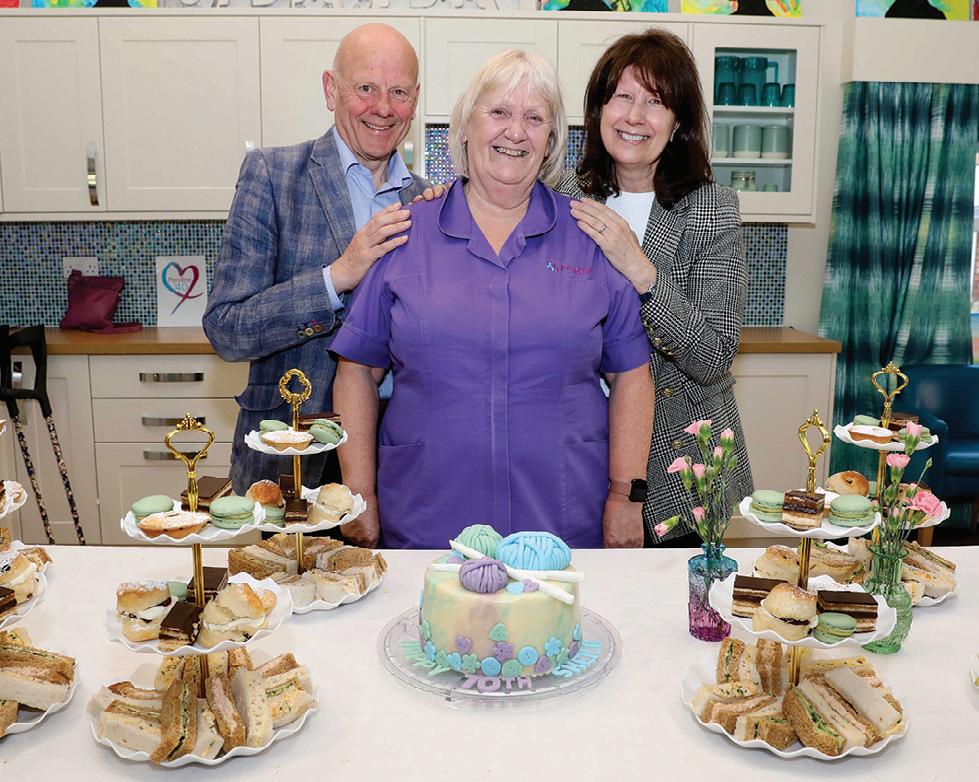
She said: “It’s incredible. I grew up in Wrexham and Tom was raised in Denbigh but we had to go all the way to Germany to meet each other.”
When first discharged from the Army they lived in Rochester, Kent, for some years before returning to Wrexham area to be nearer to Sheila’s elderly parents.
The couple settled in Gwersyllt and have two grown up children, Kelly and Dean, and three grandchildren, Catrin, Jacob and Grace.
Sheila heads up the housekeeping and laundry operations for all Pendine’s Wrexham homes, plus Bryn Seiont Newydd, Pendine’s award-winning dementia care centre in Caernarfon.
She said: “It is vastly different from when I first started here but it has changed in a good way. We are bigger but the emphasis on cleanliness and high standards are more important than ever.
“The welfare of our residents is at the heart of everything we do and that should always be the case. This is their home and they deserve the best we can offer.”
Sheila’s dedication and wealth of experience make her a great mentor for newcomers to the care sector, according to Pendine Park owner Mario Kreft MBE.
He and his wife Gill attended an afternoon tea party along with the managers of all the homes in Wrexham, who wanted to share in Sheila’s birthday celebrations.
Mario said: “From the very early days when she first joined us, Sheila’s commitment to each task in hand was evident. She leads from the front and does not ask anyone one to undertake anything should would not be prepared to do herself.
“She is rightly a stickler for cleanliness – I think that’s why we first started nicknaming her the sergeant major, because she is so thorough and if something needs doing she will ensure it’s done right.
“She is an outstanding role model and a compassionate and caring exemplar for all in her team who look up to her with genuine affection.
“We are proud to have Sheila in our Pendine family.”
Fellow staff joined the party where Sheila was presented with a colourful bouquet and a special birthday cake designed in the shape of balls of wool and knitting needles to reflect her spare time hobbies of knitting and sewing. She also enjoys doing crosswords and spending time with her family.
Sheila said: “I am not used to being centre of attention. It all seems a lot of fuss just for me, but it was a lovely surprise. I want to thank everyone for going to such an effort to make this a special day.”
Angloplas are a UK manufacturer who specialise in producing dispensers for the health and hygiene industry. Although these are designed to keep the workplace tidy and uncluttered they are, more importantly,
As a result, a wide range of infection control products and technologies are emerging on the market, including antimicrobial technology. Angloplas’ range of dispensers are produced in the world’s first proven Antimicrobial PVC with silver ion technology and which is exclusive to Angloplas. This helps reduce the risk of cross infection by stopping the growth of bacteria and mould and works continuously for the lifetime of the product, reducing levels of bacteria such as MRSA, E Coli, Legionella, Salmonella and mould by up to 99.99%. For non-clinical environments Angloplas has recently launched its new Budget Range of products which are made to the same exacting standards as the antimicrobial protected ones but with lower price tags.
You can order Angloplas products directly from its website at www.angloplas.co.uk
See the advert on page 6.

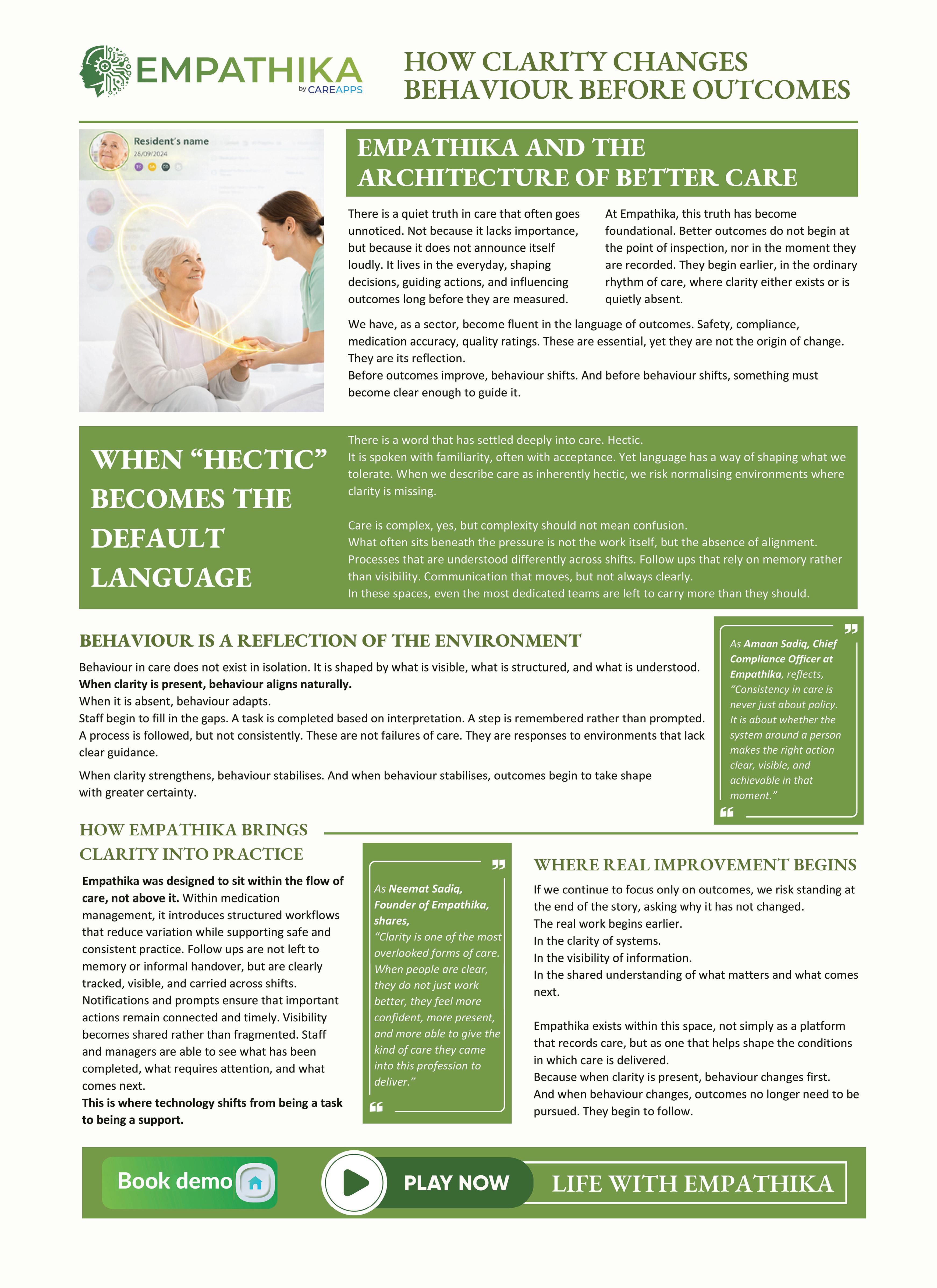
The National Activity Providers Association (NAPA) has launched a pioneering new programme to develop National Intergenerational Engagement Standards for Care Homes, marking a significant step forward in strengthening connection, wellbeing and community across the care sector.
The programme is focused on creating more opportunities for people living in care settings to build meaningful, safe and sustainable relationships with younger generations.
While many care homes are already delivering inspiring intergenerational initiatives, recent research carried out by NAPA in partnership with the University of Chichester and the University of Hertfordshire highlights a lack of consistency in practice.
The findings show strong enthusiasm across the sector, but also a need for clearer guidance. Without shared standards, services can face challenges navigating key areas such as safeguarding, consent and positive risk-taking.
The programme will deliver a set of clear, practical National Intergenerational Engagement Standards, designed to support care providers in delivering high-quality, inclusive and meaningful experiences.
These standards will complement NAPA’s existing Standards of Practice and Quality Indicators, strengthening how quality in activity provision is defined, delivered and evidenced.

The development of the standards is being shaped through collaboration with academic partners and the sector itself.
Crucially, the standards will be co-produced with those at the heart of care, including people living in care
settings, families, care and activity professionals, and young people. This approach ensures that the standards are not only evidence-based, but also practical, relevant and rooted in real-life experience.
Hilary Woodhead, CEO of NAPA, said: “This programme represents an important step forward in recognising the value of intergenerational connection in care. We know the impact these relationships can have on wellbeing and quality of life, but we also recognise that services need clarity and confidence to deliver this work safely and meaningfully. By developing national standards together with the sector, we are creating a framework that will support consistency, build confidence and place human connection firmly at the heart of quality care.”
Avnish Goyal CBE, chair of Hallmark Foundation, said: “Intergenerational engagement has the power to transform lives, not only for older people living in care, but for younger generations and communities as a whole. This programme is an important opportunity to embed that connection into everyday practice, ensuring it is not seen as an optional extra but as a fundamental part of high-quality relational care. Residents of Hallmark Luxury Care Homes have already seen what a difference bringing all ages together can make. We are proud to support this project with NAPA and look forward to seeing its impact across the care sector and beyond.”
The programme will result in a clear and accessible framework for intergenerational engagement in care homes, supported by practical guidance, tools and learning opportunities to help services implement the standards with confidence. Resources will be shared openly through NAPA’s networks, ensuring that learning is accessible and widely adopted across the sector.
Join us at the Care Forum – a unique event designed for senior professionals responsible for purchasing care home facilities, alongside providers of the latest innovative products and services within the healthcare sector.
The event follows our award-winning format, offering the opportunity to meet 1-2-1 with suppliers through a personalised itinerary of meetings in a relaxed and intimate setting.
8th & 9th June 2026
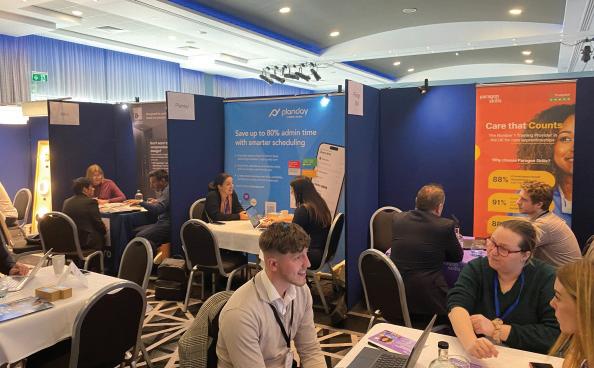
Radisson Hotel & Conference Centre, London Heathrow BUYERS TO THE INDUSTRY
Attendance is entirely free for buyers. Your pass includes a personalised itinerary of relaxed 1-2-1 meetings with budget-saving suppliers who match your needs, access to insightful and educational seminar sessions led by industry thought leaders, valuable networking opportunities, breakfast, lunch and refreshments throughout,
overnight accommodation at the venue, and attendance at our gala dinner with entertainment.
Confirmed speakers include Sultana Pasha, Quality & Compliance Director at KYN presenting “In My Experience: How to stay compliant with CQC” and Lauri SmithFounder & CEO at The Civility Gap presenting “Breaking silos between health, social care, community services”. Additional sessions will be announced soon.
Buyers can register via our booking form at https://thecareforum.co.uk/delegates-booking-form/ SUPPLIERS
The Forum connects you with healthcare professionals who have specifically requested to meet you and are actively seeking solutions. Benefits include a personalised meeting itinerary, access to senior decision makers, branding exposure, full catering, a pre-built meeting stand, overnight accommodation, and a gala dinner.
The Forum offers an unparalleled opportunity to promote your solutions to engaged decision-makers reviewing their suppliers.
For more information, please contact j.healy@forumevents.co.uk
By Kevin Groombridge

Inspection, as commonly practised, is often episodic and judgement-led. CIUK’s process takes a different approach. By integrating detailed, evidence-based inspection with targeted action planning and sustained implementation support, it reframes inspection as a continuous improvement system rather than a periodic verdict.
Supported by UKAS accreditation since 2016, the model is designed to produce findings that are not only credible but also operationally useful and capable of driving measurable change.
Health and social care providers operate under sustained scrutiny, yet the relationship between inspection and meaningful improvement remains inconsistent. Compliance is assessed and ratings are published, but whether inspections reliably drive safer care, better outcomes, or stronger organisations is open to question.
Inspection systems in the UK remain heavily judgement-led. While professional judgement plays a role, over-reliance introduces variability, subjectivity, and inconsistent outcomes.
Providers frequently encounter divergent findings for similar levels of performance. This reflects a structural issue in which conclusions are shaped by individual perspective rather than a consistently applied evidence base.
The risk is twofold. First, organisations may be incorrectly assessed, undermining confidence in the system. Second, judgement-led inspection often fails to produce operationally useful insight. It describes performance but does not reliably explain causation or provide a clear route to improvement.
Inspection, in this form, risks becoming an exercise in classification rather than a tool for change.
ARE REGULATORS EFFECTIVE INSPECTORS?
Regulators perform an essential role in setting standards and enforcing compliance. However, there is a legitimate question about whether they are structurally well-positioned to serve as high-quality inspectors.
Regulatory bodies are simultaneously rule-setters, assessors, and enforcers. This creates a model that can be reactive, episodic, and riskaverse, with inspection often focused on identifying failure rather than understanding system performance.
In practice, this can lead to inspections that are:
Event-driven, triggered by concerns rather than embedded in continuous assurance
Compliance-focused, prioritising adherence over operational effectiveness
Inconsistent, due to reliance on individual judgement
This is not a criticism of intent, but of structure. Regulation and inspection are related functions, but they are not the same discipline.
A MORE FORENSIC MODEL
CIUK’s work is structured around three core components. First, a forensic, evidence-based inspection that examines not only compliance, but how care, governance, and operational systems function in practice. This is followed by a targeted action plan that translates findings into specific, prioritised interventions that address root causes rather than symptoms. Crucially, inspection is not treated as a standalone event. CIUK provides ongoing support, working alongside providers to implement changes, monitor progress, and stabilise performance over time.
This model incorporates:
Systematic risk analysis - identifying latent risks before they manifest
Operational diagnostics - examining how care, staffing, and governance function in practice
• Commercial impact awareness - recognising the link between quality and sustainability
Inspection is therefore treated as a diagnostic process, focused on causation and designed to produce actionable findings.
INTERNATIONAL PERSPECTIVES
Other countries have adopted models that place greater emphasis on independent, provider-engaged assurance.
In the Netherlands, inspection is complemented by strong provider accountability and transparency. In Australia, accreditation-based systems require providers to demonstrate ongoing compliance, supported by external verification. Similar approaches are evident in parts of Canada and the Nordic countries, where inspection is more clearly separated from enforcement.
These models are not without challenge, but they demonstrate a consistent principle: inspection is most effective when it is independent, evidence-driven, and embedded in continuous improvement, rather than positioned solely as a regulatory checkpoint.
A persistent weakness in inspection systems is the prioritisation of judgement over utility. Ratings may signal performance, but they rarely enable change.
CIUK places greater emphasis on structured improvement pathways. Weaknesses are translated into specific actions, while strengths are used to stabilise and improve performance.
This reframes inspection as a forward-looking mechanism for risk reduction and quality improvement, rather than a retrospective assessment.
The sector does not lack inspection; it lacks inspection that is sufficiently consistent, evidence-led, and operationally useful to drive sustained improvement.
CIUK’s approach, underpinned by UKAS accreditation since 2016, does not replace regulation, but it challenges the assumption that regulatory inspection alone is sufficient.
If inspection is to have real value, it must move beyond periodic judgement and towards continuous, evidence-based assurance that organisations can act on with confidence.
Morrison Community Care Group has announced the successful acquisition of a new care home development site in Ipswich, alongside the appointment of Kori Construction Limited as main contractor for the delivery of the scheme.
The development will deliver a state-of-the-art 70-bed care home, with a gross development value of approximately £19 million, further strengthening Morrison Community Care Group’s growing UK pipeline of high-quality care facilities.
Construction is expected to commence on site at the end of May 2026, marking the start of Morrison Community Care Group’s first collaboration with Kori Construction Limited
This represents Morrison Community Care Group’s first development for Care UK, with both parties looking to establish a long-term relationship as the portfolio continues to expand.
The project is targeting practical completion in Q4 2027, subject to

programme progression. Once operational, the development will provide much-needed, high-quality care provision in Ipswich, supporting local families and communities, while creating employment opportunities and delivering significant long-term social value.
Paul Sokhi, Managing Director of Morrison Community Care Group, said: “We are delighted to announce the acquisition of our Ipswich site, which represents another important step in strengthening our UK development pipeline. This scheme is particularly exciting as it marks our first collaboration with both Kori Construction Limited and Care UK.
“Kori bring a strong track record in delivering high-quality healthcare developments, and we look forward to building a long-term partnership together, starting with this flagship scheme. Likewise, we are excited to be delivering our first home for Care UK and hope this is the beginning of a long and successful relationship.”
Community Integrated Care welcomed Paralympic table tennis medallist Jack Hunter Spivey to its head office on Thursday 23rd April to mark World Table Tennis Day, delivering an inclusive and inspiring event focused on health, wellbeing and accessible sport. The interactive session, delivered in support of World Table Tennis Day and funded by the International Table Tennis Federation (ITTF) Foundation, brought together people who access care and support, alongside colleagues from across the charity, to experience the joy and wellbeing benefits of table tennis in a fully accessible way.
Community Integrated Care hosted the event after being selected by the ITTF Foundation as an official ‘Promoter’ of World Table Tennis Day. This prestigious recognition celebrated the charity’s acclaimed work to innovatively enable the wellbeing benefits of table tennis in social care.
Jack Hunter Spivey – who won gold at the 2022 Commonwealth Games in Birmingham and bronze at the 2020 Summer Paralympics – led an inclusive introduction to the sport, sharing his personal journey and demonstrating how table tennis can be adapted to suit people of all abilities.
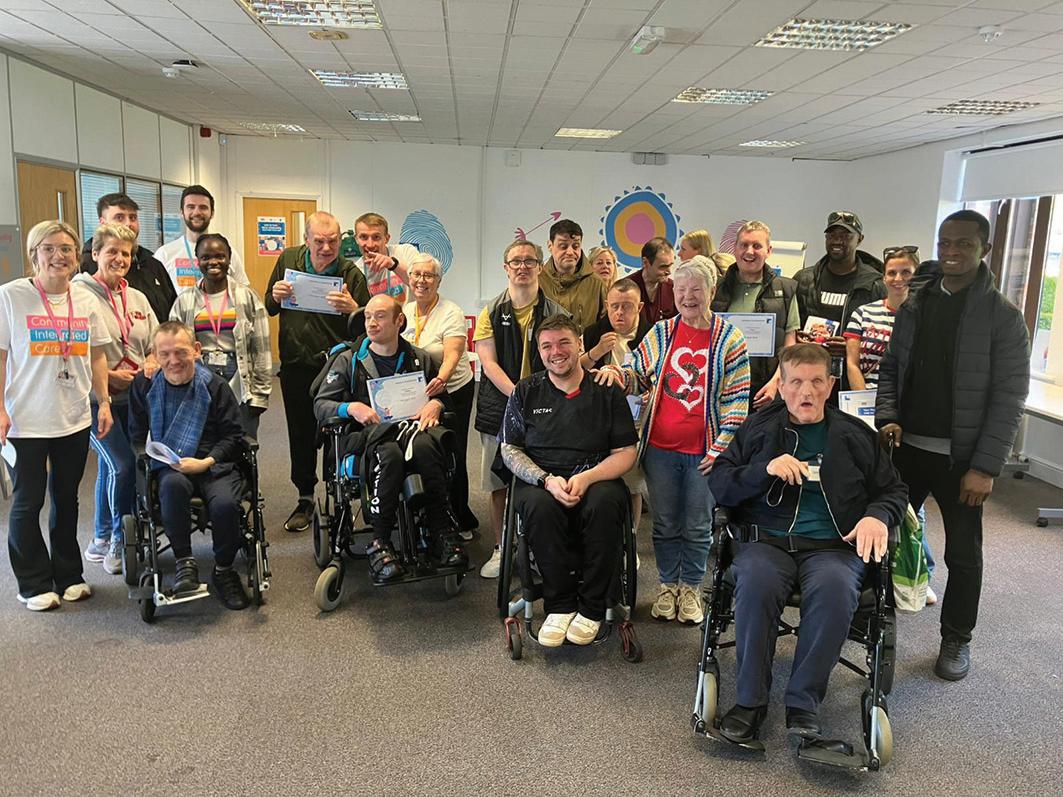
The event also built on Community Integrated Care’s free ‘Care to Play’ training programme, www.CareToPlay.co.uk, which equips people who provide care and support with the skills, confidence and knowledge to promote table tennis in any social care setting.
To keep the momentum going beyond World Table Tennis Day, everyone who attended received a free table tennis kit and was invited to make a personal pledge about how they will continue using table tennis to support health and wellbeing in their own homes.
Jack Hunter-Spivey said, “It was incredible to highlight this fantastic sport to colleagues and people supported by such a brilliant charity. It’s a privilege to work with them. It was an amazing day, everyone really enjoyed it and hopefully we’ve inspired even more people to get involved with table tennis and enjoy the many benefits it brings.”
Luke Parry, Senior Programmes and Partnerships Development Manager at Community Integrated Care, said, “World Table Tennis Day is a fantastic opportunity to shine a light on how accessible sport can transform lives. Working alongside the International Table Tennis Federation Foundation, we are proud to show how table tennis can be adapted to support health, wellbeing and inclusion for everyone.”
“Having Jack with us was truly inspiring and reflects our commitment to ensuring people who draw on care and support have equal opportunities to stay active, connected and confident. We’d like to say a big thank you to Jack for joining us and to the ITTF for supporting us to bring the joy of table tennis to social care.”
The law is changing for care homes, but understanding your obligations has never been easier
Providing both comfort and dignity to those in your care is at the core of the Care homes profession, but when it comes to both residents and their families, one of the most important things you can offer is trust.
Moving to a care home can be an emotional time for some and transparency and fairness are key in reassuring prospective residents and their families that they will be cared for with compassion and respect - This, and compliance with the law.
Earlier this year we saw the introduction of the Digital Markets, Competition and Consumers Act 2024 (DMCCA) - a landmark piece of legislation that affects business and how they are required by law to safeguard their customer with fair trading practices. These changes may sound like legal jargon, but they directly impact how care homes operate, communicate, and contract with residents.
Compliance can be complex and that’s why the Business Companion Care Homes Guidance is essential reading for anyone working in the Care Homes sector. Written by legal experts this free and easy-to-read guide will walk you through all the steps to ensure you are safeguarding your customers and operating within the law.
WHAT’S CHANGED UNDER THE DMCCA?
The introduction of the DMCCA represents one of the biggest shifts in consumer law in over a decade. It replaces the old Consumer Protection from Unfair Trading Regulations and introduces stricter rules to protect consumers from misleading or unfair practices across almost

all sectors. For care homes, this means:
Clearer Pricing and Transparency: The Act bans “drip pricing” which is when unavoidable fees are hidden until late in the process. Care homes must now present the full cost of services upfront, including any mandatory charges.
• Fake Reviews and Misleading Endorsements: The DMCCA prohibits the use of fabricated or manipulated reviews. With care homes increasingly relying on their online reputation, ensuring authenticity is now a legal obligation.
Stronger Enforcement Powers: The Competition and Markets Authority (CMA) can now impose fines of up to £300,000 - or 10% of global turnover - for breaches. Compliance isn’t optional; it’s critical.
• and much more!
These changes underline the importance of reviewing your policies, contracts, and marketing materials. The Care Homes Guidance on Business Companion provides practical steps to help you stay compliant and avoid costly mistakes.
KEEPING CONSUMER VULNERABILITY IN MIND
Vulnerability can arise from a number of different situations and factors throughout a person’s life, such as age, health, bereavement, or financial stress. As someone working in the Care homes sector, you’re
dealing with vulnerable individuals on a daily basis and recognising these factors isn’t just good practice; it’s a legal and ethical responsibility.
The Business Companion Consumer Vulnerability Guide offers checklists and practical advice to help you identify and support your residents who may be vulnerable when it comes to things like decision making and communication, ensuring your care home delivers not only compliance but compassion.
YOUR
Business Companion is more than just a care home resource - it’s a comprehensive hub for businesses across a broad range of sectors. From selling online to handling complaints, delivery charges, and even net zero strategies, the platform covers hundreds of topics delivered to you through clear, easy-to-read guidance. Backed by the Chartered Trading Standards Institute and the Department for Business & Trade, Business Companion is free, authoritative, and regularly updated by legal experts.
ACT NOW
The DMCCA is already in force, and enforcement powers are live. Don’t wait for a compliance issue to arise - visit Business Companion’s Care Homes Guidance today. Review your contracts, pricing structures, and communication strategies and explore the wider resources available to future-proof your business against legal pitfalls.
In a sector built on trust, staying informed isn’t just smart - it’s essential.
To find out more, visit: www.businesscompanion.info

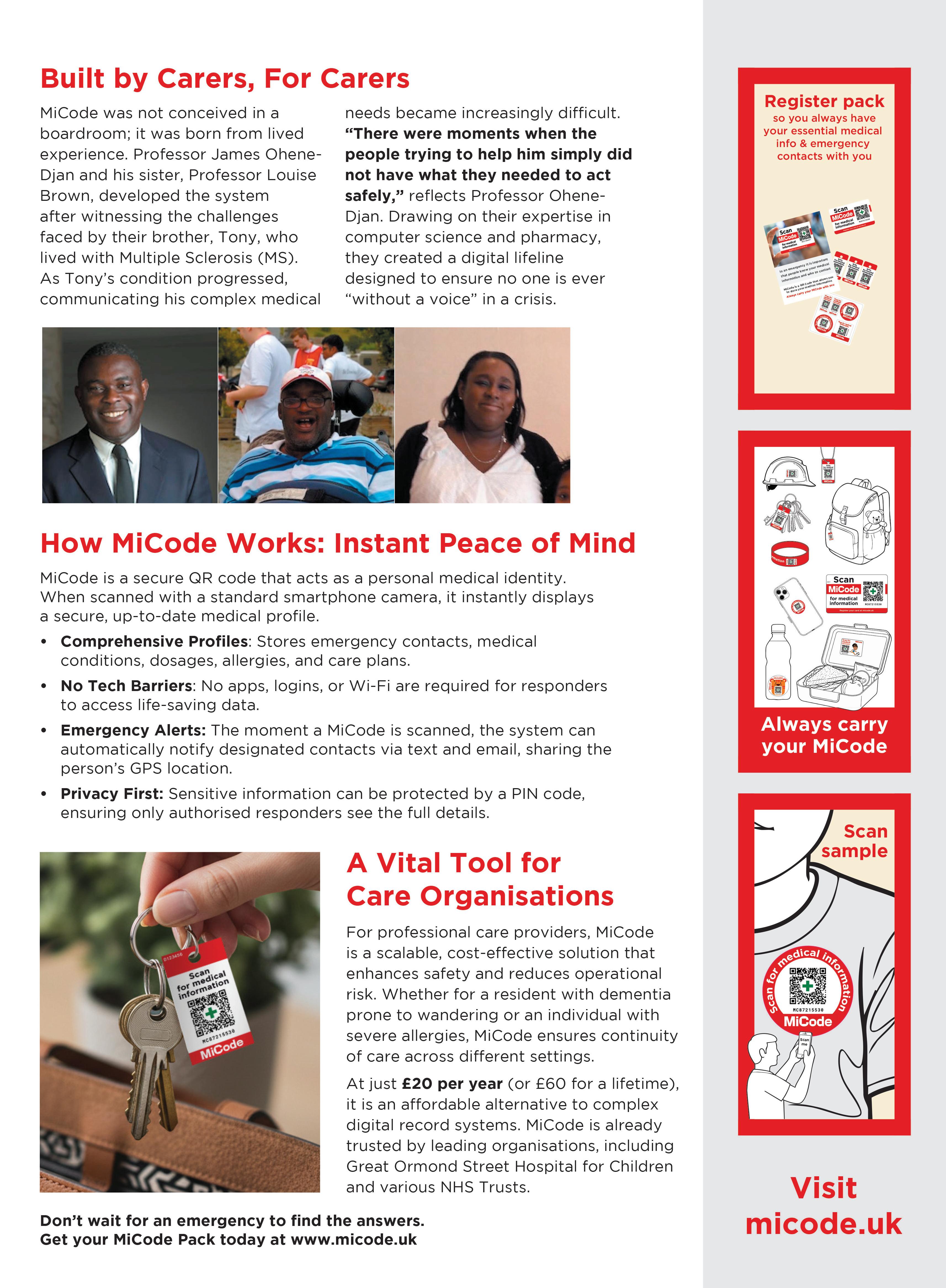
The knitting group from Hazelgrove Court Care Home, on Randolph Street, are selling the handmade woollen elephants in aid of Wildlife SOS.
The organisation, which works to rescue, treat and protect wildlife across India while providing lifelong care to animals in need, is the latest to benefit from the elderly residents’ knitting skills.
The group – all in their 70s, 80s and 90s – have previously produced toys for monkeys and blankets for rhinos in South Africa as well as jumpers for penguins in Australia.
The knitted elephants have proved so popular residents can barely keep up with demand, having sold around a dozen already.
Sharon Lewis, activities coordinator at Hazelgrove Court Care Home, said the residents were thrilled by the response. “The knitted elephants have been flying out,” she said. “They sell straight away and the residents are already busy making more.”

While supporting the charity, residents joined a web call with Wildlife SOS on Save the Elephant Day, which aims to raise awareness of the declining elephant population worldwide.
During the session, residents heard directly from Wildlife SOS leadership about their work helping elephants exploited for begging, as well as efforts to improve welfare and end the practice.
UK manager Linda Whiteley introduced residents to Kartick Satyanarayan, the co-founder and CEO of Wildlife SOS, who spoke live from India about the challenges faced by elephant rescue teams and the organisation’s goal to end the exploitation of begging elephants by 2030.
Residents also learned about the specialist care provided after rescue, including purpose-built elephant
ambulances and rehabilitation programmes.
One story was that of Bani, a three-year-old elephant who was knocked down by a train. Rescuers initially thought she would never walk again but, with specialist care and custom-made boots, Bani has since regained her mobility.
Money raised through the knitted elephants will go towards helping elephants like Bani.
Hazelgrove resident Tina Parker, 75, said: “Elephants are my favourite animal, and it is heartbreaking to think people will take them from the wild and make them beg, breaking their spirit.”
Ellen Else, 95, added: “I am happy that I am still able to help with the knitted elephants we are doing, which will raise money to help these poor elephants.”
Peter Rayson, 77, said: “It was wonderful to be invited to the webinar and see the amazing work the rescuers are doing.”
Sharon Lewis said the project had given residents a real sense of purpose. She added: “The Knitting Nannas love knowing that something they have made with their own hands is helping animals on the other side of the world.
“It gives them a huge sense of achievement and has sparked lots of conversations with families and visitors about wildlife and conservation.”
Linda Whiteley, Wildlife SOS’s UK Manager, added: “The entire team and I are sincerely touched by the creativity, thoughtfulness, and generosity of the residents of Hazelgrove Court Care Home.
“Knowing that they care so deeply about the once-captive elephants in our care highlights the global appreciation for these endangered keystone animals.”
Poor waste management practices are costing care homes thousands of pounds every year -and the problem is more widespread than many operators realise.
Analysis by leading independent healthcare waste management company Anenta reveals that care homes are wasting an average of £8,000 annually as a direct result of inadequate waste segregation and management processes. The root cause is largely the same across the sector: waste is consistently being placed in the wrong channels, triggering unnecessarily high disposal costs.
Detailed compositional audits undertaken both by Anenta, and separately by the Environment Agency (EA) have found that 70% of care home waste ends up in the wrong waste stream. The figures are particularly stark for clinical waste, where 90% is incorrectly categorised, and for offensive waste, where 35% is regularly contaminated with recyclable materials. The financial impact is significant. Low-risk items that should be disposed of as offensive waste — at a cost of £300–£500 per tonne — are routinely being discarded as infectious waste, which costs upwards of £800 per tonne. For a care home producing moderate volumes of waste, these avoidable costs quickly accumulate.
THE ROOT CAUSE: A TRAINING GAP

E-LEARNING: AN IMPORTANT PART OF THE SOLUTION
A free e-learning module on healthcare waste - developed in association with Anenta by NHS England alongside IPC leads, Local Commissioners, and industry experts - is available through the Health Education England online portal and plays an important role in addressing these issues.
The 30–45 minute module - available here - outlines what waste should go into which stream, explains correct segregation practices, and provides practical guidance to help staff build better habits from the ground up. Crucially, it is free to access — removing the cost barrier that might otherwise prevent smaller care homes from investing in staff training.
Flynn added: "The adoption of the training and correct segregation is critical if the care home sector is to cut costs and achieve Net Zero targets. The course is accessible to all and includes a risk assessment that care homes can use to directly inform the way in which their waste is segregated.
Beyond the direct financial costs, poor waste management also exposes care homes to compliance risks that can have serious operational consequences.
Analysis of over 2,500 primary care Duty of Care audits by Anenta has revealed that 58% of healthcare professionals responsible for waste management are unfamiliar with the Healthcare Technical Memorandum — the key regulatory guidance governing healthcare waste, the latest iteration of which was published in March 2023.
This knowledge gap has led to inadequate training, weak waste management policies, and ingrained bad habits that are proving costly. Without a clear understanding of what goes where, incorrect disposal becomes the norm rather than the exception.
Graham Flynn, Director at Anenta, said: "On average, care homes are wasting £8,000 every year through poor waste management process and procurement. Changing waste disposal habits and practices prevents the unnecessary and expensive disposal of waste via inappropriate and environmentally damaging waste streams, such as incineration — instead ensuring that the majority of clinical waste is disposed of using either alternative treatments or energy-from-waste processes."
Where waste contractors identify non-compliant waste streams, they are entitled to refuse collections entirely - a scenario that can put care services at significant risk of disruption. This risk is managed through the correct completion of a Pre-Acceptance Audit (PAA), which most care homes are required to undertake every five years, or annually where a site produces more than five tonnes of clinical waste per year.
The e-learning module supports care homes in preparing for and completing their PAA — a practical benefit that sits alongside the direct cost savings that come with better segregation.
Flynn said: "The training will play a big part in cutting costs by improving waste management among staff. Importantly, it will also help care homes with their PAA audit, without which their healthcare waste cannot be collected — potentially resulting in enforcement action by the Environment Agency."
For more information about Anenta and its care home audit app — which enables care homes to conduct compulsory clinical waste pre-acceptance and duty of care audits in just 40 minutes, without the need for third-party on-site visits — visit www.anentawaste.com or call 033 0122 214.
Bed bugs are one of the most disruptive challenges a care home can face. For managers responsible for the comfort, dignity, and wellbeing of vulnerable residents, even a single confirmed case can trigger anxiety among families, disrupt daily routines, and place enormous pressure on staff. Yet with the right approach, bed bug management doesn't have to mean toxic chemicals, lengthy room closures, or upheaval for the people in your care.
The Misconception Around Bed Bugs
It's important to understand that bed bugs are not a hygiene issue — they are a management issue. These insects are indiscriminate, equally at home in a five-star hotel as a care facility. They travel in luggage, clothing, and belongings, and can be introduced by visitors, new residents, or staff without anyone realising. The question isn't whether your home could be affected; it's whether you have the right systems in place to detect and respond quickly if it is.
The Power of Canine Detection
Early detection is everything. Bed bugs are expert hiders, concealing themselves behind skirting boards, within wall cavities, and deep beneath floorboards — places a visual inspection simply cannot reach. This is where bed bug detection dogs prove invaluable. With a sense of smell far beyond any technology currently available, trained canines can identify individual live bed bugs at the earliest possible stage, before a minor issue becomes a full-scale infestation.

Merlin Environmental's specialist canine detection teams work with care homes across the country, offering proactive screening programmes that allow managers to stay ahead of any potential problem. The non-
invasive nature of this approach is particularly important in a care setting — rooms can be assessed quickly and discreetly, with minimal disturbance to residents, preserving dignity and maintaining the calm environment your residents deserve.
Effective Treatment Without Compromise
When treatment is required, Merlin Environmental's heat treatment process offers a genuinely superior alternative to traditional chemical methods. By raising room temperatures to a lethal threshold, every bed bug — including eggs, which chemical treatments cannot penetrate — is eliminated in a single application. There are no pesticide residues, no chemical odours, and no risk to residents or staff.
Critically for care home operations, rooms are available for use again the same day, once cooled. No lengthy preparation, no multiple follow-up visits, and no disruption to the routines that matter so much to your residents.
A Proactive Partnership
Merlin Environmental works with care homes as a trusted long-term partner, combining expertise, accreditation, and a genuine commitment to the safety of those in your care — because your residents deserve nothing less.
To find out more about proactive bed bug screening and heat treatment for your care


Care UK’s clinical leadership team has been nationally recognised by the Chief Nurse for Adult Social Care, Deborah Sturdy, in an online ceremony.
Prajeesh Poulose, Joanne Grundon, Jason Axford, and Amanda Bell were presented with the Chief Nurse Adult Social Care team award on Thursday 9th April. The team, who are leaders in care quality and care policy, were recognised for their incredible work supporting over 1,500 registered nurses throughout the organisation.
Rachel Harvey, Director of Care, Quality and Regulatory Governance at Care UK said: “This award is a demonstration of the team’s hard work and their ongoing commitment to delivering the best quality of care for residents. The example they set as role models for excellence in adult social care inspire those across the organisation and beyond. We are incredibly proud of their achievements and grateful for their continued dedication to supporting clinical colleagues across Care UK.”
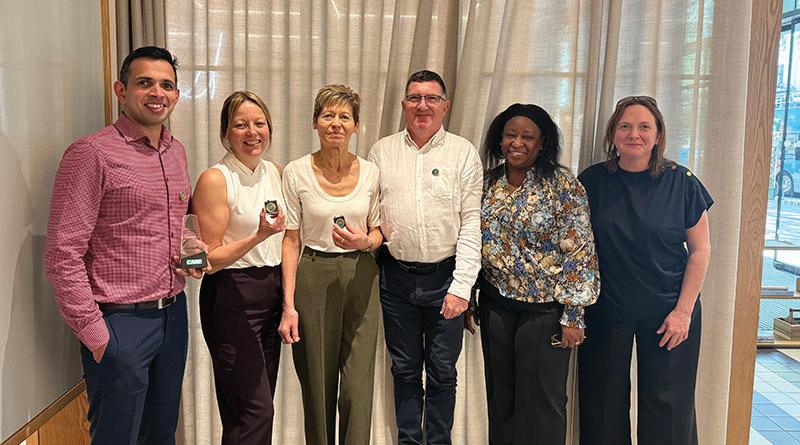
Prajeesh, who is responsible for strategic work including developing policies and ways of working for best practice, recently received the prestigious title of Queen’s Nurse by the Queen’s Institute of Community Nursing, showcasing his dedication to promoting the highest standards of care in his role.
Chief Nurse for Adult Social Care, Deborah Sturdy, said: “I am a delighted to recognise four outstanding Chief Nurse Award recipients for their leadership and commitment to excellence in adult social care.
Care UK’s Clinical Leadership Team exemplifies the very best of nursing leadership—providing mentorship, support and professional inspiration to 764 registered nurses across the organisation.
“Their impact spans every stage of a nursing career, from welcoming overseas and newly qualified nurses, to supporting those returning to practice or entering adult social care for the first time. This is leadership that strengthens the workforce, raises standards of care and truly makes a difference for people who draw on care and support.”
Residents at Surrey Heights Dementia Care Centre, part of CHD Living, have enjoyed a week of community connection and creative inspiration after visiting a local art exhibition and sculpture trail hosted by King Edward School, Witley.
The exhibition, held in partnership with appART, gave residents the chance to enjoy time outdoors, engage with local arts, and take part in a relaxed, interest led outing that supported wellbeing and confidence.
Throughout the week, Wellbeing Coordinator Karen supported residents who were able to attend by walking with them to the nearby school. The short walk, alongside warm and sunny weather, made the experience particularly enjoyable and helped create a natural sense of routine and anticipation.
Residents responded positively to the artwork, with Jan especially impressed by Beatles themed pieces and Nick drawn to a tiger sculpture. During his visit, Nick also spoke with gallery team

members about his own interest in art and was encouraged to apply to exhibit his work at next year’s event, opening up a meaningful opportunity for future involvement.
A standout moment involved resident Karen, who had previously declined other outings. With appropriate support, Karen agreed to attend, remained calm and engaged throughout, and shared her experience enthusiastically with others.
Jean-Pascal (JP) Toussaint, Registered Manager at the Surrey Heights Dementia Care Centre, said: “Dementia friendly community inclusion is not about large gestures. It is about creating the right conditions for people to feel safe, seen and confident enough to take part. This visit shows what happens when you match an opportunity to someone’s interests and provide the right support around it. It builds connection, it builds confidence, and it reminds people that life can still feel full of colour and possibility.”
A Barnsley care home daredevil will take on a terrifying trio of highadrenaline aerial challenges in June in a bid to raise funds for residents and charity.
Rachael Addy, 41, activities coordinator at Deangate Care Home, on Towngate, Mapplewell, has taken on daring annual fundraising challenges for the last two years.
Previously, she has performed a tandem skydive and swam with sharks, but this year she is raising the stakes with three challenges in a single month.
In June, Rachael will scale The O2 Arena in London, abseil down Liverpool FC’s Anfield Stadium, and finally bungee jump off the 140ft Larpool Viaduct in Whitby.
“She must be mad,” said Frances Smith, 91, a resident at Deangate Care Home. “I can’t believe it.”
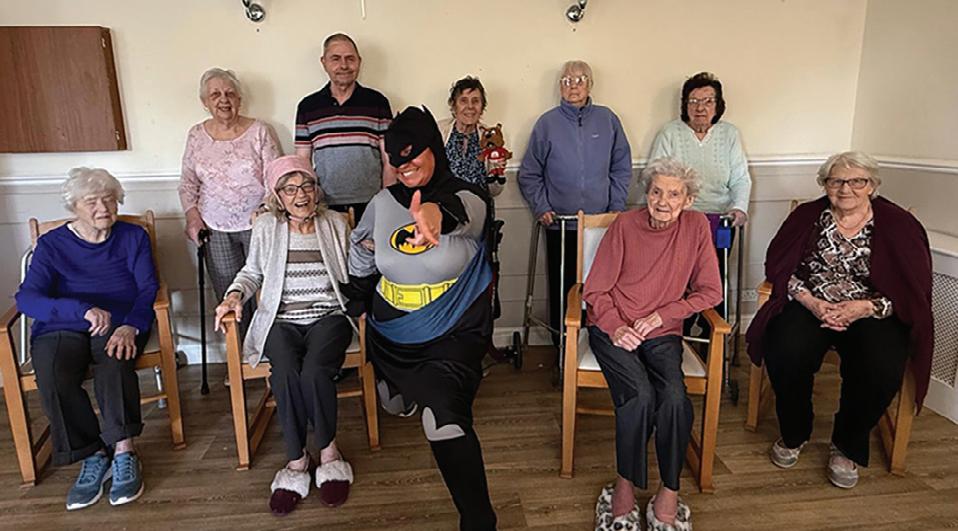
Rachael has raised thousands of pounds in previous years for the care home’s residents’ fund, which goes towards activities and outings for residents, such as trips to the seaside.
This year, Rachael is splitting donations with BIADS Barnsley, a support service for those with dementia, their families and friends.
She chose the charity after her mother, Ann Caterer, 76, was diagnosed with Alzheimer’s in February this year.
Rachael said: “The fundraising always means a lot to me but this year it means even more, after my mum was diagnosed with Alzheimer’s.
“While she is still able, she will be coming along to watch me complete the challenges, alongside the residents from Deangate.
“The ladies and gents that will benefit from the money raised step out of their comfort zone each day living with Alzheimer’s.
“If these incredible ladies and gents can live their lives with a mix of fear, uncertainty, confusion, happiness, joy and raw emotions, then I can certainly do my bit and face mine.
“Life is too short. You never know what’s round the corner. I have faced my fears before and this will be no different. I hope people see you should never be afraid to step out of your comfort zone and try something new.”
Rachael Dawson, home manager at Deangate Care Home, said: “She must have nerves of steel.”
Chantelle Peacock, deputy home manager, added: “She really is up for anything to help others.”
Rachael is hoping to raise as much as possible, having so far raised just under £1,000 in donations both online and in person.
A lifelong Cherries fan at a Bournemouth care home experienced a dream come true when he played football with one of the First Team players from the football club.
John, who lives in Talbot View care home, on Ensbury Avenue in Bournemouth, was thrilled to meet AFC Bournemouth centre-back, James Hill, who visited to play some chair-based football with the residents. John has followed every match played by the Cherries for the past 60 years and is famous in the home for having an encyclopedic knowledge of football.
John and James teamed up with fellow Cherries fan, Maurice, to roll and kick footballs, giant dice and bean bags, aiming at targets on the floor. They were in a team against other residents and staff, who were assisted by AFC Bournemouth legend Steve ‘Fletch’ Fletcher. Talbot View care home, which is run by not-for-profit care provider, Care South, provides residential, respite and dementia care to residents.
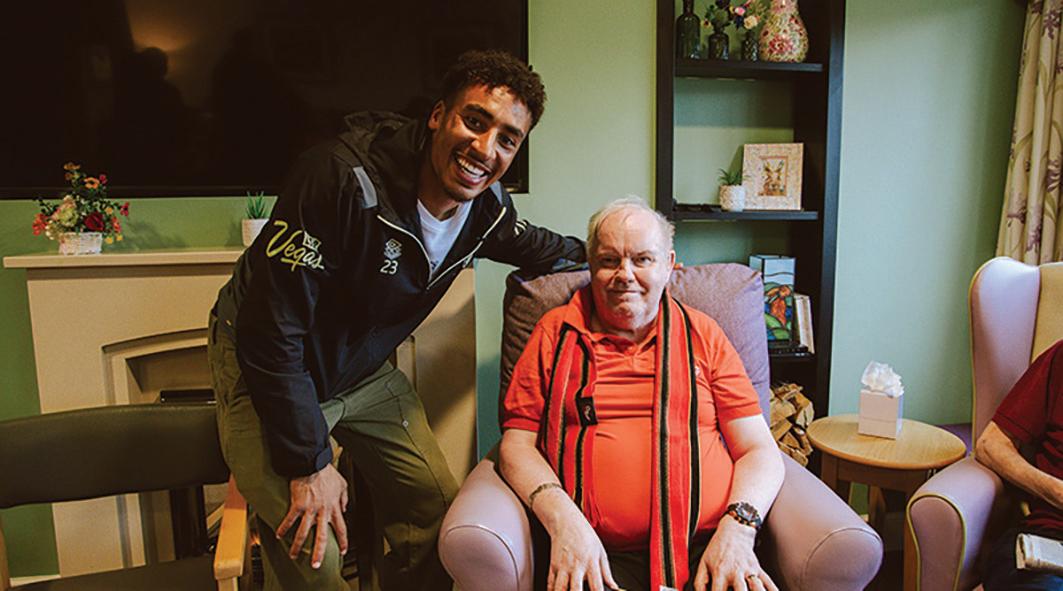
The afternoon event was led by Steve Cuss and the team from AFC Bournemouth Community Sports Trust, who host weekly sessions across Care South’s Dorset-based care homes. Many of the home’s residents won an AFC Bournemouth scarf during the activity for them to keep as a memento from the day.
AFC Bournemouth star, James Hill, said: “I really enjoyed every moment of my visit to Talbot View. I think
bringing everyone together to play some football games is such a special experience. Not only has John got fantastic knowledge of football, but he’s also got a heart of gold. He wished me luck and told me to carry on with what I’m doing on the pitch. Hopefully we can push on and achieve something nice for him and the other Talbot View residents to watch in the season ahead.”
Talbot View resident John said: “I used to go to every home game and as many away games as I could get to. I’ve met ‘Fletch’ before so it was good to see him again and we talked about some of the matches he played over the years. It was brilliant to meet James Hill, who was very nice and down-to-earth. He’s a very good player and he’s a got a long throw, although he didn’t play so well at Talbot View, but I still enjoyed having a Cherries player on my team.”
Dawn Hand, Home Manager at Talbot View, said: “It was a truly special afternoon for our residents, but particularly for John, who has supported AFC Bournemouth for the past 60 years. Seeing his face light up when James Hill walked into the room and take part in the session was heart-warming. Activities like this bring so much joy and promote teamwork and positive engagement, giving our residents the chance to stay active and connected through something they truly enjoy.”
Residents at a Winchester dementia care home gave some hands-on help as a long-haired staff member lost 34cm of her auburn locks for charity.
It was the fifth time that Laura Sheldrake, Companionship Team Leader at Colten Care’s St Catherines View, has had a sponsored haircut for good causes.
On hand to offer help with the scissors were residents Valerie Woodall and Barbara Evans, professional hairdresser Olena Braharenko and Home Manager Vanda Baker.
To start the proceedings, Olena sectioned Laura’s hair into four equal ponytails ready for the cut.
First up was resident Valerie who, with the help of Olena, managed to cut the initial one, followed by Vanda, again with Valerie’s direction.
Eyeing the second ponytail, Valerie said: “I wish I had this hair.” Laura said: “She then held it up against her head and pretended to have long auburn hair. She was full of smiles and started to reminisce about the hair she had when she was younger. Barbara looked on as she was too worried she would make a mistake, instead offering me the encouraging words, ‘You are doing great, it
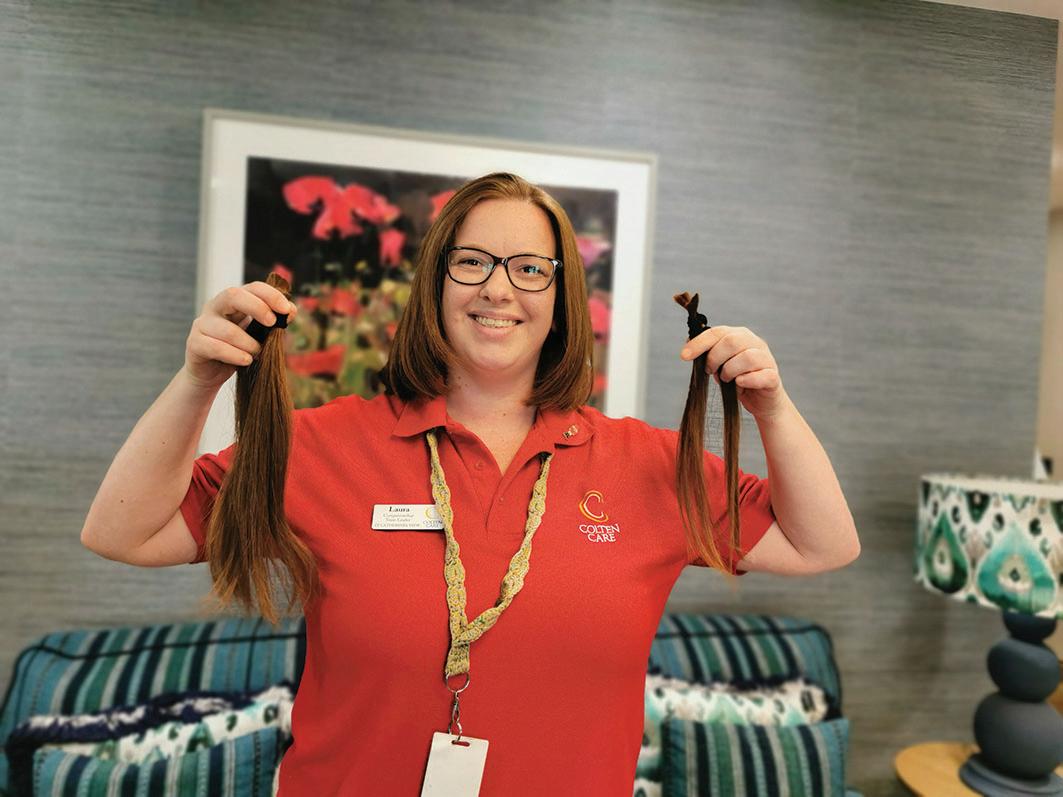
looks really good’. It was such a joy to have Valerie and Barbara helping me on the day.”
After the ponytails were cut, Olena tided up the loose ends giving Laura a short, stylish look as chosen by staff and residents in the home.
Laura is giving her cut hair to the Little Princess Trust, a charity that uses hair donations to make wigs for children and young adults going through hair loss due to various medical conditions.
She also received some cash donations which will be put towards St Catherines View’s charity of the year, the older people’s support organisation St John’s Winchester.
Valerie said afterwards: “I think what Laura did is fantastic, and for two great charities. She is a wonderful person. I thank her for letting me help her.”
Laura said: “This was my fifth time donating hair. We all take it for granted and as my hair is so thick and grows so quick I want to be able to do something for others. At the end of the day, hair grows back but for those suffering with medical conditions that is not always the case.”
A World War Two RAF veteran has celebrated his 101st birthday at a Dorset care home.
Arthur ‘Jim’ Freer spent the day at Colten Care’s Newstone House in Sturminster Newton with wife Valerie and close friends from his village of Child Okeford.
The party, which featured musicians Simply Piano, was joined by fellow Newstone House residents and Tony Dee, Chair of the RAF Association’s Sturminster Newton branch.
Born in Northamptonshire in 1925, Jim began his career as a junior draftsman making engine frames for Lancaster bombers.
A wish to fly led to him joining a Royal Canadian Air Force crew as a flight engineer and flying officer stationed in Yorkshire, part of RAF Bomber Command.
During the Second World War he flew Halifax bombers, completing 33 operations including on D-Day supporting Canadian troops pushing into the city of Caen.
His service in the liberation was recognised later with France’s highest order of merit, the Légion d’Honneur.
After VE Day in 1945, Jim was posted to the Far East as a signals officer and crewed freight aircraft for the RAF postal service.
Last year, his centenary, he was invited to light Sturminster Newton’s official VE Day 80th anniversary beacon.
Asked what he credits his longevity to, Jim said: “A combination of good DNA and luck. To attain the age of 101 is unimaginable as the probability of me reaching my 19th birthday looked very slim at one point. Bomber crews had very high casualty rates.”
Companionship Team Leader Kate Seck said: “Jim has seen many events and changes in his lifetime. We enjoyed looking at some of the major events of the last century and trying to recall exactly when they happened. This kept the conversation flowing well up to suppertime.”
April King, Home Manager at Newstone House, said: “It is a pleasure and a privilege to care for Jim. He is a kind, thoughtful man who fully deserves the continuing appreciation he receives for having risked his life so many times during the war. It is only because of Jim and people like him that we have the freedom we enjoy today.”
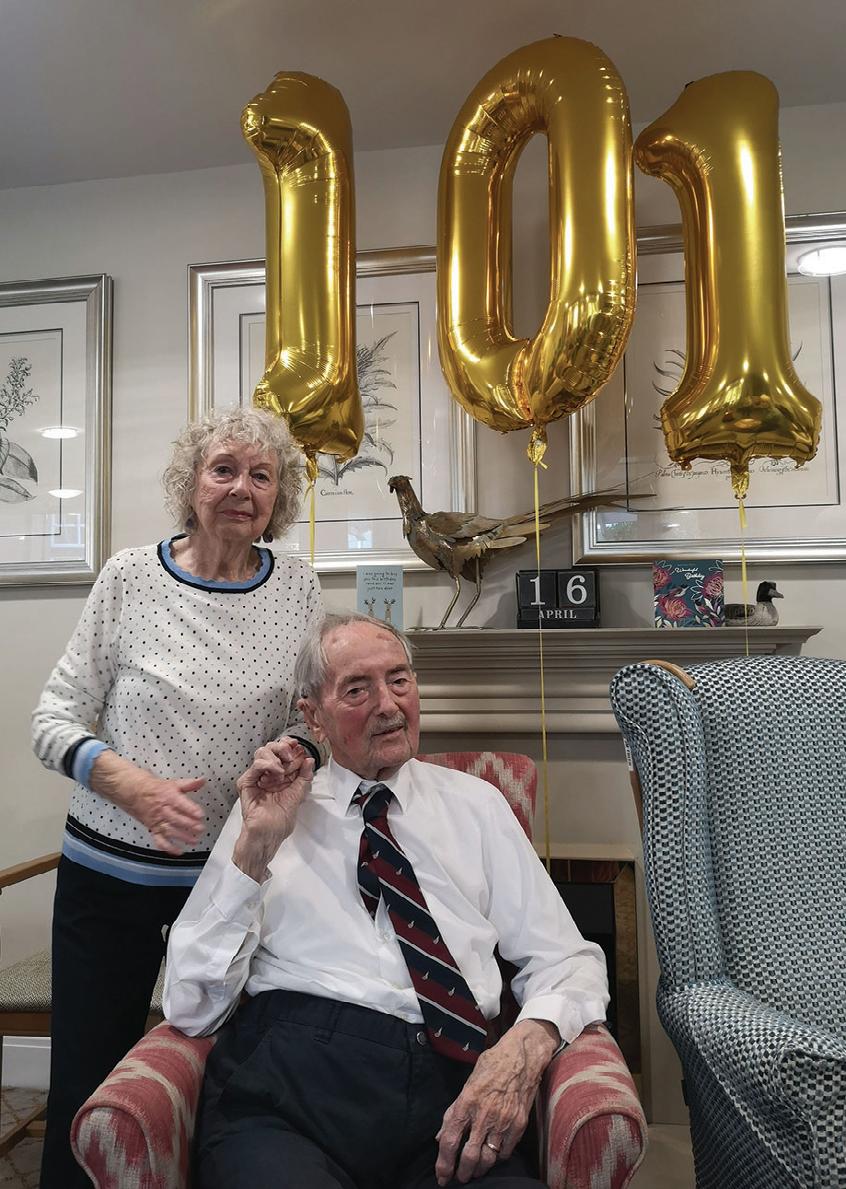
There’s never a dull moment at TLC Kailash Manor Care Home, especially when you get the opportunity to host a unique group of visitors for the afternoon. The home welcomed the Zoolab team and their cohort of animal friends for an ethical Animal Handling Workshop where residents were able to get up close and friendly with exotic reptiles and creepy crawlies.
The bistro was converted into a makeshift zoo drawing in curious minds, cautious touches and courageous encounters. Residents took on the role of novice zoologists learning from Zoolab ‘Ranger’ Stephen who gave brief introductions to each animal including their countries of origin, natural habitats and fun facts about each creature. After this briefing, residents were able to hold and pet a range of wildlife including Madagascan Hissing Cockroaches, Leopard Geckos, Corn Snakes and for the very brave, the Chilean Rose Tarantula. The care team also had the chance to take part in the workshop, some leaping at the chance to get involved and some leaping away at the sight of the multi-legged beasties.
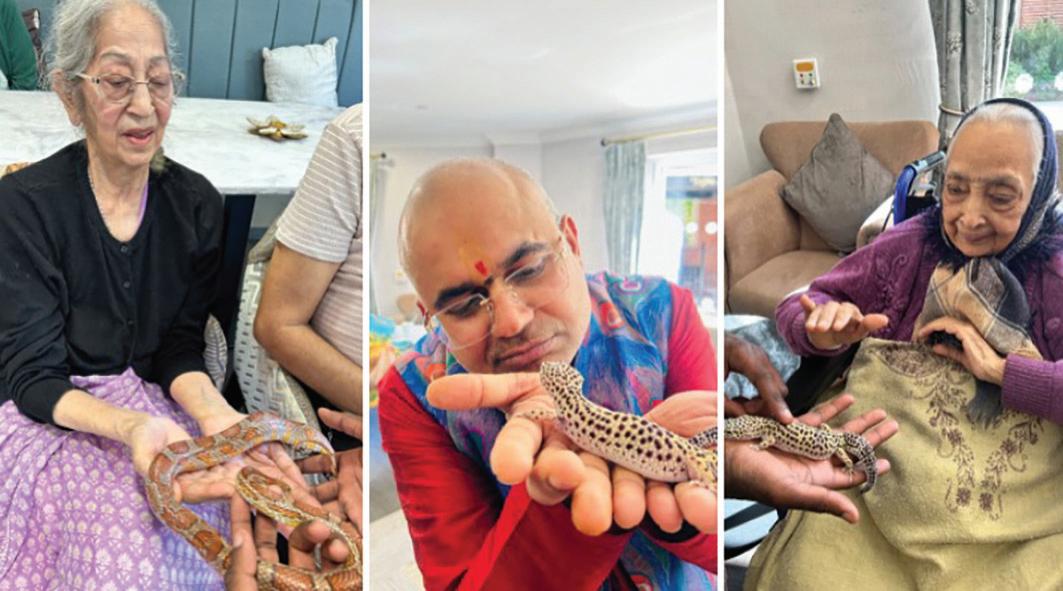
Wellbeing Team Lead, Sneha Patel commented “The Zoolab Team were great and so attentive to our residents making sure everyone felt comfortable but also encouraging them to participate showing them that they are braver than they think. Some of our residents were nervous at first but quickly became confident
and even initiated holding and stroking the animals’
“I myself held the tarantula, something I thought I would never do, so I’m really quite proud of myself. It was a fantastic afternoon with Stephen and his ‘anipals’, our residents are still sharing stories of their animal encounters!’
Manjula Patel, a resident, recalled how she used to play with Leopard Geckos during her childhood in Gujarat, India: “They move very fast, as children we would try to catch them with our hands but they always outran us. I never thought I would see a gecko in London.”
Stephen, ZooLab Ranger, added: “We enjoyed our afternoon with the residents and team at Kailash Manor. Beyond education and raising awareness of the importance of conservation efforts, we also believe animal encounters are therapeutic and offer an easy and tangible way to boost mental wellbeing among the elderly. Particularly for residents who are unable to access the community, we bring the outside and its bountiful wildlife to them.”
“We hope that experiences like these serve to connect people to our planet and all the animal friends that we share it with.”
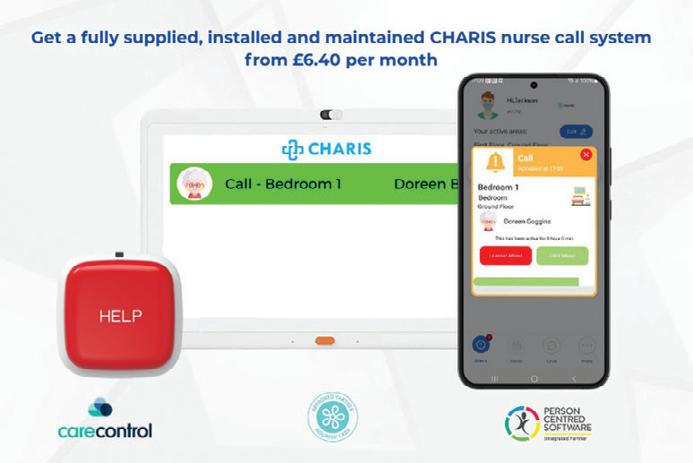
Fourteen million people in the UK live with incontinence. For many in residential and nursing care, the consequences of inadequate support are severe — from infection and skin breakdown to isolation and loss of dignity. Yet as the Baroness Casey review gets under way, campaigners warn that continence care remains almost entirely absent from the national reform conversation.
Walk into almost any residential or nursing care home in England and you will find dedicated staff managing one of the most intimate — and most underfunded — aspects of personal care. Continence support, once dismissed as an awkward administrative footnote, is increasingly being recognised for what it truly is: a barometer of the entire social care system's commitment to dignity. The scale of the challenge is significant. Incontinence affects an estimated 14 million people across the UK, cutting across age, disability and long-term illness. As the population ages, demand for continence support is projected to rise sharply — placing further strain on a sector that is, by almost every measure, already struggling to keep pace.

frontline of indignity" and called on the review to place dignity at its heart, with explicit recognition that access to proper assessment, specialist support and appropriate products should be determined by individual need — not by postcode.
"People should not have their independence determined by a postcode lottery. Too many are denied appropriate continence support because of arbitrary caps and under-resourced services."
— Nik Hartley, Chief Executive, Spinal Injuries Association RATIONING BY BUDGET, NOT BY NEED
For care home managers and nursing staff, the consequences of inadequate continence support are depressingly familiar. Poor care in this area can cause urinary tract infections, serious skin breakdown and pressure damage, and profound emotional distress. Residents who lack reliable access to appropriate products may withdraw from communal activities, refuse visitors, or experience significant deterioration in their mental wellbeing.
Earlier this year, a coalition of health and disability charities — led by the Spinal Injuries Association and supported by organisations including Bladder and Bowel UK, Dementia Carers Count, Disabled Living, The Neurological Alliance, Pain UK and Shine — wrote to Baroness Casey of Blackstock as she began her independent review of adult social care. Their message was stark.
Joined by senior parliamentarians Dame Caroline Dinenage MP, Mohammad Yasin MP, Baroness Ritchie of Downpatrick and Baroness Grey-Thompson, the signatories argued that continence care remains one of the most neglected and taboo areas of adult social care — largely absent from national reform debates, despite its profound impact on health, independence and quality of life. They described it as a "hidden
A June 2025 survey of 500 healthcare professionals found that substandard incontinence products were actively delaying hospital discharges and contributing to avoidable admissions — a finding with direct implications for care homes managing complex transitions between hospital and residential settings.
An investigation by the i Paper further exposed the depth of the problem across NHS continuing care settings. Freedom of Information data revealed that more than half of the trusts questioned cap continence products at just three or four pads per day — regardless of individual clinical need. The investigation also found that nearly a third of trusts providing budget data had collectively overspent by more than £4 million, fuelling serious concern that financial pressure is driving rationing and leaving residents, families and care providers to absorb the shortfall themselves.
(CONTINUED ON FOLLOWING PAGE)
Incontinence is common in care and nursing homes, but the impact on dignity, comfort and skin health is deeply personal.
Levabo’s allDRY® range of reusable incontinence underwear is a Class I Medical device, designed to support residents and caregivers alike by combining discreet protection with a comfortable, everyday feel that looks like normal underwear, not a clinical product. allDRY® underwear provides reliable protection for men and women experiencing bladder leakage.

Who are Levabo?
Levabo are a Danish medical device company specialising in innovative, user-friendly solutions for continence care and pressure ulcer prevention. Our focus is on practical products that support dignity, comfort and safety, while fitting seamlessly into the realities of care and nursing home practice.
Designed for dignity
allDRY® aims to remove the stigma often associated with incontinence products. The underwear is soft, discreet and modern in appearance, helping residents feel more like themselves and less like patients. The garments combine advanced absorbent technology with breathable materials to help keep skin dry and comfortable throughout the day.
For many people, that small shift can make a big difference to confidence, engagement in daily activities and overall wellbeing.
Key benefits for residents:
3 Soft, underwear-like fit for everyday comfort
3 Breathable, skin-friendly materials
3 Secure 6-layer absorbency for protection and confidence
3 Discreet profile under clothing to support dignity
3 Natural odour control
Practical support for busy care teams
Care and nursing home staff need products that are easy to use, reliable and support efficient routines. allDRY® has been developed
with frontline care in mind, from dressing and toileting to night-time protection and manual handling.
Key benefits for staff and services:
3 Clear sizing and fit to simplify product selection
3 Easy to apply and remove, helping with time-pressured care routines
3 Reliable protection to support continence care plans and reduce unplanned linen changes
3 A versatile solution suitable for residents with different levels of dependency
3 Machine washable at 60 degrees Celsius
3 Tumble dry safe
3 Comfort and dignity focused
Supporting skin health and overall care
Continence care is closely linked to skin integrity, comfort and quality of life.
Prolonged exposure to urine and faeces can lead to incontinence-associated dermatitis (IAD), causing redness, pain, skin breakdown and an increased risk of infection. For residents, this can mean significant discomfort, distress and reduced mobility; for caregivers, it adds to workload, complexity of care and emotional strain when preventable skin damage occurs.
When protection is effective, secure and comfortable, there is less risk of leakage, moisture-related skin damage and associated distress for residents and carers. allDRY® is designed to:
3 Help keep skin drier for longer, supporting good skin care practices
3 Complement pressure area care and repositioning routines
3 Integrate smoothly into existing continence and care pathways
A flexible range for your residents
The allDRY® range offers options to suit different needs and levels of support, making it easier for homes to match the right product to the right person. This helps reduce waste, improve comfort and ensure residents receive care that feels truly individual. allDRY® is available in a range of briefs and boxers and different levels of absorbency. In addition to the underwear, there is an optional inlay which can be added to increase the absorbency by 50ml. This inlay is machine washable with the underwear.
To find out more about allDRY® incontinence underwear, or any of the Levabo product portfolio that could support your residents and care teams, request samples or discuss how the range could support your home:
Email: bm@levabo.com
Web: www.levabo.com


(CONTINUED FROM PREVIOUS PAGE)
THE FALSE ECONOMY OF CUTTING CORNERS
For care home operators under sustained financial pressure, there is a familiar temptation to manage continence care costs by selecting lower-cost products. Evidence increasingly suggests this approach is counterproductive. An NHS pilot scheme examining procurement decisions in formal care settings found that opting for cheaper continence products created a false economy: more frequent product changes increased demands on staff time, raised laundry and linen costs, and contributed to higher rates of skinrelated complications.
The pilot found that better-matched, higher-quality products significantly reduced leakage incidents, improved workflow efficiency for carers and ultimately lowered total care costs. It is a finding that should give pause to commissioners and care home owners alike: false savings in continence procurement can generate very real costs elsewhere in the care pathway. THE IMPACT ON FAMILIES — AND ON STAFF
Campaigners are also highlighting the ripple effects of inadequate continence provision on families. When formal care falls short, it is frequently relatives who step in — purchasing products out of their own pockets, making additional care visits, or taking on tasks that care home staff are unable to complete within existing resource constraints. This informal subsidy of an underfunded system rarely features in official cost assessments, but it is deeply felt by the thousands of families across the country navigating the care system.
For frontline care staff, the challenge is equally acute. Inadequate products mean more frequent changes, greater exposure to manual handling risks, increased time pressure and — critically — reduced capacity to deliver the person-centred care that good residential and nursing homes aspire to provide. Continence care is never a background task; it sits at the heart of the relationship between carer and resident.
"Continence care requires the recognition it deserves, which is long overdue. We need to drive evidencebased practice, putting the patient at the centre of their care."
— Tracy Whitehouse, Service Manager and Adult Specialist Nurse, Bladder and Bowel UK WHAT THE CASEY REVIEW MUST ADDRESS
The timing of the charities' intervention is significant. Baroness Casey's commission — commissioned by Prime Minister Keir Starmer and Health Secretary Wes Streeting — is expected to publish an initial report in 2026 setting out problems facing the sector and ideas for medium-term improvement, ahead of a final report in 2028. Critics, including Sir Andrew Dilnot who led a previous government review on care funding, have argued that waiting until 2028 for substantive recommendations is simply too long for people who need support now.
The coalition of charities has set out clear asks for the commission: explicit recognition of continence care as a core component of dignity in adult social care; recommendations that ensure consistent access to specialist assessment and support; and a commitment that product provision be determined by individual clinical need rather than local budget pressures or geographic lottery.
For care home providers, the message is both an external call to action and an internal prompt for reflection. Best practice in continence care is achievable — but it requires investment in training, in individualised assessment, and in product procurement that is driven by clinical outcome rather than unit cost. It also requires the sector to speak loudly and clearly to policymakers about the reality of what continence care involves and what it costs to get it right.
Adult social care reform has been promised, delayed and deferred across numerous governments and countless reviews. Baroness Casey herself has acknowledged that the system relies on what she has described as cobbled-together, underfunded services — with low-paid care workers bearing an outsized share of the burden, and a deep and damaging divide between health and social care persisting for decades.
Those working in residential and nursing care know that continence care is not a peripheral issue. It is, in many ways, the most honest test of whether a care setting truly upholds dignity. Getting it right requires proper products, properly trained staff and properly resourced services. Getting it wrong — as too many people's experience attests — can strip away independence, confidence and quality of life with alarming speed.
As Baroness Casey's commission begins to take evidence and build its case for reform, the care sector would do well to ensure that continence care — for so long a "hidden frontline" — is finally brought into the light.
Ontex Group a leading international developer and producer of personal care solutions, is launching a new adult incontinence range designed to deliver strong protection while caring for sensitive skin. The first products—Sensitive Pants, Sensitive Slip and Sensitive Form—will be introduced gradually to healthcare institutions across Europe.
New European research by Ontex, involving more than 2,500 people living with incontinence, shows that dermatitis and skin irritation remain common and have a real impact on daily life. Nearly half of respondents reported irritation in the intimate area. Yet “around 80%
of caregivers are not trained to recognize dermatitis. Education and better product design are key to preventing complications,” says Dr. Maria Panourgia, Geriatrician at Milton Keynes University Hospital (UK).
The Sensitive range was developed in direct response to these needs, combining trusted absorbency with dermatological care to help prevent irritation and support healthier skin.
To strengthen caregiver knowledge, the range is supported by expert guidance on recognizing, preventing and managing incontinence related dermatitis—available through Ontex’s nurse advisor
network and the online Ontex Academy.
Sensitive range: powerful protection that respects the skin
Sensitive Pants offer:
Topsheet enriched to help prevent irritation
• Hypoallergenic design for fragile skin
Odour control technology for lasting freshness and confidence
For more information please about ID please visit: www.id-direct.com/ukb2c/en/index.html


By Lisa Jones, Catering Manager at Park View Care Home, Gloucestershire
Imagine it is your 85th birthday. You are surrounded by family, the room is filled with song, and a cake is brought out. But because you live with dysphagia, a swallowing difficulty affecting individuals with moderate-to-severe dementia, your slice of cake arrives as a beige, featureless scoop of mush.
At Park View in Gloucester, we believe that a diagnosis of dementia should never mean the end of the joy of eating. As we mark Nutrition and Hydration Week, it is time for the care sector to move beyond the blender. Providing nutrition and hydration is a clinical necessity, but providing dignity is a culinary one.
My journey to the Park View kitchen wasn't a traditional path into care. I trained at Cheltenham Catering College and spent years in the high-pressure environments of pubs and restaurants across Wales, from Cardiff to Ross-on-Wye. Later, I spent 18 years at Unilever Foods as a Catering Manager, overseeing a 24/7 service for 1,500 staff, ranging from daily canteen service to high-end executive fine dining.
When I joined Park View in 2016, we had only a handful of residents. Today, we support a community of 90 residents and their families, and over 100 staff. My background taught me that whether you are cooking for a corporate executive or a resident with advanced dementia, the standard of presentation should not waver. In care, we aren't just feeding people; we are using our skills in food safety and texture science to protect their quality of life.
One of the greatest hurdles in dementia care is maintaining hydration. For someone with cognitive decline or reduced visual perception, a clear glass of water can appear "invisible" or confusing. Even orange squash can sometimes disappear into the background due to haze in a resident's vision.
We treat hydration as a fun, social activity rather than a medical box to tick. We set up hydration stations
Mobile Kitchens Ltd specialises in the hire or sale of temporary catering facilities and foodservice equipment.
Ideal for events or to provide temporary catering facilities during your kitchen refurbishment, our versatile units and equipment offer an efficient and economic solution to the caterers’ needs.
Production Kitchens, Preparation Kitchens, Ware-washing Units, Dry Store Units, Cold Rooms and Restaurant Units are available as individual units in their own right or they can be linked together on site to form a complete complex.
Alternatively, we can offer modular, open-plan facilities, usually for larger, longer-term hires.
We offer a free design service, and project management from concept through to delivery and installation on site, plus full technical support throughout the hire period.
throughout the building, offering vibrant and unusual juices, cranberry, pineapple and grapefruit. The bright colours also make the drinks visually accessible.
We also lean into "drinking foods." For residents who struggle to sit and drink a full glass, we serve melon and jelly drops, foods with exceptionally high water content that act as finger-food hydration. By offering variety, like milkshakes or fortified juices, we also tap into the fact that milk hydrates more effectively than water because it digests more slowly. It’s about meeting the resident where they are, whether that’s at a 10am mocktail hour or a 2pm "hydration moment."
For the 20 or so residents at Park View who require bite-sized or modified diets, the presentation is where science meets art. The old-school approach to pureed food, indistinguishable scoops of brown and green, is a thing of the past.
We use specialised moulds to ensure that pureed chicken and peas look exactly like the original dish. If we are serving pizza, hot dogs, or even a birthday cake, we puree and reshape them so the person can recognise what they are eating. I personally taste-test these foods daily. If a texture is too sticky or too firm, it isn't just a culinary failure; it’s a safety risk.
When plating bite-sized meals, we use gravy to support swallowing and decorative swirls to maintain an attractive presentation. The goal is that a visitor walking into our dining room shouldn't be able to easily distinguish who is on a modified diet and who isn't.
As motor skills decline, the frustration of struggling with a knife and fork can lead to residents skipping meals entirely. Finger foods can be a vital tool for independence. Because hands often provide more precise coordination than utensils and because they fall more easily into a resident’s narrowing peripheral vision, finger foods allow people to feed themselves.
As a resident's internal dementia clock shifts, their nutritional needs don't stop at 5pm. We ensure that nutritious options, from healthy sandwiches to satsumas, are available 24 hours a day.
Leading a team of 15 at Park View, I’ve seen how transformative a thoughtful dining experience can be. We have moved away from the idea that care home food is institutional. Nutrition and hydration are the foundations of health, but the joy of a meal is the foundation of a life well-lived.
The standard specification of our smallest Production Kitchen unit includes a six burner oven range, salamander grill, twin basket fryer, upright fridge, hot cupboard, single bowl sink unit with integral hand wash basin, plus ample power points to plug in Microwaves, Food Processors, Toasters etc. Internal equipment can be interchanged and clients can effectively specify their preferred layout. We have many tried and tested design layouts and would be pleased to put forward our recommendations for your project.
So if you’re planning a refurbishment or need to cater for an event then why not give us a call and we’ll be happy to provide advice and put forward a competitive proposal.
For further information or to arrange a site visit, email: sales@mk-hire.co.uk or call us on
or visit our website: www.mk-hire.co.uk
A new report from leading dairy co-operative Lakeland Dairies, supported by Consultant Dietitian Rachael Masters (MSc, BSc), reveals the care sector at a tipping point, with nearly three quarters (74%) of operators concerned about their ability to meet residents’ nutrition and hydration needs over the next five years. Care kitchens are under growing pressure as residents’ needs grow more complex, resources stay tight, and smaller portions mean every mouthful must be nutrient-dense.
The report, The Care Kitchen Reset: The Future of Care Catering, sets out a shift towards enriched cooking and stronger base ingredients that make everyday dishes work harder. It calls for care operators to protect quality nutrition under mounting pressure not by adding complexity, but by strengthening core ingredients from the outset to improve calorie and protein density without increasing portion size.

It launches as part of Nutrition & Hydration Week (16–22 March), which shines a spotlight on the UK care home sector and the critical role food and drink play in supporting resident health and wellbeing.
CARE SECTOR UNDER MOUNTING NUTRITIONAL PRESSURE
The findings reveal rising clinical complexity is a key driver, with almost half (43%) reporting an increase in nutritional needs over the past five years. At the same time, 71% say rising ingredient costs are making it harder to maintain food quality despite 90% refusing to compromise on standards. For operators, the stakes are both clinical and commercial. Nine in ten resident respondents (90%) cite food as a key factor when choosing a care home, while 87% of residents say mealtimes are the most important part of their day.
Dairy-based ingredients play a central role: over nine in ten operators say products such as cream and milk powder enhance food and drink experiences for residents with smaller appetites or specialist diets, while 88% believe they effectively support resident nutrition. This underlines the value of enriched cooking approaches that boost nutrition in the foods residents already enjoy, without relying on bigger portions.
INGREDIENT STRATEGY OFFERS PRACTICAL SOLUTION
Responding to these pressures, the report highlights that one of the most practical, operationally efficient levers is ingredient strategy. Rather than layering on additional processes, the report argues the solution lies not in short-term cost cutting alone but in strengthening menu foundations. By embedding fortified nutrition into everyday base ingredients, kitchens can improve calorie and protein density without increasing portion size, labour or waste – safeguarding the sector’s future.
Rachael Masters, Consultant Dietitian and contributor to the report said: “With an ageing population driv-
ing increased demand for care home places, and residents presenting with more complex health and nutritional needs, care catering teams are being asked to deliver not just meals, but meaningful nutritional support in increasingly complex environments.”
“The solution doesn’t lie in adding more processes, but in making smarter use of core ingredients to maximise nutritional value. By fortifying everyday dishes, kitchens can enhance protein, energy and key nutrients in ways that are practical, cost-aware and, most importantly, enjoyable for residents. Dairy-based ingredients offer a particularly effective and versatile way to achieve this.”
“This report explores these growing pressures and highlights practical, nutrition-led approaches that support both care teams and residents – helping deliver better operational efficiency while improving health, wellbeing and dining satisfaction.”
The research also highlights opportunities to refine delivery. While 90% of residents rate meals positively overall, 77% report struggling to finish meals due to taste or presentation challenges, and 38% say higher quality ingredients would improve their experience. This reinforces the case for ingredient optimisation over short-term cost cutting.
Paul Jennings, Head of Food UK & International at Lakeland Dairies, adds: “Care operators are under pressure to do more with less – more nutrition, more quality and more resilience – while also meeting rising expectations from residents around mealtimes. This creates a real tension in care kitchens, where teams are balancing increasingly complex needs with limited time, staff and budgets.
Ingredient strategy is a practical way forward. By using hard-working bases such as Millac Gold Double and Lakeland Dairies Skimmed Milk Powder, kitchens can build richness, consistency and added nutrition into everyday dishes without adding complexity.
In a sector balancing tight budgets and staffing pressures, this timely report explores immediate solutions to support care kitchens.”
The report draws on a survey of care operators, residents and their families, alongside insight from Consultant Dietitian Rachael Masters, founder of Focus on Undernutrition, which provides specialist special diet training to care homes.
Lakeland Dairies is committed to supporting the sector through menu guidance, product innovation and training designed to help kitchens build resilience through stronger foundations and long-term supplier partnerships.
The full report is available: https://eu1.hubs.ly/H0sP61V0
Harrison Carr is a national provider of commercial catering equipment, design, installation, and fabrication services and HVAC. Based in the Midlands, we support care homes, local authorities, charities, and specialist care providers with both day-to-day operational requirements and larger project-based developments.

A key advantage of working with us is our independence. We are not tied to any single manufacturer, enabling us to source the most suitable, reliable, and cost-effective equipment for each care environment. This ensures solutions that prioritise safety, energy efficiency, long-term value, and consistent performance.
Our team includes experienced designers, project managers, ventilation specialists, installation engineers, and in-house fabrication experts all working under one roof. This ensures we can deliver a genuine end-to-end service: from concept and planning through to supply, installation, and ongoing support.
CATERING EQUIPMENT SUPPLY & TRAINING
• Access to all major catering equipment brands
• Energy-efficient, sustainability-focused solutions compliant with care-sector standards
• Fast delivery from our own on-site stock
• Competitive pricing and comparison quotes to support budget decisions FULL KITCHEN DESIGN & INSTALLATION
• Complete kitchen and servery redesigns
• Workflow optimisation to support safe, efficient meal production
• CAD layouts and 3D visuals
• Compliance-led ventilation and extraction solutions
BESPOKE FABRICATION
• Custom counters, serveries, prep areas, and storage
• Bespoke servery and hydration stations for care settings
REACTIVE & PLANNED SUPPORT
• 24/7 support with rapid turnaround for urgent equipment needs
• Standby and loan equipment for emergencies
• Assistance with refurbishments and operational upgrades
CAFÉ, SOCIAL & RESIDENT-FACING SPACES
• Coffee areas for staff and visitors
• Hydration and snack counters
• Modular and mobile units suitable for multi-use care environments
Our approach is always centred around understanding each site’s workflow, resident needs, staffing pressures, and long-term operational goals ensuring the solutions we deliver enhance quality of service, safety, and overall dining experience.
Visit our website www.harrison-carr.co.uk contact by phone on 0116 602222 or email at office@harrison-carr.co.uk


Care providers are currently facing one of the most complex operating environments in recent memory. Rising labour costs, stricter compliance requirements, and ongoing food inflation are placing significant pressure on already stretched budgets across the care sector.
Food costs remain a major concern. While inflation has eased slightly from recent peaks, food prices are still rising faster than general inflation. In February 2026, food inflation stood at 3.6%, with forecasts suggesting an average of 3.8% across the year.
For care home operators managing tight margins, this means financial pressure will continue. Rather than a return to ‘normal’, the sector is entering a period of persistent underlying inflation where costs continue to rise gradually. Procurement specialists allmanhall are advising catering teams to budget for around 4% annual food inflation in the year ahead.
Structural cost increases across the supply chain are also feeding into food pricing. Higher National Living Wage levels, increased National Insurance contributions, and new employment obligations are pushing up costs for producers, manufacturers, and distributors - many of which are now being passed through to care and healthcare settings.

For care home groups already balancing staffing pressures and regulatory compliance, sustained food inflation adds another layer of financial strain. Catering teams must continue delivering nutritious, high-quality meals while managing special diets and strict nutritional standards.
Adding further uncertainty to the outlook is the geopolitical situation in the Middle East. Global food supply
chains are closely linked to energy markets, meaning instability in oil-producing regions can quickly impact food costs.
Recent tensions involving Iran, Israel, and the United States have already triggered volatility in global energy markets. Oil prices have exceeded $100 per barrel for the first time since the start of the Ukraine conflict, increasing fuel, transport, and logistics costs across the food supply chain.
In this challenging environment, specialist procurement support is becoming increasingly important. This is where food procurement experts allmanhall are helping care organisations regain control of their catering costs.
By combining collective buying power with deep market insight, allmanhall support care operators in managing food cost volatility while improving ingredient quality and strengthening supply chain resilience. Through detailed procurement reviews, benchmarking, and category insights, care groups gain greater visibility over spend and identify opportunities to protect budgets without compromising on quality.
Beyond procurement, allmanhall’s award-winning support team works closely with care clients to strengthen compliance, support nutritional standards, and provide practical menu guidance aligned with resident wellbeing.
At a time when care providers must balance cost control with quality and compliance, having the right procurement partner can make all the difference.
www.allmanhall.co.uk
Disease-related malnutrition remains one of the most persistent challenges in UK residential and nursing care. It affects millions, increases vulnerability to illness, slows recovery, drives hospital admissions, and places strain on already stretched care teams. Yet despite the scale of the problem, the tools available to homes have not kept pace with the needs of increasingly complex residents.
Hiquid Food, a Norwegian medical nutrition company, is entering the UK market with a clear mission: to make effective nutritional support simpler, more acceptable for residents, and easier for staff to deliver.
Simple, seamless meal enrichment
Many residents struggle to consume enough calories and protein, even with carefully prepared meals. Hiquid Food’s freeze-dried powders, made from organic whole foods, allow caregivers to enrich everyday dishes like porridge, soups, puddings, purees, and drinks. This discreet approach reduces refusals and preserves dignity, helping residents receive the nutrition they need through meals they already enjoy.
ORAL NUTRITIONAL SUPPLEMENTS WITH HIGH ACCEPTANCE
For individuals at greater nutritional risk, Hiquid Food offers compact, nutrient-dense oral nutritional supple-
ments designed for those with low appetite or increased medical demands. They are easy to consume, well tolerated, and provide balanced support in small volumes.
WHOLE FOOD GASTROSTOMY NUTRITION
For residents requiring enteral feeding, Hiquid Food’s whole-food gastrostomy products offer a gentle, reliable option created with a focus on tolerance, safety, and long-term stability.
Better outcomes and operational efficiency
Care providers face rising acuity and workforce pressure. Hiquid Food products reduce complexity through easy mixing, no additives, and no large volumes while supporting improved resident strength, immunity, and recovery. Better nutritional status means improved wellbeing and lower overall care costs. With long shelflife, low weight, and high versatility, the products are also environmentally responsible and easily integrated into a wide variety of meals.
As Hiquid Food launches in the UK through Food Untethered, they look forward to working closely with care homes, clinicians, and NHS commissioners to strengthen nutritional care in a practical, resident-centred way. For more information: contact@fooduntethered.com or see the advert below.
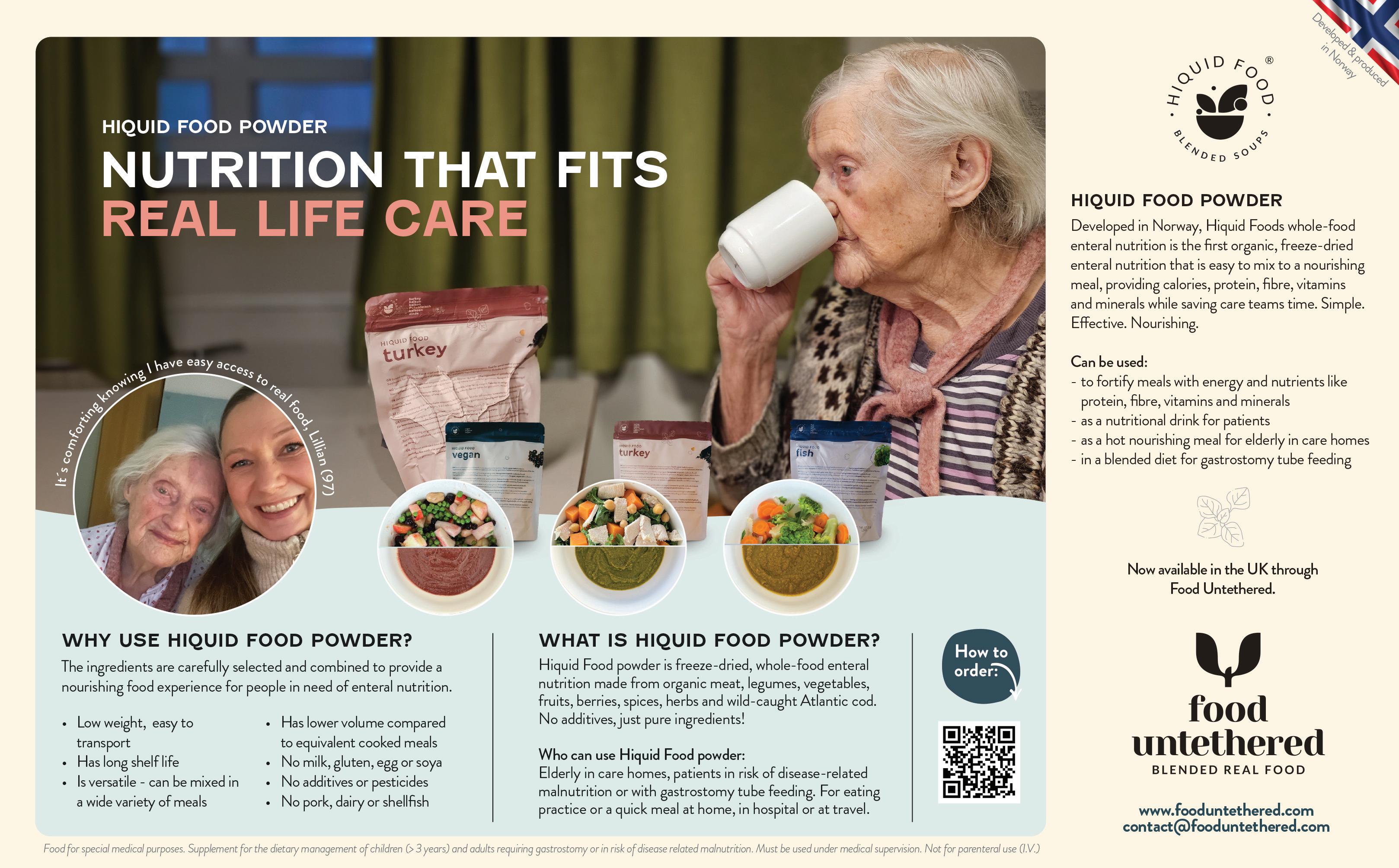
Fall Savers®, are an experienced market leading healthcare provider of resident safety solutions for over 15 years.
FALL SAVERS ® WIRELESS MONITOR
Eliminate all cables with our new generation falls management solutions!
Upgrade your falls programme with the latest technology from Fall Savers®. The NEW Fall Savers® Wireless eliminates the cord between the monitor and sensor pad. This results in less work for nursing staff, improved safety for patients and reduced wear and tear on sensor pads. Wireless advantages include the ability to use one monitor with two sensor pads simultaneously and support for many new wireless devices.
BENEFITS INCLUDE:
Safer for patients; less work for staff Bed and chair pads available

One monitor works with two sensor pads
Integrates with most nurse call systems A variety of options, including: Call button

NurseCall is definitely not a 'one size fits all' solution. If, like many Care Groups and Hospitals-both NHS and private-you utilise various NurseCall systems, you might find managing multiple systems a challenge. Many of our clients have voiced concerns about the increased time & costs associated with juggling different points of contact and contractors.
STREAMLINING MAINTENANCE FOR GREATER EFFICIENCY
Since our inception in 1984, we've committed to providing expert support across multiple NurseCall systems. Our engineers are thoroughly trained to handle diverse systems, ensuring you receive swift and comprehensive service, no matter the manufacturer.
EXTENSIVE INVENTORY AND INTEGRATION SOLUTIONS
We stock an extensive range of products from leading manufacturers and offer adaptable solutions

that integrate seamlessly with your existing frameworks. This approach not only simplifies maintenance but also enhances operational efficiency. YOUR PARTNER IN EFFECTIVE CARE
Your NurseCall system is vital, and we believe the challenges of maintaining it shouldn't hinder your operations. Our multi-manufacturer strategy streamlines complexities, benefiting both your team and the patients in your care.
Choose us to ensure smooth operations and peace of mind. Let's enhance the way you connect care with technology.
info@edisontelecom.co.uk www.edisontelecom.co.uk 01252 330220

In today’s complex care environment, we understand that choosing the right technology is about far more than functionality alone. For care providers, reliability, sustainability, and supply chain resilience are critical factors—especially when it comes to nurse call systems that play such a vital role in resident safety and day-to-day operations.
At Courtney Thorne, we are proud to champion the “Made in Britain” mark. For us, this is not simply about where our systems are manufactured; it reflects our commitment to quality, accountability, and supporting the UK care sector. By designing and building our nurse call systems here in Britain, we can ensure they are developed with a deep understanding of the real challenges faced by care homes, resulting in solutions that are practical, reliable, and easy to use.
Manufacturing in the UK also allows us to maintain close control over our supply chain—something that has become increasingly important in recent years. Global disruptions have highlighted the risks of relying on complex, overseas supply networks. By keeping our production local, we are able to offer greater consistency, shorter lead times, and improved access to parts and upgrades. This means our customers can rely on continuity, even in uncertain times, with minimal risk of disruption to their services.
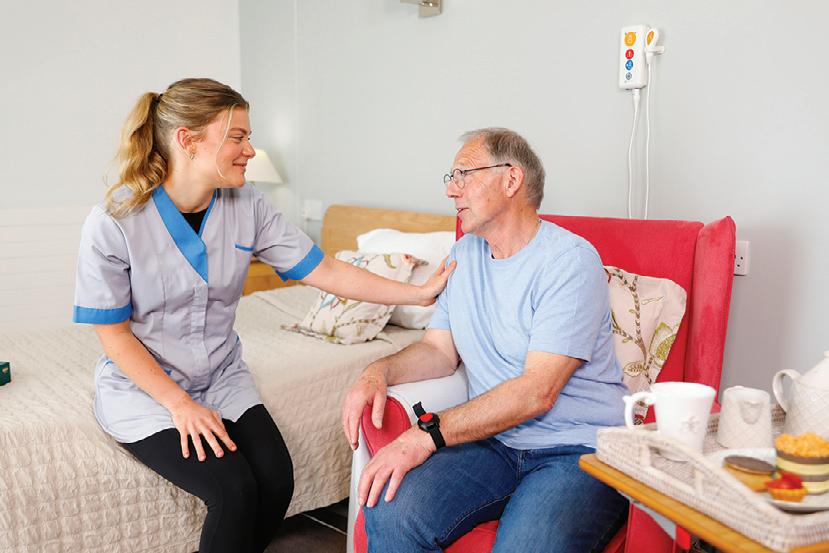
Sustainability is another area where we believe local manufacturing makes a meaningful difference. By reducing the need for long-distance transportation and focusing on robust, long-lasting system design, we help care providers lower their environmental impact. We are committed to creating solutions that not only meet today’s needs but are built to last—reducing waste and supporting more sustainable care environments over the long term.
Of course, delivering high-quality technology is only part of the picture. We know that ongoing support is essential. That’s why our UK-based technical team is on hand to provide expert assistance, from installation and training through to maintenance and rapid response when it matters most. Our proximity allows us to respond quickly and effectively, giving our customers the confidence that support is always within reach.
At Courtney Thorne, we believe that care homes deserve technology they can depend on—both now and in the future. By combining British manufacturing, sustainable practices, a resilient supply chain, and dedicated local support, we are proud to deliver nurse call systems that underpin safe, effective, and reliable care every day.
For more information or to book a free demo, visit www.c-t.co.uk or contact info@c-t.co.uk.
Falls are a significant concern for vulnerable individuals, especially seniors and patients at risk. Medpage, a leader in assistive technology, offers a range of cutting-edge products designed to enhance safety and provide peace of mind for caregivers and families. Here’s an in-depth look at some of their standout solutions: MPRCG1 (2023) BED LEAVING DETECTION ALARM WITH CAREGIVER RADIO PAGER
The MPRCG1 is a comprehensive system tailored for fall prevention in domestic, commercial, and NHS care settings. This all-inclusive kit includes a bed pressure mat sensor, a BTX21-MP alarm sensor transmitter, and an MP-PAG31 radio pager. The system is designed to alert caregivers when a patient leaves their bed, reducing the risk of falls.
HDKMB2 HOSPITAL DISCHARGE KIT FOR FALLS RISK PATIENTS
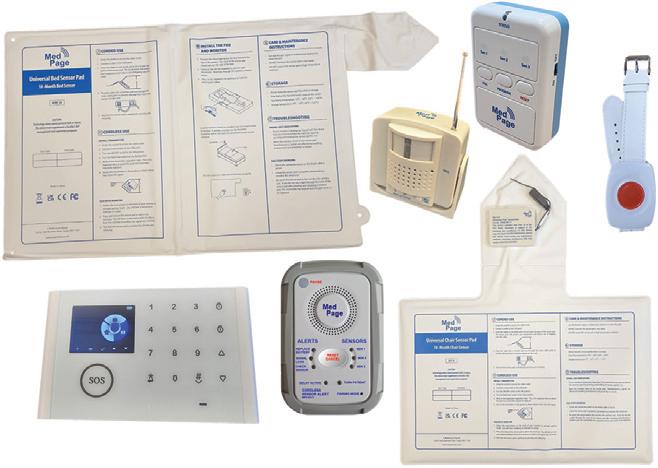
The HDKMB2 is a thoughtfully curated kit aimed at supporting patients transitioning from hospital to home care. It includes essential tools to mitigate fall risks and promote recovery. This kit is ideal for caregivers seeking a comprehensive solution to enhance patient safety during the critical post-discharge period.
CMEX-21 MULTI-PORT WIRELESS SENSOR INPUT EXPANDER FOR NURSE CALL CONNECTION
The CMEX-21 is Medpage’s latest innovation, designed to integrate seamlessly with existing nurse call systems. This multi-port expander allows for the connection of multiple wireless sensors, enhancing the monitoring capabilities of healthcare facilities. Its versatility makes it a valuable addition to any care environment, ensuring timely responses to patient needs.
RON-WC2 WATERPROOF DISABLED PULL CORD ALARM TRANSMITTER WITH WIRELESS ALARM RECEIVER
The RON-WC2 is a robust solution for disabled individuals requiring immediate assistance. This waterproof pull cord alarm is ideal for use in bathrooms and other high-risk areas. Paired with a wireless alarm receiver, it ensures that help is just a pull away. For more information, visit Medpage’s official website or contact their team to explore these products further. Safety starts with the right tools, and Medpage delivers just that. www.easylinkuk.co.uk or T: 01536 264 869 See the advert on page 15 for more information.
By Ashleigh Dueker, Programme Director, Care Intelligence,

As we welcome longer days and the promise of spring, it’s tempting to assume that pressures on the NHS will naturally ease - that warmer weather, seasonal reprieve and the slow thaw after winter will allow waiting lists to shrink and give A&E services the opportunity to breathe again.
But the real challenge facing the NHS isn’t seasonal. It’s systemic. Every year, the health service finds itself managing queues: queues in A&E, queues for treatment, queues for beds. Much of the conversation quite rightly focuses on how to move people through the system fasterimproving discharge processes, increasing capacity or accelerating clinical decision-making.
But there is also a crucial opportunity further upstream. If we want to relieve pressure on the NHS in a lasting way, we need to look beyond how the system manages queues and start asking how those queues form in the first place. And often, the earliest chances to prevent pressure on hospitals lie within social care itself.
Too often, social care is on the back foot. Care homes and community services have historically recorded what happened rather than what might happen. Paper records, fragmented systems and siloed insight mean risks are spotted only after they materialise - a fall, an infection, a deterioration
in hydration or mobility. For older people, these events don’t just reduce quality of life - they are among the leading causes of emergency hospital admissions.
It doesn’t have to be this way. We are entering a new era in which intelligence - not just data - becomes the engine of care delivery. At Person Centred Software (PCS), our Connected Care ecosystem has long digitised core care workflows, from planning to medication management. Every one of these interactions feeds into a unified data layer. On its own, it’s a record. But when we harness that data into intelligence - especially predictive intelligence - it becomes forethought rather than hindsight.
Spring relief won’t fix the NHS queue - intelligence will
That’s the purpose of IQ, our care intelligence platform now available to care homes across the UK. With the largest structured social care dataset in the country, IQ doesn’t just show what has happened, it reveals what’s likely to happen next.
This isn’t futuristic conjecture. IQ already enables anonymised benchmarking, so managers can see how their home compares with similar services on key indicators such as falls, hydration, wounds, happiness levels and more. This sector-wide perspective moves homes from isolated decision-making to shared learning, and from reactive fixes to strategic improvement.
More importantly, the next stage of IQ is predictive: using patterns drawn from billions of data points to flag when risk is rising - often days or even weeks before an incident occurs. Whether it’s an unusual shift in weight, subtle changes in mobility or early markers of dehydration, predictive insight turns these signals into actionable alerts for care teams.
For the NHS, this approach matters. Predictive insight gives social care teams the tools to intervene early, reduce avoidable hospital admissions and also creates greater confidence in safe discharge pathways.
Evidence from pilot work across the health and care landscape shows that digital technology does indeed reduce unplanned acute care usage and costs when used effectively. Integrated data and communication between care homes and NHS community services contribute to earlier detection of deterioration, better joint decision-making and fewer emergency department attendances.
But this isn’t just about efficiency. It’s about dignity, safety and quality of life for older people and their families - the very outcomes at the heart of our healthcare and social care system.
A SEASONAL OPPORTUNITY - NOT A SEASONAL FIX
Spring should be more than a symbolic break in demand. It should be a catalyst for lasting change: an opportunity to invest in the intelligence that supports both social care and the NHS. We cannot afford to wait until next winter to ask the same questions and confront the same problems.
If we harness predictive insight now - to anticipate risk, prevent harm and reduce avoidable admissions - we not only ease seasonal pressures but transform the fabric of care delivery itself.
In the end, the real queue isn’t a list of people in beds. It’s the queue of untapped intelligence waiting to unlock a safer, smarter and more humane approach to care - one that works for receivers of care, care teams and for the NHS alike.
Running a care home today means balancing highquality care with the smooth operation of a wide range of essential systems. From laundry and dishwashing to television services, WiFi and connectivity,
these functions play a critical role in compliance as well as resident wellbeing. They also underpin the day-to-day experience of both residents and staff.
In many homes, these systems are supplied and maintained by multiple providers. Whilst this is often the norm, it can create unnecessary complexity. When issues arise, dealing with different service teams, contracts and response times can slow resolution and increase pressure on staff.
Forbes Professional works with care homes to simplify this.
By delivering commercial laundry, dishwashing, IPTV, healthcare TV and networking infrastructure as a single, connected solution, providers benefit from one point of contact, streamlined servicing and clear accountability. This reduces operational friction and allows teams to focus on delivering care rather than managing suppliers.
In any care environment, reliability is critical. Equipment must support strict hygiene and safety standards, with oversight from the Care Quality Commission and requirements such as WRAS. Professionally specified and maintained systems help ensure consistent infection control processes and minimise the risk of downtime.
At the same time, expectations around technology continue to grow. Residents increasingly value the ability to stay connected, access information and

enjoy entertainment through modern TV systems, signage solutions and reliable WiFi. For staff, dependable infrastructure supports smoother day-to-day operations.
Bringing these systems together creates a more stable, efficient environment. Instead of managing multiple suppliers, care homes can take a more integrated approach; improving performance, maintaining compliance and enhancing the overall experience.
Forbes Professional provides a practical, joined-up solution for care homes looking to simplify operations without compromising on quality.
Visit www.forbespro.co.uk or see the advert on page 11.
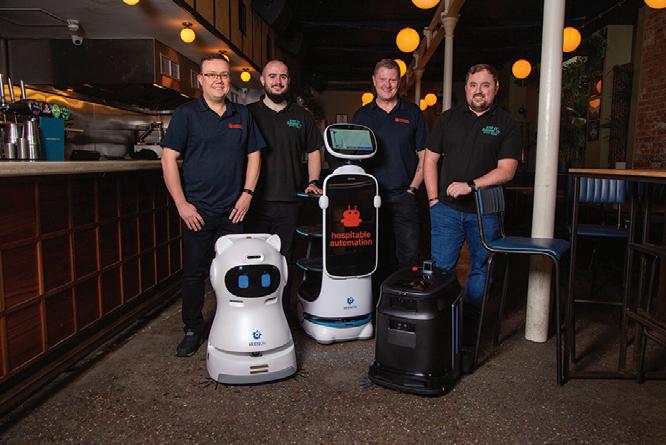

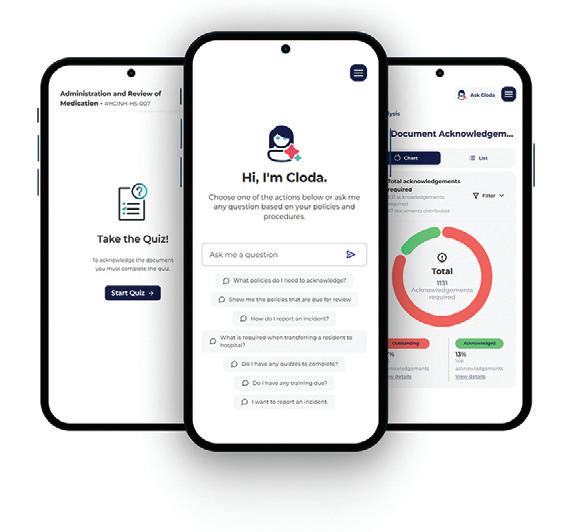
Care staff often need the right guidance immediately. Whether responding to a safeguarding concern, managing a medication issue, or dealing with a clinical incident, the ability to access the correct procedure quickly can be critical to both resident safety and staff confidence.
Cloda is an AI assistant providing care staff with the answers they need from their organisation’s policies and procedures. Staff simply ask a question — for example, “There has been a safeguarding concern, what should I do?” — and Cloda immediately provides the relevant guidance from the organisation’s own approved policies.
By making procedures accessible in seconds, Cloda helps ensure that policies are not simply documents stored on a system, but practical guidance that staff can use in real situations. This supports organisations in
embedding policies into everyday practice while strengthening compliance with Care Quality Commission (CQC) standards.
CQC inspections increasingly focus not only on whether policies exist, but whether staff understand them and apply them consistently in practice. Providing staff with immediate access to the correct guidance helps reinforce safe decision-making and supports organisations in demonstrating that policies are actively used across the service.
One of the most notable insights from Cloda deployments across social care services is the level of engagement from frontline staff. In many services, user adoption exceeds 80%, reflecting the fact that staff find the system simple and genuinely helpful in their day-to-day work. Cloda is like an additional team member, a reliable source of guidance that is always up to date, and available at the point of care.
Soon, Cloda will expand into a fully AI-enhanced Quality Management System with functionality for training, incident management, risk management, internal audit and compliance insights. By bringing these functions together in one system — and enhancing them with AI — providers can streamline quality management processes while improving visibility across their services.
The platform has been developed by HCI, an organisation with more
than 20 years’ experience supporting international health and social care providers with quality, governance and compliance solutions. Over the past two decades, HCI has worked with healthcare organisations across multiple jurisdictions to strengthen regulatory readiness and improve the management of quality and safety processes.
This experience has shaped the design of Cloda and its wider quality management framework, ensuring that the technology supports the realities of frontline care while also providing the governance tools organisations need to maintain compliance.
As care providers continue to face increasing regulatory expectations, workforce pressures and rising complexity in care delivery, digital tools that support both frontline staff and organisational governance are becoming increasingly important.
By combining instant access to guidance for staff with AI-enhanced quality management tools for organisations, Cloda helps care providers embed policies into practice, strengthen CQC compliance and ultimately support safer, more consistent care.
Cloda will be exhibiting at Care Show London — visit us at Stand H47 to see how Cloda works in practice. Learn more about Cloda at www.cloda.ai or contact info@cloda.ai.

Technology is becoming a routine part of residential care.
From sensors and monitoring systems to digital care records, these tools can support safer and more responsive care. At the same time, they raise questions about consent, privacy and how care is experienced by both residents and staff.
These themes were reflected in recent discussions hosted by the Digital Care Hub, which explored how technology is being used in practice across the sector.
Understanding and explaining technology
One of the challenges raised was how well people understand the technology around them. In some cases, particularly for people living with dementia or cognitive impairment, this understanding may be limited.
As one frontline care worker described, a person drawing on care believed systems were there so others could “spy on him”.
This highlights the importance of how technology is introduced and discussed. Understanding may change over time, and people’s responses are not always predictable.
Consent, not duress
Consent was a central theme. The discussions pointed to the importance of consent, not duress, particularly in a system under pressure. As one speaker highlighted: “Choice is meaningful only if a person can say no without losing their right to basic care.”
This raises questions about how real choice is experienced in practice. Where options are limited, or technology becomes part of a default offer, consent may be more complex than it first appears.
Impact on staff and culture
The use of monitoring also has implications for staff. In residential settings, oversight is familiar, but increased monitoring can change how care workers experience their role.
Some described feeling observed or questioned on small aspects of their work, particularly where families can see detailed records. This can influence how care is recorded and how relationships develop between staff, families and residents.
Supporting independence without replacing care
Technology was also discussed as a way of supporting independence. In some situations, monitoring can reduce the need for constant supervision and allow people more flexibility.
At the same time, there were concerns about how technology is used in a stretched system. One speaker highlighted the risk of pressure to “put more tech in to replace the shortage of carers”.
Robots vs Carers
Digital Care Hub’s next webinar is on Robots Vs Carers: are we really replacing care workers? 31 March 2026
Find out more at www.digitalcarehub.co.uk/digital-care-in-focus/ difficult-conversations-about-data-and-tech/
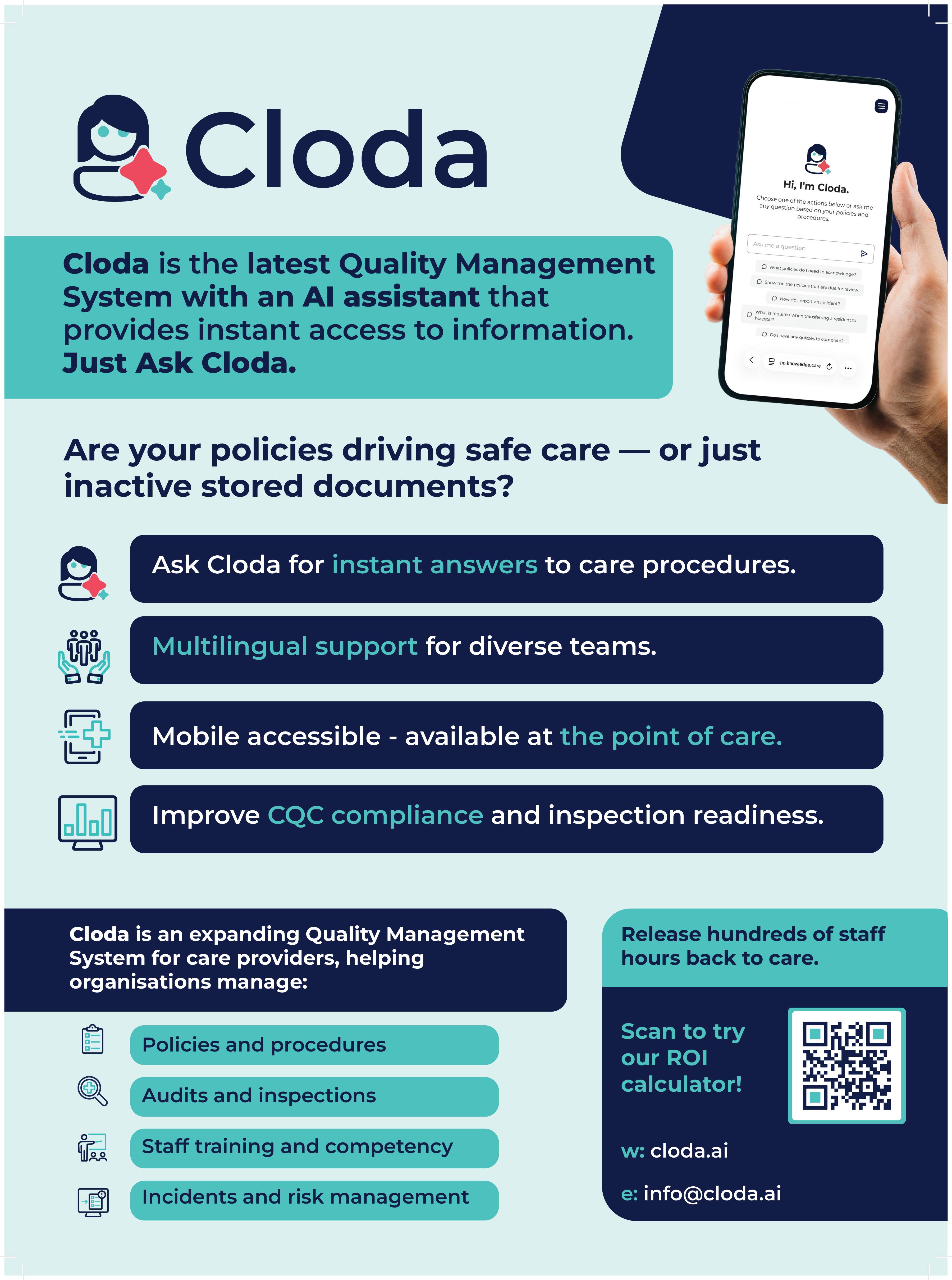
Ready-to-use activity products designed to support meaningful engagement in everyday life.
Everything you need to inspire connection, stimulation and wellbeing
CREATIVE & SENSORY ACTIVITIES
Art, craft and sensory products designed to engage, calm and inspire. COGNITIVE & REMINISCENCE
Memory-based activities and conversation starters that encourage connection. GAMES & GROUP ACTIVITIES
Inclusive games and group activities suitable for a wide range of abilities. ONE-TO-ONE & MEANINGFUL ENGAGEMENT
Personalised activity products that support wellbeing and individual needs. Thoughtfully selected to be accessible, inclusive and easy to use in busy care environments.
Explore our full activity range -
CareZips® Classic are patented, easy dressing unisex adaptive pants designed for older and disabled people suffering with problems associated with continence, mobility, mental function and cognition. Suitable for persons living in care institutions, receiving care at home or living independently at home, CareZips® Classic enable people to dress themselves or with assistance from carers.
CareZips® Classic feature patented 3-zipper system, which opens the front of the pants from the waist to the knees for quicker access during toileting, continence pads changes and personal hygiene. The forward positioning of the two side zippers lessens pressure on sensitive hip areas, helping to eliminate discomfort. The third zipper facilitates simple full frontal opening for faster more dignified diaper changes, catheter adjustments, personal cleansing and hygiene routines.

cal functionality and versatility of the CareZips® Classic, all day comfort and easy garment care.
• People dependent on assisted dressing appreciate quick easy dressing process with less stress, embarrassment and greater dignity offered by CareZips® Classic.
• CareZips® Classic offer practical gains to the carers, helping them to provide better care, whilst reducing physical efforts and saving valuable time.
CareZips® Classic are unisex, available in 6 sizes and 3 practical colours (i.e. black, charcoal and navy). Tapered fit at the ankles gives a tidy appearance. Made from breathable moisture-wicking 4-way stretchy crease-free and easy-care durable fabric, CareZips® Classic are comfortable, practical and conveniently functional.
For more information, contact Win Health Medical Ltd - 01835 864866www.win-health.com
CareZips® Classic have many benefits for the older and disabled users and their carers:
• People dressing themselves enjoy the practi-
See the advert on page 3 for further information on Win Health’s product range.


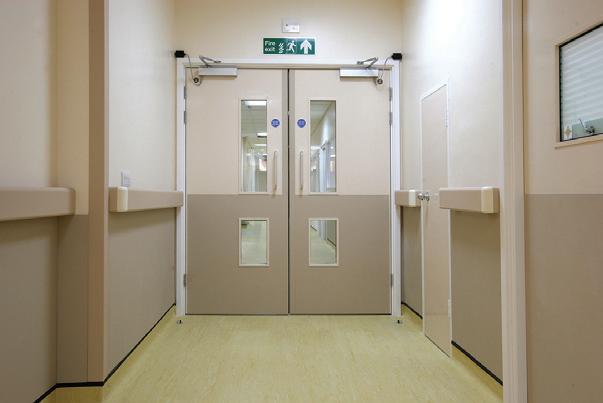
the well-being of patients and
EDGE Services is one of the leading providers of people handling training in the UK today.
EDGE will train you to deliver moving and handling, dementia care, and challenging behaviour courses to your colleagues, providing you with the resources, techniques, and skills to make a real difference to the health and safety of both your colleagues and your clients. Our courses:

People Handling and Risk Assessment Key Trainer's certificate (4 consecutive days, includes a written assignment)
Children Handling and Risk Assessment Key Trainer's certificate (4 consecutive days, includes a written assignment)
People Handling and Risk Assessment Key Trainer's certificate Refresher/Update (2 consecutive days)
• Children Handling and Risk Assessment Key Trainer's certificate Refresher/Update (2 consecutive days) Understanding and Managing Behaviour that Challenges Key Trainer's certificate (2 consecutive days)
Dementia Care Key Trainer's certificate (2 consecutive days)
Our Key Trainer's certificate lasts for 2 years. Delegates are then given a 3-month grace period to renew their training though we don’t recommend they deliver any training during this interim period.
EDGE understands that the continued success of the company is down to us consistently providing highquality training that is received well by those attending the event and by those procuring it. We are committed to ensuring this success continues.
There’s a lot that makes EDGE different from your average training provider:
Healthcare Professionals: All EDGE trainers are nurses, occupational therapists or physiotherapists with over ten years’ clinical experience.
Fully Accredited: All our’ People/Children Handling and Risk Assessment Key Trainer’s Certificate’ courses are accredited by RoSPA Qualifications to Level 4 or Advanced Level 4. They are recognised for providing continuous professional development by the CPD Certification Service.
Compliance with Professional Training Standards: All EDGE Manual Handling ‘Key Trainer’ events comply with the National Back Exchange Training Standards (2010); The All Wales NHS Manual Handling Training Passport and Information Scheme (2010); and The Scottish Manual Handling Passport Scheme (2014).
• Invaluable Training Resources: All delegates are given a fully illustrated and comprehensive textbook; professionally printed and produced by EDGE. Plus, proposed documents to assist and support in onward training delivery. These include course agendas, hand-outs, Power-Point slides, filmed practical techniques and tips for staff training and assessing.
Online Resources Library and E-Learning: Our Manual Handling ‘Key Trainer’ training is supported by an extensive, informative online resources library offering use of an exclusive e-learning module plus additional training tips and tools to develop and enhance onward training.
EDGE offers both public courses and in-house courses, the dates for which can be found on our website: https://edgeservices.co.uk
Alternatively, call: 01904 677853 or e-mail: enquiries@edgeservices.co.uk to see how EDGE Services can help you.
Care homes today face increasing pressure to deliver high-quality, safe and effective care—while managing limited time, budgets and workforce capacity. Traditional training methods often struggle to engage staff or translate learning into everyday practice.
Serious games are changing that.
By combining evidence-based learning with interactive, scenario-driven gameplay, serious games enable staff to learn by doing. Teams work together to solve realistic challenges, strengthening communication, decision-making and confidence in a safe environment. This directly supports key CQC priorities across Safe, Effective and Well-led domains.
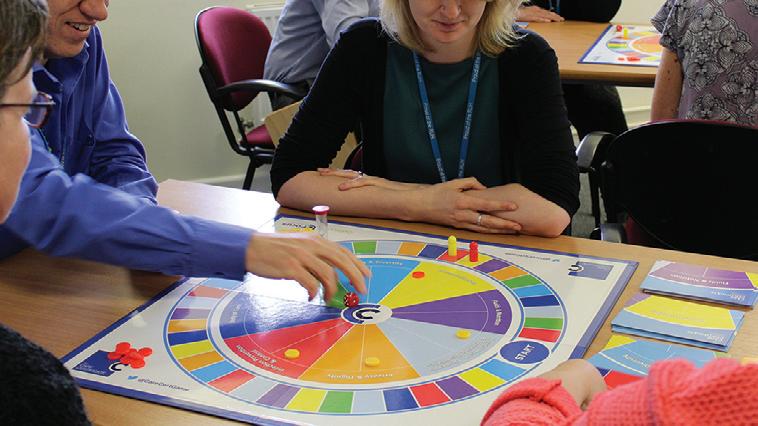
Research shows that simulation and game-based learning improves knowledge retention, teamwork and patient safety outcomes (Aggarwal et al., 2010; Health Education England, 2016). Crucially, it also promotes peer learning and reflection—helping teams share experiences and embed best practice across the service.
Focus Games has been at the forefront of this approach, offering a wide range of care home–focused
board games, card games and digital learning via the ZeST platform. Covering topics such as infection prevention, nutrition, safeguarding and communication, these resources are designed specifically for health and social care settings.
✔ Engage staff through interactive, team-based learning
✔ Reinforce real-world skills through practical scenarios
✔ Deliver cost-effective training at scale
✔ Support inspection readiness and continuous improvement
Flexible and easy to facilitate, Focus Games’ resources can be used across induction, mandatory training and ongoing CPD, either face-to-face or digitally. At a time when care providers must do more with less, serious games offer a proven, practical and engaging solution—turning training into meaningful improvements in care delivery.
Ready to get started? Take the first step with
Working in social care is demanding. It is one of the most heavily regulated yet underfunded sectors, with providers expected to comply with regulations, meet Quality Statements, follow good practice guidance, respond to local authority monitoring, and operate under constant scrutiny.
Regulation itself isn’t the problem — it protects people and improves standards. The challenge is capacity. Larger organisations may have in-house quality assurance teams, but smaller providers rarely have the time or budget to review compliance in depth. Many owners and managers tell us they feel overwhelmed and unsure how well their service is really performing, especially since the introduction of the Single Assessment Framework.
For many, confidence in compliance is the number one concern — not because standards are poor, but because there simply isn’t time to step back and take a full, objective view.
CAN AN EXTERNAL AUDIT HELP?
In short, yes — when it’s done properly. A high-quality external audit provides:
• A clear snapshot of current performance
• Identification of good practice and priority risks


• Evidence to support action plans and improvement journeys
• Demonstration of good governance and continuous improvement — a key CQC
• Reassurance for owners, directors, and managers
W&P have supported health and social care providers for nearly 25 years, completing hundreds of audits across a wide range of services. This experience gives us deep insight into what regulators look for — and what genuinely improves outcomes. Our audits are supportive, non-judgmental, and practical. They typically include around six hours on-site, followed by a detailed report that links evidence to regulations and Quality Statements. Reports also include clear guidance, tips, and sources to help you respond confidently.
Every audit is tailored to your needs — whether that’s safeguarding, medication management, or overall governance — ensuring it is truly fit for purpose.
If you would like to know more, then please contact us on audits@wandptrainng.co.uk or call 01305
767104 for a no-obligation chat on how our audits can help you. See the advert on page 2 for details.
A nationwide charity that helps people rebuild their lives has appointed leading training provider Realise to develop new team leaders through apprenticeships.
Book Now for 2026
Change Grow Live, which provides free treatment, support and information about drug and alcohol use, homelessness, justice and probation and employment, will offer a progression route through Health and Social Care apprenticeships with Realise.

There will be 200 learners supported through their first programme initially, with scope for this to grow much further as more apprenticeship courses are introduced to the partnership.
Alexandra Bode-Tunji, Chief People Officer at Change Grow Live, said the charity had partnered with Realise to allow colleagues to grow both professionally and personally.
“This marks the beginning of an important chapter where our people will have the opportunity to develop the skills and knowledge needed to succeed in their roles and beyond,” said Alexandra.
“Our people are at the heart of the impact we create. When we invest in training and development, we’re investing in safer services, better outcomes, higher quality interactions and greater stability across our workforce.”
Alexandra said Change Grow Live had appointed Realise as the provider had taken the time to understand the charity’s mission and values.


She added: “Their approach wasn’t about offering a generic solution, it was about designing something that responded directly to our needs, whether that’s supporting Recovery Workers or creating progression routes that strengthen our future talent.”
Angela Kaine, Director of Health & Social Care at Realise, said the partnership would help build new employment and career pathways and make Change Grow Live a place where people can thrive.
She said: “Change Grow Live does fantastic work to help people in a variety of different circumstances and has grown into a huge operation with more than 5,000 employees and 150 services.
“We understand the complexity of their organisation and have formulated a bespoke plan which will help build clear pathways, strengthening their ability to attract, grow and retain great people.
“We look forward to working with Change Grow Live and building a long-term collaboration, adapting to the needs of their services and supporting their people throughout.”
Realise works with many large care operators and social care providers, offering an array of apprenticeships, including the Level 3 Senior Healthcare Support Work Apprenticeship and the Level 5 Leader in Adult care Apprenticeship.
For more information, visit www.realisetraining.com

By Martin Lowthian, Risk, Quality and

Ask most care providers what their risk register is for, and the answer will be some version of the same thing: staying compliant, preparing for inspection, avoiding regulatory action. Those are all valid reasons. But if that is all your risk register is doing, you are leaving significant value on the table.
Good risk management is not a defensive exercise. Done properly, it is one of the most powerful tools a care business has for sustainable growth. Providers who understand this are not just better protected, they are better positioned to win contracts, scale their services, and attract staff.
Operational risk gets most of the attention. Safe recruitment, medication management, care delivery and safeguarding are all are critical areas, and they absolutely belong in your register. But there is another category that rarely gets the same rigour: opportunity risk.
Consider how many providers miss a tender because their evidence is not in order. Enquiries that are not converted, clients who choose a competitor, care workers with specialist skills you cannot recruit because your onboarding process is not fit for purpose. Each of these is a risk with a measurable impact on your business. Your risk register should capture all of it.
One of the most common patterns in care organisations is a business that has grown quickly but has not
grown its infrastructure at the same pace. Ask yourself: if you disappeared for two weeks, what would happen? If the answer involves significant disruption, that is a risk worth documenting and addressing now.
Many providers manage their risk registers in spreadsheets, but as organisations grow, paper-based processes create real problems. Controls that were accurate six months ago are presented as current assurance. Actions that were never completed sit on the register without anyone being held to account. This is not risk management; it is risk documentation.
Digital tools designed specifically for care governance, such as Access Care Compliance, allow providers to track risks, controls, and actions in one place, map them against regulatory frameworks, and evidence progress in real time.
There is also a direct commercial argument. Insurers respond well to providers who can demonstrate a structured, evidenced risk management framework, and in my experience, it can reduce your premiums. Commissioners are increasingly sophisticated in evaluating tender responses. A provider who can point to documented controls and clear accountability stands out.
Honest risk management requires a particular mindset. Approach your register as if you are looking for problems, not confirming that everything is fine. Providers who get the most value from their risk registers use them as a genuine growth tool, asking uncomfortable questions about where the gaps are.
Risk management, done properly, is not an add-on. It is how well-run, high-quality care businesses grow and thrive.
For more information about risk management or Access Care Compliance, please contact Martin at martin.lowthian@theaccessgroup.com

23 years, operating 4 Devon Nursing homes, has been pretty tough, as anyone in social care, knows, only too well. And if it was hard already, after 2024 budget, it's just got harder.
Anyway, at heart, I am just customer of Eden Alternative, and it was a stroke of luck to come across this whilst on holiday in New Zealand in 2009. It started in USA in 1994 and now runs in 22 countries.
The fact that I am now involved with this not-for-profit organisation (in the UK area) came about when one of the 2 main UK directors died suddenly just before Covid. But it's something I have run with for 11 years to help make 'vision' a reality, not a struggle. So, being both a customer and helping the admin seems quite natural.
It is a modern philosophy of care, but moreover, it's a programme that is straight forward, tried and tested for 30 years and really works. Its member care organisations generally become trainers for their own teams, and run it themselves.
The programme is run in person over 2-3 days or online 1 hr a wk

for 7 weeks. You choose.
It addresses loneliness, helplessness and boredom and operates through 10 principles to underpin 7 critical domains of wellbeing. Moreover, it's effective, transformational and really works. As residents, and team members wellbeing, matter so much , it's a must, in my opinion.
Geoffrey Cox Southernhealthcare.co.uk eden-alternative.co.uk

By Sara-Michelle Colvin, Senior Associate

The UK care sector is currently facing one of the toughest periods of immigration related enforcement it has ever experienced. Recent Home Office figures reveal the scale of the shift: from July 2024 to June 2025, 1,948 sponsor licences were revoked – more than double the 937 revoked the year before, and dramatically higher than the 261 and 247 revocations issued in 2021–22 and 2022–23.
The Home Office continues to identify recurring weaknesses across parts of the sector, including:
• underpayment of sponsored workers mismatches between the job roles listed on Certificates of Sponsorship and the duties carried out attempts to use sponsorship as a means of bypassing immigration controls roles that do not constitute genuine vacancies the increased vulnerability of migrant workers who are tied to their sponsoring employer.
Given the sector’s reliance on overseas recruitment and long standing staffing challenges, adult social care remains a central focus for enforcement activity.
A move toward digital, intelligence led monitoring
As part of this intensified scrutiny, the Home Office has largely replaced onsite compliance visits with a more sophisticated, data driven approach. Increasing integration of HMRC/PAYE information, Sponsorship Management System activity and other government intelligence allows caseworkers to highlight concerns quickly and with
greater accuracy.
This desk based model is supported by enhanced analytical tools –including AI – which provide faster processing and more reliable detection of anomalies or patterns of non compliance.
The government has also adopted a far more uncompromising approach to compliance failings. Issues previously regarded as technical or low level – late sponsor notifications, incomplete HR files, inconsistent Right to Work checks, or weak absence management – can now lead to immediate suspension or even revocation.
These stricter consequences sit alongside wider efforts to combat illegal working. Civil penalties now reach £45,000 for a first breach and £60,000 for subsequent breaches, and enforcement activity increased sharply in 2025 thanks to expanded capacity and automated systems.
In recent months, many care providers have been contacted unexpectedly by the Home Office seeking additional information, typically regarding pay. This stems from increased data sharing between HMRC and the Home Office, which is surfacing discrepancies that may point to reporting failures.
REQUESTS
When the Home Office issues a Request for Information, sponsors usually have 10 working days to respond. The volume of evidence required can be substantial, often needing input from multiple departments. A long standing concern among organisations is the need to send sensitive employee information without encryption, as the Home Office’s current systems are limited to email attachments and do not support secure alternatives.
SUSPENSION AND REVOCATION
Where the Home Office identifies breaches, it may take one of the following actions:
SUSPENSION
The licence may be suspended and the sponsor placed on an Action Plan.
A fee must be paid within 10 working days to accept the Action Plan.
• The Action Plan can run for up to three months, during which the sponsor must demonstrate significant improvement to regain full compliance.
• Failure to meet the required standard typically results in revocation. REVOCATION
In serious cases, the Home Office may bypass suspension and move directly to revocation – something officials have indicated is increasingly common.
• Before revoking, the Home Office issues a notice of intention, giving the sponsor 20 working days to make representations. Although the Home Office is expected to respond within a further 20 working days, delays are frequent.
In most cases, the outcome is ultimately revocation.
If revocation occurs, sponsored employees may continue working for 60 days from the date of their cancellation letter (or until their visa expiry date, if earlier). During this period, they must find a new sponsor or switch to another immigration route to remain lawfully in the UK. Revocation takes effect immediately for the organisation: it loses the ability to sponsor workers or assign Certificates of Sponsorship and cannot apply for a new licence for at least 12 months, a period that can be extended where civil penalties or criminal matters are involved. Legal challenges within the sector have centred on arguments relating to:
• risks to continuity of care for service users the impact on a business’s ability to operate and the effect on its domestic workforce the Home Office’s alleged failure to apply discretion or consider lesser sanctions.
STRENGTHENING COMPLIANCE IN A HIGH RISK ENVIRONMENT
In this climate, it is vital for care sector sponsors to adopt a proactive and rigorous compliance strategy. The rise in licence revocations, coupled with more sophisticated data monitoring and severe penalties for even minor breaches, demonstrates the Home Office’s determination to drive structural reform.
Organisations relying on sponsored workers must therefore ensure their HR systems, reporting procedures and governance arrangements are robust, transparent and consistently applied. Some groups are also exploring multi licence structures to spread risk across subsidiaries. Although revocation does not stop a business from trading, the operational disruption, staffing challenges and 12 month bar on reapplying can be highly damaging. Strong compliance is no longer a matter of good practice – it is essential for ensuring continuity of care, protecting vulnerable workers, and maintaining future access to skilled international labour.
Global assists clients throughout the U.K. who specialise in the healthcare sector to achieve their objectives of purchase, development and refinance.
We have organised over £1.8bn for clients in the past 30 years, providing clients with competitively priced funding to refinance existing debt, ease cashflow and develop businesses further.

From helping clients make their first purchase through to allowing groups to grow significantly in size
we assist at every stage of your business expansion. Every proposal is individual and deserves to be treated that way, so we hope you will allow us to be of assistance to you and call us to chat through your plans and requirements, I am sure we will be able to tailor a facility to your requirements. Call us on 01242 227172 or e-mail us at enquiries@globalbusinessfinance.net
By Becky Mundie, RotaCloud (https://rotacloud.com)

How much time do you spend on admin?
How long are you locked away in your office to make the rota, only having to go back again and again for amends? How often have you realised you’re understaffed, resulting in overspending on agency staff? How frequently do payroll errors, messy audit trails, and chasing staff who missed a shift update occur?
It’s constant, the stress of it all. It’s enough to carry the care of your service users on your shoulders without being overwhelmed every day by repetitive admin and errors. You never thought you’d be spending more time amending schedules, chasing for cover, and correcting issues than your actual job.
But those inefficiencies — staff shortages, payroll errors, missed shift updates, and multiple spreadsheets you juggle — cost you money, time, staff retention, and, in some cases, compliance.
It’s easy to suggest investing in budgeting tools or certain tech to help you understand spending before it happens and to automate certain processes. Budgets are tight in care, after all. But there are simple fixes to cut your operating costs without cutting back on care if you can’t yet turn to digital systems.
Cutting costs doesn’t just mean spending less. It’s about making smarter decisions – reacting to and fixing the cause of the problem, not the effect. And it all starts with your rota.
There are ways to take better care of your rota, which will, in turn, improve efficiency and staff morale. One main way: putting your staff first.
First, give your team more say in when they work by allowing them to submit their availability. Try making a rolling rota with a mix of most and least preferred shifts so everyone gets a fair share of them. It means far less admin for you when the rota repeats, far fewer last-minute amends, a more accurate payroll, an easier audit trail, and no more miscommunications on when everyone’s working.
Second. Share rotas at least two weeks in advance. Doing so allows enough time to make amends and for everyone affected to be updated. Sticking to this process is more efficient, which means less admin – which means more time to focus on service users.
Third. Put in a more seamless process for holiday requests. Whether a submitted form or limiting to one means of messaging, sticking to one process means fewer lost or forgotten requests and much less paperwork. Plus, allow staff to arrange shift swaps themselves, leaving managers to simply approve or deny. Again, less time on admin means more time for service users.
All in all, your saviour is flexibility. Flexibility in rotas means less admin for managers, more efficient teams and safe staffing levels, happier staff (and higher retention rates), and, in return, happier service users – all saving costs in the process. After all, when you aren’t making last-minute changes or relying on agency staff to cover no-shows, you stick to the staffing levels and labour budgets you’ve forecast. So long, overspending, lost time, and inefficient processes.
See the back cover of this issue for more information on Rotacloud.