FOR NURSING AND RESIDENTIAL CARE HOMES
W W W. T H E C A R E R U K . C O M
WE NOW SUPPLY A WIDE RANGE OF FURNITURE
THECARERUK
THECARERUK
THECARER_UK
Issue 267
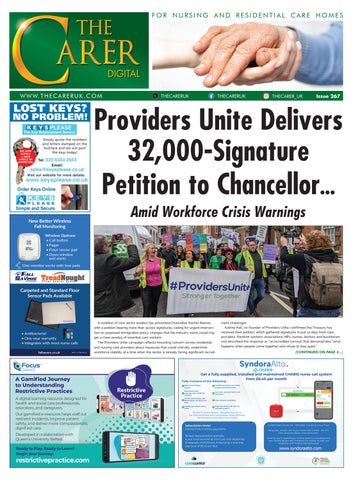
Providers Unite Delivers 32,000-Signature Petition to Chancellor... Amid Workforce Crisis Warnings
A coalition of care sector leaders has presented Chancellor Rachel Reeves with a petition bearing more than 32,000 signatures, calling for urgent intervention on proposed immigration policy changes that the industry warns could trigger a mass exodus of essential care workers. The Providers Unite campaign reflects mounting concern across residential and nursing care providers about measures that could critically undermine workforce stability at a time when the sector is already facing significant recruit-
ment challenges. Katrina Hall, co-founder of Providers Unite, confirmed the Treasury has received their petition, which gathered signatures in just 12 days from care providers, frontline workers, associations, MPs, nurses, doctors and businesses and described the response as "an incredible turnout" that demonstrates "what happens when people come together and refuse to stay quiet."
(CONTINUED ON PAGE 3...)
PAGE 2 | THE CARER DIGITAL | ISSUE 267
EDITOR'S VIEWPOINT
Welcome to the latest edition of The Carer Digital! A SECTOR UNITED CANNOT BE IGNORED
also means ensuring that vulnerable people continue to receive the care they need. Right now, those two objectives seem to be on a collision course. Here's the thing: it's never too late to say "we have got this wrong". People respect honesty and pragmatism far more than stubbornness. Given the many united voices warning of an impending crisis, the government must heed those warnings and rethink its approach. This isn't about political pointscoring; it's about care homes staying open, residents receiving dignified support, and workers being treated fairly. The delivery of this 32,000-strong petition to the Treasury is a milestone, but it Here at The Carer, we have been delighted to support cannot be the end of the conversation. Care providers, care workers, associations, the Providers Unite campaign from its very beginning. MPs, nurses, doctors, and businesses have all spoken as one. That unity is powerful, And when their 32,378 signature petition lands on the Editor Chancellor's desk it will speak volumes about the depth of and it demands a meaningful response. On a lighter note, as we approach Christmas, we are receiving some fantastic fesconcern rippling through our sector. This isn't noise for tive stories from noise's sake; this is a united voice demanding to be heard. homes across the I was at the first protest in February this year, standing country. alongside care providers who were already raising alarm bells about the direction The spirit and of travel. creativity in our I attended the second protest in my home city of Liverpool, and since then, we sector never have reported extensively on the many initiatives, comments, and actions this organisation has undertaken. The momentum has been building steadily, and rightly cease to inspire. We have also so. Just last Friday, December 12th, I attended one of Providers Unite's seminars. The launched our Christmas Tree topic was recruitment and the impact of the government's visa policy, and the competition— mood in the room was stark. nothing compliCare home operators and organisations from across the UK shared their expericated, just send us ences, their frustrations, and their very real fears about what lies ahead. The cona photo of your sensus was clear: we are facing a staffing crisis, and the new immigration See details of our Christmas tree restrictions are only accelerating it. special Christmas with some short The changes are substantial. Under the government's 'A Fairer Pathway to comments about competition on Settlement', workers arriving on Health and Care Worker visas in lower-paid roles its decoration, and will now wait 15 years, not five, before becoming eligible for indefinite leave to page 13 we will pick a winremain. ner! It's a small Add to this the elevated salary requirements and tighter overseas recruitment reminder that even in challenging times, there is joy to be found and celebrated. controls set for July 2025, and you have a policy that risks pulling the rug out from But let's not lose sight of the bigger picture. The care sector is speaking with one under an already fragile workforce. voice, and it's time for decision-makers to listen. Why this wasn't phased in is anyone's guess. The lack of transition time has left I would encourage our readers to sign up for our bi-weekly digital newsletter at providers scrambling, unable to plan effectively or fill gaps that are widening by the www.thecareruk.com and follow us on social media for all the latest news. day. I can always be contacted at editor@thecareruk.com We understand that immigration policy needs to be sustainable, but sustainability
Peter Adams
WIN a £100 Marks & Spencer Voucher this Christmas
The Carer is published by RBC Publishing Ltd, 3 Carlton Mount, 2 Cranborne Road, Bournemouth, Dorset BH2 5BR. Contributions are welcome for consideration, however, no responsibility will be accepted for loss or damage. Views expressed within this publication are not necessarily those of the publisher or the editorial team. Whilst every care is taken when compiling this publication to ensure accuracy, the publisher will assume no responsibility for any effects, errors or omissions therefrom. All rights reserved, reproduction is forbidden unless written permission is obtained. All material is assumed copyright free unless otherwise advised.
PUBLISHED BY RBC Publishing Ltd 3 Carlton Mount 2 Cranborne Road Bournemouth Dorset BH2 5BR
TELEPHONE:
01202 552333 EMAIL:
sales@thecareruk.com WEBSITE:
www.thecareruk.com EDITOR Peter Adams editor@thecareruk.com
SALES DIRECTOR David Bartlett dave@thecareruk.com
PRODUCTION & DESIGN Matthew Noades PRODUCTION & WEB ADMIN Charlene Fox Published by
THE CARER DIGITAL | ISSUE 267 | PAGE 3
Providers Unite Delivers 32,000Signature Petition to Chancellor (CONTINUED FROM FRONT COVER) Katrina Hall continued, "Care providers. Care workers. Associations. MPs. Nurses. Doctors. Businesses—One letter! One message! One united sector," Hall wrote on LinkedIn. "This wasn't one person's effort, it was a collective push, and you should all be proud of what we've achieved."
FIFTEEN-YEAR WAIT FOR SETTLEMENT The petition challenges government proposals outlined in 'A Fairer Pathway to Settlement', which would dramatically extend the timeline for Health and Care Worker visa holders in lower-paid roles to achieve indefinite leave to remain—from five years to a staggering 15 years. The changes form part of sweeping immigration reforms including elevated salary requirements and tighter restrictions on overseas recruitment for care positions, set to take effect from July 2025. During a seminar on 12 December attended by care home operators and organisations from across the UK—including THE CARER’s editor Peter Adams—providers voiced deep concerns about maintaining adequate staffing levels under the new regime. The event, hosted by Providers Unite founders Nadra Ahmed and Katrina Hall, highlighted widespread uncertainty about addressing potential workforce gaps. The government's immigration policy will have significant consequences for the care sector in the years ahead, according to its own official assessment released earlier this month and include:
MAIN POLICY CHANGES: • Immediate (July 2025): Closure of out-of-country applications for care workers (SOC codes 6135 and 6136) • Transition period until July 2028: In-country switching to care worker roles remains permitted • After July 2028: Complete restriction on new care worker visa applications
VOLUME IMPACTS: Out-of-country restrictions: • Approximately 7,000 fewer overseas care worker visas annually from 2025/26 onwards • This represents a 100% reduction in new overseas care worker recruitment
In-country restrictions (from 2028): • Additional 21,000 fewer care workers annually when in-country
switching ends • Combined impact: 28,000 fewer new joiners to the sector per year (approximately 4% of the workforce)
tional colleagues deserve clarity over their futures, not to be used as
CONTEXT AND MITIGATING FACTORS:
EXPLOITATION AND HARDSHIP
1.Recent decline already underway: Care worker visas have already fallen over 90% from their 2023 peak of 105,000 to around 7,000 currently 2. Replacement effects: The assessment estimates some migrants currently in other roles may switch to care work during the transition period, potentially offsetting short-term reductions 3. Displaced worker pool: Approximately 16,000 workers affected by recent sponsorship revocations remain available for redeployment 4. Workforce growth continues: Despite recent restrictions, the Adult Social Care workforce grew from 1,615,000 (2021/22) to 1,705,000 (2023/24)
political footballs by politicians and left unable to access state support despite working in public services and paying taxes." Without ILR, migrant nursing staff face significant constraints—their visas tie them to employers, which has led to exploitation particularly in social care. They also cannot access state support including child benefit and disability payments despite paying UK taxes, creating greater risk of financial hardship compared to UK-trained colleagues due to the "no recourse to public funds" condition. The RCN's research reveals profound distress among migrant staff: 53% are extremely concerned about financial security, 52% about family life impacts, and 49% about career implications. The College is calling for nursing staff to receive settled status on
GOVERNMENT SUPPORT MEASURES:
arrival, following the example of competitor nations such as New
• Fair Pay Agreement being introduced to make care jobs more attractive • Care Workforce Pathway: New universal career structure for progression • £12 million Learning and Development Support Scheme for training • Digital Care Workforce Pathway to support skills development • Skills Record digital platform for portable qualifications
Zealand and Canada. They're also urging the government to cut ILR
NURSING CRISIS LOOMS The alarm has been further amplified by stark research from the Royal College of Nursing, which warns that up to 50,000 migrant nursing staff could leave the UK if the government proceeds with plans to extend the qualifying period for Indefinite Leave to Remain (ILR) from five to 10 years. The RCN surveyed more than 5,000 migrant nursing staff, finding that 60% of those without ILR say the decision would "very likely" affect their choice to remain in the UK. Only 11% said they would have come to Britain had the route to settlement originally been 10 years. Professor Nicola Ranger, RCN General Secretary and Chief Executive, described the proposals as "a betrayal" of migrant nursing staff, many of whom arrived in 2020 to support the COVID-19 pandemic response. "This is no way to repay them," Professor Ranger said. "Our interna-
application fees, currently £3,029 per person—five times the estimated processing cost.
GOVERNMENT CONSULTATION AHEAD The Home Secretary is expected to announce fuller details and launch a consultation on the immigration measures imminently. While the government maintains the reforms aim to create a more sustainable immigration system, industry representatives continue pressing for reconsideration. "These proposals are not just immoral; they would be dangerous for our patients," Professor Ranger warned. "No minister who has any interest in the success of our health and social care system would press ahead with extending the qualifying period for ILR. "If the government continues to show nursing staff they aren't welcome here, they shouldn't be surprised when they decide to leave. The proposed changes make their reforms to the NHS less likely to succeed and don't serve the interest of our patients or nursing staff." As the sector awaits the government's response to the 32,378 signatures delivered by Providers Unite, Hall has promised to keep supporters updated. "Take a moment to recognise the power of this movement," she said, "because this is what unity looks like."
PAGE 4 | THE CARER DIGITAL | ISSUE 267
Employment Law in the Care Sector: 2025 in Review and Preparing for 2026 By Hannah Strawbridge, Employment Solicitor & Director at Inspire Legal Group (www.inspirelegalgroup.co.uk) The past year has been one of the most transformative yet for employment law, and few sectors have felt the impact more directly than adult social care. With staffing shortages persisting, compliance demands rising, and employees increasingly aware of their rights, care providers have had to adapt quickly. As 2025 draws to a close, it is worth reflecting on the changes that have shaped the sector and considering how best to prepare for the year ahead.
The introduction of statutory carer’s leave, alongside more generous rules around dependants’ leave, has been particularly relevant in a sector where many employees already balance caring responsibilities of their own. Some providers reported sharp rises in short-notice absences, with rota gaps and increased reliance on agency staff. The key here is not resistance, but integration. By building carers’ leave into absence management systems and rota planning, providers can ensure consistency and fairness while minimising disruption.
FLEXIBLE WORKING FROM DAY ONE Perhaps the most significant development this year was the introduction of day-one rights to request flexible working. For care homes, this has meant a sharp increase in applications for reduced hours, fixed shifts, later starts, and condensed weeks, often from staff still in probation. While flexibility is a welcome principle, the reality is that many roles in care require physical presence, and managers have found themselves juggling competing requests that cannot all be accommodated. The challenge has been less about the law itself and more about how decisions are made and recorded. A refusal can be lawful, but if it is poorly documented, it is rarely defensible. Training managers to handle these conversations early and equipping them with clear policies has proved essential in avoiding disputes.
REDUNDANCY PROTECTION FOR PREGNANCY AND FAMILY LEAVE Another major shift has been the extension of redundancy protection for pregnant workers and new parents. Care homes undergoing restructures or consolidations have had to give priority to staff on maternity, adoption, or shared parental leave, even when this meant offering them alternative roles ahead of others. This has added complexity to workforce planning, but it has also underscored the importance of early consultation and transparent communication. Providers who mapped out protected staff before beginning restructuring exercises were able to avoid grievances and maintain trust during difficult transitions.
CARER’S LEAVE AND DEPENDANTS’ LEAVE
HOLIDAY PAY REFORM FOR IRREGULAR HOURS Holiday pay reform has also had a major impact, especially for care homes that rely heavily on agency staff and irregular-hours workers. Rolled-up holiday pay and new calculation methods have simplified matters for many, but they have also exposed risks where outdated systems remain in use. Compliance audits this year revealed underpayments in numerous homes, highlighting the need for providers to review payroll processes urgently. Fixing errors early is always cheaper than defending claims later, and ensuring payroll teams are trained on the new rules is a practical step every provider should take.
LOOKING AHEAD TO 2026 The pace of change shows no sign of slowing. In 2026, providers should prepare for further strengthening of family-friendly rights, including neonatal leave. Tribunal claims relating to flexible working refusals are expected to rise, making documentation and manager training more important than ever. The Government is also revisiting zero-hours arrangements, with a renewed focus on fair distribution of overtime and additional hours. Meanwhile, potential reforms to dismissal and probation rules may simplify processes in theory but could add administrative burdens in practice. The message is clear: compliance is essential, but proactive planning is what protects providers commercially. Training managers, auditing systems, and anticipating reforms before they take effect will put care homes in the strongest position to navigate another year of change.
NIHR Increases Payment Rates for Public Involvement in Research The National Institute for Health and Care Research (NIHR) has announced a 10% increase in payment rates for public involvement in research, effective from 16 December 2025. The uplift represents a significant step in recognising the vital contribution made by patients, carers, and community members to health and social care research across the UK. The payment increase forms part of the NIHR’s Strategic Commitments for Public Partnerships, which aims to strengthen collaboration between researchers and those with lived experience of health and social care services. Alongside the rate increase, the organisation is working to streamline payment processes to ensure public contributors receive their payments more promptly. NIHR payment rates are structured according to the level and nature of involvement, ranging from activities such as reviewing funding applications to contributing to study design. Following the uplift, rates for public involvement now range from £13.80 to £495, depending on the specific role and time commitment required. Professor Lucy Chappell, Chief Scientific Adviser to the Department of Health and Social Care and Chief Executive of the NIHR, emphasised the importance of public involvement in research. “Public involvement is an NIHR priority and improves the relevance and quality of our research,” she stated. “That is why it is so vital to recognise those who use their experiences to shape life-changing NIHR research. This uplift is a signal to the system that the NIHR acknowledges the importance of those who shape research across the UK.” NIHR-funded researchers are expected to implement the increased rate immediately. Those with ques-
tions about how the change may affect their projects have been advised to consult the NIHR’s payment guidance or contact their NIHR programme or infrastructure lead. The organisation anticipates that the budget impact for NIHR-funded projects will be limited. The new rate was determined following consultation with public contributors, staff, funders, regulators, and government departments. The NIHR emphasises that the increase better reflects the value placed on public involvement in shaping research priorities and methodologies. Public contributors should be aware that they remain responsible for their own tax and benefits reporting. The NIHR provides guidance and offers a free Benefits Advice Service via Citizens Advice, which can be accessed by contacting publicpartnerships@nihr.ac.uk. The NIHR distinguishes public involvement from research participation. Public involvement refers to patients, carers, people who use social care services, and members of the public actively participating in research teams to help design and conduct studies. These individuals often share their experiences of health and social care to inform research direction and implementation. This differs from being a research participant, where individuals take part in trials or studies to test new treatments or care options. Payment rates will be reviewed every three years, with any changes normally taking effect in the following financial year. However, the NIHR notes that rate reviews do not guarantee future increases. Further enquiries regarding the rate increase may be directed to publicpartnerships@nihr.ac.uk.
Virtual Pet Therapy For Care Homes
familiar surroundings of their care home lounge reduces any sense of anxiety or disorientation for residents. The app can also be used lying down, so it can be used in bedrooms. The technology itself is completely intuitive, designed for people with no experience of gaming. The headset reads hand movements, so there is no need for hand controls after set-up. Setting the app up is easy and quick for staff, with no training required. It comes preloaded onto the latest Quest 3s headset, so it’s a simple matter of staff switching the headset on, selecting the V-Thera icon, selecting the dog – which you can name – then transferring the headset to the resident. They are immediately immersed in playing with the dog or cat. The makers recommend sessions of up to ten minutes at a time, it’s very easy to accommodate the technology into the life of the home, and for staff it can create an excellent opportunity to bond with residents. A sharing function even means the sessions can be cast to other screens so all residents can share the experience. The potential of new technologies like V-Thera for engaging with residents in a positive way points to an exciting future. The combination of advanced Mixed Reality with intuitive and thoughtful design means care homes can adopt the latest technology without disrupting the care routines already in place. V-Thera was created in Japan by Remedy & Co and is available now in the UK through Care Activity Ltd. Managing Director Alison Lang says, “The minute we saw V-Thera, it was clear to us that this was an exciting innovation, a new way to offer something genuinely engaging to care home residents. The pets are fun, realistic and always ready to play. It is technology that brings care to life.” Contact alison@careactivityxr.com www.careactivityxr.com
Pet therapy has become a part of the everyday routine in many care homes in the UK. The positive impact animals can have on the well-being of residents is well documented. But bringing animals into a care setting brings its own problems. It can be expensive and disruptive, they can be temperamental, and even the cleanest pets raise hygiene issues. V-Thera virtual pets allow you to offer all the fun and engagement of a real pet, but in a clean, predictable and flexible way that fits in perfectly with your care home routine.
VIRTUAL PETS, REAL BENEFITS
From the moment the resident first puts the headset on, they are engaged and delighted as the pet sits, lies down, rolls over and feeds on command. They can even throw a ball for the pet to fetch. The experience is involving, relaxing and stimulating, enhancing a positive mood while encouraging movement and communication. The pets themselves are wonderfully realistic, not just in the way they look, but in how they act. There are four dogs to choose from, and there’s even a moggie for cat lovers. They respond to voice or hand commands, or to big buttons on the screen. It’s ideal for previous pet owners, but also people nervous of animals.
TECHNOLOGY THAT CARES
V-Thera uses the latest Japanese mixed reality technology, meaning the virtual pet appears in the real-world, viewed through the headset. Seeing the
THE CARER DIGITAL | ISSUE 267 | PAGE 5
New Report Reveals Regional Disparities In Demand For Care A new report released by care website carehome.co.uk, entitled Ageing Britain: How Demand for Care Homes is Changing, sheds light on evolving trends in the demand for older people’s care across the UK. The new data reveals that overall demand for care homes across the country has grown by 1.8% this year, albeit with significant regional differences. The West Midlands has seen the highest rise in demand (7%), while London and the East of England have experienced a small decline. This reflects the West Midlands’ rapidly ageing population and rising health needs across the region. By contrast, the East of England has seen a negative (-1%) change in demand, followed by London (-0.2%) and the South West (0.6%), where growth has stalled. In these areas, high care home fees, rising operating costs for providers of care, and fewer new care home developments have restricted the choices available to people and families seeking care. The data also shows the majority of care enquiries (52%) are from people seeking care within a month, while 16% urgently need care within a week. This shows that many families are still pushed into last-minute decisions, often triggered by a health emergency, leaving them to make difficult decisions under intense pressure. However, the data also shows an encouraging pattern, with searches made more than six months ahead of need growing by 7% from 2024 to 2025. But while some families are researching earlier, the practical realities of planning for care remain little understood, with a fifth of people (21%) not knowing whether they will need to self-fund or if they can rely on state support. At the same time, enquiries for state-funded care are rising faster than for self-funded places, signalling increasing financial pressure on families and a growing desire for publicly funded packages – despite the proportion of older people receiving local authority-funded long-term care declining dramatically over the past two decades. The report also reveals who is driving demand, with 60% of the enquiries being from people looking for
care for their parent, and women accounting for nearly two-thirds (65%) of these searches. The new findings are being released ahead of the Christmas period, after which carehome.co.uk always sees a huge rise in people searching for a care home. Over the last three years, carehome.co.uk has seen a dramatic increase in traffic in January (29% on average), compared with figures in December. In January 2025, the number of visitors to their site surged by 24% with over 288,000 extra visitors to its website compared with the month before. Will Blackwell, CEO of Tomorrow’s Guides which operates carehome.co.uk, said: “Our new report reveals changing patterns in the demand for older people’s care across our country, at a time when more people than ever have caring responsibilities. Choosing care remains a difficult and often lonely process for carers who are having to make some of life’s biggest decisions in moments of crisis, after a sudden deterioration or health emergency leaves little time to weigh up options or plan ahead. “Our search data also highlights the pressures faced by unpaid carers, particularly women, who are often balancing work, family life and caring responsibilities while trying to navigate a system that can feel confusing and overwhelming. “It is crucial that people feel supported to explore their choices sooner, understand the financial implications, and have access to reliable information they can trust. We hope that by shining a light on these trends, we can encourage a more proactive, informed and equitable approach to care choices across the UK.” Shona King-Abraha, Director of Business Development at Greensleeves Care, said: “We understand the immense pressure families feel when forced to make care decisions in moments of crisis, and know from our own research that many wish they’d had clearer guidance and emotional support much earlier. “We welcome this report by carehome.co.uk and its core insights, which echo what we see every day: families want more confidence, more clarity and more time to prepare. By recognising these mindsets and encouraging earlier conversations about care, we can help reduce stress, build understanding and ensure people feel more confident when making important decisions for themselves and their loved ones.”
Wolves Players Bring Festive Cheer to Newcross Care Home Residents at Newcross Care Home have enjoyed six weeks of activity and support through Molineux Memories, a project delivered by the Wolves Foundation as part of the Players’ Project Pilot, which is funded by the Premier League and the Professional Footballers’ Association (PFA). The initiative has provided exercise and interactive therapy sessions, particularly benefiting residents living with dementia. To celebrate the success of the programme, three Wolverhampton Wanderers first team players, Jackson Tchatchoua, Yerson Mosquera and
Ladislav Krejci, visited the home to join in with choir practice and help decorate the Christmas tree. The players spent the afternoon chatting with residents, creating a warm and supportive atmosphere that was met with great enthusiasm. The visit was especially meaningful for lifelong Wolves supporters at the home, who were thrilled to meet the players and share stories about their love of the club. One resident, Joan Davies, aged 100, said she “really loved chatting about the football with the players” and continues to follow the team closely.
PAGE 6 | THE CARER DIGITAL | ISSUE 267
Navigating The Holidays Without Them - Coping With Grief At Christmas By Bianca Neumann, psychologist, WHO International Fellow, and Clinical Director of Grief and Bereavement at Sue Ryder (www.sueryder.org) Whether it’s your first festive period without someone, or if they died many years ago, you might feel anxiety and dread at the thought of Christmas, and pressure to be a social butterfly and feel merry and bright. The anticipation of Christmas can often be worse than the actual day itself. But unfortunately, for many, it is very common that grief is more intense and harder to deal with throughout the holiday season. Many people tend to come together with family and friends throughout December and early January, whether that’s to celebrate Christmas or another holiday special to them. Suddenly, we all become very focused on being happy and cheerful and our thoughts turn to spending time with those close to us and slowing down over the holiday season. Despite the festivities, we know this can be a particularly hard time of the year when you're missing someone. Maybe you're bursting into tears when you least expect it, perhaps you feel angry at the people around you, or maybe you’re feeling anxious, worrying about how you’ll feel or how you’ll get through it. Know that these feelings are all normal, and that you’re not on your own this Christmas.
THINK ABOUT WHAT YOU WANT TO DO If you have been bereaved and are feeling worried about the Christmas period, it can be helpful to think about what your plans are for the weeks ahead and who you’d like to spend time with. You shouldn't feel pressured to have Christmas as usual if it doesn't feel right, although celebrating as you normally would, might be a comfort to you. This will be different for each person after a bereavement, so plan for a Christmas you feel comfortable with and give yourself permission to do what you want to do. If you are finding things difficult, you have the right to step away from the usual traditions and rituals until you feel ready to pick them up again. Remember that all emotions, whether they are ones of sadness, joy or any other, take up energy. You might not know how you’ll be feeling from one day to the next, so be kind to yourself and try not to ‘overdo’ things. Take a break and, if you’ve got a hectic couple of days ahead of you, schedule in some quiet time - whether that’s going for a walk if you need to, setting aside a few minutes to yourself with a cup of tea, or spending some time writing in a journal. Don’t feel guilty about the things you think you ‘should’ be doing and know that it’s okay to not be okay. Christmas can be a difficult time for anyone grieving and it can be tricky to escape with festive songs playing in every shop, cards coming in the post and re-runs of old favourites on TV.
Tears are an important and, for some, a necessary part of grief. As much as you may fear that you won't stop crying once you start - you will, and you may even feel a little better for doing so. Tears can make us feel relaxed and less anxious, that’s why we often feel relief after a good cry. They are also a visible sign to others, signalling the need for support.
BE OPEN ABOUT YOUR DECISIONS Once you’ve had a think about how you want to approach the holiday season, you may find it helpful to be open with those close to you. Having conversations with friends and family about how you feel and what your plans are can help everyone support you in ways which are sensitive to your grief.
CONSIDER OLD AND NEW TRADITIONS For many people, Christmas comes hand in hand with a number of traditions that can be linked to memories of the person you are grieving. This can leave you feeling upset, especially when you aren’t able to do these traditions in the same way. To help you get through this difficult time, consider the traditions and what they mean for you and those around you. Maybe you want to keep them, but don’t be afraid to change old ones or create new ones. Starting a new tradition may also help the children in your family, particularly if they’re struggling too. It can be difficult for them to know how to act when the people they love are grieving but finding new ways to remember the person you lost during this time can bring you together as a family.
Examples of this include: • Buying or making your own Christmas ornament or bauble to remember those who have died. If a photograph feels too much, then perhaps use a ribbon of their favourite colour or a sentimental object. • Bringing out the person’s stocking, or make one for them, so that you, your friends and family can fill it with cards, messages or letters. You can decide as a family whether you then would like to share these out-loud or keep them private. • Having a small Christmas tree or memory wreath set up somewhere within your home in honour of the person who has died. You could decorate this tree or wreath with their favourite colours, photographs or any meaningful objects or messages. • Making a paper chain with a message or memory of the person written on to each ‘link’. • Buying a big candle in honour of them and lighting it for periods of reflection and remembrance. • Making an object or cash donation to a charity you know the person you are grieving would have supported in their honour. • Setting a place at the dinner table for the person who is not there or making a toast to them at the Christmas meal. • Decorating their headstone or plaque on Christmas Day. • Representing the person who has died through an object or symbol in your annual family Christmas photograph, if that’s something you do. • Do something from your own bucket list or something the person who has died has missed out on. For example, join an annual Christmas/Boxing Day swim, volunteer on Christmas Day or spend it in nature and go for a hike. Whatever you choose, it is OK to do something that makes that time meaningful to you. Sue Ryder offers a range of online bereavement support.
H.W. PICKRELL Welcome to Blue Rain - our activity store is built on over 14 years experience supplying products that bring joy, inspire motivation, and enrich the lives of those who need a little extra support, or simply want to have fun, whatever the weather.
Come find your next reason to smile.
NEW & USED ACCESSIBLE TRANSPORT AT AFFORDABLE PRICES • We specialise in the sale and purchase of quality used wheelchair accessible vehicles and ambulances. • They can be bought as seen or refurbished and sign-written to your own requirements. • Fully serviced, new mot & warranty • Engineers inspection supplied if required.
Scan me
• Free delivery service available • All buses comply with new legislation • Lease hire and purchase available • Always large stock of accessible vehicles
Tel: 01268 521033 Mobile: 07860 894331 Email: sales@hwpickrell.co.uk Gardiners Lane North, Crays Hills, Billericay, Essex CM11 2XE All current stock available to view at www.hwpickrell.co.uk
THE CARER DIGITAL | ISSUE 267 | PAGE 7
New Partnership To Explore The Role Of AI In Mental Health
The NHS Confederation’s Mental Health Network has announced a new initiative to explore the safe and effective adoption of artificial intelligence across mental health services, supported by digital health company Limbic. The project aims to address the growing role of AI in reducing pressures on health services whilst ensuring responsible deployment that benefits both patients and healthcare workers. With mental health services facing unprecedented demand, the collaboration seeks to provide practical guidance on implementing AI tools that can reduce administrative burdens and improve access to care. The initiative aligns with the government’s 10 Year Health Plan, which emphasises harnessing digital technologies and AI to improve access, outcomes and efficiency across the NHS. However, the project acknowledges that alongside the potential benefits, there remains a pressing need for robust governance, clear evidence of effectiveness and a focus on patient safety. Through engagement with providers already using AI tools and focused discussions culminating in a roundtable in early 2026, the project will identify both barriers and opportunities facing NHS systems in adopting AI for mental health care. The work will produce practical guidance supported by case studies demonstrating real-world applications. Rebecca Gray, director of the NHS Confederation’s Mental Health Network, said the rise of AI-enabled tools presents both opportunities and challenges. She noted that issues around safety, effectiveness, acces-
sibility and a lack of guidance mean there is genuine need for support in this area. “We are delighted to be working with Limbic, whose wealth of experience and expertise will help to ensure that science and evidence underpin the adoption of AI in mental health services,” Gray said. “We need to give members the confidence to make informed decisions focused on the biggest areas of need, sharing practical examples of what works, and ensuring that AI strengthens services rather than adding unnecessary complexity.” Ross Harper, CEO and founder at Limbic, emphasised that realising AI’s potential requires collaboration, evidence and a problem-first approach. Kathleen Henrick, UK general manager at Limbic, added that mental health services are under enormous pressure and AI offers tangible solutions, but only when implemented safely and effectively. NHS Confederation members can express interest in contributing to the project, with opportunities to share examples of AI use in mental health care and receive early access to the user guide when developed. The work will also feature at the organisation’s annual Mental Health and Learning Disabilities Conference and Exhibition in April 2026. The initiative represents a significant step towards establishing clear frameworks for AI adoption in mental health services, ensuring that technological advances translate into meaningful improvements in patient care whilst maintaining rigorous safety standards.
Leeds United Fan of Nearly 70 Years Enjoys U Match Day Thanks to Rievaulx House Care Residents at HC-One’s Rievaulx House Care Home in Armley, Leeds, enjoyed an unforgettable football experience last week, thanks to the generosity of Leeds United Football Club, who donated two tickets to the highly anticipated Liverpool vs Leeds match at Elland Road. Dennis Russell, a lifelong Leeds supporter who has been attending games since 1957, was thrilled to return to the stands once again. He was accompanied by Activities Coordinator James Duff, who helped make the afternoon a memorable and meaningful outing. Braving the early rain, the pair took their seats in the family stand, just four rows from the pitch and soaked up the electric atmosphere. After a tense first half with neither side taking control, Leeds found themselves two goals down shortly after
the break. But the Elland Road spirit quickly sparked into life, as the home side responded with a successful penalty and another goal just two minutes later. As the crowd leapt to their feet, Dennis rose with them, propping himself up with his walking stick so he wouldn’t miss a second of the action. His determination matched that of the team on the pitch, and he remained standing for the rest of the match. In a thrilling finish, Leeds netted an equaliser deep into stoppage time, securing a dramatic draw and sending the stadium into celebration. James Duff said: “It was so gratifying to see Dennis cheering his heart out when Leeds scored. Despite the rain and the cold, Dennis’ spirits and energy were clearly lifted by the opportunity to see his beloved team play again.” Dennis added: “What a game! I won’t be forgetting that any time soon.”
PAGE 8 | THE CARER DIGITAL | ISSUE 267
True Intelligence: How AI In Care Is Revolutionising A Struggling Sector AI intelligence could be key to solving serious issues and unlocking huge new opportunities across the industry, says Phil Eckersley, Founder & Managing Director of Bridgewater Home Care. IT is no secret that the care sector is facing perhaps its toughest period in its long and storied history. From the largest care groups to the smallest domiciliary care providers, staff shortages, training and care issues and financial pressures are resulting in a pressurised market that is searching for almost any avenues it can take to answer the ever increasing number of challenges that care providers face in 2025. The issues are widespread enough to be recognised by the CQC, with the industry body’s 2023/24 State of Care report[1] highlighting a Local Government & Social Care Ombudsman case where a council review found more than 300 people were receiving “short calls”. The same document also revealed that 15% of all care services in the UK were rated ‘Requires Improvement’ or below, while the DHSC’s national survey[2] found 71% said recruitment is challenging and 57% said retention is challenging, with the statistics being even more challenging for domiciliary care settings, with 74% finding recruitment challenging and 58.5% retention challenging. These issues with retention are being fed by another major need in the industry - training. With tight timeframes and staff shortages, time and resources for training aren’t always available, meaning that improving the quality of care can also be difficult. Training, performance and retention - three things that are essential to any care business succeeding. However, one other factor that underpins all of these factors is budgets. It’s not just recruitment and retention that is an issue right now. The sector is suffering from a well-publicised funding black hole that has lead to an estimated 82% of providers that are either in deficit or are seeing a decline in their surplus[3], and despite local authorities having allocated £24.5bn for social care in the 24-25 financial year, an estimated 8 out of 10 councils are still on track to overspend their adult social care budgets. Solving these issues is a complex process, but one element that is becoming increasingly popular in the care sector is the understanding that AI can provide real business benefits. Artificial intelligence tools have immense potential and power to support care enterprises to tackle a range of major issues and provide a force multiplier for the smaller teams that often exist within care providers.
One key approach that has reaped benefits for the team at Bridgewater Home Care is utilising the power of AI to support their care professionals to deliver high quality care at an incredible rate of efficiency. The team have developed a proprietary usage of AI tools and have trained a specialised AI large language model (LLM) that can offer an initial review for individual care plans. Each plan is stripped of all personally identifiable information, then submitted to the AI platform that feeds back on the plan and judges how closely the plan adheres to best practice guidance from the CQC. These plans are then reviewed by a registered care manager, who has instant access to a care plan summary, allowing them to massively improve review speed and ensure all plans align with CQC best practice guidance. The process takes less time, is more accurate and enables managers to oversee more staff than previous methods and is just one of the ways that AI is enhancing client care standards. The system is also extremely useful for ensuring consistency across a care plan. Spotlighting elements that interact or contradict each other within a care plan is vital, especially if those elements are related to medical or pharmacological sections. The tool is not just there to ensure accuracy and speed, but is an additional layer of security that ensures those that receive services are safe and healthy. However, it’s not just our clients that are reaping the benefits of these tools. Carers and managers themselves are seeing major benefits to their workloads and their overall job requirements. With the summarisation of care plans being almost instantaneous, managers can review multiple care plans at once - enabling them to identify training needs if there are repeated mistakes or changes required. The ability to unlock data and understand what training and support care workers may need to do their jobs better has a two-fold effect. Firstly and most importantly, it increases the level of care that clients receive, but it also plays another vital role in supporting staff retention. One of the leading causes of job dissatisfaction across the care sector is a feeling of a lack of support and adequate training - something that an AI-powered approach can help to solve, and an issue that is crucial to manage and resolve if we wish to see the sector thrive. And this is just the beginning. The applications for AI in care are astounding, with the next major step being systems automation. Once we can see a world where AI tools are at the level to be trained to offer complete, 360 advice and guidance for care workers on what their clients need and how to most effectively deliver their care, we will see a stratospheric improvement in service user quality of life and will be entering a new age for the care sector in the UK. [1] - The state of health care and adult social care in England 2023/24 - Care Quality Commission, 2024 [2] - Adult social care workforce survey: April 2025 report - Department of Health & Social Care, 2024 [3] - Adult social care sector on the precipice over costs, Care England warns - The Evening Standard, 2022
101-Year-Old Meets Santa for the First Time A resident at a care home in Coningsby met Santa for the very first time thanks to volunteers at the Coningsby and Tattershall Lions Club saying, “I felt like a little girl again.” Growing up in war times, 101-year-old, Gwen Chapman said, “We didn’t have much – I’d hang up my dad’s socks as Christmas stockings and wake up to a piece of coal and a bit of chocolate.” Gwen, who was born in 1924, met her late husband, Eric in 1947 and went on to have four children, nine grandchildren and 15 great-grandchildren. She moved into Toray Pines care home in Coninsgby in March 2025. Activities co-ordinator at Toray Pines, Sophie Lamming said, “Gwen and many residents didn’t experience Christmas and Santa the way we do, so we wanted to make it as magical as possible for her.” Volunteers from the Coningsby and Tattershall Lions Club arrived at the care home with Santa and a sleigh full of gifts for the residents. Sophie added, “We wanted to make Christmas extra special for all our residents – a visit from Santa on
a sleigh felt like the perfect way to create lasting memories. “ It was Gwen’s wish to have her family together, she said, “It felt like I was a little girl again meeting Santa and it was lovely having my family all around.” Sophie continued, “Gwen is such a warm and kind person. She’s always talked about her childhood Christmases, and we all know how much she loves animals and the simple things in life. “When we spoke to the Lions Club about the idea of Santa and the elves visiting, we knew this would be an unforgettable experience for Gwen—and for all of our residents. “It’s about giving them a piece of that childhood magic they deserve.” Simon Burr, President of the Coningsby and Tattershall Lions Club commented, “The lions were honoured to come and give this experience to Gwen and the other residents, we are always happy to bring the community together for times like this.”
Derbyshire Care Home Sale Collapses, Residents Face Relocation Derbyshire County Council has announced it will close eight residential care facilities and relocate dozens of residents after negotiations with a prospective purchaser collapsed last week. The Reform UK-controlled local authority had been in advanced discussions to transfer all eight homes to a single operator but was informed that the deal would not proceed. Council cabinet member for adult care Joss Barnes expressed disappointment at the outcome, stating the authority had hoped to maintain continuity for residents and job security for staff through the sale arrangement. “We deeply regret having to share such distressing information with residents and families at this time of year,” Barnes said, acknowledging the timing so close to the festive period. The facilities affected by the announcement are located across the county in Borrowash, Swadlincote, Eckington, Long Eaton, Ashbourne, Shirebrook, Swanwick, and Bolsover.
TRANSITION PLANS
Council officers have begun contacting residents and relatives to discuss alternative accommodation options. Each resident will undergo individual assessment to identify appropriate private sector placements within their local communities. The authority has committed to covering placement costs, though specific financial arrangements remain under negotiation with receiving providers. No fixed deadline has been established for completing the relocations, with officials emphasising that
resident welfare remains paramount throughout the transition process.
STRATEGIC CONTEXT
The sale initiative originated under the previous Conservative administration in November 2024 as part of broader reforms to adult social care provision in the county. Sources indicate the council is refocusing its directly-provided services toward specialist dementia care rather than general residential accommodation, which has influenced the decision not to seek alternative buyers for the eight homes. A ninth facility, Ada Belfield in Belper, continues to be marketed separately on a lease basis and remains unaffected by the current situation.
POLITICAL RESPONSE
Conservative group leader Alex Dale criticised the decision, arguing that closure should represent a final option only after exhausting all alternatives. Dale noted that the previous administration had received substantial interest from qualified care operators willing to maintain the homes as operational facilities with existing residents and staff in place. “These vulnerable residents, their concerned families, and dedicated staff members warrant every possible effort to preserve these homes under new management,” Dale said. Senior council leadership is scheduled to convene for detailed briefings on the failed transaction and to determine the path forward.
THE CARER DIGITAL | ISSUE 267 | PAGE 9
1.5 Million Older People Will Be Eating Dinner Alone On Christmas More than 1.5 million older people across the UK will spend Christmas alone, according to charity Age UK. Polling of more than 2,600 people aged 65 and over suggested 11% will eat dinner alone on December 25, while 5% will not see or speak to anyone during the entire day. As part of its recently launched campaign – A Crisis Hiding in Plain Sight – the Charity is urging everyone who can to donate to its winter campaign so that it can continue supporting older people when they need it most. Loneliness and social isolation are issues all year, but winter, and Christmas especially, can be particularly tough. With routine services winding down, shops closing early or shutting completely, colder weather, shorter days and changes in people’s health, it becomes harder for many to sustain social connections, whether they celebrate Christmas or not. Often painted as a season of joy, togetherness, and non-stop celebrations, Christmas is known for family feasts, childhood magic, and friendly reunions. Yet Age UK’s new research highlights the stark reality of just how lonely this time of year is for older people: • One in two (6.3 million) say they don’t feel the joy they once felt at Christmas time • One in three (4 million) won’t be putting up a Christmas tree • One in five (2.6 million) say they miss the sound of laughter at Christmas time • 1 million are more isolated at Christmas than any other time of the year The outlook for older people doesn’t get much brighter on Christmas Day either: • 5 million will be eating dinner alone • 760,000 won’t bother getting dressed • 670,000 won’t see or speak to anyone Age UK’s research also delves into the reasons why older people are often overlooked at Christmas. Sadly, many young and midlife adults assume older people are too fragile to get involved or that they prefer peace and quiet. While for some it may be a restful time of solitude, this isn’t the case for every older per-
son, in fact Christmas can be one of the most important times of the year to make sure those in later life feel included and valued. Many people aged 18-64 also said they feel that being around older people forces others to think about their own ageing. It’s no secret that getting older brings lots of challenges, both physically and emotionally, and this time of year can exacerbate those experiences. For 11 million older people, Christmas is a sad reminder of fond memories and 5.9 million find it difficult due to remembering loved ones who have passed away. Paul Farmer, CEO at Age UK, said: “We know that the feeling of joy, companionship and belonging that our national services and local Age UKs provide is truly life-changing for so many older people at this time of year. “For instance, half of the older population (6.8 million) hope to receive a call from someone on Christmas Day, and one in five (2.3 million) feel comforted knowing there are helplines available if they need a chat or some support over the festive period. This is why it’s never been more important to donate to Age UK – funds raised help us continue our vital work tackling loneliness and being there for those who have no one else to turn to. “Your donation could bring comfort, friendship, and care to an older person facing loneliness this winter. From friendly weekly calls to local lunch clubs, we’re here to make sure no one spends winter alone. But we can’t do it without you. Help us tackle the loneliness you don’t see. Donate today.” Dame Judi Dench, Age UK ambassador, adds: “Christmas is meant to be a time of light, warmth and being together. Yet for so many older people, it can be a time of silence – days without conversation or company. “That’s why I’m proud to support Age UK this Christmas. With your help, they can bring a meaningful connection to older people. They work locally and nationally to give comfort and support where it’s needed most. Let’s act now and support Age UK and help make this winter a little better for those who are spending it alone.” To donate to Age UK’s A Crisis in Plain Sight campaign, please visit: www.ageuk.org.uk/appeal.
Regional Manager Returns to Black Swan Care Group Stuart Gollands has returned to Black Swan Care Group as a Regional Manager and will be responsible for the oversight and corporate level management of four of the homes of the Norwich-based care group. His role is essential for providing support to the homes' registered managers and staff teams. Stuart previously worked for Black Swan in a similar role and is rejoining after undertaking a number of senior management roles with other care providers. Outside of work,
Stuart likes to focus on his fitness, with regular training and competing in endurance competitions and Hyrox events. He also enjoys spending time with his family. Black Swan Care Group provides care and support in 24 care homes across East Anglia, including support for people living with dementia and for younger adults with physical or learning disabilities.
Manufactured in the UK
Freephone: 0800 917 7943 www.euroservice-uk.com sales@euroservice-uk.com
PROVIDING PRACTICAL AND STYLISH TROLLEYS TO SUIT YOUR NEEDS Watch your resident's eyes light up when the beautiful tea trolley arrives! Euroservice trolleys can also be used as a vending trolley or to sell personal care products to residents. How about a delicious snack/pastry trolley or even a drinks trolley for that afternoon tipple?
Your lovely trolley could do so much for you and your residents! Euroservice trolleys are an attractive and practical alternative to clinical aluminium trolleys given that antibacterial spray can be used freely to sanitise them.
Get in touch with our friendly, experienced sales team
Visit the website at
www.euroservice-uk.com to see the full range.
PAGE 10 | THE CARER DIGITAL | ISSUE 267
Integration Must Start With People’s Lives, Not System Structures By Ian McCreath, Think Local, Act Personal (TLAP) Director at SCIE (www.scie.org.uk) Integration is often framed as a technical challenge, a matter of aligning organisational processes, merging budgets or fixing data flows. But this framing misses a fundamental point. Integration is not a system problem; it is a human one. It begins with life – with the relationships, choices and freedoms that make us who we are. When we start with structures rather than lives, we create complexity instead of clarity, and people pay a high personal price. “I have care and support that enables me to live as I want to, seeing me as a unique person with skills, strengths and personal goals.” (Making it Real) At SCIE and The Access Group’s third roundtable in the four-part series on national care standards, participants were clear – national standards for integration must be rooted in co-production, equity and lived experience. This echoes the learning from the previous roundtables. Standards cannot simply codify organisational convenience or system design preferences. They must reflect and help to improve what matters to people – living a good life, maintaining connections, and having real choice and control. Yet current systems often prioritise risk management and compliance over human-centred factors and people’s choices. Today, people navigate fragmented pathways, repeating their story multiple times, while integrated care and support, as currently conceived, often adds complexity rather than removing it. National standards of care must change this dynamic. They must organise care and support around people’s lives, not institutional boundaries. Done well, they can drive cultural change, incentivise collaboration and protect rights. Done badly, they risk reinforcing silos and stifling innovation. The question is not whether we need standards, but what kind of standards we choose to create and who we involve in creating them. Co-production as a non-negotiable principle for developing care standards Roundtable participants were unequivocal: co-production must be genuine, not tokenistic. Too often, the term is diluted into consultation or engagement exercises that leave power untouched. When people say co-production, they must mean co-production – sharing decisions, shaping priorities and holding influence throughout design, implementation and monitoring. Lived experience must be at the heart of developing standards, and engagement must be meaningful, not box-ticking. This means including diverse voices – particularly those often unheard, such as people with dementia, learning disabilities or complex needs – alongside those most confident in speaking up.
VALUES-BASED STANDARDS If national standards are to make a meaningful difference, they must be anchored in values rather than reduced to technical outputs or compliance checklists. Values are the compass that guides decisions when systems are under pressure, when resources are stretched, and when complexity threatens to overwhelm clarity. They tell us not only what we measure, but why it matters. Without a clear articulation of values, standards risk becoming hollow instruments – rules without purpose, processes without meaning. The roundtable discussions made this point powerfully. People do not experience care and support as a series of transactions; they experience it as part of their life, built on trust and relationships. Standards must therefore express what we collectively value in those lives: dignity, autonomy, connection, and fairness. These values are not abstract ideals; they are practical principles that shape the experience of care and support. They determine whether someone feels heard and respected when planning their support, whether they can maintain relationships and hobbies, whether they have real choice and control over who supports
them, when and how. Making it Real offers a strong foundation for this values-based approach. Its “I” and “We” statements are not technical specifications; they are expressions of shared values. These statements capture what matters most and translate values into lived experience. They are already embedded in regulation and co-produced with people who draw on care and support. Rather than reinventing the wheel, national standards should build on this work, using these statements as a common language across systems. The need for a common language across systems Indeed, one of the most striking themes from the discussion was the absence of a common language across health, social care and support, housing and community systems. Each part of the system speaks its own dialect – activity levels in the NHS, outcomes in social care, compliance in regulation – and these languages rarely translate. Without a shared vocabulary, it’s easier for professionals to work in silos, where people hit barriers or fall through the gaps. National standards must help create this common language. It should be simple, human and focused on what matters to people. It should enable conversations across boundaries, particularly at key touchpoints such as hospital discharge or transitions into adulthood, where fragmentation is most acute. A shared language is not just a technical fix; it is a cultural one. It signals that success is measured by the lived experience of people, as well as by organisational metrics. It allows different parts of the system to see themselves as part of one team around one person. Without it, integration will remain an aspiration rather than a reality. Tools like TLAP’s Language resources and tools show what this can look like and explore how language shapes culture and power. If we want integration to succeed, we need language that is clear, human and free from jargon – language that signals purpose, not process.
A FOUNDATION FOR FAIRNESS AND FLEXIBILITY Equity emerged as a central principle in the roundtable discussions. Participants agreed that national standards must set a baseline of rights and expectations to tackle postcode lotteries and other care inequities, ensuring that protected characteristics or where you live do not determine the quality or availability of care and support. Equity is not just about equal access; it is about equal dignity and opportunity. It means recognising that people’s lives differ and that local flexibility is vital to respond to those differences. A national framework should guarantee fundamental rights while enabling local partners to innovate and personalise support. This balance is delicate but necessary. One of the acknowledged tensions is between standardisation and personalisation. An overly prescriptive approach to care standards would risk stifling creativity, perpetuating inequalities and limiting personalisation of care. “I can choose who supports me, and how, when and where my care and support is provided.” (Making it Real)
WHERE DO WE GO NEXT? National standards must be anchored in co-produced values, not technical specifications. Specifically for integration, standards could focus on improving care at the key touchpoints where fragmentation hurts most. They must mandate meaningful co-production and inclusion of diverse voices. Metrics should align with lived experience, not solely institutional convenience. They must protect choice and flexibility as nonnegotiable rights. Importantly, these care standards must address structural barriers that interfere with the benefits from integration – pooled budgets, aligned incentives and cultural change. They must make data sharing work for people, not just systems, and they must create a common language that unites different parts of the system around a single purpose: supporting people to live the lives they choose. Integration begins and ends with people. Standards are not an end in themselves. They are a lever for change – a way to build care around life, not life around care.
Experienced New Home Manager Joins Kilburn Care Home Kathleen Townsend has been appointed as manager of Kilburn Care Home in Kilburn, near Belper, part of Aurem Care. Kat brings more than a decade of leadership experience in health and social care, including senior roles in quality, compliance, consultancy, and registered management. Her background includes overseeing multiple services for large providers, supporting CQC inspections, driving improvement strategies, and coaching both managers and frontline teams. She has also run her own consultancy, specialising in change management, interim leadership, and quality assurance. Speaking about her appointment, Kat said: “I’m delighted to join Kilburn Care Home at such a positive time and I am grateful for the support from my regional team, and the wider company. My focus is on cre-
ating a warm, person-centred environment where residents feel truly at home and staff feel empowered, supported, and proud of the care they deliver. I look forward to building strong relationships with residents, families, and the team as we continue to strengthen the quality of care.” Mike Smith, chief executive of Aurem Care, added: “Kat is an exceptional leader with a deep understanding of quality care and service improvement. Her experience across consultancy, compliance, and operational management makes her a great fit for Kilburn. With the investment now underway and strong regional support, we are confident the home will go from strength to strength for the benefit of our residents and the local community.”
Grand(e) Way To Address Scoliosis Support Meadow View Nursing Home in Chesterfield has found a grand(e) way to support a new resident with scoliosis- an innovative vacuum posture cushion. The middle-aged client joined the home after a spell in hospital: underweight and fragile, she needed additional skeletal support and 1:1 care. Meadow View- part of Emh Care & Support- could provide the high quality round-the-clock attention she required. The home’s nurses responsible for the lady were struggling to find a way to keep her comfortable and safe in bed. They raised the issue with the home’s Occupational Therapist, who suggested AAT’s Grande mattress with Treat-Eezi cover. Using vacuum technology, the mattress-sized beanbag can be contoured exactly by the staff exactly as needed, to provide the lady with a secure yet comfortable position without pressure points.
By using the vacuum principle, any air in the cushion is removed, thereby fixing the moulded shape and removing the need for frequent re-positioning. The shape and firmness of the Grande can be adjusted as little or much as needed. The cushion can be precisely moulded to create abduction and adduction wedges, or an asymmetrical body position- all by the care-givers, within minutes(1). The addition of the Teat-Eezi overlay helps maintain blood flow and gives an extra layer of protection against the risk of ulcers. Meadow View Manager Gillian Kent comments, “The Grande gives support to her overall body structure, yet is soft and comfortable. The team find it’s easy to reform when she is supine, so they can ensure her continued relief and security when she’s lying in her bed. It has really helped her overall daily and nightly relaxation.” Find out more about AAT’s Grande vacuum posture cushions here: www.aatgb.com/grande
THE CARER DIGITAL | ISSUE 267 | PAGE 11
Health And Social Care Businesses Build Cash Buffers But Double Down On AI Investment Plans The Barclays Business Prosperity Index report, combining external research of 500 business leaders and anonymised client data of around 35k UK businesses in health and social care looking back on Q3 and ahead to the future, reveals: • Prior to the Autumn Budget savings buffers increased, most notably amongst SMEs • Net cash flows displayed signs of recovery amidst disciplined spend control • The majority (74 per cent) of health and social care businesses reported a stronger than average demand for products and services during Q3 • Almost all (96 per cent) believe AI can benefit their business, with 39 per cent backing its impact on clinical outcomes • 86 per cent are planning to increase investment in AI over the next 12 months, with leaders estimating an uptick of 20 per cent on average Barclays Business Prosperity Index data shows that health and social care businesses are reporting stronger demand for their products and services, as leaders turn to AI to drive efficiencies and improve clinical outcomes. Nearly three quarters (74 per cent) of business leaders in the health and social care sector reported that sales pipelines and overall demand for their products and services were stronger than average for Q3. A large majority (86 per cent) of leaders surveyed in the health and social care sector, reported plans to increase investment in AI over the next 12 months, with nine out of 10 (96 per cent) believing that it will deliver tangible benefits for their business. AI solutions were among the highest investment priorities across the sector, with four in 10 respondents (39 per cent) reporting that AI could improve clinical outcomes. The positive impact on quality of patient care and user experience (cited by 31 per cent) is a clear motivation for increased investment in the technology. Business leaders also underlined the benefits of AI to their own bottom line, with 38 per cent saying it could improve employee wellbeing and reduce burnout. The same number said that the technology could
be used to streamline processes, allowing staff to spend more time with patients, and a third (33 per cent) of respondents said it would improve workforce retention. This sentiment equates to business leaders reporting to increase AI and tech investment by a fifth (20 per cent) over the next 12 months.
FINANCE AND UPSKILLING KEY FOR AI ADOPTION
Despite enthusiasm for the potential of AI, health and social care business leaders called out a number of barriers to investment and implementation, including: • lack of finance for new equipment or R&D (31 per cent) • the time and cost involved in training staff to use new AI (27 per cent) • concerns about privacy, ethics and responsible AI use (32 per cent) Barclays client data also showed a gradual improvement in credit demand in Q3, suggesting higher confidence and ambition to invest. Loan volumes grew by 2.8 per cent across the quarter – predominantly driven by larger UK Corporate Bank clients, which skew towards sizeable care businesses. This lending appetite tallied with businesses across all sizes reporting plans to increase investment across the board, by 6.8 per cent over the next 12 months. Emma Palmer, Barclays UK Business Banking’s Head of Healthcare, said: “It has been a challenging time for smaller health and social care businesses, with increasing cost pressures and low consumer confidence. This is reflected in the data, with SMEs increasing savings by over six per cent year-on-year in the last quarter, reflecting a cautious approach ahead of the Chancellor’s Autumn Budget. Despite this, we have seen an increase in SME lending, driven by our targeted approach to improving access to finance for health and social care SMEs. “Looking ahead, it is encouraging to hear the ambition of business leaders to invest in AI technologies to streamline processes, reduce operating costs, and improve patient care. “We are proud to have lent over £400m to health and social care SMEs this year and are ready to support their investment plans as they aim to grow and improve patient outcomes in 2026.”
Festive Editions of THE CARER Coming to Your Inbox on Christmas Eve and New Year’s Eve! Yes, you read that right! Your favourite care industry publication, THE CARER, is delivering its regular weekly digital editions straight to your inbox at on both Christmas Eve and New Year’s Eve. To make these festive editions even more special, we’re offering the chance to win £100 Marks & Spencer vouchers!
CHRISTMAS DAY COMPETITION
Send us a photo of your best-decorated Christmas tree to brighten up our holiday edition. Email: nominate@thecareruk.com See page 11 for details. Let’s celebrate the season together. Wishing all our readers the very best of luck and a wonderful festive season! — The Carer Team
PAGE 12 | THE CARER DIGITAL | ISSUE 267
Care Group Reports Transformational Year But Warns Of Sector Pressures Ahead A long-established family-run care provider founded in Saltaire in 1983, has reported a year of significant expansion and investment across its portfolio of care homes and retirement developments. Czajka Care Group now provides quality care for more than 150 elderly and disabled people, at Brookfield Care Home and Staveley Birkleas Nursing Home in Nab Wood near Shipley and Currergate Nursing Home in Steeton. It also owns and manages two popular purpose-built retirement developments at Currergate Mews in Steeton and Fairmount Park in Nab Wood, Saltaire, as well as The Clubhouse leisure facility in Nab Wood. Managing director, Konrad Czajka, who is also the Chair of the Bradford Care Association said: “2025 has marked major progress in our fit for the future strategy. At Currergate Nursing Home, a substantial capital programme delivered a new extension featuring new ensuite wet rooms, together with a new orangery, increasing the home’s capacity to 47 beds. Brookfield Care Home underwent a parallel expansion, adding several ensuite bedrooms to create a 45-bed home.” Both homes benefited from further investment in modernisation, including extensive new flooring, redecoration, and the replacement or upgrading of fire doors. Retirement living also saw sustained growth at Czajka Care Group, with a new phase of eight houses and apartments completed at Fairmount Park. The Nab Wood development now comprises 45 fully occupied retirement properties, reflecting strong and continued demand for quality retirement living in West Yorkshire. At Currergate Mews, 13 of the 14 desirable retirement homes are all occupied, with just one currently available for either rent, or to buy via
shared equity or full equity. Czajka Care Group’s three care and nursing homes are currently operating at over 90% occupancy, with only a small number of places now available across the portfolio. Konrad added: “This investment and growth evidence our long-term commitment to future proofing our family run business and we are delighted to have maintained our Gold Standard Framework accreditation and membership in Investors in People award in 2025 too.” However, Czajka Care Group is predicting that 2026 presents substantial challenges for the wider care sector. Konrad added: “The £500 million allocated by the Government to social care for the fair pay agreement will not even touch the sides. The Homecare Association has estimated that increasing home carers’ pay to £15 an hour would require an additional £2.6 billion. Alongside this, the Employment Rights Bill, which is introducing major changes to unfair dismissal, zero-hour contracts and statutory sick pay, come into effect from April 2026. “Whilst Local Authorities increased adult social care fees by between 4.9% and 6% in 2025, they remain under acute financial pressure. Ideally the Government should end the VAT anomaly whereby social care providers are not able to charge VAT, unlike the NHS, which means they cannot reclaim VAT on their inputs, leaving them with unrecoverable costs. “It would then allow social care providers to reclaim VAT, as the NHS does, and eliminate this structural disadvantage and reduce net expenditure, as well as allowing them to unlock vital capital for investment in technology, facilities and training. “There are also several concerns around regulatory consistency. The Care Quality Commission must strengthen the reliability of inspections, assessments and ratings. We have contributed to the consultation on the new approach planned for 2026, and we hope it will deliver meaningful improvement.”
Celebrations At Croydon Home As Care Assistant Marks 20-Year Service A care assistant working at a Croydon home has been recognised for her 20 years’ service by the home. Pennina Jessica Assime started working at MHA Hall Grange in 2005 after a friend had recommended the home to her. Fast forward to 2025, and she was presented with her long service certificate showcasing 20 years as well as some gifts from home manager Abi Williams. MHA Hall Grange offers residential and dementia care for up to 86 older people. Speaking after the presentation Pennina said: “I really enjoy working at MHA Hall Grange, it’s been the same since I started which is why I am still here.
“I found out about the home through a friend, and I am so glad I listened to her. “I love coming into work every day and know I am making a difference to the lives of our residents. “The long service celebrations were a nice surprise, and I am very thankful for the love shown to me. “I am so happy I work for an organisation like MHA, it’s a great organisation to work for. “The residents are at the forefront of everything they do, and the staff not only at MHA Hall Grange, but across all our services put their heart into the service they provide. “For me, I would recommend MHA to everyone, and if there is anyone out there thinking of working in care, MHA should be their first choice.”
Fast-track Care Home Bathroom Upgrades: How Spring Grove Achieved Stylish Wet Room Refurbs in Just 1.5 Days Each When Spring Grove Care Home in Hampstead undertook a major wet room refurbishment programme, the challenge wasn’t just to modernise. It was to do so without disrupting the daily lives of residents. With 46 en-suite bathrooms to upgrade, traditional tile-based installation methods posed clear limitations: long downtime, specialist trades, and significant disruption. Springdene Group, which operates the care home, turned to Multipanel, the UK’s leading bathroom wall panel brand. Its rapid-installation system enabled each bathroom to be completed in just 1.5 days. For care home operators and specifiers working in live environments, that turnaround is more than a number. It is a strategic advantage.
THE INSTALLATION CHALLENGE IN LIVE CARE SETTINGS
Spring Grove is home to residents living with Alzheimer’s and other forms of dementia. Routine and consistency are essential in this setting. In any live-in care environment, prolonged bathroom refurbishments can be distressing for residents and difficult to manage operationally. The key to Springdene’s approach was finding a wall surface solution that delivered on performance, appearance and speed. Tiling was ruled out early in the process due to the disruption it causes. Long curing times, noisy wet trades and ongoing grout maintenance were all barriers to efficiency. In contrast, Multipanel’s wall panel system provided a fully waterproof, grout-free alternative that could be installed quickly by a team of multi-skilled tradespeople. Each bathroom was completed in just 1.5 days from start to finish, allowing entire floors to be refurbished in a matter of weeks rather than months. This helped keep disruption to a minimum, allowing residents to stay in their rooms or return swiftly.
COMBINING SPEED WITH STYLE
For Springdene, speed was only one part of the equation. The visual appearance of the finished bathrooms also played a crucial role. The team was keen to avoid the clinical or institutional look often associated with healthcare environments. Instead, they wanted a modern, hotel-style aesthetic that felt calm, comfortable and familiar. Multipanel’s tile-effect panels provided the perfect solution. With clean lines and smooth, gloss surfaces, the panels helped create stylish bathrooms that felt bright and contemporary. The result was a space that improved the daily experience of residents and supported a high standard of living. “Mutipanel allows the care home to move away from an institutional aesthetic without compromising on hygiene or durability,” said Jamie Sandilands, Specification Sales Director at Grant Westfield, manufacturer of Multipanel. “The installation speed surprised even experienced contractors on-site. Being able to complete each bathroom in just 1.5 days is a game-changer for care home refurbishment projects.”
INCLUSIVE DESIGN AND LONG-TERM PERFORMANCE Beyond speed and style, the refurbishment also had to meet the requirements of inclusive design. Each bathroom needed to be safe and accessible for users with a range of mobility and cognitive needs. Slip-resistant vinyl wet room flooring was combined with Multipanel’s waterproof wall panels to create level-access, easy-to-navigate spaces. The design meets both Lifetime Homes and accessibility standards, ensuring long-term safety and usability. Multipanel panels also reduce long-term maintenance. With no grout and a smooth surface, they are simple to clean and resistant to mould or moisture ingress. This minimises the time staff spend on repairs or deep cleaning, allowing them to focus on care delivery.
FROM TRIAL TO ROLL-OUT
The project began with a free trial bathroom installation, provided as part of Multipanel’s specification support. This included complimentary product supply, installation and onsite training led by a trained installer. The trial gave Springdene the chance to evaluate the product in real conditions and train their trades team at the same time. Following its success, 12 rooms were refurbished, with a further 12 scheduled. The group is now planning similar upgrades across its other care homes, Springview in Enfield and Spring Lane in Haringey, covering nearly 120 rooms.
SUPPORTING SPECIFICATION GOALS
For architects, developers and specifiers working in healthcare, retirement living and supported housing, Spring Grove’s approach offers a proven model for fast, specification-led refurbishment. Multipanel panels are five times quicker to install than traditional tiles. Their 30-year warranty, FSC certification and EPD credentials make them suitable for projects with performance, compliance and sustainability targets. As the care sector continues to face rising demand and operational pressure, solutions that combine design, efficiency and compliance are increasingly important. “The Spring Grove project is proof that you don’t have to compromise on aesthetics or performance to gain speed,” said Jamie Sandilands. “Our approach allows specifiers to deliver contemporary, durable bathrooms that work for everyone - residents, staff and operators alike.”
EXPERIENCE IT FOR YOURSELF
Multipanel’s Free Trial Scheme allows care providers and specifiers to experience the installation, performance and support service first-hand before committing to a full rollout. For more information, visit www.multipanel.co.uk or contact the specification team to discuss upcoming projects. 0131 290 286.
WIN a £100 Marks & Spencer Voucher this Christmas Are you ready to spread some Christmas cheer? The Carer is hosting a special Christmas Day competition to find the most beautifully decorated Christmas tree! HOW TO ENTER: Simply send us a photo of your Christmas tree masterpiece and show off your festive creativity! Email your entries to: nominate@thecareruk.com Deadline: January 1st 2026
Our team will select the most magical tree and the winner will receive a £100 Marks & Spencer voucher to make your holiday even brighter!
Don't miss this chance to shine · get decorating and share your Christmas spirit with us!
Good Luck and Merry Christmas from all at The Carer! TERMS AND CONDITIONS: 1. By entering the competition, you confirm that you are eligible to do so and that you are eligible to receive any prizes that may be awarded to you. 2. There is a limit of one entry per person and the competition is completely free to enter. 3. RBC Publishing Ltd's decision on any aspect of the competition is final and binding, and no correspondence will be entered into about it. 4. The prize is non-transferable and non-exchangeable, and no cash alternatives will be provided.
5. You agree that any personal information that you provide when entering the competition will be used by RBC Publishing Ltd for the purposes of administering the competition and for the other purposes as specified in our Privacy Policy. 6. RBC Publishing Ltd accepts no liability for any damage, loss, injury, or disappointment suffered by any entrants as a result of participating in the competition or being selected for a prize.
PAGE 14 | THE CARER DIGITAL | ISSUE 267
CQC Remains ‘Sedentary’ In Approach, as Inspections Drop From Peak The Care Quality Commission (CQC) remains ‘sedentary’ in its approach, despite a new regulatory regime promising a more ‘dynamic’ assessment of its services. The latest figures show that physical inspections have dropped from a peak of almost 23,000 in 2016, to less than 4,500 inspections conducted so far in 2025. Current figures remain lower than pre-lockdown levels (17,671 in 2019 and 7,711 in 2020), with regulatory action also falling. According to data obtained by law firm Pannone Corporate under the Freedom of Information Act, the total number of regulatory actions taken by the Commission has decreased year-on-year and recently sat at around half of pre-lockdown levels. Despite an obvious drop-off in the number of regulatory actions taken in 2020, figures have remained consistently low ever since, between 3- 5,000 per year compared with upwards of 15,000 each year in the period following the CQC’s receipt of enhanced powers in 2015. The use of Warning Notices has also dropped year-on-year since 2022, currently sitting at 98. Bill Dunkerley, associate partner at Pannone Corporate, commented: “The Care Quality Commission’s new regulatory model has been in place for some time but, despite the fanfare, it could be said to have had something of an inauspicious start. “How the introduction of a single assessment framework differs, in practice, from the previous assessment models, is questionable. Likewise, whilst in its promotional material the CQC was hopeful that its new approach would enable it to be more dynamic in its assess-
ment of services, and permit more contemporaneous data collection to take place, the extent to which it has achieved these objectives remains to be seen.” He added: “Far from becoming a more proactive, dynamic and responsive agency, the CQC remains relatively sedentary in its approach. That being said, there are perhaps early indicators that this consolidation of activity is perhaps the forerunner to a renewed and re-focussed CQC, which is not afraid to utilise the full range of statutory powers at its disposal.” The figures show that the number of times registrations have been cancelled, fixed penalties issued and conditions imposed have
remained fairly consistent since the CQC obtained its additional powers in 2015. The data obtained by Pannone also reveals that there are currently 101 open criminal investigations concerning specific incidents or unregistered providers, and the number of prosecutions brought does appear to be slowly on the increase, with 10 prosecutions being concluded in 2024, and seven so far during 2025. The majority of prosecutions, by far, are brought under Regulation 12 – failure to provide safe care and treatment. The average fine following prosecution by the CQC is just shy of £102,000, with average prosecution costs being in the region of £12,500. This represents a slight decrease from previous years. Dunkerley said: “As made clear in the latest State of Care report, the CQC has stated its intention of, “taking action to protect people from poor care”. This mindset is perhaps indicative of a more bullish approach by the Commission, as it becomes accustomed to its new operating model and starts to subject to increasing scrutiny those providers who are not meeting the required standards. “However, to be an effective regulator going forwards, and one with real teeth, the CQC has to combine its new inspection and assessment framework with meaningful regulatory activity. Whilst the CQC’s recently stated aim is to protect people requiring of care, to be effective it must fully embrace the powers at its disposal. The latest figures are perhaps indicative of that mindset, but only time will tell whether this trend and pattern of behaviour continues.”
Charity Calls for Commissioner for Older People as Life Expectancy Stagnates The Centre for Ageing Better is calling for the establishment of a Commissioner for Older People and Ageing to ensure older people’s needs are considered within measures to build a healthier nation. The call comes as the charity warns that stagnating levels of longterm progress in life expectancy, revealed in new data released by the Office for National Statistics (ONS), are the latest indicator of the nation’s poor state of health and widespread inequality. The new life expectancy data shows that while there have been some small incremental increases in the short-term, the overall, long-term trend remains extremely worrying. The ONS data shows that life expectancy has marginally increased in England for the 2022-24 period compared with 2021-23 – now standing at 83.3 years for women and 79.5 years for men.
By 2022 to 2024, male life expectancy was at or above pre-pandemic levels in just 36% of all local areas; for female life expectancy, this figure was 50%.
‘A CONCERNING PICTURE’
Dr Aideen Young, Senior Evidence Manager (Research, Impact and Voice) at the Centre for Ageing Better, said the latest data continues to paint a concerning picture. “Life expectancy in this country is stagnating and remains well below pre-pandemic levels,” she said. “The picture is even more damning at a local level where the difference in the life expectancy of some of the most prosperous places in the South and the poorest parts of the North are as much as ten years. Unfortunately, where you are born has a very strong bearing on how long you can expect to live. The poorest health is seen in the poorest
KEY WARNING SIGNS
However, the data reveals several concerning trends: Life expectancy in the UK is no better than it was a decade ago. This compares unfavourably to sustained increases in preceding decades, including an increase of 1.7 years for male life expectancy and 2.4 years for female life expectancy at birth between 2000/02 and 2008/10. A stark ten-year life expectancy gap exists between the richest and poorest areas of the country. In England, the lowest life expectancy at birth was recorded in Blackpool (73.7 years for males and 79.1 years for females), while the highest was in Hart for males (83.7 years) and Kensington and Chelsea for females (87.1 years). This gap has increased steadily from 4.5 years in 2003-05 to 7.1 years for women and from 6.9 years to 10 years for men. Men’s life expectancy remains lower than pre-pandemic levels in all regions except the South East and London, where it has reached a new high of 80.4 years. For women, life expectancy is still lower or the same as pre-pandemic levels in every region except the East of England, London and the South East.
places in the country.” Dr Young emphasised that change is needed not only for those dying early and living through the majority of their later life in poor health, but also for the benefit of the country and economy. “Our growing ageing population is often seen as a looming and unaffordable crisis. This doesn’t have to be the case. But unless we adopt a more preventative approach, and give people a better chance of ageing well and having good health in later life, then it will become a reality,” she said.
CALL TO ACTION
To reduce the significant income-related gap in life expectancy, the Centre for Ageing Better believes the government should establish a Commissioner for Older People and Ageing who could ensure that older people’s needs are considered within measures to build a healthier nation. This should include work to tackle the wider determinants of poor health such as lack of access to good work, poverty, poor-quality housing and social isolation, the charity says.
Intelligent Lights For Falls Detection from Nobi Nobi makes lives safer by preventing and detecting falls. Powered by cutting-edge AI technology, this intelligent light monitors the entire room discreetly and accurately — all while blending seamlessly into any interior with its award-winning, homelike design. Nobi supports older adults in living a dignified, carefree and happy life, with complete respect for their privacy. A fall can dramatically change someone’s life. Rapid assistance after a fall — or, even better, preventing a fall altogether — is invaluable. It is crucial for older adults, but equally vital for caregivers who are committed to ensuring safety, comfort and independence. The moment a fall occurs, Nobi sends an immediate alert to care staff, creating the peace of mind that every incident will be seen and acted upon. “Long lies” and their harmful consequences belong firmly in the past. With Nobi’s intelligent prevention and detection working in the background, caregivers can focus on warm, meaningful and person-centred care. From its very beginning, Nobi has carried one clear vision: to make care environments places where safety feels natural, dignity feels effortless, and ageing is embraced rather than feared. The Nobi Light was the first proof of that vision. At first glance, it looks like a simple design light — yet within it, Nobi redefined fall
detection, fall prevention and smarter care. It showed that technology does not need to look technical. It can disappear into everyday life, becoming part of the environment while quietly transforming it. Today, the Light remains at the heart of everything we do. Around it, Nobi is building the Nobi Care Flow: a connected layer where people, technology and routines work together effortlessly. This care flow gives residents a greater sense of safety, offers caregivers more time and peace of mind, and provides leadership with clarity to run safer, more efficient communities. All intelligence, integrations and software are included, making Nobi one of the most cost-efficient and impactful upgrades in elderly care. Nobi is more than a smart light. It is a dignified, intelligent care ecosystem — one that helps care flow again. By bringing safety, clarity and confidence into every room, Nobi supports the people at the heart of care: the residents who deserve to feel safe, and the caregivers who deserve tools that truly help them. info@nobi.life www.nobi.life
PAGE 18 | THE CARER DIGITAL | ISSUE 267
Why Supporting Migrant Carers and Nurses is an Economic Imperative Oliver Kent-Braham, Co-Founder and CEO of Marshmallow (www.marshmallow.com) – a car insurance provider for newcomers to the UK – explores what is required to overcome the hidden financial challenges faced by the workforce that keeps the NHS and social care system running As this audience well knows, the UK’s health and social care system is under immense strain. Chronic staff shortages, rising patient demand and stretched budgets have created a situation where services are under constant pressure. The health and social services sector is the single largest employer of foreign-born workers in the UK. One in three care workers, and over a quarter of nurses in England, are born outside the UK. We all know that without them, the NHS and our care infrastructure would simply not function. However, many of these workers still face barriers to financial inclusion that limit both their personal and professional potential. This is more than a workforce issue, it’s an economic one.
A SYSTEM UNDER STRAIN
The UK is already grappling with over 100,000 vacancies across health and social care. As a result, there are more delayed treatments, a growing patient backlog and an increasing reliance on agency staff, costing the NHS billions of pounds every year. At the same time, our population is ageing rapidly, with demand for carers and nurses only set to increase in the coming decades. Against this backdrop, migrants are playing a vital role, particularly in this sector. These workers underpin our frontline services. They make sure patients receive care, hospitals can function and care homes can continue to operate. As newcomers to the UK, migrants make a huge contribution. But while we depend on them, the UK’s financial system largely ignores them. We regularly hear from our customers that they are not given access to essentials like fair insurance, loans, or credit. This blocks them from being able to set up their lives, whether it’s driving to work, buying a car, renting a house, applying for a mortgage, or getting a phone. Time and time again, we hear: “Here, I faced a lot of challenges. It wasn’t that I wasn’t prepared, I was prepared, but the system made it difficult.” And this isn’t because they are high-risk customers, but because financial providers in the UK do not take into account their credit or employment history from abroad. In practical terms, for example, this means a driver with 10 years’ of experience in their home country is treated as if they are a brand-new driver in the UK.
UNLOCKING THE WORKFORCE’S FULL POTENTIAL
Supporting a modern day workforce means creating fit-for-purpose solutions that reflect differing circumstances. For example, insurers and lenders could recognise overseas financial histories and employment records, allowing migrant staff to access fair car insurance, home insurance and credit. Care employers could also provide guidance and support to navigate these systems, helping staff secure stability outside of work. Getting this right benefits the UK’s health and social care system as a whole. A more financially secure workforce is less likely to leave, reducing reliance on costly agency staff, cutting recruitment pressures and keeping patients’ care consistent. In turn, this strengthens the NHS and care infrastructure while supporting the wider economy.
THE BARRIERS HOLDING US BACK However, the challenges in the path are complex and deep-rooted. Outdated financial systems continue to lock people out. If you arrive from overseas, you may have a decades-long financial history, but in the UK, it can often be of little value. This creates a domino effect: without credit, it’s harder to rent or secure housing; without insurance, it’s harder to get a car; without a car, it’s harder to get to work. Failing to address these barriers comes at a real economic and social cost. NHS staff shortages already run into billions annually, and as care needs grow, barriers faced by migrant workers to access fair financial services make it harder to fill the gap. Without technology and processes that recognise their histories and support their integration to life in the UK, workers struggle to settle, plan ahead and remain in their roles.
BUILDING A STRONGER FOUNDATION The opportunity lies in setting this workforce up for success. That means tackling the hidden barriers to financial inclusion and ensuring migrant carers and nurses are fully integrated into systems that enable stability and growth. Technology can play a key role in making this possible. Digital tools and data-driven solutions can assess financial risk more fairly. Recognising overseas employment and credit histories can provide accessible products such as car and home insurance, loans and credit-building support. Online platforms can streamline applications and reduce bureaucracy. They can also offer guidance tailored to the unique challenges migrant workers face, making it easier for them to settle, plan ahead and remain in their roles long term. Giving access to fair financial services strengthens the workforce, reduces reliance on costly agency staff and ensures patients receive consistent, high-quality care. Supporting those who support us isn’t just the right thing to do; it’s the foundation of a sustainable healthcare system and a resilient UK economy. If we want a care and health system fit for the future, we need to start by giving the people at its heart the support they need to build secure lives here in the UK. For more information or to secure a quote please visit www.marshmallow.com See the advert on page 11.
Longest Serving Head Office Colleague At Nation’s Largest Care Provider Marks 35-Year Work Anniversary A staff member working at the head office for the nation’s largest care provider has marked her 35-year work anniversary. Fiona Dennis started working for Methodist Homes (MHA) back in 1991, which was around the time their head office opened in Derby. Fiona joined MHA as a general assistant, before moving to becoming a payroll assistant, payroll administrator, senior payroll administrator, payroll adviser and is now working as a Human Resource Information Services (HRIS) adviser. She is the longest serving head office colleague of the organisation and sixth longest across the whole organisation, which has over 6,000 employees. To mark her achievement, Fiona was presented with her long service certificate, a bouquet of flowers and some sweet treats by Sue Harris, Head of Talent Acquisition and Shared Services. Speaking after the presentation, Fiona said: “To be honest I didn’t expect to be here for 35 years when I joined, but I am really happy I applied to work for MHA. “My dad was a Methodist and saw the vacancy for the general assistant post in the Methodist Recorder, I applied for the role, got the job and the rest is history.
“Naturally there have been a lot of changes in the time I have worked here, but I really enjoy coming into work. “It’s my colleagues that I work with that make it worthwhile, the support system we have around each other is great and the work culture has been consistent. “I remember being here when this office opened, and soon we will be moving to another one, so it really does feel like I have been here a long time! “As an organisation I feel proud to work for MHA, the work we do is amazing and the values resonate with me. “There was one occasion where I applied for a role with another organisation, and I managed to get the job, but I couldn’t say yes and declined their offer. “I can’t see myself working anywhere else now, I have gone through so many changes in my personal life whilst being here, I got married, had my children and grandchildren, so for me the only way I will leave is when I retire. “I have managed to have a great career here at MHA and my advice to anyone thinking of joining MHA is to go for it, you will enjoy it, make plenty of friends and will always be supported.”
Dr Pete Calveley Is HealthInvestor Power List Winner For the fifth time, Barchester Healthcare’s CEO, Dr Pete Calveley, has been honoured at the HealthInvestor Power List award ceremony. Dr Calveley was named the winner in the Elderly Care Leader category at the awards which are judged by an independent panel of industry experts. The HealthInvestor Power List celebrates the most effective, inspiring and influential leaders across key aspects of independent healthcare. Health and social care providers operate in undeniably tough trading conditions and growing companies in this environment require a resilient, visionary and pragmatic leader. The HealthInvestor Power List Elderly Care Leader prize is given in recognition of the chief executive who encapsulates these qualities and more, and has steered their company most successfully through the year. Dr Pete Calveley has been honoured with this award for his exemplary leadership. A prominent figure in the health and social care industry for over 30 years, Dr Calveley is a pioneer in the sector and has used his expertise to lead Barchester Healthcare from strength to strength for over a decade. Dr Pete Calveley comments: “I am incredibly proud to have led Barchester for the last 11 years and I am absolutely delighted with what we, as a team of 18,500+ people, have achieved together. To go from just one care home in 1992 to the 268 we are currently
operating represents phenomenal growth. We have opened five new homes this year alone. “Every day our exceptional teams strive to provide a premium, person-centred caring experience for our 13,800 residents and patients. It is never about one person’s achievement but about what we achieve as a team. When I joined the business, our Good or Outstanding ratings were at just 40%, now we are at 90.5% Good or Outstanding with zero homes rated Inadequate and 14 rated Outstanding (or equivalent) which makes me immensely proud. “How our business is perceived by all our key stakeholders is incredibly important to me, I am delighted to say that we have a very healthy +71 Customer Net Promoter Score which shows how satisfied our residents and relatives are with the care they and their loved ones receive. We have a staff Net Promoter Score of +50.7 which shows how happy and motivated our employees are working for Barchester. Our average review score on Google is 4.7 out of 5 and our average Carehome.co.uk score is 9.7 out of 10. All of these measures show just how well we are delivering across the entire business. “I am delighted to accept this award for all the brilliant people who make up Barchester and who consistently go above and beyond for our residents and patients, it is an honour to work alongside them all each and every day.”
THE CARER DIGITAL | ISSUE 267 | PAGE 19
NHS Facing ‘Worst Case Scenario’ December Amid ‘Super Flu’ Surge
Flu hospitalisations have surged by more than half in just one week, plunging the NHS into a “worst case scenario” situation for December, new figures reveal. An average of 2,660 patients per day were in a hospital bed with flu last week – the highest ever for this time of year and up 55% up on last week. It means there are enough flu patients each day to fill more than three whole hospital trusts. NHS chiefs have warned the total has already increased sharply since the week covered by the data, with no peak in sight. The number of norovirus patients in hospital beds has also risen by 35% – to an average of 354 each day last week – as winter viruses start to engulf hospitals. It comes as demand for A&Es and ambulance services is already soaring. New monthly figures show A&E attendances were a record for November at 2.35 million and more than 30,000 higher than November 2024, while there were 48,814 more ambulance incidents compared to last year (802,525 v 753,711). The record-breaking demand comes with thousands of resident doctors set to go on strike from 17-22 December – sparking fears of major disruption for patients ahead of Christmas. The NHS is urging anyone eligible to get their flu vaccination to help prevent them getting seriously ill. Today’s data shows more than 17.4 million have been vaccinated so far this year – over 170,000 more than this time last year. Over 60,000 more frontline healthcare workers have had their flu vaccinations this year compared to a similar time last year with thousands more expected to get jabbed in the coming days. As demand on the NHS surges, it is bracing for another five days of industrial action by resident doctors, which begins at 7am next Wednesday (17 December). The public are advised to attend any planned appointments scheduled during the strikes unless they have been contacted to
reschedule. Primary and urgent and emergency care services will continue to be available for those who need them. The public should use 111 online as the first port of call for urgent but not life-threatening issues during industrial action so that they can be directed to the best place for their needs. Patients who need emergency medical care should continue to use 999 or come forward to A&E as normal. Professor Meghana Pandit, NHS National Medical Director, said: “With record demand for A&E and ambulances and an impending resident doctors strike, this unprecedented wave of super flu is leaving the NHS facing a worst-case scenario for this time of year – with staff being pushed to the limit to keep providing the best possible care for patients. “The numbers of patients in hospital with flu is extremely high for this time of year. “Even worse, it continues to rise and the peak is not in sight yet, so the NHS faces an extremely challenging few weeks ahead. “NHS staff have pulled out all the stops to vaccinate more people than last year, and with just a week left to ensure maximum immunity from flu for Christmas Day, I would urge anyone eligible for the vaccine to please book an appointment or visit a walk-in site as soon as possible. Vaccination is the best protection against getting potentially very ill and it also helps protect those around you. “We have prepared earlier for winter than ever before, and stress-tested services to ensure people have a range of ways to get the help they need and avoid needing to go to A&E. “For non-life-threatening care, people should call NHS 111 or use 111 online, which can direct you to the most appropriate place, and use A&E and 999 for life threatening conditions and serious injuries.” Health and Social Care Secretary, Wes Streeting said: “There is a tidal wave of flu tearing through our hospitals. We are working with the NHS to make sure it is able to cope with this as best as possible, including already getting over 17 million patients vaccinated, 170,000 more than this time last year, with over 60,000 more NHS staff also getting their jab. “We have recruited 2,500 more GPs and modernised GP appointment booking, keeping patients cared for in the community and out of hospital. “The offer I have made to the BMA would help solve the jobs problem resident doctors are facing, and bring an end to strike action this Christmas, which is the most dangerous time of year. I urge resident doctors not to inflict further damage on the NHS, vote for this deal, and call off the Christmas strikes.”
Former RAF Serviceman Enjoys Special Veterans’ Lunch at Brize Norton A care home resident who served in the RAF’s search and rescue team has experienced a memorable day out after being invited to a Veterans’ Lunch at RAF Brize Norton. Billy, a resident at Rosebank Care Home Brampton, part of Premium Care Group, served for three years with search and rescue operations based in Scotland, was selected for the special visit after being chosen as Resident of the Day at his care home. When staff asked what he would most like to do, Billy shared his dream of flying a Spitfire. Whilst that particular wish wasn’t possible, the care team was determined to arrange something meaningful. They contacted RAF Brize Norton to enquire about a potential visit to view aircraft, and were delighted when Gerry from the base responded with news of an upcoming Veterans’ Lunch. Through further contact with Kate, the event organiser, Billy received a formal invitation to attend. The day began with a warm welcome at the Sergeant Mess Squadron, where Billy and his carer enjoyed refreshments before moving to the bar for an informative talk delivered by one
of the lance corporals. A highlight of the visit was a tour of the on-base museum, where Billy spotted an RAF uniform and proudly commented that his own uniform had once looked just like it. He thoroughly enjoyed viewing the equipment and model aircraft on display. The occasion culminated in a festive three-course lunch at the Sergeant Mess Squadron. Billy was treated to parsnip soup with crusty bread, followed by a traditional Christmas dinner and Christmas pudding with custard, accompanied by a glass of red wine. The meal was enjoyed alongside Group Captain Andy McIntyre, with crackers pulled, jokes shared, and Christmas hats worn throughout. Before departing, Billy received a thoughtful gift from Kate, and care staff captured photographs and videos throughout the day to share with his family and create a lasting memory book. Expressing gratitude for the opportunity, Kate said it was “a truly special afternoon filled with reminiscence, smiles, and laughter.”
PAGE 20 | THE CARER DIGITAL | ISSUE 267
Scottish Care Calls for Balanced Approach to Winter Restrictions in Care Homes As winter approaches and respiratory illnesses increase across Scotland, health boards are beginning to reintroduce visiting restrictions and mask requirements in hospitals and healthcare facilities. Scottish Care has issued a statement urging caution against implementing similar blanket measures in residential care settings, emphasising the critical difference between clinical environments and residents’ homes. The organisation has warned against repeating what it describes as mistakes made during the Covid-19 pandemic, when care home residents experienced prolonged isolation from loved ones. Scottish Care emphasises that care homes serve as permanent residences rather than medical facilities, and that residents’ rights must be prioritised when considering any protective measures. Donald Macaskill, chief executive of Scottish Care, told BBC Scotland a “measured” approach could avoid routine mask wearing in the care homes, which he said were different from NHS settings.
Drawing on lessons learnt during the pandemic, Scottish Care has raised concerns about the impact of face coverings on communication, particularly for vulnerable residents. The organisation notes that masks can create significant barriers for individuals living with dementia, hearing impairments, or cognitive difficulties, who rely heavily on facial expressions, lip-reading, and visual cues for effective interaction. According to the statement, the ability to see familiar faces and share emotional connections through facial expressions represents a fundamental aspect of dignity and wellbeing rather than an optional comfort. Scottish Care therefore recommends that mask use in care homes should be restricted to situations where there is genuine and demonstrable infection risk.
CALL FOR PROPORTIONATE ACTION
LEGAL PROTECTIONS FOR FAMILY CONTACT
The statement highlights Anne’s Law, which has been enacted in Scottish legislation to guarantee care home residents’ right to maintain meaningful relationships with family members and close contacts. Scottish Care characterises this right as both a legal requirement and a moral imperative, stipulating that any restrictions imposed must meet three key criteria: they must be proportionate to the risk, limited in duration, and supported by clear public health evidence.
COMMUNICATION CHALLENGES
The organisation has directed its appeal to health protection teams and policymakers across Scotland, calling for decision-making that balances infection control with human rights and person-centred care principles. Scottish Care acknowledges the importance of protecting residents from illness whilst simultaneously warning against the dangers of isolation, loneliness, and the erosion of fundamental rights. In concluding its statement, Scottish Care reaffirmed its position that residential care facilities should be recognised as “places of life and love, not lockdown,” emphasising the sector’s commitment to maintaining this balance throughout the winter period and beyond.
Derbyshire Care Home Opens Specialist ‘Reconnect’ Mental Health Community For Older People Eckington Court Nursing Home in Derbyshire, part of Orchard Care Homes has opened a Reconnect Mental Health Care Community, providing specialist support for people aged 65 and over living with complex mental health conditions. Eckington Court is the second home within the group to introduce Reconnect Mental Health Care, a pioneering service designed for older adults living with conditions such as depression, anxiety, delirium, bipolar disorder, psychosis and substance use disorders. Located on Penny Engine Lane in Eckington, the home is rated ‘Good’ by the Care Quality Commission and holds Quality Premium status from Derbyshire County Council in recognition of its high standard of care. Too often, older people with complex mental health needs spend long periods in hospital or in care environments that cannot fully meet their needs. Reconnect Mental Health Care has been carefully designed to
address this gap, offering a specialist, long-term home where wellbeing, purpose and pleasure are central to everyday life. Trudy Godley, Home Manager, expressed her pride in leading the launch of this specialist service. “Bringing Reconnect Mental Health Care to Eckington Court is a real honour. Knowing we’re creating a place where people feel understood, supported and genuinely at home means the world to all of us.” Hayden Knight, CEO of Orchard Care Homes, added: “This opening represents a major step in our commitment to providing truly specialised and person-centred care for older people, and I want to thank the Eckington Court team for their exceptional hard work. We’re proud to deliver Reconnect Mental Health Care to the Derbyshire region and to support people living with complex mental health conditions in a way that truly meets their needs.”
Anenta Urges Action To Protect Care And Nursing Home Staff From Dangers Of Hazardous Medical Waste A new academic report from the University of Oradea has placed a spotlight on the urgent need for the adoption of better prevention, training, and safer treatment technologies to reduce harm from the growing volume of healthcare waste produced worldwide, says leading independent healthcare waste management company, Anenta. Shedding light on hazardous medical waste and its rising risks to clinical staff, healthcare workers, and those who handle medical waste, Anenta believes that the ‘Healthcare Waste Toxicity: From Human Exposure to Toxic Mechanisms and Management Strategies’ report is a sharp reminder that producers of healthcare waste need to be vigilant and diligent. In Anenta’s view, this is particularly important in relation to the disposal of sharps, infectious, pharmaceutical, pathological, cytotoxic, and chemical waste, and applies to GPs, hospitals, laboratories, pharmacies, research centres, dental clinics, care and nursing homes. “The findings of this study reiterate just how important segregation, governance, and training are in preventing harm to staff and the wider community,” said Kim Ormsby, Assistant Director at Anenta, adding: “It’s vital that every measure, including handling, transportation, treatment, storage, and disposal is properly understood, implemented, and audited, which is exactly why we’ve created a free e-learning module on healthcare waste to help businesses in the primary care sector.” Covering a number of topics such as waste segregation, simplification of waste processes, waste reduction, and colour-coded containment, the 45-minute training module is accessible free of charge to care homes, and healthcare professional via the Health Education England online portal. These courses help those in the primary care sector meet duty of care obligations and ensure consistent adherence to environmental and CQC standards.
This, in turn, helps smooth the pre-acceptance and duty of care audit process, which is essential for compliance under the Environmental Protection Act 1990, and helps avoid the risk of waste contractors refusing to make collections due to instances of ‘non-compliance.’ Aided further by Anenta’s remote hazardous waste audits, which give care homes, nursing homes and producers of healthcare waste the ability to conduct compulsory duty of care and pre-acceptance audits in as little as 40 minutes, Anenta has removed the need for tedious third-party on-site audits, which can take up to 6 days. In addition to saving time, Anenta’s online solution also reduces costs by up to £800. Combined, this process helps to ensure compliance for care homes whose staff are exposed to a range of different types of waste, includ-
ing sharps, clinical, infectious, and offensive waste. “Protecting workers and the wider community from the dangers of medical waste is critically important,” says Ormsby. “Without consistent training and clear policies, staff can all too easily be put at unnecessary risk, which is why we work closely with care and nursing homes to ensure that their waste management processes are streamlined and effective, ensuring a safer healthcare environment for all.” Anenta, which was awarded the Healthcare Waste Management Company of the Year title at the prestigious Healthcare Business Review Europe Awards 2025, acts as an external contract manager delivering bespoke, affordable, and professional services across recycling, general waste, saniwaste, confidential, and clinical waste streams. Managing over 450,000 collections annually from more than 20,000 locations, Anenta has saved its clients over £13 million directly, while introducing workplace efficiencies that have generated a further £35 million in savings. Much of these savings are possible thanks to Vector, Anenta’s proprietary, multi-stakeholder system, which equips all parties in the healthcare waste supply chain with real-time updates on documentation, billing, compliance and outcomes. Highlighting inefficiencies and providing data-driven insights to improve service, delivery and operational performance, Vector ensures the delivery of fair billing practices through the analysis of thousands of invoices to identify and address any instances of overcharging. Free training module: https://portal.e-lfh.org.uk/Component/Details/763177 Website www.anentawaste.com Contact page https://www.anentawaste.com/contact-us/ Call 03301222143
PAGE 22 | THE CARER DIGITAL | ISSUE 267
Setting Care Homes on the Road to Net Zero As sustainability rises up the agenda for care organisations, heat is a natural target for efficiency improvement. Andy Green, Head of Technical Solutions at Baxi, discusses the importance of planning a net zero pathway and some of the achievable options for care home operators The UK’s circa 17,000 care homes may vary in size and age, but reliable heating and hot water is essential in each to prioritise the wellbeing and comfort of their residents. As this service is typically the largest user of energy in care home facilities, it’s also a good starting point for reducing operating costs and associated carbon emissions. Let’s consider some of the achievable measures to improve the efficiency of the heating system and reduce its carbon impact
PLOT YOUR PATHWAY In our recent survey of over 400 care homes managers, budget pressures, eligibility for funding and technical understanding of achievable options were the top challenges listed when considering decarbonising heat in their buildings. Subsequent focus group sessions also revealed that unplanned replacements are common, frequently resulting in a like-for-like distress purchase rather than enabling the care home operator to plan and implement a phased approach to net zero. But with care homes coming under increased pressure to adopt sustainable practices in line with the nation’s wider 2050 net zero target, putting a roadmap in place is absolutely key. Fortunately, care home managers have access to heat experts like Baxi for support. We work closely with care homes first to understand the viable options for improved system efficiency and then to help them plot their unique net zero pathway.
REDUCE HEAT LOSSES The first step should always be to understand how and where energy is being used in the building. Identifying and limiting any heat loss to the environment will not only immediately improve operating costs but can significantly reduce the size or capacity of plant required when refurbishing the system – which in turn will lower the required capital expenditure. Practical examples might include building fabric upgrades such as roof and wall insulation, draught proof-
ing and/or improving the thermal performance of windows and doors. Adding lagging to poorly insulated pipework will also prevent heat losses within the system for improved performance. Where necessary, adjust the heating controls and thermostat settings to optimise the temperature regimes and balance energy efficiency with thermal comfort.
‘HEAT PUMP READY’ Light refurbishment still accounts for much of the work in the care home sectors according to our focus group research, despite the willingness shown for embarking on heat decarbonisation projects. If upgrading to more efficient gas condensing boilers or direct-fired water heaters, use this opportunity to prepare the heating system for the integration of low temperature heat pumps at a future stage. Addressing the system’s distribution pipework and heat emitters will allow the system to operate more efficiently at a maximum flow temperature of 55°C (or lower), in line with Building Regulations. This will also allow the condensing boilers and water heaters to operate in condensing mode, where they achieve their maximum efficiencies.
FULLY ELECTRIC OR HYBRID? Replacing existing gas boilers or water heaters with heat pumps is the ultimate goal. New build care homes will be designed to require less heat for operational use and optimised for a decarbonised electricity grid. In buildings like these, a fully electric approach to heating and domestic hot water (DHW) based around renewable solutions such as our Auriga mid temperature and Auriga HP + high temperature heat pumps will be the favoured approach, particularly when combined with solar thermal and/or solar PV solutions. In care homes with complex refurbishment challenges, a phased pathway may be necessary. In such buildings, a hybrid heat pump system combining heat pumps with existing boilers and/or water heaters is often a fast, affordable solution to partial decarbonisation. This will enable a large portion of the heat in the building to be decarbonised while meeting safe operation requirements.
MANUFACTURER SUPPORT Each care home project and building will have its own requirements, so it is advisable to consult with the experts. Experienced heating and hot water solutions providers like Baxi can help break down the complexities for care homes by clearly explaining the options and outlining the associated carbon, energy and cost impacts of each. Working together, we can help ensure that the right decision is made to meet the specific needs of your building to set it on its path to net zero. For more information, visit: Baxi Commercial Heating and Hot Water Solutions www.baxi.co.uk/commercial
"There’s a Lot of Love Here": The Mill House Care Home Celebrates New Garden Rooms and National Accreditation The Mill House Care Home in Kington officially unveiled its eight new luxury Garden Rooms at a festive launch event on Thursday 11th December, welcoming local families, professionals and community guests for an afternoon of celebration, music and togetherness. The Mayor of Worcester, Councillor Dr Matt Lamb, formally marked the occasion by cutting the ribbon, before joining guests on guided tours of the beautifully designed new Garden Rooms. Visitors enjoyed the opportunity to explore the light-filled, private spaces, which have been thoughtfully created to offer residents greater independence, comfort and a strong connection to the outdoors. Adding to the warm and welcoming atmosphere, live music was provided by Heather, who performed a selection of much-loved festive classics, creating a joyful backdrop for residents and guests alike. A delicious festive buffet of savoury and sweet treats was also enjoyed throughout the afternoon. In her welcoming speech, Joanne Carroll, Proprietor of The Mill House Care Home, said: “This project has been two years in the making, and what I’m most proud of is how our incredible team
has continued to deliver outstanding, consistent care throughout that entire time. I cannot thank them enough. I would also like to thank my children, Johnathan and Georgina, for their unwavering support — what we have created here has been a dream of mine for many years. We were honoured to welcome the Mayor of Worcester today, and I would like to thank him for taking the time to join us and for helping to make the day so special. To now be celebrating the opening of our new Garden Rooms, alongside achieving the highest possible three-star accreditation — an honour shared by only three other care homes in the UK — is a truly special moment for The Mill House family.” During his speech, the Mayor reflected on his experience visiting care homes across the region, noting the distinctive atmosphere at The Mill House. “I’ve visited many care homes in my role, and I can confidently say that there’s such a wonderful atmosphere here. Speaking to staff and residents, it’s clear there’s a lot of love at The Mill House. This is an amazing facility, and I’d like to thank the team for their hard work and dedication — it really is something special.”
‘People Person’ Matthew Plays To His Strengths A packed and varied festive events programme for residents at St Benedicts Nursing Home in Glastonbury is being put into effect by Matthew Salter, the home’s recently recruited activities co-ordinator. Matthew has relocated to Glastonbury from Taunton where he developed his expertise through hands-on experience in the care sector over the past five years. He says he was inspired by his mother who “worked tirelessly” throughout Covid in a local care home and was very encouraging when Matthew applied for his first job in a care home setting. Matthew’s introduction to the care sector was as a kitchen assistant in a residential home, followed by a variety of roles within the home fuelled by an ambition to secure a position which would involve closer daily contact with the residents. His move to Glastonbury was sparked by his wish to relocate there to be with his partner who is expecting their first child in the New Year. William Merivale, deputy operations manager at St Benedicts, said: “Taunton’s loss is our gain: Matthew is a great ‘people person’ and is showing himself very keen to make a positive difference to the lives of our residents. “It’s a joy to watch him engaging with them: he loves to take the time to sit down and
properly get to know someone, and our residents respond so warmly to this.” Matthew said: “I love to meet new people and learn all about them: it’s immensely satisfying when you know you’ve someone’s day by making them feel seen and happier through a chat or a favourite activity. “We’ve got a great programme of activities lined up for the festive season, with plenty of lovely music, favourite games and some surprise visitors. “Music is a great passion of mine, and all the research shows that musical memories are more long-lasting for people living with dementia than many other memories. “It clearly brings them huge pleasure to listen to and join in with the Christmas songs and carols they’ve known and loved all their lives, and it’s shown to have a strong therapeutic effect too: calming and happy-making. Some of our residents’ favourite activities seem to revolve around our live performers. “We shall be welcoming a variety of seasonal visitors to the home, including some owls, the celebrant Roger Knight to lead a festive service, and a succession of singers and musical entertainers. “We’re also taking residents to watch the nativity play at St.Benedict’s CofE Junior School, which they’re going to love.”
PAGE 24 | THE CARER DIGITAL | ISSUE 267
Sharp Drop In International Recruitment Slows Overall Growth Of UK Register The number of nurses, midwives and nursing associates who can practise in the UK has risen to a record 860,801 but growth of the workforce has slowed significantly – with new data from the Nursing and Midwifery Council (NMC) showing a sharp fall in international recruitment. As of 30 September, the NMC Register includes 793,694 nurses and 13,433 nursing associates. There are 6,193 dual registrants who are both a nurse and a midwife. There is a record 96,593 nursing and midwifery professionals who identify as men. There ha, however, been a sharp fall in the number of internationally educated professionals joining the Register for the first time. In the six months to 30 September, 6,321 international professionals joined. That’s a 49.6% drop compared to the 12,534 international joiners between April and September 2024. It is also the lowest six-monthly intake of new international professionals for five years. This changes the overall balance of recruitment to the Register. During the April to September periods from 2021 to 2024, there was an even or near-even split of UK and international recruitment to the Register – with the proportion of international joiners always ranging from 45.7–50%. From April to September this year, only 31.1% of joiners were from outside the UK. Factors behind this may include changes for professionals on the Health and Care Worker visa. There has also been greater emphasis on domestic recruitment in England under the NHS Long Term Workforce Plan.
Additionally, analysis by the Health Foundation last year highlighted better earnings potential in countries such as Australia, New Zealand and the US. Despite the slowdown in recruitment from countries such as India, the Philippines and Nigeria – major sources of recruitment to the UK workforce in recent years – the NMC Register has continued to become more ethnically diverse. Paul Rees MBE, NMC Chief Executive and Registrar, said: “The highgrowth era of international recruitment appears to be ending. At the same time, domestic recruitment is steady. The resulting impact is that overall growth of the UK’s nursing and midwifery workforce has slowed sharply. “Nonetheless, there are now more nurses, midwives and nursing associates on the Register than ever – and we regulate one in 50 workingage people in the UK. The Register has also continued to become more ethnically diverse. A third of nursing and midwifery professionals are now Black, Asian or minority ethnic. “However, these professionals are often held back by their experiences of racism and other forms of discrimination that sadly persist in society. Some of our registrants see the situation as being worse now than at any time in the last 30 years, suggesting we have reached a crisis point. “The whole health sector must do more to confront racism wherever it occurs, so that every nurse, midwife and nursing associate can feel safe, valued and able to deliver the high-quality care that we will all rely on at some point in our lives.”
All Aboard the Spellman Express! Steeton Court Clinches Victory in Annual Spellman Care Christmas The spirit of festive competition and culinary excellence was on full display as Spellman Care successfully hosted its highly anticipated Annual Christmas Cake Competition for 2025. This cherished yearly event brought together the talented chefs from all four Spellman Care homes, with the judging panel composed entirely of the group's discerning residents. This year's competition was proudly hosted at Steeton Court Nursing Home, and the residents’ votes have officially crowned a new champion. The event was formally opened by Spellman Care Director Steven Spellman, setting a festive tone for the day. Singer Craig Carlisle hosted the proceedings, ensuring a lively and entertaining atmosphere, while the awards were announced later in the afternoon by Operations Manager Philippa Young. The day was a resounding success, filled with community spirit and magnificent baking displays. Crucially, the competition placed a significant emphasis on inclusivity and adaptability, reflecting Spellman Care’s commitment to ensuring every resident is involved and catered for. The chefs were tasked with not only creating a showstopper cake but also providing high-quality, delicious alternatives that met various dietary, allergy, and texture-modified requirements. This focus ensured that all residents, regardless of their specific needs, could participate fully in the tasting and judging process, highlighting how important it is to the organisation that everyone be involved. The creativity and dedication to these modified aspects were clear across the board: Springbank presented a beautiful Poinsettia-themed cake, complete with a separate gluten and dairy-free alternative. Ghyll Royd showcased a deeply poignant 'Tranquillity in Hostility' cake, inspired by the WWI Christmas truce, accompanied by an impressive IDDSI Level 3 (moderately thick/liquidised) gingerbread man
alternative. The residents, serving as the official judges, thoroughly enjoyed the difficult task of selecting the winner. Craven Nursing Home secured the Runner-Up spot with their magnificent, detailed gingerbread village and an accompanying vegan alternative. A huge congratulations to Trevor, Jake, and the entire Craven Nursing Home kitchen team! Steeton Court Nursing Home were 'chuffed' to take home the trophy with their incredible, highly festive 'Spellman Express' steam train cake. The winning display was a true testament to baking skill and inclusivity, as it also featured a perfect, high-quality IDDSI Level 5 (minced and moist) alternative. Philippa Young, Spellman Care’s Operations Manager, commented, "What a fantastic day and what a way to kick off the festive season! This event truly embodies the heart of our community. The commitment shown by our chefs to the modified bakes was outstanding. It is hugely important to us that every single resident feels involved and is able to enjoy the festive fun safely, regardless of dietary requirements or texture needs. We were thrilled that every resident in attendance could participate in the tasting and judging thanks to this dedication. We extend a massive thank you to every single person who made the day possible—from our incredible chefs and the hosting kitchen team at Steeton Court, to our Activity Coordinators, Housekeeping Team, and the Minibus and WAV drivers who ensured our residents could attend safely. These wonderful events simply wouldn't be possible without the support and dedication of every member of the Spellman Care community." The Spellman Care Christmas Cake Competition not only celebrates the culinary talents within the group but also reinforces the strong community bond and the commitment to resident engagement and inclusive dining across all homes.
Building Confidence, Skills and Quality in Adult Care t2 group empowers care professionals through apprenticeships that drive quality, consistency, and retention. Programmes: Our Care Apprenticeship programmes - for care professionals who deliver frontline support • Level 2 Health and Social Care Foundation • Level 2 Adult Care Worker • Level 3 Lead Adult Care Worker • Level 4 Lead Practitioner in Adult Care • Level 5 Leader in Adult Care Our Leadership and Management Apprenticeship programmes - for those leading teams or
aspiring to move into management roles • Level 3 Leadership and Management • Level 5 Leadership and Management For over 25 years, we’ve partnered with care providers across England to help their teams grow through apprenticeships Invest in your people. Improve your care quality. Scan the QR code to learn more.
PAGE 26 | THE CARER DIGITAL | ISSUE 267
Corridor Care Should Be Eradicated, Not Just Mitigated, Says RCN The RCN is urging the Westminster government and NHS leaders to eradicate corridor care, not just mitigate its impacts, as the updated NHS England (NHSE) guidance on the issue has been published. The guidance sets out how hospitals should manage patients treated in non-clinical spaces. RCN Chief Nursing Officer Lynn Woolsey said the update highlights the severity of the crisis facing health services. “While providing corridor care guidance to NHS leaders and clinicians is important, it equally shows just how far the situation has deteriorated for patients and staff,” she said. “Nursing staff sounded the alarm 18 months ago on the issue of corridor care, yet it’s deeply distressing and demoralising to see it ultimately accepted as an inevitability into next year and beyond. Patients and nursing staff deserve better.” We’re calling for a fully funded plan to eradicate corridor care altogether, which must include investment in hospital beds, nursing staff across acute and community settings, and urgent action to boost social care capacity to speed up patient discharge. The RCN is referenced in the NHSE guidance, which points to our 2024 report on corridor care. Key changes in the updated guidance include stronger language around corridor care being unacceptable and the need for eradication and removal of the term “temporary escalation space”, with focus on corridor care as inclusive of any non-designated clinical space. Our demands that corridor care data reporting should include all hospital wards, not just emergency
departments, have been reflected in the new guidance. We’re clear that the data on just how prevalent the practice is must be published as a priority. However, the guidance also raises concerns about the definition of what constitutes safe care. “Just because a space has been included in winter planning doesn’t mean it’s clinically safe,” Lynn said. The new guidance also says certain patient groups shouldn’t have to endure corridor care, but we’re warning again that the practice has already been normalised across NHS services. It compromises not only patient safety, but staff wellbeing too. “To nursing staff, guidance on excluding certain groups from the practice of corridor care will feel detached from the reality of working under intolerable pressures. It is also unambitious; as health care professionals, nursing staff consider corridor care unacceptable for everyone.” Last week, nursing staff warned that patients face a “devastating” winter as our analysis revealed a rise in 12-hour waits for hospital admissions. We said ministers have acted with “insufficient urgency” since last winter, failing to invest in hospital and community capacity or boost staffing levels. In response, Health Secretary Wes Streeting said he wanted to work with the RCN to eradicate corridor care by the end of this parliament, but we’re demanding much more urgency. “Patients don’t have years to wait; corridor care should’ve already been eradicated, and every day it still exists is a policy failure with devastating human consequences,” Lynn said.
“Inspirational” Couple Mark 40 Years With Hampers For 800 Care Heroes An “inspirational” couple have given festive hampers to more than 800 staff as their pioneering care organisation marked its 40th anniversary in style. Founders Mario Kreft MBE and his wife, Gill, toured Pendine Park’s care homes, thanking staff and residents during joint Christmas and anniversary celebrations. Pendine Park opened just before Christmas in 1985 when the couple launched Gwern Alyn care home in Wrexham with just 10 staff and 14 residents – the beginning of a remarkable journey that’s shaped social care in Wales. Four decades on, the organisations has grown into a major provider with nine homes in Wrexham and Caernarfon, 440 beds and more than 860 employees. Parties were held at all the homes and every member of staff received a hamper as a personal gesture of gratitude from the couple described by residents as “exceptional” and “remarkable”. They said that the December day 40 years ago when they opened the doors to their first care home would be forever etched in their memory. Gill said: “I can remember all our first residents here, I remember them vividly – a lady called Eunice Barlow was the first one. “The last 40 years have been mostly joy, and it’s been about really getting to know people and their families. “But of course it is tinged with some sadness, the pandemic was very difficult for us, the staff and the families. “The contribution of the staff has been monumental, genuinely unbelievable, and we are humbled every single day by the work they do.”
Despite the company’s growth, Mario said the opening of the couple’s first care home remained the most memorable moment. He said: “It was a very exciting day, and we used that as a springboard. “Back in 1985 I don’t think we thought the company would have grown into what it has become. “We’ve gone on to be an award-winning company and grown organically and evolved and dealt with the challenges.” According to Mario, it was important for staff and residents to mark the 40th anniversary and their contribution to the success of the company and said providing more than 860 Christmas hampers to the staff was a token of appreciation for all their hard work He said: “Our anniversary parties this year have been combined with our Christmas parties – we like to party at Pendine. “We have done the hampers for many years. We have three local suppliers for the products in the hampers – Majestic Wine, Village Bakery and Gerrards Bakery – and they make a lovely hamper for the staff and it’s gone down incredibly well.” The couple are both passionate about the arts and launched the Pendine Arts and Communities Trust which supports a host of community and arts-related activities. Mario is also a fearless campaigner for the social care sector, founding both Care Forum Wales, which represents around 500 independent providers, and the Wales Care Awards, to recognise frontline care workers. He is passionate about promoting equality and fair funding for vulnerable people who need care. Gwern Alyn resident Beryl Fowler presented flowers to Gill to mark the 40th anniversary. Beryl said: “I was so pleased to be able to present the flowers to Gill because we are so proud of this remarkable couple.
Care Inspections UK: Professional, Independent, and Comprehensive In today’s highly regulated health and social care environment, providers face the dual challenge of ensuring compliance while striving to deliver safe, high-quality, and commercially sustainable services. Care Inspections UK Limited (CiUK) has emerged as a trusted partner in this landscape, providing a professional and independent inspection service that goes beyond the standard requirements of the Care Quality Commission (CQC), The Care Inspectorate Wales (CIW) and the Care Inspectorate (Scotland), collectively “The Inspectorates” What sets CiUK apart is its status as a registered inspection body, operating with the highest levels of professionalism and governance. This official recognition imbues care providers with confidence that inspections are carried out with rigour, objectivity, and an unwavering focus on evidence. Every report is underpinned by validated, research-based methodology, ensuring the outcomes are credible, balanced, and practical.
BEYOND CQC/ CIW/ CI STANDARDS While CQC/ CIW/ CI inspections focus on fundamental areas such as safety, effectiveness, responsiveness, and leadership, CiUK’s approach extends further. Each CiUK inspection covers all the domains CQC/ CIW/ CI would expect, but also incorporates additional layers of analysis essential for continuous improvement. This Includes: • Operational risk management involves identifying risks before they become incidents, reducing exposure for service users and providers. • Quality enhancement: Assessing opportunities to raise standards in care delivery, staff engagement, and governance. • Commercial sustainability: Offering insight into how operational practices influence financial performance, helping providers balance compliance with business viability. The result is an inspection report that is not only regulatory-ready but also a strategic tool for improvement.
A PROFESSIONAL AND INDEPENDENT EYE Professionalism is at the heart of CiUK’s ethos. Inspections are conducted by highly experienced professionals who bring frontline expertise from clinical, managerial, and governance roles in the care sector. This depth of knowledge allows CiUK to deliver meaningful feedback that resonates with staff at every level, from frontline carers to boardroom directors. Independence is equally vital. As an external registered inspection body, CiUK reassures providers that its findings are unbiased and transparent. In a sector where credibility matters, this impartiality is invaluable in preparing for CQC inspections and demonstrating accountability to commissioners, investors, and the wider community.
DRIVING IMPROVEMENT AND REDUCING RISK
Care providers today operate in an environment of heightened scrutiny and rising expectations. CIUK’s inspections do more than highlight compliance gaps; they provide a clear roadmap for reducing risk, enhancing quality, and driving organisational improvement. By identifying weaknesses early, providers can take corrective action before issues escalate. At the same time, CiUK’s focus on strengths and opportunities supports a culture of positive development. This balanced approach ensures that inspection outcomes are constructive, not punitive, fostering continuous organisational improvement.
SUPPORTING COMMERCIAL PERFORMANCE
One of the most overlooked aspects of care provision is its commercial dimension. Poor compliance and weak governance inevitably carry financial consequences, from reputational damage to contract loss. CiUK recognises this and integrates commercial insight into every inspection. CiUK helps providers achieve operational excellence and commercial resilience by aligning care quality with business performance.
THE CIUK DIFFERENCE
Choosing Care Inspections UK Limited means selecting a partner committed to professionalism, independence, and comprehensive excellence. CiUK inspections do more than prepare organisations for regulatory visits—they empower providers to deliver safer, higher-quality care while protecting their reputation and commercial future. CiUK delivers evidence-based assurance and actionable insight for providers who want more than compliance.
PAGE 28 | THE CARER DIGITAL | ISSUE 267
AI in Residential Care: Promises and Pitfalls Artificial intelligence is becoming part of everyday life and many residential care services are beginning to explore how it could support better care. When used responsibly, AI has the potential to reduce administrative pressure, give teams faster access to information and help staff make more informed decisions. But like any new technology, it requires careful planning, clear safeguards and open conversations with residents, families and colleagues. At a recent roundtable hosted by Casson Consulting and the Access Group, care providers and digital specialists reflected on some of the opportunities and challenges facing the sector. The discussion echoed what we at Digital Care Hub hear from providers across the country. There is enthusiasm about using AI to free up staff time, improve consistency and spot risks earlier. Practical examples include tools that help identify trends in care records, digital assistants that help staff find policies quickly and early exploration of companion technology that could complement activity programmes. As Hallmark Luxury Care Homes noted, the aim is not to replace staff but to support them with the right information at the right time . Any use of AI in care relies on trust. Residential care is built on strong relationships, so residents, families
and staff must feel confident about why AI is being used and how their information is being protected. Katie Thorn, from Digital Care Hub and the Oxford Project: The Responsible Use of Generative AI in Care, highlights the importance of involving people at every stage. This includes explaining what a tool does, how decisions are made and how staff will continue to use their professional judgement. A key theme from the roundtable, and from our wider work, is the need to recognise the limitations of AI. These systems can reflect the biases in the data they are trained on, so staff should be supported to question outputs rather than assume they are always correct. Good training, clear policies and safe channels for raising concerns are essential. Sharing examples where AI has not worked well is just as important as sharing successes. This helps the whole sector build confidence and avoid repeating mistakes. Introducing AI into a residential care setting is not about rushing. It is about moving safely and purposefully. With the right digital foundations, strong governance and meaningful involvement of residents and colleagues, AI can become a valuable support for thoughtful, person-centred care. For further information on Digital Care Hub and how they can help you, see the advert on page 37.
A Wish Come True: Billingham Care Home Resident Skates Again After Decades Residents from Green Lodge Care Home experienced an unforgetand reassured, and even joined residents on the rink – pushing them table day after taking to the ice at Billingham Forum last week – fulfillaround the ice and sharing in the fun. Chidibere, who had never been to ing lifelong dreams, rekindling cherished memories and, for some, an ice rink before, said the experience was “just as exciting” for him as it trying something completely new. was for the residents. The inspiration for the outing came from resident Pippa Lee (79), The Billingham Forum Ice Rink was closed to the general public, givwho shared with the Green Lodge care team that she had been an ing local care homes exclusive use of the space. Experienced skaters avid ice skater in her youth. from the venue were also on hand to support residents who wanted to “I used to skate when I was younger, but I never thought I’d be able glide a little faster – or try out something unexpected. to do it again at my age,” Pippa said. One of the standout moments came when Pippa was assisted by an When the Green Lodge care team learned that the local authority experienced skater and found herself skating backwards across the ice. was organising a special ice skating session for care homes in the Initially shocked, she quickly burst into laughter. “I didn’t think I’d ever Stockton area, the team knew this was the perfect opportunity to skate again, never mind backwards!” she said. bring Pippa’s dream to life. The day wasn’t short of friendly competition either – Stan and Pippa was joined on the ice by fellow residents Stan Bettley (85), Pasquale enjoyed a light-hearted race, cheered on by fellow residents Jen Cialis (76) and Pasquale Decrescenzo (93). Each enjoyed the experience in their own way, whether and the care team. reminiscing, discovering something new or simply soaking up the excitement of the rink. Activities Coordinator, Clair Osborne, said, “It’s moments like these that make such a difference. Residents were supported on the day by care colleagues Clair Osborne (Activities Coordinator), Natalie Fulfilling Pippa’s wish was incredibly special, but seeing all of our residents smiling, laughing and experiBurnett (Care Assistant) and Chidibere Nweze (Care Assistant). The team ensured everyone felt safe, warm encing something new made the day unforgettable."
Can You Afford Not to Have a Mobii? How technology-driven engagement is boosting morale, staff retention, and wellbeing in UK care homes. In today’s social care environment, the pressures on providers have never been greater. Rising costs, recruitment uncertainty, and increasing expectations from families and the CQC are leaving many care homes stretched thin. Yet, amid these challenges, one innovation is quietly reshaping daily life for both staff and residents - the Mobii Interactive Projection System from OM Interactive. Drawing on OM Interactive’s 2025 Nationwide Survey of care professionals, The Mobii in Care: Executive Insights 2025 reveals powerful evidence that interactive technology can do more than engage - it can rebuild morale, reduce workload, and help care teams deliver the quality of care they aspire to.
LIFTING MORALE AND STAFF RETENTION ACROSS CARE TEAMS
Care work is among the most rewarding professions, but it is also one of the most emotionally demanding. Many care teams report that introducing the Mobii has brought back a sense of joy, pride, and connection to their daily work. “Staff feel able to offer a more meaningful experience for service users,” says Marion Hunt, Advanced OT/Sensory Lead at The Hatherton Centre, MPFT. That feeling matters - because it directly supports staff retention and resilience. When staff see residents light up with engagement, they’re reminded why they chose care in the first place. Most managers surveyed said the Mobii has made a positive difference to staff workload, reducing stress and freeing up time to focus on genuine interaction. “It’s very easy to set up and use, which frees up the team’s time to spend more time engaging in a group activity,” shares Celia Milton, Activity Champion at Anchor’s Limegrove Care Home. For carers, it’s not just about having a new tool - it’s about having something that makes their day feel easier, more purposeful, and more connected.
ENHANCING WELLBEING FOR RESIDENTS AND STAFF
The impact on residents is equally remarkable. An overwhelming 90% of care homes said the Mobii has enhanced wellbeing and engagement for both residents and staff. Through light, sound, and movement, it brings interactive experiences directly onto any surface - sparking laughter, movement, and conversation. “The residents who would seem lethargic and unalert would be revived when the therapeutic games are played,” explains Carolyn Weisey, Activities Coordinator at St Annes Care Home. Even residents living with advanced dementia have shown renewed participation. “Increased participation, especially from our residents living with more advanced dementia,” adds Celia Milton. For many homes, this shared experience creates a calmer, happier environment - one where relationships thrive, and residents and carers alike feel more connected.
SUPPORTING CQC EXCELLENCE
In a sector where inspections and accountability are central, the Mobii also provides measurable support for achieving CQC excellence. Homes using the Mobii report improved outcomes within the “Caring” and “Responsive” categories - both areas where person-centred engagement is critical. “It can be used for person-centred activities as there is something to suit all needs - and CQC love that,” says Colette Yuksel, Activities Coordinator at Stocks Hall Nursing Home Burscough. This ability to provide inclusive, evidence-based engagement demonstrates a home’s commitment to meaningful care - something inspectors, families, and staff all value highly.
WHY THIS MATTERS NOW
With the upcoming Immigration Bill expected to limit access to overseas care workers, providers across the UK face mounting pressure to retain and support their teams. Recruitment challenges, rising agency costs, and burnout are creating a perfect storm - one that demands creative, proactive solutions. The Mobii offers exactly that. It simplifies activity planning, empowers staff to deliver more meaningful sessions, and helps build a workplace culture centred on pride, teamwork, and connection. As Katherine Huntley, Activities Lead at Dewdown House, puts it: “Staff love playing with this alongside the residents - it really helps with bonding.” Real-World Results from UK Care Providers The survey findings speak for themselves: • 94% said the Mobii enables more quality time with residents. • 89% saw improved mood and interaction. • 81% reported enhanced wellbeing and engagement. • 90% saw improved memory recall. • 93% would recommend the Mobii to other care providers. These numbers reflect what many care professionals already see every day - a calmer, happier, more connected environment where both residents and carers can thrive.
TECHNOLOGY WITH HEART
As social care continues to evolve, the most successful innovations will be those that combine practicality with compassion. The Mobii proves that technology doesn’t have to replace the human touch - it can enhance it, helping carers do what they do best: connect, comfort, and care. For care providers looking to strengthen staff wellbeing, enrich residents’ lives, and demonstrate excellence to the CQC, the question isn’t whether they can afford to invest in engagement technology. It’s whether they can afford not to. For more information or to book a demo, visit omi.uk/care, call 01442 215555, or email care@omi.uk.
PAGE 30 | THE CARER DIGITAL | ISSUE 267
Care England and RSPCA Launch Guidance on Pets in Care Homes Care England has partnered with the RSPCA to produce comprehensive guidance on pets and companion animals in residential care settings, addressing a significant gap in official direction from government and regulatory bodies. The guidance, launched this month, provides care providers across the country with a framework for enabling meaningful animal interaction in care homes while maintaining robust infection prevention and control measures and upholding high standards of animal welfare. The document covers residential care homes and focuses on three key objectives: ensuring infection prevention and control measures are robust and proportionate, upholding high standards of animal welfare, and promoting resident wellbeing, choice and quality of life. In a statement accompanying the guidance, the RSPCA emphasised the importance of compassion in all aspects of care. “At the RSPCA, we believe that compassion should shape every aspect of our lives – not just in how we treat each other, but in how we treat all animals,” the charity said. “We are grateful to Care England for their leadership on this issue and to the many individuals who have contributed their expertise.” The guidance addresses several categories of animals, including companion animals, community animals,
exotic and wild animals, and family pets visiting care settings. It also outlines considerations for unsuitable community-owned animals and provides detailed infection prevention and control protocols. Staff recruitment and training features prominently in the framework, with care providers required to conduct thorough risk assessments. Providers remain responsible for maintaining high standards of welfare for both animals and those who reside in, work at or visit care services, in line with the ethos of risk-enabled person-centred care. Both organisations acknowledge that the guidance may not achieve universal agreement on all points. However, they emphasise that in the absence of official government direction for the care sector, the framework offers practical support for care leaders making decisions about animal welfare and the positive impacts animals provide to residents. The guidance reflects the “one health, one welfare” principle, which recognises the interconnection between human, animal and environmental health and wellbeing. Care providers wishing to access the full guidance can contact view the report at h ttps://www.careengland.org.uk/wp-content/uploads/2025/12/Pets-in-Care-Settings-Guidance-3.pdf
Croydon Care Home Celebrates Dementia Accreditation Award Staff at RMBI Care Co. Home James Terry Court, a care home in South Croydon, has received an EMBRACE Dementia Accreditation for outstanding support, care and attention dedicated to residents living with dementia and their loved ones. The accreditation was revealed by the Cabinet Member for Health and Adult Social Care, Councillor Yvette Hopley, in an official ceremony. She says: “Achieving this dementia accreditation demonstrates the excellent work that the staff carry out to ensure that residents enjoy a high quality of life at James Terry Court. You should all feel very proud.” Diane Rumsby, Home Manager at James Terry Court, says: “We are delighted to be awarded with the dementia accreditation. We wouldn’t have obtained this accreditation without the continuous support from our team and our Dementia Lead, Nicholas Stechman. We believe that people living with dementia can still lead active and fulfilled lives, and we support our residents in line with
that belief.” The Dementia Accreditation has been created by Anne Child, RMBI Care Co.’s Pharmacy and Dementia Specialist Lead. Anne has received an MBE for her services to dementia and is a special advisor to the Care Quality Commission. Together with Lucy Tupenny, RMBI Care Co.’s Assistant Director of Quality and Governance, they aim to raise and maintain high standards of dementia care using a suite of dementia modules to support care staff. Some of the modules have also been externally accredited by the CPD Certification Service. Anne mentions: “We have seen our residents find a new lease of life during this culture and environment change and we have created strong emotional connections with them.” James Terry Court is one of several RMBI Care Co. Homes to receive a dementia accreditation within the charity’s portfolio.
Newark Hospice Charity Raises Over £13,000 Through National Giving Campaign Beaumond House Hospice Care has raised £13,588 over the course of just one week after encouraging supporters to ‘Give the Gift of Hospice Care This Christmas’. As part of the Christmas Challenge, which is organised by The Big Give, any donations made to the hospice between Tuesday 2 December and Tuesday 9 December were doubled. Through the generous donations made, Beaumond House was able to surpass its £12,300 target with the support of five local businesses, which all provided match funding. The funds raised will enable the charity to continue providing specialist palliative and end of life care, supporting patients and their families in Newark and Sherwood. Andrea Ward, Individual Giving Fundraising Manager at Beaumond House Hospice Care, said: “Our supporters never fail to amaze us with their generosity and we are so grateful
for their donations during the Christmas Challenge, which have allowed us to exceed our target and raise over £13,000. “We would also like to say a special thanks to our generous match funders – Norwood Park Golf Club, Abbott & Co, Southwell & District Lions, Field Dog Fairs and The Reed Foundation. The campaign was also supported by Alasdair Morrison & Mundys. We wouldn’t have been able to do this without their generous support. “Fundraisers like this are so vital to the hospice, as the care we provide isn’t fully funded by the NHS. It costs us £2.8 million a year to run our service and £2.2 million of this has to be raised through donations, our shops and support from local businesses. It’s because of this that we’re able to continue making a real difference to our patients when every moment matters.”
Chirk Court’s Sensory Garden Praised by King Charles Residents at Chirk Court Care Home near Wrexham are delighted that their sensory garden has received recognition from His Majesty King Charles III, in a recently issued a letter commending the project. Manager Jane Humphreys was the driving force behind the concept and creation of Chirk Court’s sensory garden. The garden, which was officially opened in May, was designed to stimulate the senses and evoke positive emotions for the residents at Chirk Court, many who are living with dementia. In a letter written by His Majesty’s Head of Royal Correspondence, the King sent his ‘warmest good wishes to all’ and expressed that he ‘trusts that the sensory garden will enhance the well-being, and foster a deeper connection with nature, for all those who spend time in it.’ The garden, which provides a safe, stimulating outdoor environment features sensory triggers to support memory, wellbeing and relaxation, incorporating colour, scent, sound and texture. Key features of the garden are accessible pathways, soothing wind chimes, water features, fragrant planting, eye-catching features, raised beds ideal for wheelchair users, and inclusive, relaxing spaces. The whole team at Chirk Court were involved in fundraising to help create the sensory garden. Practical
elements were headed-up by Manager Jane and the scheme’s Activities Coordinator, Nicola Hughes. The team was grateful to Keep Wales Tidy, for community grants which helped with funding areas of the garden including the allotment and raised beds. And as news of the garden’s success spread across the care community, Manager Jane was invited to be a guest speaker at Care Show Birmingham in a seminar covering: Getting Outdoor Spaces Right: Design, Use and Impact. Said Jane: “The garden isn’t just a space, it’s part of our commitment to person centred care. Seeing the reactions of our residents and their loved ones, when they visit the garden is reward enough. So, receiving the letter of recognition from Buckingham Palace was the icing on the cake! “I loved the experience of speaking at the Care Show, Birmingham. It’s a huge privilege to be able to inspire other care professionals to incorporate sensory elements into their outdoor spaces. “We have seen some wonderful benefits of the sensory garden. That’s why plans are afoot to develop some more land at Chirk Court and create even more opportunities for our residents to embrace nature; so, watch this space!”
THE CARER DIGITAL | ISSUE 267 | PAGE 31
PRODUCTS AND SERVICES Adaptations Budgets Optimised with Extended Recycling Capability Home adaptations teams have a unique tool to help expediate fast, efficient aids to help people be safe at home. The number of, and wait time for, adaptations continues to grow, with stairs being the second most common hazard in the home. In conjunction with Occupational Therapists, AAT has developed its Universal Seat System for its brand-leading S-Max Sella stairclimber. The combination amplifies adaptations teams’ ability to optimise use of budgets- usually without even requiring DFG funding- to deliver a safe stairway transfer solution within days, by recycling (re-issuing) the equipment. The S-Max Sella provides a safe stair transfer solution in 99+% of cases which AAT assesses. The portable Class 1 Medical device certified kit requires no installation nor structural alteration to the home. The addition of the Universal Seat System means the Sella can be easily set up to ensure almost every potential user is safe and supported when using the Sella, irrespective of their physical and/or mental impairment. It is achieved without the need to purchase extra accessories. No other stairway transfer system offers such flexibility.
As part of the offering, AAT will also support the adaptation team in the assessment process, to ensure the relevance of the solution for the person, the occupation and the environment, and personally train the carer in the Sella’s safe operation. “We have numerous examples of community equipment services (eg Nottinghamshire & Nottingham City) now buying not just additional Sella stairclimbers, but Universal Seat Systems, to have in equipment stores ready to go, so they can quickly deliver a solution for a client,” says Peter Wingrave, AAT Director. “Even if it is a short-term solution whilst a larger and/or more permanent adaptation is undertaken, our Sella/Universal Seat System and re-issue capability gives a highly costeffective and fast way to manage the potential risk of someone falling on the stairs: a genuine adaptation without delay.” Full details of the Sella and Universal Seat System can be found on AAT’s website @ https://www.aatgb.com/s-max-sella/, where adaptations teams can also book a free, no obligation client assessment or team demonstration session.
Smart and Stylish: Consort’s PLSTiE Panel HipSaver Soft Hip Protectors Safe, Fan Heaters for Modern Care Environments
HipSaver Soft Hip Protectors protect the elderly and disabled people from fall-related hip fractures. Designed to protect elderly people from fall related hip fractures, HipSavers are a leading brand of soft hip protectors. Used in the NHS since 2002, HipSaver Soft Hip Protectors are user friendly, affordable and costeffective personal protective garments. Soft, comfortable, effective and compatible with incontinence protection, HipSaver Soft Hip Protectors are perfect for use in care homes and by elderly people living independently. HipSavers should be worn day and night for 24 hour protection and especially during physical and recreational activities, when accidental falls, slips and trips can lead to hip fractures.
Available as comfortable underwear or long casual pants in several sizes for men and women, HipSavers feature soft protective airPads permanently sewn into the garments over the hip areas prone to injuries and fractures. HipSaver TailBone models have an additional protective airPad over the coccyx on lower back for protection during swaying, accidental knocks, bumps and backward falling. Machine washable at high temperature and tumble drier friendly, HipSavers are practical, hygienic and durable. HipSaver Soft Hip Protectors - affordable protective garments for the elderly and disabled people! For more information, contact Win Health Medical Ltd - 01835 864866 - www.win-health.com See the advert on page 3 for further products.
Consort’s PLSTiE range of Low Surface Temperature (LST) fan heaters offers a safe, efficient, and modern heating solution. They are designed for environments where safety and comfort are paramount. With a maximum surface temperature of 43°C, these heaters adhere to the NHS Estates Health Guidance Notes standards, making them suitable for use in hospitals, care homes, schools, and nurseries. The PLSTiE heaters are equipped with features such as intelligent fan control, open-window detection, and quiet operation, all of which contribute to
energy efficiency and comfort. Slim and splash-proof (IP24), they combine safety, performance, and flexible installation for various interiors. The PLSTiE WiFi models connect directly to the Consort Connect app, allowing remote control, scheduling, and energy monitoring. BIM downloads for the PLSTiE range are available on the Consort website and NBS Source for specification convenience. 01646 692172 | sales@consortepl.com | www.consortepl.com See the advert on page 4 for further information.
Angloplas Dispensers Help Reduce Blue Rain Activity Store the Risk of Cross Infection At Blue Rain, our mission is simple: to provide everyday activity products that spark joy and enrich lives — whether for those who need a little extra support, a burst of motivation, or simply a reason to have fun. We take pride in listening to our customers, understanding what truly matters to them, and sourcing or creating products that meet those needs perfectly. Many of our items are available as ready-to-go activity kits and bundles — complete with everything you need — so
you can skip the preparation and focus on the joy of the moment. As Blue Rain Activity Store continues to grow, our heart remains the same: creating meaningful moments of happiness, connection, and creativity for people of all ages and abilities. From rainy-day craft sessions to sunny outdoor adventures — or simply time spent together — we’re here to make every experience easy, special, and unforgettable. See the advert on page 6 for further information.
Repose Furniture Specialist Seating Solutions Repose Furniture is one of the UK’s leading manufacturers of bespoke seating solutions, with a reputation built on craftsmanship, innovation, and a strong commitment to improving the quality of life for its customers. Established in 1999 and based in the West Midlands, the company has grown from a small family business into a trusted supplier to both the domestic and healthcare markets. Every chair produced by Repose is handmade in the UK, with an emphasis on quality, durability, and comfort, ensuring that each product meets the specific needs of its user. Whether for home use or demanding healthcare environments, Repose combines skilled upholstery techniques with modern engineering to create chairs that provide postural support, pressure management, and ease of use. Their wide product portfolio includes rise and recline chairs, hospital and care home seating, bariatric solutions, and specialist products designed to address particular medical and lifestyle needs. An essential element of their offering is flexibility: customers can choose from a range of back styles, seat cushions, mechanisms, and fabrics, allowing each chair to be tailored to the individual. Interchangeable parts mean that a chair can adapt as a user’s requirements change, extending the product’s longevity and ensuring value for money. The healthcare sector is a particular area of expertise for Repose. They strive to design chairs that balance comfort with clinical functionality. Features such as tilt-in-space mechanisms, adjustable cushioning, and pressure relief options make their healthcare seating particularly suited to long-term use in hospitals, hospices, and
Angloplas are a UK manufacturer who specialise in producing dispensers for the health and hygiene industry. Although these are designed to keep the workplace tidy and uncluttered they are, more importantly, built knowing the control of healthcare-associated infections (HCAIs) are a priority for healthcare providers, and who are employing a combination of infection prevention and control strategies, including hand hygiene, cleaning, training and the adoption of new technologies, to tackle the problem. As a result, a wide range of infection control products and technologies are emerging on the market, including antimicrobial technology. Angloplas’ range of dispensers are produced in the world’s first proven
Antimicrobial PVC with silver ion technology and which is exclusive to Angloplas. This helps reduce the risk of cross infection by stopping the growth of bacteria and mould and works continuously for the lifetime of the product, reducing levels of bacteria such as MRSA, E Coli, Legionella, Salmonella and mould by up to 99.99%. For non-clinical environments Angloplas has recently launched its new Budget Range of products which are made to the same exacting standards as the antimicrobial protected ones but with lower price tags. You can order Angloplas products directly from its website at www.angloplas.co.uk See page 4.
Serve in Style with Euroservice
Watch your resident's eyes light up when the trolley arrives! Euroservice trolleys can also be used as a vending trolley or to sell personal care products to residents. How about a delicious snack/pastry trolley or even a drinks trolley for that afternoon tipple? Your lovely trolley could do so much for you and your residents! Visit the website at www.euroservice-uk.com to see the full range. See the advert on page 9 for further information.
care homes. The company’s bariatric range demonstrates the same careful attention to detail, offering robust yet comfortable solutions for larger users. While customisation is the centre of the Repose offering, they also recognise the urgency often faced in healthcare settings. To address this, Repose have developed their Healthcare Express Chairs, designed to deliver high-quality healthcare seating at speed. The models in this range can be despatched within just five working days. The Multi Bari Express and bestselling Boston Express, for example, are available on this five-day lead time, offering care providers a rapid solution without sacrificing quality or functionality. For less specialist needs, some homecare models are even available on faster turnaround times, demonstrating Repose’s ability to balance responsiveness with craftsmanship. Repose’s reputation is further reinforced by its after-sales support, 5-year manufacturing warranty, and commitment to ethical and sustainable practices. With a UK-based factory, a dedicated distribution network, and close relationships with healthcare professionals, the company continues to be a trusted partner in multiple sectors throughout the country and beyond. In combining bespoke design with reliable express options, Repose Furniture stands out as a manufacturer that truly understands the diverse needs of its customers. For over 25 years, it has delivered not just chairs, but comfort, dignity and independence — values that remain at the core of everything it does. For further information, see the advert on page 25 or visit www.reposefurniture.co.uk
PAGE 32 | THE CARER DIGITAL | ISSUE 267
CATERING FOR CARE Guarding Against Malnutrition in Care Homes: Spotting Early Signs and Using Nutrition to Combat Frailty By Zoe Cottrell, registered dietitian, member of the British Dietetic Association and registered with the Health and Care Professions Council Malnutrition remains a significant issue in care homes, where the elderly are particularly vulnerable. As a registered dietitian working in the community and in hospital wards, often with elderly people who have experienced fall, I wish more people knew about the prevalence of malnutrition and how to combat it before they ended up in hospital. Recent statistics paint a stark picture: Around one in 10 people over the age of 65 are malnourished or at risk of malnutrition , and this figure rises alarmingly to 45% among those in their 90s. According to the British Association for Parenteral and Enteral Nutrition (BAPEN) , malnutrition costs the UK approximately £23.5 billion annually, with older adults being disproportionately affected. As the population ages, addressing malnutrition and its associated complications, such as frailty and sarcopenia, becomes ever more critical. By focusing on early detection and strategic nutritional interventions, including the use of protein, care homes can play a vital role in safeguarding the health of their residents.
®
ProSauce : The Future of Gravy In the world of care catering, gravy is often an after though – adding some flavour and moisture to food but it can be nutritionally empty. At ProSauce, gravy is the starting point for a quiet revolution. ProSauce Gravy is more than a condiment. It’s a nutrient-rich, flavourforward solution designed to meet the complex needs of care homes and hospitals. Developed by Stella West-Harling MBE, in conjunction with dietitians from the NHS and top UK universities, the gravy reflects lived experience and professional insight: meals should provide good nutrition and flavour, whilst being cost-effective. Crafted for operational ease, ProSauce Gravy is shelf-stable, easy to portion, and compatible with diverse dietary needs. It delivers 12g of plant-based protein per serving, whilst being gluten-free and nutrient dense. Whether served in or over meat, or plant-based dishes, it
SPOTTING THE EARLY SIGNS OF MALNUTRITION The first step in combating malnutrition is recognizing its early signs. The Malnutrition Universal Screening Tool (MUST) is a valuable resource for this purpose, enabling caregivers to systematically assess the risk of malnutrition in residents by considering factors such as Body Mass Index (BMI), unintentional weight loss, and the impact of acute illness on nutritional intake.
KEY EARLY SIGNS TO MONITOR: 1. Unintentional Weight Loss: A significant early indicator of malnutrition is unintentional weight loss. Regularly monitoring residents' weight and comparing it to previous measurements is essential. A loss of even 5% of body weight over a few months can signal malnutrition and warrants immediate attention. 2. Decreased Appetite: A reduced appetite is often a precursor to malnutrition. Residents may skip meals, eat smaller portions, or show a lack of interest in food. It's important to understand the reasons behind these changes, which could be linked to dental issues, depression, or medication side effects. 3. Physical Changes: Signs such as muscle wasting, thinning hair, dry skin, or dental problems may indicate nutritional deficiencies. These physical symptoms are often subtle but crucial indicators of potential malnutrition. 4. Fatigue and Weakness: Increased tiredness or difficulty performing daily activities can be related to inadequate nutrition. This could also signal the onset of sarcopenia, where the loss of muscle mass and strength makes everyday tasks increasingly challenging.
(CONTINUED ON THE FOLLOWING PAGE...) makes supporting nutritional goals easy in a way that is familiar to the diners. Early adopters are using ProSauce in care homes and hospices with feedback highlighting ease of use for kitchen staff and it’s cost effectiveness. With the additional protein in the gravy, chefs can use less meat in meals to reach the same nutritional standards, which in turn saves costs and improves the stainability credentials of the kitchen. In a sector defined by improving health and care, whilst managing increasing costs, ProSauce Gravy offers possibility. It’s a small change with big impact: maintaining flavour, supporting health, and reminding us that every meal is an opportunity to care. Visit the ProSauce website to order your free 20 portion sample box and experience how ProSauce Gravy can help transform mealtimes in care settings. www.prosauce.co.uk
THE CARER DIGITAL | ISSUE 267 | PAGE 33
CATERING FOR CARE Guarding Against Malnutrition in Care Homes: Spotting Early Signs and Using Nutrition to Combat Frailty (CONTINUED FROM PREVIOUS PAGE) THE ROLE OF NUTRITION IN PREVENTING AND MANAGING FRAILTY Frailty, a condition characterized by decreased strength, endurance, and physiological function, is closely linked to malnutrition and is a major concern in care homes. Proper nutrition is key to preventing and managing frailty, particularly through the adequate intake of protein, which is essential for maintaining muscle mass and function.
STRATEGIES FOR NUTRITIONAL INTERVENTIONS:
1. Prioritize Whole Foods: Ensuring a diet rich in whole foods is foundational. Protein-rich foods like eggs, lean meats, fish, dairy products, and legumes should be emphasized, as they not only support muscle health but also provide essential vitamins and minerals that contribute to overall well-being. 2.Incorporate Protein Supplements When Necessary: In cases where residents struggle to meet their protein needs through diet alone—perhaps due to a lack of appetite or difficulty chewing—protein powders or fortified drinks can be effective. These supplements can be easily added to meals, snacks, or beverages, ensuring that residents receive the protein they need without overwhelming them with large portions of food. 3.Distribute Protein Throughout the Day: Research shows that distributing protein intake evenly across all meals is more effective for muscle protein synthesis than consuming large amounts at a single meal.
Caregivers should ensure that residents receive adequate protein at breakfast, lunch, and dinner to maximize the benefits for muscle maintenance and frailty prevention.
ADDRESSING BARRIERS TO ADEQUATE NUTRITION While boosting protein intake is essential, we should also address the barriers that may prevent residents from consuming enough nutrients. Factors such as taste preferences, difficulties with swallowing, or digestive issues can all impact nutritional intake. Caregivers should work closely with dietitians to develop personalized nutrition plans that accommodate these challenges, potentially incorporating protein powders and other supplements in palatable and easy-to-digest forms.
NUTRITION IS KEY TO INCREASING HEALTHSPAN Malnutrition in care homes is a pressing issue that requires vigilant monitoring and proactive management. While the numbers alone tell us the stakes are high, intervention is more than about reducing costs. The ability to stand up from a chair unaided allows our elderly residents independence. By spotting the early signs of malnutrition and implementing strategic nutritional interventions, caregivers can help prevent and manage frailty, significantly improving the quality of life for residents. By addressing malnutrition and frailty head-on, care homes can help residents not only avoid the adverse effects of these conditions but also thrive in their later years.
A New Approach to Nutrition Support in NHS Care Homes Disease-related malnutrition remains one of the most persistent challenges in UK residential and nursing care. It affects millions, increases vulnerability to illness, slows recovery, drives hospital admissions, and places strain on already stretched care teams. Yet despite the scale of the problem, the tools available to homes have not kept pace with the needs of increasingly complex residents. Hiquid Food, a Norwegian medical nutrition company, is entering the UK market with a clear mission: to make effective nutritional support simpler, more acceptable for residents, and easier for staff to deliver. Simple, seamless meal enrichment Many residents struggle to consume enough calories and protein, even with carefully prepared meals. Hiquid Food’s freeze-dried powders, made from organic whole foods, allow caregivers to enrich everyday dishes like porridge, soups, puddings, purees, and drinks. This discreet approach reduces refusals and preserves dignity, helping residents receive the nutrition they need through meals they already enjoy.
ORAL NUTRITIONAL SUPPLEMENTS WITH HIGH ACCEPTANCE
For individuals at greater nutritional risk, Hiquid Food offers compact, nutrient-dense oral nutritional supplements designed for those with low appetite or increased medical demands. They are easy to con-
sume, well tolerated, and provide balanced support in small volumes.
WHOLE FOOD GASTROSTOMY NUTRITION
For residents requiring enteral feeding, Hiquid Food’s whole-food gastrostomy products offer a gentle, reliable option created with a focus on tolerance, safety, and long-term stability. Better outcomes and operational efficiency Care providers face rising acuity and workforce pressure. Hiquid Food products reduce complexity through easy mixing, no additives, and no large volumes while supporting improved resident strength, immunity, and recovery. Better nutritional status means improved wellbeing and lower overall care costs. With long shelf-life, low weight, and high versatility, the products are also environmentally responsible and easily integrated into a wide variety of meals. As Hiquid Food launches in the UK through Food Untethered, they look forward to working closely with care homes, clinicians, and NHS commissioners to strengthen nutritional care in a practical, resident-centred way. For more information: contact@fooduntethered.com See the advert below for further information.
PAGE 34 | THE CARER DIGITAL | ISSUE 267
TECHNOLOGY AND NURSE CALL SyndoraAlto Sets a New Standard for Connected Care Technology Care homes across the UK are transforming how they deliver care thanks to
For care providers not yet ready to replace their existing nurse call system,
SyndoraAlto, the newly rebranded name behind CHARIS, the UK’s most advanced digi-
AltoEnhance offers the perfect first step into digital care.
tal nurse call system.
Available from just £129.00 per month, AltoEnhance seamlessly connects to your
Fully supplied, installed, and maintained from just £6.40 per bed, per month, CHARIS
current nurse call system, bringing digital reporting, mobile alerts, and actionable
delivers smarter, safer, and more connected care through real-time alerts, mobile inte-
insights without the need for a full system upgrade.
gration, and intuitive smart displays that help staff respond faster when residents need
“Technology should make care easier, not harder,” says Louis Johnson, Managing
them most.
Director. “CHARIS and AltoEnhance connect people, information, and action empower-
Every CHARIS system comes fully inclusive with 15” smart displays, help buttons, pull
ing care teams to deliver truly person-centred care.”
cords, guaranteed radio coverage, and 24/7 UK technical support, all backed by
Meet the team & learn more at www.syndoraalto.com See the advert on the front cover for more information.
SyndoraAlto’s trusted installation and maintenance team.
Alarm Radio Monitoring - Wireless Nurse Call & Staff Alarm Systems Alarm Radio Monitoring is the market leader in the design, manufacture and installation of bespoke, end-to-end, wireless alarm systems and solutions for the healthcare, leisure, custodial and education industries. We have been providing wireless alarm and nurse call systems for over 30 years. Supplying care homes and hospitals with an essential lifeline that supports the delivery of outstanding care. We believe in excellence which translates into: Advanced Technology Industry-leading wireless alarm technologies and software Bespoke Solutions We design systems to your needs rather than your team having to work around
the system Innovative Design Pushing boundaries with the reliability that comes from decades in the industry Flexible Finance Options Ensuring organisations of any size can provide safety for their staff and clients 24 Hours a Day, 365 Days a Year Service Your ARM service team is on hand, on the phone, on-site or return to base, whether you have a service contract or not For further information, see the advert below or visit www.arm.uk.com
Innovative Fall Prevention Solutions by Medpage: A Comprehensive Look Falls are a significant concern for vulnerable individuals, especially seniors and patients at risk. Medpage, a leader in assistive technology, offers a range of cuttingedge products designed to enhance safety and provide peace of mind for caregivers and families. Here’s an in-depth look at some of their standout solutions: MPRCG1 (2023) BED LEAVING DETECTION ALARM WITH CAREGIVER RADIO PAGER The MPRCG1 is a comprehensive system tailored for fall prevention in domestic, commercial, and NHS care settings. This all-inclusive kit includes a bed pressure mat sensor, a BTX21-MP alarm sensor transmitter, and an MP-PAG31 radio pager. The system is designed to alert caregivers when a patient leaves their bed, reducing the risk of falls. Key features include: • Wireless Alerts: Notifications are sent to the caregiver’s pager via tone or vibration. • Customizable Alarm Delays: Options for instant, 15-minute, or 30-minute delays. • Durable Design: Antimicrobial and disinfectant-resistant materials ensure longevity. • Ease of Use: Minimal installation required, making it user-friendly and portable. HDKMB2 HOSPITAL DISCHARGE KIT FOR FALLS RISK PATIENTS The HDKMB2 is a thoughtfully curated kit aimed at supporting patients transitioning from hospital to
home care. It includes essential tools to mitigate fall risks and promote recovery. This kit is ideal for caregivers seeking a comprehensive solution to enhance patient safety during the critical post-discharge period. CMEX-21 MULTI-PORT WIRELESS SENSOR INPUT EXPANDER FOR NURSE CALL CONNECTION The CMEX-21 is Medpage’s latest innovation, designed to integrate seamlessly with existing nurse call systems. This multi-port expander allows for the connection of multiple wireless sensors, enhancing the monitoring capabilities of healthcare facilities. Its versatility makes it a valuable addition to any care environment, ensuring timely responses to patient needs. RON-WC2 WATERPROOF DISABLED PULL CORD ALARM TRANSMITTER WITH WIRELESS ALARM RECEIVER The RON-WC2 is a robust solution for disabled individuals requiring immediate assistance. This waterproof pull cord alarm is ideal for use in bathrooms and other high-risk areas. Paired with a wireless alarm receiver, it ensures that help is just a pull away. (CONTINUED ON FOLLOWING PAGE...)
Wireless Nurse Call & Staff Alarm Systems Data Analysis software provides a full audit trail of events The all-new call logging software from ARM enhances the functionality of your care call system dramatically. • It can help you track the quality of your service to your residents. • It can help you demonstrate compliance with your aims and best practices, both to relatives and to authorities. • It can help you find bottlenecks in service provision, track staffing requirements, and allow you to ensure staff are meeting expectations. • Most importantly, it provides assurance that you know and can demonstrate what is happening in your care home.
The wireless ARM Nurse Call system has been developed over 30 years with both the client and user in mind. It enables staff to efficiently answer calls, making the
management of resources more flexible and provides the functionality you would expect of any nurse call system.
Call messages can be sent direct to staff to speed up response times and can also be integrated to work with smart phones & messaging.
The system is quick and easy to install and works wirelessly, using radio communication between both the call points and the system infrastructure.
Phone: 01568 610016 | Email: sales@arm.uk.com | Website: www.arm.uk.com
THE CARER DIGITAL | ISSUE 267 | PAGE 35
TECHNOLOGY AND NURSE CALL Courtney Thorne Leads the Way in Wireless Nurse Call Technology for UK Care Homes Courtney Thorne, a long-standing innovator in healthcare communication systems, is setting new standards in the care home sector with its advanced wireless nurse call technology—designed to improve resident safety, enhance staff efficiency, and support a more responsive care environment. With over 30 years of experience serving the UK healthcare market, Courtney Thorne’s systems are now trusted by thousands of care homes nationwide. Unlike traditional hardwired solutions, their wireless nurse call systems offer non-invasive installation, scalability, and smart analytics—making them ideal for both new builds and retrofit projects. “At the heart of our technology is the belief that better communication leads to better care,” says Graham Vickrage, Managing Director at Courtney Thorne. “Our wireless systems not only reduce response times but also empower staff with the tools they need to deliver safe, person-centred care.” Care providers are increasingly choosing wireless systems for their flexibility, reliability, and cost-effectiveness. With a full suite of accessories—including neck pendants, door monitors, fall detection, and
bed sensors—Courtney Thorne systems can be tailored to meet the specific needs of each home and resident. In an industry where compliance, safety, and staff pressures are always front of mind, Courtney Thorne provides more than just products—they offer ongoing support, training, and a commitment to innovation that helps care homes future-proof their operations. For more information or to book a free demo, visit www.c-t.co.uk or contact info@c-t.co.uk.
Innovative Fall Prevention Solutions by Medpage (CONTINUED FROM PREVIOUS PAGE) Features include: • Waterproof Design: Suitable for wet environments. • Wireless Connectivity: Reliable transmission to the alarm receiver. • Ease of Installation: Simple setup for quick deployment. WHY CHOOSE MEDPAGE? Medpage’s commitment to innovation and quality is evident in their product range. Each solution is designed with the user’s safety and convenience in
mind, making them a trusted choice for caregivers and healthcare providers alike. By investing in these advanced fall prevention tools, families and facilities can create safer environments for those at risk. Medpage continues to lead the way in providing practical, reliable solutions that make a real difference. For more information, visit Medpage’s official website or contact their team to explore these products further. Safety starts with the right tools, and Medpage delivers just that. www.easylinkuk.co.uk T: 01536 264 869
PLEASE MENTION THE CARER WHEN RESPONDING TO ADVERTISERS
PAGE 36 | THE CARER DIGITAL | ISSUE 267
TECHNOLOGY AND NURSE CALL Training, Routine & Flexibility: 3 Ways To Keep Gen Z Workers Young people only make up 11% of care workers. When they’re the ones to pick up the mantles left by 25% of the workforce likely retiring within the next 10 years… it isn’t the most comforting news, especially when the care sector is already stretched so thinly. We’ve previously discussed how you can attract the under-25s. But it isn’t just about recruiting young care workers. It’s about keeping them, too. Care can already be an overwhelming career. So, imagine what it’s like when you’re first experiencing it. A lot of young care workers are dropped into the deep end, especially if it’s their first job in the industry. Combine this with irregular, unsociable hours, and you have a recipe for burnout. So, what can you do to keep Gen Z in the care sector?
First: training. Despite qualifications, jumping into the real thing is something new entirely. Plus, since the typical care worker in the UK is aged 45, many vacancies are likely to be filled by those with extensive backgrounds in care. It’s possible, then, that more in-depth training could slip through the cracks for new carers. It’s easy to get swept up in the waves of care’s responsibilities, whether you’re used to it or not. Offering new hires more in-depth training, ongoing support, and perhaps even a mentor can help them stay afloat amongst the workload.
Next: regular shifts and flexibility. You may think routine and flexibility contradict each other, but they actually go hand-in-hand.
Burnout in shift work largely stems from poor work-life balance, resulting from staff having little to no control over when they work. Short notice of shifts, combined with irregular and unpredictable ones, leaves workers with a life revolving around work. Even for the biggest workaholics, having no time for a personal life doesn’t make for a healthy one. Providing enough notice for shifts allows your team to plan around them. Offering rotating schedules and shift patterns also makes hours more predictable, meaning staff can plan even further in advance. (It’s easier for you, too!) Things come up. Life happens. Ruling your rota with an iron fist gets you nowhere – apart from having unhappy staff. Flexibility is often misconstrued as spontaneity, but it instead gives staff a voice. Allowing staff to set availability and arrange shift swaps immediately gives them that control they were missing. You’ll agree that when you aren’t burned out or struggling with poor mental health, you’re better at, well, everything. You’re more productive, more motivated, and you care a lot more about what you’re doing. This is what Gen Z prioritises. For that, they’re given a bad reputation – just like care gets a bad reputation for a poor work-life balance. But that doesn’t mean the two can’t work together. By embracing what Gen Z prioritises, you’re not only attracting young care workers, but you keep them. Decades down the line, who knows, maybe they’ll be the ones retiring and passing the mantle down to their younger counterparts. www.rotacloud.com
Fall Savers - Affordable Fall Monitoring Solutions
Fall Savers®, are an experienced market leading healthcare provider of resident safety solutions for over 15 years.
Floor sensor mat Wireless door/window exit alerts
FALL SAVERS ® WIRELESS MONITOR
TREADNOUGHT ®FLOOR SENSOR PAD
Eliminate all cables with our new generation falls management solutions! Upgrade your falls programme with the latest technology from Fall Savers®. The NEW Fall Savers® Wireless eliminates the cord between the monitor and sensor pad. This results in less work for nursing staff, improved safety for patients and reduced wear and tear on sensor pads. Wireless advantages include the ability to use one monitor with two sensor pads simultaneously and support for many new wireless devices. BENEFITS INCLUDE: Safer for patients; less work for staff Bed and chair pads available One monitor works with two sensor pads Integrates with most nurse call systems A variety of options, including: Call button Pager
The TreadNought® Floor Sensor Pad is built to last with a durable construction that far out lasts the competition. Our anti-bacterial floor sensor pad is compatible with most nurse call systems or can be used with a portable pager to sound an alert when a person steps on to the sensor pad. Caregivers typically place the sensor pad at the bedside, in a doorway or other locations to monitor persons at risk for falls or wandering. An optional anti-slip mesh reduces the potential for slippage on hard surface floors. FEATURES INCLUDE: Connects directly to most nurse call systems High Quality anti-bacterial Floor Sensor Pad Large Size Pad: Measures (L) 91cm x (H) 61cm Options (sold separately): Anti-slip mesh for hard surface floors See the advert on this page for further details or visit www.fallsavers.co.uk.
www.rotacloud.com
PAGE 38 | THE CARER DIGITAL | ISSUE 267
TECHNOLOGY AND NURSE CALL From Survival To Stability: Why Financial Health Is Key To Social Care’s Future Fran Kirke, VP of Care at OneAdvanced, discusses how financial pressures continue to challenge social care providers. Every day, care organisations are working tirelessly to deliver essential support in the face of growing needs and rising costs. However, too many providers are stuck balancing tight budgets, having ‘just enough’ to stay afloat. The hard truth is, just enough isn’t enough—not for the providers, not for the employees, and certainly not for the clients who depend on them. Rising operational costs—from wages and the Fair Pay Agreement to energy bills—compound historic underfunding and financial pressures. And demand for care continues to increase, creating a widening gap that organisations are often forced to fill with limited resources. Providers then end up in survival mode, unable to invest in improving their services for today and the future.
ty support often comes with layers of red tape. Managing aged debt and resolving invoicing errors take a significant amount of time that few organisations can spare. Regulation and compliance require meticulous reporting, and the sheer volume of admin work to manage all these leaves teams stretched thin. At the same time, there’s an expectation for providers to keep doing more. But without the right tools and systems in place, these compounded financial struggles threaten to overwhelm this indispensable sector.
PAVING A SUSTAINABLE WAY FORWARD Social care providers aren’t just keeping their organisations alive; they’re safeguarding the wellbeing of countless individuals and families.
THE NEED TO RETHINK FINANCIAL STABILITY
Providers need to be able to prioritise long-term financial resilience. And
Care providers need to have healthy finances in social care, and that doesn’t come at odds with delivering compassionate care. A financially strong organisation has the breathing room to improve services, retain employees, and innovate to make a meaningful difference to the lives of people they support. And having this financial security means providers can actually plan for the future rather than constantly reacting to the present.
part of this means having the tools—including robust financial management softwaresimplify manual processes, optimise resources, and reduce inefficiencies. By championing financial sustainability, we’re creating conditions where employees can thrive, where clients receive the quality of care they deserve, and where the sector can confidently meet future challenges.
BENEATH THE SURFACE
Find out more at: www.oneadvanced.com/ai
Social care organisations face a web of financial intricacies. Local authori-
See the advert on the back cover of this issue.
From Chaos to Clarity. Why Connected Care Software Matters For many care managers, a normal day looks like organised chaos. You start with care planning, then switch into scheduling. Finance needs attention. A medication update comes through. Audits are approaching. Each task lives in a different place. Another login. Another spreadsheet. Another hour lost. It is no surprise that so many feel stretched too thin. The challenge is not the work itself. Care managers are experts at ensuring people receive safe, person centred care. The problem is that many tools in use today simply have not kept up with the demands of modern care. Too often, care teams are asked to work across platforms that don’t speak to each other. Notes get duplicated. Information gets missed. Important changes take too long to reach the right person. This creates stress for managers and their teams. It also creates risk. But it doesn’t have to be this way. When information flows through one connected system, everything becomes clearer. There is one place to update, one record for the whole team to rely on, one view of the care being delivered across every visit or shift. Tasks that once took hours can be completed in minutes. Insights that once required detective work become visible instantly.
Celebrating 10 years of Innovation, Trust, and Quality everylifetechnologies.com/pass
EveryLIFE_Technologies_Print Ad_10 Years_The Carer_274x170mm.indd 1
I
ARE
FO
RVING SOC
LC
PRO UD
L
SE
A
Y
This is why more providers are turning to all-in-one care management platforms like PASS. With care planning, rostering, eMAR and finance in the same system, teams stay aligned and up to date. Real time records help reduce errors and support smoother inspections. Smart automation removes manual admin and frees up more time for face-to-face care. AI also plays a role. Not by replacing clinical judgement, but by helping care teams stay ahead of change. If something looks different in a note, or if patterns in data suggest a growing risk, the system can highlight it quickly for a manager to review. Technology becomes a helpful assistant, while care professionals remain firmly in control. Over 1,200 services across the UK are already benefiting from this clearer, more connected way of working. Many report stronger communication, improved compliance, and calmer days as a result. Care will always be complex. People have unique needs. Things change. But systems that support care don’t need to add to the chaos. When everything comes together in one place, focus can return to what matters most. Delivering outstanding care, every day. Learn more at www.everylifetechnologies.com
R 10 Y E A R S
hello@everylifetechnologies.com
Join us for the next 10 years! Let’s succeed together 14/10/2024 10:27
THE CARER DIGITAL | ISSUE 267 | PAGE 39
TRAINING & PROFESSIONAL SERVICES
Cyber Security in Social Care: Why Resilience Matters More Than Ever As cyber threats continue to rise across the UK, adult social care finds itself increasingly targeted. Phishing, credential theft, ransomware and supply-chain attacks now routinely affect small and medium providers, many of whom lack the internal infrastructure to respond. What was once an “IT issue” has become a board-level risk, capable of disrupting care delivery, compromising sensitive data, and jeopardising business continuity. Against this backdrop, the sector has made remarkable progress. Five years ago, only 13 percent of social care providers had completed the Data Security and Protection Toolkit (DSPT). Today, that figure has risen to more than 75 percent. This shift shows a growing recognition that cyber security isn’t optional – it is foundational to safe, high-quality care. At Digital Care Hub, we’ve learned that providers don’t struggle with willingness; they struggle with capacity. Many care organisations simply don’t have the time or expertise to produce robust cyber and data protection policies from scratch. That’s why one of the most transformative tools we’ve developed has been our Data Policy Builder. It allows providers to create clear, compliant, tailored policies, giving them a practical starting point for good governance and DSPT completion. For many services, it’s the difference between feeling overwhelmed and feeling in control.
But compliance is only the beginning. The next challenge for the sector is building true cyber resilience – moving from “ticking the box” to embedding safe digital practice into everyday operations. That means regular staff training, clear incident response plans, secure access controls, and awareness of evolving scams and threats. It also means understanding your digital supply chain and ensuring partners meet appropriate standards. The renewed government funding for Better Security, Better Care through to 2029 signals a long-term commitment to these priorities. It will support new voluntary cyber and data health checks, help providers navigate upcoming DSPT enhancements, and strengthen local support networks that have been vital in driving progress so far. But ultimately, resilience will be built provider by provider, through small, consistent improvements: policies that are actually used, staff who know what to do when something looks suspicious, and leaders who recognise that cyber security is now as essential to safe care as medication management or safeguarding. Social care has already proven how quickly it can rise to a digital challenge. The next four years offer an opportunity to turn that momentum into lasting, sector-wide confidence. For further information please visit https://digitalcarehub.co.uk/cyber-security
Rethinking Restrictive Practices: Improving Care Through Education Restrictive practices such as physical restraint, bed rails, or lap belts remain one of the most challenging aspects of health and social care. Intended to keep patients safe, they can also cause harm, distress, and loss of dignity when used unnecessarily. Across the UK, the principle is clear: care must always use the least restrictive option. Legislation provides the framework, but culture and staff behaviour shape daily practice. Nurses, carers, and clinicians often make quick decisions balancing safety with autonomy. Without training, restrictive practices risk becoming routine. To change this, staff need better understanding of the human impact and confidence to use alternatives. That’s where Restrictive Practice makes a difference. Developed through codesign workshops with patients and carers, this gamified e-resource gives a voice to those most affected by restraint. Their lived experiences shaped the learning, helping staff see restraint
not as a neutral safety tool, but often as something frightening or disempowering. The results are powerful. Staff trained with the resource led Quality Improvement projects, achieving measurable reductions: - Bed rails dropped from 360 to 277 incidents - Bed bumpers from 303 to 227 - Lap belt use halved, from 46 to 22 These improvements represent safer, more compassionate care and reassurance for families. Restrictive practices may never disappear entirely, but they should be the exception, not the rule. With the right knowledge and tools, staff can choose safer alternatives and build a culture of dignity, compassion, and respect across UK care services. See our advert on the front cover or visit www. RestrictivePractice.com
PAGE 40 | THE CARER DIGITAL | ISSUE 267
TRAINING & PROFESSIONAL SERVICES
The Changing Rules of Sponsorship By Natasha Willett, Partner, Latitude Law (https://latitudelaw.com) A recent Home Office action against Burlington Court Care Home highlights how easily care providers can fall foul of sponsor licence rules. Even small administrative oversights, such as failing to report a change in ownership, can have serious consequences for both employers and their overseas staff.
2025 IMMIGRATION CHANGES AND THE CARE SECTOR While changes to the Immigration Rules are frequent (albeit not always groundbreaking), 2025 has shaped up to be a significant year for immigration changes, especially those aimed at the sponsored work sector. The need to reduce net migration continues to remain at the forefront of government policy making. The Immigration White Paper, published in April, signalled the end was coming for those looking to make applications as care workers outside the NHS, along with several other jobs deemed to be of lower skill level (most roles below RQF level 6 - graduate level). The White Paper also introduced other suggestions to further tighten up the rules including increasing the required English levels and even the qualifying
period needed to reach settlement. Those in certain care worker roles had already been barred from being able to sponsor dependants and care worker sponsors faced extra scrutiny when applying for and assigning certificates of sponsorship. In July 2025, some of the suggested amendments were implemented so that now only those who were already being sponsored in certain care roles or have lawfully been working with their employer for at least three months can apply for further permission as Skilled Workers. There is now a complete ban on recruiting new care workers from abroad. With many care worker sponsors having had their licences revoked in the last few years, there is already a large pool of workers who are at risk of having their leave curtailed. It is clear from changes made in 2024 that the government has been keen for existing sponsors to focus their recruitment efforts on these affected workers.
SPONSOR LICENCE COMPLIANCE: CHANGE OF OWNERSHIP RISKS Change of ownership has long been one of the biggest pitfalls for those holding a sponsor licence. It catches out both large corporations and small businesses alike. A sponsor may have all the necessary dayto-day policies in place for monitoring workers yet still fail to recognise the need for a new licence or transfer when there is a majority change in ownership. Often there is no change to the operational activities of the company nor the workers’ terms of employment, so sponsors blindly carry on without even considering the need for this to be reported to the Home Office. It was this exact scenario that Glasgow’s Burlington Court Care Home found itself in. There had been a change in majority ownership of
the company, and the workers had been transferred to the new employer under UK TUPE rules. Such action would prompt a new sponsor licence application, or transfer to the purchasing company’s sponsor licence, to be made within 20 working days of the transfer. Requesting that the existing sponsored workers have their sponsorship transferred is part of this process. It is understood that 15 sponsored workers have been affected by this change and face having their current permission curtailed for what, on the face of it, appears to be an administrative oversight. The Home Office has always taken the view that sponsorship is a privilege not a right and tends not to offer much flexibility or discretion when compliance duties are not adhered to.
COMMON REPORTING PITFALLS Even in cases where there is a change in minority ownership, it is still something which must be reported to the Home Office. Failure to report changes in company name and address are also routine acts which could result in compliance action being taken against a licence holder if not reported. Reporting failures have seemingly become so frequent that is has recently prompted the Home Office to issue a notice on its SMS message board to remind licence holders to regularly review and update details, including those for Key Personnel. Failing to change or deactivate Key Personnel when they leave a business is another common issue we see at Latitude Law.
KEY TAKEAWAY FOR CARE PROVIDERS The action taken against Burlington Court Care Home serves as a reminder to sponsors that if any changes occur – whether it be to the business or to a worker’s personal circumstances – this will probably require a report to the Home Office to stay compliant.
Competency That Builds Confidence: Blended Learning Designed for Real Care Competency assessment might not be anyone’s favourite phrase, but in domiciliary, residential, and specialist care, it is the backbone of safe, high-quality support. The challenge is making it genuinely useful, not just another hoop to jump through. Care staff need more than theory. They need time to learn, practise, and make mistakes in a safe environment before they are expected to apply new skills with real people. That is where a blended learning approach truly shines. High quality eLearning builds consistent knowledge. Virtual sessions keep teams connected and engaged. Face to face training gives carers the chance to try techniques, ask questions, and build confidence before working directly with residents
and service users in their homes or care settings. But learning does not stop in the classroom. Competency assessments in real care environments provide the feedback carers need to know they are using best practice techniques, communicating well, and delivering safe, person-centred care. It is the bridge between “I know it” and “I can do it.” This balance of learning plus real world assessment creates confident, capable staff who trust their own skills and feel supported rather than judged. Managers also get clear, reliable evidence for CQC and Skills for Care requirements without drowning in admin. At myAko, we have developed tools with our long term partners,
that make this process simple and sustainable. Better learning, better practice, better competency. It is a straightforward formula that leads to stronger teams and better outcomes for residents and service users. Because when staff feel skilled, supported, and confident, the quality of care speaks for itself. Kevin Ashley Founder I CEO myAko https://www.myako.online/
Blended learning that works for carers Training shouldn’t feel like an extra shift. myAko brings together digital learning, practical skills, and real-world support so carers can learn smarter, not harder. Built for busy days, unexpected days, and the days when the kettle breaks again.
You Deserve myAko. Find out more at myAko.online
👉
www.myAko.online hello@myAko.com 01202 283283
THE CARER DIGITAL | ISSUE 267 | PAGE 41
TRAINING & PROFESSIONAL SERVICES Eden Alternative - It’s Time to Change the Way We Care "23 years, operating 4 Devon Nursing homes, has been pretty tough, as anyone in social care, knows, only too well. And if it was hard already, after 2024 budget, it's just got harder. Anyway, at heart, I am just customer of Eden Alternative, and it was a stroke of luck to come across this whilst on holiday in New Zealand in 2009. It started in USA in 1994 and now runs in 22 countries. The fact that I am now involved with this not-for-profit organisation (in the UK area) came about when one of the 2 main UK directors died suddenly just before Covid. But it's something I have run with for 11 years to help make 'vision' a reality, not a struggle. So, being both a customer and helping the admin seems quite natural. It is a modern philosophy of care, but moreover, it's a programme that is straight forward, tried and tested for 30 years and really works.
Its member care organisations generally become trainers for their own teams, and run it themselves. The programme is run in person over 2-3 days or online 1 hr a wk for 7 weeks. You choose. It addresses loneliness, helplessness and boredom and operates through 10 principles to underpin 7 critical domains of wellbeing. Moreover, it's effective, transformational and really works. As residents, and team members wellbeing, matter so much , it's a must, in my opinion. Geoffrey Cox Southernhealthcare.co.uk eden-alternative.co.uk"
CQC Compliance: The Importance of Up-to-Date Policies and Procedures In today’s regulated care environment, having clear, current, and wellcommunicated health and social care policies is essential for delivering safe, compliant services. The Care Quality Commission (CQC) now places increasing emphasis on how policies are implemented and understood—especially during registration and inspections. Outdated or poorly communicated policies can significantly impact your CQC rating. Even if documentation is comprehensive, failure to ensure staff understand and follow procedures may lead to a “Requires Improvement” or even “Inadequate” rating under the ‘Effective’ domain. Well-maintained policies promote consistent standards across care teams and help safeguard services when incidents arise. In regulatory investigations, the first request is often to review relevant policies—making accuracy and accessibility key to reducing legal and compliance risks. However, keeping policies up to date is challenging. Constant changes in legislation, best practice guid-
ance, and case law mean that policies can quickly become obsolete. W&P has been a trusted provider of CQC-ready care policies and procedures for over 20 years. Our expert team monitors industry developments to ensure your policies remain fully compliant. Our Online Policy Portal simplifies policy management. With just a few clicks, providers can update content, distribute documents to staff, track confirmations, and monitor compliance via a real-time dashboard. You can even provide temporary read-only access to inspectors—demonstrating transparency and accountability instantly. Ensure your care service meets CQC expectations with fully up-to-date, easily accessible, and well-communicated policies. Email: info@wandptraining.co.uk Call: 01305 767104 See the advert on page 2 for details.
Care Home Finance from Global Business Finance Global assists clients throughout the U.K. who specialise in the healthcare sector to achieve their objectives of purchase, development and refinance. We have organised over £1.8bn for clients in the past 30 years, providing clients with competitively priced funding to refinance existing debt, ease cashflow and develop businesses further. From helping clients make their first purchase through to allowing groups to grow significantly in size we
assist at every stage of your business expansion. Every proposal is individual and deserves to be treated that way, so we hope you will allow us to be of assistance to you and call us to chat through your plans and requirements, I am sure we will be able to tailor a facility to your requirements. Call us on 01242 227172 or e-mail us at enquiries@globalbusinessfinance.net