







Welcome to any new readers receiving your free copy of THE CARER, the publication dedicated to the residential and nursing care home sector.
As well as our printed edition, we are proud to produce the sector’s ONLY weekly digital issue, published every Wednesday. To receive your copy, please sign up via www.thecareruk.com.
The past two months have certainly been both busy and informative for the team, as we have been exhibiting at care shows across the country and gaining valuable feedback from professionals throughout the sector.
These events are always a wonderful opportunity to hear directly from people at every level — from the boardroom to the coalface — and to better understand both the challenges and opportunities facing care providers today.
Trade shows also provide an excellent insight into how the sector continues to evolve, with the latest products, services, and technologies all on display.
Of course the longstanding issues were a topic of conversation, funding, recruitment, retention, pay, and the associated challenges as the country struggles to deal with an aging population.
However, one topic that consistently dominated conversations was Artificial Intelligence (AI), and encouragingly, the discussions were overwhelmingly positive.
There is growing recognition that AI is not about replacing human compassion or removing the personal element from care.
Instead, it is increasingly being viewed as an assistive tool — one that can help address workforce shortages, reduce avoidable hospital admissions, and give staff more time for meaningful, face-to-face interaction with residents.
By automating administrative burdens and supporting advanced resident monitoring, AI is becoming an invaluable “co-pilot” for care teams, returning precious time to carers so they can focus on the deeply human aspects of their role: empathy, reassurance, hands-on support, and building trusted relationships.
While attending a number of seminar sessions, it was reassuring to hear experts and care groups firmly agree that algorithms can never replicate genuine human qualities.
The heart of the care profession will always rely on compassion, understanding, instinct, and emotional connection — things no machine can truly feel or organically mimic.
Looking ahead, we have two more trade events coming up — one in Exeter and another in Norfolk — and we very much look forward to continuing these conversations. As always, we warmly welcome your thoughts, experiences, and feedback, so please do come and share your views with us.
I can always be contacted at editor@thecareruk.com


Published by




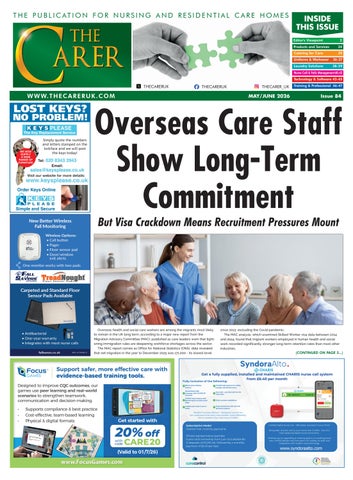
(CONTINUED FROM FRONT COVER)
Some 88.2% of health and care workers still held valid UK immigration status five years after arriving, compared with 76.4% across other sectors, while nurses showed particularly high retention levels of around 94%.
The findings come amid mounting concern from care providers that government immigration policies are choking off a vital recruitment pipeline at a time when social care services remain under severe workforce pressure.
'WARNING NOT TRIUMPH'
Latest Home Office Immigration System Statistics show skilled work visas issued to care workers in caring personal service occupations have fallen dramatically since late 2023, dropping by 82% from 107,772 to just 1,397 in the year ending March 2026.
Responding to the figures, Professor Martin Green, chief executive of Care England, said the collapse in overseas recruitment risked worsening delays in care provision and increasing pressure on the NHS.
“The Prime Minister says he has restored control. But what control looks like to a manager of a care service desperately trying to fill shifts is chaos. The Home Secretary says she welcomes those who contribute to this country. Care workers contribute every single day, in every town and city in England, and we have just slammed the door in their faces. Yesterday’s figures are not a triumph; they are a warning.
“The price is being paid by older and disabled people waiting for care that can’t be delivered, and by NHS hospitals filling with patients who are ready to leave but have nowhere to go. Those are the consequences of these decisions. Shutting the door on overseas care workers while the Fair Pay Agreement remains unfunded in any meaningful sense is not a plan. It is a gamble with the lives of the most vulnerable people in our society.”
“DISCOURAGING OVERSEAS WORKERS”
Meanwhile, Care Forum Wales (CFW) has also warned that increasingly restrictive immigration policies, coupled with negative political rhetoric around migration, are discouraging overseas workers from both coming to and remaining in the UK.
CFW chair Mario Kreft described international care staff as “the backbone of many services across Wales” and rejected suggestions that care work was “low skilled”.
“To call care workers low skilled is frankly insulting,” he said. “Try supporting someone with dementia at 3am or managing complex nursing needs with compassion and professionalism — that takes skill, compassion and heart.”
He warned that without sustainable visa pathways more care homes and domiciliary care providers could be forced to reduce services or close altogether, further increasing NHS pressures through delayed hospital discharges and rising waiting lists.
In contrast to Westminster’s tougher approach, the Scottish Government has announced £500,000 in support funding to help displaced overseas social care workers already in the UK relocate and work in Scotland’s care sector.
MORALLY WRONG
Last month health and care workers who have migrated to the UK to fill essential jobs took part in a day of action organised by the trade union UNISON, in Home Secretary Shabana Mahmood’s Birmingham Ladywood constituency, calling for the visa changes to be scrapped so millions of vulnerable people who rely on care won’t be left without vital help and staff are valued properly.
Moving the goalposts is morally wrong, says UNISON, but will also deepen the staffing crisis in social care and leave workers more vulnerable to exploitation.
International staff make up almost 30% of the care workforce but recruitment of migrant staff is down more than 80% according to latest figures.
UNISON says the government’s wider plans to improve pay and standards in social care risk being undermined if migrant workers are forced into prolonged insecurity.
In addition to dropping the 15-year qualifying period, the union is urging the government to introduce measures to enable workers to move between employers more easily to reduce exploitation through a sector-wide visa and speed up the new fair pay agreement to improve wages.
UNISON general secretary Andrea Egan said: “Social care is already under immense strain, with tens of thousands of vacancies. The sector’s been reliant on overseas staff willing to do this essential work, but the home secretary is closing the door on them.
“Extending the qualifying period risks driving experienced, committed staff out of the sector altogether.
“If the government’s serious about fixing social care, it must match its ambitions on pay and standards with fair treatment for the workforce. But the best way to start is by scrapping these cruel, unnecessary proposals.”
“RESTORING
Prime Minister Keir Starmer said the recent figures demonstrated the government was “delivering”, while stressing that “there’s more to do.”
Home Secretary Shabana Mahmood likewise said the statistics showed the government was “restoring order and control to our borders.”
Ministers have already signalled further tightening of the immigration system, including stricter English-language requirements and higher salary thresholds for skilled worker visas — measures likely to be closely watched by the care sector, which continues to face significant workforce shortages and a growing reliance on overseas staff.
The MAC report also found that female migrants, workers under 45 and migrants from Africa, Southern Asia and non-EU European countries were among those most likely to remain in the UK over time. Lower-paid workers were also more likely to stay long term than higher earners.
The committee said the findings could have important implications for the Government’s proposed “earned settlement” approach to immigration policy, suggesting that health and care workers already demonstrate a strong commitment to building long-term lives and careers in the UK.
Despite growing political focus on reducing migration numbers, the MAC concluded that the Skilled Worker route continues to provide a broadly positive fiscal contribution overall, particularly for migrants working in sectors facing persistent labour shortages such as health and social care.


With so many new technologies, strategies and tools emerging in the
and
At its core, social care is about people and relationships, and this needs to be reflected in the support given to residents. A standard one size fits all approach overlooks the intricacies that make up people’s unique lives and needs, and it is these details that make all the difference to the quality of care provided. Put simply, that approach does not work.
It may seem simple, but listening is a powerful and critical tool for those working in care homes. Taking the time to acknowledge, understand and engage with residents can have a huge impact on their experience and day to day lives.
According to government statistics, there are around 16,566 care homes in the UK, with nearly half a million residents. It’s a significant number, and while offering personalised care to so many people may initially seem unattainable, it is totally achievable. If everyone works with this approach in mind, it’s an opportunity to positively impact the lives of thousands who are at their most vulnerable.
Listening to residents is simple, free, and effective, and may just make all the difference to someone who may be struggling.

Care home residents know themselves better than anyone, and it’s up to staff to listen attentively to understand their wants and needs. Those who feel heard and respected are more likely to confidently express themselves and communicate what they need to feel their best, helping form a more effective, personalised care plan.
Building this rapport takes time, but active listening helps residents feel valued, supported and understood, making them more likely to open up and their care to be more suited to meeting their personal needs and preferences. This person-centred care is a far more effective approach than making assumptions about what each resident requires and takes into account individual backgrounds and cultures.
As an example, perhaps a resident used to enjoy participating in sports, or a religious festival is particularly important to them. Taking the time to listen and understand the importance of certain activities, before implementing them into a wellbeing care plan, can help residents feel connected to their identity and live a more fulfilling life.
Studies show that 22-42 per cent of care home residents experience severe loneliness - a significantly higher figure than in the wider community [10 per cent].
According to Age UK, loneliness is linked to accelerated frailty and an increased risk of physical and mental illness, including a 29 per cent increase in incident coronary heart disease and a 32 per cent increase in strokes.
Reducing the risk of loneliness and social isolation needs to be a priority in care provision, and one of the best ways to do this is through listening to and connecting with residents.
Building relationships helps create a sense of belonging for residents who may be struggling, and knowing they have a helping hand to turn to can make all the difference. Nurturing these connections may take time, but the benefits are too important to ignore.
DEVELOPING CONFIDENCE AND INDEPENDENCE
Too often, those who enter residential care feel as though they are losing their independence, identity, and confidence.
Whether it’s due to illness, reduced mobility, or old age, residents face a period of adjustment when they enter care, and it can feel jar

• We specialise in the sale and purchase of quality used wheelchair accessible vehicles and ambulances.
• They can be bought as seen or refurbished and sign-written to your own requirements.
• Fully serviced, new mot & warranty
• Engineers inspection supplied if required.
• Free delivery service available
• All buses comply with new legislation
• Lease hire and purchase available
• Always large stock of accessible vehicles


ring to have someone looking after them if they have been used to living independently.
It’s vital to listen to how residents want their days to look, what activities they want to engage in, which foods they like and dislike, and how often they would like to socialise. Each resident is an individual, and if we expect them all to fit into the same mould, they will feel restricted, overlooked and misunderstood.
Listening gives residents choice and the power to take control of their own wellbeing, and we should be doing everything we can to help strengthen their confidence.
IMPROVING MENTAL STIMULATION
Dementia is on the rise globally, and the World Health Organisation [WHO] suggests there are around 57 million people living with the disease.
Our ageing population is one factor at play here. In Wales alone, the population aged 65 or over is expected to rise to 35.3 per cent by 2121, up from 21.7 per cent in 2021.
According to Alzheimer’s Society, social isolation can increase a person’s risk of dementia by about 60 per cent, and there is a strong connection between high social contact later in life and memory and thinking skills.
Keeping residents’ minds strong and agile is crucial. Taking the time to listen to their stories and memories, engage in conversation, share jokes, and allow them to express themselves can all have a positive impact on their capacity and ability to maintain control over their choices and life. It can be easy to overlook the power of a conversation, but connection can have a far-reaching impact.
Truly listening to residents doesn’t cost anything, but it can significantly improve their quality of life at a time when they need more support than ever.
Whether it’s ensuring that people are afforded the specific care they need, reducing loneliness and isolation, helping them develop confidence and independence, or strengthening their cognitive abilities, the benefits of taking the time to listen are endless.
All residents deserve to feel safe, supported and understood, and this starts with listening to what they have to say.

Social care leaders have issued a stark warning that adult social care must become a central national priority, as mounting pressures on providers, workforce shortages and fragile funding threaten the future stability of care services across the UK.
Sector organisations have warned that social care can no longer remain a secondary political issue discussed only during NHS crises or council funding emergencies. Instead, they argue, it must be recognised as essential national infrastructure underpinning the health service, the economy and family life itself.
The powerful intervention came as the Independent Care Group (ICG) urged voters to scrutinise political candidates on their understanding of social care, while Care England launched a major parliamentary report calling for a “fundamental shift” in how adult social care is funded, valued and integrated into national policy.
Care England, in partnership with communications consultancy PLMR, also recently unveiled its landmark report, The Power of Care: The System Behind Our Society
The report sets out the considerable scale and economic weight of the adult social care sector, highlighting that it supports more than 800,000 individuals across England, employs a workforce of 1.6 million people, and generates an estimated £78 billion in annual contributions to the UK economy.
The report argues that adult social care is far more than a crisis-response service, describing it as the foundation that enables people to live independently, families to remain in work, communities to function and hospitals to discharge patients safely.
However, despite examples of high-quality care being delivered nationwide, the organisations warned that the wider system remains “fragile, fragmented and short-term”.
Professor Martin Green, Chief Executive of Care England, said social care was being expected to do more every year while resources continued to lag behind demand.
“Social care is being asked to do more than ever, with less and less funding to meet the demand – supporting prevention, enabling hospital discharge, reducing pressure on the NHS, strengthening neighbourhood health models, supporting unpaid carers and contributing to local economic growth,” he said.
“The strongest examples of good care already exist across the country. What is missing is not ambition from providers or commitment from the workforce, but a system that enables good care to become the norm rather than the exception.”
The report calls for immediate reforms including multi-year funding settlements, cost-reflective fee rates, improved NHS integration, reduced duplication in regulation and long-term investment in care infrastructure, digital systems and community provision.
It also highlights ongoing concerns around workforce recruitment and retention, particularly as international recruitment policies continue to evolve.
At the same time, the Independent Care Group warned that political leaders must stop relying on “shortterm fixes” and repeated promises that fail to deliver meaningful reform.
Nathan Hollow, Board Director and Head of Health and Social Care at PLMR, said: “This report comes at a critical moment for the future of adult social care. The national conversation too often focuses on pressure, crisis and cost – but social care has an incredibly powerful story to tell about its value to society, its economic contribution, and the opportunity it presents to transform the nation.
“If policy makers are serious about prevention, neighbourhood health, NHS recovery, economic growth and building stronger, more equal communities, then social care must be treated as central to the national agenda. It is one of the most powerful tools we have to deliver all these goals, while transforming the lives
of millions of people.
“The opportunity now is to build on the outstanding care already happening every day across the country, and to use this to demonstrate the importance and value of social care to the public and politicians – this is how we can create the conditions needed to deliver the political attention social care needs to make great care and great careers the standard.”
Mike Padgham, Honorary President of the ICG, said the election represented a crucial opportunity for the public to demand greater accountability from politicians on social care policy.
“If the Prime Minister truly wants to deliver lasting change and create a legacy his government can be proud of, then social care reform must be at the very heart of it”.
“For too long, governments of all colours have avoided dealing with the crisis in social care. The problems have been kicked down the road decade after decade whilst older and vulnerable people, unpaid carers and care providers have struggled to cope.”
“This government now has the opportunity to be the one that finally grasps the nettle and delivers the reform the country desperately needs.”
“Social care reform is not just overdue – it is urgent. Every day we delay, more people are left without the support they need, more unpaid carers are pushed to breaking point and more pressure is piled onto the NHS.”
“If ministers are serious about change, they should bring reforms forward much earlier and stop waiting years for action. People need help now, not in another Parliament.”
“Done properly, reform could transform lives, improve dignity and independence for millions of people and give families the quality of life they deserve.”
“It would also give this Labour Government something genuinely historic to be proud of – finally fixing one of the biggest unresolved challenges facing our society.”
Reacting to the election results which saw the government suffer heavy losses at the expense of Reform and The Green Party, Professor Martin Green OBE, Chief Executive of Care England, said: “This election has brought seismic change to local government across England. New councillors are taking their seats, new administrations are forming, and in many areas, parties are holding power for the first time in years, or ever.
“That is a significant moment, and it brings with it significant responsibility. Adult social care is one of the largest and most complex responsibilities a council holds and, frankly, one of the least understood. Councils with social care responsibilities spend around two-thirds of their entire budgets on adult and children’s social care combined.
“These are not discretionary choices; they are statutory duties under the Care Act 2014, obligations that exist regardless of who is in power and that carry real consequences for real people if they are not met. For every new councillor taking their seat this week, I would ask one thing: take the time to understand social care, not just as a budget line, but as a lifeline.
“The older people, disabled adults, and families who depend on these services need councillors who are informed, engaged, and ready to act. Care England is committed to working constructively with every new and returning council.
“We want to support councillors in understanding the sector, engaging with local providers, and making decisions that will genuinely improve lives. If we get this right together, the benefits will be felt across every community in England.”

Let’s be honest, menopause is still one of the last workplace taboos. We’ll happily talk about stress, mental health and burnout, but menopause? That often gets a nervous smile, a whisper… or complete silence, often when men are involved in the conversation.
Yet millions of women are going through it while simply trying to do their jobs.
Menopause typically affects women between 45 and 55, although symptoms can start much earlier and last for years. Hot flushes might get the headlines, but it’s often the less visible symptoms that have the biggest impact at work. Brain fog, anxiety, poor sleep, loss of confidence, and that overwhelming feeling of “I’m just not myself anymore.”
I hear this every day. Brilliant, capable women quietly questioning themselves.This isn’t about capability, it’s about support and making workplaces fit for people to thrive in.
Women who have built careers, led teams, and supported others suddenly wondering if they can still keep up. Not because they’ve lost their ability, but because no one has joined the dots for them and here’s the real issue, too many are struggling in silence.
Silence is costing organisations talent. Across industries, we’re seeing women stepping back, reducing hours, or leaving altogether. Not because they want to, but because work has become harder to navigate without the right support.
For sectors like care, this hits even harder. We already know recruitment and retention are huge challenges, so the question I always ask is this:
Why are we losing experienced, loyal staff at the very point we need them most because that is exactly what is happening.
Skilled, compassionate, experienced women walking away, taking years of knowledge with them, in a sector built on continuity of care, relationships and trust. That loss is immeasurable.
However things are starting to change. Organisations are beginning to recognise that menopause isn’t a “women’s issue” or something to quietly manage at home. It’s a workplace issue and it needs a proper response.
Now there’s accountability coming too. From Spring 2027 organisations with over 250 employees will be required to have a menopause action plan in place. A huge step forward and a very clear signal that menopause matters.
However a menopause policy on its own won’t change a single woman’s day at work, because policies don’t create change, people do. We cannot let this become another tick-box exercise. A beautifully written document that lives on an intranet while someone is sitting at their desk struggling through brain fog, exhaustion and anxiety. What makes the real difference is culture. If people don’t feel safe to speak up, no policy in the world will work. We need workplaces where someone can say, I’m not quite myself at the moment, and be met with understanding, not embarrassment, silence or panic.
The starting point is much simpler than people think.You don’t need to be a menopause expert overnight.You don’t need all the answers, you just need to listen. Small, practical changes matter. Flexible working. Access to cooler environments. The ability to take a breather when needed. And most importantly, conversations that feel normal and
By Sharon MacArthur, Miss Menopause (www.missmenopause.co.uk)
keep people well and in work because there is no one-size-fits-all. Every woman’s experience is different. Some will breeze through, others will find it incredibly challenging. Support needs to reflect that. In the care sector especially, this conversation is long overdue. The workforce is predominantly female, and many are supporting others professionally while quietly managing their own symptoms. We are asking people to care for others, while ignoring their own needs.That has to change. There is a strong business case that organisations who get this right, retain their people, reduce absence, and build loyalty. But beyond that it’s about dignity.
Menopause isn’t a weakness to manage, it’s a life stage to understand, because let’s be clear women do not suddenly lose their value at midlife. If anything, they bring more insight, resilience and leadership with their years of experience. Midlife women are not winding down they’re a workforce you can’t afford to lose.
So yes legislation is coming, action plans are coming but real change? That comes from leadership, culture, and everyday conversations.
Menopause isn’t the problem, the silence around it is because when we talk about it properly, openly, honestly, and without embarrassment everybody benefits.
Together lets make menopause business as usual.
Miss Menopause was formed over 8 years ago in response to the lack of information about menopause in the workplace. Sharon works face to face and online around the country with organisations larger and small.
She spends a lot of time working in manufacturing which is often still dominated by men. Often reluctant to come along some of her most profound feedback has been from men who have told her” it’s the best thing they have done in a very long time.”
Organisations are starting to understand that menopause is a business issue which will impact everyone of their colleagues. This means if it’s not part of your mental heath, wellbeing and EDI plans there is a huge gap.
In April 2025, the Supporting the Provider Market (STPM) team in County Durham published a new report evaluating the use of pobroll® — a waterproof bed-bathing wrap designed to improve dignity, comfort, and ease during personal care.
This evaluation was carried out across 10 care homes with high numbers of residents living with dementia. Each setting was given one or more pobroll® units and invited to share feedback through a structured survey. The findings reveal how even simple tools can make a significant difference in everyday care.
How was pobroll® used?
Most care homes used pobroll® daily or several times per week, showing it quickly became part of regular practice. Staff noted that one of the biggest challenges was not having enough units — all homes requested additional stock after the trial, highlighting a clear appetite for wider adoption.
What did care teams think?
Feedback from the care homes showed strong support for the tool:
Ease of use was rated highly, with an average score of 4.4 out of 5. Staff found pobroll® straightforward to incorporate into care routines.
Training was rated slightly lower, at 3.8 out of 5, suggesting that while the wrap is easy to use, additional training resources could improve onboarding for new users.
Resident response was positive. Three in ten care homes reported improved mood or behaviour during bed bathing for dementia patients.
• Key benefits included greater warmth, coverage, and dignity for residents, especially those who might find conventional methods distressing. Some teams also found it particularly useful for end-of-life care Would they recommend pobroll® for bed bathing for dementia patients?
Written by Pat O’Brien of pobroll
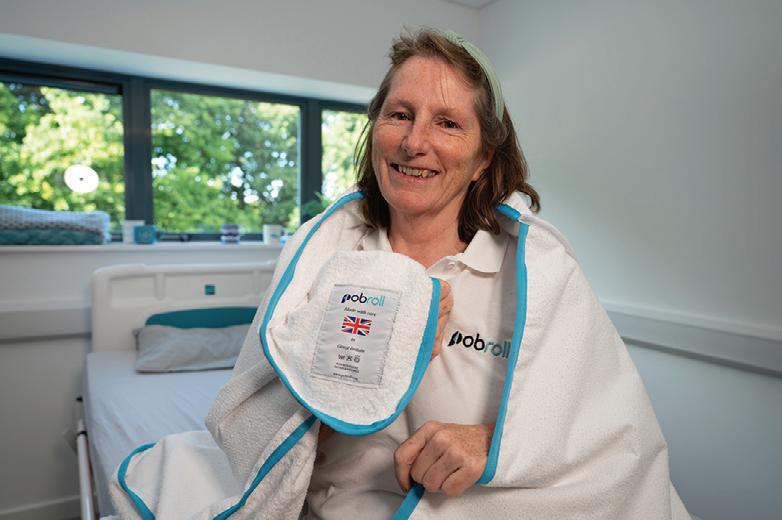
Absolutely. Homes rated their likelihood to recommend pobroll® at 4.3 out of 5, with half of respondents giving it a full 5 out of 5. The overall feedback was clear: this is a valued, meaningful addition to personal care.
Would they recommend pobroll® for bed bathing for dementia patients?
The results of this trial reinforce what many professionals already believe — that small, thoughtful design changes can significantly improve care. For residents who are bedbound or living with dementia, personal care can often be a distressing experience. But with the right tools, it doesn’t have to be.
The pobroll® isn’t a complex device. It’s a simple, dual-layered cotton towelling wrap. But its thoughtful design — offering full coverage, comfort, and support — makes a real difference where it matters most.
If you’re part of a care home, hospice, or hospital and would like to explore how pobroll® could benefit your residents or service users, get in touch. We’re here to support compassionate, dignified care — one small change at a time.
See the advert on the facing page for details, or visit www.pobroll.co.uk
A national social care charity is calling for a fundamental overhaul of pay structures in the sector, warning that a wage gap of around £7,000 per year between community care workers and their NHS equivalents is driving experienced staff out of the profession and placing an unsustainable burden on providers.
Community Integrated Care, a Widnes-based charity operating hundreds of services across England for adults with learning disabilities, mental health conditions and complex needs, has renewed its call for social care support workers to receive remuneration comparable to those in equivalent NHS roles.
The organisation says the disparity — estimated at approximately £7,000 annually — is both unjust and damaging to a workforce it describes as highly skilled and professionally demanding.
The charity first launched its “Unfair to Care” campaign in 2021, but the issue has gained renewed urgency amid mounting financial pressures, reporting that its operating costs increased by nine per cent in the past year, driven by national insurance changes and the rising cost of living.
Earlier this year, Community Integrated Care’s Unfair To Care 2026 –‘Signs of Change’ report revealed a 28.6% take-home pay gap between adult social care support workers and equivalent NHS Band 3 staff -
virtually unchanged from last year - as providers face a 9% rise in operating costs and the sector awaits the impact of a planned Fair Pay Agreement.
Key findings included:
• 28.6% - the take-home pay gap between social care support workers and NHS Band 3 staff in 2025/26
• £7,048 - the annual pay rise a social care support worker would need to achieve take-home pay parity with an NHS Band 3 equivalent
• 43.3% - the total reward gap when NHS pension and benefits entitlements are included, representing a £10,990 annual difference
9% - the average rise in operating costs for care providers in 2025/26, driven by unfunded increases in Employer National Insurance and the National Living Wage
7% - the overall adult social care vacancy rate, three times the UKwide rate of 2.3%
Yet some local authorities — whose funding agreements underpin the charity’s ability to pay staff — have offered fee uplifts of only two to four per cent, with an average of four or five per cent across many councils.
Samantha Brennan, the charity’s managing director, described the wage gap as straightforwardly unjust. “The pay gap between NHS colleagues and social care colleagues is about £7,000 on average a year,”
she said. “That’s quite a significant disparity for such a skilled role. It absolutely isn’t fair.”
“Social care touches each and every one of us in our lives at some point. Our workforce needs to be recognised for the incredible skills they have and the vital roles they play in our communities. To keep delivering brilliant support, we need the funding to match that reality.”
Ms Brennan acknowledged the difficult position facing local authorities, noting that their own budgets are directly shaped by central government allocations. The government has committed an additional £4.6 billion for adult social care in England by 2028/29.
However, sector leaders warn that this figure needs to be weighed against the scale of existing demand: English councils spent £29.4 billion on adult social care in 2024/25 alone, a rise of £2.3 billion on the prior year. At that rate of increase, the promised uplift could be absorbed in cost pressures before delivering meaningful improvements.
“The money will help, but it is a drop in the ocean,” Ms Brennan said. “Social care touches each and every one of us at some point in our lives. Our workforce needs to be recognised for the skills they have and the vital roles they play in our communities. To sustain that, we need the funding.”
The National Care Forum (NCF) has again been named one of the Sunday Times Best Places To Work, making the prestigious list in the small organisation category.
This nationwide workplace survey recognises and celebrates the UK’s top employers, showcasing organisations that are leading the way in employee engagement, workplace culture and overall employee experience.
NCF CEO Vic Rayner commented: “I’m thrilled that we have once again made the Sunday Times Best Places to Work list for 2026. This has only been made possible thanks to the continued hard work of our incredible team and the pride they take in our mission to support and grow the not-for-profit care and support sector for everyone working in it and everyone receiving care from it.
“NCF has put much time, consideration and effort into being the best employer we can be and have implemented a new roster of staff incentives, benefits and wellbeing packages over the past couple of years. NCF staff with five or more years’ service are formally recognised and we have both flexible working and sabbatical policies avail-

able for staff to ensure they are maintaining the right work/life balance and have opportunities for personal development. In addition, we have been a Real Living Wage employer for many years.
“We are also very proud to be an Age-friendly Employer and Disability Confident Employer. These quality marks indicate our commitment to supporting staff of all ages and creating an inclusive, accessible and fair workplace for disabled people and those with long term health conditions.
“Taking our place yet again in this prestigious list means an incredible amount to me and the team I am very proud to lead. Coinciding with the tenth anniversary of my joining NCF makes it all the more meaningful and instils renewed energy in the shared commitment we all have to improving the experience of people delivering and accessing care and support and striving towards a better future where fairness and rights for all are respected.”
Q What does “autism acceptance” look like in day-to-day social care practice, and how is it different from just “managing needs”?
A Autism spectrum disorder (ASD) is a neurodevelopmental condition which is commonly characterised by difficulties in social interaction, communication and behaviours. The spectrum encompasses different conditions that are formerly known as Asperger’s and pervasive developmental disorder. The spectrum is vast and everyone who has a diagnosis is different with varying challenges, signs and levels of support needed. With ASD being one of the most common neurological disorders that starts from childhood and now estimated to affect between 1–2% of adults, it is vital to understand how to support those with a diagnosis.
The NHS describes the main signs of ASD as:
• struggling to understand other people’s thoughts and emotions
• difficulties making friends
• challenges with expressing emotions
• taking things very literally
• preferring routine and becoming anxious if it changes.
Someone who has a diagnosis may also have sensory sensitivities and intense interests in specific topics or activities.
It is important to shift practice and understanding from a deficitbased model of care (what a person cannot do) to a strengths-based model (what a person can do). Despite the challenges an individual with ASD may face, it is important to recognise that they are very capa-

ble and a robust assessment to identify their interests, strengths, talents and skills is vital. Alongside this, social care providers must now ensure that their staff have undergone Oliver McGowan (or equivalent) training. It is best practice to invest time yo carry out more in-depth ASD training for the staff teams. This ASD training would focus on understanding autism through the eyes of someone who is autistic as this perspective can further help the understanding of the staff team to best support people. This training also focuses on a preventative
approach which uses regular check-ins to prevent crisis occurring. Also, by adjusting the physical environment to prevent sensory overload could be a way in which
providers can help accept the differences a person may face. By creating a safe environment where they are accepted will reduce the need for someone to feel like they can mask their differences. It is important to note that people who have a diagnosis of ASD often have difficulties in processing time, meaning they take longer to process a conversation or understand what is being asked of them.
Studies have suggested that allowing a six to eight-second pause, to allow processing time, before they respond to anything you have said. This allows them to process what has been said or asked of them, think more clearly and calm any anxieties, along with making them feel more in control and confident. By adopting this practice, it can avoid frustration or escalation of emotions or potential behaviours. It also helps them build overall skills around communication and social interaction by adopting this process.
People diagnosed with ASD are capable of achieving a lot in life and if they are receiving care, it is up to the provider and the staff to identify and encourage their skills and interests. By focusing on their abilities rather than their disabilities, care provisions have the power to positively influence and enrich the lives of those with ASD.
Source URL: app.croneri.co.uk/questions-and-answers/autism-acceptance-social-care
Poole care home residents and staff raised nearly £400 at a fundraising afternoon tea to support children living with cancer.
Residents at Elizabeth House care home, on Dolbery Road South in Poole, welcomed in the local community to raise money and awareness of local charity, Meredith’s Mission, at the event.
Meredith’s Mission was set up by Kate in 2024 in honour of her daughter Meredith who was diagnosed with a form of non-Hodgkin lymphoma at the age of four, leading to more than two years of chemotherapy. During treatment, Meredith wore a range of brightly coloured costumes and outfits to her appointments to bring a smile to the faces of the hospital staff and other patients. She was able to ring the bell to mark the end of her treatment in January this year.
The guests of honour at the event were Meredith and her mum Kate. They attended the special fundraising afternoon tea with live music at the care home, where staff wore bright outfits as a tribute to Meredith’s fun
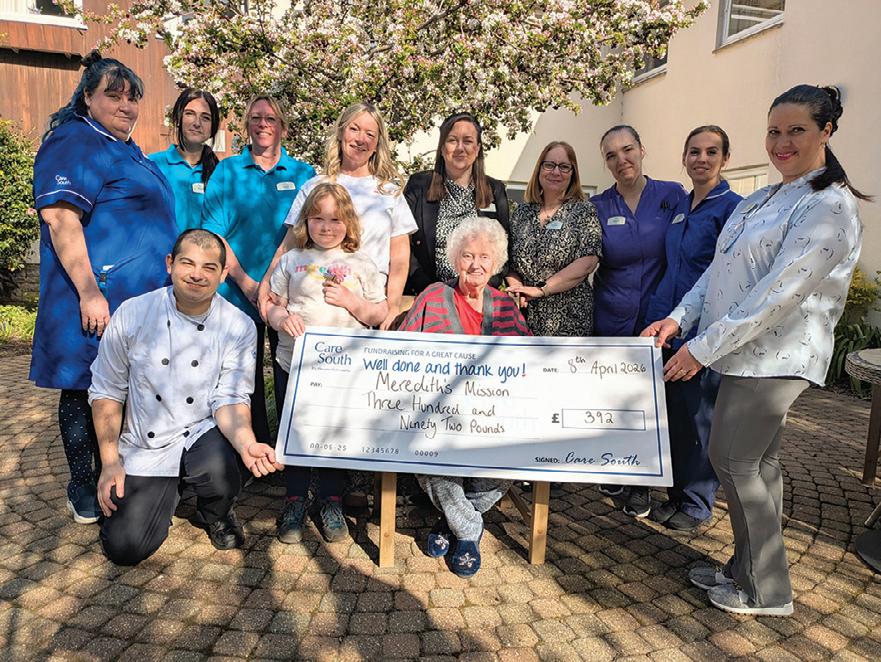
spirit. In total, the event raised £392 for the good cause.
Kate, founder of Meredith’s Mission, said: “We are so grateful for the money raised by the residents, their families and the care home team at Elizabeth House, which will help us to continue supporting families going through some of their toughest times. It was incredible to see the community gather to raise money for our charity to support other children in Dorset facing cancer.”
Donna Moss, Home Manager, said: “Residents, staff and visitors had such a wonderful afternoon of entertainment with Meredith invited as our guest of honour. She is a real inspiration with her positive attitude and fun spirit despite the challenges she has faced, so the residents were thrilled to meet her. At Elizabeth House, we are proud to work with and support our local community and reading about Meredith's personal experience of cancer made us keen to do our bit to help such a worthy cause.”
The National Association of Care Catering (NACC) has launched the NACC National Awards 2026, inviting nominations from across the care catering sector for teams and individuals who are recognised by their colleagues for going above and beyond.
Every year the NACC National Awards celebrate the skills, innovation and dedication the Association’s members demonstrate daily, whether they work in residential care homes, Meals on Wheels services, lunch clubs and day centres, or other community services. This year these prestigious Awards have been further strengthened by the addition of a new category – the Innovation Award.
The deadline for nominations in the NACC National Awards 2026 is Friday 26th June 2026. The judges will be looking for examples of outstanding performance in delivering the highest standards of nutrition and hydration care to create tangible benefits for residents and other service users in the following categories:
• Care Establishment of the Year Award, sponsored by allmanhall
• Meals on Wheels Award, sponsored by apetito
• Catering Team of the Year Award, sponsored by Rational UK

• Catering Manager of the Year Award, sponsored by Unilever Food Solutions
• Our Care Catering Hero Award, sponsored by Miele
• Region of the Year Award, sponsored by Meiko UK
• The Bev Puxley Award, sponsored by The Worshipful Company of Cooks London
• Innovation Award
The shortlist of finalists will be announced in August, with the winners in each category being announced
at a Gala Dinner at the NACC Training & Development Forum* on October 15th, when the recipients of the Pam Rhodes Outstanding Achievement Award, sponsored by Winterhalter, and the National Chair’s Award will also be revealed.
Says Neel Radia, National Chair of the NACC: “We are excited to announce the new Innovation Award this year. Our annual Awards are always about recognising excellence within the care sector and this often goes hand-in-hand with innovative ideas that push the boundaries of great nutritional support just that little bit further. This new accolade is designed to recognise and commend those members who are leading the way in improving care catering with cutting edge innovations.
“The NACC continues to shine a light on a sector that is often undervalued and misunderstood. These Awards not only celebrate the wide range of skills our members have, but also recognise the vital role members play in ensuring the vulnerable individuals they serve eat safely, remain hydrated and enjoy every dining experience.
“I would encourage everyone to enter their colleagues in the NACC Awards 2026 to ensure the hard work and talent of their teams does not go unrecognised, and I look forward to announcing the winners in October.”
Entry to the NACC National Awards is open to all members of the NACC. The 2026 nomination brochure with full category details and entry requirements can be downloaded at https://bit.ly/NACCAwards26 For more information about how to become a member visit www.thenacc.co.uk
The annual Training & Development Forum takes place on 14th-15th October 2026 at its new venue, Hilton at St George’s Park, Burton-on-Trent
The adult social care sector has greeted the recent King's Speech with cautious optimism tempered by deep concern, as the government unveiled a sweeping legislative agenda carrying significant implications for care providers, unpaid carers and the people who depend on care and support services across England.
Headline billing went to the NHS Modernisation Bill — described by ministers as the most substantial reorganisation of the National Health Service in over a decade.
The flagship legislation, which gives statutory effect to the reforms set out in the NHS 10-Year Health Plan, is intended to simplify the NHS's national architecture, cut bureaucracy and improve patient outcomes, with a strong emphasis on harnessing digital technology and data sharing.
Most controversially, the Bill proposes the formal abolition of NHS England as a statutory body, returning many of its functions directly to the Secretary of State for Health and Social Care.
Yet it was the glaring absence of dedicated adult social care legislation that drew the sharpest responses from sector leaders. Vic Rayner OBE, Chief Executive of the National Care Forum (NCF), said there were "slim pickings for adult social care in the King's Speech," warning that government timelines around the Casey Commission had "served to undermine the government's commitment to any urgency attached to desperately needed reform and the development of a National Care Service."
Her words were echoed across the sector, with concerns raised about the future of integrated care governance, the protection of unpaid carers, and the conspicuous lack of concrete detail on how
wider social care reform will take shape in the months and years ahead.
Rayner welcomed the 10-Year Plan's focus on digital and data, and specifically the creation of a Single Patient Record bringing together health and social care information in one place. But she urged the government to "recognise the key role that social care will play in the government's entire strategic vision across health and care," and stressed that social care must remain "fully embedded in ICB governance and plans at neighbourhood and strategic level."
Sarah Walter, Deputy Chief Executive of The NHS Alliance, described the Bill as "key to delivering the government's vision," but cautioned that the abolition of NHS England must be "accompanied by measures and ways of working which empower local leaders to design services for their communities."
She raised particular concerns about the plan to absorb local Healthwatch functions into ICBs — bodies whose numbers have already been halved — warning of potential conflicts of interest that could erode public confidence. On the Single Patient Record, she acknowledged its potential to improve joined-up care but said there remained "important questions over where data controllership will reside and what safeguards will be in place."
The Nuffield Trust's Chief Executive, Thea Stein, was more forthright in her scepticism.
"We know from previous reorganisations of the NHS that their benefits are often overstated and disruption underestimated," she said, warning that the scale and timing of the changes — coinciding with major cuts to local health boards — risked tying the NHS "up reorganis-
ing itself precisely when it needs to be improving patient care."
She called on MPs to scrutinise carefully whether cutting the merged NHSE-DHSC workforce by 50 per cent was genuinely necessary, and whether ending the independence of the Health Services Safety Investigations Body (HSSIB) — which is to be brought within the CQC — was justified.
For care home providers and the wider social care workforce, the most pressing question left unanswered by the King's Speech is when — and how — the government intends to deliver meaningful reform of the adult social care system itself.
Rayner said that "solid details and timescales for the development of a National Care Service are starkly absent," and called for "urgent clarity from government on how they intend to take forward Baroness Casey's recommendations."
Michelle Corrigan, Chief Executive of the Digital Care Hub, noted that while adult social care did not feature prominently in the Speech itself, several proposals carried meaningful longer-term implications for the sector. She highlighted the way cyber security, digital identity and public service modernisation are increasingly being framed as matters of national resilience rather than simply technology policy. "For social care providers," she said, "this reinforces the importance of cyber security, good data protection practices, and being involved in wider conversations about interoperability and neighbourhood health services." She urged that the voice and realities of adult social care be part of discussions around forthcoming legislation "from the start."
Two colleagues from a Bath home were given a once in a lifetime opportunity when they were invited to the Royal Garden Party.
Julie Sheppard and Jan Rich both work at MHA Stratton House and were nominated by MHA, the organisation who runs the home to go to the Royal Garden Party.
Julie works as a domestic, laundry and kitchen assistant and has been at the home for almost nine years, and Jan has been a volunteer at the home for 12 years.
The duo won an award during MHA’s internal annual awards, the OSCAR’s, where Jan was awarded volunteer of the year and Julie won the Walter Hall Special Recognition Award, named after the founder of MHA.
Royal Garden Parties are exclusive events hosted by the British monarch at Buckingham Palace.
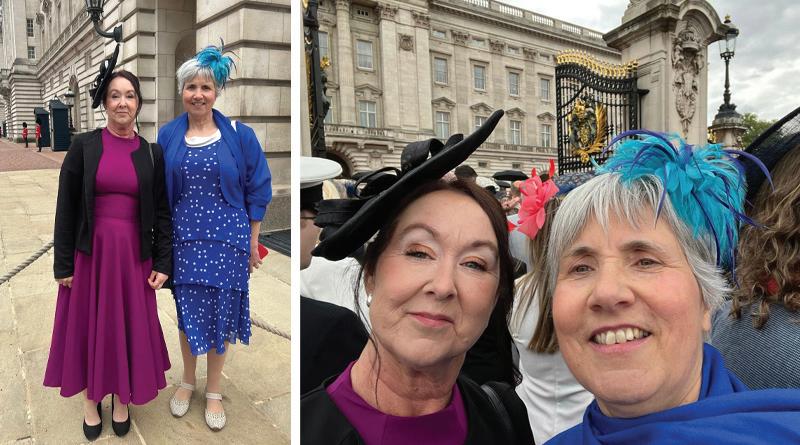
They recognise public service, drawing around 8,000 community leaders and charity workers to each event for an afternoon of tea, cake, and strolls on the palace grounds
MHA Stratton House offers residential care for 33 residents.
Speaking of their experience Julie said: “ When Emma, our deputy home manager told me what was happening, initially I was in disbelief.
“Making the journey from Bath station to Buckingham Palace, me and Jan both were very excited.
“The atmosphere at Buckingham Palace and the gardens was amazing, everyone was dressed up and the place was full of people.
“It was a great honour for us, and we felt very proud to represent MHA and MHA Stratton House.”
Jan added: “ It really was a wonderful experience and one we will both never forget.
“When we came back to work, the residents and fellow colleagues were very excited, and the residents were keen to see the pictures and kept asking us what the day was like.
“We are both very grateful for the nomination, and it was a huge honour for us.”
Boosting resilience to illness, frailty and falls through physical activity will be key to keeping the country’s ageing population healthy and living independently for longer, MPs say.
This change will be fundamental to the Government’s objective of switching the NHS’s focus from treating illness to preventing it, and will help stabilise the rising cost of funding the health service as demand continues to rise.
The report follows the cross-party Committee’s Healthy Ageing inquiry. It recommends:
• Advice and social prescribing of physical activity should become a core, routine offering to older people from their GPs and other clinicians.
• Stronger links between local NHS services with leisure providers and community groups to make exercise more accessible.
• The Care Quality Commission should be charged with checking that exercise programmes are being provided to residents in care homes.
The Committee also calls for a national conversation and a cultural shift in the way that ageing is perceived and talked about in society.

Negative stereotypes can leave older people feeling resigned to becoming inactive, at the point in their lives when a sedentary lifestyle leaves them even more vulnerable to illness.
Health and Social Care Committee Chair, Layla Moran MP, said: “Healthcare experts and the Government are all agreed that staying physically active can help older people to live not just longer, but healthier, happier, more sociable lives.
“Promoting active lifestyles among older people would also tackle two policy objectives at once – shifting the NHS’s focus to prevention, and bringing services closer to home, not the nearest hospital.
"Experts told us that exercise can be more effective than medication, and these changes would also cut the NHS’s vast expenditure on drugs. It’s a win-win, and this report sets out how the Government can make it happen.
“We have set out practical recommendations for Ministers to rethink how the NHS and social care services help older people, from training for GPs to help individuals make their own healthy choices, to greater accountability in care homes and making our public spaces more accessible.
“As a growing proportion of society becomes older, we need to have a national conversation and a generational change in attitudes towards ageing. Assumptions that elderly people are left to fade away quietly lead to harmful behaviours that cause unnecessary suffering for individuals and their families. These retrograde ideas must be upended.”
Caroline Abrahams, Charity Director at Age UK, said: “This excellent new report should be a wake-up call for us all about how being physically active can help us to age well – an important message that we at Age UK are also promoting through our Act Now to Age Better campaign.
"We hope the report also jogs national and local policymakers into recognising that there is a lot more they can and should be doing to make it easier for older people to keep moving, as a natural part of their daily lives.
"As the committee rightly observes, the benefits of this for individuals and for our society are abundantly clear, so it's high time that encouraging physical activity among people of all ages, including older people, was viewed as a top public health priority.”
Professor Martin Green OBE, Chief Executive of Care England, said:“I'm delighted to have been able to feed into the work of the Health and Social Care Committee, which has produced this timely report highlighting how physical activity can play a huge role in the Government's shift to prevention.
"As the report rightly points out, social care stands ready to support as a vital player in this shift, which cannot succeed with NHS-focused reforms alone. We welcome the recommendations in the report for the Government to work with our sector to establish a funded, national training programme on physical activity to give our workforce the confidence to support residents and prevent frailty before it sets in.”
Rotherwood Healthcare has been awarded the prestigious ‘Best for Resident Safety’ title at the nationally recognised Care Home Awards 2026. The award celebrates excellence across the care sector and recognises organisations that demonstrate outstanding commitment to creating safe, supportive, and high-quality environments for residents.
Winning the award is a significant achievement for Rotherwood Healthcare and reflects the dedication, compassion, and professionalism shown across all its homes. Resident safety is embedded into every aspect of the organisation’s approach to care, from preventative wellness initiatives and evidence-led dementia care to strong clinical governance and continuous team development.
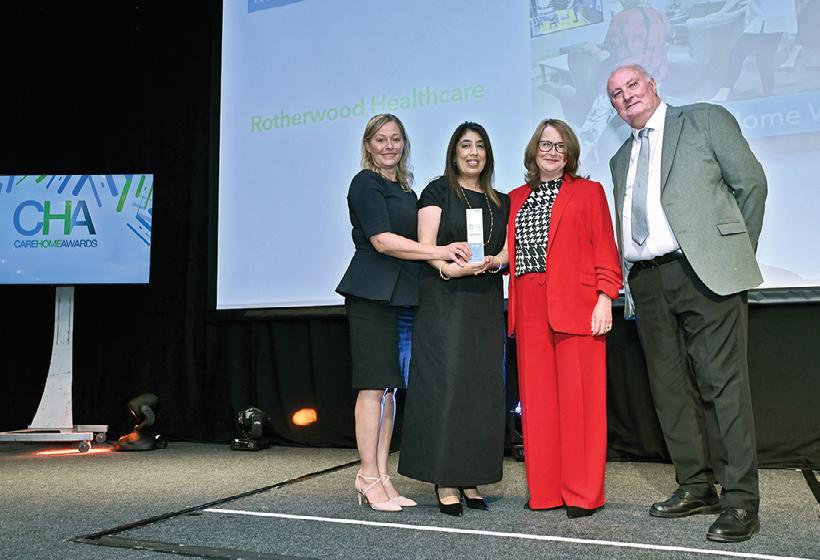

The judging panel recognised Rotherwood Healthcare’s commitment to delivering exceptional standards of care while enabling residents to maintain independence, dignity, wellbeing, and quality of life.
Speaking following the awards ceremony, Chief Operating Officer Sharen Guise said: “We are incredibly proud to receive this award and to be recognised nationally for the work taking place across our homes every single day. Resident safety is at the heart of everything we do, and this achievement is a reflection of the dedication, compassion, and professionalism shown by our incredible teams. We are committed to continually raising standards and ensuring every resident feels safe, supported, valued, and truly at home within our care.”
Welcome to Blue Rain - our activity store is built on over 14 years experience supplying products that bring joy, inspire motivation, and enrich the lives of those who need a little extra support, or simply want to have fun, whatever the weather.
Come find your next reason to smile.
Recent debate on adult social care suggests that the conversation about reform may be entering a different phase.
In my earlier article, A design moment for social care, I argued that the question is shifting from whether reform is needed to how it might realistically be achieved. It pointed to the Casey Commission and the move towards a Fair Pay Agreement as creating a rare opportunity to revisit how social care is organised, and how its different parts might align.
Adult social care in England is often described as a system. In practice, it is better understood as a set of arrangements that have evolved over time, shaped by successive reforms but never fully brought together as a coherent whole.
There is no shortage of agreement about what good care and support should deliver for people who draw on care and support, and also for their carers. This has been articulated through Social Care Future’s ‘North Star’ vision: “We all want to live in the place we call home, with the people and things we love, in communities where we look out for each other, doing the things that matter to us”.
The Care Act sets out a clear ambition, grounded in wellbeing and individual rights. Think Local Act Personal’s Making It Real framework translates these statutory duties into outcomes expressed directly through lived experience. Its co-produced ‘I statements’ describe what good support should look and feel like for people drawing on care and support, and these are presently being used as part of the regulation of social care.
What is less clear is how these ambitions are translated into arrangements that can be delivered consistently, understood by the public, and recognised in people’s lived experience.
This matters because the wider context is shifting. The Casey Commission has been established to build a clearer public mandate for reform, including through deliberative engagement. At the same time, policy attention is focused on workforce, choice and control, and integration with the NHS.
Yet reform has historically stalled despite repeated attempts. The system remains fragmented, and progress has been incremental rather than structural.
The purpose of this series is to explore that gap between ambition and delivery.
It does so by focusing on four related questions:
ARTICLE 1: WHY REFORM STALLS
Agreement on purpose has not translated into a system that can be delivered in practice.
Reform has not failed for lack of ambition or consensus. The Care Act and wider sector thinking provide a clear account of what social care should achieve.
But the key elements of the current arrangements — funding, entitlement, workforce, commissioning and delivery — are not aligned. Without clarity about how these elements fit together, reform remains partial and incremental. Public understanding is limited, tradeoffs are avoided, and political risk outweighs momentum for change.
Reform depends on working through the choices that shape how social care operates in practice.
Reform is not a statement of principle. It is a set of choices about how arrangements would work in practice.
Four sets of questions sit at the heart of this:
• what is guaranteed, and for whom
• how costs and risks are shared over time
• who is responsible for what, across national and local government, health and care, and individuals and families
• how consistency in outcomes is achieved within a diverse provider market, including the shift from crisis response to earlier intervention
These questions reflect an existing mixed economy, in which responsibility is already distributed across the state, individuals, families and providers.
Reform requires working through how these elements are aligned — and where they may need to be rebalanced.
ARTICLE 3: WHO MAKES IT WORK
Reform depends not only on policy, but on the capacity to deliver and sustain change.
Previous attempts at reform have focused on legislation or funding. Less attention has been given to how change is translated into practice.
A functioning approach depends on infrastructure and capability,
By Paul Burstow, Chair of the Board, SCIE
including:
• workforce development and leadership
• standards and guidance
• commissioning and accountability
• data, evidence and learning
• a sustainable and innovative provider market
These functions exist but are not yet organised as a coherent whole. Reform also takes place within a mixed market, where providers, investors and self-funders play a central role in delivery.
The challenge is not to start from scratch, but to bring these elements into alignment in a way that can be enacted and sustained over time.
ARTICLE 4: WHAT REFORM MUST ACHIEVE
Reform must be judged not only by coherence, but by whether it delivers fair and consistent outcomes.
Adult social care is experienced unevenly. Access varies, outcomes vary, and people’s experiences of care are not consistent.
These differences are not incidental. They reflect how the system is organised — including funding arrangements, workforce capacity, commissioning practices and the structure of the provider market.
Addressing this requires attention to three dimensions of equity:
• equity of access — who gets support, and when
• equity of experience — whether people feel informed, heard and in control
• equity of outcomes — whether care improves lives and reduces avoidable harm
Work by SCIE and others highlights a persistent gap between ambition and experience, and the importance of co-production in shaping solutions that work in practice.
Reform must therefore be judged not only by whether it is coherent, but by whether it produces outcomes that are fair, consistent and recognisable in people’s lives.
This series does not propose a single model for reform.
It argues that progress depends on something more fundamental:
• clarity about how the current arrangements fit together – and where they fall short
• a willingness to work through trade-offs with the public, people who draw on care and political leaders
• a shift from advocacy towards shared design
• and a focus on whether outcomes are fair and consistent in practice
In that sense, it is intended to contribute to the wider public and policy conversation now underway — including the work of the Casey Commission — by focusing not only on what should change, but on how change becomes possible.
St George’s Court Care Home resident, Joan recently had her wish granted when she was invited to go backstage and meet her icon, Hamza Yassin.
Joan, who is a lover of creative arts and nature, has been a fan of Hamza ever since his appearance on Strictly Come Dancing in 2022. After learning about his love for nature and seeing the stunning wildlife photos he captures, Joan became an instant fan.
“I voted for Hamza every single week on Strictly Come Dancing — sometimes twice," said Joan. “I was absolutely thrilled when he went on to win the competition!"
Joan has continued to follow Hamza’s journey ever since, enjoying his adventures and breathtaking photography of the natural world.
One day, Joan was scrolling through her Instagram feed when she saw Hamza was going on tour with a show entitled, ‘My Life Behind the Lens’. After seeing this, Joan immediately told the team at St George’s Court and said that she would love to attend.
Knowing how much this would mean to Joan, the team began looking

at ticket availability and whether they could grant her wish. As a wheelchair user, they were delighted to find some accessible tickets at the show in Lincoln and immediately booked them!
Joan was over the moon when she heard the news and decided she would make a special gift to give to Hamza at his show. Joan is a talented artist and has explored many different art forms – from stained glass window making and drawing, to watercolour painting and embroidery.
She decided to make a heartfelt embroidery of Hamza’s beloved dog, Midge, who is regularly featured on his Instagram account.
After two months of excitement, show day finally arrived and Joan could not wait. With her handmade embroidery of Midge in hand, she headed off to the Engine Shed in Lincoln.
The team at the Engine Shed was absolutely fantastic and arranged for Joan to be seated in the second row with a brilliant view of the show.
Joan had what she describes as ‘The best day ever’, which was made even more special when she was invited to go backstage and give her embroidered gift to Hamza.
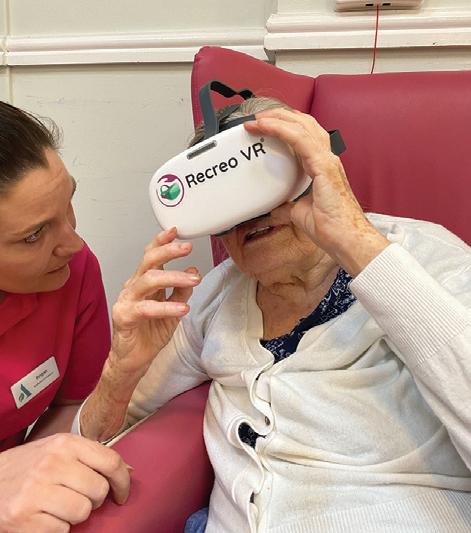
At Broomy Hill Nursing Home, innovation and compassion come together in the most inspiring way. Residents at the home are stepping into a whole new world with the introduction of virtual reality headsets. It is an exciting innovation with the power to create uplifting and meaningful moments for the residents under our care.
Virtual reality is becoming an exciting innovation in care homes and at Broomy Hill Nursing Home it is making a meaningful impact. VR is more than just a tool; it allows residents to relive cherished memories and experience activities they may no longer be physically able to do.
For residents with dementia or complex mental health needs, VR stimulates memories, sparks conversations, and provides relaxation through immersive experiences. Using headsets to create digital 3D environments, VR acts as a tool for cognitive stimulation, pain relief, and wellbeing, enabling individuals to safely revisit familiar places or explore new worlds.
We were thrilled at the opportunity to be a part of the Recreo VR experience. It was something new for the residents and us. However, it is not only something new; it is a learning experience for the entire staff at the home.
Our Wellbeing Lead, Lauren, is currently working on a list of available experiences that our residents can
choose from to do something different each time they use the headset. This way, our residents will have something new to look forward to each time they use the headset, as new content is added every eight weeks.
One of the new experiences that our residents will enjoy in the near future is a seated safari, where they will have the opportunity to come face to face with a rhino from the comfort of their chair.
Recently, our residents travelled through time to the 1950s, where they had a virtual visit to a traditional house, cinema, and a high street. In the house, our residents travelled from room to room, exploring the food pantry and admiring the decorations of the house. In the cinema, our residents explored the ticket office, the reel room, and the cinema itself. In the high street, our residents visited an electronics shop, a record shop, and a toy shop, enjoying the experience of each of these different stores.
Many of our residents commented on how real the experience felt, almost like stepping into a memory. Some were actually looking at their hands to get used to the virtual world. As the shops, toys, and songs from the period were brought up, the experience naturally evolved into memories and stories. The dialogue was effortless as the resident's shared memories from their own lives to each other and staff.
Virtual reality is more than just an activity at Broomy Hill. It is another meaningful way we promote wellbeing and engagement for our residents. By using Recreo VR, we encourage conversation and reflection, while continuing to look for ways to enhance quality of life within our home.
For further information visit www.recreovr.co.uk
Families across the UK are facing a dementia care “postcode lottery”, with the availability of advanced dementia support ranging from 57% of care homes in London to just 23% in Northern Ireland, according to new analysis from carehome.co.uk.
The findings, released during Dementia Action Week, reveal stark regional disparities in access to specialist dementia care, particularly for people living with advanced or complex forms of the condition. While many care homes are able to support residents in the earlier stages of dementia, provision drops significantly as needs increase.
According to the findings from their report Caring Britain: How the care landscape is changing, London has the highest availability of advanced and complex dementia care, with 57% of care homes able to meet higher-level dementia needs.
Other regions with relatively strong provision include the East of England at 50%, South East England at 46%, Scotland and the East Midlands both at 45%, and the West Midlands at 44%.

Availability is considerably lower elsewhere, including South West England at 40%, the North East and Yorkshire & The Humber at 38%, North West England at 34%, Wales at 33%, and Northern Ireland, which has the lowest level of provision at just 23%.
carehome.co.uk, warns this uneven distribution risks leaving families with limited options as dementia progresses, potentially forcing people to move away from familiar environments and support networks to access suitable care.
The issue comes as demand for dementia care continues to rise. Around 70% of care home residents are estimated to be living with dementia or severe memory problems, yet care staff in England, Wales and Northern Ireland are not legally required to complete dementia training.
Recent Skills for Care data shows fewer than a third (29%) of England’s care workforce has received any dementia training.
Sue Learner, editor at carehome.co.uk, said: “It is not fair that families face vastly different outcomes depending on where they live. Dementia is a progressive condition and people need confidence that appropriate care will be available throughout every stage.
“At the moment, there is a clear imbalance in access to advanced dementia support across the UK. Without greater national consistency, many families have to face difficult decisions, including moving loved ones away from their communities so they can access the right care.”
carehome.co.uk is calling for a national conversation around dementia care capacity, workforce development and long-term planning to help ensure people living with dementia can access appropriate care regardless of where they live.
Mark Reed, chief operating officer at Evolve Care Group, which operates eight care homes and delivers dementia training through its Evolve Care Academy, said:
“Dementia is not a one-size-fits-all condition, which is why staff need more than basic training to provide good care. When teams understand a person’s history, routines and emotional needs, it can significantly reduce distress and improve wellbeing.”
Mr Reed highlighted the example of Ben, a former serviceman living with advanced dementia and PTSDrelated trauma, who became increasingly distressed in a previous care home. After moving to Heanton Nursing Home, staff used person-centred dementia approaches to adapt care around his military identity, greeting him by his military title and returning his salute. The personalised approach helped him feel safer, calmer and more understood.
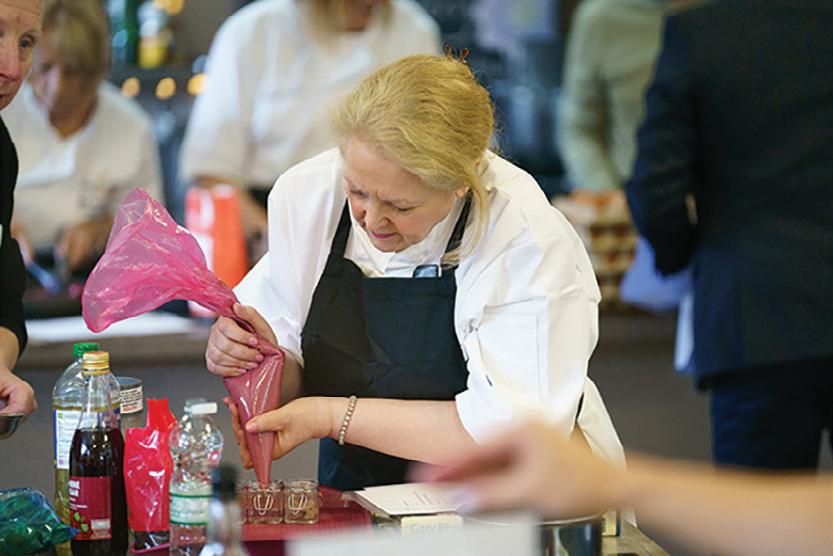
Staff and residents at Elgar Court care home in Malvern are over the moon because their Managing Director, Angela Bradford, from Barchester’s Central Division, and her team of fellow MDs have really brought home the bacon and won the Barchester Charitable Foundation Cook Off 2026. Angela’s team, the Pressure Cookers, made up of Managing Directors and a Hospital Director from five of Barchester’s divisions, went head to head with members of Barchester’s Executive team, the Rolling Scones, to cook up a storm and win the coveted Cook Off crown whilst raising vital funds for Barchester’s Charitable Foundation. With money still coming in, so far the Cook Off 2026 has raised an extraordinary £53,000.
The Charitable Foundation helps connect vulnerable people and those living with a disability to community groups in their local area by providing grants to improve mobility and quality of life. Each year the Foundation distributes thousands of pounds to individuals, small community groups and charities across England, Scotland and Wales.
In 2025 the Foundation achieved a donation milestone of £424,000 which enabled the charity to provide vital help to a staggering 262 small groups and charities, plus 123 individuals in one year alone.
The Pressure Cookers beat the Rolling Scones with their sensational menu which had a choice of three
different starters, the judges named their Lobster Bisque with chive crème fraiche and croutons an absolute triumph. For main, there was a choice of Cod Loin with beetroot, asparagus and champ mash or homemade Sweet Potato and Chickpea Curry. For dessert, the options were White Chocolate and Raspberry Cheesecake or Rhubarb Crumble Custard Tart and their Afternoon Tea item was a Sausage Plait with red onion chutney which the judges agreed was to die for.
Angela comments: “I am so proud of how we handled ourselves under pressure – the team name was very apt – and how we all pulled together to support each other and get the job done. The dishes we created looked amazing and were delicious if I do say so myself, I was especially proud of the Lobster Bisque! We absolutely smashed it out of the park but the icing on the cake was the amount of money we raised thanks to the support of all our homes so I want to say a huge thank you to everyone who donated.”
Sarah Cadwallader General Manager of Elgar Court care home, adds: “We are all in awe of Chef Angela, is there nothing she can’t do! All of the MDs did a brilliant job and raised so much money, they are an absolute inspiration to us all. The Foundation is a cause very close to all our hearts so this is a remarkable achievement.”
By Claire Cannings, Director of Quality

In complex care, supporting someone to live well depends on how effectively different aspects of their care can be brought together. When care fails to integrate these elements, people are more likely to experience placement breakdowns, prolonged hospital stays, avoidable deterioration, or be supported in settings that cannot fully meet their needs.
Recent research highlights that this is a growing challenge across the system. For example, the Care Quality Commission’s Monitoring the Mental Health Act 2024/25 report found that people are waiting too long for care and becoming more unwell while they wait. Meanwhile, Dementia UK’s A Better Death report found that people with dementia often do not receive coordinated end-of-life care, with families left without the support and specialist expertise they need.
Together, these findings point to a wider issue: care too often separates clinical treatment from the broader emotional, social and practical support people need to thrive.
Many of the people we support at Exemplar Health Care come to us at that point, when other services have not been able to bring together the right clinical expertise with support for the whole person.
I believe that in a nurse-led environment, holistic care means fully integrating expert clinical oversight with person-centred support so care is both safe and meaningful.
BRINGING CLINICAL EXPERTISE AND THE WHOLE PERSON TOGETHER
A holistic approach means supporting the whole person, not simply treating a diagnosis, condition or set of symptoms.
It recognises that physical health, mental wellbeing, emotional resilience, relationships, independence, culture, identity and life goals are all connected. In practice, this means understanding not only what
care someone needs, but what matters to them and how they want to live.
In complex care, those wider aspects of life can only be sustained when underpinned by strong clinical expertise.
For people living with complex needs, clinical support is often what makes everyday life possible.
Many people are rebuilding their sense of self after a life-changing illness or injury. Others have experienced multiple placements that have not been able to meet the full range of their needs. Some are moving from a home after their needs have progressed beyond what can be safely managed without 24/7 support.
In all these situations, the challenge is not just managing a condition. It is supporting someone to live well, safely and with confidence.
That requires a different kind of approach.
It means understanding how someone’s health interacts with their routines, mobility, communication, relationships, aspirations and confidence. It means using clinical expertise to enable independence, not restrict it.
WHAT HOLISTIC NURSE-LED CARE LOOKS LIKE IN PRACTICE
In a nurse-led environment, holistic care is not about providing less clinical care. It is about providing the right clinical care in a way that supports the whole person.
That means:
• 24/7 clinical oversight from skilled nursing teams
• proactive management of complex and changing conditions
• regular review of symptoms, medicines, and treatment effectiveness
• support for mental health, confidence and emotional wellbeing
• multidisciplinary teams working together around the person
• positive risk-taking that helps people do more, not less
• care plans shaped by real lives, routines and goals, not just clinical tasks
• advocacy, education and support for families and loved ones
• helping people build daily living skills, independence and self-management where possible
• It also means taking the time, from the very first conversation, to understand what matters to each person — not just what support they need, but how they want to live.
ABI: REBUILDING CONFIDENCE AFTER HOSPITAL
When we first met Abi, she had spent a long period in hospital and rehabilitation following a spinal injury.
Her previous placement had not been able to bring together the level of clinical support she needed with her day-to-day independence, which affected her confidence and mobility.
Our nursing team reviewed how her symptoms were being managed and worked with her to find a more effective clinical approach.
With the right support in place, alongside physiotherapy and adaptive equipment, Abi began to feel safer and more in control. That clinical stability made a difference. She started going out again — seeing friends, going to gigs, and re-engaging with the things she enjoys.
Over time, her health improved, her confidence grew, and she was able to take back more control of her daily life.
JOEL: BUILDING INDEPENDENCE AFTER PLACEMENT BREAKDOWN
Joel moved to Bennett Court after living in services that could not bring together the clinical support he needed with a structured approach to building independence.
From the outset, a multidisciplinary team worked with Joel to understand what he wanted from life — not just what support he required. With regular physiotherapy and consistent clinical input, he gradually rebuilt his strength and confidence. He progressed from taking a few steps with a frame to walking to his local shop using a walker. Alongside this, he developed practical life skills — managing money, planning meals and cooking for himself.
It did not happen overnight, but over time these changes meant Joel was able to do more for himself and feel more in control of day-to-day life.
Joel’s story shows how bringing clinical expertise and support for independence together creates the foundation for long-term stability. WHY THIS MATTERS — FOR PEOPLE AND FOR THE SYSTEM
For the people we support, this is not about care plans or pathways. It is about feeling safe, confident and able to live the life they choose.
But there is a wider impact too.
Where care brings together the right clinical expertise and a wholeperson approach, people are less likely to experience crisis, avoidable hospital admission or readmission, and more likely to achieve lasting stability.
This is where holistic complex care has an important role to play — supporting people in the right place, with the right level of expertise, at the right time.
REDEFINING WHAT ‘HOLISTIC’ REALLY MEANS
Holistic care is sometimes used as a broad or vague term. In nurseled complex care, it should mean something precise.
It means combining expert nursing care with support for every aspect of a person’s wellbeing: physical, emotional, psychological, social and practical.
For people with complex needs, that is what makes the difference between simply managing a condition and truly living well, with confidence, dignity and independence.
That is what truly holistic, nurse-led care looks like.
Quality Compliance Systems (QCS) has announced the acquisition of CareBrain, a technology transformation platform purpose-built for the care sector, marking a significant milestone in QCS’s mission to raise the UK’s care standards.
QCS, an RLDatix company and the UK’s leading digital provider of compliance, care management and learning for the care sector, supports over 335,000 care providers and staff across more than 7,200 care locations. The acquisition strengthens QCS’s offering and accelerates its technology roadmap, deepening its capabilities in existing markets.
CareBrain was founded by care and technology sector experts with over a century of combined experience across care and digital services. Its platform addresses some of the most time-intensive challenges facing care teams, including care plan audits, supervisions, and round-the-clock guidance. The result for providers is stronger compliance, better outcomes for the people they support, and more time for meaningful, person-centred care.
The CareBrain team brings exceptional frontline knowledge of how care services actually operate, complementing QCS's technology platform and supporting faster product development and more practical, joined-up support.
Fiona Lowry, founder of CareBrain, joins QCS as an advisor. CareBrain CEO Hannah Morgan and the CareBrain team join QCS permanently, taking the company to 90 people.
Commenting on the acquisition, Nikki Walker, CEO at QCS, said: “This acquisition is an exciting step for-
ward in strengthening the way we support care providers with compliance, governance and operational excellence through smarter, more connected technology. CareBrain has developed an innovative platform grounded in a deep understanding of the day-to-day pressures facing the sector, with a strong focus on improving oversight, reducing administrative burden and enabling more proactive decision-making. Our visions closely align: creating intelligent, joined-up systems that help providers embed quality, evidence and governance into everyday practice while giving teams more time to focus on delivering outstanding care. As two female-led businesses with a shared commitment to innovation, quality and positive sector impact, this partnership creates a powerful opportunity to shape the future of digitally enabled care compliance and assurance.”
Hannah Morgan, CEO at CareBrain, added: “There is a strong alignment between our two organisations in how we view the challenges facing the care sector and the growing importance of highquality governance, and operational oversight. By joining QCS, we have the opportunity to accelerate the development of intelligent, connected solutions that help providers strengthen quality assurance, improve visibility and respond more proactively to risk and regulatory demands. Together, we can deliver greater value to care providers and make a meaningful impact on the quality and consistency of care for the people who rely on these services every day. This partnership represents an exciting next chapter built on shared ambition, innovation and purpose.”
For more information, visit: www.qcs.co.uk

By Professor James Francis Kwame Fah Ohene-Djan PhD, FHEA

That is why I created MiCode.
My brother Anthony lived with multiple sclerosis. He was not “an MS patient” to me. He was my brother. He had his own personality, humour, frustrations, hopes and ordinary routines. Like anyone living with a long-term condition, he wanted to get on with life and not be defined by illness.
But when someone you love has a serious condition, there is a quiet fear that sits in the background. You may not speak about it every day, but it is there.
What happens if they become unwell when you are not with them? What happens if they fall, get confused, cannot explain their condition, or need help from someone who knows nothing about them? Would that person know who to contact? Would they know about medication, allergies, communication needs, or the small but vital details that make care safe and personal?
After Anthony died, those questions stayed with me.
I also had cancer myself, and that changed how I thought about medical information. When you are well, a list of medication or an emergency contact number can seem like admin. When you are ill, those details become something else entirely. They become part of your safety. They become part of how quickly someone can understand you, support you and contact the people who matter.
MiCode is a QR code designed to store and manage your medical information and emergency contacts. It can be carried on a card, keyring, sticker, bracelet, pendant or phone. If someone needs help, the code can be scanned instantly using any smartphone. No app is needed.
The person with the MiCode remains in control of what information is stored and what is shown. It can include medical conditions, medication, allergies, emergency contacts, communication needs, care instructions, documents, or anything else that may be important in an emergency. It can also work in different lan-
guages, which matters in a country as diverse as ours, and for people who travel.
For people with disabilities, long-term conditions, dementia, autism, epilepsy, diabetes, cancer, heart conditions, MS, learning disabilities, sensory impairments or mental health conditions, MiCode can be incredibly useful. In a crisis, people are often expected to explain themselves quickly and clearly. But those are exactly the moments when pain, fear, confusion, shock or illness can make that impossible.
MiCode gives people a voice when they may not be able to speak for themselves.
It is also very useful for people who are being cared for. So much care depends on knowledge held by other people: a daughter who knows the medication, a husband who knows the hospital consultant, a carer who understands the routine, a support worker who knows how best to communicate. But carers cannot be everywhere all the time.
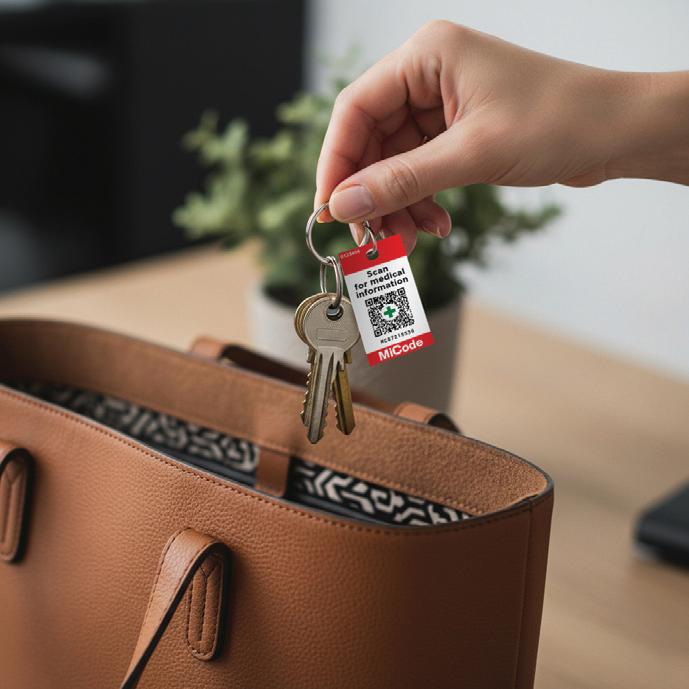
MiCode helps that essential information travel with the person.
For families and carers, this can bring real peace of mind. It does not remove worry — nothing does — but it can reduce one of the biggest fears: that the person you care for will need help and nobody will know who they are, what they need, or who should be called.
I also wanted MiCode to be affordable. Safety should not be a luxury product. MiCode starts from £20, which I believe is an amazing price for something that can carry such important information and provide such reassurance.
People can get MiCode directly from www.micode.uk. And if anyone has questions, they can always email me personally at james@micode.uk.
MiCode began with Anthony. It also came from my own experience of illness. But it is for anyone who wants to feel safer, more independent and better understood in an emergency. It is a small piece of technology with a very human purpose: helping people be known, protected and cared for when it matters most.
Three colleagues from Oat Hill Mews, Care UK’s home in Market Harborough, spent the night camping outside their workplace, raising £1,400 for charity in the process.
Business Administrator Emma Poyser, Receptionist Dani Rust, and Head Chef Harry Underwood all took part in ‘The Great Tommy Sleepout’, as well as organising a raffle and bake sale, raising money for the Royal British Veterans Enterprise.
The Royal British Veterans Enterprise is a charity that helps veterans and people with disabilities find meaningful work, tackles veteran homelessness by providing tailored housing for veterans, and so much more.
The trio chose to take part in the initiative due to some familial ties to the charity and in support of veterans at the home. Emma said: “We've now got our Veteran Friendly Framework accreditation and host a veteran’s fish and chips event once a month on a Friday, so I thought it would be a really good charity to fundraise for. My granddad was also a Desert Rat, so I wanted to do it for him, too.”
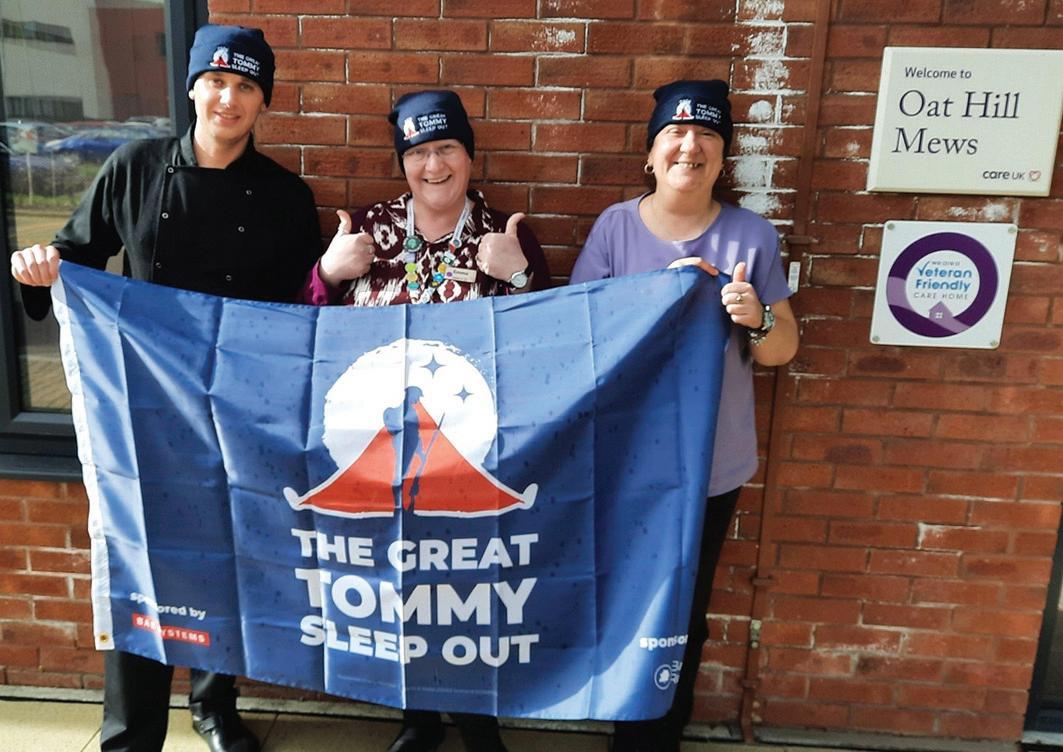
“I always love giving something back, so I decided to take part as well,” Dani says, “I'm the daughter of an RAF veteran and I have so much respect for everybody in the forces. I’m grateful for what they do, and I wanted to do something for them.” As for Harry, he wanted to give back to the community: “We do our fish and chips veteran’s event once a month and I've had a good chat with a lot of the people there. I go up and see them and they're all really nice guys! I'm always into getting involved in stuff like this and it’s good to give back to people that have
done a lot for this country.”
The team had already completed their bake sale and raffle before they prepared for their overnight stay, with residents helping to sell the cakes, too.
When the day came for the group’s camp-out, the home organised a mini faux-campfire sing-along in the evening with the residents, as well as sharing campfire snacks like marshmallows.
The group then headed out into the gardens of the home with tents and sleeping bags, ready to take on the challenge.
“Harry made us dinner then we went outside and had a real fire to toast marshmallows,” Emma says, “We had a song on the radio to get us through and Sydney – the neighbour’s cat who visits every day. He came and slept with us in the tent! It was lots of fun.”
When asked what they felt after taking part, Dani said: “Euphoria. You're pleased you've done it and it makes you realise what some people go through when they are facing homelessness, especially after giving for a service like the army or the RAF." Emma added: "We had the security of being in the garden, even though it was noisy with the road, but I've joined an online group for people that are doing it throughout the UK and there are people who have slept on the streets with no tent, just a sleeping bag.”
The group raised £700 altogether, with Care UK matching their donation and raising the final total to £1,400, and all three said they are looking forwards to the next fundraising opportunity that comes their way!
A Hitchin home and a local college have joined forces to encourage intergenerational collaboration.
MHA Elmside and North Hertfordshire College have been working together with students coming to the home and spending time with the residents Students from the college have been visiting residents at the home on a weekly basis, helping students build confidence whilst creating meaningful connections with residents through hand care and nail painting sessions. The partnership reflects both organisations commitment to community engagement, wellbeing and creating opportunities for people of different generations to connect and learn from each other.
Throughout the partnership, students have developed valuable communication skills, increased their confidence and built genuine relationships with residents.
Residents at MHA Elmside have equally embraced the visits, enjoying the regular social interaction and meaningful engagement with young people
from the local community.
Monica King, activities coordinator said: “This has been such a positive experience!
Our residents have so looked forward to the girls’ weekly visit and have been seen showing off their fresh manicures to friends and family.
It has been genuinely heartwarming to see residents building friendships with the students and I hope the partnership continues long into the future.
Carmel Pryce, support coordinator at the college added: “ It has been truly wonderful seeing the students grow in confidence during their time at MHA Elmside.
“The time spent with the residents has been invaluable for them.
“I have watched students who were too shy to say hello to people on day one, get up and perform a song on the last day.
“I feel this partnership has been a huge success and hopefully we will continue with the next cohort of students.”
By Kevin Groombridge –

The adult social care sector depends upon effective regulation, timely oversight and credible assurance to protect some of the most vulnerable people in society.
However, new analysis by Care Inspections UK (CIUK) has highlighted growing concerns about the current inspection backlog within the Care Quality Commission (CQC) system and the wider implications for public confidence, provider accountability and quality improvement across England.
Data analysed by CIUK from the CQC show that, as of March 2026, more than 5,400 care homes in England had not received a full inspection in over five years. This represents more than 40 per cent of all care homes registered before March 2021. In some local authority areas, more than 70 per cent of services had not received a full inspection during that period.
Whilst many providers continue to deliver safe and compassionate care despite immense operational pressures, the scale of the backlog
raises serious questions about whether the current inspection system can deliver timely and effective regulatory oversight.
Inspection delays matter. Families, residents, commissioners, lenders and insurers rely heavily upon inspection findings to assess risk, quality and compliance. When inspections are not conducted regularly or when reports take many months to be published, confidence in the regulatory system inevitably weakens.
At the same time, providers themselves often express frustration regarding inconsistency in inspection methodology, perceived subjectivity in judgements and the lack of practical support following inspection activity. Many operators report that inspection outcomes can feel overly dependent upon individual inspector interpretation rather than robust triangulated evidence and measurable quality indicators.
This is where independent inspection and assurance bodies play an increasingly important role.
As the UK’s only UKAS-accredited independent inspection body for adult social care operating to ISO/IEC 17020 standards, CIUK provides a credible alternative source of inspection, assurance and quality improvement support for the sector. Unlike consultancy-led “mock inspections”, CIUK undertakes structured, evidence-based inspections using defined methodologies, extensive document review, stakeholder engagement, direct observation and objective assessment frameworks.
Importantly, CIUK inspections are designed not simply to identify failings, but to support improvement. Detailed inspection reports and
action plans provide providers with clear, practical and prioritised recommendations to strengthen governance, compliance, safety and care quality.
In an environment where CQC capacity challenges continue to affect inspection frequency, many providers are increasingly recognising the value of independent inspection as part of their wider governance and assurance arrangements. CIUK can quickly and efficiently inspect services across residential care, nursing care, supported living and domiciliary care, providing organisations with timely insight into operational performance and regulatory risk.
The sector also faces increasing complexity. Workforce shortages, rising acuity, financial pressures and growing regulatory expectations mean providers require more sophisticated governance and assurance systems than ever before. Independent inspection can help bridge this gap by identifying concerns early, validating good practice and supporting continuous improvement between regulatory inspections.
The future of adult social care regulation cannot rely solely upon periodic state inspection. The sector requires a broader ecosystem of evidence-based assurance, transparent quality measurement and continuous improvement support. Independent accredited inspection bodies are well placed to become an essential part of that future.
Ultimately, inspection should not be about judgement alone. It should be about protecting people, improving care and giving the public confidence that services are safe, effective and well-led.
A Midlands-based care provider has continued its expansion with the opening of a new 72-bed care home in Shirley, strengthening its presence across the region and adding much-needed capacity for specialist elderly care.
Heathview Rose, part of the Macc Care Group, will provide residential, nursing, dementia and respite care within a purpose-built, stateof-the-art environment. The opening marks Macc Care’s 18th home, with a further site in Codsall set to launch later this year as part of its ongoing growth strategy.
The new service has been designed to meet increasing demand for high-quality, person-centred care in the West Midlands, offering ensuite accommodation alongside a range of communal and therapeutic spaces to support residents with varying and complex needs.

The launch forms part of a sustained period of growth for Macc Care, which has expanded its portfolio significantly in recent years while continuing to invest in workforce development, clinical outcomes and operational infrastructure.
Bhav Amlani, Director at Macc Care, said: “Heathview Rose represents another important milestone in our growth as a provider. As demand for high-quality care continues to rise, it is vital that we continue to invest in new services that not only increase capacity, but also deliver the standards of care that individuals and families expect. Our focus remains on sustainable growth – ensuring that each new home reflects our commitment to person-centred care, strong clinical governance and a supported workforce.”
The National Institute for Health and Care Research (NIHR) has awarded over £5 million to nine research projects that aim to transform social care through the use of cutting-edge digital technology.
The funding – £5,444,562 million in total – has been awarded to institutions in England, Scotland and Wales through the NIHR’s Research Programme for Social Care (RPSC). The projects are expected to run for between 18 months and two years.
The NIHR invited collaborative UK research proposals exploring innovative uses of digital technology in social care, with a focus on artificial intelligence, digital devices, and new approaches to improve outcomes for adults and children.
There was particular interest in exploratory and applied studies that will investigate barriers to adoption, tackle inequalities in access and test new applications in under used settings.
Professor Mike Lewis, NIHR Scientific Director for Innovation, said: “The NIHR is fully committed to using digital innovations to improve the delivery of social care in the UK. This funding – which is aligned with the Government’s People at the Heart of Care vision, as well as its mission to move provision of care out of hospitals and into the community – will help us build evidence on how digital tools can transform social care and improve lives.
“It reflects the NIHR’s commitment to building capacity in social care research and ensuring technology is harnessed to support independence, enhance quality of life and strengthen the effectiveness of care for adults, children and carers across the UK.”
The nine funded projects will cover a range of approaches and interventions, including:
• virtual reality communication training for carers of people with severe mental illness
• whether cheap, everyday smart-home gadgets can help people with dementia stay safely connected to friends and family
• how
using digital technology, like tablets
The full list of funded projects is:
• Embedding TEchnology in Care Homes (ETECH) – University of Glasgow
• Socially connected SmartCare at home: enhancing independent living for people living with dementia through low-cost technology – Cardiff University
• Using Artificial Intelligence to improve the use of evidence in social work practice – Cardiff University
• A realist synthesis and evaluation of how mainstream smart home technologies can support independent living for disabled people: understanding what works for whom, in what circumstances, and why – Cardiff University
• Turn down the noise: reducing noise and supporting people with dementia and hearing loss in social care settings – University of Worcester
• Building effective digital post-hospital discharge and reablement services for older adults in social care –University of Stirling
• Virtual reality assisted communication training for carers in severe mental illness – King’s College London
• Co-evolving proactive telecare in practice – University of Oxford
• Leveraging generative AI to support people with learning disabilities in their daily lives – Manchester Metropolitan University
Professor Martin Knapp, Director of NIHR Research Programme for Social Care, said: “This is really exciting, important funding from the NIHR, which will look to transform social care through some truly innovative solutions. By utilising the power of AI, virtual reality, smart home technologies and other tech, these projects offer real hope for supporting independent living and autonomy, and improving people’s lives by raising standards of care and support within their communities.”
By Chris Kisby, employment partner at Gateley Legal

The stakes in the care sector between doing the right thing and the wrong thing can, on occasion, be a matter of life and death, especially when it comes to those who are extremely vulnerable due to their condition or age. As such, whistleblowing within the sector can, when done properly and in the public interest, have a positive outcome for patients, their families, carers and employers.
Put simply, whistleblowing is the action someone (typically an employee or ex-employee) takes to report wrongdoing in the workplace that falls under one of the types of failure, wrongdoing or malpractice listed in the Employment Rights Act 1996. The act of reporting any such wrongdoing to a prescribed person is known as making a ‘protected disclosure’.
HOW TO MAKE A PROTECTED DISCLOSURE?
As a starting point, any disclosure made needs to be a ‘qualifying’ disclosure, meaning that the individual making the disclosure has a ‘reasonable belief’ that the information they’re disclosing relates to one or more of the types of wrongdoing and that it’s in the public interest to make the disclosure. Relevant issues that may be found within the care sector could include:
Danger to the health and safety of an individual - whether that be a patient, member of staff, visitor, etc.typically related to the quality of service provided or conditions
A criminal offence - for example, money or possessions being taken from vulnerable patients
Breach of a legal obligation – for example, a breach of a legal duty of care owed to a patient, or a breach of a legal obligation to staff
• Miscarriage of justice, such as wrongful accusations made against a particular member of staff or a patient. WHAT PROCESS SHOULD BE FOLLOWED TO ‘BLOW THE WHISTLE’?
An employee looking to make a protected disclosure should refer to their employers’ whistleblowing policy to see what steps need to be taken. Typically, a whistleblowing policy will confirm a specific point of contact with whom a disclosure can be made. This will usually be an HR representative, a compliance officer, or a line manager if there is no one in the aforementioned positions.
If there is no whistleblowing policy, an employee looking to make a disclosure would be advised to speak to their HR team or line manager about how to proceed. However, if their HR team or line manager is the subject matter of the issue, employees should approach someone else in a senior position to ask for advice.
There are two levels of protection for whistleblowers under the Employment Rights Act 1996: The dismissal of an employee will be automatically unfair if the reason, or principal reason, for their dismissal is that they have made a protected disclosure. Workers are also protected from being subjected to any detriment on the ground that they have made a protected disclosure. Such detrimental treatment would include, for instance, the whistleblower experiencing bullying, demotion, or being excluded from meetings, etc.
There is no financial cap on compensation in whistleblowing claims and no requirement for a minimum period of service. However, if an employment tribunal believes that a disclosure was made in bad faith (ie, based on untruths or with the intention of causing malice), it could reduce any compensation award by up to 25%.
Blowing the whistle can be a daunting and lonely process for those who make a disclosure. Where there is a ‘protected disclosure’, employers should assume that the disclosure is being made in good faith, and often for the benefit of the business. As such, they should look to support the employee. This could include, for example, offering them access to confidential and impartial counselling to help them through what can be a stressful and emotional experience of whistleblowing.
Have a good whistleblowing policy and ensure employees know about its existence.
Make sure a nominated whistleblowing officer/s are trained on what their role requires.
Treat all potential disclosures seriously and investigate as appropriate.
Make sure that lessons are taken from all disclosures to ensure things improve.
• Do not seek to identify the whistleblower in cases where the disclosure is anonymous.
Do not exclude or alienate the whistleblower.
Do not assume the relationship between the business and the whistleblower is irreparable in cases where the disclosure causes conflict.
Top tips for employees
Take time to read and digest the company whistleblowing policy.
Raise concerns at the earliest opportunity, in order to potentially limit the issue from becoming more serious.
• Seek advice, whether that be from an internal whistleblowing officer or someone externally, before proceeding with the disclosure.
Be prepared to be challenged on your claims.
Do not rely on memory to recall events or previous meetings; it’s important to keep notes of dates, conversations and outcomes.
An RAF veteran who was left paralysed by a stroke has vowed to cross the finishing line of the Worthing 10K on his own two feet to thank the charity that helped with his rehabilitation.
Ed Sampson spent six months at Care for Veterans – a Royal Star & Garter Home in Worthing, where he received intensive treatment in its in-house physiotherapy room, following a stroke in December 2023. Thanks to Care for Veterans’ dedicated team of physiotherapists and Ed’s hard work, the 57-year-old was able to return home in 2024. He will be taking part in the 7 June fundraiser with his wife Vikki. She will push her husband throughout the course, but Ed plans to get out of his wheelchair and walk the final 100 metres to the finish line.
Explaining why he’s raising money for Care for Veterans, Ed continued: “After my stroke I never thought I'd be in the position to do this, there was a lot of doubt in my ability to walk again. But Care for Veterans looked after me during my stay and continue to do so as I train for the Worthing 10K. The team are so nice and work with me to help achieve my goals. I wouldn’t be where I am now if it weren’t for their dedication and support.”
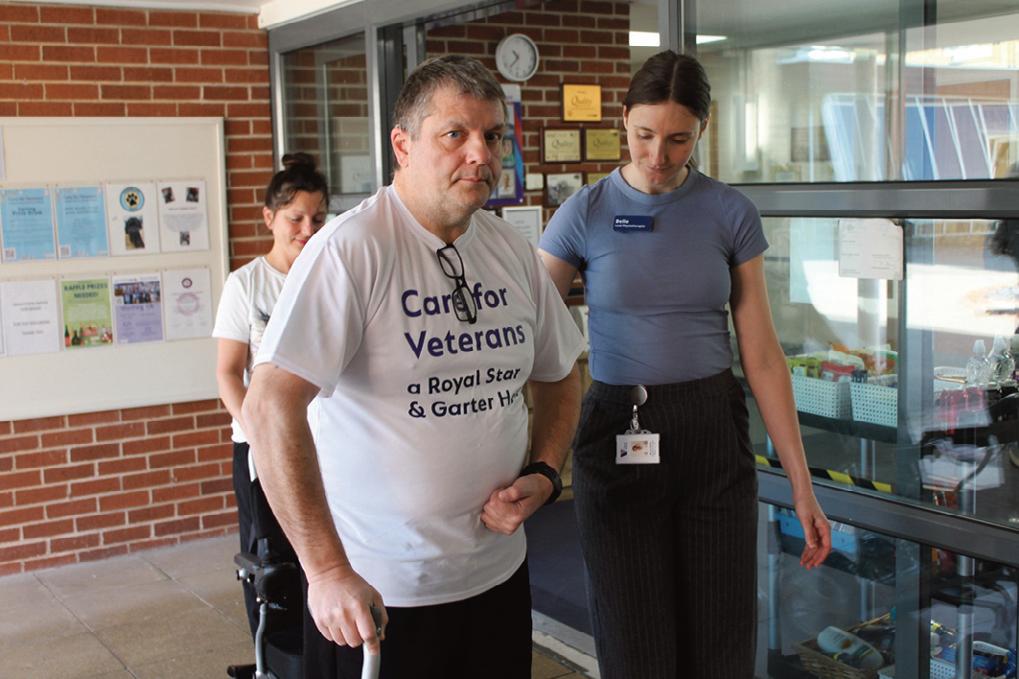
Ed was an RAF Technician in the 75th Signals Unit and served from 1988-1997. Despite this, he said: “Recovering from the stroke and preparing for the Worthing 10K is without doubt the toughest challenge I’ve ever undertaken. The support I’ve had from Care for Veterans, and from my wonderful wife and family, has often moved me to tears.” He added: “Sometimes I feel more sorry for my wife who has to push me for 9.9K!”
Vikki said: "Ed has worked so hard to get to this position and I'm incredibly proud of him. It is testament to his courage and determination, and the superb work of Care for Veterans. It will be emotional for all his family and friends cheering him on when he crosses the finishing line.”
Home Manager Vicky Strange added: “Ed stayed at Care for Veterans for six months and we were delighted to see him recover enough to return home to his beautiful family. But it’s another thing entirely to see him work so hard on achieving such a milestone, he’s come so far in his journey, and we are all so proud of him.”
Ed and Vikki will be part of 20 people running the Worthing 10K for Care for Veterans.
Richard Ayres, social care advisor at Care England, was honoured with the Chief Nurse Adult Social Care Award at last week’s Parliamentary Reception, presented by Deborah Sturdy, Chief Nurse for Adult Social Care.
The award recognises individuals who have made an outstanding and lasting contribution to adult social care. We couldn’t be prouder.
Reflecting on the award, Richard said: “I am privileged to have been awarded the Gold Award for Nursing and Adult Social Care Excellence by Deborah Sturdy, the Chief Nursing Officer for Adult Social Care, someone I hold in the highest regard and wholeheartedly respect for her work.
“I work as part of an amazing team at Care England, having worked for them for five years and alongside them since 2014, when I left Procurement to move into adult social care for homecare and care homes. I’ve had the privilege of working with incredible individuals at Care England, along with colleagues across social care.

“I’ve been inspired by them and by key leaders, care workers, my Registered Manager sister who got me into Adult Social Care in the first place (thanks Emma!), and those who have had such influence across the sector, like Ruth French and Nuno Lopes, who have both inspired and motivated me to do all I can to support our sector and enhance care provision, and who kindly nominated and supported my nomination for this award.
Professor Martin Green OBE added: “I am genuinely delighted that Richard has been honoured in this way, it is richly deserved. I am proud to lead an organisation that fights every day for a sector that too often goes unrecognised, and I am grateful beyond words to the colleagues, care workers, and providers who inspire everything we do.
“We still have much to accomplish, but moments like this remind us that our work matters. What makes this recognition especially meaningful is that Richard was nominated by our own members and key stakeholders, and that speaks volumes. It tells us that the wider sector sees him exactly as we do: a powerful and trusted colleague, and a compelling voice for social care across our membership and far beyond.”
By Jayne Connery, Founder of Care Campaign for the Vulnerable
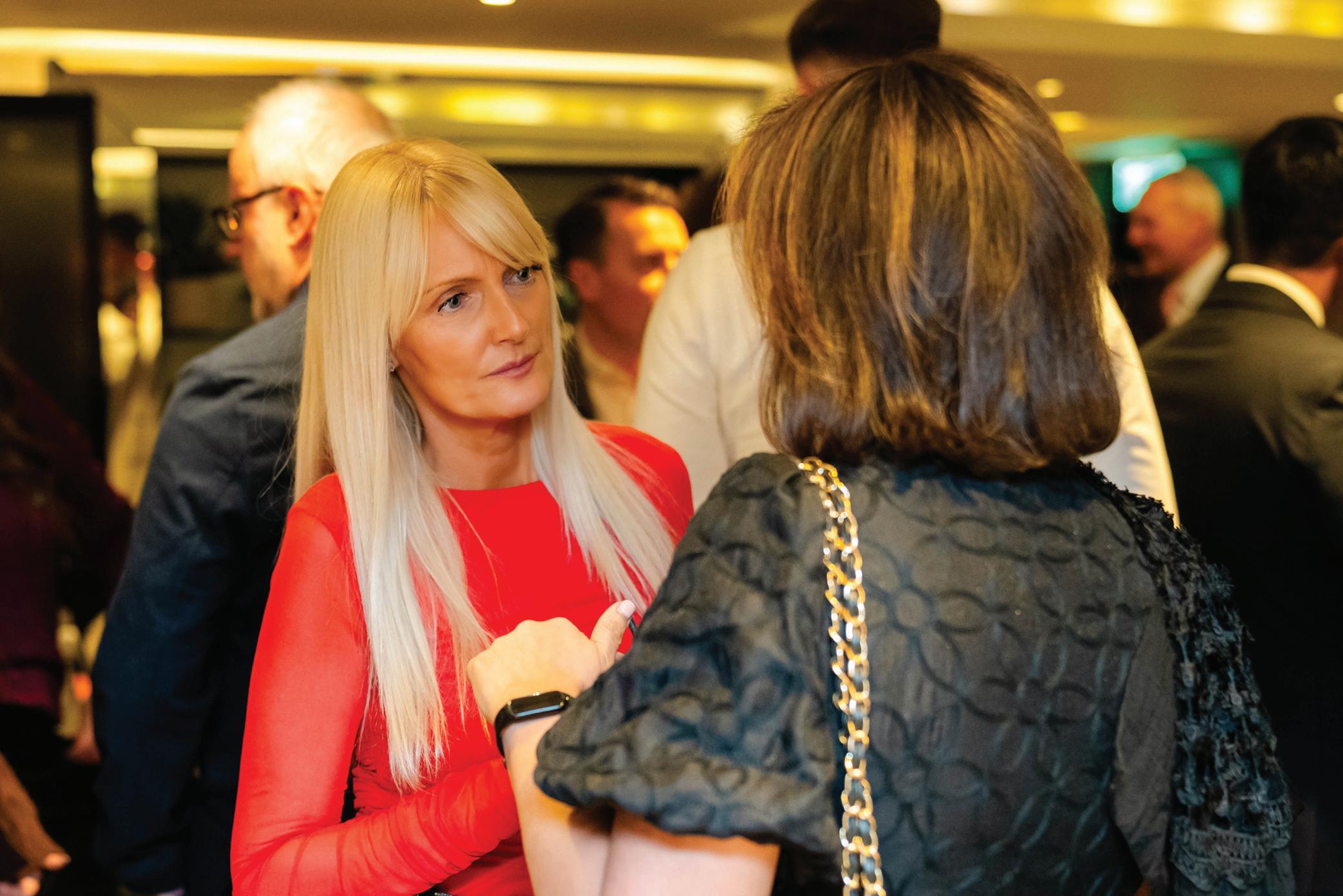
Over the years, through my work with families, care providers, carers, and people living with dementia, one issue continues to stand out above almost all others — the lack of understanding around complex behaviour in dementia care.
At Care Campaign for the Vulnerable (CCFTV), we believe it is one of the greatest challenges facing the care sector today, and also one of the areas where meaningful change is urgently needed.
Families regularly contact us feeling frightened, exhausted, and heartbroken. Many describe loved ones who were once calm and gentle becoming distressed, fearful, aggressive, withdrawn, or resistant to care. Often, they are told their relative is “challenging”, “difficult”, or “non-compliant”.
But behind every behaviour is a reason.
People living with dementia are not intentionally trying to cause problems. Behaviour is communication. It may reflect pain, fear, overstimulation, confusion, loneliness, trauma, frustration, or unmet emotional and physical needs.
Too often, care environments still focus on managing behaviour rather than understanding it and that has to change. My own mother, Ellen, lived with vascular dementia, and I witnessed firsthand how dramatically environment and communication affected her wellbeing. In the right setting, around people who showed patience, empathy, humour, and reassurance, her personality
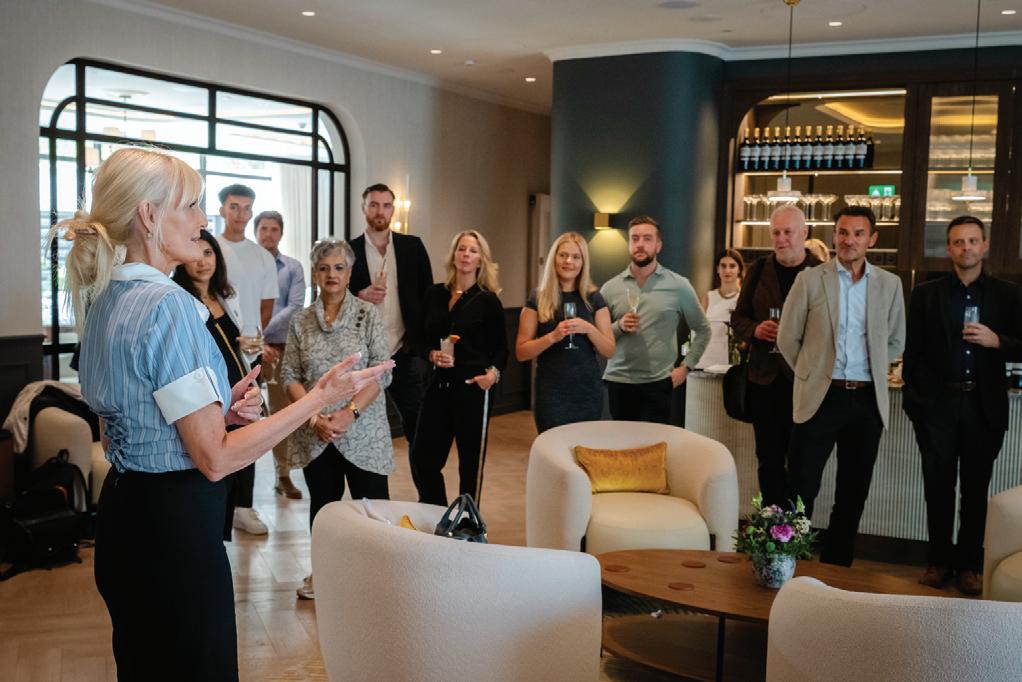
remained very much alive. But in environments where she felt frightened, rushed, or misunderstood, her anxiety escalated and her behaviour changed completely.
What I learned through my mum’s journey shaped the entire direction of my work.
Complex dementia care requires far more than basic awareness training. It requires emotional intelligence, confidence, consistency, observation, patience, and genuine understanding of the individual behind the diagnosis.
Sadly, carers are often placed into highly demanding situations without the level of specialist training or support they truly need. We hear repeatedly from frontline staff who admit they feel overwhelmed managing distressed behaviours, particularly when staffing levels are stretched or when residents have advanced dementia combined with other complex health needs. This is not about blaming carers.
Many carers are working under immense pressure and doing extraordinary work in very difficult circumstances. But as a sector, we must be honest enough to recognise that the needs of people living with dementia have become increasingly complex.
The reality is that some people entering care homes today would previously have been supported within specialist nursing or hospital environments. Providers are caring for residents with significant cognitive impairment, distressed behaviours, trauma responses, mobility issues, communication difficulties, and multiple health conditions — often all at once. And yet dementia training can still vary hugely across the sector.
At CCFTV, we want to see greater investment in meaningful dementia education that goes beyond textbooks and compliance exercises. Training must help carers understand why behaviours happen, how environments influence distress, and how communication styles can either calm or escalate situations.
Simple things matter more than people realise.
Tone of voice. Body language. Noise levels. Lighting. Routine. Familiarity. Feeling ignored. Feeling frightened. Being approached
too quickly. Being unable to express pain or discomfort All these things can completely change how a person living with dementia responds.
We also believe there needs to be more honest conversation around the emotional toll complex dementia care can have on care staff themselves. Supporting someone who is frightened, distressed, aggressive, or emotionally dysregulated every day can be emotionally draining. Staff need support, mentoring, and safe spaces to reflect without fear of judgement.
Good dementia care is not simply task-based care - it is relationship-based care.
The providers who stand out to us are rarely those focused purely on appearance or marketing. They are the providers investing in culture, leadership, staff wellbeing, communication, and specialist understanding. They create environments where carers feel confident asking for help, where families are listened to, and where behaviours are approached with curiosity rather than frustration.
Importantly, we also want to see a move away from overreliance on restrictive approaches wherever possible. Families frequently raise concerns with us around sedation, isolation, lack of stimulation, or individuals being labelled too quickly without enough exploration of underlying causes. Every behaviour should prompt a question: what is this person trying to communicate?
Sometimes the answer may be physical pain. Sometimes trauma. Sometimes fear. Sometimes boredom. Sometimes grief. Sometimes simply an environment that no longer feels safe or familiar.
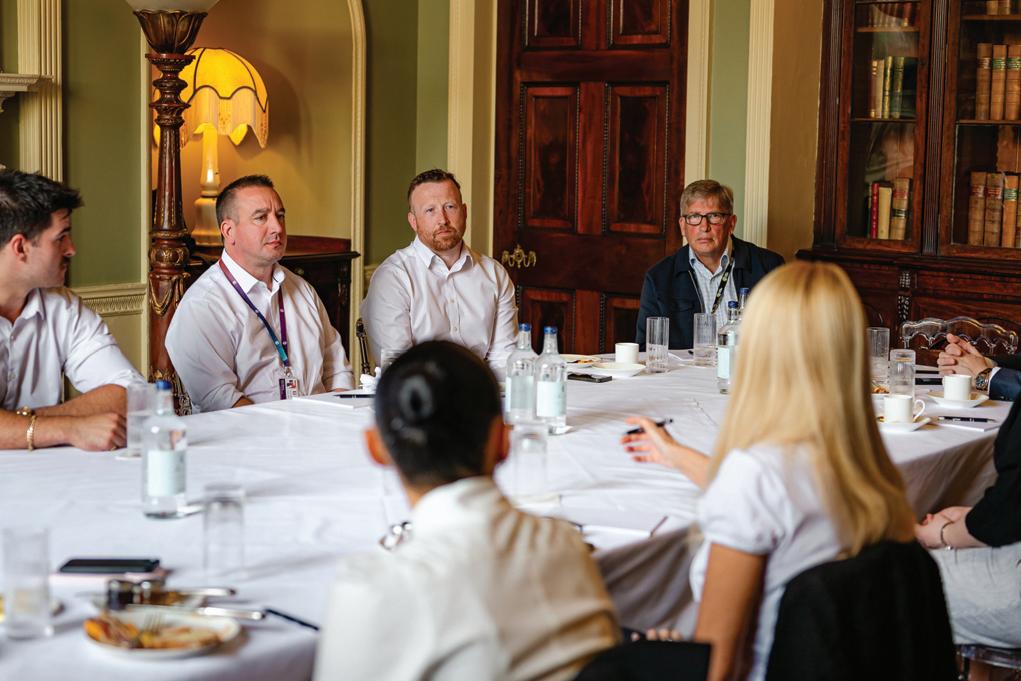
At CCFTV, we believe dementia care must become more individualised, more compassionate, and more psychologically informed. We also believe families should be viewed as part of the care team, not outsiders. Relatives often hold the key to understanding triggers, routines, comfort strategies, and lifelong personality traits that can help staff deliver far better care.
There are many outstanding carers and providers already leading the way. We see extraordinary examples across the sector every week. But we also know there is inconsistency, and too many families still feel unsupported when behaviours become complex.
Change is possible. But it requires openness, investment, stronger dementia education, honest conversations, and a willingness to move beyond outdated models of care. Because people living with dementia deserve more than simply being managed, they deserve the right care.
Trust is the foundation of every great care home. For residents and their families, choosing residential care is rarely a simple decision. It carries emotional weight, financial significance, and an enormous leap of faith. That's why transparency, fairness, and legal compliance aren't just operational tick-boxes — they're central to the care you provide.
The Digital Markets, Competition and Consumers Act 2024 (DMCCA) has introduced some of the most significant changes to consumer law in more than a decade, and care homes are firmly within its scope. Understanding what those changes mean in practice is essential — and that's exactly where the Business Companion Care Homes Guidance comes in.
Developed by legal experts and completely free to access, this practical guide breaks down your obligations under the new legislation in plain, straightforward language. Whether you're reviewing contracts, updating your pricing structures, or looking at how you communicate with prospective residents, it's an indispensable resource.
The DMCCA replaces the previous Consumer Protection from Unfair Trading Regulations, raising the bar across almost every consumer-facing sector. For care homes, the key implications include: Full pricing transparency. The Act outlaws "drip pricing" — the practice of introducing unavoidable fees late in the customer journey. All mandatory charges must now be presented clearly and upfront, from

the very first conversation.
Authentic reviews and endorsements. Fabricated or manipulated reviews are now explicitly prohibited. As online reputation plays an increasingly important role in how families choose care homes, authenticity isn't just ethical — it's a legal requirement.
Tougher enforcement. The Competition and Markets Authority (CMA) now holds significantly strengthened powers, with the ability to issue fines of up to £300,000, or 10% of global turnover, for non-compliance. The message is clear: getting this right matters.
These are just some of the areas covered in detail within the Business Companion Care Homes Guidance, which offers practical, step-by-step advice to help your home stay on the right side of the law.
SUPPORTING VULNERABLE RESIDENTS
Working in care means working with vulnerability every day. Whether driven by age, ill health, bereavement, financial pressure, or a combination of factors, vulnerability can affect a resident's ability to
make informed decisions or communicate their needs clearly. Recognising and responding to this is both a legal duty and a moral one. The Business Companion Consumer Vulnerability Guide provides checklists and actionable advice to help your team identify and appropriately support vulnerable individuals — ensuring your home delivers compassion and compliance in equal measure.
A WIDER RESOURCE FOR YOUR BUSINESS
Business Companion extends well beyond care home guidance. The platform covers a broad range of sectors and topics — from online selling and complaints handling to delivery charges and net zero planning — all presented in clear, accessible language. Backed by the Chartered Trading Standards Institute and the Department for Business & Trade, it's a free, authoritative, and regularly updated resource you can rely on.
DON'T WAIT — ACT NOW
The DMCCA is already in force and enforcement is live. Now is the time to review your contracts, pricing communications, and marketing materials — before a compliance issue forces your hand.
In a sector built on trust, staying informed isn't just good practice. It's everything. Visit Business Companion’s Care Homes Guidance today In a sector built on trust, staying informed isn’t just smart - it’s essential. To find out more, visit: www.businesscompanion.info
£500,000
End of life charity Marie Curie has announced funding to support research into improving palliative and end of life care in the community, including out-of-hours provision. The fund comes at a time when national health policy is increasingly focused on moving care out of hospital and into the community, with a growing emphasis on supporting more people to receive end of life care in the place they call home.
The charity’s new research grants scheme, themed ‘Care close to home, in and out of hours’ will fund projects of up to £150,000. Expressions of interest will open from 2 June 2026 until 17 July. The call responds directly to gaps in evidence and priority research questions identified by patients, carers and health and social care professionals through the Palliative and End of Life Care Priority Setting Partnership (PeolcPSP), conducted with the NIHR James Lind Alliance and published in February 20251.

In particular, the funding aligns with the priority ‘What are the best ways to provide palliative and end of life care in the community, for example, what are the roles of different services and professions?’ Dr Sabine Best, Associate Director, Research Management and Impact at Marie Curie, said: “This funding comes at a critical time. More people are now dying in the community than ever before, with 28% of deaths in England and Wales occurring at home. However, access to timely, coordinated care outside of
hospital settings, particularly out of hours, remains inconsistent.” Research funded through this call may explore a range of topics, including the provision of community-based palliative care, models of service delivery, inequalities in access to round-the-clock care, and the economic evaluation of different care models. All projects will be required to meaningfully involve people with lived experience in their design and delivery and focus on short to medium term impact on practice or system change. Through this research grants scheme, Marie Curie aims to generate robust evidence to support scalable improvements in how palliative and end of life care is delivered close to home, both in and out of hours, so that more people can receive high-quality, coordinated care where and when they need it most.
Marie Curie supports people with any illness they are likely to die from including Alzheimer’s (and other forms of dementia), heart, liver, kidney and lung disease, motor neurone disease, Parkinson’s, and advanced cancer, and is the largest charity funder of palliative and end of life care research in the UK.
To submit an expression of interest, email research.grants@mariecurie.org.uk by 5pm on 17 July 2026. For guidance on writing an expression of interest, visit www.mariecurie.org.uk/research-and-policy/research/calls-for-research
as part of the ‘Your Charity, Your Choice’ scheme.
Ian Evans, manufacturing team leader at the Mondelēz International factory’s nearby site in Chirk nominated the care home for the funding.
Aware of the excellent work done by the team Mr Evans nominated the care home and staff, who take exceptional care of the 66 elderly residents.
Chirk Court, a specialist dementia-friendly care home, was one of 72 charities across the UK and Ireland selected to receive funding.
Mr Evans said: "Chirk Court Care Home does so much fantastic work providing high-quality care to its residents, and I know this generous grant will have an incredibly positive impact.
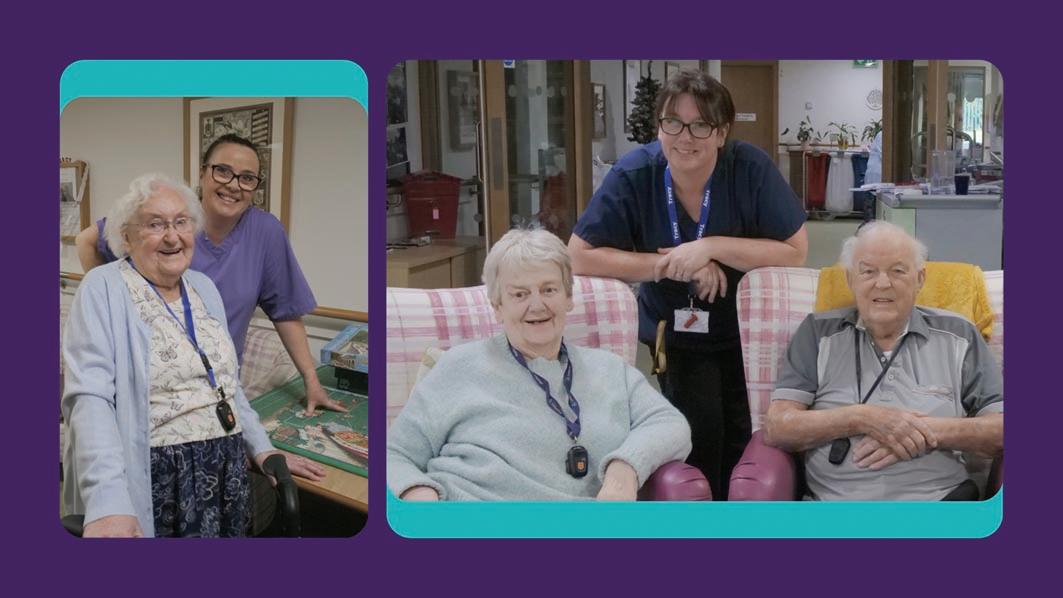
"I’m delighted that my nomination was supported by my colleagues, and I know that the donation will help the charity continue to deliver its fantastic services supporting the residents in its care."
Laura Shone, deputy manager at Chirk Court, said: "We are extremely grateful to The Cadbury Foundation for this significant donation, which will help us create a new sensory room for our residents and the wider community.
"The sensory room will make a real difference, helping residents maintain their independence and giving them the opportunity to socialise with others.”
The Cadbury Foundation, which was established in honour of company founders George and Richard Cadbury, supports projects that reflect community care and employee wellbeing.
Last year, The Cadbury Foundation celebrated its 90th anniversary, marking more than £1 million donated to community programmes since the scheme began.
Kelly Farrell, community affairs manager at Mondelēz International (Cadbury’s parent company), explained: "Our ‘Your Charity Your Choice’ scheme was set up to support important causes and charities close to our employees’ hearts, and we’re incredibly proud that for fourteen years, the programme has done exactly that."
By Sunny Sandhu, Legal Operations Team Leader and Senior

For years, overseas recruitment quietly propped up the UK’s care sector. In many care homes, international staff are not just part of the workforce, they are the workforce. But since the closure of the overseas care worker visa route in 2025, something fundamental has shifted.
Sponsorship is no longer about bringing people in. It is about holding on to the people you already have. That makes compliance with sponsor licence duties more important and more consequential than ever before.
At the same time, the Home Office has tightened its focus on the sector. Care is now treated as a high-risk industry for sponsorship compliance, which in practice means more inspections, more scrutiny and far less room for error. What used to be viewed as an administrative responsibility has evolved into something much broader, touching everything from HR systems to payroll and day-to-day operations.
Perhaps the starkest reality is what happens when things go wrong.
If a sponsor licence is revoked, it does not come with a long lead time or a gradual adjustment period. The impact is immediate. The provider loses the right to sponsor workers overnight, and the visas of existing sponsored staff are typically curtailed to 60 days. In practical terms, that means those workers must either secure a new sponsor very quickly or leave the UK. For a care provider, the consequences can be profound. Rotas that were already stretched begin to unravel. Staffing ratios come under pressure. Agency costs rise sharply as managers scramble to plug gaps. In some cases, services face difficult decisions about whether they can continue to operate safely. Even where a licence is suspended rather than revoked, the effects are still deeply felt. Recruitment is effectively frozen and existing staff may be unable to extend their visas, creating a slow but steady erosion
of capacity.
What makes the situation particularly challenging is that breaches are not always the result of deliberate wrongdoing. Increasingly, they arise from everyday operational realities.
Take payroll, for example. Salary thresholds must now be met consistently in every pay period. A simple error such as an underpayment that is corrected the following month can still trigger concern. The Home Office is making greater use of data, cross-checking PAYE information in a way that leaves very little margin for inconsistency.
Or consider the nature of care work itself. In a busy home, staff often step outside strict job descriptions to support residents where needed. But if a worker’s day-to-day duties begin to drift too far from the role stated on their Certificate of Sponsorship, this can be interpreted as a compliance breach.
There is also a growing expectation that providers actively demonstrate they are looking after the wellbeing of their sponsored staff. This includes ensuring workers understand their rights, from pay and holiday entitlement to working hours. Crucially, employers must be able to evidence that this information has been clearly provided and recorded.
Alongside the operational risks sit the financial ones. Civil penalties for illegal working have increased significantly, with fines reaching up to £60,000 per worker in serious cases.
Providers must also tread carefully when it comes to costs associated with sponsorship. Attempting to recover fees from workers, even indirectly, can itself lead to enforcement action.
All of this is playing out against a backdrop where the option to recruit from overseas has largely disappeared. While limited in-country routes remain, the steady flow of new international staff has slowed to a trickle. The workers already sponsored by providers have, in effect, become a fixed and valuable resource.
That changes the stakes entirely.
Losing a sponsor licence today is not simply a regulatory issue or a temporary setback. It can mean losing access to a workforce that cannot easily be replaced, at a time when recruitment across the sector remains challenging.
Following its recent Care Quality Commission inspection on 17 March 2026, Langdale Heights has achieved an overall Outstanding rating, with four out of five domains rated Outstanding and one rated Good. In practical terms, this is an extraordinary achievement. But for us, this is far more than a rating.
This is history.
In over two decades of building, leading, refining, and growing within the care sector, this stands as one of the most powerful milestones we have ever reached, not simply because of the result itself, but because of how it was achieved.
At its very heart, this achievement was built through care itself.
This is what made the Langdale Heights team so exceptional.
As Neemat Sadiq, CEO of Langdale Care Homes, reflects:
“Outstanding is not created in preparation for inspection. It is created in the choices teams make every day to uphold standards, strengthen care, and never settle for less than what residents deserve.”
A Powerful Reflection of People, Culture, and Standards
“This result also carries a deeper message.
“Langdale Heights is one of our oldest homes. It is not purpose built. It does not rely on modern infrastructure alone to define its success.

“Instead, it stands as powerful proof that excellence is not determined by the age of a building, but by the strength of the people, the culture, and the standards within it.
“There is something profoundly meaningful in that.
“It reminds us that greatness in care is not purchased. It is built through resilience, leadership, shared sacrifice, compassion, and heart.
“Every improvement made, every audit embraced, every framework implemented, every collaborative partnership strengthened, and every challenge overcome has contributed to this moment.
“And that is why this achievement belongs to all of us.
“For us, Langdale Heights has not simply achieved Outstanding. It has redefined what Outstanding can look like.
“This is not the peak of our ambition.
“It is a reminder of what becomes possible when people come together with vision, integrity, clinical excellence, and an unwavering commitment to doing better.
“For our teams, this is a celebration. For our group, it is a benchmark.
“And for all of us, it is one of the proudest moments in our journey. Because this is not simply about inspection success.
“This is about proving that when care is led with heart, strengthened by governance, sustained by Compliance and Quality Assurance, and rooted in a genuine passion for people, history can be made.”
Grove Court in Woodbridge, Suffolk, has two big reasons to celebrate!
It has achieved a perfect 10 on Carehome.co.uk, the highest achievable review score and has also retained its Outstanding status with the Care Quality Commission, CQC. Only a limited number of care homes in the UK hold this rare combination of holding both top accolades simultaneously.
Carehome.co.uk scores are based on quantity and quality of recent reviews from residents and relatives, showing that positive experiences are consistently delivered day after day. The reviews do not just reflect the high standard of clinical care but also the lifestyle enjoyed by all at Grove Court. A CQC “Outstanding” rating is the highest grade awarded by the Care Quality Commission and indicates that a care home provides exceptional and innovative care that exceeds expected standards. Only 3.5% – 4.4% of care homes in England, representing roughly 500 top-tier providers, hold this rating which looks at areas such as person-
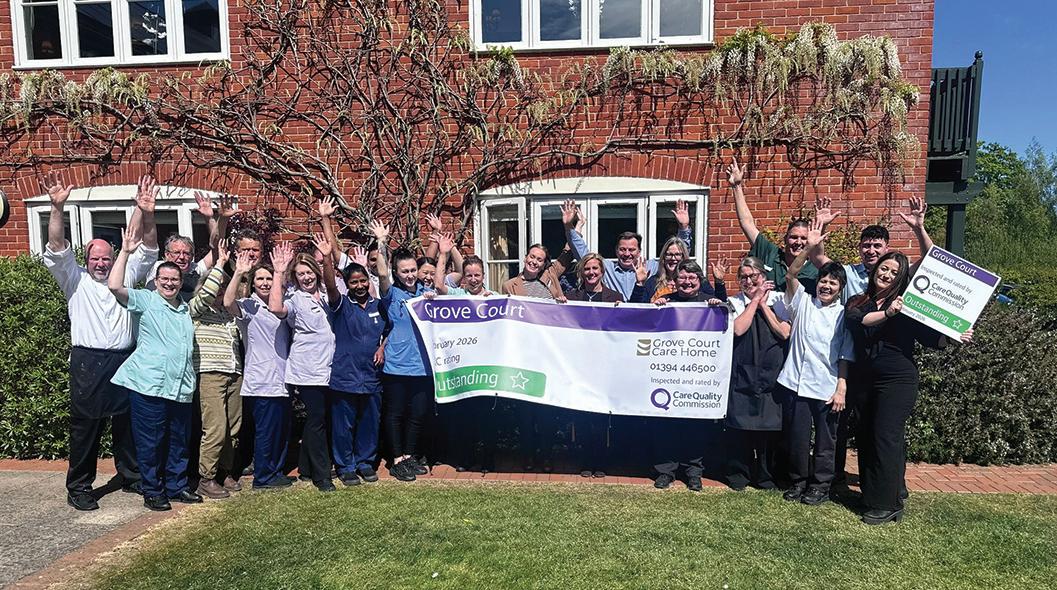
centred care, leadership, culture and continuous improvement. Hazel Roberts, CQC Deputy Director of adult social care in the east of England, said: “When we inspected Grove Court, we found a service that had not only maintained the high standards seen at its previous inspection but had continued to build on them. This reflects the dedication and consistency of the leaders and staff team.
“What stood out most was how deeply staff knew the people in their care. Other services should look at this report as an example of outstanding practice, supporting people to lead their best lives.”
“We are absolutely delighted and so proud to have achieved these two amazing accreditations, stated Kelly Lockwood, Grove Court Manager. “They reflect the dedication, compassion and commitment our team bring to their roles every day. We are absolutely focused on creating the best quality of life for each of our residents, where person-centred care is at the heart of all we do.”
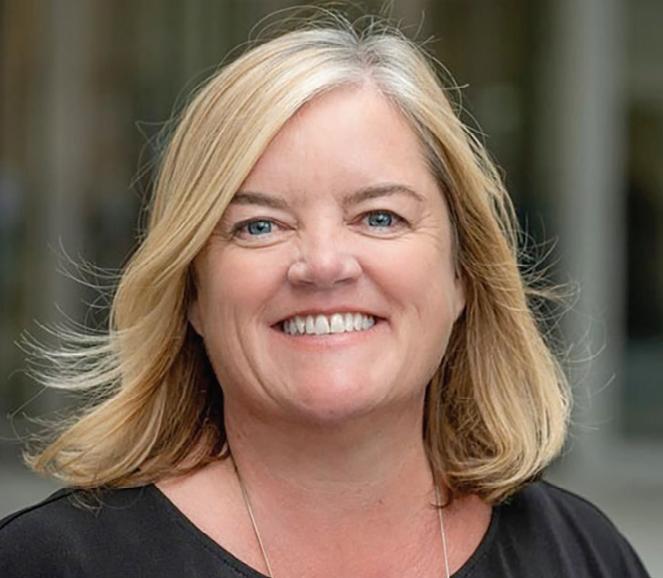
Millions of unpaid carers across the UK are being left under intolerable pressure as they prop up an increasingly fragmented adult social care system, according to Baroness Louise Casey, who says the current model is no longer fit for modern society.
Speaking at a conference hosted by Carers UK in London, Lady Casey described a care system that continues to rely heavily on unpaid family carers — most of them women — to fill widening gaps in support provision.
Lady Casey, who is leading the Government’s independent review into adult social care reform, said carers were often expected to shoulder “risk, stress and responsibility” with little clarity or reassurance about the help available to them.
She warned that the system remained overly dependent on unpaid carers and low-paid care workers reaching crisis point before meaningful support was offered.
“The reality for many carers is exhausting and emotionally draining,” she said, adding that too many people were being left to navigate a complex network of health and social care services with little guidance.
The peer criticised what she described as an outdated approach to care provision, arguing that systems designed decades ago had failed to evolve in line with the needs of modern families, longer life expectancy and rising levels of chronic illness.
Lady Casey was appointed by the Government in January 2025 to head a two-stage commission examining the future of adult social care in England, part of Labour’s wider commitment to establish a National Care Service. The commission’s first findings are expected later this year. She has previously cautioned that adult social care faces a “moment of reckoning” as demand rises sharply due to an ageing population and increasing numbers of people living with long-term conditions, including dementia.
During her address, Lady Casey highlighted the emotional and practical strain placed on families who
often struggle to understand what support exists, who is responsible for providing it and how care is funded.
She cited examples of elderly parents continuing to provide intensive physical care for adult children because they fear asking for outside assistance could make their circumstances worse rather than better.
According to Lady Casey, many carers report spending more time dealing with bureaucracy and attempting to coordinate services than they do focusing on the wellbeing of the person they support.
She said unpaid carers frequently felt like “project managers”, forced to navigate inconsistent rules, differing local interpretations and a system that often transfers responsibility onto families rather than resolving problems itself.
Helen Walker, Chief Executive at Carers UK, said: “Social care is a defining challenge of our time, with profound consequences for millions of lives. Rising demand, combined with stretched resources, is placing ever-greater pressure on unpaid carers, many of whom are providing increasing levels of care, often at significant cost to their own health and wellbeing.
“Baroness Casey is right to highlight the heavy strain on carers navigating the health and social care system. While many people are willing and committed to caring for family and friends, too often, they are not properly supported to do so. Carers frequently attribute their poor mental or physical health to a lack of support from services, rather than the caring role itself, with administrative demands being a major issue – 38% of carers say claiming financial benefits, as well as arranging and manging paid care is the main reason they feel overwhelmed.
“Our Tipping Point report shows that access to affordable, good-quality social care is crucial in enabling unpaid carers to remain in employment or avoid reducing their hours. Without it, many are forced to scale back work or leave jobs altogether to meet caring responsibilities. This affects their financial security and future circumstances.
“We welcome Baroness Casey’s strong focus on this pressing issue and are encouraged by the clear and supportive speech she has delivered. We are honoured that she chose our State of Caring Conference to share this message on unpaid care. We would also like to thank Kate Dearden MP, Minister for Employment Rights and Consumer Protection, for taking the time to visit today.”
Coinciding with the birthday of Florence Nightingale, the founder of modern nursing, International Nurses Day, held on Tuesday 12th May, is a day to celebrate nurses and care staff around the world. Residents and staff at Westlake House care home in Horsham, were happy to get involved by hosting a muchdeserved celebration.
In 2026, the theme for International Nurses’ Day is ‘Our Nurses. Our Future. The economic power of care’. The International Council of Nurses is aiming to highlight the vital, skilled role of nursing in global health systems. International Nurses’ Day is a day to give thanks for the dedication of care givers everywhere, who go above and beyond the call of duty to deliver extraordinary care
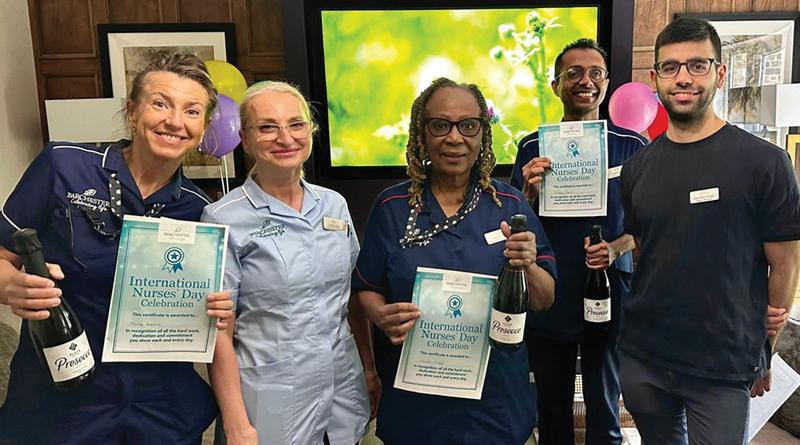
and support.
Linda Ryan, General Manager at the home, said: “At Westlake House, our nurses and staff are hard-working, dedicated, and passionate about caring for others, and that compassion and commitment has shone through even more over the past year. They continue to work tirelessly, and I’m proud of the professionalism and duty of care they uphold. All their efforts are focused on delivering the best possible care for our residents, so it’s nice to take this time to show our appreciation in return. It is also lovely to celebrate our residents who were nurses themselves and thank them for all the hard work they did during their careers.”
Incontinence is common in care and nursing homes, but the impact on dignity, comfort and skin health is deeply personal. Levabo’s allDRY® range of reusable incontinence underwear is a Class I Medical device, designed to support residents and caregivers alike by combining discreet protection with a comfortable, everyday feel that looks like normal underwear, not a clinical product. allDRY® underwear provides reliable protection for men and women experiencing bladder leakage.

Who are Levabo?
Levabo are a Danish medical device company specialising in innovative, user-friendly solutions for continence care and pressure ulcer prevention. Our focus is on practical products that support dignity, comfort and safety, while fitting seamlessly into the realities of care and nursing home practice.
Designed for dignity
allDRY® aims to remove the stigma often associated with incontinence products. The underwear is soft, discreet and modern in appearance, helping residents feel more like themselves and less like patients. The garments combine advanced absorbent technology with breathable materials to help keep skin dry and comfortable throughout the day.
For many people, that small shift can make a big difference to confidence, engagement in daily activities and overall wellbeing.
Key benefits for residents:
3 Soft, underwear-like fit for everyday comfort
3 Breathable, skin-friendly materials
3 Secure 6-layer absorbency for protection and confidence
3 Discreet profile under clothing to support dignity
3 Natural odour control
Practical support for busy care teams
Care and nursing home staff need products that are easy to use, reliable and support efficient routines. allDRY® has been developed
with frontline care in mind, from dressing and toileting to night-time protection and manual handling.
Key benefits for staff and services:
3 Clear sizing and fit to simplify product selection
3 Easy to apply and remove, helping with time-pressured care routines
3 Reliable protection to support continence care plans and reduce unplanned linen changes
3 A versatile solution suitable for residents with different levels of dependency
3 Machine washable at 60 degrees Celsius
3 Tumble dry safe
3 Comfort and dignity focused
Supporting skin health and overall care
Continence care is closely linked to skin integrity, comfort and quality of life.
Prolonged exposure to urine and faeces can lead to incontinence-associated dermatitis (IAD), causing redness, pain, skin breakdown and an increased risk of infection. For residents, this can mean significant discomfort, distress and reduced mobility; for caregivers, it adds to workload, complexity of care and emotional strain when preventable skin damage occurs.
When protection is effective, secure and comfortable, there is less risk of leakage, moisture-related skin damage and associated distress for residents and carers. allDRY® is designed to:
3 Help keep skin drier for longer, supporting good skin care practices
3 Complement pressure area care and repositioning routines
3 Integrate smoothly into existing continence and care pathways
A flexible range for your residents
The allDRY® range offers options to suit different needs and levels of support, making it easier for homes to match the right product to the right person. This helps reduce waste, improve comfort and ensure residents receive care that feels truly individual. allDRY® is available in a range of briefs and boxers and different levels of absorbency. In addition to the underwear, there is an optional inlay which can be added to increase the absorbency by 50ml. This inlay is machine washable with the underwear.
To find out more about allDRY® incontinence underwear, or any of the Levabo product portfolio that could support your residents and care teams, request samples or discuss how the range could support your home:
Email: bm@levabo.com
Web: www.levabo.com


New research from Middlesex University has found that taking part in musical activities improves thinking and mental wellbeing in healthy older adults.
The study, published in The Journals of Gerontology, Series B: Psychological Sciences and Social Sciences, provides new evidence of the benefits of music therapy, whether delivered one-to-one or in groups, for brain health in normal ageing. The finding has implications for preventing cognitive decline in older adults through socially prescribed musical activities.
The trial assigned 62 healthy adults, aged 65 and over, to four groups; three took part in 45-minute music therapy sessions, either one-to-one or in small or large groups, while the control group did not. Led by qualified music therapists, the weekly sessions guided participants to sing and clap along to music, and to try playing a musical instrument.
People taking part, who were screened for dementia at the start of the trial, were recruited from groups run by Methodist Homes (MHA), a partner in the study, and other community groups. They underwent various rigorous tests before and at the end of the 20-week trial that assessed general cognitive function such as memory, attention, concentration, thinking skills and verbal fluency, as well as general wellbeing, depression, and sleep quality.

The trial found that all the participants in the music therapy sessions, whether one-to-one or in groups, showed statistically significant improvements in cognitive function over the course of the intervention while many cognitive test scores declined in the non-music therapy group. Furthermore, all the people receiving music therapy showed a significant reduction in depressive symptoms, while there was no change in the control group.
Dr Emma Ward, Associate Professor in Psychology at Middlesex University and Principal Investigator on the study, said: “Music-based activities are commonly used in community settings, often with those who have cognitive impairment such as dementia, but ours is among the first randomised controlled trials to compare different formats of structured music therapy and rigorously examine the benefits on cognitive function and emotional wellbeing in healthy older adults.
“Prior studies suggest a benefit of music-based activities for supporting cognitive function and wellbeing in normal ageing, yet rigorously controlled trials with standardised outcome measures are scarce. Our trial has provided reliable evidence that both individualised and group music therapy are beneficial for healthy older adults. Our hope is that this can be introduced in community settings to make a difference to the lives
of older individuals and potentially protect against cognitive decline and depression.”
Dr Ward said further studies were needed into why musical activities boost cognitive function in older adults, although she believed active engagement was important. She said: “Participants in this trial were actively engaged with the music, whether that was clapping along or singing, or having a go at playing instruments. It is this active engagement which might be important for the protective effect.”
Dr Anthony Mangiacotti, Postdoctoral Researcher Lead on the study, said: “In our study, we showed that when music is applied in a structured and targeted way, as in music therapy, it can promote cognitive improvement and support mood in later life. This finding is particularly important in the context of prevention, highlighting the potential of music therapy interventions as a possible early strategy to support emotional wellbeing and reduce the risk of cognitive decline and dementia. We hope these findings will encourage policymakers to recognise music therapy as a valuable part of healthy ageing strategies in community and care settings.”
Clare Barone, music therapy lead at MHA, said: “MHA has delivered music therapy services within its care home settings for over 17 years, primarily supporting individuals living with dementia. This study provided an opportunity to evaluate the application of music therapy for healthy older adults living in the community and to examine its potential contribution to healthy ageing. The findings have enabled us to consider how existing service models may be adapted to better address communitybased need. MHA advocates for music therapy as an effective nonpharmacological intervention, and the outcomes of this study have demonstrated a significant reduction in depressive symptoms across all intervention groups, further strengthening the value of music therapy in later life.”
Elizabeth Alcock, who took part in the trial, said the music therapy sessions put a spring in her step and gave her a new-found interest in singing. Elizabeth, who is 79, said: “My walking pace got faster and, while not exactly skipping along, I got a spring in my step again. I also noticed that I could recall my shopping list and appointments.
“A minor stroke had taken away my ability to read and play music, but the regular music therapy sessions prompted my memory and gave me the confidence to play a simple tune on a keyboard. In terms of singing, I could barely croak out a few notes at first but through the sessions, I found a new voice. Singing now puts a smile on my face, and I plan to join a local ‘singing for pleasure’ group.”
Residents at Oak Springs care home in Wavertree, Liverpool, part of Sandstone Care Group, have been delighted to receive letters back from their new pen pals at a care home in the United States, bringing smiles, excitement and a strong sense of connection across the Atlantic.
Earlier this year residents at Oak Springs sent messages of friendship and goodwill as part of a ‘Love Across the World’ initiative, writing to residents at Northridge Health & Rehabilitation in Commerce, Georgia. The letters shared stories, interests and warm wishes, with the hope of building new friendships beyond the UK.
Now, those efforts have been rewarded, with replies arriving from their American counterparts, sparking conversations, laughter and a renewed enthusiasm for keeping in touch.
Northridge Health & Rehabilitation, based in the small town of Commerce in north east Georgia, runs a Pen Pal Club designed to connect residents with others around the world. The initiative encourages participants to exchange letters, share photos and build lasting friendships, helping to create meaningful engagement.
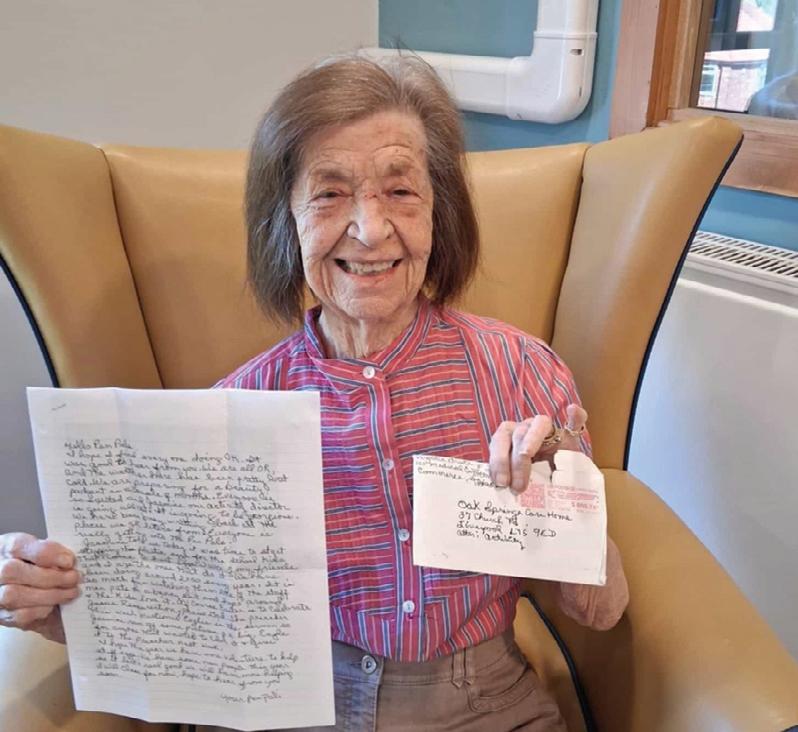
Residents at Oak Springs were thrilled to read about life in Georgia, including local traditions, community events and the simple pleasures their pen pals enjoy, from music and celebrations to spending time with family and friends.
The exchange has not only provided entertainment but also a valuable opportunity for residents to learn about another culture, reflect on their own experiences and feel part of something bigger.
Andrea Lyon, home manager at Oak Springs, said: “The residents have absolutely loved receiving their letters from America. There was such a buzz around the home as we opened and read them together.
“When we sent our ‘Love Across the World’ letters, it was all about spreading kindness and making connections. To now receive such thoughtful replies has been incredibly special. It’s a wonderful reminder that friendship has no boundaries, and even something as simple as a letter can make a real difference to someone’s day.”
Following the success of the exchange, residents are already planning their next letters, keen to continue building friendships and sharing more about life in Liverpool with their new friends in the United States.
The Care & Occupational Therapy Show, the South West’s largest and most established event dedicated to the care sector, is set to return for its 8th year on 23 June 2026 at Westpoint Arena, Exeter.
Bringing together care professionals, occupational therapists, suppliers, and industry leaders from across the region and beyond, the event continues to serve as a vital platform for learning, networking, and innovation within the care community.
Over the past seven years, The Care & Occupational Therapy Show has grown significantly, earning its reputation as the leading carefocused exhibition in the South West. The 2026 event promises to be its most comprehensive yet, featuring a diverse range of exhibitors showcasing the latest products, services, and solutions designed to improve care delivery and outcomes.
Attendees can expect a full programme of expert-led seminars and workshops, offering valuable insights into current challenges, emerging trends, and best practices across the care and occupational therapy
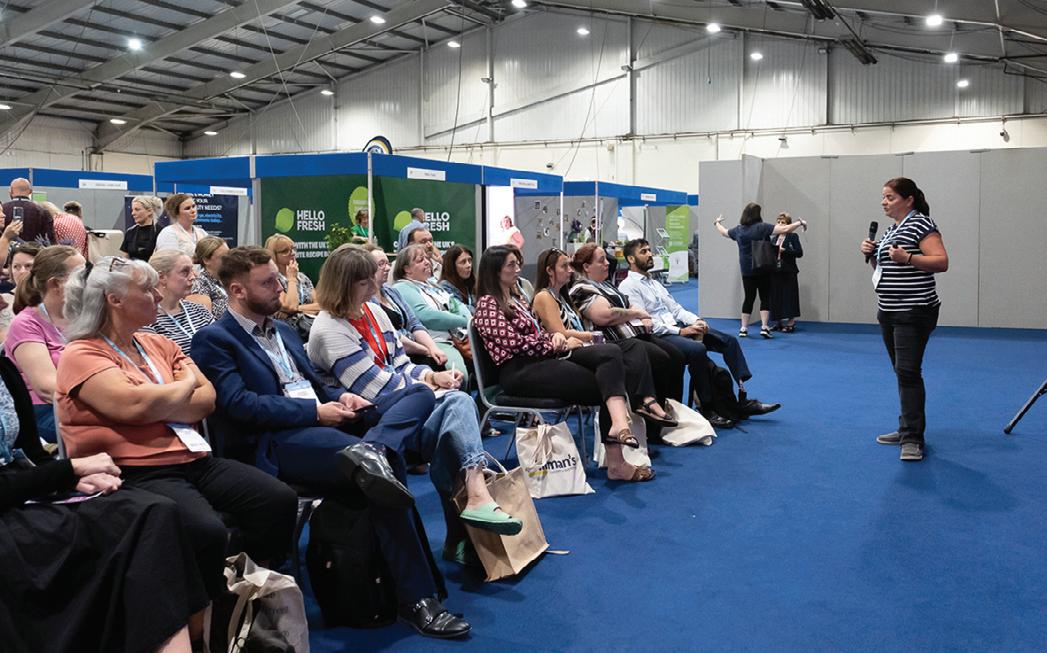
sectors. Topics will include workforce development, person-centred care, assistive technology, and regulatory updates.
The event provides a unique opportunity for professionals to connect, share knowledge, and explore new approaches that enhance both care provision and patient wellbeing.
Event Highlights Include:
• Extensive exhibition featuring leading care suppliers and service providers
• Educational seminar programme led by industry experts
• Networking opportunities with professionals from across the care sector
Latest innovations in occupational therapy and assistive technologies
With free attendance for care professionals, The Care & Occupational Therapy Show remains committed to supporting the sector by providing accessible, high-quality learning and development opportunities.
To register visit
https://cots.ecreg.uk/reg/general/invitelaunch.asp?InviteCode=TC

New findings published by Alzheimer’s Society reveal that dementia patients routinely face prolonged delays to diagnosis, followed by gaps and stark inequalities in treatment and support – highlighting the need for the same focus and urgency seen in other major conditions. The charity says delays of this scale have quietly become routine for dementia, the UK’s biggest killer, but would not be accepted for cancer or heart disease.
This one-of-a-kind analysis to examine the entire dementia diagnosis and treatment pathway reveals patients are not just delayed once, but are repeatedly missing opportunities for diagnosis, treatment and support at every stage.
The missed, delayed, abandoned findings:
• Diagnosis delays: From first symptoms to diagnosis, people wait an average of 3.5 years – with almost six months of that spent waiting for diagnosis after GP referral to a memory clinic.
• Early signs going unnoticed: Nearly 250,000 people in England are diagnosed with early memory problems, yet there’s no national system in place to monitor progression to dementia. And those with suspected dementia are falling through the cracks with nearly 75% of GPs acknowledging long waits for diagnosis.
• Left without support: One in five say they received no support after diagnosis, with families describing being “released into the wild”.
• Treatment inconsistencies: Only half of those prescribed dementia
medication remain on it for a year, despite benefits of continued treatment.
The charity is calling on the Government to treat dementia like other major conditions by introducing clear national targets for early diagnosis and ensuring equal access to treatment and support without delay.
Michelle Dyson CB, Chief Executive of Alzheimer’s Society, said: “Dementia care in the UK is stuck in a system of delay, denial and neglect. In the digital age of instant answers, people are still waiting far too long for a diagnosis of the country’s biggest killer. That would never be tolerated in cancer care, yet for dementia it has become routine.
“At every stage, people are missed. Symptoms are missed, diagnosis is delayed, and support often comes too late to be that lifeline so desperately needed by people with dementia and their loved ones.
“This is not a backlog problem. It is a system that is missing people at every stage and while the system waits, dementia progresses –stealing time, independence and dignity. While politicians race to cut waiting lists, people with dementia aren’t even in the queue. Government action can’t wait.”
Anita, 50, waited seven years for a diagnosis after her symptoms were repeatedly dismissed as stress, anxiety and menopause. She said: “I knew something wasn’t right, but no one listened. By the time I was diagnosed, I had lost my job, my independence and my future. I’ve had
cancer, heart disease and strokes, and each time the NHS responded quickly and effectively.”
“When I was finally diagnosed, I was told over the phone by a receptionist, and then that was it. Imagine if that happened with cancer.”
On average, people wait 3.5 years from first symptoms to diagnosis, including a 22-week wait after referral and even then, one in five report receiving no support at all after diagnosis.
The analysis shows how these failures compound: many people miss early warning signs, face long delays to diagnosis, and then fail to receive recommended treatments or follow-up care.
Around one million people in the UK are living with dementia, a number expected to rise to 1.4 million by 2040. Dementia already costs £42 billion a year, a figure projected to more than double to £90 billion by 2040. Without urgent action to fix the diagnosis and care system, the charity says delays will continue to push people into crisis faster, increase emergency hospital admissions, and place growing strain on health and social care services.
The findings form part of Alzheimer’s Society’s ‘Unlocking the Door’ reports, which bring together the charity’s own research, clinical perspectives and data, and insight from people with lived experience of dementia. They are released ahead of the charity’s biggest annual fundraising campaign in June – the Forget Me Not Appeal – raising vital funds to support people affected by dementia.
A Chipping Norton care home has marked an extraordinary milestone, celebrating the 105th birthday of much-loved resident and Second World War veteran, Joan Ramsay.
As part of the celebrations, Joan was delighted to receive a congratulatory card from His Majesty The King and Her Majesty The Queen – a moment that brought a beaming smile and was proudly shared with friends around the home.
Joan’s milestone birthday was also marked with a special visit from the High Sheriff of Oxfordshire, who joined residents and team members in celebrating her remarkable life and paid tribute to her “courage and character”.
Continuing the celebrations, on the 20th May, Joan was also surprised with a special visit from Oxford United’s club ambassador Peter Rhoades-Brown, better known as Rosie. As a lifelong Oxford United supporter, the visit underscored her loyalty and dedication to the club, having held a season ticket for more than 40 years and attending her final match at the remarkable age of 92.
One of Joan’s fondest memories is being at Wembley in 1986 to watch Oxford United lift the Milk Cup. To make the celebrations even more special, Rosie brought the Milk Cup along for Joan to see in person, leaving her overwhelmed with joy as her smile lit up the room. Even now, Joan continues to support the team and has a keen interest in the club’s fortunes.
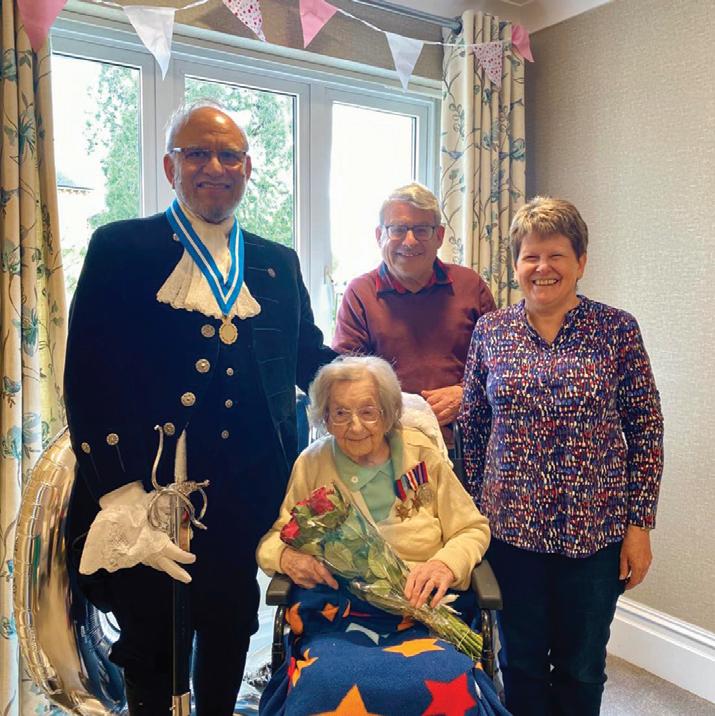
At the age of 18, Joan joined the Auxiliary Territorial Service, training as a cook during the Second World
War. Her service took her to France just six weeks after D-Day, a moment in history she witnessed first-hand.
Reflecting on the celebrations, Joan Ramsay said: “I enjoyed my birthday, especially the lovely flowers, cards and the large 105 balloons. I was also very thankful for all the best wishes from family, residents and staff at Penhurst Gardens Care Home.”
The team at Penhurst Gardens were honoured to help Joan celebrate this special milestone. Lynne Elliott, home manager at Porthaven Cares Homes Penhurst Gardens, said: “Joan is a truly remarkable lady, and it has been a privilege for us all to help her celebrate her 105th birthday here at Penhurst Gardens.
“She has lived through so much change and has such an incredible life story, from growing up in Wales and serving during the Second World War to raising her family and making a home here in Oxfordshire. Joan has a quiet dignity about her, but she is also endlessly interesting and a joy to spend time with.
“We are so grateful to everyone who helped make Joan’s celebrations so memorable, from her family, friends and the team to the High Sheriff of Oxfordshire and Oxford United. It meant so much to see Joan surrounded by people who wanted to honour her life, her stories and the special place she holds in our home.
“Everyone at Penhurst Gardens is very fond of Joan, and we were delighted to mark this wonderful milestone. We wish Joan a very happy 105th birthday.”
Keymer Hall, part of Boutique Care Homes, has been awarded Highly Commended in the NAPA Global Intergenerational Week Competition 2026, a national recognition of outstanding intergenerational practice in care settings across the UK and beyond.
NAPA, the National Activity Providers Association and the leading professional body for activity and engagement in health and social care, praised Keymer Hall’s entry for showing “creativity, inclusion and the lasting value of intergenerational practice”, with the organisation noting that the home’s “commitment to meaningful engagement and bringing generations together has been wonderful to see.”
Intergenerational connection sits at the heart of how Keymer Hall approaches care. Since opening, the home has built relationships with a wide range of local community groups and young people: Brownies visit regularly to spend time and do activities with residents; a local pre-school has joined the home for events including the RSPB Big Garden Birdwatch and World Book Day; and Freddie, the home’s four-year-old ‘youth ambassador’, has been a regular presence since opening, delighting residents and the team in equal measure. The home’s approach was brought to life most visibly through its ‘Spring Fling’ community event on 25th April 2026, which drew together residents, families and the wider Burgess Hill community. Local Scouts ran a free BBQ and entertainment ranged from a local girls’ school choir and classical soprano. Teenagers volunteered, a young aspiring entertainer made balloon animals, circus skills workshops ran in the garden
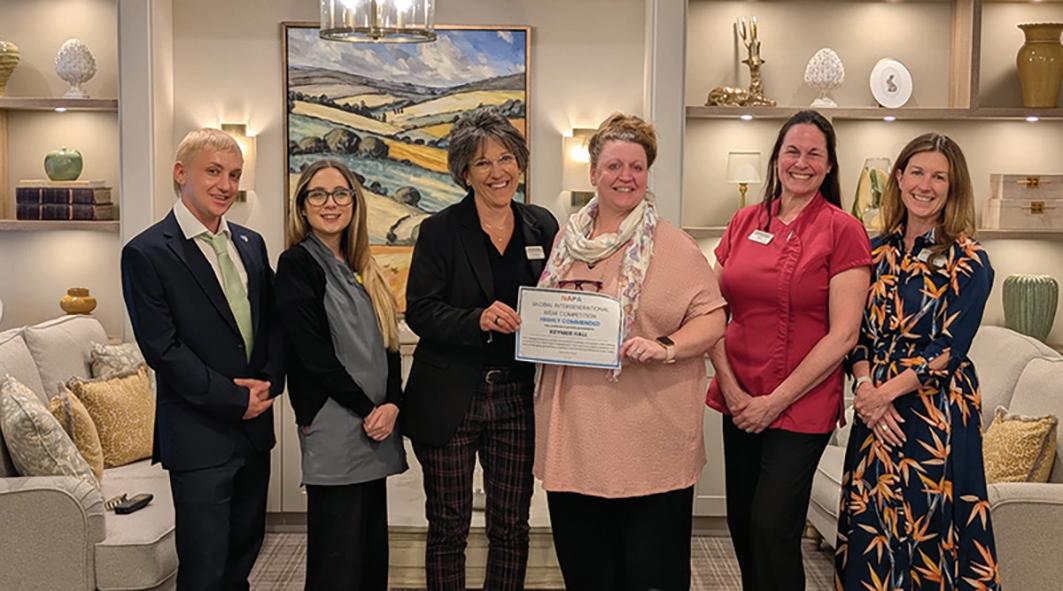
alongside baby and toddler music groups, and traditional stalls were run by local schools and pre-schools.
Dame Vera Lynn’s daughter officially opened the home, with Freddie by her side. Every penny raised went to Chailey Heritage Foundation, a charity supporting some of the most severely disabled children in the country, chosen by the residents themselves.
Christine Bunce, Home Manager at Keymer Hall, said: “I couldn’t be prouder of what this team has created. Bringing generations together isn’t a nice extra, it’s central to what great care looks like. When you see the genuine joy it brings, for residents, for the children and young people involved, and for our team, you understand why it matters so much. To have that recognised by NAPA, in our very first year, means a great deal to everyone here.”
Helen Lewis, Head of Lifestyle and Wellbeing at Keymer Hall, added: “Since we opened in December, building intergenerational connections has been a real priority for us. The response from residents has been incredible, these connections bring a sense of life and energy that you simply can’t replicate any other way. We have so much more planned, and this recognition gives the whole team a real lift to keep going.”
Looking ahead, Keymer Hall has plans in place for an ongoing horticultural project with a local SEND college, a partnership with a ‘pay it forward’ charity supporting children with life-limiting illnesses, and a regular volunteering programme with a local Catholic school. From tiny pre-schoolers to almost-adults, the home is committed to involving every generation.
The Care Quality Commission (CQC) has published updated guidance on the tools and processes it will use as it moves into the next phase of assessing how local authorities are meeting their statutory duties under Part 1 of the Care Act 2014.
The announcement, made on 15 May 2026, builds on an updated approach published the previous month and follows extensive engagement with key stakeholders including the Association of Directors of Adult Social Services (ADASS), the Local Government Association (LGA), Ofsted, a number of local authorities, and CQC's own assessment teams.
Among the most significant developments is the introduction of local authority assurance meetings, designed to help the CQC better understand the context in which each authority is carrying out its adult social care responsibilities and the resulting impact on people's experiences and outcomes — including those of unpaid carers. Full guidance on the format and frequency of these meetings has been published on the CQC website.

The CQC has also revised the language and guidance around how it gathers evidence from people receiving care. What were previously referred to as "case tracking" and "case sampling" have been renamed "understanding people's experiences" and "sampling people's experiences" respectively, following feedback from local authorities that the original terminology was unclear.
Understanding people's experiences involves reviewing the care records of a small number of individuals and speaking with them, their families, or advocates — a process completed before any site visit takes place.
Pet therapy has become a part of the everyday routine in many care homes in the UK. The positive impact animals can have on the well-being of residents is well documented. But bringing animals into a care setting brings its own problems. It can be expensive and disruptive, they can be temperamental, and even the cleanest pets raise hygiene issues.
V-Thera virtual pets allow you to offer all the fun and engagement of a real pet, but in a clean, predictable and flexible way that fits in perfectly with your care home routine.
VIRTUAL PETS, REAL BENEFITS
From the moment the resident first puts the headset on, they are engaged and delighted as the pet sits, lies down, rolls over and feeds on command. They can even throw a ball for the pet to fetch. The experience is involving, relaxing and stimulating, enhancing a positive mood while encouraging movement and communication.
The pets themselves are wonderfully realistic, not just in the way they look, but in how they act. There are four dogs to choose from, and there’s even a moggie for cat lovers. They respond to voice or hand commands, or to big buttons on the screen. It’s ideal for previous pet owners, but also people nervous of animals.
TECHNOLOGY THAT CARES
V-Thera uses the latest Japanese mixed reality technology, meaning the virtual pet appears in the realworld, viewed through the headset. Seeing the familiar surroundings of their care home lounge reduces any sense of anxiety or disorientation for residents. The app can also be used lying down, so it can be used in bedrooms.
The technology itself is completely intuitive, designed for people with no experience of gaming. The
Sampling people's experiences, by contrast, involves examining care records alongside a member of staff from the local authority, without direct contact with the individual concerned.
In response to feedback gathered during its earlier baselining assessments, the CQC has improved the way it communicates with local authorities during and after site visits. This includes more precise guidance on the purpose and timing of "Keeping in Touch" meetings and "High-Level Feedback" meetings, as well as clarity on who is expected to attend.
The factual accuracy checking process has also been strengthened. An updated template for submitting comments on draft reports has been introduced following feedback that previous versions were difficult to navigate.
An assessment begins when the CQC sends an information return request to the local authority and concludes when the final assessment report is published. Authorities will have two weeks to complete the information return, after which the CQC will begin assessment activity — including case tracking, engaging with unpaid carers, and gathering evidence to inform planning for site visits.
The CQC aims to provide six to eight weeks' notice ahead of a comprehensive site visit, during which time local authorities will be given the names of a designated assessment planner and assessment manager. Each assessment consists of one week of off-site virtual activity followed by one week of on-site activity, with the full process expected to span 19 weeks, excluding publication of the final report.
Notifications of assessment have begun to be issued to local authorities during May 2026.
headset reads hand movements, so there is no need for hand controls after set-up. Setting the app up is easy and quick for staff, with no training required. It comes preloaded onto the latest Quest 3s headset, so it’s a simple matter of staff switching the headset on, selecting the V-Thera icon, selecting the dog – which you can name – then transferring the headset to the resident. They are immediately immersed in playing with the dog or cat.
The makers recommend sessions of up to ten minutes at a time, it’s very easy to accommodate the technology into the life of the home, and for staff it can create an excellent opportunity to bond with residents. A sharing function even means the sessions can be cast to other screens so all residents can share the experience.
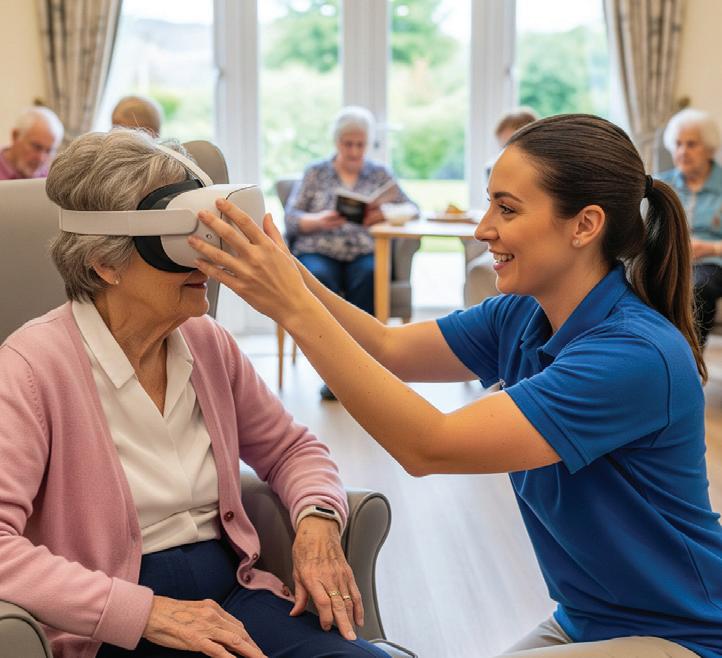
The potential of new technologies like V-Thera for engaging with residents in a positive way points to an exciting future. The combination of advanced Mixed Reality with intuitive and thoughtful design means care homes can adopt the latest technology without disrupting the care routines already in place. V-Thera was created in Japan by Remedy & Co and is available now in the UK through Care Activity Ltd. Managing Director Alison Lang says, “The minute we saw V-Thera, it was clear to us that this was an exciting innovation, a new way to offer something genuinely engaging to care home residents. The pets are fun, realistic and always ready to play. It is technology that brings care to life.” Contact alison@careactivityxr.com www.careactivityxr.com

The increasing number and intensity of heatwaves in recent years has significantly impacted the health of care and nursing home residents in England, according to a new study.
The frequency and intensity of projected heatwaves caused by climate change is increasingly recognised as a risk to health and social care delivery. The health dangers associated with hot weather are of particular concern among older age groups.
Care homes in the UK are generally designed to retain heat during winter to protect against cold risks but these measures may increase the risk of summertime overheating if appropriate cooling strategies are not available.
The study, led by researchers from the London School of Hygiene & Tropical Medicine, compared mortality records from England between 2022–24 from the Office for National Statistics, with daily average temperatures.
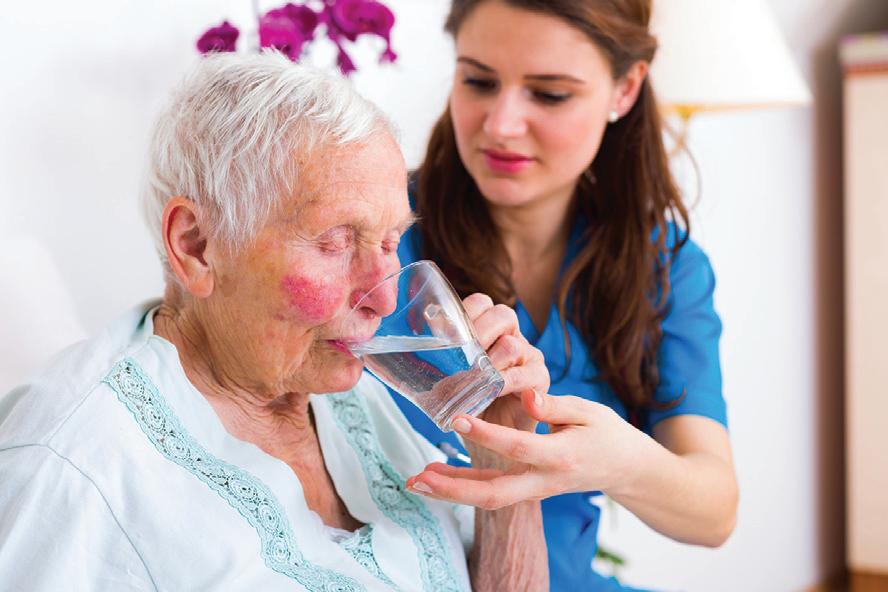
Data showed that between 2022-24, the risk of death for nursing home residents, where a high level of round-the-clock medical care is needed, doubled (200% increase) on days where external temperatures hit 25°C compared to days of 16°C.
For residents living in residential care homes, where the level of care can be lower and residents are often more mobile, the risk of death still increased by 50% over the same time period.
Nursing home deaths increased by 34.1% and residential care home deaths by 13% during the July 2022 heatwave when temperatures exceeded 40°C for the first time in the UK.
Heat risk was progressively higher in care homes rated successfully poorer by the Care Quality Commission, the independent regulator of care homes in the country.
The full paper is published in the British Geriatrics Society’s Age and Ageing journal.
Dr Shakoor Hajat, Professor of Global Environmental Health at LSHTM and lead author of the study, said: “With temperatures in the UK continuing to rise and the population ageing, we urgently need to understand the health impacts of heat in care homes.
“Our results show that heat risk in England’s care homes has increased in recent years, suggesting the sector needs more support to adapt to our rapidly changing climate. Our results indicate those care homes that would benefit most from focused heat adaptation measures.
“Even at moderately high temperatures experienced in England most summers, the risk of poorer health for residents within nursing or residential care homes is elevated. It’s likely this risk will increase as heatwaves and high summer temperatures become more frequent.
“Typically when we think about cooling buildings, our first thought is to consider air-conditioning. Most buildings in the UK traditionally have no airconditioning installed because it hasn’t been regularly needed. Air-conditioning units can also be expensive to install and run, contribute to emissions and can cool a room too quickly, so are not always the right solution.
“Passive cooling solutions such as increasing shading around buildings, ensuring there is secure nighttime ventilation and using building materials known to reflect sunlight are all easier and more sustainable alternatives. Air-to-air heat pumps are also an efficient way to heat and cool the air inside a building.
“When an extreme heat event is forecast, the UK Health Security Agency (UKHSA) provides guidance to all social care providers in England on how to help minimise the impact for staff and patients. While overheating is not likely to be a problem across all care facilities, we should be making every effort to prepare for a hotter future, to protect the health of our loved ones and those who care for them.”
The authors say that ideally, temperature exposure would have been characterised using indoor measurements rather than outdoor values used in the study. However, only external temperature readings are currently widely accessible. The next step will be to understand which interventions may be the most helpful in reducing the impacts of heat stress.
Former members of the Armed Forces in Warwickshire will benefit from enhanced person-centred care and support after Low Furlong care home, part of the Runwood Homes group, achieved the standards required for the Veteran Friendly Framework (VFF).
The aim of the VFF is to better support the practical, emotional and social needs of the Armed Forces community in residential care homes across England by providing training and resources to assess and improve the care they offer. It will help tackle loneliness and has the scope to deliver improved health and wellbeing outcomes for the 25,000 veterans living in care homes in England.
To achieve their Veteran Friendly status, Low Furlong was required to meet eight standards. These included noting Armed Forces status within care plans, addressing social isolation, and signposting to support services, such as their local Royal British Legion branch and other charities that provide support for veterans or partners of veterans. Amie, Home Manager at Low Furlong, said: “We are very proud to now be part of the Veteran Friendly Framework. It is something that Clare, Luca and all the staff and residents have worked hard to achieve. It is fantastic that we can now offer enhanced support to the community and the residents and their families
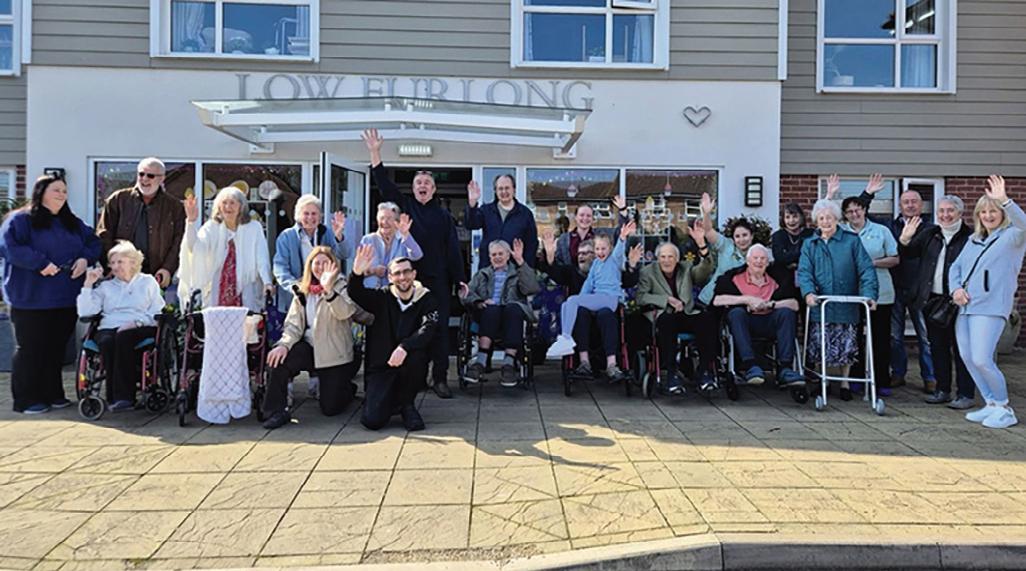
at Low Furlong. It is an important message and one that we are very passionate about.”
The VFF is a collaboration between Armed Forces charities Royal Star & Garter and Royal British Legion, and NHS Veterans’ Covenant Healthcare Alliance (VCHA), with funding support from the Armed Forces Covenant Fund Trust.
Kathryn Glass, VFF Project Lead at Royal Star & Garter and responsible for supporting and assessing care homes going through the scheme, said: “We’re delighted that Low Furlong has achieved VFF status. This is a great commitment to their continuous improvement in the delivery of person-centred care for veteran residents and their partners.
“This programme will benefit both current and future residents, along with current and future staff at Low Furlong, who are able to access enhanced training and guidance to better engage with the unique military experiences that their residents and partners have lived through.
“Being a VFF care home means that there is an increased understanding and recognition for the veteran community at Low Furlong.”
The National Association of Care Catering (NACC) was invited by His Majesty The King to attend the first Buckingham Palace Garden Party of the year in recognition of its voluntary services supporting older people in care.
Representing the Association at the prestigious royal occasion were Andy Cullum, NACC Midlands Deputy Chair; Sophie Murray, NACC Training Academy Officer; Joyce Frankish, NACC Scottish Deputy; and NACC National Chairman, Neel Radia.
As part of the celebrations, the group was invited to enjoy a unique experience in the Royal Tea Tent, joining fewer than 100 guests from charitable organisations for tea, cake and conversation with Their Majesties The King and Queen, as well as other members of the Royal Family including Princess Anne, Prince Edward and the Duchess of Edinburgh.
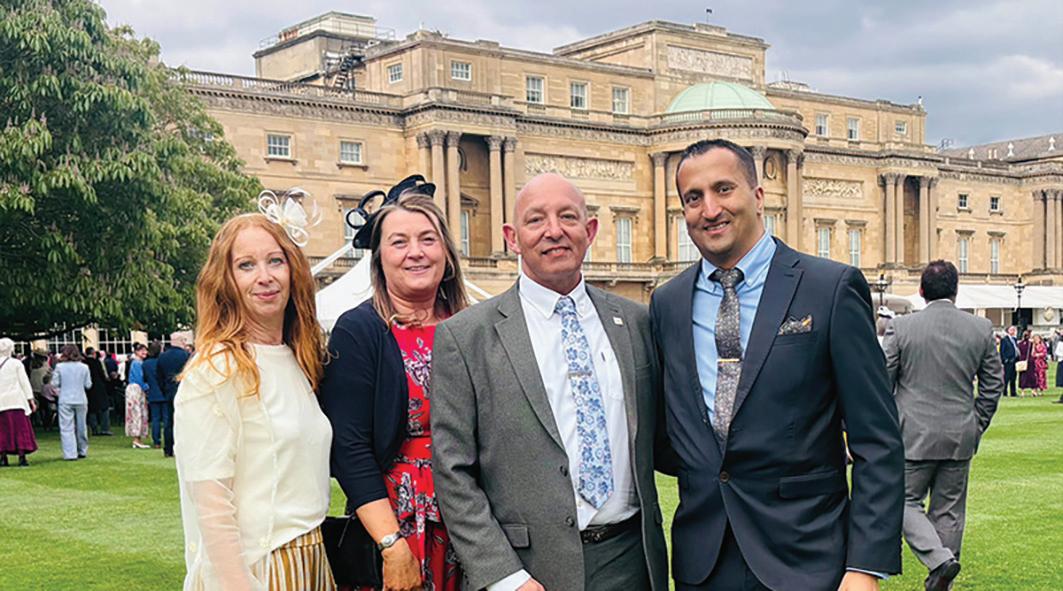
Neel Radia, NACC National Chairman, said: “We were very honoured to have been given the opportunity to speak and enjoy tea directly with Their Majesties. We spoke about the progress the Association is making towards raising standards in care catering, and the importance of good
nutrition and hydration. It has been incredible for the NACC to be recognised again this year by Their Majesties for the work our members do for those in our care.”
Reflecting on the occasion, Sophie Murray, NACC Training Academy Officer, commented: “This was a memory to last a lifetime. I felt honoured, proud and utterly exhilarated to stand in the grounds of Buckingham Palace chatting to our King and Queen in the Royal Tent, surrounded by other volunteers being thanked for their contributions. I am so grateful and will never forget today or why I volunteer.”
Andy Cullum, NACC Midlands Deputy Chair, added: “It was wonderful and a privilege to be invited to the Palace. The King and Queen were amazing, and being welcomed into the Royal Tea Tent was an overwhelming and truly special experience. Being a member of the NACC is both a privilege and an honour, and I am proud to represent the Midlands and the important work we do. Thank you to the NACC for nominating me to attend this event.”
Frontline workers, clinicians and mental health experts are being invited to share their views on how to transform mental health care for children and adults in England, as the government launches a call for evidence to shape its once-ina-generation cross-government mental health strategy.
The strategy will drive a fundamental shift towards prevention – treating people earlier and faster, and supporting those with mental health conditions to live a full life and stay active in education, work, family life and their communities.
Demand for mental health services has risen rapidly, particularly among children and young people, who often face long waiting times for the care they need. Around 1 in 5 people are now affected by a common mental health condition.
Improving mental health care is a priority in the government’s manifesto and 10 Year Health Plan and the government has hit its target to hire 8,500 extra mental health workers 3 years ahead of schedule. This year, NHS mental health spending is forecast to reach a record £16.1 billion – a real-terms increase of around £140 million on last year.
On top of this, we are making £473 million available over the next 4 years for mental health emergency departments, community-based mental health centres and wider capital projects, accelerating the rollout of Mental Health Support Teams in schools and colleges and expanding communitybased support via Early Support and Young Futures Hubs.
But despite record investment and significant workforce growth, the current system remains reactive, fragmented and inconsistent. Support varies based on postcode, and too often people only get help when they reach crisis point. The mental health strategy will address this by setting new direction for the mental health system so that it responds earlier and more proportionately.
Baroness Merron, Minister for Mental Health, said: “This government believes that mental health should be treated with the same seriousness as physical health, yet too many people across the country are struggling to get the support they need, when they need it.
“Alongside record investment in mental health services and more mental health workers than ever in the NHS, this strategy will give mental health the attention it deserves and set us on a new direction – one that
focuses on earlier help, faster access and a whole-system approach.
“We want to hear from everyone with a stake in getting this right, including frontline clinicians, service providers, and people with lived experience of mental health conditions, so that we can build a system that truly works for everyone.”
Mark Rowland, Chief Executive at the Mental Health Foundation, said: “This is a big moment for England’s mental health. For many years, we’ve been calling for a radical shift towards a cross-government approach with a focus on prevention, and we look forward to contributing to the plan’s success.
“Our nation’s mental health has gone downhill over recent decades due to things like the COVID-19 pandemic and the legacy of austerity. But change is possible, and we are pleased that the government is taking action.
“We will be advocating for the plan to be ambitious, evidence-led and with a real focus on those communities most at risk of poor mental health; and to address the social and economic factors that shape all our mental health.
The strategy will also look beyond clinical settings to consider the role of schools, workplaces, the voluntary sector and local government in promoting positive mental health, moving from a system that first and foremost seeks to diagnose patients, to one that asks what support people need to live better.”
It will also respond to forthcoming recommendations from the independent review into mental health, ADHD and autism, chaired by eminent psychoanalyst and clinical psychologist Professor Peter Fonagy. The review is examining the drivers of increasing demand and how government, the health system and wider public services can meet that demand more fairly and effectively.
Autistic people and people with ADHD face a much higher risk of developing a mental health condition. The strategy will reflect the mental health needs of these groups, while a dedicated cross-government autism strategy will also be developed and published in due course, and the government will engage with stakeholders to consider extending it to cover ADHD.
The call for evidence opens today and will remain open for 8 weeks, closing on 10 July 2026.
The UK’s National Advance Care Planning Day highlights the importance of Advance Care Planning, Advance Care Plans and sensitive conversations. This year’s theme is Supporting people and communities who are marginalised.
On this a day of awareness and action, care professionals will be hosting their own Advance Care Planning events and interventions across the country. Care organisations are encouraged to add their own events on the ACP Day website where they will be promoted and shared.
A national conference will take place in Norfolk. It will be live streamed and available for care organisations for free. ‘Watch parties’ at care organistions is encouraged and the speakers include Speakers this year include Dr Kathryn Mannix (author), Dr Jed Jerwood (No Barriers Here) and Professor Irene Tuffrey-Wijne (The Victoria & Stuart Project), James Norris (The Digital Legacy Association). Videos from 2025’s conference can be watched at www.advancecarep-
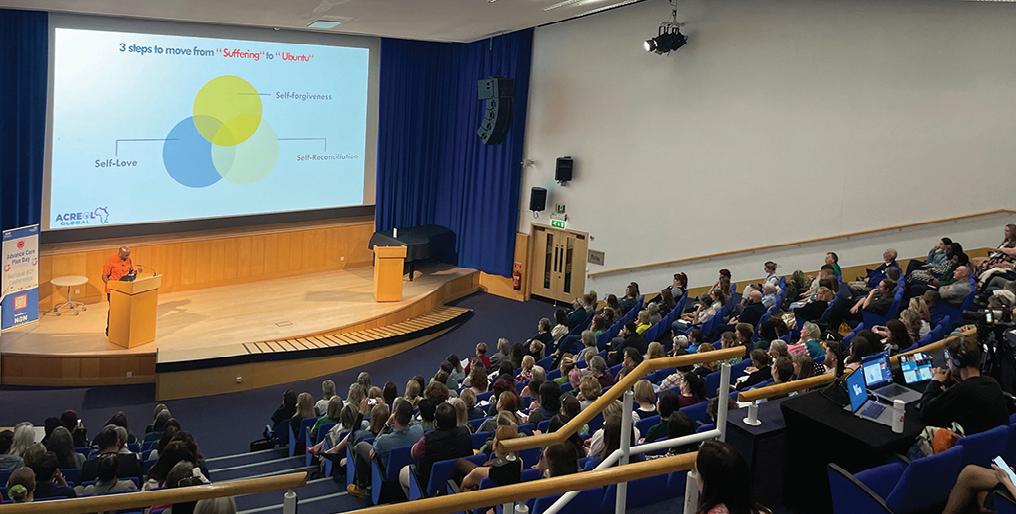
landay.org/national-conference-2025
When Universal Advance Care Planning is a goal, we must adapt service delivery to various marginalised and disenfranchised people and communities.
ACP Day are inviting inclusive charities, not for profit and other organisations who believe in this year’s theme to engage, collaborate and empower.
There are lots of different ideas and ways in which you might want to empower others in areas relating to Advance Care Planning and the benefits it provides to the person and their loved ones.
ACP Day 2026 and the national conference is organised by Norfolk & Norwich Hospitals Charity, MyWishes Care, Speak for Me LPA and Norfolk and Norwich University Hospitals. This year the campain is being supported by Sue Ryder. Visit www.advancecareplanday.org
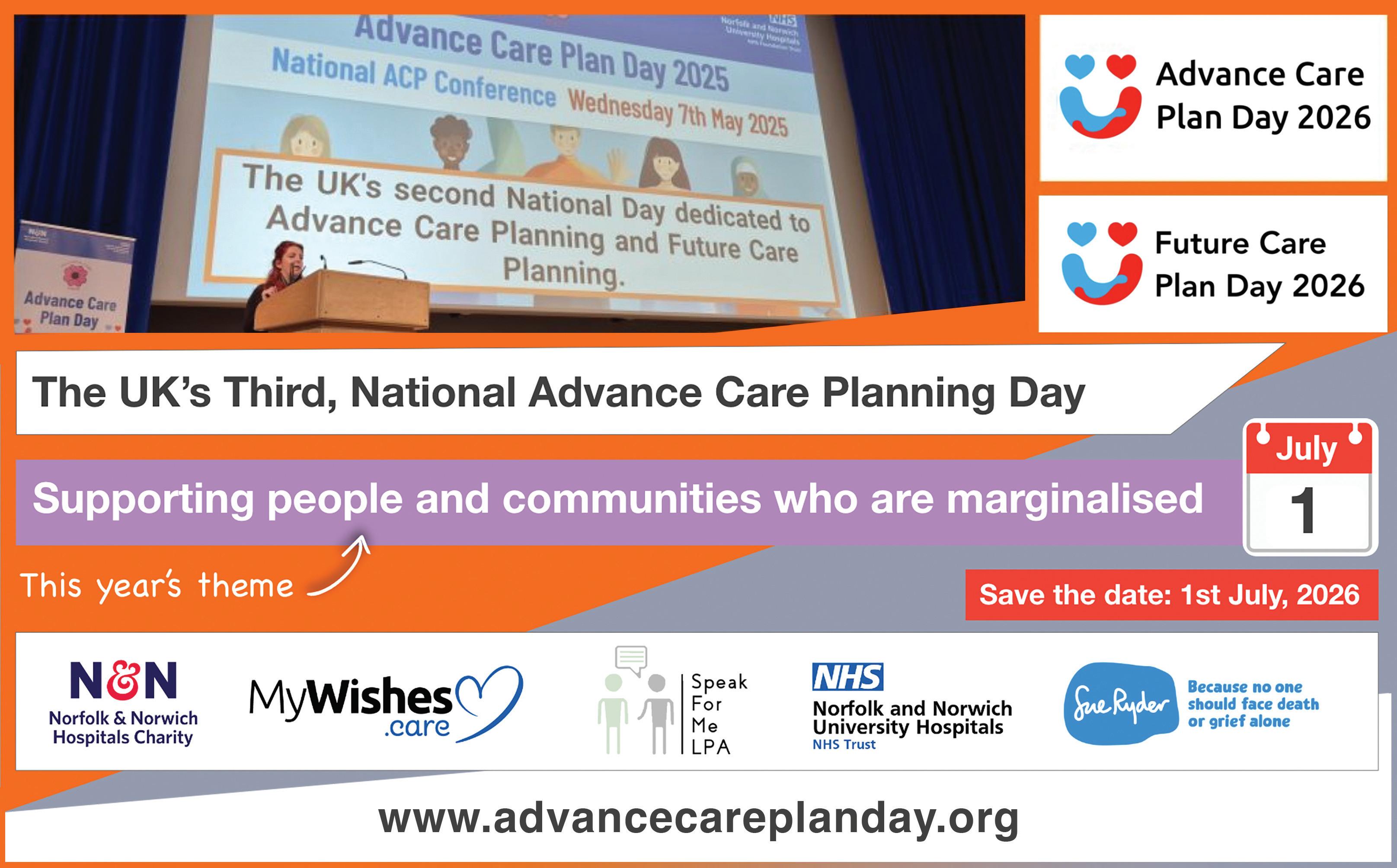
Friendship is important at all stages of life, but even more so as you age and move into the later phases of life. Care experts at Elmfield care group share how important intergenerational friendships are, and the benefits they bring to all involved.
Michael Berkley Blezard, General Manager of Old Sarum Manor care home, comments on the connection he sees forming between residents and staff: “Increasingly, we are seeing residents bonding with the care staff on a level that goes deeper than just acquaintances. It is really special to see these connections grow as they bond over shared experiences or show each other a unique perspective.
“For older adults, connecting with younger generations can help them feel more youthful and for the younger adults, they gain a wider perspective on life that might be able to support them as they navigate the world.”
Esther Cambridge, General Manager of Flowers Manor care home, highlights the emotional impact these friendships can have: “The most significant benefit for our residents is improved emotional wellbeing. Strong connections within the home make them far less susceptible to loneliness and social isolation. This then has a knock-on effect, helping to lower stress and fostering a sense of self-worth for both the resident and the member of staff.
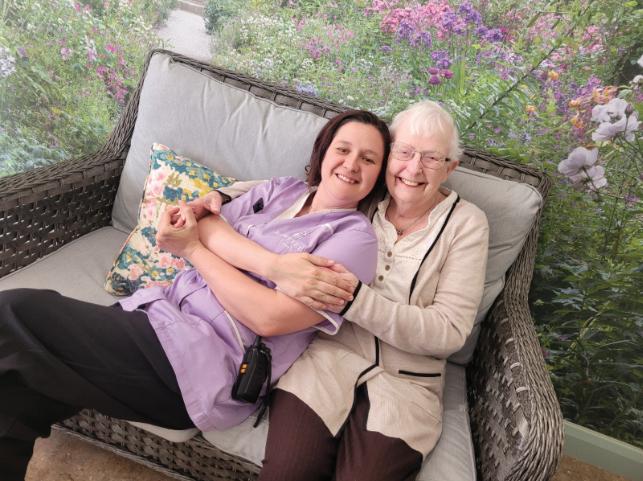
“Another benefit we see in the home, especially among the care staff, is increased empathy. When staff form bonds with residents outside of their typical social circles, they can develop a more inclusive worldview. At the same time, our residents are reminded that they still have so much to offer.”
Naomi Griffith, General Manager of Nodens Manor care home, explains how the home actively creates the conditions for these friendships to flourish: “These friendships don’t happen by accident. In our homes, we create the environment for them through structured activities and more relaxed, informal socialisation time.
“Our care staff are encouraged to be genuinely curious about residents, asking questions about their lives and passions to get to know them better. When residents feel heard, this helps them open up and allows conversations to become more free-flowing, which is where the real friendships begin.”
One example of a special friendship at Elmfield care group comes from Nodens Manor:
When Pam Ruck, 90, joined the Noden Manor community roughly twoand-a -half years ago, her journey has been defined by connection. She quickly formed a friendship with fellow residents, but it was with care team member Aimee Bowden, 32, that she found a truly unique bond. The pair instantly connected over their shared passions, a love for nature and gardening, and their mutual love for children gave them a foundation for endless conversation.
Whether the sun is shining or there’s a morning chill, Aimee and Pam have a cherished daily ritual. Every shift begins with a warm hug, followed by ten minutes of coffee and a gentle stroll through the Nodens Manor gardens. These quiet moments have paved the way for a friendship so deep that Pam often describes Aimee as being ‘like a daughter to her’.
The Competition and Markets Authority (CMA) is proposing to accept remedies offered following its investigation into Welltower’s purchase of more than 600 care homes across the UK.
Welltower is a US-based real estate investment trust, which, in October 2025 became the owner of 4 portfolios of care home properties previously owned and operated by Barchester Healthcare, HC-One, Aria Care (including Asprey) and Danforth Care. As part of the transaction, new operators (including Care UK and Apex Healthcare Properties via Barchester Healthcare) took over the management of the day-to-day operations of the care homes.
A phase 1 investigation by the CMA found that the deals could give rise to competition concerns in the supply of nursing and/or residential care services for the elderly in a total of 30 local areas across England and Scotland.
In those local areas, the CMA found that either Welltower or one of the care home operators would have a significant proportion of the care homes in the area. The CMA was concerned the deals could potentially lead to higher prices or a reduction in service quality for care home residents in these areas.
To resolve the CMA’s concerns, Welltower has offered the following in the areas of concern identified by the investigation:
To sell its ownership of a number of care home properties and
For certain other care homes, reallocate the operations to a new operator.
Having considered this proposal, the CMA said believes it could resolve its competition concerns and will consult on the remedies package and the potential purchaser(s) in due course.
Sorcha O’Carroll, Senior Director of Mergers at the CMA, said: “It’s crucial that older people and their families choosing care homes get the best care available at a reasonable price. Effective competition amongst providers can help boost choice, improve quality and keep costs down, all of which are important factors for making sure people are properly looked after.
“We had concerns that Welltower’s deal to purchase over 600 sites could create competition issues in several local areas across England and Scotland. Having engaged closely with the businesses, we believe Welltower has a solution that could resolve those concerns, allowing us to clear the deal and maintain competition at the same time.”
Matthew Woodford, Partner and Head of Competition at Browne Jocobson, said: “While the regulator has signalled that concerns may be capable of being resolved through targeted structural remedies, the investigation has raised questions for how consolidation in the care sector will be assessed going forward.
“What is particularly significant is the CMA’s focus on the relationship between ownership, operational influence and local competition with investors and landlords needing to think about how their commercial arrangements may affect resident choice, pricing and quality of care.”
Vicky Tomlinson, Partner and corporate health lead at Browne Jacobson, said: “The CMA’s proposed acceptance of remedies represents an important development in one of the most closely watched healthcare transactions in recent years.
“For investors and providers, the message is that regulatory scrutiny in healthcare transactions is becoming more sophisticated, particularly in sectors delivering essential public-facing services.
“It will also be interesting to see how many homes ultimately come to market as part of the remedies process and whether this creates additional acquisition opportunities for regional operators and new entrants into the sector.
“We expect this case to shape how future transactions are structured and how due diligence is carried out and assessed across the independent health and social care market, especially where there are complex ownership models, operational partnerships or significant local market overlap.
“The CMA will now consult on the proposed remedies before making a final decision on whether to accept them and conclude the investigation without referring the matter to a phase two inquiry.”
Care home provider, Oakland Care, has been honoured with a prestigious King’s Award for Enterprise in Sustainable Development, recognising its pioneering approach to environmental responsibility across its portfolio of homes in London and the South East.
Oakland Care has been recognised for its long-standing commitment to sustainability, with environmentally responsible practices embedded across all aspects of its operations, from energy use and waste reduction to sustainable building design and biodiversity initiatives.
In recent years, the provider has introduced a wide range of initiatives to reduce its environmental impact. This has included becoming the first and only UK care home group to achieve carbon neutral certification back in 2021, a status they have retained for six consecutive years, planting more than 1,500 trees annually, and contributing over 2,000 hours of team time each year to local sustainability projects as part of community programmes.

Together, these efforts form part of a wider comprehensive strategy focused on delivering measurable change across its care homes, while maintaining the highest standards of care for residents. The award reflects the organisation’s continued investment in sustainable development, as well as its commitment to equipping team members with the knowledge and tools needed to drive environmentally responsible practices in their roles.
It also reinforces Oakland Care’s forward-thinking approach to sustainability and a clear ambition to set new standards for environmentally conscious care provision – with the recent opening of Harpenden Springs, the businesses ‘greenest’ development to date, and one of the UK’s most environmentally friendly care homes, evidence of this.
To mark this accomplishment, a representative from Oakland Care will attend a Royal reception at St James Palace later this year, where award recipients will be formally celebrated.
Joanne Balmer, Chief Executive Officer at Oakland Care, said:
“We are incredibly proud to receive the King’s Award for Enterprise in Sustainable Development. This recognition is a testament to the dedication of our teams, who work tirelessly to embed sustainable practices across our homes and have been wholly committed to supporting our bold ambitions in this space.
“Our approach has always been about more than meeting targets. It’s about creating a lasting, positive impact for our residents, our communities and the environment, while also serving as trailblazers within the industry, helping to inspire and support others on their journey.
“We will continue to invest in innovation and our people as we build on this achievement and further strengthen our commitment to sustainability across the organisation.”

• All the latest adult social care sector news
• Thought-led articles and advice from sector professionals
• Latest care home stories, celebrations, achievements and more!
• Latest products and services from leading suppliers
Skills for Care is encouraging local authorities across England to take a proactive role in shaping a more equitable social care workforce, as registration opens for the 2026/27 Social Care Workforce Race Equality Standard (SC-WRES) Improvement Programme.
With participation at an all-time high, the programme has become a powerful national platform for tackling race inequality, and 2026/27 represents a key opportunity for more organisations to step forward and drive change.
In 2025/26, 99 local authorities took part, representing around 70% of the adult social care workforce and more than 130,000 staff across adult and children’s services.
Despite growing diversity in the workforce, disparities remain. In September 2025, over three-quarters of adult social care local authority posts were filled by people of white ethnicities and 22% were filled by people of Black, Asian or minority ethnicities, yet only 1.6% of global majority colleagues hold senior roles. These gaps highlight the ongoing structural barriers that shape progression, experience and opportunity. The SC-WRES programme is designed to help organisations move beyond awareness and into action.
Through nine workforce indicators - covering areas such as recruitment, progression, disciplinary processes, staff experience, and retention, local authorities gain a clear, evidence-based understanding of inequalities within their own organisations. This insight is then translated into locally owned action plans, supported by peer learning and national reporting.
Professor Oonagh Smyth, OBE, Chief Executive Officer, Skills for Care, said:
"These findings reinforce the importance of the SC-WRES Improvement Programme’s emphasis on collaborative, anti-racist approaches to addressing these systemic workforce challenges. We have seen and are seeing division within our communities in recent years and as a sector we must reach out and stand together to ensure our workforce is representative, supported, and safe from bullying and harassment in all its forms."
The programme brings together three key elements:
• Workforce data collection and a national annual report
• Communities of Practice, offering peer support and shared learning
• Locally-led action planning, grounded in evidence
Together, these create a structured, long-term approach to tackling race inequality - one that supports organisations to embed change into everyday practice and track progress over time.
Participation remains voluntary and is currently funded by Skills for Care, reflecting its importance to the sector and its inclusion as one of the recommendations in the Workforce Strategy for Adult Social Care. Registration for the 2026/27 programme is now open, and there is no cost for local authorities to take part. Information sessions are available to help organisations understand the process and the support on offer.
As the sector continues to build a clearer picture of workforce inequality,
Levabo’s product range is built around a clear objective: making pressure ulcer prevention easier, more effective, and achievable across all care settings. Designed with both caregivers and residents in mind, the range offers practical positioning solutions that integrate seamlessly into everyday care routines.
At the core of the range are Levabo’s specialist positioning cushions, developed to support safe and consistent repositioning. Whether used in bed, in chairs, or during transfer and repositioning, these products help reduce pressure on vulnerable areas of the body. Their versatility makes them suitable for a wide spectrum of care environments, from hospitals and nursing homes to community and home care.
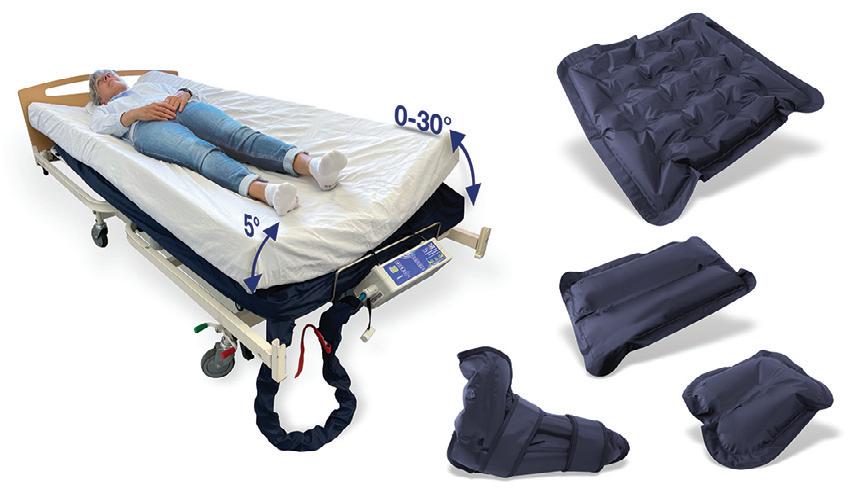
A key differentiator across the range is Levabo’s unique “Fluffy Air” technology. This ensures that each product remains soft and adaptable, gently moulding to the individual’s body shape. The result is improved pressure distribution and a high level of comfort, both essential for individuals who may be immobile or spending long periods in one position.
CareZips® Classic are patented, easy dressing unisex adaptive pants designed for older and disabled people suffering with problems associated with continence, mobility, mental function and cognition. Suitable for persons living in care institutions, receiving care at home or living independently at home, CareZips® Classic enable people to dress themselves or with assistance from carers.
CareZips® Classic feature patented 3-zipper system, which opens the front of the pants from the waist to the knees for quicker access during toileting, continence pads changes and personal hygiene. The forward positioning of the two side zippers lessens pressure on sensitive hip areas, helping to eliminate discomfort. The third zipper facilitates simple full frontal opening for faster more dignified diaper changes, catheter adjustments, personal cleansing and hygiene routines.

cal functionality and versatility of the CareZips® Classic, all day comfort and easy garment care.
• People dependent on assisted dressing appreciate quick easy dressing process with less stress, embarrassment and greater dignity offered by CareZips® Classic.
• CareZips® Classic offer practical gains to the carers, helping them to provide better care, whilst reducing physical efforts and saving valuable time.
CareZips® Classic are unisex, available in 6 sizes and 3 practical colours (i.e. black, charcoal and navy). Tapered fit at the ankles gives a tidy appearance. Made from breathable moisture-wicking 4-way stretchy crease-free and easy-care durable fabric, CareZips® Classic are comfortable, practical and conveniently functional.
For more information, contact Win Health Medical Ltd - 01835 864866www.win-health.com
Importantly, the range has been developed in collaboration with healthcare professionals, ensuring that each product addresses real-world challenges faced by care teams. From ease of handling to durability and hygiene, every detail is designed to support efficient care delivery without adding complexity.
Levabo’s products are also protected by international patents and have received global recognition, with the company being named the world’s leading positioning cushion manufacturer for four consecutive years. This reflects both the quality of the range and its growing impact across the sector. For care providers, the message is clear: investing in the right positioning solutions is not only a clinical decision but a practical and economic one. With prevention proven to be significantly more cost-effective than treatment,
Levabo’s range offers a smart, scalable way to improve outcomes while supporting high standards of care. Simple solutions. Big impact. For more information see page 25 or please email bm@levabo.com or visit www.levabo.com
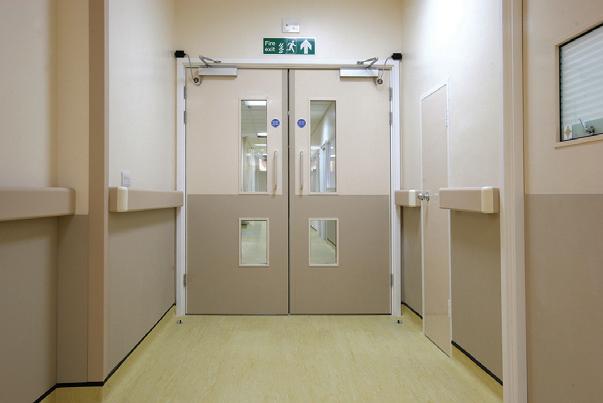
CareZips® Classic have many benefits for the older and disabled users and their carers:
• People dressing themselves enjoy the practi-
See the advert on page 3 for further information on Win Health’s product range.

Malnutrition remains one of the most persistent - and often under-recognised - challenges facing the care sector today.
Despite significant progress in person-centred care and nutritional screening, many older residents continue to struggle with maintaining adequate nutritional intake due to reduced appetite, frailty, dementia, swallowing difficulties, medication side effects and illness-related fatigue.
According to UK nutrition guidance, people living in care homes are at significantly increased risk of malnutrition, with estimates suggesting that between 30–42% of residents admitted to care homes may already be affected or at risk. At the same time, healthcare organisations including Age UK and the Malnutrition Task Force continue to warn that undernutrition among older people remains widely underdiagnosed.
Importantly, malnutrition is no longer being viewed simply as an unavoidable consequence of ageing.
Across both health and social care, there is increasing recognition that early intervention and preventative nutritional support can play a major role in improving outcomes for older adults, helping to maintain strength, reduce frailty and potentially prevent avoidable hospital admissions.
Updated NHS guidance around nutrition in care homes increasingly promotes a “food-first” approach, encouraging providers to focus on fortified meals, nutrient-dense snacks, hydration and personalised eating support as part of everyday care delivery.
However, for many care teams, the challenge is not simply identifying residents who may be nutritionally vulnerable - it is finding solutions residents will consistently consume and enjoy.
MOVING BEYOND TRADITIONAL SUPPLEMENT APPROACHES
Oral nutritional supplements continue to play an important role within many care settings, particularly where residents are experiencing clinically significant weight loss or recovering from illness.
Yet in practice, compliance can sometimes become difficult over time. Reduced appetite, taste fatigue, sensory changes and swallowing difficulties can all impact whether residents continue consuming traditional supplement drinks consistently.
As a result, there is growing discussion across the nutrition and care sectors around the role of more enjoyable fortified foods that support intake while feeling less clinical and more familiar to residents.
This conversation has also been influenced by the wider international rise of “Food as Medicine” - an approach increasingly recognising the role nutrition can play in supporting recovery, resilience and wellbeing during illness and later life.
For care homes, this may include:
• fortified desserts and snacks
• protein-enriched meals
• smaller nutrient-dense portions
• hydration-supportive foods
• texture-adapted options
• socially enjoyable dining experiences
The emphasis is increasingly shifting towards nutritional quality alongside resident enjoyment, dignity and quality of life.
WHY FAMILIAR FOODS MATTER
Care professionals understand that nutritional support is rarely one-size-fits-all.
For some residents, particularly those with reduced appetite or illness-related nausea, cold foods can often feel more manageable than hot meals or milkshake-style supplements. Familiar foods may also encourage better engagement with eating among residents who are reluctant to consume more medicalised nutritional products.

This is one reason why fortified desserts and ice cream-based nutritional products are beginning to attract greater interest within healthcare nutrition conversations.
One example is Nutri-Ice®, developed by My Doctor’s Recipe (https://mydoctorsrecipe.com/collections/the-nutri-ice®), a healthcare-focused nutrition company founded by London oncologist Dr Jon Krell
Originally designed to support patients struggling to maintain nutritional intake during illness and treatment, Nutri-Ice® combines calories, protein and added vitamins in a format intended to feel more like a familiar food experience than a traditional supplement.
Each serving contains over 300 calories and more than 10g of protein, alongside added vitamins and minerals via the company’s DJK+® nutritional blend.
While products such as these are not intended to replace clinical nutritional interventions where required, they may represent part of a broader shift towards more resident-friendly approaches to nutritional careparticularly where maintaining appetite and encouraging consistent intake are ongoing concerns.
SUPPORTING NUTRITION THROUGH DIGNITY AND ENJOYMENT
Nutrition in care settings is about far more than calorie intake alone.
Eating and drinking remain closely connected to comfort, independence, routine and social interaction. As the sector continues to prioritise person-centred care, there is increasing recognition that nutritional strategies should support emotional wellbeing and dignity alongside physical health.
For residents living with dementia, for example, familiar foods and positive mealtime experiences can help reduce anxiety around eating. For frailer residents or those recovering from illness, smaller enjoyable foods may sometimes feel less overwhelming than larger meals.
As NHS and community healthcare systems continue focusing on prevention and reducing avoidable admissions, nutrition is likely to remain high on the care agenda throughout 2026 and beyond.
For many providers, the future may lie not only in identifying malnutrition earlier, but also in rethinking how nutritional support is delivered in ways residents genuinely want to engage with.
Ultimately, improving nutrition in care homes may depend not simply on adding more calories, but on creating nutritional approaches that residents can tolerate, enjoy and sustain over time.
A new report from leading dairy co-operative Lakeland Dairies, supported by Consultant Dietitian Rachael Masters (MSc, BSc), reveals the care sector at a tipping point, with nearly three quarters (74%) of operators concerned about their ability to meet residents’ nutrition and hydration needs over the next five years. Care kitchens are under growing pressure as residents’ needs grow more complex, resources stay tight, and smaller portions mean every mouthful must be nutrient-dense.
The report, The Care Kitchen Reset: The Future of Care Catering, sets out a shift towards enriched cooking and stronger base ingredients that make everyday dishes work harder. It calls for care operators to protect quality nutrition under mounting pressure not by adding complexity, but by strengthening core ingredients from the outset to improve calorie and protein density without increasing portion size.

It launches as part of Nutrition & Hydration Week (16–22 March), which shines a spotlight on the UK care home sector and the critical role food and drink play in supporting resident health and wellbeing.
CARE SECTOR UNDER MOUNTING NUTRITIONAL PRESSURE
The findings reveal rising clinical complexity is a key driver, with almost half (43%) reporting an increase in nutritional needs over the past five years. At the same time, 71% say rising ingredient costs are making it harder to maintain food quality despite 90% refusing to compromise on standards.
For operators, the stakes are both clinical and commercial. Nine in ten resident respondents (90%) cite food as a key factor when choosing a care home, while 87% of residents say mealtimes are the most important part of their day.
Dairy-based ingredients play a central role: over nine in ten operators say products such as cream and milk powder enhance food and drink experiences for residents with smaller appetites or specialist diets, while 88% believe they effectively support resident nutrition. This underlines the value of enriched cooking approaches that boost nutrition in the foods residents already enjoy, without relying on bigger portions.
INGREDIENT STRATEGY OFFERS PRACTICAL SOLUTION
Responding to these pressures, the report highlights that one of the most practical, operationally efficient levers is ingredient strategy. Rather than layering on additional processes, the report argues the solution lies not in short-term cost cutting alone but in strengthening menu foundations. By embedding fortified nutrition into everyday base ingredients, kitchens can improve calorie and protein density without increasing portion size, labour or waste – safeguarding the sector’s future. Rachael Masters, Consultant Dietitian and contributor to the report said: “With an ageing population
driving increased demand for care home places, and residents presenting with more complex health and nutritional needs, care catering teams are being asked to deliver not just meals, but meaningful nutritional support in increasingly complex environments.”
“The solution doesn’t lie in adding more processes, but in making smarter use of core ingredients to maximise nutritional value. By fortifying everyday dishes, kitchens can enhance protein, energy and key nutrients in ways that are practical, cost-aware and, most importantly, enjoyable for residents. Dairy-based ingredients offer a particularly effective and versatile way to achieve this.”
“This report explores these growing pressures and highlights practical, nutrition-led approaches that support both care teams and residents –helping deliver better operational efficiency while improving health, wellbeing and dining satisfaction.”
The research also highlights opportunities to refine delivery. While 90% of residents rate meals positively overall, 77% report struggling to finish meals due to taste or presentation challenges, and 38% say higher quality ingredients would improve their experience. This reinforces the case for ingredient optimisation over short-term cost cutting.
Paul Jennings, Head of Food UK & International at Lakeland Dairies, adds: “Care operators are under pressure to do more with less – more nutrition, more quality and more resilience – while also meeting rising expectations from residents around mealtimes. This creates a real tension in care kitchens, where teams are balancing increasingly complex needs with limited time, staff and budgets.
Ingredient strategy is a practical way forward. By using hard-working bases such as Millac Gold Double and Lakeland Dairies Skimmed Milk Powder, kitchens can build richness, consistency and added nutrition into everyday dishes without adding complexity.
In a sector balancing tight budgets and staffing pressures, this timely report explores immediate solutions to support care kitchens.”
The report draws on a survey of care operators, residents and their families, alongside insight from Consultant Dietitian Rachael Masters, founder of Focus on Undernutrition, which provides specialist special diet training to care homes.
Lakeland Dairies is committed to supporting the sector through menu guidance, product innovation and training designed to help kitchens build resilience through stronger foundations and long-term supplier partnerships.
The full report is available: https://eu1.hubs.ly/H0sP61V0
ROLE CLARIFICATION: KNOWING WHO DOES WHAT — AND WHY IT MATTERS
Walk into any busy care home during a morning shift and you will encounter a diverse range of professionals: registered nurses, senior carers, care assistants, activity coordinators, housekeeping staff, kitchen teams, and visiting healthcare professionals. For residents — many of whom may be living with dementia, cognitive decline, or sensory impairment — being able to quickly and clearly identify who someone is can be genuinely reassuring and, in some cases, clinically important.
A well-considered colour-coded uniform system allows residents to distinguish between their care team and, for example, domestic or catering staff. This is not merely an administrative convenience. Research in dementia care has consistently highlighted that visual cues — including consistent clothing and recognisable appearance — help anchor individuals in their environment and reduce episodes of confusion or distress.
For family members and visiting professionals, clear role identification also inspires confidence. When a relative can immediately see that the person administering medication is a registered nurse, or that the individual assisting their parent at mealtimes is a trained care assistant, it reinforces the professionalism of the entire operation.
TRUST, AND REPUTATION
The care sector has, over many years, worked hard to establish itself as a skilled profession deserving of public trust and respect. Uniforms are an important visible component of that professional identity. Just as we recognise a nurse by their uniform in a hospital, or a police officer by their livery on the street, care staff in recognisable workwear signal to the world — and to those they support — that they belong to a trained, regulated, and accountable workforce.
INFECTION CONTROL: A NON-NEGOTIABLE PRIORITY
Perhaps the most clinically pressing argument for workwear in care settings is infection control. Residents in nursing and residential care homes are among the most vulnerable members of society — often elderly, immunocompromised, and living with multiple complex health conditions. The COVID-19 pandemic threw into sharp relief just how catastrophic the spread of infection can be in these settings, and it reinforced what Infection Prevention and Control (IPC) specialists had long advocated: what care staff wear is a critical component of safe care delivery.
Current guidance from NHS England, the UK Health Security Agency (UKHSA), and professional bodies such as the Royal College of Nursing recommends that care staff working in clinical or personal care roles wear a clean, short-sleeved uniform to minimise the risk of contamination. The 'bare below the elbows' principle — which advocates removing watches, rings, and long sleeves during personal care — is now widely accepted as best practice in care home settings, mirroring NHS clinical standards.
Dedicated workwear also creates an important psychological and physical barrier between home and work environments. When staff change into a uniform on arrival and change out of it before leaving the
building, the risk of transporting pathogens in either direction is meaningfully reduced. This is particularly important in the management of outbreaks of norovirus, influenza, and MRSA — all of which remain persistent concerns in communal care settings.
Fabric choice matters too. Modern healthcare workwear is increasingly manufactured from antimicrobial or fluid-resistant materials designed to withstand industrial washing at temperatures sufficient to eliminate bacterial contamination. Everyday clothing — particularly natural fibres laundered at lower domestic temperatures — cannot offer equivalent protection.
SAFEGUARDING:
The safeguarding of residents in adult social care is a paramount concern, and uniform policy has an often-underappreciated role to play in this area. Clear, consistent identification of care staff serves as a deterrent to, and means of detecting, unauthorised individuals within a care home. If every member of the care team is readily identifiable by their uniform, any person present without one immediately stands out — an important consideration for both physical security and the prevention of financial or emotional abuse.
Name badges and lanyards — ideally colour-coded and bearing the individual's name, role, and photograph — complement uniforms in this regard. They allow residents, particularly those with cognitive impairment, to verify who is attending to them, and give families visible reassurance that staff have been identified and vetted. They also support compliance with Disclosure and Barring Service (DBS) checks by making it easier for managers to verify that only cleared individuals are working in direct contact with residents.
In cases of safeguarding investigations or incidents, clear records of which uniformed member of staff was on duty, in which area of the home, at which time, become vital. A consistent and documented uniform policy supports the audit trail that such investigations depend upon.
RESIDENT SUPPORT AND ANXIETY REDUCTION
The environment in which a person lives profoundly affects their emotional wellbeing, and for residents of care homes — many of whom may have been admitted following significant loss, health deterioration, or a change in personal circumstances — familiarity and visual consistency are powerful sources of comfort.
Consistency in staff appearance can be a meaningful anchor for residents living with dementia. Where an individual may no longer reliably remember names or faces, recognising 'someone in the blue uniform who helps me get dressed' provides a form of cognitive continuity that supports orientation and reduces anxiety. This aligns with established principles of person-centred dementia care, including those embedded in the National Institute for Health and Care Excellence (NICE) guidelines on dementia support.
Soft colours, contemporary cuts, and co-ordinated rather than institutional palettes can all help workwear feel warmer and less clinical, whilst retaining its functional and identifying benefits.
Design and Functionality: Getting the Details Right
When specifying workwear, care managers should consider several
practical factors. Durability and washability are essential: uniforms must withstand repeated industrial laundering without shrinking, fading, or losing their shape. Comfort across long shifts matters greatly for staff welfare — breathable fabrics, well-placed pockets, and freedom of movement should be prioritised over appearance alone. Inclusive sizing, encompassing a full range of body types, is both a legal obligation under the Equality Act 2010 and an expression of the values care homes should embody.
Pockets deserve a particular mention. Care staff frequently need to carry small equipment — pens, hand sanitiser, a fob watch, a small notebook. Uniforms without adequate pocketing lead to the use of personal clothing layers or improvised solutions, undermining the consistency and IPC benefits the uniform is intended to provide.
Colour psychology, too, is worth considering. Deep blues and teals convey trust and calm; greens are associated with care and healing; warm purples can feel both professional and approachable. Harsh institutional greens or stark whites, by contrast, can heighten anxiety in individuals with clinical associations or past traumatic healthcare experiences. Getting the colour palette right is not a trivial aesthetic decision — it is a component of person-centred care.
SUSTAINABILITY: AN EMERGING PRIORITY
The social care sector, like all areas of public and commercial life, is increasingly alert to its environmental responsibilities. Workwear procurement is a meaningful area in which care home operators can demonstrate their commitment to sustainability. Choosing suppliers who use ethically sourced, recycled, or organic materials; selecting garments with extended lifespans; establishing laundering protocols that minimise water and energy use; and implementing responsible end-of-life disposal or recycling schemes are all practical steps that align workforce needs with environmental values.
Some larger care groups have begun working directly with workwear manufacturers to develop own-branded uniforms that meet both their operational requirements and their sustainability commitments — an approach that also strengthens brand identity and staff pride.
CONCLUSION: DRESSING THE PART IS PART OF CARING
The question of uniforms and workwear in adult social care is, at its heart, a question about values. What kind of environment do we want to create? What standards do we expect of our workforce? How do we balance clinical safety with emotional warmth? How do we protect the vulnerable people in our care whilst honouring their dignity and individuality?
A thoughtful, well-implemented workwear policy does not answer all of these questions alone — but it is a tangible, daily expression of how a care home answers them. Whether through a colour-coded uniform system that helps a resident with dementia recognise their carer, a fabric specification that reduces infection transmission, or a contemporary design that gives staff genuine pride in their professional identity, what care workers wear is far more than a matter of dress.
It is a statement of who you are, what you stand for, and how much you care — for the people you support, for the colleagues you work alongside, and for the standards the sector must continue to uphold.
For nearly 120 years, Grahame Gardner Ltd has been one of the UK’s leading suppliers of healthcare uniforms, supporting care homes, hospices, NHS organisations and healthcare professionals nationwide. Built on a strong reputation for quality, reliability and customer service, Grahame Gardner understands the evolving needs of the care sector and the important role uniforms play in professional healthcare environments.
Grahame Gardner offers an extensive range of healthcare workwear and accessories, including traditional tunics and trousers alongside a vast selection of modern scrubs designed to suit all budgets, colour preferences and fit options. From classic healthcare styles to contemporary uniforms that combine comfort with professional style, Grahame Gardner continues to help organisations create practical and cohesive uniform solutions tailored to their teams.
In today’s care sector, uniforms are about far more than appearance alone. Staff want to look and feel good in the workplace, but a uniform can offer so much more to both the wearer and the organisation that employs them.
One of the most important functions of a uniform is identification. Within busy care homes, hospitals and community healthcare settings, uniforms allow staff to be easily recognised according to their role, department or level of responsibility. Clear identification supports communication, efficiency and reassurance for residents and visitors alike. Families want to know immediately who they can approach for support, and coordinated uniforms help create clarity in fast paced environments. Uniforms also contribute to security within healthcare settings. Professional garments should only be issued to individuals authorised to wear them, helping to maintain controlled and secure working environments. In care settings where safeguarding and trust are critical, uniforms provide an additional level of reassurance for both residents and staff.

ism, consistency and accountability. In the care sector especially, appearance can strongly influence perception. A clean, professional uniform reinforces the idea that residents are being cared for by trained and trusted professionals. This confidence is invaluable in environments built on compassion, dignity and trust.
Uniforms can also support enhanced wearer performance. When carers feel comfortable, professional and proud of their appearance, it can positively influence morale and confidence throughout the working day. High quality healthcare uniforms are designed to support the demands of physically active roles, whilst helping staff feel part of a professional team. Grahame Gardner understands this balance and offers garments specifically created for healthcare professionals who require durability, flexibility and comfort during long shifts.
Modern healthcare uniforms must also function as effective protective garments. Care professionals work in environments where hygiene, infection control and workplace safety remain top priorities. Durable fabrics, practical designs and garments suitable for rigorous laundering processes all help to support protection against workplace hazards, while maintaining comfort and professionalism.
Finally, uniforms are an important reflection of brand identity. Through colour coordination, embroidery and personalised branding services, Grahame Gardner helps care providers create a professional and consistent corporate appearance across their teams.
Uniforms remain one of the simplest yet most powerful ways to support staff, reassure families, residents and patients and strengthen organisational identity.
To find out more about Grahame Gardner’s uniform range, personalised workwear services and extensive scrub collections, visit: grahamegardner.co.uk.
Naturally, this visibility and structure help strengthen public confidence. Uniforms project professional-
To discuss branding options and pricing, contact the team on 0116 255 6326 or email sales@grahamegardner.co.uk
Laundry may not command the same attention as clinical care protocols or medication management, but in a residential or nursing care home it represents one of the most significant infection control risks on the premises. Done well, it protects residents, staff and visitors. Done poorly, it can spread pathogens, compromise dignity and expose a provider to serious regulatory consequences.
Here we examine the key frameworks, practical obligations and emerging best practice that every care home manager and nominated individual should understand.
INFECTION CONTROL AND THE RISK OF CROSSCONTAMINATION
HTM 01-04 establishes a clear hierarchy of linen categories: used (soiled but not infectious), infected (from residents with known or suspected infectious conditions), and heat-labile (items that cannot withstand high-temperature washing). Each category must follow a distinct processing pathway.
The cardinal rule is the strict separation of dirty and clean linen at every stage — collection, transport, storage and processing. Soiled items should be placed directly into appropriate colour-coded bags at the point of care, never sorted on floors or in communal areas. Red alginate or water-soluble bags are used for infected linen, allowing the bag itself to be placed directly into the machine without manual handling of the contents.
Washing temperatures are a critical control. A minimum thermal dis-
infection cycle of 65°C for ten minutes or 71°C for three minutes is required. Where chemical disinfection is used — for example, with heat-sensitive items — validated low-temperature systems with appropriate detergents must achieve equivalent log reduction in microbial load. Informal domestic machines, even in small residential settings, frequently fail to sustain these temperatures and present an unacceptable infection risk.
Cross-contamination between residents' personal clothing remains a common and often underreported problem. Robust labelling — ideally heat-transfer or embroidered name labels — and individualised laundry records reduce the risk of items being lost, mixed or returned to the wrong resident, an issue that carries both infection and dignity implications.
STAFF SAFETY AND DIGNITY CONSIDERATIONS
Personal Protective Equipment (PPE) is mandatory when handling soiled or infected linen. As a minimum, staff should wear disposable gloves and aprons; fluid-resistant masks are advisable when handling heavily contaminated items. Hand hygiene must follow the removal of PPE — this step is frequently omitted and should be an explicit part of laundry standard operating procedures.
Manual handling risks in laundry are frequently overlooked. Wet linen is heavy, laundry rooms are often cramped, and repetitive loading and unloading of machines contributes to musculoskeletal injury.
Ergonomic assessments of laundry workflows, appropriate trolley
heights and staff training are all employer obligations under the Manual Handling Operations Regulations 1992.
For residents, the laundry process is deeply personal. Clothing represents identity, self-expression and comfort. Shrinkage, damage or the loss of treasured garments causes genuine distress. Care plans should document fabric care requirements for individual residents, and staff should understand — and follow — care label instructions.
EFFICIENCY,
Operational efficiency and environmental responsibility are increasingly inseparable. Modern commercial washer-extractors offer programmable cycles, water recycling, and energy consumption data that support both cost management and sustainability reporting — the latter becoming relevant as the care sector faces growing ESG scrutiny from commissioners and investors.
Outsourced laundry contracts with commercial providers offer scale and validated thermal disinfection, but require robust service level agreements, audit rights and clear protocols for infected linen. On-site solutions give greater control but demand proper equipment maintenance, documented machine validation, and staff competency checks.
Whichever model is adopted, documented evidence is essential.
HTM 01-04 and CQC both expect providers to demonstrate — not merely assert — compliance. Temperature monitoring logs, machine service records, staff training certificates and outbreak response procedures should all be readily available for inspection.
Lavamac has built a reputation as a trusted name in industrial and commercial laundry technology. Recognized across global markets for its commitment to durability, innovation, and operational efficiency, the company continues to deliver advanced laundry solutions tailored to the evolving demands of healthcare, commercial laundries, and institutional facilities. With a product philosophy centered on reliability and performance, Lavamac has become synonymous with high-quality engineering and longterm value.
Innovation remains a defining characteristic of the Lavamac brand. The company continues to invest heavily in research, engineering, and modern control systems that improve ease of use and machine efficiency. Lavamac’s commitment to sustainability is equally impressive. Its machines are engineered to meet stringent environmental standards while supporting lower water and energy usage. Advanced airflow systems in the dryers and optimized water management technologies in the washers contribute to reduced utility costs and greener operations. This meant that Lavamac was award-
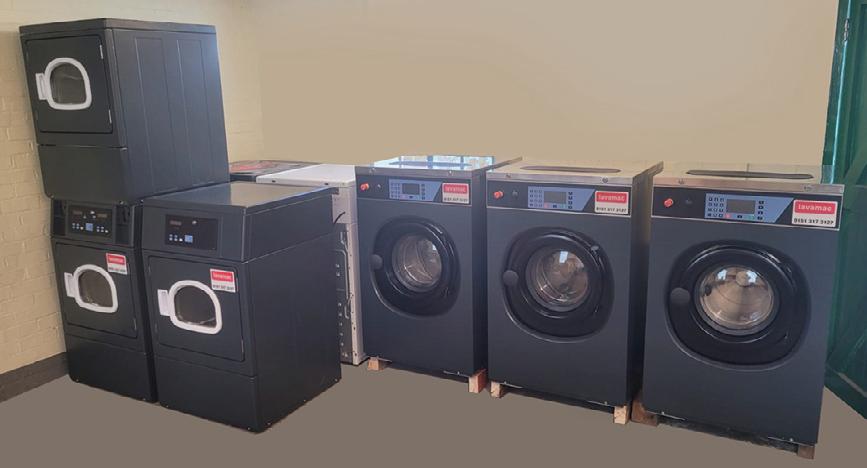
ed a bronze award in sustainability by the Groundworks Trust, affirming their commitment to the sustainability industry Lavamac's refurbishment programme in their specialist facility includes stripping down the machines, and giving them a check-over, to see which parts, if any, can be carried over the refurbishment. Lavamac will only carry over the highest-quality parts from the machine from pre to post refurbishment. The machine then undergoes an extensive refurbishment, with almost all the parts being replaced, with the refurbished machines being given specialist parts based on the model type.
The company offers a complete service-oriented approach that includes laundry design consultation, project management, technical expertise, installation support, and after-sales service. Supported by experienced engineers and factory-trained technicians, Lavamac works closely with customers to develop customized laundry solutions that meet operational goals and space requirements.
or visit www.lavamac.eu
In today’s care environment, operators are facing unprecedented financial pressure. Rising utility costs, staffing shortages and increasing regulatory demands are forcing care homes to scrutinise every aspect of operational efficiency - without compromising resident wellbeing or compliance standards.
Laundry provision is one area where care providers can make meaningful operational and financial gains.
At Forbes Professional, our Complete Care Laundry Solution has been developed specifically to support the evolving needs of the care industry. As proud national partners of Miele Professional commercial laundry equipment, we combine premium technology with local expertise and nationwide service support, giving care homes complete confidence in their laundry operations.
For many operators, purchasing commercial laundry equipment outright is no longer the most practical or cost-effective route. Renting provides access to high-performance, WRAS-approved equipment that meets stringent infection control and industry requirements, without the burden of significant upfront capital expenditure.

Equally important is the reassurance of rapid support. Our local-based engineering network delivers
same-day or next-day response nationwide, helping minimise downtime and maintaining continuity of care operations.
Beyond equipment and service, Forbes Professional works consultatively with care providers to design compliant, efficient laundry solutions tailored to individual operational needs, budgets and laundry room configurations. Our expert advisors guide customers through current industry guidelines to help ensure fully compliant solutions aligned with both CQC and WRAS standards.
Kevin Herring, CEO of Forbes Professional, comments:
“Care homes need reliability, compliance and long-term value. Our engineering infrastructure and national support capability give operators peace of mind that help is always close at hand. By renting premium commercial laundry equipment, care providers can protect cash flow, reduce unexpected repair costs and gain access to industry-leading technology that supports both efficiency and resident care.”
As pressures on the care sector continue, operators are increasingly seeking partners who can deliver not only equipment, but expertise, responsiveness and genuine operational support. Forbes Professional’s Complete Care Laundry Solution is designed to do exactly that.
Trusted by thousands of care homes across the UK, MAG Laundry Equipment is an award-winning supplier of commercial washing machines and tumble dryers. Reliable laundry machines that meet the highest hygiene standards are essential for care homes, hospices, nursing homes, hospitals, and other healthcare organisations. MAG provides support to the care sector for all makes, models, and brands of laundry machines. Whether you require free technical assistance, maintenance, repairs or installation, the professional team of experts at MAG will be happy to answer any questions.
MAG’s product range includes commercial washing machines, tumble dryers, ironers, presses, and detergents, all supported by a nationwide network of accredited engineers. Built since 1922, their commercial laundry equipment has a 5-star reputation for being reliable, energy-efficient, and
cost-effective. Care homes benefit from complete peace of mind knowing their commercial laundry machines can be professionally supplied, installed, maintained, and repaired throughout England, Scotland, and Wales.
Thermal disinfection comes as standard on MAG washing machines designed for care home and healthcare applications, helping businesses maintain the highest hygiene standards and regulations. For organisations seeking exceptional wash performance and effective stain removal, MAG Laundry Equipment also supplies high-quality commercial laundry detergents.
To find out more about how MAG Laundry Equipment can support your care home, visit www.maglaundryequipment.co.uk or phone 01353 883025. See the advert on the back cover.
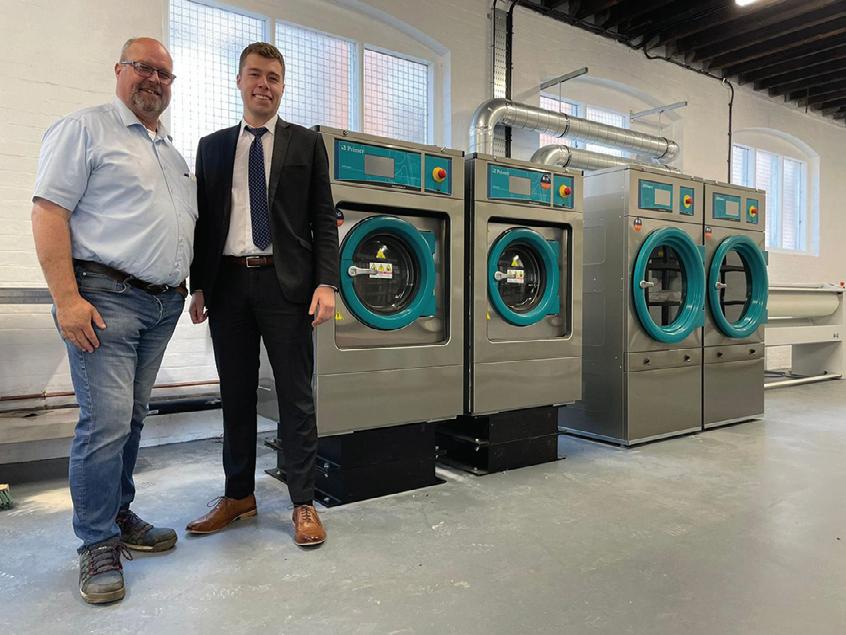


Geraldine McMurdie,
Dementia Specialist at Quality Compliance Systems
(QCS), discusses the links between dementia and falls and the ways in which these can have an impact on those living with a dementia.
Those living with a dementia are at a significantly higher risk of falling, with studies indicating that one in three adults over the age of 65, and half of people over 80, will experience at least one fall a year. People living with a dementia are also 5 times more likely to be admitted to long-term care after a fall.
Falls can significantly impact the confidence, health, and wellbeing of individuals living with dementia. They can also heighten the stress experienced by caregivers and place additional strain on the healthcare system.
DEMENTIA AND FALLS
As a dementia progresses over time effecting the brain and how it
works, this can often lead to significant effects on a person’s mobility and safety awareness, leading to challenges such as reduced balance, difficulty managing dual tasks, spatial navigation issues, increased frailty, and medication side effects. These factors contribute to those living with a form of dementia experiencing falls.
KEY STATISTICS:
Injury and hospitalisation – around 31% of people with dementia experience a fall leading to hospitalisation over a 2.5 year period
Fracture risk – 18% of those with dementia will experience a fracture, often following a fall
Mortality risk – falls can be a major cause of death, with higher injury-related mortality risks in those living with dementia
Often when someone living with dementia experiences a fall an ambulance is called as the individual may not be able to convey how much pain they are experiencing or how serious the injury is. This can lead to distress and poor health outcomes if care staff do not know how to respond to the situation in a prompt, caring and appropriate manner.
DEALING WITH FALLS
Understandably falls can happen very quickly and without warning and are often a distressing time for both the individual who has fallen and the care provider who is looking after them. It is a time where decisions will need to be made quickly in order to provide the best possible
care and support at the time it’s needed most. It is also important that these decisions are made in line with the individual’s care plan and the policies in place for best practice.
With Lyra Multi, QCS’s latest stage of AI technology, care providers can access all of their policies and compliance documents within seconds, helping them to make those quick decisions in a compliant and safe way. Lyra Multi connects all relevant policies, interprets them in context and converts complexity into clear, relevant and practical guidance exactly when teams need it, turning policy storage into real decision support.
At any given time, users can ask a question and get instant, tailored answers along with clear summaries and key insights. For example, if a resident with a dementia has fallen over and the care provider wants to check how support them with safe and appropriate care, they can type the message into Lyra and have all the relevant information from all of their policies provided to them in a succinct and understandable way within seconds.
Ensuring decisions are made both quickly and in a way that is compliant with regulations and policies will provide the best possible care for the individual who has fallen as well as give the care provider the confidence that they have acted in the most suitable way.
Find out more about Lyra Multi at www.qcs.co.uk/lyra
See the advert on page 15.
Alarm Radio Monitoring is the market leader in the design, manufacture and installation of bespoke, end-to-end, wireless alarm systems and solutions for the healthcare, leisure, custodial and education industries.
We have been providing wireless alarm and nurse call systems for over 30 years. Supplying care homes and hospitals with an essential lifeline that supports the delivery of outstanding care.
We believe in excellence which translates into:
Advanced Technology
Industry-leading wireless alarm technologies and software
Bespoke Solutions
We design systems to your needs rather than your team having to work around

the system Innovative Design
Pushing boundaries with the reliability that comes from decades in the industry Flexible Finance Options
Ensuring organisations of any size can provide safety for their staff and clients 24 Hours a Day, 365 Days a Year Service
Your ARM service team is on hand, on the phone, on-site or return to base, whether you have a service contract or not
For further information, see the advert below or visit www.arm.uk.com
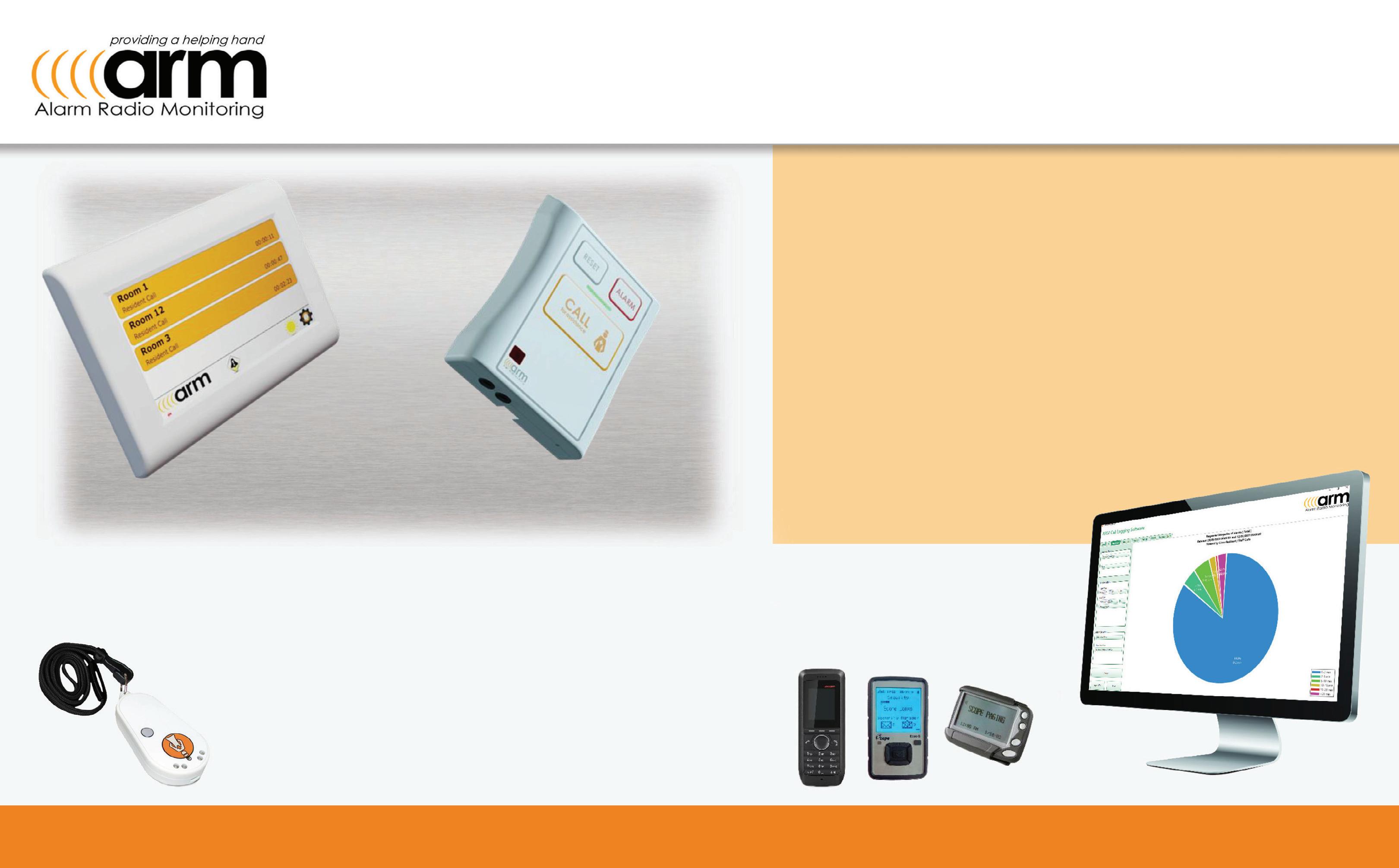
The wireless ARM Nurse Call system has been developed over 30 years with both the client and user in mind.
It enables staff to efficiently answer calls, making the management of resources more flexible and provides the functionality you would expect of any nurse call system.
The system is quick and easy to install and works wirelessly, using radio communication between both the call points and the system infrastructure.
Data Analysis software provides a full audit trail of events
The all-new call logging software from ARM enhances the functionality of your care call system dramatically.
• It can help you track the quality of your service to your residents.
• It can help you demonstrate compliance with your aims and best practices, both to relatives and to authorities.
• It can help you find bottlenecks in service provision, track staffing requirements, and allow you to ensure staff are meeting expectations.
• Most importantly, it provides assurance that you know and can demonstrate what is happening in your care home.
Call messages can be sent direct to staff to speed up response times and can also be integrated to work with smart phones & messaging.
In today’s complex care environment, we understand that choosing the right technology is about far more than functionality alone. For care providers, reliability, sustainability, and supply chain resilience are critical factors—especially when it comes to nurse call systems that play such a vital role in resident safety and day-to-day operations.
At Courtney Thorne, we are proud to champion the “Made in Britain” mark. For us, this is not simply about where our systems are manufactured; it reflects our commitment to quality, accountability, and supporting the UK care sector. By designing and building our nurse call systems here in Britain, we can ensure they are developed with a deep understanding of the real challenges faced by care homes, resulting in solutions that are practical, reliable, and easy to use.
Manufacturing in the UK also allows us to maintain close control over our supply chain—something that has become increasingly important in recent years. Global disruptions have highlighted the risks of relying on complex, overseas supply networks. By keeping our production local, we are able to offer greater consistency, shorter lead times, and improved access to parts and upgrades. This means our customers can rely on continuity, even in uncertain times, with minimal risk of disruption to their services.
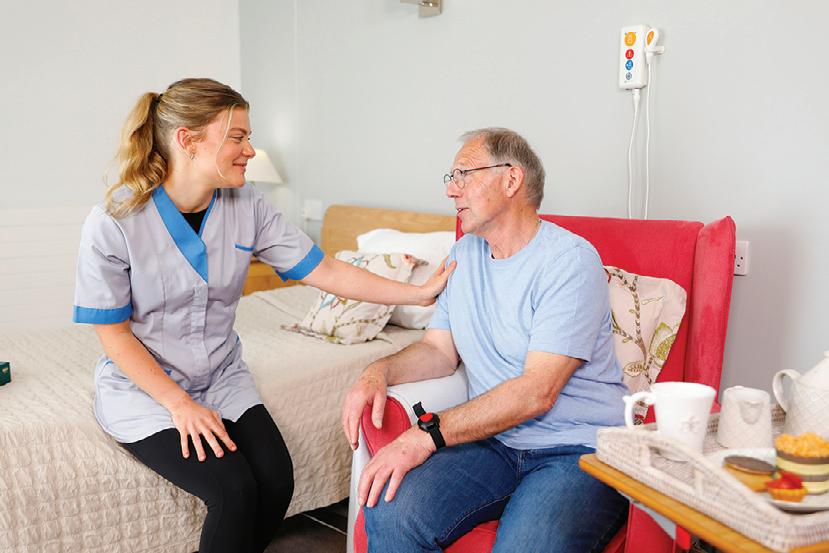
Sustainability is another area where we believe local manufacturing makes a meaningful difference. By reducing the need for long-distance transportation and focusing on robust, long-lasting system design, we help care providers lower their environmental impact. We are committed to creating solutions that not only meet today’s needs but are built to last—reducing waste and supporting more sustainable care environments over the long term.
Of course, delivering high-quality technology is only part of the picture. We know that ongoing support is essential. That’s why our UK-based technical team is on hand to provide expert assistance, from installation and training through to maintenance and rapid response when it matters most. Our proximity allows us to respond quickly and effectively, giving our customers the confidence that support is always within reach.
At Courtney Thorne, we believe that care homes deserve technology they can depend on—both now and in the future. By combining British manufacturing, sustainable practices, a resilient supply chain, and dedicated local support, we are proud to deliver nurse call systems that underpin safe, effective, and reliable care every day.
For more information or to book a free demo, visit www.c-t.co.uk or contact info@c-t.co.uk.
Falls are a significant concern for vulnerable individuals, especially seniors and patients at risk. Medpage, a leader in assistive technology, offers a range of cutting-edge products designed to enhance safety and provide peace of mind for caregivers and families. Here’s an in-depth look at some of their standout solutions: MPRCG1 (2023) BED LEAVING DETECTION ALARM WITH CAREGIVER RADIO PAGER
The MPRCG1 is a comprehensive system tailored for fall prevention in domestic, commercial, and NHS care settings. This all-inclusive kit includes a bed pressure mat sensor, a BTX21-MP alarm sensor transmitter, and an MP-PAG31 radio pager. The system is designed to alert caregivers when a patient leaves their bed, reducing the risk of falls.
HDKMB2 HOSPITAL DISCHARGE KIT FOR FALLS RISK PATIENTS
The HDKMB2 is a thoughtfully curated kit aimed at supporting patients transitioning from hospital to home care. It includes essential tools to mitigate fall risks and promote recovery. This kit is ideal for caregivers seeking a comprehensive solution to enhance patient safety during the critical post-discharge period.
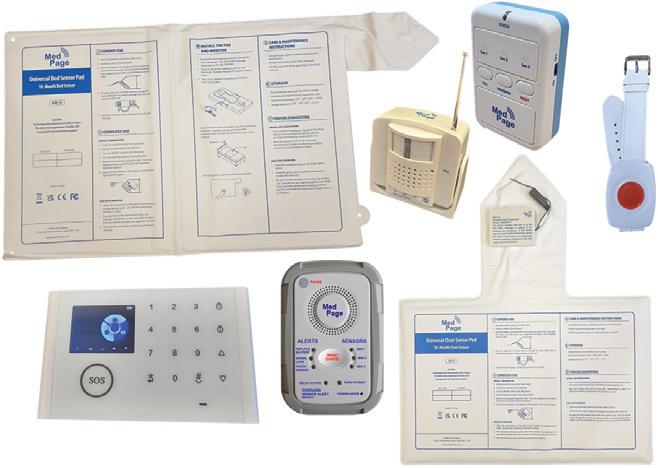
CMEX-21 MULTI-PORT WIRELESS SENSOR INPUT EXPANDER FOR NURSE CALL CONNECTION
The CMEX-21 is Medpage’s latest innovation, designed to integrate seamlessly with existing nurse call systems. This multi-port expander allows for the connection of multiple wireless sensors, enhancing the monitoring capabilities of healthcare facilities. Its versatility makes it a valuable addition to any care environment, ensuring timely responses to patient needs.
RON-WC2 WATERPROOF DISABLED PULL CORD ALARM TRANSMITTER WITH WIRELESS ALARM RECEIVER
The RON-WC2 is a robust solution for disabled individuals requiring immediate assistance. This waterproof pull cord alarm is ideal for use in bathrooms and other high-risk areas. Paired with a wireless alarm receiver, it ensures that help is just a pull away. For more information, visit Medpage’s official website or contact their team to explore these products further. Safety starts with the right tools, and Medpage delivers just that. www.easylinkuk.co.uk or T: 01536 264 869 See the advert on page 15 for more information.

The analogue-to-digital transition in health and social care is not simply a technology refresh. It is a chance to rethink how help is requested, how staff respond, and how care is coordinated across a home.
Too often, procurement still begins with a like-for-like mindset: replace the old panel, keep the old workflow, and hope for a better result. But digital nurse call should not be bought as a newer version of an old problem. It should be purchased as part of a wider care model that improves visibility, response, accountability, and resident experience.
Before comparing systems, providers should define the problem they are trying to solve. Is the issue slow response times, poor escalation, noisy environments, duplicated paperwork, or a lack of oversight? The right solution should be judged against those outcomes, not against a checklist of features.
This matters because modern nurse call is no longer just about a resident pressing a button and a sounder going off. In better-designed systems, alerts can be routed directly to staff mobile devices, calls can be prioritised, and managers can see patterns in demand and response. That creates a more responsive and less fragmented way of working.
A presentation is not a demonstration. A brochure cannot show how a system behaves during a busy morning shift, when several alerts happen at once and staff are moving across different parts of the home. That is why live testing in a real care environment is essential. Staff should be able to use the system, question it, and pressure-test it before any decision is made. If the workflow is clunky in practice, the promise of digital efficiency disappears very quickly.
One of the biggest mistakes in purchasing technology is treating integration as a nice-to-have. In reality, it is central to whether the system adds value.
When nurse call works alongside care records, mobility devices, alarm management, and internal communi-
By Stuart Barclay, healthcare technology specialist at Syndora Alto
cation tools, the result is less duplication and faster decision-making. When systems do not connect, staff are left repeating tasks, chasing information, and working around the technology rather than with it.
For care providers, that means the question should not be, “What does this system do on its own?” The better question is, “How well does it fit into everything else we already use?”
Digital systems do not end at installation. They begin there. Any provider selecting a nurse call platform should think carefully about what happens after go-live: training, maintenance, updates, fault resolution, and ongoing optimisation.
Care homes need suppliers who understand the realities of the sector, not just the technology. A strong supplier relationship should include responsive support, practical training, and a willingness to adapt as the home’s needs change. In digital care, support is not an extra service; it is part of the product.
The biggest risk in this transition is buying something that cannot evolve. Care homes are operating in a fastchanging environment, and technology that cannot scale or adapt soon becomes a constraint rather than an asset.
Future-ready systems should be designed to expand, integrate, and respond to changing needs without requiring a complete replacement every few years. That flexibility is especially important in a sector facing pressure to modernise ahead of the 2027 digital switchover.
A BETTER QUESTION TO ASK
The analogue era encouraged a narrow question: does the system work?
The digital era demands a better one: does the system help us deliver safer, smarter, more person-centred care?
That shift in mindset changes everything. It moves procurement away from hardware replacement and towards care improvement. It encourages providers to look for visibility, integration, responsiveness, and longterm support rather than simply ticking a technical box.
The homes that get this right will not just be compliant with the digital transition. They will be better equipped to use technology as part of everyday care, supporting staff and improving the experience of residents.
Fall Savers®, are an experienced market leading healthcare provider of resident safety solutions for over 15 years.
FALL SAVERS ® WIRELESS MONITOR
Eliminate all cables with our new generation falls management solutions!
Upgrade your falls programme with the latest technology from Fall Savers®. The NEW Fall Savers® Wireless eliminates the cord between the monitor and sensor pad. This results in less work for nursing staff, improved safety for patients and reduced wear and tear on sensor pads. Wireless advantages include the ability to use one monitor with two sensor pads simultaneously and support for many new wireless devices.
BENEFITS INCLUDE:
Safer for patients; less work for staff
Bed and chair pads available
One monitor works with two sensor pads
Integrates with most nurse call systems
A variety of options, including: Call button
Pager Floor sensor mat
Wireless door/window exit alerts
TREADNOUGHT ®FLOOR SENSOR PAD

The TreadNought® Floor Sensor Pad is built to last with a durable con-
struction that far out lasts the competition. Our anti-bacterial floor sensor pad is compatible with most nurse call systems or can be used with a portable pager to sound an alert when a person steps on to the sensor pad. Caregivers typically place the sensor pad at the bedside, in a doorway or other locations to monitor persons at risk for falls or wandering. An optional anti-slip mesh reduces the potential for slippage on hard surface floors.
FEATURES INCLUDE:
Connects directly to most nurse call systems
High Quality anti-bacterial Floor Sensor Pad
Large Size Pad: Measures (L) 91cm x (H) 61cm
Options (sold separately):
Anti-slip mesh for hard surface floors
See the advert on this page for further details or visit www.fallsavers.co.uk.

Care home managers and staff already know that sharing information is critical to good care. What is changing is the scale and speed at which technology can now collect, analyse and share data, often almost in real time.
There is also much more focus on joined-up care, neighbourhood health services, and better information sharing between organisations. Care homes are expected to work closely with GP practices, hospitals, community services and local authorities, sharing information safely to support more coordinated care.

Done well, this brings real benefits. But it also brings risks. Cyber incidents, scams, human error and system failures can disrupt care services and put sensitive personal information at risk. As more information is shared digitally, providers are increasingly being asked to demonstrate that they have strong data protection and cyber security arrangements in place.
This matters when accessing NHS systems or shared records, responding to commissioner requirements, or demonstrating assurance to regulators and partners. It is no longer enough simply to say that policies exist. Organisations need to show that staff are trained, risks are managed, systems are protected, and clear processes are in place for handling personal information safely.
The Data Security and Protection Toolkit (DSPT) helps care providers do exactly this.
Running a care service means constantly juggling ever-changing regulations alongside the daily needs of the people you serve.
Compliance isn't just about ticking boxes; it’s about the safety of your residents and the protection of your staff. Here is what every manager should have in place:
• Policies aligned with the latest CQC, CIW, and CIS standards.
• Secure, digital storage for staff management files.
• 24/7 access to professional HR and safety advice.
The DSPT is much more than a tick box or a compliance exercise. The toolkit acts as a framework and checklist to help providers strengthen day-to-day data protection and cyber security. It helps organisations review what they already have in place, identify gaps, and improve policies, training and working practices over time.
For many providers, the DSPT helps avoid starting from scratch. It supports practical improvements such as strengthening passwords, reviewing access to information, improving business continuity planning, and helping staff recognise scams and cyber risks.
Crucially, it also helps providers demonstrate good practice and prove they are safe to share information appropriately with partners. In a health and care system increasingly focused on integrated working and digital information sharing, that reassurance matters.
The deadline for the 2025/26 DSPT is 30 June. Previous submissions expire after this date and can no longer be used as evidence.
Digital Care Hub provides free support for adult social care providers, including guidance, webinars, elearning and direct help from 32 local support organisations.
Don’t let your DSPT expire on 30 June. Get free support and guidance at www.digitalcarehub.co.uk/dspt
If your current system feels like ""guesswork,"" it’s time for a more comprehensive solution.
Croner Care Pro provides everything you need to manage the regulatory side of your business in one place.
From practical, ready to use resources collated by industry experts and in line with the latest CQC (Care Quality Commission), CIW (Care Inspectorate Wales) and CIS (Care Inspectorate Scotland) regulations and standards, software to record and store important policies, procedures and staff management files to practical, 24/7 telephone based advice for any challenges you may be facing.

Included is Croner BrightHR Employee Management Software and Croner BrightSafe management software which includes policies, handbooks, and access to your documentation
To learn more about how we can match your service to your specific needs, contact our expert team for free advice today on 01455 858 132.
See the advert on page 9 for further information.

The social care sector continues to face growing pressure from every angle. Providers are balancing rising operational costs, recruitment challenges, complex compliance requirements and increasing expectations from residents, families and regulators alike. At the centre of all of this is one key priority: supporting staff so they can continue delivering high-quality care.
For many care organisations, workforce management technology is becoming an essential part of achieving this!
Across the UK and Ireland, care homes are moving away from manual processes, paper rotas and disconnected systems in favour of integrated workforce management solutions that provide greater visibility, flexibility and control. The result is not only improved operational efficiency, but also a better experience for employees and residents.
Technology is no longer simply about digitising paperwork. It is about giving care providers the tools they need to make informed decisions, manage staffing levels effectively and respond quickly to changing demands.
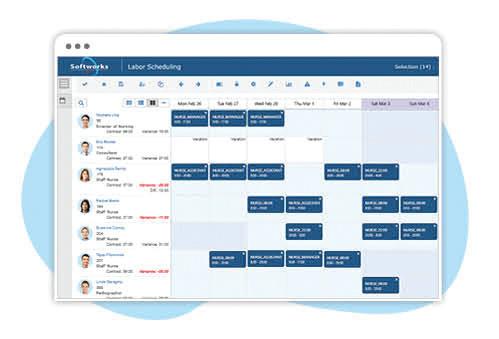
One area where this is particularly important is employee scheduling and rostering. Care providers often operate around the clock, managing complex shift patterns while ensuring the right staff are available at the right time. Manual scheduling can be time-consuming and leaves little room for flexibility when absences or last-minute changes occur.
Modern workforce management systems help simplify this process by automating rotas, improving visibility across teams and enabling organisations to manage staffing requirements more effectively. Features such as auto-rostering and employee self-service also empower staff by giving them more control over their schedules, shift swaps and holiday requests. This level of flexibility is becoming increasingly important in attracting and retaining employees within the care sector.
Another growing focus for care organisations is absence management. Unplanned absences can place significant pressure on teams and increase costs through overtime or agency cover. Having better visibility
of absence trends allows organisations to take a more proactive approach.
AI-powered tools are now helping providers identify patterns, predict potential absence issues and support more informed workforce planning. These insights can help managers address challenges before they escalate while maintaining continuity of care.
Importantly, workforce management technology is also supporting compliance and reporting requirements. Care providers must ensure accurate records are maintained for working hours, attendance and employee data. Digital systems help reduce manual errors, improve accountability and provide clear audit trails when needed.
When managers spend less time dealing with administration, they have more time to focus on people. When employees have greater flexibility and visibility of their schedules, engagement often improves. When staffing levels are managed effectively, residents benefit from greater continuity and consistency of care.
Technology should never replace the human side of care. Instead, it should support the people delivering it!
As the sector continues to evolve, care providers are increasingly looking for solutions that combine reliability, flexibility and innovation. Integrated workforce management platforms are helping organisations build more resilient operations while continuing to deliver the high standards of care that residents depend on every day.
If you are currently facing workforce management challenges such as staff shortages, inefficient rostering, absence management issues or time-consuming manual processes, we can help. To learn more about how our workforce management solutions support care providers across the UK and Ireland, contact us at hello@softworks.com, call our UK team on +44 1527 888 060 or our Irish team on +353 1 286 6126. You can also visit www.softworks.com for more information.

When a family begins searching for a care home, two things are almost always true. They are under enormous emotional strain, and they have very little idea of what they are actually looking for. Most are doing this for the first time in their lives, often in the middle of a crisis: a hospital discharge, a fall, a sudden change in a parent's condition. They are unclear on funding, what to look for, or what questions to ask.
And what does the sector currently offer them at that crucial first moment? A postcode search.
Most online care directories function as little more than a digital phonebook, a long, undifferentiated list of names and addresses that families are expected to trawl through alone. A handful offer a "concierge" service, but that typically means a phone call back, during office hours, after the family has already filled in a form. The first point of contact, the moment when families most need guidance, is precisely the moment they are left to fend for themselves.
Caretopia World was built to change that.
The UK's first AI-powered care navigation website, Caretopia replaces the postcode-and-pray model with a guided conversation. At the heart of the site is Fliss, an AI agent who talks with families and carers, asks the right questions, and helps them work out what they actually need before showing them anything at all. Fliss signposts information on common conditions, explains funding options in plain language, and –crucially – checks in on how the person searching is coping. It is a small touch, but it acknowledges what the rest of the sector tends to ignore: that the people doing the searching are often exhausted, frightened, and grieving a loss of independence on behalf of someone they love.
Only once Fliss has built a real picture of the family's situation does the site present a shortlist of providers. Families can then select up to three homes to compare side by side and share that shortlist with siblings, partners, or other decision-makers. The result is a process that feels less like online shopping and more like having a knowledgeable friend in the room.
"Postcode searches are simply inadequate for the people who use them," says founder Nathan Davies-
Pugh. "Most families are doing this for the first time, and they don't yet know what good looks like. Fliss helps them arrive at a realistic set of considerations – and then matches them with homes that genuinely fit."
For care home managers, the proposition is just as straightforward.
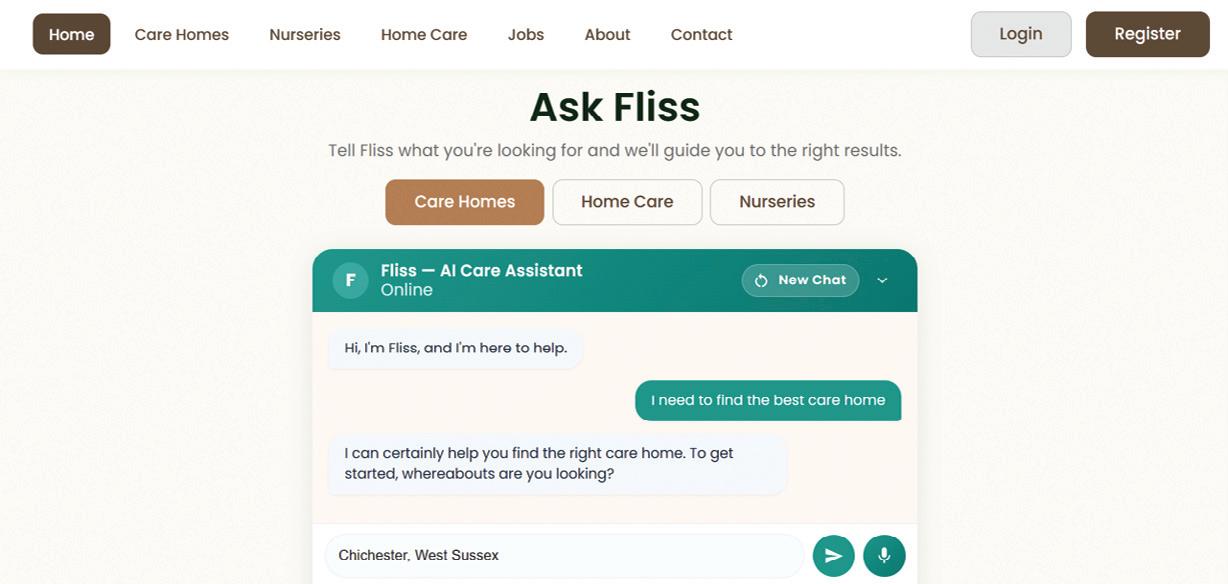
Providers can build a profile using Caretopia's bespoke page builder in under ten minutes, with all the information families actually want to see: photos, fees, specialisms, room availability, and a clear sense of the home's character. Because Fliss has already done the qualifying work, the enquiries that come through tend to be warmer, better-informed, and a closer match to what the home offers, sparing managers the time-sink of fielding calls from families whose needs they cannot meet.
Pricing has been kept deliberately modest. "We are acutely aware of the pressure the care sector is under," Davies-Pugh explains. "The first month is always free, and our discount code for the first year means a home effectively gets unlimited job ad placements thrown in for nothing. There is no contract, no minimum term, and providers can cancel at any time.”
The wider point is that AI, used thoughtfully, has a real role to play in one of the most human moments a family will ever face. Not as a gimmick, and not as a replacement for the warmth and skill of care staff, but as a way of taking the chaos out of that first conversation so that by the time a family picks up the phone to a home, they already know why they are calling.
"We always say that care should start before the care journey begins," Davies-Pugh concludes. "That is what our AI is designed to do. And honestly, we are only just getting started. Watch this space."
Find out more at www.caretopiaworld.co.uk
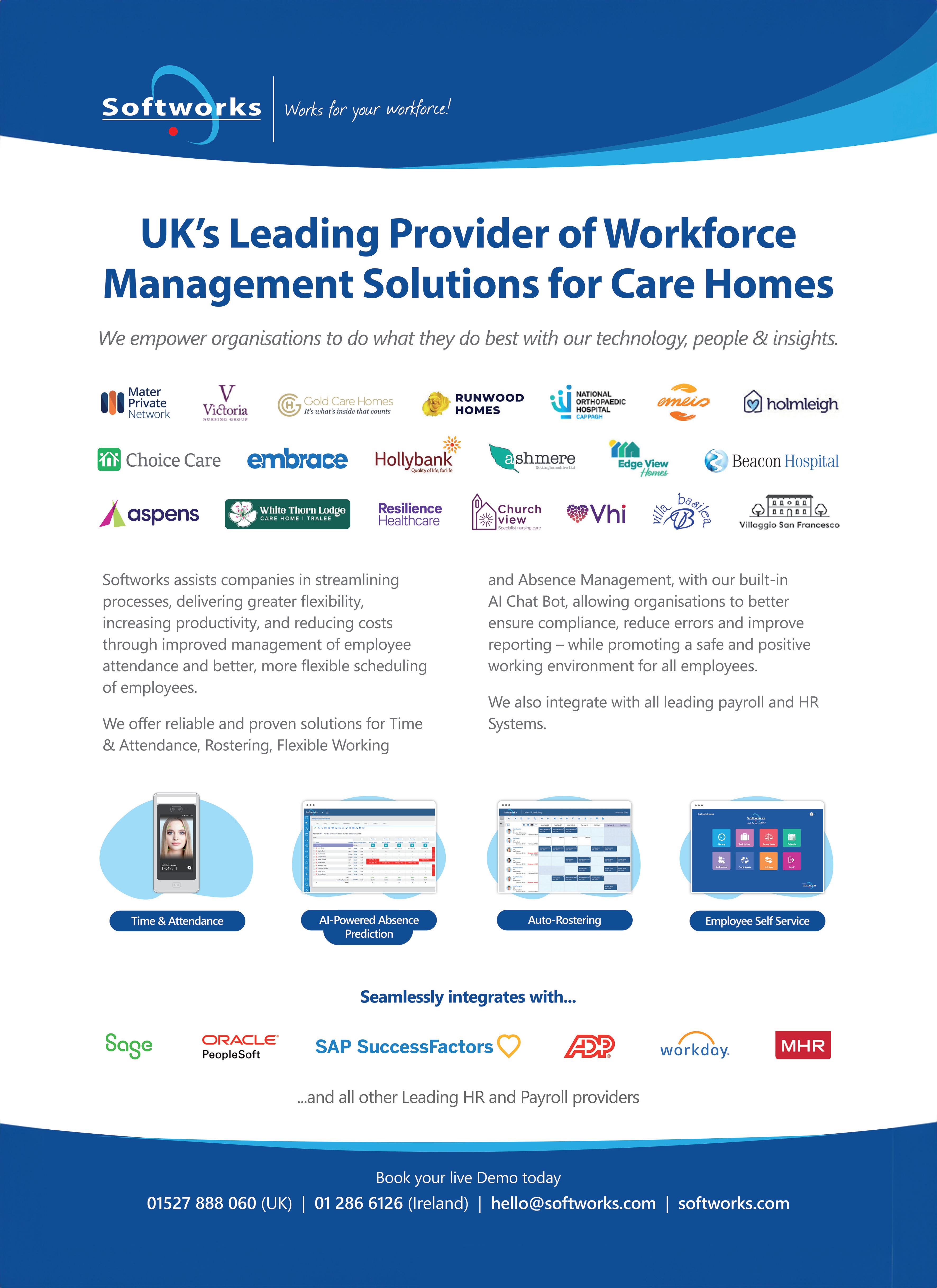
Care home staff today face increasingly complex responsibilities. Supporting residents with dementia, autism, frailty, safeguarding concerns, and communication difficulties requires far more than theoretical knowledge. Staff need confidence, judgement, teamwork, and the ability to respond compassionately in challenging situations.
However, much care home training still relies heavily on passive e-learning and compliance-focused approaches. While online modules may meet mandatory requirements, they often do little to improve reflective practice, communication, or real-world decision-making. Care home managers are increasingly recognising the need for more engaging and practical approaches to workforce development.
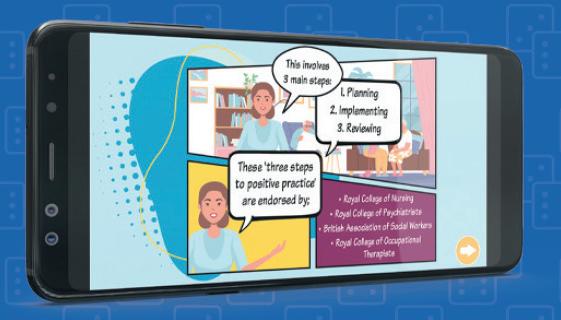
Gamification, game-based learning, and facilitated group activities offer an important opportunity to improve staff learning and engagement. Instead of simply completing quizzes or reading policies, staff work together through realistic scenarios, discussion exercises, and collaborative problem-solving activities. This encourages active participation and helps teams apply learning directly to everyday care situations.
Research increasingly supports these methods. Studies examining simulation-based learning in nursing homes have shown improvements in staff confidence, communication skills, leadership, and reflective prac-
tice. Dementia care simulations, for example, have helped staff develop more personcentred approaches and greater confidence in responding to distressed behaviours. These approaches also strengthen teamwork and workplace culture. Much mandatory training is completed individually, often in isolation. Group-based learning encourages discussion, peer learning, and shared reflection, helping teams develop more consistent approaches to care. This aligns closely with the growing emphasis from the Care Quality Commission on learning cultures, staff understanding, and continuous improvement. Importantly, game-based learning is not about replacing professional standards or mandatory training. It is about making learning more meaningful, memorable, and practical.
As pressures on the care sector continue to grow, providers need training approaches that build confidence, communication, and real-world capability — not simply certificate completion.
To explore practical, evidence-based training tools designed specifically for care teams, see the Focus Games advertisement on the front page of this issue, including a special reader discount offer for physical and digital team-learning resources that support communication, teamwork, decision-making, and improved CQC outcomes.
See the advert on the front cover or visit www.FocusGames.com
Global assists clients throughout the U.K. who specialise in the healthcare sector to achieve their objectives of purchase, development and refinance. We have organised over £1.8bn for clients in the past 30 years, providing clients with competitively priced funding to refinance existing debt, ease cashflow and develop businesses further.
From helping clients make their


23 years, operating 4 Devon Nursing homes, has been pretty tough, as anyone in social care, knows, only too well. And if it was hard already, after 2024 budget, it's just got harder.
Anyway, at heart, I am just customer of Eden Alternative, and it was a stroke of luck to come across this whilst on holiday in New Zealand in 2009. It started in USA in 1994 and
now runs in 22 countries.
The fact that I am now involved with this not-for-profit organisation (in the UK area) came about when one of the 2 main UK directors died suddenly just before Covid. But it's something I have run with for 11 years to help make 'vision' a reality, not a struggle. So, being both a customer and helping the admin seems quite natural.
It is a modern philosophy of care, but moreover, it's a programme that is straight forward, tried and tested for 30 years and really works. Its member care organisations generally become trainers for their own teams, and run it themselves.

The programme is run in person over 2-3 days or online 1 hr a wk for 7 weeks. You choose.
It addresses loneliness, helplessness and boredom and operates through 10 principles to underpin 7 critical domains of wellbeing. Moreover, it's effective, transformational and really works. As residents, and team members wellbeing, matter so much , it's a must, in my opinion.
Geoffrey Cox Southernhealthcare.co.uk eden-alternative.co.uk

By Lucy Carpenter, leader of the

Managers today are being asked to support their teams through some of life’s most difficult moments. From grief and serious illness to financial pressures and burnout, the emotional load on employees is growing.
Alongside this, more and more people are quietly taking on unpaid caring responsibilities. Supporting a parent, a partner, a child, or a friend, often without ever using the word “carer” to describe themselves.
That’s why it’s more important than ever to ask: what more can we do to support both carers and the managers supporting them?
Census data shows that nearly 3 million carers aged 16 and over in the UK are in paid employment. Within this, an estimated 1.4 million are “sandwich carers”.
A sandwich carer is someone who provides unpaid care for both dependent children and older relatives, often their own parents or grandparents. They are balancing the needs of two different generations, alongside their own work and personal lives.
This group spans a wide age range, from late teens through to mid60s. Yet despite their numbers, and the vital role they play, many people don’t recognise themselves as carers at all.
More broadly, unpaid carers contribute the equivalent of around four
million paid care workers to the social care system. Without them, the system would simply collapse.
The economic impact is significant too, a major study by Carers Trust found that the contribution of working-age carers is worth up to £47.7 billion a year.
Carers are not a small or niche group in our workforce. They are our colleagues, our teams, and in many cases, our managers. WHY WORKPLACE SUPPORT MATTERS
For many carers, work is more than a job. It can be a source of identity, financial stability, connection, and routine.
But without the right support, balancing work and caring responsibilities can quickly become overwhelming. Many carers reduce their hours, turn down progression opportunities, or leave work altogether because it simply isn’t sustainable.
That’s why creating compassionate, supportive workplace cultures isn’t just the right thing to do, it’s essential for retaining talent, supporting wellbeing, and keeping people in work.
The good news is that small, practical changes can make a big difference. It starts with creating an environment where carers feel seen, supported, and safe to speak up.
Here are four simple ways to get started:
Ask - One of the easiest ways to support carers is to make space for the conversation. Build caring into the everyday conversations you’re already having, during onboarding, regular check-ins, supervision, and annual reviews.
Taking the time to understand what’s happening in someone’s life outside of work helps you see the full picture and the load they may be carrying. Many carers won’t volunteer this information unless they feel asked in a safe and supportive way. Simple, open questions can make all the difference.
Talk - Visibility changes everything, talk openly about caring within your organisation. Share stories, signpost support, and make it clear that people with caring responsibilities are valued and supported.
Many carers stay quiet because
Working in social care is demanding. It is one of the most heavily regulated yet underfunded sectors, with providers expected to comply with regulations, meet Quality Statements, follow good practice guidance, respond to local authority monitoring, and operate under constant scrutiny.

Regulation itself isn’t the problem — it protects people and improves standards. The challenge is capacity. Larger organisations may have in-house quality assurance teams, but smaller providers rarely have the time or budget to review compliance in depth. Many owners and managers tell us they feel overwhelmed and unsure how well their service is really performing, especially since the introduction of the Single Assessment Framework.
For many, confidence in compliance is the number one concern — not because standards are poor, but because there simply isn’t time to step back and take a full, objective view.
CAN AN EXTERNAL AUDIT HELP?
In short, yes — when it’s done properly. A highquality external audit provides:
• A clear snapshot of current performance
• Identification of good practice and priority risks
• Practical advice on how to improve
• Evidence to support action plans and improvement journeys
• Demonstration of good governance and continuous improvement — a key CQC focus
• Reassurance for owners, directors, and managers HOW W&P CAN HELP W&P have supported health and social care providers for nearly 25 years, completing hundreds of audits across a wide range of services. This experience gives us deep insight into what regulators look for — and what genuinely improves outcomes.
Our audits are supportive, non-judgmental, and practical. They typically include around six hours on-site, followed by a detailed report that links evidence to regulations and Quality Statements. Reports also include clear guidance, tips, and sources to help you respond confidently. Every audit is tailored to your needs — whether that’s safeguarding, medication management, or overall governance — ensuring it is truly fit for purpose. If you would like to know more, then please contact us on audits@wandptrainng.co.uk or call 01305 767104 for a no-obligation chat on how our audits can help you. See the advert on page 5.
they worry they’ll be seen as less committed, particularly during times of organisational change or uncertainty.
Creating a culture where caring isn’t something to hide helps people feel able to speak up earlier, before they reach crisis point.
Educate - Managers play a crucial role in shaping how supported someone feels at work. People are much more likely to open up when they feel psychologically safe, and that comes from trust, empathy, and understanding. Sometimes these conversations can feel difficult, managers may worry about saying the wrong thing or not knowing how to help. That’s where training matters, giving managers the confidence and skills to have compassionate conversations can transform how support is experienced day to day.
Formalise - Informal support is important, but it needs to be backed up by clear policies. Make sure your policies are up to date, easy to find, and regularly communicated. Employees need to understand their rights, including legal protections:
• Five days’ unpaid carer’s leave
Time off for dependants in emergencies
• Parental leave
Protection from discrimination
The right to request flexible working
Alongside policies, practical guidance and real-life examples can help bring them to life. Case studies can show both managers and employees what good support looks like in practice.
Ultimately, supporting carers is about more than policies or processes. It’s about culture. It’s about recognising that people don’t leave their lives at the door when they come to work, it’s about understanding that, at some point, many of us will become carers ourselves. By creating workplaces where people feel seen, understood, and supported, we not only help individuals through challenging times, but we also build stronger, more compassionate organisations for everyone.