




DIMIAN DOLLS PARTNERS WITH EPIC DISTRIBUTION
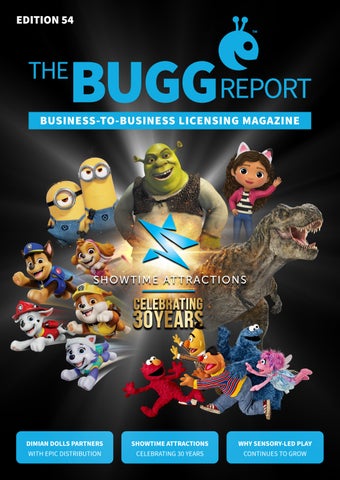
SHOWTIME ATTRACTIONS CELEBRATING 30 YEARS
WHY SENSORY-LED PLAY CONTINUES TO GROW
DIMIAN DOLLS PARTNERS WITH EPIC DISTRIBUTION
SHOWTIME ATTRACTIONS CELEBRATING 30 YEARS
WHY SENSORY-LED PLAY CONTINUES TO GROW
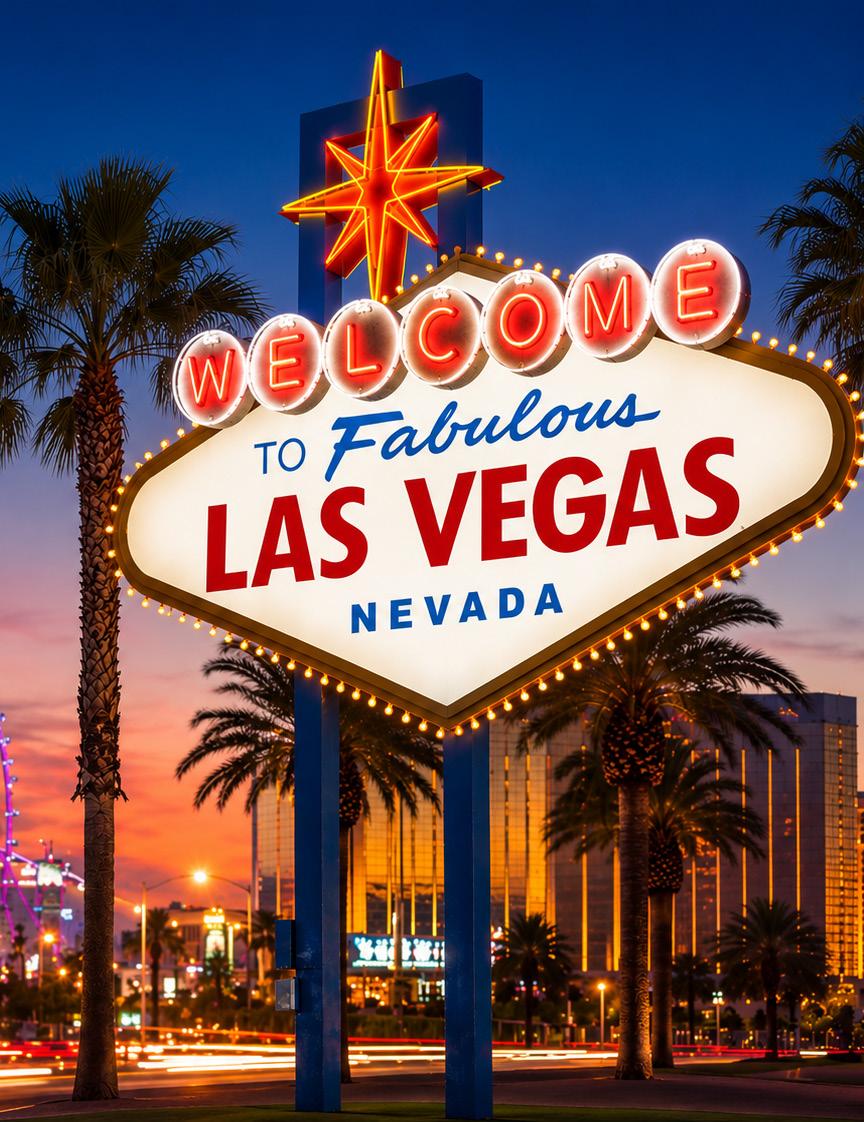
From 19–21 May, Las Vegas once again becomes the global capital of brand licensing as the international industry converges on the iconic Mandalay Bay Convention Centre for Licensing Expo 2026.
In a world increasingly shaped by economic uncertainty, geopolitical tension, cautious retail spending and rapidly evolving consumer behaviour, the global licensing business continues to demonstrate one of its greatest strengths — resilience.
Despite the challenges confronting markets across the globe, the licensing sector refuses to stand still. Instead, it continues to adapt, evolve and search for opportunity. That spirit of innovation and commercial optimism will again be on full display in Las Vegas, where more than 5,000 brands and over 10,000 attendees from across retail, entertainment, gaming, fashion, sport, lifestyle and consumer products are expected to gather under one roof.
For more than four decades, Licensing Expo has served as the heartbeat of the global licensing industry — a place where billion‑dollar entertainment franchises sit alongside emerging challenger brands, where retailers search for the next consumer trend, and where strategic partnerships are formed that can shape retail programs for years to come.
This year’s event arrives at a fascinating moment for the industry. The traditional retail landscape continues to shift dramatically. Consumers are engaging with brands differently. Streaming platforms, gaming ecosystems, social commerce, artificial intelligence and creator led entertainment are all influencing how intellectual property is consumed and commercialised. Yet amid this disruption, one thing remains remarkably consistent — consumers still seek emotional connection with brands they trust and love.
That is ultimately the power of licensing. It transforms intellectual property into emotional commerce.
Vegas 2026 will showcase global giants including entertainment studios, gaming leaders, sports organisations, lifestyle brands and digital first innovators all competing for retailer attention and consumer relevance. From legacy franchises to emerging global sensations, the battle for shelf space, screen space and consumer engagement has never been more competitive — or more important.
Importantly, the event also highlights the growing internationalisation of licensing. Asia continues its strong return post pandemic, gaming remains a major growth engine, and corporate brands are increasingly entering the licensing space seeking new revenue streams and broader cultural relevance.
For the ANZ markets, Licensing Expo continues to play a critical strategic role. Our market may be smaller by global standards, however the region remains highly creative, commercially agile and deeply connected to global entertainment and retail trends. The conversations held in Las Vegas this week will influence product development, retail strategies, entertainment launches and consumer programs that flow into our market over the next 12 to 24 months.
At The Bugg Report, we remain committed to providing an independent perspective on the evolving licensing landscape. Beyond the glamour of Las Vegas, the real challenge for the global industry remains clear — how to continue building meaningful consumer engagement and sustainable retail outcomes in an increasingly fragmented world.
Yet if history tells us anything about this industry, it is that creativity has a remarkable ability to outperform uncertainty. And for three days in Las Vegas, the global licensing business will once again gather to prove exactly that.
Managing Director: Tony Bugg tony@buggsolutions.com.au
Editor & Designer: Matthew Bugg matt@buggsolutions.com.au
Published by Bugg Marketing Solutions info@buggsolutions.com.au
FROM THE EDITOR — LICENSING EXPO LAS VEGAS 2026
MICHAEL ROTHLING — DIMIAN AND EPIC DISTRIBUTION UNITE FOR A DYNAMIC FUTURE
SANRIO — AN ENDLESS PORTFOLIO OF FAVOURITE CHARACTERS
JELLYSTONE DESIGNS — WHY SENSORY-LED PLAY CONTINUES TO GROW
AUSTRALIAN TOY ASSOCIATION UPDATE — SYDNEY MID-YEAR FAIR IN JUNE AND MORE
THE BUGG VIEW — GENERATIVE AI AND LICENSING (A REALITY CHECK FOR THE INDUSTRY)
RETAIL LENS — THE ENTERTAINMENT-DRIVEN RETAIL ECONOMY
I AM THIERRY — IN BUSINESS THERE IS A STRANGE HABIT THAT REFUSES TO DIE
THE BUGG VIEW — 2026’S




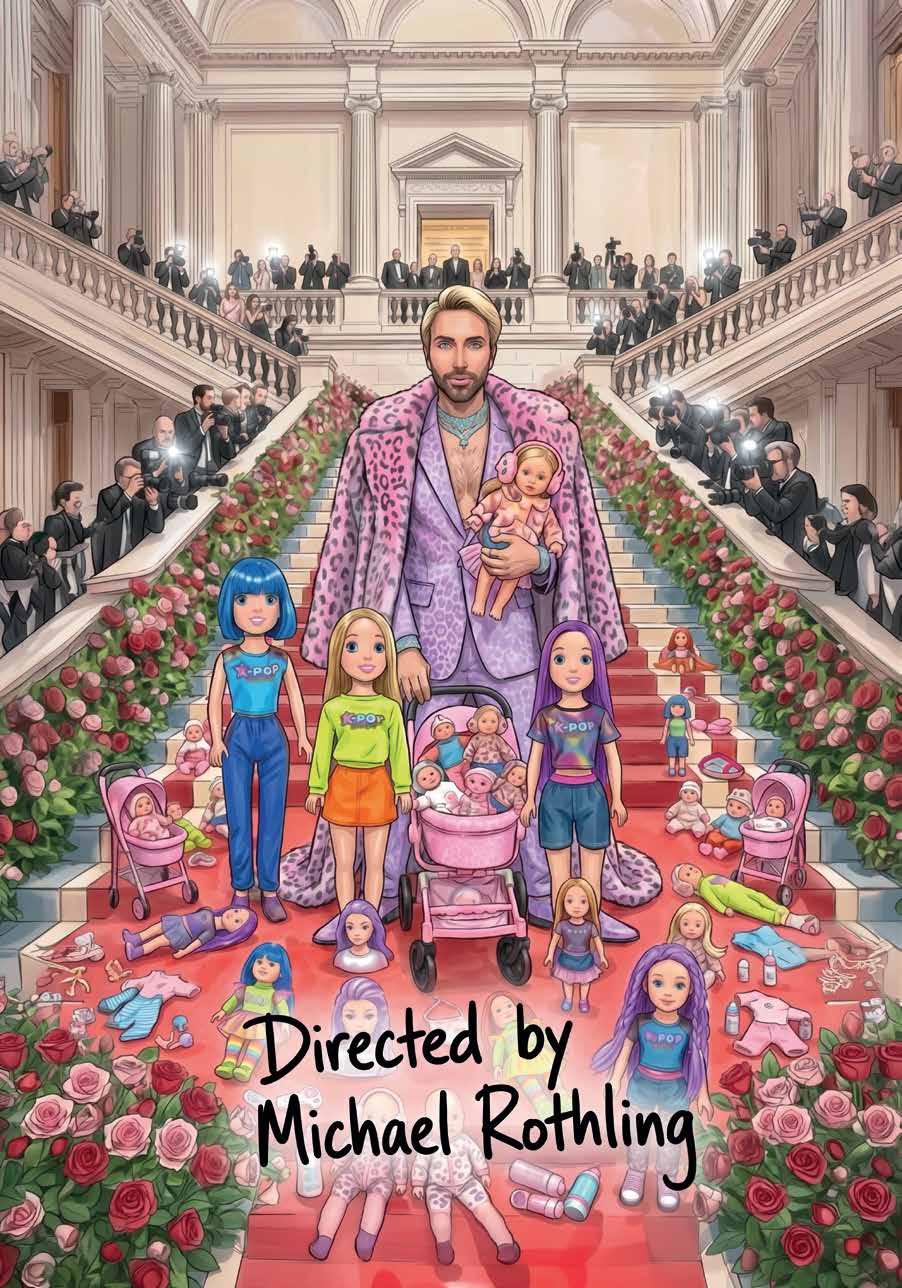
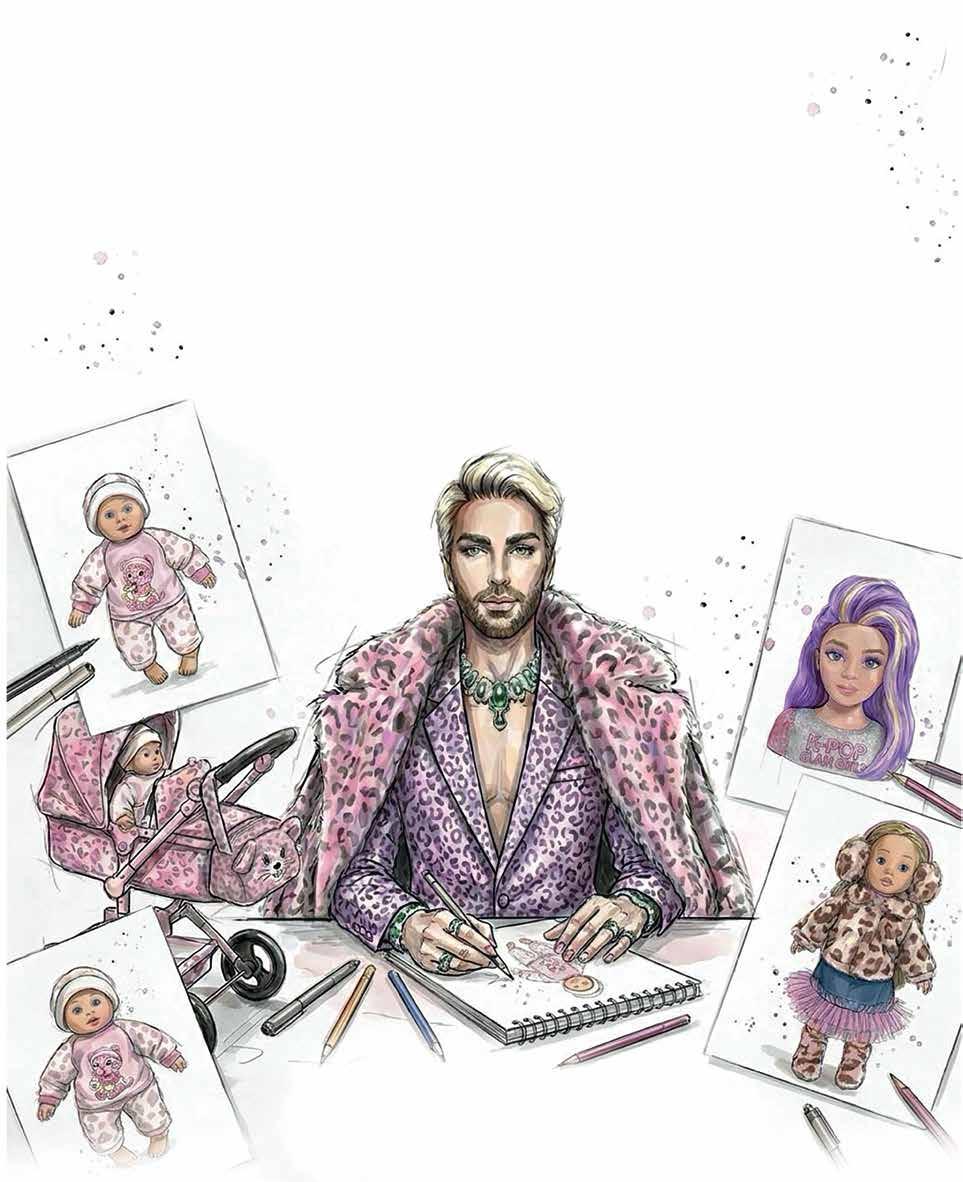

In an incredible win-win collaboration, well-established Epic Distribution joins forces with the fresh, vibrant team led by Anthony and his sister Marisha Vovos to introduce Dimian Dolls to the toy markets of New Zealand and Australia. This partnership marks a significant step forward, combining the strengths of both companies to create an exhilarating experience for retailers and consumers alike.
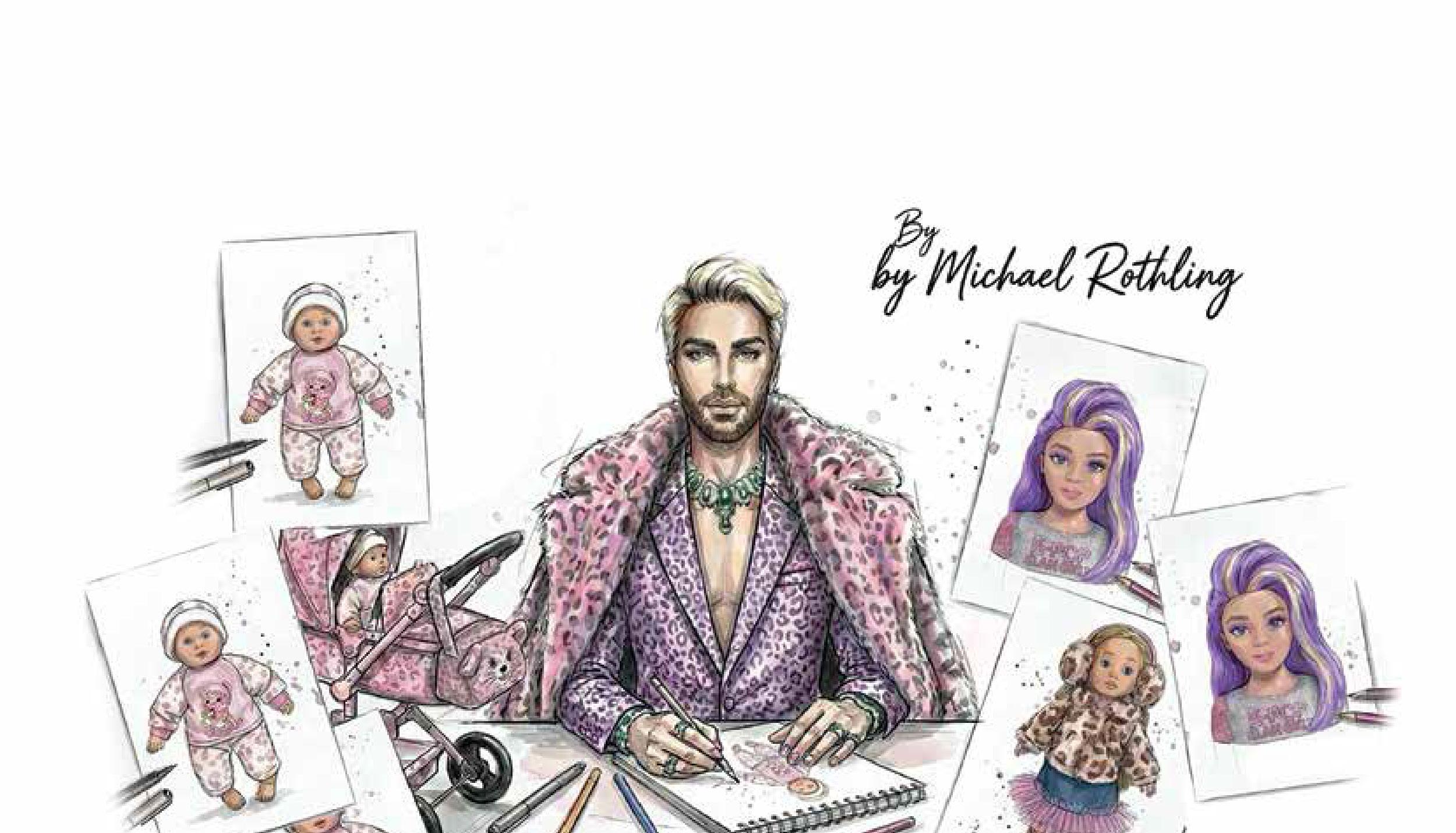
At the forefront of this innovative journey is Michael Rothling, a self‑made designer and charismatic entrepreneur whose reputation as a toy guru continues to flourish on an international level. With only two years in the Australian market, Michael has positioned himself and the Dimian brand as key players in the toy industry.
Following a successful breakfast event held on 2 March, where hundreds of attendees got a first hand look at the brand's prospects, independent retailers in Australia are eager to connect with Michael and explore the exciting opportunities ahead.
This year promises to be transformative for Dimian Dolls as the Epic Distribution team works closely with Michael to launch an exciting new lineup. Among the highlights are a range of K pop‑inspired dolls, featuring striking designs that cater to fans of all ages. From 80 cm dolls to styling heads, each doll will embody the vibrant spirit of K pop culture. In addition, the introduction of the delightful plush design “Leo Lily,” along with innovative baby and hair dolls, showcases the brand’s commitment to creativity and playfulness.
As Michael Rothling emphasises, this partnership is poised to inject a refreshing twist into the Dimian brand, allowing it to resonate with both established toy enthusiasts and a new generation of fans. Anticipation builds as we look forward to the upcoming Melbourne Toy Fair, where Michael plans to unveil a host of exciting new products and innovations developed with the assistance of his AI team. With a focus on modernising classic items, Michael is set to inspire change and innovation within the Australian toy market.
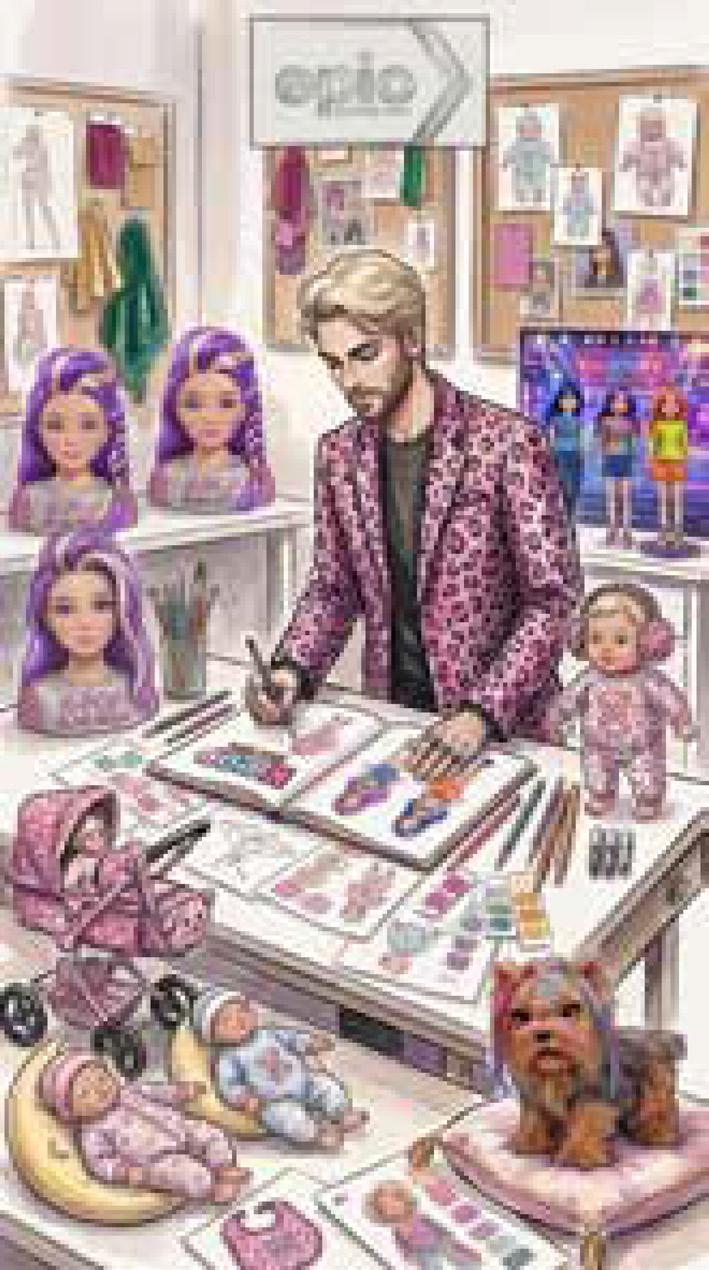
In closing, a heartfelt thank you goes to Anthony for believing in Michael’s vision and entrepreneurial spirit. Together, they are ready to make waves in Australia’s toy landscape, promising a year filled with creativity and excitement for all toy enthusiasts. Join us on this exhilarating journey with Dimian Dolls and Epic Distribution as they shape the future of play in Australia and New Zealand!
Stay tuned for what’s next, and see you at the Melbourne Toy Fair!

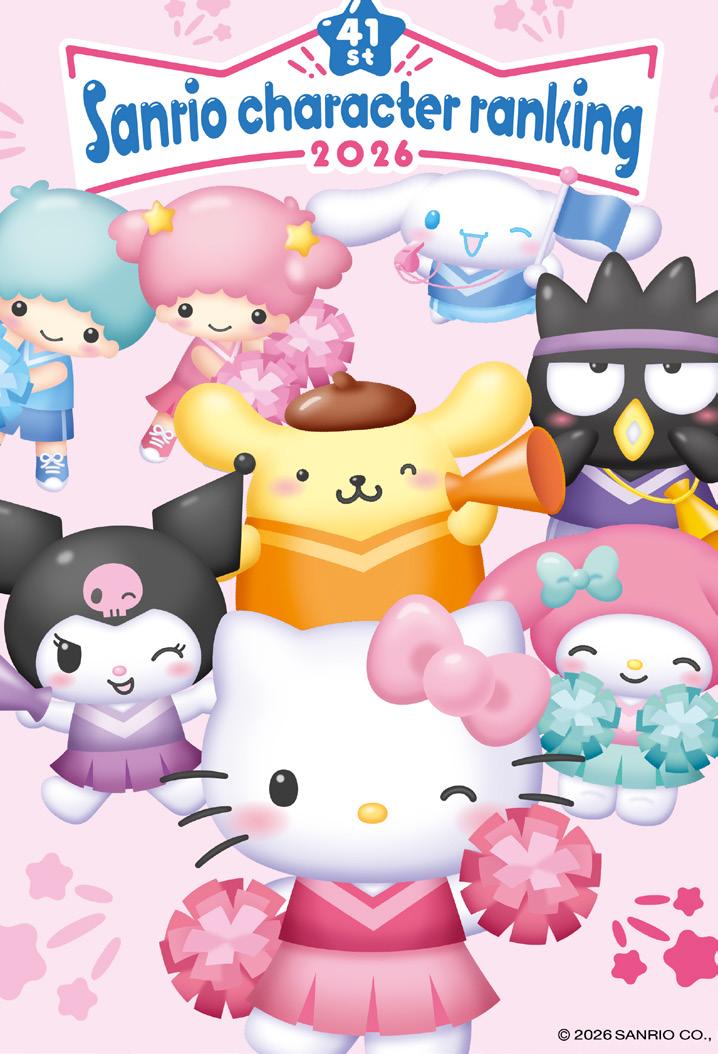
Sanrio’s secret to its popularity lies in the variety of its characters and their ability to appeal to all kinds of consumers. In short, each of us has a favourite Sanrio character.
This is also why the Character Ranking — the poll where fans vote for their favourite characters — continues to grow in popularity, prompting the company to strengthen its digital presence and expand the number of countries where the event is celebrated with physical activations. Australia, with its two Hello Kitty and Friends cafés, plays a key role, bringing the Character Ranking to life through themed props, branded menus, and custom decorations.
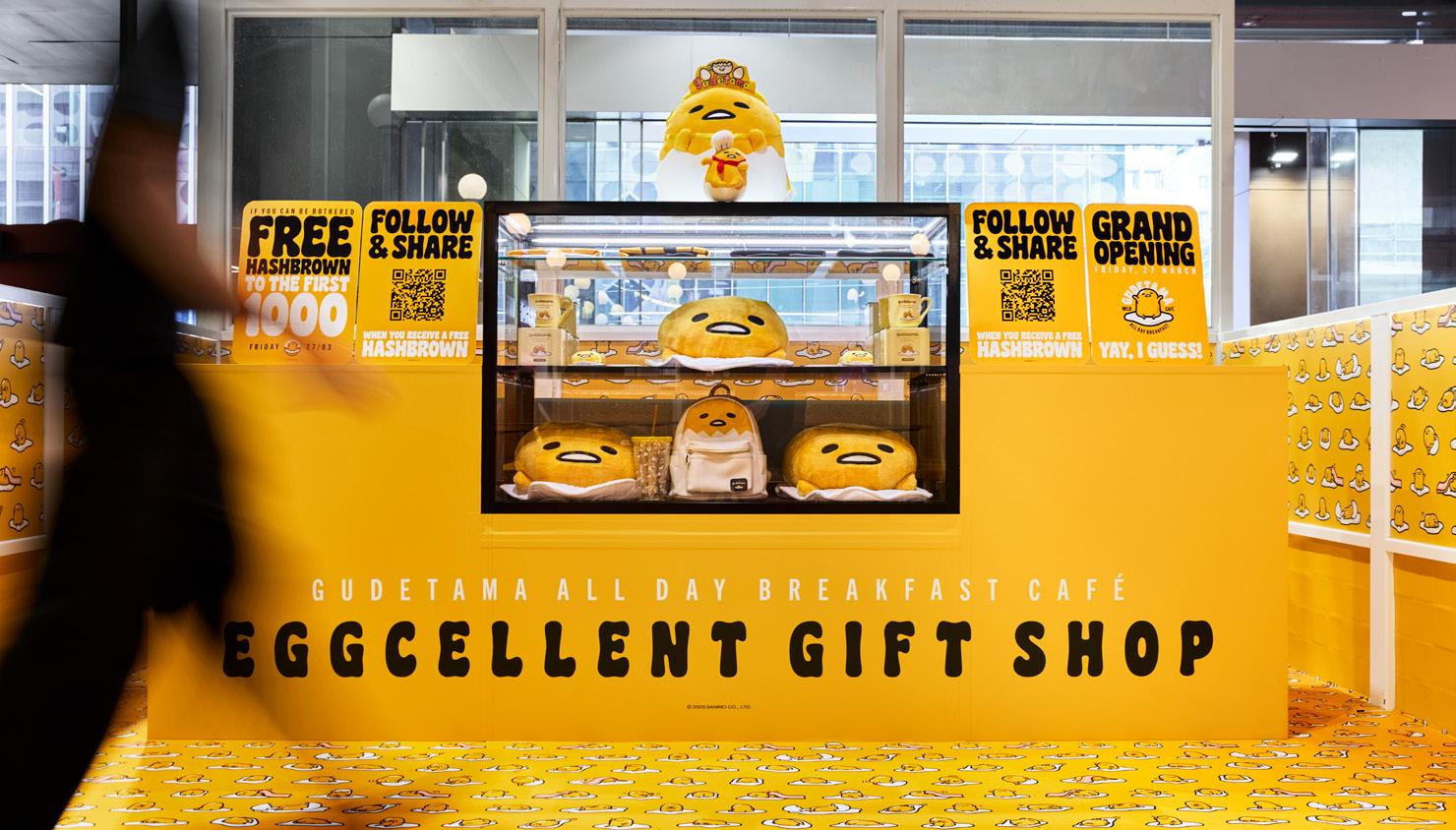
Cafés are also helping to increase awareness of individual characters. The Gudetama Café, which opened in mid-March, has already proven to be a major success, attracting strong crowds and generating excitement. The café offers a range of Gudetama-themed food and merchandise, including a popular all- day breakfast that has resonated well with fans.
In April, the café will also take part in the celebrations for Pompompurin’s anniversary at the Melbourne Hello Kitty and Friends café. The event will feature themed menus, as well as special food and cakes available in-store to bring the beloved pudding character to life.
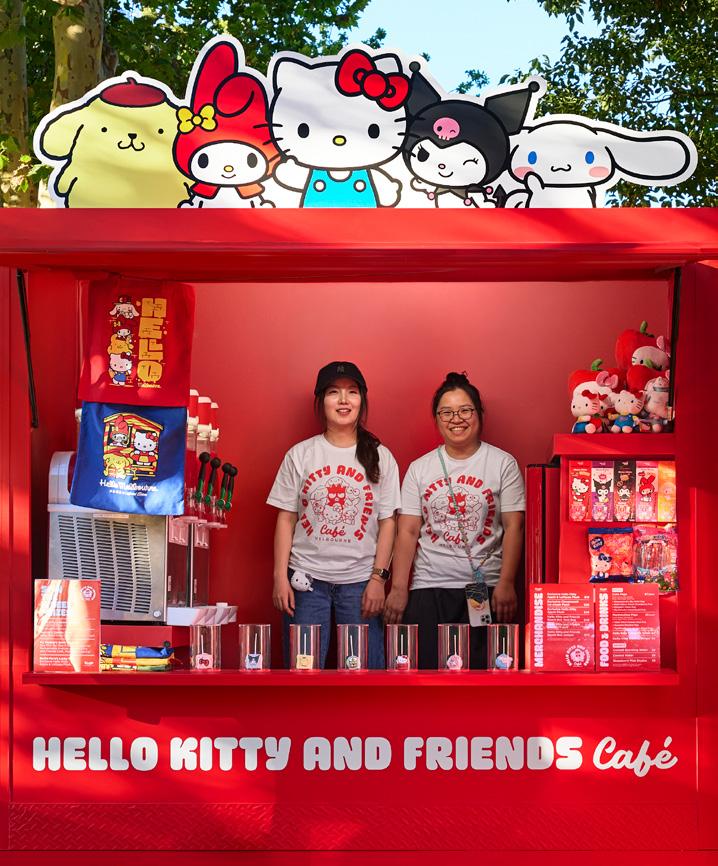
Experiences and food have always been valuable touchpoints for the company. The first quarter of 2026 marked a milestone for Hello Kitty and Friends, which appeared for the first time at the Moomba Festival with a branded cart. Fans responded enthusiastically to the themed drinks and snacks, as well as the merchandise on offer, including tote bags, hoodies, and T-shirts.
This enthusiasm reflects a broader shift in how characters are perceived. Once considered something tied exclusively to childhood, IPs such as Hello Kitty, Kuromi, My Melody, Cinnamoroll, and Pompompurin are
now seen as symbols that express personality and values. As a result, fashion has become a key category for exploring the full potential of Sanrio’s portfolio. Australian clothing brand Threadheads, for example, launched a playful multi-character T-shirt range featuring Pompompurin, Badtz-Maru, Pochacco, and Kerokerokeroppi,
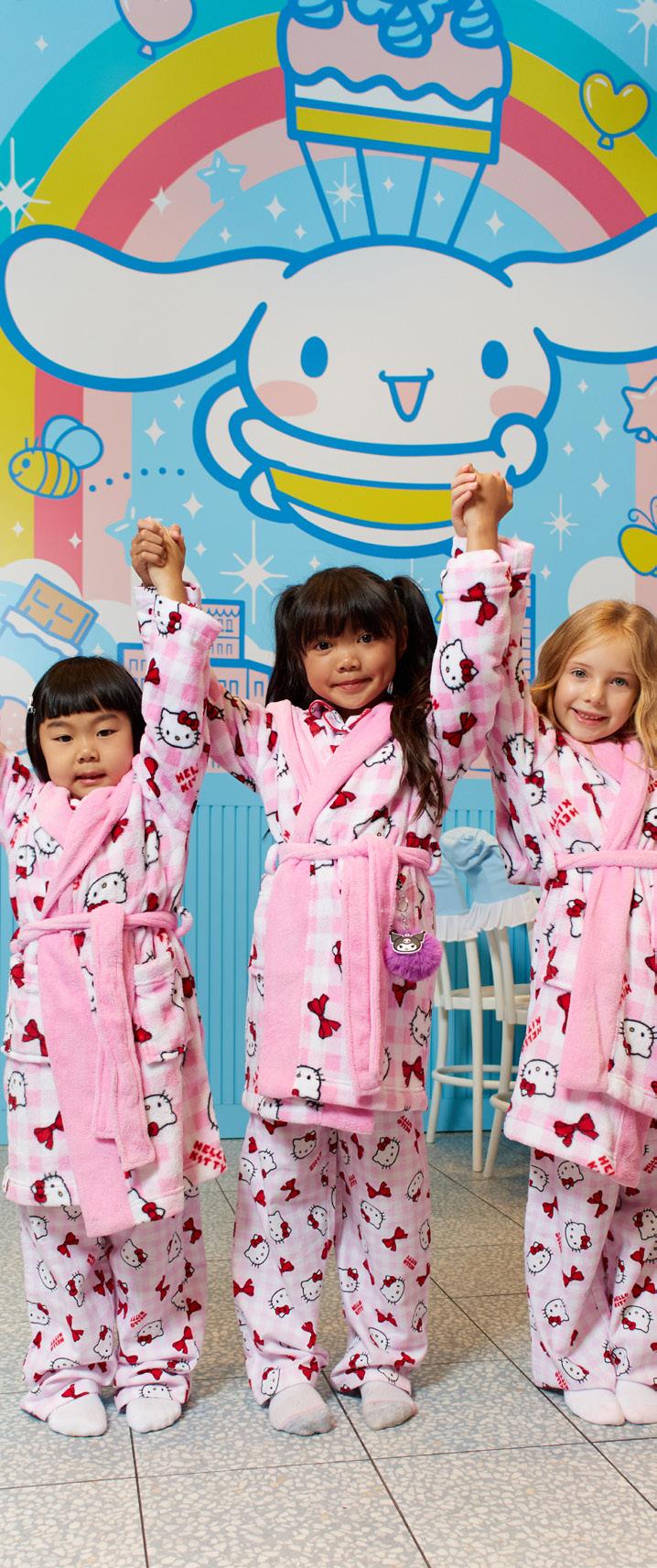
while Best & Less introduced a range of Hello Kitty pyjamas and matching robes earlier in April.
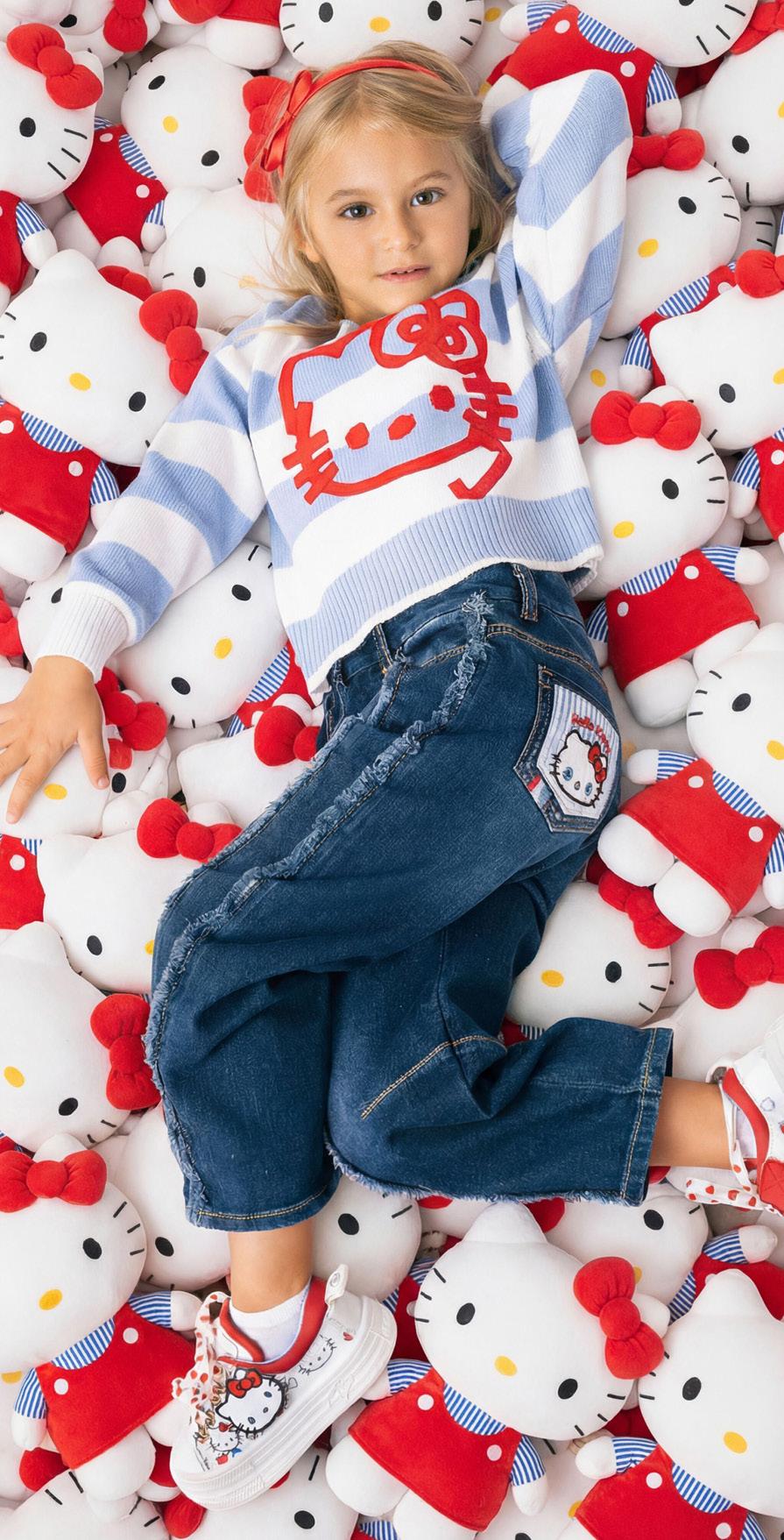
On a global level, Sanrio partnered with Converse in March to create a playful lineup that reimagines the brand’s classic Chuck silhouette within the world of Hello Kitty and Friends. The collection also includes a premium version of the Chuck 70 featuring Swarovski crystals, demonstrating how Sanrio characters can extend into high- end fashion. Another example is the Spring/Summer 2026 collection by Monnalisa, launched in February, which combines the brand’s signature elegance with the timeless appeal of Hello Kitty.
The ability to transcend demographics and product categories is what makes Sanrio’s IPs stand out, positioning them as highly resonant lifestyle brands. This is why, alongside entertainment — still a key driver, as shown by upcoming theatrical adaptations of Hello Kitty (developed by Warner Bros.) and Mr. Men Little Miss (produced by StudioCanal and Heyday Films) — sports collaborations are gaining traction.
Recently, the brand partnered with Italian alpine ski champion Sofia Goggia for the first in a series of European collaborations as part of the #BestFriendsInSport campaign. The initiative highlights how characters and athletes can share common narratives, creating authentic connections with fans. Other recent activations include the Formula 1 x Hello Kitty and Friends partnership in the United States and the Australian Open x Mr. Men Little Miss collaboration in Australia. The latter featured Roger Hargreaves’ beloved characters across a range of apparel and accessories, alongside a dedicated branded area in the Australian Open’s flagship store and e-commerce platform.
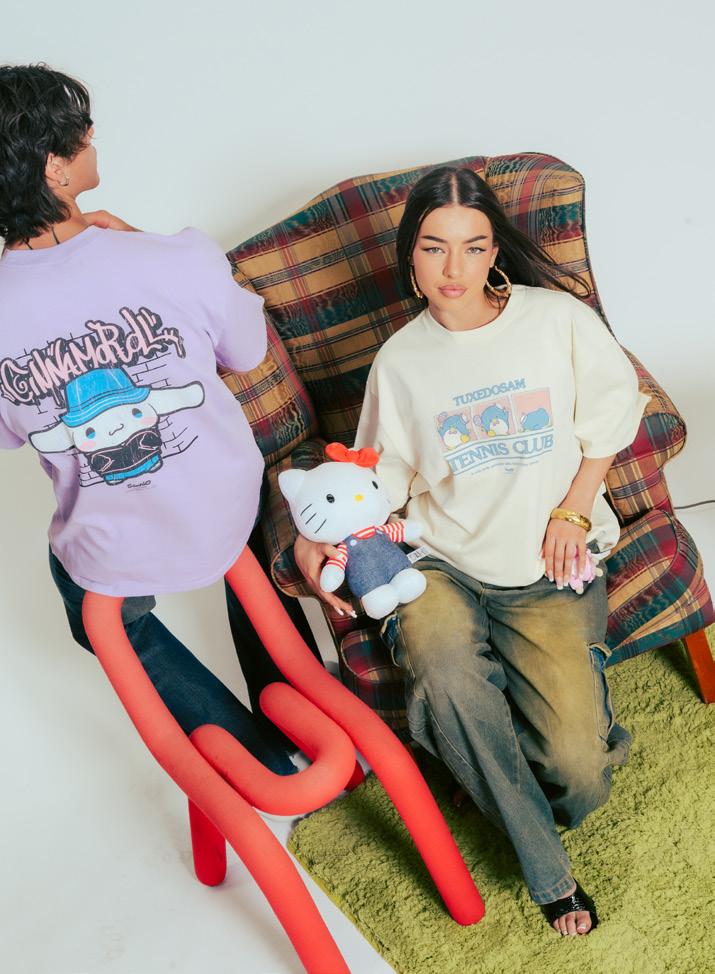
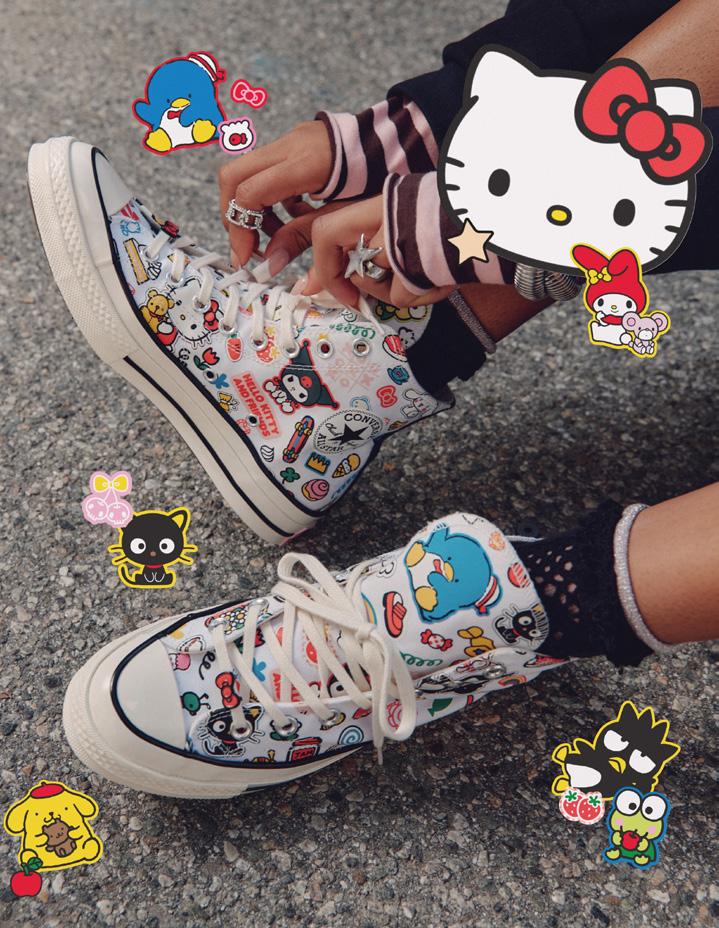
With such a wide range of characters spanning multiple categories, there truly is a Sanrio character for everyone — ensuring that the company’s momentum will continue to grow in the years to come.
Explore the full Jellystone Designs collection at:
www.jellystonedesigns.com.au
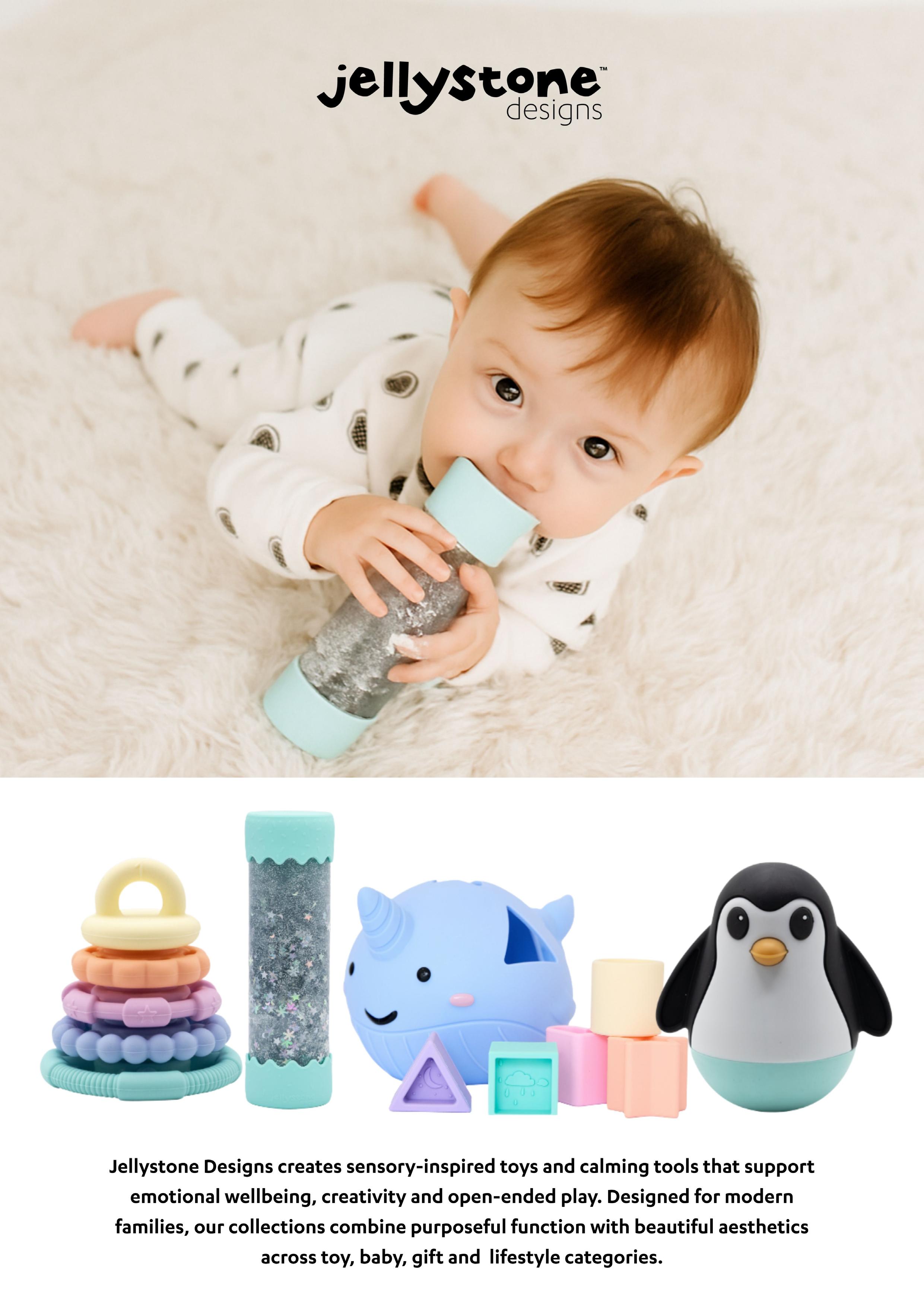
Sensory-led play continues to gain momentum across the global toy industry as parents increasingly seek products that support emotional wellbeing, open-ended play and developmental value. What was once considered a niche category has rapidly evolved into a mainstream movement spanning toy, baby, gift, education and wellness channels.
The numbers reflect this shift. The global sensory toy market was valued at $19 billion in 2025 and is projected to reach $35 billion by 2033, growing at 9% annually. At the same time, 63% of millennial parents consider how toys support mental, emotional and social wellbeing when making purchasing decisions.
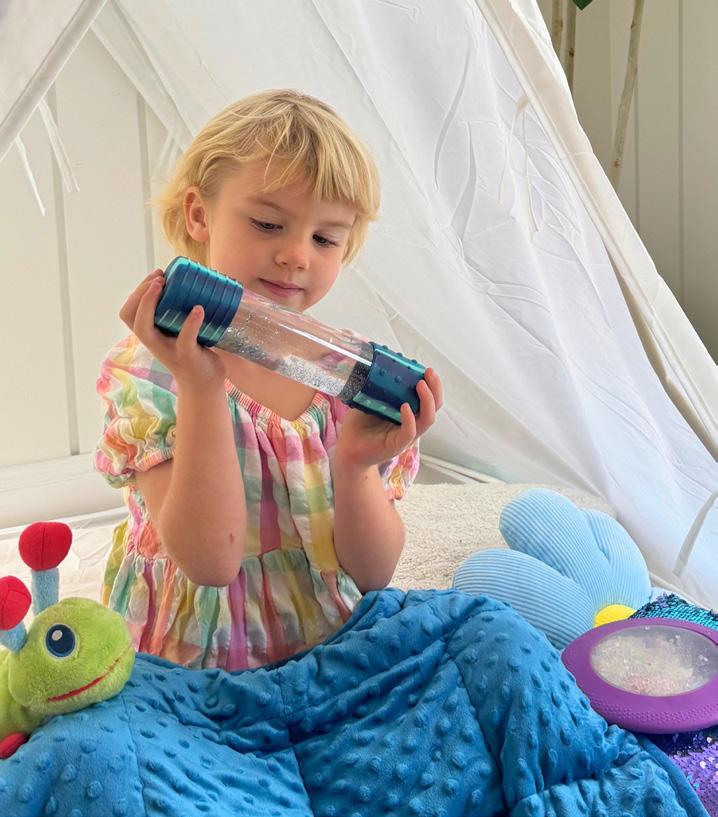
Today’s families are looking beyond entertainment value alone. Products that encourage calm, creativity, focus and emotional connection are increasingly resonating with consumers navigating a fast paced and overstimulated world.
Growing conversations around screen‑free and open ended play are also influencing purchasing behaviour, with parents seeking tactile, hands on experiences that help children slow down, engage their senses and connect more meaningfully through play.
As consumer expectations evolve, so too has the sensory category itself. Sensory led products are no longer confined to clinical or educational settings. Instead, they are becoming part of everyday family life through thoughtfully designed toys and tools that blend purpose, play and aesthetics.
The growing industry focus on children’s mental, emotional, and social wellbeing is also becoming more visible through initiatives such as MESH (Mental, Emotional and Social Health) accreditation, which recognises products that support resilience, emotional development and social connection through play.
At Jellystone Designs, this shift has been central to our product philosophy from the beginning. Our collections are designed to support sensory exploration, emotional regulation and open ended play while also fitting seamlessly into modern homes and lifestyles. From tactile sensory toys to calming tools and creative play experiences, we aim to create products that feel as beautiful as they are functional.
We are also seeing growing demand for products that sit across multiple categories, particularly where toy, wellness, gifting, and lifestyle intersect. Retailers are increasingly responding to strong storytelling, cross category appeal and products that offer meaningful value to families beyond traditional play patterns.
As the boundaries between play, wellbeing, education and design continue to blur, sensory led play is becoming an increasingly important part of the modern toy landscape.
For brands and retailers alike, the opportunity lies in creating products that combine developmental value with thoughtful design, emotional relevance and lasting consumer connection.

By Alice Sanderson — Executive Manager at The Australian Toy Association
Where has the year gone? Since the conclusion of Toy Fair, the ATA office has been fully focused on planning for the busy months ahead, including the annual Golf Day held on 14 May, the Sydney Mid-Year Fair in June, and Membership Renewals in July. Behind the scenes, work also continues across a range of key areas including charity initiatives, marketing, member benefits, and, believe it or not, planning is already underway for the 2027 Toy Fair. We just don’t stop!
The International Council of Toy Industries (ICTI) is the global industry association representing the worldwide toy sector, with membership comprising around 17 national toy associations from across the globe. ICTI and its member associations are committed to:
• Promoting toy safety standards
• Reducing or eliminating barriers to trade
• Advancing social responsibility across the industry through programs addressing environmental concerns, fair and lawful employment practices, and workplace safety
I joined industry counterparts in Amsterdam for the ICTI Annual General Meeting, hosted by the Netherlands Toy Association on 7–8 May. Discussions focused on the major issues currently impacting the global toy industry, including tariffs, the importance of communicating the value of play, artificial intelligence, and the ongoing concerns around product safety in online marketplaces.
Each participating country submitted a State of the Industry Report for 2025, while Frédérique Tutt, Vice President of Circana, presented an overview of the global toy market and emerging worldwide trends. Among the findings highlighted was the continuing importance of
licensing to the toy industry, with licensed products accounting for approximately 39% of toys sold at retail in Australia.
Additional presentations included Christian Wetterberg from LEGO, who spoke about the importance of the International Standards Organisation (ISO) to the global industry; Carmel Giblin from The Ethical Supply Chain Program, who outlined the outstanding work being undertaken with factories worldwide; and Catherine Van Reeth from TIE, who presented updates on the revised Toy Safety Regulation.
The meeting covered a broad range of important topics and reinforced the valuable role ICTI continues to play in supporting and advocating for the global toy industry.
The Sydney Mid Year Fair returns on 17–18 June at CommBank Stadium, Parramatta. Following the success of last year’s sold out event, which attracted more than 300 attendees across the two days, this year’s fair is set to be another fantastic opportunity for retailers and industry members to connect with leading exhibitors and preview upcoming ranges.

To see the full list of exhibitors and who’s showing at this year’s event, click here
The dates for the 2027 Toy Hobby & Licensing Fair have now been confirmed: Sunday 28 February to Wednesday 3 March 2027. At this stage, the Grand Prix is expected to take place in early April, which will come as welcome news for those travelling to the Fair.

The overlap with the Australian Grand Prix traditionally results in significantly increased travel and accommodation costs, so we are hopeful these dates remain unchanged.
Following another sold out event in March 2026 and a growing list of prospective exhibitors, preferential stand offers will once again be distributed in July. This initial round provides exhibitors from this year’s Fair with first choice of stands. If you have not yet confirmed your requirements for 2027, please complete the survey sent on 18 May or contact us at — toyfair@austoy.com.au
The ATA is proud to provide members with a comprehensive range of services, resources, and commercial benefits tailored specifically to businesses within our industry.
From business discounts to expert advice and support services, the advantages of ATA membership continue to deliver significant value.
To explore the full range of member services, ATA Members can log in to the Members Only section of the ATA website at:
www.austoy.com.au
Sending best wishes to the industry both local and global, and for those attending Licensing Expo Las Vegas, I hope you have a safe and productive trip.
For years, the licensing business has centred on the end product, whether that is apparel, toys, publishing, entertainment, or promotional merchandise. But with the rise of generative AI, the conversation is moving upstream, and with it, the commercial foundations of intellectual property.
Licensing is no longer only about applying a character, brand, or creative asset to a finished product. Increasingly, it is also about whether that same intellectual property is being used to train the systems that generate new content, designs, and experiences.
Traditionally, a licensee would acquire rights to use specific IP on a product or within a defined category. Today, that same IP may also form part of the datasets and models that generative AI systems rely on to create material. That shift raises a very different set of questions around ownership, consent, compensation, and control.
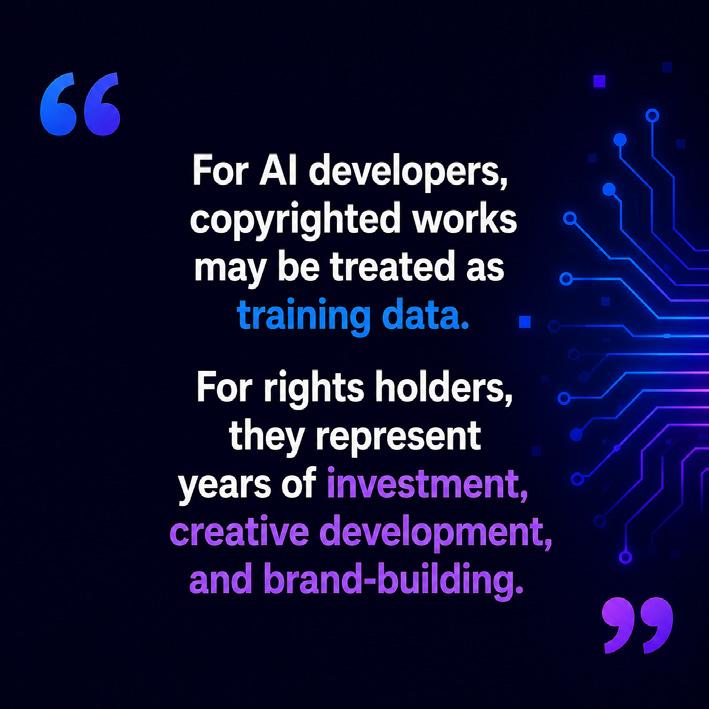
This is where the issue becomes more complex. For AI developers, copyrighted works, characters, images, and brand assets may be treated as training data. For rights holders, however, they represent years of investment, creative development, and brand building.
There is, of course, opportunity on both sides. Generative AI has the potential to open up new licensing models, new revenue streams, and new forms of collaboration between rights owners and technology platforms.
But the commercial tension is clear when material may already have been used to train systems without permission, payment, or even
visibility, an issue that has been widely discussed in ongoing copyright and AI transparency debates.
For brand owners, that is the central concern. If your IP has value in the marketplace, it also has value in the training environment. The question is not only whether that value should be recognised, but how it can be recognised once a model has already ingested the material.
That is why the push for transparency, provenance tools, content labelling, and clearer disclosure around training data is gathering pace, particularly as the European Union advances transparency and copyright disclosure requirements through the EU AI Act framework.
At the same time, generative AI is making it increasingly difficult to distinguish between machine generated output and original human created work.
For an industry built on ownership, authenticity and brand integrity, that is not a theoretical issue.
It goes directly to the value of licensed IP and the terms on which it is commercialised.
The speed of change is also highlighting how unsettled the market remains. In late 2025, OpenAI and The Walt Disney Company announced a three‑year agreement to bring selected Disney, Pixar, Marvel and Star Wars characters to Sora for user generated short‑form video content, with some output expected for Disney+.
However, OpenAI later confirmed that Sora’s standalone web and app experiences would be discontinued, while subsequent industry reporting indicated Disney was reassessing its OpenAI related AI video plans. Together, these developments show how fluid AI licensing strategies remain, even among the world’s largest entertainment companies.
There is still no settled playbook for AI licensing. Key questions remain around pricing, contractual structure, cross border regulation, and the legal standards that may apply to the use of protected works in model training.


Those questions sit alongside broader enforcement challenges and growing regulatory complexity in major markets, particularly in the European Union and the United States where AI copyright and transparency rules continue to evolve.
What is already clear, however, is that waiting for certainty is not a strategy. The companies likely to be best positioned are those already reviewing their IP portfolios, updating agreements to address AI related rights, and exploring direct partnerships with developers and platforms.
AI is not replacing the licensing industry. But it is changing the terms on which that industry operates. For rights holders, agents, and licensees alike, the focus is shifting from simply protecting IP to actively managing, monetising, and enforcing it within AI ecosystems.
That shift is no longer theoretical. It is already underway. Companies are reassessing how IP is protected, valued, and commercialised in an AI-driven environment, with AI rights, training data, attribution, and control becoming part of modern licensing strategy.
If the ANKO Effect represents the rise of commodity retail, the entertainment economy may define the next era of emotional retail.
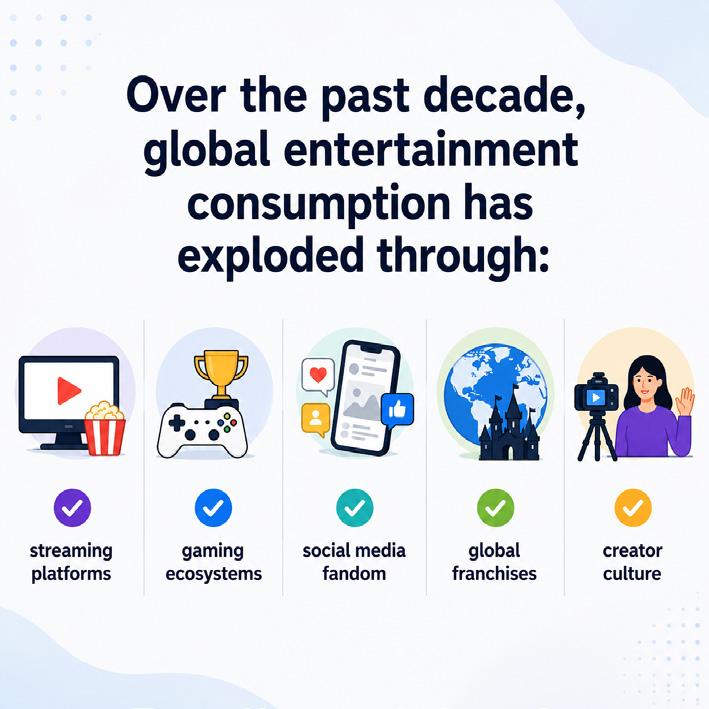
Over the past decade, global entertainment consumption has exploded through:
• streaming platforms
• gaming ecosystems
• social media fandom
• global franchises
• creator culture
These forces now strongly influence what consumers buy at retail.
Characters and entertainment properties increasingly drive purchasing decisions.
Examples include properties such as:
• Bluey
• Spider-Man
• Barbie
These properties are no longer just media content.
They are retail ecosystems.
In the past, retail discovery often happened in-store. Today the journey usually begins somewhere else.
Consumers discover characters through streaming, gaming or social media.
Fans connect through online communities and shared fandom.
Consumers seek physical products connected to those characters.
Retail becomes the place where fandom converts into purchase.
The rise of highly efficient private-label retail models such as Anko within Kmart Australia has strengthened commodity retail categories.
But those models are less connected to the entertainment ecosystem. This is where brand-driven categories remain powerful.
Retailers that lean into entertainment partnerships can create:
• retail theatre
• fandom engagement
• experiential shopping
These elements transform stores into destinations for fans and families.
Retailers such as Big W potentially sit at the intersection of these trends.
They already participate strongly in categories such as:
• toys • entertainment merchandise
• licensed products
• collectibles
If developed strategically, these categories can create an entertainment-driven retail environment.
The Toy and Licensing Industry’s Hidden Advantage
This is a really interesting insight.
The toy and licensing industry is not simply selling products.
It is selling stories, characters and emotional engagement.
Those elements are exactly what drive the entertainment economy.
Which means the toy and licensing sector may become more strategically important to retail than ever before.
The ANKO model represents the industrialisation of retail efficiency.
But the next growth frontier may come from something very different:
The convergence of retail, entertainment and fandom.
































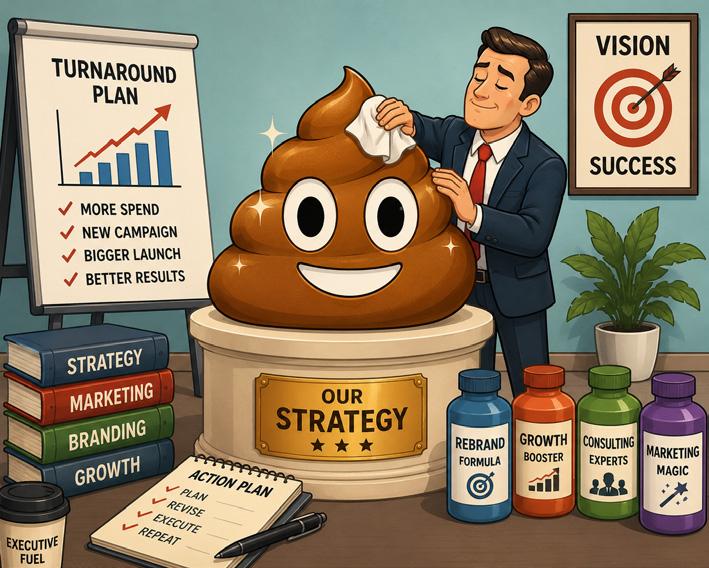
When something does not work, people rarely stop. They adjust the packaging, tweak the strategy, spend more money, and hope the next season will fix everything. In reality they are simply polishing a ��
Many businesses convince themselves that persistence will eventually solve the problem. Sometimes that is true. Most of the time it is not. When the numbers do not work, no amount of optimism will change the outcome.
Yet companies keep going. They keep investing. They keep explaining why the turnaround is just around the corner. They keep defending decisions that should have been abandoned months earlier. It rarely ends well.
I saw this first hand in my wife’s jewellery business. One of the shops simply did not work. The weekly profit reports made that clear. The high season looked encouraging, but the low season losses wiped it all out. Three good months could not compensate for the rest of the year.
The numbers were telling the story. Because we had signed a lease, we could not walk away immediately. But the decision was already made. As soon as the lease allowed it, we gave notice and moved on. There was no dramatic debate. No desperate reinvention of the concept. Just a simple acceptance of reality.
If the numbers do not work, the business does not work.
This sounds obvious. In practice it is surprisingly rare. Most failing projects survive for the same three reasons: pride, sunk costs and fear of admitting a mistake.
Pride makes people defend decisions long after the evidence says they were wrong. Nobody enjoys telling colleagues, investors, or partners that the plan did not work.
Sunk costs create another trap. Once time, money, and energy have been invested, walking away feels like losing everything. People convince themselves that one more push might recover what has already been spent.
And then there is the fear of failure. Closing something feels like defeat. But that is not what it is. Sometimes stopping is the most rational decision a business can make.
There is, of course, a counter argument. Business requires persistence. Every company faces setbacks. New products struggle at first. New markets take time to develop. Early losses are not unusual. All of that is true. But persistence and denial are not the same thing.
A setback usually has three characteristics. The financial impact is limited, progress is visible, and the problem looks temporary.
You can see a way through it. A broken model looks different. Losses keep accumulating. The fundamentals never improve. Each attempt to fix the problem creates a new problem somewhere else. And the tunnel seems endless.
At that point persistence stops being resilience. It becomes denial.
One of my friends, Chris, has a wonderfully simple way of expressing it: “If it don't make money, it don't make sense.” The grammar may not be perfect. The principle is.
Numbers have a brutal honesty about them. Weekly profit reports, margins, and cash flow rarely lie.
They show patterns long before people are emotionally ready to accept them. The problem is rarely the data. The problem is people refusing to listen to it.
I learned that lesson the hard way earlier in my career. I stayed in a business partnership much longer than I should have. The warning signs were there, but I ignored them for too long. It cost me dearly in the end.
Failure has an interesting quality. When it hurts enough, the lesson tends to stick. Good business is not about never making mistakes. Every entrepreneur and every company makes them. The real discipline lies in recognising when something does not work. And stopping.
This matters in the toy industry as much as anywhere else. Our industry thrives on optimism. New concepts, new ranges, new trends. That energy is part of what makes the business exciting. But optimism can also blur judgement.
Sometimes a product range does not resonate. Sometimes a retail concept fails to attract the traffic everyone expected. Sometimes a strategy simply does not deliver the numbers it promised.
Yet people keep pushing. They add marketing. They adjust the range. They redesign the packaging. They launch another variation and hope the market will suddenly respond.
Occasionally that persistence pays off. Most of the time it does not.
The difference between successful businesses and struggling ones is often not creativity or effort. It is discipline. The discipline to look at the numbers honestly. The discipline to recognise when a model is fundamentally flawed. And the discipline to stop.
Business is not about avoiding mistakes. That is impossible. The real test is what you do next. Sometimes the smartest decision in business is very simple.
Stop polishing the ��

As the entertainment industry continues its transition toward streaming, short-form content, gaming ecosystems and fragmented audience attention, one question remains:
Can blockbuster cinema still unite consumers at scale?
From the Bugg perspective, the answer in 2026 remains yes, but only for proven global franchises with emotional equity, retail power and licensing ecosystems already embedded into consumer culture.
There are now only a handful of films each year capable of genuinely filling cinemas, driving mass retail activation and creating global cultural conversation. In our view, four remaining films stand clearly above the pack for the balance of 2026:
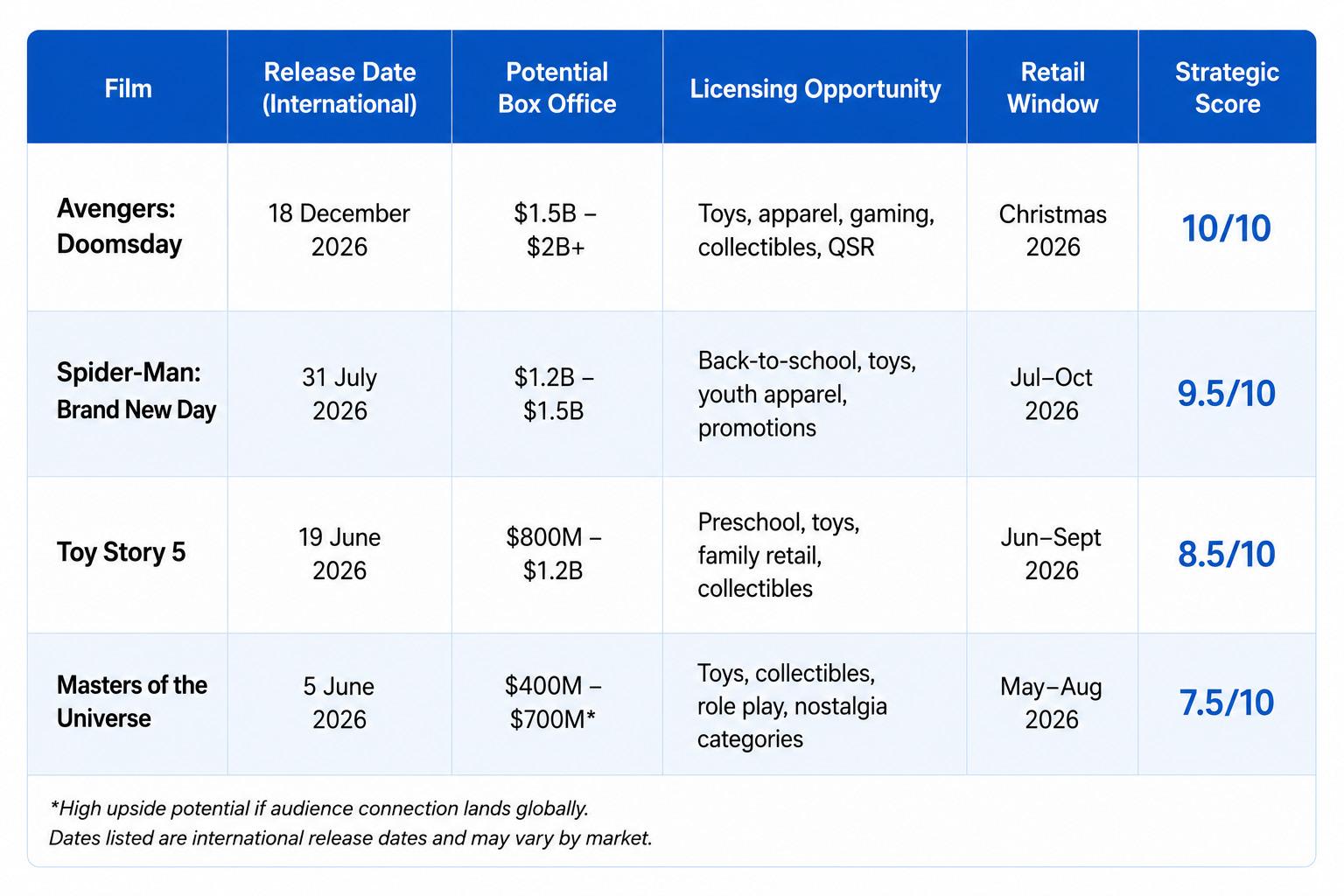
What makes these films particularly important is not simply their projected box office performance — it is their ability to reactivate the broader consumer products ecosystem.
For years the toy and licensing industries have relied heavily on streaming content to maintain engagement. However, streaming
alone rarely creates the same concentrated cultural moment that theatrical blockbusters deliver. Cinema still matters because cinema creates urgency, event viewing and retail immediacy.
In our opinion, Avengers: Doomsday remains the most commercially powerful entertainment event on the horizon. Marvel’s
ecosystem extends far beyond ticket sales into virtually every retail category imaginable. If momentum builds globally, this could become the defining Christmas retail driver of 2026.
Meanwhile, Spider-Man: Brand New Day may prove to be the strongest youth-focused retail activation platform of the year. Spider-Man continues to transcend generations and remains one of the safest and most adaptable licensing brands in the global market.
From a family perspective, Toy Story 5 carries enormous emotional equity. Pixar’s challenge will be balancing nostalgia with relevance for a new generation of children, but the underlying retail pedigree remains exceptionally strong.
Perhaps the most fascinating play, however, is Masters of the Universe. This is not a guaranteed blockbuster — but it may be the most strategically interesting opportunity in the market. If executed correctly, it has the potential to reignite a multi-generational toy property with significant long-term licensing upside. If it misses the mark, it could quickly retreat into collector-only territory. Either way, the industry will be watching closely.
The broader message is clear.
The entertainment landscape may be evolving rapidly, but major theatrical franchise films still possess a unique ability to unite audiences, energise retail and stimulate licensing programs globally. The winners in 2026 will not simply be those with the biggest films — but those capable of connecting content, retail, licensing and consumer engagement into one coordinated ecosystem.
That is where the real commercial opportunity now exists.