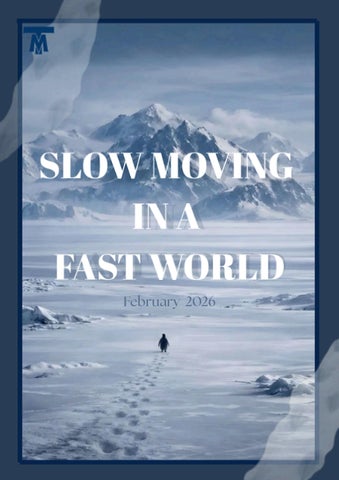
February 2026
TABLE OF CONTENTS Current Events Ice Protests in Minnesota Following Shooting The USA’s Intervention in Venezuela and Maduro’s Capture The USA And Greenland
STEM Claim That Paracetamol in Pregnancy is Linked to Autism Debunked Shark Attacks in Australia Nipah Virus Outbreak The USA Leaves the WHO: What This Means for the Future
Environmental Lithium-Battery Powered Vehicles and their Setbacks The Danger of Environmental Tipping Points Changes to the Amazon and Andes Rainforests
Trending Owen Cooper is the Youngest Golden Globe Winner Movies to Look Forward to This Year Drama in the Beckham Family
Sports Amazing Sports Records of All Time All titles are hyperlinked to the respective pages!
Controversies at the 2026 Australian Open F1 Launches New Car Design
Inspirational & Psychology The TikTok Famous Story of the Nihilist Penguin The Stanford Experiment
Bahrain This Month Bahrain Reviews Proposal To Ban Social Media for Under 15s
Reports & Interviews BRITMUN Interview
TABLE OF CONTENTS Photography Photography by Dhruv
All titles are hyperlinked to the respective pages!
Photography by Saud
EDITOR’S NOTE “Slow and steady wins the race” --Robert Lloyd
In this fast-paced world, where time ticks away without pause, we often feel pressured to keep up with its rapid pace. Yet rushing forward only causes us to trip over the obstacles on our path to success. As strange as it may sound, the real way to succeed in such a busy world may actually be to do the exact opposite: slow down. The benefits of being patient and steady are that it allows us time to recognise the challenges that surround our goals. They create a room to reflect on our mistakes and improve our approach. If we rush past this crucial step, we create a gap in our journey to success. How can we truly move forward if the path itself is incomplete? After all, the tortoise wins the race against the hare; consistency wins against speed. In this edition, there are stories of resilience and growth, such as the current protests against ICE, that will hopefully allow you to find ways to reconnect and find peace with yourself in the ever-evolving landscape of our society. Our editor’s choice for this month reflects these same themes. Joude Humaidan’s article on the Nihilist Penguin story that has taken over the internet delves into how irony, absurdism, and reflection help shape the way we process meaning in an oversaturated world. Last month was an exciting and fast-paced time at BSB. The Charity Committee hosted the migrant workers boxes initiative, bringing students together to pack essential items and show support for our community. Spirit Week filled the school with energy and creativity, with themes like dressing as your favorite decade, twinning day, and representing your house with pride. BRITMUN XI also took place with unique and creative councils inspired by Legally Blonde and Grey’s Anatomy, making debates both engaging and memorable. Overall, it’s been a month full of service, school spirit, and growth. We hope this edition inspires you to reflect on your own journey in this everchanging landscape.
UNTIL NEXT MONTH... EDITORS: Giselle Menezes, Shradha Thampi DEPUTY EDITORS: Leena Altaf, Noor Merheb
CURRENT AFFAIRS
ICE protests in Minnesota following shooting. Shri Surya
narayanan
11E
ICE has been a word circulating many conversations throughout the past month. Beyond Minnesota, the entire world has stood up to offer their opinions on the widely controversial shootings in Minneapolis, killing two American citizens.
A main aspect of Trump’s administration system has been the deportation of immigrants from the US. As of early 2026, it mainly focuses on mass deportation and the removal of various legal protection benefits for noncitizens. This has become particularly brutal recently due to the “sensitive locations” rule being removed, meaning that immigration enforcement is now allowed to enter schools, hospitals and places of worship as part of raids to arrest undocumented immigrants. Third country deportations are also becoming increasingly common, which is when the Department of Homeland Security has the permission to deport immigrants to a designated country other than their origin country. Although this is seen controversially as being against human rights, with many federal attempts to bar this practice, the receiving countries have agreed to it. In April 2025, U.S. District Court Judge Brian E. Murphy encouraged them to consider what the UN deems as torture, rather than to blindly carry on deporting, according to the Council of Foreign Relations.
L A I T DEN
I F N O C
1/2
On Wednesday 7th January 2026, Renee Nicole Good was shot and killed by ICE agents in Minneapolis. She was a mother of three, and an American citizen. Federal law enforcements were on their way back after having completed an operation, when they reportedly opened fire and fired three shots at her due to her allegedly trying to ram her car at them, which would have been an act of domestic terrorism. These reports have sparked international controversy, with federal agents claiming that the shooting was an act of self defence, while ABC news reports that according to a video of the scene released later, Good was trying to turn her car away from the agents, contradicting the previous claim. Neighbours were already alert and standing watch while kids entered a school in the neighbourhood, due to reports of ICE activity having been frequently present in the area. These incidents have been followed by serious protests from those all around the US, with many treating the site where Renee Good was killed as a shrine, and advocating for peace.
On 24th January 2026, Alex Pretti, an intensive care unit nurse, was shot multiple times and killed by the United States Customs and Border Protection agents. This incident also occurred in Minneapolis. Multiple federal agents surrounded him, pepper sprayed him, and then fired shots which killed him, videos from bystanders prove.
This has also motivated many anti-Trump protests, as well as activists demanding justice for the unfair killings. Many educational institutions were shut down as they followed the “no work, no school, no shopping” movement, in order to stop funding ICE. This specific movement is being led by a student group in the University of Minnesota, and has been taking action in at least 300 cities. Protesters and the organisations that support them have been campaigning for stricter laws and regulations for immigration enforcement officers, so that such unjust killings cannot occur without harsher legal consequences. The protests are ongoing as of now, and the pressure has resulted in federal authorities withdrawing over 700 officers from Minnesota, while activists are planning for a 24 hour blackout on February 28th, where all non-essential spending will be freezed, even from major online retailers like Amazon. This is because of the idea that a general strike will lead to economic pressure, as part of the national shutdown, which will disrupt businesses’ daily operations. It is also due to the belief that major retailers like Target and Home Depot have been accused of allowing ICE to use their parking lots to stage immigration enforcement operations. In conclusion, it is safe to say that the debate of immigration enforcement and their rightful roles and behaviour towards citizens remains a key part of the social and political landscape of Minnesota, and the protests seem to only be intensifying, as their goal remains rooted; change is necessary. 2/2
The USA’s Intervention in Venezuela Surya Menon 11F After months of tension, pressure and speculation, the United States of America carried out a massive military operation in the heart of Venezuela… On January 3rd 2026, Caracas was deafened by explosions, aircraft and air sirens as Venezuelan President Nicolas Maduro and his wife Cilia Flores were captured by U.S. Forces in his home. The operation was carried out with no U.S casualties. U.S. President Donald Trump called the operation ‘spectacular’ and that the Venezuelan defense forces were ‘bumrushed’. This happens as Trump comes closer to achieving his aims in Latin America: to stop the flow of drugs into the U.S.A. The White House has repeatedly accused Maduro of being a narcoterrorist and had initially announced a bounty for his capture. It is due to the success of the operation that Maduro and his wife now find themselves alternating between a Manhattan jail cell and courtroom as the U.S. Department of Justice prosecutes the couple for narcoterrorism. The U.S had planned this operation for months as their military built up their presence in the region. Over 150 aircraft were used in the operation called ‘Absolute Resolve’. Multiple targets that included Venezuelan air defenses, military bases and specific people allegedly involved in drug trafficking were destroyed. 145 people were killed in the operation. Prior to the operation, the CIA had been observing Maduro’s activities for months collecting data and information. They had been so meticulous that they knew exactly what Maduro ate every day! The U.S. The Army's elite Delta Force had also been training for months using a mock up of Maduro’s actual residence. Nothing could go wrong. The operation started at 2.a.m local time when U.S fighter jets bombed various targets in Caracas (the capital city of Venezuela) including air defense infrastructure. This allowed a dozen U.S. Special Forces helicopters to enter Caracas and make their way to Maduro’s residence.
After pummelling the residence with RPGs and machine gun fire, the U.S’s Delta Force landed on Maduro’s roof as they repelled down their helicopters. After a short but ruthless gun fight, Maduro and his wife were captured on their way to their bunker. The Delta Force was on the ground for a sum total of 3 minutes! However, the Venezuelan forces weren’t completely disabled. Multiple U.S. helicopters were shot at. This eventually led to 7 U.S military personnel being injured. President Trump said that despite the blood, U.S pilots still flew their helicopters to safety. Nicolas Maduro and his wife were first taken to the USS Iwo Jima, an amphibious assault ship from which they were transported to New York to be put on trial for the crimes they allegedly committed against the U.S.A. President Trump has said that Maduro’s removal from power will allow the U.S. to utilise Venezuela's vast oil and gold reserves by allowing more U.S oil firms into the country for drilling and refinement. Trump has also said that the next government that governs Venezuela must be approved by the U.S. Government and that a portion of Venezuela's oil must be given to the U.S on a yearly basis. Ultimately, even after a tumultuous few months in Latin America, the region still finds itself in regional turmoil. The U.S’s objectives in the region remain unclear as the focus has shifted from drug trafficking to oil refinement. This has left many Latin American countries uneasy about the future. The U.S.A’s true intentions for the region are yet to be determined.
tensions: the usa & greenland " I
W O U L D
L I K E
T H E
E A S Y
E A S Y
W A Y ,
T O
W A Y ,
B U T
W E ' R E W A Y , "
Back
M A K E
in
2019,
Donald
proposed
that
the
I F
A
D E A L ,
Y O U
K N O W ,
W E
D O N ' T
D O
I T
G O I N G -
Trump
T O
D O
I T
D O N A L D
T R U M P
A
poll
first
2025
T H E
T H E
H A R D
revealed
that
85%
of
purchase
Greenlanders oppose joining the United
Greenland from Denmark; as of now,
States, while Denmark has already pledged
tensions
States,
over $2 billion to strengthen Arctic defence,
Denmark, and Greenland have brought
indicating how firmly Europe and Greenland
the Arctic back into the global spotlight.
are
The
situation
among
U.S.
has
the
U.S. United
repeatedly
expressed
resisting
American
shows
pressure.
how
This
Greenland,
interest in Greenland, stating that it would
characterised by its unique culture, remote,
take the island “easy way or hard way” in
roadless communities, and status as one of
January
the least densely populated and most
2026.
Trump’s
interest
in
Greenland can be brought down to many
sustainable
factors: its proximity to mainland USA, its
transitioned into a symbol of the changing
rare-earth minerals and the new shipping
balance of power in the Arctic, as countries
routes opening as the ice melts.
compete for influence and wealth.
Greenland
is
already
home
to
places
on
Earth.
an
important U.S. military base used for missile warnings and Arctic surveillance, making it a key part of national security. Despite this, officials from Greenland and Denmark
have
made
it
clear
that
Greenland is not for sale, and that its people have the right to decide their own future. With citizens holding mass protests across
Greenland
in
2025–2026,
demonstrators held signs such as “We are not for sale.” Shanessa Harden Y12B
Has
STEM
Trump’s Paracetamol-Autism Claim Falls Flat Emaan Ahmad, Y12A In a speech in September 2025, President Donald Trump claimed that consumption of paracetamol (acetaminophen) during pregnancy “can be associated with a very increased risk of autism.” He suggested that women “tough it out” and should avoid the drug unless “medically necessary.” The remarks sparked anxiety among pregnant women worldwide, but medical experts and scientific organizations have since then made it abundantly clear: there is no evidence that suggests paracetamol causes autism.
What is Paracetamol? Paracetamol is one of the most commonly used painkillers, recommended by health authorities such as the NHS and FDA for treating headaches, fever, and pain during pregnancy. It is considered the safest option when used as directed, especially compared to alternatives like ibuprofen.
Why did Trump Raise Concerns? The Claim vs. The Evidence Trump’s statements were not based on a definitive study. In place, The White House cited observational research, including the Nurses’ Health Study II, which looked at ADHD rather than autism. However, it can be argued Trump was voicing a precautionary principle: if there is even a possibility of risk, pregnant women should be cautious. This has lead to an ongoing debate in the scientific community. Recent large‑scale research, however, such as a 2024 Swedish study of 2.4 million births, found no causal link between paracetamol use in pregnancy and autism, ADHD, or intellectual disability. When sibling data was analyzed, any apparent association disappeared. While observational studies such as those highlighted by The White House can raise questions, they cannot prove causation, and the strongest data available points to genetics and familial factors as the primary drivers of autism. Experts like Dr Monique Botha (Durham University) and Prof Dimitrios Siassakos (UCL) emphasize that autism arises from complex causes, often genetic, and not from paracetamol use. As Prof Viktor Ahlqvist of the Karolinska Institute concluded, the evidence “provides pretty strong evidence against the notion that paracetamol would cause harm.”
However, it is true that medical science has, in the past, revised its stance on drugs once thought safe. For example, medications like thalidomide in the 1960s were widely prescribed before their risks became clear. From this perspective, Trump’s warning can be seen as an attempt to err on the side of caution, even if the evidence is not conclusive. However, experts stress that caution must be grounded in science. Unlike thalidomide, paracetamol has been studied extensively for decades, and large-scale research consistently shows no causal link to autism or other neurodevelopmental disorders.
Why Misinformation Matters False claims, no matter how sincere, about medicine can have real life consequences. Avoiding paracetamol during pregnancy may expose mothers and babies to greater risks from untreated pain or fever. As the UK Department of Health warns, untreated maternal fever and pains can cause harm to fetal development--and in severe cases--could even result in a miscarriage. Prof Grainne McAlonnan, from King's College London, said expectant mothers "do not need the stress of questioning whether medicine most commonly used for a headache could have far reaching effects on their child's health". Medical authorities worldwide, including the UK’s MHRA and the NHS, continue to recommend paracetamol as the first choice of pain relief in pregnancy. Leucovorin: Another Claim Trump also suggested leucovorin, a folinic acid supplement, as a treatment for autism. Current evidence, though, is weak. Small trials have shown inconsistent results, and experts like Prof Andrew Whitehouse stress that the science is far too preliminary to recommend leucovorin in clinical practice as of now. The best available science shows that paracetamol, when used responsibly, is safe during pregnancy and does not cause autism. Claims to the contrary ignore decades of research and risk spreading unnecessary fear. Autism is a complex condition influenced by genetics and multiple factors, not a single painkiller. Correlation is not causation, and evidence must always outweigh speculation.
INCREASE IN SHARK ATTACKS IN AUSTRALIA WHY IS AUSTRALIA A GEOGRAPHICAL ‘HOTSPOT’ FOR SHARKS? Australia is a coastal country which means that it has an extended shore line, allowing for a biodiverse marine life. Australia has approximately 17.22% of the world's coral reef, making it the second highest coverage in the world, following Indonesia's 18%. This allows for various species to live comfortably, because the reef provides: shelter, food, and letting comfortable breeding. With the high population of fish, natural predators are able to thrive with no worries
WHY NOW? Why does it feel like there's more attacks now than ever? It's due to a few different factors; increased media coverage, rise in the number of people visiting the ocean and shark conservation attempts working. Australia has become synonymous to beaches. This has led to an increase in people visiting beaches, increasing by 10.7 million since 2000. Now more than ever it's easier to access news, allowing for more visibility on attacks, causing a greater perceived danger of sharks
Aerial view of the great barrier reef, in Greenland
SHARK PRESERVING EFFORTS In Australia the over-hunting of sharks had caused a 74 to 90% decrease of all shark types for the past 100 years. This was due to several factors; one being the large foreign hunts and the subsequent culling of the dangerous species, including all sharks. Pre 1990 large fishing expeditions were constantly going on causing more fishermen to catch the sharks and killing them. Between 2010 to 2014 it had been a government policy to capture and kill all sharks within the vicinity of active swimming beaches, this caused over 50,000 sharks to be executed.
However, after figuring out that numerous species were on the brink of extinction, Western Australian Environment Protection Authority strongly advised for the end of culling and the use of drum lines instead. This has reduced the number of fatal attacks from 1 every year to 1 since the drum lines were implemented in Queensland. This has overall increased most of the shark populations, some like Grey Nurse Sharks that had gone from nearly extinct, but now have an endangered status with around 2,000 adults.
The paramedics responding to the 12 year old Surf board after the attack on the 11 year old
THE ATTACKS On January 18th of this year a young boy, aged 12 years old, was critically attacked after rock jumping with some of his friends. This happened towards the suburbs of Vaucluse, and he spent a week in the hospital in dire condition. Then his family confirmed, a week later, that he had succumbed to his injuries and passed away. A day later, close to the shore of North Steyne Beach in Manly, a 25 year old surfer sustained grave injuries to legs. Another surfer spotted him and pulled him out of the murky waters, after confirming no more sharks were in the area. After being treated by paramedics he was rushed to the Royal North Shore Hospital, where he remains in critical condition till now.
Hayat Touissat 12A
A few beaches down an 11 year old surfer had a huge bite taken out of his board near Dee Why, and shortly after the sharks left the area, otherwise the boy was unharmed in the attack.
These are only a few rare cases that occur since the likelihood of getting attacked dd by a shark is around 1 in 8 million chance. To note the sharks that are suspected for dd these attacks were all bull sharks which are well known for being more aggressive. May the victims have a fast recovery and may Nico Antic rest in peace.
FROM BATS TO HUMANS
THE ONGOING BATTLE AGAINST THE NIPAH VIRUS Recently, West Bengal, India, experienced an outbreak of the Nipah virus, with five confirmed cases leading to the quarantine of nearly 100 individuals. Experts in the country, which has been battling the Nipah virus contagion every year now, have cautioned against the zoonotic nature of the viral infection. The outbreak has heightened alarm in China and several Southeast Asian nations, prompting tighter health screening operations at airports. The nipah virus is a bat-borne zoonotic virus that causes nipah disease in both animals and humans. It is considered one of the most dangerous emerging infectious diseases due to its high fatality rate and the fact that there are currently no licensed medicines or vaccines specific for the infection. But this virus is no stranger to this region. The first cases of the virus in humans were recorded in 1998 during an outbreak between pig farmers in Malaysia, this later spread to Singapore following the importation of sick pigs from Malaysia. Since then, there have been no outbreaks reported in either of these countries.In Bangladesh, outbreaks have occurred nearly every year since 2001, while India experiences periodic outbreaks in various regions throughout the country.
Understanding the virus’s transmission begins with its natural hosts. Fruit bats from the Pteropodidae family are found in many different parts of Asia and Australia. Strikingly these infected bats show no signs of illness from the virus. The danger lies in the virus’s easy transfer; whether it's between animals and humans, through contaminated food, or directly between people. Rajeev Jayadevan, the ex-president of Indian Medical Association, Cochin, emphasises that infection amongst humans is rare and typically caused by the accidental spillover due to human-bat interface, which means the consumption of fruits that could have been infected by bats. “This is more likely in rural and forest-adjacent areas where agricultural practices increase contact between humans and fruit bats searching for food,” he added. Most of the current cases have been healthcare workers who were exposed to the virus from sick patients.
So what makes the disease so deadly? Like most infectious diseases, symptoms don’t present on everyone the same way. Some people remain asymptomatic, however most people with infection can develop fever, pulmonary symptoms; such as shortness of breath and persistent coughing, and even neurological symptoms; such as headaches or confusion. The virus is usually most severe with people presenting neurological symptoms as they occasionally progress to more severe symptoms; most notably, brain swelling (encephalitis) which contributes largely to the disease’s 40-75% fatality rate. Although most people make a full recovery, approximately 1 in 5 develop long term neurological conditions. While there are no treatments available, early diagnosis of the disease is important to promote early supportive care in order to manage symptoms.
It’s clear to say that the public is left concerned about what's being done and how the outbreak may progress- with many linking the familiarity of what's happening to the early stages of the COVID-19 outbreak. However, the WHO “assesses the overall public health risk posed by NiV to be low at the national, the regional and global level,”. WHO chief Tedros Adhanom Ghebreyesus explained that “Authorities have increased disease surveillance and testing, implemented prevention and control measures in health care settings, and are keeping the public informed about how to protect themselves,” Public health authorities in India and Bangladesh are actively managing the virus through surveillance, preventive measures, strict contact tracing, and rapid case isolation.
Furthermore, as of right now, several experimental therapies are in development or in early clinical trials, including monoclonal antibodies, fusion inhibitors, and novel antivirals. Additionally, a new collaboration between the UK Health Security Agency (UKHSA) and The Pirbright Institute (funded by the Medical Research Council) has been launched to support the development of vaccines against henipavirus – a genus of viruses including the Nipah virus. Dr Dalan Bailey, Viral Glycoproteins group leader and project lead for Pirbright said: “Understanding whether vaccines for Nipah or other henipaviruses can provide crossprotection against related viruses is a really important first step in the development of broadly acting vaccines.”
ZAINAB KHEMIRA, 13A
America steps back BRITISH SCHOOL OF BAHRAIN
JANUARY 22ND 2026 ANUMITA CHAUDHRY
THE IMPACT OF THE U.S. LEAVING THE WORLD HEALTH ORGANIZATION The USA, who once played a major role in the World Health Organisation (WHO), has officially left after Donald Trump administered the leave last year, on January 20th, 2025. Due to the one year notice period, the leave finally took effect on January 22, 2026. Now, what does this mean for the rest of the world with the USA being out of the picture? WHO, is a United Nations owned organization dedicated to promoting and working towards global health goals and improving global well-being. They are the first to assess and attend to matters such as pandemics, and major health outbreaks. They also provide health-care items to vulnerable areas and individuals. The United States was not only one of pivotal providers of funds, but also one of their most influential members. So, the USA leaving, definitely creates a huge gap towards sponsorship and control at the UN. When it comes to influence, the USA heavily helped the UN during the COVID-19 pandemic. By providing scientific expertise, advice and rallying support, the USA was able to convince allies and rival nations to contribute. This meant helping to coordinate vaccine distribution in less developed countries, fund relief programs, and testing programs. The USA was the sole contributor towards COVAX, which was an initiative designed to research and produce vaccines for distribution. Now that the USA has left, the chain of command is broken, countries are likely to be less motivated to step up, and coordination could potentially slow down. The WHO is now left to face greater challenges especially, slower responses to major outbreaks. For US citizens in particular, their country’s exit will not have an immediate effect on healthcare.
However, without US leadership and the possibility of slower responses to outbreaks, it makes the USA more vulnerable and susceptible to becoming a victim and increases the risk of deaths in the country. What’s most likely to occur now is that nations like China, the EU, and India may now have greater control over decisions over protocols and new initiatives that the WHO may start. This could result in changes to the focus of global health initiatives, potentially prioritizing different regions or health issues than those overlooked previously while under the USA’s influence. While the WHO will continue to operate, the REME Mthe BER loss of US balance of power has changed, and leadership may alter the direction of international health efforts for years to come.
ENVIRONMENTAL
Lithium battery-powered vehicles: A sustainable solution or just an environmental setback? Aysha Rais, 13A Reduce, reuse, recycle. Conservation of water. Renewable energy. These are typically the first words and phrases that come to mind when you think of or search up “sustainability”. Alongside them may crop up the thrilling image and concept of electric vehicles (EVs). These vehicles have been steadily gaining traction as the ideal way of transport in a world that is rapidly changing due to the increasingly severe consequences of climate change. After all, this switch to EVs would decrease the emission of greenhouse gases, which cause global warming, as well as reduce air pollution by toxic gases that are also released when fossil fuels are burnt. However, in order to make such a
Most electric cars opt to run on lithium batteries.
transition, we must also take care to consider if the new resources we use are truly more beneficial in the long run, and if the side effects outweigh the benefits.
It's no wonder why — compared to most alternatives, lithium batteries have a higher energy density and longer cycle life, meaning that cars can cover longer distances and the batteries do not need to be replaced too often. They are also generally affordable. Unfortunately, lithium batteries are difficult and incredibly expensive to recycle. In addition, lithium mining requires a great deal of energy and is quite waterintensive.
Lithium mining involves a process called “brine mining”, which involves pumping saltwater from underground reserves to the surface. The saltwater is then evaporated to obtain the lithium. While this method leads to less carbon dioxide emission than fossil fuel mining, it also poses the risk of polluting water sources with this toxic metal. The disposal of EV batteries also presents a new problem, as they are mostly discarded into landfills, frequently leading to underground leaks. Such leaks typically lead to underground fires, polluting the air with harmful metals present in the battery, and can cause health problems in the human population. Furthermore, it is crucial to note the significant impacts that lithium mining has on the environment itself. In Chile, the second-largest producer of lithium after Australia, the consequences can clearly be seen in sites such as Salar de Atacama, where copper mining has also been done over many years. In a drought-prone area like this, this water-intensive process has resulted in smaller lagoons and impacted the lives of microorganisms, the food of some birds, that dwell in them. The ecosystem has thus been affected, leading to the disruption of the food chain, and even to the decrease in the endemic flamingo population.
As we can see, the continued mining of lithium has a possibility of long-term consequences that should be avoided if we can help it. But what other alternatives are there? Some suggest switching to sodium batteries instead. Although sodium batteries have shorter cycle lives and lower energy densities, extracting them is much less water-intensive and requires less energy. Sodium is also more abundant on Earth, meaning cheaper production, and has lower flammability risks, making it a safer option. That being said, our goal for more sustainable transport should not just focus on electric vehicles. Improved public transport (such as buses, trains, and subways) and the encouragement of biking or walking should also aid in reducing emissions of carbon dioxide. In the end, it is up to each and every one of us to do our part in living a more environmentallyfriendly life; for ourselves, for the ecosystems that we are a part of, and for the generations that will inherit our planet in the future.
Beyond Recovery: The Danger of Environmental Tipping Points
Aadya Raju, 13A
Environmental tipping points are crucial thresholds in natural systems. Before the threshold is reached, the damage can be slow and even reversible. However, when the tipping point is crossed, the system shifts rapidly to a new state, which in its turn is self-reinforcing, and it becomes extremely hard or even impossible to revert to the original state. The fact that such tipping points can happen at any time, even after years of supposedly manageable change have taken place, is particularly cause for concern. A tipping point is not a matter of merely environmental damage, it is also characterized by a loss of control. Before the threshold, human intervention can stabilize the system. After it, natural feedback loops take over and drive further change without any additional external pressure. That is why tipping points are especially dangerous, as consequences accelerate even after the initial cause is decreased. The melting of large polar ice sheets is one of the evident examples. To begin with, the increase in world temperature leads to slow melting of ice. However, ice is important in the process of reflecting sunlight back to space. When ice cover is reduced, more of the darker ocean water is revealed, which absorbs heat. This extra heat leads to further melting which reveals even more ocean water. When this feedback loop becomes dominant, the process of melting will persist even when the world temperatures are stabilised. The ice sheet has now exceeded a breaking point, and the planet is trapped in a permanent state of rising sea level.
Ecosystems are also observed to have tipping points. Coral reefs are able to withstand brief periods of elevated ocean temperature, but above a thermal limit, mass bleaching takes place. When bleaching events occur too often, the corals cannot go back, and the reef system becomes permanently algae dominated. This altered state sustains much less biodiversity and offers less ecosystem services, such as fisheries. The most important aspect of the tipping point is that recovery is no longer possible without extreme measures. Another example is rainforests. Healthy rainforests recycle moisture by evaporation and rainfall in order to maintain their own climate. This system could be weakened by deforestation and increasing temperatures. When the forest cover is reduced below a critical point, there is a sharp decrease in rainfall, pushing the ecosystem into a dry savannah state. Once this threshold is exceeded, it may not be possible to recover the rainforest even by preventing deforestation, as the environment required for regrowth is no longer present. Environmental tipping points have severe impacts. These include irreversible rise of sea-level, destruction of food systems, depletion of freshwater, and health hazards. These impacts are unevenly distributed, and the greatest burden falls upon the poor and future generations, which is a grave ethical and social justice issue. As a result, it is important to avoid tipping points by taking early action. Due to the uncertainty of the exact position of thresholds, caution is necessary. It is much better to cut emissions, safeguard ecosystems, and reduce environmental stress to levels that have not been breached than to remedy the situation after the damage has been done. In conclusion, environmental tipping points are points when incremental pressure becomes an out of control transformation. They are the limit where the harm to the environment can be controlled and where the change cannot be undone. Understanding and preventing these thresholds is one of the most urgent challenges facing humanity.
When Ice Cries and Trees Fall Silent Naba Yusuf 10H
THE UNRAVELLING OF THE ANDES AND THE AMAZON For thousands of years, the Andes Mountains and Amazon Rainforest have joined forces in a harmonious balance: meltwater from Andean glaciers feeds rivers that help the Amazon flourish, while moisture rising from the forest gently shapes rainfall patterns across the whole continent. However, this beautiful natural interdependence has officially begun to crumble in front of our very eyes. Over the last 40 years, barely a human lifetime, scientists have discovered striking changes in data, where once stable ice, forests and rainfall cycles are being pushed steadily towards a breaking point. In the Andes, the most drastic change is the measured, yet significant depletion of ice. Satellite images and field measurements collected as early as the 1980s show glaciers thinning and retreating year by year. For communities downstream, these glaciers are more than just ice; they are natural reservoirs that release water during the dry season. As the ice shrinks, rivers run lower. Alongside this loss, vegetation zones have begun creeping uphill as temperatures rise. The mountains are warming, yet the ecosystems that depend on them are trapped. What once seemed permanent is now fragile.
Decades of scientific evidence show the Andes and the Amazon moving away from stability and toward vulnerability. Melting ice, stressed forests and disrupted rainfall aren’t isolated events, but warning signs of a system losing its ability to support life at scale. For us, this means less reliable water, a weaker natural defence against Whereas the Amazon tells a different story, as the climate change and a future that depends on equally drastic change is driven less by melting ice and choices we make today. In the end, we are met more by increasingly rising heat and human pressure. with just one question: how long can we afford to Across the past 40 years, rising temperatures and wait before this breaking point becomes more frequent droughts have placed the rainforest permanent? under immense stress, weakening its internal structure. Long-term ecological data show that tree death rates have increased significantly, particularly among large canopy trees , that are integral, as they regulate humidity and store vast amounts of carbon. As these trees disappear, the forest’s ability to retain moisture and recycle rainfall declines, increasing the risk of fire in regions that were once too wet to ever burn. Moreover, these same canopy trees are more than just air purifiers; they are living sanctuaries, sheltering countless endangered species that depend on them for survival. Foreshadowing the dire changes in Earth’s biodiversity as a whole, as the Amazon represents the largest, most biodiverse tract of rainforest in the world. These changes don’t signify a sudden collapse of the Amazon, but more of a slow transformation, since the forest seems healthy on the outside, but functions much less effectively as a stabilising force for our precious climate.
TRENDING
Actor Owen Cooper makes history for his award winning performance at just 16 Aditi Nair At just 16 years old, Owen Cooper will go down in history as the youngest winner in the category of a male actor in a supporting role on television, for the psychological crime drama ‘Adolescence’. The show was released in March of 2025, and depicted a truly shocking story that had a heavy impact on all audiences. It focused on a 13 year old Jamie Miller, played by Cooper, who gets arrested on counts of murder. The audience follows as the case unfolds, and it delves into the twisted impacts of social media and the real life detriment it can cause. Through the show, Cooper delivered a raw depiction of the character as he is confronted with the collapse of his young innocence, followed by his psychological unraveling. His performance resonated with audiences and critics alike, scoring 97% on Rotten Tomatoes and an 8.1/10 on IMBd, even described in The Guardian as "a deeply moving, deeply harrowing experience.".
Cooper was born December 5th of 2009, originally dreaming of becoming a footballer, but began acting classes at The Drama Mob in Manchester, which later transitioned into him being the top pick of 500 auditions for his natural emotional depth, landing him to star in the show ‘Adolescence’. At just 14, he worked with full dedication on his debut role on the Netflix show, being cast without any previous acting experience. The role relied on instinct and intensive script study and delicate memorisation as well as impromptu improvisation and two weeks of rehearsal. The first week consisted of familiarising the actors, and the latter focused on the unique ‘one take’ concept of the show and its required choreography.
This performance would be talked about as the performance of the year, as he redefined audience expectations of young actors in psychologically demanding roles. Cooper's emotional capability and instinctive depth surpassed even far more experienced actors, cementing his acting capacity as beyond any expectations. It has truly opened up a wider conversation in the industry and beyond, on teenage actors in these taxing roles, as well as the cultural discussions of mental health and media exposure from digital exposure to these young people. Cooper’s haunting act is the true reason that these discussions have sparked and his win benchmarks his position in the industry as well as crafts a path for upcoming generations of young actors in growing their horizons. The global success of Adolescence is just the beginning for Cooper, seen in the abundance of interest from various major studios to cast him in independent dramas and even more psychological thrillers. While completing his GCSE qualifications, he plans to simultaneously continue his acting training to refine those natural qualities that already set him apart from others. We will be seeing him back on our screens on February 11th of this year, as he stars in book to film adaptation ‘Wuthering Heights’, alongside big names like Jacob Elordi from Euphoria and Salt Burn, and Margot Robbie from the Barbie movie and The Wolf of Wall Street. Critics are eager to see him back, hoping he brings his character ‘Heathcliff’ that same emotional volatility that made Adolescence so compelling and captivating. He continues to be “one of the most promising young talents in the industry,”, which leaves us to await his next move as his early success is just the beginning of his remarkable career.
Cinematic Countdown
The Must-Watch Movies of 2026 It’s 2026, and the film industry has risen to create new masterpieces. As we kick off the second term, it’s the perfect time to look at the massive releases heading our way. Use this article as your “trailer” for the biggest cinematic events of the year!
If you are a Star Wars fan, you’ll be overjoyed to know the franchise is finally back in theaters! The Mandalorian and Grogu will follow Mando and everyone’s favourite “Baby Yoda” on a brand new mission. Expect high stakes space battles and a deeper look at Grogu’s training. It is the perfect pick for anyone who loves the Disney+ series and wants to see that galaxy far, far away on a giant IMAX screen on May 22.
The Nintendo franchise is also hard at work on the addition of the Super Mario Bros saga. After the massive success of the first film, Mario, Luigi, and Princess Peach are returning to the big screen. Except more Power-Ups, more Rainbow Road races and maybe some new characters from the Nintendo universe (fingers crossed for Yoshi!). To experience the new adventure, go check out the movie on April 3.
There is yet another sequel to the beloved Toy Story franchise! Buzz and Woody are back, but this time they face their toughest opponent yet…electronics! The story follows the toys as they try to get kids to put down their tablets and play with actual toys again. Directed by Andrew Stanton, Toy Story 5 will hit theatres on June 19. Mark your calendars, because this movie is set to be a rollercoaster of emotions.
1/2
Marvel has an incredible year ahead, starting with the return to the streets of New York in Spiderman: Brand New Day (July 31). Following the game-changing events of No Way Home, Tom Holland’s Peter Parker is now a college student living a quiet, lonely life because no one remembers him. Moving away from the multiverse chaos, this installment brings Peter back to his roots. He’ll be juggling the pressures of College life while a fresh danger looms over the city. The real buzz, however, surrounds the potential for a massive Spiderman and Hulk teamup, alongside Daredevil's highly anticipated cinematic debut. Stripped of his high tech Stark suits, Peter must fall back on his own ingenuity and original web shooters to keep his neighbourhood safe.
However, the real “main event” arrives on December 18 with Avengers: Doomsday. This movie is set to be the cinematic event of the decade, bringing the Avengers back together for the first time since Endgame. The biggest shock of the year is the return of Robert Downey Jr, but he isn’t wearing the Iron Man suit this time. He has been cast as Victor Von Doom (Doctor Doom), a brilliant but terrifying villain who uses both advanced technology and sorcery to threaten the entire Multiverse.
The roster of the film is massive, featuring the big screen debut of the Fantastic Four alongside heroes like Captain America (Sam Wilson) and Doctor Strange. But for us here at BSB, there is a much more exciting reason to watch. Marvel chose Bahrain as a key filming location to represent a unique, futuristic teasers, landscape! In the first characters like Shuri and M’Baku have been spotted traversing desert dunes and coastlines that look exactly like our local scenery. When you go to see the movie in December, keep your eyes glued to the screen–you might just see a familiar horizon while the avengers are trying to save the world! Ghania Mahmood 11C
2/2
Whether you are excited to see the Kingdom of Bahrain on the global stage or waiting to see if Woody can defeat a tablet, 2026 is truly the year for the fans. From space faring adventures to street level heroics, there is something for everyone to look forward to at the cinema this year. So, BSB, which premiere will you be lining up for first? Grab your popcorn–it’s gonna be a wild ride!
BECKHAM FAMILY DRAMA What’s been in the headlines? Jasmine De Vries 13D
The Beckham family is a household name in the world. David Beckham: popular ex football player; Victoria Beckham: well known fashion designer and former pop star; and their kids, who have grown up in front of the cameras. In the recent past, the newspapers and social media have reported alleged drama in the Beckham family. Reports of Victoria Beckham acting inappropriately at her son's wedding, their children wanting nothing to do with them, and claims from ex girlfriends of the son coming to light in the media. This has created much curiosity among fans. What is really happening, and why is the world so enraptured?
The last few months of news on the Beckham family have been about the claims of disagreement and tension, especially between their older children and their challenging adult lives. The family life changes as the children grow up, move out, get married and develop their own careers. The same thing is true to both celebrated and ordinary families. However, since the Beckhams are celebrities, even the most insignificant things, such as attending events, posting photos together, or unpublished social media posts, can be turned into big stories. However, a lot of the coverage is speculation as opposed to factual.
Another thing that is necessary to remember is that social media does not show a complete picture of real life. People can assume conflict in case they do not have access to public communications or images but it is not always true. Families can also continue to have deep love towards each other even when they are not equally present in the limelight.
The Beckham family drama acts as a wake up call that, despite the fact that famous families face the same issues as anybody, they are especially subject to a significant amount of scrutiny. Even though rumours can go viral it is important to be respectful and avoid making premature judgments. Family relations are intimate, and not all the information requires a public revelation. Instead of focusing on gossip, it would be better to acknowledge that everybody, famous or not, deserves privacy and empathy.
SPORTS
AMAZING SPORTS RECORDS OF ALL TIME World records display the absolute limits of human ability, showing that anything is possible as long as you apply maximum effort, hard work, and consistency. Some records are so remarkable that they change what people believe humans can achieve. Among the most extraordinary world records are Eliud Kipchoge’s sub-two-hour marathon, Robert Lewandowski’s five goals in 9 minutes, and Usain Bolt’s 100 metre sprint world record. Eliud Kipchoge’s sub-two-hour marathon: One of the most difficult achievements was accomplished by one man: Eliud Kipchoge. In 2019, he completed a marathon in a time of 1:59:40, being the first human in history to complete a marathon in less than 2 hours. Although the time is not officially recognised due to controlled conditions, it takes nothing away from what a historic milestone this is. Kipchoge’s accomplishment demonstrated the power of mental strength, endurance, and preparation, as he averaged an incredible pace of 2:50 per kilometre. Scientists claimed that the first human being to run a sub-two-hour marathon will be in the year 2075, however, Kipchoge proved them wrong. His performance inspired millions of runners worldwide and proved that barriers deemed impossible could be broken.
Robert Lewandowski’s five goals in nine minutes: Another unbelievable moment happened when Robert Lewandowski played for Bayern Munich back in 2015. During a match vs Wolfsburg, Bayern were trailing by one goal and Pep Guardiola who was the manager of Bayern at the time decided to substitute in Lewandowski in the second half. This substitution became one of the most memorable ones in sports history as Lewandowski scored five goals in nine minutes, Pep’s reaction to this feat adds to the magnitude of this achievement. People now view this among the top solo acts ever seen on the pitch.
What stood out wasn’t just his shooting, it was how composed he stayed. That’s what led him to accomplish this incredible feat and break four Guinness World Records whilst doing so.
Usain Bolt’s 100metre sprint world record: A lightning moment in sports history belongs to Usain Bolt thanks to his performance during the 2009 World Championships, where he finished a 100-metre dash in just 9.58 seconds. What’s most striking about the race wasn’t only the pace, but his calm face mid-sprint, almost effortless while others strained.
Muhanned Hasan 06 Hobby11E
Since then, nobody has been able to come close to the record. To this day, the record stands still as evidence of what humans are capable of accomplishing.
FROM FIRST SERVE TO FINAL GLORY Defining Moments That Shaped the 2026 Australian Open Kawthar Mahfoodh, 13D The Australian Open kickstarted the 2026 tennis season following a limited winter break beginning mid-November at the conclusions of the ATP and WTA finals. The players have a few weeks of genuine break before preseason changes and training. Many players participate in preliminary tournaments to better prepare them for the challenge of the first Grand Slam of the year. This year, the tournament introduced the Million Dollar 1 Point Slam ahead of the real competition, where 48 players progressed through matches in a single point format; it created a feel-good success story suited to the atmosphere of the Happy Slam, ultimately won by amateur Jordan Smith. Unfortunately, she withdrew from the tournament prior to the third round due to a left abdominal injury. She was also disparaged by competitor Sorana Círstea for firing herself up, shouting “Come on” in between her opponent’s first and second serve. Lululemon’s Frances Tiafoe also honoured his Sierra Leonean heritage with a vibrant and representative kit, and Ukraine’s Oleksandra Oliynykova debuted with tattoo-like flower face paintings as a statement.
We are beginning to become accustomed to Nike making waves in the fashion department. Sponsoring several top players, they’ve most recently been critiqued for their unimaginative designs and questionable colour combinations. At the forefront of this criticism, Naomi Osaka has constantly been told to focus on her tennis rather than her style, but her collaboration with designer Robert Wun was truly polarising. The turquoise jellyfish concept was combined with a white parasol and butterfly hat with a veil for her walk-on outfit; clearly, fashion has been a critical component of personal expression in her athletic career. Fans, however, stressed the importance of winning her first match wearing the kit, ensuring protection from allegations stating her fashionable inclinations take away from her game.
Alcaraz was not the only record-breaker in this tournament. Tokito Oda became the youngest person ever to hold all four Grand Slams simultaneously, competing in the Men’s Wheelchair category. Iva Jovic has just turned 18 years old and is already in the WTA top 20, losing to Sabalenka in the quarterfinals. We are constantly seeing young talent in the women’s tour, with unpredictable competitiveness all around, but who will be the next big star?
2026 F1 Design Launches Shakti Suryanarayanan, 10G f
It’s that time of year again when the new speeding giants are unleashed. Throughout the year, each overtake, each lap, each circuit is watched with utmost interest. Every season promises more than the last, and what better way to start the F1 season than by launching some speedy, mighty, exhilarating beasts? For all F1 fans, January has been of great significance. They sat patiently, waiting for their favourite teams to launch what they hope will win them the championship 11 months later. It started with Red Bull and their sister team, Racing Bulls, displaying their new cars. Their design was well received by the media, some like ESPN even nominating it at the top of their F1 2026 Livery Power Rankings. For the first time since 2015, they used glossy colours instead of their matte finish, which was a decision that many liked. In 2026, this will be driven by four-time champion Max Verstappen and Isack Hadjar. Additionally, defending champions McLaren showcased their new car in the pre-season shakedown in Barcelona, though will only officially launch their livery on February 9th. Unlike the Red Bull car, McLaren did not receive the best feedback from the fans, with some saying that their design looks way too similar to last year’s title-winning campaign car. Furthermore, other motorsport favorites like Ferrari launched their designs at their Italian headquarters in January, which was ranked 4th on ESPN’s list. This car had high expectations, as with most of the seasons from Ferrari, and experts thought that Ferrari just did not meet those expectations. Some called it ‘vintage’ and ‘classic Scuderia’, while others called it ‘slightly out of balance’ and ‘simple’. The excessive use of white also triggered further debate. This will continue to be driven by seven-time champion Lewis Hamilton, and Charles Leclerc. Another major highlight that all of us waited patiently for was the launch of a new team, Audi. Taking over the former Kick Sauber team, the launch of Audi in F1 was long awaited, and here we are. Many really liked the look, calling it ‘fresh’ and ‘clean’. But, as usual, the topic was up for debate. Websites like The Race called it a ‘letdown’ due to the excessive use of sponsor stickers across the car. In 2026, the car will be driven by Gabriel Bortoleto and Nico Hülkenberg.
Other teams like Mercedes, driven by Kimi Antonelli and George Russell, impressed the media with their design sticking to the Silver Arrows tradition. Teams like Williams and BWT Alpine also received good feedback from the media, with their designs called 'aesthetically pleasing’. The other new team, Cadillac, which will be the 11th team on the grid and will be driven by Valtteri Bottas and Sergio Perez, will be launching their car at the Super Bowl halftime show, before pre-season testing in Bahrain from February 11th to 20th. So, what we have seen so far from these teams is the shift away from the trademark colours and designs. Although these ideas have been debated ever since they were launched, one thing is certain: this year will showcase more drama than ever before in F1.
INSPIRATIONAL & PSYCHOLOGY
New Article
THE NIHILIST PENGUIN STORY What is meant by the Nihilist Penguin The “Nihilist Penguin” is a viral meme from Werner Herzog’s documentary, released in 2007, showcasing an Adelie penguin leaving its colony to march alone, 70 km toward distant mountains. Its increasing popularity turned the penguin into a relatable meme, symbolizing the longing to walk away from collective society. However, this meme can be viewed as a misconception by many, as Nihilism is the rejection of all moral principles, and in simpler terms the belief that life is meaningless. Penguins aren’t able to think philosophically nor are they able to feel existential despair, so is this title a reality of the penguin’s life - or a projection of ours?
The real reason why the penguin left The penguin didn’t leave because life was empty - we made it a symbol because sometimes ours feels that way. Based on scientific understanding, the cause of the penguin’s strange behaviour is narrowed down to a few reasons: Biological instincts - Penguins, primarily Emperor Penguins, act according to survivaldriven instincts, not emotion or thought. It is likely that the “Nihilist Penguin” felt an innate instinct that leaving the colony and venturing towards the mountains would result in finding food and mates, ultimately increasing his chances of survival. The penguin did not reject survival instincts, but strongly followed through with them instead. Scientific “derangement” - In the film, a scientist tells Herzog that the penguin experiences “derangement”. This is often caused by a neurological malfunction that disrupts the penguin’s normal behaviour. Even if humans were to redirect the penguin back to its colony, he would turn around and persistently continue his march toward the mountains. Fatal disorientation - Penguins rely on environmental cues to navigate. When those cues are disrupted, they can become lost, leading to behaviours that seem disoriented to a human observer.
Why are so many people resonating with it? This story serves as a powerful, yet relatable metaphor for modern existential burnout, the desire to escape society through a ‘silent rebellion’. In a fast-paced world that constantly demands productivity, the image of the penguin carelessly walking away feels liberating and relatable, providing a visual representation of walking away from one’s own problems. Psychologists suggest that we are more attracted to the penguin’s nonproblematic exit, the simple act of walking away with no desire or urge to turn back. Ultimately, the penguin is not seen as a hero or a villain, but as a mirror to people who long to be as determined as the penguin is.
What this trend says about our generation This story is especially relevant to our theme, as everyone has thought of slowing down - or even quitting - when things get too complicated. Modern life is almost too fast for many, and the penguin walking slowly, in silence, contrasts with that speed - offering a strangely comforting feeling. Transforming the penguin’s story into a meme allows people to express their stress indirectly, acting as a coping mechanism to help those bond over their shared struggles of everyday life.
What morals we should take from this story Follow the penguin by trusting your ‘gut feelings’, no matter how people perceive it, the penguin did not abandon its herd as a mistake or tragic fate, it listened to its biological instincts and left thinking it was best for it - that is the lesson we should be taking out of this, not that life is meaningless. So, ultimately, it is up to us to decide - Will we take this meme as the end of productivity in life or a starting point for reflection?
Joude Humaidan 11E
The Stanford Experiment: Conformity or Brutality Yasmeen Mian 11F
The line between good and bad is permeable and almost anyone can be induced to cross it when pressured by situational forces. Phillip Zimbardo
In 1971, Psychologist Phillip Zimbardo put an ad in the local newspaper seeking male college students for a psychological experiment. He offered fifteen dollars per day of the two week long experiment. From the seventy who applied, twenty-four participants were selected, all mentally and physically healthy. A coin toss decided the random division of participants into two groups: prisoners and guards with twelve in each category. Nine were active participants and three were alternates. On August 17, 1971, real police officers arrested and booked the “prisoners” and took them blindfolded into a mock prison. The prison had been designed with the consultation of prison officials for hyper-realism. The prisoners strip searched and were forced to wear ill-fitting prison smocks, nylon stockings, and sandals with no underwear. In addition a chain was placed on one of their ankles, and they were only referred to by their numbers. Zimabardo served as the superintendent, and researcher David Jaffe served as the prison warden. To maintain order, guards were allowed to use any means necessary short of physical violence: harassment, the withholding of food, deprivation of privileges. After an unsuccessful revolt on the second day, the guards crafted more sadistic tactics such as: “privilege cells” that would rotate prisoners to create confusion and distrust, and denying them access to the bathroom, forcing them to use a bucket in their cell that they stopped cleaning. Despite reminders from the staff, the guards grew increasingly sadistic, creating new inventive punishments. Prisoners became submissive and stressed. This is seen in prisoner Doug Korpi who started suffering from acute emotional disturbance, and was removed from the experiment. By the sixth day, when put in front of a “parole board”, it seemed the prisoners no longer saw themselves as participants and they had internalized their crime and role. Finally, on this day Zimbardo was forced to stop the experiment due to the mental state of the participants. He later admitted that he himself had internalized his role and had ignored the deteriorating psychological and physical states of the prisoners. To this day, the Stanford experiment remains one of the most controversial studies in history. This is due to its lack of participant protection, researcher bias and validity in general. However, it illustrates how important situational forces are and the danger of a hierarchy, this can be seen throughout history from police brutality, to prison camps. Overall this study highlights how easily power is abused as well as how quickly people conform.
BAHRAIN THIS MONTH
BAHRAIN REVIEWS SOCIAL MEDIA BAN FOR CHILDREN UNDER 15 Joori Mattar 11J
Have we become too engaged in the digital world? As social media continues to gain new users Bahrain is considering slow moving in a fast world through banning underage children from using social media platforms. This rule was set in hopes of protecting underage users from cyberbullying, the pressures of constant online interaction and harmful content.
Experts suggest that indulging underage children with social media content and accounts can affect their emotional well being, concentration and overall mental health. Limiting the use of these platforms will aid in encouraging underage users to spend their time more efficiently. This will help in finding new hobbies and spend more time socialising with friends and family.
While social media aids in providing information, creativity and strengthening communication, a balance between technology and well-being, regardless of age, is crucial in order to remain productive and maintain the quality of inperson relationships.
So, how do you attain a balance? This can be done by reflecting on our daily habits, the time we spend on our devices and prioritizing your mental and emotional well being by making any necessary changes to your lifestyle to enhance them, such as imposing a screentime rule or deleting certain apps. By doing this, you can find a balance between using social media and taking a break when needed.
REPORTS & INTERVIEWS
BRITMUN
Hajar Zaidan Hasan 12A & Aaida Khadir 10C
Every year, so many students look forward to BRITMUN. It’s not just an event to add to your CV but an experience that makes actual purposeful impacts on students. It brings important and relevant issues to light, including humanitarian support, women’s rights and international security. It challenges students to think more critically and look through perspectives that may not necessarily match their own while also encouraging collaboration and leadership skills BRITMUN shapes students in powerful ways so this edition we’re featuring their voices so that they can share what makes the event so special to them. Has your country’s stance conflicted with your personal views at any point? “Yeah definitely. There were times where my country’s position didn’t really match what I personally believe. It was kind of weird having to argue for something I don’t fully agree with, but I also understood that my job was to represent my country, not myself.”
Do you think the solutions proposed here are realistic in real life? “Some of them are realistic, but a lot feel a little idealistic. I mean, it’s great to come up with these creative ideas in the conference, but in real life, politics and resources make it way harder to implement them. Still, it’s cool to see what kind of compromises people can think of when they work together.”
What skills do you think delegates here are developing the most? “I think the biggest skills are communication and diplomacy. Delegates are constantly practicing how to explain their positions clearly, negotiate with others, and stay respectful even when they disagree. It’s also a lot about thinking on your feet and being able to respond to arguments quickly.”
What will you remember most from this conference? “Probably the debates and the moments when everyone actually listened to each other and worked together. Also the stress of writing resolutions last minute it’s kind of chaotic, but also funny looking back on it. And of course, meeting new people and hearing all their perspectives.
How did you handle disagreement or criticism today? “Honestly I tried to stay calm and not take it personally. If someone criticized my point, I would listen carefully, ask questions if I didn’t understand, and try to explain my perspective without getting defensive. It was kind of stressful at first, but I think it actually helped me improve my debating skills.”
What has been the highlight of your Britmun experience? (Chair) “The most amazing experience for me is being a chair because I got to lead lots of people. I get to teach them how to prioritise second world problems that aren’t really talked about. I think it sheds light on problems that we’re not really aware of.” (Delegate) “My highlight is that it's a student-led event which makes it more meaningful when we discuss issues. It’s fun because we get better understanding and get to talk about important issues.” (Delegate) “I enjoy the collaboration and how we get to look at different viewpoints of issues. Even if we’re not on the side that we want to be on and it's hard, it’s still really interesting to look at other views. And it makes you become more open-minded and a better debater later on.”
How do you think the United Nations Commission on the Status of Women helps bring important issues to light? (Chair) “So our first topic is about feminine hygiene products in warzones, this brings important issues to life as it's a real life scenario happening in many countries right now and it's really unfortunate that women are not being supported by this. The second topic is support for working mothers physically and psychologically because of all the stress they face. I think it helps empower women and encourage them to be better and do more to help. ”
PHOTOGRAPHY
Fan Ho (1931–2016) was a Hong Kong–based photographer celebrated for his cinematic black-andwhite street photography. He is best known for turning ordinary city life into dramatic, story-like scenes using strong light and shadow, silhouettes, and bold geometric architecture. Fan Ho often framed his subjects through alleyways, staircases, windows, and building edges, creating images with deep contrast, leading lines, and large areas of negative space. His work influenced urban photography by showing how composition and lighting can make everyday moments feel timeless, emotional, and filmlike. For the photo series displayed below this page: we followed Fan Ho’s approach by focusing on urban structures, framing, and dramatic skies and light. We looked for scenes where buildings and street elements create clean lines, natural frames, and strong shapes, and we used minimal compositions so the viewer’s attention is guided by geometry and atmosphere. Several images emphasize silhouettes and negative space (such as the sky, moon, or distant haze), which is a key part of Fan Ho’s signature look.
Dhruv Kalra
Shots by Dhruv Kalra
Shots by Dhruv Kalra
I’m Saud and my images are driven by one of Bahrain’s finest Automotive Photographers in the field, Mohammed Zainal who earned well above 10+ years of photography experience and theoretical knowledge which inspired the way I post process, shape the final image and the way frame my shots as a photographer today.
@Shotbysaud
@moezainal Mohammed Zainal frames his shots using different angles to showcase this Audi RS6 Avant’s sleek aerodynamics and design. One of the main angles I learnt to put into use is ¾ which is the direction both subjects are photographed