It’s hard to ignore how turbulent the world feels right now, with wars, rising fuel prices, and so much uncertainty about what’s ahead. Like many of you, I sometimes wonder about the legacy we’re leaving for future generations.
I often wish for a time when manners, common sense, and kindness were more common qualities that seem rare these days. Sadly, entitlement seems to describe much of today’s mood.
Even with these challenges, I am always encouraged by the strong sense of community here on Bribie and in the nearby areas. I often see people helping each other and offering support. I hope we keep building on this spirit of care and teamwork.
Now, let’s focus on some of the good news and achievements in our community. Pina Colada Bribie is celebrating six years! That’s six great years of fashion, friendships, laughter, and loyal customers who have become part of their story.
A group of local children, with strong support from their families, are holding a raffle to raise money for equipment, safety gear, and help with transport. Prizes include a generous meat tray, a King's camp oven, and two hours of free cleaning from a local business.
IGA Sandstone Point has won top honours, taking home the 2026 QNN Medium Meat Department of the Year Award at the QLD and Northern NSW State IGA Awards of Excellence!
A quick note about our pet sections: "Pets without People" and the Pet Page. I felt we needed some clarification on this, so please take the time to read that article.
Thank you for reading and for being part of our wonderful community. Take care, Stay safe,
CONTRIBUTORS
Anne Matthews
Al Finegan
Barry Clark
Elaine Lutton
Joie Scheinpflug
John Traill
YOUNG TERRY MP
Federal Member Done! for
Longman Gets Things
Peter Schinkel
Peter Dallimore
Philip Arlidge
Robyn- B.I.
Boat Charters
Kathy Vincent Maria Christina
Sue Wighton
Tracey Blinco
R3 Roofing
Paul Popham
Ivory T - fabric & wallpaper
Yawk Yawk
Disclaimer for Contributions to The Bribie Islander Magazine
The views and opinions expressed in contributions to The Bribie Islander Magazine are those of the individual authors and do not necessarily reflect the official policy or position of the magazine or its editorial team. Contributions are welcome, but the magazine reserves the right to edit, modify, or reject submissions that do not align with our publishing standards or guidelines.
By submitting your work, you acknowledge that you have the necessary rights to share the content and grant The Bribie Islander Magazine permission to reproduce it in print and online formats. The Bribie Islander Magazine is not responsible for any copyright infringement that may arise from the publication of submitted materials.
We encourage respectful and constructive dialogue, and contributions that violate community guidelines or promote hate speech, discrimination, or illegal activities will not be accepted. Thank you for your understanding and support in maintaining a positive and inclusive community publication.
Silent Goodbyes
This week, unexpectedly, I lost one of my closest friends. He wasn’t just a friend; he was a person who truly held space for others and genuinely saw them.
His name was Ash Pathan, he was only 59, far too young.
Whilst I live here in Australia, Ash lived in the United Kingdom, yet distance never really mattered between us.
We spoke daily. Across time zones and oceans, we
RADIAL & FOCUSED SHOCKWAVE THERAPY
Clinically proven* to help these conditions
• Heel pain (plantar fasciitis and Achilles tendinopathy)
• Tennis and golfers elbow
• Patella tendinopathy
• Frozen shoulder
HIGH POWERED LASER IDEAL FOR RECENT INJURIES < 6 WEEKS
• Rotator cuff tendinopathy +/- calcification
• Hip bursitis and tendinopathy
• Shin splints; Heel spurs
• Lower back & Knee arthritis
shared conversations about life in all its layers; our fears, our desires, our dreams, and sometimes the uncertainty that comes with simply being human.
There was always honesty in our conversations. We could laugh together or cry together, and often we did both in the same conversation.
Ash had a laugh that would echo through space. It was infectious and real; the kind of laugh that made you laugh even harder.
There were moments we laughed until tears rolled down our faces, the sort of laughter that brings relief to the heart and lightness to the soul.
What stood out most about Ash was his love and kindness. These qualities may sound simple, yet they are not always easy to find in this world. Ash offered them freely.
He had the rare ability to sit with someone exactly as they were, without judgement, without trying to fix or change them.
In a world where many people feel unseen or unheard, Ash had the gift of simply being present.
From a holistic perspective, I often reflect on the energy we bring into the lives of others.
HEALTH, WEALTH & COMMUNITY
Ash carried a quiet positivity that touched people in ways he may never have fully realised.
Sometimes it was through humour, sometimes through deep conversation, and sometimes simply through listening.
Life has a way of reminding us, often too suddenly, how fragile and precious it is. Losing Ash has been a reminder of how important genuine connection is.
The conversations we shared, the laughter, the honesty, and the space we held for each other are things I will always carry with me.
Some goodbyes come quietly. They arrive without warning, leaving behind memories that echo in the heart long after the moment has passed.
Ash’s love, kindness, and laughter will stay with me always.
And perhaps that is how some souls continue on — not only in memory, but in the way they touched the lives of those fortunate enough to know them. I dedicate this to Ash Pathan, who was truly one in a million.
Always with love, Maria Christina x Holistic Counsellor, Life and Wellness Guide
•
•
•
•
•
•
Bribie Doctors Group
PROUDLY WELCOMES
Dr Natasha Concisom
Dr Natasha is relocating from a busy GP Practice at Kilcoy to Bribie Island. She did her basic training in Malaysia and has been working in the Australian Health System in various roles in Rural/ Remote and urban locations. She has additional qualifications in Child health and has vast experience working with Children. She has special In-terest in Skin Cancer Assessment /Management/ Procedures and Chronic Disease management.
She has presented in various International and National Medical conferences and has actively volunteered with various Charitable organisations over the last many years. She strongly believes in treating every single patient holistically to improve the quality of each patient’s lives in line with what is important to them. She would strongly like to support and contribute her skills and experience that she has gathered to the community.
Dr Nabin Hamal
Dr Nabin Hamal has shifted his workplace from Sunshine Coast to Bribie Island.
He has vast experience in General Medicine, Mental health issues, Emergency medicine, Paediatrics and Orthopaedics.
He is a compassionate and empathetic doctor with sound clinical knowledge and diagnostic skills. His initial medical training was in Nepal.
He has lived and worked in NSW before calling the Moreton Bay region his home. He has special interest in Chronic Disease management.
•
*
*
RICOS
A Caring Transport Service
Having transport and a friend to help is crucial for the elderly and people living with disabilities in our community, so that they can get to medical appointments, social engagements, the shops, hair and beauty appointments or just to get out to enjoy the sights.
Driving miss Daisy is a reliable companion driving service offering transportation for those who are geographically isolated from family or friends, who have limited support networks, barriers to transport or those who need a helping hand with day-to-day errands and tasks.
Driving Miss Daisy’s approach is to be a family when family can’t be there.
Pauline and Tim introduced the Driving Miss Daisy companion transport service to Bribie Island almost a year ago and have recently expanded into the Caboolture area.
Driving miss Daisy recognises the importance for passengers to maintain their independence and live life to the full enjoying a safe and fun filled experience.
“Our service stands apart from taxies and drive share- curb to curb vehicles, we provide a safe reliable and friendly companion driving service offering more than just transportation” Pauline says.
Each Daisy driver is insured, vetted by the Australian police, are first aid trained and friends with dementia trained, hold working with children and working with people with
a disability checks, have hidden disability sunflower training and hold a small passenger vehicle licence, giving you and your family Peace of Mind.
Driving miss Daisy is perfect for
• medical appointments
• social engagements
• shopping trips
• airport and cruise terminal drop
offs and pickups
• taking pets to the vet
• transport for children before or after school sport and other activities.
Driving Miss Daisy offers individualised and tailored quotes specific to your needs. All jobs are pre quoted and based on time distance and the special needs of the passenger.
For bookings, please call Pauline on 0498 760 438 or email your requirements to bribieisland@drivingmissdaisy.com.au
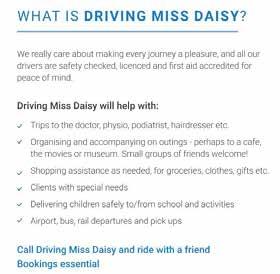
WHAT IS DRIVING MISS DAISY?
We really care about making every journey a pleasure, and all our drivers are safety checked, licecnced and first aid accredited for peace of mind.
Driving Miss Daisy will help with:
Tips to the doctor, physio, podiatrist, hairdresser etc
Organiser and accompanying an on outgoingsperhaps to a cafe, the movies or museum. Small groups of friends welcome!
Shopping assistance as needed for groceries, clothes, gifts etc
Clients with special needs
Delivering children safely to/from school and activities
Airport, bus, rail departures and pick ups
Call Driving Miss Daisy and ride with a friend Bookings essential
Pina Colada Fashion continues to go from strength to strength, bringing colour, confidence and comfort to women right here on Benabrow Avenue, just off the bridge.
Step inside and you’ll discover a joyful blend of fun, vibrant fashion created especially for Queensland living.
We love working with colourful, breathable natural fabrics like 100% cotton and Rayon that feel as good as they look — perfect for our beautiful warm climate. Designed for real women and real bodies, our clothing ranges from sizes 8 to 24, because style has no size limit.
And then there’s our shoe haven! With over 110 different styles, our shoe department is something truly special. We proudly showcase exclusive brands including Cabello, Euroflex, and Bare Traps. Whether you’re searching for all-day arch support, easy Velcro straps, soft leathers or zip-up sneakers, you’ll find the perfect fit waiting for you.
But what truly sets Pina Colada apart is our heart. We believe every woman deserves to look and feel her absolute best — and that begins with genuine, old-fashioned customer service.
From the moment you walk through our doors, you’re welcomed, listened to and personally styled with care. We want you to leave not just looking fabulous but feeling confident and valued.
From humble beginnings in Gympie to opening our Bribie Island store at the very start of COVID-19, Bernie’s vision has continued to blossom. What began as a dream has grown into a thriving family of stores, now expanded to five additional locations.
Today, Pina Colada proudly employs 15 incredible Queensland women instore and supports another 30 women in our overseas factory — creating meaningful employment and helping support a village community. Fashion with heart is what we’re all about.
We’re also passionate about giving back, actively supporting local events and charities because community means everything to us.
And now… it’s time to celebrate!
Pina Colada Bribie is turning SIX!
Six wonderful years of fashion, friendships, laughter and loyal customers who have become part of our story. We are so grateful for the love and support you’ve shown us — and we would absolutely love you to celebrate with us in-store.
Come in, say hello, find something fabulous and help us mark this special milestone in true Pina Colada style. Here’s to six amazing years… and many more to come!
“We are celebrating our 6th year on Bribie and we want to thank all of our beautiful customers. Thank You, we love bringing you our beautiful clothing and shoes. Bernie” 3/37 Benabrow Ave Bellara, Bribie Island
1. How to Dress Things My Mother Taught Me
by Hazel Beneke
WheneverI go out, I take care with what I choose to wear. I don’t want to look over-dressed, like I did when I first came to Queensland back in the seventies.
As they used to say back then, one stepped “over the border and back in time: one hour and fifty years”. That was when Joh refused to move with the rest of the East Coast to Daylight Saving Time. But it was also because a lot of other behaviours were way behind the southern states, especially for women.
But one way that Queensland was ahead, was in tossing out much of the expensive formal clothing worn in other colder states. In the Sunshine State you don’t need smart winter suits and the like.
And besides, the clothes moths make short work of anything made of wool. I used to think it was a shame, but it saves on dry-cleaning bills. So I threw out suits, began wearing simpler things, and soon I was looking like what my mother would have called “sloppy”, even if it wasn’t by Queensland standards.
One of the things which my mother taught me was how to dress appropriately for the occasion, and how to use makeup with discretion. So when I was young, you would only notice slightly pinker lips, nothing else. And my hair was always neatly combed - not untidy like the modern fashion.
Mum would scorn the way workers who caught our bus would over-use makeup. One in particular looked as if she were heading for the bright lights of Broadway!
But her pancake would end in an abrupt line, presumably where she couldn’t see it from her mirror. It would look as if she were wearing a mask. And the eyes! The eyeshadow and mascara would have severely dented my budget.
Like most women and girls back in the fifties, I had learned to embroider, though it wasn’t a patch on my mother’s beautiful smocking. But you can’t wear doilies and tablecloths. Fabrics were cheaper in those daysthat was before a certain business undercut all the little shops, and put them out of business, before hiking their own prices. Paper patterns were readily available, or, as my mother taught me, you could draft your own.
So, many a weekend, the dining table would be cleared and used as a cutting-out slab. I learned to shape bodices with darts, to ease curves, and the insert zippers so they didn’t show.
But we would still sew button-holes by hand because machines only sewed straight lines. Mum had an electric Singer, so at least I didn’t have to battle with a treadle machine like my friends. By the time I left home for university, I was a competent seamstress. Although I had to rely on scholarships, my funds were quite sufficient because I made everything except my underwear.
I could borrow the college sewing machine whenever it was available and even designed my own ball dresses, gaining inspiration from the Kotex ads. Remember those?
When I wanted a wedding dress, I was blessed to be able to rely on my mother’s superior skills, as she had more free time by then. Without a dress-makers’ model, she drafted a dress out of an old sheet, and used me as the model to get the empire line just right. Then I spent twice the cost just to get a ready-made veil. That was my most expensive item of clothing at the time, and I wore it for less than a day!
One of the things I couldn’t avoid at that time was the fashion for stiletto shoes. Although I put up with them for my wedding. I generally didn’t wear them. My mother had taught me how to invert the shoe and look at the sole to judge where the big-toe would have to go.
I bless my mother’s advice and never wore real high-heels. So I still have more-or-less normal feet compared with other women my age, and can only blame my genetics for my high arches.
When I became a mother, I was able to stay at home because we didn’t need a double income like one of my friends, who spent more on clothes for herself than I did for the whole family.
When I did go back to work, I continued making my own clothes, and was able to save for a comfortable retirement.
These days, clothes are cheaper to buy, but they don’t last like homemade ones. I was so lucky. Next time I’ll tell you about some of the other things my mother taught me - I bless her every day.
It is such a shame that modern mothers have to work to just keep a roof over their heads. Anyone else brought up in the fifties will, I’m sure, agree that we are the luckiest generation of all.
Receptionist Katherine (left) and Acupuncturists Jessica (centre) and Wendy (right).
Acupuncture for Plantar Fasciitis
Plantar fasciitis is a common condition that affects the heel and bottom of the foot, causing significant pain and discomfort.
It often develops from overuse, improper footwear, or biomechanical issues such as flat feet or high arches.
The primary symptom is heel pain, particularly after long periods of rest or during the first steps in the morning.
The pain can range from mild discomfort to severe, sharp pain that makes walking difficult.
In addition to conventional treatment options such as physical therapy, orthotic supports, and in some cases, surgery, acupuncture can significantly reduce pain, improve function, and speed healing for those suffering with plantar fasciitis.
How Acupuncture Can Help Plantar Fasciitis
1. Pain Relief:
One of the most immediate benefits of acupuncture is pain relief.
The insertion of needles stimulates the nervous system to release endorphins, the body’s natural painkillers.
This can reduce the intensity of heel pain associated with plantar fasciitis.
2. Reducing Inflammation:
Acupuncture has been shown to reduce inflammation by promoting blood circulation and stimulating the release of anti-inflammatory substances.
This is particularly beneficial for plantar fasciitis, where inflammation of the plantar fascia is a primary concern.
3. Improving Flexibility and Mobility: Regular acupuncture sessions can help improve the flexibility of the plantar fascia and surrounding muscles (including the calf muscle), reducing stiffness and improving overall foot mobility.
This increased flexibility can prevent further injury and aid in quicker recovery.
Patients often report improved ease of movement and a reduction in morning stiffness after consistent acupuncture treatment.
4. Addressing Underlying Causes: Acupuncture doesn’t just treat symptoms; it also addresses underlying imbalances in the body that may contribute to plantar fasciitis.
For instance, acupuncture can help correct biomechanical issues or improve posture, thereby reducing the strain on the plantar fascia.
By targeting these root causes, acupuncture provides a holistic approach to managing and preventing recurrence of plantar fasciitis. Several studies have demonstrated the efficacy of acupuncture in treating plantar fasciitis.
A 2018 study published in the Journal of Pain Research found that patients who received acupuncture experienced significant pain relief compared to those who received standard care.
In addition to these findings, research suggests that acupuncture may also improve patient outcomes when used in conjunction with other therapies.
For example, combining acupuncture with physical therapy has been shown to enhance overall effectiveness, reducing recovery time and improving long-term results.
WHAT TO EXPECT
Acupuncture for plantar fasciitis begins with a consultation, during which we will assess your symptoms, lifestyle, and medical history. Based on this information, we will create a customised treatment plan.
We will then insert thin, single-use, sterile needles into specific acupuncture points.
These points may be located around the foot, leg, or even distal points on the body (such as the hand or wrist - which surprises many people!) that influences the foot.
Once the needles are inserted, you will rest for about 20 to 30 minutes.
During this time, you may experience a tingling sensation, warmth, or relaxationmany people fall asleep.
Most people notice an immediate reduction in pain, however a series of treatments is typically recommended for plantar fasciitis.
If you’d like to make a booking or if you’d like to discuss whether acupuncture and Chinese medicine is right for you, please contact us - Jessica, Wendy, and Katherine - via our website www.bribieacupuncture. com.au or call 0423 160 228.
You can also find us on Facebook and Instagram @bribieacupuncture. HICAPS is available onsite. Pensioner discounts available.
Bribie Acupuncture 4/29 Benabrow Avenue, Bellara (behind the James Moore law office).
YOUR HELP IS NEEDED NOW
Agroup of local children, wholeheartedly supported by their families, is reaching out to their community with one simple hope: the chance to participate in sports and grow through teamwork, confidence, and connection.
As living costs continue to rise, many families are finding it increasingly difficult to afford sports fees, equipment, and transport.
To bridge this gap, a small group of children and their mums have launched a grassroots fundraiser, aiming to make sports accessible to all.
This initiative is not affiliated with any official sporting club. Instead, it stands as a heartfelt community effort dedicated solely to giving local kids the opportunity to play, belong, and thrive.
Over the past two years, Zoe Amelia has actively coached and managed teams with the Bribie Island Warrigals Rugby League Club .
During this time, she has witnessed firsthand the challenges families face: parents searching donation bins for boots that fit, children unable to attend due to a lack of transport, and players missing out on essential safety gear.
Despite the strong willingness of volunteers and families to help, traditional fundraising options have been limited by club and league policies—leaving few viable avenues to raise support.
Currently, they are holding a raffle to raise much-needed funds for equipment, safety gear, and transport assistance. Prizes include a generous meat tray, a King's camp oven, and two hours of complimentary cleaning from a local business.
Tickets are $2.50 each or five for $9. Every ticket purchased helps a local child step onto the field with confidence and support—making a real difference in their lives.
Please get in touch with Zoe on 0416 563 983 to buy your tickets to support our local kids. Together, we can help every child experience the joy, connection, and personal growth that sport provides.
TO GIVE OUR LOCAL KIDS A CHANCE TO PLAY
Training the Mind and Body at Your Own Pace Progress Begins with One Step:
by Tracey Blinco
Starting an exercise journey can feel overwhelming. You may want to improve your health, but fear of injury — or simply not knowing where to begin — can hold you back.
The truth is everybody’s body functions differently. We are all unique individuals, and our bodies respond to movement and training in different ways. Understanding this is the first step toward real, sustainable progress.
You may be managing a current injury or carrying concern from a previous one. That caution is completely valid. However, do not let fear stop you. Exercise is still possible — it simply needs to be approached in a way that respects your body’s current capabilities.
If you are dealing with an injury, beginning a structured rehabilitation plan is vital. The goal is to support recovery, not aggravate the issue further. If you have a disability, exercise can be modified safely.
Before starting any exercise program, it is wise to consult your GP for a health screening. Checking blood pressure, heart rate, and discussing your medical history helps establish a safe and informed starting point.
From there, working with a qualified and insured exercise professional ensures your safety remains the top priority. A good trainer will always conduct appropriate screening and tailor movement specifically to your needs and goals.
Progress is not about pushing hard on day one. It is about starting at a manageable level and allowing the body time to adapt.
Muscles, joints, and the cardiovascular system need time to adjust to new demands. Gradual progression builds strength, confidence, and resilience — without unnecessary strain.
Movement also plays a powerful role in mental wellbeing. Exercise stimulates the release of endorphins — the body’s natural “feel-good” chemicals. Training the body strengthens the mind.
With consistency, exercise becomes more than physical activity; it
becomes a positive and empowering space in your life.
Exercise does not have to mean a gym membership. It can take place outdoors in nature, at home, or with a personal trainer who meets you in your own environment.
For those unable to access community facilities, mobile trainers and exercise specialists can provide guidance and support wherever you are.
Exercise isn’t always about what we see on media platforms. It’s not just intense workouts or chasing a certain look. Living an active life is what truly matters.
Gardening, getting outside in the fresh air for a walk, or going for a roll in a wheelchair all count. Movement does not have to be extreme to be meaningful — it simply needs to be consistent and suited to you.
Joining a sporting club can also be a wonderful source of both movement and connection.
Health is not built overnight. It is built through consistent, mindful action. Progress may feel slow at times, but every step forward — no matter how small — is a victory.
Start where you are. Use what you have. Trust your body. Train your mind. Your future self will thank you.
Long-term health is wealth — and the journey begins today.
Yours in Health and Wellness, Tracey Blinco
Human Rights Advocate /Law
NDIS Psychosocial Recovery Coach
Writer for the Bribie Magazine
Member BIEPA
Bribie Region Disability Group
NDIS Support Coordinator
Support Professional
Health Coach
How to Choose Foot-Care Products
be overwhelming. While finding them is easy, choosing the right one can be tricky. Use this guide to select the best options for your needs:
For comfort and support: Insoles range from basic cushions to those tailored for specific shoe styles or foot issues, such as high heels or work boots, and may provide extra support or padding in certain areas like the heel or arch. Prices vary by design.
Other products include padding for bunions and corns, lamb's wool or moleskin for custom padding, foam archsupport inserts, heel pads, and rubber heel cups.
For calluses: Use cushioning pads, pumice stones, footbaths, and moisturizing creams.
Avoid medicated callus removers and trimmers, as they can damage healthy skin or cause injury.
surrounding skin with doughnut-shaped pads. Avoid using corn files, as they can cause injury.
For ingrown toenails: OTC products can ease pain by softening the skin, but they won’t change how the nail grows. Use antiseptic daily to prevent infection, the main risk with ingrown nails.
For warts: Wart-remover solutions and medicated pads with salicylic acid are effective. Protect healthy skin with a pad or petroleum jelly before applying treatment.
For athlete’s foot and fungal infections: Choose from powders, ointments, sprays, liquids, or creams. Look for active ingredients like tolnaftate or undecylenate. Silicone powder helps absorb moisture.
If pain persists or a foot problem won’t go away, consult a podiatrist.
Understanding Dreams
About Seeing Deceased Loved Ones
Haveyou ever woken up from a dream where you saw or spoke to a loved one who has passed away?
These vivid dreams are common and can bring up feelings of comfort, sadness, or confusion, often leaving us wondering what they mean.
What do these dreams mean? Are they only our feelings surfacing during sleep, or is there more to them?
Over half of people report such dreams, especially after losing someone close. They are a normal part of grieving experienced by people from all backgrounds. This article explores ways to understand these dreams, drawing on psychology and spiritual traditions.
The Psychological Perspective: Grief, Healing, and Unfinished Business
Psychologically, dreaming about deceased loved ones is a normal part of grieving. These dreams often arise as we process the pain of loss, helping us work through complex emotions. This can be a healthy step towards healing after losing someone important.
Some believe that these dreams can help us heal. They are not always comforting, but they do seem to move the grief process along. These dreams can help us feel connected to the person we lost and process strong feelings about their absence.
Many believe these dreams help the brain process loss.
Experiencing them is part of adapting in healthy ways; they do not mean grief will last forever. For many, such dreams are simply a step on the journey to healing.
Sometimes, these dreams reflect unfinished business or unresolved feelings. If the deceased seems upset in the dream, it may reveal your own guilt or regret, providing a chance to work through lingering emotions.
If blame or guilt comes up, try journaling your feelings or writing a compassionate letter to yourself, as you would to a friend. This practice can support self-forgiveness and healing.
Spiritual Interpretations: Messages from the Other Side
Many cultures see dreams of deceased loved ones as spiritual messages—signs of guidance, comfort, or reassurance that the person is at peace. Traditions worldwide regard such dreams as a way for loved ones to offer closure, protection, or connection, especially during times of change.
Some believe that if the person in the dream appears happy and at peace, and you wake feeling calm, it could be a "visitation" from the deceased—often described as comforting and memorable.
While there’s no single definition, visitation dreams often share these qualities:
• Exceptional vividness, feeling “real”
• Comforting sense of the deceased’s presence
• Feeling of peace or reassurance upon waking
If your dreams have these qualities, you might consider them visitation dreams and use this checklist to reflect on their personal meaning.
Some traditions see these dreams as positive omens—signs of blessings, good news, or fulfilment. A content deceased loved one may symbolise reward or peace, while an upset presence could prompt prayers or acts of kindness in their memory.
Decoding the Symbolism: Common Dream Scenarios and Their Meanings
The details and context of dreams about deceased loved ones offer clues to their meaning. Recognising common scenarios can help you reflect and find insights for healing.
Here
are some typical types and their meanings:
Reunion Dreams
These dreams involve talking or spending time with the deceased as if they were alive. The emotional reunion may reflect a wish to reconnect or a sense that their presence still affects you.
Dreams of the Deceased Still Being Alive
Dreams where the deceased seems alive may signal you are still processing their loss. Acceptance is a process, and such dreams reflect the natural ups and downs of grief.
Message Dreams
Sometimes the deceased appear in dreams to offer messages or advice. This could reflect your thoughts or need for guidance. Writing down the message and responding in a letter can help you process these insights.
Distressing Dreams
If the dream is distressing or the deceased seems upset, it may signal unresolved feelings like guilt or sadness. Pair each emotion with a simple self-soothing strategy, such as deep breathing or gentle self-comfort, to help process these insights.
Dreams Set in the Past
Dreams set in the past, when the loved one was still alive, can help you revisit memories and work through unfinished feelings.
Navigating the Emotional Landscape: Coping Strategies
Encountering a deceased loved one in a dream is emotional. Notice your feelings and work through them with a simple morning reflection routine:
1. Recall – After waking, gently remember your dream and the emotions you felt.
2. Record – Jot down the dream and feelings in a journal.
3. Reflect – Consider what the dream and your reactions reveal about your current emotions or needs.
Making this a habit can deepen your insights and help you work towards closure. Practising meditation or mindfulness can also help manage strong emotions from these dreams.
Sleep on It: How Quality Sleep Strengthens Memory
Mostpeople think memory is built while they are awake, studying for an exam, learning a new skill or absorbing information at work. While attention and repetition matter, the most important stage of memory formation happens after you fall asleep. Sleep is not simply rest. It is an active and highly organised process where the brain sorts, strengthens and stores the in-formation gathered throughout the day.
Your brain relies heavily on two key regions for memory processing. The hippocampus acts as a temporary storage system, capturing new experiences, facts and skills. However, it has lim-ited capacity. During sleep, particularly during deep non-REM sleep, the brain begins transferring this information from the hippocampus to the cortex, where it can be stabilised for long-term storage. This process is known as memory consolidation.
During rapid eye movement (REM) sleep, the brain also integrates emotional experiences and complex information, helping connect new knowledge with existing memories. Together, these sleep stages allow the brain to organise information efficiently, discard what is unneces-sary and strengthen what is important. This is why a good night’s sleep often improves prob-lem solving, creativity and recall. Even short naps have been shown to enhance learning and memory retention.
When sleep is shortened or repeatedly disrupted, this consolidation process becomes incom-plete. Information may remain fragile and harder to retrieve. You might notice increased for-getfulness, slower thinking, difficulty concentrating or reduced mental clarity. Over time, chronic poor sleep can contribute to mood disturbances, reduced productivity and impaired cognitive performance.
One frequently overlooked cause of fragmented sleep is obstructive sleep apnoea (OSA). OSA occurs when the airway repeatedly narrows or collapses during sleep, briefly interrupt-ing breathing. These pauses can occur dozens of times per hour. Each time breathing stops, the brain briefly wakes to restore airflow, even if the person does not remember waking.
Although these awakenings are often subtle, they prevent the brain from reaching and main-taining the deeper stages of sleep required for memory consolidation. As a result, individuals with untreated OSA may
experience persistent fatigue, difficulty concentrating, memory challenges and mood changes.
Over the long term, OSA is also associated with increased risks of high blood pressure, cardiovascular disease and other serious health conditions. Protecting sleep quality is therefore essential not only for physical health but for cognitive function and emotional wellbeing. Addressing sleep disruptions, whether through improved sleep habits or appropriate medical treatment, can significantly improve mental sharpness and daily performance.
Sleep is not passive downtime. It is a powerful biological reset that organises experiences, strengthens neural connections and restores the brain for the day ahead. If you want to think clearly, retain information effectively and function at your best, the simplest strategy may be the most overlooked: sleep on it.
Dear Pumicestone...
March has arrived in Pumicestone and it’s already shaping up to be another busy and exciting month. It’s been fantastic to see our community calendar filling up with local events, sport and opportunities for people to come together. There’s a real sense of momentum across our region as we move further into 2026.
Over the past month, I’ve been out and about across the electorate meeting with local businesses, connecting with community groups and hearing from residents about the issues that matter most to you. Listening to our community is always my top priority and helps guide the work I do both locally and in Parliament.
During my first week back in Parliament this year, we introduced tough new antisemitism laws and passed stronger youth bail monitoring laws to help keep Queenslanders safe. We also celebrated one year of permanent 50-cent fares on public transport, a costof-living measure making a real difference for families, commuters and students across our State.
Encouragingly, new data shows ambulance ramping across Queensland fell to 37.3 per cent in the December quarter, the lowest quarterly rate since December 2020. While there is still more work to do, it’s a positive sign that efforts to stabilise the health system are beginning to deliver results. It was also wonderful to join members of the Bribie Island Environmental Protection Association (BIEPA) and local volunteers for Clean Up Australia Day. We are incredibly fortunate to live in such a beautiful part of Queensland, and it’s inspiring to see so many passionate locals committed to protecting it. I was pleased to be joined by my colleague the Hon. Andrew Powell MP to thank volunteers and lend a hand with the clean-up.
E-Mobility Safety Review
The Crisafulli Government is also taking action to review e-mobility safety following concerns about illegal and unsafe devices on Queensland streets.
The previous Labor Government rushed out a subsidy scheme without proper safeguards, resulting in hundreds of illegal e-bikes and e-scooters ending up on our roads and footpaths.
The Government will now carefully review recommendations from the parliamentary committee and make the necessary changes to ensure Queenslanders can use e-mobility safely, while supporting those who do the right thing.
Supporting Women’s Careers
More than 1,000 Queensland women have already received support through the Crisafulli Government’s Women’s Career Grants program, with grants of up to $5,000 to help women re-enter or progress in the workforce.
Expressions of interest for Round Two are now open ahead of applications launching on 23 March. These grants can assist with costs such as training, workwear, childcare, recertification, relocation, tools or technology, helping women take the next step in their careers.
As always, I’m here to advocate for you. If you have a question, concern or idea, please don’t hesitate to contact my office. I look forward to connecting with many more of you in the weeks ahead.
Authorised by Ariana Doolan MP, 1/43 Benabrow Avenue, Bellara, 4507
Absolute Ability Support Services
Daily Living
We help with everyday routines and personal care, including hands-on support for daily living, mobility, social engagement, and building confidence.
Whether at home or in the community, our team is here to offer reliable assistance that ensures comfort, safety, and independence.
From routine tasks to more complex support needs, we’re committed to making everyday life more manageable and enjoyable.
This includes assistance with household tasks and personal activities, as well as 24/7 support when needed.
Community Integration
Access to the community is an important part of an independent life. We support you to participate in social activities, community events, and group programs, helping you stay connected and engaged.
Our team also assists with community access, social skills building, and respite services when you or your caregiver needs a break.
Specialist Supports
Some needs require specialised skills and knowledge. We offer support coordination to help you navigate and manage your NDIS plan, psychosocial recovery coaching for personal growth, and comprehensive SIL (Supported Independent Living) and SDA (Specialist Disability Accommodation) support.
Our goal is to make sure you have expert guidance and the right support options for every situation.
What sets us apart
• Lived experience, real understanding
• We don’t just provide support – we truly get it. When I first tried to access support services, I remember the confusion and frustration I felt trying to navigate options that didn't seem to fit my real needs.
That experience drives me to offer care that is personal, practical, and designed to make a real difference, because I know firsthand how vital understanding and genuine empathy are.
Connect someone to us.
NDIS Referrals
Referring someone for support? We’re here to make the process easy, clear, and tailored to their individual needs. Let’s work together to get them the right support.
0421 199 186
admin@absoluteabilityss.com.au North Brisbane to Sunshine Coast
More than half
of QLD residents have noticed hearing issues, survey reveals
Morethan half (56.10%) of surveyed Queensland residents say they have noticed problems with their hearing, according to new national data released today for World Hearing Month, revealing widespread hearing difficulties alongside low rates of hearing checks.
What the data says about hearing health in Queensland
Audika’s annual hearing health survey shows hearing difficulties are widespread across Australia, with the nationally representative sample revealing the following key findings for QLD:
• More than half of QLD residents have noticed hearing issues, with 56.10% of respondents reporting difficulties hearing – compared to over half (55.56%) of the nationwide population.
• Nearly half of those living in QLD struggled to hear over the past year, with 49.27% saying they always, often or sometimes found it difficult to hear.
• Hearing difficulties are impacting social participation, with more than half (51.22%) of QLD respondents reporting they have sometimes, often or always avoided social events due to difficulty following conversations.
• Quality of life: 78.54% surveyed in Queensland expressed concern about the impact of age-related hearing changes in their quality of life in the future.
• Independence: 67.80% of Queensland respondents are concerned that changes in their hearing could affect their personal independence.
Current health data shows that as many as 1 in 5 Australians are living with some form of hearing loss, and experts predict the problem is only set to grow.
Government projections show that by 2060, about 7.8 million Australians could be living with hearing loss.
Healthy hearing connects generations
More than 3.6 million Australians are currently living with some level of hearing loss.
While hearing difficulties can affect people of all ages, they are far more common among older Australians, with as many as 1 in 2 adults between 50 and 60 experiencing hearing loss, this increases to over 80% for those over 80.
Despite this prevalence and an ageing population, hearing health is not routinely included in standard general practice check-ups.
A national disconnect between hearing concerns and action
Despite widespread awareness of hearing difficulties, Audika’s latest research reveals a significant gap between recognising a problem and seeking help.
Australian respondents revealed the following behaviours which may be indicative of hearing problems*:
• Nearly 1 in 3 (30.86%) respondents admit to often or always turning on captions when available on TV, movies or while on the computer.
• More than half of Australians are turning the sound up higher on devices than others prefer, with 54.22% reporting they sometimes, often or always do this.
• Almost two-thirds of respondents (64.29%) report choosing where to sit or stand so they can hear better, with more than 1 in 4 (29.53%) of these respondents confessing to adopting this behaviour often or always.
Despite the hearing health behaviour changes, more than 3 in 10 (30.01%) Australians say they have never had a hearing test, while almost a third of respondents (32.28%) reported their last hearing check was more than three years ago.
In Queensland, more than 6 in 10 residents, 63.41% report that their last hearing check was over three years ago, or they have never had one.
From age 60, annual hearing tests are recommended, but anyone having trouble following conversations should seek professional advice earlier to ensure hearing difficulties do not become a barrier.
to Care for Your Ears How
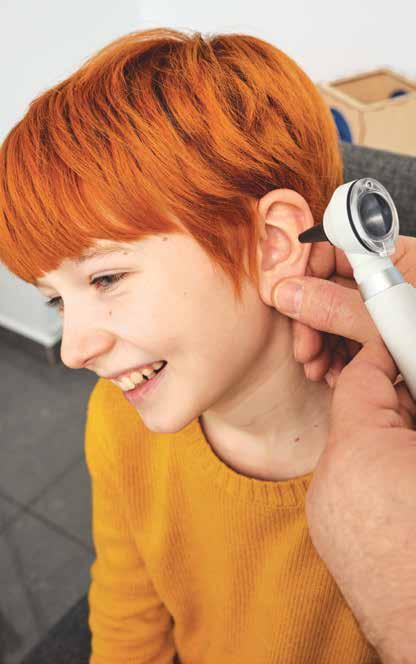
ears help us hear and keep us balanced, which is important for everyday life. Still, we often forget about them.
Most of the time, we only notice our ears when something goes wrong, like an earache or trouble hearing others. In this article, you’ll find all the important information you need to take care of your ears, including:
Protecting Your Ears. Most people know that loud noises can harm your ears, but there are other risks too. Things like putting objects in your ear or getting hit in the ear can hurt your eardrum and even cause hearing loss.
In this section, we’ll show you how to avoid common mistakes, deal with loud sounds, and understand how loud is too loud by comparing everyday noises to things like a jet engine.
Preventing Ear Problems. Besides avoiding damage from foreign objects, there are other ways to keep your ears healthy. For example, swimmer’s ear is a common problem caused by bacteria in the ear canal, and it can be painful. We’ll explain how to prevent and treat this infection and
share daily tips to help you keep your ears in good shape.
Ear Infections. If you have young children, you probably know how common middle ear infections are.
They’re the most frequent illness in babies and young kids. While adults can get them too, ear infections tend to be more serious for children because they happen more often and the symptoms can be worse.
In this section, we’ll share tips to help prevent ear infections in children and advice on what to do if one happens.
Ear Disorders. While most ear infections or damage from loud noises are temporary, small problems can sometimes turn into serious, long-term issues.
Signs like hearing loss, balance problems, or constant ringing in your ears can mean something more serious. In this section, we’ll guide you through different ear disorders, how to treat them, and how to know when you should see a doctor.
Bribie Island National Service Association Inc.
Quilts of Valour Australia
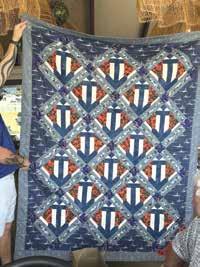
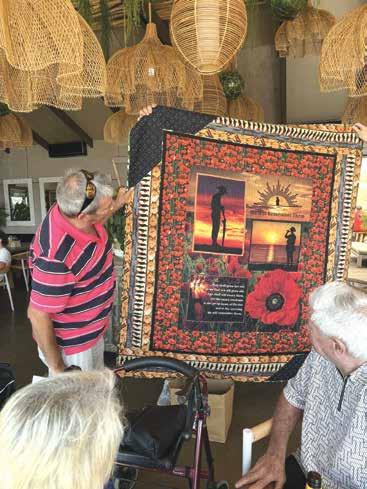
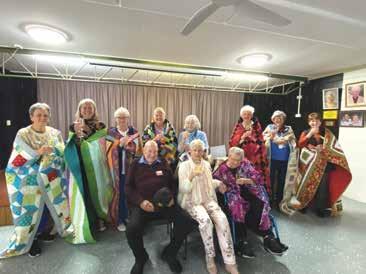
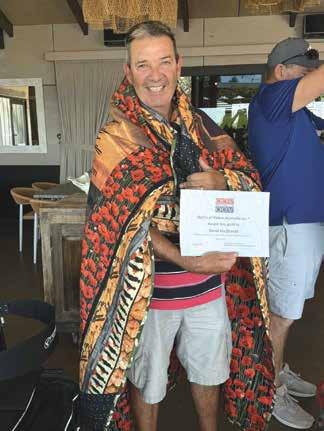
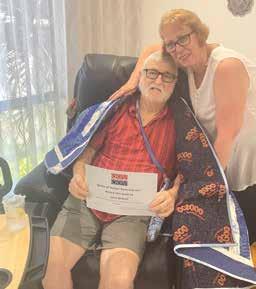
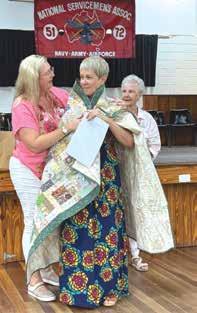
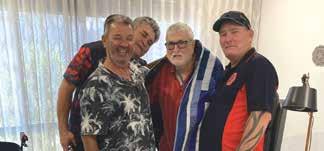
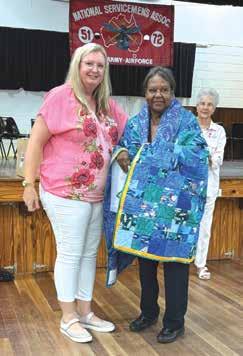
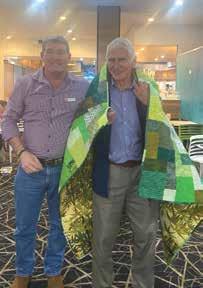
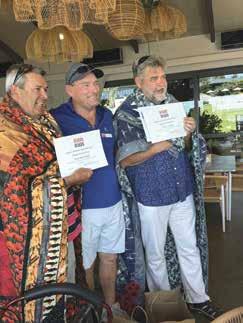
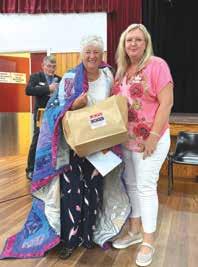
TheBribie Island National Service Association Inc. has partnered with local representatives of Quilts of Valour Australia to award quilts to veterans, widows and families of deceased veterans in our local community.
Quilts of Valour Australia (QOVA) aims to award quilts to Veterans, Service Personnel of the Australian Defence Force and our Allies as well as immediate family of Veterans and Defence Personnel who have passed.
These awards are in recognition of their Service, Sacrifice and Valour for their country.
Following the tragic loss and injury of Defence Personnel in Afghanistan in 2010, a resident of Victoria learnt of the need to reach out to wounded ADF personnel and honour their sacrifice for serving Australia.
who donated their time, talent and materials to create inspiring quilts, and a network of QOVA representatives across Australia who award the quilts.
Bribie Island is fortunate to have two QOVA representatives in our community, Gareth Cotter, an Afghanistan veteran and Vanessa Cotter. Vanessa also designs and creates quilts for donation.
In recent months, the Bribie Island National Service Association Inc. has nominated veterans, widows and families who have lost a loved one to receive a
Other coalition forces are involved in making quilts to wrap the wounded in love, care and healing. It is such a powerful symbol in a traumatic time that it felt like an important issue that Australia should become involved.
Victorian resident, Helen, learnt how touched an injured soldier was by the warmth of the quilt he was awarded from Americans.
She was inspired to establish an Australian organisation to award quilts to Service Personnel, veterans, and immediate families of Defence Personnel and veterans who have passed.
Quilts of Valour Australia is a registered Australian Charity. The awarding of quilts is made possible through the support of QOVAs community of volunteer quilters
quilt, and hosted events to facilitate the awarding of the quilts in a friendly and compassionate environment.
The Bribie Island National Service Association Inc. welcomes new members. Membership is open to Veterans, Service Personnel of the Australian Defence Force and our Allies as well as immediate family of Veterans and Defence Personnel.
Please contact Jeanette Price on 0439 282 640 or Gareth Cotter on 0427 341 197 for further information.
Bribie Island National Service Association Inc. is a registered charity.
The Association also offers a free of charge advocacy service for veterans and their dependents, which includes two ATDP trained advocates who have undertaken nationally recognised training to assist you in accessing compensation and wellbeing services.
If you would like to offer your help with Quilts of Valour Australia, such as donating your time or any other resources that may benefit this organisation to support our troops, please QOVA via the website https:// quiltsofvalour.com.au/get-involved/
STEAKOUT PIZZERIA
For delicious pizza, pasta, contorni salads and more, all crafted with love, come and enjoy our waterfront pizzeria. With live music every Sunday and the beautiful Pumicestone
Passage right beside you, we offer you a taste you’ll love
For deliveries or bookings, please visit us at www.steakoutpizzeria.au
9/11 Spinnaker Drive, Sandstone Point - 07 5360 1094
LUNCH Thu to Sun 11:30 - 2:30
DINNER Tue to Sun 4:30 - 8:30
SCOOPYS
Located by the jetty on beautiful Bribie Island, Scoopy’s Family Cafe is all about the family vibes, great food and coffee, fantastic service and all the ice cream you can eat!
Enjoy our friendly hospitality with barista-made coffee, amazing burgers, and a tempting array of ice cream choices to impress the pickiest connoisseurs.
Our massive range of cakes and famous fish and chips make it well worth the hour’s drive north of Brisbane.
Shop 2/2 Toorbul Street, Bongaree 07 3410 1791
THE DECK RESTAURANT
With its spacious, relaxed ambiance, The Deck Restaurant offers casual dining indoors or alfresco on the deck overlooking the golf course, lake and lush gardens. Enjoy modern cuisine with locally sourced ingredients, open 7 days a week for breakfast and lunch, and dinner on Friday and Saturdays. Perfect for any occasion!
IGA SANDSTONE POINT TRIUMPHS AT 2026 STATE IGA AWARDS
IGASandstone Point has taken out top honours, winning the 2026 QNN Medium Meat Department of the Year Award at the QLD and Northern NSW State IGA Awards of Excellence!
This prestigious recognition reflects the commitment, passion, and tireless efforts of our independent supermarket teams.
Their dedication to delivering exceptional experiences and going above and beyond for their communities is truly inspiring.
The awards were held on Thursday, 19th February 2026, at the Sunshine Coast Convention Centre and were hosted by Aussie icon, Shane Jacobson.
Congratulations also to all finalists and nominees— your pursuit of excellence sets the industry benchmark and inspires others to strive for greatness.
A total of 22 awards were presented during the evening, which celebrate the incredible work that many IGA stores across the region do every single day.
These awards are judged on a range of criteria, which include customer service, community pride, department excellence, brand values, merchandising, and the stores’ overall performance.
This achievement is not just a win for IGA Sandstone Point, but a moment of pride for the entire local community who support and believe in them.
Sandstone Point truly exemplifies excellence, showcasing a well-presented meat department with an impressive range. From premium cuts and value-driven options to expertly prepared products, the choices for local shoppers are endless.
The full in-store butchery and skilled team consistently deliver outstanding service, knowledgeable advice, and a personalised experience for every customer.
Their hard work and dedication have certainly paid off with this well-deserved recognition.
To every team member who puts in the hard yards each day—your enthusiasm, expertise, and care are the heart of these award-winning stores. Thank you for making a difference and elevating the standard of independent retail in our region.
We wish IGA Sandstone Point the very best as they go on to represent QNN at the National IGA Awards of Excellence in July, where they will compete with outstanding stores from across Australia. Their commitment to quality and service makes them a fantastic representative for the region.
“The IGA Sandstone Point team is so proud of our recent Medium Meat Department of the Year Award. This recognition of our outstanding department is incredibly exciting.
We pride ourselves on providing our local shoppers with a broad range of great value and premium meat cuts, whilst providing excellent service and advice with our full in-store butchery team.
We would like to thank our team for their amazing work and a big thanks to our local community for supporting our store.” –Andrew Cornett, owner of IGA Sandstone Point
CROQUET WANDERERS
Kathy Vincent
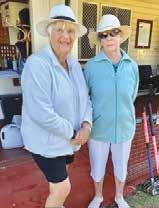
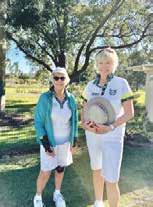
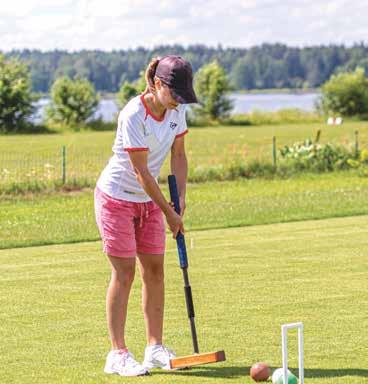
Well, the Croquet Club players are off again, wandering to lots of different Clubs to play in croquet Competitions. It is great to see so many players prepared to travel for even more fun than their regular sessions on Bribie.
Shelly, Maggie, Sandy, Kathy, Jill, Neville, Helen, Jennifer, Janee, Steve, Dennis, and Sue as referees. Not only did Dennis play in competitions, but he also refereed others.
So where did the intrepid travellers go? Ipswich, Noosa and Toowoomba.
The Ipswich group had good games and were happy with their performance. The Noosa group did well but was hampered by very wet courts, and the Toowoomba group enjoyed perfect weather, which was an improvement on last year!
Players played at two different Clubs in Toowoomba, each surrounded by beautiful gardens, so there was time to walk through the flower beds and enjoy the surroundings.
It is so good to visit other clubs and play with new people. Some games can be very challenging, but it is all good experience. For some of those players, it was their first competition away from the club, and it was very satisfying
Another
Year of Fun, Friendship and Fellowship
The Probus Club of Bribie Island recently held its AGM and re-elected Don Somerville as President for a second term. Don will again be supported by a hardworking committee dedicated to ensuring members continue to enjoy plenty of fun, friendship and fellowship.
Probus clubs provide a great opportunity for retired or semi-retired people to stay active, meet new friends and keep their social calendars busier than when they were working. Members gather regularly to hear interesting guest speakers, share outings and enjoy good company.
At the Probus Club of Bribie Island there is always something happening, including:
• Group lunches and dinners (where the conversation is lively and the desserts are taken very seriously)
• Day trips and excursions
• Theatre and concert outings
• Special interest groups such as walking, book clubs, cards and coffee groups
for Neville that, as a beginner, he won his group. Some players won, some were runners up, and some just had fun, oh yes, and some of us just won the raffle!!
But something we all noticed was how good our courts are here on Bribie.
When you play somewhere else you realise that actually, when you were having a bit of a grumble about Bribie courts, when you experience other clubs, you come away saying “Do you know what our courts are really good !!”
Come and try them out for yourselves.
Call Joan on 0429 165 643 and join in the fun!
The next big journey is to Tasmania at Easter. Watch this space!!
In short, it’s a great way to stay connected, stay active and prove that retirement can be just as busy and a lot more enjoyable than working life.
If you would like to know more, simply Google “Probus Bribie” to find our website, or contact Gabrielle on 0407 341 074 or Don on 0455 968 388
Thinking of Joining Probus?
Visitors are warmly invited to attend our March Meeting on Tuesday, 10 March at 10.00 a.m. at the Beachmere Community Hall, Progress Avenue.
Following a brief Annual General Meeting, we’ll enjoy a relaxed and fun Games Morning — a wonderful opportunity to meet members, enjoy some friendly competition, and experience the welcoming spirit of our Club.
There’s no obligation — just come along and see if Beachmere Probus is the right fit for you. Annual membership is $40, and we’re always happy to answer any questions.
We
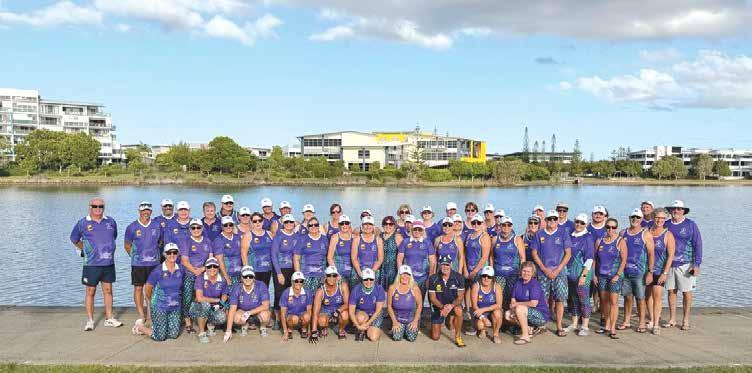
Countdown Begins for State Dragon Boat Championships
Countdown Begins for State Dragon Boat Championships Excitement is palpable as the countdown begins for the State Dragon Boat Championships, set to take place from Friday, 13 March to Sunday, 15 March at Lake Kawana, Sunshine Coast.
This thrilling event promises a weekend of fierce, fast, and furious competition as teams from across Queensland come together to vie for the prestigious title of Queensland Champions.
Dragon boat clubs from as far south as Tweed and as far north as Townsville will converge on the Sunshine Coast, bringing with them the spirit of camaraderie and competitive zeal that defines this exhilarating sport.
Spectators can expect to witness fierce, fast and furious power as crews vie for the title of Queensland Champions. Apart from the competitive races, the event is a celebration of tradition, resilience, and unity.
Families and friends are encouraged to attend, support their local teams, and enjoy the unique atmosphere.
As the anticipation builds, competitors are refining their techniques and strategies to ensure they bring their A-game to the waters of Lake Kawana.
The stakes are high, but so is the excitement, promising an unforgettable weekend of dragon boat racing.
Ben Livingstone, DBQ Board Member tasked with sourcing the medals, says, “We wanted something that reflected who we are as a community and where this sport comes from.”
“Australia is home to the world’s oldest living culture. Dragon boating comes from one of the world’s oldest civilisations. Bringing those two stories together felt powerful, respectful, and right."
The artwork was created by Yuwaalaraay artist Kyel Dancey, in collaboration with graphic designer Daniel Romeo, exclusively for Dragon Boat Queensland.
Every line and symbol has been placed with intention, bringing together two ancient cultures whose stories now meet on Queensland waters.
Aboriginal Australian motifs are expressed through flowing linework, river pathways, and concentric circles that represent Country, movement, and the gathering spirit of clubs at regattas.
Interwoven with this is the Chinese dragon, the protector and life force of dragon boat racing, honouring the sport’s origins and traditions that have travelled across generations and oceans.
On the reverse of the medal, the traditional Chinese characters for dragon boat, (pronounced lóng zhōu), are engraved, paying tribute to the sport's ancient lineage.
"These are medals athletes will be proud to wear,” Livingstone said. “They represent more than a result, and we’re excited to see our paddlers competing for something with genuine significance.”
Bribie Arts Centre
Friends share their art talents at Bribie Community Arts Centre
The Artists Alliance Australia (aaaart) started five years ago when 10 friends wanted opportunities to exhibit their art.
The group opened up to the public and grew to as many as 30. There are still 15 in the group, only 5 of the original members remaining.
Talented Friends is the Aaaart’s 2026 Bribie exhibition. They exhibit up to three times a year around Moreton Bay and the Sunshine Coast, five being members also members of Bribie Island Community Arts Society.
The group socialises during each one of their exhibitions. They have two planning and party sessions a year at a various members’ houses.
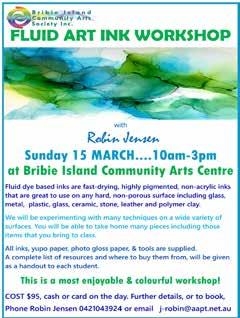
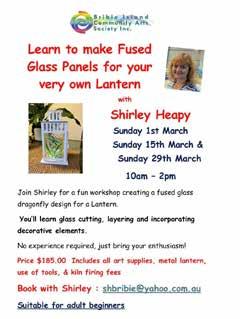
LOOK WHAT YOU CAN LEARN in MARCH
Jenny Newbound
Jan Murphy
Tricia Wheatstone Felicity Rutherford
Sue Osborne
Sergei Londar Graeme Love
Barry Green
ON BRIBIE
MONDAY
EUCHRE
Bribie Bowls Club 12.00pm
Contact Annette on 0414622490
TRIVA
Bribie Island Hotel 6.30pm
Bribie Island R.S.L 7.00pm
TUESDAY
BINGO
Bribie Island R.S.L 10.00am POKER
Bribie Island Hotel 6.30pm
WEDNESDAY MUSIC BINGO
Bribie Island Hotel 6.30pm
Bribie Island R.S.L 7.00pm RAFFLES
Solander Lakes Bowls Club - 6.30pm (tickets on sale from 5:30pm)
THURSDAY
BINGO
Bribie Island R.S.L 7.30pm RAFFLES
Bribie Island R.S.L Fishing Club 4.30pm
Every Thursday at the RSL prizes are Meat Vouchers from Avondale Meats and Seafood Vouchers from Saviges.
FRIDAY
MEAT TRAY RAFFLES
Bribie Island Bowls Club 4.30pm
Bribie Island Golf Club 5.30
Blue Pacific Hotel (from) 3.00pm
Solander Lakes Bowls Club - 6.30pm (tickets on sale from 5:30pm)
Enjoy playing 500 Cards?
Join a like-minded group who meet on Monday afternoons at the RSL Anzac Room from 1-4pm. $5 which includes raffle prize.
Please arrive 10mins before play starts at 1pm Further information please ring Carole 0438 713 663
Beachmere District Community
The B.D.M.S. Community Markets are held at the Men's Shed 53 Rogers Street Beachmere, every 1st Saturday of the month 7.30am - 12pm
Bribie Island BIDCA Markets
The Bribie Island BICA Markets are held at Brennan Park, Bongaree, the 3rd Sunday of each month from 6am -12pm
Bribie Rotary Markets
The Rotary Markets are held at Brennan Park, Bongaree on the second Sunday of each month from 6.30am – 12 noon
Queensland Cancer Council
The Cancer Council Markets are held at Brennan Park, Bongaree on the first Sunday of each month from 7am to 12 noon.
LUNCH MARKETS - Sylvan Beach (Farmers Market)
First Saturday of each month from 8am to 1pm held in the park opposite the Bribie Island Hotel. Funds raised to E.P.C.S, Ass, 0417629957
Banksia Beach Market
Bribie Harbour Shopping VIllage is held on the last Saturday of each month 8am to 12pm
The Bribie Island Lions Market
2nd Sat of the month at Tintookie Park Woorim 7am - 1pm.
Bribie Woodcrafters & Bribie Island Gem Club
Open day, Demonstrations & Sales - last Sunday of each month
8am to 12noon Held at Bribie Art Centre
191 Sunderland Dr, Banksia Beach
Mystic Journey Markets change of location
Saturday November 15th ~ 9am ~ 2pm Saturday December 6th ~ 9am ~ 2 pm Saturday December 20th ~ 9am ~ 2m 4pm ~ 8pm
There is also an outdoor market to run alongside indoor market called This ‘n’ That
Burke and Wills
by Al Finegan
Fewstories in our early colonial history carry the same mixture of ambition, courage, misjudgement and above all else, heartbreaking tragedy. It is the story of the Burke and Wills expedition. It is a tale told and retold for more than 160 years, simply because it went so spectacularly wrong.
Despite their determination, it was the ego of their leader, and his underestimation of the harshness of the Australian outback that was the key reason for the disaster. It was Victoria's first national undertaking to pioneer exploration across the continent from south to north. Burke and Wills were brave men and the story of their great achievement forms a stirring chapter in the history of Australian exploration by land.
A monument that was standing near parliament house, Melbourne to commemorate the tragic expedition was recently removed. The monument still exists physically and is currently in storage with the Royal Society of Victoria. By the late 1850s, Melbourne was the richest city in the southern hemisphere. The gold rush had poured astonishing wealth into Victoria, and the colony’s leaders wanted to show the world that they were more than lucky diggers.
They craved prestige, scientific achievement, and a place on the world stage. And what better way to do it than by crossing the continent, from south to north, through a vast interior that was still largely unknown to Europeans. It was a grand vision, bold and rich with anticipation. But as history proved, a grand vision without sound leadership and careful planning can lead even the strongest men towards disaster.
Despite barely enough knowledge of the risks involved, the Royal Society of Victoria formed a committee and raised money for an expedition that would traverse the continent from Melbourne to the Gulf of Carpentaria. It would be the longest and most difficult scientific
exploration ever attempted in the Australian colonies. Think of the world-wide fame that would bring Victoria!
They needed a leader. Someone bold, decisive, and fearless. They chose Robert O'Hara Burke, a brave man, but the wrong man. He was an Irish-born former police superintendent with a reputation for courage and determination.
What he did not have was bushcraft survival skills, and certainly no knowledge of the geography of the Australian outback. But he was described as charismatic, energetic, and thoroughly admired by many Melburnians. What they did not know was that he was also impulsive, quick-tempered and inclined to make decisions without adequate thought. In any other venture, these might have been manageable flaws. But in an expedition of more than 4,500
km return, across some of the harshest country on earth, it would prove to be fatal.
William John Wills was appointed by the authorities to be Burke’s second-in-command. He was everything Burke was not. He was quiet, analytical, observant and scientifically trained as a surveyor and astronomer, skills for which he had demonstrated considerable talent. He was given the responsibility for the expedition’s record-keeping, scientific observations, and charting.
Where Burke charged ahead, Wills thought carefully. Where Burke grew impatient, Wills calmly noted temperatures, distances and calculations that today remain invaluable to historians. Their partnership worked, until it didn’t.
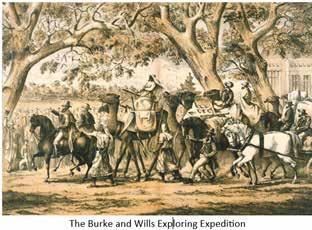
On Monday, 20th August 1860, a large crowd assembled on the outskirts of Melbourne to see the great cavalcade leave. The goodwill, the pride, and enthusiasm of the people were manifest when it wound out of royal park with a seemingly endless procession of wagons, horses, and camels, attended by bronzed white men and swarthy, brightly attired sepoys from India.
On this crisp winter morning there were no shadowy thoughts of possible tragedy, only bright visions of success and glory. The huge crowd were amazed at the spectacle of 19 men, 23 horses, 26 camels,6 wagons and enough food and equipment to last two years.
They carried cedar furniture, rockets and signal flares, a large wooden desk, and enough scientific instruments to fill a room. If they had travelled by rail, they would have needed a goods train. Instead, they were heading into country where even a single overloaded dray could become a liability. Almost immediately, trouble began. Wagons became bogged just outside Melbourne. The next day, one of the officers resigned in disgust. Tempers frayed.
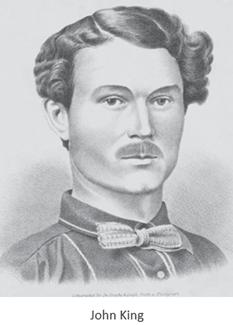
And the expedition, heavy, slow and unwieldy, made painfully sluggish progress north. By the time they reached Menindee on the Darling River, word had reached Burke that other explorers were talking of launching their own northward expeditions. Burke’s impatience was inflamed. John King had originally been hired as an Expedition Assistant. The secondin-command, Landells, also disillusioned by the insanity of the expedition organisation, and Burke’s temper, also resigned.
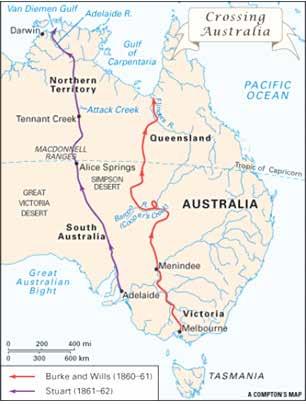
King was promoted and given the responsibility of managing the camels. Burke feared being beaten to the Gulf. He made his first major decision, one that would be the embryo of the tragedy that followed. He split the party. Burke and about half his expedition team pushed through harsh country and arrived at Cooper Creek, a natural oasis in the desert, and set up a base camp.
Ignoring warnings from Wills and King, Burke decided that he would charge ahead with a smaller, lightly equipped group, taking Wills, King and several strong men with him. He appointed William Brahe, one of the junior officers in the expedition to command the small group left behind at the Cooper Creek depot.
He was instructed to wait for a three-month period, to manage the supplies, and establish the first weather station at the depot.
Cooper Creek could have saved them if they had used it well. But Burke had no intention of resting, resupplying or gathering strength. Instead, he made a second fateful decision - he would push on immediately to the Gulf and leave only a small party behind. By this time it was summer.
Temperatures soared above 45 degrees. Water sources evaporated. The landscape, green and promising after recent rains, began to shrink and crack under the sun. Still, they pressed on. They were determined to reach the Gulf of Carpentaria.
The journey from Cooper Creek to the Gulf is still considered one of the most astonishing efforts in Australian exploration. Burke, Wills, John King and Charles Gray covered about 1,500 kilometres through blistering conditions, over salt pans and sand ridges, through dense vegetation and floodplains.
They did reach the north coast - almost. The mangrove swamps prevented them from seeing
the open sea, but by every meaningful measure they had crossed the continent. It should have been a moment of triumph. Instead, it marked the beginning of their defeat.
The Dig Tree Today
The return journey was catastrophic. Their supplies dwindled. The men grew weak. Their clothing disintegrated. Gray died on the way back. Burke Wills, and King, driven by desperation, buried what food they could not carry and staggered southwards. They reached Cooper Creek, gaunt, exhausted, starving, just hours too late. Their camp was deserted.
The men left at Cooper Creek, under William Brahe, had waited more than four months for Burke’s return. But with supplies running low and no sign of the northern party, Brahe retreated south only nine hours before Burke, Wills and King arrived. Just nine hours.
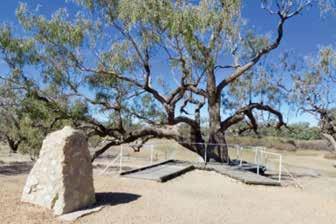
On the base of a coolabah tree, Brahe carved a message: “DIG”. Beneath the tree was a small cache of food and supplies. Burke and Wills dug up the goods, but rather than follow Brahe south, an option that almost certainly would have saved them, Burke made another fateful choice.
He decided to strike out for Mount Hopeless, a remote South Australian outpost across some of the driest country on the continent. It was a decision made in exhaustion, but it sealed their fate.
The trip towards Mount Hopeless was a slow, agonising struggle through desert country. Their strength failed. The summer heat punished every step. The supplies from the Dig Tree dwindled, and then the camels perished.
Eventually the three men, Burke, Wills and King, were too weak to continue together. They separated in attempts to find food and water. Wills, ever methodical, spent his final days writing in his journal, recording temperatures and observations with remarkable clarity even as his body weakened, “Starvation on the march is by no means very unpleasant… but for the short time it lasts it is attended by certain pains and aches”. He died alone at Breerily Waterhole.
Burke, also suffering extreme hunger and exhaustion, handed King his final instructions, then passed out, and soon after, he too died. Among the many stories of Burke and Wills, none is more extraordinary, or more overlooked, than the survival of John King. While Burke and Wills have long occupied the centre of the narrative, King lived through it and bore the weight of its aftermath.
After the deaths of Burke and Wills, King was rescued by the Yandruwandha people. He was too weak to walk, so they carried him back to their camp and nursed him back from near death. Without their intervention, he would have been just another unmarked figure lost in the desert.
When rescuers finally arrived months later, they found King sitting quietly among the
Yandruwandha people, gaunt, weak, but alive. He was deeply grateful to the people who had saved him, and he spoke of their generosity with admiration for the rest of his short life. King died only ten years later, at 33, his health had been permanently damaged by the ordeal.
Yet in many ways, his story is the most compelling. He was the lone survivor who saw both the egocentric ambitions of Europeans and their stupidity in not communicating with and using the knowledge of the First Australians.
Many historians still argue that the real lesson of the expedition lies in King’s survival. Where the expedition’s leadership ignored Indigenous knowledge, King embraced it. Where the expedition’s planning faltered under weight and haste, the Yandruwandha offered simplicity and understanding of country learned over thousands of years.
Even now, standing at the Dig Tree or on the banks of Cooper Creek, visitors often remark that King’s presence still feels close, quiet, observant, and grateful to the people who gave him a second chance at life.
Australians have debated for generations exactly why the Burke and Wills expedition collapsed. The reasons are many and intertwined. Primarily it was Burke’s poor leadership. Courage alone does not make a leader. His impatience, distrust of experienced bushmen, and a habit of dividing his party weakened the expedition at every stage.
Outback Australia required different knowledge: water sources, native foods, reading the land, skills the men did not possess in sufficient quantity.
The expedition was burdened with far too much gear, slowing progress and exhausting both men and animals. Where King survived by accepting help from the Yandruwandha, Burke had largely ignored many opportunities to learn from Indigenous people earlier in the journey.
The public reaction was overwhelming. Burke and Wills became tragic heroes, martyrs to exploration. Their bodies were recovered, brought back to Melbourne, and given a state funeral attended by more than 50,000 people, an enormous turnout for the time.
The expedition had cost £9,000, several lives, and, ironically, failed to claim the prestige Victoria had hoped for. Another explorer, John McDouall Stuart, crossed the continent from south to north and back again soon after, safely and successfully, using a far more cautious and bushman’s approach.
Yet Burke and Wills captured the public imagination like no other. Their courage was undeniable. Their suffering immense. Their determination exceptional. And their story became a symbol of the extraordinary challenges posed by the Australian outback.
Today, the Dig Tree still stands in Queensland, scarred with the carved reminders of a desperate expedition. The Cooper, quiet and timeless, still flows as it did when Burke and Wills staggered back to its banks.
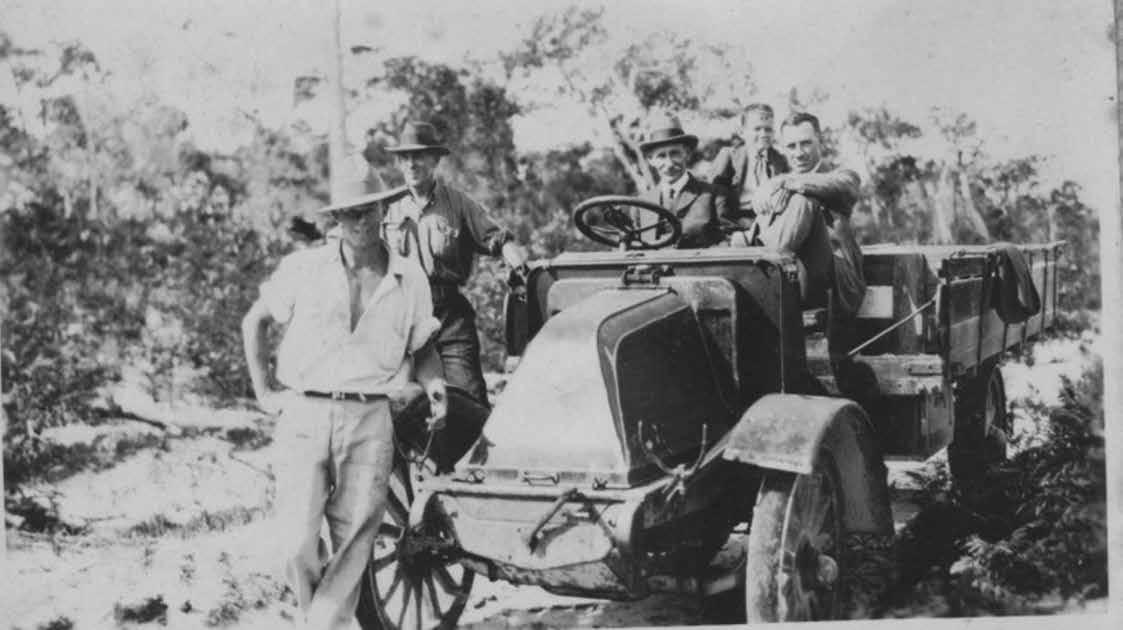
WClearing the FIRST ROAD 1923
hen World War 2 ended in 1918 new business opportunities opened up, but also health challenges for Brisbane and Bribie Island.
Troops returning from Europe brought back “Spanish Flu”, a type of Influenza which had spread quickly during the War.
Soldiers lived in crowded conditions; military hospitals were virus hotspots and on the long journey back home by ship infection was inevitable.
Spanish Flu spread around the world and about 500 million people, about one third of the world population contracted it and 50 million died , of which 15,000 were Australian.
Brisbane had a population of about 190,000 people in 1918 and 9,500 were infected and about 300 died. Bribie Island had a resident population of just 30 people but was considered a safe haven where people could live cheaply and safely.
BRIBIE PIONEERS
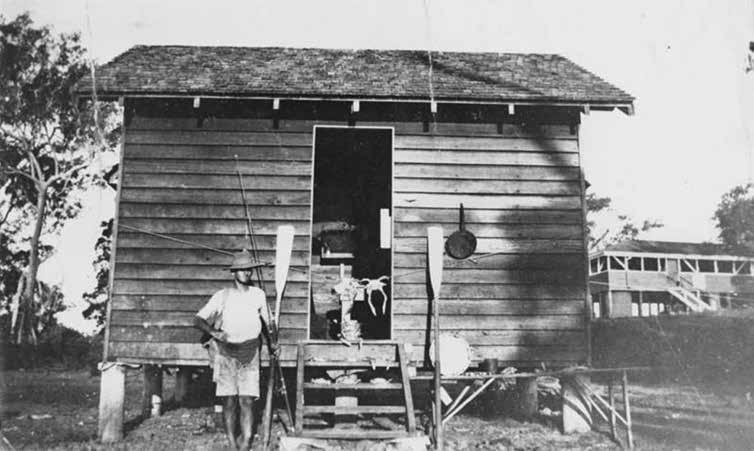
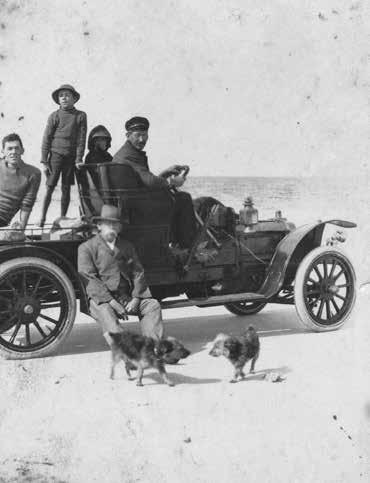
A Jetty had been built at Bongaree in 1912, so a few people chose to bring their family on the Steamship Koopa, with whatever they had and make a new life on Bribie Island.
Arriving at Bongaree Jetty they walked into the bush, cut a few trees and built a rough
shelter. Money and food were scarce, but an abundance of Fish, Oysters and Crabs could easily be found in the sea. There was a lot of Prickly Pear all over Queensland and Bribie which was eventually eliminated with the introduction of “Cactoblastis”.
A severe banana disease “Bunch Top” was rampant in SE Queensland and in 1923 the Government established an “Experimental Farm” on Bribie, where the playing fields are today on First Avenue.
A large area with 2m poles and netting was created, but it soon became clear that not much
would grow on Bribie.
The first blocks of land at Bongaree were offered for sale in 1915 at 5 Pounds (10 Dollars) with a $1 deposit and repayment at 25 cents a week. There was a limit of 5 blocks per person, and many smart investors took advantage of the opportunity.
The Steamship Koopa was the lifeblood of the island, bringing up to 1500 passengers from Brisbane 4 times a week to enjoy the simple delights. They camped in canvas tents all along the foreshore or in the few guest houses or the basic beach huts known as the “Twelve Apostles” for 25 cents a week.
Barry Clark - Bribie Island Historical Society
Beach Hut
A large old community Hall was brought from Moreton Island in 1916 and erected on the hill where the Bongaree Water Tower now stands and used as a school in the day and Dancing and Bingo at night.
The Hall can be seen in the background behind the Beach Hut in the photo. A State School was built in 1924, and the first road was cleared from the Jetty to Ocean Beach, which you can see in the title photo.
PRIMITIVE BRIBIE
Bribie was very isolated in those days with only water access, no roads, no electricity, and drinking Water brought by Steamship to fill 3 tanks beside the Jetty.
Residents and Campers could fill a Kerosene tin for 1 cent. Bribie became a very popular destination and by 1930 thousands came for weekends and holidays with more people camped along the foreshore than the entire population of Caboolture.
Companies brought staff and families for an Annual Picnic and saw huge Groper fish up to 230 Kg caught off the Jetty. Farmers along the Passage brought produce by small boats to sell the Jetty.
Fish fillets were just 3 cents a pound and huge hauls of Mullet were virtually given away. Everyone enjoyed fishing, dinghies could be hired for 50 cents a day, and a kiosk on the Jetty sold Oysters at 5 cents a dozen.
Everyone came to greet and farewell the Steamship, watching the plume of smoke as it crossed Moreton Bay, and it gave a loud blow on the whistle to signal imminent departure.
People camped along the Bongaree foreshore, others went to Ocean Beach on basic buses, and children picked Boronia to sell to visitors to take back.
EARLY DEVELOPMENT
The first shop was established opposite the Jetty in 1918 by Alfred Hall, a Brisbane grocer, and Artie Bestman from Godwin Beach.
The Tug Company had a resident manager and a Telephone cable was laid to Bribie in 1922 and a Post Office with switchboard was built where “The Jetty” restaurant stands today. There were just 7 telephones on the island in the first 10 years.
With no hotel on Bribie until the first was built at
Woorim in 1939, the Bar on the Steamship was very popular. As numbers increased a large cattle farm was run at what is now Cotterill Avenue, providing meat and milk.
In the early years the growth of Bongaree was limited by Shirley Creek to the north and Campbell Creek to the south.
It was not until Shirley creek was bridged in 1932 by Bill Shirley, honorary Councilor, who constructed the first road, that further development was possible.
Bribie was certainly a very different place back then and 40 years passed before Bribie Bridge was built in 1963.
Artie Bestman, who built the first shop and drove the first car to Bribie in 1918, was given the honour of driving the first car over the new bridge.
MORE BRIBIE HISTORY
Historical Society meetings are on the second Wednesday of each month at 6;30pm at the RSL Club and visitors are always welcome.
See more stories & photos of Bribie history on Web site Bribiehistoricalsociety.org.au and Blog http://bribieislandhistory.blogspot.com or contact us on bribiehistoricalsociety@gmail.com
Shirley Creek Bridge opening
Steamship Crowd
Oyster Shed at Jetty
First Car on Bribie 1918
SPORTS PAGES
BONGAREE BOWLS RESULTS
13/2/2026 - 26/2/2026
Results of Saturday Scroungers 14/2/2026
1st. Jim Warwick. 2nd. Sheena Bath. 3rd. Frank Denman
Results of Tuesday Paddle Pop Triples Draw 17/2/2026
Winners: Pat Spice, Christine Nathan, Dave Dixon
R/Up: John O’Donohue, Marge O’Keefe, Sue Francis
Bonus Draw: Sue Francis, John O’Donohue, Marge O’Keefe, Ron Corrick, Janice Mason
Results of Wednesday Fours 18/2/2026
Winners: Alan Simonic, Steve Mogan, Robert Johnson, Richard Fell
R/Up: Sandra Scott, Janice Mason, Jen Hadley, Di Drew
Results of Thursday Jackpot Pairs 19/2/2026
Winners: Richie Ferguson, Richard Harvey
R/Up: Jacque Murdoch, Greg Hemphill
Results of Friday 2-4-2 20/2/2026
Winners: Sandra Scott, Brenda Hutchinson
R/Up: Ernie Connolly, Di Drew
Results of Saturday Scroungers 21/2/2026 1st: Imelda Valentine. 2nd: Pat
Spice. 3rd: Richard Fell
Results of Tuesday Paddle Pop Draw Triples 24/2/2026
Winners: Anita Broughton, Graeme Hanlin, Ian Gillies
R/Up: Narelle Pender, Ann Clarke, Bev Montgomery
Bonus Draw: Jackpot
Results of Wednesday Fours 25/2/2026
Winners: Gordon O’Halloran, Gary Paekau, Peter Furlong, Flash Farley
R/Up: Hazel Crouch, David Vaughan, Joe Mifsud, Wayne Baker
Results of Thursday Jackpot Pairs 26/2/2026
Winners: Peter Blake, Colin Sleet
R/Up: Alan Simonic, Paul Krueger.
Adriana Doolan, Member for Pumicestone, presenting a cheque to Dee Morrison, Ladies President and Ian Paterson, Chairman of Bongaree Bowls Club, for the purchase of a new mower.
Thank you, Adriana, for your support of our club.
SOLANDER LAKE BOWLS RESULTS
Mens B Pairs Championship Final:
Winners: Wayne Shackell, Anthony McGregor (skip)
Runners-up: Trevor Smith, Rod Reilly (skip)
Results for Bribie Island Women’s Golf 24 Feb to 05 Feb 2026
24/02/26 AMERICAN FOURSOMES OVERALL
WINNERS Carol McKenzie & Kate Wesener 73.375 2nd Gill
10 Friend, with some hesitation, looking less healthy? (5)
14 Georgia encountering the French winds (5)
11 Live in reverse for a time (3)
16 Old Queen ditching King for a month (3)
17 Aintree upset apprentice (7)
18 Quantity of wood, large quantity, for marine life (8)
13 Reliable alloy melted (5)
3 Alcoholic drink befitting monarch on reflection
4 They bar swimming from memory (2,5)
Clues begin or end with a definition of the answer. The rest is one of these: Dropped letter Remove a letter from another word: ‘Time away from coach in wet weather (4)’ gives RAIN
3 Stop male abandoning repair (3)
5 Principle whichever way you look at it (5)
4 Garden tool not right as bathroom item (5)
15 Caricature of Lenin in underwear (5)
7 Tall grass is kept back for grazing animals (4)
9 Traces scribbled answers (6)
17 Women leaving sibling preserve (3)
12 Was lazy: walked furtively, second to go (5)
10 Brushes the surface of small things with links? (6)
5 Unusual charisma is an old-world concept (8)
13 Put out after setback for period (4)
14 Georgia encountering the French winds (5)
15 Esteeming eg a vintner in fantastic form (10)
16 Old Queen ditching King for a month (3)
17 Aintree upset apprentice (7)
Down
1 Merrymaking in bar taken the wrong way (5)
18 Quantity of wood, large quantity, for marine life (8)
3 Alcoholic drink befitting a monarch on reflection (5)
14 Note put in one way and another (5)
4 They bar swimming from memory (2,5)
16 Fool upset container (3)
10 Brushes the surface of small things with links? (6)
18 Hard-wearing fabric exploited when heading west (5)
13 Put out after setback for period (4)
15 Esteeming eg a vintner in fantastic form (10)
17 Deeds in a court close to offices (4)
1 Measure of liquid left on island with three from Italy (5)
18 Hard-wearing fabric exploited when heading west (5)
2 Compete with six with energy (3)
SOLUTIONS
5 Principle whichever way you look at it (5)
Anagram Anagram of answer and hint that there’s an anagram ‘Senator arranged crime (7)’ gives TREASON Charade Combination of synonyms/abbrevs ‘Qualify to get drink for ID (8)’ gives PASSPORT (pass + port)
8 End surf possibly to get financial settlements (7)
11 Relating to a town in an up and down state (5)
12 Bit quiet when given wine (5)
14 Note put in one way and another (5)
16 Fool upset container (3)
Reversal Answer backwards, and a hint that we’re reversing ‘Deity’s pet returns (3)’ gives GOD Palindrome Hint that answer reads the same backwards
‘Holy woman going back and forth (3)’ gives NUN
SPOT THE 8 DIFFERENCES
Sudoku
Our Pet Sections: "Pets without People" and the Pet Page
Hello everyone,
As the editor of our magazine, I want to take this opportunity to address a topic very close to many of our hearts—our beloved pets and the roles they play in our community. Our magazine features two special sections that celebrate the wonderful animals in our lives and support those in need. However, I have noticed some confusion regarding the distinction between the "Pets without People" advert and our regular pet page, so I would like to provide some clarity and insight.
First and foremost, the purpose of the "Pets without People" advert is to help animals who, through no fault of their own, are in search of a new home. Sometimes, life circumstances change—moving to a new place, changes in family situations, or health issues can mean that a pet owner is no longer able to provide the care their animal deserves. In these cases, our magazine serves as a bridge between owners seeking new families for their pets and readers who may be searching for a new companion.
If you are ever in the unfortunate position where you need to rehome your pet, please know you are not alone. We invite you to send us your pet’s information, including their name, age, personality traits, and a recent photo. We will then feature your pet in the "Pets without People" section, where our caring community can learn more about them and possibly offer them
the loving forever home they deserve. Our goal is to make this difficult transition a little easier for both pets and their people, ensuring every animal finds a safe and happy future.
On the other hand, our pet page exists for a very different reason. Over the past few years, we have received many wonderful photos from pet owners across our community, eager to showcase their furry, feathered, or scaly friends. This page is dedicated to celebrating the bond between people and their pets.
Every photo featured here is submitted by owners who simply wish to share the joy, love, and sometimes the hilarious antics that their animals bring into their daily lives. It is heartwarming to see the variety of pets—dogs, cats, rabbits, birds, and more— each with their own unique personality and story.
It is important to clarify that the animals featured on the pet page are not available for adoption. They are cherished members of their families, and the photos are meant to inspire smiles and a sense of community. We know how much comfort and happiness pets bring to their owners, and we want to offer a platform for everyone to celebrate these special relationships. By sharing your pet’s photo, you help create a welcoming and uplifting space in our magazine for all animal lovers.
If you would like to participate, there are a couple of ways to get involved. For those needing to rehome a pet, please contact us with your pet’s details and a photo, and we will do our utmost to help them find a new, loving family through our "Pets without People" section. For those who simply want to share the joy their pets bring, feel free to send in your favourite snapshots for the pet page—your photos help remind us of the warmth and companionship animals provide.
If you have any questions, concerns, or suggestions about either section, please don’t hesitate to reach out. Your feedback is always valued, and we are here to assist you in any way we can.
Thank you for helping make our magazine a welcoming space for all animal lovers, and for being part of a community that truly cares.
Cheers, Cherrie Wilson
Meet Winston: A Loving Cat Seeking a New Home!
Winston is a gorgeous 14-month-old cat living in Bongaree, ready to join your family! He’s up to date with vaccinations, desexed, fully registered, and toilet trained. Winston has a calm and loving nature, plus a playful spark. Sadly, his current owner’s illness means Winston urgently needs a caring new home. Please email editor,thebribieislander if you are interested.
Responsible Pet Ownership
Pet ownership is not simply about providing food, water, and shelter. It is a lifelong emotional, physical, and ethical commitment to another living being who depends on us for safety, love, and belonging. Every animal deserves not only to survive, but to feel cherished, secure, and included as part of a family.
Nearly two weeks ago, we welcomed Marley, a sevenyear-old foster dog who was due to be euthanised the very day he entered our home.
Pei and Pals rescue, a dedicated team of people, worked together to get him safely to me. I knew in my heart that if I could help and chose not to, I would carry that regret forever. Marley had spent much of his life sleeping outside under a veranda, without a proper bed, real loving affection, or consistent kind attention.
In the short time he has shared our home, I have watched Marley begin to soften and trust. At seven years old, he is learning what it feels like to be safe, discovering that hands can be gentle, that warm beds can be shared, and that play is joyful.
Animals carry emotional wounds just as humans do, and when we meet them with patience, calm presence, and kindness, healing becomes possible for both.
Responsible pet ownership means recognising that animals form deep emotional bonds. They are not temporary companions to be discarded when life circumstances change. Before bringing an animal into your life, consider your long-term capacity.
Pets are a lifelong commitment, not disposal when things get tough. Consider all the financial costs. Can you offer long-term stability and emotional presence?
We live in a throw-away society, and for many, this includes their pets. Animals deserve safety, shelter, consistency, affection, exercise, and ongoing care throughout their entire lives.
If you love animals but cannot commit long-term, fostering is a compassionate and responsible alternative. Fostering provides animals with a safe place and love while they wait for their forever homes.
When we welcome an animal into our lives, we accept the sacred responsibility of becoming their safe place in the world. We need to be committed, compassionate, and honour the trust animals place in us.
We will soon be searching for a special forever home for this sweet boy, somewhere he can sleep beside you, be your loyal shadow, and can experience the belonging he has always deserved. Marley would be best suited to someone who works from home or is retired and who is an only pet, so he can be given the love and care craves.
If you feel you could be this person, please reach out to Pei and Pals and speak to Heidi to find out further details. You can reach her on 0421 613 430 or ppar.com.au.
Always with love, Maria Christina x Holistic Counsellor, Life & Wellness Guide
Pawsome Pet Pages w w
Dexter
Chase
Sunny
Rosie
wMr B
Little Dog
Astro
Koa
Be Ready Before The Rush
Upgrade Your Smoke Alarms NOW
The countdown to Queensland’s new Smoke Alarm Legislation is on!
By 1st January 2027, every home must have interconnected photoelectric alarms in all bedrooms, hallways, and living areas.
Don’t Leave It Too Late - Be Compliant Before 2027
Serious safety starts with quality - we use only Clipsal and Brooks Smoke Alarms.
Why upgrade now?
• Demand will surge as the deadline approaches
• Stock shortages and price increases are expected
• Avoid last-minute stress and non-compliance
• Be safe with the highest-quality alarms available
Brooks Features
• Photoelectric technology
• 10-year sealed lithium battery
• Reliable wireless interconnction
• Pet friendly / Insect-resistance design
• Wall controller for easy silencing/testing
• Hearing-assistance options (strobe/vibration)
Don’t leave it too late -
Before you say yes to that quote…
BRIBIE ISLAND
BRIBIE ISLAND
Pool Removal vs. Pool Remodel: The Pros & Cons of Each
When considering the future of your swimming pool, you’re faced with two primary choices: pool removal or pool remodelling. These options come with their own advantages and disadvantages that can significantly affect your property and your overall satisfaction with your outdoor space.
In this discussion, we will explore the key aspects of both pool removal and pool remodelling, equipping you to determine which path best aligns with your needs and preferences.
Pros of Pool Removal
Reclaiming Space:
Reclaiming space is one of the primary benefits of pool removal. Once a pool is removed, you can transform that
area into a more versatile outdoor space. Whether you choose to create a spacious garden, install a patio, or design an open lawn, the possibilities are vast.
This reclamation not only enhances your property’s functionality but also provides ample room for various outdoor activities, making your yard more versatile and accommodating for your specific needs.
Reduced Maintenance:
Opting for pool removal significantly reduces the ongoing maintenance requirements associated with pool ownership. Without a pool to care for, you eliminate the need for regular cleaning, chemical balancing, and equipment upkeep. Pool maintenance can be time-consuming and costly, often involving skimming, vacuuming, and filter maintenance, as well as chemical
and utility costs. By removing the pool, you free yourself from these regular maintenance tasks, allowing you to redirect your time and resources toward other aspects of your property.
Cons of Pool Removal
Costly Process:
Pool removal, while offering its advantages, can be a costly endeavour. The expenses associated with pool removal typically involve excavation, disposal of pool materials, and, potentially, filling the space. These expenses can change based on the size, location, and difficulty of the pool’s removal, among other things. Additionally, it’s essential to consider the potential impact on your property’s value. A pool’s potential impact on resale value should be factored into the project's total cost. It’s advisable to consult with professionals and obtain quotes to understand the specific financial implications of pool removal in your particular situation.
Aesthetics:
The aesthetic aspect plays a significant role in the decision-making process between pool removal and renovation. It is important to be prepared for changes in the landscape when considering removing a pool. The area previously occupied by the pool may not seamlessly blend with the surroundings, potentially affecting the property's overall visual appeal.
Conversely, pool remodels offer the opportunity to enhance the aesthetics of your existing pool. With various design options, you can update the pool’s appearance by introducing new features, tiles, and landscaping to create a more visually appealing, modern swimming environment. It’s essential to weigh these aesthetic considerations against your personal preferences and the overall look and feel you desire for your outdoor space.
Pros of Pool Remodel
Improved Aesthetics:
One significant advantage of pool renovations is the potential to enhance the aesthetics of your pool area. By investing in a pool remodel, you can revitalise your pool's overall appearance. This includes the opportunity to update and upgrade features, replace worn-out tiles, and re-imagine the landscaping around the pool.
These changes can create a more visually appealing outdoor space. Whether you opt for a modern, sleek design or a more natural, serene ambience, pool renovation offers the flexibility to tailor the pool’s aesthetics to your preferences, elevating the overall visual impact of your property.
Customization:
With a remodel, you can customise various aspects of your pool, including its shape, size, depth, and design. This level of personalisation allows you to create a pool that aligns precisely with your vision for your outdoor space. You can incorporate features such as waterfalls, spa areas, integrated lighting, and updated materials that reflect the style you desire. The ability to customise your pool during a remodel enables you to transform it into a unique and enjoyable space that suits your lifestyle and enhances the overall utility and appeal of your property.
Cons of Pool Remodel
Costly Investment:
Undertaking a pool remodel can be a substantial financial commitment. The extent of the investment largely depends on the scope of changes and upgrades you plan to make. Costs can include materials, labour, and potentially the need to update or repair existing pool infrastructure. To prevent unforeseen costs, it’s essential to have a clear budget and collaborate closely with professionals.
While a pool remodel offers numerous benefits, it’s essential to carefully assess the financial implications and ensure that the investment aligns with your long-term goals and the value it adds to your property. Weighing the costs of a pool refurbishment requires considering the potential return on investment and the durability of the upgrades.
Limited Space Alteration:
It’s important to note that a pool remodel offers limited alteration of your property’s available space. When opting for a pool remodel, you are working within the existing pool’s footprint and dimensions. While you can make changes to the pool’s appearance, features, and functionality, the fundamental space occupied by the pool remains relatively unchanged.
This means that if your goal is to reclaim space or significantly alter the layout of your outdoor area, a pool remodel might not be the ideal choice. In such cases, pool removal may be a more suitable option, as it offers a greater opportunity for significant space transformation and redesign to meet your specific needs and preferences.
Conclusion
Pool removal offers the advantage of space reclamation and reduced maintenance but comes at a cost, both financially and aesthetically. In contrast, pool renovations can enhance the aesthetics and functionality of your existing pool but involve a substantial investment. Your decision should align with your long-term objectives, your vision for your outdoor area, and factors related to property value.
As our population ages, the discussion around suitable living arrangements for seniors becomes increasingly pertinent. Among the myriad housing options available, modular homes have emerged as a compelling solution for the elderly.
One of the most significant advantages of tiny homes is their affordability. The cost of living is a pressing concern for many seniors, especially those on fixed incomes. Modular homes typically require a smaller upfront investment and lower
ongoing expenses than traditional housing.
This financial freedom allows seniors to allocate their resources towards healthcare, hobbies, or travel, enhancing their quality of life as they age.
As people age, the physical and mental burden of maintaining a large home can become overwhelming. Modular homes offer a solution by simplifying living spaces and minimising maintenance needs. With fewer rooms to clean and take care of, seniors can focus more on
their passions and less on upkeep.
This reduction in clutter not only makes daily living more manageable but also fosters a sense of calm and organisation in the home.
With less space, it's also easier for seniors to keep their homes tidy, reducing the risk of falls and other accidents related to clutter.
Modular homes represent an innovative and practical housing solution for the elderly. They
provide financial relief, reduce maintenance burdens, promote social engagement, and encourage healthier lifestyles.
As we consider the future of senior living, it’s crucial to recognise that modular homes can be a viable option, allowing our aging population to live independently, sustainably, and happily. Embracing tiny homes not only benefits the elderly but also paves the way for a more thoughtful and inclusive approach to housing in our communities.
WRIGHT CHOICE HOMES OFFER A STRESS-FREE, EFFORTLESS PROCESS FROM FRAME TO FINISH
Welcome to a lifestyle that celebrates your independence and comfort with our specially designed modular homes, perfect for seniors looking to enjoy their golden years. Starting at a cozy 58.5m², our homes provide ample space, featuring welcoming decks where you can sip your morning coffee or enjoy the fresh air.
Unlike many modular homes that don’t meet safety and building standards, our residences are built to Class 1A Building Approval specifications, ensuring they are safe, durable, and truly liveable.
One of the standout features of our homes is the innovative hydraulic house trailers, allowing you the flexibility to relocate your home without the hassle of expensive cranes. This means you can easily adapt your living situation as your needs
change, whether that’s moving closer to family or seeking a new view—all with minimal stress.
Your Ideal Sanctuary Awaits
Imagine having a primary residence that doubles as a peaceful retreat, allowing for minimalist, debt-free living. Our modular homes are also perfect as granny flats, giving family members their own beautiful space nearby while fostering connection and independence.
They would be ideal for elderly parents to have a space of their own on the family’s property, providing them with the comfort of support when needed while still enjoying their independence.
Or if you’re dreaming of a coastal escape or a serene spot in the hinterland, our homes serve as the ultimate getaway, providing a secure haven where you can relax and rejuvenate. You can even turn an unused space into a smart rental opportunity, creating a source of income that can support your travels or hobbies. Or consider our flexible rural dwellings, ideal for hosting seasonal workers or offering caretaker accommodation right on your property.
Experience Freedom Like Never Before
With our tiny homes, you can enjoy a lifestyle that feels just like a holiday every day!
Embrace the joy of reduced housing costs, allowing you to allocate funds for travel adventures, quality time with loved ones, or hobbies you’re passionate about.
By choosing a compact home, you're also making an eco-conscious decision, reducing your environmental footprint while living comfortably.
Most importantly, a Wright Choice modular home provides unrivalled lifestyle flexibility. Picture waking up every day in a space that reflects your needs—whether that's enjoying a good book with a view, spending time with family, or simply having more time for yourself.
Experience the joy of living life on your terms in a home that enhances your well-being and celebrates everything that makes your life special. Make your golden years truly golden in a home designed for you!
One recent Saturday night, a visitor to Bribie Island stayed at a local Airbnb and parked their car on the street, just like many travellers do when visiting this popular holiday spot.
What happened next is a clear reminder of the risks drivers face. The visitor found out later that two-wheel nuts were missing from the rear driver’s side wheel. They had driven for hours, even on the motorway at
Statement on Supreme Court Decision
Attributable
to City of Moreton Bay CEO, Scott Waters: City of Moreton Bay has today received a lengthy and complex decision in relation to 8 individuals experiencing homelessness. Council will now take the necessary time to properly consider the ruling, before commenting on any specifics of the case.
We thank His Honor for his time and consideration in delivering this judgement. This matter came from eight (8) individuals who took City of Moreton Bay to court. Council understands some of these people are no longer at this location.
Sadly, today’s determination does not grant homes for people sleeping rough, yet significant ratepayer resources have been consumed by this matter. It does not change City of Moreton Bay’s Camping on Public Land local laws.
Council is actively working with the State and Federal Governments, as well as long established community groups, to support our most vulnerable, and continues to advocate for the establishment of shelter networks and assisted living facilities, and supportive housing solutions to help break the cycle of sleeping rough.
City of Moreton Bay considers the Human Rights Act 2019 (Qld) is not a licence to do what is otherwise unlawful. It should not prevent the enforcement of Council local laws made for the safety, health and amenity of the community. Public spaces are for use by everyone and are not fit for habitation. Camping on public land, and the storing of goods on public land without approval, contravenes Council’s local laws.
As His Honor indicated, Council has had 4,500 community complaints relating to people experiencing homelessness.
Complaints include lack of available public spaces and parks, safety concerns relating to violence and illegal behaviour, as well as serious public health matters like public toileting and human waste, active vermin and significant food and general waste.
Council remains committed to balancing the needs of all members of the community. Local Government across Australia is not funded or resourced to provide public housing or shelters.
It is the Queensland Government's responsibility to provide safe and appropriate housing including crisis accommodation and social housing options, as well as homelessness support services.
It’s HOT don’t let GoGo rot
Hot weather + organic waste = yuck
Don’t forget to take your GO bin out to keep things fresh, clean and green. Apply to opt-in to the GO service or order additional bins.
Mudrooms Are Here To Help Ivory Tfabric & wallpaper
TheMudroom is a handy room that is finding its way into our homes and way of life. The Hamptons style has heavily influenced our need and want for a Mudroom.
Placement of your Mudroom depends upon the access to your home and your preferred location. Whether it be in your laundry, back or front door, or an internal entry from your garage.
It is best to have your mudroom be the first point of entry to keep dirt and mess at bay before entering the rest of your home. Ideally off from the Laundry and or Garage. It is a high traffic area working around your busy lifestyle.
Mudrooms are a wonderful place to leave your wet or dirty shoes, children’s school bags and sports equipment or a wet umbrella. If you have your Mudroom in or near the laundry, fabulous, discarded sports uniforms etc can go straight into the wash.
Now we can’t all have a large Mudroom fitted with all the bells and whistles, but even the smallest of rooms can work with some planning. A small hallway alcove or rear entrance can be transformed into a functional mudroom with hooks, shelving, and a bench. Storage and function too me in any room is key.
Must Haves with Your Mudroom
Storage to Declutter
Invest in built-in cupboards equipped with dedicated hanging areas for coats and wet weather attire, as well as individual cubbies for each family member, including your pets, this will enhance organisational efficiency.
Long upright cupboards are a great place to store brooms, mops, buckets and other cleaning products. Additionally, add racks for boots, umbrellas, and pets attire. Baskets are great to allow items to put away and still breathe. Installing hooks for pet leads, jackets, school bags. Keeping the area clean and clear of clutter.
All these elements will assist in your day-to-day life
if you keep everything in a designated area. Easy to then know where everything is or should be.
Seating for Comfort and Convenience
Add seating near your entry for removing shoes. A built-in bench with storage or a blanket box is both practical options. It’s a great spot to hide away any unsightly mess. If choosing to use a Cushion Seat, make sure the fabric is durable and easy to clean.
Easy Clean Surfaces for Practicality
Your mudroom handles a lot of foot traffic and is meant for messes. It is important to choose surfaces that are easy to clean. Consider tiles or floorboards and keep a mop or broom in the cupboard so you can quickly take care of spills. Easy Clean Paint is also advisable in the room.
Leading Designs and Styles for Your Mudroom
benches, and metal coat hooks. Add woven baskets for warmth and choose brick or herringbone flooring for farmhouse character.
A Contemporary Mudroom is characterised by its emphasis on clean lines and bespoke cabinetry. Handle-free doors contribute to a seamless, refined aesthetic, while integrated lighting and monochromatic colour schemes ensure the space remains both luminous and elegant.
A Traditional and Classic mudroom offers both warmth and lasting sophistication. Raised-panel cabinetry, premium wood materials, and brass hardware contribute to a refined and durable aesthetic. Deep green, navy, and cream hues complement high-quality flooring and architectural accents, resulting in an elegant and timeless interior.
Final Notes
Add Floor mat or rug to add some warm and design. It is a great way to keep your home clean and helps to prevent slipping over, if entering when wet. Your mudroom should feel like a natural extension of your home’s interiors.
For those whose Mudroom is the main entry into your home you will want the room to be inviting for your family and friends. Perhaps consider adding wallpaper to help create a relaxed introduction to your home.
Windows can be dressed in Shutters, Rollers or Roman Blinds to help keep the room simple.
Ivory T - fabric & wallpaper 0422 599 084
For a Modern Farmhouse mudroom,
Fishing at Bribie Island: A Paradise for Anglers
Bribie Island stands out because of its many different fishing spots.
The Pumicestone Passage, which separates the island from the mainland, is perfect for a peaceful day on the water. It’s clear shallows, mangrove banks, and seagrass beds are home to many fish.
The island also has creeks like Ningi and Elimbah, winding through mangroves and salt marshes, which are great for estuary fishing. On the ocean side, beaches like Woorim are popular for surf fishing and offer beautiful views, especially if you’re after bigger fish like tailor and mulloway.
The deeper channels and rocky areas at the island’s tips attract pelagic fish and sometimes even trophy catches, making Bribie a great place for all kinds of anglers.
Best Bait and Techniques for Bribie Island Fishing
To do well on Bribie, it’s important to pick the right bait and method for the fish you want to catch and where you’re fishing. The island’s different
habitats suit many classic and local baits. In the estuaries and passage, live yabbies from the sand flats are a top choice and attract whiting, bream, and flathead.
You can collect them at low tide. Fresh prawns, either live or dead, are also great for bream, flathead, and mulloway, especially when used with a light running sinker rig. Strips of squid, pilchard, and mullet are good for bigger fish like tailor or jewfish. In the mangrove creeks, soldier crabs or small live baitfish can tempt mangrove jack or estuary cod.
If you’re fishing in the surf, pipis and beach worms are the best baits. You can collect them fresh from the beach, and they work well for dart, whiting, and bream. For tailor, try whole pilchards or garfish on gang hooks, or use metal slugs and surface lures in the gutters at dawn or dusk. Moving between gutters and rips can help you find the most active fish.
Lure fishing has also surged in popularity on Bribie, with soft plastics, hard-bodied minnows, and surface poppers all productive in the right hands. Soft plastics in natural colours are deadly on flathead and bream, especially when worked slowly along the bottom.
Surface poppers and stick baits can provoke explosive strikes from tailor and trevally in the Passage and surf. For night anglers, glow-in-the-dark lures and scented soft plastics come
into their own, particularly during summer prawn runs.
What Can You Catch? Exploring Bribie’s Fish Species
Not many places in Queensland have as many fish to catch as Bribie Island. Whether you want common
species or a trophy fish, you’ll find them here. Whiting is a favourite for their gentle bite and great taste, and you can find them in the passage, creeks, and estuaries.
Sand whiting and winter whiting are the most common, and they like live yabbies, bloodworms, and beach worms. Whiting is most active when the tide is rising, especially at dawn and dusk over the sand flats.
Often, a lightly weighted bait in shallow water is all you need. Flathead are another popular catch and can be found along drop-offs, channel edges, and sandy spots around the island. Dusky flathead is the most common, but you might also catch sand flathead or bar-tailed flathead.
They like to ambush their prey and will take both bait and lures, making them a good target for all skill levels. Soft plastics, vibes, and fresh bait like pilchard strips, prawns, or whitebait all work well. Try casting near the edges of currents or structures, where flathead often wait for food.
Bream, ever the crowd-pleaser, can be found around mangroves, jetty pylons, oyster leases, pontoons, and rocky outcrops. Yellowfin bream dominate the catch, but pikey bream is occasionally caught as well. These cagey feeders respond well to prawns, squid, chicken gut, mullet strips, and even soft plastics or small hard-bodied lures—especially during winter months when they school up to spawn.
Light lines and subtle presentations are the key to success with bream, which can be wary of heavy tackle. Night fishing for bream around structure can be particularly productive during the cooler months.
In the surf, tailor and dart provide adrenaline-fueled action. Tailor, best chased at dawn or dusk, hit hard on pilchards, garfish, or metal slugs cast into the surf gutters. These aggressive predators often travel in schools, so once you find one, more are likely nearby.
Dart—especially swallowtail dart—are abundant in the white water near the shore, eagerly taking pipis, worms, or small pieces of prawn.
Both species put up a spirited fight and are highly regarded by surf anglers. Mulloway (jewfish) are a prized but challenging target in the deeper surf gutters or at the mouths of creeks, best pursued at night with large live baits like mullet or squid.
Beyond the Basics: Other Notable Catches
Bribie Island’s waters also hold a
variety of lesser known but equally exciting targets. There are some less common but exciting fish to catch in Bribie’s waters, such as mangrove jack, estuary cod, and trevally, which are found in the creeks, especially when it’s warmer.
Mangrove jack are strong and aggressive, often biting live baitfish, prawns, or lures close to structures. Estuary cod like similar spots and will take live or dead bait near submerged snags. Golden and giant trevally visit in certain seasons and are best caught with fast-moving lures or live bait in deeper channels and near bridges.
For those with access to a boat, the deeper waters beyond the island can produce snapper, sweetlip, grassy emperor, and even the occasional longtail tuna or mackerel. Fresh squid, pilchards, and live herring are top baits for these offshore species.
Crab catching is also a major highlight for locals and visitors alike. Both sand crabs (blue swimmer crabs) and mud crabs can be found throughout the year.
Sand crabs are usually in the deeper, sandy channels of Pumicestone Passage, especially after summer rains, while mud crabs prefer the muddy-bottomed creeks and mangrove estuaries such as Ningi and Elimbah.
The most effective way to catch either species is by setting crab pots baited with fish frames, chicken carcasses, or mullet heads. Place your pots in areas with good tidal flow—sand crabs favour open channels, while mud crabs are best targeted close to mangroves and submerged snags.
It’s important to check pots regularly and follow Queensland’s rules on pot numbers, minimum sizes, and keeping only male mud crabs.
Pulling up a pot filled with lively crabs is always a thrill, and cleaning and cooking your catch is a memorable
part of the Bribie experience. Local tackle shops are happy to offer advice on the best bait, spots, and legal requirements for crabbing success.
Fishing on Bribie Island is more than just a hobby. It’s a way to enjoy nature and connect with the local community. Tackle shops are full of helpful advice, and chatting with others at the boat ramps often leads to great tips about the best spots or the most popular lures that week.
Practising responsible fishing is crucial to maintaining Bribie’s reputation as a sustainable angling paradise. Observing bag limits, releasing undersized or protected fish, and using circle hooks to reduce deep hooking all help preserve the delicate marine ecosystem.
Many local anglers participate in catchand-release for sport species, and the region’s marine parks require attention to zoning and no-fishing areas.
Proper disposal of bait packaging and fishing line, as well as respect for local wildlife, are also part of the Bribie ethos. These practices ensure the island remains a fishing paradise for generations to come.
Bribie Island’s fishing scene is defined by its diversity: of environments, techniques, and species.
From the sun-drenched sand flats where whiting and flathead hunt, to the roaring surf where tailor, dart, and mulloway challenge even the most experienced anglers, the island offers endless possibilities.
Whether you’re soaking a bait in the passage, flicking lures for flathead, or braving the surf for tailor, the rewards are plentiful and the memories lasting.
Bring along the right bait—yabbies, prawns, pipis, worms, or carefully chosen lures—and you’ll be well on your way to a memorable day on the water!
STEWART BELL HANGS UP MIC
This month, it is with regret that we advise that, after twelve years of dedicated and valued service to the community and Marine Rescue Bribie, Stewart Bell has decided to step away from operational duties on 11 February.
Stewart first joined our radio room team in 2014, and in 2024, he also joined the afterhours call-out roster. Stewart has demonstrated outstanding commitment, professionalism, and reliability. His contribution has been instrumental in supporting the safety of the boating community, and his calm, direct, and reassuring presence on the radio will be greatly missed.
On behalf of all members, we extend our sincere appreciation for Stewart’s significant contribution over the past twelve years and wish him and his wife, Jan, our best wishes in the future. We look forward to seeing Stewart at future social events at the base.
BUSY WHITE SATURDAY
21st February 2026 – White Saturday Crew – Senior Coxswain Allan Tranter, Coxswain Doug Lythgo, and Crew Denise Inggs, Garry Comerford, and David Dodsworth started the day with the usual vessel preparation then around 1018hrs Radio Operators Peta Schrodter and Uldis Baltars received a call about a suspected boat fire North of Woorim, both Bribie 1 and Jonkers Bribie 3 were despatched to investigate – it turned out to be a dredge emitting considerable smoke! All vessels were stood down.
This was closely followed by a jet ski retrieval from South of Tangalooma to Sandstone Point Marina and an 8m Cruiser from Long Island to Toorbul. At 1540hrs another call for assistance from a 7.5m Half Cabin between Bribie and Bulwer requiring a tow into Pacific Harbour canals.
1718hrs & 1727hrs calls were received by Radio Operators John Warner and John Rice for a grounded 4m Tinny and from QAS to medevac a 5-yr old child with abdominal pain and her parent from Tangalooma. The Radio Operators called in the Night Callout Crew Senior Coxswain Ian Grimes and Crew Lloyd Clark, Phil Hagen, and Ross Perry, and the Callout Senior Radio Operator Graham Gibb. Completing the medevac at 2006hrs and recovering the 3 people from the grounded Tinny at Little Goat Island to Donnybrook at 1946hrs, going back for the Tinny at 2120hrs completing that task 3 minutes after midnight.
Well done all involved!
DONNYBROOK ASSIST
Thursday 26th Feb 2026 a MOP noticed a boatie in distress and called us for assistance just North of Donnybrook boat ramp.
74 Active members and partners attended the Tacos and Nachos Night! The fare offered was both beef and chicken mince and various sauces and additives and of course ice-cream for dessert. With the renovated balcony and Busy Fingers funded lift & outdoor tables and chairs in use for the first time.
Raffles & prizes included $20 Cinema Vouchers, $50 BI Bowls Club Vouchers, an electric wok, hand vacuum, and a bottle of prosecco & glasses.
Thanks to President of the Supporters Assoc. Kelly Langworthy and her Social Committee Team.
Bribie 1 tows the 7.5m Half Cabin across Moreton Bay toward Bribie Island.
Bribie 1 tows the 7.5m Half Cabin toward Pacific Harbour.
Assist vessel displays its V-Sheet.
MRQ Bribie’s Mark Young with assisted vessel. SUNSET DRINKS
COMMUNITY SUPPORT GRANT
A big thankyou to City of Moreton Bay for their generous support with their local community support grant. Enabling us to put 2 more Coxswains through the Drone Pilot course. This then gives us greater flexibility to help our community in need out on the waters.
An action shot from a rescue where the Coxswain was able to use the drone to take a rope to the stranded jet ski rider
RED SUNDAY CREW PROMOTION
1st March 2026, Red Sunday Crew Day:Crew Observer Ross Perry received his crew Epaulettes having joined as a Crew Trainee in May 2025 and allocated to Red Sunday Crew in October 2025. Ross Qualifies for Crew status 10th January 2026. Welcome back from leave Wayne Schultz, Wayne joined as Trainee Crew in July 2024, assigned to Red Sunday Crew in October 2024, qualified Crew in November 2024, Wayne was on leave for Citation Day and as such his MRQ epaulettes and Unit Citation Badge (in recognition of previous service prior to joining MRQ) were not presented to him.
you know that with two exceptions these are ALL private moorings. Unlike other places in the state, there are no public or visitor moorings in the Passage. It is illegal to tie up to someone else’s mooring without permission. Several times owners have come home from a trip away to find someone on their mooring! Also, the mooring might not be rated for your boat (or might not be well maintained) and you might break it – that has happened more than once recently.
The two exceptions to private moorings are the MSQ emergency mooring and the MRQ Bribie Island emergency mooring. These are clearly marked and are for use ONLY by MSQ and MRQ. We use these to secure vessels in emergencies – when they have nowhere else to go during a storm It is challenging to turn up at night with a vessel under tow only to find someone tied up to these moorings without permission.
To all the mooring owners out there – it is vital that you maintain your moorings. Everyone on Bribie has seen our rescue boats out chasing drifting vessels during storms. Even worse are when the vessel washes up on the rocks overnight. It is immensely sad to see this happen, all for the sake of some regular mooring maintenance.
We understand that maintaining your mooring can be tricky because it is pretty hard to get a qualified mooring diver round these parts – but it is still essential.
As well as the underwater bits of the mooring, owners need to check the lines that attach the mooring to the vessel –make sure they are not rubbing and that they cant ‘jump off’ your bowsprit.
So much for moorings – and you thought they were boring….
FEB/MAR ASSISTS
THU 19/02 2137PM – 7.5m Centre Console
3POB out of fuel near Toorbul required a tow to Toorbul ramp.
FRI 20/02 1317PM – 5m Side Console 1POB broken down at Tripcony Bight required a tow to Donnybrook boat ramp.
SAT 21/02 1018AM – Reported boat fire 1km North of Woorim, investigated and confirmed it was a dredge blowing smoke –NFA.
SAT 21/02 1718PM – 4m Tinny 3POB (1 child) aground near Little Goat Island, required a tow to Donnybrook boat ramp.
SAT 21/02 1727PM - Tasked by QAS to transport 2 Paramedics to Tangalooma and medevac a 5 yr old patient with abdominal pain and parent back to their waiting ambulance at MRQ Bribie base.
MON 23/02 1354PM – 6m 1POB electric powered Runabout with battery issues, required a tow from Spinnaker to Dux Creek.
THU 26/02 1235PM – MOP reported 2POB attracting attention off Donnybrook, investigated and towed to Donnybrook boat ramp
SUN 01/03 0708AM – Tasked by QAS to transport 2 Paramedics to medevac a patient with back issues exacerbated by overturned Tinny off Tangalooma. Patient refused to be transported to hospital – job cancelled.
SUN 01/03 1117AM – MOP reported drifting Yacht near Bongaree Jetty –investigated and discovered yacht safely at anchor
SUN 01/03 1601PM – 7m Bowrider 2POB with engine issues North of MRQ Bribie, required a tow to Toorbul boat ramp.
WED 04/03 1430PM – Tasked by QAS to transport 2 Paramedics to Tangalooma and medevac a 90-yr old patient back to their waiting ambulance at MRQ Bribie YTD RADIO ROOM STATISTICS
UNIT COMMANDER GARY’S SAFETY MESSAGE:
Lets talk about MOORINGS. There are a lot of moorings in Pumicestone Passage! Did
SAT 21/02 1154AM – 8m Cruiser 1POB broken down at Long Island required a tow to Toorbul boat ramp.
SAT 21/02 1200PM – 4m Jet Ski 2POB broken down South Tangalooma required a tow to Spinnaker Sound Marina.
SAT 21/02 1540PM – 7.5m Half Cabin 2POB with engine failure between SE Tip of Bribie and Bulwer required a tow to Comboyuro Point.
“BUT importantly – Always remember if you are heading out on the water LOG ON with your local MRQ. VMR or Coast Guard, it’s a free service for everyone, so why wouldn't you! It just may save your life!”
Ross Perry receives his Crew Epaulettes from Red Sunday Skipper Senior Coxswain Gary Voss.
Wayne Schultz receives his MRQ Crew Epaulettes and his Unit Citation from Red Sunday Skipper, Senior Coxswain, and Unit Commander Gary Voss.
letters totheeditor
Dear Editor, I read P. Robinson’s letter in Issue 258 and was struck not by insight or constructive thought, but by how eager the writer seemed to criticise others while offering nothing of value themselves.
Mocking people who are actually doing the work — while standing safely on the sidelines — is the easiest role to play. Anyone can throw stones. It takes no courage, no effort, and certainly no imagination. What’s far harder is contributing, volunteering, or even suggesting a practical alternative. On that front, the letter had absolutely nothing to offer.
And really - what makes P Robinson so certain that their opinion is the correct one? Everyone is entitled to a view, but entitlement doesn’t make it right.
The tone of the letter made it very clear which political tribe the writer belongs to, and it showed. When someone’s entire argument is filtered through a partisan lens, it’s no surprise they end up attacking people instead of ideas.
But wearing a political badge doesn’t give anyone the authority to dismiss the efforts of those who are actually doing the work. The use of childish put downs doesn’t strengthen an argument; it exposes their weakness of it. When someone relies on mockery instead of substance, it’s usually because they don’t have any substance to offer.
The people being criticised are at least trying to make a difference. They show up. They put in the hours. They take risks. If P.
Robinson believes they’re doing it wrong, then the obvious question is: What are they doing to improve things? Based on the content of the letter, the answer appears to be “nothing.”
If the goal was simply to see one’s name in print, mission accomplished. But if the goal was to contribute meaningfully to the community conversation, the letter fell well short. Bribie deserves better than empty negativity dressed up as commentary.
Rodney Hansen
Dear Editor Illusions and Delusions: I felt it was time to put pen to paper once more and place a few views/questions in the Islands Top magazine. I haven’t written for some time but on reading the latest edition of the Islander I noticed that “Letters” seems to have been over-taken by political bun fights and obfuscation.
The ongoing illusion (delusion?) concerning net zero is still making the rounds. A logical nonsense that no-one, except the true fanatic, really believes in. We rape and plunder our pristine landscape to build wind farms and acres of panels, causing the never-ending increase in energy costs.
The irony is so obvious: we export coal to China who burn it to produce short term items (e.g. wind mill blades) that end up in land fill. The emissions from the coal burning off sets any benefits our grandiose schemes may produce. If we shut Australia down tomorrow it would have less than 1% effect on the world’s climate – if that. The major polluters keep on going – and we provide the fuel. The only real answer to lowering emissions – nuclear power – is ignored by the zealots. Clean, efficient, and being introduced around the world. We have the means, the fuel and the ability. We just don’t have the will. Well done to my friend HB who had 2 letters in the last edition – albeit the same one, so it may not count.
Perhaps parochial but more relevant to Island life might be trying to find out the answer to why drivers on Bribie signal right at roundabouts when they intend going straight through? Why they come to a stop at a roundabout when no other car is in the vicinity? Why don’t some indicate at all – regardless of what they intend doing? Are roundabouts that difficult to understand?
A black hole where some feel they may disappear? Or are they basically just cross-roads where we need to use our brains? These are the Island mysteries I’d like the answers too. It’s a pity we can’t have net-zero on the silly use of indicators on the Island. I must say, however, I am most impressed on the work on the new bridge. It won’t be long now before we can enjoy the benefits a new bridge will provide for us. Who said it was just another election promise?
Cheers
Michael Matthews
Dear Editor, What a great letter from H. Beneke (issue 258) which really gets to the heart of many of the problems we face today. Regarding the Coalition, the old saying “if you keep doing the same things don’t expect a different result” is certainly true and it would appear that they need a lateral thinker in their midst….
H. Beneke’s letter also says: “And chopping down trees for cattle production is the opposite of what is required”, this was in the context of absorbing CO2. Of course, not chopping down the trees means a reduced number of cattle which means a reduced amount of CO2 escaping into the atmosphere.
A logical extension of this reasoning is that if people reduced the amount of meat they are eating global warming should slow down. There are many factors that are detrimental to our planet from over-grazing of animals for example:
Grazing takes up nearly 60% of the Australian continent. Increased numbers of agricultural animals, over-farming and overgrazing leads to deforestation, erosion, habitat destruction and salinity, all of which Australia already suffers from.
Animals raised for food produce methane which is far more dangerous in the short term than Carbon Dioxide. Over half the amount of methane that Australia produces comes from animals. It takes a lot more land, energy and water to produce a kilo of animal protein than it does to produce a kilo of plant protein.
Surely those of us who care about the environment and the perilous state of our planet should think of our children and grandchildren and at least begin to reduce our meat consumption.
Chris & Annette Schnack
Neighbourhood Watch
DANGEROUS PRACTICE!
On two occasions during the past week, I witnessed drivers park their vehicle and leave the engine running - while making a delivery in the first instance, and a quick shop visit in the second.
In that case, a child was in the vehicle at the time! In both cases, whilst the period of absence was short, the vehicle was out of sight of the driver for a period of time. Surely there have been enough cases where cars have been stolen that people know not to do this type of activity? No, it doesn’t seem so. What a dangerous practice. And it’s against the law.
SECURITY IN MULTI-LEVEL AND UNIT DWELLINGS:
There is some community responsibility for maintaining security in unit blocks – if all residents and visitors are safety and security conscious, everyone will be safer. That means making sure both your car and the garage is locked, that the remote is not left in your car and that all external access doors are secure.
All windows – especially sliders accessible from the driveway, garden or street – should have both a lock and a safety rod inserted so that they cannot be opened from the outside. The test is whether they can be lifted out of their frame. You can try that yourself – there’s no need to break the window if thieves can easily lift it out of the frame.
COMMUNITY CAMERA ALLIANCE:
This initiative is an opportunity to register your home or business CCTV with our local police station. CCTV has become a most important tool in the investigation of serious crime. Such vision can provide a factual account of the actions and identity of offenders.
Even if your home or property is not directly affected, scrutiny of your records may show something which is relevant. If police know the location of CCTV systems within a locality, will help
maximise the efficiency of investigations.
Registration is available to any person or operator of a CCTV system. All that needs to be done is to complete the registration form. This is available online at both the websites of Queensland Police, and NHW Queensland. Such registration will allow Police to know the location of CCTV coverage within the community – it does not allow access.
ELDER ABUSE:
The elder abuse helpline provides free confidential advice, support and referral to anyone experiencing abuse, suspecting or witnessing abuse of an older person. 1300 651 192 This service is run by Uniting Care, and is funded by the Department of Communities, Services and Seniors.
There are many types of elder abuse. Unfortunately most are committed within family, and can be very difficult for an outsider to see. Such abuse is also difficult to report. However, it can be done anonymously. Better to be safe than sorry later. Neglect is one common form. We are all short on time and failure to email, text or call to a relative or friend who may be experiencing loneliness, depression or worse, only exacerbates the failure to visit. Communication is all important.
NEXT MEETING
Now that we are having quarterly meetings, the next one will be on Tuesday, 19th May. Our February meeting had a video presentation from SEQWA. Despite some vision and sound problems, the talk and questions went very well.
Our May meeting will have a representative from HQ Plantations, the group which is currently harvesting the pines on Bribie. Come along and find out about the plantations and their future.
MORE INFORMATION ON NHW: Ring Peter on 0408 841 306.