Welcome to Edition 269. I have to say, this one has been such a lovely edition to pull together. It’s full of colour, creativity, local stories and those little moments that remind us just how special our community is.
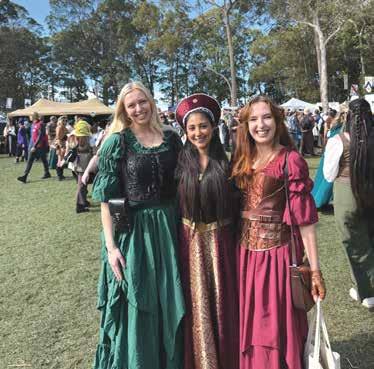
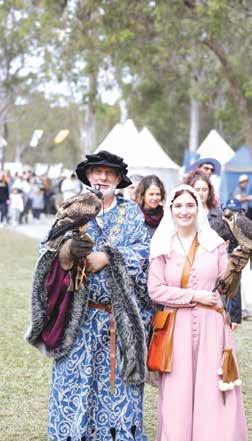
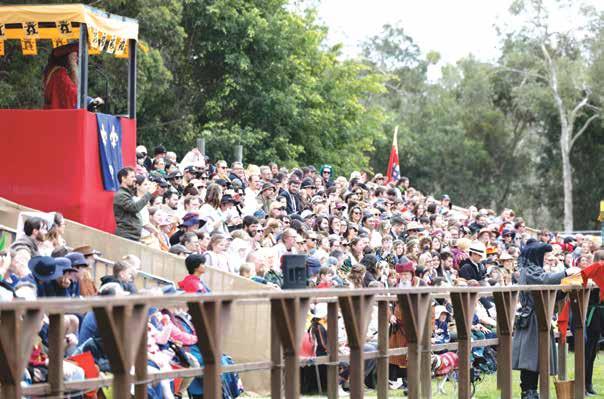
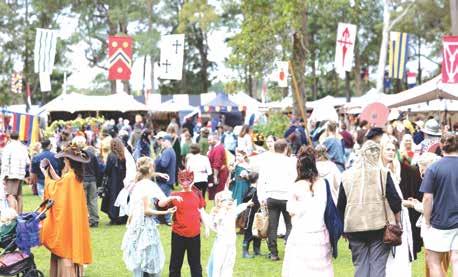
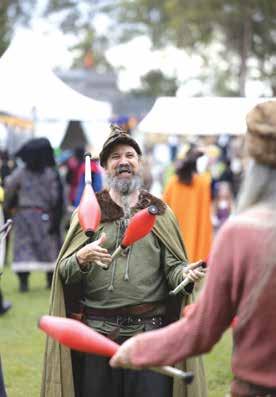
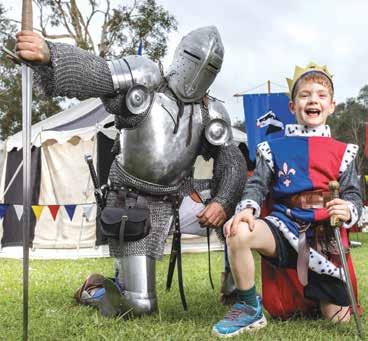
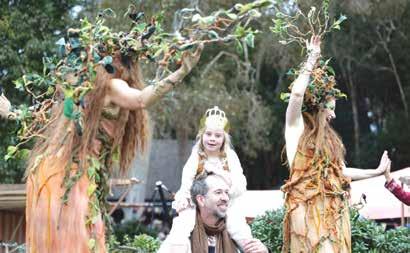
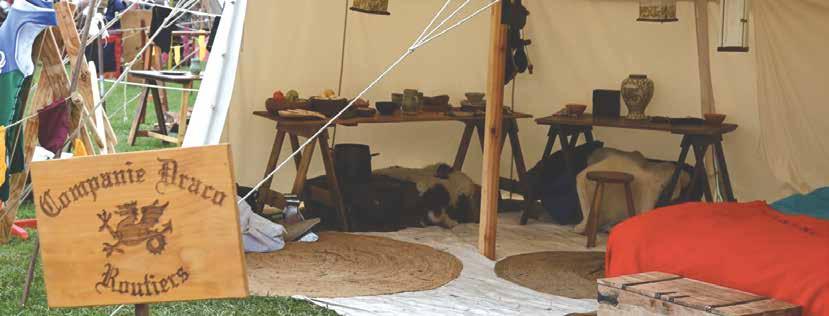
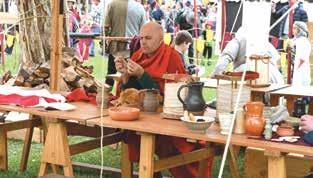
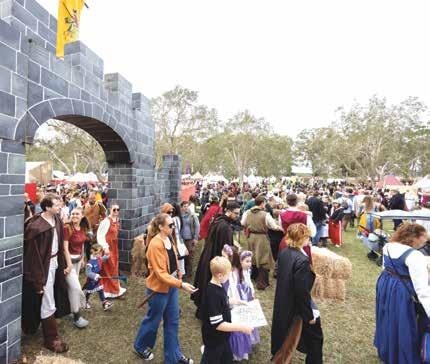
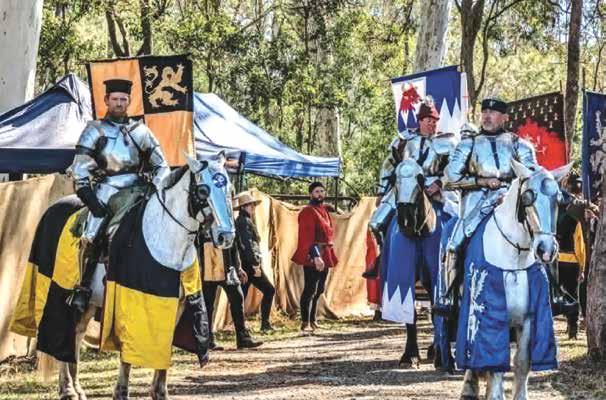
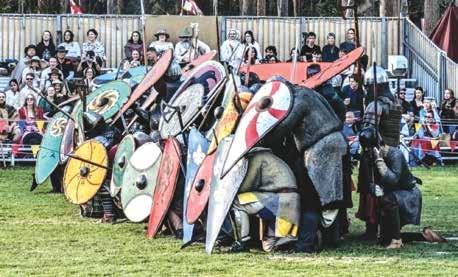
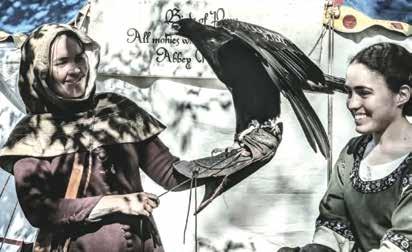
We’ve got a story on the Medieval Festival taken from my point of view as a first time attendant. Thankyou so much to Abbey Medieval Festival, Bechtel Photography, Companie Draco Routiers and Whimsical Imaginings for providing us with their wonderful photos, what a fantastic day we had.
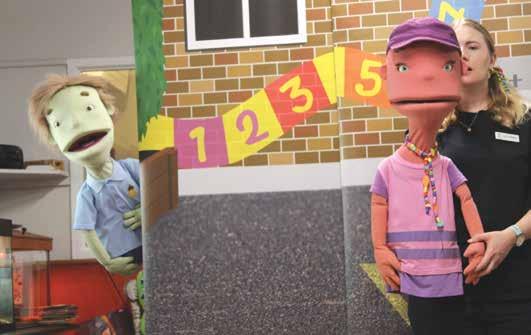
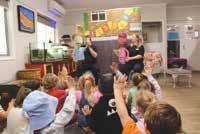
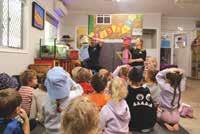
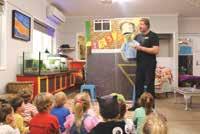
A lovely reminder of what community is all about was the visit to Bribie Island Community Kindergarten from the Camp Quality puppets, helping young children better understand cancer and how to support classmates, friends or family members affected by a diagnosis.
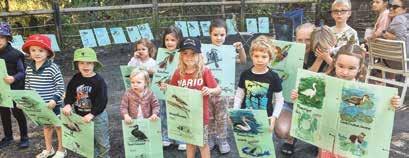
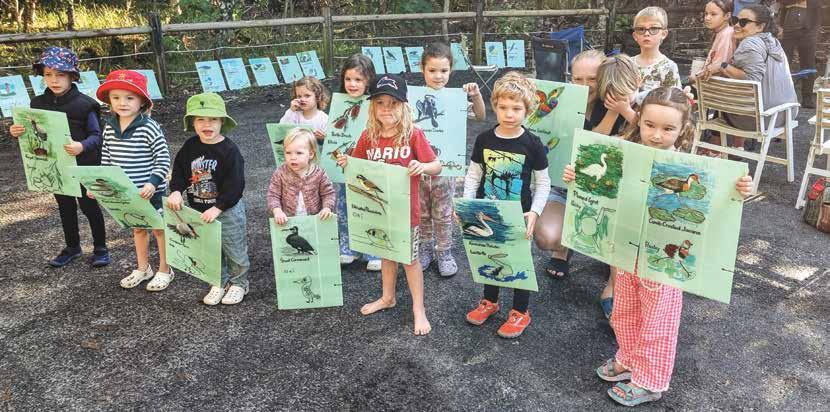
The children also met some of the BIEPA Buckleys Hole Community Restoration Project volunteers, along with Nanna Sue, who painted beautiful pictures of local birds, wildlife and plants for the young artists to copy and turn into their own creations.
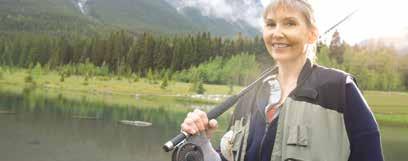
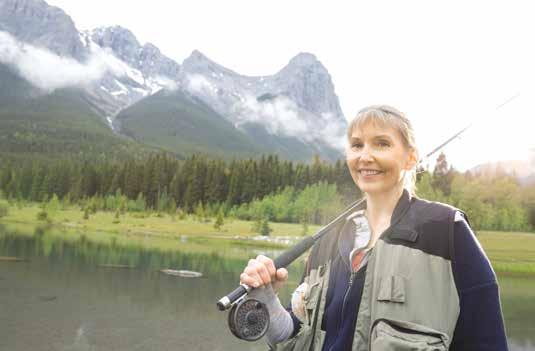
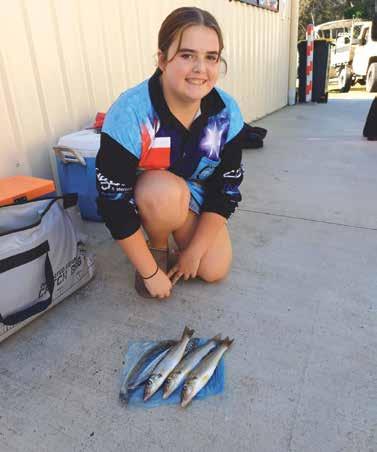
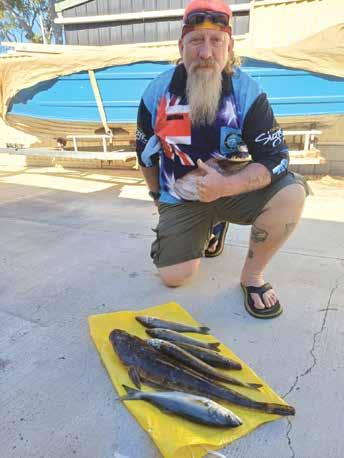
We’re also excited to share the Women’s Fishing Classic, which is happening across August and September and is inviting women and girls across South East Queensland to get involved, have a go and enjoy fishing in a friendly, welcoming community. It sounds like a wonderful chance to try something new, meet people and enjoy a bit of time outdoors.
There are also plenty of community group stories, art projects, local achievements and familiar faces throughout these pages.
Thank you, as always, to our wonderful community for reading, contributing, sharing your stories, supporting local events and helping make this magazine what it is. I hope you enjoy Edition 269 — and be reminded of the heart that makes our community so special.
Take Care, Stay Safe,
CONTRIBUTORS
Anne Matthews
Al Finegan
Barry Clark
Elaine Lutton
Joie Scheinpflug
John Traill
Federal Member
Longman Gets Things
Done!
for
Peter Schinkel
Peter Dallimore
Philip Arlidge
Robyn- B.I.
Boat Charters
Kathy Vincent Maria Christina
Sue Wighton
Tracey Blinco
R3 Roofing
Paul Popham
Ivory T - fabric & wallpaper
Yawk Yawk
Disclaimer for Contributions to The Bribie Islander Magazine
The views and opinions expressed in contributions to The Bribie Islander Magazine are those of the individual authors and do not necessarily reflect the official policy or position of the magazine or its editorial team. Contributions are welcome, but the magazine reserves the right to edit, modify, or reject submissions that do not align with our publishing standards or guidelines. By submitting your work, you acknowledge that you have the necessary rights to share the content and grant The Bribie Islander Magazine permission to reproduce it in print and online formats. The Bribie Islander Magazine is not responsible for any copyright infringement that may arise from the publication of submitted materials. We encourage respectful and constructive dialogue, and contributions that violate community guidelines or promote hate speech, discrimination, or illegal activities will not be accepted. Thank you for your understanding and support in maintaining a positive and inclusive community publication.
The Common Cold's Big Dramatic Day Out
The common cold has a talent for false advertising. It begins with a harmless little throat scratch, the sort that encourages optimism, denial, and foolish public statements like “I’m sure it’s nothing.”
Then, usually around day two or three, the cold reveals its full business plan: blocked noses, watery eyes, dramatic fatigue, and a sudden spiritual attachment to the couch.
It is one of life’s smaller scandals that a cold can turn a perfectly capable adult into a buffering device. One minute, ordinary tasks seem possible.
The next, making tea requires strategy, courage, and possibly a committee. This is not overreacting.
This is the common cold doing what it has done for generations: arriving uninvited, lowering standards, and making breathing feel like a premium subscription.
When the Cold Stages a Hostile Takeover
By the middle of the cold, the body becomes a poorly managed organisation. The nose is blocked, but also running, which is the sort of contradiction usually reserved for government forms. The throat feels
RADIAL & FOCUSED SHOCKWAVE THERAPY
Clinically proven* to help these conditions
• Heel pain (plantar fasciitis and Achilles tendinopathy)
• Tennis and golfers elbow
• Patella tendinopathy
• Frozen shoulder
• Rotator cuff tendinopathy +/- calcification
• Hip bursitis and tendinopathy
• Shin splints; Heel spurs
• Lower back & Knee arthritis 14 YRS
rough. The head feels heavy. Sleeping is difficult, talking is irritating, and breathing through both nostrils at once starts to seem like something available only to the very rich.
This is often the cold’s peak: not usually dangerous for most people, but wildly inconvenient. The immune system is doing useful work, certainly, but it behaves like a renovation crew that starts at 6 a.m. and uses every power tool in the shed.
It brings mucus, sneezing, coughing, fatigue, and the strong belief that no one in recorded history has ever suffered so bravely while searching for a clean tissue.
The Tissue Situation Has Escalated
car, and in mysterious locations that suggest the sufferer has been leaving offerings to the gods of congestion.
The rubbish bin fills so quickly it begins to resemble a tiny alpine resort. Still, many people try to “push through” a cold, turning up to work, school, shops, and family gatherings
is not laziness. It is common sense wearing slippers and holding a mug of tea like a tiny trophy.
When the Joke Should Clock Off
Of course, it is important to know when symptoms need proper attention. If things keep getting worse, breathing becomes difficult, fever is high or will not settle, or there is severe pain in the chest, ears, throat, or sinuses, medical advice is the sensible choice. A cold can be ridiculous; struggling to breathe is not a punchline.
At the worst point of a cold, tissues stop being household supplies and become a national resource. They appear beside the bed, on the desk, in pockets, in the
with watery eyes and a cough they insist is “nothing.”
This is how germs enjoy a guided tour of the community. Resting when sick
You’re More Than Just an Appointment
At Eye Envy Optometrist, we believe great eye care starts with taking the time to listen.
As a proudly local, independent practice, we’re free to focus on what’s best for you—not sales targets or rushed appointments.
Using the latest eye care technology and premium lens innovations, we provide personalised solutions to help you see your very best.
The
Verdict: Day Two or Three Is the Villain
So, what is the worst day of common cold symptoms?
For many people, it is around day two or three, when the cold stops making polite suggestions and formally takes over the household.
The best response is simple: rest, drink fluids, keep your germs to yourself, and accept that for the next 24 hours your most important relationship will be with a tissue box.
Dianne Firman
Health & Wellbeing Coach & Counsellor
Live with vitality, clarity and calm
It is never too late to live the life you want. My aim is to empower women in midlife and beyond, to age well and to live with vitality, confidence and calm. I specialise in:
• Managing stress & anxiety
• Psychological wellbeing
• Healthy weight management
• Making sustainable lifestyle changes
• Navigating life’s transitions
Please visit my website to find out more about my services or to book a free 30-minute discovery call. www.midlifewellbeingcounselling.com.au
Alternatively, please contact me on 0414 513 116 or via email dianne@midlifewellbeingcounselling.com.au
JUICE BAR
100% fresh fruit & veg made in-store
RICOS DELI
Cold meats, sauces, Asian rice, desserts & other goodies gluten free options available
EASY SHOPPING
Free delivery over $30
Click and collect (in-store or to boot)
Order online top quality Produce, hand picked, market fresh
We really care about making every journey a pleasure, and all our drivers are safety checked, licenced and first aid accredited for peace of mind. Driving Miss Daisy will help with: Trips to the doctor, physio, podiatrist, hairdresser etc.
Organising and accompanying on outings - perhaps to a cafe, the movies or museum.
Shopping assistance as needed, for groceries, clothes, gifts etc.
Clients with special needs Airport, bus, rail departures and pick ups
We offer you independence and assurance, so please call
Daisy Mobile - 0498 760 438
BRIBIE DOCTORS BANKSIA BEACH
37 Sunderland Drive
Banksia Beach, QLD 4507
Ph: 3450 0741
Bribie Doctors group fondly welcomes Dr Sreshta Singh to our practice Bribie Doctors Banksia Beach.
Dr Sreshta is a Specialist GP and done her Fellowship in through Royal Australian College of General Practitioners. In her 15 years Career, she has vast experience in all aspects of Medicine.
She has worked at Bundaberg and Hervey Bay before calling Bribie her home in 2025.
Pursuing her academic interests, she has also done Graduate Diploma in Child Health from Western Sydney University and a Certificate in Emergency Medicine
through the Australasian College for Emergency Medicine.
She is a highly skilled doctor with Special interest in Paediatric / Child health, Women’s health including pregnancy planning and early pregnancy care, Contraception Advice (including Implanon Insertion and Removal, IUCD removal).
Being a part of local community, she endeavours providing continuity of care to individuals and families through every stage of life.
She is accepting appointments for her existing and new patients. Please call Bribie Doctors Banksia Beach at 34500741 for appointments.
BRIBIE DOCTORS BONGAREE
25 Second Avenue Banksia Beach, QLD 4507
Ph: 3450 4175
Bribie Doctors proudly welcomes Dr Rishaal Sharma, who is a known local GP, to our practice at Bongaree.
He is a compassionate GP known for his dedication and providing high level care to his patients. His 15 years of work experience has enabled him to deal with complex medical issues. He has extensive experience is Orthopaedics, both in Australia and Fiji.
He has Special interests in Orthopaedic care including Osteoarthritis, Joint Pain, Mobility issues, Chronic Complex Medical Conditions and Emergency Care.
He has worked across many Medical facilities including Bundaberg, Hervey Bay and Bribie Island. He came to Bribie Island in 2025. The love and appreciation from his patients made him decide to settle here & call Bribie his permanent home.
He believes in building trusting, longterm relationships with his patients and supporting them to achieve the best possible health outcomes through personalised, evidencebased care.
He is accepting appointments for his existing and new patients. Please call Bribie Doctors (Bongaree) at 34083320 to book an appointment.
OR Coincidence Something More?
Have you ever thought about someone you haven't spoken to in years, only for them to call later that day?
Or perhaps you have been considering a career change and suddenly begin seeing the same opportunity, message, or conversation appear again and again. Some people call these coincidences. Others describe them as synchronicities, signs, or gentle nudges from the universe.
Whatever your beliefs, I think they are worth considering. As a holistic counsellor, I don't believe every coincidence is a message we are meant to act upon. However, I do believe they can encourage us to pause, become present, and ask ourselves an important question:
Why has this caught my attention?
Perhaps the coincidence itself isn't the message. Perhaps the message lies in our response to it.
When something repeatedly captures our awareness, it often reflects something already stirring within us. It may highlight a dream we have ignored, a decision we have been avoiding, or an area of life asking for our attention.
Our minds naturally notice patterns. Sometimes there is a practical explanation for what we experience. Other times, the meaning we find in an event can inspire us to reflect more deeply on our lives.
Rather than asking, "Is this a sign?" perhaps a more helpful question is:
"What is this inviting me to notice?"
That simple shift moves us away from looking outside ourselves for all the answers and encourages us to reconnect with our own wisdom.
I have often found that when people become quieter, more mindful, and more connected with themselves, they begin noticing opportunities they may have previously overlooked. They trust themselves more. They become clearer about what feels right, and they make choices that are more aligned with their values and wellbeing.
Whether you believe in synchronicity, divine guidance, or simply the remarkable way our minds recognise meaningful patterns, there is value in becoming curious rather than dismissive.
Life has a way of inviting us to slow down and pay attention. Sometimes the greatest guidance doesn't come from the coincidence itself, but from the insight it awakens within us.
The next time something unexpected catches your attention, pause for a moment. Rather than asking, "What does this mean?" try asking, "What is this helping me become aware of?"
You may be surprised by the answer. If you're seeking greater clarity, purpose, or direction, I would love to help you explore what your experiences may be revealing about your life and the path ahead. Reach out and book a session and let's begin the conversation. You can reach me on 0405 361 882.
Always with love, Maria Christina x
Holistic Counsellor
| Life & Wellness Guide
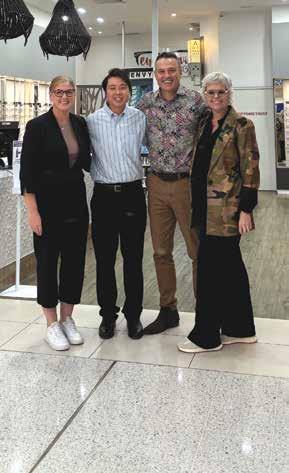
Receptionist Katherine (left) and Acupuncturists Jessica (centre) and Wendy (right).
NECK PAIN
Neck pain and tight neck muscles are common and can significantly impact daily life. The discomfort may be localised to the neck or radiate to other areas such as the shoulders, upper back, head, or even the arms. The most common causes of neck pain and tightness include poor posture, emotional stress, overuse, and injuries, such as whiplash. Structural issues such as cervical spondylosis, herniated discs, and degeneration can also contribute to chronically tight muscles, as muscles often contract to guard and stablise the affected area. Muscles that are contracted for a prolonged period of time contribute to chronic pain.
The impact of tight neck muscles often goes beyond physical discomfort, affecting overall well-being. Persistent pain can contribute to stress, anxiety, and depression, and can interfere with daily activities, driving, and hobbies - leading to a decreased quality of life. Neck pain can also disrupt sleep, either by causing discomfort while lying down or leading to headaches that prevent restful sleep. Poor sleep, in turn, can exacerbate muscle tension, creating a vicious cycle.
THE NECK & HEADACHES
Though headaches can stem from various causes, an often overlooked factor is tight neck muscles. The muscles in the neck play a crucial role in supporting the head and facilitating movement; when these muscles become tense or strained however, they can provoke or worsen headaches.
• Muscle tension and referred pain: when muscles become tight, they can develop “trigger points”, which are small knots in the muscle tissue. These trigger points can refer pain to other areas, for example the temples, forehead, or around the eyes, leading to tension-type headaches or even mimicking migraine symptoms.
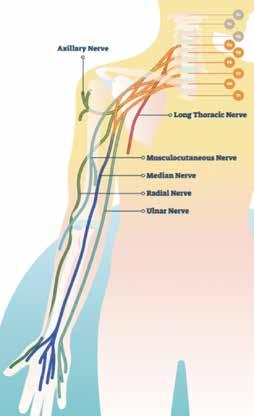
• Nerve irritation: the neck houses several nerves, including a nerve which runs from the upper cervical spine to the scalp. Tight muscles in the neck can irritate or compress these nerves, leading to headaches that originate at the base of the skull and radiate to the forehead or behind the eyes.
THE NECK & TINGLING FINGERS
People are often surprised to learn that the root cause of tingling in their fingers sometimes may actually be found in the neck. Tight neck muscles can lead to tingling in the fingers through:
• Nerve compression: when neck muscles become tight, they can put pressure on the nerves that pass through or near them. This compression can disrupt the normal flow of nerve signals to the arms and hands, leading to tingling, numbness, or
even pain in the fingers.
• Cervical radiculopathy: cervical radiculopathy occurs when a nerve root in the cervical spine becomes compressed or irritated, often due to a herniated disc, bone spur, or other degenerative changes in the spine. Tight neck muscles can however exacerbate this condition by pulling on the vertebrae or creating additional pressure around the nerve roots. When the nerves that extend into the arms and fingers are affected, it can result in tingling or a “pins and needles” sensation in the fingers.
• Reduced blood flow: tight muscles can also restrict blood flow to the nerves. Insufficient blood flow can deprive nerves of the oxygen and nutrients they need to function properly, resulting in tingling or numbness in the extremities, including the fingers.
HOW ACUPUNCTURE MAY HELP
Acupuncture can be particularly effective in relieving tight neck muscles, and therefore also relieve related symptoms, such as headaches and nerve compression by:
• Releasing muscle tension: acupuncture helps release muscle tension, improve blood circulation, and reduce inflammation, leading to relief of muscle tightness and pain.
• Promoting blood flow: improved blood circulation is one of the key benefits of acupuncture. By increasing blood flow to the neck muscles, acupuncture helps to deliver more oxygen and nutrients to the affected tissues which aids in the healing process and reduces muscle stiffness.
• Reducing inflammation: acupuncture has been shown to have anti-inflammatory effects. By reducing inflammation, acupuncture helps to alleviate pain and promote faster recovery.
• Stimulating endorphin release: acupuncture stimulates the release of endorphins, which are natural painrelieving chemicals produced by the body. This can help reduce the sensation of pain and discomfort associated with tight neck muscles, providing both immediate and long-term relief.
The UK’s National Institute for Health and Care Excellence (NICE), which provides evidence-based guidance and advice for health and care in England, in fact recognises acupuncture as a treatment option for chronic pain, including neck pain. If you’d like to make a booking or if you’d like to discuss whether acupuncture and Chinese medicine is right for you, please contact us - Jessica, Wendy, and Katherine - via our website www.bribieacupuncture. com.au or call 0423 160 228. You can also find us on Facebook and Instagram @ bribieacupuncture. HICAPS is available onsite. Pensioner discounts available.
Bribie Acupuncture
4/29 Benabrow Avenue, Bellara (behind the James Moore law office).
Winter Skin Tips for a Softer Season
Coldweather can leave skin feeling tight, dry and dull, but winter skin care does not need to be complicated. Think of it as a seasonal reset: a few thoughtful habits, done consistently, can help keep your skin comfortable, protected and glowing through the cooler months.
• Turn down the heat in the shower. Hot water may feel comforting, but it can strip the skin of natural oils. Choose lukewarm water and keep showers short to help protect your skin barrier.
• Moisturise while skin is still damp. Apply moisturiser straight after showering or washing your face. This helps lock in hydration before dryness has a chance to settle.
• Switch to a gentler cleanser. If your skin feels tight after cleansing, your product may be too harsh for winter. Try a creamy, soap-free or fragrance-free cleanser, especially for the face and dry-prone areas.
• Go easy on exfoliation. Flaky skin can make scrubbing feel tempting, but over-exfoliating may worsen irritation. Focus on moisture and barrier repair instead.
• Choose richer textures where needed. Your summer lotion may not be enough in cooler weather. A creamier moisturiser at night can help soothe dryness, especially on the face, hands, elbows, knees and feet.
• Keep hand cream close. Frequent washing, wind and cold air can make hands rough quickly. Keep a tube by the sink, in your bag or beside your bed so it becomes part of your routine.
• Protect your lips before they crack. Use a simple balm or ointment regularly, and avoid licking your lips, which can make dryness worse.
• Use scarves and gloves as skin care. Winter accessories do more than complete an outfit; they help shield exposed skin from wind, cold and moisture loss.
• Add moisture to indoor air. Heating can make rooms feel dry. A humidifier overnight, or simple ways to bring moisture back into the room, can help skin feel more comfortable.
• Do not retire your sunscreen. In Australia, UV exposure remains a concern beyond summer. Use broad-spectrum SPF whenever the UV index calls for protection.
• Keep your routine simple. Winter skin often benefits from fewer irritating products, not more. Gentle cleansing, steady moisturising and daily protection are the real essentials.
• Know when to ask for help. If dryness becomes painful, persistent or linked to eczema, psoriasis, rosacea or cracking that will not heal, seek professional advice rather than guessing in the beauty aisle.
Winter skin care is less about chasing miracle products and more about building a routine that feels gentle, protective and easy to repeat. Be consistent, keep moisture close, and let your skin move through the season softly.
Every answer matters
If you know where you’ll be on Census night, Tuesday 11 August, you can complete the form for your household as soon as you get your instructions. Complete online, on paper or with help from us.
census.abs.gov.au
Wellness Is a Personal Journey
Please include the photo. Thank you Wellness Is a Personal JourneyTurn on the television or scroll through social media and you are often met with messages promoting a certain way society expects you to look and be.
This narrative is outdated, unhelpful and, for many, damaging. As a wellness coach with experience in psychosocial recovery coaching and more than 25 years of experience in mobility, rehabilitation, sports-specific training, health and fitness, team building, and motivation, I speak with many women who are balancing incredibly full lives. Many are managing work, family, caring responsibilities, health challenges, and countless daily demands, often placing their own wellbeing last. Many women are also choosing to raise families
as solo parents, creating safe, loving homes and forging their own paths. The outdated belief that being a single parent is a negative thing needs to change. These women deserve recognition, support and respect.
Women’s wellness is about creating a life that supports physical health, mental wellbeing, confidence, connection and balance. Society is only beginning to have more meaningful conversations about women’s health across every stage of life. Menstrual health, pregnancy, postpartum recovery, menopause, mental health and work-life balance are finally receiving the attention they deserve. Every woman’s journey is different, and there is no single approach that works for everyone. Mental wellbeing is just as important as physical health. The two are deeply connected, and true
wellness comes from nurturing both. Looking after your nervous system, managing stress, sleep, creating moments of rest and building sustainable habits are all important parts of living a healthy life. Having the body and mind in balance can be a reasonable and positive goal when it is focused on improving health, reducing the risk of disease and helping your body move more comfortably. Building strength and improving fitness can support mobility, independence, bone health and overall quality of life.
However, the journey should begin with the basics. Allow your body time to slowly adapt to movement and exercise. Creating new patterns for your mind and body takes time, and gradually increasing activity can help reduce the risk of injury while building confidence and consistency. Health is not about comparing
Bribie Island Community Help is after volunteers to assist our active aged and frail clients with door-to-door transport. We transport clients around following areas:
•Bribie Island & surrounds •Caboolture, Redcliffe, Northlakes
•North Brisbane & Brisbane City. Currently seeking to expand our Volunteering numbers to service all areas to assist our growing client numbers.
We are seeking committed volunteers who can donate 5 to 8 hours per week. We are registered with Centrelink for those with
volunteering obligations.
We have a fleet of Toyota Commuter automatic minibuses, and we will provide training on driving the buses as well as orientation and ongoing support from our professional office staff. MANDATORY
REQUIREMENTS:
•Must hold Australian or NZ Citizenship or the capacity to permanently work in Australia.
•Above 25 years of age due to insurance constraints.
•Be able to pass a driving record history check by Qld Transport.
•Be able to pass a criminal history background check.
•Have a minimum of an Australian Open “C” class license check by Qld Transport.
If you wish to apply or seek further information, you can email your details to apply@bivchai.org.au or call on 3408-0111.
yourself to the people you see online. Everyone has a different body, different circumstances and a different journey. Social media often does not show the full picture behind someone’s health, lifestyle or achievements.
Nutrition is also an important part of overall wellbeing. Nourishing your body with balanced foods, creating sustainable habits and finding a healthy balance that fits your life are all valuable steps towards long-term health. Recently, I designed a personalised wellness program for a client who is a busy mum, caregiver and works in a corporate environment. Rather than creating another demanding fitness schedule, the focus was on slowing down and creating space for her own wellbeing. The program incorporated gentle movement,
stretching, breathing exercises and Yoga Nidra to support her nervous system and encourage time for rest and recovery. This time is scheduled as a non-negotiable commitment—a promise you make to yourself to prioritise your own wellbeing. It is dedicated time for you, recognising that looking after yourself is essential, not optional. By honouring this commitment, you ensure you have cared for yourself.
Movement does not have to be extreme to be beneficial. When we move our bodies, we encourage the release of natural feel-good hormones such as dopamine and oxytocin, which can support mood, motivation, stress management and mental clarity. For women already carrying heavy responsibilities, adding another intense workout program to their schedule can sometimes create more pressure rather than improving wellbeing. Yourself care routine will need to be individually designed. Start by nurturing your body and your mind. Take a walk in nature. Embrace ten minutes of sunshine.
Do not get caught up in every trend or social media influencer claiming their workout is the only path to success. Many programs are designed for people who may not be managing the same responsibilities, lifestyle demands or challenges that you are. The best wellness program is the one that suits you, your goals and your life. Seek support from qualified health professionals who can
understand your individual circumstances and help create a plan that supports both your physical and mental health.
Before commencing an exercise program, it is recommended that you consult your GP for a health check, including having your blood pressure and heart rate assessed to ensure it is safe for you to begin exercising. If you have high blood pressure or other medical conditions, your GP can advise you on any exercises that should be avoided and recommend activities that are appropriate for your individual needs. Joining a local walking group can also be a great way to stay active, build consistency, and enjoy the social benefits of exercising with others.
Wellness is not about perfection. It is about creating a balanced life where you can feel stronger, healthier and more connected to yourself. Honour where you are today. Give yourself permission to start slowly. Celebrate progress rather than perfection.
Your health journey belongs to you — and you deserve a program designed around your needs.
Yours in Health and Wellness, Tracey Blinco Wellness Coach
Cyn's Corner
The Invisible Threads
Communities are curious things.
At first glance they appear to be held together by roads, buildings, parks and shops. Yet if all of those disappeared tomorrow, what we would miss most would not be bricks and mortar. We would miss the people.
A community is woven together by countless acts that rarely make the headlines. Someone notices an elderly neighbour's lawn is getting too long and quietly mows it. A volunteer opens a hall before anyone else arrives. Someone picks up litter that isn't theirs. A stranger pauses long enough to ask, "How are you?"-and genuinely waits for the answer.
These are the invisible threads that bind us together. They are also surprisingly fragile.
It doesn't take much for those threads to begin to fray. When we assume someone else will do the hard work, when we leave a mess for another person to clean up, or when we see ourselves as consumers of a community rather than contributors to it, something changes. We may not notice it immediately, but little by little the sense of belonging begins to erode.
Perhaps that is why communities don't simply happen. They are created, one choice at a time.
Every day we decide whether we will leave a place a little better than we found it. Sometimes that decision costs us only a few extra minutes. Occasionally it requires more effort. Almost always it requires us to think beyond ourselves.
Interestingly, generosity has a habit of multiplying. When someone experiences kindness, they are often inspired to show kindness themselves. Likewise, when people see others giving their time freely, they begin to realise that a thriving community depends not on a handful of extraordinary people, but on many ordinary people who quietly choose to help.
One of the great privileges of my role is meeting people across Bribie Island whose names rarely appear in print. They volunteer in op shops, sports clubs, schools, churches, community groups and charities. They don't do it for recognition. Most would be embarrassed if they were
singled out. They simply see a need and respond. Their reward is not applause. It is knowing that someone else's burden has become a little lighter.
I sometimes wonder what would happen if each of us asked one simple question before leaving any place:
"Have I added to this community today, or have I taken something from it?"
The answer isn't measured by how much money we give or how many hours we volunteer. Often it is found in the smallest moments-in our patience, our courtesy, our willingness to lend a hand, or simply in treating people with dignity.
The strongest communities are not built by people who expect others to make life better for them. They are built by people who quietly decide to make life better for someone else. Those choices may seem small, almost invisible. Yet together, they are the threads that hold us all.
I'd love to hear your story. When have you witnessed the invisible threads that hold our community together? And when have you seen those threads begin to fray?
Please share your thoughts on our Bribie Island Uniting Church Facebook page - https://www.facebook.com/ UnitingChurchBribie/ or via email cynthia@ucabribie.org. au, you can also write in c/o Uniting Church, 80 Webster Street, Bongaree 4507. Together, perhaps we can inspire one another to leave our community just a little better than we found it.
Until next time - Peace, Light and Love Cyn
Cynthia Gusman-Nolan is a Uniting Church Ministry Agent with professional experience and qualifications in psychology, education, trauma counselling, and community wellbeing.
Disclaimer:
The views expressed in this column are the personal views of the author and do not necessarily represent the views of the publisher, the Uniting Church, or any other organisation. This column is intended for general interest, reflection, and community discussion only and is not a substitute for professional medical, psychological, legal, or other professional advice. Readers should seek appropriate professional support for their individual circumstances. The author and publisher accept no liability for actions taken based on the content of this column. If you are experiencing emotional distress, thoughts of self-harm, or believe life is not worth living, contact your GP, call 000 in an emergency, or contact a crisis support service such as Lifeline Australia on 13 11 14
Is Placing A Person With Dementia Into A Care Home: An Act Of Love, Or Betrayal?
Manyfamilies feel deep guilt when they place a loved one with Dementia in a care home. They may think they are giving up or turning their back on someone they love. However, placing a person with Dementia in professional care is not a betrayal. It is often an act of love. It demonstrates responsibility, care, and a strong commitment to protecting the person’s safety and wellbeing.
The Reality of Dementia Care
Dementia causes memory loss, confusion, and changes in behaviour. As the condition worsens, the person needs more help with daily tasks such as eating, bathing, and taking medication. Many people with Dementia also experience agitation or wandering, which can put them at risk.
Family members often try to provide this care at home. However, research shows that caring for people with Dementia is highly stressful and emotionally taxing. Many caregivers report psychological stress, social isolation, and even depression when they try to manage these demands alone. This can harm both the caregiver and the person with Dementia.
When families admit they cannot meet these needs alone, they show honesty and courage. They recognise their limits and take action to protect everyone involved.
Professional Care Meets Complex Needs
Care homes provide specialised support for people living with Dementia. Staff receive training to understand Dementia and manage its symptoms. They offer 24hour care, including medical support, supervision, and assistance with daily tasks.
These facilities also create safe environments. For example, they design spaces to reduce confusion and prevent accidents. They also offer activities that help residents remain mentally and socially engaged. Research shows that nursing homes with specialised dementia care can achieve better outcomes.
These facilities often reduce hospital visits and provide more skilled care for residents. This level of care can be difficult to provide at home, even with the best intentions. Choosing this support shows love because families want the best possible care for their loved one.
Safety and Dignity Matter
People with dementia can lose the ability to recognise danger. They may wander off or forget important tasks,
By Terry Skidmore
such as eating or taking medication. Without adequate supervision, these risks can lead to serious harm.
Ethics in dementia care focuses on safeguarding the person’s dignity and well-being. Caregivers must balance respect for independence with the need to ensure the person’s safety.
Placing a person in a care facility supports this balance. Staff can provide constant supervision while still encouraging independence in safe ways. This approach protects dignity instead of taking it away. Families who choose professional care act out of concern for safety, not a lack of love.
Family Love Does Not End with Placement
Some people believe that placing a loved one in care means abandoning them. This belief is not true. Families can still visit regularly, stay involved in care decisions, and provide emotional support.
Research shows that family involvement in care homes can improve communication and even residents' quality of life. Love endures through visits, conversations, and shared moments. Placement changes how care is delivered, but it does not end the relationship.
The Ethical Choice
Dementia presents difficult choices. Families often have to choose between what they want and what the person needs. Ethical care focuses on what is best for the person, even when it is painful.
In many cases, staying at home is neither feasible nor safe. A care home can provide resources and expertise that families cannot match. Choosing this option demonstrates responsibility and compassion.
Love sometimes means making difficult decisions. It means prioritising the person’s safety and well-being, even when it hurts.
Conclusion
Placing a person with dementia in a care facility is not an act of betrayal. It is a thoughtful, caring decision that recognises the limits of home care, protects the person’s safety, and provides access to professional support.
Families who make this choice do so because they love their loved one deeply. They want their loved one to live with dignity, comfort, and care. In this way, placement is not the end of love. It is one of its strongest expressions.
As we move through July, it has been another busy month across Pumicestone, with exciting local projects delivered alongside a Queensland Budget that is investing in our community's future.
The 2026–27 Queensland Budget is delivering for Pumicestone with major investments that will improve transport, strengthen our coastline, support local schools and build the infrastructure our growing community needs.
We are continuing to deliver the new Bribie Island Bridge, providing safer and more reliable transport for Bribie Island residents.
The Budget also invests in upgrading Caboolture–Bribie Island Road between Hickey Road and King Johns Creek in partnership with the Federal Government, improving safety and traffic flow on one of our region's busiest corridors.
We're also delivering the Bongaree to Woorim Active and Accessible Community Infrastructure Project, providing improved pedestrian and cyclist connections with new amenities, upgraded crossings, segregated cycleways and pontoon replacements through the South East Queensland City Deal in partnership with the Federal Government and the City of Moreton Bay.
Funding has also been committed for emergency works on northern Bribie Island to close two breakthrough channels, buffer the dunes, deepen the Pumicestone Passage and investigate long-term solutions to better protect this unique environment.
Local schools will also benefit through a $478,191 investment for maintenance and minor works across the Pumicestone electorate. Families are also benefiting from the Crisafulli Government's Play On! Sports Vouchers, with more than 293,800 Queensland children supported in the program's first year.
Applications for the next round open on 27 July, continuing to deliver cost-of-living relief while helping more local children get active and participate in community sport.
Closer to home, it was fantastic to officially open the new Clayton Park Playground in Beachmere. I was proud to secure a $500,000 Queensland Government contribution towards this wonderful community space, creating a place where local families can come together, children can play and our community can continue to thrive.
July has also been filled with opportunities to celebrate the people and organisations that make Pumicestone such a wonderful place to call home.
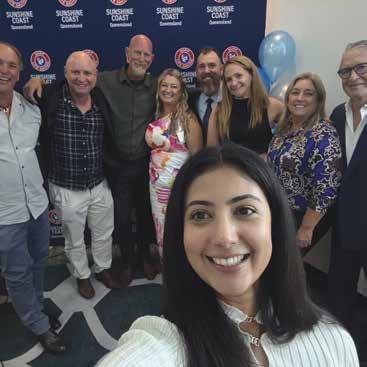
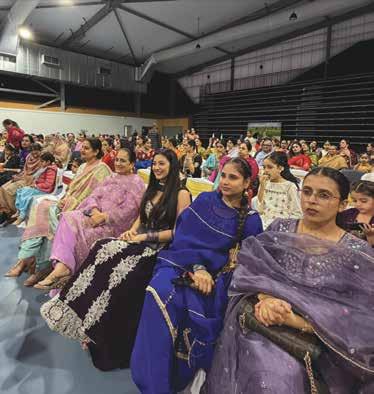
It was a privilege to welcome our newest Australian citizens, officially open the 35th Abbey Medieval Festival, celebrate Teeyan with our vibrant Punjabi community, attend the opening of the Matthew Flinders Art Prize and Dr Subrat Mishra's exhibition, congratulate Harmony Haven on receiving $19,849 through the Gambling Community Benefit Fund and recognise the outstanding volunteers from Bribie Island Surf Life Saving Club. It was also great to see Beachmere Takeaway featured on Creek to Coast and support BOQ Bribie Island's fundraising efforts for Orange Sky.
Keeping Queenslanders safe remains one of the Crisafulli Government's highest priorities. This year's Budget
delivers a $340.7 million investment in domestic and family violence initiatives.
This includes expanding HOPE Hubs, embedding specialist domestic and family violence practitioners in police stations, strengthening coercive control laws, expanding electronic monitoring to better protect victim-survivors and continuing to invest in frontline support services.
Together with stronger laws, more police and practical cost-of-living support, we are delivering a fresh start and building a safer Queensland for everyone.
As always, I am here to represent and assist you. Please do not hesitate to contact my office on (07) 3474 2100 or email pumicestone@parliament.qld.gov.au if I can be of assistance.
EXPLAINING AI IN THE BRIBIE ISLANDER MAGAZINE
Asthe world moves into an era of AI usage, we are being presented more frequently with advertisements for inclusion in The Bribie Islander magazine, which have been created on various AI platforms.
Unfortunately, most of these advertisements cannot be used, as the Bribie Islander magazine is printed on a 4-colour plate separation roll press machine, not printed on Digital Format. All images and text for every page are separated into CMYK for plate processing.
When the magazine is submitted to our printer for preflight separation, most AI generated product is rejected as separation fails for one or more of the below-
• Most AI generated images are insufficient resolution for the intended print size as most AI generators create for Digital output not 4-colour plate separation.
• Most AI generated images are missing bleed and safe area allowances
• Most AI generated images are processed as RGB rather than print-ready CMYK colour profiles
• Most AI generators create flattened or rasterised text and graphic elements which cannot be edited or reproduced cleanly
• Most files are presented as Bit Mapped images in PDF format which are fine for Digital print medium but are not re-produceable to a quality product which our clients deserve and expect.
This is especially true where fine type such as phone numbers or email addresses is included in logos. In most cases, these fine text articles disappear because of
registration issues caused by the creation process itself and the lack of crisp delineation of line.
AI is an emerging technology and has many benefits for companies and it can make a tremendous difference where standard tasks could be undertaken by such technology, saving considerable time for every small business owner.
It has tremendous potential in the digital space, however, in the large, roll press, 4-colour plate separation space, it is not yet a reliable option and full feature, print design software is still the standard of choice.
We understand our clients’ desire to create their advertisement for inclusion; however, AI products remain an issue.
Our Design Team are happy to assist in creating clear, meaningful, eye-catching advertising for you and, to this end, we have set out below some possible options for you.
1. If you design a logo, present it separately, if possible, with a transparent background in PDF, TIFF, PSD, EPS format
2. If you have wording required, present it separately in word or text file document format
3. If you have an idea but are unable to separate as required, our Design Team can work with you to bring your ideas to life.
Please do not hesitate to contact our team.
BRIBIE ISLANDER
by Sue Wighton Accidental Writer
Website and blog: suewightonaccidentalwriter.com
Ai ARTIFICIAL INTELLIGENCE IS DUMB
NikkiGemmel recently wrote an eloquent and passionate piece in The Australian Culture magazine (11 July 2026) outlining the devastating effects of AI on creativity. In this article she defends the sanctity of human creative endeavour.
I’d like to add my voice to others who despair of the insidious nature of AI on our culture and, indeed, our very humanity.
My daughter Katie Wighton is a singer songwriter (as am I). The main difference is that she’s an Aria Award winner and nominee and I’m not!
Recently she discovered that all her music (online) has been ‘scraped’ by AI to be used to make new songs. I prefer to use the term ‘stolen’.
This is her life’s work, her emotions, her heartfelt human crafting. How can we stand by and let this happen?
I get very frustrated by the conversations around AI and productivity and about the amazing things AI can do … blah blah blah.
The disclaimer by people who are somewhat worried about AI is that the things it produces (songs, novels, artwork) are not quite as good as those made by humans. They’re a bit … ‘off’.
So perhaps it’s not so bad after all and we should all stop clutching our pearls and relax.
Hey – it’s only a matter of time people! AI algorithms (thanks to the human stuff they steal) are getting better and better at replicating these artefacts.
What do we do when we truly can’t spot the difference?
Here’s the thing.
When people talk about the output of AI, the final product, they are MISSING THE POINT.
Creativity is a PROCESS. It’s the human striving to express the inexpressible through music, through art, through words. This process does not always result in a successful song, painting or novel.
Once again that’s NOT THE POINT.
It’s the process, the lying in bed at night searching for the perfect word, the perfect cadence. It’s the spark that propels you to the keyboard, the piano, the canvas at 2 am to capture the thought, that expression of your soul that will disappear by morning’s light.
This process is a human one. And it takes time, sweat and tears.
Technocrats, so called Big Tech and (I’m sorry to say) politicians are focused on money, productivity (how I loathe that word!), the bottom line.
It’s about how quickly you can produce a song, a novel, a painting. Feed the AI beast with ideas you stole, and it will vomit out something you can sell. And quickly.
If real, flawed, striving human songwriters, painters and novelists only focused on the financial aspect of what they do, we would have no creative individuals at all. The world would become a beige, dystopian place where mediocrity rules.
Let me ask you this question: How do you put a price on the soul, the heart, the essence of what it is to be human?
My First Visit to
The Abbey Medieval Festival
Was Unforgettable
By Cherrie Wilson
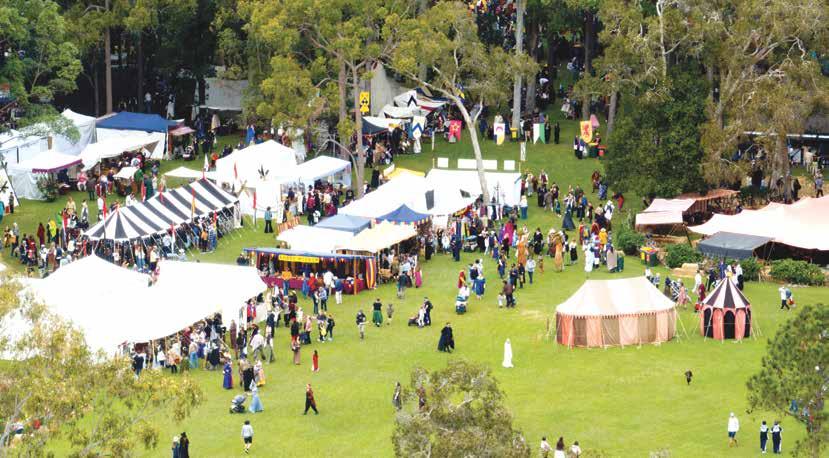
As first-time visitor, I was not sure what to expect from the Abbey Medieval Festival. I knew there would be costumes, jousting and market stalls, but I did not expect to feel so completely drawn into another world. Walking through the gates, I felt that little spark of excitement you get when you know the day is going to be different.
Bright banners snapped and lifted in the breeze, music drifted across the grounds, voices rose in happy bursts, and the smoky, savoury smell of food cooking nearby made me want to explore everything at once.
There were colour and movement everywhere: polished armour catching the light, animals being led through the grounds, canvas pavilions standing like little medieval villages, wooden stalls crowded with goods, and children weaving through the crowd with wide eyes.
Before I had even worked out where to go first, the festival already felt exciting, welcoming and unforgettable.
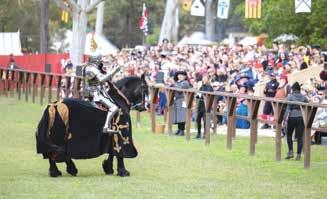
The jousting was the feature that set the day apart for me. Knights charged across the arena, horses thundered past in a blur of movement, armour flashed in the sun, and the crowd reacted to every clash. You could hear the pounding hooves, the shouts from the riders and the sudden hush before each strike. One moment I will never forget was when two riders lowered their lances and raced towards each other. The impact cracked through the air, and then one of the riders fell from his horse. For a second, the whole arena seemed to freeze. No one cheered. No one moved.
We all just held our breath, waiting for him to get up. I remember feeling genuinely worried because he stayed down much longer than I expected. Then I realised he was not badly hurt; he simply needed help standing under the weight of all that heavy armour. When he finally lifted his hand and gave the crowd a thumbs up, the relief was instant. People laughed, clapped and cheered, as if we had all been holding that breath together. The knight lived on to fight another round, and the crowd loved him even more for it.
After the jousting, I found myself wandering around with no real plan, which turned out to be the best way to experience it. Every path seemed to lead to something different: ancient antiquities, gypsy-style camps, cannon and siege weaponry displays, swordsmanship demonstrations, medieval crafts, reenactments, stalls, music, dancing and food that tasted every bit as good as it smelled.
I kept stopping, looking, listening and then being pulled towards something else. It was the kind of day where you do not need to rush, because the surprises come to you. I was lucky to experience it with my son, Tarod, and my daughter, Keola, who were both extremely interested in everything around us. They helped explain things to me, pointed out details I might have missed and took photos as I am a shocking photographer.
Seeing the festival through their eyes made it even more special. Their excitement was contagious, and before long they were caught up in the stalls too, buying swords, mead and other products was part of the whole medieval experience. What made the festival feel so real to me was the care people had put into it. The reenactors, jousters, performers, vendors and merchants did more than dress the part; they made it easy to imagine what life may have felt like in the Middle Ages across Europe and the Middle East, from about 600 to 1600AD.
For a first-time visitor, it was exciting and unforgettable, but it was also unexpectedly moving.
The vendors were amazing at keeping to the theme, with stalls that looked as though they belonged in another century. Store holders had clearly put thought into their goods, from handmade items, woven pieces and textured fabrics to pottery, illuminatedstyle artwork, tempting food, crafted displays and small objects that made me want to stop and ask questions.
Watching craftspeople work with their hands, hearing snippets of music and conversation, and walking between encampments made the history feel less like a lesson and more like something I could step inside. I also loved how many visitors had dressed up.
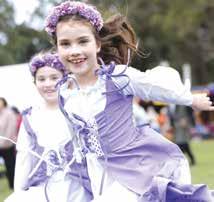
It was not just the performers creating the atmosphere; the crowd helped build it too. People wandered past in cloaks, gowns, tunics and armour, and it made the whole place feel playful and welcoming, as though everyone had quietly agreed to step into the same story for the day.
The grounds were alive with movement: children pointing at performers, friends posing for photos, stallholders calling out greetings, drums beating in the distance, games drawing people in, presentations and talks gathering curious listeners, and waves of cheering rolling over from the jousting arena.
Families, history lovers, volunteers, performers, stallholders and curious first timers like me all shared the same space. That shared enthusiasm gave the event a genuine community feeling.
The program itself felt wonderfully full. Beyond the jousting, there were tournaments in archery and Turkish oil wrestling, as well as fencing, free flight falconry displays, tavern entertainment and more demonstrations than I could possibly see in one visit. That variety was part of the thrill.
No matter where I turned, something was happening, whether it was a bird sweeping through the air, a weaponry display drawing a crowd, or music and dancing pulling people towards another corner of the festival.
Its value goes beyond the festival grounds. The event supports the Abbey Museum of Art and Archaeology, helping fund its operations and the care of its collection of fine arts and antiquities.
The Museum holds treasures from around the world, including more than 200 medieval and renaissance works of art and artefacts, so attending the festival also helps protect and share real pieces of history.
Behind the scenes, a small team of dedicated coordinators, many of them volunteers, brings together the performers, traders,
sponsors and visitors who make the event possible. Their work shows in the smooth running of the day, the variety of displays and the welcoming atmosphere. That volunteer spirit gives the festival much of its heart.
By the time I left, I understood why the Abbey Medieval Festival has become such a loved event, and why Tarod and Keola had been so excited to share it with me.
I arrived curious, but I left carrying more than memories of jousting, costumes and market stalls. What stayed with me was the feeling of being part of something warm, imaginative and shared.
I kept thinking about the sound of hooves, the smell of food, the flash of armour, the colour of costumes and the way strangers laughed, cheered and held their breath together. For a firsttime visitor, it was exciting and unforgettable, but it was also unexpectedly moving.
It reminded me that history is not just about dates, artefacts or old stories. When it is brought to life with care, passion and a little bit of medieval magic, it can make us feel connected to the past, to each other and to the community around us.
If you have never been, do not wait for “one day”. Make next year the year you go and start planning early. Events like this are too special to leave until the last minute, and once you have seen the crowds, costumes, tournaments, pavilions, animals, music and excitement for yourself, it is easy to understand why people come back.
Bring someone with you, give yourself time to wander without rushing, and let the day unfold. Step through the gates, follow the music, cheer for the knights, watch the falconry, talk to the stallholders, taste the food and let yourself be surprised by the little details that make the festival unforgettable. You do not have to be a history expert to enjoy it.
You only need to be willing to look around, ask questions and let the atmosphere pull you in. I went as a curious first-time visitor and left with a memory I know will stay with me. Next year, do not just hear about the Abbey Medieval Festival after it happens.
Be there, feel it for yourself, and give yourself the chance to be swept up in the excitement, wonder and medieval magic.
By the time I left, I understood why the Abbey Medieval Festival has become such a loved event,
All Photos supplied by Bechtel photography, Companie Draco Routiers, Whimsical Imaginings, Abbey Medieval Festival
Kindy Kids connect to nature through painting
By Alistair Gray
Howfabulous! It was paintings galore recently when the Bribie Island Community Kindergarten kids met with some of the BIEPA Buckleys Hole Community Restoration Project Volunteers.
Spread along the fence line of part of the Red Beach car park stood about 50 plant guards painted with birds or plants found in the local area—a wonderful way to engage, teach, and connect these young people with nature.
First, local artist Sue Brady (known to the kids as Nanna Sue) painted pictures of local birds, wildlife and plants for the young artists to copy and create their own interpretations.
The young people are all aged between 3 and 5. Narelle Dawson, Teacher and Director of the Community Kindergarten, said.
“We teach the children to care for country and to be active participants. Children’s voices are vital; they need to be heard and valued as future leaders and caretakers of land and nature, and how to be global citizens and what that means.”
This project - a partnership between Council and BIEPA - is an opportunity to spend time in nature, which significantly improves our mental and physical health.”
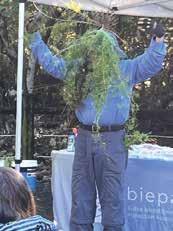
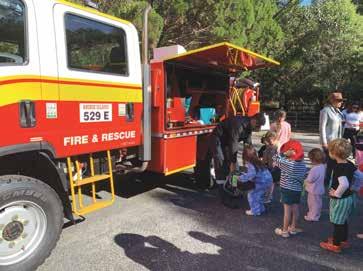
“Mr Weed”, Peter Alexander, entertained the children and explained a little about noxious plants. Then the arrival of the local fire engine, courtesy of the Bribie Island Fire Station, caught the kids’ attention.
BIEPA volunteers will use the plant guards to protect new plantings in the Buckleys Hole Community Restoration Project, where they will weed out invasive plant species and help restore native bush, habitat, and fauna.
Attendees at the event included Ariana Doolan, State Member for Pumicestone; Brooke Savige, City of Moreton Bay Councillor - Division 1; PIEEC elders and jarjums (young people); Kindy staff; family; and friends.
Uncle Ivan from PIEEC delivered the welcome and acknowledgment to country. Angela Armitage, Vice President of BIEPA and co-convenor with Peter Alexander of the restoration project, thanked everyone for coming and explained the project. Angela Armitage said.
“It’s wonderful to see the enjoyment of the children and volunteers in caring for our natural environment.
The Bribie Island Community Arts Centre will shortly display the children’s artwork as part of the City of Moreton Bay’s Next Gen exhibition, running from Wednesday 26 August to Sunday 12 September 2026.
If you are interested in getting involved as a BIEPA volunteer, or finding out more, please email Jill Cutting, BIEPA’s Volunteer Coordinator (jill@biepa.online), or visit www.biepa.online
Some of the young artists from Bribie Island Community Kindergarten.
Bribie kids bust cancer myths with help from Camp Quality puppets
Camp Quality’s much-loved puppets visited Bribie Island Community Kindergarten to help children understand cancer, support classmates and reduce fear through ageappropriate education.
On Wednesday 22 July, Camp Quality’s Cancer Education Program brought its engaging, interactive puppet show to Bribie Island Community Kindergarten in Bongaree, helping young children better understand cancer and how to support classmates, friends or family members affected by a diagnosis.
Delivered by the much-loved Camp Quality Puppets, the free program provides ageappropriate information for preschool and primary school children, helping to dispel common myths, reduce bullying and absenteeism, and support the wellbeing of children impacted by cancer.
The visit formed part of a national program that has been running since 1989 and has reached more than five million children across Australia. Through humour, movement and simple, clear messages, the puppets helped children learn that cancer is not contagious, understand some of the visible effects of treatment, and explore practical ways to be kind and supportive.
“The Camp Quality Cancer Education puppet show was seriously amazing. At the beginning of the show, they asked the kids to put up their hand if they thought they could ‘catch’ cancer. My heart sank a little when more than half of them put up their hands. At the end of the show, they asked the same question. No one put their hand up and everyone yelled out no!” said one Camp Quality mum.
“This is why educating our kids is so important. Thanks to Camp Quality for doing it in an age-appropriate way. I highly recommend getting your school involved in this conversation with the help of the puppets.”
“The children responded really well and enjoyed the show. The children’s responses to the show included: ‘Medicine helps us get better.’ When asked, ‘What was Kylie’s sickness?’ they answered, ‘Cancer.’ When asked, ‘How did she look and feel different?’ they said, ‘She
needed to go home to relax because she’s sick.’ When asked, ‘Why was Kylie worried about taking her hat off at school?’ they answered, ‘Her hair was gone.’ And most importantly, we learnt we can’t catch cancer from other people. Thank you, Camp Quality, for the amazing work you do to support children.” — Narelle Dawson, Bribie Island Community Kindergarten
Camp Quality CEO Deborah Thomas said the Cancer Education Program is the only initiative of its kind in Australia and has supported hundreds of thousands of children over its 35year history.
“It’s heartbreaking to think a child could be bullied after returning to school following the trauma of cancer treatment, yet sadly, it still happens,” Ms Thomas said. “Through the Cancer Education Program, children learn simple but vital facts, including that cancer isn’t contagious. That understanding can make a world of difference for a child returning to school without hair due to chemotherapy or with other visible effects of treatment.”
Ms Thomas said the program is also vital for children coping with the cancer diagnosis of a parent, carer, grandparent, friend or relative.
“Age-appropriate education helps turn a frightening and confusing time into something children can better understand. Education is empowerment.”
An independent KPMG evaluation of Camp Quality’s Cancer Education Program found that visits to a health care worker for mental health issues decreased by 60 per cent after the program among children who have or have had cancer. Camp Quality says the program helps schools build more compassionate communities by giving children the language and confidence to ask questions, challenge misconceptions and support peers who may be returning to school after cancer treatment or living with cancer in their family.
About Camp Quality
Camp Quality brings positivity, fun and laughter back into the lives of children facing cancer. The organisation supports children aged 0–15 who are dealing with their own cancer diagnosis, or the diagnosis of a sibling, parent or carer, every step of the way. Its programs and services help families build optimism and resilience, including Family Getaways, Family Camps, Kids’ Camps, Family Fun Days, school and early learning centre puppet performances, and the Kids’ Guide to Cancer online.
Camp Quality is a founding member of the Child and Youth Cancer Alliance with Canteen and Redkite, providing cancer navigation for supportive services and counselling for parents and carers.
Cast, Connect, Celebrate
Grab a rod, bring a friend and discover why fishing is even better when women do it together
There is nothing quite like a day by the water — a bit of fresh air, a few laughs, and that exciting little moment when something tugs on the line.
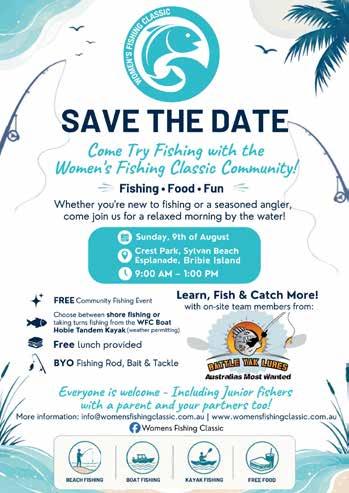
This August and September, the Women’s Fishing Classic is inviting women and girls across South East Queensland to get involved, have a go and enjoy the fun of fishing in a friendly, welcoming community.
The Women’s Fishing Classic is all about making fishing feel easy to try and fun to share.
Whether you are a complete beginner, a weekend fisher, a junior learning the ropes, or a senior who already knows a favourite spot or two, WFC is creating a space where women of all ages and abilities can feel encouraged, included and right at home.
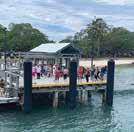
If you have ever thought, “I’d love to try fishing, but I’m not sure where to start,” this is your chance. The free Bribie “Come Try” Women’s Fishing Classic event will be held on Sunday 9 August from 9am to 1pm at Crest Park, Sylvan Beach, Bribie.
It is a relaxed morning designed for women to learn, ask questions, meet others and enjoy a no-pressure introduction to fishing. And while there may be rods, reels and bait involved, WFC is about much more than catching fish. It is about confidence, connection and the simple joy of spending time outdoors with people who cheer you on.
Kindness, encouragement and inclusivity sit at the heart of the organisation, making it a wonderful fit for our local beachside and lakeside communities.
After the Bribie come-and-try day, the big one arrives in September. The main Women’s Fishing Classic competition runs from Saturday 12 September to Sunday 27 September 2026, giving women and girls 16 days to fish when it suits them.
The competition area stretches from the tip of Inskip Point below K’gari right down to the Tweed at the southern end of the Gold Coast, taking in the beautiful South East Queensland coastline along the way.
There is plenty to get excited about too, with prizes across different fish categories, special sections for juniors, seniors and over-60s, and even a random draw to win a fishing tinny.
The event is just as suited to keen anglers as it is to mums and daughters, friends, first-timers and women who simply want a reason to head outdoors and enjoy the water.
To wrap it all up, competitors will come together for a social presentation and celebration — because half the fun is swapping stories, sharing laughs and celebrating everyone who gave it a go.
So, whether you know your way around a tackle box or you have never held a fishing rod before, the Women’s Fishing Classic is a lovely opportunity to cast a line, make new connections and be part of something positive in the community.
Free “Come Try” Event: Sunday 9 August, 9am–1pm, Crest Park, Sylvan Beach, Bribie.
Main WFC Competition: Saturday 12 September to Sunday 27 September 2026.
Register or find out more: www.womensfishingclassic.com.au
LET’S GO TRAVEL
Our last meeting on 12 July 2026 was such a lovely catchup, with plenty of friendly conversation about travel, future plans and the places everyone is hoping to visit, including the Philippines, Japan, Western Australia, England, Ireland and Scotland.
It is wonderful to see our little travel community growing. The England, Ireland and Scotland trip is happening in August 2027, and we have had two more interested travellers’ book, bringing our Bribie Island group to eight people. If anyone would like to know more, please feel very welcome to contact me directly.
Are you wanting to travel, but not on your own? Our regular meetings are a relaxed and friendly way to meet others who also love travel, share ideas and perhaps find a travel buddy. I have been lucky enough to find two lovely ladies this way. One lady and I travelled through India together for three weeks two years ago, and we still keep in regular weekly contact. We are also travelling to Egypt this November.
The other lady is travelling with me on the England, Ireland and Scotland trip in August 2027. She is from North Brisbane, and I met her through the Let’s Go Travel Group. Through these connections, I also have a list of ladies and gents from the Northside group who are looking for travel buddies too. Finding the right travel buddy can take time, and attending one meeting may not always be enough. It is important to build a rapport with someone and feel comfortable that you are compatible.
You are very welcome to exchange details and meet up on your own terms, but coming along regularly gives you the chance to get to know others in a friendly, supportive setting. Our next meeting will be on 9 August at the RSL Club.
Just ask at the Social Desk and they will let you know where we are. We are normally lucky enough to meet in the Auditorium. Everyone is welcome to join us. There are no memberships or fees—just good company, friendly conversation and a shared love of travel.
Whether you are already planning a trip, dreaming about your next adventure, or simply hoping to meet others with similar interests, we would love to see you.
Note: We are not travel agents, coordinators or insurance representatives. We are simply a friendly group of people who love travel and enjoy helping others feel more confident about travelling. We will not be booking anything for you, but we are happy to guide and assist where we can so you can make your own bookings.
You are more than welcome to contact me if you have any questions or simply come along and say hello at one of our meetings.
Here’s to friendship, community and many more travel adventures together!
Roslyn Sanderson 0401 078 187
BRISBANE CRUISES
BRIBIE ISLAND LUNCH CRUISE 2026
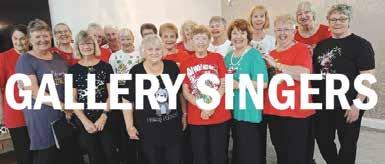
Do you love the magic of three-part harmonies? This music will warm your heart!!
The Gallery Singers will be joined with the heartwarming tones of violins, cellos, flute and Viola. Come and enjoy an afternoon concert with the Gallery Singers choir filling the air with rich harmonies, joined by a string ensemble of violins, viola, cellos, and flute. Their music drifts across the air, inviting conversation, reflection, and joy. Admission includes yummy tea/ coffee and scones.
About The Gallery Singers
The Gallery Singers are more than just a choir—we’re a community. We share friendship, laughter, and the joy of making music together. Led by the Musical Director, June Willoughby, we perform a mix of lively, soulful, and timeless melodies.
Want to Sing With Us?
If you love to sing and harmonize, why not join us?
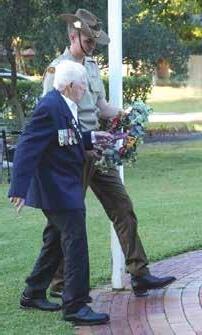
VIETNAM VETERANS DAY SERVICE
Tuesday, 18 th of August commencing at 4.30pm
IGA Sandstone Point Puts Local Excellence in the National Spotlight
There is something worth celebrating when a local supermarket counter earns national attention. At the 27th IGA National Awards of Excellence, held at The Star Gold Coast on July 13, Australia’s best independent retailers were honoured — and our region had every reason to pay attention.
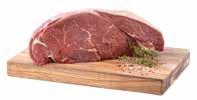
Hosted by Australian entertainment favourites Claudia Karvan and Rodger Corser, the annual awards recognised exceptional IGA and Foodland IGA retailers from across the country, with 24 awards presented on the night. Among the winners were IGA Sandstone Point, which was
named the 2026 IGA National Medium Meat Department of the Year. It is a proud achievement for the store and a well-earned nod to the team whose work begins long before most shoppers arrive. A standout meat department is about far more than a tidy display. It takes freshness, careful preparation, good value, consistent quality and staff who know their products. Customers want to feel confident about what they are taking home for dinner, whether they are buying premium cuts, family staples or something prepared and ready to cook.
IGA Sandstone Point has clearly struck that balance. Its award-winning department was recognised for an impressive range, premium cuts, value-driven options and expertly prepared products that are easy to shop. With a full in-store butchery, the team offers knowledgeable advice and personalised service — the kind of experience that turns a routine grocery trip into a trusted local habit.
That is why this award matters. It shines a light on the everyday excellence customers may not always see: early starts, careful ordering, clean presentation, skilled preparation and friendly conversations across the counter. In independent retail, success is built one customer, one recommendation and one reliable visit at a time.
In a grocery market dominated by major chains, local independent stores continue to prove their worth by knowing their communities and adapting to what shoppers actually need. They are not just places to buy food; they are part of the rhythm of local life. IGA Sandstone Point’s national recognition should be celebrated as more than a trophy. It is a tribute to skilled staff, local pride and the enduring value of service done well. For shoppers in the region, one of the country’s best IGA meat departments is not somewhere far away — it is right here at home.
PLEASE D O N AT E TO OUR
MONDAY 20TH JULY TO SUNDAY 16TH AUGUST LOCATED OUTSIDE COLES & WOOLWORTHS
This Winter, be part of something truly meaningful by donating to our community food drive supporting survivors of domestic violence.
We’re collecting non-perishable food donations on behalf of A Sense Of Hope to create emergency food hampers for local individuals and families rebuilding their lives after escaping violent situations. Give what you can. Every can, packet, or jar helps plant a seed of hope where it’s needed most. Together, let’s nourish new beginnings. For more information you can reach out to A Sense Of Hope Domestic Violence Advocacy and Support on 1800 735 164.
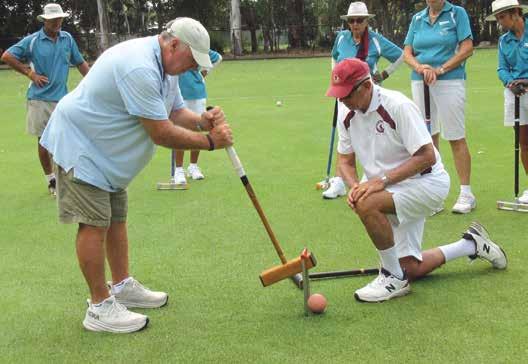
Croquet Community Coaching commences on Thursday August 6 at Bribie Island Croquet Club, Cosmos Park, in Sunderland Drive Banksia Beach.
This 6-week course is free to participants and all equipment is provided.
In this course, which is conducted by Croquet Australia qualified coaches, you will cover the basics of playing croquet – swinging a mallet, running hoops, roqueting balls to different positions on the lawn, as well as tactics, basic rules of the game and a lot more. Croquet is a non-contact, multigenerational sport which can be played both as a social or competitive level. Croquet offers exercise not only for the body but also the strategies and tactics of the sport help keeps one’s brains exercised as well.
Bribie Croquet Club has of over 77 members, several of whom have joined us in the past 6 months as well as those who have been members for nearly 20 years. Our members are friendly and welcoming and their involvement in this sport is as competitive or as social as they wish it to be. Several of our members are currently or have been members of the Qld State Croquet representative teams. However, most of us just enjoy having fun and playing croquet.
To join this coaching session on Thursday afternoon’s, (from 1:30 –3:15pm) please contact Joan on 0429 165 643 or email her at bribieislandcroquet@ gmail.com. All you need is to wear comfortable closed-in flat-soled shoes, bring a hat and a water bottle. Come & join us on the lawn — croquet is fun, social, strategic, and suitable for all ages and abilities.
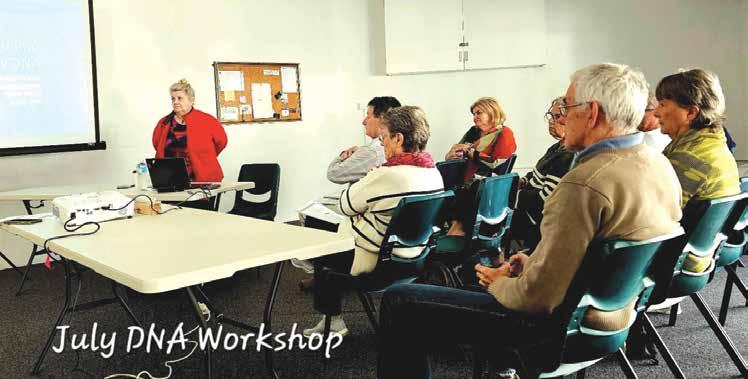
Tracing family stories at Bribie
Therewas a strong sense of curiosity, connection and community at the Bribie Island Community Arts Centre on Saturday 11 July, when Bribie Family History Association hosted another of its much-anticipated annual workshops.
The well-attended event brought together Association members and visitors from the wider community for an informative and inspiring presentation by Helen Smith, a renowned professional genealogist.
Across two sessions, Helen opened the door to the fascinating world of DNA research, showing how the thousands of unknown “cousins” revealed through testing can become valuable clues in the search for meaningful family connections and long-lost ancestors. As well as the formal presentation, the day offered plenty
of opportunities for conversation. During the lunch break, attendees mingled, swapped stories and shared the discoveries, surprises and unanswered questions that often come with exploring a family’s past.
Helen’s real-time examples and clear explanations showed how longstanding family mysteries can be approached with confidence, patience and the right research tools.
If you have ever wondered about the stories hidden in your own family tree, Bribie Family History Association welcomes visitors and new members. The Association meets at 9.15am on the first Friday of each month in the Anzac Room, Bribie RSL.
Bribie Arts Centre Matthew Flinders Art Prize 2026
One week left to catch Bribie’s premium Art Prize exhibition
There’s still time to see the wonderful Matthew Flinders Art Prize exhibition now at the Bribie Arts Centre. It closes August 7.
More than 200 fabulous works on show, many of which have been sold. You’ll know the prize winners, by their rosettes.
You’ll be blown away by the standard of talent and inspiration on show. Organisers are thrilled with the support and interest the event draws each year.
This is its 27th. It began in 1999, and always opens around July 16, the date Mathew Flinders sailed into Pumicestone Passage, landing on Bribie, in 1799.
Take a ticket in the MFAP raffle while you’re at the Centre. There are 24 great prizes to win. Meet artists demonstrating their technique each day in the Gallery foyer.
Bribie Island Community Arts Centre open Tuesday to Saturday 9am – 4pm; Sundays 9am – 1pm and Mondays (only during the exhibition) 9am – 1pm.
Cafe 191 Open Tuesday to Saturday 9am -2; Sundays and Mondays 9am – 1pm.
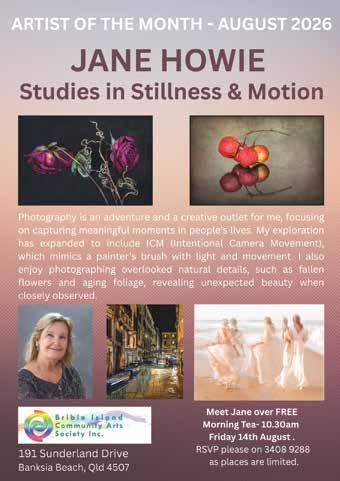
Come learn about the art of Glass Blowing with Tamasin Chugg
Bribie Arts Centre Boardroom
10am Sunday August 9
What does it take to leave Australia and spend three years learning one of the world’s oldest and most closely guarded artistic traditions?
Join Australian glass artist Tamasin Chugg as she shares the extraordinary journey that took her to Murano, the small island near Venice that has been the heart of Venetian glassmaking for more than 700 years.
Through photographs, personal stories, and behind-the-scenes insights, discover what life is really like training with Murano’s master glassmakers and why this remarkable craft continues to captivate the world.
Tamasin will share her experiences of living and working in Italy, the challenges of mastering a centuries-old craft, and the lessons learned from training in an industry where knowledge is still passed from maestro to apprentice.
The presentation will also feature a selection of handcrafted works from Zadi Designs, demonstrating how centuriesold Venetian techniques can be reimagined through contemporary Australian design.
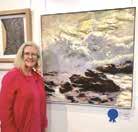
Tricia Taylor first prize winner with “Let The Light in’’
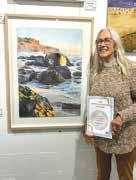
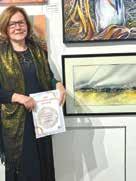
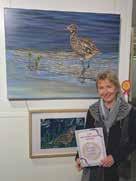
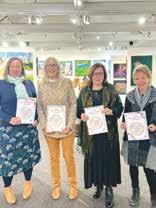
Four prizewinners present on the opening night, (from left) Lauren Roberts (2nd prize) Dellene Strong (Highly Commended) Trudy Brooks (Highly Commended) and Jackie Kitchen (Matty, Hangers prize) .
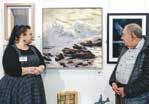
MFAP Judges Ronelle Reid and John Massy with Tricia Taylor’s winning piece.
THE FOUR WINNERS
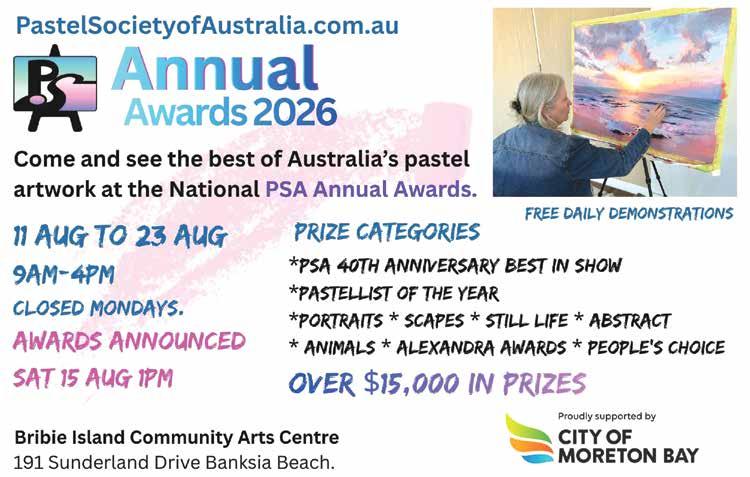
Popular Pastel Art back at Matthew Flinders Gallery
Following the outstanding success of last year’s exhibition and sales, the Pastel Society of Australia Inc., Australia’s only national pastel art association, is returning in August to the Matthew Flinders Gallery at the Bribie Island Arts Centre for its 2026 Exhibition and Annual Awards. Pastel Society Secretary Merla Hynes said returning to Bribie Island was an easy decision. “The friendly support of the local arts community and the enthusiasm of visitors for the high standard of pastel paintings on display were key reasons for returning this winter,” Merla said.
“For many visitors, last year was their first introduction to pastel. Our daily demonstrations gave people a chance to see how pastel works and to discover that it’s not chalk, crayon or oil pastel. “Pastel is a pure pigment, like oils or watercolour, combined with a binder and formed into sticks, pans or pencils but have been used by artists for centuries,” Merla explained. Many art historians credit Edgar Degas’s famous ballet dancer paintings of the 1870s with helping establish pastel as a respected fine art medium. Today, artist-quality pastels are available in a vast range of rich colours and are valued for their archival qualities. Pastels can be used on many textured
surfaces, including specialty papers, canvas and wood. This year’s exhibition will feature works from some of Australia and New Zealand’s leading pastel artists, including landscapes, seascapes, portraits, animals, still life and abstract works - all available for purchase. This exhibition also marks the 40th anniversary of the founding of the Pastel Society of Australia by a small group of artists passionate about promoting pastel as a fine art medium.
Today, the Society has grown to hundreds of members across Australia and overseas who enjoy regular online and in-person demonstrations, workshops and competitions, with the Annual Awards Exhibition remaining a highlight of the Society’s calendar year. “All art lovers and collectors should mark 11 to 23 August in their calendars,” Merla said. “If you haven’t seen pastel paintings before, come and be pleasantly surprised!”
The PSA Annual Awards Exhibition runs from 11 to 23 August (closed Mondays) at the Matthew Flinders Gallery, Bribie Island Community Arts Centre. The Gallery and Café 191 opening times can be found at www.bribieartscentre.com.au.
Contact:
Merla Hynes, Secretary, Pastel Society of Australia Email: merla.hynes@gmail.com Mobile: 0437 456 876 www.pastelsocietyofaustralia.com.au
MORE TO SEE & DO AT BRIBIE ARTS
RAFFLE prize by Tricia Taylor Evening Light
STEAKOUT PIZZERIA
For delicious pizza, pasta, contorni salads and more, all crafted with love, come and enjoy our waterfront pizzeria. With live music every Sunday and the beautiful Pumicestone Passage right beside you, we offer you a taste you’ll love For deliveries or bookings, please visit us at www.steakoutpizzeria.au
9/11 Spinnaker Drive, Sandstone Point - 07 5360 1094
LUNCH Thu to Sun 11:30 - 2:30
DINNER Tue to Sun 4:30 - 8:30
THE DECK RESTAURANT
With its spacious, relaxed ambiance, The Deck Restaurant offers casual dining indoors or alfresco on the deck overlooking the golf course, lake and lush gardens. Enjoy modern cuisine with locally sourced ingredients, open 7 days a week for breakfast and lunch, and dinner on Friday and Saturdays. Perfect for any occasion!
Experience classics you’ll love and the new favourites you'll crave!
LUNCH: 12PM - 2PM
DINNER: 5PM - 8PM
OPEN 7 DAYS NOW OPEN SUNDAY 8AM - 11AM FOR BREAKFAST Call our restaurant on 07 3408 1018 to book Bribie Island Bowls Club 11-23 Welsby Parade, Bongaree 4507
ON BRIBIE
MONDAY TRIVA
Bribie Island Hotel 6.30pm
Bribie Island R.S.L 7.00pm
TUESDAY
BINGO
Bribie Island R.S.L 10.00am POKER
Bribie Island Hotel 6.30pm
WEDNESDAY MUSIC BINGO
Bribie Island Hotel 6.30pm
Bribie Island R.S.L 7.00pm RAFFLES
Solander Lakes Bowls Club - 6.30pm (tickets on sale from 5:30pm)
THURSDAY BINGO
Bribie Island R.S.L 7.30pm RAFFLES
Bribie Island R.S.L Fishing Club 4.30pm
Every Thursday at the RSL prizes are Meat Vouchers from Avondale Meats and Seafood Vouchers from Saviges.
FRIDAY MEAT TRAY RAFFLES
Bribie Island Bowls Club 4.30pm
Bribie Island Golf Club 5.30
Blue Pacific Hotel (from) 3.00pm
Solander Lakes Bowls Club - 6.30pm (tickets on sale from 5:30pm)
Enjoy playing 500 Cards?
Join a like-minded group who meet on Monday afternoons at the RSL Anzac Room from 12.45pm-3.45pm.
$5 which includes raffle prize.
Please arrive 10mins before play starts at 12.45pm
Further information please ring Carole 0438 713 663
Beachmere District Community
The B.D.M.S. Community Markets are held at the Men's Shed 53 Rogers Street Beachmere, every 1st Saturday of the month 7.30am - 12pm
Bribie Island BIDCA Markets
The Bribie Island BICA Markets are held at Brennan Park, Bongaree, the 3rd Sunday of each month from 6am -12pm Bribie Rotary Markets
The Rotary Markets are held at Brennan Park, Bongaree on the second Sunday of each month from 6.30am – 12 noon
Queensland Cancer Council
The Cancer Council Markets are held at Brennan Park, Bongaree on the first Sunday of each month from 7am to 12 noon.
LUNCH MARKETS - Sylvan Beach (Farmers Market)
First Saturday of each month from 8am to 1pm held in the park opposite the Bribie Island Hotel. Funds raised to E.P.C.S, Ass, 0417629957
The Bribie Island Lions Market
2nd Sat of the month at Tintookie Park Woorim 7am - 1pm.
Bribie Woodcrafters & Bribie Island Gem Club
Open day, Demonstrations & Sales - last Sunday of each month
8am to 12noon Held at Bribie Art Centre 191 Sunderland Dr, Banksia Beach
Mystic Journey Markets change of location
Saturday November 15th ~ 9am ~ 2pm
Saturday December 6th ~ 9am ~ 2 pm Saturday December 20th ~ 9am ~ 2m 4pm ~ 8pm
There is also an outdoor market to run alongside indoor market called This ‘n’ That
Across
Crosswords - QUICK & CRYPTIC
Solution No. 30,045 have protein? (7) across river, (3) in hearing shot by left like ‘miserable’ first to drop opposite delivery to making pasta strain (7) centre of
2 Queue said to follow these characters on the summit (4) 3 Champion, before successful putt, reveals secret edge (3,2,3,4)
CRYPTIC SOLUTION
1 Mere ad funnily is created again (6)
4 Leading part of a curve by hotel (4)
Across
8 Second team has metal pin (5)
1 Oppose leaders of regime exploiting society in short time (6)
2 Reportedly, spot brand of car (6)
1 Mere ad funnily is created again (6)
9 Number against the Spanish in literary work (5)
Down
3 Struggling workman Ted is cheap and nasty? (10)
4 Leading part of a curve by hotel (4)
10 Close companion is mute also after treatment (8)
1 Oppose leaders of regime exploiting society in short time (6)
5 Wander over nervously (4)
8 Second team has metal pin (5)
13 Blueprints, we’re told, for drinks (8)
9 Number against the Spanish in literary work (5)
6 Stop here after leaving town initially (4)
TODAY’S TRICKS Clues begin or end with a definition of the answer. The rest is one of these: Anagram Anagram of answer and hint that there’s an anagram
2 Reportedly, spot brand of car (6)
3 Struggling workman Ted is cheap and nasty? (10)
7 One engaged in tuition devised curt intros (10)
10 Close companion is mute also after treatment (8)
16 Fail to take advantage of part of garment around middle, it’s said (5)
17 Note first person with right stopwatch, perhaps (5)
13 Blueprints, we’re told, for drinks (8)
18 First signs of these ramblers exhibiting keenness for long journey (4)
5 Wander over nervously (4)
11 Beginners in this higher education module examine several topics (6)
6 Stop here after leaving town initially (4)
12 Off the rails when on carrier? (6)
16 Fail to take advantage of part of garment around middle, it’s said (5)
17 Note first person with right stopwatch, perhaps (5)
19 Sound of large bear is frightful (6)
‘Senator arranged crime (7)’ gives TREASON Charade Combination of synonyms/abbrevs ‘Qualify to get drink for ID (8)’ gives PASSPORT (pass + port)
7 One engaged in tuition devised curt intros (10)
14 Speaker’s hard blow for excessively diligent pupil (4)
15 Mentioned feature in a supermarket in Skye, perhaps (4)
18 First signs of these ramblers exhibiting keenness for long journey (4)
19 Sound of large bear is frightful (6)
CRYPTIC
Across
1 Congratulations, having lofted sixes, almost? (4,5)
6 Tease bird a small distance off (5)
9 Disaster, going after black bear (5)
10 Manipulate voting arrangement, cancelling all-out rally in plant (9)
11 Princess on stage may sound like a duck (3)
12 Unfortunately still barely functioning as an example (11)
14 Academy halved deficit in grand house (7)
15 Detectives are liable to exaggerate (7)
16 More grim to be nearly naked (7)
19 Youngster with Guardian wanting whiskey in pubs shows guts (7)
22 Bizarrely we envy almost all that’s horrible in author (6,5)
23 One checks whistleblower in French department (3)
24 Wendy’s theatre? (9)
26 Under way a short distance (5)
27 Foreign character doctor found in shape (5)
28 Opposite of gauche, that missing husband in spa town (9)
SOLUTIONS
4 Cover beginnings of debate regarding act prohibiting euthanasia (5)
5 Indirect service provider promises to pay (9)
7 Drama created by one stealing chips (3,7)
8 Difficult spot with picturesque route through mountains (6,4)
11 One has market in chaos? I can’t
Soundalike Something that sounds like answer
11 Beginners in this higher education module examine several topics (6)
‘Excited, Oscar’s announced (4)’ gives WILD Acrostic First letters of answer
12 Off the rails when on carrier? (6)
‘Initially get a good joke (3)’ gives GAG
14 Speaker’s hard blow for excessively diligent pupil (4)
15 Mentioned feature in a permarket in Skye, perhaps (4)
Down
1 Ferret wounded small creatures in a hole (7)
2 Try united batter and stew (7)
3 Social gathering vital for one usually on laptop (8,3)
4 Selective eaters may have struggles to eat this protein? (7)
5 Had accommodation across river, then wandered off (7)
6 Agency’s brief goodbye (3)
7 Bail due to be reviewed in hearing (7)
8 Having crossed river, shot by arrow in the head, and left like this? (3,4)
13 Despairing, how ‘miserable’ becomes me (6,5)
16 Spy’s simple earring (7)
17 Way back, wise guy’s first to drop a board game (4,3)
18 Turned back, taking opposite directions in circle (7)
19 Happening before delivery to change routine (2,5)
20 Run a brief fiddle making pasta (7)
21 A way to heave and strain (7)
25 Partner dropping by in centre of activity (3)
Kid Zon
SPOT THE 10 DIFFERENCES
Sudoku
By Al Finegan
her well suited to carrying heavy stores and withstanding groundings, qualities that would later prove critical. Her shallow draft allowed her to sail close to shore, a vital advantage when surveying unknown coasts littered with reefs.
The Story of his Exploration of Australia’s East Coast in 1770 Captain James Cook
InApril 1770, Captain James Cook turned his ship to sail westward. He had already completed his primary mission, which was the scientific observation of the transit of Venus in Tahiti, followed by the circumnavigation and charting of New Zealand. He could not have foreseen the enduring consequences of the voyage that lay ahead.
Yet the true historical Impact of Cook’s first Pacific voyage would not be remembered in astronomical measurements, but in his careful, methodical exploration and mapping of a vast coastline previously uncharted by Europeans. In a journey lasting just over four months, Cook would complete a detailed recording of more than 3500 kilometres of Australia’s eastern seaboard. From the temperate south to the tropical north, he named bays, capes, rivers, and islands, recorded reefs and shoals, and produced maps of remarkable accuracy. These maps would later be praised not only for their scope, but for their precision. Many of his charts are still recognised as accurate even by modern standards. At the same time, he encountered a continent already inhabited for tens of thousands of years, home to hundreds of Aboriginal nations whose presence he observed but never truly understood. But it also should be recognized that his orders were for coastal investigation of Australia’s East Coast that was specifically intended as a charting exercise. Any contact that was made between him and Indigenous tribes was of passing interest only.
Cook’s vessel, His Majesty’s Bark , Endeavour , was no elegant warship. She was a converted Whitby coal carrier, broad, slow, and immensely strong. Her bluff bow and reinforced hull made
Cook had risen from humble origins in Yorkshire, promoted not by birth but by talent, mathematical skill, and relentless discipline. His background as a seaman and surveyor shaped his approach to exploration. He was cautious where others might have been reckless, and precise where others were content with approximation.
The voyage was a partnership between the Admiralty and the Royal Society. Accompanying Cook were gentlemen scientists, including naturalist Joseph Banks and botanist Daniel Solander, whose enthusiasm for discovery bordered on obsession. Artists, astronomers, and servants completed the scientific contingent, while sailors and marines provided the muscle and order required to keep the ship functioning through long months at sea.
Cook’s sealed orders that he was instructed to open only after the Venus observation, required him to search for new lands suitable for British possession. In an age of imperial rivalry, accurate charts were instruments of power, and Cook understood that his success would be measured not in spectacle, but in detail.
On 19th April 1770, at approximately 6:00 AM, Cook’s second-in-command, Lieutenant Zachary Hicks spotted land which Cook subsequently named Point Hicks. This point is located on the south-eastern coast, between present-day Orbost and Mallacoota in Victoria. Although Cook did not land here, the sighting marked the first recorded European observation of Australia’s east coast during the voyage. As Endeavour sailed north, Cook began the painstaking work that would define his reputation. Bearings were taken, headlands sketched, soundings measured, and coastal features named. He recorded the nature of the land, cliffs, beaches, wooded slopes, and repeatedly noted smoke rising inland. He determined that these columns of smoke were unmistakable evidence of Aboriginal occupation, the result of deliberate fire use rather than chance. Yet Cook’s main attention remained fixed on navigation rather than exploration ashore. His priorities were shaped by Admiralty orders and the ever-present risks in unknown waters.
On 29th April 1770, Cook anchored Endeavour in a broad bay he initially called Stingray Bay. He soon renamed it Botany Bay, in recognition of the extraordinary plant life collected there by Banks and Solander.
This was Cook’s first landing on Australian soil. Initially it was marked by tension and violence. Two men of the Gweagal people confronted the landing party, shouting warnings and brandishing spears. They were defending their country,
signalling clearly that the strangers were not welcome. Cook attempted gestures of conciliation, but when the men refused to withdraw, he ordered a musket fired, first with small shot, then with a second discharge that wounded one man in the leg. The clash was brief, but it revealed a fundamental misunderstanding that would recur throughout Australia’s colonial history. Europeans assumed their right to take land, Indigenous people asserted their right to protect and defend.
Despite the incident, Banks and Solander soon moved freely through the area, collecting hundreds of plant specimens. Cook observed Aboriginal fishing techniques, bark canoes, and shelters, though he interpreted what he saw by European customs. Land without houses, fences or crops appeared “unused” to him, a misconception that ignored complex systems of seasonal movement and land management. This assumption would later be used to justify dispossession.
After eight days in Botany Bay, Cook continued north, passing the entrance to Port Jackson without entering it. He noted the opening, describing it briefly, but failed to recognise the harbour’s immense potential. History would later render this omission deeply ironic.
He also passed Broken Bay, Port Stephens, and Cape Byron, naming landmarks that remain on modern maps. Smoke fires were seen almost daily along the coast, and canoes were occasionally observed offshore, keeping a cautious distance. Cook deliberately avoided close contact, preferring to survey from the safety of Endeavour. His journal reflects a man focused on the precision of recording wind, tide, and coastline with relentless care rather than seeking any engagement ashore.
As Cook continued northward, his track carried Endeavour offshore of the long sand islands guarding the southern approaches to what appeared to be a large bay. On 17th May 1770, he named it "Morton Bay" to honour James Douglas, the 14th Earl of Morton, who was then president of the Royal Society. The spelling was later changed to "Moreton" due to a transcription error. Although he did not enter the bay itself, the low, sandy coastline and the broken outline of islands such as present-day Bribie would have been visible from seaward in clear conditions. Cook recorded a shore that appeared deceptively uniform, offering few obvious anchorages and little incentive to approach more closely. Yet smoke was again observed inland. This demonstrated clear evidence of a well-used coastal landscape that lay beyond the limits of his survey. In passing by, Cook unknowingly skirted one of Queensland’s most sheltered and strategically significant waterways, a place that would later play a central role in the birth of Queensland. When about 5.5km from the coast, Cook sighted a number of steep, isolated peaks rising abruptly from the coastal plain, landmarks unlike anything he had seen along the coast to that point. He named them the Glass House Mountains. Their unique, craggy, and steep-sided volcanic shapes reminded him of the glass-making furnaces (glass houses) in his native Yorkshire, England. For the next two centuries, their shapes became the prominent navigational reference points for ships approaching the southern Queensland coast.
As Endeavour entered warmer waters, the coastline transformed. Sandy beaches gave way to mangroves, estuaries, and coral-fringed shallows. The sea itself changed colour, reefs suddenly appeared beneath the surface, making navigation increasingly dangerous. Cook continued to name numerous headlands, bays, and islands, many of which still bear the names he assigned. From offshore, the land often appeared sparsely populated, yet this impression was misleading. Aboriginal people moved seasonally, harvested marine resources, and used fire to manage country in ways invisible to European eyes. Cook continued to see smoke and occasional figures on the shore, but seldom landed to investigate, wary of both hostility and the risks to his ship. Overall, Cook landed fourteen times on the East Australian Coast. After Botany Bay, the remaining thirteen landings were in what is now Queensland waters. These included Bustard
Bay, named for the wild bustard bird they shot and ate. They landed at Thirsty Sound (Town of 1770) searching for water but found none. Banks and Hickes went ashore at Cleveland Bay near Magnetic Island looking for coconuts. Cook named Green Island, which he saw in the distance while anchored in Trinity Bay, named after the day on which it was discovered.
On the night of 11th June 1770, disaster struck. Endeavour ran hard aground on coral in the Great Barrier Reef. The hull was badly damaged, and water poured in. For more than twenty hours, the crew fought to save the ship, throwing guns, ballast, and stores overboard.
Cook ordered a sail to be passed under the hull in an attempt to plug the leak, a desperate measure that saved the vessel. Eventually freed, Endeavour limped north to the mouth of a river where repairs could be made. Cook named it Endeavour River, a reminder of the ordeal the crew had endured.
The forced stay lasted nearly seven weeks. It became the longest period of contact between Cook’s crew and Indigenous Australians during the voyage. The Guugu Yimithirr people watched the newcomers carefully. Early encounters were tense, marked by misunderstandings over tools and food, but large-scale violence was avoided.
Cook recorded attempts at communication through gesture, as well as exchanges of goods. It was here that the word “kangaroo,” or a close approximation, entered European lexicon. Banks and Solander collected tirelessly, while sailors hunted turtles and fish, often without understanding the cultural significance of taking such resources. The imbalance of power was ever-present. Sailors’ guns remained loaded, and the Europeans controlled the pace and terms of interaction. Even in relative calm, the power balance was unequal.
After repairs were completed, Cook resumed his northward voyage, navigating the maze of islands and reefs of the Torres Strait. This was among the most dangerous waters he had ever encountered, yet his skill as a navigator prevailed. On 22nd August 1770, Cook landed briefly on Possession Island. There, in a short ceremony witnessed only by his crew, he claimed the entire eastern coast of Australia for Britain, naming it New South Wales.
The act was symbolic, carried out according to European custom, and entirely unknown to the Indigenous peoples whose lands were being claimed. It reflected assumptions about sovereignty that ignored existing ownership, law, and connection to country.
Cook’s journals reveals his views of Indigenous Australians. They demonstrate a man who was observant but constrained by the thinking of his time. He admired Aboriginal fishing skills and physical endurance, and he noted their apparent good health. Yet he failed to recognise the complexity of Indigenous societies or their systems of land management. He concluded, incorrectly, that Aboriginal people made little use of the land and therefore had no real ownership of it. This belief would later underpin the doctrine of “terra nullius”, used to justify British colonisation and the widespread dispossession of Aboriginal people.
Cook left Australian waters in October 1770, sailing first to Batavia and eventually back to England. His charts were published and praised for their accuracy. They would guide British navigators and planners for decades. Eighteen years later, the First Fleet arrived at Botany Bay, guided by Cook’s report. What Cook had investigated as a coastline would soon become the frontier of a vast colonial enterprise.
To tell Cook’s story is to hold two truths together: the brilliance of the navigator and the profound impact of the voyage he led. It was a defining moment when two worlds met, neither fully understanding the consequences, and one that continues to shape Australia today.
BRIBIE IN 1930’s DEPRESSION
ONE HUNDRED YEARS AGO, the world economy was deeply impacted by the Great Depression. Today, the World is impacted by Tariffs, Energy Costs, Limited Supplies, Refugees and CONFLICT IN THE MIDDLE EAST and, as always, the short- and long-term future is uncertain.
This article reflects on BRIBIE ISLAND and Australia in the 1930s, reminding us about life’s challenges when TIMES GET TOUGH… or may get EVEN TOUGHER!
From an initial 1500 convicts and others who arrived on the First Fleet, the population of Australia grew to 6.5 million people by 1930 and was still almost entirely of British origin. The first Australian-born GovernorGeneral, Sir Isaac Isaacs, was not appointed until 1931. The worldwide financial Depression and mass unemployment that followed saw Prime Minister Joseph Lyons become
the first person to speak on the new ABC Radio when it was launched in 1932. Things got worse throughout the 1930s, and Lyons became the first PM to die in office in 1939. The incoming PM, Bob Menzies, announced on the radio that Australia was at War with Germany.
DEPRESSION in AUSTRALIA
spectacular Sydney Harbour Bridge being opened in 1932. However, one-third of Australia’s workforce soon became unemployed, and any Government assistance was very limited.
Unemployed parents depended on sons leaving school at 14 to provide basic low-paid support, and many businesses refused to employ married women, so new brides often kept it secret.
The decade began with Phar Lap winning the Melbourne Cup, and the
Hubert Opperman
Motor cars were very basic, lacking safety features, and only the wealthy could afford them. There were far more bicycles than cars on the roads, and Hubert Opperman broke World and Australian long-distance cycling records on Malvern Star bicycles before going into politics. Only a quarter of Australian homes had a telephone, and there were just a few public phone boxes in the streets by 1939. Two-thirds of homes had a large Wireless Radio on the living room floor, but few could afford a Black & White TV when it was launched 20 years later in 1956, and it was another 20 years before Colour TV was available in 1975
PLAY, SCHOOL & WORK
Children’s play saw girls with skipping ropes, dolls and kitchen sets, and boys with slingshots, billy carts, and model planes. Children’s Comics featured Superman, Mickey Mouse and Ginger Meggs, and a jigsaw puzzle craze that began in 1935 led to a huge demand of 5000 puzzles a day.
School classrooms were filled with rows of wooden desks, with inkwells to fill each day, and writing with Chalk on Slate blackboards, with few textbooks and lots of mental arithmetic.
Ladies occasionally put on their best clothes, with a hat and gloves, and suspenders holding up two single-leg stockings. Men wore baggy trousers held up with braces, socks with suspenders, and a singlet and long johns… if they could afford underwear
at all. Mothers made babies' nappies from boiled flour bags, and clothes were cut down, patched, and mended.
LIFE WAS DIFFERENT.
Daily lifestyle and family expectations have changed beyond belief in the last 100 years. Older readers of this article will have memories of some of the things mentioned above that will surprise and amuse younger readers… if they even read this magazine at all.
Most households today have at least one motor car and electric vehicles, including many children. The Australian motor market is a testing ground for autonomous vehicles and self-driving technology, and today there are more than 60 car brands from Asia, Europe, and the USA, with an unlimited choice of options.
INFORMATION & KNOWLEDGE
I may now be officially classified as an Old Fart, so my views and expectations of the future may not be well regarded. However, I have certainly seen more of Life and the World than many people. which has shaped the way I view the past, present and future.
Having lived and worked in 15 different countries over a 40-year career in International Project Management, I have been involved in many large-scale projects that have transformed the lives of many millions of people.
I understand and value the difference between Information and knowledge. Information consists of raw facts and data, and is objective and easily shared, providing possible answers to WHAT, WHO, WHERE, and WHEN in most of our questions. Knowledge is different: it is the application of information through human experience, context, and understanding to answer the HOW and WHY, enabling decisions to be made and problems solved.
Mobile phones have become essential for everyone, offering always-on accessibility and features that have you looking at the screen virtually all the time. Between mobile phones, remote listening devices, multiple radio channels, podcasts, and countless free-to-air and pay TV channels, suppliers are competing for your attention to buy something, do something, or behave in a certain way.
Can we possibly imagine what life will be like 100 years from now?
FUTURE BRIBIE VISION.
We all have different views, expectations and requirements for the future of Bribie Island. Without an agreed Future Plan, against which Government, Council and Business decisions and approvals can be made, the unique characteristics that have made Bribie such a great place to live may be lost.
Commercial imperatives could progressively destroy the very things that have made Bribie so successful for so long. I think that would be a pity… How about you?
If you don’t know where you are going - any road takes you there.
MORE BRIBIE HISTORY
Historical Society has public meetings with excellent guest speakers on the second Wednesday of each month at 6;30pm at the RSL Club and visitors are always welcome.
You can see more stories & photos on Web site Bribiehistoricalsociety.org.au and Blog http://bribieislandhistory. blogspot.com or contact us on bribiehistoricalsociety@gmail.com
SPORTS PAGES
BRIBIE ISLAND BOWLS CLUB
Self-Select Pairs Results
Friday AM 10 July 2026
Winners: D Cherry, N Bolton
Runners up: F Grimsey, D Dodd Winning draw: A Sturm, G Skoien Encouragement: T Comacchio, L Comacchio
Self-Select Pairs Results
Friday PM 10 July 2026
Winners: J Cullen, W
McDougall Runners up: D Ackroyd, P Gray Winning draw: J Oliver, W McKillop
Winning draw: K Piva, S Lobo
Winning draw: W Ogrodniczek, P Lawton
Encouragement: M Cullinan, W Gilbert
Random Fours Results
Saturday 11 July 2026
Winners (HM): G Hutchison, K Norton, A McBride
Runners up: A Russell, R Cross, M Gaggiano
Winners (LM): M Brown, I Teakle, L McNamara
Runners up: C Stroud, A Wells, A McBride, C Cross
Lucky draw: M Cherry, E Hookey, E Thean, J A McGrath
Lucky draw: K Brown, J Teakle, M Ball
Lucky draw: P Gee, R Follett, L Hackwood, J De Ruyter
Lucky draw: D Draper, J McGrath, R Warwick
Scrounger Results Monday 13 July 2026
1st: D Hancox
2nd: P Bennett
3rd: D Draper
4th: R Avern
Self-Select Triples Results
Tuesday 14 July 2026
Winners: T Erfurth, L Sandling, D Bishop
Runners up: T Whalley, N Smith, A Whalley
Winning draw: K Ayres, G Riley Winning draw: T Ridley, D Merrett, J Murray
Winning draw: W Baker, J Warwick, S Horn
Encouragement: D Draper, C Christiansen, C Draper
Self-Select Pairs Results
Wednesday AM 15 July 2026
Winners: E Bateman, M Garfield Runners up: J Oliver, D Cherry Winning draw: J Cullan, S Chandler
Encouragement: R Eaton, D Heath
Self-Select Pairs Results
Wednesday PM 15 July 2026
Winners: G Olson, W Kelly
Runners up: T Smith, M Retchford Winning draw: W Schmidt, D Bowers
Winning draw: S Hose, N Gray Winning draw: R Glasser, T Phillips
Encouragement: S Gaunt, G Gaunt
Random Triples Results
Thursday 16 July 2026
Winners: D Charlwood, K
Soens, T Phillips
Runners up: G Flint, C
Ormerod, L Comacchio
Winning draw: T Brain, G
Hutchison, M Gaggiano
Winning draw: R Glasser, M Brown, G Cross
Encouragement: M Todd, S Hoelscher, J Downey
Self-Select Pairs Results
Friday AM 17 July 2026
Winners: B Pritchard, T Comacchio Runners up: P Andrews, T Hookey
Winning draw: G Skoien, S Chandler Encouragement: B Lawler, S Strasser
Self-Select Pairs Results
Friday PM 17 July 2026
Winners: D Ackroyd, P Gray
Runners up: B Hosie, Winning draw: K Burdon, J Mercer Winning draw: J Cullen, W McDougall
Winning draw: T Whalley, A Buckmaster Encouragement: R Simpson, M O’Neill
Random Fours Results
Saturday 18 July 2026
Winners: W Langford, R Bickerton, E Thean, A Pinzger Runners up: G Mulpeter, C Draper, R Warwick
Lucky draw: G Woollett, L McNamara, R Cross, T Newstead
Scrounger Results Monday 20 July 2026
1st: W Gunders
2nd: J Park
3rd: E Thean
4th: S Horn
Self-Select Triples Results
Tuesday 21 July 2026
Winners: J Hosie, V McDermott, M Gittins
Runners up: S Lobo, K Piva, P Campbell Winning draw: R Thirlwell, G Pincott, P McQueen Winning draw: L
Deakins, E Deakins, R Brinton
Winning draw: F Crockett, D Heath, R Eaton
Encouragement: F Grimsey, D Hancox, G Olson
Self-Select Pairs Results
Wednesday AM 22 July 2026
Winners: D Hancox, J Dann
Runners up: M James, J Brazier Winning draw: S Hancox, D Jackson
Encouragement: W Andrews, C Dennis
Self-Select Pairs Results
Wednesday PM 22 July 2026
Winners: J Oliver, P Gray
Runners up: R Avern, W
McKillop Winning draw: D
Bowers, W Schmidt
Winning draw: K Pitt, J Mercer
Winning draw: R Hicks, D Dodd
Encouragement: M Rodgers, B Rodgers
Random Triples Results
Thursday 23 July 2026
Winners: A Russell, C
Ormerod, M Brown
Runners up: P Cook, E Thean, B Mathew
Winning draw: N Gray, M Wright, M Mathews
Winning draw: M Todd, M Gittins, R Donnelly
Winning draw: R Bickerton, S Hoelscher, M Cole
BONGAREE BOWLS RESULTS
Bongaree Bowls Club Results 3/7 to 16/7
Results of Friday 2-4-2 3/7
Winners: Ernie Connolly, Di Drew R/Up: Kim and Harry Hayes
Results of Saturday Scroungers 4/7
1st: Sheena Bath. 2nd: Lisa Pemberton. 3rd: Bob McLaren. 4th: Deb Brough
Results of Tuesday Paddle Pop Draw Triples 7/7
Winners: Ann Clarke, Sue Francis, Imelda Valentine R/Up: Glen Griffiths, Anita Broughton, Greg Sibthorpe, Frank Levey Bonus Draw: Jenny Stephens, Ron Wilson, John Morrison
Results of Wednesday 4’s 8/7
Winners: Garry McCarthy, Col Valentine, Ian Paterson R/Up: Jimmy Parker, Trevor Mickelborough, Bill Wilson, Steve Pomroy
Results of Thursday Jackpot Pairs 9/7
Winners: Alan Simonic, Paul Krueger R/Up: Errol Fender, David Vaughan
Results of Friday 2-4-2 10/7
Winners: Margaret McGarry, Maureen Furgeson R/up: Diana Stowers, Marg O’Keefe
Results of Saturday Scroungers 11/7
1st: Wayne Gunders. 2nd: Bob McLaren: Gideon Croukamp: Mick Falvey
Results of Super Saturday Social 11/7
Winners: BillyMoor, Adrian Taylor, Steve Jackson, Garry McCarthy R/up: Art Hinton, Wendy Rollason, Di Drew, Arne Jensen
Results of Tuesday Paddle Pop Draw Triples 14/7
Winners: Sharen Peacock, Terry Keatch, Errol Fender, Bev Montgomery R/up: Pat Spice, Andrea Pike, Clare O’Donohue, Maureen Furgeson Bonus Draw: Errol Fender, Sharen Peacock, Terry Keatch, Bev Montgomery
Results of Wednesday 4’s 15/7
Winners: Rod Lethborg, Frank Levey, Alan Simonic, Dave Dixon R/Up: Ernie Connolly, Ellen Corrick, Gaynor Johnson, Ron Corrick
Results of Thursday Jackpot Pairs 16/7 Winners: Arne Jensen, Errol Fender R/up: Trevor Mallouk, Chris McMillan
SOLANDER LAKE BOWLS RESULTS
Tuesday 7 July - Club Select
Triples: Winners - Steve Jameson, Ib Larsen, Bill Taylor 2nd - Mark Patterson, Stephen O'Grady, Brian Halls 3rd - Tony Grimmond, Dave Bentley, Manny Reagan
Wednesday 8 July - Self Select Pairs: Winners - Mardy Brenner and Lloyd Tait
Thursday 9 July - Self Select Triples:
Winners - Graham Hubbard, Keith Tucker, Rod Townsend 2nd - Neil Feazey, Marieke Moore, Mike Wilson 3rd - Vicki Mitchell, Ray Griffin, Jeff Farmer
Friday 10 July - Self Select Pairs:
Pool A Winners - Ian Boast and John Thiele
Pool A runners-up - Joan Tennant and Mick Tully
Pool B Winners - Tony Miguel and Andy Denhardt
Pool B runners-up - Steve O'Grady and Andy Ives
Saturday 11 July - Club Select Triples/Pairs:
Winners - Craig Hemphill, Michael Whiteside 2nd - Adrian Anderson, Brad Storey, Doug Hogan
Tuesday 14 July - Club Select Triples/Fours:
Winners - Tony Musial, Bruce Crawford, Steve Jameson 2nd - Julie Watson, Merv Boike, Ricci Harris 3rd - Wayne Stuart, Robyn Carter, Marieke Moore, Gary Podosky
Wednesday 15 July - Self Select Pairs:
Winners - Pat Samuelson and Deb Hill 2nd - Lloyd Tait and Mardy Brennan 3rd - Tony Ollier and Peter McIntyre
Thursday 16 July - Self Select Triples:
Winners - Keith Tucker, Graham Hubbard, Stan Hillen 2nd - Chris Cummins, Andrew Wilkie, Ian Boast
3rd - Carmel Sorrenson, Ralph Chaplin, Helen Wegner
Friday 17 July - Self Select Pairs:
Winners - Raie Stuart and Sue Lupi
2nd - Ian James and Steve Ross
3rd - Trevor Rennick and Merv Boike
Saturday 18 July - Club Select Triples:
Winners - Adrian Anderson, Shaun Dempsey, Greg Hemphill
2nd - Judith Dempsey, Rosa McLeod, Bob Edwards
Club Championship - Ladies' Triples:
Winners - Terri Curtis, Maggie Zahl, Margaret McKenzie
Runners-up - Trish Kling, Leonie Schmidt, Ann Mehmet
BRIBIE ISLAND WOMEN’S GOLF RESULTS
Results for Bribie Island Women’s Golf 14 July to23 July 2026
14/07/26 3 Person Ambrose
WINNERS Val Phinn & Tanya Zanow & Jenny Williams 66.333
On Thursday 23rd July we had a lovely contingent of visitors from Ballina in the field.
Our Sue Lee (2nd from right, front row) encouraged them to come and play!
16 Jul Committee Cup Winners
Christine and Myra
MORETON BRIBIE BRIDGE CLUB
Sat 4 July N/S 1 K Cohen & J Hays 2 A Struik & N Riszko 3 R King & L Groves E/W 1 G & S Barnulf 2 D Scown & J Easey 3 R Medhurst & P Breene
Wed 8 July N/S 1 H Standfast & J Budgeon 2 J Borowski & J Easey 3 J Kinross & R Floquet E/W 1 J Kennedy & R Deacon 2 J Hays & K Cohen 3 L Heap & B Connell
Sat 11 July N/S 1 G & S Barnulf 2 J Hays & C Frederikson 3 R King & L Groves E/W 1 G Lock & N Denvir 2 D Scown &J Borowski 3 R Medhurst & M O’Reilly
Wed 15 July N/S 1 J Borowski & J Easey 2 K Cohen & J Hays 3 H Tyler & J Medhurst E/W 1 L Groves & A Fielding 2 L Heap & B Connell 3 R Webb & L McLaren
BICBC: Monday 6 July N/S 1 B Moxham & P Lynch 2 M Peterson & D Quinan 3 P Edis & L Groves E/W 1 G Lock & A Fielding 2 E Viney & J Greet 2 P Morton & K Strickland
Monday 13 July – Clubhouse was closed due to electrical work being done. Several members played in Caboolture Bridge Club, with Jean Kennedy & Charles Page getting a first.
The Club welcomes visitors and new players. Phone Bob 0412 722 258. For lessons phone Helen 0427 567 670.
HEADLAND CUP
Kathy Vincent.
WOW how well did Bribie Croquet Club do?
How well did they represent Bribie Island in a recent competition on the Sunshine Coast!
There were excellent players from clubs from the Sunshine Coast and beyond. It is a competition that tempts some of the top players.
Well, some of those players come from Bribie Croquet Club.
The winners of the cup were Lyn Beh and Dennis Green.
The runners up Steve Bickley and Jill Lenton.
Well done Bribie an excellent result.
Pawsome Pet Pages
Maggie
Ollie
Fluffy
Astro
Mac
Coco
Hamlet
BRIBIE ISLAND
BRIBIE ISLAND
Making the Everyday Bathroom Feel Luxurious on a Budget
Luxury in a bathroom does not have to start with marble, custom joinery, or a full renovation. Often, it comes from restraint, presentation, and a few smart upgrades. An everyday bathroom can feel expensive when it is calm, edited, and styled with intention.
The first step is to remove visual noise. Half-used products, mismatched towels, cleaning items, and crowded benches make a room feel tired. Clearing surfaces, grouping essentials, and hiding everyday items can transform the atmosphere before a single dollar is spent.
Colour is an affordable way to create polish. A tight palette of two or three tones, such as warm white and stone, charcoal and timber, or soft grey and brushed brass, makes a basic bathroom feel more cohesive.
Tonal towels, a simple bathmat, and matching dispensers can create a boutique-hotel effect without a luxury price tag.
Small fixtures also make a big difference. Tapware, cabinet handles, towel rails, robe hooks, shower heads, and soap dispensers are the details people see and touch every day. Updating them in a consistent finish can lift the room without new tiles, plumbing changes, or major construction.
Lighting can quickly change the mood. Harsh overhead light makes a bathroom feel clinical, while warmer globes, mirror lighting, candles, polished mirrors, and natural light create softness and atmosphere.
Texture brings warmth to a practical space. Thick towels, a timber stool, a stone tray, ceramic vessels, woven baskets, linen hand towels, or a small plant can soften hard tiles and glass. The key is to make each touch look deliberate.
Most importantly, luxury depends on condition. Clean grout, clear glass, polished tapware, fresh silicone, mouldfree corners, and neatly folded towels communicate care.
On a budget, luxury is not about spending more; it is about making every visible choice look intentional.
How to Give the Everyday Bathroom a Luxury Feel
The everyday bathroom feels luxurious when it is edited, softly lit, beautifully textured, and immaculately presented.
The goal is not to make the room look expensive, but to make it feel calm, considered, and effortless.
• Strip it back first: Remove half-used products, mismatched bottles, cleaning items, excess towels, and anything sitting around without purpose.
• Choose a tight colour palette: Stick to two or three tones, such as warm white, stone, and brushed brass, or charcoal, timber, and soft white.
• Upgrade what people touch: Tapware, handles, towel rails, robe hooks, shower heads, and soap dispensers all affect the luxury feel.
• Use beautiful towels: Thick towels in white, ivory, oatmeal, stone, or charcoal create an instant hotel effect when folded neatly or rolled in a basket.
• Improve the lighting: Warm, soft lighting feels more luxurious than harsh overhead light, especially around mirrors or vanities.
• Create a styled vanity moment: Use a simple tray with quality hand wash, a small vase, a candle, or rolled face cloths.
• Add natural texture: Timber, stone, linen, ceramic, greenery, or woven baskets soften hard bathroom surfaces and make the room feel warmer.
• Make it spotless: Clean glass, polished tapware, fresh grout, tidy silicone, and mould-free corners make a major difference.
• Use scent subtly: A gentle diffuser, candle, or premium hand wash can make the bathroom feel calm and inviting without overpowering it.
• Avoid overdecorating: Luxury bathrooms usually feel spacious and edited, so keep accessories purposeful and minimal.
PRACTICAL TIPS AND HINTS FOR CLEANING BLINDS AND CURTAINS
Blinds
• Dust regularly: Use a microfibre cloth, feather duster, or vacuum with a brush attachment.
• Close the slats one way, clean, then reverse: This helps remove dust from both sides.
• Use tongs for venetian blinds: Wrap microfibre cloths around kitchen tongs and secure with rubber bands for easy slat cleaning.
• Spot-clean stains: Use warm water with a small amount of mild detergent. Avoid soaking wooden blinds.
• Avoid harsh chemicals: They can damage finishes, especially on timber, faux wood, or painted blinds.
• Deep clean occasionally: Aluminium or plastic blinds can often be removed and washed carefully in a bathtub, then dried completely before rehanging.
Curtains
• Vacuum first: Use the upholstery attachment to remove dust, pet hair, and loose dirt.
• Check the care label: Some curtains are machine washable, while others may need dry cleaning.
• Wash gently: Use a delicate cycle, mild detergent, and cold water if the fabric allows.
• Dry carefully: Hang curtains while slightly damp to reduce wrinkles but keep them out of direct harsh sunlight if the fabric may fade.
• Steam to freshen: A handheld steamer can remove creases and odours without taking curtains down.
• Spot-test first: Always test any cleaner on a hidden area before treating stains.
Extra hints
• Clean window tracks and sills at the same time so dust does not transfer back onto blinds or curtains.
• Open windows on dry, breezy days to help air out fabrics.
• For mould or mildew, treat it promptly and improve ventilation to prevent it returning.
If curtains are heavy, lined, delicate, or expensive, professional cleaning is usually safest.
Why Buying on Bribie and the Surrounding Areas Makes Good Sense
Ina property market where buyers are weighing lifestyle, affordability and long-term growth, Bribie Island and its surrounding mainland communities offer a strong case. Here, buyers have the opportunity to secure all three.
For years, Bribie has been recognised for its relaxed pace, protected waterways, national park, fishing spots, beaches and strong local community. Today, the case for buying here goes beyond lifestyle.
It is also practical and strategic, with the island and surrounding areas positioned where lifestyle demand, limited coastal supply and the continuing growth of South East Queensland meet.
A coastal lifestyle without losing connection
Bribie’s strength lies in the balance it offers. It feels like a genuine coastal escape while remaining bridge-connected to the mainland. That distinction is important. Unlike many island locations, Bribie does not require residents to rely on ferries or make significant compromises on access.
Shops, medical services, schools, cafés, clubs, beaches and community facilities are close at hand. At the same time, the Bruce Highway corridor and the broader Moreton Bay region remain within reach.
This balance underpins much of the area’s appeal. Buyers can enjoy coastal walks, time on the water, established community facilities and relaxed outdoor living without feeling removed from everyday convenience.
Demand is being supported by real fundamentals
The broader Moreton Bay region continues to benefit from strong population growth, demand flowing from Brisbane and ongoing investment in infrastructure.
As housing closer to the Brisbane CBD becomes less attainable, coastal and near-coastal communities north of the city are attracting families, retirees, downsizers, investors and lifestyle buyers. Recent market conditions suggest tight supply, sustained buyer interest and varied price points across the Bribie and Pumicestone Passage corridor.
That variety matters. It gives different buyers a way into the market, whether they are seeking a family home, a downsizer option, a lifestyle property or a long-term investment.
Scarcity is part of the story
Coastal land connected to major population centres is finite. Bridge-connected island living is rarer still. As South East Queensland continues to grow, places that combine water, nature, community and access are likely to remain highly sought after. This does not mean every property is automatically a sound purchase. Buyers should still consider flood mapping, insurance, building condition, body corporate costs, transport needs and resale appeal. However, scarcity gives well-chosen homes in well-positioned locations a meaningful long-term advantage.
A lifestyle purchase with investment logic
The strongest argument for buying on Bribie and in the surrounding areas is that the decision can be both lifestyle-led and financially sound. Residents are buying more than bricks and land. They are investing in time outdoors, easier weekends, a sense of community and proximity to one of Queensland’s most
appealing coastal environments. At the same time, the region’s growth fundamentals, constrained supply and broad buyer appeal strengthen the long-term property case. For first-home buyers, the area can offer a foothold in a coastal market before prices move further out of reach. For families, it provides space, community and recreation.
For downsizers and retirees, it offers convenience without giving up the water. For investors, it presents a market with multiple demand streams rather than reliance on a single buyer type.
The bottom line
Buying on Bribie Island and in the surrounding areas makes sense because the region offers something increasingly difficult to find: genuine lifestyle, practical access and long-term growth potential in one package. It is not simply a holiday destination or a retirement haven. It is a maturing coastal market with depth, diversity and character.
For buyers who value community, water, open space and a strong position in one of South East Queensland’s most desirable lifestyle corridors, Bribie and its neighbouring communities are well worth serious consideration.
Ivory T - fabric & wallpaper Creative Interiors with
Wood Wall Panels: Combines Style, Comfort, and Acoustic Performance
Interior design is no longer focused on appearance alone. Homeowners and interior designers are increasingly choosing materials that combine visual appeal with everyday benefits, and wood wall panels have become one of the most versatile examples of this shift. They bring warmth, texture, and practical performance to both residential and commercial interiors, while pairing beautifully with wallpaper to create layered spaces that feel natural, expressive, and refined.
Wood panels are available in a wide range of finishes, colours, and profiles. From vertical slats and fluted panels to geometric designs and natural timber veneers. They can complement everything from minimalist Scandinavian homes to luxurious contemporary interiors. Unlike painted walls, wood panels add depth, texture, and character, transforming a plain surface into a striking design feature that enhances the overall atmosphere of a room.
In rooms with hard surfaces like glass, tiles, or plasterboard, sound can bounce around and create echoes. Timber panels, particularly those with acoustic backing or felt insulation, help soften this effect by absorbing and dispersing sound. They are a practical choice for home theatres, offices, living areas, restaurants, hotels, and meeting spaces. Even decorative slatted panels can help break up sound reflections and improve the overall acoustic feel of a room.
Wallpaper has experienced a major revival, offering far more variety and sophistication. Modern designs now range from dramatic murals and tactile textures to botanical patterns, abstract artwork, and understated linen effects. When paired with wood wall panels, wallpaper does not compete for attention; instead, it adds colour, pattern, and character, helping create interiors that feel layered, expressive, and thoughtfully designed.
Wood wall panels and wallpaper work especially well together because they allow designers to layer texture, colour, and pattern in a balanced way. Timber panels might be used on a feature wall, while wallpaper on nearby walls adds contrast and personality without overwhelming the room. Half-
height panelling with wallpaper above creates a classic wainscoting effect with a modern feel. At the same time, vertical timber slats can frame mural wallpaper and transform it into a striking design feature. This makes the pairing particularly effective in bedrooms, dining rooms, hallways, and entry spaces.
This pairing is especially effective because it can be adapted to suit many different interior styles. Light oak panels and gentle botanical wallpaper bring a relaxed, organic quality to a room. In contrast, darker timbers combined with metallic or geometric wallpaper create a sense of drama and sophistication. For bolder interiors, neutral wood tones can soften vibrant patterns, while understated wallpaper lets the richness and detail of the timber become the main feature.
Wood wall panels are also valued for their everyday practicality. Beyond their visual impact, they can protect walls from marks, bumps, and general wear and tear. Wallpaper adds another level of flexibility, allowing a room to be refreshed with new colour, pattern, or personality without replacing fixed design elements. Together, the two finishes offer a stylish and adaptable approach that can change with the way a space is used and enjoyed.
Sustainability is now a key consideration in interior design, increasing demand for responsibly sourced timber panels and eco-friendly wallpaper options. With many products available in certified wood, recycled materials, and low-impact finishes, homeowners and designers can create interiors that feel refined, practical, and more environmentally responsible.
Wood wall panels are far more than a passing design trend. Their combination of timeless beauty, acoustic performance, durability, and compatibility with contemporary wallpaper makes them a versatile choice for modern interiors.
When paired thoughtfully, wood panels and wallpaper can create spaces that feel visually refined, warmer, quieter, and more comfortable for everyday living and working.
Ivory T - fabric & wallpaper 0422599084
fishing brag
Local fishing club, the Amateur Fishing Association, had a great weekend competition.
The weather was beautiful and there were 17 competitors - with some impressive catches:
As has been the trend over recent weeks, grinners, sea toads, and pike are making life difficult chasing flathead at the moment.
Thanks Danny, for the fantastic photos!
Bribie Island Boat
Robyn
Damian Gray with a nice mixed bag. Damian won the day with his flathead, which weighed in at 1.75kg.
Roger Wills caught 5 big flathead and his daughter Calista caught 3, all at Donnybrook.
Lilly Broard, a junior member, had 5 good
Ron Russell caught a bream and a good flathead.
Anthony Broard also did well - 5 great bream and a solid flathead.
ENTHUSIASTIC BOATIE WANTED
Seeking a retired, agile gentleman who enjoys boating to assist with the mooring of a 52-foot boat once a week, weather permitting, around Bribie Island.
Boating experience would be an advantage. Interested?
Please contact Dr T. Konkoly at: konkolyt1@gmail.com
STATE OF ORIGIN 3
The decider, Game 3 at Suncorp Stadium was won comprehensively by the NSW Blues 30 – 12.
For $5 entry the usual footy fare was on offer – pies, hot dogs and toasties and drinks at our usual great prices. 24 members and partners attended. Thanks to Peter Morton as barman and Kelly Langworthy, Cheryl Robinson, and Brenda Allardyce for food preparation and serving. Of course, then there is Murphy’s Law! Mark Horsburgh (the Callout Radio Operator) had to ensure the Medevac from Tangalooma was completed before joining his wife Adele at the function!
ASSIST FROM HUTCHINSON SHOAL
Saturday 11th July 2026 – Radio Operator Dane Fatouros received a call from a 5.2m Cuddy Cabin requiring a tow from Hutchinson’s Shoal to Sandstone Point Marina. White Saturday Crew with Skipper & Senior Coxswain Allan Tranter and crewed by Liz Radajewski, Denise Inggs, and David Dodsworth.
AGROUND AT GILLIGANS GREEN
Sunday 12TH July 2026 - Deputy Radio Officer John Rice received a call from a grounded 11m Catamaran vessel at Gilligan’s Green requiring a tow back to Pacific Harbour canals. White Sunday Skipper and Senior Coxswain Wayne Sclater and crew Mark Purtell, Wayne Robinson, Denise Inggs, and Damian Goodair in Bribie 1 recovered the vessel with damaged steering rafted it up to Bribie 1 for control in the canals.
Tuesday 14th July 2026 – 6.2m
CHECKING NAVIGATION BEACON
July
Mark Horsburgh in the Radio Room during the Medevac.
Footy Fare: – preparation and service by Brenda Allardyce, Kelly Langworthy, & Cheryl Robinson.
Liz Radajewski discusses the Maroons chances with barman Peter Morton at half time.
”Winners are grinners!” Adele Horsburgh, Wayne & Sue Sclater, and Kelly Langworthy all happy with the series win!
Bribie 1 tows the 5.2m Cuddy Cbin toward Sandstone Point Marina.
The Cuddy Cabin now rafted up to Bribie 1 to aid manoeuvrability inside the marina.
The Cuddy Cabin now on the beach inside Sandstone Point Marina beside Bribie 1.
The 11m Catamaran rafted up to Bribie 1 in the Pacific Harbour canals. TOW FROM FLINDERS REEF
plate hull aluminium boat (complete engine failure) towed from Flinders Reef Skipper Allan Tranter, crew Garry Bunker, Wayne Robinson.
Thursday 16th
2026 - Sun setting whilst returning in Bribie 2 with Skipper Liz Radajewski and crew Allan Tranter, and Phil Hagen after a “Request from MSQ” to check a navigation beacon in Ningi Creek.
WINDY SUNDAY
Sunday 19th July 2026 - Big day out in the wind. First a sailboat broke its anchor and was headed for the rocks and the bridge. The crew on Bribie 2 did a great job if rotten conditions to recover the vessel and put it safely on a mooring. Then a second vessel washed ashore, and we had to drag it safely away from the rocks using a 4WD on the beach - it was too shallow for a rescue boat!
The Water Police activated Bribe 1 to a SAR around Scarborough - it was blowing 30kts and the seas were nasty, but the new boat handled it like a dream. Then another grounded vessel up the passage that we secured with an anchor late at night. What a day.
UNIT COMMANDER GARY’S MESSAGE:
Something as simple as slipping on a wet deck, falling overboard, suffering a medical episode, or becoming tangled in fishing gear can quickly become lifethreatening if there is nobody else there to help.
Many of the recent boating tragedies around Moreton Bay have involved people fishing alone.
If you’re heading out alone, make sure someone knows exactly where you’re going and what time you expect to be back. Better still, log on with Marine Rescue before you leave. If you become overdue, we know where to start looking.
Wear your lifejacket. If you’re alone in an open boat under 4.8 metres and underway, you must wear one. Even if your boat is larger, or you’re fishing at anchor, wearing a lifejacket is good common sense. If you end up in the water, it could save your life
Never leave the wheel while the boat is in gear. Many people stand up to catch a fish while trolling and leave the boat in gear - imagine your distress falling overboard and having the boat motor off into the distance.
Keep your mobile phone in a waterproof pouch where you can reach it, not tucked away in a storage locker. If your vessel has a VHF radio (which it should), have it switched on and know how to use it.
Finally, don’t take unnecessary risks. If the weather is marginal, the current is stronger than expected, or something doesn’t feel right, there will always be another day to go fishing.
Fishing alone can be one of life’s great pleasures, but a little extra preparation goes a long way.
Stay safe on the water.
Let’s Talk About Fishing Alone!
There is nothing wrong with heading out for a quiet day’s fishing on your own. Many of us enjoy the peace and quiet that comes with fishing alone.
But fishing by yourself does mean you need to think a little differently. When there are two or more people on board, someone can call for help if things go wrong. If you’re alone, there isn’t a backup plan.
“BUT importantly – Always remember if you are heading out on the water LOG ON with your local MRQ. VMR or Coast Guard, it’s a free service for everyone, so why wouldn't you! It just may save your life!”
“PLEASE WEAR YOUR LIFE JACKETS!”
14m sailing vessel drifts towards Bribie Bridge.
14m sailing vessel is towed to safety by Bribie 2.
15m monohull sailing vessel beached near the entrance to Bribie Gardens.
The 15m vessel is dragged away from the rocks by MRQ Bribie’s 4WD vehicle.
The 15m vessel is dragged higher up the beach by MRQ Bribie’s 4WD vehicle.
Bribie 1 during the SAR off Scarborough showing unpleasant sea conditions.
The grounded vessel secured late at night.
letters totheeditor
Dear Editor,
I am always amazed when I hear politicians calling one another liars. Calling someone a liar is a sign of poor education.
Words matter! So, it is one thing to say another told a lie, and a completely different one to call him/her a liar.
People tell lies for a variety of reasons - some almost praiseworthy. It may be to avoid embarrassment, to avoid inflicting pain, or simply because one did not have correct information. And one is entitled to change one’s mind when circumstances change.
A famous lie is John Howard’s statement that “there will never, ever be a GST”, but that didn’t make him a liar.
Similarly, Labor now has the numbers to change things which numerous people agree are the cause of the current housing crisis. I’m sure no-one said “never, ever” in relation to the changes. So, which “lie" is worse?
If you call someone a liar, not only does it show no respect for the other's opinion, but it demonstrates your own ignorance of the consequence or meaning of the statement. And your opinion certainly doesn’t deserve any respect.
H.Beneke
Dear Editor,
I totally agree with your comments about the lack of appreciation some people display when it comes to the valuable service provided by Busy Fingers.
When the Repair Cafe is up and running, they will reduce part of the problem, but there is still no facility for other materials which don’t deserve to go into landfill.
Washed damaged clothes can still be used to make paper, or a cleaning cloth, but where can we send them?
Metals have been refined using considerable energy producing CO2 to add to the atmosphere. Even rusted or bent, metal items can contribute to the economy instead of landfill.
How many broken plastic items do not fit the criteria for the council recycling bin? Where can they go.
As a member of the “wastenot-want-not” generation, I hate throwing things in the red-topped bin. Perhaps those who dump at Busy Fingers have the same reluctance.
H.Beneke
Dear Editor,
I have a problem, and I thought I would write to you about it. My problem concerns dogs –well, not dogs as such; but the owners of dogs – well, not all but some.
As a senior citizen with some sense of pride, I like to keep the green verge outside my home clean, and tidy and mown.
Now I know that this area belongs to the Council and I have no jurisdiction over it, but I do it because I think it compliments my otherwise tidy home.
I have to say I am sympathetic with people who have a dog and regularly walk that dog – I quite like dogs although I do not have one myself.
I also realise that people have busy lives and go out to walk their dog and halfway down the road suddenly think “darn, I’ve forgotten to take plastic dog pooh bag”.
Now I understand that partway along the journey, the dog needs to pooh, and unless it is a trained dog in the manner of one of the Guide Dogs Seeing Eye dogs, it has to pooh right then. Therein lies my problem.
The pooh sometimes but fairly frequently end up on my grass verge and owner and dog move off happily on their way and leave it there.
Now I do not take this personally. No “we’ll leave it there for the grumpy old bastard who lives there to cleanup” as I’m sure the person concerned has never met me.
The problem is that the offending material usually does not get noticed until I next mow my lawn, sometimes after I’m mowed over it because it often being gooey and sometimes a bit runny (apologies for upsetting your sense of taste and decorum, Editor) it settles into the grass sometime before I mow.
You may say that I’m talking about kangaroo droppings. Not so, I know the difference.
My memory was refreshed the other afternoon when I was walking up to the golf club for lunch.
There were plenty of both types on some of the green verges I walked past. The difference was easy to tell.
I hope I have come across to you as a fairly understanding bloke. For those people whose dog may get caught short outside my gate, why don’t they come in and knock on my door and say “I’m sorry my dog has made a mess on the lawn outside your gate.
Dear Editor,
We are constantly told that Australia is one of the richest countries in the world. We hear about record exports, economic growth, rising national wealth, and the opportunities that lie ahead. Yet I find myself asking a simple question- If Australia is doing so well, why do so many Australians feel they are falling behind? Do young Australians believe they have a realistic chance of owning a home? Do working families feel they are getting ahead, or merely treading water? Do retirees feel confident about rising costs, or worried about what comes next?
Australia is blessed with abundant land, minerals, energy resources, and natural advantages that many nations can only dream of. Yet many households struggle with electricity bills, housing costs, insurance premiums, and the everyday expenses of modern life.
We are told the economy is strong. The statistics may well support that view. But ordinary Australians do not live in GDP figures, government reports, or economic forecasts. They live in the reality of their weekly budgets.
Perhaps that is why so many people are asking a question that deserves an honest answerAustralia is told it is richer than ever. Yet many Australians have never felt poorer. If the country is succeeding, why does it feel like so many of its people are not?
A prosperous nation should produce more than impressive numbers. It should provide affordable housing, reliable energy, opportunities for young people, and confidence that hard work will be rewarded.
Most Australians are not looking for special treatment. They simply want to believe that their children will enjoy a better future than they have. Unfortunately, that confidence appears to be fading.
So, I would like to ask my fellow AustraliansDo you feel better off than you did five or ten years ago? Do you believe your children will have greater opportunities than you did? And if Australia is indeed prospering, why does that prosperity seem so difficult to see in everyday life?
I suspect the answers may tell us more about the state of our nation than any economic report ever could.
Yours sincerely, A Concerned Australian
Neighbourhood Watch
AUGUST 2026
SHREDDING DAY:-
Saturday, August 29th, from 9.00am until noon, at Bribie Central, in the parking area near the service station. We have again partnered with Shred-X and Bribie Central to offer this service to everyone – you can dispose of all your paper-based documents such as personal correspondence (including love letters!), bank statements, taxation records, property purchases, legal documents – anything paper based which is personal to you, or that you would not like to put in your recycling bin.
Greeting cards and x-rays also accepted. And all for the cost of a gold coin donation, going to your local Neighbourhood Watch. This is a secure disposal service, provided by Shred-X as part of their community contribution. All material will be securely recycled at their Ormeau processing facility, coming back as computer printing paper. Paper clips, staples and manila folders are OK, just remove plastic folders and metal, such as lever arch files. We take any quantity – ute loads quite OK!
Don’t risk having your identity or personal information stolen – dispose of your personal stuff in a secure environment and be satisfied that it will never see the light of day again!
POSTING ON SOCIAL MEDIA:-
DICE, the Digital Intelligence and Community Engagement section within Queensland Police, has been promoting safety and good sense for those using social media. One very important section is that concerning the management of information:-
• Misinformation:- False, but shared without mal intent.
• Disinformation:- False, shared deliberately with the intention to deceive.
• Malinformation:- False, but out of context and designed to cause harm.
If you have concerns about the possibility of information being untrue, use one of the many internet tools available to check the veracity of the information or the pictures. Use “Rumourguard”, “AFP fact check”, “Google Reverse Image Search” or Google fact check tools. Or use Chat GPT to ask questions.
CONNECTED VEHICLE INFOTAINMENT SYSTEMS:-
The Australian Signals Directorate is the Australian Government intelligence agency within the Defence portfolio. They advise that, while connected vehicle technology can deliver tangible cost saving and reliability benefits for motorists, there remain potential downsides. The data that can be collected and stored is not available to the local distributor or the importer, but can be accessed by the manufacturer. A modern connected vehicle collects data from any device connected to the vehicle – in most cases this will be your smartphone! The type of data collected and transmitted to car manufacturers and third-party providers includes smartphone call logs, SMS logs, contacts and calendar events, video, real time GPS locations, navigation entries and more.
According to the ASD, this data can be stored and accessed using specialist recovery tools, without having access to the vehicle. This data may also be attractive to cyber criminals! Car makers are increasingly focussed on preventing hackers from using cellular networks, Wi-Fi and hardline connections, but hackers are continually trying to exploit vulnerabilities. More information is available from the ASD website.
LAST POST:-
This will be the last newsletter we publish in the “Bribie Islander”. The publication has been very kind to us, but without a major sponsor we cannot afford to keep it going. Our monthly newsletter, including the Police Report, will continue to be available from the dispenser adjacent to the community noticeboard in Bribie Central.
Please support our advertisers.
NEXT MEETING:-
Tuesday, August 18th, in the ANZAC Room of the RSL, at 9.30. We will have a speaker from the NDIS, so this will be an opportunity to hear information and to ask questions about this very important initiative. It will also be our AGM, so you can have a say about how your local NHW proceeds in the future.
MORE INFORMATION:-
Visit the Bongaree NHW Facebook page, or ring Peter on 0408 841 306